
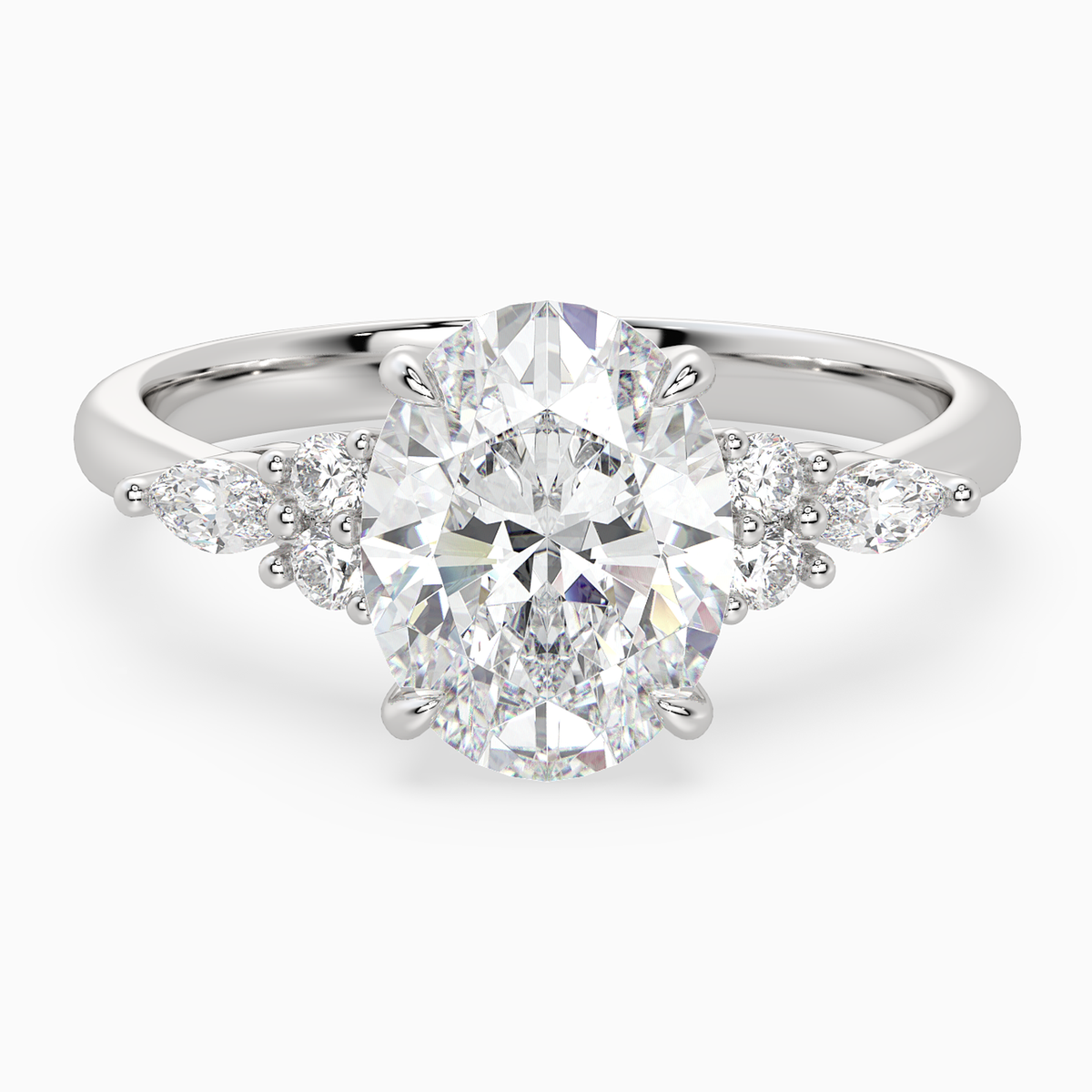


Lab Grown Diamond Solitaire Necklaces in 14K Rose Gold
A single diamond meets a warmer frame. 14K rose gold traces shape, setting edge, and chain connection with a measured blush.


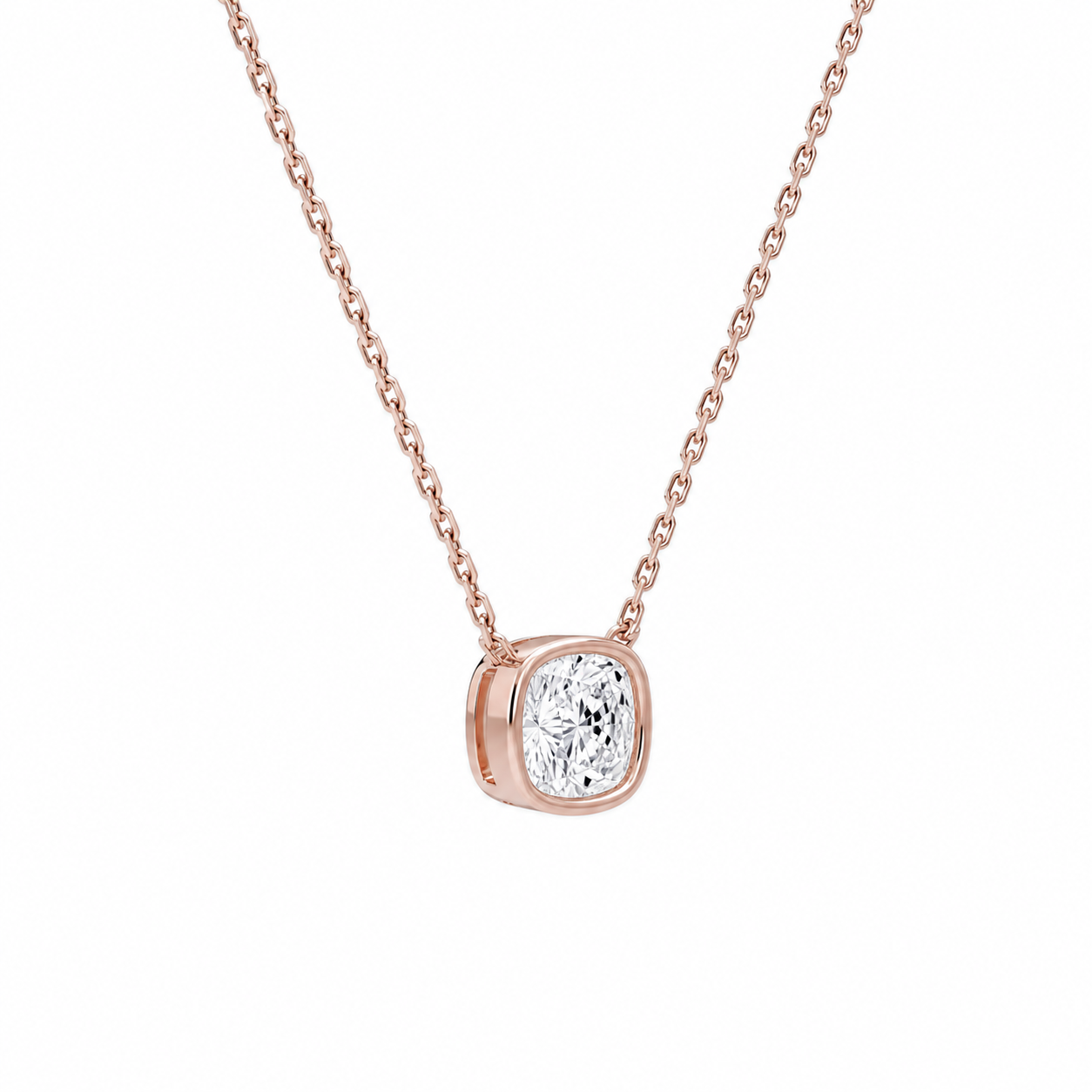


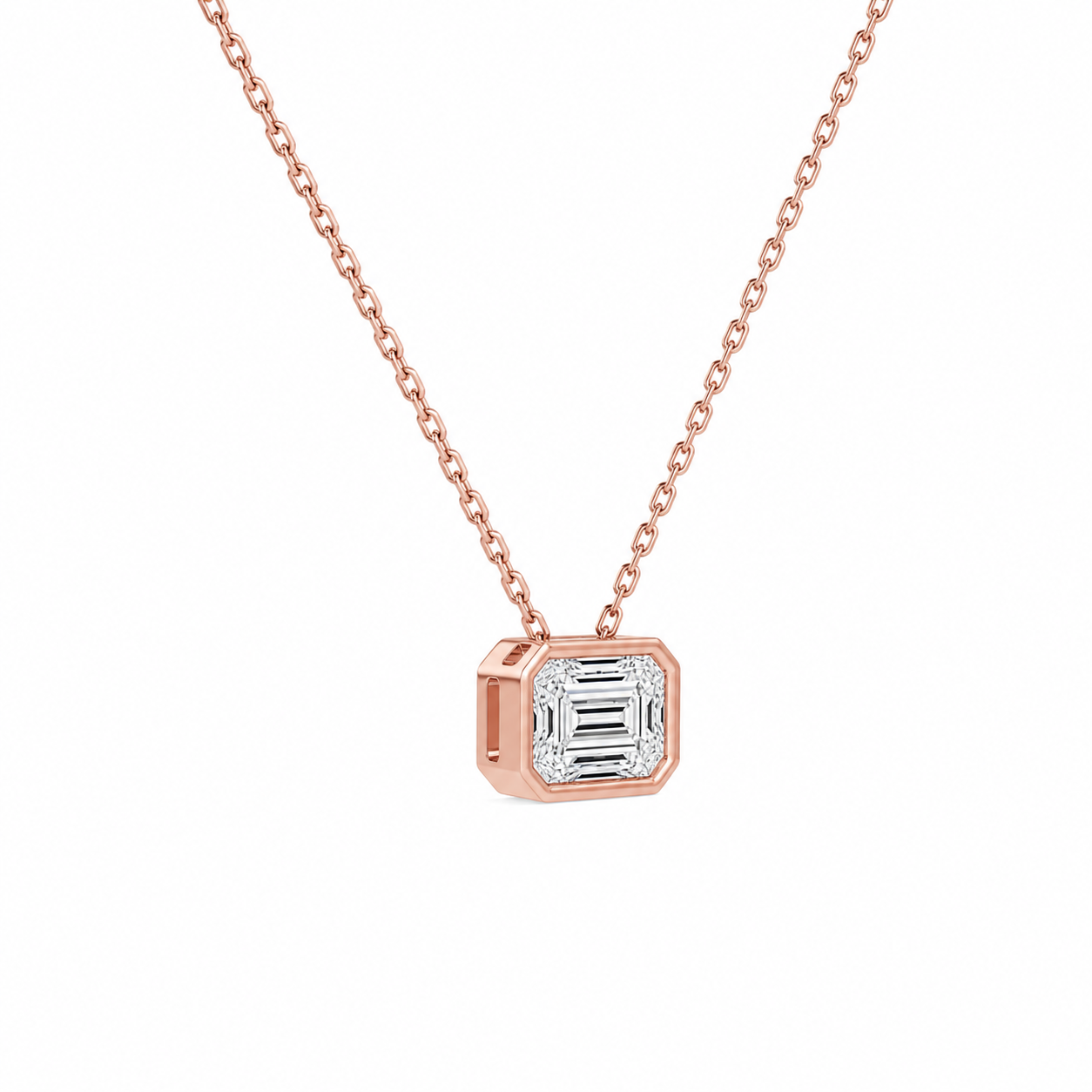


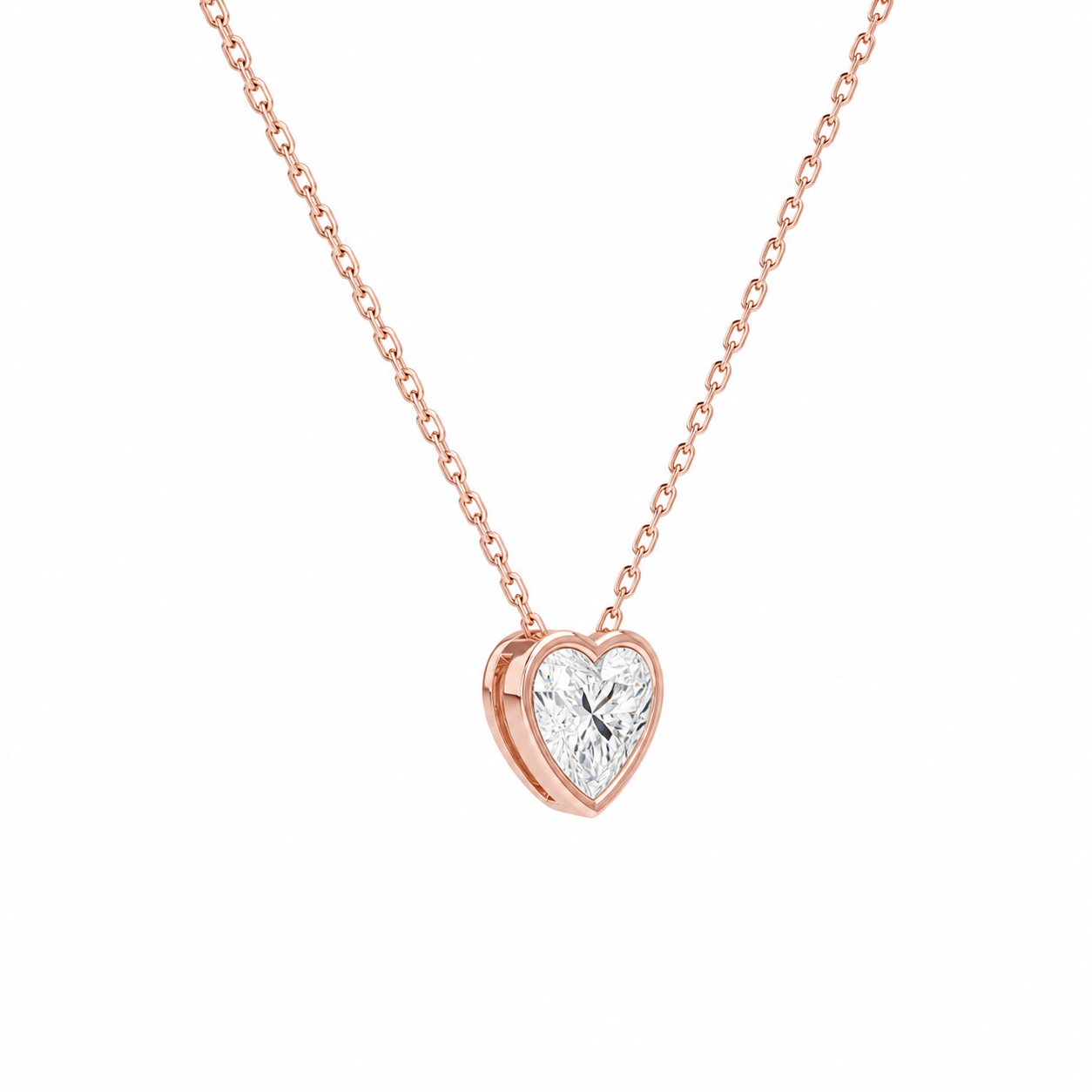


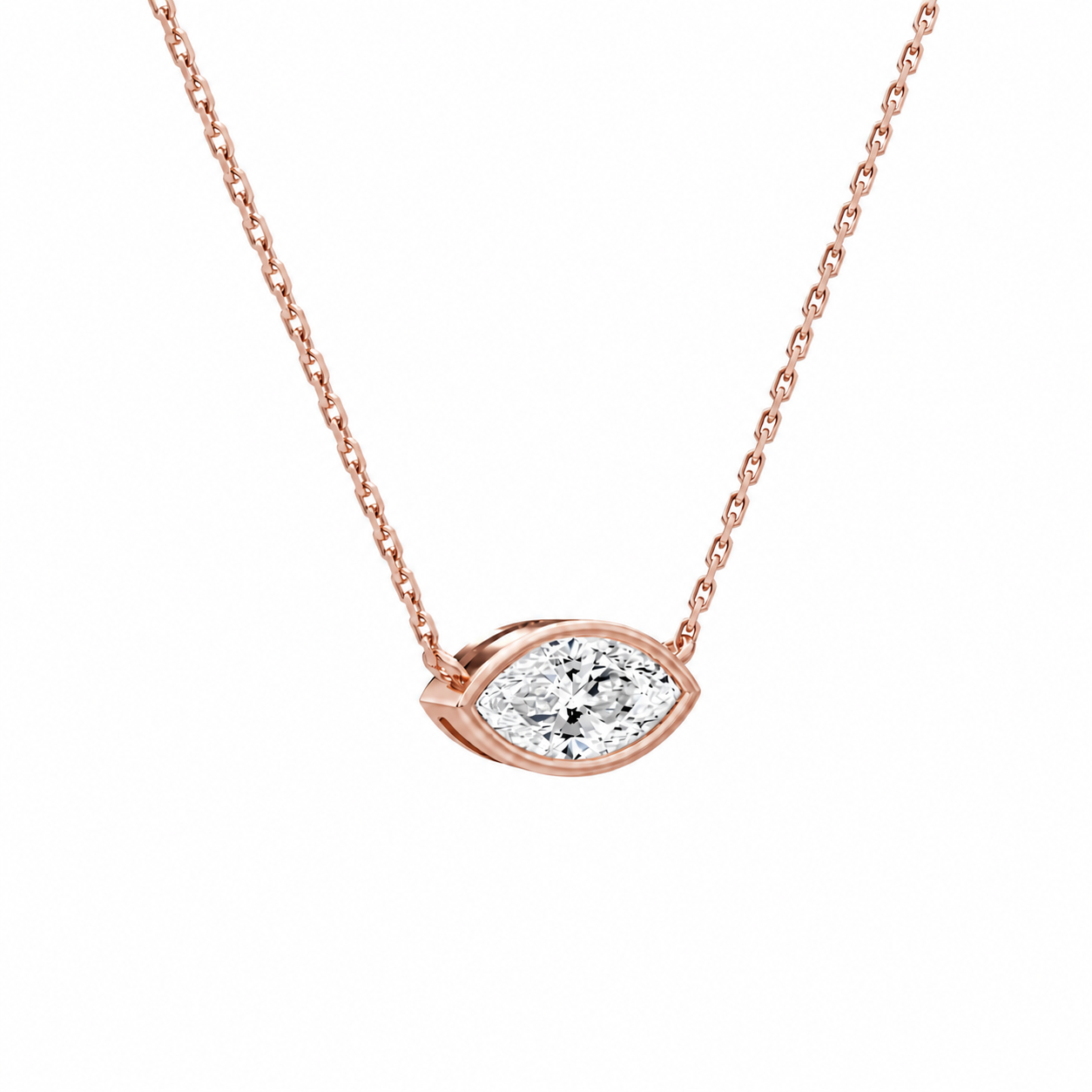


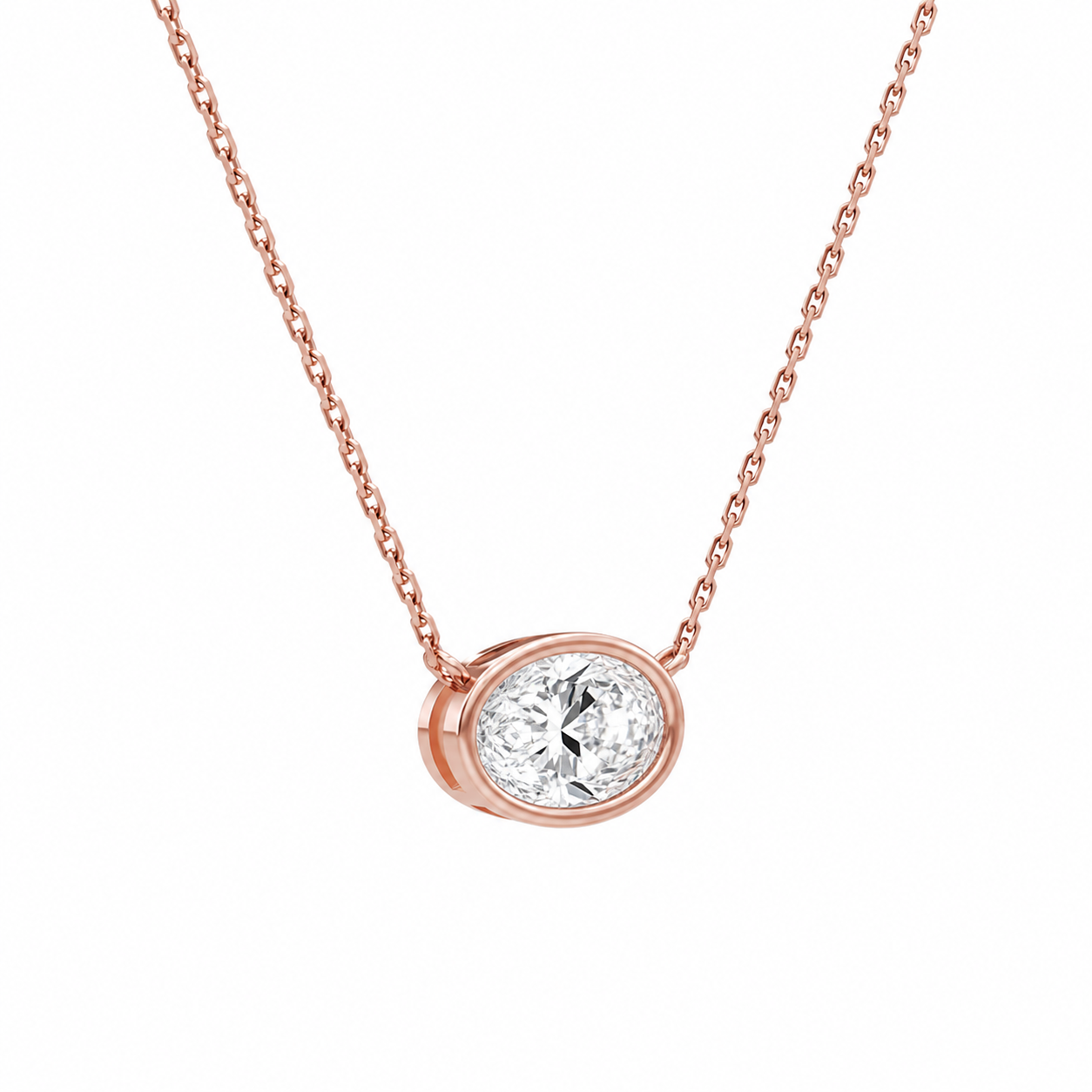


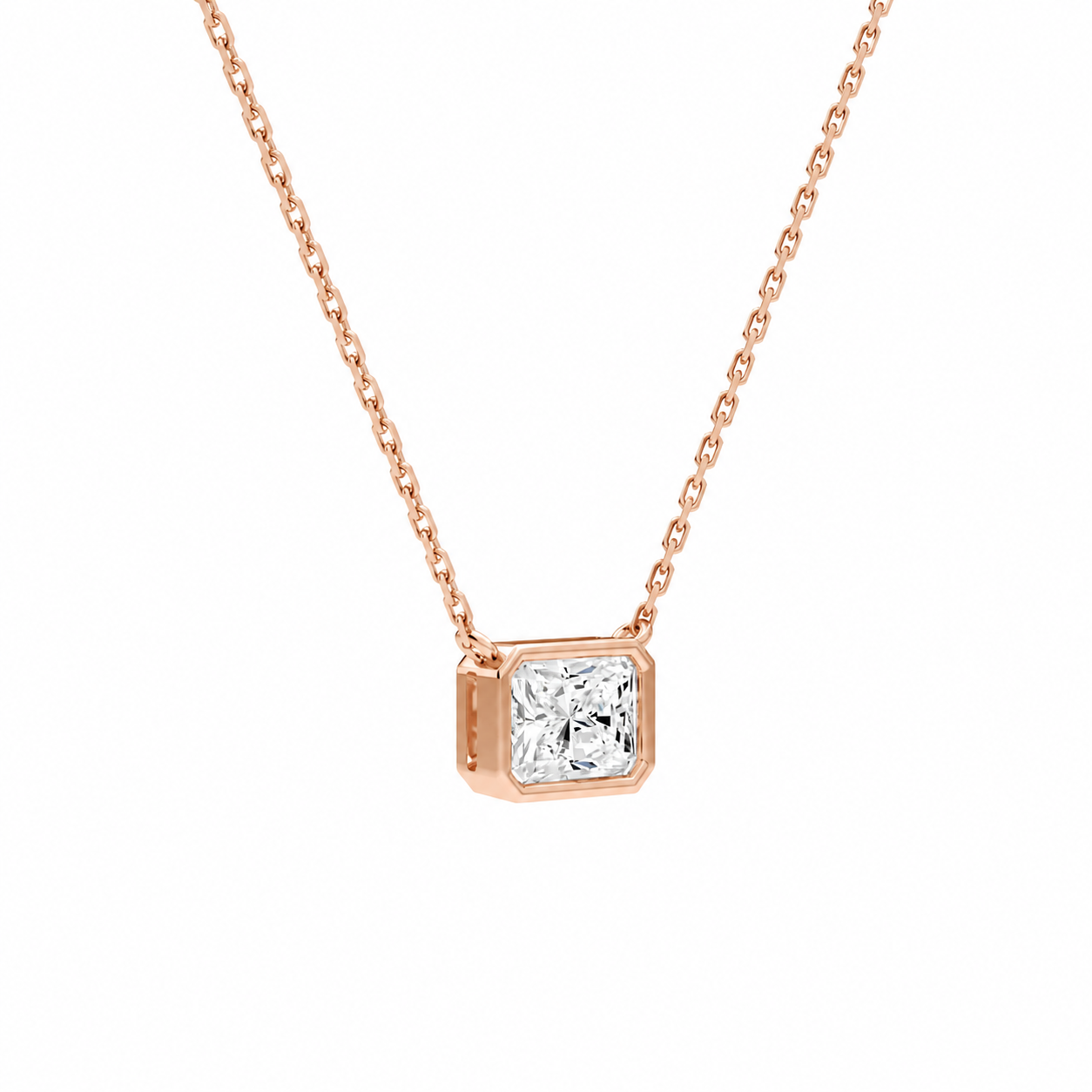


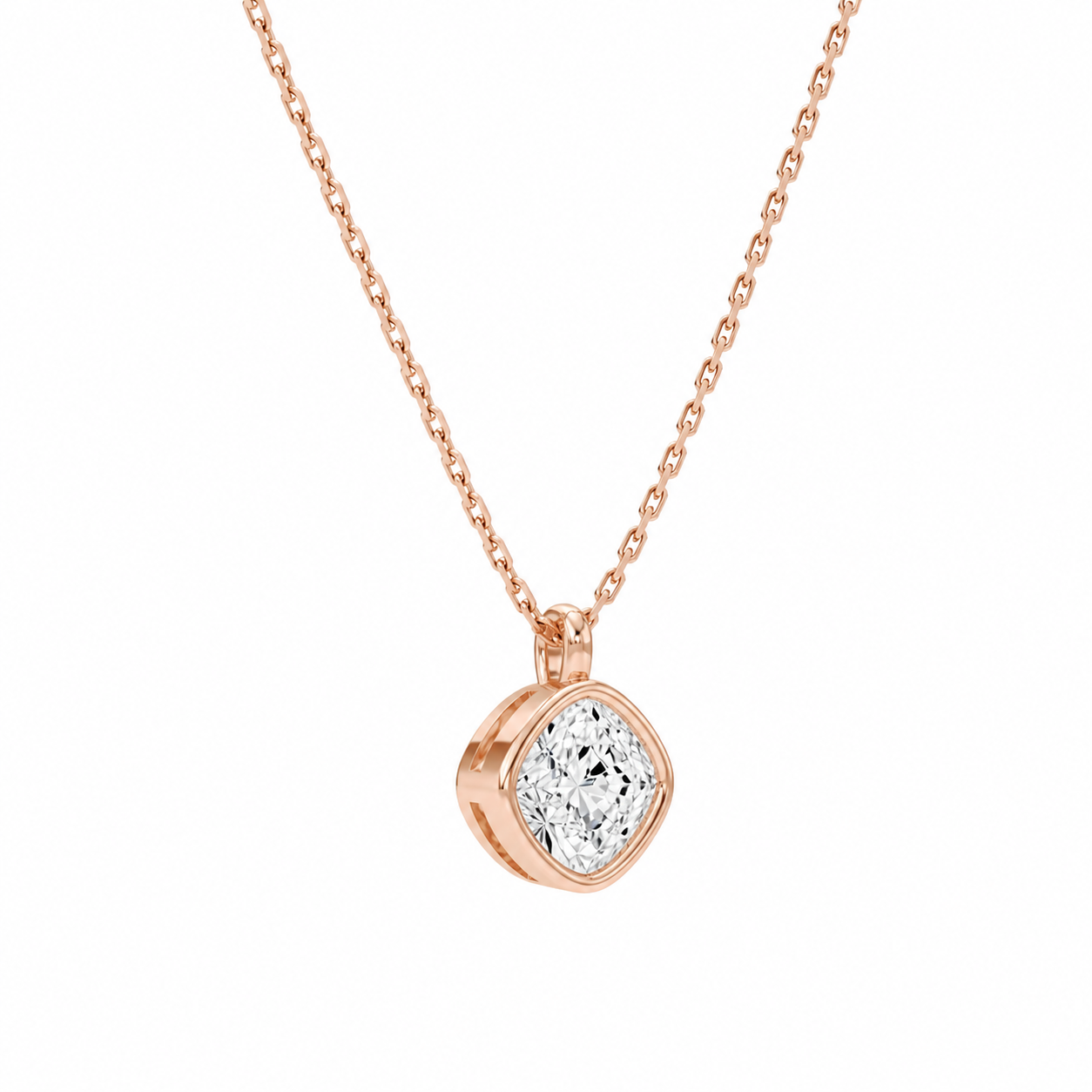


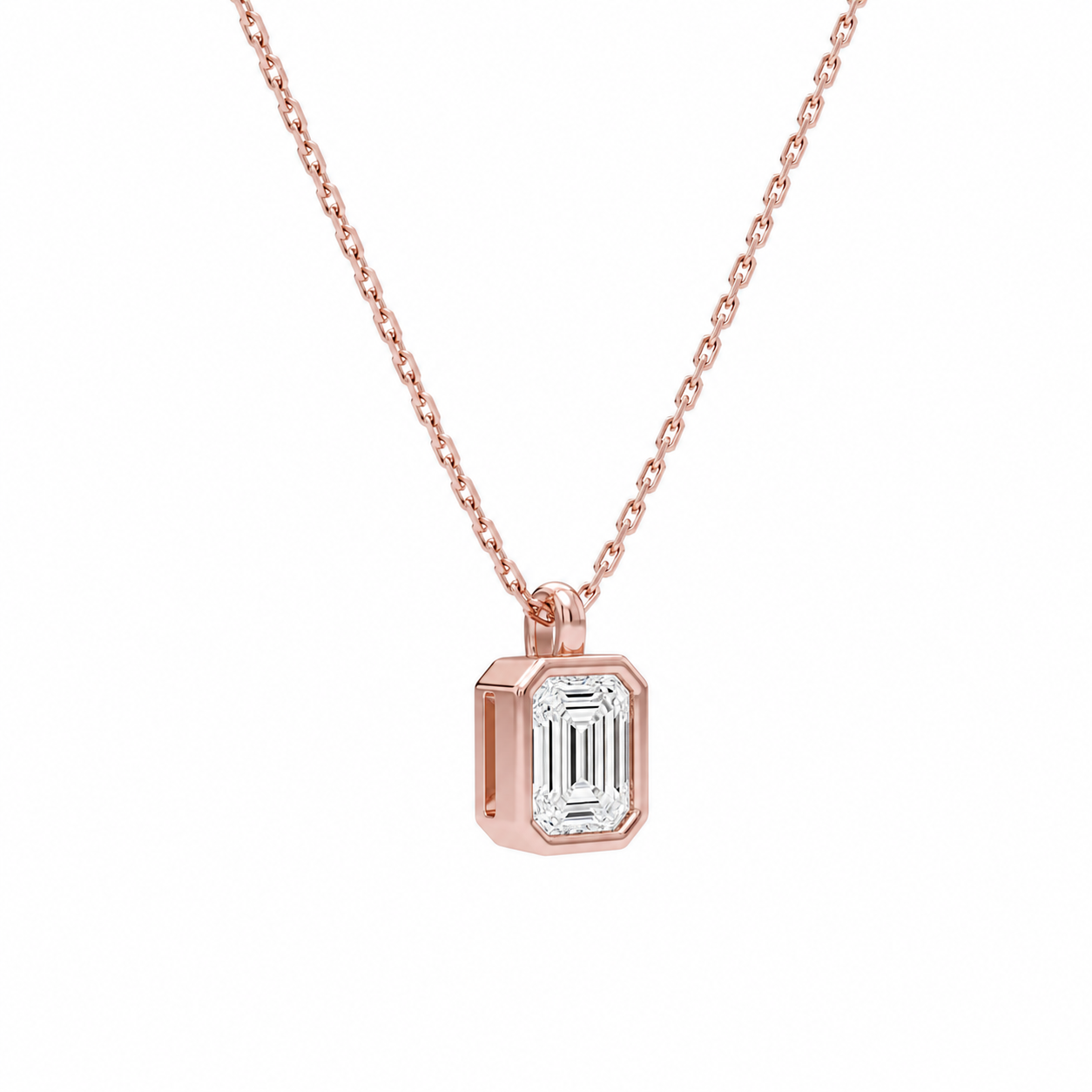


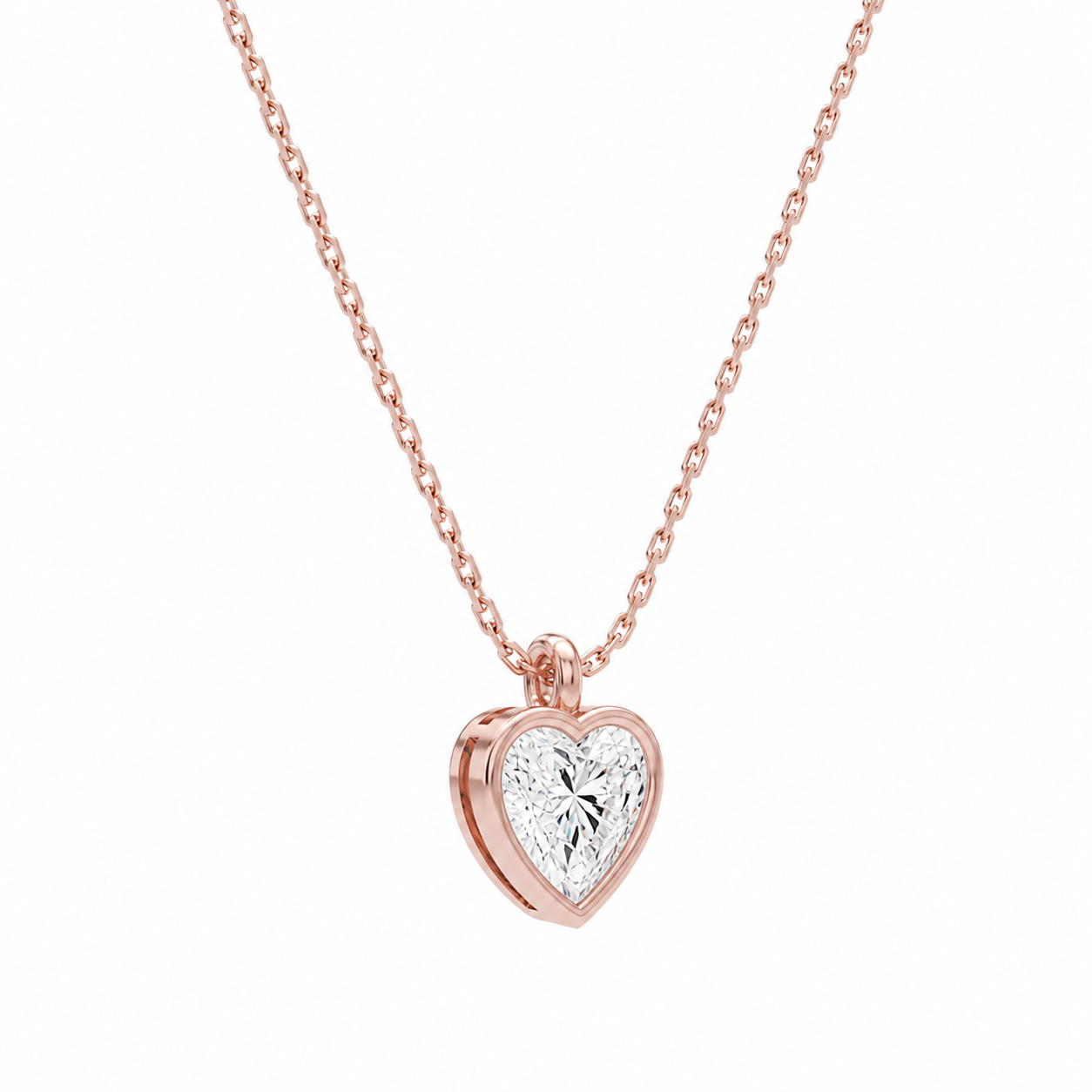


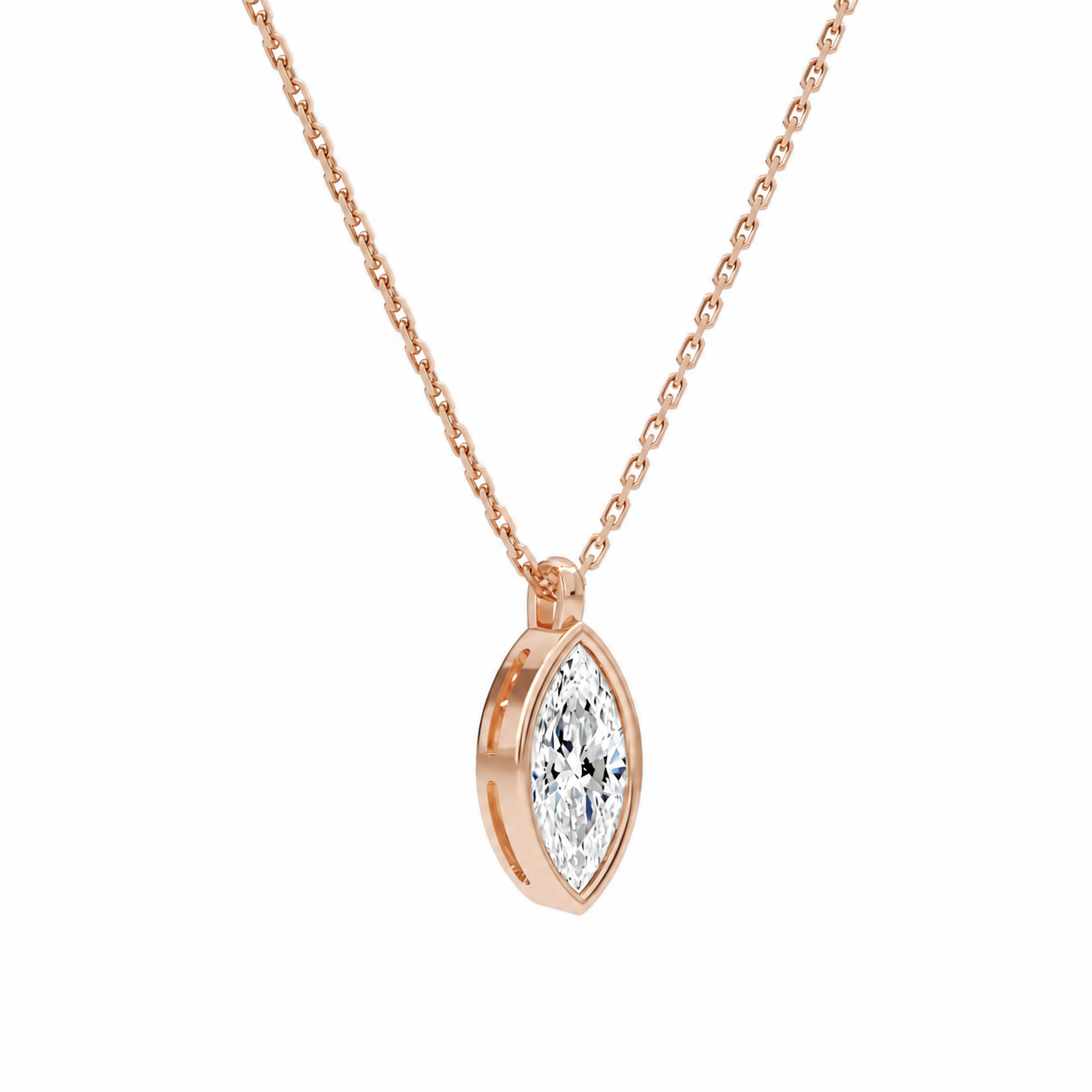


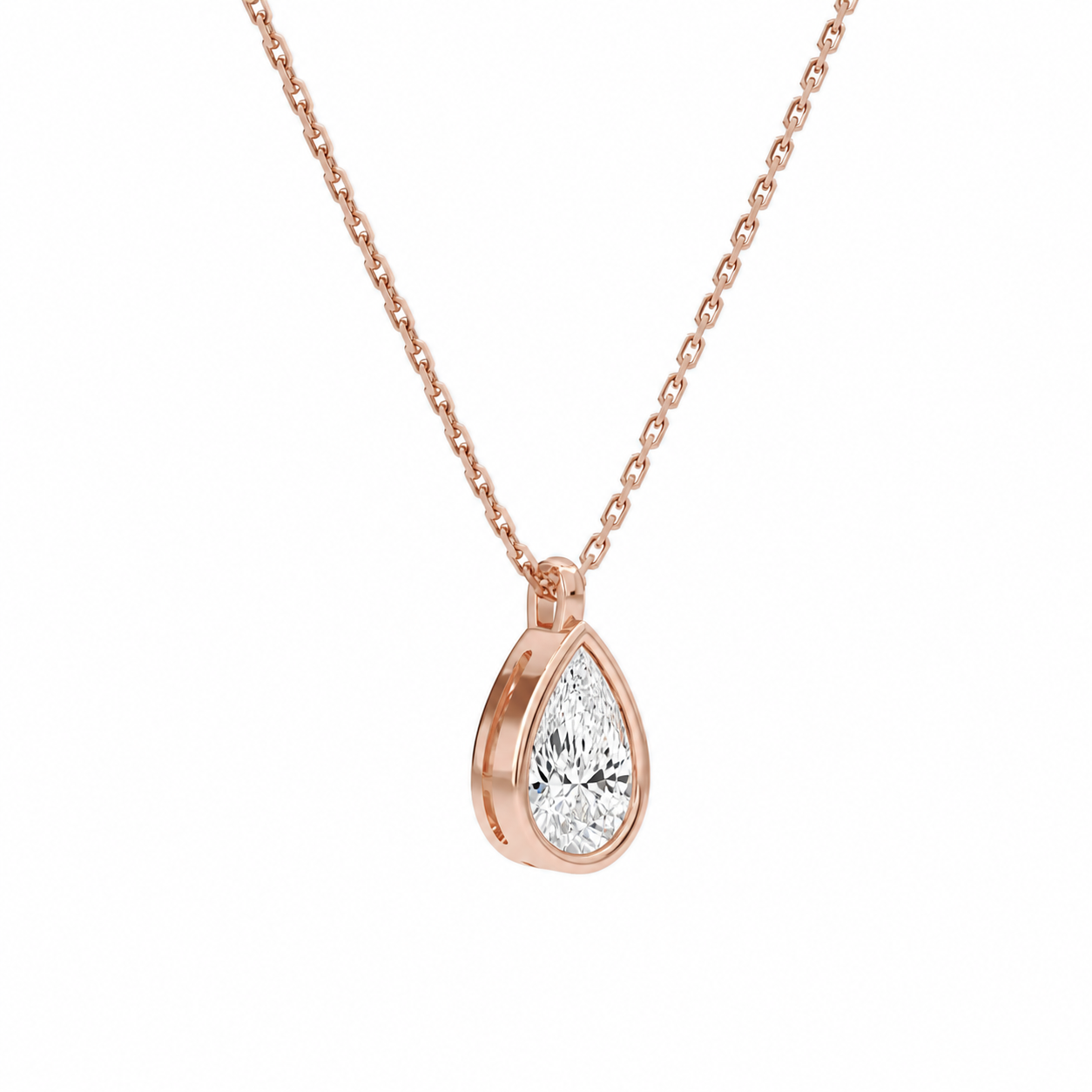


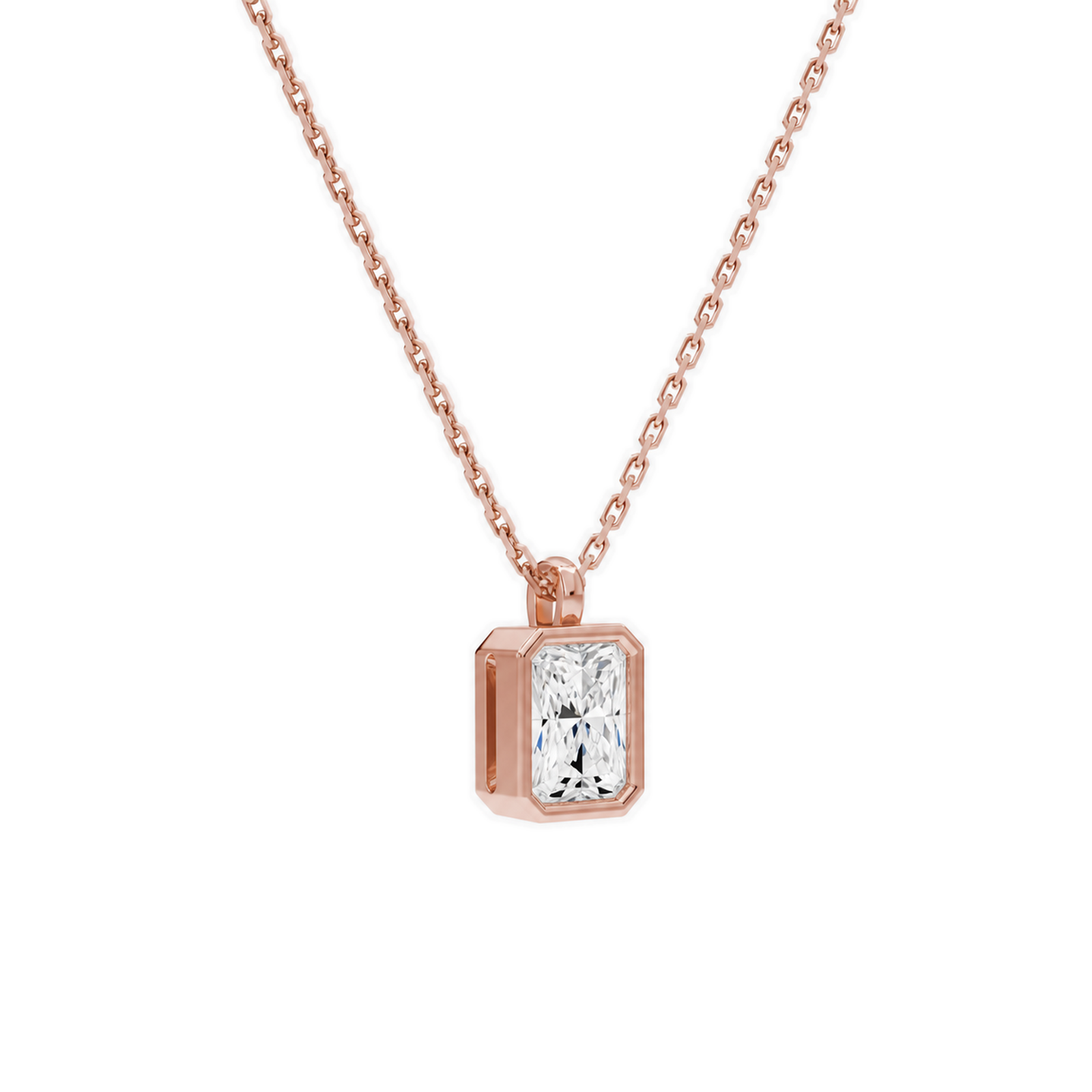


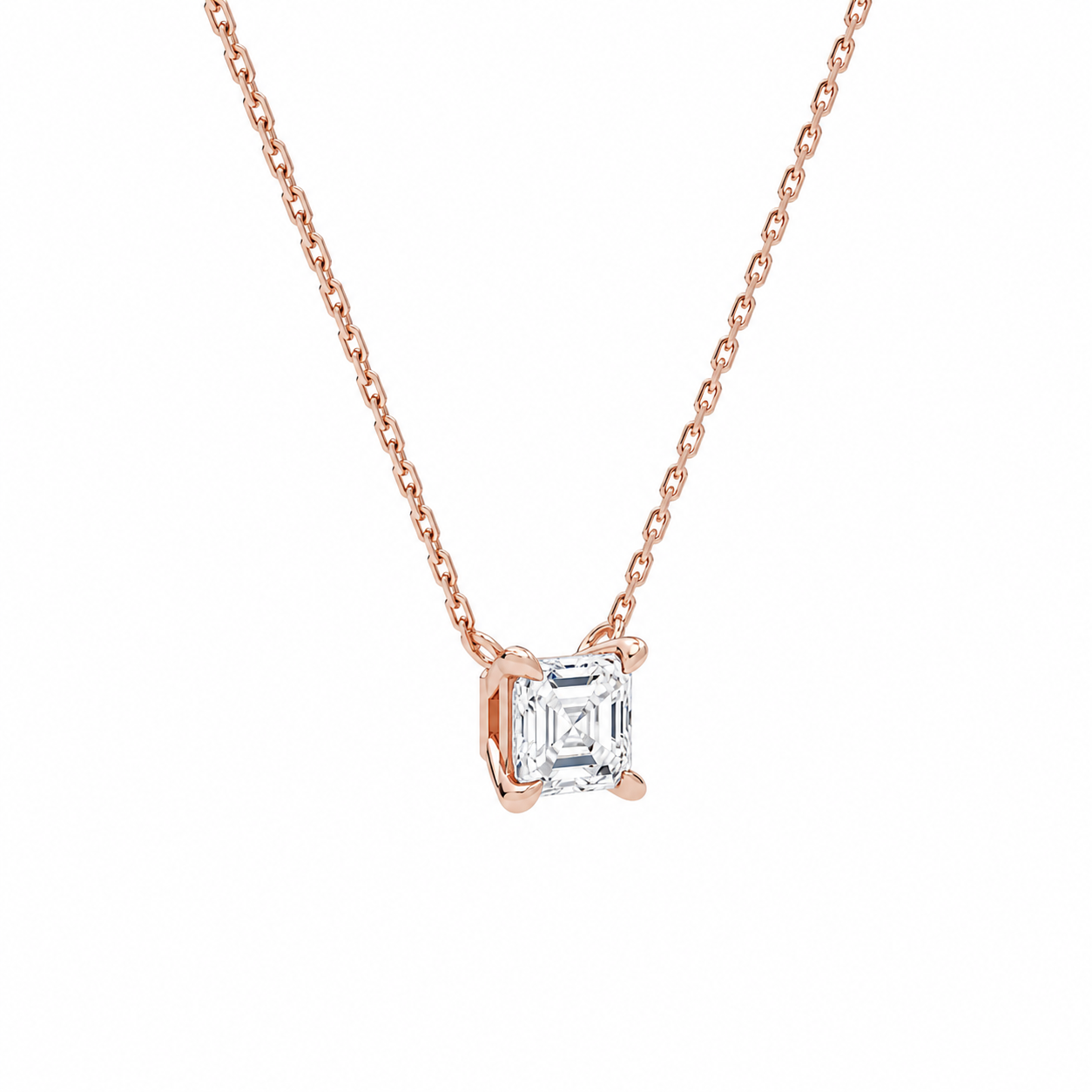


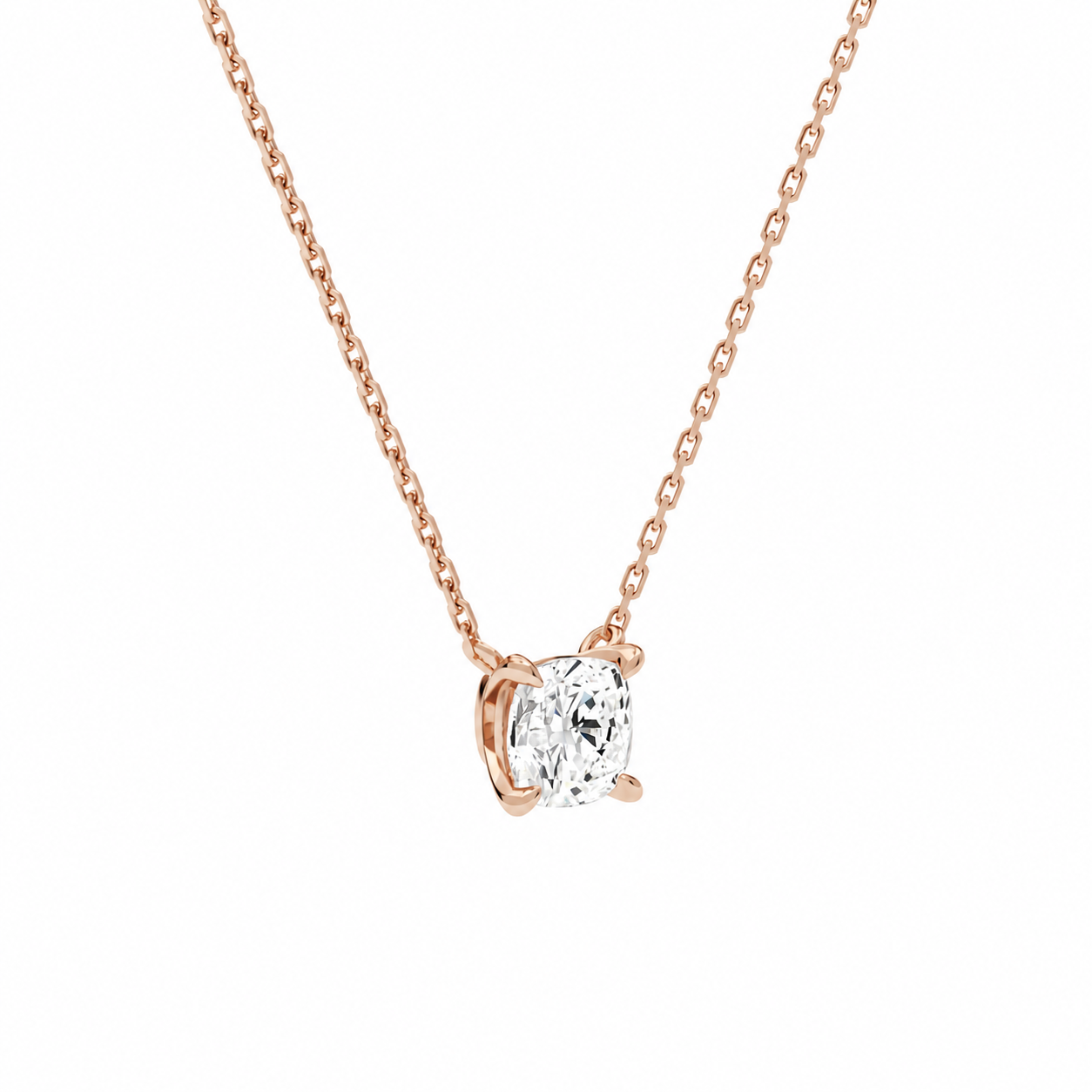


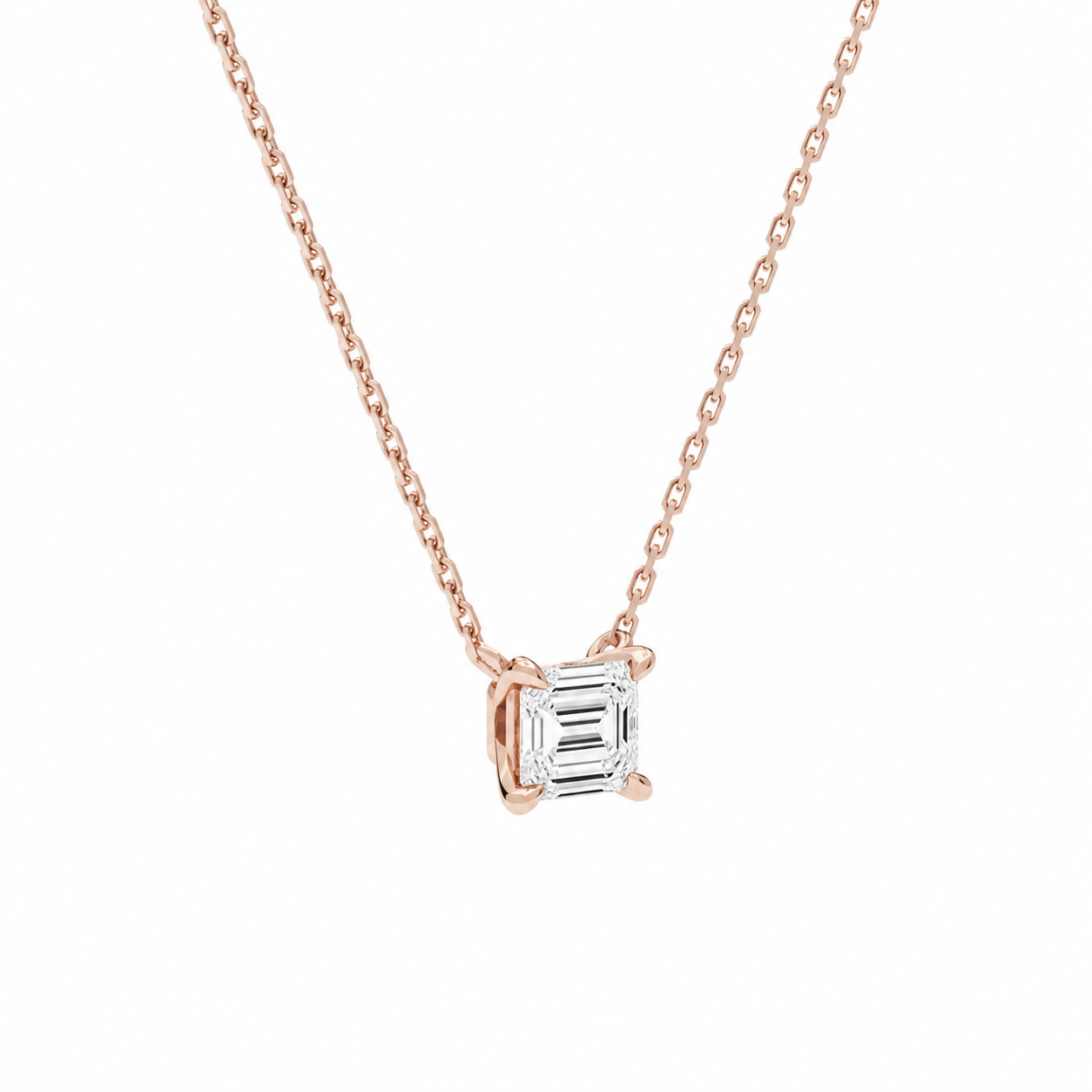


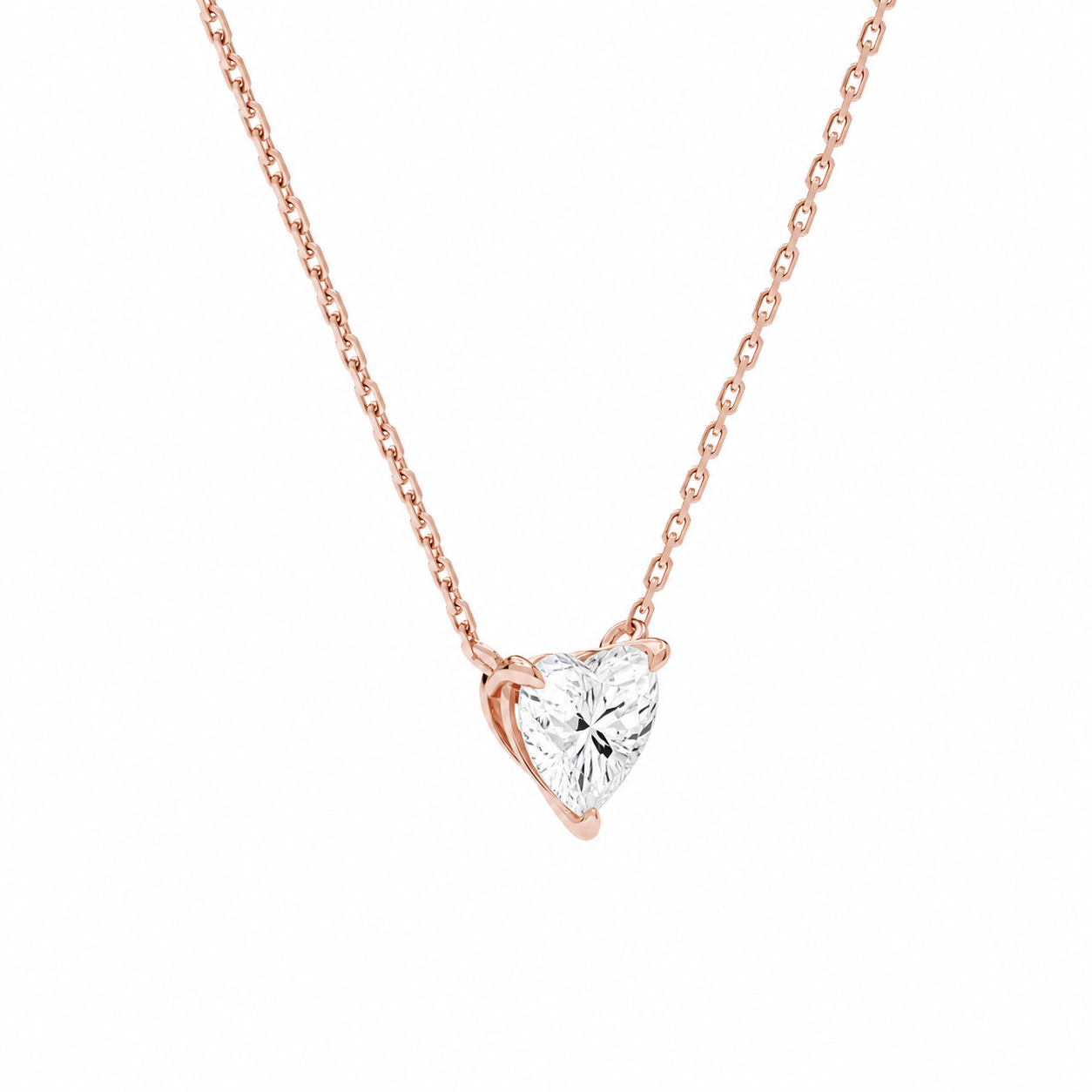

14K Rose Gold Solitaire Necklaces: Warmth around a Single Focus
A solitaire concentrates attention, and Rose Gold makes the material around that focus part of the composition. In a prong setting, blush color appears at discrete contact points. A bezel draws a continuous warm perimeter. Twist designs extend that tone into a directional transition, while the attachment and chain carry it outward across the neckline.
The current 44-design set contains 43 centerstone-led necklaces—20 bezel, 20 prong, and three prong-set twist designs—plus one Marlowe solitaire-cross taxonomy outlier that uses several diamonds and Total Carat Weight. Every design has a normalized counterpart in the parent Solitaire Necklace Collection. This child owns Rose Gold context, not separate design exclusivity.
Let the Blush Edge Clarify Shape
Ten shapes are represented: Round, Oval, Cushion, Pear, Princess, Emerald, Marquise, Asscher, Radiant, and Heart. A warmer edge can make outline, corners, points, and length-to-width direction more explicit. It does not change diamond grade, dimensions, facet pattern, or light performance, and no shape is assigned to a skin tone, personality, gender, or occasion.
A 14K alloy contains approximately 58.3% gold. The remaining alloy, finish, lighting, photography, and visible metal area influence the observed rose tone. Karat and color do not establish one copper content, sensitivity outcome, hardness level, finished weight, or care interval. Confirm exact material and finish for the selected necklace.
Read Center, Attachment, and Chain as One Line
Current titles use both Necklace and Pendant Necklace language, but those terms do not prove fixed, sliding, or perfectly centered construction. Inspect where the setting meets the bail or chain, how the center is oriented, and whether the connection adds movement. Rotation and centering depend on attachment, proportions, weight distribution, chain drape, clothing, posture, and condition.
All 44 current public descriptions list an adjustable 16- to 18-inch length, a 0.95-millimeter chain, and a lobster clasp. The same specification will not land identically on every wearer. Neck circumference, neckline, center scale, attachment, layering, and desired movement determine placement. Different lengths may reduce overlap but cannot guarantee separation or prevent tangling.
Hold Warmth with Restraint
Rose Gold can coordinate a solitaire with earrings or another necklace through metal color, yet matching is not required. Repeating a diamond outline, bezel edge, prong rhythm, or chain scale may create a more considered relationship across mixed metals. The blush tone is a material choice, not a prescribed romantic or feminine identity.
Burvonti uses responsibly sourced lab-grown diamonds and supports independent grading or certification within the scope of the document supplied. Custom possibilities may refine diamond shape, proportion, scale, prong or bezel treatment, twist, attachment, metal, chain, or length when technically feasible. Clean gently, store without abrasive contact or knots, and inspect setting, attachment, links, and clasp when movement changes.
Frequently Asked Questions
What makes this page different from the parent Solitaire Necklace Collection?
The parent owns single-focus structure across metals. This page focuses on how 14K Rose Gold defines the setting edge, attachment, and chain transition.
Are all 44 designs single-diamond necklaces?
No. Forty-three are centerstone-led; one Marlowe solitaire-cross is a multi-diamond taxonomy outlier using Total Carat Weight.
Which settings are represented?
The current set includes 20 bezel, 20 prong, three prong-set twist designs, and one solitaire-cross outlier.
Which diamond shapes are included?
Round, Oval, Cushion, Pear, Princess, Emerald, Marquise, Asscher, Radiant, and Heart are represented.
How much gold is in 14K Rose Gold?
Approximately 58.3%. Other alloying metals influence final tone and working behavior.
Are all 14K rose gold necklaces the same blush color?
No. Alloy formula, finish, dimensions, lighting, photography, and exposed metal area affect appearance.
Does Rose Gold suit every skin tone?
No universal rule is appropriate. Choose by the complete necklace, personal preference, and observed contrast rather than a skin-tone prescription.
Does Rose Gold change diamond brilliance or grade?
No. It changes the surrounding color and boundary, not diamond dimensions, facet relationships, or grading facts.
What is the difference between prong and bezel solitaires?
Prongs create discrete contact points; a bezel forms a continuous metal perimeter. Neither is universally brighter, safer, or better.
What do Centerstone and Total Carat Weight mean here?
Centerstone refers to one principal diamond. Total Carat Weight can combine several diamonds, as on the cross outlier.
Are Necklace and Pendant Necklace fixed or sliding constructions?
Titles alone do not establish that. Review the selected product's attachment and chain path.
What length and chain are currently listed?
All 44 current descriptions list an adjustable 16–18-inch length, 0.95-millimeter chain, and lobster clasp.
Will a solitaire necklace remain centered?
Not universally. Attachment, proportions, weight distribution, chain drape, movement, clothing, and condition affect orientation.
Can a Rose Gold solitaire be layered?
Yes aesthetically, but compare length, center scale, chain drape, movement, and contact; no arrangement guarantees no overlap or tangling.
Can 14K Rose Gold cause sensitivity?
Sensitivity depends on the complete alloy and wearer; karat and color alone cannot establish a universal result.
Can Burvonti customize or care for this design?
Shape, scale, setting, twist, attachment, metal, chain, or length may be possible after review. Clean gently and inspect the complete construction.