


Lab Grown Diamond Bezel Earrings
A diamond defined by its edge. Explore bezel earrings through continuous metal, shaped outline, profile and their relation to the ear.








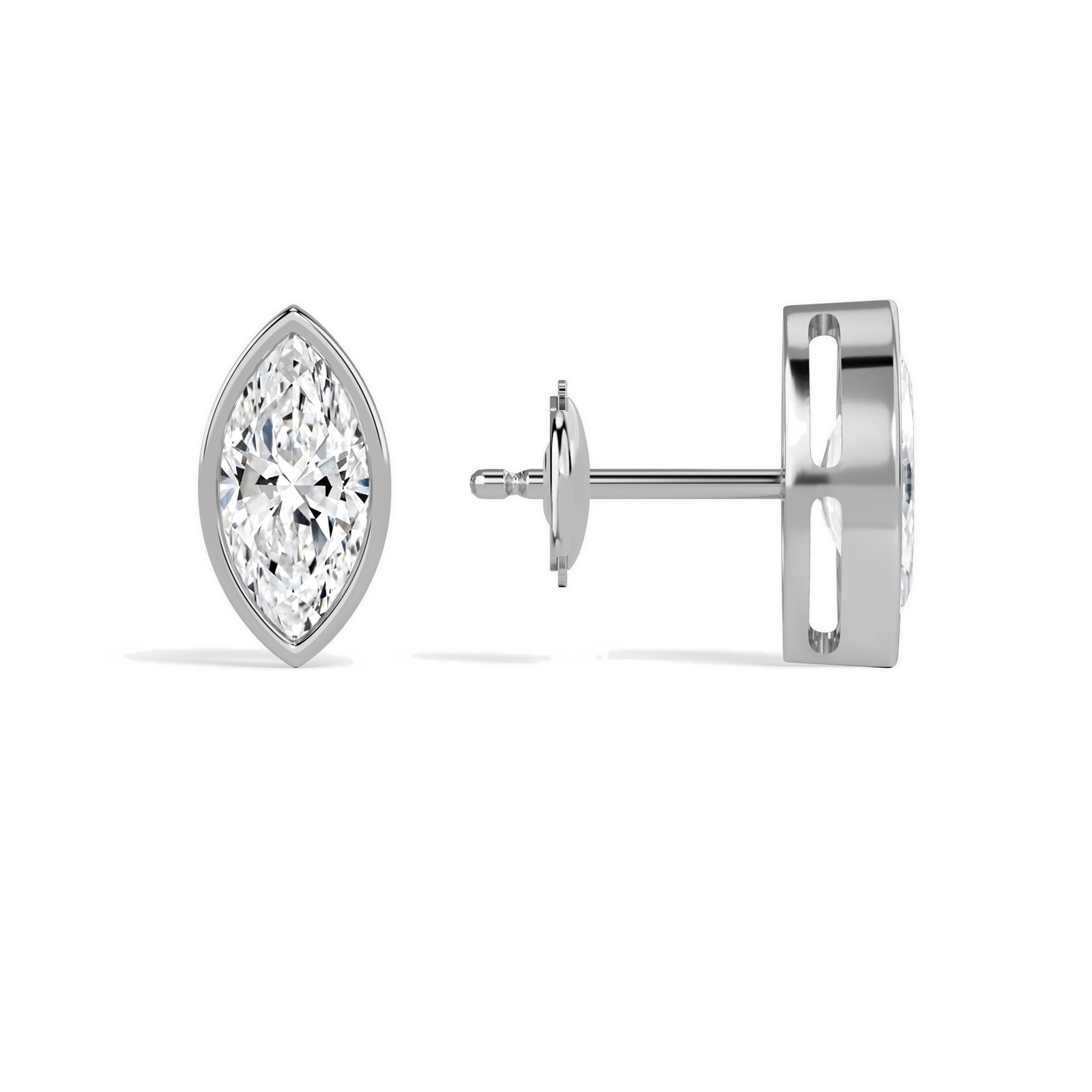


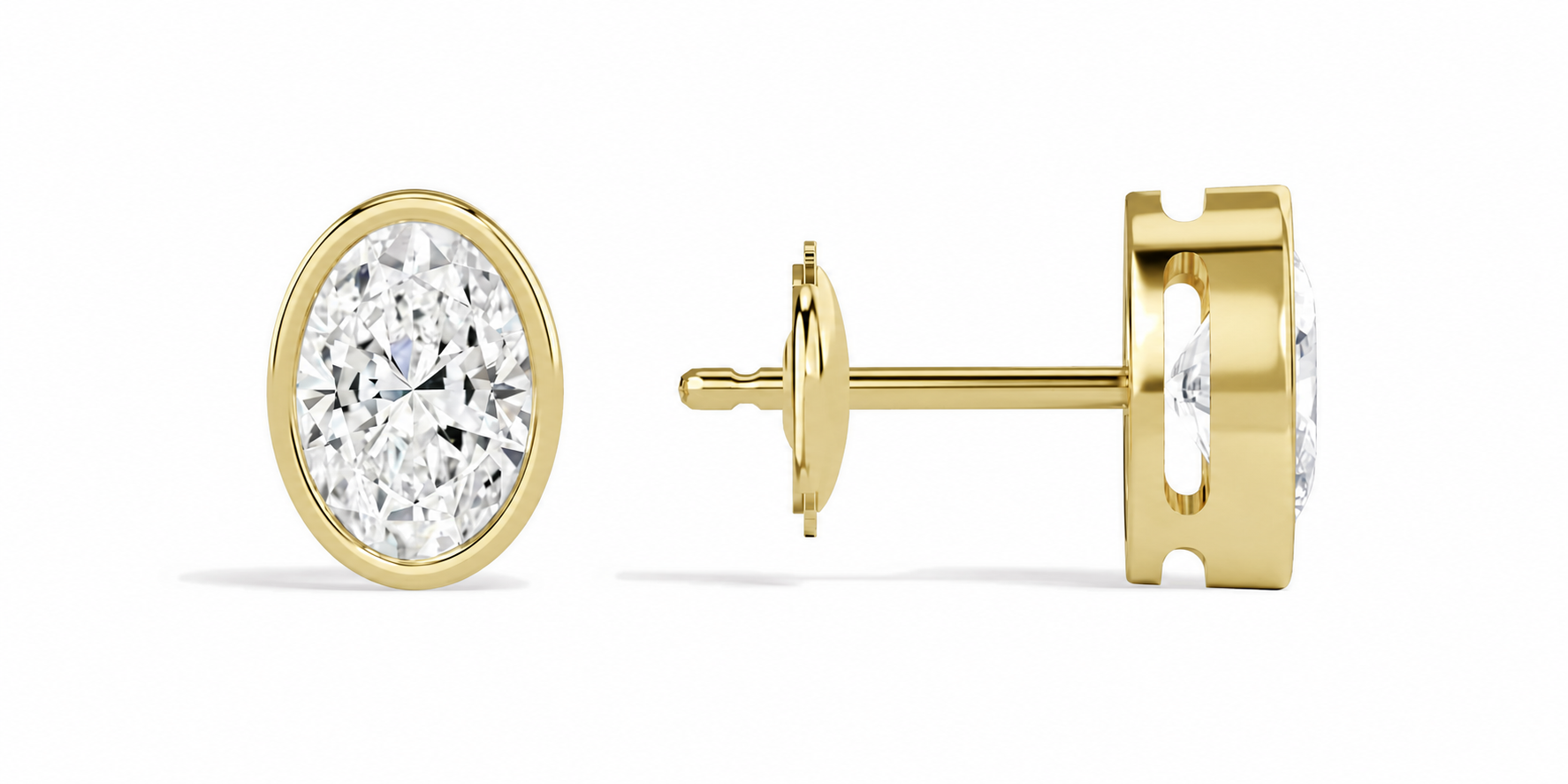


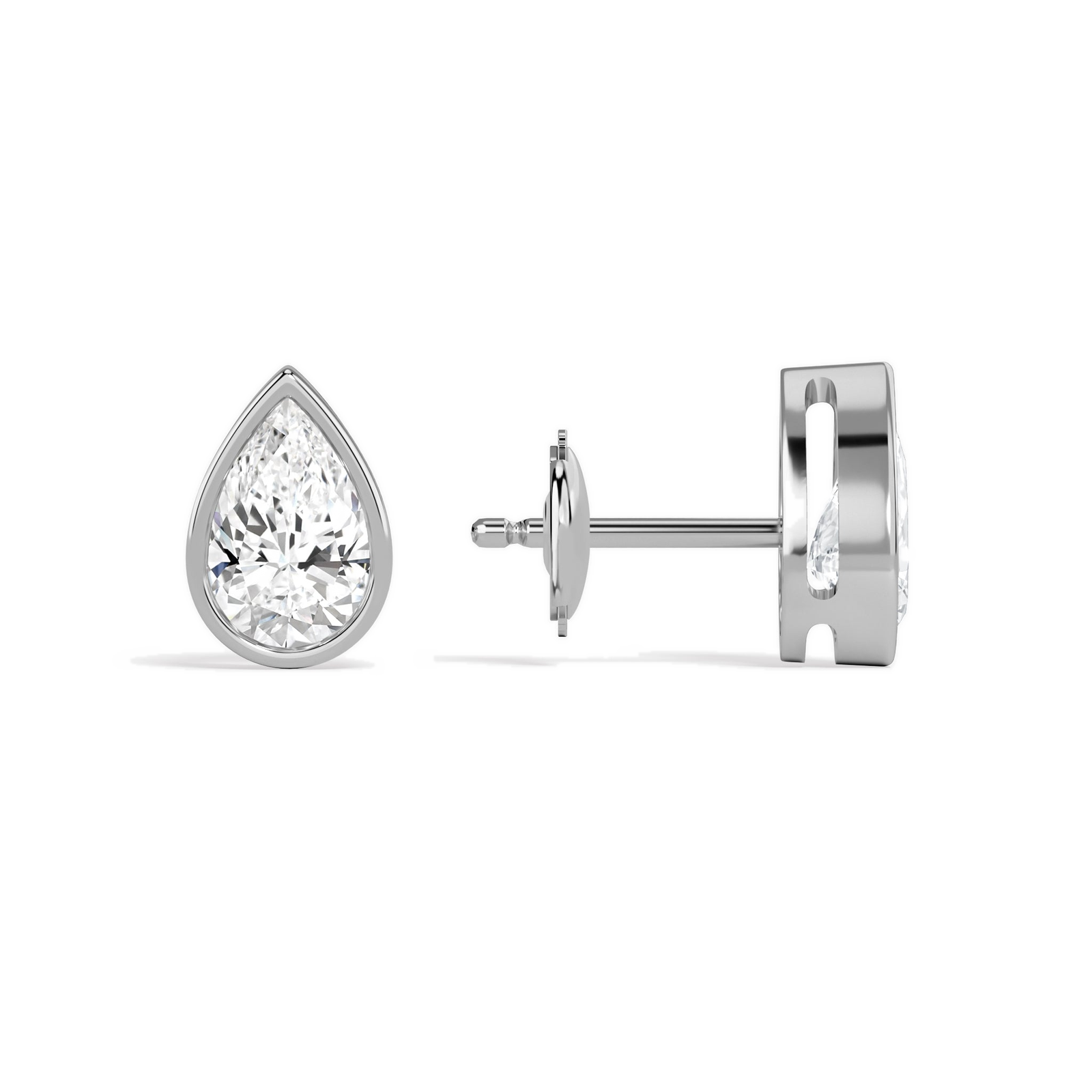


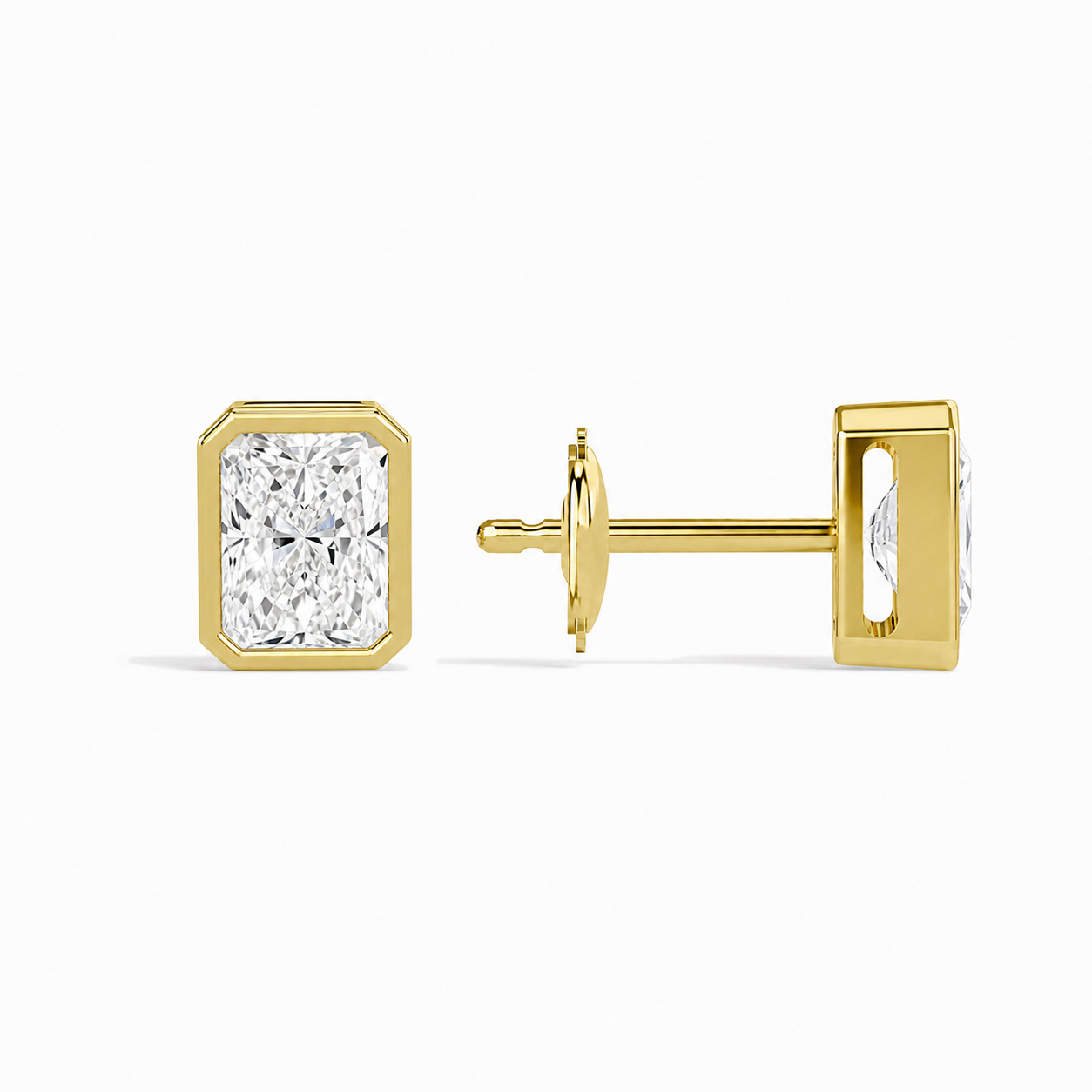










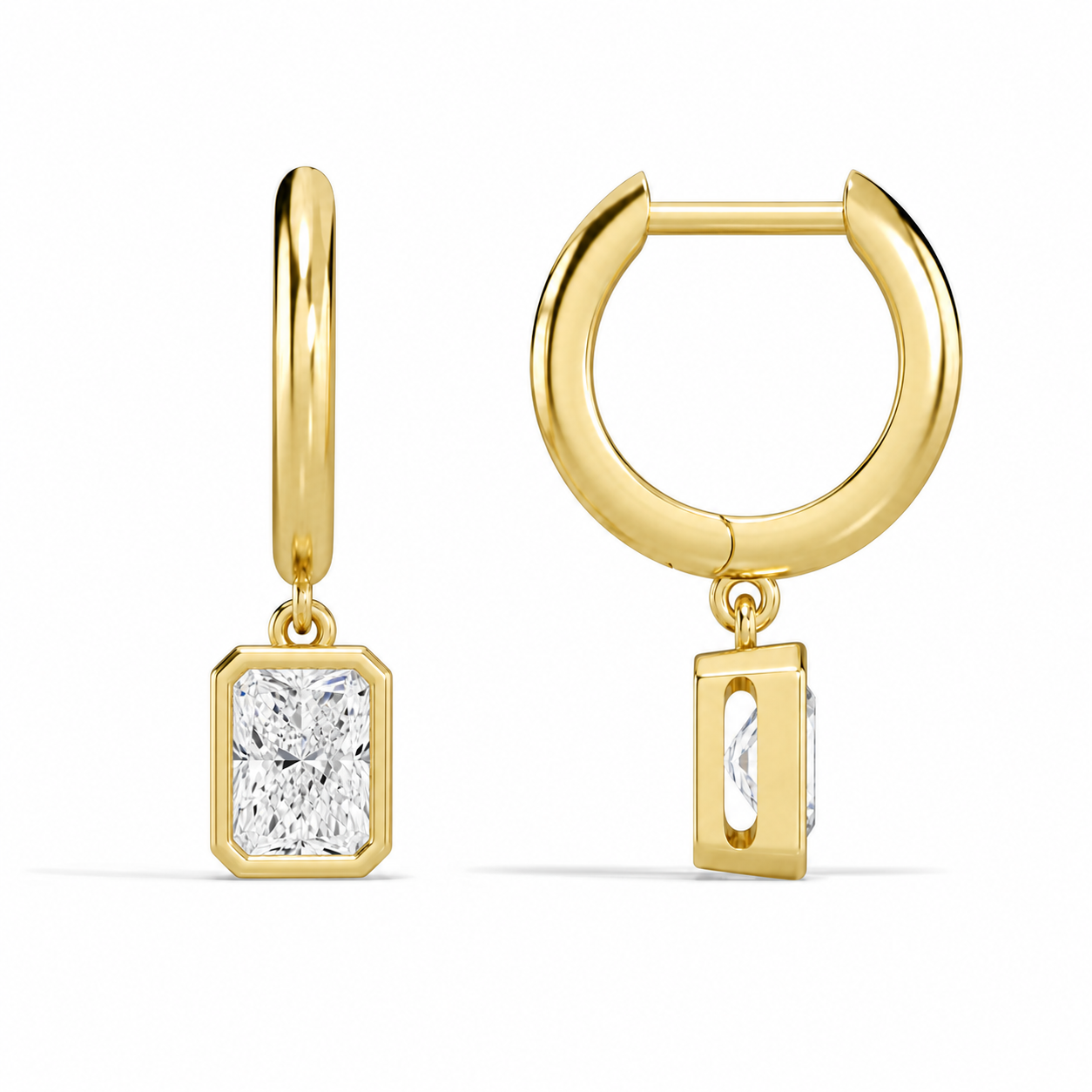


Lab-Grown Diamond Bezel Earrings: The Precision of a Continuous Edge
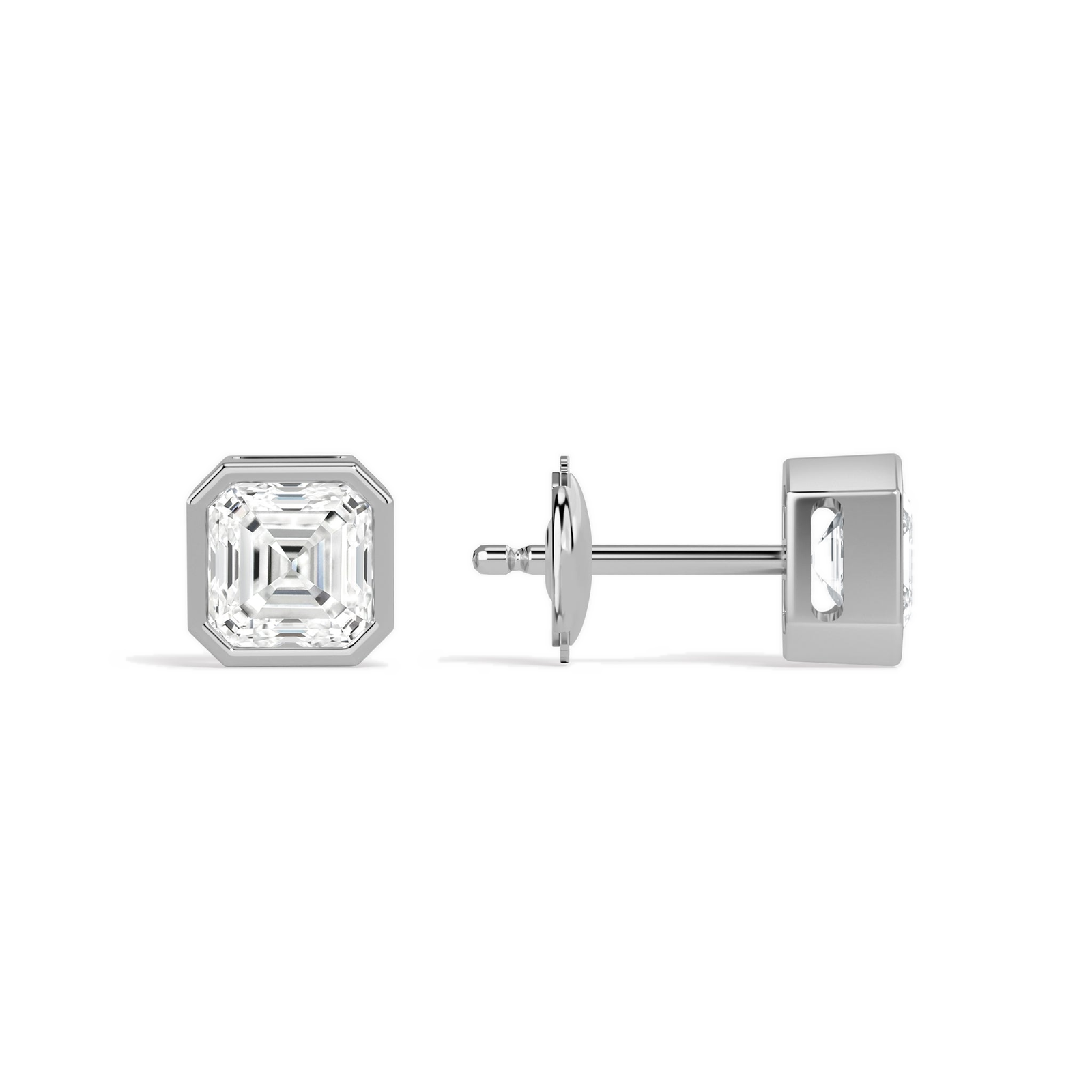
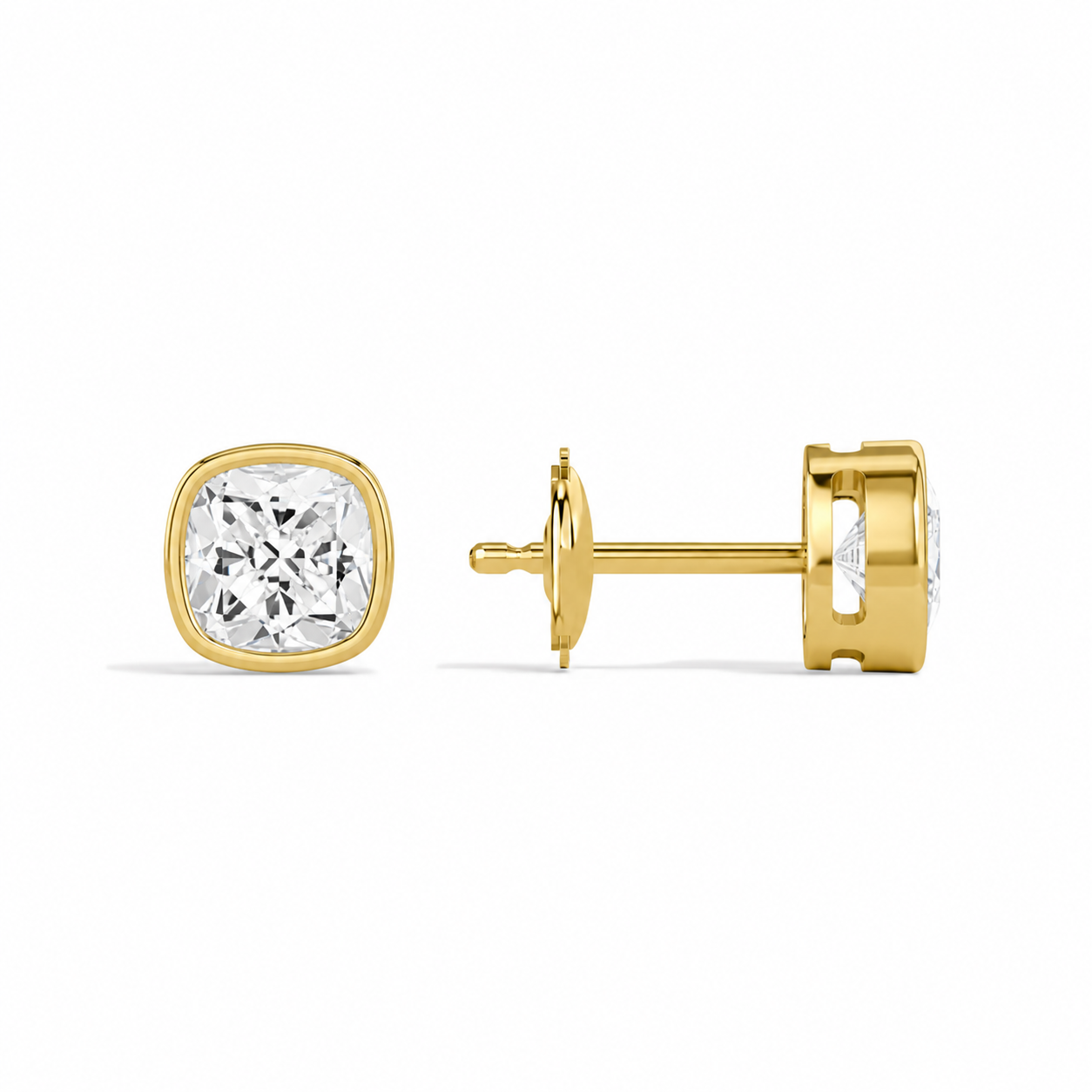
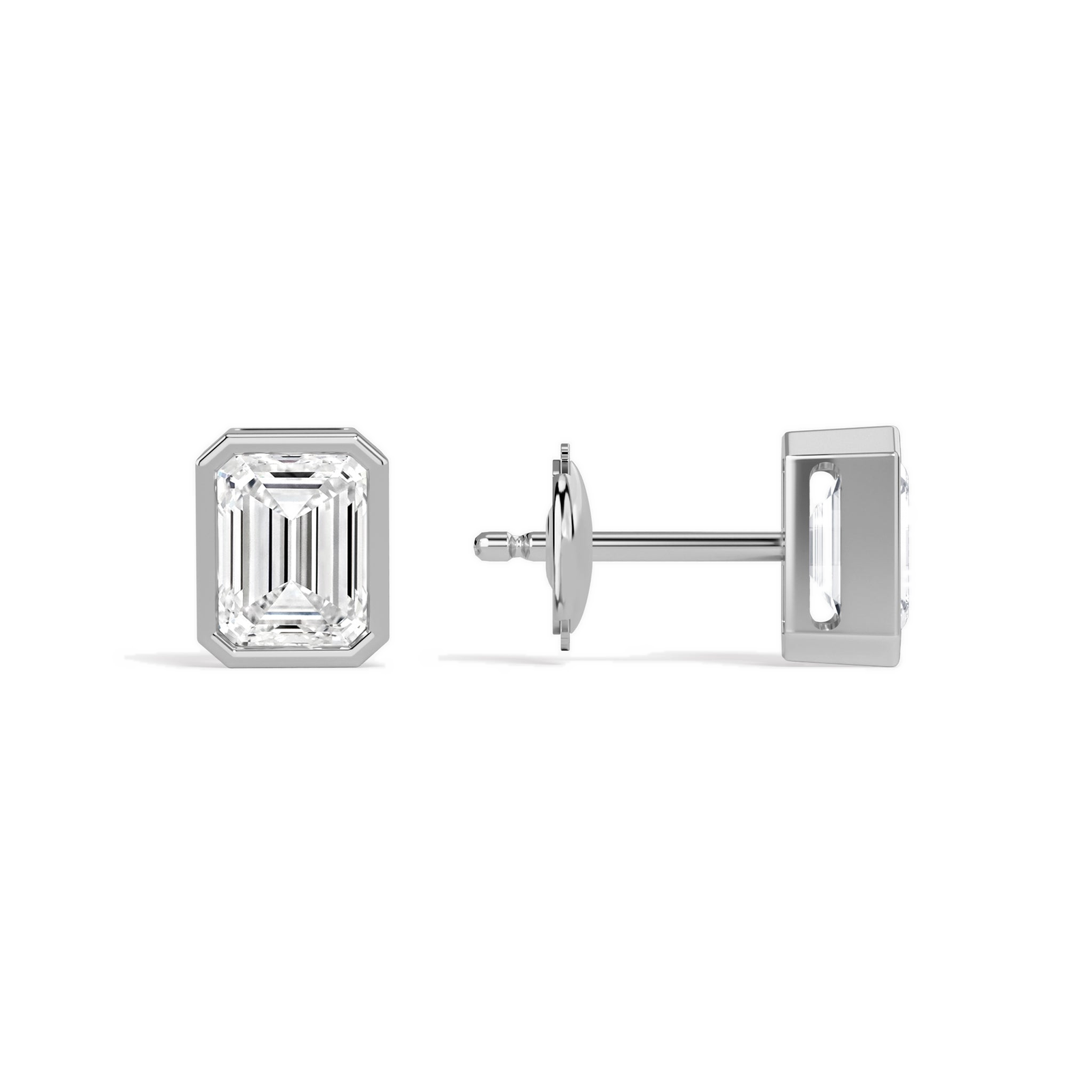
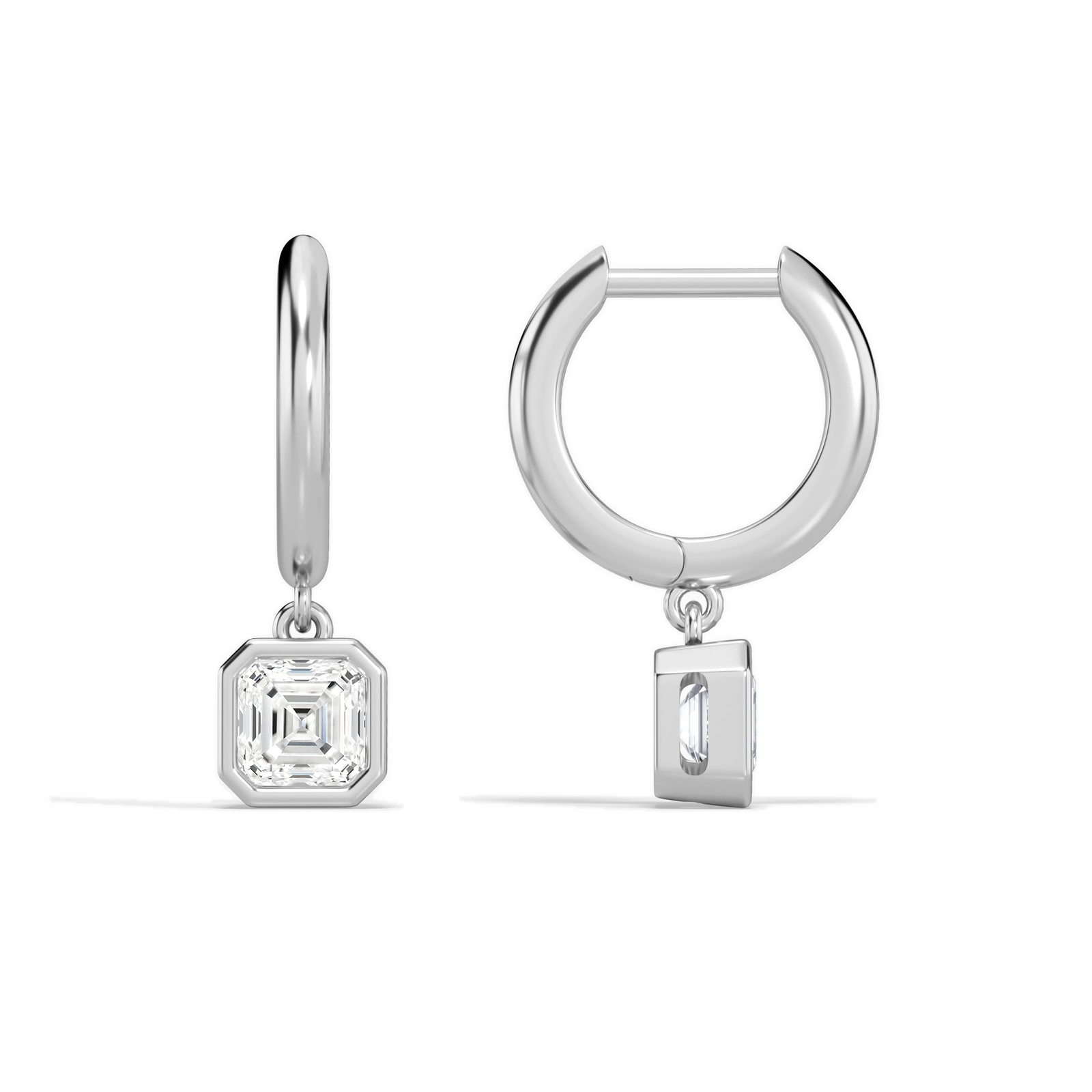
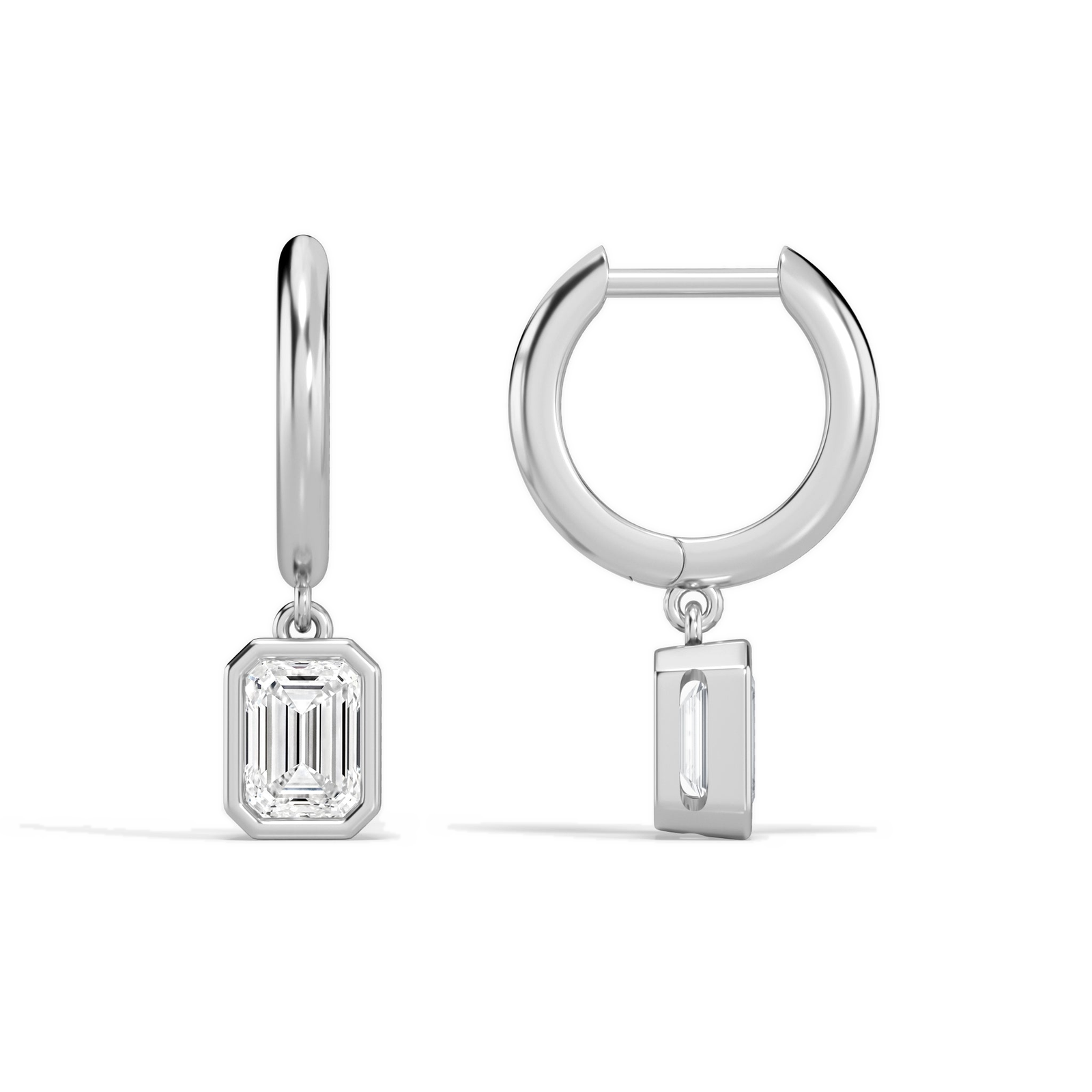
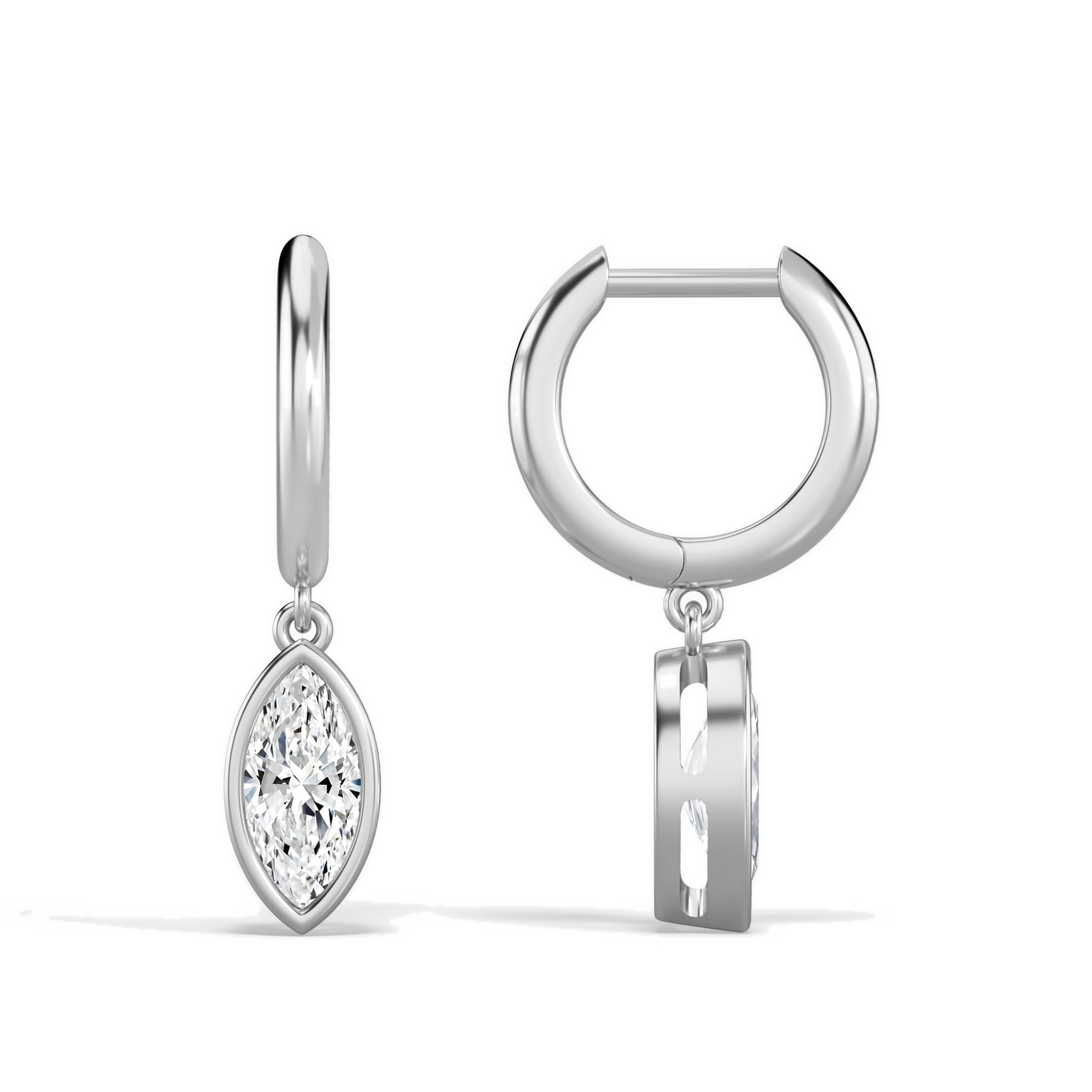
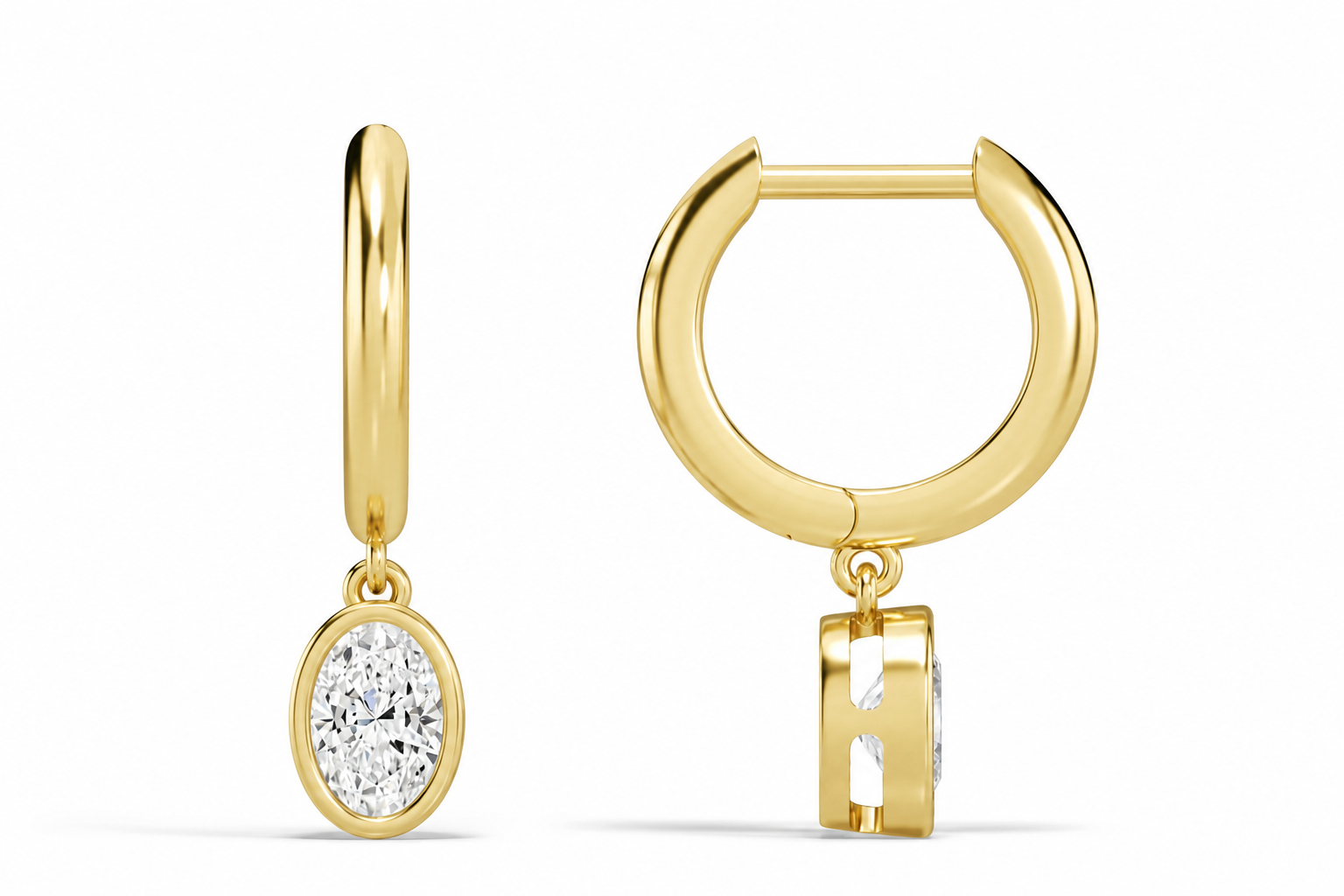
A bezel makes metal part of the diamond’s visible outline. Instead of holding selected points with prongs, it creates a continuous edge around the stone, changing the balance between diamond, setting, and negative space. Burvonti’s current Collection applies that idea to two distinct forms: close-set solitaire studs and shaped centers suspended beneath compact huggie hoops.
The result should not be summarized as practical versus decorative. The width and contour of the rim influence apparent scale, the clarity of the shape, the amount of metal seen from the front, and the profile from the side. In a stud, that boundary is read close to the lobe. In a drop, it also becomes the final shape at the end of a moving line.
The Rim Redraws the Diamond
A well-resolved bezel follows the intended outline without making every shape look alike. The current Collection represents Asscher, Cushion, Emerald, Heart, Marquise, Oval, Pear, Princess, Radiant, and Round diamonds in both stud and drop-huggie forms. Cropped corners, points, curves, and length-to-width relationships each ask the metal edge to behave differently.
Compare the complete face-up dimensions rather than assuming the rim always makes a diamond appear larger or smaller. A white-metal edge may visually recede in some lighting; yellow or rose gold may draw a more explicit graphic border. Rim width, polish, diamond dimensions, setting depth, and contrast determine the effect. The boundary should also be read at normal viewing distance, where fine variations can merge into a simpler silhouette.
Coverage Is Not an Absolute Guarantee
A bezel covers more of the diamond perimeter than a conventional prong arrangement, but the exact amount varies with design. Full, partial, fine, and heavier bezels are not interchangeable. Product imagery and profile details are needed to understand where the metal meets the girdle and how high the setting rises.
Continuous coverage does not make an earring impact-proof, loss-proof, snag-free, or maintenance-free. Diamonds, metal, seats, closures, and articulation can still be affected by wear or force. A bezel changes the exposure pattern; it does not remove the need for considered use and inspection.
One Setting, Two Relationships to the Ear
The Jolie studs hold the bezel composition close to the lobe with secure lock backs and double-notched posts. The Giselle drop-huggies place the bezel center beneath a 12.50 mm hoop using a hinge opening and snapping one-notch post. These are current product facts, not universal definitions of bezel earrings.
Choose between them by deciding whether the metal-edged shape should remain still or move below its attachment. For studs, compare projection, face-up scale, post, and backing. For drop-huggies, add hoop clearance, suspension, rotation, and the relationship between the metal rim and the diamond-set arc above it.
Profile Matters as Much as the Front
A bezel may look visually contained from the front while still having meaningful depth at the side. Setting height, under-gallery, seat, post position, backing, and the diamond’s proportions influence how the piece meets the ear. The word bezel alone does not establish a flush profile or make an earring appropriate for sleeping.
Review front and side views, especially when the earring will sit near another piercing. A broader rim or deeper setting can change spacing and contact. Individual anatomy and piercing angle determine fit, so comfort cannot be guaranteed from the absence of visible prongs. Backing size and post direction complete this close-scale architecture, even though they disappear from the face-up image.
Carat Weight and Metal Must Be Read Together
Current products use Center Stone Total Carat Weight for the principal diamonds across the pair. That specification does not state each center’s weight, face-up dimensions, rim width, or complete earring size on its own. Compare it with shape, individual dimensions, setting coverage, and whether the piece is a stud or drop-huggie.
The Collection is currently represented in 14K White, Yellow, and Rose Gold. Metal changes the visibility of the boundary but does not determine quality by color alone. Exact alloy, rhodium plating, finish, sensitivity considerations, and long-term surface care remain specific to the product and wearer.
A Graphic Edge in a Wider Composition
A bezel can provide a clear stopping point within an ear composition. One shaped stud may stand alone; a small bezel can answer a hoop through metal rather than diameter; a bezel drop can carry the principal outline while adjacent earrings remain quieter. Repetition of one edge or shape often creates more coherence than equal scale everywhere.
When mixing settings, let their boundaries establish hierarchy. Prongs create interruptions around the perimeter, a bezel creates continuity, and a halo creates a wider field of accents. None is inherently more refined. The useful choice is which relationship best supports the shape and the complete composition. This keeps the setting visible as a design decision rather than treating it as invisible hardware.
Defined in Metal, Judged at Human Scale
Burvonti pairs responsibly sourced lab-grown diamonds with bezels considered as both structure and visible line. Laboratory-grown diamonds are diamonds rather than simulants; any grading document should be read only for the diamond it identifies and not automatically extended to both centers or a complete pair.
Custom possibilities may refine shape, rim width, profile, metal, stud or suspended form, post, or closure when technically feasible. Use a gentle cleaning method suited to the diamond, rim, under-gallery, and mechanism. Arrange inspection after impact or if the diamond moves, the rim changes, or a post, backing, or hinge no longer engages normally.
Frequently Asked Questions
What is a bezel-set diamond earring?
It uses a continuous or substantially continuous metal boundary around the diamond rather than separate prongs at selected points. Exact coverage, width, profile, and construction should be confirmed on the product.
What types of bezel earrings are in the current Burvonti Collection?
The current public Collection contains ten Jolie bezel solitaire stud shapes and ten Giselle bezel drop-huggie shapes.
Which diamond shapes are currently represented in Burvonti bezel earrings?
Asscher, Cushion, Emerald, Heart, Marquise, Oval, Pear, Princess, Radiant, and Round are represented in both current stud and drop-huggie families.
Does a bezel make a diamond look larger or smaller?
There is no universal result. Rim width, metal color, polish, diamond dimensions, shape, coverage, and viewing distance can either emphasize the complete outline or make the visible diamond area feel more contained.
Does a bezel reduce a diamond’s brilliance?
Setting category alone does not determine brilliance. Diamond proportions, optical performance, cleanliness, rim coverage, and lighting all affect what is seen. Compare the individual diamond and complete setting.
Is a bezel more secure than prongs?
A bezel provides more continuous perimeter coverage, while prongs support selected points. Neither category creates an absolute security guarantee; seat, metal, workmanship, condition, impact, and maintenance matter.
Are bezel earrings impact-proof or loss-proof?
No. The metal boundary changes perimeter exposure but cannot eliminate damage, movement, closure failure, or loss. Check the setting and mechanism and arrange inspection after significant impact.
Are bezel earrings completely snag-free?
No setting can be promised to avoid every contact. A bezel removes raised prong tips around much of the perimeter, but profile, rim, post, backing, hinge, hair, fabric, and movement can still create contact.
Are bezel studs comfortable to sleep in?
Burvonti does not recommend suitability from setting name alone. Profile, post, backing, lobe anatomy, pressure, and personal sensitivity vary, and sleeping in earrings can introduce compression and pulling.
How do bezel studs differ from bezel drop-huggies?
Studs hold the composition close to the lobe. Drop-huggies add a compact hinged hoop and suspend the bezel center below it, introducing clearance, rotation, and movement.
What closures are used on current Burvonti bezel earrings?
Current Jolie studs identify secure lock backs with double-notched posts. Current Giselle drop-huggies identify hinge openings with snapping one-notch posts and a 12.50 mm outer diameter.
What does Center Stone Total Carat Weight mean on bezel earrings?
It is the current pair-level option label for the principal centers. It should not be read as the weight of each center or as a complete statement of face-up dimensions or earring size.
Which metal makes a bezel outline most visible?
Visibility depends on contrast among metal, diamond, skin, lighting, polish, and rim width. White gold may visually recede in some contexts, while yellow or rose gold may make the edge more explicit.
Which metals are represented in the current Bezel Collection?
Current public products are represented in 14K White, Yellow, and Rose Gold. Exact alloy, finish, rhodium plating, sensitivity considerations, and alternative-metal feasibility require product-level confirmation.
Can bezel earrings be worn in multiple piercings?
Yes when face-up size, profile, post and backing clearance, hoop diameter, and movement suit the wearer’s anatomy. Check that neighboring settings do not press or abrade one another.
Do bezel earrings require maintenance?
Yes. Clean the rim and underside gently and inspect for movement, deformation, buildup, or closure changes. A bezel should not be described as zero-maintenance.
Can an existing prong earring always be converted to a bezel?
No. Conversion depends on the diamond, current setting, dimensions, metal, seat, profile, and whether reconstruction is technically appropriate. It requires individual assessment.
Can Burvonti bezel earrings be customized?
Custom possibilities may include shape, rim, profile, metal, stud or drop format, post, or closure when structurally feasible. Documentation, comfort, price, and timing require individual confirmation.