
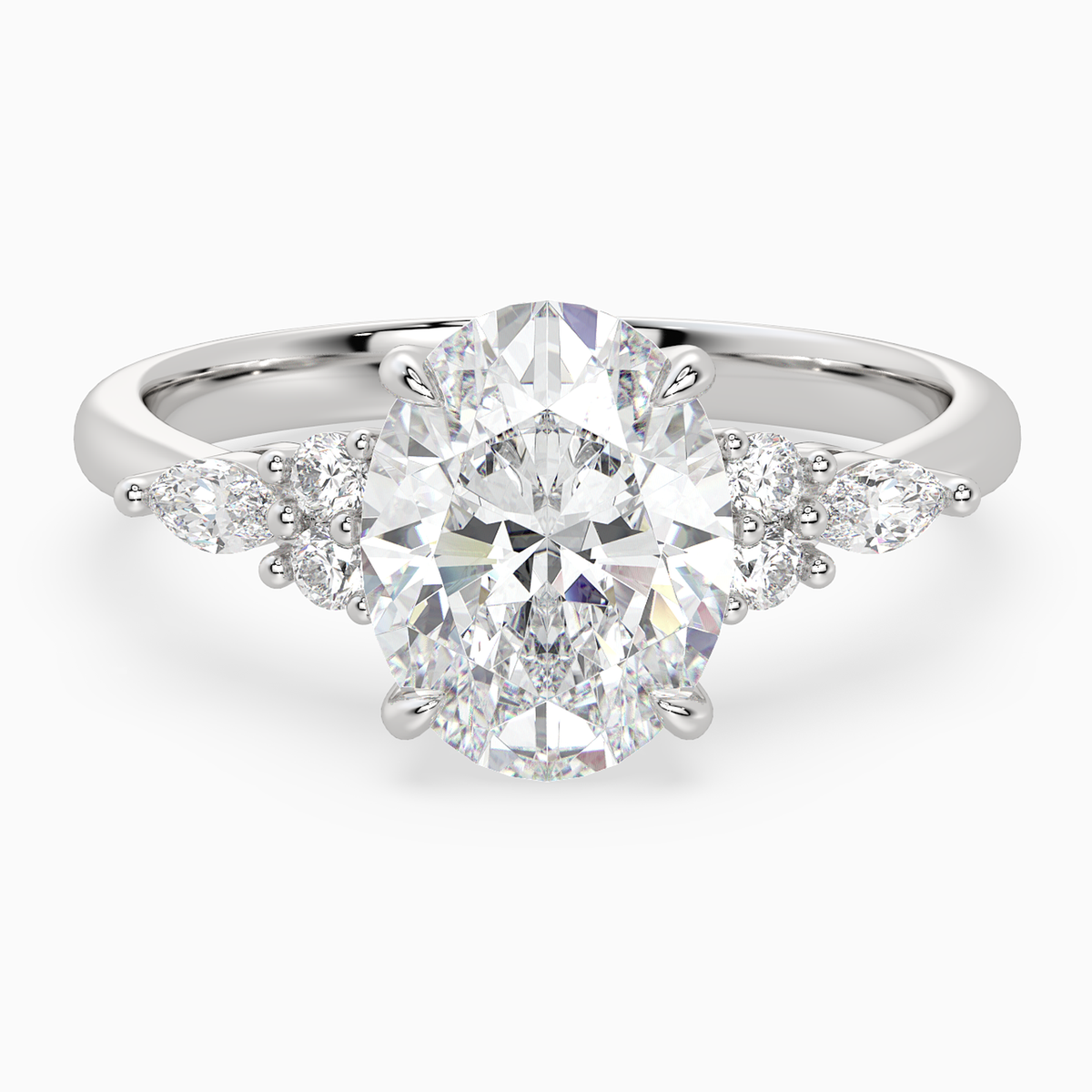


Lab Grown Diamond Solitaire Necklaces in 18K Yellow Gold
One diamond meets a fuller gold register. 18K yellow gold quietly carries outline, attachment, and chain line with considered presence.


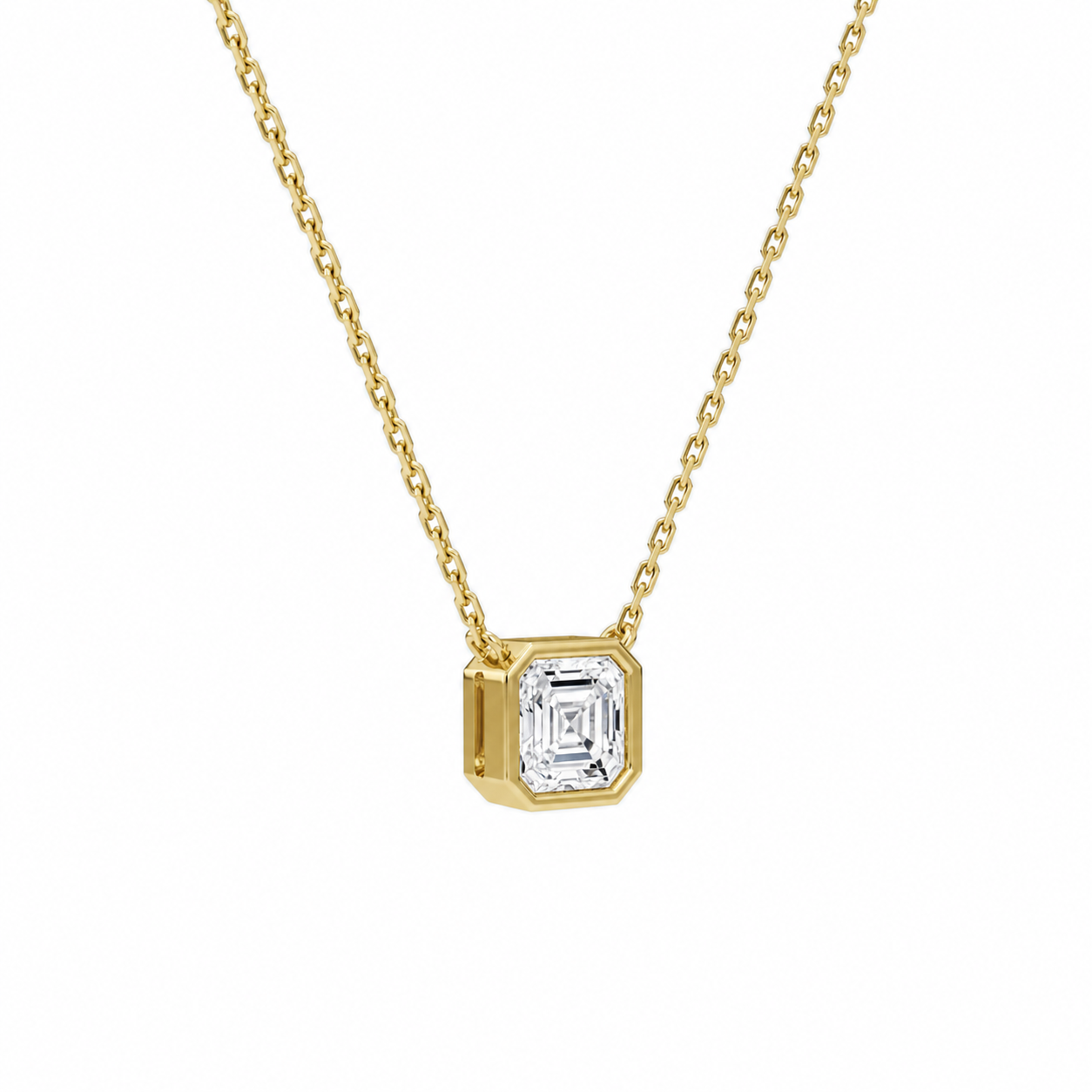


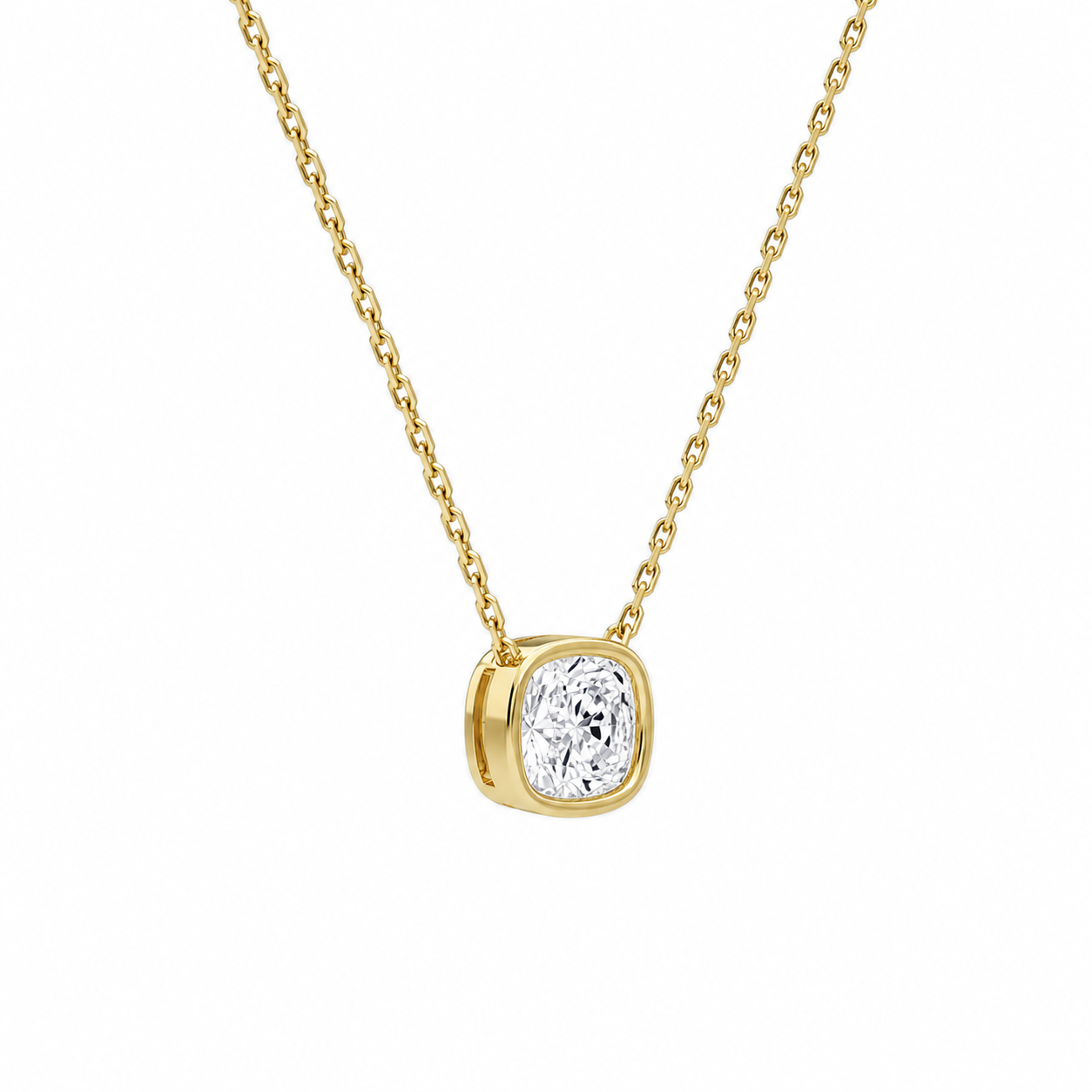


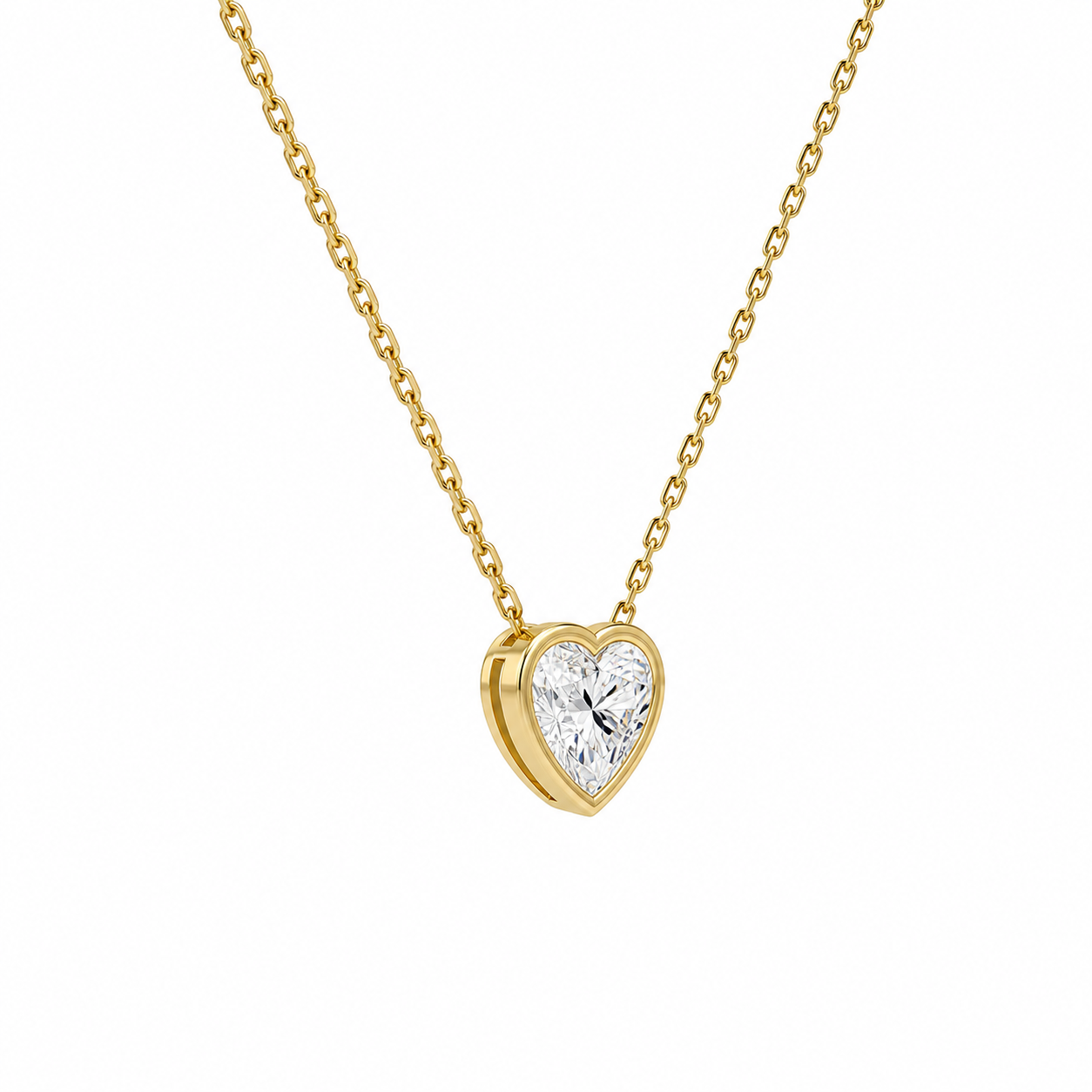


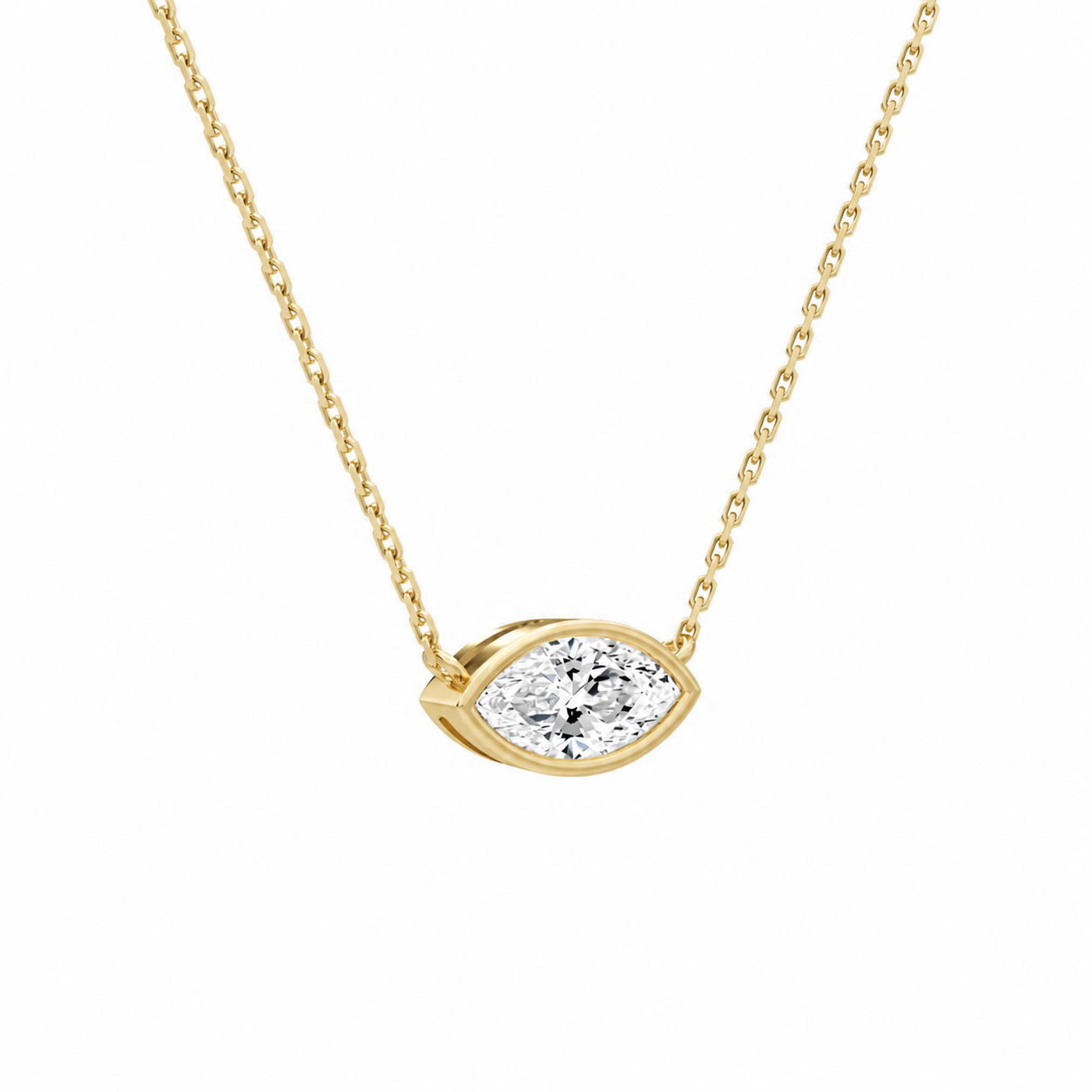


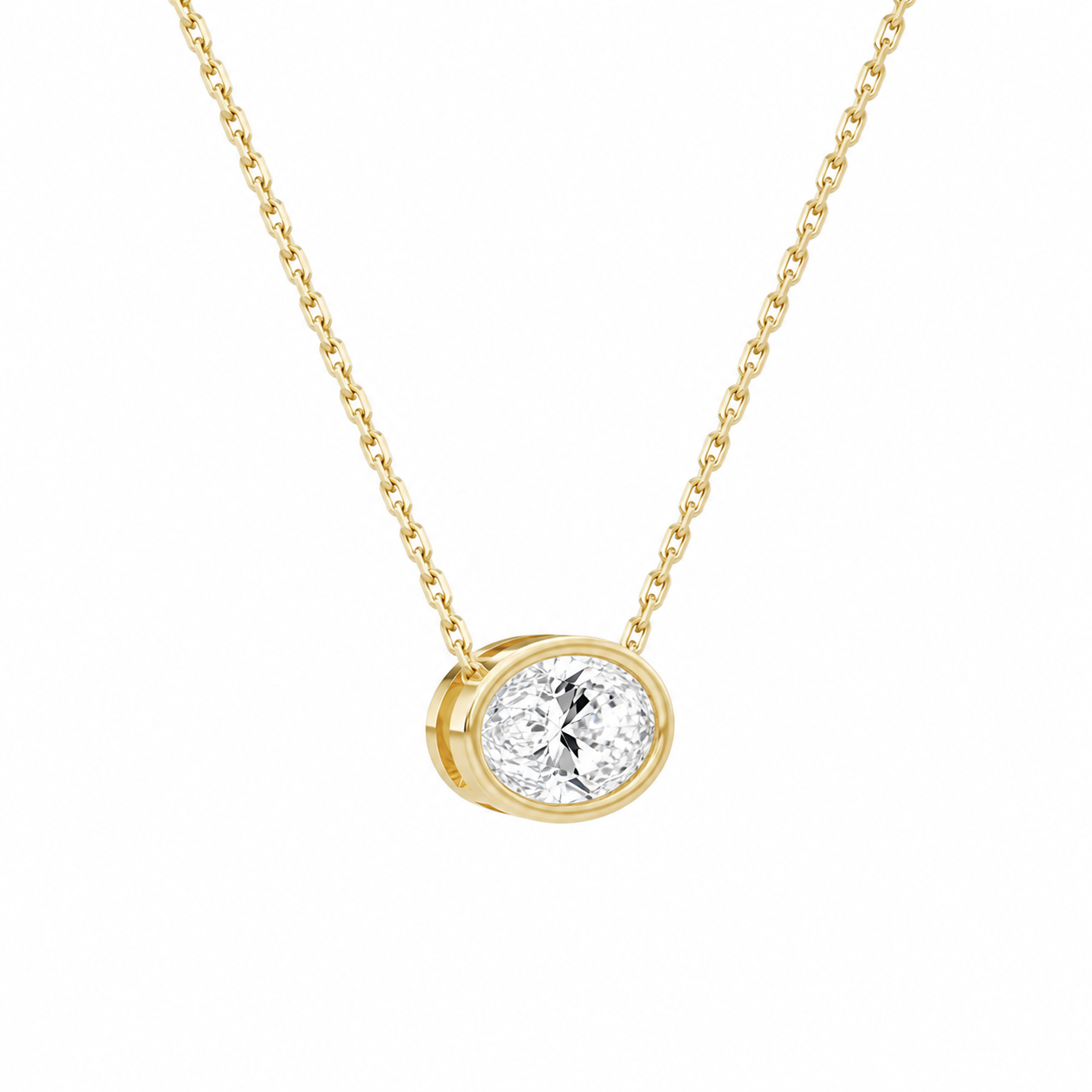


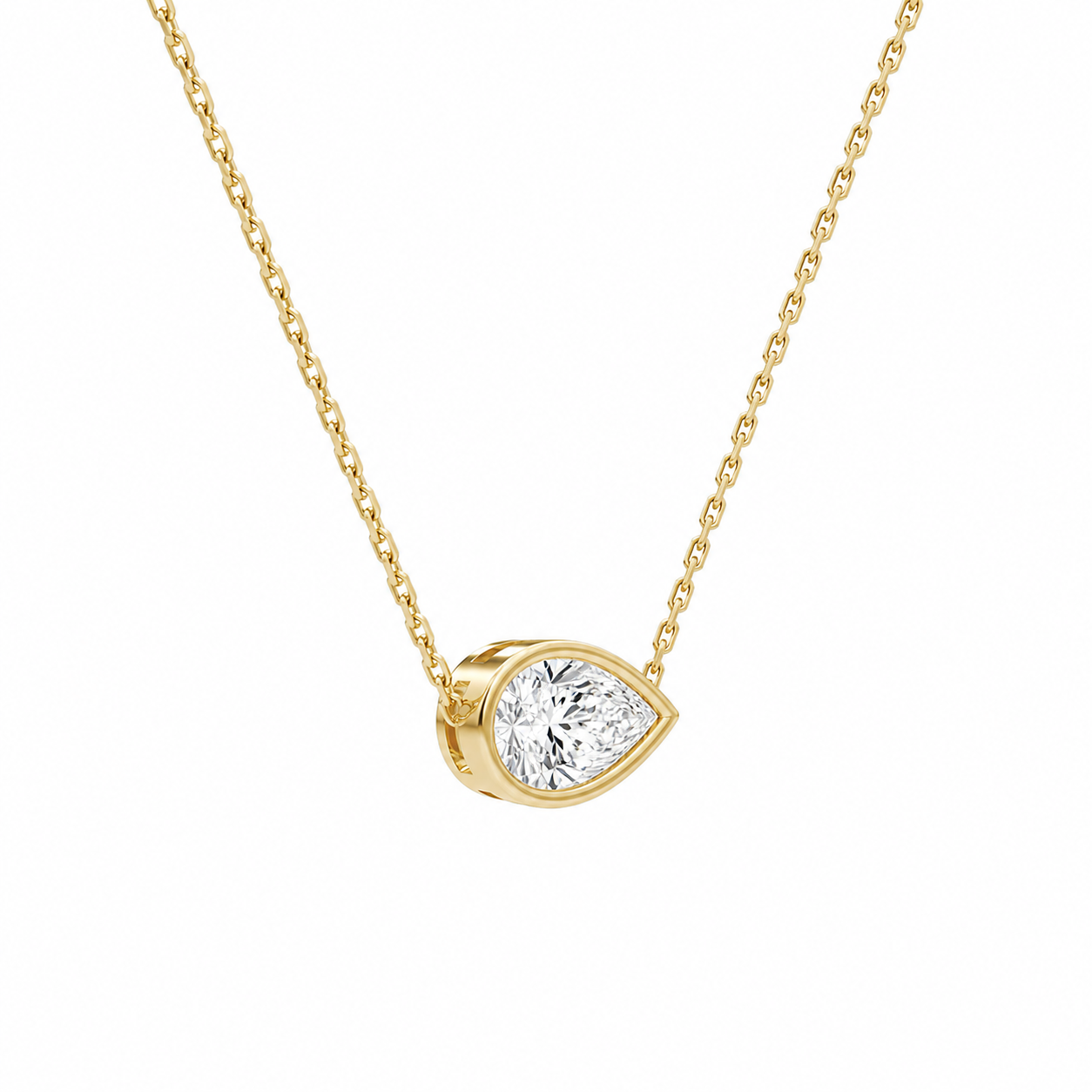


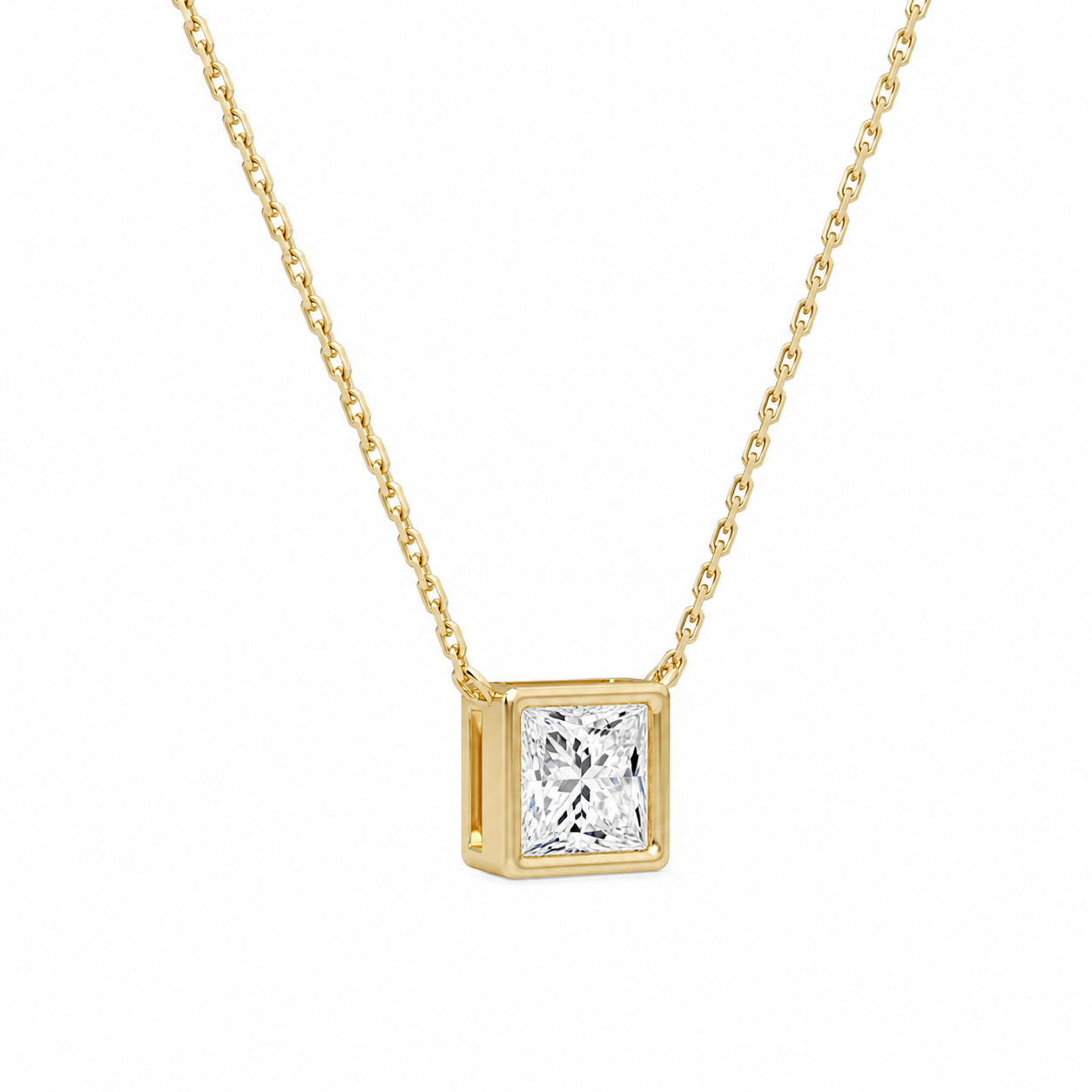


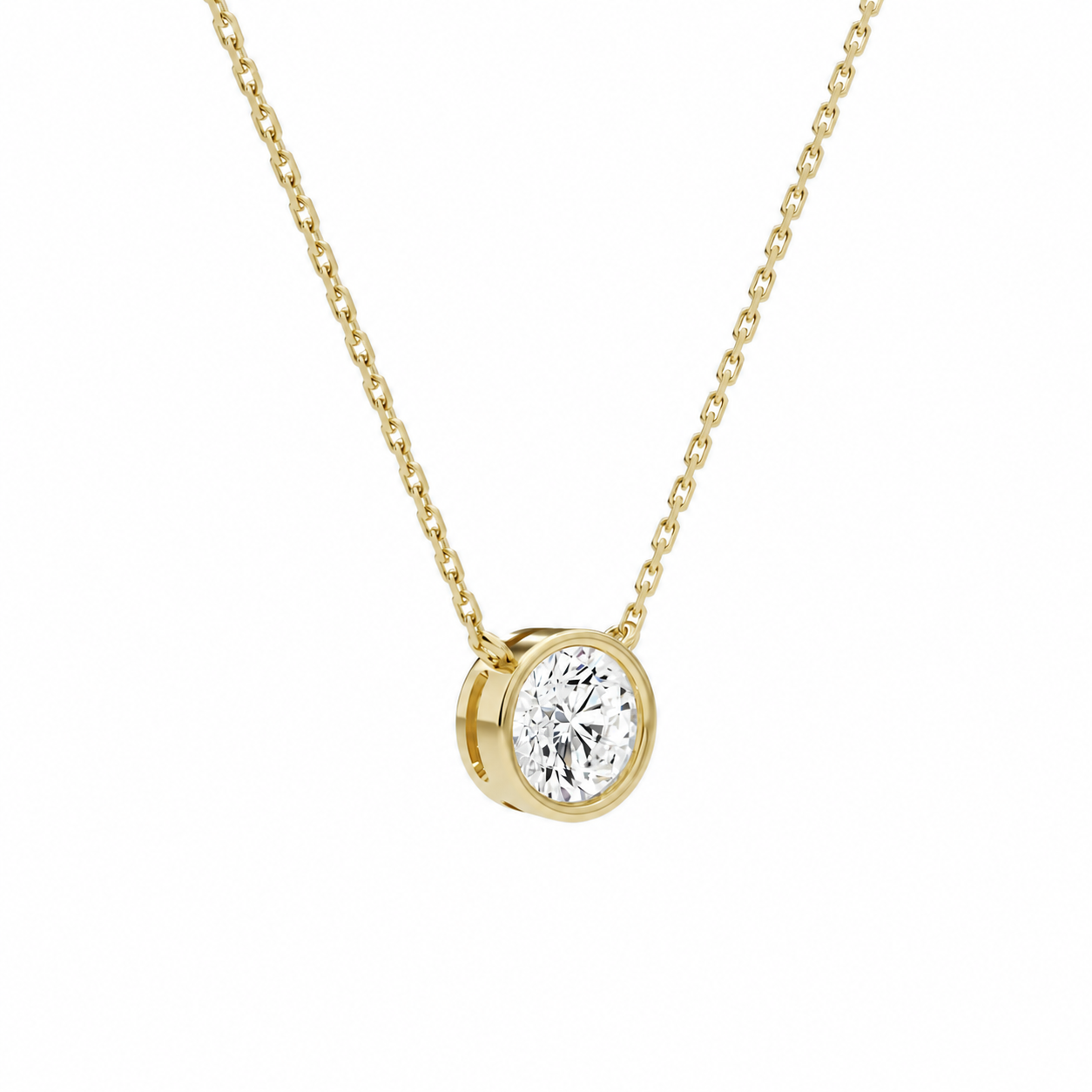


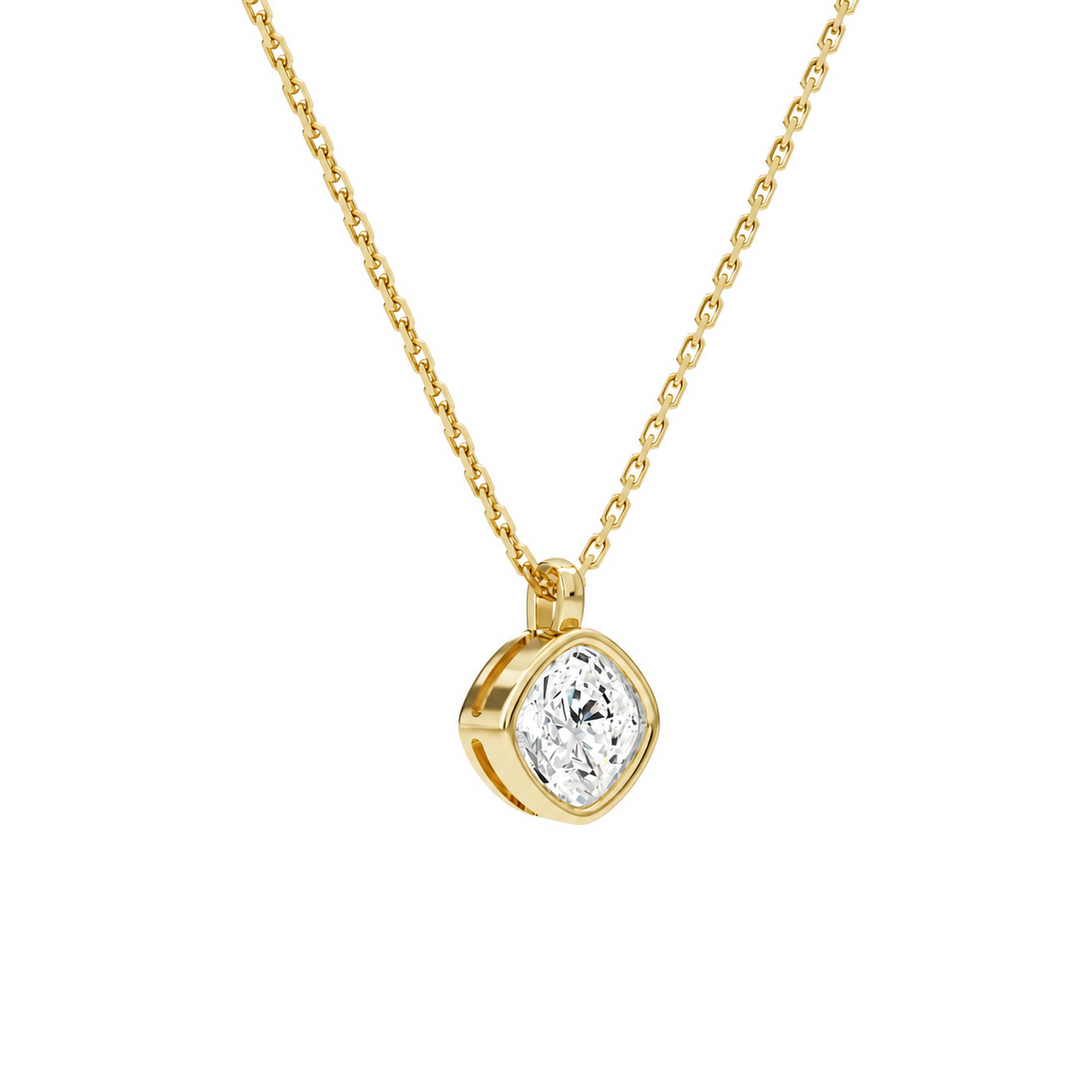

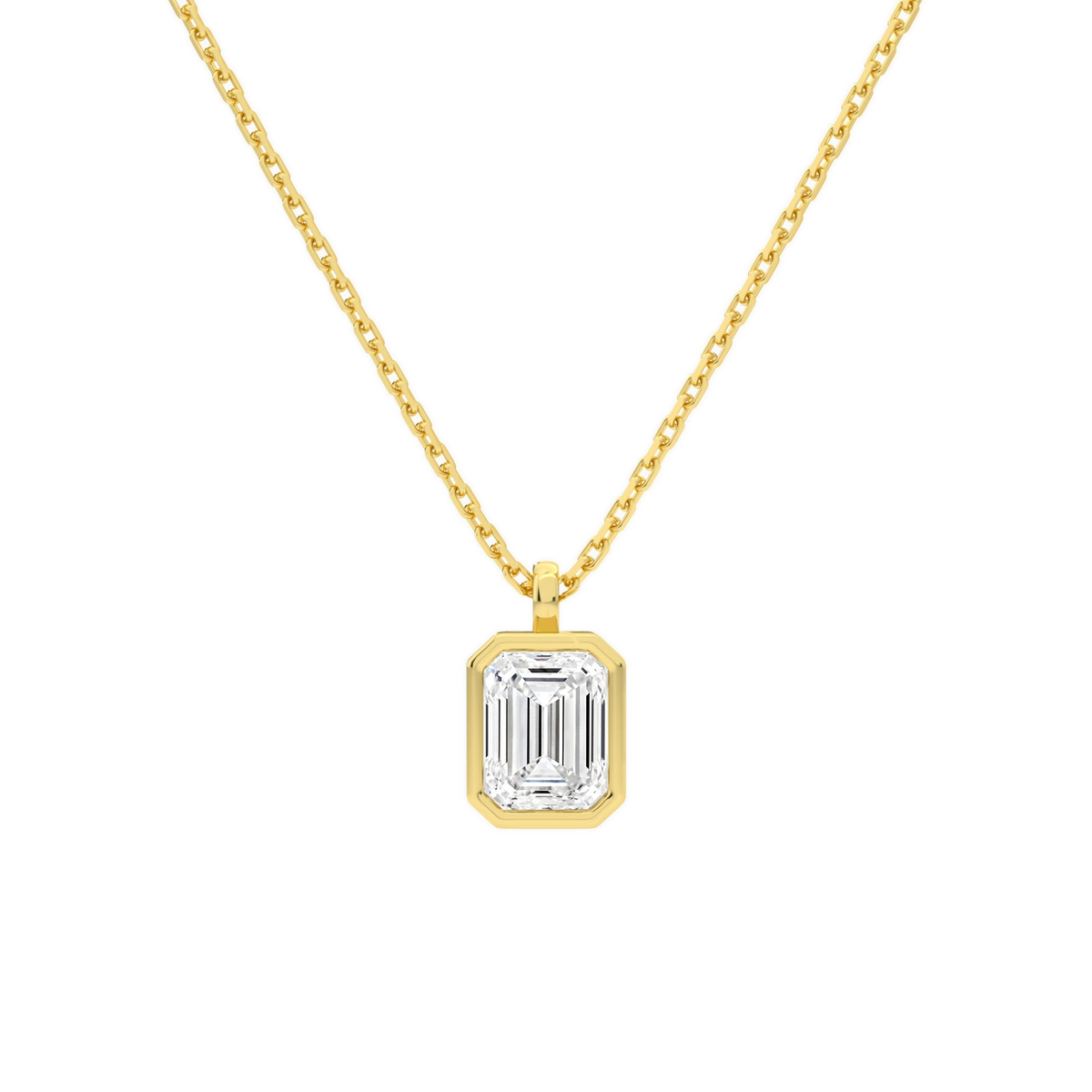
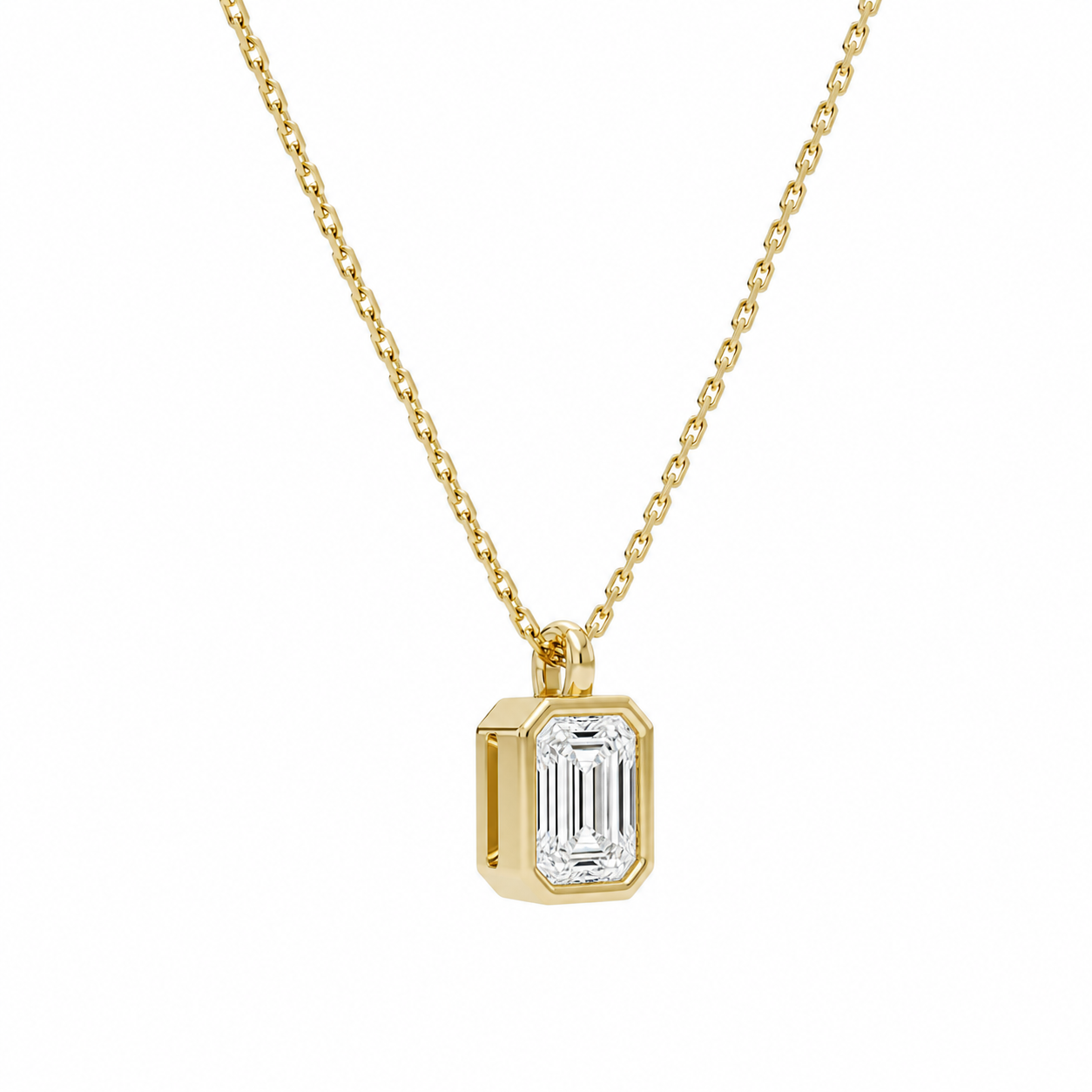


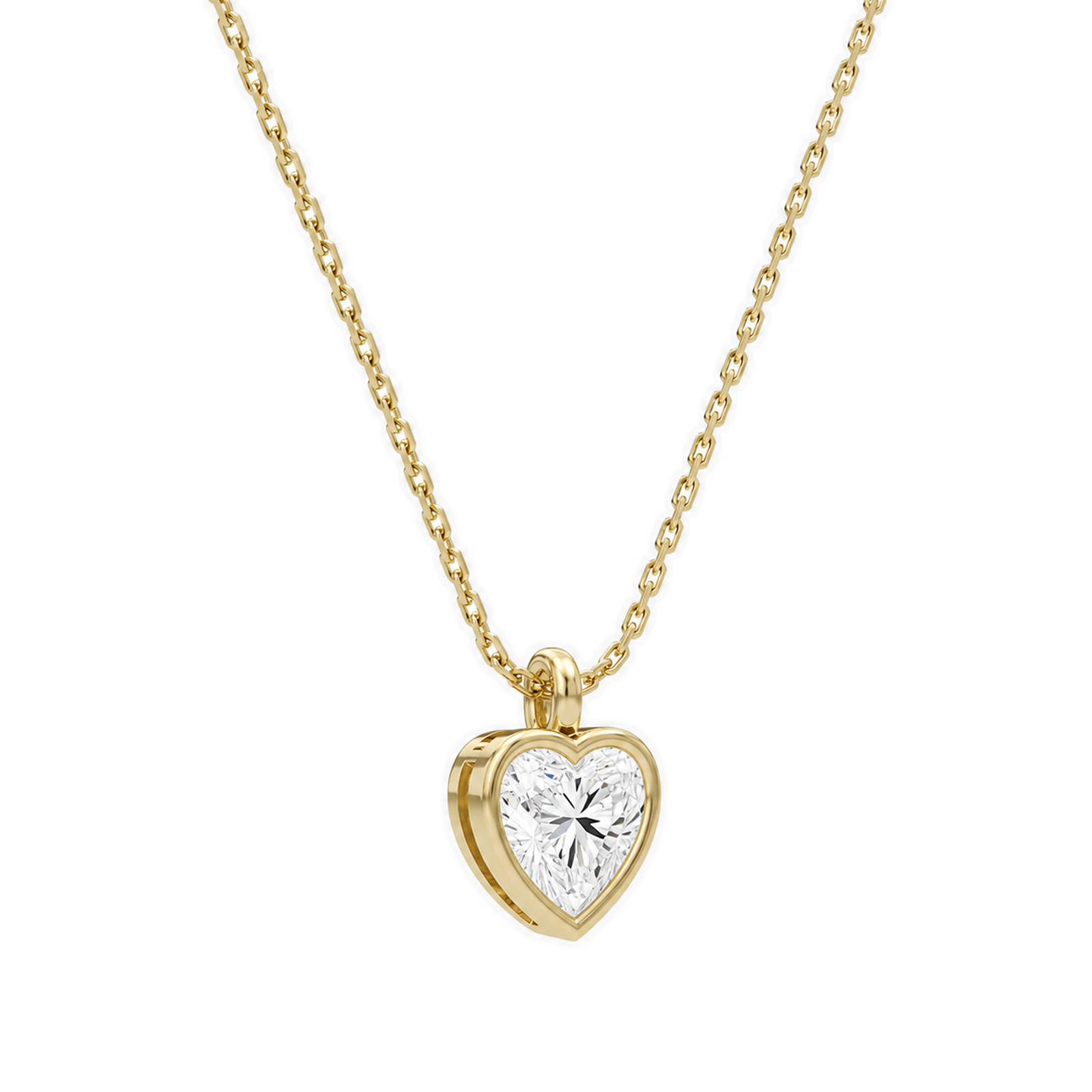


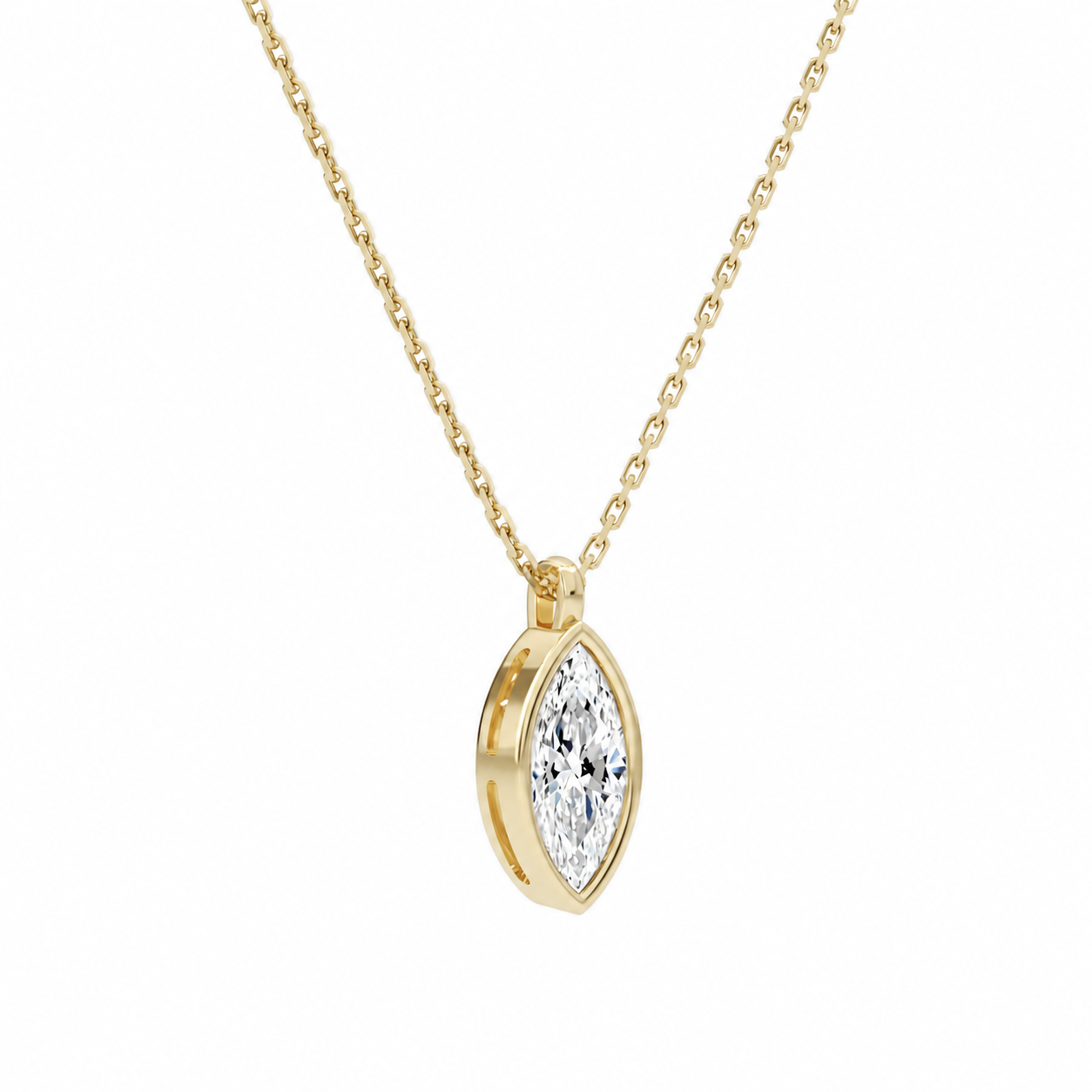


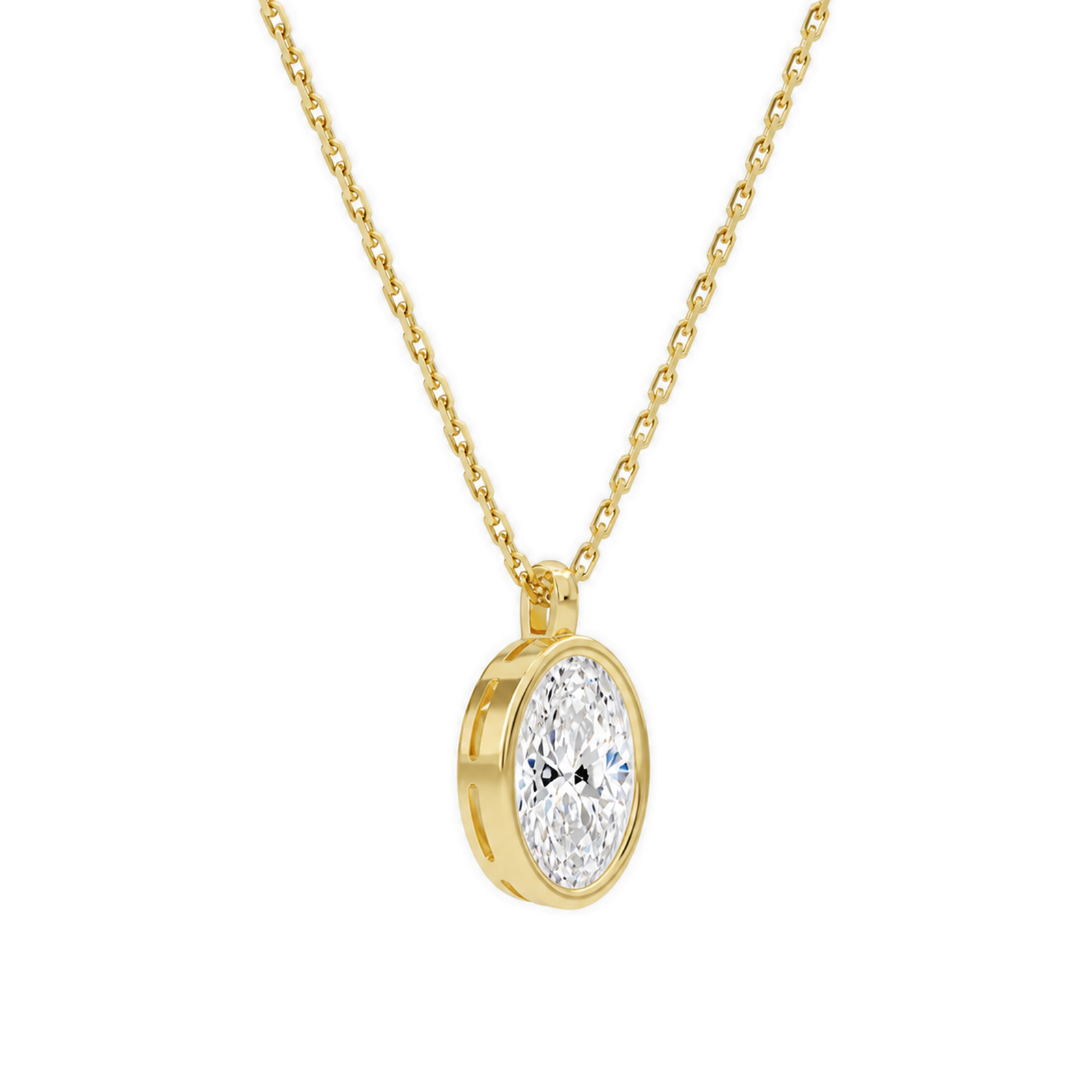


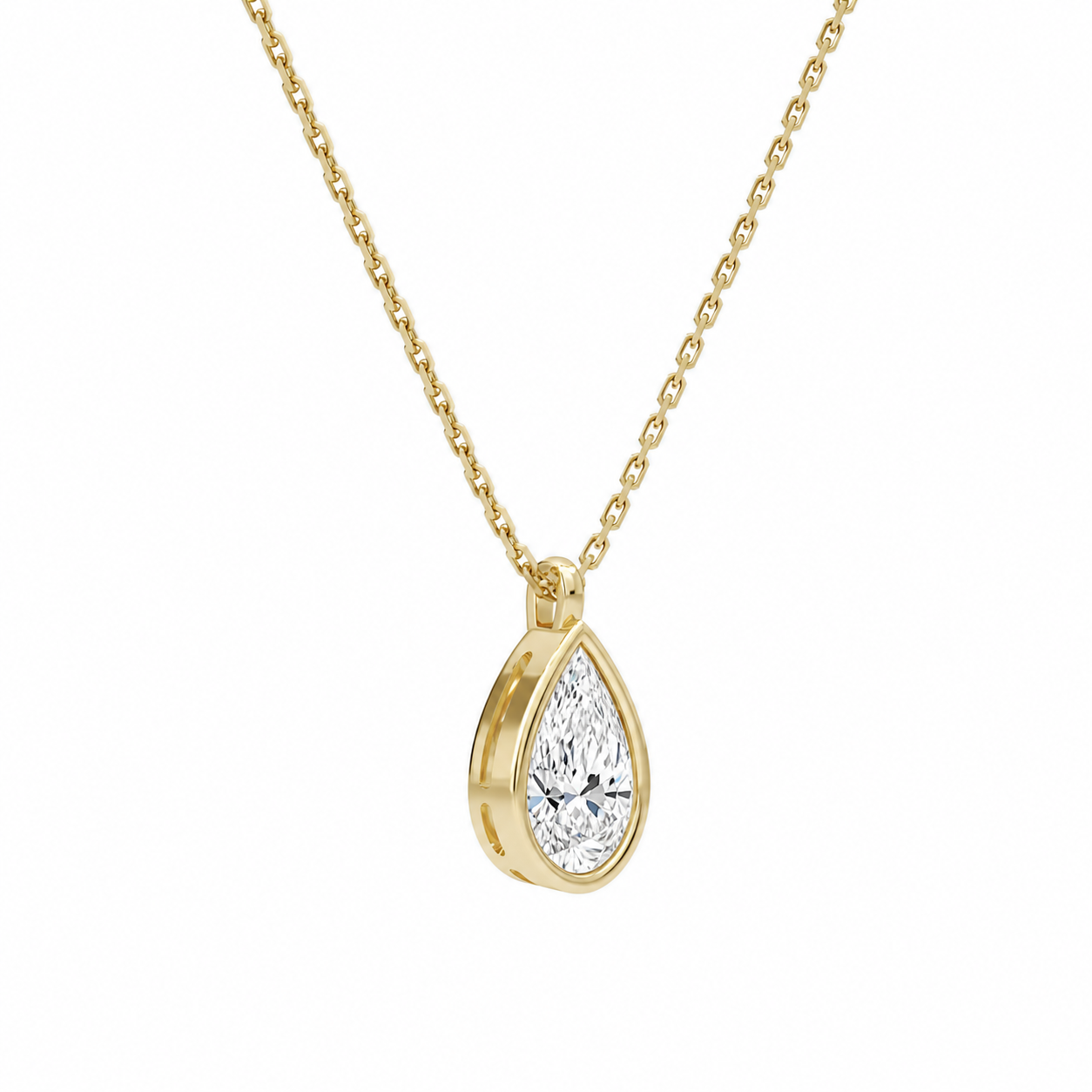


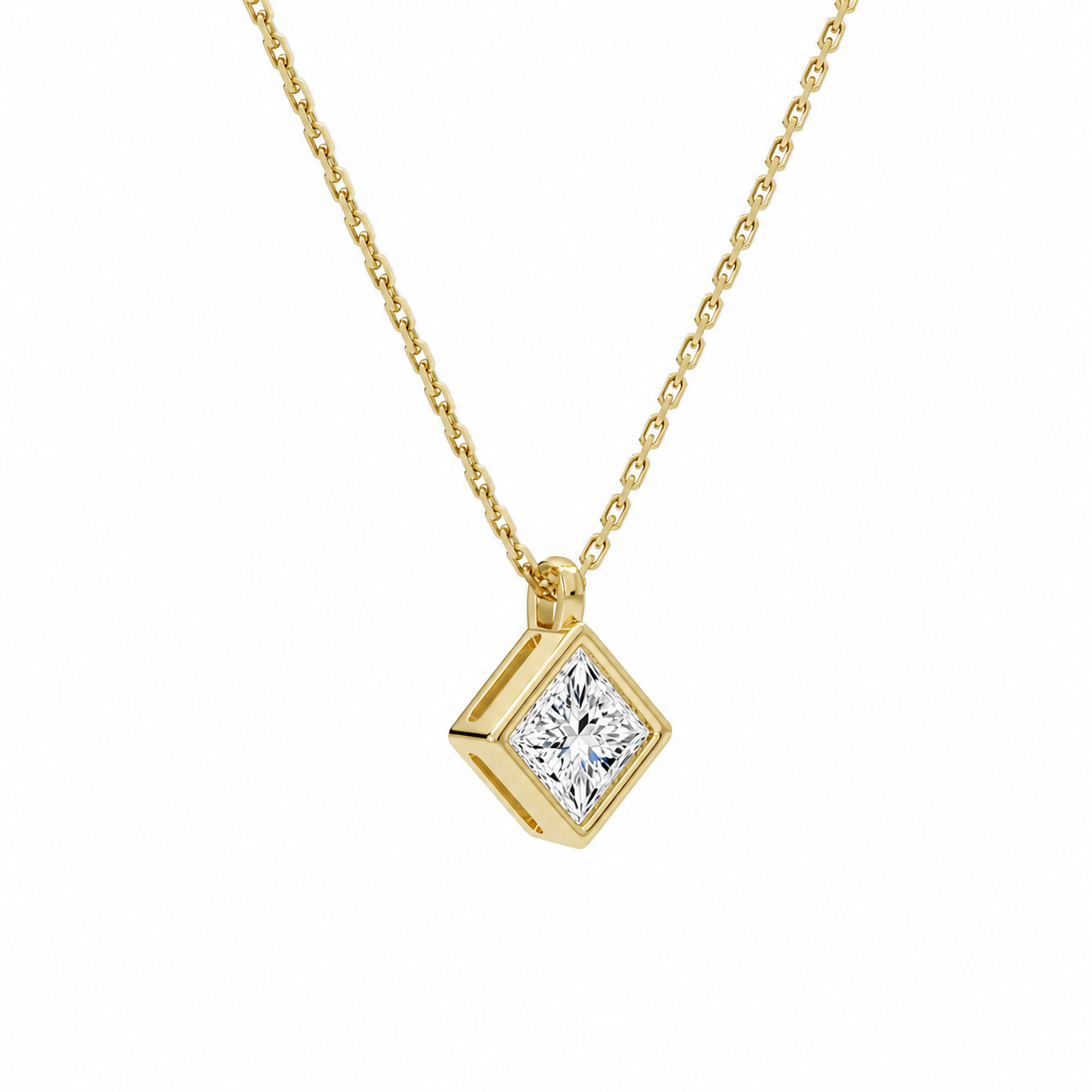


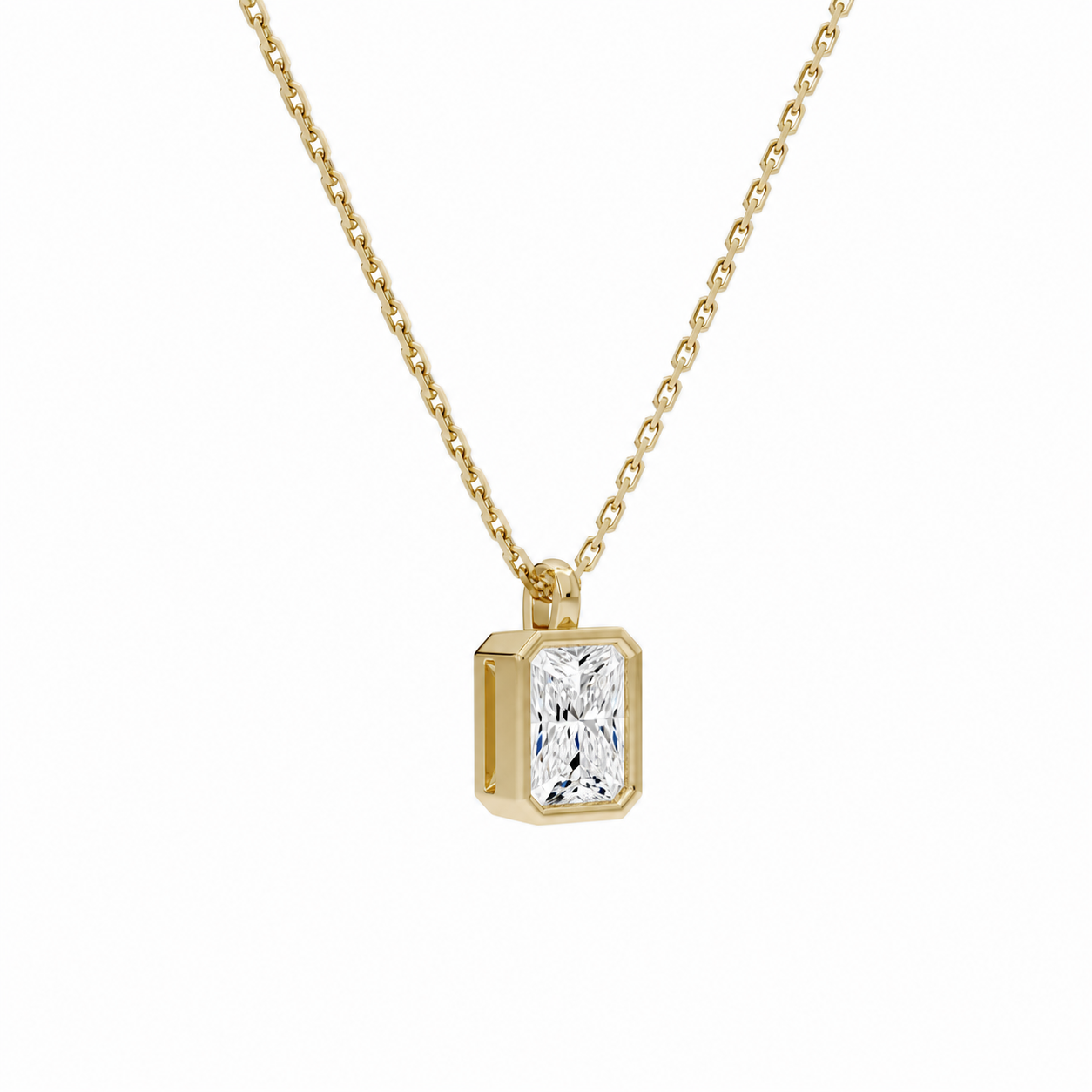


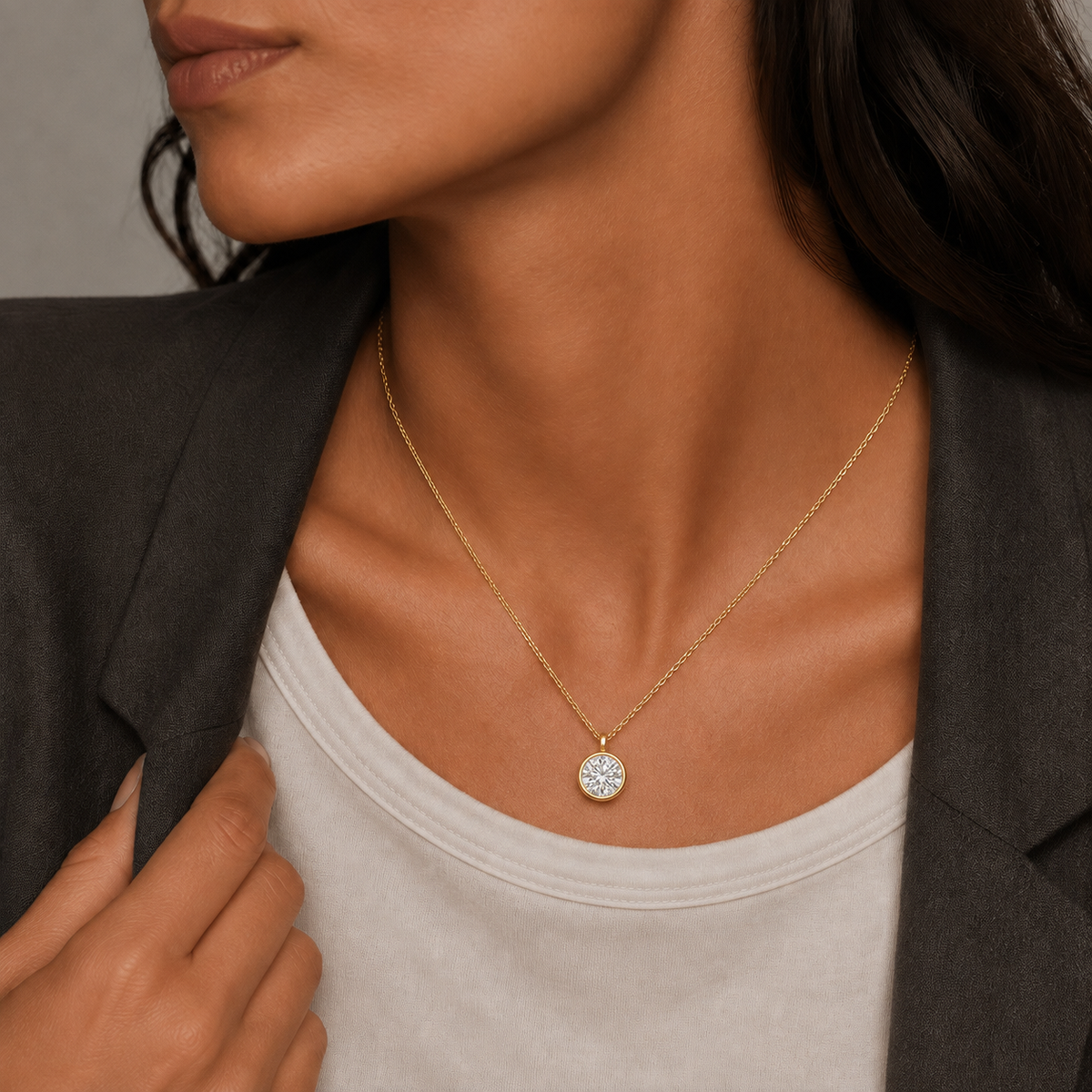

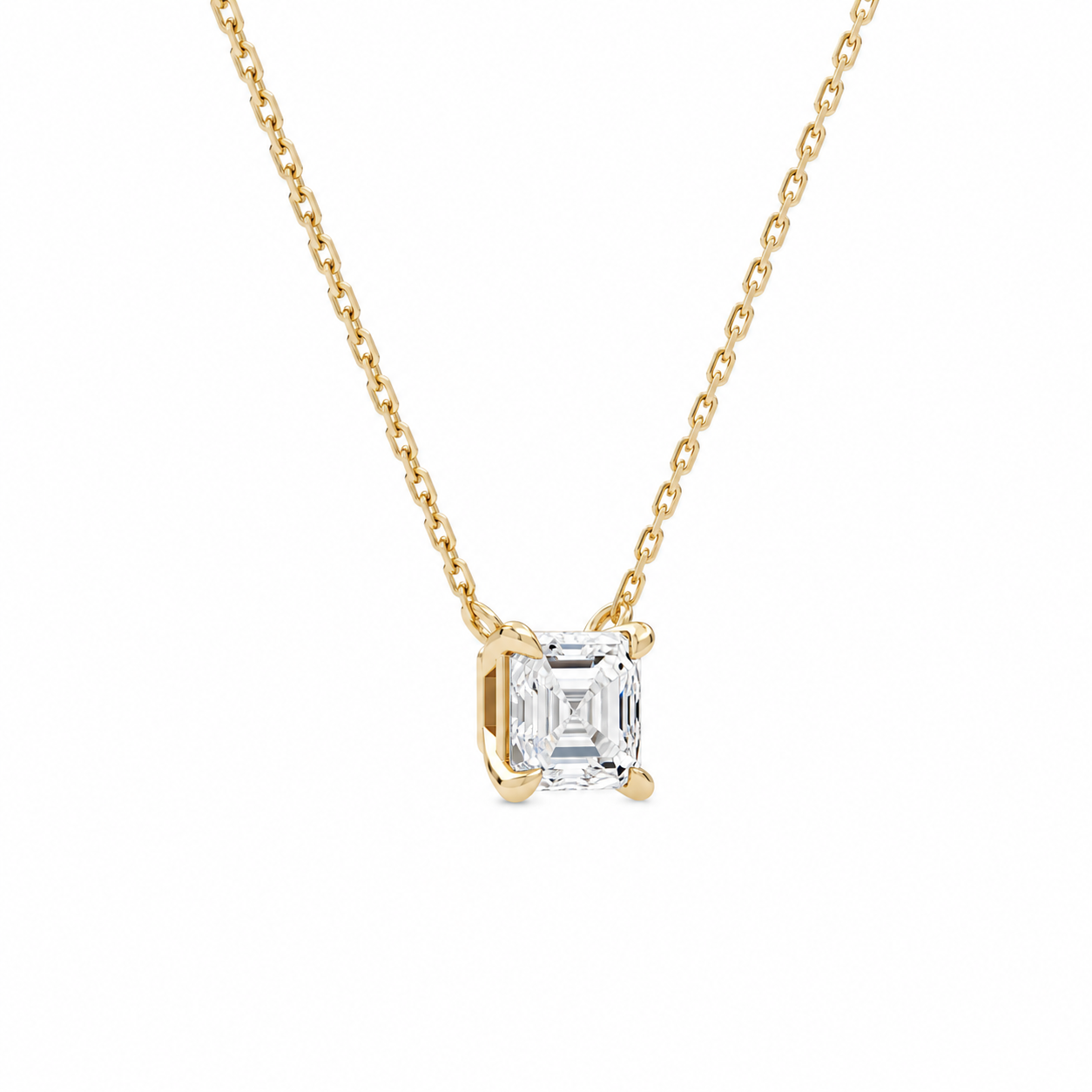


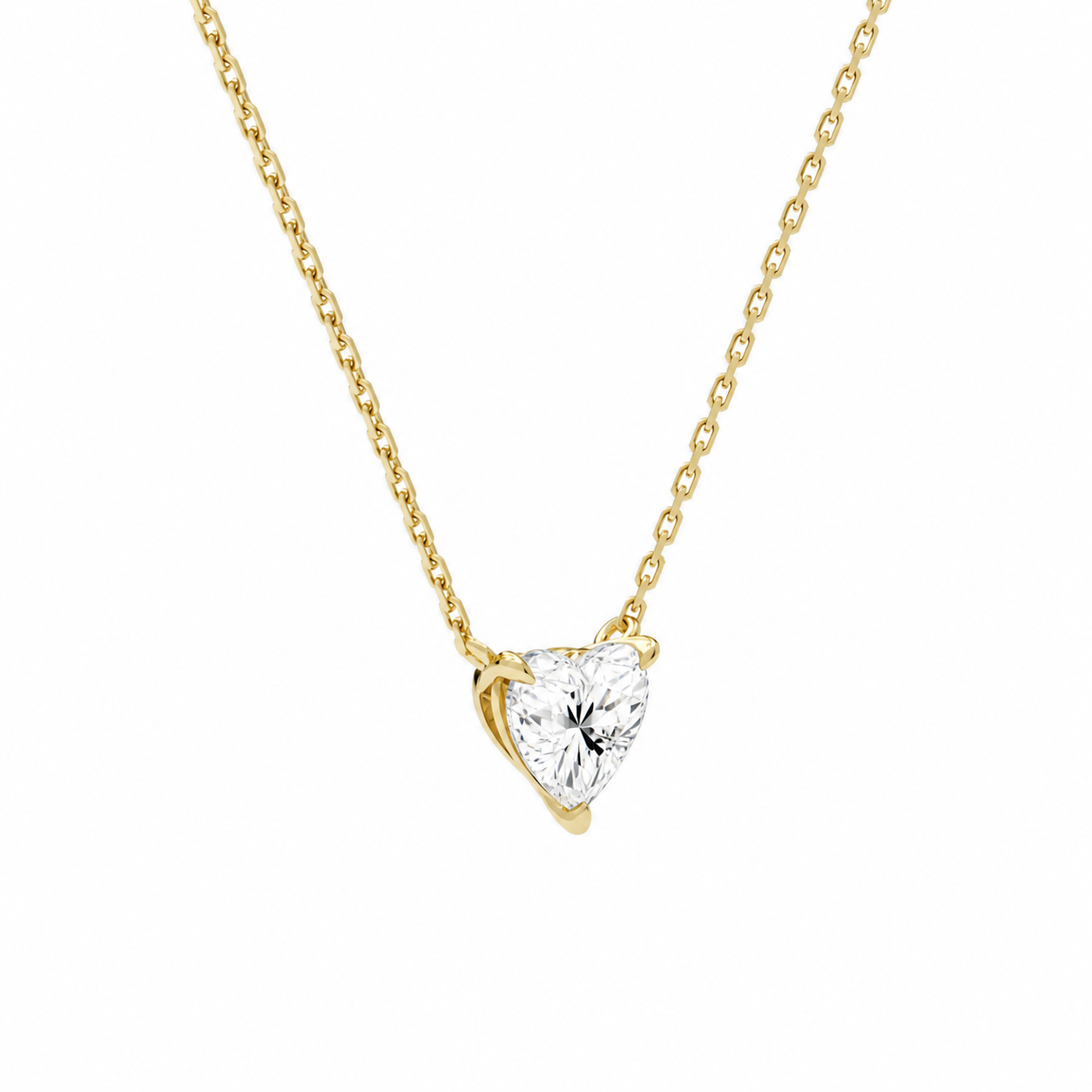

18K Yellow Gold Solitaire Necklaces: One Diamond within a Fuller Gold Field
18K Yellow Gold gives a solitaire an explicit material frame. A prong setting places gold at selected points around the outline; a bezel makes the perimeter continuous; a twist lengthens the transition into the chain. As the necklace moves, the center remains primary while gold carries the line into attachment, links, and clasp.
The 44 verified designs comprise 20 bezel, 20 prong, and three twist centerstone-led necklaces, plus one multi-diamond solitaire-cross outlier. All have normalized counterparts on the parent page. This child page owns 18K Yellow Gold interpretation, not exclusive assortment.
Let Seventy-Five Percent Gold Remain a Fact
An 18K alloy contains 75% gold. The remaining alloy, finish, metal volume, dimensions, lighting, and photography influence observed shade, density, behavior, and care. A higher gold proportion is not proof of greater luxury, strength, comfort, scratch resistance, security, finished weight, or suitability for continuous wear.
Visible gold can emphasize curves, corners, points, prongs, bezel edges, and the chain transition across ten shapes. It does not improve a diamond's grade, dimensions, facets, or light performance. Compare actual imagery, proportions, and measurements rather than assigning a fixed personality or value hierarchy to color.
Measure Presence at the Neckline
Centerstone carat and the cross outlier's Total Carat Weight refer to different scopes. Neither number alone establishes face-up presence. Setting width, center dimensions, profile, attachment, chain gauge, placement, and viewing distance complete the scale of the necklace.
All 44 descriptions list an adjustable 16–18-inch, 0.95-millimeter chain with lobster clasp. Exact position varies by neck circumference, neckline, attachment, and center distribution. Necklace and Pendant Necklace titles do not prove fixed or sliding construction, and no metal choice guarantees centering, stillness, or freedom from tangling.
A fuller visible field can make the transition above the center more prominent. Compare whether the attachment reads as a narrow pause, an extended bail, or an integrated route into the chain. That relationship affects vertical rhythm and movement without implying that one construction is universally more balanced, more substantial, or more appropriate for frequent wear.
Use Gold Presence without Overwriting the Center
A fuller gold field can connect a solitaire to another piece, but coordination need not mean identical color. Repeating a shape, setting geometry, or chain line can keep mixed metals resolved. Yellow Gold is not inherently formal, traditional, masculine, feminine, or suited to one skin tone; the complete composition and wearer decide its effect.
Burvonti uses responsibly sourced lab-grown diamonds with considered calibration. Independent grading or certification applies within document scope. Custom possibilities may refine shape, proportion, scale, setting, twist, attachment, metal, chain, or length when feasible. Clean gently, keep the chain untangled in storage, and inspect the center, connection, links, and clasp if orientation changes.
Frequently Asked Questions
How does this page differ from the parent Solitaire Necklace Collection?
It focuses on 18K Yellow Gold composition and visible material presence from setting edge through chain.
Are all 44 products single-diamond necklaces?
No. Forty-three are centerstone-led; one solitaire-cross outlier contains several diamonds and uses Total Carat Weight.
Which settings are represented?
The set includes 20 bezel, 20 prong, three prong-set twist designs, and one cross outlier.
How much gold is in 18K Yellow Gold?
18K gold contains 75% gold; the remaining alloy influences final shade and working behavior.
Are all 18K yellow gold necklaces the same shade?
No. Alloy, finish, dimensions, lighting, photography, and exposed area affect appearance.
Is 18K Yellow Gold automatically heavier than 14K?
No. Finished weight also depends on size, metal volume, setting, chain, clasp, center, and length.
Is 18K Yellow Gold more durable or luxurious?
Karat is a composition fact, not proof of whole-piece durability, superiority, or value.
Which ten shapes are included?
Round, Oval, Cushion, Pear, Princess, Emerald, Marquise, Asscher, Radiant, and Heart.
Does Yellow Gold improve diamond brilliance?
No. It changes surrounding color and boundary, not diamond dimensions, facets, or grade.
How do prong and bezel settings differ?
Prongs create separate gold points; a bezel forms a continuous edge. Neither is universally better.
What is the difference between Centerstone and Total Carat Weight?
Centerstone concerns one principal diamond; Total Carat Weight may combine several, as on the cross outlier.
What chain details are listed?
All 44 descriptions list adjustable 16–18 inches, a 0.95-millimeter chain, and a lobster clasp.
Will the necklace stay centered?
Not universally. Attachment, geometry, distribution, drape, movement, clothing, and condition affect orientation.
Can 18K Yellow Gold be layered or mixed with metals?
Yes aesthetically. Compare spacing, scale, shape, chain contact, and movement; tangling cannot be ruled out.
Can 18K Yellow Gold cause sensitivity?
Sensitivity depends on the exact alloy and wearer; karat and color do not establish a universal result.
What customization and care are possible?
Shape, scale, setting, attachment, chain, or length may be possible after review. Clean gently and inspect every connection.