
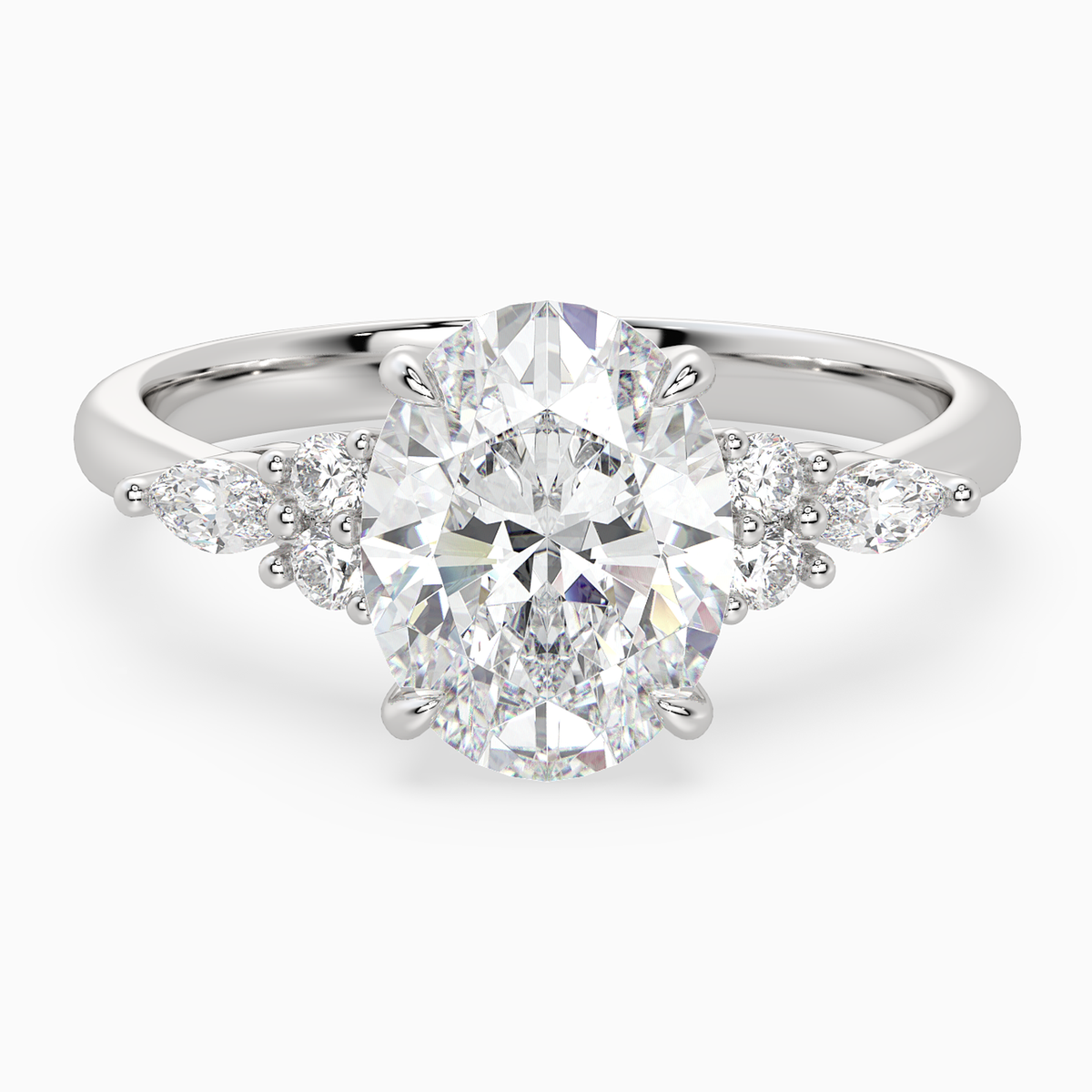


Solitaire Engagement Rings
The diamond, given room to speak. Burvonti solitaire settings refine prong, profile, band and proportion around a single center-stone focus.


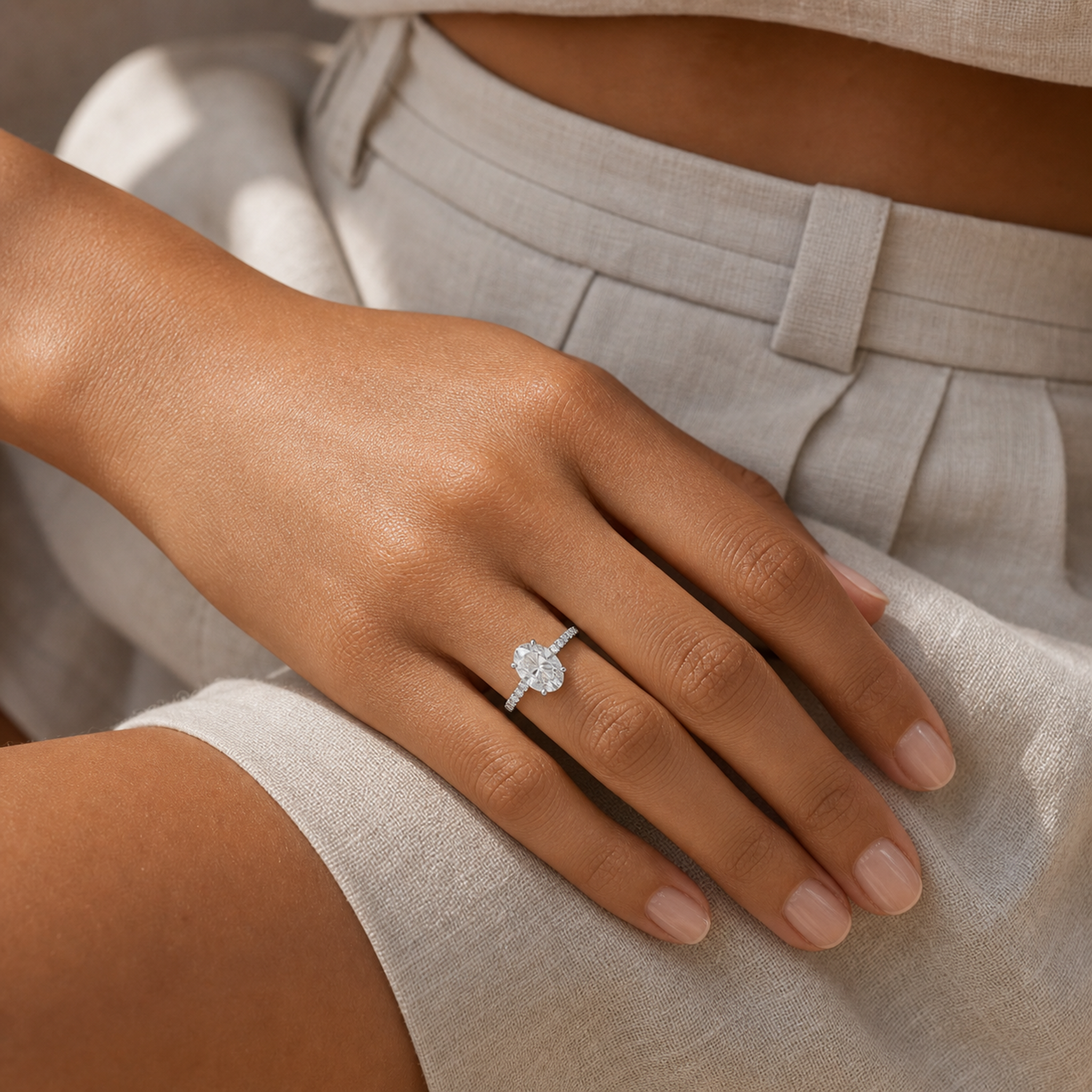


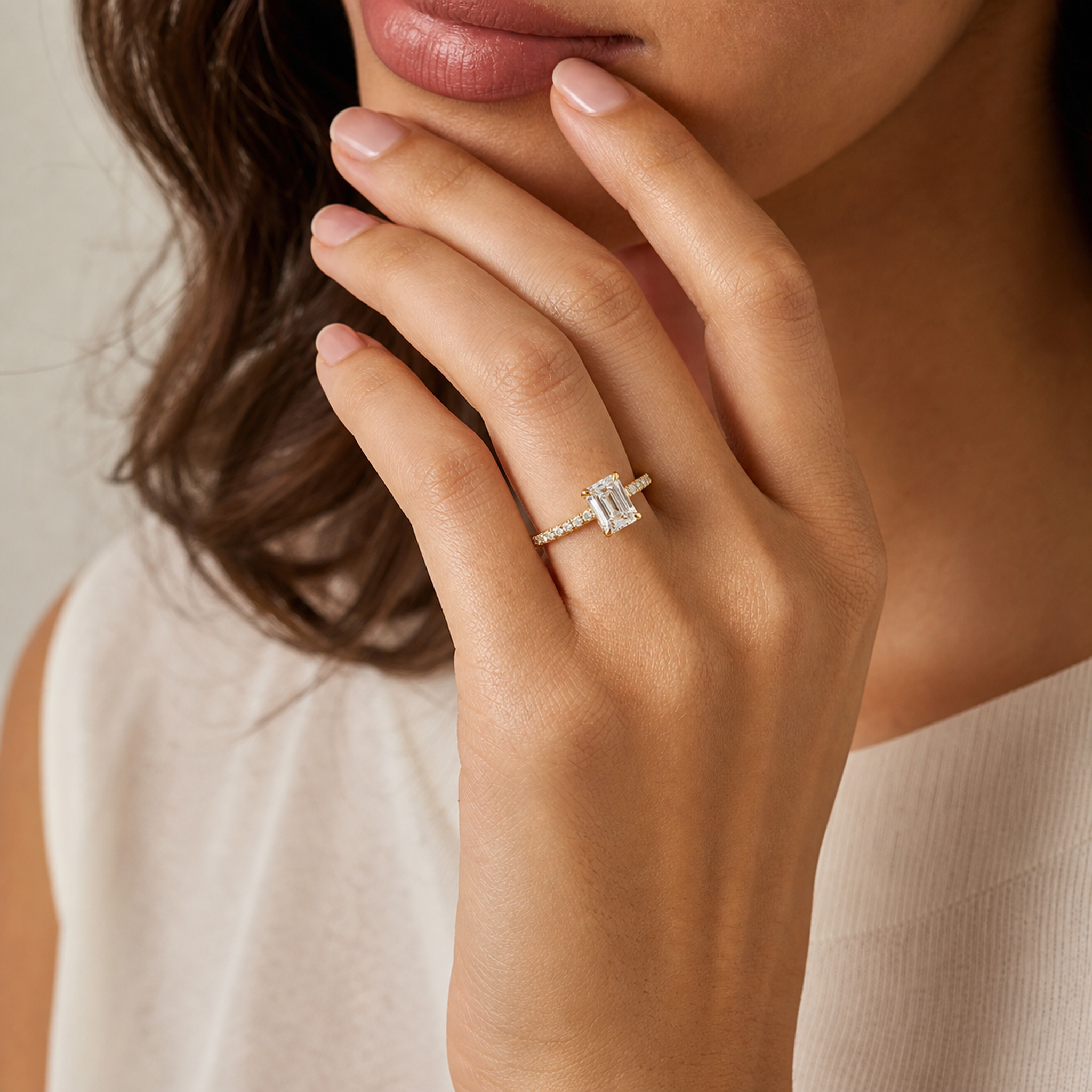


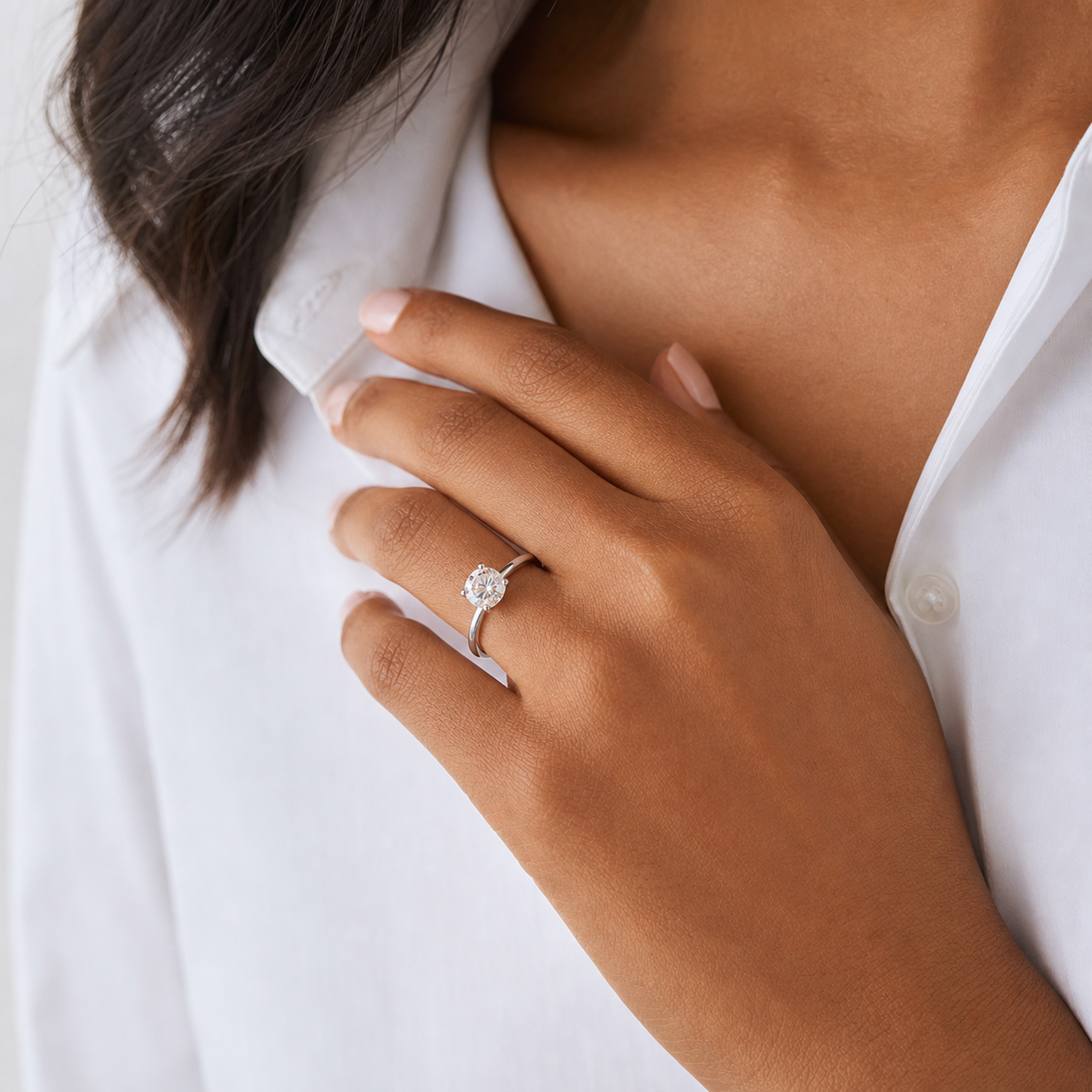


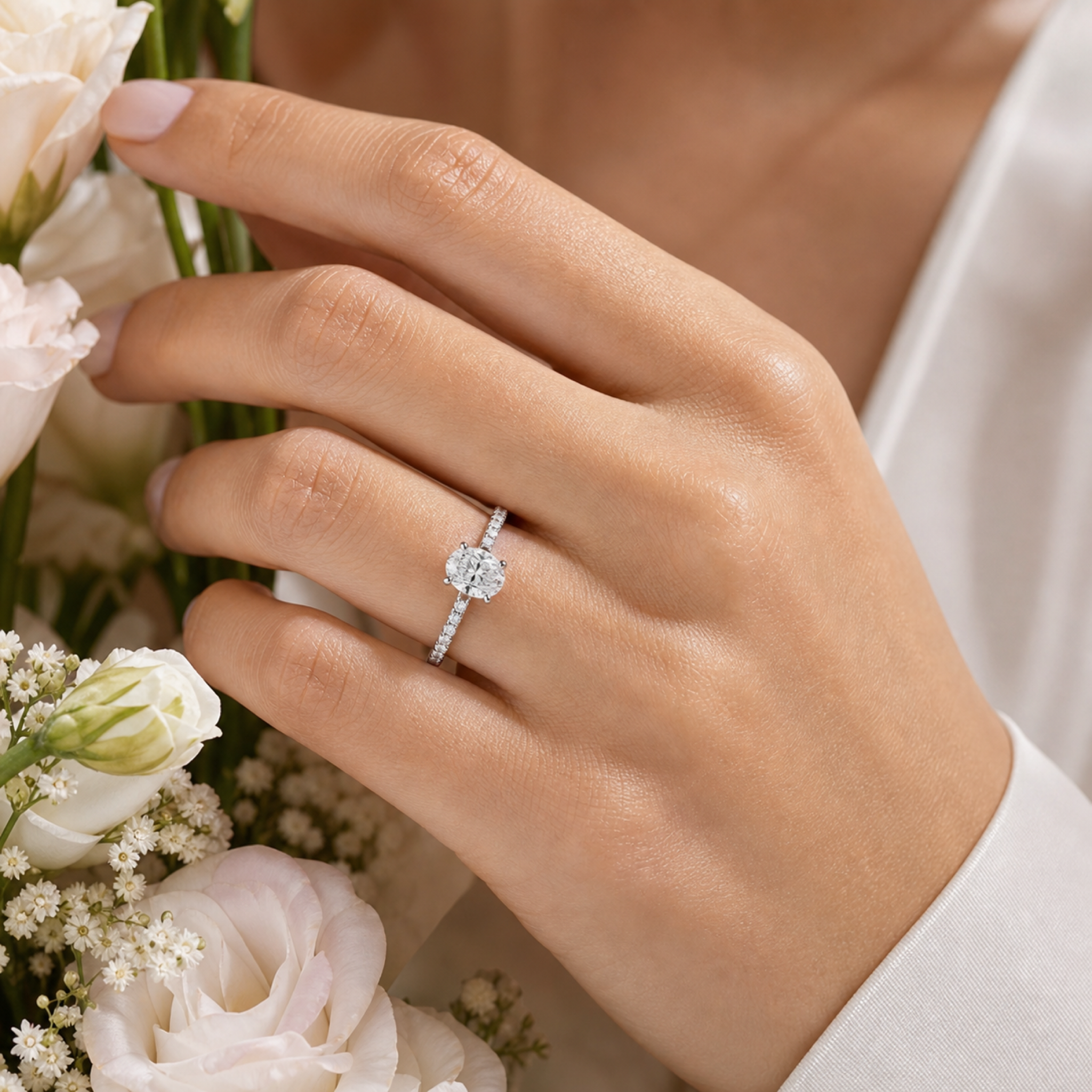


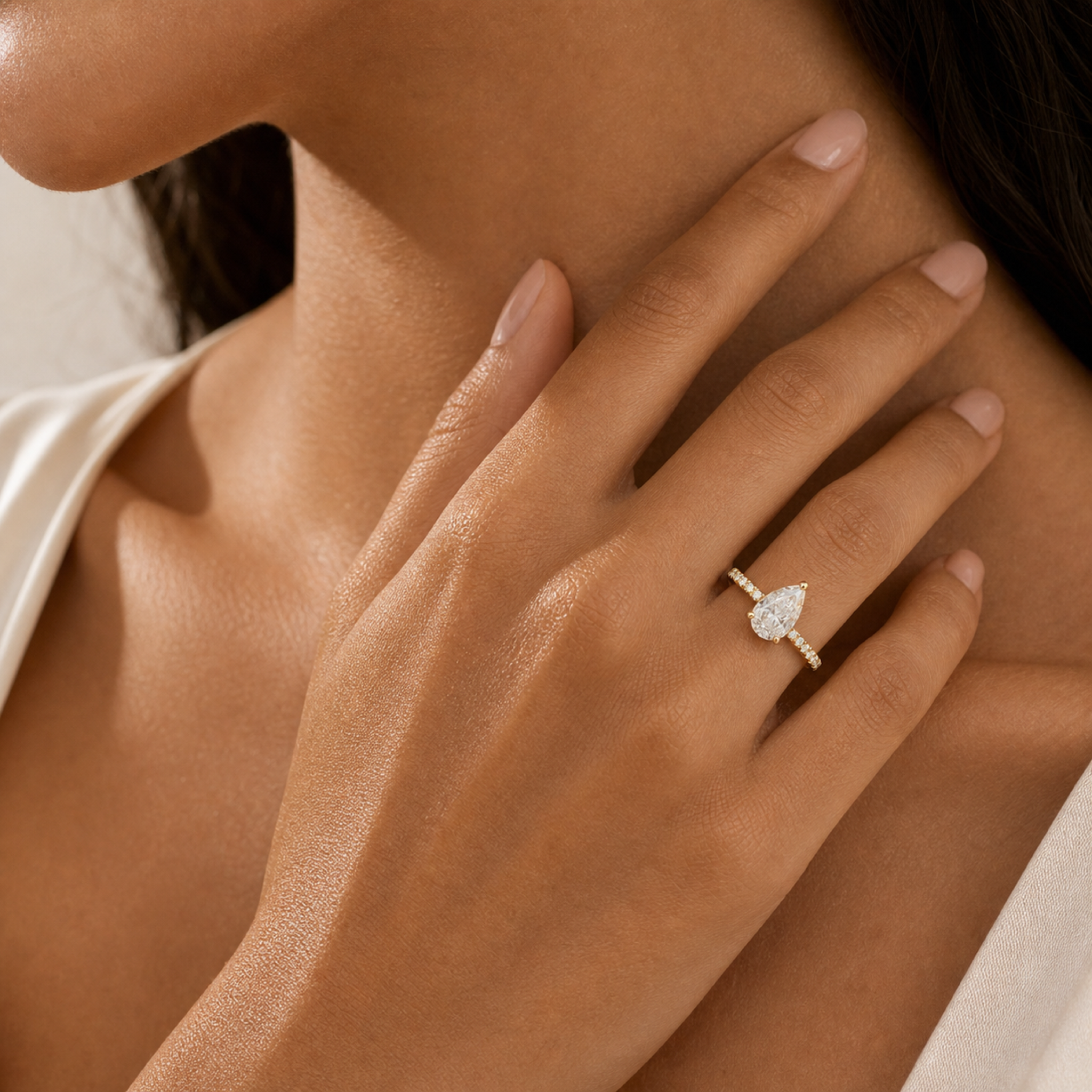


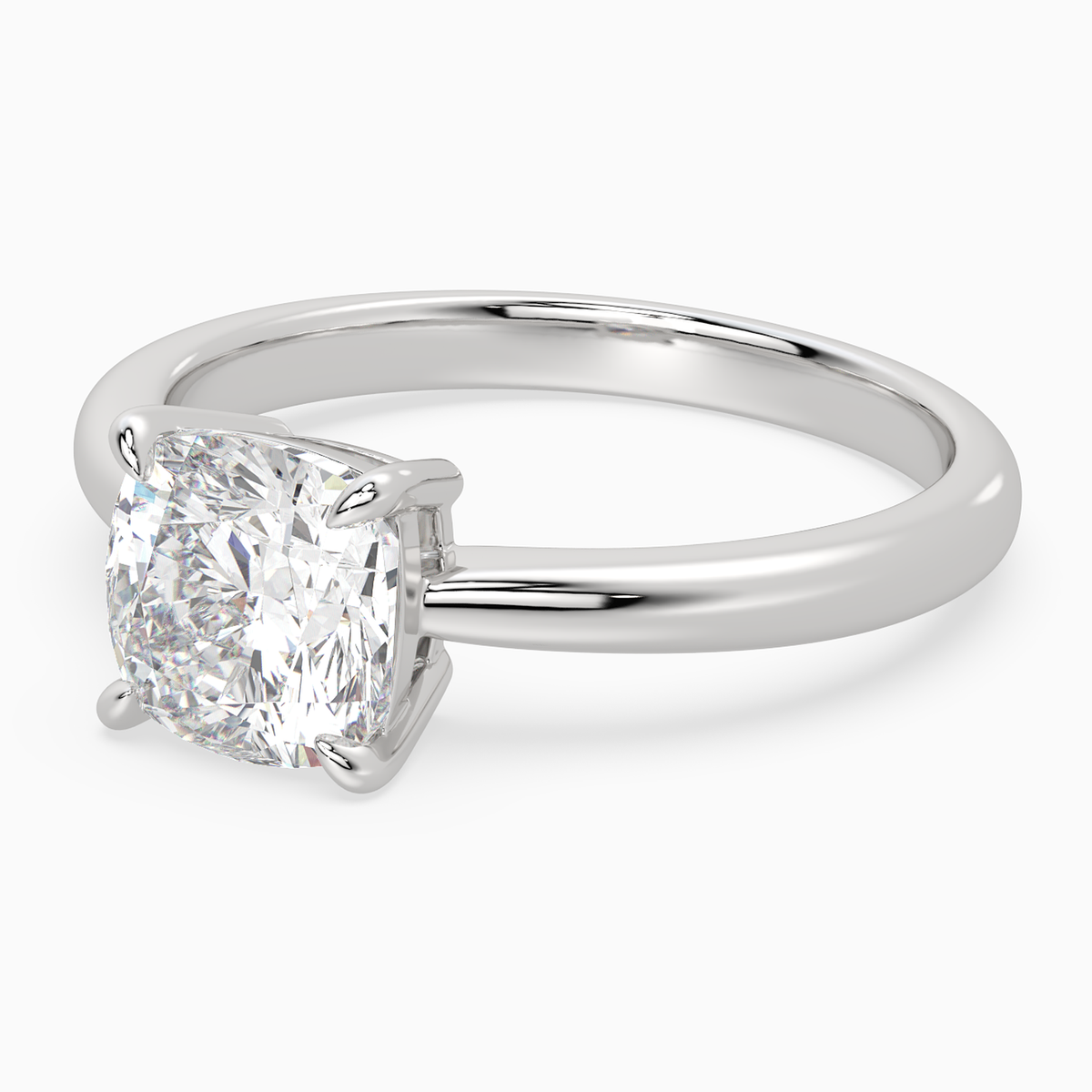


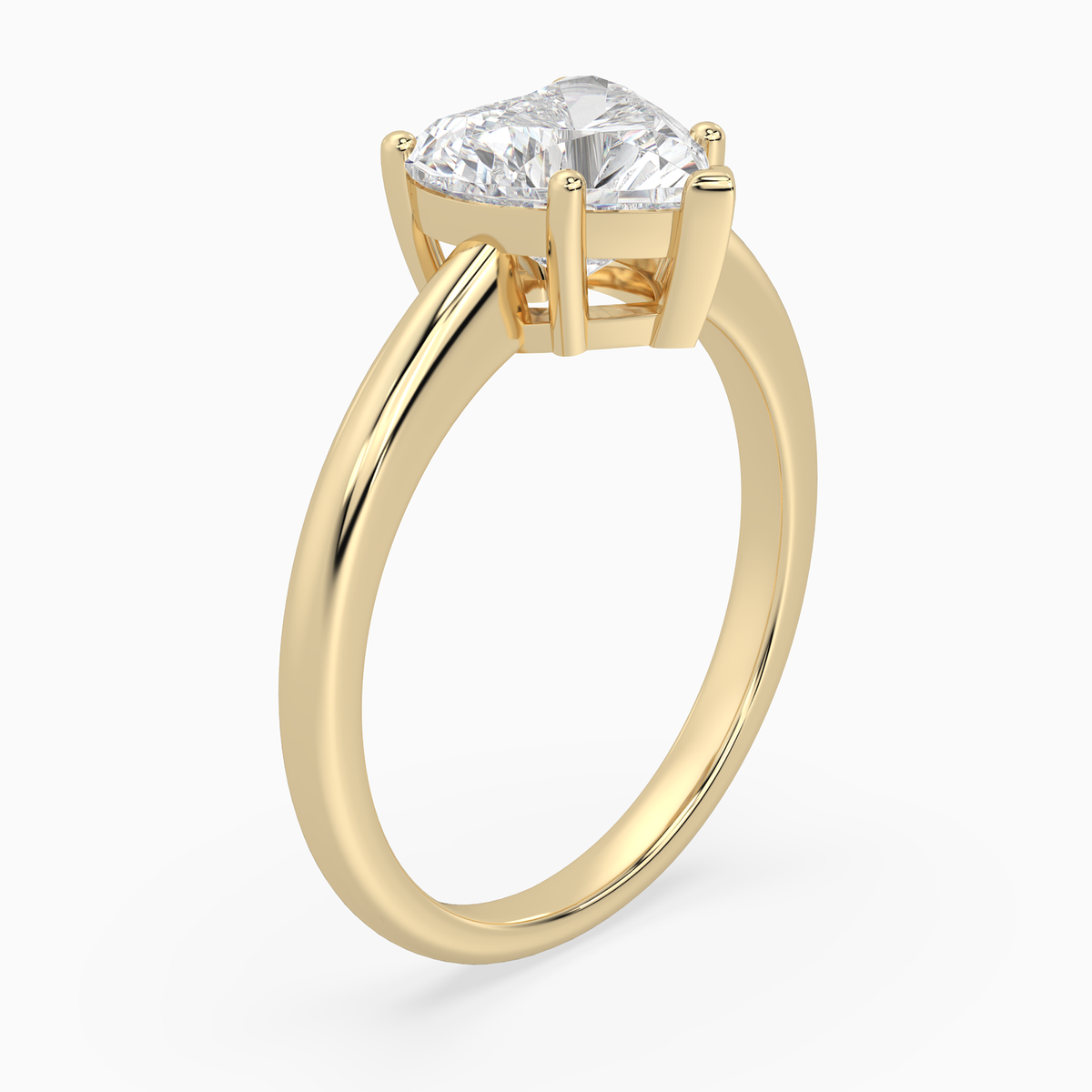


















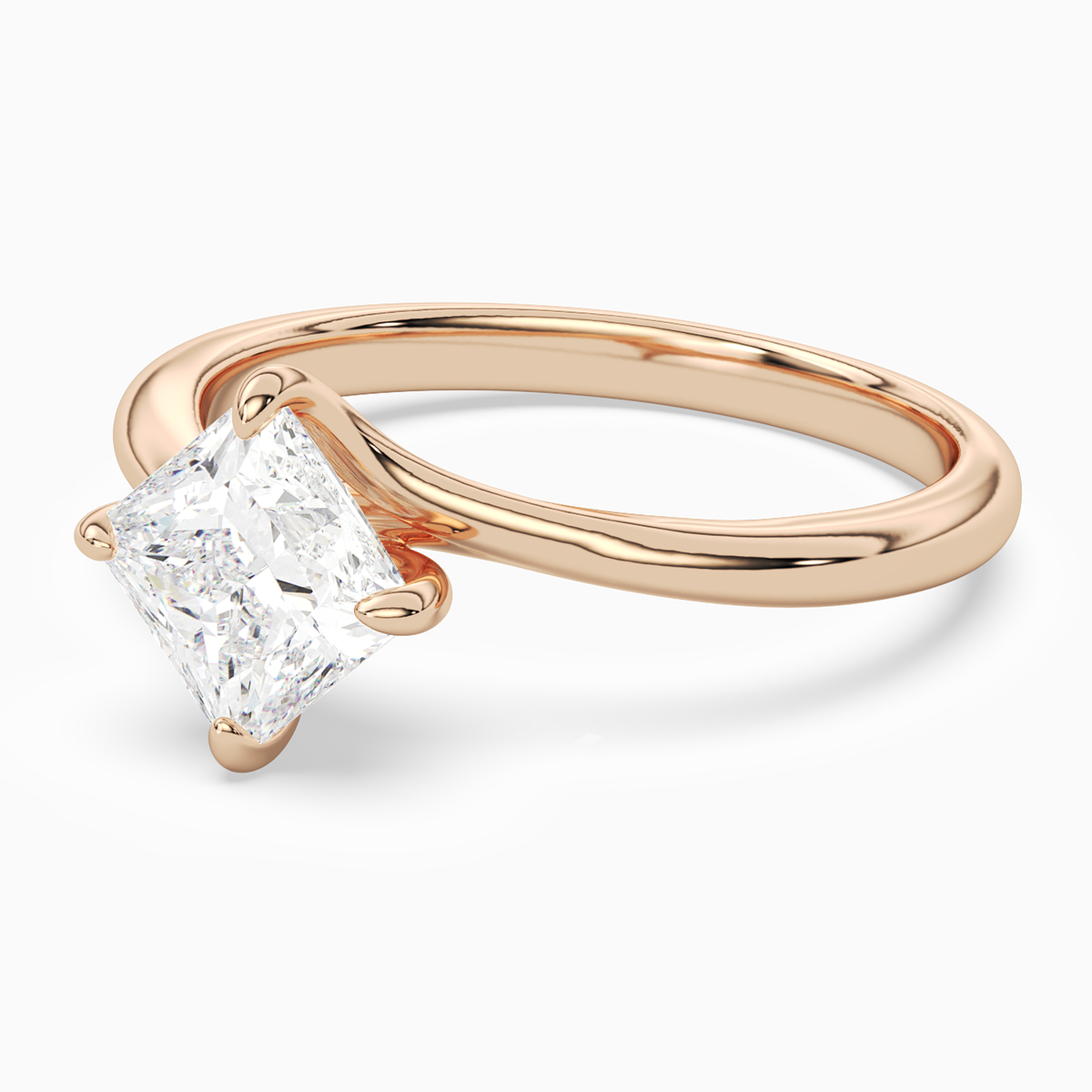


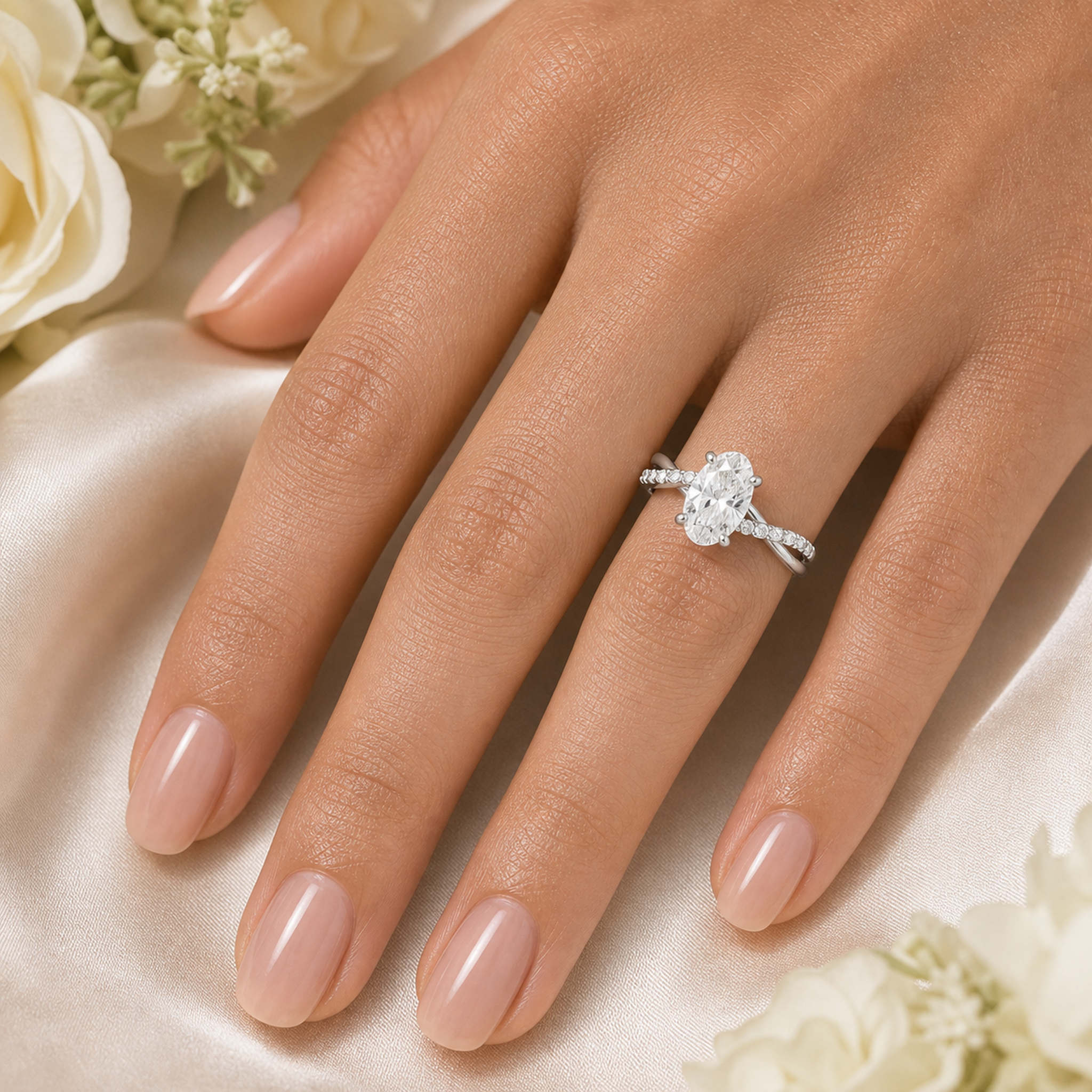


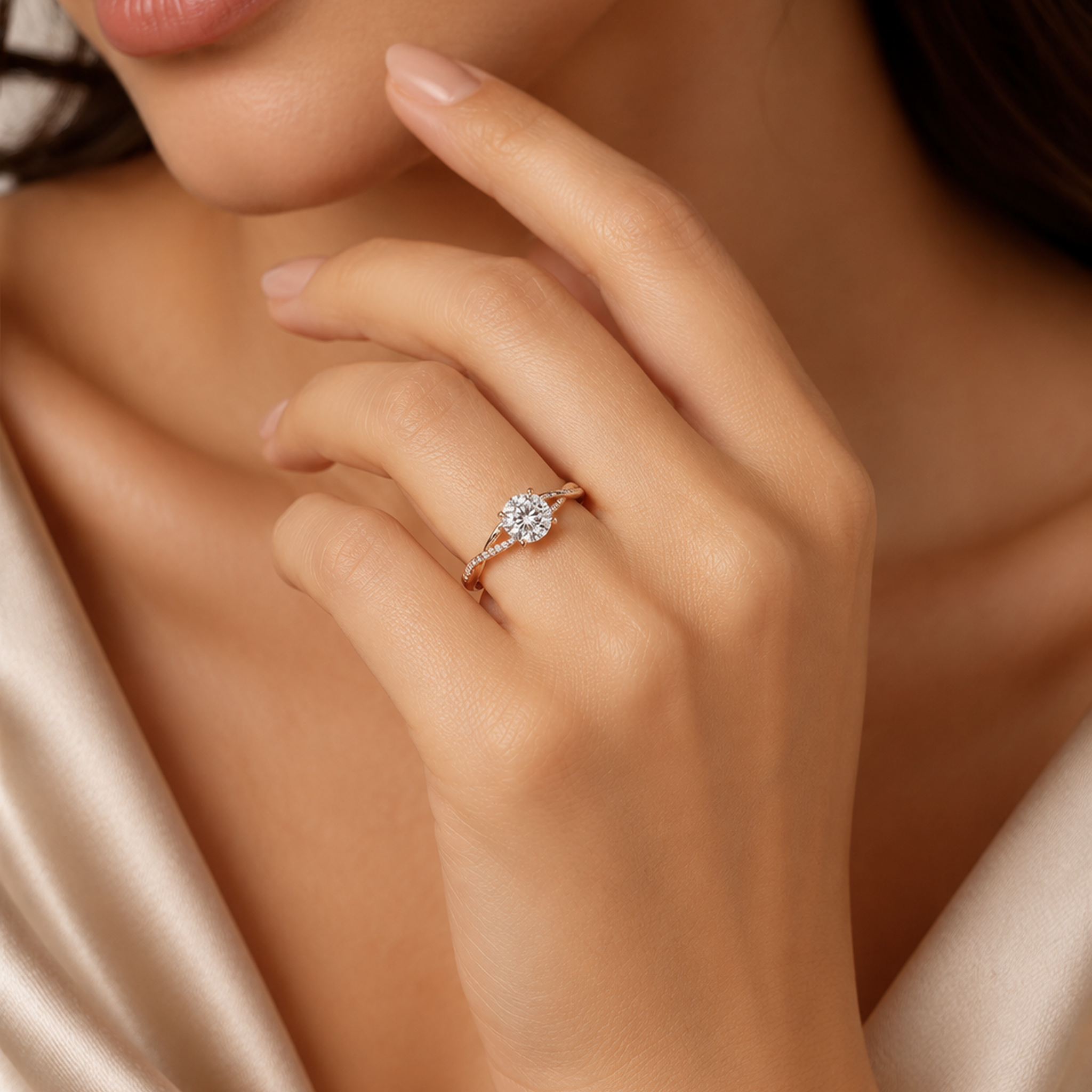


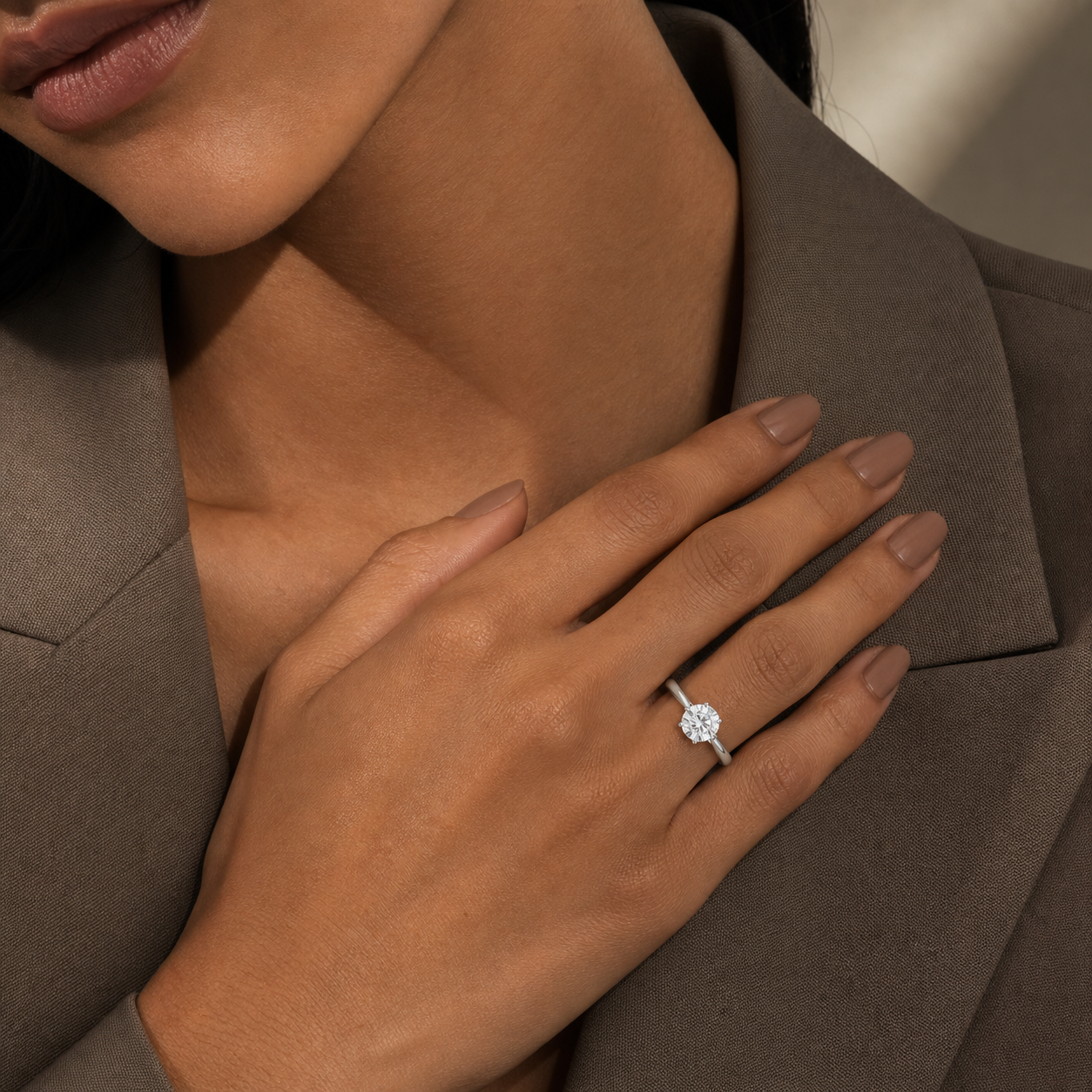


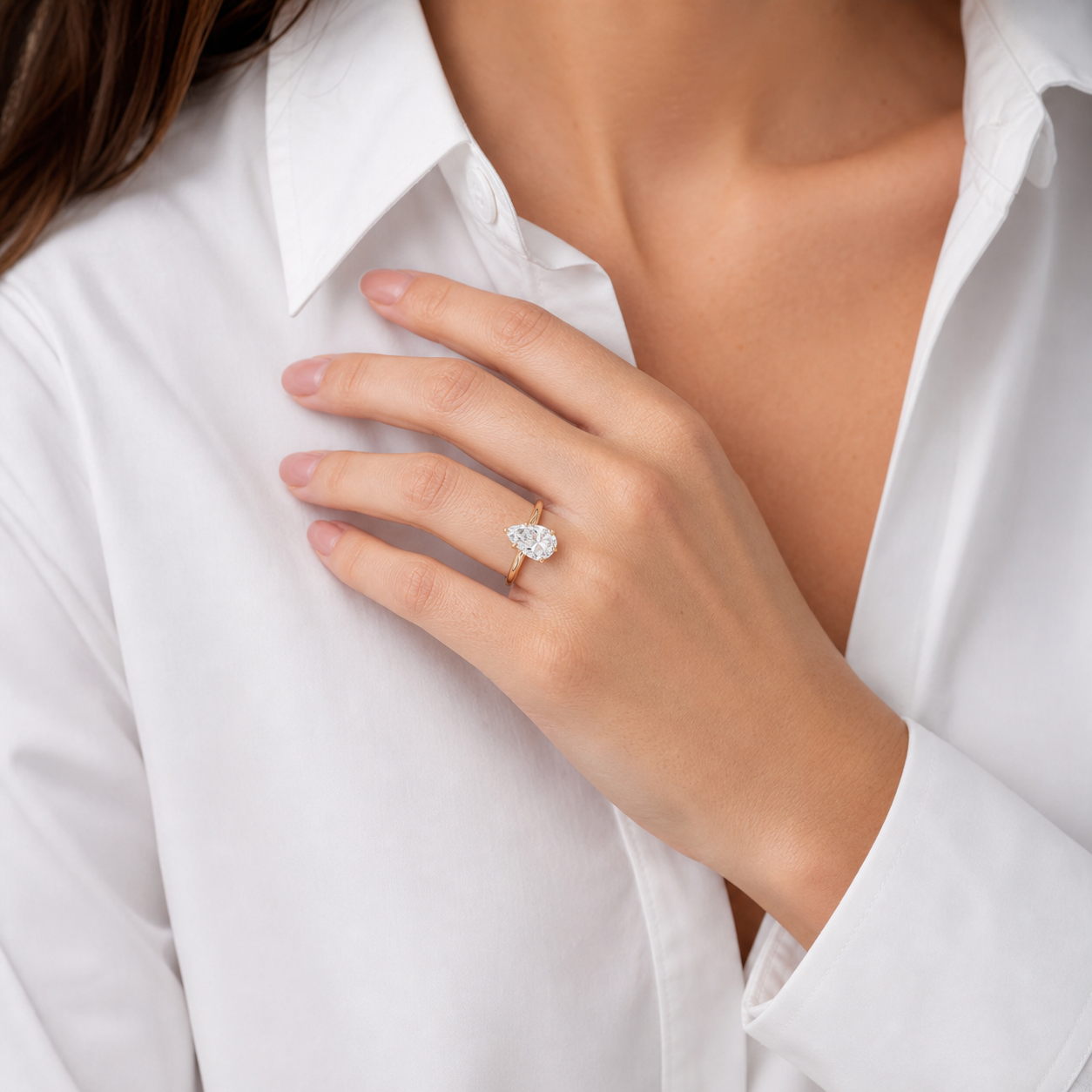


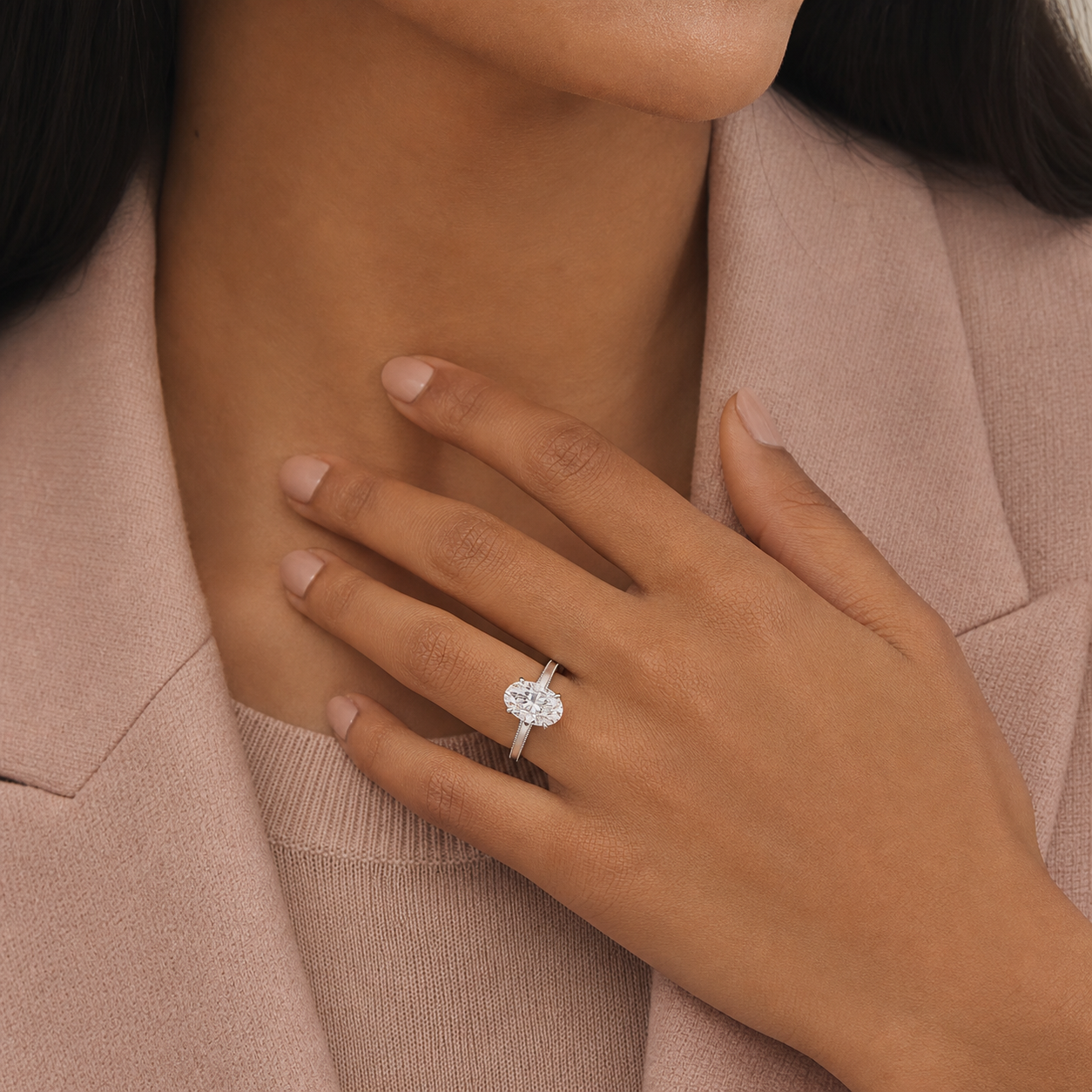


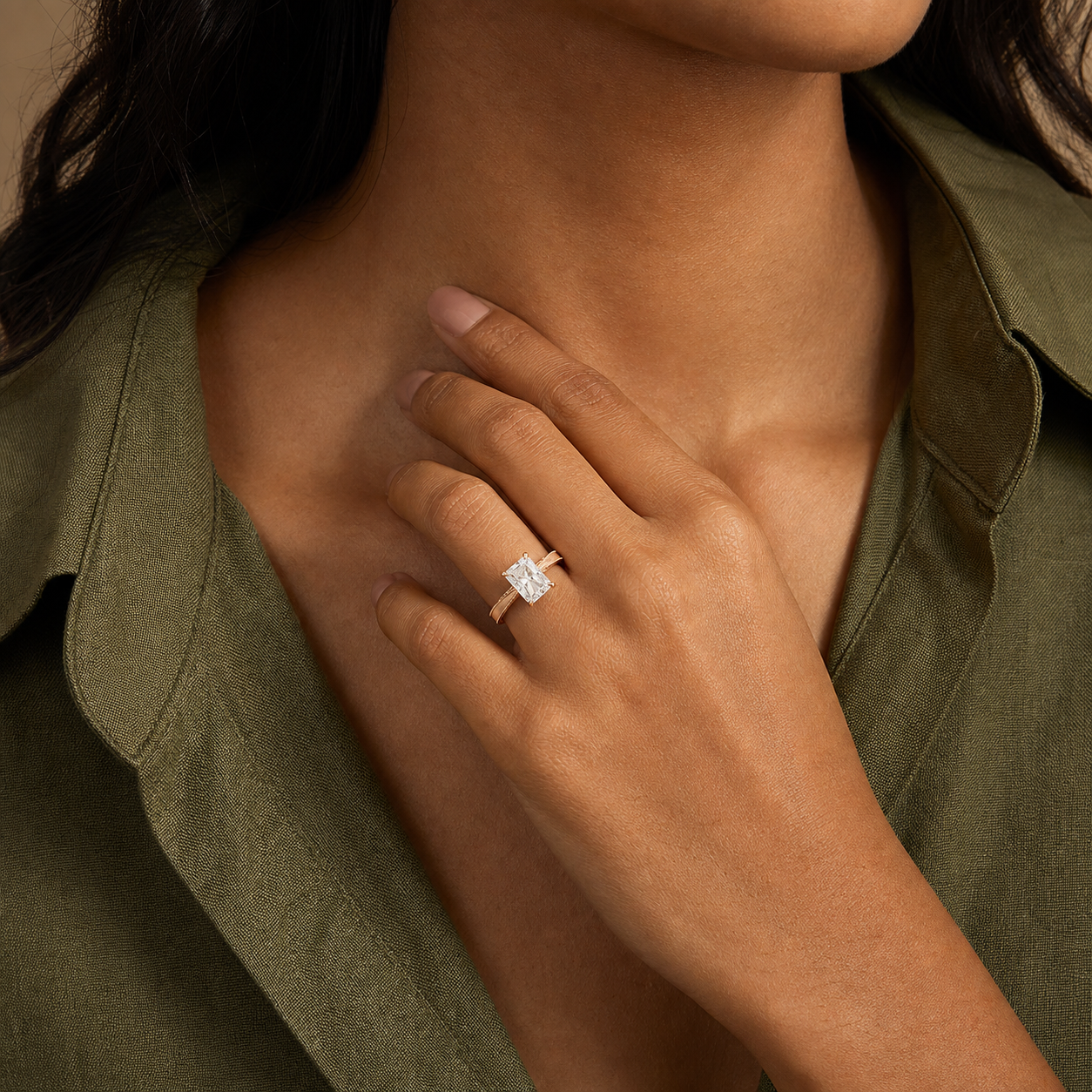


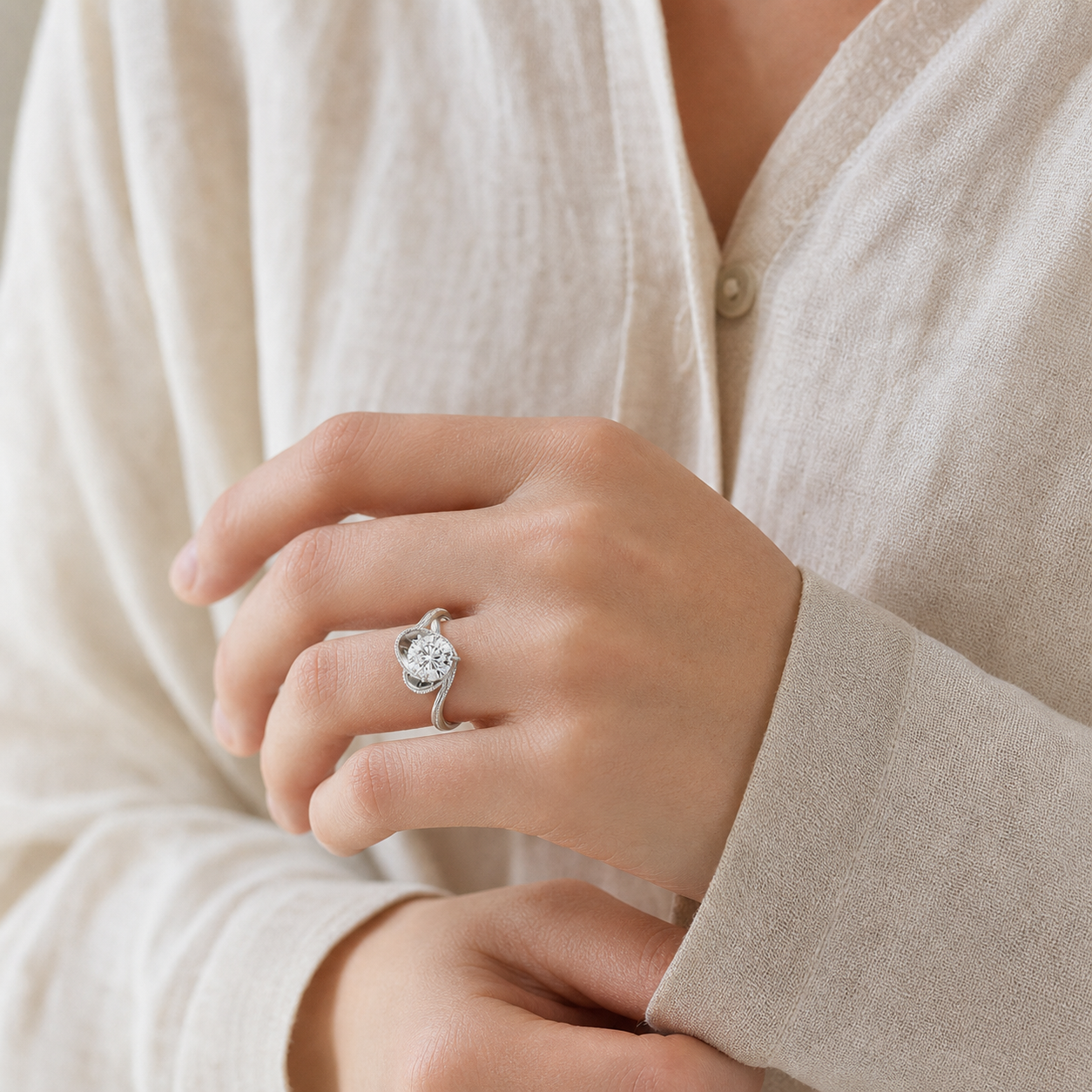
Solitaire Engagement Rings: The Architecture of One Stone
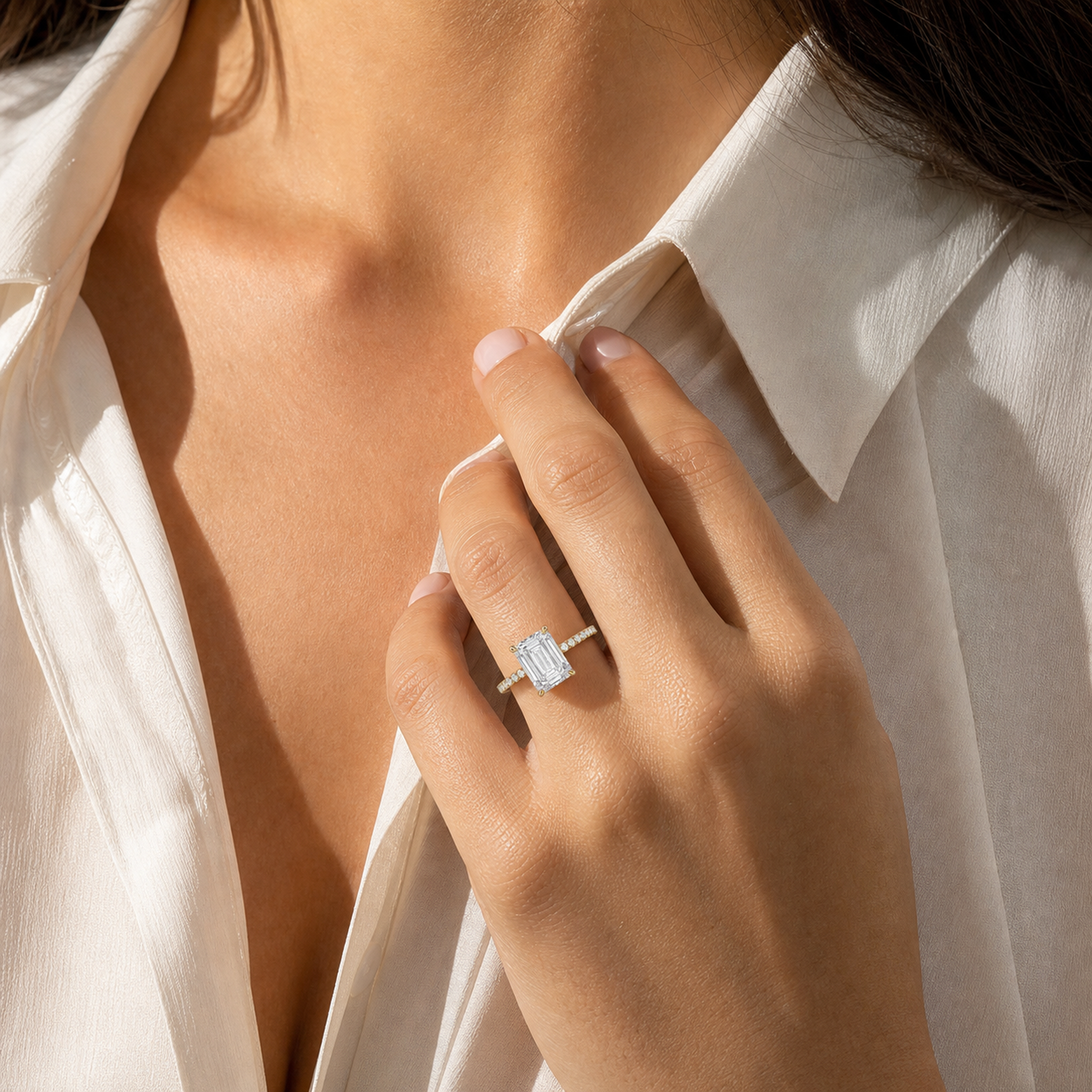
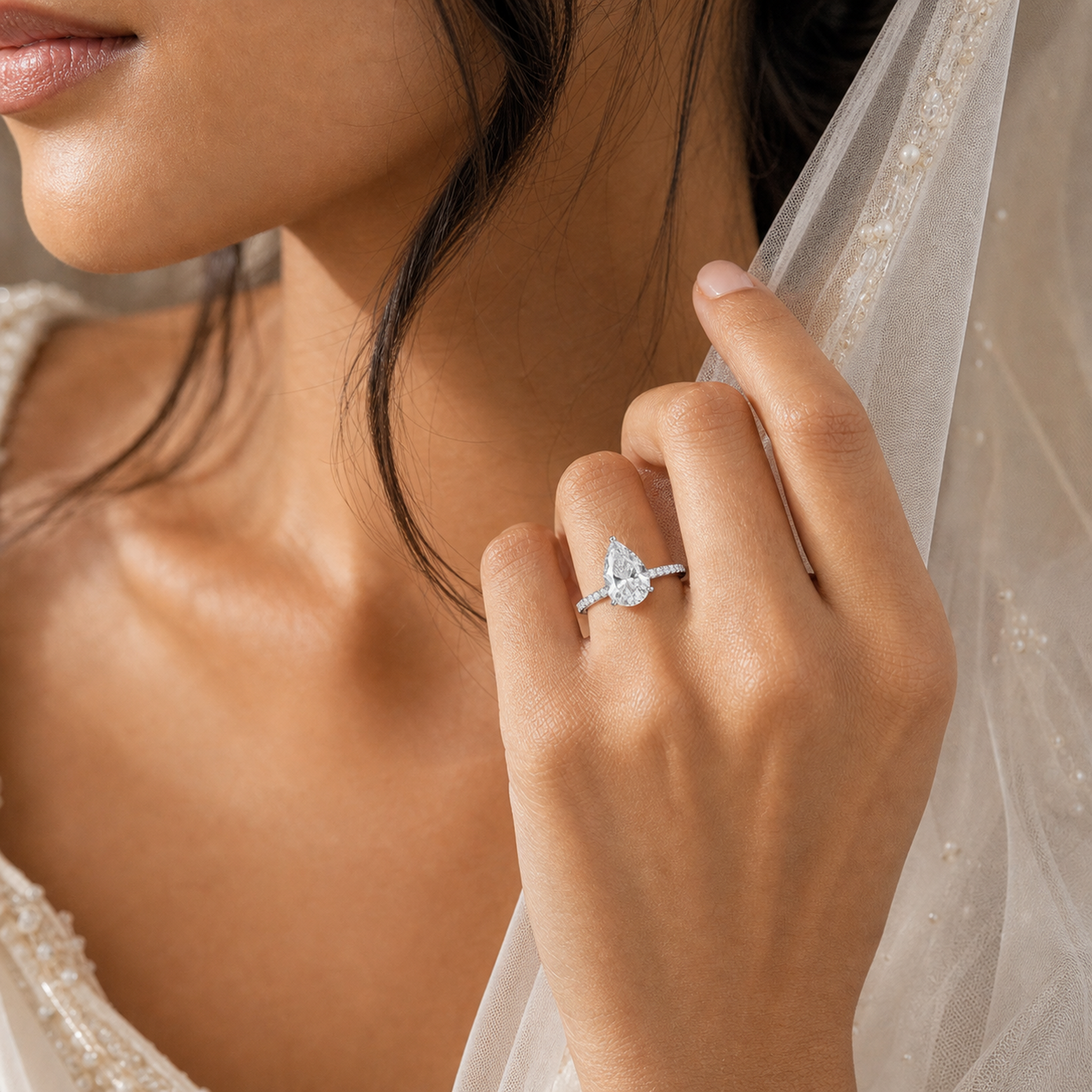
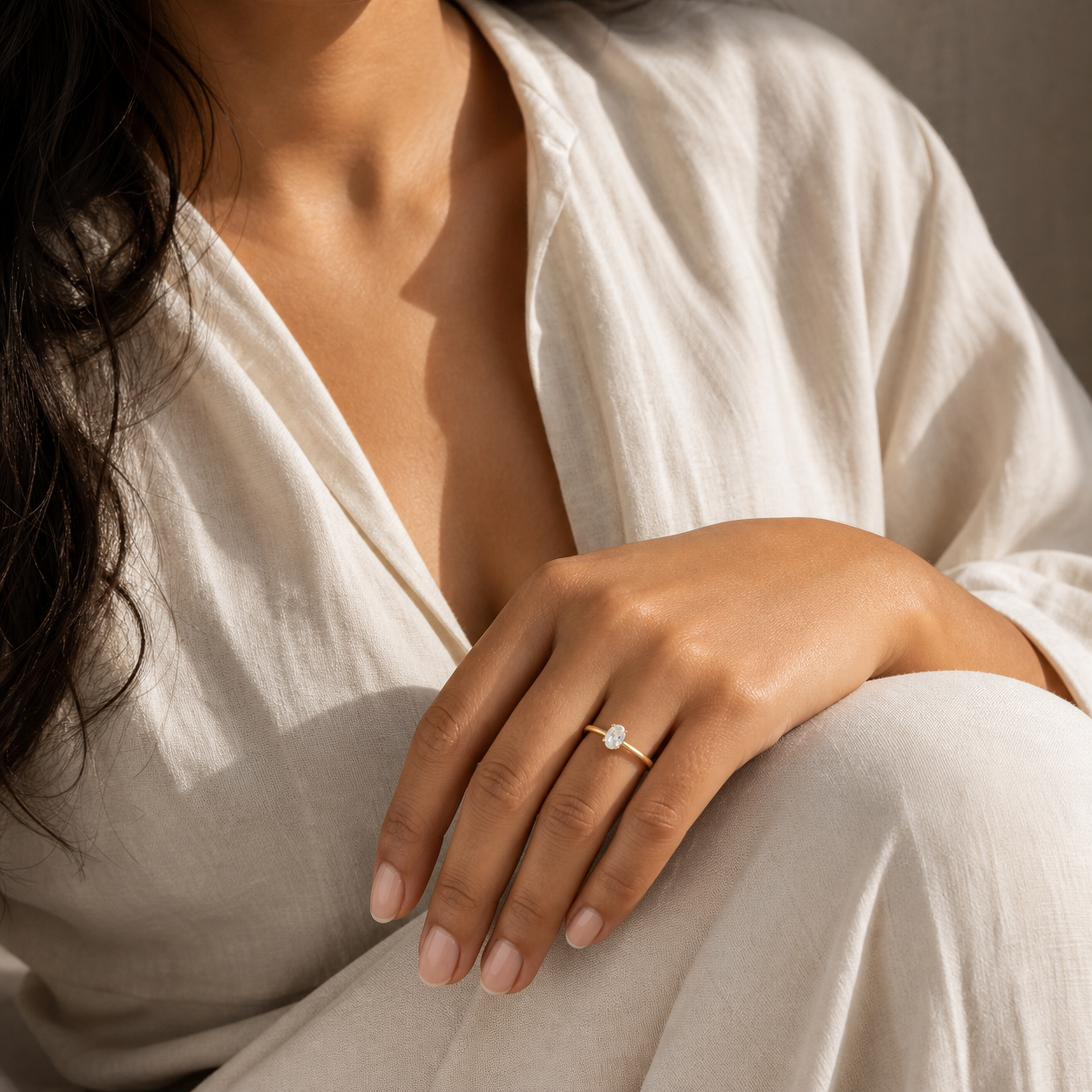
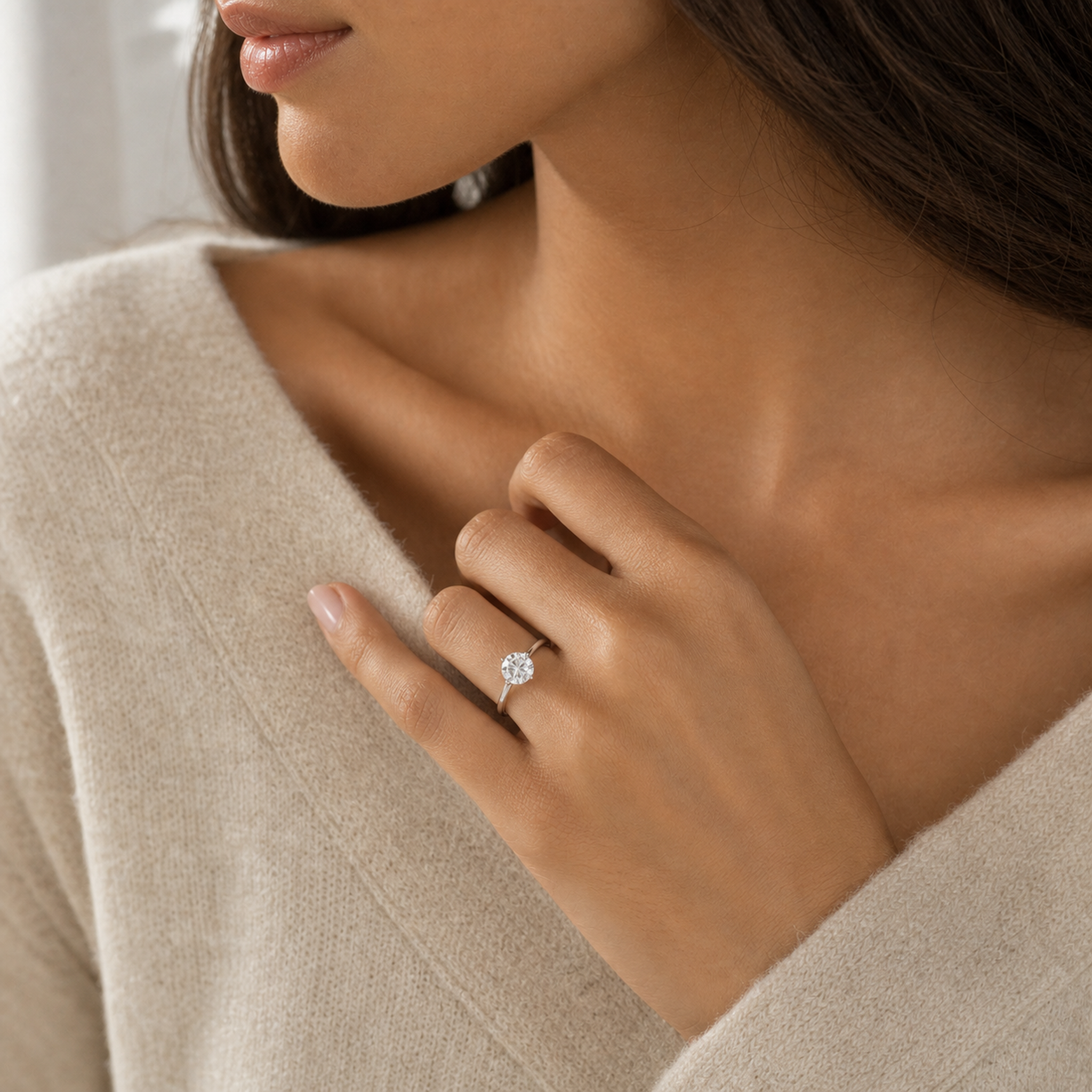
A solitaire is not defined by the absence of design. It is defined by hierarchy: one center diamond carries the face-up composition, and every surrounding line is judged by how clearly it supports that focus. Prongs determine the visible outline. The basket establishes height and side profile. The band controls scale, direction, and the transition from hand to stone.
Burvonti’s Solitaire Engagement Rings collection treats this apparent simplicity as a precise design problem. The range includes open baskets, cathedral shoulders, knife edges, bypass lines, pavé details, hidden halos, sculptural bands, and bezel expressions. The common thread is not a perfectly plain ring. It is the decision to let one center stone remain visually primary.
What Counts as a Solitaire at Burvonti
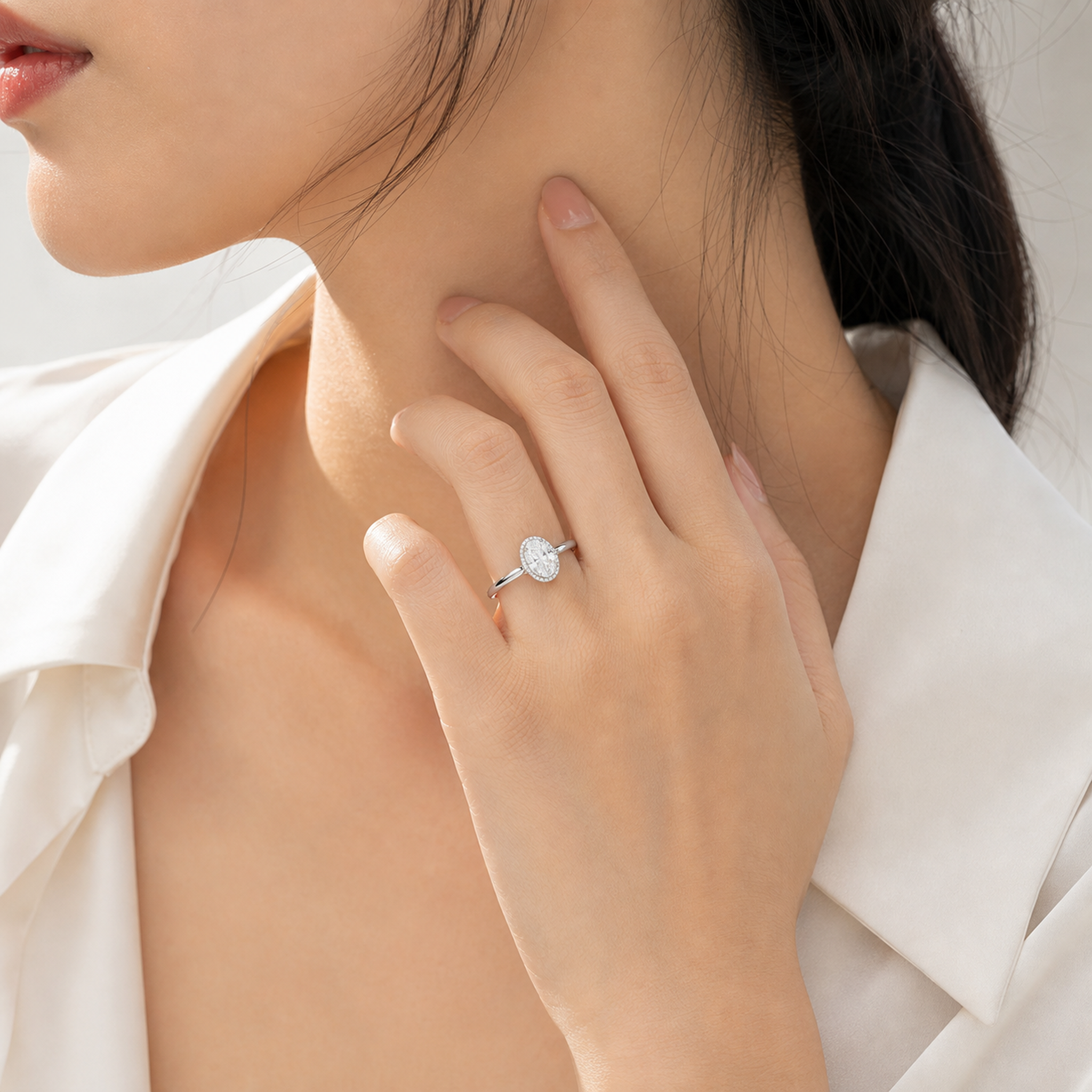
A traditional solitaire may place one diamond above an unadorned band, but the category can hold more nuance. A hidden halo sits below the center stone and is read mainly from the side, so the top view can remain centered on one diamond. Pavé on the band introduces secondary light without creating a second focal stone. Engraving, milgrain, a split line, or a bypass shoulder can add character while preserving the same visual hierarchy.
The boundary becomes clearer by comparison. A face-up halo surrounds the center with a visible border of smaller diamonds. A three-stone ring gives two side stones an explicit compositional role. A side-stone ring carries additional diamonds beside the center. Burvonti’s Solitaire page is for designs in which those elements do not compete with the singular center-stone reading.
Prong, Basket, Bezel, and the View of the Diamond
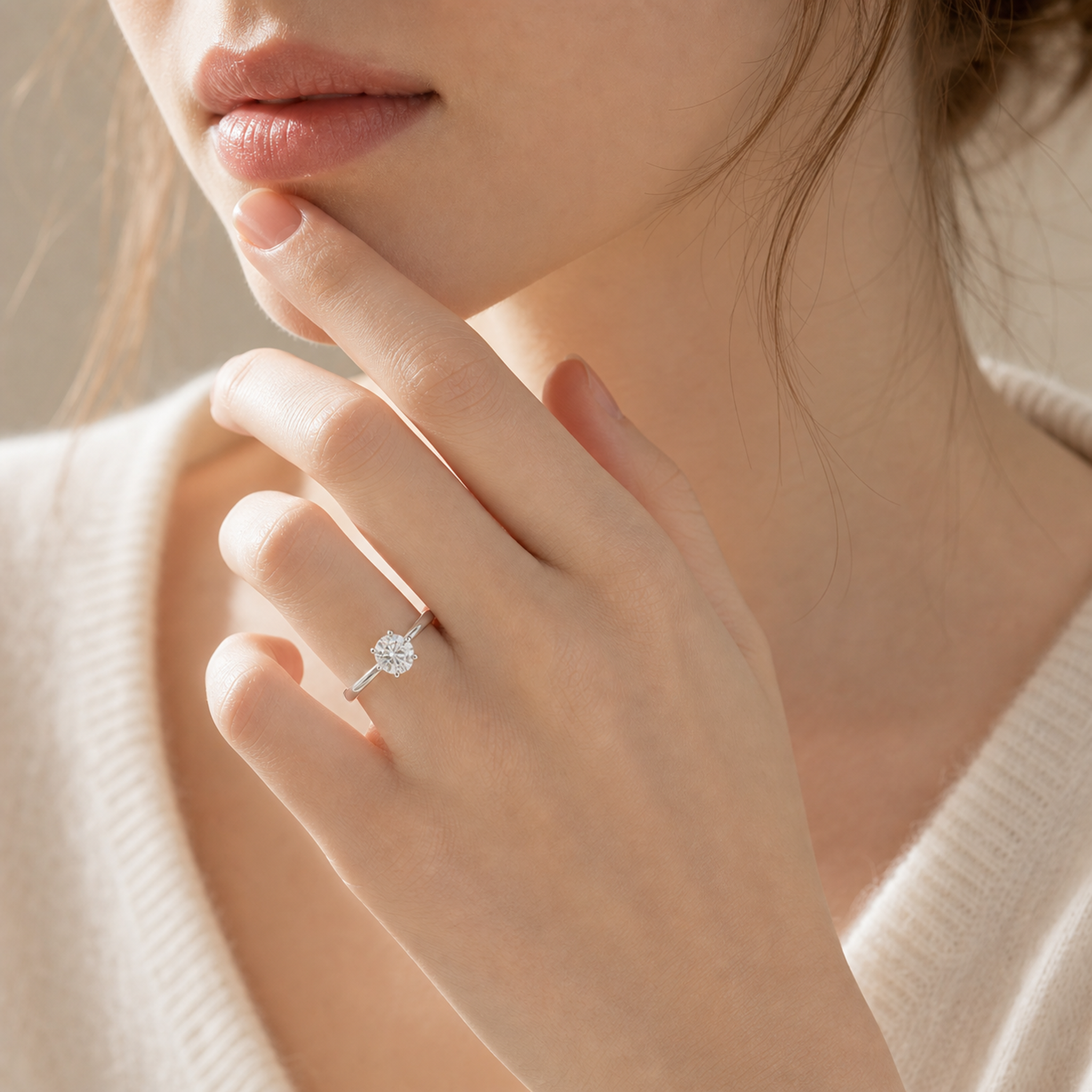
Prong settings expose more of the diamond’s perimeter and can make the head feel light. Four prongs typically create a more open, sometimes slightly squared frame; six prongs add more points of contact and can reinforce a rounded outline. The correct choice depends on the diamond shape, stone scale, prong placement, and the design of the head—not on a universal claim that one version creates more brilliance. A diamond’s light performance is primarily determined by its cut, not by prong count alone.
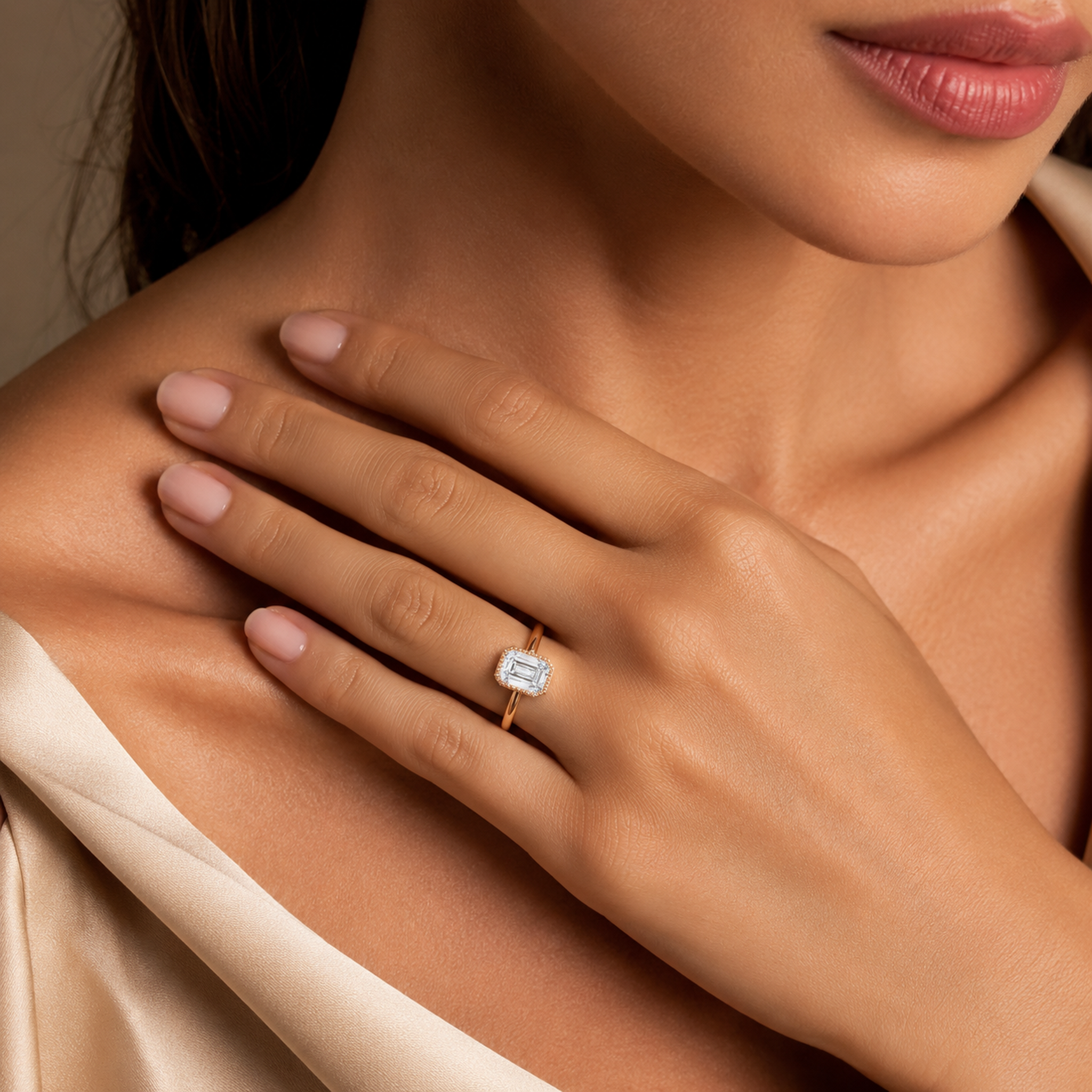
A bezel changes the reading entirely. A continuous or partial metal rim traces the diamond’s outline, giving the stone a graphic boundary and protecting more of its edge. Open baskets reveal the pavilion from the side; cathedral shoulders rise toward the center and make support part of the silhouette. None of these structures is merely technical. Each decides how much metal is seen, how high the stone appears, and how the ring transitions into a wedding band.
Let Shape Lead Without Letting It Stand Alone
Because a solitaire does not use a face-up halo or substantial side stones to redraw the center, the diamond shape is especially legible. Round diamonds create a concentrated, balanced center. Oval, pear, and marquise diamonds extend the composition along the finger. Emerald and Asscher cuts bring ordered facets and a quieter geometry. Cushion, radiant, and princess shapes place different degrees of softness or angularity against the band.
Shape should still be read inside the setting. A pear or marquise requires thoughtful protection at its point. An east-west bezel turns an elongated outline across the hand. A wider band can ground a larger center; a fine band can heighten contrast but may also make top-heaviness or spinning more noticeable if fit and proportion are not resolved. Burvonti does not require a fixed setting-first or diamond-first sequence: discover the design language that feels right, then compare which available shape makes the whole ring feel balanced.
Band, Profile, and the Ring Beside It
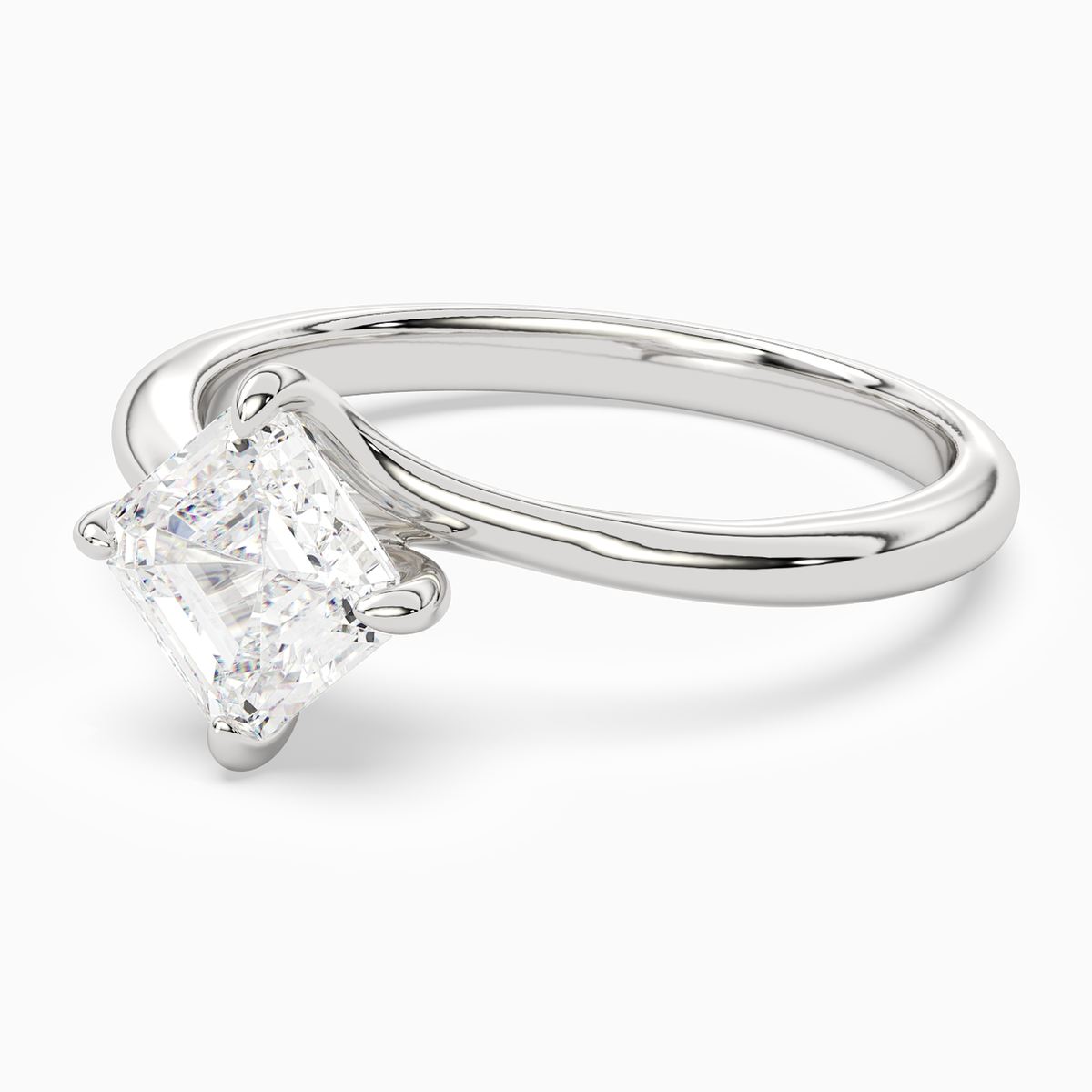
The band is the solitaire’s quietest decision and often its most consequential. A knife edge creates a ridge of light. A bypass or crossover band introduces movement. Pavé adds measured secondary brilliance. A sculptural or double-band design changes the metal presence and negative space around the diamond.
Side profile determines how the engagement ring meets a wedding band. A higher or thoughtfully opened gallery may allow a straight band to sit closer; a low basket, broad bezel, bypass shoulder, or projecting head may create a deliberate gap or call for a curved band. Solitaire does not automatically mean flush fit. Compare the actual profiles and contact points before choosing a pairing, especially when both rings include diamonds.
A Clear Design Still Requires Care
Fewer face-up elements do not make a solitaire maintenance-free. Prongs can loosen or wear, pavé and hidden-halo diamonds add small setting points, and polished metal will gather fine marks through use. Clean the ring with methods appropriate to its diamond, metal, and setting; remove it for impact-prone work or chemical exposure; and arrange professional inspection when the ring has been struck, begins to catch, or shows movement at the center stone.
Burvonti pairs responsibly sourced, independently graded lab-grown diamonds with settings selected through proportion and human judgment. Custom possibilities can refine diamond shape, orientation, band width, metal, engraving, or another personal detail when an existing design establishes the right direction. Product-specific setting changes, sizing, and wedding-band compatibility must be confirmed before the final specification.
Frequently Asked Questions
What is a solitaire engagement ring?
A solitaire engagement ring is organized around one dominant center stone. The band and setting may be plain, pavé, engraved, sculptural, or detailed, but they do not introduce another face-up stone arrangement that competes with the center.
Can a solitaire engagement ring have a hidden halo?
Yes. A hidden halo sits beneath the center stone and is usually read from the side rather than as a face-up border. The ring can therefore retain a single center-stone focus from above while adding profile detail.
Does a solitaire ring have to have a plain band?
No. Burvonti’s public Solitaire collection includes pavé, knife-edge, bypass, crossover, sculptural, split, and double-band designs. What defines the style is the hierarchy of one center stone, not the absence of band detail.
What is the difference between four-prong and six-prong solitaire settings?
Four prongs reveal more of the perimeter and can create a more open frame. Six prongs add contact points and may reinforce a rounded outline. Security and appearance also depend on prong placement, stone shape, scale, and workmanship, so confirm the choice for the specific ring.
Does a four-prong setting make a diamond sparkle more?
Not by itself. Fewer prongs may expose more of the diamond’s outline, but diamond brilliance is governed primarily by cut and light return. Prong number should balance protection, shape, and the intended visual frame.
How is a bezel solitaire different from a prong solitaire?
A bezel uses a metal rim around all or part of the diamond’s edge, creating a smoother, more graphic outline and increased edge protection. Prongs hold the diamond at selected points, leaving more of its perimeter visible and producing a lighter head.
What setting height is best for a solitaire ring?
There is no universal best height. A higher profile can make the side architecture more visible and may help some wedding bands sit closer; a lower profile can feel more contained. Diamond depth, basket design, daily wear, and band pairing should guide the decision.
Which diamond shapes work in solitaire engagement rings?
Solitaire settings can support round, oval, cushion, pear, emerald, princess, marquise, Asscher, radiant, heart, and other shapes when the head is designed for them. The setting must protect pointed corners or tips and maintain balanced proportions.
Does a thin band make the center diamond look larger?
A fine band can increase visual contrast around the center and make its footprint feel more prominent, but it does not change carat weight or dimensions. Band width should also be considered for balance, fit, durability, and resistance to spinning.
How does metal color affect a solitaire diamond?
White metals create a more continuous visual field around the diamond, while yellow or rose gold creates warmer contrast and may be reflected near the setting. Metal color does not change the diamond’s assigned grade.
Will a wedding band sit flush with a solitaire engagement ring?
Some will and some will not. Basket width, setting height, bezel edge, bypass shoulders, and decorative details can create contact or a gap. Compare the side profiles of the exact rings rather than assuming every solitaire supports a straight flush-fit band.
Why does a solitaire engagement ring spin on the finger?
A prominent center head can make the ring top-heavy, while a slender band or loose fit may allow it to rotate. Accurate sizing, band width, head proportion, and the shape of the wearer’s finger all influence stability.
Are solitaire engagement rings suitable for everyday wear?
They can be, provided the design suits the wearer’s routine and receives appropriate care. Consider setting height, exposed edges, prong or bezel structure, and band dimensions, then remove the ring for activities involving impact, heavy force, or harsh chemicals.
How should I care for a solitaire engagement ring?
Clean it gently using a method appropriate to the diamond, metal, and setting; avoid abrasive products and harsh chemicals. Check for catching, movement, or changed prong alignment, and seek professional inspection after an impact or when anything feels different.
Can a Burvonti solitaire engagement ring be customized?
Custom possibilities may include diamond shape, orientation, metal, band proportion, engraving, or setting details. Availability and structural feasibility depend on the selected design and must be confirmed before the final specification.