
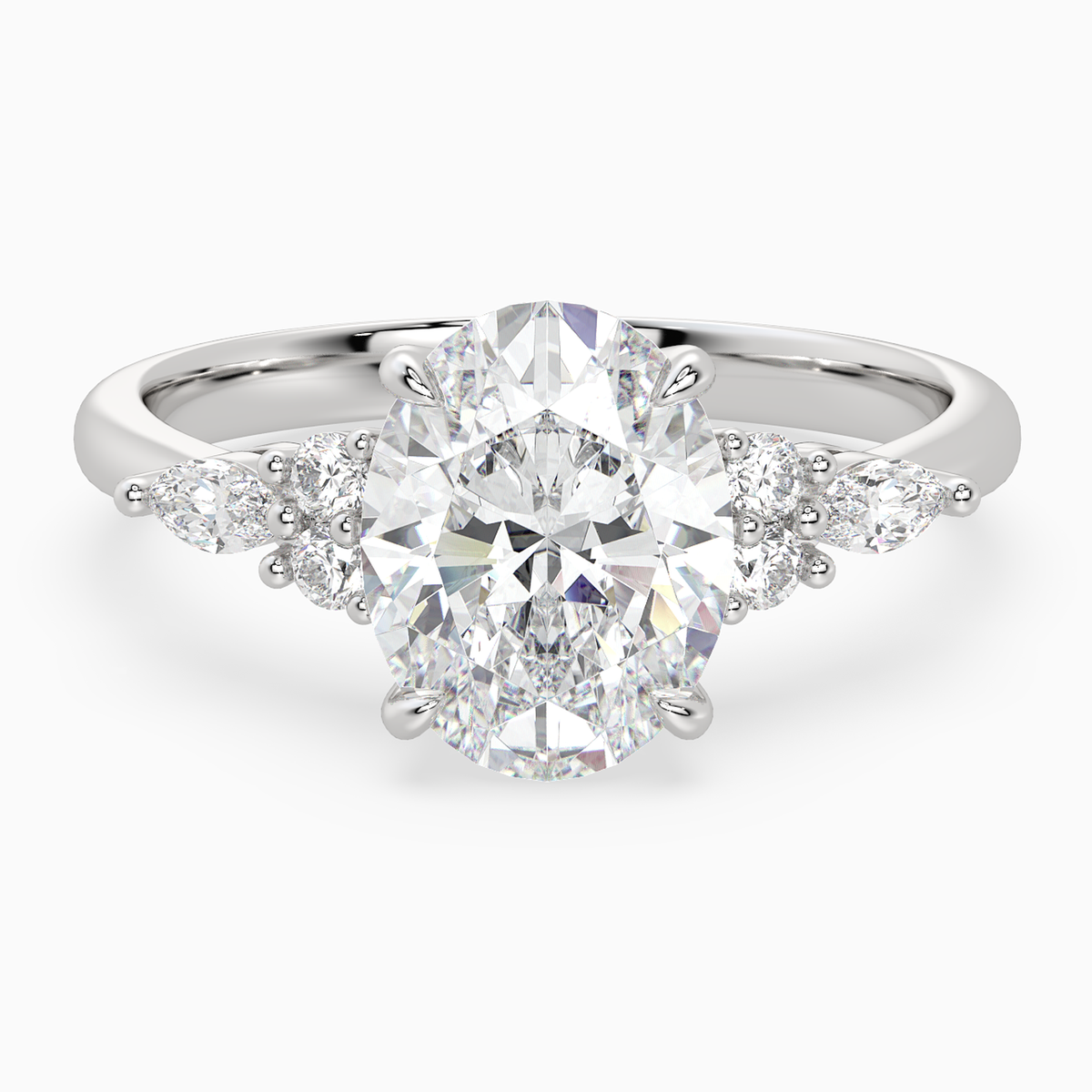


Lab-Grown Diamond Heart Diamond Engagement Rings
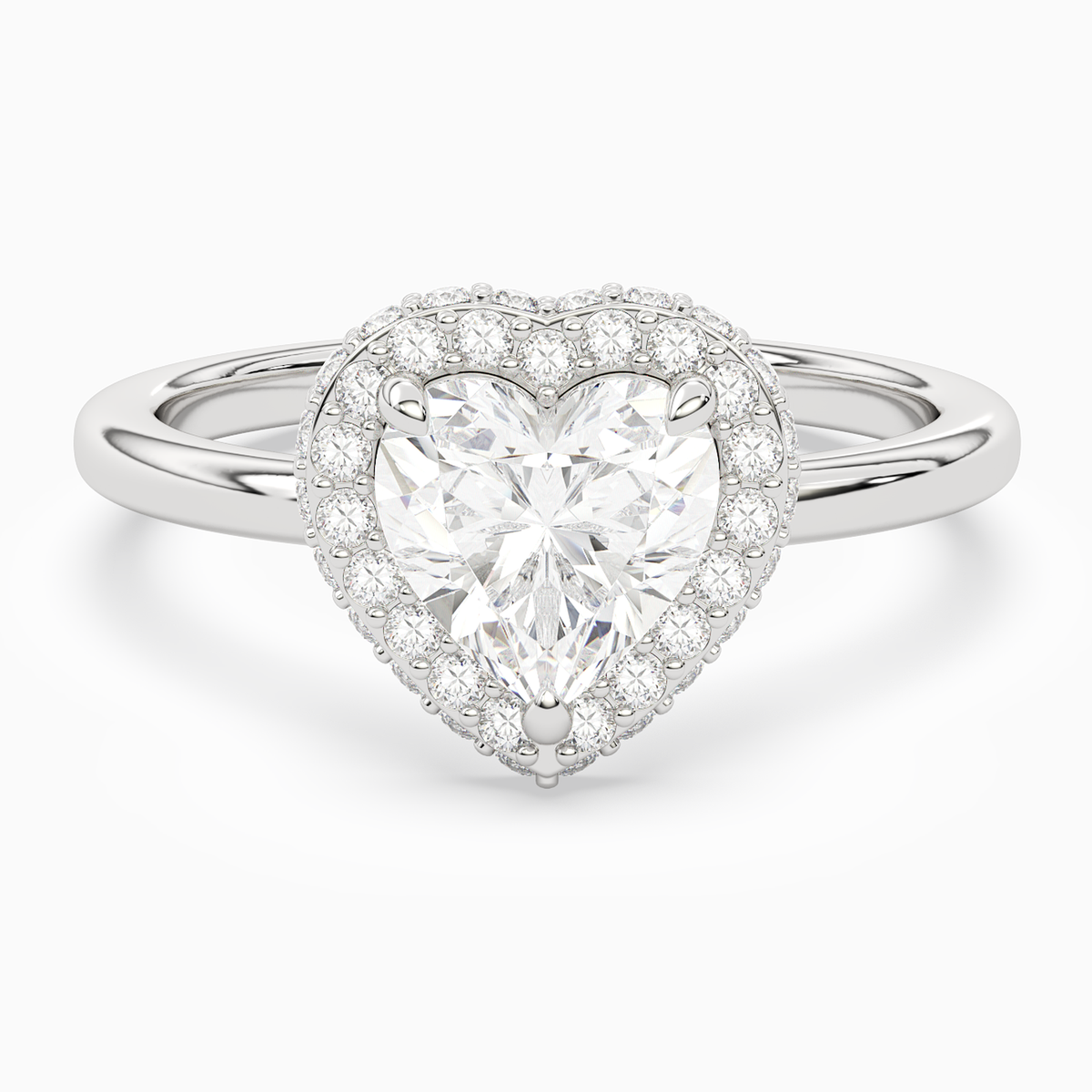
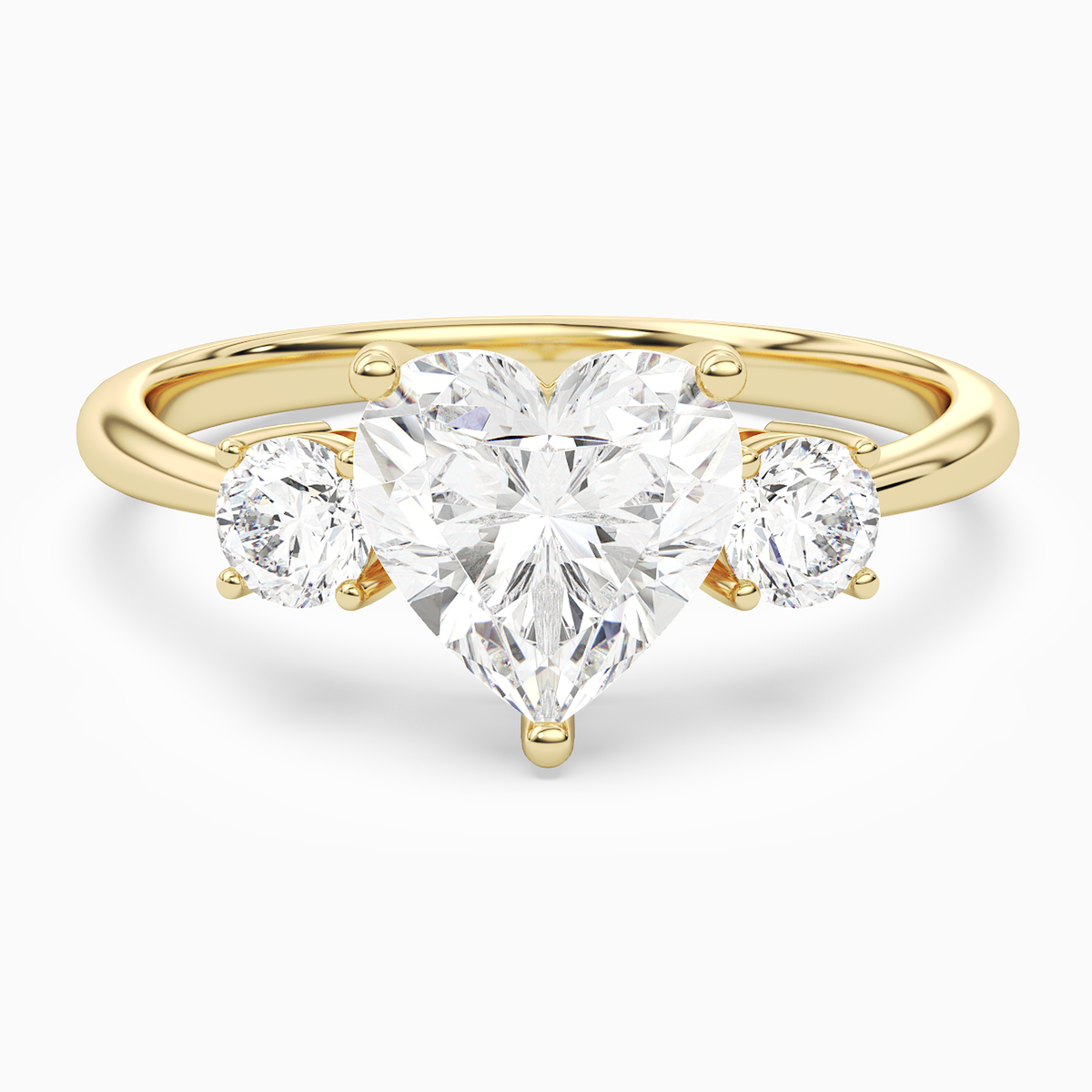
A familiar symbol, precisely resolved. Heart centers balance two lobes, a defined cleft and one point through brilliant light.








- Free Express Shipping
- Free Resizing
- 60-Day Free Returns
- Lifetime Warranty
Heart Diamond Engagement Rings: A Symbol Drawn with Precision
A heart-shaped diamond begins with a familiar symbol, then asks for exact execution. Two rounded lobes meet at a defined cleft, pass through shoulders and wings, and taper to a single point. Each side must answer the other along a central axis. When those parts resolve together, the meaning remains immediate without replacing the quality of the outline.
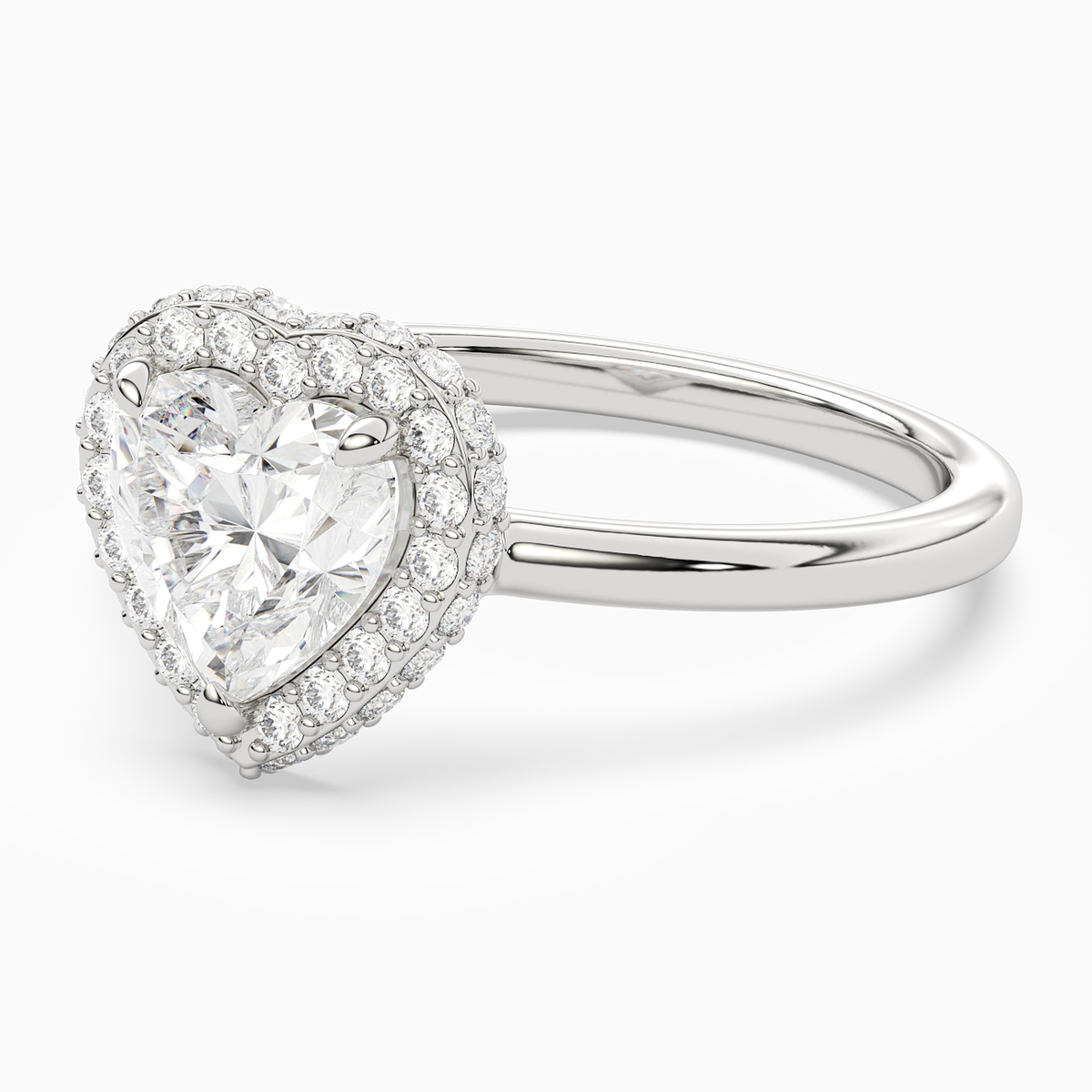
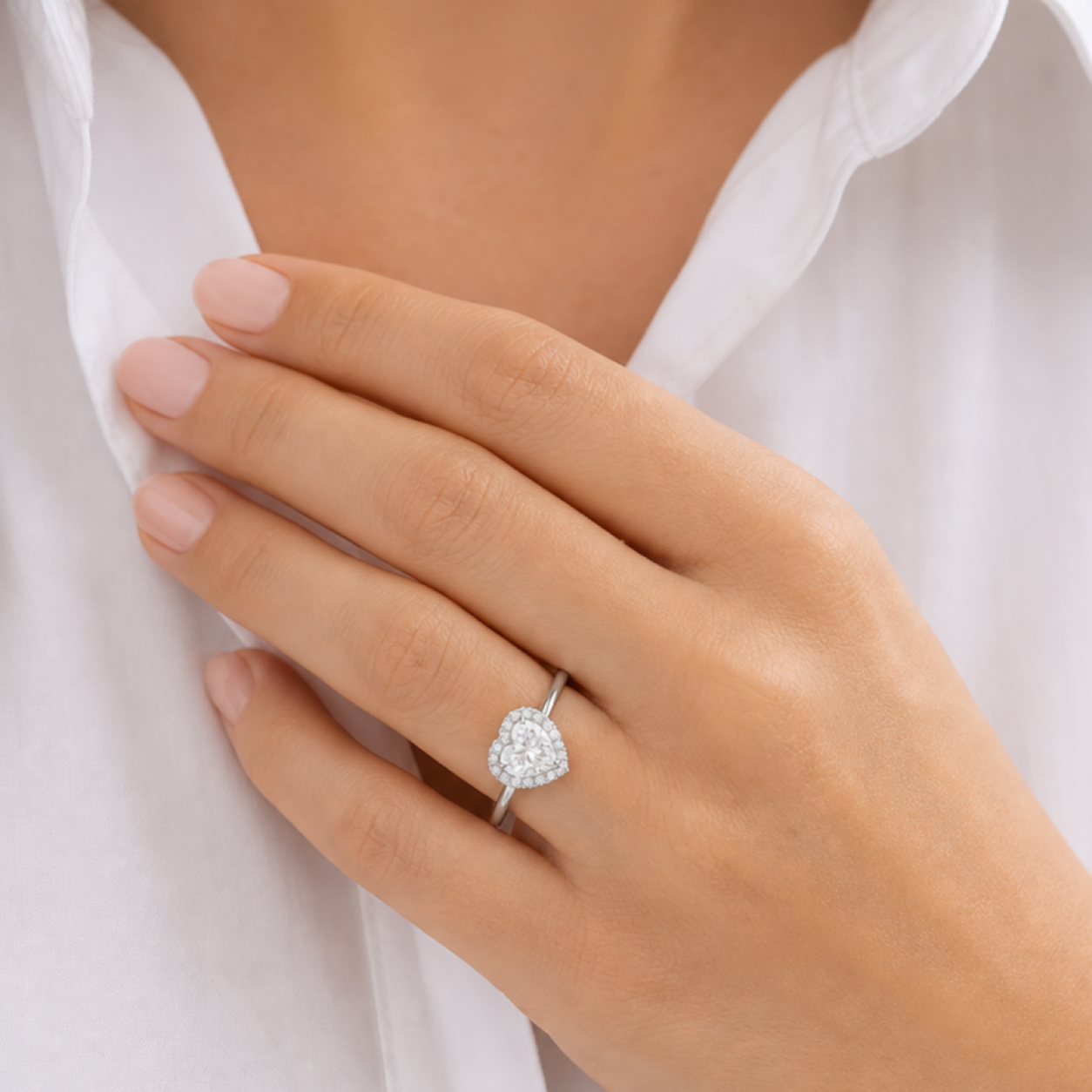
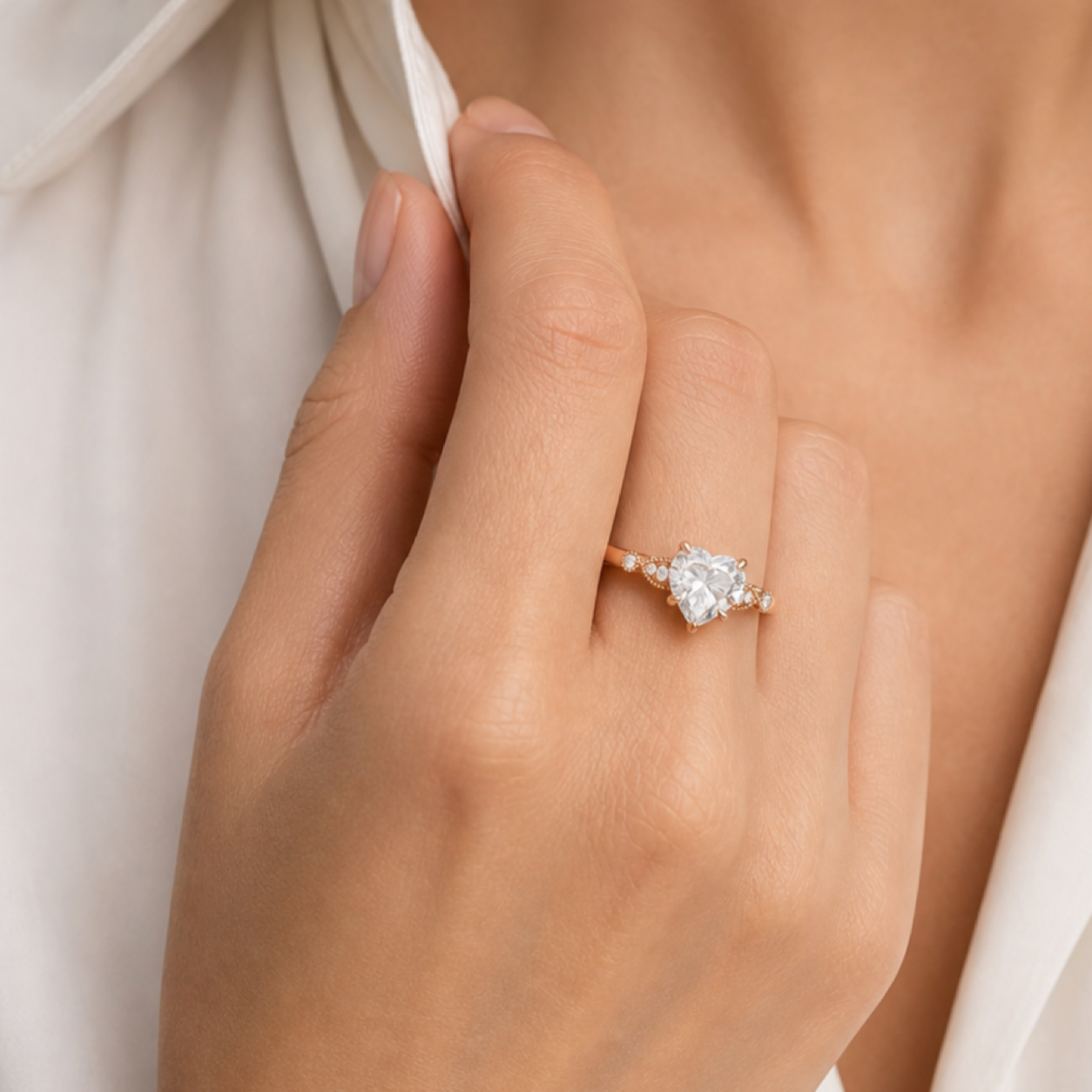
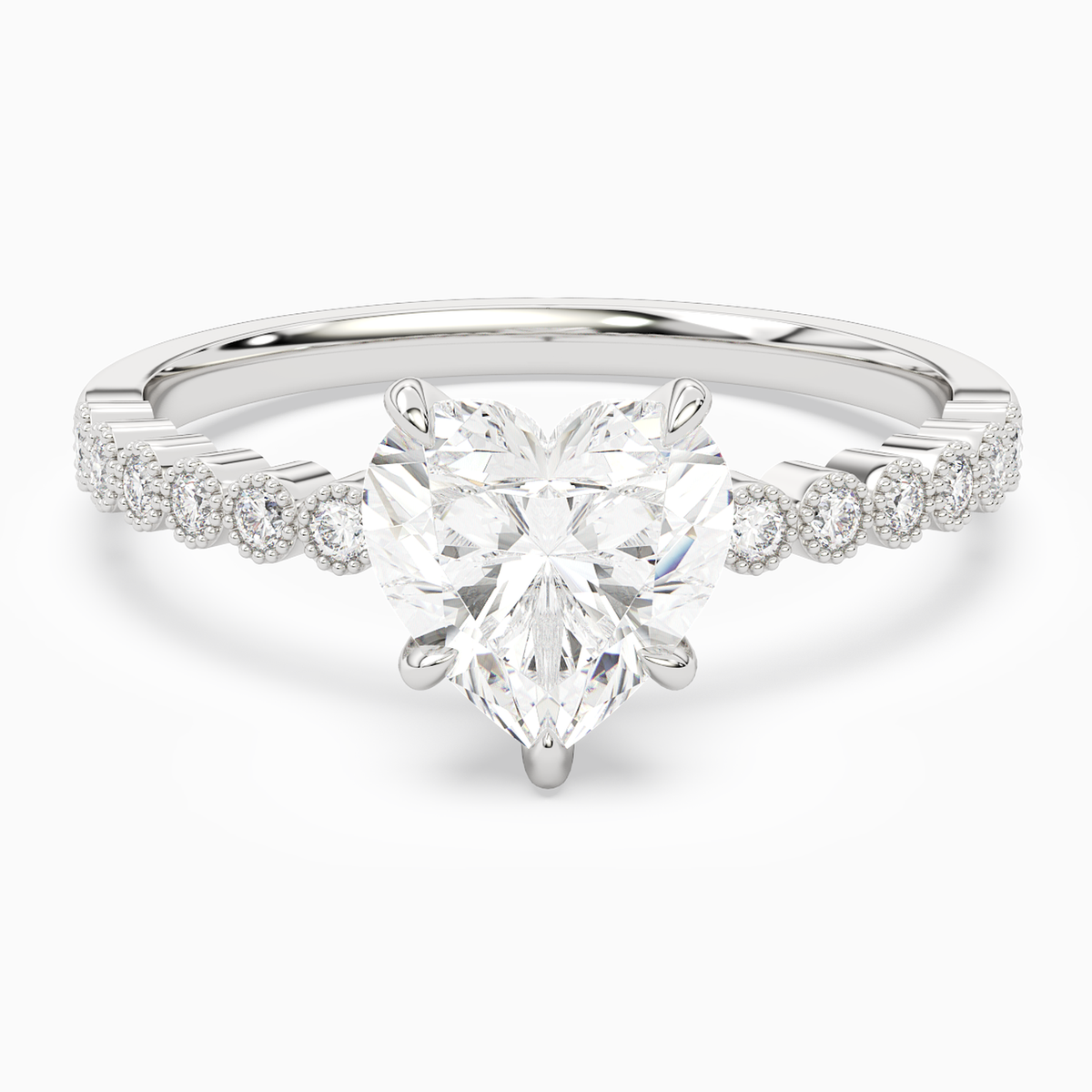
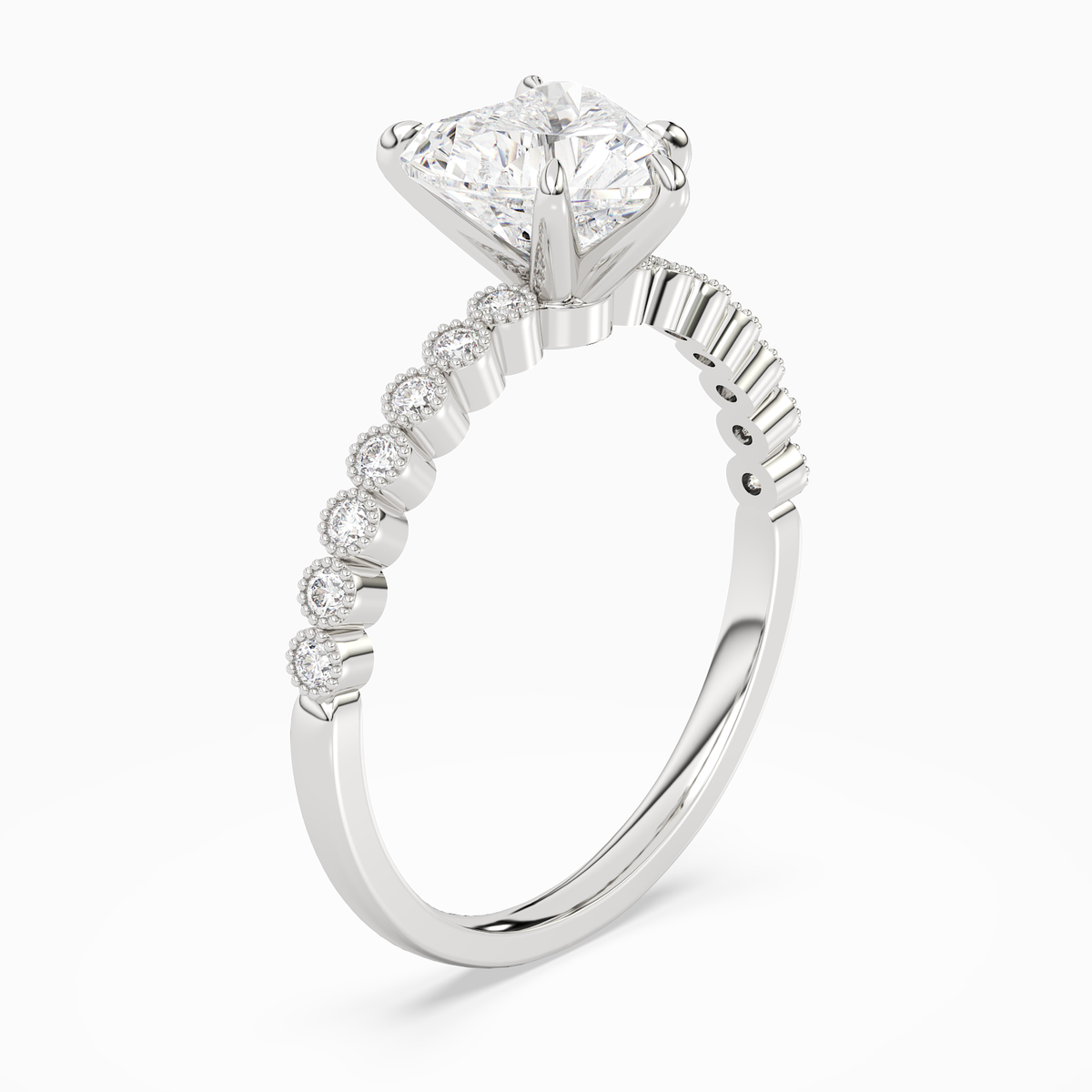
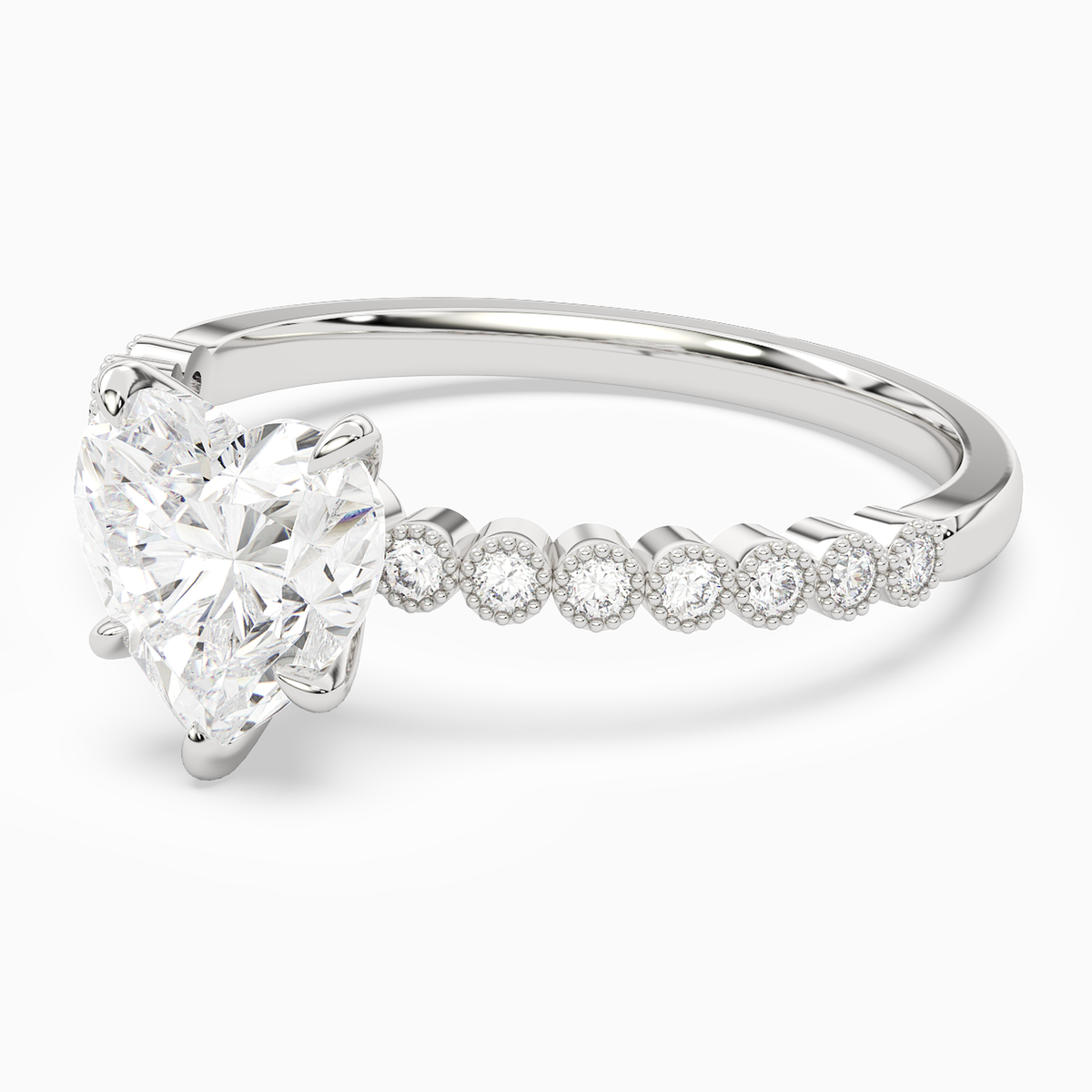
Burvonti’s current heart collection places that form within six public designs: open-basket and bezel Solitaires, a Halo, a milgrain Side Stone ring, and two Three Stone interpretations. The settings range from quiet perimeter to expanded composition, allowing the same symbol to be read through metal, diamonds, negative space, and profile rather than sentiment alone.
Cleft, Lobes, Wings, and Point Form One Continuous Outline
The cleft is the V-shaped division between the two upper lobes. The lobes should feel matched in height and fullness, while the shoulders and wings carry a smooth transition toward the lower point. A weak cleft can make the outline feel indistinct; uneven lobes, flat or bulging wings, or an off-axis point can disturb its balance.
Length-to-width ratio indicates whether a heart reads broader or more elongated, but it is not an ideal-quality formula. GIA guidance often discusses near-square relationships and a wider range of preferences, while also emphasizing direct symmetry. Begin with the whole outline: the ratio should describe the shape you already see, not override it.
Brilliant Facets Must Carry Light Across a Complex Shape
Heart diamonds generally use brilliant-style facets, yet the cleft, lobes, belly, wings, and point create multiple zones for light and contrast. The pattern can include broad flashes, finer reflections, and a bow-tie across the center. Heart diamonds are fancy shapes and do not currently receive a regular overall GIA cut grade, so direct observation has particular importance.
Some bow-tie contrast is common in elongated brilliant shapes and helps facets remain legible. Give closer attention to a region that is wide, dark, distracting, or persistent as the center moves. View the diamond face-up at a normal distance and under more than one ordinary lighting condition when possible, checking whether both halves remain lively and visually balanced.
Size Can Affect Legibility, but Carat Is Not a Universal Threshold
Fine details such as the cleft and lobes may be harder to perceive at smaller dimensions, especially once prongs, a bezel, or surrounding diamonds enter the composition. Older guidance sometimes converts that observation into a fixed 0.50, 0.75, or 1.00 carat rule. A more useful comparison considers actual length, width, depth, outline definition, and the scale of the selected setting.
Carat measures weight. Two heart diamonds of equal weight can present different dimensions and very different clefts, lobes, or wing lines. A Halo enlarges the outer field; a bezel traces the perimeter in metal; side stones and Three Stone settings broaden the composition. Evaluate how clearly the heart reads within the complete ring, not weight in isolation.
The Point Needs Support; the Cleft Needs Space
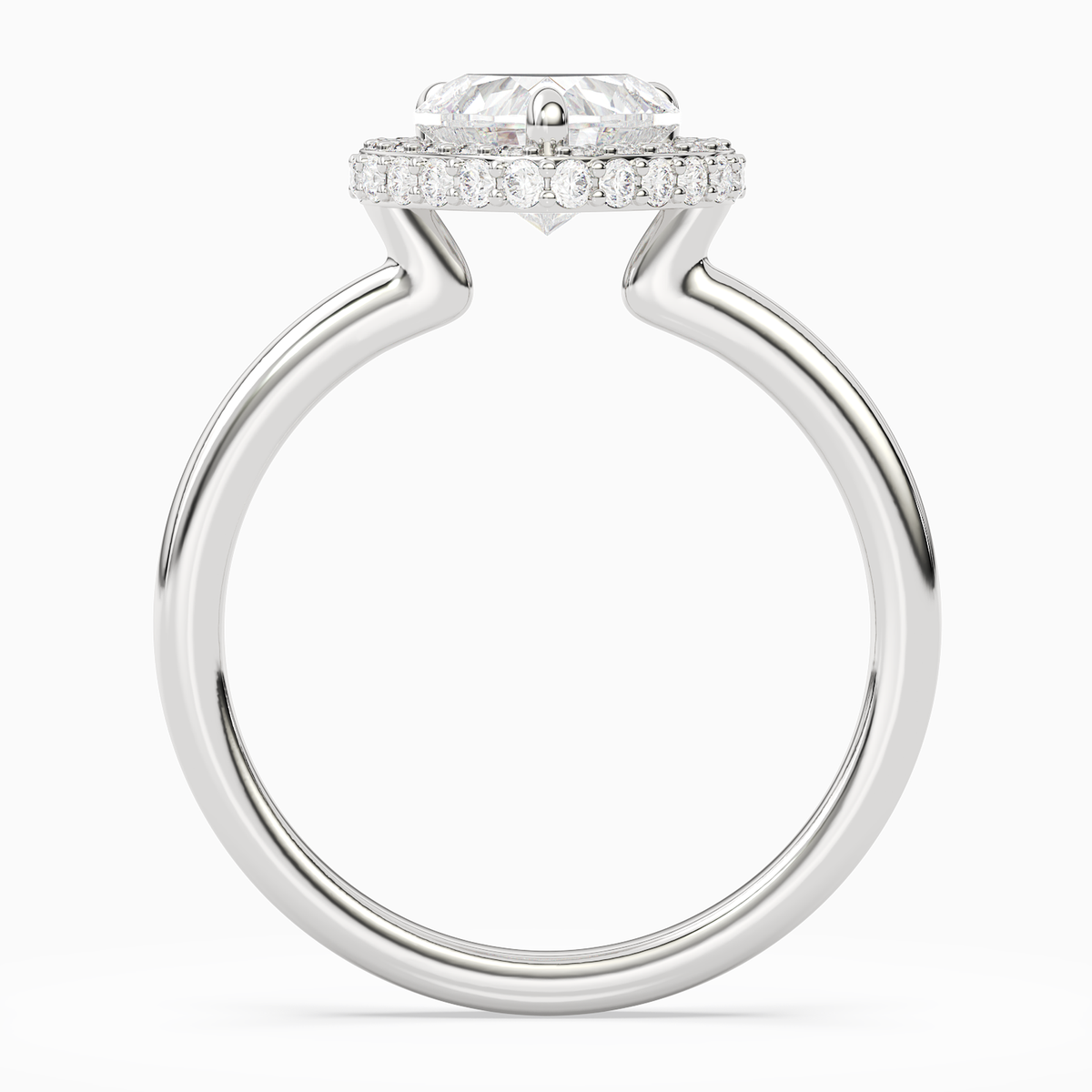
The lower point is a more vulnerable area. A V-shaped or chevron-style prong is often used to shield it in an open setting, while a bezel can provide more continuous perimeter coverage. Girdle condition, inclusions near the point, support dimensions, workmanship, wear, and maintenance determine the exact level of protection; no setting category guarantees immunity from damage.
The upper cleft presents a different design problem. Prongs are generally placed on the lobes rather than within the cleft so the V remains visually defined. A bezel or Halo must follow both curves without filling the notch or making one lobe appear larger. Security and outline legibility need to be solved together.
Settings Can Contain, Repeat, or Extend the Symbol
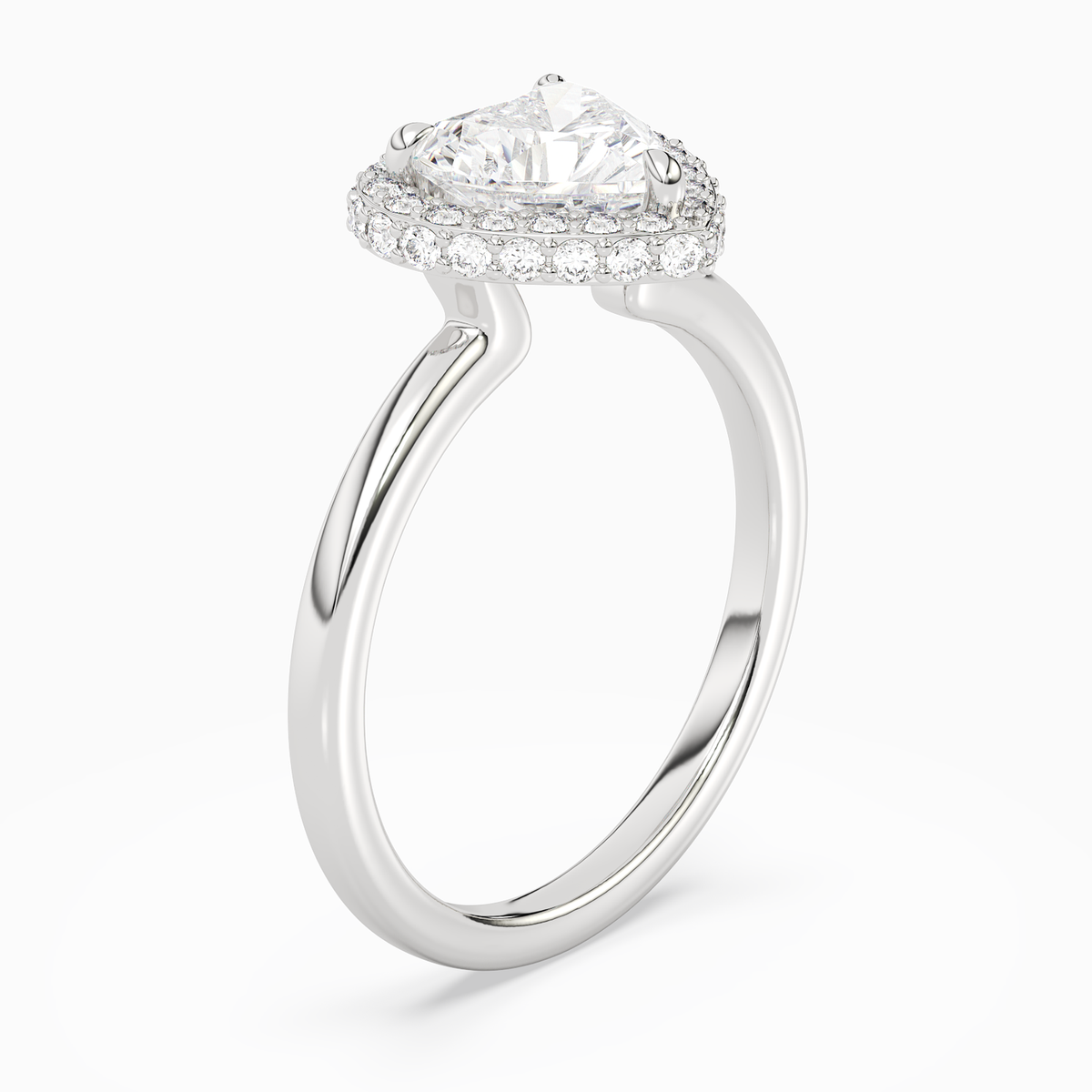
Thea’s open basket leaves the Heart center and its supporting prongs comparatively exposed to view. Jessamine traces the perimeter in a bezel; Nerida repeats it with a Halo. Sara adds milgrain and side diamonds, shifting attention laterally while preserving the center as the primary symbol.
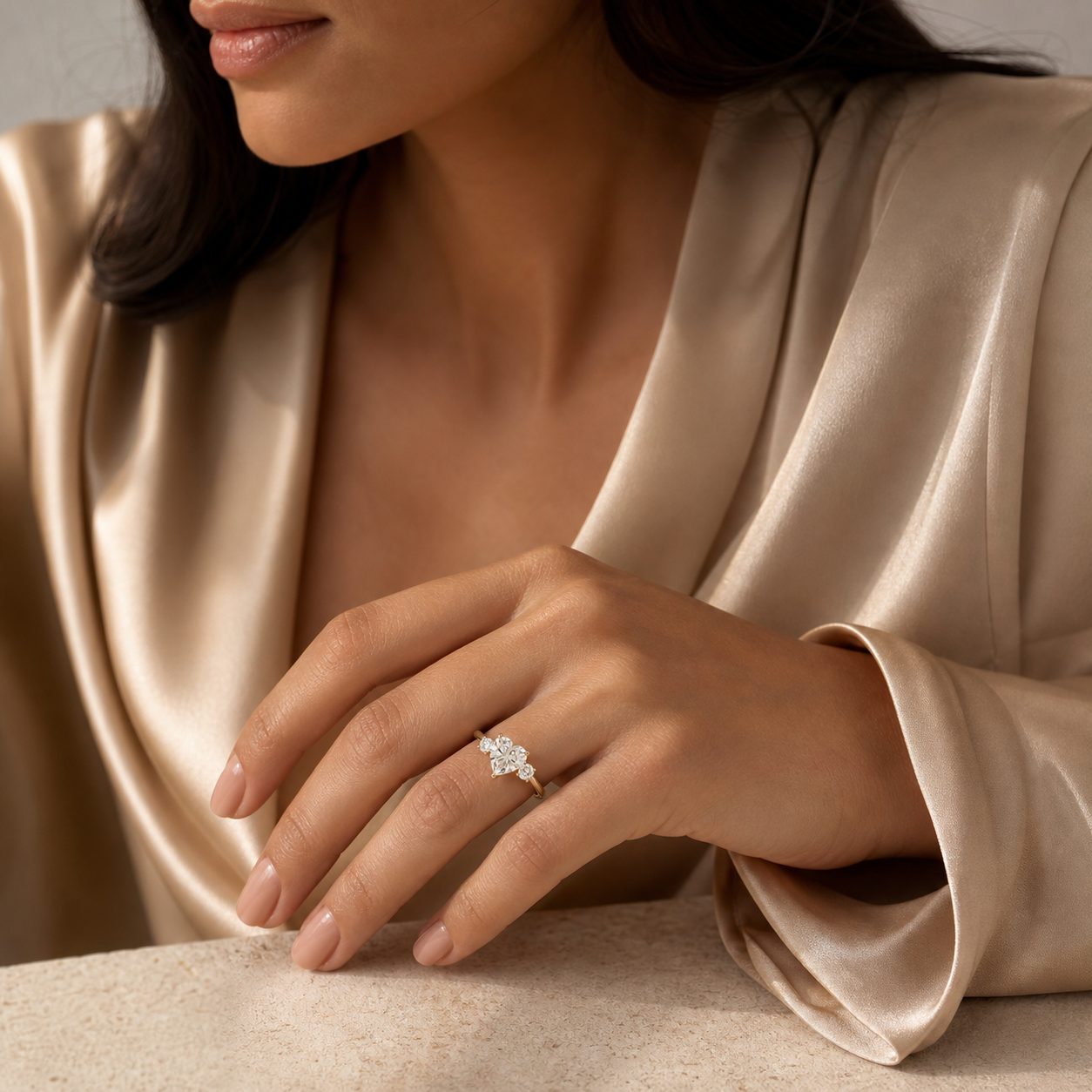
Ophelia and Fiora use Three Stone composition, with the latter adding petal-prong language around the centers. Accent shape, scale, height, and spacing determine whether the supporting stones echo the Heart’s curves or provide contrast. These are real differences in Burvonti’s current collection, not a generic list of every style that could theoretically accept the shape.
Metal, Profile, and Pairing Shape Daily Presence
White Gold can create cooler continuity around the center, prongs, and accents. Yellow Gold makes the outline and setting boundary warmer and more explicit. The current public collection is concentrated in those two metal colors; alloy, finish, care, and any alternative option should be confirmed by product.
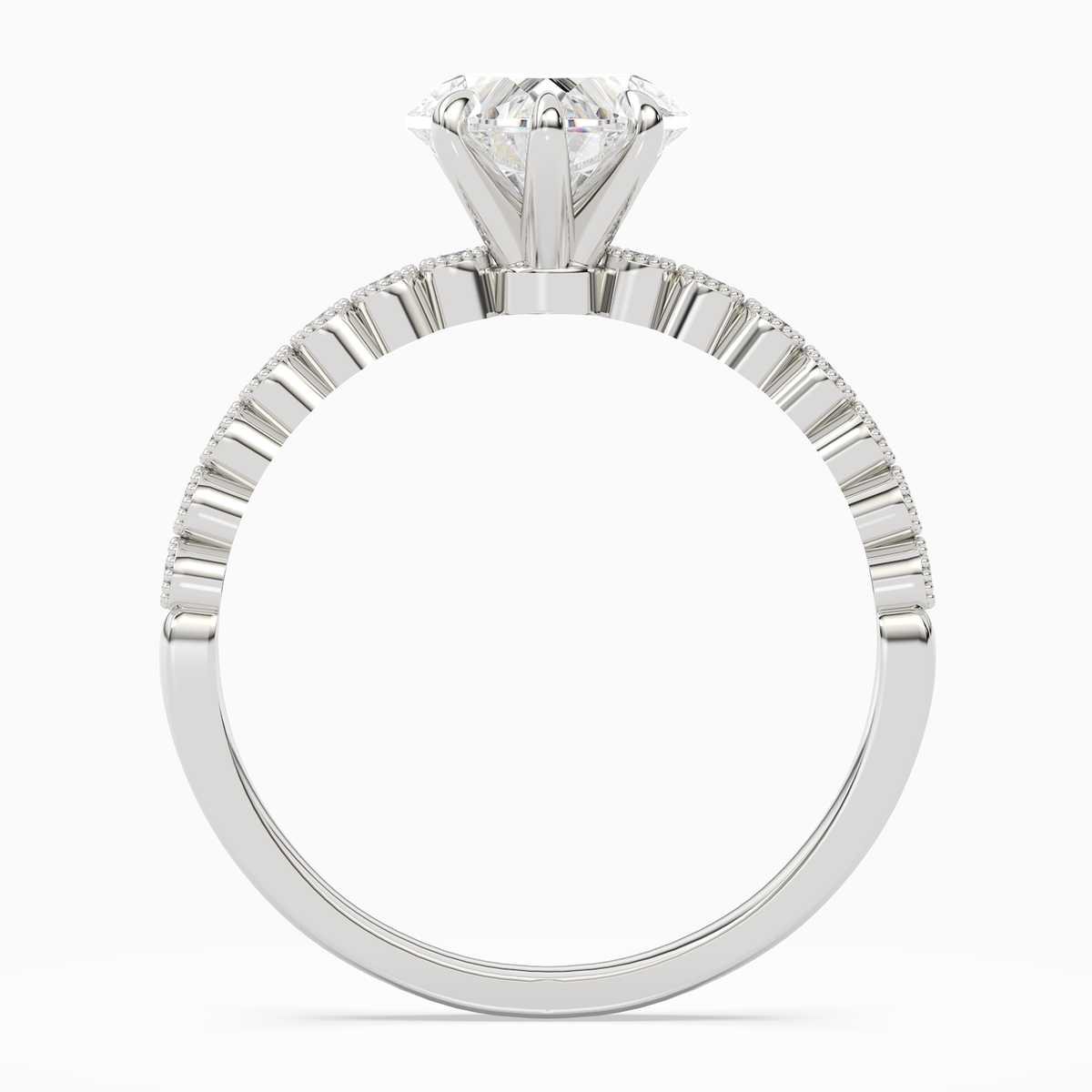
From the side, basket width, bezel, Halo, side stones, setting height, and shoulders determine how a wedding band approaches. A straight band may sit close, meet the setting, or leave a deliberate interval. A contour, chevron, open band, or coordinated design may answer the point and profile more closely. The symbolic outline alone cannot predict a flush stack.
Meaning Preserved Through Calibration
Responsibly sourced and independently graded, Burvonti lab-grown diamond centers are brought into settings through proportion and final human judgment. For a Heart, that means respecting the emotional clarity of the symbol while scrutinizing both lobes, the cleft, wings, point, light pattern, and support. Precision does not diminish feeling; it gives the feeling a coherent form.
Custom possibilities may refine center specifications, setting, point support, metal, accents, band line, or engraving when structurally feasible. Use gentle care appropriate to the selected diamond, alloy, and construction; avoid abrasive products and harsh chemicals, and request inspection if a prong catches, the center moves, or the ring receives a significant impact. Assortment, resize range, documentation, security, and band fit remain product-specific.
Frequently Asked Questions
What is a heart-shaped diamond engagement ring?
It is an engagement ring centered on a brilliant-style diamond with two rounded lobes, a V-shaped cleft, curved wings, and one lower point. Its symbolic meaning is familiar, but its visual quality depends on the precise relationship among those parts.
What are the cleft and lobes of a heart diamond?
The cleft is the V-shaped notch at the top center. The lobes are the two rounded sections on either side. Their depth, height, fullness, symmetry, and transition into the shoulders strongly affect whether the Heart outline reads clearly.
What are the wings of a heart diamond?
The wings are the lower side sections between the belly and the point. They should taper coherently and answer one another. Flat, bulging, or uneven wings can make the outline appear distorted or closer to another shape.
What makes a heart-shaped diamond symmetrical?
Imagine a line from the cleft through the center to the point. Both lobes, shoulders, wings, facet pattern, and outer edges should relate closely across that axis, while the point and cleft should feel centered.
What is the best length-to-width ratio for a heart diamond?
There is no universal best. Ratio describes whether the center is broad or elongated, but cleft definition, lobe fullness, wing shape, point alignment, light pattern, and setting response are equally important.
Does GIA give heart diamonds an overall cut grade?
No. Under GIA’s current regular system, eligible standard Round Brilliants are the only diamonds assigned an overall cut grade. A Heart report still records shape and cutting style, measurements, polish, symmetry, color, clarity, fluorescence, and identifying characteristics.
How should I judge a heart diamond without an overall cut grade?
Use the report for documented characteristics, then view the center face-up and in motion. Look for matched halves, a defined cleft, smooth lobes and wings, a centered point, responsive light, and no fixed dark or dull zone that dominates.
Can heart-shaped diamonds have a bow-tie?
Yes. A zone of contrast can appear across the center of a Heart brilliant. Its width, darkness, persistence, and behavior in motion matter more than the mere presence of some contrast.
Is any bow-tie effect in a heart diamond bad?
No. Contrast helps facets remain visible, and some Hearts show a subtle bow-tie. A broad, dark, or persistent area that distracts from both halves is more concerning than a restrained pattern that brightens as the center moves.
Does a heart diamond need to be at least one carat?
No fixed carat weight guarantees a clear Heart outline. Smaller dimensions can make the cleft and lobes harder to read, but actual length, width, outline, setting coverage, and visual observation are more useful than a universal 0.50-, 0.75-, or 1-carat rule.
Does carat weight tell me how large a heart diamond will look?
Not by itself. Carat measures weight. Length, width, depth, lobe and wing proportions, and weight distribution influence face-up scale, while a bezel, Halo, side stones, and band alter the complete ring’s presence.
Is the point of a heart diamond fragile?
The lower point is more vulnerable to impact than a rounded edge. Girdle condition, inclusions near the point, setting support, workmanship, wear, maintenance, and the type of impact determine the exact risk.
Does a heart diamond need a V-prong?
A V-shaped or chevron-style prong is commonly used to shield the point in an open setting. A bezel can provide more continuous coverage. The correct treatment depends on the center, setting, dimensions, girdle, and construction rather than one universal rule.
Should a prong be placed in the cleft of a heart diamond?
Prongs are generally placed on the lobes rather than inside the cleft so the V remains visible. Exact placement and count depend on the diamond and setting, and both secure support and outline clarity should be confirmed together.
Which heart engagement ring styles are currently available at Burvonti?
The current public collection includes open-basket and bezel Solitaires, a Halo, a milgrain Side Stone ring, and two Three Stone designs in 14K White or Yellow Gold. Confirm live product and center availability.
Is a bezel a good setting for a heart diamond?
A bezel can trace the perimeter and cover the point more continuously, but it must preserve the cleft and balance both lobes. Coverage, symmetry, workmanship, profile, maintenance, and the selected center determine the result.
How does a Halo change a heart-shaped center?
A Halo repeats and expands the symbolic outline, but its spacing and scale must preserve the cleft, lobes, and point. It also changes width, profile, maintenance points, and the relationship to a wedding band.
What side stones work with a heart-shaped diamond?
Round, step-cut, or other shaped accents can echo the center’s curves or introduce contrast. Scale, height, spacing, orientation, and the way the stones meet the band matter more than one universally preferred pairing.
Which metal works best for a heart engagement ring?
There is no universal best. White Gold can create cooler continuity around the center and accents; Yellow Gold creates a warmer boundary. Current Burvonti public availability is concentrated in those two metals, and exact specifications require confirmation.
Will a heart engagement ring sit flush with a wedding band?
Not necessarily. Basket or bezel width, point support, Halo, side stones, setting height, and shoulders establish the contact line. Depending on that profile, the answer may be a straight band, a shaped contour, an open construction, or a deliberate interval.
How should I clean a heart diamond engagement ring?
Choose a gentle method suited to the diamond, alloy, and exact construction. Avoid abrasive cleaners and harsh chemicals, clean carefully around the cleft, point, supports, and underside, and arrange inspection if a prong catches or the center moves.
Can a Burvonti heart engagement ring be resized or customized?
Resize and custom possibilities depend on the design. Center specifications, setting, point treatment, metal, accents, band line, or engraving may be adjustable when structurally feasible, but sizing limits, security, documentation, assortment, and band fit need individual confirmation.