
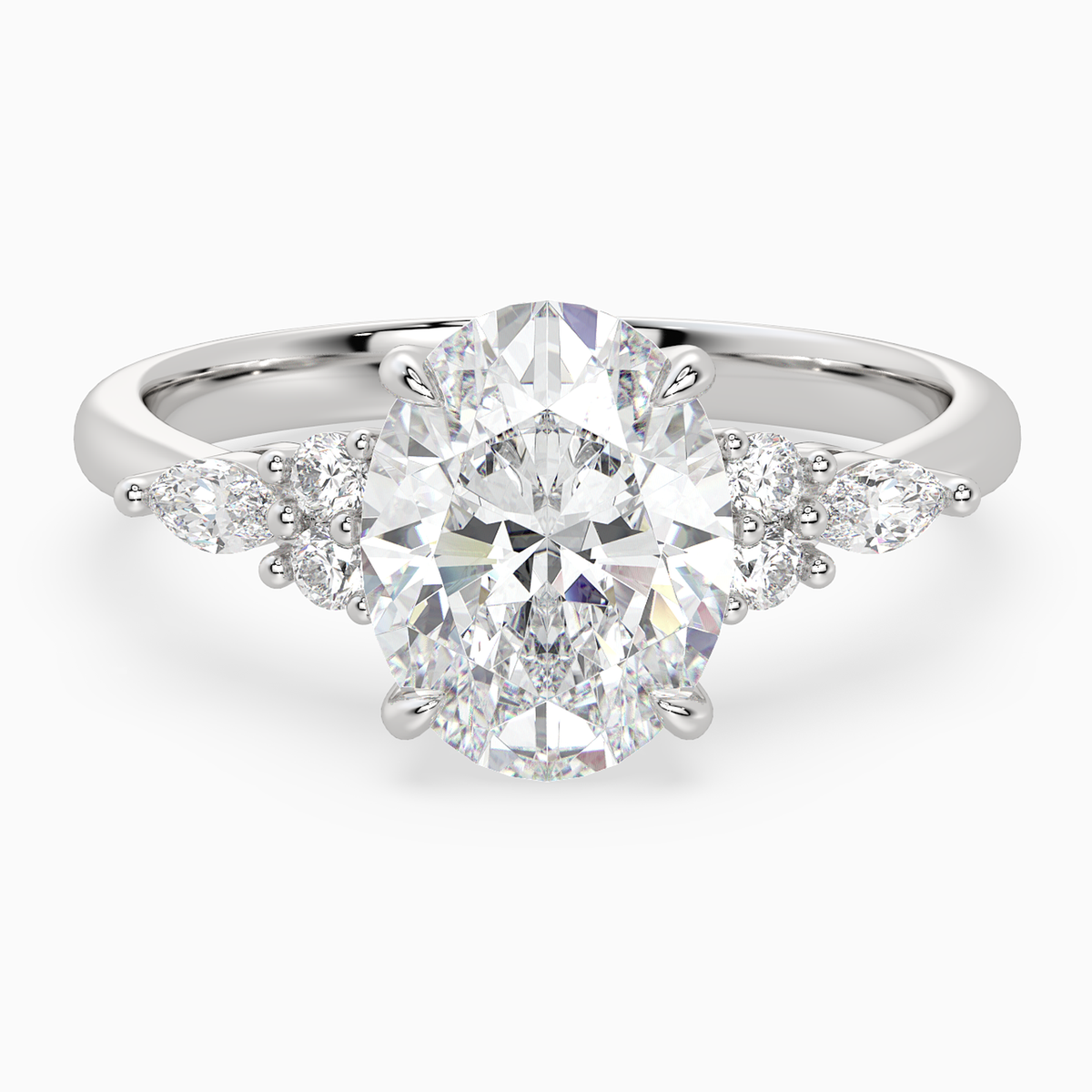


Lab Grown Diamond Solitaire Necklaces
One diamond holds the composition. Explore solitaire necklaces through shape, setting edge, scale and the way each center meets the chain.
































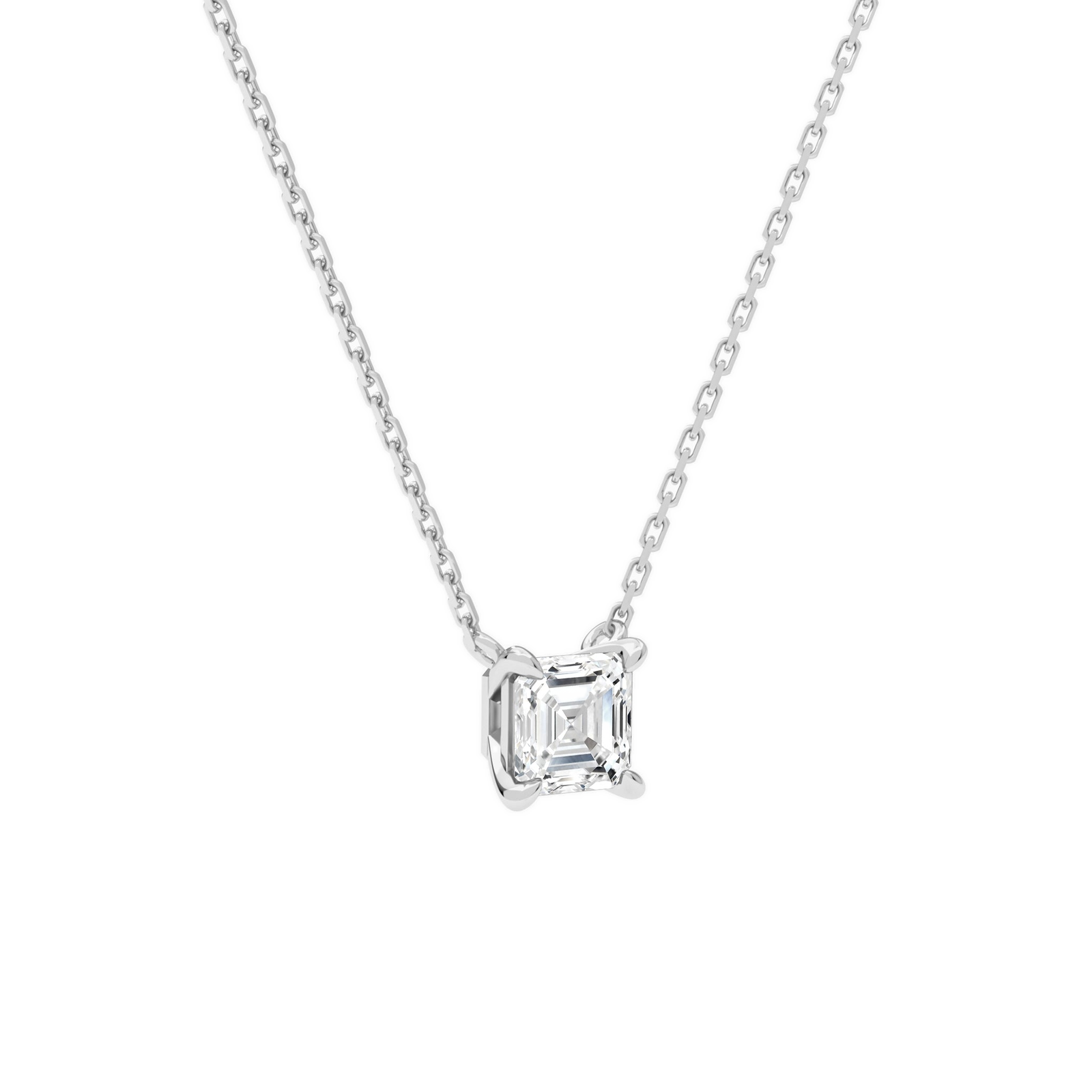


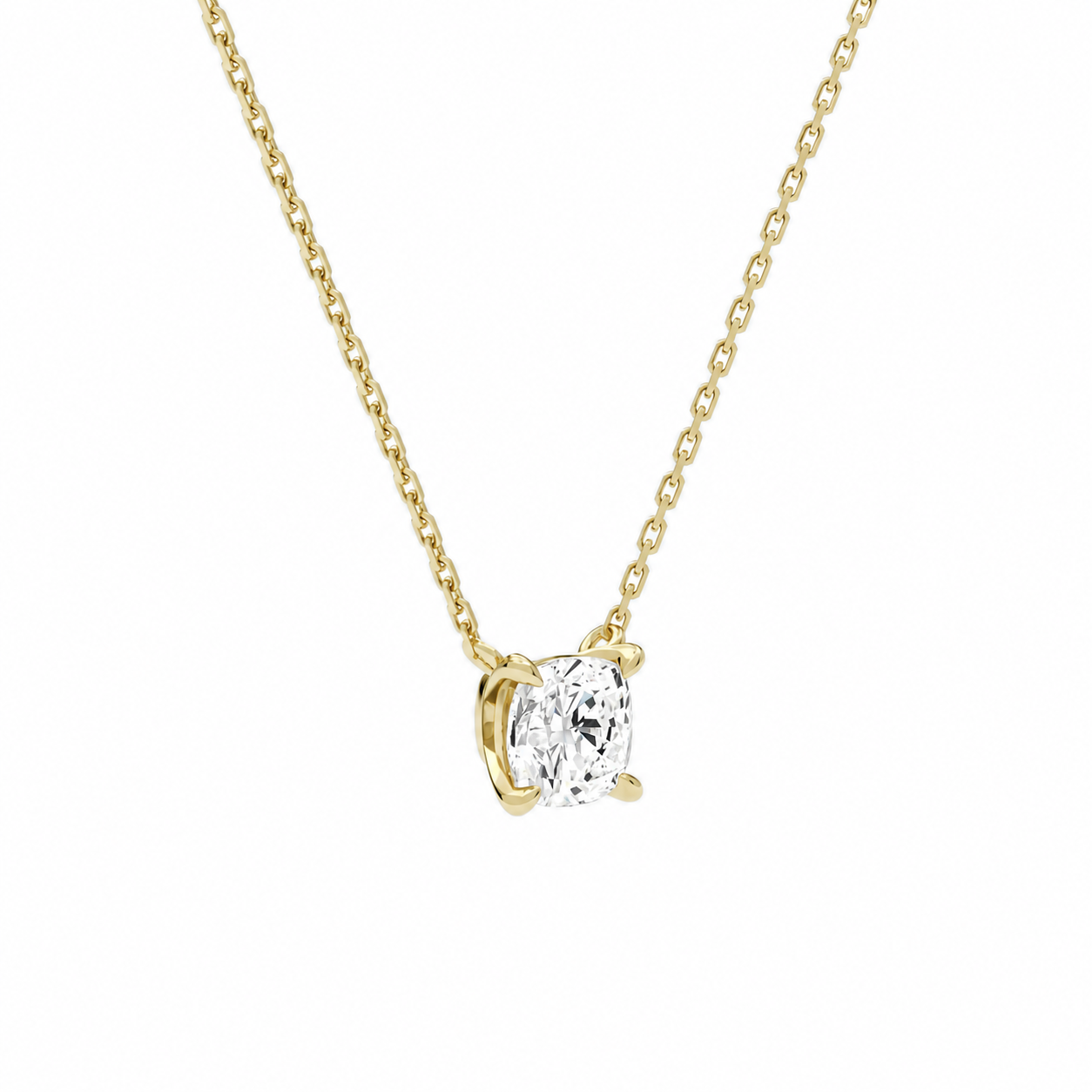


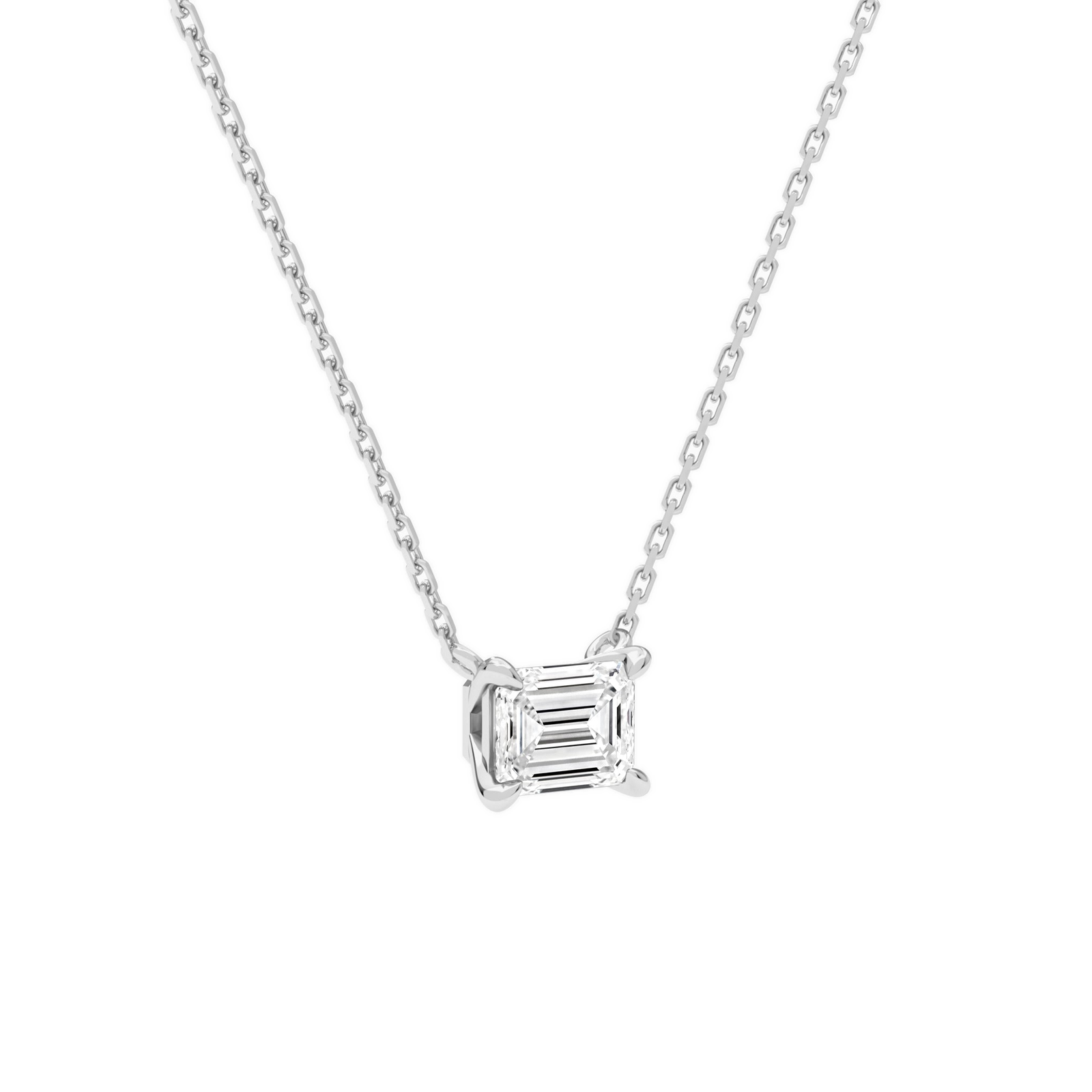


Lab-Grown Diamond Solitaires: One Center, Fully Considered
A solitaire is an exercise in focus. With fewer surrounding elements to redirect the eye, the center’s outline, proportions, setting edge, and relationship to the chain become more visible. Simplicity does not remove decisions; it makes each one easier to read. The most useful comparison is therefore not whether a solitaire is timeless or modern, but how one center is framed, placed, and calibrated for the wearer.
Burvonti’s current public Solitaire Necklace Collection contains 44 products. Forty-three are led by a single centerstone: 20 bezel designs, 20 prong-set designs, and three prong-set twist designs. One Marlowe solitaire-cross is a taxonomy outlier with a multi-diamond cross motif and Total Carat Weight options. It remains part of the current Collection, but this guide does not misdescribe it as a one-diamond centerstone design.
Solitaire Describes Hierarchy, Not One Setting
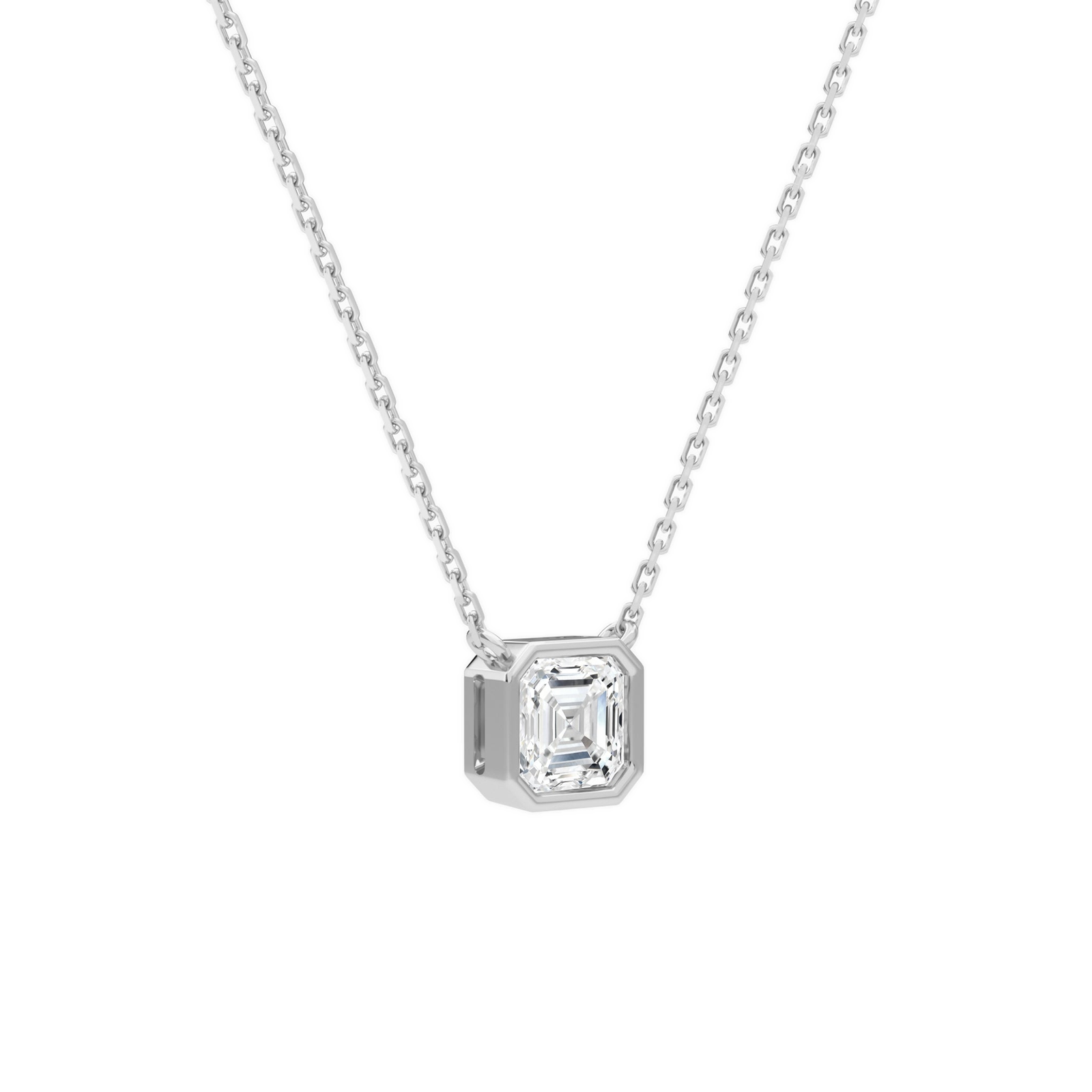
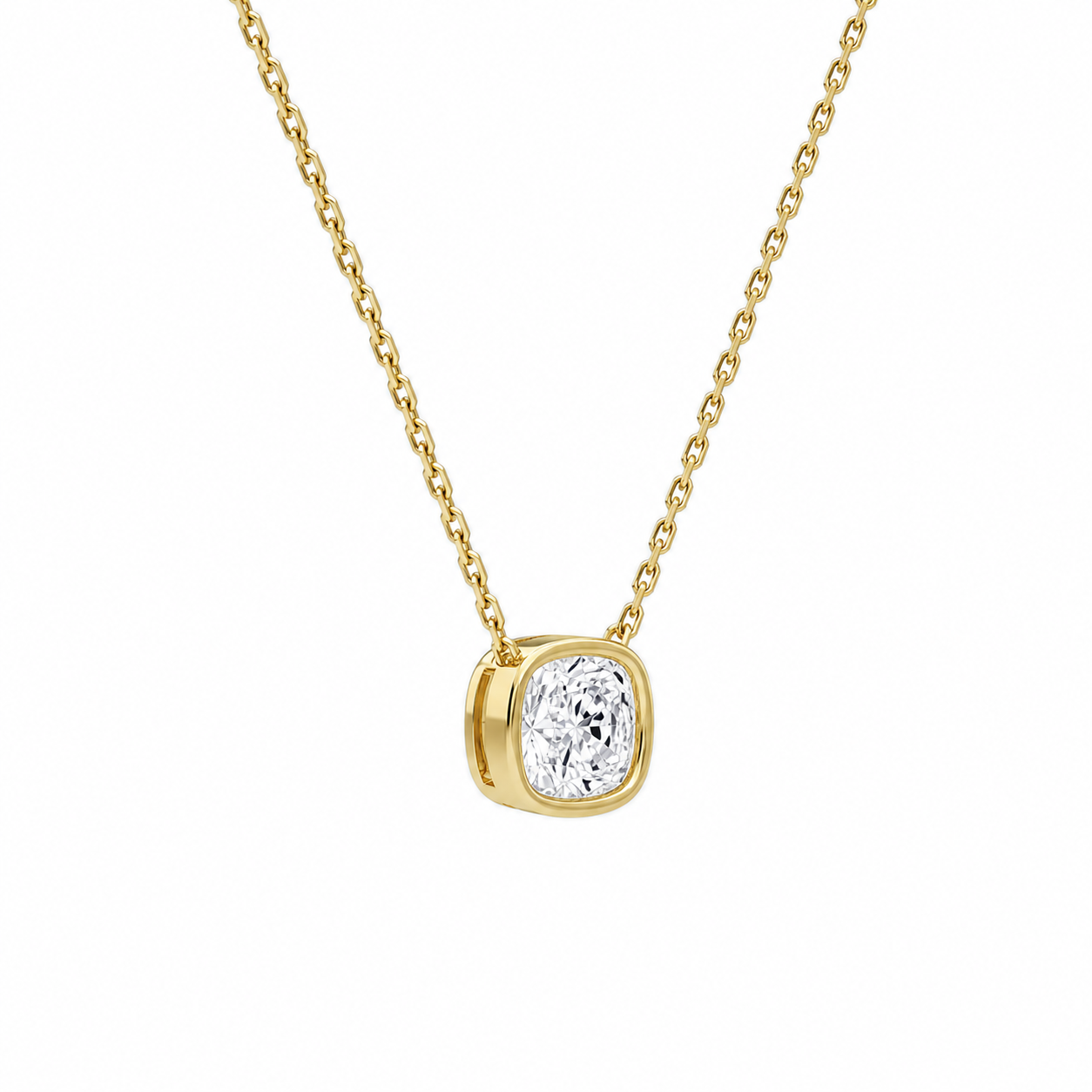
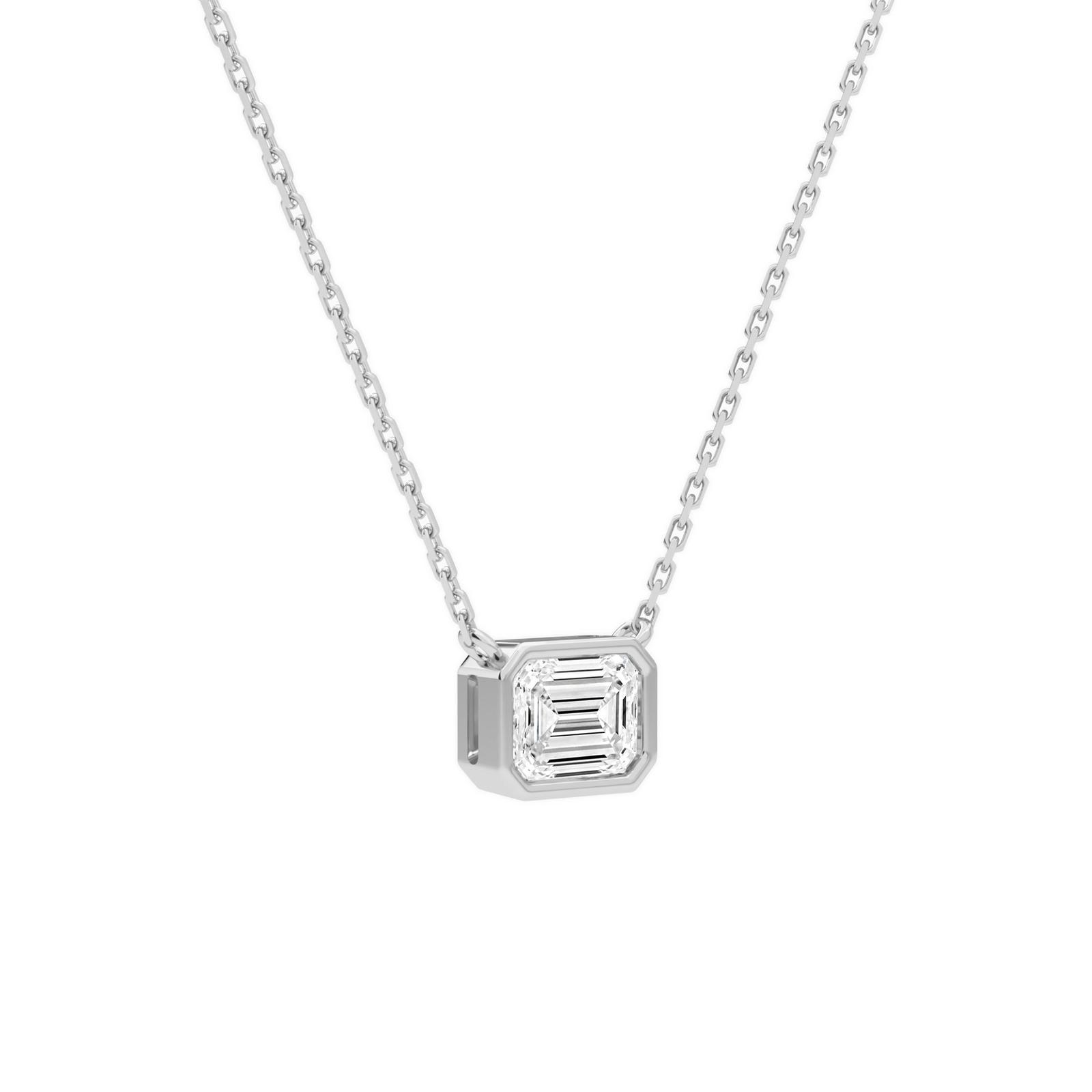
Solitaire tells you that one diamond leads; it does not prescribe how that diamond must be held. The current assortment includes prong and bezel settings. Prongs leave more of the perimeter visually open and make the points of contact discrete. A bezel draws a continuous metal edge around the outline. The Auralie twist designs add a directional transition between center and chain while preserving a single principal focus.
This distinction matters when comparing pages. Every current Bezel Necklace is also a Solitaire Necklace, but not every Solitaire is a bezel. Use this page to choose the complete single-focus composition; use the Bezel page when the defining question is specifically the metal boundary. Neither structure guarantees maximum light, perfect alignment, or absolute protection.
Shape Carries More of the Visual Language
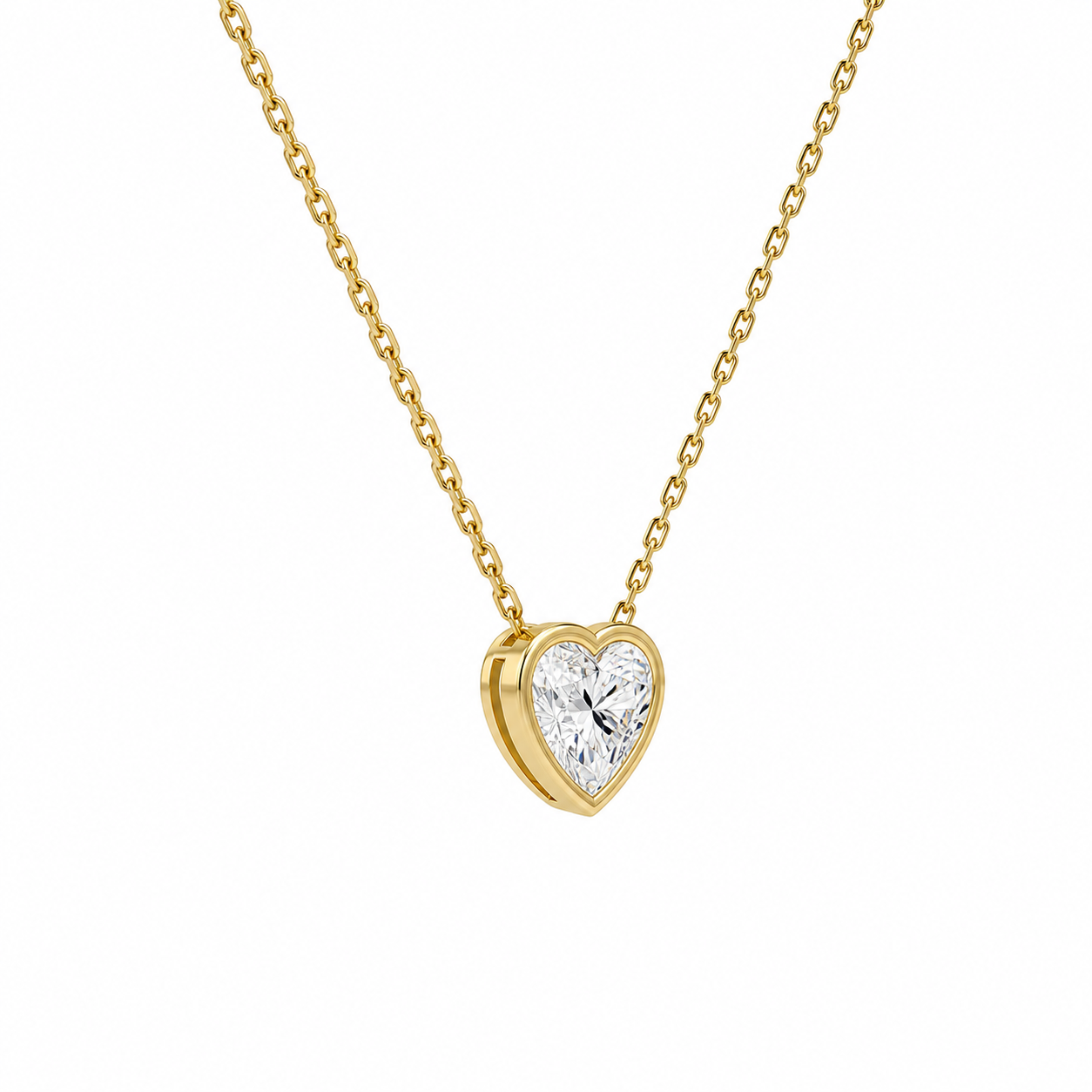
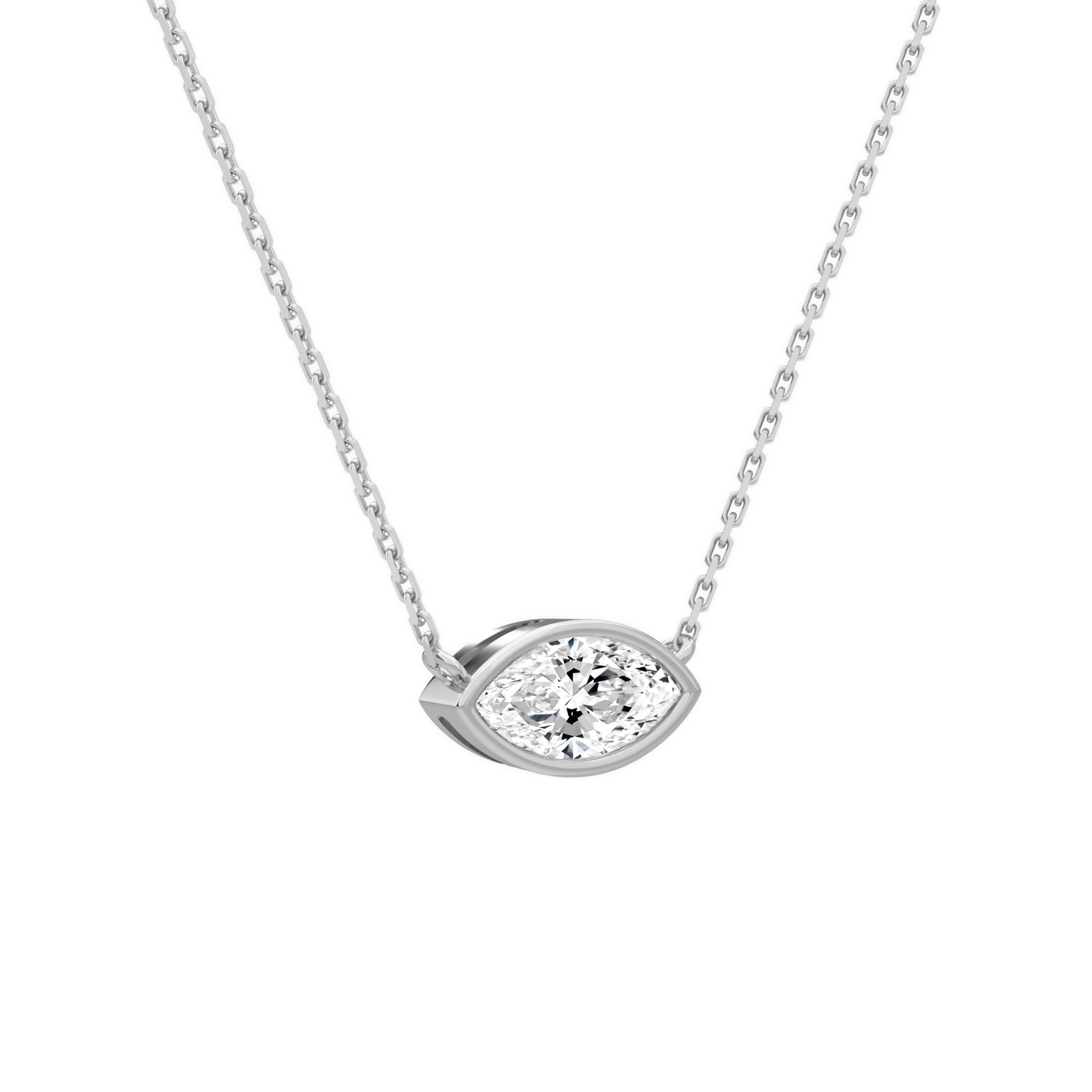
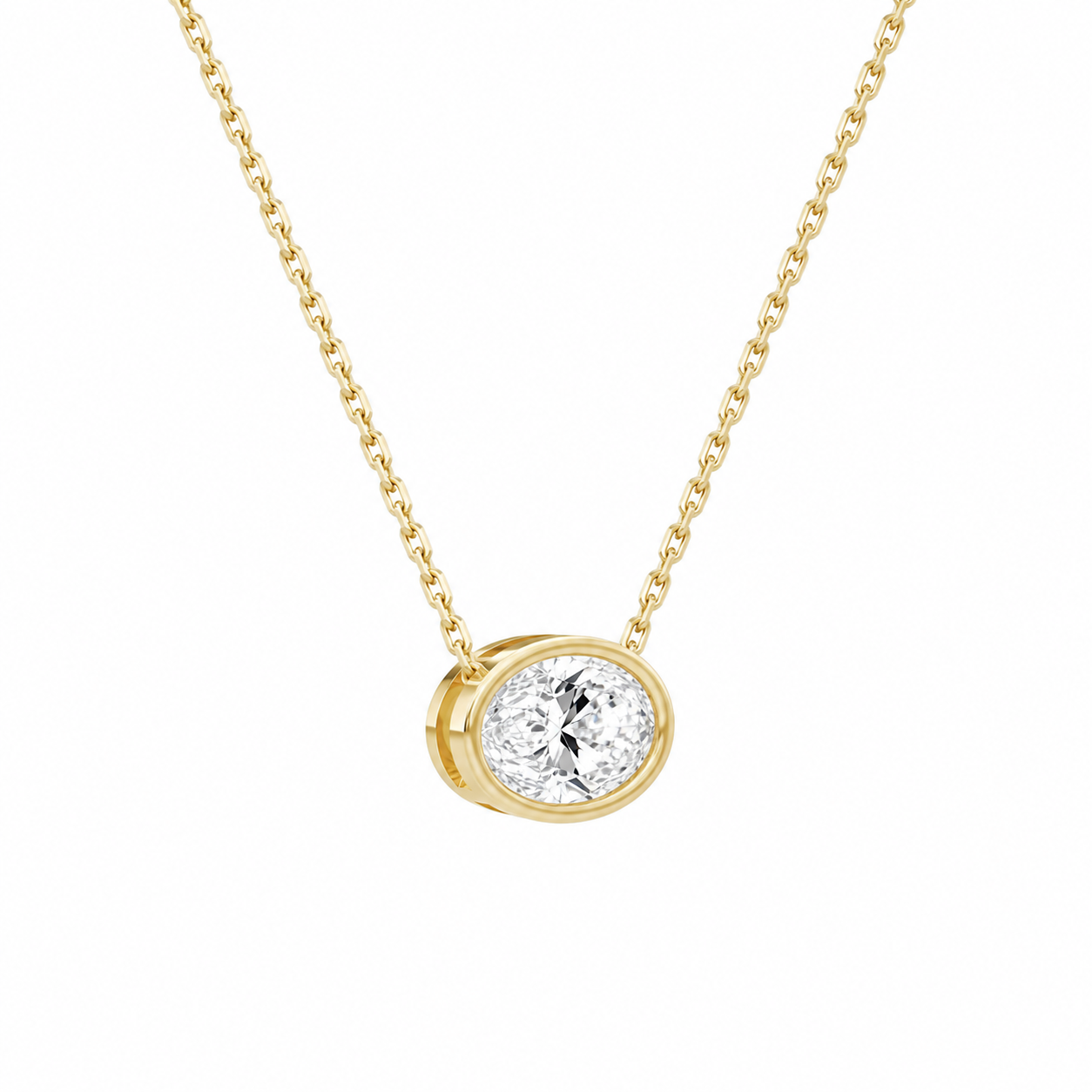
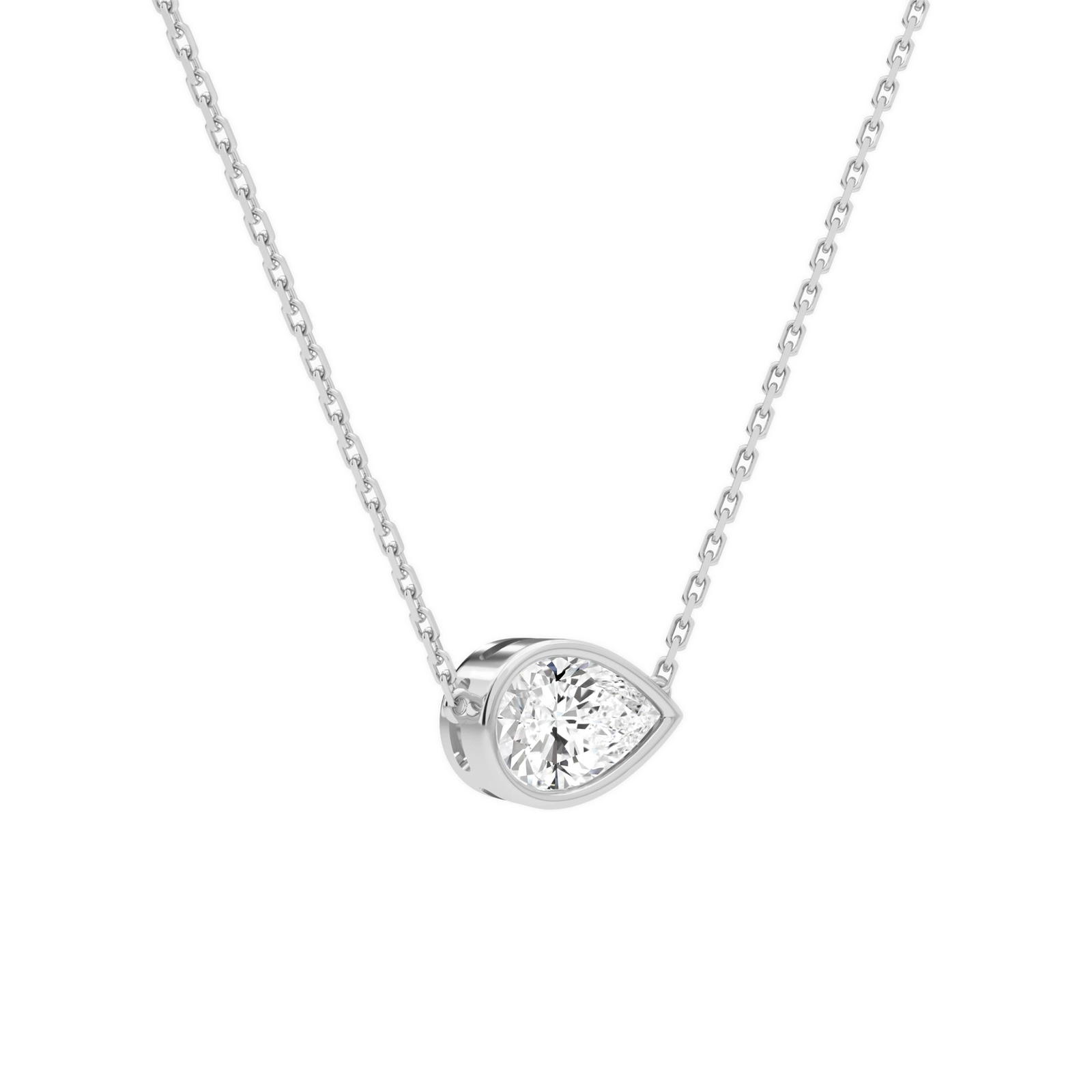
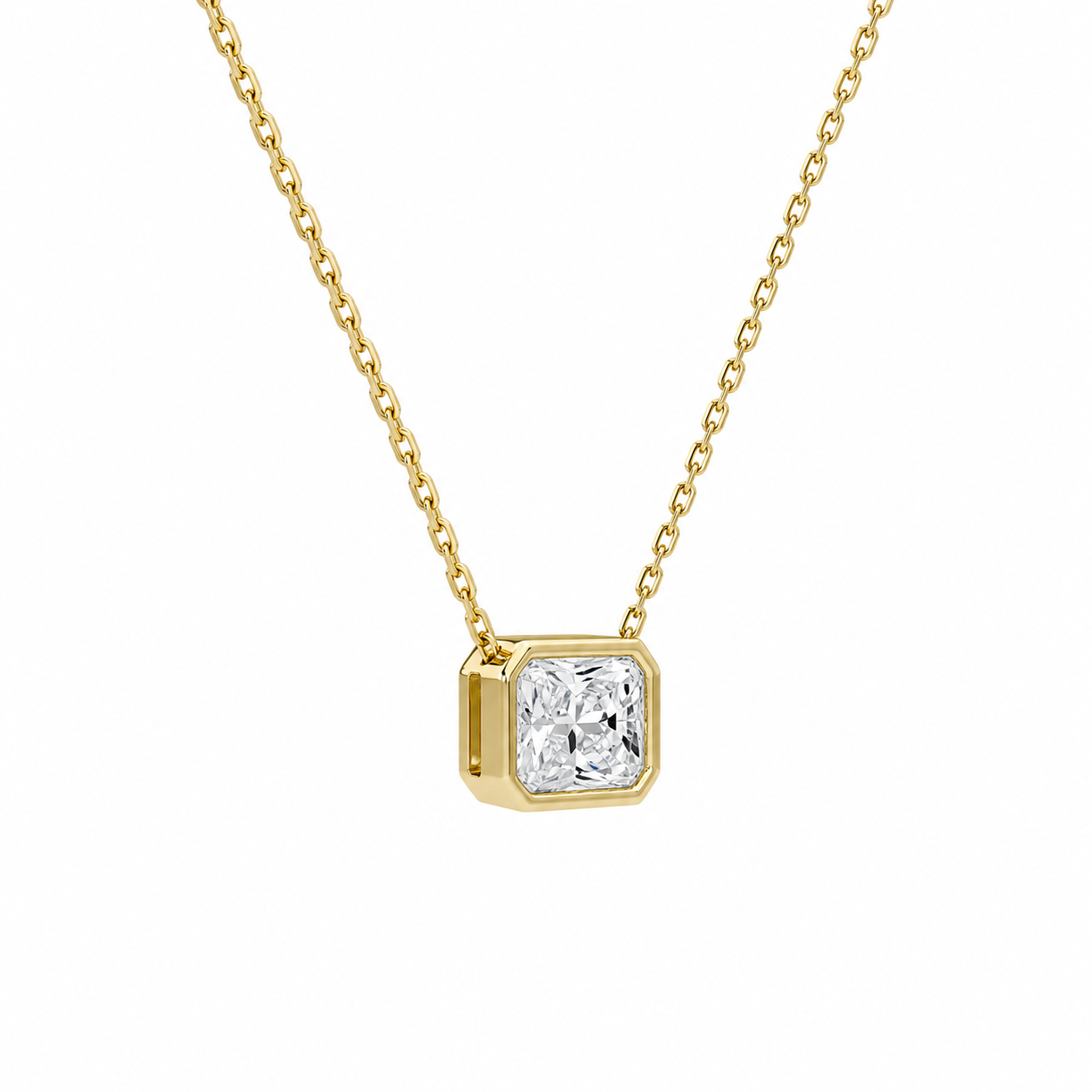
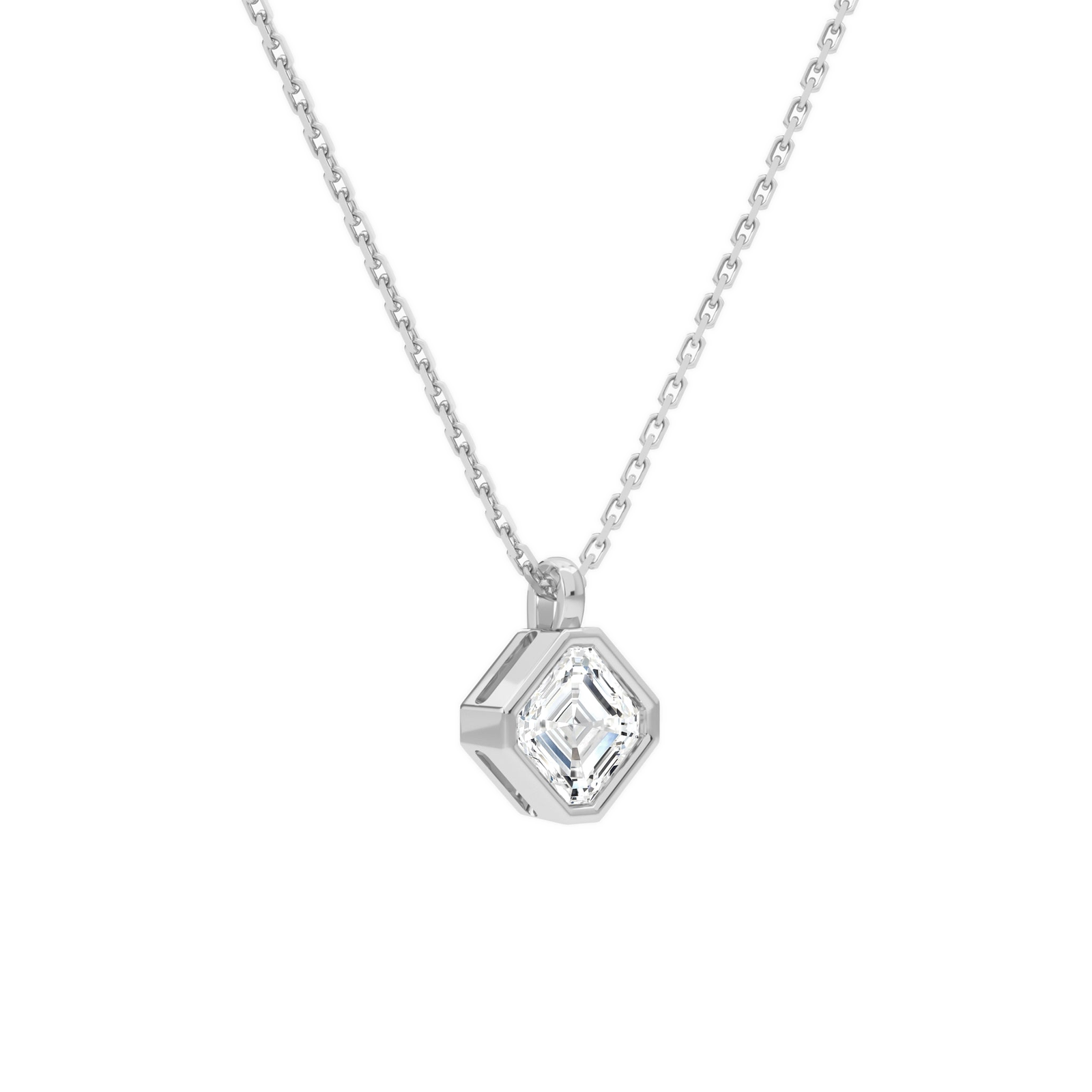
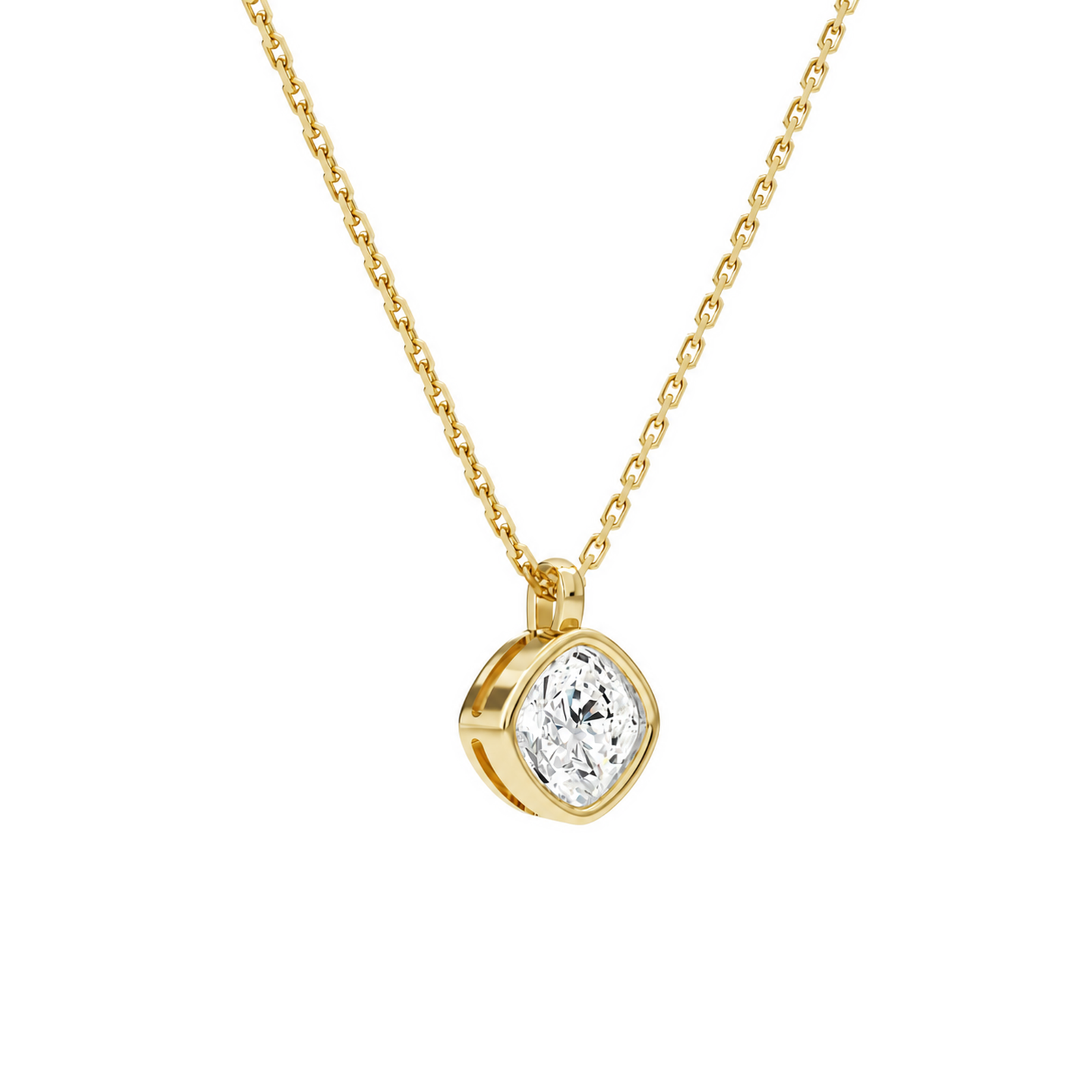
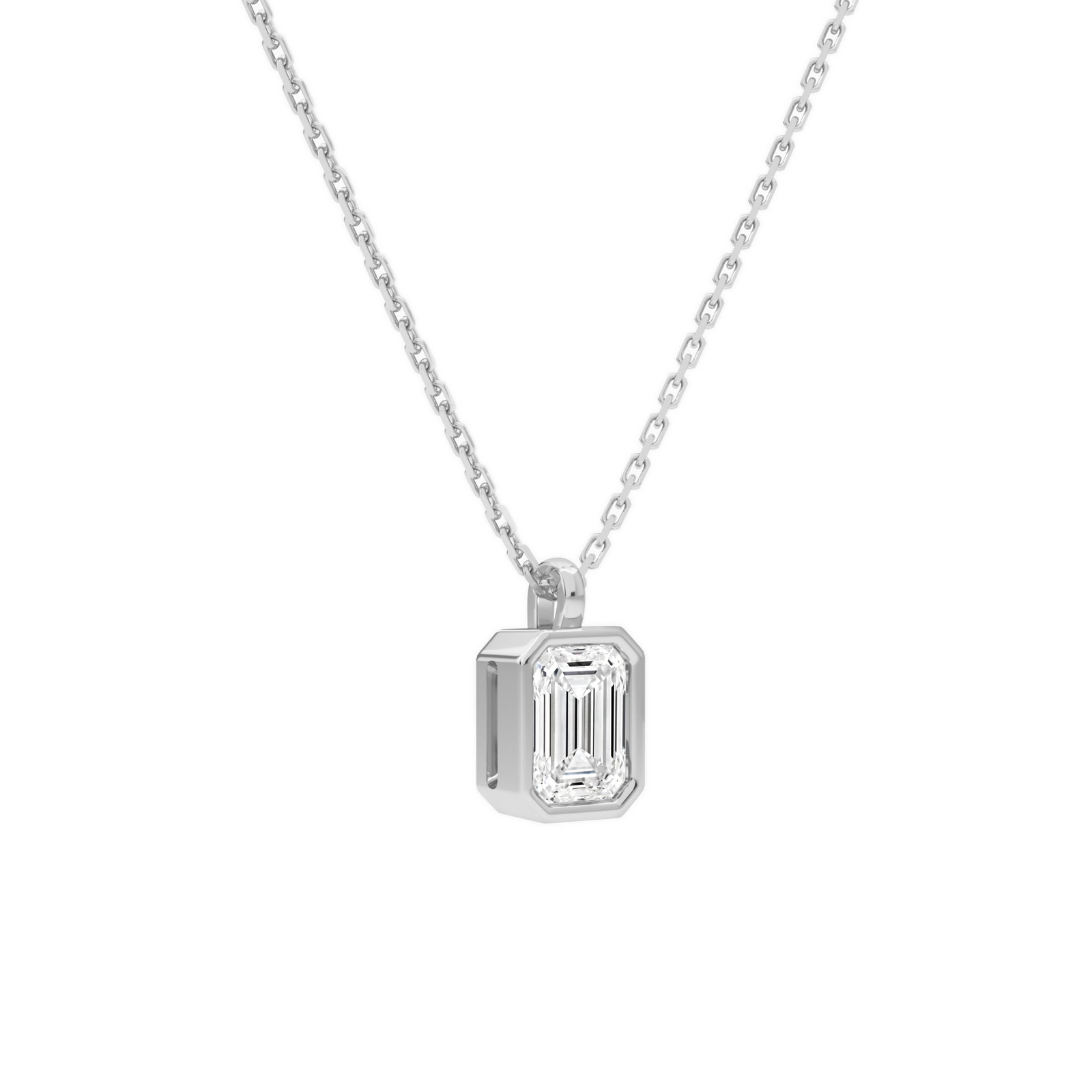
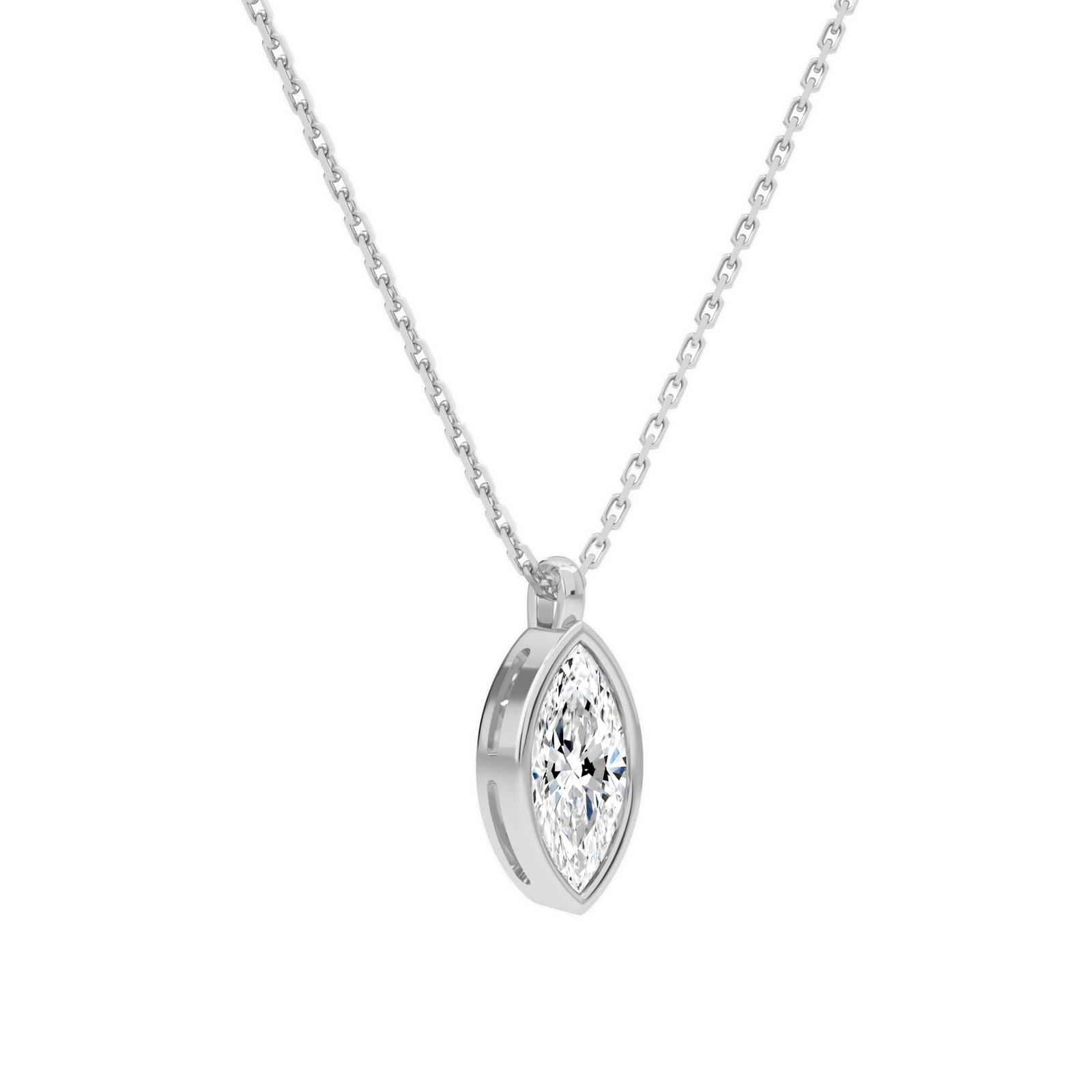
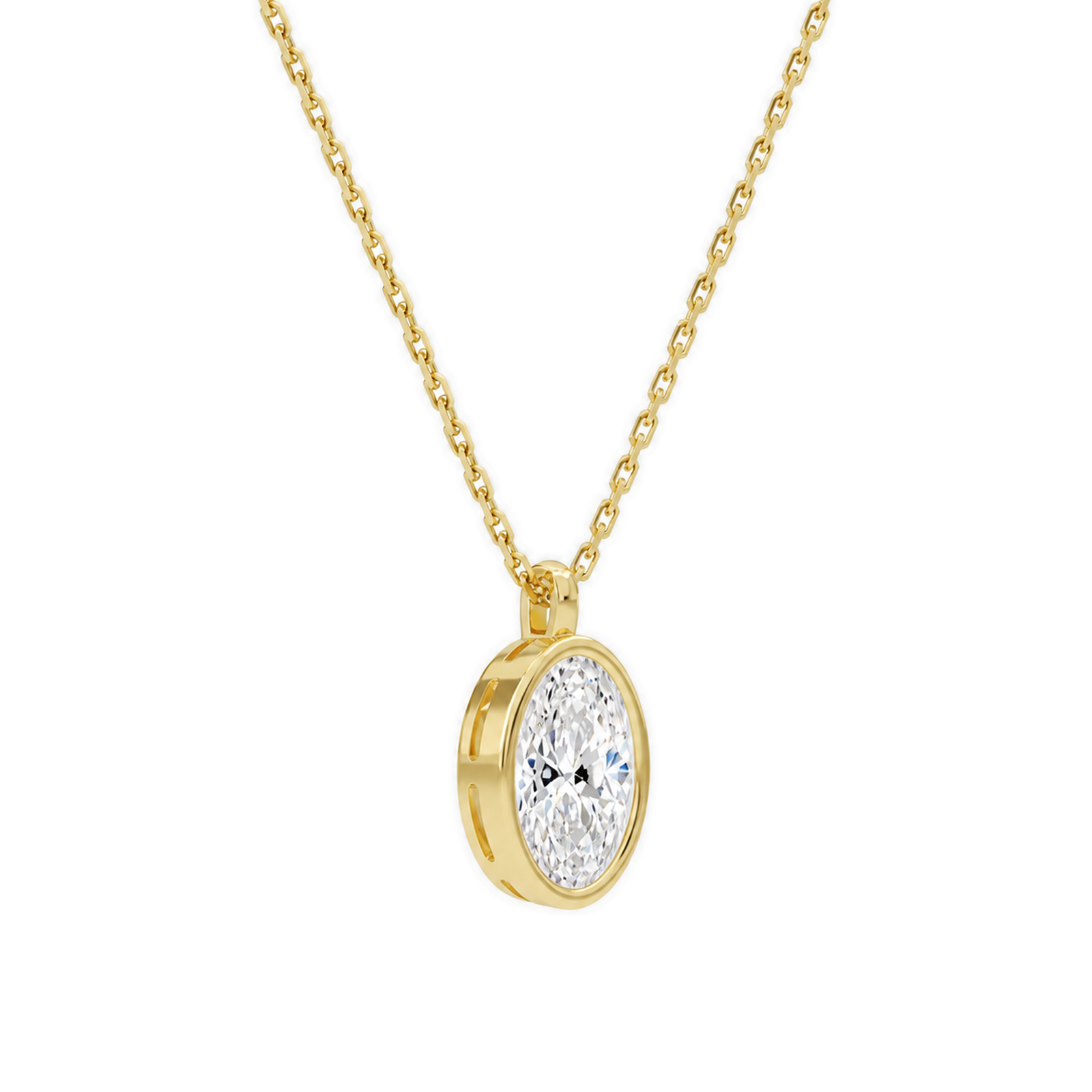
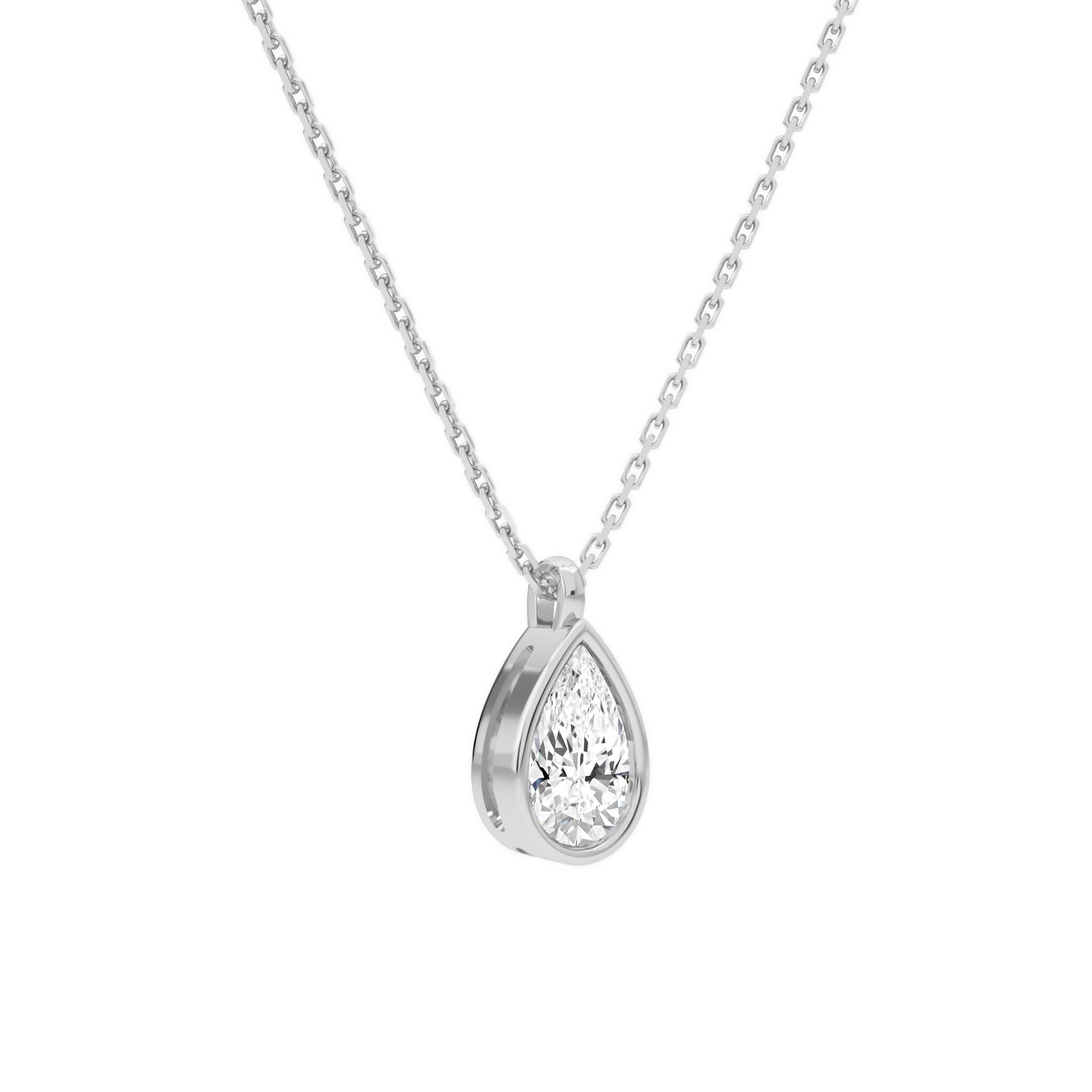
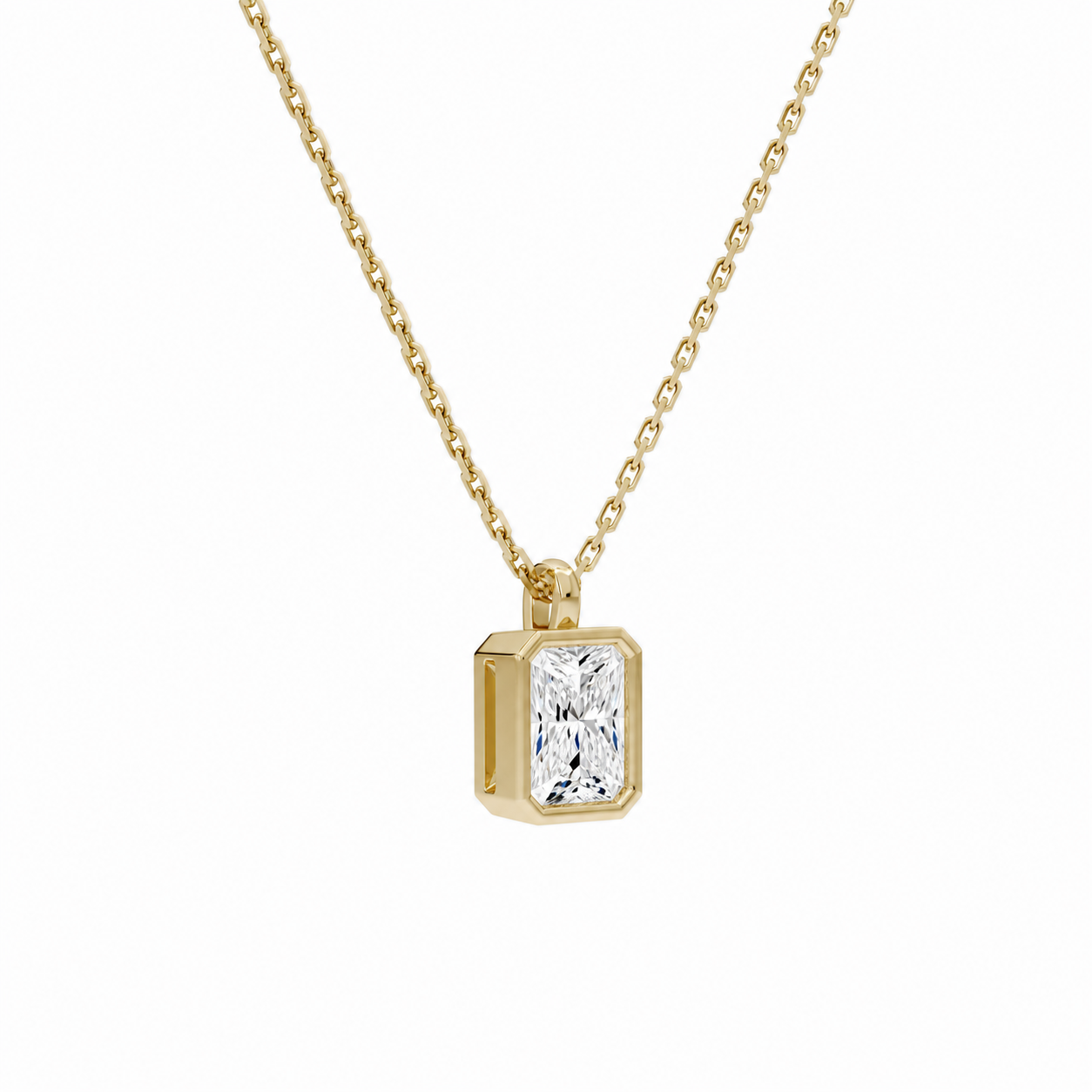
Ten center-shape categories are represented: Round, Oval, Cushion, Pear, Princess, Emerald, Marquise, Asscher, Radiant, and Heart. With no halo or secondary field around most centers, length-to-width proportion, corner treatment, point direction, and facet pattern have unusual clarity. Round creates continuity; elongated forms establish a stronger vertical line; square and cropped-corner shapes create a more architectural stop; pointed forms make orientation more explicit.
A shape name is only the beginning. Two diamonds in the same category can differ in face-up dimensions and proportions. Prong position can expose or interrupt an outline; a bezel can make it more graphic; a twist can extend its direction toward the chain. Compare actual imagery and measurements rather than assigning a fixed personality, gender, or occasion to any shape.
Scale Is a Relationship, Not a Label
Forty of the current products offer Centerstone choices from 1/2 through 2 carats plus a Browse All Diamonds path. Three twist designs offer Centerstone and Quality options, while the cross outlier uses Total Carat Weight and Quality. These are different measurement scopes: centerstone concerns a principal diamond; total weight can combine several diamonds across a motif.
Carat describes weight, not the complete face-up presence. Compare center dimensions, setting width, profile, attachment, chain width, and placement on the wearer. A bezel can increase the visible metal field around a center; prongs change the interruption of its edge; elongated proportions may occupy more vertical space. There is no universal best everyday carat range or fixed threshold at which a solitaire becomes a statement.
Read the Connection as Carefully as the Center
The current titles include both Necklace and Pendant Necklace language across Sienna, Stellaire, Solenne, Elysia, and Auralie families. Those words do not prove that one design is fixed, another slides freely, or either will remain perfectly centered. Inspect available front, side, and back views for the attachment points, chain path, profile, and clearance around the center.
Movement can be part of the composition. A center may articulate, rotate, or shift in response to chain drape and the body. Its behavior depends on attachment, scale, weight distribution, clothing, posture, and condition. Choose according to the amount of stillness or movement you prefer, then confirm the selected product rather than applying one construction rule to the whole Collection.
Placement and Layering Need Breathing Room
All 44 current public descriptions list an adjustable 16–18-inch length, a 0.95 mm chain, and a lobster clasp. This consistency helps comparison, but the same listed length does not land identically on every wearer. Neck circumference, neckline, attachment, center weight, and chain drape influence the final position.
A solitaire can act as the quietest layer or the leading point. If layering, give its center a distinct vertical interval and decide whether another necklace should repeat the metal, echo the shape, or provide textural contrast. Different lengths reduce competition but cannot guarantee separation or prevent tangling. The center should remain legible at body scale, not disappear into an accumulation of similar focal points.
Metal Defines the Frame Around Restraint
The current cards represent 18 designs in 14K White Gold, 18 in 14K Yellow Gold, and eight in 14K Rose Gold. White gold may visually recede around some settings; yellow or rose gold can make prongs, bezel, or chain transition more apparent. Metal does not determine who may wear the necklace or the occasion for which it is suitable.
Consider the complete system: setting, attachment, chain, clasp, finish, and any rhodium plating. Exact alloy, sensitivity, surface maintenance, and alternative-metal availability remain product-specific. When coordinating jewelry, repeating the center shape or edge language may create more intentional continuity than requiring every piece to share the same metal.
Clarity Belongs to the Diamond and the Whole Piece
Burvonti uses responsibly sourced lab-grown diamonds and supports independent grading and certification where applicable. Laboratory-grown diamonds are diamonds rather than simulants. A report describes the diamond identified; it does not automatically certify the setting, chain, clasp, or every diamond in the cross outlier. Read documentation at the scope in which it is issued.
Custom possibilities may refine shape, proportions, scale, prong or bezel treatment, twist, attachment, metal, chain, length, or clasp when technically feasible. Clean according to the complete construction, using a gentle method and avoiding force through the chain. Store the necklace without abrasive contact or knots, and inspect the center setting, attachment, links, and clasp if movement changes.
Frequently Asked Questions
What is a solitaire diamond necklace?
A solitaire necklace is organized around one principal diamond as the visual focus. The setting, attachment, and chain can vary while that hierarchy remains clear.
Are all current Burvonti Solitaire Necklaces single-diamond designs?
Forty-three current products are centerstone-led. One Marlowe solitaire-cross is a multi-diamond taxonomy outlier using Total Carat Weight, so it should not be described as a one-diamond product.
How many solitaire necklace designs are currently included?
The public Collection currently contains 44 products: 20 bezel, 20 prong-set, three prong-set twist designs, and one solitaire-cross outlier.
Is a solitaire always prong-set?
No. Solitaire describes the single-focus hierarchy. The current assortment contains both prong and bezel settings, plus three twist treatments.
What is the difference between prong and bezel solitaire necklaces?
Prongs create discrete contact points and leave more perimeter visually open. A bezel creates a continuous metal edge. Compare outline, profile, attachment, care, and personal preference.
Which diamond shapes are currently available?
Round, Oval, Cushion, Pear, Princess, Emerald, Marquise, Asscher, Radiant, and Heart are represented. Exact proportions vary within each category.
Which diamond shape is best for a solitaire necklace?
There is no universal best. Compare outline, dimensions, length-to-width proportion, facet pattern, setting, orientation, and how the center relates to the wearer.
Does a solitaire setting make the diamond look larger?
No Collection-wide size effect can be guaranteed. Face-up dimensions, proportions, setting edge, metal contrast, and viewing distance all influence perceived scale.
What Centerstone options are shown on current products?
Forty current products show 1/2, 3/4, 1, 1 1/2, and 2 carats plus Browse All Diamonds. Three twist designs use a different Centerstone and Quality structure; confirm the selected item.
What is the difference between Centerstone and Total Carat Weight?
Centerstone concerns a principal diamond. Total Carat Weight can combine multiple diamonds, as on the current solitaire-cross outlier. It should not be read as one center’s weight.
Does Necklace versus Pendant Necklace indicate fixed or sliding construction?
Not reliably. Inspect attachment points, chain path, and product views. Titles alone do not prove free sliding, fixed orientation, or perfect centering.
Will a solitaire necklace always remain centered?
No. Attachment, center weight, chain drape, body movement, clothing, and condition affect centering and orientation.
What length, chain width, and clasp are currently represented?
All 44 current descriptions list an adjustable 16–18-inch length, a 0.95 mm chain, and a lobster clasp. Confirm the exact selected product.
Can a solitaire necklace be layered?
Yes when length, scale, movement, and chain drape give each piece enough space. Different listed lengths do not guarantee that necklaces will not overlap or tangle.
Can I wear a solitaire necklace every day?
Frequent wear may suit a particular design, but setting, attachment, chain, clasp, activity, pulling, impact, care, and condition must be considered. No universal daily-wear guarantee applies.
Are lab-grown diamonds real diamonds and independently graded?
Lab-grown diamonds are diamonds, not simulants. Independent grading or certification applies to the diamond identified in the document; confirm its exact scope for the selected product.
Which metals are currently represented?
Current cards represent 14K White, Yellow, and Rose Gold. Exact alloy, finish, rhodium plating, sensitivity, and other-metal feasibility remain product-specific.
How should a solitaire necklace be cleaned, stored, or customized?
Use gentle care suited to diamond, setting, attachment, chain, and clasp; store without abrasive contact or knots. Custom shape, scale, setting, attachment, metal, chain, or length may be possible after technical review.