
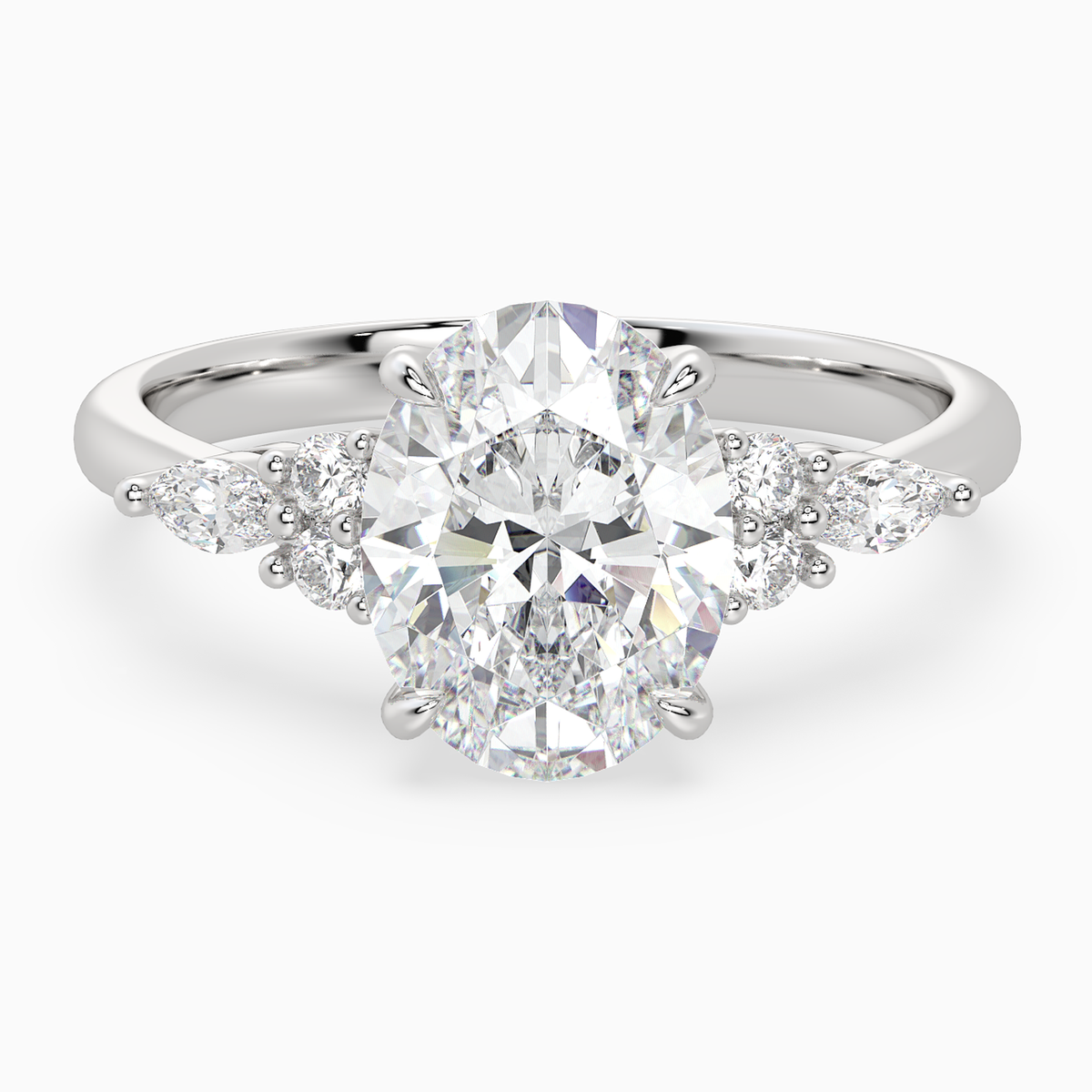


Lab-Grown Diamond Curved Rings
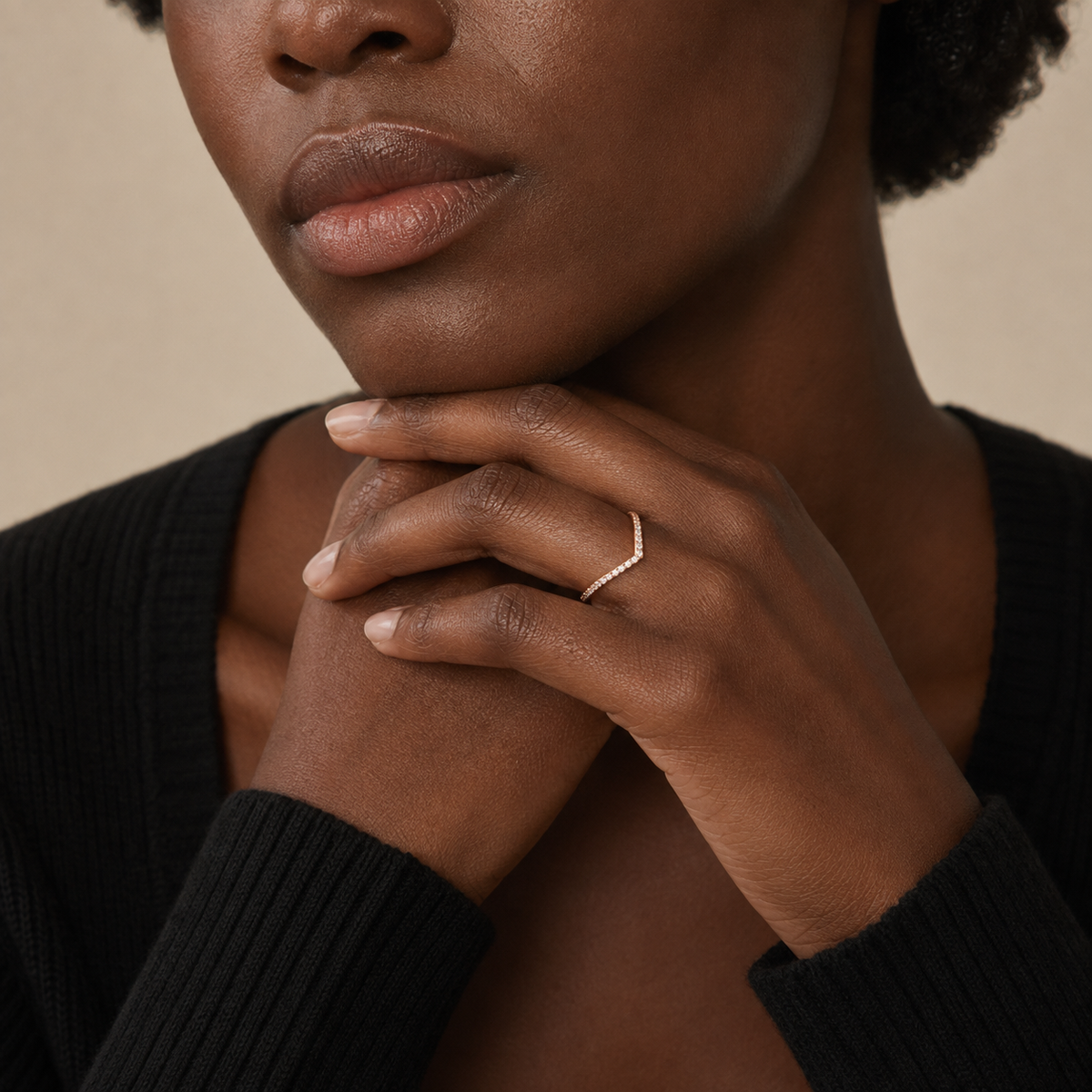
A curve makes space with intention. Explore diamond rings through contour, clearance, proportion and the way two silhouettes meet.











- Free Express Shipping
- Free Resizing
- 60-Day Free Returns
- Lifetime Warranty
Space, Drawn with Intention
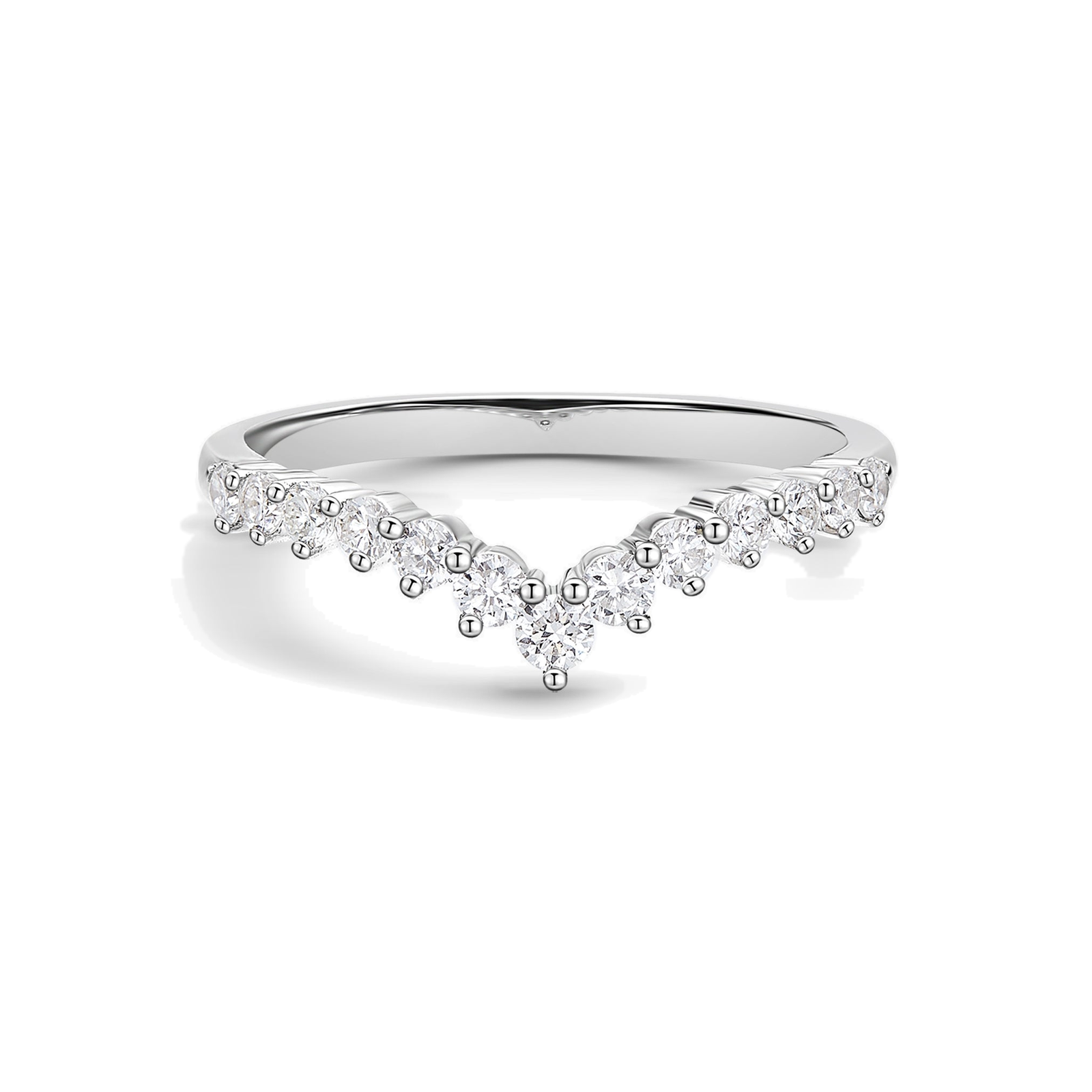
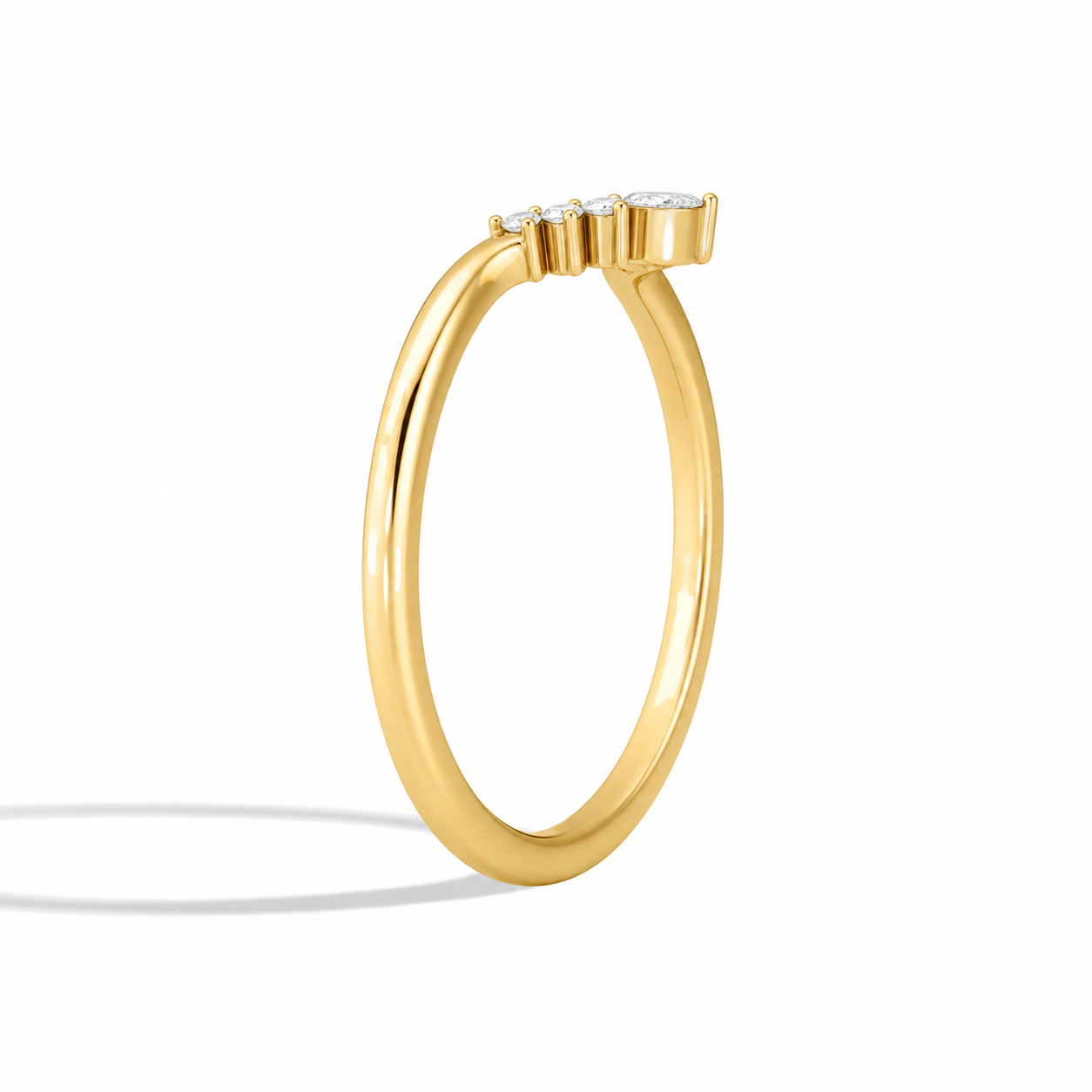
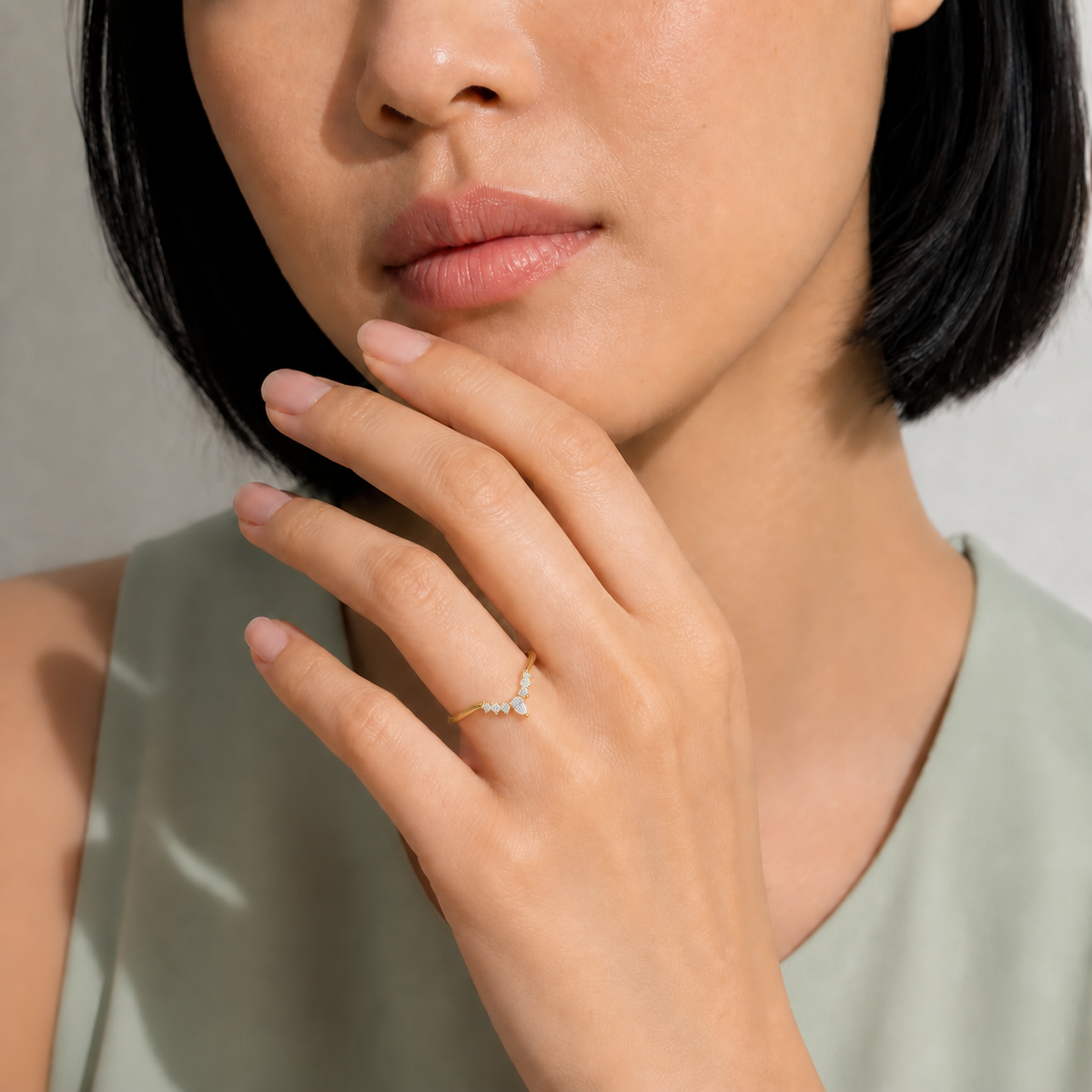
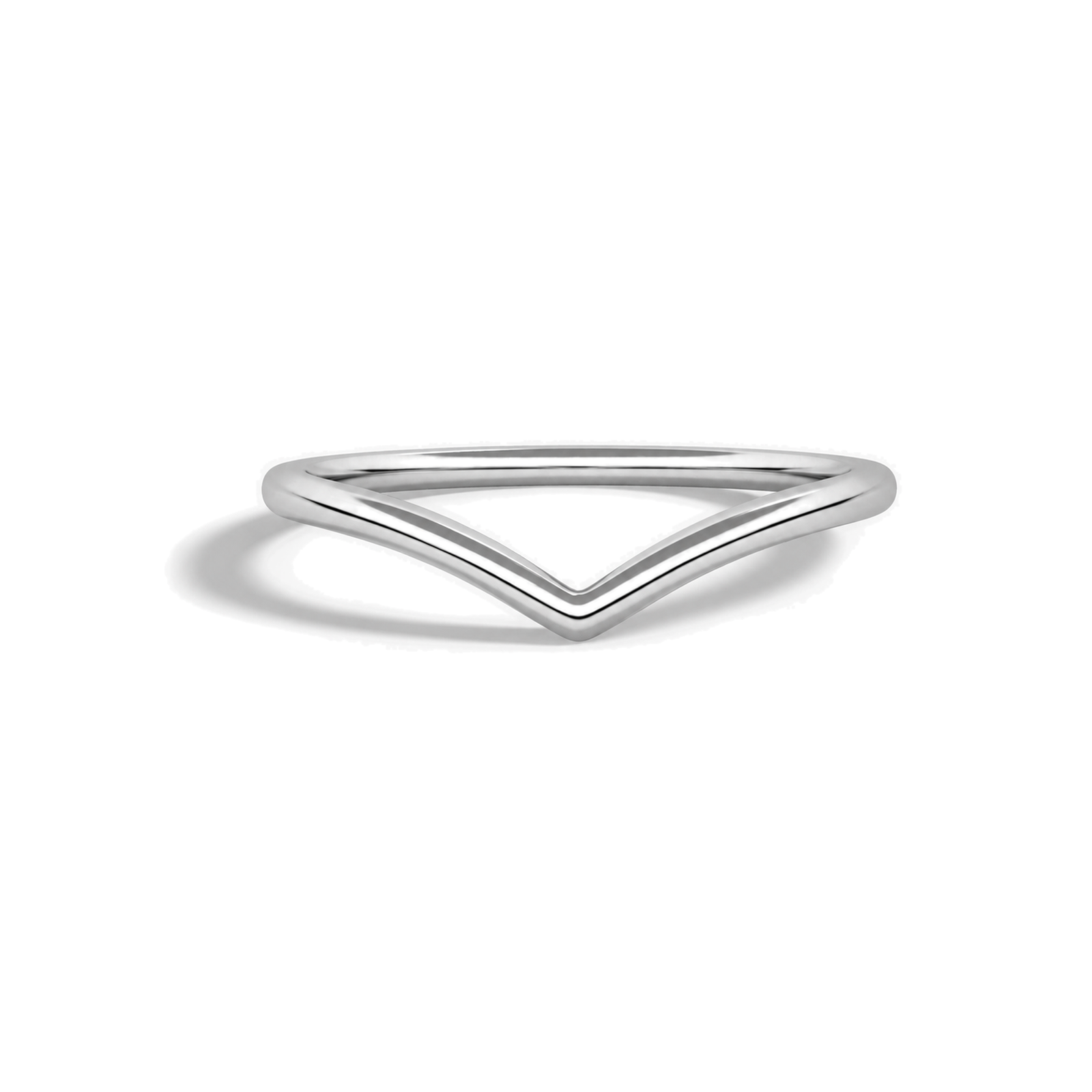
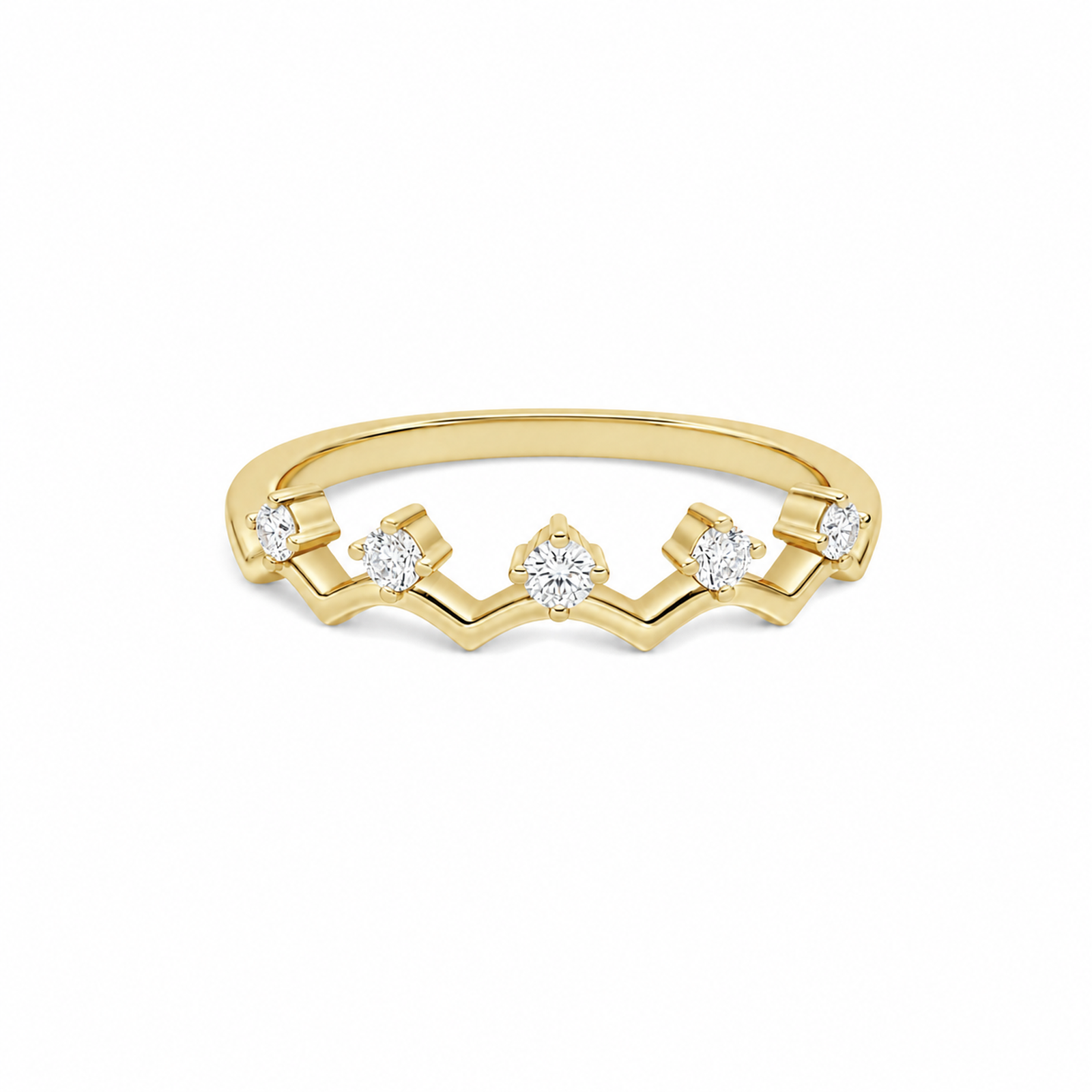
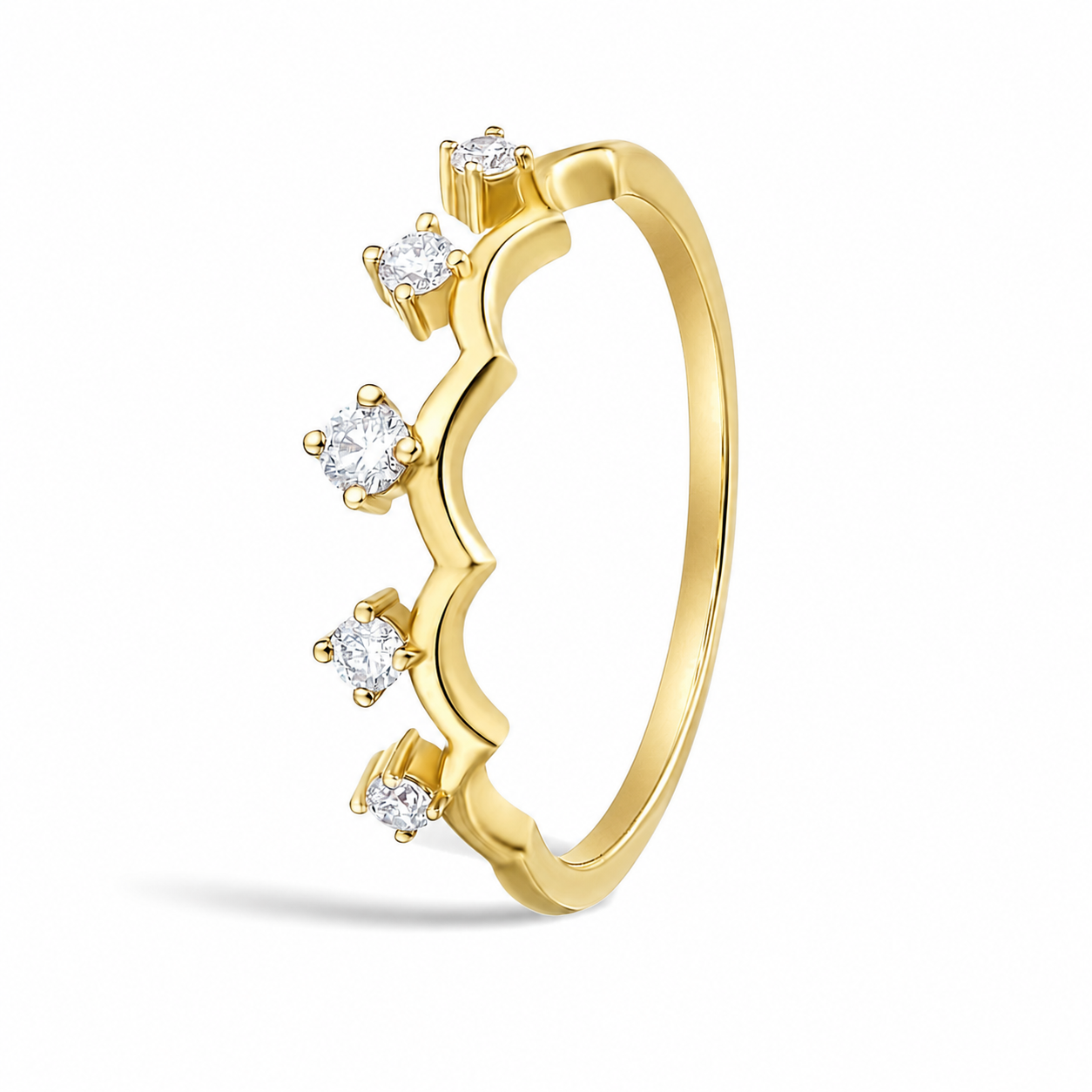
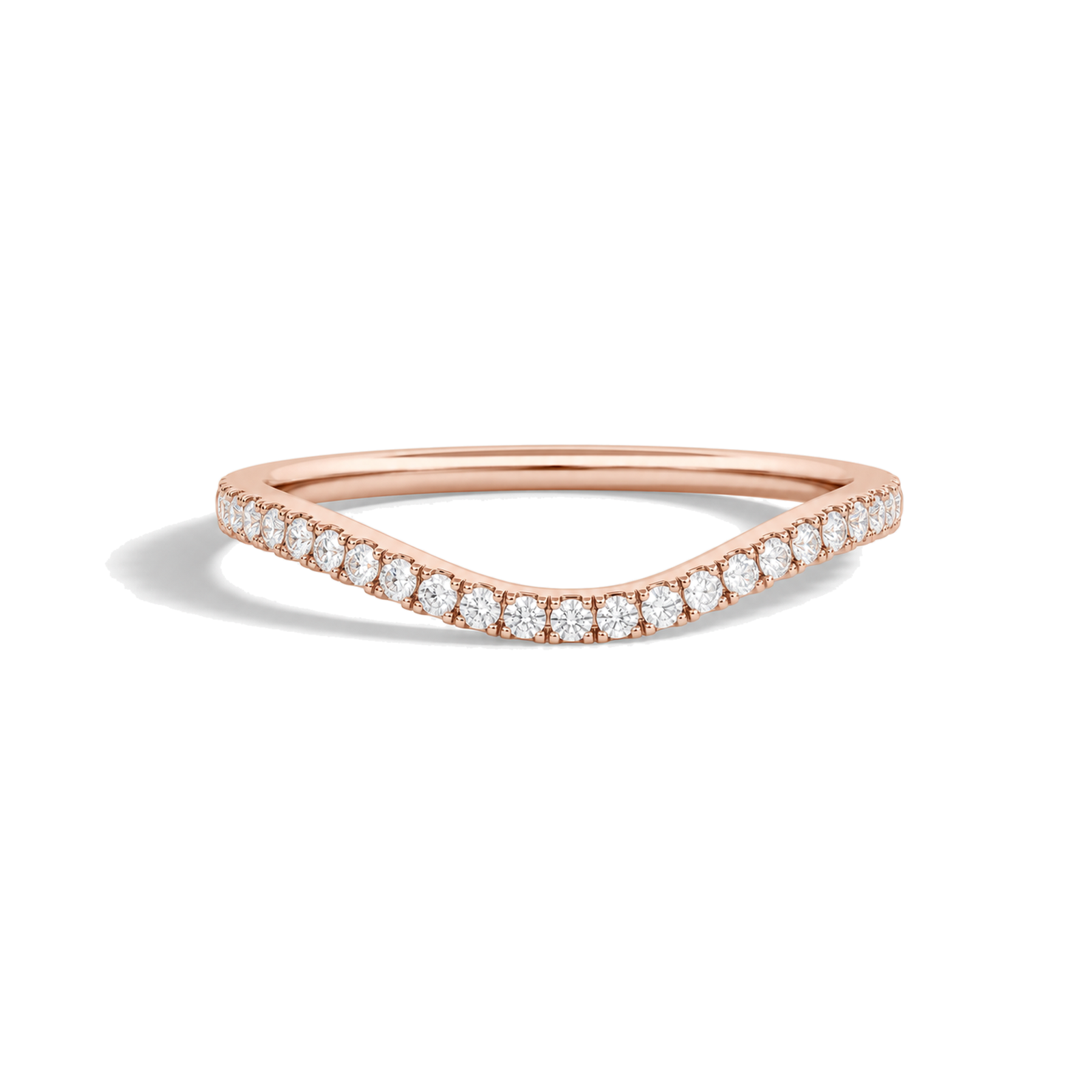
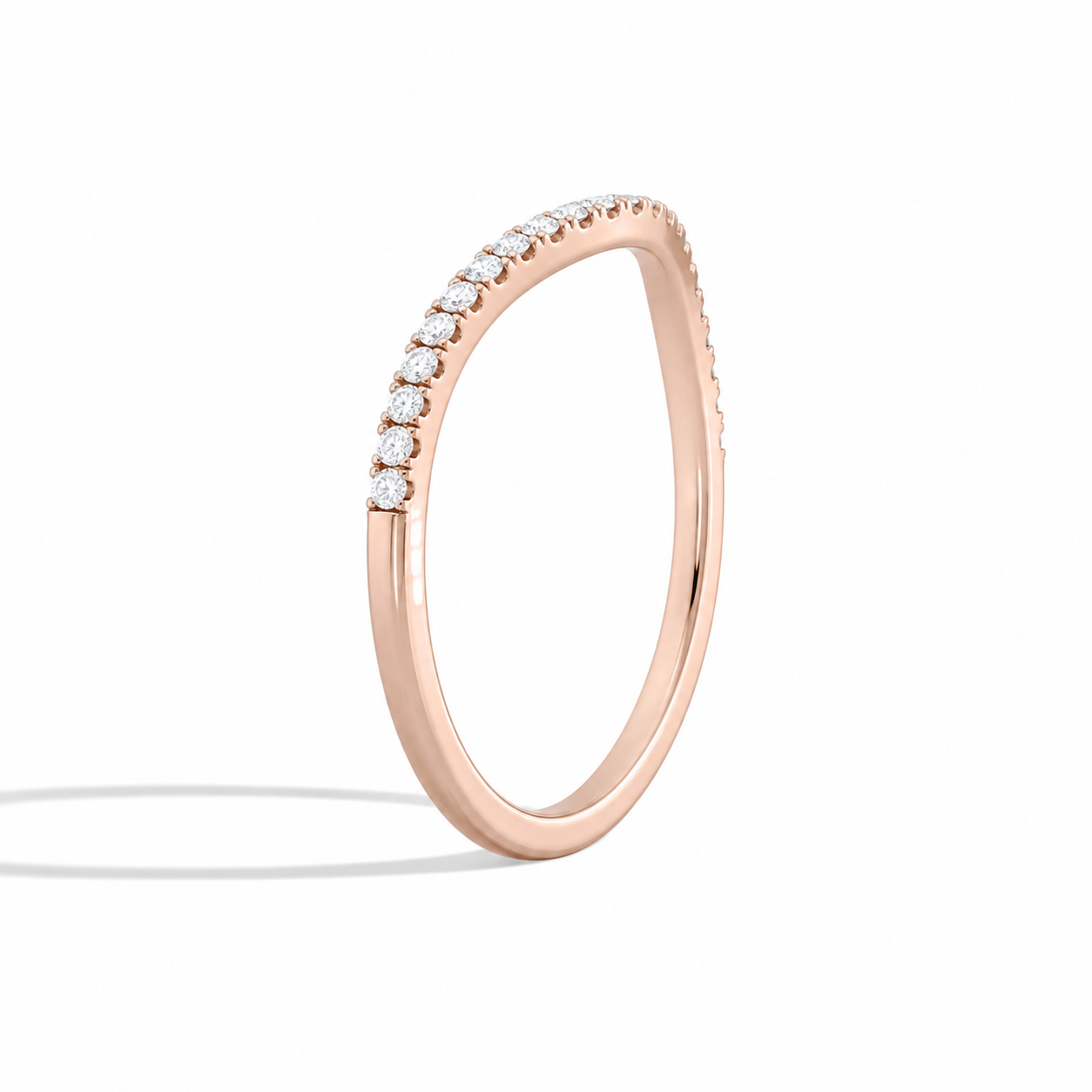
A curved ring is defined as much by the space it creates as by the line of metal and diamonds. Its contour may dip around a projecting center setting, rise into a crown, follow a crescent, or introduce a shaped interval beside a straight band. The purpose is not always to erase every gap. It is to make the relationship between two silhouettes feel considered from above, from the side, and as the hand moves.
Burvonti’s current public Curved Ring Collection contains 11 products. Six titles explicitly use Curved; the others include Tiara, Crescent, Tapered Baguette, Crown Stackable, and Luxe forms selected for their shaped profiles. All 11 have normalized counterparts in the parent Ring, Anniversary, Fashion Ring, and Wedding Band Collections. Nine also have normalized counterparts in Stacking Rings. This page is a contour-led edit, not a promise that every design fits every neighboring ring.
Read the Ring That Comes First
If the curved band is meant to sit beside an existing engagement ring, begin with that ring’s complete architecture. Center-stone outline matters, but so do basket width, gallery height, prong position, shank width, shoulders, hidden details, and how far the setting projects at finger level. Two rings with the same named diamond shape can require different clearances.
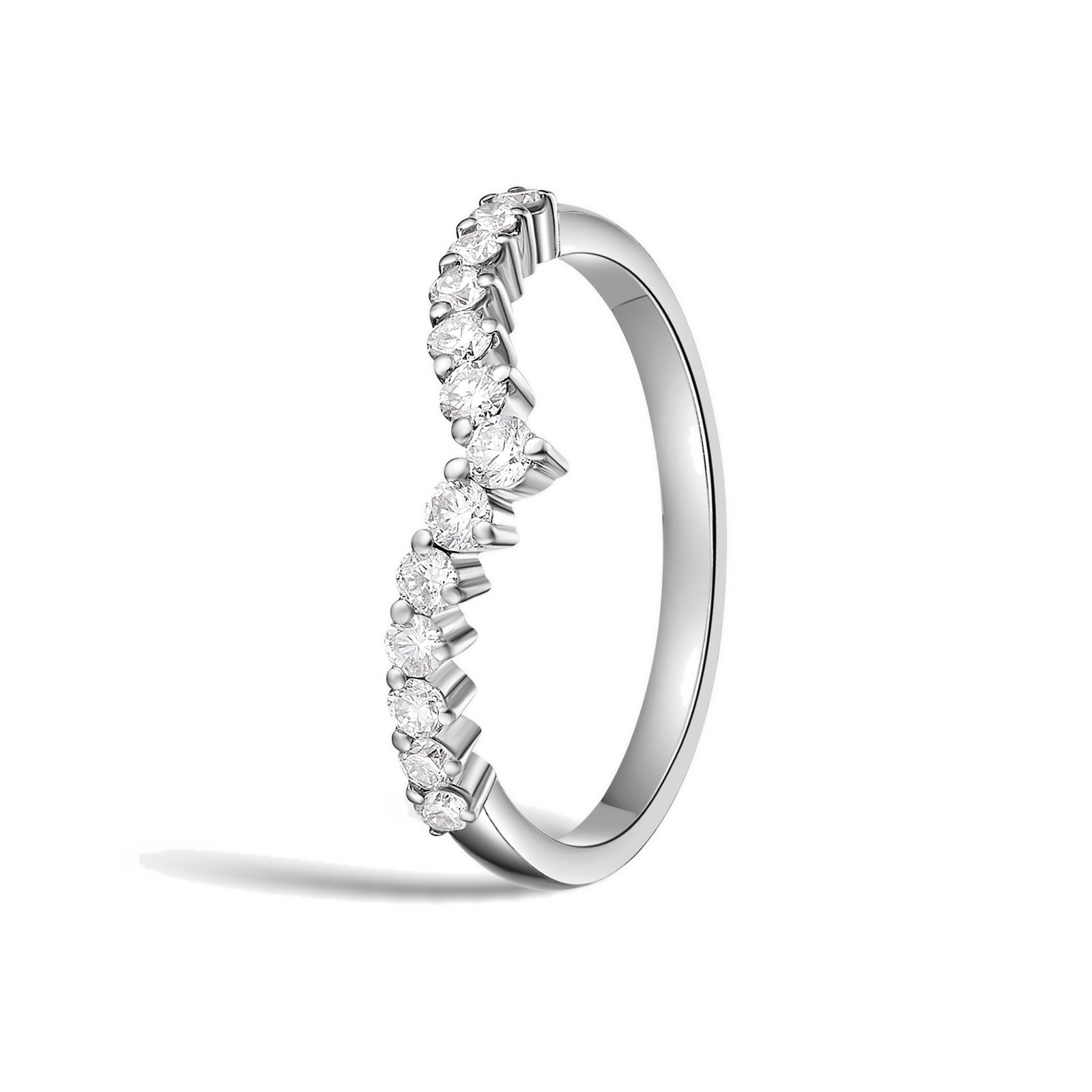
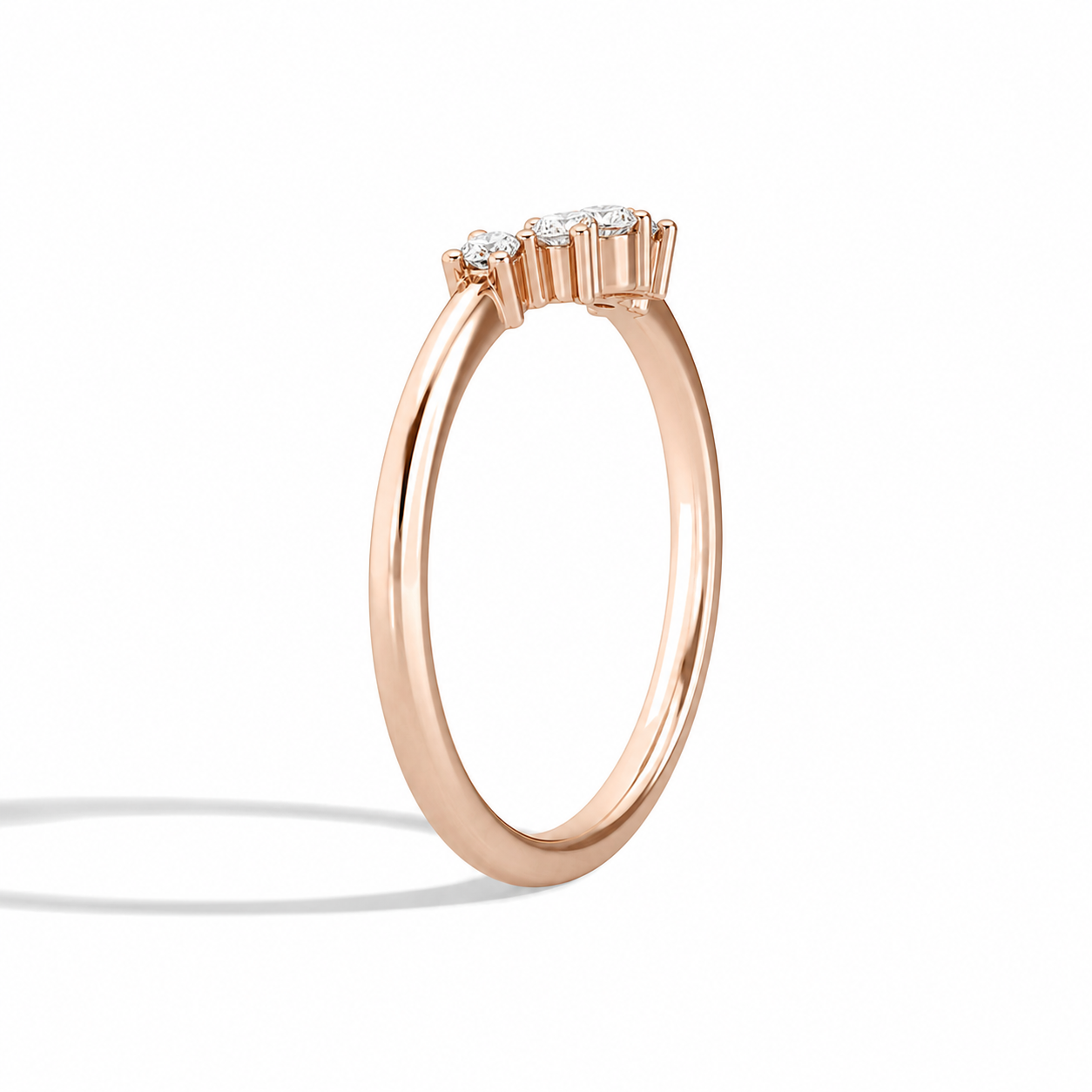
A face-up photograph alone cannot establish fit. Compare side and underside views, measure where the neighboring setting meets the finger, and note whether the ring rotates. A contour that follows one orientation closely may reveal more space when either ring turns.
Contour Has Direction and Depth
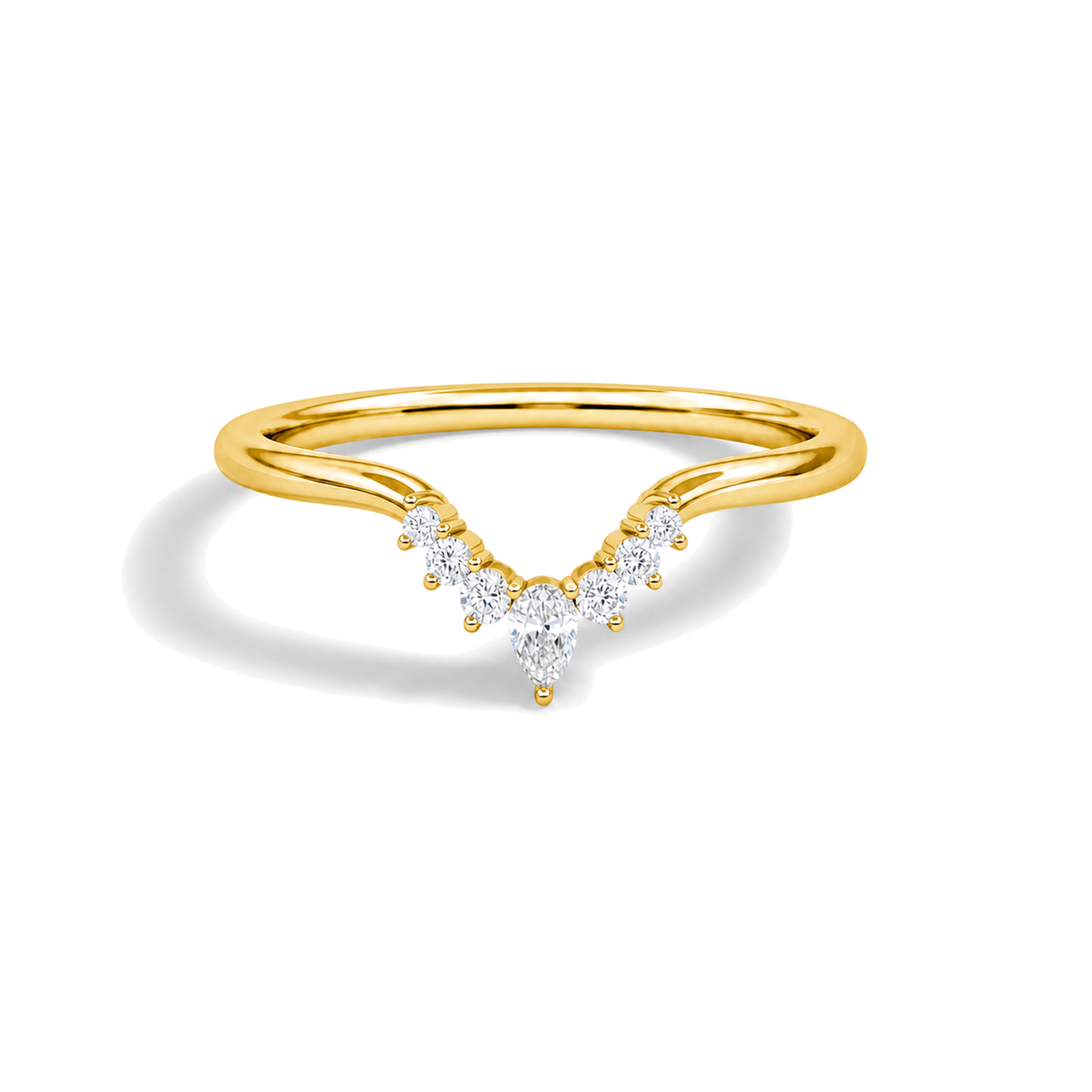
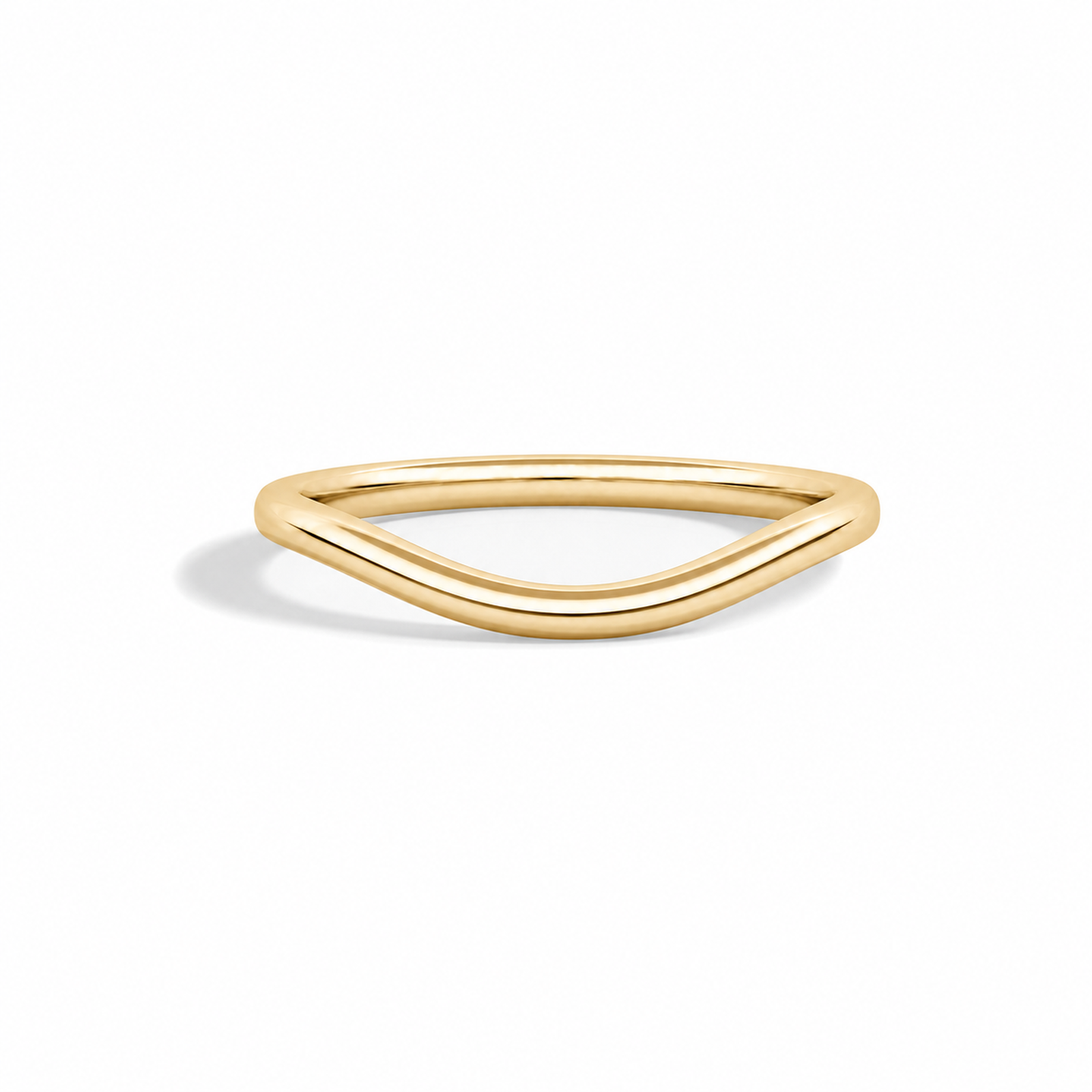
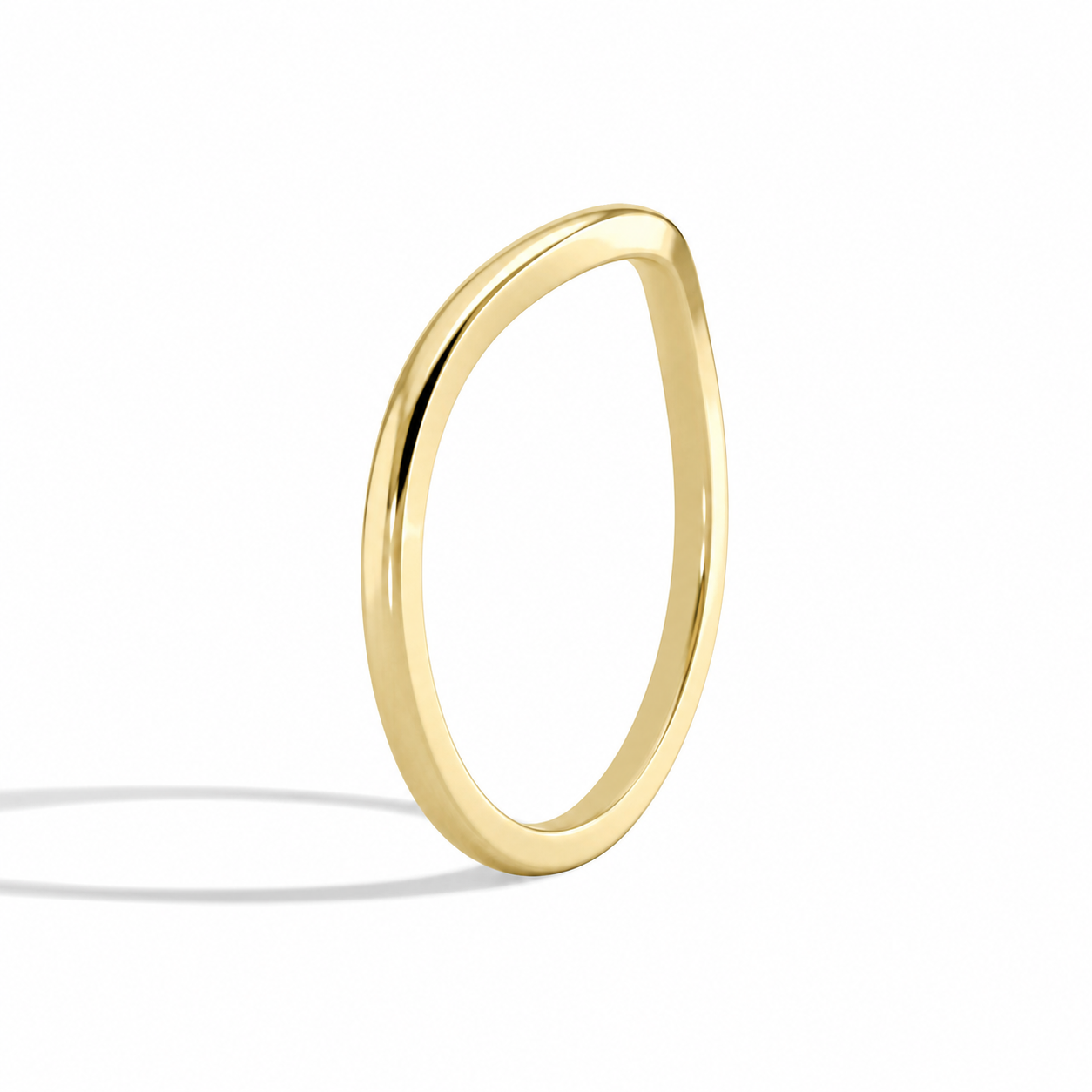
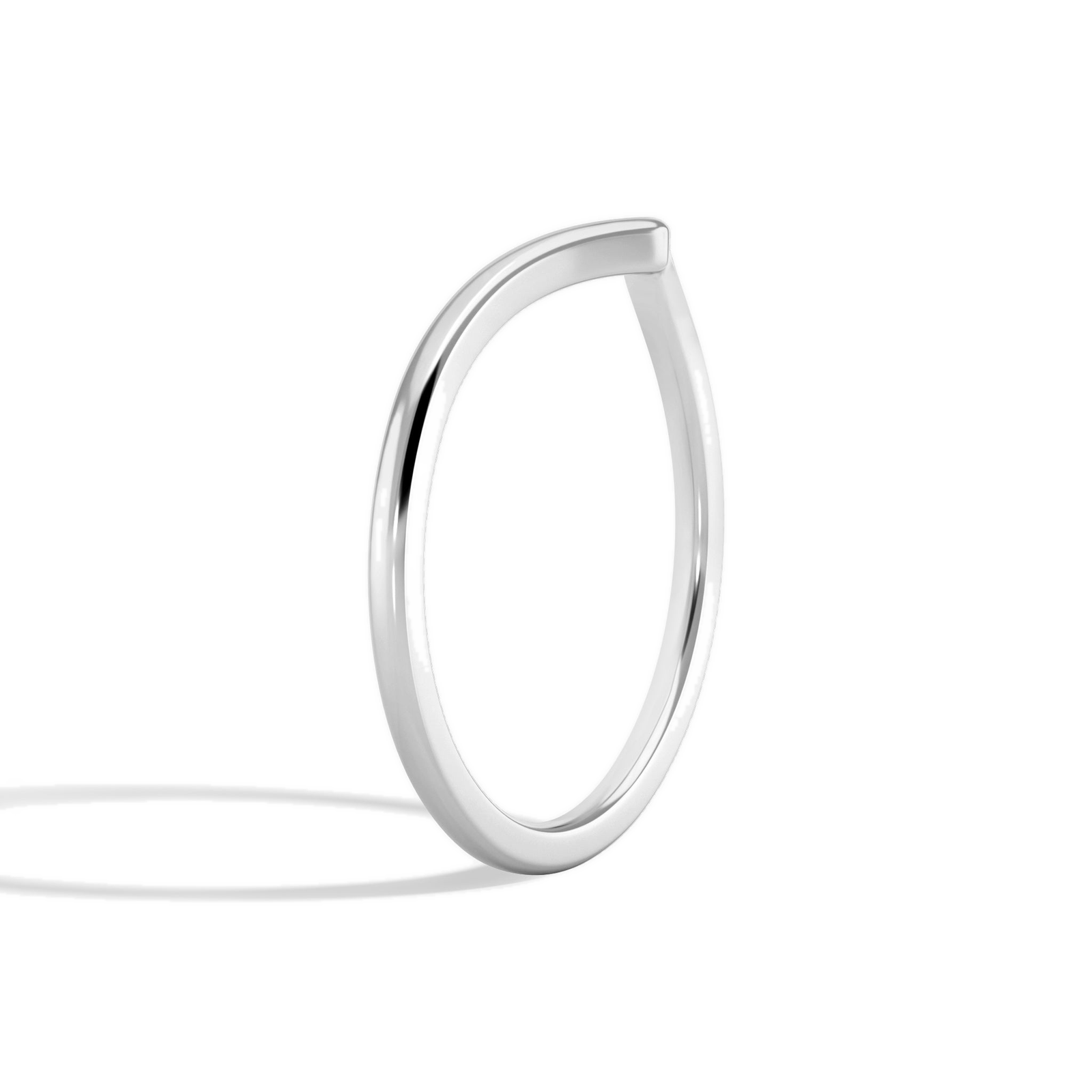
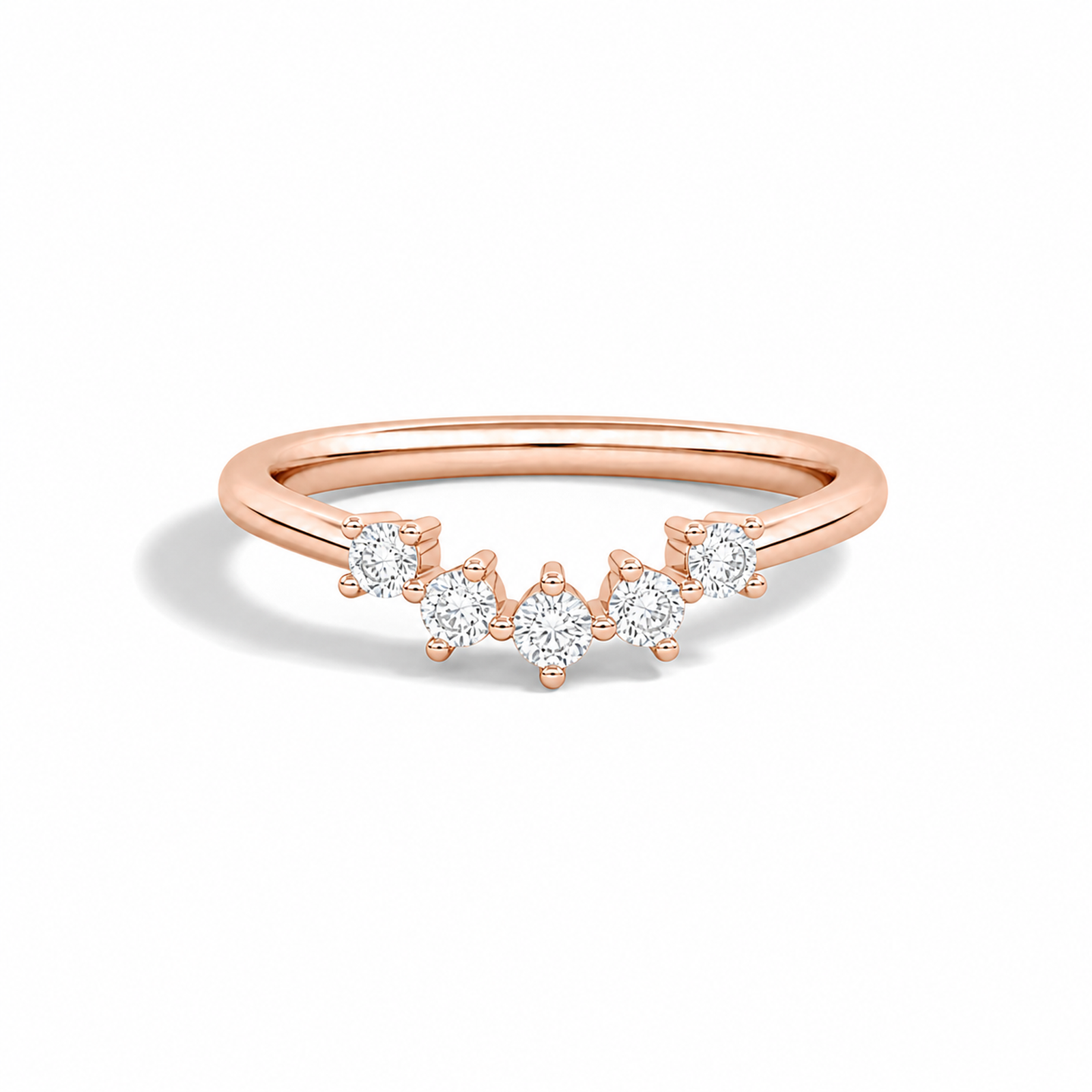
A shallow arc creates a quiet deviation from a straight line. A deeper curve reserves more space and can make the band’s direction more apparent. Crown and tiara forms may create a point or rise; crescent and flowing forms can distribute the bend more gradually. Tapered or asymmetric arrangements can answer one side of a composition more strongly than the other.
Do not judge depth from category names alone. Current public details provide average band width but not a standardized curve-depth, opening-width, apex-height, or clearance field. Product imagery and verified measurements are necessary before treating two contours as interchangeable.
Negative Space Can Be Part of the Design
A visible interval between rings is not automatically a mismatch. Space can reveal the outline of a center setting, prevent a composition from feeling compressed, or create a deliberate rhythm between diamond fields. A closer nest can read as one integrated gesture; a measured gap can preserve the identity of each ring.
The decision should be visual and practical. A gap that changes with rotation may feel active rather than fixed. A close face-up fit may still conceal contact at a prong, gallery, or edge. Neither zero space nor visible space proves better compatibility.
Diamond Placement Directs the Eye
Current named diamond details include six Round, two Marquise, and one Trapezoid design; two products do not name a shape in the same field. Round sequences can trace an arc through repeated points of light. Marquise or tapered forms can emphasize direction, while a small number of diamonds may define the contour through punctuation rather than continuous coverage.
Current TCW options span 1/8 to 2/5 across the nine products with that option; two show Default Title instead. Total weight does not describe curve depth, diamond count, orientation, clearance, or how the line relates to a center ring.
Proportion Includes the Ring Beside It
Published average widths run from 1.4 to 1.95 mm. These are relatively close measurements, yet the rings can read differently because curve, point, spacing, diamond shape, setting, and visible metal change the composition. The neighboring ring’s shank and center setting may make the same band appear quieter, broader, or more directional.
Assess combined width across the finger and total height from the side. If two curved bands frame a center ring, compare whether their contours mirror, graduate, or intentionally differ. Symmetry is one option, not a requirement.
Fit and Rotation Change the Outline
A curved pairing can only maintain one face-up relationship if both rings remain in that orientation. Finger shape, ring size, shank balance, setting weight, combined width, movement, and neighboring pressure all affect rotation. A contour does not mechanically lock two independent rings together unless a verified construction specifically connects them.
Measure the intended finger with the full combination in mind. Added width can change perceived tightness, while a loose ring may turn away from the planned contour. No universal sizing increment or quick adjustment applies to every stack.
Metal Can Join or Separate the Lines
Current cards represent five 14K White Gold, four 14K Yellow Gold, and two 14K Rose Gold designs. Matching color can make two outlines read more continuously; contrast can make the curved band legible as its own layer. Neither approach is inherently more refined or technically compatible.
The same color name does not guarantee identical alloy, finish, rhodium treatment, age, hardness, or surface condition. Different rings can still abrade one another, and matching metal does not eliminate friction. Review the actual contact points and care needs of the complete pairing.
A Curved Ring Can Stand on Its Own
A contour does not require an engagement ring to justify its form. Worn alone, the rise, dip, or directional diamond line becomes the primary composition. In a broader stack, a curved ring can introduce an interval between straight bands, frame an open design, or redirect the eye without being assigned the role of a wedding band.
Choose according to the wearer’s intended arrangement rather than a fixed bridal rule. The same ring may move between standalone wear and a multi-ring composition, provided fit and contact are reassessed in each context.
Custom Possibilities, Documentation, and Care
Custom possibilities may refine contour depth, opening, proportion, diamond sequence, metal, or relationship to an existing ring when technically feasible. An image can begin the discussion, but precise compatibility may require dimensions or physical assessment. Custom does not guarantee zero gap, zero rotation, future compatibility, or an alteration path for every ring.
Burvonti uses responsibly sourced lab-grown diamonds and supports independent grading and certification where applicable. Confirm what documentation covers for the selected ring. Clean gently around curves and settings, inspect points of contact, and store pieces separately when possible; no contour prevents all scratching, pressure, or impact.
Frequently Asked Questions
What is a curved ring?
It is a ring whose outline departs from a straight band through an arc, dip, point, crown, crescent, or other shaped contour.
What is the difference between curved and contoured rings?
The terms often overlap. Contoured usually emphasizes following another silhouette; curved can also describe a shaped ring intended to stand alone.
How many Curved Rings are currently included?
The public Collection contains 11 products: six Curved titles and five tiara, crescent, tapered, crown, or luxe forms selected for contour.
Are all current products exclusive to this Collection?
No. All 11 have normalized counterparts in broader Ring, Anniversary, Fashion, and Wedding Band Collections; nine also overlap Stacking by normalized design.
Will a curved ring sit flush with any engagement ring?
No universal fit applies. Basket, gallery, prongs, shank, center outline, curve depth, size, and rotation all affect the space between rings.
Is a gap between rings a problem?
Not automatically. It may be intentional negative space. Evaluate appearance, movement, contact, pressure, and the wearer’s preference rather than assuming zero gap is required.
How can I assess curve compatibility online?
Compare face-up, side, and underside views plus verified dimensions. A photograph alone cannot establish exact clearance or contact.
Does the center diamond shape determine the right curve?
Not by itself. Setting architecture, basket width, prongs, gallery height, shank, orientation, and size may matter as much as shape.
Are curve depth and opening width currently published?
Not in standardized public fields for this Collection. Confirm product-specific dimensions before treating two contours as equivalent.
Can a curved ring stop an engagement ring from spinning?
Not universally. Size, balance, finger anatomy, combined width, setting weight, movement, and contact all influence rotation.
Can a curved ring be worn alone?
Yes. Its shaped line can be the complete composition without an engagement ring or bridal role.
Can two curved rings frame one center ring?
Possibly. Compare both contours, widths, heights, settings, contact points, symmetry, and combined fit rather than assuming a mirrored match.
Which diamond shapes are currently represented?
Named details include Round, Marquise, and Trapezoid. Two current products do not name a diamond shape in the same field.
What widths are currently represented?
Published average widths span 1.4 to 1.95 mm. Width does not disclose curve depth, opening, apex, profile, or clearance.
What Total Carat Weights are currently represented?
Nine products show options from 1/8 to 2/5 TCW; two show Default Title. Total does not describe contour or compatibility.
Which metals are currently represented?
Current cards represent 14K White, Yellow, and Rose Gold. Exact alloy, finish, plating, sensitivity, maintenance, and alternatives remain product-specific.
Should a curved band match the engagement ring metal?
It may coordinate or contrast. Matching color labels do not guarantee identical material behavior or eliminate abrasion.
Can a curved ring be resized?
Possibly, but contour, symmetry, settings, diamond placement, engraving, and requested size change can affect feasibility.
Can a curved ring be custom-fitted to an existing ring?
Contour or proportion may be customized after technical review, but zero gap, zero rotation, future compatibility, and universal feasibility are not guaranteed.
How should curved rings be cared for?
Clean gently, inspect diamonds, settings, curved transitions and contact points, and store without abrasive contact when possible.