
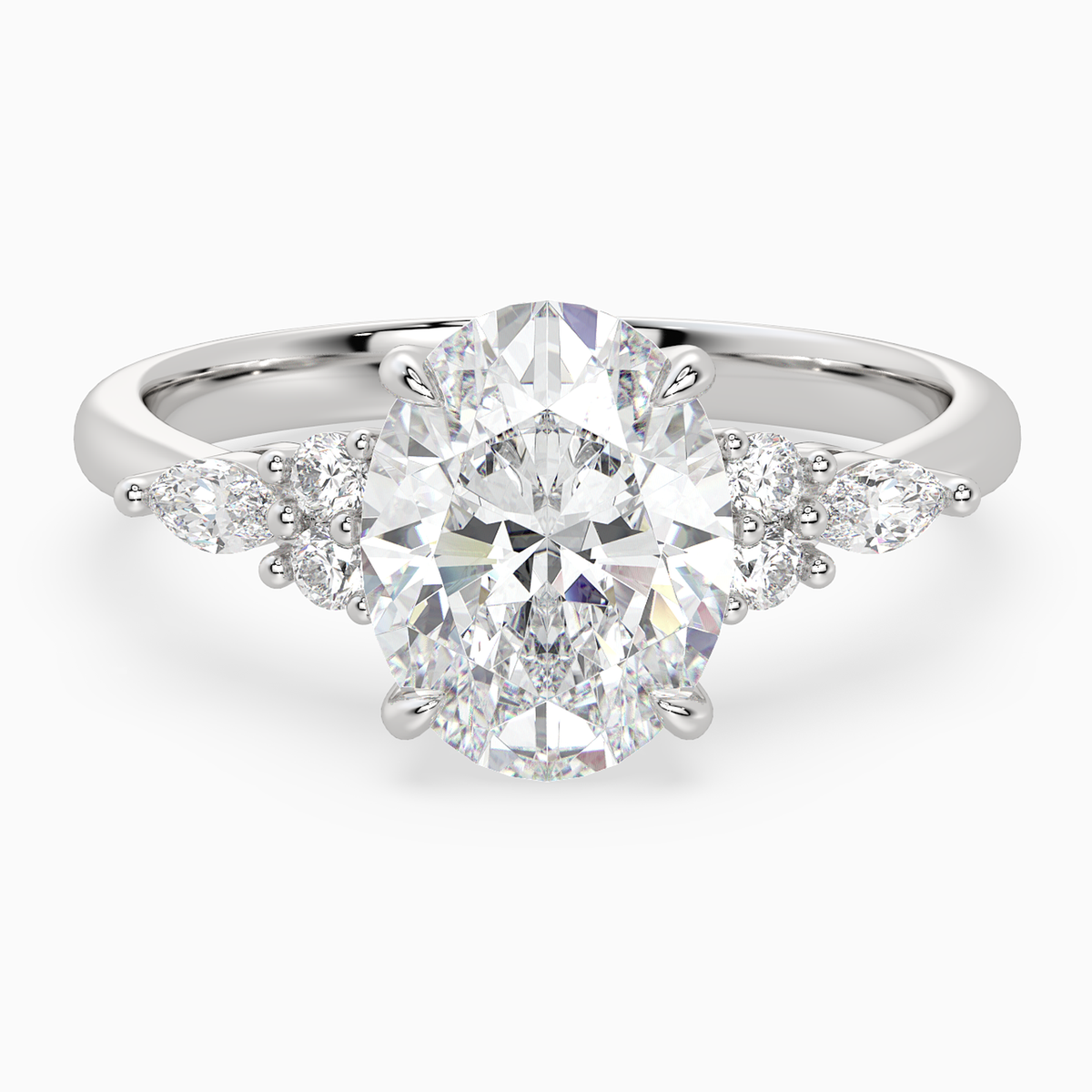


Diamond Cut vs. Shape: Why Sparkle and Style Are Not the Same

Diamond cut and diamond shape are often used as if they mean the same thing. They do not. Shape is the outline you see first: round, oval, emerald, pear, cushion, marquise, princess, radiant, and more. Cut is the quality of the diamond's proportions, facet arrangement, polish, symmetry, and light return.
Choose shape for personal style, hand presence, and setting direction. Then evaluate cut quality to make sure the stone has strong brightness, fire, and scintillation. A beautiful ring needs both: a shape you want to wear and a cut that makes the diamond perform.
This guide explains the difference in plain language, shows how each choice affects brilliance and design, and gives you a practical order for choosing a diamond for an engagement ring.
Diamond Cut vs. Shape: The Simplest Difference
Diamond shape answers the question: What outline does the diamond have? It is visible from across the room. A pear shape feels directional and elongated. An emerald cut feels architectural. A round brilliant feels classic and balanced. Shape is mostly a style and proportion decision.
Diamond cut answers a different question: How well does this diamond handle light? Cut quality affects whether light enters the diamond, reflects through the facets, and returns to the eye. This is why two diamonds with the same shape and carat weight can look very different in person.
When shoppers say they want a "sparkly oval" or a "clean emerald cut," they are actually making two decisions at once: they are choosing a shape category and asking for strong performance within that shape.
What Diamond Shape Means
Shape is the diamond's face-up outline. It controls visual personality, finger coverage, setting compatibility, and the general mood of the ring. It also influences how large the diamond appears for its carat weight because elongated shapes often cover more finger length than compact shapes.
Classic and balanced shapes
Round brilliant and cushion cuts often feel balanced, familiar, and easy to pair with solitaire, halo, three-stone, and pave settings.
Elongated shapes
Oval, pear, marquise, emerald, and radiant shapes can lengthen the look of the finger and create more face-up presence at similar carat weights.
Geometric shapes
Emerald, Asscher, princess, and radiant shapes bring stronger lines and a more architectural design language to the ring.
Expressive shapes
Pear, marquise, heart, and asymmetrical designs can feel more individual, especially when paired with side stones or custom orientation.

If you are early in the search, browse several shapes before comparing technical specifications. A strong cut grade cannot make you love a shape that does not feel like you. Start with the outline, then become strict about quality inside that outline.
What Diamond Cut Means
Cut is the diamond's light architecture. It includes proportions, facet angles, symmetry, polish, and how the stone's weight is distributed. A well-cut diamond returns more light to the eye, which is why it can look brighter, livelier, and sometimes visually larger than a poorly cut diamond of the same carat weight.
Cut quality shows up in three major visual effects:
- Brightness: the white light that returns from the diamond.
- Fire: flashes of spectral color when light breaks apart inside the stone.
- Scintillation: the on-off sparkle pattern you see as the diamond, hand, or light source moves.
Round brilliant diamonds usually have the most standardized cut grading, while fancy shapes such as oval, pear, marquise, radiant, cushion, and emerald require more visual judgment. For fancy shapes, look beyond a single label. Study the measurements, symmetry, depth, table, bow-tie effect, facet pattern, and video whenever possible.

Diamond Cut vs. Shape Comparison
| Decision | Diamond Shape | Diamond Cut |
|---|---|---|
| What it means | The outline of the diamond when viewed from above. | The proportions, facets, polish, symmetry, and light performance of the stone. |
| What shoppers notice first | Style, silhouette, finger coverage, and overall ring personality. | Brightness, fire, sparkle pattern, depth, and liveliness in motion. |
| Common examples | Round, oval, emerald, cushion, pear, princess, radiant, marquise, Asscher, heart. | Excellent, Very Good, Good, plus deeper evaluation of proportions and appearance. |
| Best question to ask | Does this outline suit the hand, setting, and personal style? | Does this individual diamond return light well for its shape? |
| Shopping priority | Use shape to narrow the design direction. | Use cut quality to protect beauty, value, and daily visual performance. |
Which Matters More: Cut or Shape?
For style, shape matters first. For beauty, cut quality usually matters more. A ring's shape is what makes you say, "That looks like me." Cut is what makes the diamond look alive when you wear it.
If you already know you love oval diamonds, do not switch to round only because round diamonds have more standardized cut grading. Instead, choose an oval with pleasing proportions, a controlled bow-tie, balanced brightness, and a setting that supports the outline. If you love emerald cuts, accept that their sparkle is quieter and more mirror-like, then focus on clean step facets, clarity, and proportion.
A diamond should not be chosen by one number alone. Shape, cut quality, carat, color, clarity, setting height, prong design, and hand scale all work together. The strongest choice is usually the one where the diamond and setting are selected as a system, not as separate parts.
How Cut Changes Brilliance Across Popular Shapes
Cut does not behave the same way in every shape. The right evaluation depends on the shape you choose.
Round brilliant diamonds
Round brilliants are engineered for strong light return. Because their cut grading is more standardized, they are a good fit for shoppers who want maximum sparkle and clear quality benchmarks.
Oval, pear, and marquise diamonds
These elongated shapes can look graceful and larger face-up, but they require careful review for bow-tie darkness, outline symmetry, tip protection, and the way light moves through the center.
Emerald and Asscher diamonds
Step-cut diamonds are less about glitter and more about broad flashes, clean lines, and depth. Because inclusions can be easier to see, clarity and facet alignment often matter more here than in highly brilliant shapes.
Cushion, radiant, and princess diamonds
These shapes can offer strong sparkle with different personalities. Cushion cuts may look soft and romantic, radiants can feel bright and modern, and princess cuts give a crisp square outline. Compare actual videos, not just labels, because facet patterns vary widely.
How to Choose a Diamond Shape and Cut Together
- Start with shape preference. Try round, oval, emerald, cushion, pear, radiant, and princess outlines against the hand before focusing on specifications.
- Decide the ring style. Solitaire, halo, side-stone, three-stone, bezel, and accented settings can all change how the same shape feels.
- Set a quality floor for cut. Do not sacrifice light performance just to increase carat weight. A dull larger diamond rarely feels like the better choice in daily wear.
- Review shape-specific risks. Check bow-tie in elongated stones, windowing in some step cuts, corner protection in princess and emerald cuts, and symmetry in pears and marquise shapes.
- Balance with the other Cs. Once shape and cut are aligned, compare carat, color, clarity, and budget in that order of importance for your design.
For a broader shopping path, you can compare Compare engagement rings, explore engagement ring settings, or keep reading through the Burvonti Journal before narrowing the final stone.
Choose the Diamond First, Then Build the Ring Around It
Shape gives your ring its outline. Cut gives the diamond its light. Burvonti helps you compare both before the setting is finalized, so the finished ring feels intentional from stone to structure.
Explore Engagement Rings Start a Custom DesignCommon Mistakes to Avoid
- Choosing by shape name only. Not every oval, cushion, or emerald cut performs the same way.
- Assuming cut and shape are interchangeable. A "princess cut" describes shape, while cut quality describes performance inside that shape.
- Ignoring the setting. A halo, bezel, side-stone, or high-profile setting can change how the diamond's shape is perceived.
- Overvaluing carat before cut. A larger diamond with weak light return can look less impressive than a smaller, better-cut stone.
- Skipping video or real-view comparison. Especially for fancy shapes, motion reveals brightness, dark zones, and personality better than a still specification sheet.
For a related guide, continue with What Are the 4Cs of Diamonds? Cut, Color, Clarity and Carat Explained.
Frequently Asked Questions
Is diamond cut the same as diamond shape?
No. Shape is the outline of the diamond, such as round, oval, emerald, or pear. Cut is the quality of the diamond's proportions, facets, polish, symmetry, and light return.
Does diamond cut or shape affect sparkle more?
Cut affects sparkle more directly because it controls light performance. Shape affects the style and type of sparkle. For example, a round brilliant usually has more classic scintillation, while an emerald cut has broader, quieter flashes.
Which diamond shape has the most brilliance?
Round brilliant diamonds are generally designed for the strongest light return. Other shapes can still be beautiful and bright, but they need shape-specific evaluation instead of relying on the shape name alone.
Are fancy shaped diamonds harder to evaluate?
They can be. Fancy shapes such as oval, pear, marquise, radiant, cushion, emerald, and princess vary widely in proportions and facet pattern. Review video, measurements, symmetry, and visible dark areas before choosing.
Should I choose the diamond shape before the setting?
Usually yes. The center stone shape sets the design direction. Once the shape is chosen, the setting can be built to protect the diamond, flatter the outline, and match the wearer's style.
Final Takeaway
Diamond shape is the design language. Diamond cut is the light performance. A good buying decision respects both: choose the outline that feels right, then compare individual diamonds carefully until the stone has the brightness, balance, and precision the ring deserves.
If you are choosing between shapes or comparing stones inside one shape, contact Burvonti for a calm review of the options before the ring is built.