
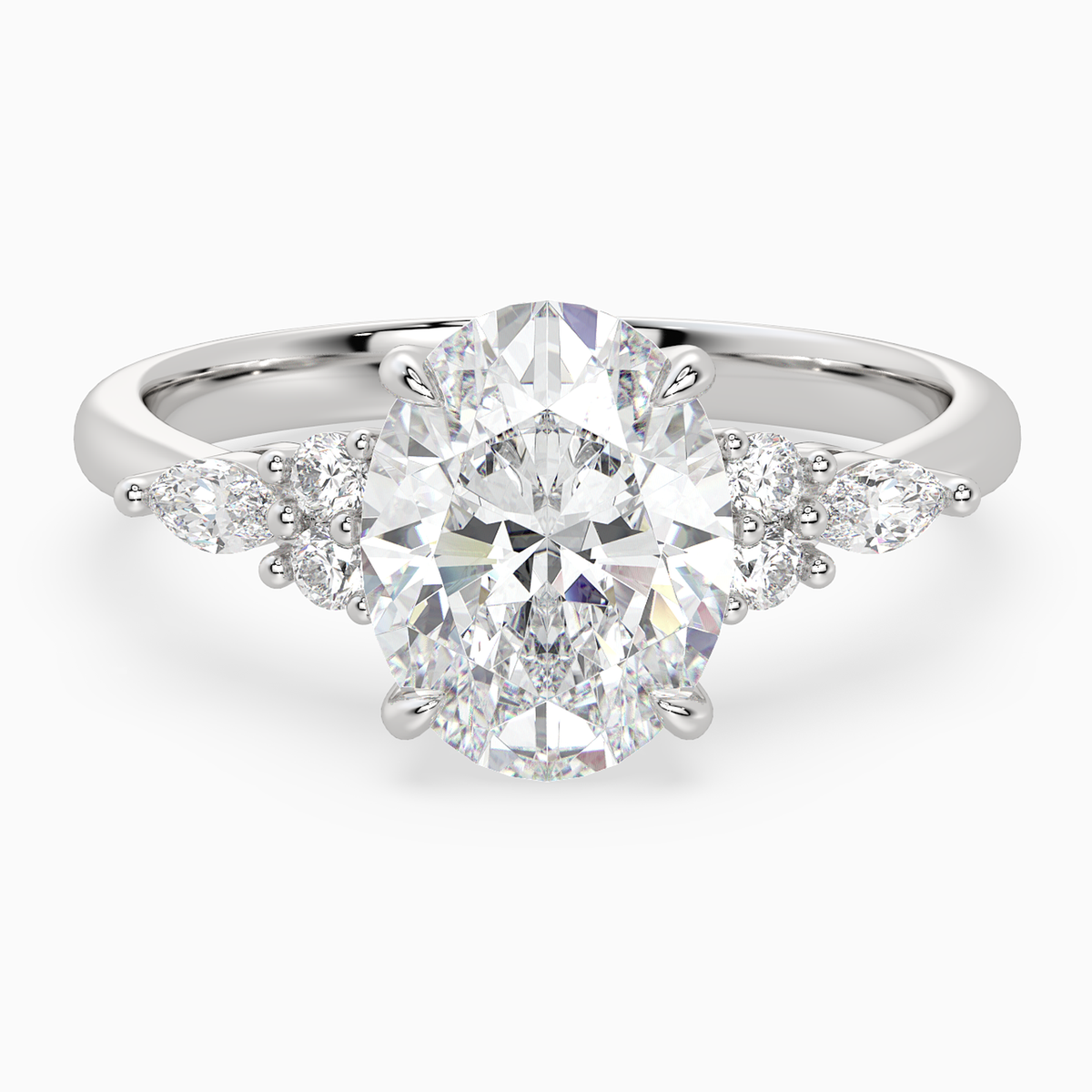


Cushion Diamond Engagement Rings
Soft corners, exact character. Square and elongated cushion centers balance curved outlines with light patterns chosen one center at a time.


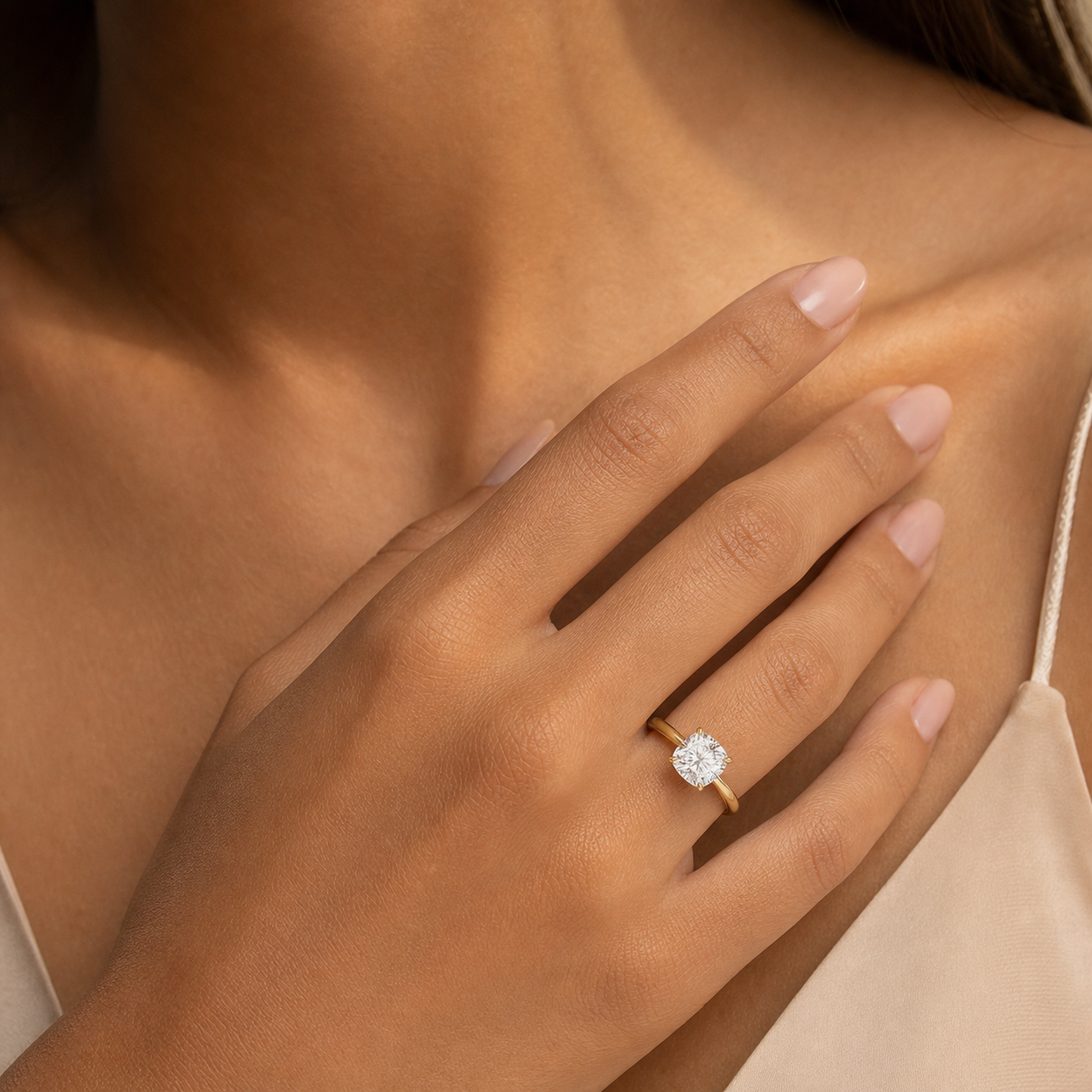
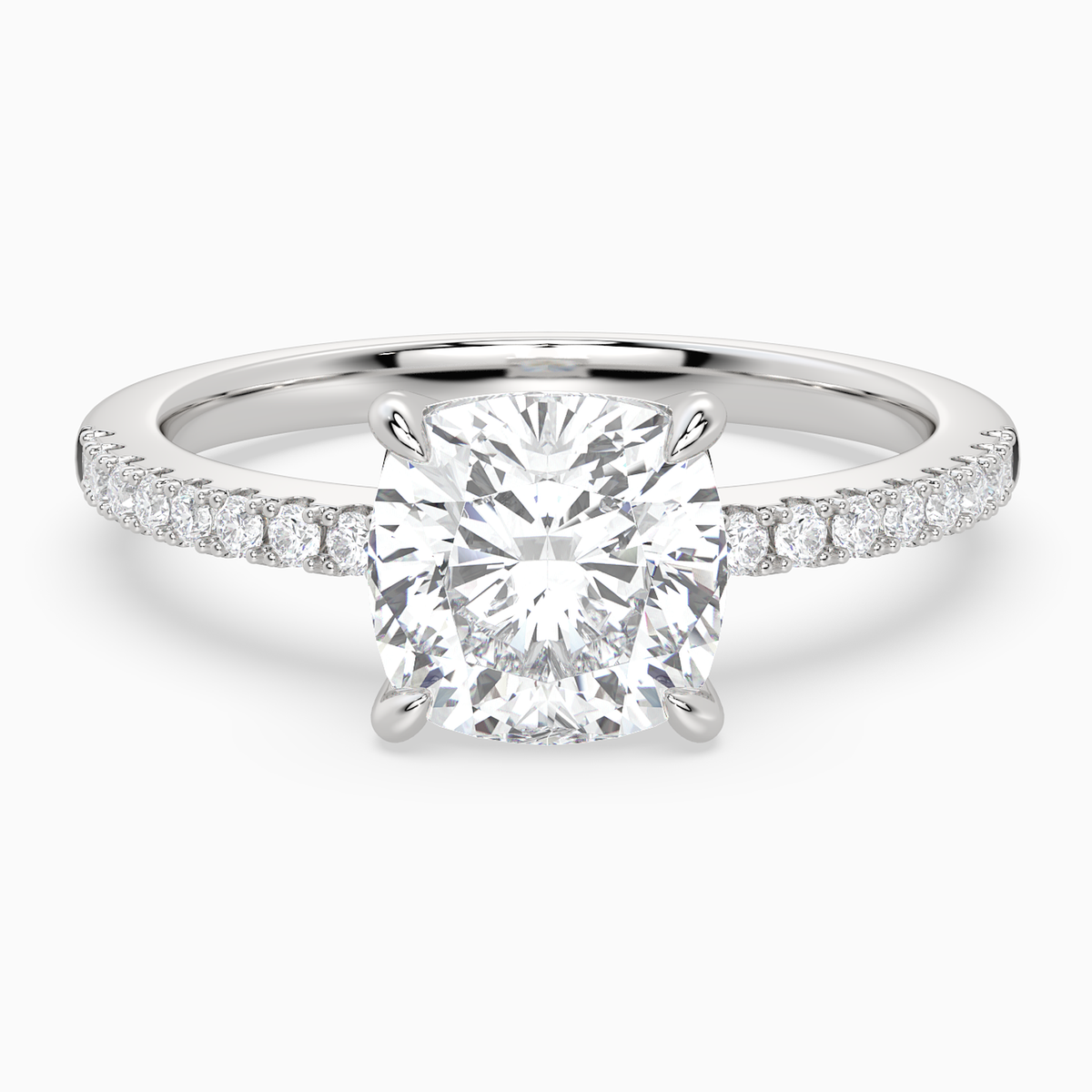
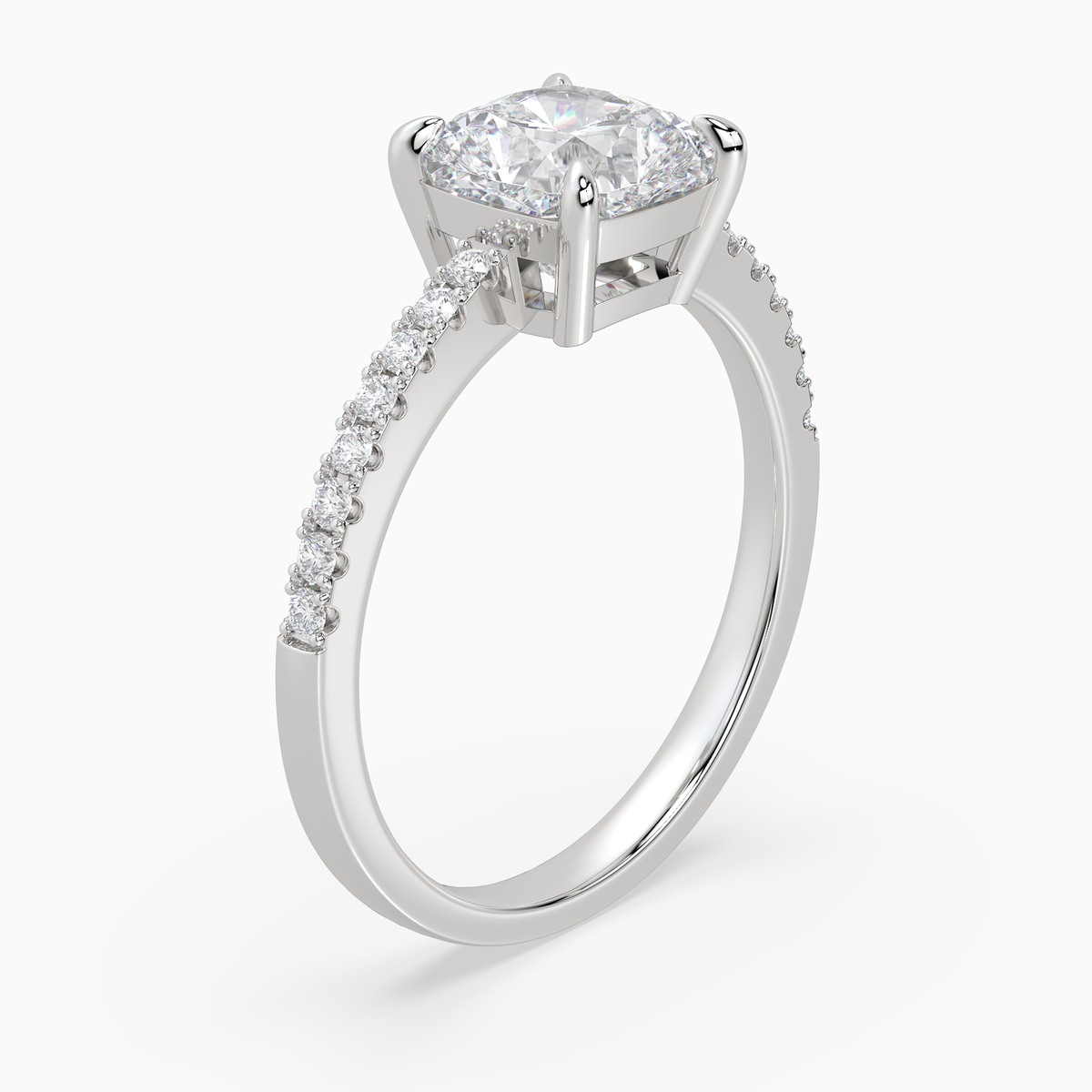
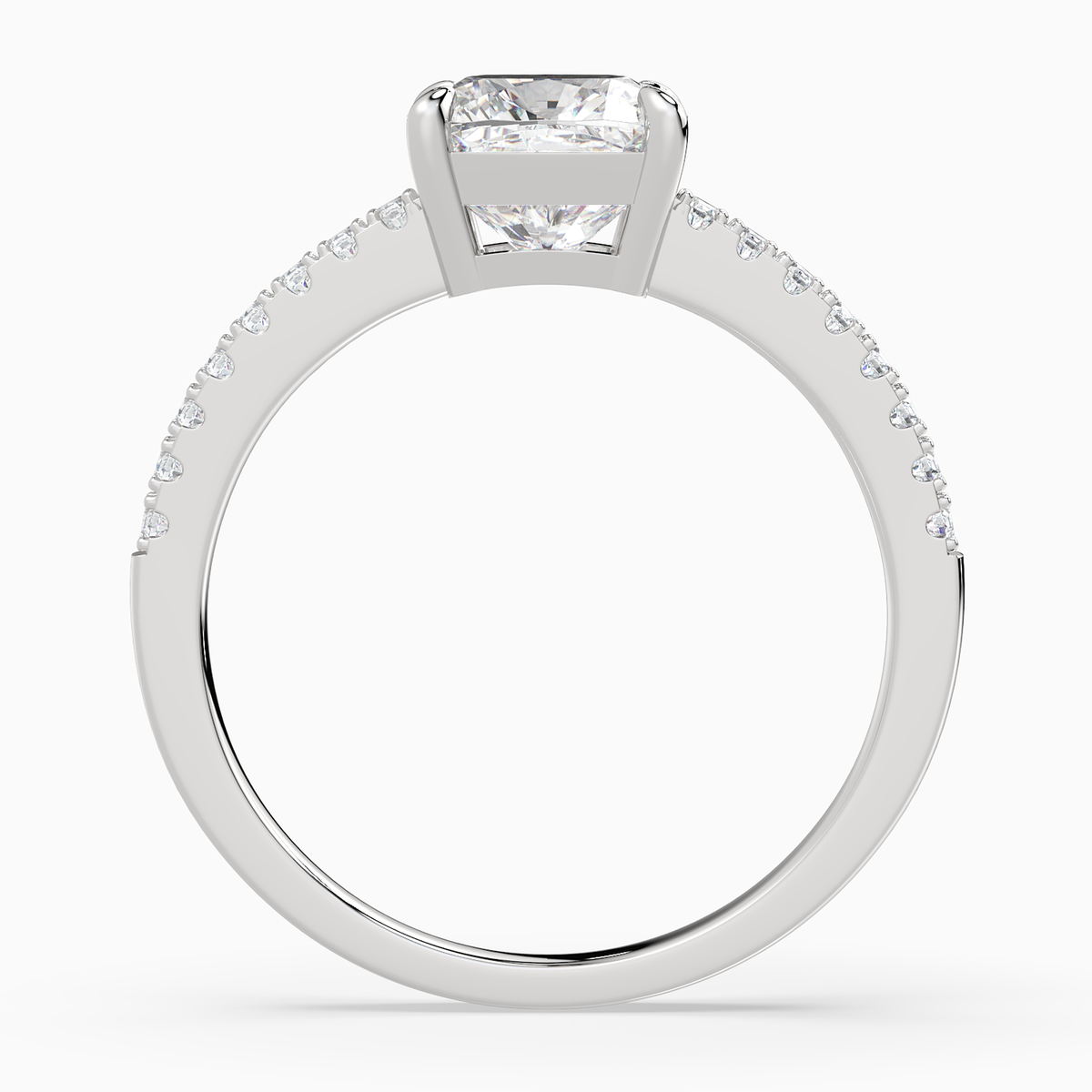
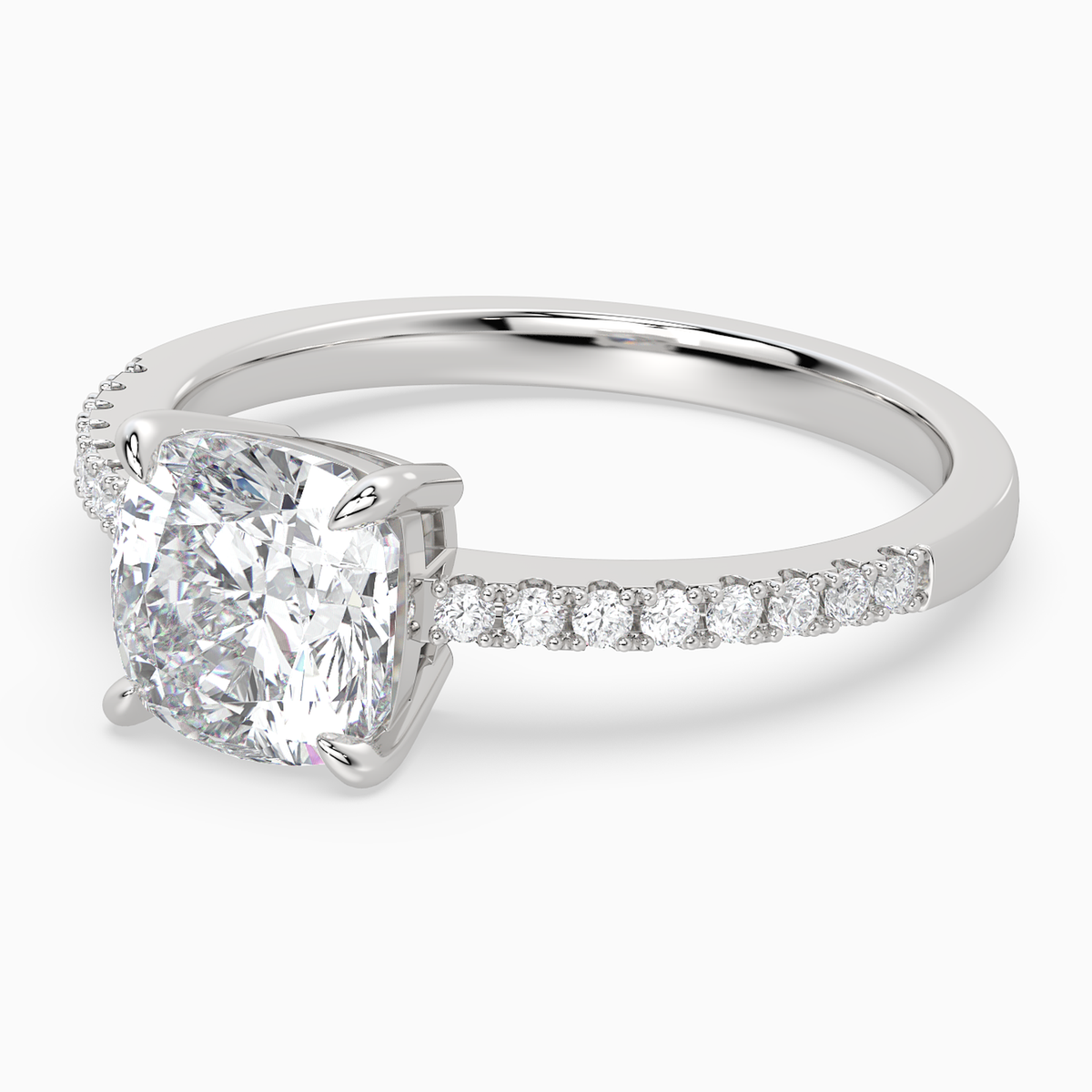


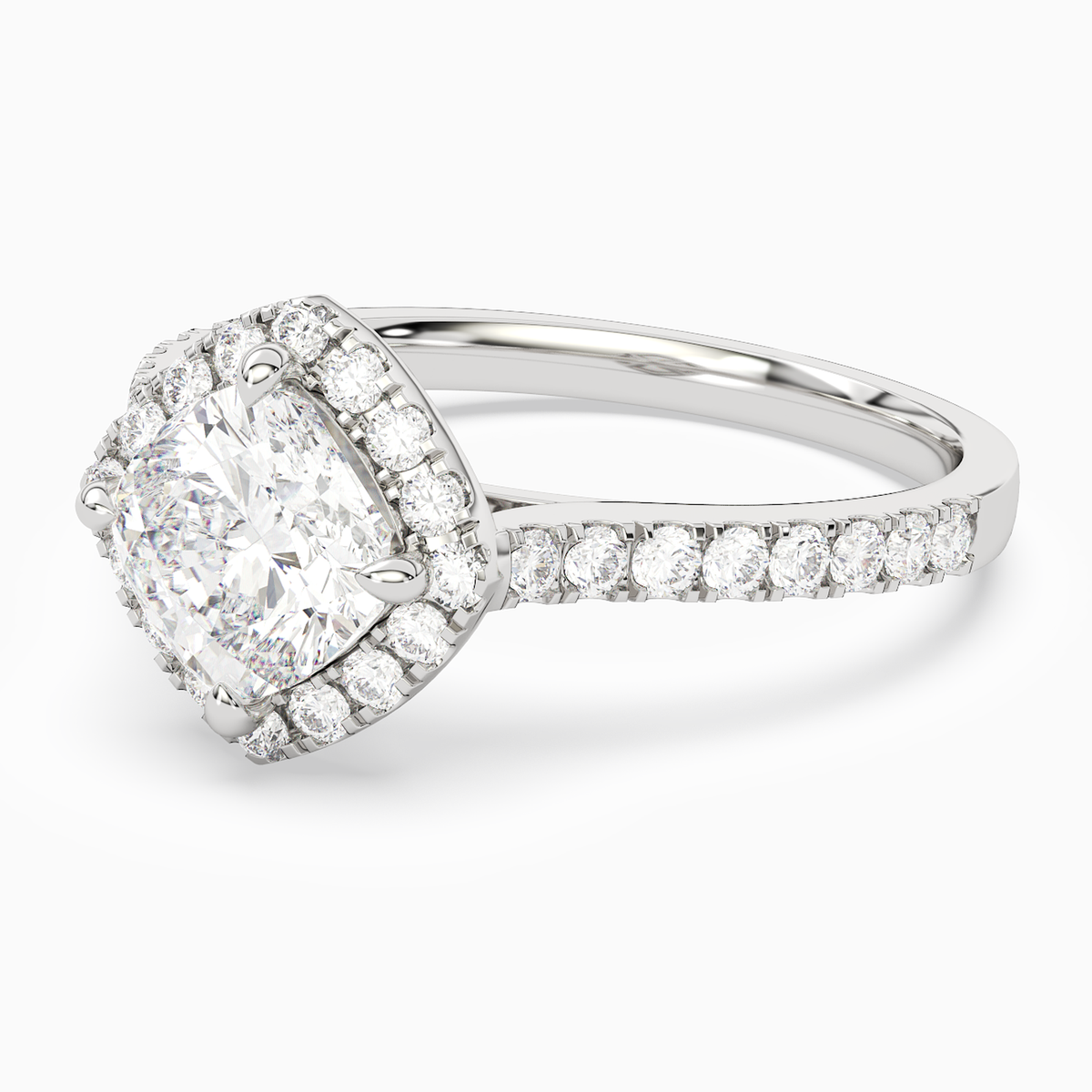
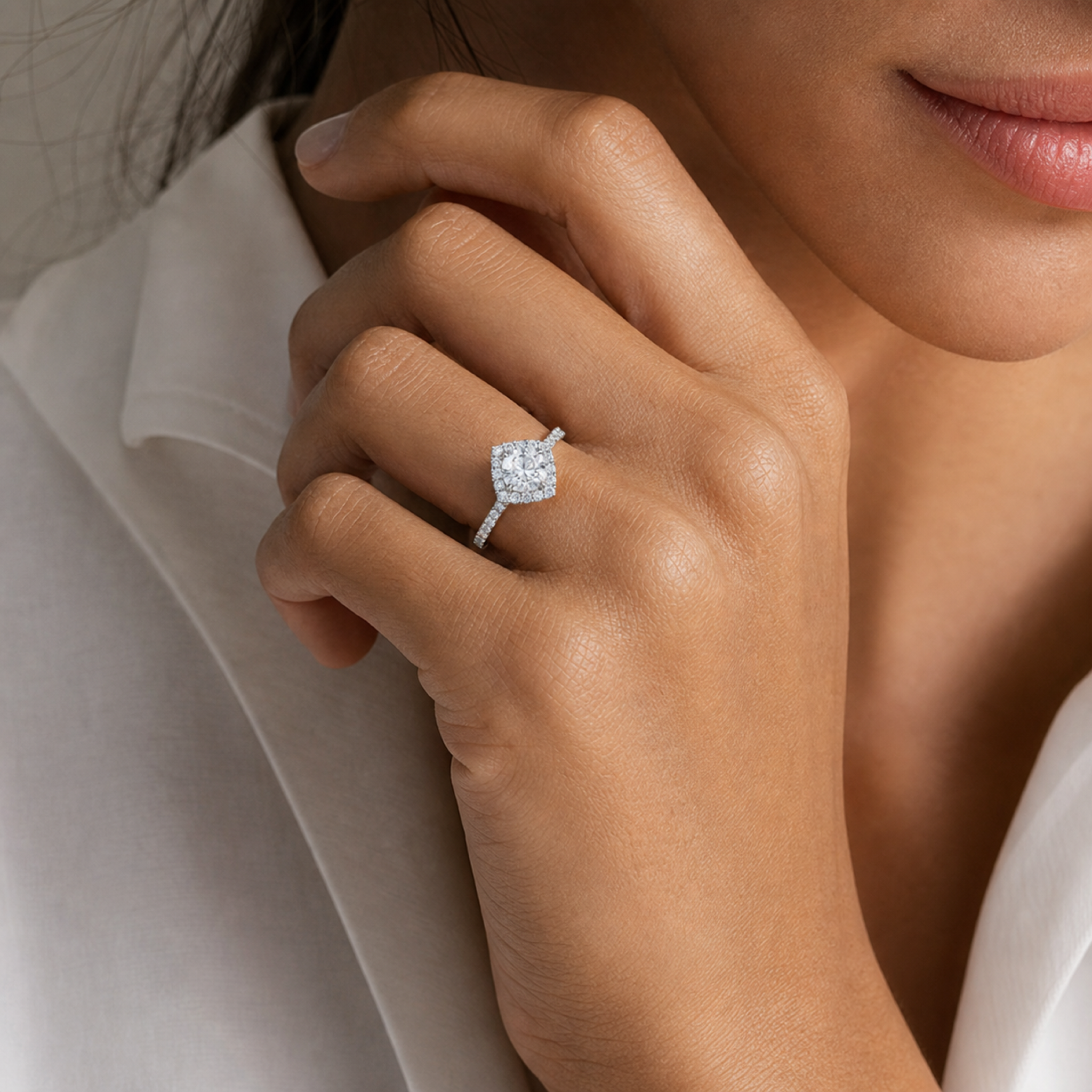

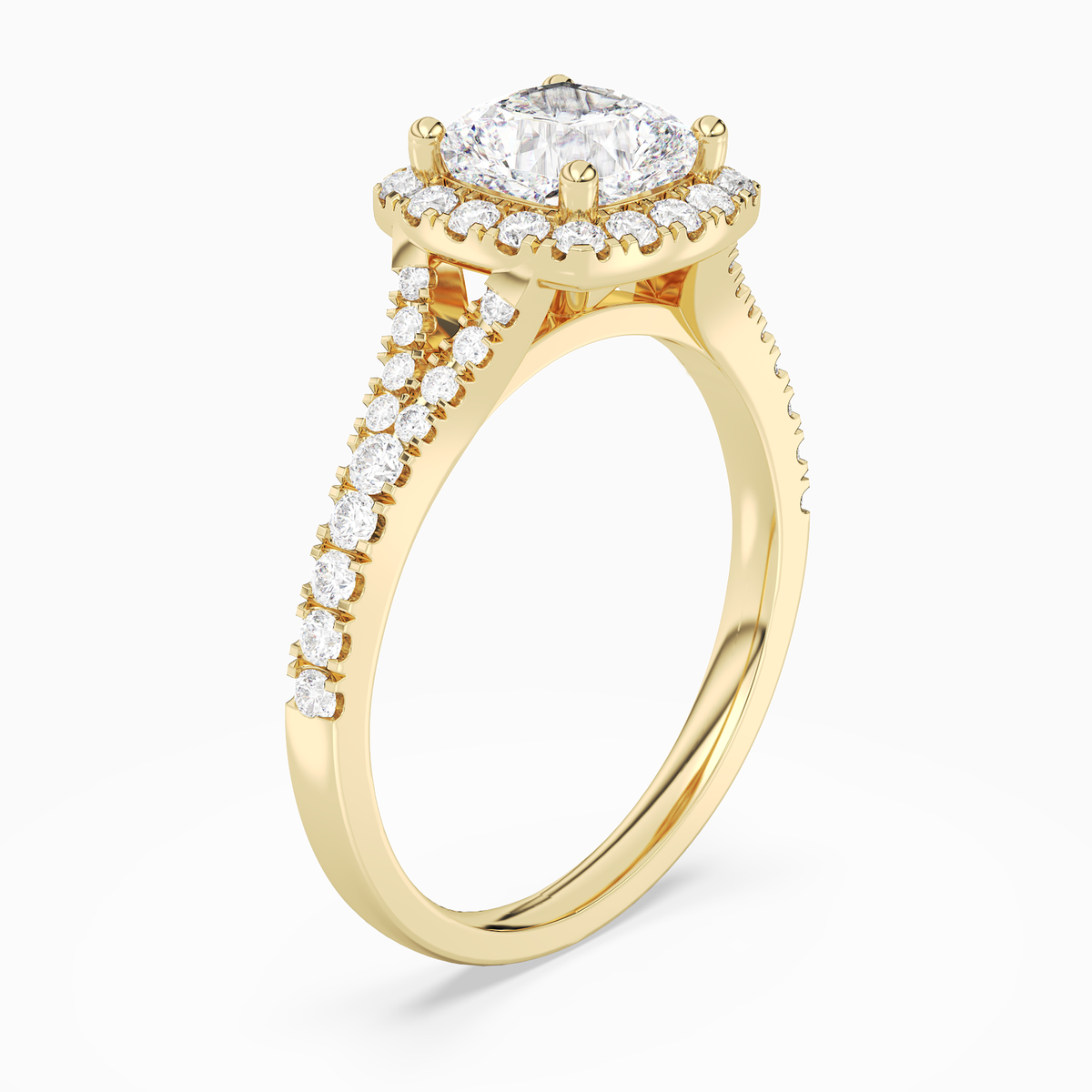


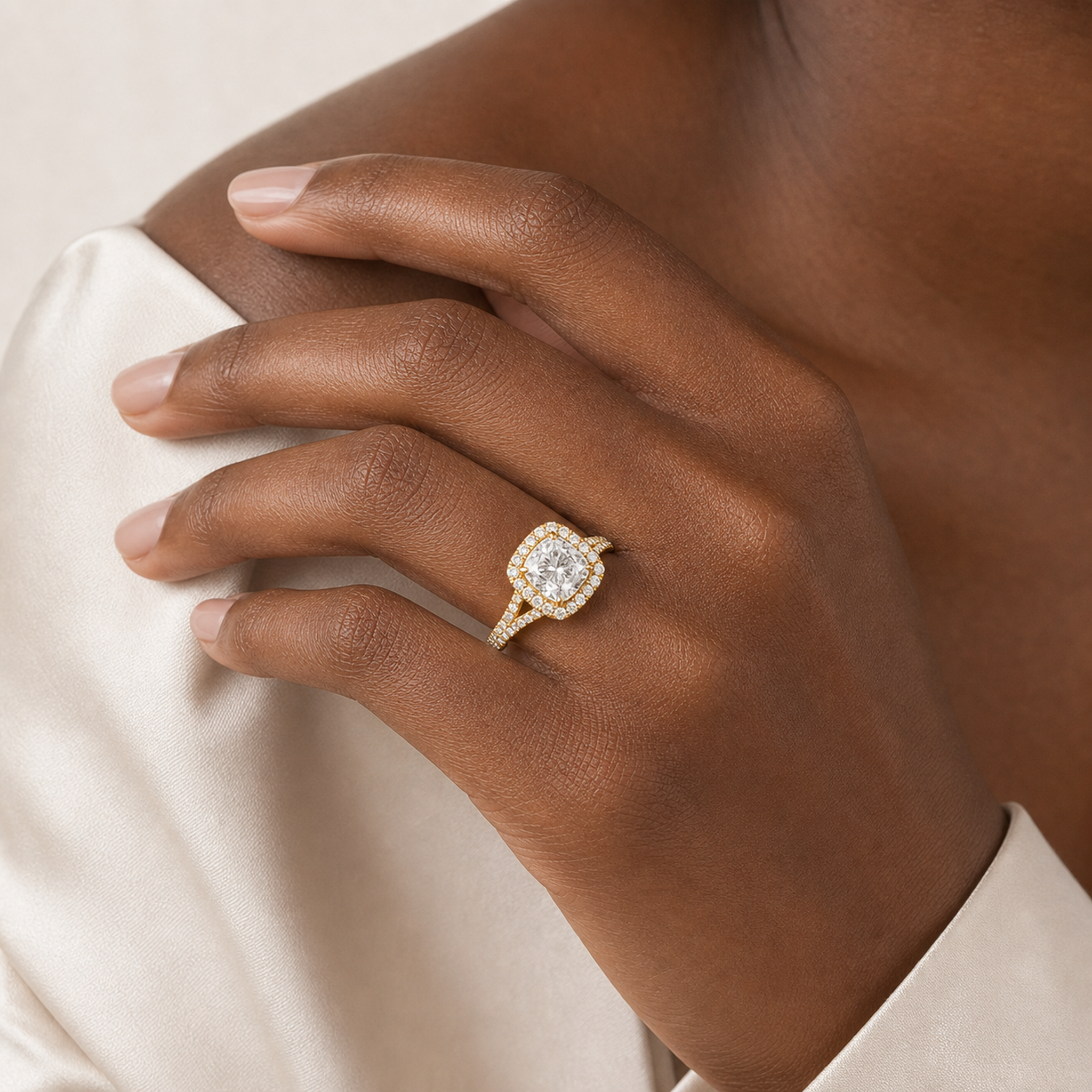


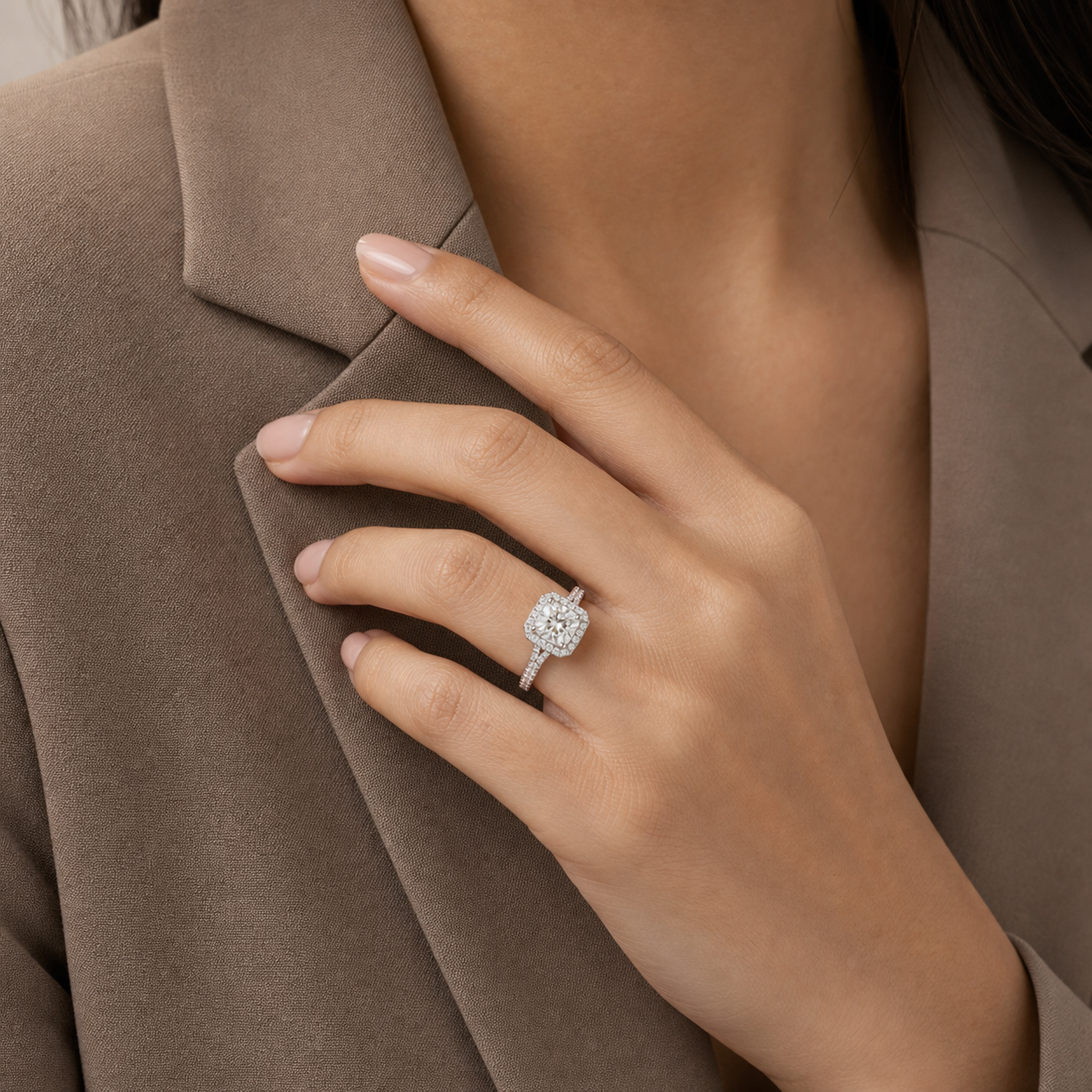
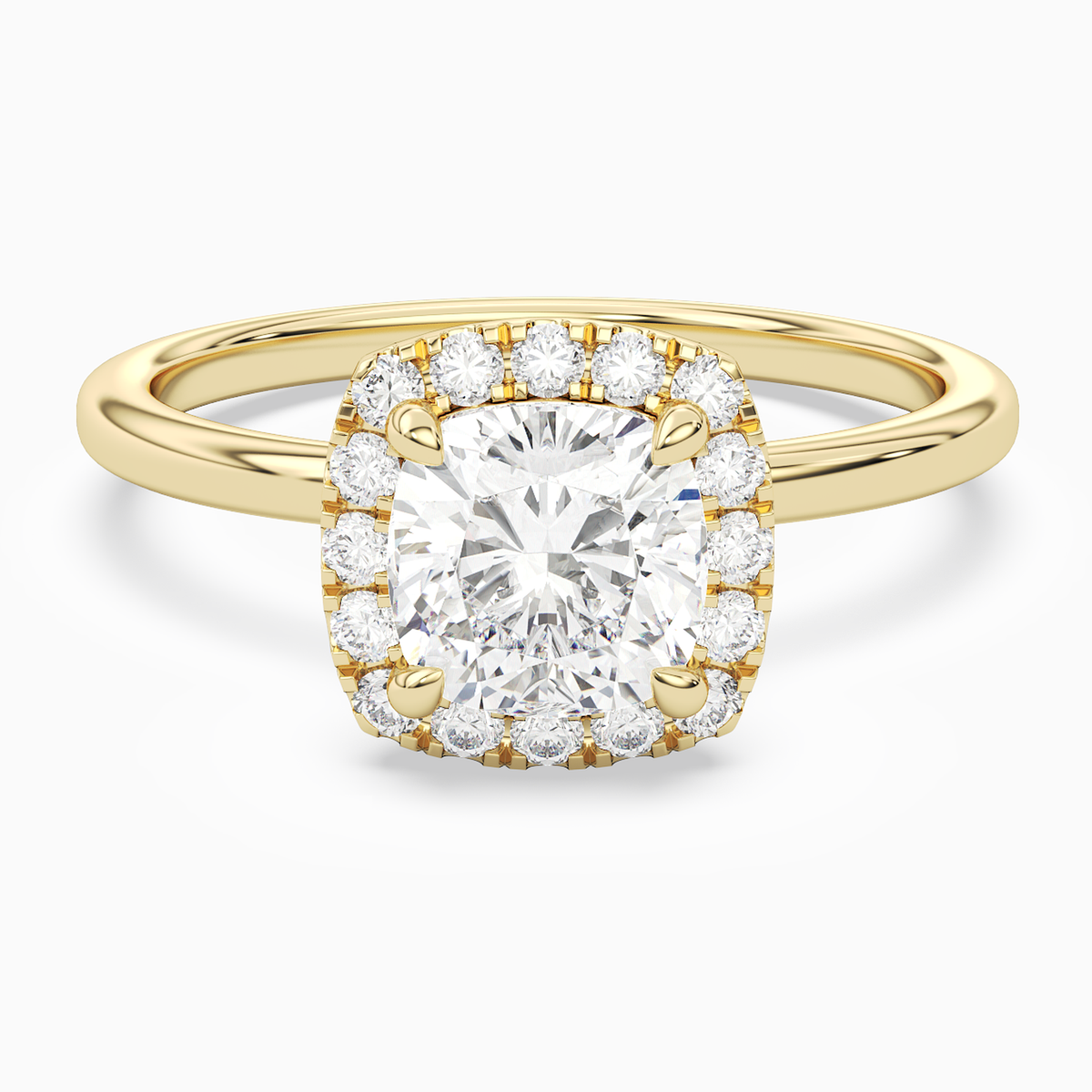
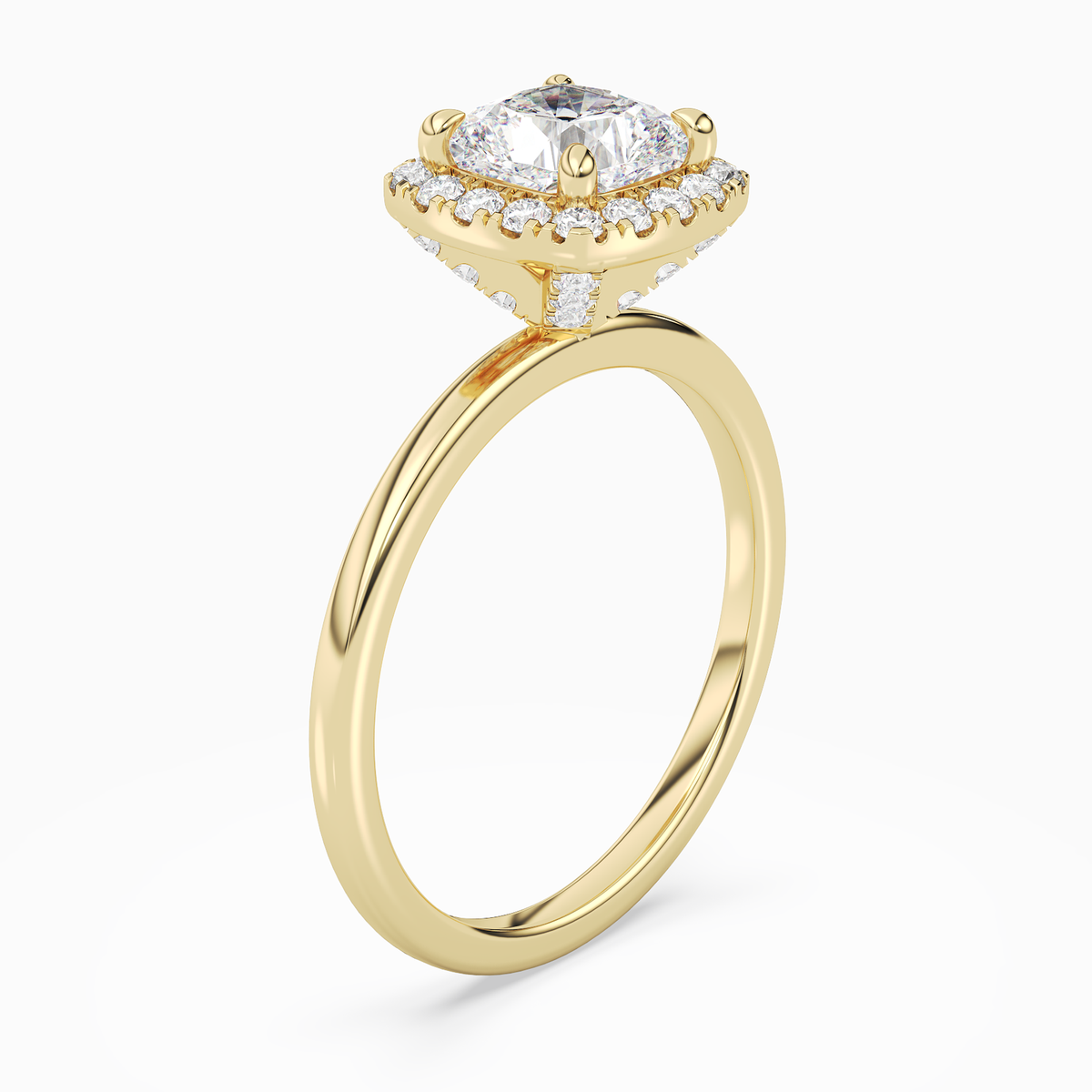
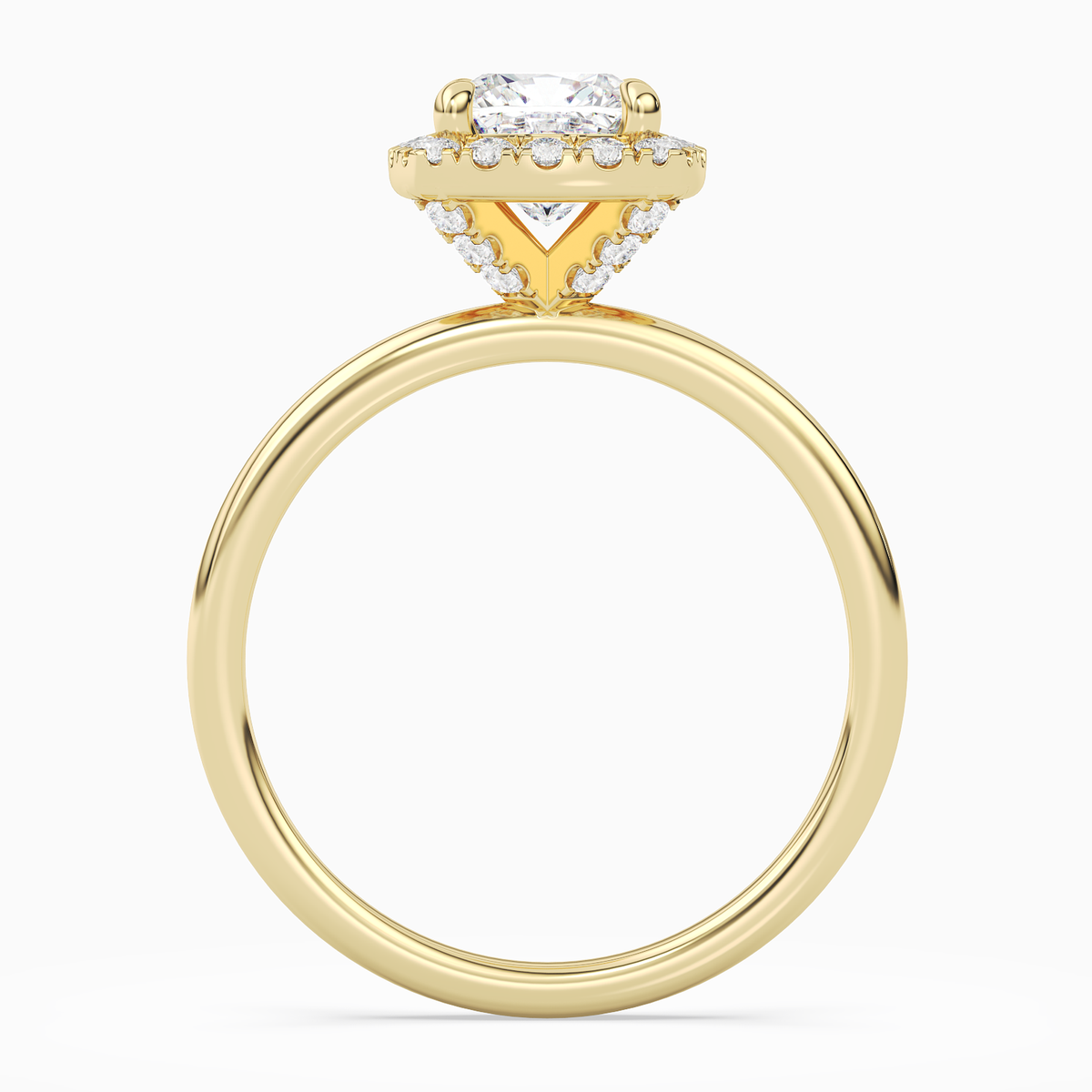
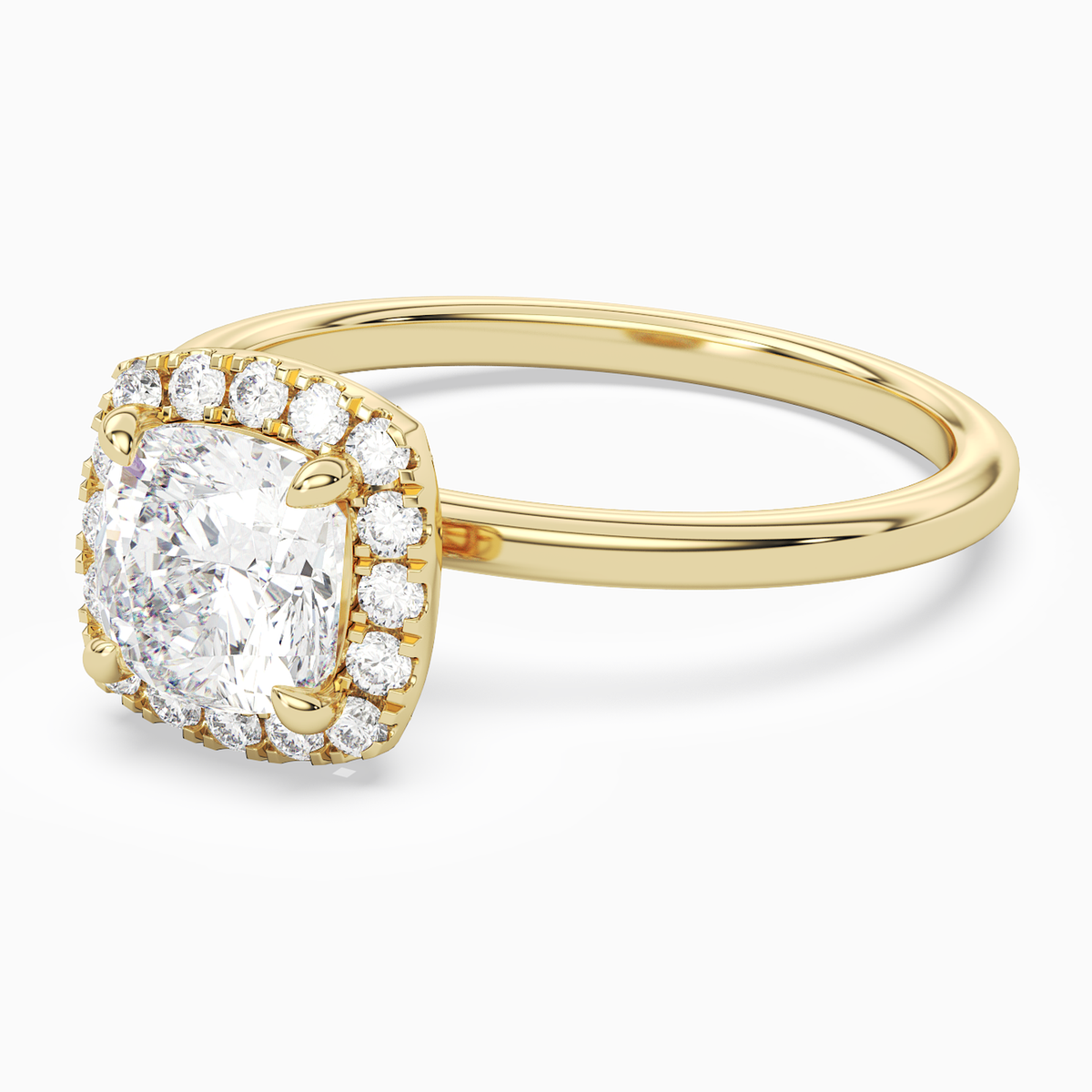


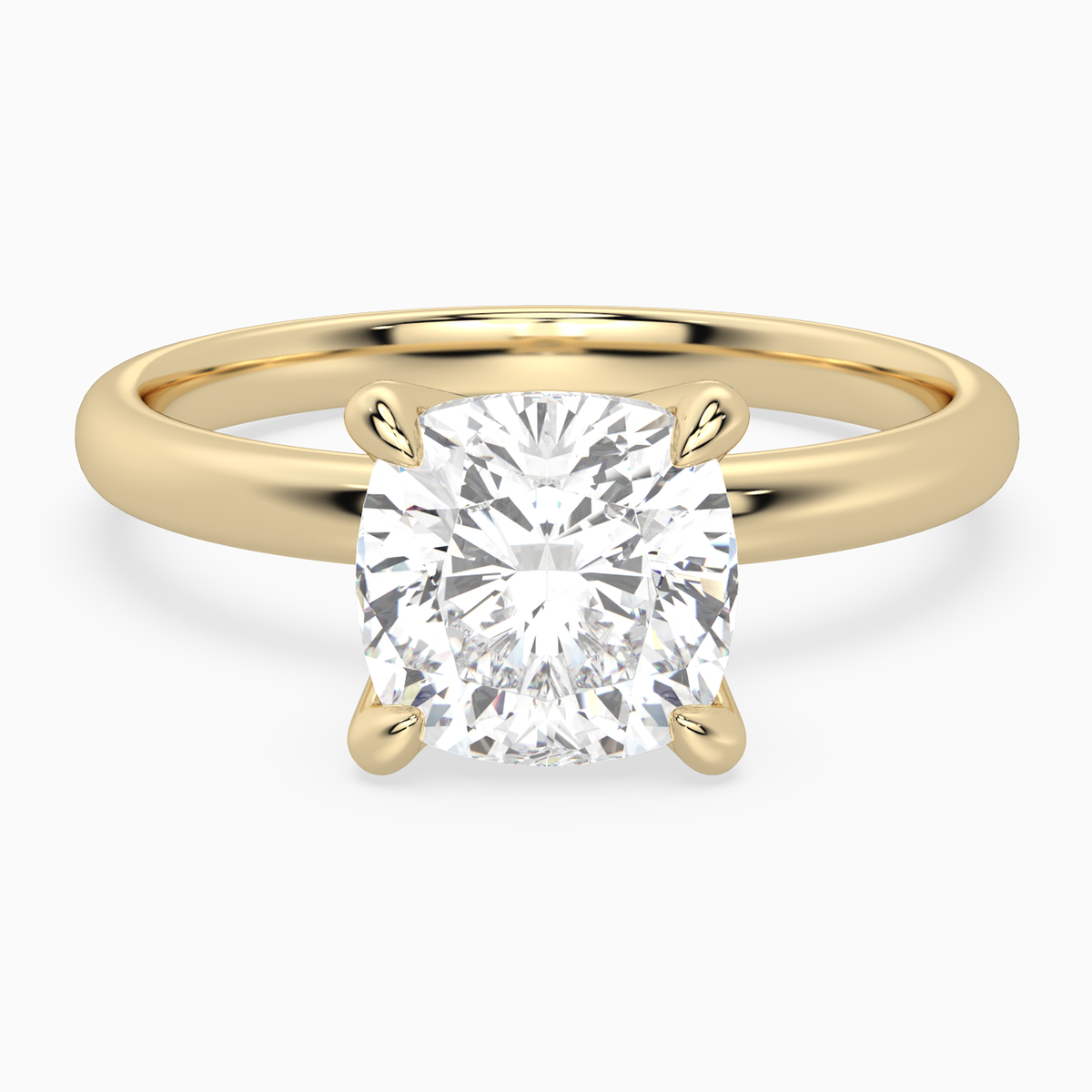
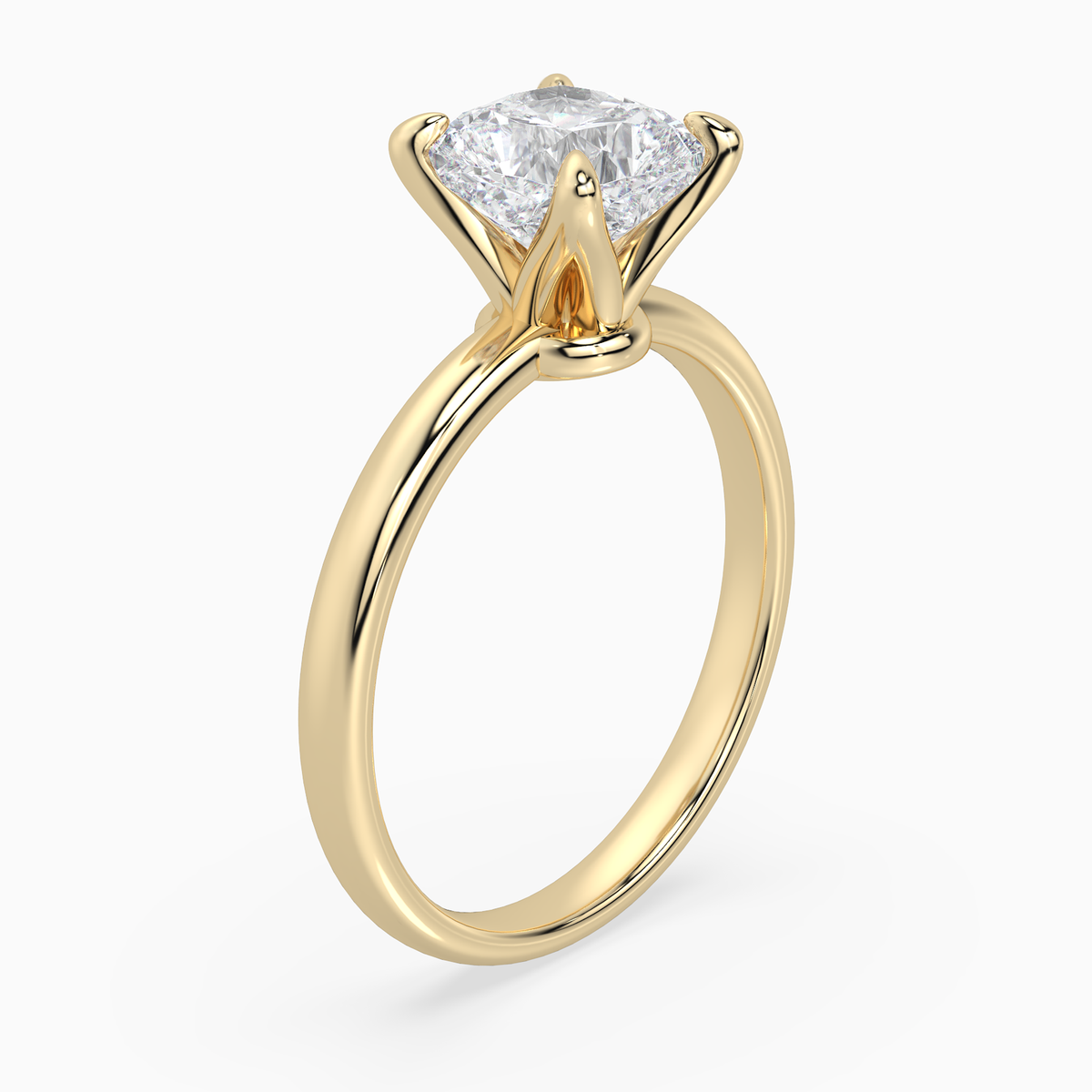
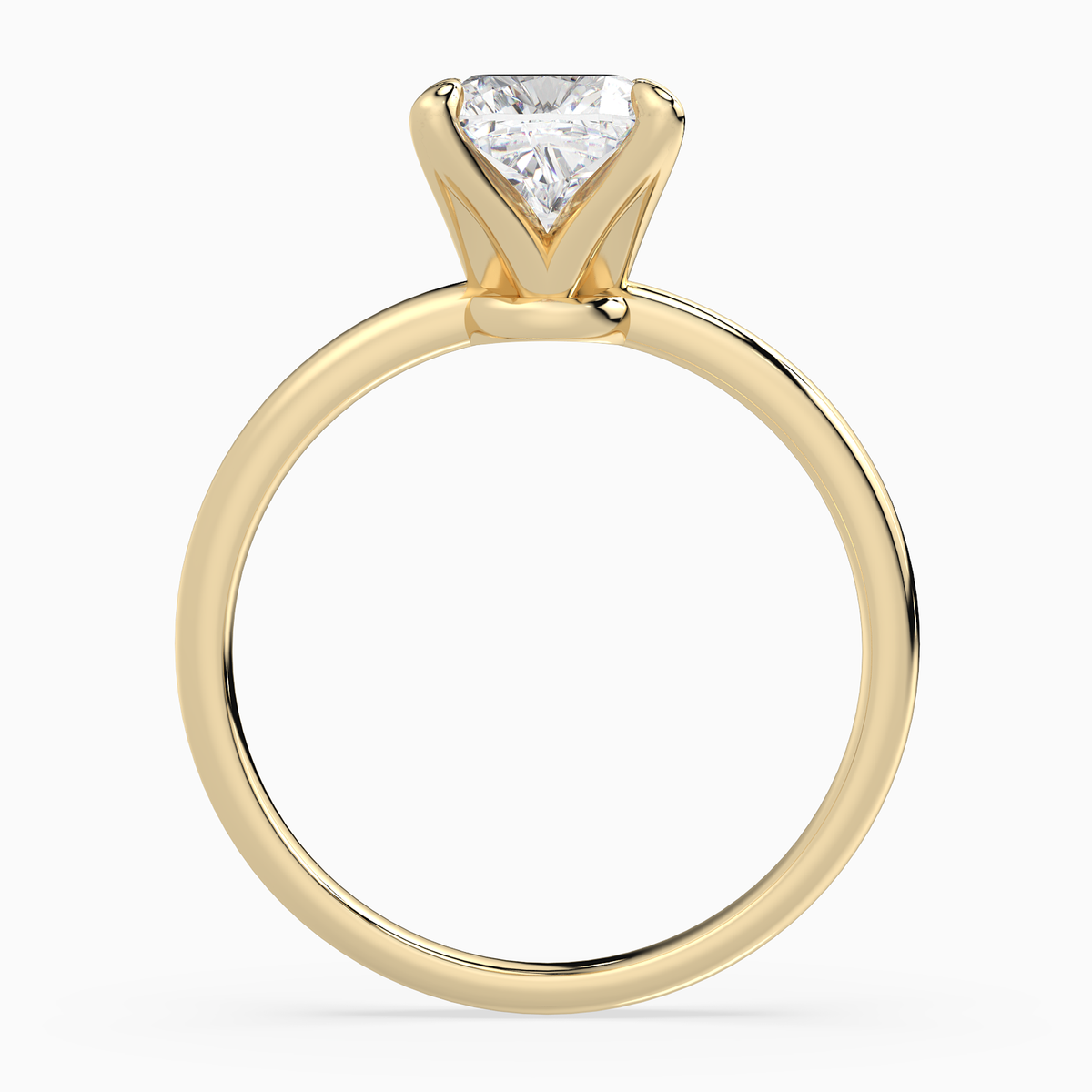
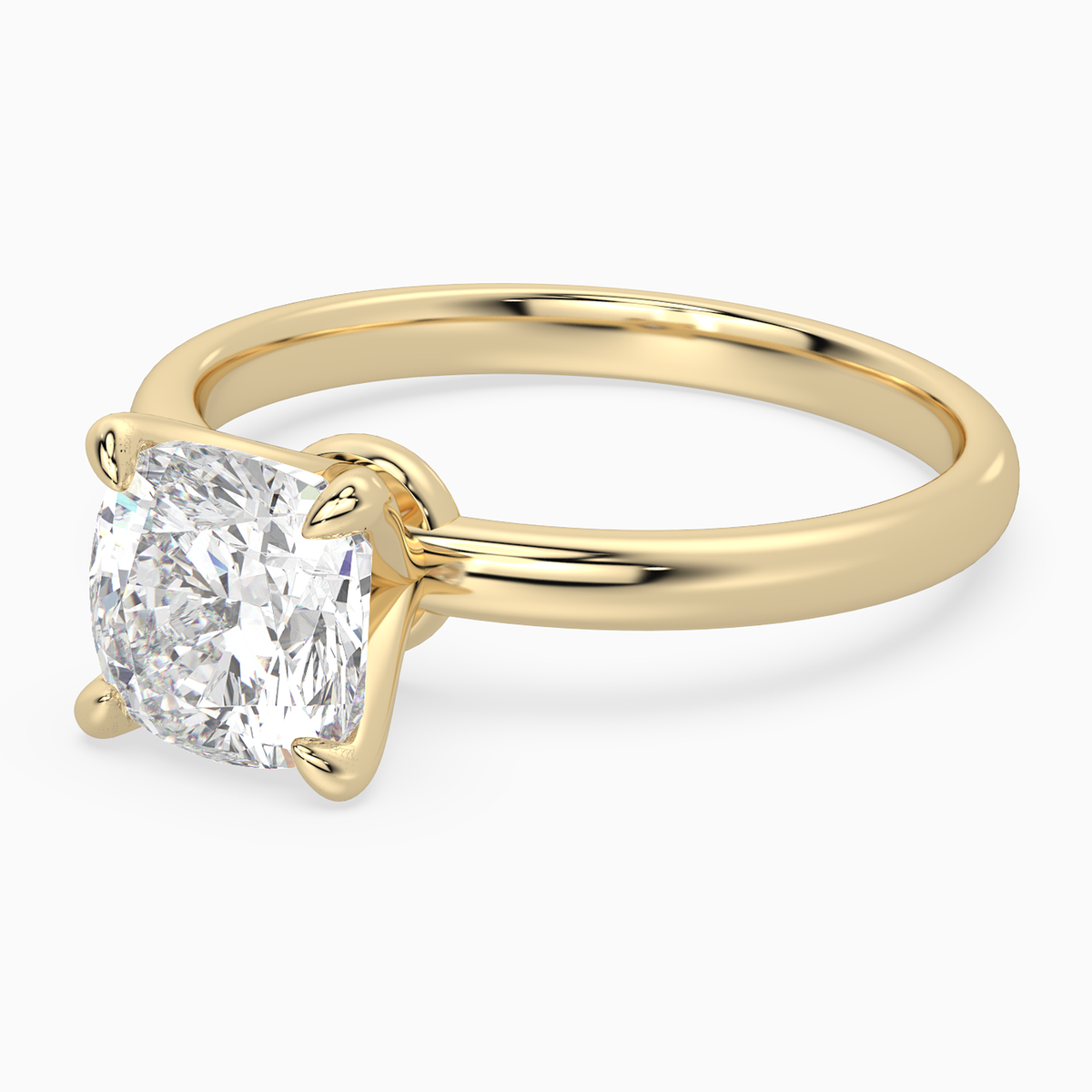
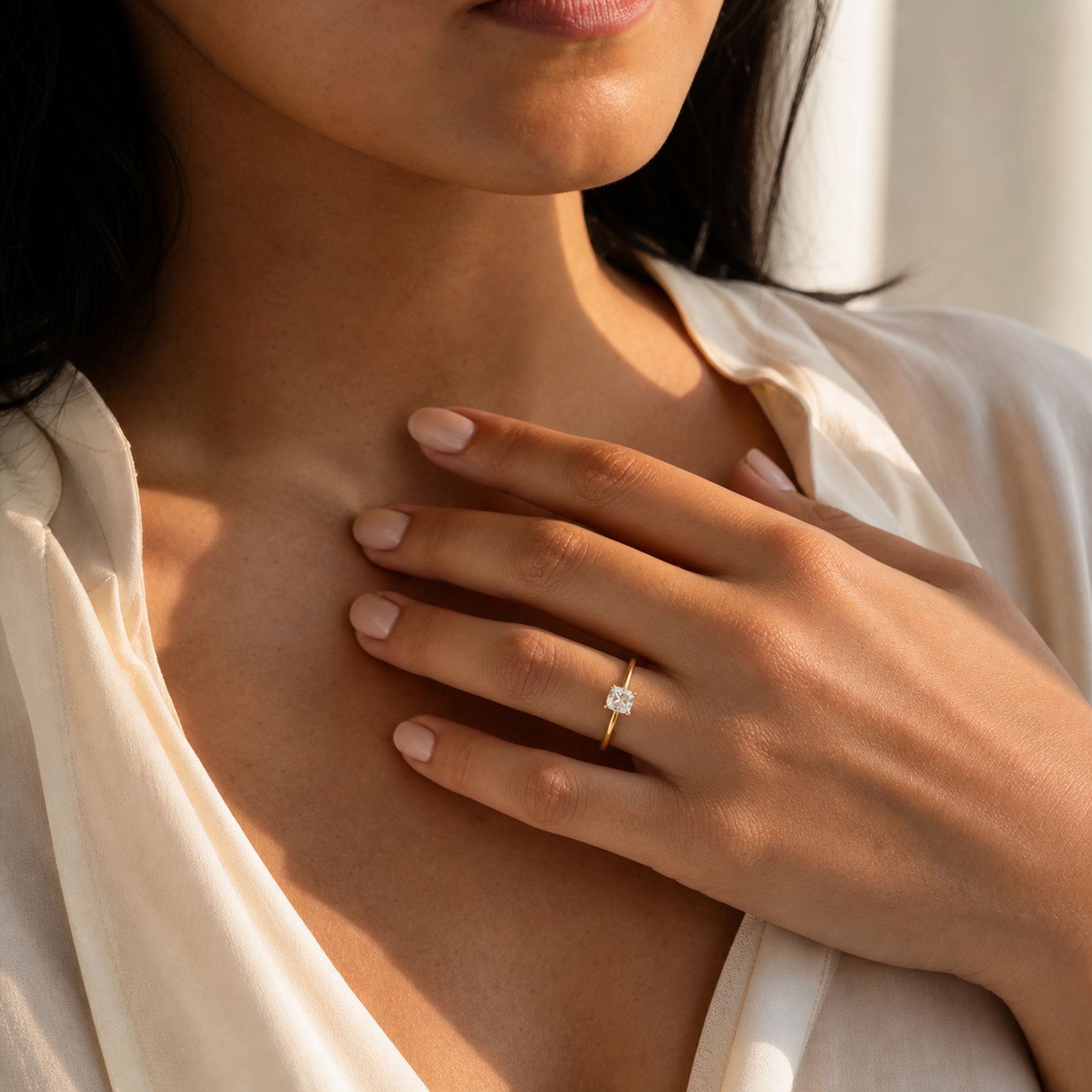
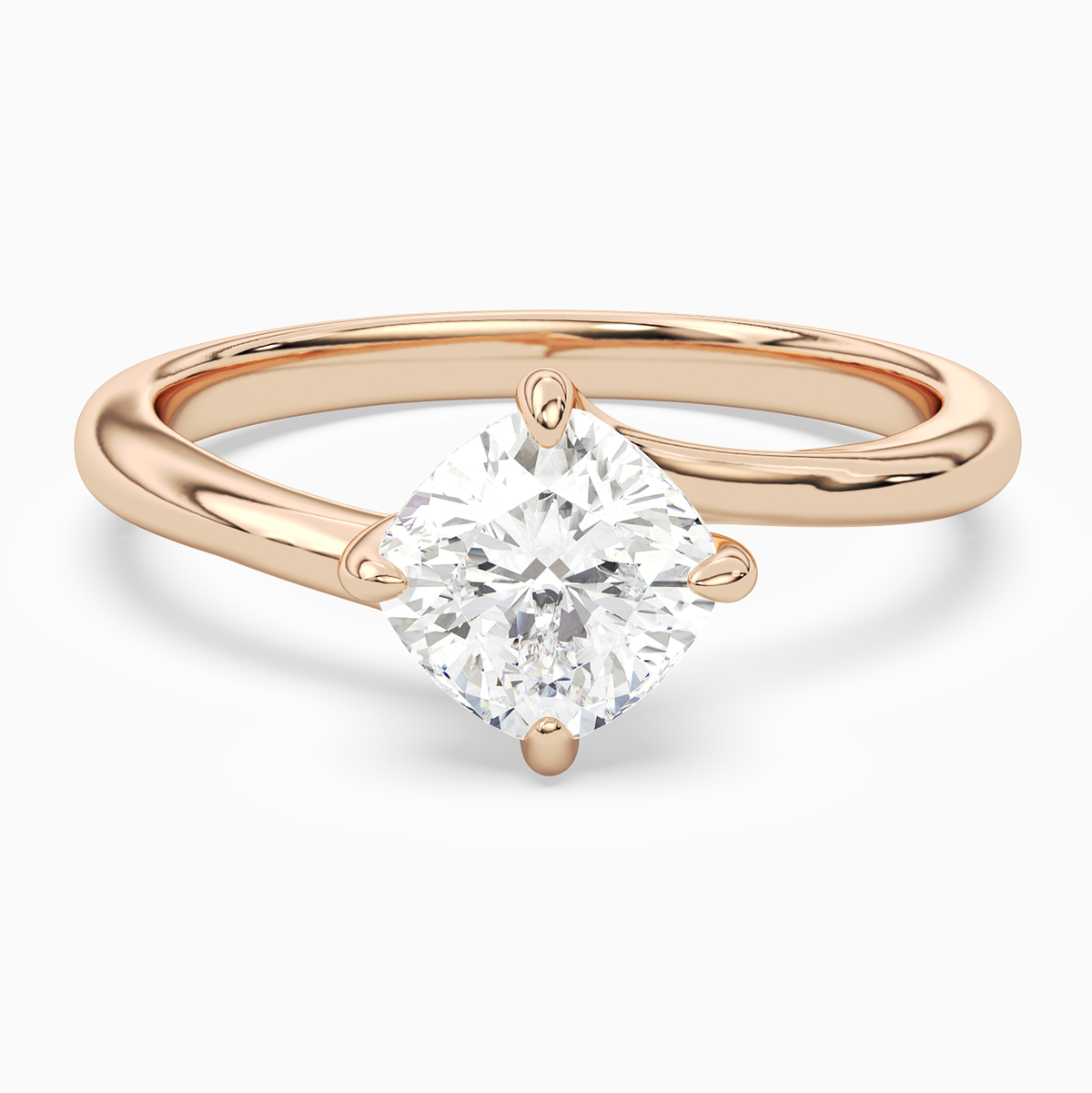
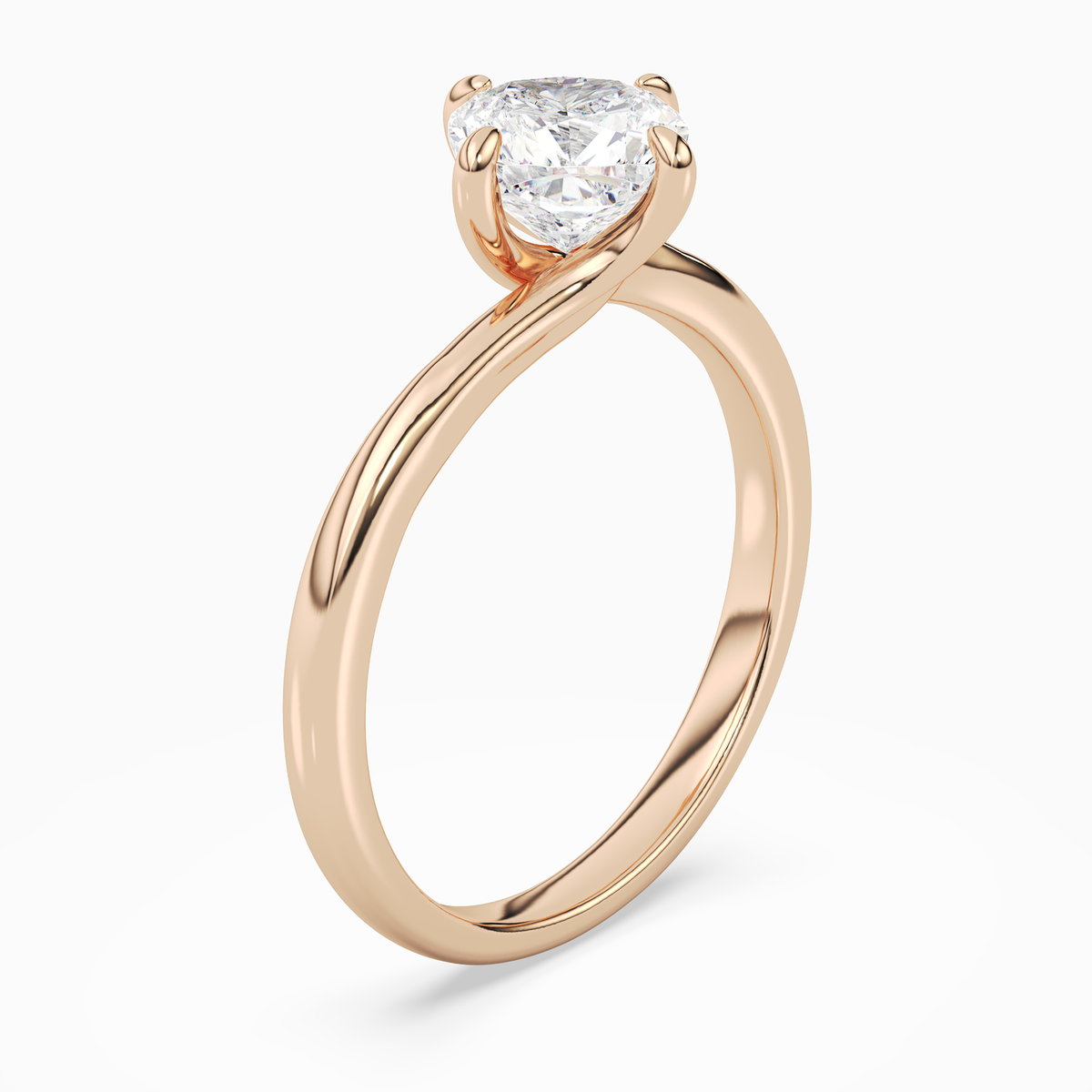
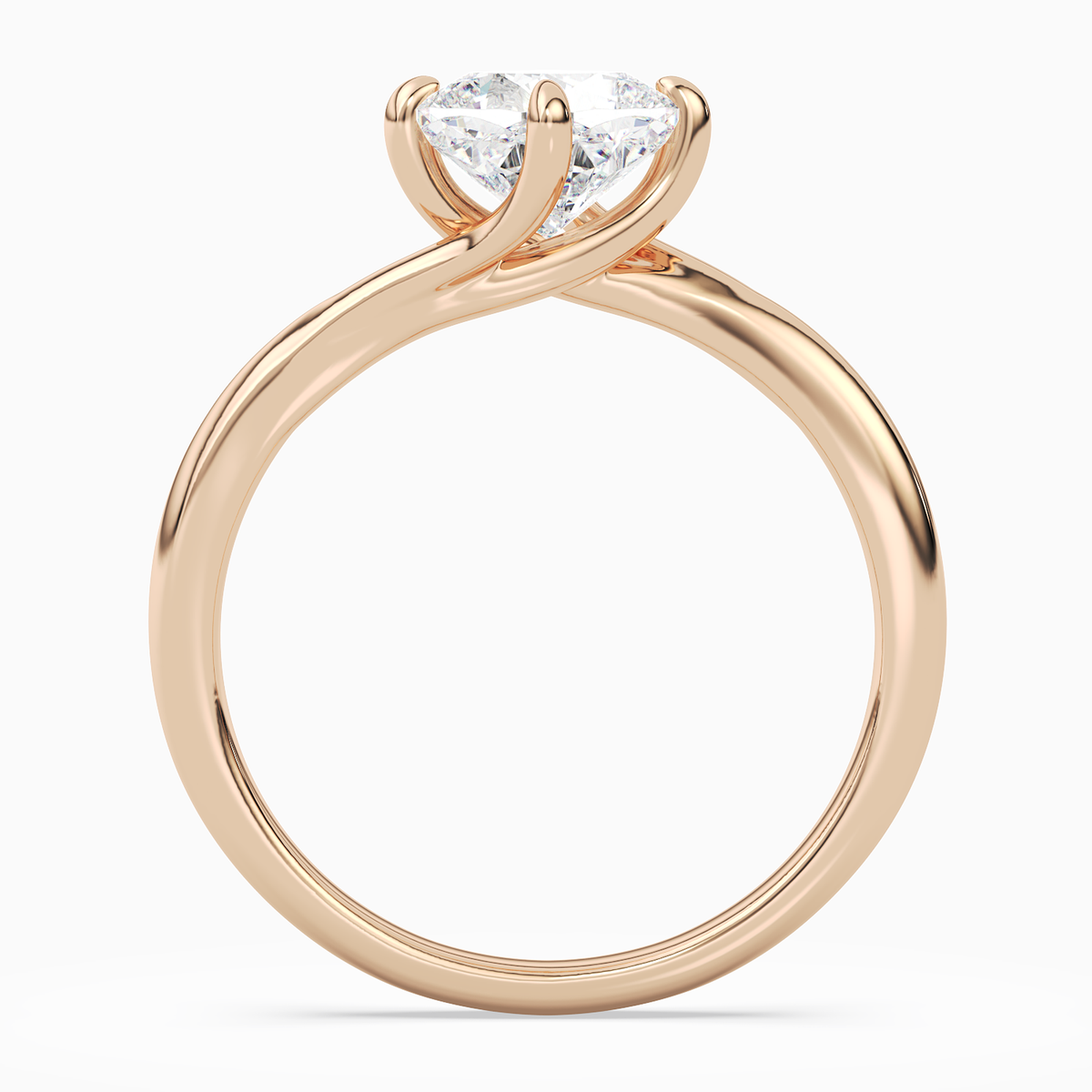
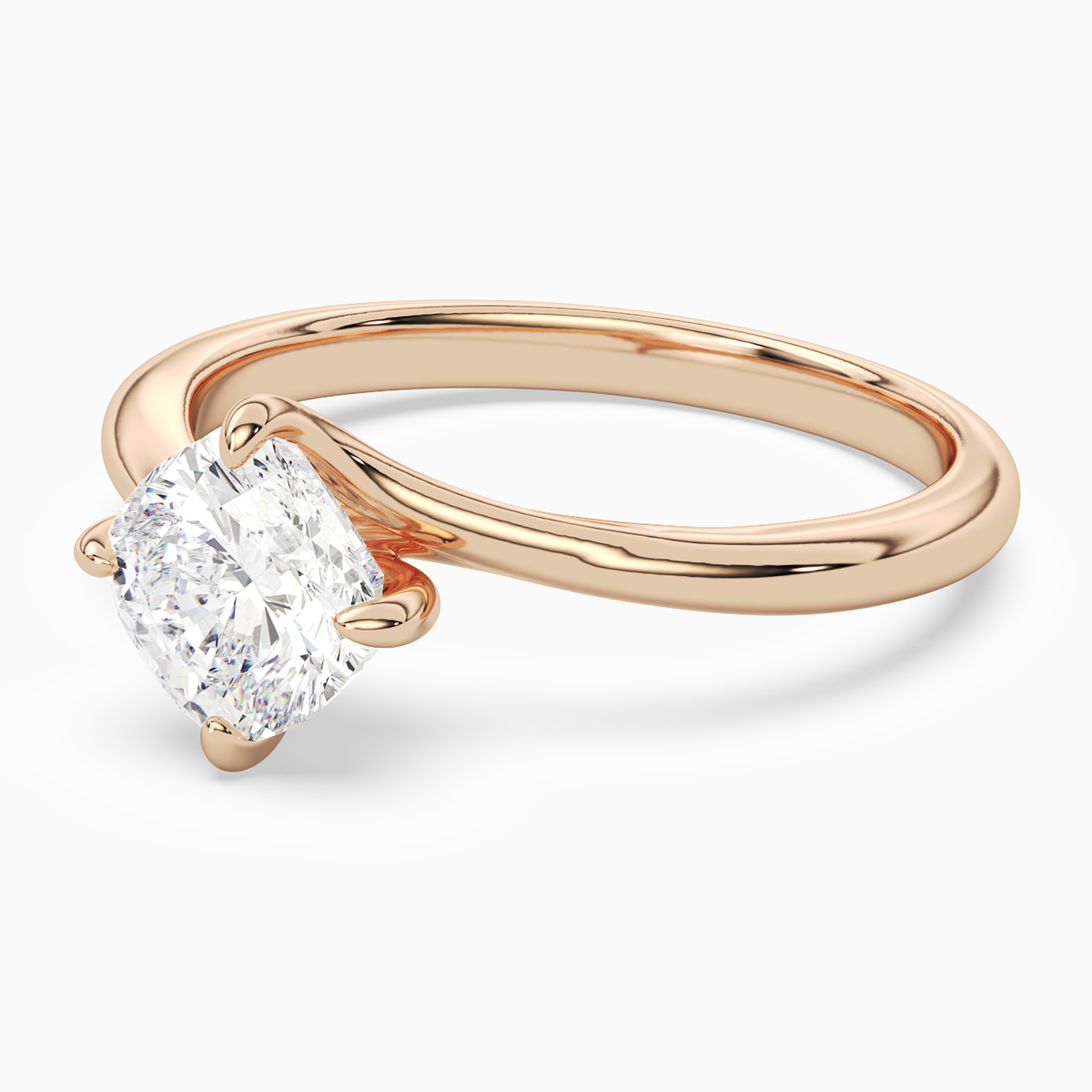
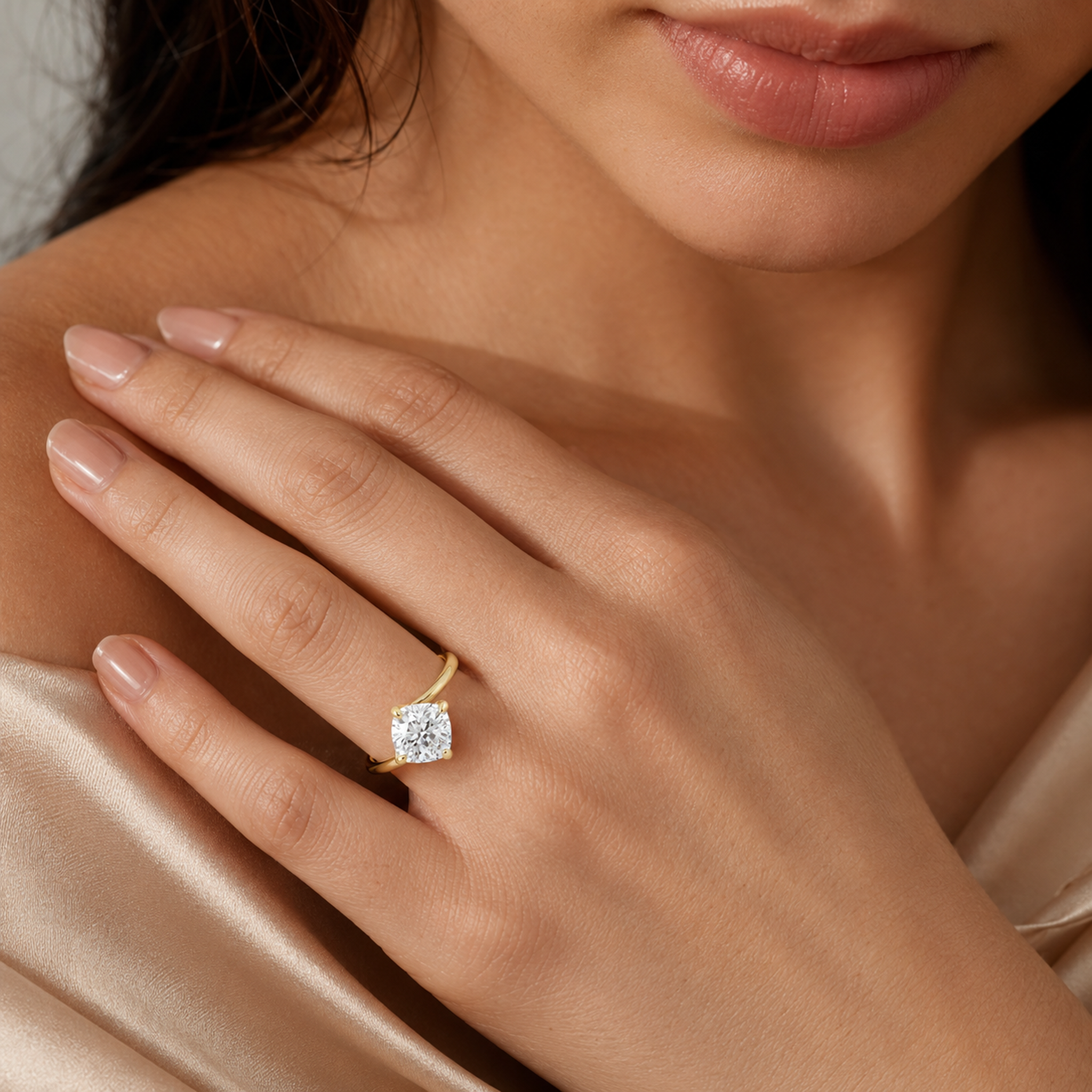
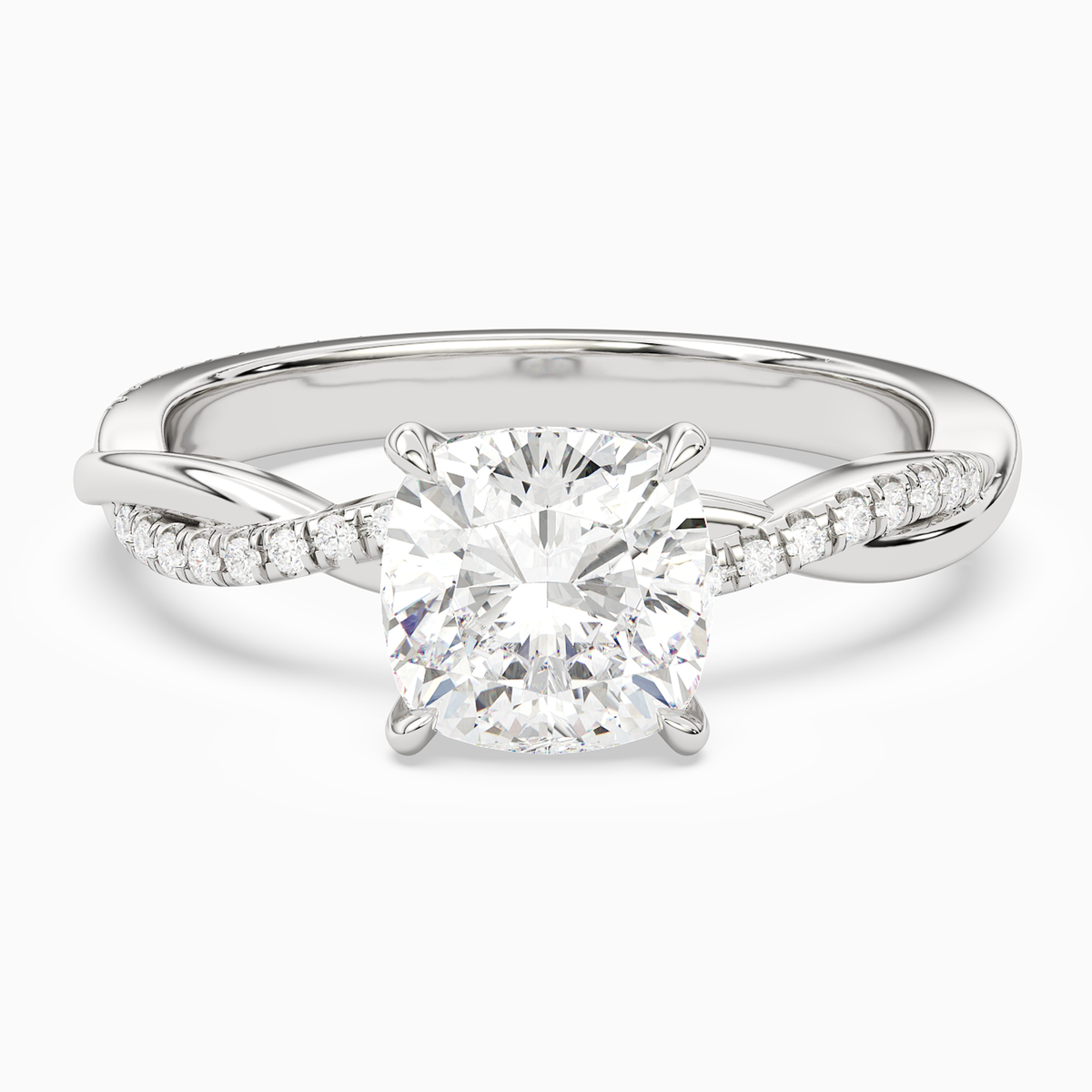
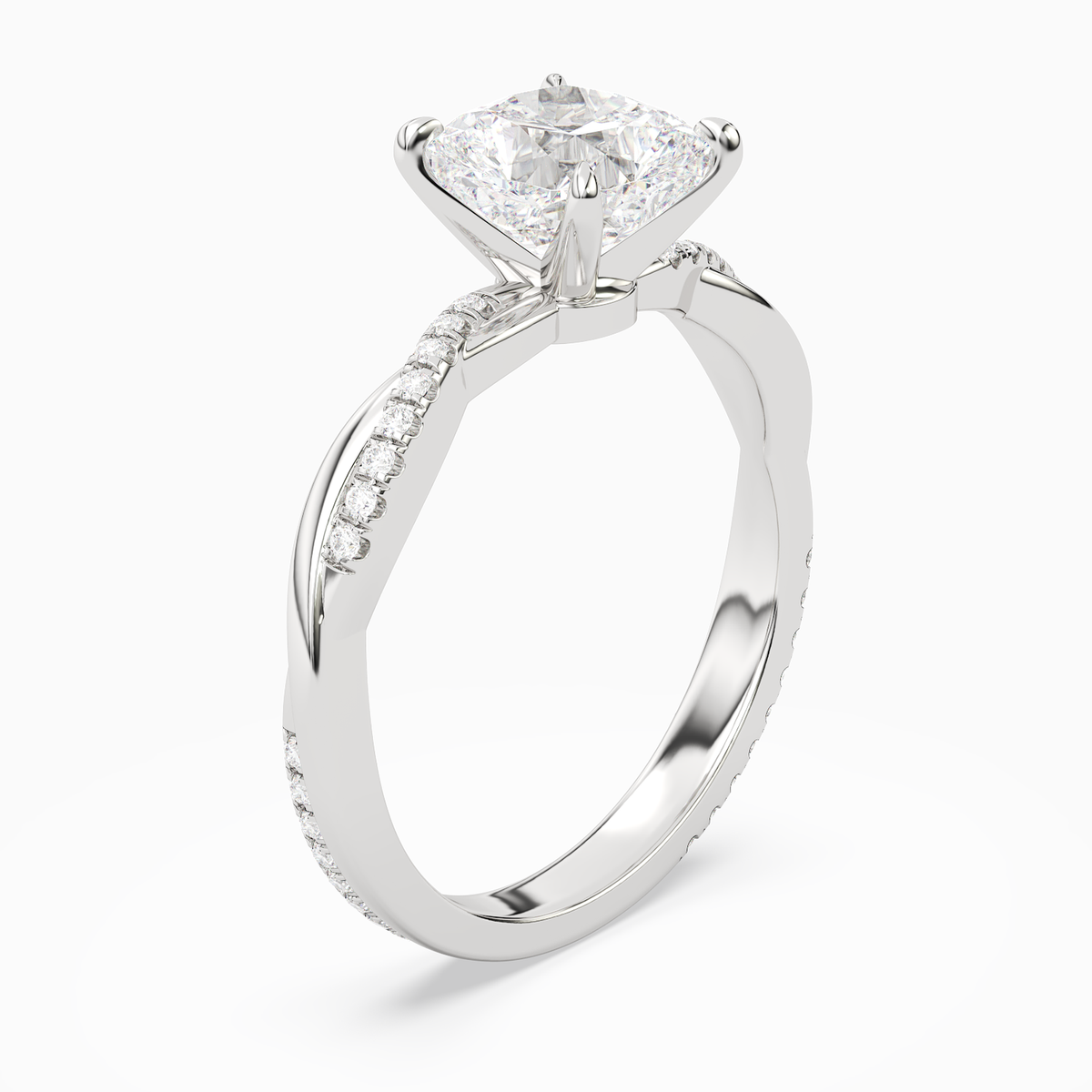
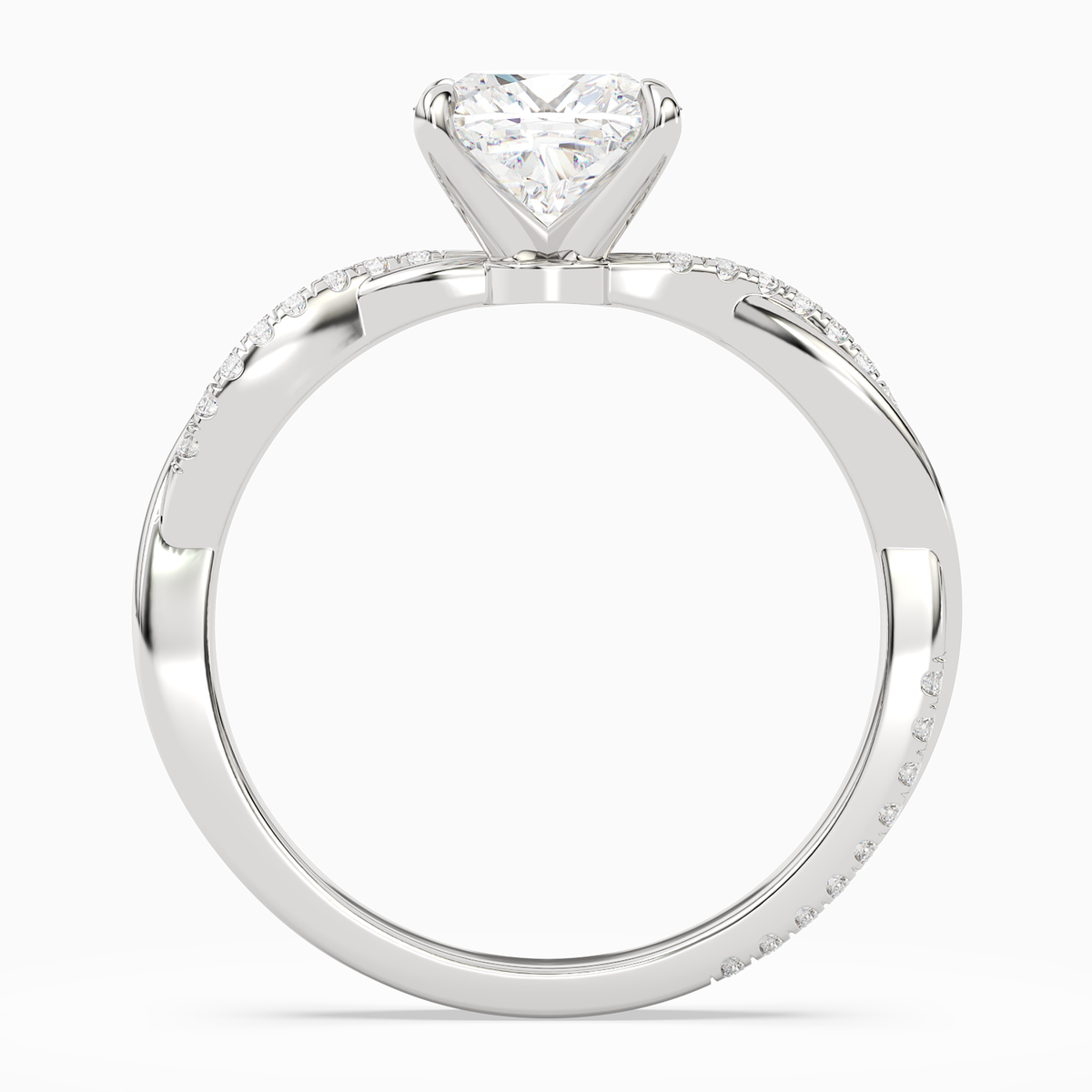
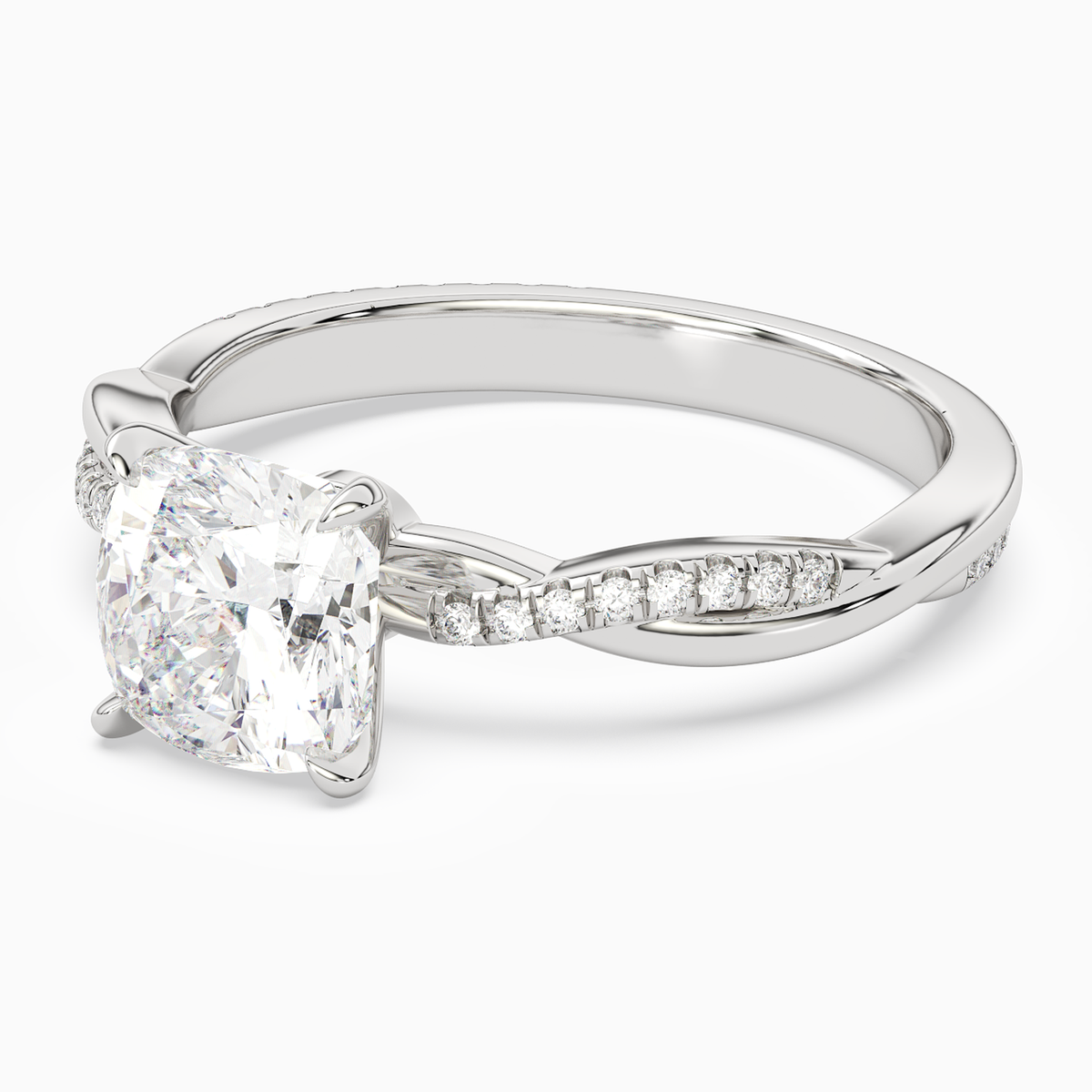
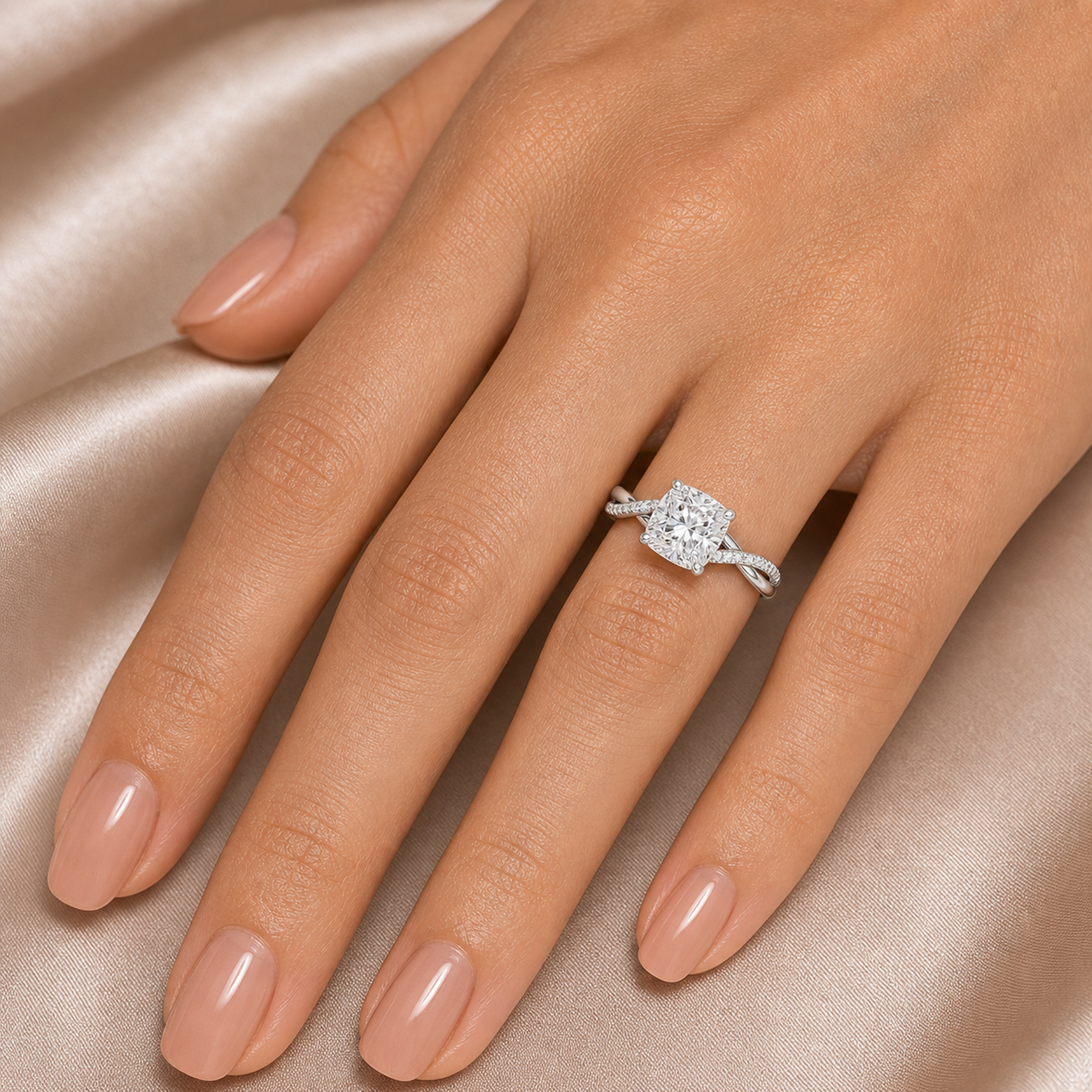
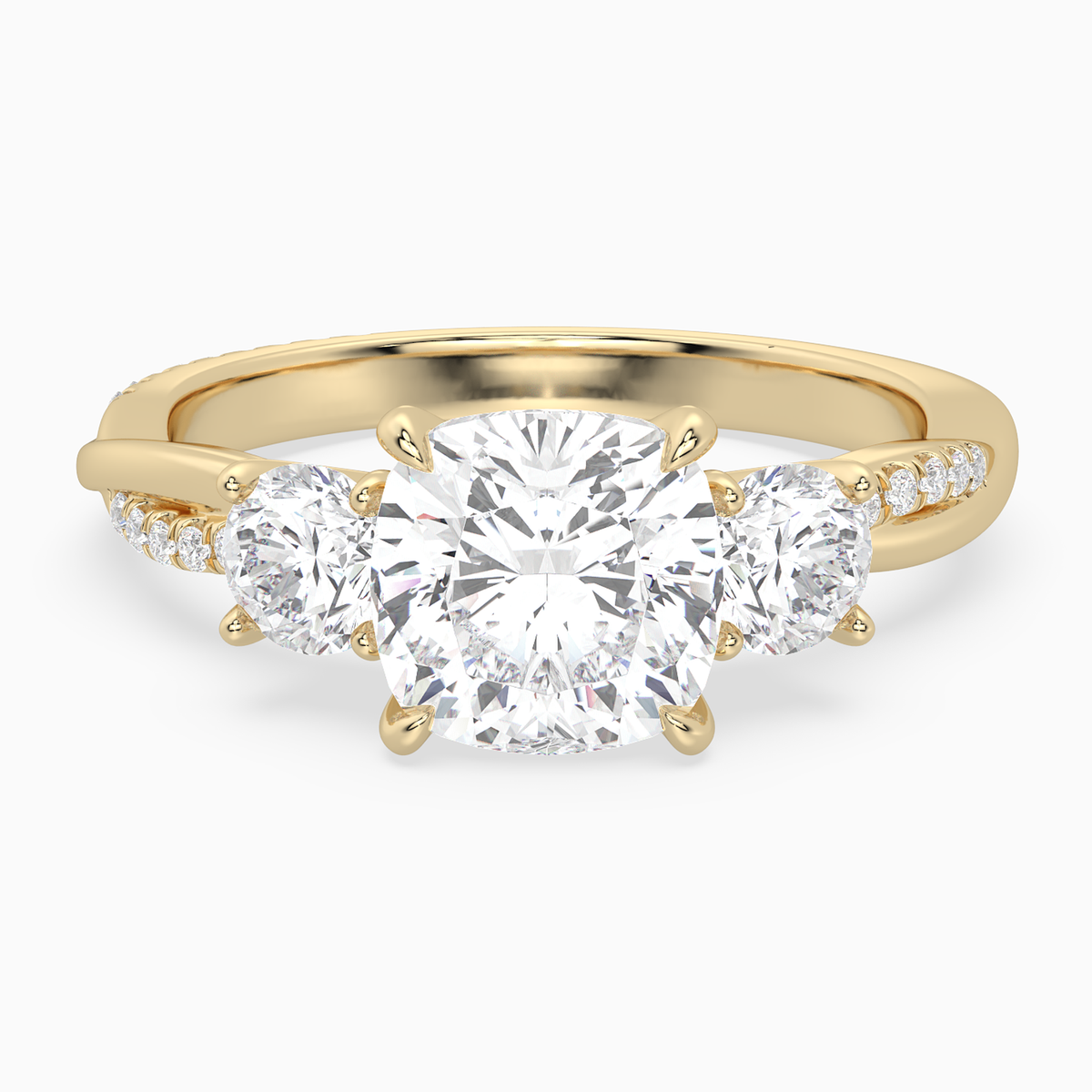
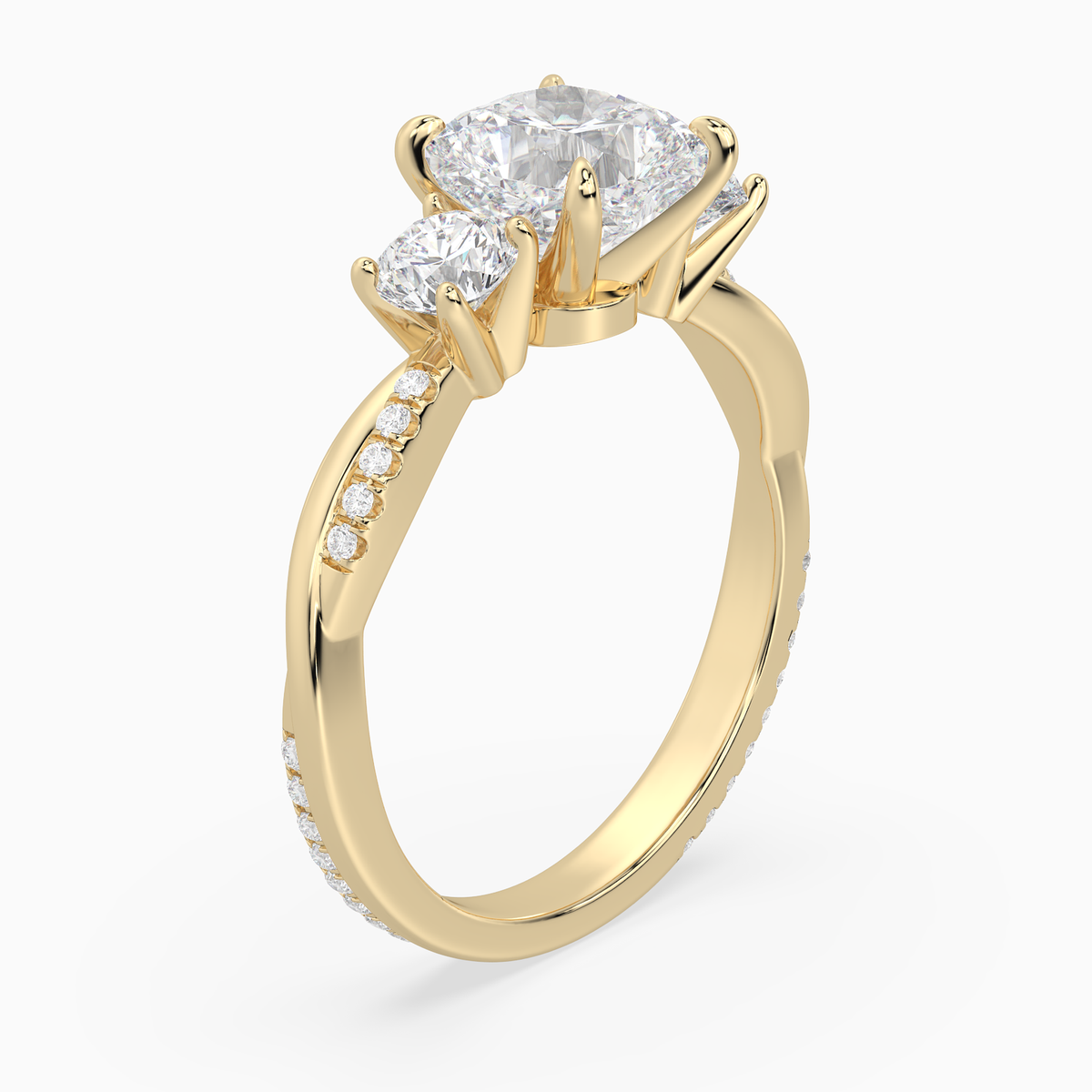
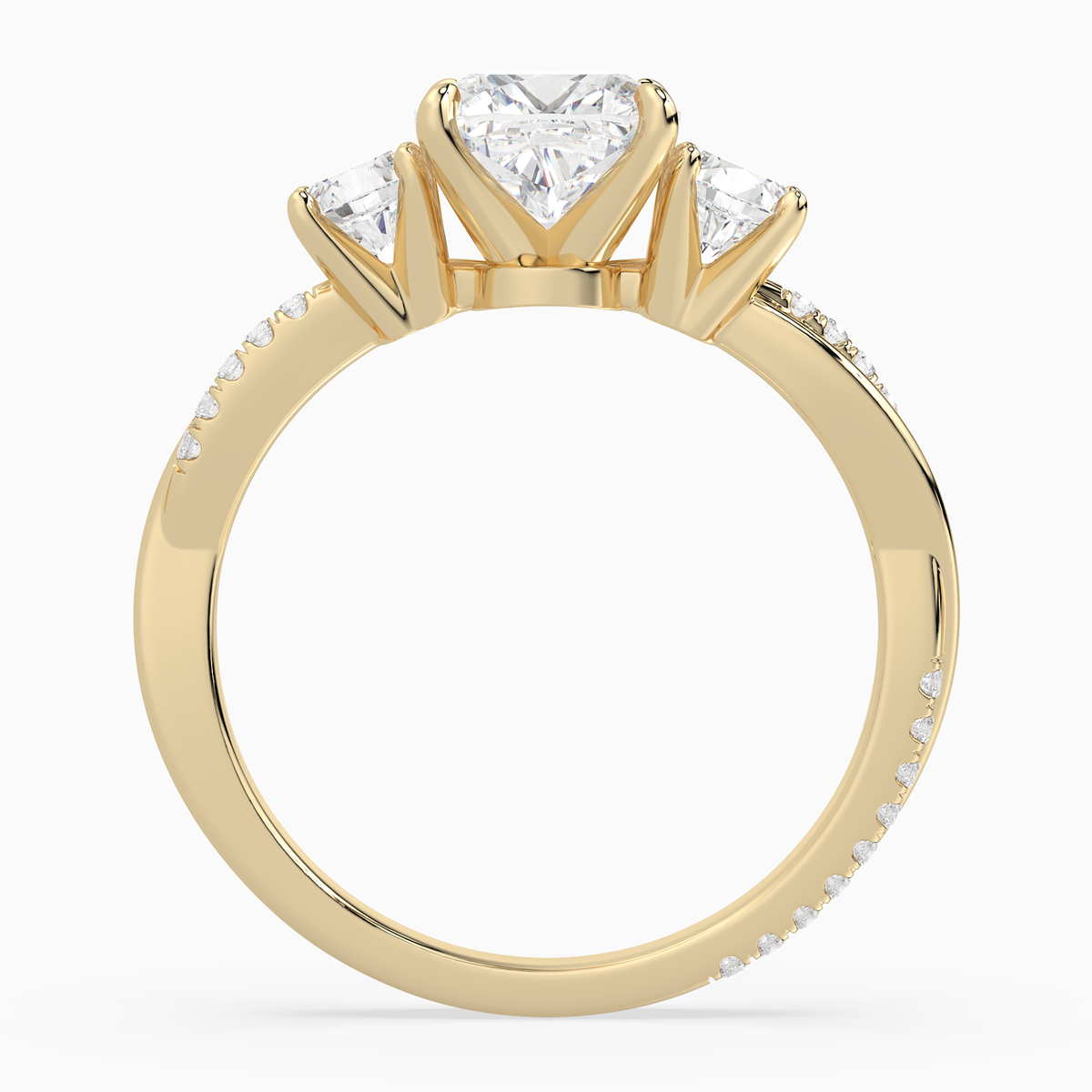
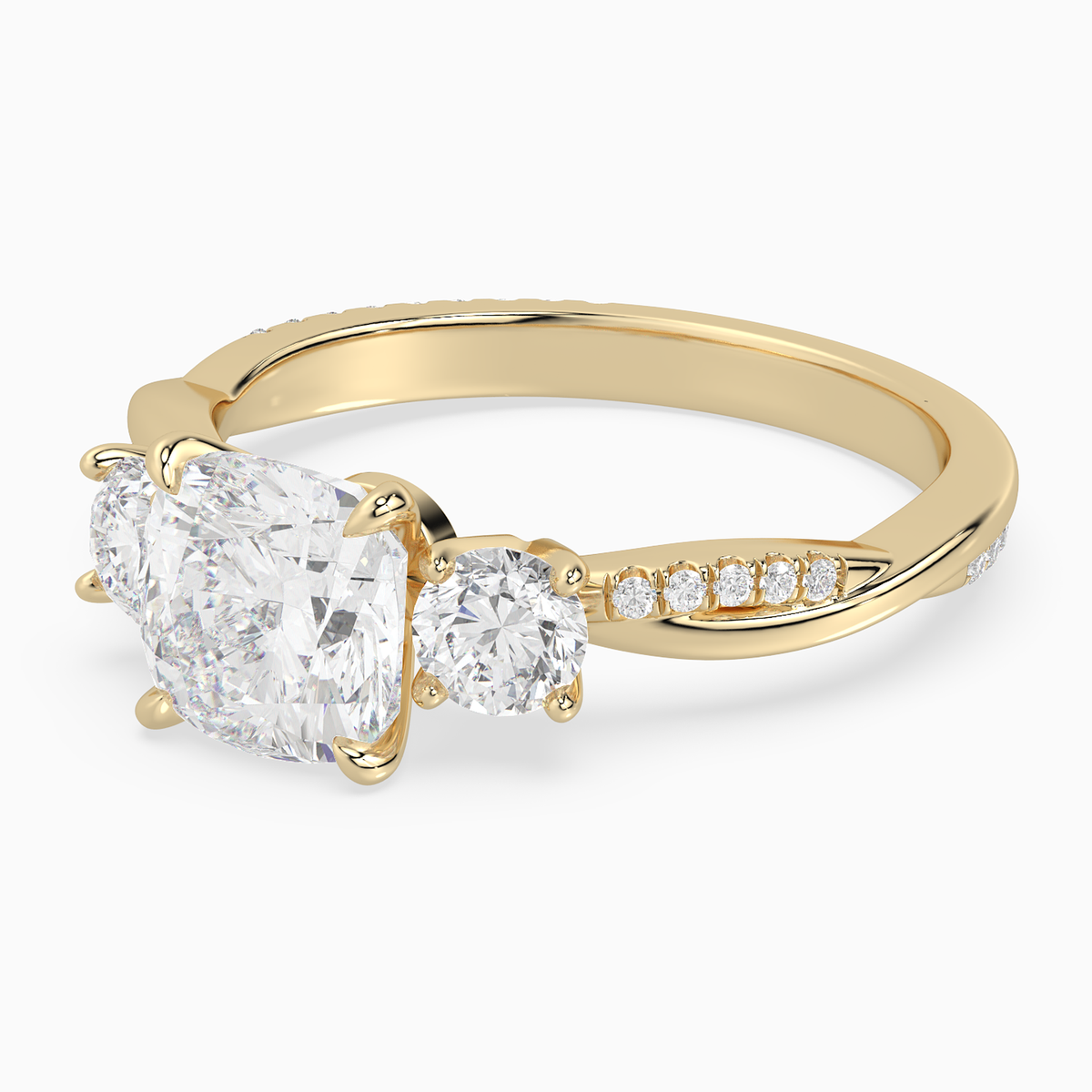
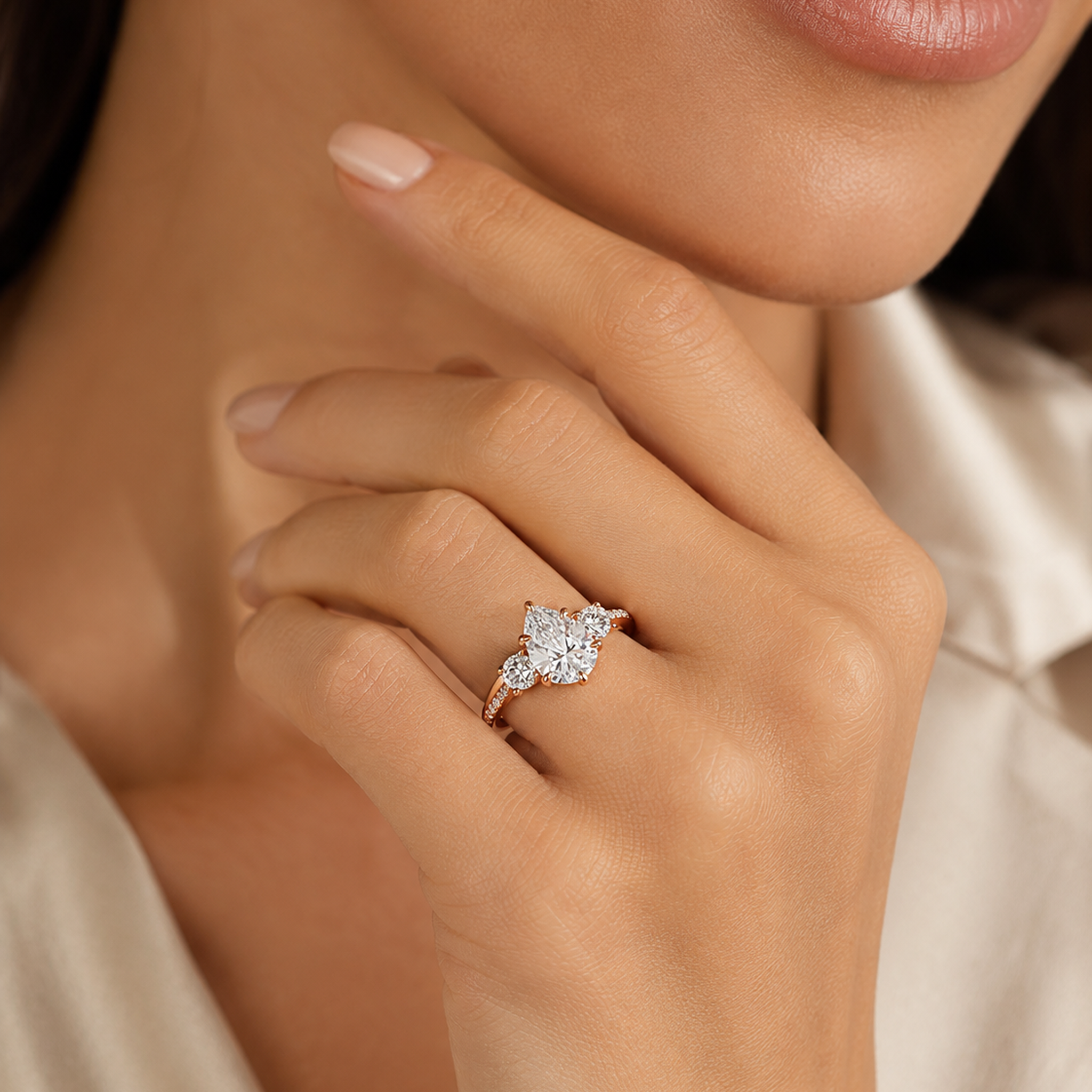
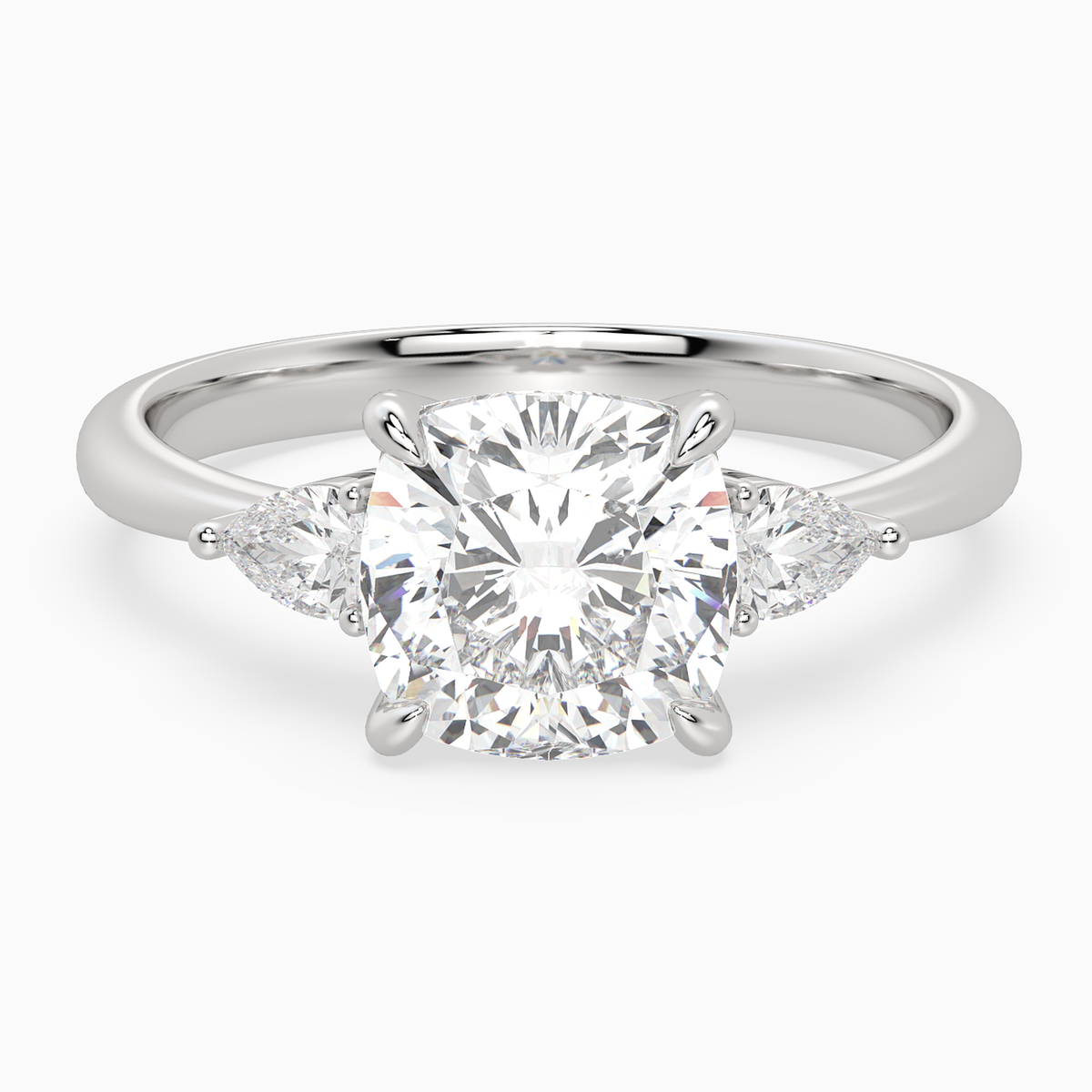
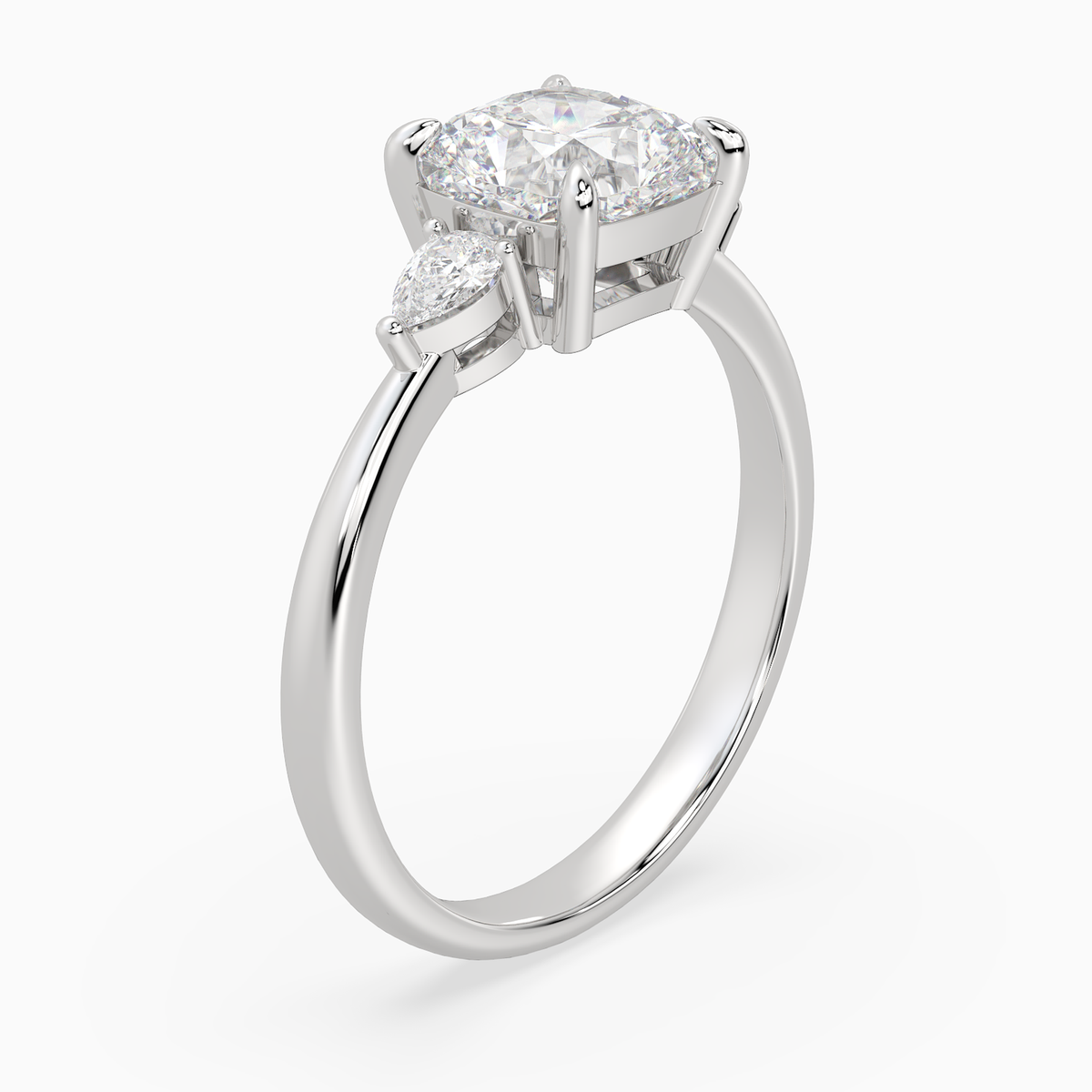
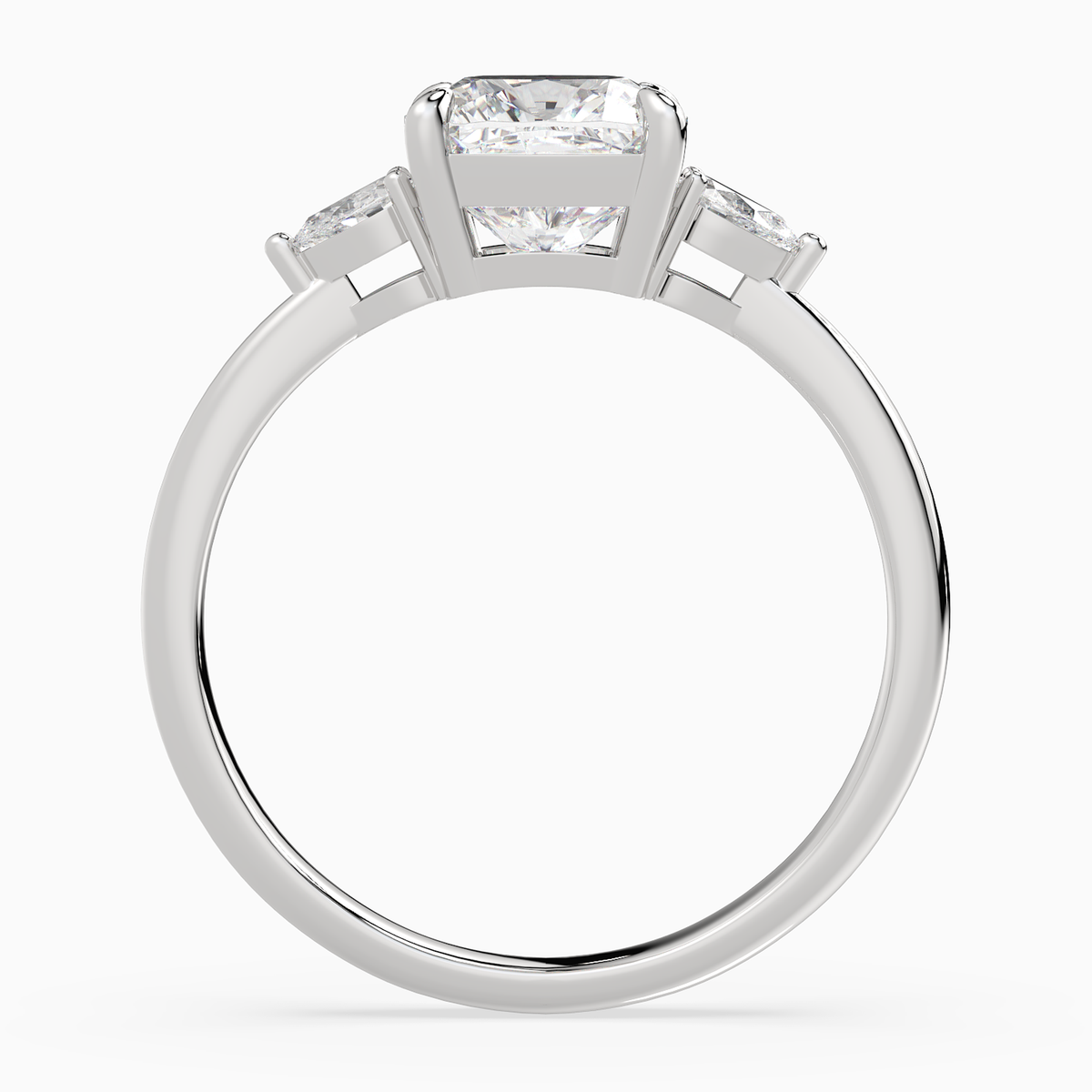
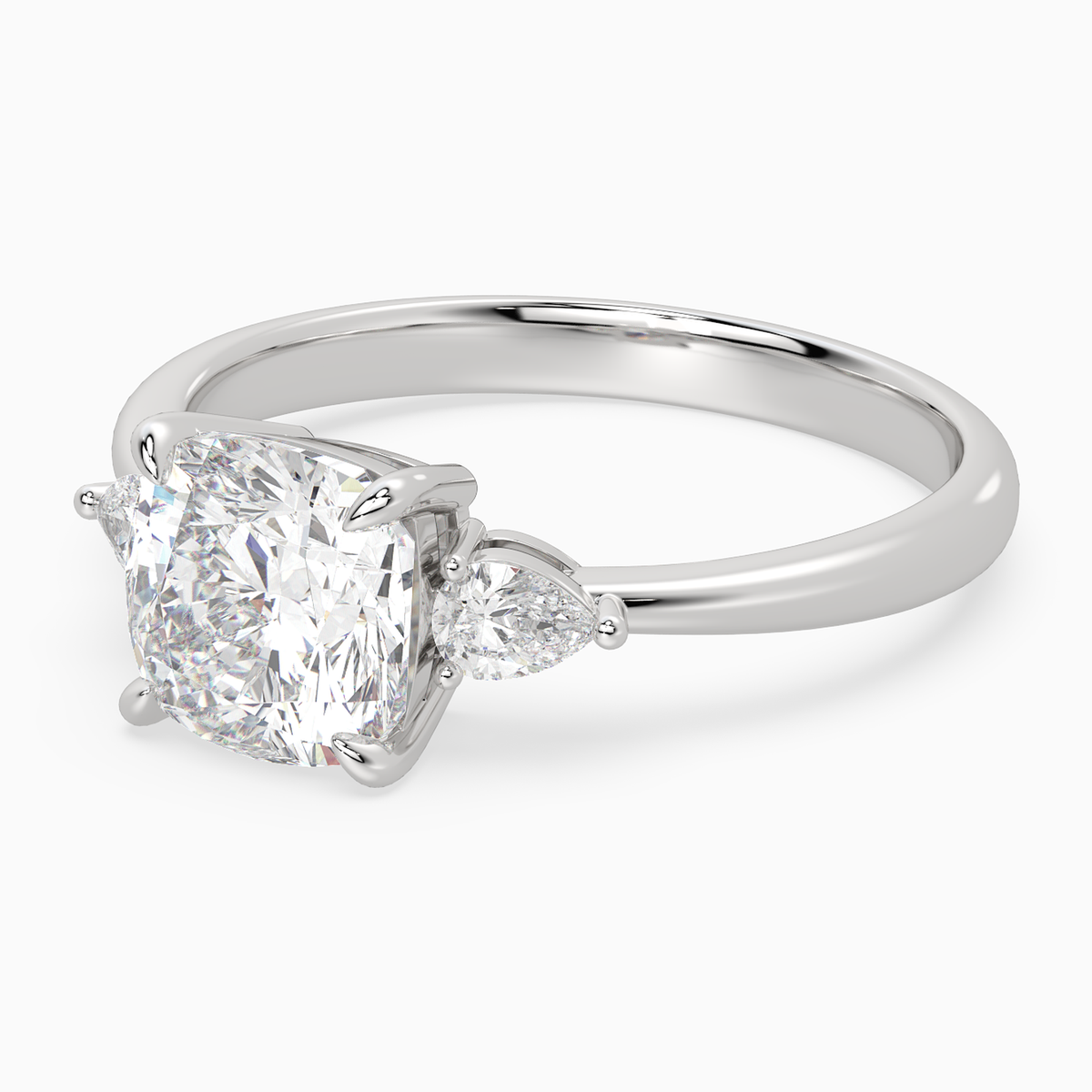


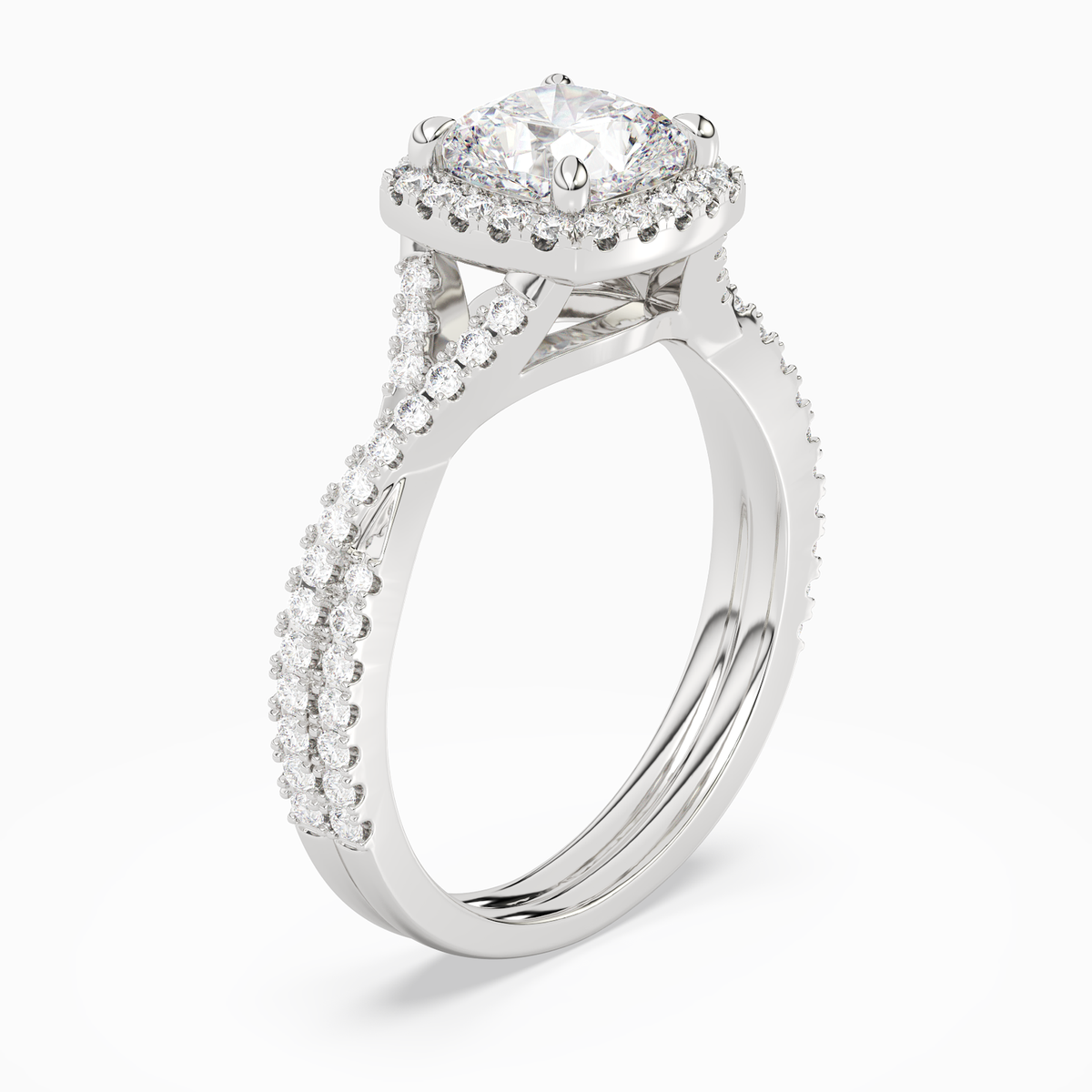
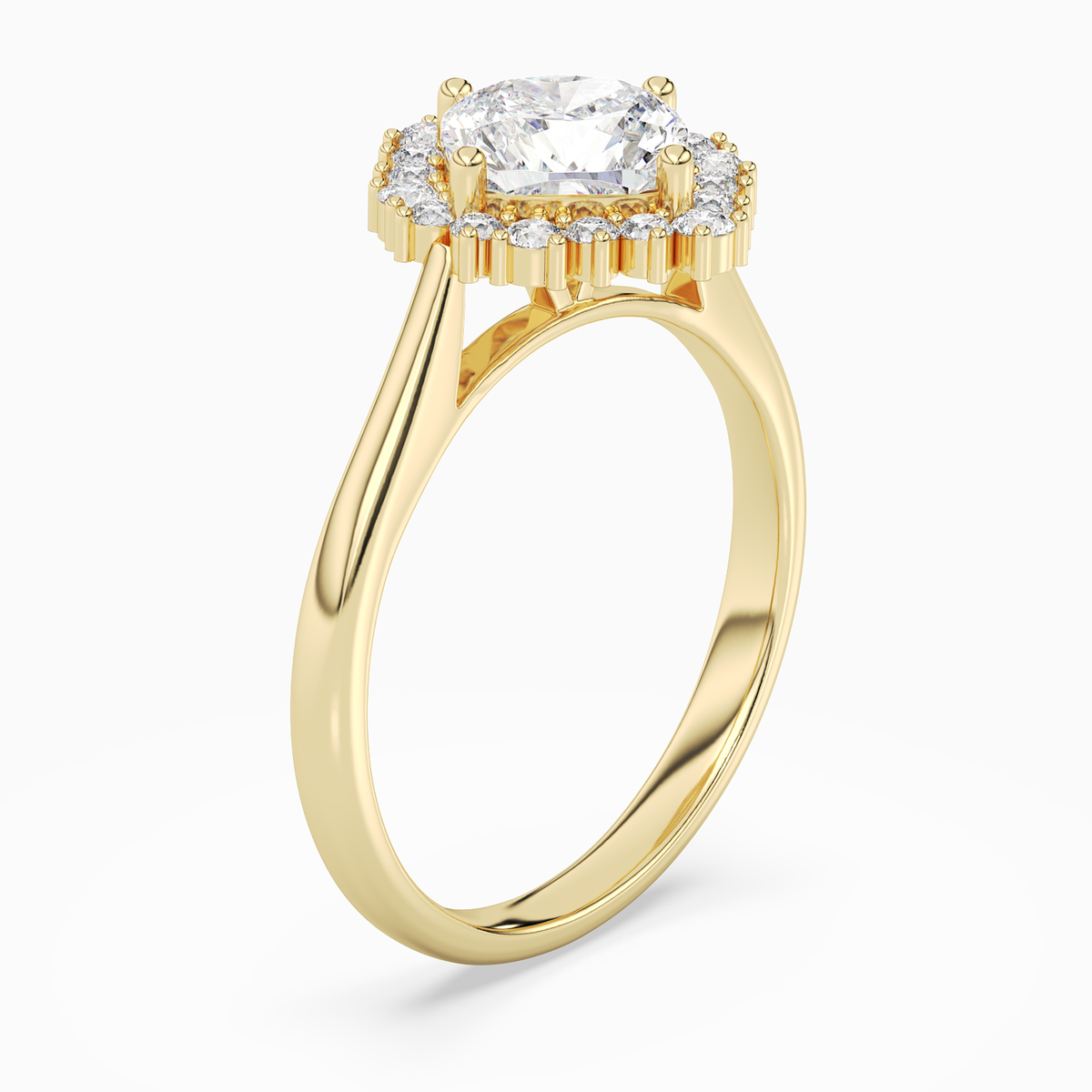
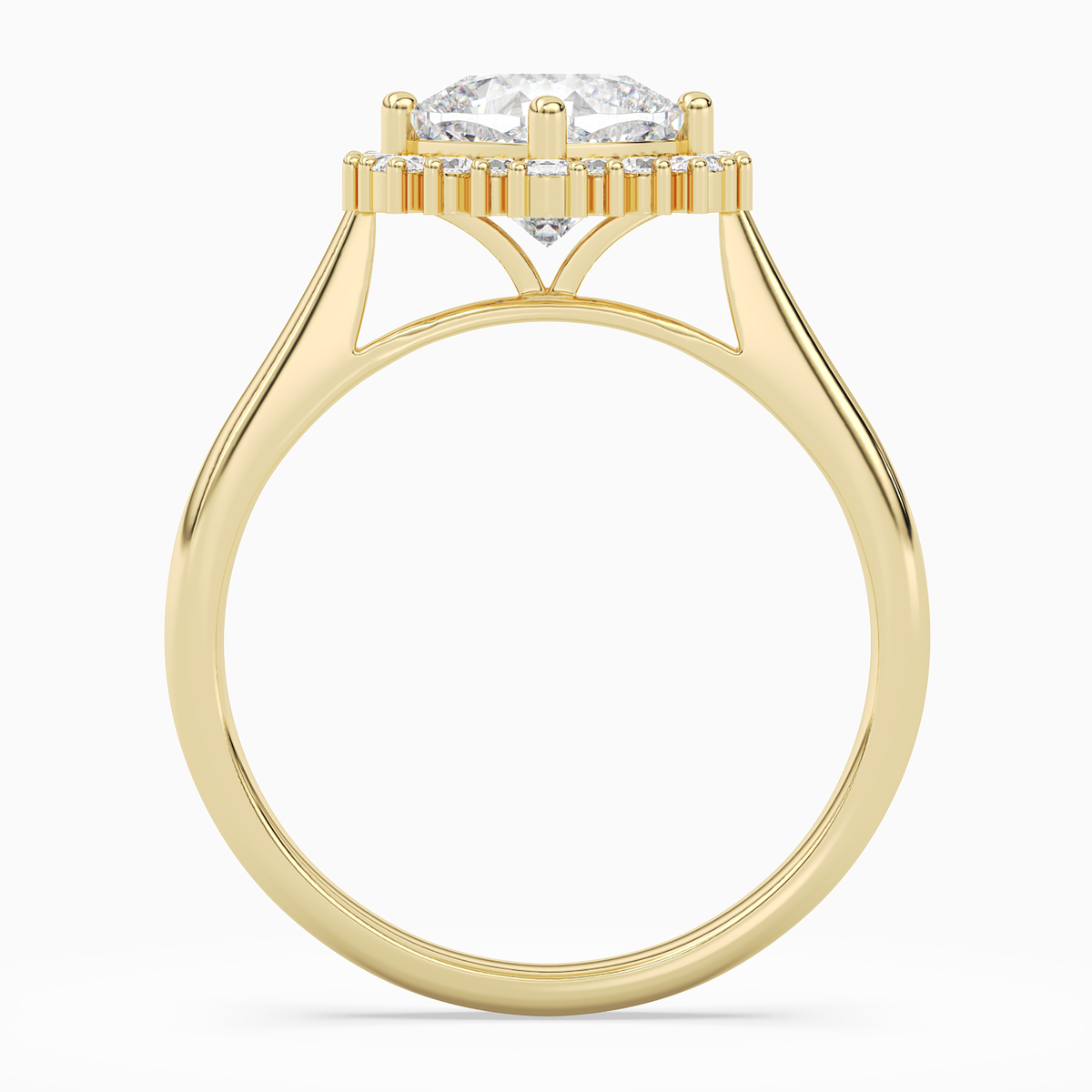
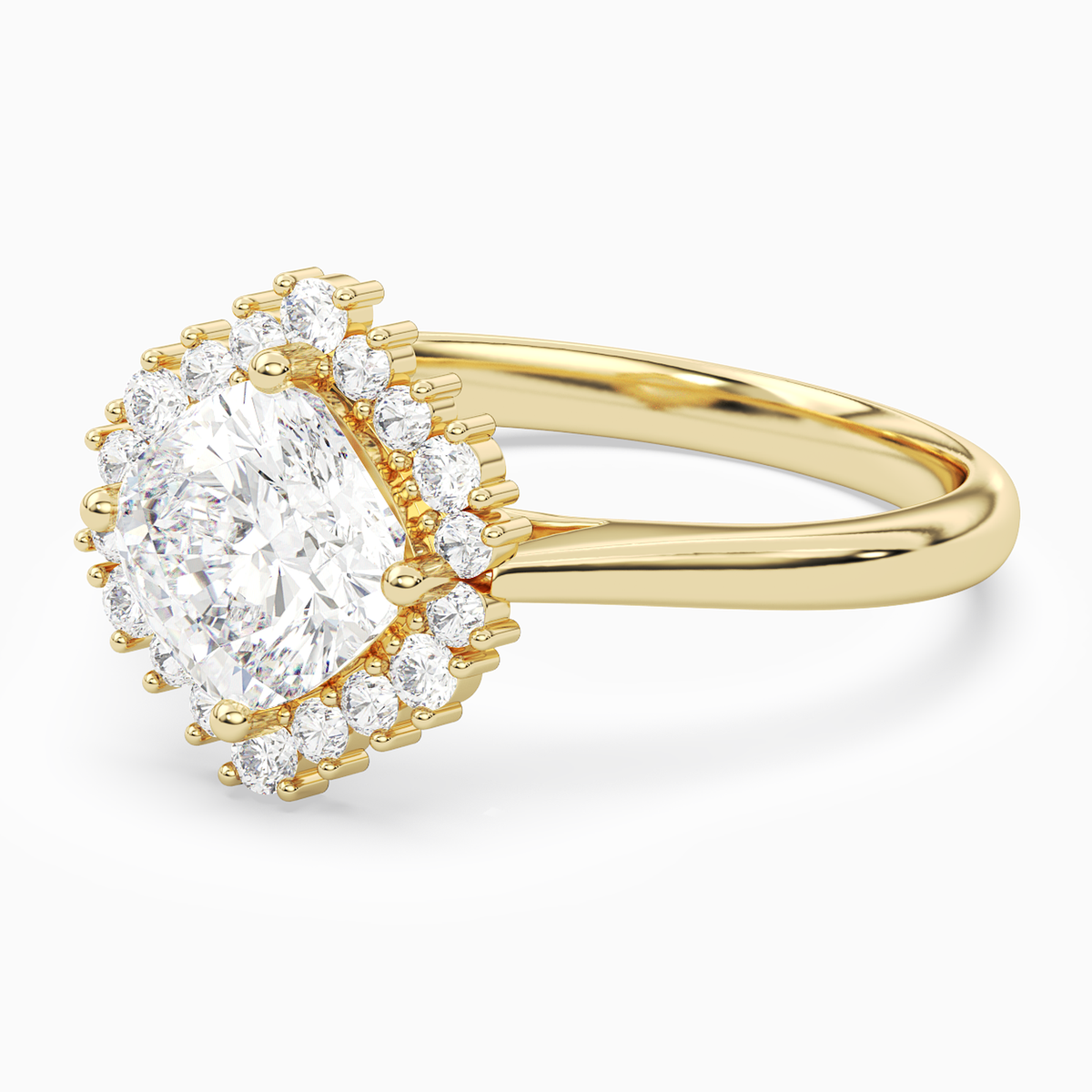
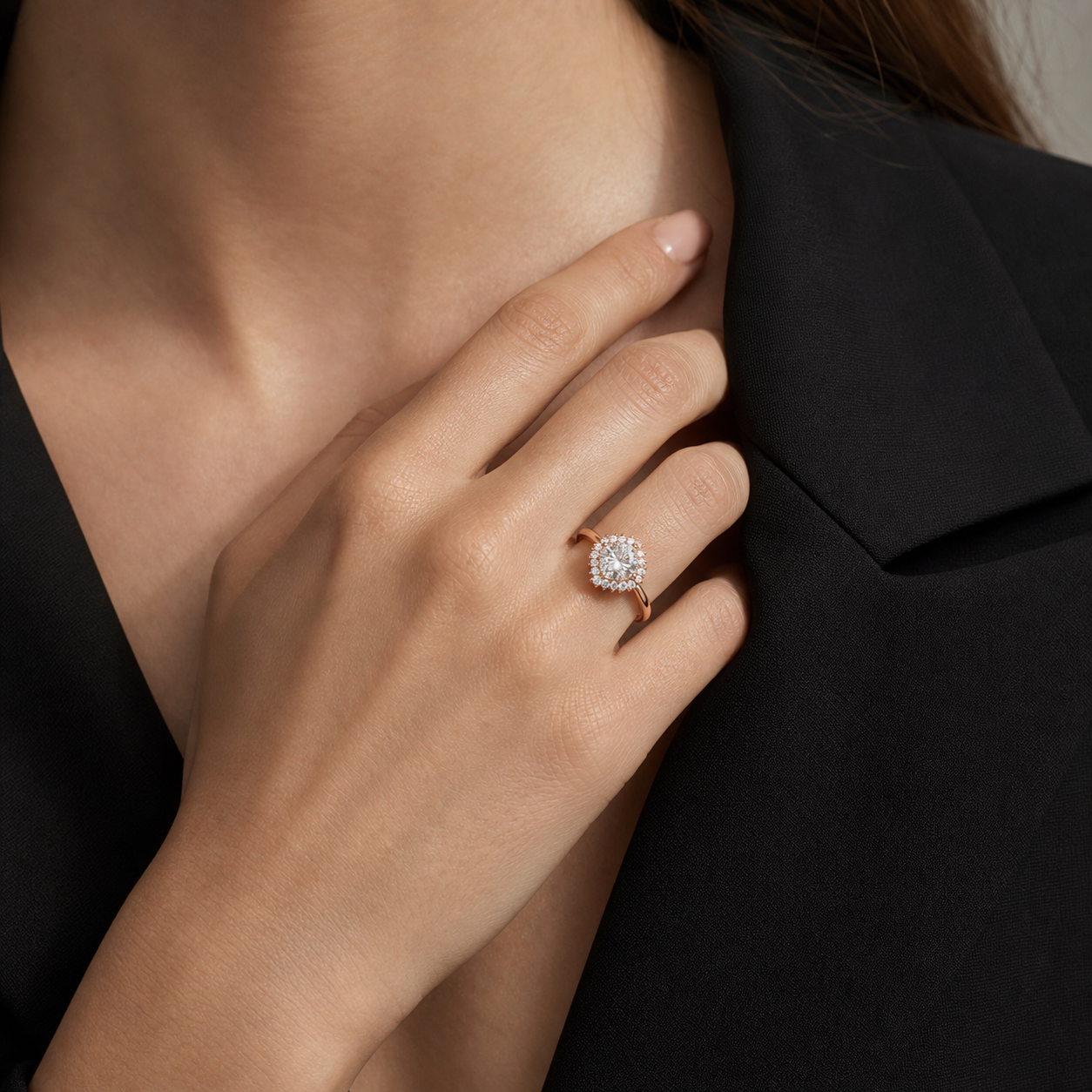
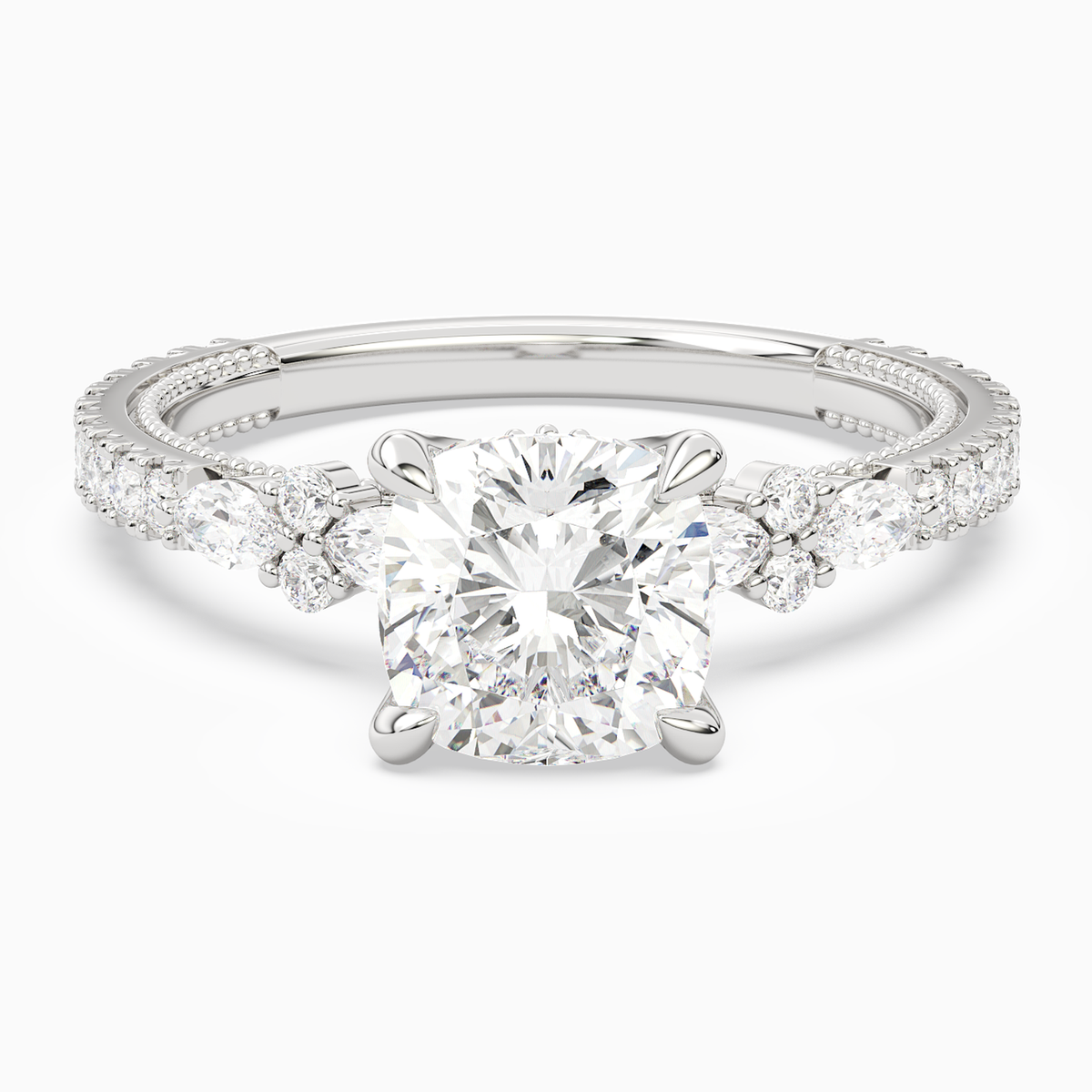
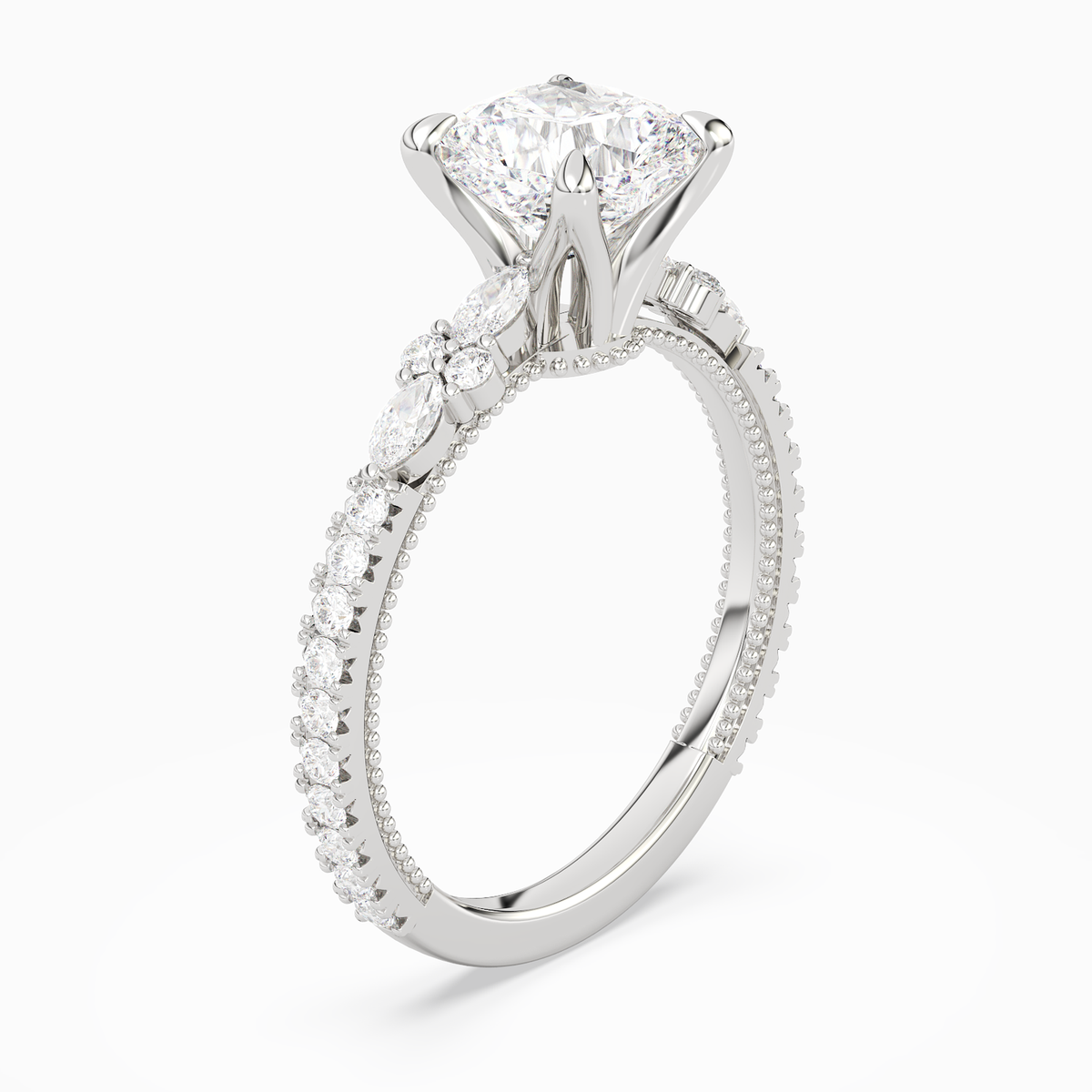
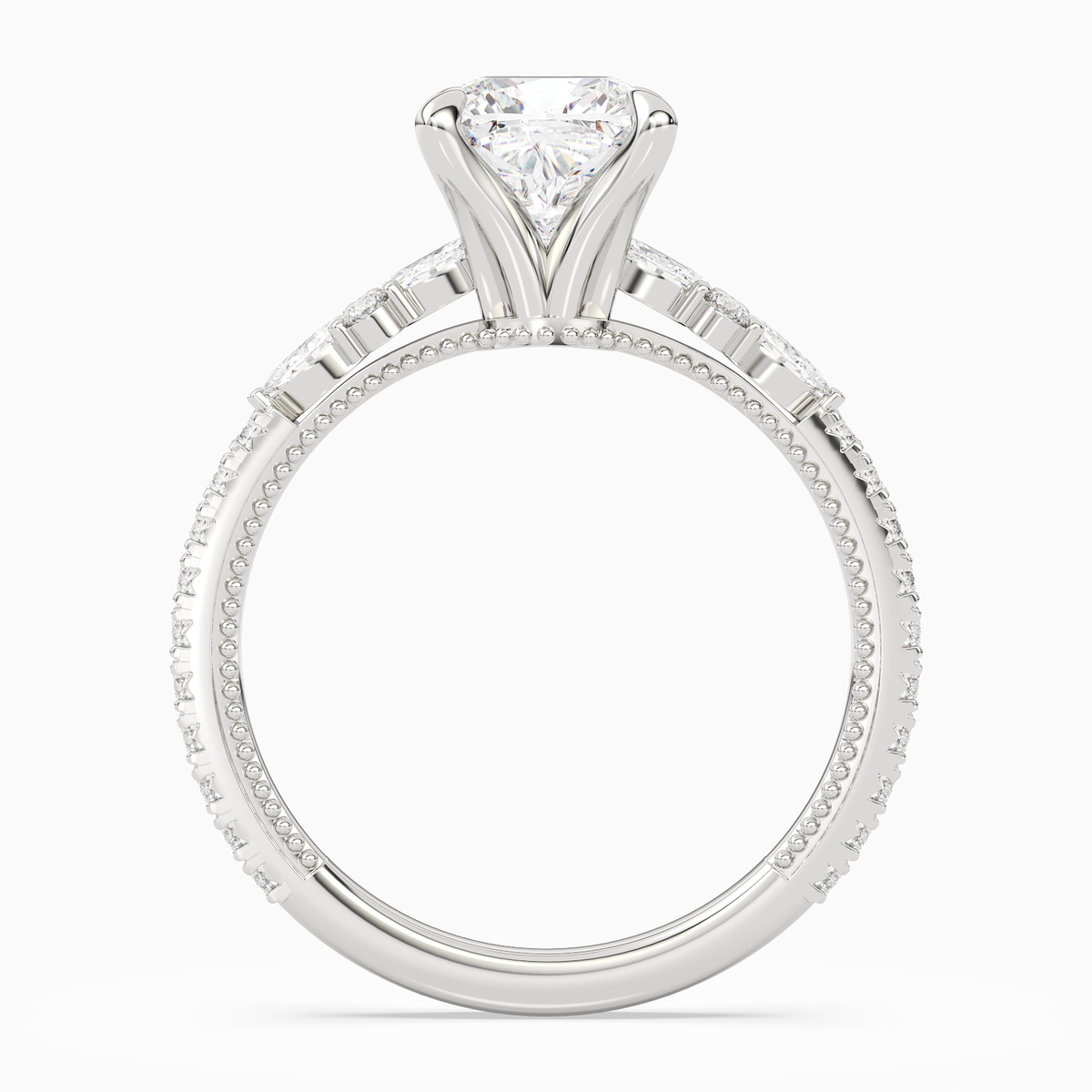
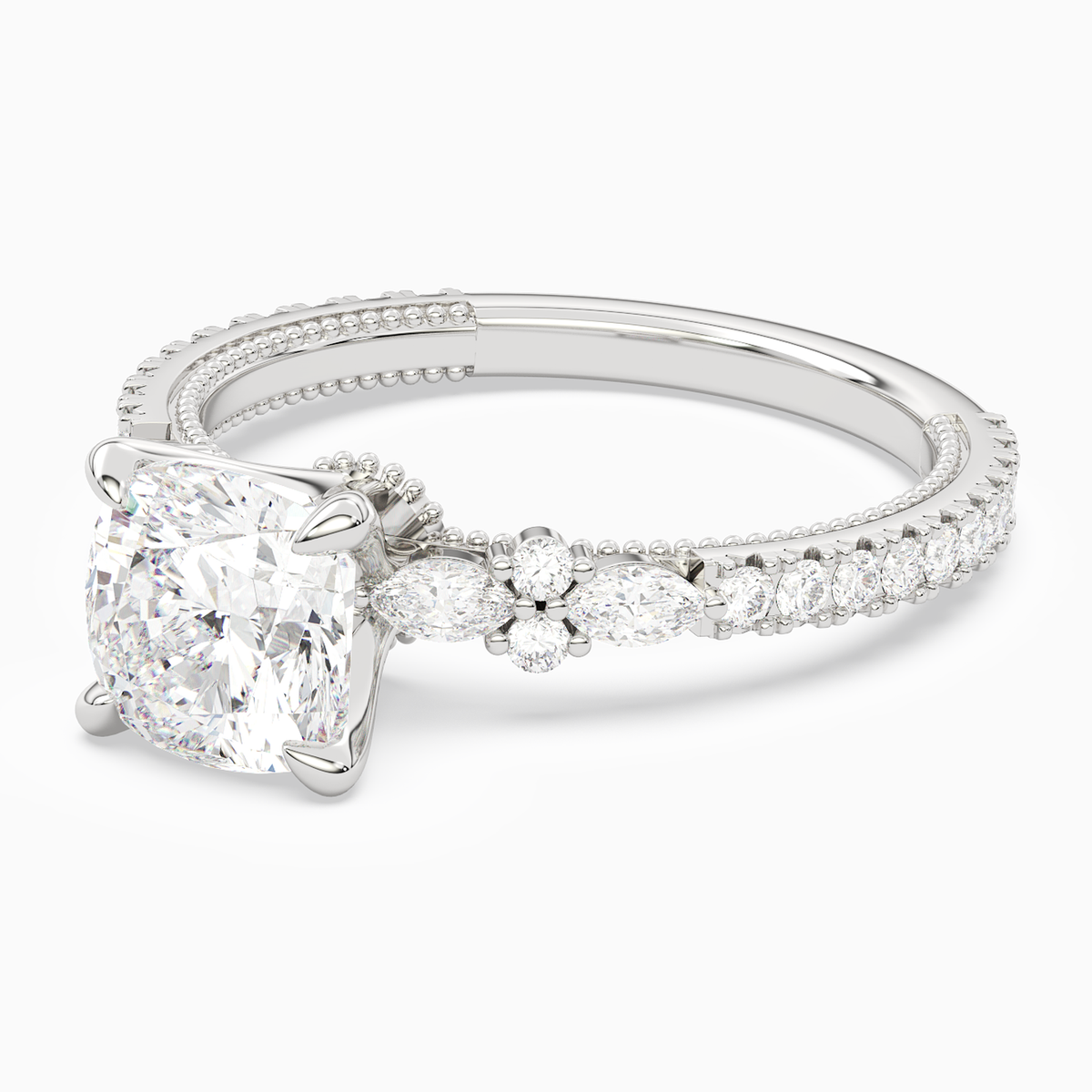
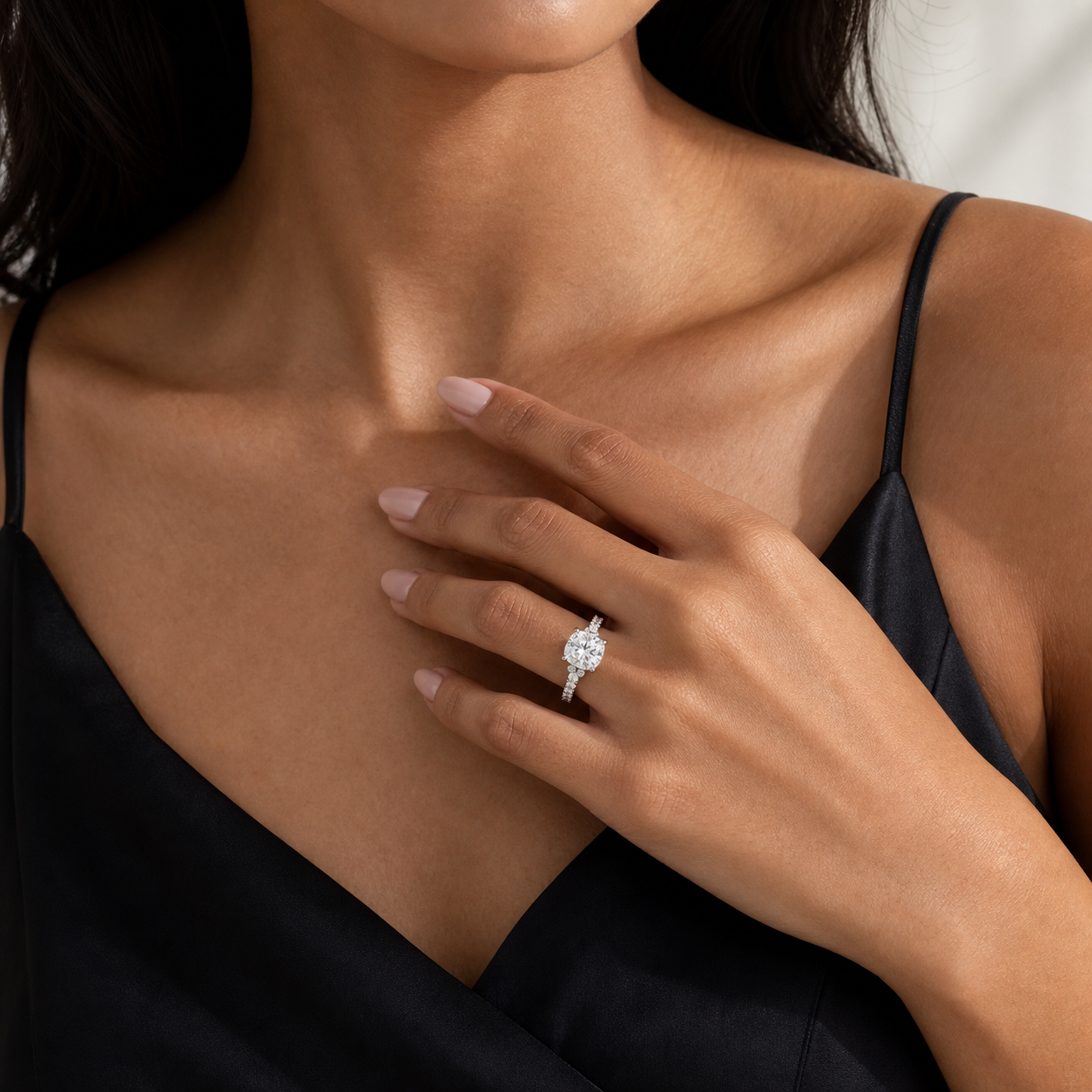


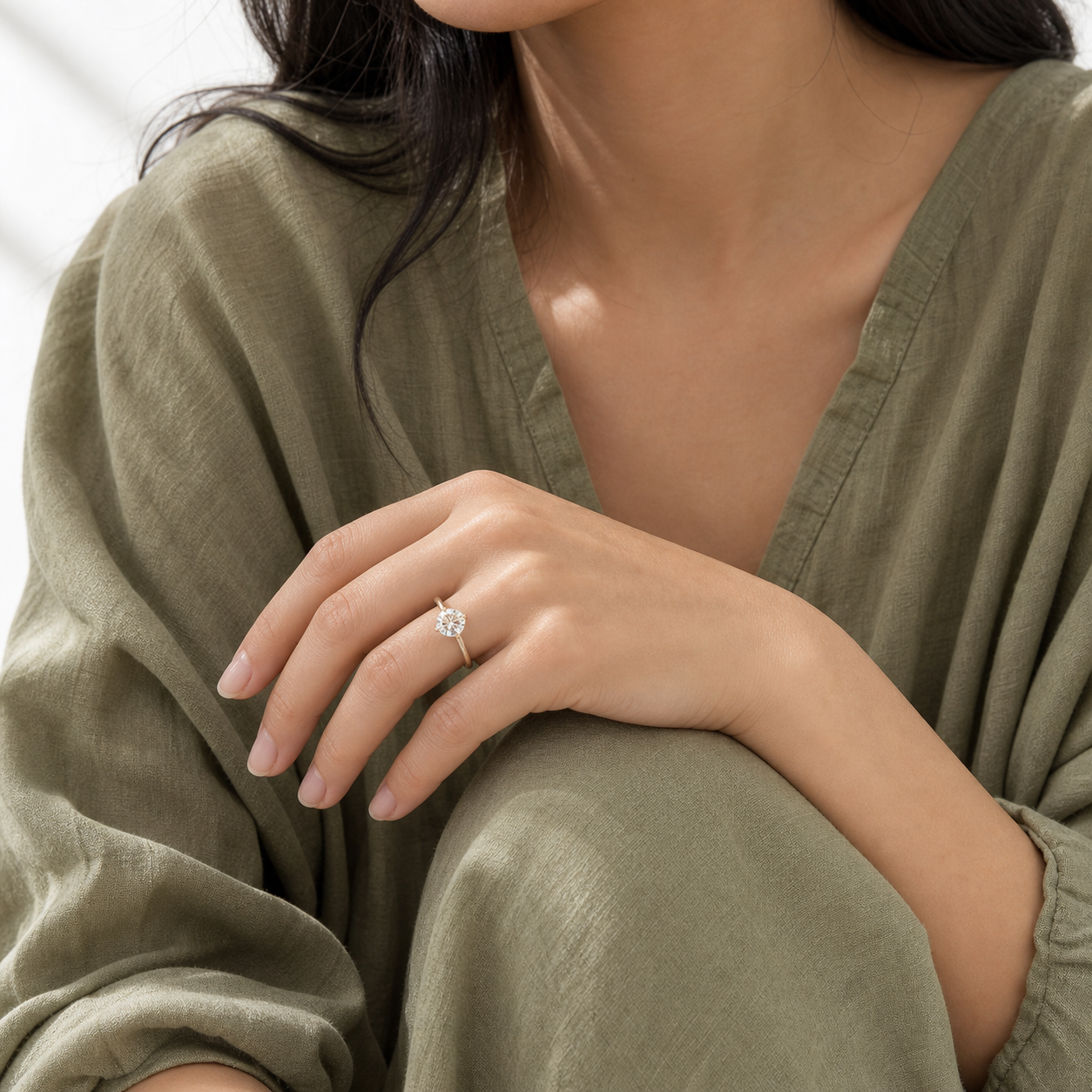
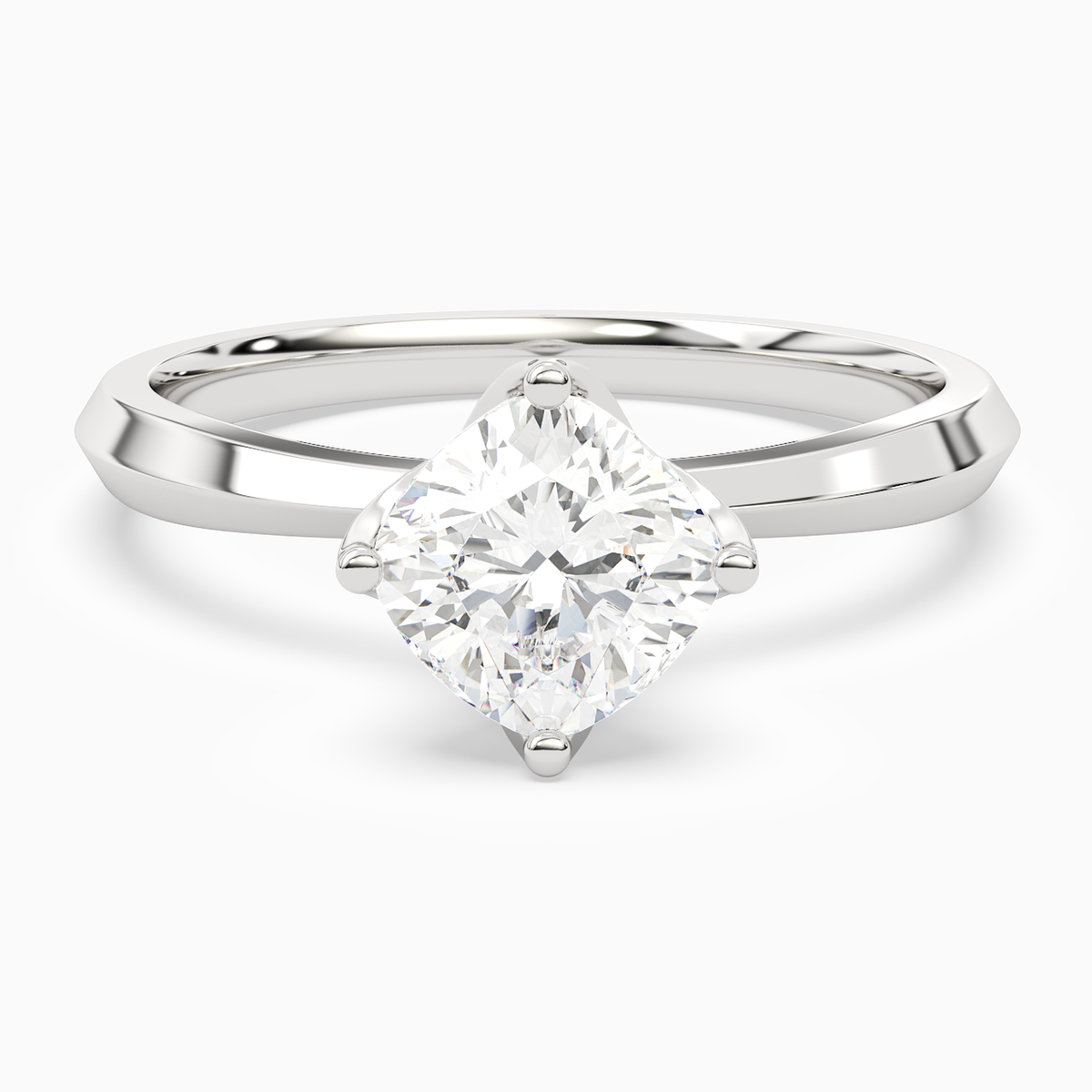
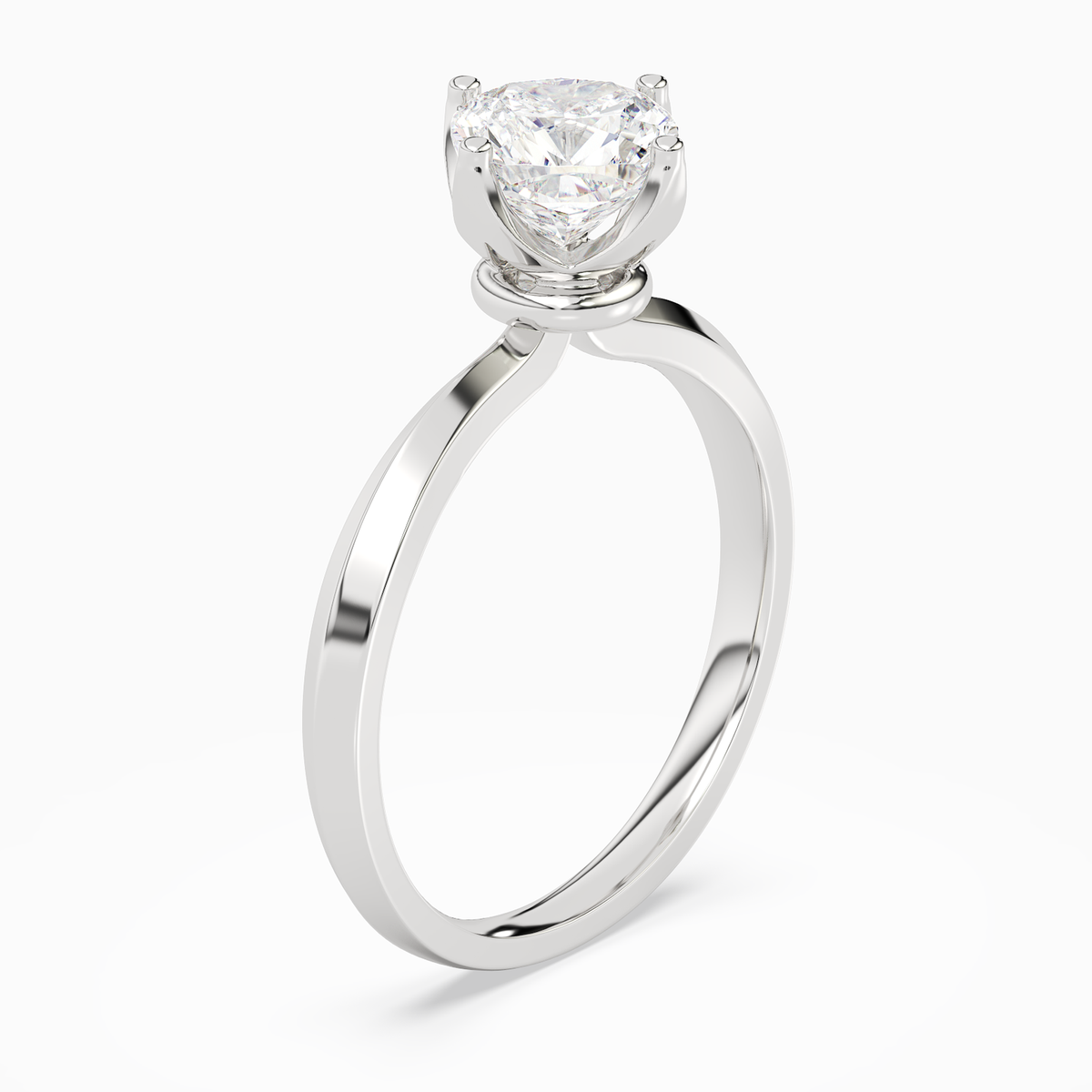

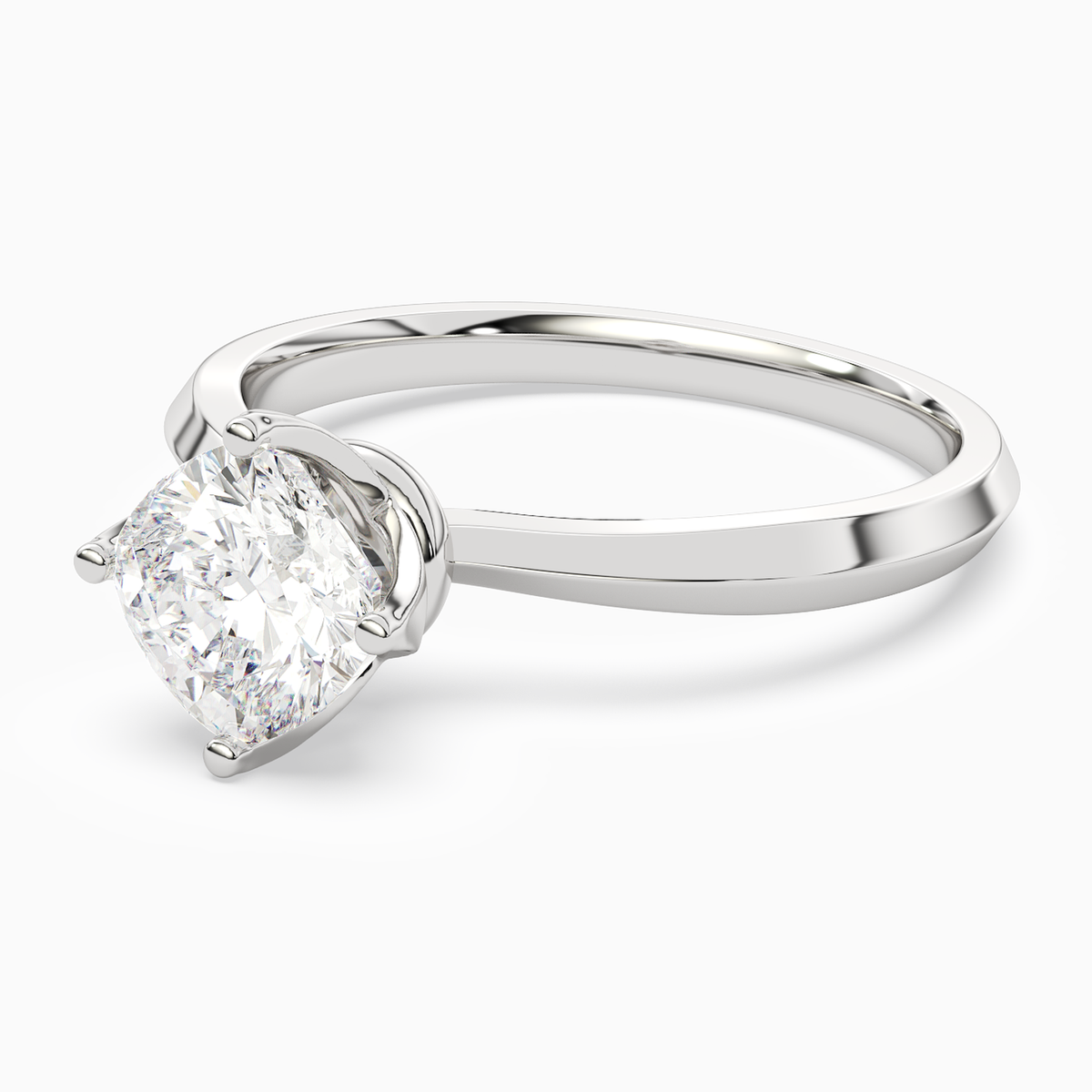
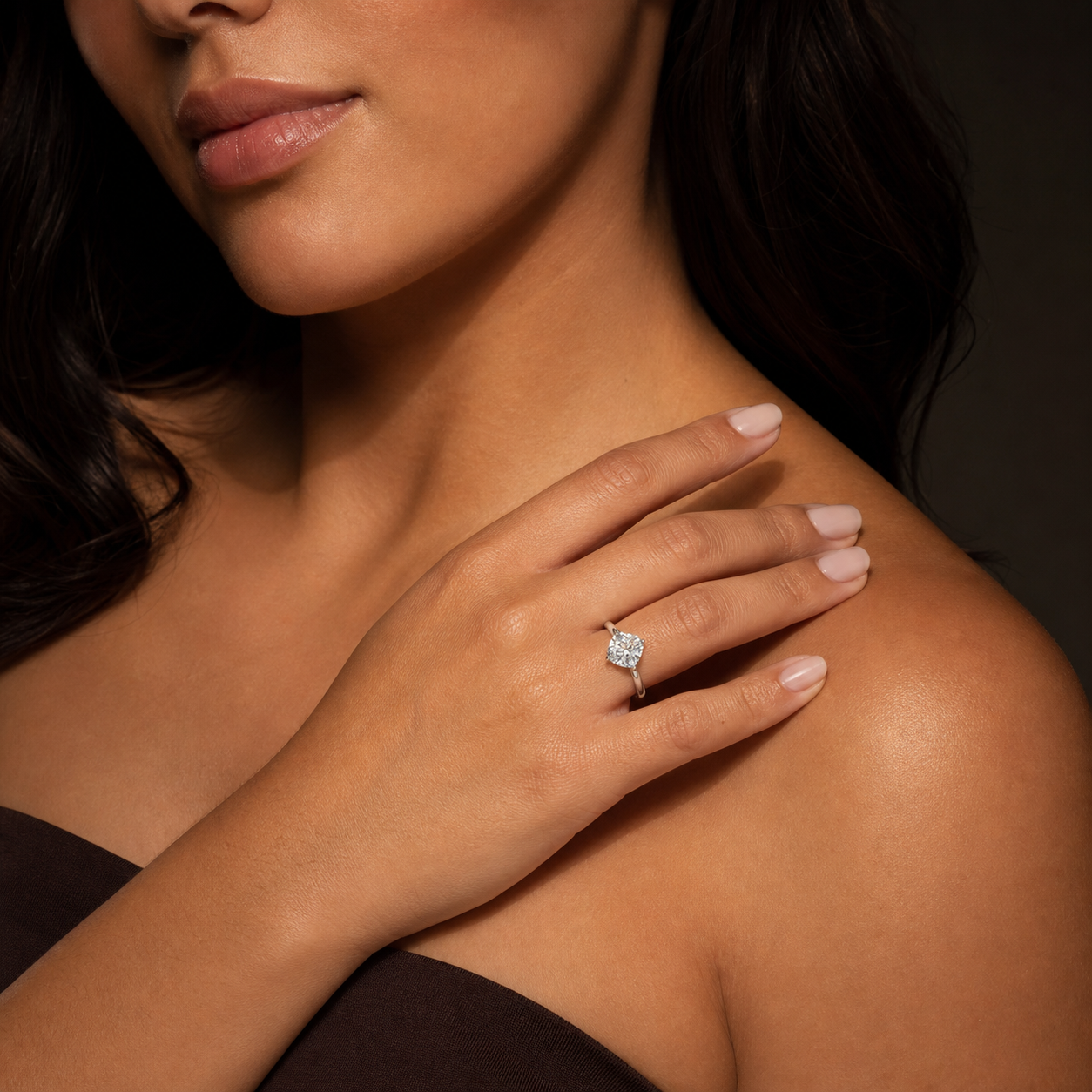
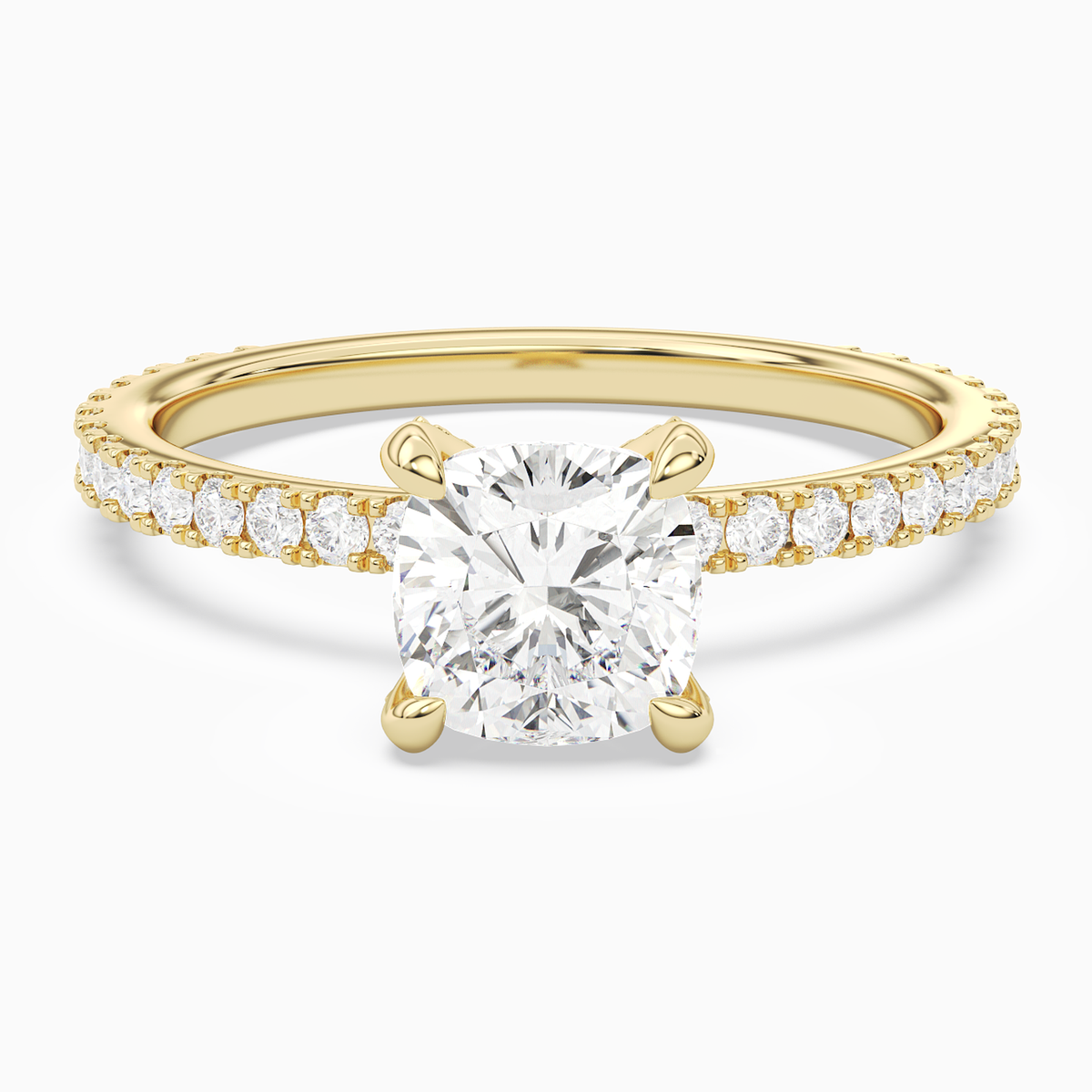
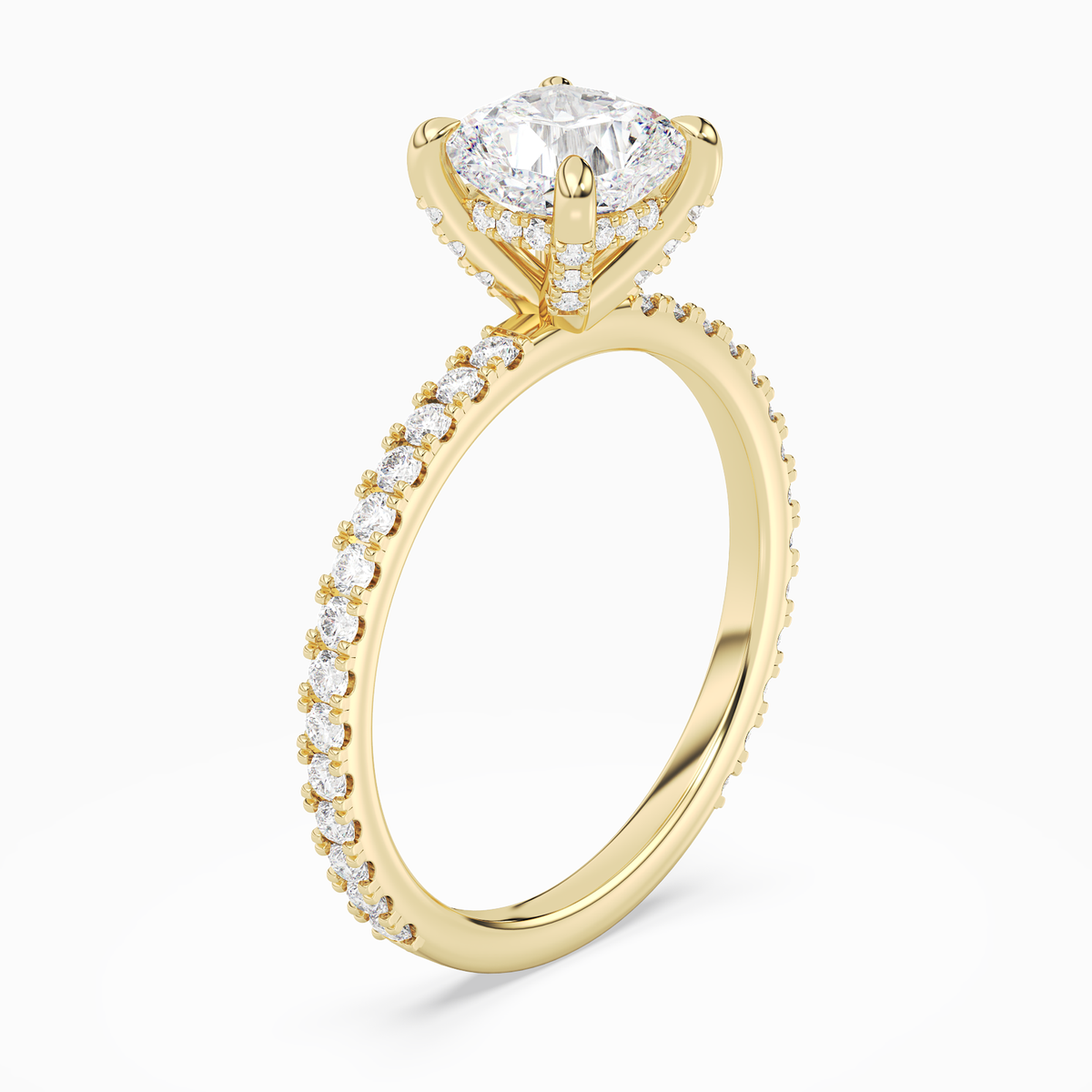
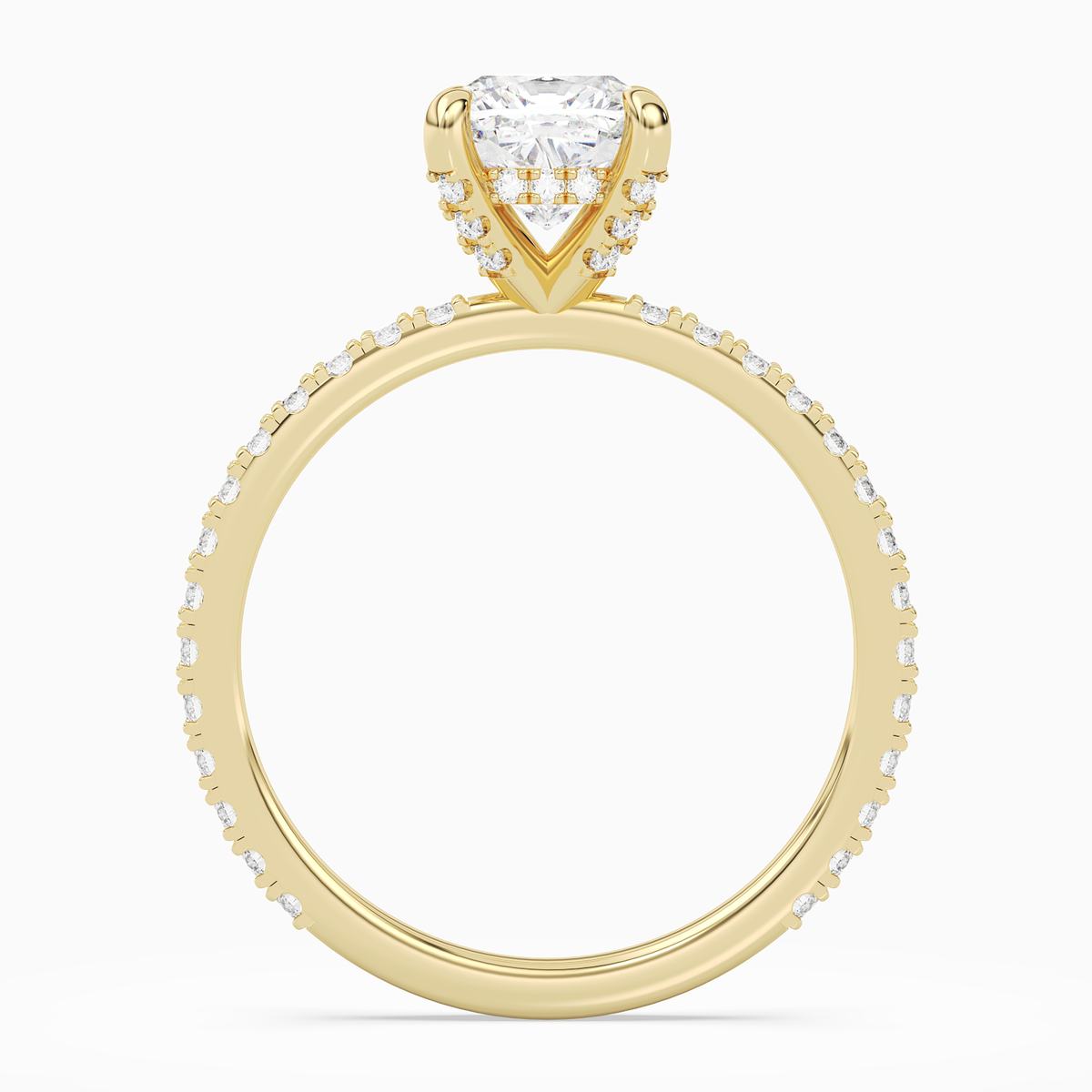
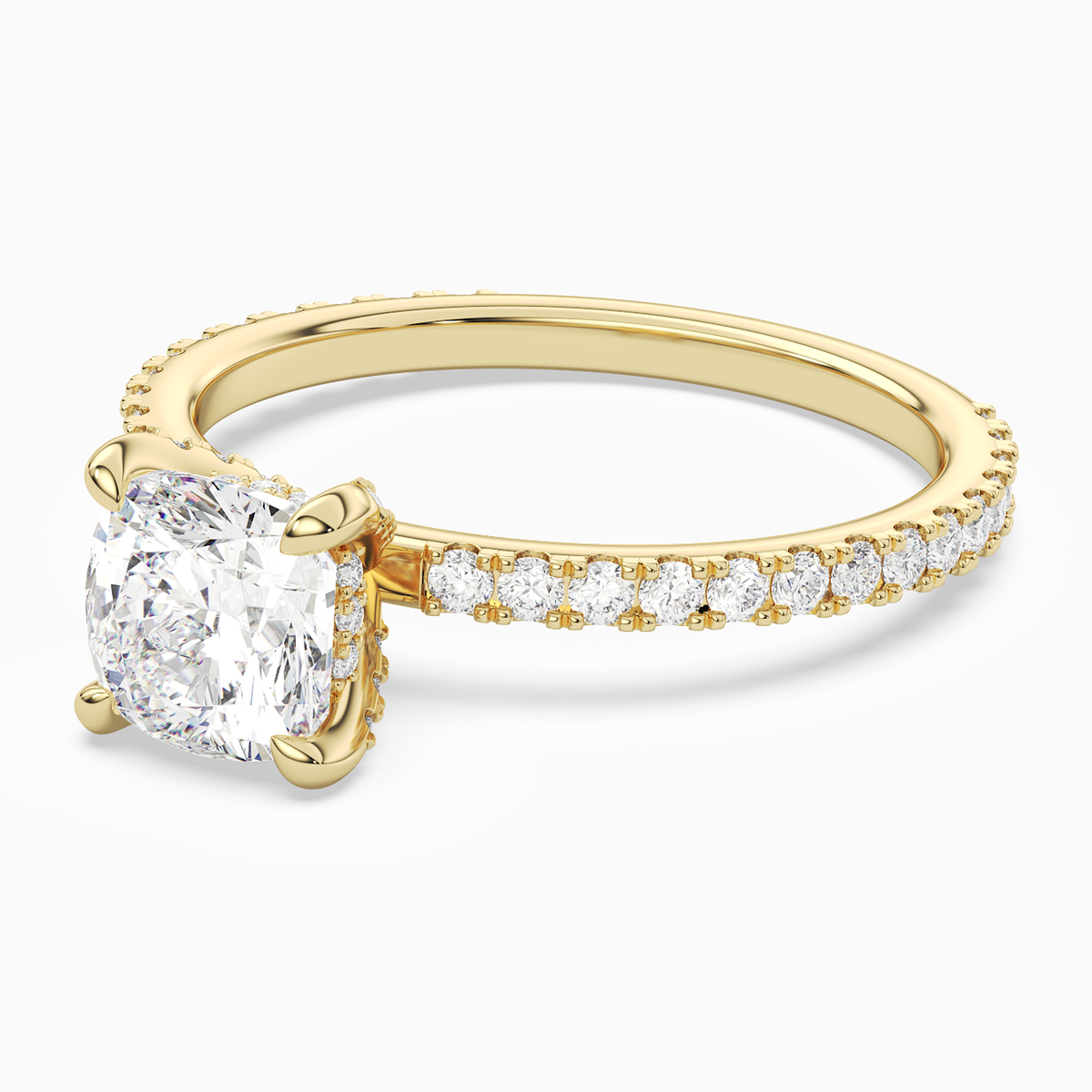
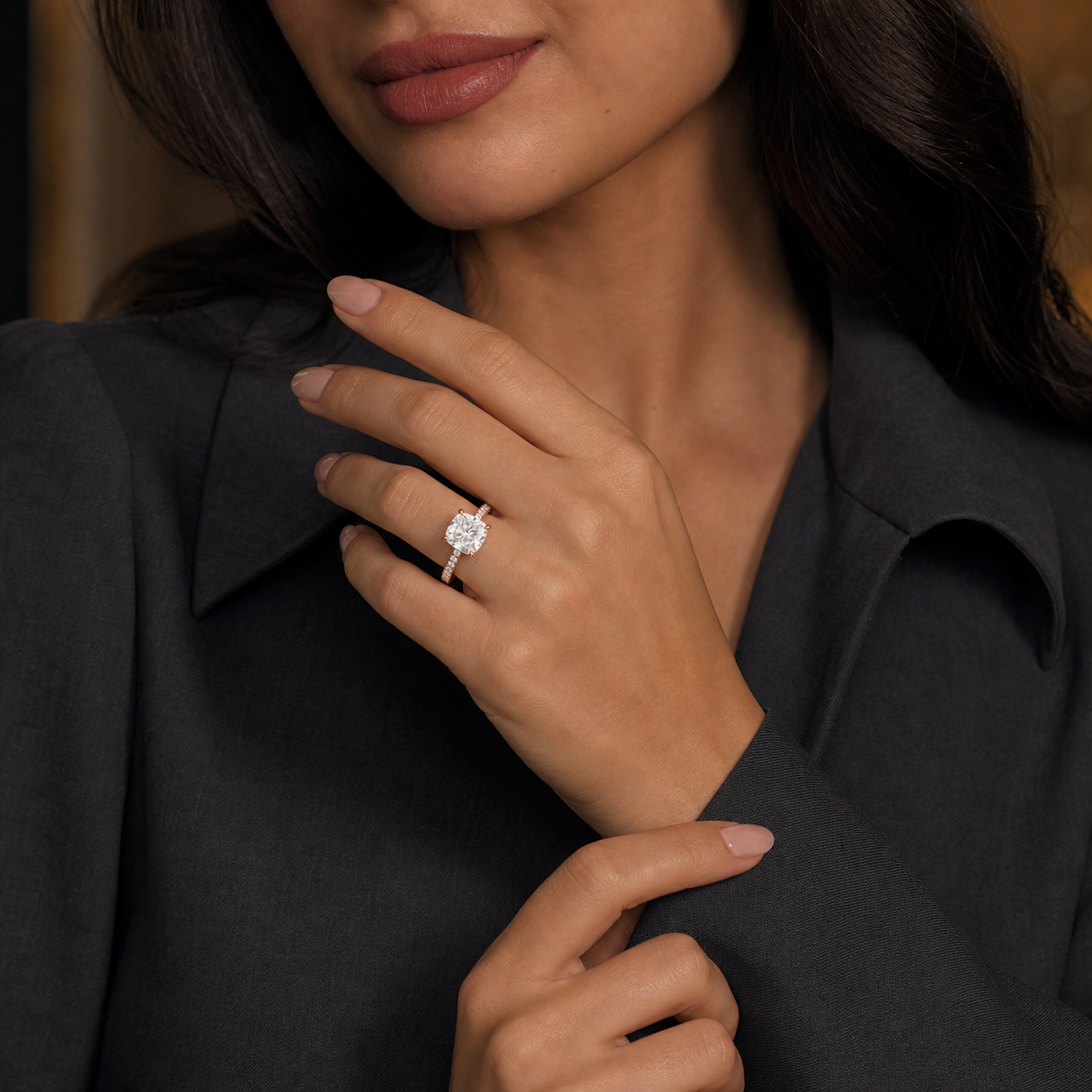
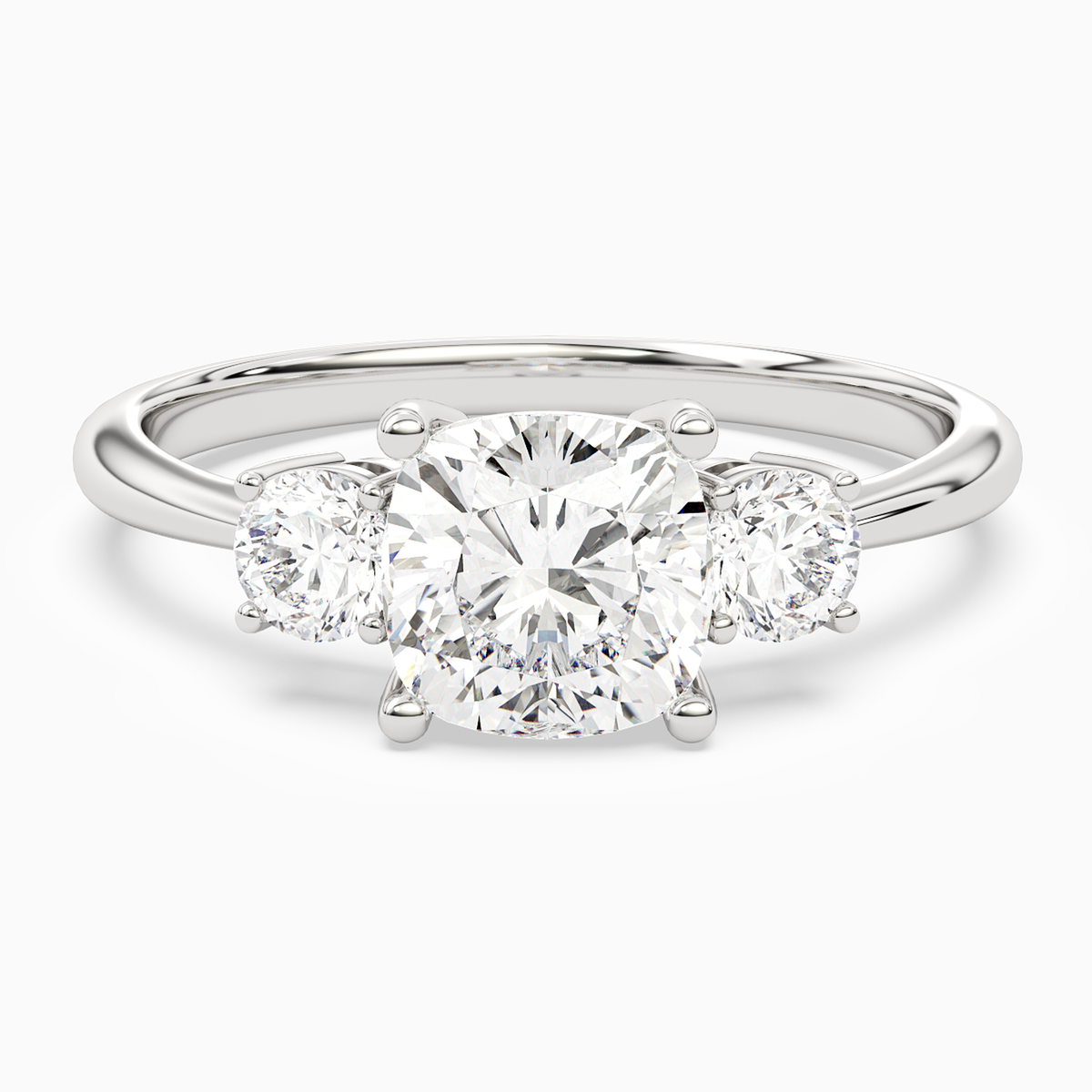
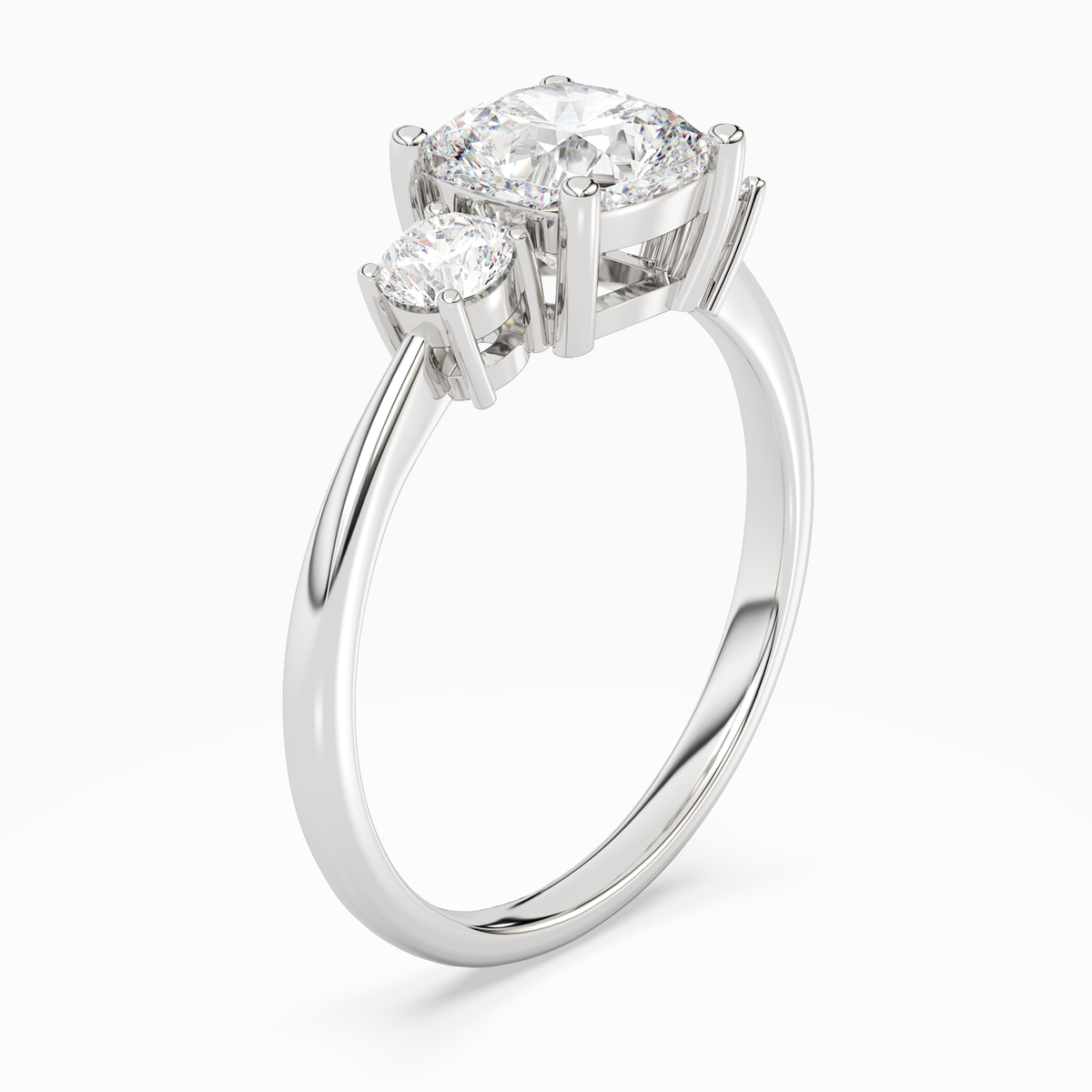
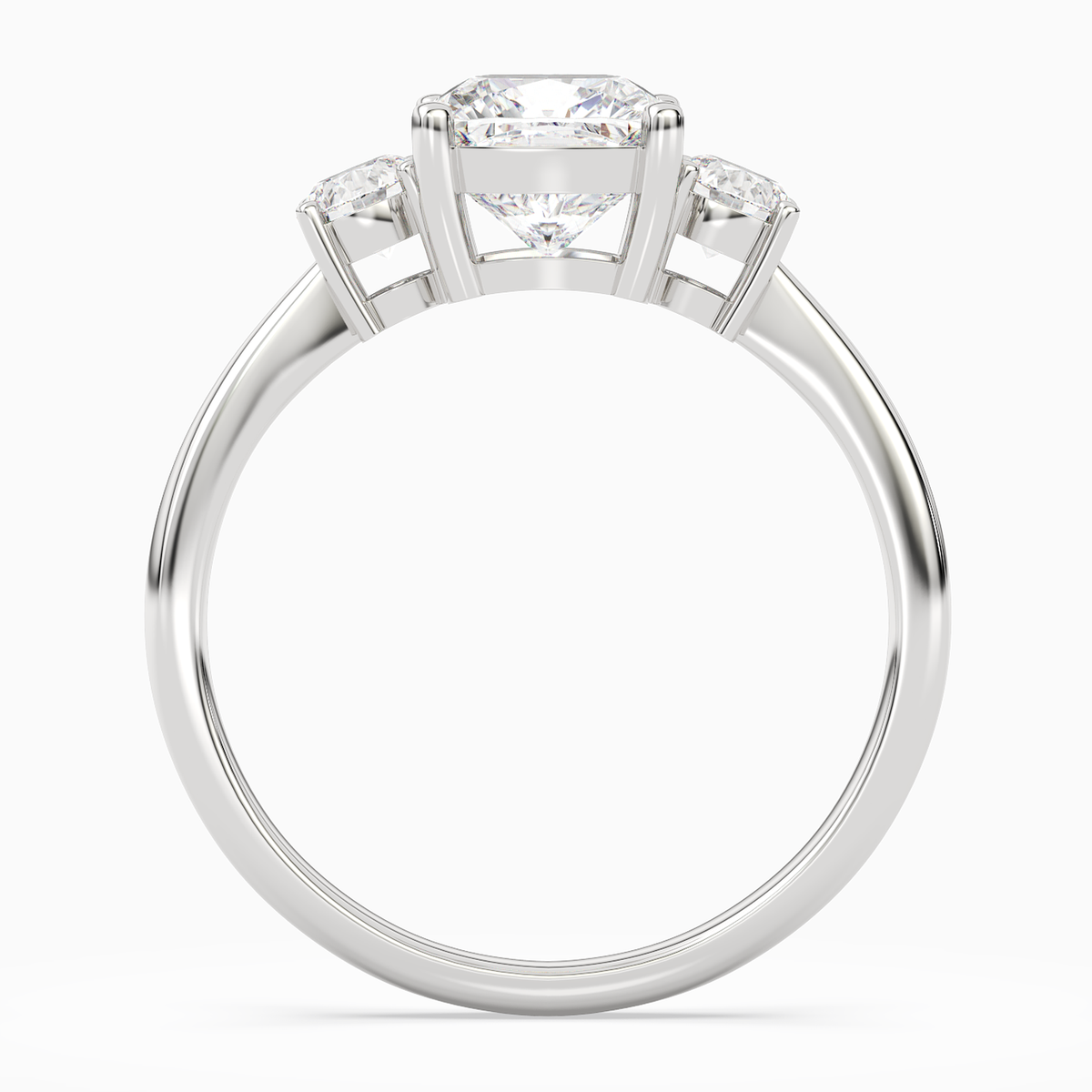
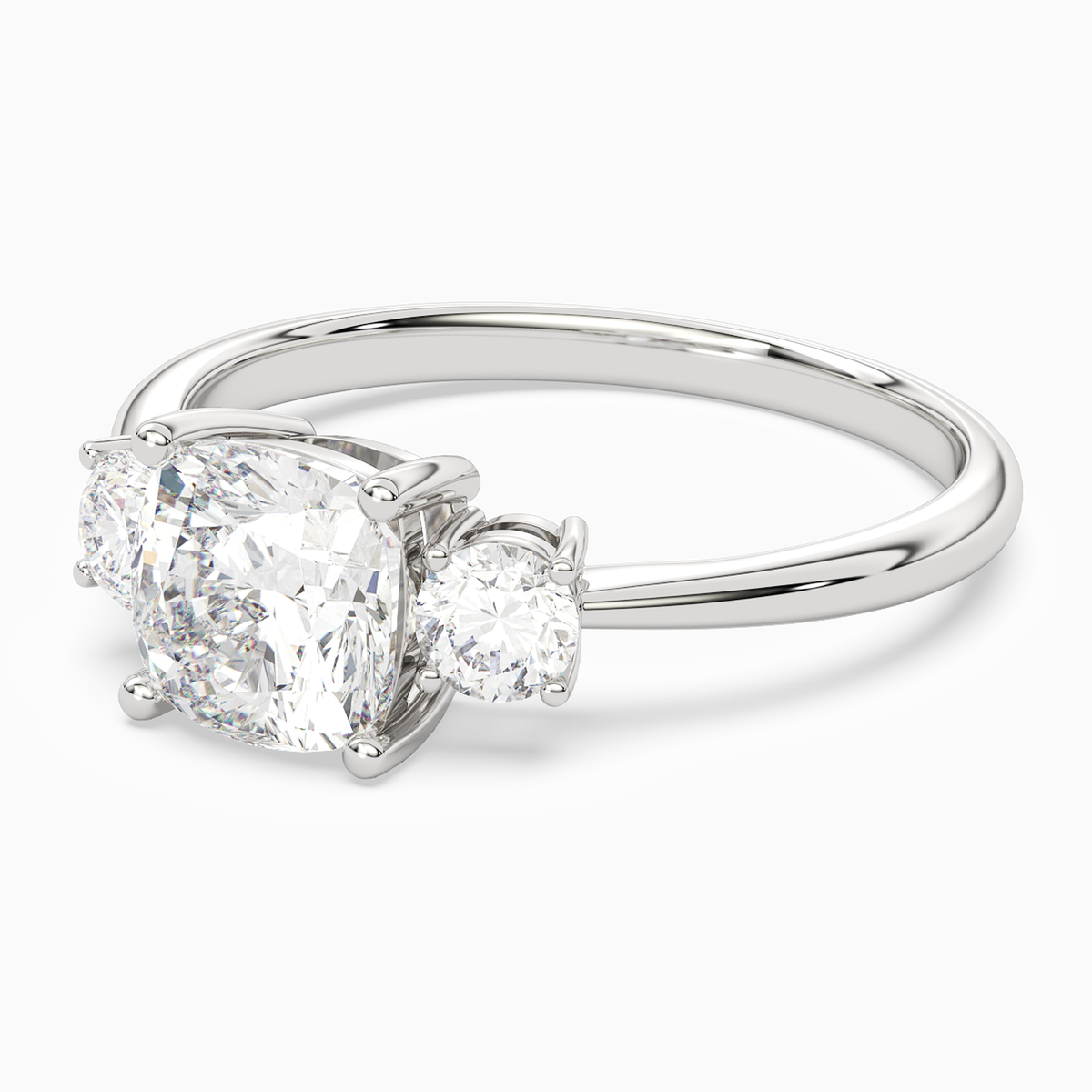
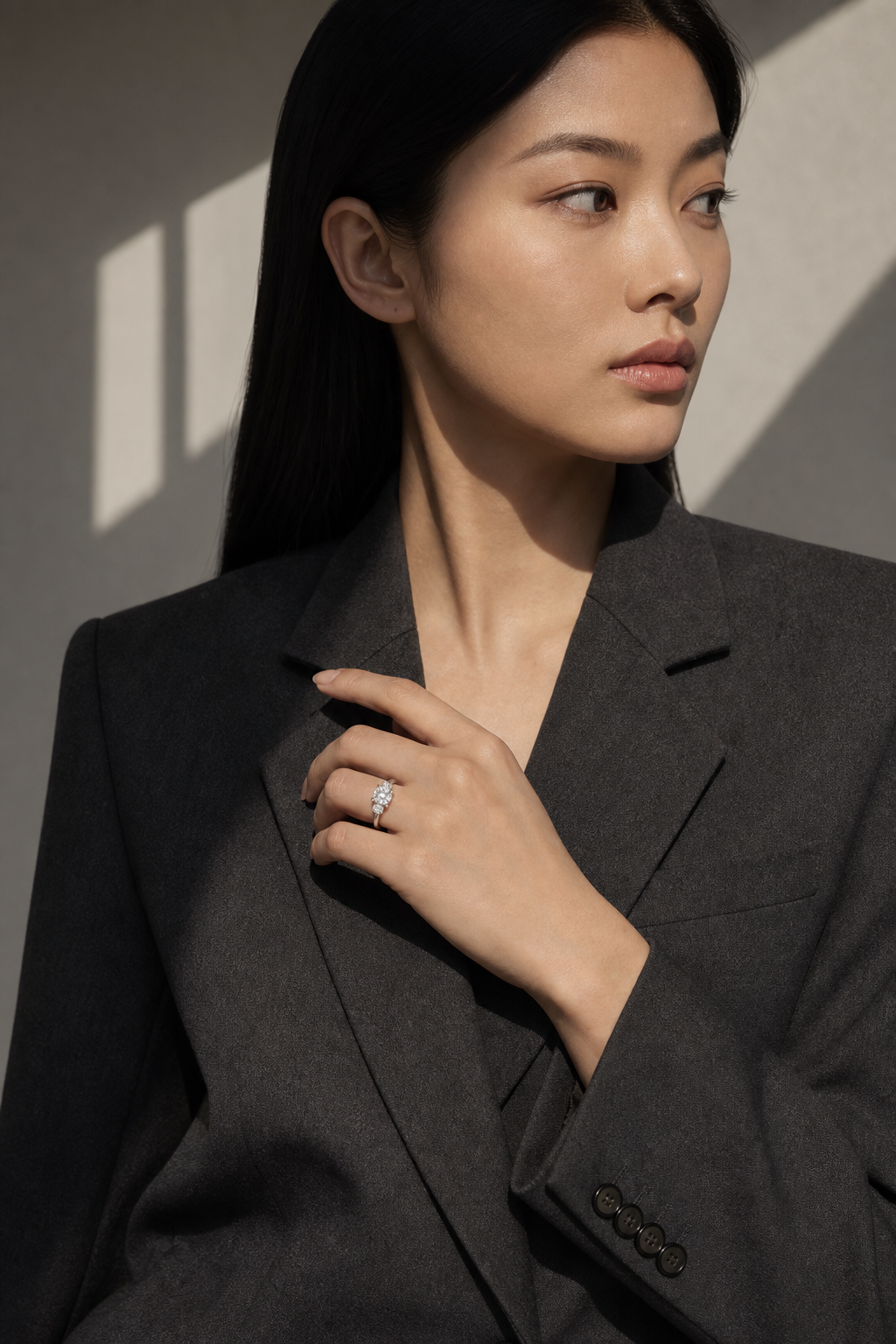
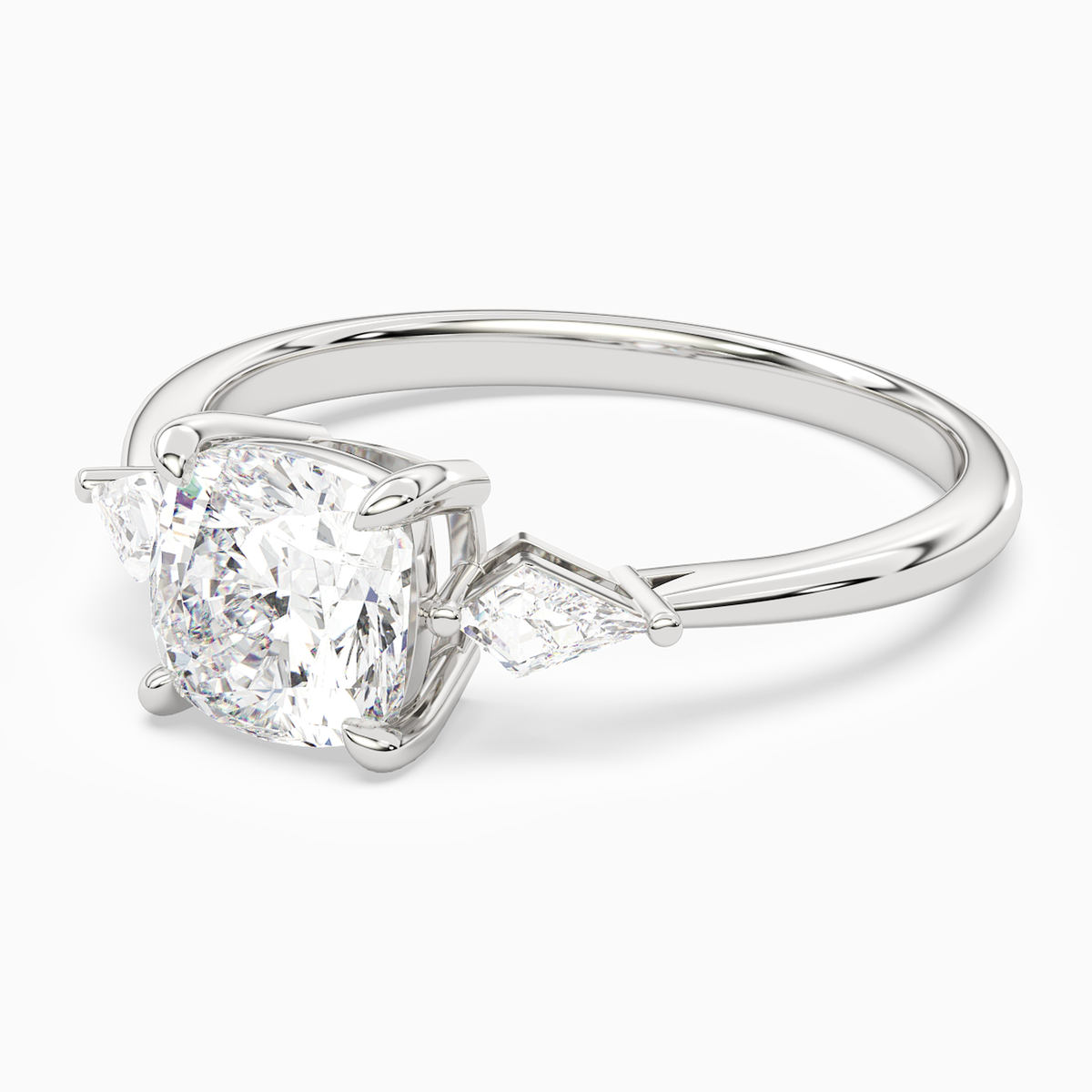
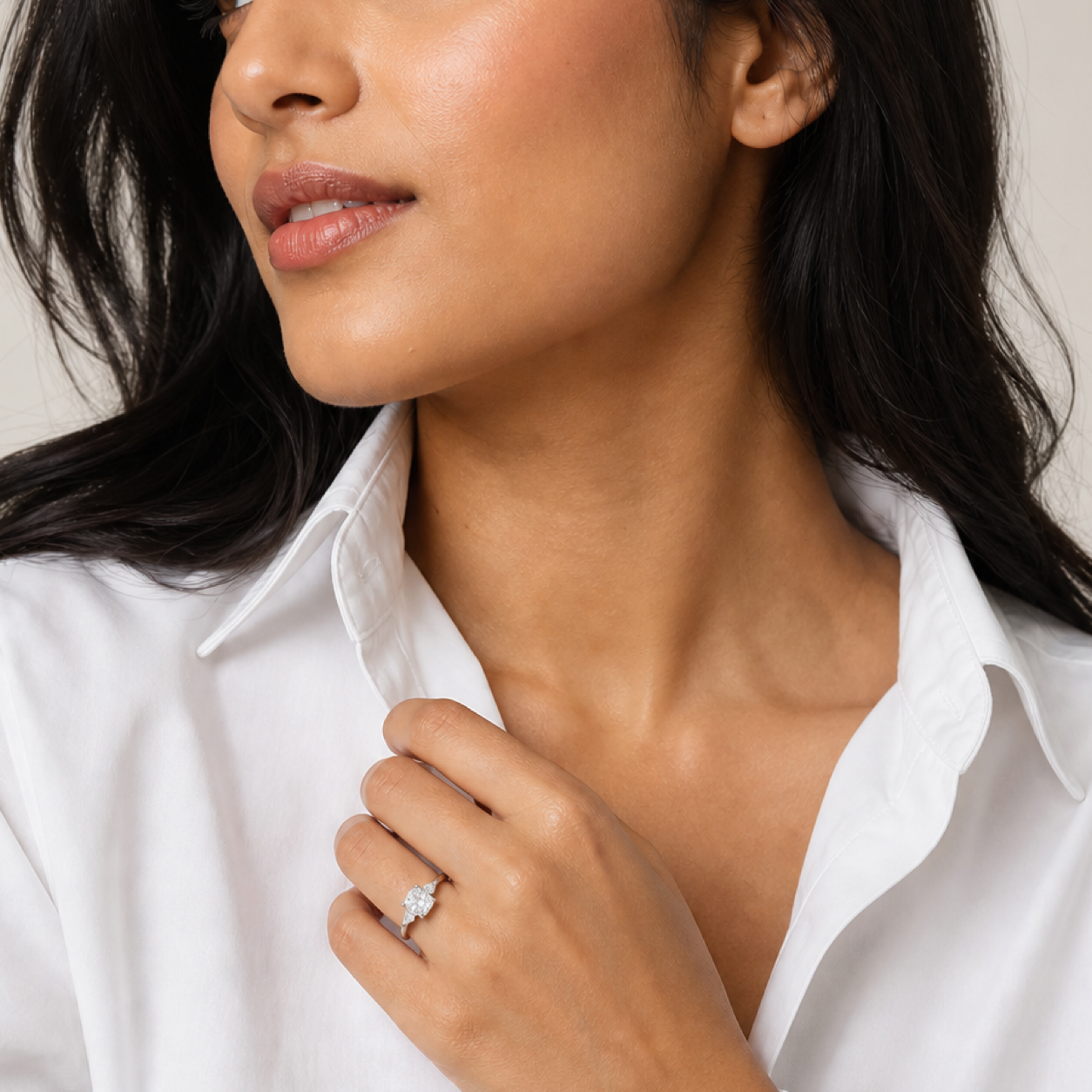
Cushion Diamond Engagement Rings: Soft Geometry, Individual Light
A cushion diamond holds structure and softness in the same outline. Its form may be square, gently rectangular, or distinctly elongated, with rounded corners and shoulders that can feel full, compact, or more open. Within that perimeter, different facet arrangements create different scales of light. Cushion is therefore not one fixed look, but a family of related decisions.
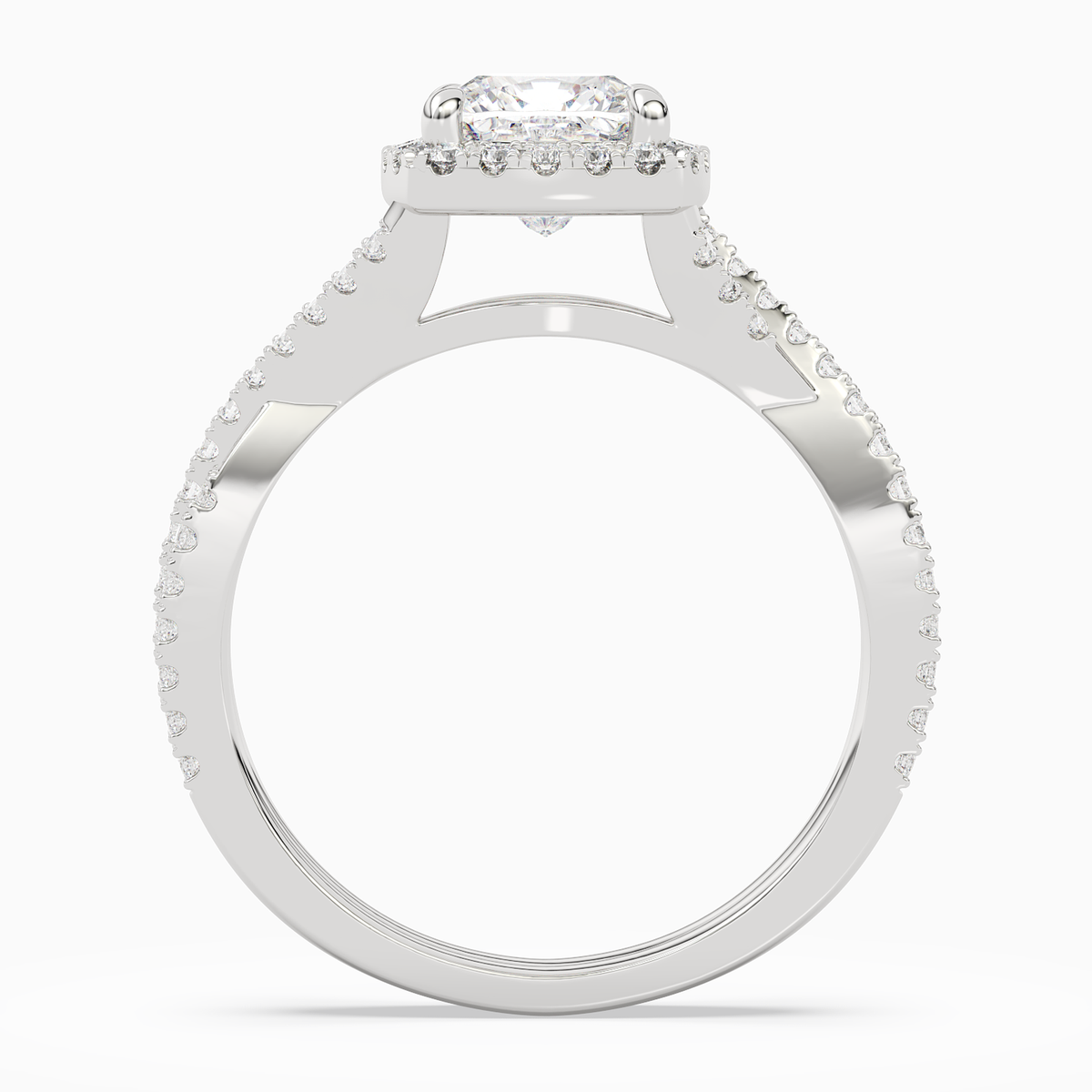
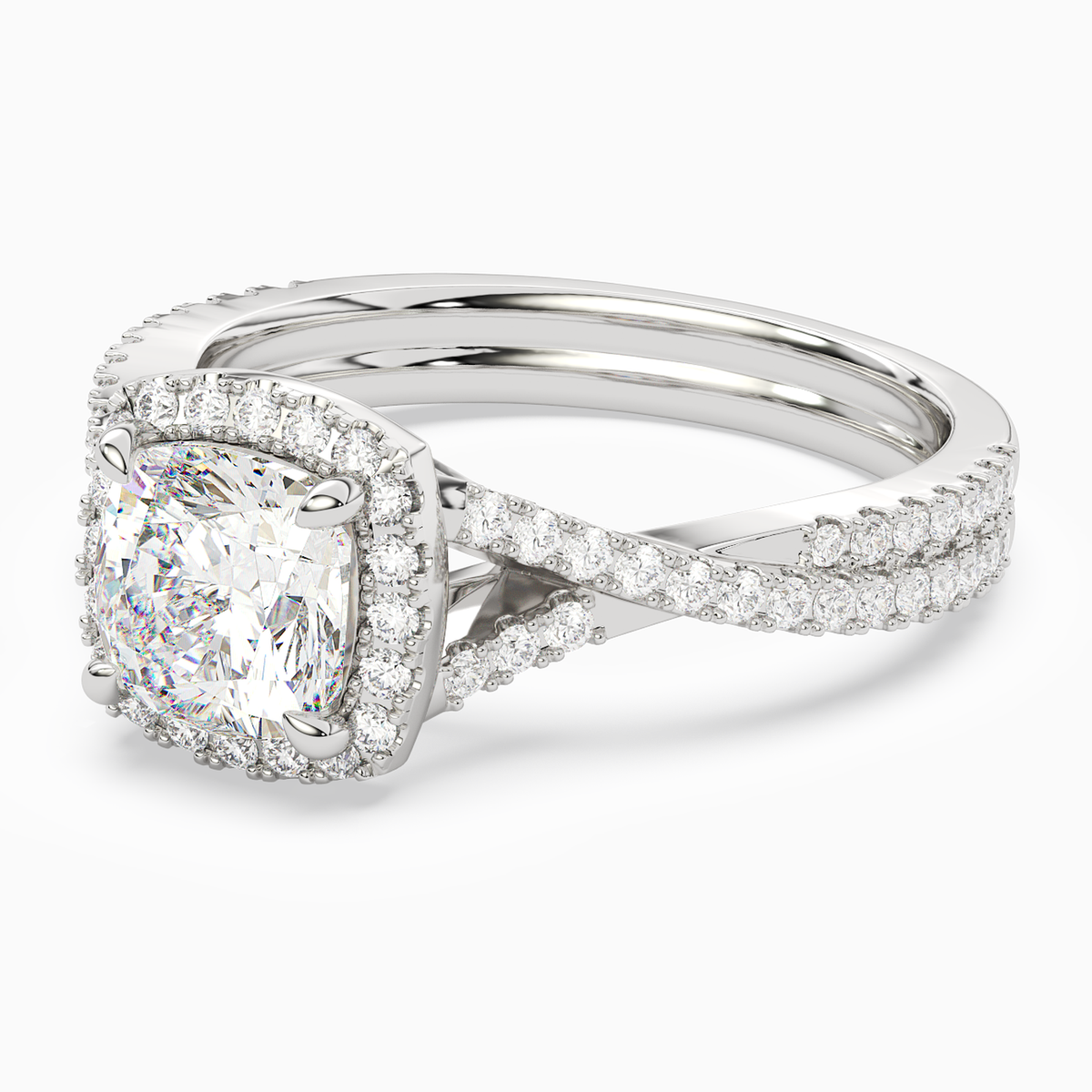
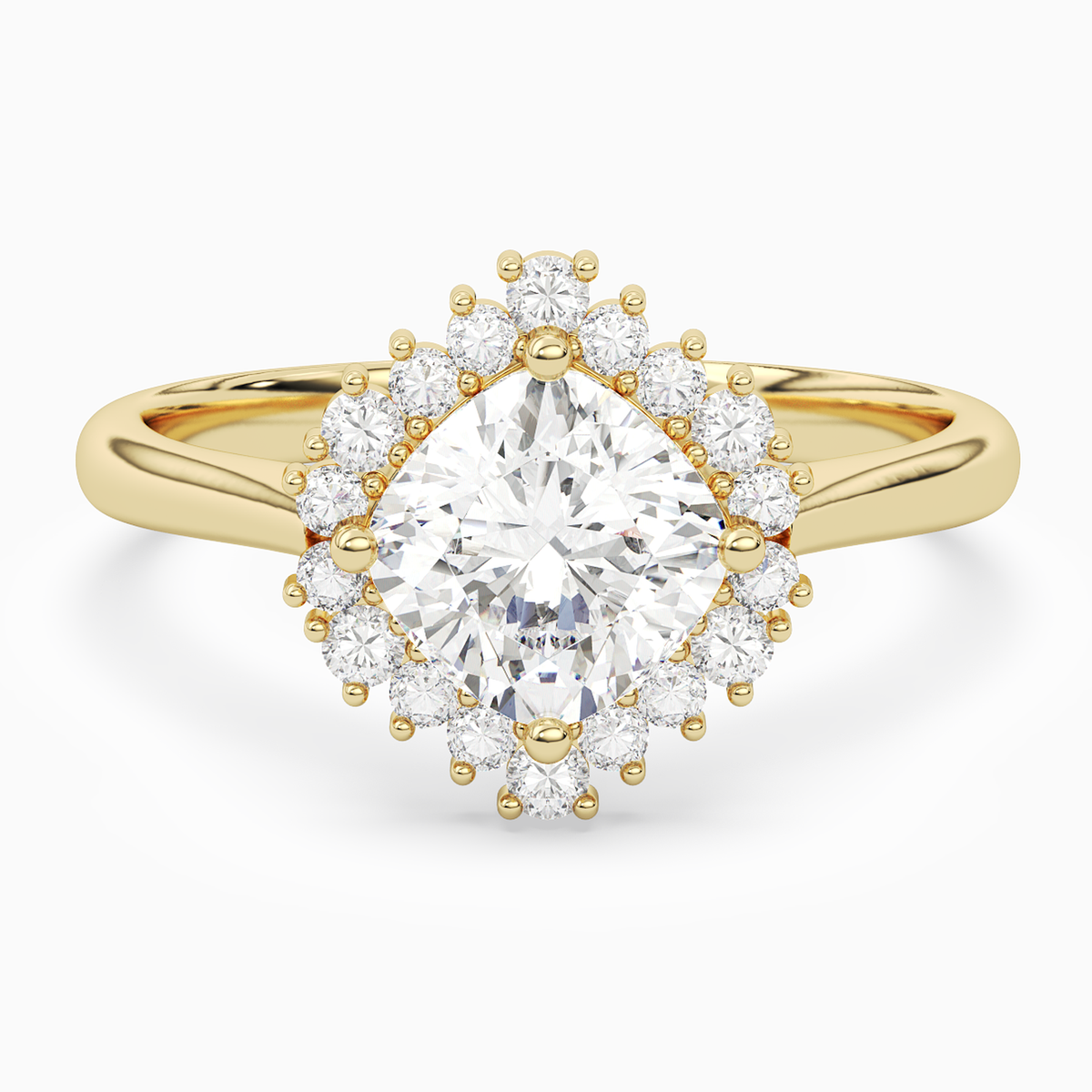
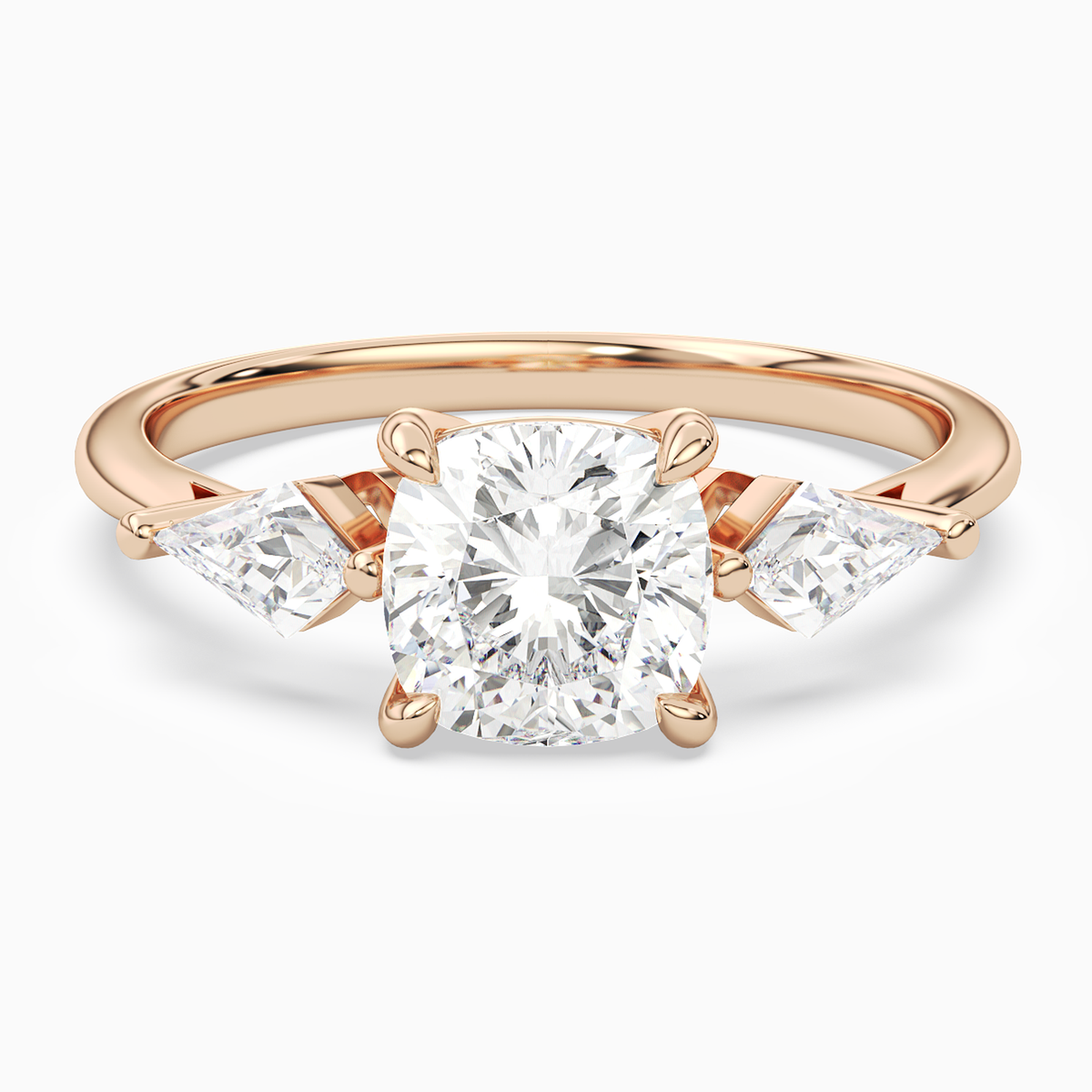
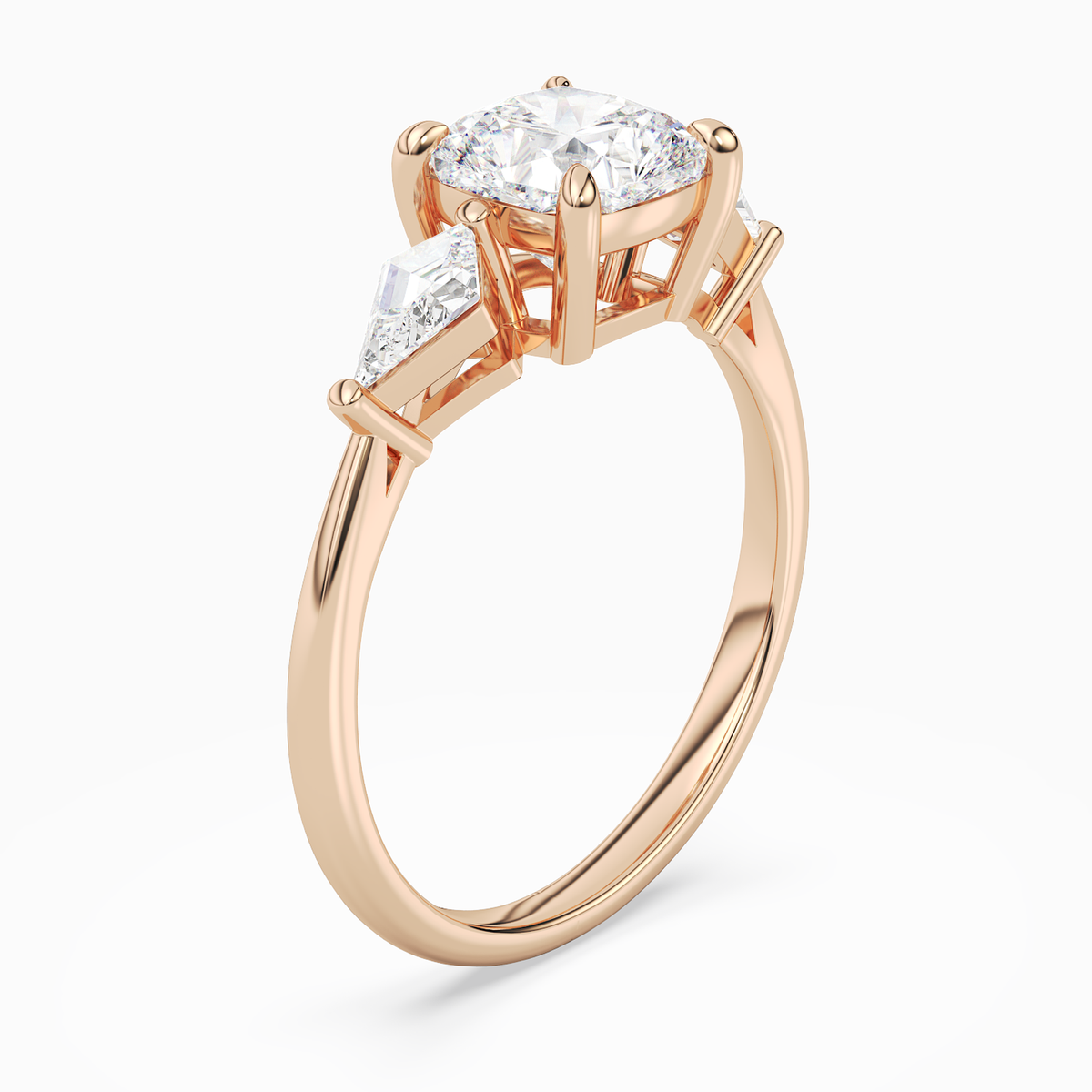
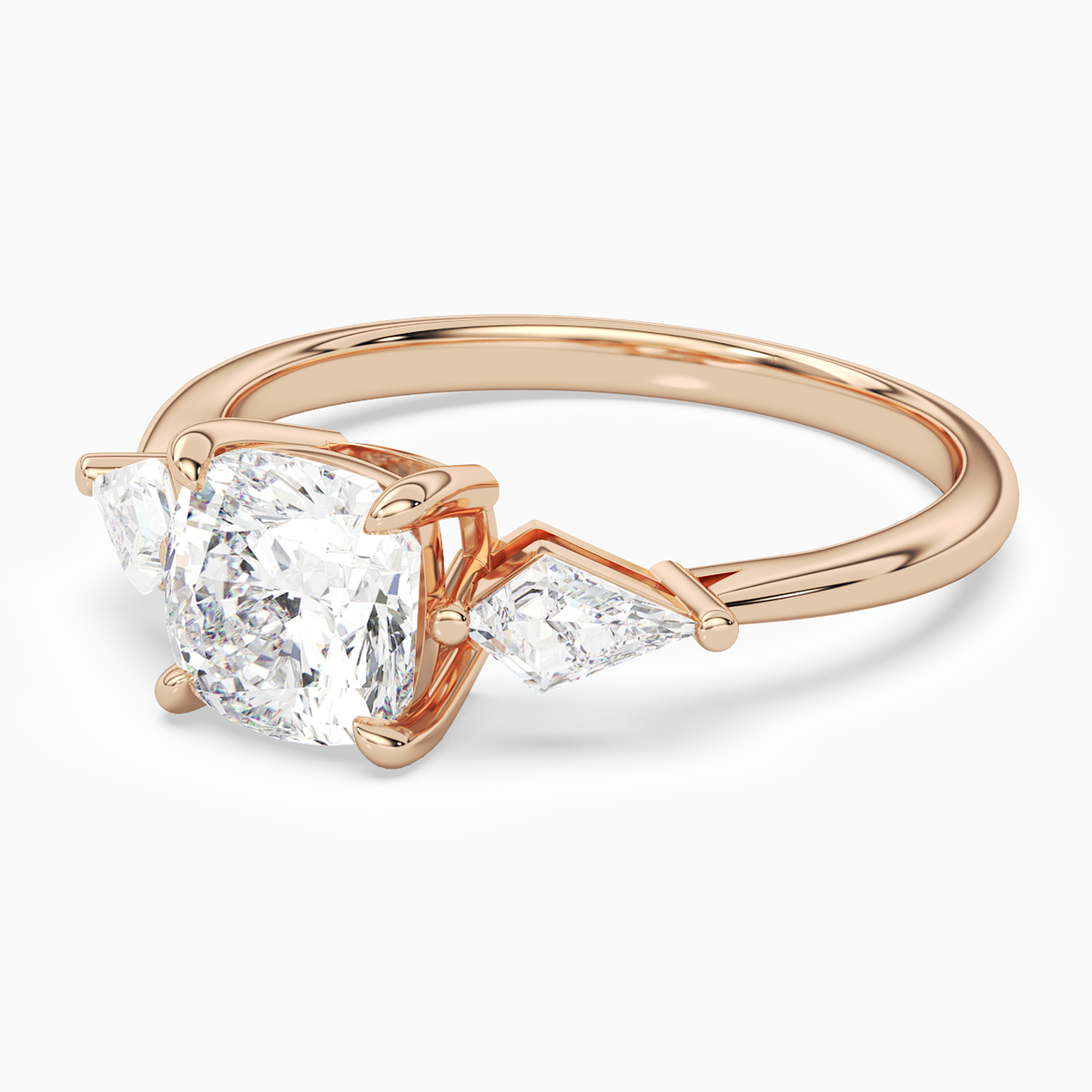
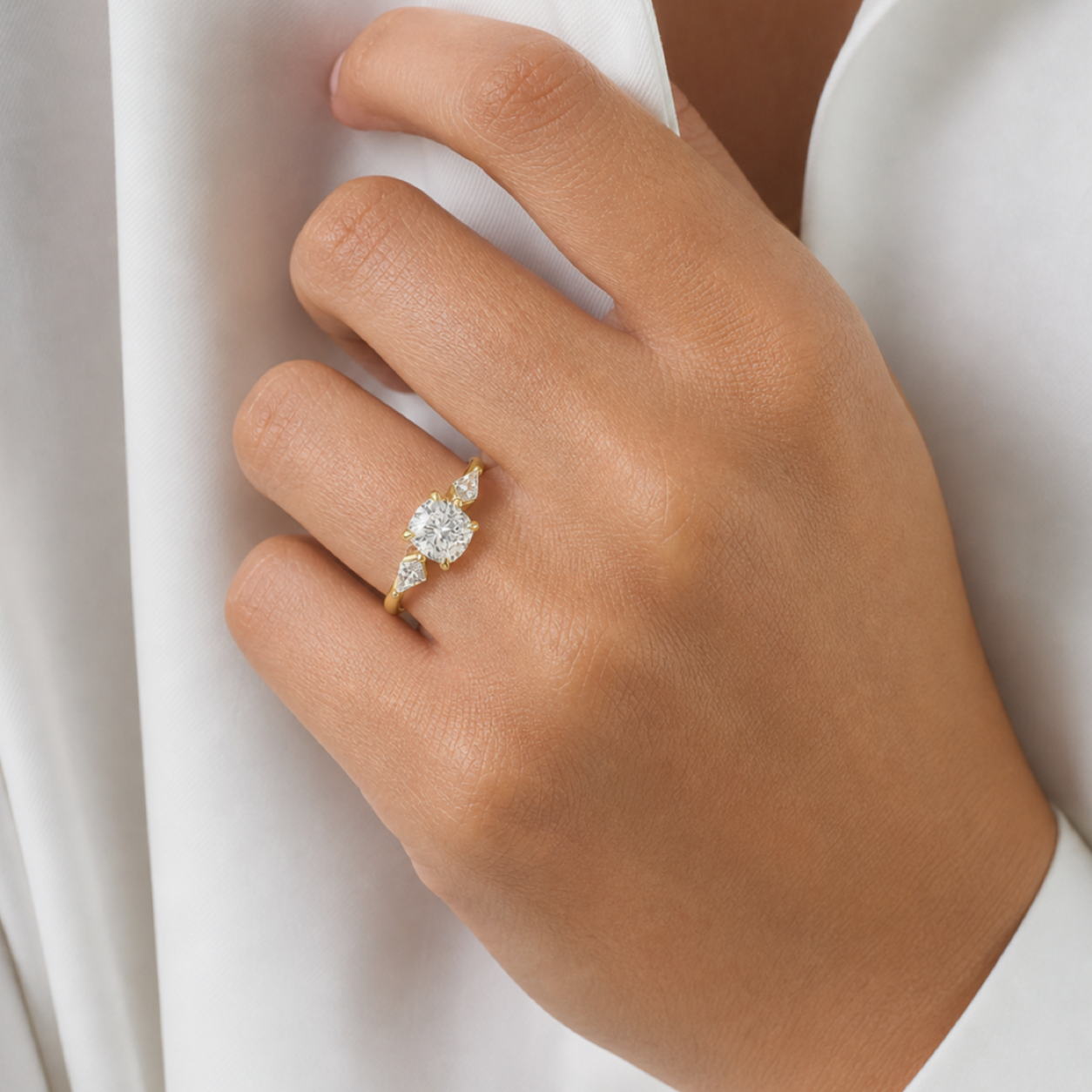
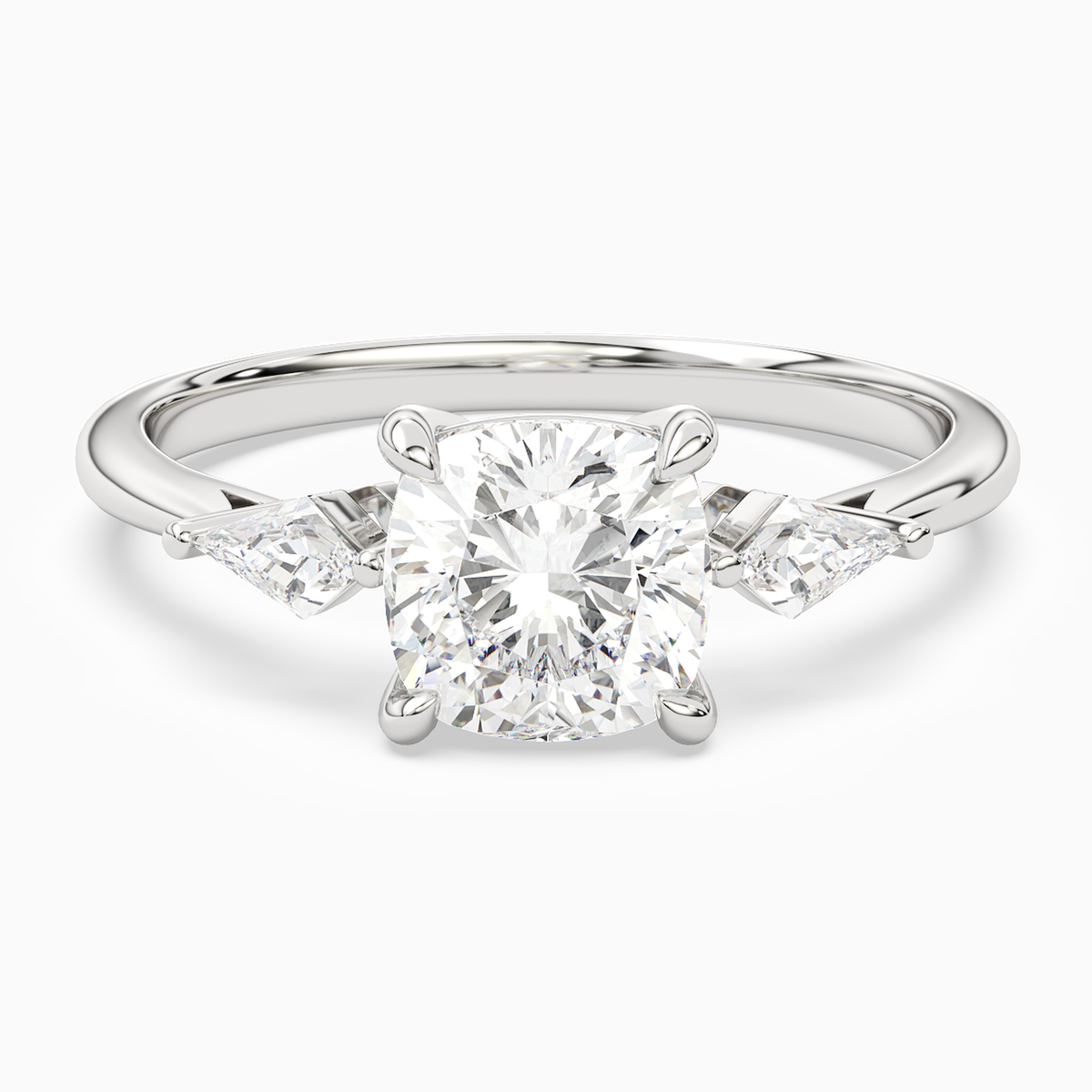
Burvonti’s cushion engagement rings place those decisions within Solitaire, Halo, Hidden Halo, Side Stone, Three Stone, cathedral, bypass, vine, floral, split-shank, and Kite-accent settings. Some designs emphasize the uninterrupted center; others repeat, extend, or contrast its softened geometry. The useful starting point is the individual outline and light pattern, not a promise that every cushion is equally vintage, romantic, or brilliant.
The Outline Can Be Square, Rectangular, or Elongated
Length-to-width ratio helps describe whether a cushion reads close to square or increasingly elongated. It is an entry point, not a complete proportion grade. Corner radius, shoulder fullness, side curvature, symmetry, and the transition between straight and rounded areas can make two cushions with similar ratios feel notably different.
Look at the perimeter as a continuous drawing. A squarer cushion can feel centered and compact; an elongated cushion introduces a clearer directional axis. Neither is inherently more refined or more flattering. The setting changes the result again: prongs expose the corners differently from a surrounding Halo, while side stones or a split shank alter the apparent width and balance.
Cushion Is Also a Family of Facet Patterns
GIA reports may describe a cushion as brilliant or modified brilliant according to its facet arrangement. Brilliant-style cushions often show larger, more legible regions of light; modified patterns add facets and may produce a finer-grained appearance. These categories help identify construction, but they do not predict one uniform visual result within each name.
Crushed ice is a trade description, not a GIA quality grade. It usually refers to an area of many small virtual facets that creates a splintered or glittering texture. That texture can look bright and lively, muted and gray, or somewhere between, depending on the individual diamond. Broad flashes and fine-grained light are different characters, not an automatic hierarchy.
Read Light Pattern in Motion, Not by Label Alone
A report’s shape and cutting-style description cannot show how brightness, fire, contrast, and scintillation will distribute across the face. Cushions are fancy shapes and do not receive an overall GIA cut grade, so direct assessment carries particular weight. Review polish, symmetry, dimensions, color, clarity, and identifying information, then compare the actual pattern.
Look for an outline that feels intentional and a center that remains responsive as it moves. Ask whether the light pattern is balanced, whether any dark or gray region dominates, and whether broad and fine reflections transition coherently. Clear video or direct viewing under more than one ordinary lighting condition is more revealing than a single magnified still image or a seller’s pattern label.
Carat Weight Does Not Fix Face-Up Presence
Carat is weight, while visible scale depends on length, width, depth, outline, and how weight is distributed. Some cushion diamonds carry more depth than other shapes or other cushions of the same weight; others present broader face-up dimensions. There is no safe rule that every cushion looks smaller, larger, or the same as another shape at equal carat weight.
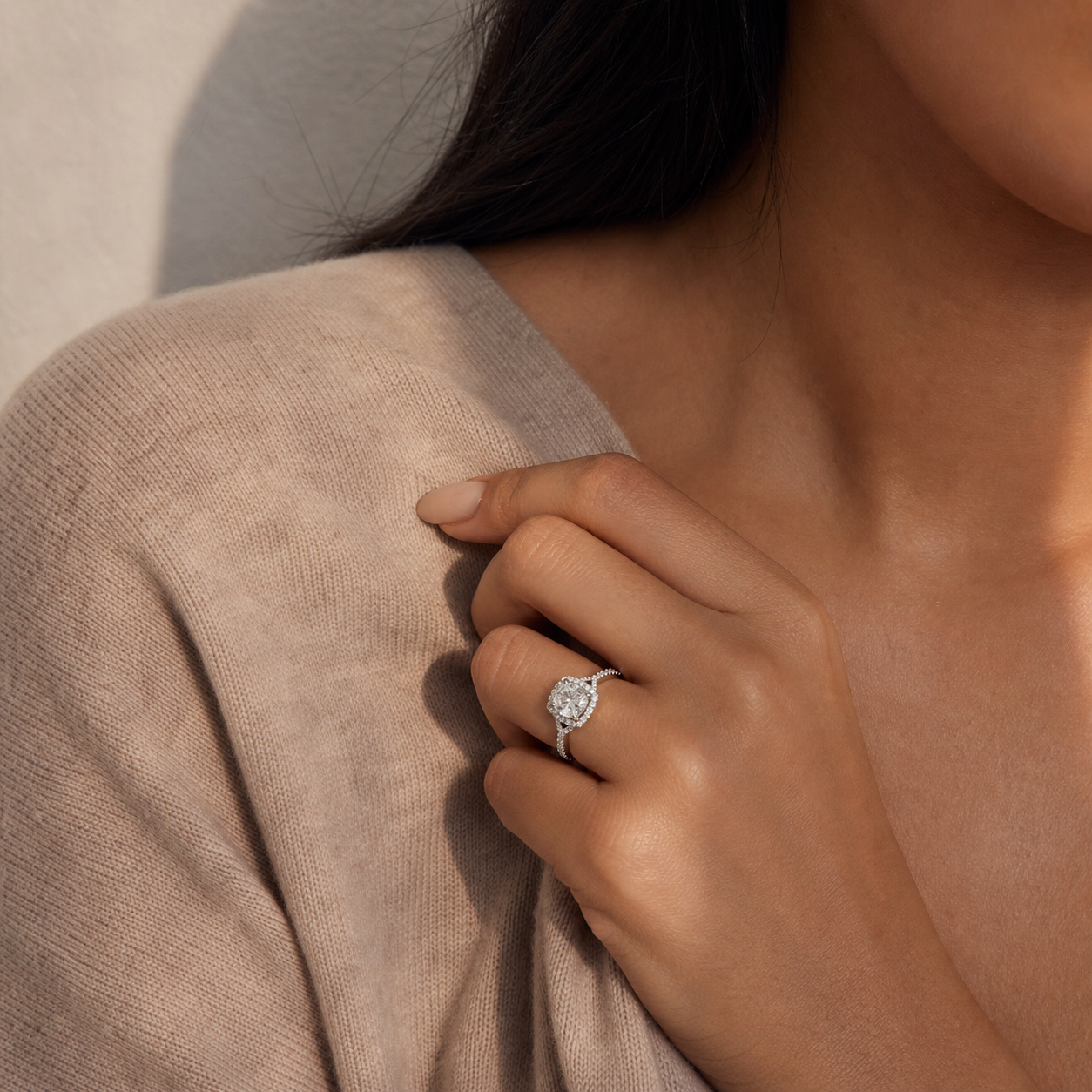
Compare millimeter dimensions alongside weight and light pattern, then place them within the ring. A Halo enlarges the visible perimeter; a fine band opens space around the center; a substantial split shank adds width; side stones distribute attention beyond the cushion itself. Burvonti treats center and setting as one calibrated composition rather than two independent size claims.
Color and Clarity Depend on the Individual Pattern
Cushion facet arrangements can reveal or disguise color and clarity characteristics in different ways. Larger, more open regions may make certain inclusions easier to notice; a busier pattern may make some characteristics less apparent while creating other visual texture. Position, size, relief, nature, diamond dimensions, and viewing conditions all matter.
The same is true of body color. White Gold can create stronger contrast with warmth in the center, while Yellow or Rose Gold can build a warmer overall composition. No universal VS2, D–F, or other cutoff guarantees the preferred result. Use the independent grading report as documentation, then judge visibility and color relationship in the intended setting.
Let the Setting Clarify the Cushion’s Character
A Solitaire gives the soft-cornered outline and internal pattern the most visual space. A Halo adds a second perimeter and can make a squarer or more elongated silhouette read differently. A Hidden Halo preserves more of the face-up boundary while adding detail in profile. Floral or octagonal frames can reinterpret the cushion rather than simply repeat it.
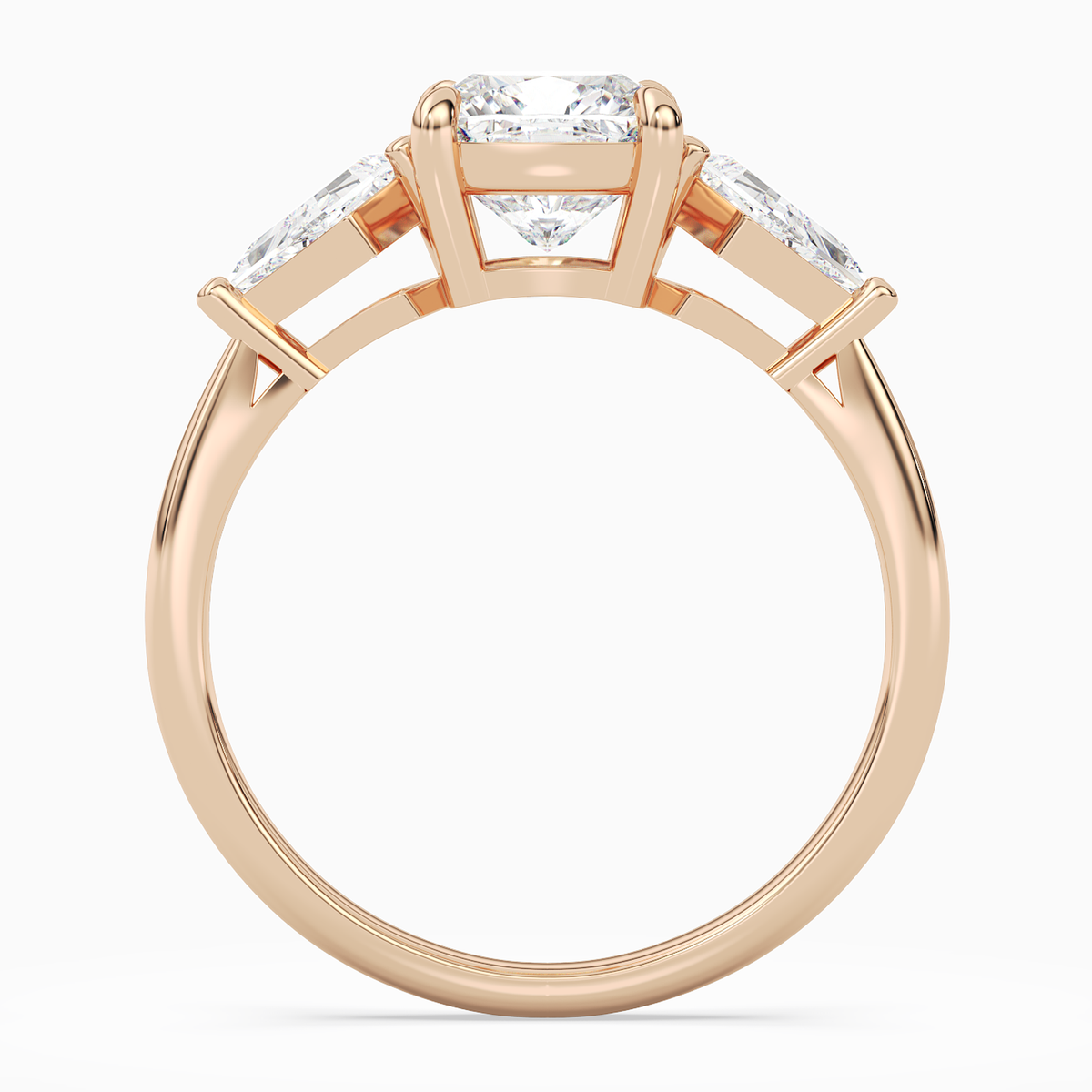
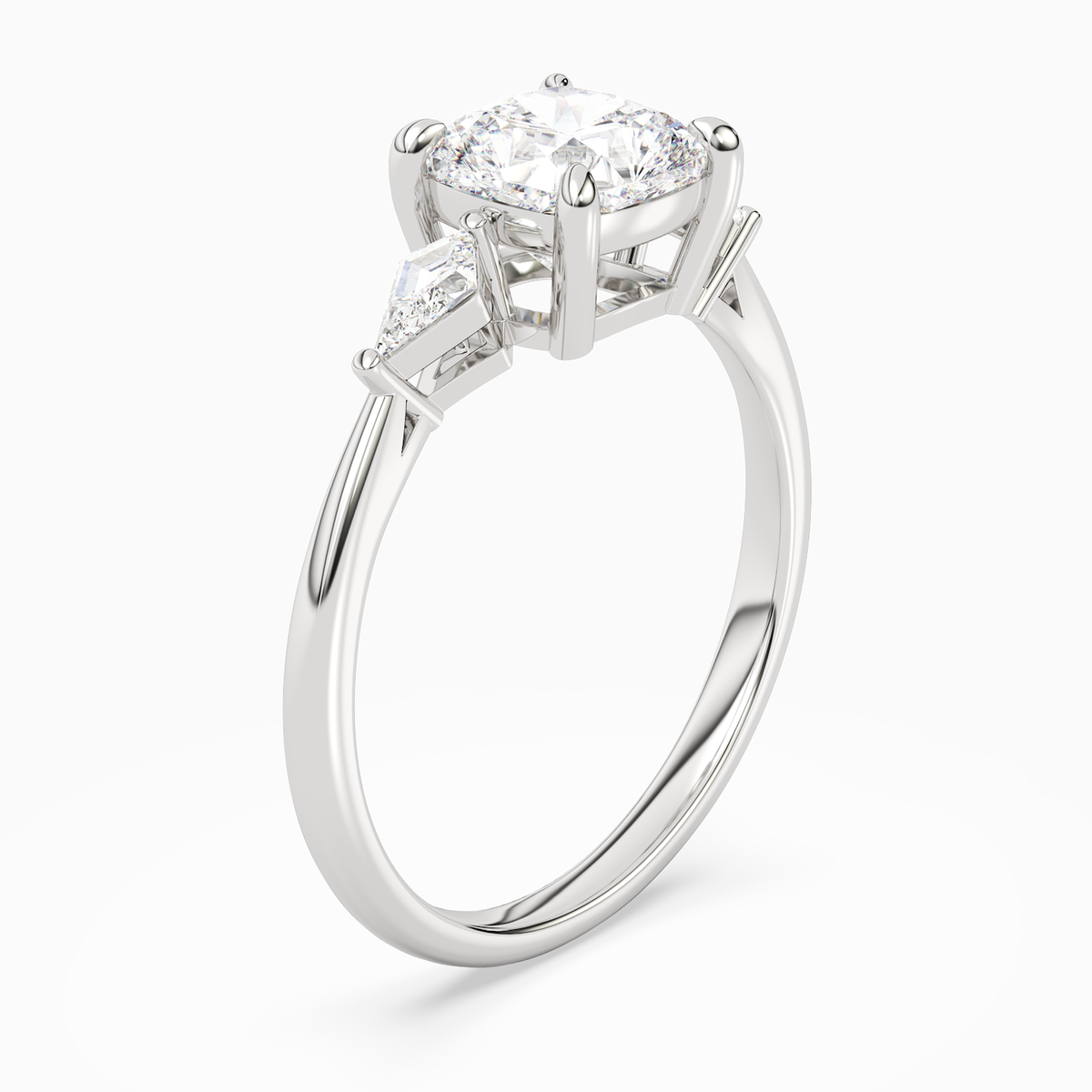
Side Stone and Three Stone settings extend the composition. Pear accents can soften the transition toward the band; Kite shapes can introduce a sharper counterpoint; Round or other brilliant accents can change the scale and cadence of light. Setting security depends on exact corner support, prong placement, dimensions, workmanship, and condition—not on rounded corners or the setting category alone.
Profile, Band, and Daily Care Finish the Decision
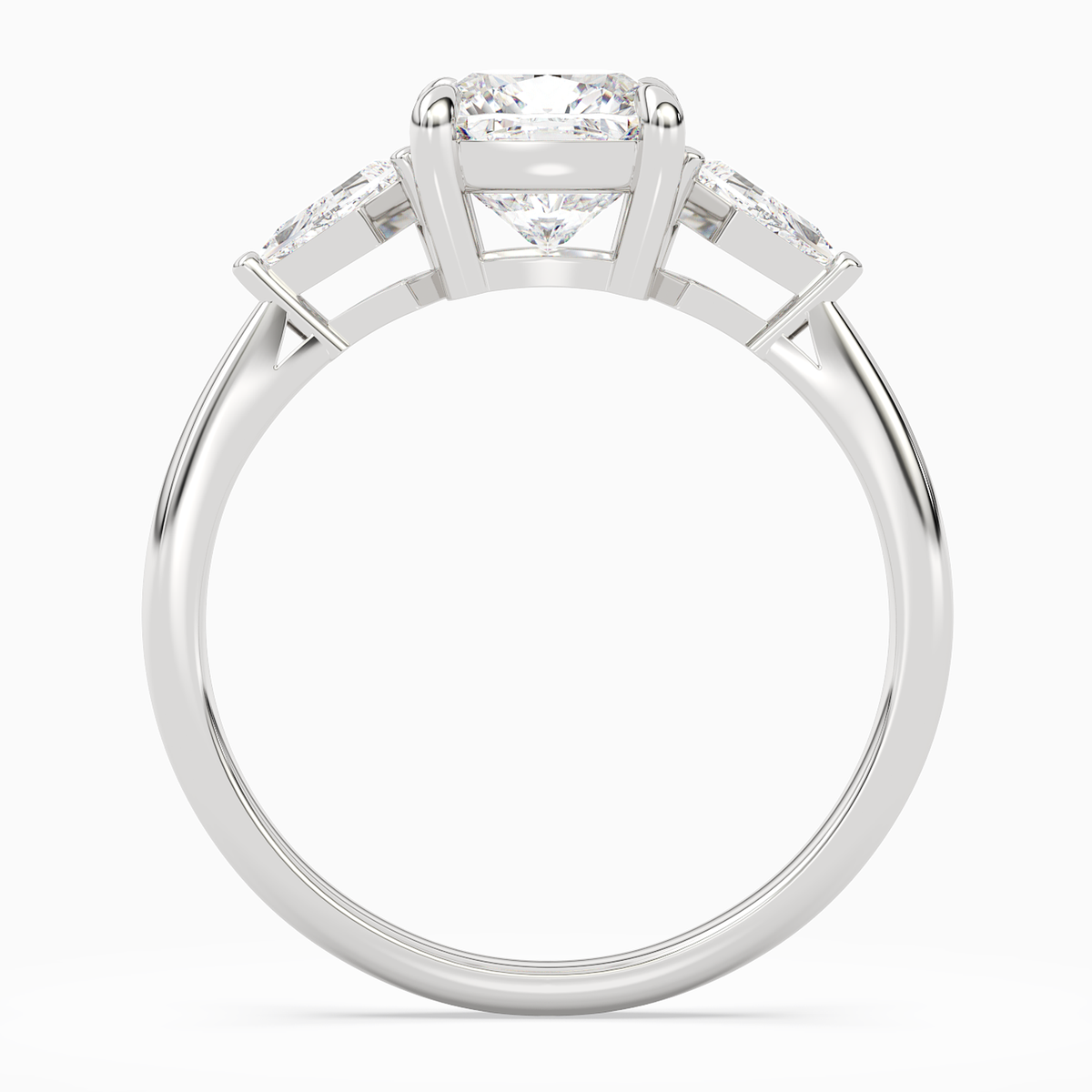
From the side, an open basket, cathedral shoulder, Hidden Halo, projecting frame, or side stone determines height and wedding-band contact. A straight band may sit close, touch the basket, or leave an intentional gap. A contour, chevron, open band, or coordinated profile may respond more precisely. Cushion shape alone does not determine whether a stack will sit flush.
At Burvonti, responsibly sourced, independently graded lab-grown diamonds are resolved within settings through proportion and human judgment. Custom possibilities may refine outline, facet character, center specifications, setting, metal, accents, band line, or engraving when structurally feasible. Clean gently with methods appropriate to the diamond, metal, and construction; avoid abrasive products and harsh chemicals, and arrange inspection if a prong catches, a stone moves, or the ring receives significant impact. Availability, resize range, documentation, security, and band fit remain product-specific.
Frequently Asked Questions
What is a cushion-cut diamond engagement ring?
It is an engagement ring centered on a diamond with a square, rectangular, or elongated outline and rounded corners. Cushion diamonds can use different brilliant-style facet arrangements, so their scale and pattern of light vary considerably.
Is a cushion diamond simply a mix of Round and Princess cuts?
That comparison can help describe its softened square outline, but it is incomplete. Cushion diamonds form their own broad family of outlines, corner shapes, shoulder curves, proportions, and brilliant or modified brilliant facet arrangements.
What is the difference between square and elongated cushion diamonds?
A square cushion has length and width closer to equal; an elongated cushion has a more pronounced long axis. The exact appearance also depends on corner radius, shoulder fullness, side curvature, facet pattern, and the setting around it.
What does length-to-width ratio mean for a cushion diamond?
It is the diamond’s length divided by its width. Ratios closer to one generally read squarer; higher ratios read more elongated. The number does not describe the corners, shoulders, faceting, light pattern, or complete setting.
Is there one ideal cushion-cut ratio?
No. Ratio expresses an outline preference, not an overall beauty grade. Compare square, gently rectangular, and more elongated centers, then assess symmetry, pattern, dimensions, and setting response.
What is a Cushion Brilliant?
It is a cushion-shaped diamond whose report identifies a brilliant-style facet arrangement without the additional modification indicated by Cushion Modified Brilliant. Visual results still vary within the category, so the report label should be paired with images or direct observation.
What is a Cushion Modified Brilliant?
It is a cushion-shaped diamond with a modified brilliant facet arrangement, often involving additional facets. Some show a fine-grained or crushed-ice-like pattern, while others do not; the report term does not guarantee one appearance.
What does crushed ice mean in a cushion diamond?
It is a trade description for areas made up of many small virtual facets, creating a splintered or glittering texture. It is not a GIA grade, and its brightness, contrast, size distribution, and appeal differ from one diamond to another.
Is a crushed-ice cushion better or worse than a broad-facet cushion?
Neither is universally better. Some people prefer broad, legible flashes; others prefer finer, continuous scintillation. Look for a coherent, responsive pattern and avoid deciding from the trade label alone.
Is a modern cushion diamond the same as an old mine cut?
No. Modern cushions may draw visual association from historical cushion-like cuts, but old mine cuts have their own proportions, facet character, culet, and period context. Do not assume every cushion is antique or vintage-inspired.
Does GIA give cushion diamonds an overall cut grade?
No. Cushion diamonds are fancy shapes and do not currently receive an overall GIA cut grade. Their reports can still document shape and cutting style, polish, symmetry, dimensions, color, clarity, carat weight, and other identifying information.
How should I evaluate cushion cut quality without an overall grade?
Review the independent report, outline and corner symmetry, polish, millimeter dimensions, depth, bright-dark pattern, and appearance in motion. Clear video or direct viewing under several ordinary lighting conditions is more useful than one ratio or pattern label.
Does a cushion diamond always look smaller than another shape of the same carat weight?
No universal rule applies. Carat measures weight, while face-up presence depends on length, width, depth, outline, and setting. Compare actual millimeter dimensions and the complete ring rather than assuming every cushion carries weight in the same way.
What clarity grade is best for a cushion diamond?
There is no fixed best grade. Visibility depends on the inclusion’s size, position, relief, and nature, together with the cushion’s dimensions and facet pattern. Review the report and the actual center instead of relying on a universal VS2 or eye-clean threshold.
What color grade is best for a cushion diamond?
There is no universal best. The preferred appearance depends on the individual center, facet pattern, size, lighting, metal, and desired warmth. Compare independently graded diamonds in the intended setting rather than applying one mandatory range.
Which Cushion engagement ring styles are available at Burvonti?
The current public collection includes Solitaire, Halo, Hidden Halo, Side Stone, Three Stone, cathedral, bypass, vine, floral, split-shank, octagonal-frame, and Kite-accent designs in 14K White, Yellow, and Rose Gold. Confirm exact current availability.
Should I choose a Solitaire or Halo for a cushion center?
A Solitaire leaves more visual space around the outline and facet pattern. A Halo adds another perimeter, changes apparent scale, and may make the center read squarer or more elongated. Compare profile, maintenance, and band fit as well as face-up style.
Which side stones work with a cushion center?
Pear accents can soften the transition; Kite or angular forms can introduce contrast; Round or other brilliant accents can change the cadence of light. Scale, spacing, corner support, profile, and the intended dominance of the center matter most.
Do rounded cushion corners make the setting automatically secure?
No. Rounded corners change the outline but do not guarantee protection. Security depends on prong placement, corner support, bezel or frame geometry, center dimensions, workmanship, condition, and how the ring is worn.
Which metal works best for a cushion engagement ring?
There is no universal best. White Gold can create cooler continuity or stronger contrast with warmth in the diamond; Yellow and Rose Gold create a warmer composition. Consider alloy, finish, care, sensitivity considerations, and exact product specification.
Will a cushion engagement ring sit flush with a wedding band?
Not always. Basket width, setting height, Halo, side stones, and shoulder geometry determine the contact line. Some designs accept a straight band; others may suit a contour, chevron, open band, or intentional gap.
How should I clean a cushion diamond engagement ring?
Use gentle methods appropriate to its diamond, metal, and construction. Avoid abrasive cleaners and harsh chemicals, clean around the underside and setting details, and arrange inspection if a prong catches or any stone appears to move.
Can a Burvonti cushion engagement ring be resized or customized?
Resize and custom possibilities depend on the setting. Outline, facet character, center specifications, metal, accents, band line, or engraving may be adjustable when structurally feasible, but sizing range, documentation, security, and band fit must be confirmed for the selected configuration.