
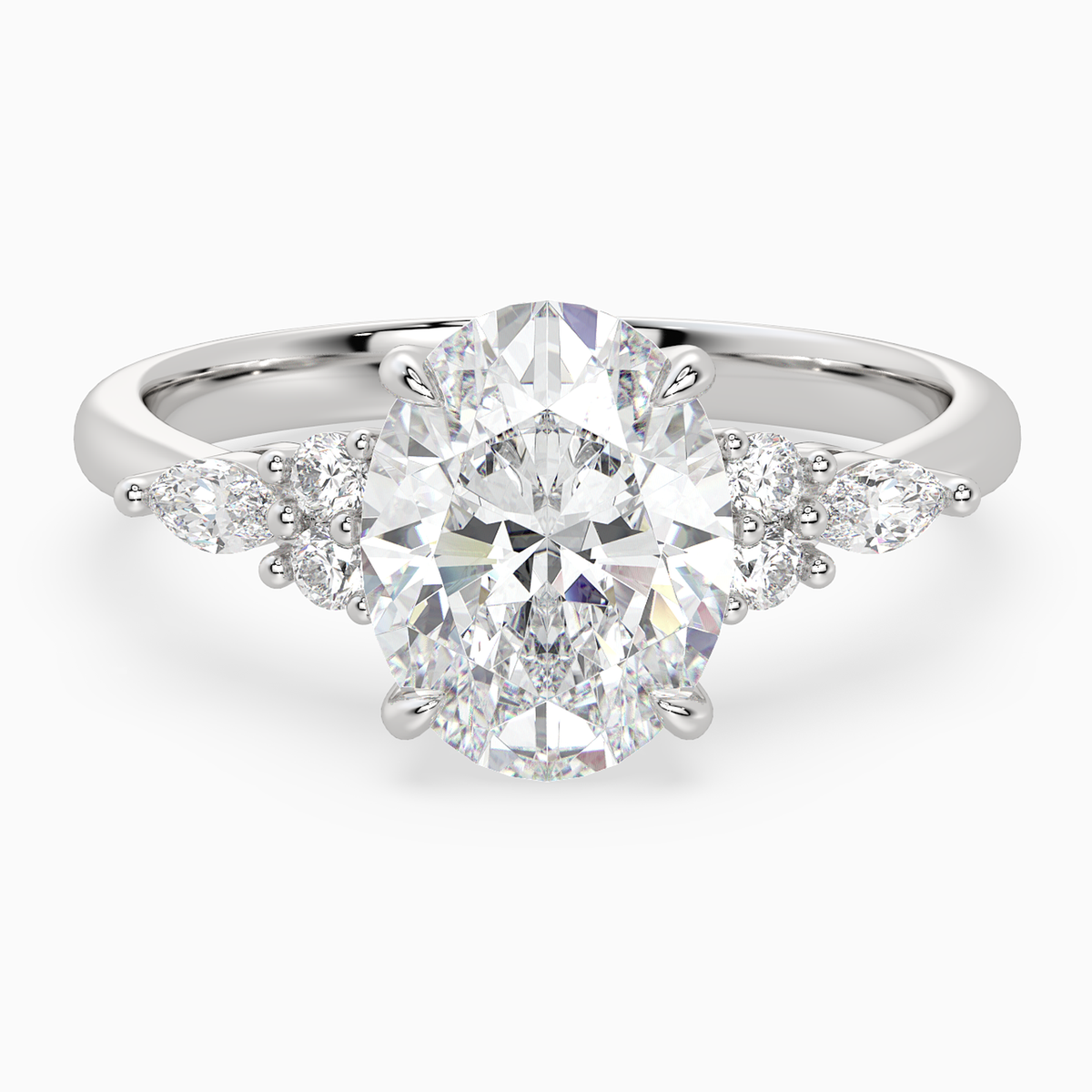


Three Stone Engagement Rings
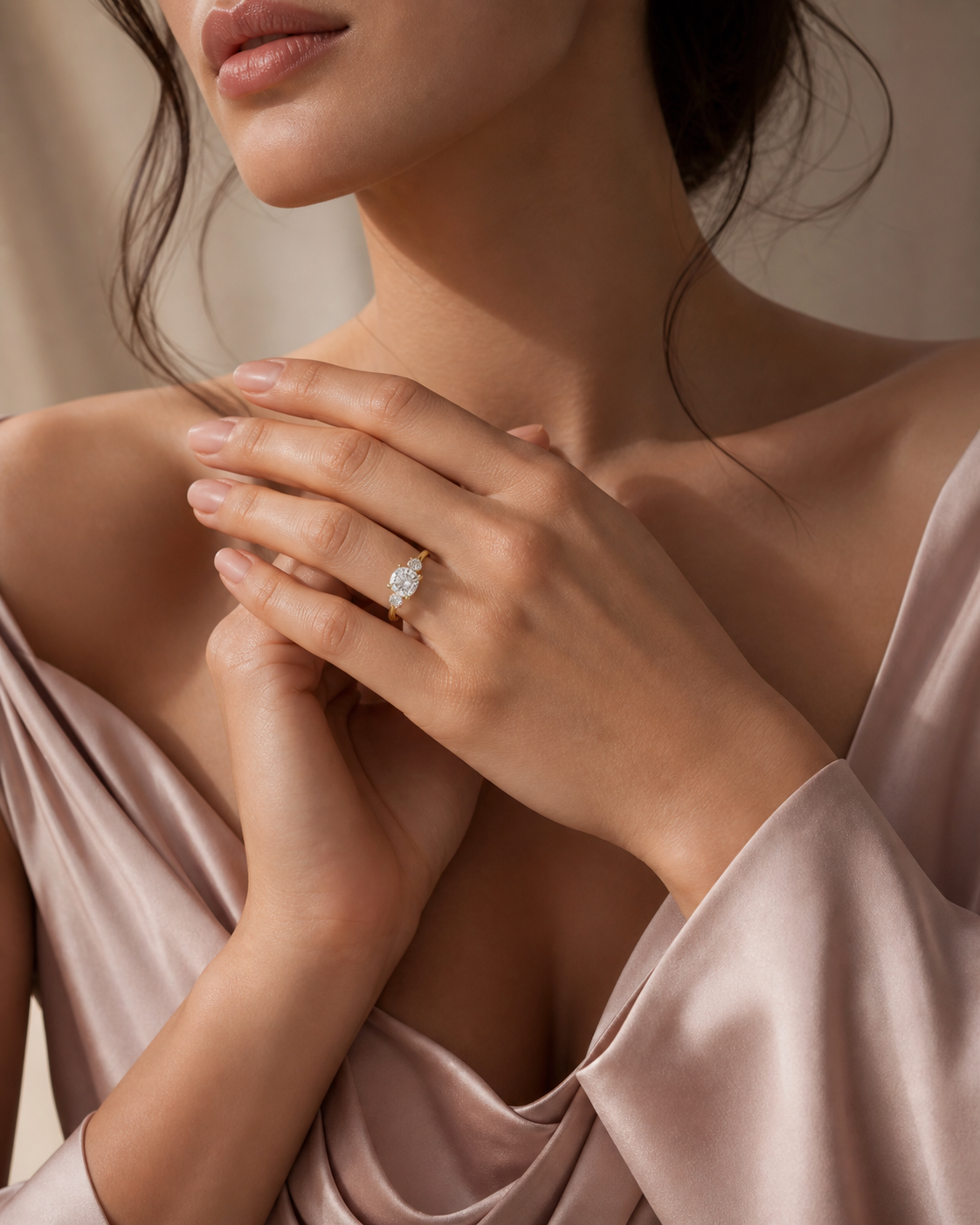
Three stones, held in measured rhythm. Center, side stones and band are balanced so each brings presence without competing for attention.


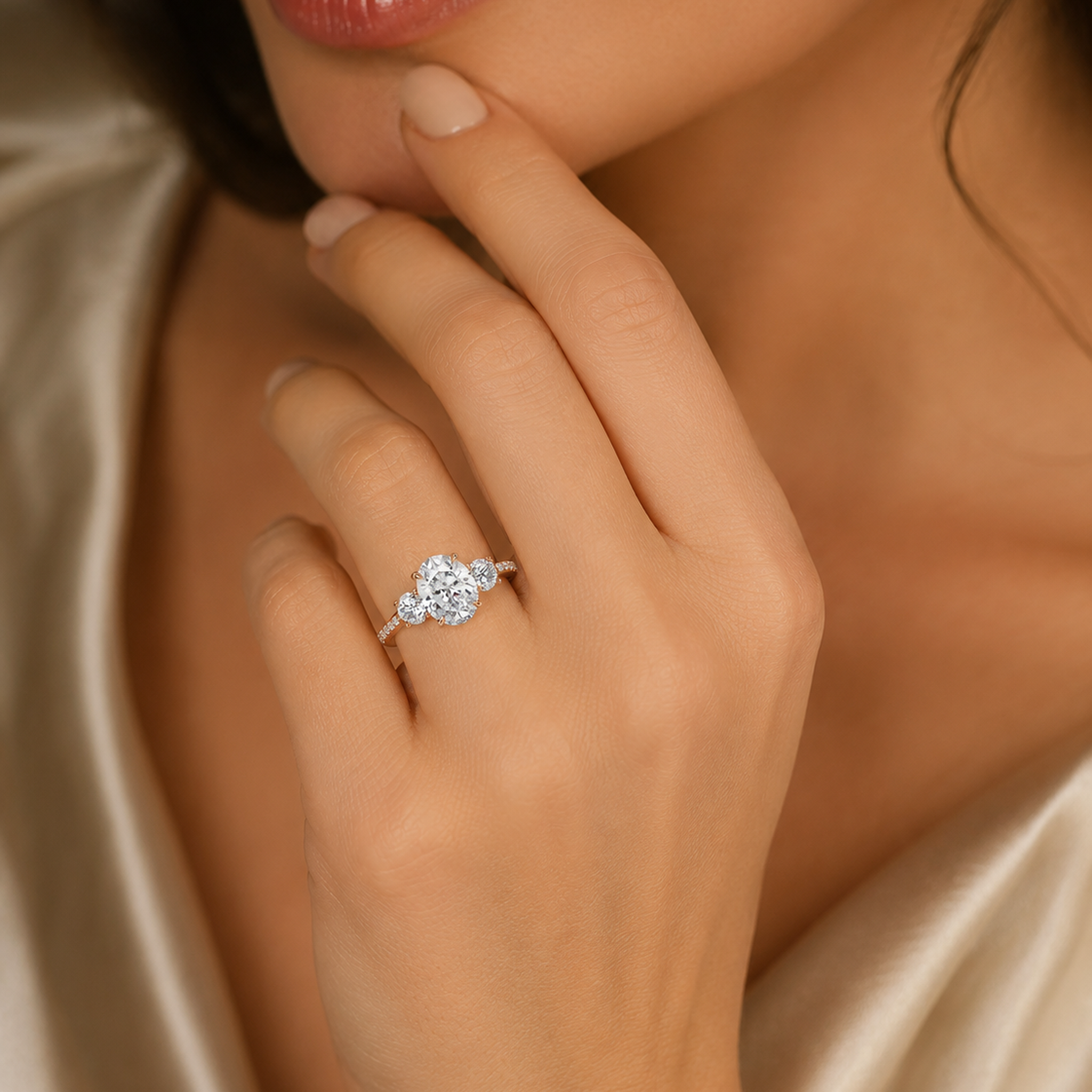


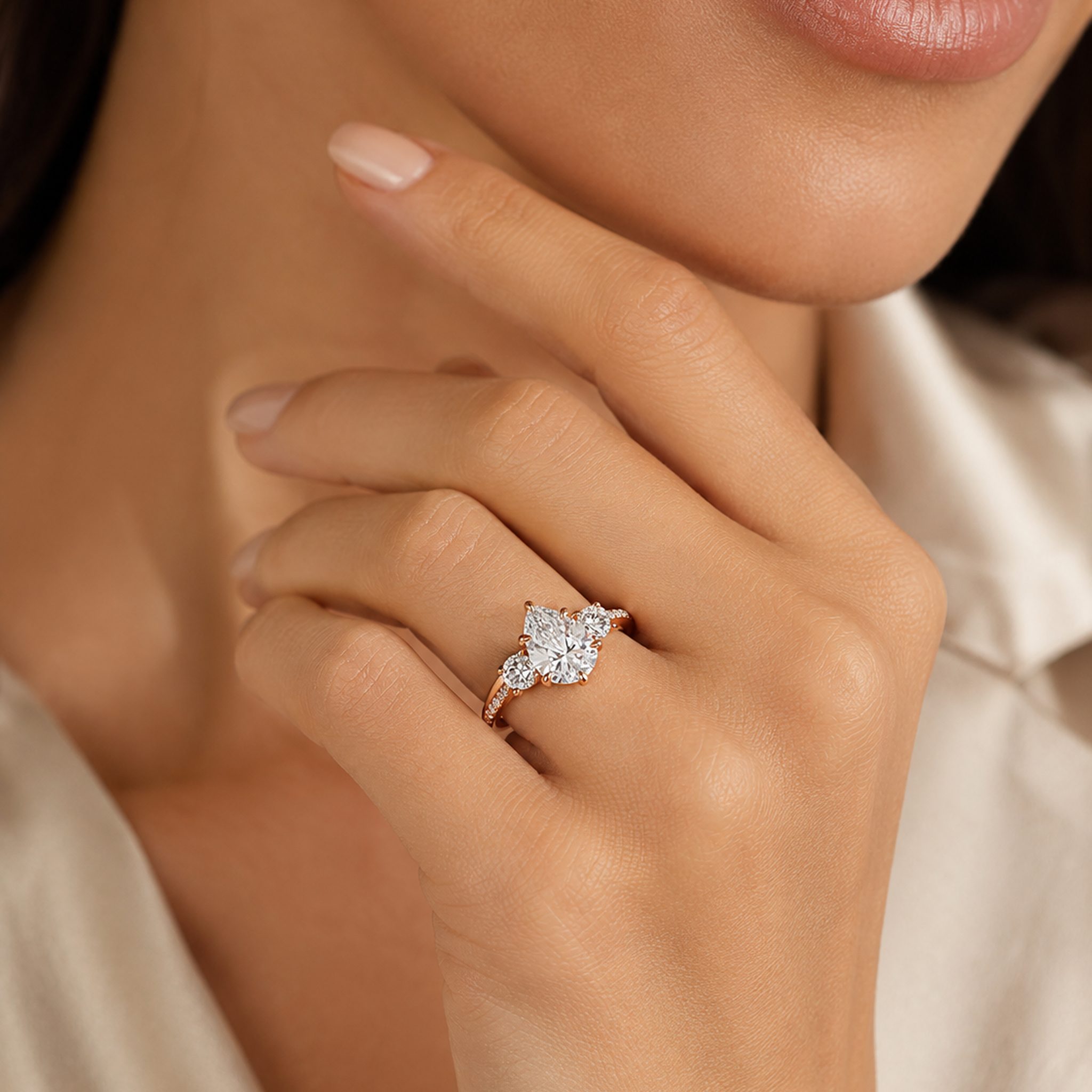


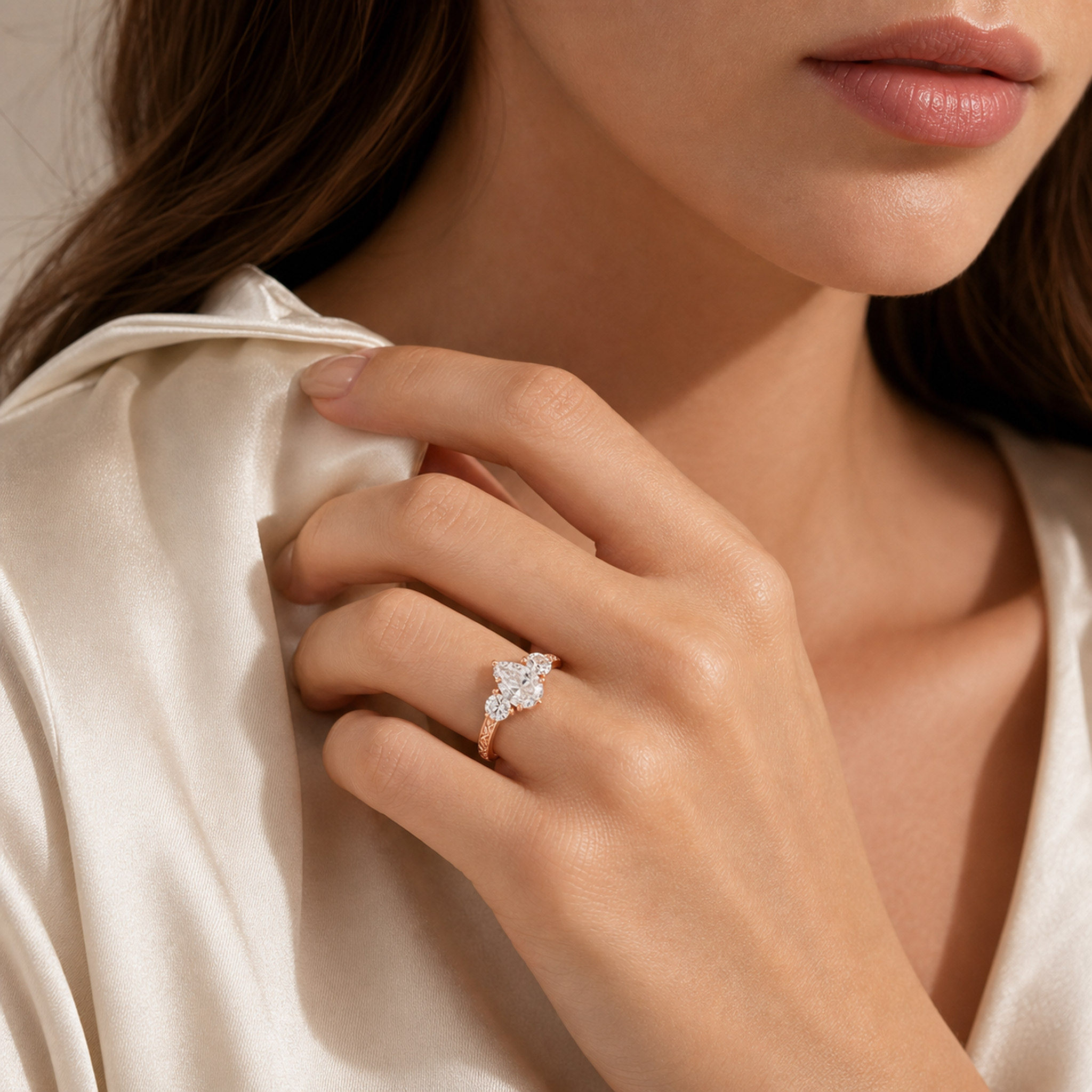


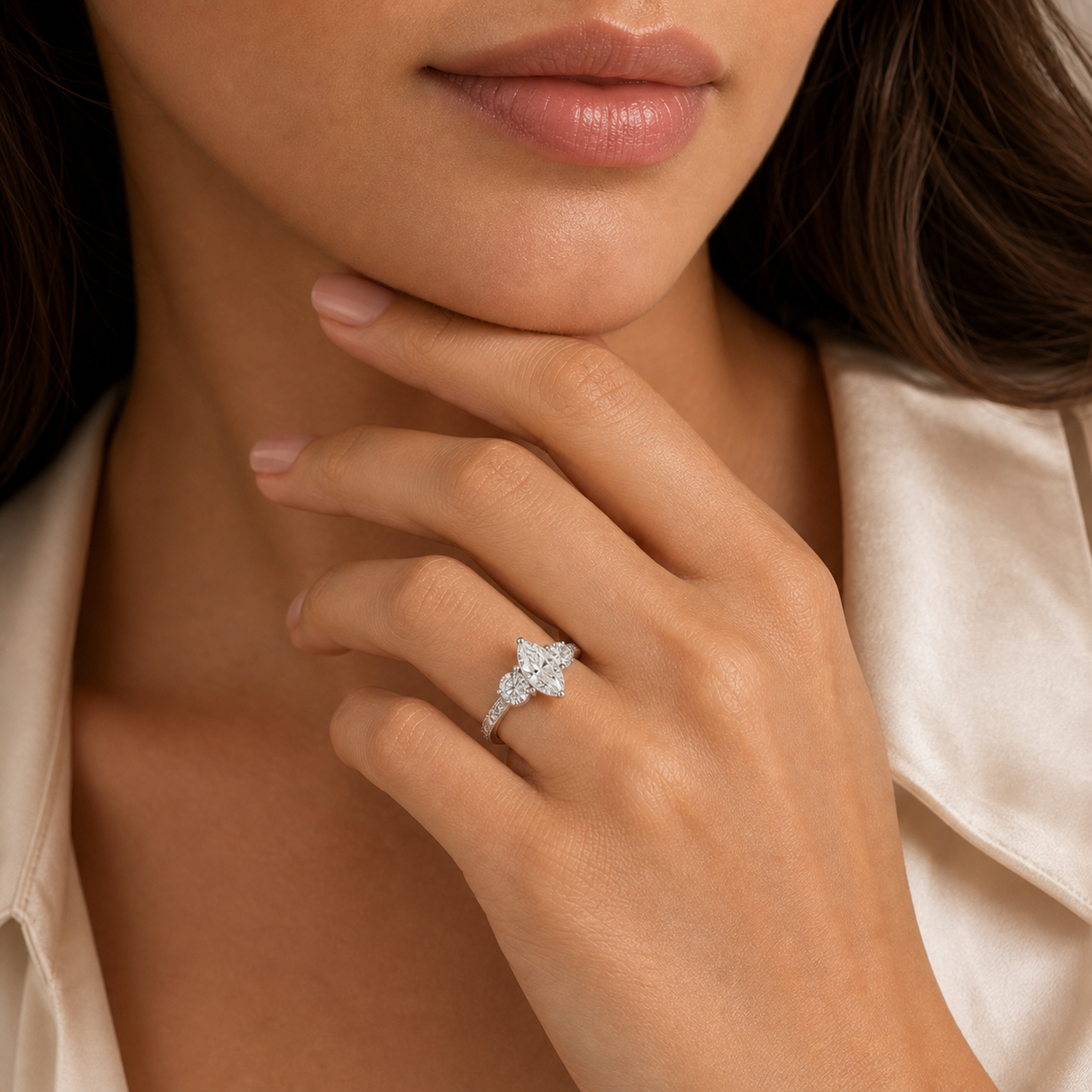


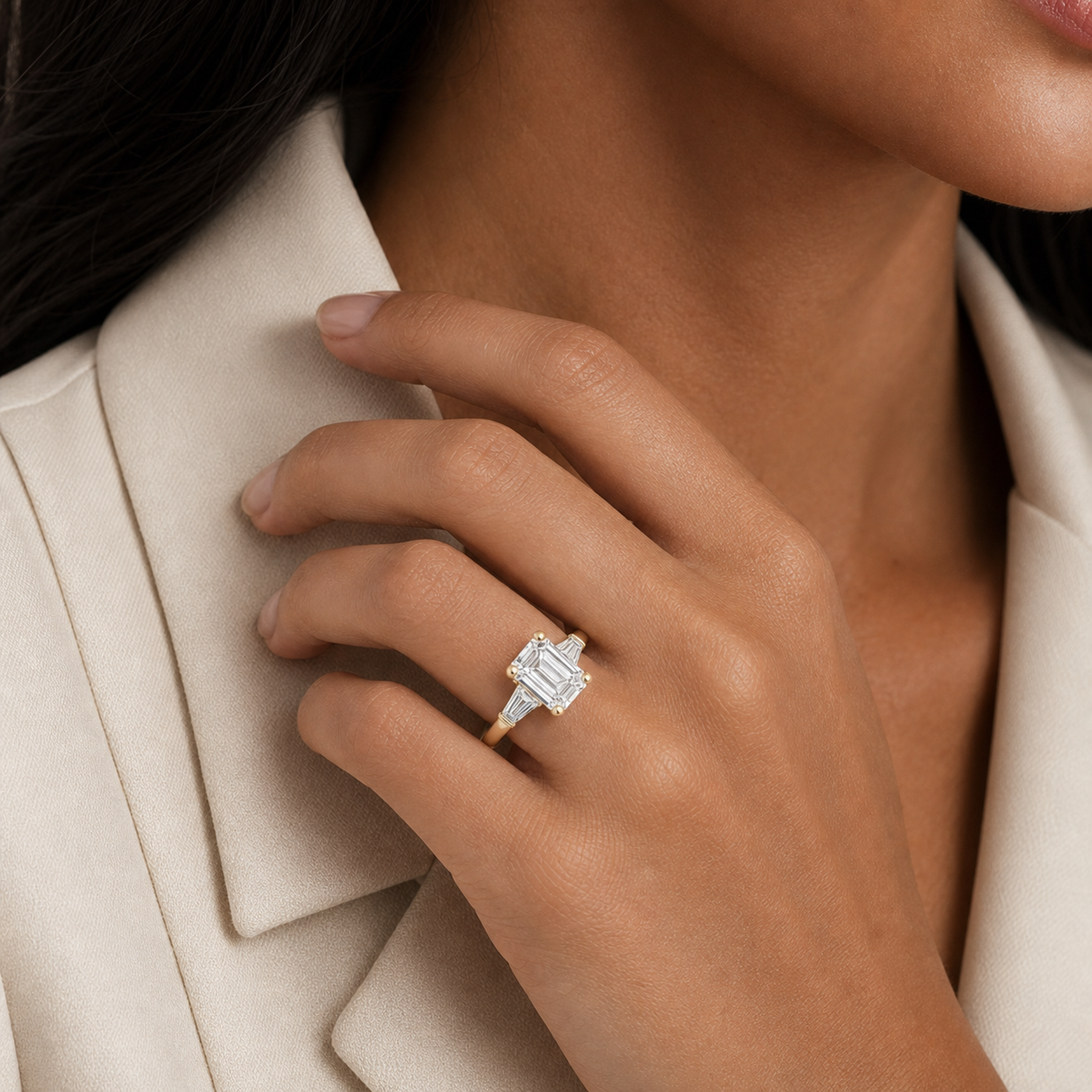


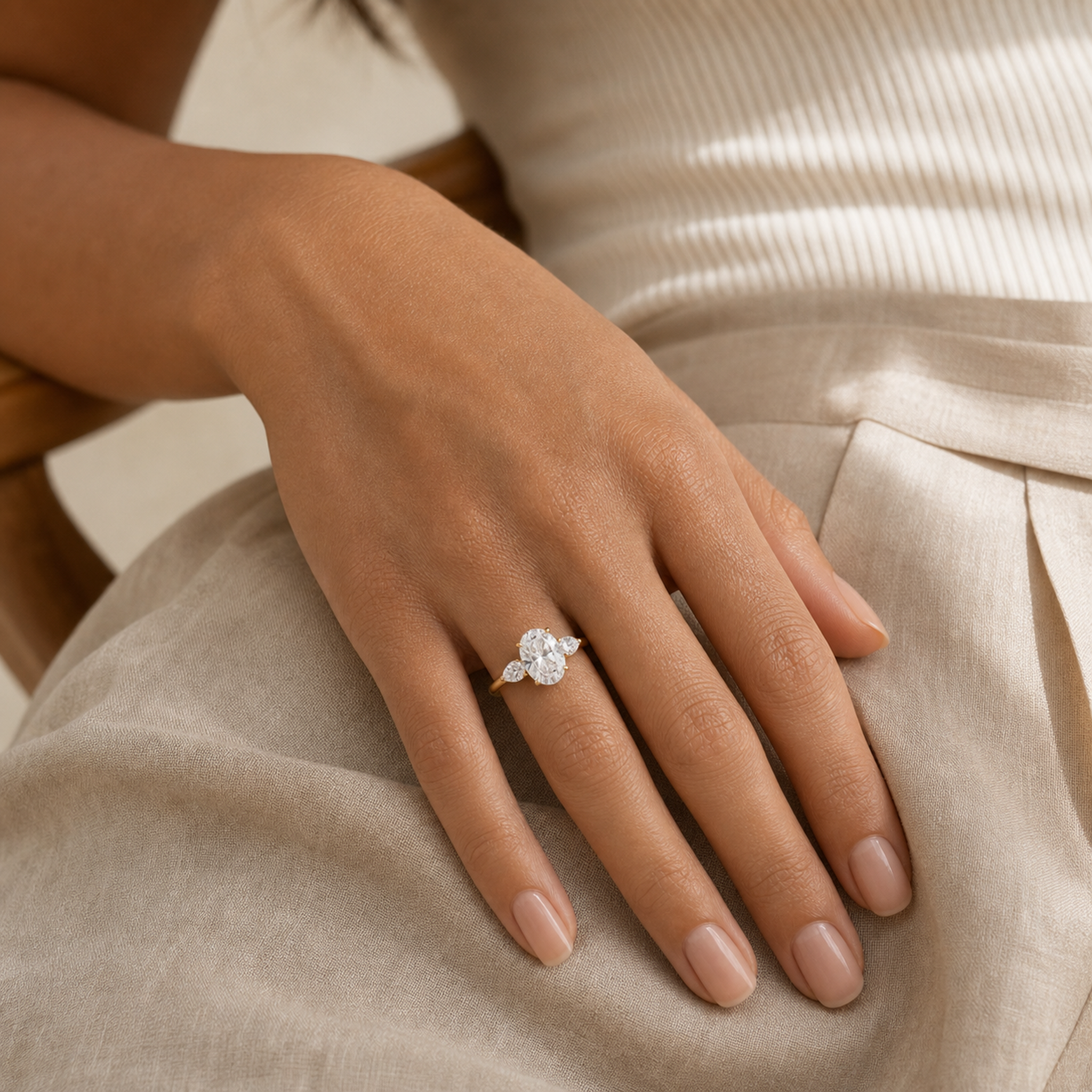


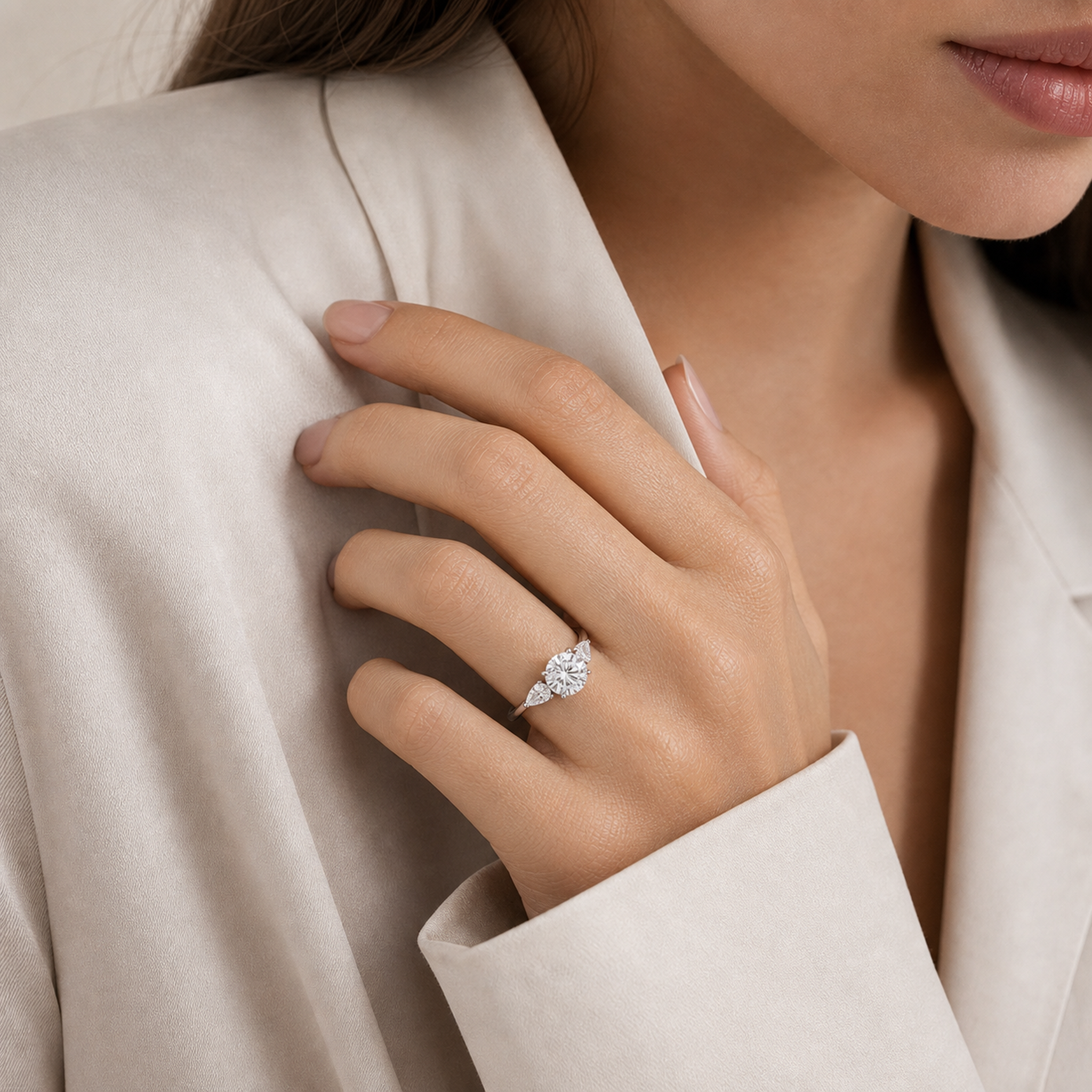









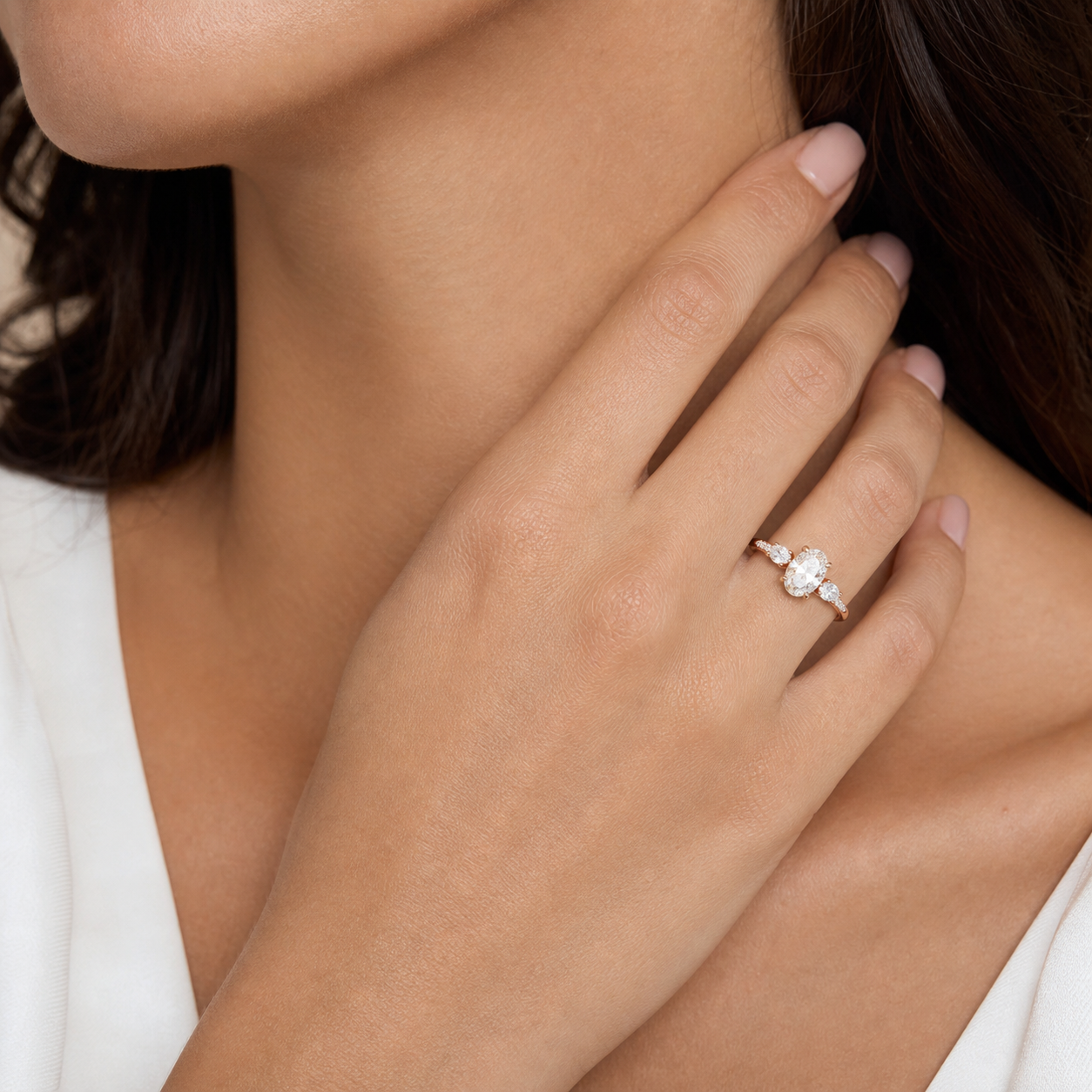


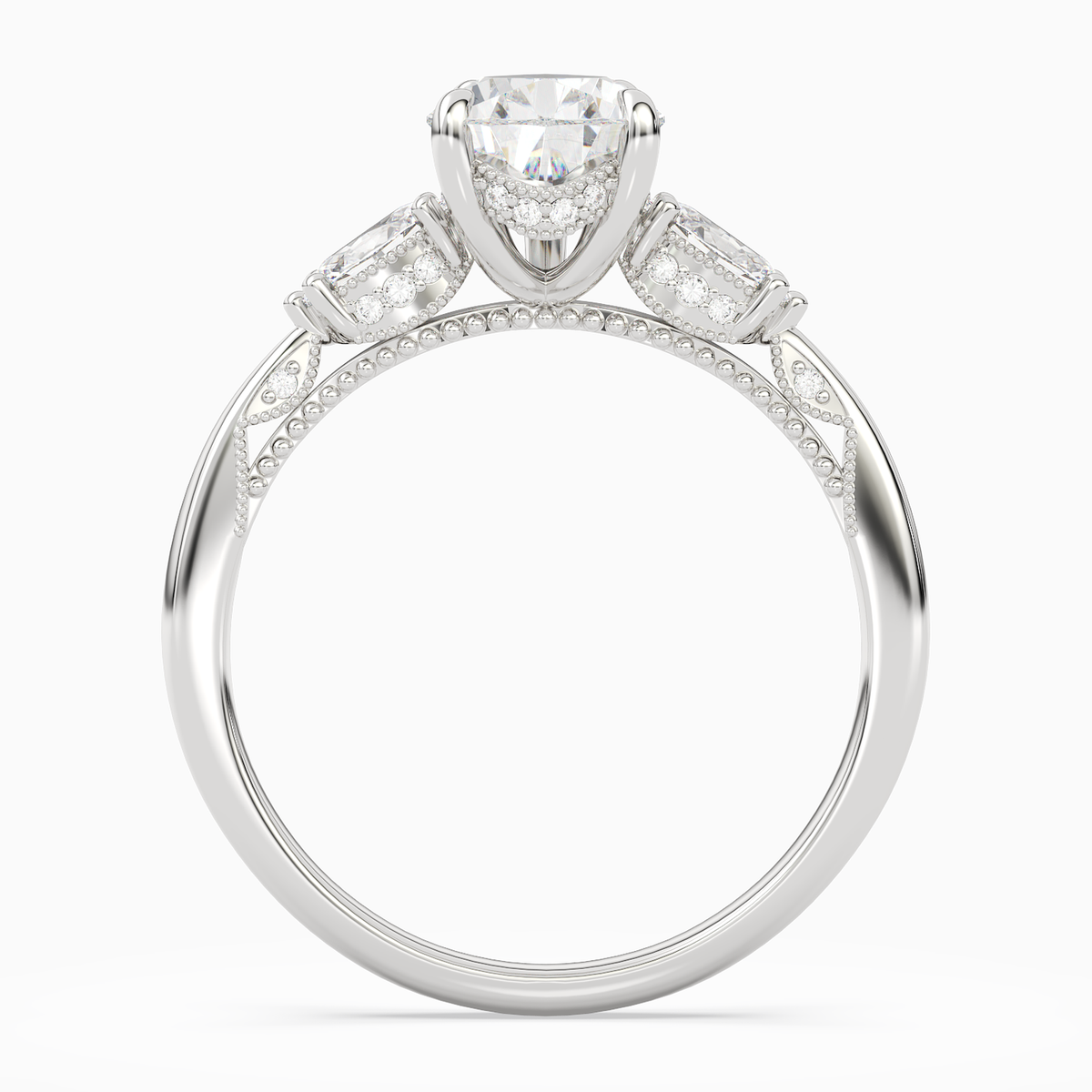

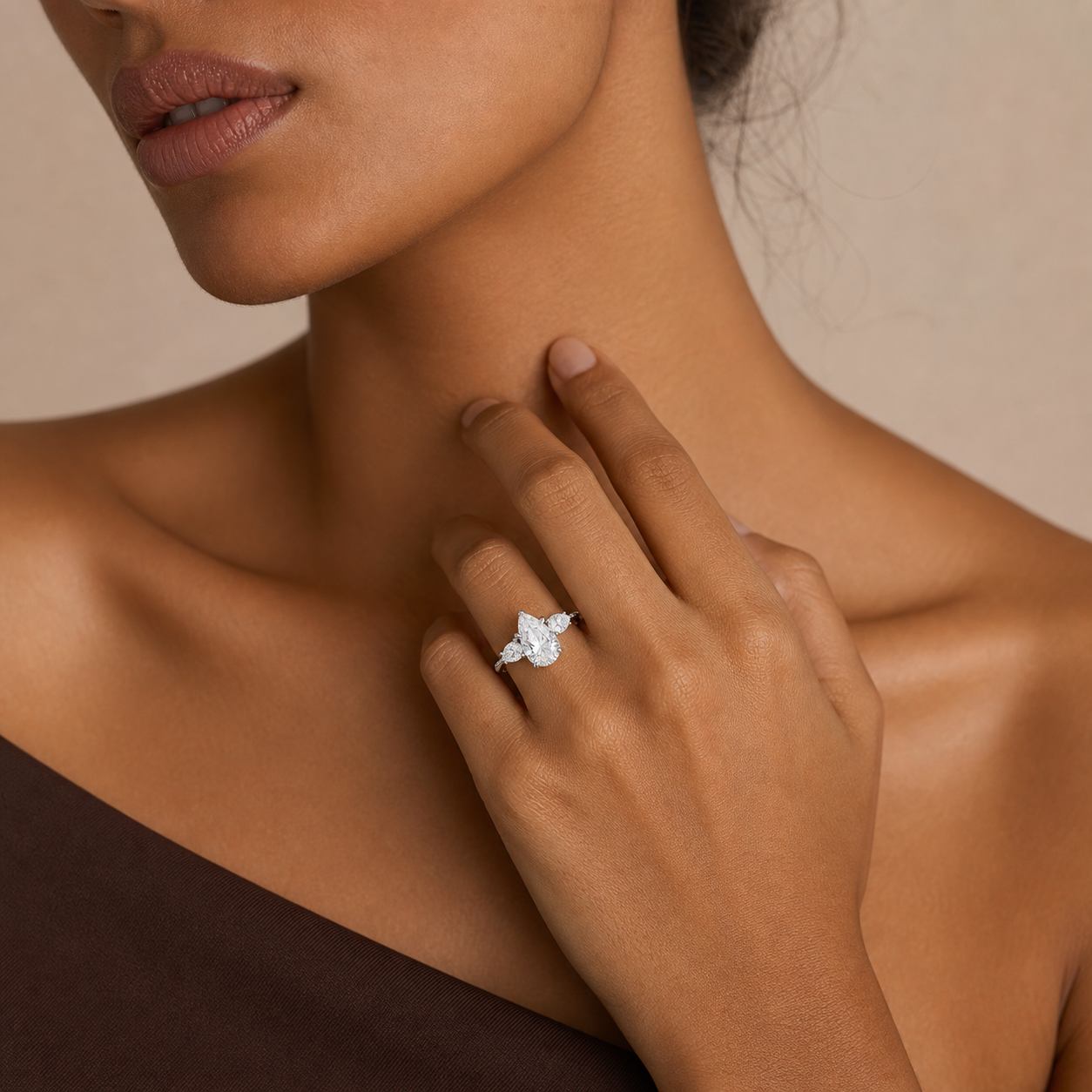


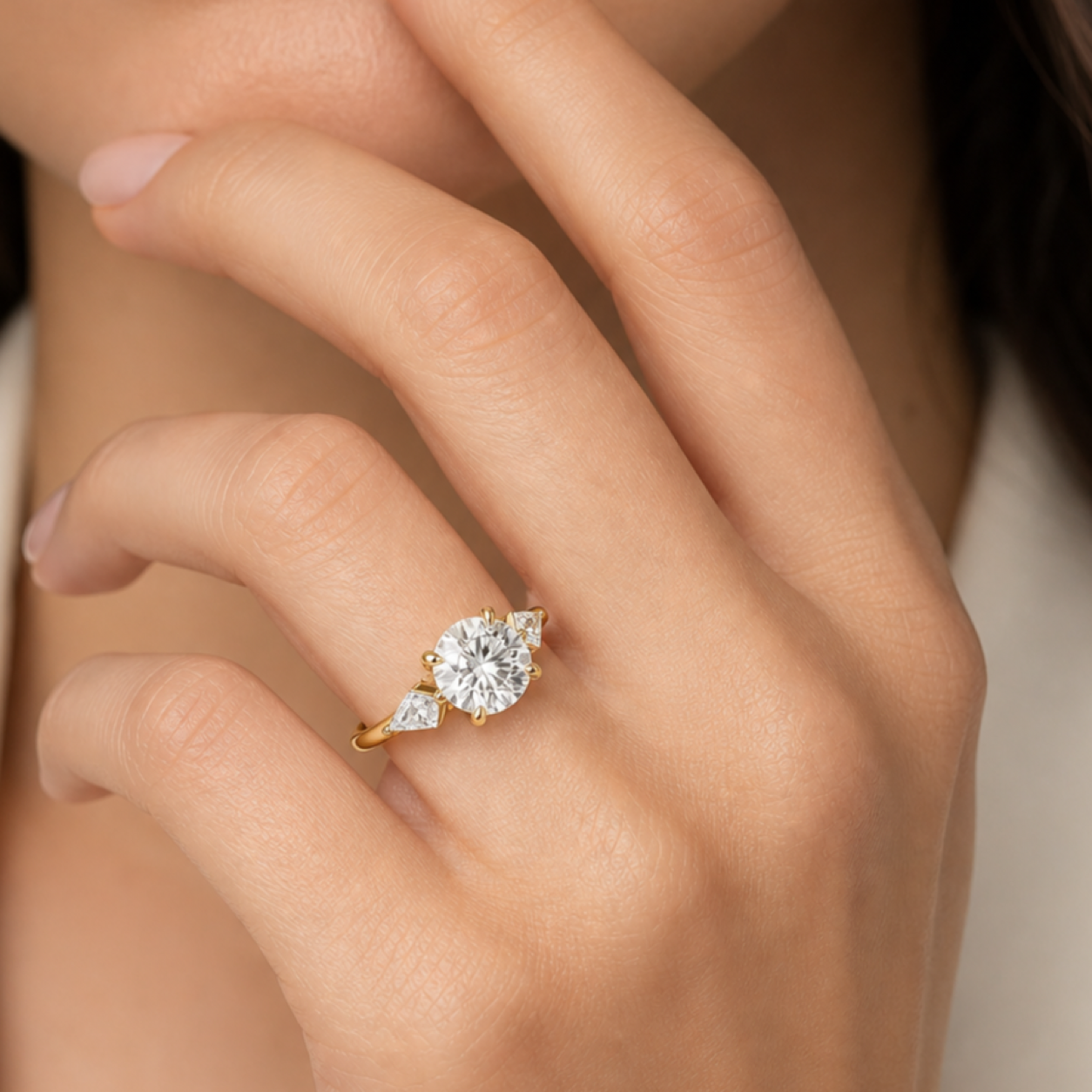


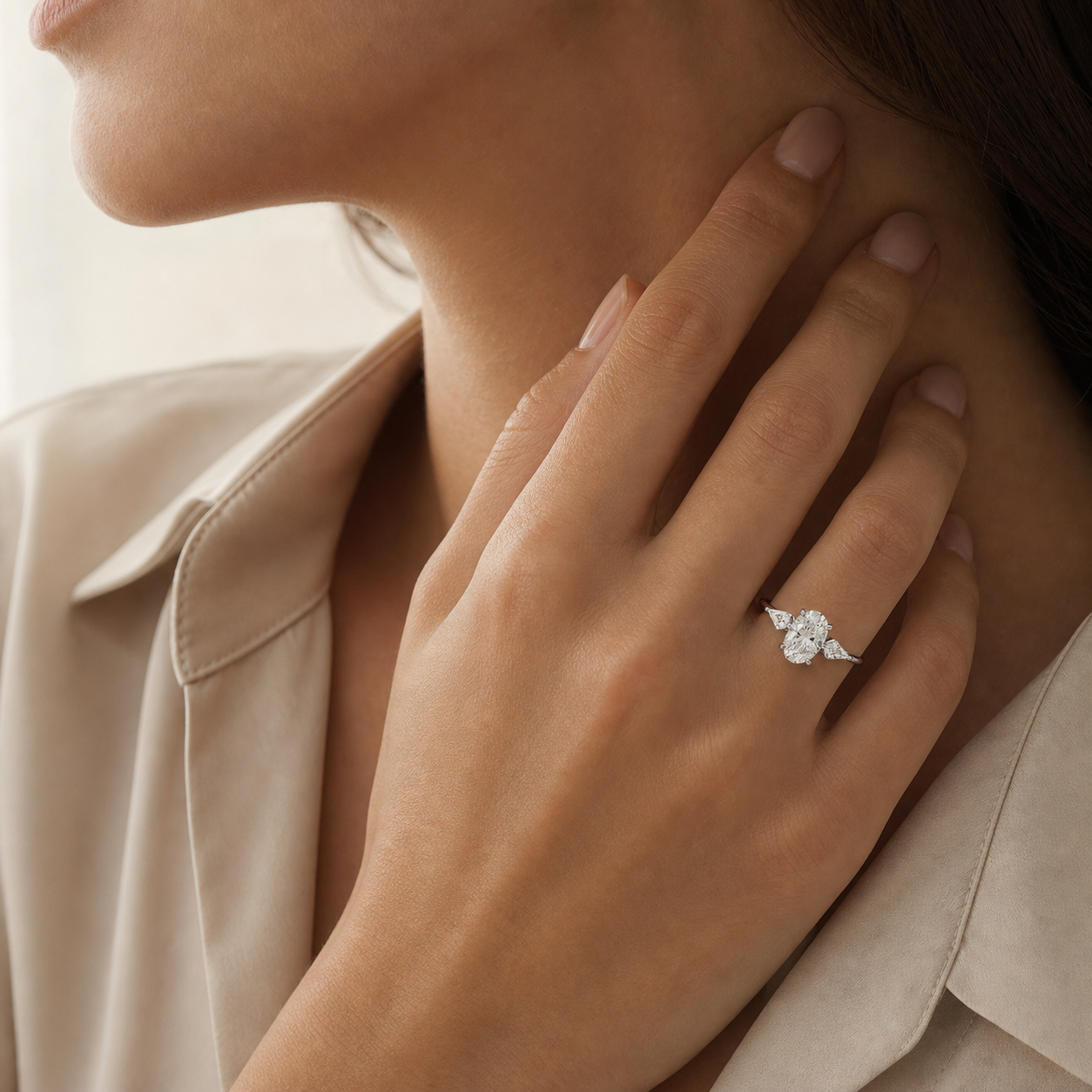


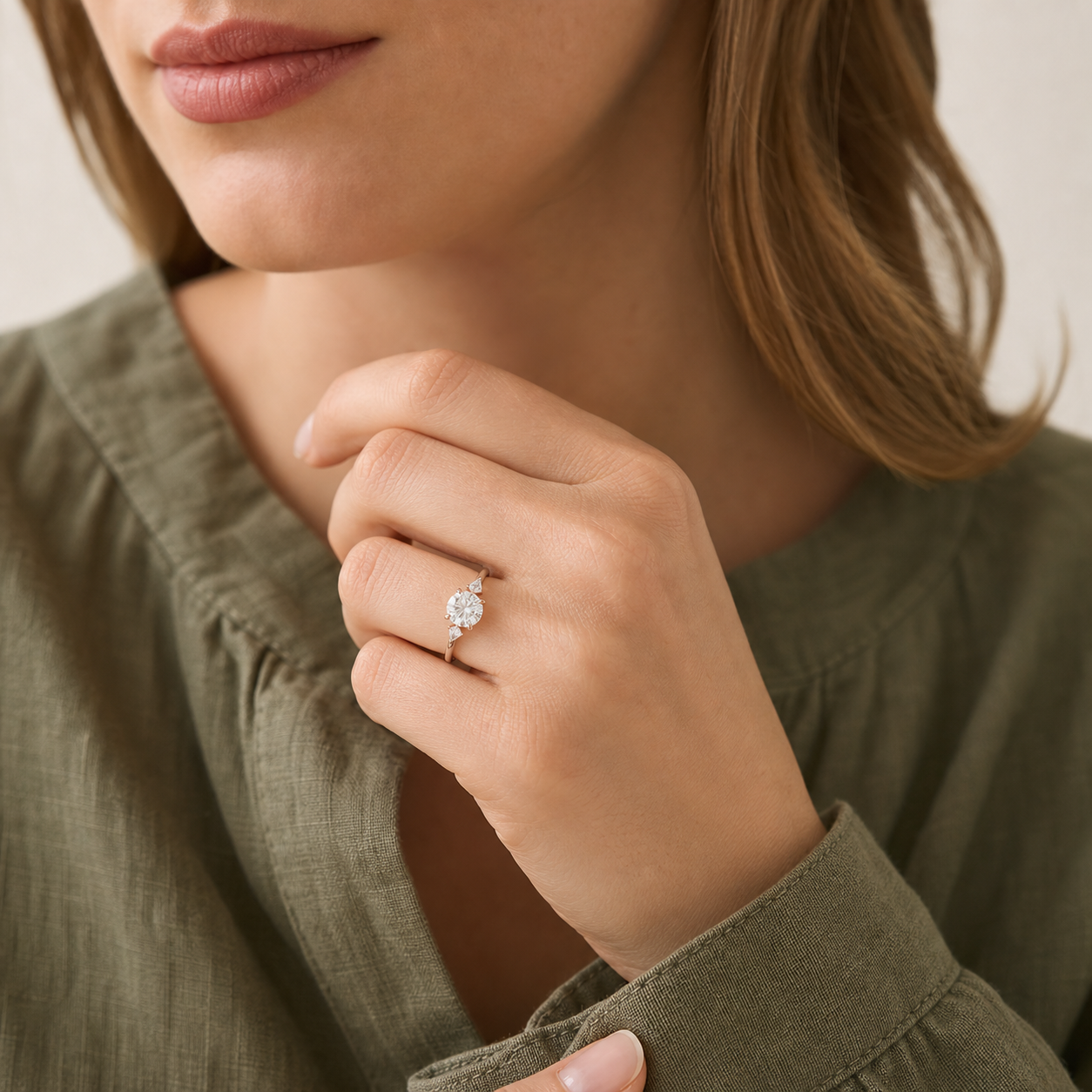
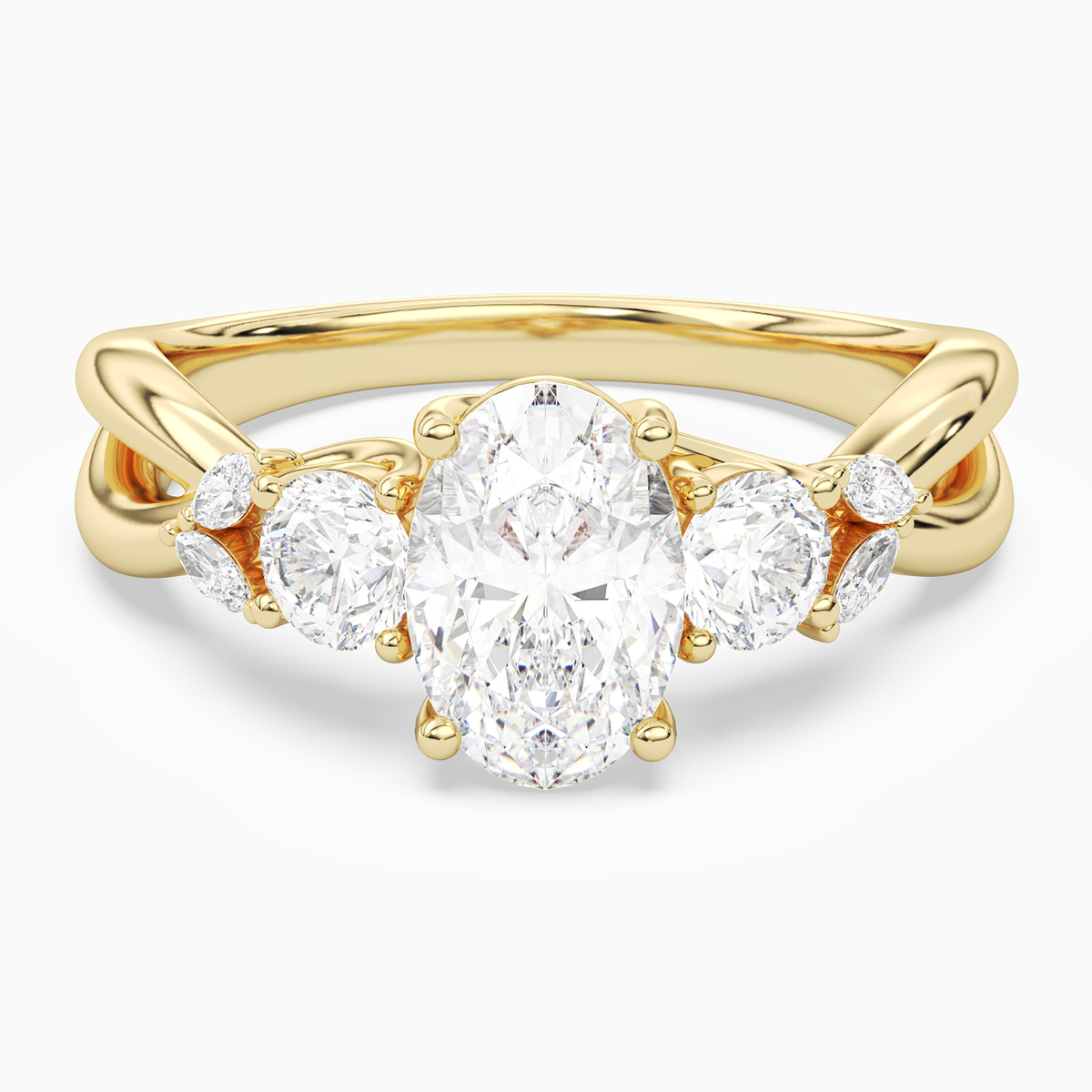


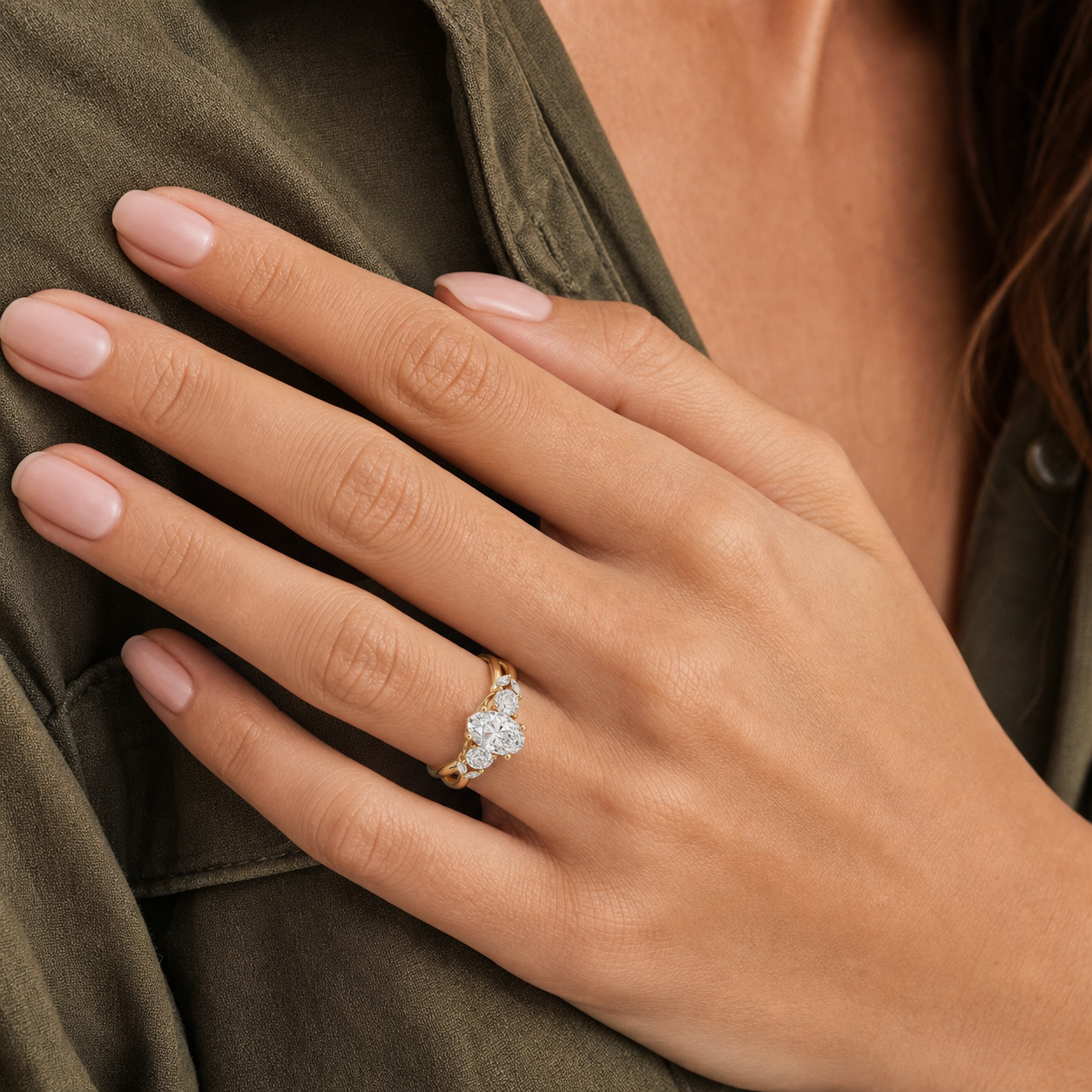


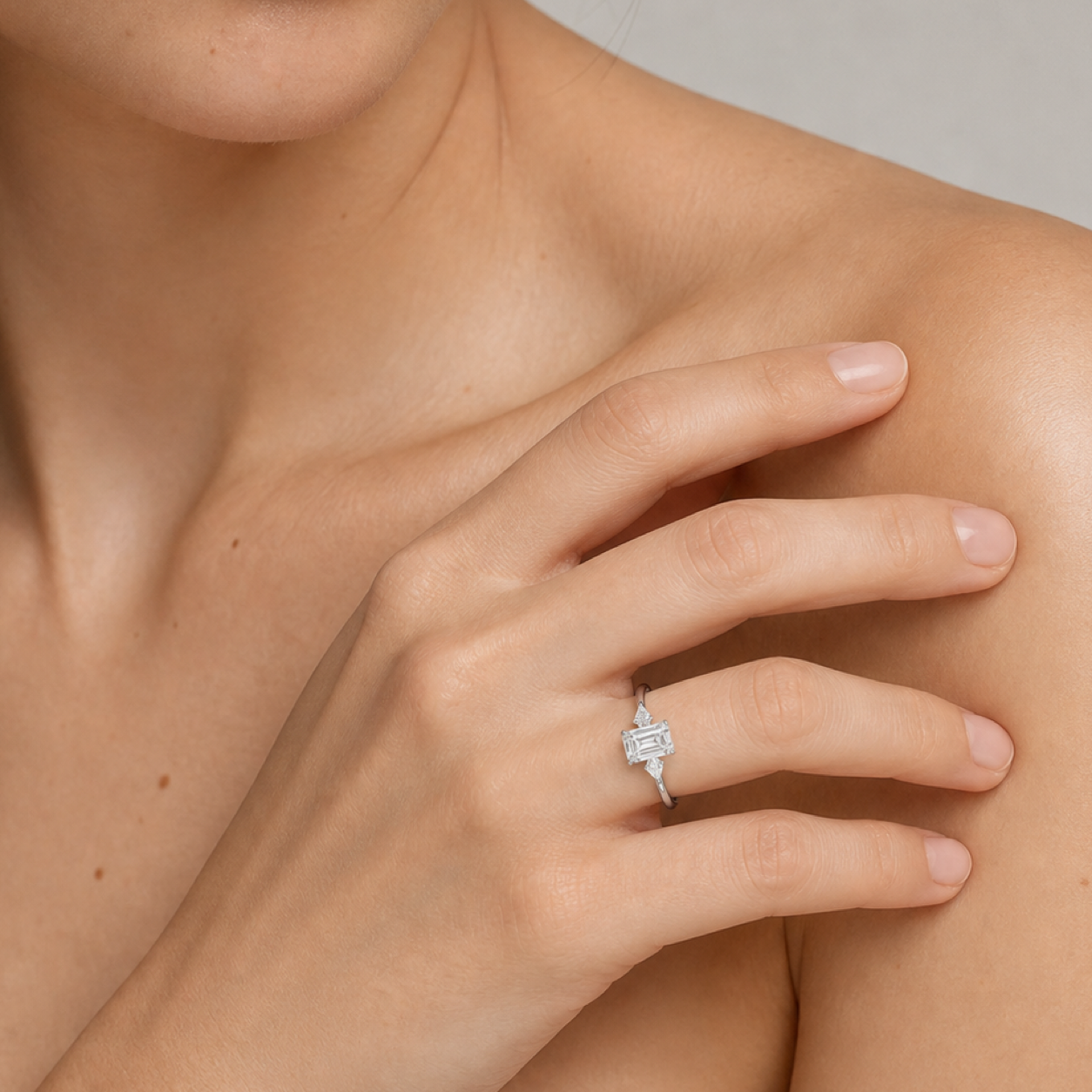


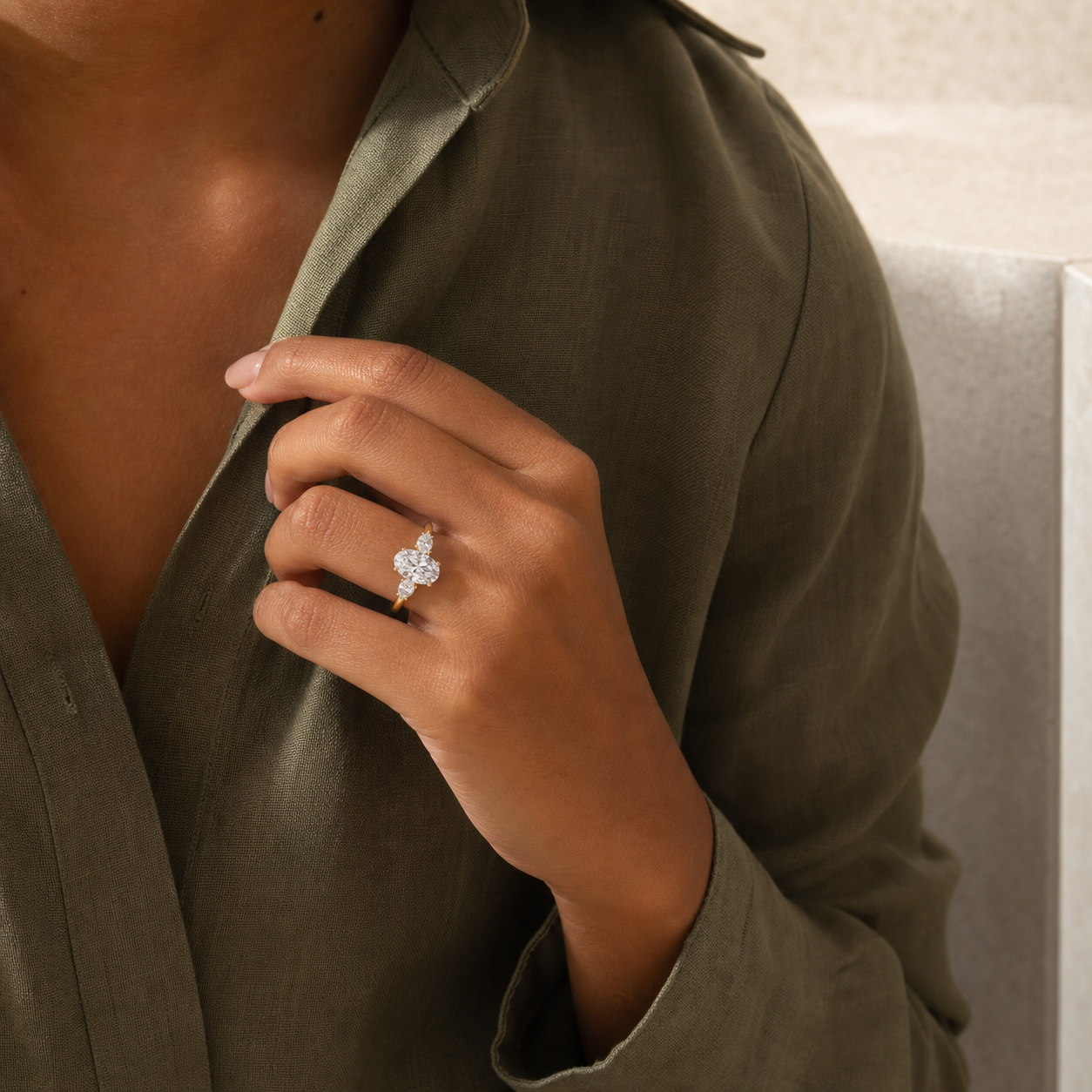


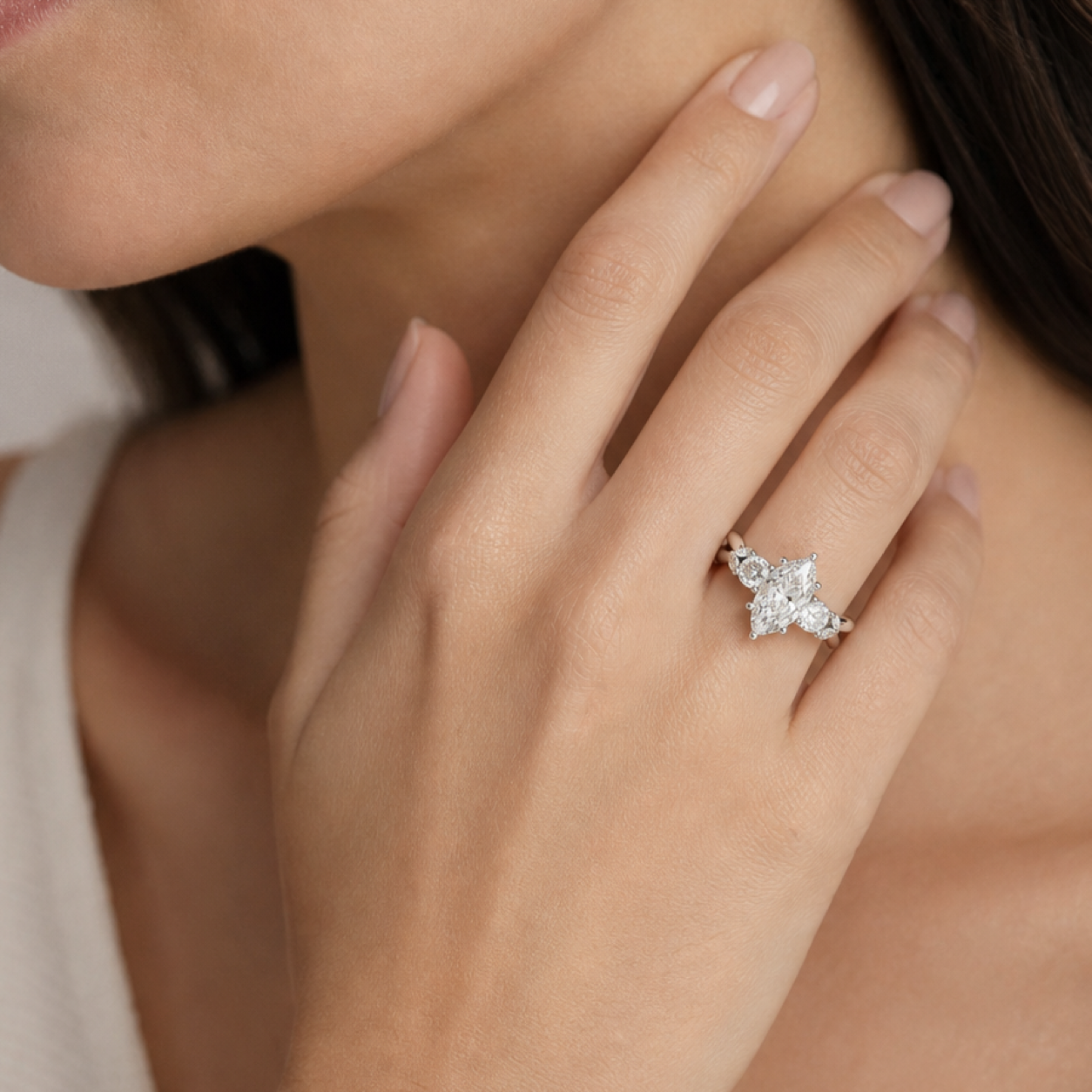


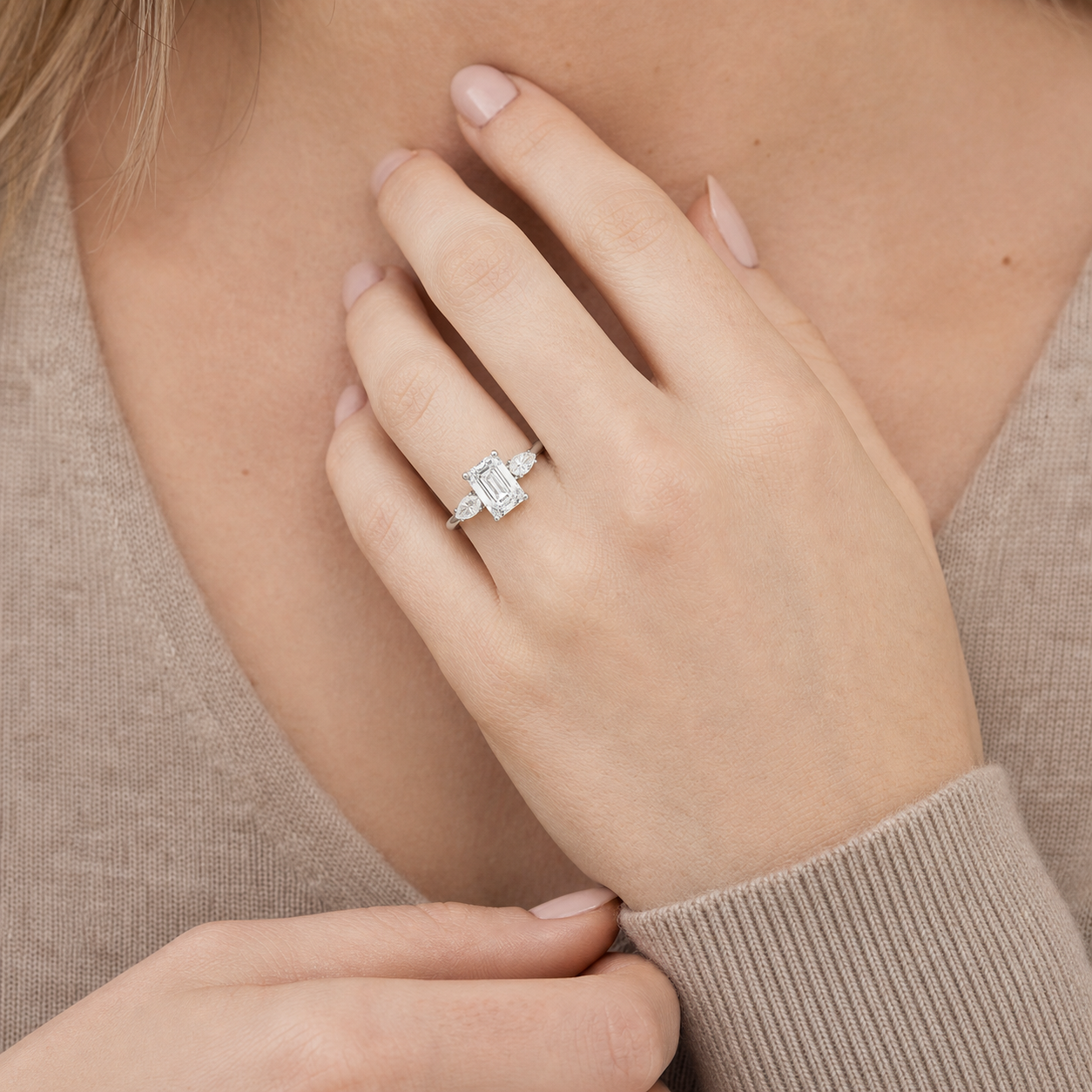


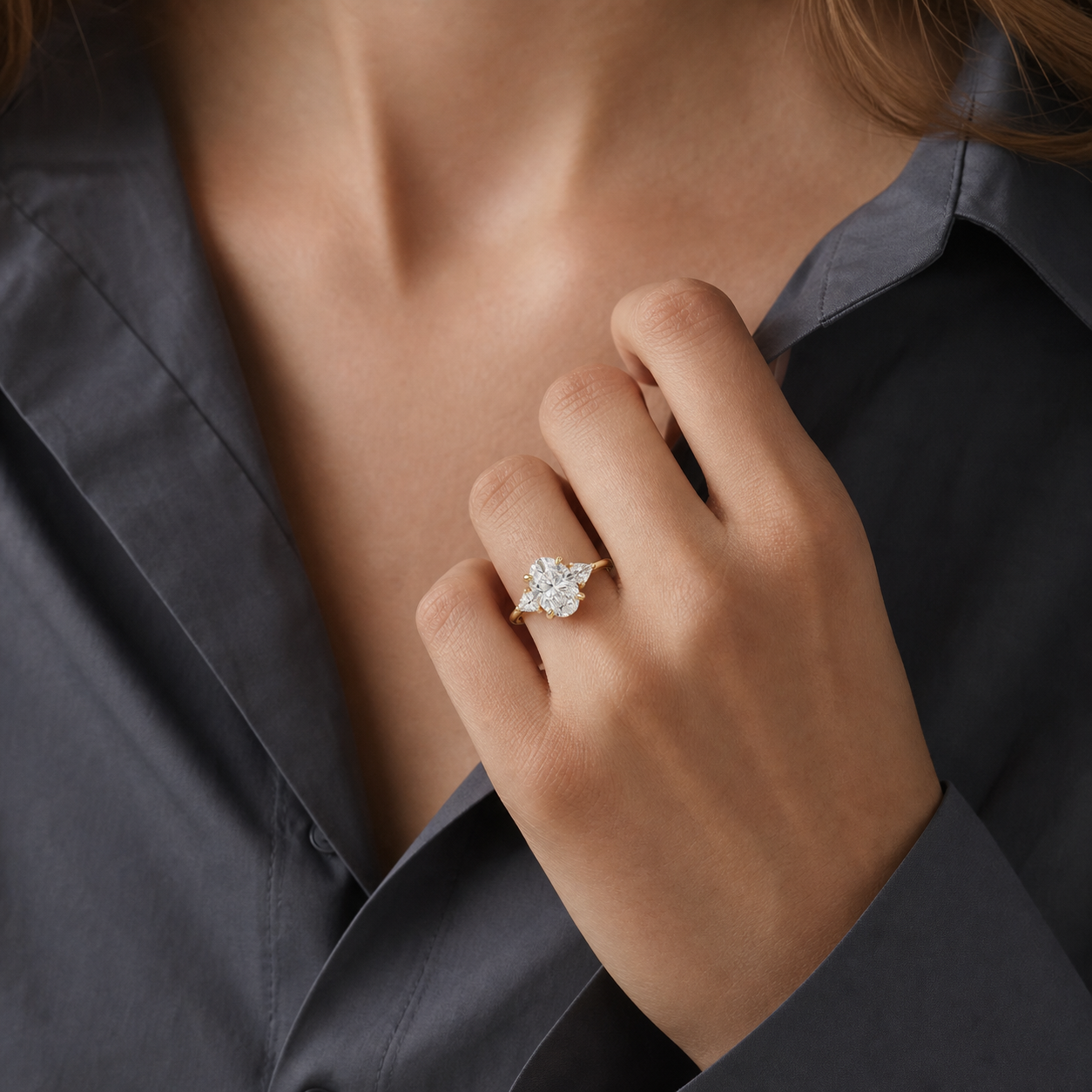


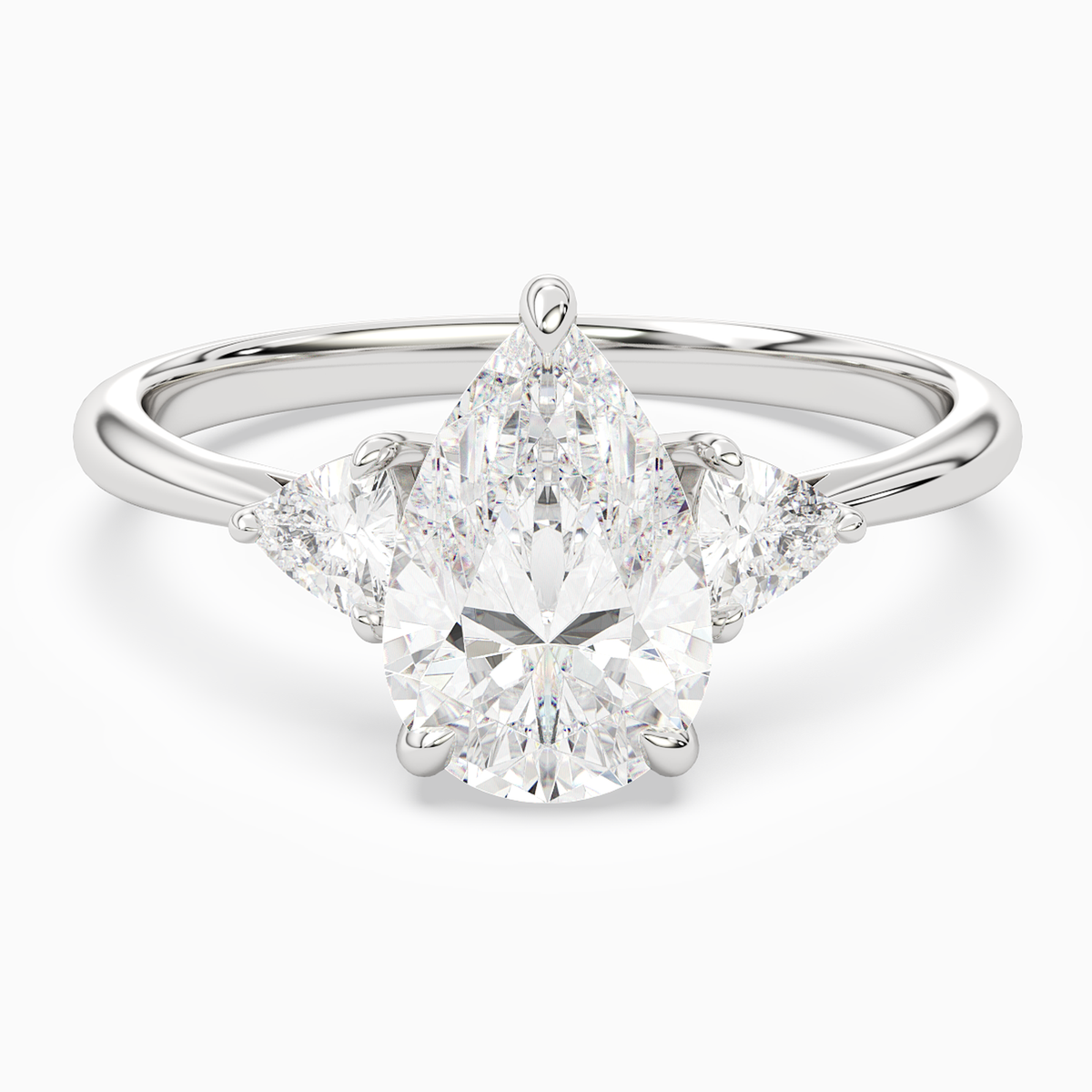


Three Stone Engagement Rings: One Measured Composition
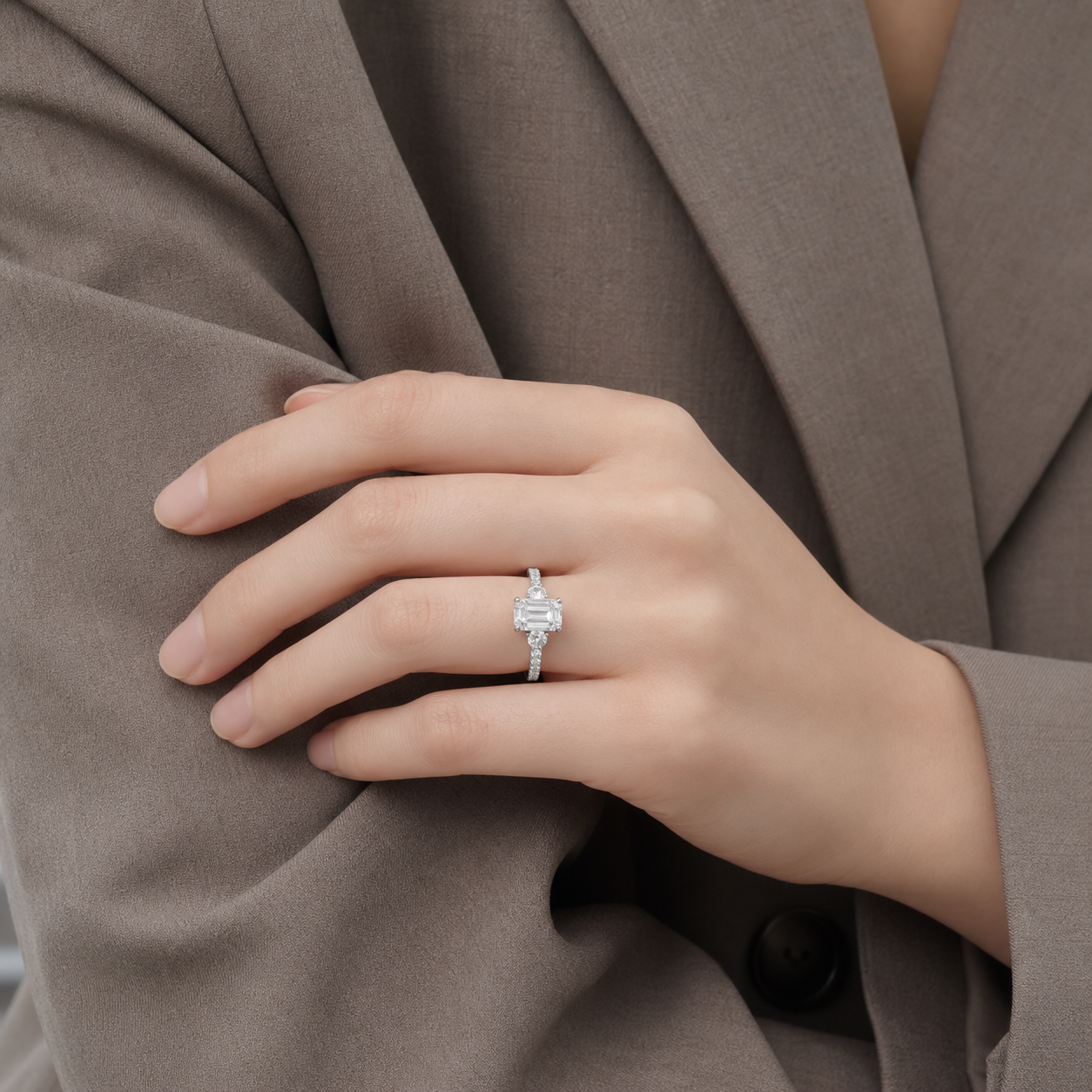
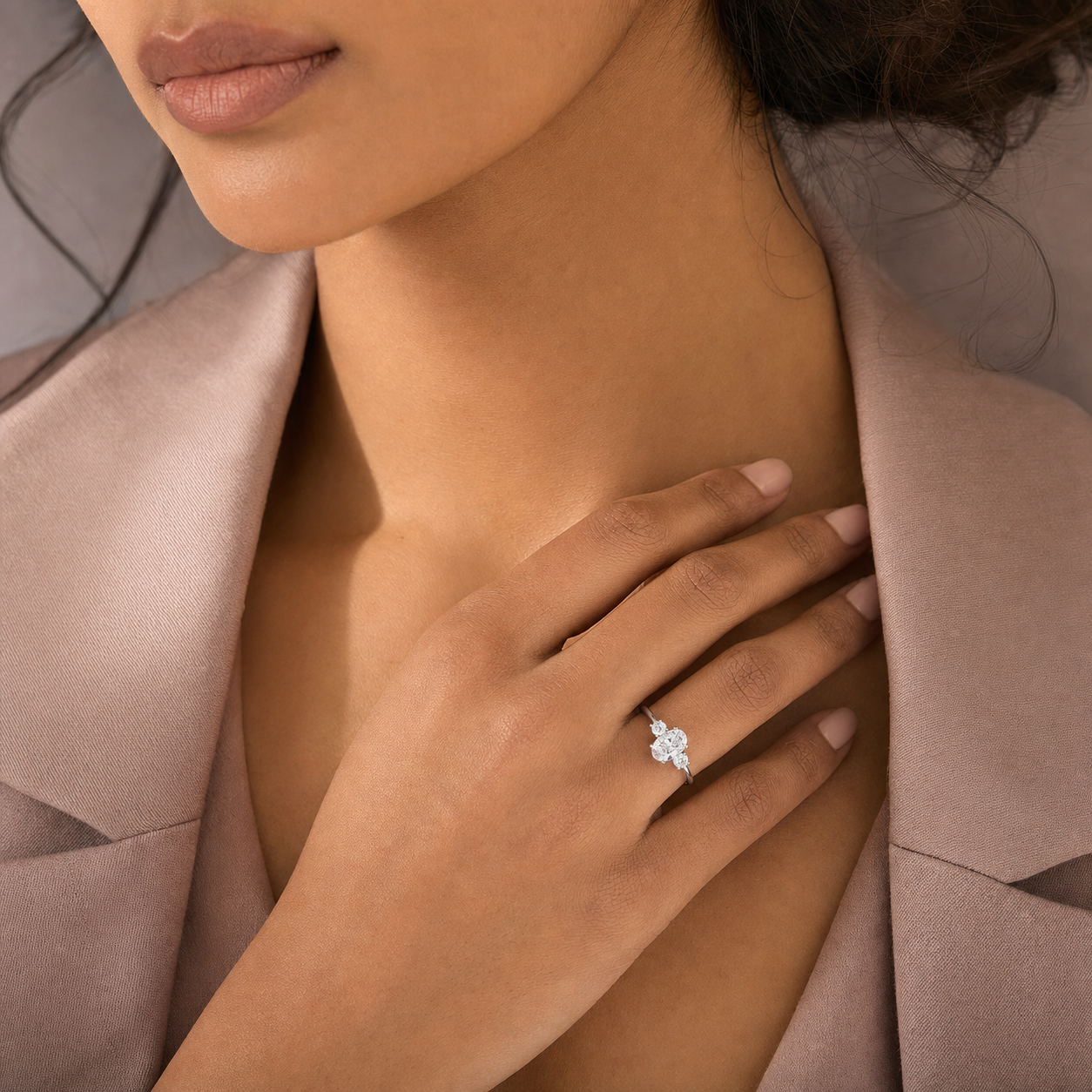
A three stone engagement ring is composed across the hand. One center diamond establishes the primary focus; two flanking stones extend, support, or deliberately challenge its outline. The design succeeds when the eye can move through all three without losing hierarchy—center, transition, side—before the composition resolves into the band.
Burvonti’s Three Stone Engagement Rings collection treats that relationship as an exercise in proportion rather than a formula. Pear-shaped side stones can taper outward. Marquise accents create sharper movement. Step cuts bring long, measured planes. Kite and geometric forms can make the transition more architectural, while floral, pavé-basket, and hidden-halo details add another layer without replacing the central three-stone structure.
Meaning Is Personal; Structure Is Visible
Three stones are often associated with a couple’s past, present, and future. That interpretation can be meaningful, but it is not the only reason to choose the style and need not be assigned to every ring. The design may instead mark three people, three places, three moments, or simply an appreciation for a wider and more articulated silhouette.
What remains constant is the visible architecture: a center bordered by two intentional companions. That separates a three-stone ring from a broader side-stone design, where several smaller diamonds may decorate the shoulders without forming a distinct trio. Burvonti gives the category its own page because the flanking stones are not incidental accents; their scale, orientation, and dialogue with the center define the ring.
Begin with the Relationship Between the Three
Side stones can be distinctly smaller than the center, creating a graduated composition with a clear peak. Stones closer in scale produce a broader, more continuous field. Their tables may align at a similar height, or the sides may angle downward into the band. Each choice changes face-up spread, profile, and the way the ring occupies the finger.
Proportion should be judged visually as well as numerically. Carat weight does not translate to identical surface area across different shapes, and two side stones with the same stated weight can present differently because of cut, depth, and dimensions. Burvonti’s aim is not to prescribe one ratio. It is to calibrate the center’s authority, the side stones’ contribution, and the band’s ability to support the complete span.
Matching Shapes Create Continuity; Contrasts Create Direction
Three stones of the same shape can establish repetition and symmetry. A trio of round or oval diamonds reads as a related sequence; three step-cut forms can create a composed, linear rhythm. Matching does not require the stones to be equal in scale. A graduated arrangement often keeps the center visually primary while preserving a shared facet language.
Contrasting side stones can shape the transition more decisively. Pears and half-moons curve or taper away from the center. Baguette and step-cut sides introduce long planes. Marquise accents draw fine points across the hand. Kite or geometric stones bring angular tension. The most effective pairing is not a universal “best” combination: it is the one whose edges, facet patterns, spacing, and relative dimensions make the entire ring feel intentional.
Read Center Carat, Side Stones, and Total Weight Separately
A three-stone ring can have greater combined face-up coverage and more sources of scintillation than a solitaire, but those qualities should not be reduced to one number. Center-stone carat describes the weight of the main diamond. Side-stone weight may be stated individually or together. Total carat weight can include all diamonds in the ring, including pavé or halo accents when present.
These figures are not interchangeable. A larger total does not mean a larger center, and three diamonds do not improve one another’s cut. The independently graded lab-grown center diamond should be assessed on its own report and dimensions. Side stones should then be judged for how their color, clarity, cut character, and visible scale relate to it; exact grading documentation for accent stones depends on the product specification.
Setting and Band Must Carry a Wider Span
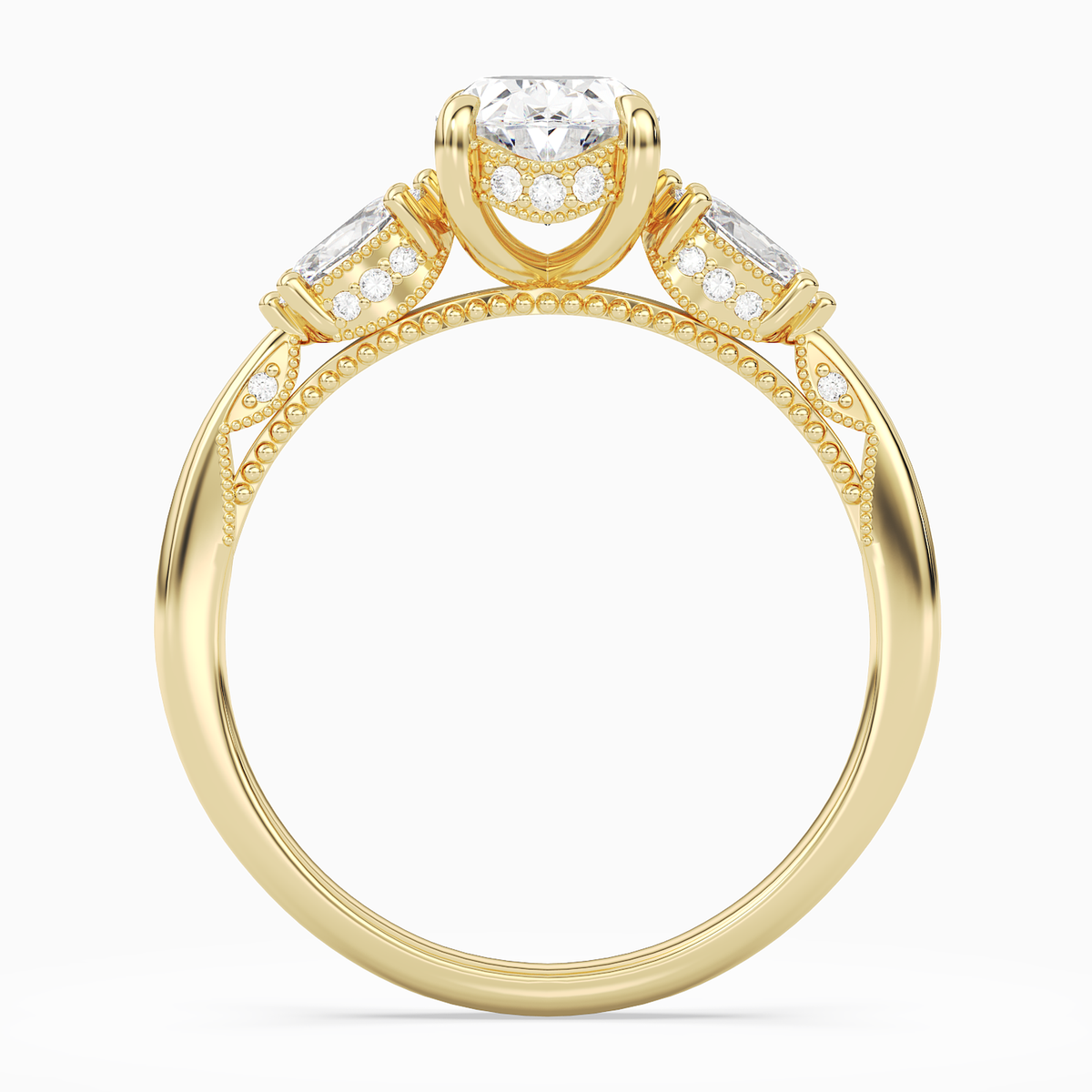
Three separate stones introduce more edges, prongs, and transitions than a solitaire. Prong settings can keep the outlines open; bezel or partial-bezel treatments introduce more metal and edge protection. Shared structures can make the trio feel continuous, while individually articulated baskets make each stone easier to read. Pointed pears, marquises, kites, and sharp corners need support suited to their vulnerable areas.
The band completes the proportion. A fine shank can increase contrast with the width of the head, while a more substantial band can ground the span and influence resistance to spinning. Pavé, milgrain, vine, floral, or sculptural shoulders change how the three stones transition toward the finger. No single width is correct for every center size, hand, or lifestyle; stability, comfort, appearance, and structural requirements should be considered together.
Plan the Pairing and the Care Around All Three Stones
The outer stones and their baskets often define how a wedding band approaches a three-stone ring. A raised, open gallery may leave room for a straight band; lower side settings or a broad span may create contact, a deliberate gap, or the need for a contour. Compare the exact profiles together, including where prongs, pavé, or exposed diamond edges could meet the second ring.
More stones also mean more setting points to observe. Clean around and beneath all three, remove the ring for impact-prone work or harsh chemical exposure, and arrange inspection after a strike or when a prong catches or a stone moves. Burvonti combines responsibly sourced lab-grown diamonds with proportion, documented center quality, and human judgment. Custom possibilities may refine shapes, relative scale, metal, engraving, or setting details when the chosen design can support them.
Frequently Asked Questions
What is a three stone engagement ring?
A three stone engagement ring has one center stone flanked by two intentional side stones. The trio forms the primary face-up composition, with the center usually larger or otherwise made visually dominant.
What do the three stones symbolize?
They are often interpreted as past, present, and future, but the meaning is personal rather than mandatory. The stones may represent people, places, milestones, or simply a preferred three-part design.
What is the difference between a three stone ring and a side stone ring?
A three-stone ring is organized around a distinct trio whose flanking stones have a clear compositional role. A side-stone ring may use several smaller accents along the shoulders without presenting three principal stones as the main structure.
Do all three diamonds need to be the same shape?
No. Matching shapes create repetition and continuity, while contrasting shapes can taper, widen, soften, or sharpen the transition from center to band. The edges, facet patterns, dimensions, and spacing should work together.
How large should the side stones be compared with the center?
There is no universal ratio. Smaller sides create a pronounced center and graduated outline; sides closer in scale make the composition broader and more continuous. Judge dimensions and face-up balance, not carat figures alone.
What is the difference between center carat and total carat weight?
Center carat is the weight of the main diamond. Total carat weight can include both side stones and any smaller accents. A larger total therefore does not necessarily mean a larger center stone.
Which center diamond shapes work in three stone settings?
Round, oval, cushion, emerald, radiant, pear, marquise, Asscher, princess, and other shapes can work when the setting and flanking stones are designed around them. The best choice depends on the complete composition, not a universal ranking.
What side stone shapes can frame a center diamond?
Options can include round, oval, pear, marquise, baguette, step-cut, half-moon, trapezoid, kite, and other geometric forms. Availability is design-specific, and pointed or angular shapes require appropriate support.
Are all three diamonds independently graded?
Burvonti’s center lab-grown diamond is independently graded. Smaller side or accent diamonds may be documented within the product specification rather than receiving individual reports; confirm the documentation supplied with the selected ring.
Should the side diamonds match the center diamond’s color and clarity?
They should relate coherently when viewed together, but their grades do not always need to be identical. Size, setting metal, facet style, and position affect what is visible; confirm the actual side-stone specification for the design.
Does a three stone ring look larger than a solitaire?
It often creates a wider combined face-up span because two stones extend beyond the center, but it does not increase the center diamond’s dimensions. The visual result depends on all three shapes, scales, depths, and spacing.
What band width works best with a three stone ring?
No single width is best. A fine band creates stronger contrast with the wider head; a broader band can visually ground it and may affect stability. Center scale, side-stone span, fit, comfort, and construction should guide the choice.
Will a wedding band sit flush with a three stone engagement ring?
It depends on side-stone baskets, gallery height, head width, shoulders, and exposed accents. Some straight bands sit close; other designs create a gap or pair more naturally with a contoured band.
Are three stone engagement rings suitable for everyday wear?
They can be when the setting suits the wearer’s routine. Consider exposed edges, pointed stones, profile, number of prongs, and the wider head, then remove the ring for impact, heavy force, or harsh chemical exposure.
How should I care for a three stone engagement ring?
Clean gently around and beneath all three stones using a method appropriate to the diamonds, metal, and setting. Watch for catching, changed prong alignment, or movement, and arrange professional inspection after impact or when anything feels different.
Can a Burvonti three stone engagement ring be customized?
Custom possibilities may include center and side shapes, relative scale, metal, band proportion, engraving, or selected setting details. Availability and structural feasibility depend on the chosen design and final specification.