
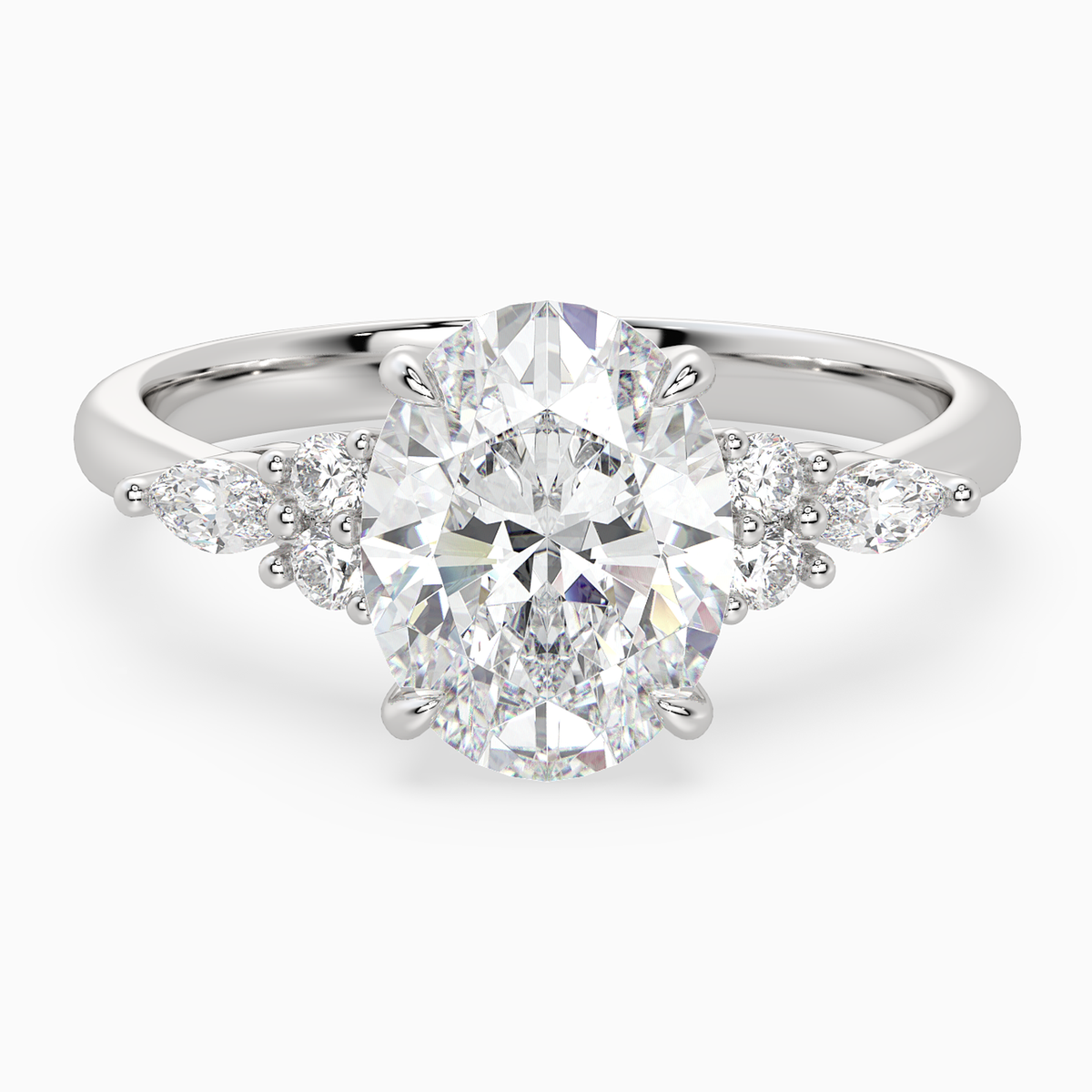


Lab Grown Diamond Solitaire Necklaces in Platinum
Natural white tone gives one center gravity. Platinum connects setting edge, pendant bail, and chain with quiet, measured material presence.


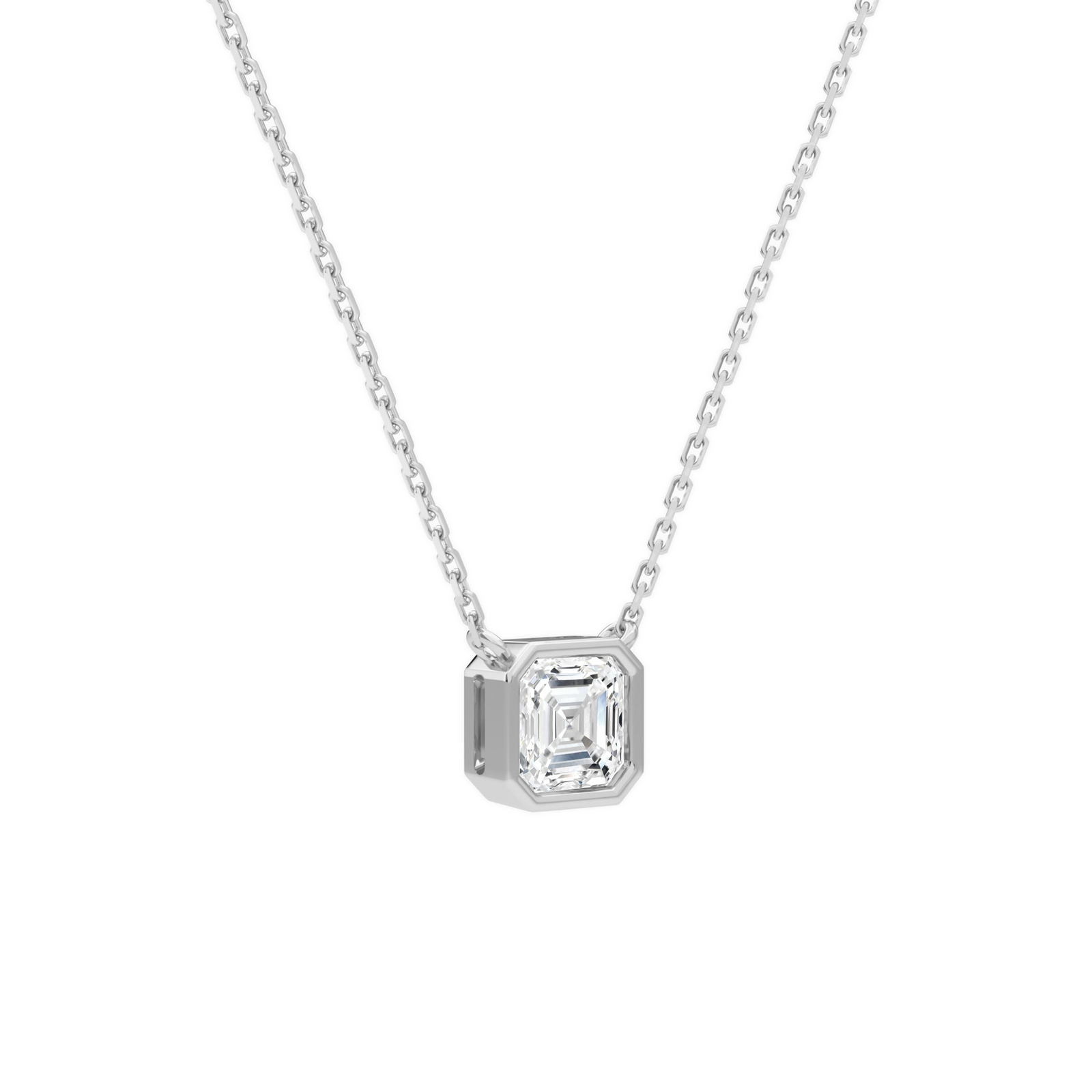


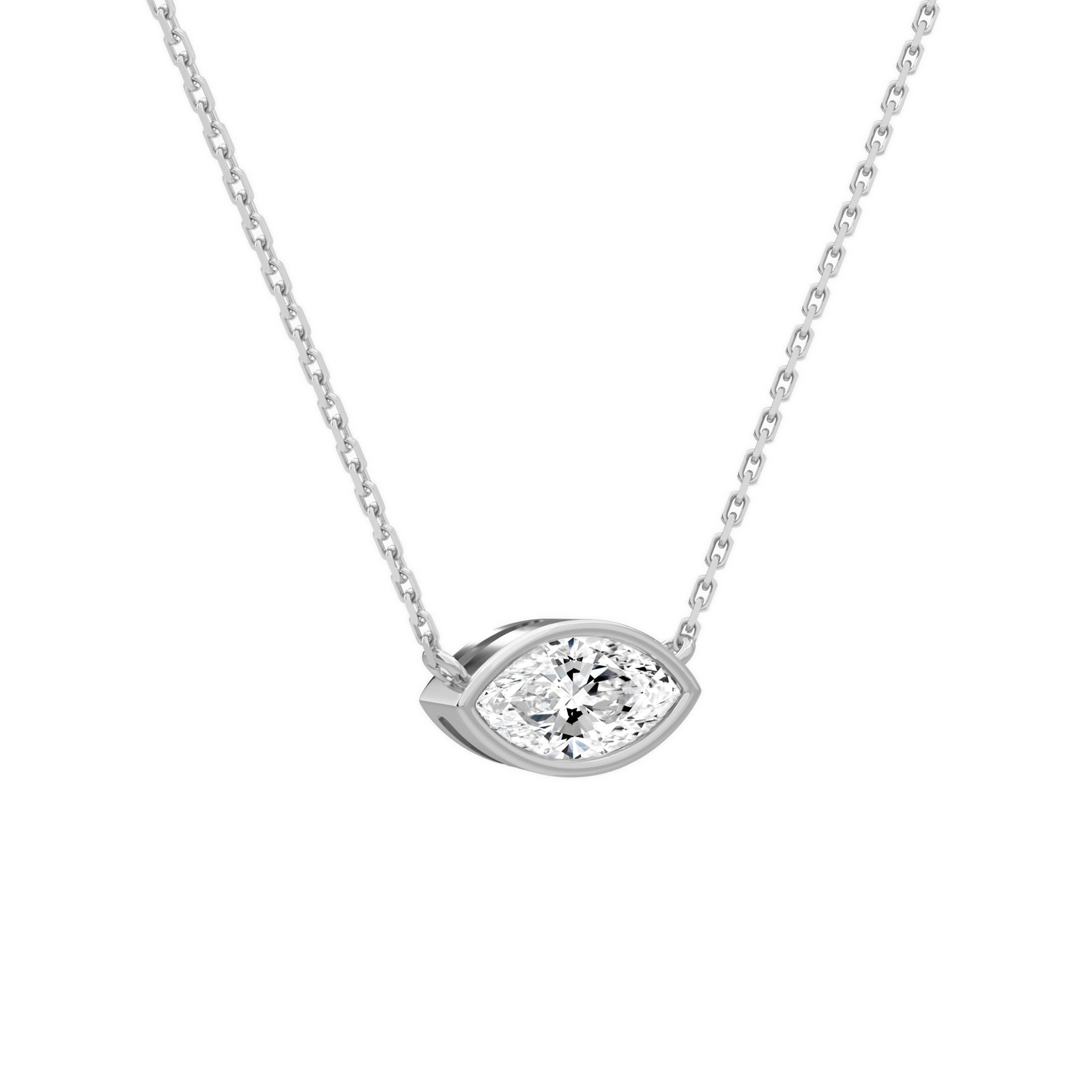


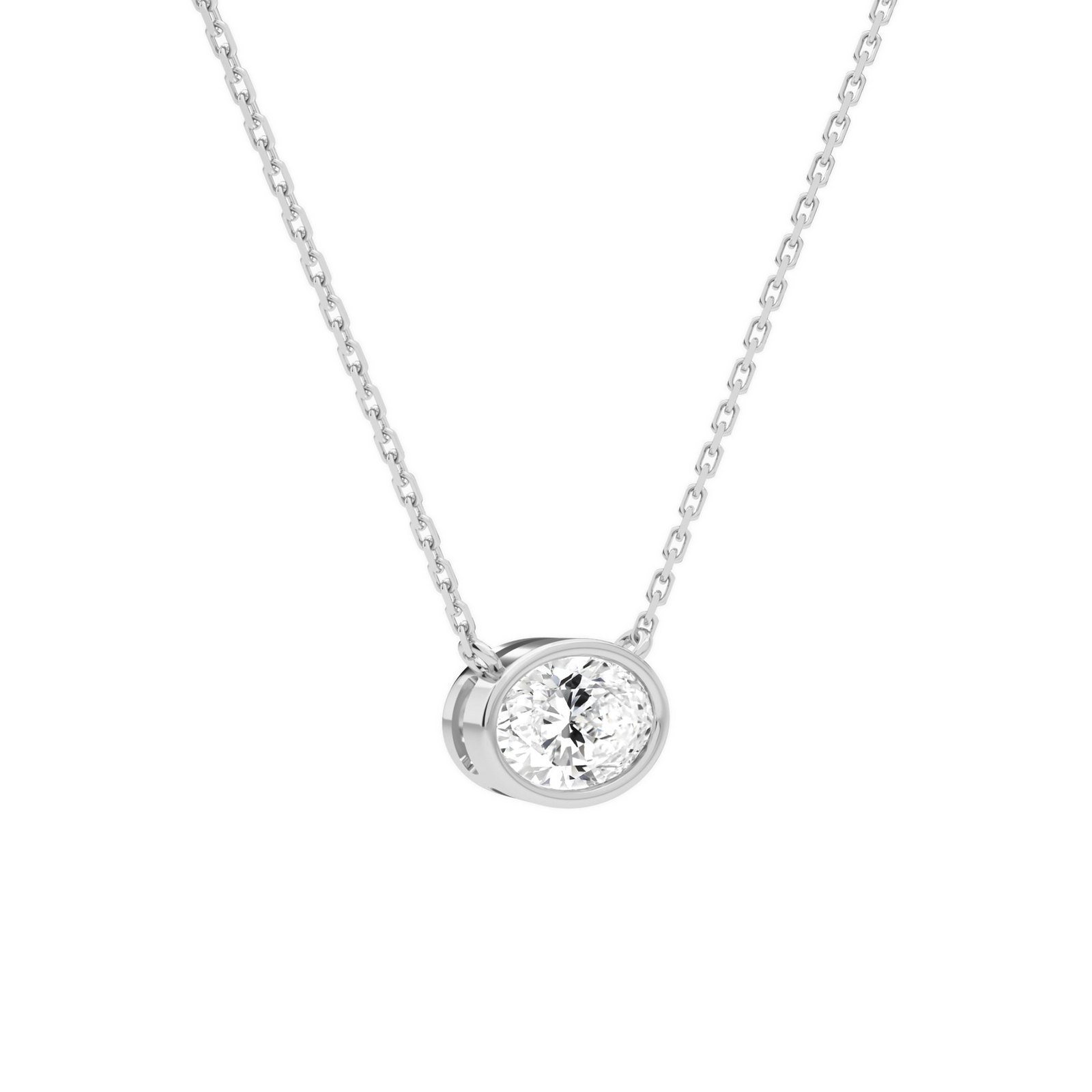


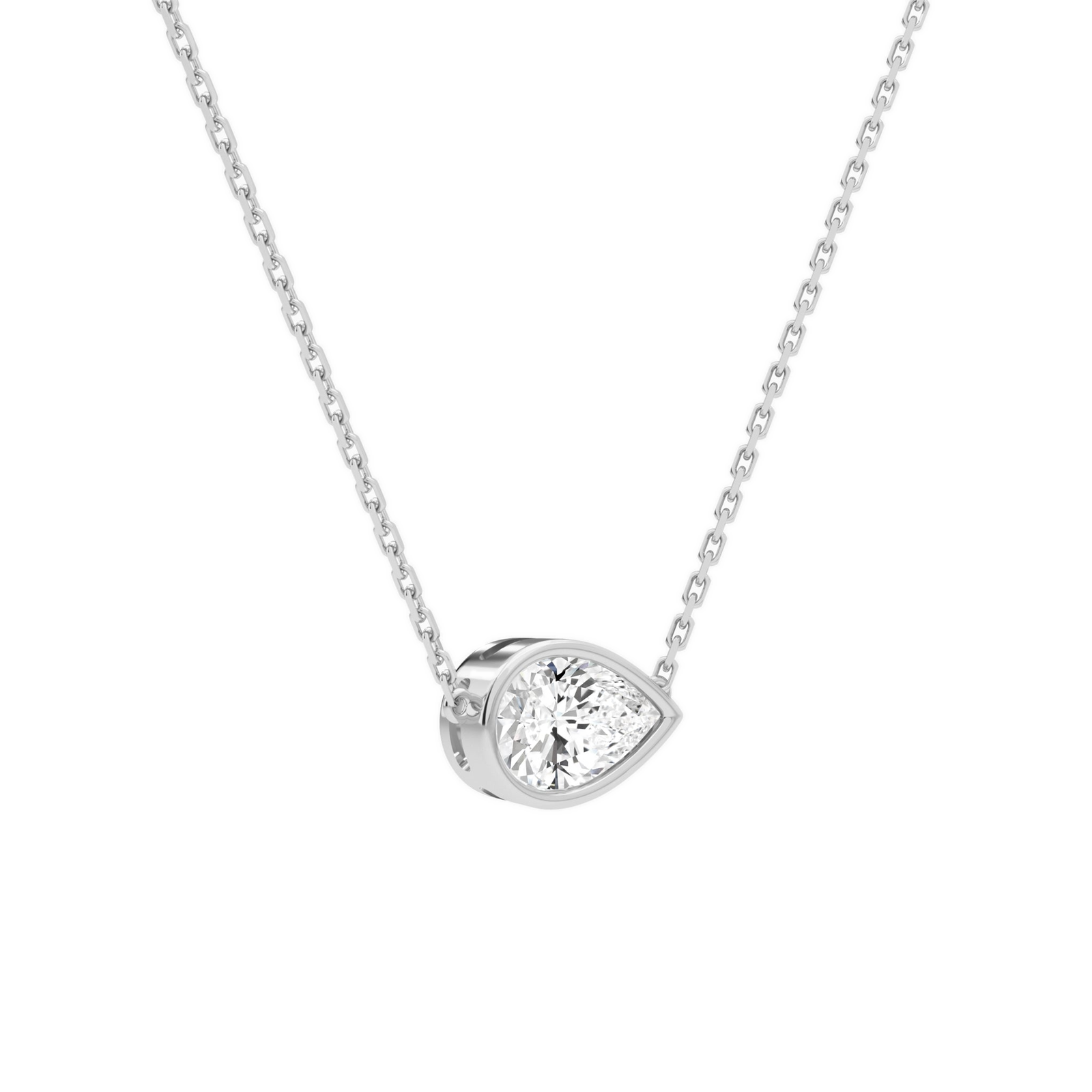


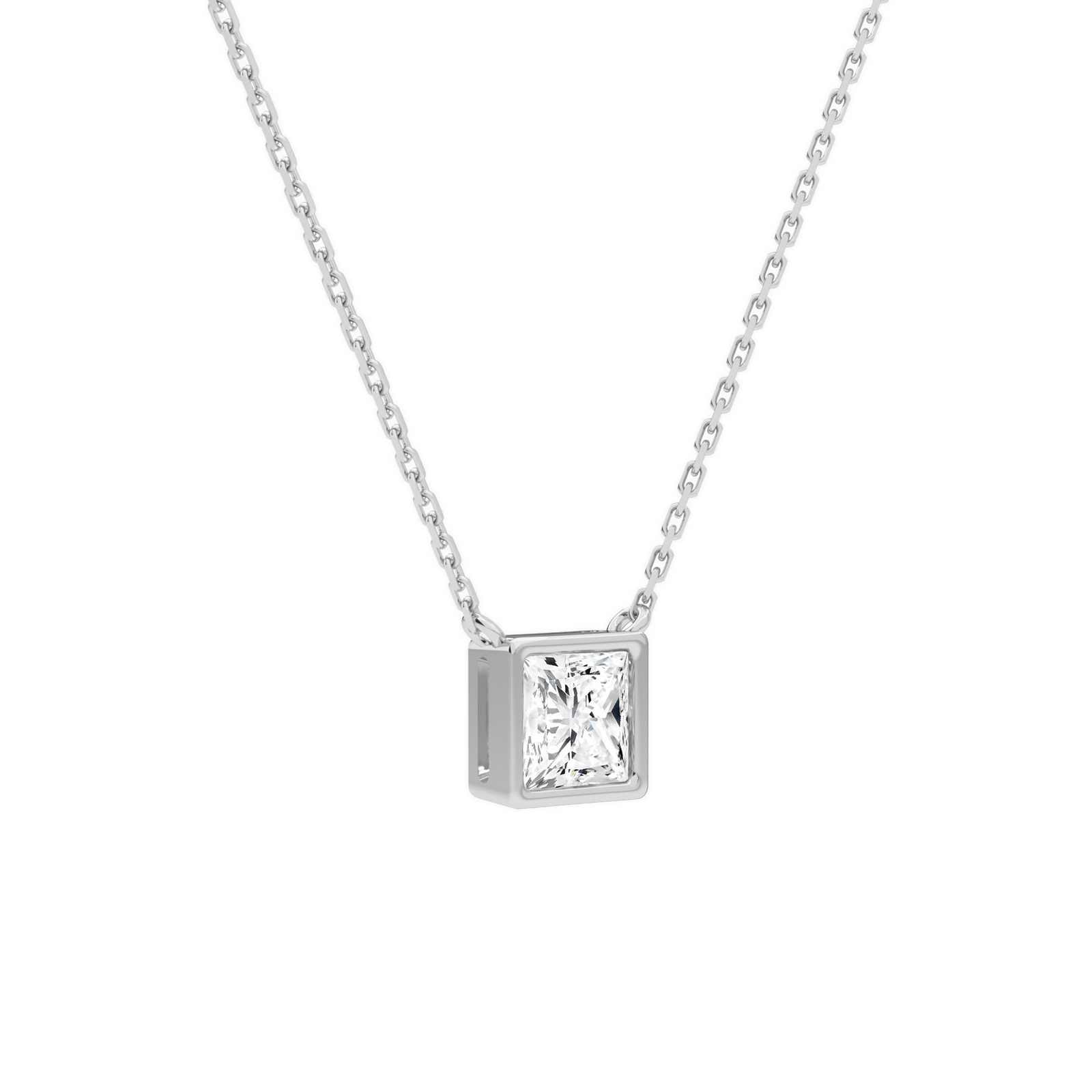


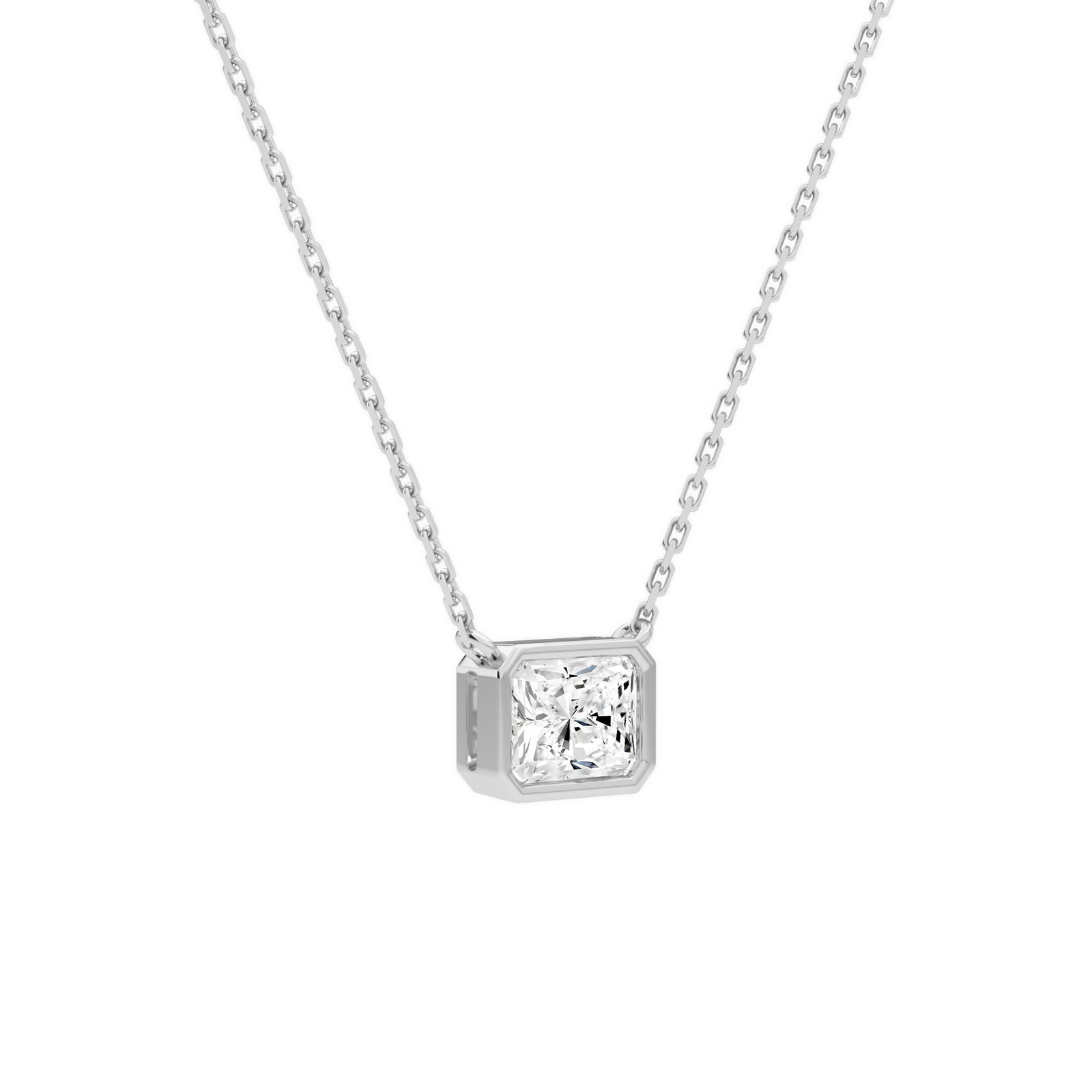


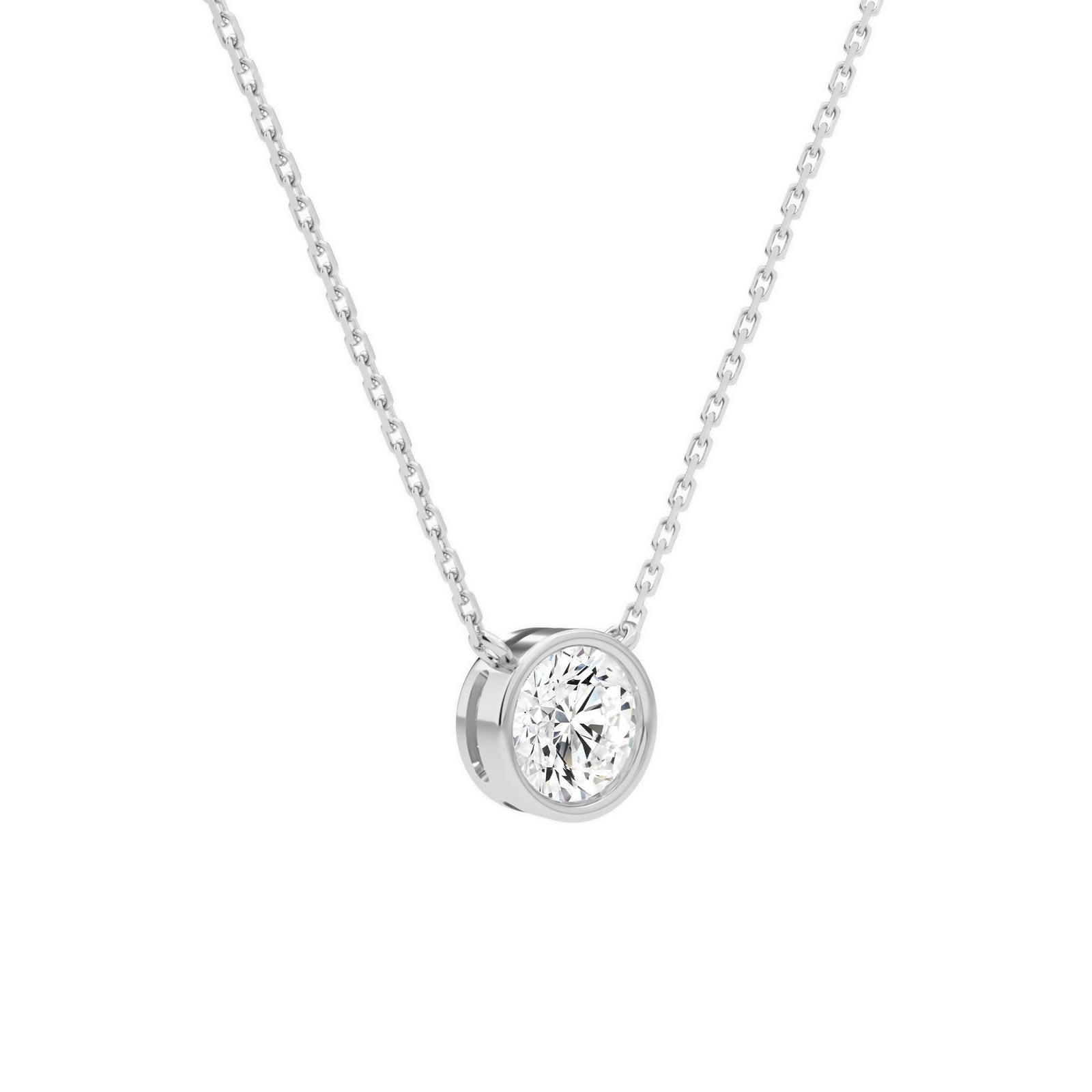


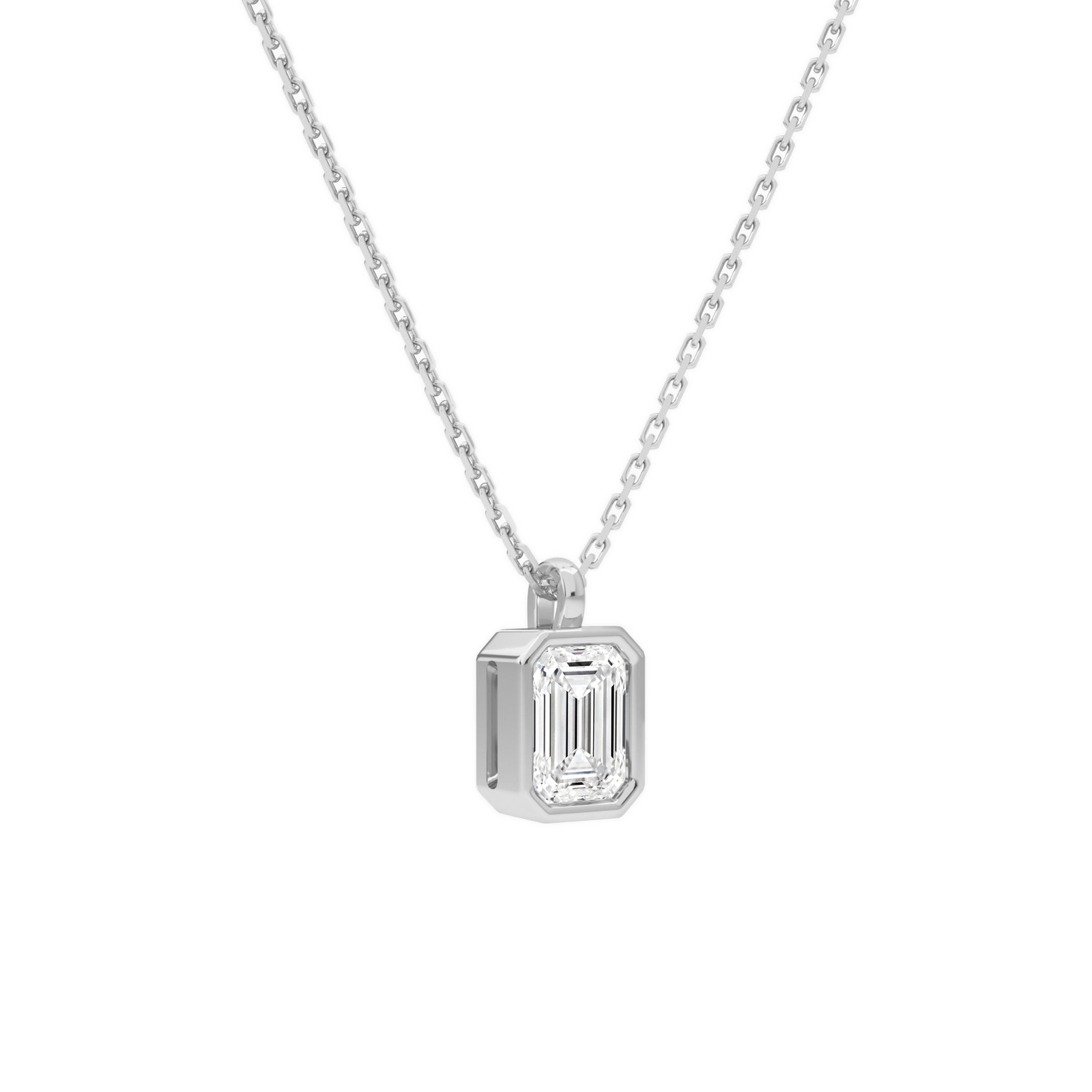


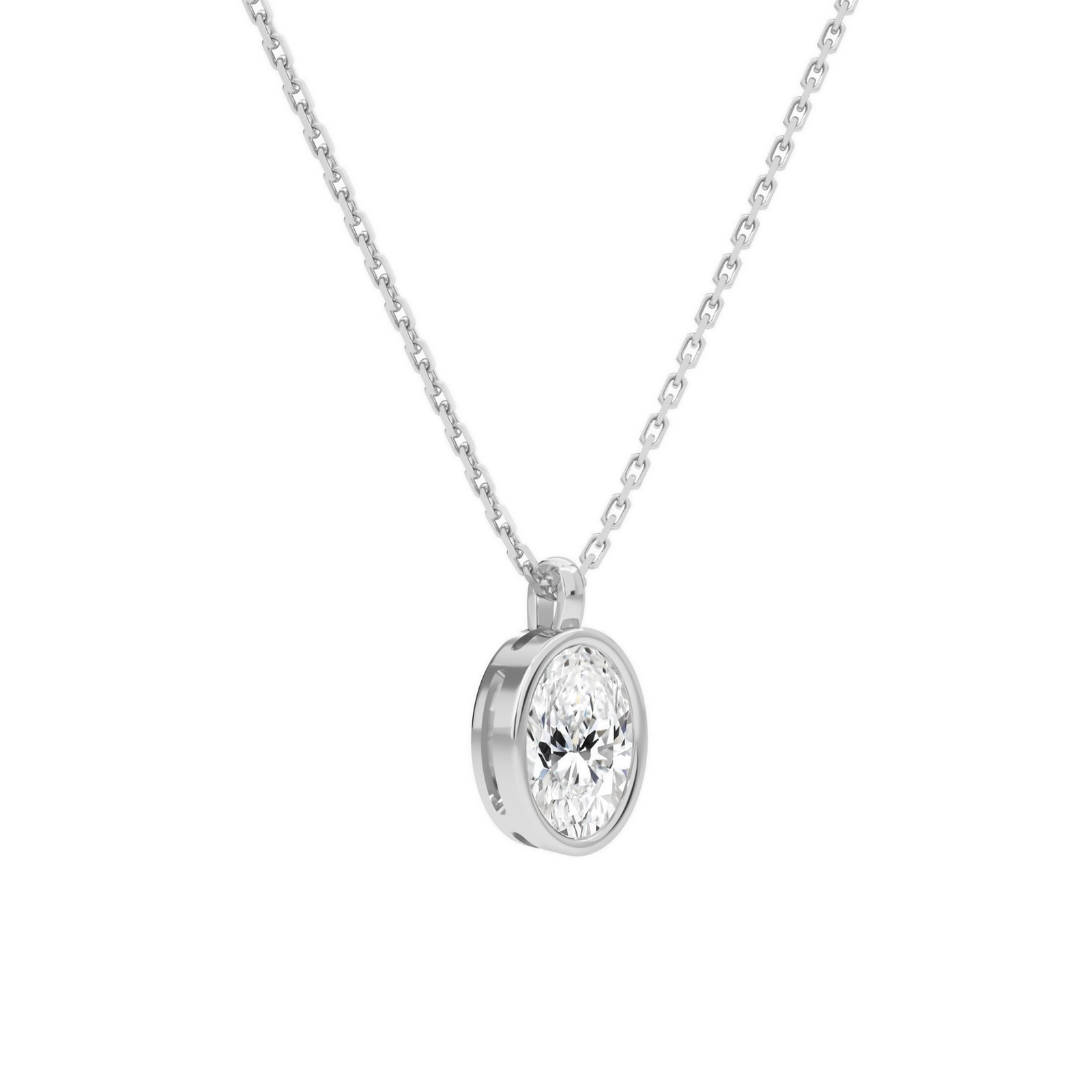


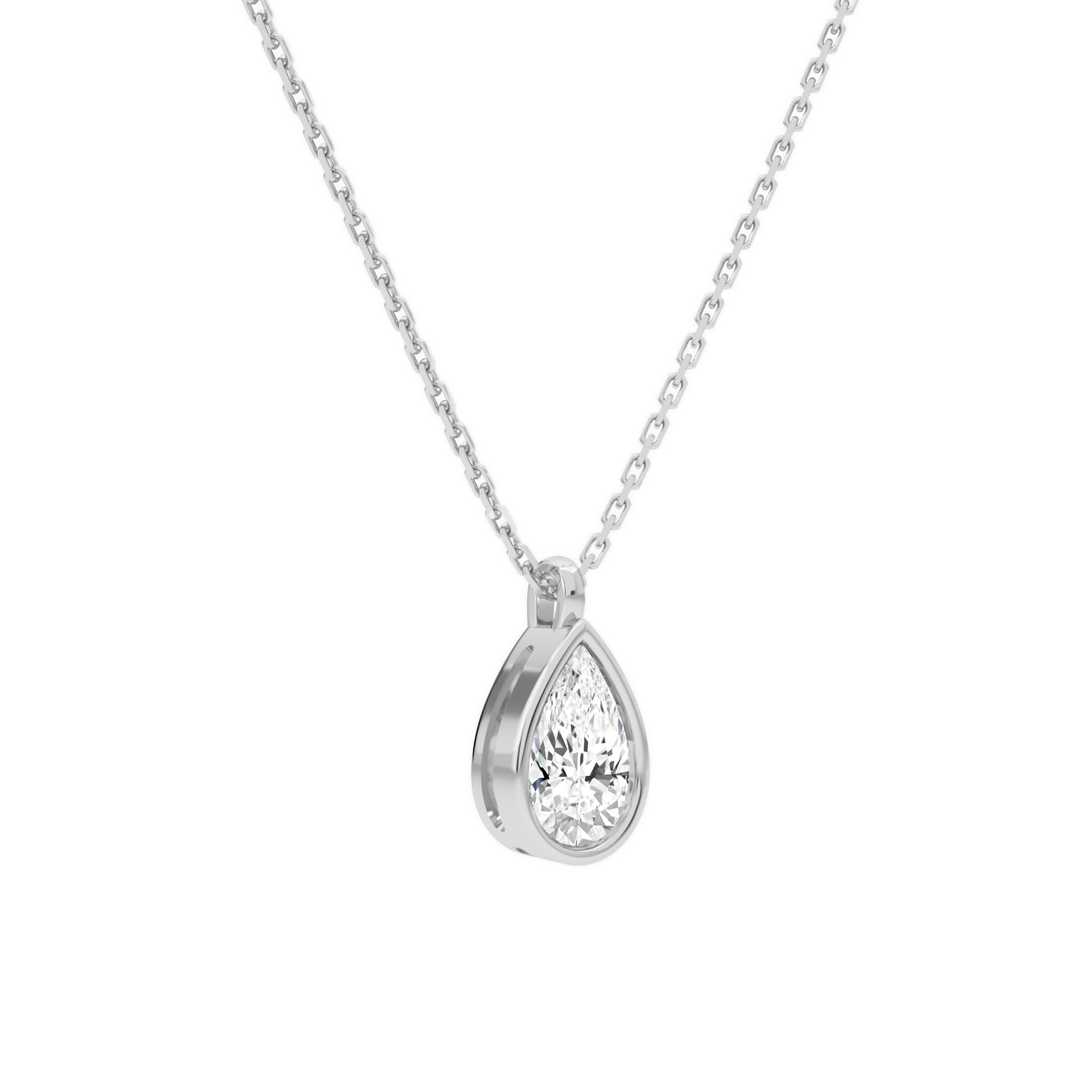


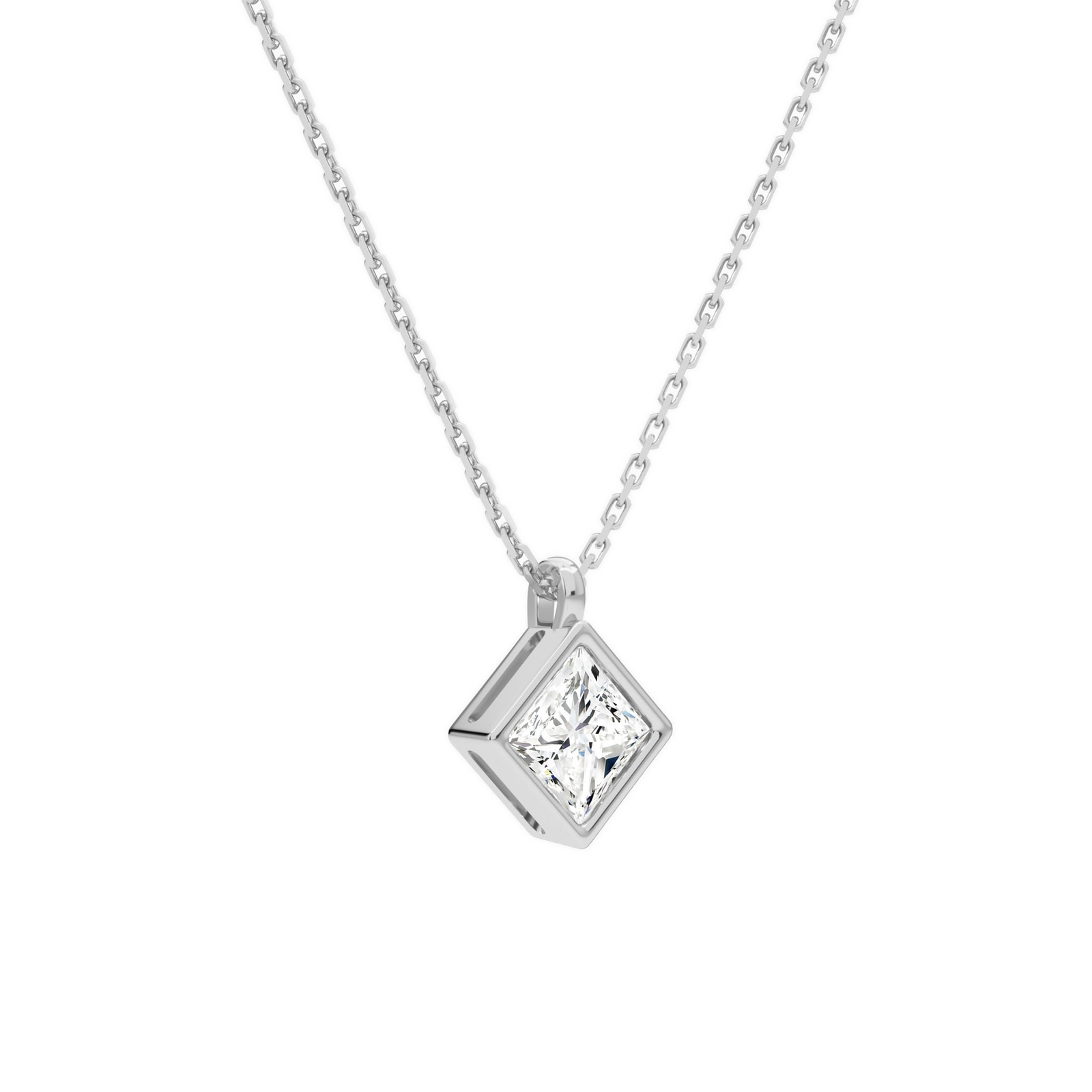


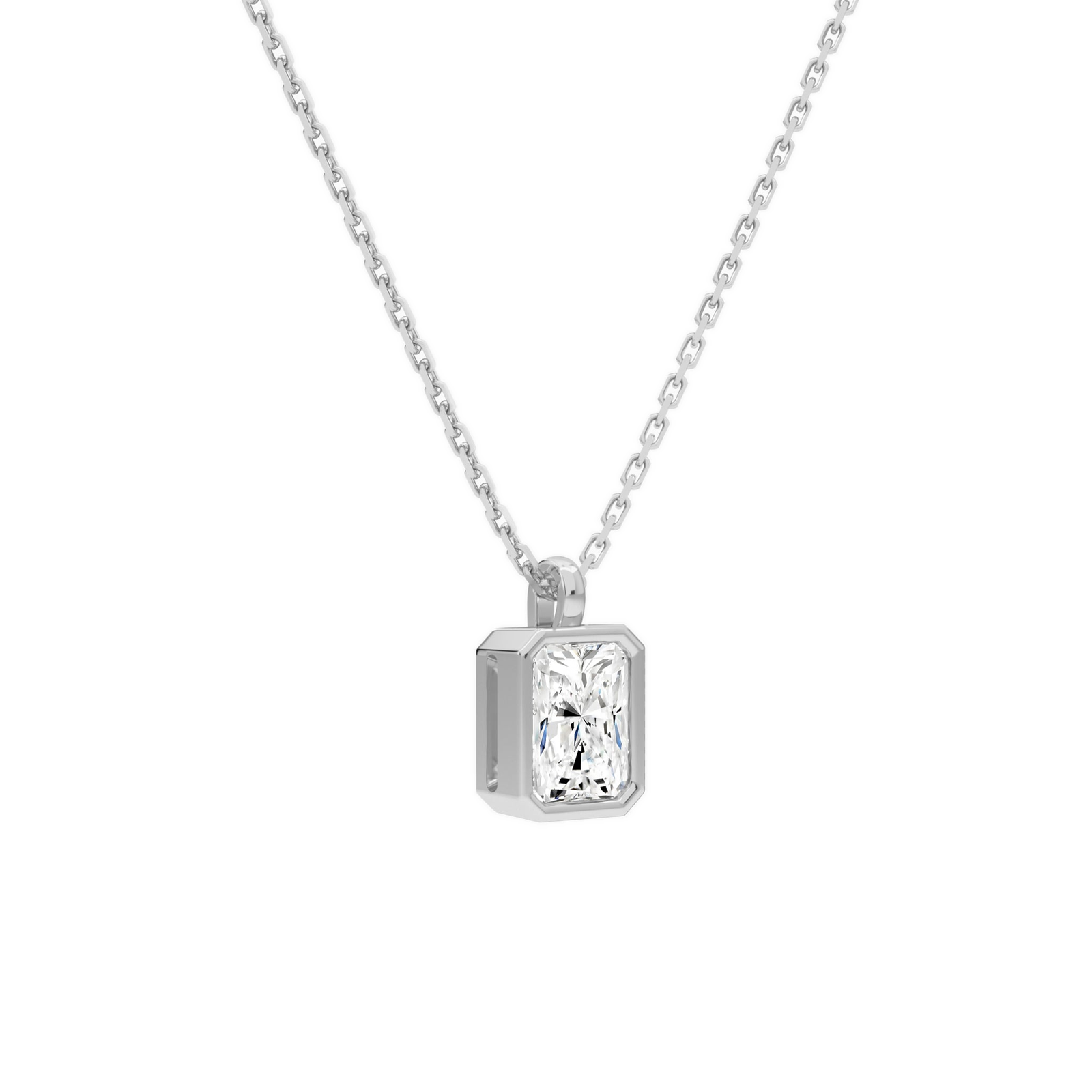


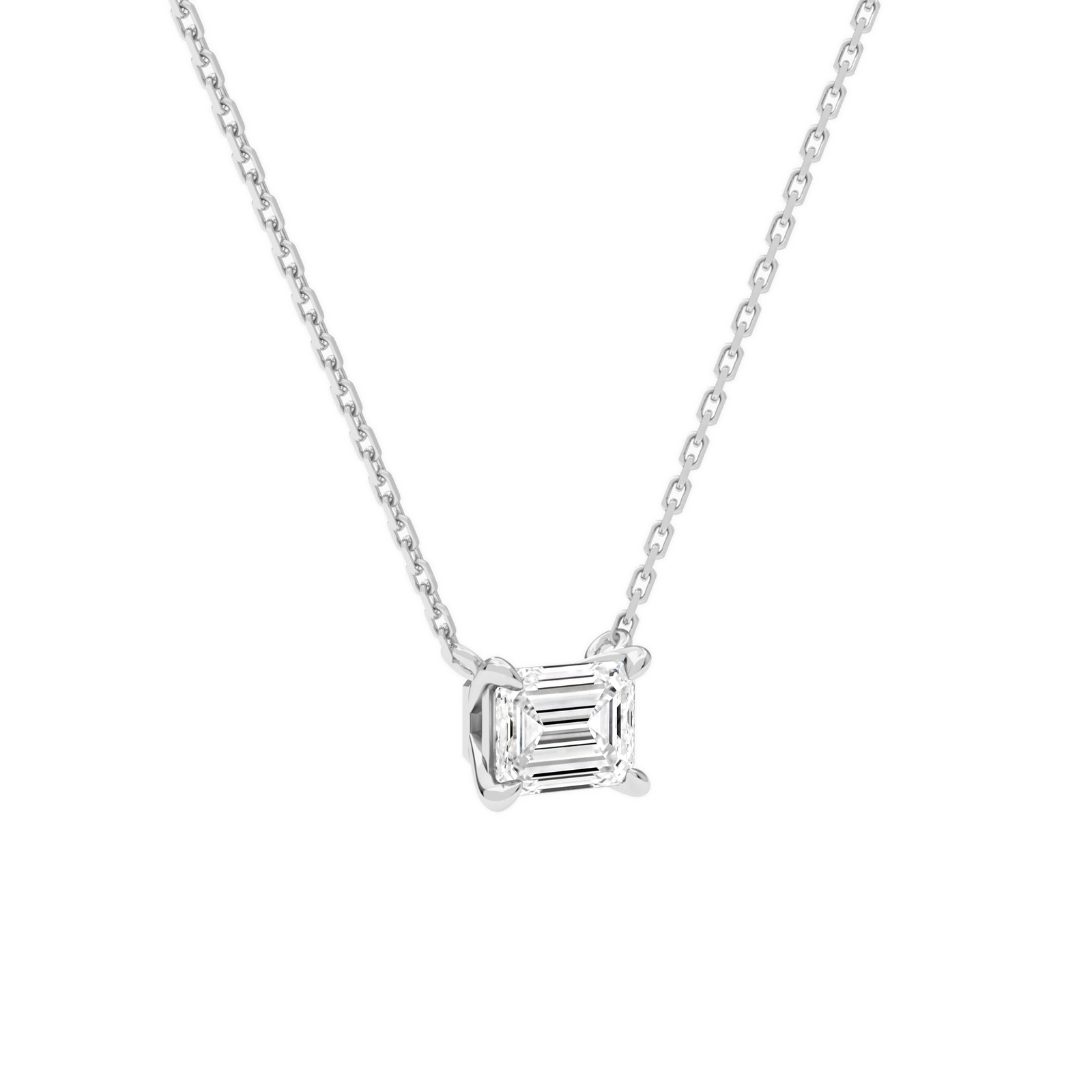


Platinum Solitaire Necklaces: Natural White Tone from Setting to Chain
Platinum carries natural white tone through the entire suspension of a solitaire: prong or bezel, side profile, attachment, chain, and clasp. The center remains the visual focus, while the material gives its perimeter and connection a quiet physical presence that can be read as the necklace moves at body scale.
The verified set includes 20 bezel, 20 prong, and three prong-set twist centerstone-led necklaces, plus one multi-diamond solitaire-cross outlier. All 44 normalized designs occur on the parent Solitaire Necklace page. This child owns Platinum context, not exclusive design membership.
Separate Fineness and Density from Guarantees
Platinum jewelry is commonly made at high fineness, but the exact mark and alloy must be confirmed for the selected product. Platinum is denser than common gold alloys, yet finished weight also depends on dimensions, metal volume, center, setting, attachment, chain, clasp, and length.
Neither fineness nor density proves absolute security, permanence, scratch resistance, comfort, value, or a hypoallergenic result. Natural white tone does not improve diamond grade, size, facets, or brilliance. It changes the material boundary around curves, points, corners, prongs, bezels, and attachment.
Assess Distribution, Not Material Name Alone
Ten shapes create different outlines and axes, but actual dimensions and proportions determine face-up presence. Centerstone carat and the cross outlier's Total Carat Weight describe different scopes. Compare setting width, profile, attachment, chain gauge, and placement before inferring scale or finished weight.
All current descriptions list adjustable 16–18 inches, a 0.95-millimeter chain, and lobster clasp. Necklace and Pendant Necklace wording does not establish fixed or sliding construction. Balance, centering, and movement depend on geometry, distribution, drape, clothing, posture, and condition. Density alone cannot predict how the piece will sit.
Weight distribution should be read along the full line. A dense setting attached to a fine chain can behave differently from a center with broader or more integrated connections, even when both use Platinum. Review profile, bail or attachment, adjustment links, and clasp together rather than treating the material name as a guarantee of stable orientation.
Let Surface Remain Part of the Life of the Piece
Platinum surface may change with contact and wear, sometimes developing a patina, but appearance and timing vary with finish, geometry, use, and care. Patina is not a defect diagnosis or universal maintenance schedule. Matching Platinum pieces may also record contact differently.
Burvonti uses responsibly sourced lab-grown diamonds with measured calibration. Independent grading or certification applies within document scope. Custom possibilities may refine shape, scale, setting, twist, attachment, material, chain, or length where feasible. Confirm fineness, dimensions, weight, and finish; clean gently, store without knots, and inspect the complete setting-to-clasp system when condition changes.
Frequently Asked Questions
How does this page differ from the parent Solitaire Necklace Collection?
It focuses on Platinum tone, fineness, density, surface, setting, attachment, and chain distribution.
Are all 44 designs single-diamond solitaires?
No. Forty-three are centerstone-led; one solitaire-cross outlier contains several diamonds and uses Total Carat Weight.
Which setting structures are represented?
The set includes 20 bezel, 20 prong, three prong-set twist designs, and one cross outlier.
What Platinum fineness is used?
Confirm the fineness mark and alloy for the selected product; no single mark should be assumed without product readback.
Is Platinum naturally white?
Yes, though alloy, finish, lighting, photography, and surface condition affect observed appearance.
Is Platinum always heavier than gold?
Not universally. Platinum is denser, but finished weight also depends on dimensions, metal volume, center, chain, clasp, and length.
Is Platinum scratch-proof or permanently secure?
No. Fineness and density do not make a necklace immune to scratching, deformation, wear, or connection failure.
Is Platinum hypoallergenic?
No universal outcome should be promised without confirming the exact alloy and wearer-specific sensitivity.
Which ten shapes are represented?
Round, Oval, Cushion, Pear, Princess, Emerald, Marquise, Asscher, Radiant, and Heart.
Does Platinum make diamonds more brilliant?
No. It changes the material context, not dimensions, facets, light performance, or grading facts.
What is the difference between prong and bezel?
Prongs create discrete contact points; a bezel forms a continuous boundary. Neither is universally better or safer.
What chain details are currently listed?
All 44 descriptions list adjustable 16–18 inches, a 0.95-millimeter chain, and a lobster clasp.
Will density keep the solitaire centered?
No. Attachment, geometry, weight distribution, chain drape, movement, clothing, and condition determine orientation.
Will every Platinum necklace develop the same patina?
No. Surface change depends on finish, geometry, contact, wear, care, and the individual piece.
Can Platinum solitaires be layered?
Yes aesthetically, but compare spacing, center scale, chain contact, movement, and finished weight; tangling cannot be ruled out.
What customization and care are possible?
Shape, scale, setting, attachment, chain, or length may be possible after review. Confirm fineness and clean and inspect gently.