
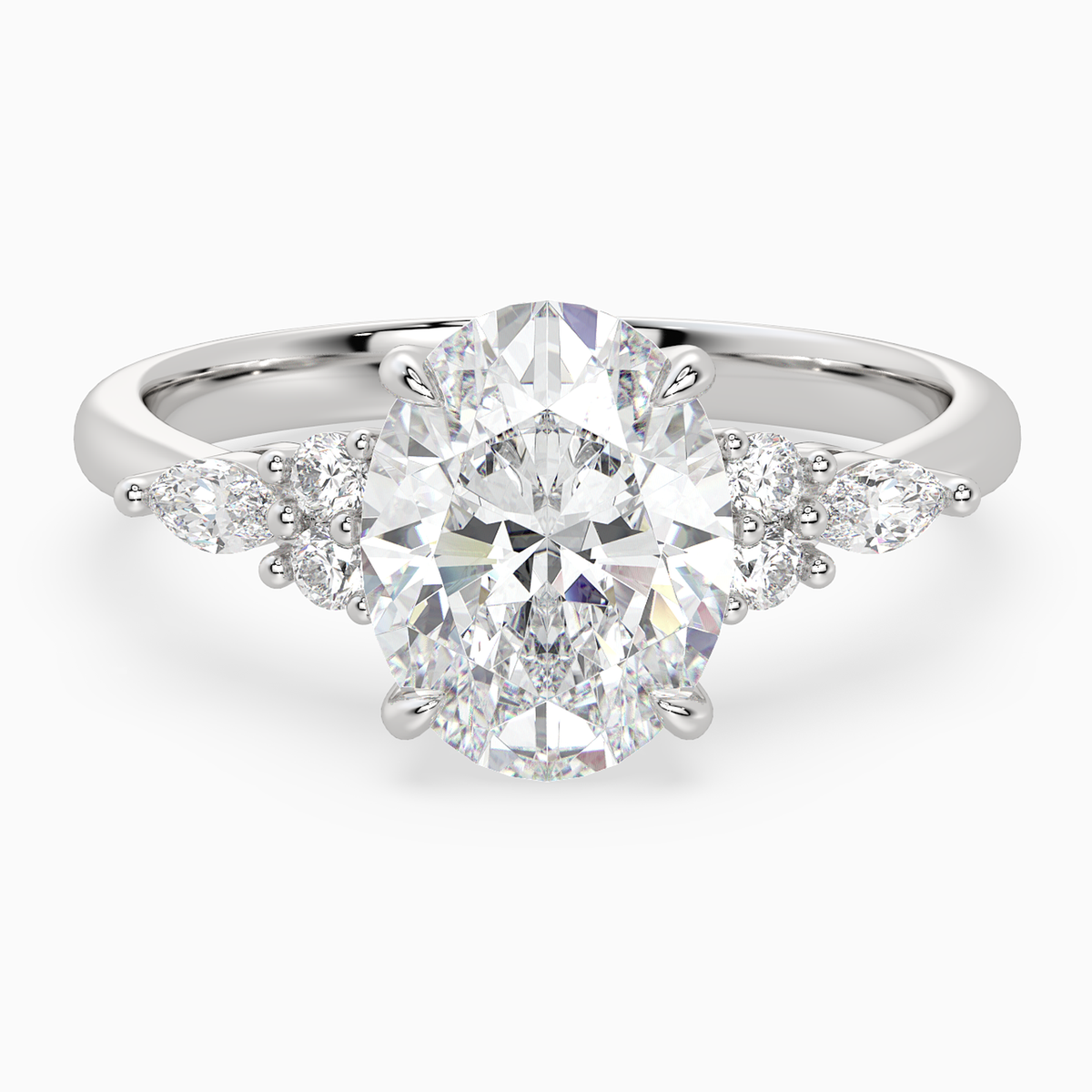


Lab Grown Diamond Necklaces in 14K Rose Gold
A blush line settles at the neckline, then moves with the chain. 14K rose gold gives pendants, bars, and multi-stone forms a warm boundary.


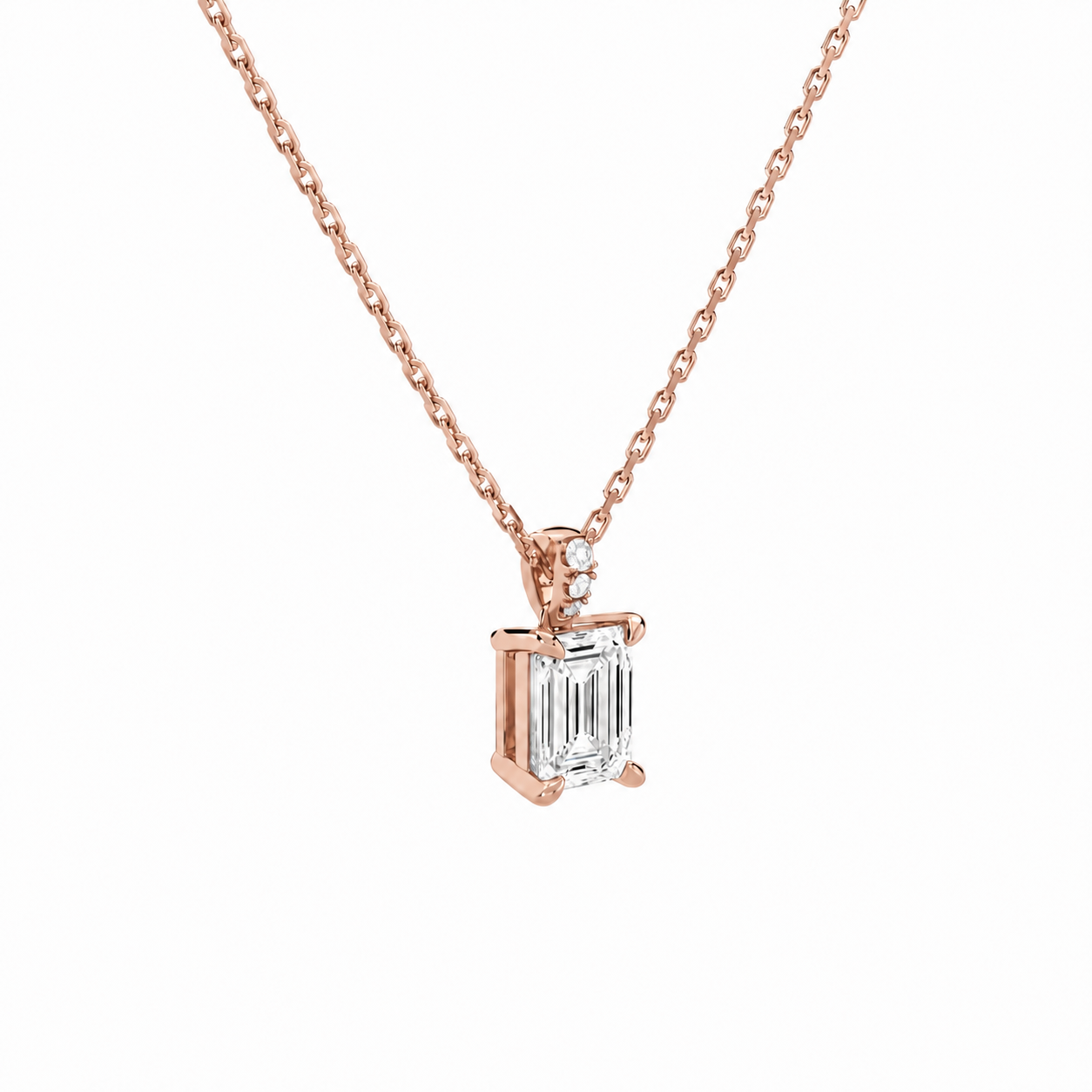


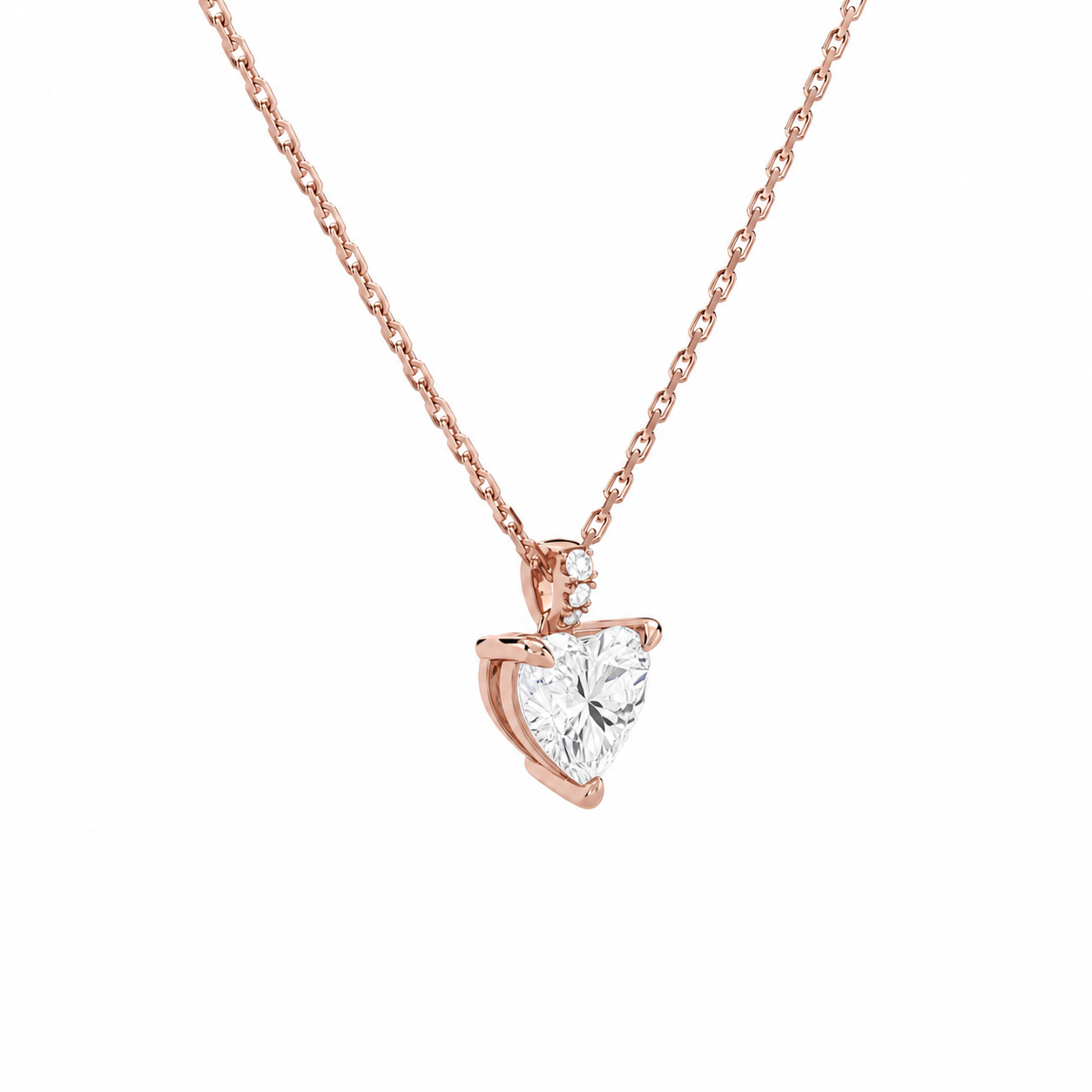


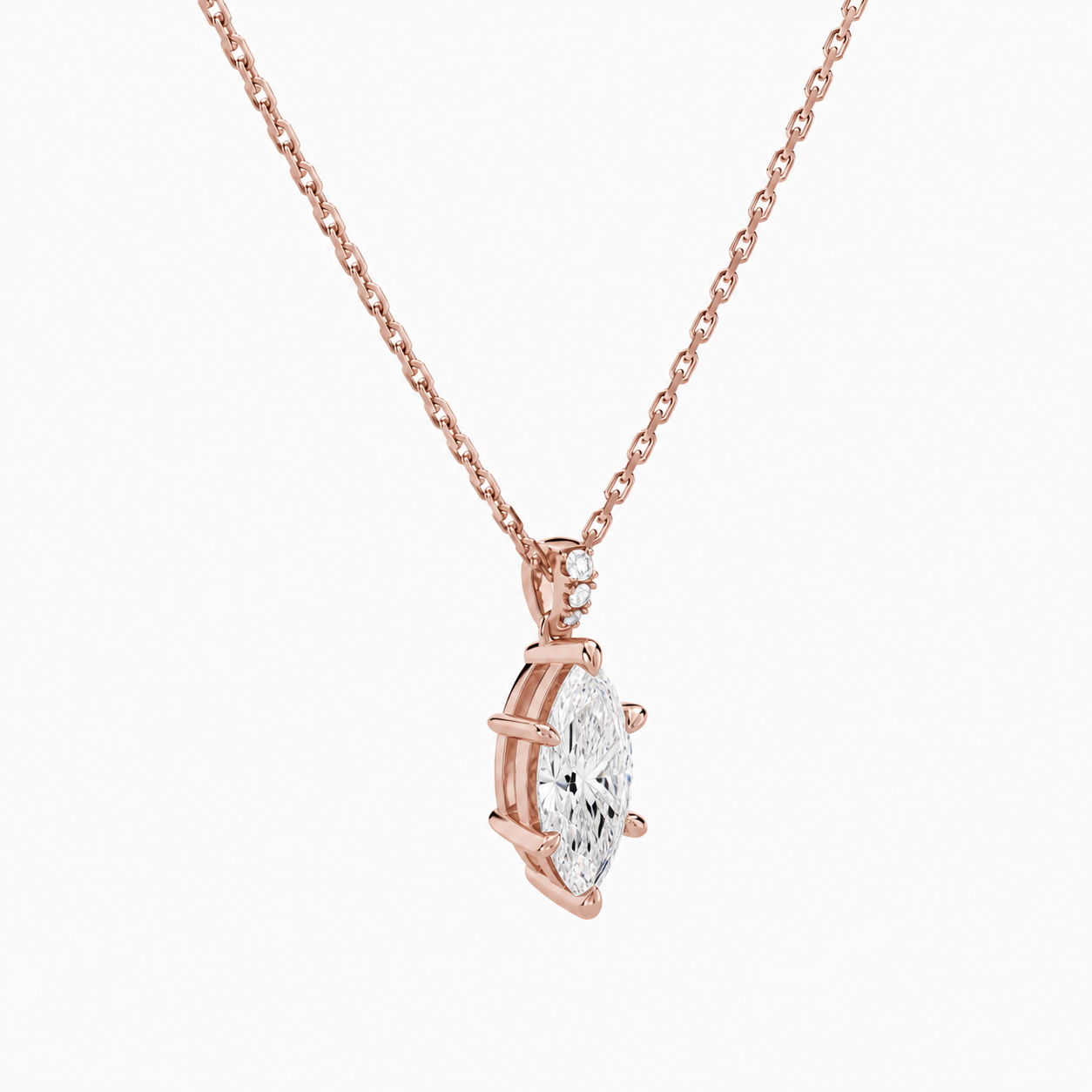


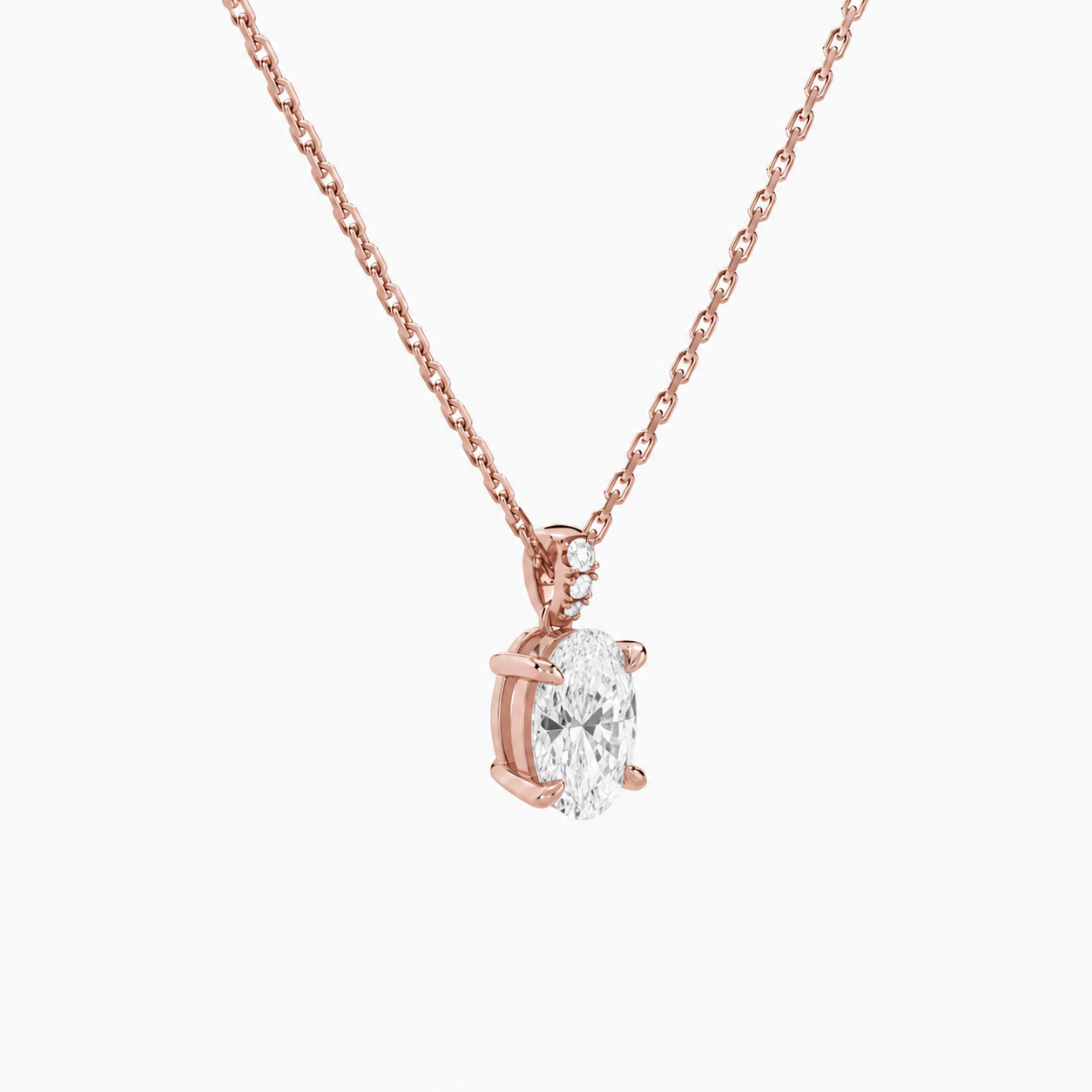


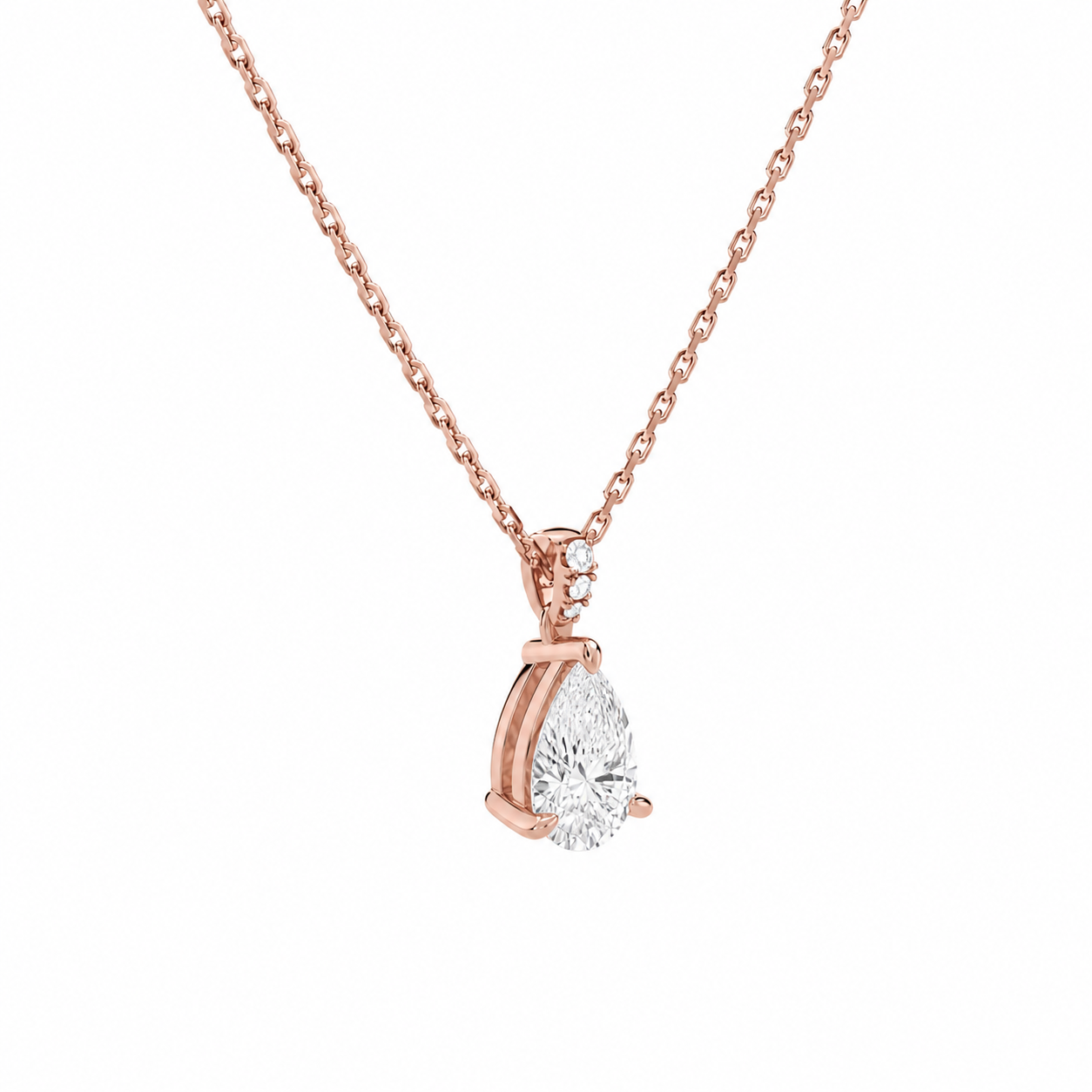


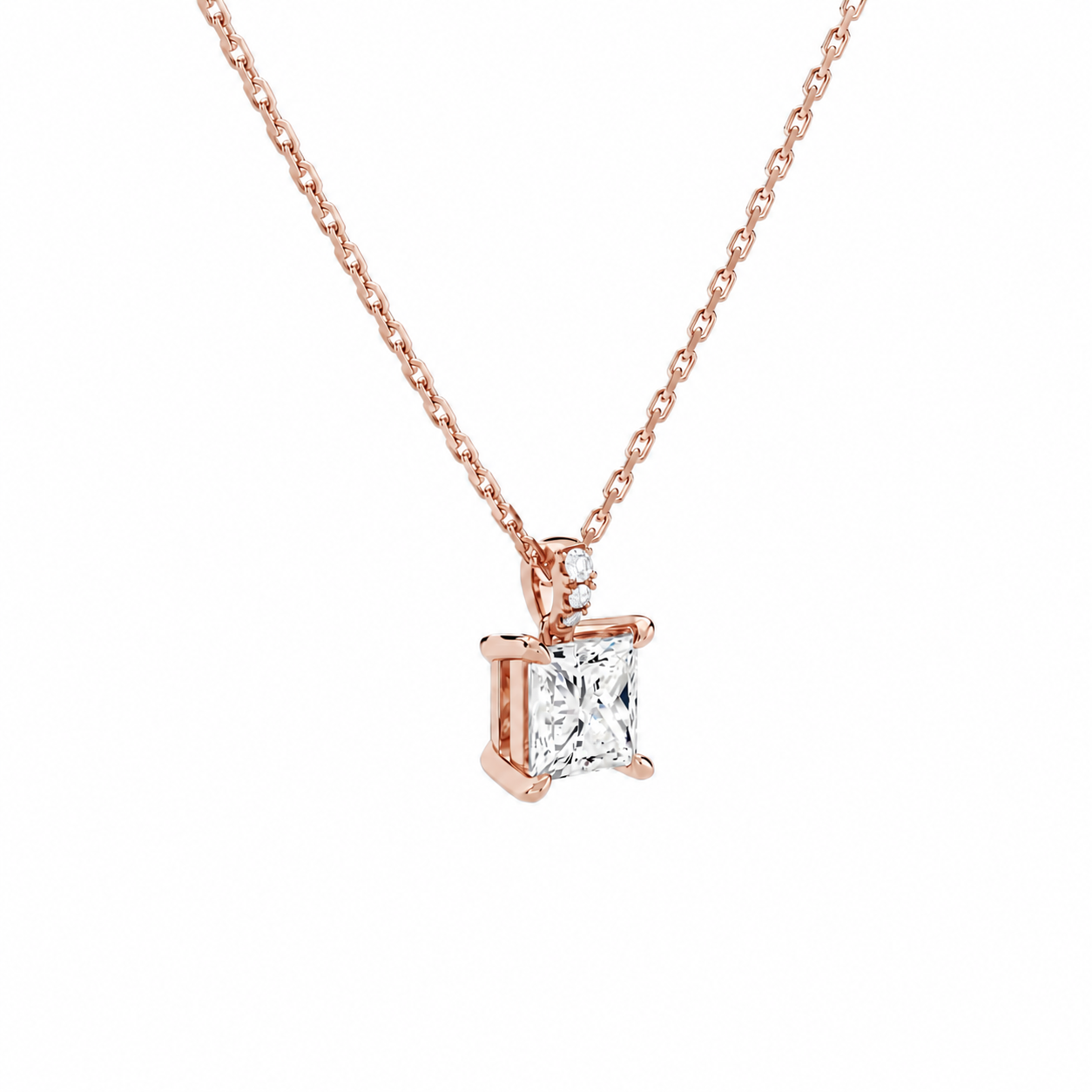


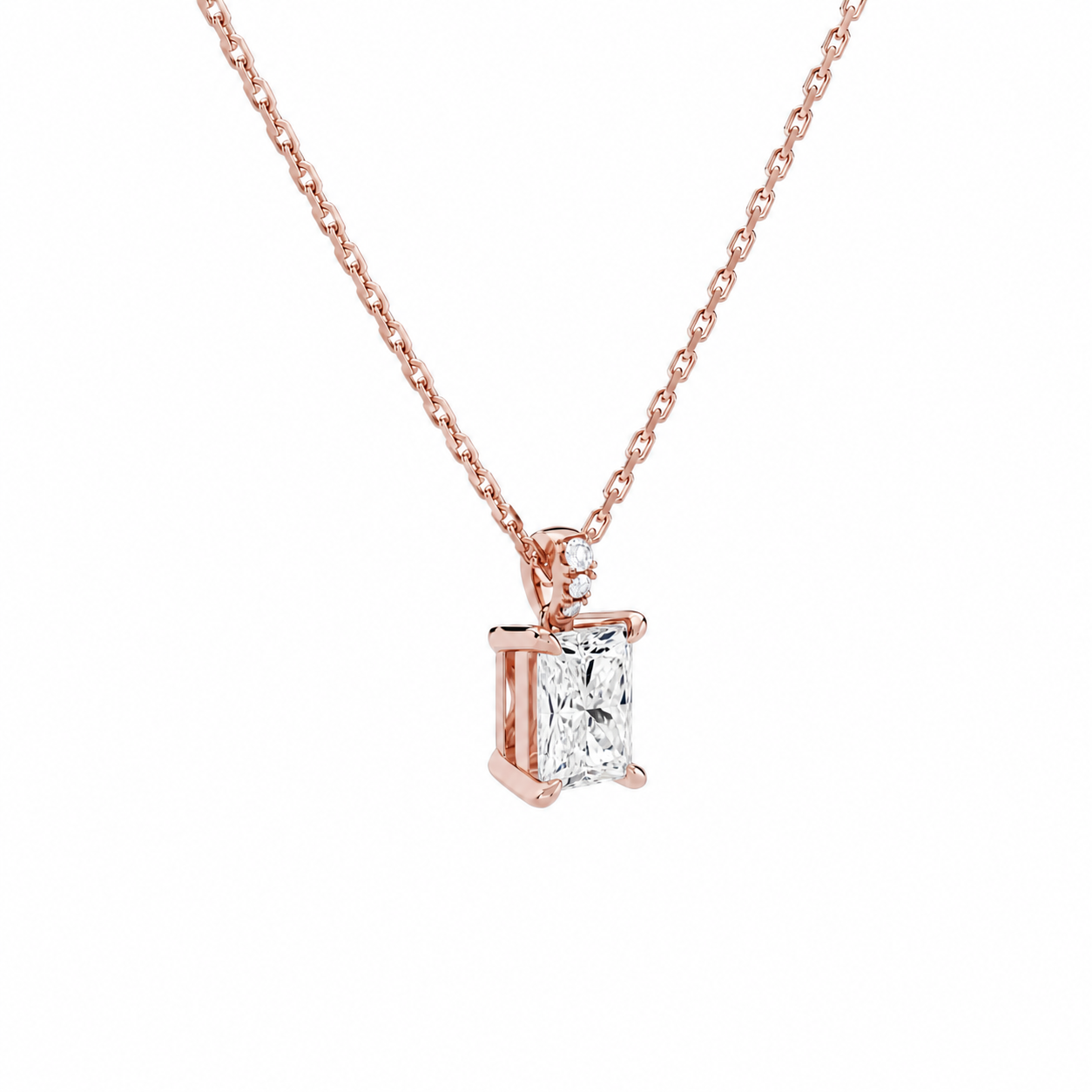


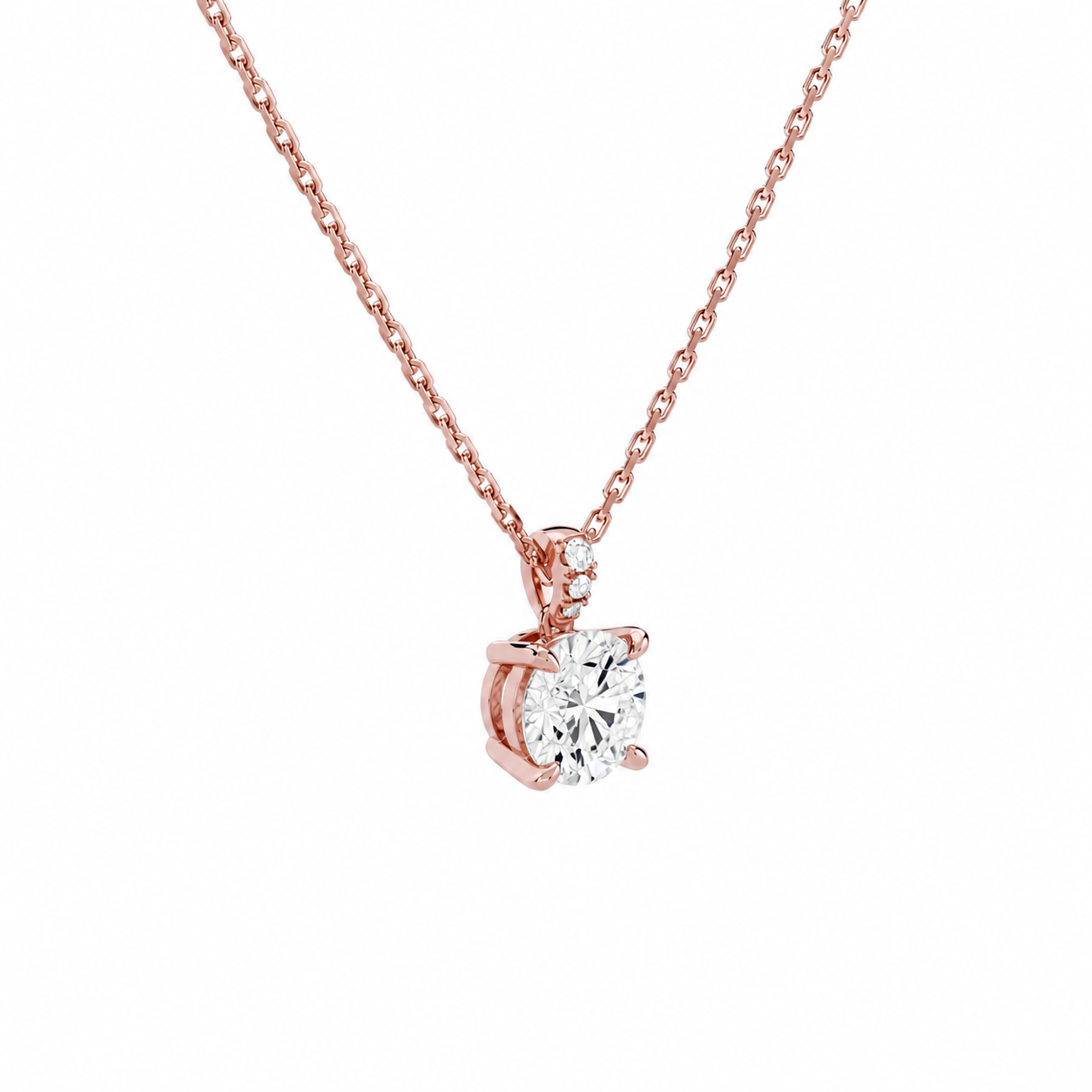


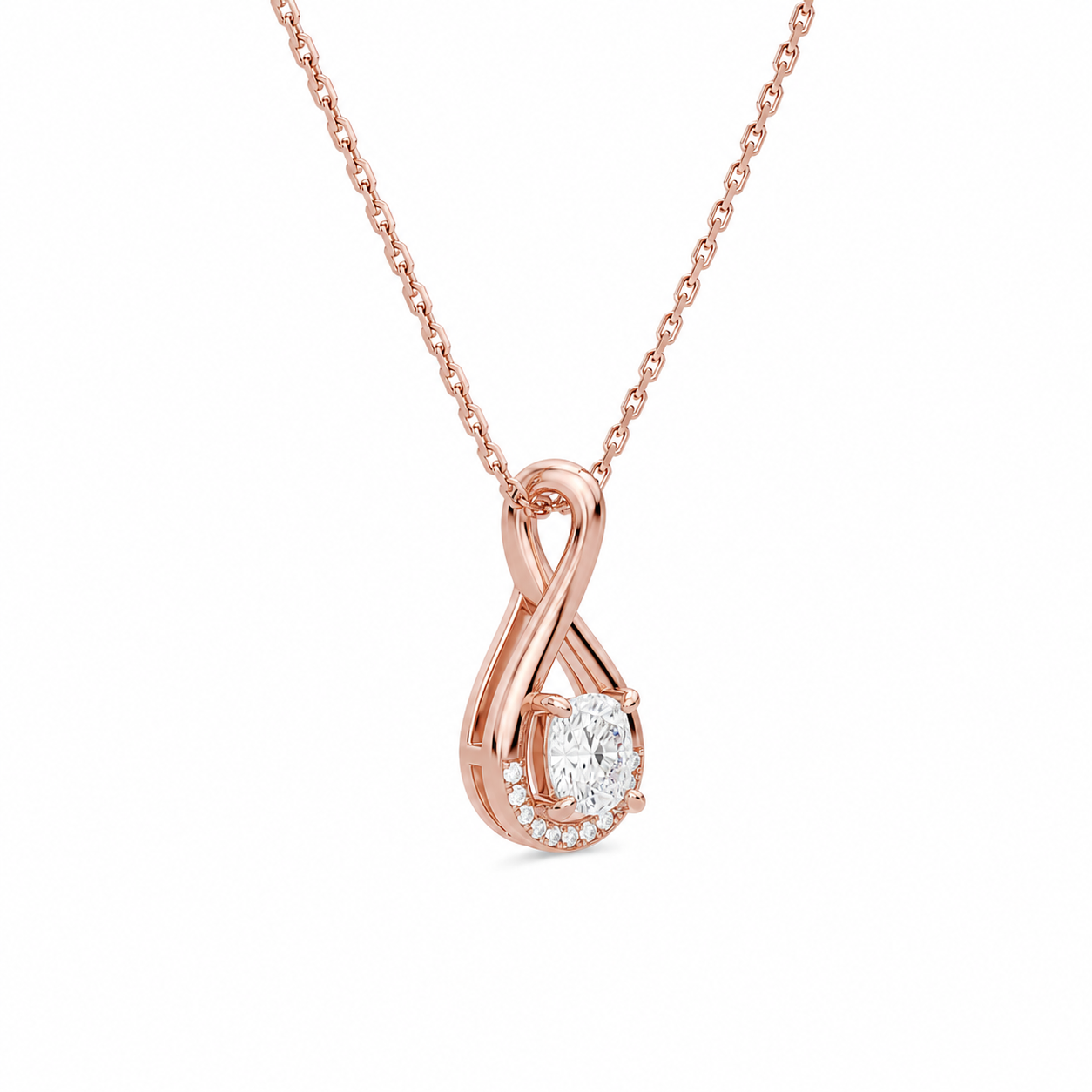


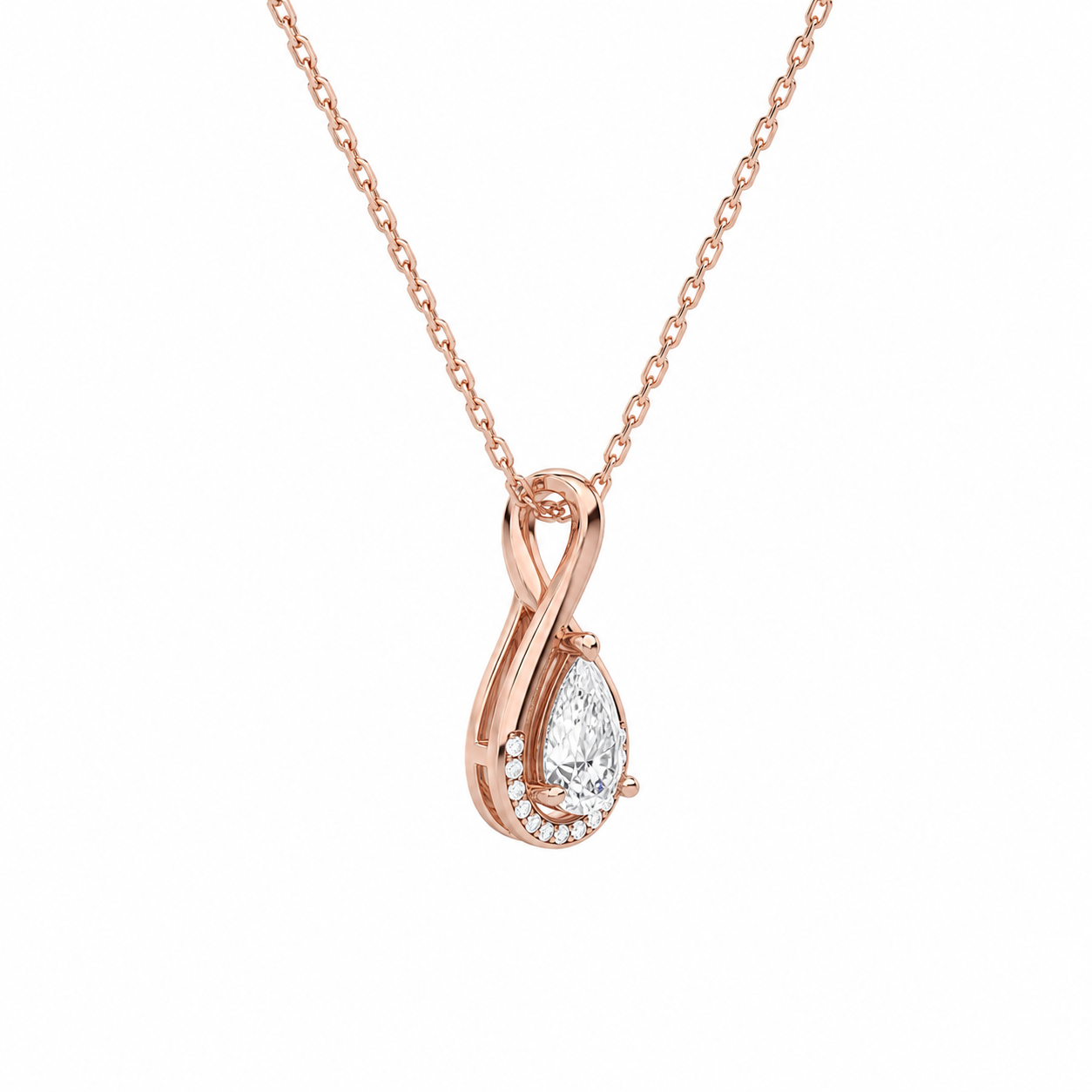


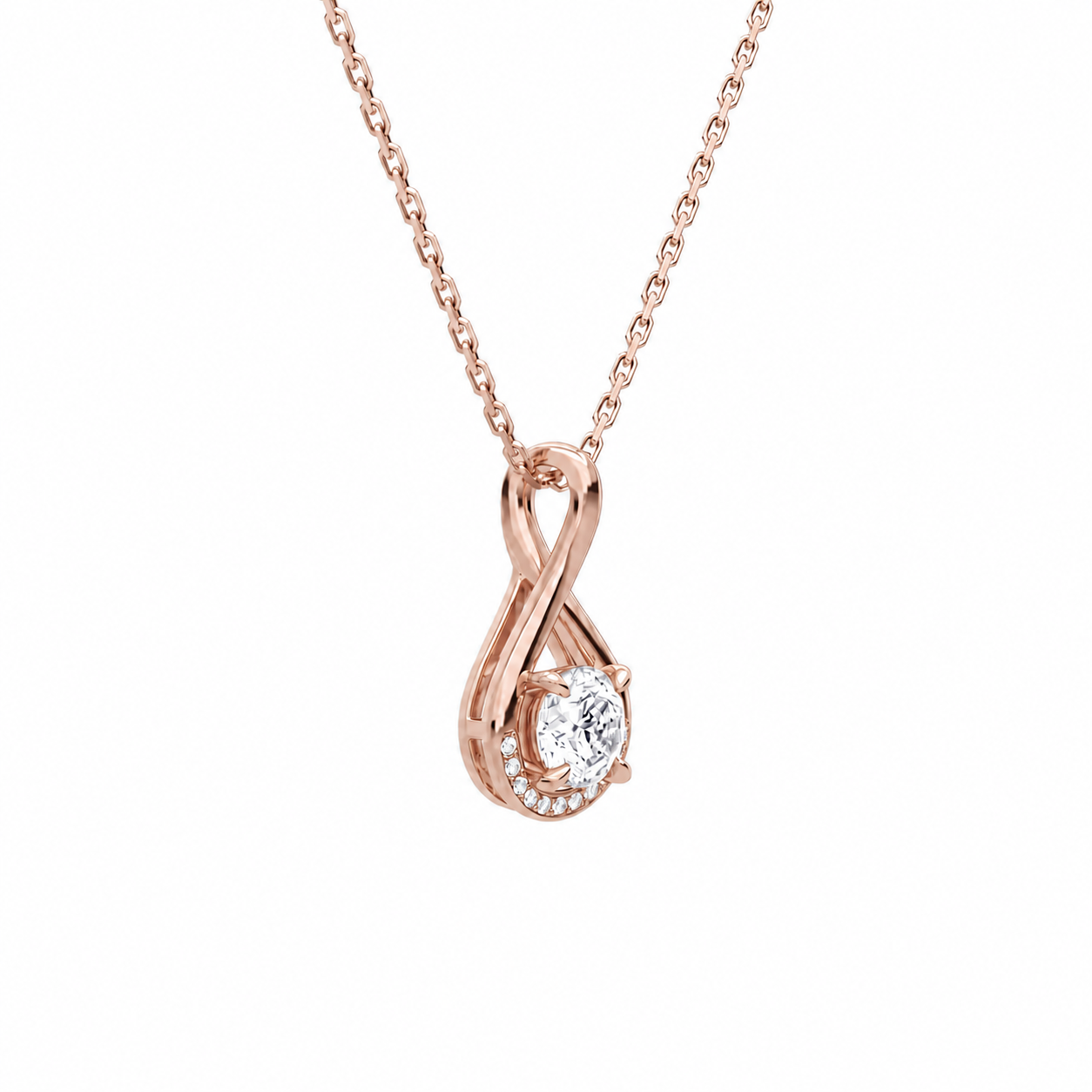


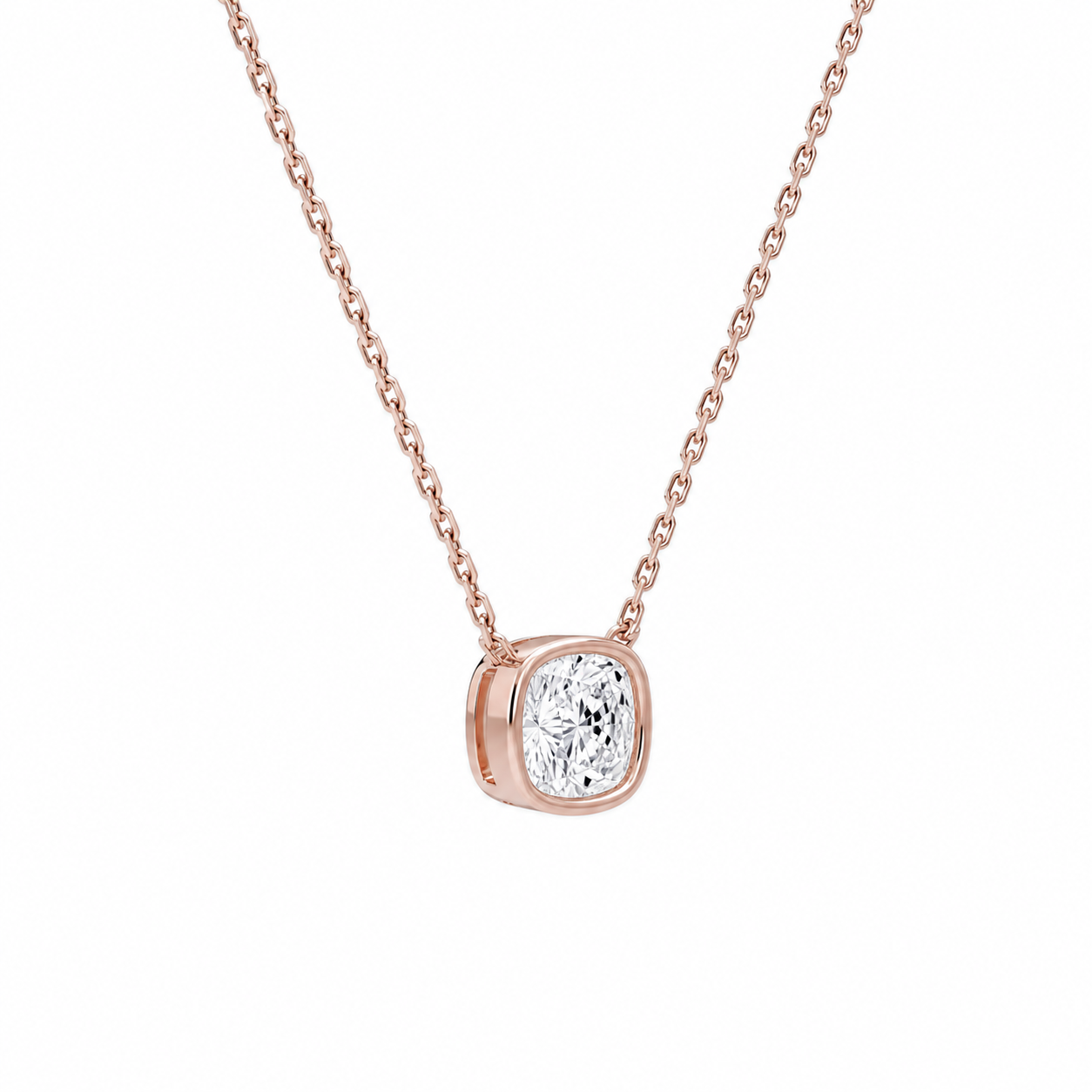


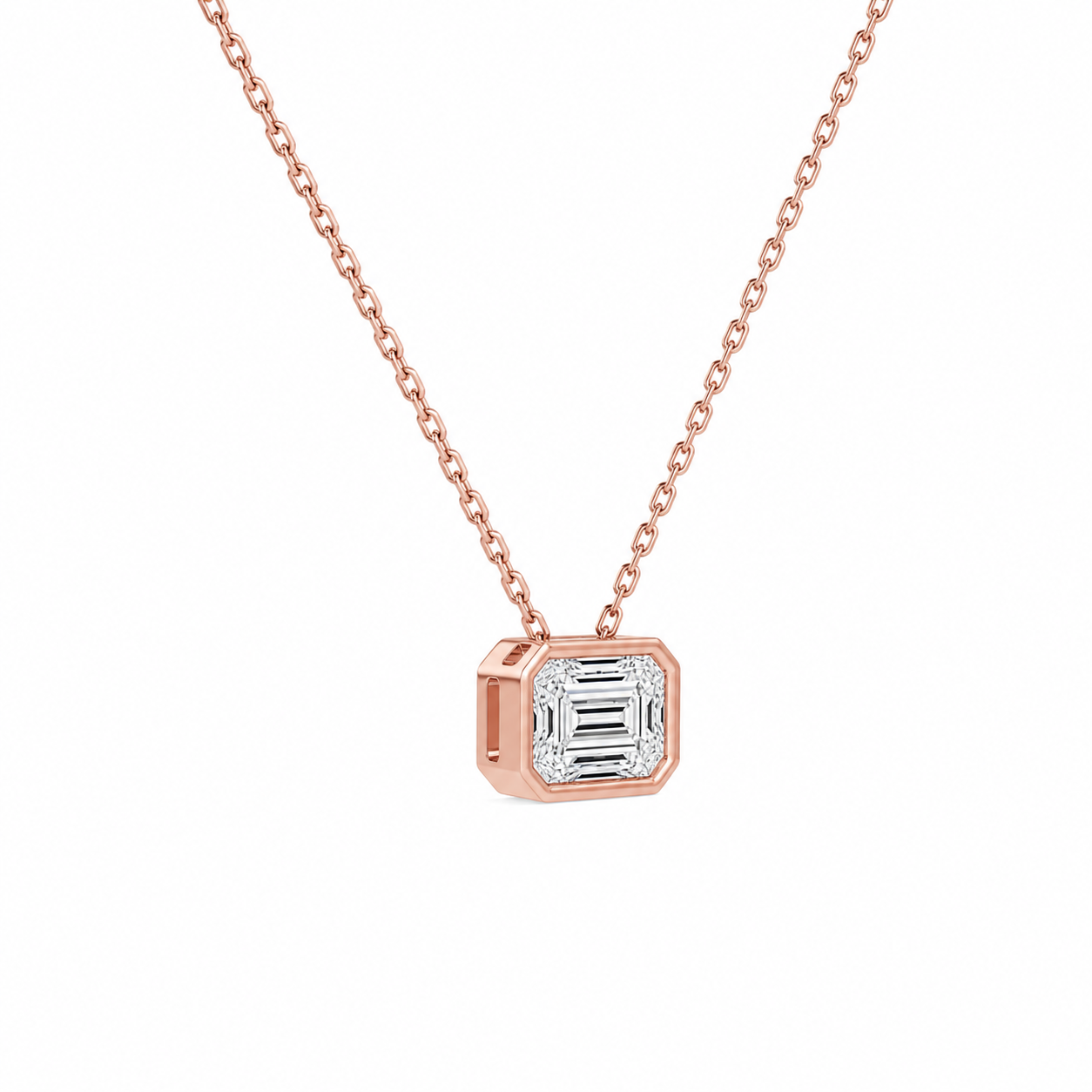


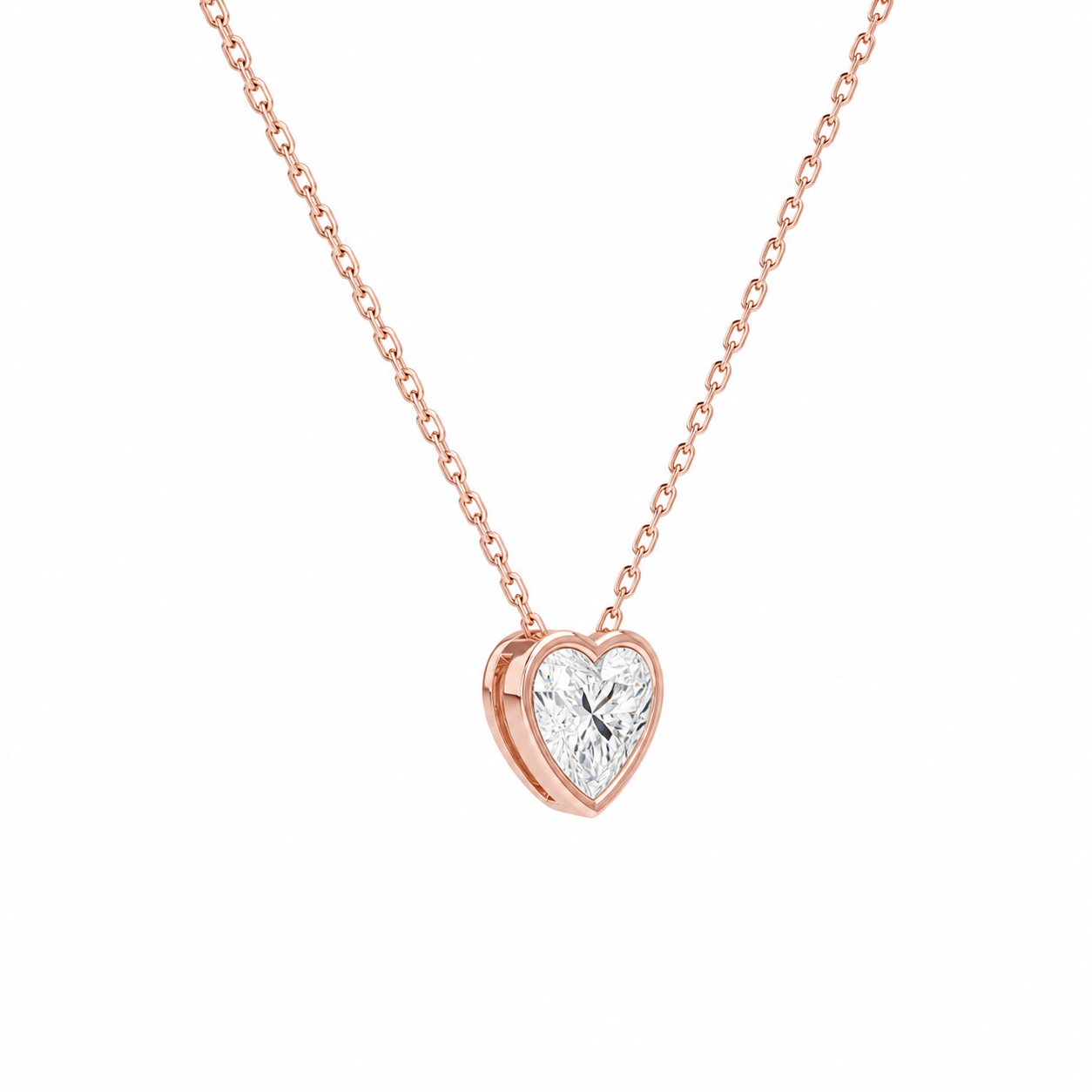


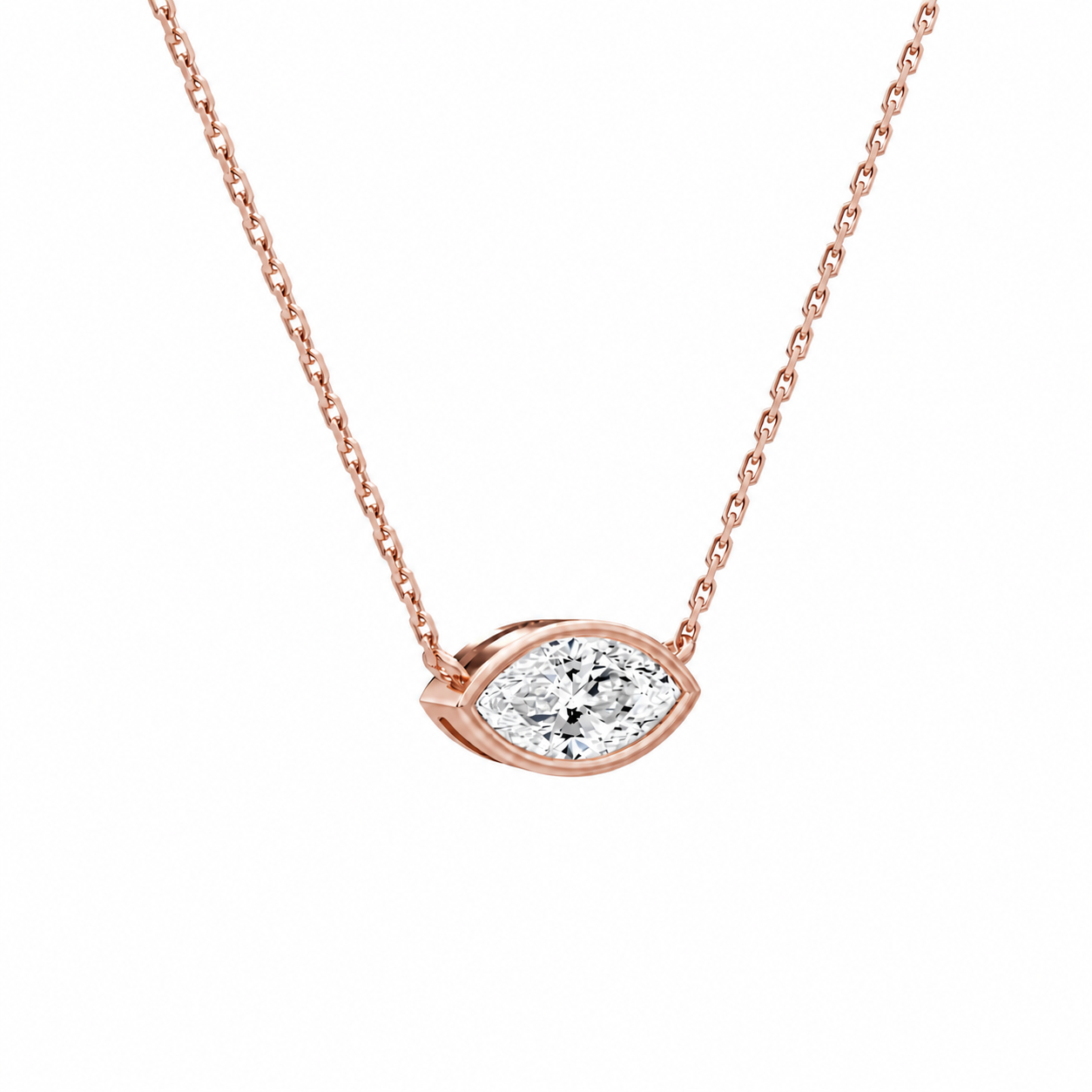


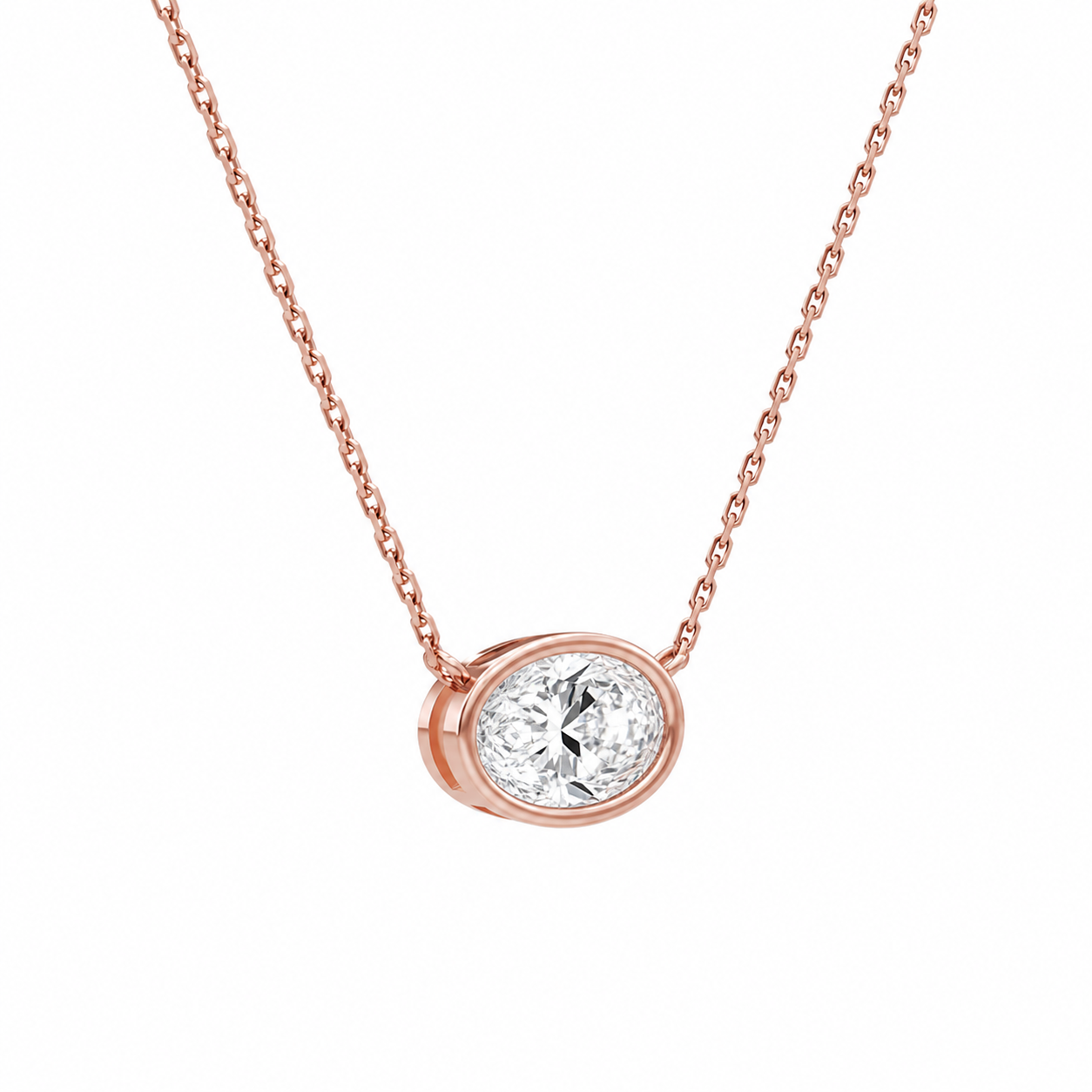


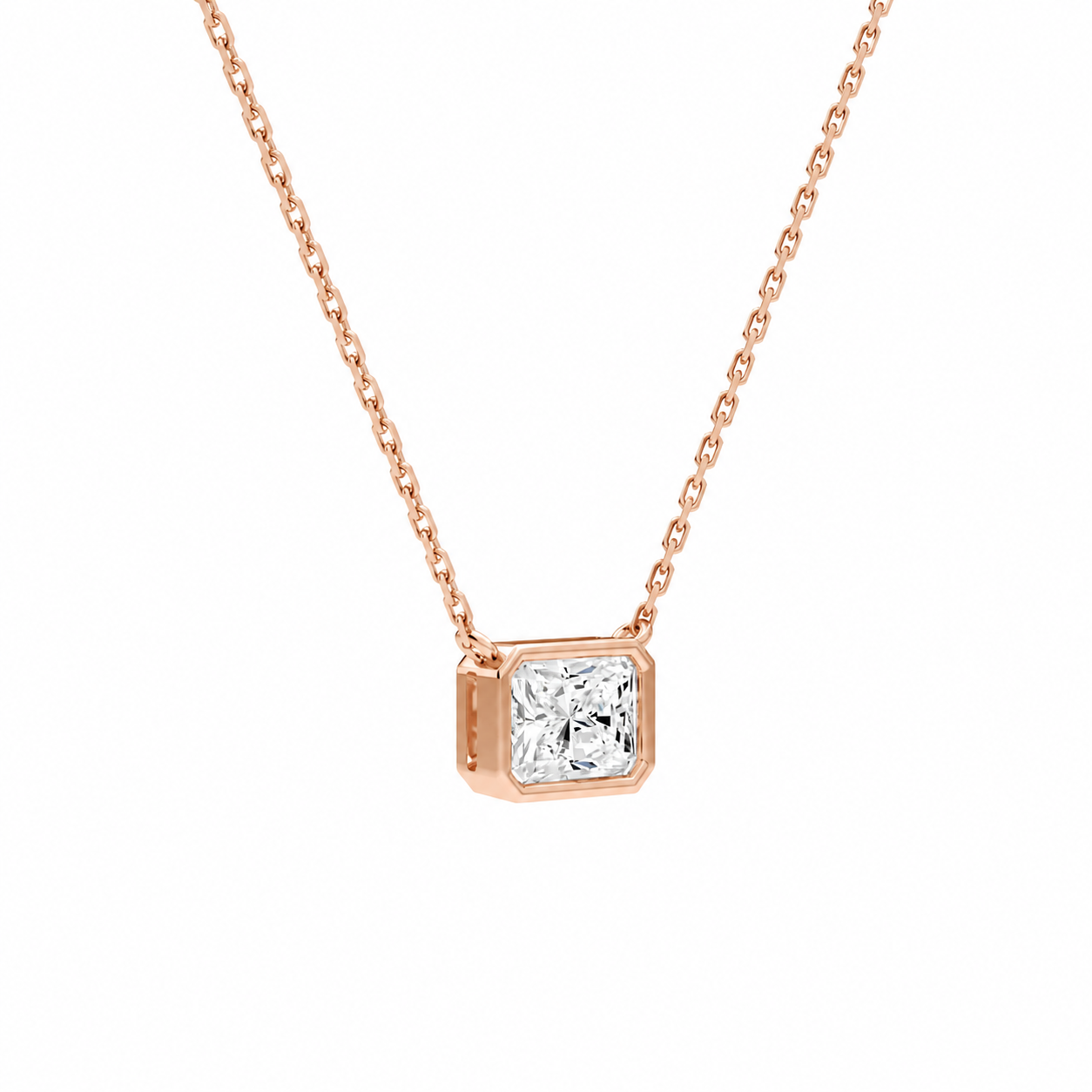


14K Rose Gold Lab-Grown Diamond Necklaces: Warmth from Center to Chain
A Rose Gold necklace is read in more than one place. Warmth begins at the prongs, bezel, halo, or motif, continues through the bail or attachment, and returns along the chain as it meets the neckline. In a moving pendant, those intervals shift; in a curved bar or link, the material creates a wider horizontal line.
Burvonti's current 126-design collection includes solitaire, bezel, halo, accented-bail, twist, cross, Toi et Moi, duo-drop, cluster, charm, open-circle, link, tassel, and curved-bar compositions. One hundred eighteen designs have normalized Pendant counterparts; eight distribute light beyond a single suspended focal form.
A Blush Boundary, Precisely Placed
A 14K alloy contains approximately 58.3% gold. Other alloying metals, finish, lighting, photography, and exposed surface influence the observed blush tone. Karat does not establish one copper content, hardness, sensitivity outcome, or maintenance interval.
Prongs place warmth at discrete points around a diamond. A bezel creates a continuous rose-colored edge. A halo, accented bail, or twist carries detail beyond the principal outline, while a polished chain may present a quieter field. Rose Gold changes contrast and continuity; it does not increase brilliance or make a diamond larger.
Follow the Composition across the Neckline
The current set includes 44 Solitaire-labelled, 20 Bezel, 34 Halo, 18 Cross, five Toi et Moi, and six Duo Drop designs. Bars, links, tassels, charms, clusters, and an open circle move emphasis horizontally or vertically instead of concentrating it in one center.
Ten diamond shapes are represented. Shape determines outline and direction; the setting controls the visible edge; the chain and attachment decide how that form occupies the neckline. Rose Gold should make those relationships coherent without turning an Oval, Heart, Cross, or paired form into a fixed personality statement.
The Chain Is Part of the Material Story
All 126 current public product descriptions identify an adjustable 16–18-inch length, a 0.95 mm chain, and a lobster clasp. These are current assortment facts, not permanent Collection-wide promises. Placement still varies with neck circumference, chain drape, focal scale, attachment, clothing, and movement.
A bail may allow a center to move; a two-point attachment may hold a bar more steadily; a tassel or duo drop introduces additional articulation. Product titles do not establish all of that behavior. Review front, side, and back views before assuming rotation, fixed orientation, or a particular resting position.
Layer with Space, Not a Formula
Layering begins with distinct vertical intervals and one clear focal hierarchy. A Rose Gold line can connect different shapes, while contrast with another metal can work when scale or setting edge provides continuity. Different listed lengths do not guarantee separation or prevent tangling.
Carat remains a weight specification. Centerstone and Total Carat Weight options can refer to different diamond scopes, especially in halos and multi-stone designs. Compare center dimensions, motif width and height, chain width, setting coverage, and total composition rather than using one number as a proxy for presence.
Warm Precision at Body Scale
Burvonti pairs responsibly sourced lab-grown diamonds with necklace structures calibrated in relation to the neckline. Independently graded or certified principal diamonds should be understood according to document scope; one report does not automatically cover every accent, the chain, or the finished piece.
Custom possibilities may refine shape, scale, setting, motif, metal, attachment, chain, length, or clasp where feasible. Store necklaces without abrasive contact or sharp bends, avoid pulling the chain through cloth, and inspect settings, links, attachment points, and clasp if movement changes. The warmth should remain measured throughout the construction.
Frequently Asked Questions
How is this page different from the main Lab-Grown Diamond Necklaces Collection?
The parent owns the complete cross-metal necklace framework. This page focuses on how 14K Rose Gold frames centers, connections, chains, and distributed compositions.
How much gold is in 14K Rose Gold?
Approximately 58.3%. Other alloying metals influence shade and working behavior.
Are all 14K rose gold necklaces the same blush color?
No. Alloy formula, finish, lighting, photography, and visible metal area affect appearance.
Which necklace structures are currently represented?
The 126 designs include solitaire, bezel, halo, accented-bail, twist, cross, Toi et Moi, duo-drop, bar, link, tassel, charm, cluster, and open-circle forms.
How is this Collection different from Pendant Necklaces?
It includes the full pendant-design set plus eight forms that distribute light through bars, links, tassels, charms, clusters, and an open circle.
Does this Collection currently include tennis necklaces?
No tennis necklace appears in the current 126-product public set.
Which diamond shapes are represented?
Round, Oval, Cushion, Pear, Princess, Emerald, Marquise, Asscher, Radiant, and Heart appear, with mixed-shape layouts also represented.
How do prongs, bezels, and halos use Rose Gold differently?
Prongs punctuate the edge, bezels form a continuous boundary, and halos create a wider field with metal between center and accents.
Does Rose Gold make necklace diamonds brighter?
No. It changes surrounding color and contrast, not facet relationships or grading facts.
What do Centerstone and Total Carat Weight mean?
Centerstone usually refers to a principal diamond option; Total Carat Weight may combine several diamonds. Confirm the selected product's scope.
What length is represented in the current assortment?
Current public descriptions identify an adjustable 16–18-inch length across all 126 products; placement still varies by wearer and construction.
What chain and clasp are currently listed?
Current descriptions identify a 0.95 mm chain and lobster clasp; confirm the selected product because future construction can change.
Will a pendant always remain centered and face forward?
No. Attachment, chain path, center weight, movement, clothing, and wearer anatomy influence position and orientation.
Can Rose Gold necklaces be layered without tangling?
They can be layered, but different lengths do not guarantee separation. Drape, movement, clothing, attachment, and scale all matter.
Can Rose Gold cause sensitivity?
Sensitivity depends on the complete alloy and wearer; karat and color alone cannot establish a universal result.
Can Burvonti personalize a Rose Gold necklace?
Custom possibilities may include shape, scale, setting, motif, metal, attachment, chain, length, or clasp, subject to feasibility.