
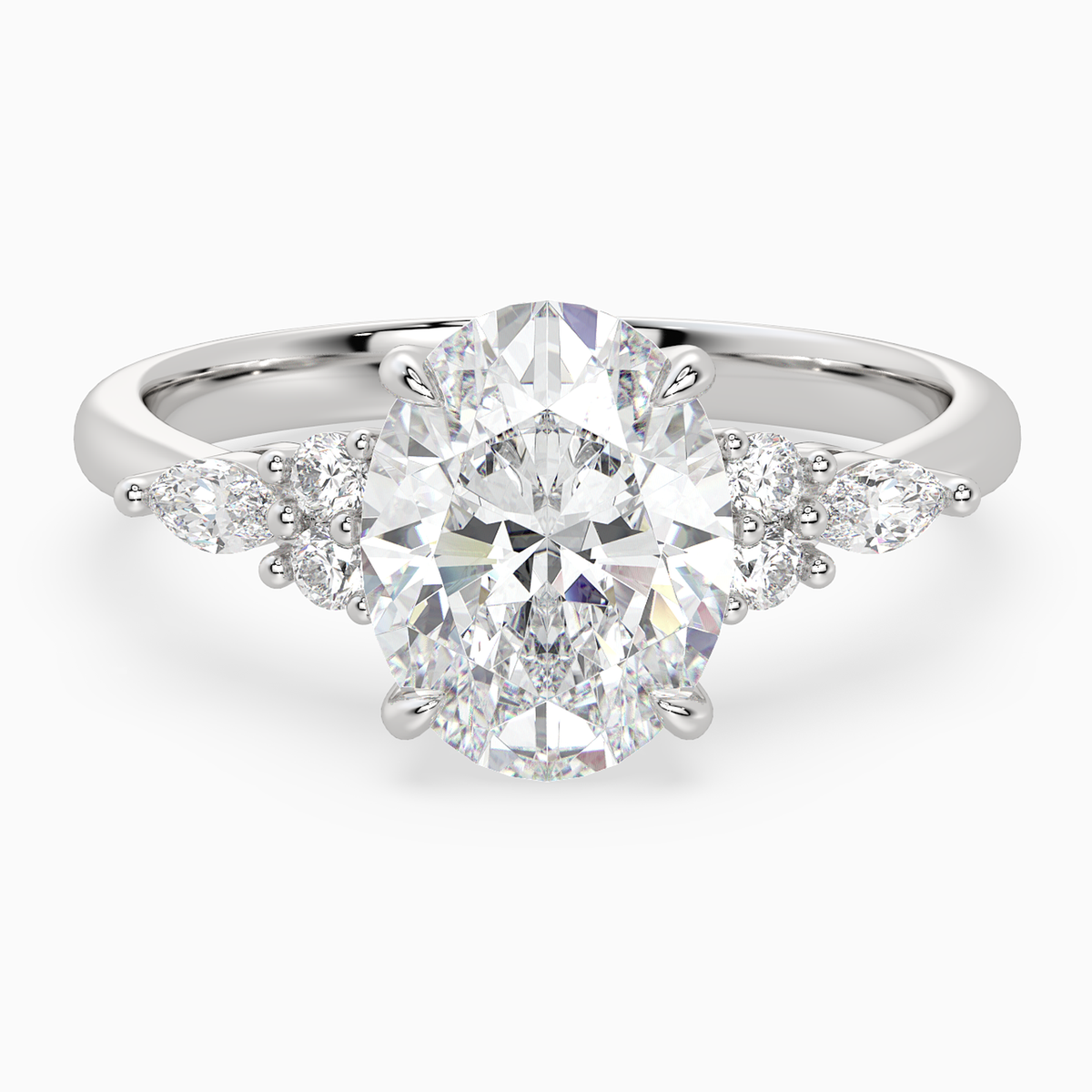


Round Diamond Engagement Rings
A circle resolved through light. Round brilliant centers pair measured symmetry with settings calibrated for balance and daily presence.


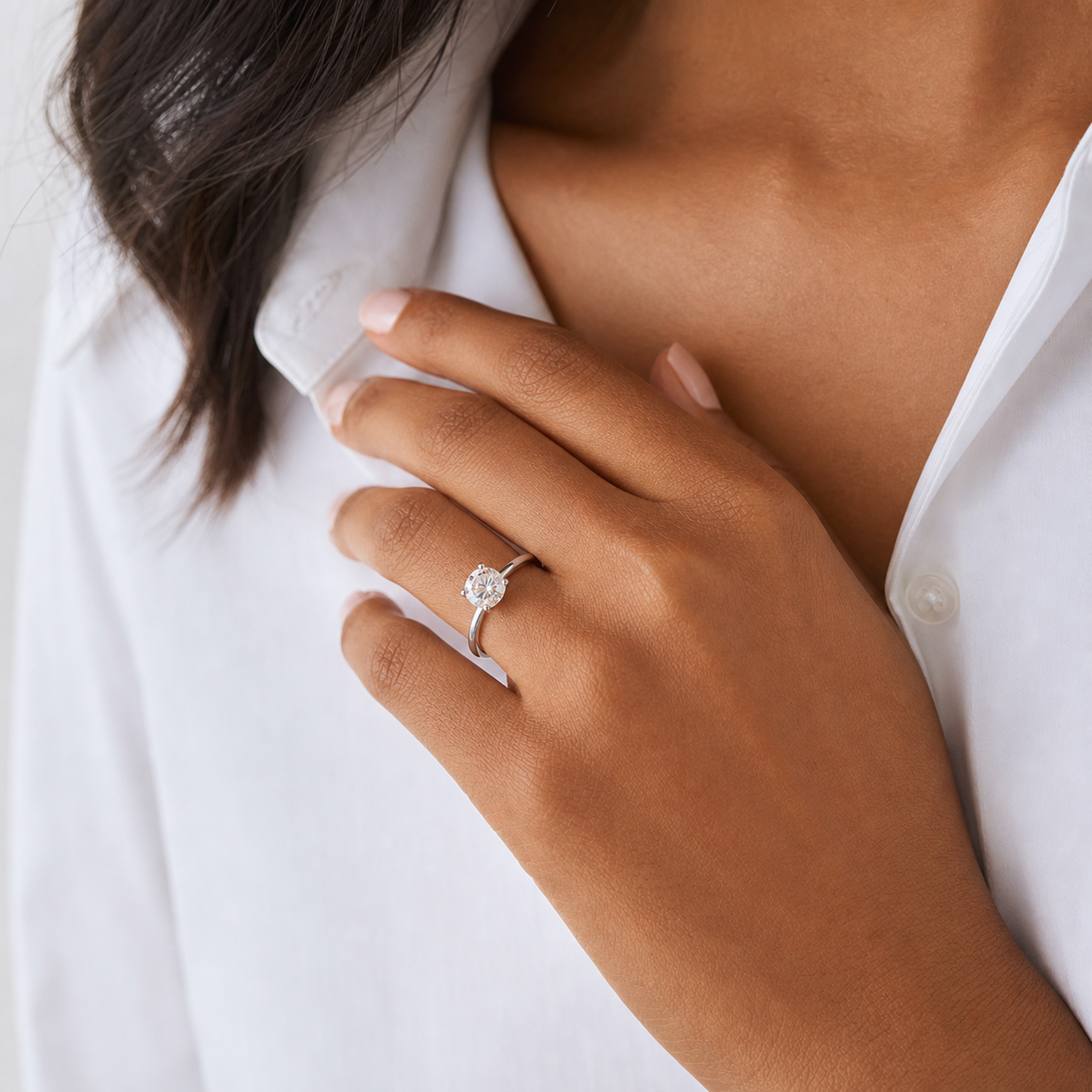



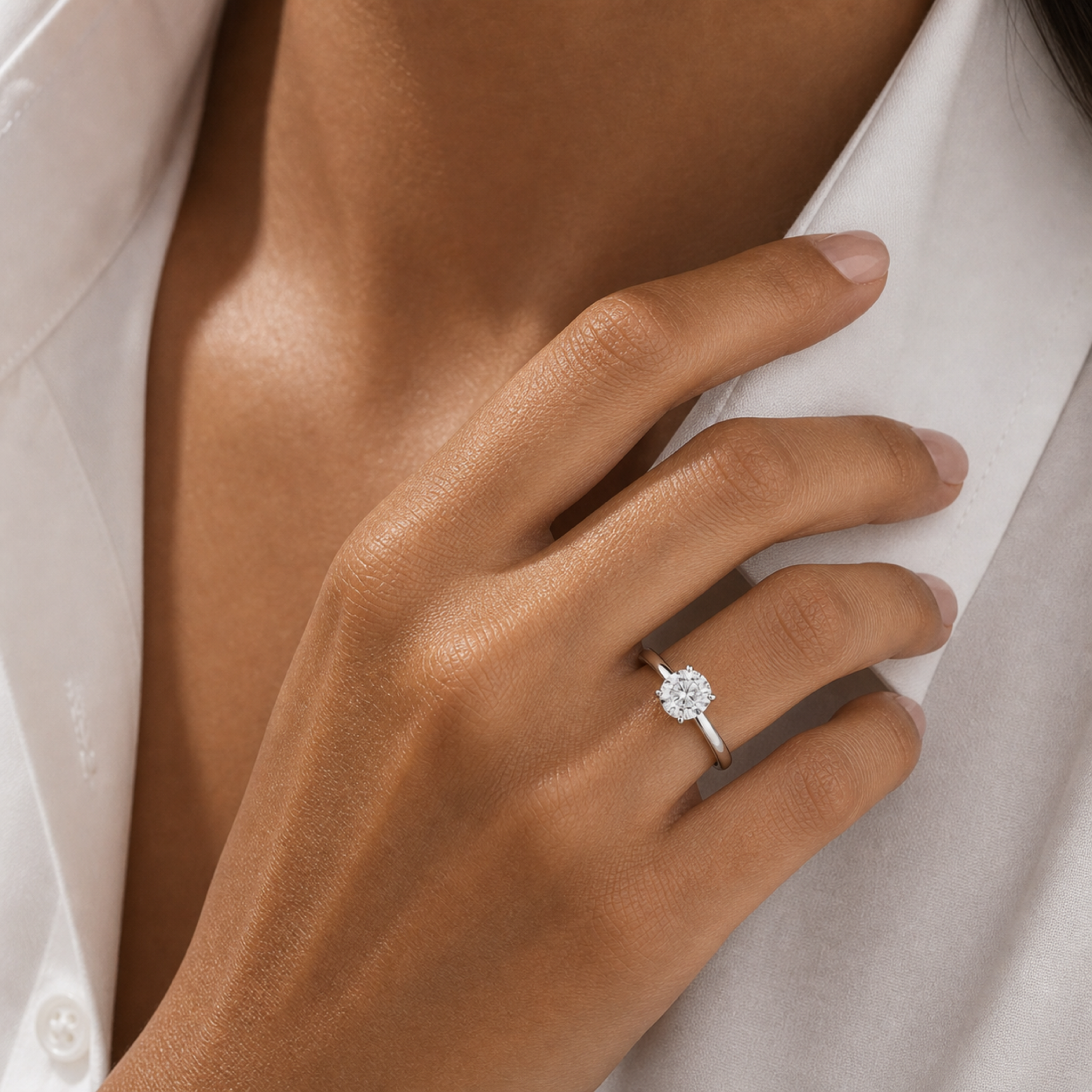


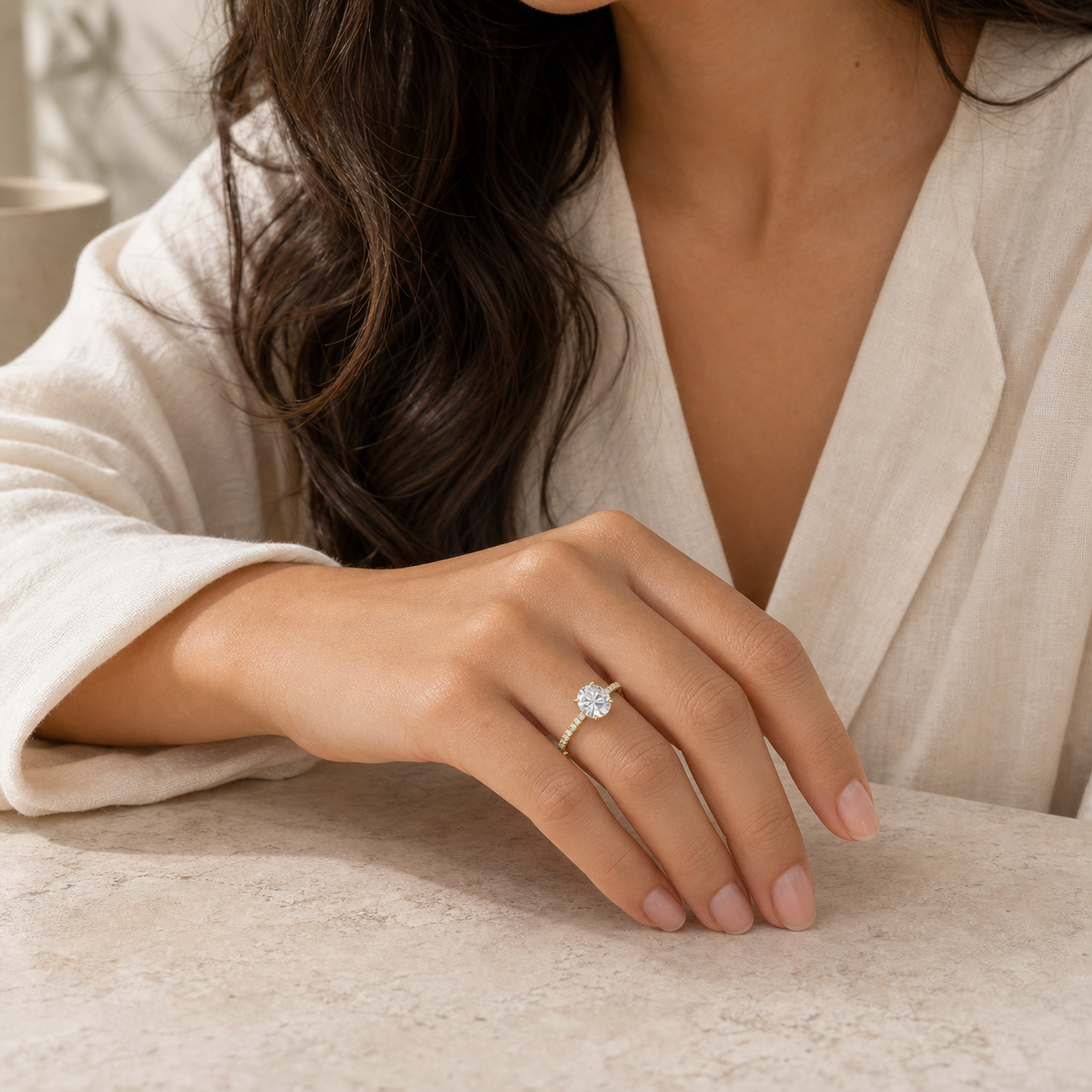


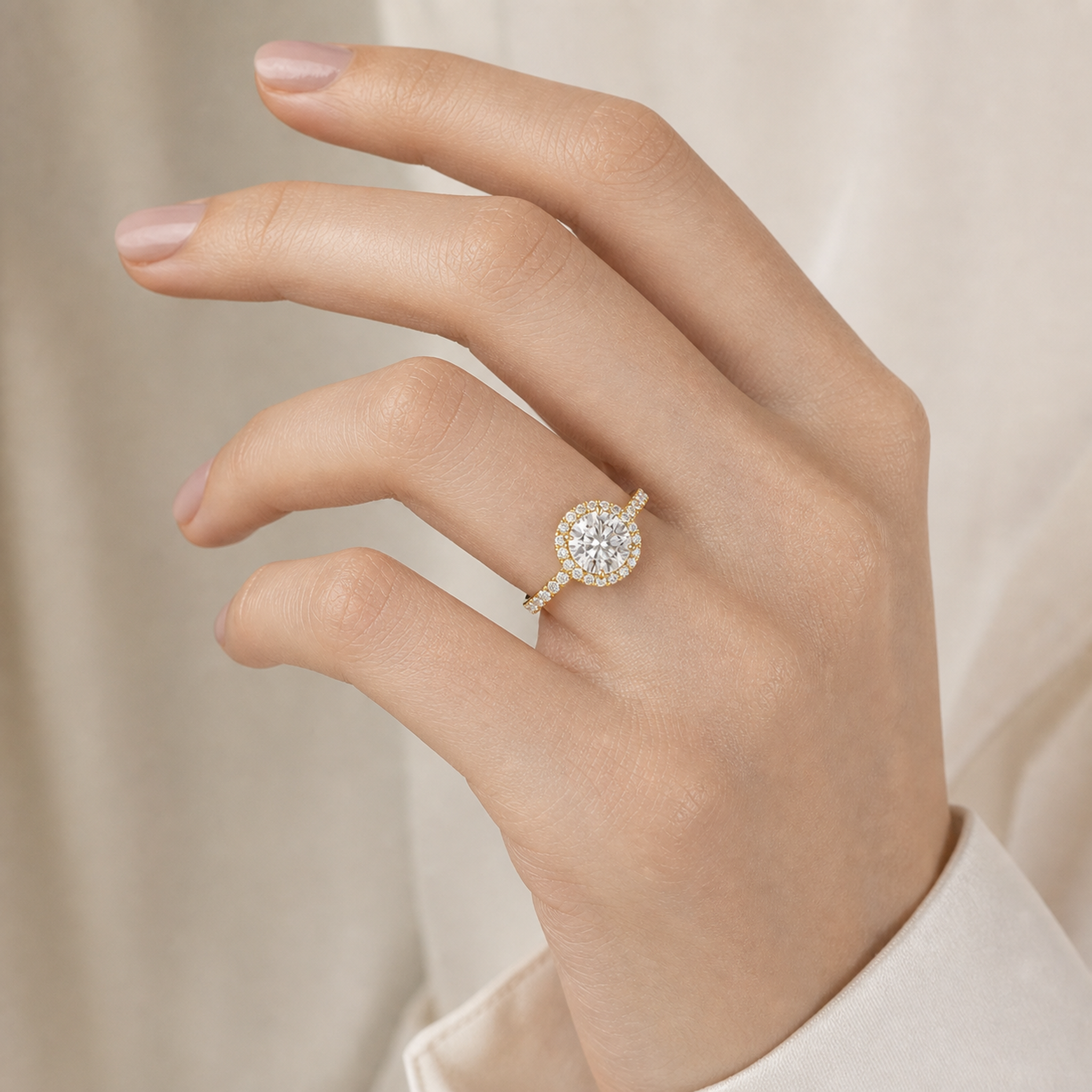


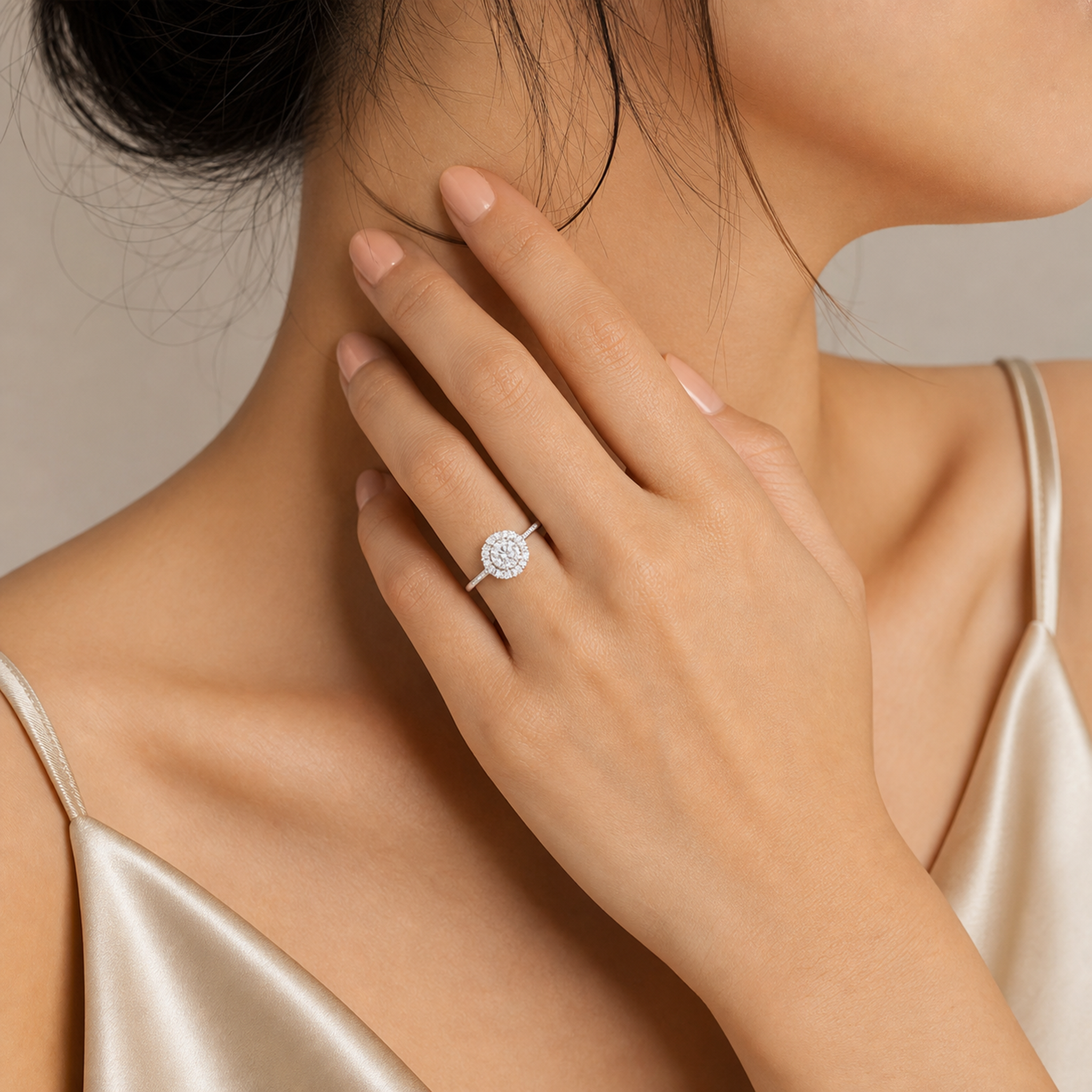


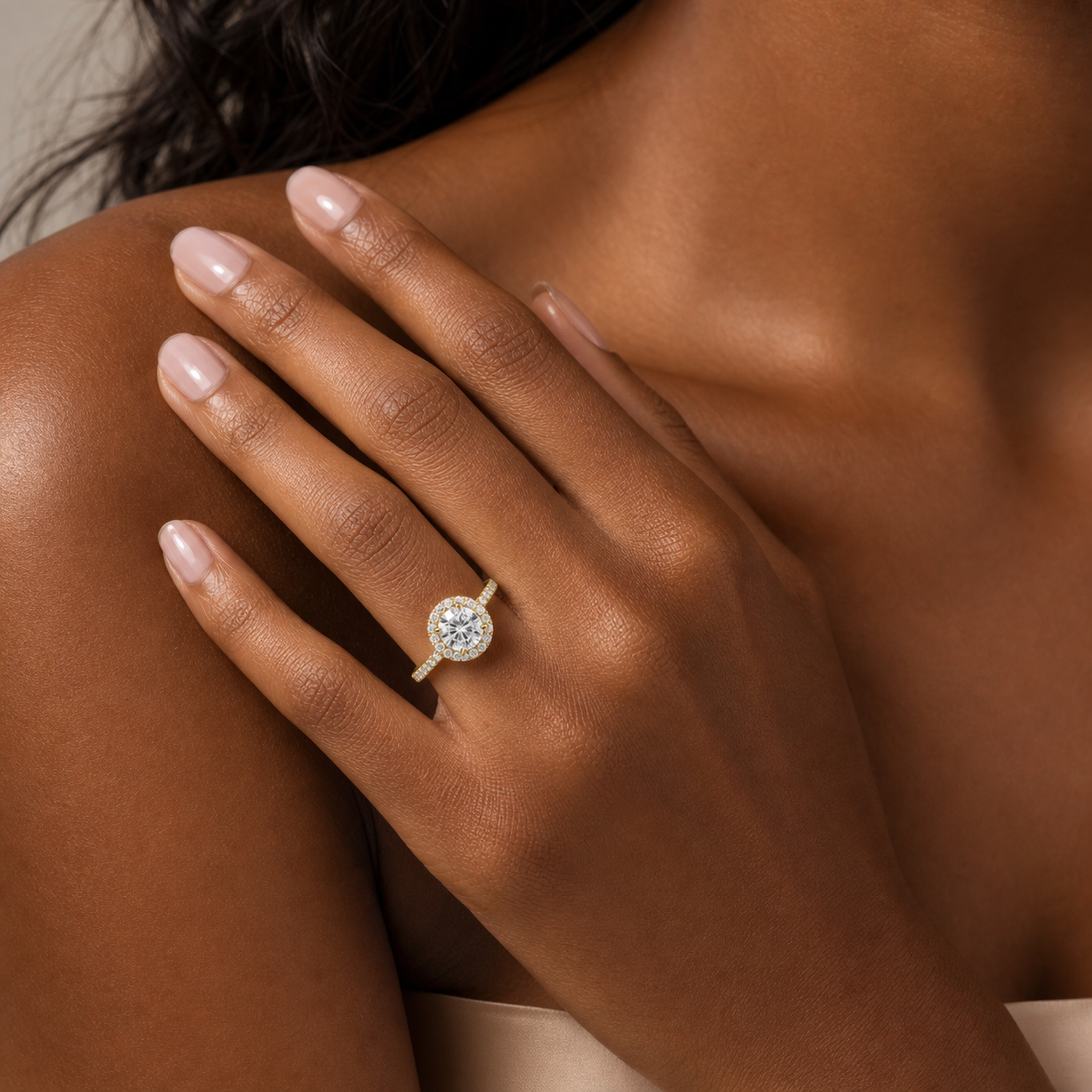


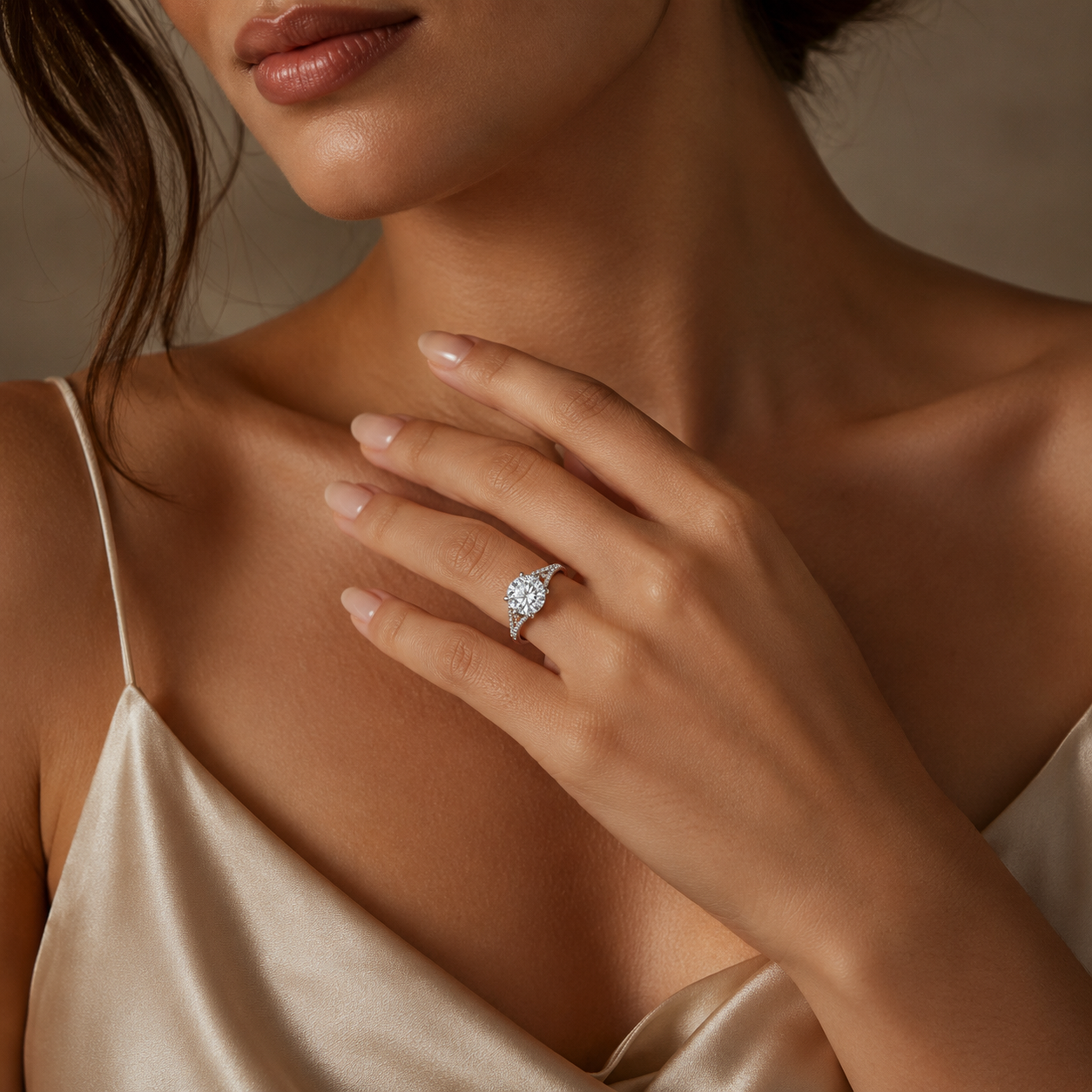


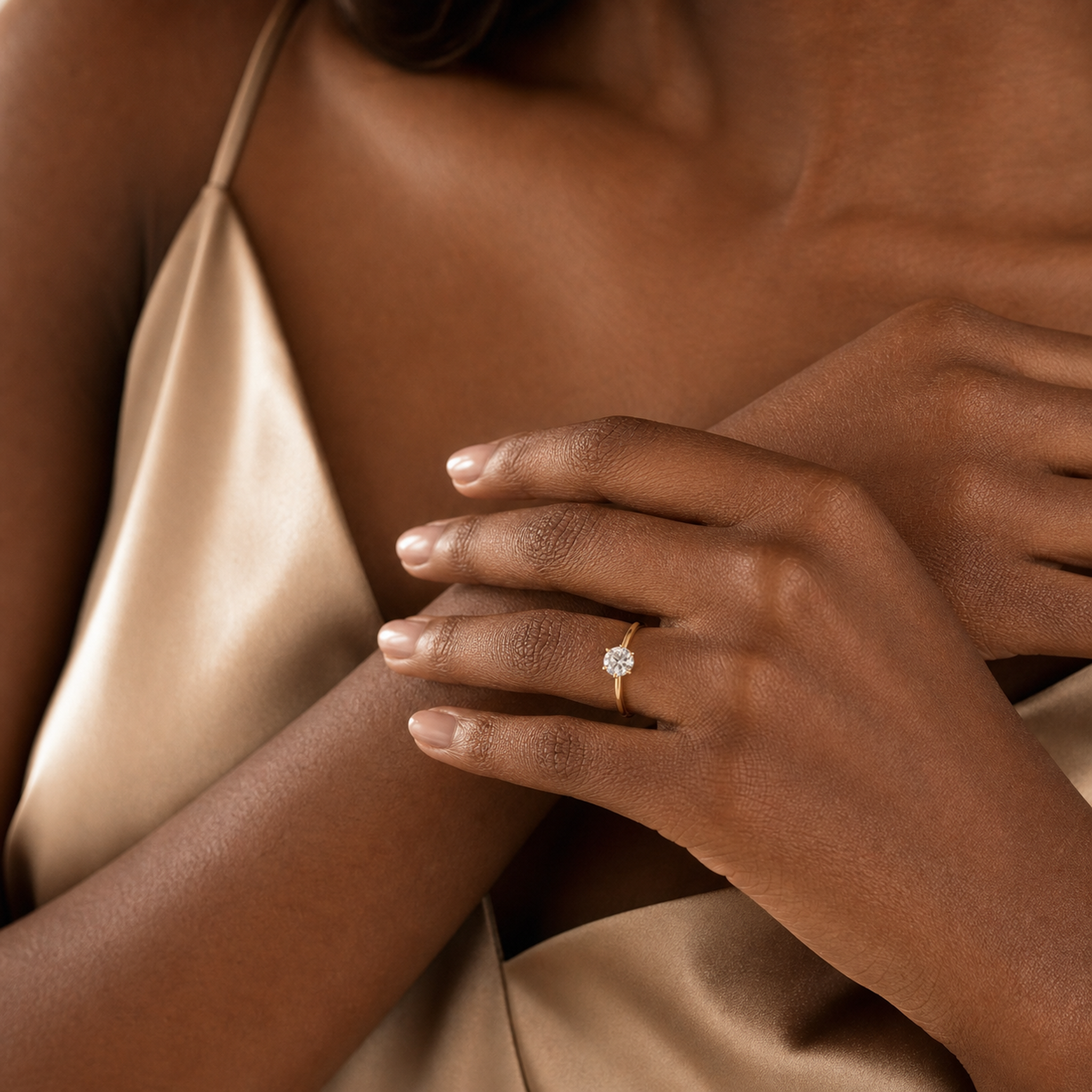


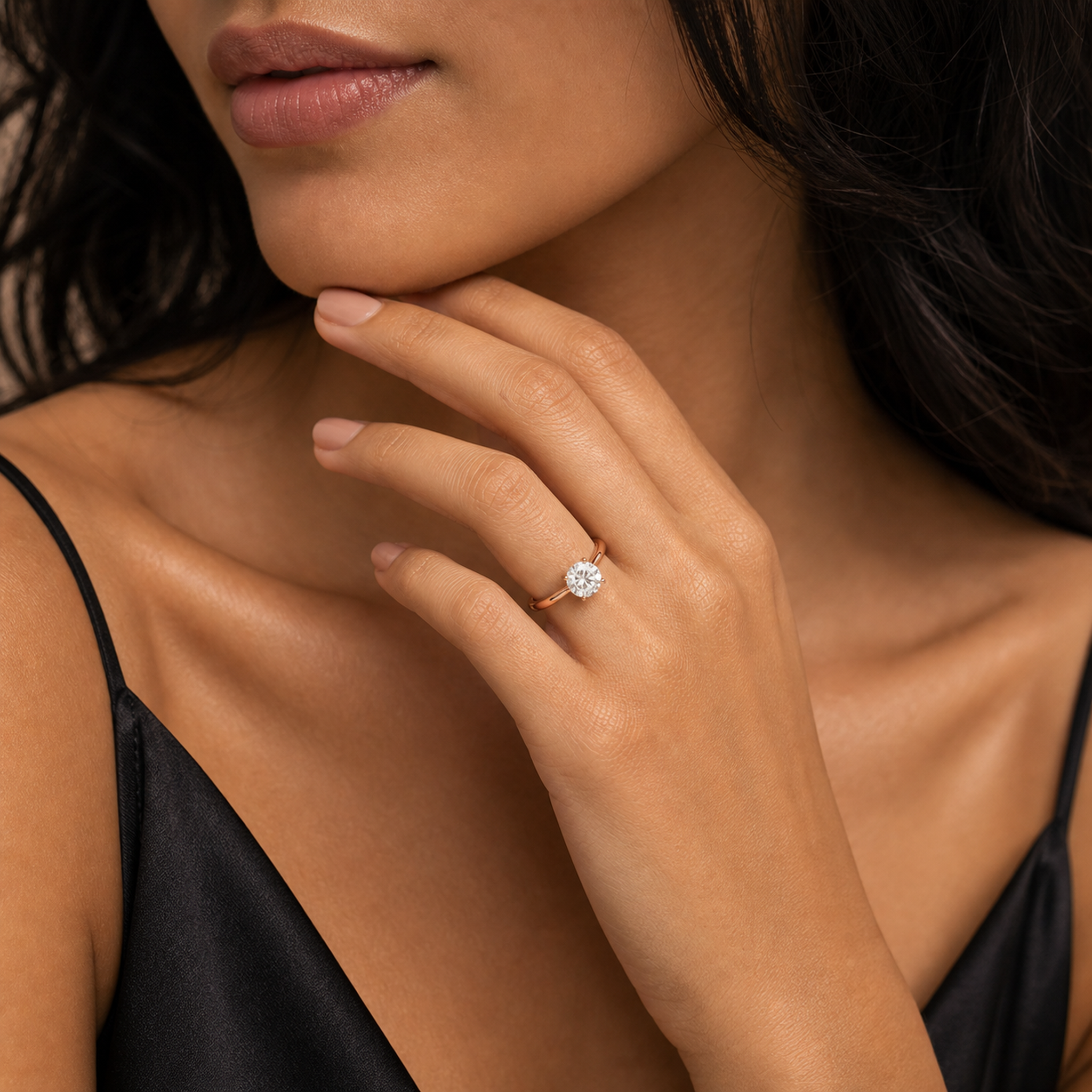
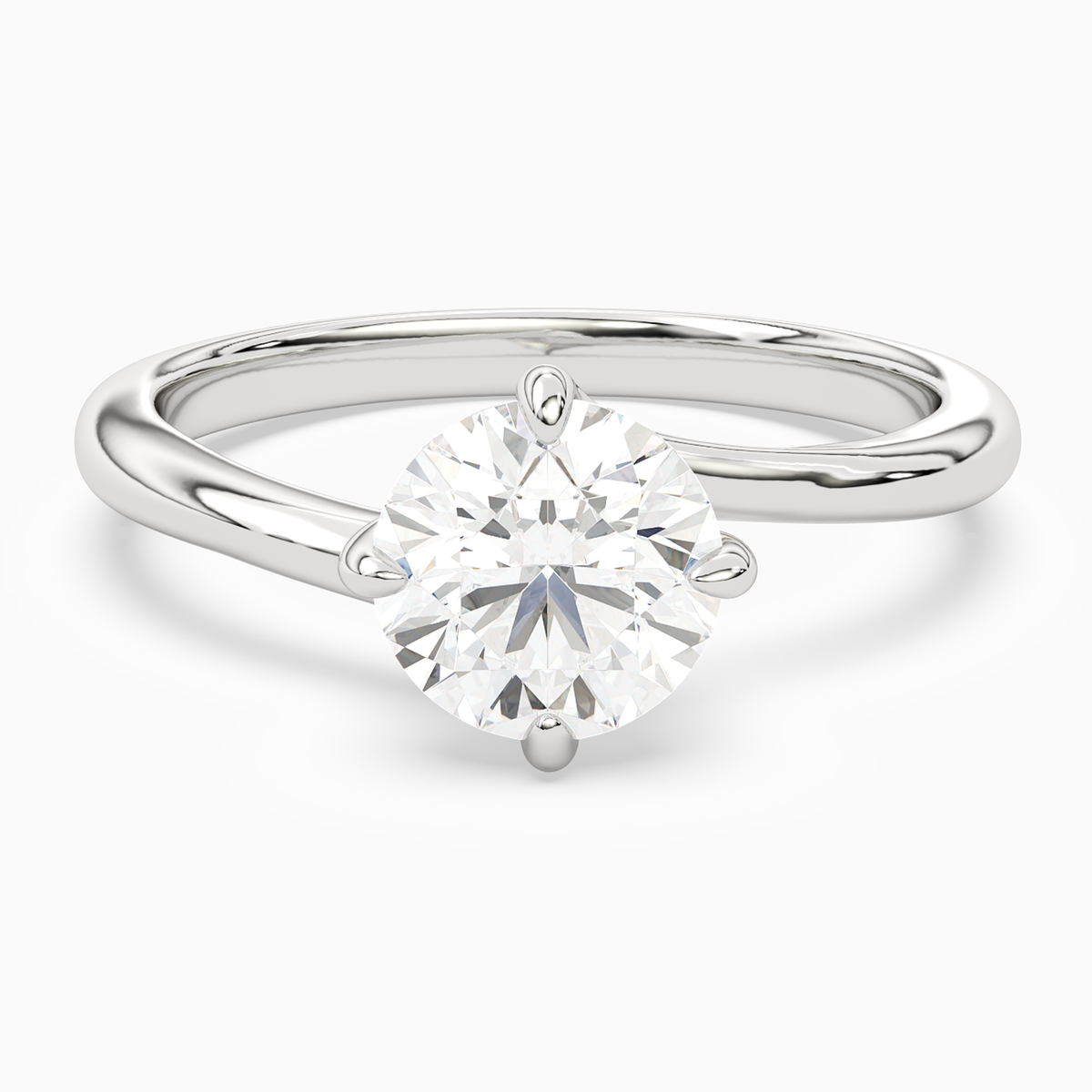










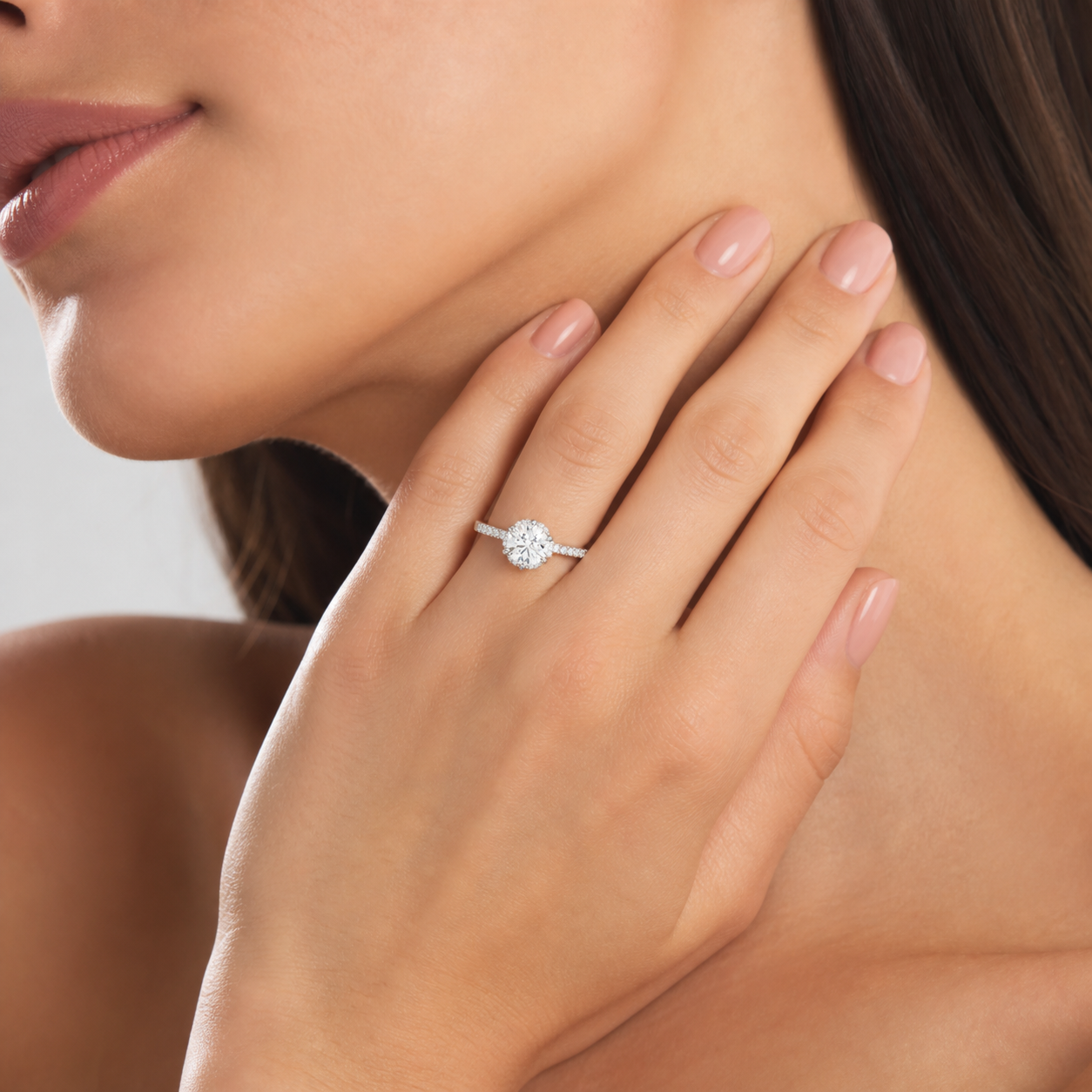


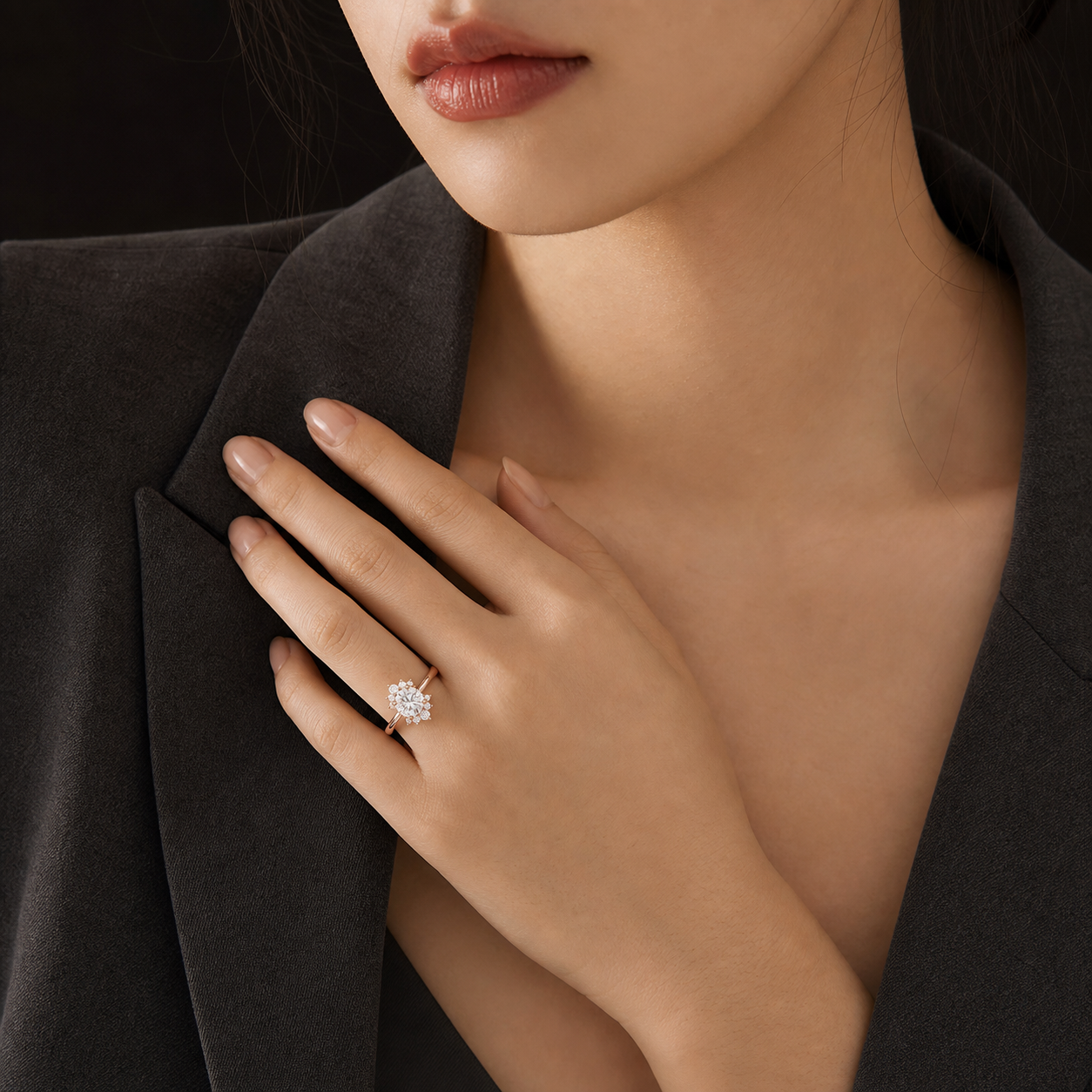


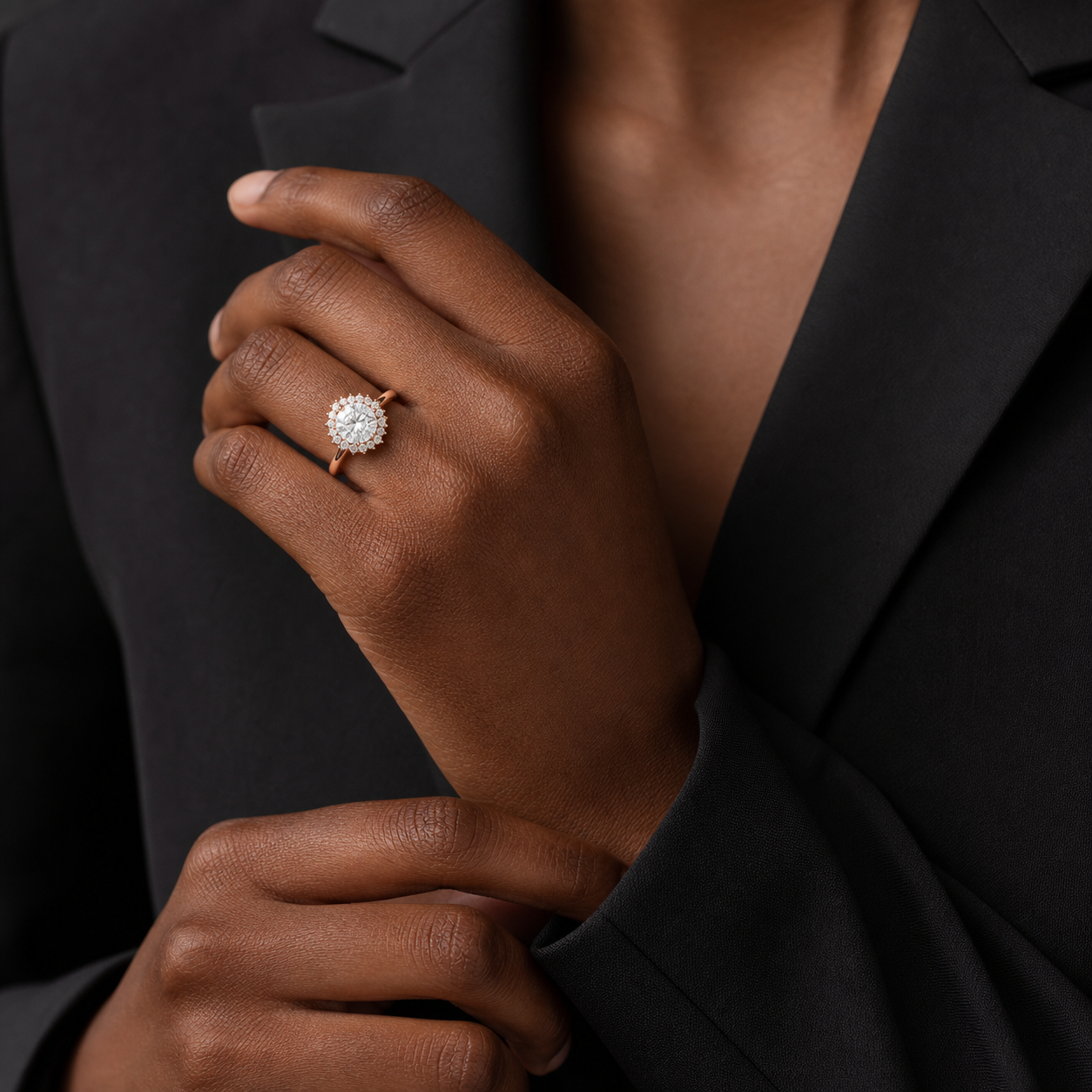


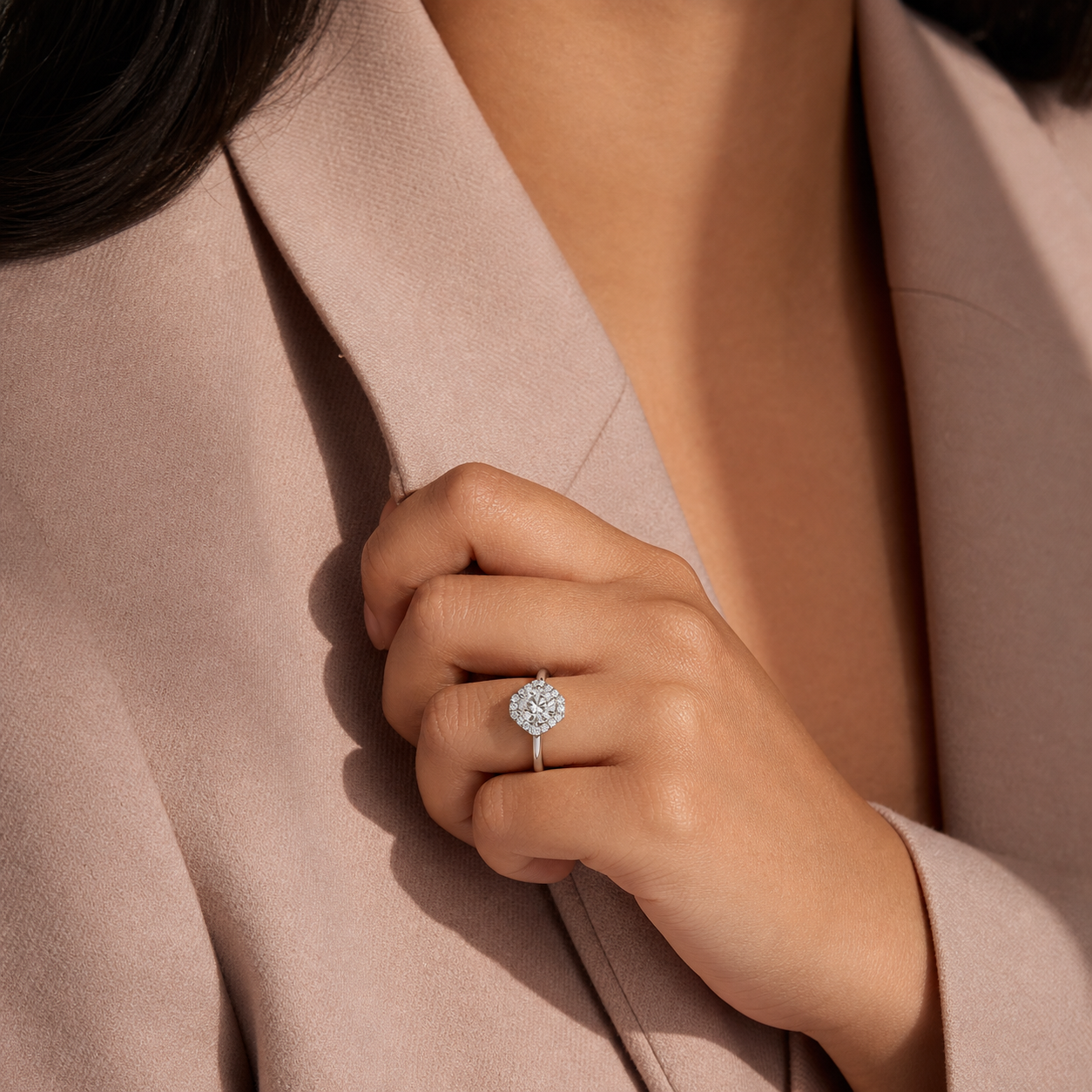


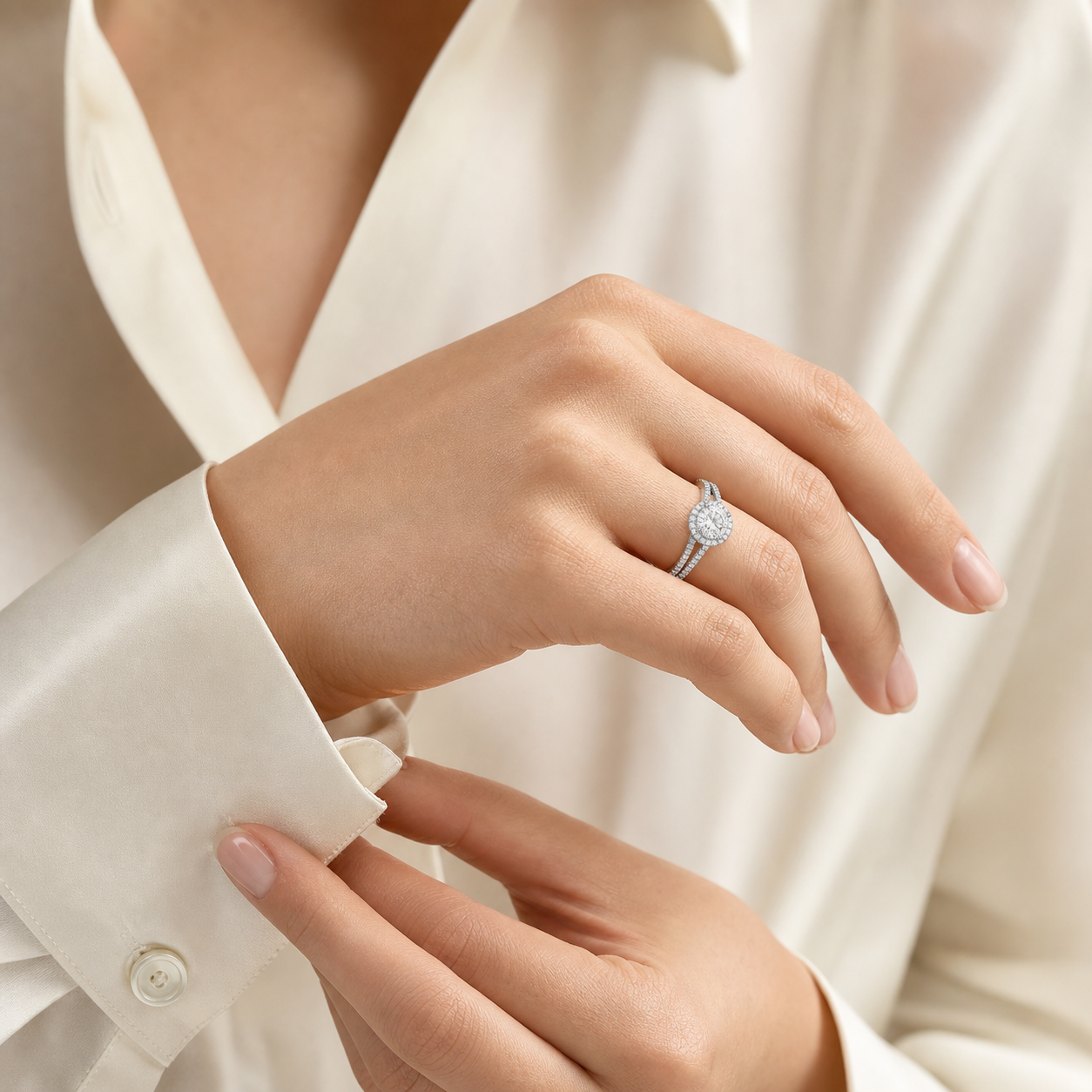


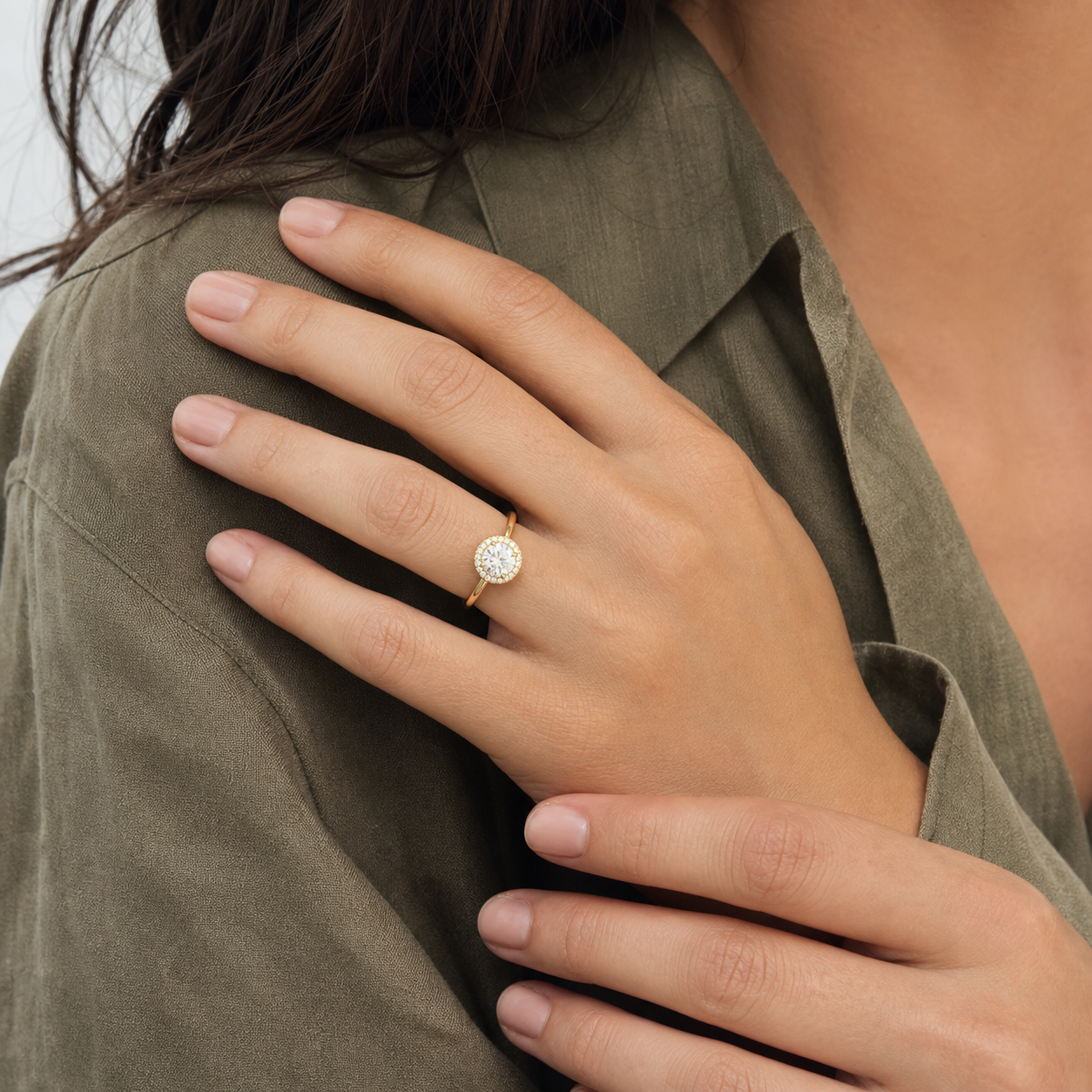


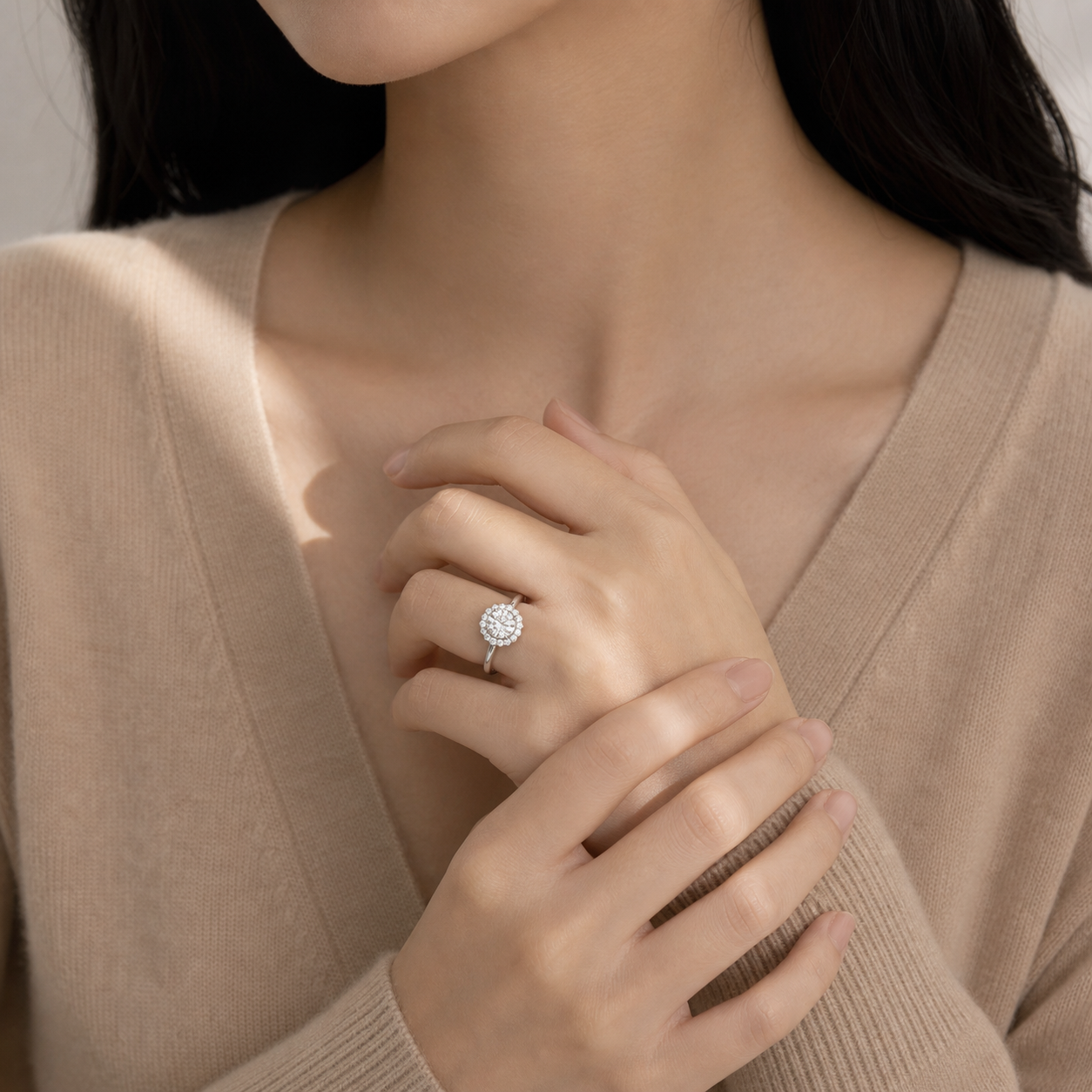


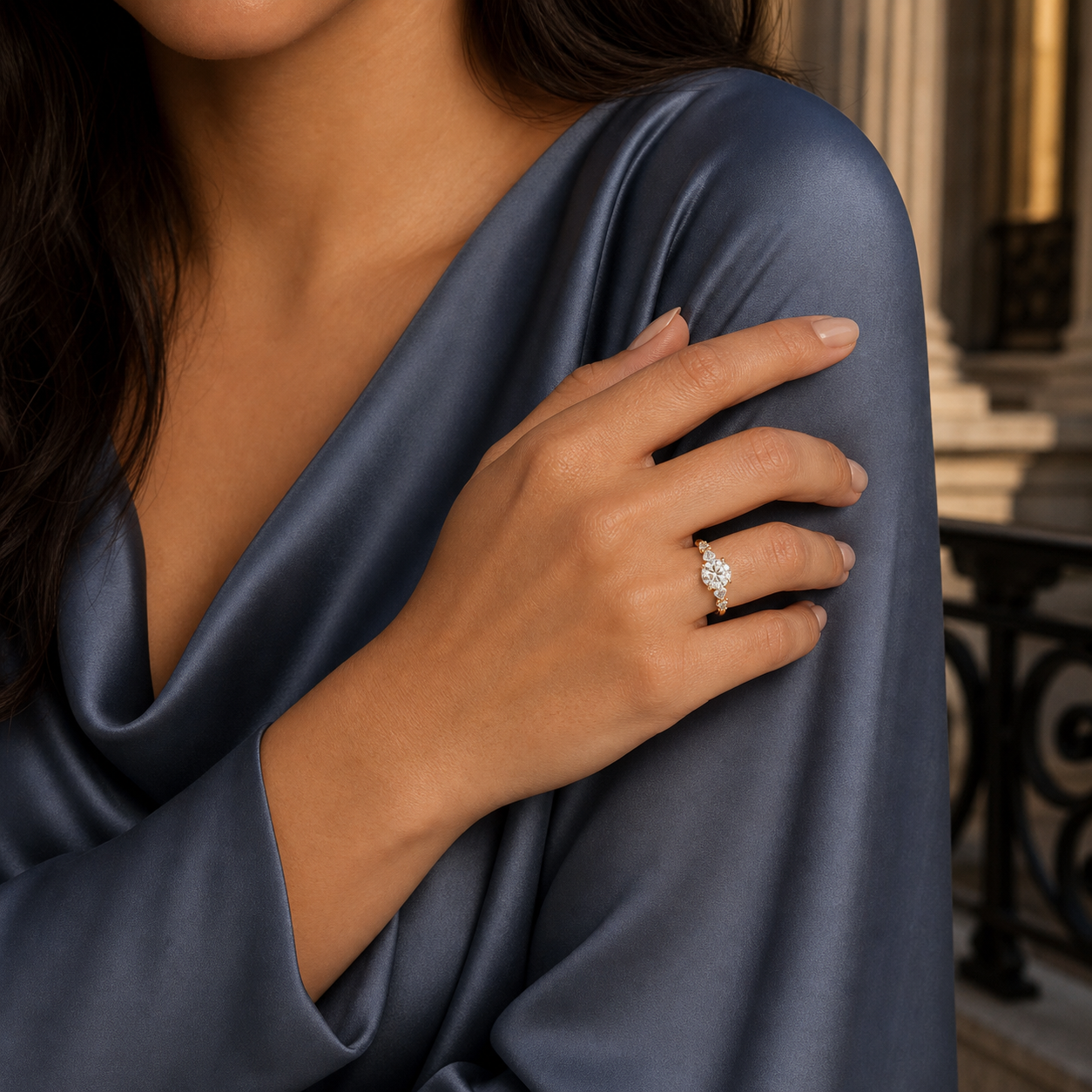


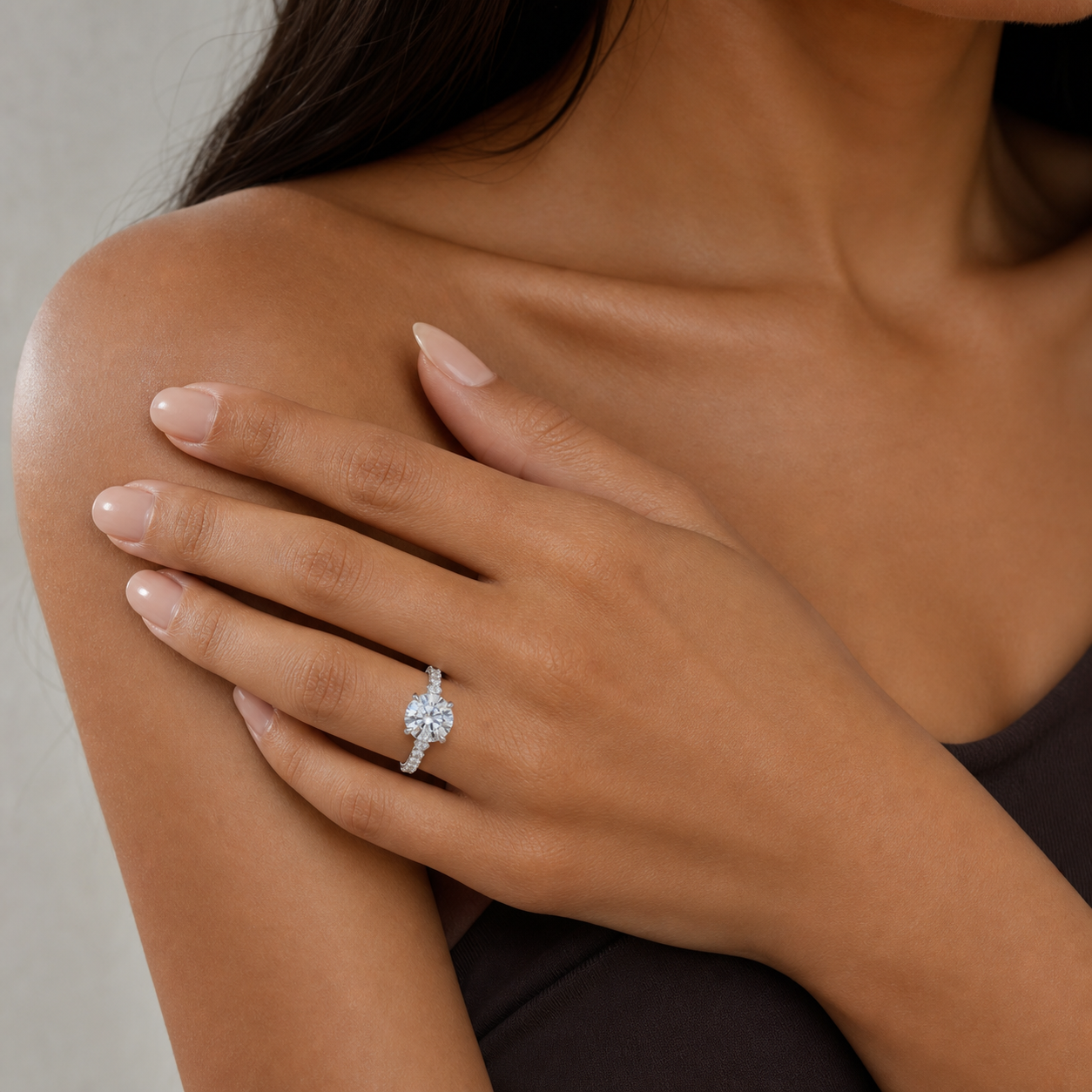


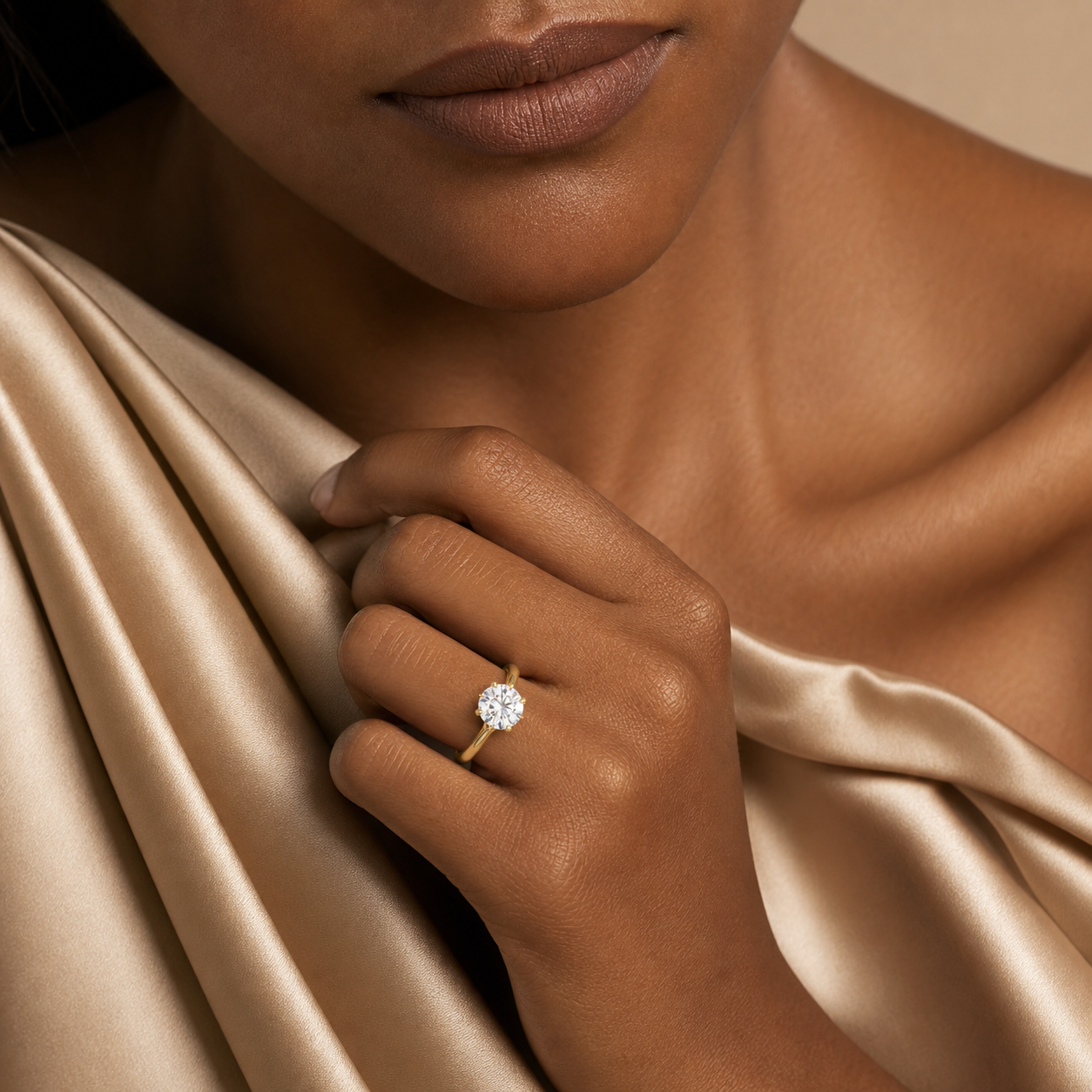
Round Diamond Engagement Rings: The Discipline of a Complete Circle
A round brilliant diamond begins with a complete circle and a highly ordered facet arrangement. Its symmetry distributes light around a centered pattern, creating the familiar interplay of white brightness, spectral fire, and flashes that appear as the diamond, light, or observer moves. The shape is widely recognized, but no individual center should disappear behind the word classic.
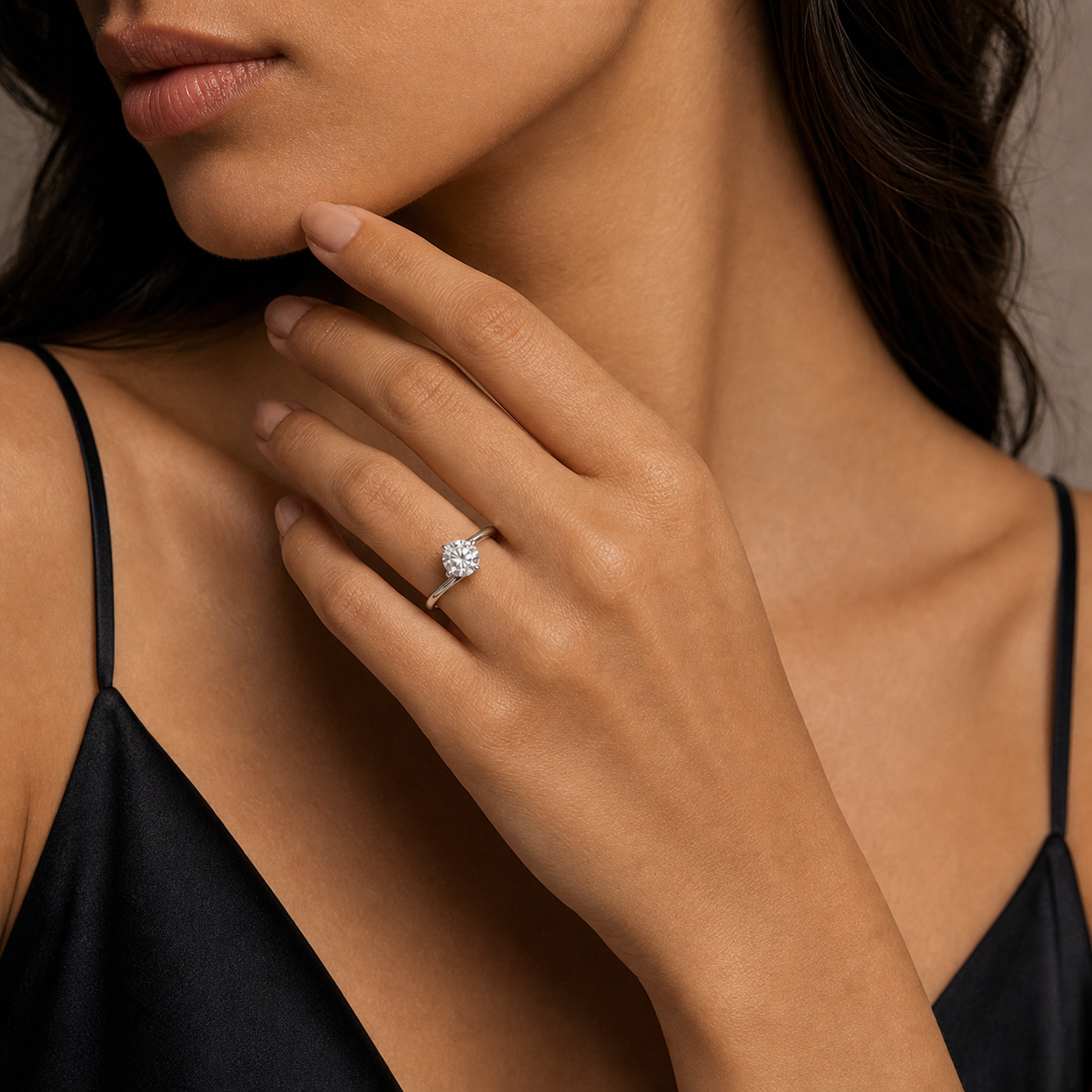
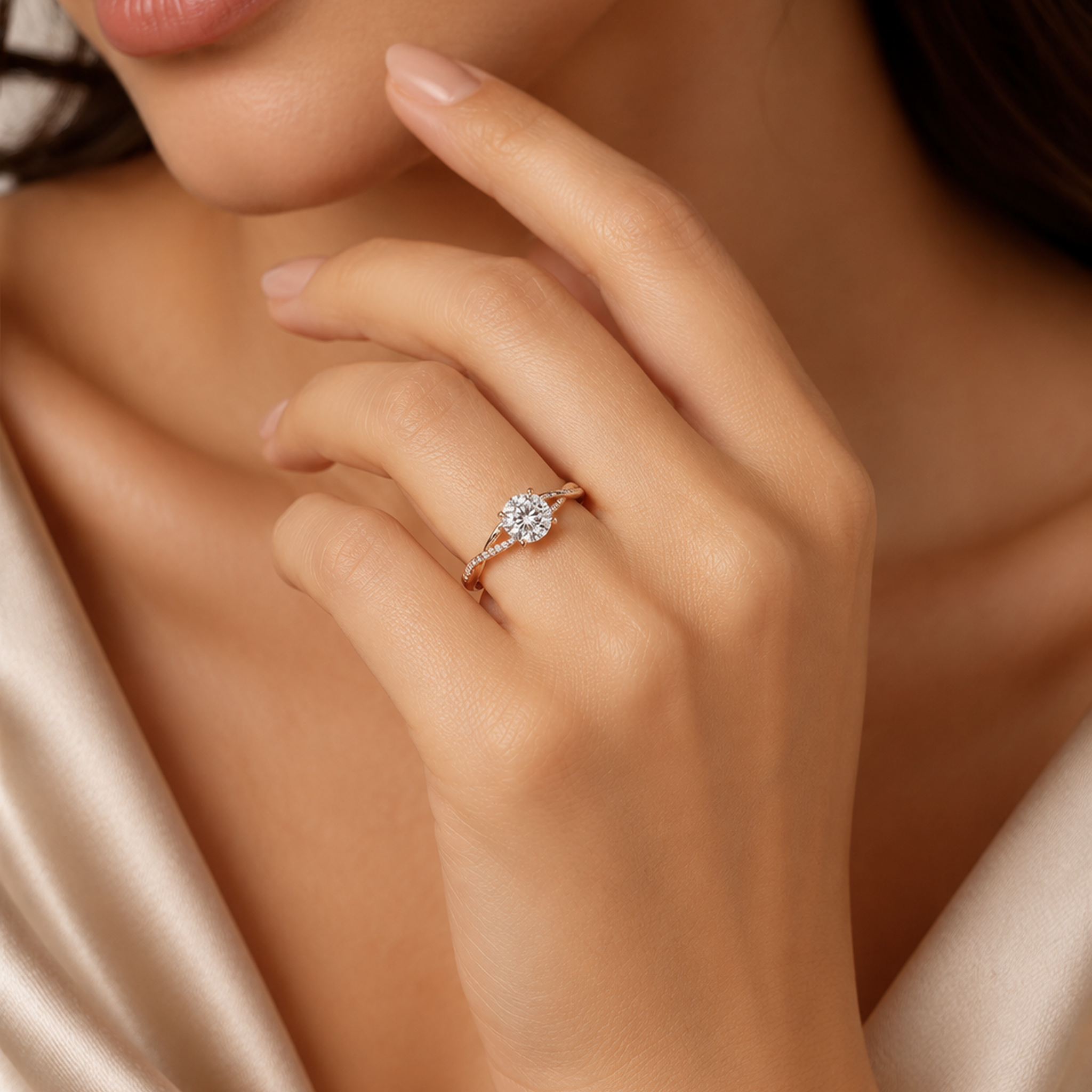
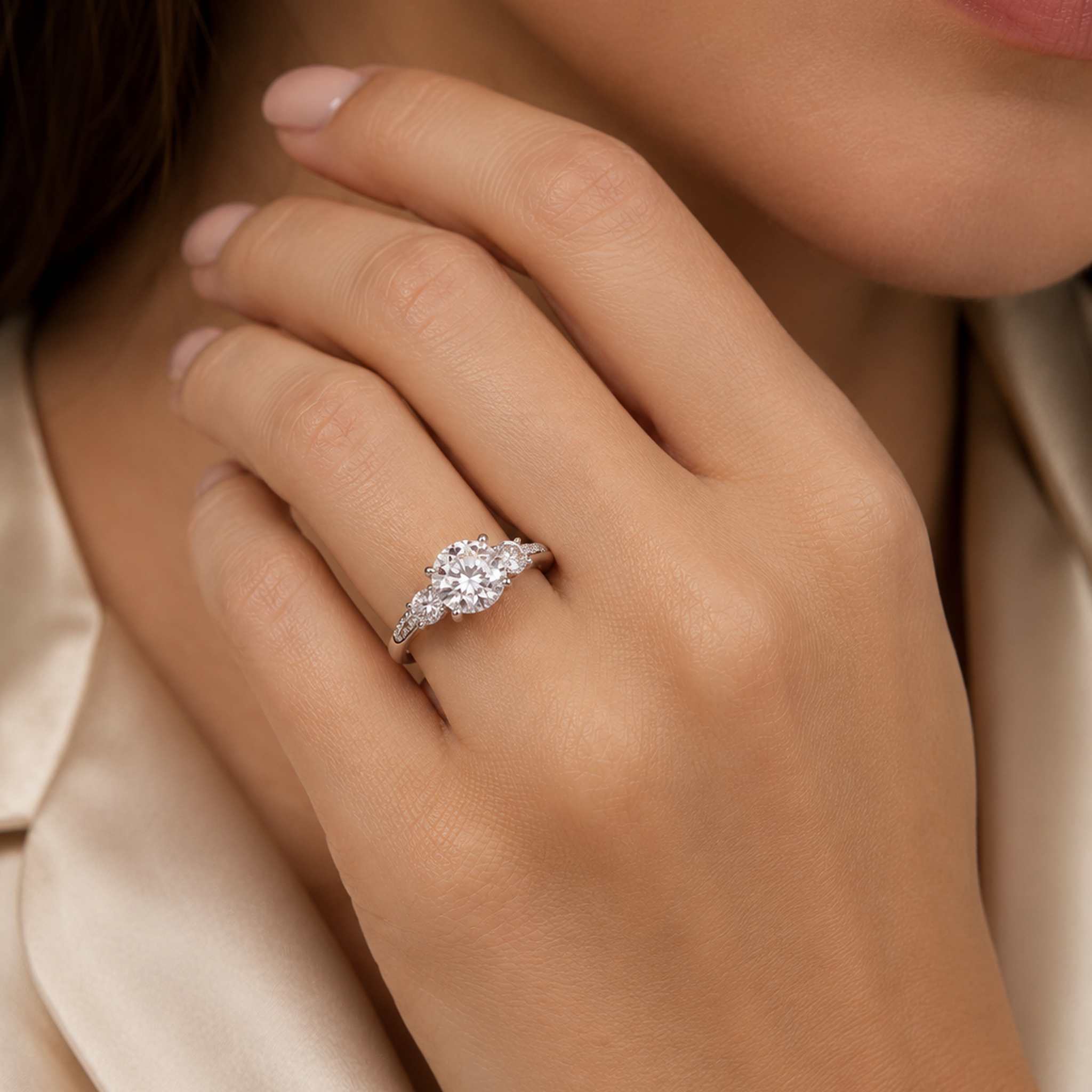
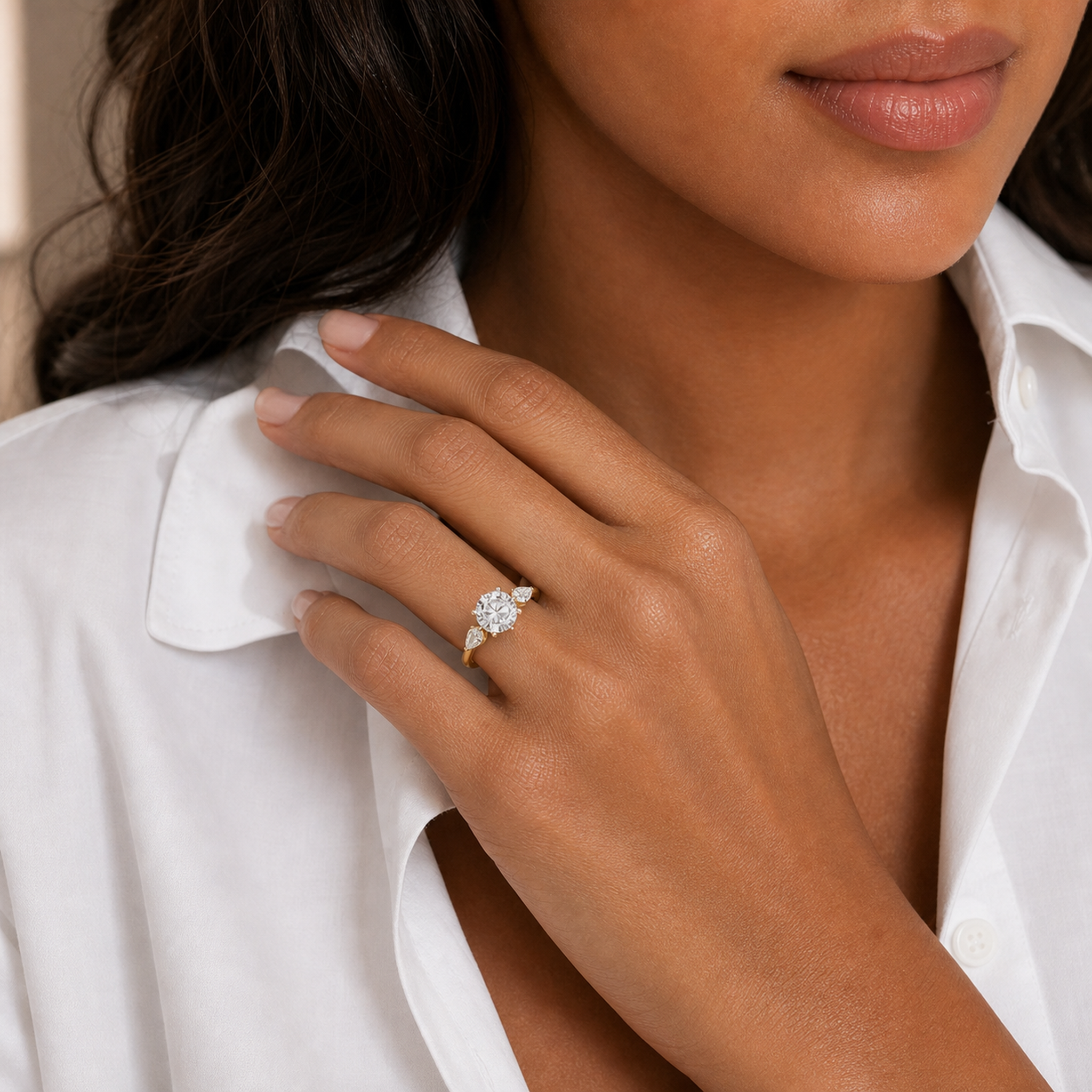
Burvonti’s round engagement rings carry that circle through Solitaire, Bezel, Halo, Hidden Halo, Side Stone, Three Stone, floral, vine, bypass, split-shank, and more architectural settings. Some compositions preserve a quiet perimeter; others build outward in diamonds, metal, or open space. The round center provides continuity, while the setting determines how that continuity is framed.
A Standardized Cut, Not a Single Visual Result
A standard round brilliant has 57 or 58 facets, depending on whether a culet facet is present. That standardization allows GIA to assign an overall cut grade to eligible round brilliants in the D-to-Z color range—something it does not currently provide for fancy shapes. The grade is useful because it considers appearance, design, and craftsmanship together.
It is not a promise that every diamond with the same grade will look identical. Different combinations of crown angle, pavilion angle, table size, total depth, girdle, and facet relationships can fall within one grade while producing variations in pattern, fire, brightness, and face-up scale. The report narrows the field; observation completes the decision.
Brightness, Fire, and Scintillation Describe Different Things
Brightness is the white light returned from the diamond. Fire is the separation of light into spectral color. Scintillation is the pattern of bright and dark areas and the flashes that become visible in motion. Together they create what is often compressed into the word sparkle, but each contributes a different quality to the center’s presence.
A balanced pattern needs contrast as well as light. If every area appeared uniformly bright, the facets would lose definition; if dark areas dominated or remained fixed, the diamond could feel less responsive. View the center face-up and in motion under more than one ordinary lighting condition when possible, then ask whether its pattern feels crisp, even, and alive rather than simply intense in one image.
Read the Cut Grade as a Complete System
GIA’s overall Round Brilliant cut grade considers brightness, fire, scintillation, weight ratio, durability, polish, and symmetry. This is broader than a table or depth percentage and more informative than treating one crown-and-pavilion combination as the only correct formula. A proportion chart can identify questions; it cannot replace the interaction among all components.
Polish describes the condition and finish of facet surfaces. Symmetry describes the exactness of the outline and the placement and alignment of facets. Both are reported separately, even though they also inform the complete reading of craftsmanship. Terms such as Triple Excellent refer to an Excellent overall GIA cut grade together with Excellent polish and symmetry; they should not be confused with a universal guarantee of personal preference.
Carat Weight, Diameter, and Setting Scale Work Together
Carat measures weight. For a round diamond, face-up size is more directly understood through minimum and maximum diameter, considered with total depth and weight ratio. Two centers of equal carat weight can present slightly different diameters when their proportions distribute weight differently. A deeper stone may carry more mass below the girdle; an unusually thick girdle can also affect visible scale.
The setting changes perception again. A fine band can leave more visual space around the center; a bezel adds a precise metal perimeter; a Halo expands the field of light; side stones or a Three Stone layout extend the ring laterally. Compare the center’s documented measurements within the complete ring rather than using carat weight as a substitute for proportion.
The Setting Decides How the Circle Meets the Ring
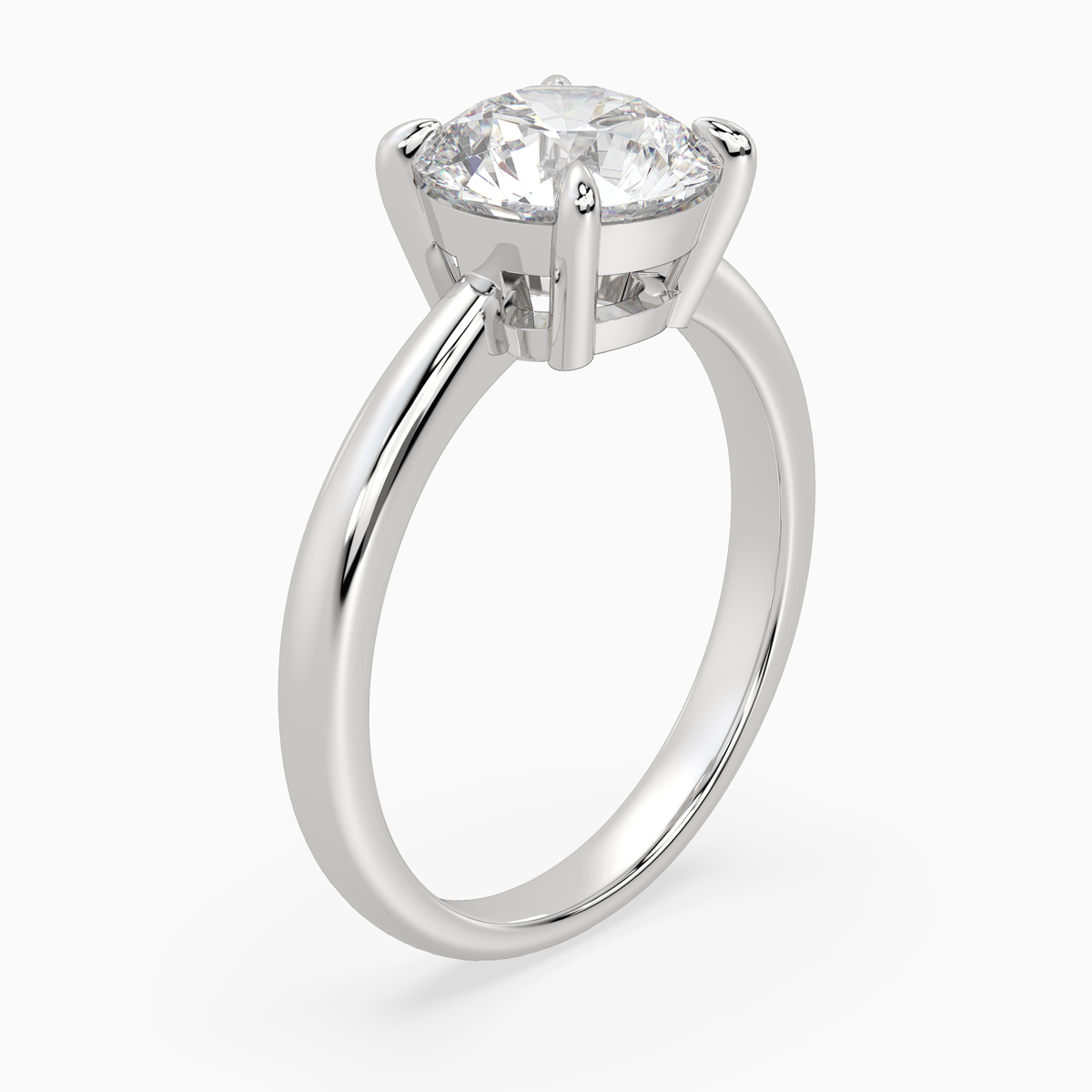
A Solitaire isolates the round outline and makes prong, basket, and band proportion especially visible. Four prongs can leave more of the perimeter open; six can divide the circle into a finer rhythm. Neither count is automatically more beautiful or universally secure—the result depends on prong dimensions, placement, condition, and support for the selected center.
A bezel traces the circle continuously in metal, while a Halo repeats it in diamonds or reshapes it through a different outer frame. A Hidden Halo places more of its effect below the face-up view. Side Stone, Three Stone, floral, and Kite-accent settings can either echo the center’s symmetry or introduce directional contrast. Security and maintenance remain properties of the exact construction, not the style name.
Metal, Profile, and the Wedding Band Complete the Architecture
White Gold can create cooler continuity among diamond, prongs, and bright metal. Yellow or Rose Gold gives the circular center a warmer boundary and can make the head or band line more visible. These are visual tendencies, not fixed rules for color grade, hand, or personal style; alloy, finish, care, and product specification remain part of the decision.
From the side, a cathedral shoulder, open basket, hidden halo, bezel, bypass, or projecting accent creates a distinct height and contact line. A straight wedding band may sit close, meet the basket, or leave a deliberate interval. A contour, chevron, open band, or coordinated profile may answer that geometry when desired. A round center alone does not guarantee a flush stack.
Documented Precision, Calibrated for the Ring
Burvonti pairs responsibly sourced, independently graded lab-grown diamonds with settings resolved through proportion and human judgment. For a Round Brilliant, the cut grade provides a rigorous common language; the individual light pattern, diameter, scale, and architecture determine how that language becomes a ring made for daily presence.
Custom possibilities may refine center specifications, setting, prong or bezel treatment, metal, accent arrangement, band line, or engraving when structurally feasible. Clean gently with methods appropriate to the diamond, metal, and construction, avoid abrasive products and harsh chemical exposure, and arrange inspection if a prong catches, a stone moves, or the ring receives a significant impact. Availability, resize range, documentation, security, and wedding-band fit remain product-specific.
Frequently Asked Questions
What is a round brilliant diamond engagement ring?
It is an engagement ring centered on a diamond with a circular outline and the standardized Round Brilliant facet arrangement. That arrangement is designed to balance brightness, fire, scintillation, weight, durability, polish, and symmetry.
Is every round diamond a standard Round Brilliant?
No. Round describes an outline; Round Brilliant describes a standardized facet arrangement. Modified or non-standard round cuts can exist, and GIA’s overall cut-grade framework applies only to eligible standard Round Brilliant diamonds in the D-to-Z color range.
How many facets does a Round Brilliant diamond have?
A standard Round Brilliant has 57 or 58 facets. The 58th is a small culet facet at the bottom of the pavilion when present. The count alone does not establish quality; angles, proportions, alignment, finish, and their interaction matter.
Why does GIA give Round Brilliant diamonds an overall cut grade?
Their facet arrangement and light behavior are sufficiently standardized for a consistent research-based system. GIA assesses eligible stones from Excellent to Poor using face-up appearance, design, and craftsmanship rather than one measurement alone.
What does a GIA Round Brilliant cut grade evaluate?
It considers brightness, fire, scintillation, weight ratio, durability, polish, and symmetry. These components address how the diamond appears, how its proportions distribute weight and support durability, and how precisely it was finished.
Does an Excellent cut grade mean every Round diamond looks the same?
No. Several proportion combinations can receive the same grade while showing different balances of brightness, fire, pattern, and face-up size. Use the grade to narrow the field, then compare the actual centers in motion.
Does GIA use an Ideal cut grade?
GIA’s overall cut scale for standard Round Brilliants is Excellent, Very Good, Good, Fair, and Poor. Other laboratories or sellers may use Ideal under their own systems, so always identify which grading standard and report support the term.
What does Triple Excellent mean?
In GIA terminology, it commonly refers to an Excellent overall cut grade, Excellent polish, and Excellent symmetry. It is useful report shorthand, but it does not replace comparison of the center’s pattern, dimensions, color, clarity, and personal visual preference.
What is the difference between brightness, fire, and scintillation?
Brightness is returned white light; fire is light separated into spectral colors; scintillation is the changing pattern of bright and dark areas and visible flashes in motion. Together they create the Round Brilliant’s overall light performance.
Is there one perfect set of proportions for a Round Brilliant?
No. GIA research found that different proportion sets can produce attractive diamonds and receive the same cut grade. Crown, pavilion, table, depth, girdle, facet lengths, and finish must be considered in combination.
Does carat weight tell me how large a Round diamond will look?
Not by itself. Carat measures weight. Minimum and maximum diameter, total depth, girdle, and weight ratio help explain face-up scale, while the band, bezel, Halo, or side stones change how the center reads in the complete ring.
Do Round Brilliant diamonds hide color or clarity characteristics?
Their light pattern may make some characteristics or body color less noticeable in certain conditions, but no fixed grade is guaranteed to look colorless or eye-clean. Review the independent report and the individual diamond in the intended metal and scale.
Which Round engagement ring styles are available at Burvonti?
The current public collection includes Solitaire, Bezel, Halo, Hidden Halo, Side Stone, Three Stone, floral, vine, cathedral, bypass, split-shank, crossover, and Kite-accent designs in 14K White, Yellow, and Rose Gold. Confirm exact current availability.
Should I choose four or six prongs for a Round center?
Four prongs leave more perimeter open and can create a squarer visual interval; six divide the circle more finely. Security and appearance depend on exact prong size, placement, workmanship, condition, and center dimensions—not count alone.
Is a bezel better than prongs for a Round diamond?
Neither is universally better. A bezel creates a continuous metal frame; prongs reveal more of the circular edge. Compare profile, maintenance, setting security, visual perimeter, and wedding-band relationship for the exact design.
How do Solitaire, Halo, and Three Stone settings change a Round center?
A Solitaire isolates the circle. A Halo repeats or redraws its perimeter with surrounding diamonds. A Three Stone setting extends the composition across the finger. Each changes scale, profile, maintenance points, and the center’s visual dominance.
Which metal works best for a Round engagement ring?
There is no universal best. White Gold can create cooler continuity; Yellow and Rose Gold create a warmer frame. Consider the diamond, prong color, alloy, finish, care, sensitivity considerations, and exact product specification together.
Will a Round engagement ring sit flush with a wedding band?
Not necessarily. Basket width, setting height, bezel, Halo, side stones, and shoulder geometry determine the contact line. Some accept a straight band; others may suit a contour, chevron, open band, or intentional gap.
How should I clean a Round diamond engagement ring?
Use gentle methods appropriate to its diamond, metal, and construction. Avoid abrasive cleaners and harsh chemicals, clean around the underside and setting details, and arrange inspection if a prong catches or any stone appears to move.
Can a Burvonti Round engagement ring be resized or customized?
Resize and custom possibilities depend on the setting. Center specifications, metal, prong or bezel treatment, accents, band line, or engraving may be adjustable when structurally feasible, but sizing range, documentation, security, and band fit must be confirmed for the chosen configuration.