


Lab Grown Diamond Bezel Bracelets
A continuous metal edge gives each diamond a deliberate outline. Explore bezel bracelets through contour, spacing, profile and movement.






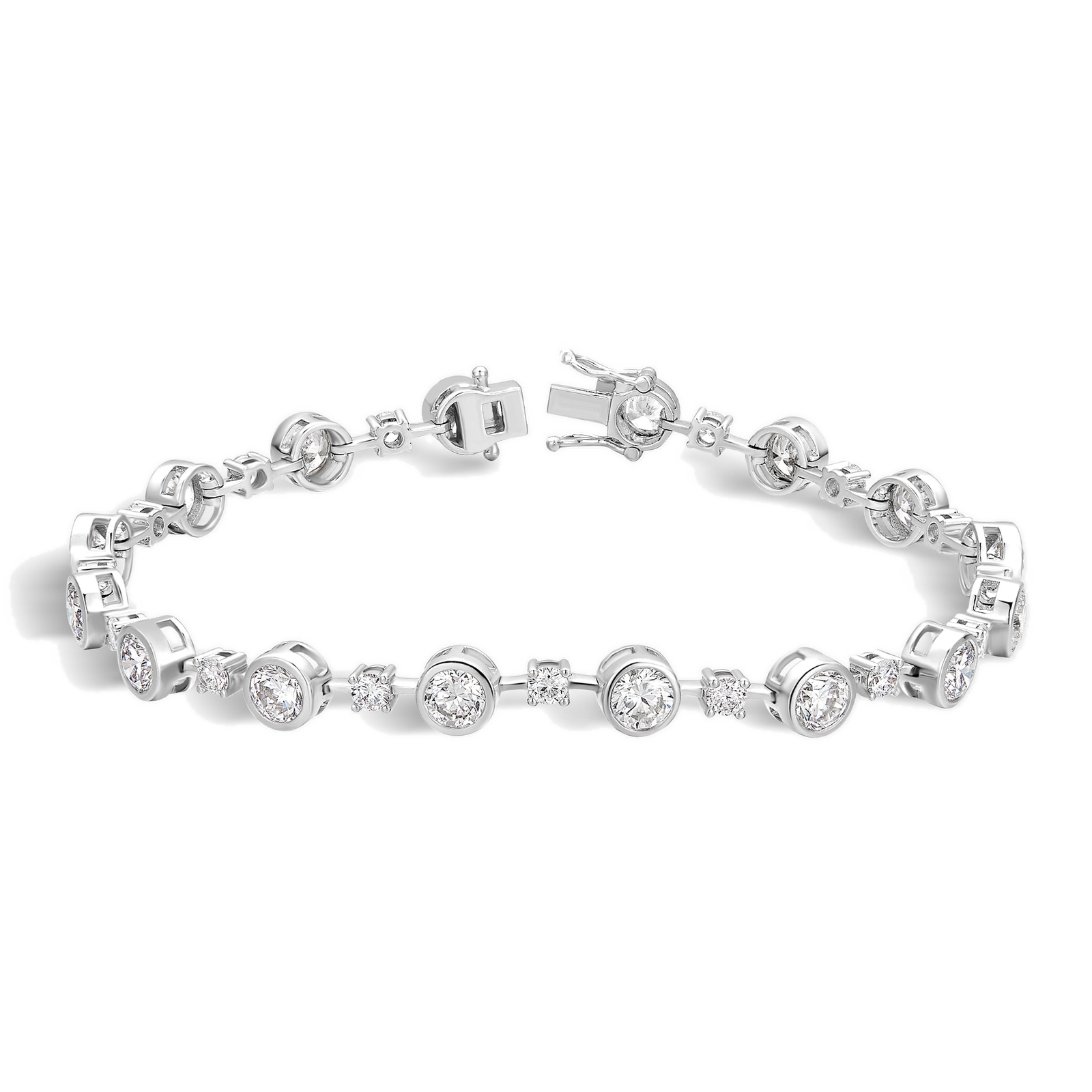

The Clarity of a Drawn Edge
A bezel makes the boundary around a diamond visible. Instead of discrete prong contacts, metal follows more of the stone’s perimeter, turning outline into part of the composition. On the wrist, that edge can appear as an isolated point, a repeated sequence, or a more complex change of shape. The setting is both structural and graphic, but it is not a universal promise of protection, comfort, or permanence.
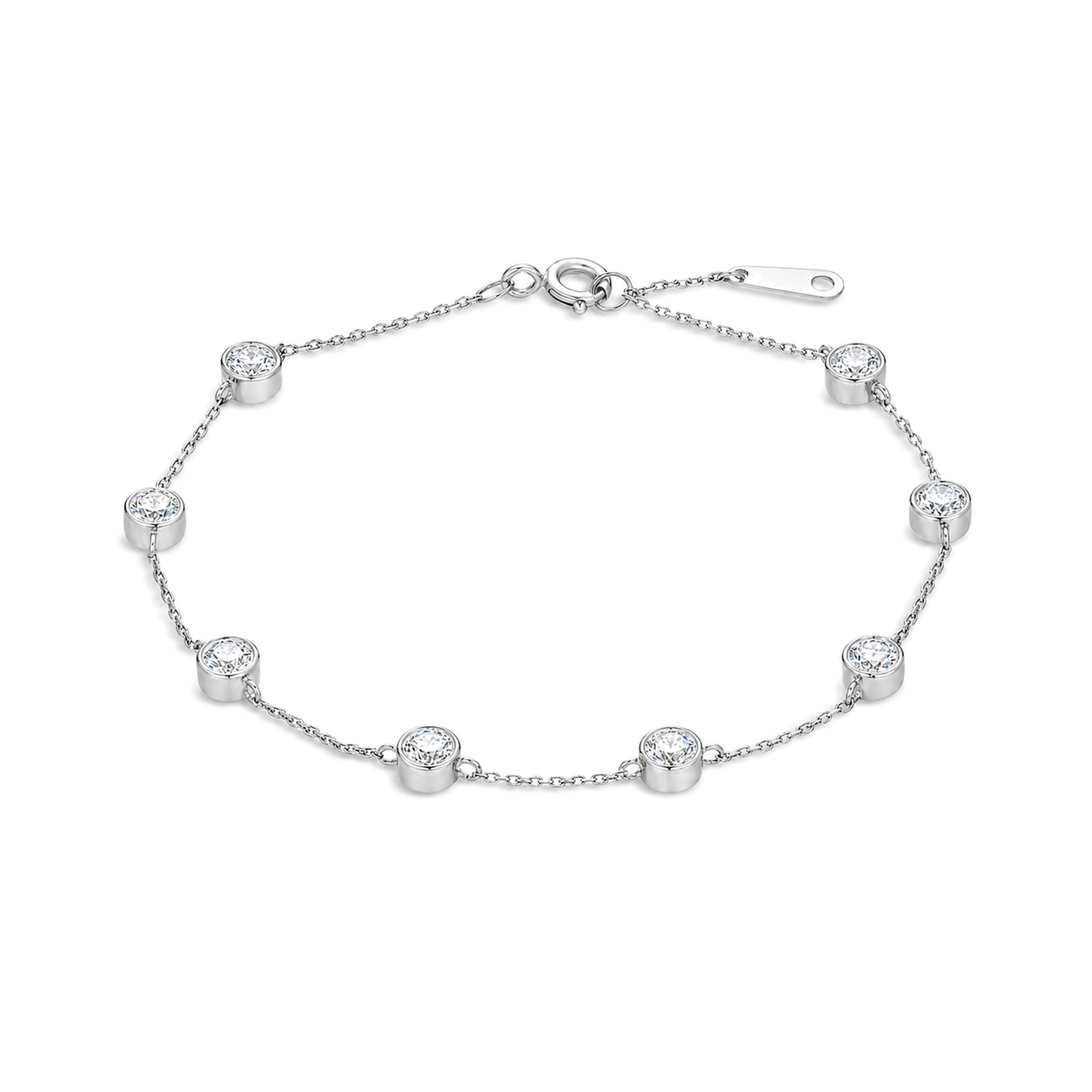
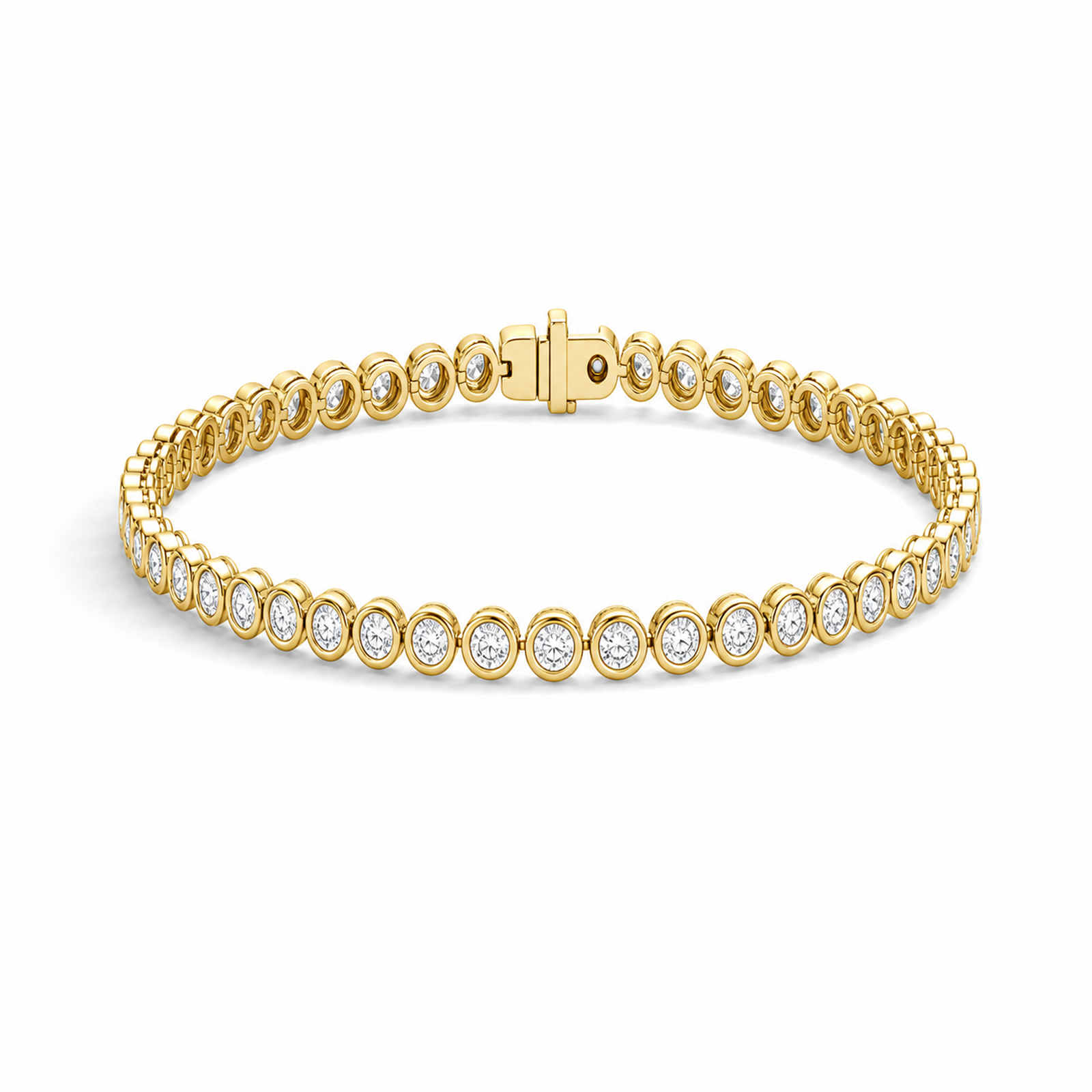
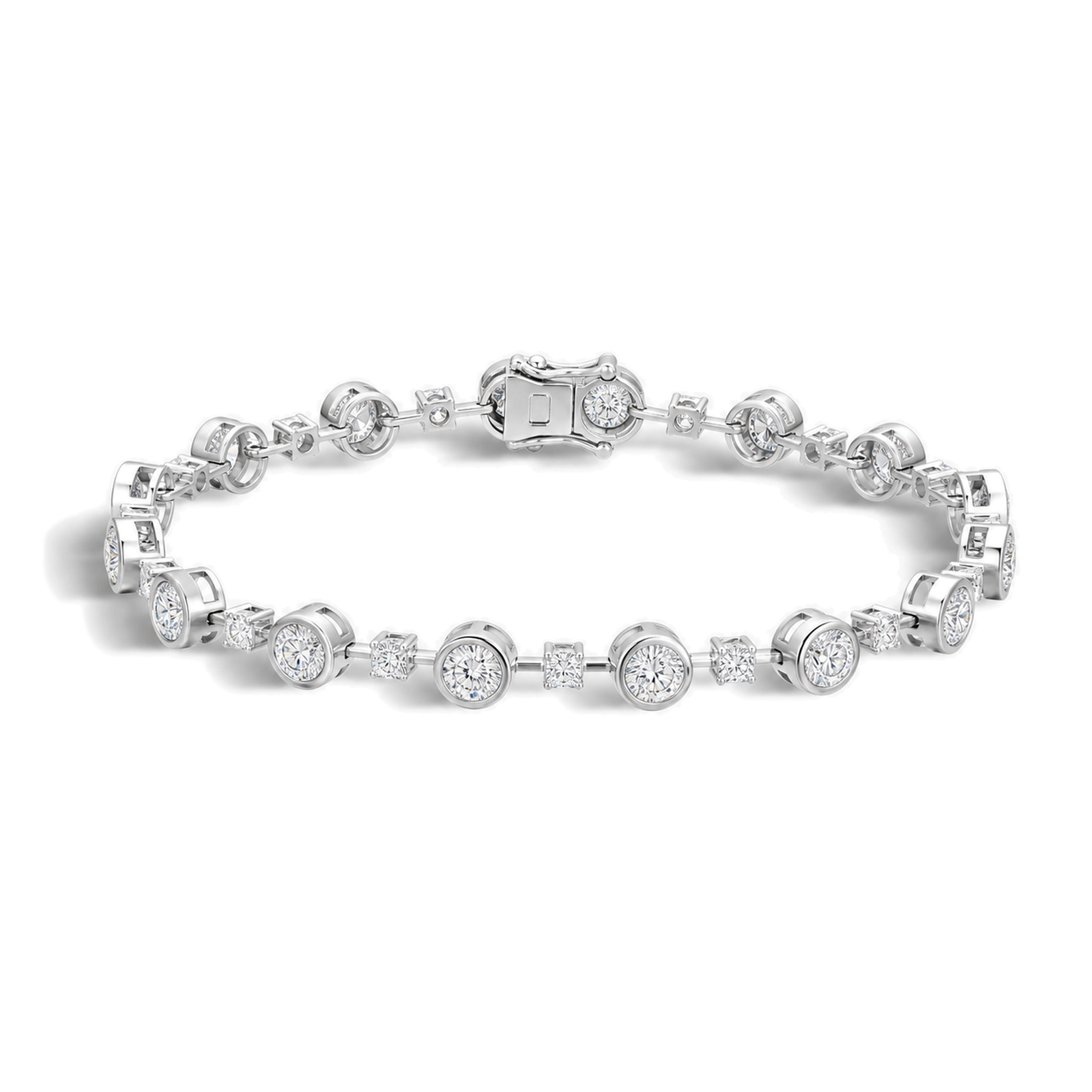
Burvonti’s current public Bezel Bracelet Collection contains three designs. Noelle spaces round bezel stations along a chain. Faye forms a round-diamond tennis line. Delphine is titled an alternating multi-shape tennis bracelet, although its current public detail identifies Round rather than listing every shape. All three are exact subsets of the parent Bracelet Collection; Noelle and Delphine also appear in Chain. This guide follows those facts without inventing a broader assortment.
The Perimeter Changes How Shape Is Read
A continuous metal edge can make a round outline more explicit and can separate one diamond from the next. In a fancy-shape design, the bezel may emphasize orientation, corners, points, or alternating geometry, but the result depends on the selected diamond, bezel width, contour accuracy, finish, and viewing angle. A setting label alone cannot establish how large or bright a diamond will appear.
For Delphine, the title indicates an alternating multi-shape design while the current product detail lists Round. Until complete shape-level specifications are available, the Collection copy should discuss alternating outline and sequence without naming unverified shapes or asserting that every diamond follows the same contour.
Spacing Determines Whether the Edge Becomes Point or Line
Noelle uses chain intervals, so each bezel reads as a distinct point within open space. Faye repeats round bezels across a tennis line. Delphine uses a broader alternating sequence. The same setting principle therefore produces three different compositions: isolated stations, consistent repetition, and varied geometry.
Compare the distance between settings, the amount of visible connecting metal, diamond coverage, and how the sequence resolves at the clasp. Bezel does not mean flush, rigid, low-profile, or fully continuous in every bracelet. Those qualities depend on complete construction and selected-product dimensions.
Profile Must Be Seen from More Than Above
The metal perimeter visible from above is only one part of the setting. Side-wall height, under-gallery or backing, link connections, articulation, chain transition, finish, and the relationship between metal and skin all influence profile. A bezel can reduce exposed prong points, but that does not make every edge smooth or every design resistant to catching.
Inspect front, side, underside, closure, and connection views. Comfort depends on fit, dimensions, weight distribution, wrist anatomy, activity, neighboring jewelry, and condition. No current evidence supports round-the-clock wear, zero maintenance, or a promise that a bezel will never snag, scratch, loosen, or receive impact.
Three Architectures Move Differently
Noelle’s chain-led stations may drape and rotate more freely. Faye’s connected tennis line follows the wrist through repeated settings. Delphine’s wider mixed-outline sequence creates another articulation and visual weight. Bezel describes how diamonds are held at the perimeter; it does not describe the movement system of the whole bracelet.
Current lengths are 6.3 inches for Noelle and Delphine and 6.7 inches for Faye. Published widths are 0.5, 3.4, and 4.2 mm respectively. Read length, width, setting profile, articulation, closure, and desired movement together. No universal fit allowance or centered position applies across all three.
Total Weight Is Distributed Through the Edge
Current Total Carat Weight options are 1 1/4 for Noelle, 2 2/3 for Faye, and 4 3/5 for Delphine. These values belong to different architectures and cannot be ranked as simple steps of visual size. Station spacing, diamond count, individual dimensions, shape sequence, coverage, bezel width, and bracelet width all change how the total is perceived.
The metal perimeter can extend the visible boundary, but Burvonti does not assign a fixed enlargement effect. It may also cover portions of the diamond edge depending on construction. Compare selected imagery and specifications rather than assuming that every bezel makes a diamond look larger, smaller, or brighter.
Metal Can Recede or Articulate the Border
Current cards represent Noelle and Delphine in 14K White Gold and Faye in 14K Yellow Gold. White gold may visually relate more closely to colorless-looking diamonds in some light; yellow gold can make the repeated perimeter more explicit. Exact contrast depends on bezel width, finish, rhodium plating where applicable, diamond outline, skin context, and surrounding jewelry.
Metal should be chosen as part of the drawing and the complete construction. It does not establish a sensitivity outcome, level of protection, durability, trend, gender, or occasion. Current public membership does not establish Rose Gold, 18K Gold, or Platinum cards for these exact three products.
Closure and Stacking Remain Product-Specific
The current three designs use three different closures: Spring for Noelle, Barrel for Faye, and Box for Delphine. Closure names do not establish identical operation, safety features, loss resistance, or ease of use. Review how each closure meets the setting or chain, especially where the design changes from diamond field to fastening mechanism.
A bezel bracelet can be worn alone or within a stack, but its metal edges and settings can still contact watches, bangles, chains, or other diamond lines. Visual continuity does not prevent abrasion, impact, pressure, catching, or tangling. Assess the selected profile and movement rather than relying on bezel as a protective buffer.
Documentation, Custom Possibilities, and Care
Burvonti uses responsibly sourced lab-grown diamonds and supports independent grading and certification where applicable. In a multi-diamond bracelet, one document does not automatically identify every diamond. Confirm how Total Carat Weight, color and clarity fields, shape sequence, individual stones, and documentation correspond to the selected design.
Custom possibilities may refine diamond sequence, bezel contour, spacing, coverage, length, width, metal, or closure when technically feasible. Clean the full circumference with gentle methods suited to diamonds, metal, settings, links or chain, and closure. Inspect the perimeter, connections, articulation, and clasp if alignment, movement, or fit changes.
Frequently Asked Questions
What is a bezel bracelet?
It uses a continuous metal perimeter around more of each diamond’s edge. Bezel defines a setting principle, not one bracelet structure, profile, or closure.
How many Bezel Bracelets are currently included?
The public Collection contains three products: a station chain, a round tennis line, and an alternating multi-shape-titled tennis line.
How is a bezel different from prongs?
Prongs create discrete metal contacts; a bezel follows more of the diamond perimeter. Exact coverage, height, edge, and connection remain product-specific.
Is every bezel bracelet low-profile?
No. Profile depends on side-wall height, backing or gallery, diamond dimensions, links, connections, width, closure, and complete construction.
Is every bezel bracelet flexible?
No assumption applies. Current designs include a chain-led station bracelet and two connected tennis-line constructions with different articulation.
Does a bezel make a diamond look larger?
Not by a fixed amount. Metal contour can extend the visible boundary, while coverage, contrast, diamond size, shape, bezel width, and light influence perception.
Does a bezel reduce diamond sparkle?
No universal conclusion follows from the setting name. Diamond cut, proportions, orientation, coverage, cleanliness, metal, and lighting all affect visible behavior.
Is a bezel the most secure setting?
Burvonti does not make that universal claim. Security depends on complete setting geometry, connections, articulation, closure, wear, maintenance, impact, and condition.
Is a bezel bracelet snag-proof?
No. A bezel removes exposed prong tips from that setting, but edges, links, chain, closure, wear, clothing, and condition can still contribute to catching.
Can a bezel bracelet be worn 24/7?
No round-the-clock guarantee applies. Fit, activity, exposure, impact, cleaning, maintenance, and the selected bracelet’s complete construction should guide wear.
Which diamond shapes are currently represented?
Noelle and Faye identify Round. Delphine’s title says alternating multi-shape while current details list Round; do not infer the complete sequence without verified specifications.
What lengths are currently listed?
Noelle and Delphine list 6.3 inches; Faye lists 6.7 inches. Measure the intended wrist position and confirm the selected product.
What widths are currently listed?
Published widths are 0.5 mm for Noelle, 3.4 mm for Faye, and 4.2 mm for Delphine. Width does not capture every profile dimension.
What Total Carat Weights are currently represented?
Current options are 1 1/4, 2 2/3, and 4 3/5. They are distributed across different station and tennis architectures.
Which metals are currently represented?
Current cards represent 14K White and Yellow Gold. Exact alloy, finish, rhodium plating, sensitivity, maintenance, and alternatives remain product-specific.
Which clasps are currently represented?
The three current designs use Spring, Barrel, and Box Clasps. Clasp name alone does not establish operation, safety components, loss resistance, or fit.
Can bezel bracelets be stacked?
Yes after comparing profile, movement, edges, settings, and closures. Stacking can still create abrasion, impact, pressure, catching, or tangling.
Can a bezel bracelet be resized?
Possibly, but not universally. Changes can affect spacing, sequence, symmetry, settings, articulation, closure, documentation, and cost.
Can a bezel bracelet be customized?
Diamond sequence, bezel contour, spacing, coverage, length, width, metal, or closure may be possible after technical review.
How should a bezel bracelet be cleaned and inspected?
Use gentle care and inspect the full perimeter, diamonds, bezels, connections, chain or links, articulation, and closure if alignment or movement changes.