
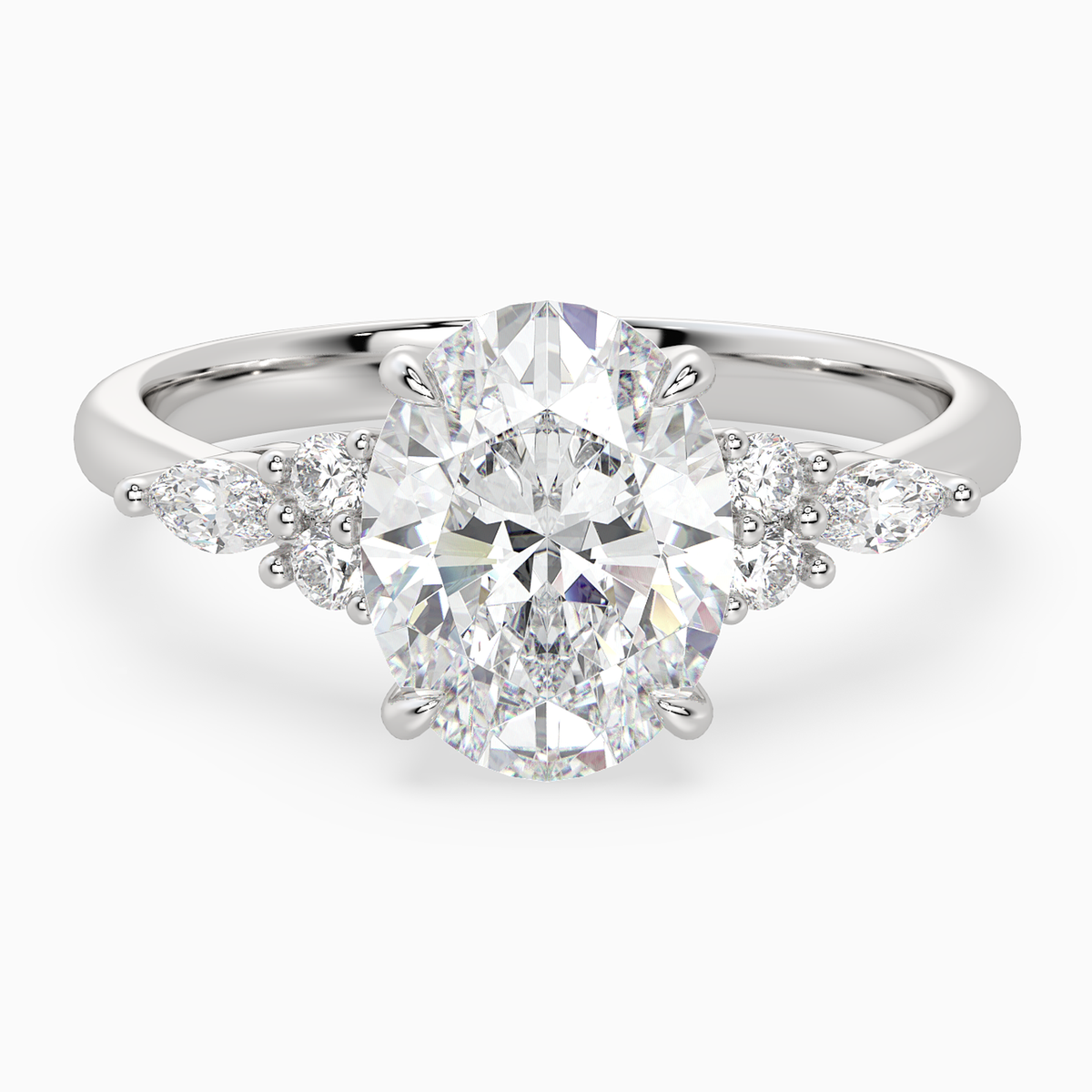


Engagement Rings
Begin with the ring as a complete composition. Explore lab-grown diamond designs through style, shape, proportion, metal and intended wear.








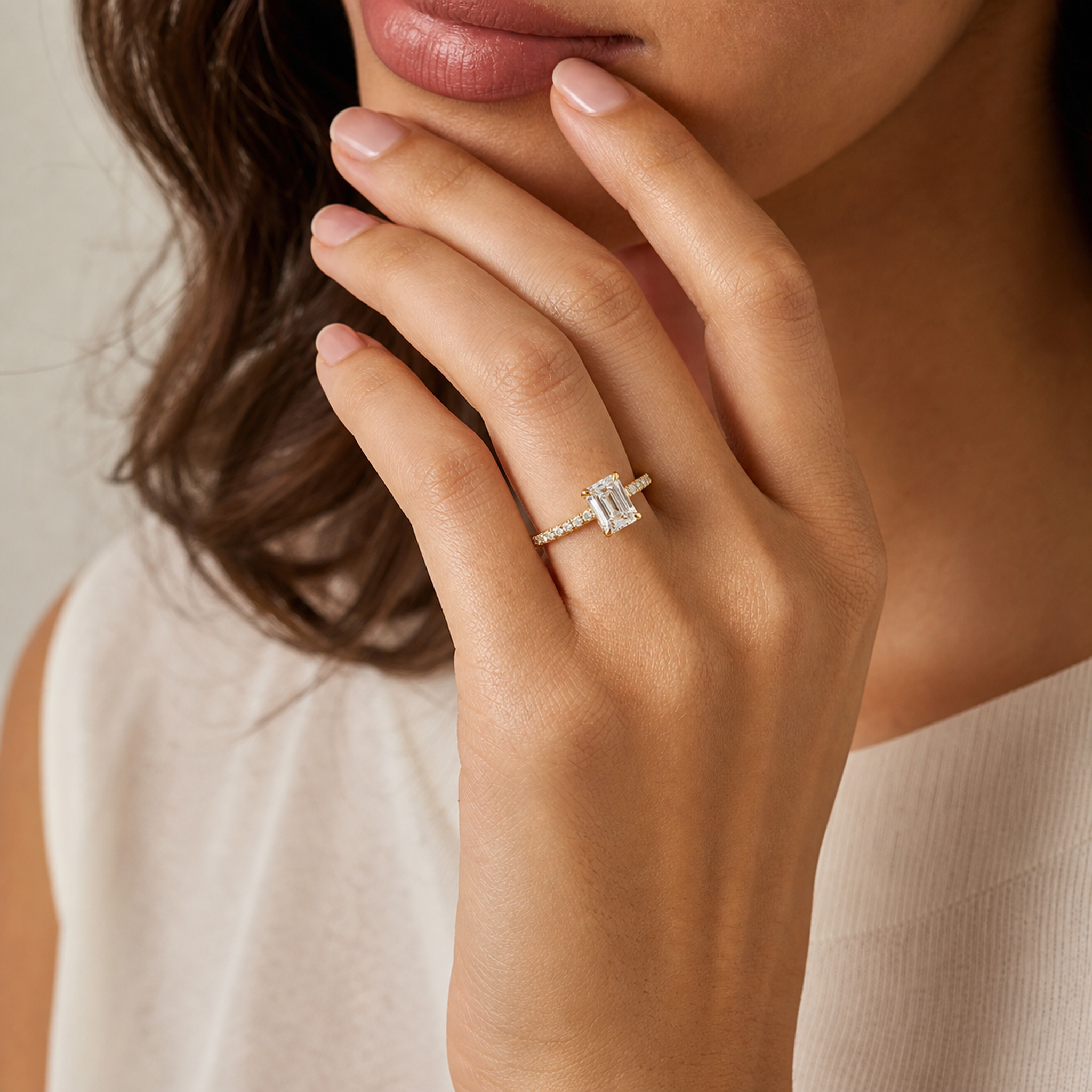


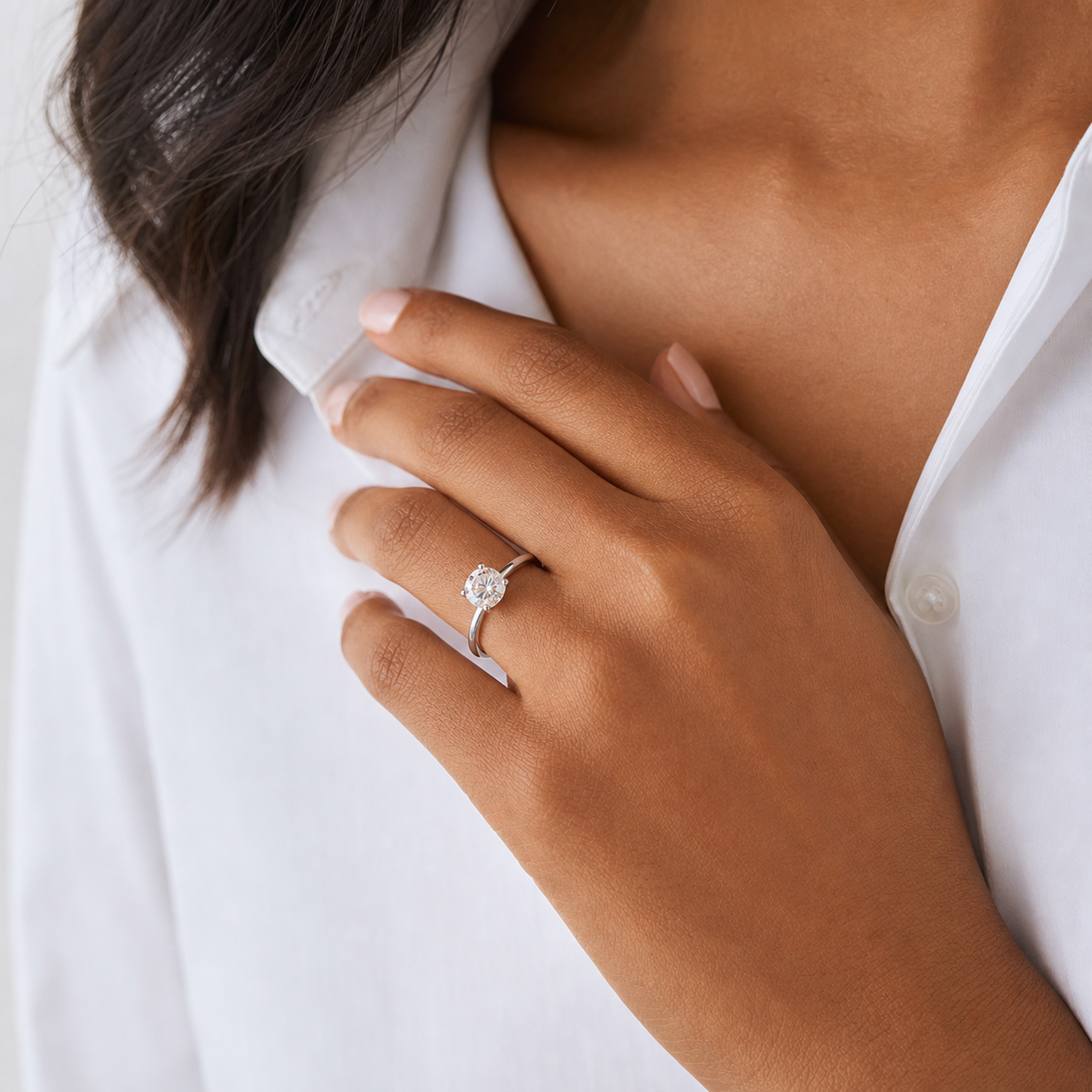


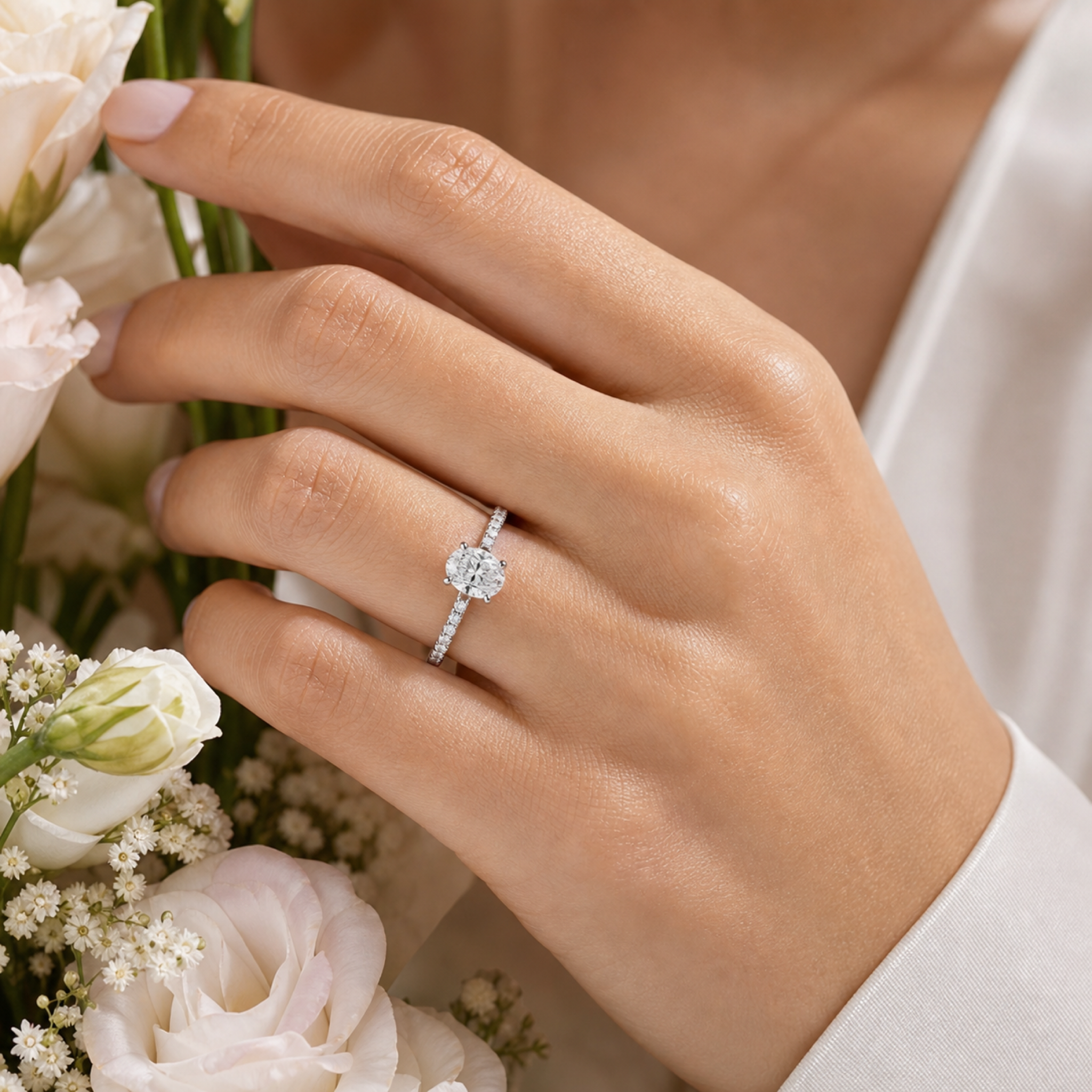


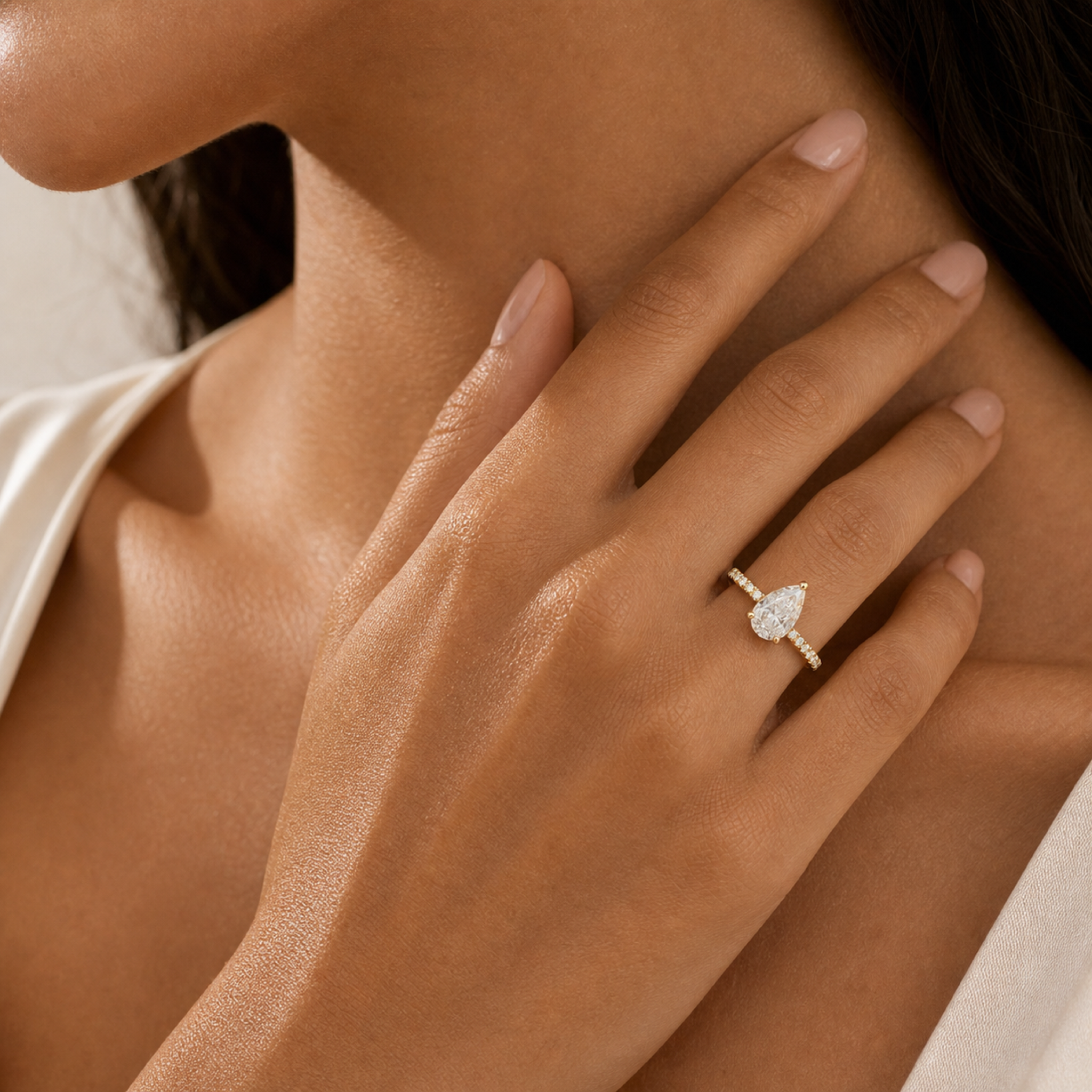


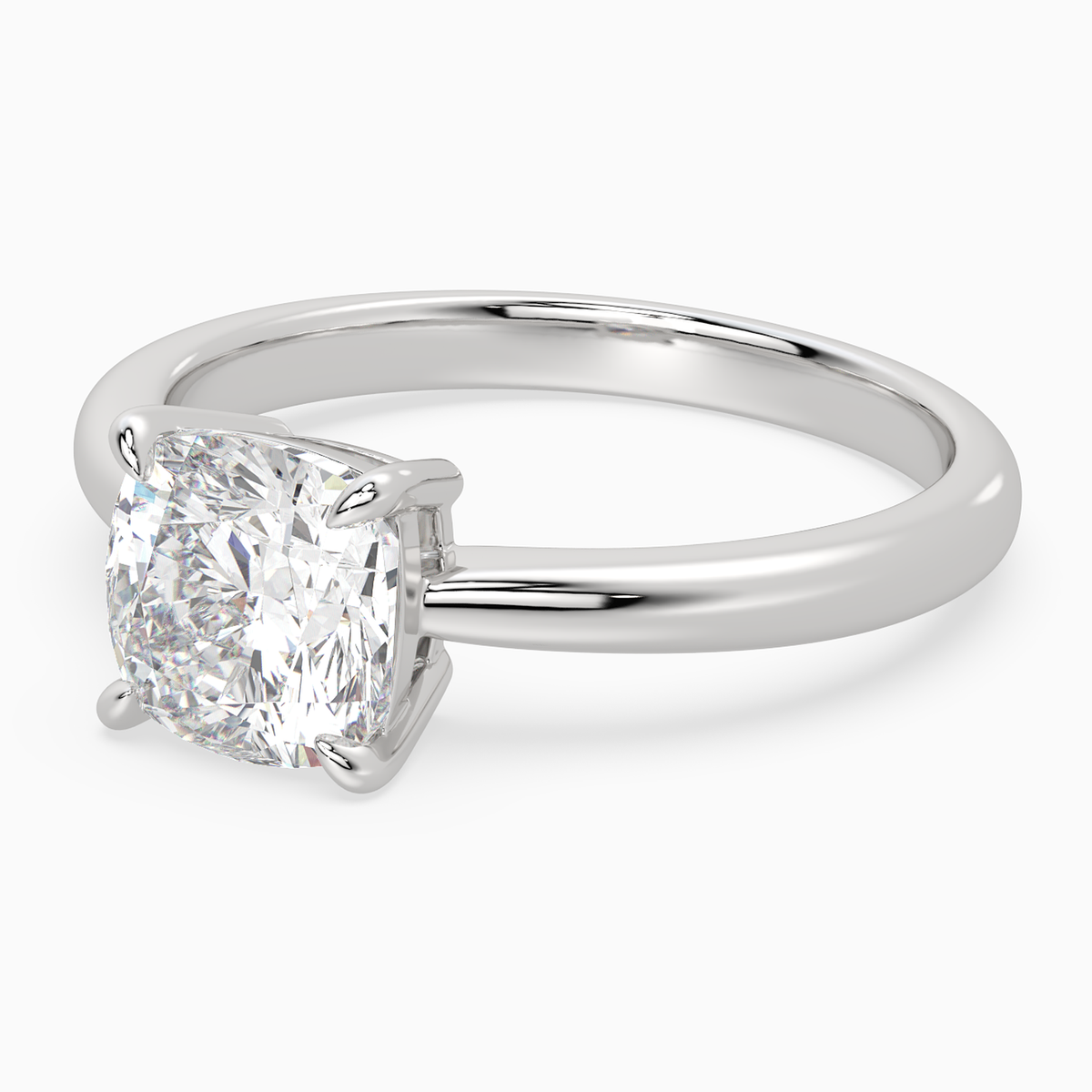


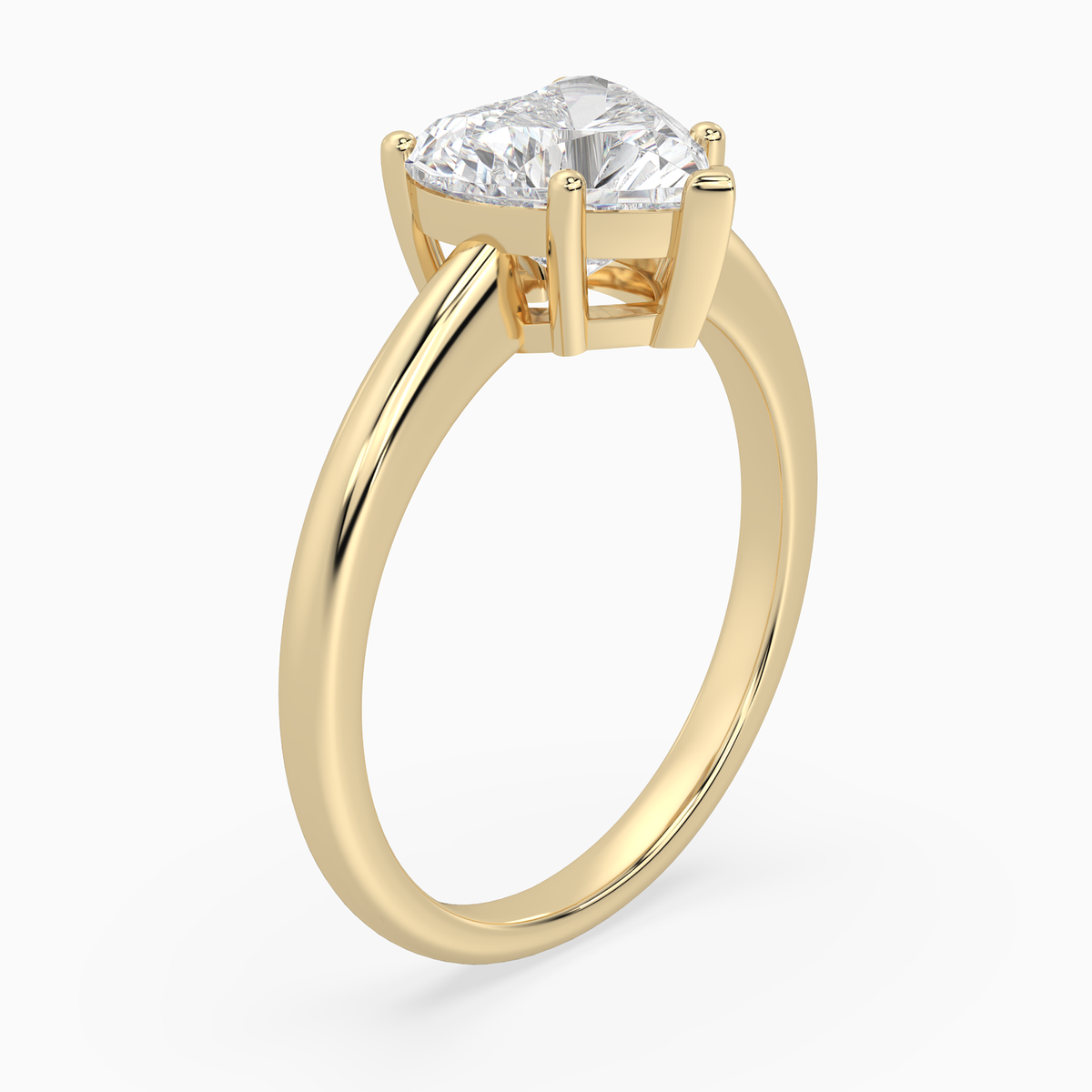


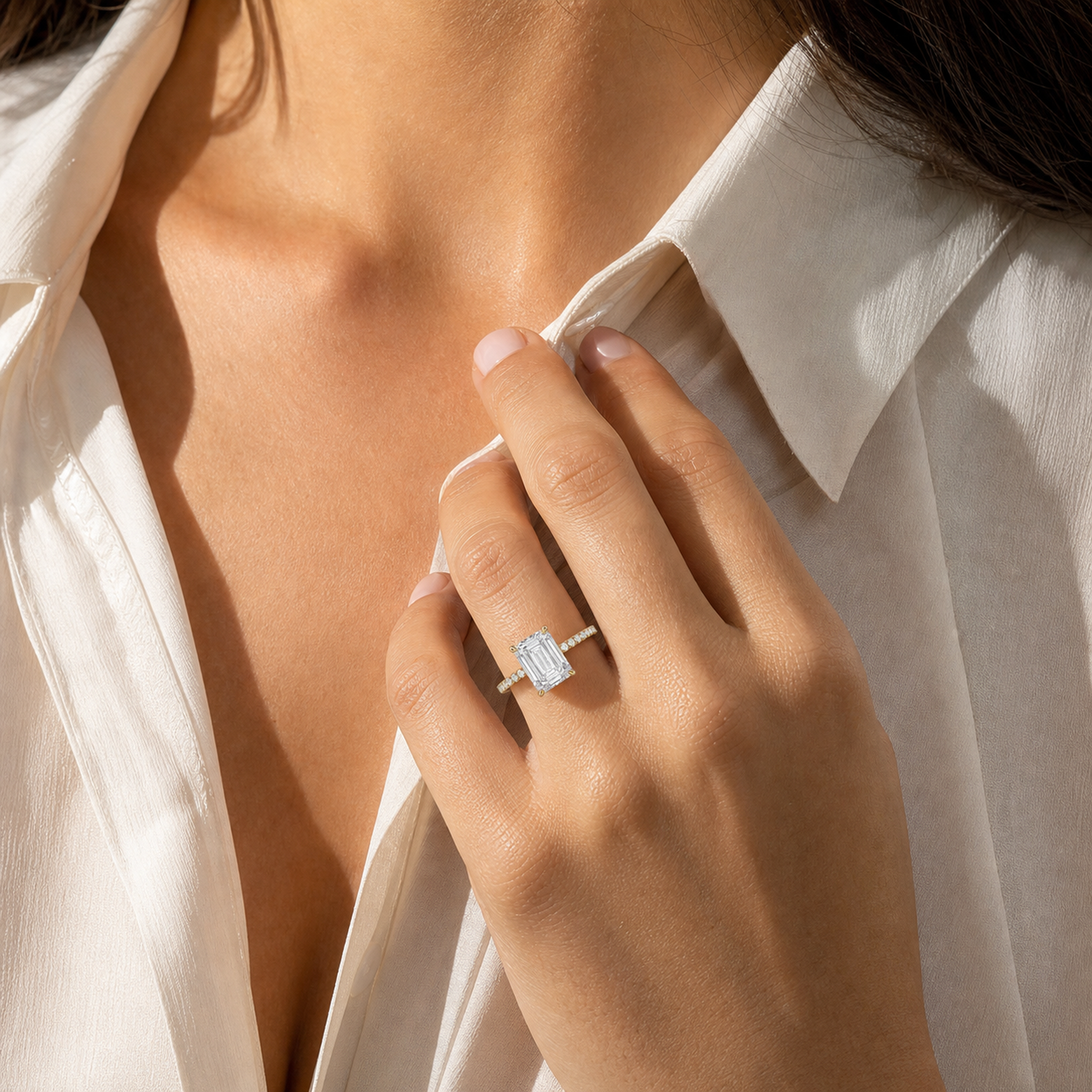


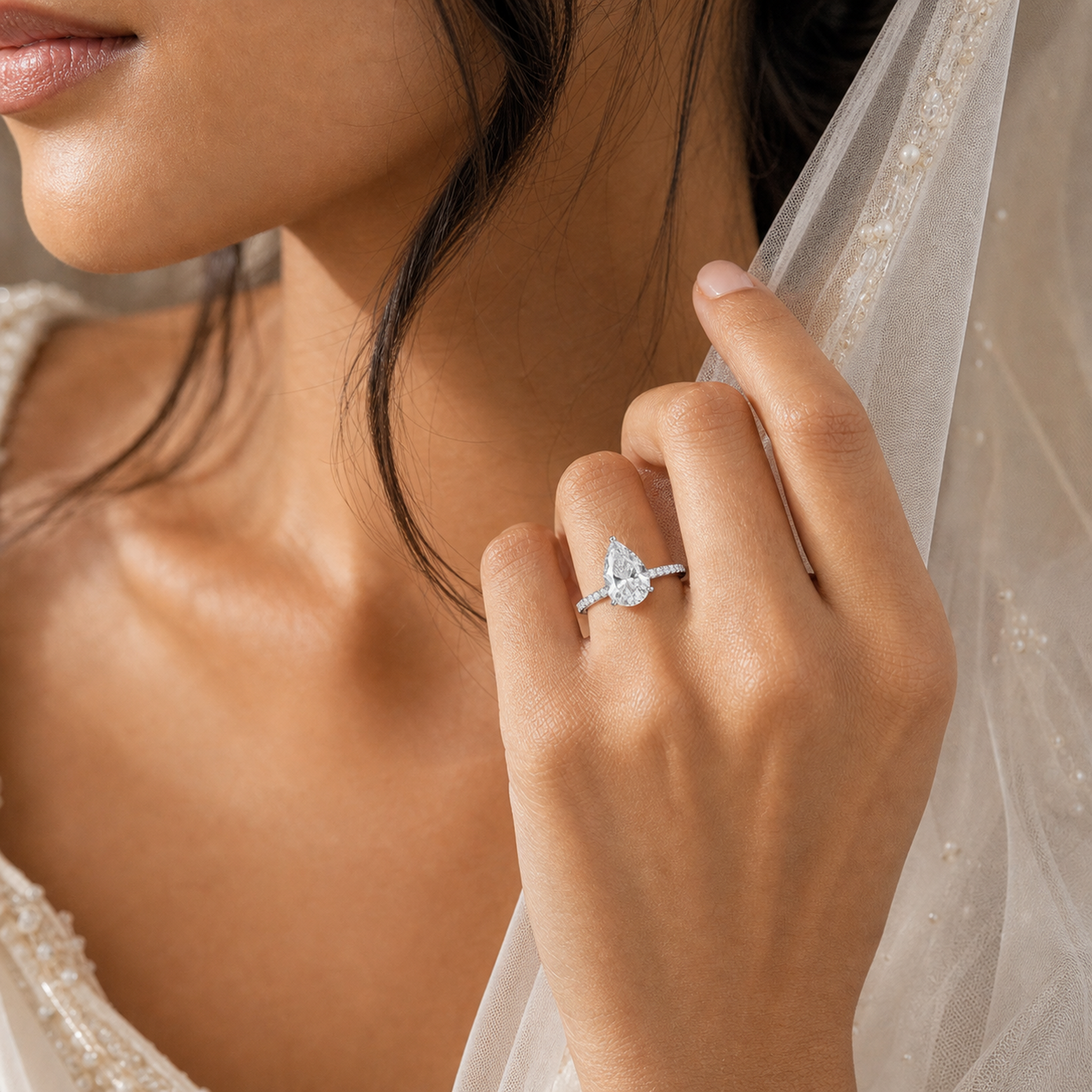


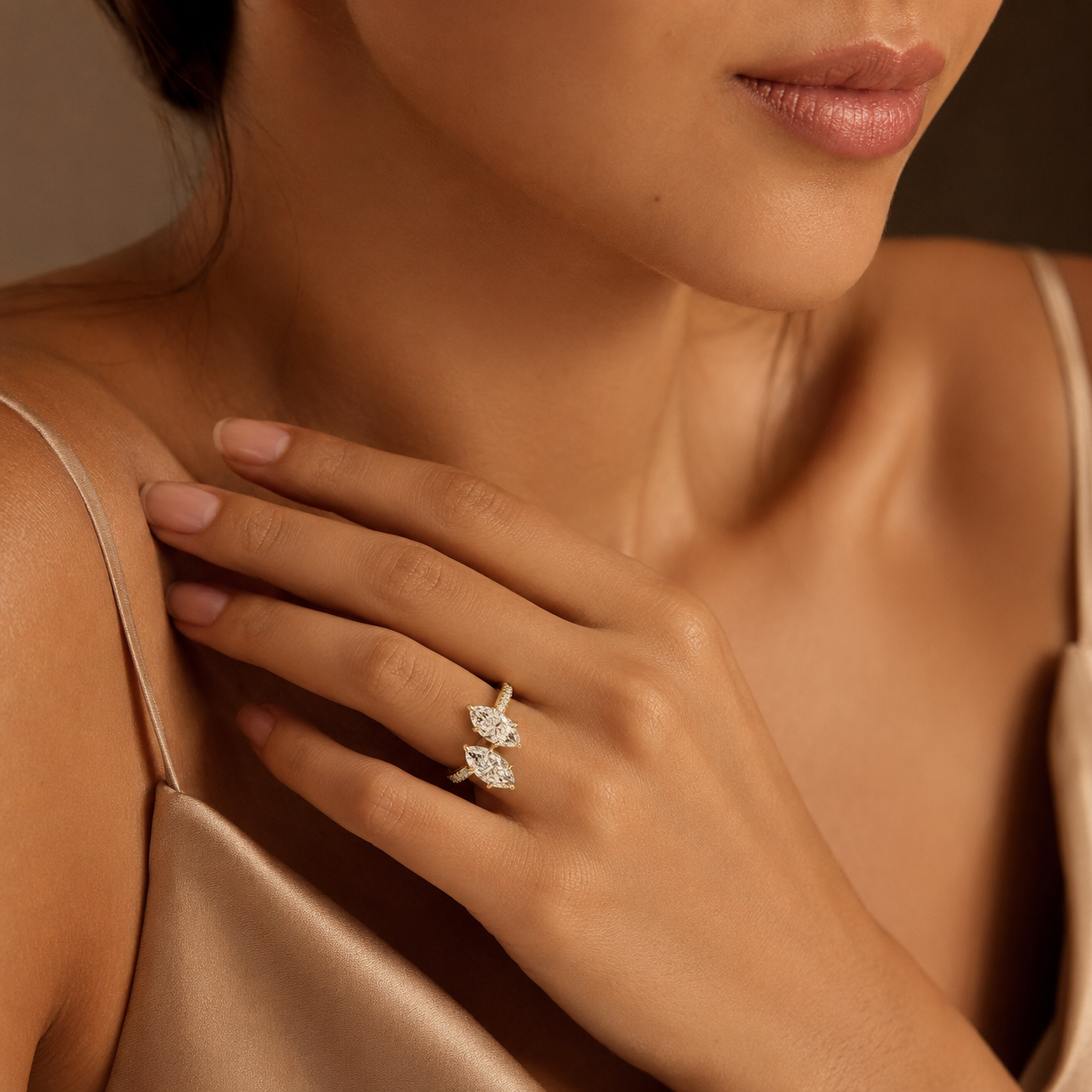


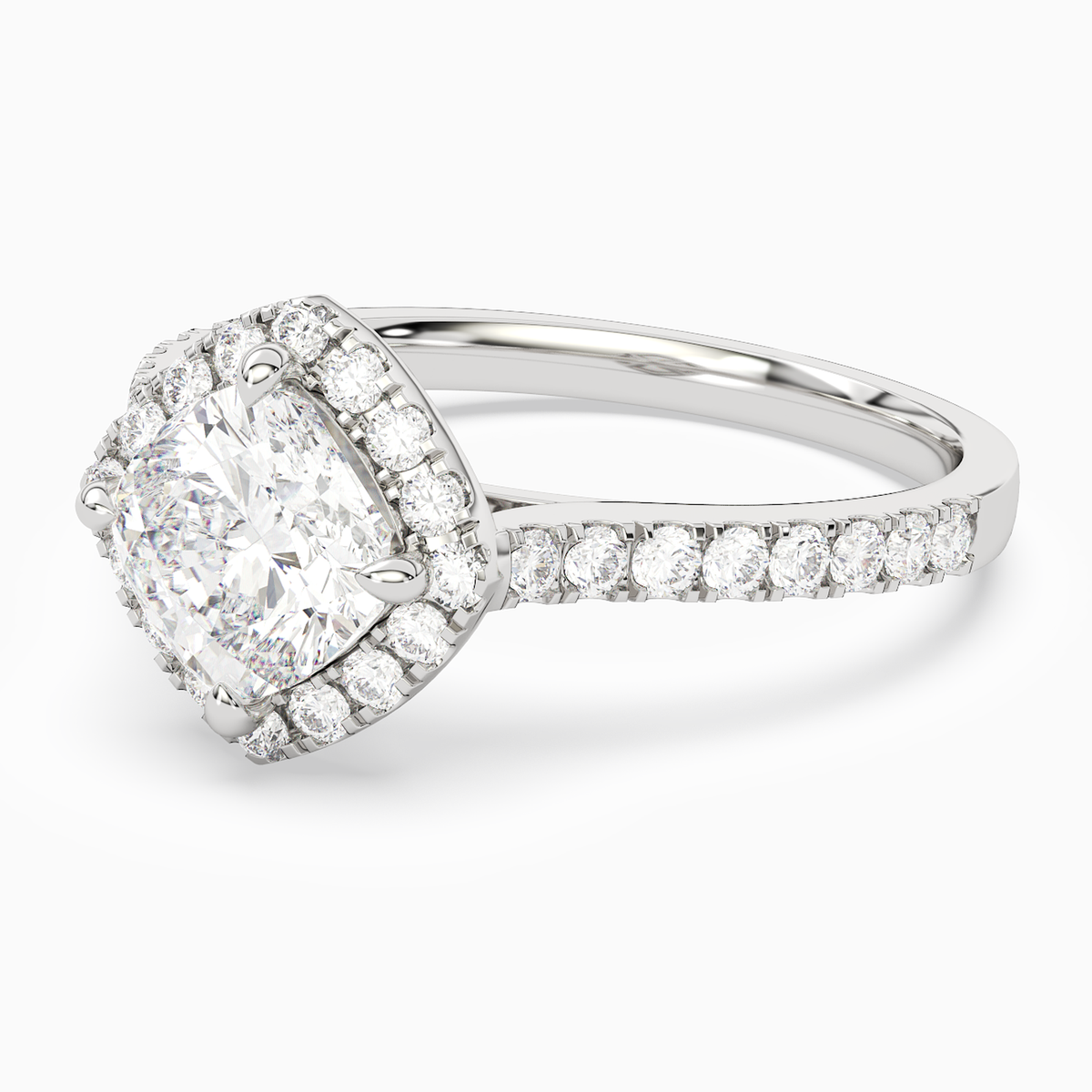
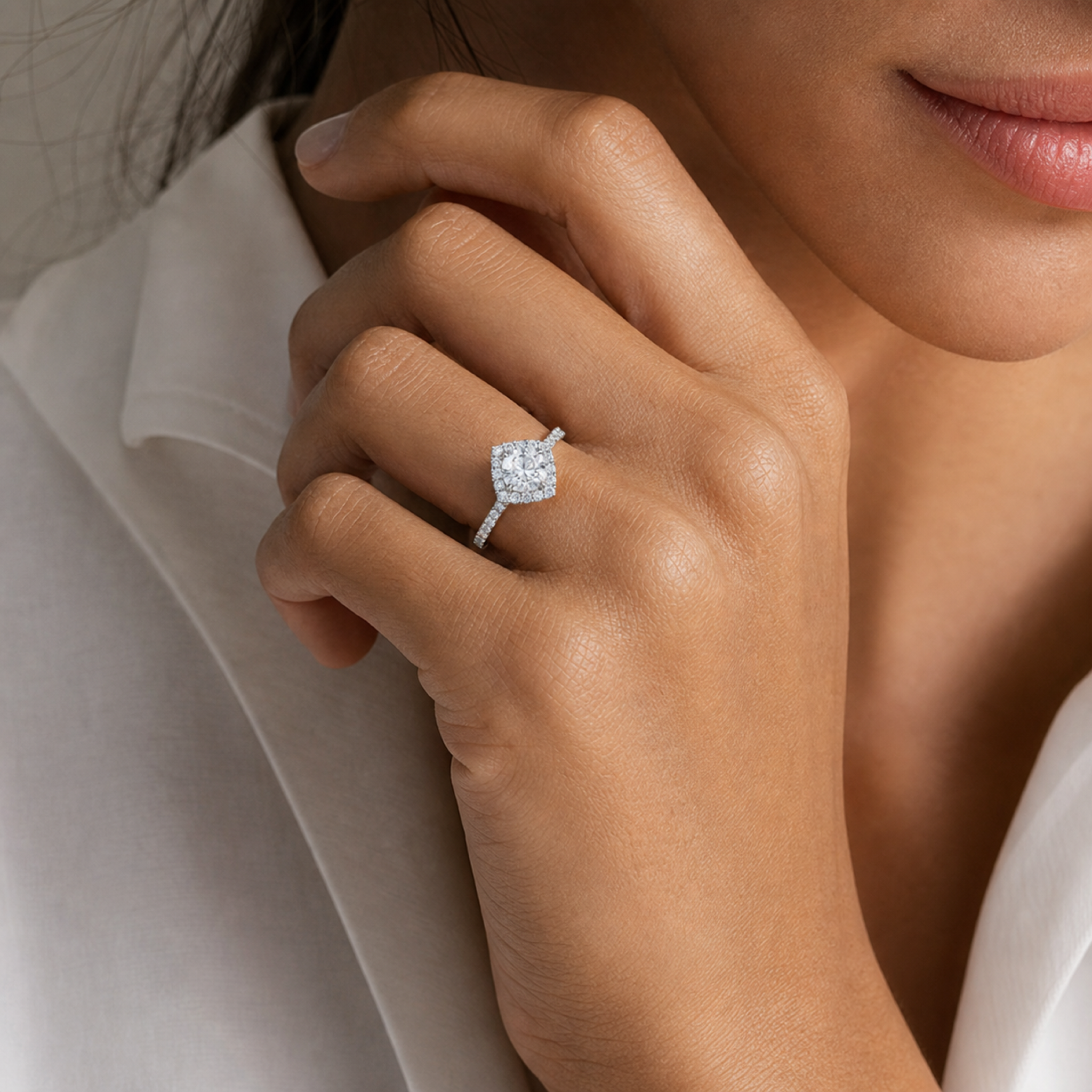


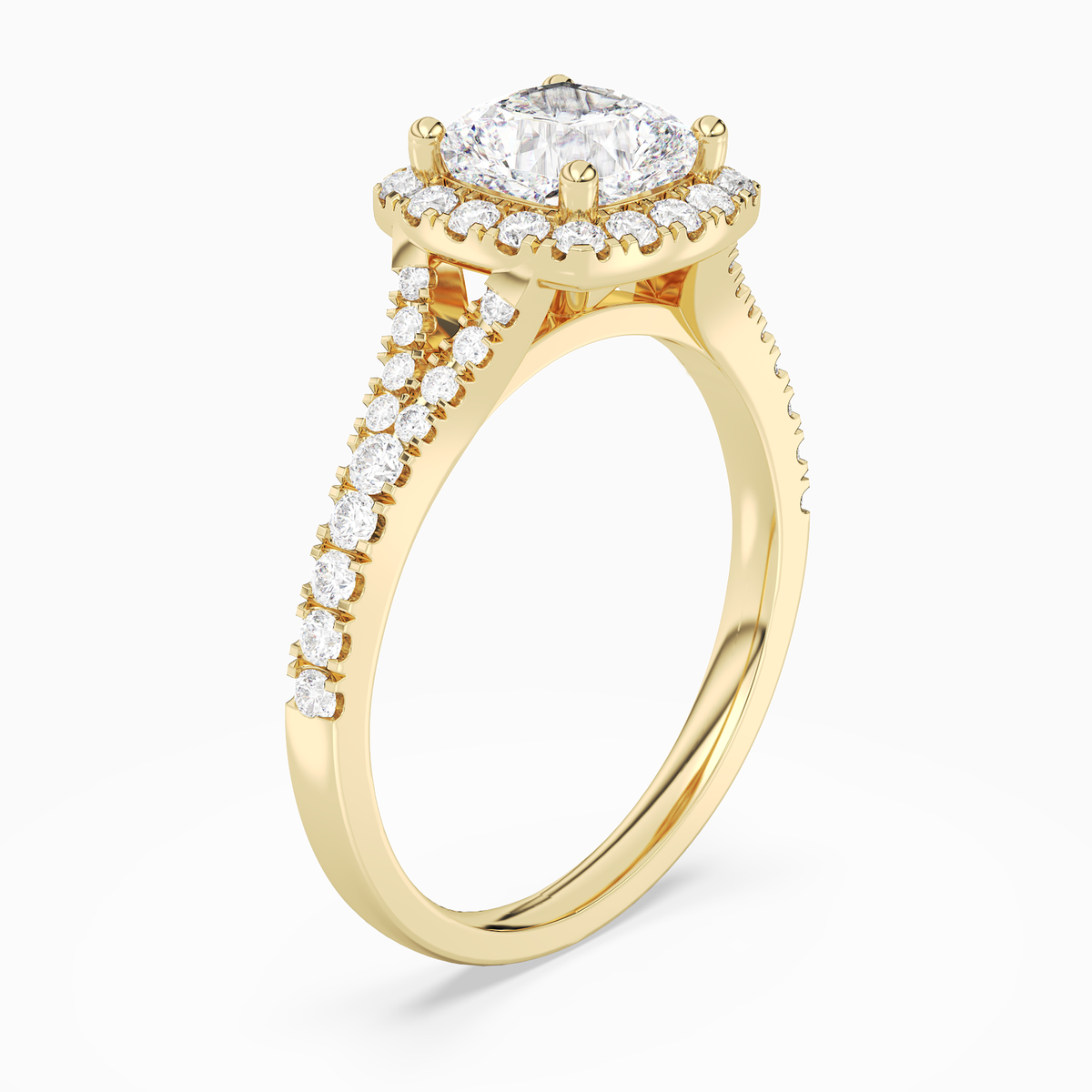


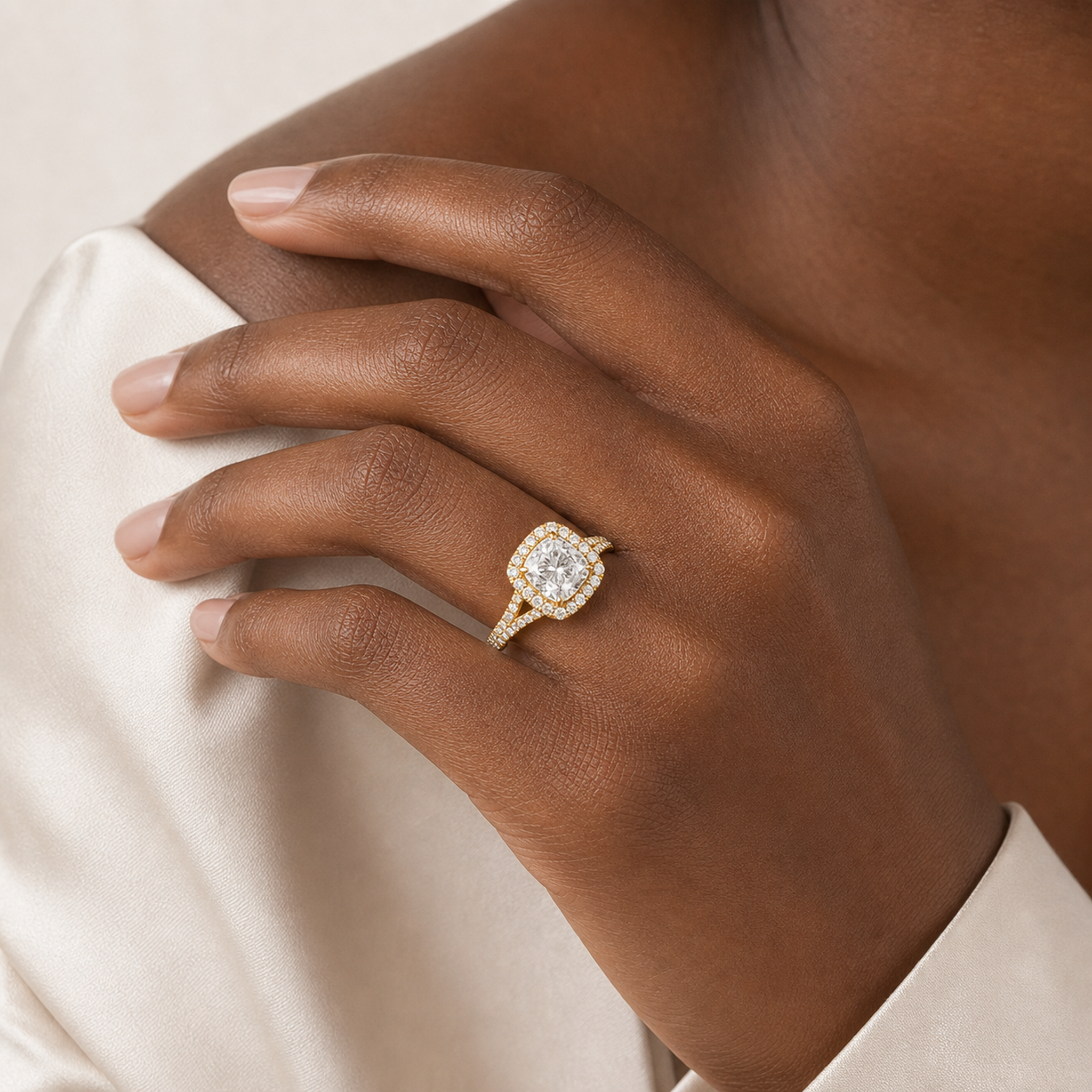


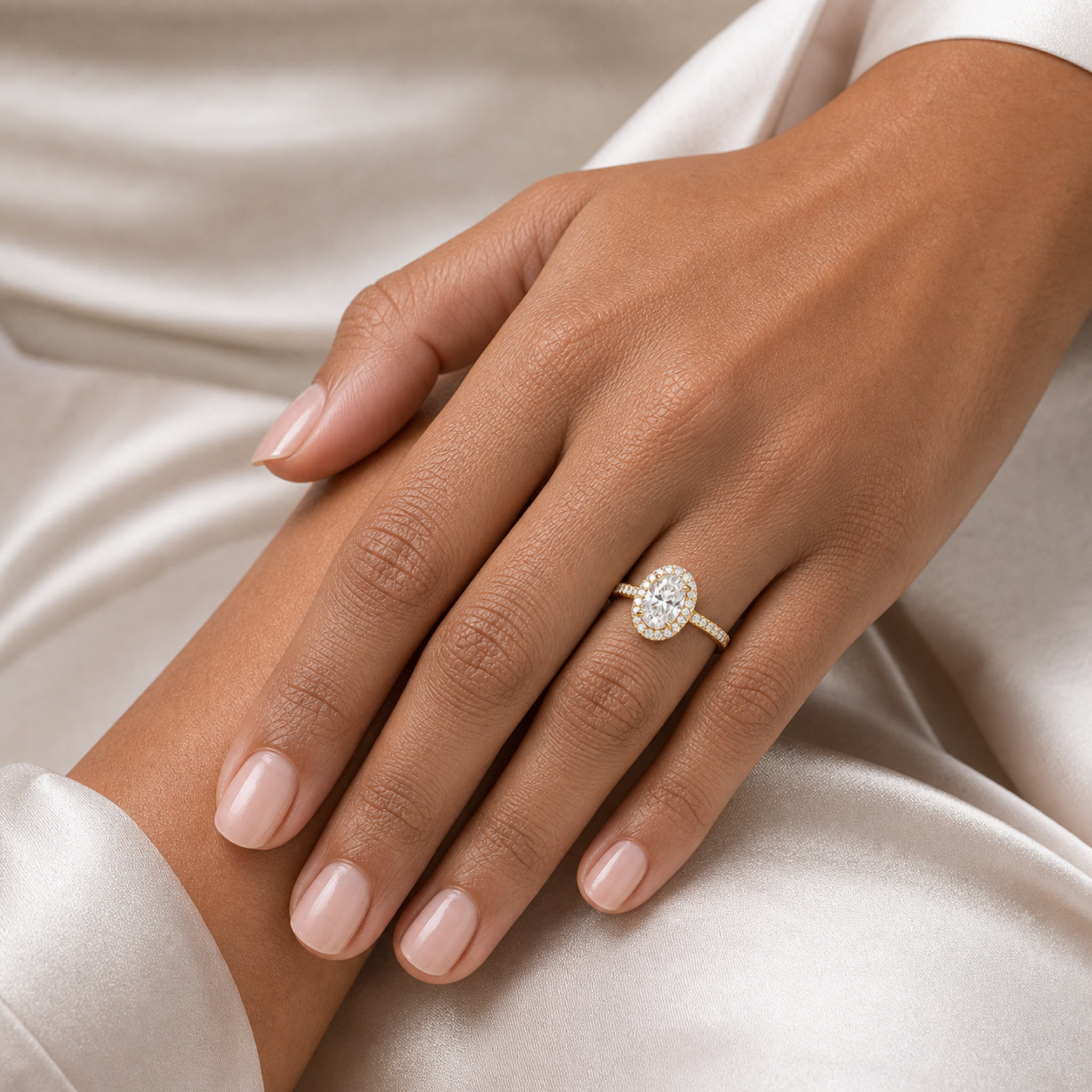


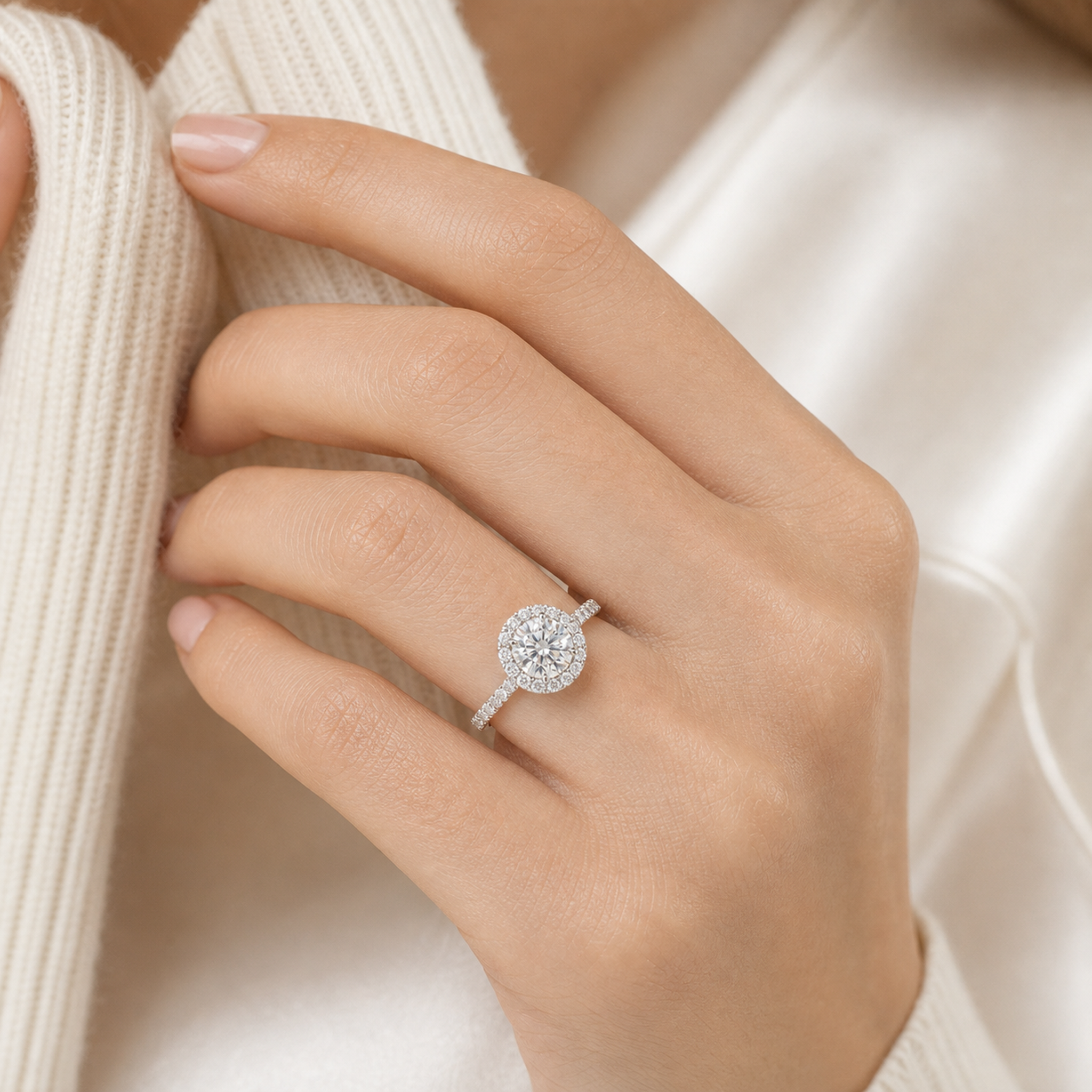


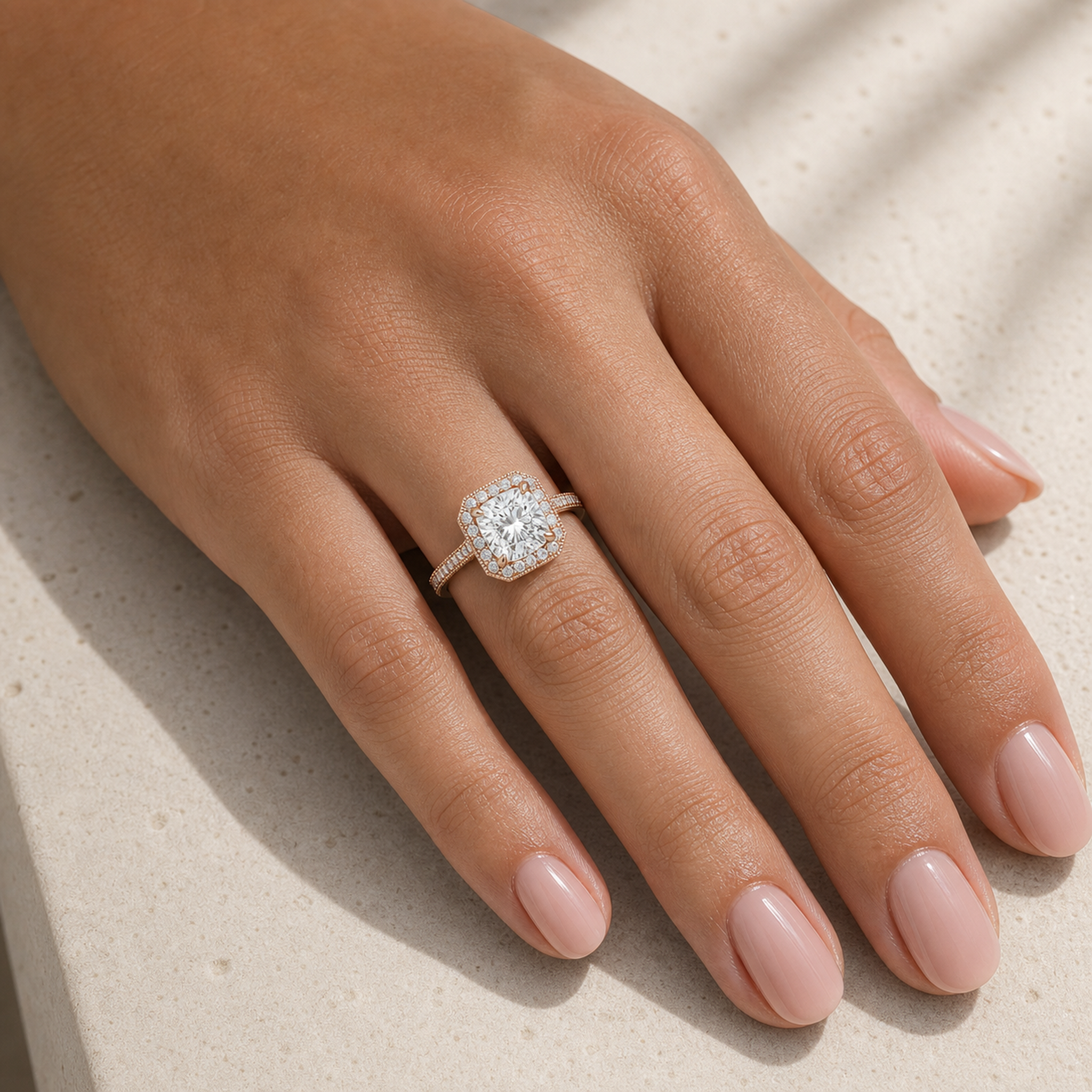


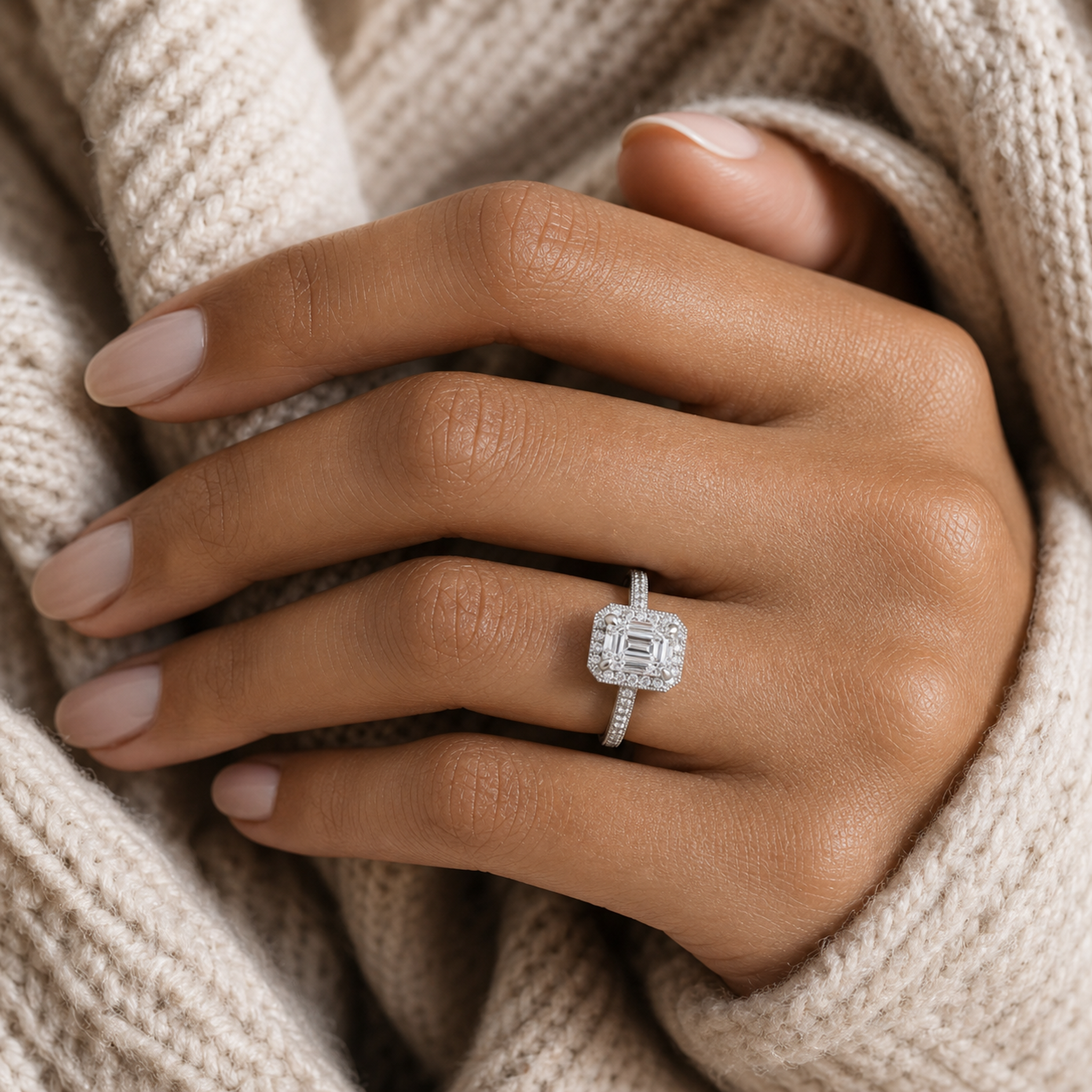


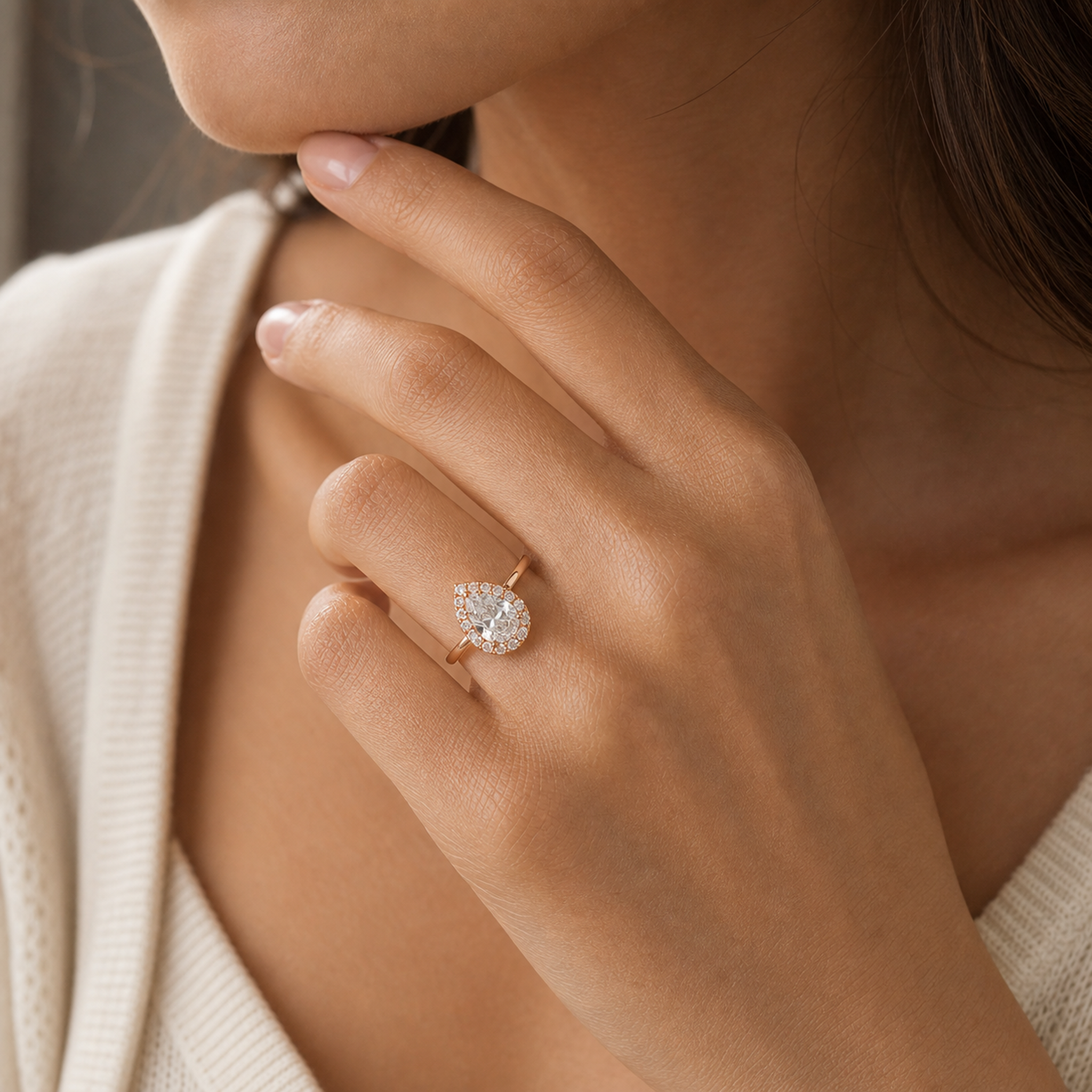


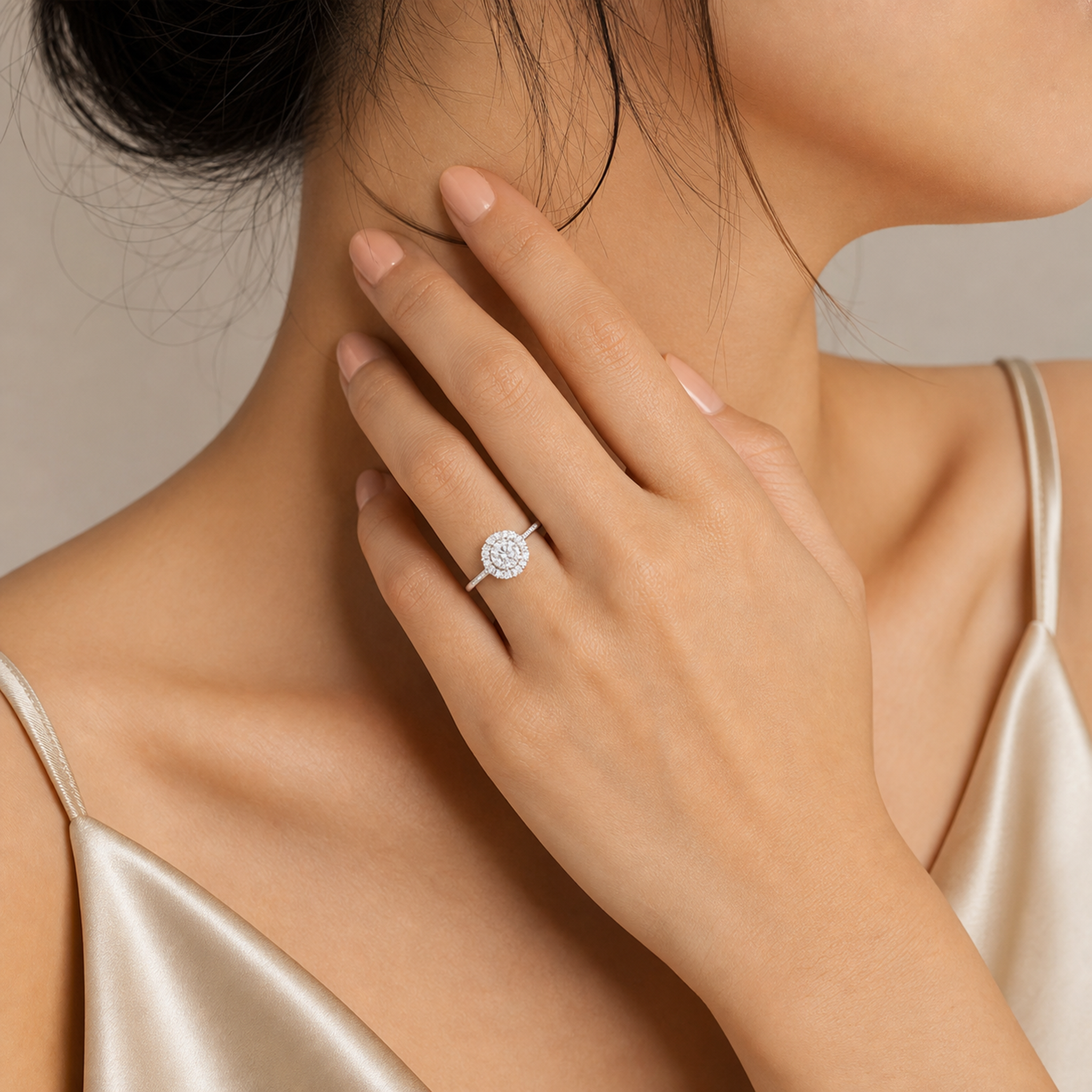
The Ring, Considered in Full
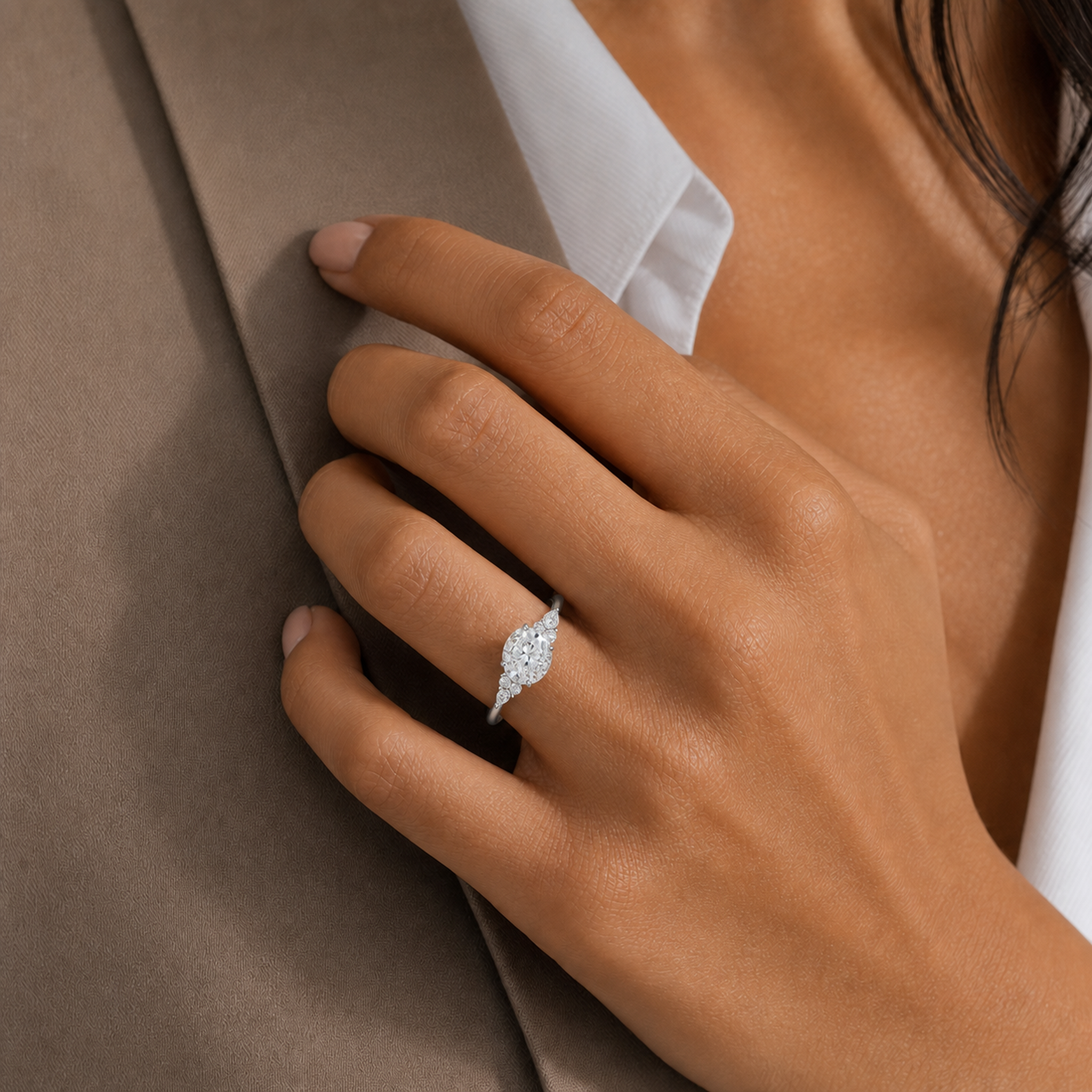
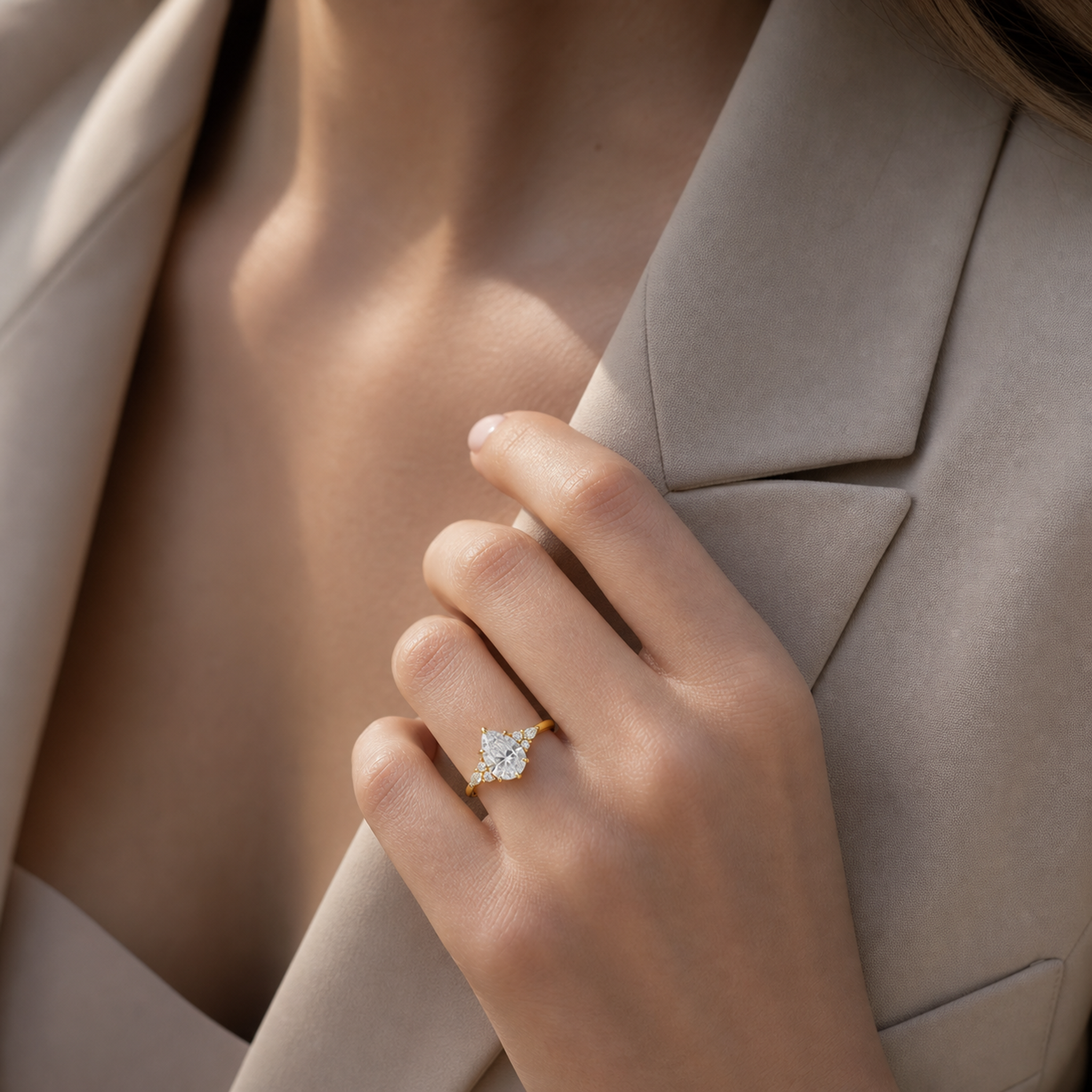
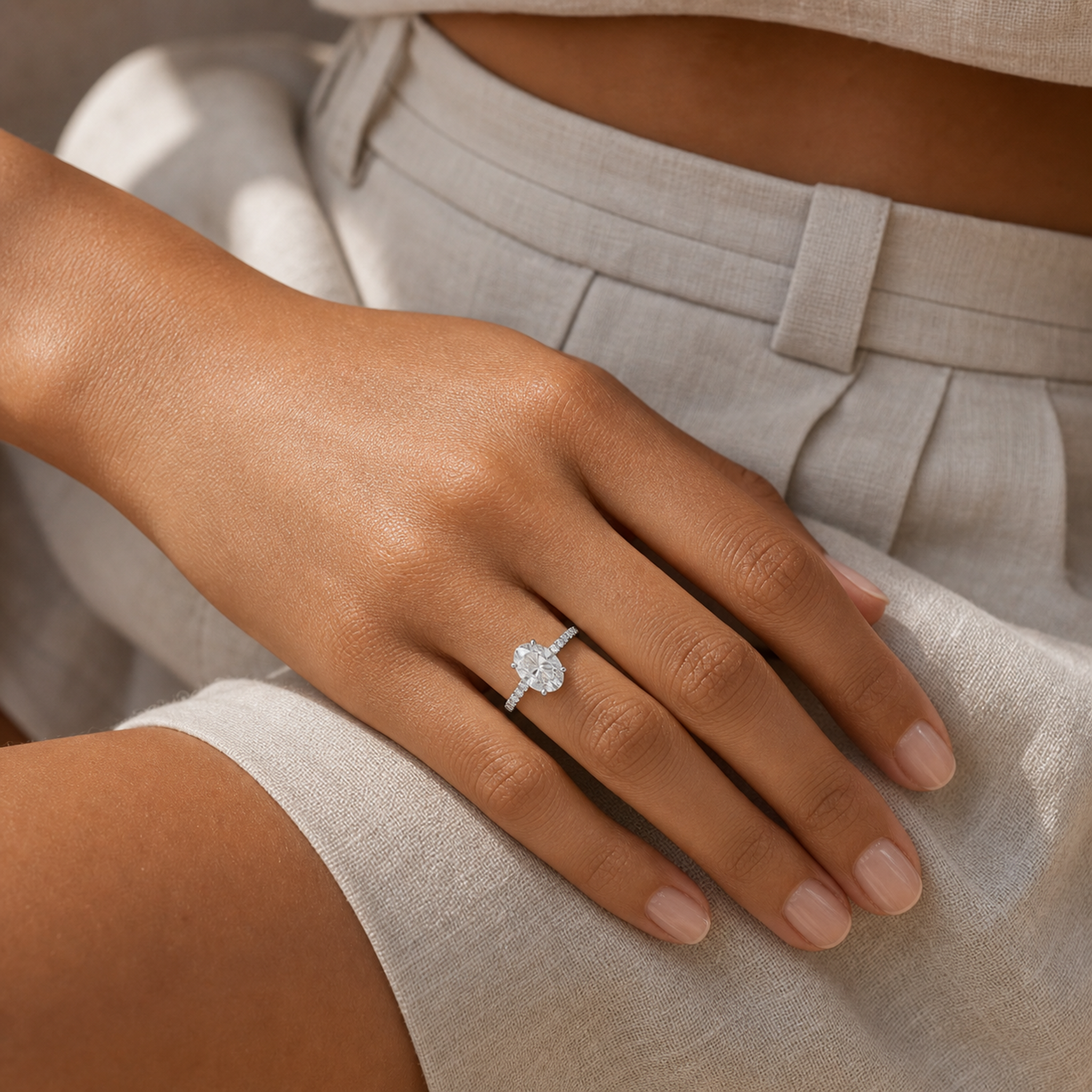
An engagement ring holds one of jewelry’s clearest meanings, yet its character is resolved through particulars: where the eye rests first, how the center meets the band, what the profile reveals from the side, and how the complete composition belongs to one hand. Commitment gives the ring emotional gravity. Proportion, structure, and human judgment give that gravity a form.
Burvonti’s current public Engagement Ring Collection contains 141 product cards representing 81 designs after the terminal representative metal is normalized. Every public product record is classified as an Engagement Ring and offers Center Carat choices. The Collection is broad enough to compare styles, shapes, and metals, but the useful decision is never one variable in isolation. It is how those variables resolve together.
Begin with the Design That Holds Your Attention
Burvonti does not require one fixed order for choosing a ring. You may first recognize a complete design—a quiet solitaire, a framed halo, a three-stone composition, a profile detail, a sculptural crossover—and then consider which diamond shape gives that design the balance you want. Or a shape may provide the first point of recognition, leading you toward the structures that support it most convincingly.
What matters is returning to the whole ring. A center cannot be judged apart from prongs, bezel, basket, halo, side stones, shank, metal, and intended scale. Browsing by style or shape is a way to clarify preference, not a claim that the storefront operates through a separate setting followed by a loose-diamond configuration step.
Style Establishes the Visual Hierarchy
A solitaire gives one center the dominant face-up role, although its band, basket, hidden halo, or pavé detail may still be highly considered. A visible halo draws a second perimeter around the center. A hidden halo moves accent light into the profile. Side-stone and three-stone rings extend the composition laterally in different ways, while Toi et Moi gives two principal centers a shared field.
Classic, vintage-inspired, and nature-inspired are broader design lenses rather than single setting techniques. Classic editing favors compositional clarity; vintage-inspired designs may use milgrain, engraving, crowns, or period-referential geometry without becoming antiques; nature-inspired designs translate petals, leaves, vines, branches, or organic movement into structure. Each dedicated Collection carries the deeper definition so this parent page can remain a clear map rather than a wall of interchangeable keywords.
Shape Changes Outline, Direction, and Light
The current navigation includes Round, Oval, Cushion, Pear, Princess, Emerald, Marquise, Asscher, Radiant, and Heart. Round offers a continuous circular outline; elongated shapes introduce a stronger axis; square and cropped-corner forms give the center a more geometric boundary; pear, marquise, and heart add points or directional anatomy that require careful alignment and support.
Shape is not a personality test or a universal ranking of sparkle. Brilliant-style and step-cut diamonds organize light differently, while outline, length-to-width ratio, depth, facet pattern, face-up dimensions, bow-tie contrast where relevant, and setting relationship determine how an individual diamond reads. The right shape is the one whose actual proportions remain compelling in motion and within the chosen ring.
Carat Must Return to Hand Scale
All 141 current public product records use a Center Carat option. One hundred thirty-five show choices from 1.0 through 4.0 carats; six Toi et Moi records show choices from 1.0 through 6.0 carats. These are present storefront option ranges, not a recommendation that an engagement ring should reach a particular weight.
Carat measures weight, not visible diameter, length, width, height, or complete setting size. Two diamonds of the same weight may occupy the hand differently because shape, depth, length-to-width ratio, facet structure, and setting perimeter distribute that weight differently. Compare dimensions and worn proportion alongside carat, then assess how band width, side stones, halo, and visible metal alter the total field.
Setting Architecture Completes the Center
Current titles and descriptions provide evidence of prong, bezel, open-basket, pavé-basket, cathedral, halo, hidden-halo, split-shank, crossover, East-West, milgrain, engraved, floral, and vine-led structures. Each changes what remains visible, where metal meets the diamond, how high the composition rises, and how attention moves from center to band.
No setting name alone guarantees maximum brilliance, security, snag resistance, comfort, or durability. Prong number does not improve the diamond’s intrinsic cut; a bezel creates more continuous perimeter coverage without making damage impossible; a low-looking image does not prove flush wedding-band fit. Judge execution, dimensions, side profile, condition, and intended wear for the selected ring.
Metal Sets the Temperature of the Composition
The current parent-page cards are represented in 14K Gold: 70 White, 55 Yellow, and 16 Rose. The Collection system also provides dedicated paths for 14K White, Yellow, and Rose Gold; 18K White and Yellow Gold; and Platinum. A metal path expresses a material context, but exact availability for a selected design, size, and specification still requires product-level confirmation.
White metal can reduce visible contrast around near-colorless-looking diamonds in some settings. Yellow and rose metals can make prongs, bezels, galleries, and band lines more explicit. Karat does not create a universal luxury or durability hierarchy, Platinum is not an automatic solution for every wearer, and no metal should be assigned by gender or skin tone. Consider color relationship, finish, alloy, maintenance, sensitivity, structure, and personal preference together.
Fit Includes the Profile and the Ring Beside It
Ring size is only one part of fit. Band width, thickness, interior contour, setting height, basket, prongs, knuckle, finger shape, temperature, swelling, and intended frequency of wear all influence how the ring feels. No average size, string measurement, printable guide, or fixed size adjustment replaces checking the intended design on the intended hand when possible.
If a wedding band will join the engagement ring, compare both objects from above and from the side. Gallery, basket, center projection, prongs, halo, shank, contour, edge, and movement determine whether the rings sit close, leave an intentional interval, or require a curved relationship. Flush fit is not the only resolved outcome, and no pairing prevents every point of contact or wear.
Read the Four Cs as Evidence, Not a Formula
Cut, color, clarity, and carat provide essential information, but they do not collapse beauty into one score. Cut assessment depends on shape and grading system; several fancy shapes do not receive the same standardized overall cut grade used for round brilliants. Color and clarity grades describe specific characteristics, while visibility depends on diamond dimensions, facet pattern, lighting, setting, and observation.
Burvonti uses responsibly sourced lab-grown diamonds. Center diamonds are independently graded and certified, allowing the selected stone to be examined through a report rather than a vague premium label. Confirm that the report number and measurements correspond to the chosen center and do not assume that one center report grades side stones, halo accents, or the finished ring.
Choose for a Person, Not an Abstract Buyer
When the ring is a surprise, begin with evidence close to the wearer: jewelry they already choose, preferred metal, shapes or design references they save, ring size from a correctly fitting ring, their work and daily routines, and whether they have expressed a view on the proposal or selection itself. Friends or family may help, but familiarity should not be replaced by generic rules about gender, hand shape, age, or trend.
Choosing together does not make the gesture less meaningful. It can move uncertainty into a shared act of judgment and leave the proposal’s timing or form personal. Whether selected privately or collaboratively, the objective is not to satisfy a universal definition of perfect; it is to recognize the wearer precisely.
Custom Possibility Begins with a Clear Point of View
A current design may already resolve the essential idea. If it does not, custom possibilities can begin from what is known: a preferred silhouette, center relationship, profile, band line, metal, symbolic detail, or the way a wedding band should meet it. Shape, scale, prongs, bezel, side-stone relationship, surface, engraving, or proportion may be refined when technically feasible.
Custom does not mean every design can accept every shape, size, material, alteration, price, or timeline. The strongest brief distinguishes what gives the ring its identity from what remains open to calibration. Burvonti’s value lies in clarity before excess: enough structure to scrutinize, enough human judgment to make the final composition personal.
Made for the Life That Follows
An engagement ring begins with a decision, but it continues through ordinary movement, changing light, future bands, maintenance, and the private meaning accumulated around it. No diamond, metal, prong, bezel, or warranty language makes a ring immune to impact, abrasion, chemicals, loosened settings, or changing fit.
Clean according to the complete construction, inspect the center and accents, and review prongs, bezel edges, gallery, shank, pavé, engraving, and contact with neighboring rings. Store the ring without abrasive contact and remove it when an activity would place unnecessary stress on the piece. Precision at selection should continue as care.
Frequently Asked Questions
What is a lab-grown diamond engagement ring?
It is an engagement ring set with a diamond grown in a controlled laboratory environment rather than formed in the earth. Its design still includes the complete metal setting, profile, fit, and any accent diamonds.
Are lab-grown diamonds real diamonds?
Yes. Lab-grown diamonds are diamonds rather than simulants. Origin differs from mined diamonds, while individual cut, color, clarity, carat, measurements, and documentation still require review.
How many engagement rings are currently in this Collection?
The public Collection contains 141 product cards representing 81 designs after terminal representative metal is normalized.
How should I begin choosing an engagement ring?
Begin with whichever element creates recognition—a complete design, visual hierarchy, shape, metal, or proportion—then return to how all elements work together on the hand.
Do I need to choose a setting before choosing a diamond shape?
No fixed order is required in Burvonti’s browsing experience. You can first find a complete design that resonates, then compare which compatible shape gives it the balance you want, or begin with shape and explore suitable designs.
Which engagement-ring styles are represented?
Current navigation includes Solitaire, Three Stone, Side Stone, Halo, Toi et Moi, Classic, Vintage, Nature Inspired, and Hidden Halo Collections.
What is the difference between halo and hidden halo?
A visible halo frames the center in the face-up view. A hidden halo places accent diamonds primarily around the profile beneath the center; product-specific visibility and structure vary.
What is the difference between side-stone and three-stone rings?
Side-stone describes a dominant center supported by lateral accents. Three-stone describes three principal stones forming the main face-up composition.
Which diamond shapes can I explore?
Current shape paths include Round, Oval, Cushion, Pear, Princess, Emerald, Marquise, Asscher, Radiant, and Heart.
Which diamond shape is best for an engagement ring?
There is no universal best. Compare actual outline, dimensions, length-to-width ratio, facet pattern, light behavior, setting relationship, and hand-scale proportion.
How should I choose Center Carat?
Read carat as weight, then compare actual dimensions, shape, depth, setting perimeter, band, side stones, and realistic worn scale. No carat value is required for an engagement ring.
What Center Carat options are currently shown?
One hundred thirty-five current records show 1.0–4.0 carats; six Toi et Moi records show 1.0–6.0 carats. Exact selection and interpretation remain product-specific.
What are the Four Cs?
Cut, color, clarity, and carat describe important diamond characteristics. They should be read with measurements, shape, facet pattern, report scope, setting, and direct visual observation.
Do all diamond shapes receive the same cut grade?
No. Overall cut grading varies by shape and laboratory system; several fancy shapes do not use the same standardized overall cut scale applied to round brilliants.
Are Burvonti center diamonds independently graded and certified?
Yes. Confirm that the selected report number and measurements correspond to the chosen center; one center report does not automatically grade accent diamonds or the finished ring.
Are Burvonti lab-grown diamonds responsibly sourced?
Yes. Burvonti uses responsibly sourced lab-grown diamonds. Product-specific origin, report, and supporting documentation should be read for the selected center.
Which engagement-ring metals can I explore?
Current navigation includes 14K White, Yellow, and Rose Gold; 18K White and Yellow Gold; and Platinum. Exact design, size, alloy, finish, and availability require product-level confirmation.
Is 14K, 18K, or Platinum always the best choice?
No. Compare color relationship, alloy, finish, maintenance, sensitivity, structure, weight, and personal preference rather than treating one metal as universally superior.
How do I find the right engagement-ring size?
Use a correctly fitting ring or professional measurement when possible and consider band width, interior profile, knuckle, temperature, swelling, and intended design. No fixed average or adjustment applies.
Can an engagement ring be resized?
Possibly, but not universally. Metal, shank, pavé, engraving, side stones, symmetry, setting, requested change, and documentation may affect feasibility.
Will an engagement ring sit flush with a wedding band?
Sometimes. Gallery, basket, prongs, halo, center projection, shank, contour, edge, and movement determine the relationship; an intentional gap can also be resolved.
Which engagement-ring setting is best for everyday wear?
No setting provides a Collection-wide daily-wear guarantee. Compare profile, exposed points, prongs or bezel, pavé, fit, activity, impact, chemicals, inspection, and maintenance for the selected ring.
How can I choose an engagement ring as a surprise?
Use evidence from the wearer’s existing jewelry, saved references, preferred metal and shapes, verified size, routines, and expressed preferences. Friends or family may help, but generic gender or trend rules should not replace familiarity.
Can a Burvonti engagement ring be customized?
Custom possibilities may refine shape, scale, setting, side-stone relationship, metal, band line, engraving, or proportion when technically feasible. Compatibility, price, and timing require individual confirmation.
How should a lab-grown diamond engagement ring be cared for?
Use gentle care suited to the complete construction; inspect center, accents, prongs or bezel, gallery, shank, pavé, engraving, and ring contact; and avoid unnecessary impact, chemical, or abrasive stress.