


Lab Grown Diamond Bangle Bracelets
Structure holds its own arc around the wrist. Explore diamond bangles through coverage, profile, closure, fit and calibrated movement.



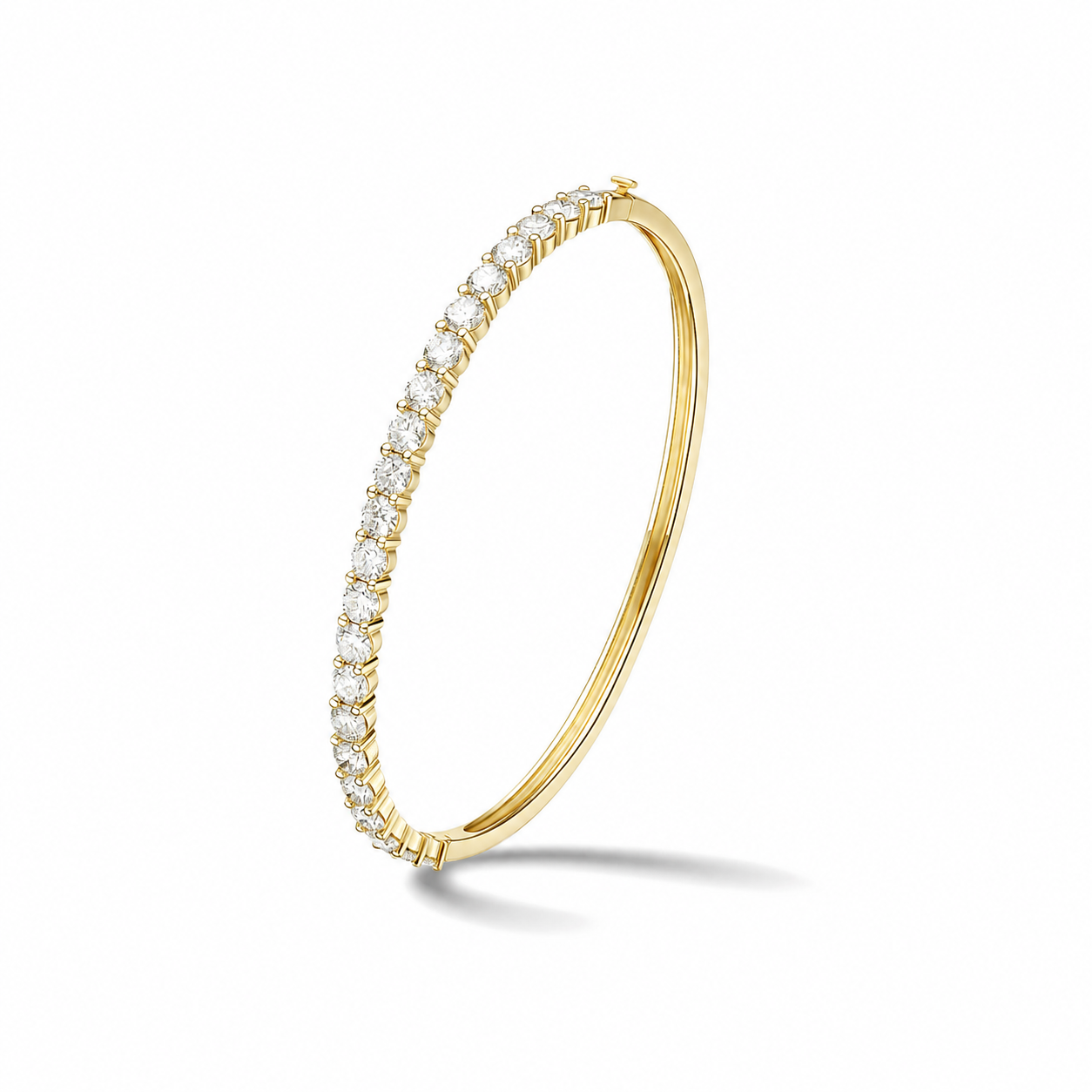

An Arc with Its Own Measure
A bangle brings its own line to the wrist. Where a chain collapses when removed and an articulated tennis bracelet follows connected settings, a bangle retains more of its arc. That structure changes how diamonds occupy space, how the piece turns, and how its edge meets a watch or another bracelet. The useful distinction is not simply rigid versus flexible, but how the complete construction holds and releases movement.
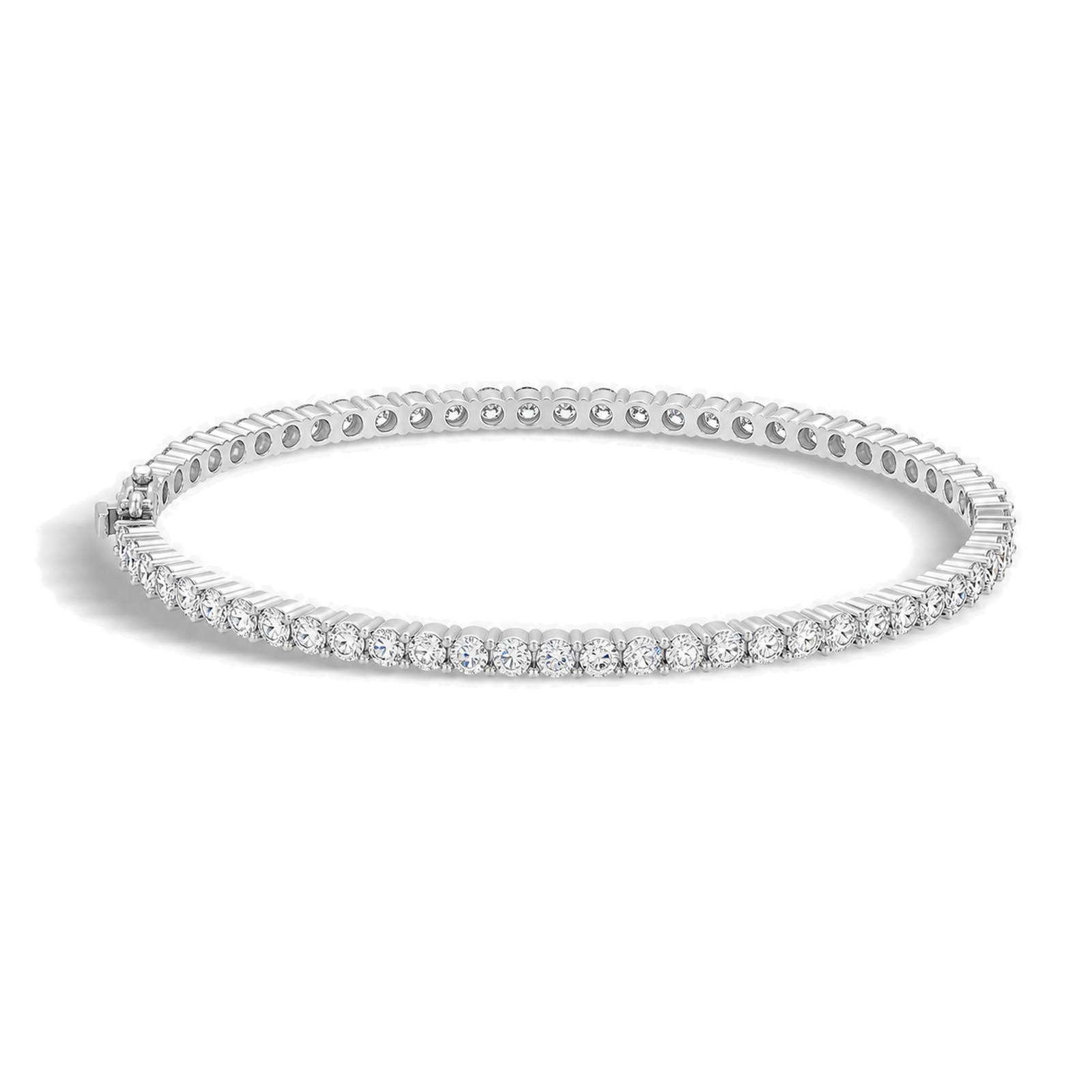
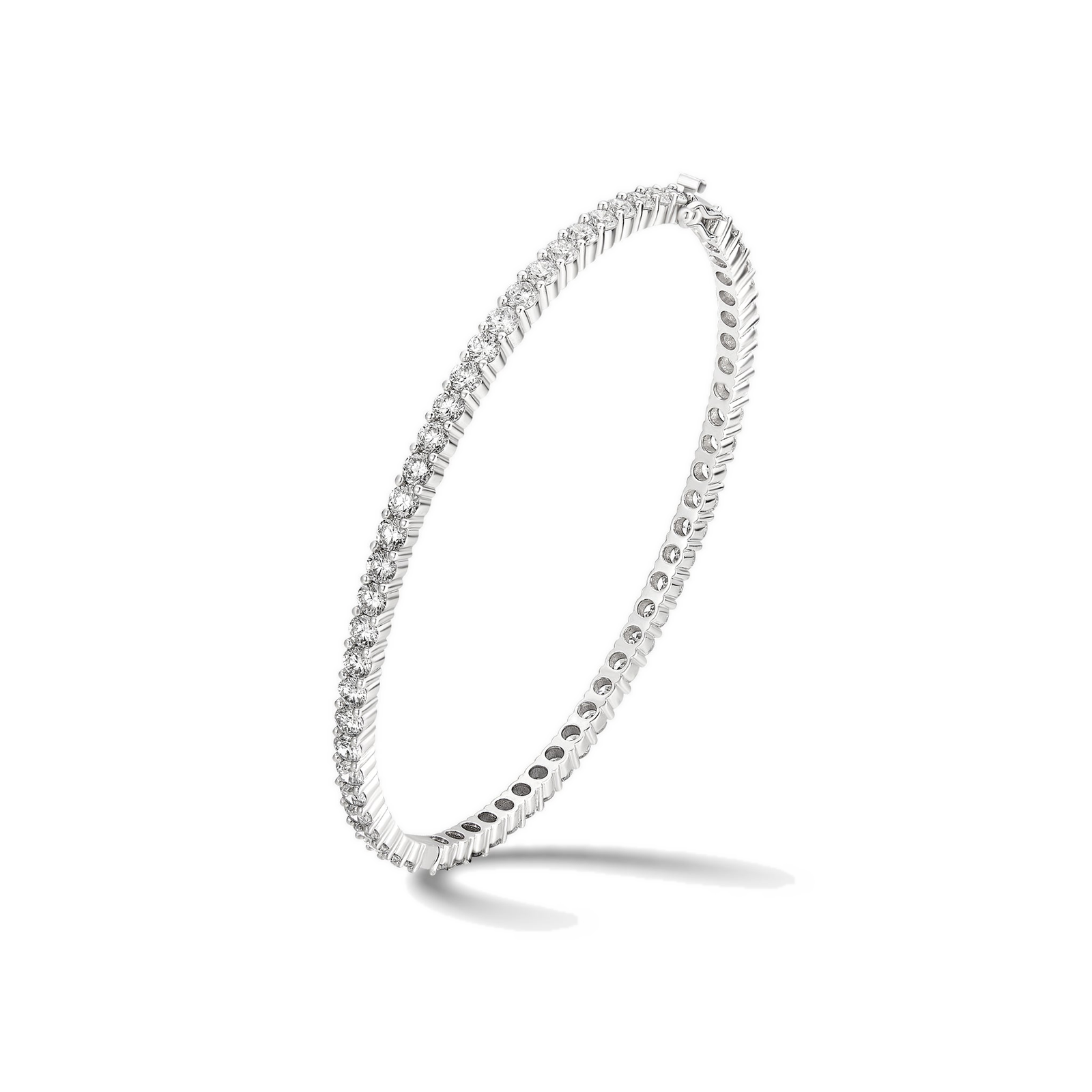
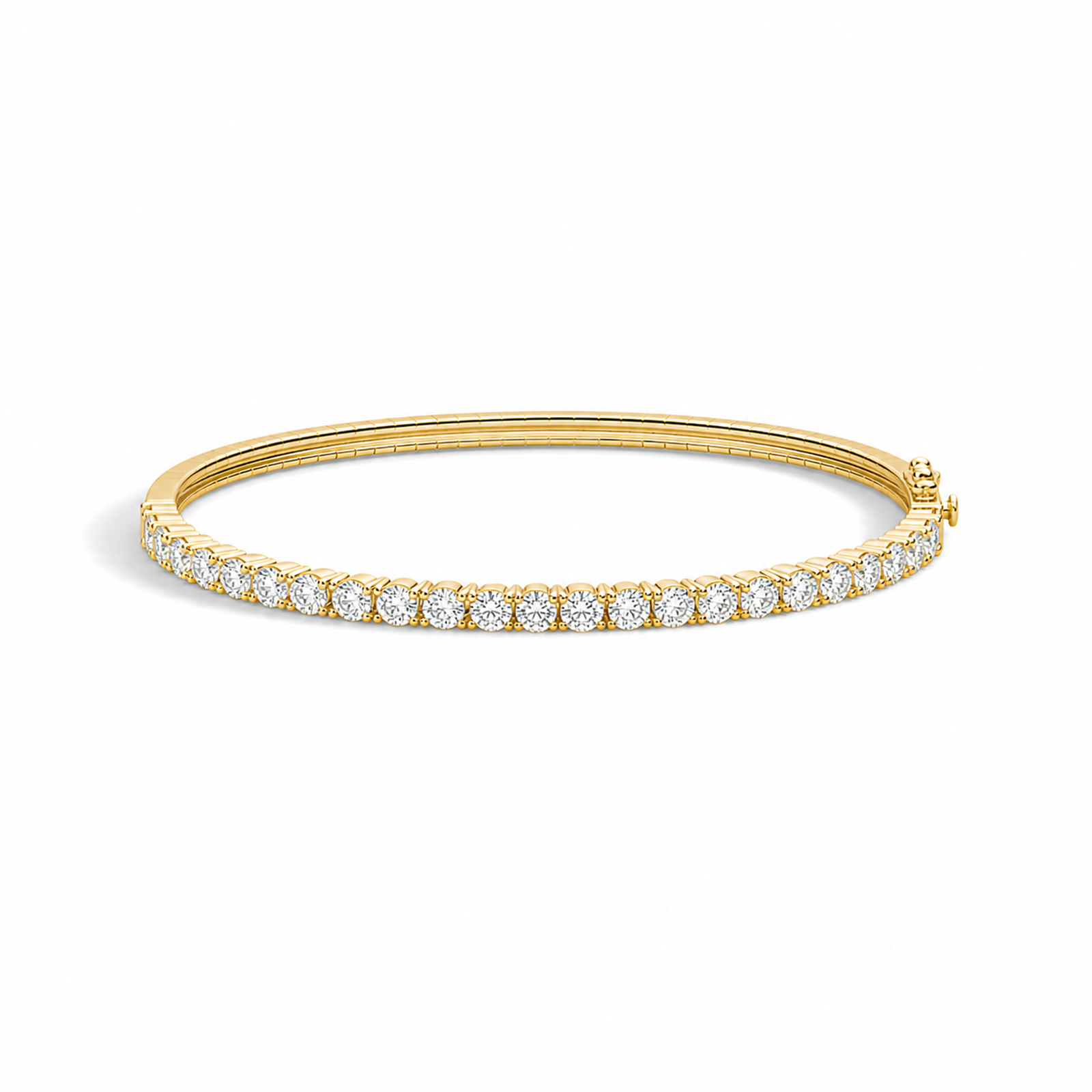
Burvonti’s current public Bangle Bracelet Collection contains two designs. Astraea is titled an Eternity Diamond Bangle; Ciela a Half Tennis Bangle Diamond Tennis Bracelet. Both use Round lab-grown diamonds, prong-set language, Box Clasps, and a 3 1/2 Total Carat Weight option. Both product cards appear exactly in the parent Bracelet Collection. In Tennis, Astraea is exact while Ciela appears as the same normalized design in a different representative metal. Their current details do not publish internal diameter, width, round or oval outline, solid or hollow construction, hinge, or opening method in the same fields, so this guide does not invent them.
Coverage Changes the Reading of the Arc
An eternity-titled bangle suggests diamond rhythm extending around more of the circumference; a half-tennis bangle concentrates the diamond field across part of the arc. The distinction affects where metal becomes visible, whether the design has a more obvious front, and how rotation changes the view. It does not establish that every surface is diamond-set or that the pattern remains face-up.
Compare product imagery around the full circumference, including the transition from diamonds to metal and the area near the clasp. Ask where the sequence begins and ends, how the non-diamond section is resolved, and whether the bracelet’s identity depends on one orientation. Coverage is a design decision, not a ranking of value or suitability.
Profile Is More Than the Face-Up Line
A bangle’s presence depends on width, thickness, cross-section, setting height, inner contour, connection geometry, and closure—not only the diamonds seen from above. A narrow face can still have a substantial side profile; a wider arc may distribute its visual weight differently. Current public details do not provide enough dimension fields to compare these two designs numerically.
Review front, side, underside, and closure views before choosing. Do not assume the bangles are round, oval, completely rigid, fully flexible, solid, hollow, hinged, seamless, or low-profile from the category name alone. Those are product-level facts that require verified specifications.
Fit Begins with the Way the Bangle Opens
A closed slip-on bangle must account for the hand as well as the wrist. A hinged or clasped bangle may open closer to the wrist, but its internal dimensions and opening geometry still determine clearance. The current descriptions identify Box Clasps but do not establish the precise opening sequence, hinge construction, or internal size.
Measure the wrist where the bangle will sit and, when relevant, the widest part of the hand. Then compare verified internal dimensions, opening, profile, and closure for the selected design. Length-based bracelet charts cannot automatically be converted into bangle diameter, and no universal one-finger or gender-based allowance applies.
Movement Is Structured, Not Eliminated
A bangle may rotate, travel toward the hand, or shift with forearm position even when its arc is more self-supporting than a chain. Inner contour, weight distribution, fit, diamond coverage, closure, wrist anatomy, and activity all influence that motion. An oval outline does not universally stay centered, and a round outline does not universally rotate more.
The goal is not to remove all movement, but to understand its range. Too little clearance may restrict the wrist or load the closure; too much may allow the piece to pass toward the hand, strike surrounding objects, or change orientation more often. Product-specific dimensions remain necessary.
The Same Total Can Hold Two Different Rhythms
Both current products show 3 1/2 Total Carat Weight, yet the eternity and half-tennis titles indicate different distribution intentions. Total weight does not reveal diamond count, individual size, complete coverage, setting width, bangle dimensions, or how much metal remains visible. Equal totals are not equal compositions.
Read TCW with diamond count and dimensions where published, the length of the diamond field, spacing, setting, profile, and imagery. Burvonti does not assign one coverage pattern as more subtle, substantial, modern, durable, masculine, feminine, or suitable for everyday wear.
Setting, Metal, and Closure Shape the Boundary
Both current designs use prong-set and Box Clasp language. Astraea is represented in 14K White Gold; Ciela in 14K Yellow Gold. Prongs create discrete contacts around each diamond, while metal tone can either recede near colorless-looking diamonds or make the arc and intervals more explicit. Exact effect depends on finish, rhodium plating where applicable, coverage, dimensions, skin context, and light.
A Box Clasp name does not prove a hidden hinge, seamless click, safety component, loss resistance, or ease of operation. Assess the complete closure and its transition into the bangle. Neither prongs nor a structured arc provide a universal snag, impact, deformation, or security guarantee.
Stacking Requires Respect for the Arc
A bangle can define a firmer boundary within a stack, sit beside a tennis line, or create contrast with a chain’s drape. Its self-supporting profile can also contact neighboring settings, watch cases, clasps, and metal surfaces as the wrist moves. It should not be treated as a protective spacer.
Compare internal fit, width, profile, edge, closure, and travel range for every piece. No stacking order prevents scratching, abrasion, impact, pressure, catching, or noise. If contact becomes frequent, separate the pieces or wear them on different wrists rather than relying on a fabric or leather buffer as a universal solution.
Documentation, Custom Possibilities, and Care
Burvonti uses responsibly sourced lab-grown diamonds and supports independent grading and certification where applicable. One report does not automatically identify every diamond or the finished bangle. Confirm how Total Carat Weight, color and clarity fields, diamond sequence, and documentation correspond to the selected design.
Custom possibilities may refine internal dimensions, coverage, diamond sequence, profile, setting, metal, or closure when technically feasible. Clean and inspect the full arc, including diamonds, prongs, metal transitions, joints or hinges if present, and closure. Store without abrasive contact and avoid forcing the bangle beyond its intended opening or movement.
Frequently Asked Questions
What is a diamond bangle bracelet?
It is a bracelet that retains more of its own arc than a chain. Exact flexibility, outline, opening, setting, and closure remain product-specific.
How many Bangle Bracelets are currently included?
The public Collection contains two products: Astraea Eternity Diamond Bangle and Ciela Half Tennis Bangle.
What is the difference between an eternity and half-tennis bangle?
The titles indicate different diamond-coverage intentions: extended circumference versus a more concentrated field. Confirm the complete sequence in selected-product views.
Are current bangles round or oval?
The current public details do not verify round or oval internal outline. Do not infer it from imagery or the bangle category alone.
Are current bangles solid or hollow?
The current public details do not state solid or hollow construction. Weight, deformation resistance, and construction should not be assumed.
Do current bangles have hinges?
The descriptions identify Box Clasps but do not verify hinge type, location, or opening sequence. Confirm selected-product construction.
Do bangles need to fit over the hand?
A closed slip-on bangle does; an opening bangle may not. Current opening geometry is not fully published, so verify the selected design before sizing.
How should I measure for a bangle?
Measure the intended wrist position and, if it is slip-on, the widest part of the hand. Compare verified internal dimensions, opening, profile, and closure.
What lengths and widths are currently listed?
The two current descriptions do not publish length or width in the same fields. Product-specific internal and external dimensions remain a data gap.
Will a bangle stay centered on the wrist?
Not universally. Inner contour, fit, weight distribution, coverage, closure, wrist anatomy, and movement influence rotation and position.
Are bangle bracelets rigid?
They retain more of their arc than a chain, but exact rigidity or flexibility depends on cross-section, joints, hinges, settings, and complete construction.
What Total Carat Weights are currently represented?
Both current products show 3 1/2 TCW. Equal totals do not mean equal coverage, diamond count, dimensions, or visual rhythm.
Which settings are currently represented?
Both current descriptions use prong-set language. Exact prong count, coverage, height, and connection remain product-specific.
Which metals are currently represented?
Current cards represent 14K White and Yellow Gold. Exact alloy, finish, rhodium plating, sensitivity, maintenance, and alternatives remain product-specific.
Are Box Clasps completely secure?
No universal guarantee applies. Operation, connections, safety components, wear, maintenance, impact, fit, and condition all matter.
Can diamond bangles be stacked?
Yes after comparing internal fit, profile, edges, closures, and movement. Stacking can still cause abrasion, impact, pressure, catching, or noise.
Can I wear a bangle beside a watch?
Possibly, but compare case edge, crown, band, finish, bangle profile, travel range, and repeated contact. No arrangement prevents all wear.
Can a diamond bangle be resized?
Possibly, but not universally. Changes can affect arc, symmetry, settings, joints, closure, coverage, documentation, and cost.
Can a bangle be customized?
Internal dimensions, coverage, sequence, profile, setting, metal, or closure may be possible after technical review.
How should a diamond bangle be cared for?
Use gentle care and inspect the full arc, diamonds, prongs, metal transitions, joints or hinges if present, and closure if fit or movement changes.