


Lab Grown Diamond Chain Bracelets
Diamonds punctuate a line that moves with the wrist. Explore chain bracelets through interval, drape, focal structure, closure and fit.








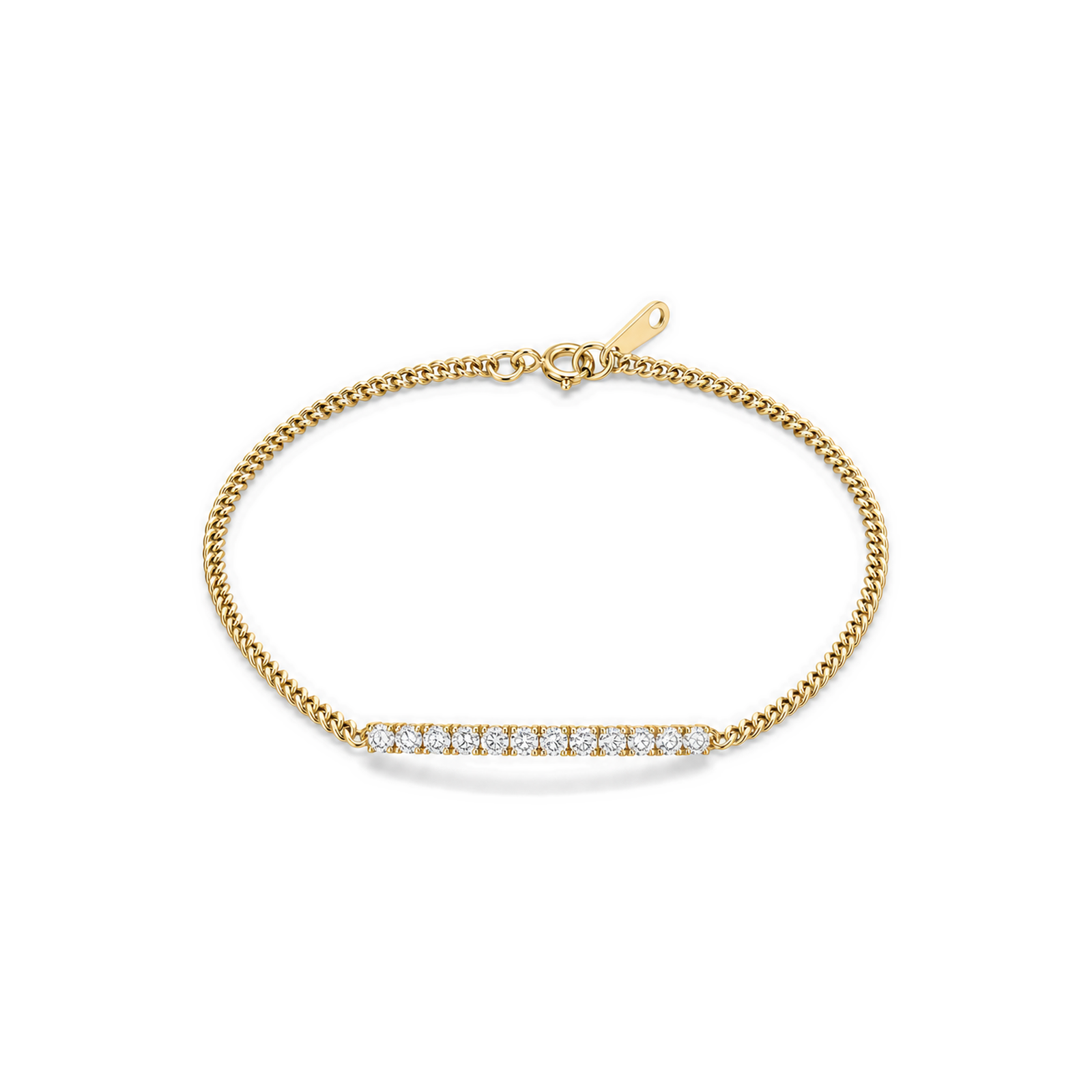



Light Held Along a Moving Line
In a diamond chain bracelet, the chain is not simply a background. It carries the composition, establishes the distance between points of light, and determines how a focal element returns—or does not return—to the top of the wrist. The design is read through movement: a pause between stations, a curve that shifts with the hand, or a bar held in tension across a flexible line.
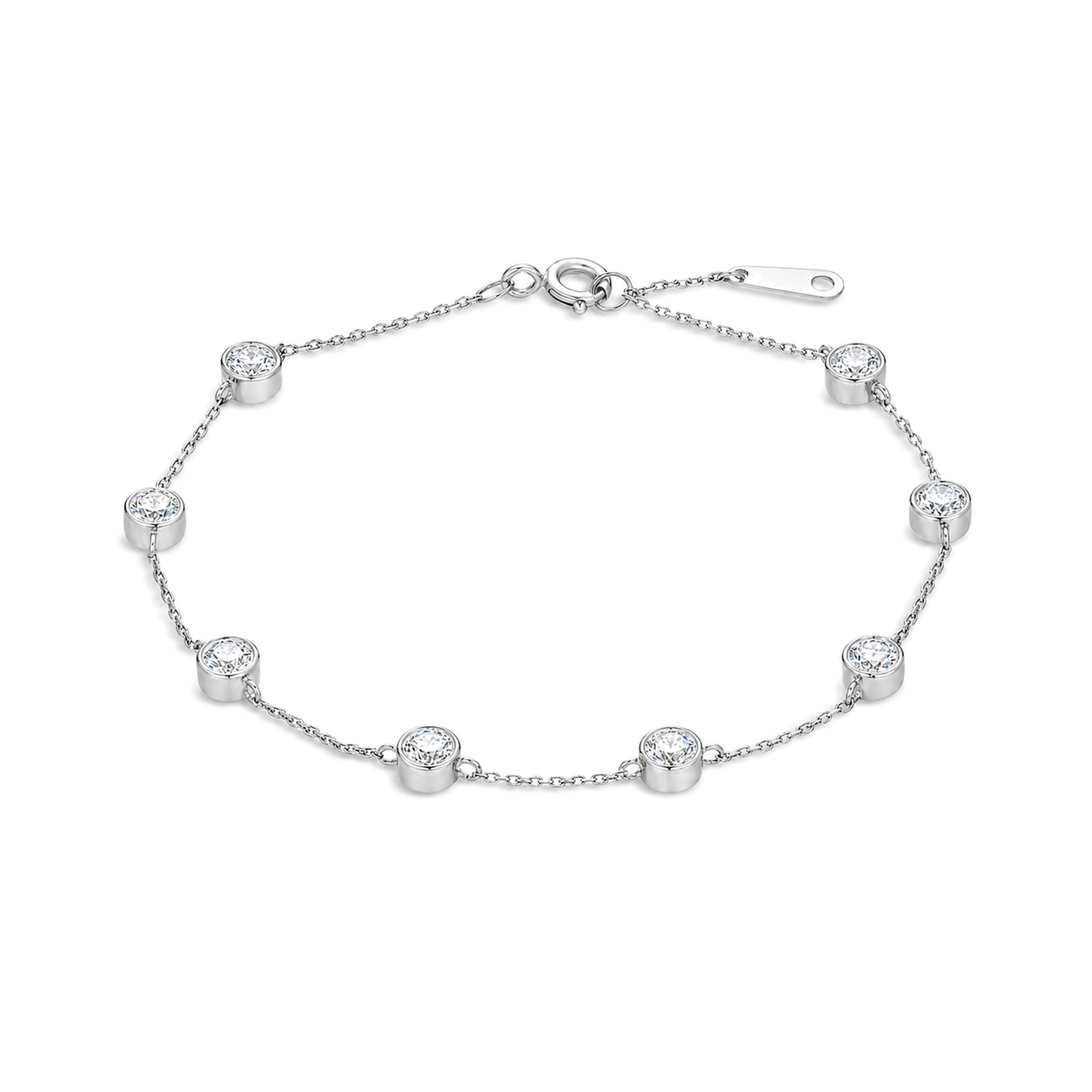
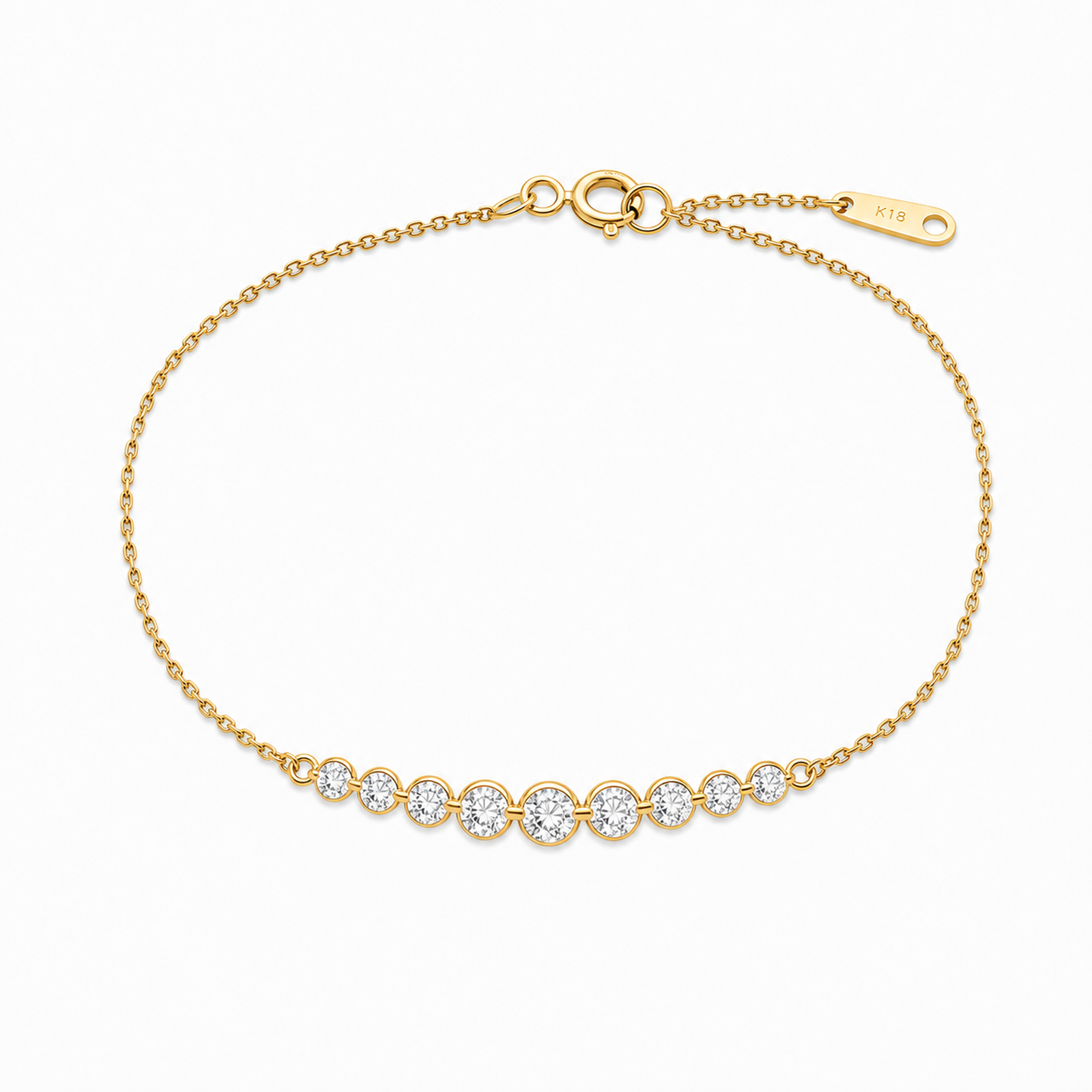
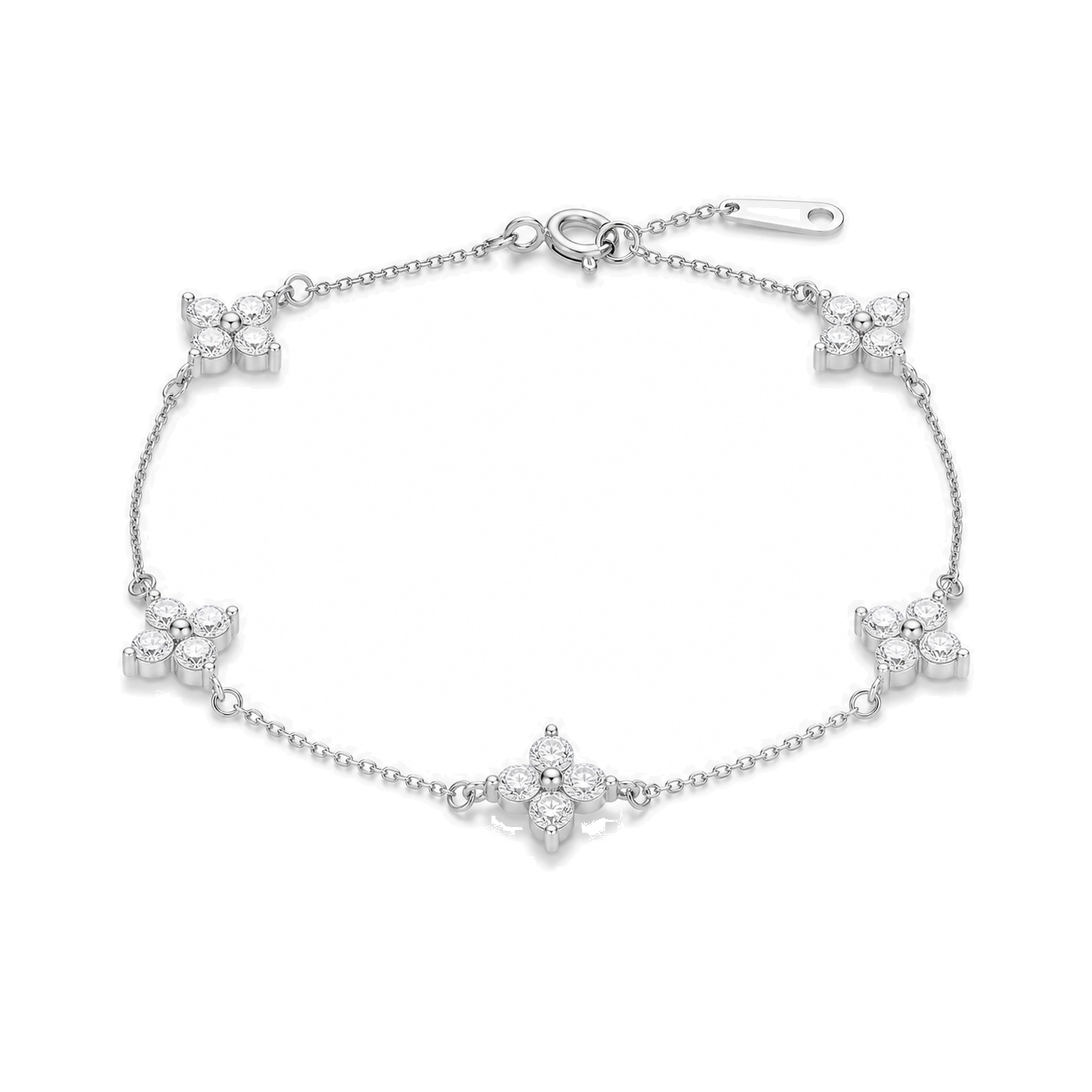
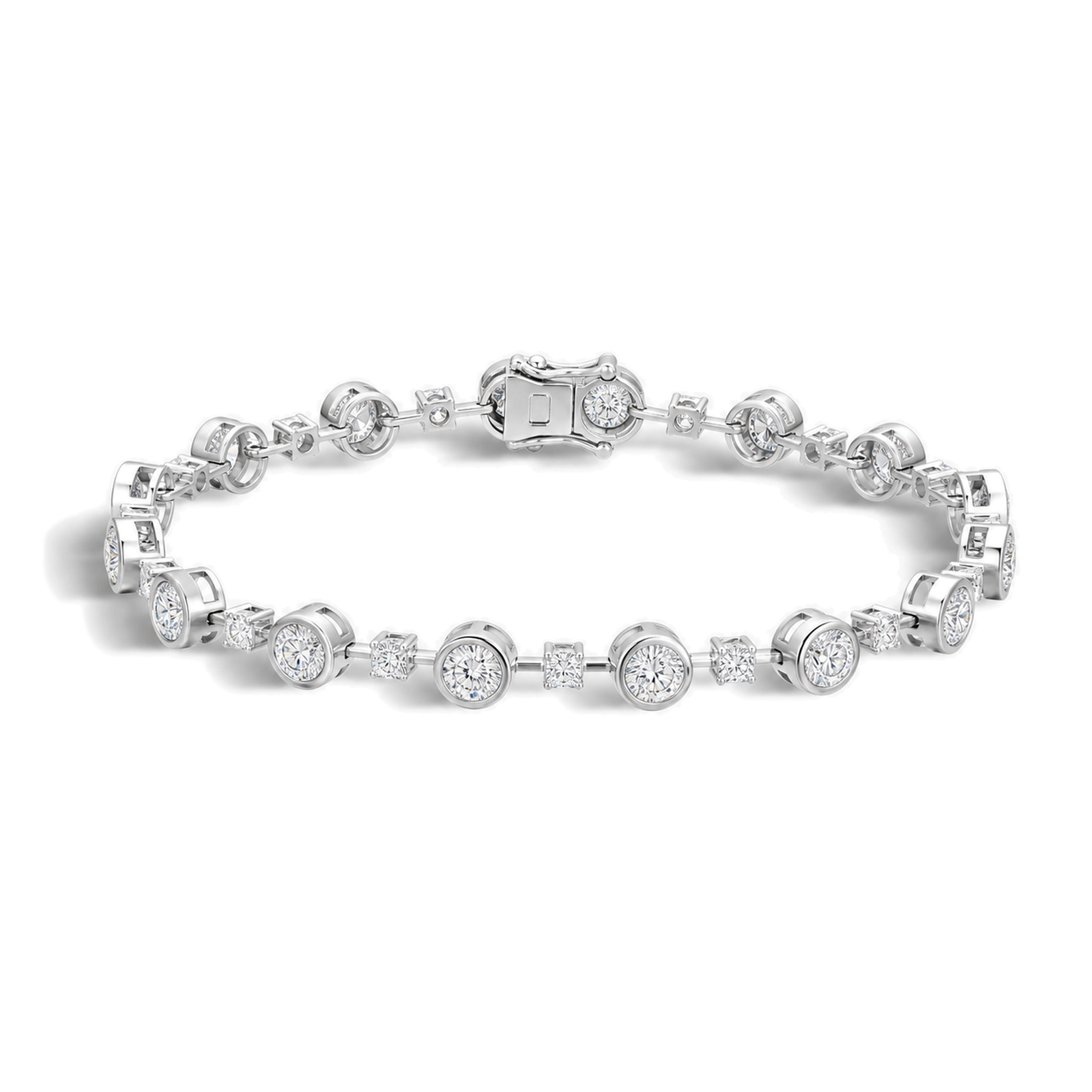
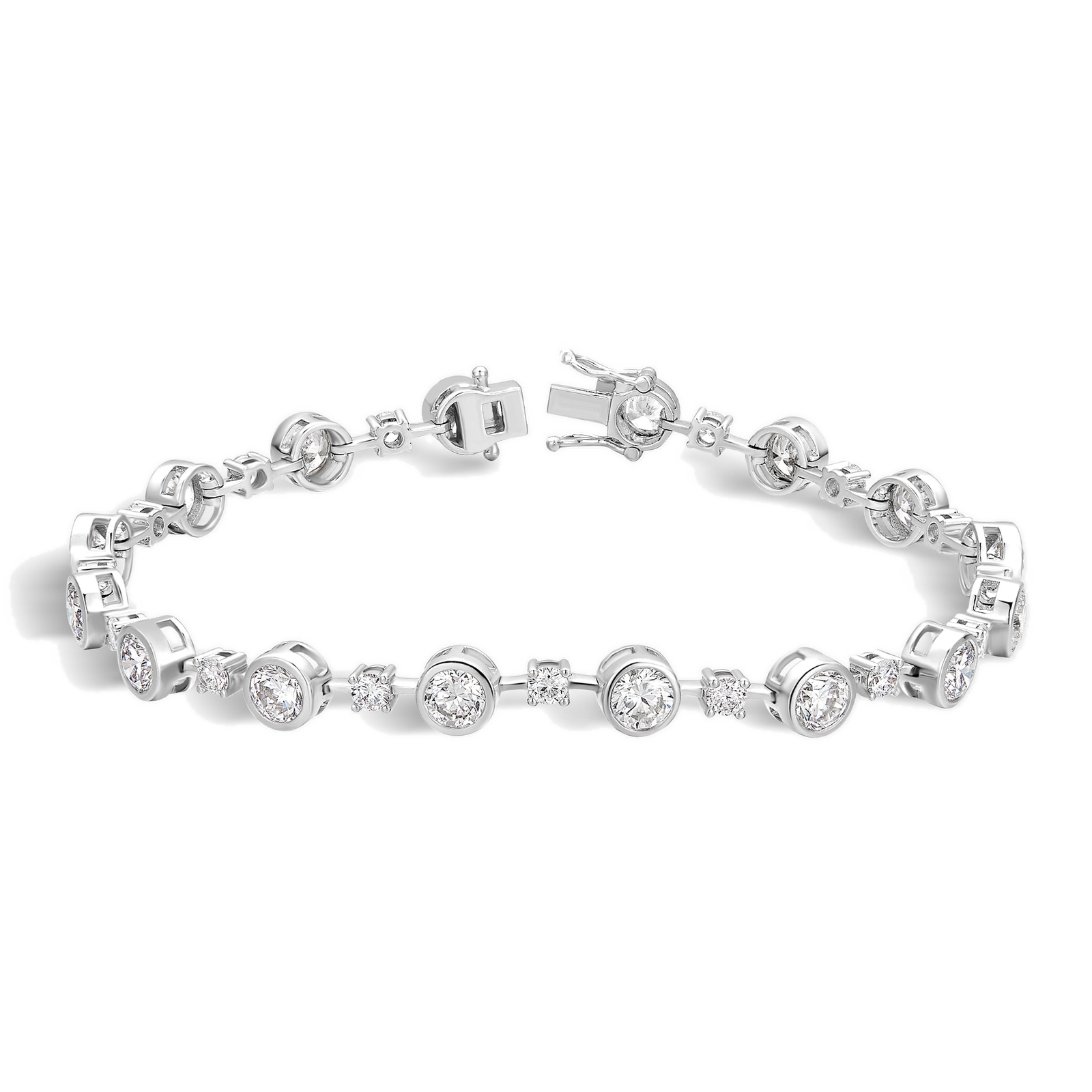
Burvonti’s current public Chain Bracelet Collection contains five designs. Four are chain-led: a bezel station, graduated curve, multi-station charm, and bar bracelet. Delphine is an alternating multi-shape tennis bracelet with a 4.2 mm published width and Box Clasp, yet it is currently included here. This guide discloses that exception and does not describe every member as a fine chain, station bracelet, or Spring Clasp construction.
Interval Gives the Chain Its Rhythm
A station bracelet uses measured space between diamond settings, letting chain and skin become part of the design. A multi-station charm composition creates more pronounced points and movement. A graduated curve concentrates scale across one region, while a bar holds a clearer horizontal gesture. These structures may share a chain, but they do not produce the same visual cadence.
Compare how far the diamond field extends, whether spacing repeats, whether one front is intended, and how the chain transitions into each setting. Delphine belongs to a different rhythm: closely connected bezel elements across a tennis line. Its presence broadens current membership but should not redefine what a chain-led bracelet is.
Drape Depends on Every Connection
A chain follows the wrist through linked movement, but flexibility is not a single property. Link geometry, wire or component dimensions, connection points, setting weight, focal length, clasp, finish, and condition all affect drape. A light-looking chain is not automatically fragile; a substantial-looking line is not automatically resistant to pulling or deformation.
Inspect the transition from chain to station, curve, charm, or bar, as well as the section near the closure. Rotation is normal for many flexible compositions. A focal element may shift toward the side or underside of the wrist depending on fit, weight distribution, activity, clothing, and neighboring jewelry; it cannot be promised to remain face-up.
Length and Width Describe Different Things
Three current descriptions list 6.3 inches and two list 6.7 inches. The four chain-led designs publish widths of 0.5 or 0.7 mm, while Delphine lists 4.2 mm. Those values are not interchangeable measures of presence. A narrow chain can support a visually concentrated focal field; a broader connected line distributes metal and diamonds differently around the wrist.
Measure where the bracelet will sit, then review overall length, chain width, focal dimensions, setting height, closure, and desired movement. Current descriptions do not establish that every chain is adjustable or includes multiple fastening rings. No universal fit increment, gender-based length, or one-finger rule applies across these five constructions.
Total Weight Is Placed, Not Merely Added
All five current products use Total Carat Weight as their public option label. Representative totals range from 2/3 to 4 3/5 carats, but Delphine’s closely connected tennis architecture makes the upper value structurally different from totals distributed across a station, curve, charm, or bar. Total alone does not reveal diamond count, individual size, coverage, spacing, focal dimensions, or chain proportion.
Read weight through placement. A small number of concentrated diamonds, repeated stations, a graduated sequence, and an extended connected line may each create different scale at the same total. Burvonti does not prescribe one total as delicate, everyday, formal, or ideal for a particular wrist.
Setting and Closure Complete the Line
Three current designs use prong-set language and two use bezel language. The four chain-led designs use Spring Clasps; Delphine uses a Box Clasp. Setting and closure perform different roles, yet both influence profile, movement, handling, and the visual resolution of the bracelet’s ends.
Prongs create discrete metal contacts around a diamond; a bezel establishes a continuous perimeter. Neither setting establishes universal light return, security, comfort, or snag resistance. A Spring or Box Clasp should be assessed through selected-product operation, connection geometry, fit, maintenance, and condition rather than a Collection-wide guarantee.
Metal Defines the Visible Thread
Current cards represent three designs in 14K White Gold and two in 14K Yellow Gold. White gold may visually recede near colorless-looking diamonds in some settings, while yellow gold can make the chain, prongs, bezels, and negative intervals more explicit. Exact effect depends on finish, rhodium plating where applicable, chain dimensions, setting coverage, skin context, and light.
The metal line matters most where the diamonds pause. Consider whether you want the chain to appear as a quiet carrier or as a visible part of the drawing. Current membership does not establish 14K Rose Gold, 18K Gold, or Platinum availability for these exact public cards.
Stacking Changes Drape and Contact
A chain bracelet can introduce open rhythm beside a tennis line, watch, or structured bangle. It may also cross, wrap, or catch against neighboring settings and closures. Width contrast can create hierarchy, but visual compatibility does not establish mechanical compatibility.
Compare lengths, focal position, chain movement, clasp orientation, and the edges of every neighboring piece. No stacking order prevents tangling, abrasion, impact, pressure, or catching. If movement becomes restricted or repeated contact is visible, separate the pieces rather than relying on a fixed arrangement rule.
Documentation, Custom Possibilities, and Care
Burvonti uses responsibly sourced lab-grown diamonds and supports independent grading and certification where applicable. In a multi-diamond chain bracelet, one document does not automatically identify every stone or the finished piece. Confirm how Total Carat Weight, color and clarity fields, individual diamonds, and documentation correspond to the selected design.
Custom possibilities may refine length, station interval, focal arrangement, chain dimension, setting, metal, or closure when technically feasible. Clean and inspect the complete route around the wrist: diamonds, settings, chain links, connection points, focal structure, and clasp. Store the bracelet without abrasive contact and without leaving a fine chain compressed or tangled.
Frequently Asked Questions
What is a diamond chain bracelet?
It uses chain as a primary carrying structure for diamonds, stations, charms, a curve, bar, or other focal arrangement. Chain does not define one link, setting, or clasp.
How many Chain Bracelets are currently included?
The public Collection contains five products: four chain-led designs and Delphine, a wider alternating multi-shape tennis bracelet currently included as a taxonomy exception.
What is a station chain bracelet?
It places individual diamond settings at intervals along a chain. Current Chain membership also includes curve, charm, bar, and tennis constructions, so not every product is a station bracelet.
How is a chain bracelet different from a tennis bracelet?
A chain-led bracelet normally uses visible chain and intervals or a focal section; a tennis bracelet uses a more extended connected diamond line. Current Delphine membership overlaps those definitions.
Will a chain bracelet stay centered?
Not universally. Fit, focal weight, chain geometry, wrist shape, movement, clothing, and neighboring jewelry all influence rotation.
Are delicate-looking chains easy to break?
Appearance alone cannot predict performance. Link dimensions, connections, setting weight, clasp, wear, impact, pulling, maintenance, and condition all matter.
What lengths are currently listed?
Current descriptions list 6.3 inches for three designs and 6.7 inches for two. Confirm the selected product and measure the intended wrist position.
Are current chain bracelets adjustable?
The current Collection descriptions do not establish adjustable rings for every design. Do not infer multiple fastening lengths without selected-product evidence.
What widths are currently listed?
The four chain-led products list 0.5 or 0.7 mm; Delphine lists 4.2 mm. Width does not include every focal dimension or setting height.
How should a chain bracelet fit?
Assess wrist measurement, overall length, chain width, focal structure, closure, desired movement, and neighboring pieces together. No universal allowance fits every construction.
What does Total Carat Weight mean?
It combines diamond weight across the stated composition. It does not reveal individual stone size, count, spacing, coverage, focal dimensions, or chain proportion.
Which settings are currently represented?
Current descriptions use prong-set and bezel language. Exact coverage, height, connection, and maintenance remain product-specific.
Which clasps are currently represented?
The four chain-led designs use Spring Clasps; Delphine uses a Box Clasp. Clasp type alone does not establish security, ease of use, or fit.
Can chain bracelets be stacked?
Yes after comparing length, width, focal position, movement, settings, and closures. Stacking can still cause tangling, abrasion, impact, pressure, or catching.
Can I wear a chain bracelet beside a watch?
Possibly. Compare watch case and hardware, bracelet focal structure, clasp, movement, finish, and direct contact; no position prevents all wear.
Which metals are currently represented?
Current cards represent 14K White and Yellow Gold. Exact alloy, finish, rhodium plating, sensitivity, maintenance, and alternatives are product-specific.
Can a chain bracelet be resized?
Possibly, but not universally. Altering length can affect station interval, symmetry, focal position, links, closure, structure, documentation, and cost.
Can a chain bracelet be customized?
Length, intervals, focal arrangement, chain dimension, setting, metal, or closure may be possible after technical review.
Are all diamonds independently graded?
Do not assume one report identifies every diamond. Confirm what each document covers and how product-level color, clarity, and Total Carat Weight are represented.
How should a diamond chain bracelet be cared for?
Use gentle care and inspect diamonds, settings, chain links, connections, focal structure, and clasp. Store without abrasive contact, compression, or tangling.