
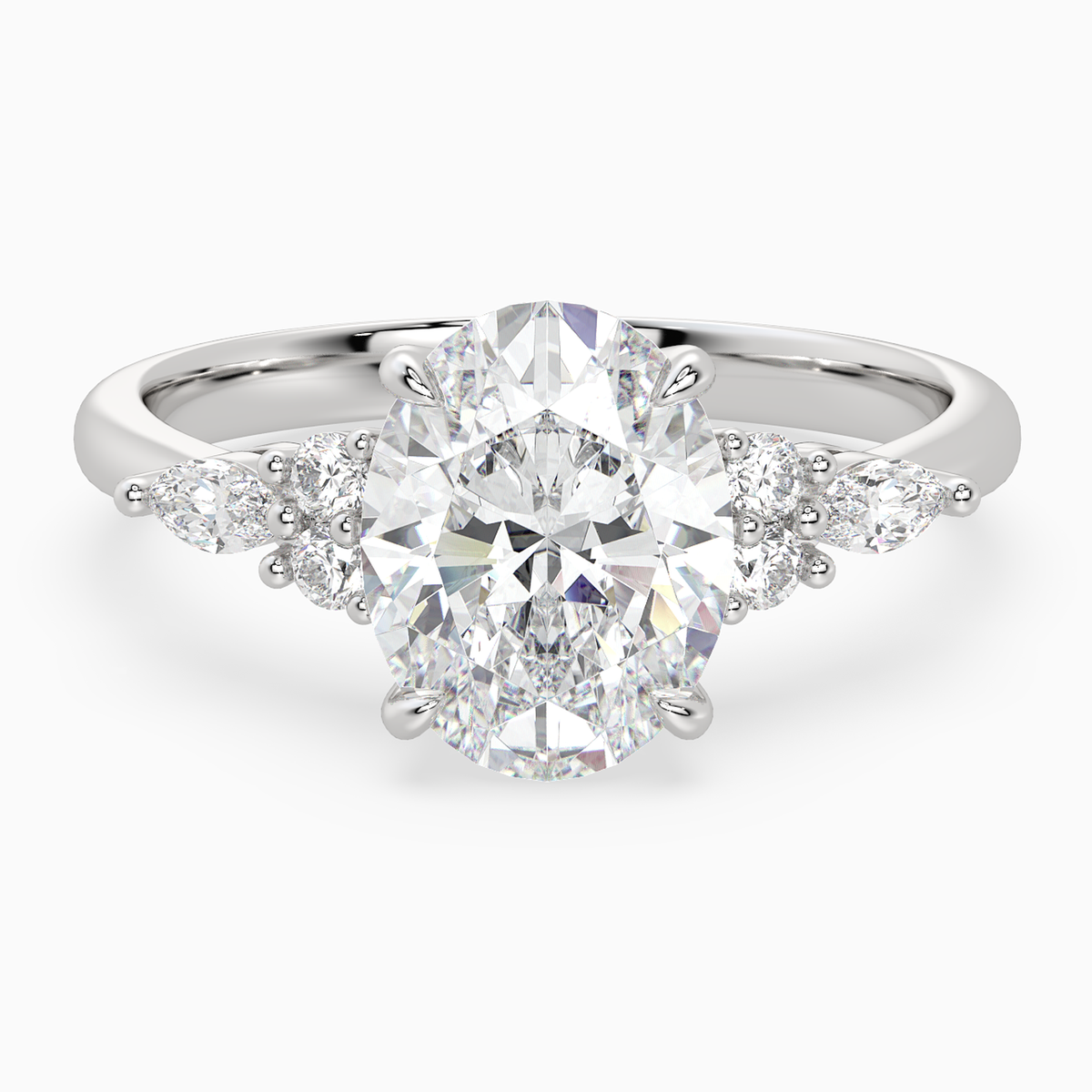


Lab-Grown Diamond Tennis Bracelets
A line of diamonds finds its rhythm through repetition and movement. Explore tennis bracelets through articulation, setting, scale and fit.







- Free Express Shipping
- Free Resizing
- 60-Day Free Returns
- Lifetime Warranty
The Discipline of a Continuous Line
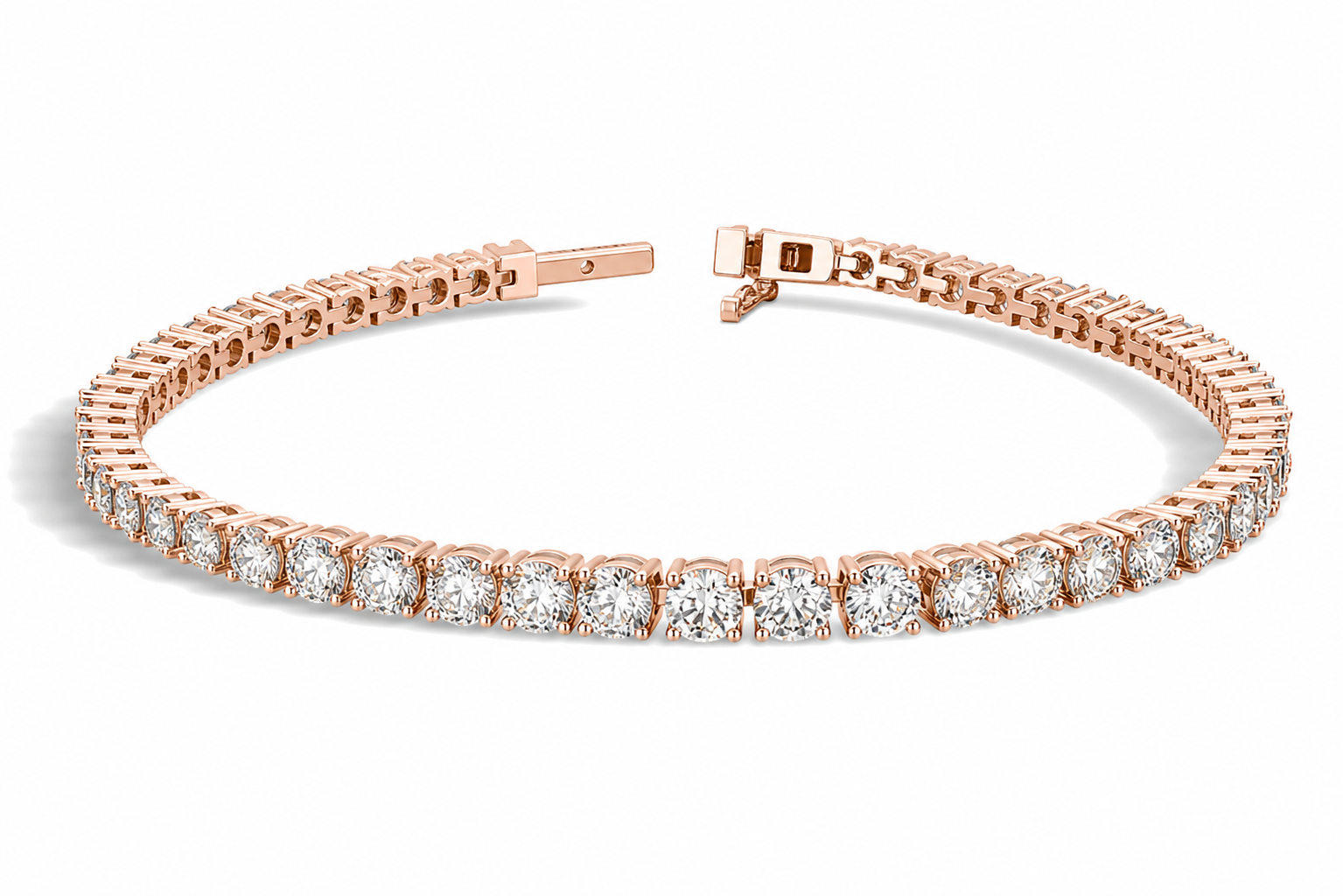
A tennis bracelet turns many diamonds into one continuous visual idea. Repetition gives the line composure; articulation lets that idea follow the wrist. Yet continuity is not the same as uniformity. Shape sequence, setting edge, link geometry, coverage, width, clasp, and fit determine whether the line reads as quiet and even, graphic and varied, or more structured in motion.
Burvonti’s current public Tennis Bracelet Collection contains eight designs. Six use tennis or interlocking line language; Astraea is titled an Eternity Diamond Bangle, and Ciela a Half Tennis Bangle. All eight have design-normalized counterparts in the 13-product parent Bracelet Collection, although only three exact metal-level product cards overlap. This guide treats the Collection as an extended diamond-line intent and does not pretend every member is one fully flexible construction.
Continuity Can Be Even, Varied, or Structured
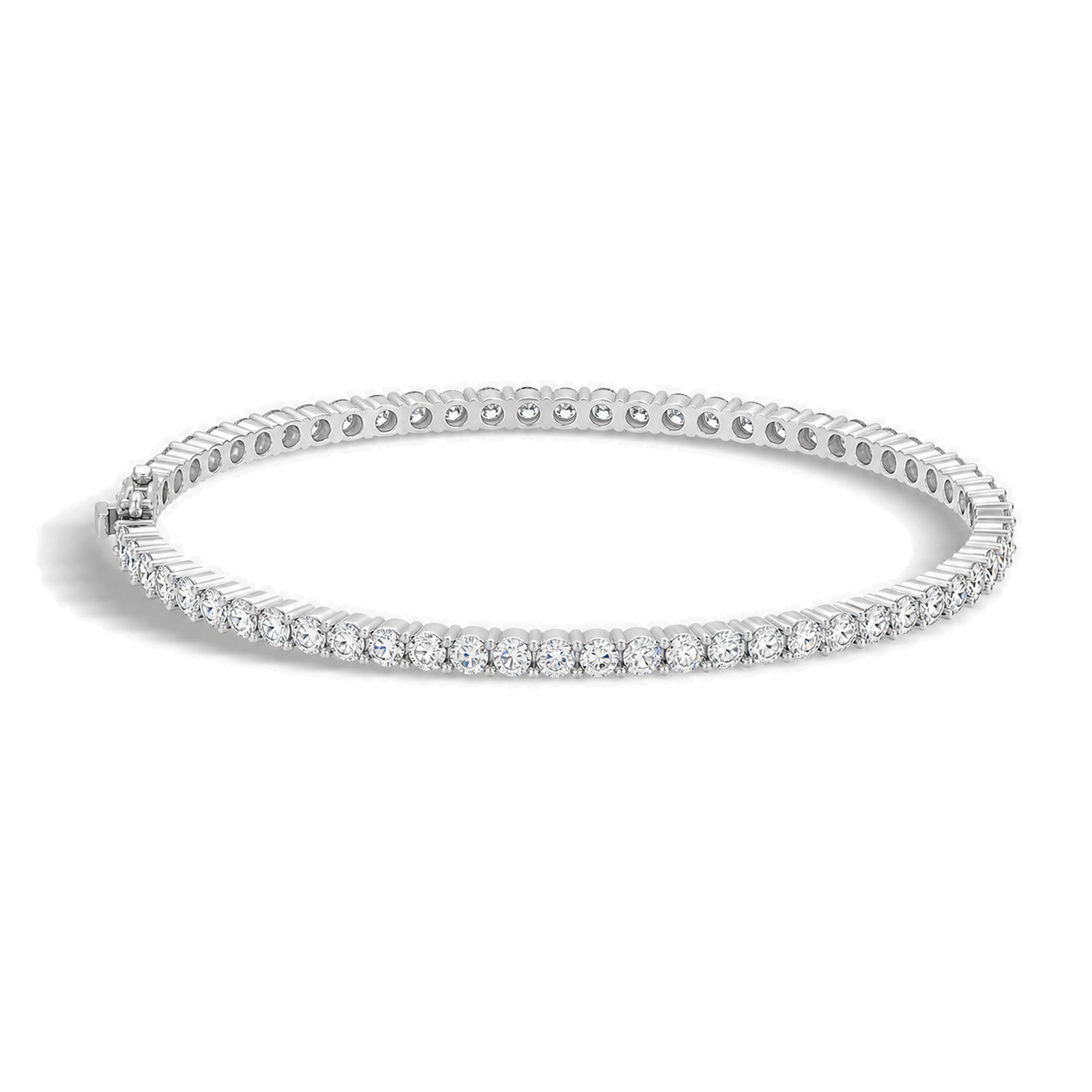
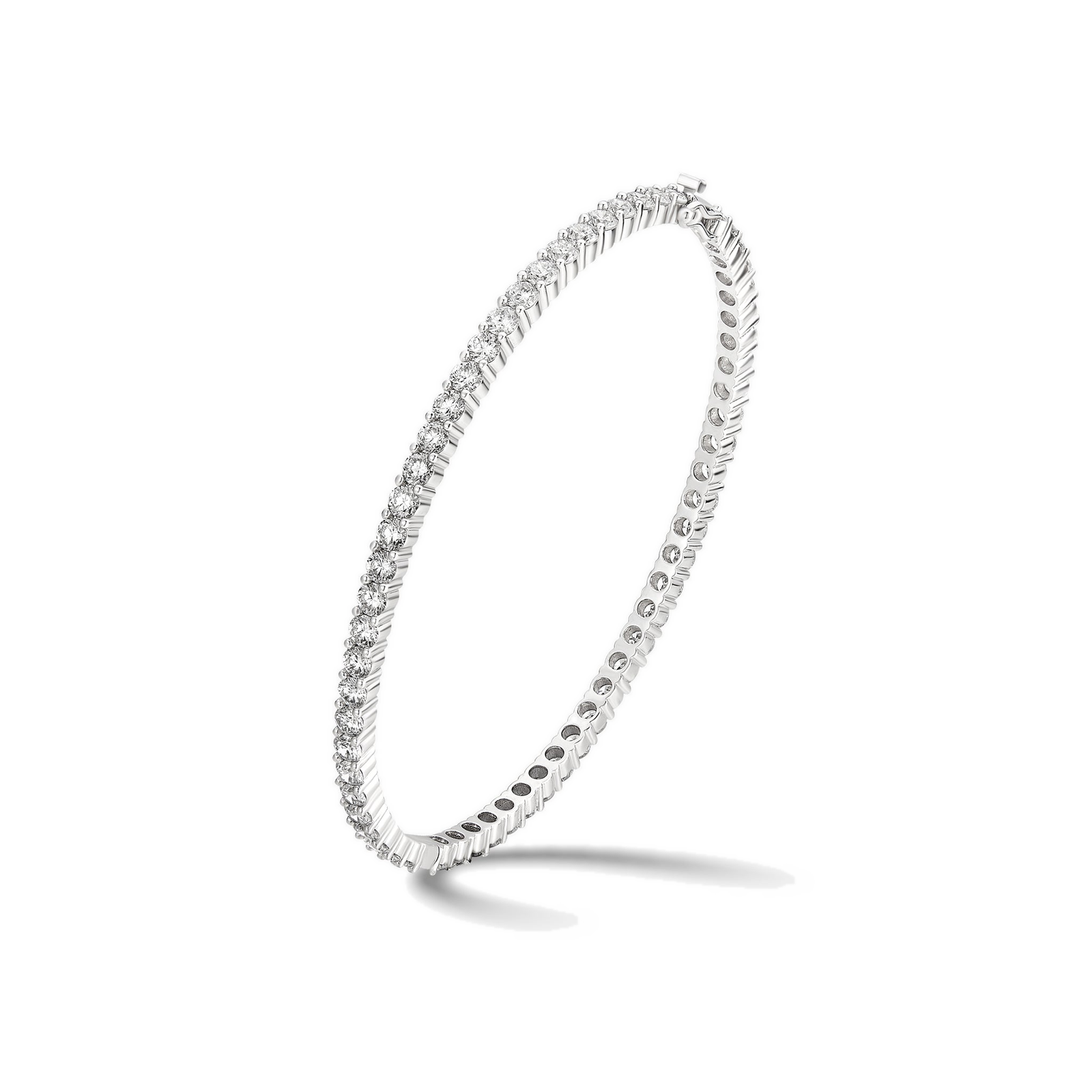
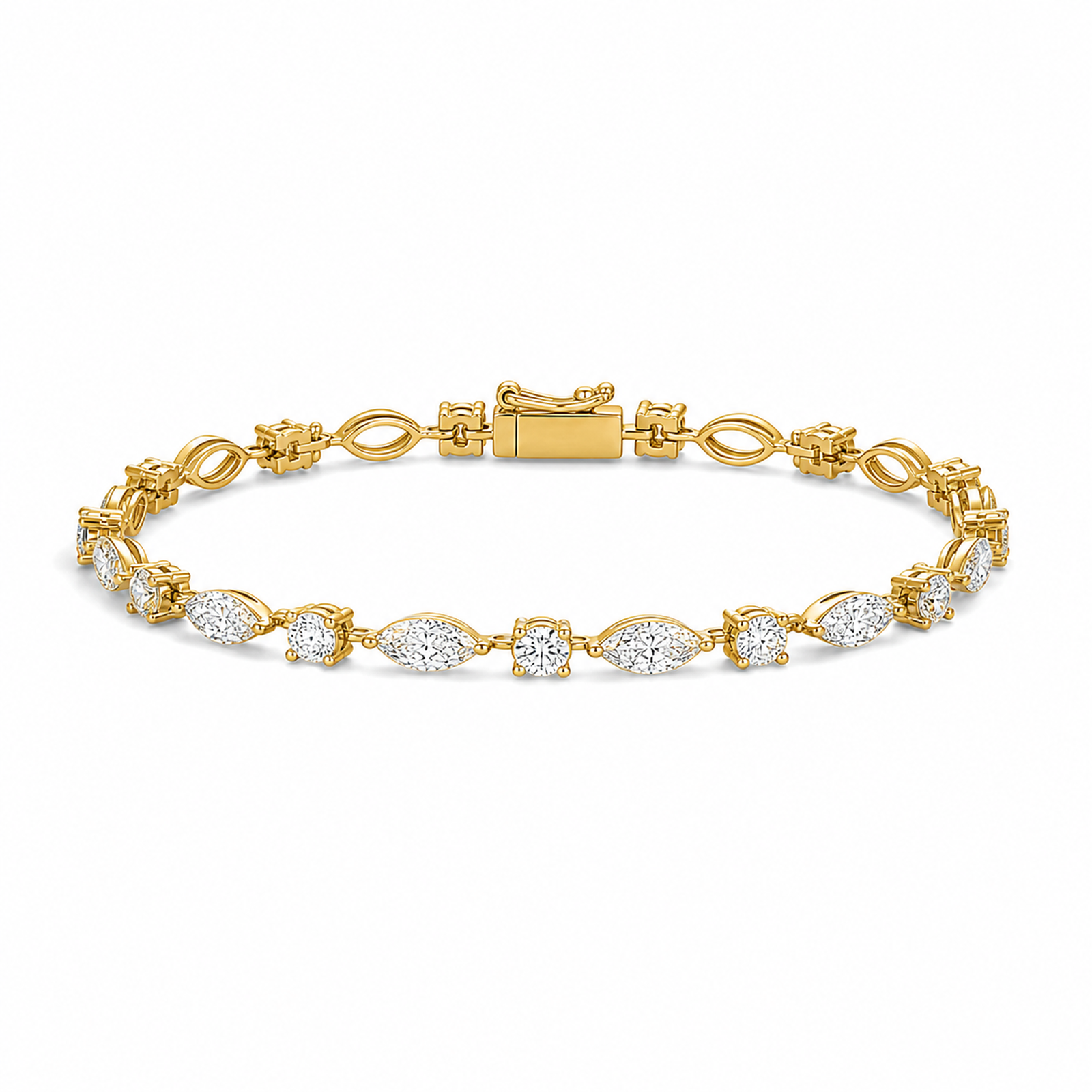
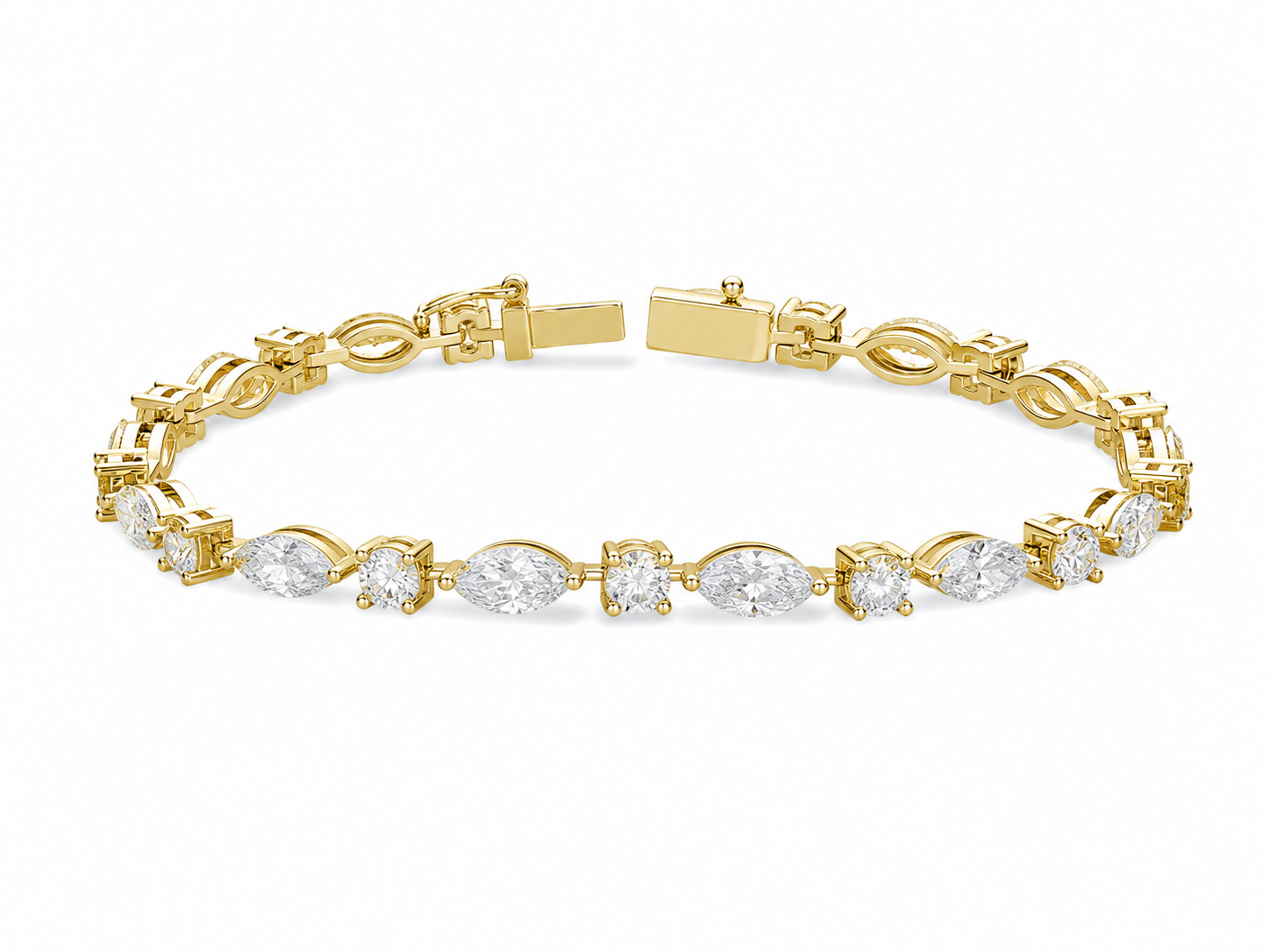
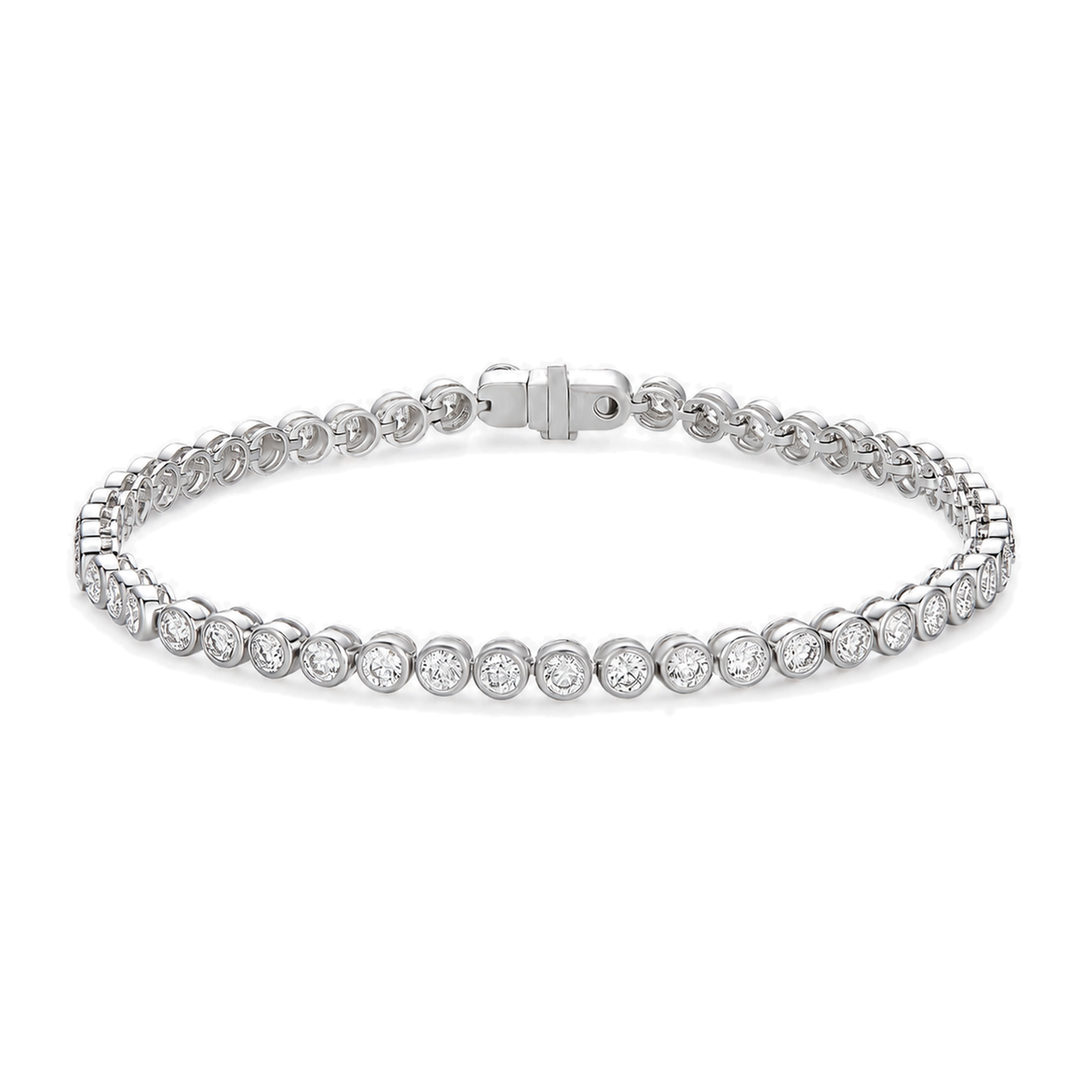
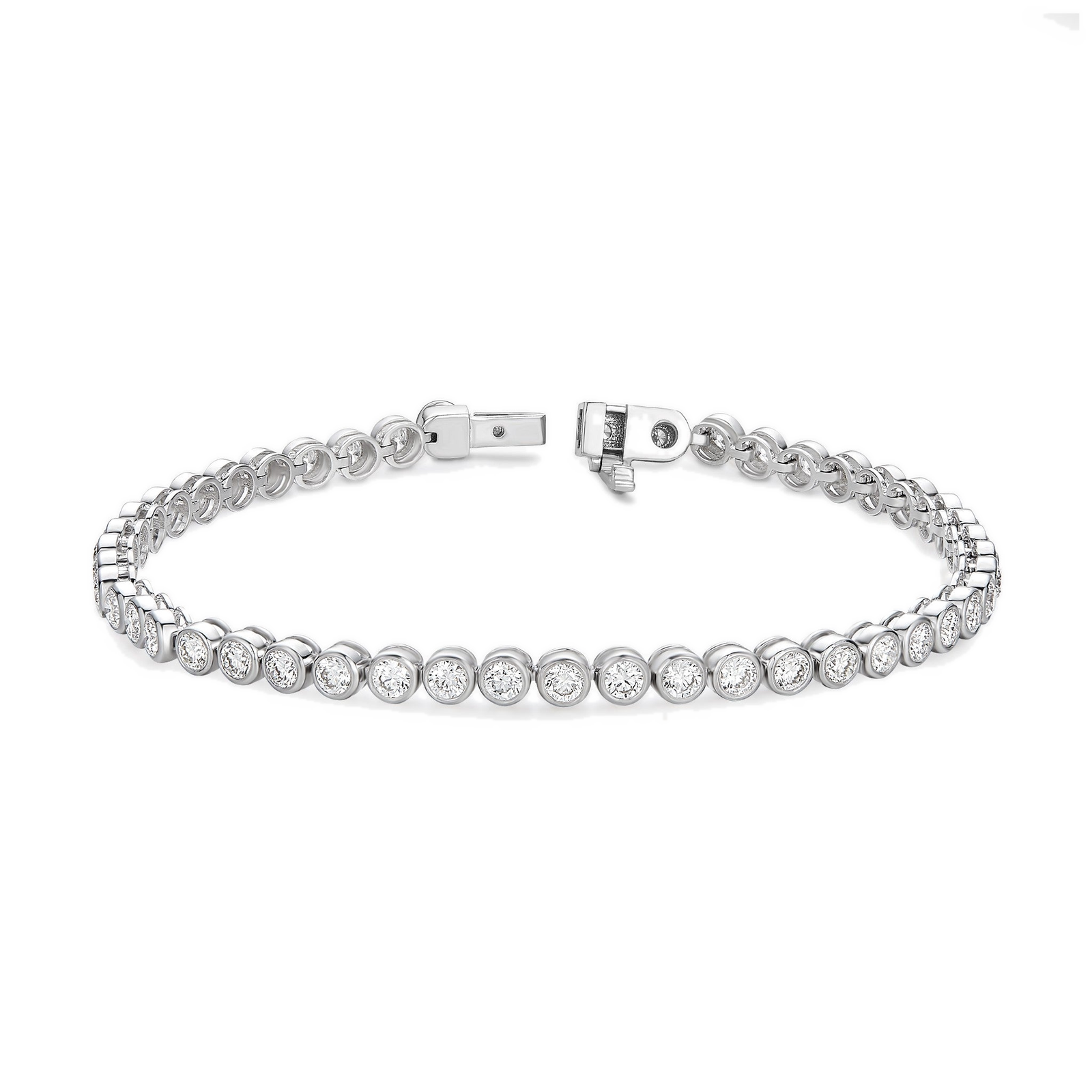
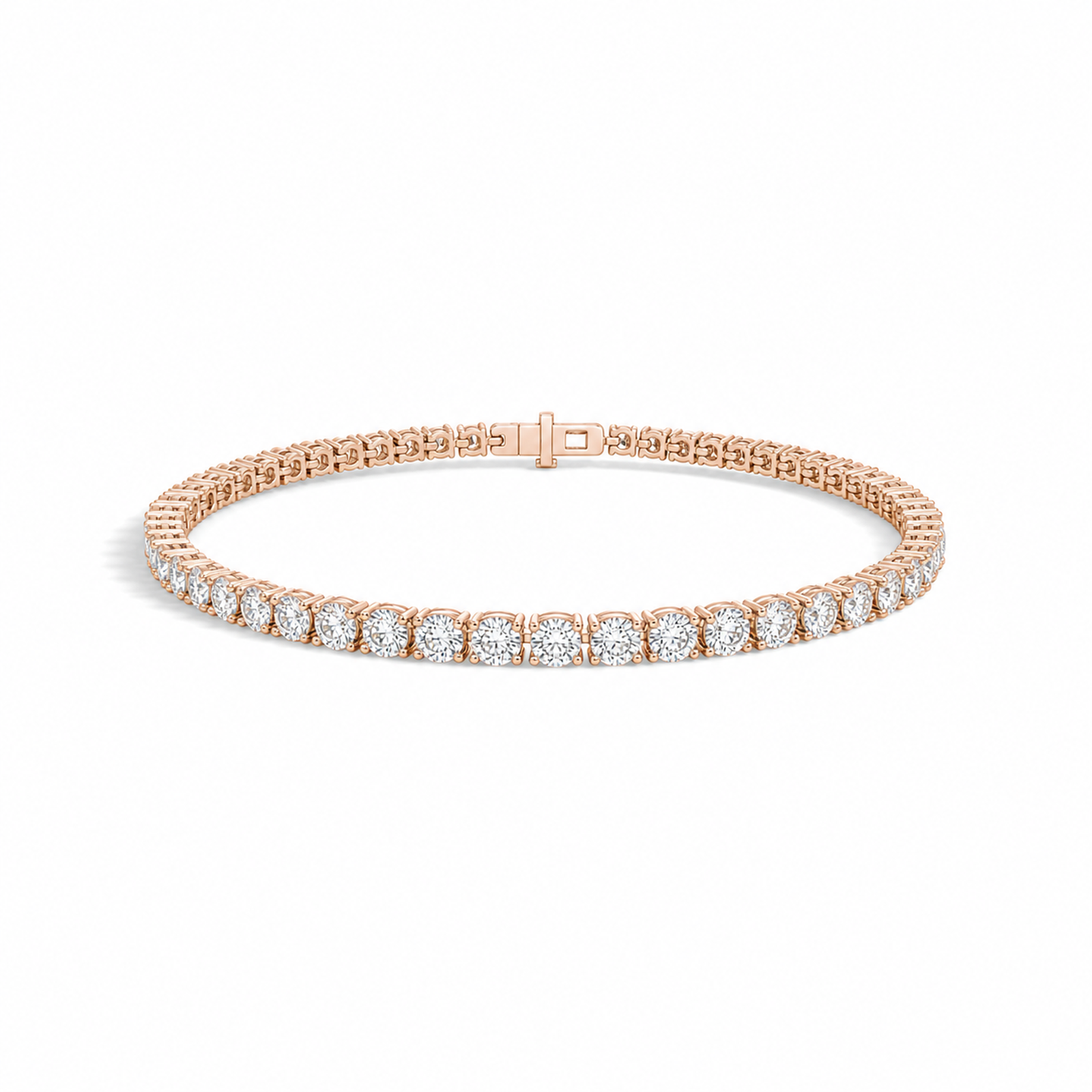
Soleia uses four-prong round-brilliant language; Faye creates a round bezel line; Mireya and Paloma establish different repeated rhythms; Oriana introduces an interlocking interval. Aurelia uses multiple shapes. Astraea carries an eternity-bangle title, while Ciela concentrates a half-tennis field within a bangle form. These are related by visual continuity, not by identical engineering.
Compare whether diamonds repeat at one scale, alternate, graduate, change shape, or meet an interlocking or bangle transition. Also inspect how the pattern resolves near the clasp or non-diamond section. A successful line is calibrated around the complete circumference rather than judged from one enlarged front view.
Shape Sequence Directs the Eye
Most current descriptions identify Round as the principal diamond shape; Aurelia identifies Marquise within a multi-shape composition. In a repeated round line, spacing and setting can emphasize a continuous field or individual points. In a mixed-shape line, orientation, sequence, width, corners, and points create a more architectural rhythm.
Do not assume every diamond matches perfectly in size, grade, or visible behavior because the bracelet is called Tennis. Review the selected specifications and imagery. Burvonti does not assign one shape sequence as more timeless, masculine, feminine, durable, or brilliant.
Total Weight Is Distributed Around the Wrist
All eight current products use Total Carat Weight. Current representative totals span 2 2/3 through 6 2/3 carats, but total alone cannot describe individual stone size, count, coverage, setting width, or how much of the bracelet is diamond-set. A half-tennis bangle and an extended articulated line can allocate weight very differently.
Compare total with diamond count and sequence where listed, visible coverage, setting width, bracelet length, non-diamond sections, and clasp. Six current descriptions list widths from 2.7 to 5.4 mm; the two bangle descriptions do not publish width in the same field. No fixed total or millimeter width is universally delicate, bold, comfortable, or appropriate for daily wear.
Prong and Bezel Lines Draw Different Boundaries
Seven current designs use prong-set language and Faye uses bezel. Prongs create discrete contacts around the diamonds; a bezel gives each diamond a continuous metal perimeter. Those boundaries influence how strongly the metal, individual shape, and interval remain visible across the line.
Setting choice is not a guarantee of maximum light, protection, snag resistance, or durability. Links, joints, gallery, setting depth, coverage, clasp, fit, exposure, maintenance, and condition remain part of the complete system. Inspect more than the top view.
Fit Determines How the Line Behaves
Six current articulated descriptions list either 6.3 or 6.7 inches. Astraea and Ciela do not publish a length in the same product field. Measure the wrist where the bracelet will sit, then compare selected length or bangle dimensions, width, structure, desired clearance, hand movement, and any neighboring watch or bracelet.
A close fit can reduce travel but may restrict movement or load the construction; too much clearance can increase rotation, catching, or movement over the hand. No one-finger rule or standard gendered length replaces a product-specific fit assessment. Resizing may alter diamond sequence, symmetry, setting, structure, documentation, and cost, and must be confirmed.
Closure and Articulation Carry the Rhythm
Current closures include five Barrel Clasps and three Box Clasps. These labels do not tell the full story of operation, safety features, ease of use, or maintenance. The line also depends on every connection between settings and on how the structure transitions into the closure.
Examine clasp views and, where available, safety components, hinge or link movement, underside, and terminal settings. A tennis bracelet should not be described as loss-proof, flip-proof, or secure for every activity. Fit, condition, impact, wear, operation, and inspection remain decisive.
Metal and Stacking Change the Reading of the Line
Current cards represent four designs in 14K White Gold, three in 14K Yellow Gold, and one in 14K Rose Gold. White gold may let diamond repetition dominate in some settings; yellow or rose gold can make prongs, bezels, links, and intervals more explicit. Exact effect depends on finish, rhodium plating, width, diamond distribution, skin context, and neighboring pieces.
Worn alone, the tennis line can define one clear register around the wrist. In a stack, it may sit beside a watch, chain bracelet, or bangle, but every contact introduces movement and possible abrasion or impact. Use spacing, width, structure, and metal deliberately; no stacking order eliminates mechanical risk.
Documentation and Care Extend Around the Full Line
Burvonti uses responsibly sourced lab-grown diamonds and supports independent grading and certification where applicable. In a many-diamond composition, one report does not automatically identify every stone. Confirm how Total Carat Weight, color and clarity fields, matching or calibration, and any documentation apply to the selected bracelet.
Clean and inspect the full circumference, not only the section seen from above. Use gentle care for diamonds, settings, links or bangle structure, clasp, and any safety component. Store without abrasive contact. Custom length, coverage, diamond sequence, setting, width, metal, or closure may be possible only after technical review.
Frequently Asked Questions
What is a tennis bracelet?
It is generally understood as a bracelet built around an extended line of individually set diamonds or gemstones. Current Burvonti membership also includes two related bangle constructions.
Why is it called a tennis bracelet?
The name became widely associated with the style after tennis champion Chris Evert’s diamond line bracelet incident during a match. The design itself predates that name.
How many Tennis Bracelets are currently included?
The public Collection contains eight designs: six tennis-titled or interlocking line structures, one eternity bangle, and one half-tennis bangle.
Are all eight current designs fully flexible?
No. Current membership includes articulated line structures and two bangle constructions. Inspect the selected product’s structure and movement.
What is the difference between a tennis bracelet and a diamond bracelet?
Diamond bracelet is the broader category. Tennis describes an extended diamond-line design intent; other diamond bracelets may use stations, bars, charms, chains, or different structures.
Which diamond shapes are currently represented?
Most current descriptions identify Round; Aurelia identifies Marquise within a multi-shape composition. Exact sequence and additional shapes require selected-product details.
Do all diamonds in a tennis bracelet have to match exactly?
A calibrated line may seek visual continuity, but do not assume identical size, grade, or behavior. Confirm the selected specifications and documentation.
What does Total Carat Weight mean?
It combines diamond weight across the bracelet. It does not reveal each stone’s weight, diamond count, coverage, width, or complete dimensions.
What total carat weights are currently represented?
Current representative options span 2 2/3 through 6 2/3 carats. Assortment and product options can change; confirm the selected bracelet.
Does higher Total Carat Weight always mean larger diamonds?
No. Total may increase through stone size, count, coverage, or a combination. Shape, spacing, setting, and bracelet dimensions also affect presence.
What bracelet widths are currently listed?
Six descriptions list widths from 2.7 to 5.4 mm. The two bangle descriptions do not publish width in the same field; confirm product-specific dimensions.
What is the difference between prong and bezel tennis bracelets?
Prongs create discrete contacts around each diamond; a bezel creates a continuous metal perimeter. Neither setting carries a universal performance guarantee.
What lengths are currently listed?
Six articulated descriptions list 6.3 or 6.7 inches. The two bangle descriptions do not publish length in the same field.
How should a tennis bracelet fit?
It should allow the wearer’s intended movement without restricting the wrist or passing over the hand. Measure the wrist and assess length, width, structure, and clearance together.
Can a tennis bracelet be resized?
Possibly, but not universally. Alteration can affect sequence, symmetry, setting, structure, documentation, and cost; technical feasibility must be confirmed.
Which clasps are currently represented?
Current products use Barrel and Box Clasps. Clasp name alone does not establish safety components, loss resistance, ease of use, or maintenance needs.
Can I wear a tennis bracelet every day?
Frequent wear depends on fit, setting, articulation, clasp, activity, impact, maintenance, and condition. No universal daily-wear guarantee applies.
Can a tennis bracelet be stacked with a watch or bangle?
Yes when width, structure, movement, edges, and contact are considered. Stacking can still create abrasion, catching, pressure, or impact.
Are all diamonds independently graded?
Do not assume one report identifies every diamond. Confirm how documentation, Total Carat Weight, color, clarity, and calibration apply to the selected bracelet.
How should a tennis bracelet be cleaned and inspected?
Use gentle care and inspect the entire line, including every diamond, setting, link or bangle section, clasp, and any safety component if movement or alignment changes.
Can a tennis bracelet be customized?
Length, coverage, diamond sequence, setting, width, metal, clasp, or other structural details may be possible after technical review.