


Toi Et Moi Engagement Rings
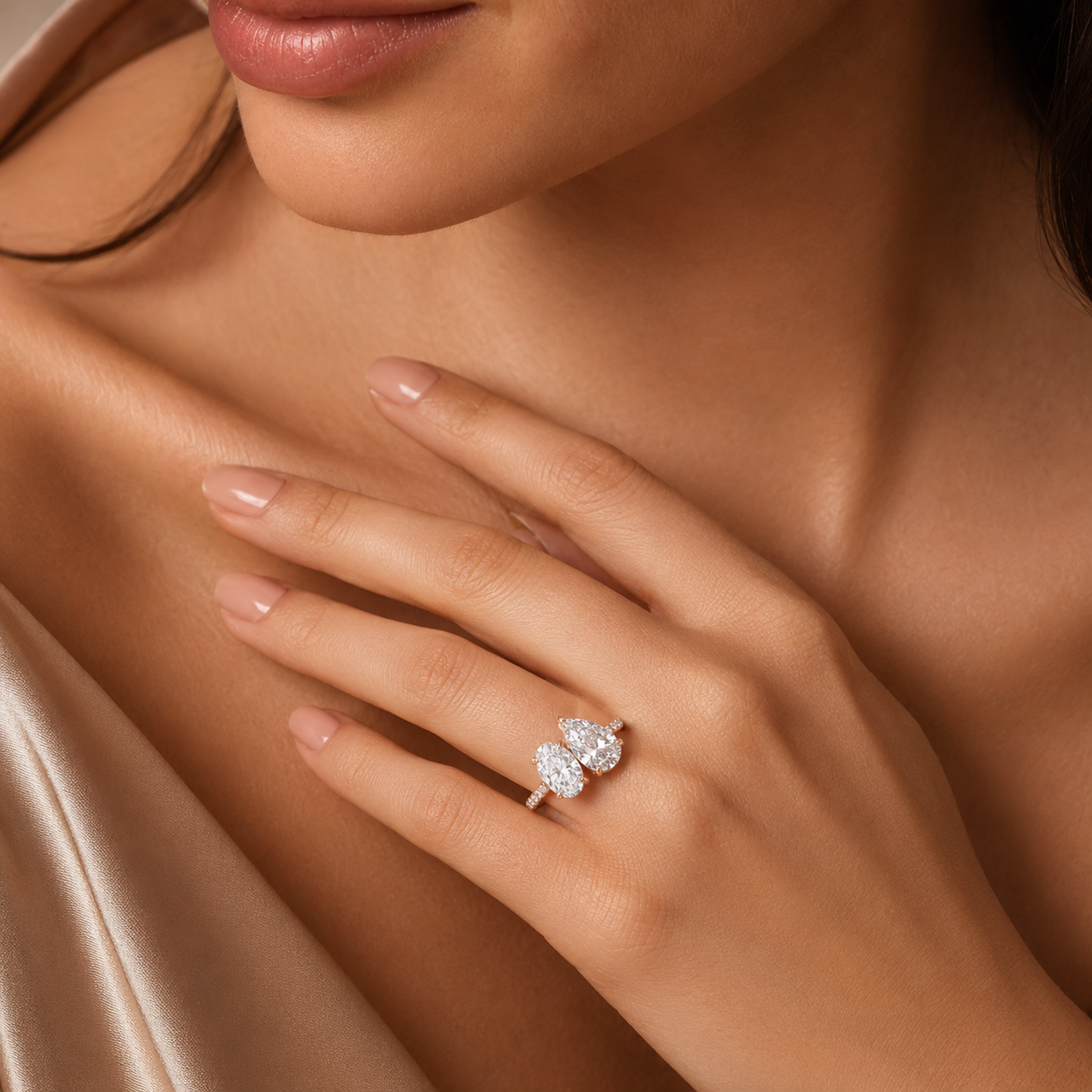
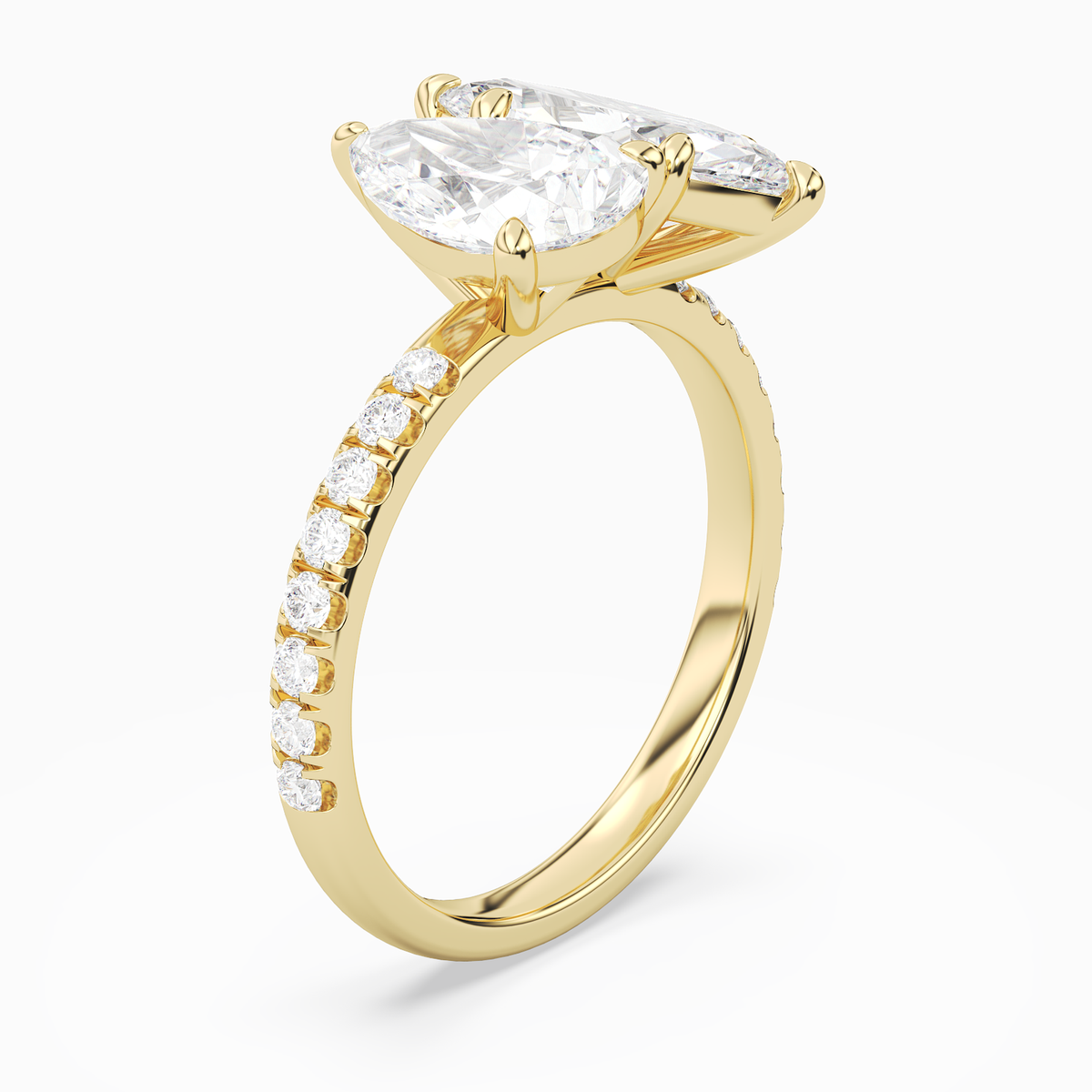
Two centers, one considered composition. Contrasting or matched shapes meet in a measured dialogue of scale, orientation and space.


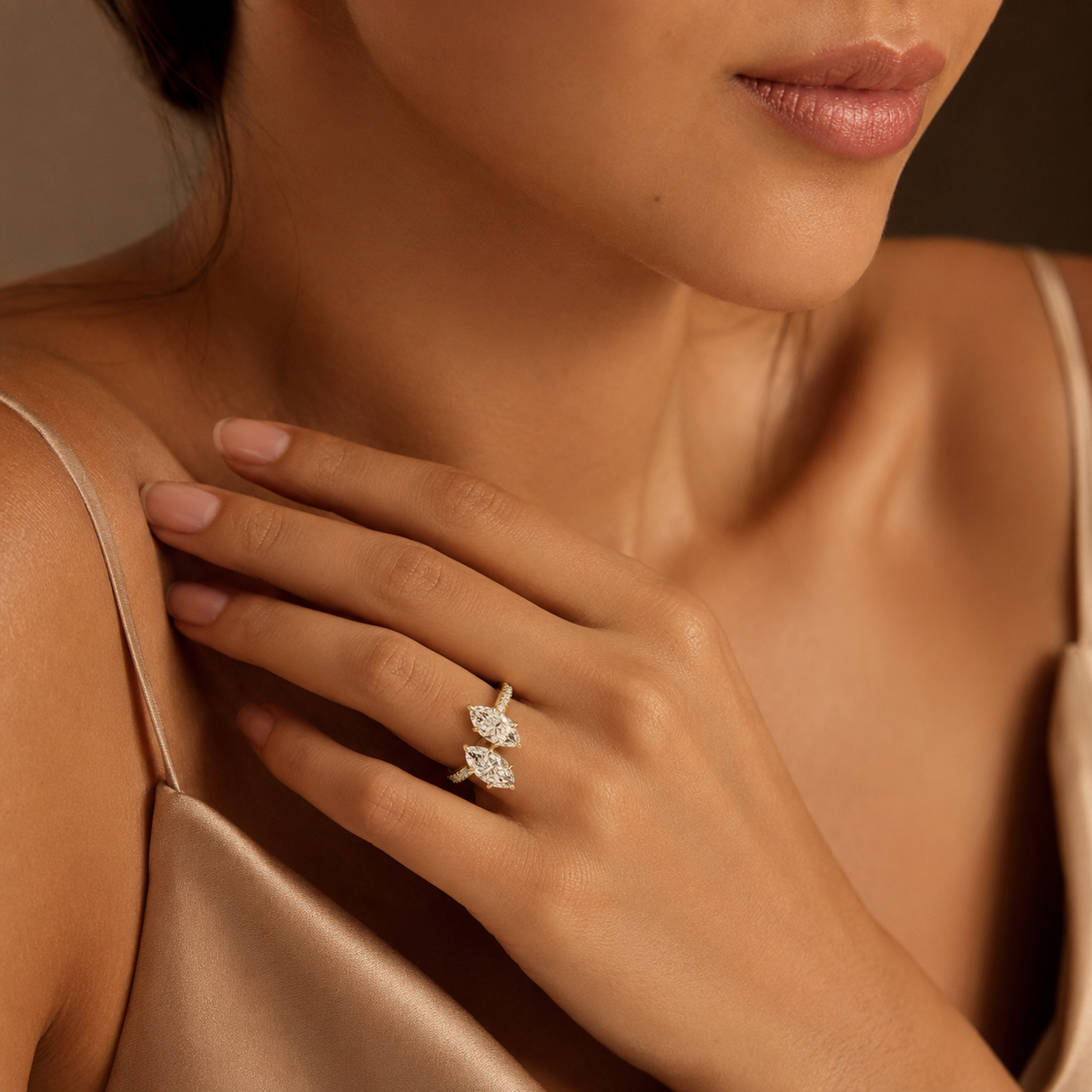


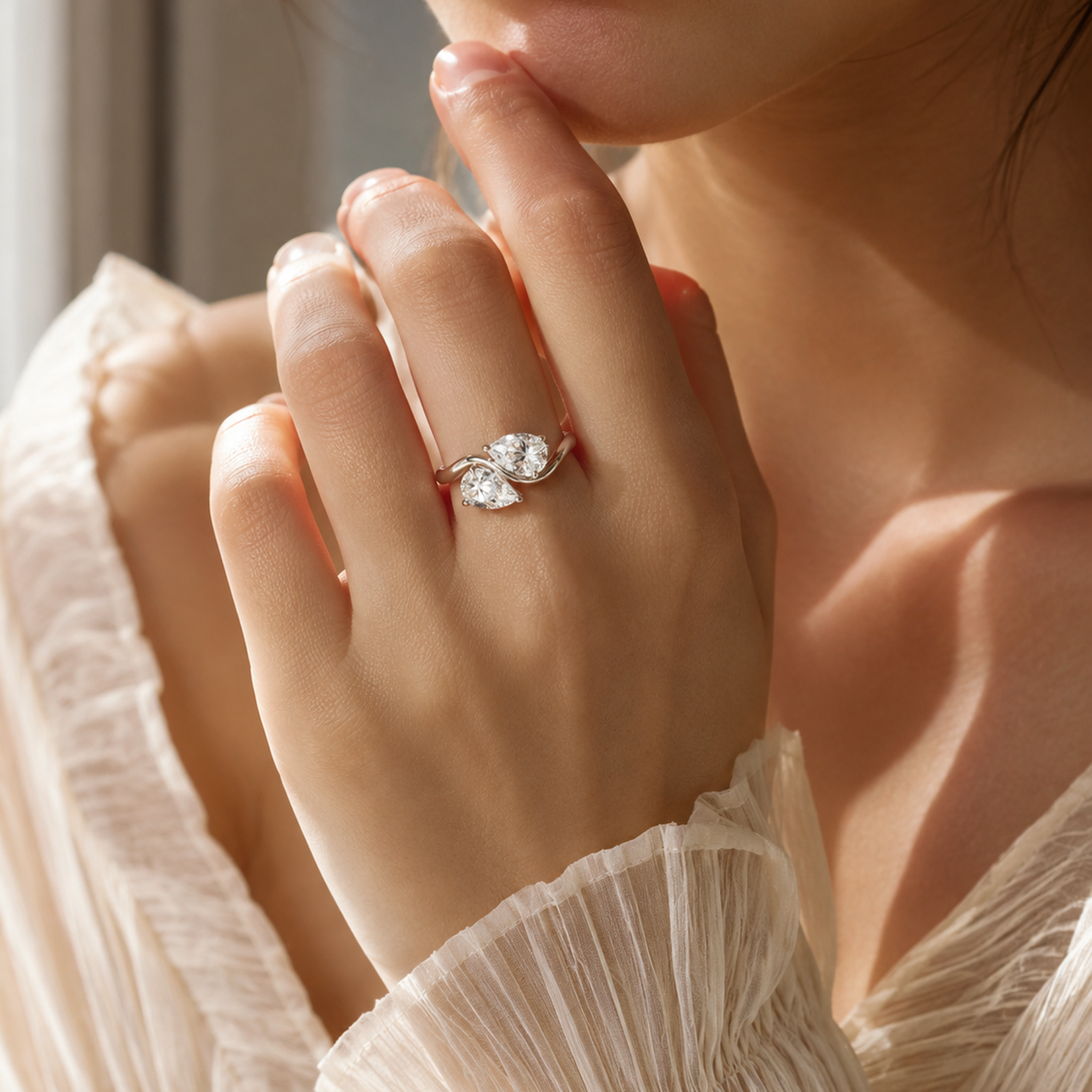


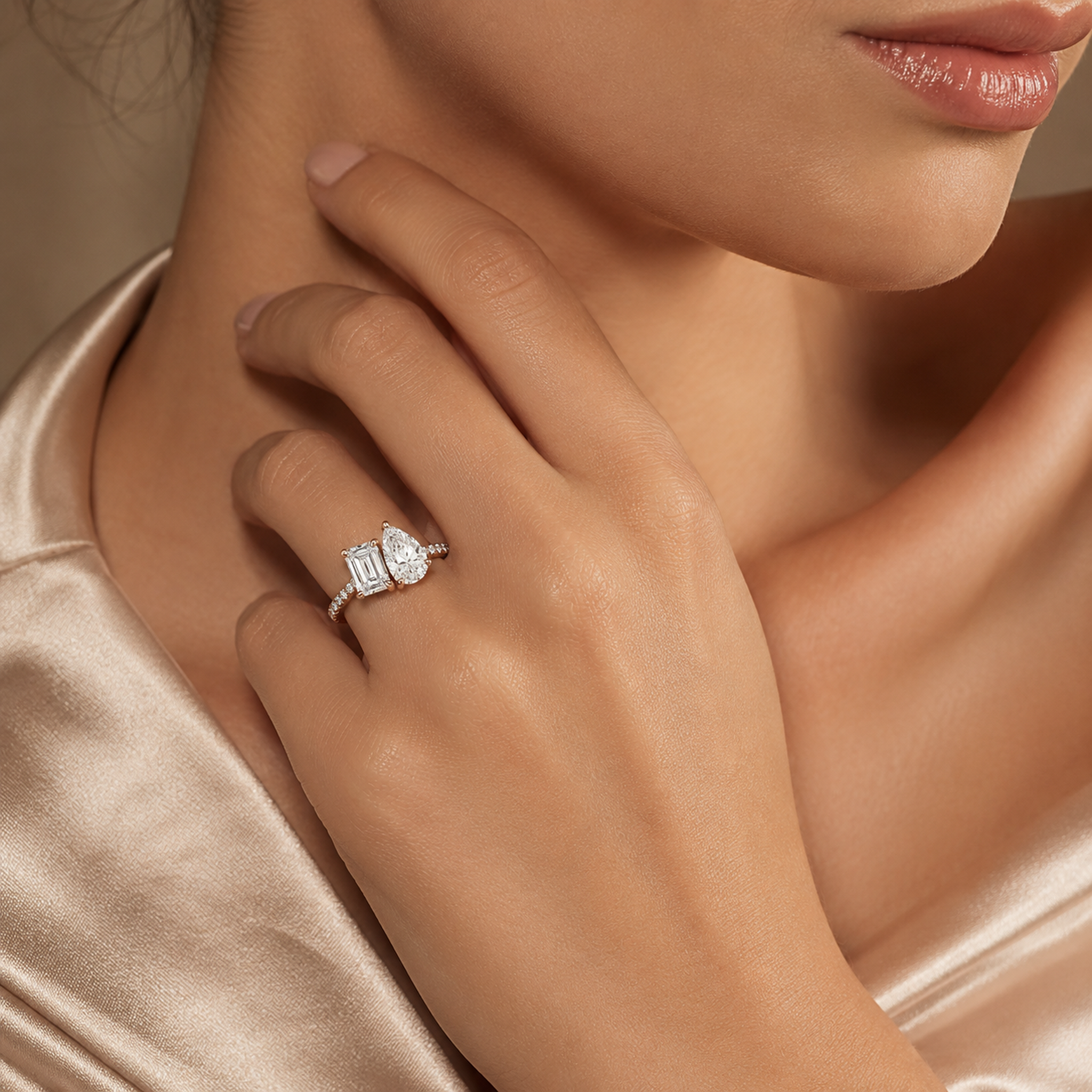


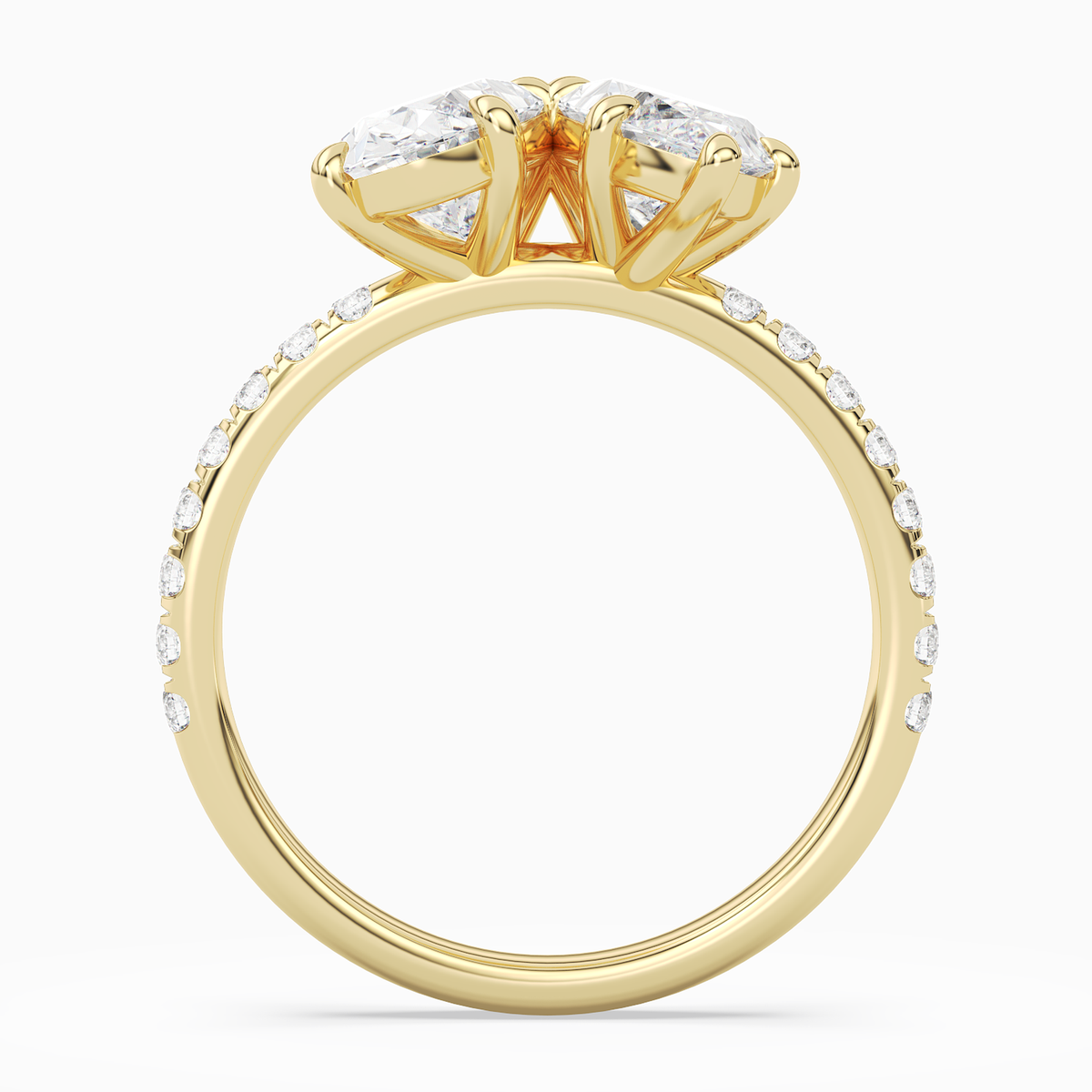
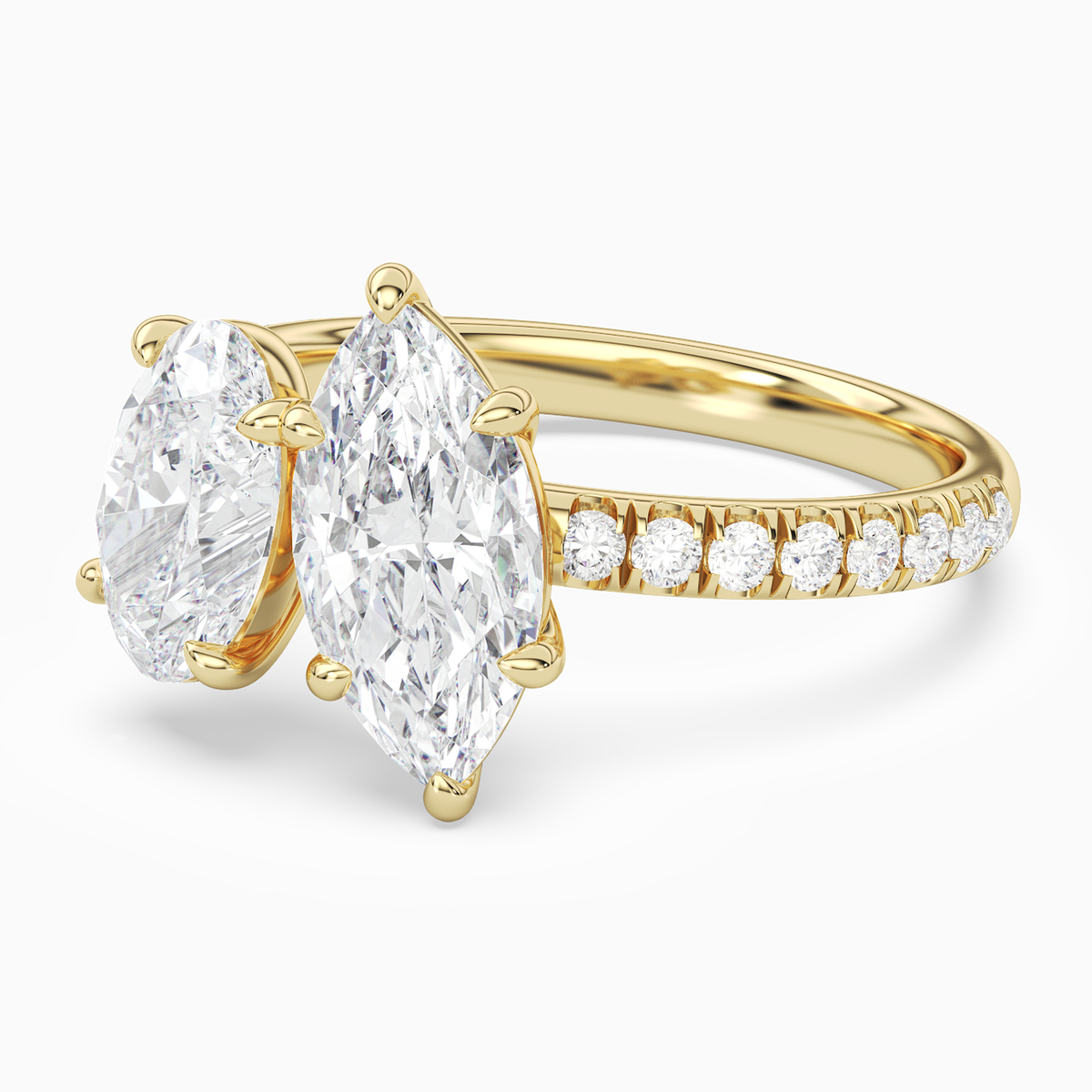
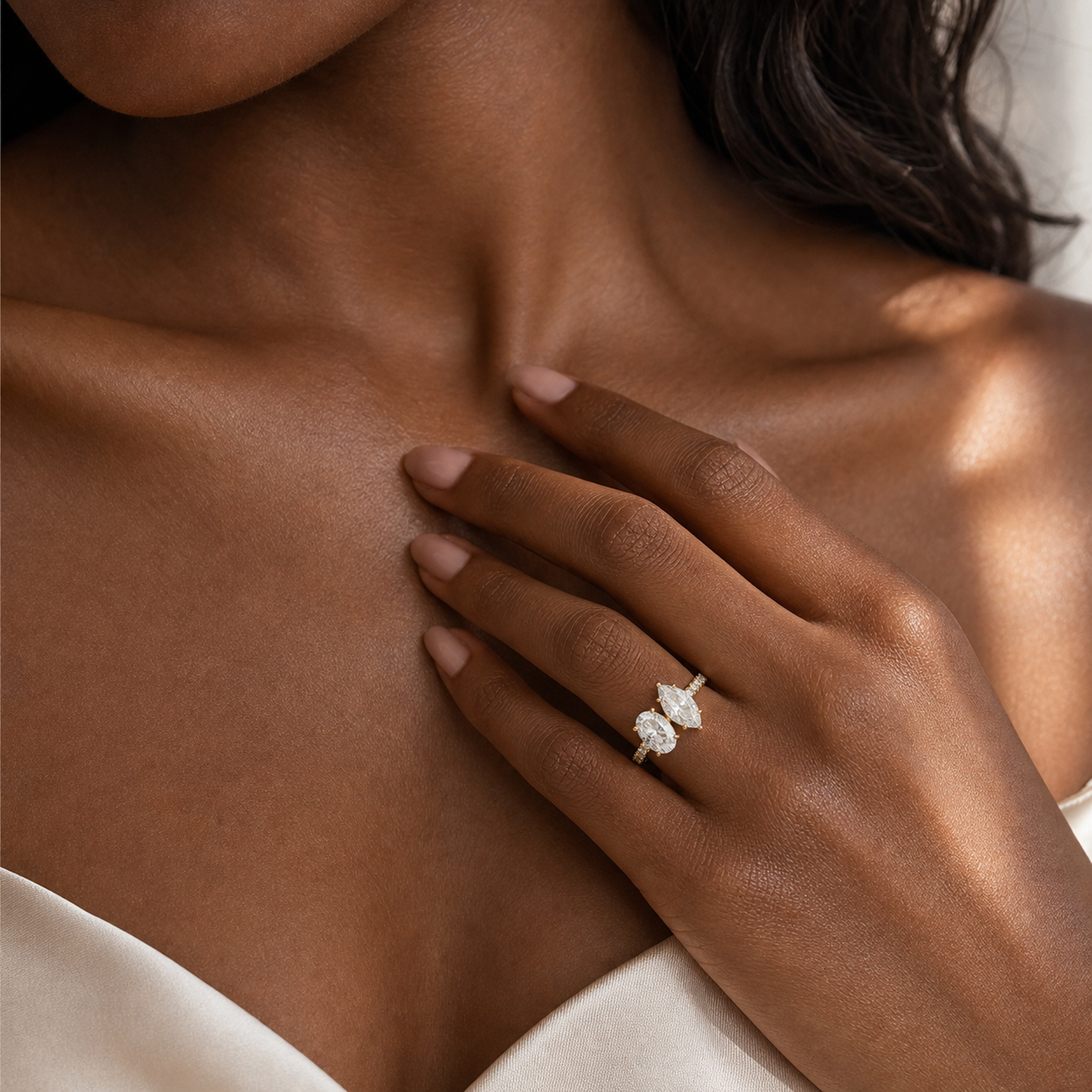
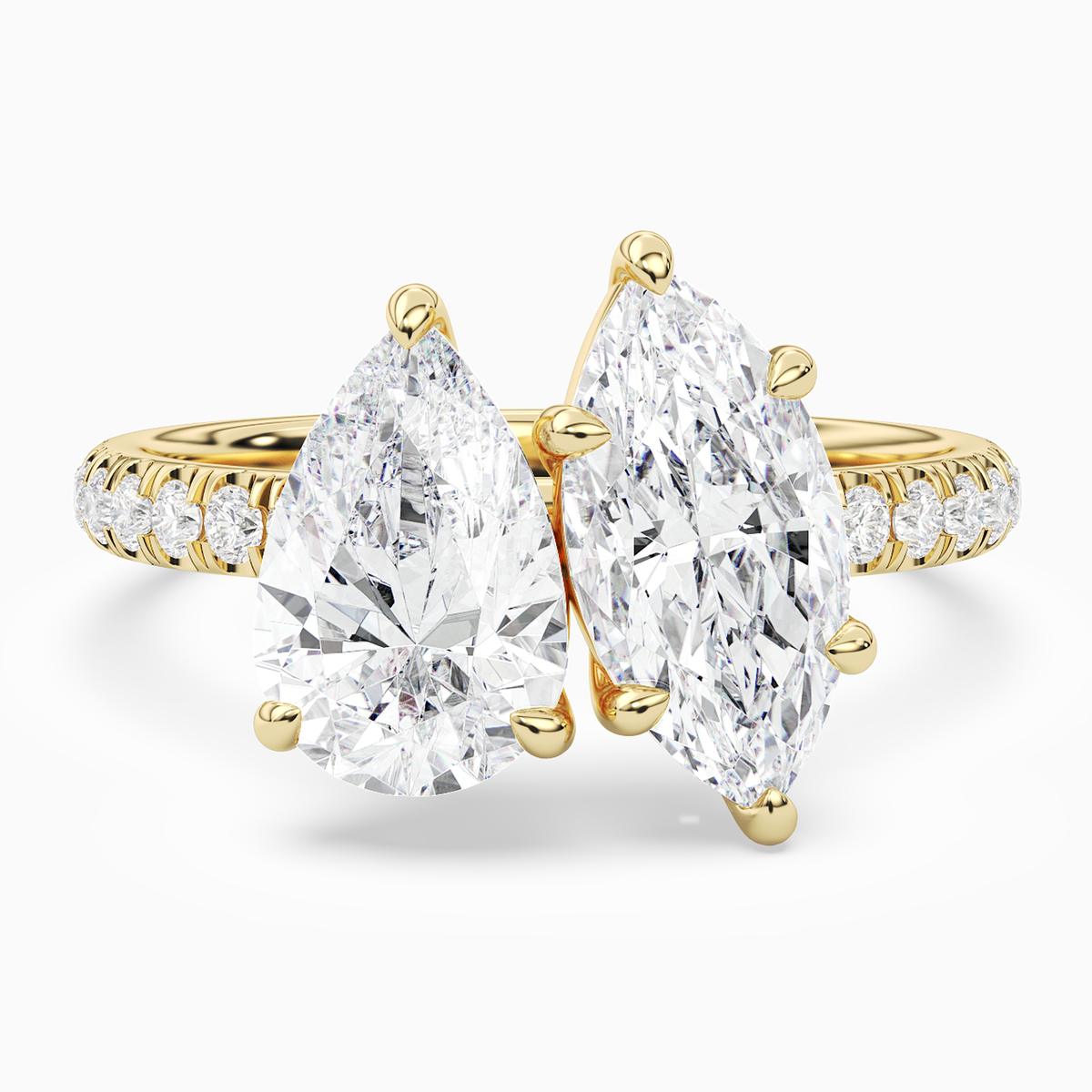

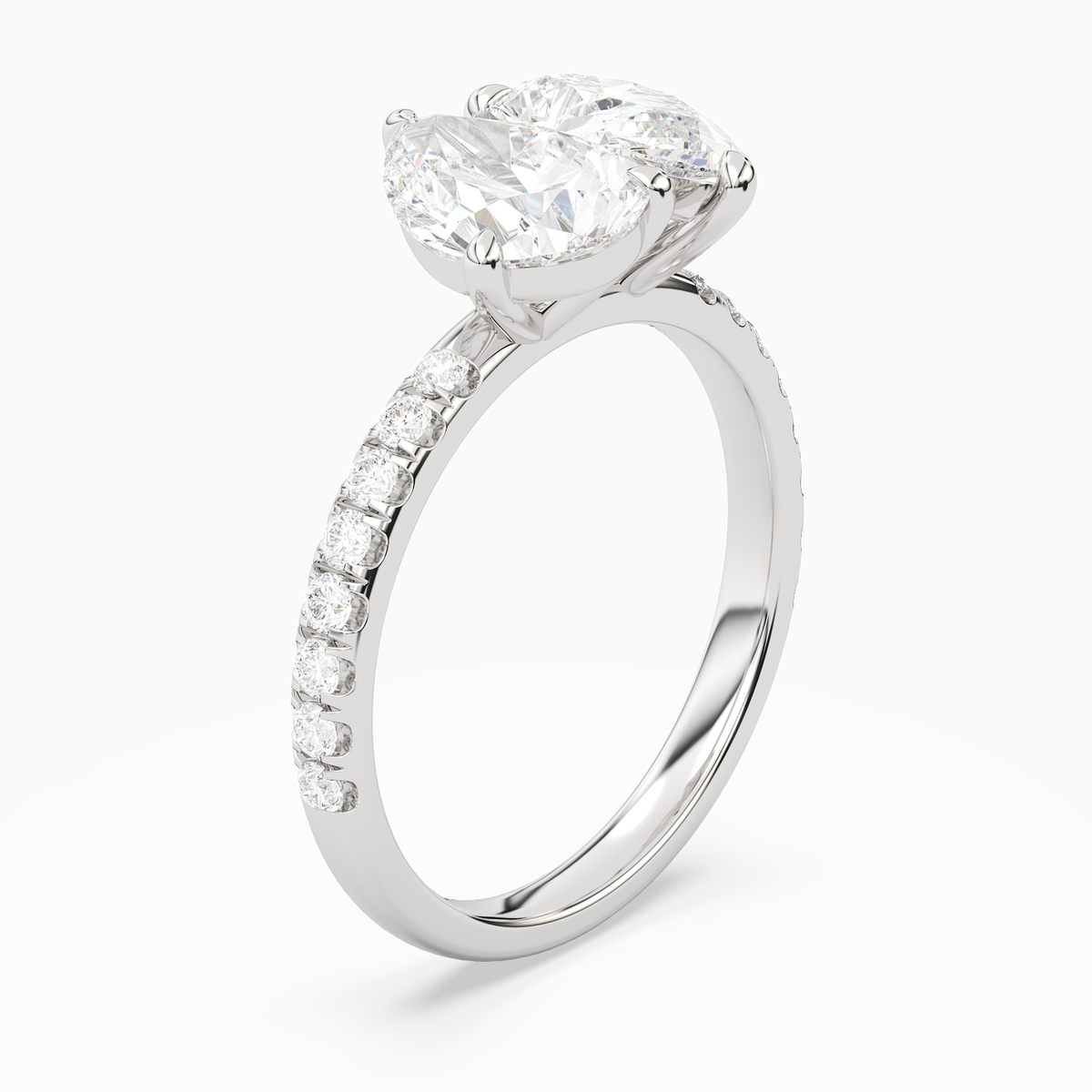


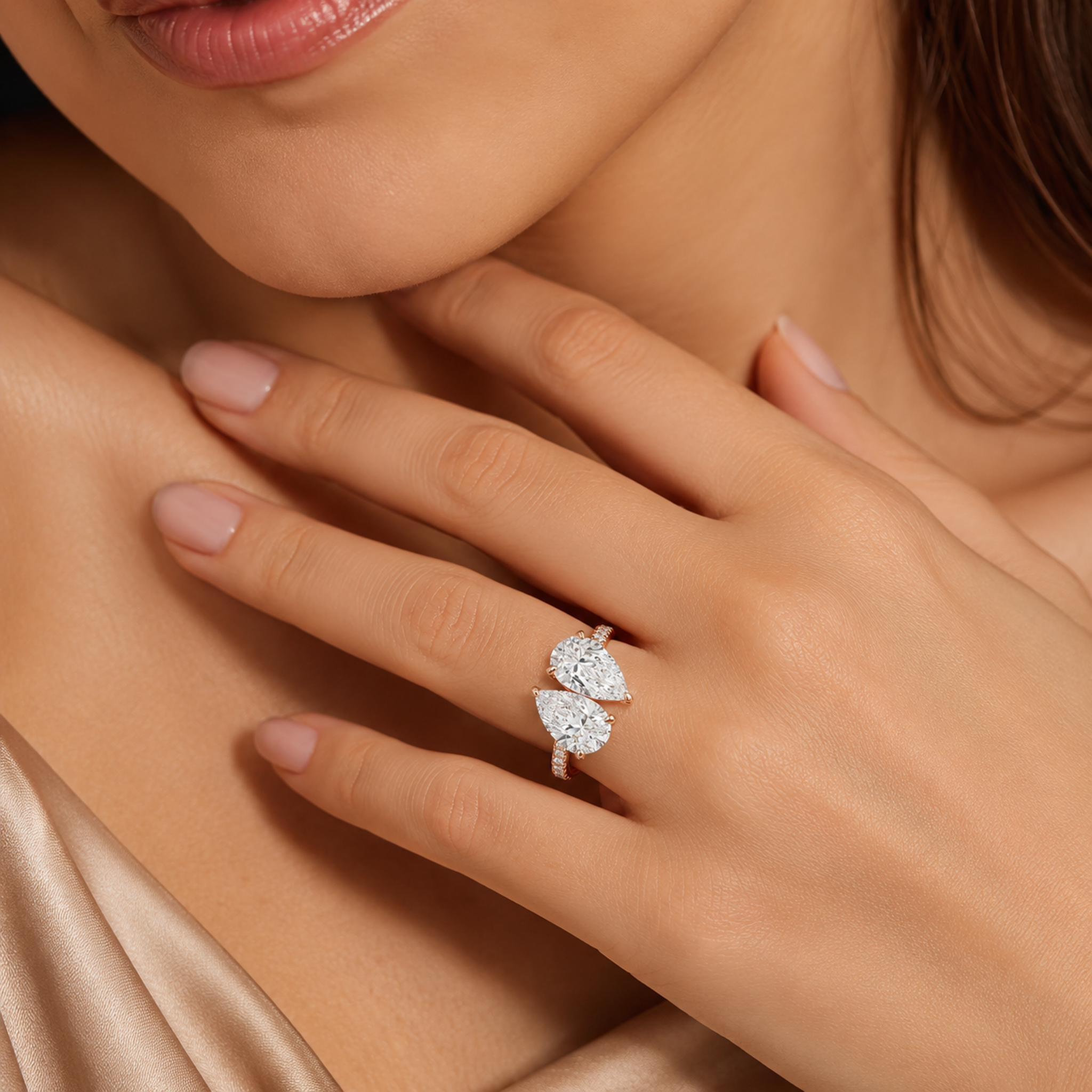


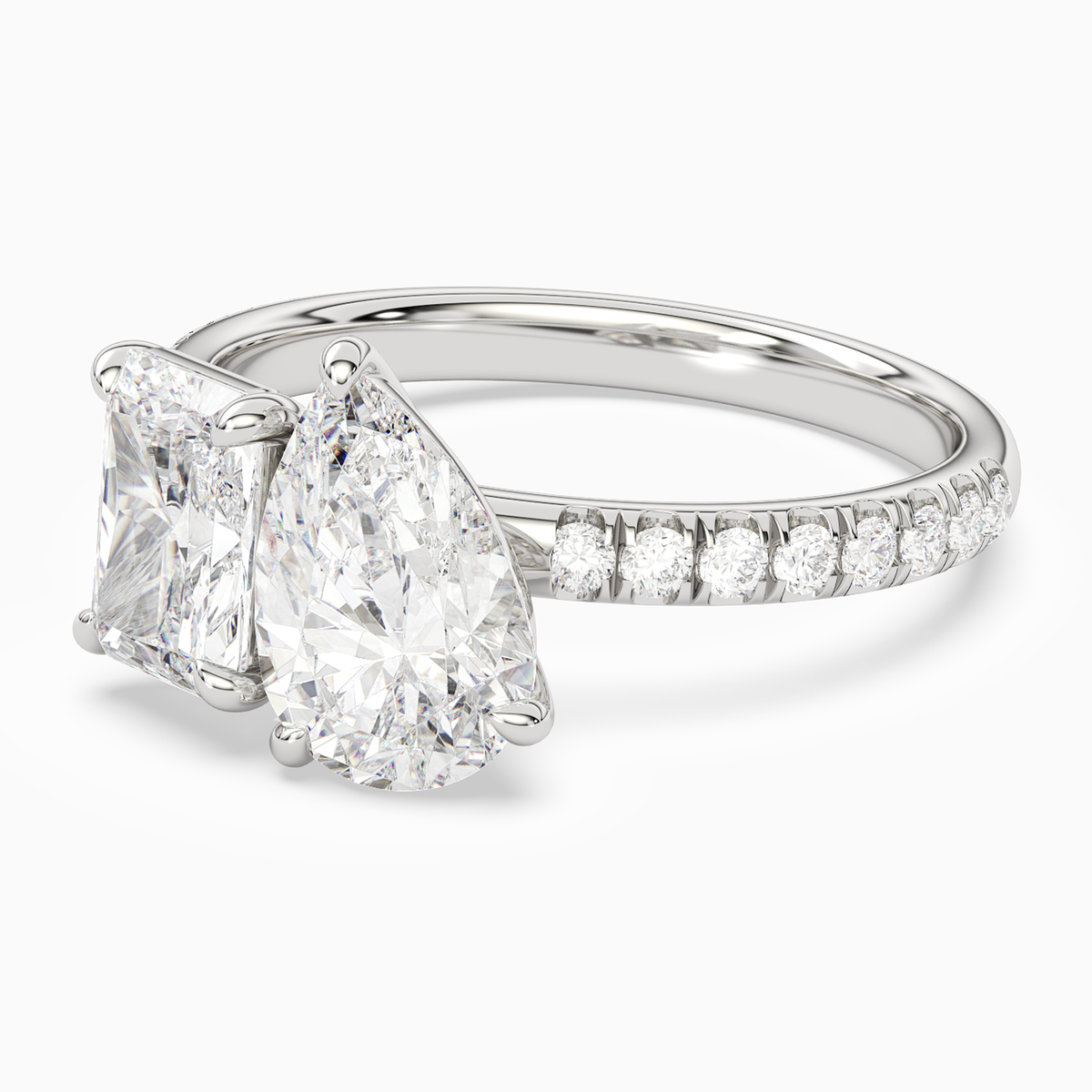
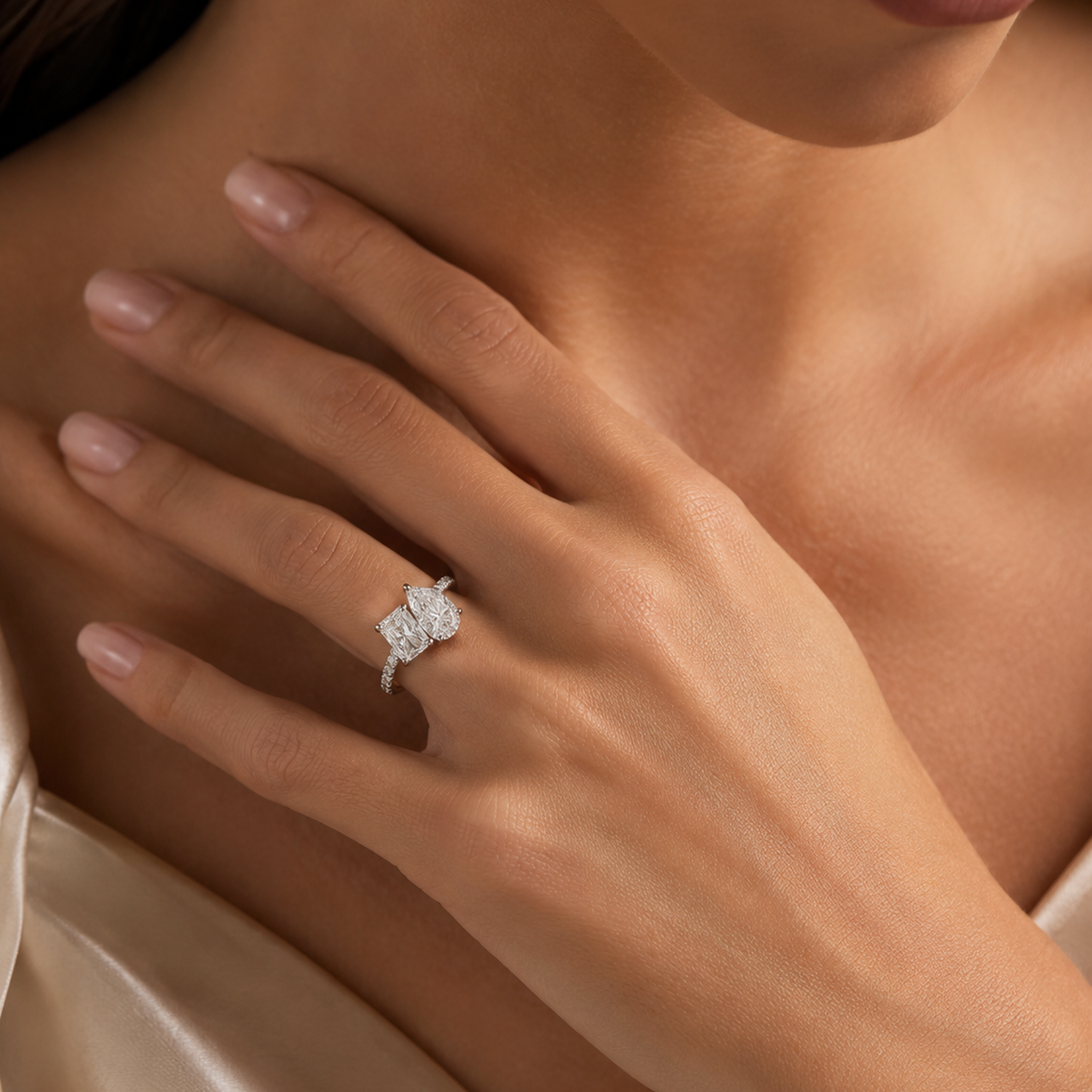






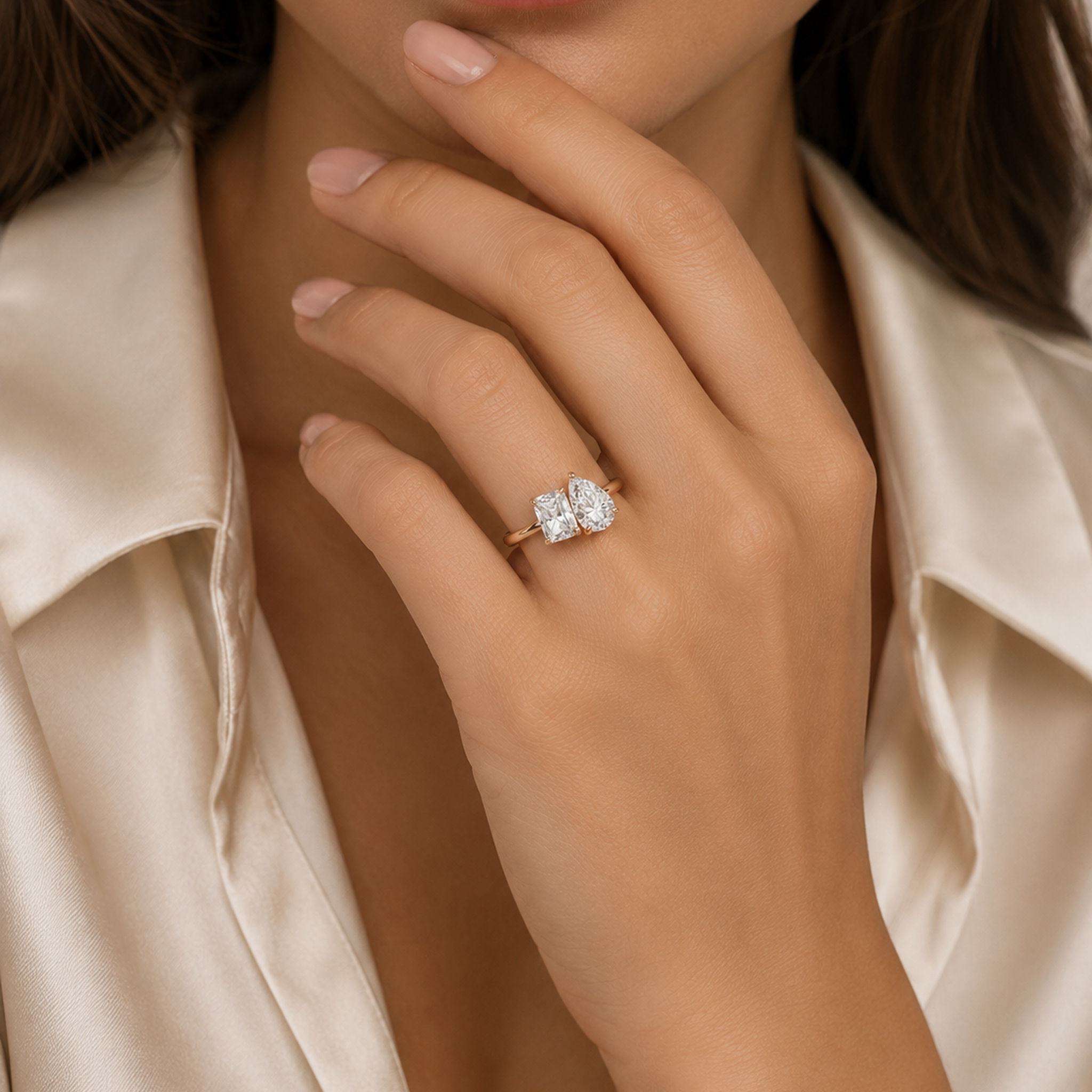


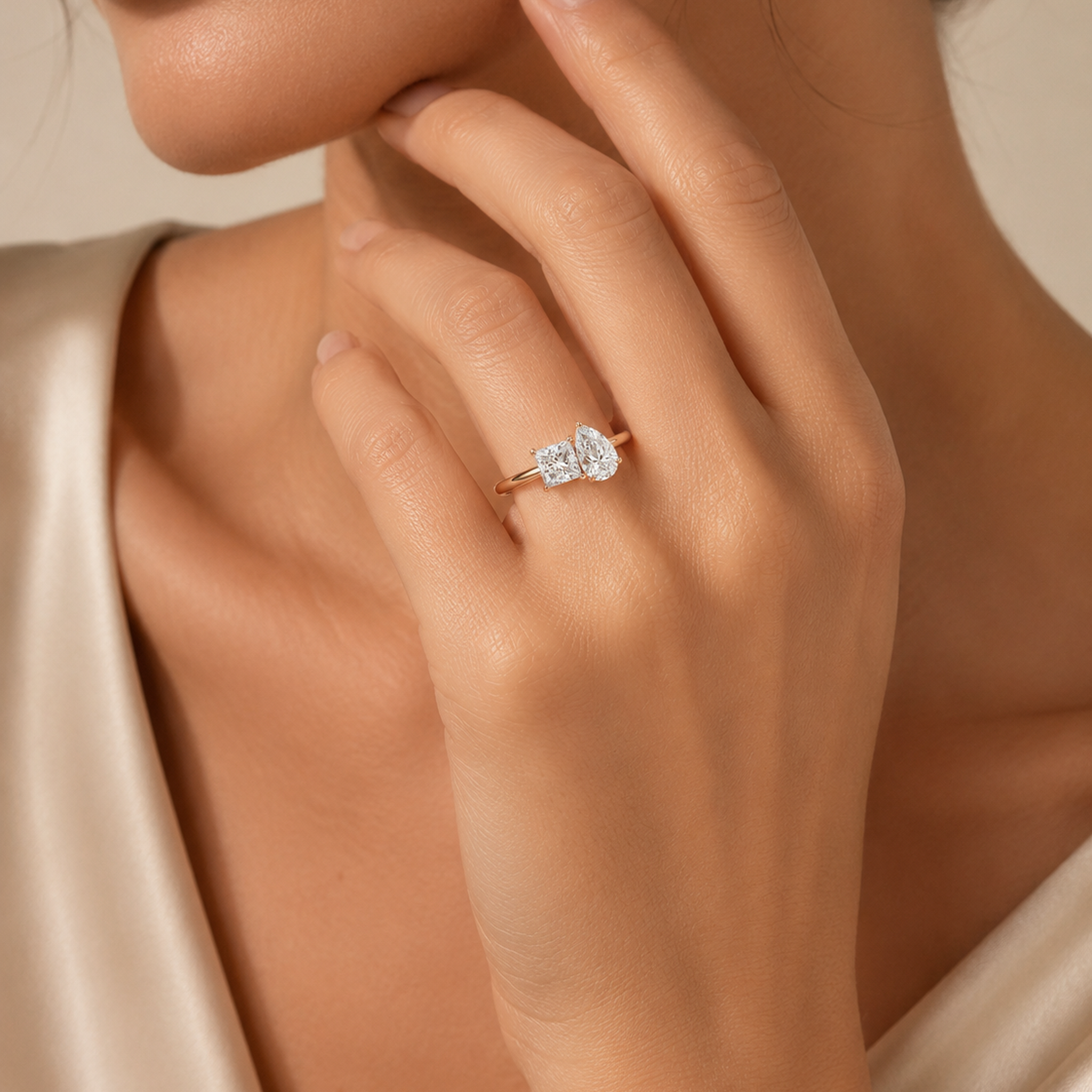


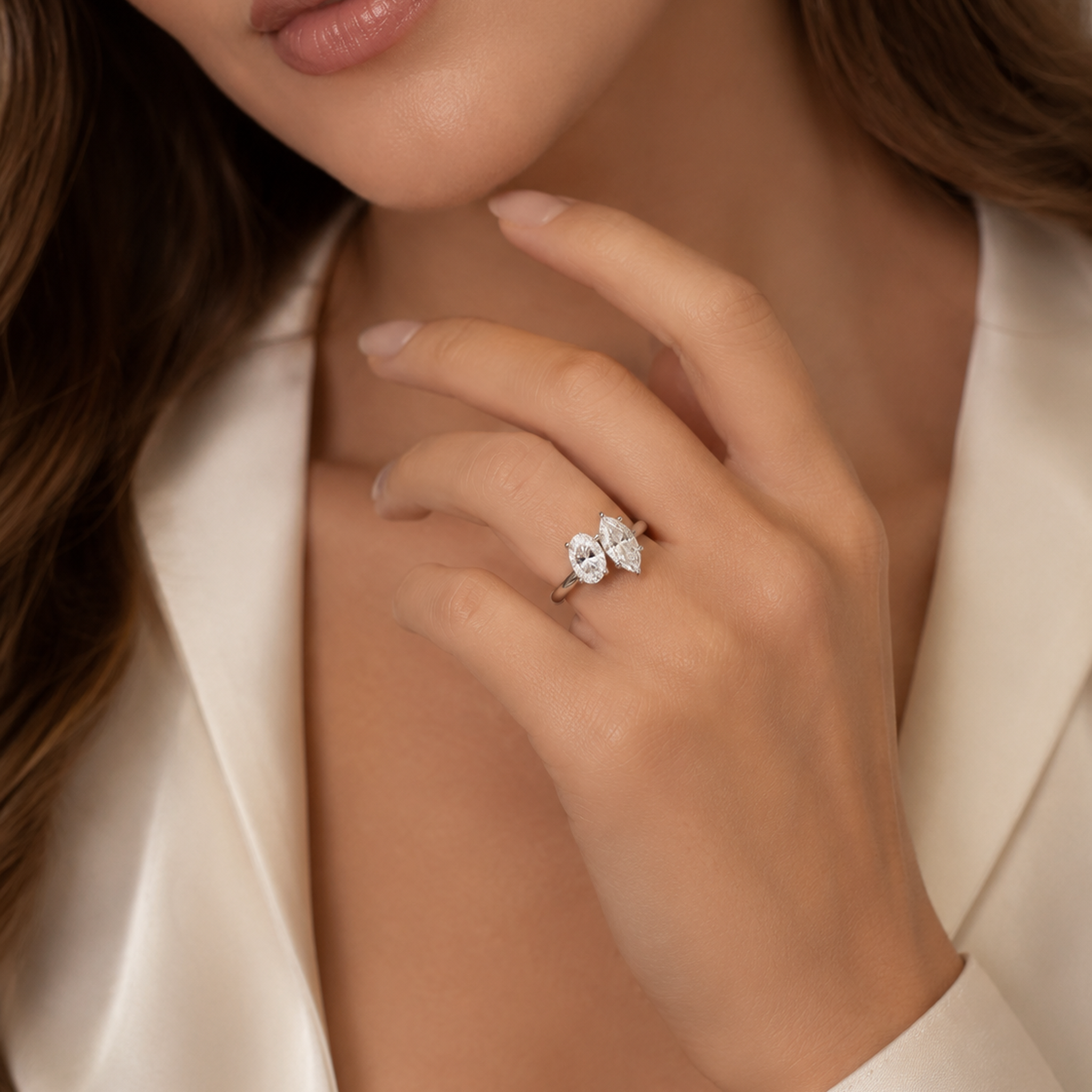
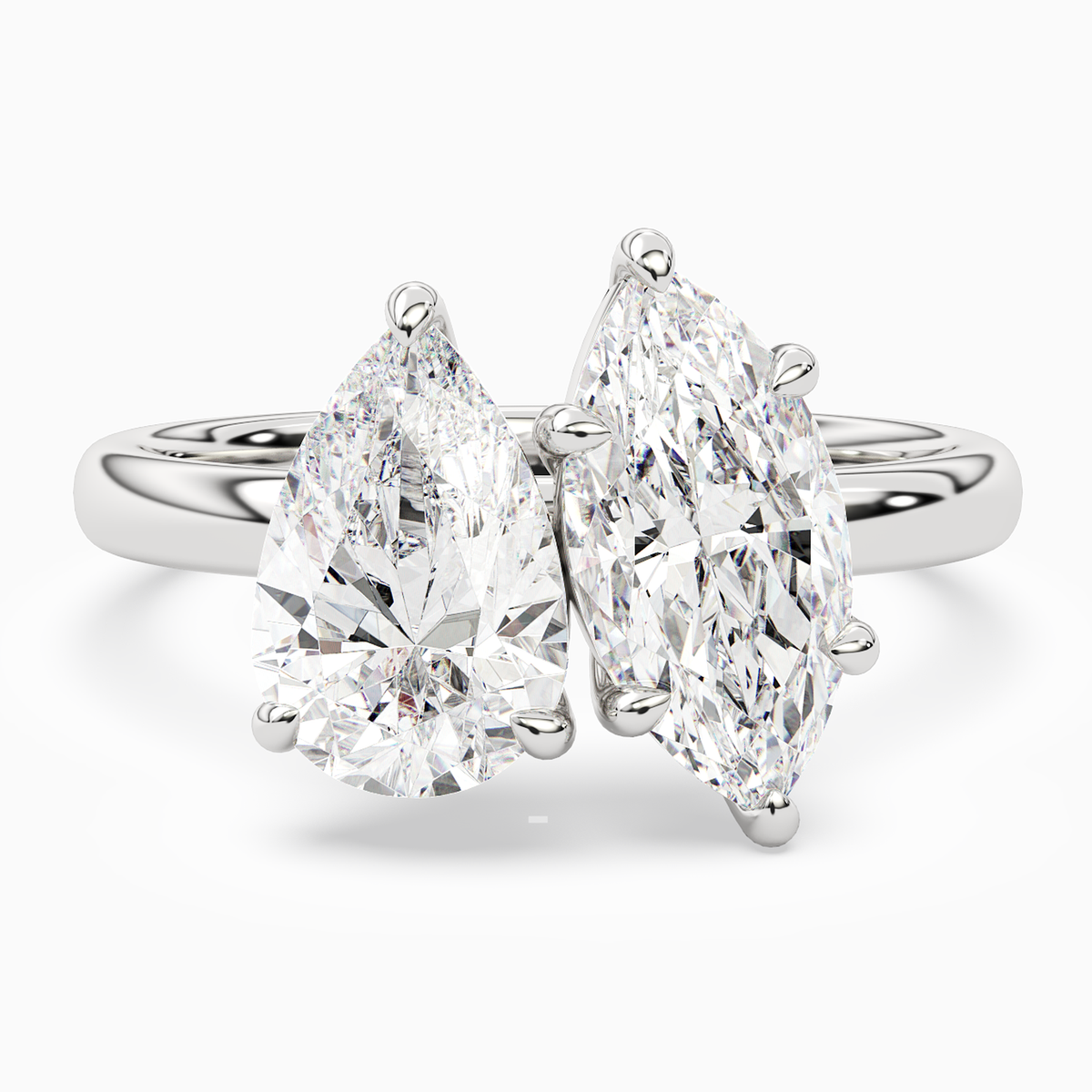


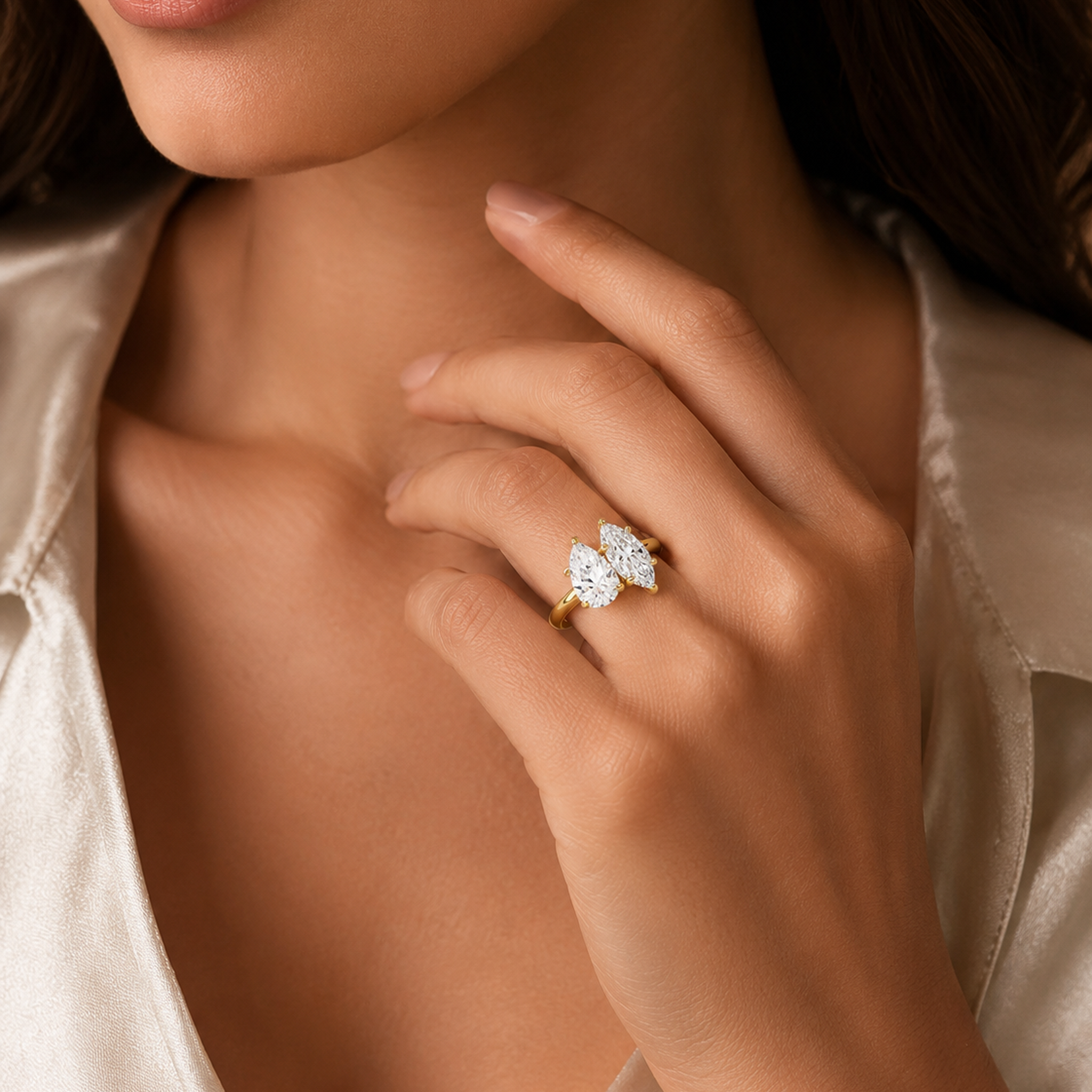
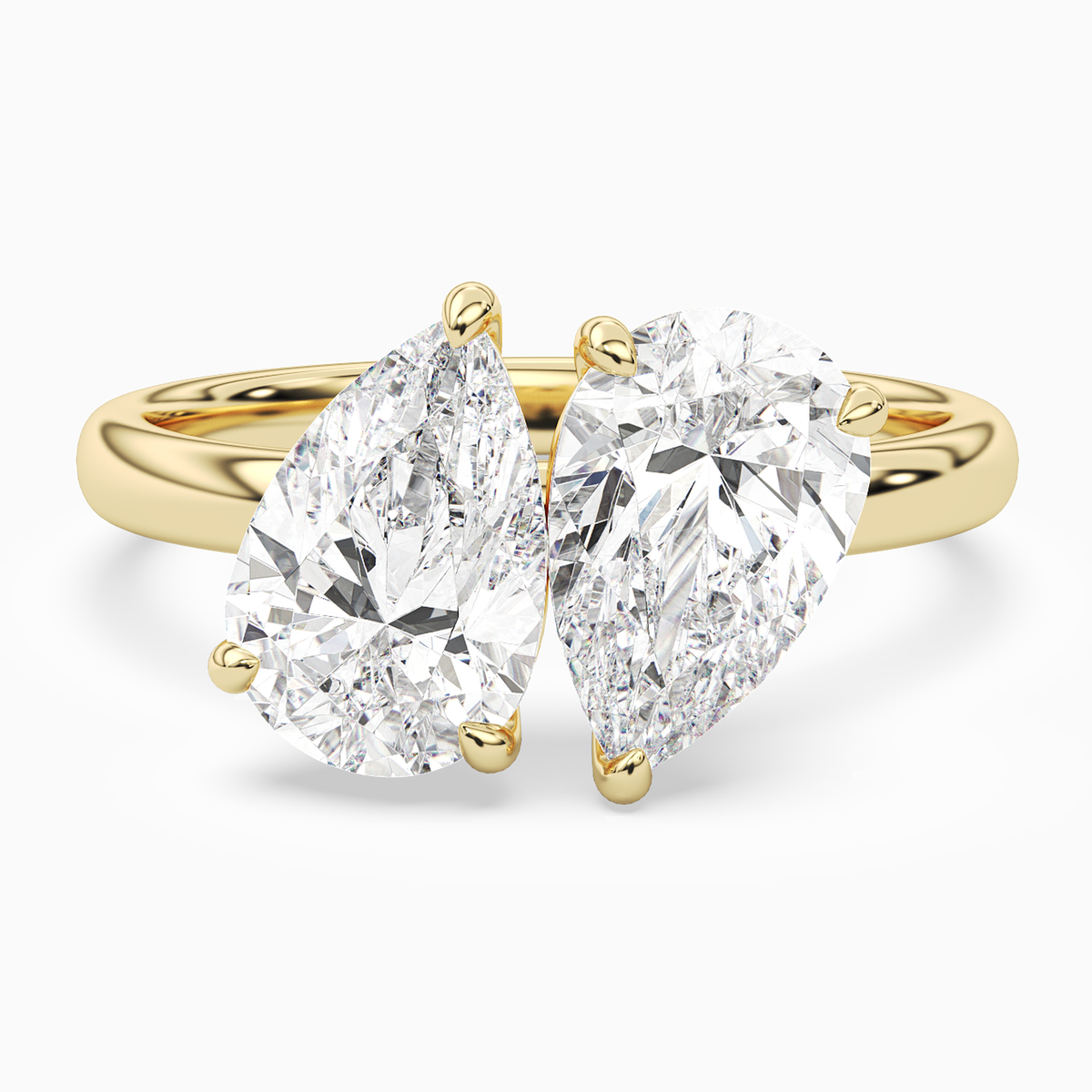


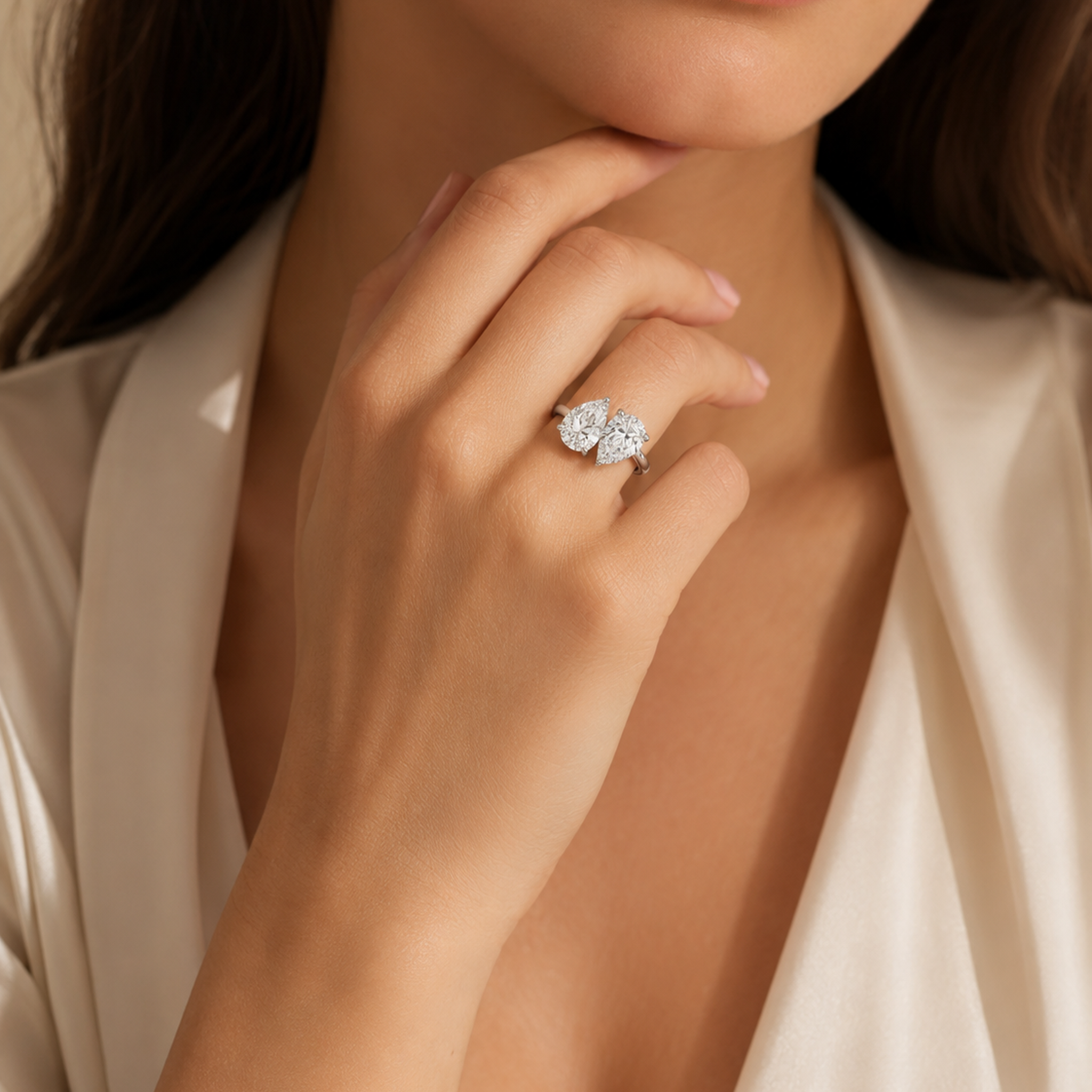
Toi Et Moi Engagement Rings: Two Forms in Dialogue
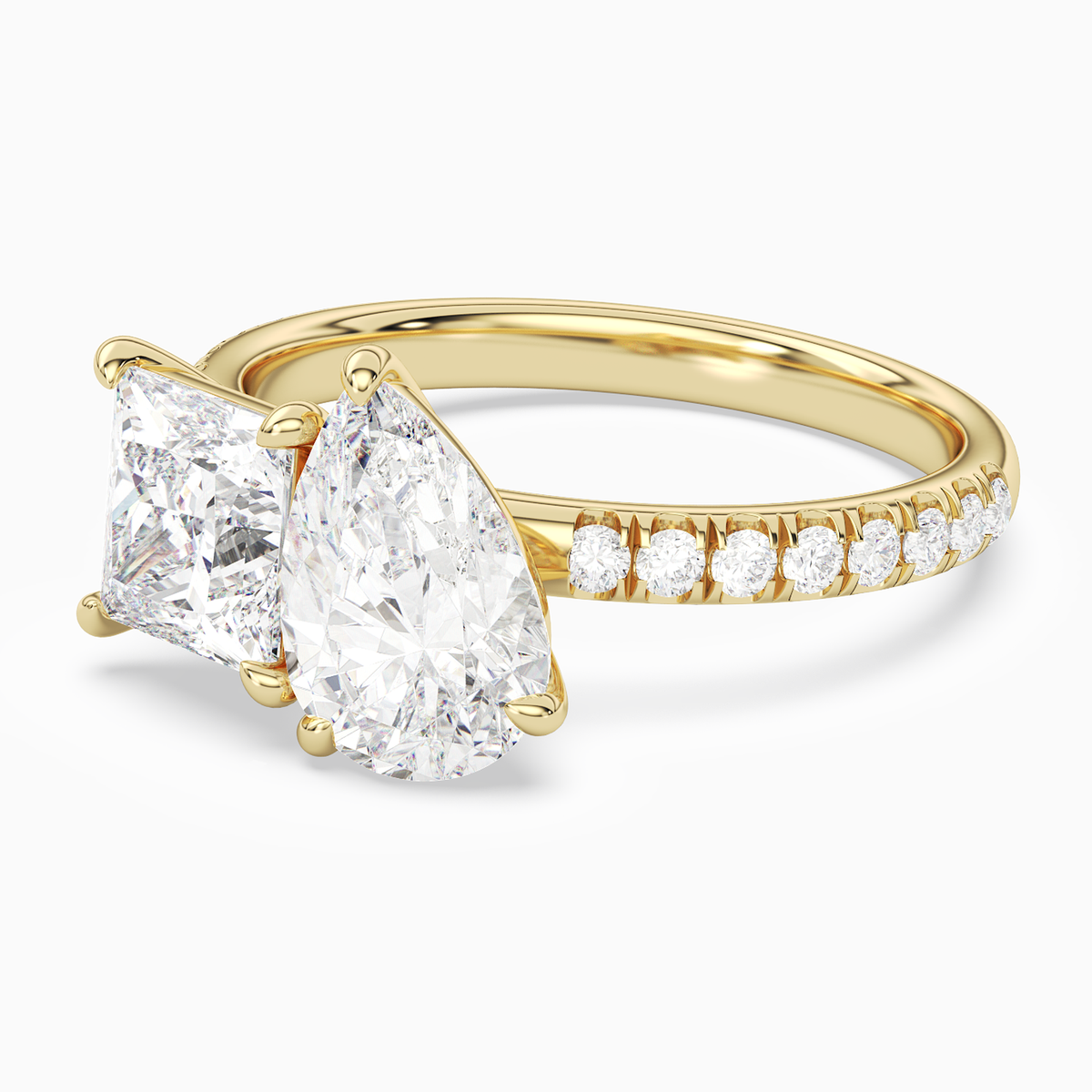
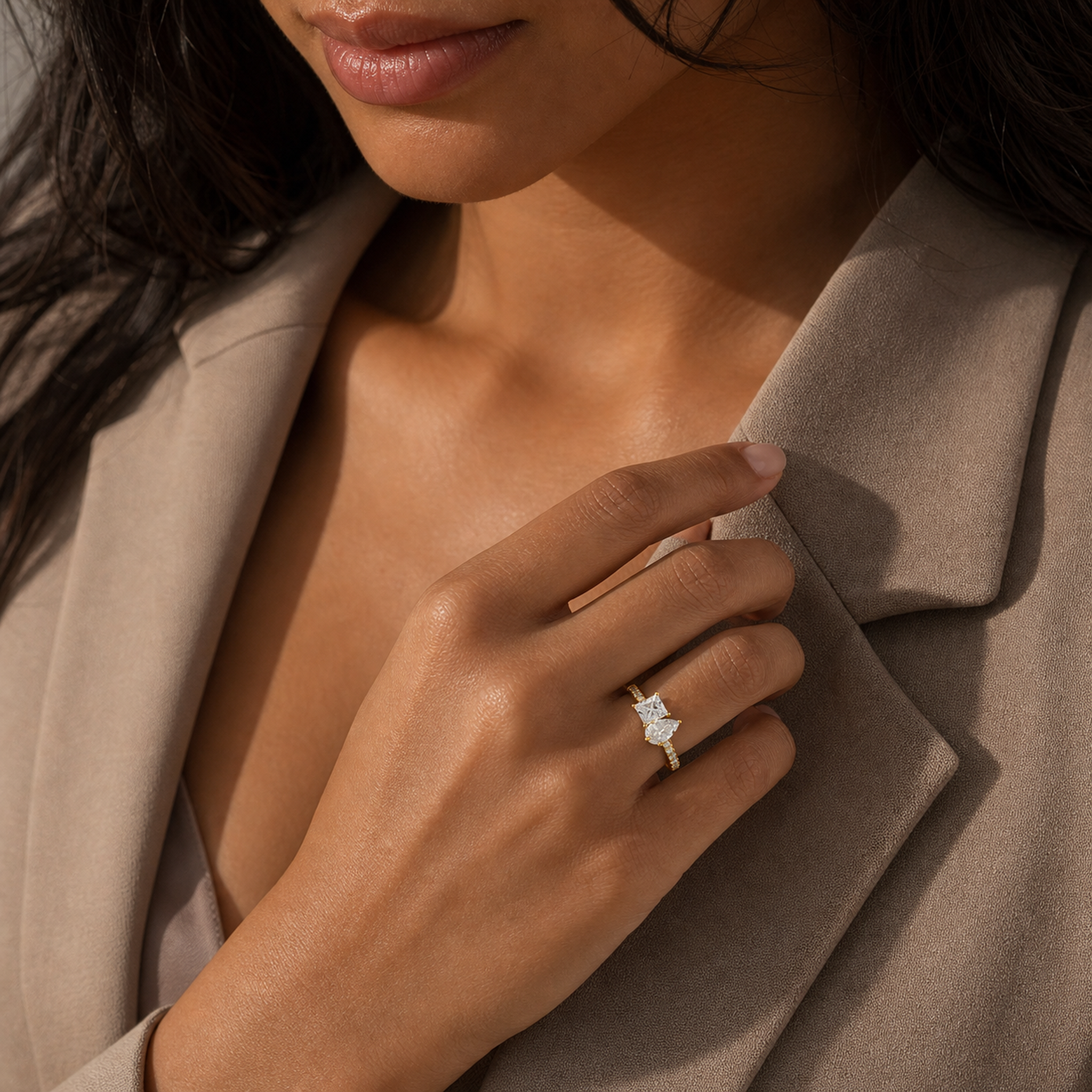
Toi et Moi means “you and me.” In the ring, that idea is expressed through two principal stones held within one composition. Each retains its own outline, direction, and light pattern; neither is reduced to a supporting accent. The design succeeds when their individuality is legible and their relationship feels resolved.
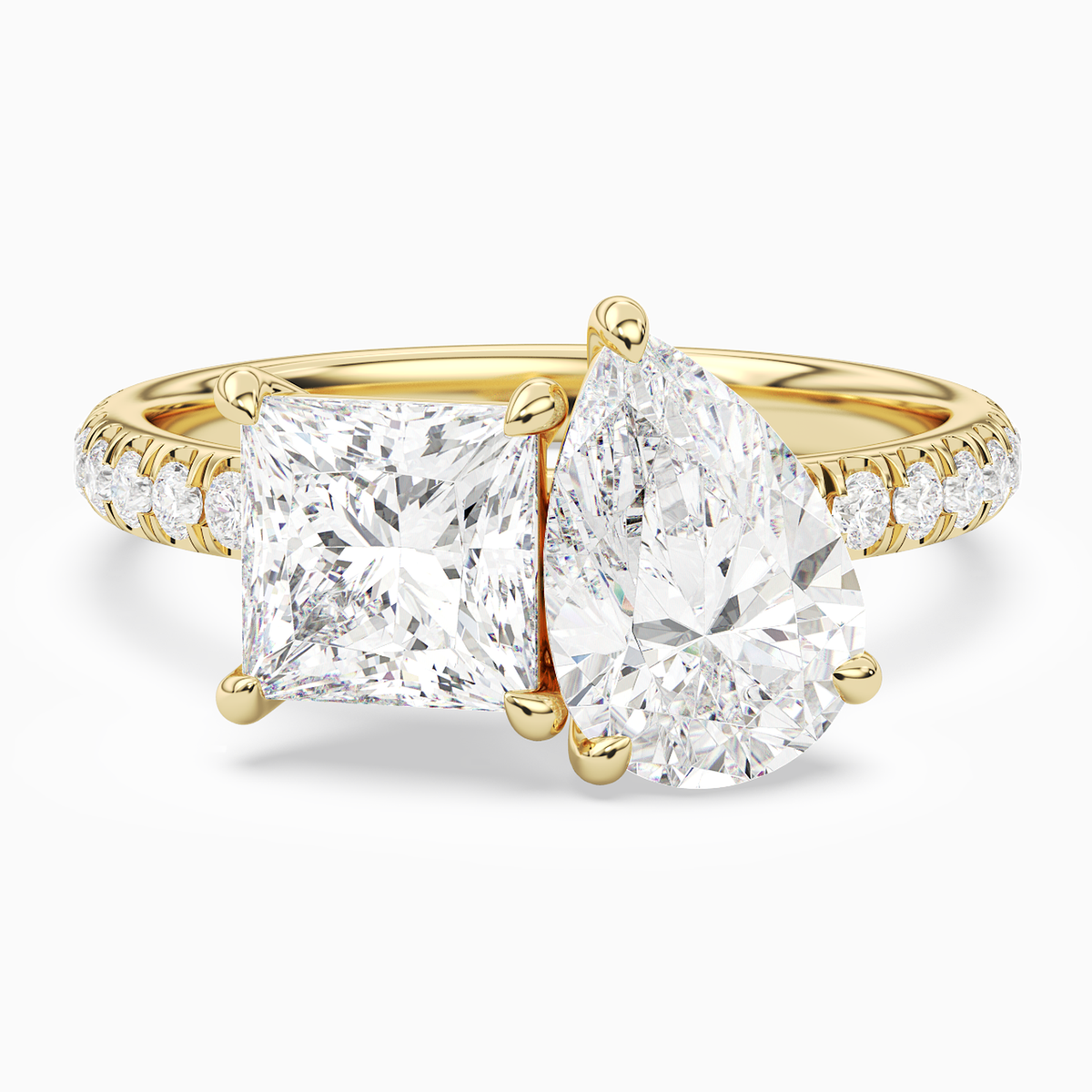
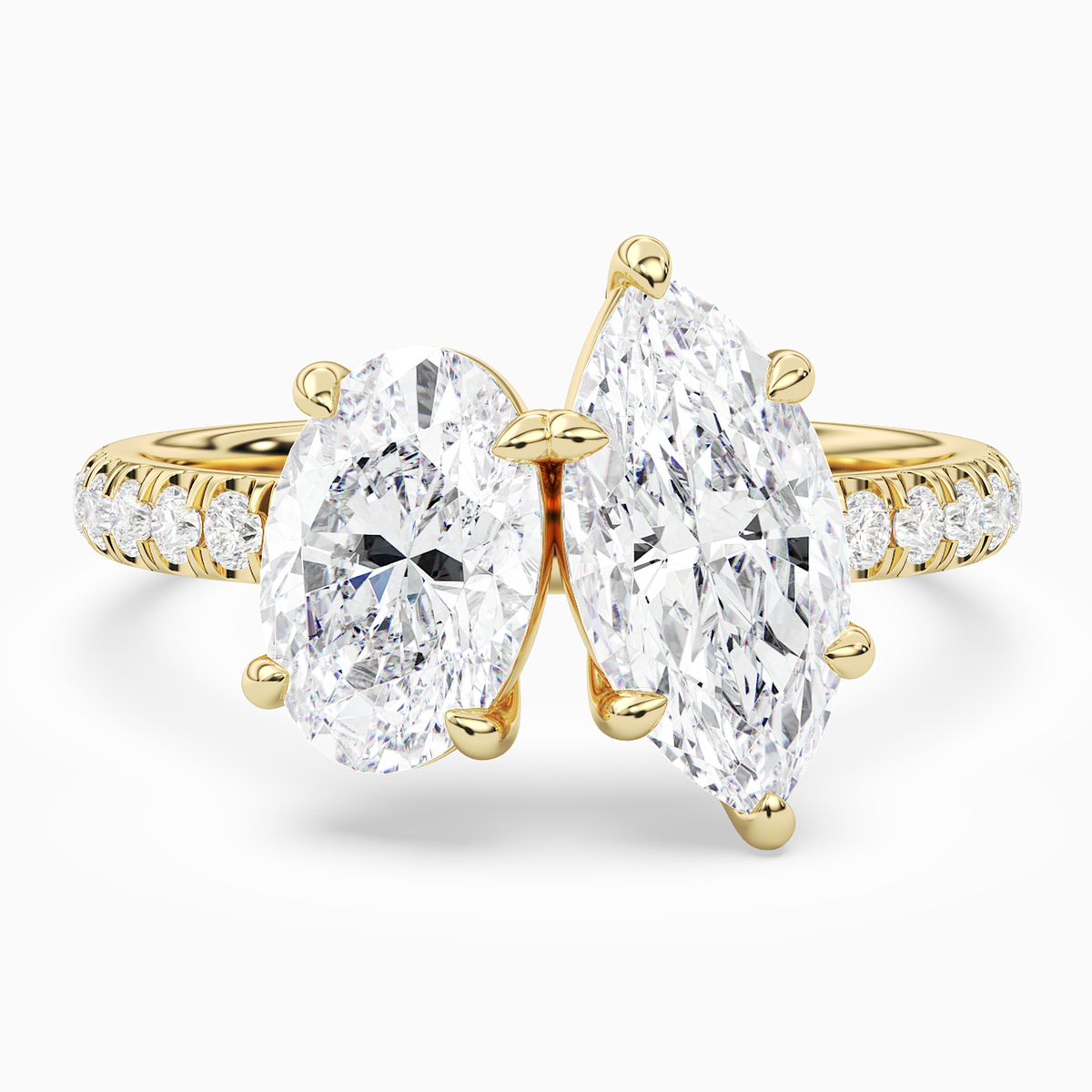
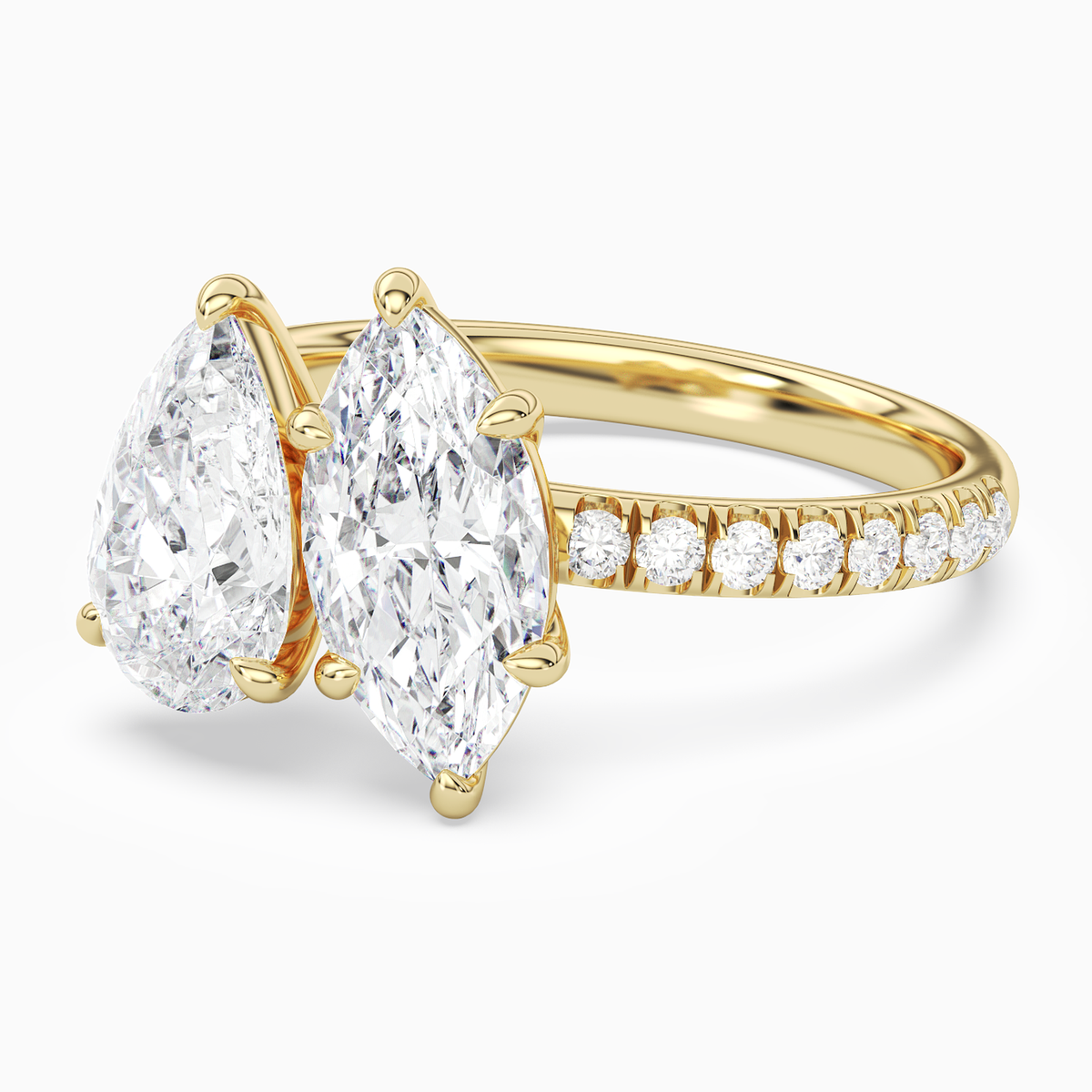
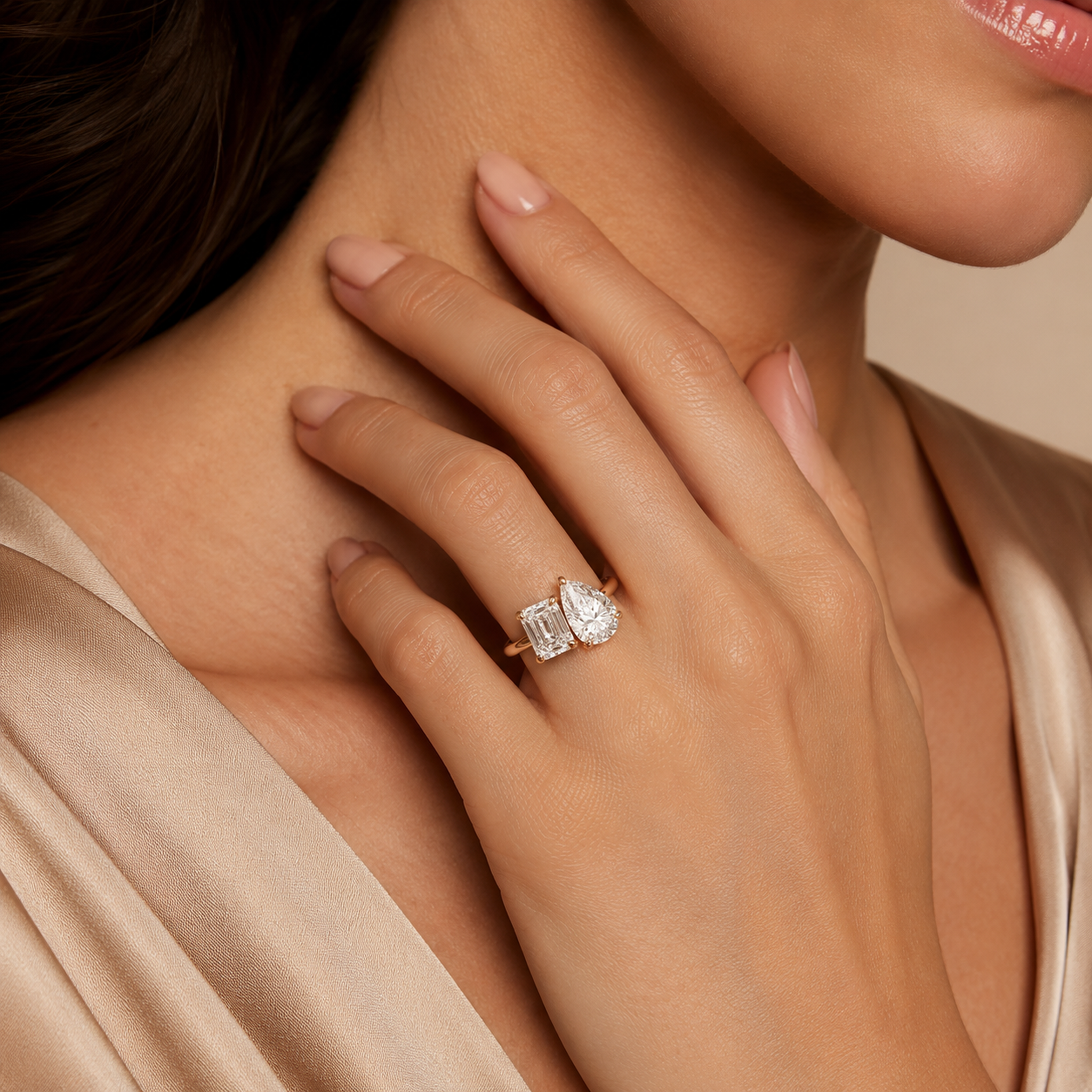
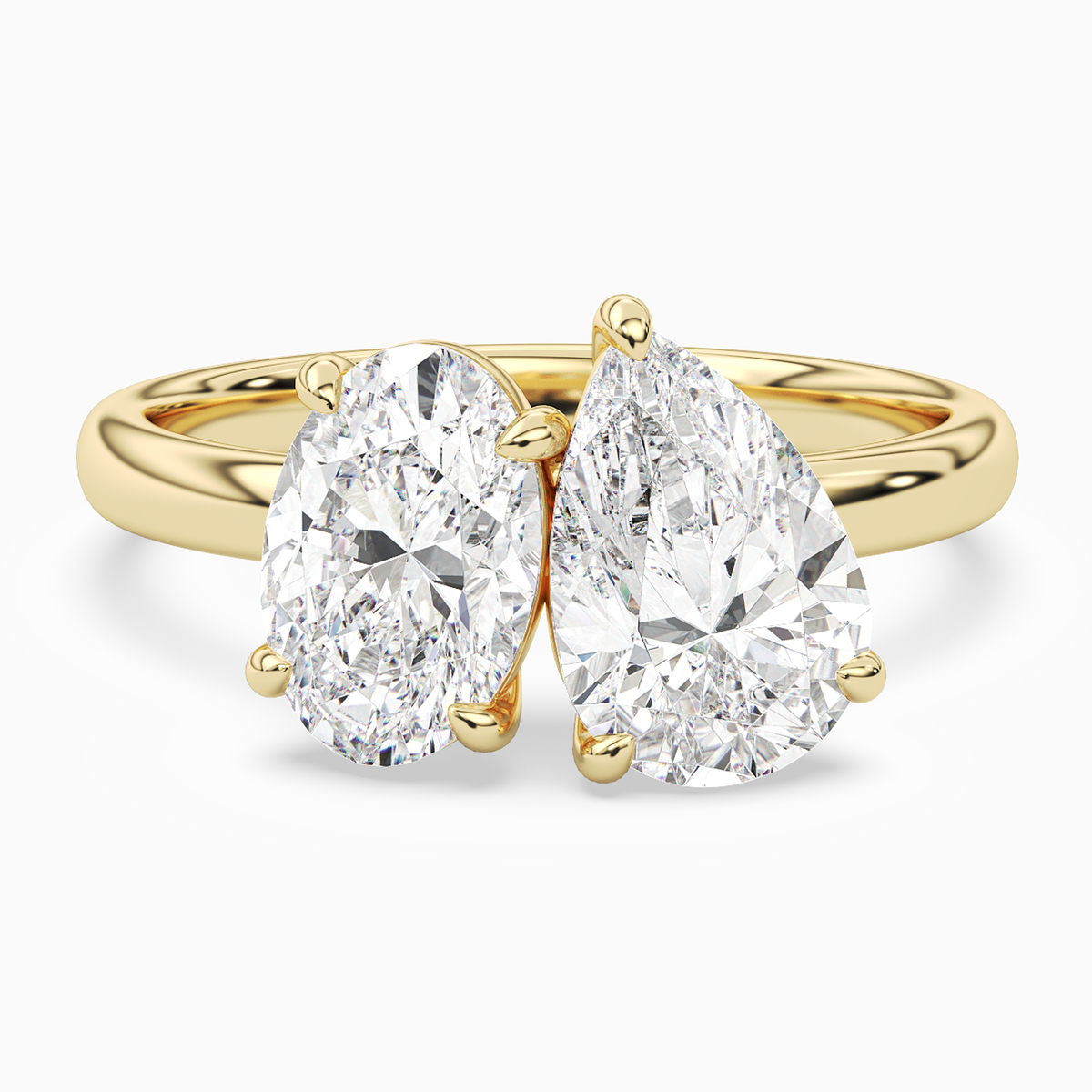
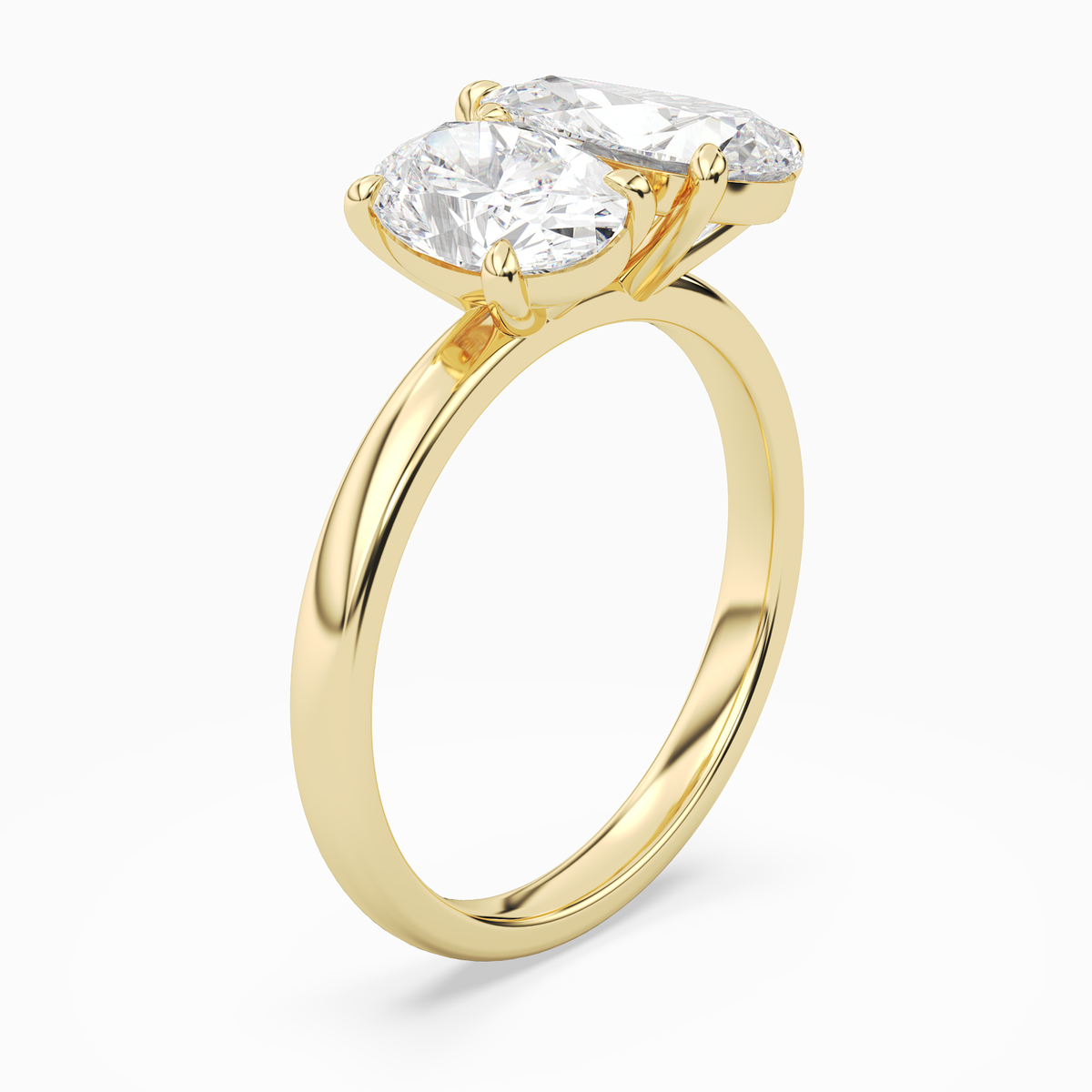
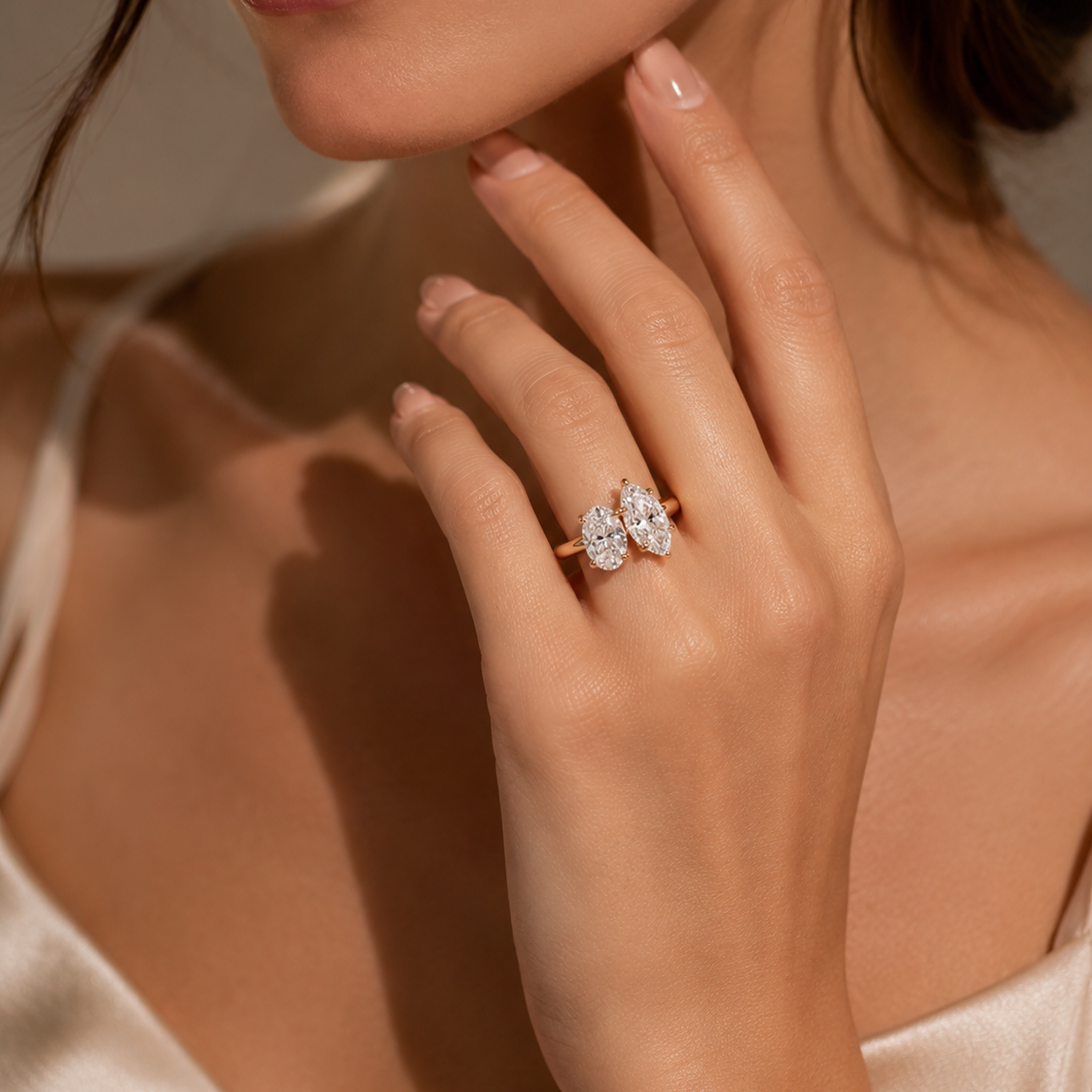
Burvonti’s Toi Et Moi Engagement Rings collection brings matched and contrasting shapes into pavé-basket, crossover, and open-basket settings. Pear meets Emerald, Oval, Radiant, Princess, Marquise, or another Pear; Oval meets Marquise; matched Marquise forms another expression. The choice is not simply between two favorite shapes. It is a decision about how two centers share space.
Two Centers Are Different from Side Stones or a Trio
A side-stone ring begins with one dominant center and uses smaller accents to transition into the band. A three-stone ring presents one center bordered by two intentional flanking stones, usually with a central hierarchy. Toi et Moi removes that single axis: two stones occupy the principal field and are read as a pair.
The pair may be symmetrical or unequal. They can sit close together, approach from opposite shoulders, or turn toward one another through a crossover line. What defines the style is not perfect matching, asymmetry, or history. It is the presence of two principal centers whose relationship creates the face-up composition.
Shape Pairing Begins with Edge and Direction
A Pear introduces a rounded body and directional point, partnering a straighter Emerald, angular Princess, brilliant Radiant, soft Oval, or pointed Marquise. Emerald and Pear contrast ordered steps with curved brilliance. Oval and Marquise pair elongated outlines with different edge tension. Matched shapes use repetition, while orientation keeps the result from feeling static.
There is no universal best pairing. Compare how the two outlines approach, where their widest points sit, and whether their tips, corners, or curves create useful negative space. Facet patterns matter as much as silhouette: contrast can be expressive, while related patterns can create continuity. The setting should protect vulnerable points without closing the space that allows each form to remain distinct.
Balance Does Not Require Equal Carat Weight
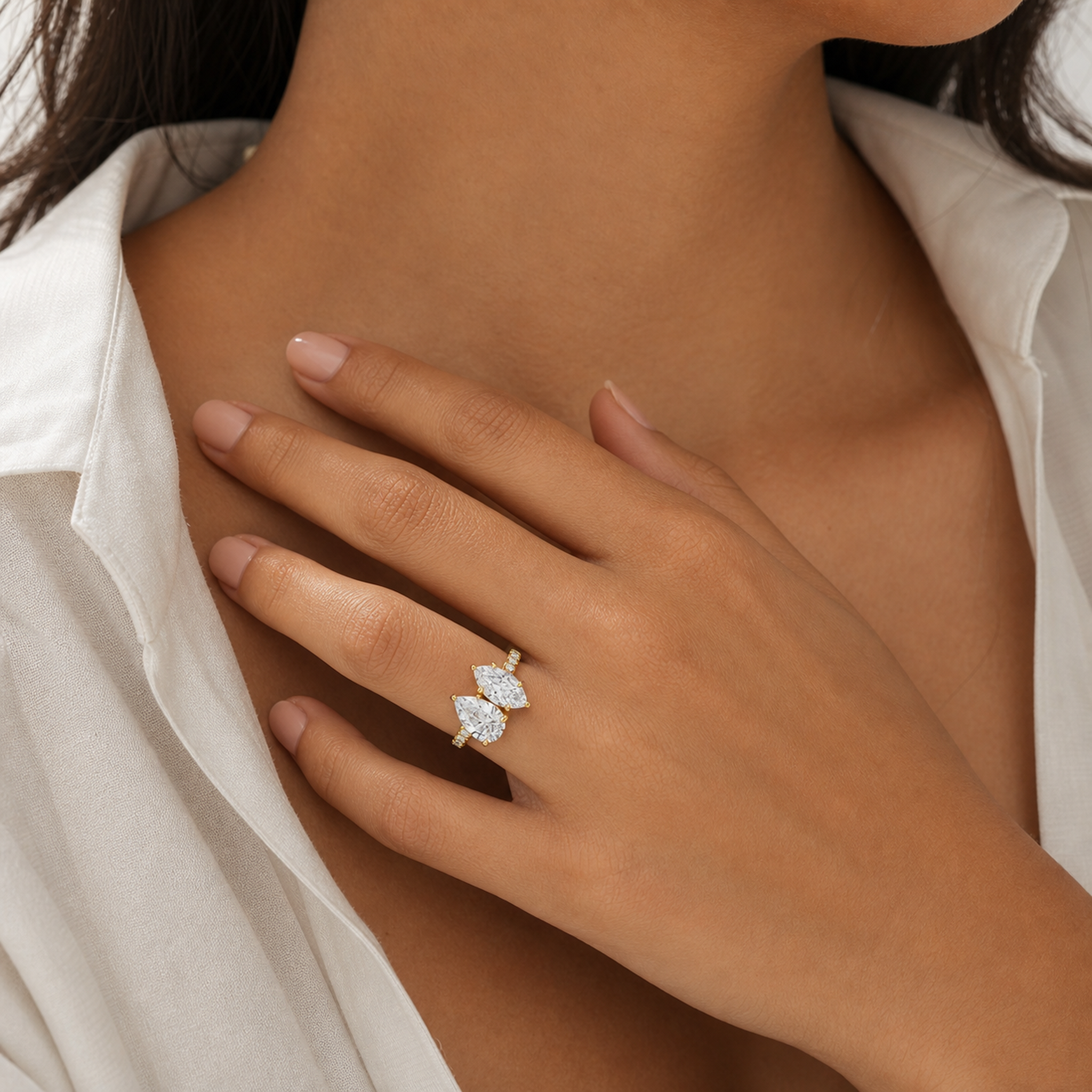
Two stones can feel balanced without being identical in weight, dimensions, or face-up area. Shape depth influences how much surface a given carat presents. An elongated outline can occupy more visual length; a deeper stone may carry weight below the face-up view. Orientation and spacing can make a smaller stone appear more or less assertive beside its partner.
Read individual diamond weights, dimensions, and combined total separately. Burvonti’s current public options use “Center Carat,” but that label does not establish how weight is allocated between two diamonds. Confirm each stone’s specification, the combined total where stated, and the dimensions used to calibrate the pair.
Quality Should Be Read Across Both Diamonds
Matching color and clarity exactly is one route, not an automatic requirement. Similar color can create continuity; a deliberate difference can make the duality more visible. Clarity should be considered in relation to each shape, scale, and facet pattern. The two diamonds may also return light differently when one is step-cut and the other brilliant-cut—that contrast is part of the design, not evidence that one is inferior.
Documentation must be specific. Do not assume a single Collection label or combined carat choice establishes two individual grading reports. Confirm the grading document, laboratory, weight, dimensions, color, clarity, and any cut information supplied for each selected center diamond. The setting can bring two stones into one composition, but it does not merge their quality characteristics.
Basket, Crossover, and Band Control the Space Between
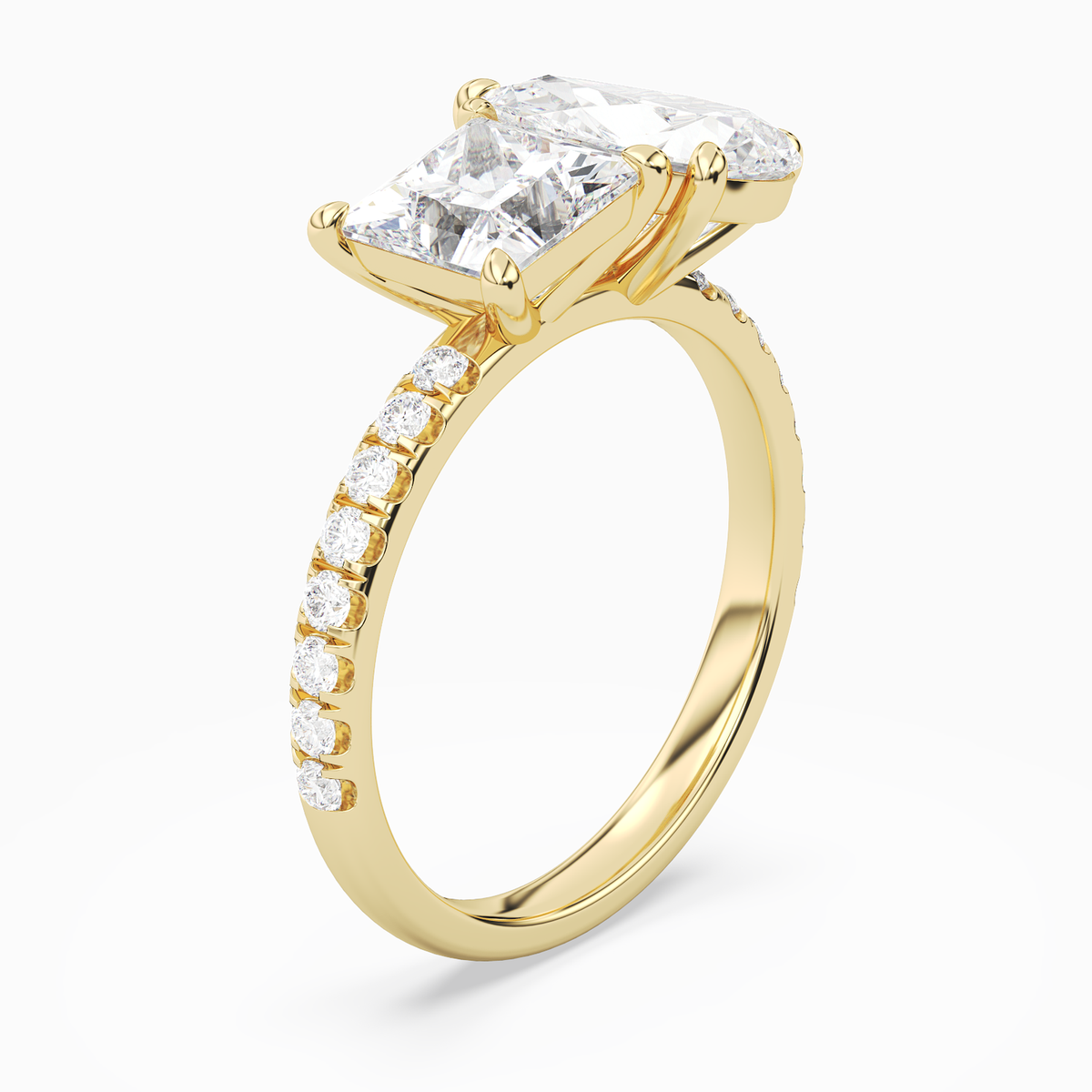
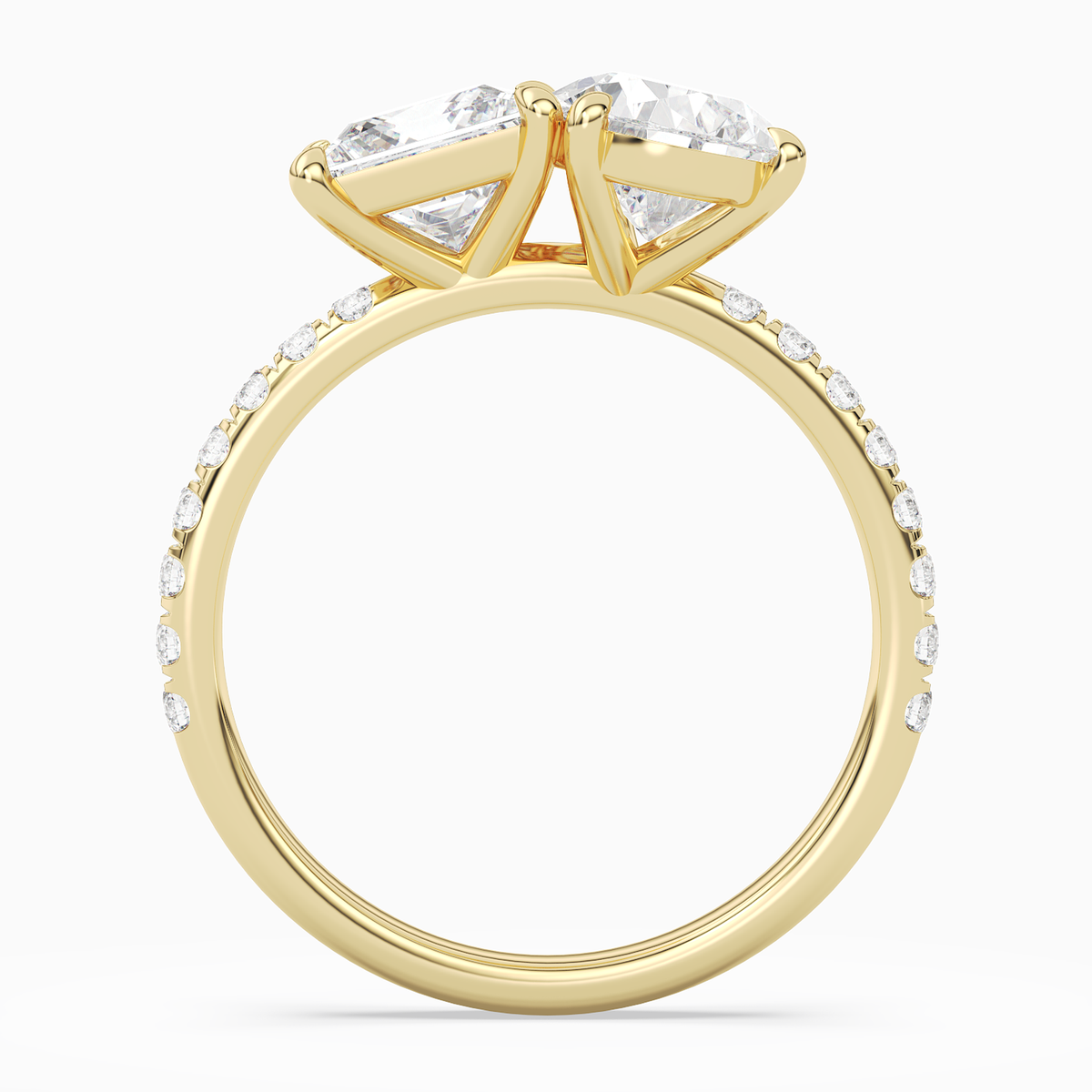
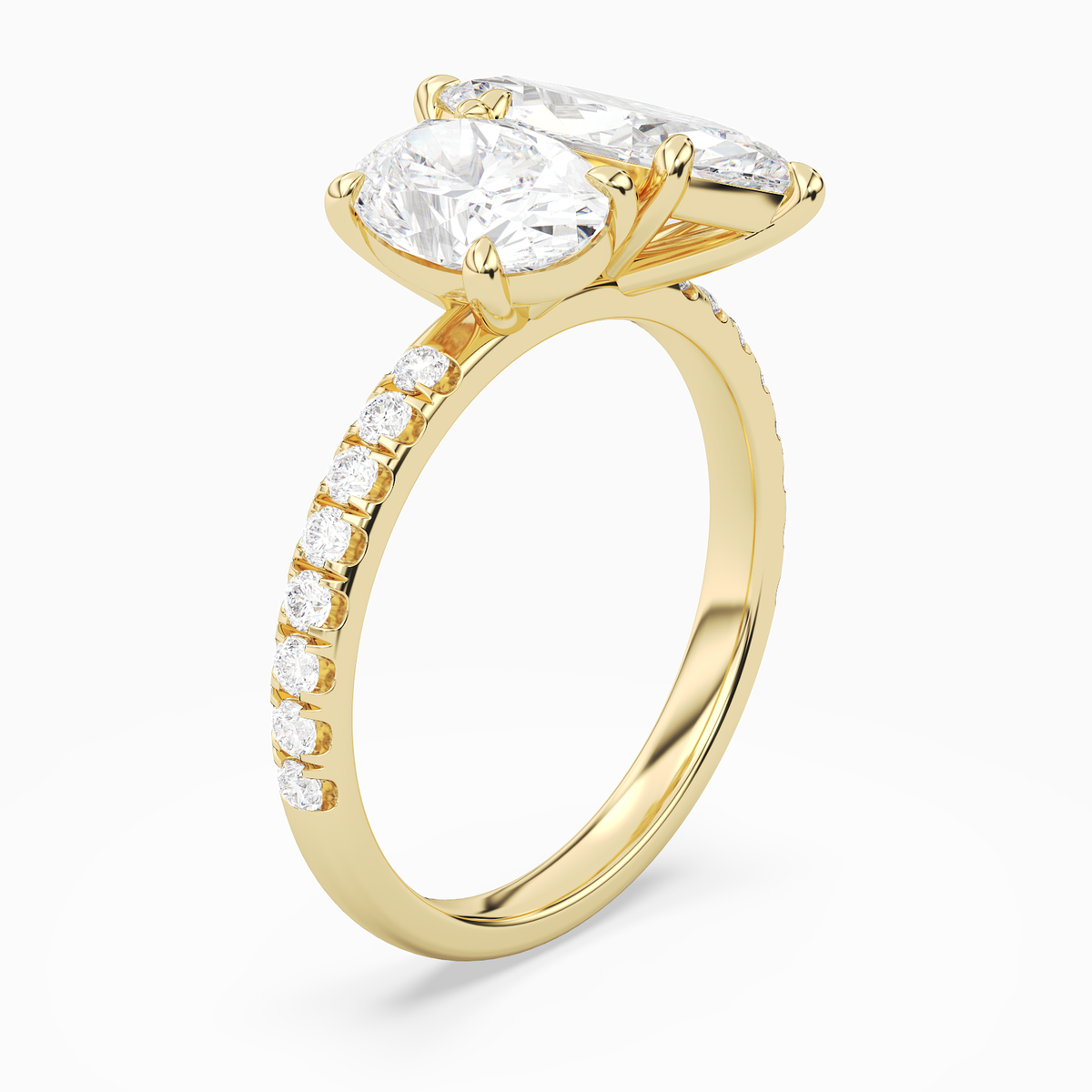
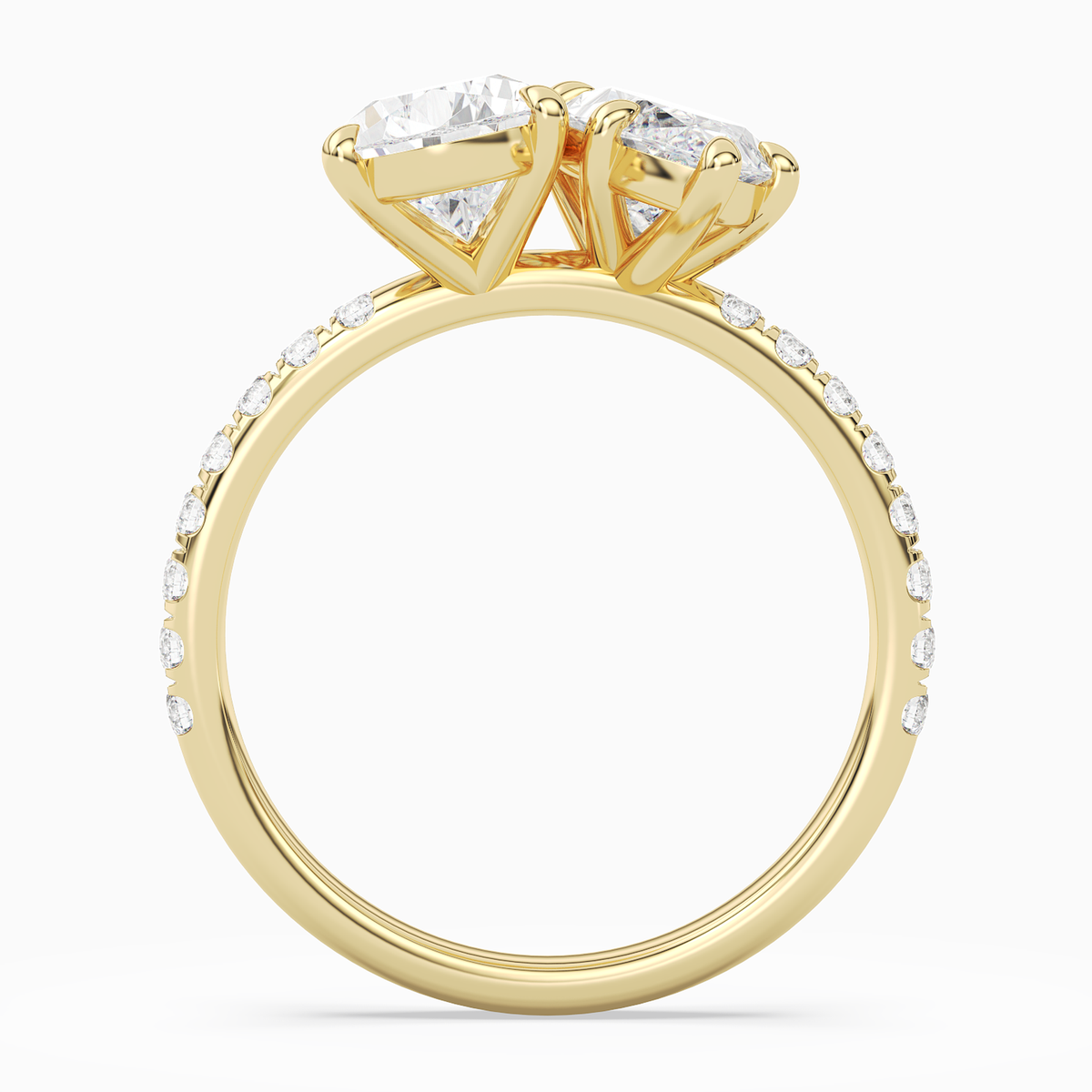
Open baskets reveal more of each stone’s side profile and make the relationship between their heights visible. Pavé baskets add secondary light below or around the centers. Crossover structures turn the band into a directional gesture, allowing each shoulder to approach a different stone. Prong placement must respond to both outlines and avoid creating an accidental visual barrier between them.
Because the head spans two centers and may be asymmetric, fit and stability deserve attention. A broader face-up footprint can rotate if sizing, band proportion, or weight distribution is not resolved. Setting height also influences daily movement and wedding-band pairing. These are properties of the finished ring, not conclusions that follow from the Toi et Moi name alone.
The Wedding Band Becomes a Third Line
A straight wedding band may meet one basket or shoulder before it reaches the other. Contoured, chevron, open-gap, or deliberately spaced bands can respond to the pair’s outline, but no one solution fits every Toi et Moi ring. Look at the engagement ring from above and in profile, including the lowest edges of both settings and any pavé contact points.
The wedding band should add a third line without confusing the two-center composition or pressing against vulnerable edges. A gap can be intentional; a close fit can be successful when the geometry permits it. Confirm the exact pairing rather than assuming asymmetry always requires a contour or that a custom band automatically prevents contact.
Two Centers, Twice the Need for Deliberate Care
Two principal stones introduce additional prongs, edges, and spaces between settings. Clean gently around both baskets using methods appropriate to the diamonds, metal, and construction. Remove the ring for impact-prone work or harsh chemical exposure, and arrange inspection after a strike, when a prong catches, or if either stone moves. Pointed Pear, Marquise, and Princess outlines require particular attention to protected areas.
Burvonti resolves each pair through proportion and human judgment rather than a fixed formula. Custom possibilities may refine the two shapes, their scale, orientation, spacing, metal, band, engraving, or selected setting details when structurally feasible. Diamond documentation, setting changes, resizing, and wedding-band compatibility must be confirmed for the exact configuration.
Frequently Asked Questions
What is a Toi Et Moi engagement ring?
It is a ring with two principal center stones held within one composition. The French phrase means “you and me,” and the pair is commonly used to represent two individuals in partnership.
How do you pronounce Toi Et Moi?
A practical English approximation is “twah ay mwah.” The phrase is French for “you and me”; pronunciation does not change the design definition of two principal stones.
What is the difference between Toi Et Moi and Three Stone rings?
Toi Et Moi presents two principal centers without a single central axis. A Three Stone ring uses one center bordered by two flanking stones, usually creating a clearer center-versus-sides hierarchy.
What is the difference between Toi Et Moi and Side Stone rings?
A Toi Et Moi ring gives both stones principal status. A Side Stone ring retains one dominant center and uses smaller accents to support it or transition into the band.
Do the two diamonds need to be the same shape?
No. Matched shapes create repetition; contrasting shapes create dialogue between different edges and facet patterns. Burvonti’s current combinations include matched Pear or Marquise and several Pear, Oval, Emerald, Radiant, Princess, and Marquise pairings.
Do the two diamonds need to be the same size?
No. Visual balance can come from dimensions, face-up area, orientation, spacing, and setting height rather than equal carat weight. The pair should be judged together using each diamond’s actual measurements.
Which diamond shape combinations work in Toi Et Moi rings?
Many can work when their edges, dimensions, and settings are compatible. Burvonti’s public collection includes Emerald and Pear, Oval and Pear, Radiant and Pear, Princess and Pear, Oval and Marquise, Pear and Marquise, matched Pear, and matched Marquise configurations.
Which stone is the center stone in a Toi Et Moi ring?
Both are principal centers. One may appear more assertive because of scale, shape, orientation, or placement, but the category is defined by two stones sharing the primary visual field.
How is carat weight described for a two-stone ring?
It may be stated for each diamond or as a combined total. A generic “center carat” label does not by itself explain the allocation, so confirm each stone’s weight and dimensions and any stated combined total.
Are both Toi Et Moi diamonds independently graded?
Documentation is configuration-specific. Confirm the grading report, laboratory, weight, dimensions, color, clarity, and available cut information supplied for each selected diamond rather than assuming one label covers both.
Should the two diamonds have matching color and clarity?
They can, but exact matching is not always necessary. Shape, scale, facet pattern, proximity, and metal affect what is visible. The pair should look intentional and its individual specifications should remain clear.
Does a Toi Et Moi ring look larger than a solitaire?
Two centers often create a broader combined footprint, but the effect depends on both shapes, dimensions, spacing, and orientation. It does not make either diamond larger or improve its cut performance.
Will a Toi Et Moi engagement ring spin on the finger?
A broad or unevenly weighted head can rotate if fit, band proportion, and weight distribution are not resolved. Accurate sizing and product-specific evaluation are more useful than assuming every two-stone ring behaves the same way.
Will a wedding band sit flush with a Toi Et Moi ring?
Some will and some will not. Basket placement, setting height, crossover shoulders, pavé, and asymmetry determine contact. Straight, contoured, chevron, open-gap, or intentionally spaced pairings should be evaluated with the exact ring.
Are Toi Et Moi rings suitable for everyday wear?
They can be when the structure suits the wearer’s routine. Consider two sets of edges and prongs, pointed shapes, profile, spacing, and band stability, then remove the ring for impact, heavy force, or harsh chemicals.
How should I clean a Toi Et Moi engagement ring?
Use a gentle method appropriate to the diamonds, metal, and setting. Clean around and between both baskets without forcing tools into fine areas, and watch for catching, changed prong alignment, or movement in either stone.
Can a Burvonti Toi Et Moi engagement ring be customized?
Custom possibilities may include the two shapes, relative scale, orientation, spacing, metal, band, engraving, or selected setting details. Availability, documentation, and structural feasibility depend on the chosen configuration.