
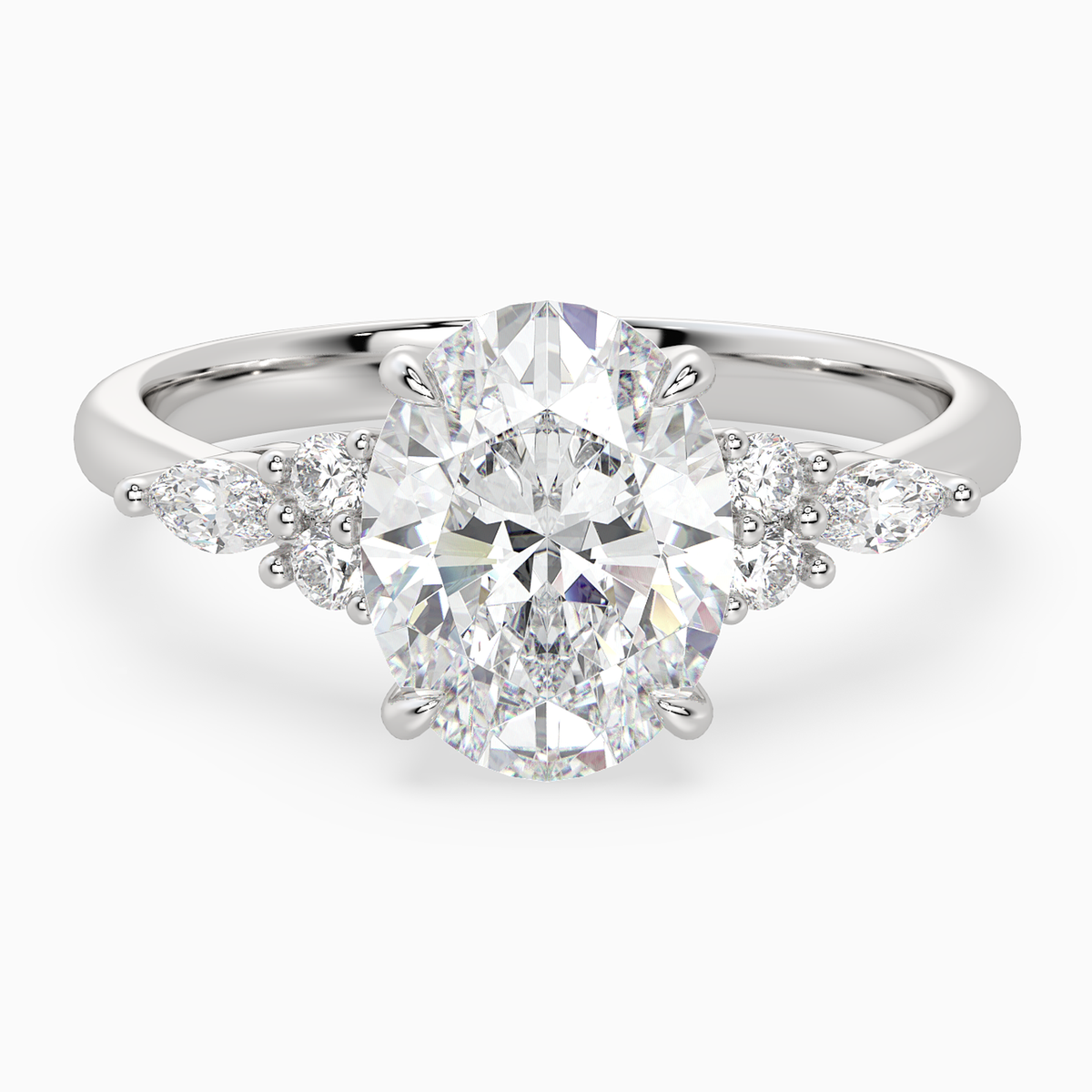


Lab Grown Diamond Bracelets
Light meets the wrist as line, interval and structure. Explore diamond bracelets through distribution, flexibility, fit and proportion.








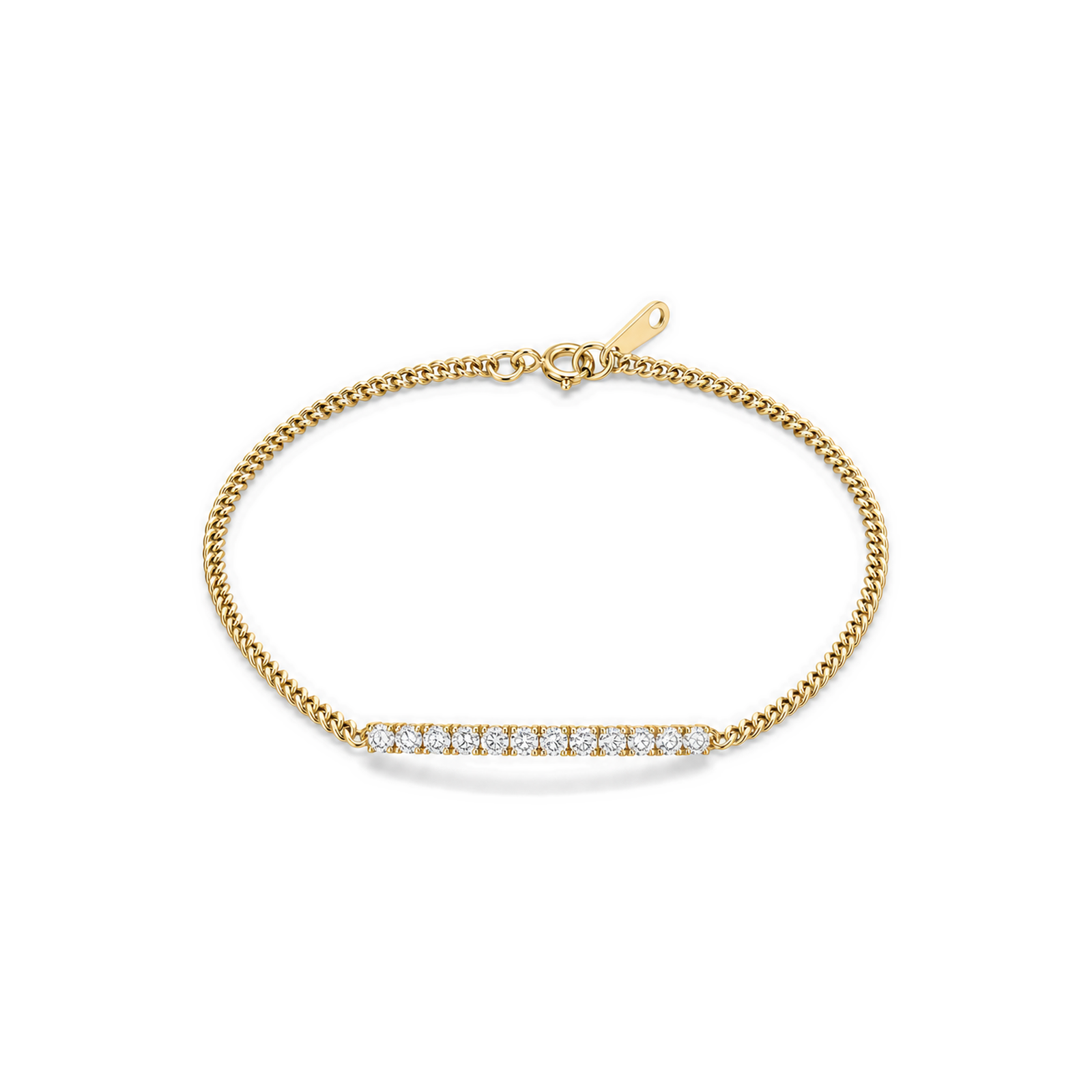


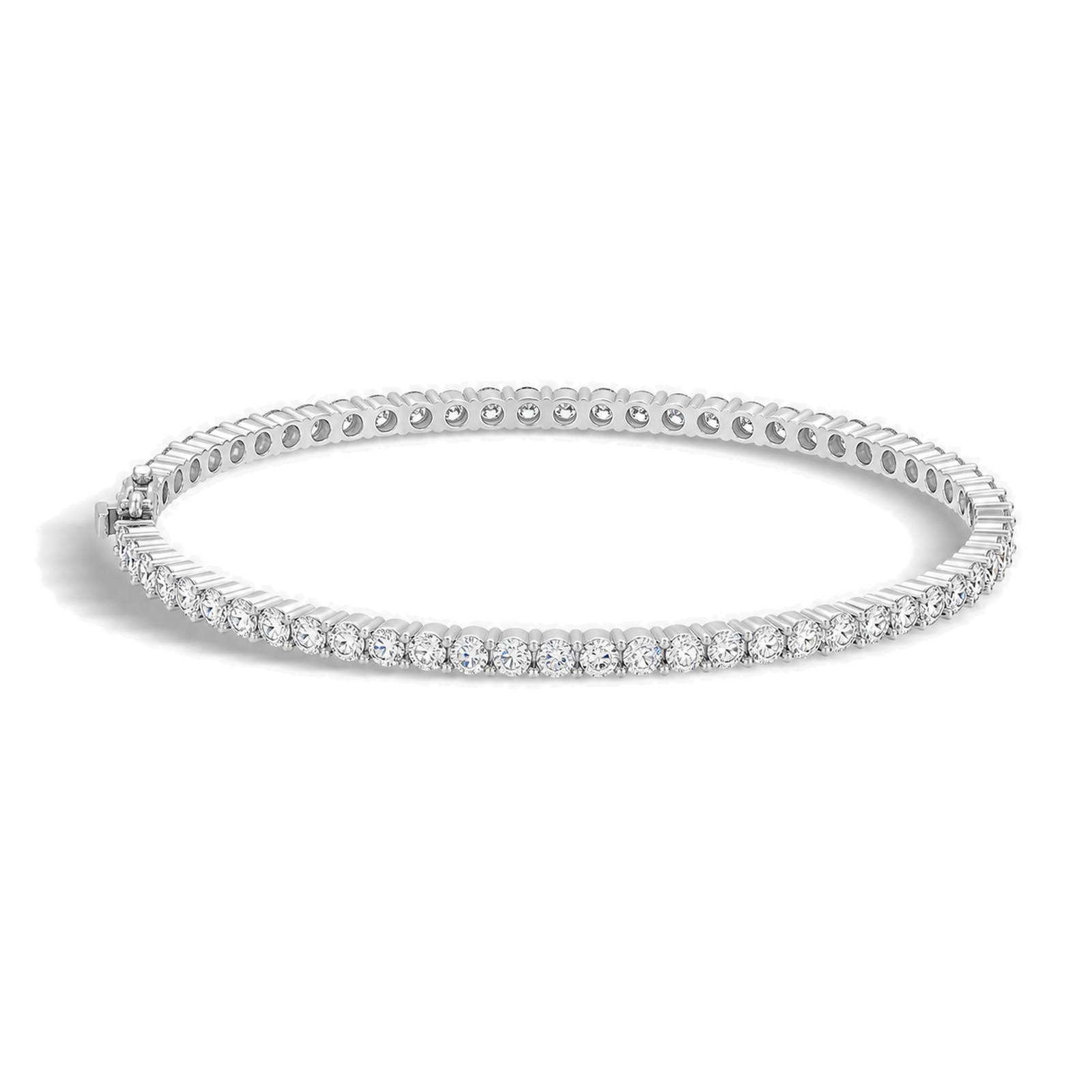
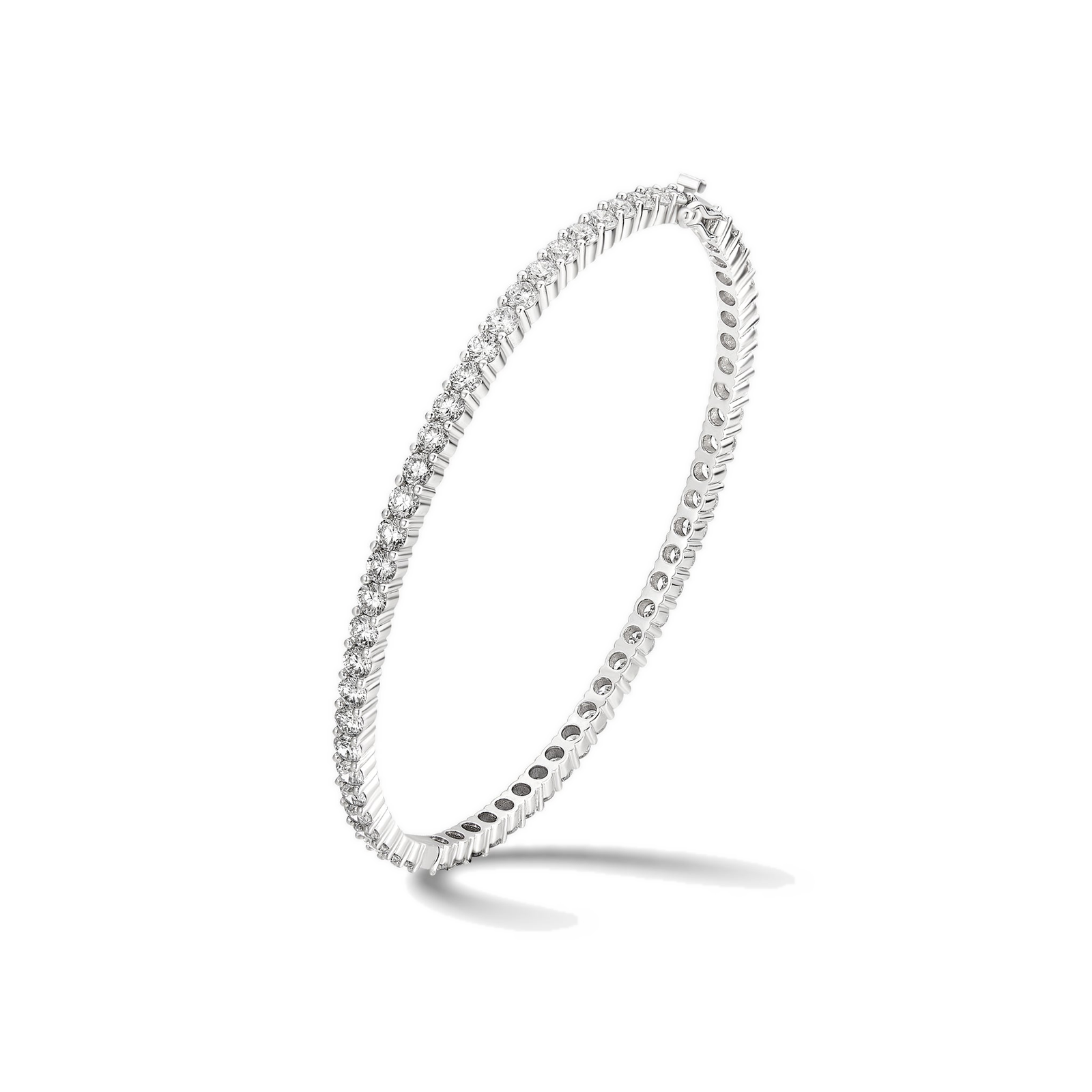

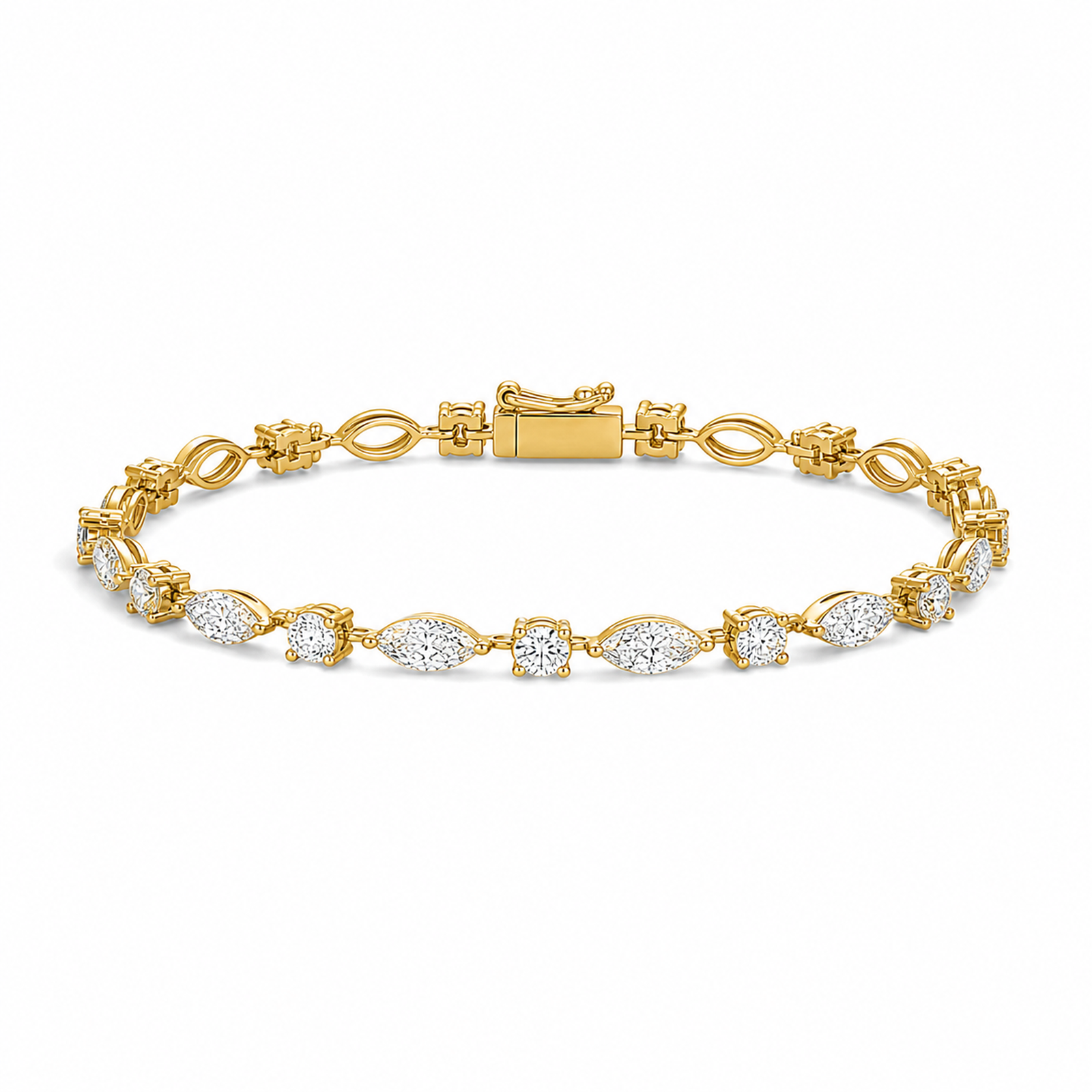
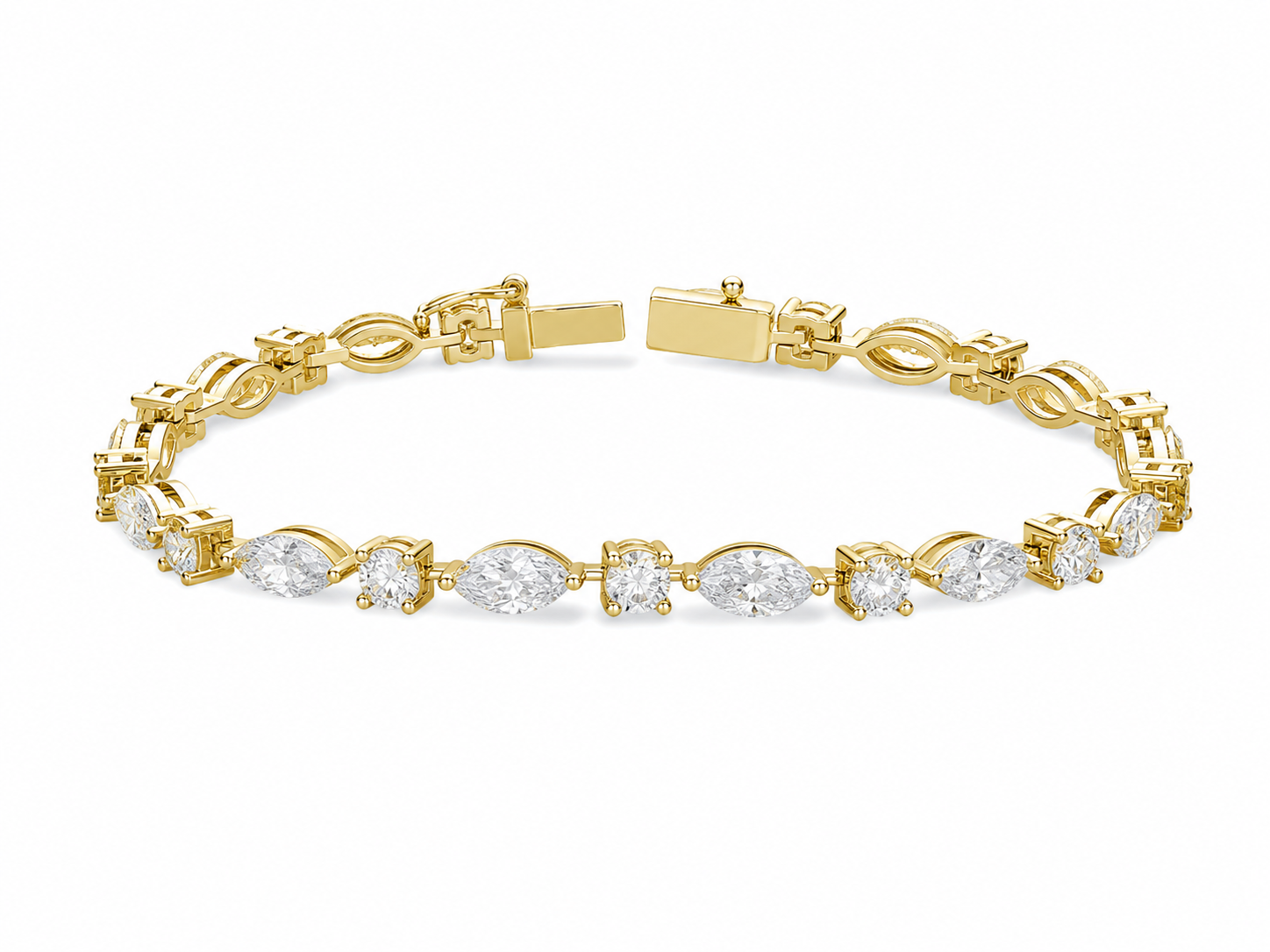

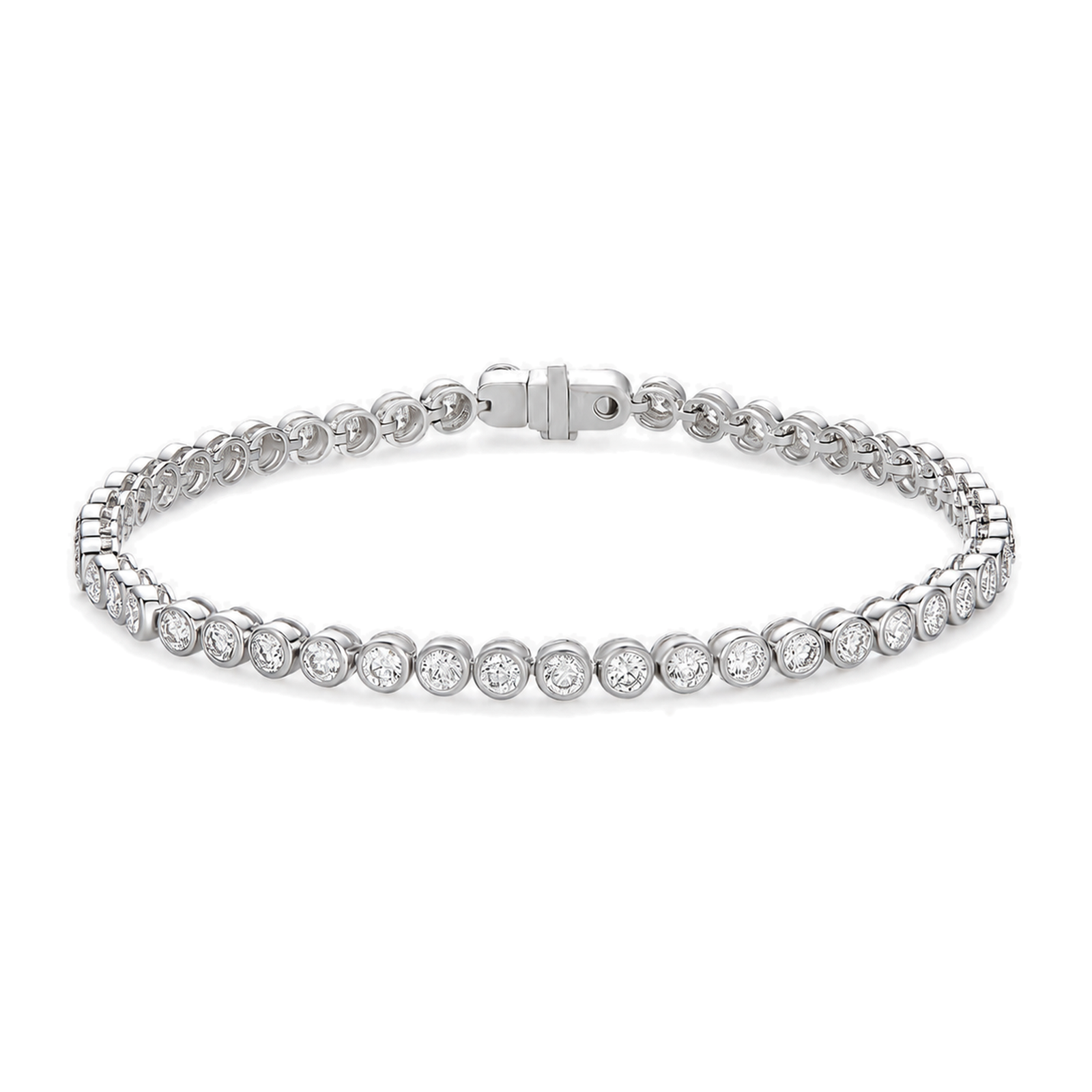
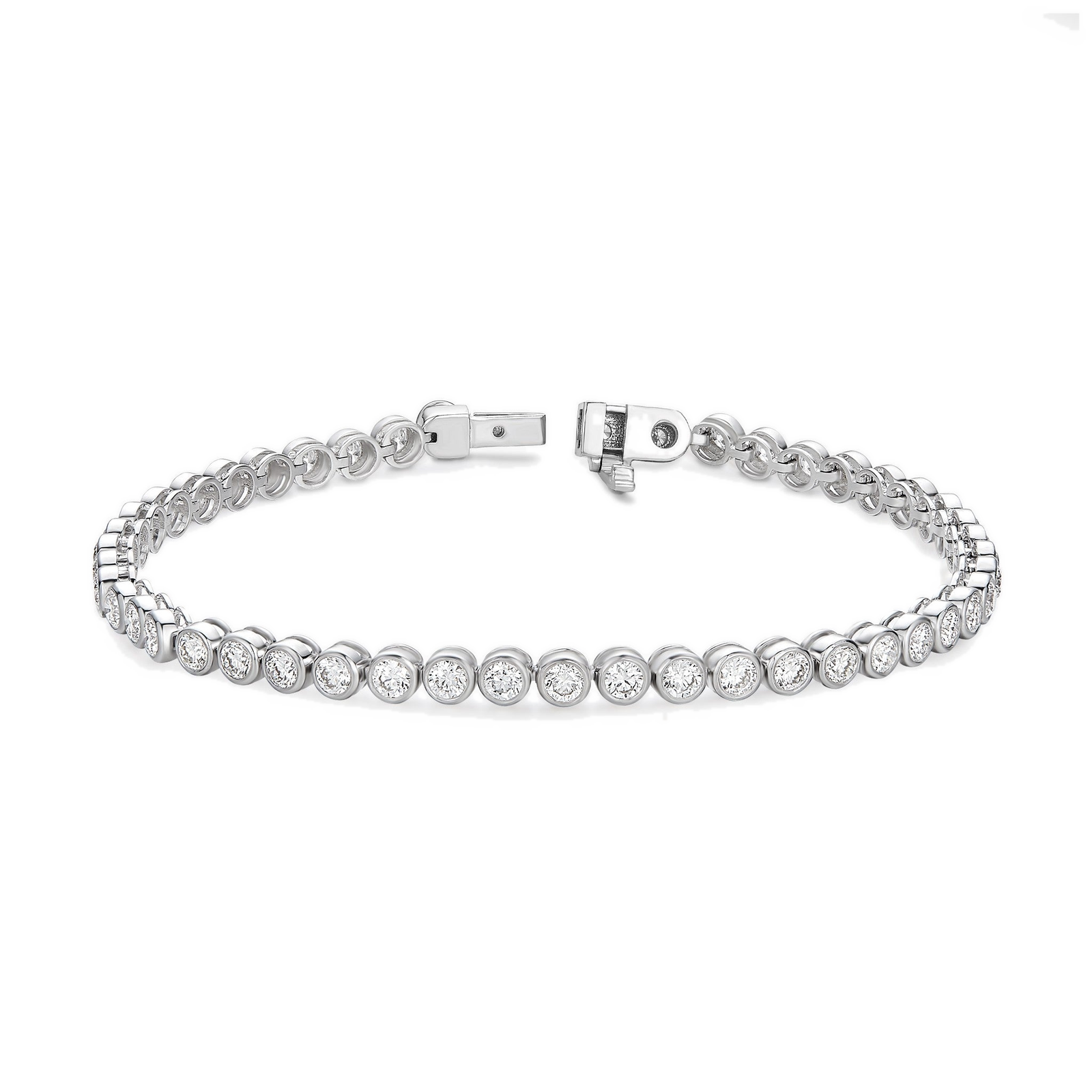


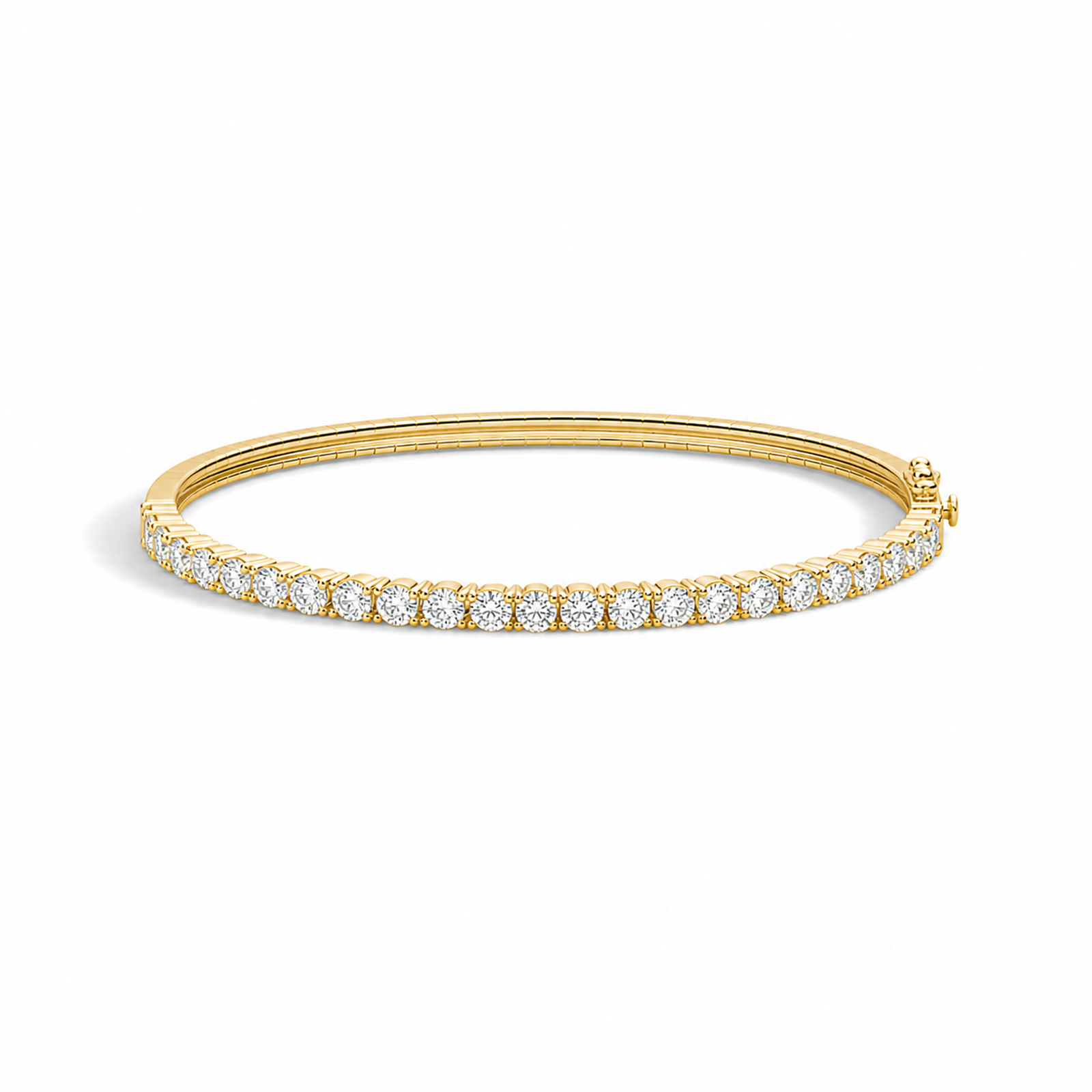
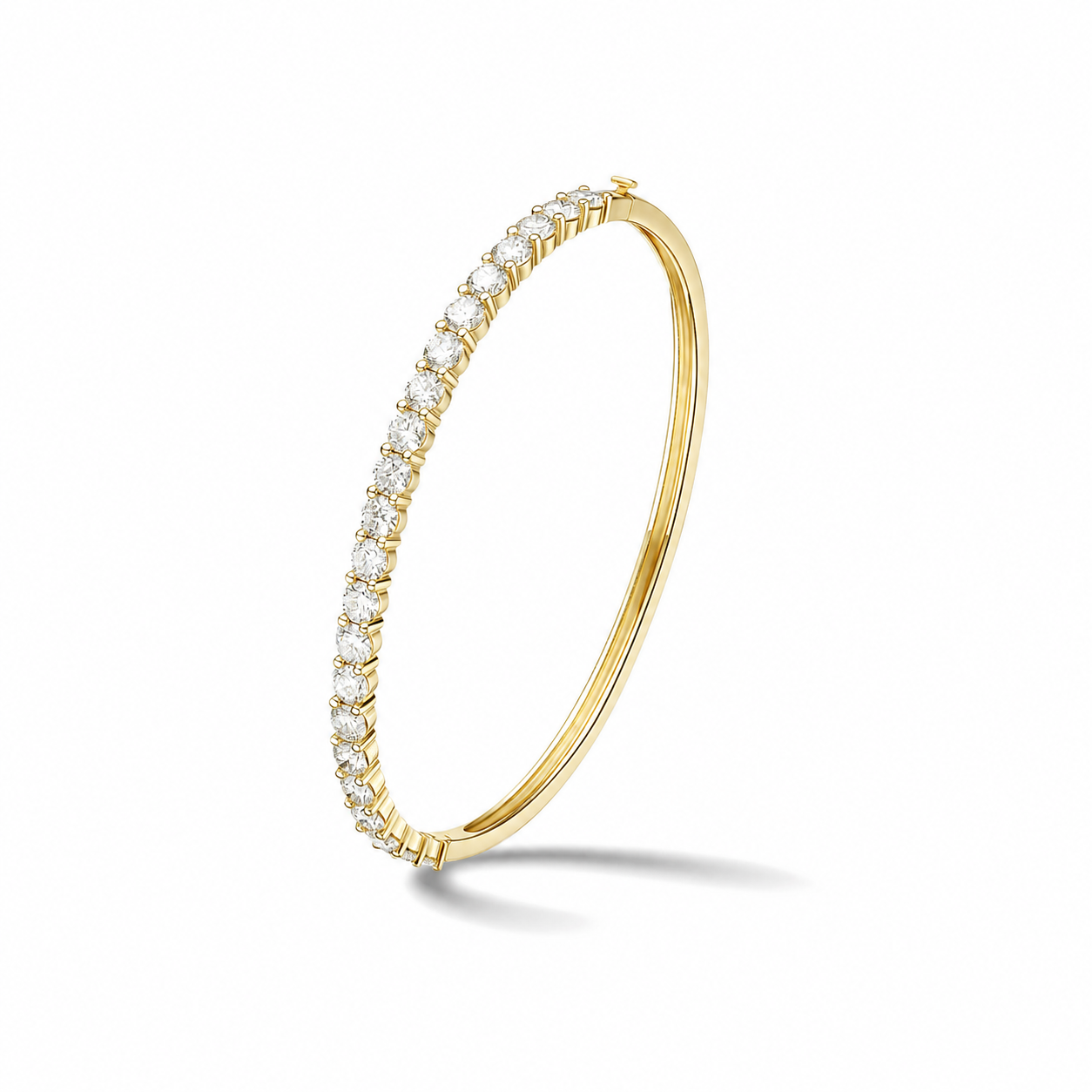

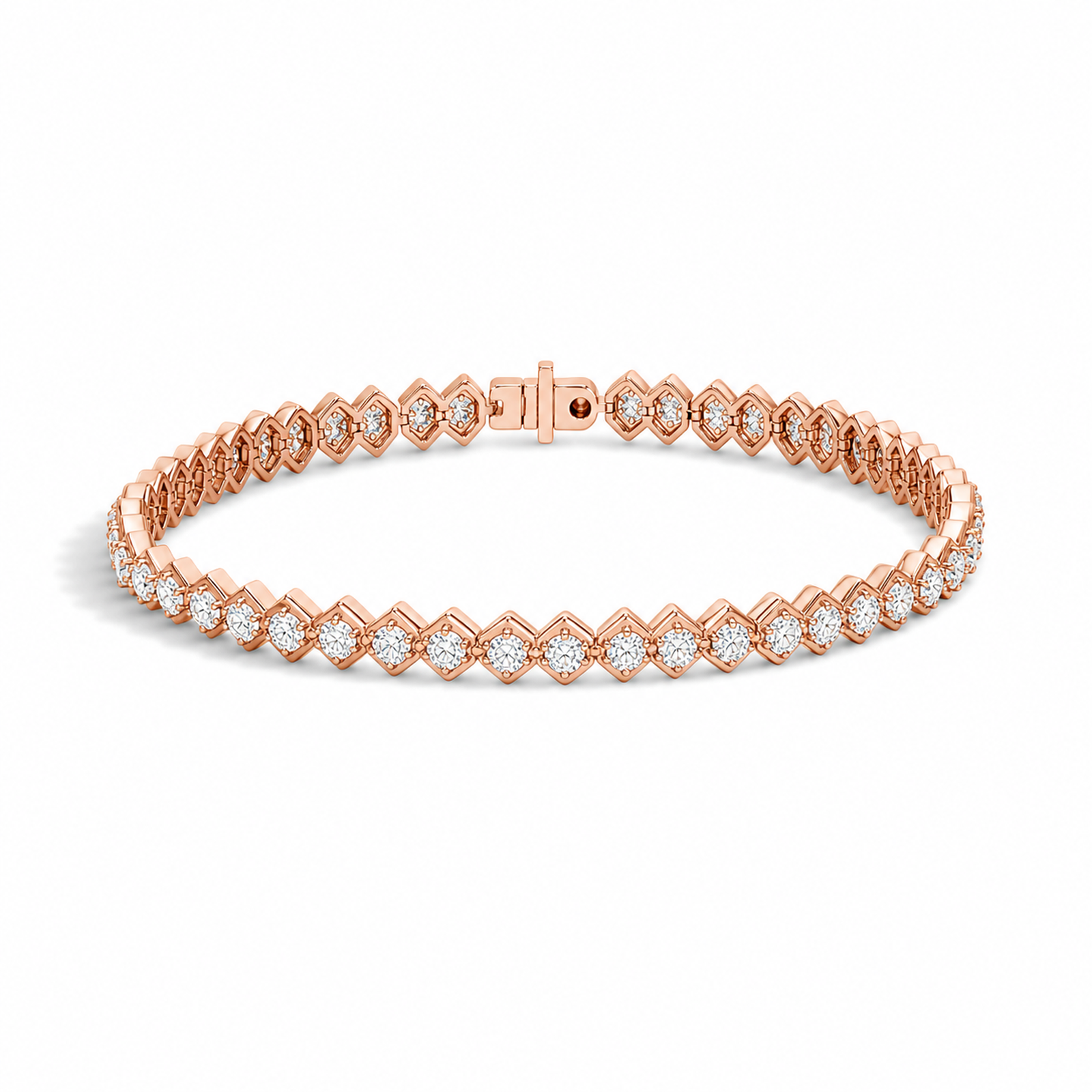


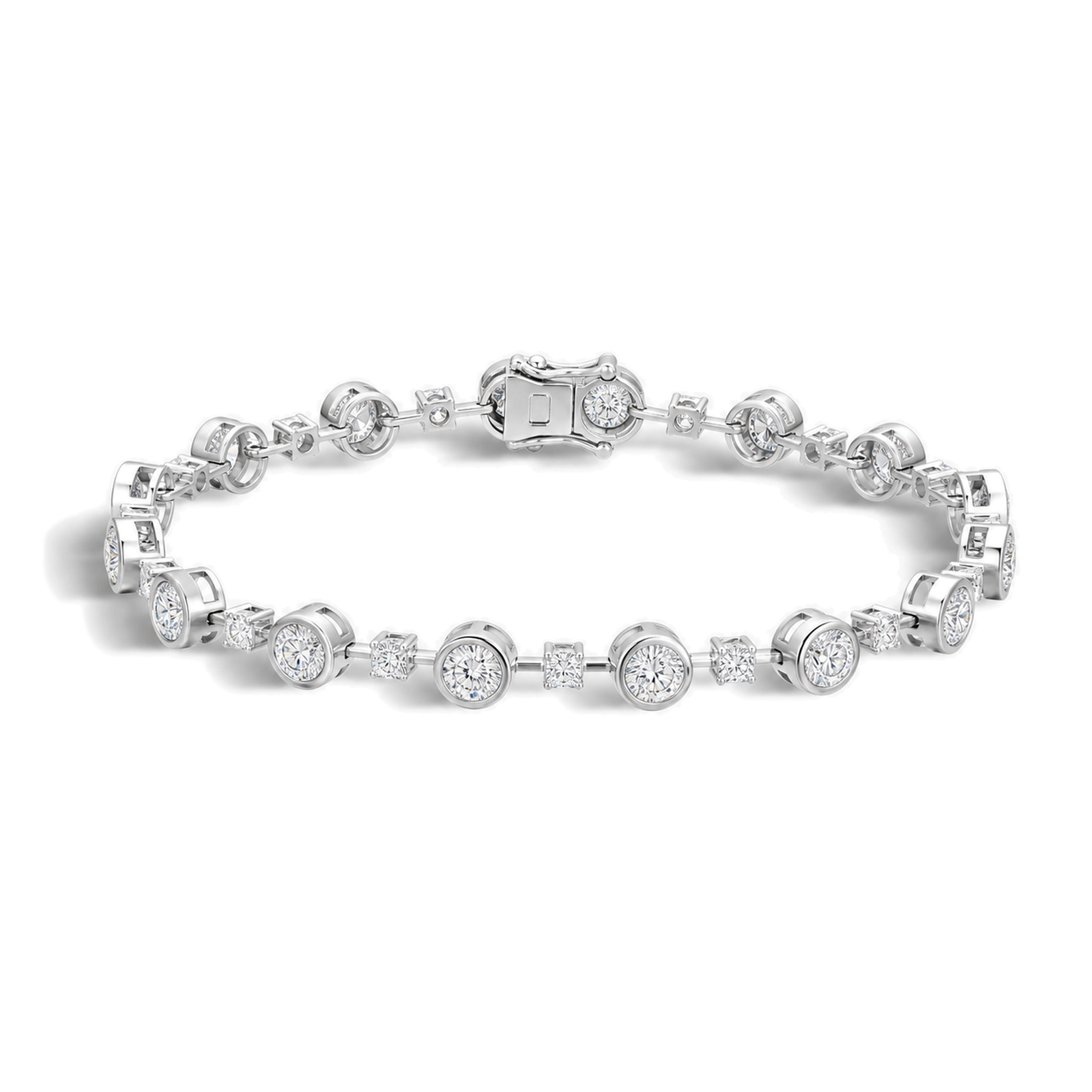
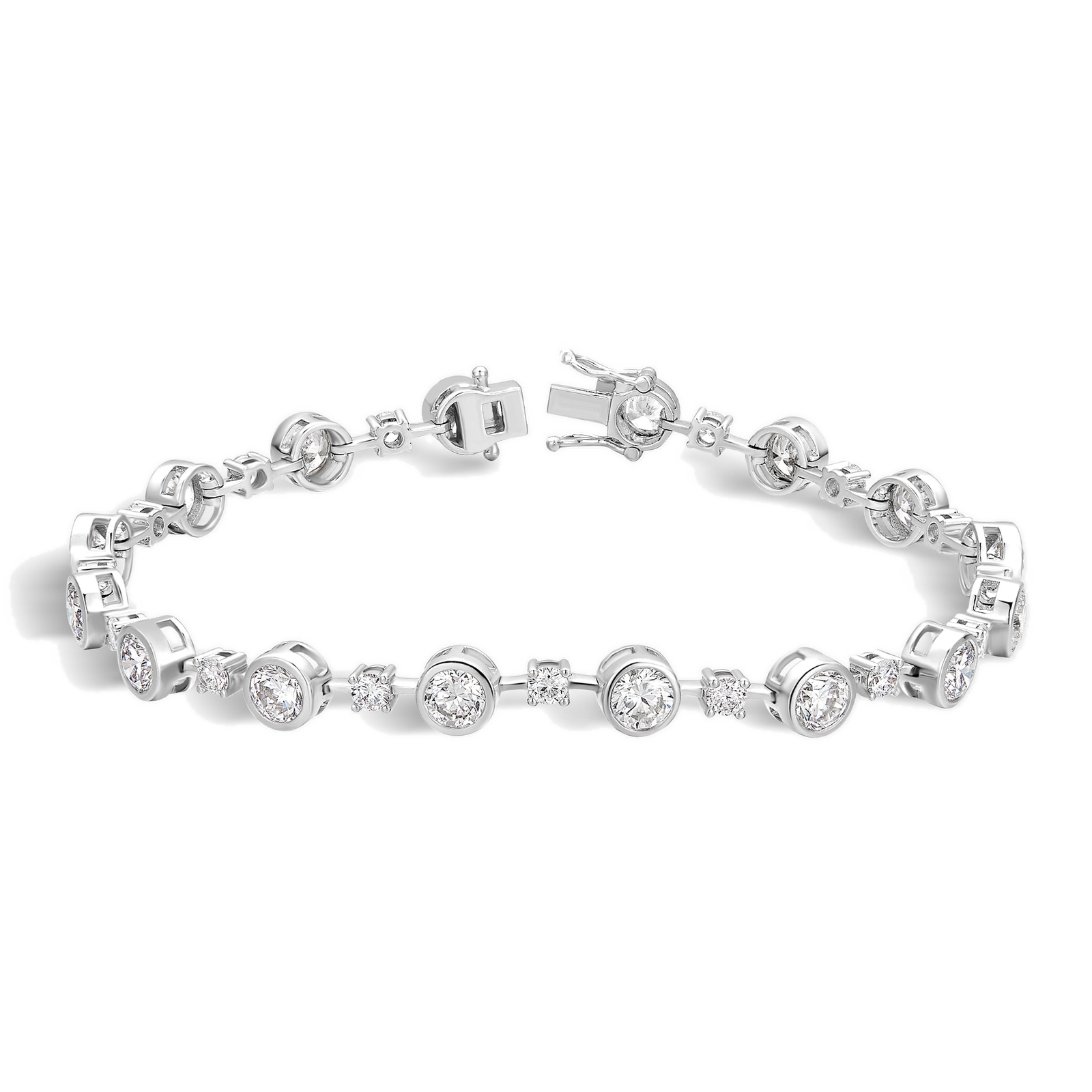

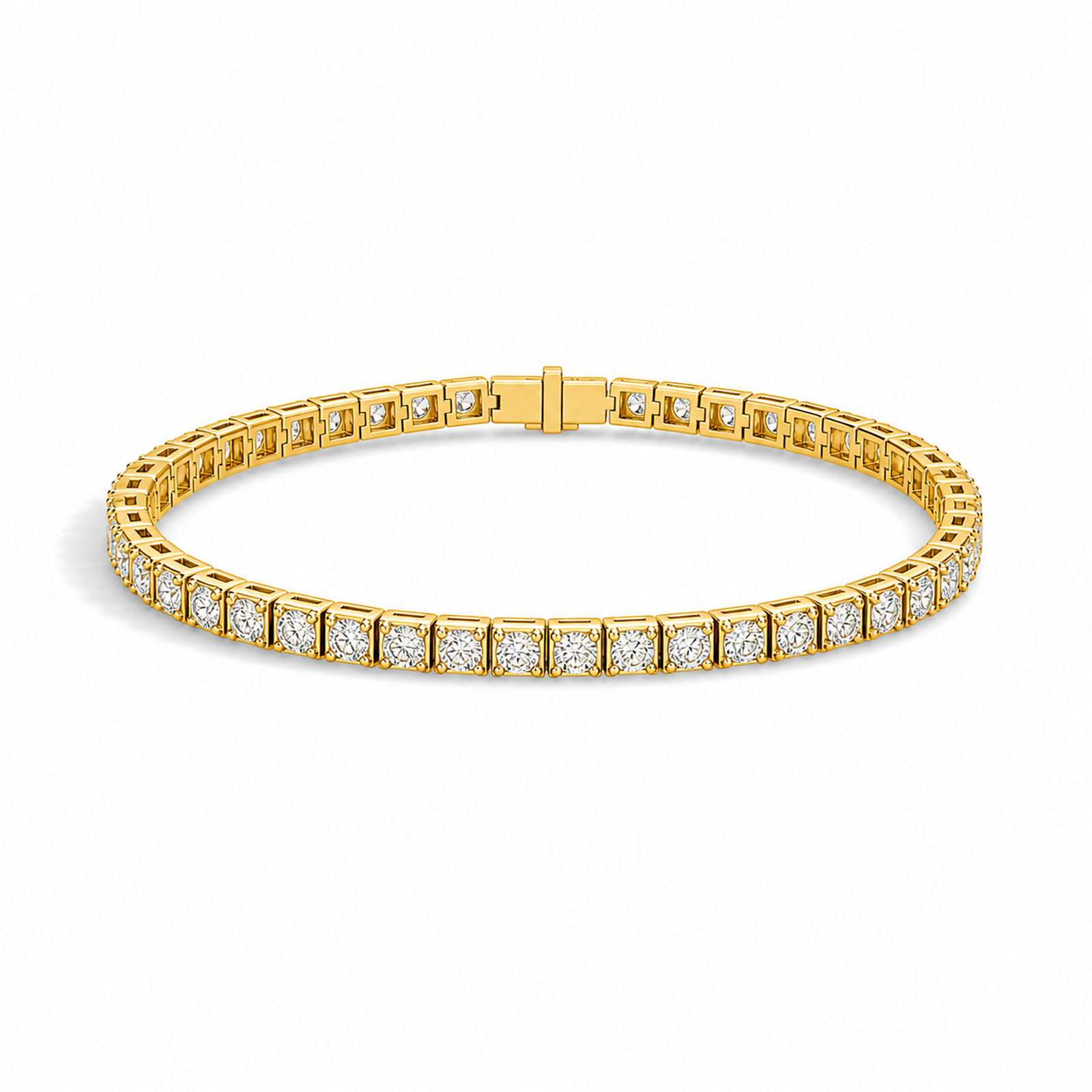
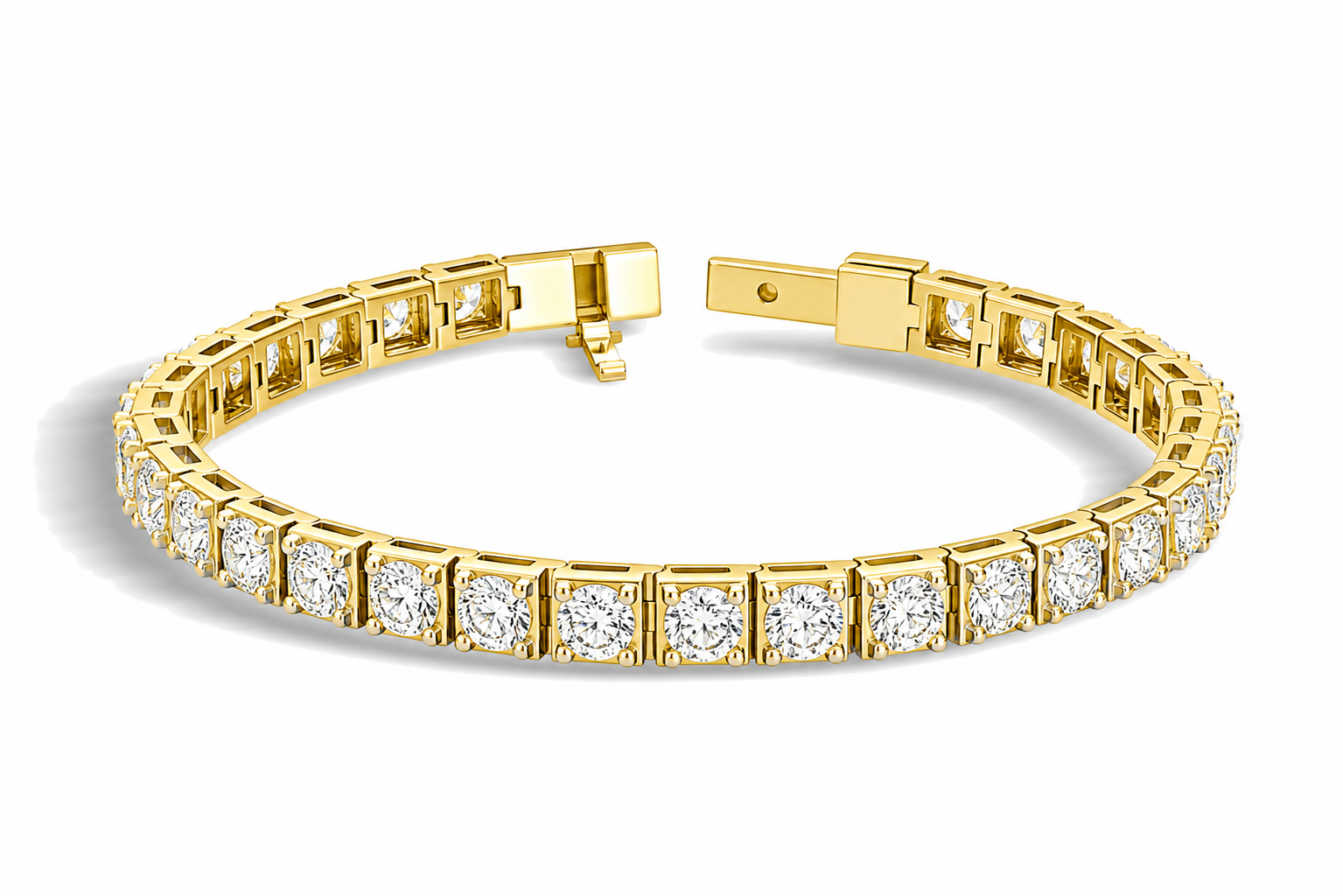

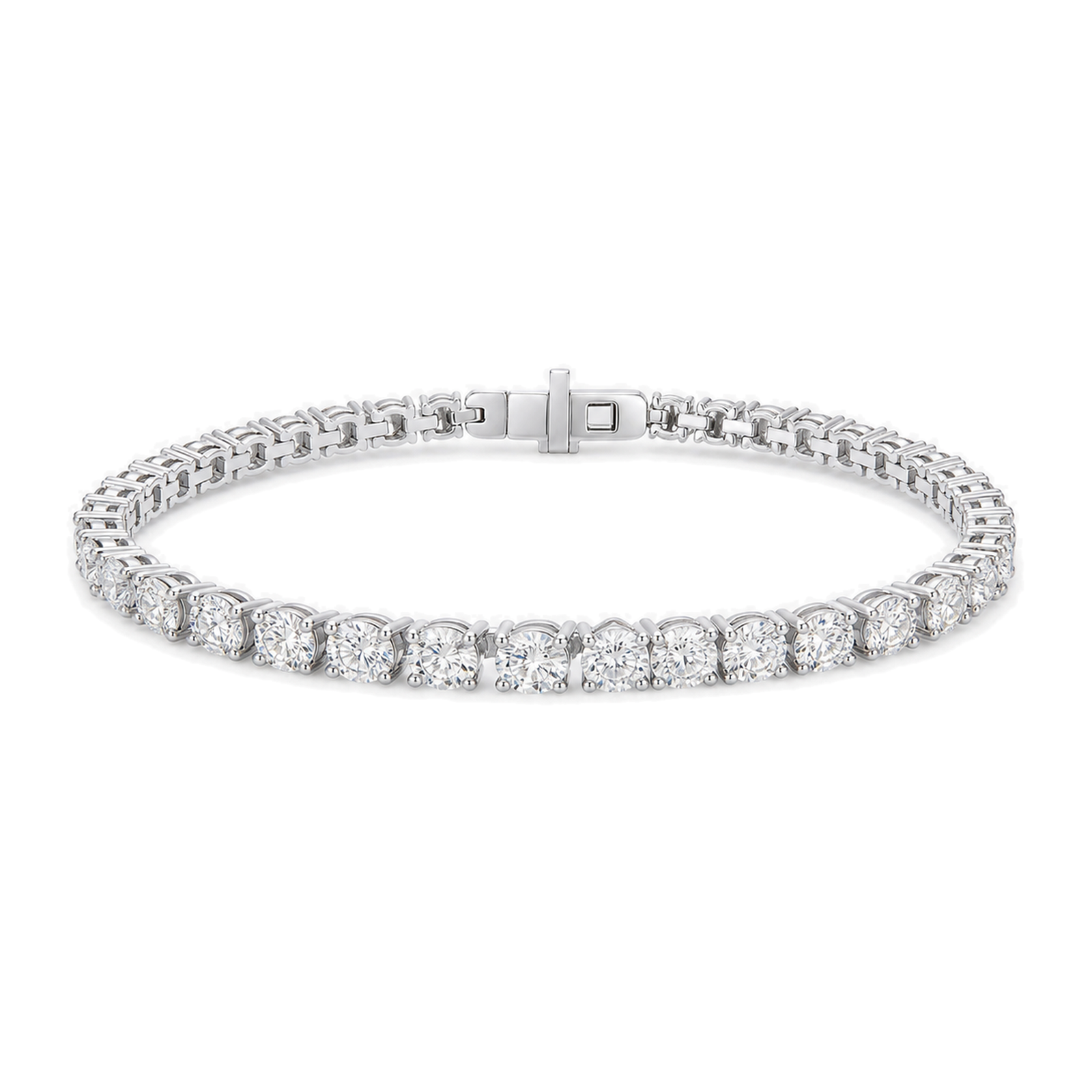
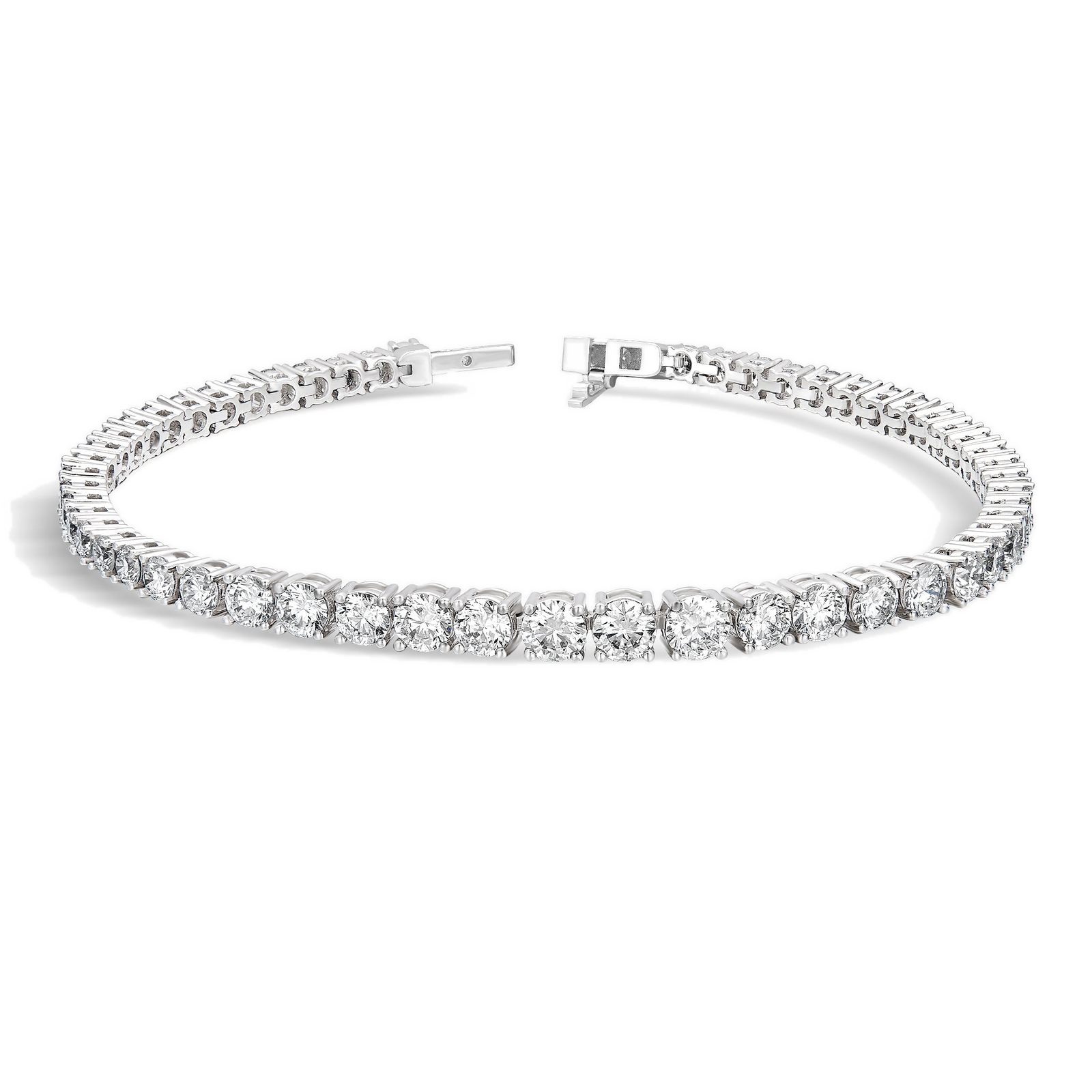

Composition in Motion at the Wrist
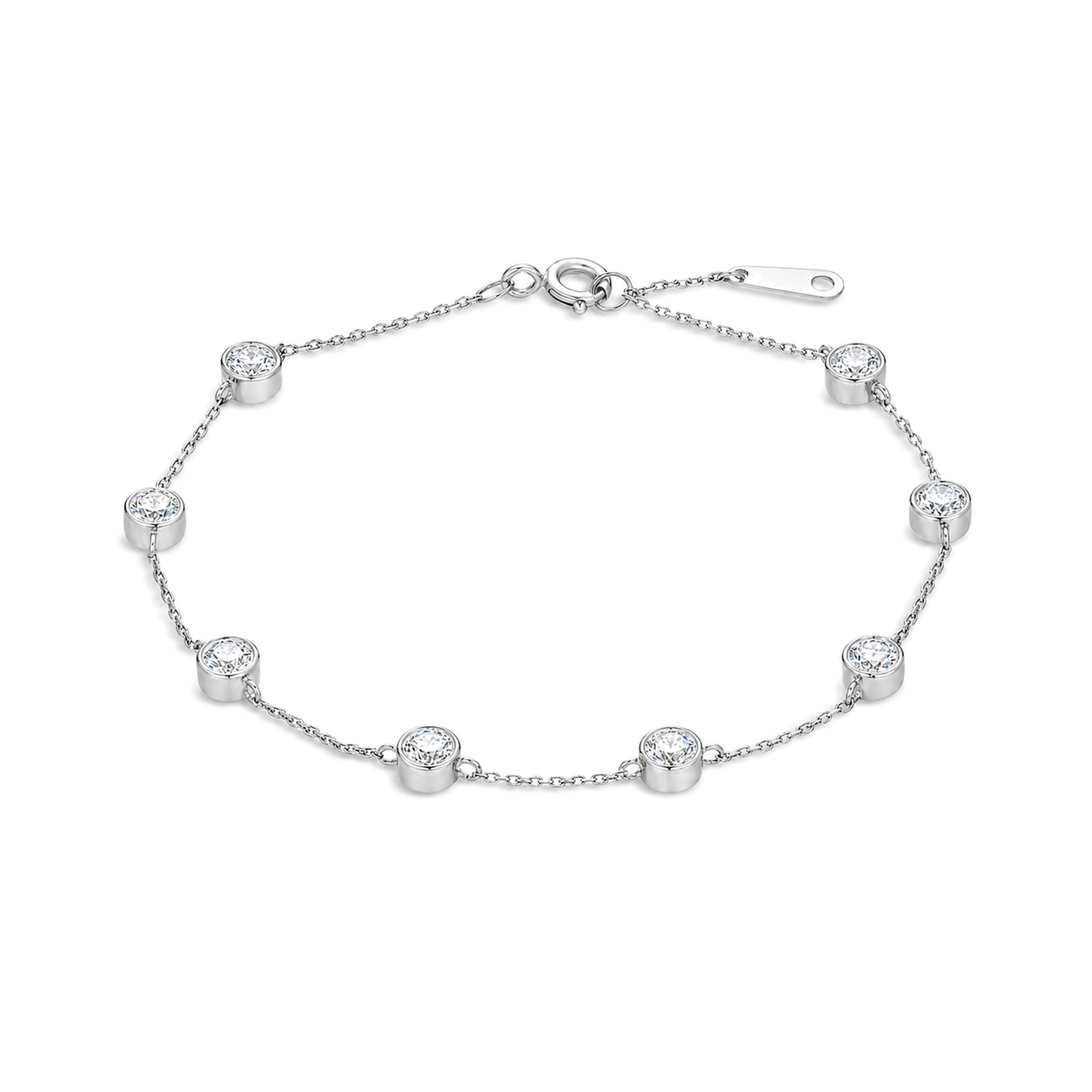
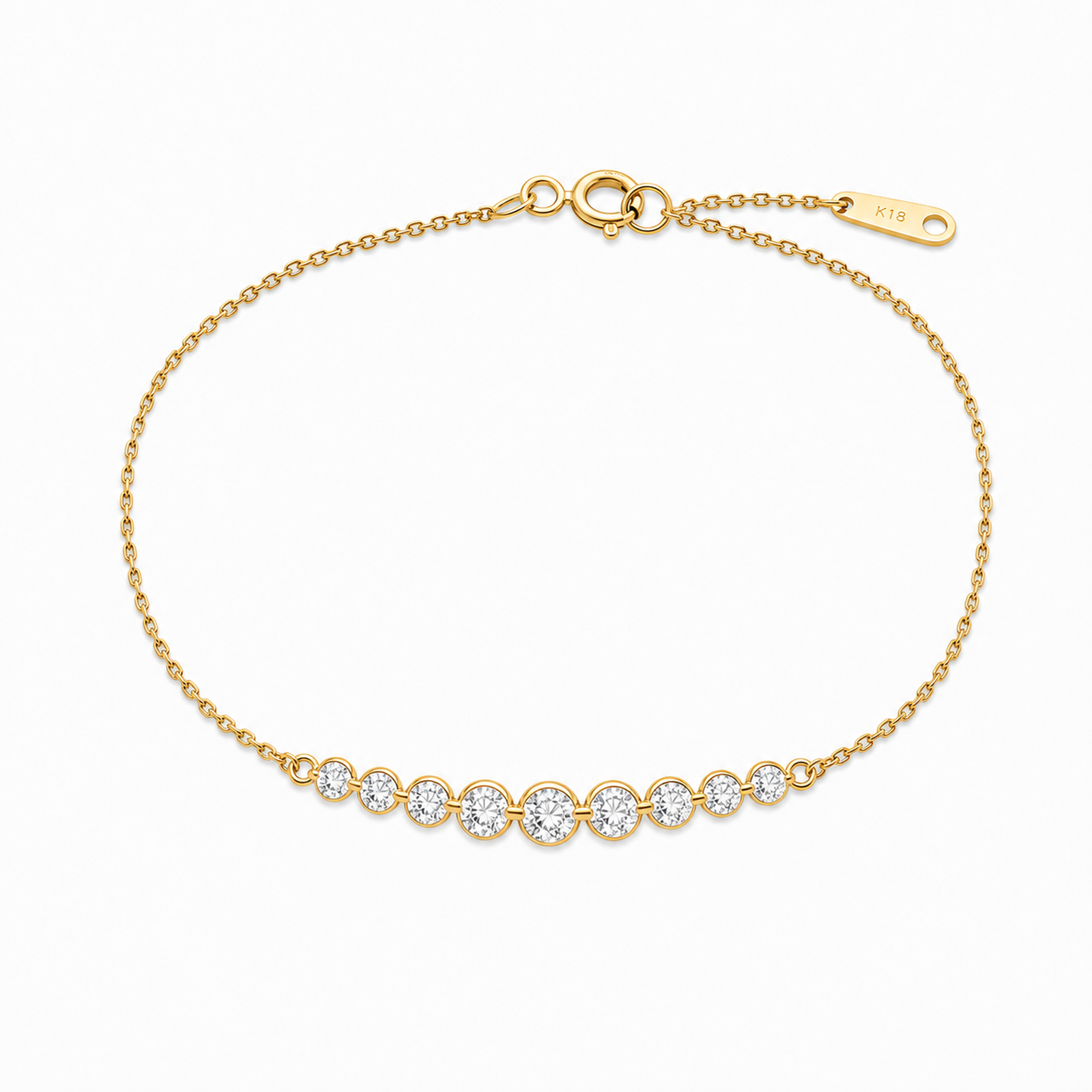
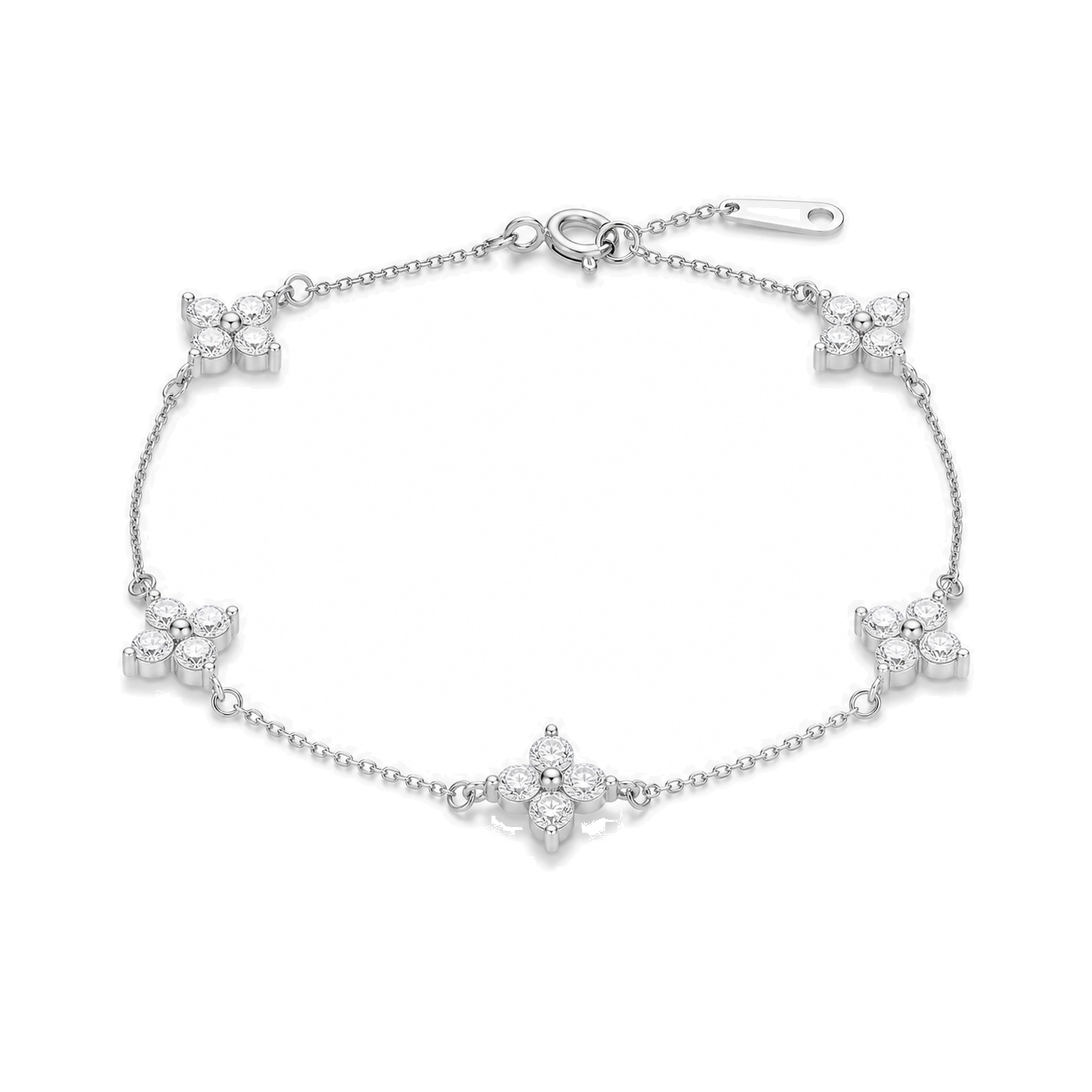
A bracelet is designed around movement. It curves around a changing plane, passes over or beside the wrist bone, and is read in fragments as the hand turns. Diamond distribution, metal structure, articulation, fit, and closure therefore shape the experience as much as total carat weight. The most considered choice is not simply the one with more diamonds, but the one whose rhythm remains clear in motion.
Burvonti’s current public Bracelet Collection contains 13 designs. Four use chain-led station, graduated-curve, multi-station charm, or bar compositions. The remaining nine include extended diamond lines, interlocking detail, box-link rhythm, bezel and prong tennis structures, one eternity bangle, one half-tennis bangle, and one alternating multi-shape design that is not currently assigned to the Tennis Collection. This guide follows the products as they are currently organized rather than inferring membership from titles alone.
Begin with How the Diamonds Occupy the Wrist
A station bracelet creates intervals between diamonds and chain. A bar or graduated curve concentrates light across one section. A charm composition introduces repeated motifs with open space between them. A tennis or extended-line design distributes diamonds across more of the circumference, while a bangle uses a more structured arc. Each creates a different relationship between light and skin.
Compare where the diamond field begins and ends, how much metal or chain remains visible, and whether the composition has one front or continues around the wrist. A concentrated design may rotate away from the top of the wrist; an extended line may reveal different sections as it moves. Neither behavior is universally better, and no construction stays in one position for every wearer.
Total Carat Weight Describes Material, Not Rhythm
All 13 current products use Total Carat Weight as their public option label. That number combines diamonds across the stated composition; it does not disclose each stone’s individual weight, the number of diamonds, complete bracelet width, coverage, flexibility, or visual continuity. A spaced station design and a closely repeated line can distribute the same total very differently.
Read total weight together with diamond count and shape where listed, setting width, bracelet length, coverage, spacing, and product imagery. For mixed-shape or graduated arrangements, relative dimensions and sequence matter as much as the sum. No fixed total can be prescribed as subtle, everyday, statement, or ideal for a particular wrist.
Chain, Link, and Bangle Structures Move Differently
The current assortment includes fine chain-led designs, articulated tennis structures, box-link and interlocking treatments, and two bangle constructions. A chain may drape and turn more freely. Individually connected settings can articulate around the wrist. A bangle carries more of its own arc. Exact behavior depends on link geometry, setting depth, hinges or joints, clasp, dimensions, and condition.
Do not assume that every Tennis-tagged design is a fully flexible continuous line, or that every bangle is rigid in the same way. Inspect front, side, back, closure, and connection views. The useful question is how the bracelet transitions through the wrist’s curve while keeping its intended pattern legible.
Fit Is a Relationship, Not a Single Length
Current chain and articulated product descriptions list either 6.3 or 6.7 inches; the two bangle descriptions do not publish a length in the same field. Length alone cannot determine fit. Wrist circumference, wrist shape, desired movement, bracelet width and thickness, clasp, stacking plan, and whether the design is flexible or structured all affect clearance.
Measure where the bracelet will sit and compare with product-specific dimensions. Too little allowance may restrict movement or load connections; too much may let the piece rotate, catch, or move over the hand. Burvonti does not apply one universal fit increment or assume that resizing is possible for every diamond sequence or bangle construction.
Setting and Closure Belong to the Same System
Ten current designs use prong-set language and three use bezel language. Closures include Spring Clasp on four chain-led designs, Box Clasp on four designs, and Barrel Clasp on five. These labels describe different parts of the construction, but they do not establish universal security, snag resistance, comfort, or ease of use.
Consider the diamond setting, every link or station, the transition into the closure, and the closure itself. A continuous metal edge changes the boundary around a diamond; prongs leave more of the outline exposed. Box, barrel, and spring mechanisms should be judged through selected-product views, operation, fit, maintenance, and condition—not through a Collection-wide safety promise.
Metal Sets the Line’s Temperature and Definition
Current cards represent six designs in 14K White Gold, five in 14K Yellow Gold, and two in 14K Rose Gold. White gold may recede among colorless-looking diamonds in some settings; yellow or rose gold can make links, bezels, prongs, bars, or negative space more explicit. Exact effect depends on finish, rhodium plating, diamond distribution, width, skin context, and neighboring jewelry.
For stacking, repeated metal can create continuity while controlled contrast can separate layers. Also compare profile and movement: a structured bangle, fine chain, and articulated diamond line may contact one another differently. Metal does not guarantee a sensitivity outcome, level of durability, gender, or occasion.
Stacking Requires Space for Every Construction
A bracelet may be worn alone, beside a watch, or within a stack, but each neighboring piece changes the composition and contact pattern. Use differences in width, structure, diamond interval, and metal as deliberate rhythm. A fine station bracelet can introduce open space; a tennis line can act as a continuous register; a bangle can define a firmer boundary.
Leave enough clearance for closures and diamond settings, and consider which piece should sit closest to the hand. Stacking can create abrasion, impact, catching, or pressure between components. No order eliminates those risks, and visual compatibility does not prove mechanical compatibility.
Documentation and Care Follow the Complete Construction
Burvonti uses responsibly sourced lab-grown diamonds and supports independent grading and certification where applicable. In a multi-diamond bracelet, one document does not automatically describe every stone or the finished piece. Confirm how total weight, color and clarity fields, individual diamonds, and documentation correspond to the selected design.
Use gentle care suited to diamonds, metal, settings, links, hinges or joints, chain, and closure. Store the bracelet without abrasive contact, and inspect the entire circumference if a stone, link, setting, clasp, alignment, or movement changes. Custom possibilities may refine length, diamond sequence, coverage, setting, metal, closure, or scale when technically feasible.
Frequently Asked Questions
What types of lab-grown diamond bracelets are currently available?
The current 13-design Collection includes station, graduated curve, multi-station charm, bar, tennis, interlocking, box-link, bezel, mixed-shape, and bangle compositions.
How is a tennis bracelet different from the broader Bracelet Collection?
Tennis describes an extended diamond-line intent. The broader category also includes chain-led stations, bars, curves, charms, and other structured compositions.
Are all current bracelets flexible?
No. The assortment includes chain-led and articulated designs as well as eternity and half-tennis bangles. Exact flexibility requires product-specific inspection.
What does Total Carat Weight mean on a bracelet?
It combines diamond weight across the stated composition. It does not reveal each stone’s weight, diamond count, coverage, width, flexibility, or complete dimensions.
Does a higher total carat weight always look larger?
No. Diamond size, count, shape, spacing, setting, coverage, width, and distribution can make similar totals read very differently.
What bracelet lengths are currently listed?
Current chain and articulated descriptions list 6.3 or 6.7 inches. The two bangle descriptions do not publish a length in the same field; confirm the selected product.
How should I measure for a diamond bracelet?
Measure the wrist where the bracelet will sit, then assess product length, width, structure, desired movement, closure, and stacking plan. No universal allowance fits every design.
Can every diamond bracelet be resized?
No assumption should be made. Adding or removing links or altering a bangle can affect pattern, setting, symmetry, structure, documentation, and cost; confirm technical feasibility.
Which settings are currently represented?
Current product descriptions use prong-set and bezel language. Setting coverage and construction remain product-specific.
Which closures are currently represented?
The current assortment includes Spring, Box, and Barrel Clasps. No closure type carries a universal security or ease-of-use guarantee.
Is a bezel bracelet snag-proof or impact-proof?
No. A bezel creates a continuous metal boundary, but wear, impact, exposure, links, closure, fit, and condition still matter.
Which metals are currently represented?
Current cards represent 14K White, Yellow, and Rose Gold. Exact alloy, finish, rhodium plating, sensitivity, maintenance, and alternatives remain product-specific.
Can diamond bracelets be stacked?
Yes when width, profile, structure, movement, closure, and contact are considered. Stacking can still create abrasion, impact, catching, or pressure between pieces.
Can I wear a diamond bracelet beside a watch?
It may be styled beside a watch, but compare movement, edge, closure, finish, and contact. Visual compatibility does not guarantee no scratching or impact.
Will a bracelet stay centered on top of the wrist?
Not universally. Fit, weight distribution, focal design, wrist shape, movement, clothing, and neighboring pieces influence rotation and position.
Are all diamonds in a bracelet independently graded?
Do not assume one report covers every diamond. Confirm which stones any documentation identifies and how the remaining diamonds are represented.
Can a diamond bracelet be customized?
Length, sequence, coverage, setting, metal, closure, scale, or other structural details may be possible after technical review.
How should a diamond bracelet be cleaned and inspected?
Use gentle care for the full circumference and inspect every diamond, setting, link, joint, chain, and closure if fit, alignment, or movement changes.