


Hidden Halo Engagement Rings
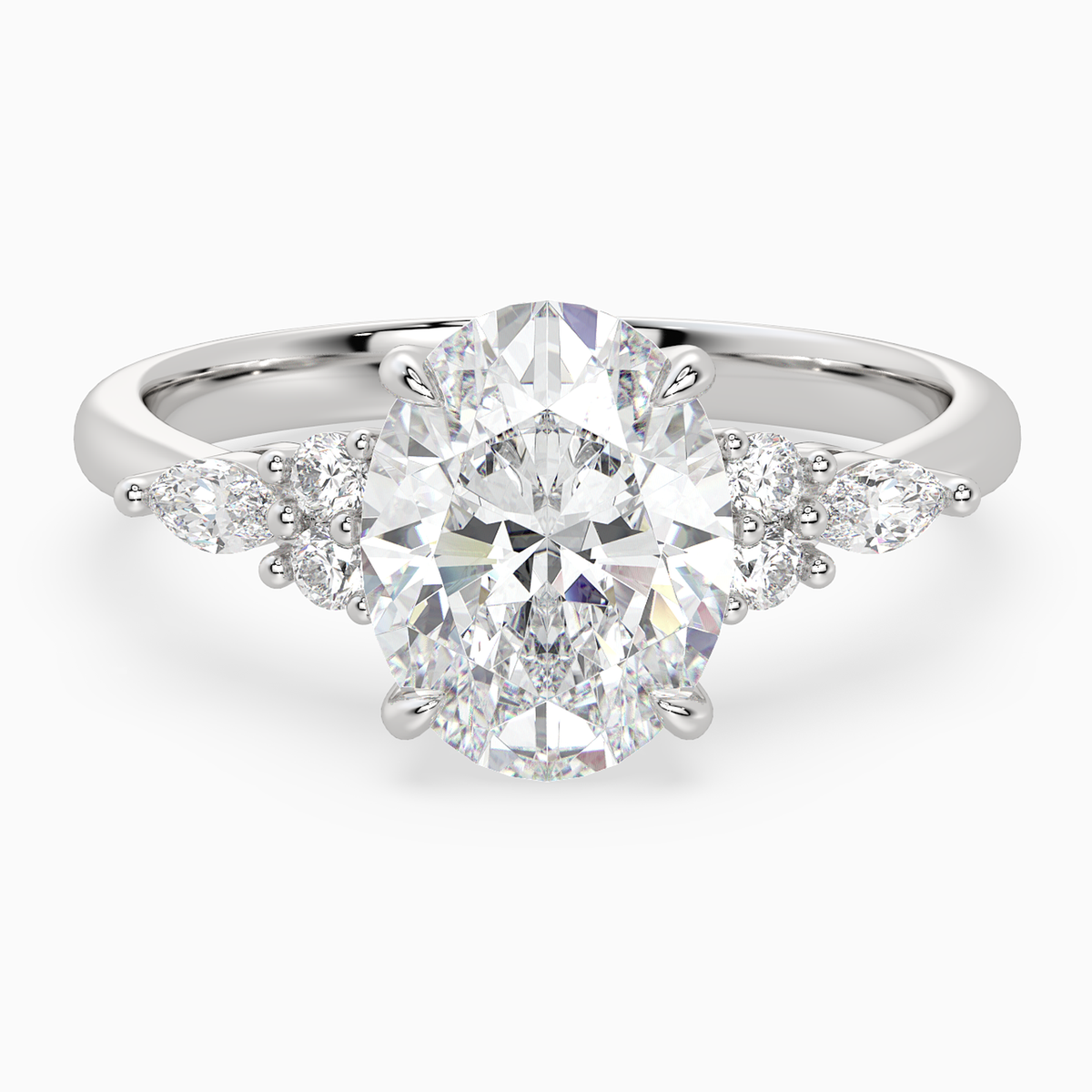
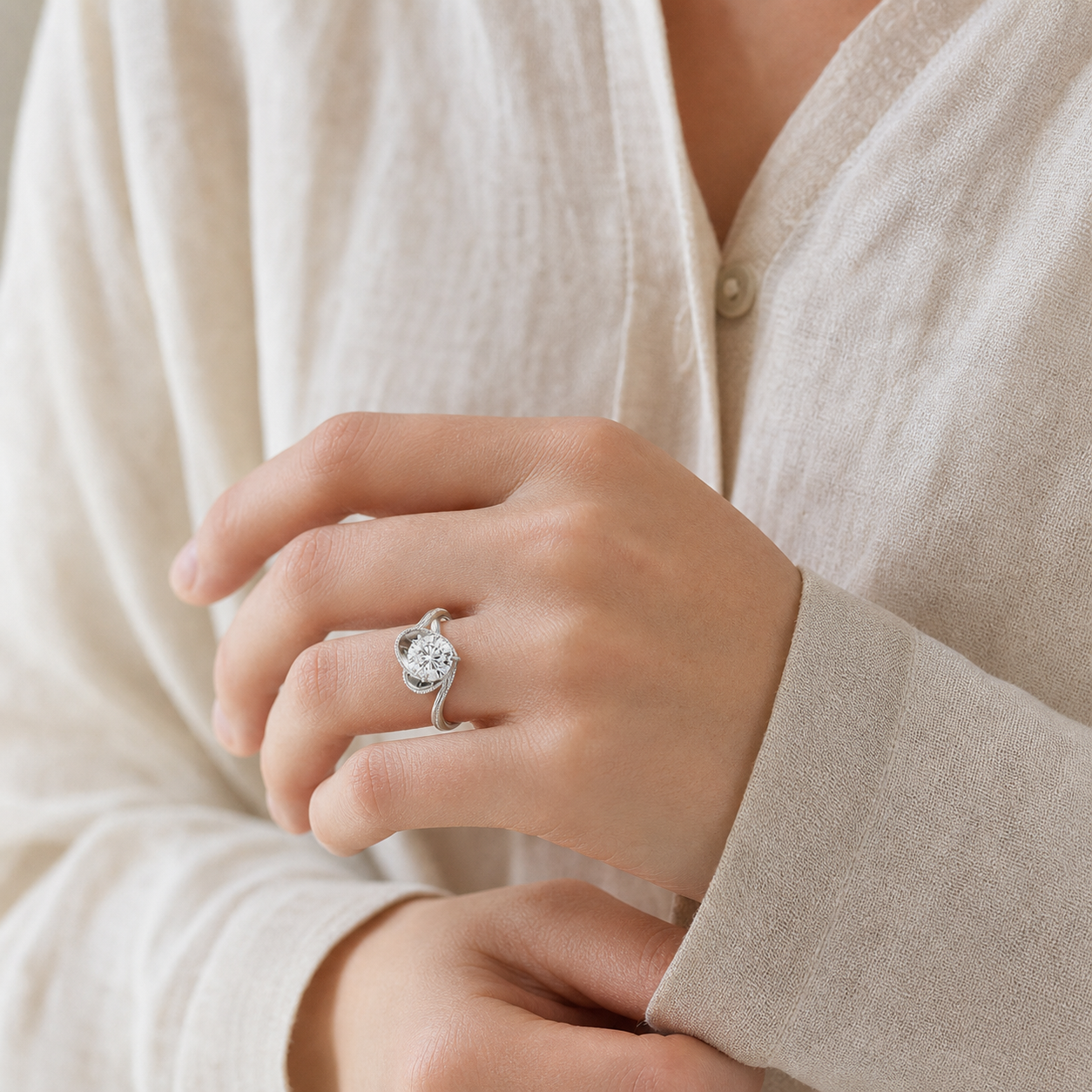
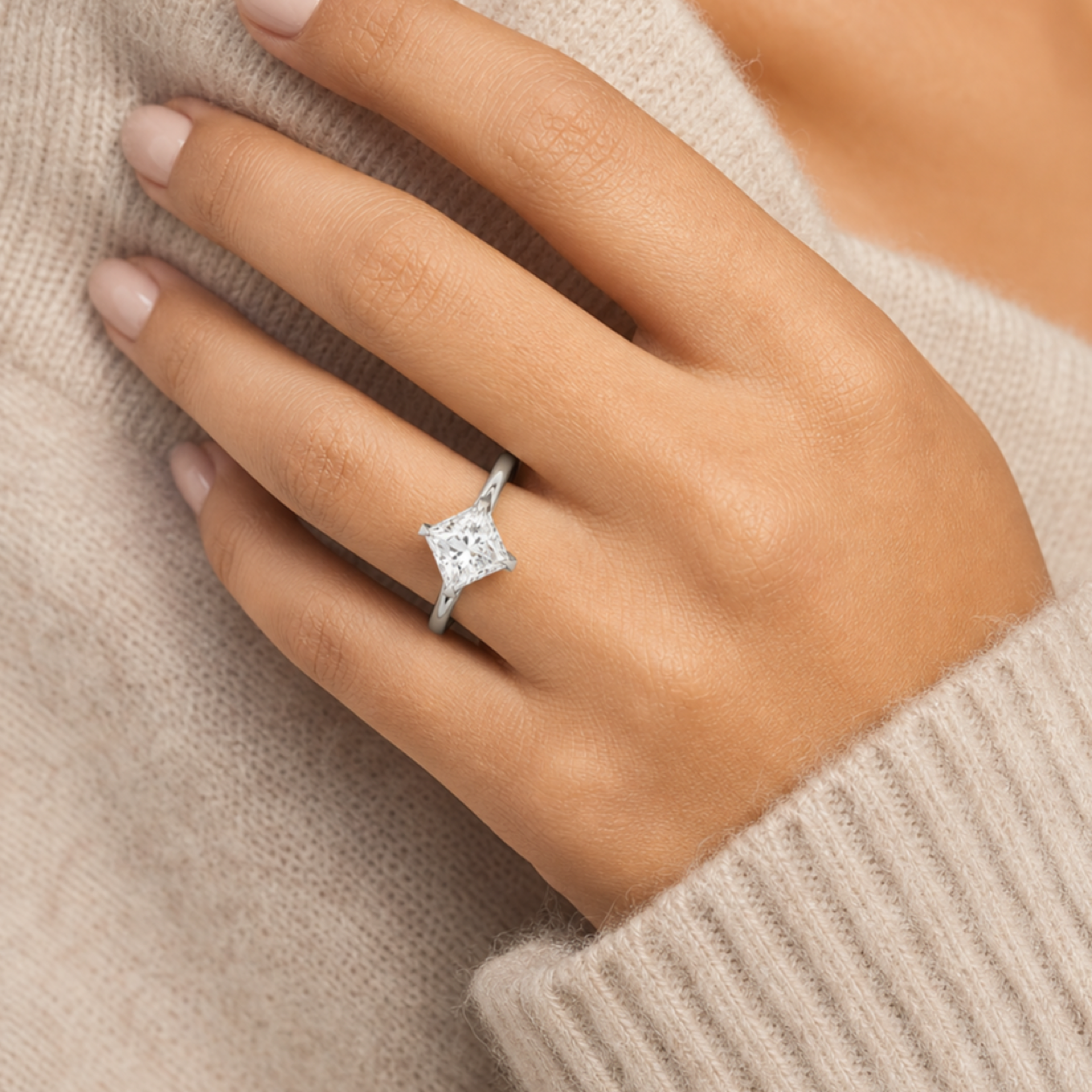
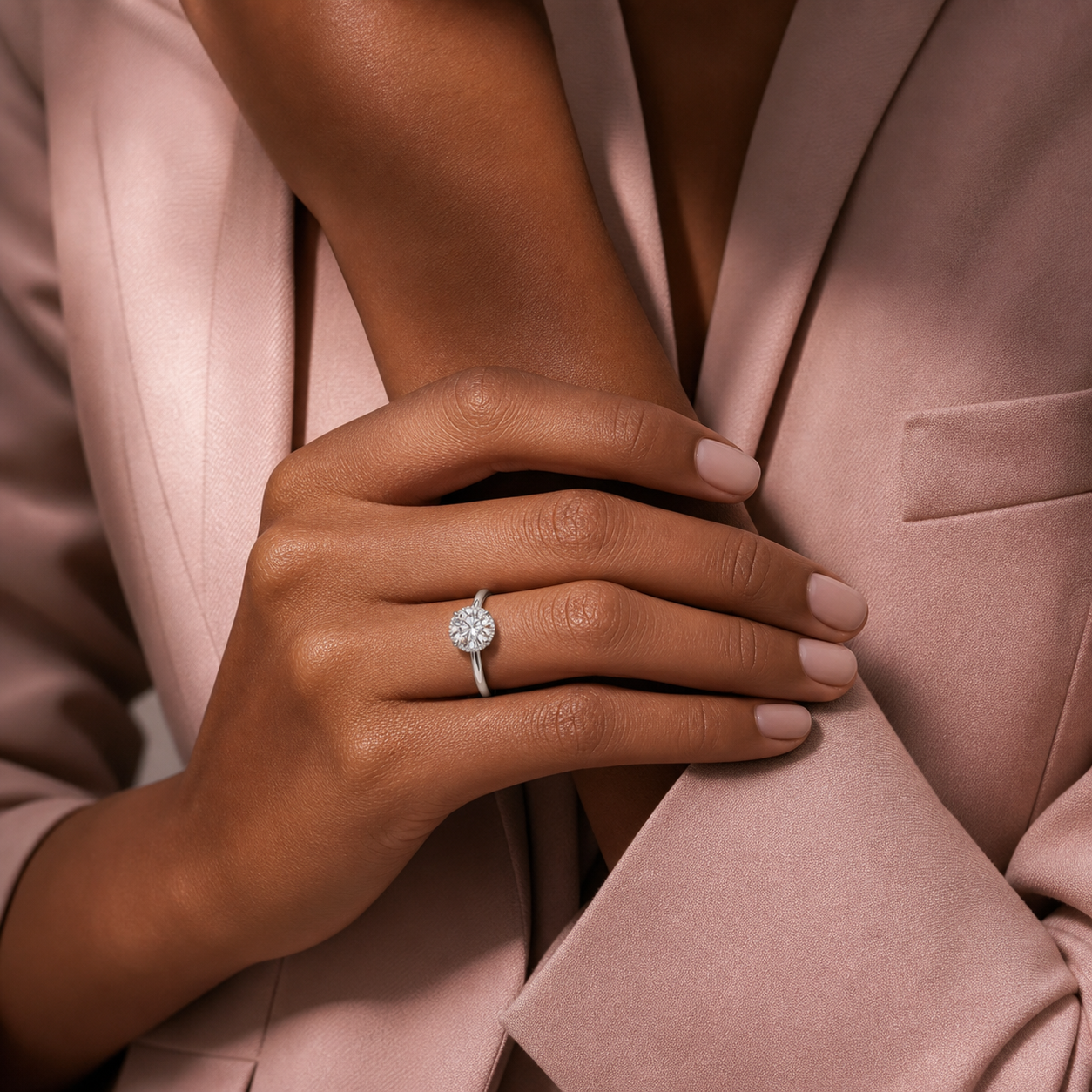
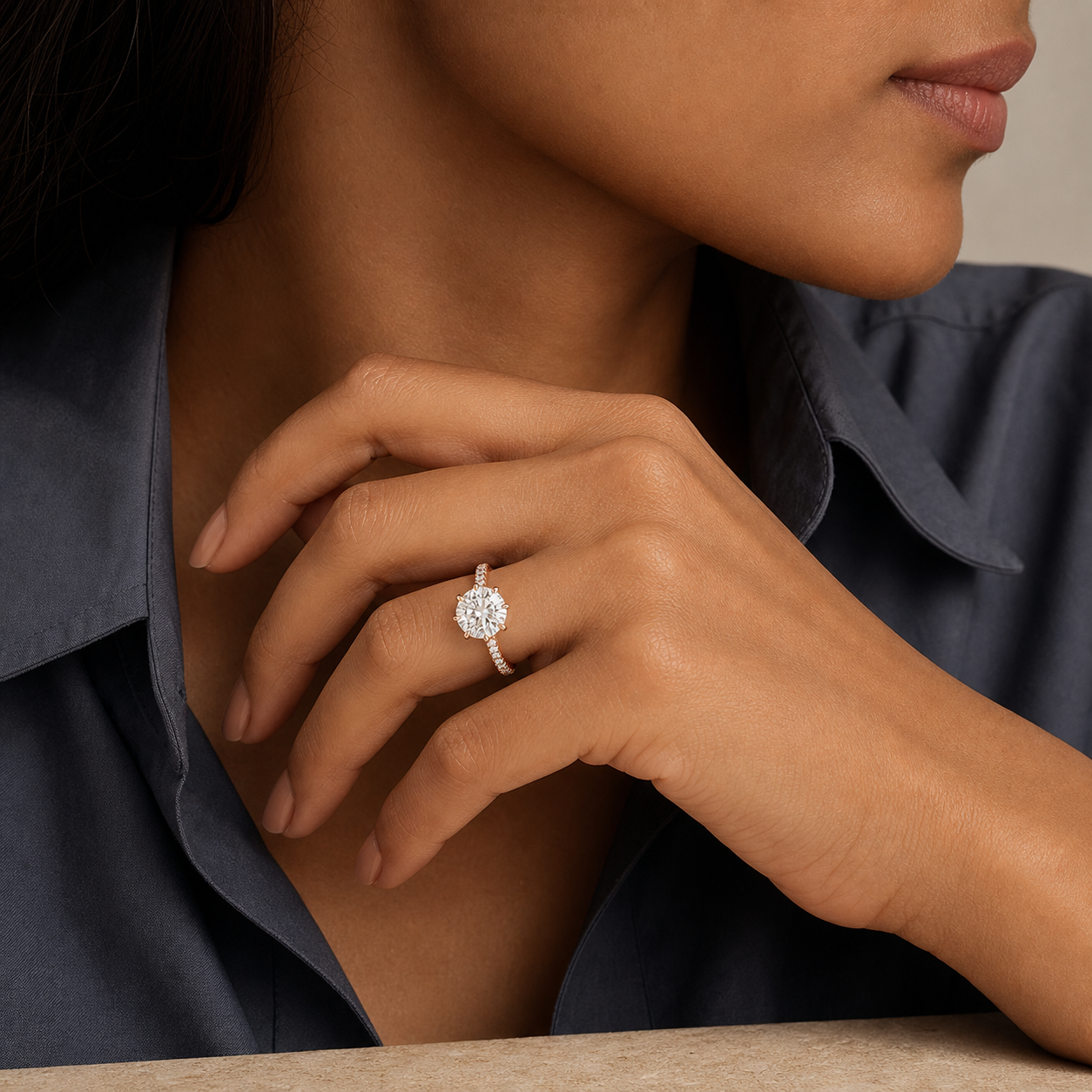
Detail revealed in motion. A calibrated line of diamonds beneath the center enriches the profile while keeping the top view composed.








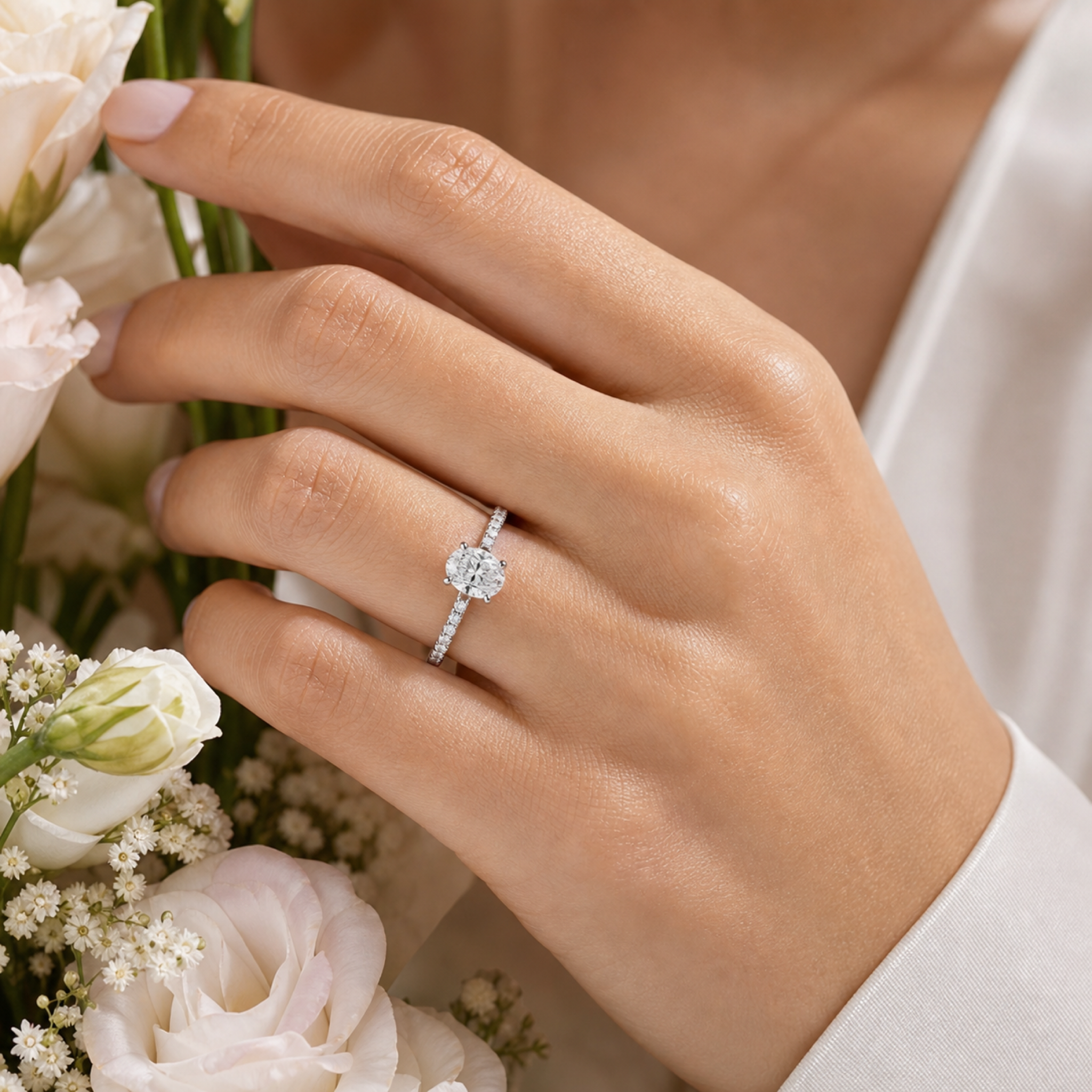


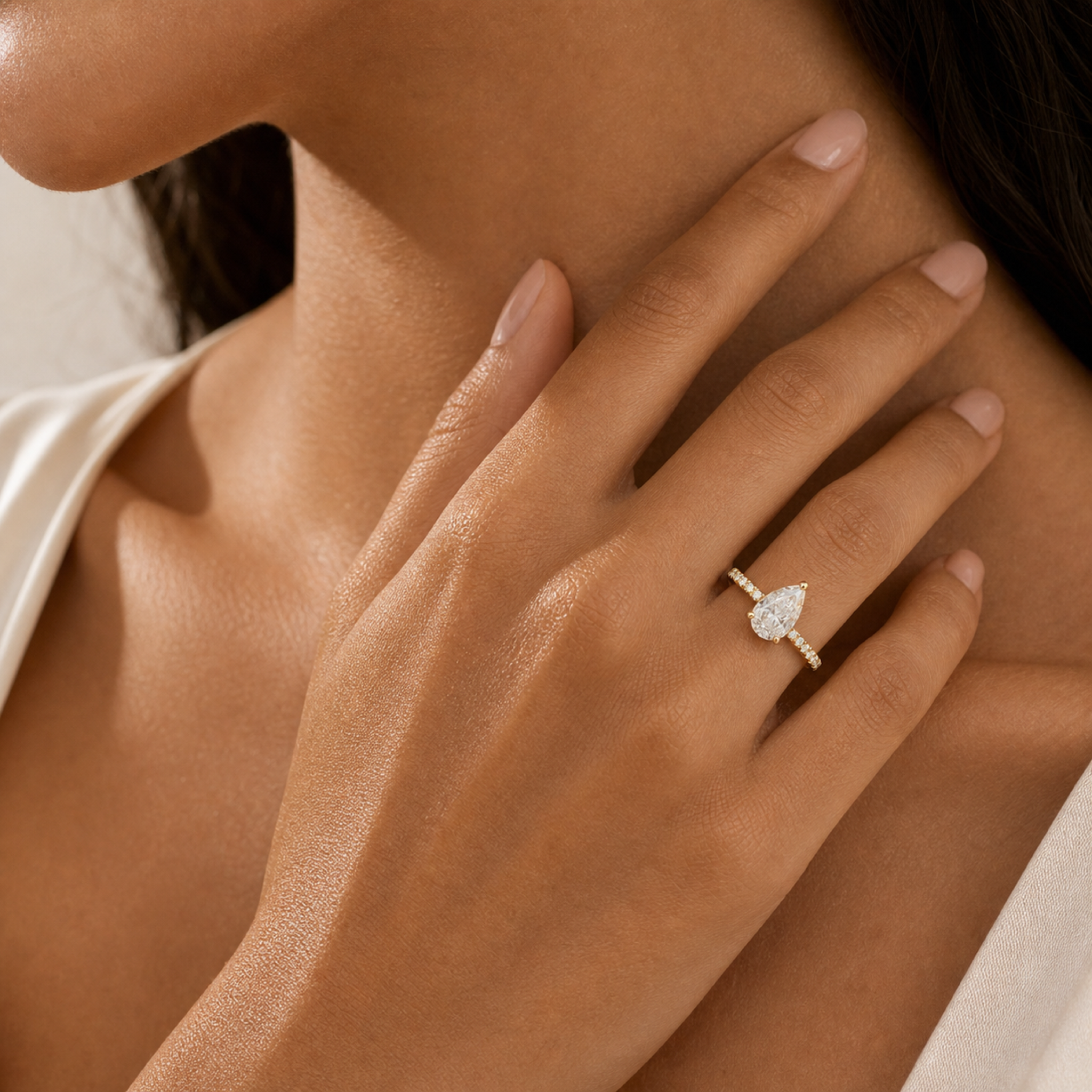


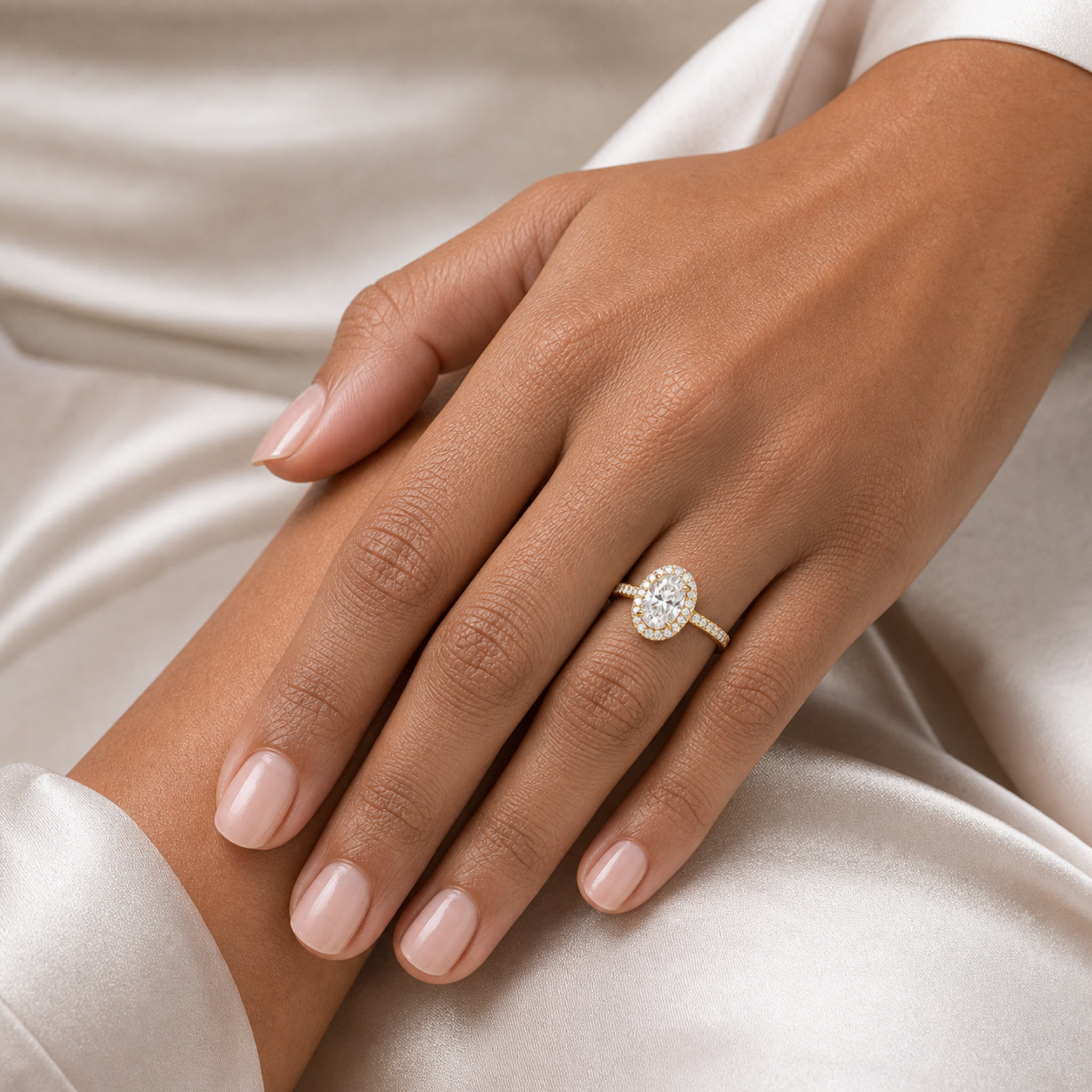


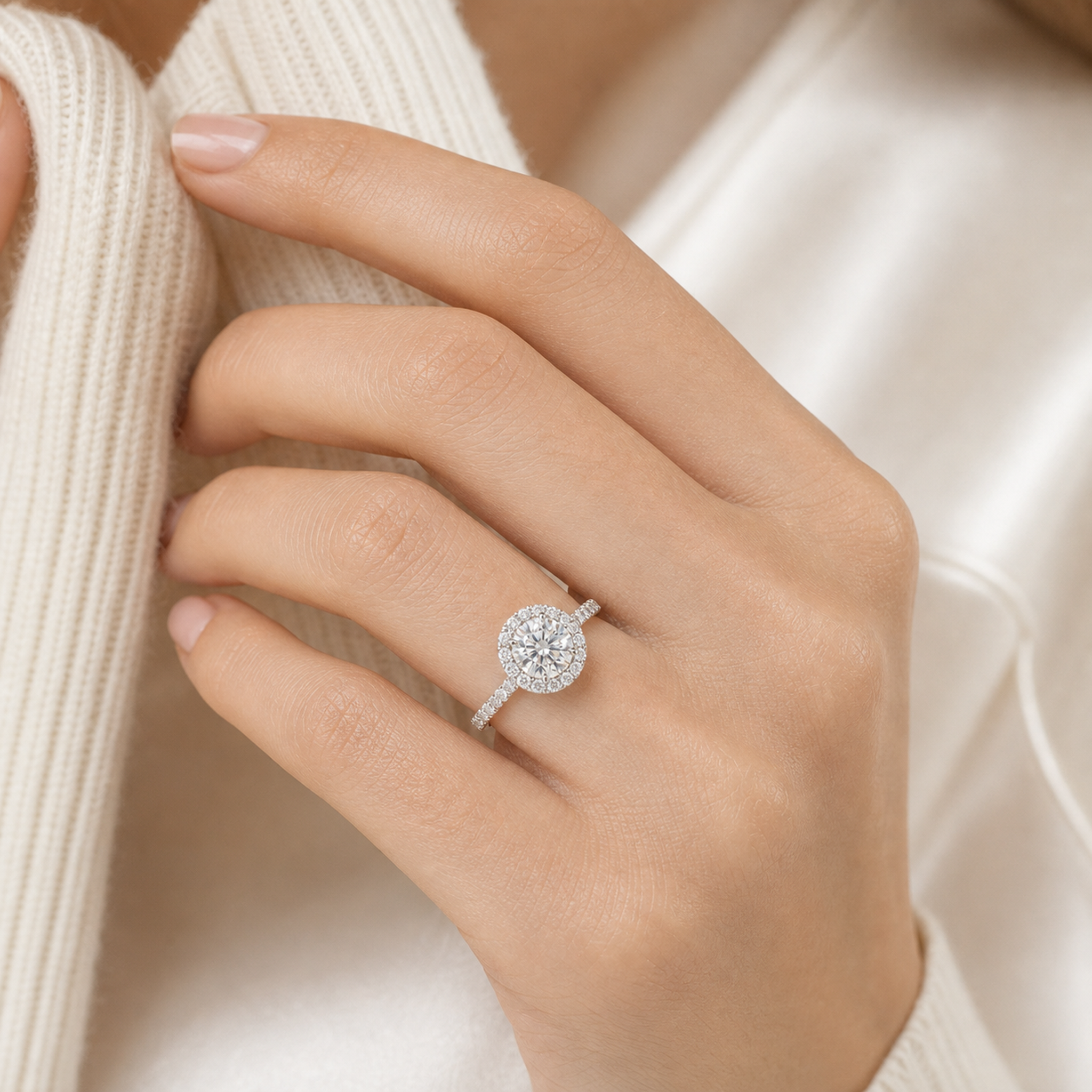


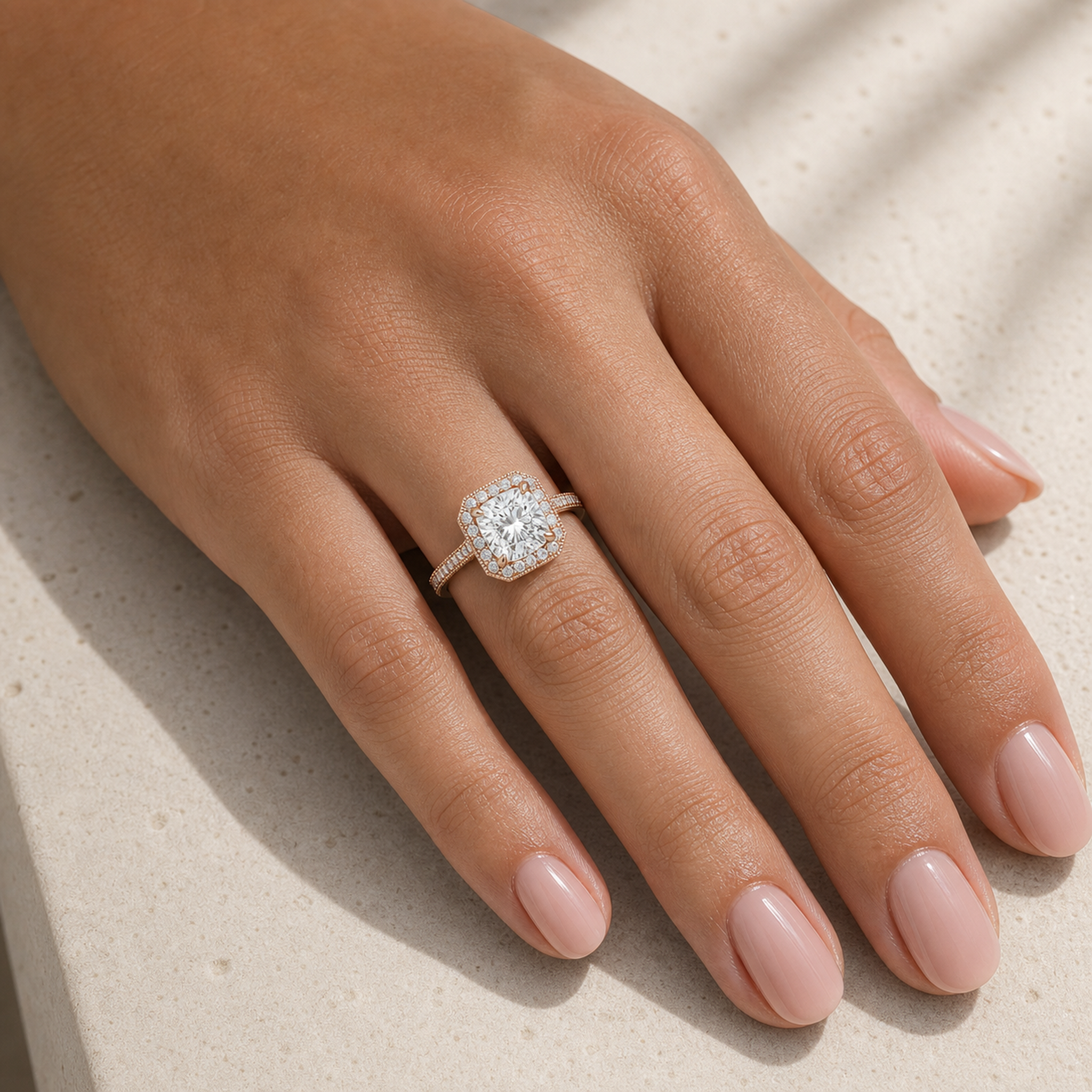


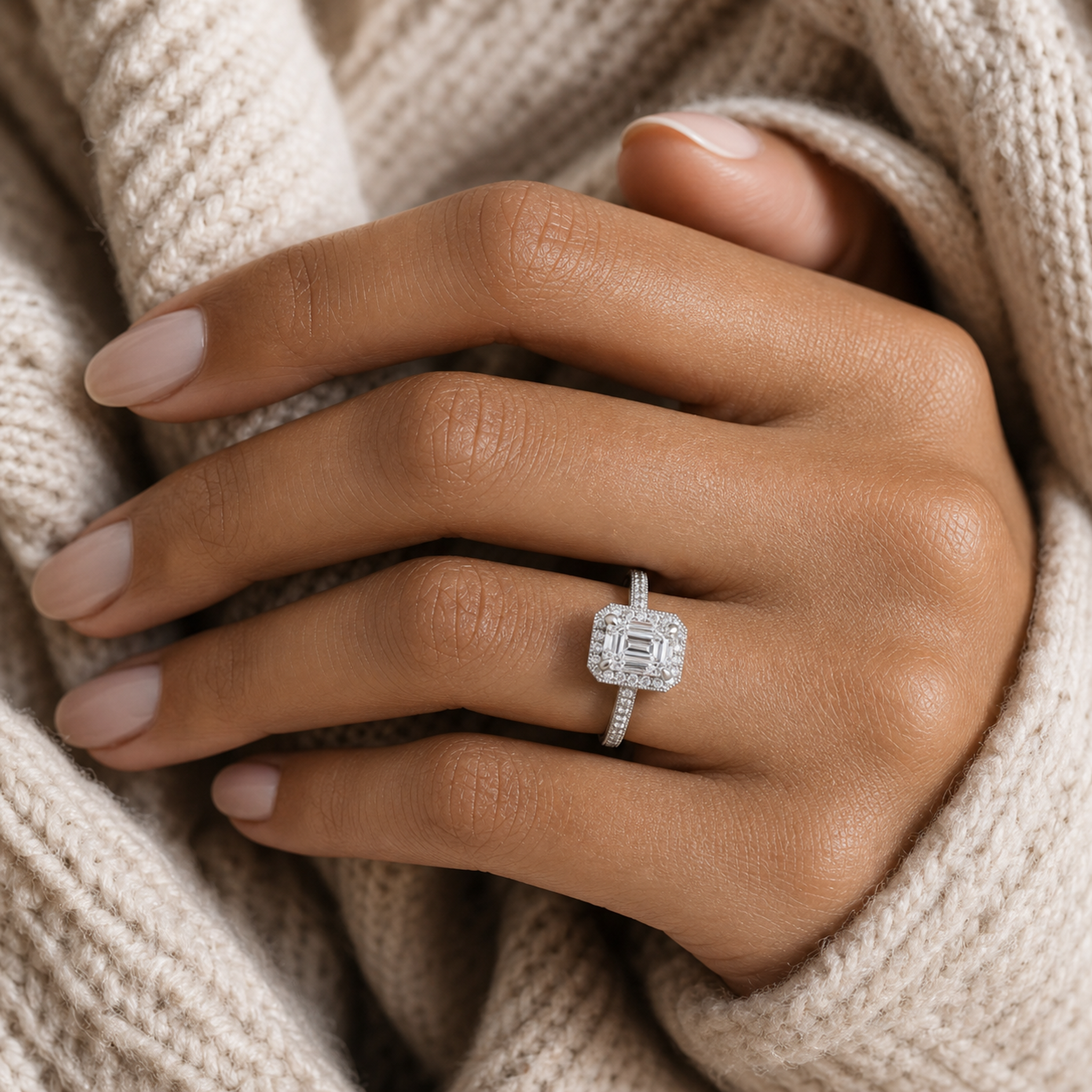


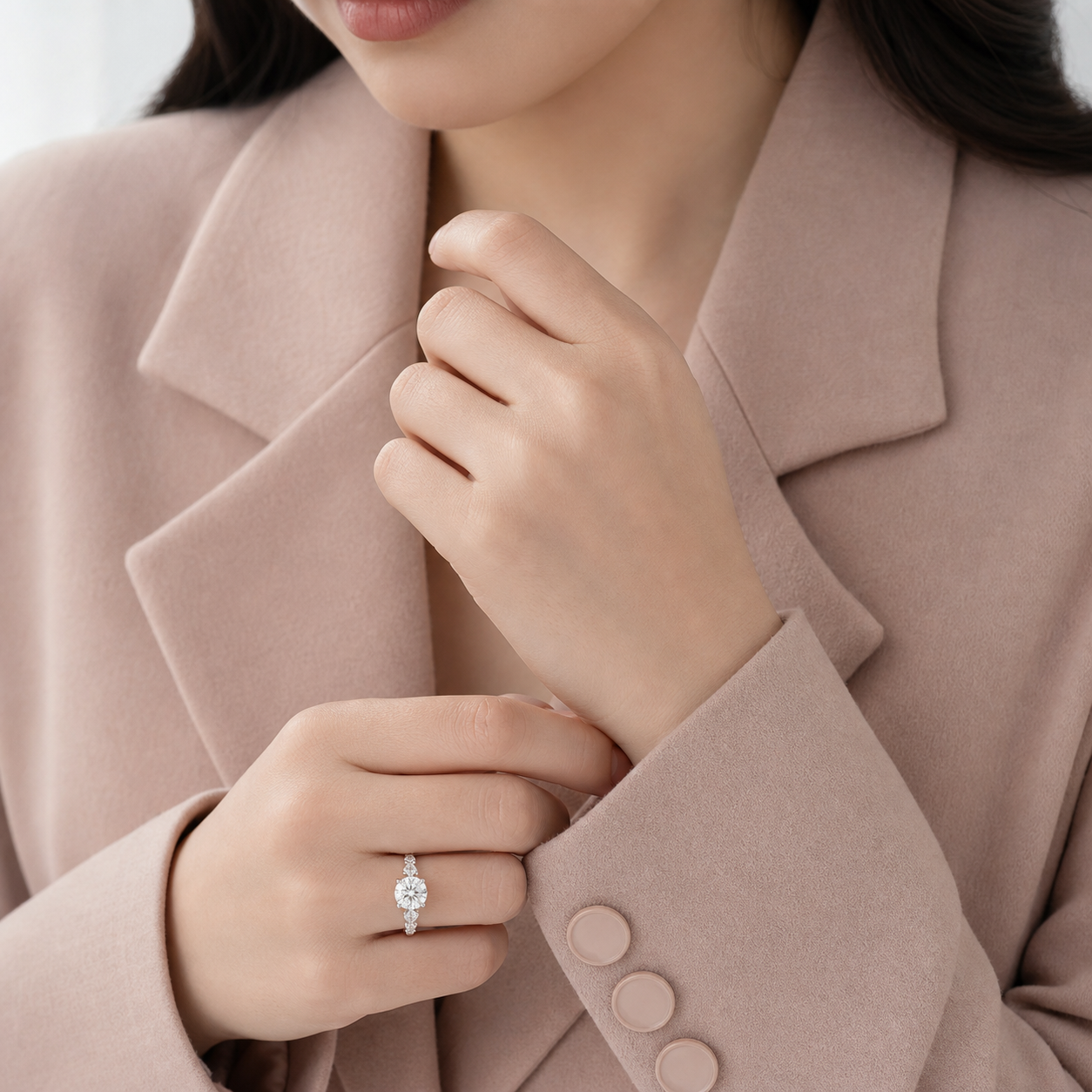


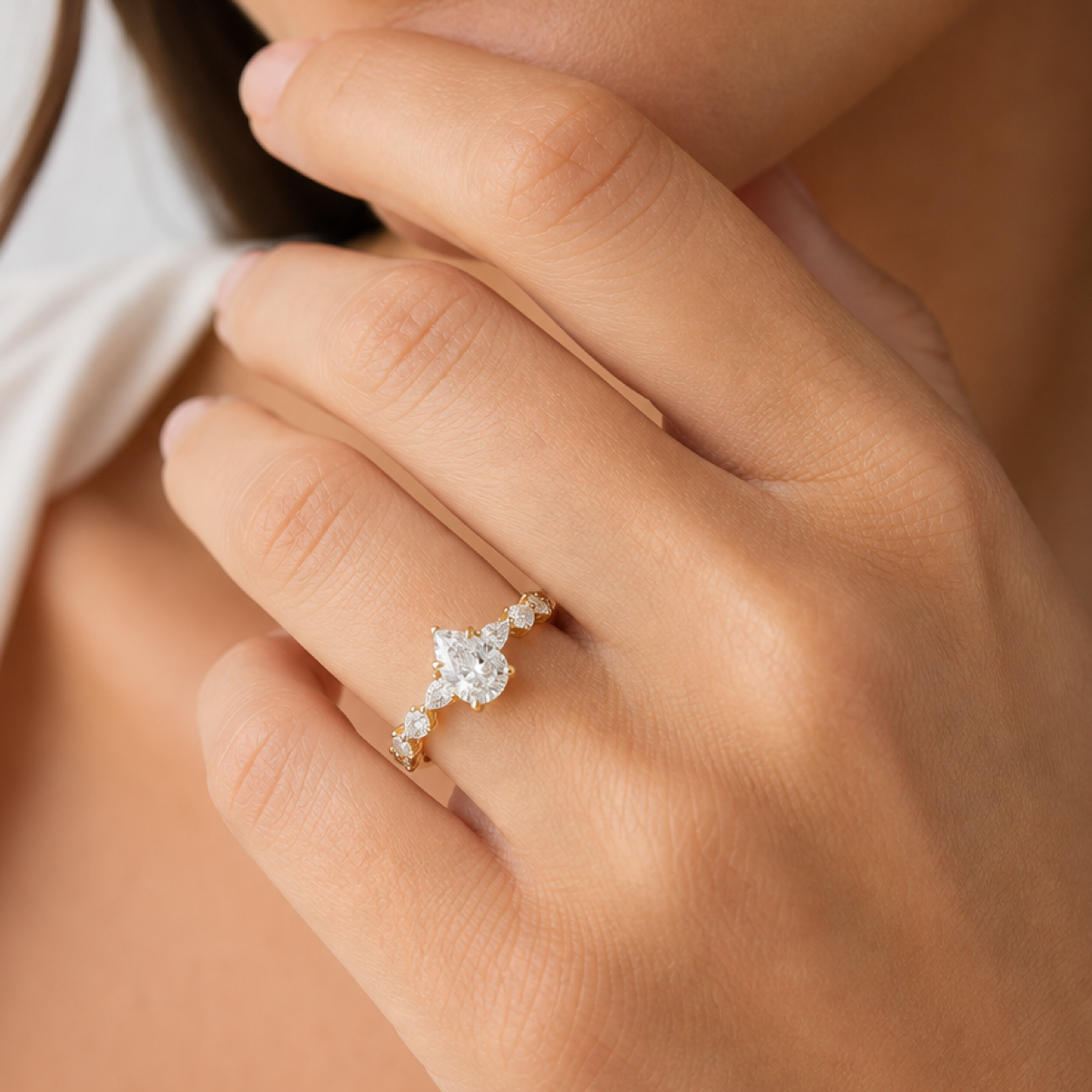













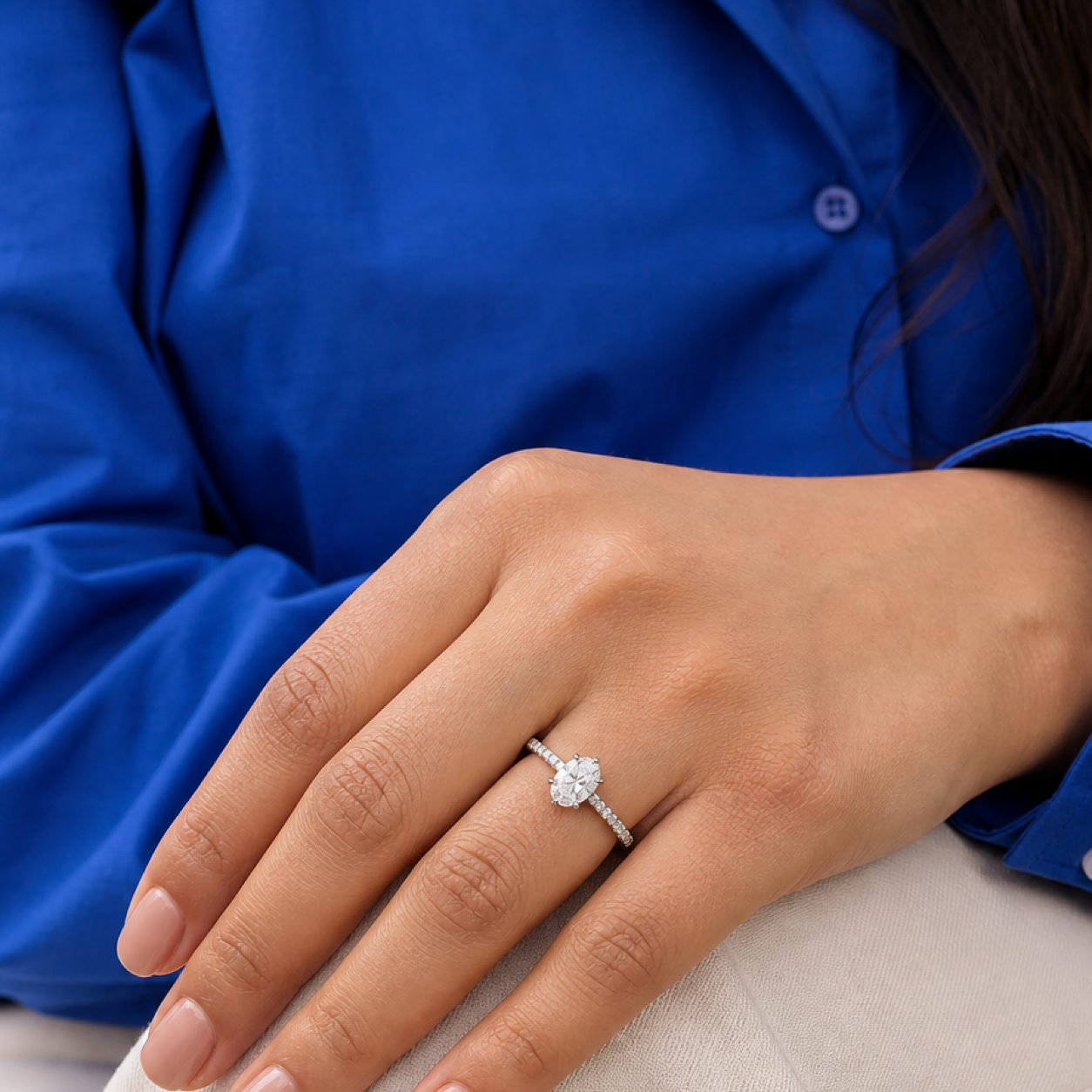





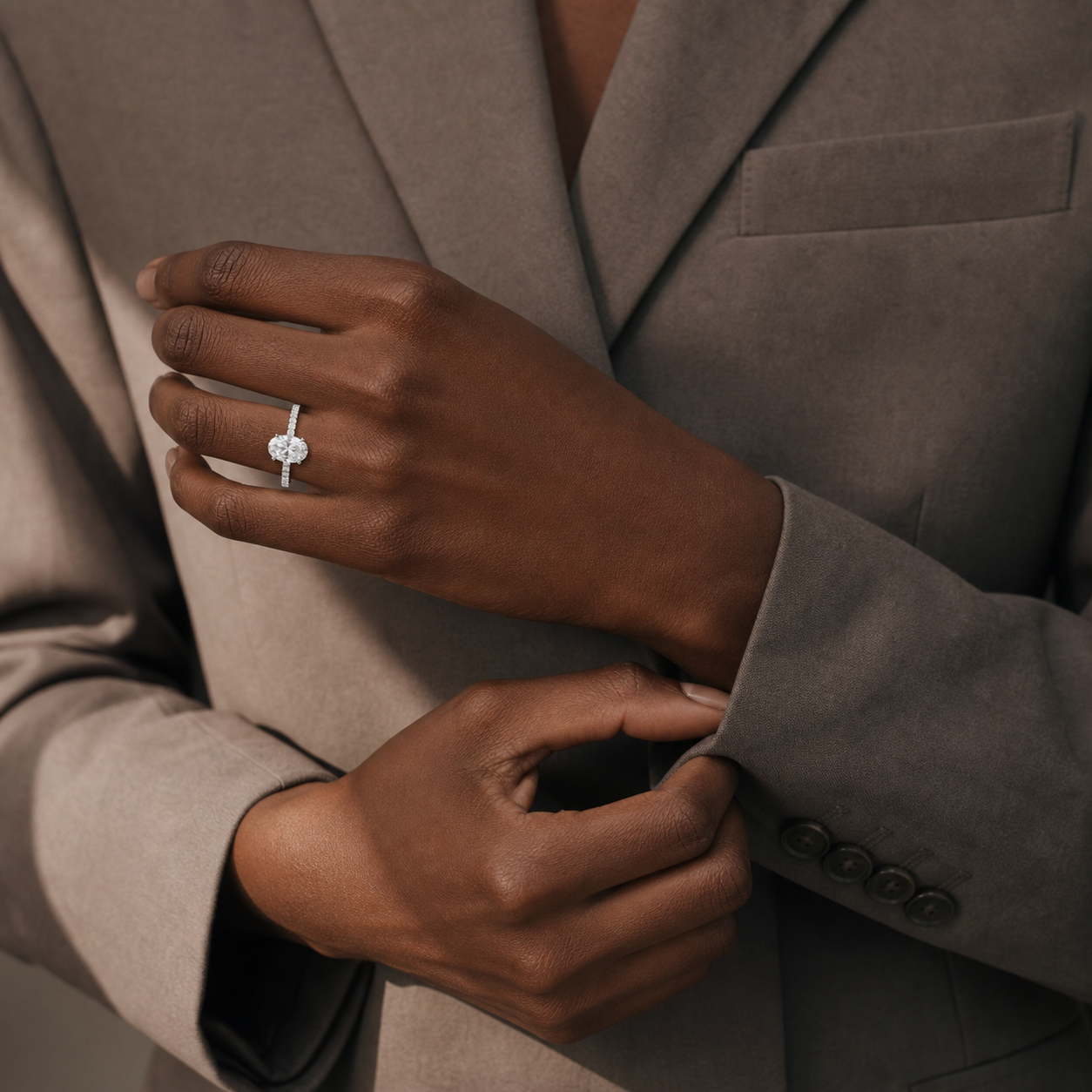


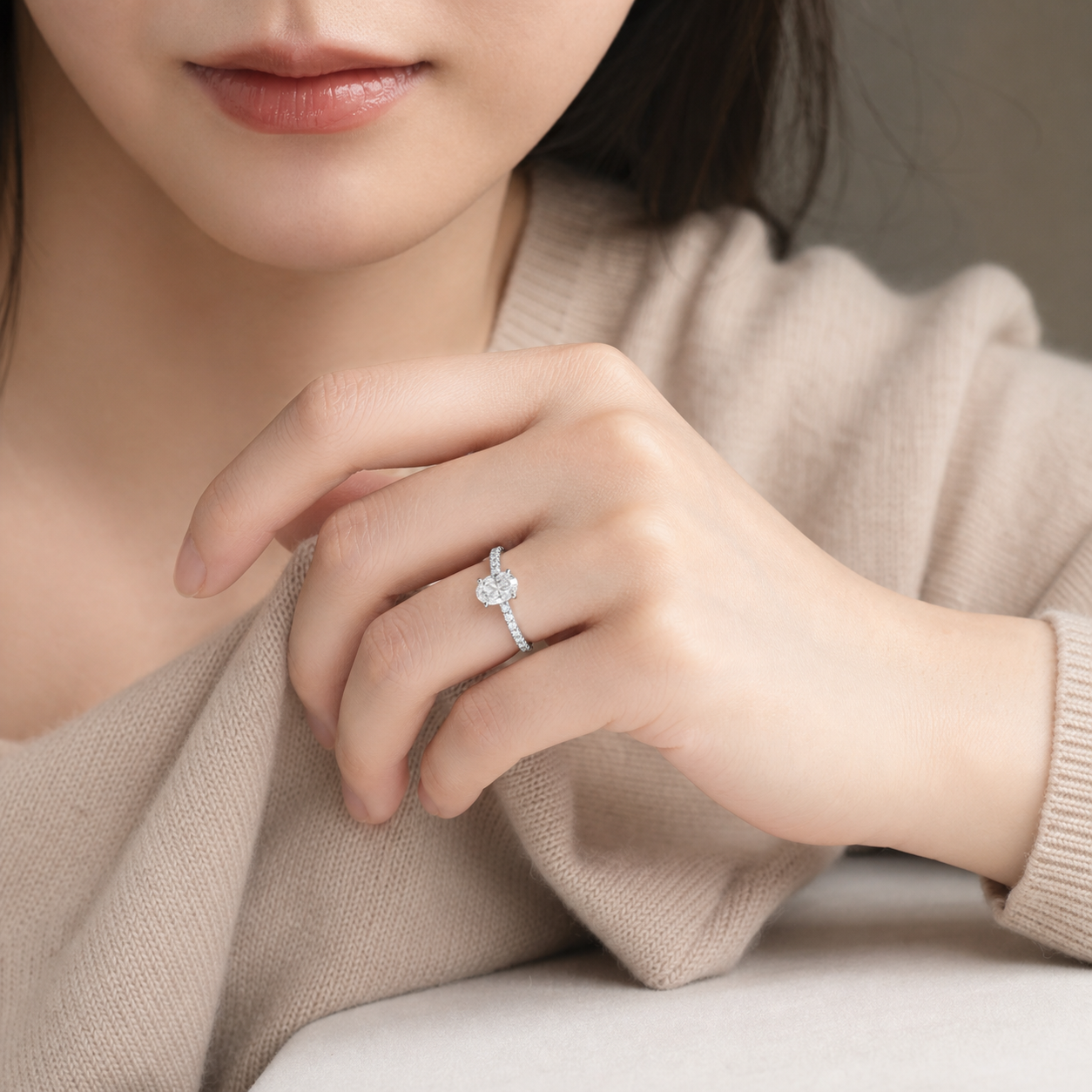


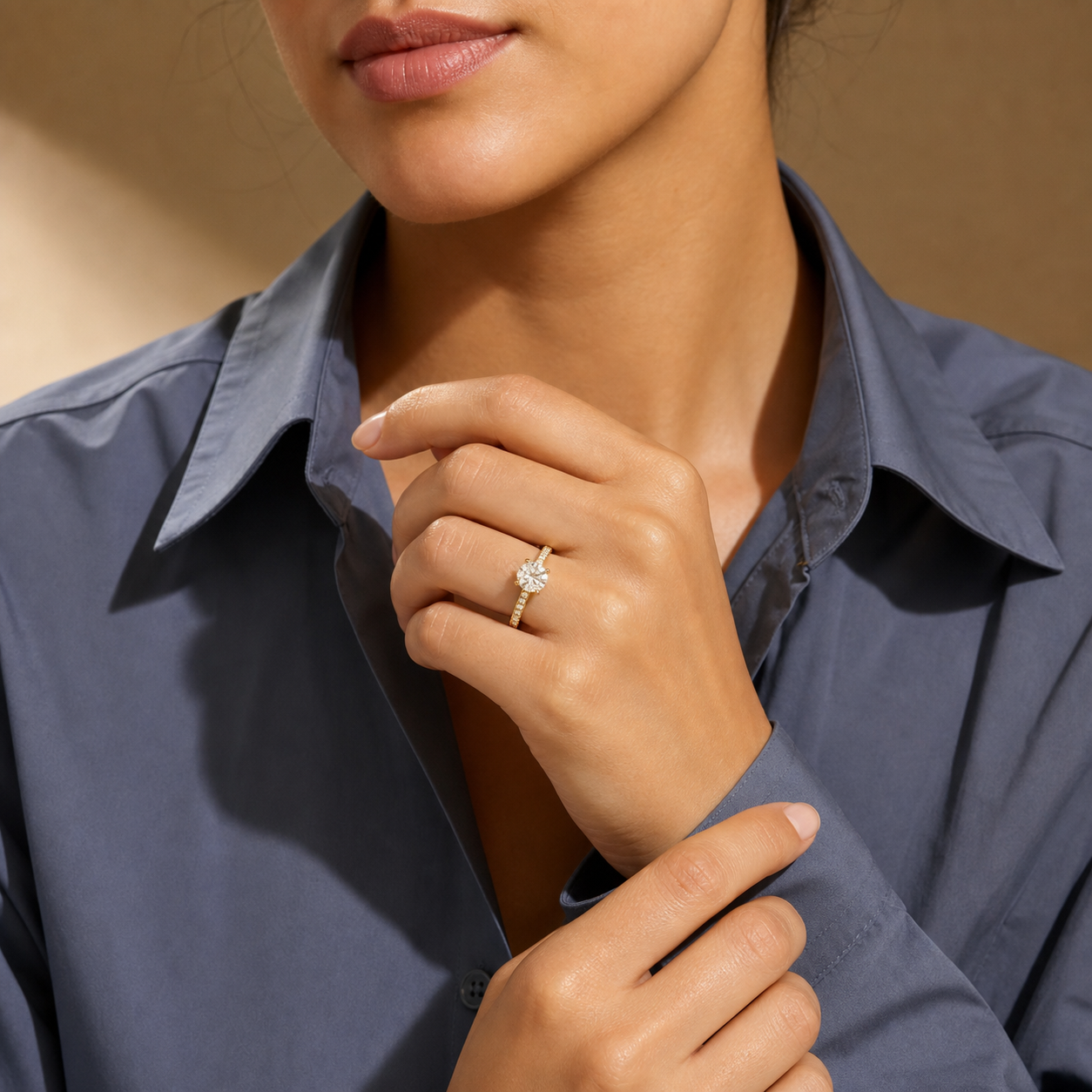


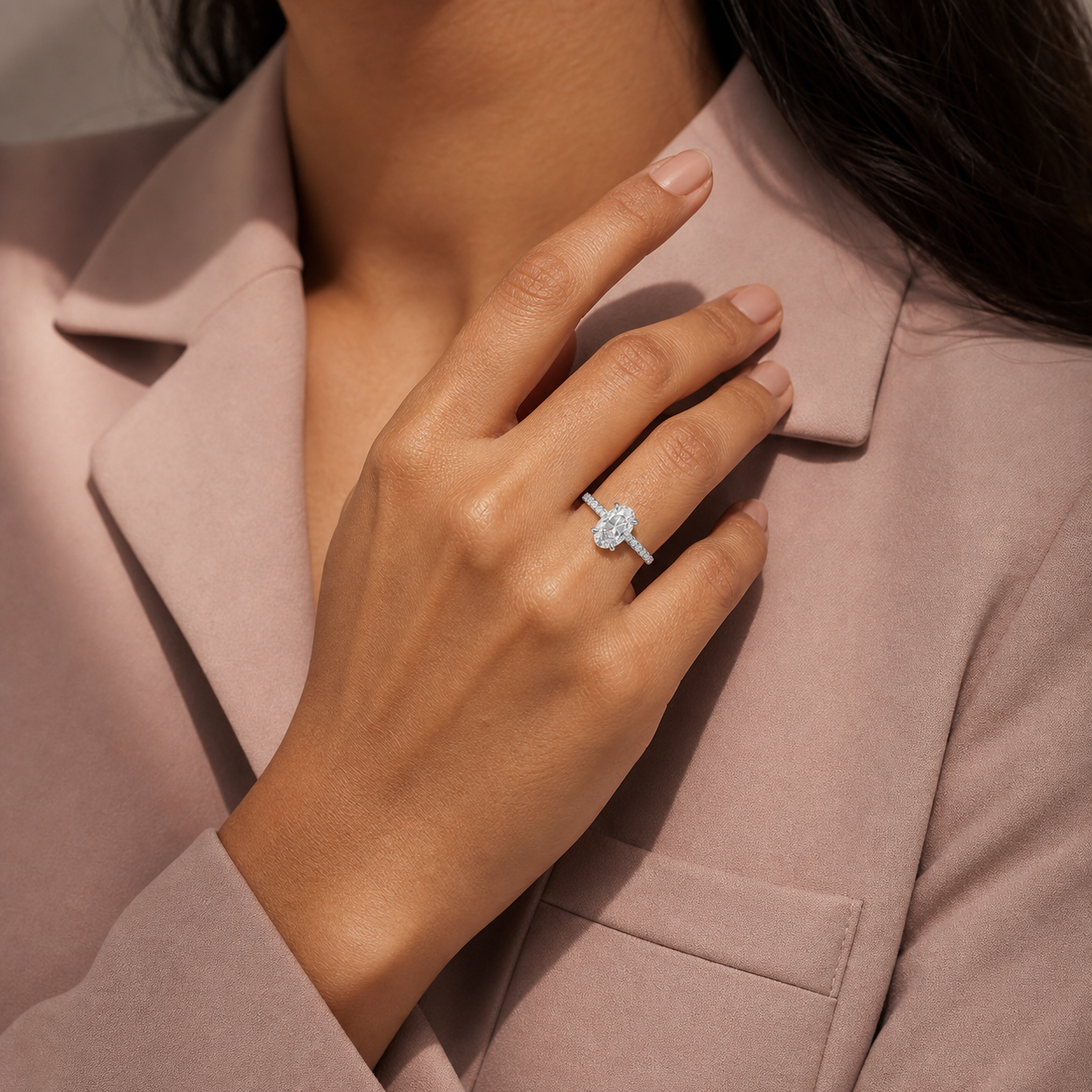


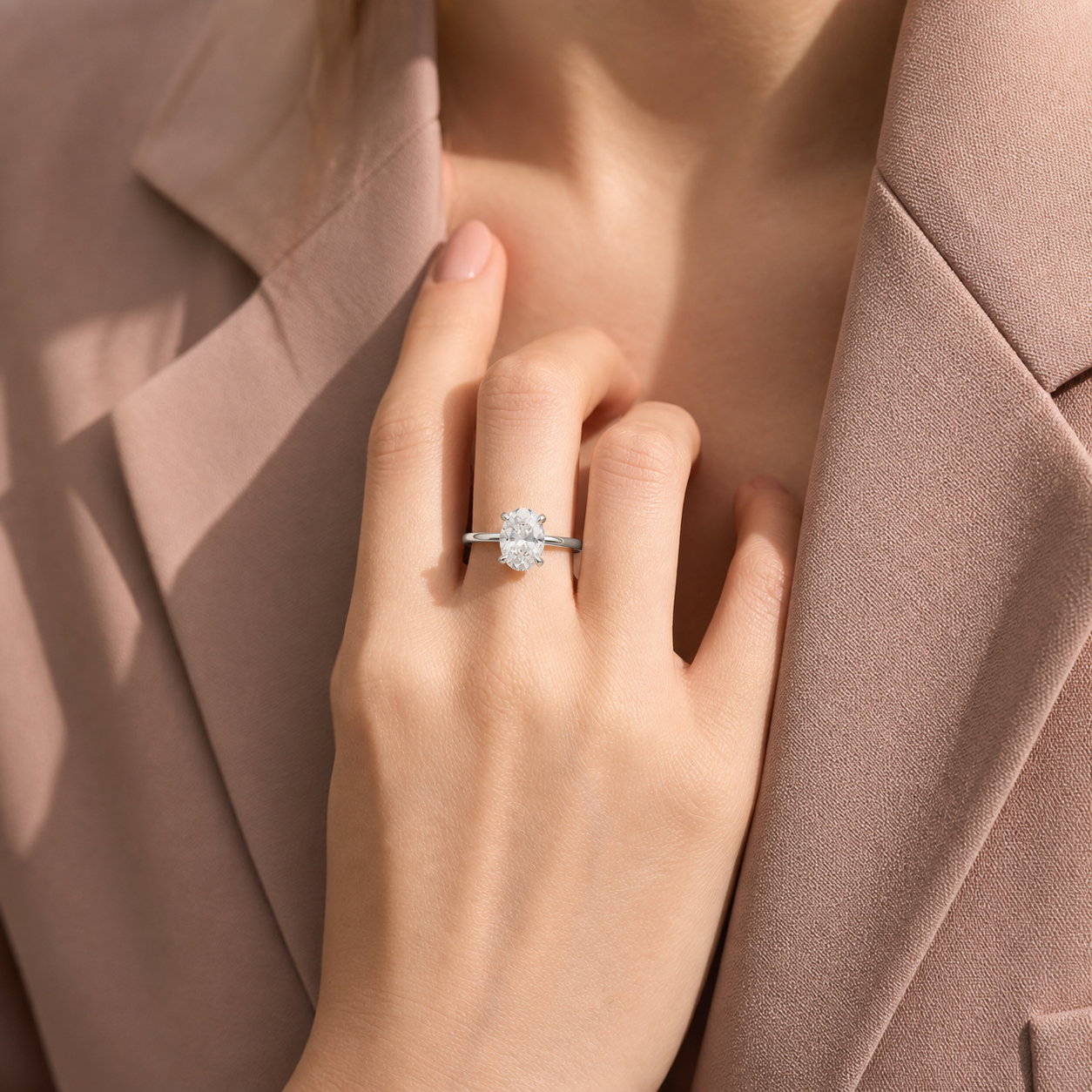
Hidden Halo Engagement Rings: Detail Below the Sightline
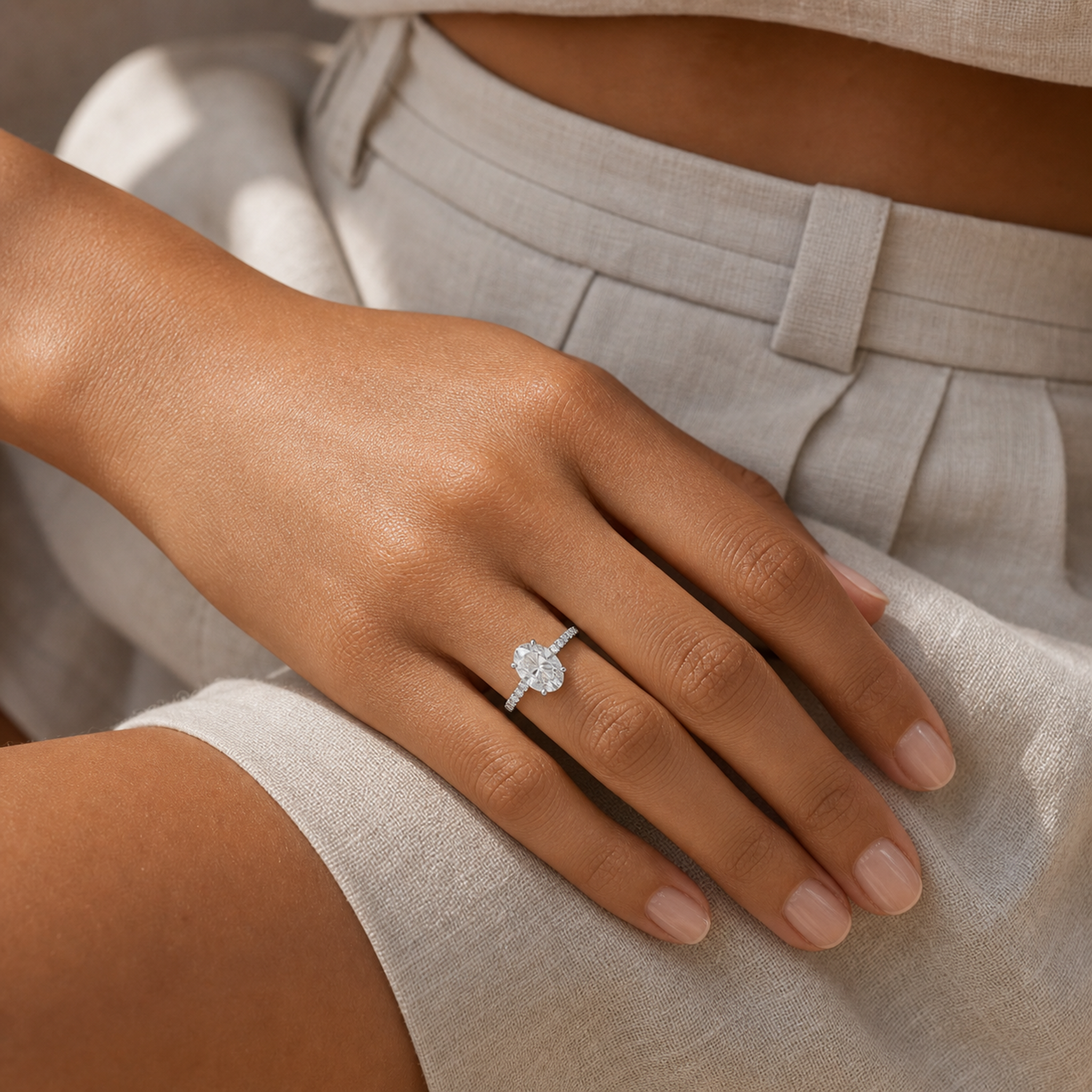
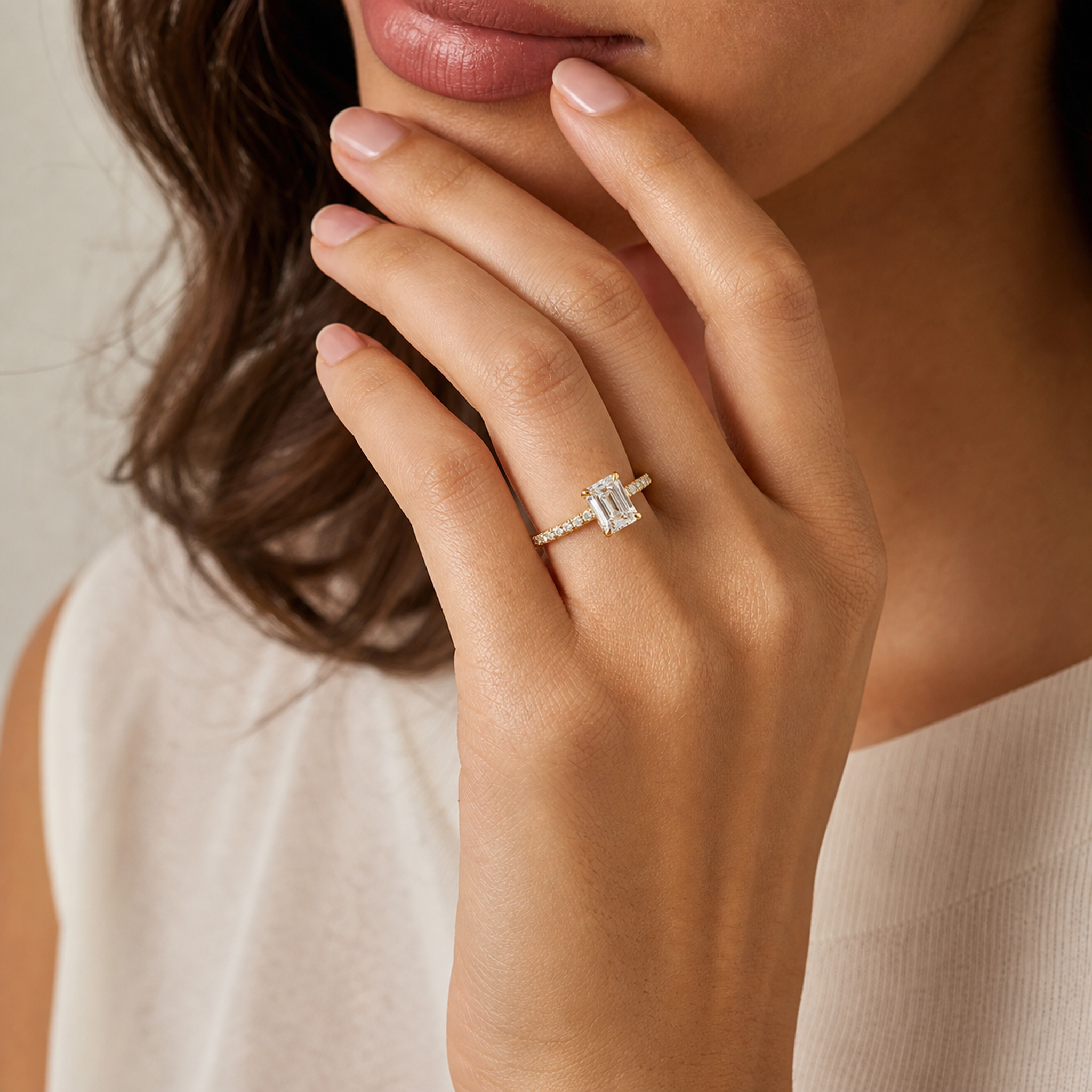
A hidden halo is designed for more than the first glance. From above, the center diamond can remain visually singular and the overall outline composed. As the hand turns, a line of smaller diamonds appears beneath it, bringing light and definition to a part of the ring that is otherwise read as structure. The detail is intimate rather than immediate: present in motion, revealed in profile.
Burvonti’s Hidden Halo Engagement Rings collection moves across refined solitaires, pavé bands, geometric frames, double-halo compositions, and side-stone designs. That range is intentional. Hidden halo describes the placement of a detail, not the entire face-up style. The collection therefore asks a precise question: how should the architecture below the center contribute when the ring is viewed from the side?
A Profile Detail, Not a Second Face-Up Category
A traditional halo forms a visible border around the center diamond from above. A hidden halo sits lower—often around the gallery, collar, or basket—so its accent diamonds are read mainly in profile. Placement changes how continuous, discreet, or architectural the line appears.
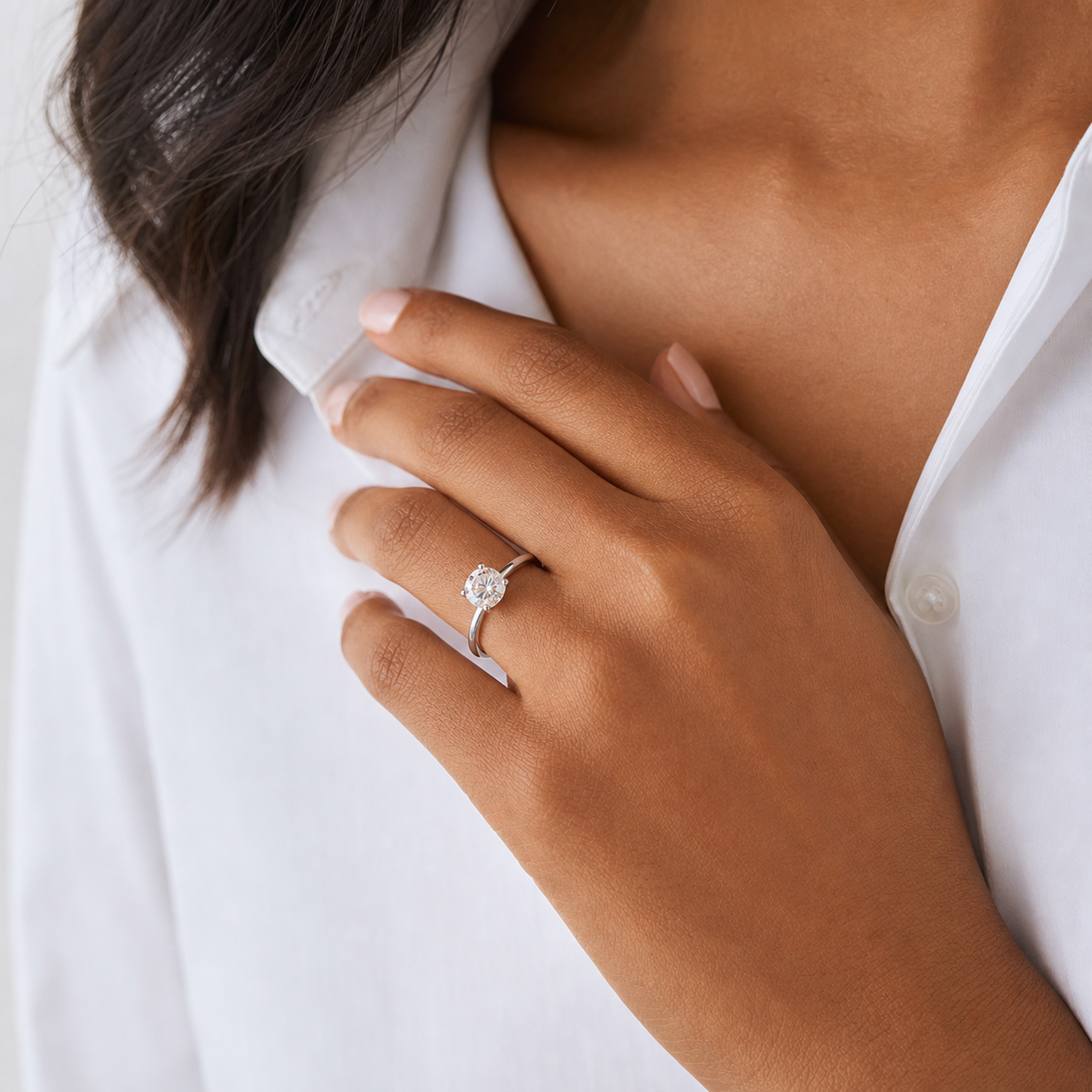
This distinction explains why a hidden halo can coexist with other style names. A solitaire can carry a hidden halo while preserving one dominant center-stone focus. A pavé band can extend smaller diamonds along the finger. A visible halo may also include a separate row beneath the center. Burvonti’s current collection contains examples across these families, so the hidden halo should be evaluated as one layer within the complete ring rather than as a promise of one fixed silhouette.
Where the Halo Sits Changes What You See
A compact collar placed close beneath the center can read as a fine, concentrated line. A wider or lower gallery treatment may make the detail more visible at a natural viewing angle. If the halo follows the center diamond’s outline, it can reinforce that contour from the side; if it is held within a rounder or more geometric basket, it can introduce a distinct structural rhythm.
The right placement is not simply the one with the most accent diamonds. Spacing, setting metal, prong alignment, and distance from the center affect legibility. Too much activity can crowd the head; too little separation can make the detail disappear. Burvonti calibrates the profile so center, halo, and band can be read in sequence.
Brilliance Added Around the Setting—not to the Diamond’s Cut
Hidden-halo diamonds create additional points of scintillation around the center setting when the ring moves. They do not change the center diamond’s carat weight, dimensions, cut grade, or intrinsic light performance. Nor does a hidden halo necessarily make the center look larger from above: because the detail sits below the face-up perimeter, its effect is usually more evident from the side than across the top.
This makes hidden halo a different decision from choosing a visible frame for greater face-up presence. The center diamond should still be judged through its documented qualities and its relationship to the setting. The halo then adds a second register of light—one that belongs to the profile and can make the finished ring feel considered from more than one viewpoint.
Shape, Basket, and Setting Height Work Together
Round and softly outlined diamonds can sit above a circular collar, while elongated or angular shapes may call for baskets that respond to their length, corners, or points. The halo may echo the center, establish contrasting geometry, or resolve the transition between diamond and band.
Setting height controls how readily that structure is seen and how the ring meets the hand. A higher head can expose more of the gallery but may feel more prominent in daily movement. A lower composition can feel contained yet leave less room beneath the basket. There is no universal best profile. Discover the designs whose proportions feel right, then compare how an available diamond shape and its depth alter the complete side view.
Consider the Wedding Band from the Side
A hidden halo does not guarantee that a straight wedding band will sit flush. The answer depends on the width and height of the basket, the location of the halo, the shape of the shoulders, and whether accent diamonds project into the contact area. Some profiles leave a clear passage beneath the center; others create a deliberate gap or pair more naturally with a contoured band.
The hidden detail also deserves protection from repeated metal-to-metal or diamond-to-metal contact. When comparing a pair, look at the rings together from above and in profile. Confirm where they touch, whether the wedding band presses against pavé or halo settings, and whether a spacer or shaped band would preserve both designs more comfortably. Pairing is a property of the exact two rings, not of the category name.
Fine Detail Requires Visible Care
Because a hidden halo is partly sheltered beneath the center, residue can collect around the gallery and reduce the definition of its small diamonds. Gentle cleaning appropriate to the ring’s metal, diamonds, and setting can keep those spaces clear. Prongs, beads, and shared setting points should be inspected after impact, when the ring begins to catch, or if an accent appears to move or go missing.
Burvonti brings responsibly sourced, independently graded lab-grown center diamonds together with setting architecture resolved through proportion and human judgment. Custom possibilities may refine the halo’s contour, metal, center shape, band, engraving, or another personal detail when structural feasibility allows. Final setting height, sizing, alteration, and wedding-band compatibility remain product-specific and should be confirmed for the selected design.
Frequently Asked Questions
What is a hidden halo engagement ring?
A hidden halo engagement ring places a line of smaller accent diamonds below the center stone, usually around the gallery, collar, or basket. It is read mainly from the side rather than as a visible border around the center from above.
What is the difference between a hidden halo and a traditional halo?
A traditional halo surrounds the center diamond at the face-up perimeter and changes its visible top outline. A hidden halo sits beneath that perimeter, adding profile detail while allowing the top view to remain cleaner.
Can a solitaire engagement ring have a hidden halo?
Yes. Solitaire describes a face-up hierarchy led by one center stone; hidden halo describes a detail positioned below it. Burvonti’s public collections therefore include substantial product overlap between the two styles.
Can a ring have both a visible halo and a hidden halo?
Yes, when the setting is designed with one frame visible from above and another line of diamonds below the center. The result is more layered than either detail alone, so accent scale and spacing should be considered carefully.
Does a hidden halo make the center diamond look larger?
Not necessarily. Because the halo is positioned below the face-up edge, it usually does not extend the center’s visible top perimeter in the way a traditional halo can. Its principal effect is additional profile detail and scintillation.
Does a hidden halo make the center diamond sparkle more?
The small halo diamonds add their own points of light around the setting, but they do not change the center diamond’s cut or intrinsic light performance. Evaluate the center on its documented qualities and the halo as a separate design layer.
Where is a hidden halo placed?
Placement varies. It may sit close beneath the girdle, around a collar, within a basket, or lower in the gallery. The exact location determines the angles from which it is visible and how it relates to the band.
Can a hidden halo work with different diamond shapes?
Many shapes can be paired with a hidden halo when the basket and support are designed for them. The halo may echo the center outline or use a simpler geometry; pointed tips and corners still require appropriate protection.
Does a hidden halo require a high setting?
No fixed height defines the style. A higher profile may expose more of the halo, while a lower profile may make it more discreet. Diamond depth, basket structure, comfort, and wedding-band pairing all affect the final height.
Will a wedding band sit flush with a hidden halo ring?
Some will and some will not. Basket width, halo placement, setting height, shoulders, and exposed accent diamonds determine whether a straight band can sit close or whether a curved band or intentional gap is more appropriate.
Is a hidden halo less likely to snag than a visible halo?
Its lower placement can shelter parts of the detail, but it does not guarantee a snag-free ring. Prongs, basket edges, setting height, and the complete head determine how the ring meets clothing and daily surfaces.
Are hidden halo engagement rings suitable for everyday wear?
They can be when the setting suits the wearer’s routine and is cared for appropriately. Consider height, exposed edges, the number of small setting points, and the activities during which the ring will be removed.
How should I clean a hidden halo engagement ring?
Use a gentle method appropriate to its diamonds, metal, and setting, paying attention to residue beneath the center and around the gallery. Avoid abrasive products and harsh chemicals, and do not force tools into fine setting areas.
Can a hidden halo ring be resized?
Resize feasibility depends on metal, band construction, pavé coverage, engraving, and the amount of change required. The halo itself may be away from the sizing area, but the complete design must be reviewed before alteration.
Can a Burvonti hidden halo engagement ring be customized?
Custom possibilities may include center shape, metal, halo contour, band proportion, engraving, or selected setting details. Availability and structural feasibility depend on the chosen design and must be confirmed before the final specification.