
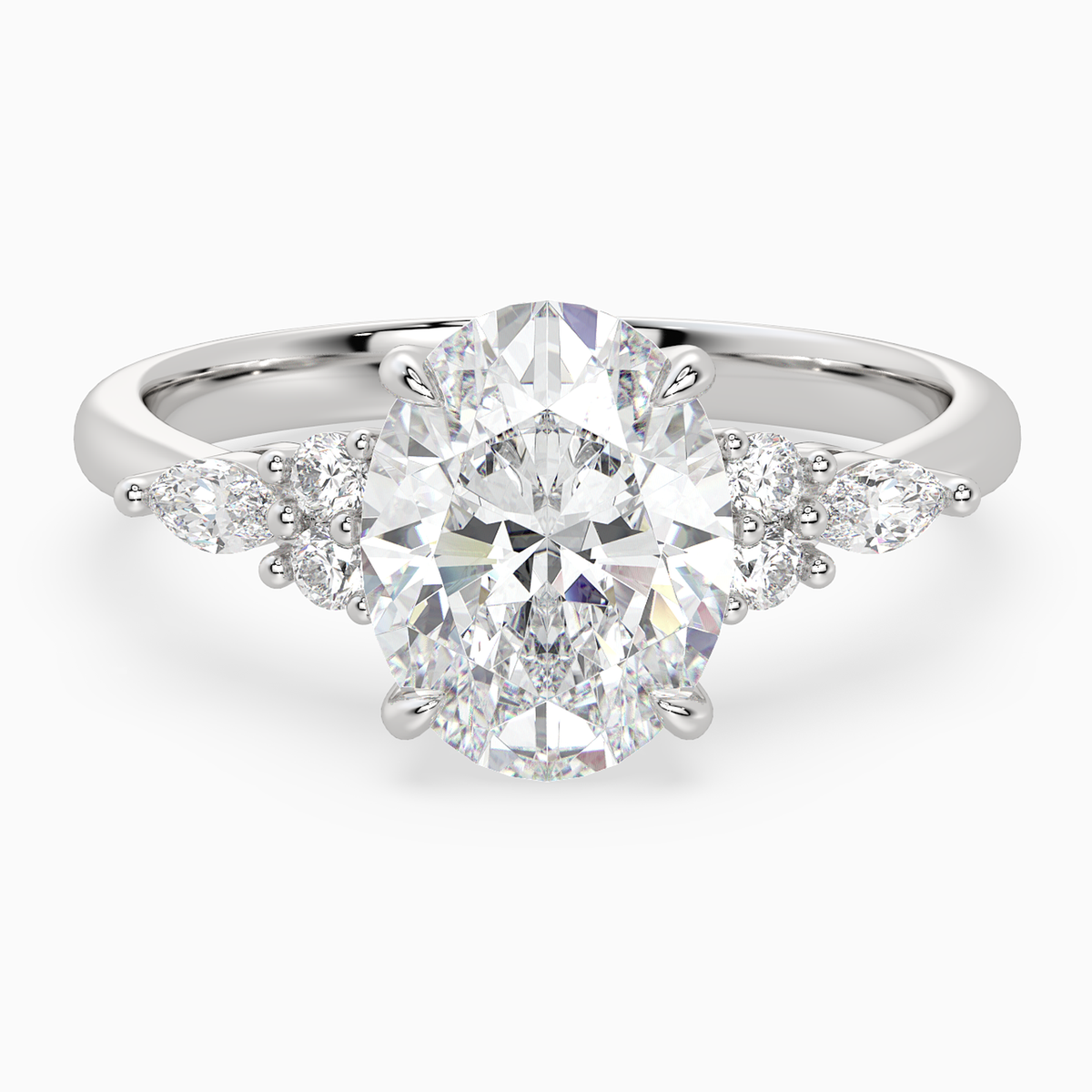


Side Stone Engagement Rings
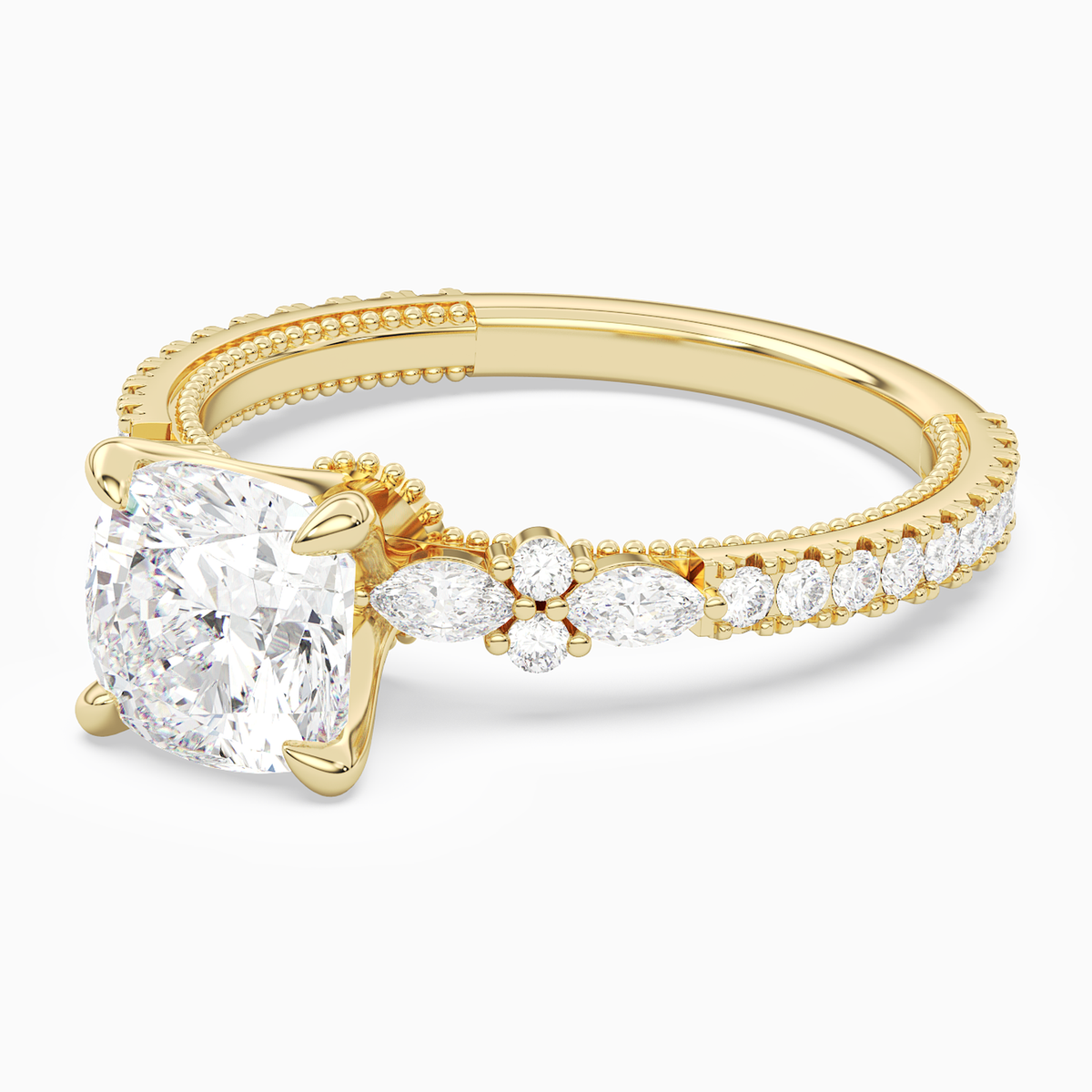
Light moves outward from the center. Burvonti side-stone settings use measured accents to shape the transition from diamond to band.


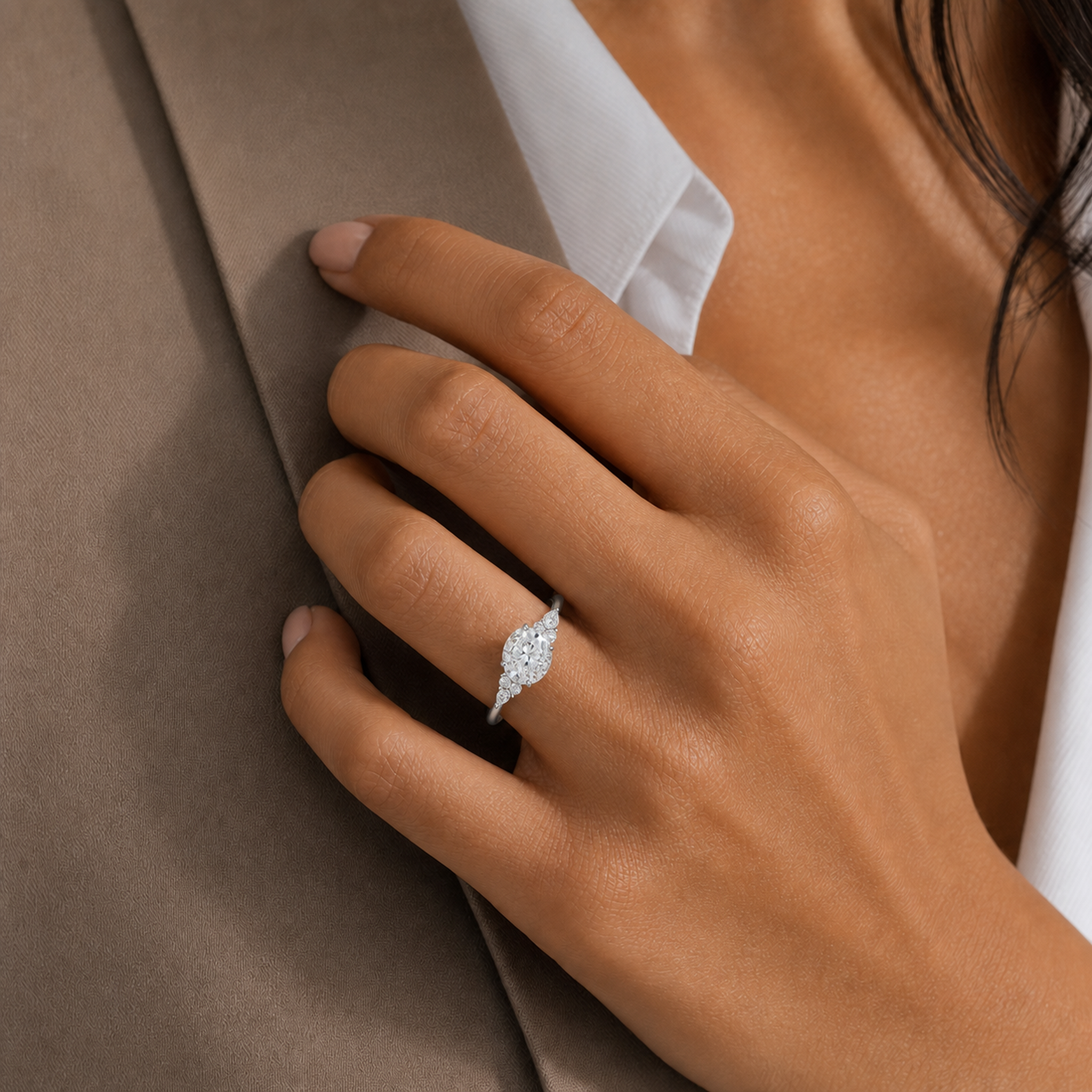


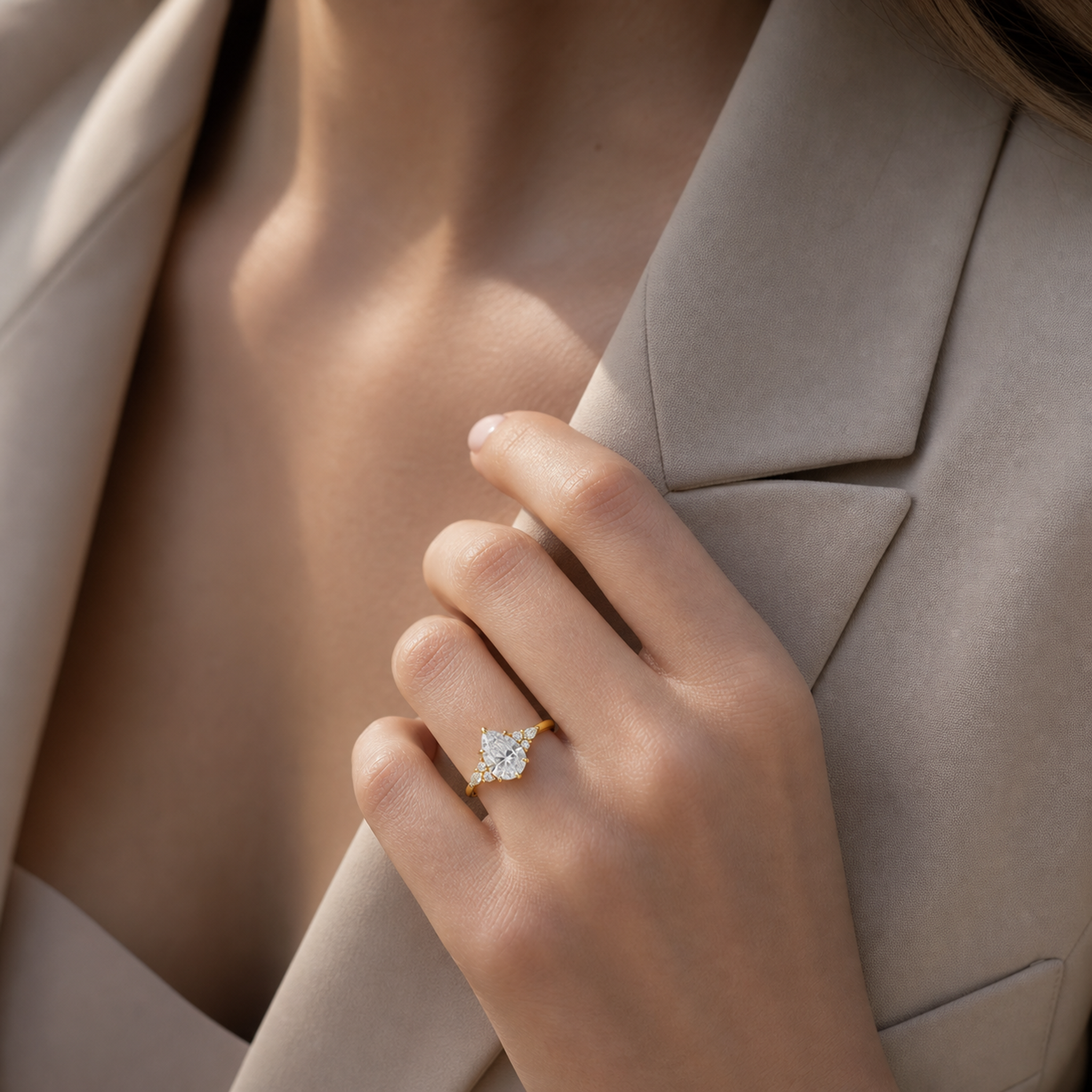


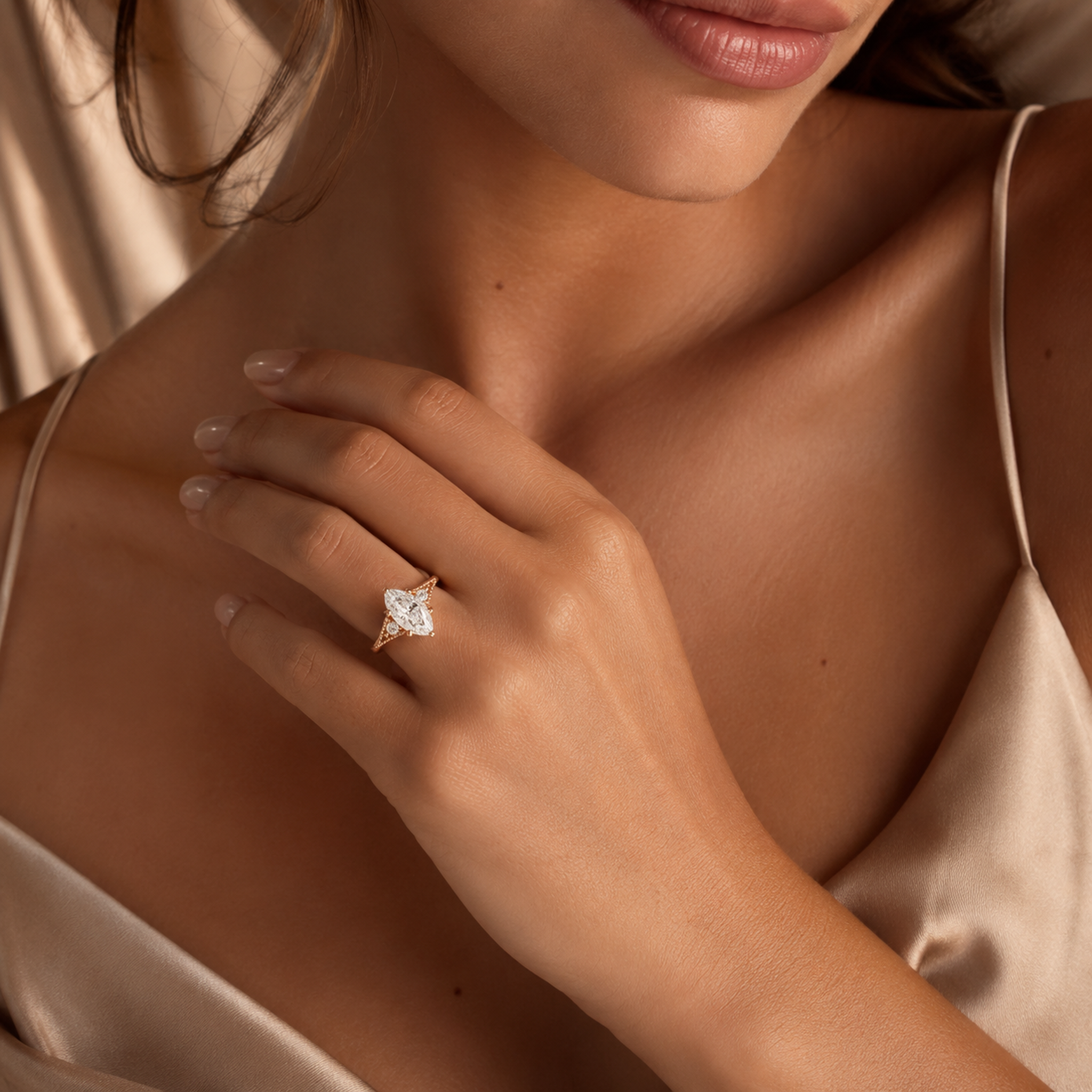


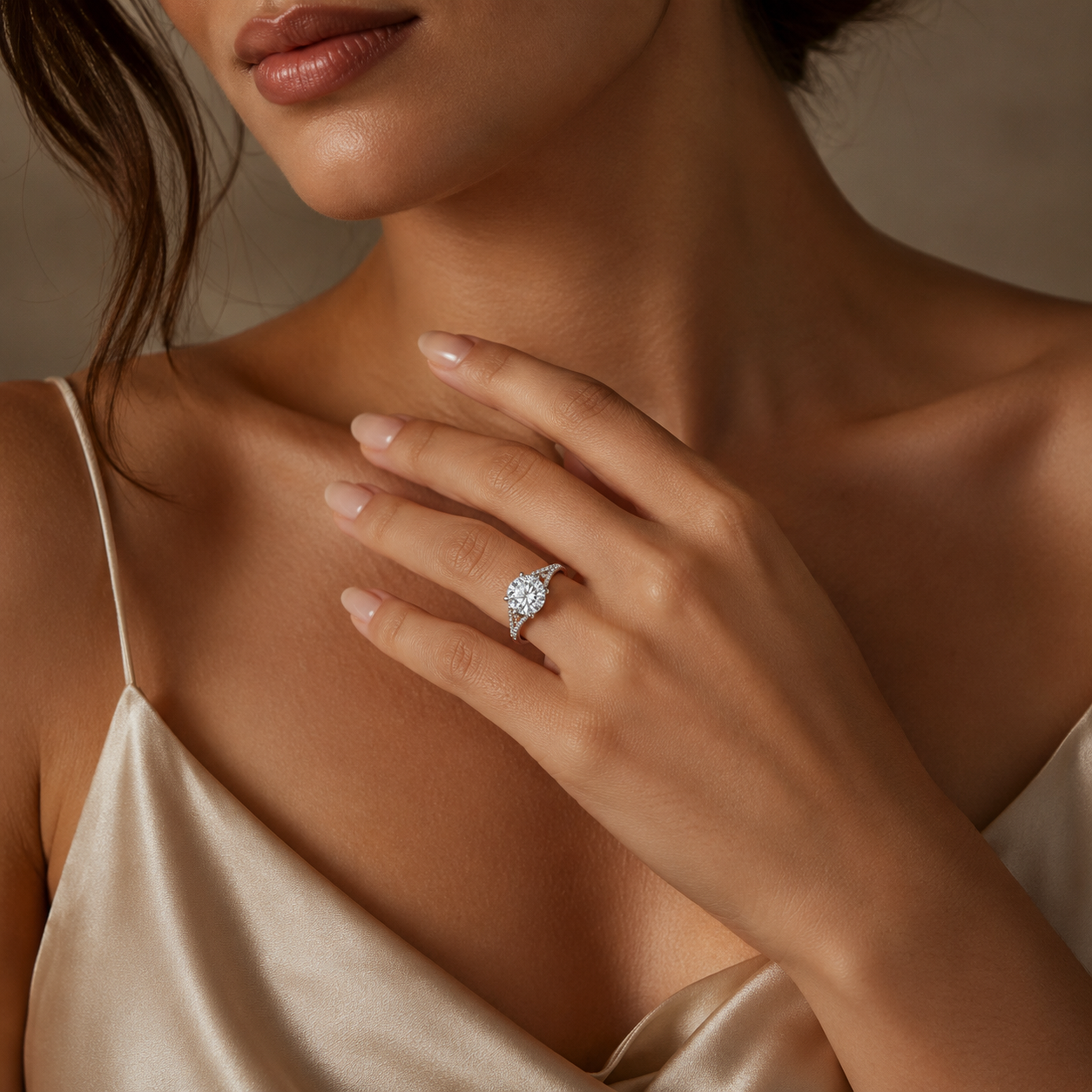


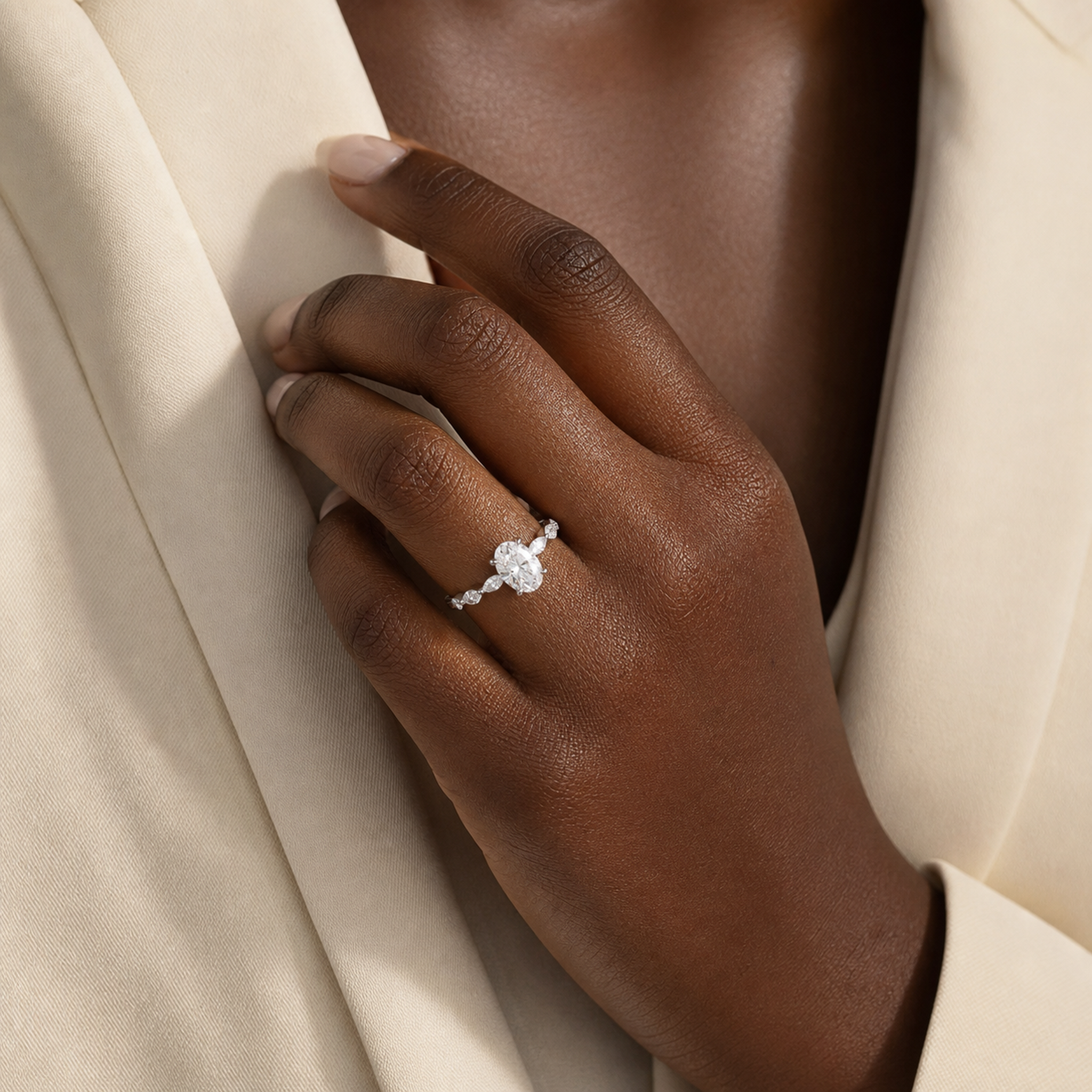


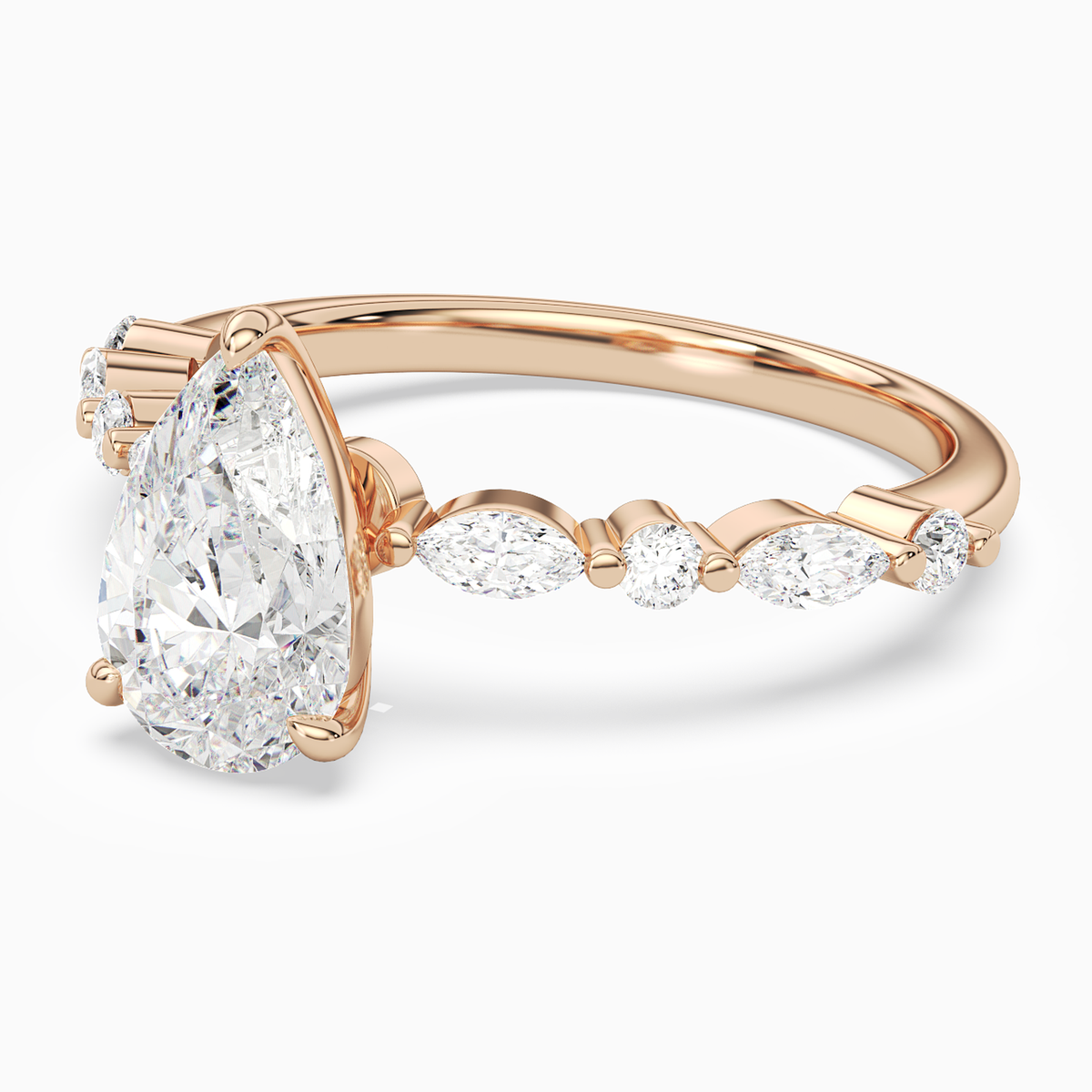
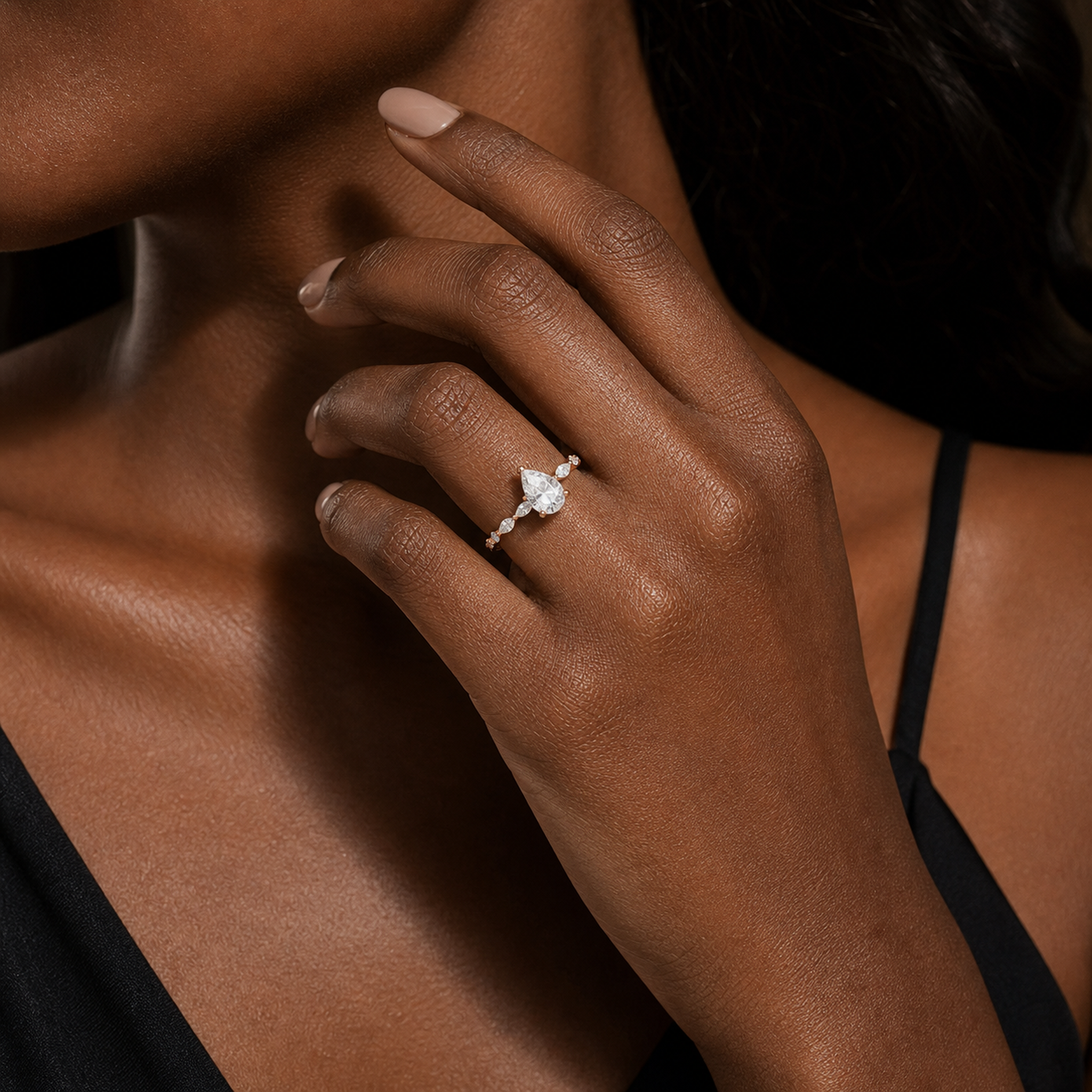


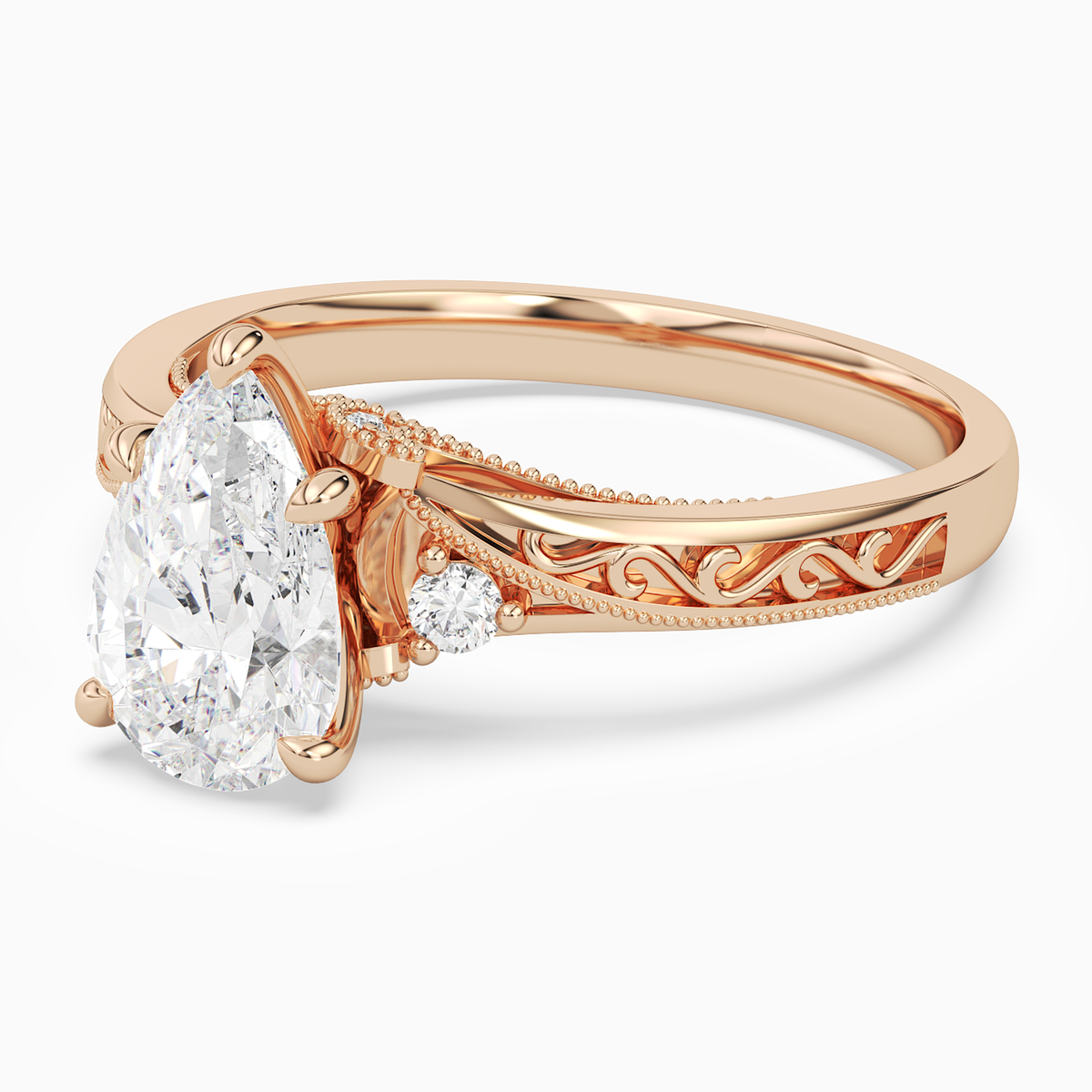
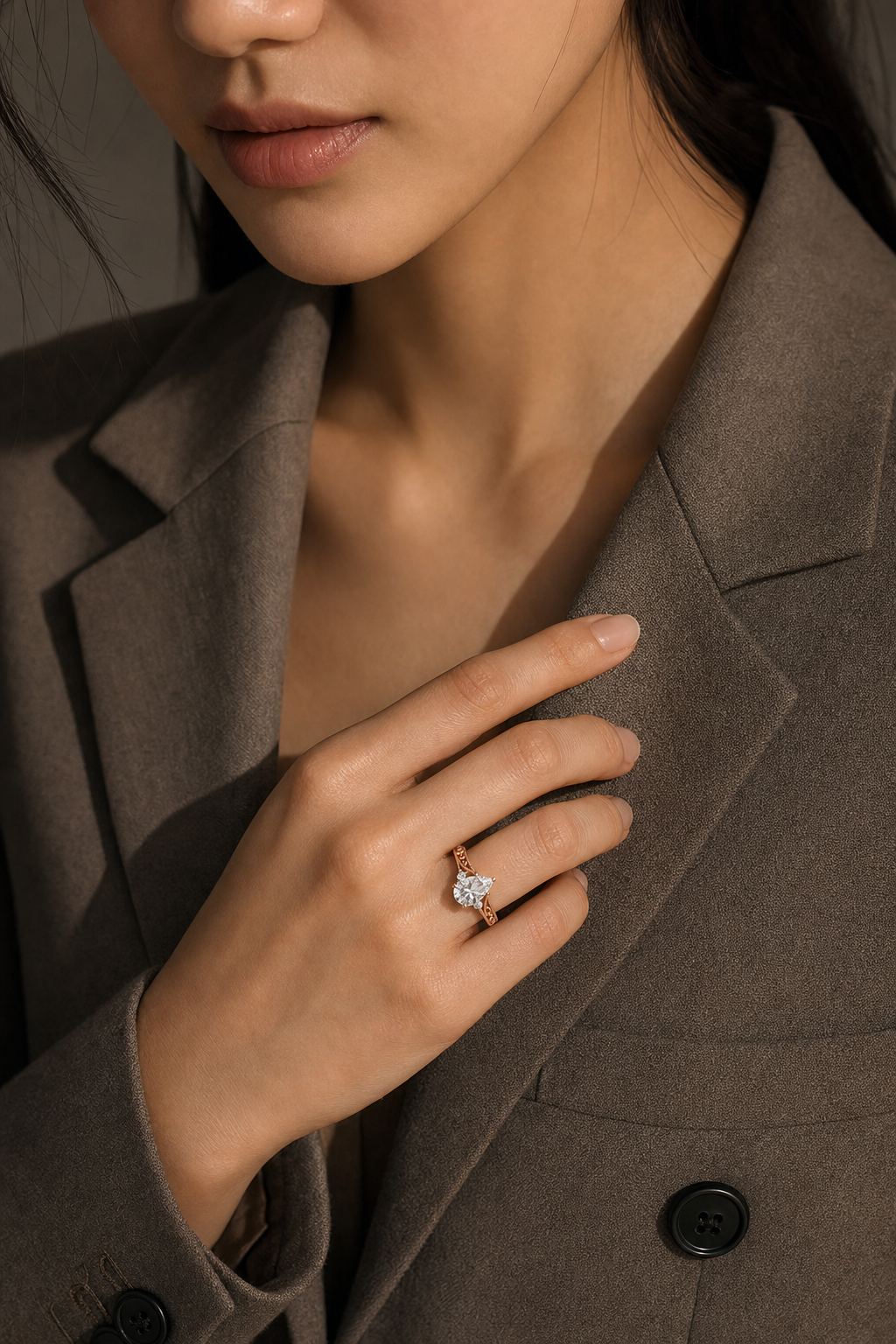


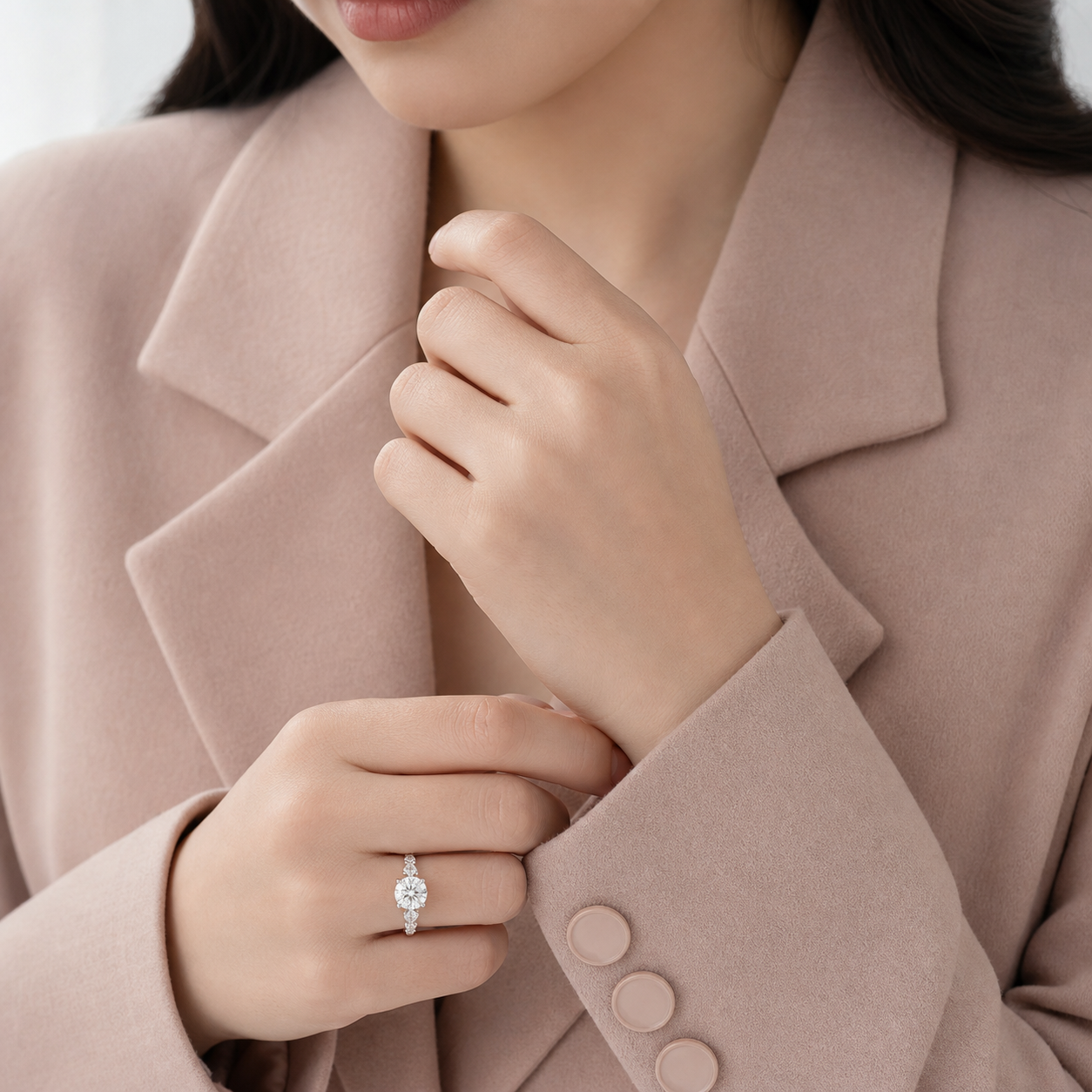


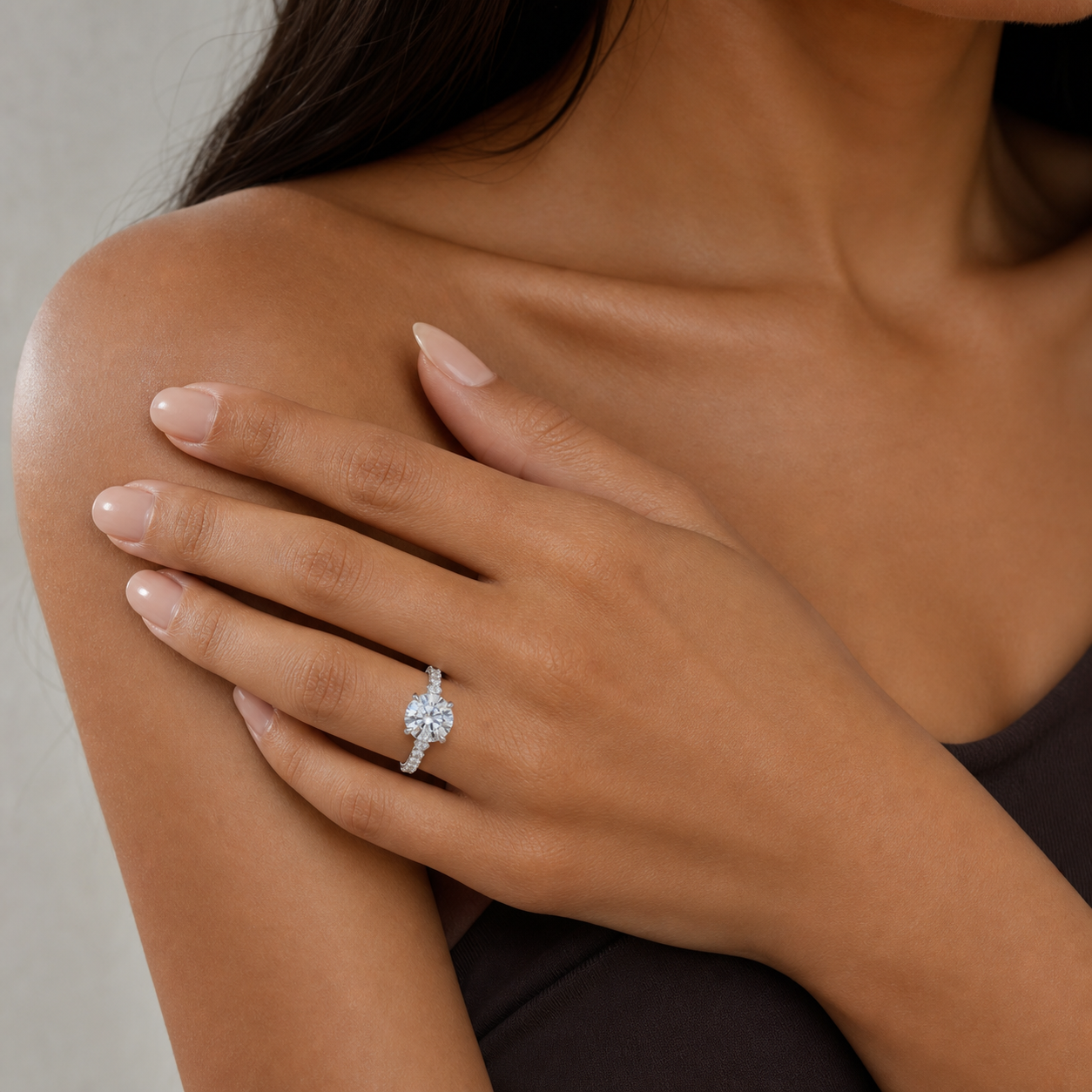










Side Stone Engagement Rings: The Art of the Transition
A side-stone engagement ring begins with one clear center, then considers how the composition should move outward. Smaller diamonds may sit close beside the center, trace the shoulders, or become part of a crown, vine, or milgrain-framed structure. Their purpose is not merely to add quantity. They determine the transition from focal stone to band.
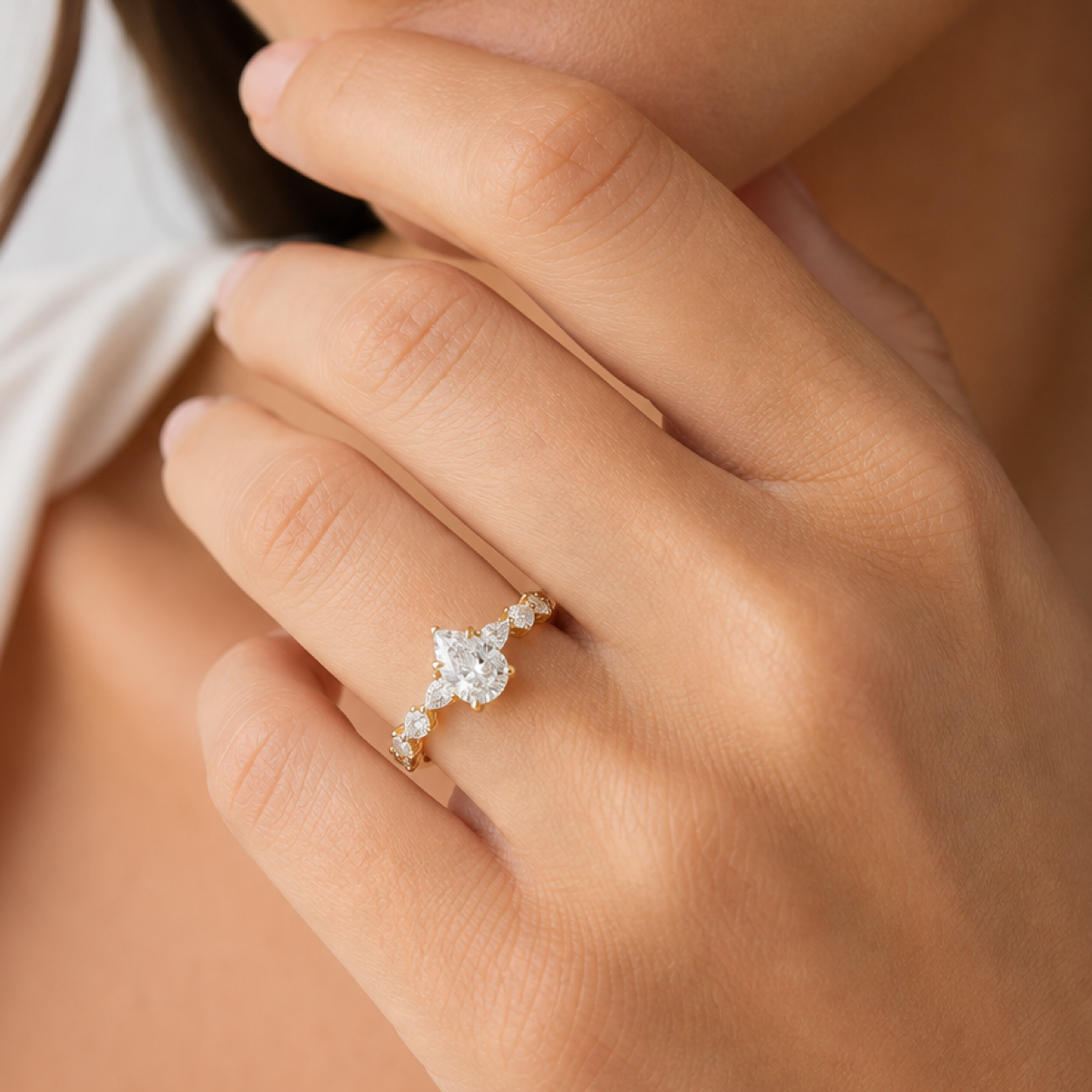
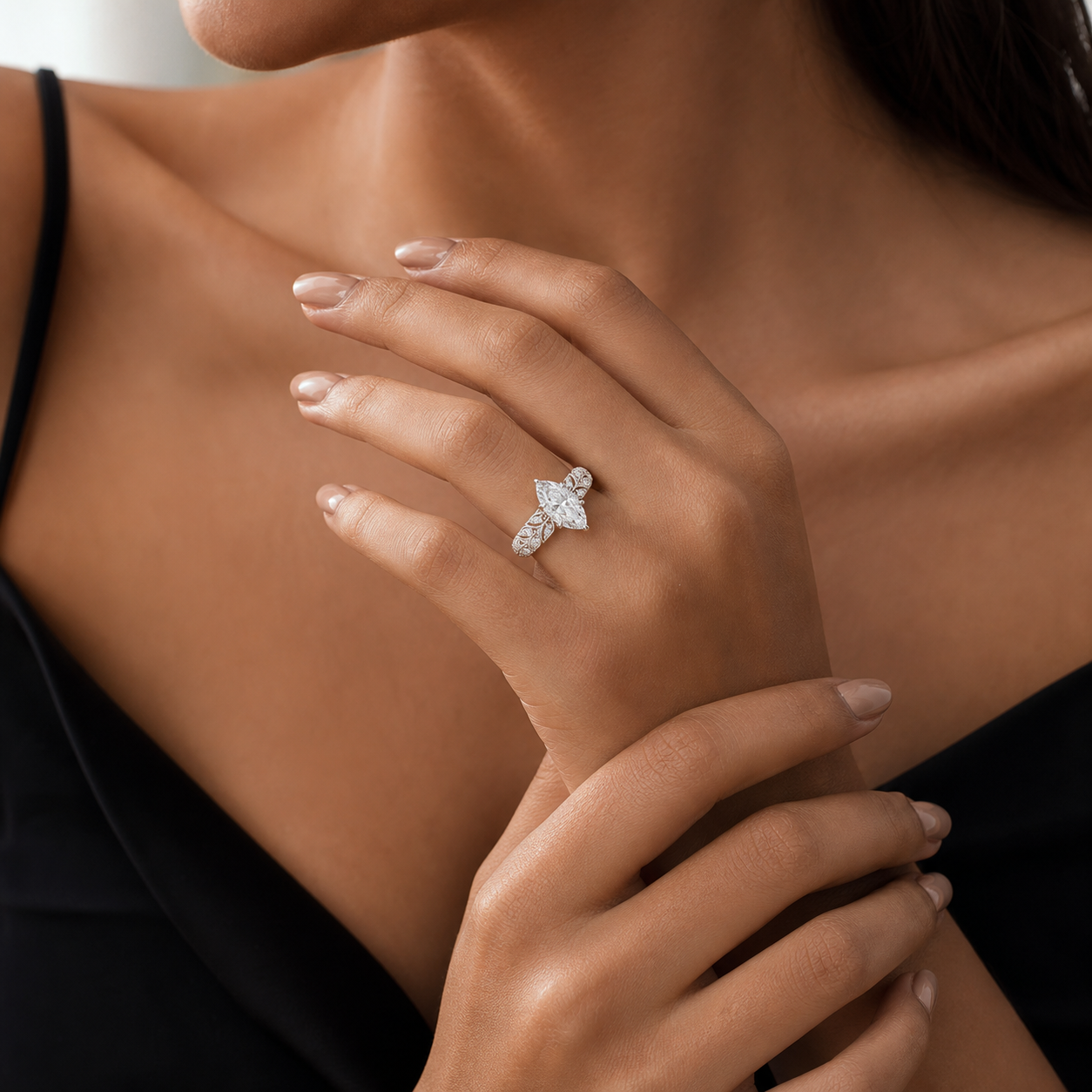
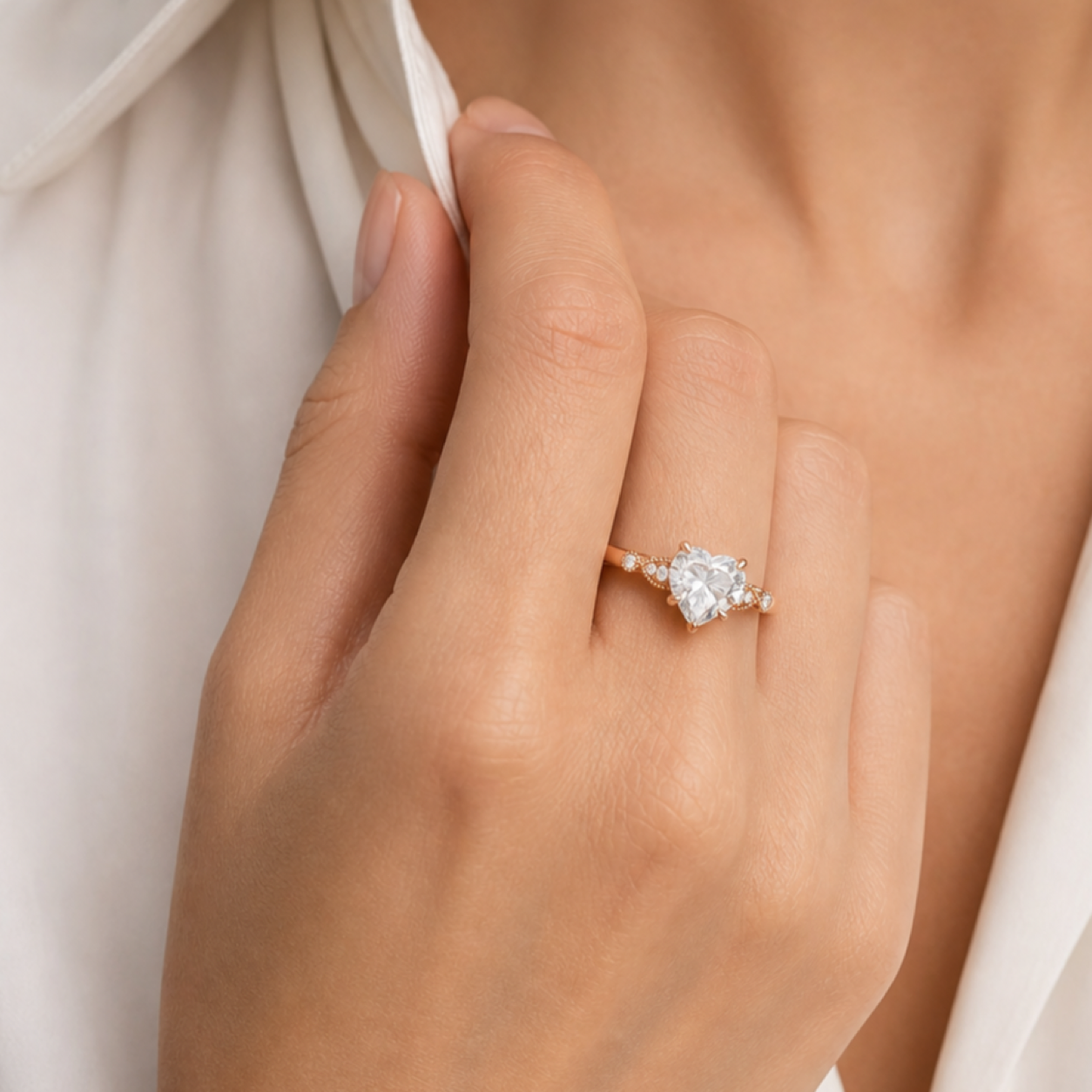
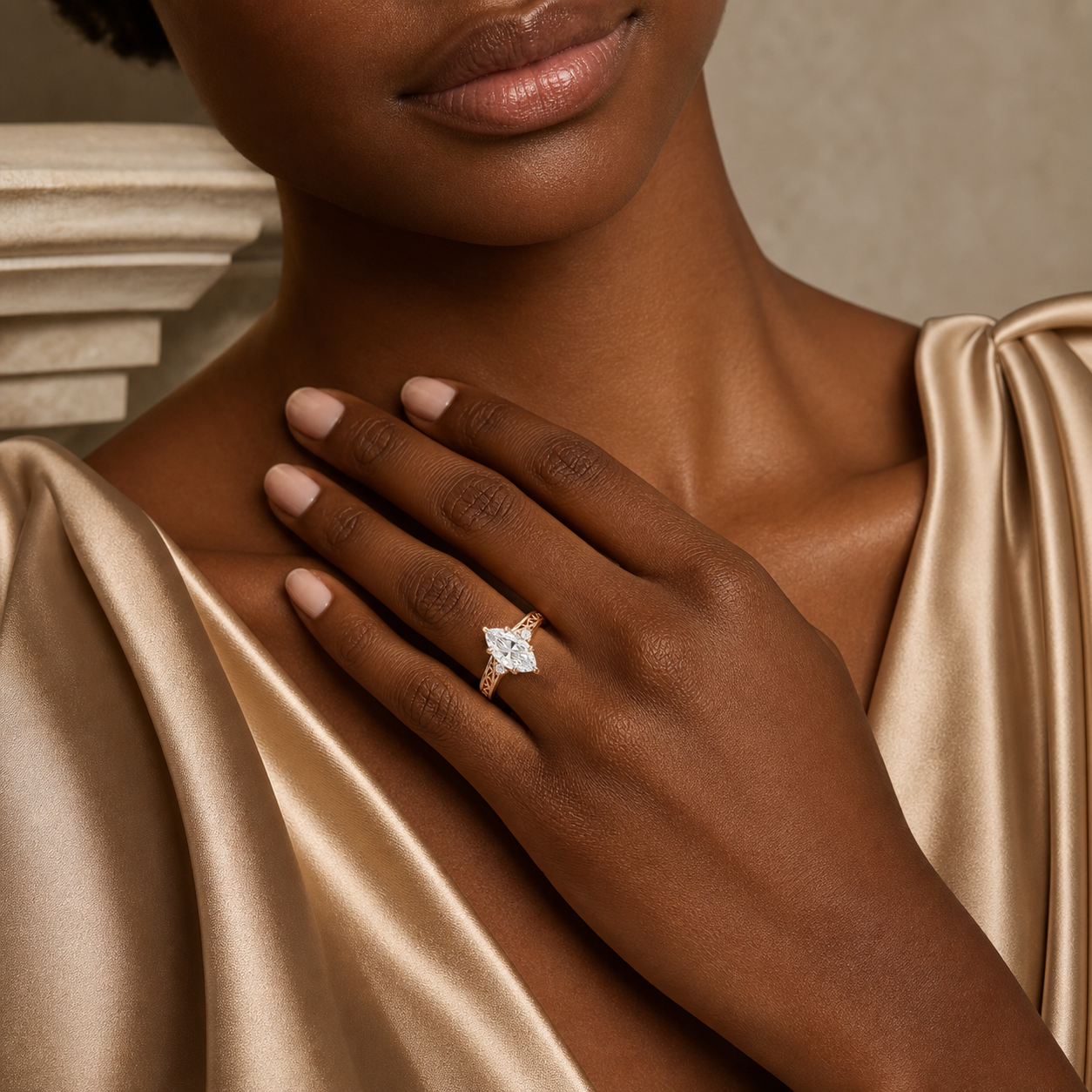
Burvonti’s Side Stone Engagement Rings collection includes marquise and pear accents, finely bordered arrangements, crown-like profiles, and botanical movement. Across those expressions, the center remains visually primary. The side stones introduce direction, spread, and secondary light while allowing the complete ring to be read in a deliberate sequence.
Side Stone, Three Stone, and Pavé Are Different Decisions
A three-stone ring is organized around a distinct trio: one center and two flanking stones with an explicit role in the main face-up composition. A side-stone ring retains a clearer center-versus-support hierarchy. It may use two or many accents, but they transition into the shoulders rather than reading as three equivalent principal positions. Burvonti’s current Side Stone and Three Stone collections have no product overlap, supporting that distinction.
Pavé describes a setting technique in which small diamonds are placed closely into a metal surface and secured with fine beads. Pavé can appear on a side-stone ring, but side stones can also be individually prong-set, channel-set, bead-set, or integrated into a motif. The category is defined by compositional role, not by one method or a fixed number of diamonds.
The Strongest Side Stones Create Direction
A marquise accent can draw a fine point away from the center or suggest a leaf within a botanical structure. A pear-shaped side stone can taper toward the band, softening the transition while preserving direction. Round accents create repetition; step-cut or angular stones can establish a more architectural interval. Orientation changes the effect again: a stone aligned along the band reads differently from one turned toward the center.
Burvonti’s current collection places particular emphasis on marquise and pear accents, alongside milgrain, crown, and vine details. Those elements should be read together. Shape establishes the edge; setting determines how much metal is visible; spacing controls whether the sides feel articulated or continuous; the shoulders decide how the composition resolves into the finger.
Scale the Support Without Losing the Center
Side stones can be small and rhythmic or larger and more assertive. Graduated arrangements increase in scale toward the center, creating a visual path. Repeated accents can carry light farther along the band. A pair of fancy-shaped sides can widen the head and make the transition more pronounced. None of these effects requires a universal ratio.
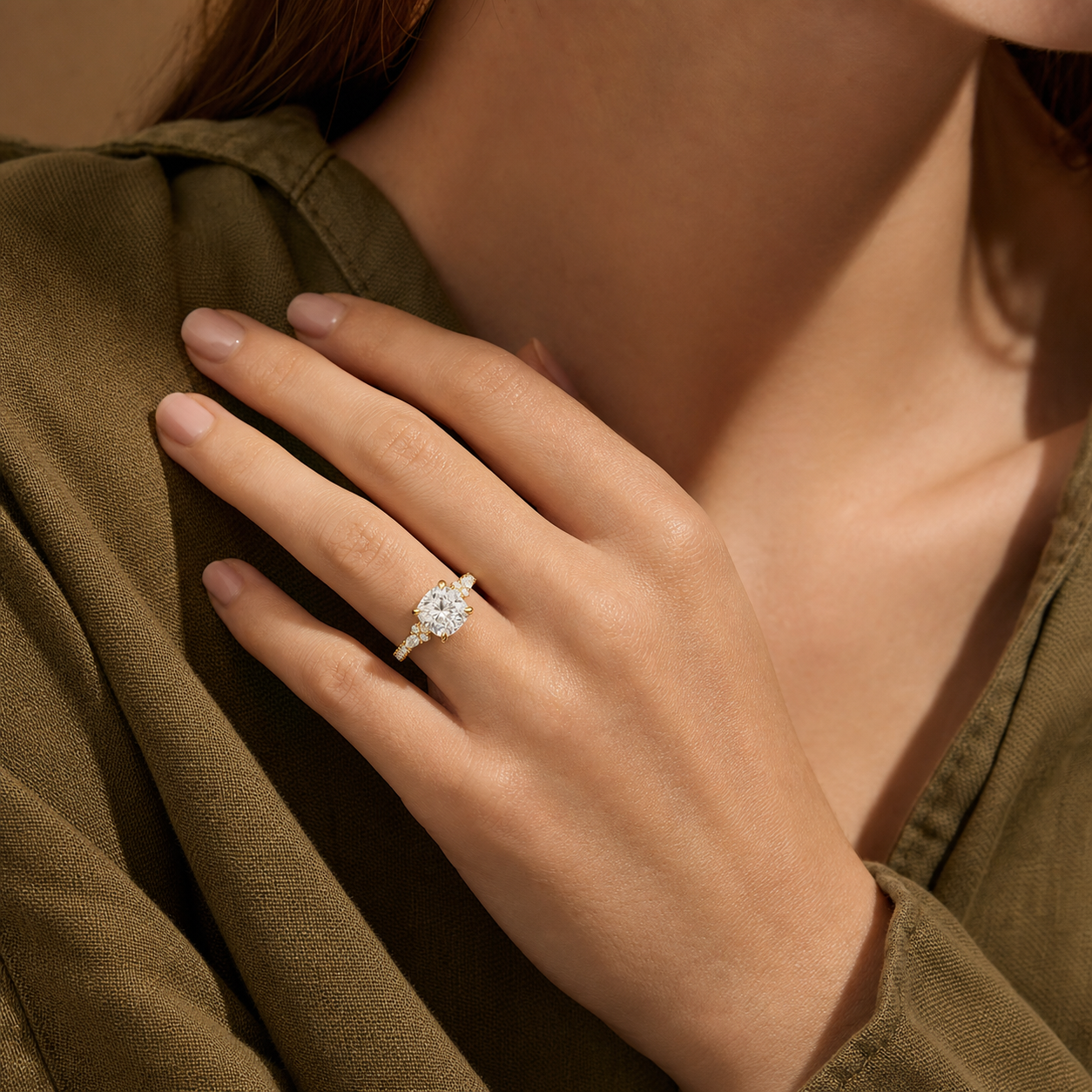
Carat weight is only part of the judgment. Different shapes and depths present different face-up dimensions, and spacing or metal can change how separate each stone appears. The aim is not to make the sides disappear, nor to let them compete unintentionally. Center, accents, and band should be evaluated on the hand, with enough distinction to preserve hierarchy and enough continuity to avoid an abrupt join.
Match, Complement, or Deliberately Contrast
Side diamonds do not always need grades identical to the center, but they should form a coherent visual relationship. Color and clarity differences become more or less visible depending on stone size, facet pattern, proximity, and setting metal. Brilliant-cut accents create lively points of scintillation; step-cut sides may ask for closer attention to broad facets and transparency.
The independently graded lab-grown center diamond should be assessed through its own report and dimensions. Side or accent diamonds may be documented collectively within the product specification rather than through individual reports. Confirm their shapes, quantities, total weight, quality range, and documentation for the exact ring instead of assuming the center report describes every diamond present.
Band and Profile Carry More Than Decoration
When diamonds move into the shoulders, the band becomes part of the setting architecture. Milgrain articulates an edge. Vine structures introduce changing direction and negative space. Crown-like profiles add vertical rhythm around the center. Coverage along the band influences appearance, sizing flexibility, and the number of setting points exposed to daily wear.
Side stones can also affect wedding-band pairing. Low outer stones, projecting prongs, broad shoulders, or decorative edges may meet a straight band before the two shanks align. Some rings sit close; others create a gap or pair more naturally with a contour. Compare the exact rings in profile and identify where metal or diamonds would touch before assuming a flush stack.
More Edges to Read, More Details to Care For
Each additional diamond introduces setting points and spaces where residue can collect. Clean gently with methods appropriate to the diamonds, metal, and construction, taking care around milgrain, pavé, small prongs, and open motifs. Remove the ring for impact-prone work or harsh chemical exposure, and arrange inspection after a strike or when a stone moves or an edge catches.
Burvonti brings responsibly sourced lab-grown diamonds together with proportion and human judgment at the scale of the complete ring. Custom possibilities may refine center shape, side-stone form, orientation, metal, band proportion, engraving, or another detail when the structure allows. Side-stone specifications, resizing, setting changes, and wedding-band compatibility remain product-specific.
Frequently Asked Questions
What is a side stone engagement ring?
A side stone engagement ring places smaller diamonds beside one dominant center stone or along the shoulders of the band. The accents support the center and shape the transition into the ring rather than becoming equal principal centers.
What is the difference between a side stone and a three stone engagement ring?
A three-stone ring presents a distinct trio as its main composition. A side-stone ring maintains a stronger center-versus-support hierarchy and may use two or many accents that transition into the shoulders.
What is the difference between side stones and pavé?
Side stone describes the compositional role of accent diamonds. Pavé describes a close-set technique using small diamonds secured in a metal surface. A side-stone ring may use pavé, individual prongs, channels, beads, or another structure.
How many side stones can an engagement ring have?
There is no defining number. A design may use one accent on each side, a graduated sequence, or smaller diamonds continuing along the shoulders. The category depends on their supporting role, not the count.
Which shapes work well as side stones?
Round, pear, marquise, baguette, trapezoid, half-moon, and other shapes can work when their dimensions, orientation, and setting suit the center. Burvonti’s current collection places particular emphasis on marquise and pear accents.
What do marquise or pear side stones change in the design?
Their tapered outlines can direct the eye away from the center and into the band. Orientation determines whether they feel botanical, architectural, soft, or sharply articulated.
What are graduated side stones?
Graduated side stones change in scale as they approach or move away from the center. The progression can establish a clearer visual path and preserve center dominance without requiring a fixed size ratio.
Can side stones make the center diamond look larger?
They can widen the overall face-up composition and create contrast around the center, but they do not change its dimensions, carat weight, grade, or intrinsic cut performance.
Should side diamonds match the center diamond’s color and clarity?
They should relate coherently when viewed together, but identical grades are not always necessary. Size, facet style, proximity, and metal affect visible differences; confirm the actual quality range for the selected ring.
Are side stones independently graded?
The Burvonti center lab-grown diamond is independently graded. Smaller side or accent diamonds may be documented collectively in the product specification rather than receiving individual reports; confirm what accompanies the exact ring.
What is the difference between center carat and total carat weight?
Center carat describes the main diamond’s weight. Total carat weight may include all side and accent diamonds. The two figures are not interchangeable and should be identified separately in the product specification.
Does metal color affect how side stones look?
White metals can create greater visual continuity around bright diamonds; Yellow or Rose Gold can create warmer intervals and clearer contrast. Metal reflection affects perception but does not change a diamond’s assigned grade.
Can a side stone engagement ring be resized?
Resize feasibility depends on metal, band construction, diamond coverage, milgrain, engraving, and the amount of change required. More side-stone coverage can reduce the available sizing area, so confirm the exact design.
Will a wedding band sit flush with a side stone engagement ring?
Not automatically. Outer stones, prongs, shoulders, basket width, and decorative edges determine where another band meets the ring. Some sit close; others create a gap or require a contour.
Are side stone engagement rings suitable for everyday wear?
They can be when the setting suits the wearer’s routine. Consider exposed edges, stone coverage, prongs, profile, and band dimensions, then remove the ring for impact, heavy force, or harsh chemicals.
Can a Burvonti side stone engagement ring be customized?
Custom possibilities may include center shape, side-stone form or orientation, metal, band proportion, engraving, or selected setting details. Availability and structural feasibility depend on the chosen design.