
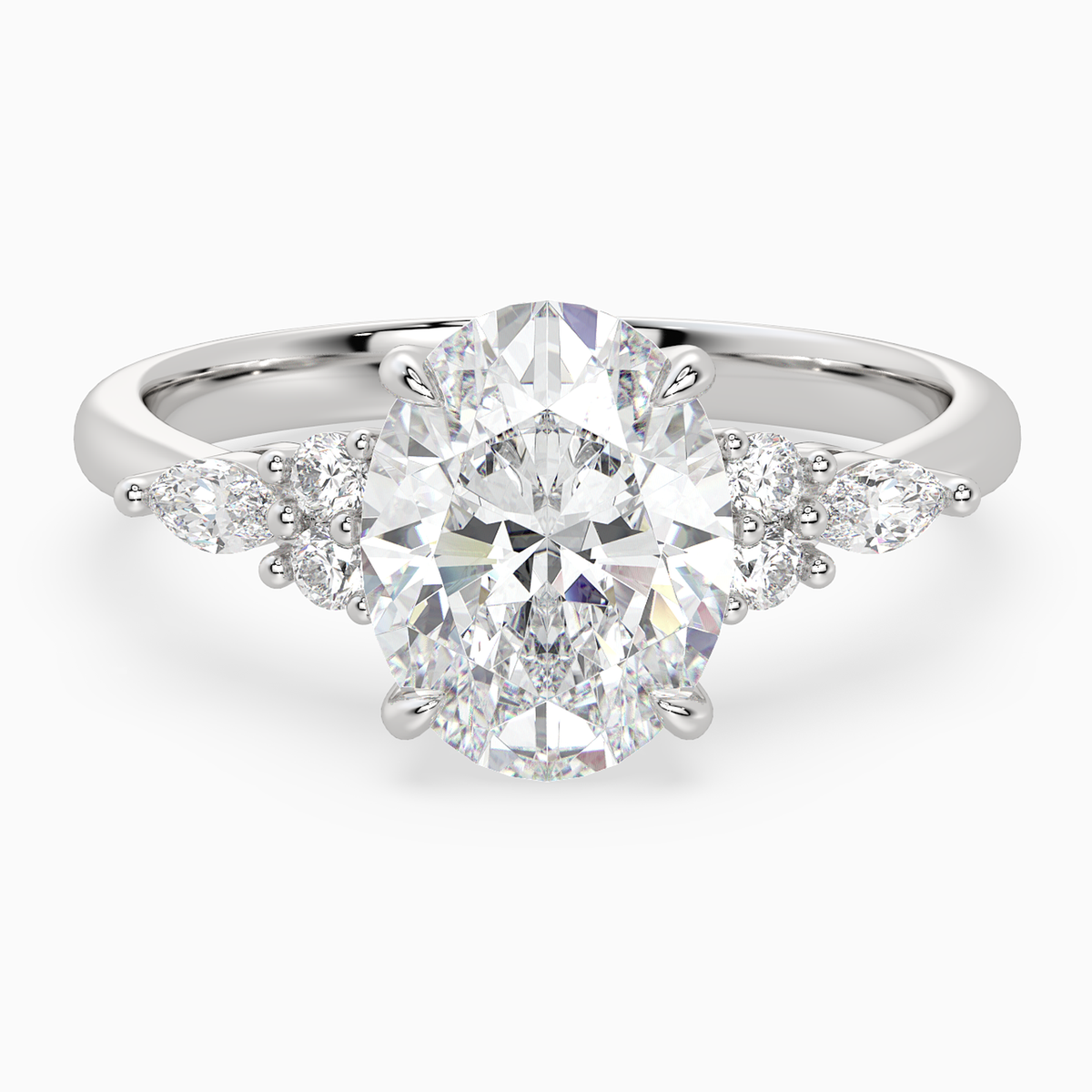


Lab Grown Diamond Solitaire Necklaces in 14K Yellow Gold
A single center holds against visible gold. 14K yellow gold gives outline, setting edge, and chain transition a deliberate warmth.


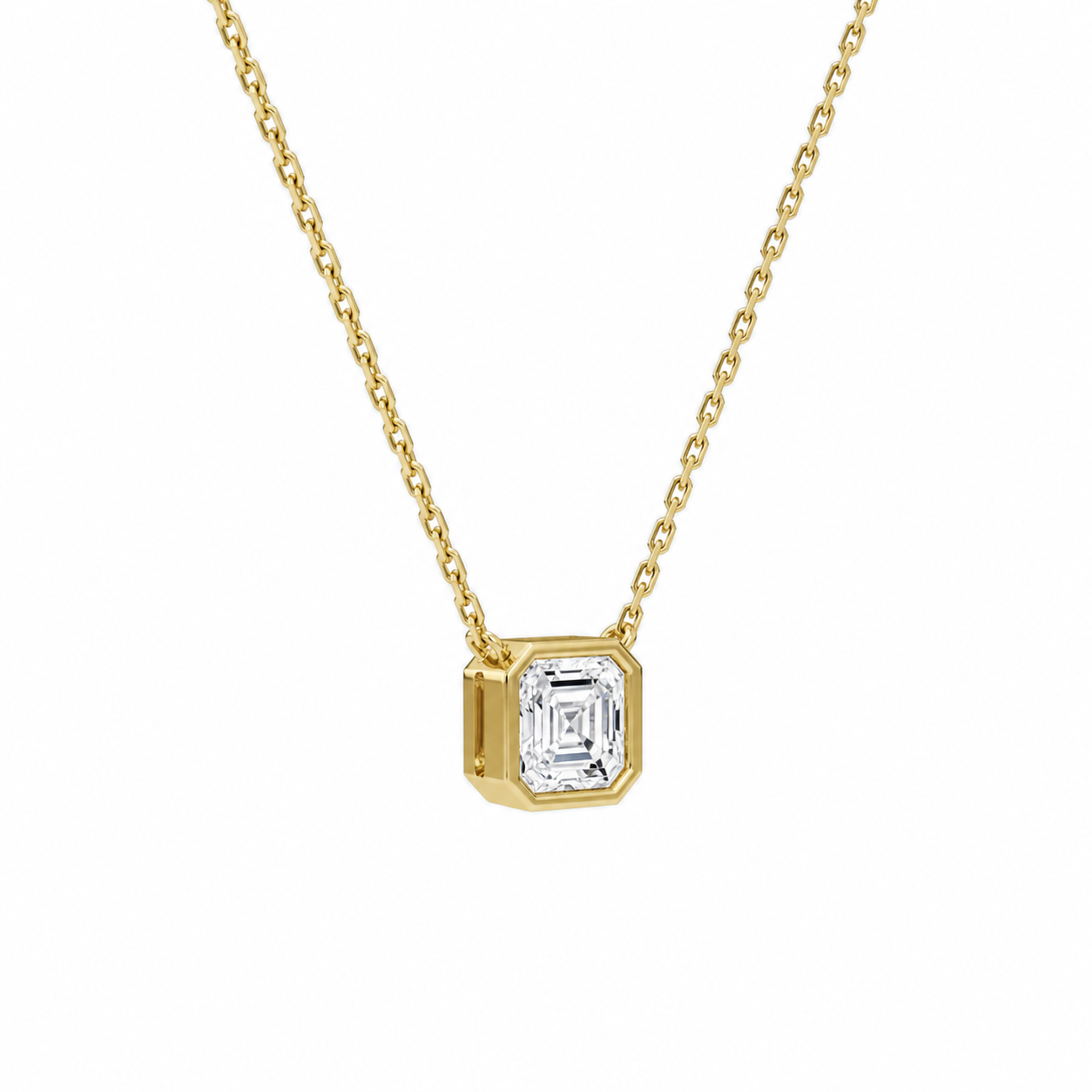


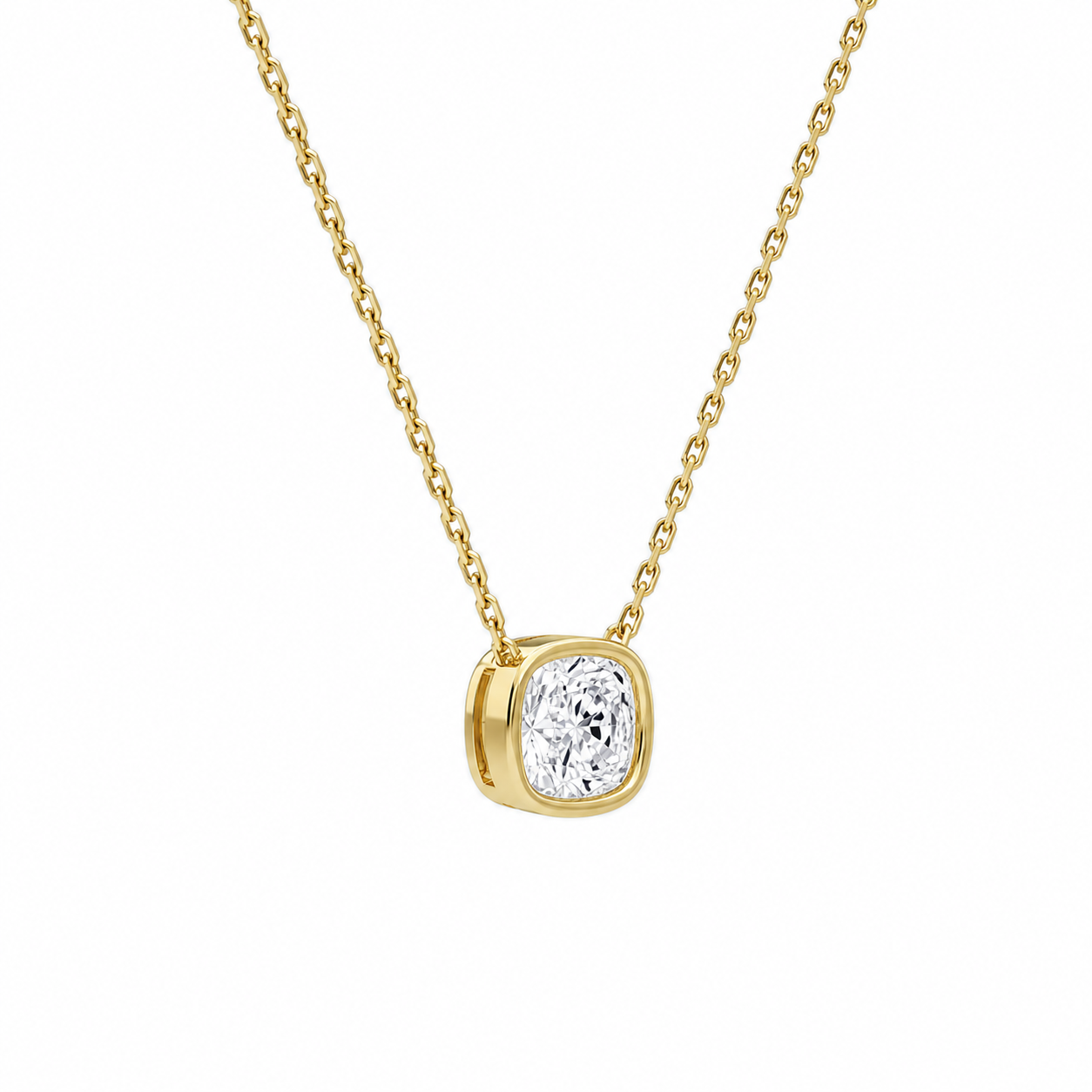


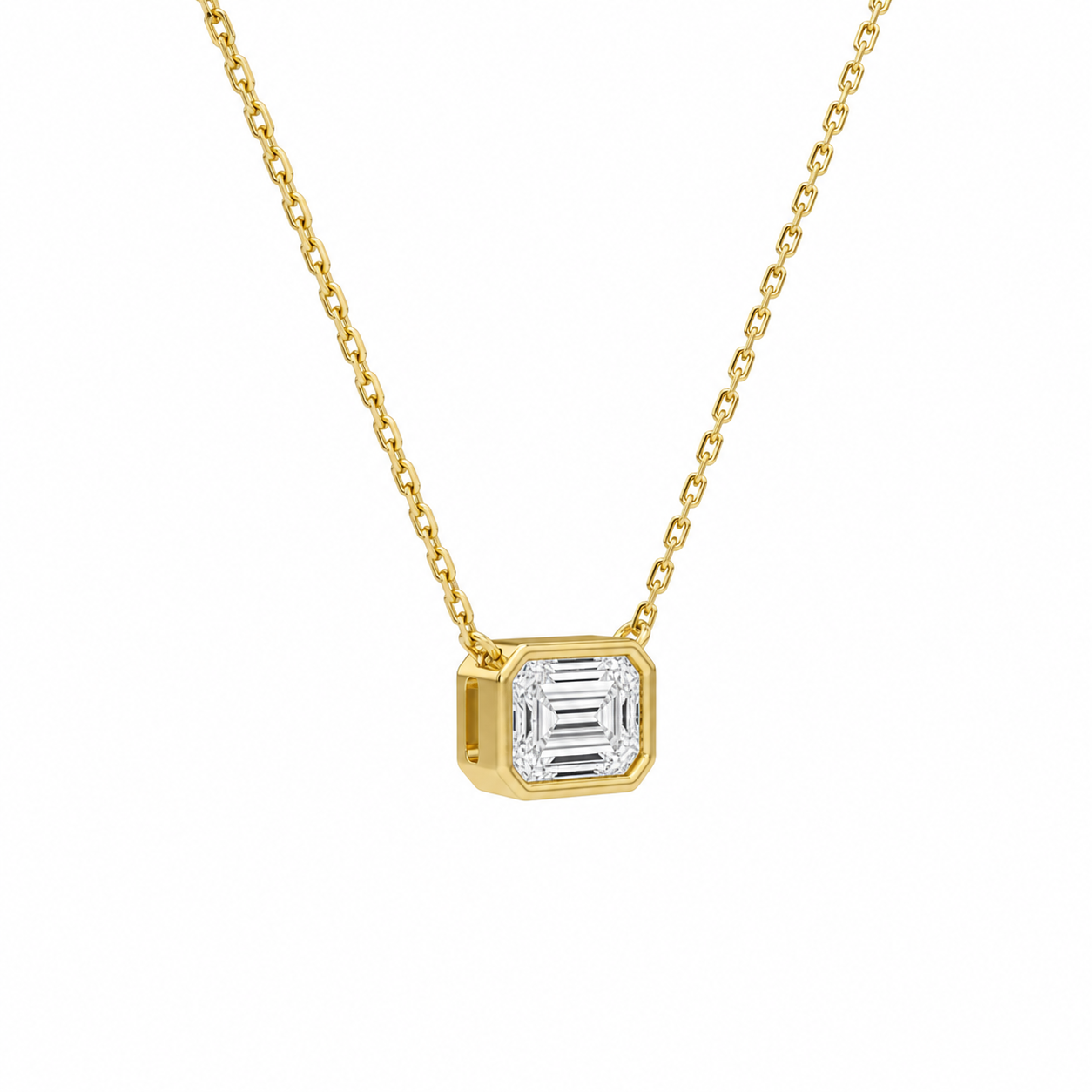


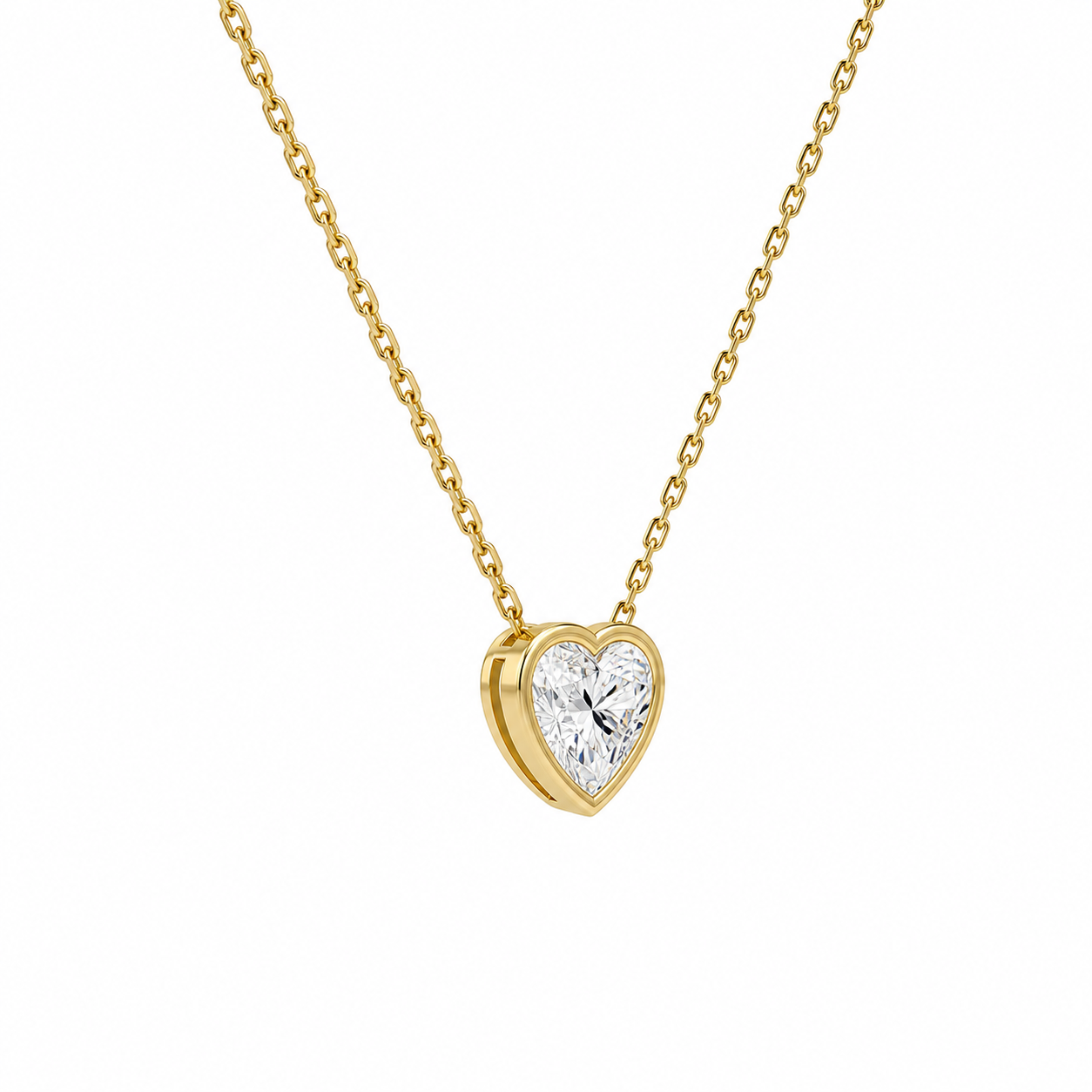


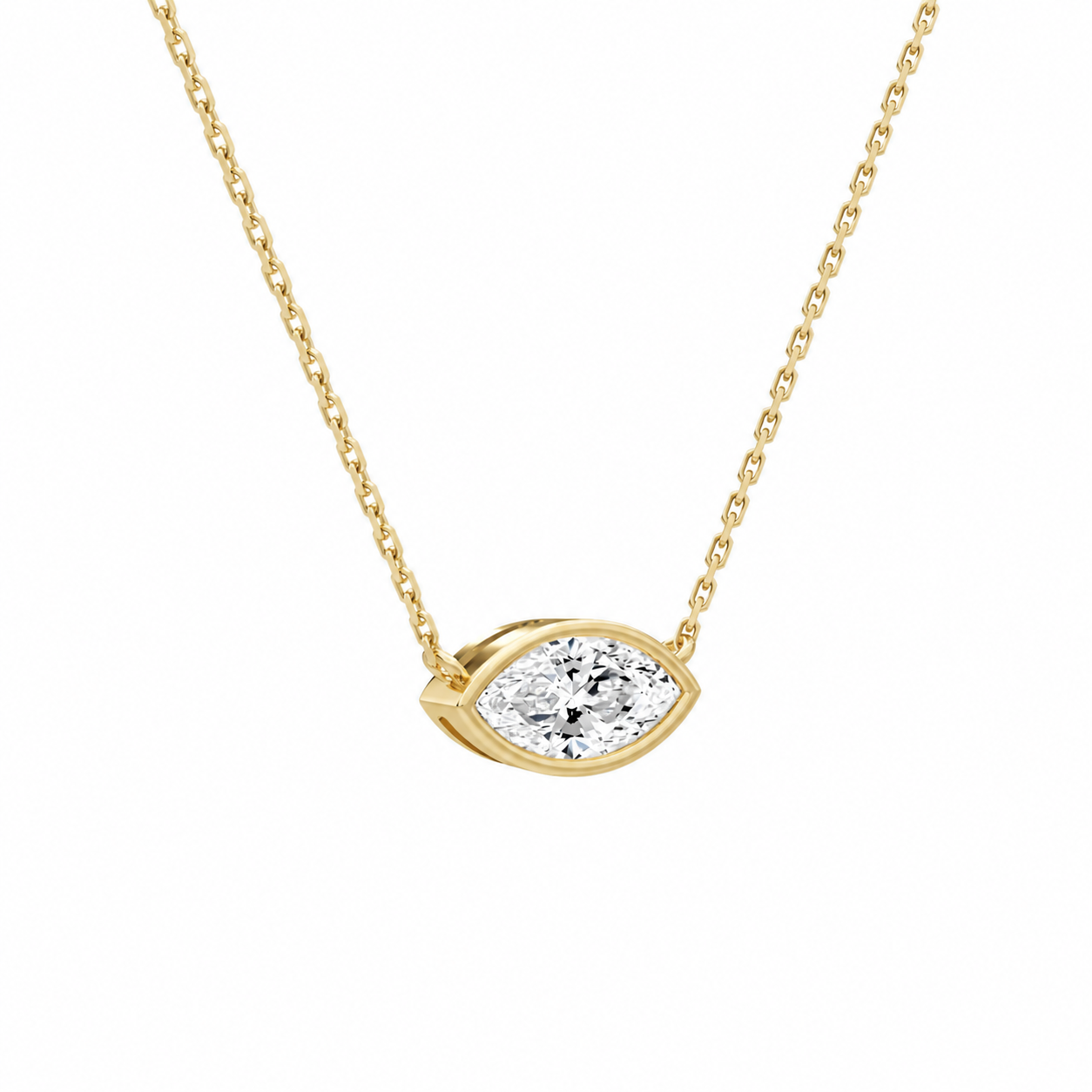


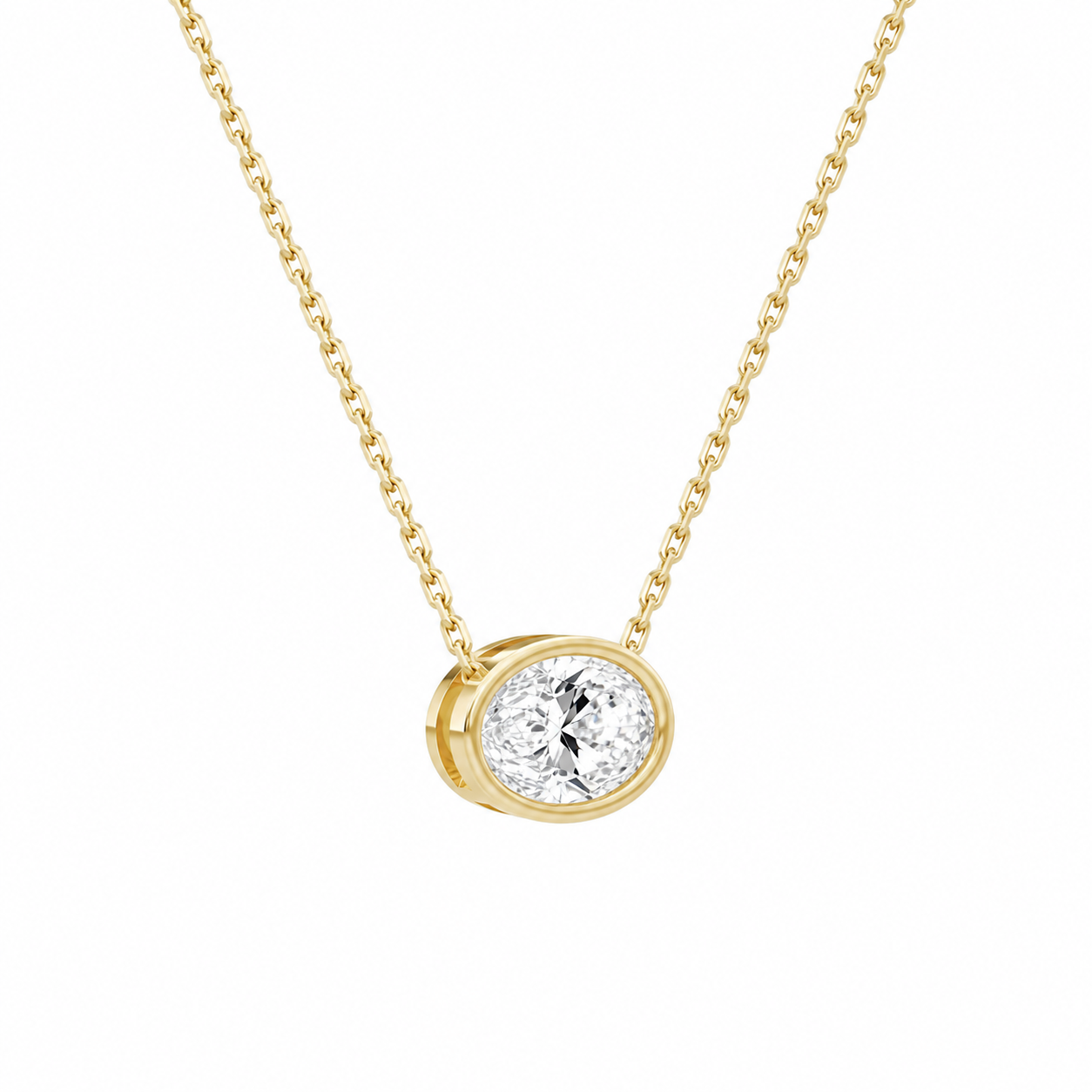


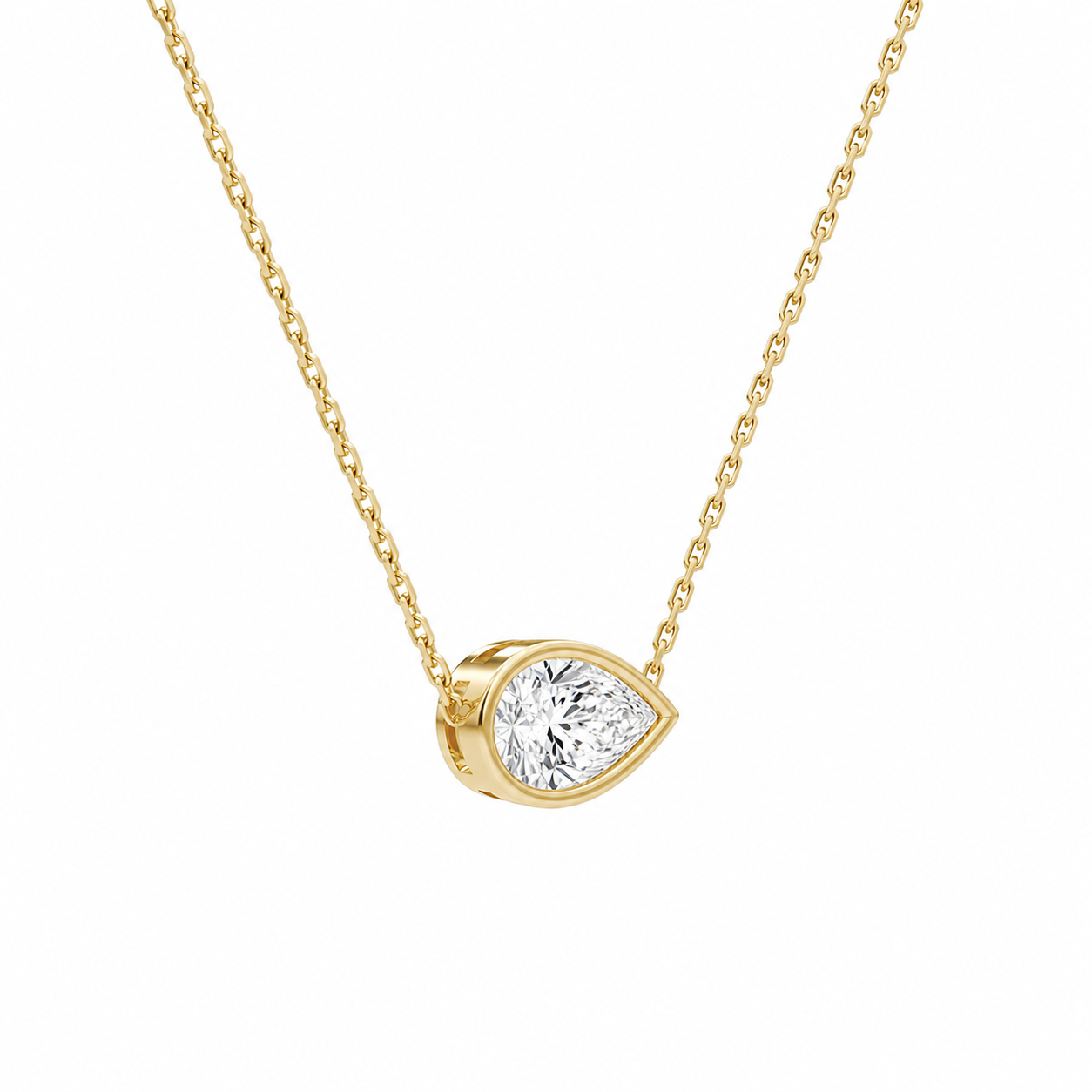


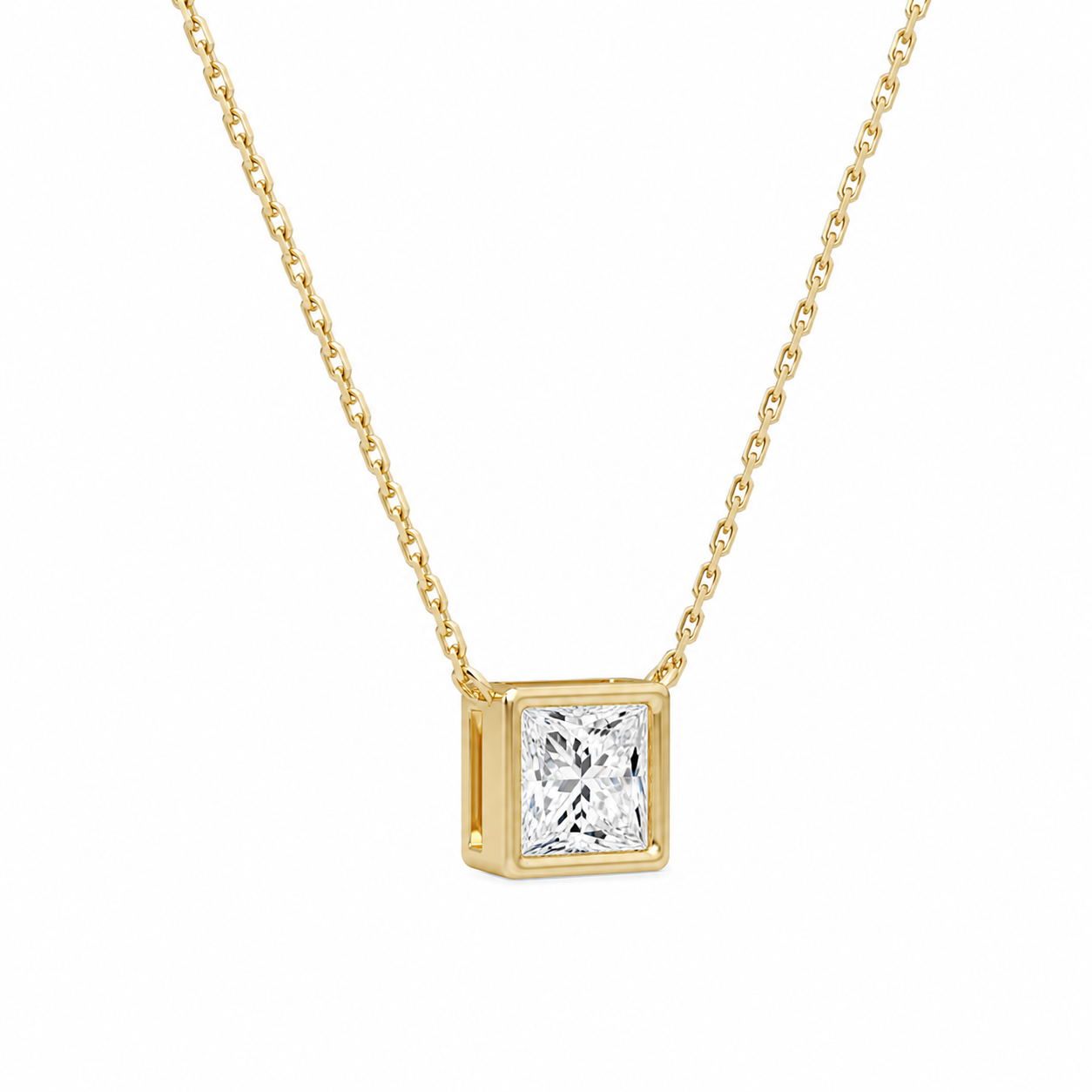


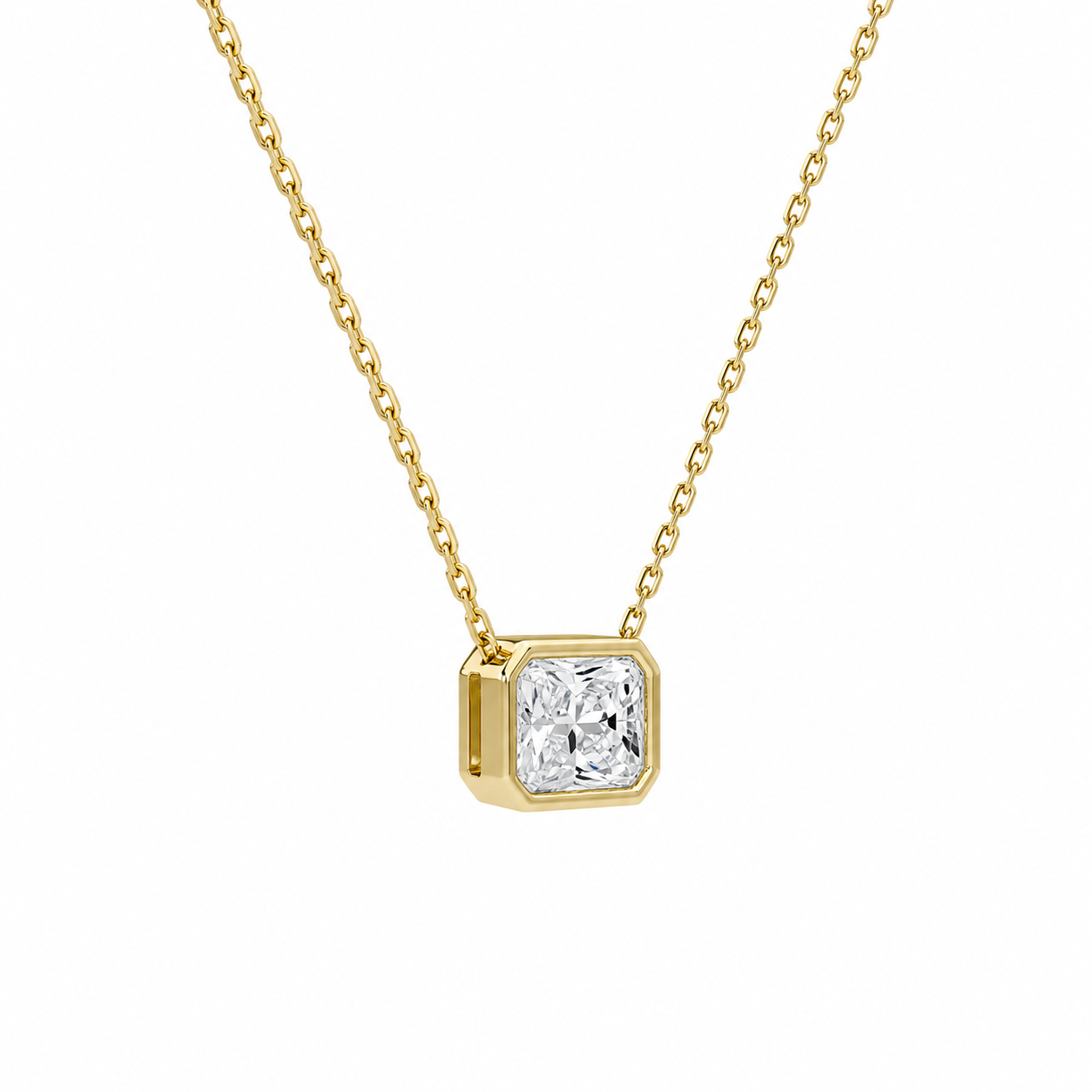


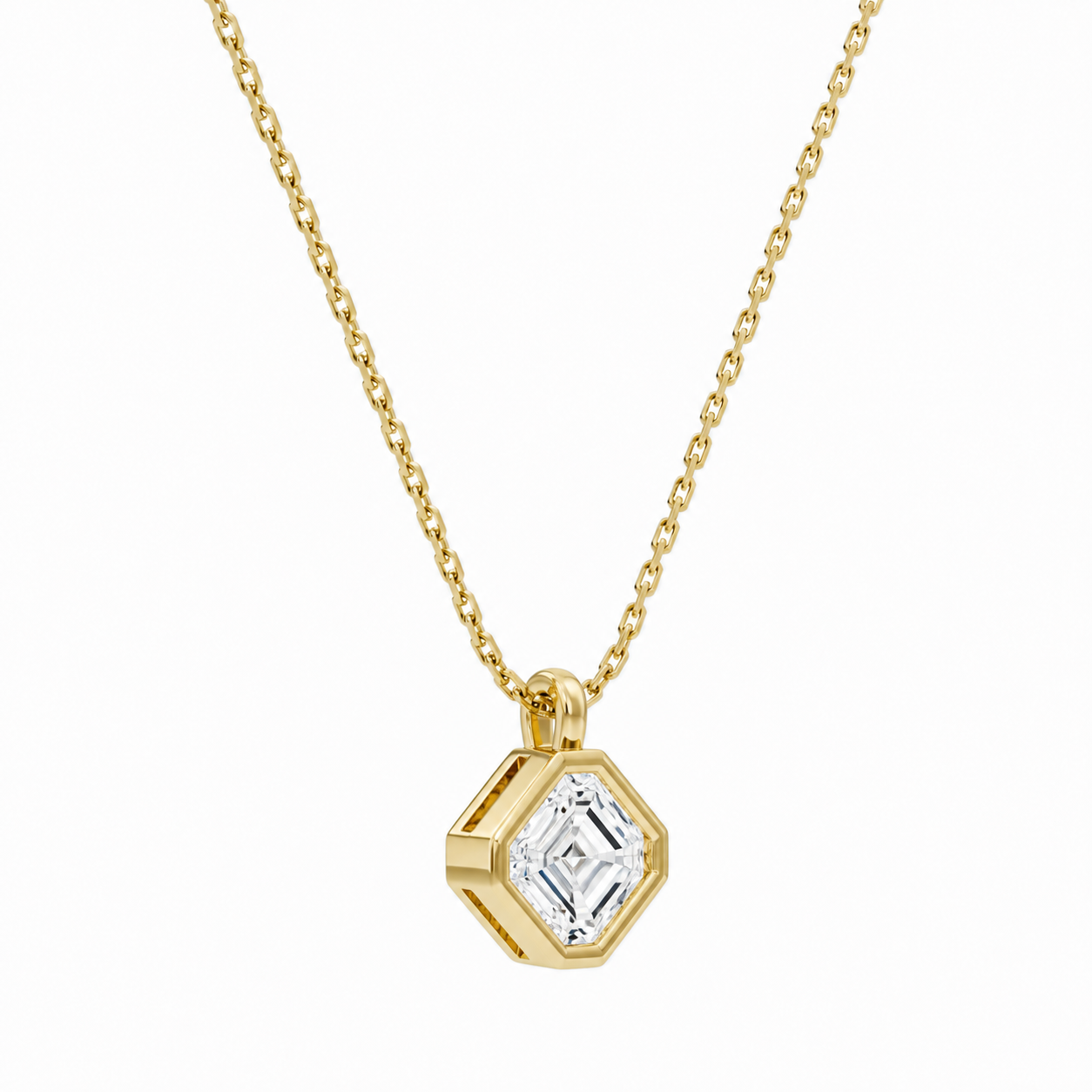


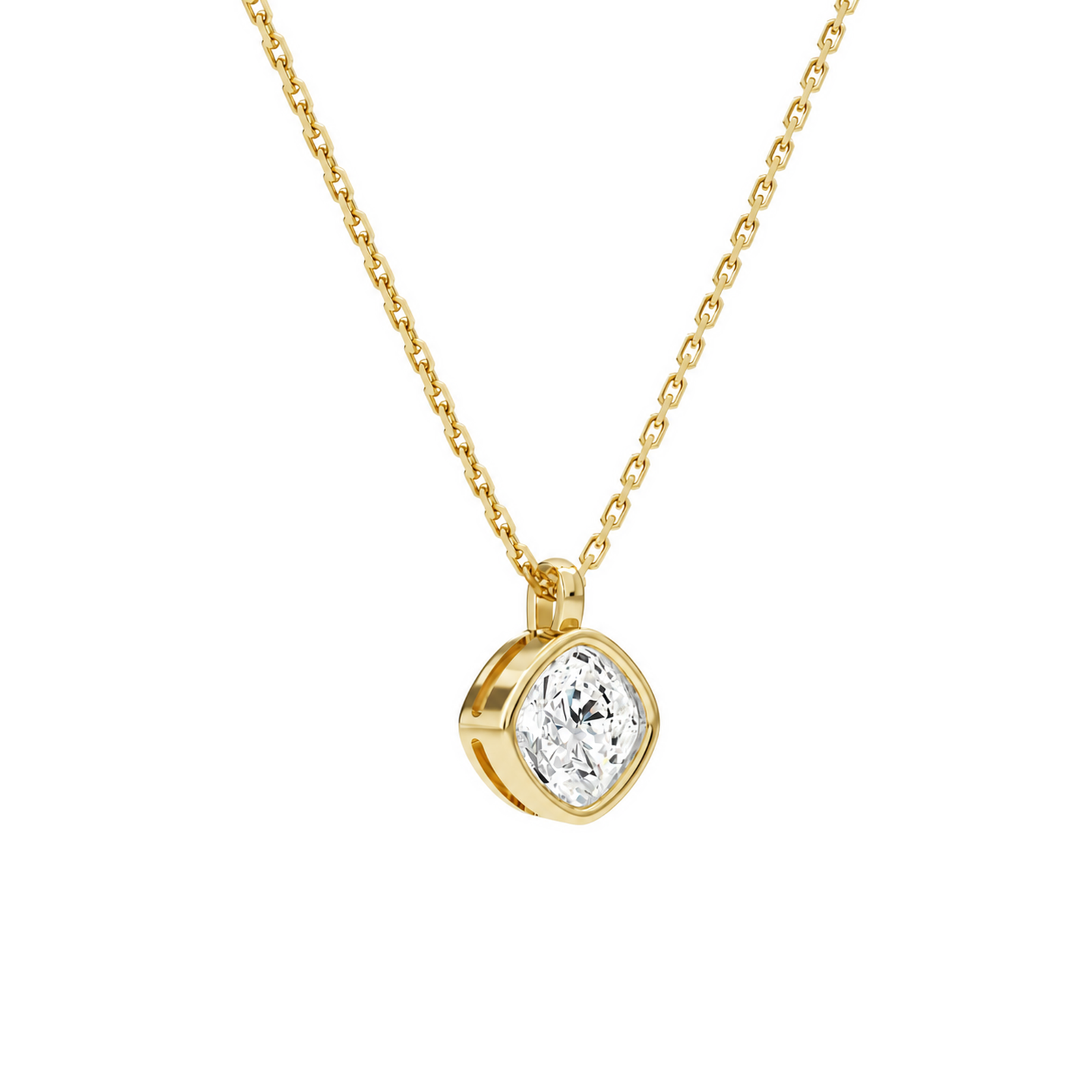

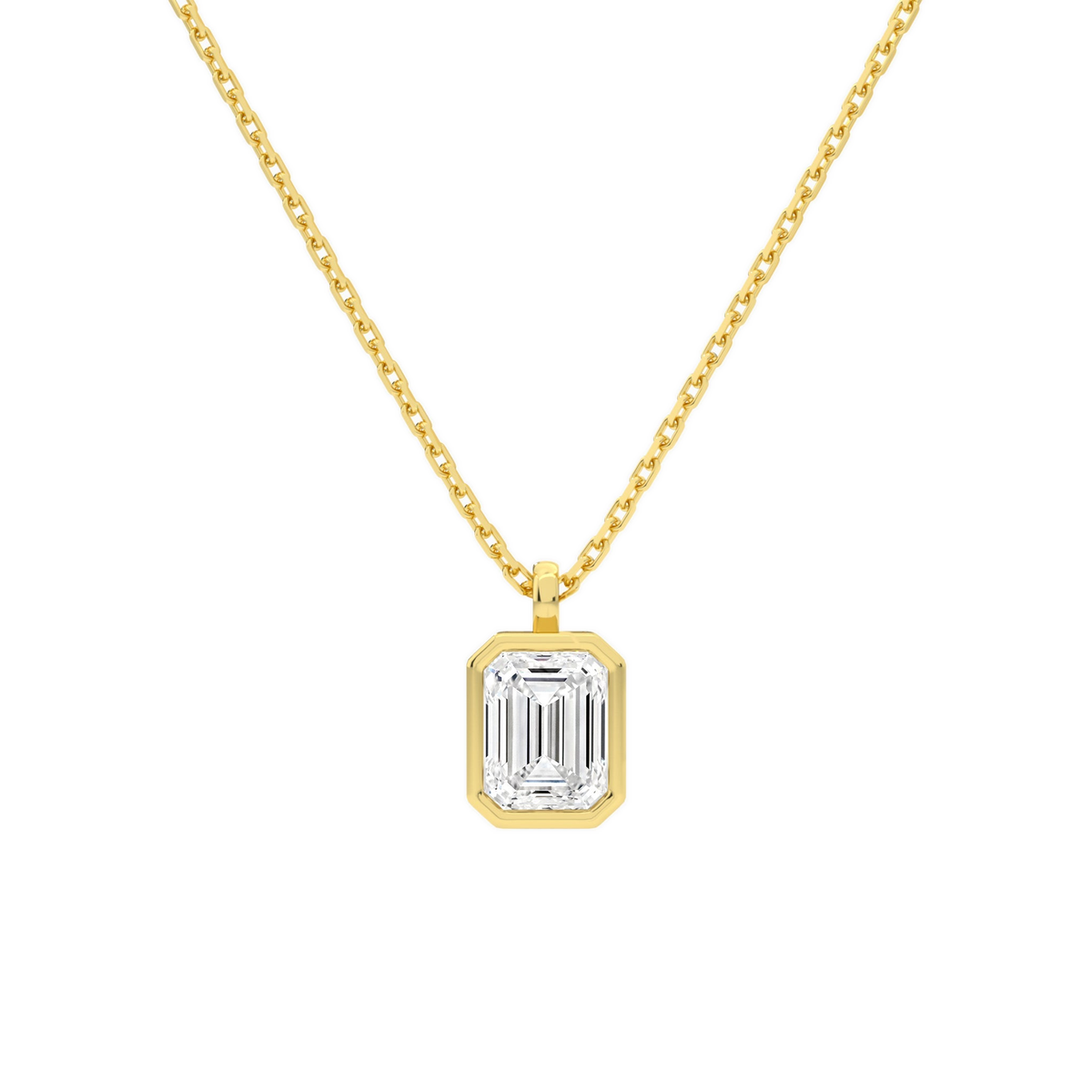
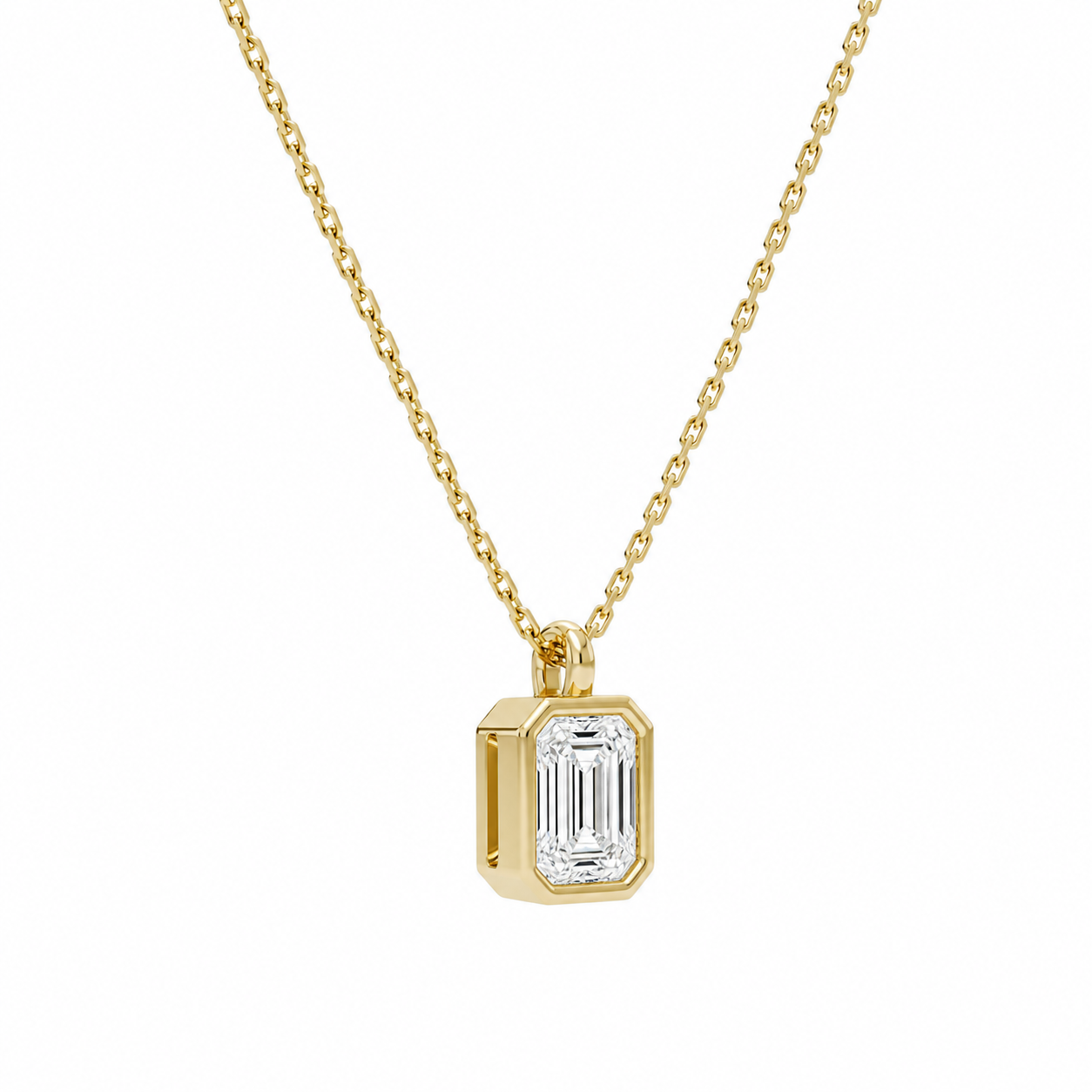


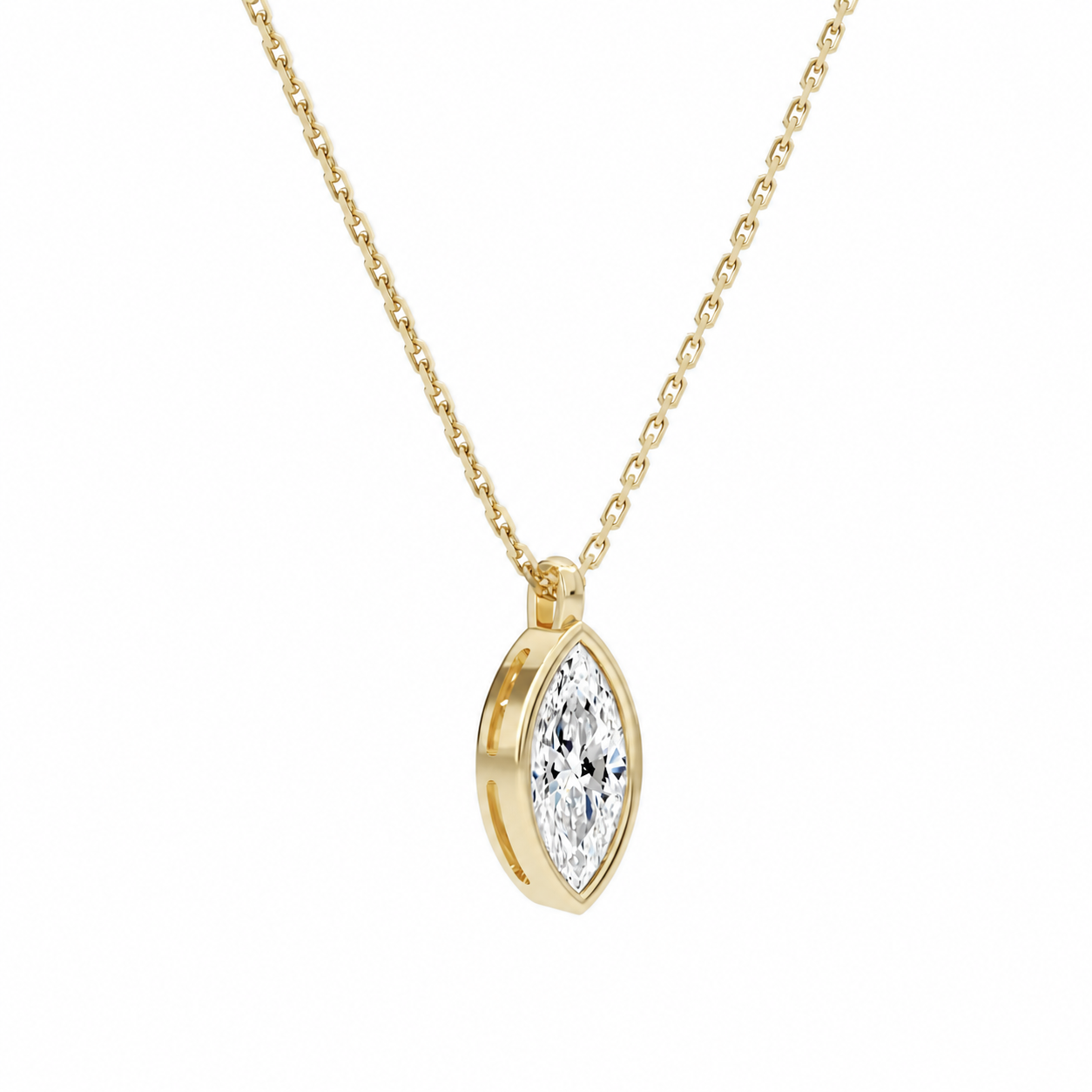


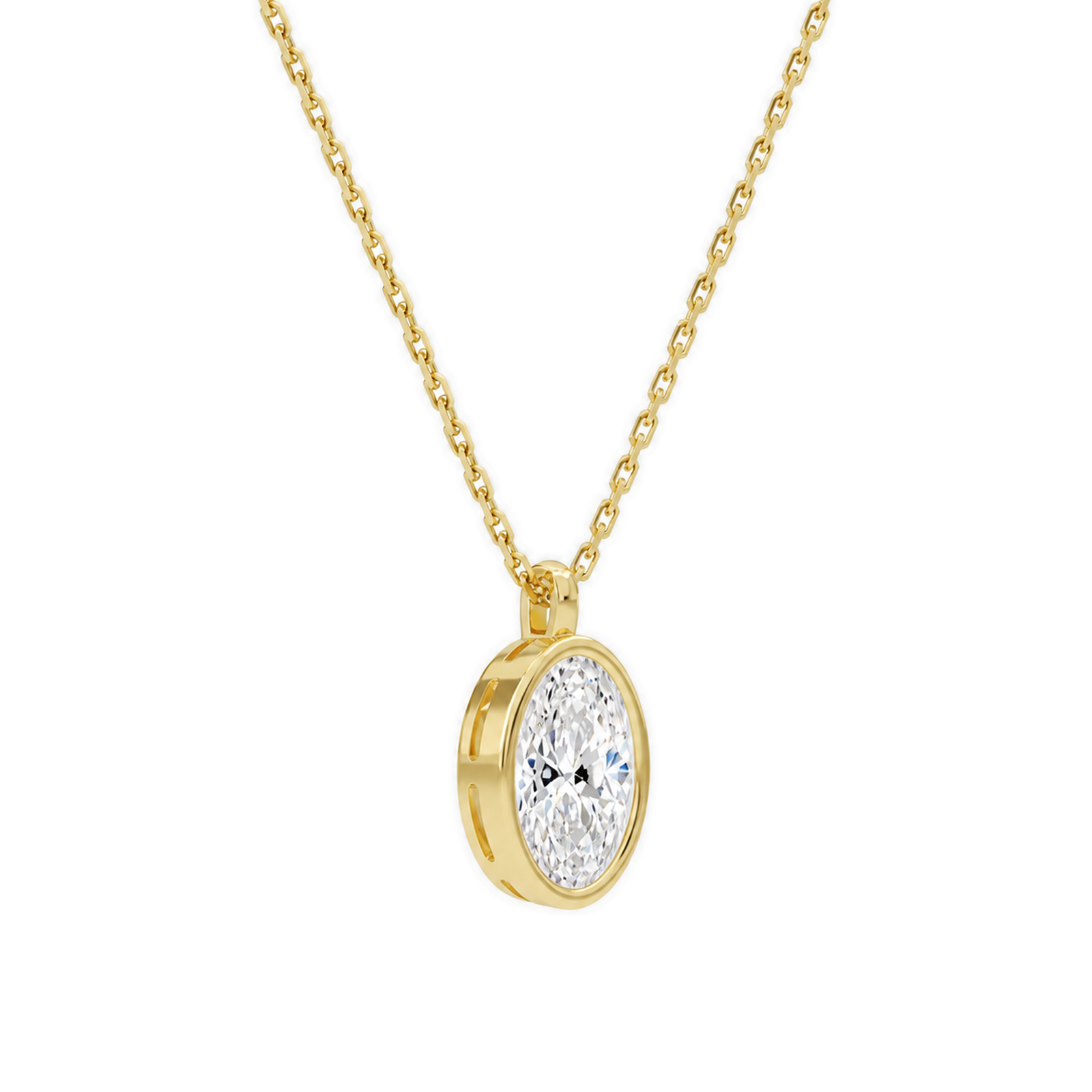


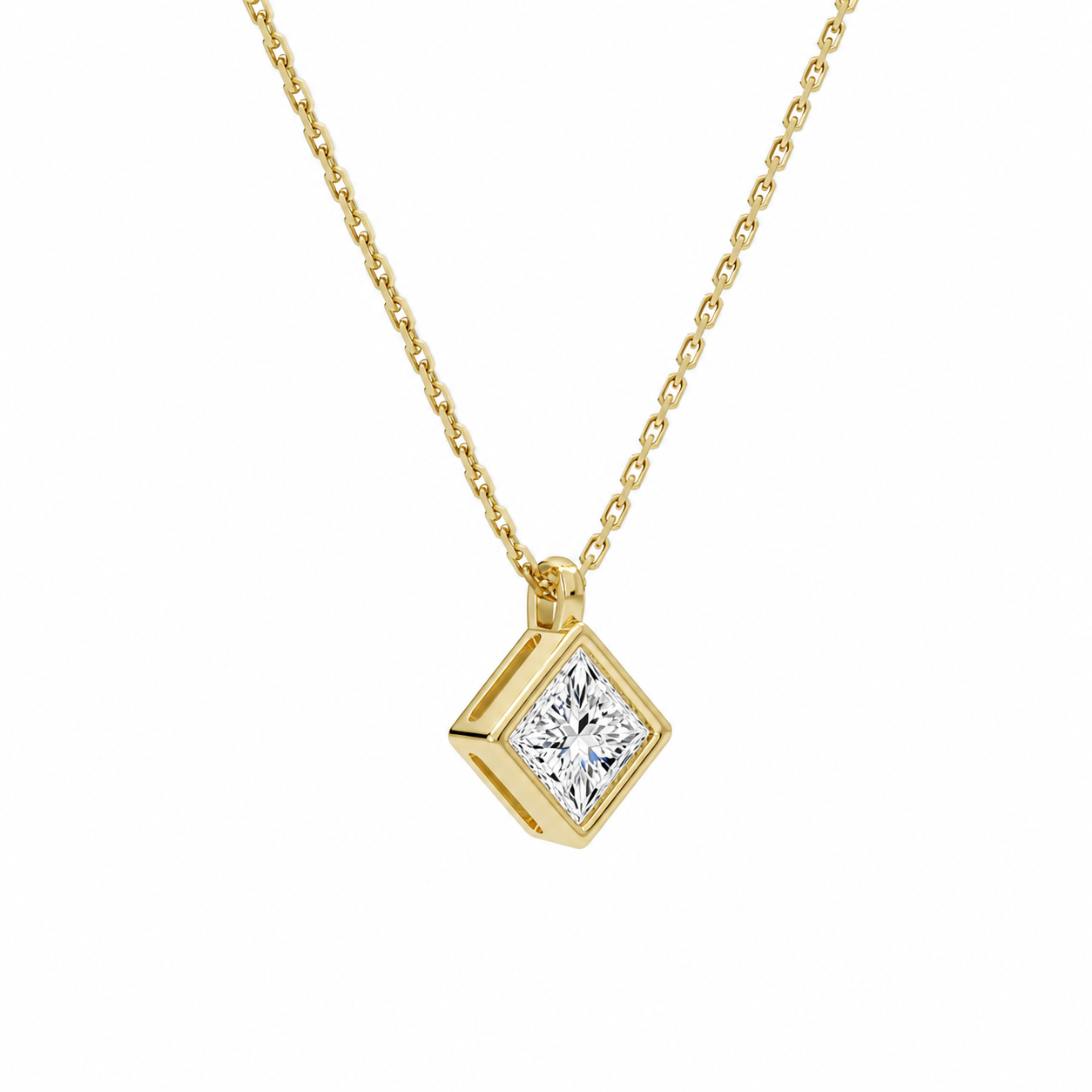


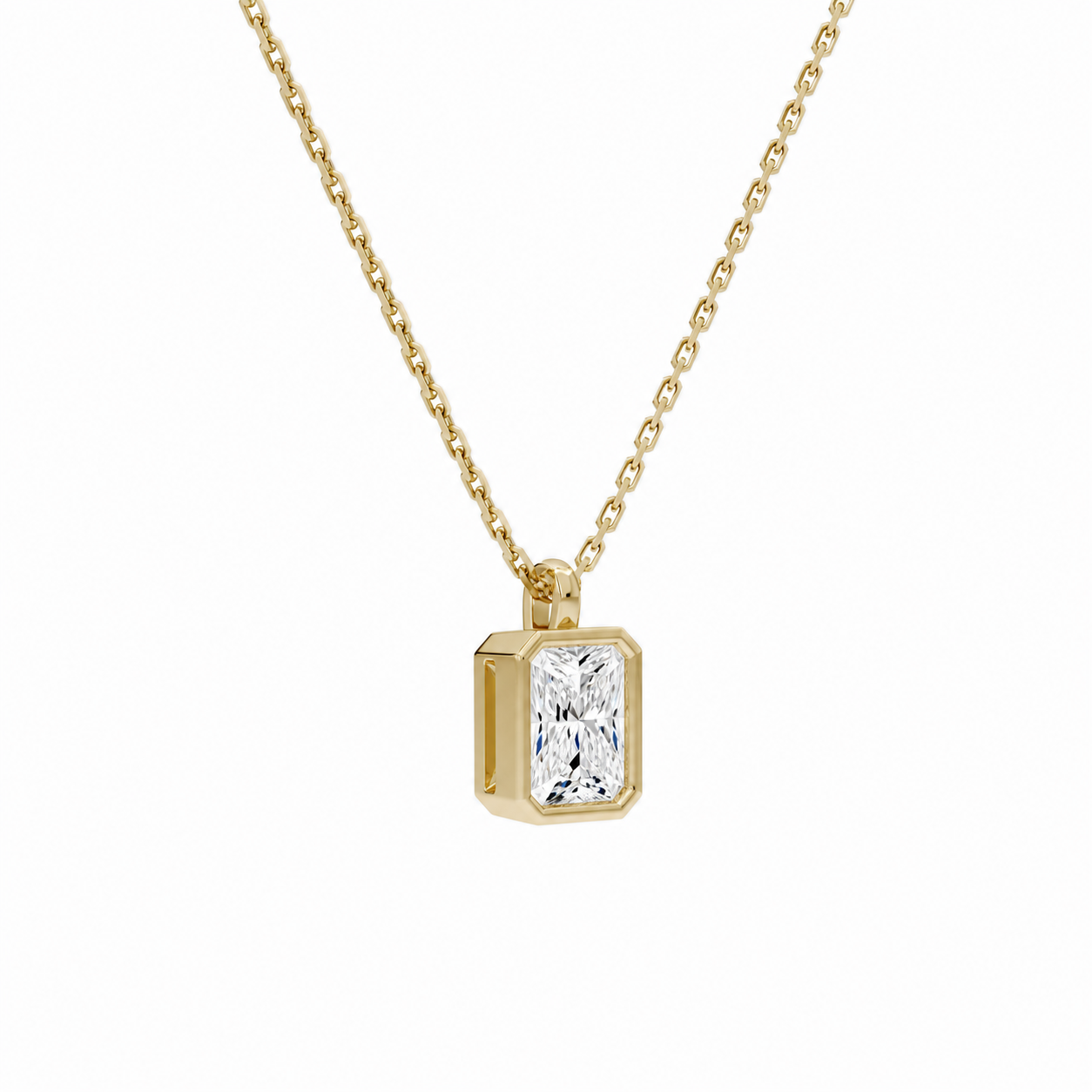


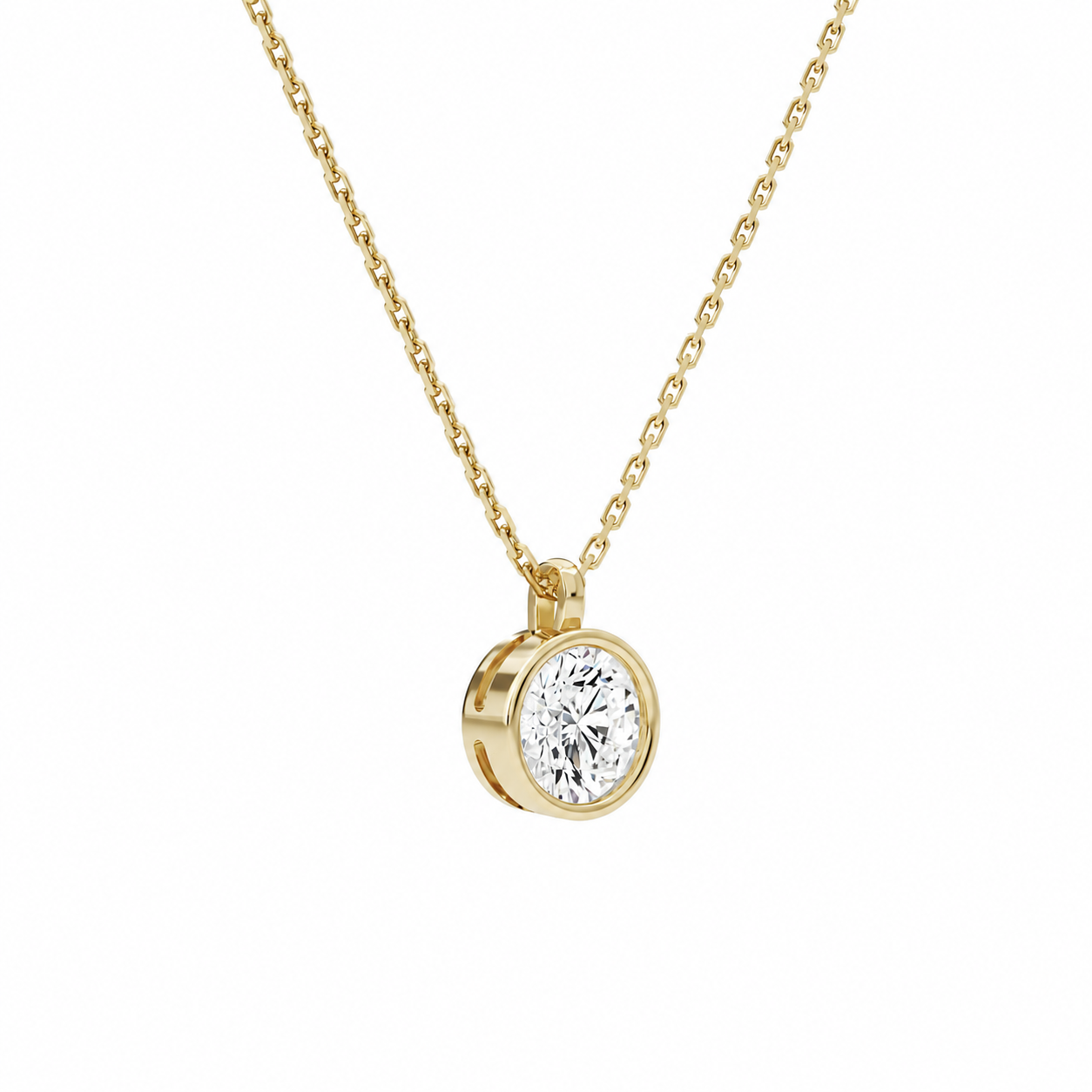


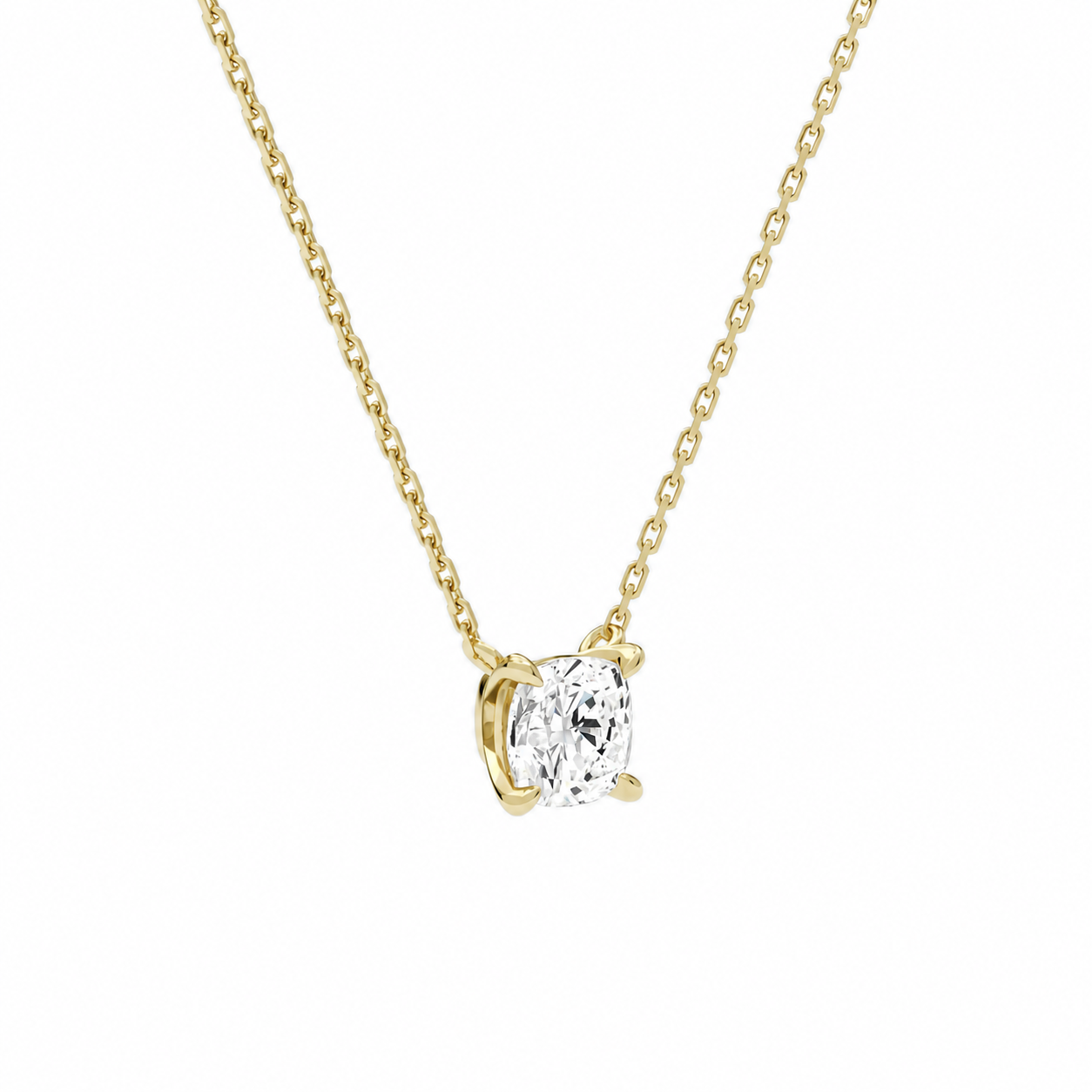


14K Yellow Gold Solitaire Necklaces: One Center within a Visible Gold Line
Yellow Gold keeps the material framework of a solitaire visible. Prongs interrupt the diamond outline with small points of gold; a bezel traces the full perimeter; a twist sends that line toward the chain. At neckline scale, the relationship between center, attachment, and chain becomes as important as the isolated setting.
The current 44 products comprise 20 bezel, 20 prong, and three prong-set twist centerstone-led designs, plus one multi-diamond solitaire-cross outlier. All 44 normalized designs appear on the parent page. This child interprets their Yellow Gold structure rather than presenting an exclusive assortment.
Use Visible Gold to Read the Outline
Ten shapes move from uninterrupted curves to corners, points, and elongated axes. Yellow Gold can make those boundaries more explicit, especially at prongs, bezel edges, and attachment points. It does not alter diamond grade, dimensions, facet pattern, or brilliance, and it does not make one shape universally more suitable for a neckline.
A 14K alloy contains approximately 58.3% gold. Remaining alloy, finish, dimensions, lighting, photography, and exposed area influence observed color. Karat does not prove one shade, sensitivity result, strength level, scratch behavior, weight, or maintenance schedule.
The amount of visible gold also changes with setting architecture. Fine prongs punctuate the outline; a broad bezel adds a stronger graphic field; an exposed bail or fixed chain connection extends the color above the center. Compare these areas together so metal presence supports the single focus instead of being reduced to a generic warm-tone label.
Let Placement Complete the Composition
Titles alternate between Necklace and Pendant Necklace without proving fixed or sliding construction. Review the bail or chain attachment, profile, reverse, and orientation. A visible gold connection may make movement easier to read, but centering still depends on geometry, weight distribution, chain drape, clothing, posture, and condition.
All 44 current descriptions list an adjustable 16–18-inch length, 0.95-millimeter chain, and lobster clasp. The same range lands differently with neck circumference, neckline, center dimensions, and attachment. Layering should preserve a clear vertical interval; different lengths cannot guarantee freedom from overlap or tangling.
Compose Warmth without a Fixed Script
Yellow Gold is not automatically traditional, formal, masculine, or flattering to one skin tone. Its effect depends on exposed area, finish, diamond outline, chain scale, clothing, and wearer. Coordination may come from repeating the gold field, or from echoing shape and line across another metal.
Burvonti pairs responsibly sourced lab-grown diamonds with considered calibration. Independent grading or certification applies within document scope. Custom possibilities may refine shape, proportions, scale, setting, twist, attachment, metal, chain, or length where feasible. Clean gently, store without abrasive contact or knots, and inspect every setting, connection, link, and clasp if movement changes.
Frequently Asked Questions
How does this page differ from the parent Solitaire Necklace Collection?
It focuses on how 14K Yellow Gold makes outline, setting edge, attachment, and chain transition visible.
Are all products one-diamond designs?
No. Forty-three are centerstone-led; one solitaire-cross is a multi-diamond outlier using Total Carat Weight.
Which settings are included?
The set contains 20 bezel, 20 prong, three prong-set twist designs, and one cross outlier.
How much gold is in 14K Yellow Gold?
Approximately 58.3%. Other alloying metals influence shade and working behavior.
Are all 14K yellow gold necklaces the same color?
No. Alloy formula, finish, dimensions, lighting, photography, and exposed area affect appearance.
Is Yellow Gold only traditional or formal?
No. Style and occasion belong to the complete necklace and wearer, not the material label.
Does Yellow Gold improve diamond brilliance?
No. It changes the surrounding color and boundary, not diamond dimensions, facets, or grading facts.
Which shapes are represented?
Round, Oval, Cushion, Pear, Princess, Emerald, Marquise, Asscher, Radiant, and Heart.
How do prong and bezel settings differ?
Prongs create discrete gold points; a bezel draws a continuous edge. Neither is universally better or safer.
What does Total Carat Weight describe?
It can combine several diamonds, as on the cross outlier; it should not be read as one center's weight.
Does Pendant Necklace prove a sliding center?
No. Review the selected product's attachment; title wording alone does not establish construction.
What chain facts are currently listed?
All 44 descriptions list adjustable 16–18 inches, 0.95 millimeters, and a lobster clasp.
Will the necklace stay centered?
Not universally. Attachment, weight distribution, chain drape, movement, clothing, and condition affect orientation.
Can Yellow Gold solitaires be layered or mixed with metals?
Yes aesthetically. Compare vertical interval, chain contact, repeated shape, and movement; tangling cannot be ruled out.
Can Yellow Gold cause sensitivity?
Sensitivity depends on the complete alloy and wearer; color and karat alone cannot establish a universal result.
What customization and care are possible?
Shape, scale, setting, attachment, metal, chain, or length may be possible after review. Clean gently and inspect the whole piece.