
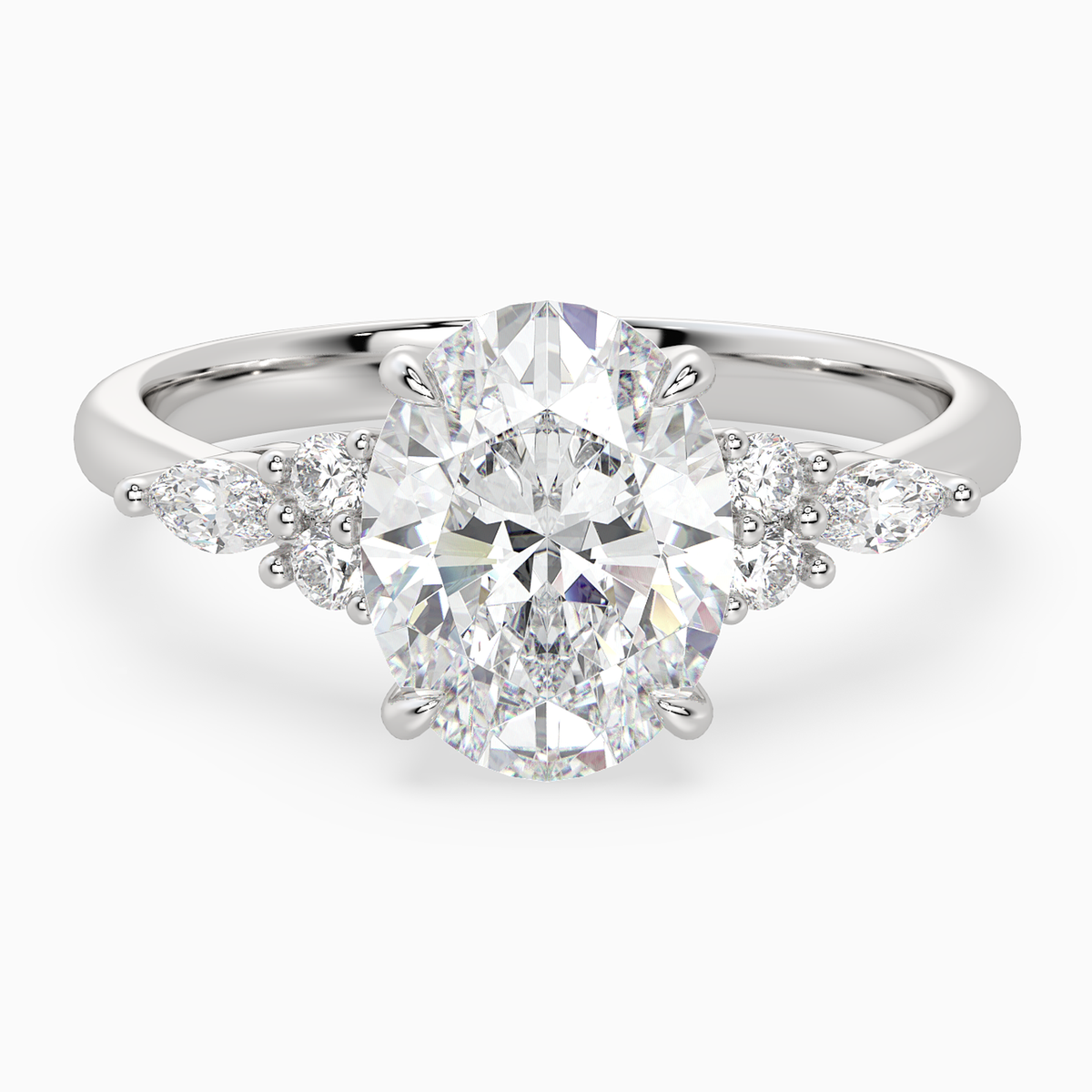


Lab Grown Diamond Solitaire Necklaces in 14K White Gold
One center stays clear against a quiet frame. 14K white gold keeps prong, bezel, attachment, and chain visually composed together.


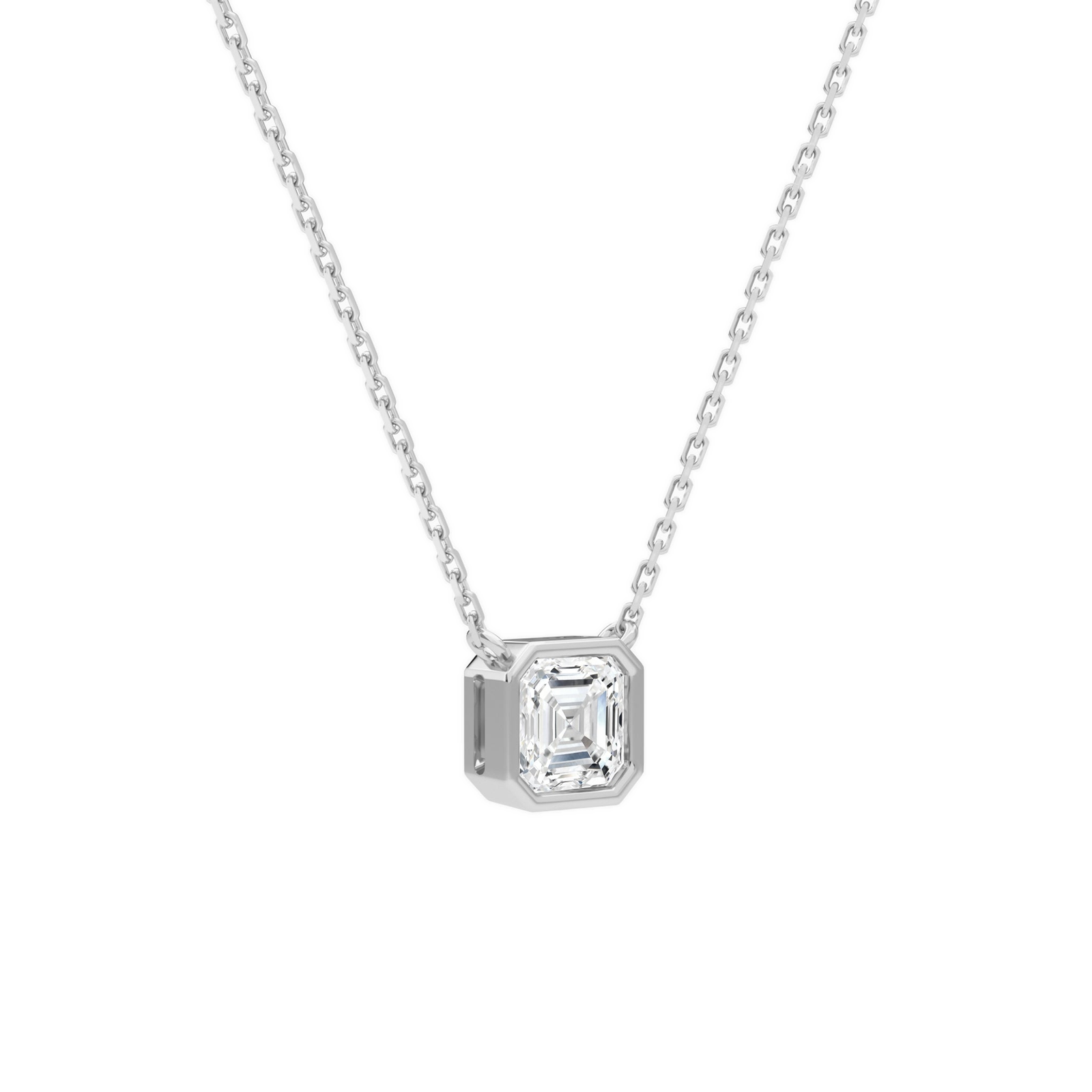


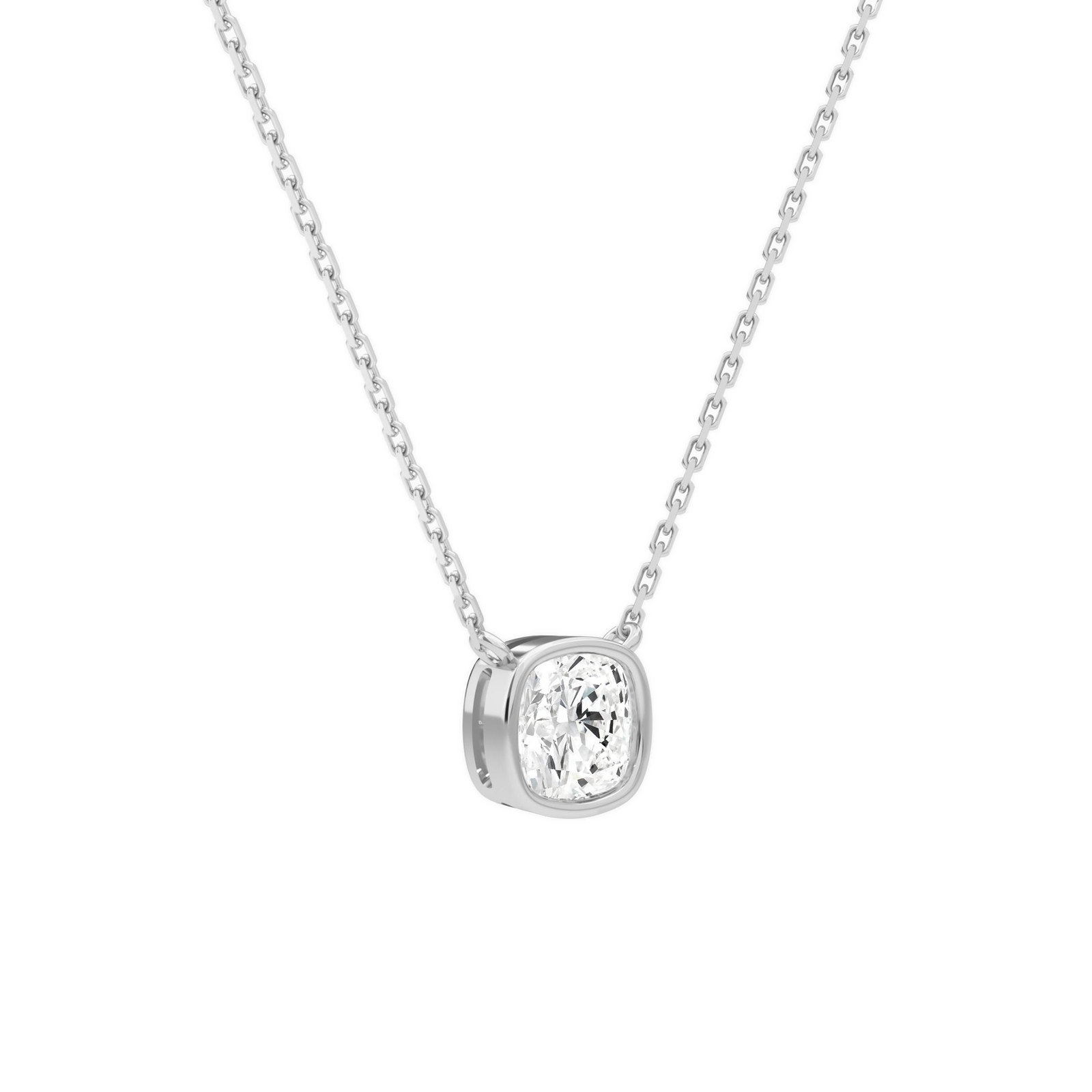


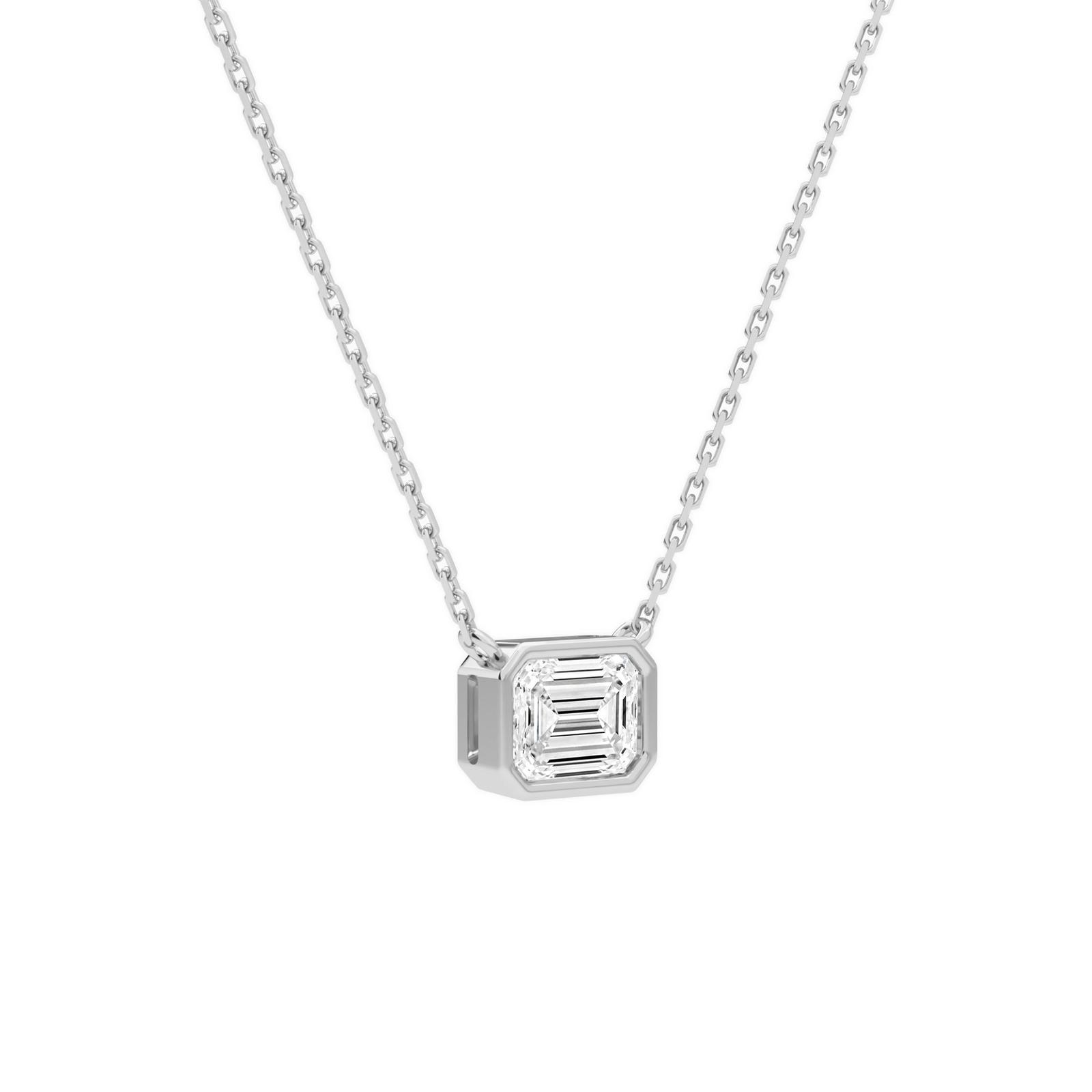


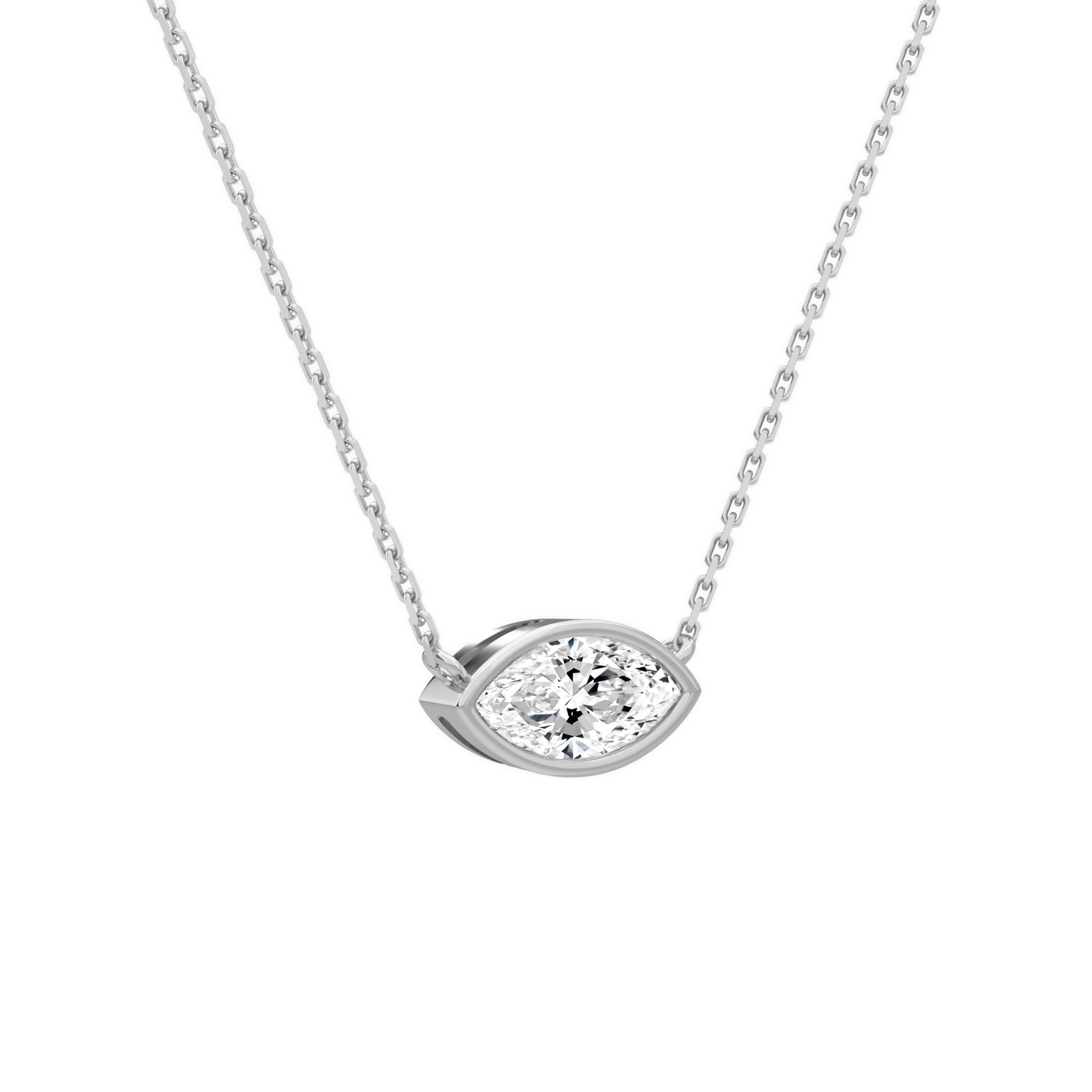


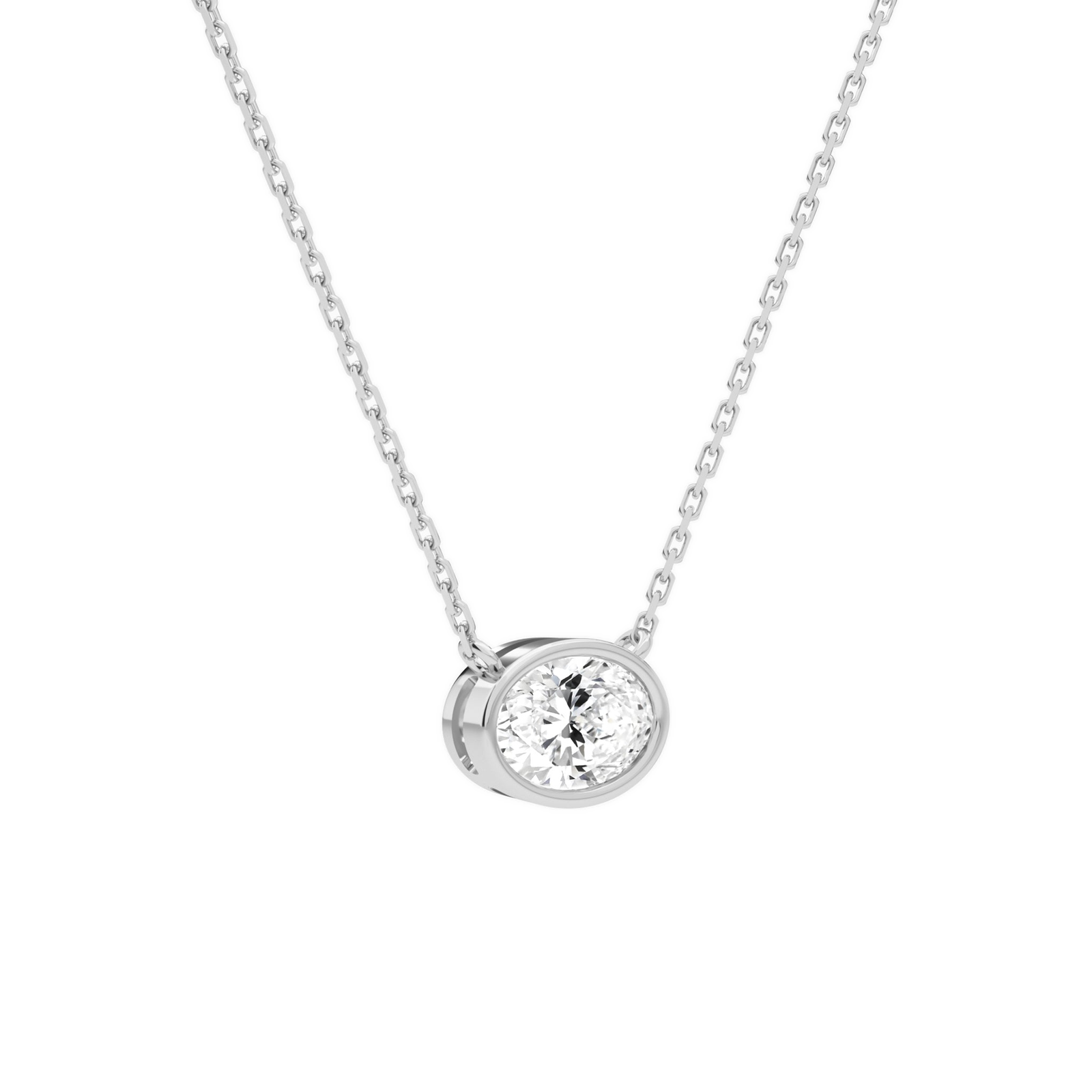


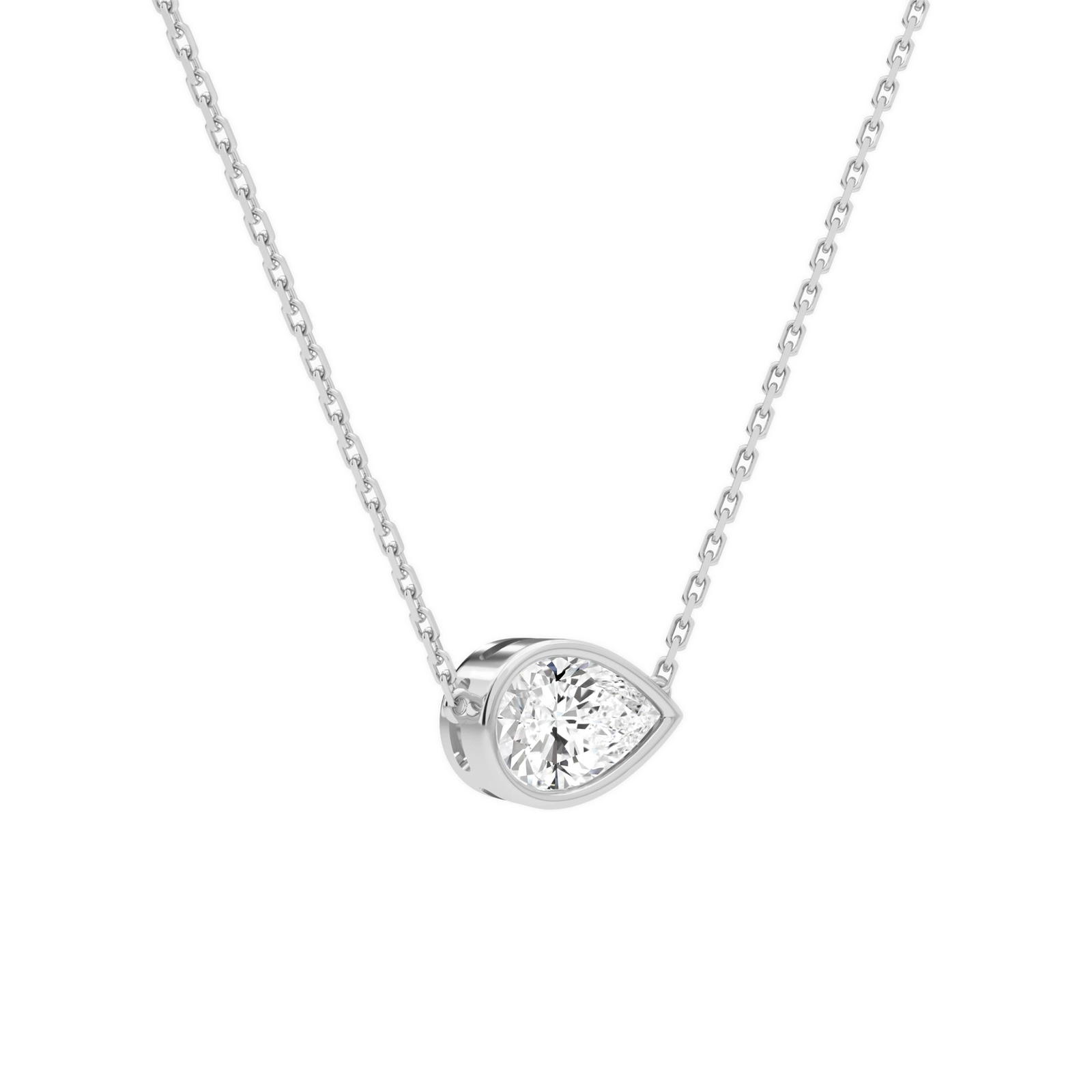


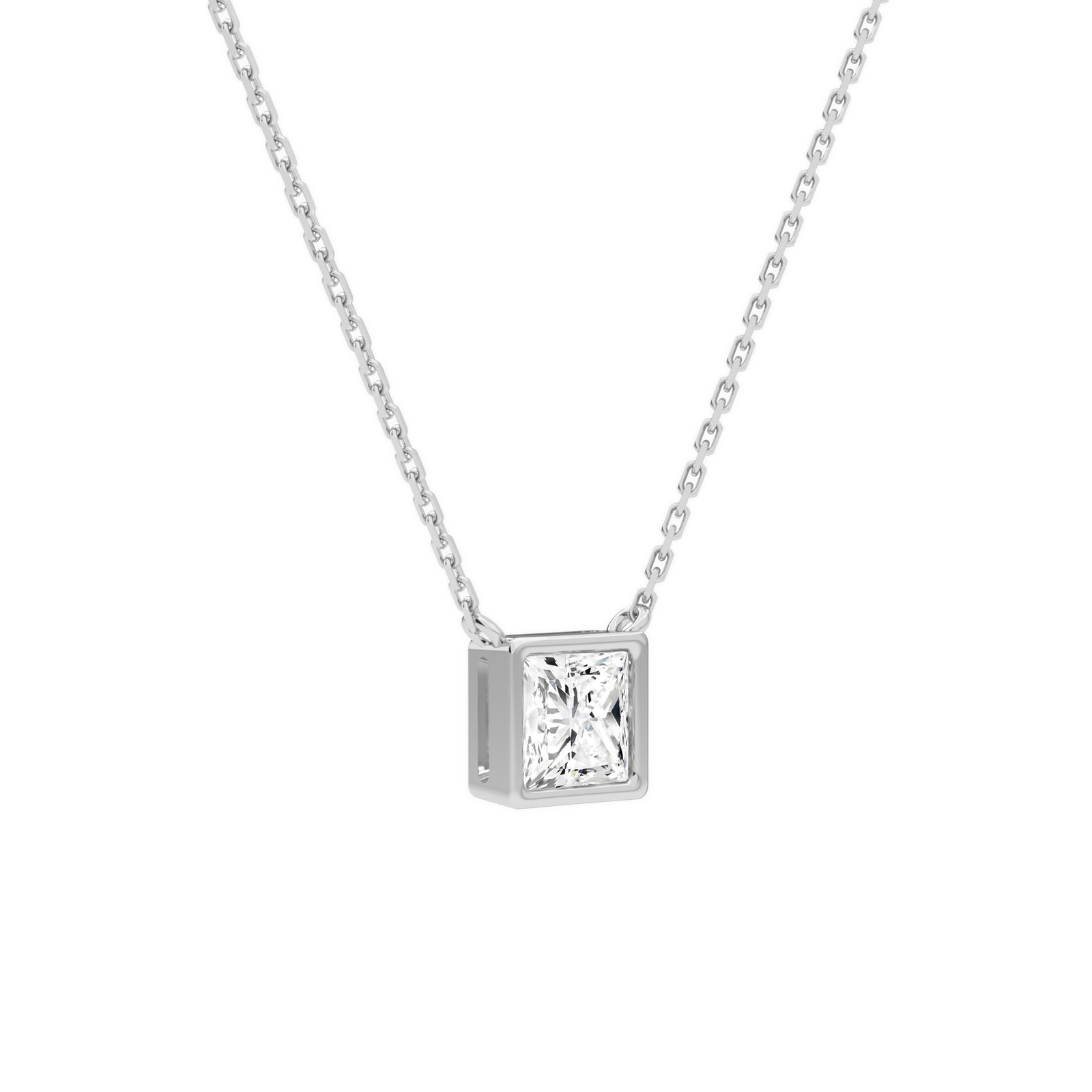


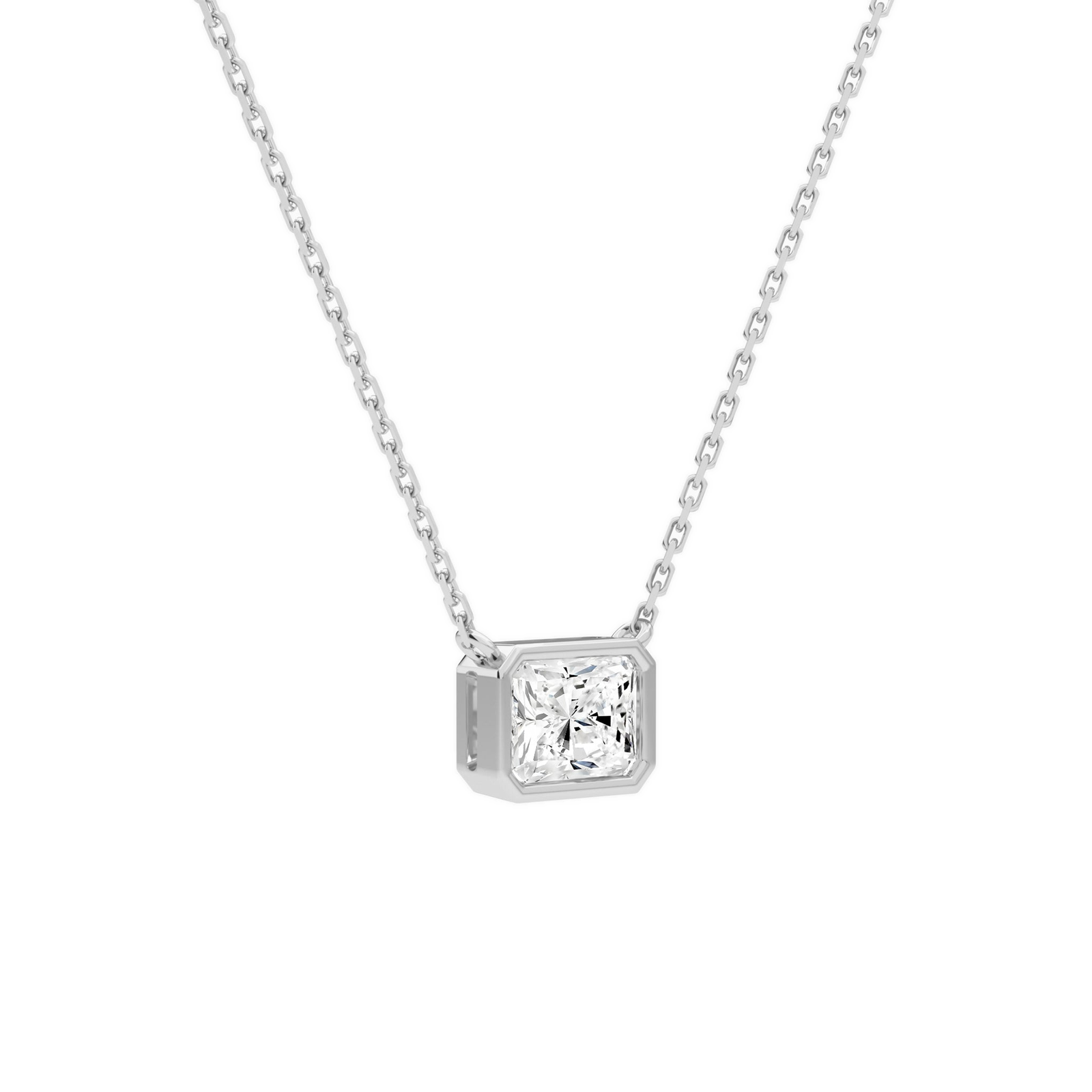


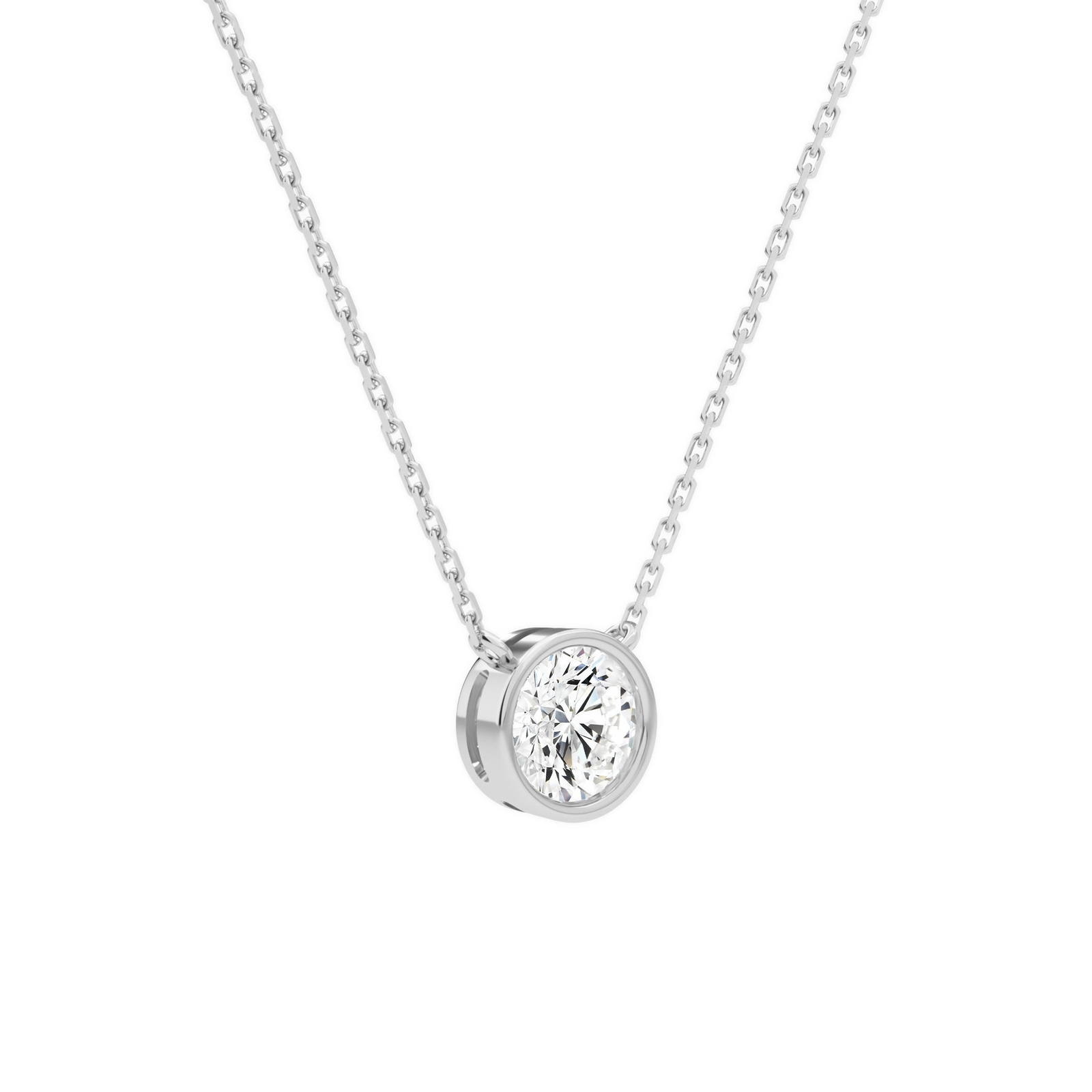


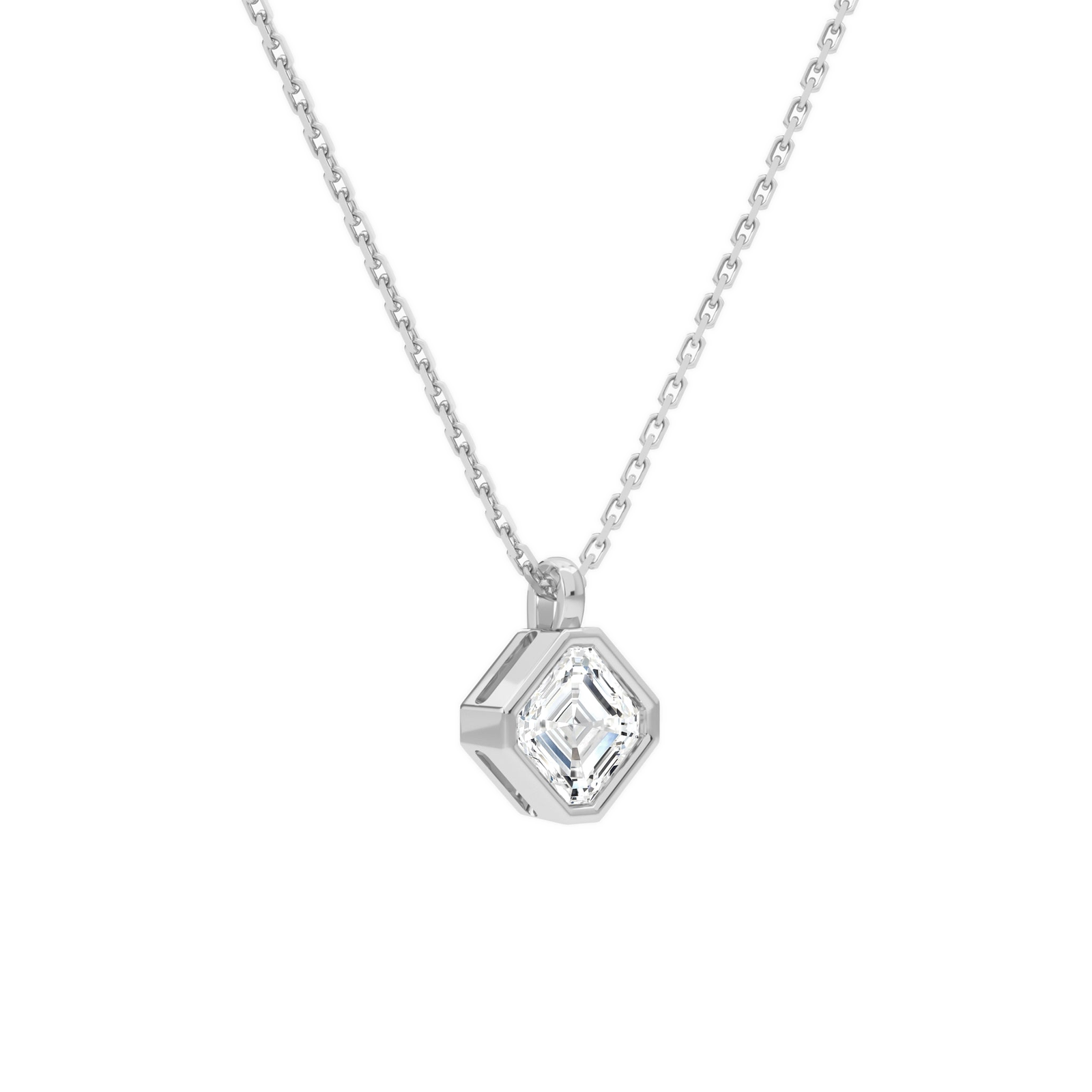


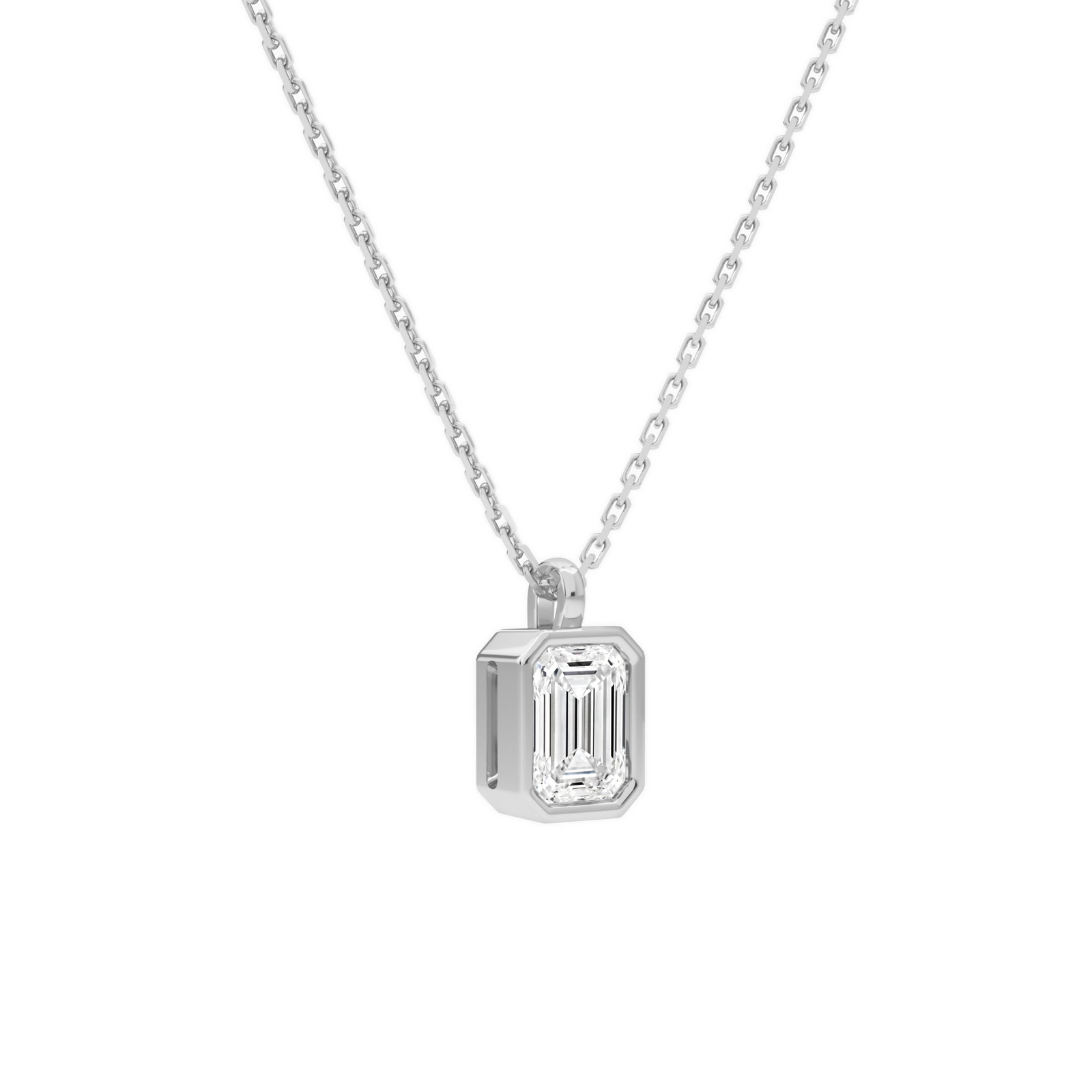


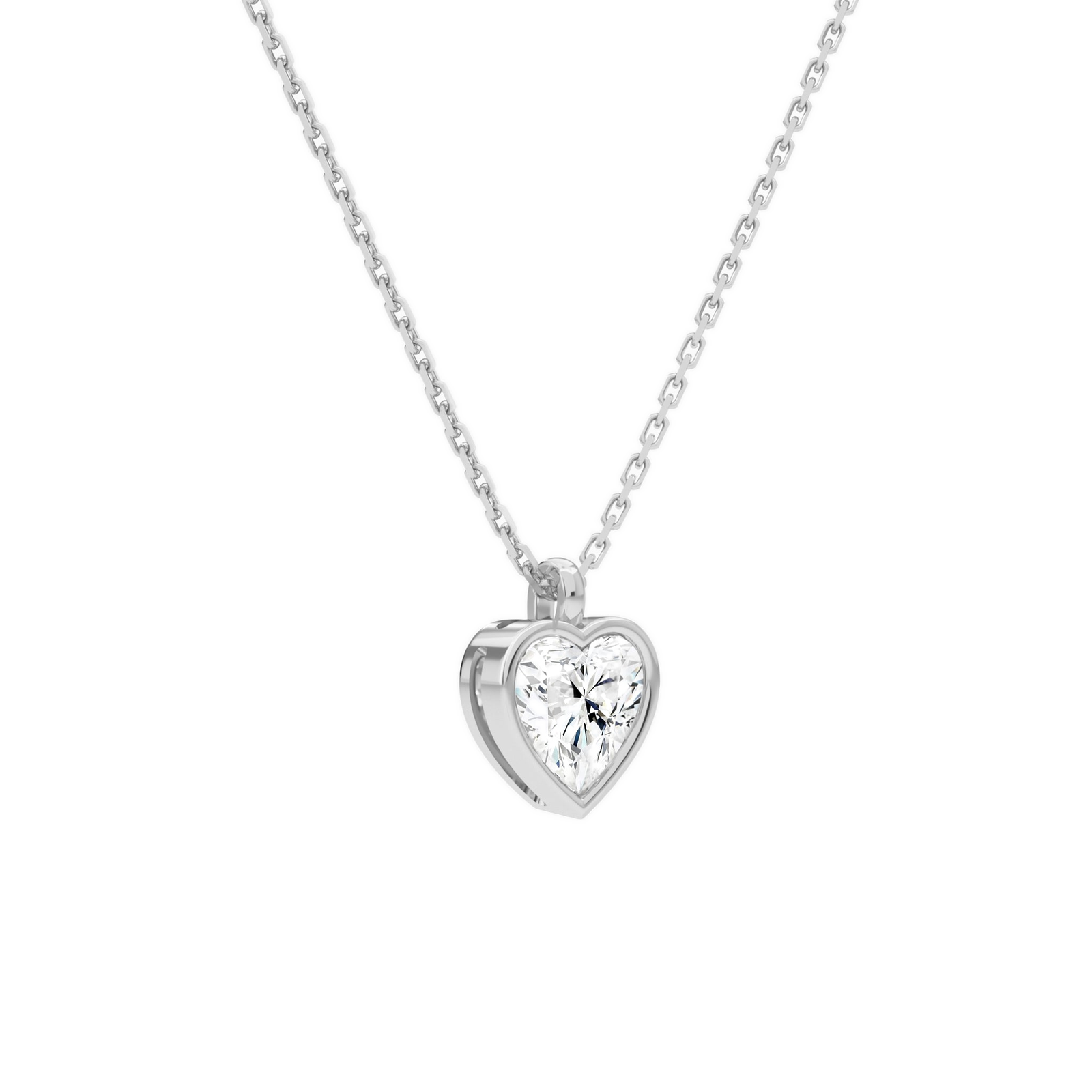


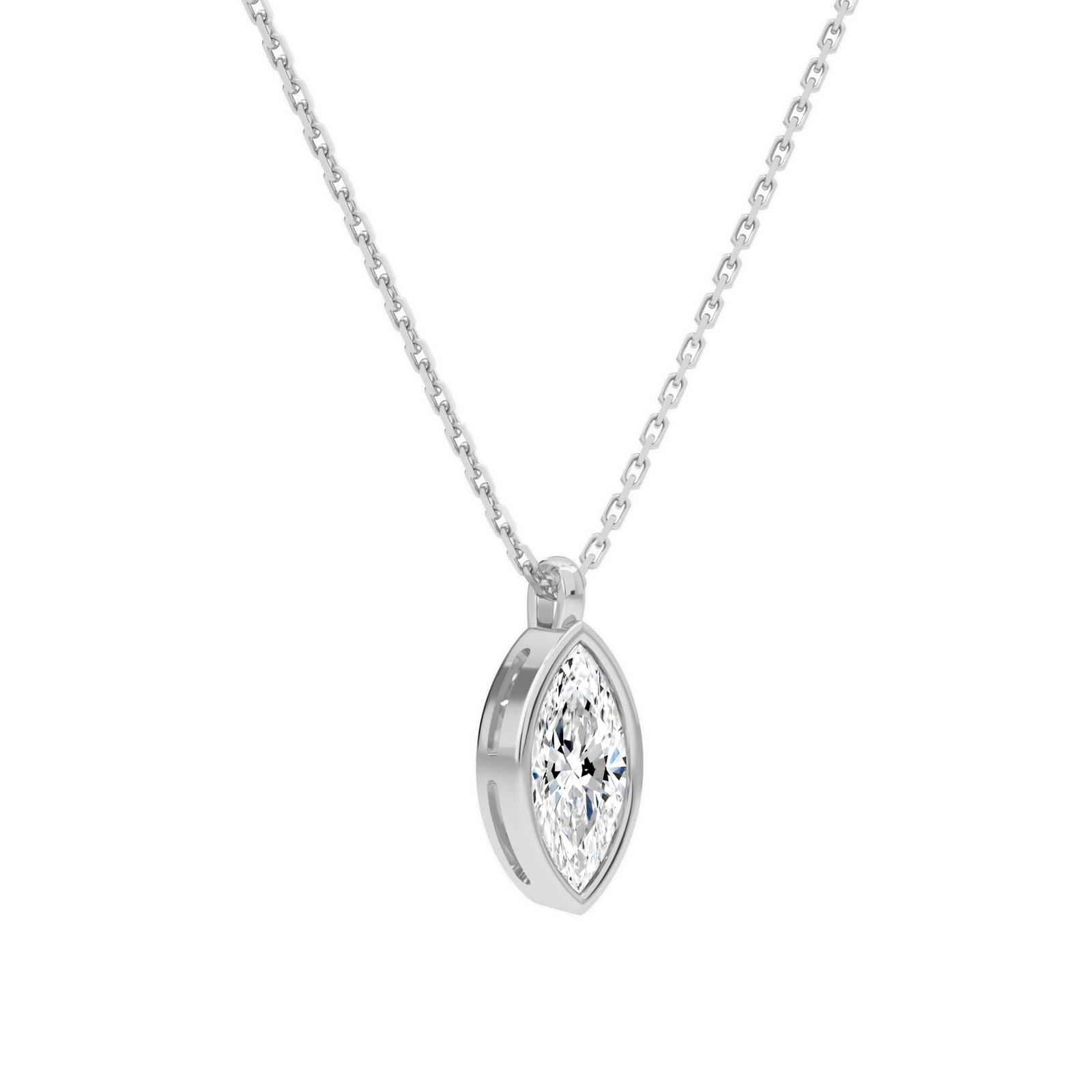


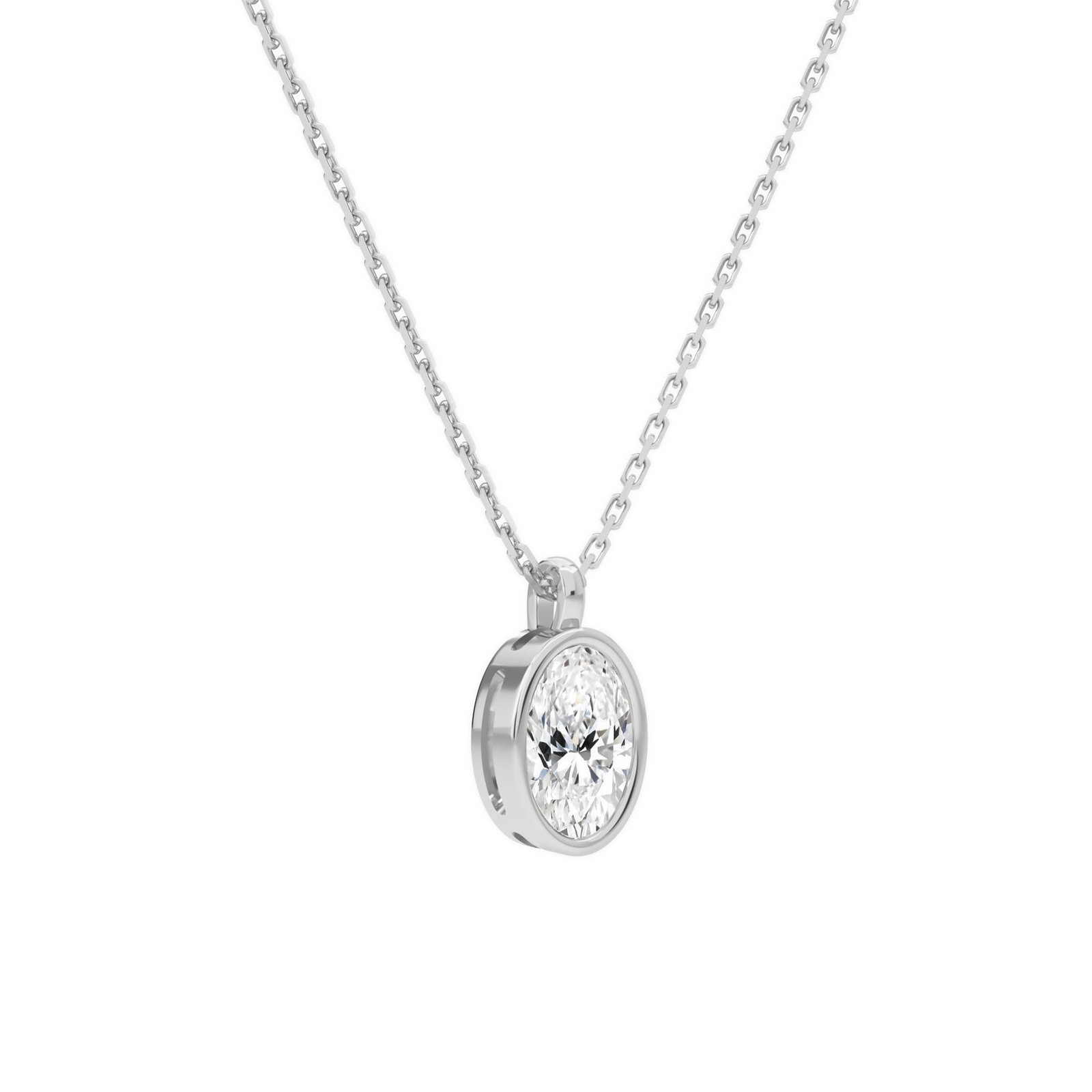


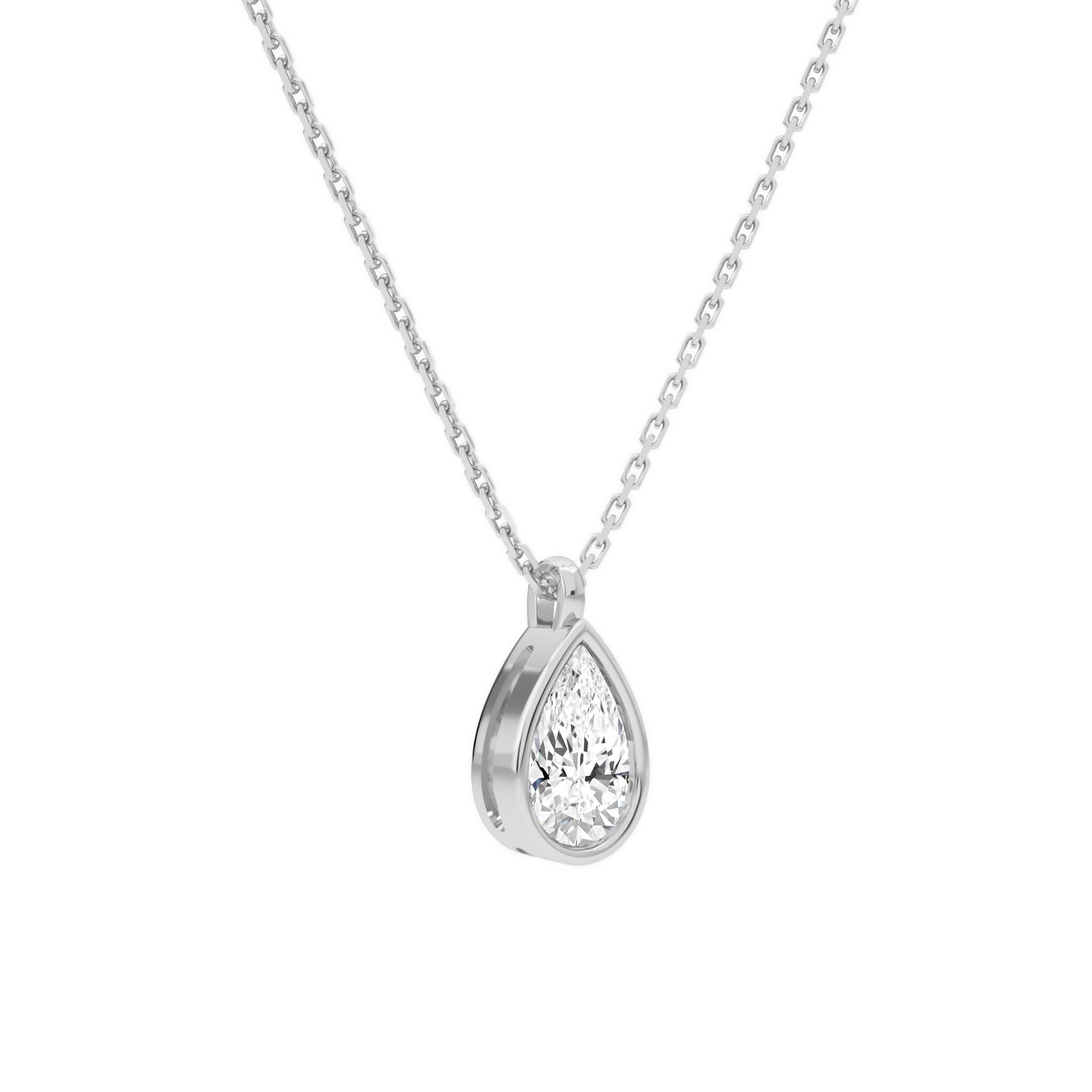


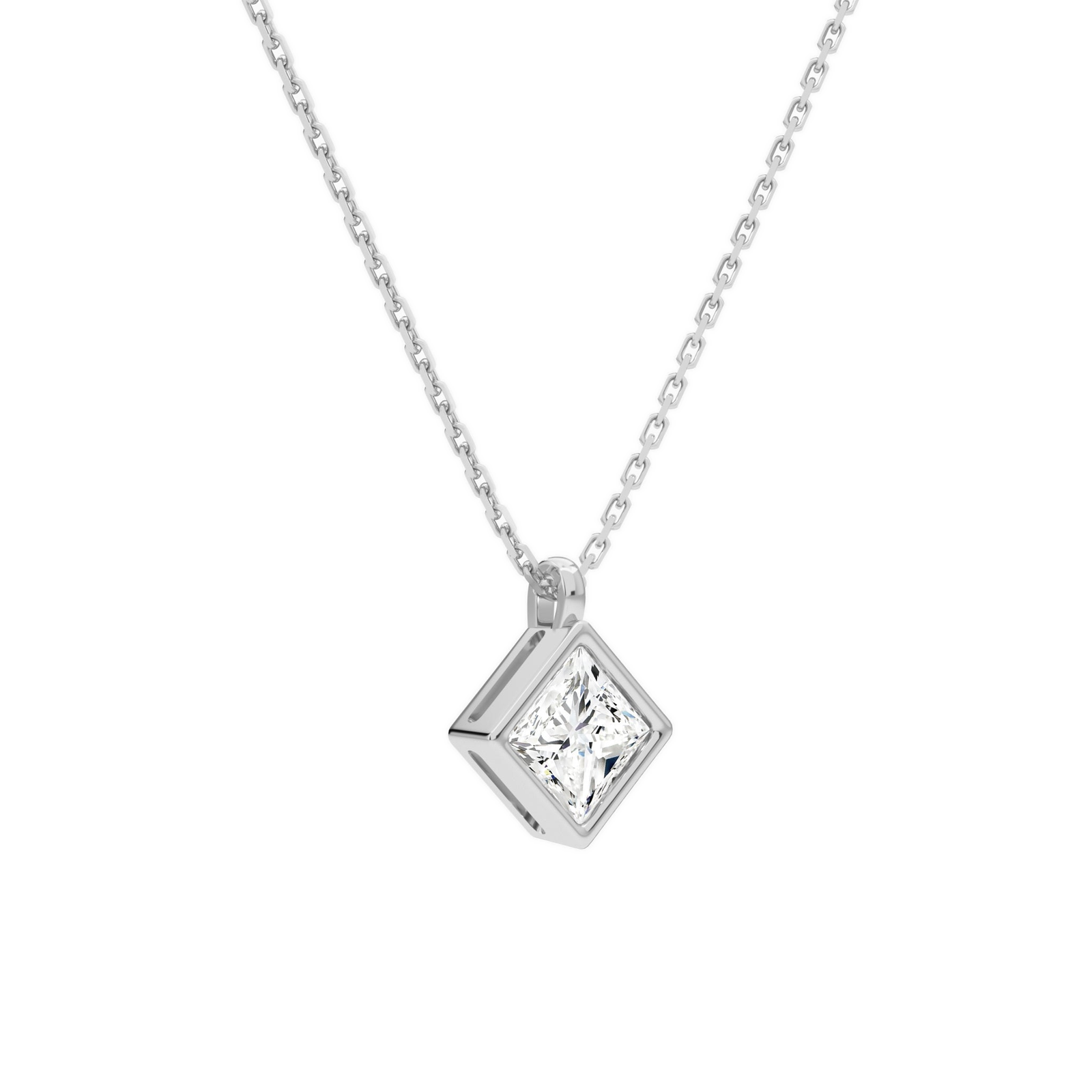


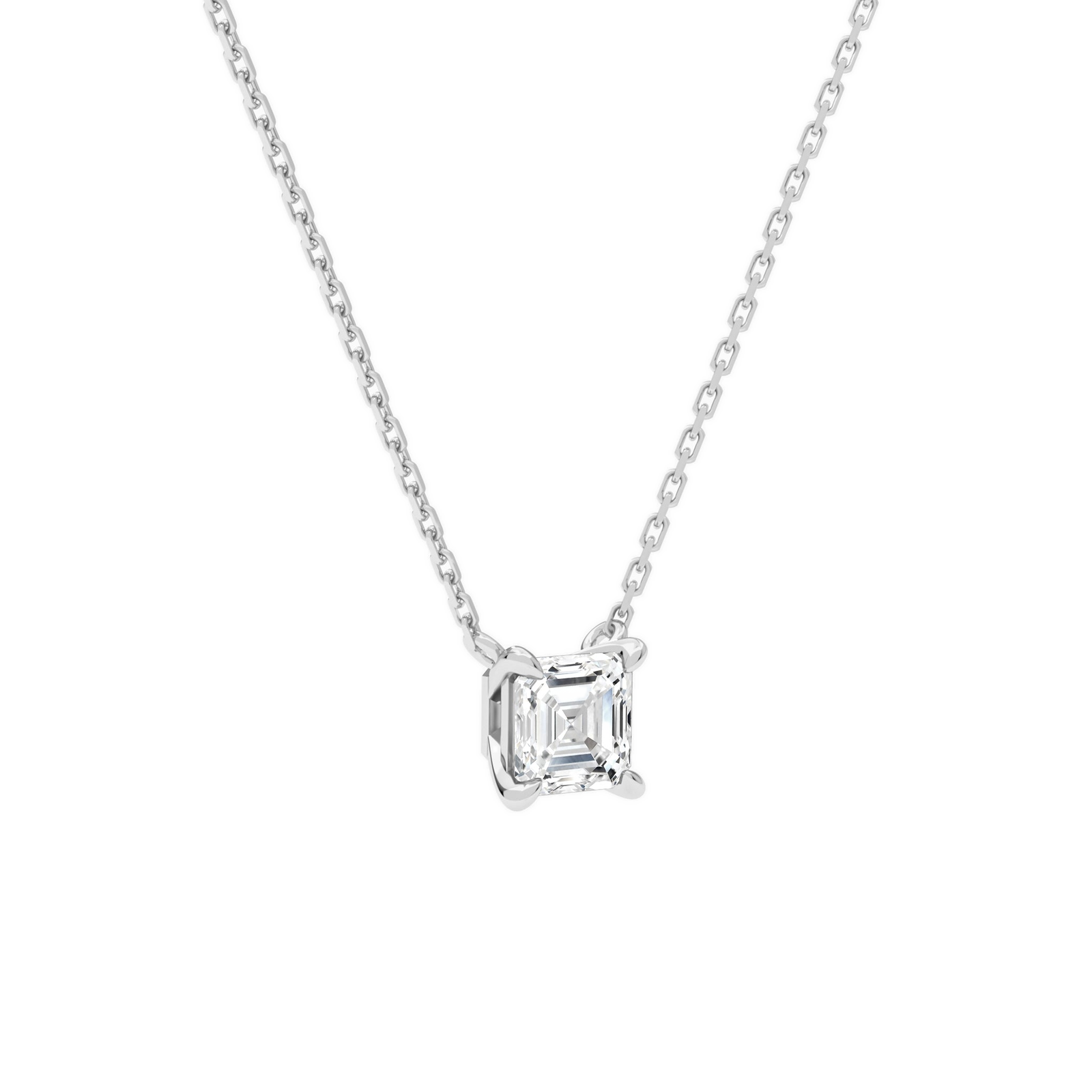

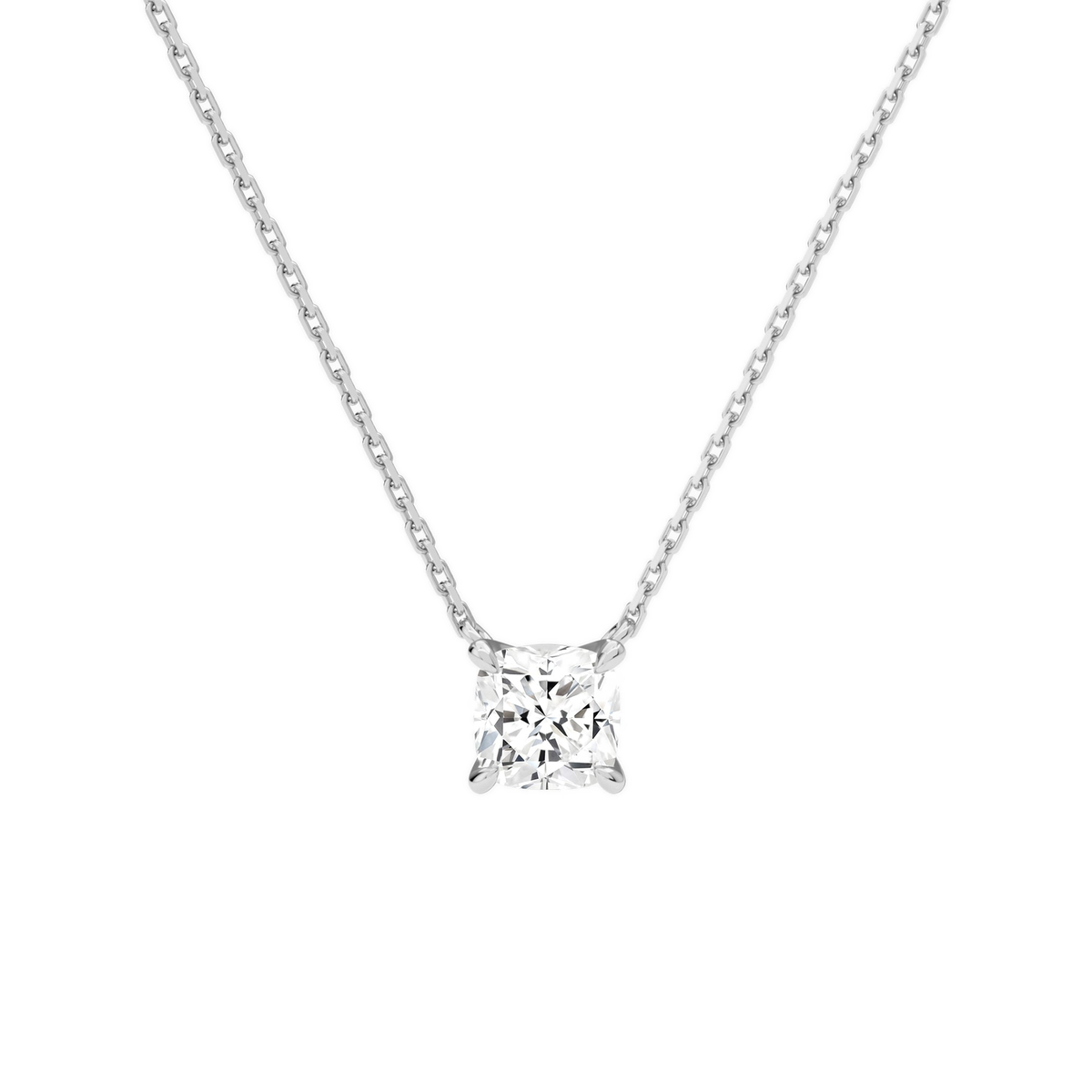
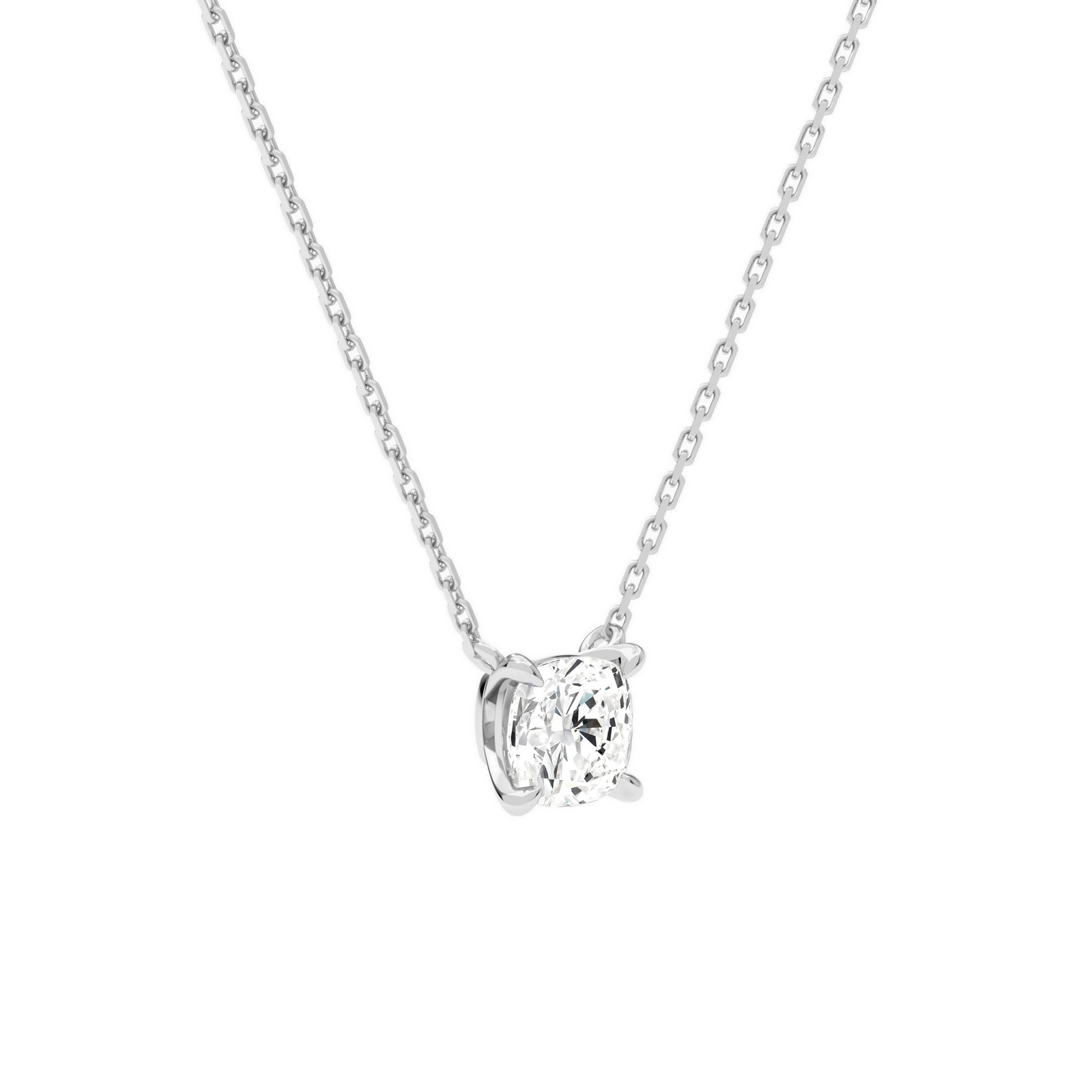
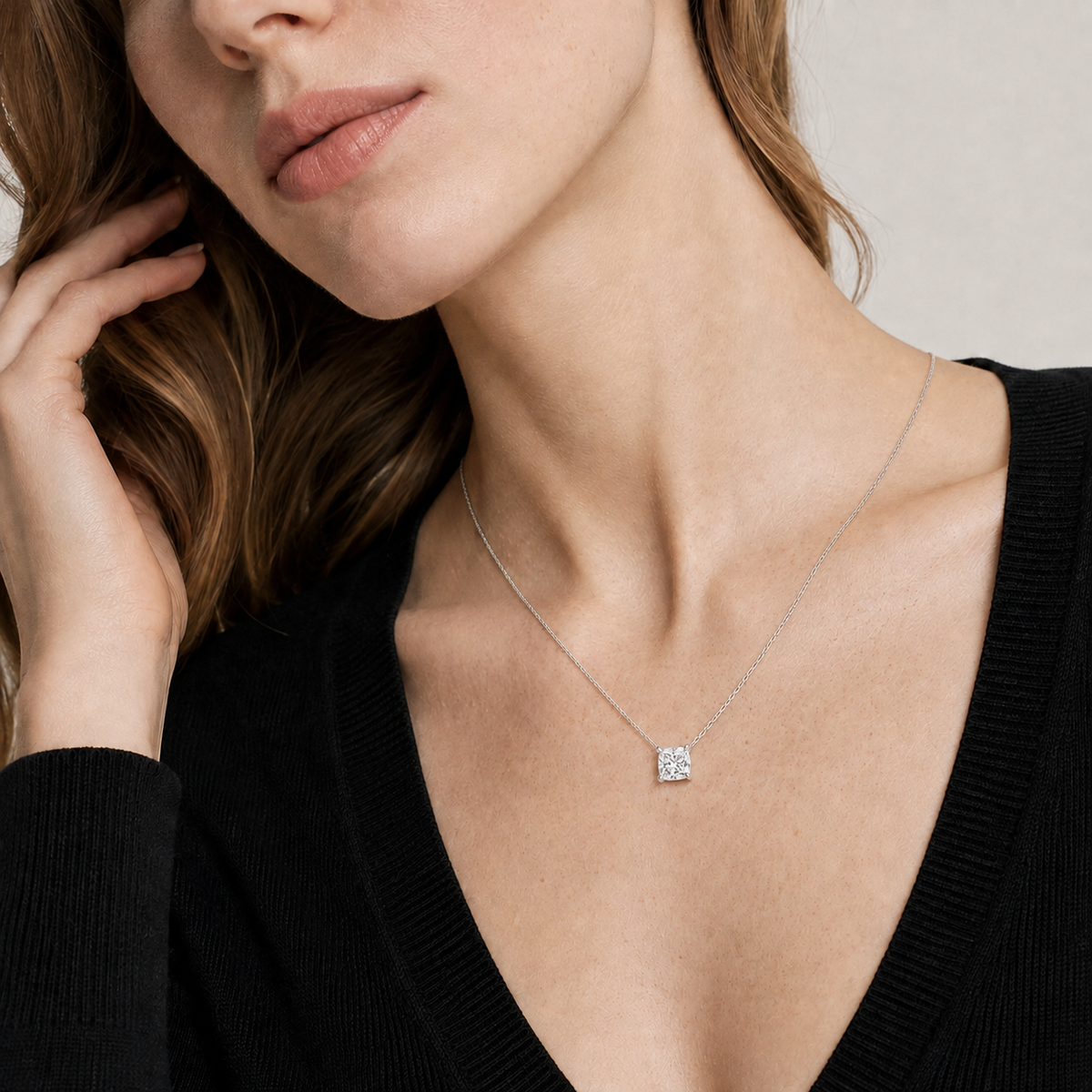

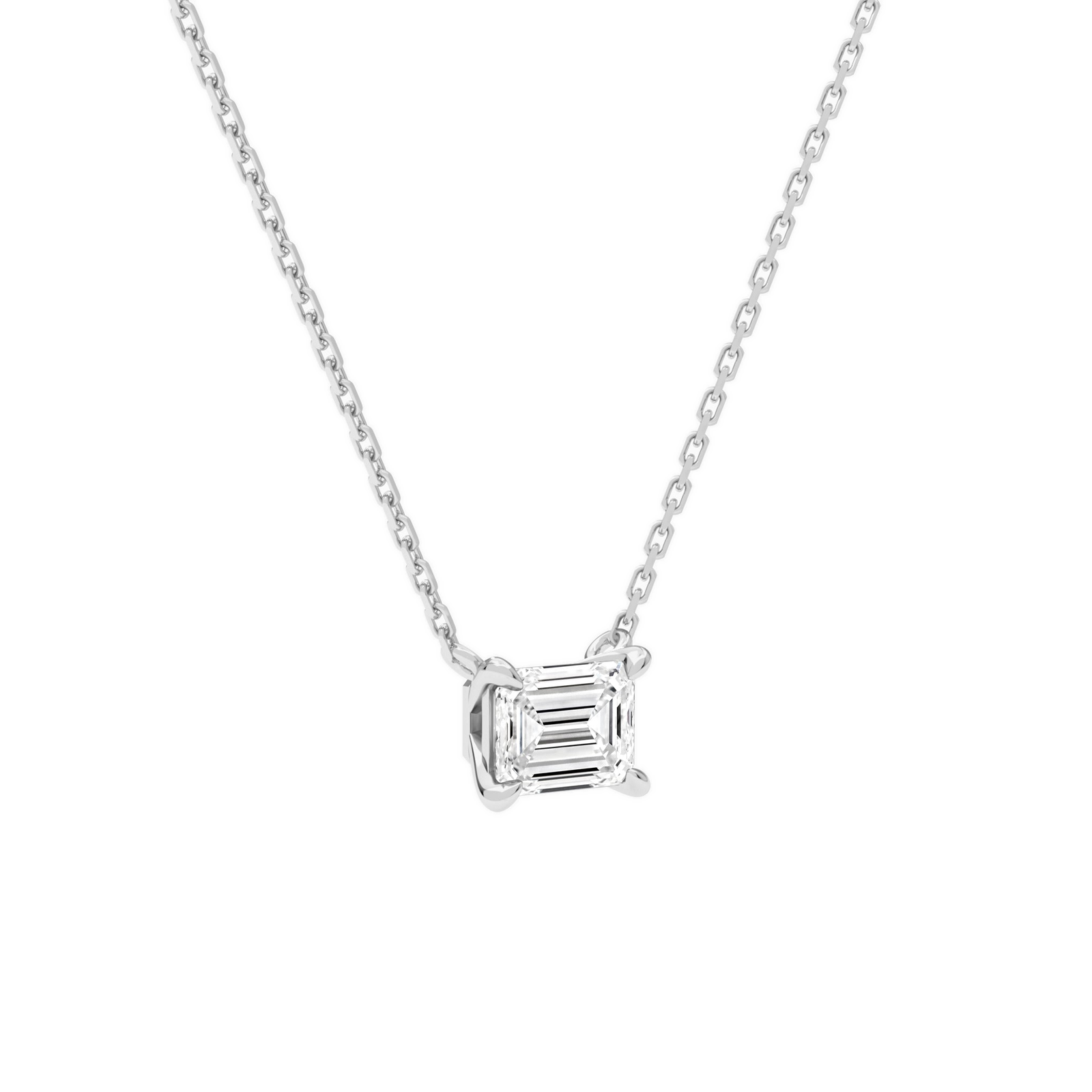


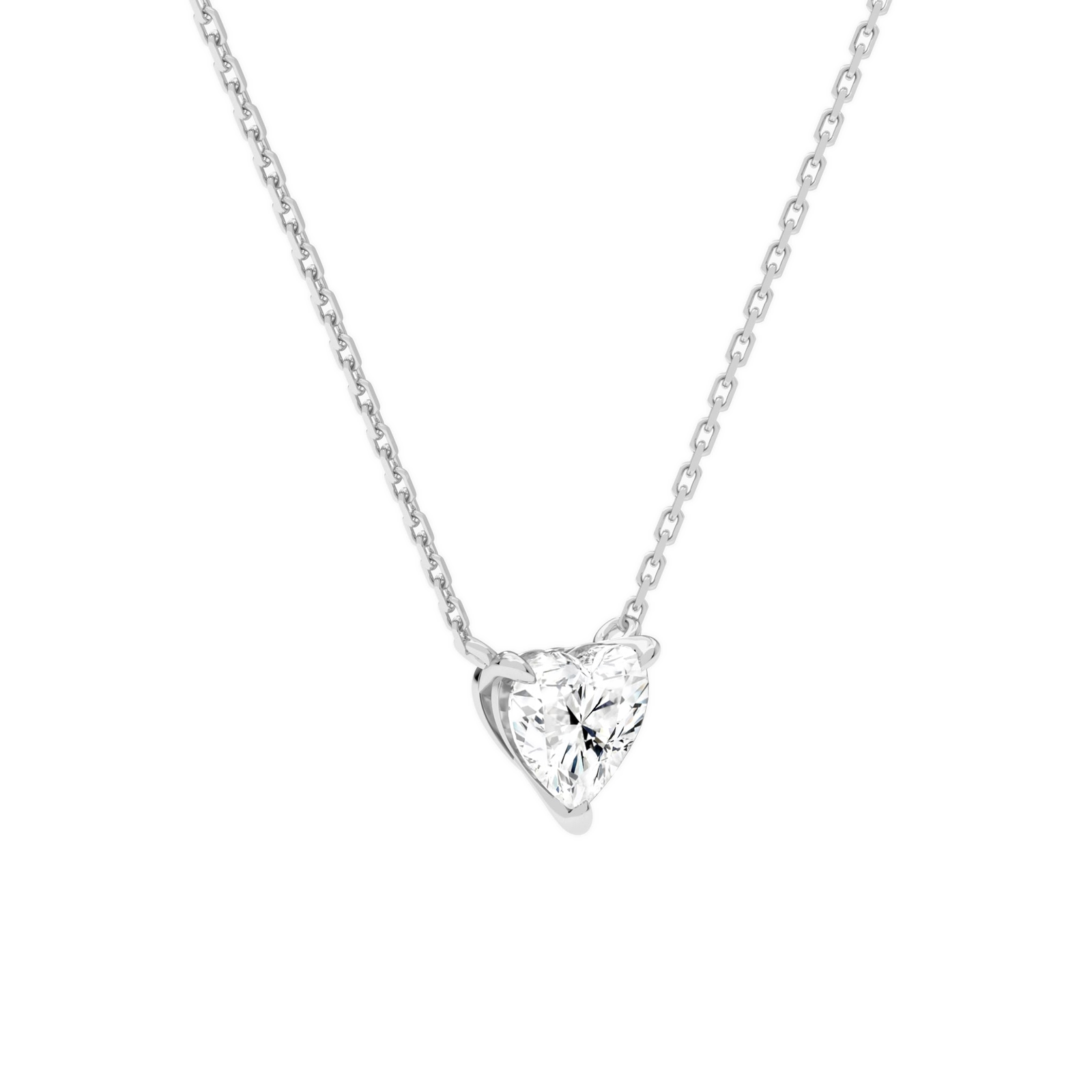

14K White Gold Solitaire Necklaces: Quiet Structure around One Center
White Gold can reduce the color interval between diamond and setting, but it does not erase construction. Prongs remain discrete points of contact; a bezel remains a continuous boundary; a twist remains a directional transition. The attachment and chain then determine whether the center reads as suspended, connected, or more visibly framed at the neckline.
The verified 44-design universe contains 20 bezel, 20 prong, and three prong-set twist centerstone-led necklaces, plus one multi-diamond solitaire-cross outlier. Complete normalized overlap with the parent confirms that this is a White Gold material lens rather than an exclusive design edit.
Keep the Quiet Boundary Exact
Ten shapes allow outline to carry much of the visual language. Corners, points, elongation, symmetry, and facet pattern remain apparent even when the metal recedes tonally. A White Gold perimeter may look quieter, but it does not make a diamond larger, brighter, higher grade, or more secure.
A 14K alloy contains approximately 58.3% gold. Other alloying metals and any finishing treatment influence color and behavior. White Gold may use rhodium, but finish must be confirmed for the selected product. No Collection-wide plating, scratch resistance, replating interval, sensitivity, or durability promise applies.
Compare finish where the necklace is most exposed to contact: bezel rim, prong tips, bail or attachment, chain, and clasp. These areas do not age at one rate, and a change in tone is not automatically a structural fault. Product-specific inspection should separate surface maintenance from questions about alignment, wear, or connection integrity.
Follow the Connection beyond the Setting
A solitaire is seen in motion, not only face-on. Inspect the setting profile, attachment, chain path, and reverse. Necklace and Pendant Necklace in a title do not prove whether a design is fixed or sliding. Centering depends on geometry, weight distribution, chain drape, clothing, posture, movement, and condition.
All 44 current descriptions list an adjustable 16–18-inch length, 0.95-millimeter chain, and lobster clasp. Placement still changes with neck circumference, neckline, center scale, and attachment. For layering, compare vertical interval and chain contact; separate listed lengths cannot guarantee separation or prevent tangling.
Coordinate through Line, Not Assumed Sameness
Several White Gold pieces can create a restrained field, yet matching labels do not prove identical alloy, finish, age, or surface. A solitaire may relate to another piece through repeated shape, bezel line, prong spacing, or chain scale. Mixed metals can remain equally resolved when one structural relationship carries through.
Burvonti works with responsibly sourced lab-grown diamonds and independently graded or certified stones within stated document scope. Custom possibilities may refine shape, proportions, scale, prong or bezel treatment, twist, attachment, metal, chain, or length when feasible. Confirm finish, clean gently, store without knots or abrasive contact, and inspect setting, attachment, chain, and clasp if movement changes.
Frequently Asked Questions
What does this page add beyond the parent Solitaire Necklace Collection?
It focuses on how 14K White Gold frames one center through setting edge, attachment, finish, and chain continuity.
Are all 44 designs single-diamond solitaires?
No. Forty-three are centerstone-led; one solitaire-cross outlier contains several diamonds and uses Total Carat Weight.
Which settings are represented?
The current set includes 20 bezel, 20 prong, three prong-set twist designs, and one cross outlier.
How much gold is in 14K White Gold?
Approximately 58.3%. The remaining alloy and any finish influence final color and behavior.
Is every 14K white gold necklace rhodium plated?
That should not be assumed Collection-wide. Confirm the finish of the selected product.
Will White Gold turn yellow?
Appearance can change as finish and surface wear; timing and maintenance depend on the exact alloy, finish, contact, use, and care.
Does White Gold make a diamond brighter or larger?
No. It changes the surrounding material context, not dimensions, facets, or grading facts.
What is the difference between prong and bezel settings?
Prongs make discrete contact points; a bezel creates a continuous edge. Neither is universally brighter, safer, or superior.
Which ten shapes are represented?
Round, Oval, Cushion, Pear, Princess, Emerald, Marquise, Asscher, Radiant, and Heart.
How do Centerstone and Total Carat Weight differ?
Centerstone refers to one principal diamond; Total Carat Weight may combine several, as on the cross outlier.
Does Pendant Necklace mean the center slides?
Not necessarily. Product titles do not establish attachment mechanics; inspect the selected design.
What chain specification is currently listed?
All 44 current descriptions list adjustable 16–18 inches, a 0.95-millimeter chain, and a lobster clasp.
Will the center stay in place?
Not universally. Attachment, weight distribution, chain drape, movement, clothing, and condition affect orientation.
Can a White Gold solitaire be layered?
Yes aesthetically, but compare length, scale, movement, and chain contact; tangling cannot be ruled out.
Is 14K White Gold hypoallergenic?
No universal result should be promised without confirming the complete alloy, finish, and wearer-specific concern.
What customization and care are possible?
Shape, scale, setting, attachment, finish, chain, or length may be possible after review. Clean gently and inspect the whole construction.