
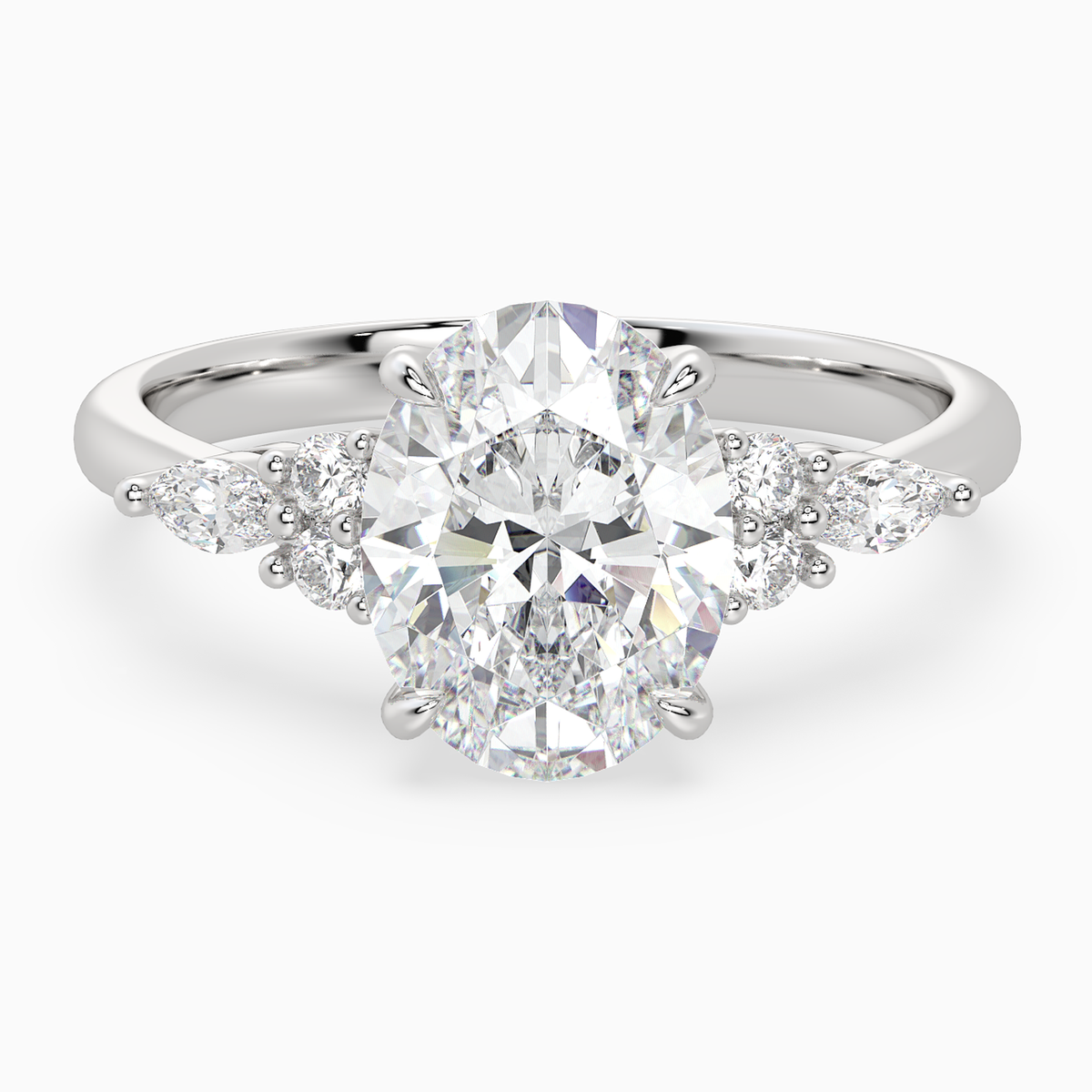


Lab-Grown Diamond Radiant Diamond Engagement Rings
Cropped corners, concentrated light. Square and elongated radiant centers frame brilliant motion within a measured outline.







- Free Express Shipping
- Free Resizing
- 60-Day Free Returns
- Lifetime Warranty
Radiant Diamond Engagement Rings: Light Within a Cut-Cornered Frame
A radiant diamond places brilliant-style light inside a square or elongated rectangle with four cropped corners. The perimeter is structured but not severe: straight sides establish the main frame, while the cut corners create shorter transitions at each end. Within that outline, modified-brilliant facets can produce a dense field of scintillation, broader flashes, or a layered combination that changes with movement.
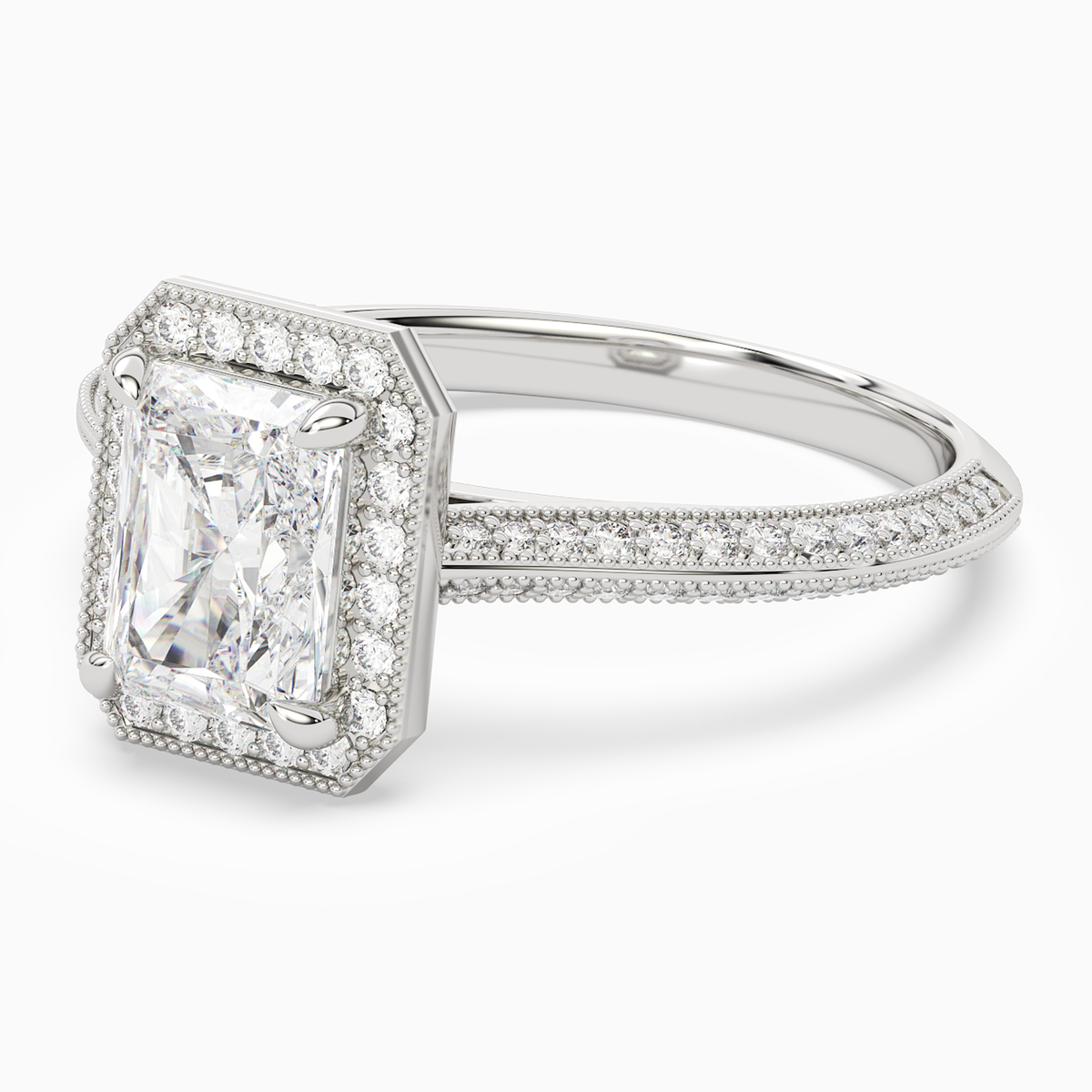
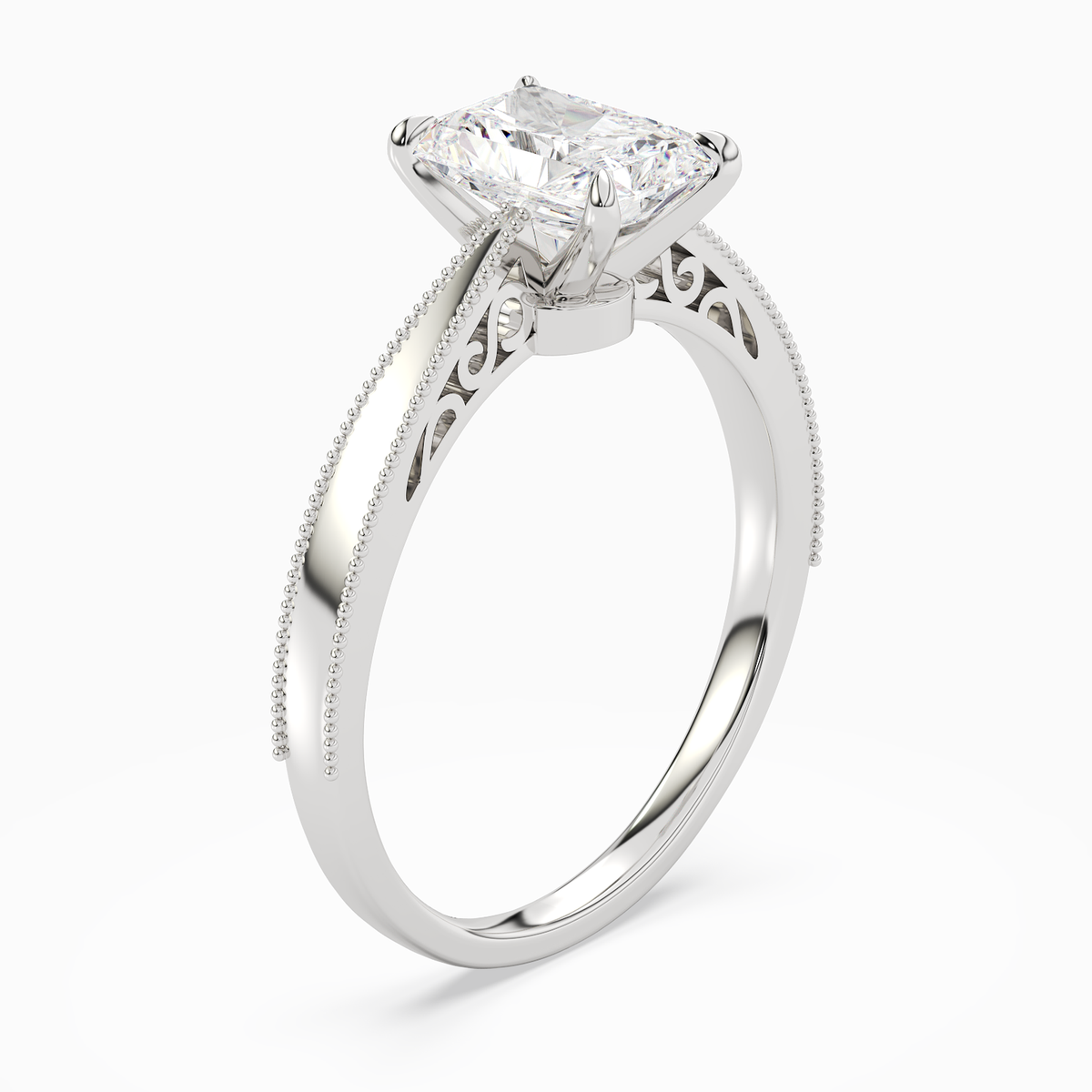
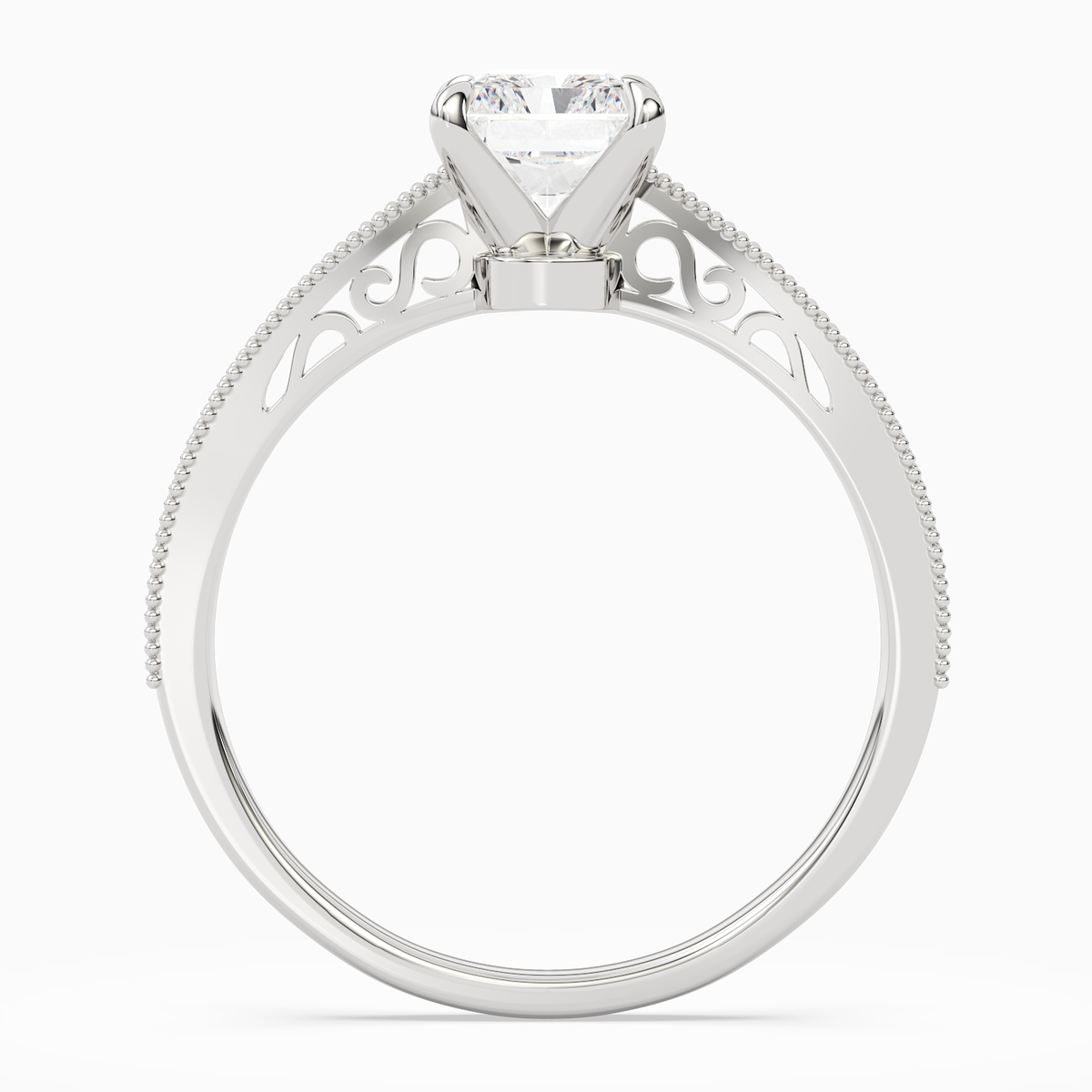
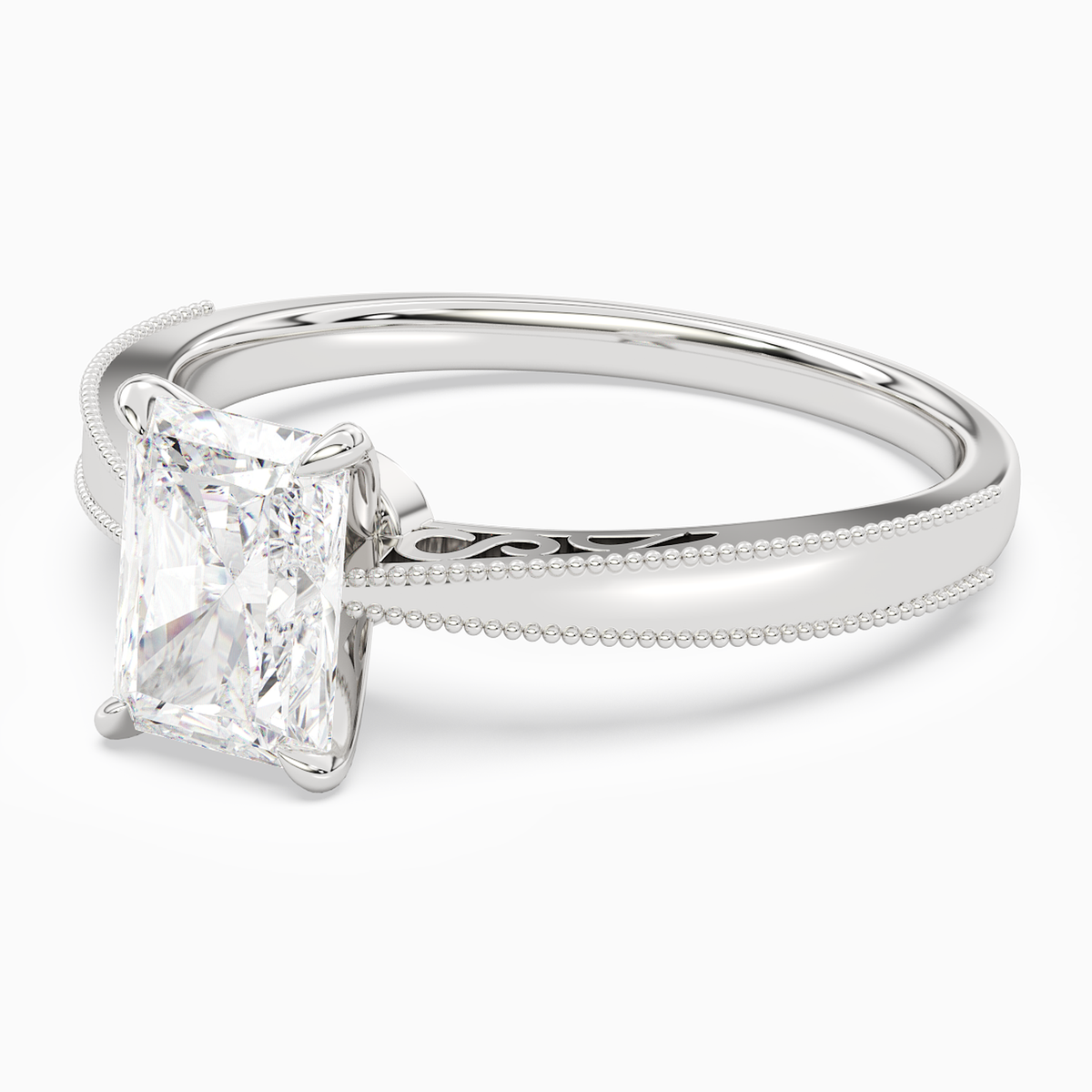
Burvonti’s current radiant collection contains four public designs: an Octagonal Halo, a milgrain Solitaire, a Hidden Halo Solitaire, and a Three Stone composition. This is a focused assortment rather than a complete survey of every Radiant setting. The copy therefore explains the shape’s real selection logic while keeping style availability, metal, and custom possibilities tied to the individual product.
The Cropped Corners Are Part of the Proportion
Radiant diamonds can be near-square or distinctly elongated. Length-to-width ratio gives a quick description of that relationship, but it does not assign an ideal. Side parallelism, corner size, corner consistency, center alignment, shoulder transitions, and overall symmetry can make two diamonds with similar ratios feel different. The outline should read as deliberate from every side.
Small cropped corners preserve more of the rectangular impression; larger corners can make the face-up shape appear more octagonal. Neither choice is automatically better. Compare whether all four corners answer one another and whether the setting recognizes their scale. A prong placed without regard to the crop can visually distort an otherwise balanced center.
Modified Brilliant Does Not Mean One Light Pattern
Radiant is commonly described as a modified brilliant, but facet arrangements and face-up patterns vary. Some centers show larger reflections with a legible central structure; others divide light into many smaller virtual facets. The trade often calls a fine, splintered pattern crushed ice. That term describes appearance, not a GIA grade, and it does not establish that every Radiant will look the same.
Assess brightness, fire, contrast, and scintillation across the complete face rather than asking only whether the center sparkles. A fine-grained pattern can be lively or subdued; a broader pattern can be crisp or uneven. View the diamond at a normal distance and in motion, preferably under more than one ordinary lighting condition, and watch for dark, gray, watery, or dull regions that remain dominant.
The Report Documents the Center; Observation Interprets It
Radiant diamonds are fancy shapes and do not currently receive a regular overall GIA cut grade. The report still records shape and cutting style, length, width, depth, polish, symmetry, color, clarity, fluorescence, and identifying characteristics. These facts make comparison more disciplined, but they cannot compress every facet arrangement into one visual score.
Modified-brilliant patterns may make some inclusions or body color less apparent in certain centers, yet there is no universal clarity or color threshold that guarantees an eye-clean or colorless result. Position, relief, nature, facet scale, dimensions, metal, and viewing conditions all contribute. Documentation narrows the questions; the actual center provides the answer.
Dimensions Explain Presence More Precisely Than Carat
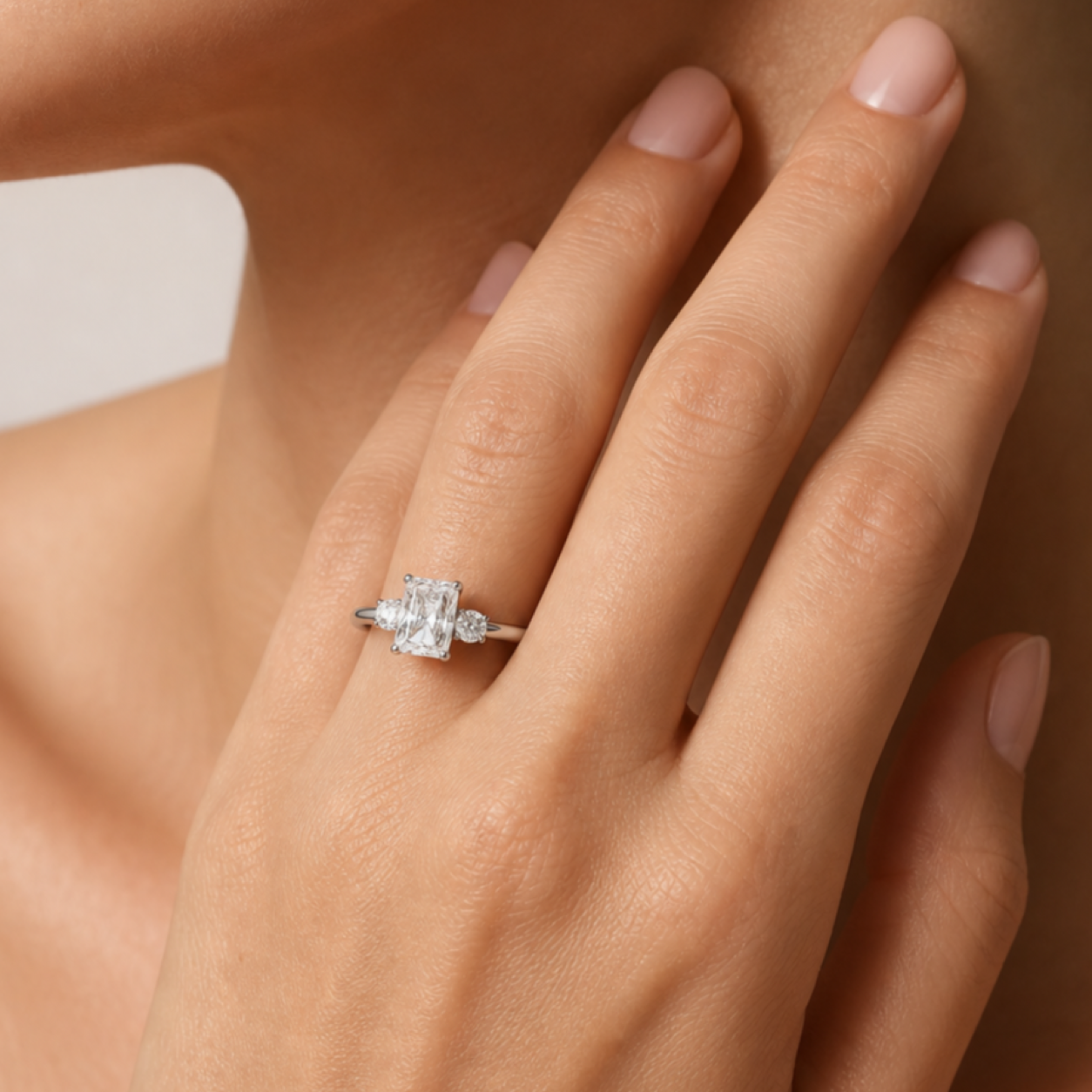
Carat measures weight. A Radiant’s face-up presence depends on length, width, depth, corner crop, girdle, and how mass is distributed. An elongated outline may create a longer visual axis, while a square Radiant can feel more compact and centered, but same-carat comparisons should be made with actual measurements rather than a guaranteed larger-looking claim.
The setting then redraws the scale. An Octagonal Halo repeats and expands the cut-cornered frame; a Solitaire preserves more negative space; a Three Stone setting extends the composition laterally; a Hidden Halo adds detail below the face-up outline. Each changes the balance among center, metal, accents, and hand without changing the diamond’s documented weight.
Cropped Corners Reduce Sharp Points, Not the Need for Care
Unlike a Princess, a Radiant does not end in four acute corner points. Cropping removes those tips and can make the outline less exposed at the corners, but it should not be converted into an everyday-durability guarantee. Girdle thickness and condition, clarity characteristics, prong or bezel placement, workmanship, wear, and impact still determine the exact risk.
Corner supports should be placed evenly and scaled to the crop. In a prong setting, they need to secure the center without making one corner appear larger than another. A bezel can articulate the eight-sided perimeter more continuously. Security belongs to the precise center-and-setting combination, not to the word Radiant.
Four Burvonti Settings, Four Different Readings
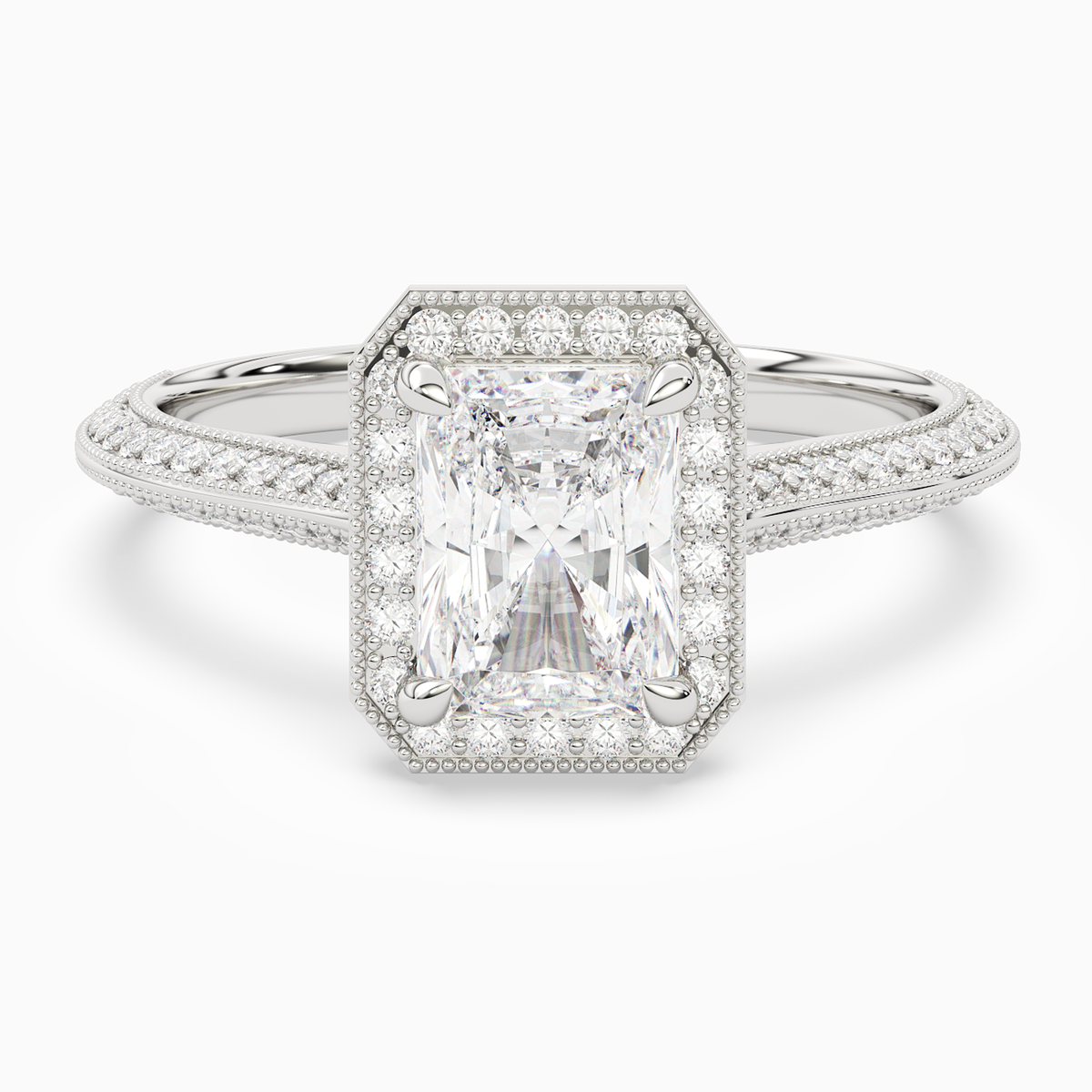
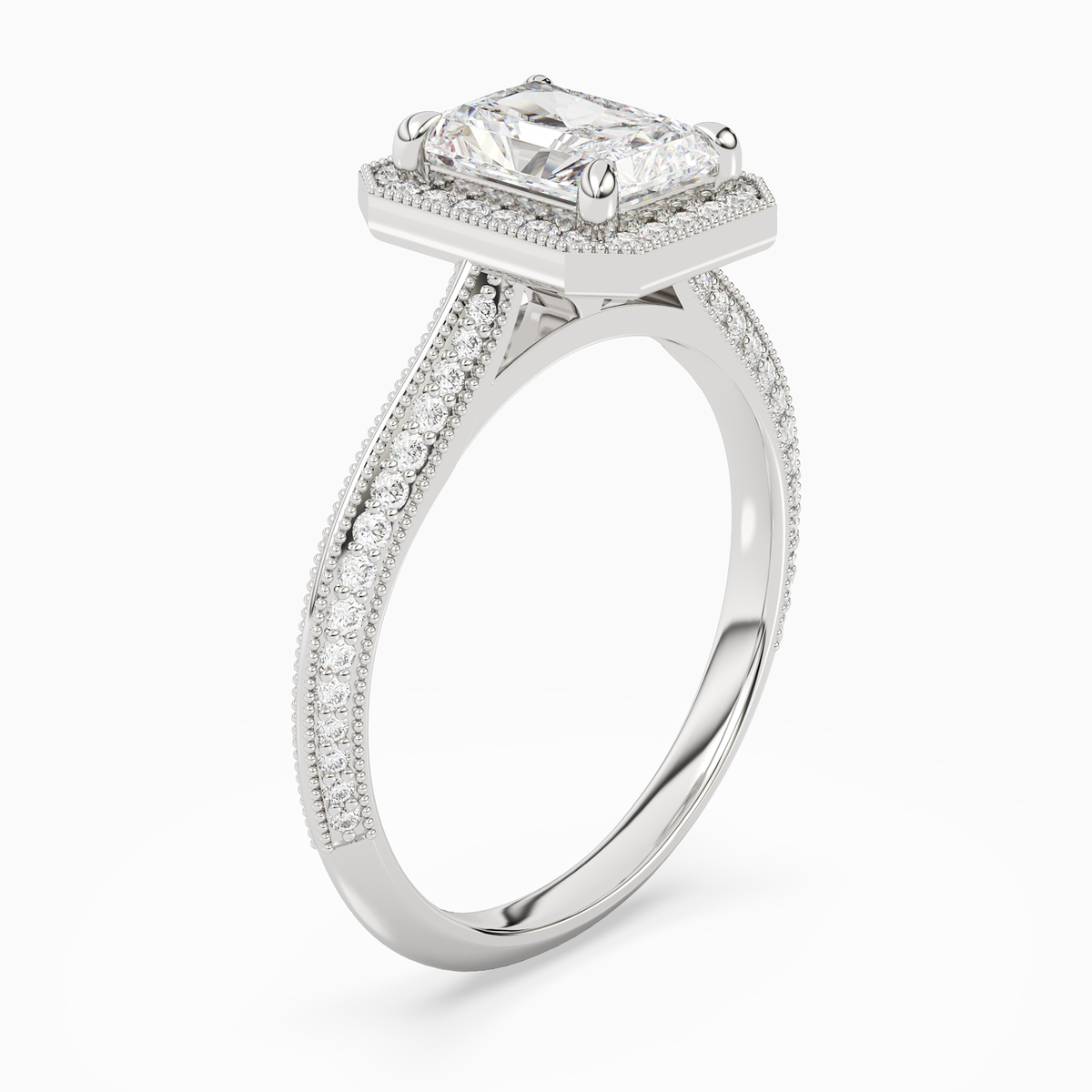
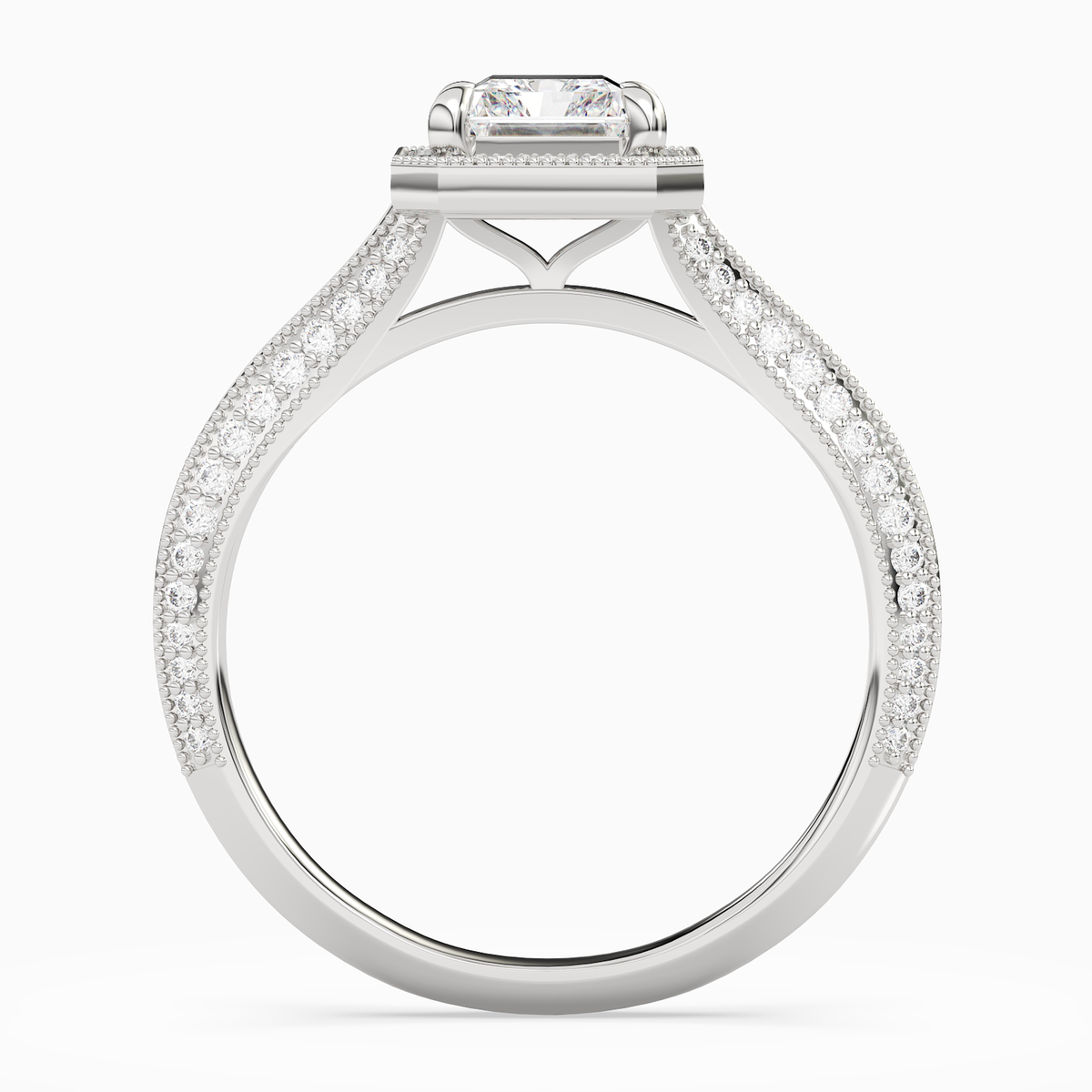
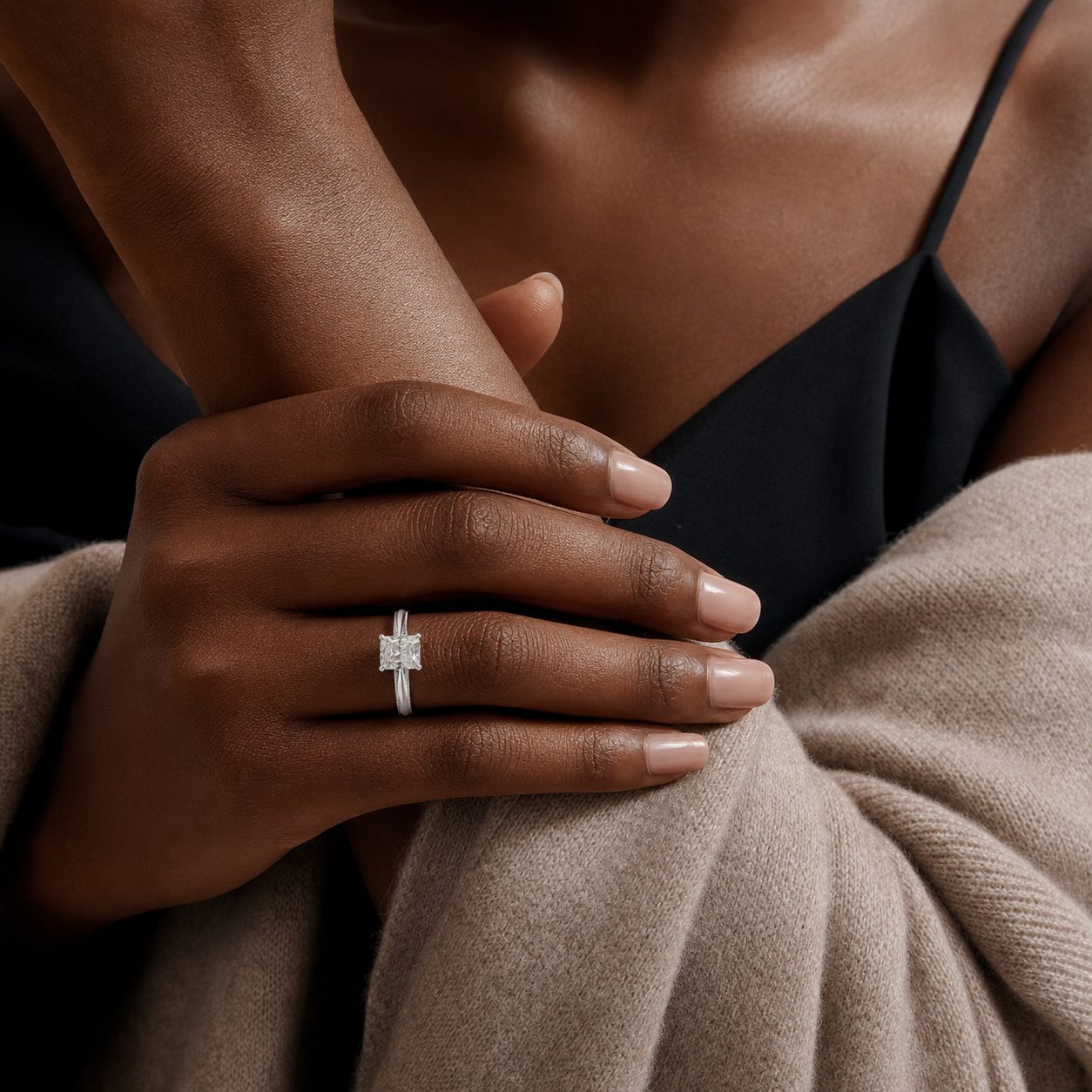
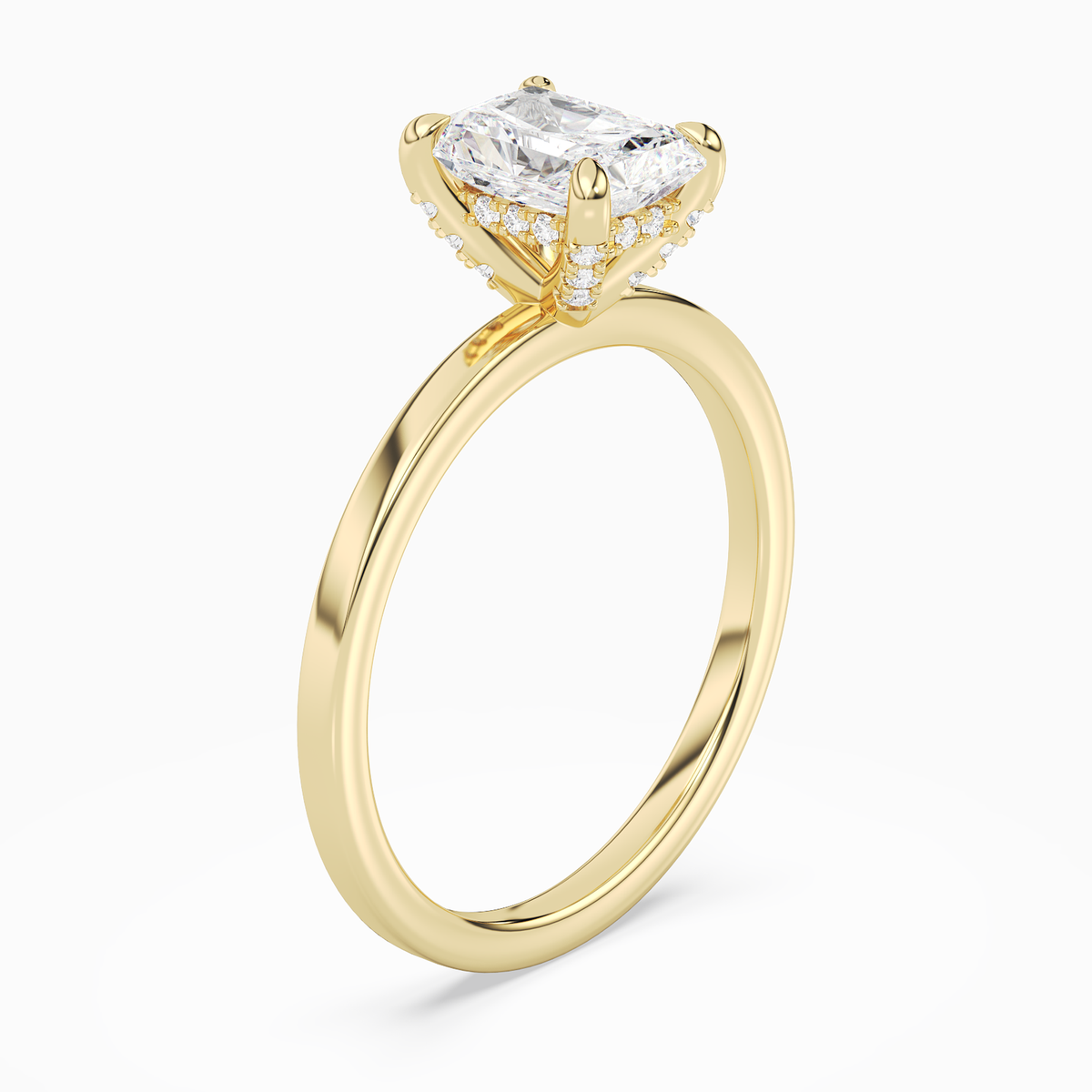
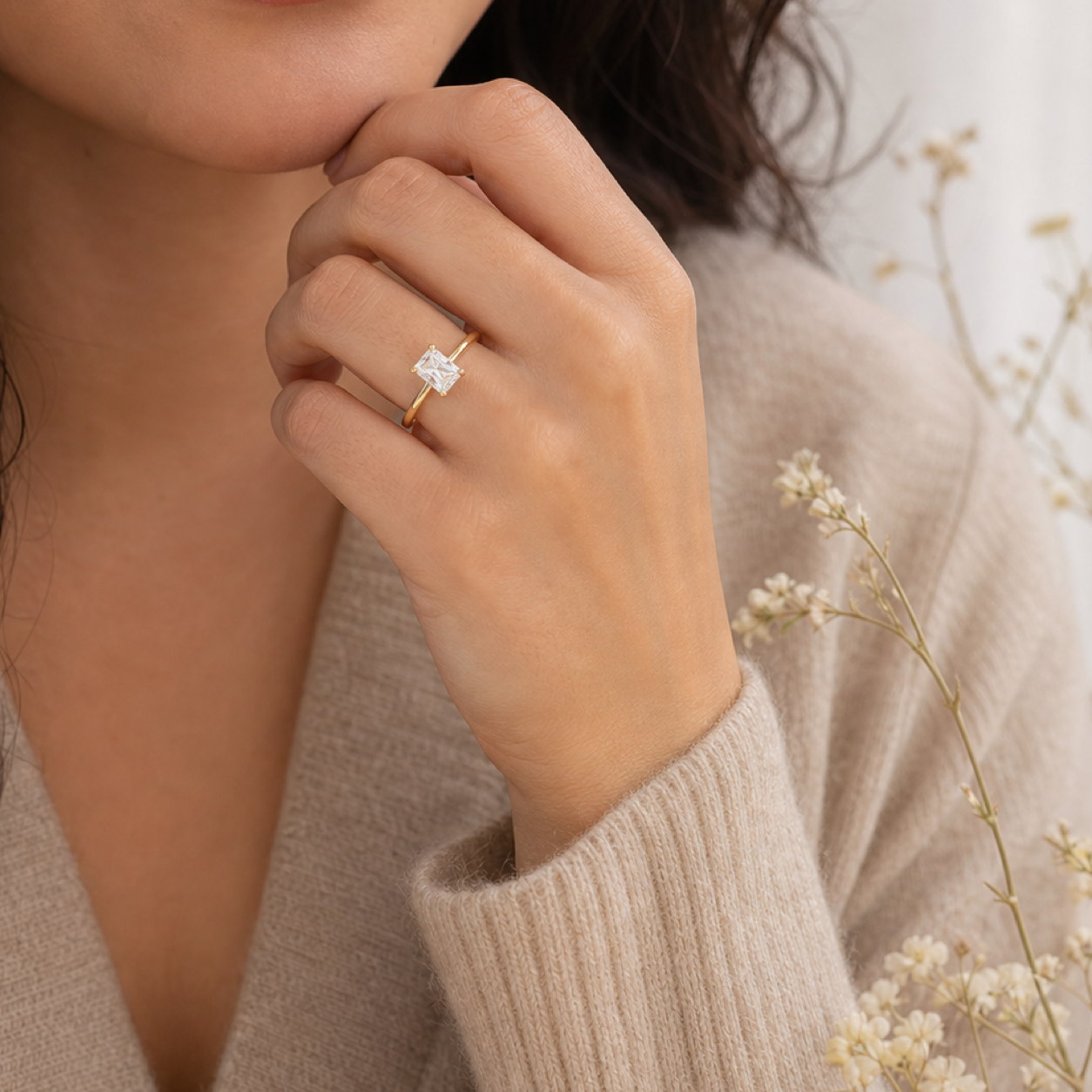
Vera places a Radiant within a milgrain Solitaire, allowing the straight sides and cropped corners to meet a more detailed band language. Danica adds a Hidden Halo beneath a Yellow Gold Solitaire profile. Carina repeats the center’s geometry through an Octagonal Halo, creating a second cut-cornered frame rather than treating the Halo as a generic circle of light.
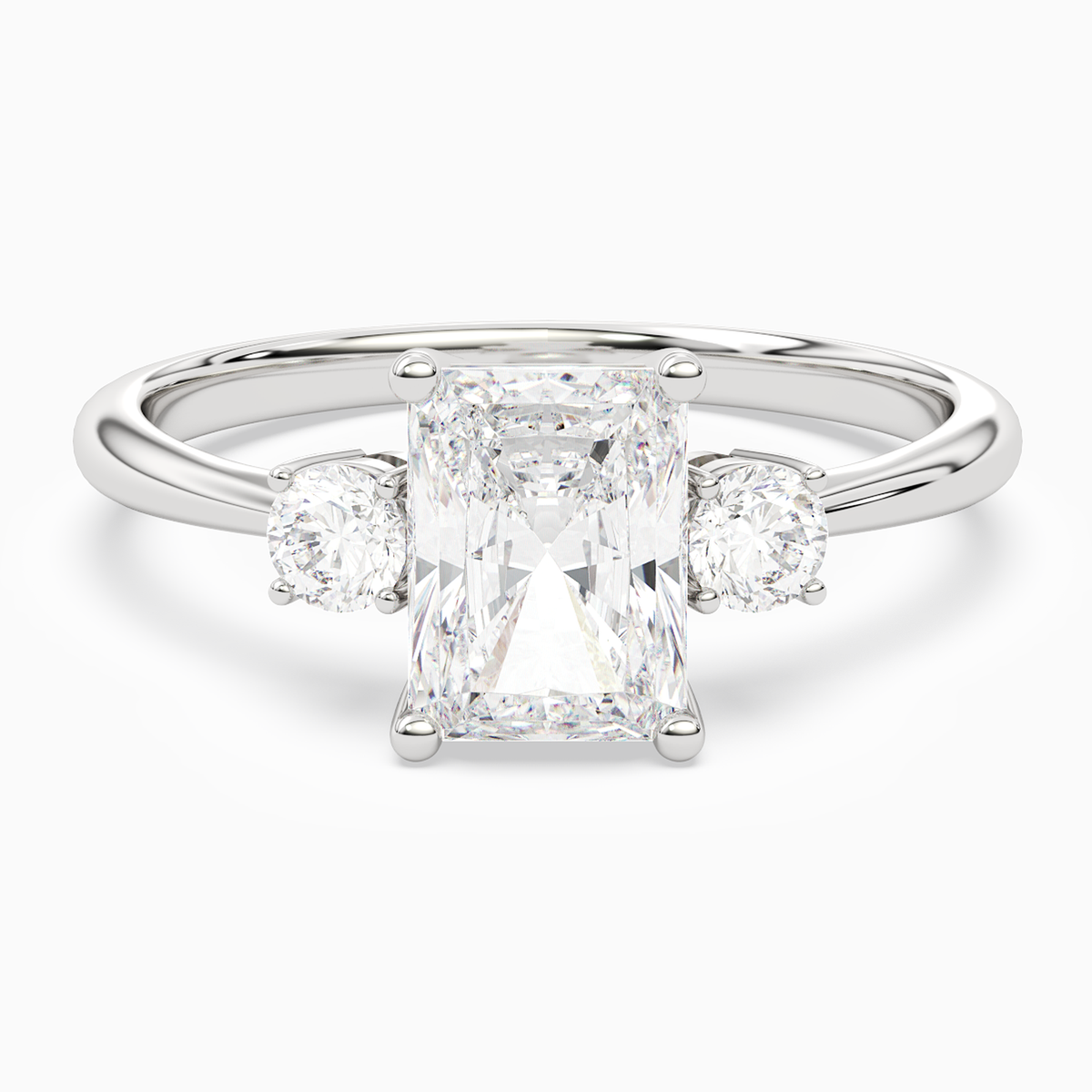
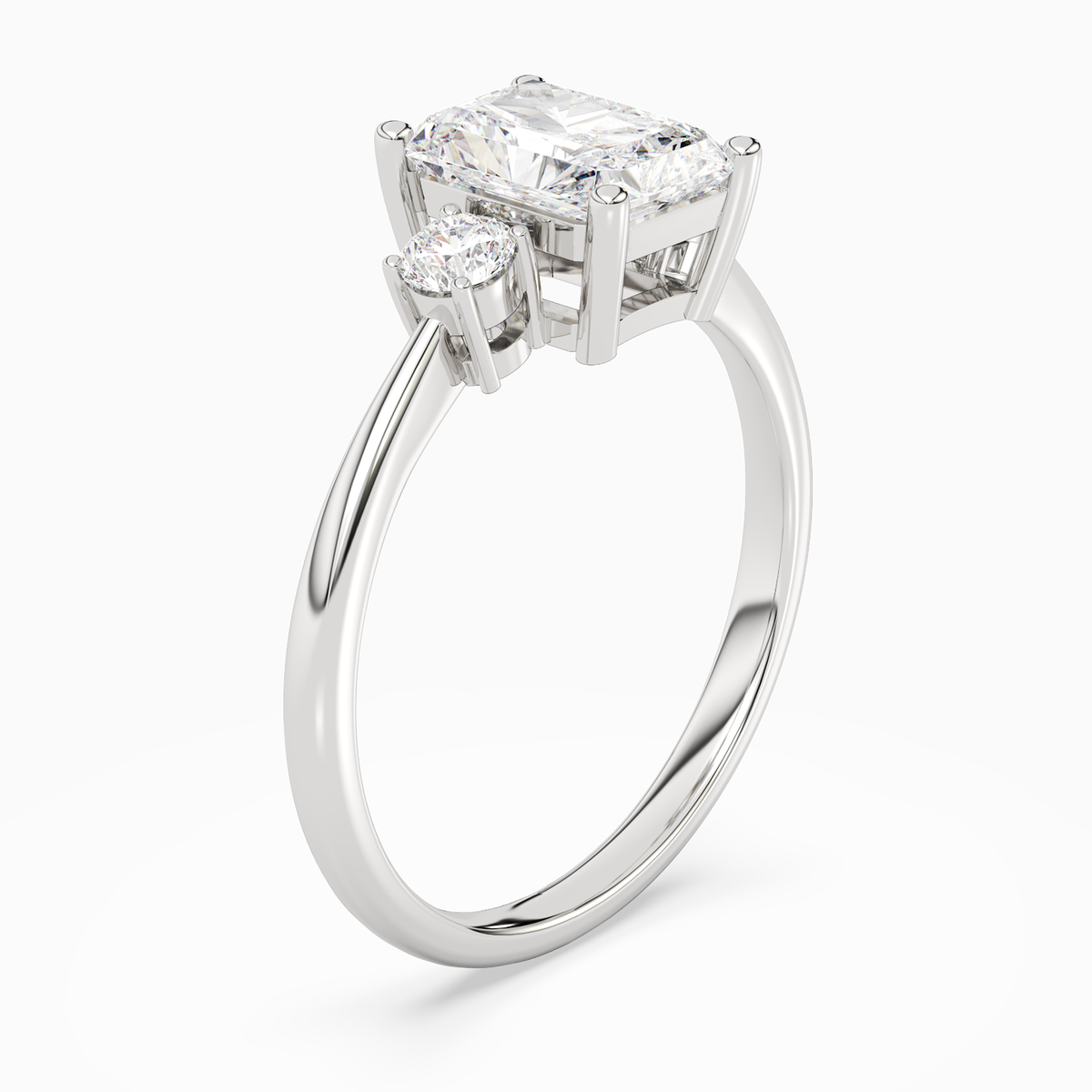
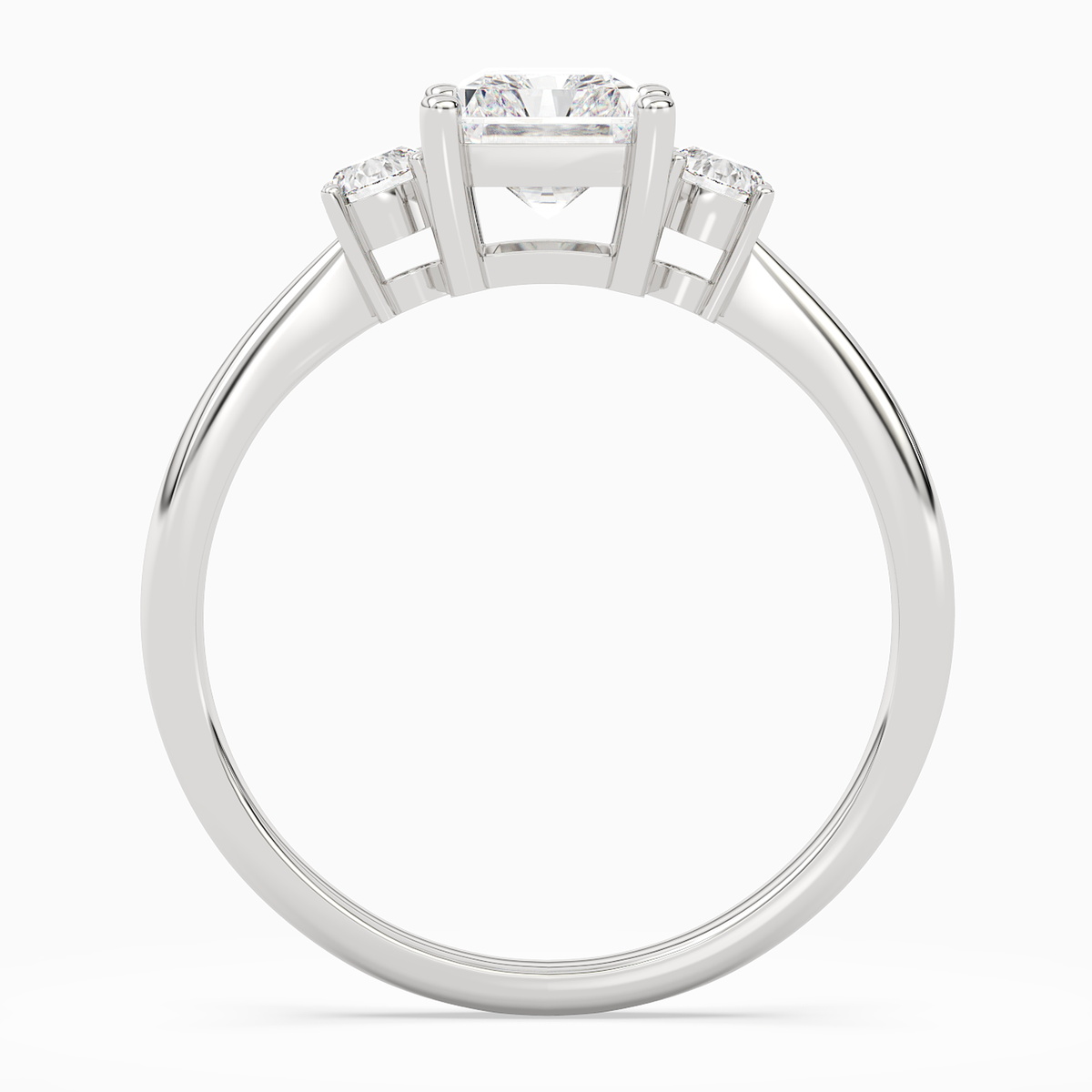
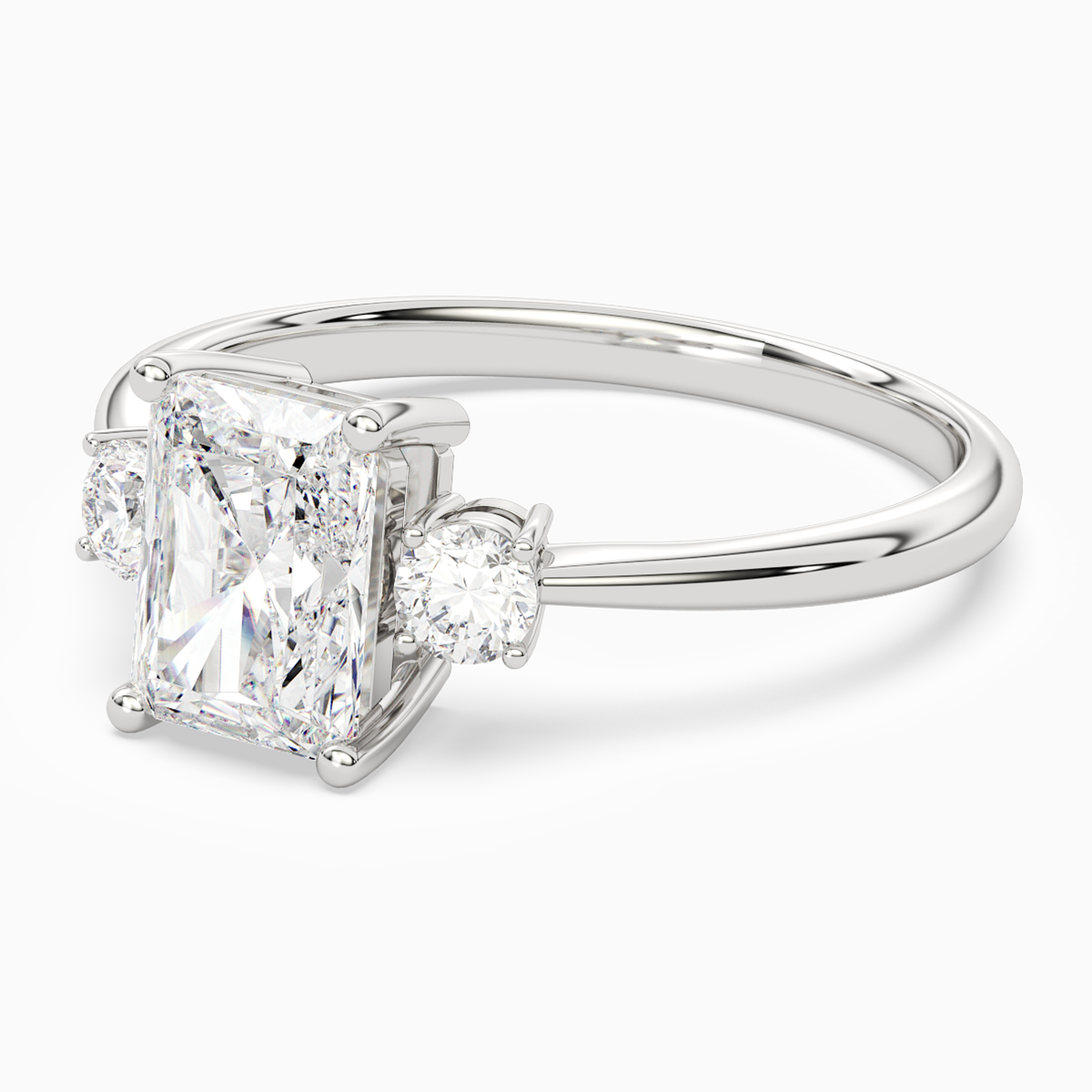
Elysia extends the Radiant through a Three Stone layout, giving the center a lateral relationship with its accents and band. These four designs establish useful differences in face-up boundary, profile, and width, but the assortment remains thin. Additional setting claims or internal links should not imply assortment that the public collection does not yet support.
Measured Geometry, Interpreted in Motion
Burvonti pairs responsibly sourced, independently graded lab-grown diamonds with settings calibrated through proportion and human judgment. For a Radiant, that means reading the four long sides, four cropped corners, central alignment, and internal pattern as one composition. Its distinction comes from how the frame and light interact, not from maximum-sparkle or perfect-for-everyone language.
When structurally feasible, custom work may refine center specifications, ratio, setting, corner treatment, metal, accents, band line, or engraving. Choose care suited to the diamond, alloy, and exact construction; avoid abrasive products and harsh chemicals, and request inspection if a support catches, the center moves, or the ring receives a significant impact. Current assortment, sizing limits, documentation, setting security, and wedding-band compatibility require product-level confirmation.
Frequently Asked Questions
What is a radiant-cut diamond engagement ring?
It is an engagement ring centered on a square or rectangular diamond with four cropped corners and modified-brilliant faceting. The outline creates an eight-sided frame, while the internal facet arrangement produces brilliant-style light rather than Emerald-style steps.
Can a radiant diamond be square or rectangular?
Yes. Radiants range from near-square to distinctly elongated. Length-to-width ratio describes that relationship, while side parallelism, corner crop, symmetry, central alignment, and the intended setting complete the visual judgment.
What is the best length-to-width ratio for a radiant diamond?
There is no universal best. A ratio closer to one reads more square; a higher ratio reads more elongated. Compare actual outline, measurements, corner consistency, light pattern, and setting response instead of treating one range as a quality grade.
What should I look for in a radiant diamond’s outline?
Look for parallel opposing sides where intended, a centered internal structure, consistent cropped corners, and balanced transitions around the perimeter. Similar ratios can still produce noticeably different outlines, so evaluate the complete face-up drawing.
How is a radiant cut different from an emerald cut?
Both can have rectangular or square cut-cornered outlines. A Radiant uses modified-brilliant faceting that creates a denser, more scintillating pattern; an Emerald uses long step facets that create broader planes of light and shadow.
How is a radiant cut different from a princess cut?
A Radiant has four cropped corners, while a Princess usually has four sharp points. Both can use modified-brilliant faceting, but their outline, pavilion structure, contrast pattern, corner support, and setting response can differ.
Do all radiant diamonds have the same facet pattern?
No. Modified-brilliant arrangements vary, producing different scales and distributions of brightness, fire, contrast, and scintillation. A shape name or fixed facet count cannot predict the individual center’s complete appearance.
What does crushed ice mean in a radiant diamond?
It is a trade description for an area of many small virtual facets that creates a fine, splintered, or glittering light pattern. It is not a GIA quality grade and can appear with different brightness and contrast from one diamond to another.
Is crushed ice good or bad in a radiant diamond?
Neither automatically. Some people prefer fine-grained scintillation; others prefer broader flashes. Evaluate whether the pattern looks lively and coherent in motion or whether gray, watery, dark, or dull regions dominate the center.
Does GIA give radiant diamonds an overall cut grade?
No. GIA’s regular overall cut grade currently applies only to eligible standard Round Brilliant diamonds. A Radiant report still documents shape and cutting style, measurements, polish, symmetry, color, clarity, fluorescence, and identifying characteristics.
How should I evaluate a radiant diamond without an overall cut grade?
Use the independent report to compare documented facts, then examine the center face-up and in motion. Look for a balanced outline, consistent corners, responsive light, and no persistent dark, gray, or dull area that overwhelms the rest.
Does carat weight tell me how large a radiant diamond will look?
Not by itself. Carat measures weight. Length, width, depth, girdle, corner crop, and weight distribution determine face-up dimensions, while Halo, side stones, band width, and profile change the complete ring’s visual scale.
Do radiant facets hide inclusions or color?
A busy modified-brilliant pattern may make some characteristics less noticeable in certain diamonds, but it does not guarantee eye-clean clarity or a colorless appearance. Grade, position, relief, facet pattern, dimensions, metal, and viewing conditions all matter.
Are cropped corners more durable than princess-cut points?
They remove the four acute points found on a Princess and may reduce direct corner exposure, but they do not make a Radiant damage-proof. Girdle, inclusions, setting support, workmanship, wear, maintenance, and impact remain relevant.
Which radiant engagement ring styles are currently available at Burvonti?
The current public collection contains four designs: an Octagonal Halo, a milgrain Solitaire, a Hidden Halo Solitaire, and a Three Stone ring in 14K White or Yellow Gold. Confirm current product and center availability.
How does an Octagonal Halo change a radiant center?
It repeats the center’s cut-cornered perimeter as a second frame, increasing visual width and reinforcing the eight-sided geometry. Exact corner alignment, spacing, profile, maintenance points, and wedding-band relationship should be assessed on the product.
What does a Three Stone setting add to a radiant diamond?
It extends the composition laterally and creates transitions between the cut-cornered center, side accents, and band. Accent shape, scale, height, spacing, and light pattern determine whether the result feels continuous or intentionally contrasted.
Which metal works best with a radiant diamond?
There is no universal best. White Gold can create cooler continuity; Yellow Gold offers a warmer boundary. Burvonti’s current public Radiant collection is concentrated in those metals, and exact alloy, finish, care, and availability require confirmation.
Will a radiant engagement ring sit flush with a wedding band?
Not necessarily. Basket or Halo width, setting height, side stones, prong placement, and shoulder geometry control the contact line. Straight, contour, chevron, open, or intentionally spaced bands may suit different profiles.
How should I clean a radiant diamond engagement ring?
Choose a gentle method appropriate to its diamond, alloy, and construction. Avoid abrasive cleaners and harsh chemicals, clean around each corner support and beneath the center, and arrange inspection if a support catches or the stone appears to move.
Can a Burvonti radiant engagement ring be resized or customized?
Resize and custom possibilities depend on the design. Center specifications, ratio, setting, corner treatment, metal, accents, band line, or engraving may be adjustable when structurally feasible, but sizing limits, security, documentation, assortment, and band fit need individual confirmation.