
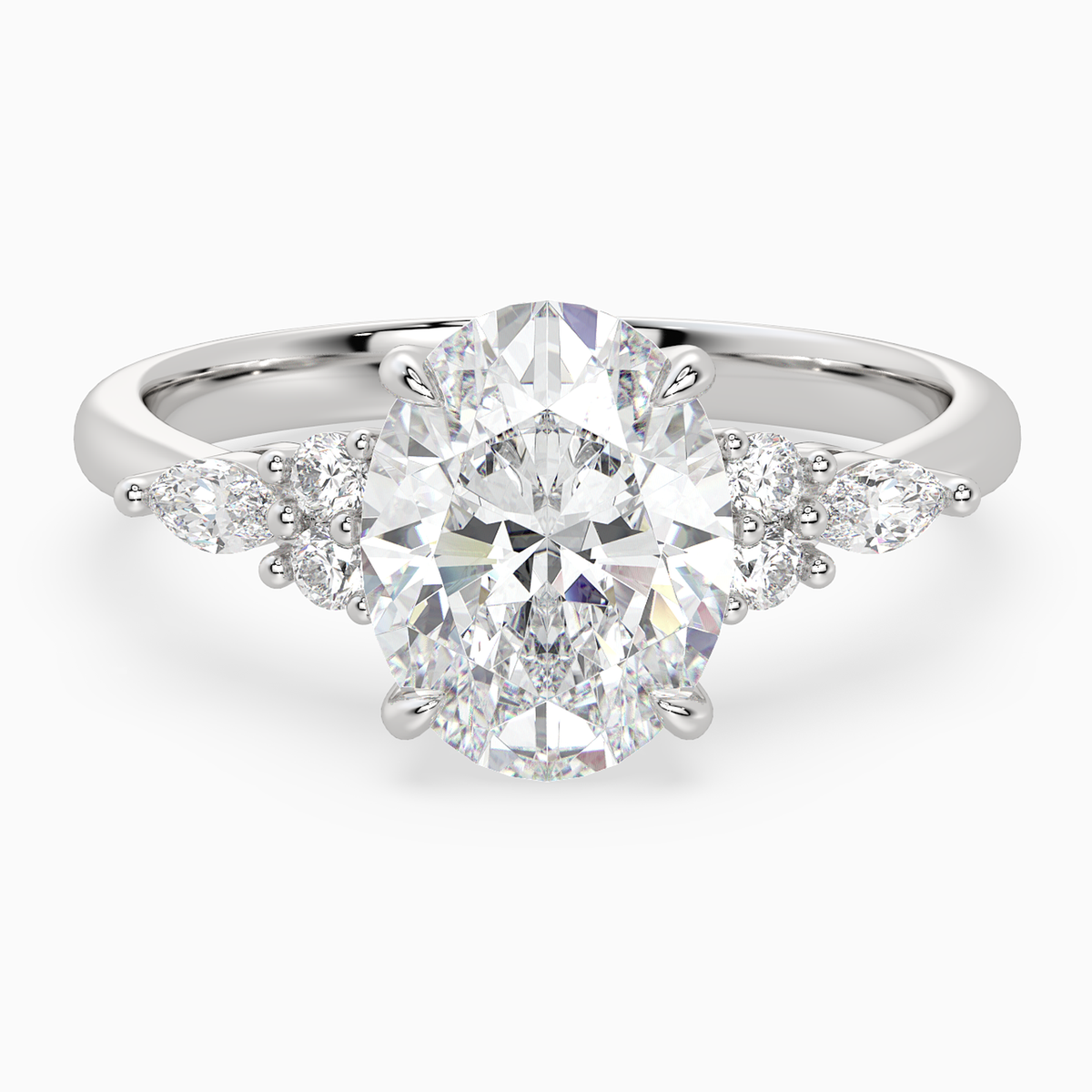


More room to calibrate
A buyer may be able to compare a broader range of carat weights, shapes, and quality grades before choosing the final stone.
Begin with a familiar route, explore a collection, or continue through a practical guide.

Lab Grown Diamonds
Lab grown diamonds give you a wider field of options, but the right choice still depends on cut, color, clarity, carat, certification, and the way the stone will live inside a setting.
The short answer
Lab grown diamonds are grown in controlled conditions rather than mined from the earth. They are not diamond simulants: moissanite and cubic zirconia can resemble diamond, but they are different materials.
The origin changes the way the diamond is created. It does not remove the need for a grading report, careful proportion review, and a setting plan that respects the selected stone.
Definition
Lab grown diamonds are evaluated through the same practical lens shoppers already use for diamonds: beauty, durability, proportion, documentation, and fit for the finished piece. The important distinction is disclosure. A lab grown diamond should be represented clearly as laboratory-grown, and it should not be confused with a look-alike gemstone.

Why choose one
Lab grown diamonds can make it possible to compare more sizes, shapes, and clarity grades within a budget. That extra range is useful only when it is paired with a disciplined selection process.
A buyer may be able to compare a broader range of carat weights, shapes, and quality grades before choosing the final stone.
The diamond's laboratory origin should be stated plainly, along with grading details that support comparison.
Lab grown diamonds can support engagement rings, wedding jewelry, earrings, necklaces, and bracelets without changing the need for careful design fit.

HPHT and CVD
Most lab grown diamonds are created through HPHT or CVD growth. HPHT uses high pressure and high temperature conditions. CVD grows carbon onto a diamond seed in a controlled chamber. Both methods can produce diamonds that require grading, finishing, and careful review.
Often discussed as a pressure-and-temperature method. The result still needs review for color, clarity, cut quality, and report details.
Often discussed as a chamber growth method. The growth route does not replace the buyer's need to inspect the finished diamond.
Comparison
The difference starts with origin. The buying decision still comes down to the individual stone, its grading evidence, and the jewelry it will become.

| Origin | Lab grown diamonds are created above ground. Mined diamonds form naturally underground over geological time. |
|---|---|
| Appearance | A well-cut lab grown diamond and a well-cut mined diamond can look visually similar in daily wear. |
| Grading | Both should be evaluated by cut, color, clarity, carat weight, measurements, and report details. |
| Value | Lab grown diamonds often allow more size or quality range within a budget, but price behavior and resale expectations should be treated carefully. |
| Sourcing | Lab origin removes mining origin from the stone, but environmental impact depends on producer practices, energy, and supply chain details. |
The report, proportions, video, setting plan, and final hand review all matter. Lab grown diamonds expand the field of possibility; they do not make every stone equally beautiful.
Evaluation framework
Start with the design goal, then use the 4Cs and the grading report to narrow the field. The best diamond is not always the highest grade on paper.

Burvonti approach
A Burvonti lab grown diamond should support the finished piece: the stone, setting, metal, prongs, daily wear, and visual proportion all need to work together.
The grading report gives the first layer of evidence. We still evaluate how the diamond looks in context and how its proportions fit the design.
Emerald, oval, pear, cushion, round, radiant, and other shapes carry different risks and advantages. The same grade can behave differently across shapes.
Prong placement, halo structure, bezel thickness, band width, and side stones can change how a center diamond appears and wears.
We prefer plain reasoning over mystique: what you can see, what the report documents, and what tradeoff the choice is making.
Jewelry paths
The right format depends on how the piece will be worn, inspected, and remembered. Engagement rings are only one part of the category.
Choose the center stone with the setting, metal, prongs, and daily wear in mind.
Consider earrings, necklaces, bracelets, and diamond accents where consistency and proportion matter.
Compare silhouettes, face-up spread, and setting behavior before deciding on the final look.
Next step
A lab grown diamond should feel clear on paper, balanced in the setting, and right at the scale of the hand. Start with the design, then let the evidence narrow the choice.

FAQ
Short answers for the questions that usually come up before comparing stones.
Yes. Lab grown diamonds are diamonds created in controlled conditions rather than mined from the earth. They should be clearly disclosed as lab grown and not confused with simulants such as moissanite or cubic zirconia.
Most are grown through HPHT or CVD processes. HPHT uses high pressure and high temperature conditions; CVD grows carbon onto a diamond seed in a controlled chamber.
Not reliably in normal wear. Origin is usually determined through documentation and specialized testing, which is why disclosure and a grading report matter.
Yes. Cut, color, clarity, and carat weight are still the main quality categories, along with measurements, polish, symmetry, and report comments.
They avoid mined origin, but environmental impact depends on energy use, producer practices, and supply chain details. It is better to ask for specific sourcing information than rely on a broad claim.
They often allow buyers to compare larger or higher-graded stones within a budget, but prices change by market, producer, grading details, and the finished jewelry design.
No. Moissanite is a different gemstone. It can be beautiful, but it is not diamond and should be represented as a separate material.