
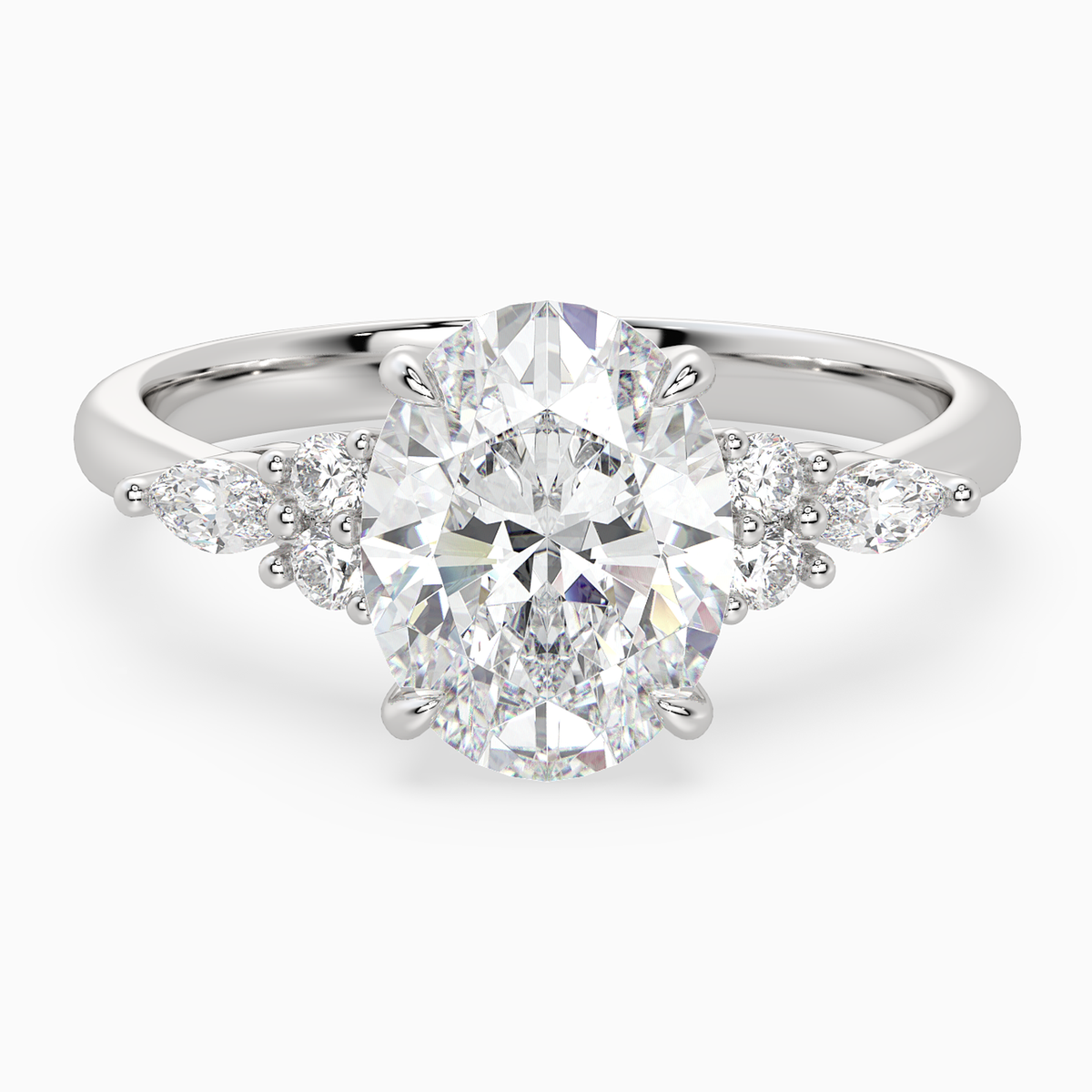


Lab Grown Diamond Solitaire Necklaces in 18K White Gold
A quiet 75% gold frame keeps one center in focus. 18K white gold refines setting edge, attachment, and chain continuity.


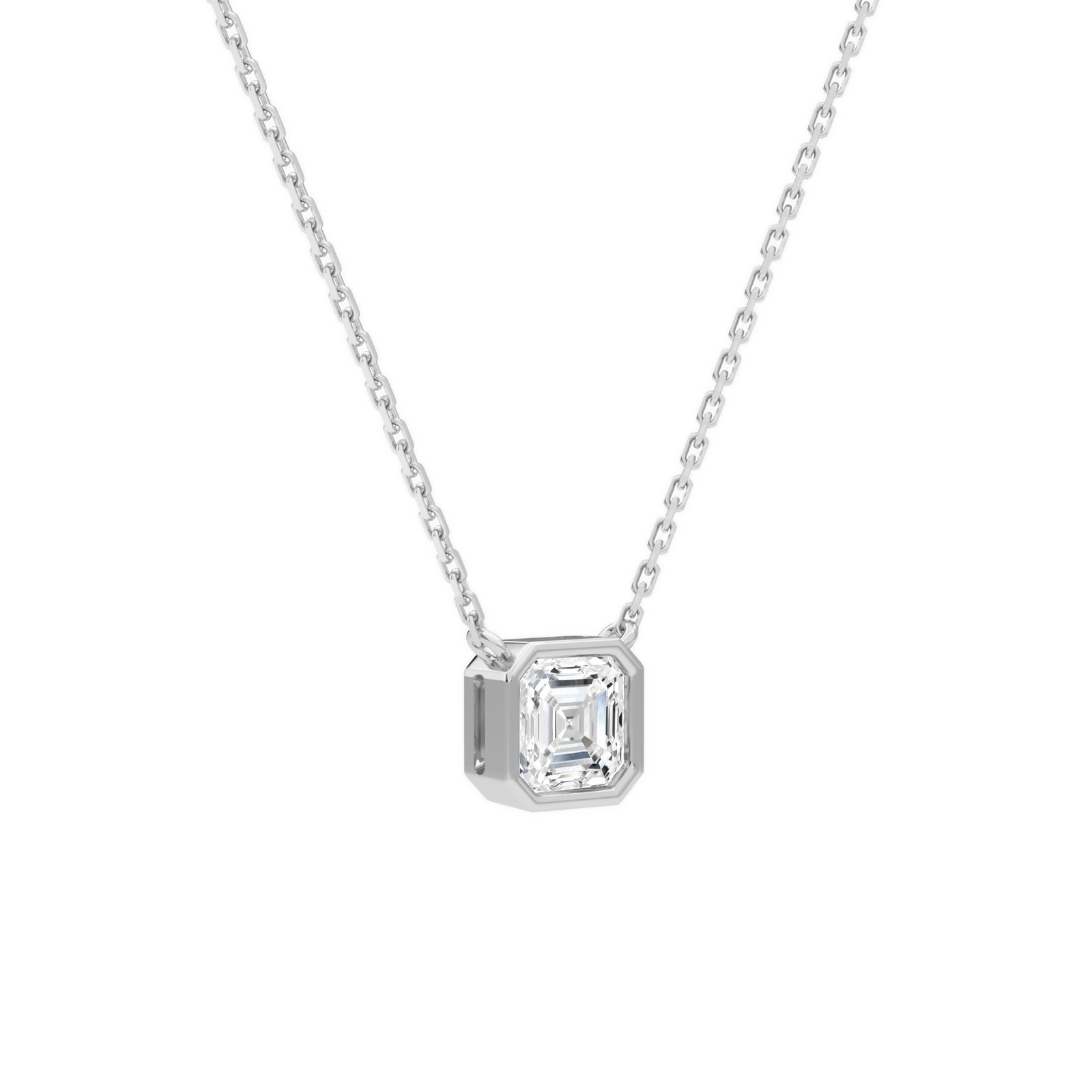


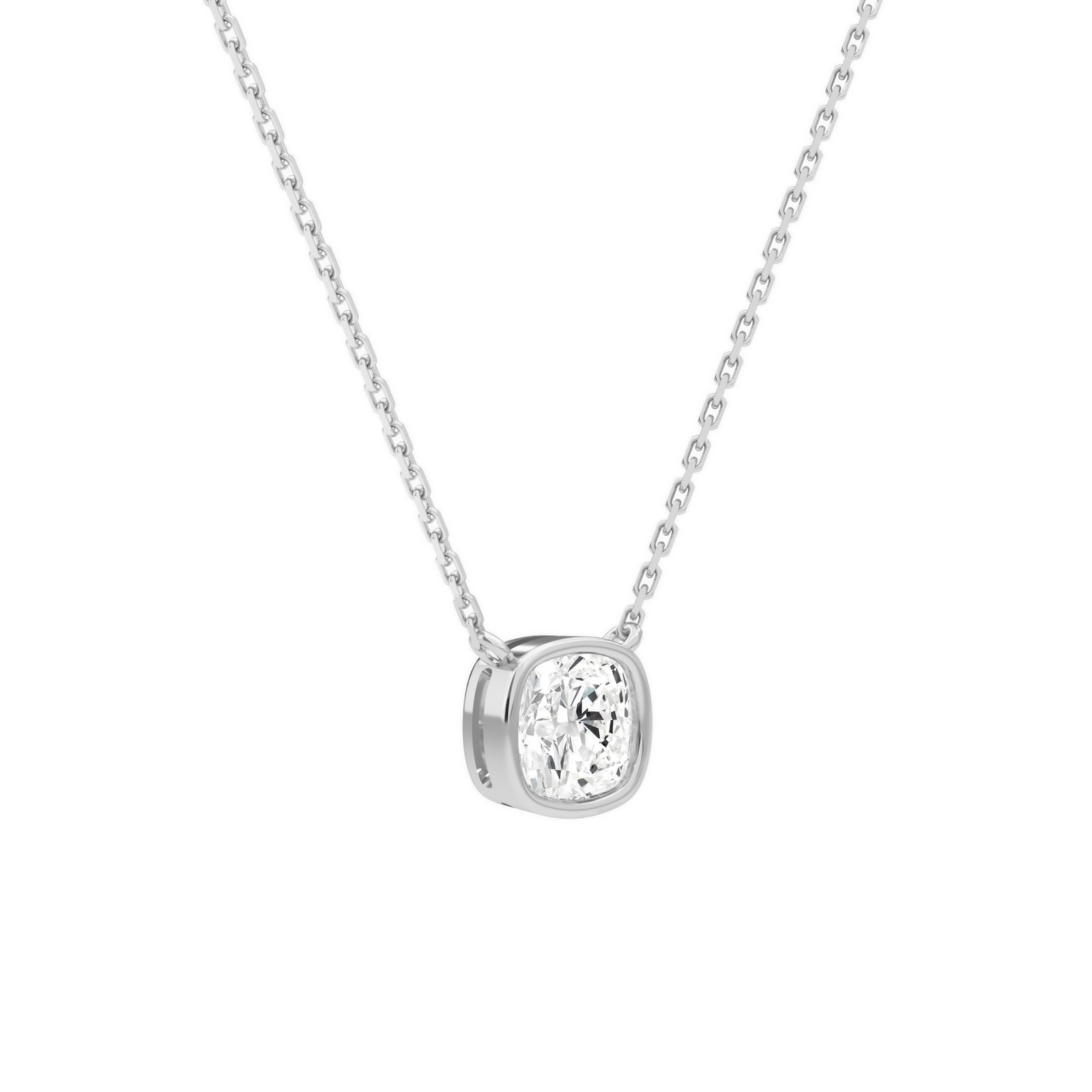


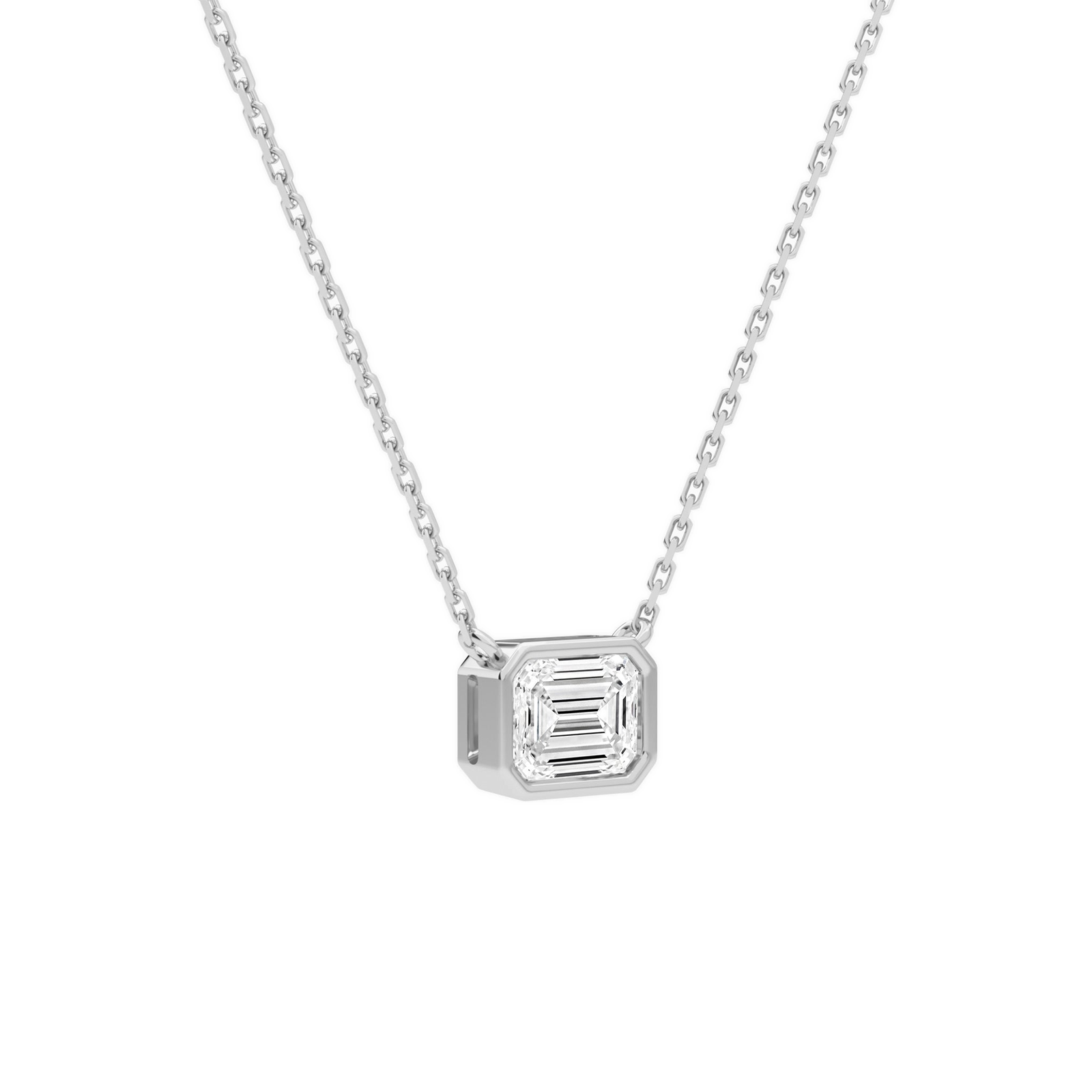


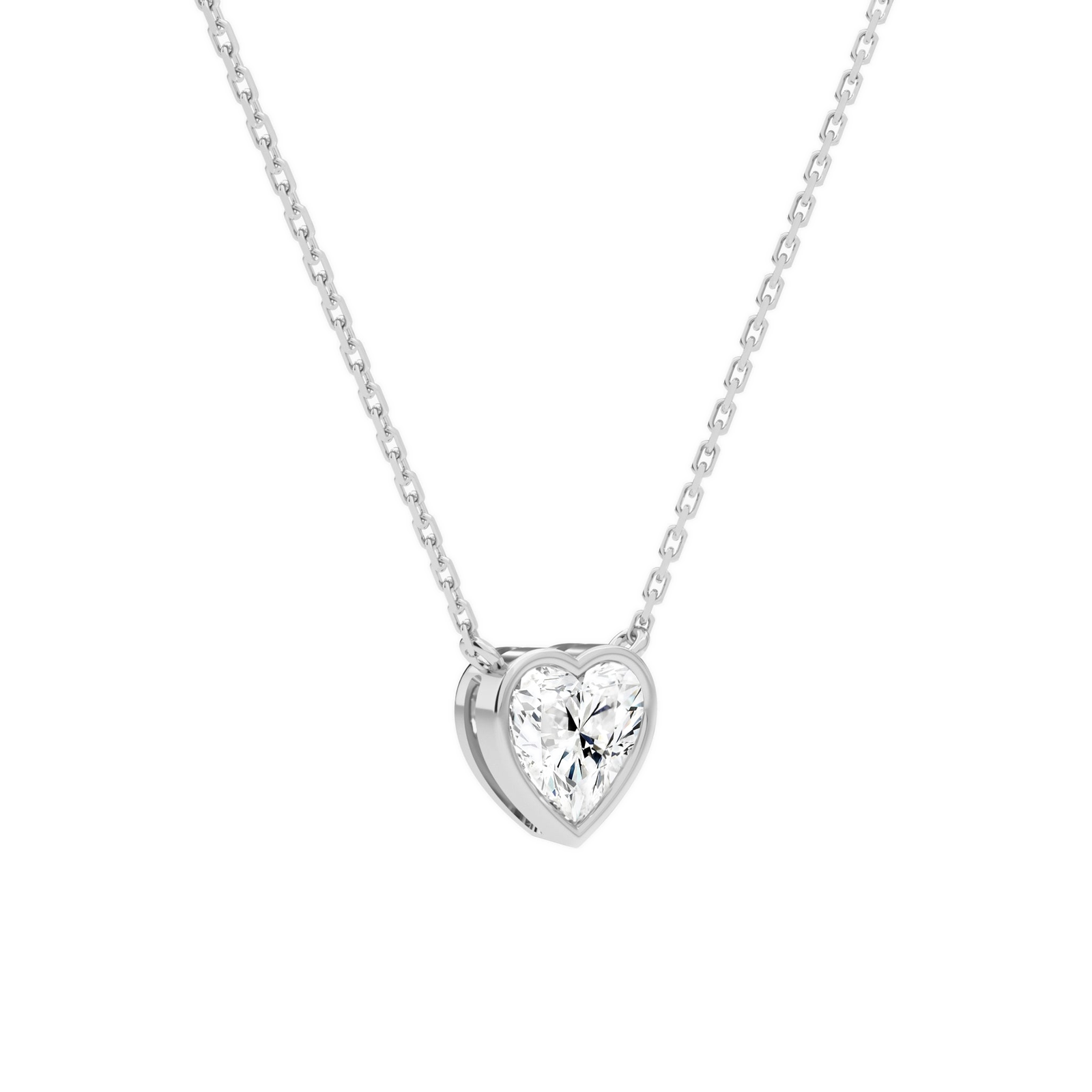


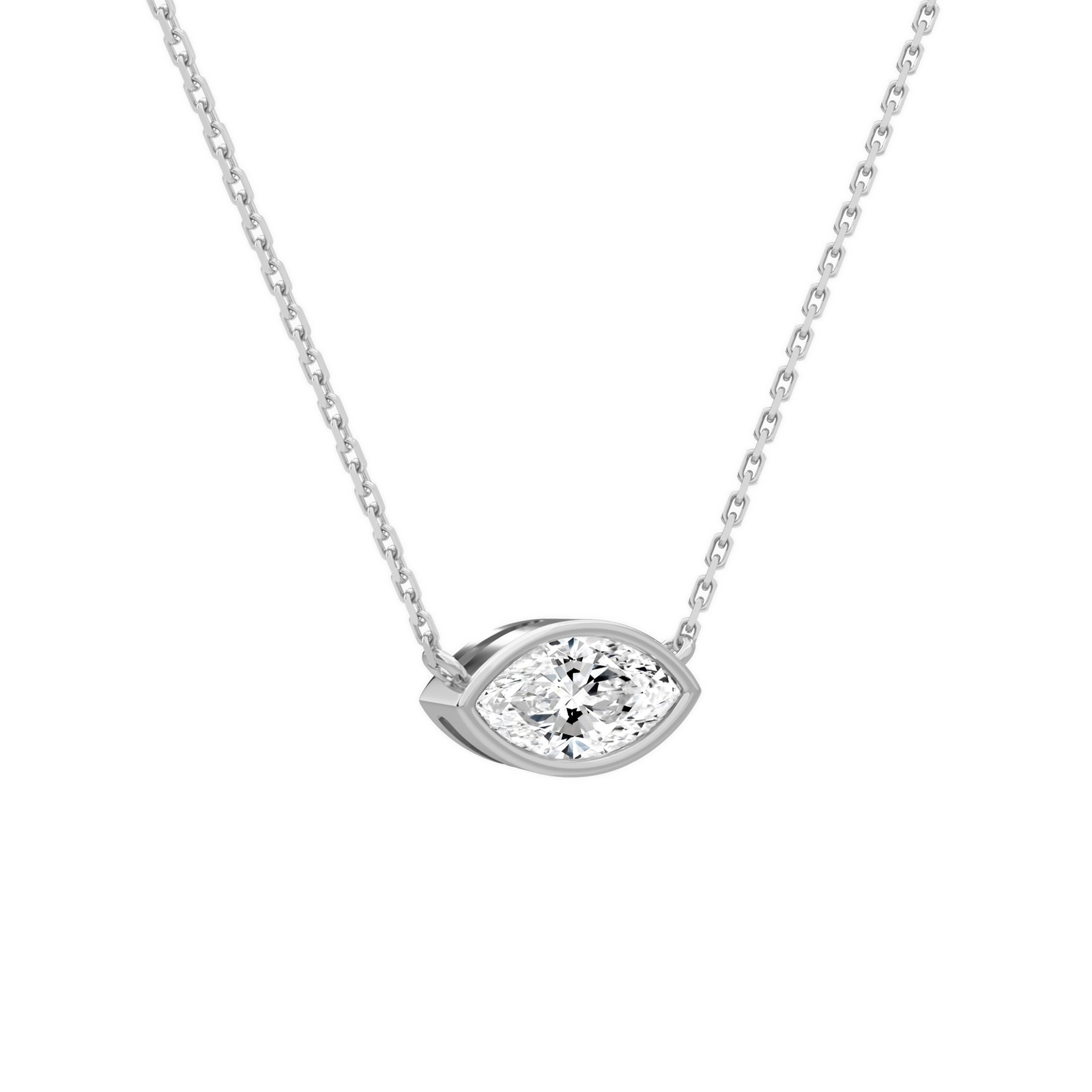


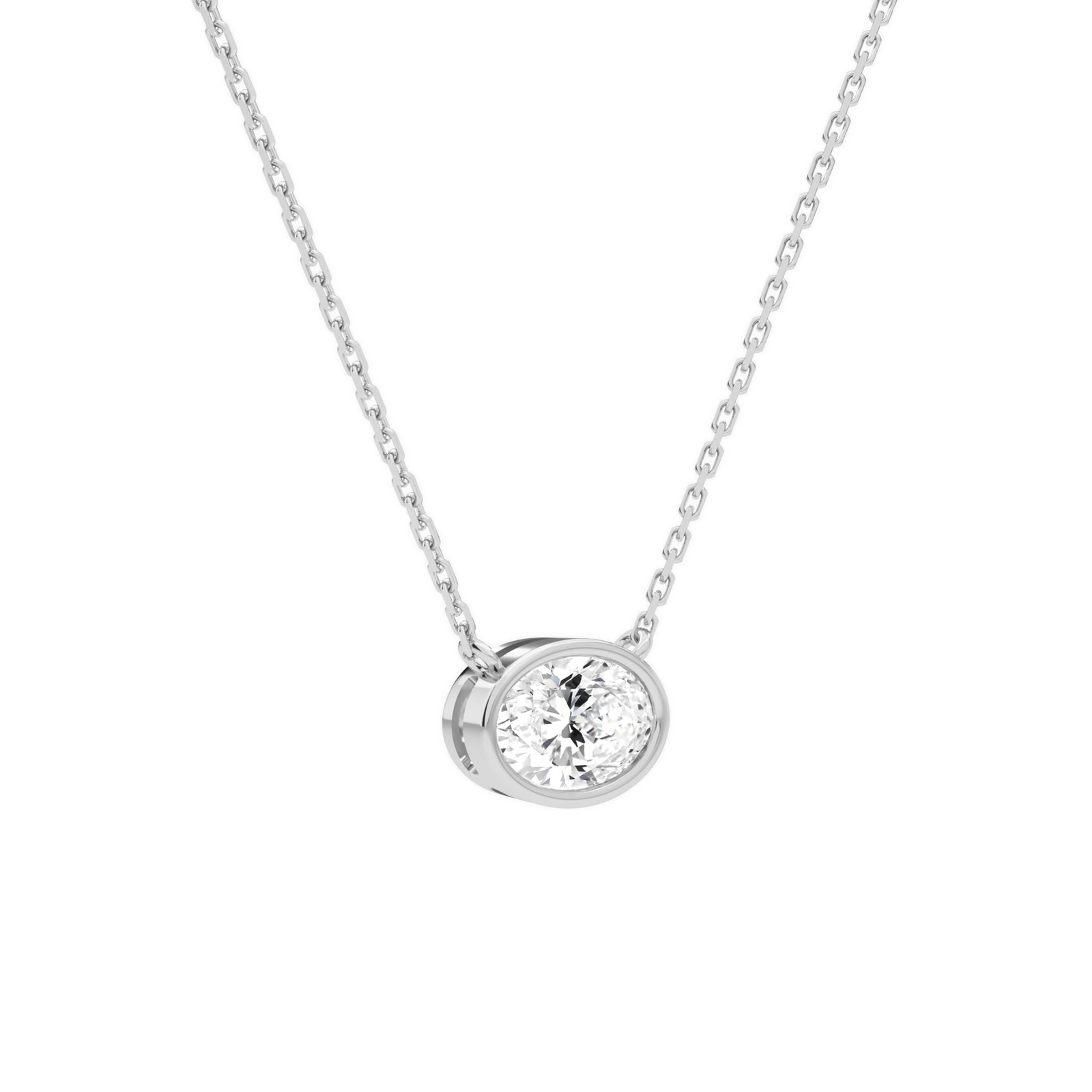


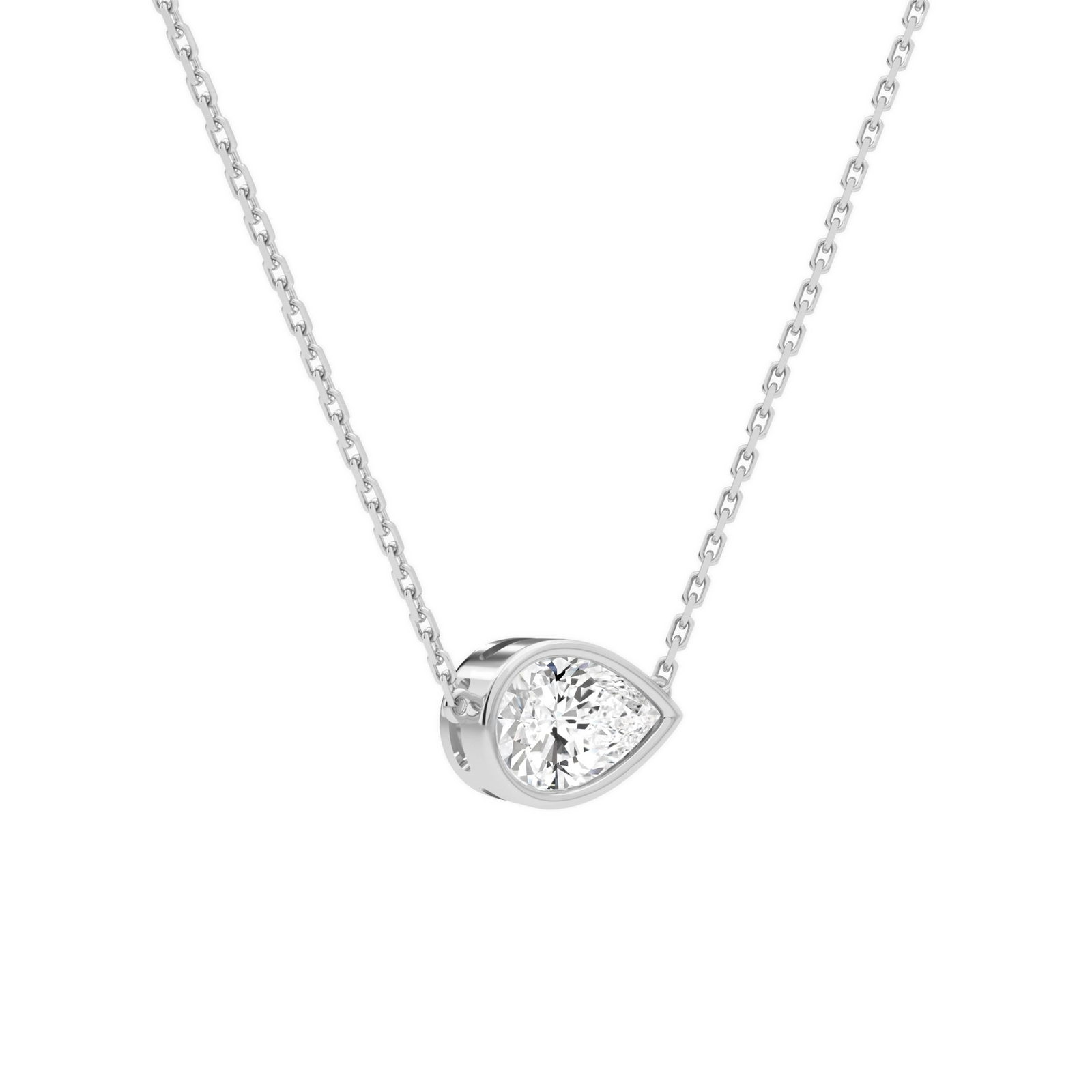


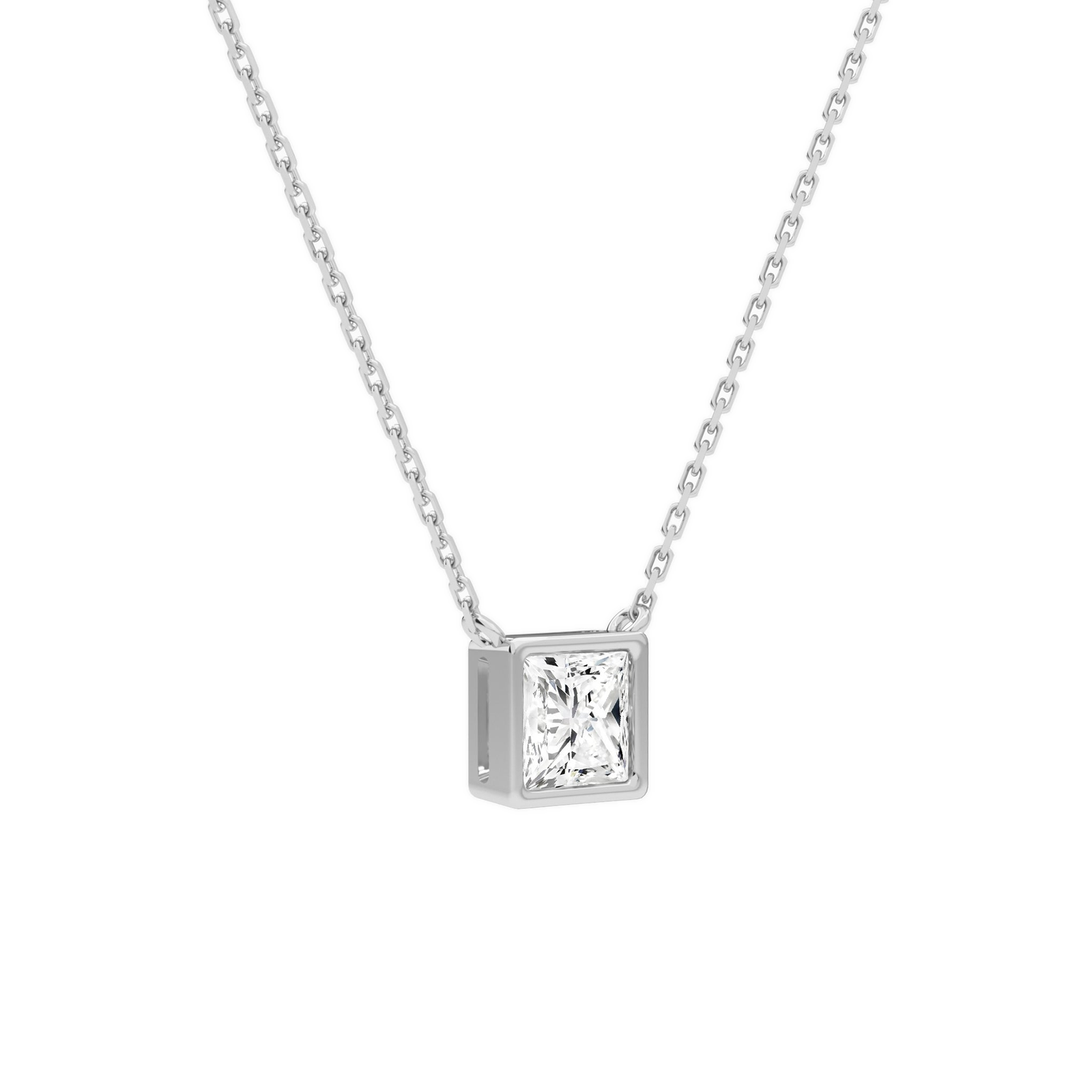


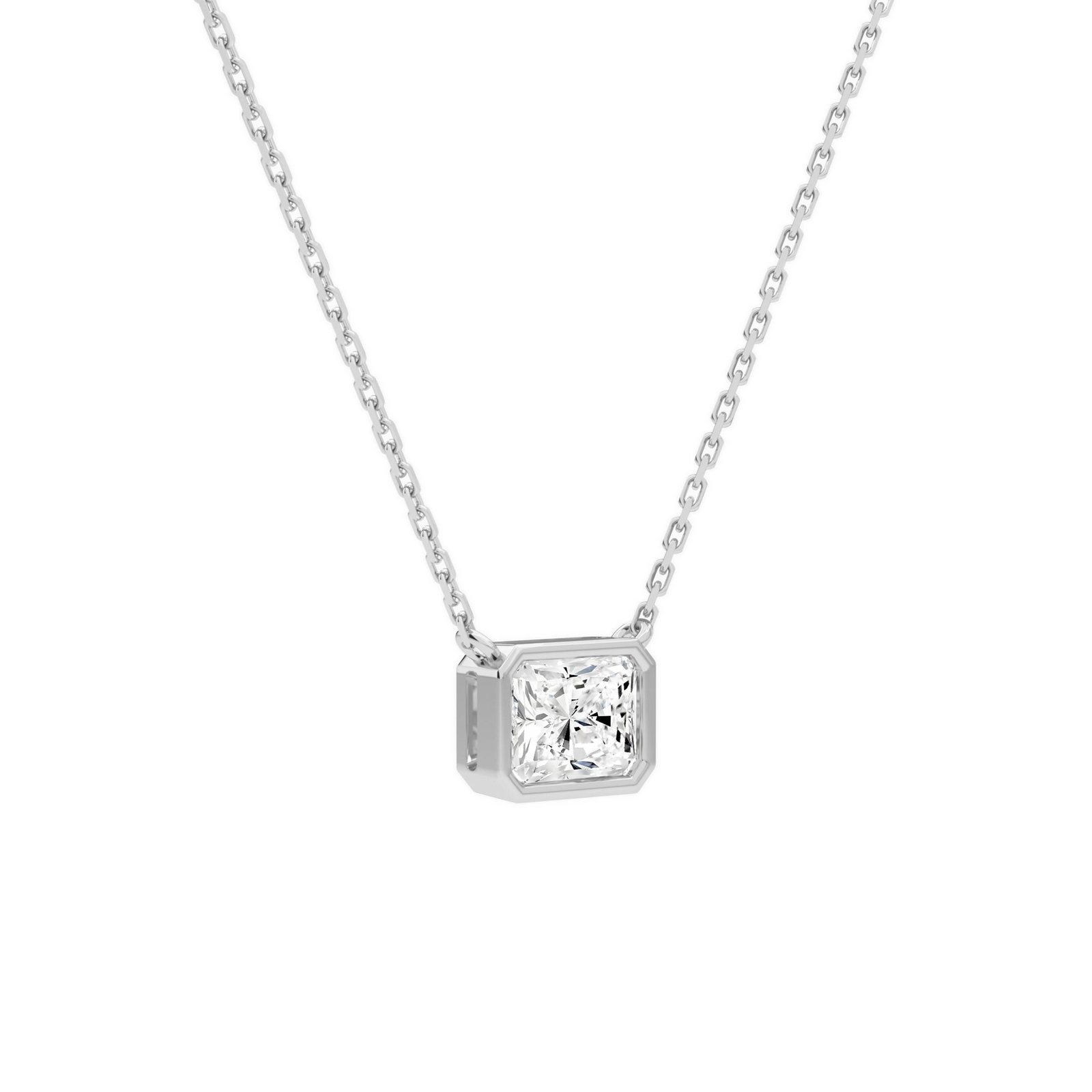


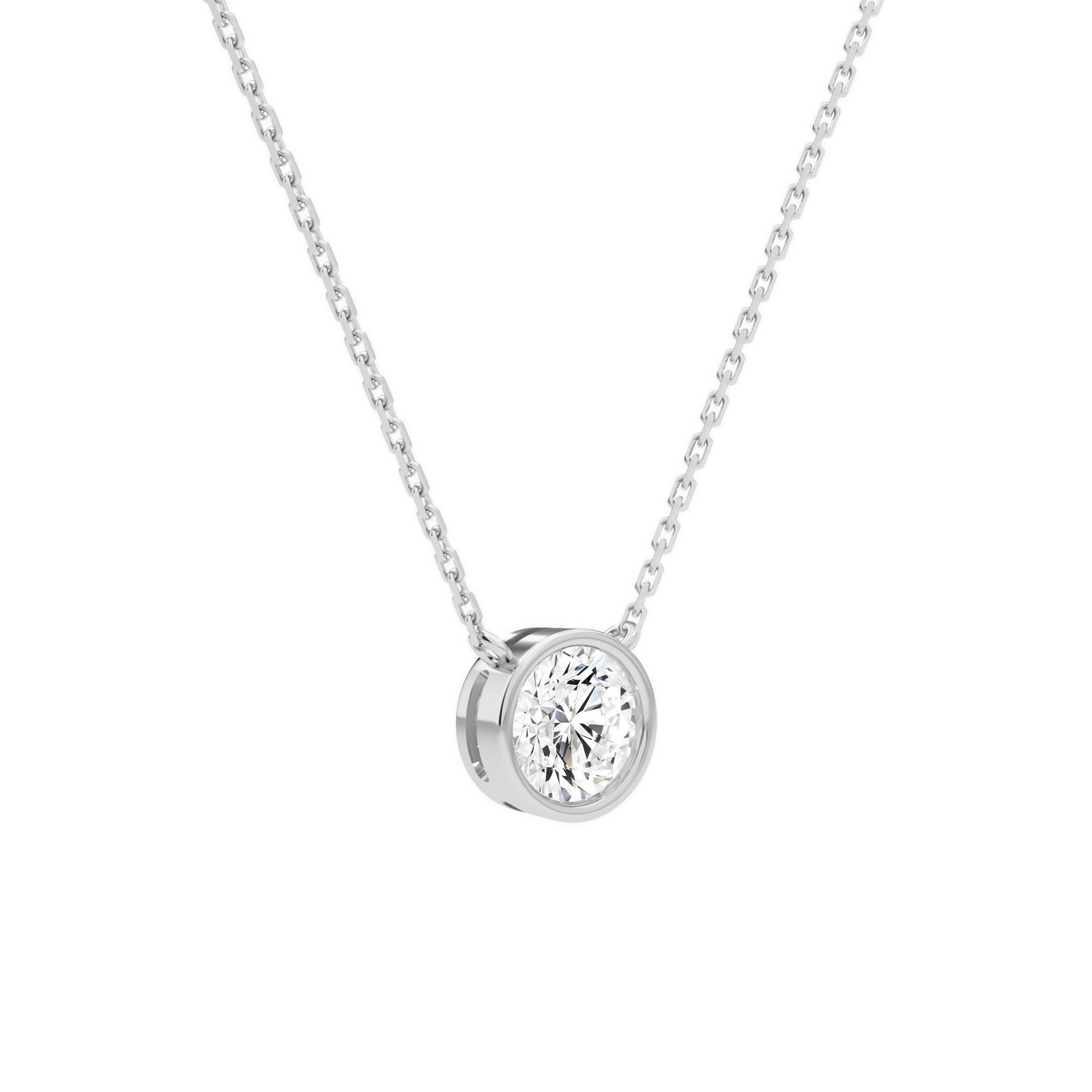


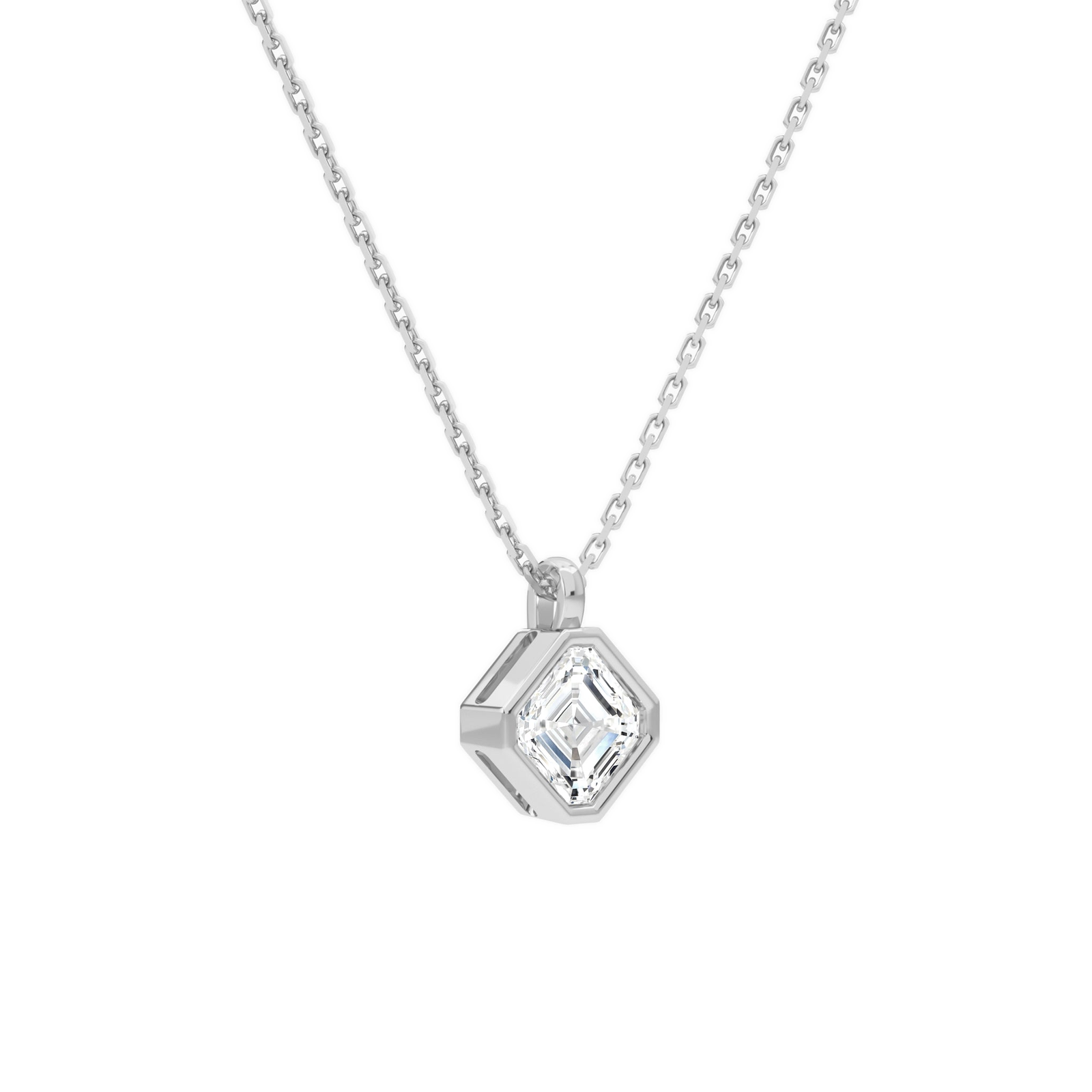


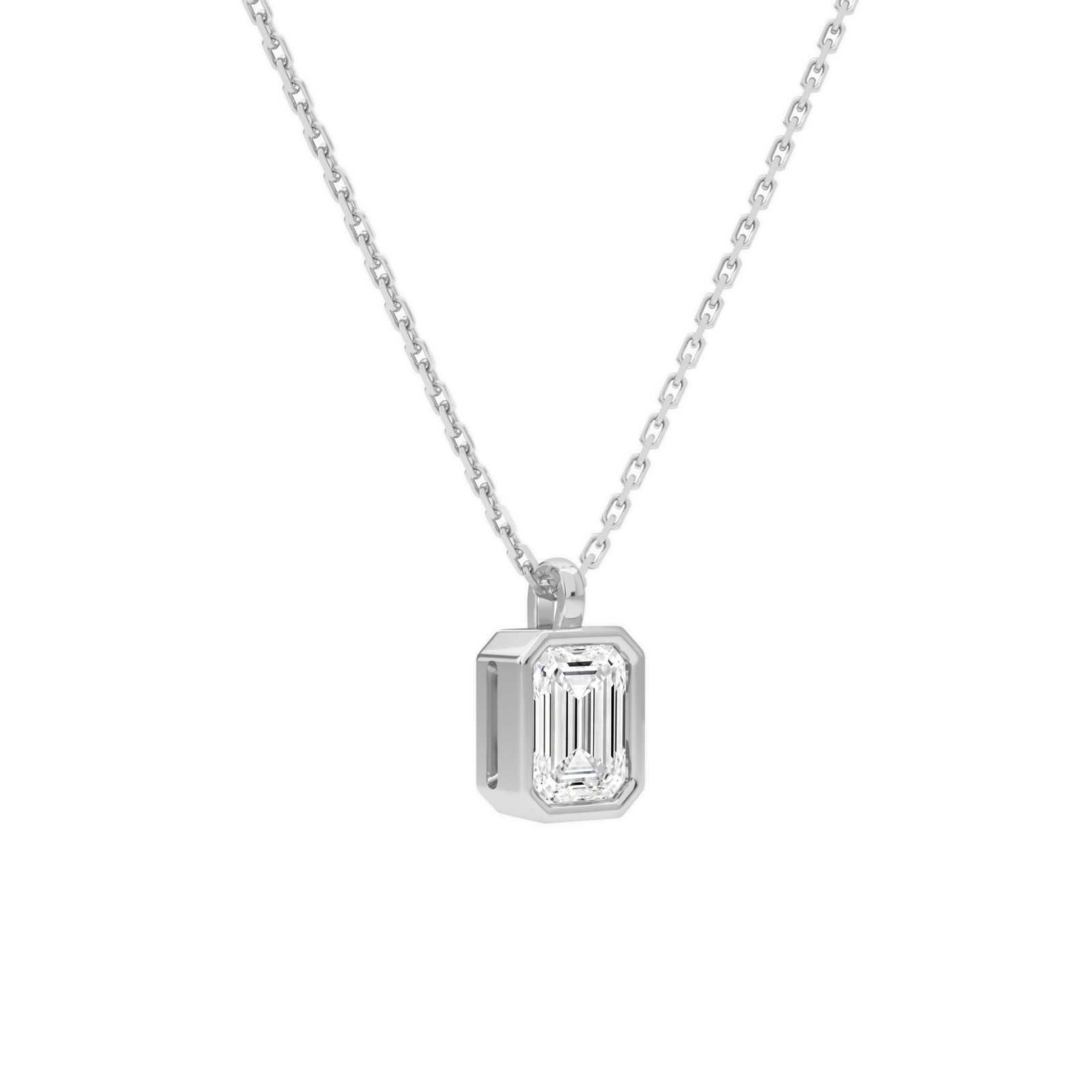
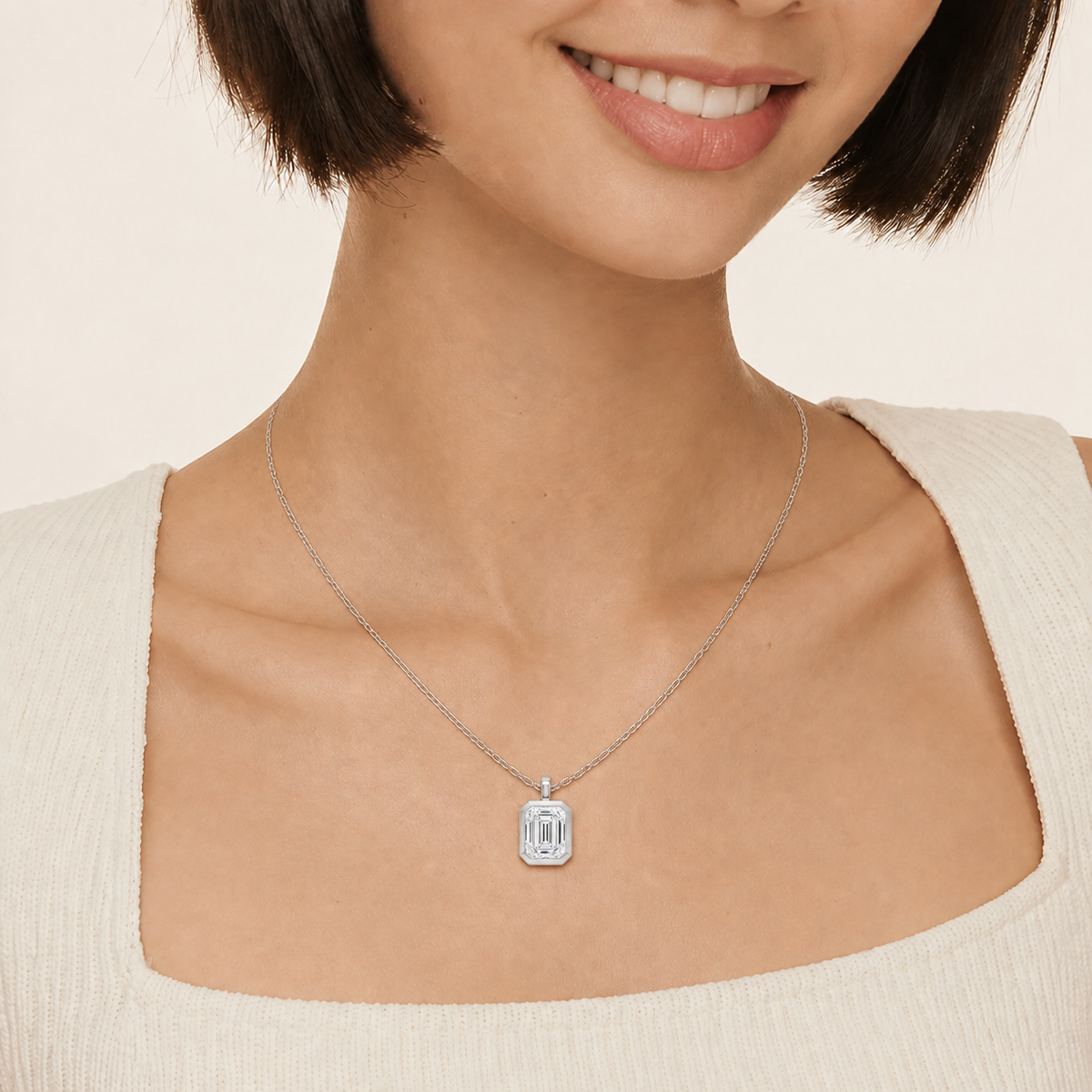

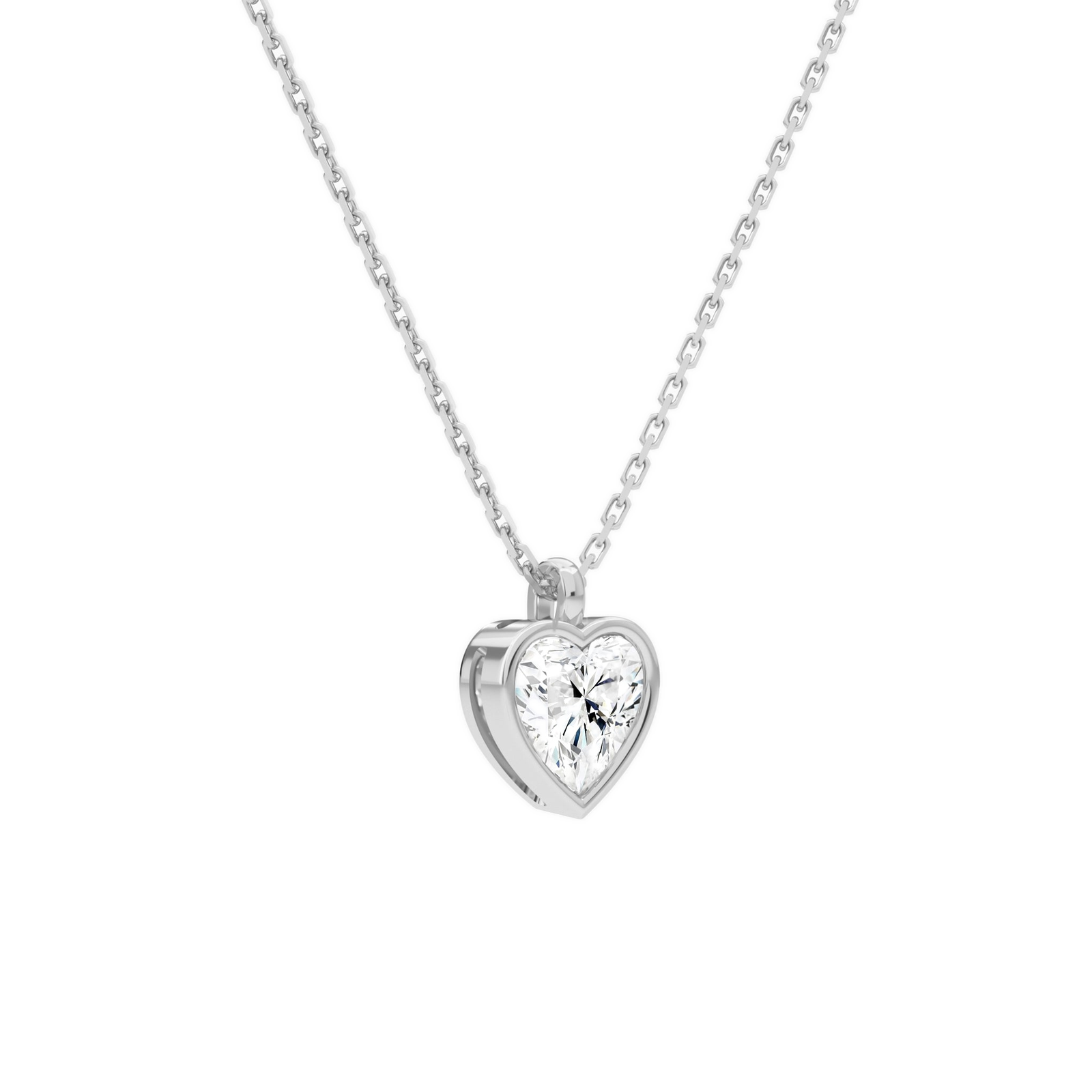


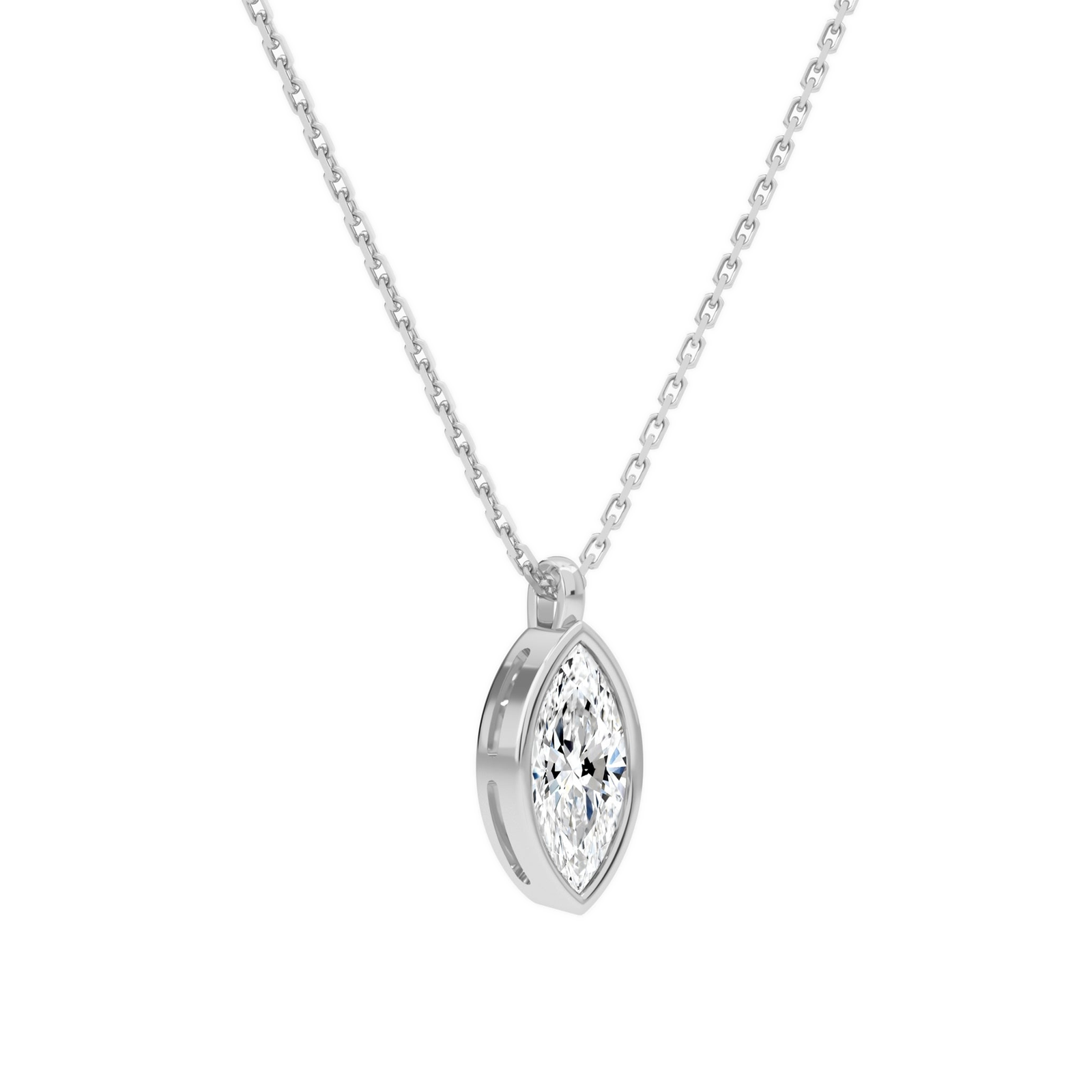


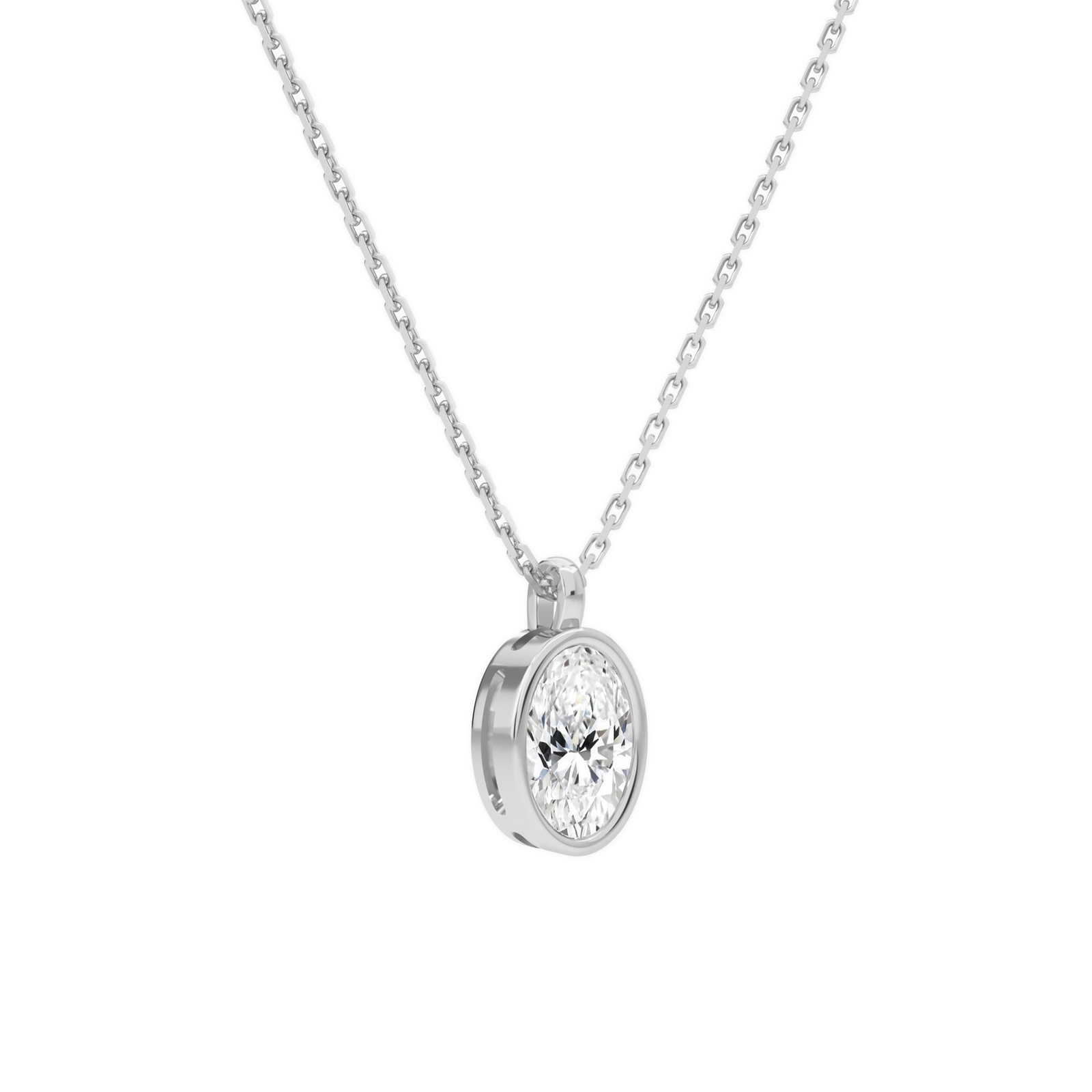


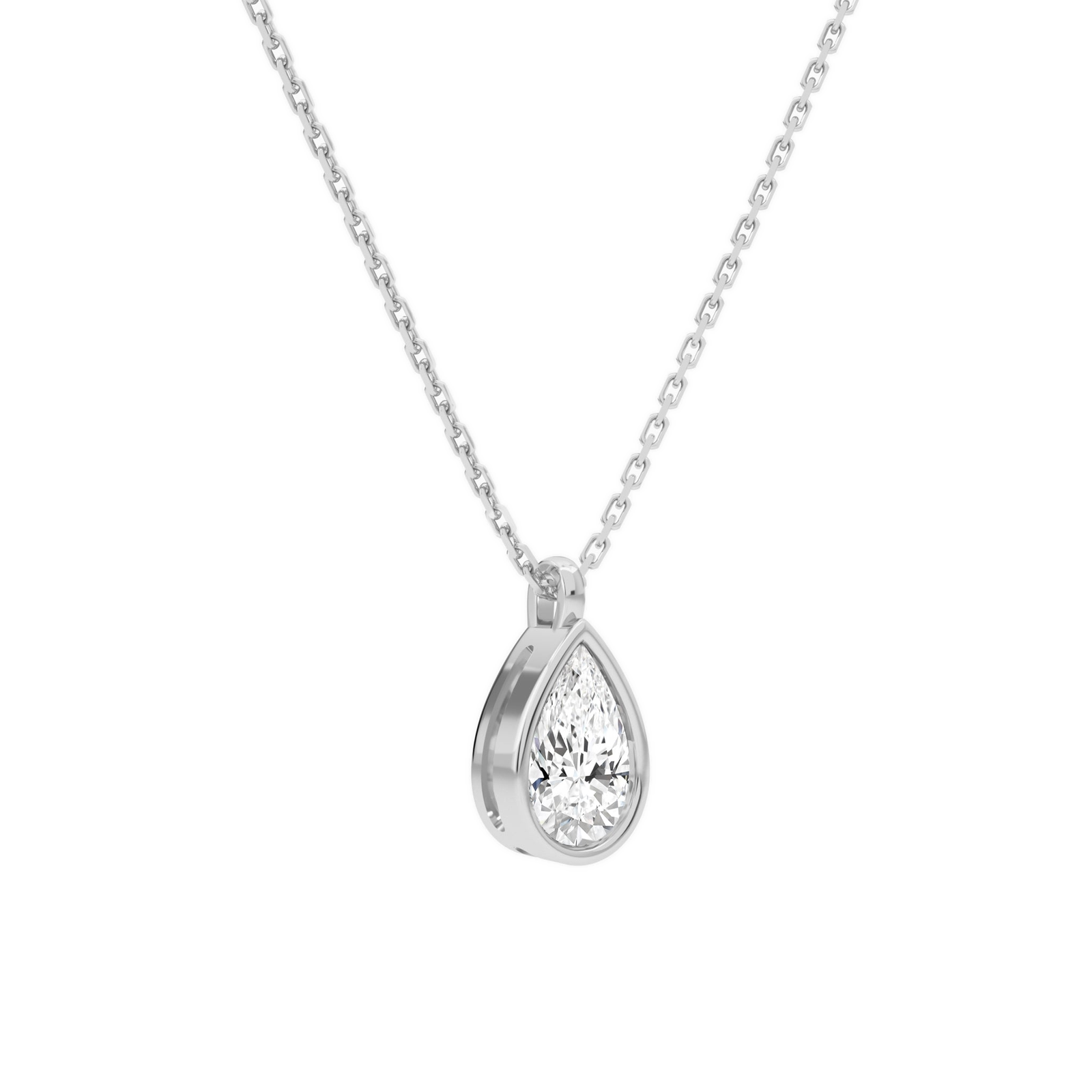


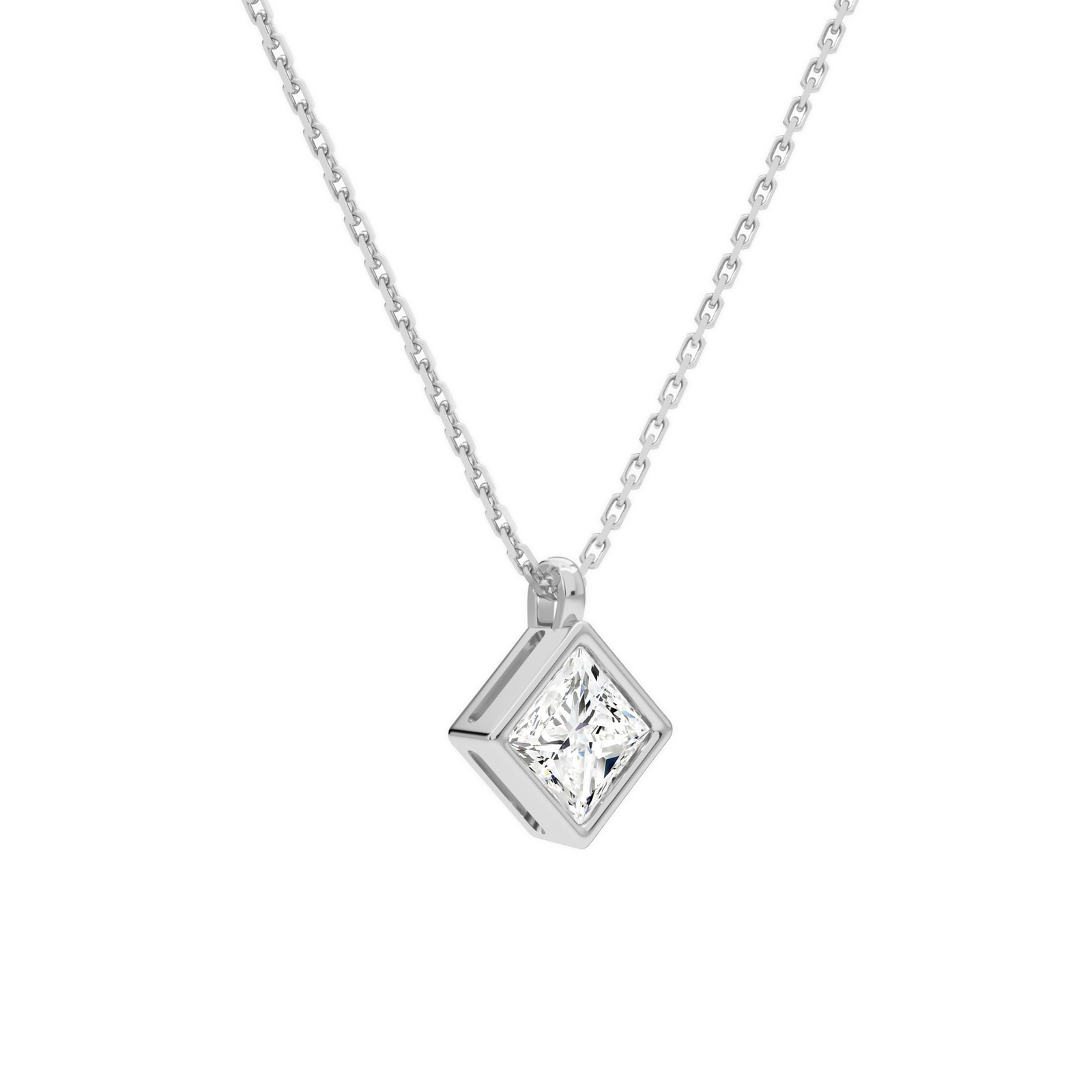
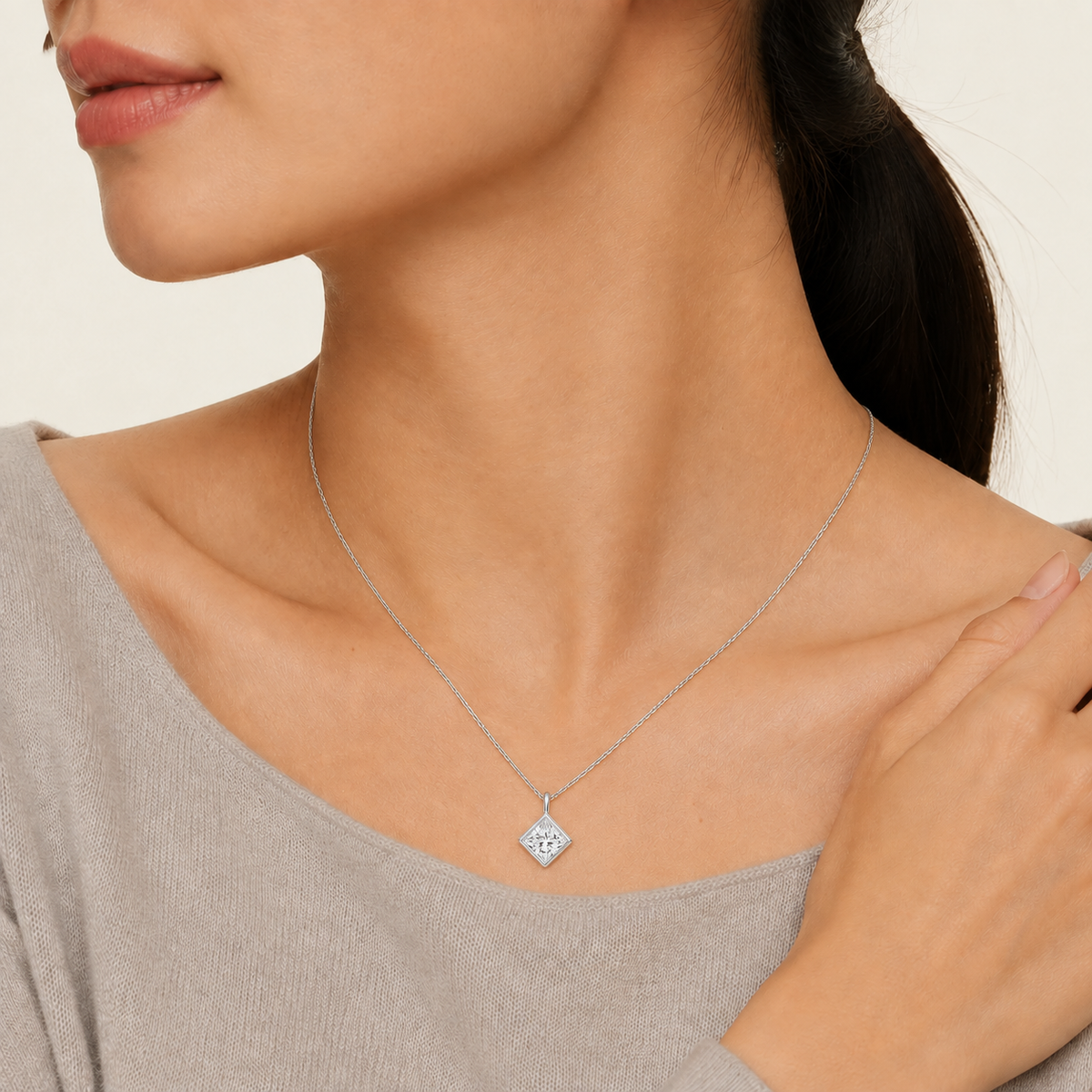


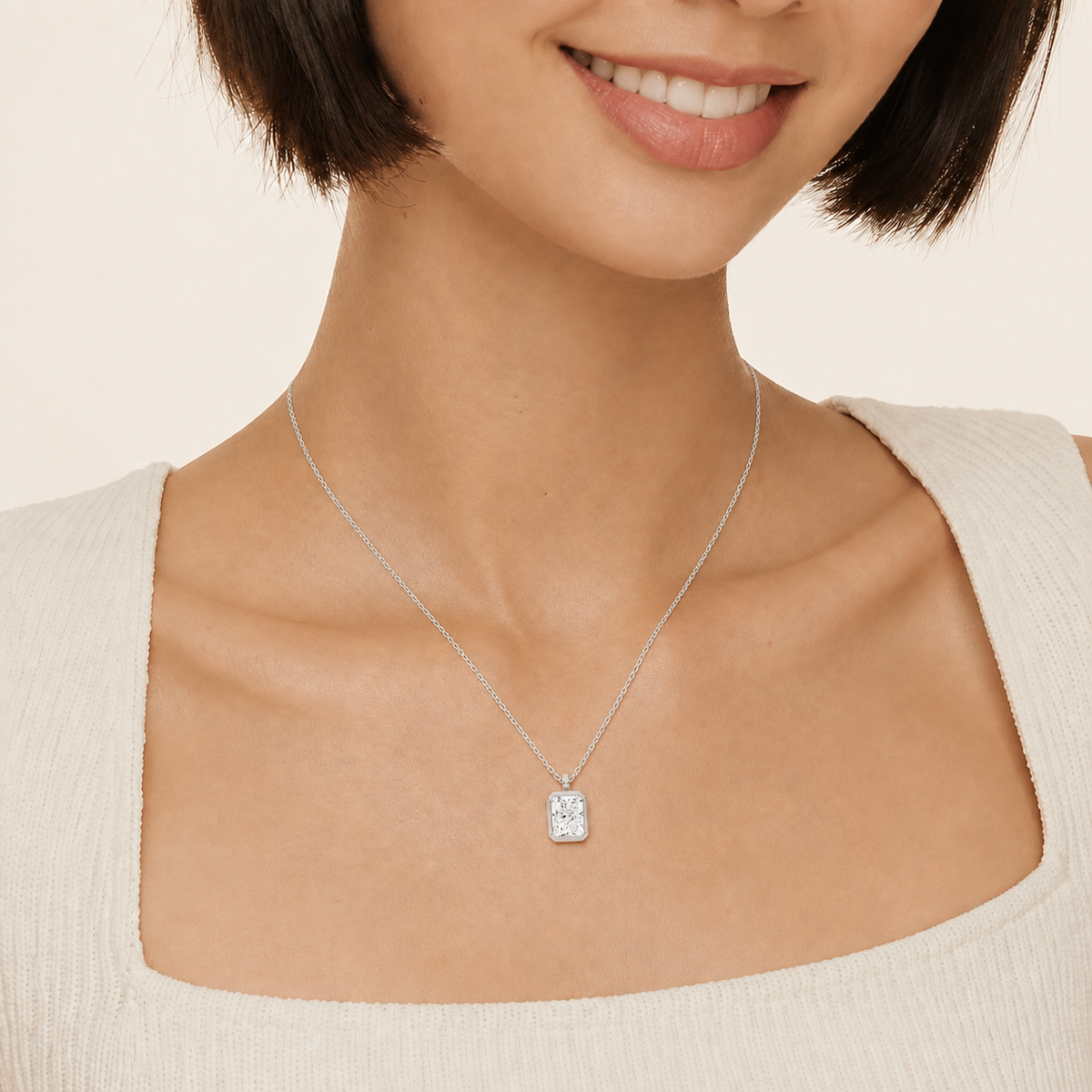
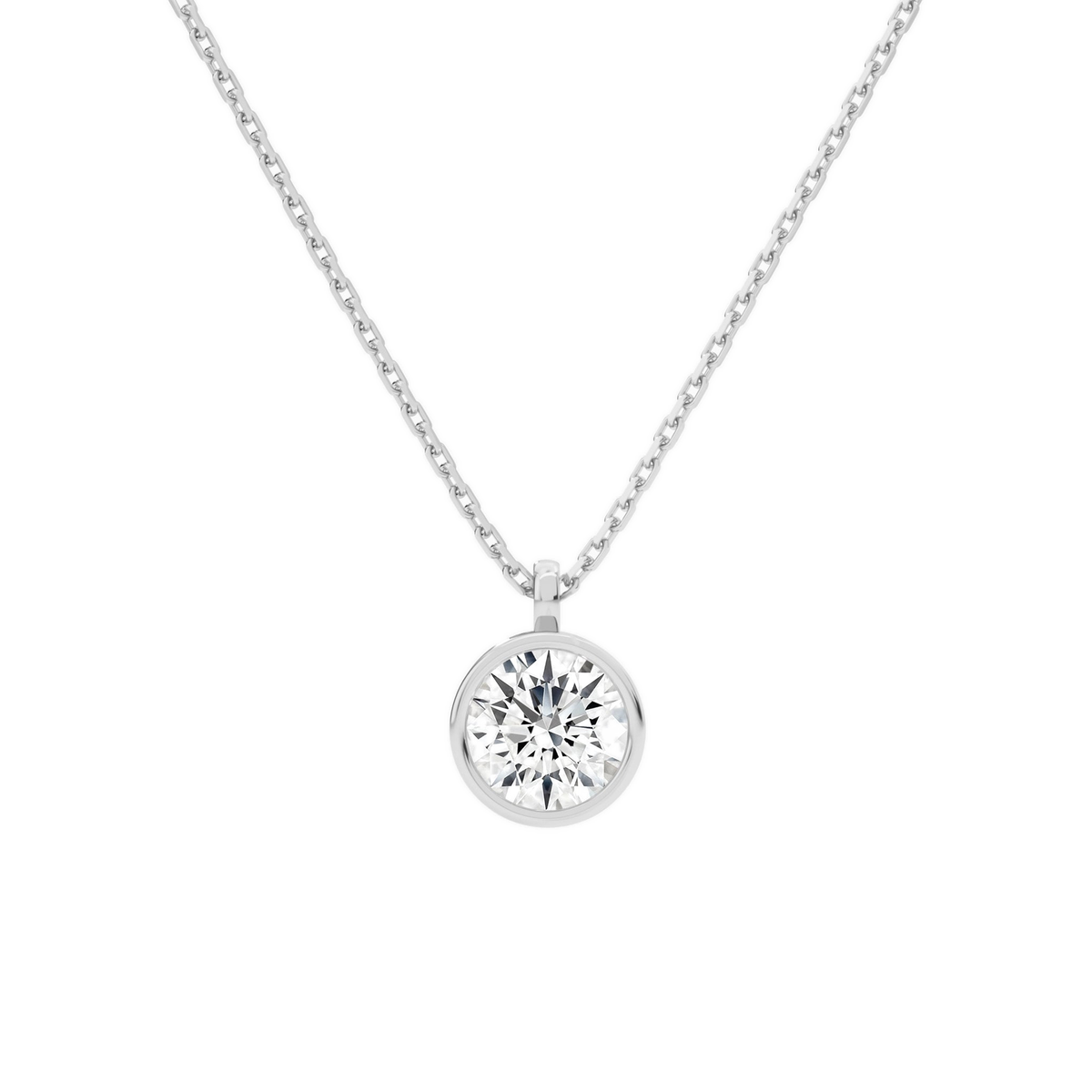
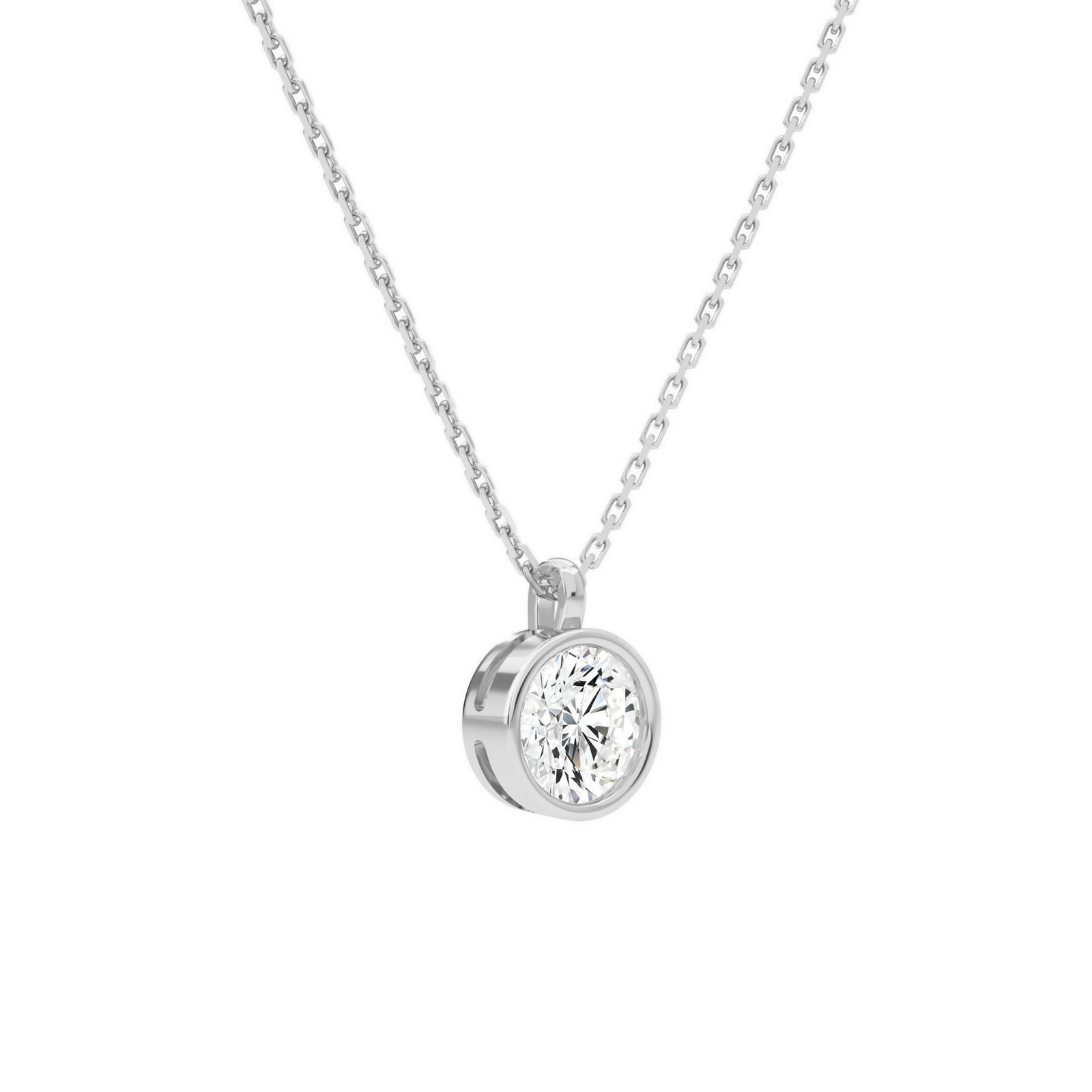


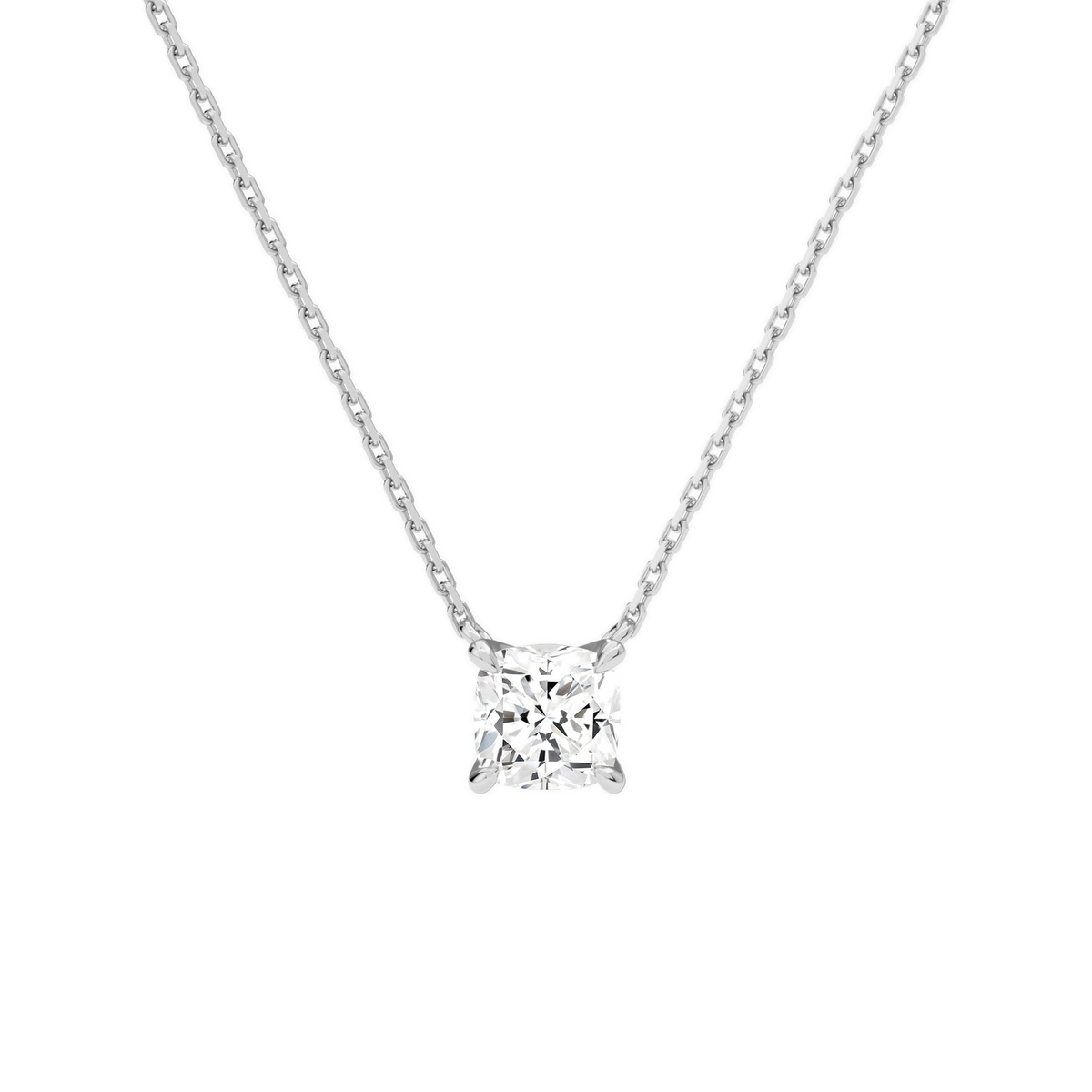
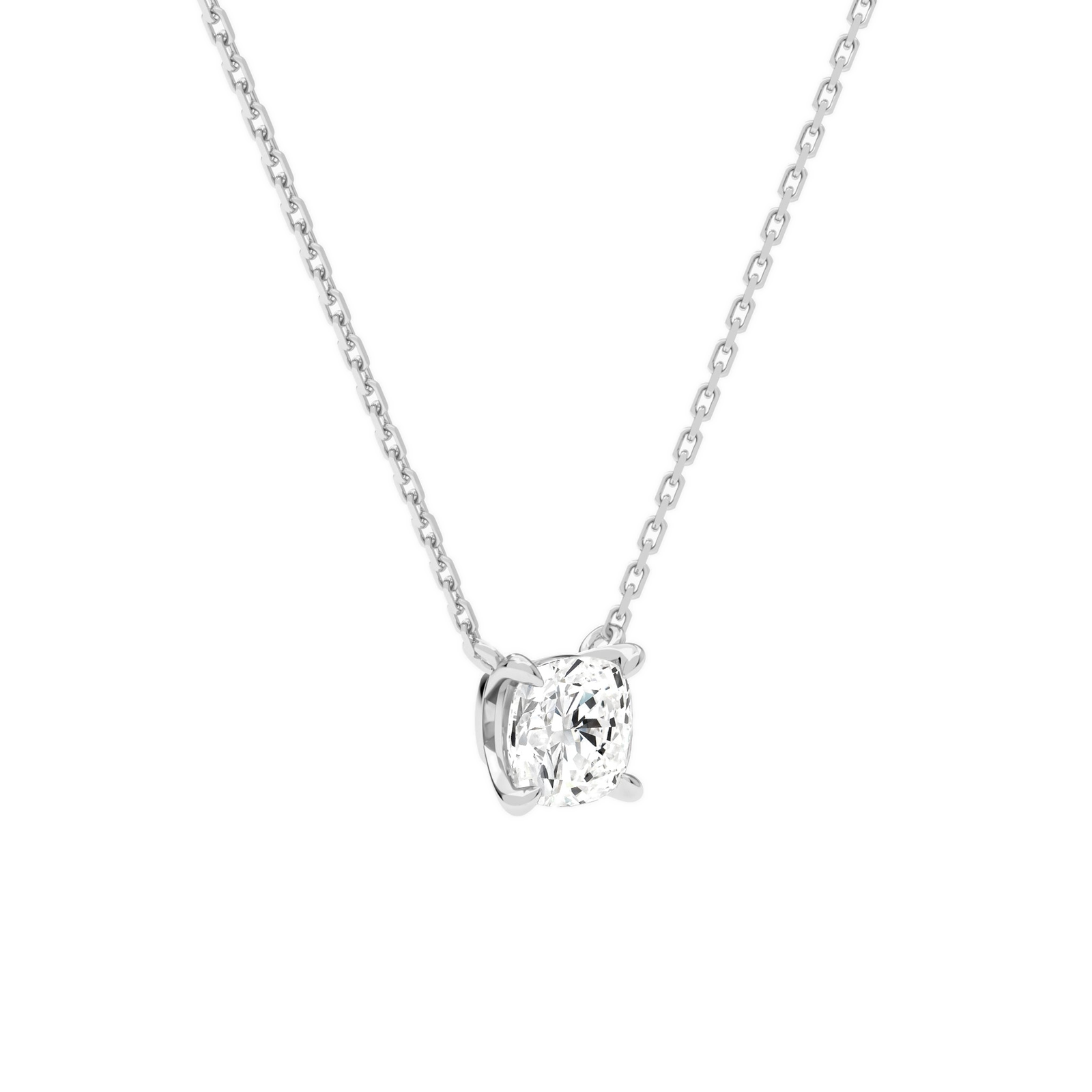


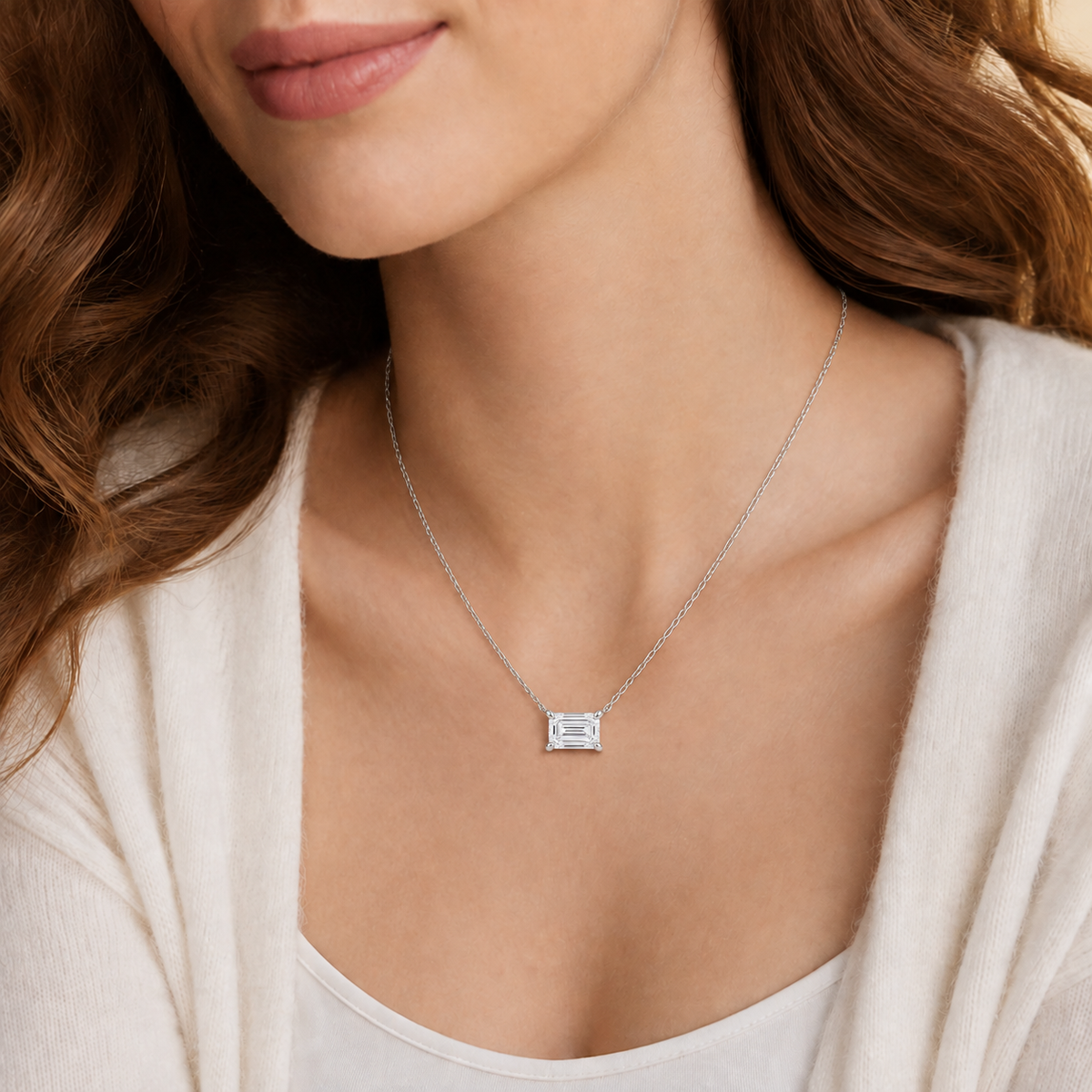

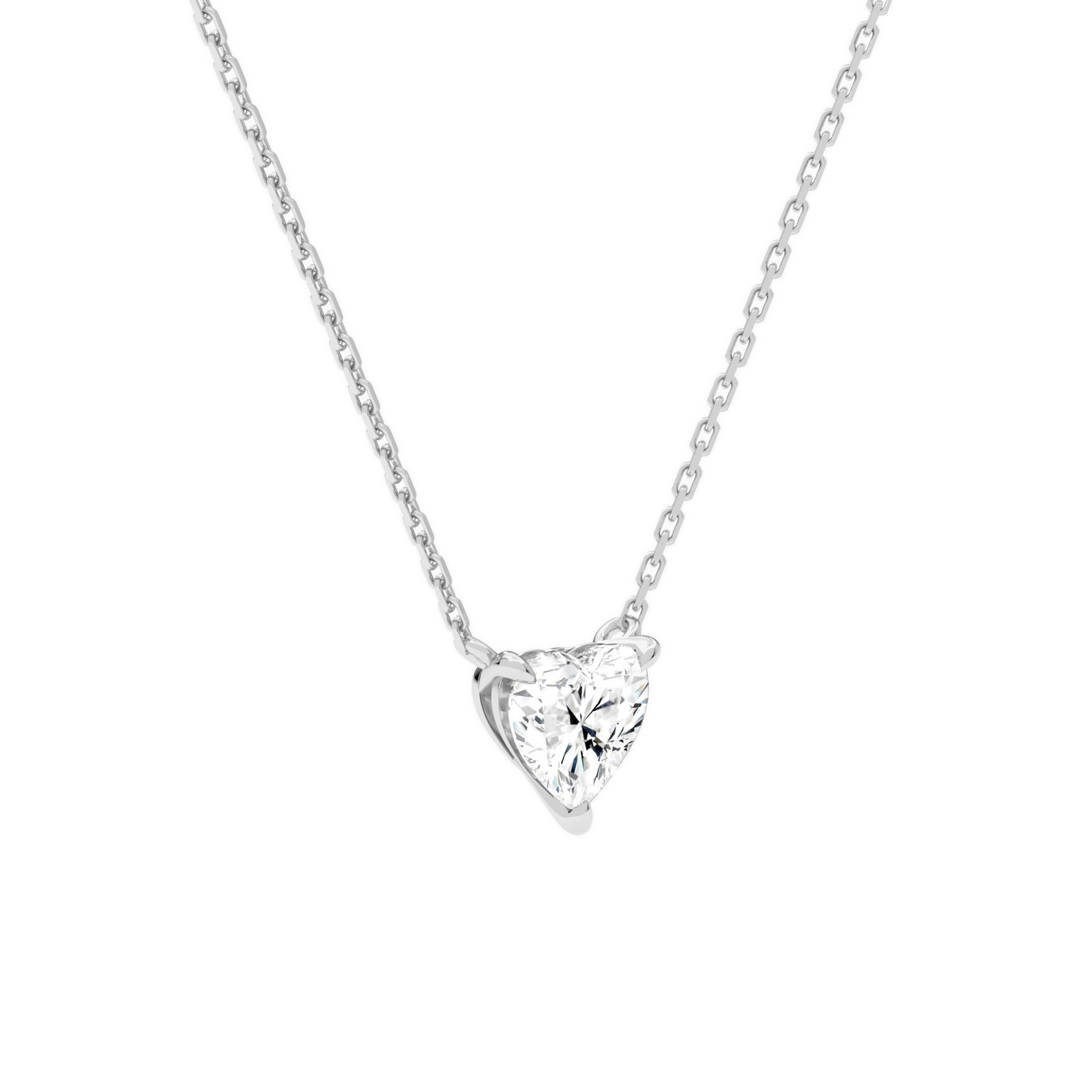

18K White Gold Solitaire Necklaces: Material Nuance around One Center
An 18K White Gold solitaire is read through more than the small amount of metal around a diamond. The material continues through prongs or bezel, profile, attachment, chain, and clasp. Tonal restraint may connect these elements visually, while each still performs a distinct physical job as the necklace meets the neckline.
The current 44-design universe includes 20 bezel, 20 prong, and three prong-set twist centerstone-led necklaces, plus one multi-diamond solitaire-cross outlier. Complete normalized parent overlap establishes a material selection layer rather than a separate edit.
Use Seventy-Five Percent Gold as Context
An 18K alloy contains 75% gold. The remaining alloy and any finishing treatment influence color, density, working behavior, and care. Higher gold proportion does not prove that a finished necklace is heavier, stronger, softer, more durable, more comfortable, more scratch resistant, or less likely to cause sensitivity.
White Gold may use a finish such as rhodium, but this must be confirmed for the selected design. A quiet perimeter does not increase diamond brilliance, dimensions, grade, or setting security. It changes how corners, points, curves, prongs, bezels, and chain transitions are seen.
Compare Scale through the Entire Suspension
Ten shapes are represented, yet carat alone does not establish face-up size. Compare actual dimensions, proportions, setting width, profile, attachment, chain gauge, and placement. Centerstone options and the cross outlier's Total Carat Weight use different measurement scopes and should never be treated as interchangeable.
All 44 current descriptions list an adjustable 16–18-inch, 0.95-millimeter chain with lobster clasp. Necklace versus Pendant Necklace does not prove fixed or sliding construction. Centering and movement depend on attachment, geometry, weight distribution, chain drape, clothing, posture, and condition—not karat alone.
Because 18K White Gold is used through the complete necklace, a material comparison should not stop at the setting. Review how much metal sits at the attachment, how the chain meets the center, and whether the clasp and adjustment section change the balance. These construction facts determine lived scale more directly than an abstract karat hierarchy.
Balance a Quiet Field with Human Scale
Matching 18K White Gold can connect a solitaire to another piece, but identical material names do not prove identical alloy, finish, age, or contact behavior. Repeating a shape, setting edge, or chain line can create coherence without requiring every piece to match. Layering still needs enough vertical interval to keep one center legible.
Burvonti uses responsibly sourced lab-grown diamonds and supports independent grading or certification within document scope. Custom possibilities may refine shape, proportion, scale, setting, twist, attachment, metal, finish, chain, or length where feasible. Confirm exact dimensions and finish, clean gently, store without knots, and inspect the complete setting-to-clasp system if movement changes.
Frequently Asked Questions
What does this page add beyond the parent Solitaire Necklace Collection?
It focuses on 18K White Gold composition, finish, setting boundary, attachment, and chain continuity.
Are all 44 products single-diamond designs?
No. Forty-three are centerstone-led; one solitaire-cross outlier uses several diamonds and Total Carat Weight.
Which setting structures are represented?
The current set includes 20 bezel, 20 prong, three prong-set twist designs, and one cross outlier.
How much gold is in 18K White Gold?
18K gold contains 75% gold; the remaining alloy and any finish influence final behavior and appearance.
Is every 18K white gold necklace rhodium plated?
That should not be assumed Collection-wide. Confirm the selected product's finish.
Is 18K White Gold automatically heavier than 14K?
No. Finished weight also depends on dimensions, metal volume, setting, chain, clasp, center, and length.
Is 18K White Gold more durable or secure?
Karat alone cannot establish durability, scratch behavior, attachment strength, or setting security.
Which diamond shapes are represented?
Round, Oval, Cushion, Pear, Princess, Emerald, Marquise, Asscher, Radiant, and Heart.
Does White Gold improve diamond brilliance?
No. It changes material context, not dimensions, facets, light performance, or grading facts.
What is the difference between prong and bezel?
Prongs create separate contact points; a bezel creates a continuous edge. Neither is universally superior.
How do Centerstone and Total Carat Weight differ?
Centerstone concerns one principal diamond; Total Carat Weight can combine several, as on the cross outlier.
What chain details are currently listed?
All 44 descriptions list adjustable 16–18 inches, 0.95 millimeters, and a lobster clasp.
Will the solitaire stay centered?
Not universally. Attachment, geometry, distribution, chain drape, movement, clothing, and condition influence position.
Can an 18K White Gold solitaire be layered?
Yes aesthetically, but compare vertical spacing, center scale, chain contact, and movement; tangling cannot be ruled out.
Is 18K White Gold hypoallergenic?
No universal result should be promised without confirming the exact alloy, finish, and wearer-specific concern.
What customization and care are possible?
Shape, scale, setting, attachment, finish, chain, or length may be possible after review. Clean gently and inspect the whole system.