
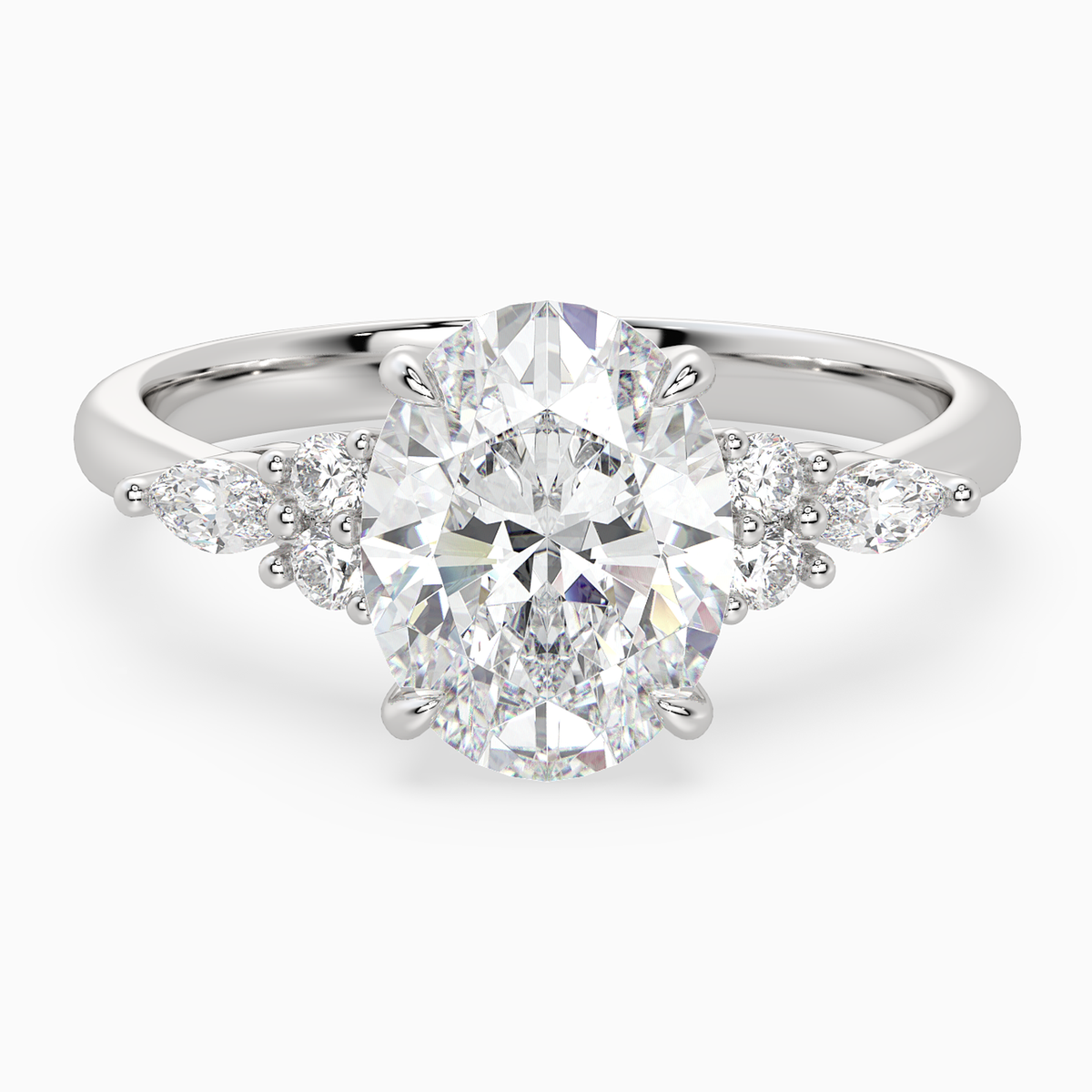


Nature Inspired Engagement Rings
Nature, translated into line. Vine-led shoulders, floral halos and petal-like profiles bring organic movement into measured proportion.


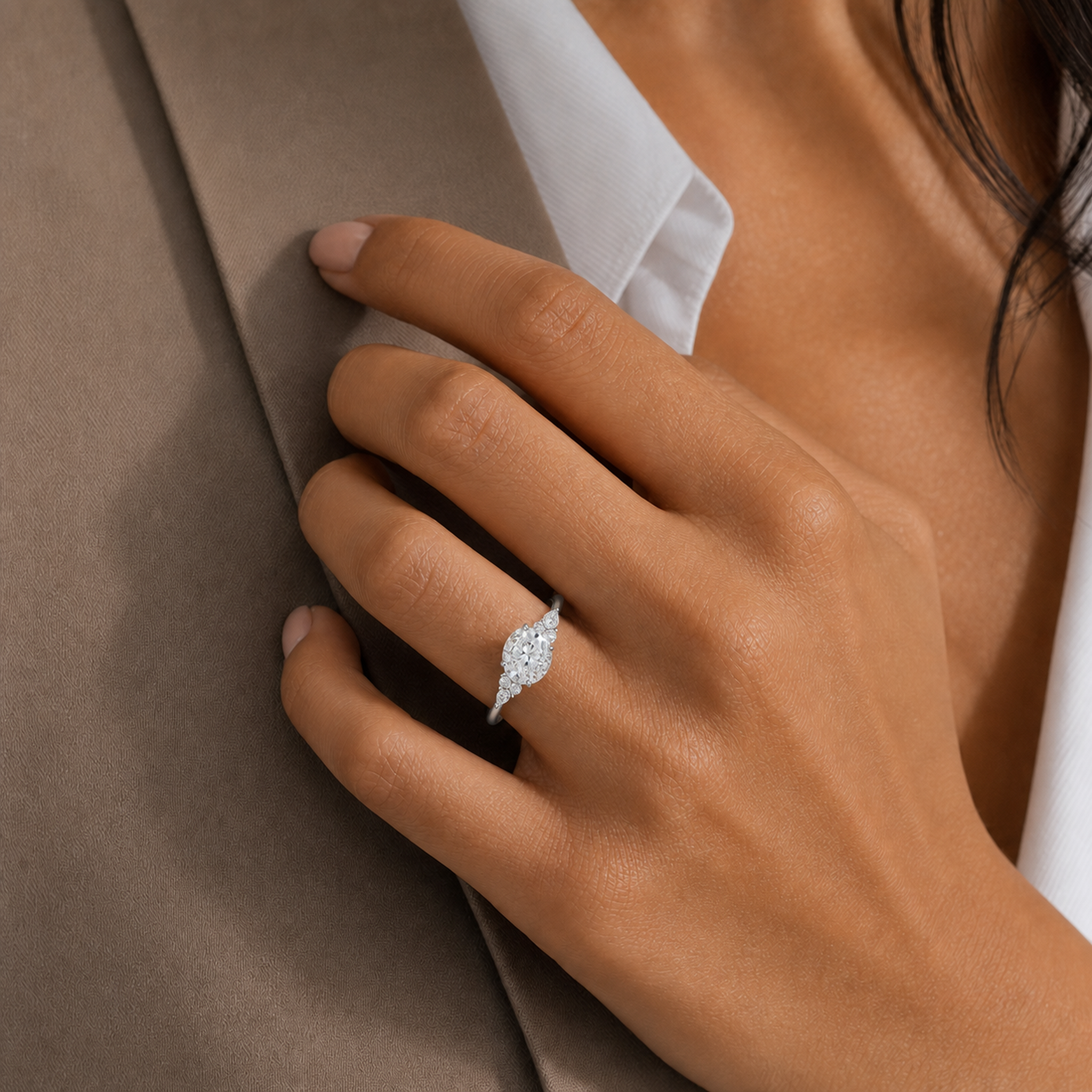


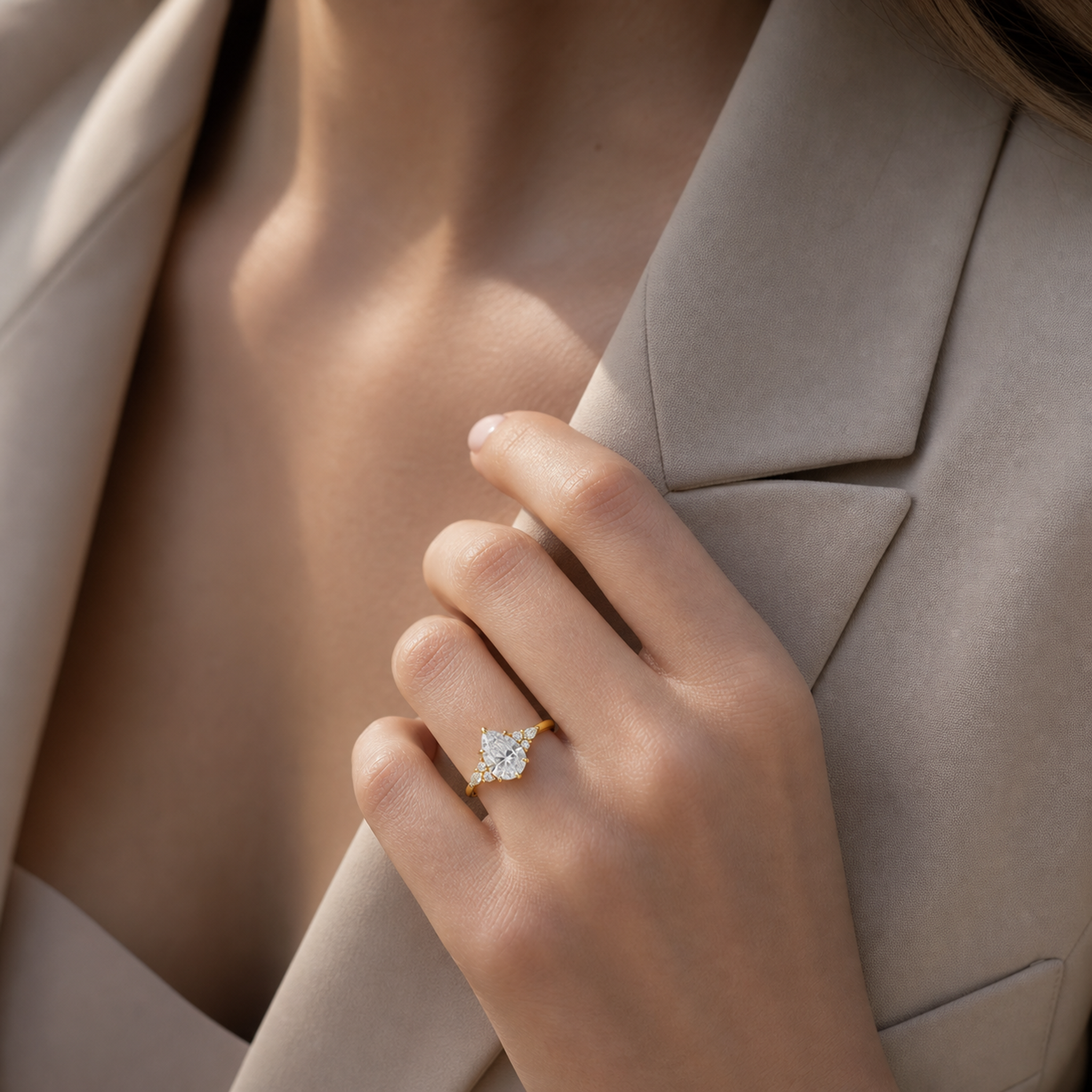


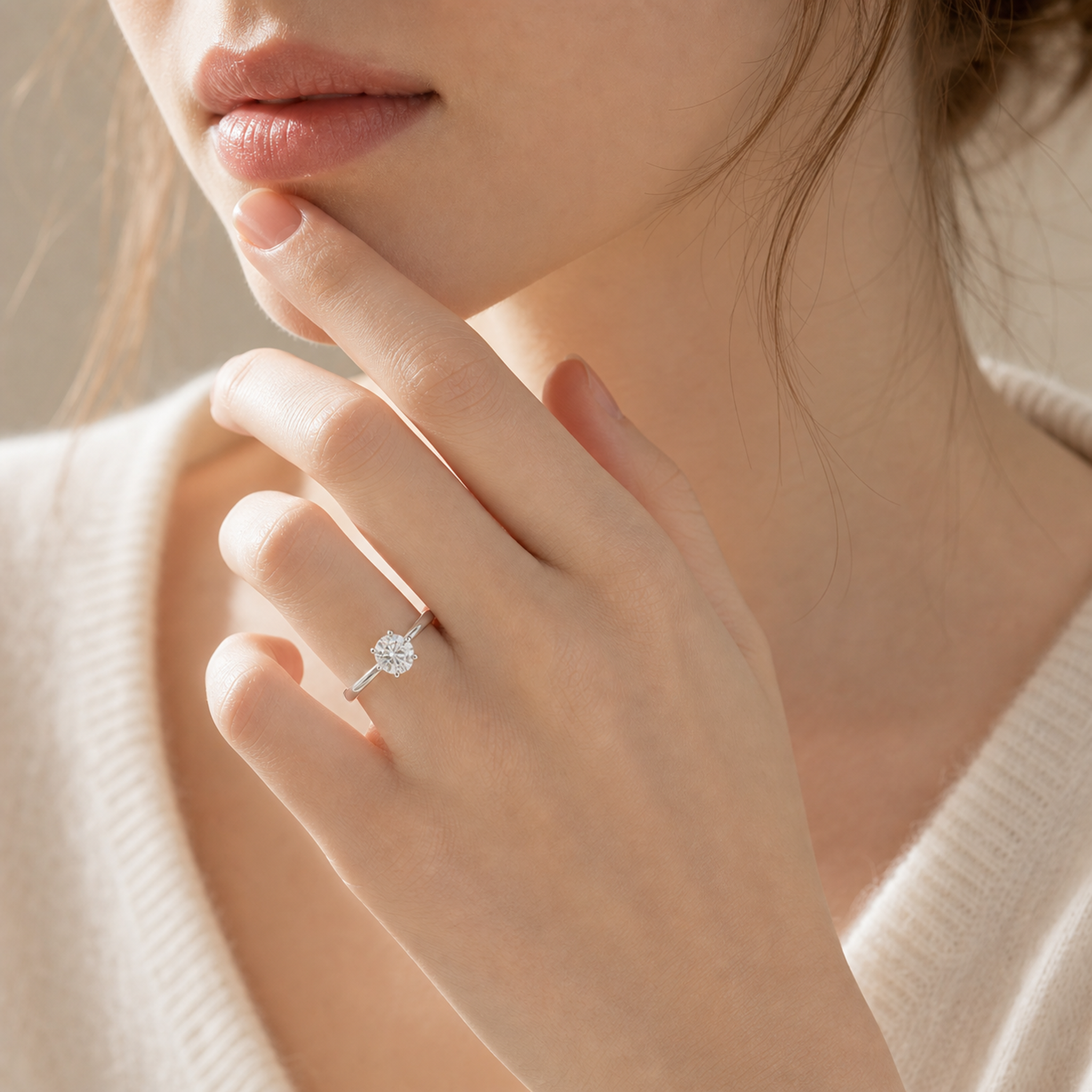


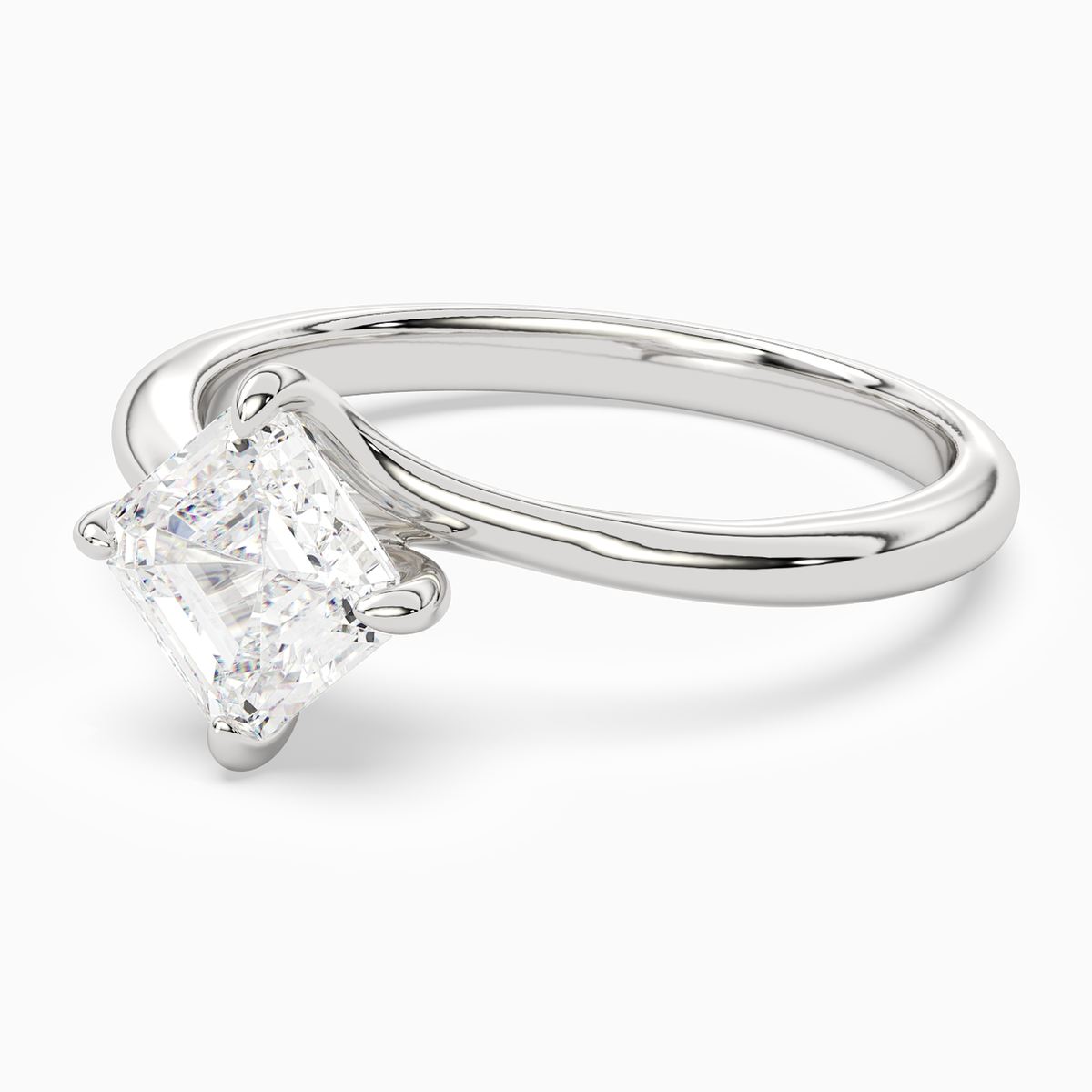


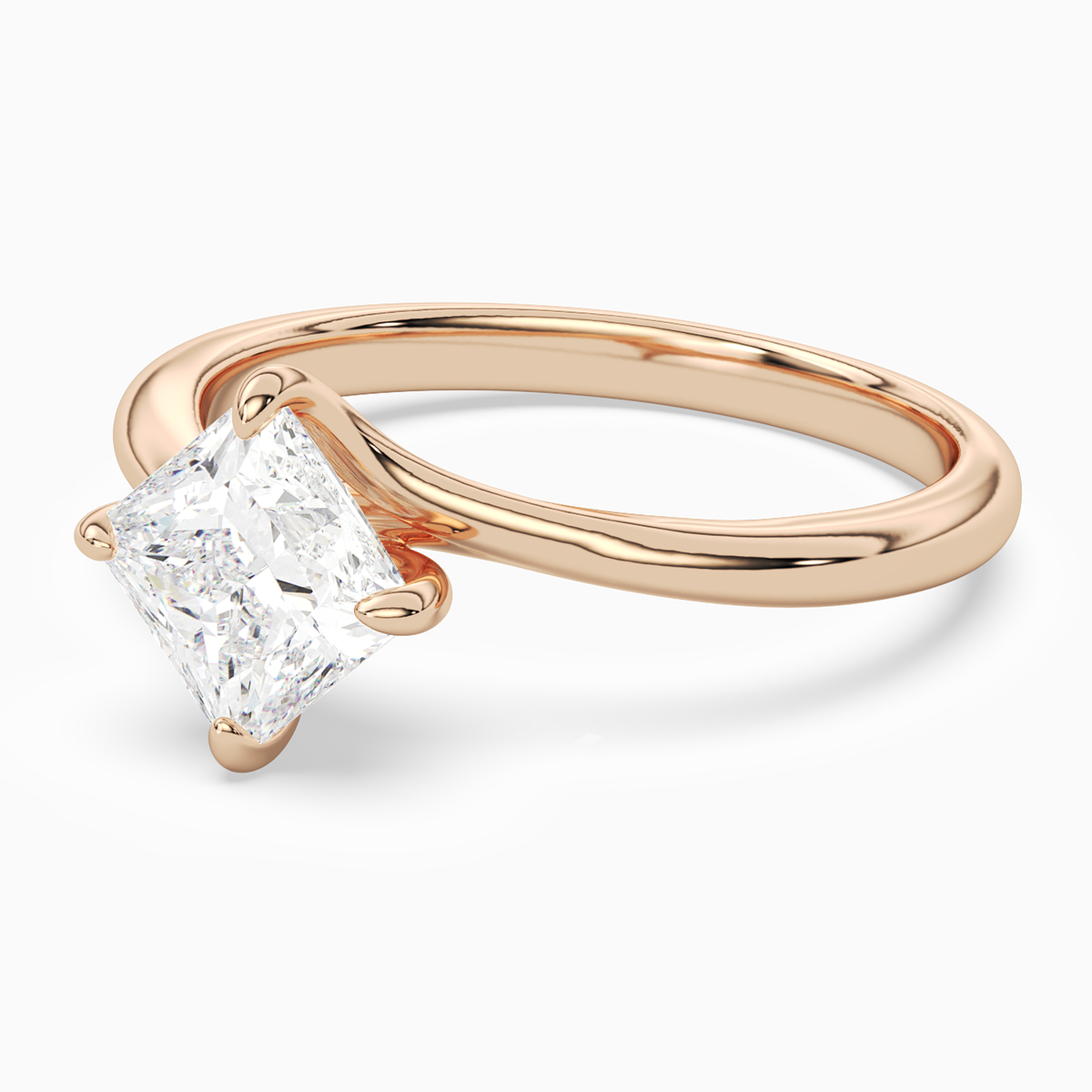


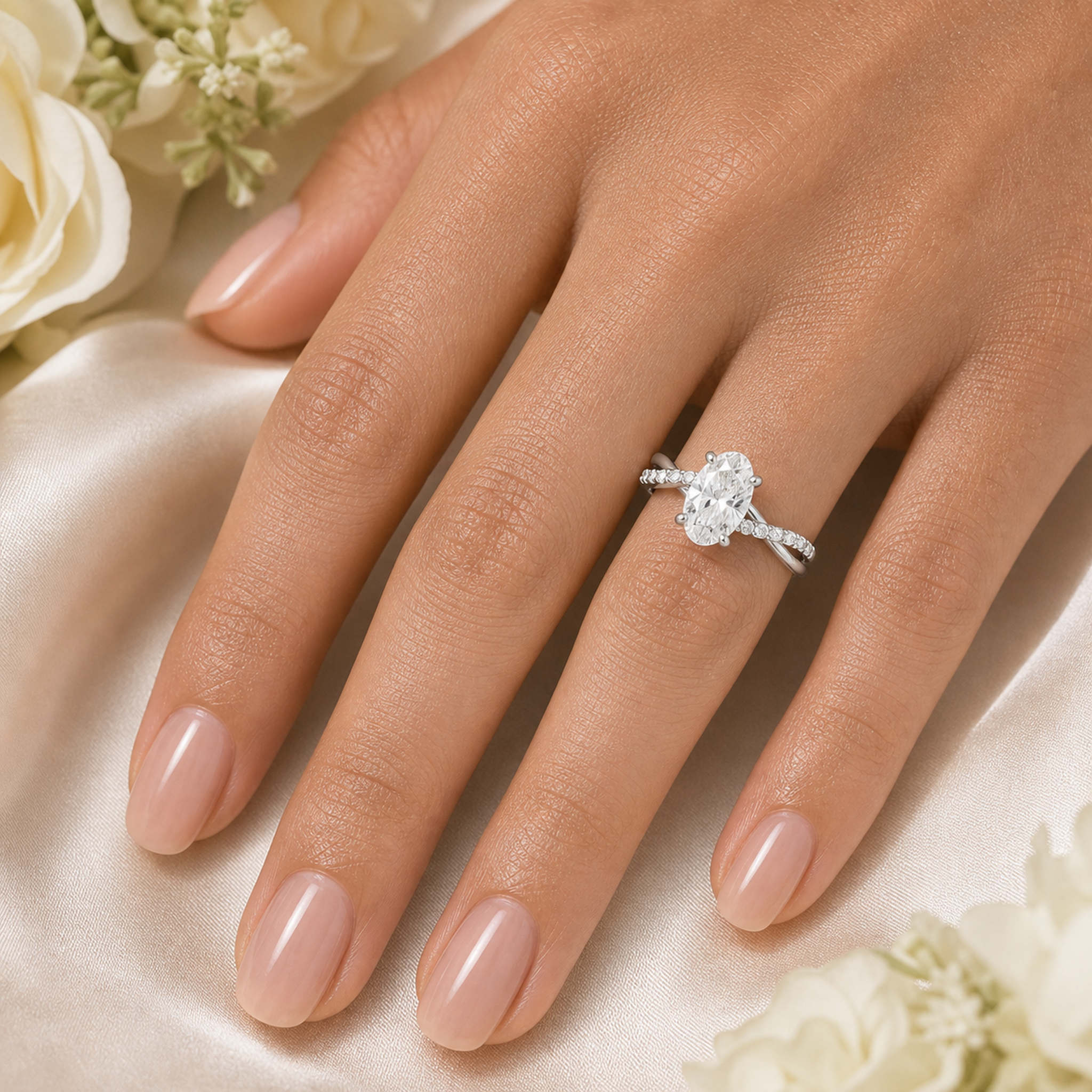


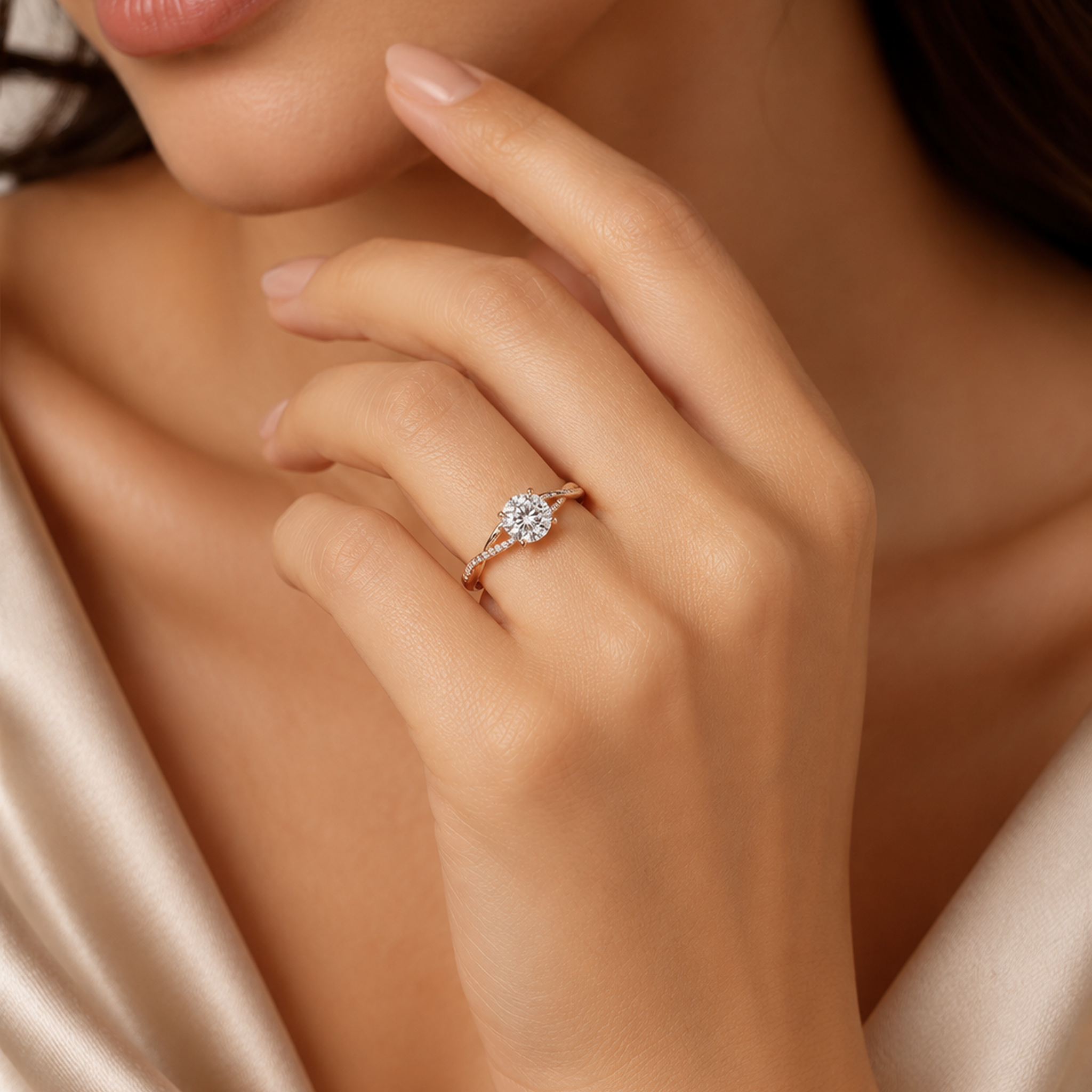


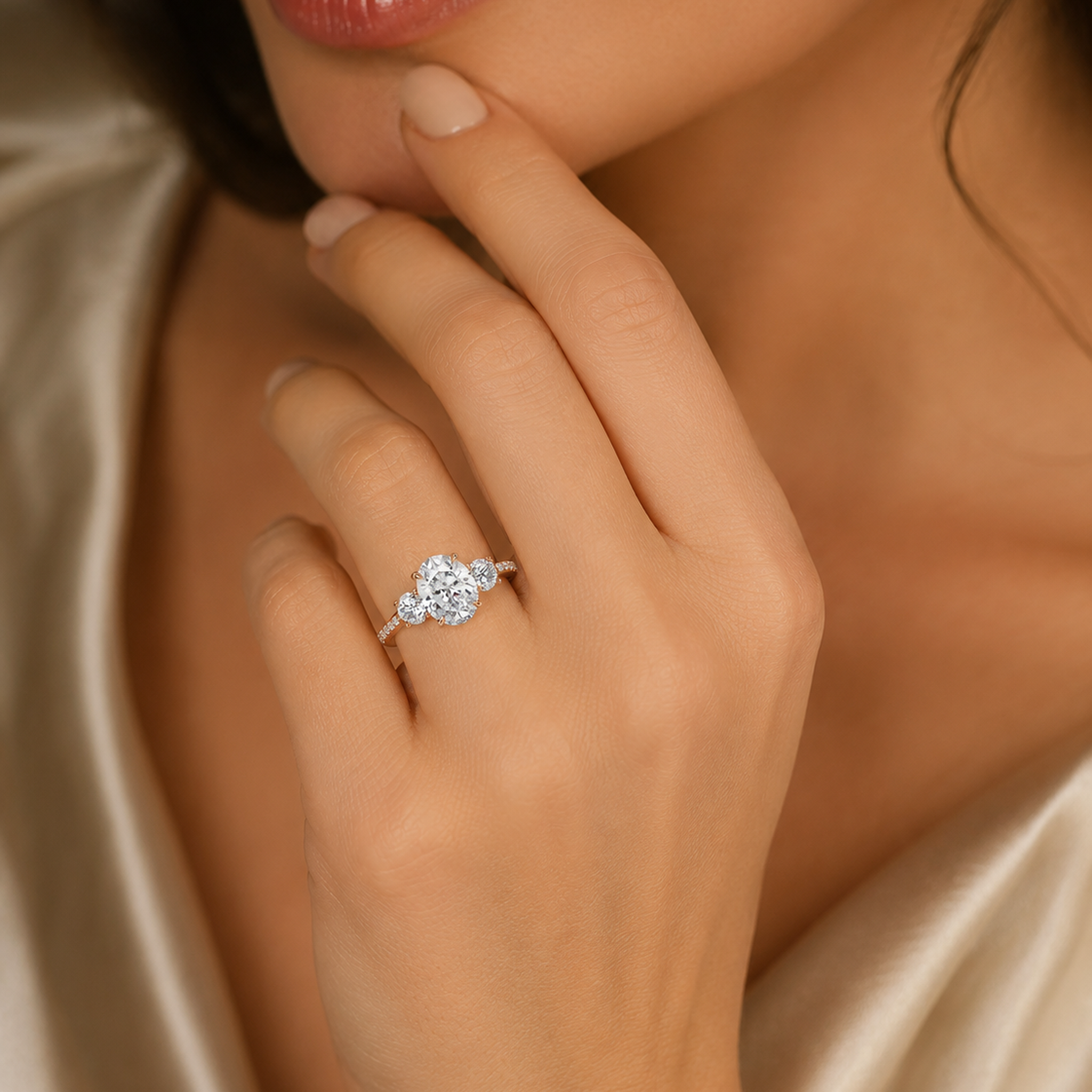


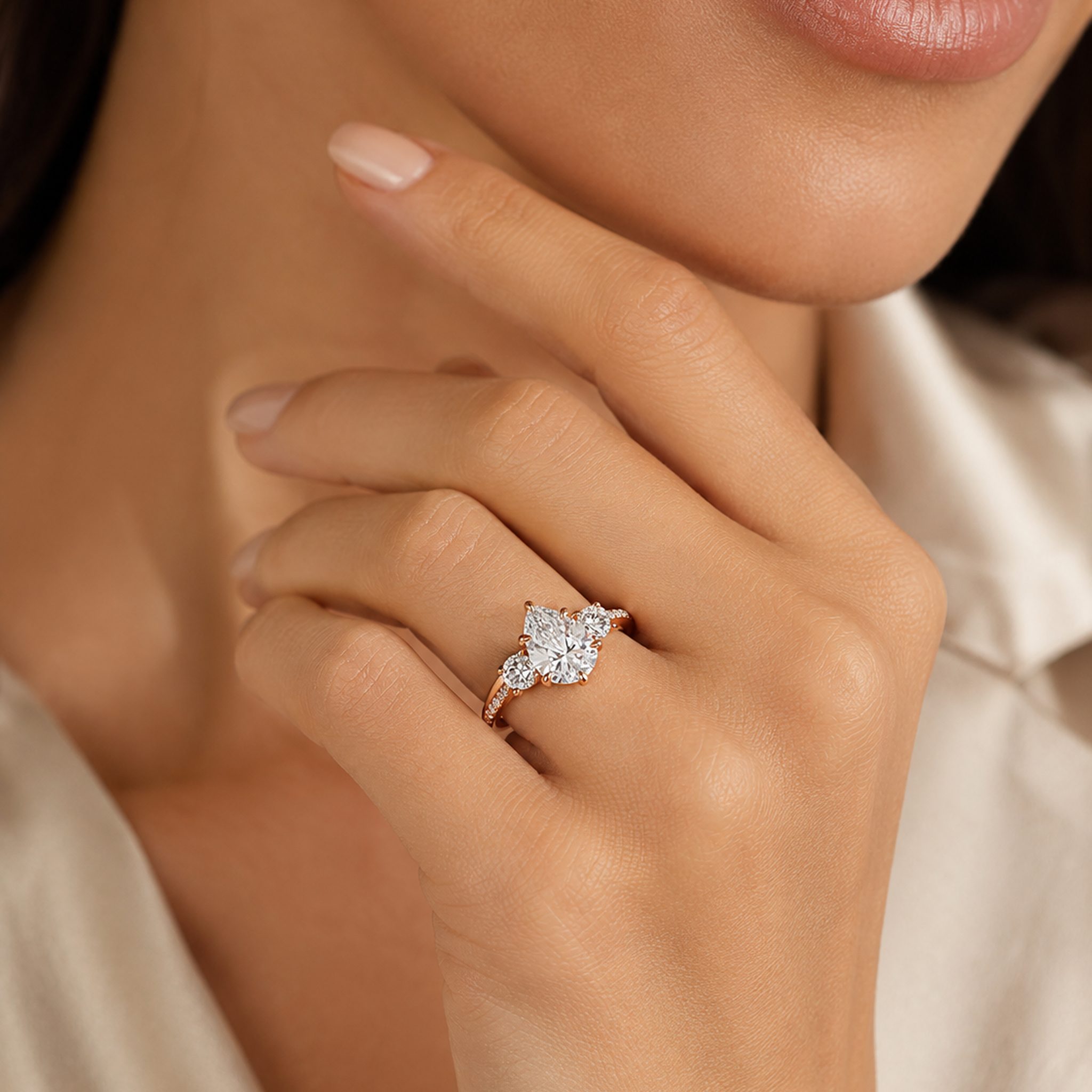


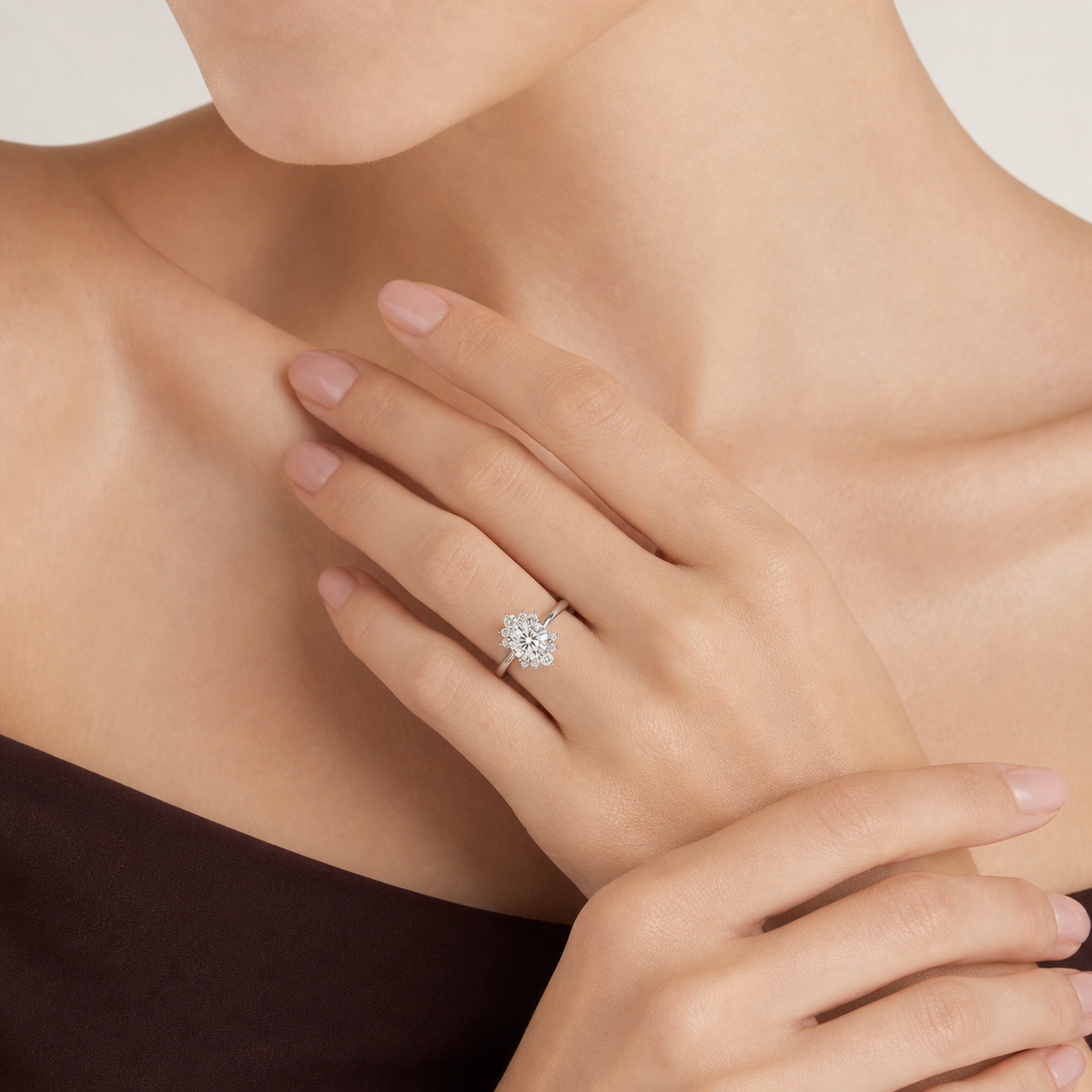


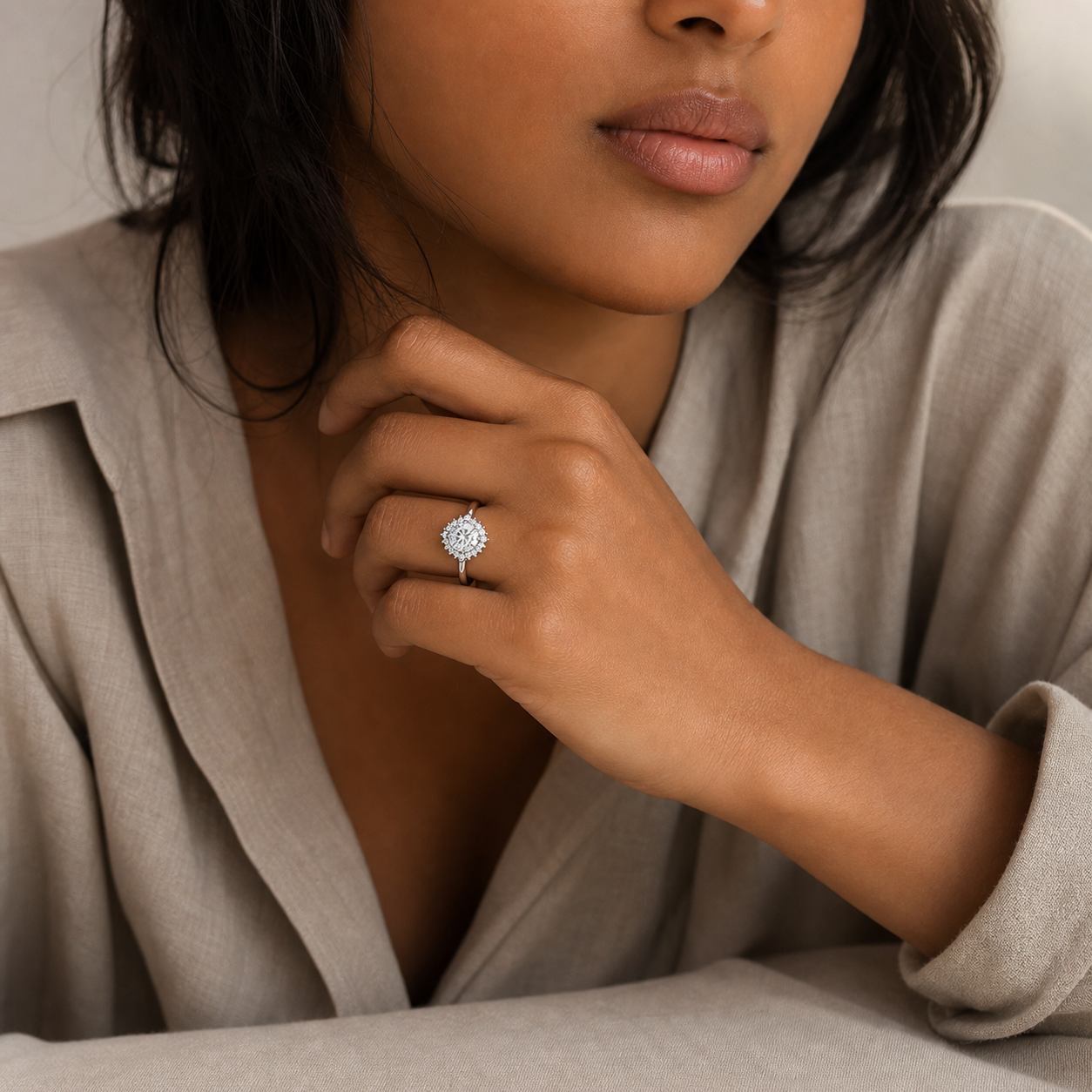






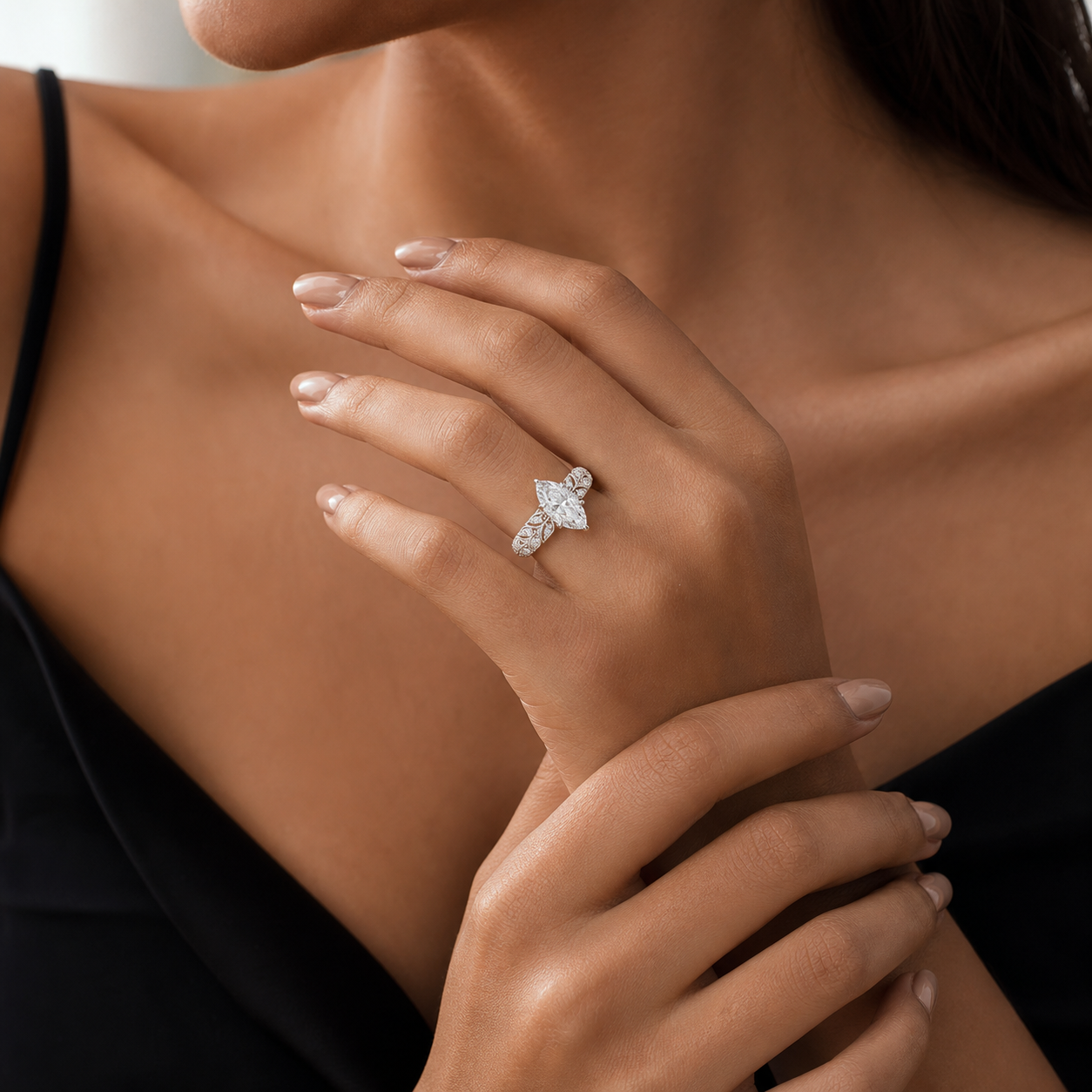


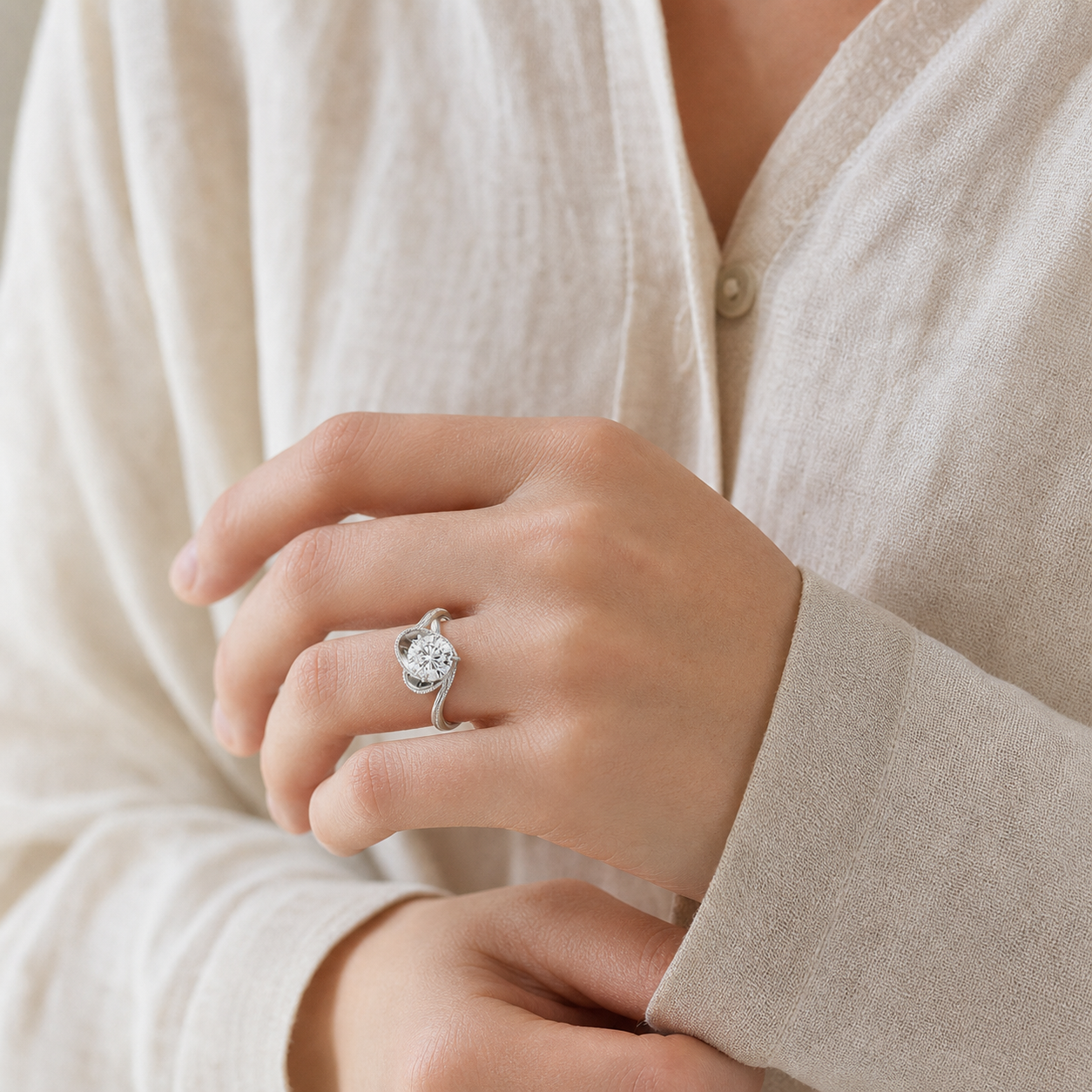


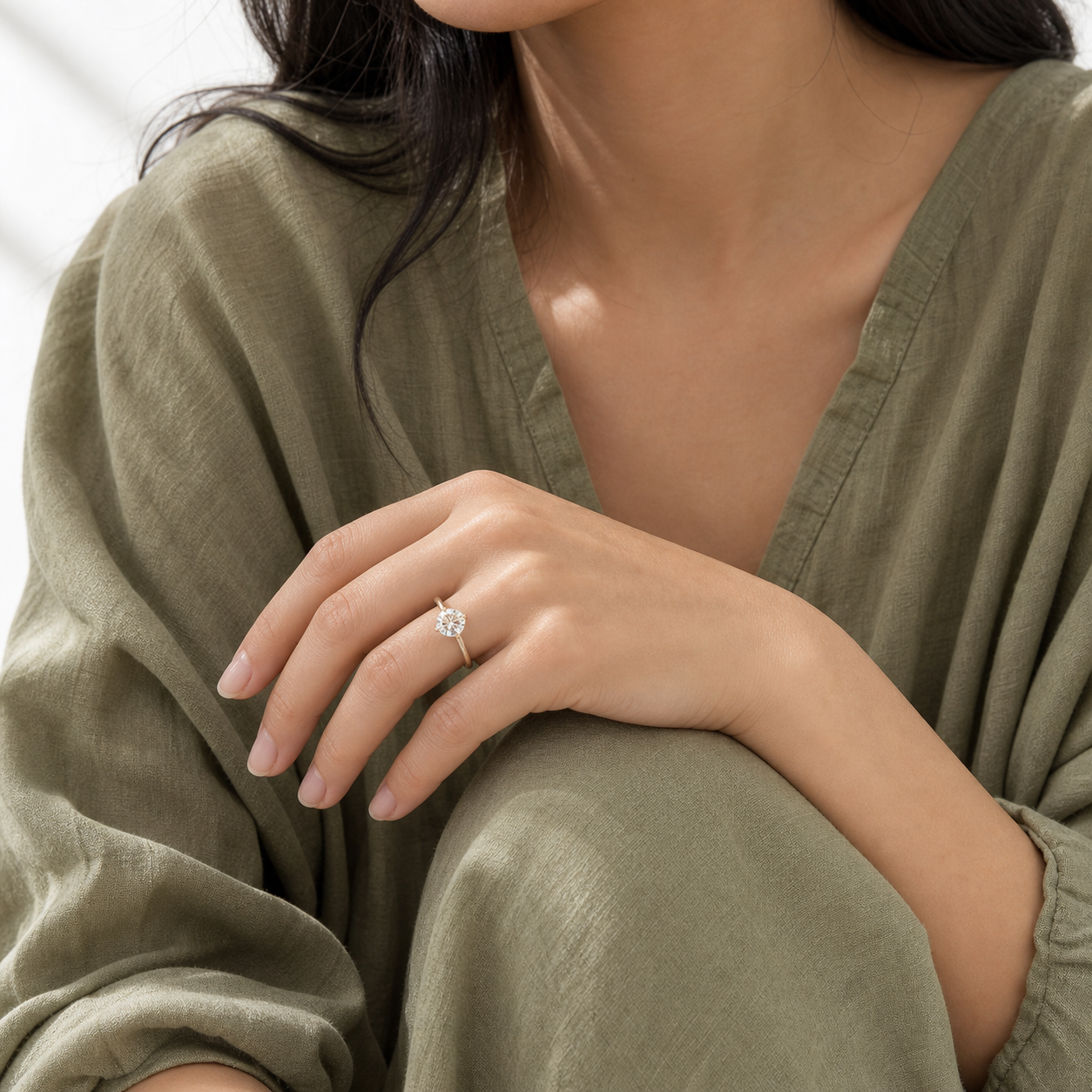


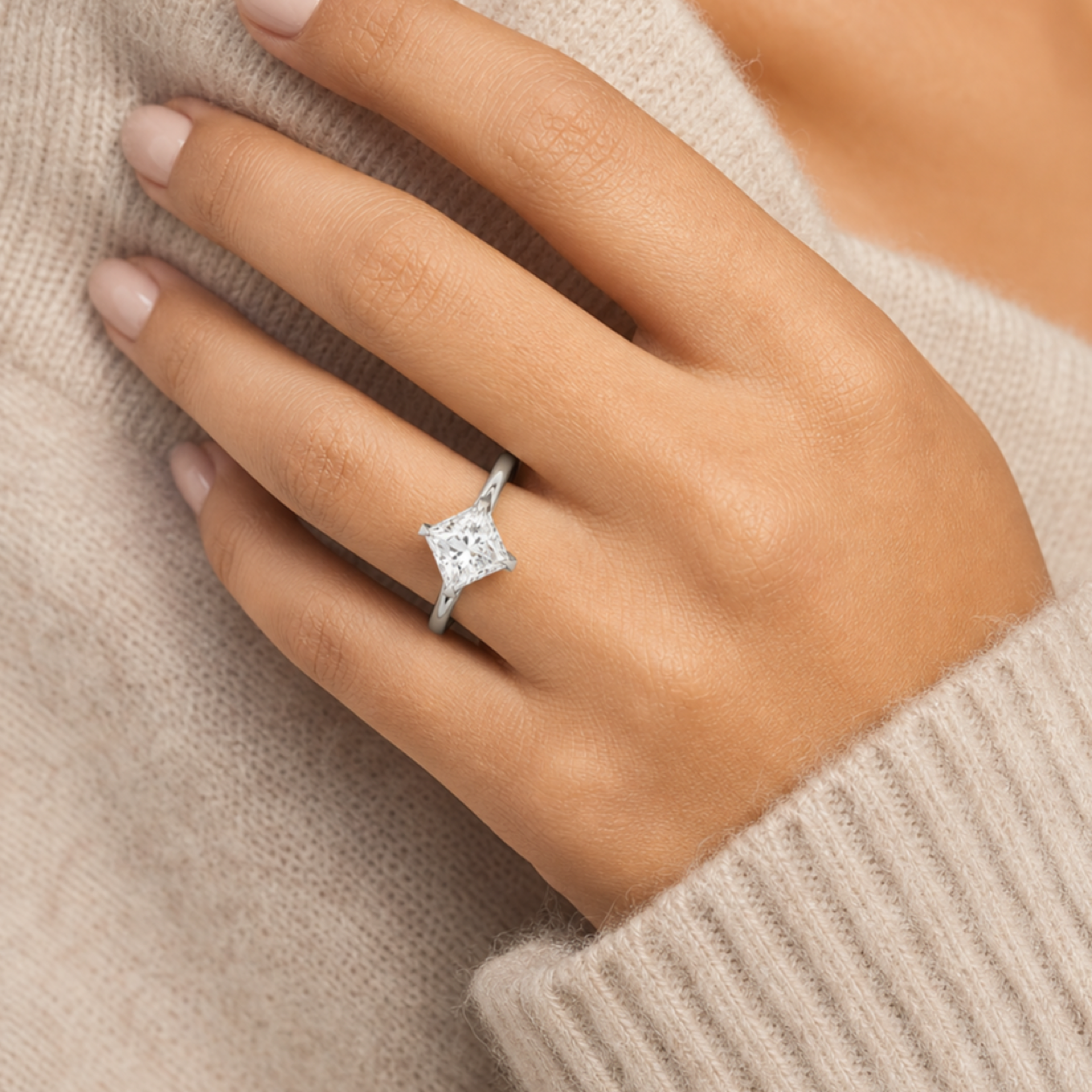


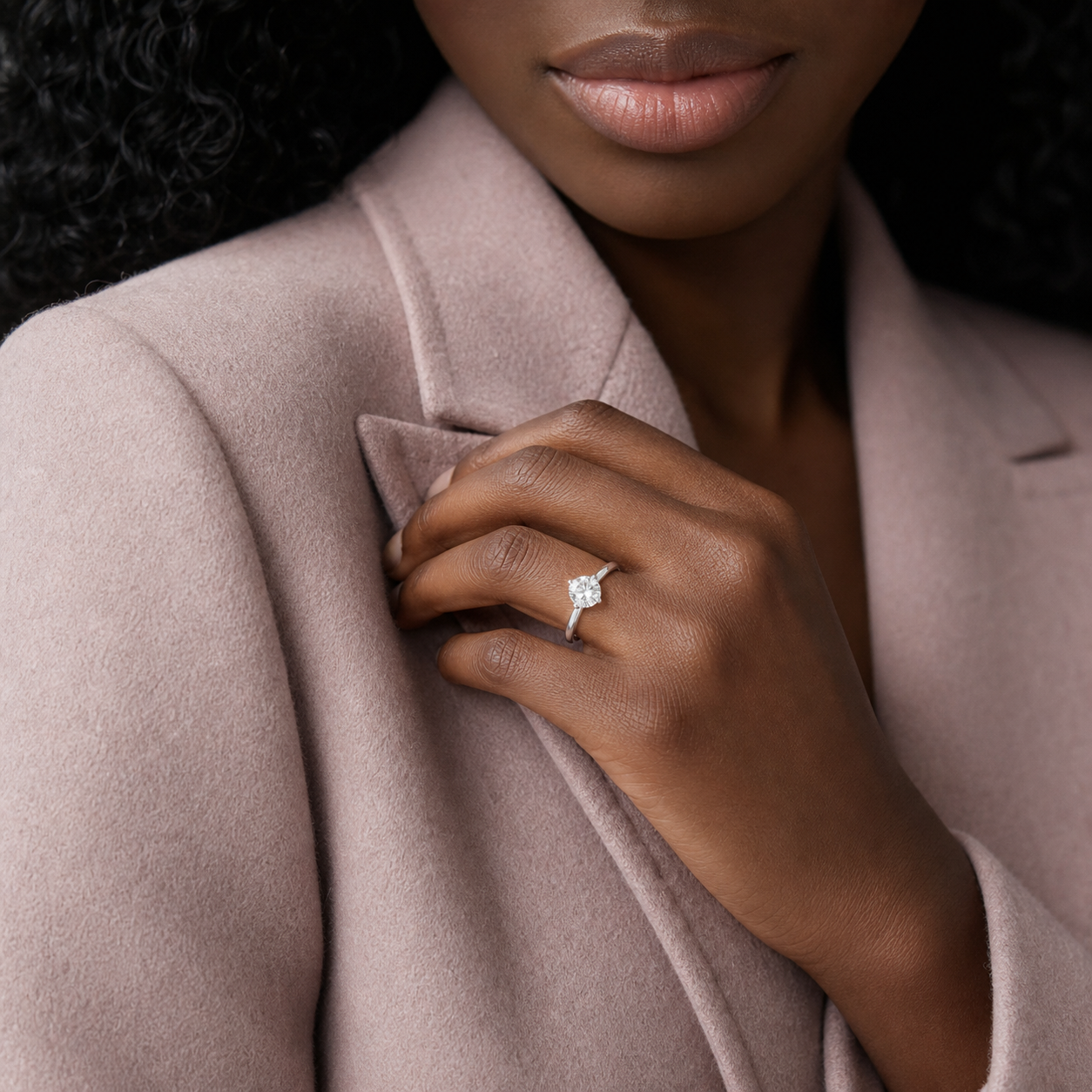


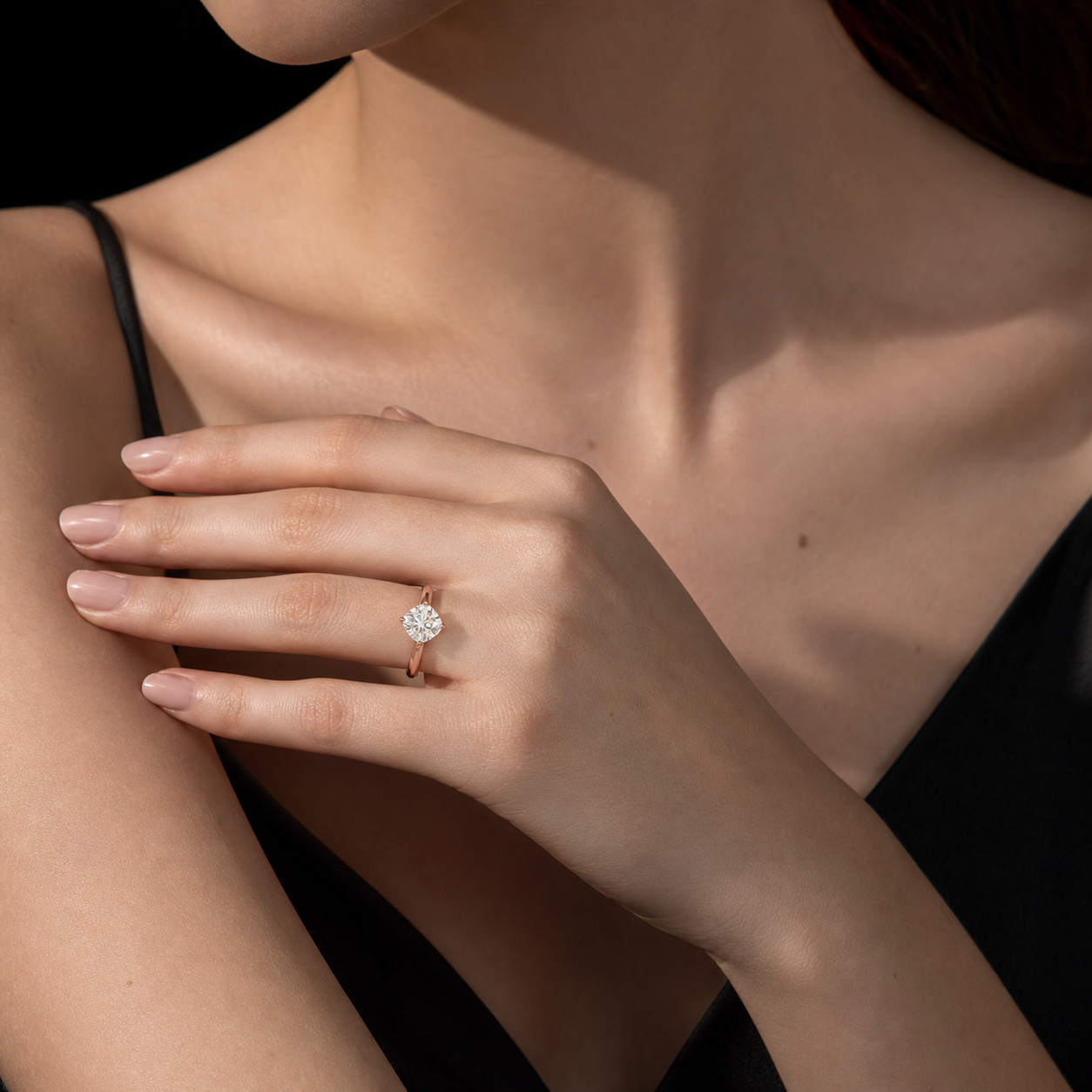


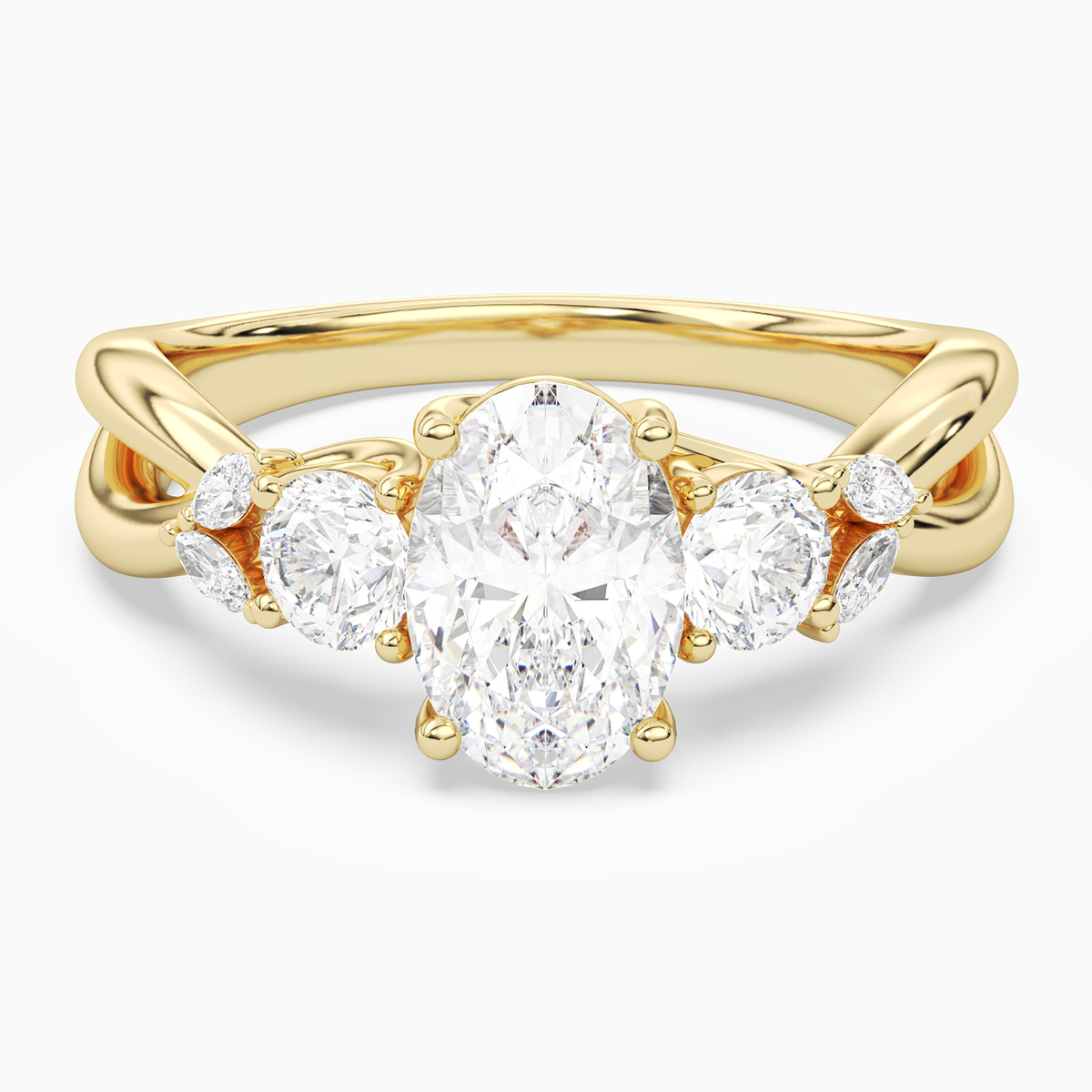


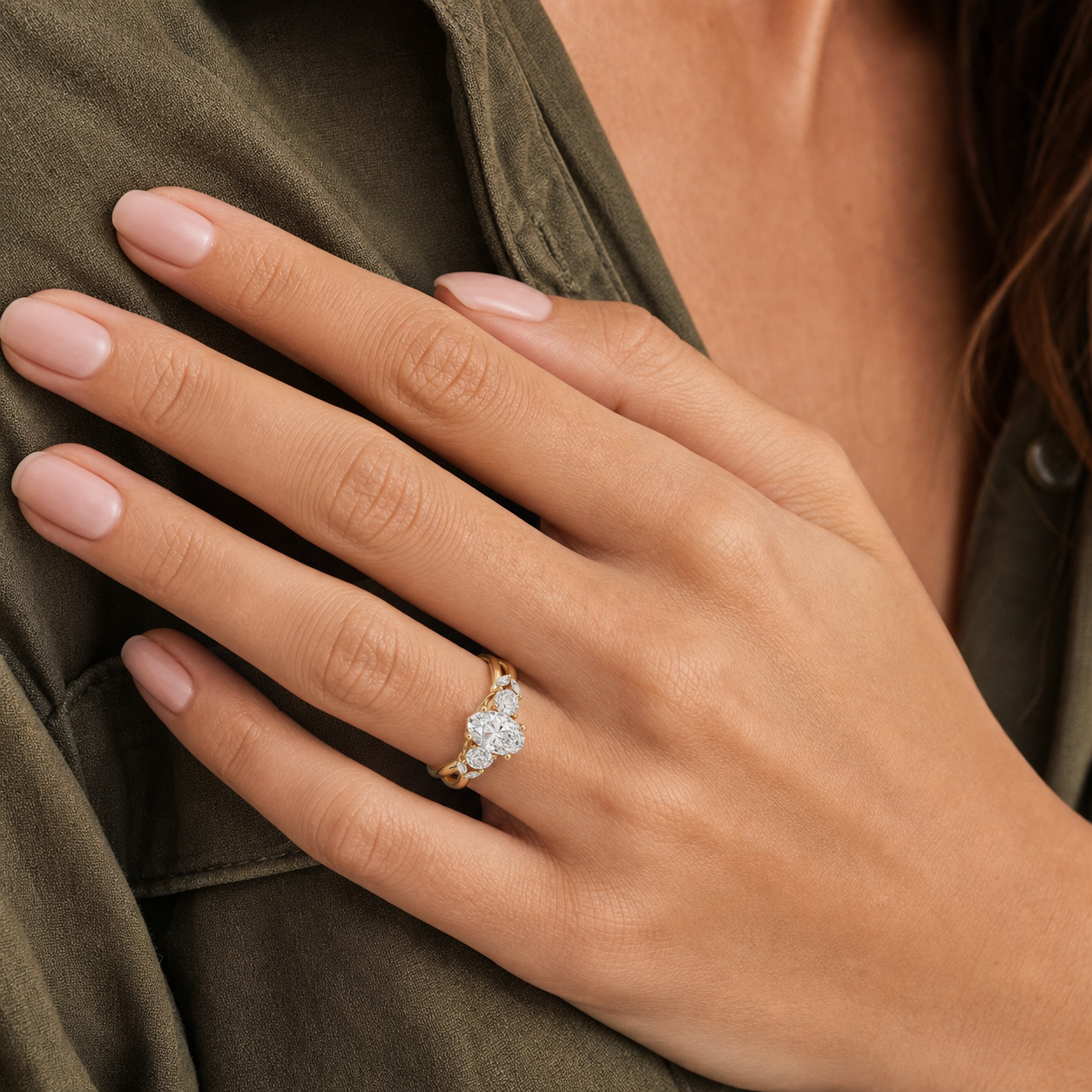


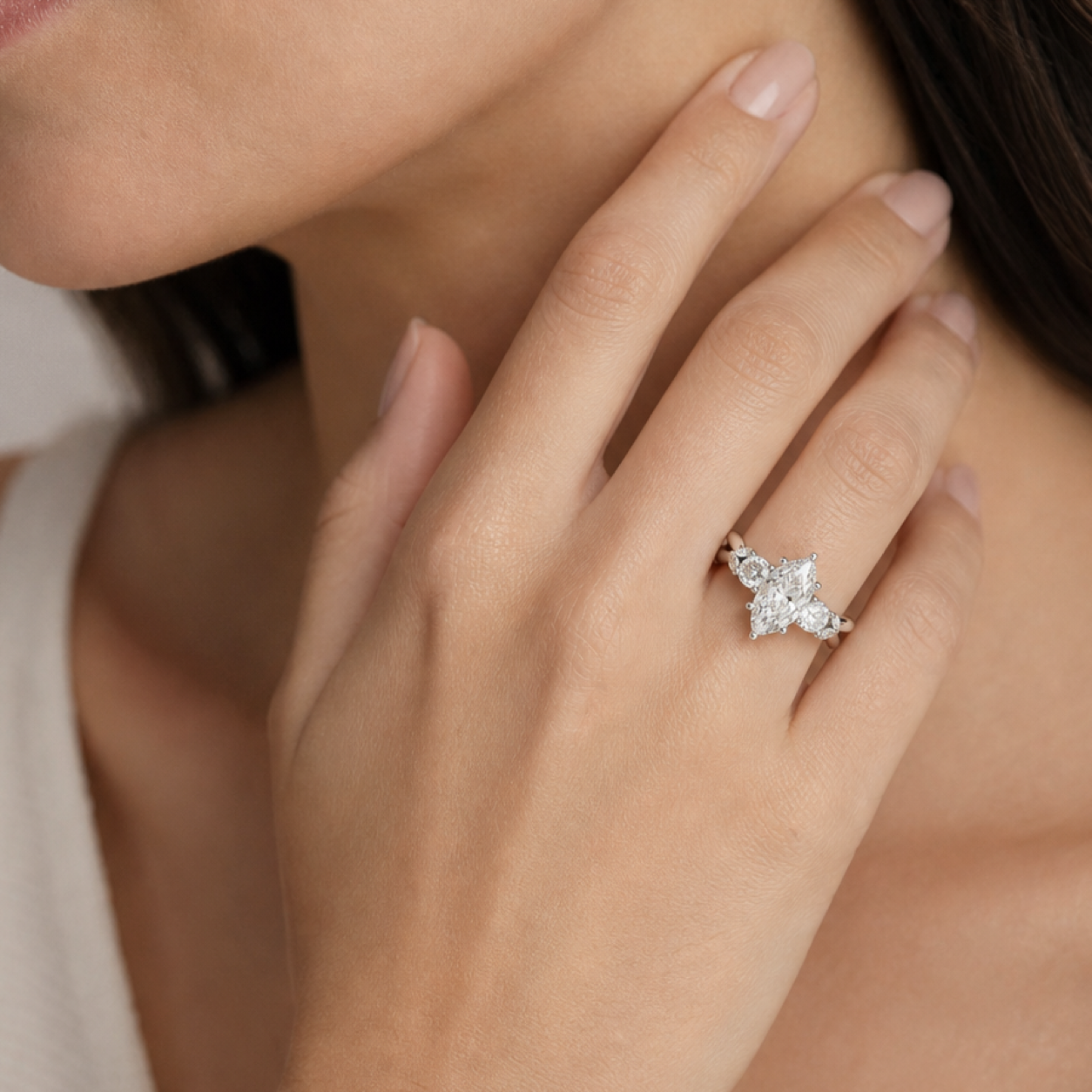


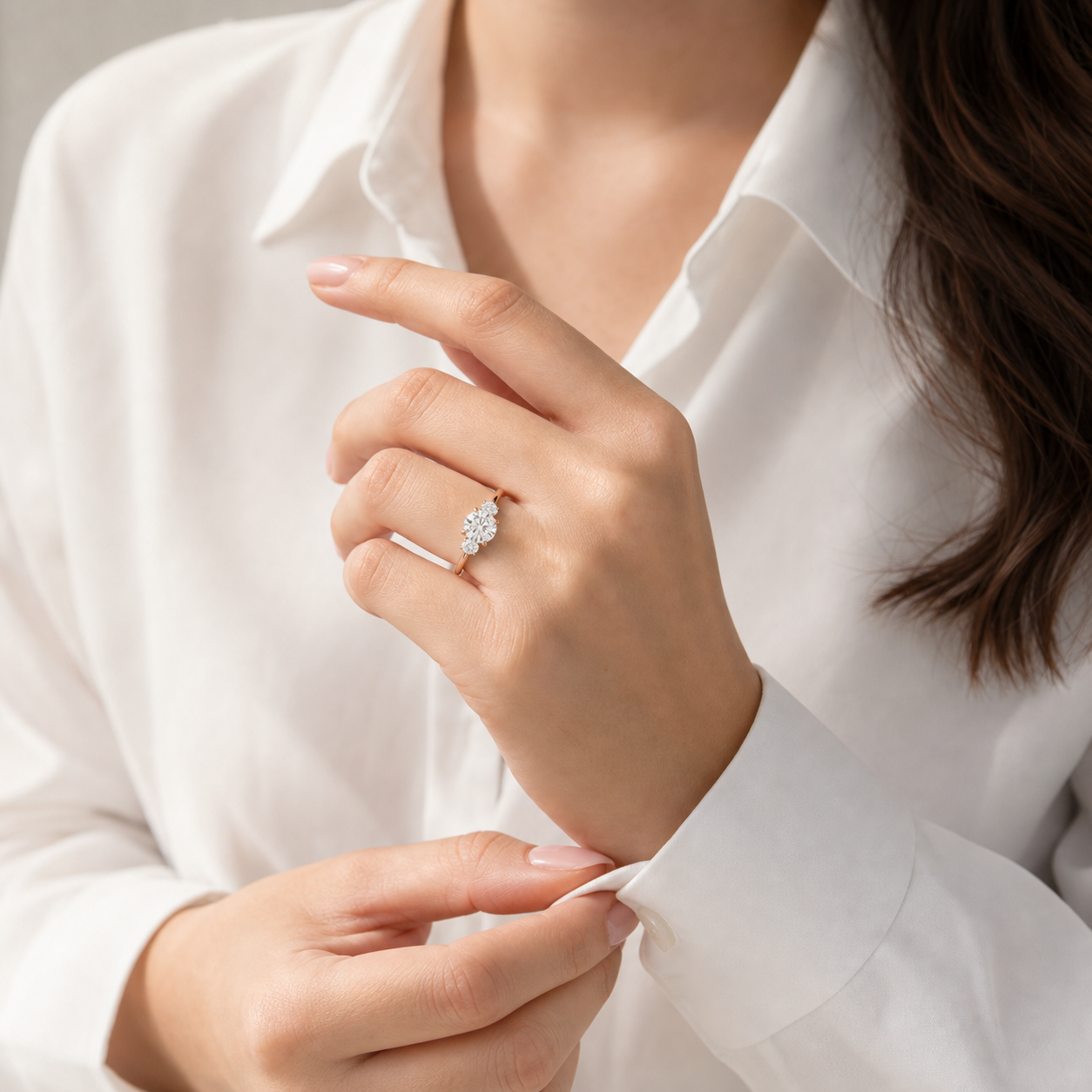


Nature-Inspired Engagement Rings: Organic Form, Resolved in Structure
A nature-inspired engagement ring does more than attach a flower or leaf to a familiar setting. It studies how natural forms move: how a vine turns, how petals gather around a center, how branches divide, and how asymmetry can still feel balanced. Those observations become line, spacing, profile, and rhythm within the ring.
Burvonti’s collection ranges from vine-led shoulders and floral halos to petal-like prongs, clustered accents, bypass lines, and softly crossing structures. Some references are immediately botanical; others are abstracted into movement. The natural idea matters when it resolves the relationship among diamond, setting, and band.
Nature Can Be Literal or Abstract
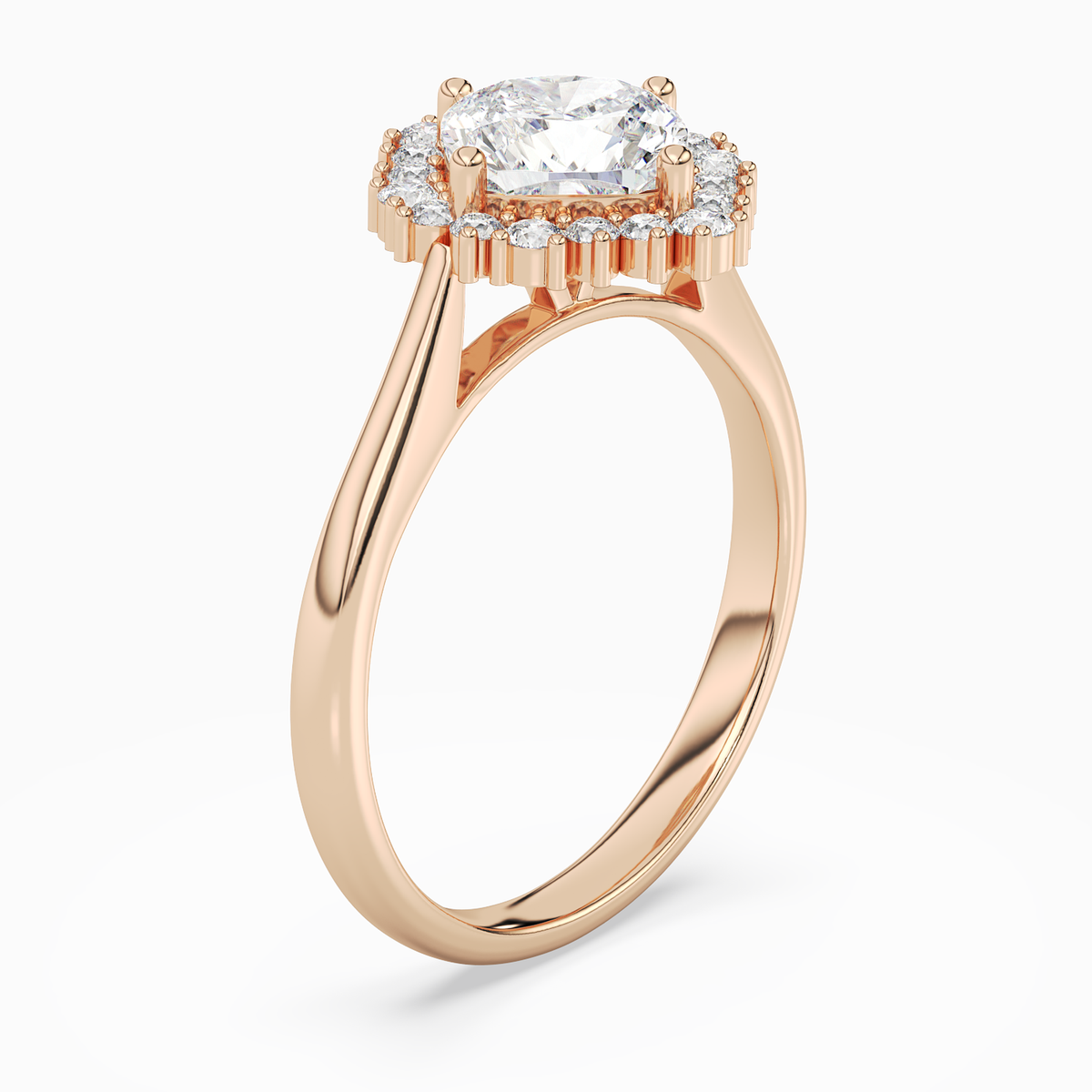
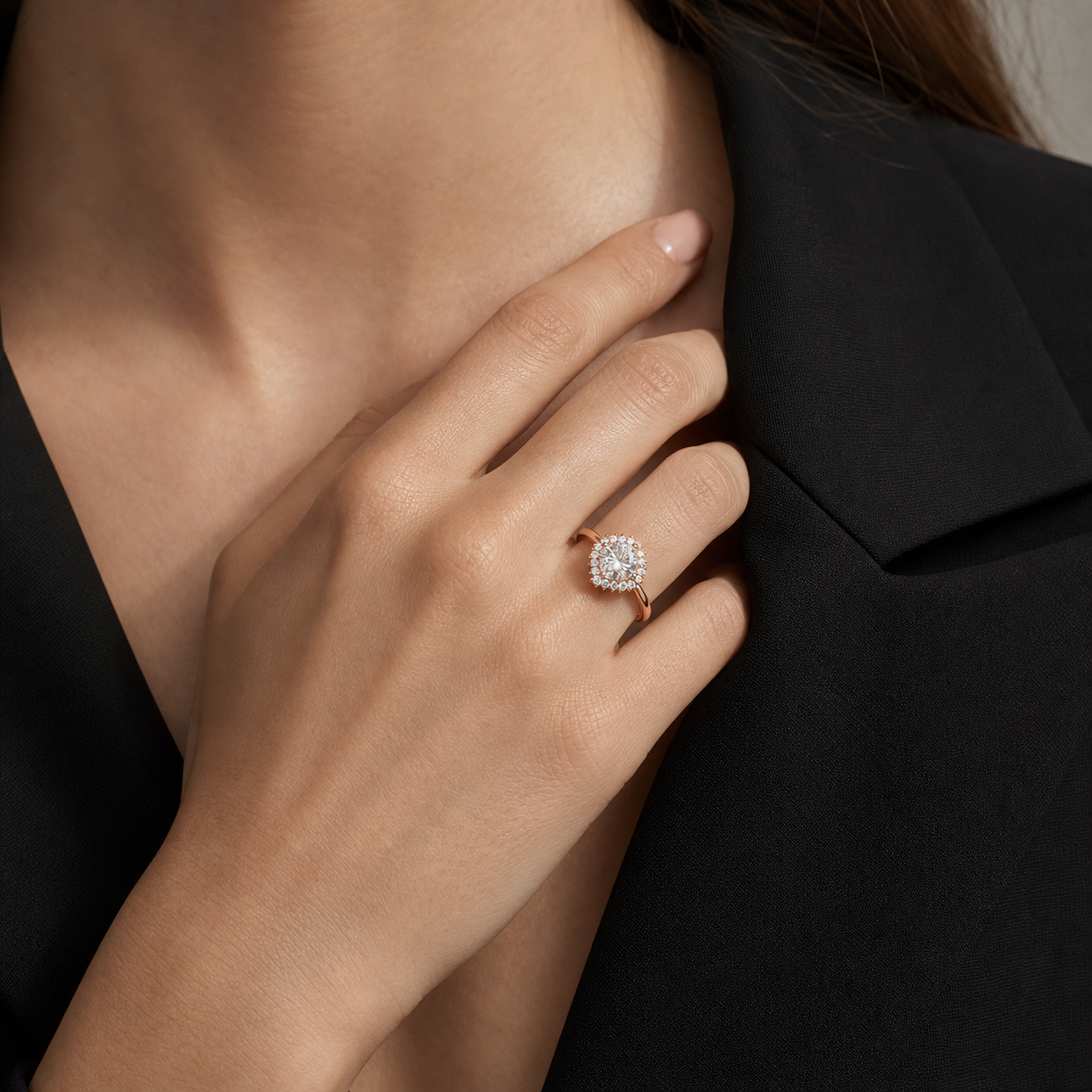
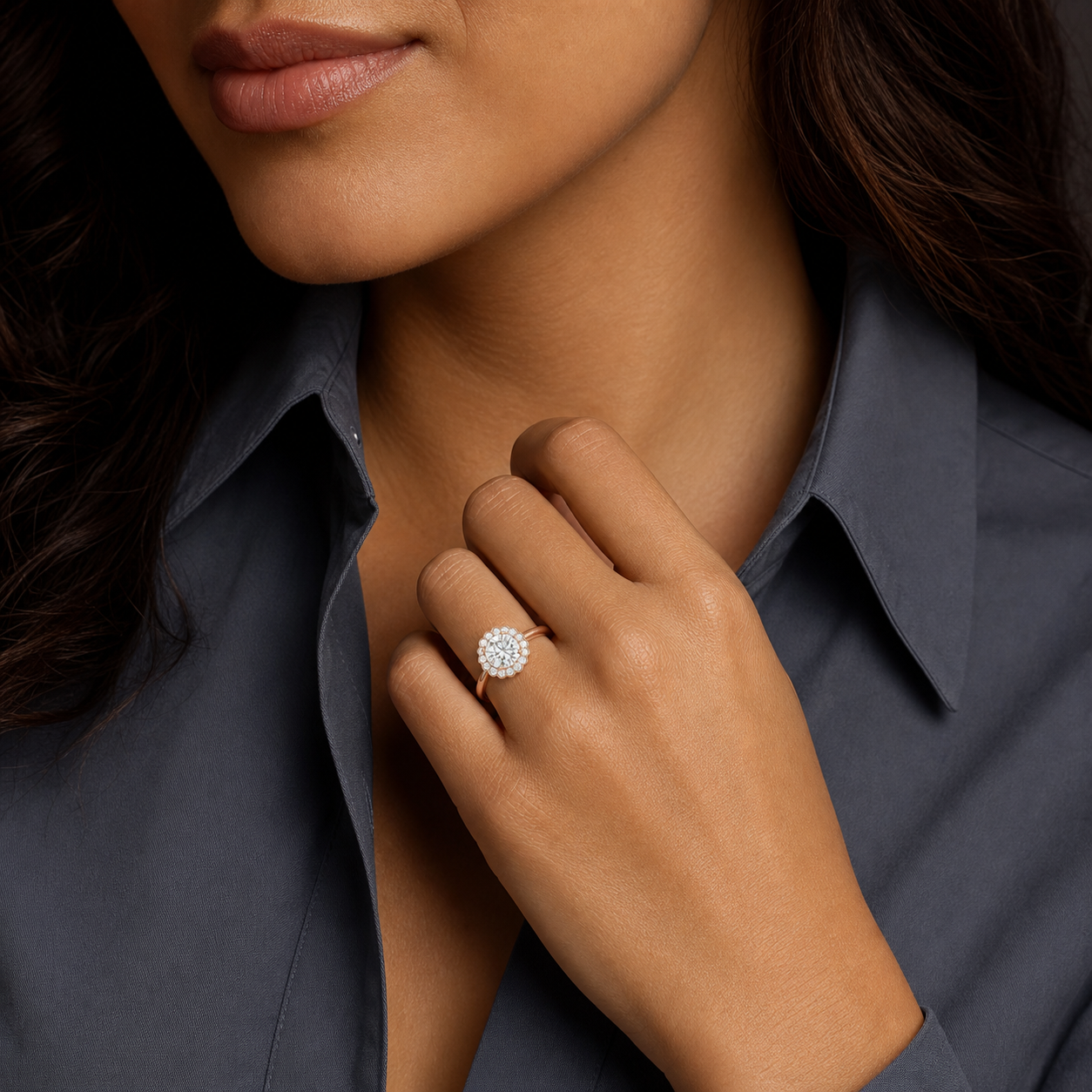
A floral halo creates a recognizable bloom around the center, using scalloped or clustered accents to establish a petal-like perimeter. Vine shoulders move differently: their lines turn toward the head, sometimes crossing or dividing as they approach it. Petal prongs place the reference in profile, where the basket can suggest a flower opening beneath the diamond.
The quieter end of the collection relies on gesture rather than illustration. A bypass shoulder may recall two stems meeting; an open curve may introduce the irregular interval of a leaf or branch; a polished band can carry organic movement without engraving or pavé. Nature-inspired does not have to mean ornate, literal, rustic, or visibly floral from every angle.
One Language Across Several Ring Architectures
Nature inspiration is not a setting category in the same sense as Solitaire, Halo, or Three Stone. It is a design language that can enter each of them. In a Solitaire, the idea may live in vine shoulders, a petal basket, or a crossover head. In a Halo, clustered stones can redraw the center as a flower. In a Three Stone or Side Stone ring, marquise-like accents and branching lines can create a wider botanical composition.
Burvonti’s collection reflects that breadth: Solitaire and Three Stone designs form the largest groups, joined by floral Halos, Hidden Halos, and Side Stone settings. Begin with the complete ring, then examine where the natural reference lives. A band motif affects fit and stacking differently from one held in the basket or face-up frame.
Nature-Inspired and Vintage Describe Different Things
Nature-inspired describes the source of a design’s form. Vintage-inspired describes a relationship to earlier jewelry vocabularies, such as milgrain, engraving, geometric frames, or period-informed profiles. A ring can belong to both when a vine, floral cluster, or decorative shoulder is expressed through historically inflected detail, but neither category requires the other.
Only part of Burvonti’s Nature Inspired collection overlaps with Vintage. Botanical structure can appear in a polished solitaire or contemporary crossover, while vintage detail can remain geometric. Look for evidence in the ring: motif, line, surface, and profile are more useful than assuming every flower is antique or every curve botanical.
Let Shape Participate in the Motif
Marquise and Pear outlines naturally introduce points and directional movement, which can echo leaves, buds, or droplets. Round accents can gather into a flower-like cluster; Oval and Cushion centers can soften a surrounding frame; Princess and Asscher shapes create a deliberate tension between geometric center and organic setting. No shape is universally best for the category.
What matters is how the outline enters the structure. A pointed diamond or accent asks for appropriate protection at its vulnerable ends or corners. A broader center changes the space available for petals, prongs, or a halo. Orientation can reinforce the movement of the shoulders or interrupt it intentionally. Compare the actual diamond dimensions and setting geometry rather than relying on the shape name alone.
Metal Changes How Clearly the Motif Speaks
White Gold can make diamonds, prongs, and bright metal read as a more continuous field. Yellow Gold brings warmth and clearer contrast to vine lines or polished negative space. Rose Gold can soften the interval between skin, band, and floral detail. These are visual tendencies, not rules about which metal is most natural or romantic.
Metal also affects the physical specification. Alloy, finish, maintenance, sensitivity considerations, and the feasibility of projecting details remain product-specific. Compare available metals when possible: contrast may make a leaf or branch line more legible, while continuity may emphasize the diamonds.
Read the Ring in Profile and Beside a Wedding Band
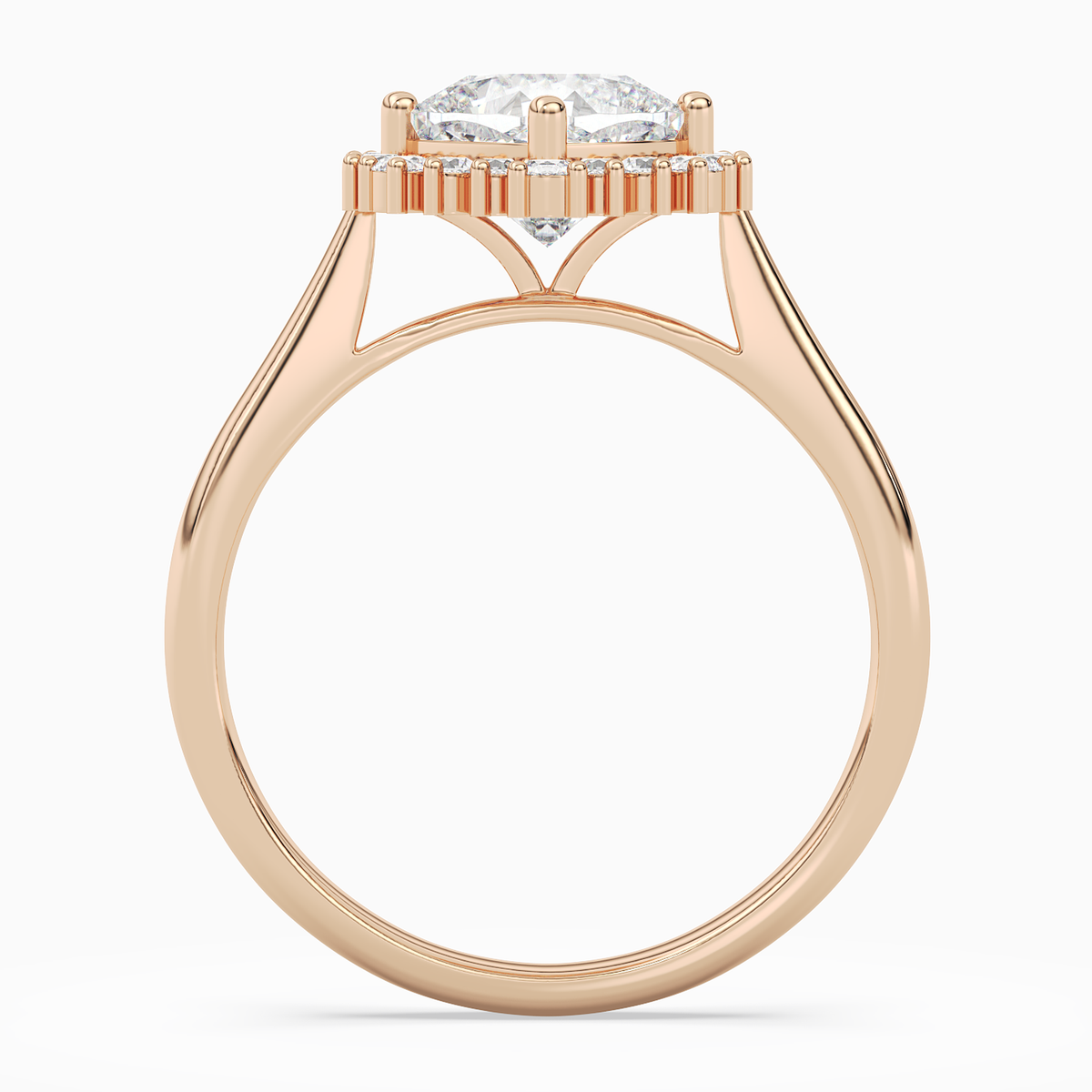
The face-up view shows the motif; the profile reveals how it is built. Raised floral halos, crossing shoulders, leaf-like arms, clustered sides, and hidden details can introduce contact points below or beside the center. They also determine how much open space is visible and whether the ring feels delicate, layered, or more sculptural on the hand.
A straight wedding band may touch an outer petal, basket, accent, or shoulder before the shanks align. A contour, chevron, open gap, or intentionally spaced stack can respond to that geometry, but none is automatically required. Compare the exact rings from above and in profile. A successful pairing should respect both the botanical rhythm and the physical edges that will meet in daily wear.
Intricate Lines Reward Deliberate Care
Vines, clusters, small prongs, openwork, and textured intervals create places where residue can collect and more setting points to observe. Clean gently with methods appropriate to the diamonds, metal, and construction. Avoid abrasive cleaners and harsh chemical exposure, and arrange inspection when a stone moves, a prong catches, or an open detail appears displaced after impact.
Burvonti brings responsibly sourced lab-grown diamonds into settings calibrated through proportion and human judgment. Custom possibilities may refine a motif, center shape, orientation, metal, accent arrangement, band line, or engraving when the structure allows. Motif changes, resizing, documentation, setting security, and wedding-band compatibility must be confirmed for the selected ring rather than inferred from the collection name.
Frequently Asked Questions
What is a nature-inspired engagement ring?
A nature-inspired engagement ring translates forms or movement from the natural world into its structure through vines, leaves, petals, floral clusters, branching lines, organic curves, or subtler asymmetry and flow.
Does a nature-inspired engagement ring need to show a literal flower?
No. A ring may use a recognizable floral halo or petal basket, but it can also express nature abstractly through crossing shoulders, open curves, clustered accents, or lines that recall stems and branches without illustrating them directly.
What is the difference between floral and nature-inspired engagement rings?
Floral rings are one part of the broader nature-inspired category. They use flower or petal references specifically. Nature-inspired rings can also draw from vines, leaves, branches, droplets, organic texture, asymmetry, and other natural structures.
What is the difference between nature-inspired and vintage engagement rings?
Nature-inspired describes where the form comes from; Vintage describes a relationship to earlier jewelry design languages. A botanical ring may also use milgrain or historically informed detail, but a clean contemporary vine or petal setting does not need to look vintage.
Can a solitaire engagement ring be nature-inspired?
Yes. The center stone can remain visually dominant while vine shoulders, a petal-like basket, leaf-shaped prongs, a crossover head, or another organic detail introduces the nature reference around or beneath it.
Which nature-inspired details appear in Burvonti engagement rings?
The current public collection includes vine-led shoulders, floral and clustered halos, petal-like prongs and profiles, marquise accents, leaf-like arms, bypass lines, and crossing structures. Exact details should be confirmed on the selected product.
Do nature-inspired engagement rings need to be asymmetrical?
No. Natural references can be symmetrical, gently varied, or intentionally asymmetrical. A floral halo may repeat evenly around a center, while a vine or cluster can create directional movement. Balance depends on the complete composition rather than mirrored detail alone.
Which diamond shapes work with nature-inspired settings?
Many shapes can work. Pear and Marquise introduce directional points; Round, Oval, and Cushion shapes can soften floral frames; Princess and Asscher centers can contrast organic surroundings. The setting must respond to the selected diamond’s actual outline and dimensions.
Are Pear and Marquise diamonds required for a botanical look?
No. Their pointed outlines can suggest leaves or droplets, but botanical character can come from the band, basket, halo, accent arrangement, or negative space around any compatible center shape.
Which metal works best for a nature-inspired engagement ring?
There is no universal best metal. White Gold can create continuity around diamonds; Yellow Gold gives organic lines warmer contrast; Rose Gold creates a softer tonal interval. Compare appearance together with the exact alloy, finish, maintenance, and product specification.
Do petal prongs protect a diamond better than standard prongs?
The name or appearance of a prong does not establish protection. Security depends on its number, placement, dimensions, condition, and support for the selected diamond, especially at vulnerable points or corners.
Are nature-inspired engagement rings suitable for everyday wear?
They can be, but everyday suitability depends on setting height, exposed edges, small stones, prongs, openwork, band proportion, and the wearer’s routine. The botanical theme alone does not determine durability or ease of wear.
Can vine, leaf, or floral details catch on clothing?
Raised or projecting details may create contact points, while lower and more integrated forms may feel smoother. Review the exact ring from several angles and arrange inspection if a prong or decorative edge begins to catch.
How should I clean a detailed nature-inspired engagement ring?
Use gentle methods appropriate to its diamonds, metal, and construction. Avoid abrasive cleaners and harsh chemicals. Clean carefully around clusters, openwork, pavé, and small prongs; arrange inspection if any stone may be loose.
Can a nature-inspired engagement ring be resized?
Resize feasibility depends on how far vines, pavé, engraving, openwork, or sculpted details extend around the band. Confirm the allowed range and effects on proportion, pattern continuity, and setting security for the specific design.
Will a wedding band sit flush with a nature-inspired engagement ring?
Not always. Floral baskets, crossing shoulders, clustered accents, and projecting details can create contact or a visible gap. Some rings pair with a straight band; others may suit a contour, chevron, open gap, or deliberate spacing.
Can a Burvonti nature-inspired engagement ring be customized?
Custom possibilities may include motif, center shape, orientation, metal, accent arrangement, band line, or engraving when structurally feasible. Availability, documentation, dimensions, sizing, and wedding-band compatibility must be confirmed for the selected configuration.