
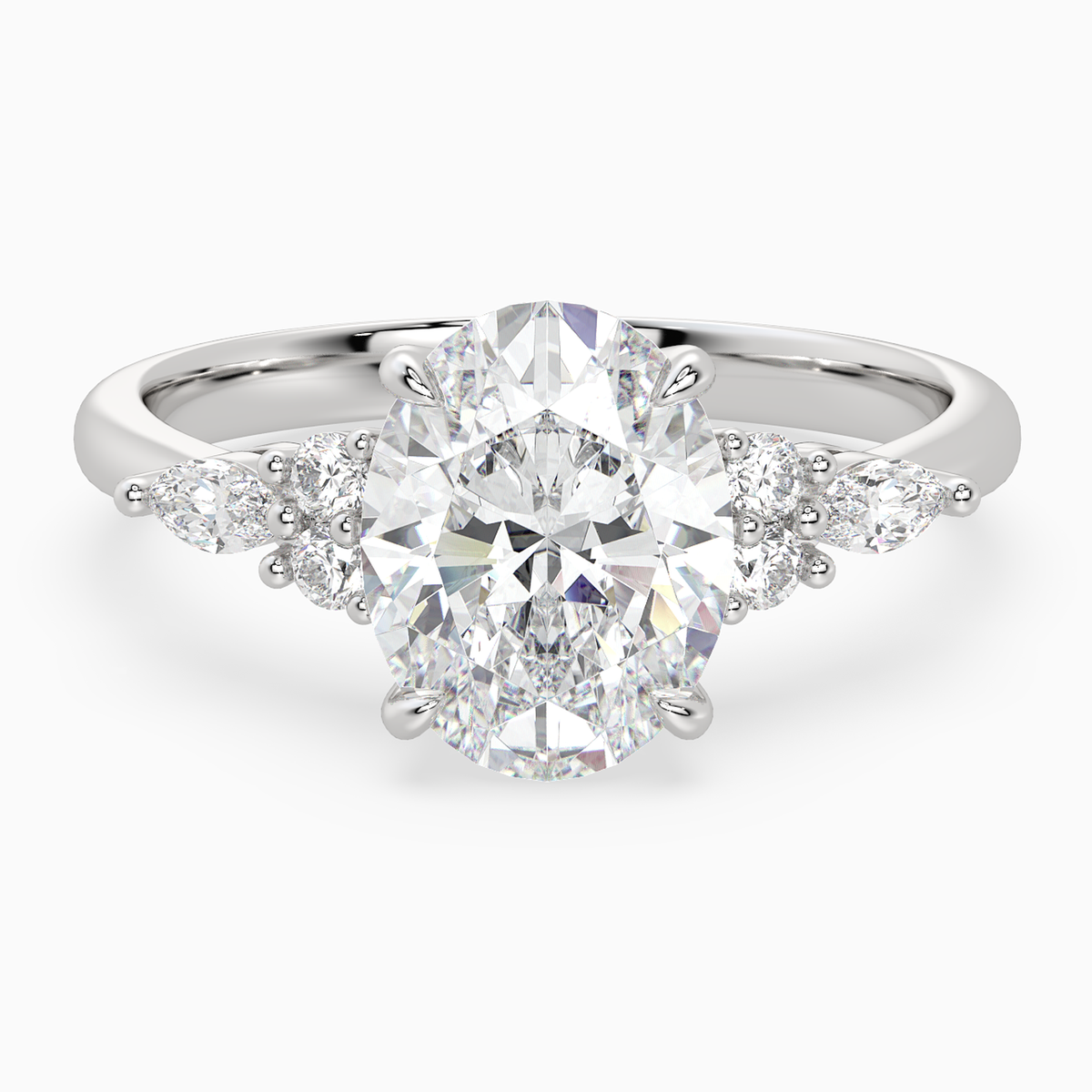


Lab-Grown Diamond Anniversary Rings
A milestone takes form in the details you choose. Explore anniversary rings through meaning, proportion and what is worn beside them.







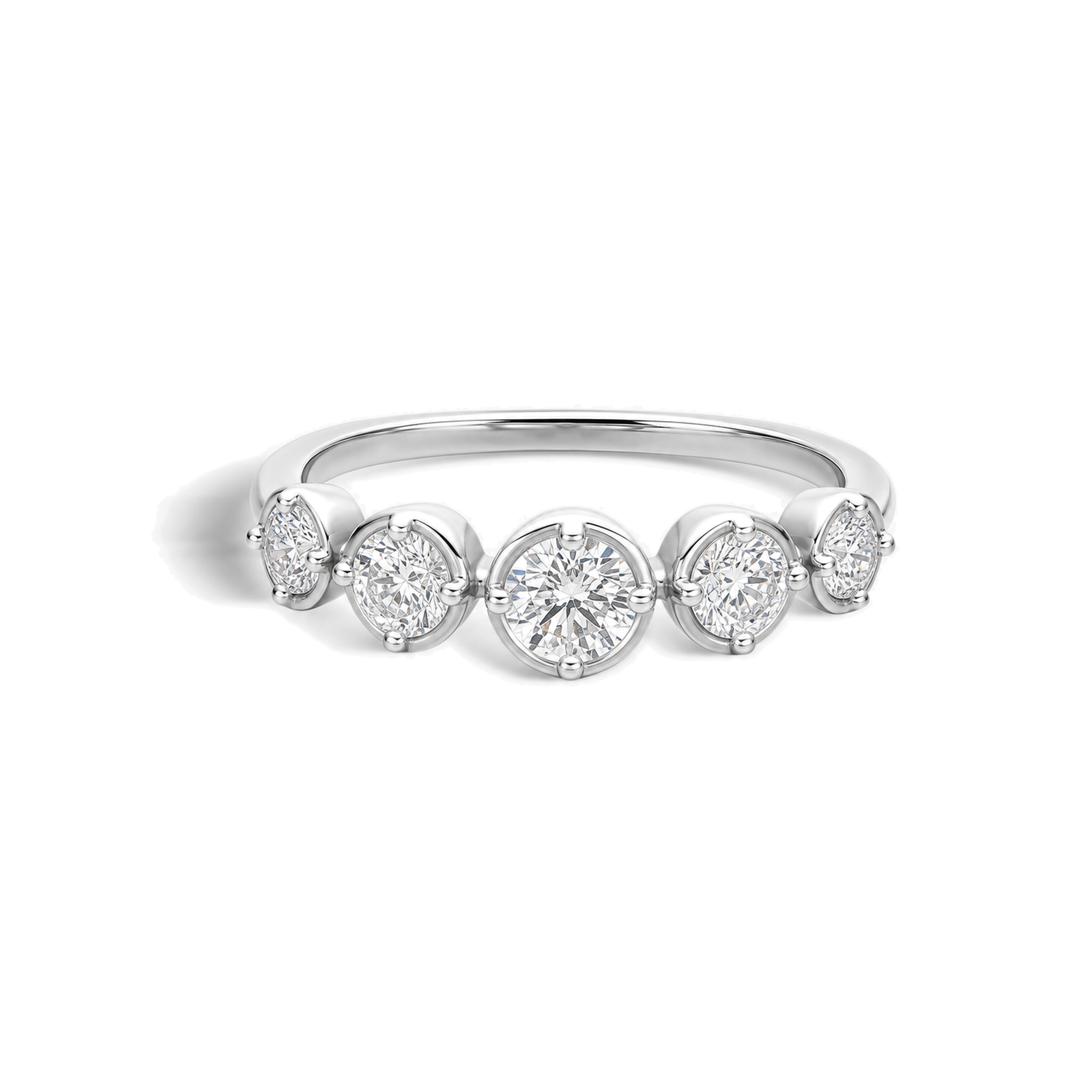
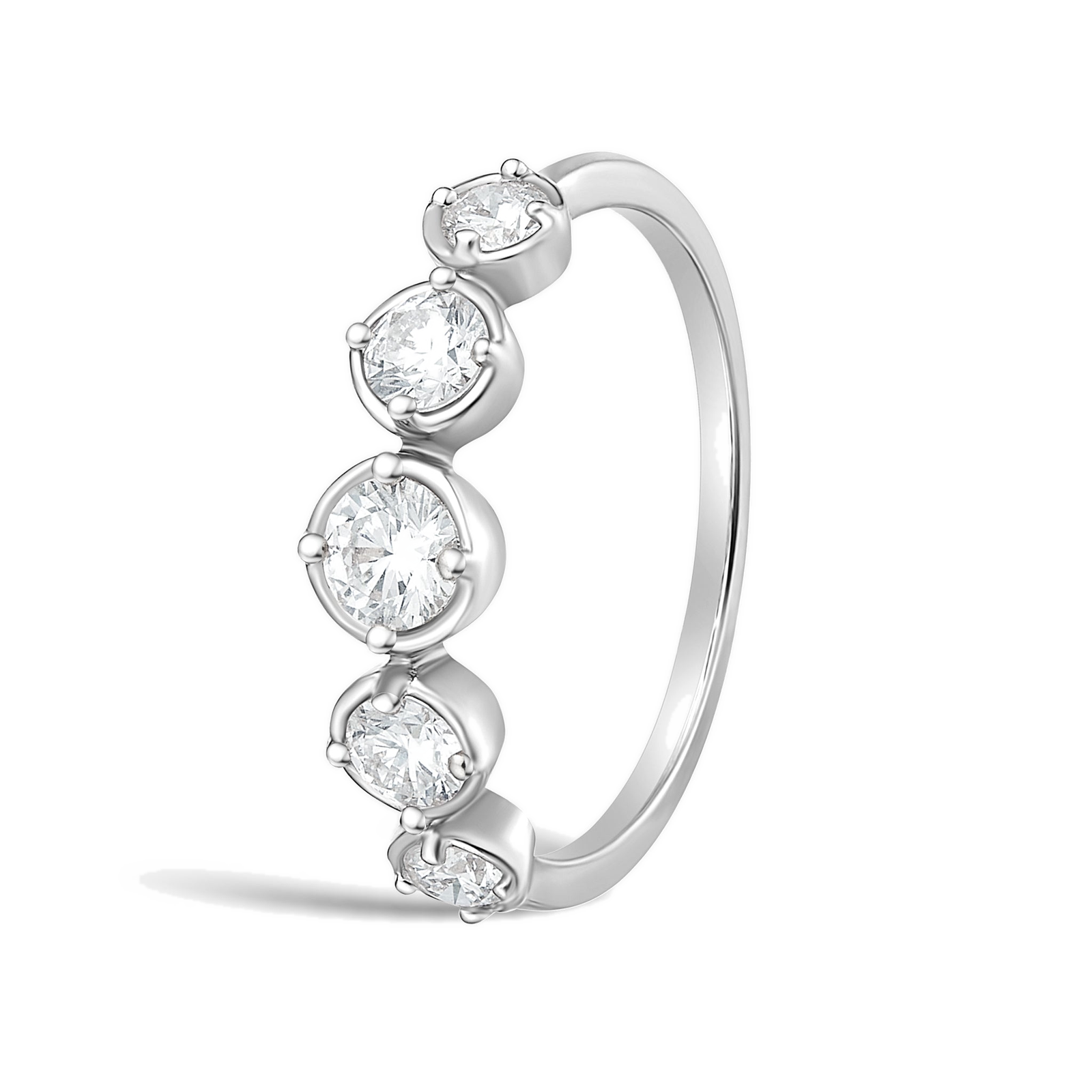

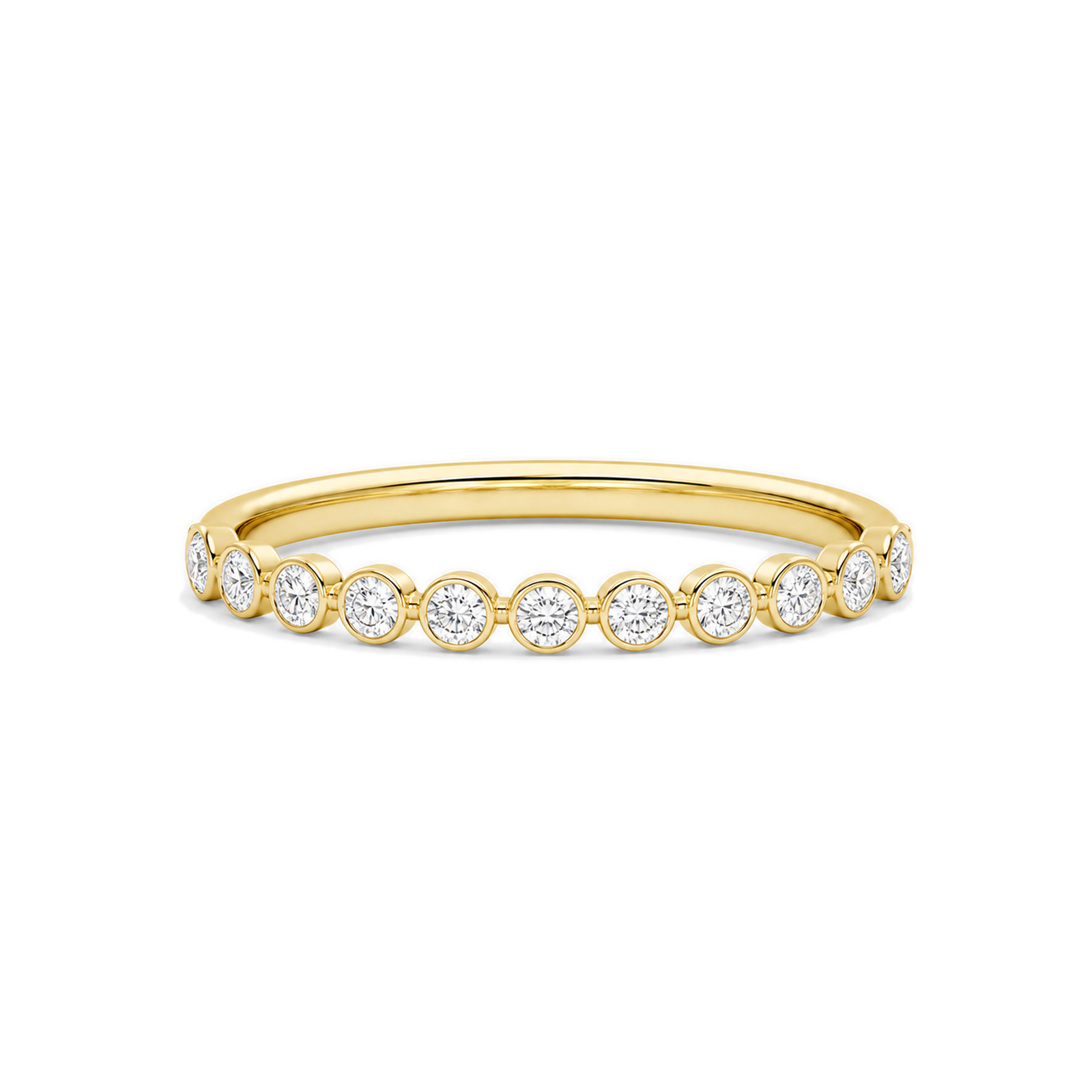


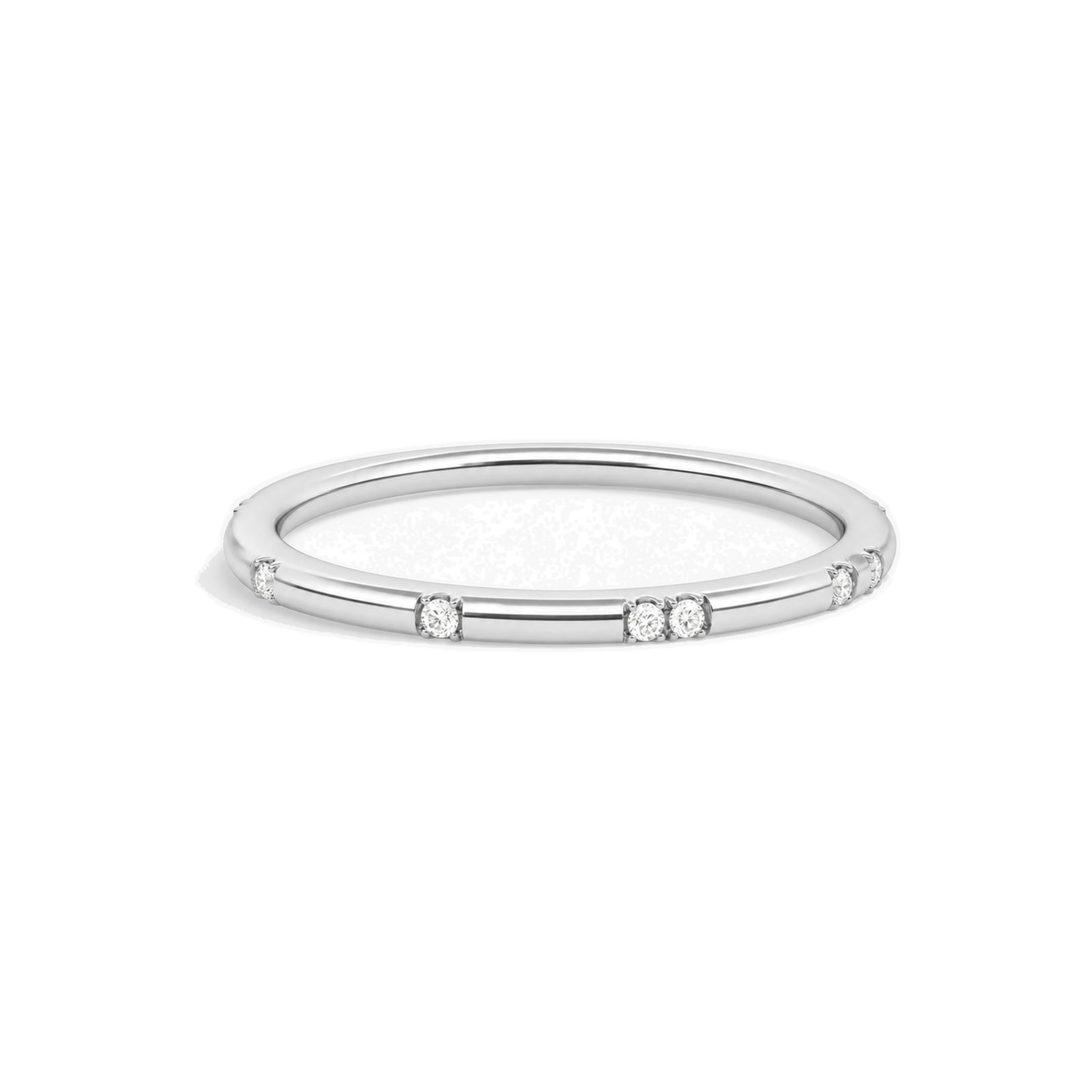



















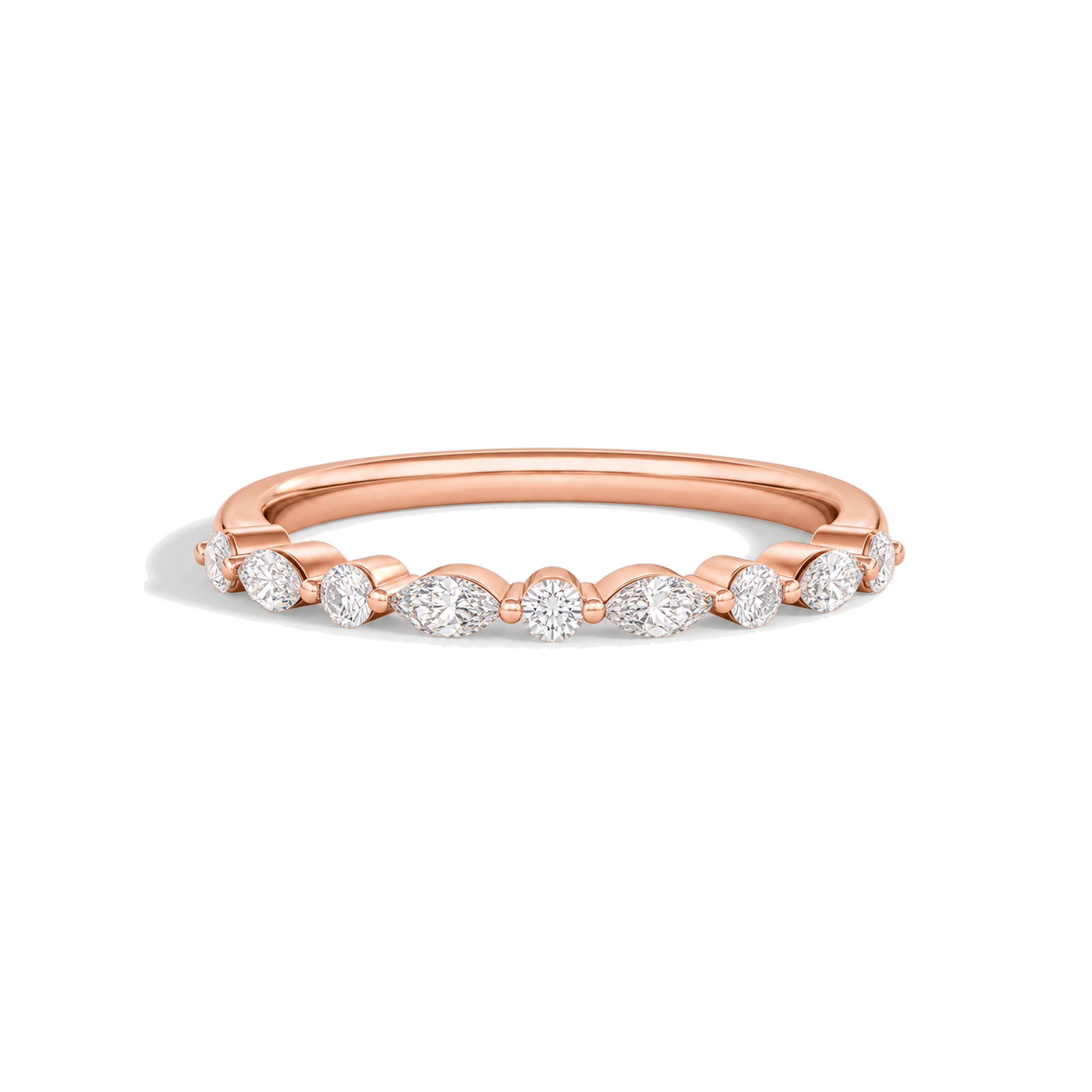


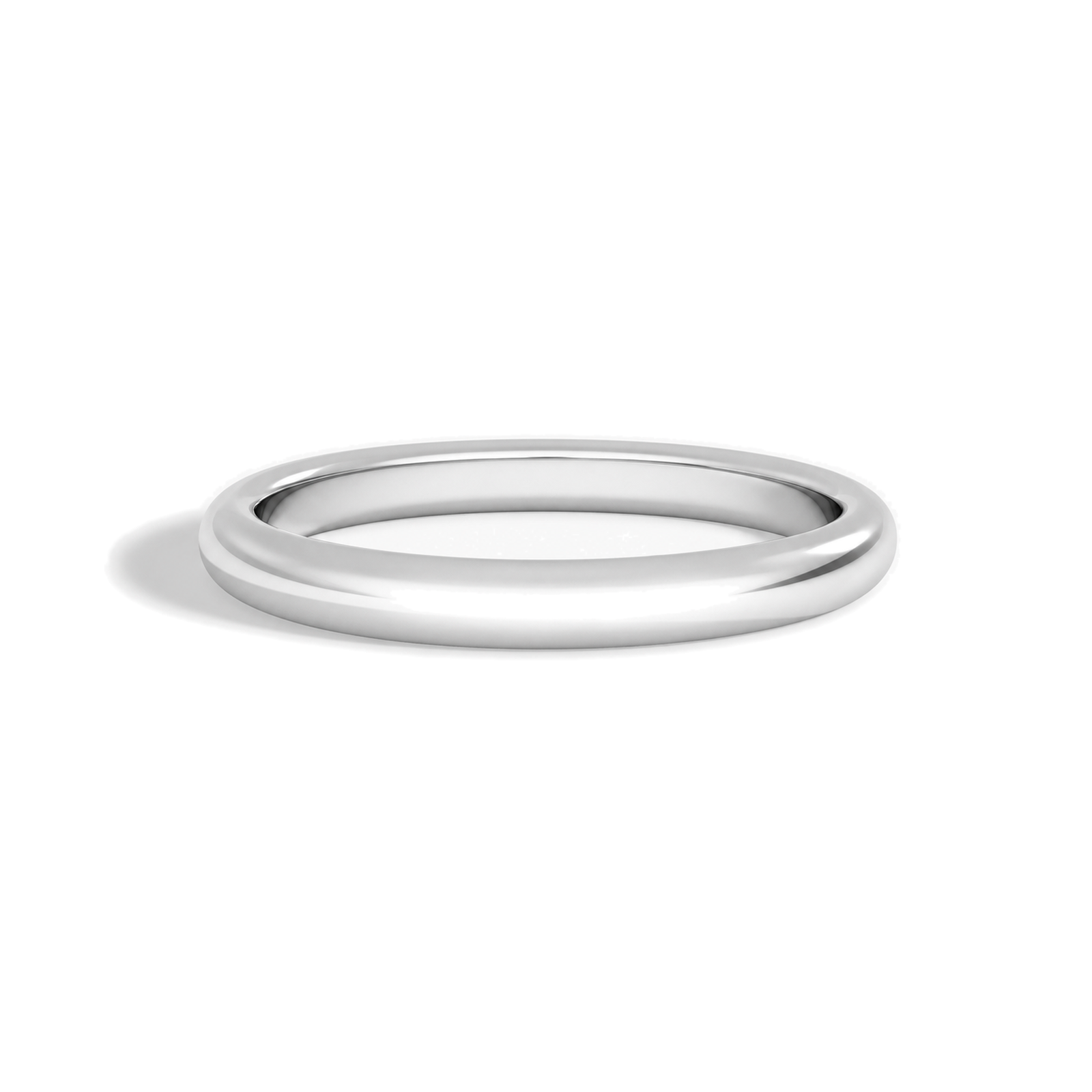
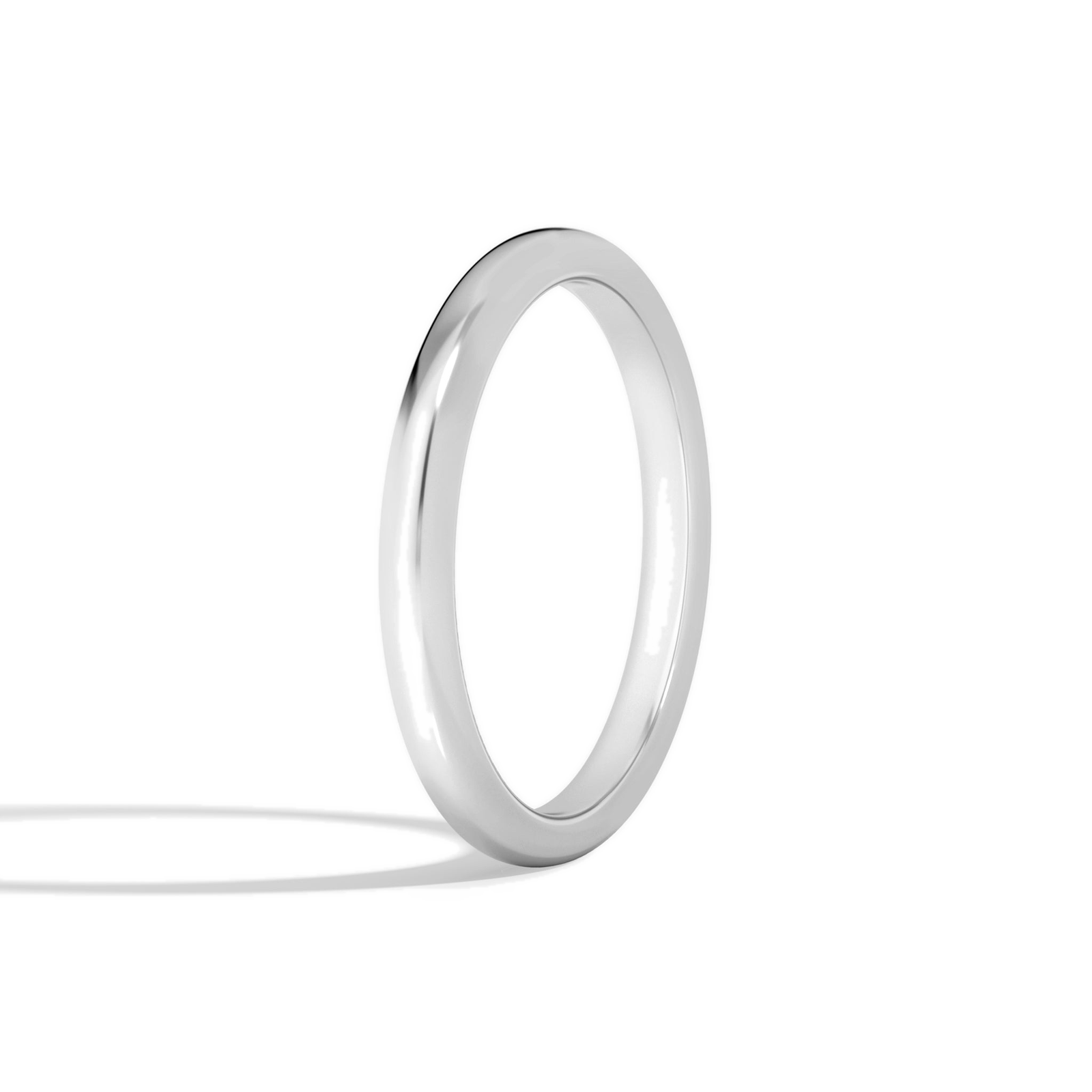

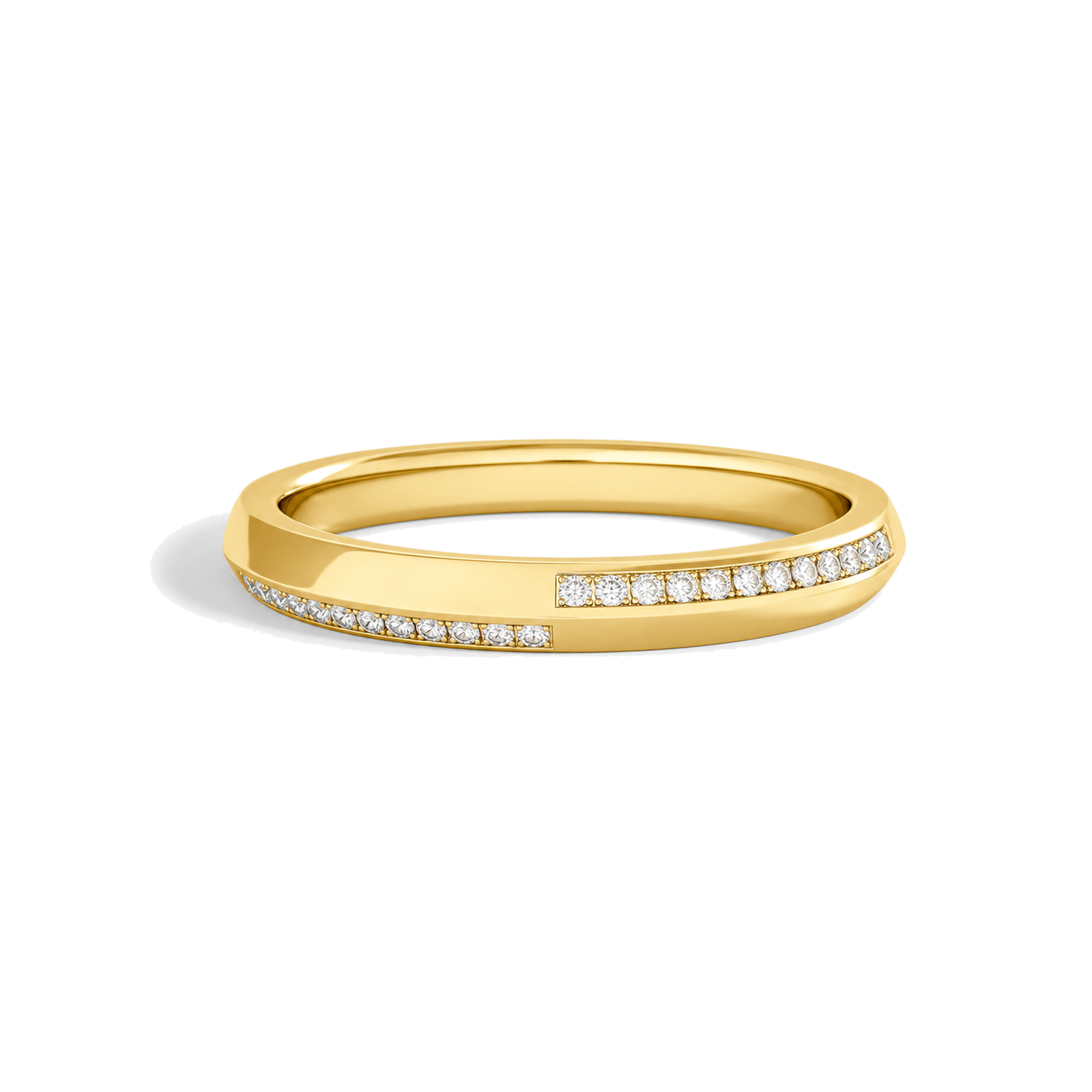





- Free Express Shipping
- Free Resizing
- 60-Day Free Returns
- Lifetime Warranty
A Milestone, Given Its Own Form
An anniversary ring gives form to time already shared, but the meaning does not arrive from a prescribed number, stone, or placement. It can mark a wedding anniversary, another chapter in a relationship, a renewal, or a private moment known only to the people involved. The considered choice begins with what the ring is being asked to remember—and how the wearer wants that memory to live on the hand.
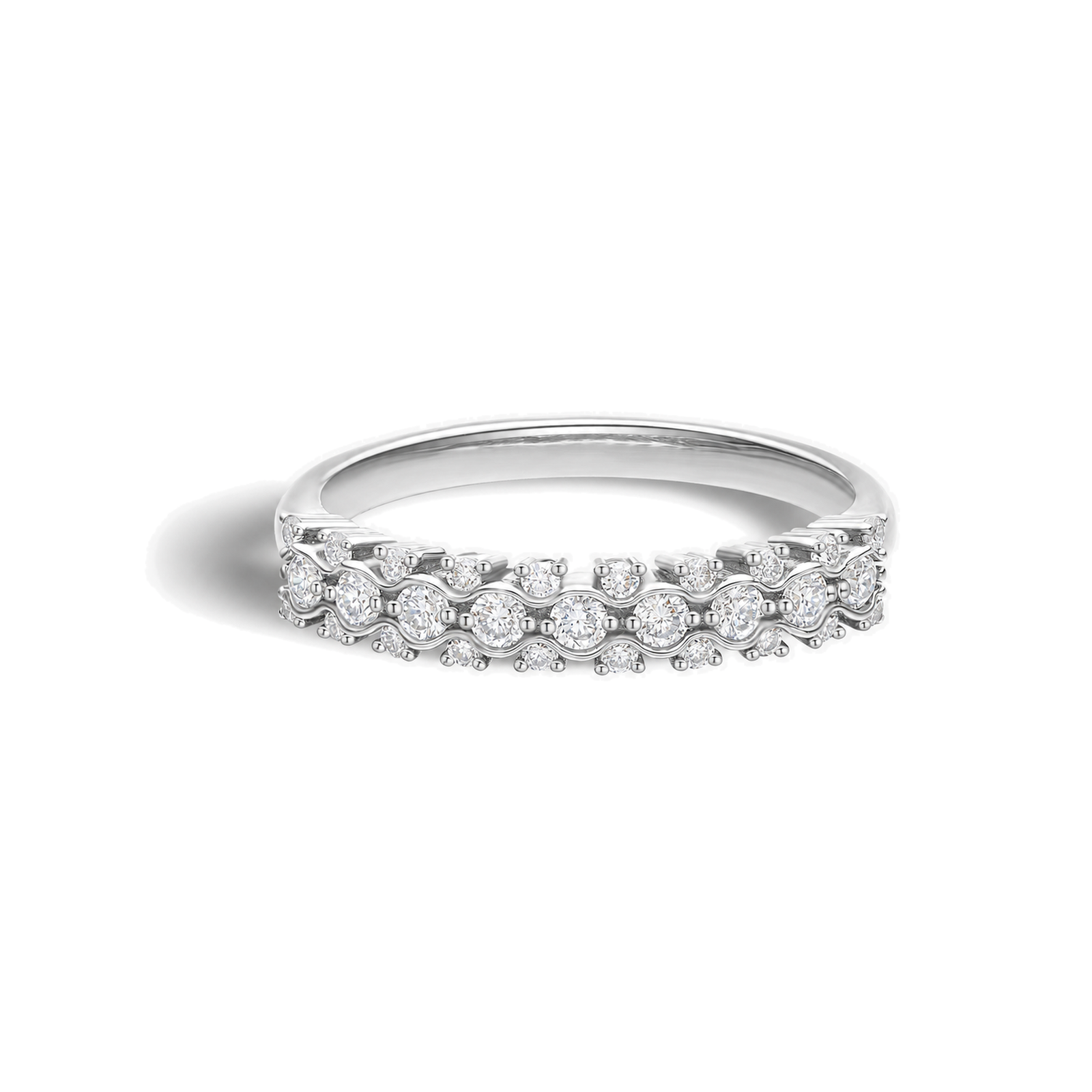
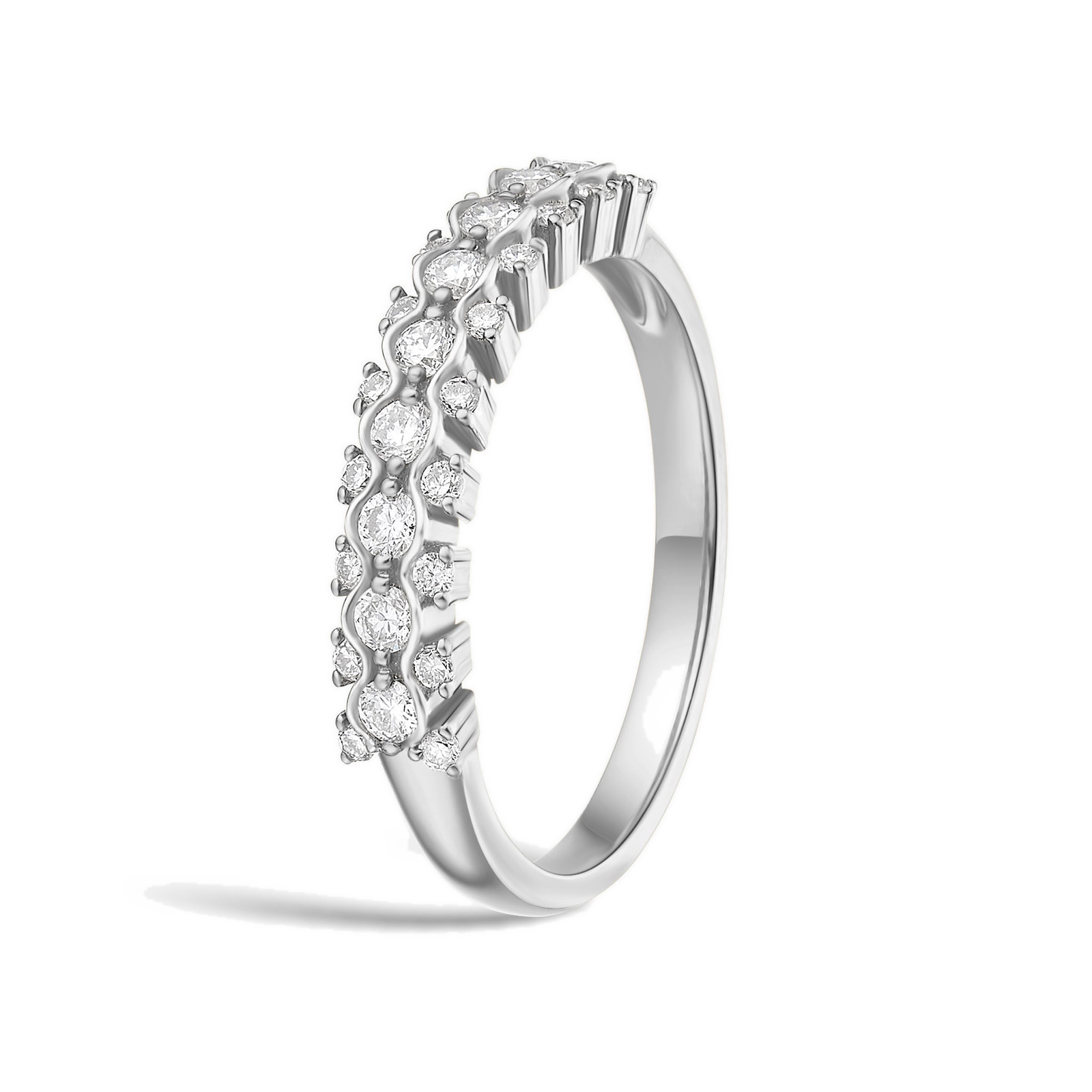
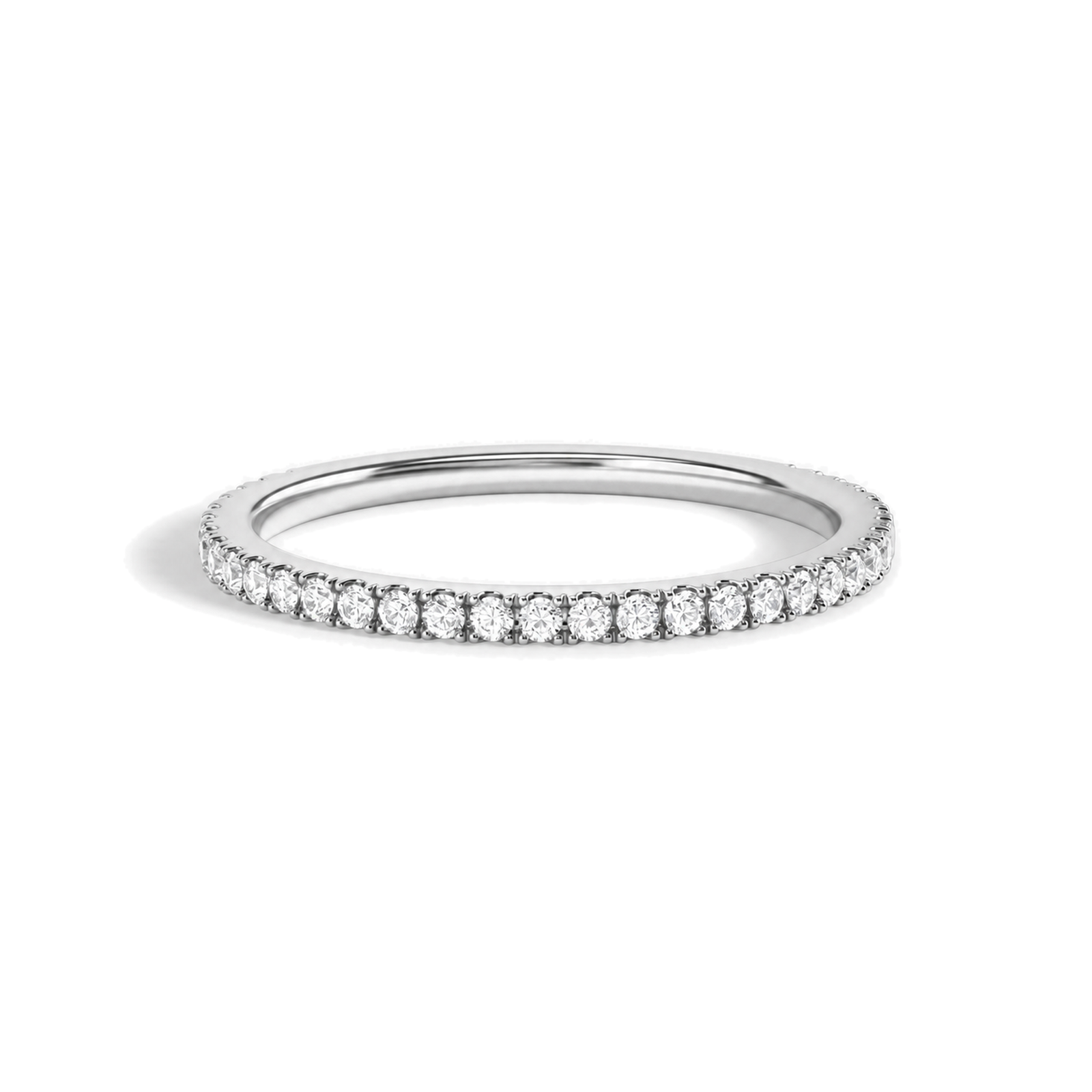
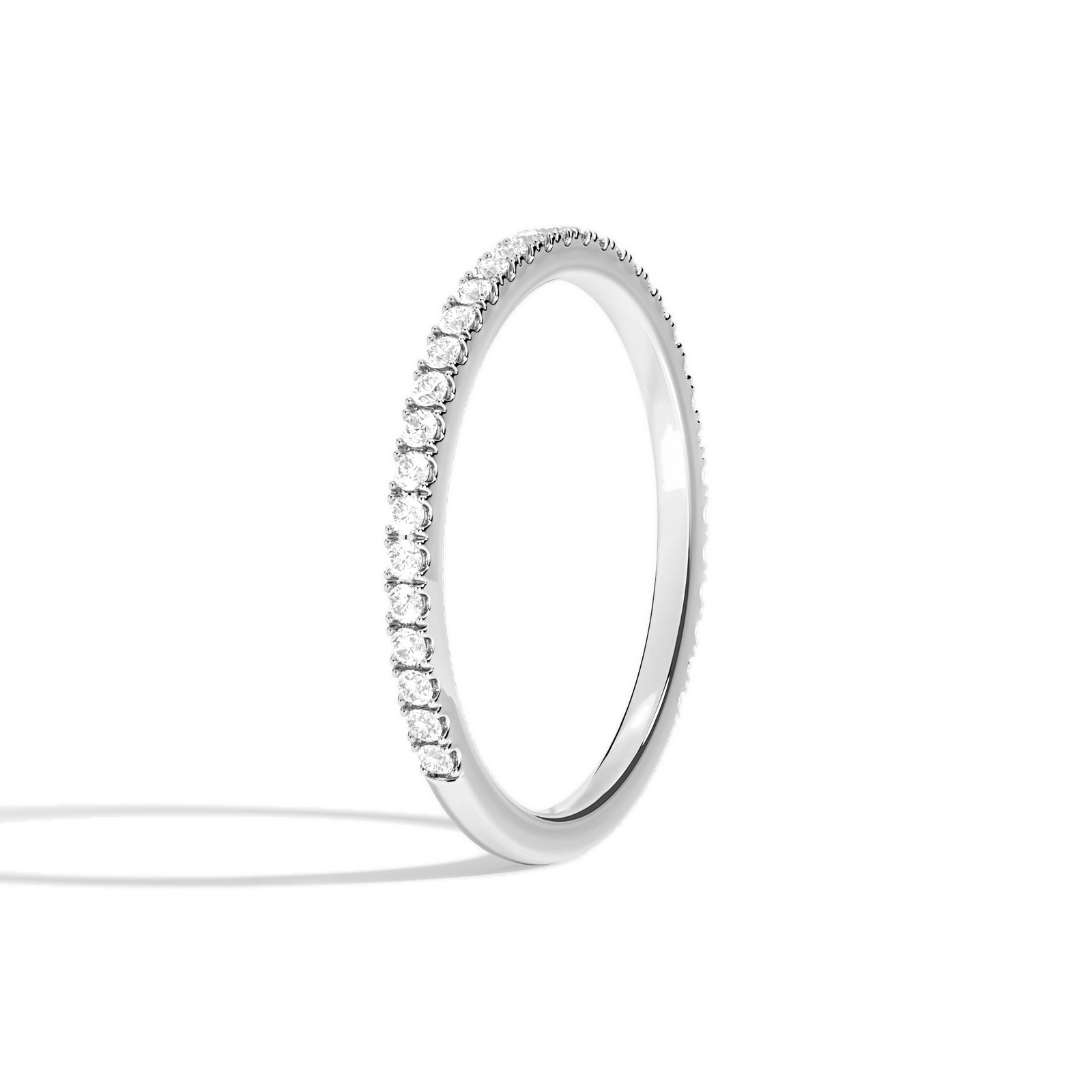
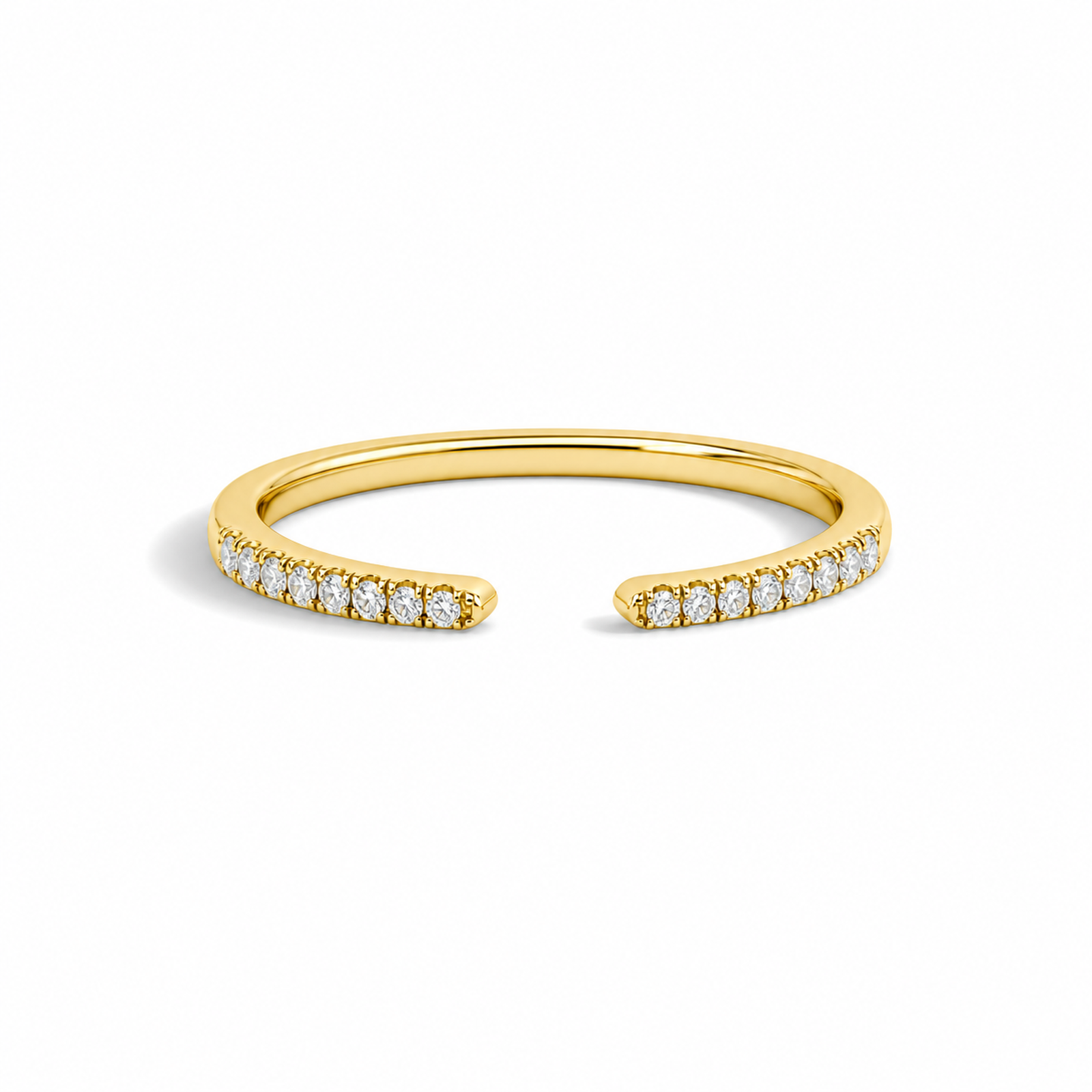
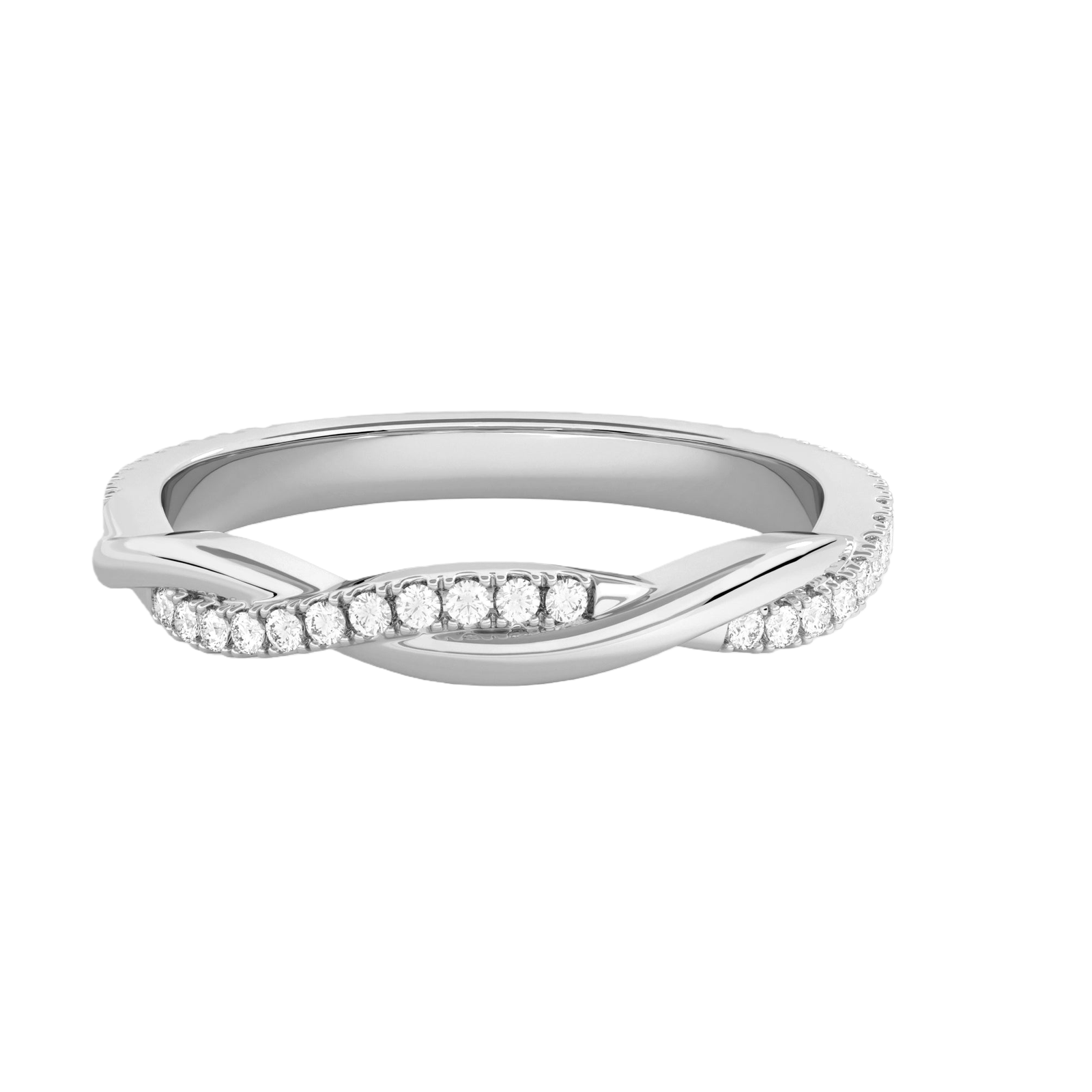
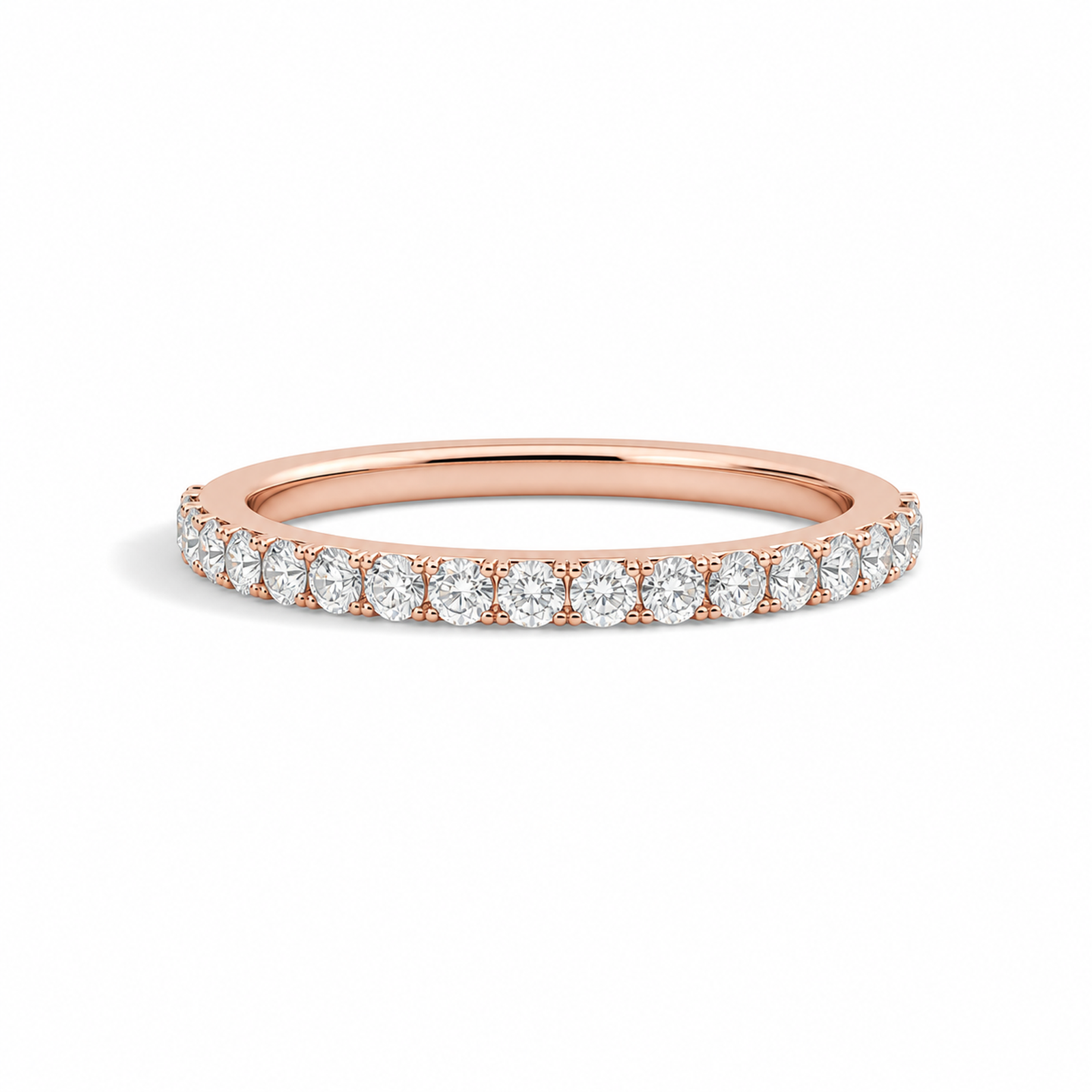
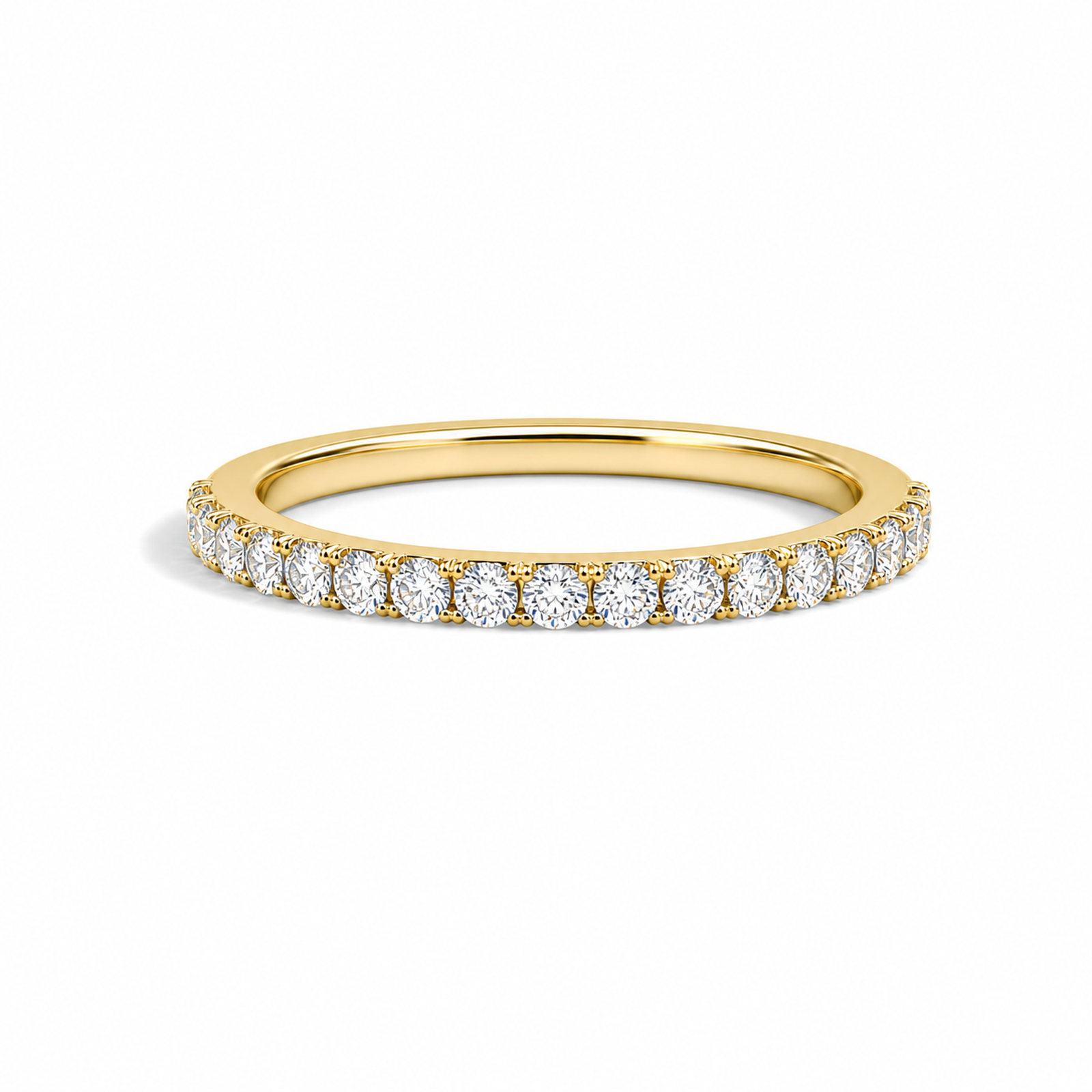
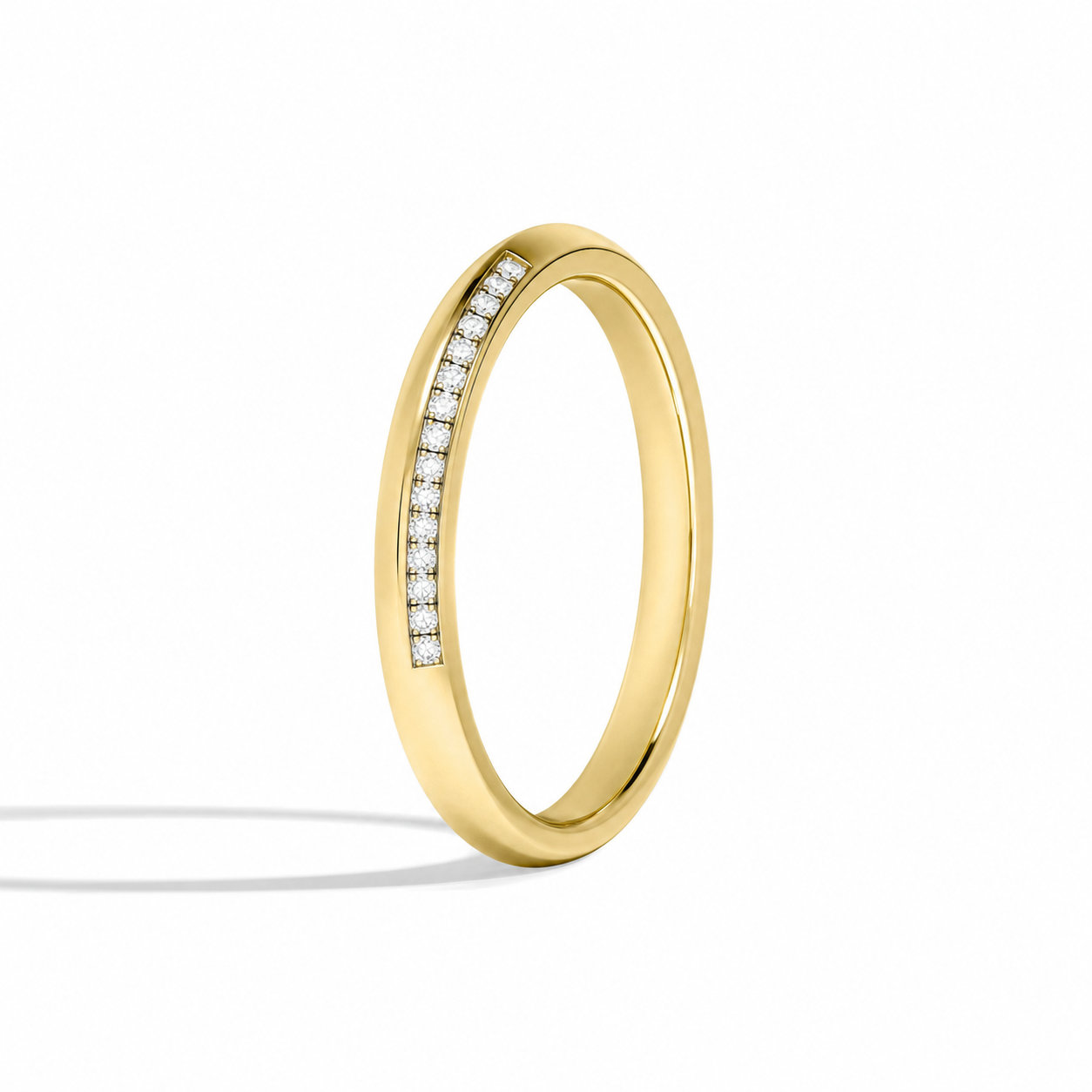
Burvonti’s current public Anniversary Ring Collection contains 69 products and is an exact product-for-product match with the parent Lab-Grown Diamond Ring Collection. It spans eternity, half-coverage, three-quarter coverage, channel, contour, curved, open, stacking, crossover, milgrain, diamond-accented, and plain comfort-fit forms. This page is therefore an occasion lens across a broad ring wardrobe, not an exclusive product range unavailable elsewhere.
Meaning Before Convention
Traditional anniversary lists can be a source of inspiration, but they need not decide the ring. A diamond is not reserved for one anniversary, and a milestone does not become more meaningful because it follows a fixed sequence. Begin with the recipient’s relationship to jewelry: what they already wear, which details they return to, and whether the new piece should continue an established language or introduce a deliberate contrast.
The ring may be chosen as a surprise or considered together. For a surprise, verified size, everyday habits, existing ring dimensions, and return or alteration facts matter more than a generalized gift rule. When choosing together, compare actual profiles and combinations rather than relying only on isolated product images.
A New Ring Enters an Existing Composition
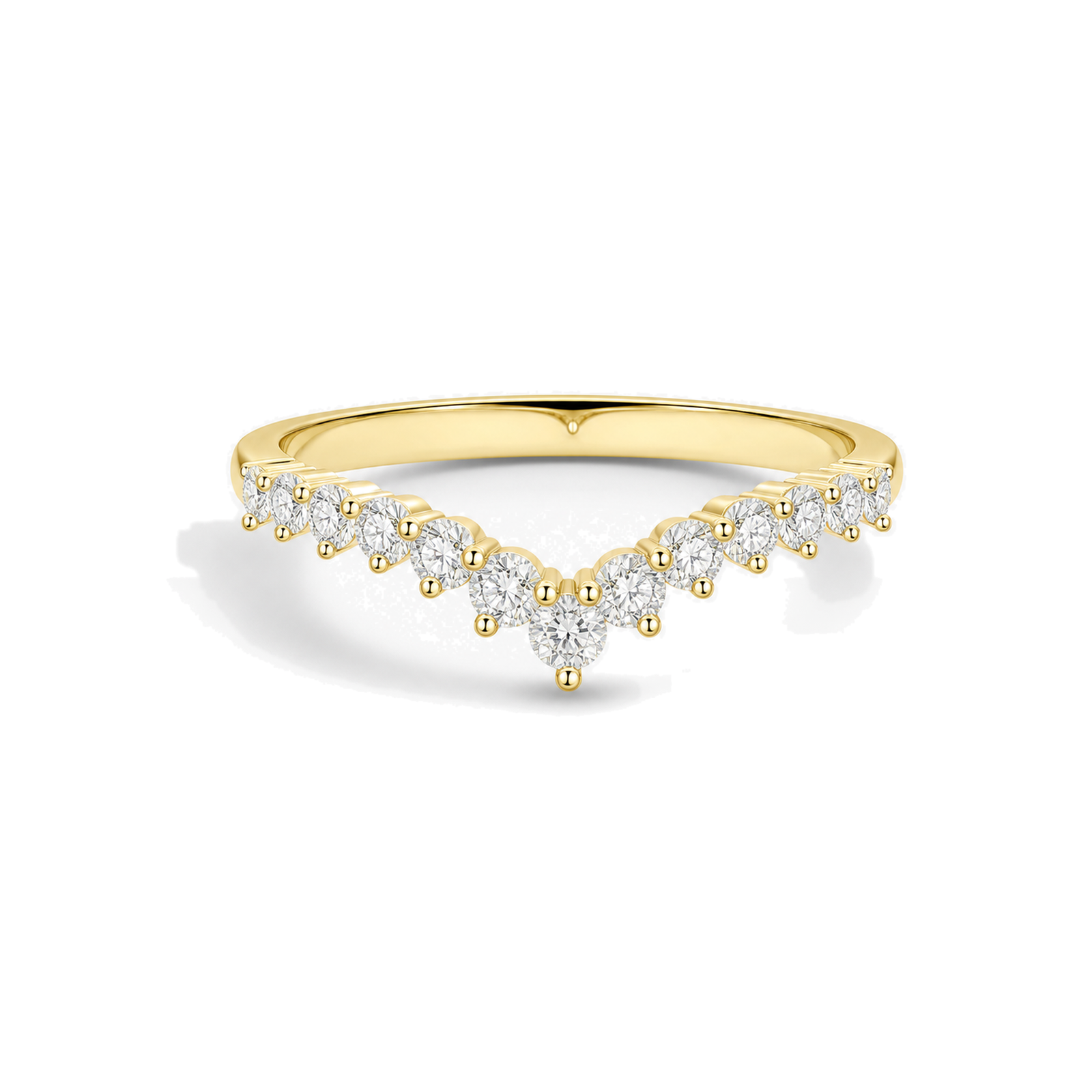
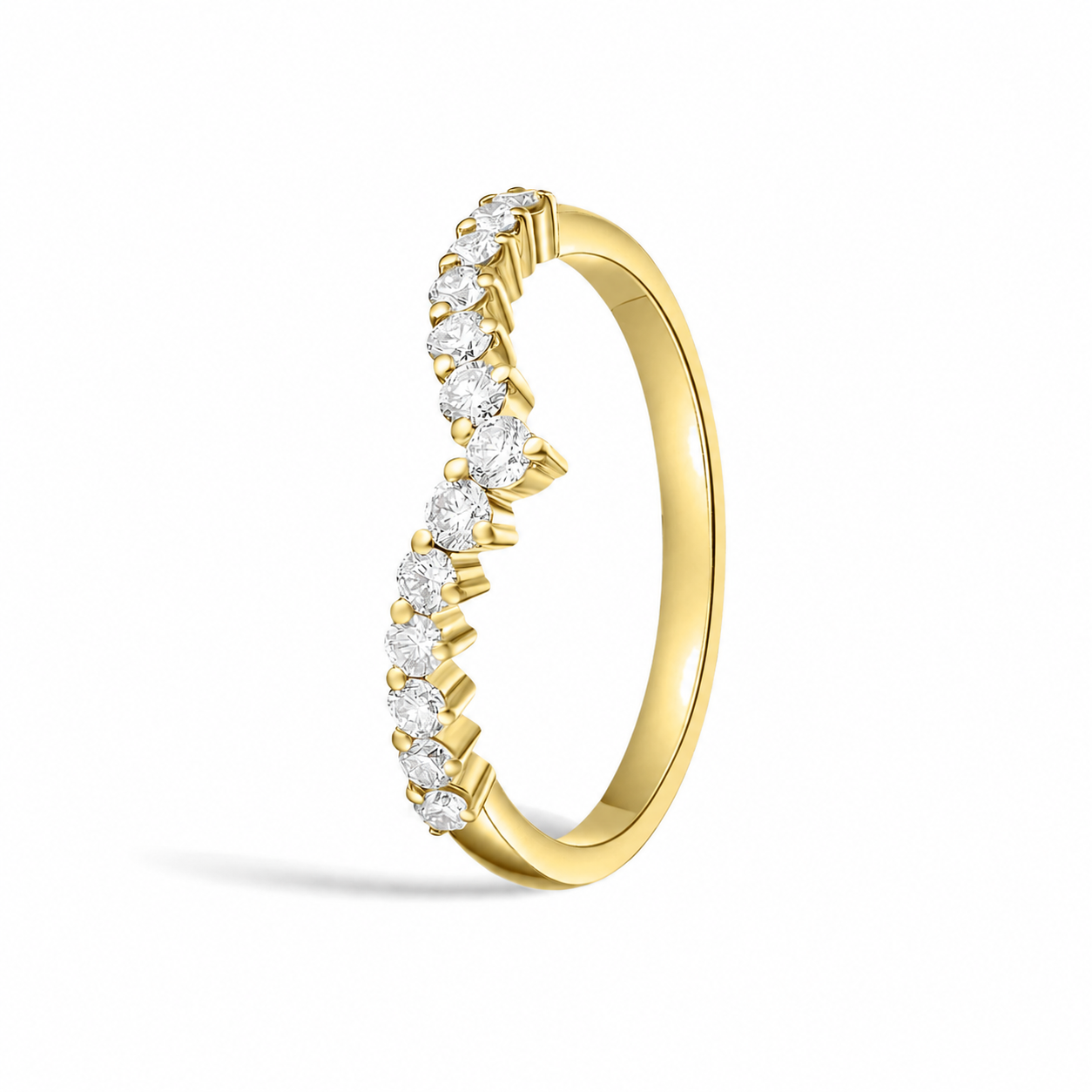
An anniversary ring may sit beside an engagement ring and wedding band, begin a new stack, move between hands, or be worn alone. None of those roles is required. What matters is how its contour, height, edge, width, setting, and diamond field relate to the pieces already present. A straight band may leave intentional space beside a projecting setting; a curved band may follow one silhouette closely yet be less adaptable to another.
If the ring will join a set, view the pieces from above and from the side. Check where prongs, bezels, gallery elements, and band edges meet. Flush appearance in one photograph does not guarantee compatibility through every finger position, and no stacking order prevents all abrasion, pressure, or impact.
Choose the Structure That Carries the Message
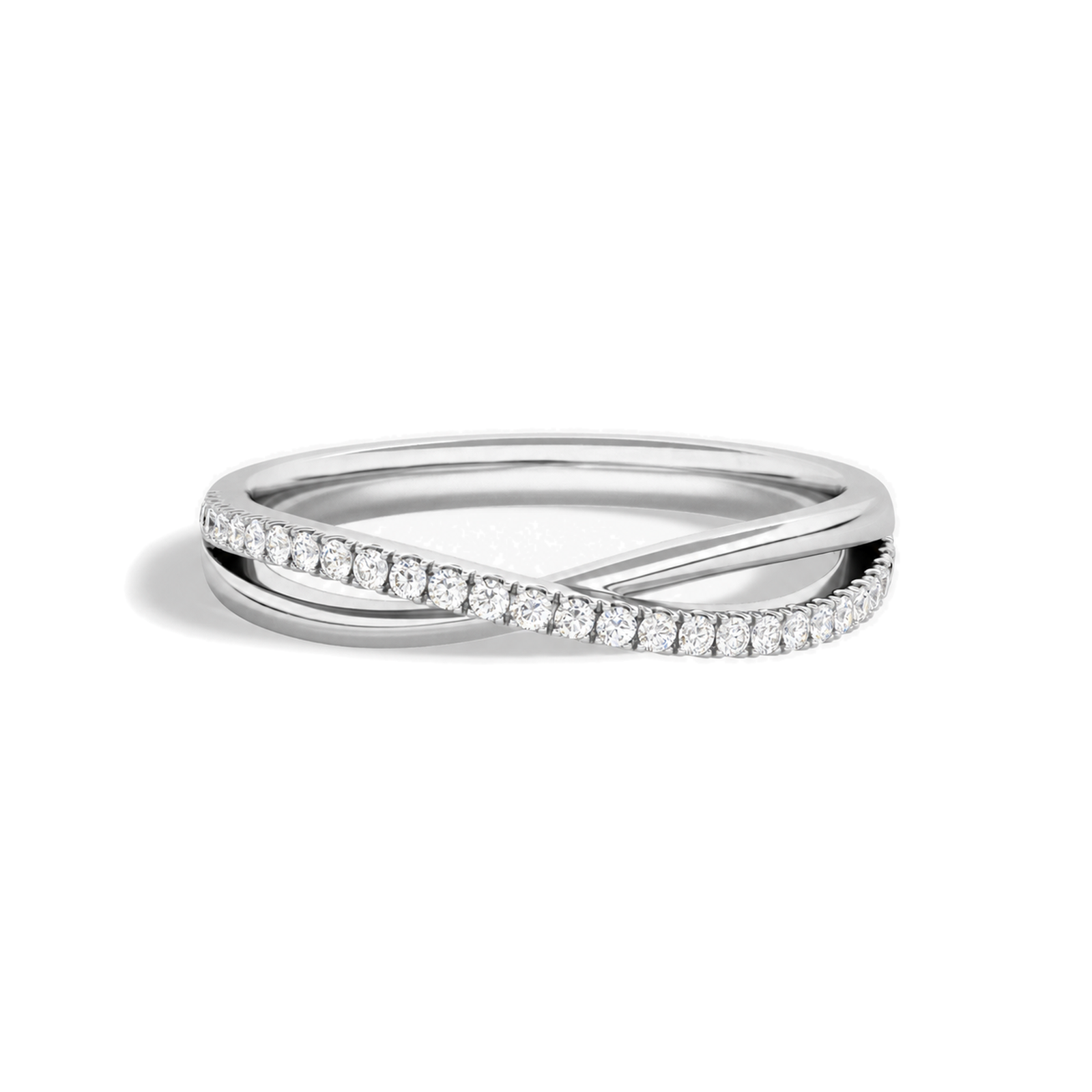
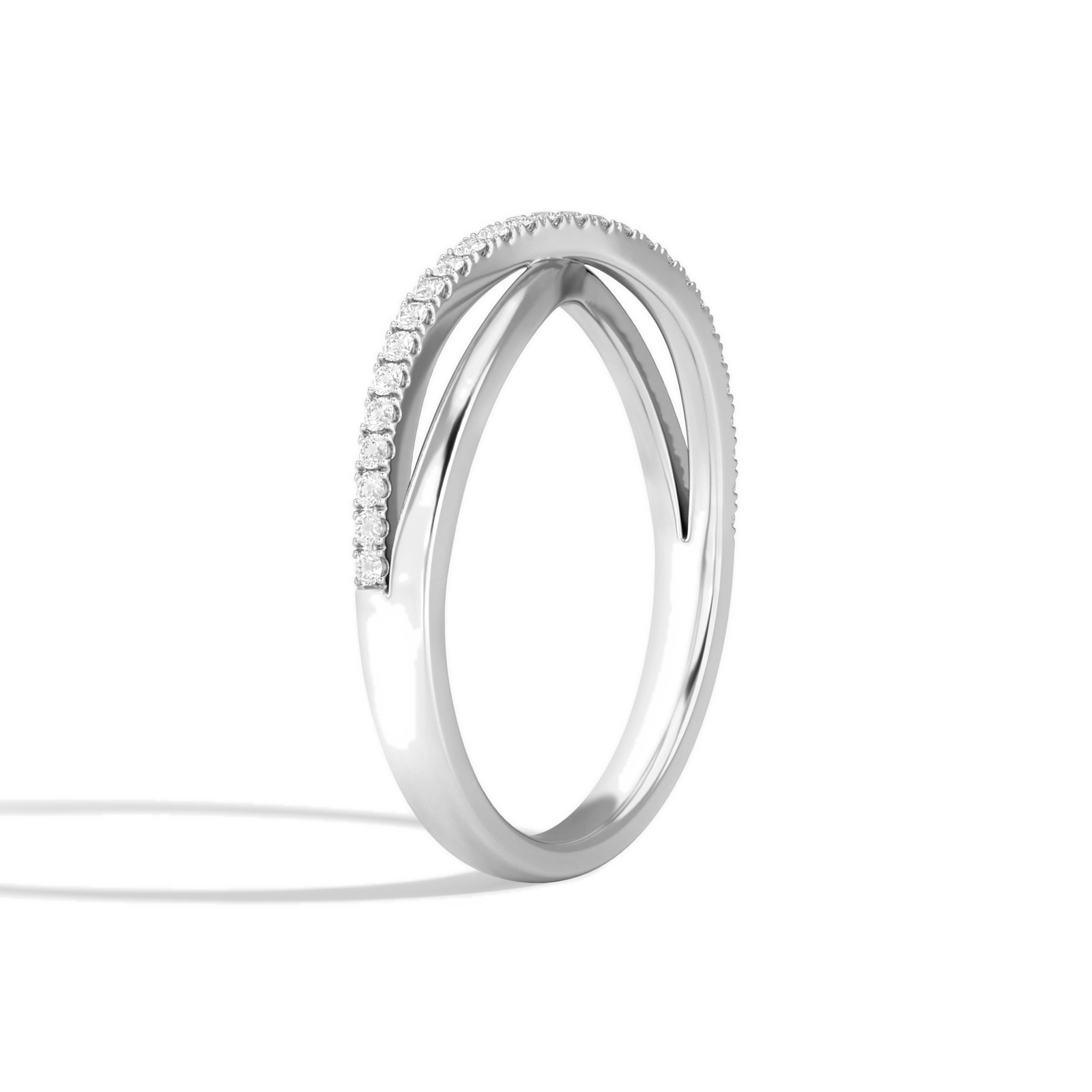
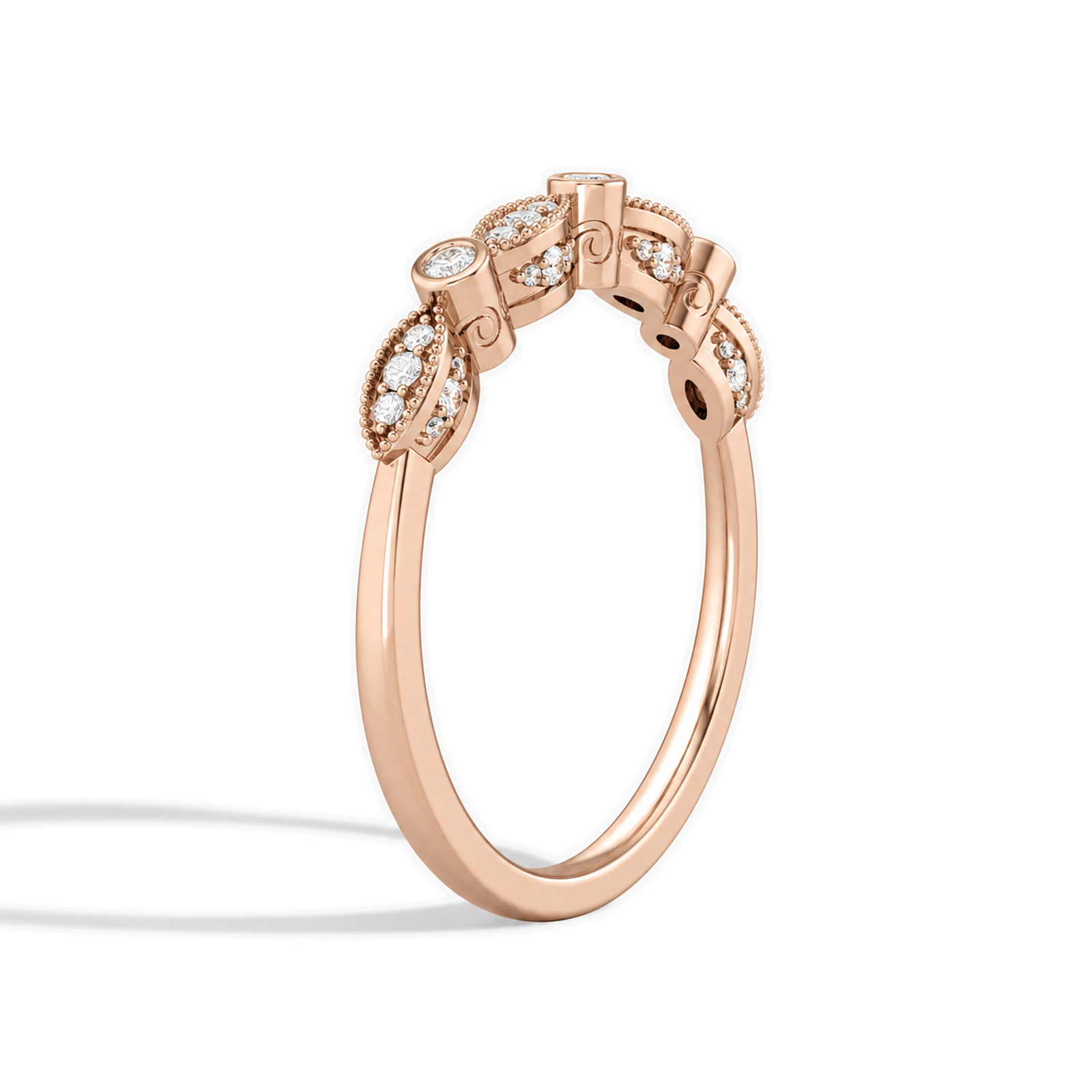
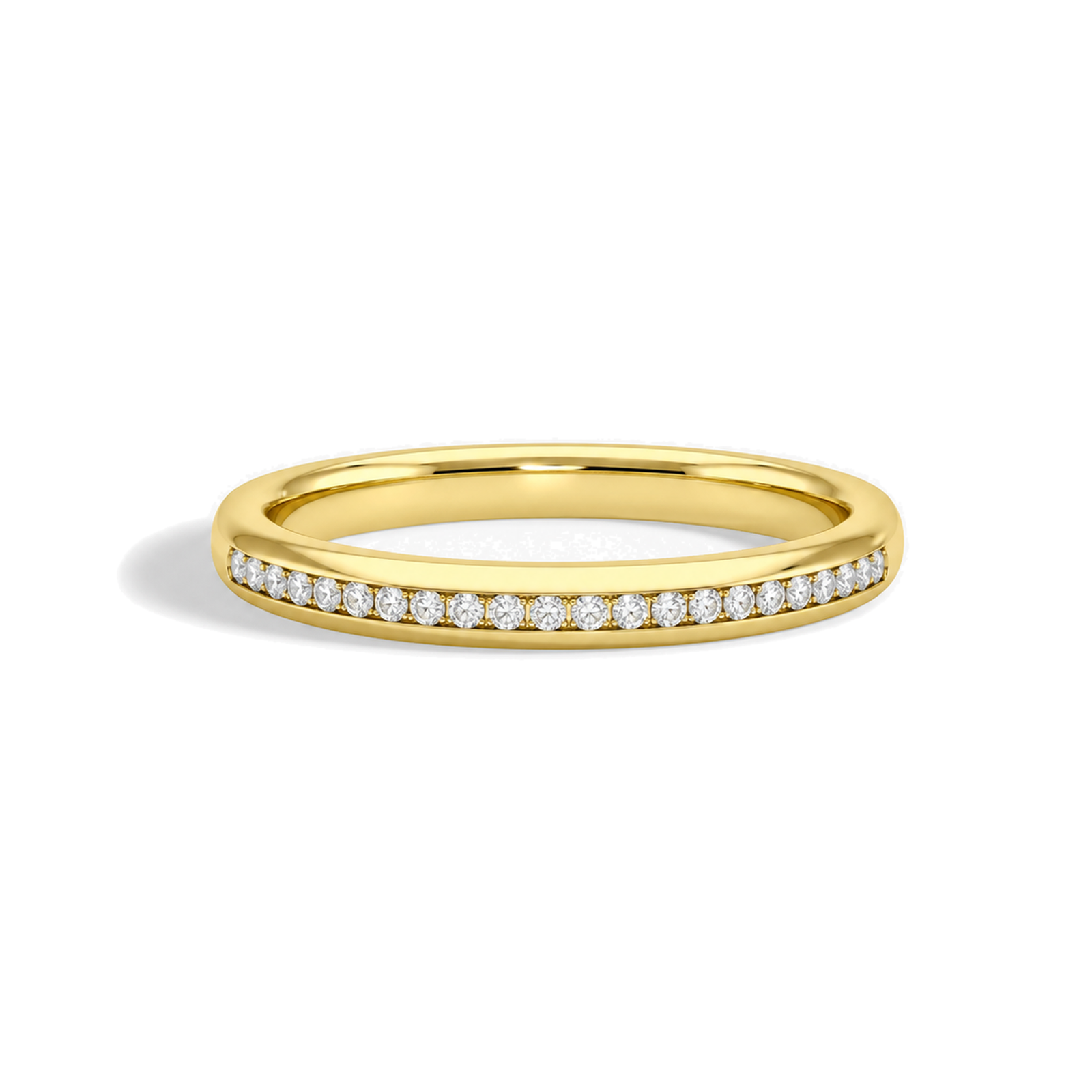
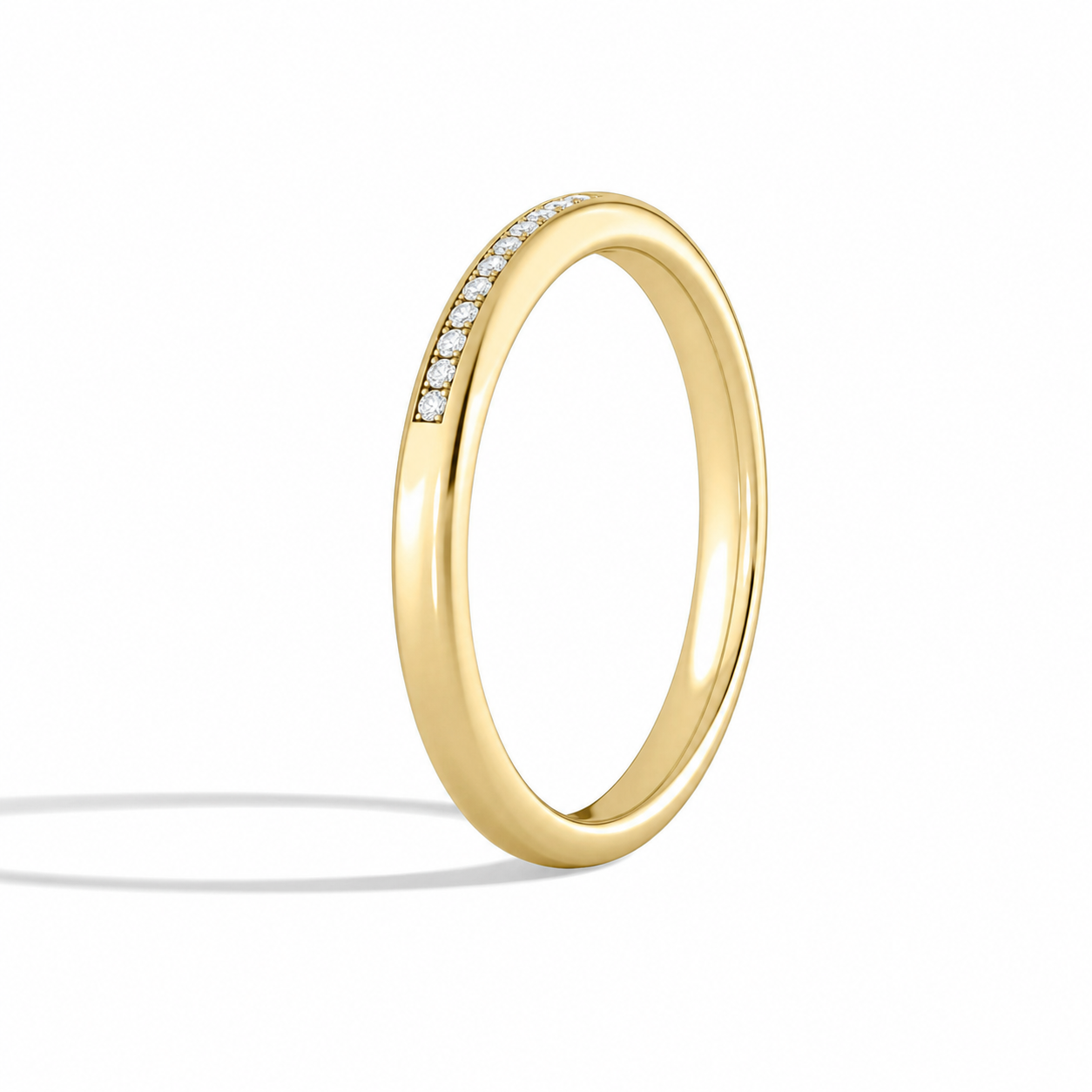
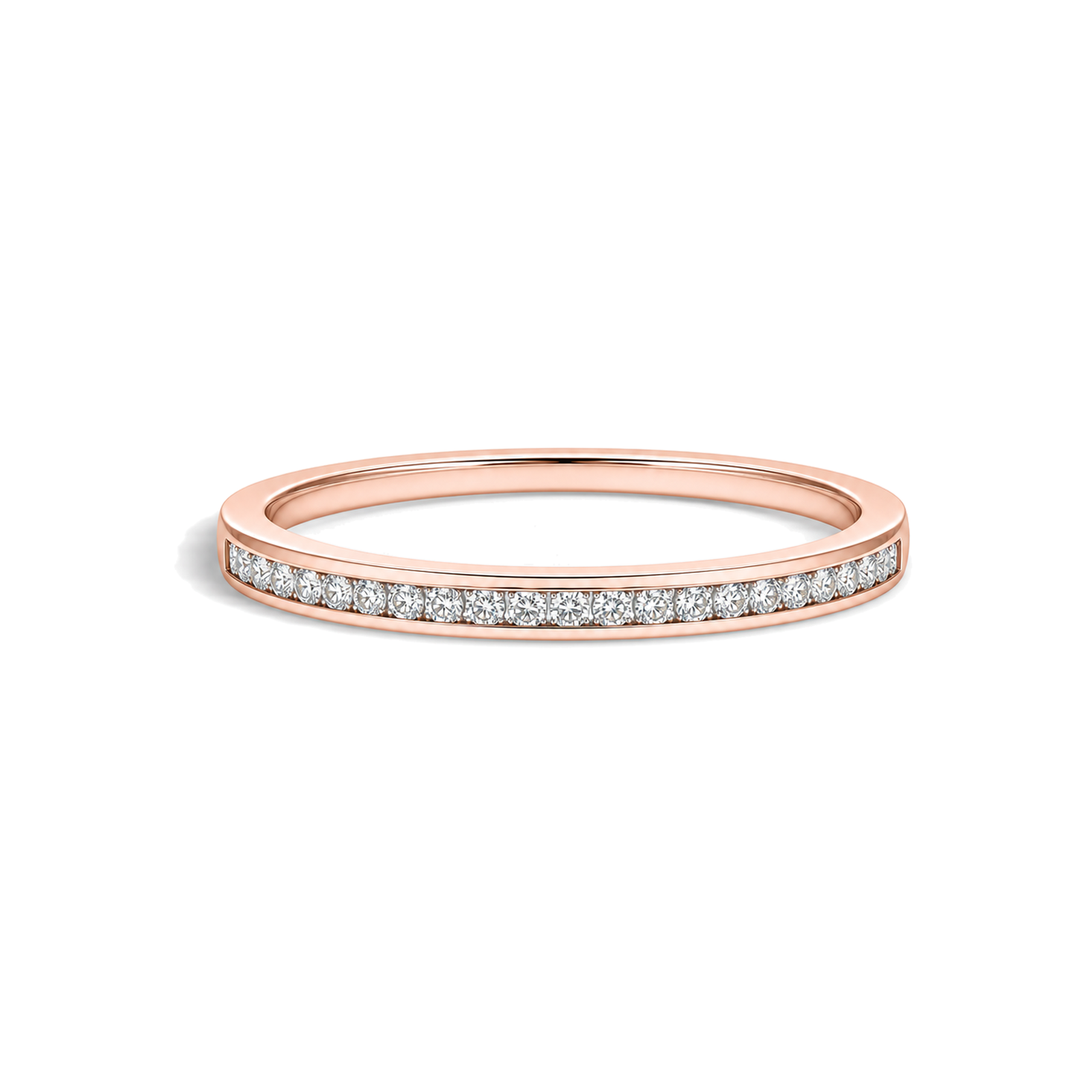
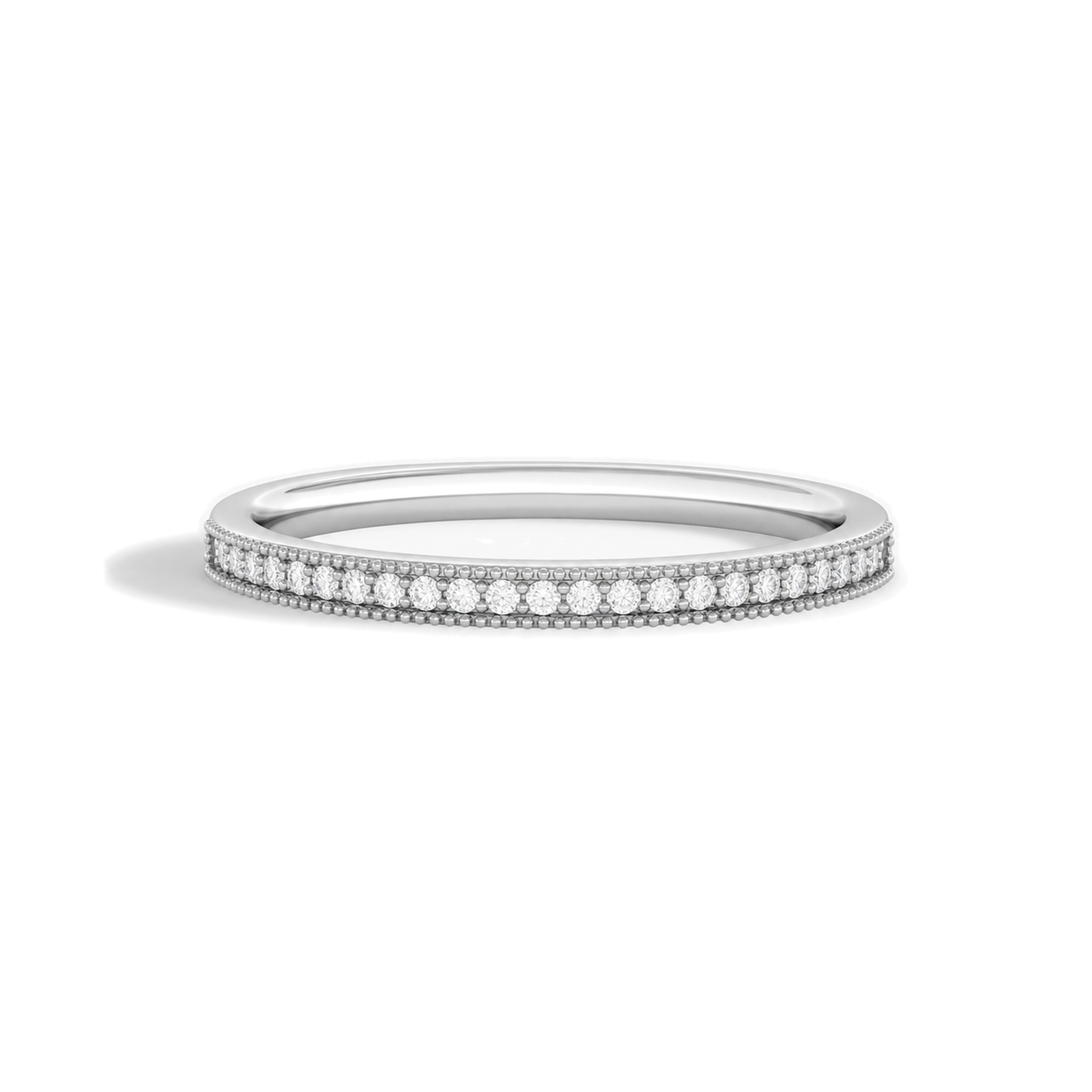
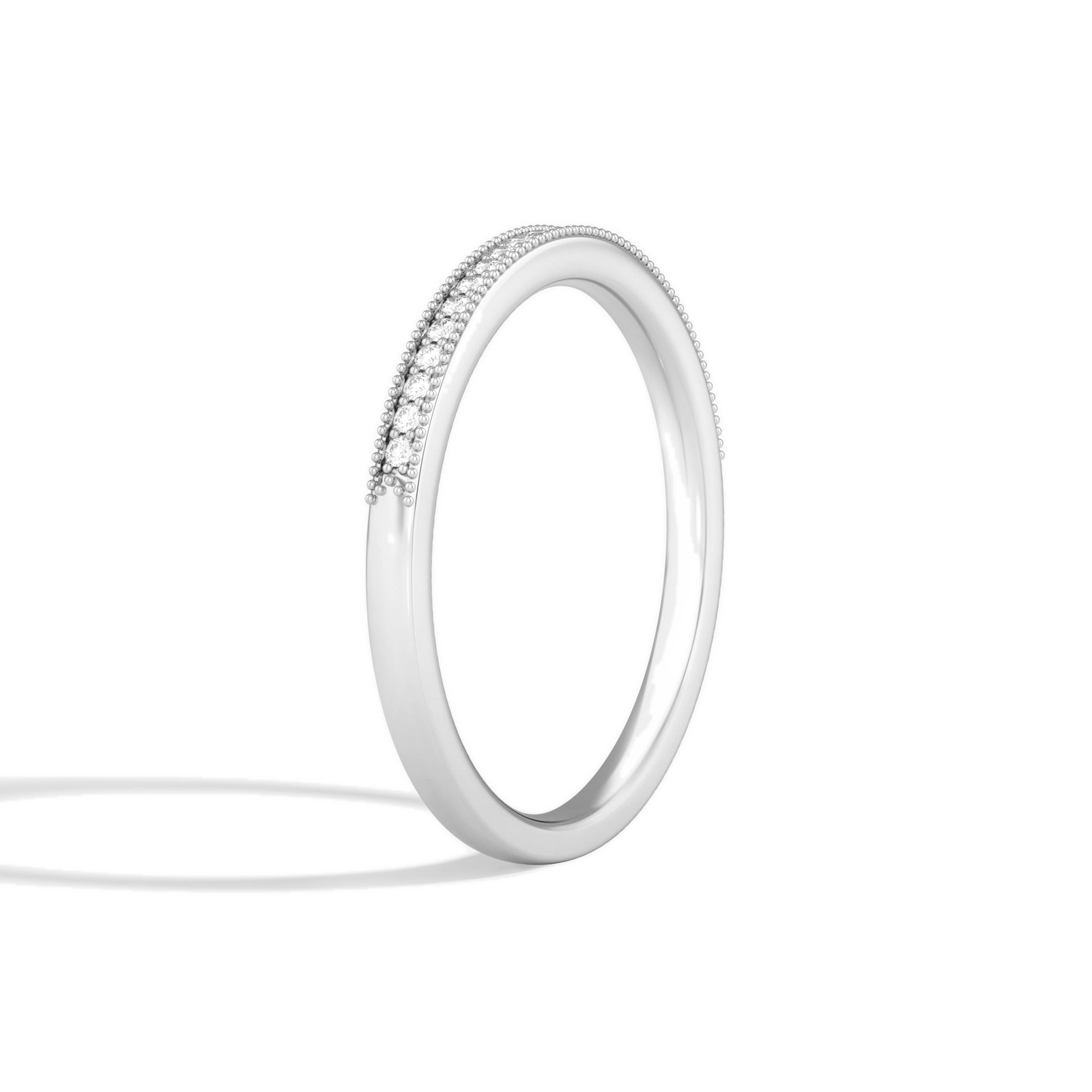
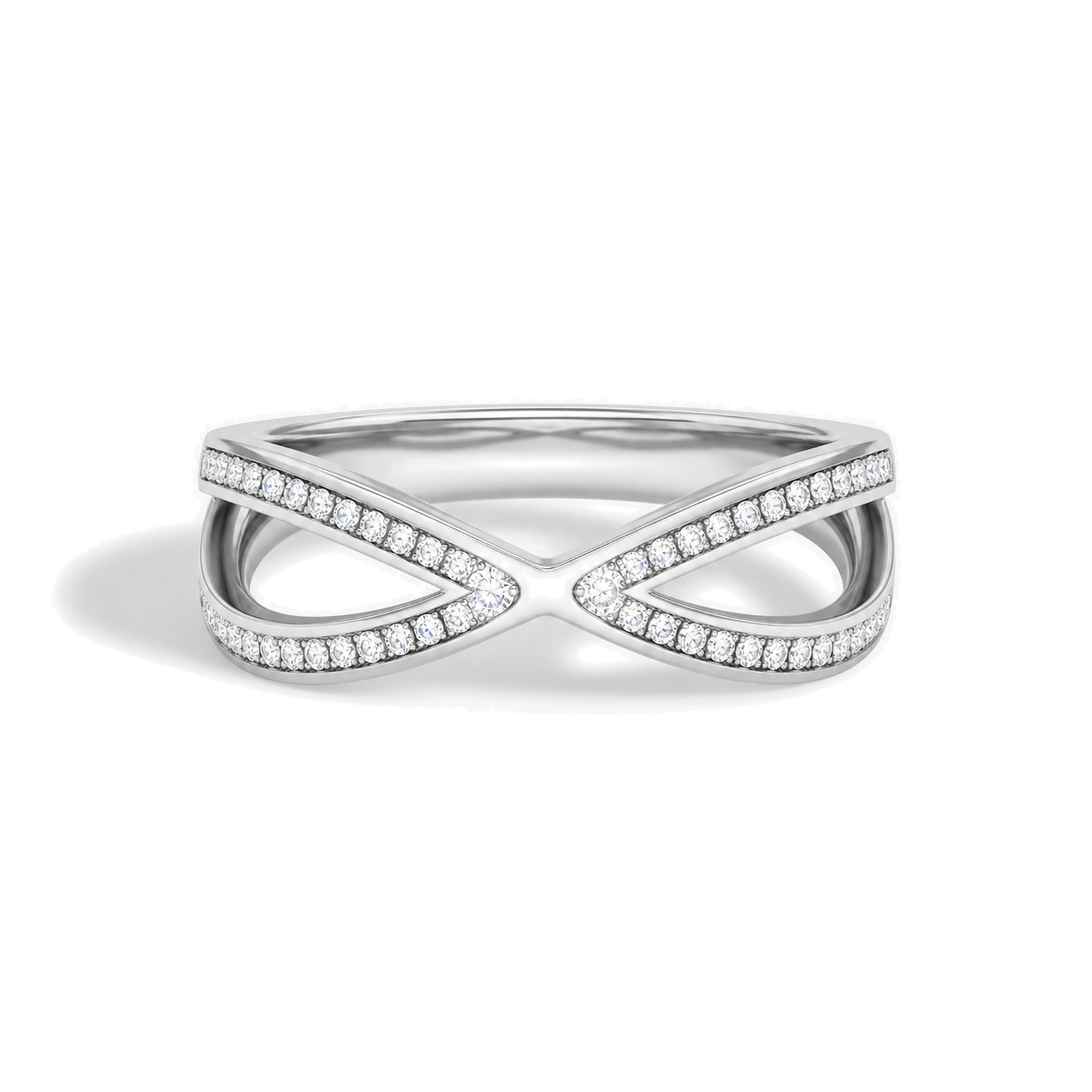
Eternity and coverage-led bands use repetition to create continuity. Channel and milgrain designs make metal part of the visible rhythm. Open and crossover rings create pause, direction, or asymmetry. Curved and contour forms answer the silhouette beside them, while comfort-fit and plain metal forms can hold meaning through restraint rather than diamond density.
The current assortment includes three titles identified as eternity, ten as half eternity or half coverage, three as three-quarter coverage, and fifty-three other structures. Those labels describe design organization, not emotional rank. A restrained band can mark a profound milestone; a more elaborate composition need not be reserved for a larger anniversary.
Proportion Is Read Across the Whole Hand
Current published average widths run from 1.4 to 5.0 mm. Width affects presence, but so do profile, stone size and count, spacing, edge treatment, metal visibility, and the rings beside it. A narrow ring can become visually significant through contrast or repetition; a wider ring can feel composed when its surface and setting are quiet.
Total Carat Weight options currently run from 1/9 to 3, distributed through markedly different structures. TCW does not reveal individual diamond size, count, coverage, setting height, or face-up balance. Compare it only with the complete design and the selected size, not as a scale for the importance of the occasion.
Shape and Metal Set the Visual Register
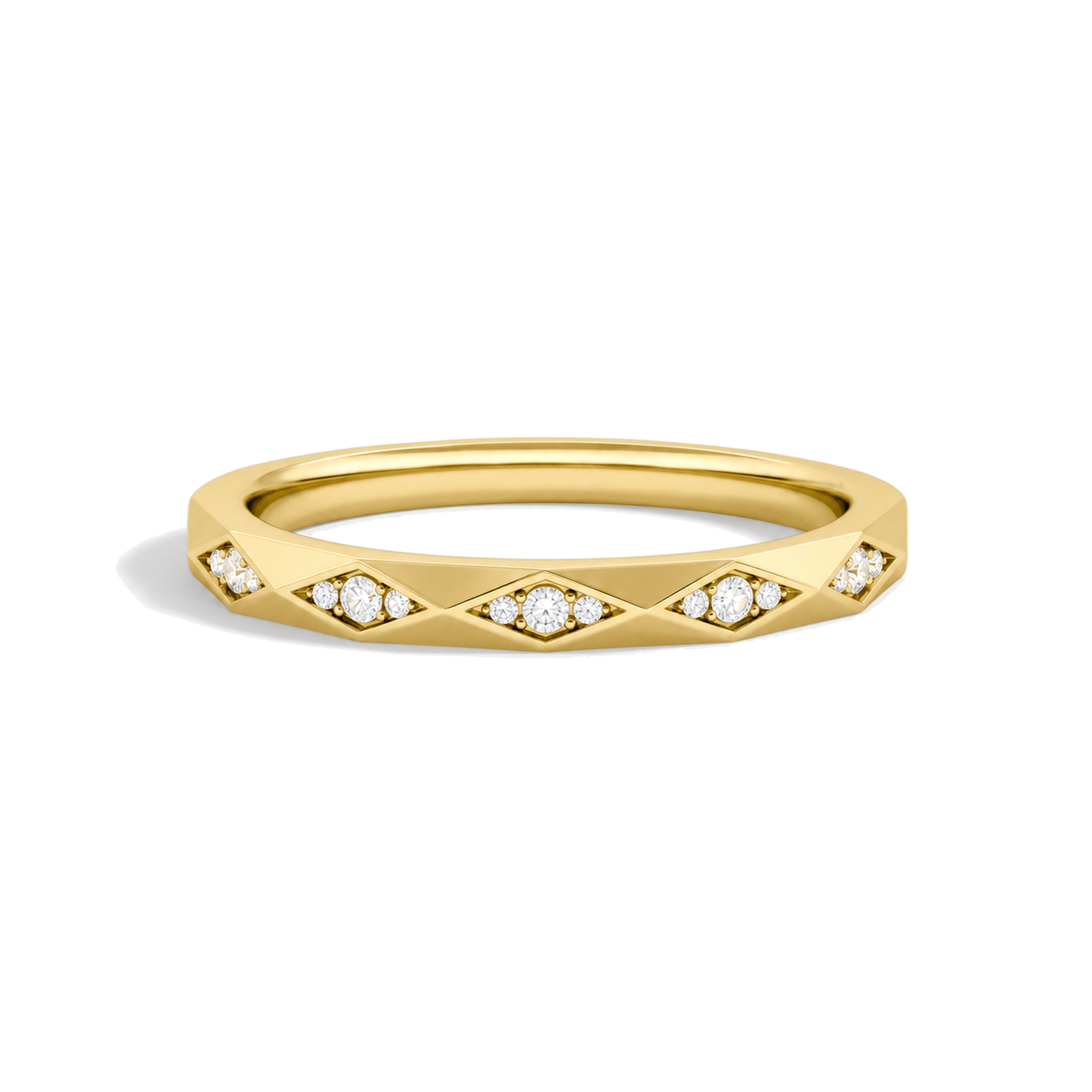
Among products with a named diamond shape in current public details, Round is most prevalent, with Marquise, Trapezoid, Princess, Emerald, and Heart also represented; eight products do not name a shape in the same field. Elongated and angular forms can create cadence or direction, while rounds often build a more continuous sequence. The actual effect depends on setting, orientation, spacing, and scale.
Current cards represent 14K White, Yellow, and Rose Gold. Metal may coordinate with an existing set or create a deliberate interval of color. Matching color labels do not prove identical alloy, finish, rhodium treatment, age, or surface condition, and mixed-metal wear is an aesthetic choice rather than a compatibility guarantee.
Fit Must Account for the Complete Arrangement
Measure the intended finger at relevant times and consider the total width of every ring that may be worn together. A broader combined stack can feel different from one ring even when each piece shares a nominal size. Knuckle, finger base, temperature, swelling, inner profile, and ring width all influence fit; no universal adjustment should replace product-specific guidance.
Resizing must be assessed by construction. Full or extended diamond coverage, channels, engraving, open forms, symmetry, and specialized settings can limit or complicate alteration. Do not promise that an anniversary ring can be resized merely because another ring in the Collection can.
Personalization Should Belong to the Story
An engraving, selected metal, changed diamond rhythm, revised contour, or custom proportion can make the connection more specific when technically feasible. The most meaningful detail need not be visible from across the room; it may be a date, phrase, spacing decision, or relationship to an existing ring understood by the wearer.
Custom possibilities require product-level review and do not imply that every design, size, material, diamond arrangement, timeline, or price can be changed. Confirm the selected ring’s specifications, documentation, alteration limits, and production details before treating an idea as available.
Documentation and Care Continue the Choice
Burvonti uses responsibly sourced lab-grown diamonds and supports independent grading and certification where applicable. One report does not automatically cover every accent diamond or identify the finished ring. Confirm what the selected documentation describes and how any stated color, clarity, shape, and Total Carat Weight relate to the complete piece.
Care should follow the construction. Use gentle cleaning, avoid harsh chemical and impact assumptions, and inspect diamonds, settings, edges, channels, open ends, and contact points within a stack. Store the ring without abrasive contact. A milestone ring carries meaning; that meaning does not make it exempt from ordinary wear or maintenance.
Frequently Asked Questions
What is an anniversary ring?
It is a ring chosen to mark time, a relationship milestone, or another shared chapter. It is an occasion category, not one required construction or stone pattern.
Which anniversary is appropriate for a diamond ring?
Any milestone may be appropriate. Traditional lists can inspire a choice, but Burvonti does not reserve diamond rings for a prescribed anniversary year.
Does an anniversary ring replace a wedding band?
Not necessarily. It may join an existing set, be worn alone, move to another hand, or take on a different role according to the wearer.
Which finger should hold an anniversary ring?
There is no required finger. Choose according to fit, existing rings, comfort, symbolism, and how the wearer wants the piece to function.
Can an anniversary ring be worn with an engagement ring?
Yes when contours, heights, settings, widths, and contact points work together. A visual match does not guarantee a flush or abrasion-free fit.
Should an anniversary ring match the wedding set?
It may coordinate or intentionally contrast. Matching metal labels alone do not establish identical alloy, finish, profile, or mechanical compatibility.
Can an anniversary ring be worn on the right hand?
Yes. Placement is personal and may change with occasion, fit, stack composition, or preference.
Are anniversary rings always eternity bands?
No. Current designs also include half and three-quarter coverage, channel, contour, curved, open, stacking, crossover, milgrain, accented, and plain forms.
How many Anniversary Rings are currently included?
The public Collection contains 69 products. Its current membership exactly matches the parent Lab-Grown Diamond Ring Collection.
Are these rings exclusive to the Anniversary Collection?
No. All 69 current product cards also appear in the parent Ring Collection; this page provides an occasion-led selection framework.
How do I choose an anniversary ring as a surprise?
Verify the intended finger and size, study existing ring dimensions and preferences, and confirm product-specific alteration and service facts before ordering.
What ring widths are currently represented?
Published average widths span 1.4 to 5.0 mm. Width should be read with profile, setting, diamond distribution, neighboring rings, and finger proportion.
What Total Carat Weights are currently represented?
Current options span 1/9 to 3 TCW across different designs. Total alone does not reveal count, individual size, coverage, profile, or visual presence.
Which diamond shapes are currently represented?
Named public details include Round, Marquise, Trapezoid, Princess, Emerald, and Heart. Eight current products do not name a shape in the same field.
Which metals are currently represented?
Current cards represent 14K White, Yellow, and Rose Gold. Exact alloy, finish, rhodium treatment, sensitivity, maintenance, and alternatives remain product-specific.
How should an anniversary ring fit within a stack?
Assess the combined width, contour, height, settings, edges, and contact through movement. No universal spacing or stacking order prevents all wear.
Can an anniversary ring be resized?
Possibly, but not universally. Coverage, channels, engraving, open construction, symmetry, settings, and requested size change can affect feasibility.
Can an anniversary ring be engraved or customized?
Engraving, metal, contour, proportion, or diamond arrangement may be possible after technical review; availability is not Collection-wide.
Are the lab-grown diamonds independently graded?
Independent grading and certification are supported where applicable. Confirm which diamonds and specifications the selected product’s documentation covers.
How should an anniversary ring be cared for?
Use gentle cleaning, store without abrasive contact, and inspect diamonds, settings, edges, channels, open ends, and stack contact points as appropriate.