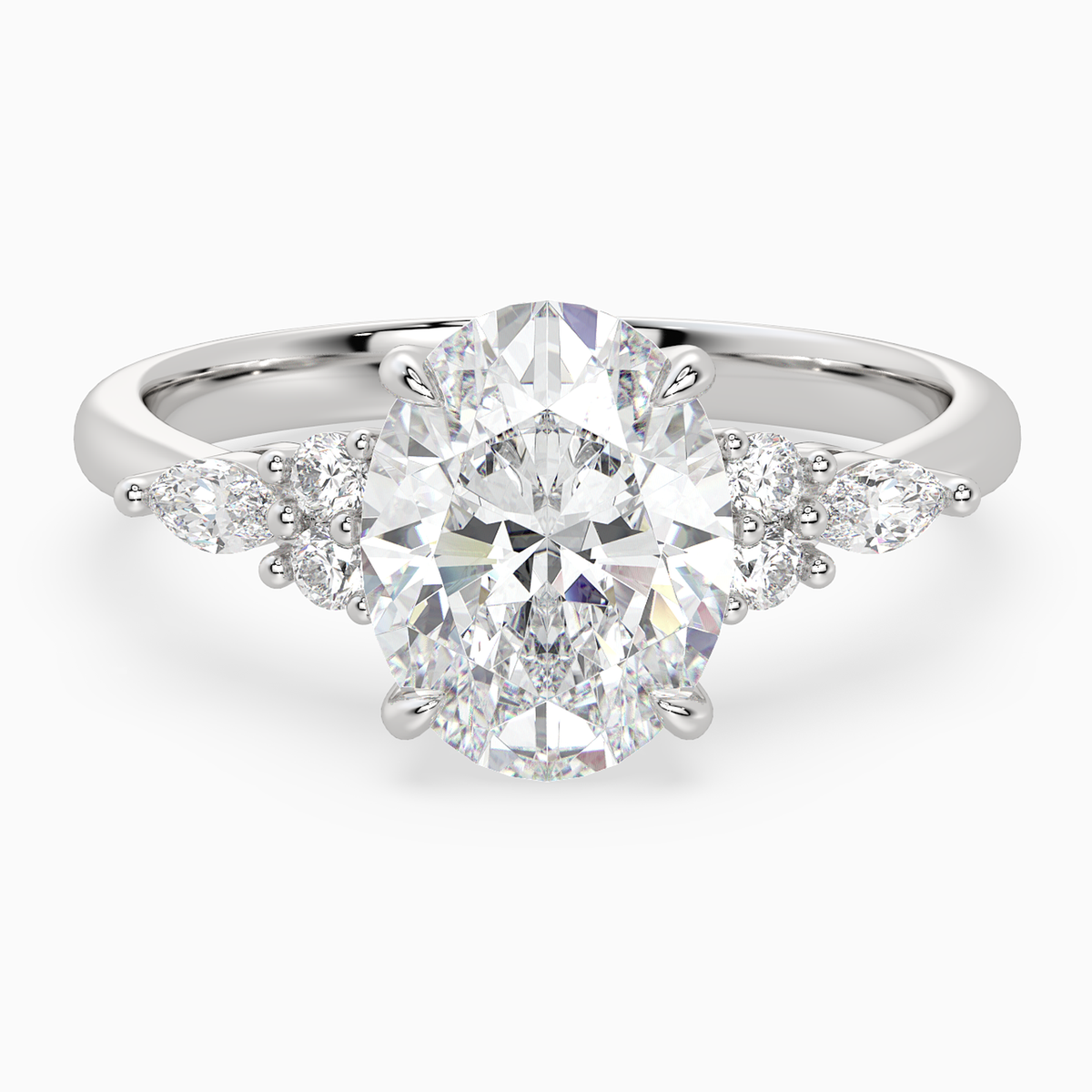
Colorless Diamonds: D-F
D, E, and F color diamonds show extremely little body color. They are a strong choice for shoppers who want the brightest white look, especially in platinum or white gold.
Diamond Education
Learn how the diamond color scale works, how much color the eye can actually see, and how to choose a grade that feels bright in the setting you love.
The quick answer
Diamond color describes how little body color is visible in a white diamond. A diamond with less yellow, brown, or gray tint receives a higher color grade, while a diamond with more visible warmth sits lower on the standard scale.
For most engagement rings, color is not about chasing the highest letter at any cost. It is about choosing a grade that looks bright in the finished ring, works with the metal tone, and leaves enough budget for the diamond qualities you value most.
Diamond color chart
The industry color scale begins at D, the most colorless grade for white diamonds, and moves through Z, where yellow or brown warmth is more visible. The difference between neighboring grades is subtle, especially when a diamond is viewed face-up in jewelry.
Color grades become easiest to compare when diamonds are viewed side by side under controlled lighting. In daily wear, the setting, lighting, and diamond cut all soften those differences.
Grade ranges
A useful diamond color guide should translate grade letters into real buying decisions. These ranges are the ones most shoppers compare when balancing brightness, size, and value.
D, E, and F color diamonds show extremely little body color. They are a strong choice for shoppers who want the brightest white look, especially in platinum or white gold.
G, H, I, and J color diamonds can look very white once set. This range often gives shoppers room to prioritize cut, carat weight, or a more detailed ring design.
K and lower grades show more warmth. They can be beautiful in yellow gold, rose gold, antique-inspired settings, or designs where a softer tone is part of the look.
What changes the look
A color grade is useful, but it is not the whole visual story. A diamond's face-up appearance can shift depending on design choices around the stone.
A well-cut diamond returns light efficiently, which can make subtle warmth less noticeable to the eye.
Color is easier to notice in larger diamonds because there is more material for light to pass through.
Step cuts such as emerald and asscher can reveal color more clearly than many brilliant-cut shapes.
White metals emphasize crisp whiteness, while yellow or rose gold can soften the look of near colorless warmth.
In three-stone, halo, or pave designs, keeping accent diamonds close in color helps the ring look cohesive.
Daylight, warm indoor light, and showroom lighting can all change how visible tint appears.
Buying framework
The best diamond color is the one that looks intentional in the finished piece. Start with the ring design, then decide how much colorlessness is worth to you.
Consider D-F, especially for platinum, white gold, larger center stones, or step-cut diamonds where color can be easier to see.
Consider G-H as a bright middle ground. These grades often look white in the setting while leaving room for cut and size.
Consider I-J or warmer grades with yellow or rose gold, vintage details, bezel settings, or designs with a softer visual tone.
Color and setting
Metal is one of the easiest ways to influence how diamond color is perceived. A setting can either spotlight whiteness or make a little warmth feel deliberate.
Need a second look?
For a solitaire, halo, three-stone, or custom design, the right color grade depends on more than a letter. Burvonti can help compare diamonds against the setting style, metal, and side-stone plan.
Request a Diamond ConsultationFAQs
There is no single best diamond color for every engagement ring. D-F is ideal for the most colorless look, while G-H often offers a bright appearance with better value. I-J can also work beautifully in yellow or rose gold when the setting supports a warmer tone.
Yes. G color is the highest grade in the near colorless range and often appears white to the unaided eye, especially in a well-cut diamond set in jewelry.
Most people cannot easily distinguish D and F color without a side-by-side comparison under controlled lighting. Both grades are considered colorless.
Not necessarily. H color often looks very white in many settings, and I color can be a smart choice in yellow or rose gold. The diamond's cut, size, and setting style matter a great deal.
Yes, color can be easier to notice as carat size increases. For larger center stones, many shoppers prefer G or better when they want a bright white appearance.
Side stones do not need to be identical, but they should be close enough that the ring looks harmonious. Large color differences between a center stone and accents can make one part of the ring appear warmer.
Diamond color measures visible body tint in a white diamond. Diamond clarity measures internal inclusions and surface blemishes. They are separate parts of the 4Cs and affect appearance in different ways.

Continue learning
Compare the decisions that shape beauty, value, certification, and ring design.
Understand cut, color, clarity, and carat with a practical buying lens.
Choose a shape based on brilliance, finger coverage, style, and setting fit.