
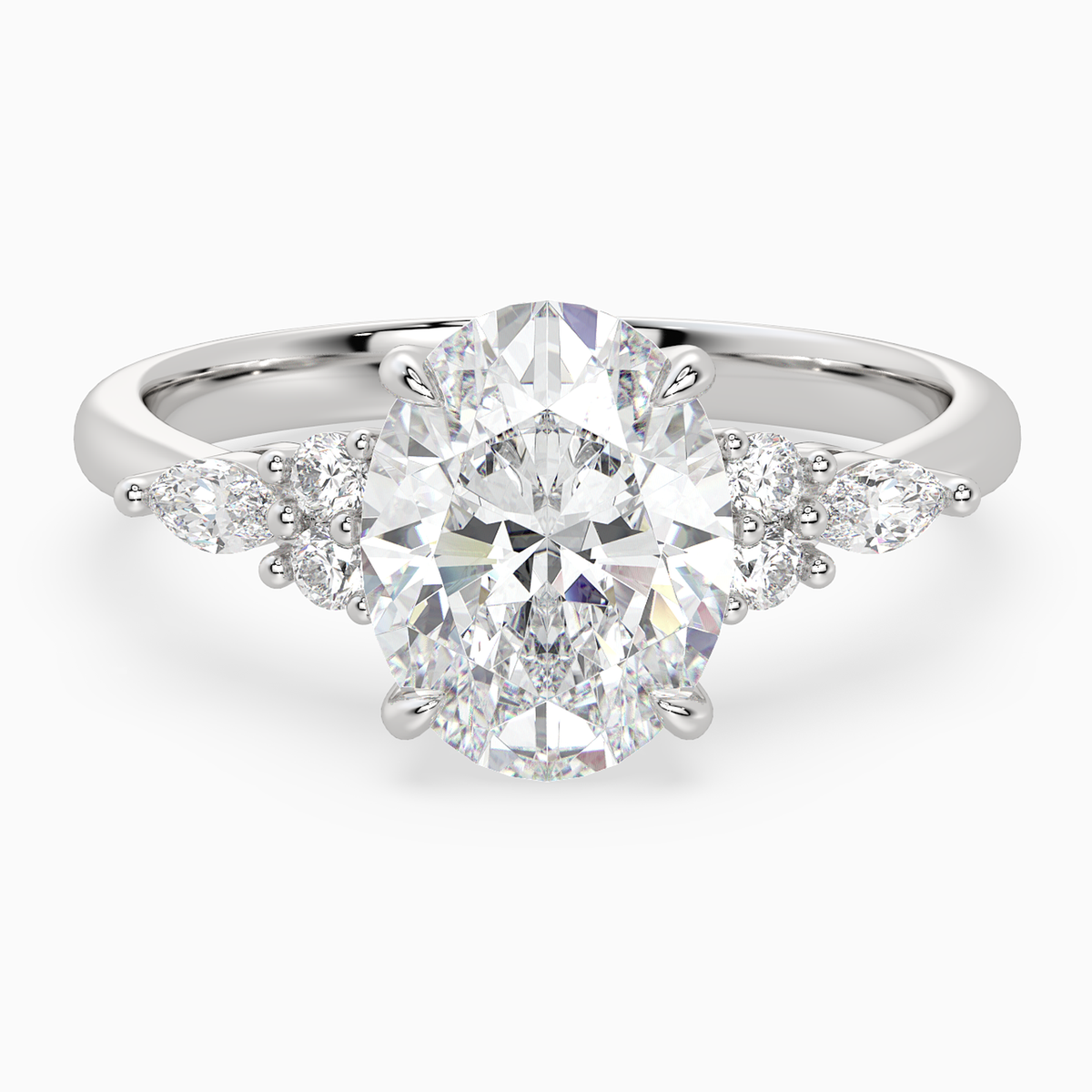


Lab Grown Diamond Halo Necklaces
Light gathers around the center, then continues through frame, bail or twist. Explore halo necklaces through shape, scale and structure.


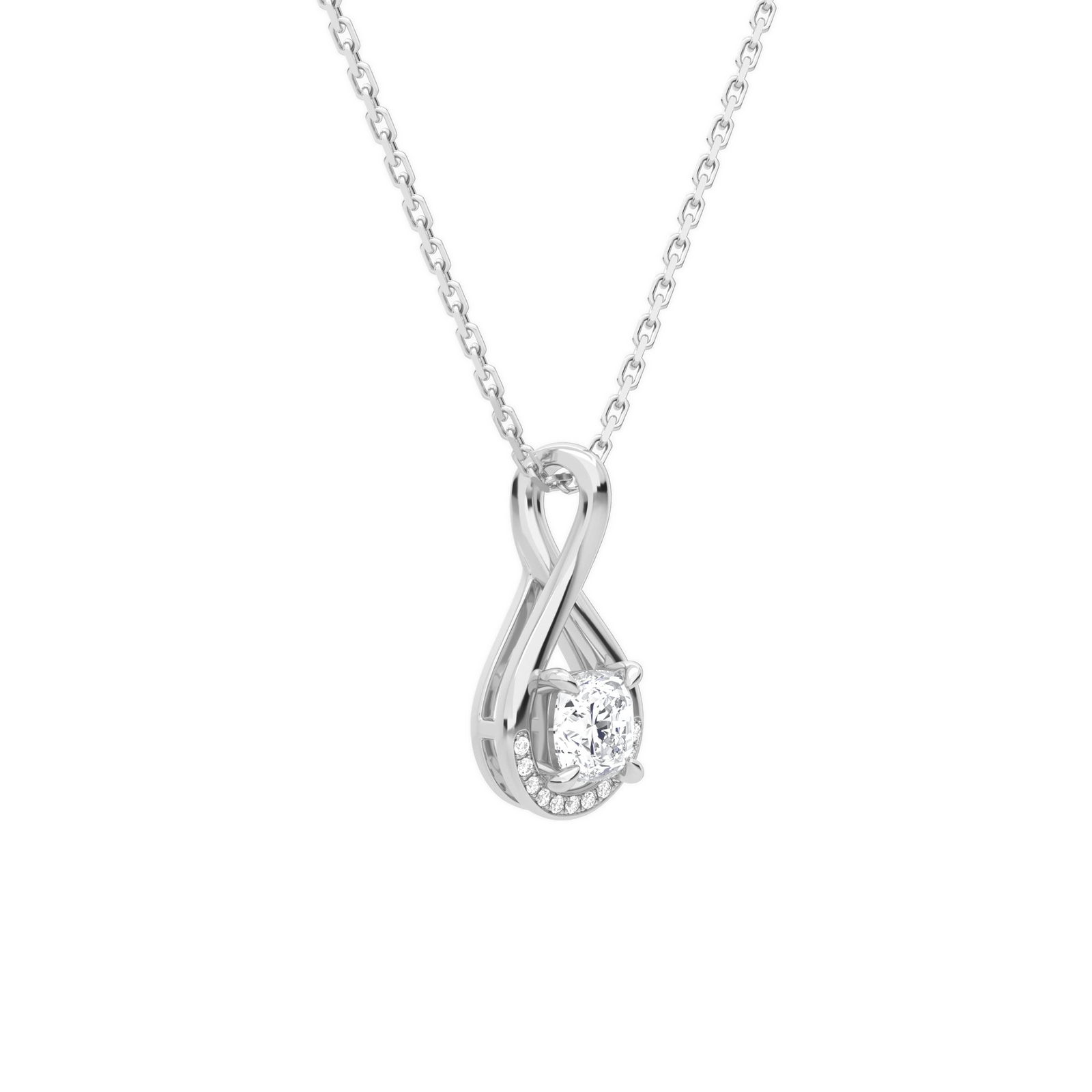


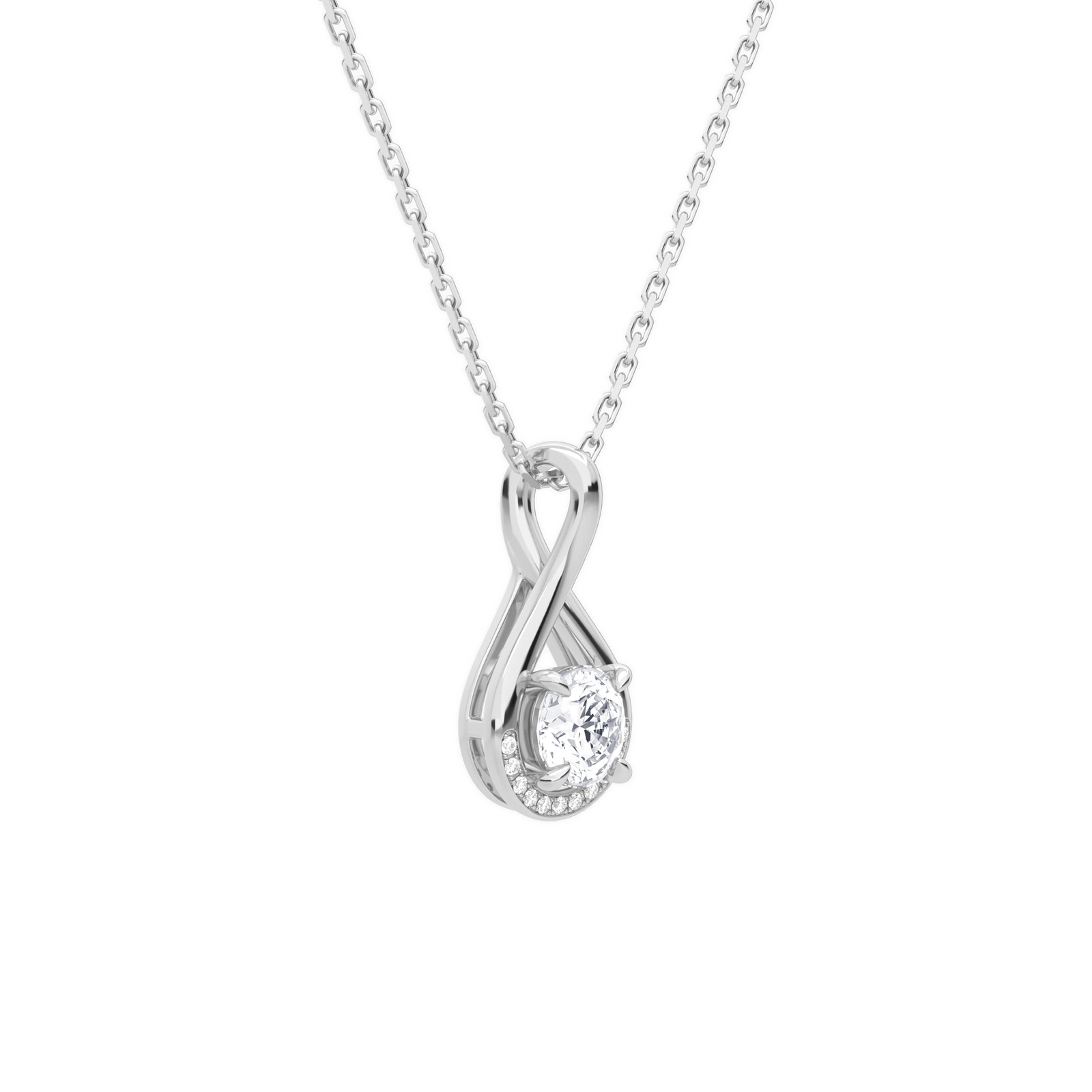


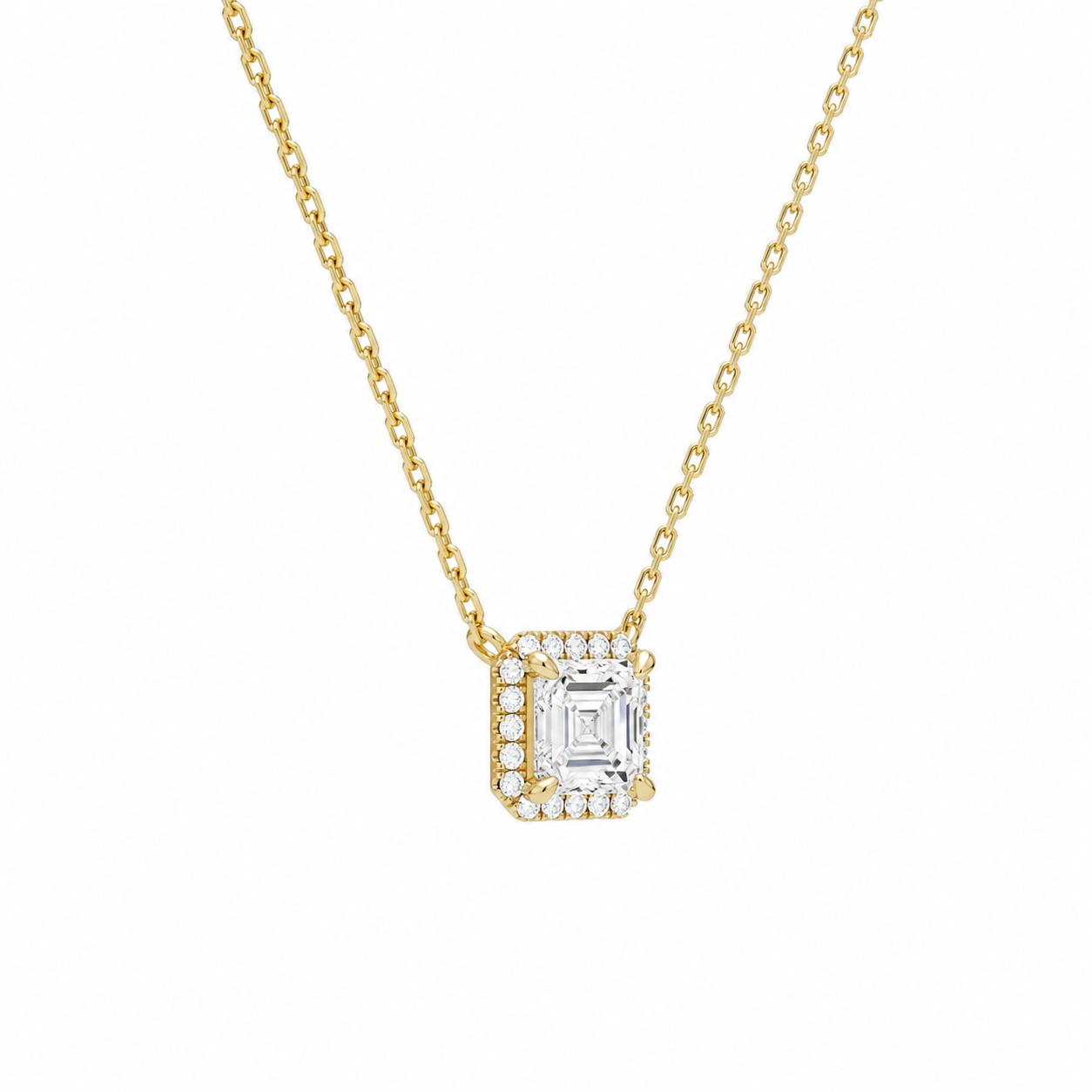

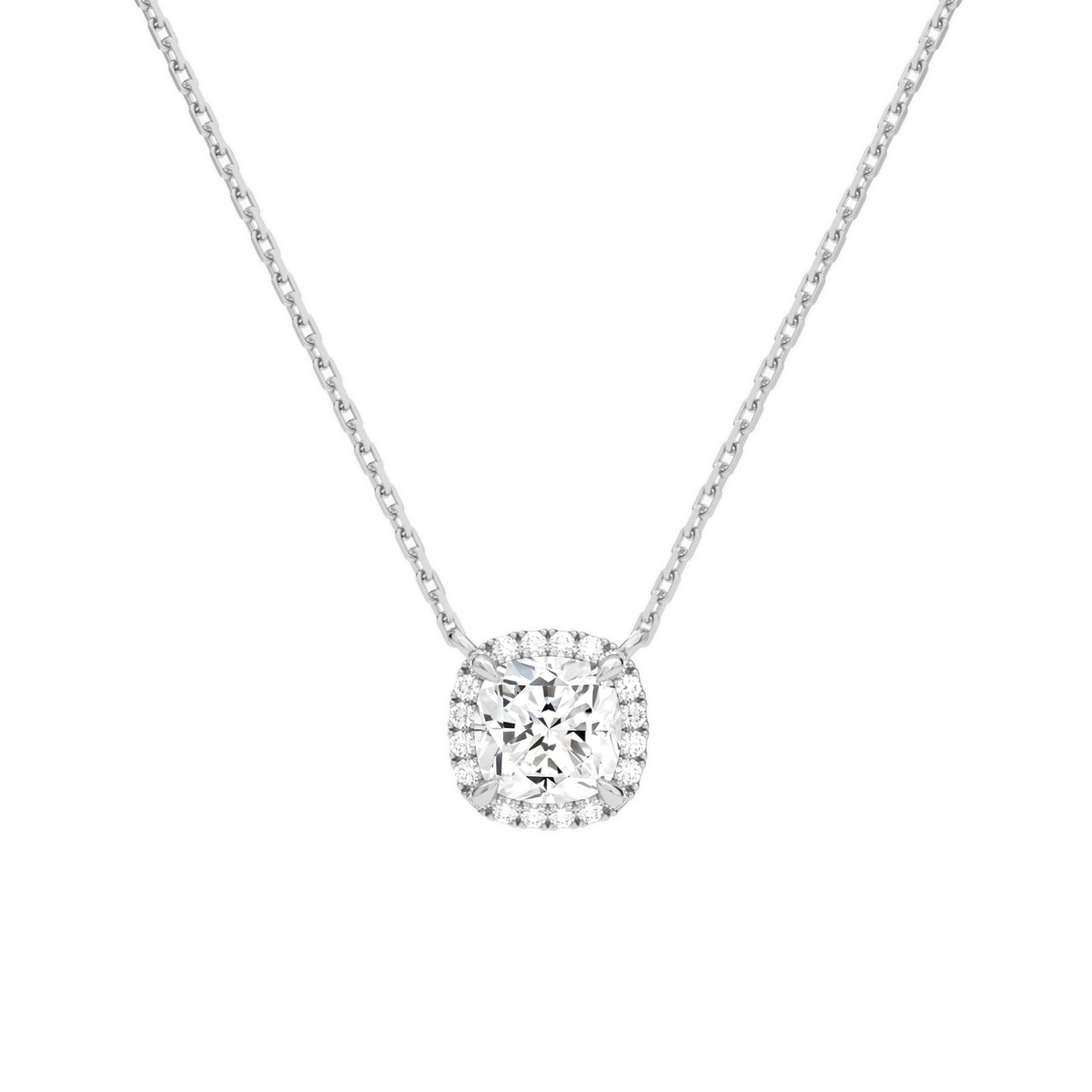
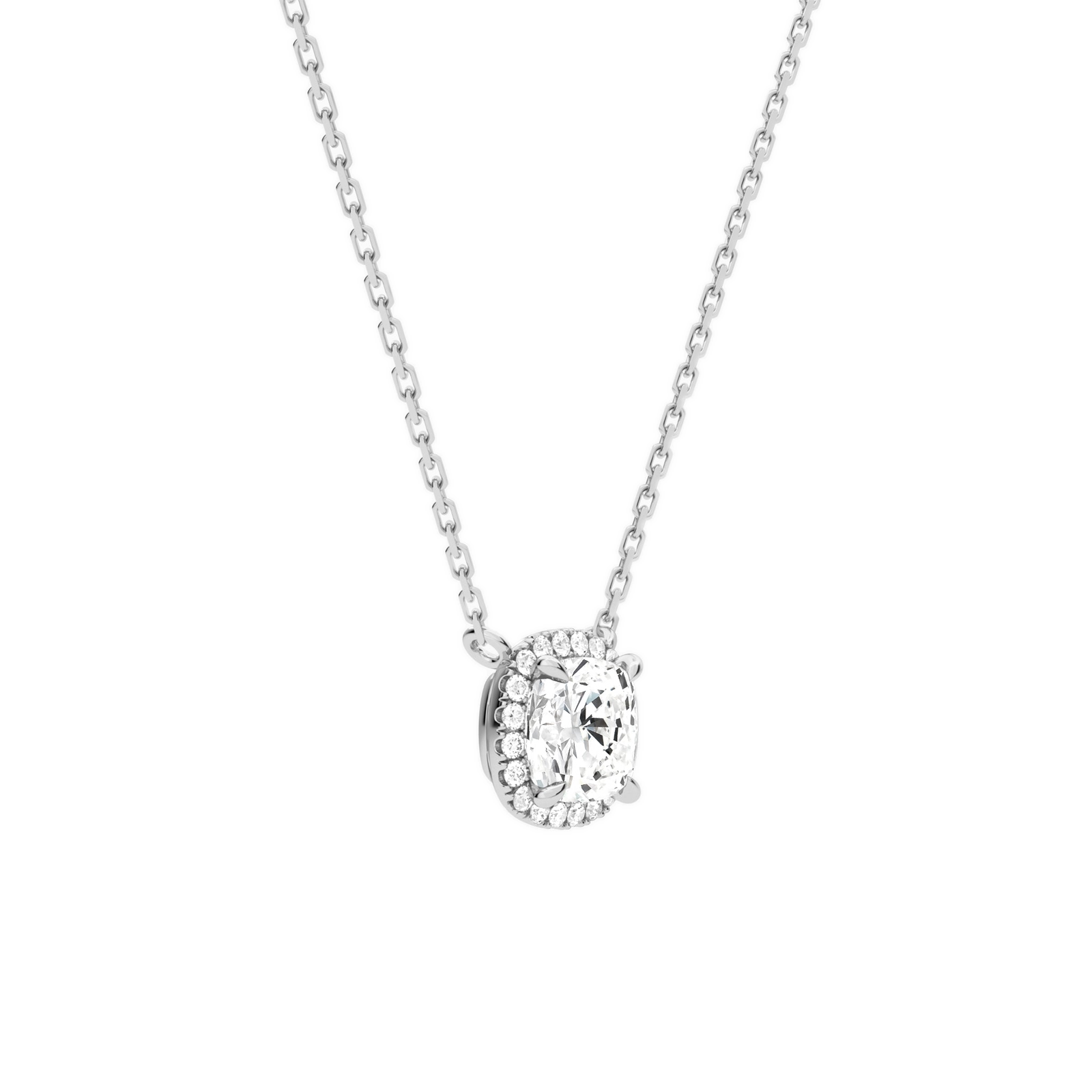

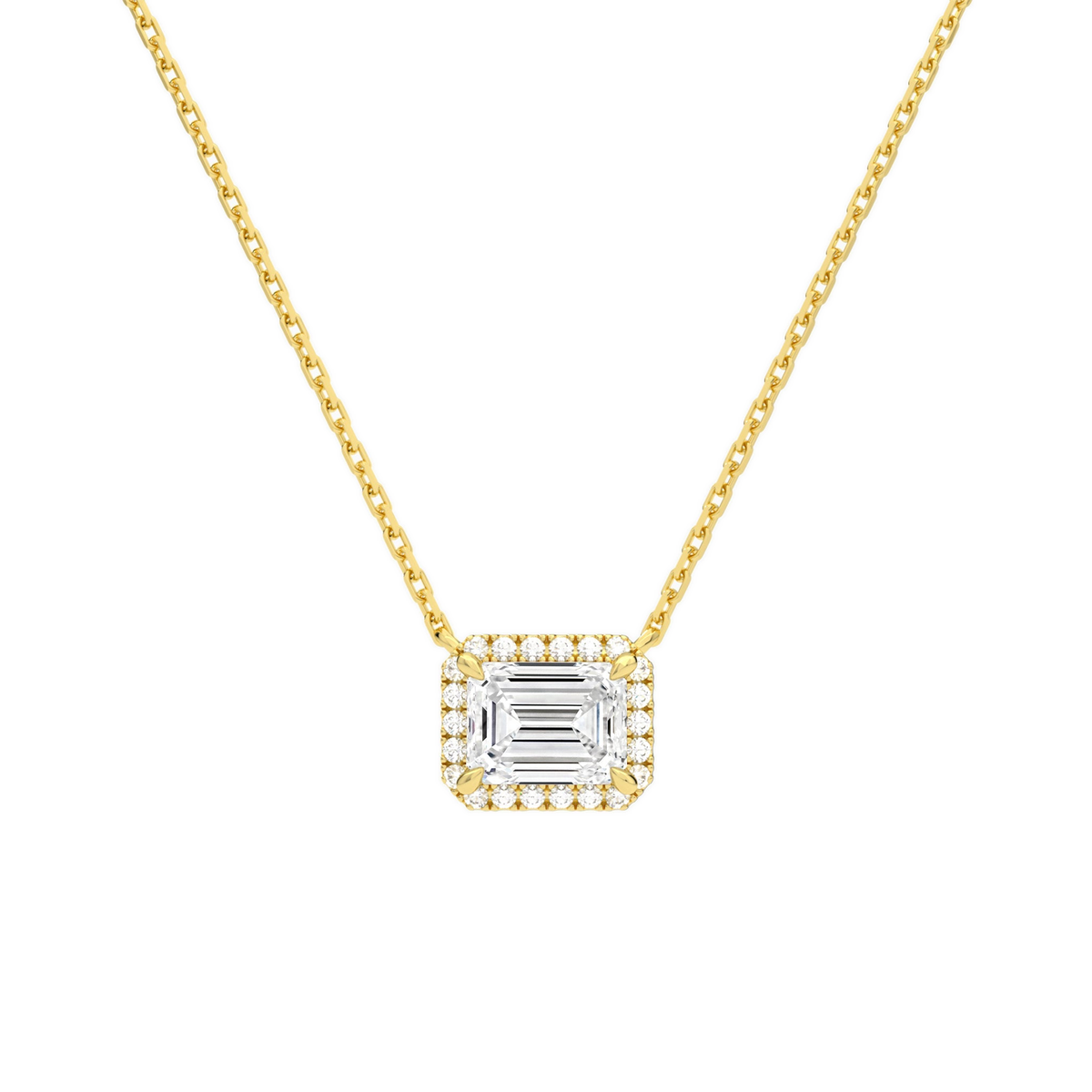
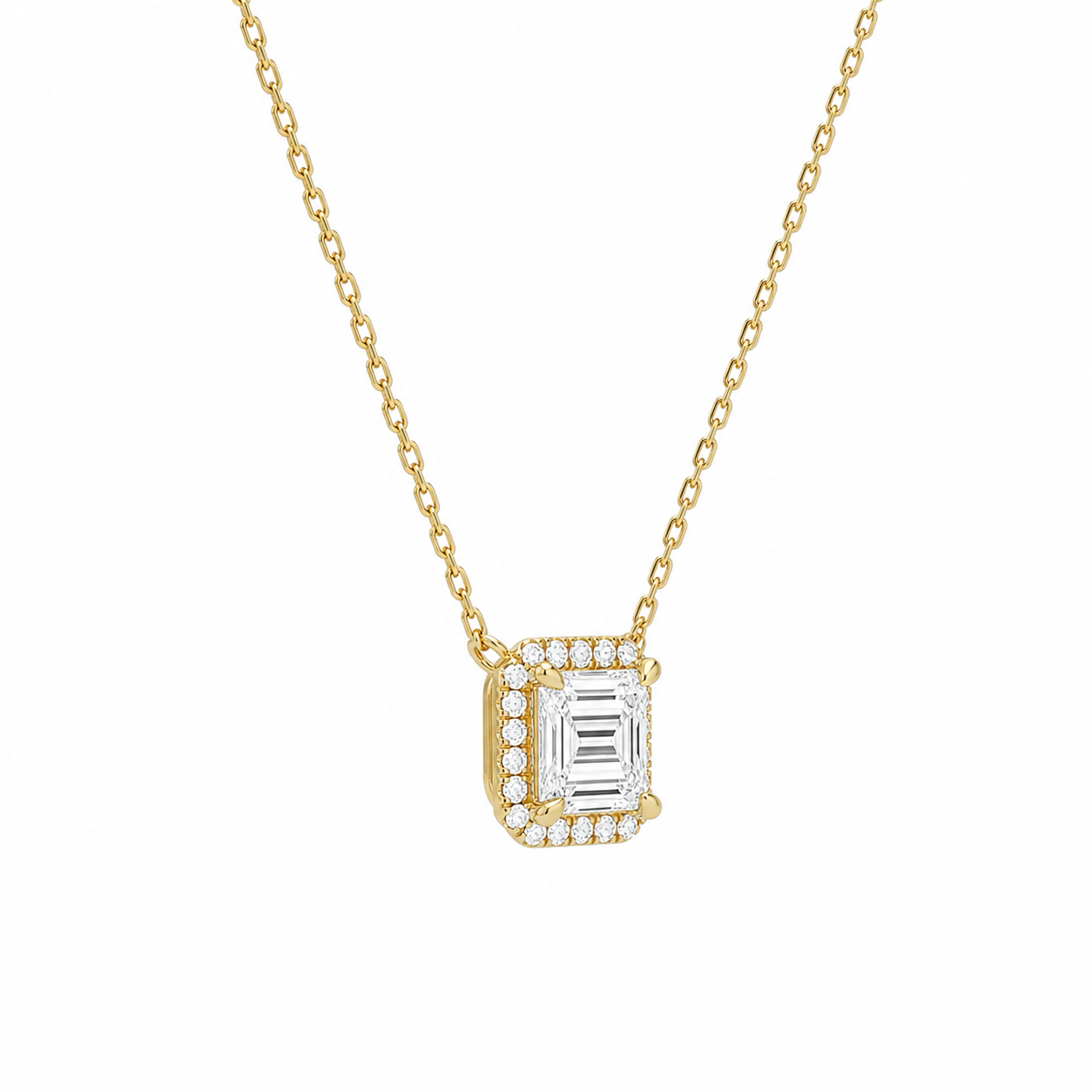
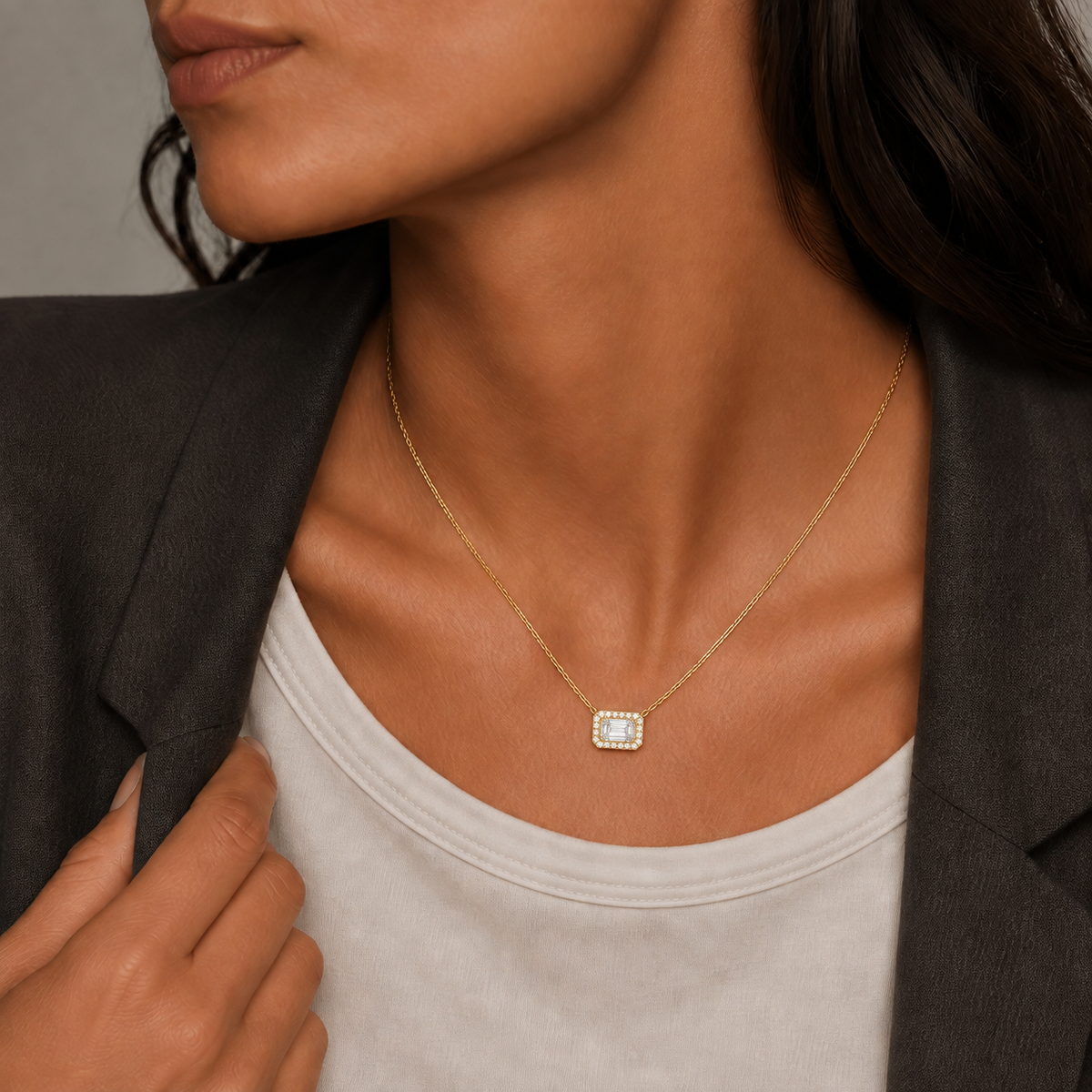
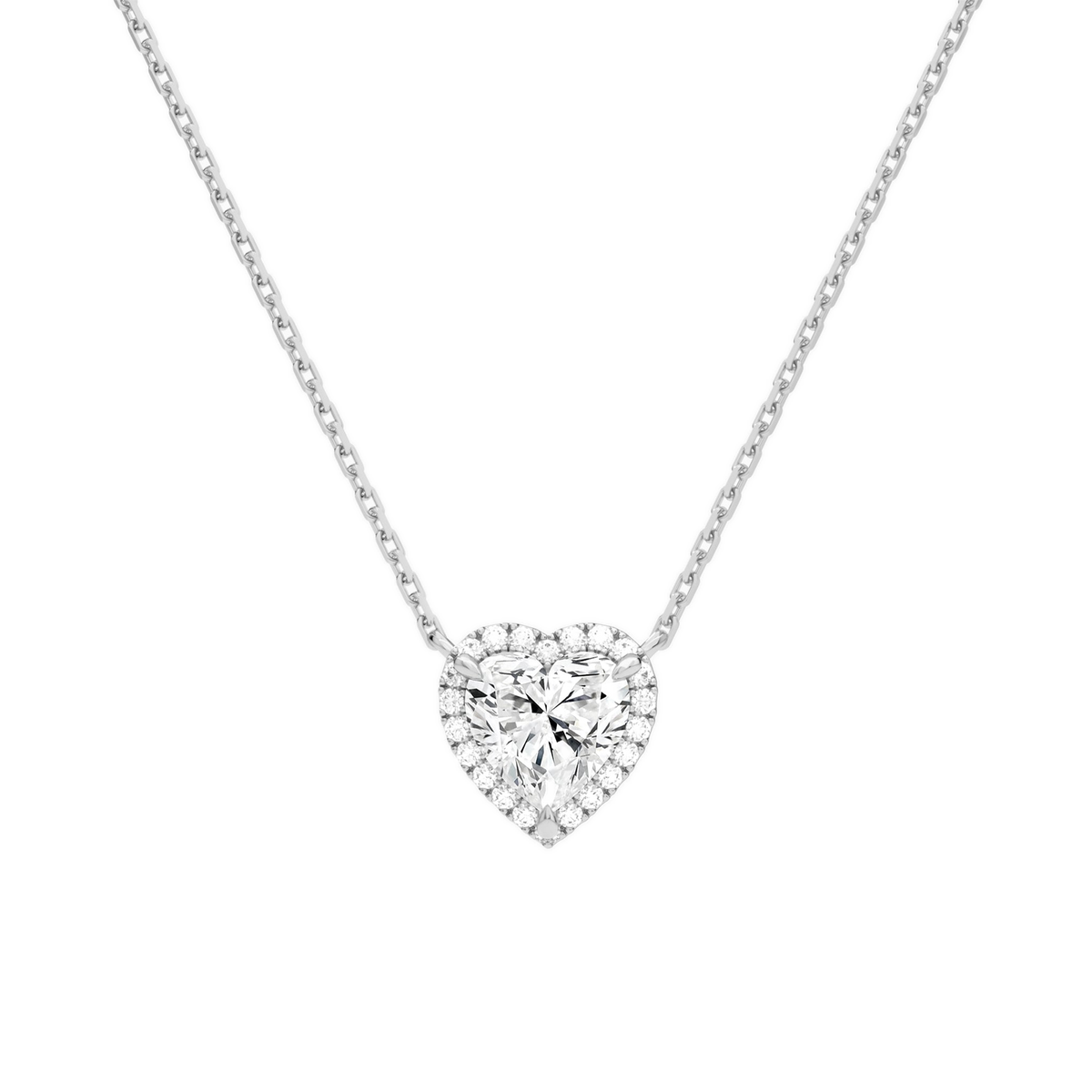
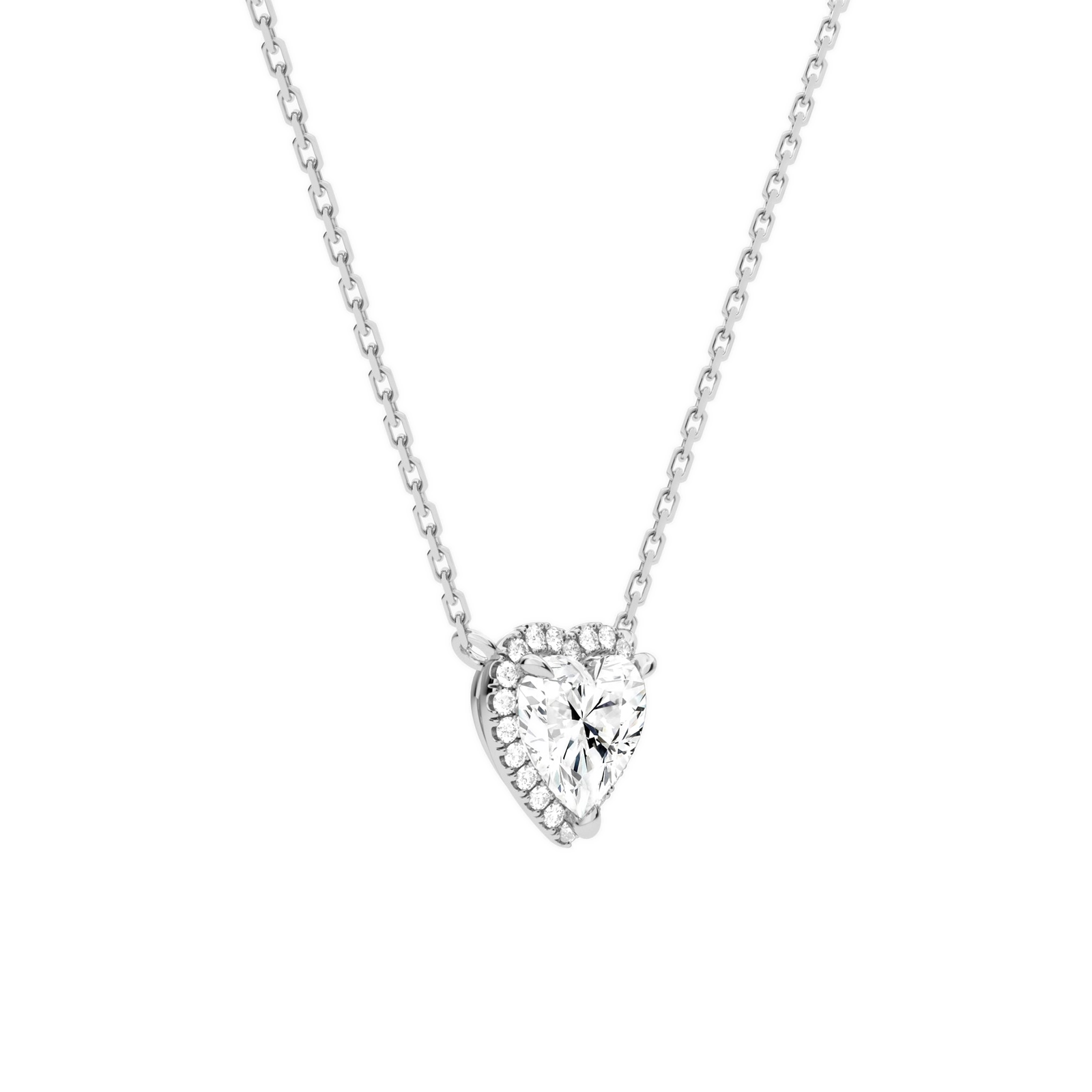
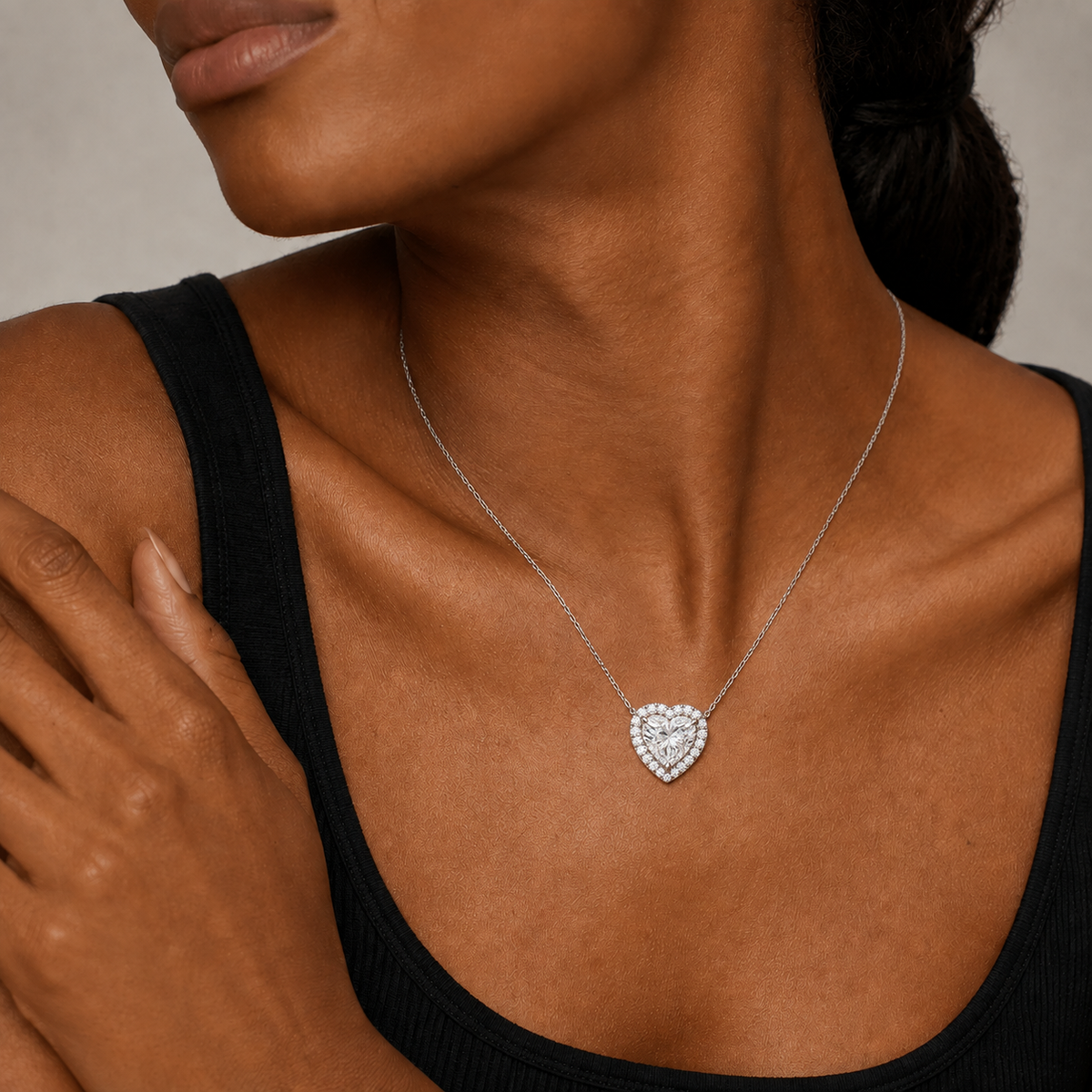

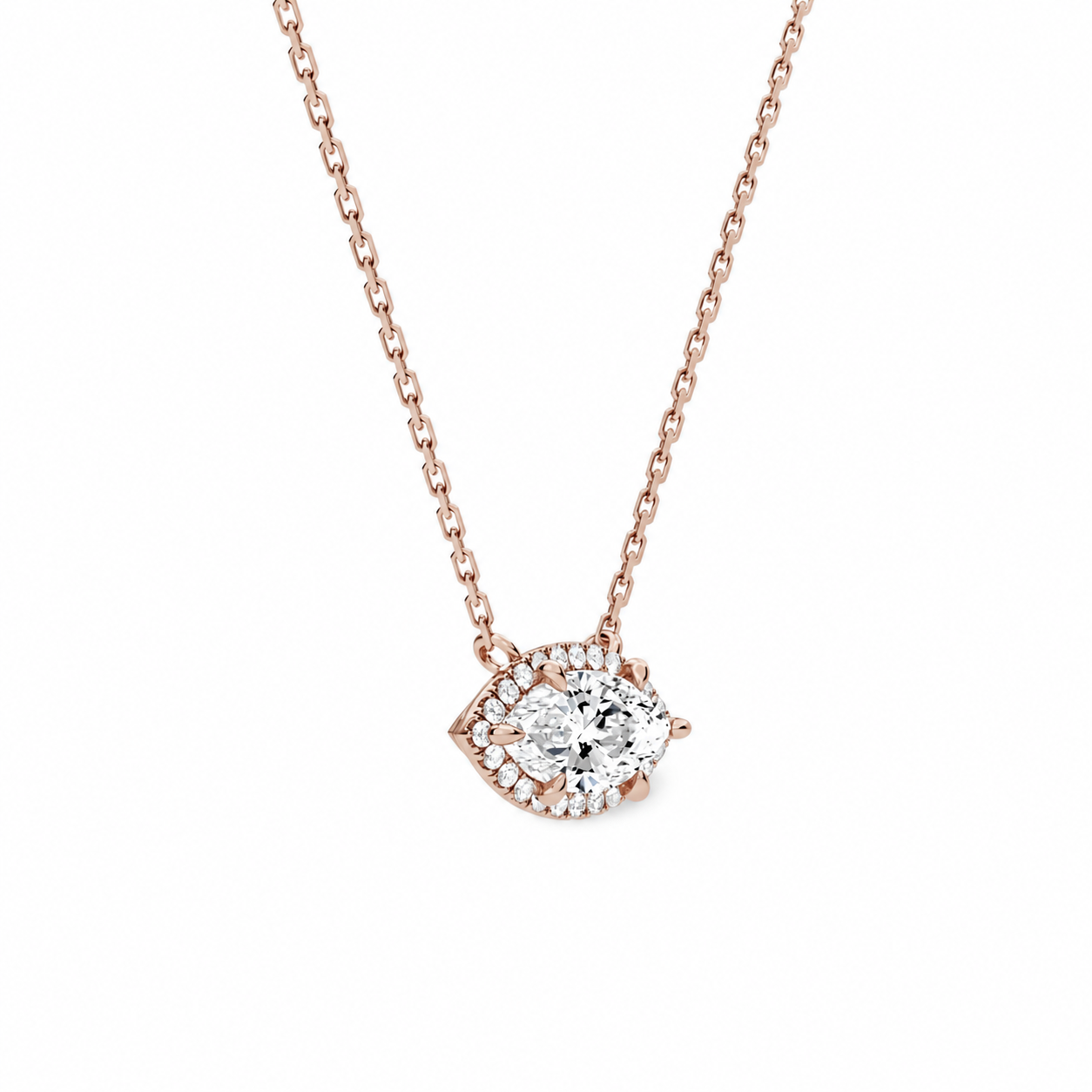


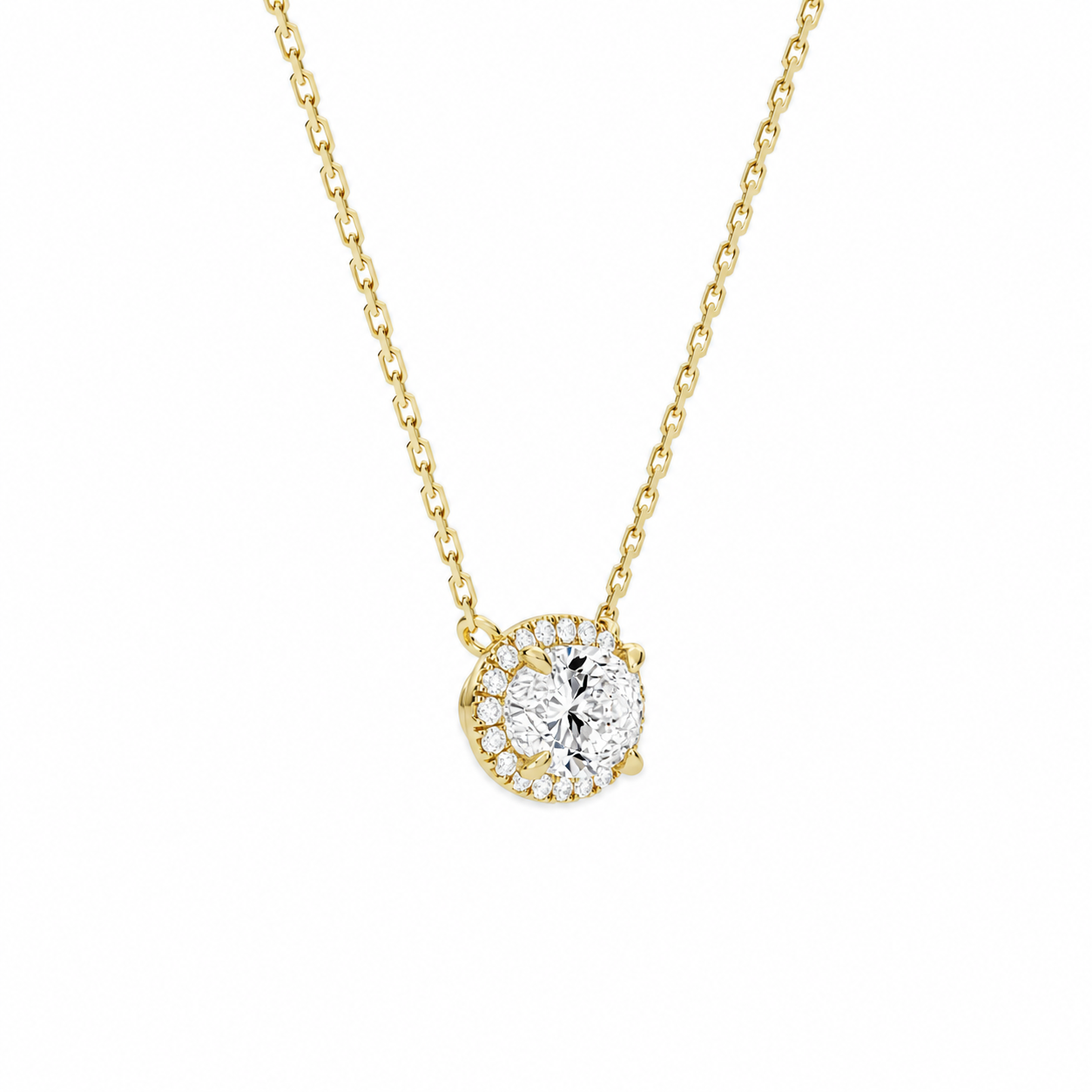


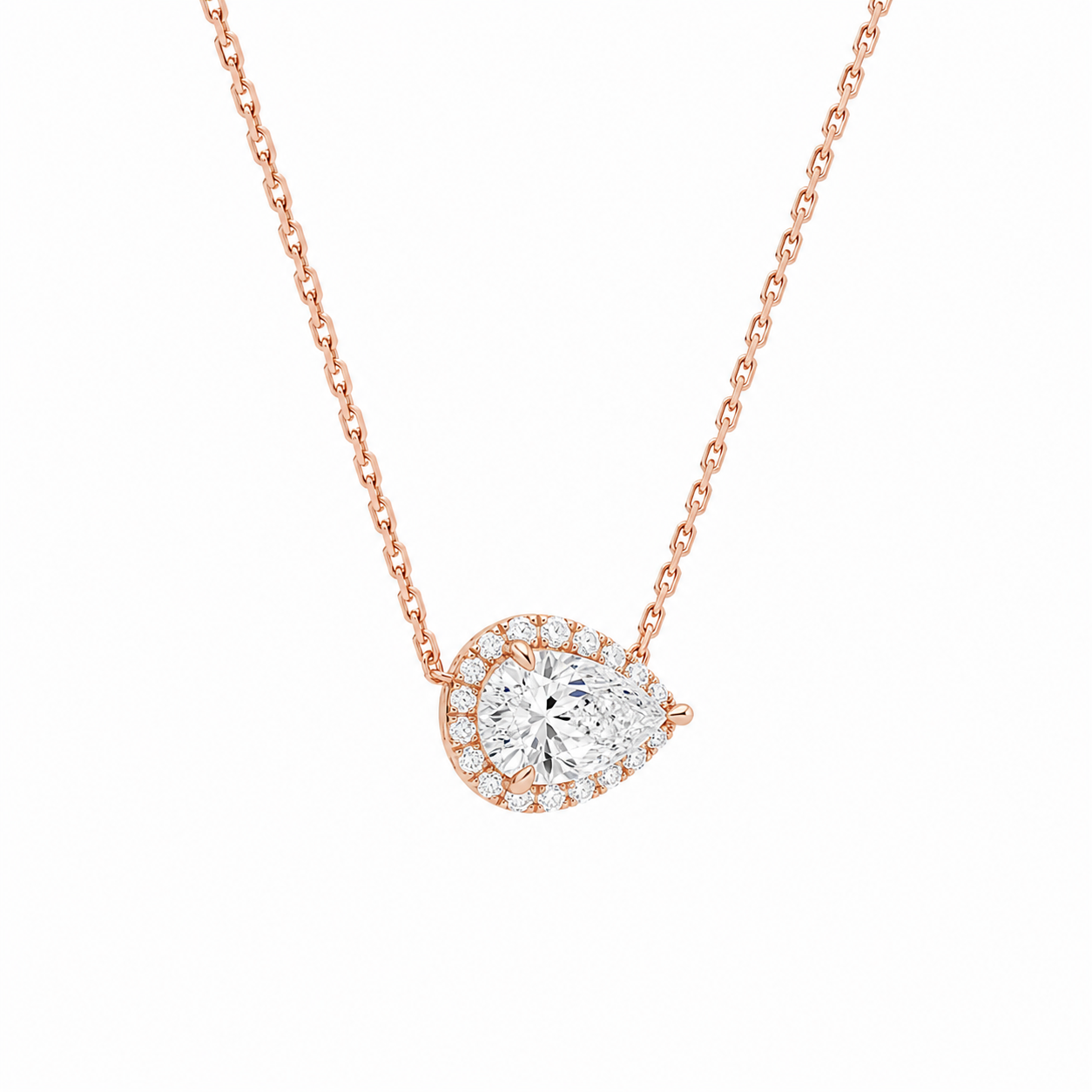

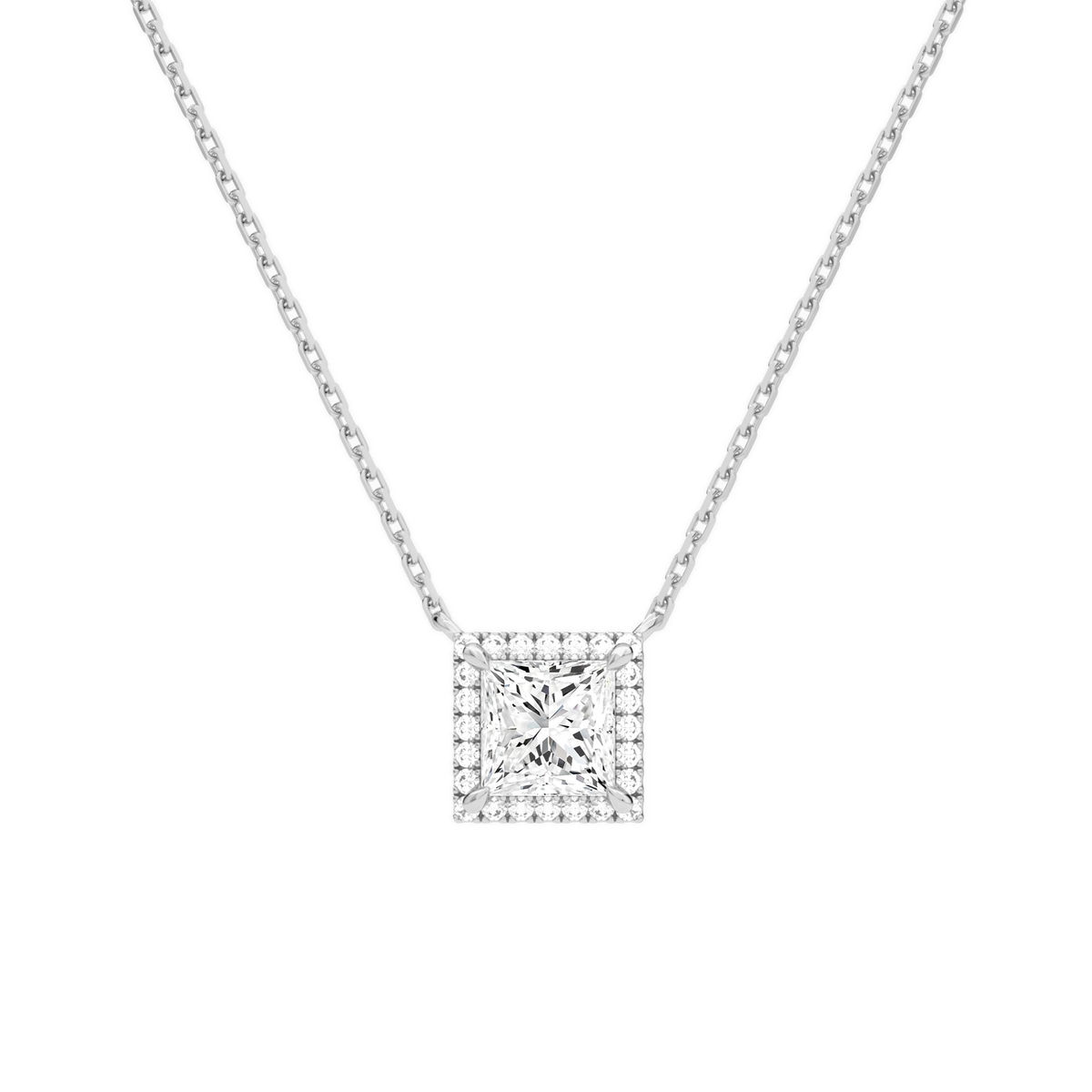
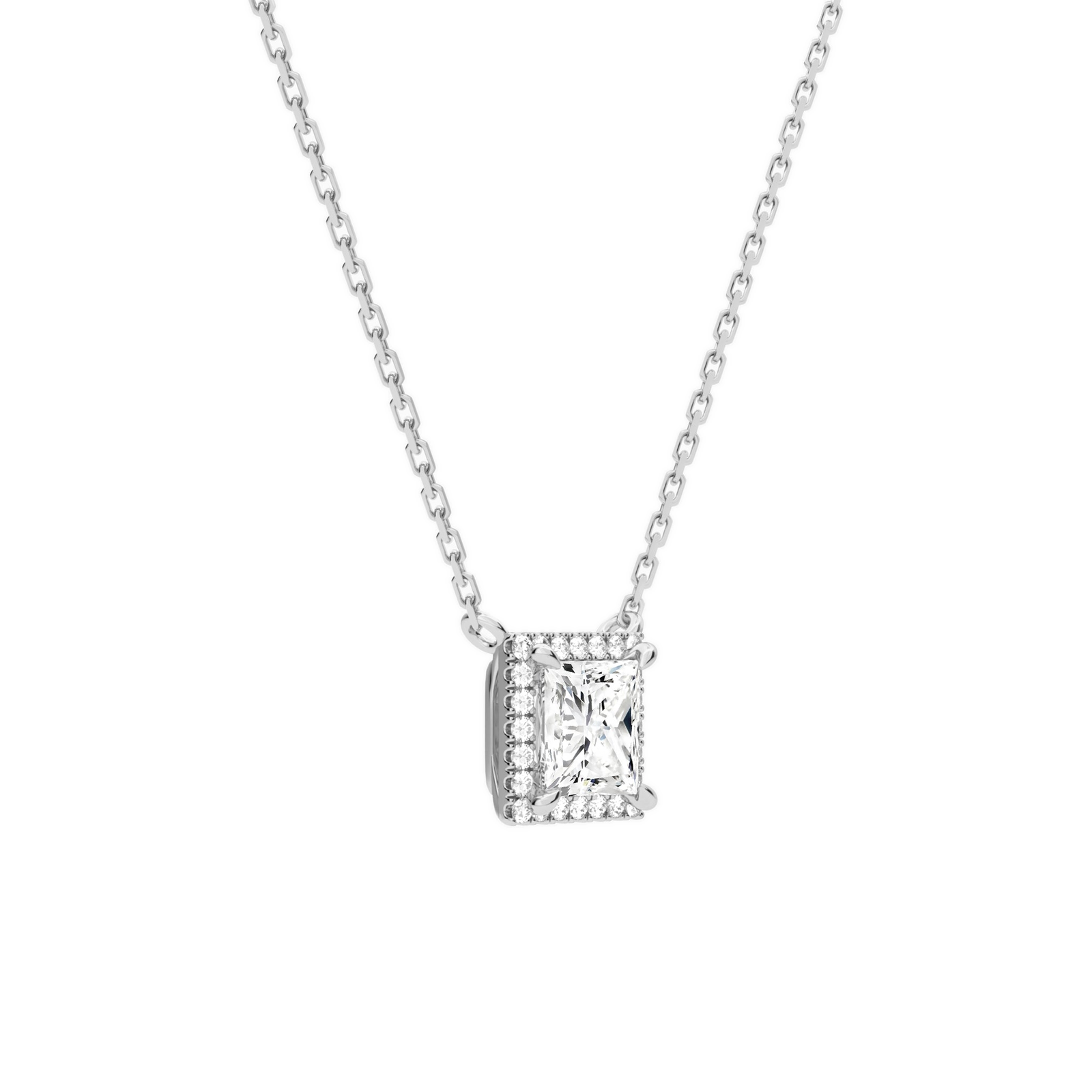
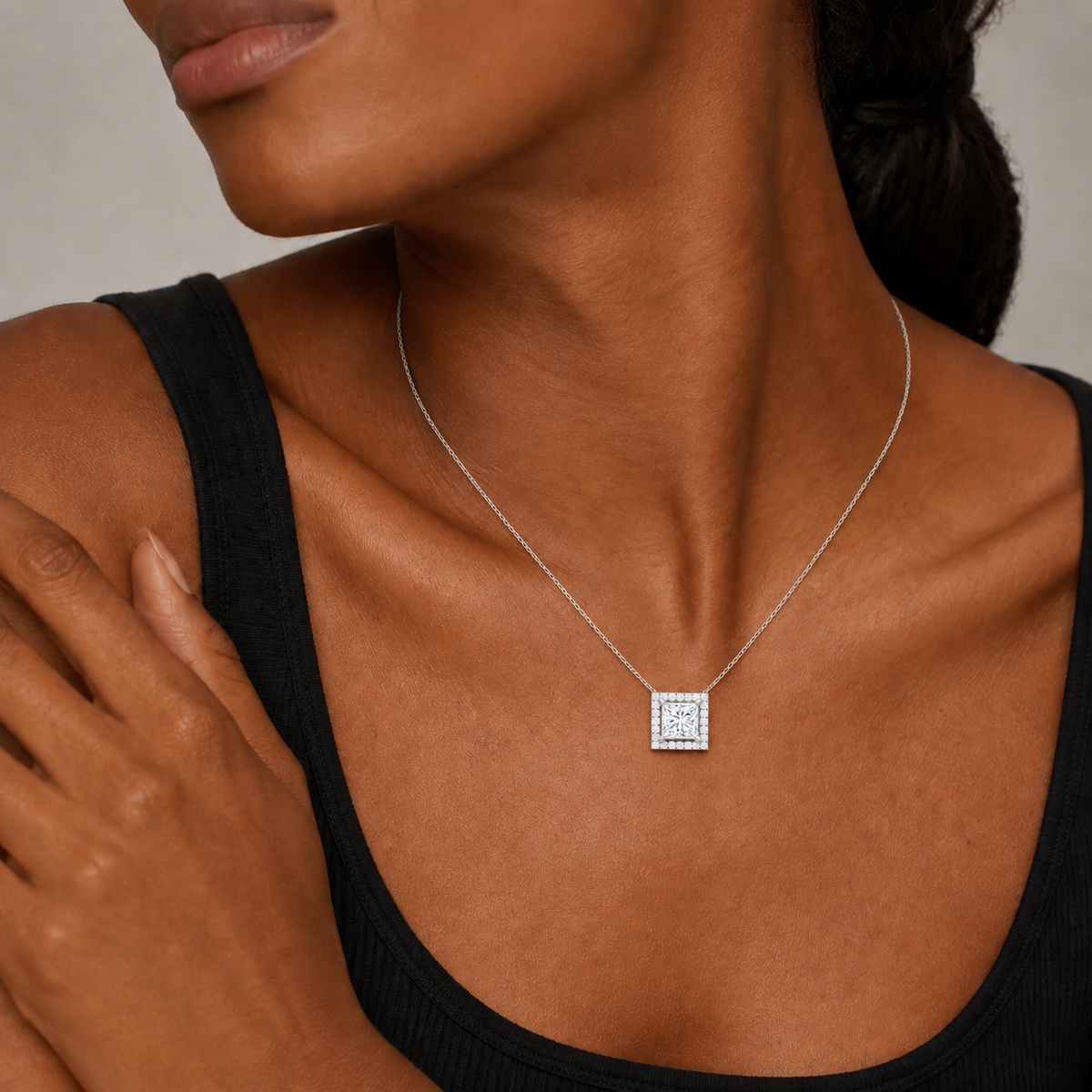
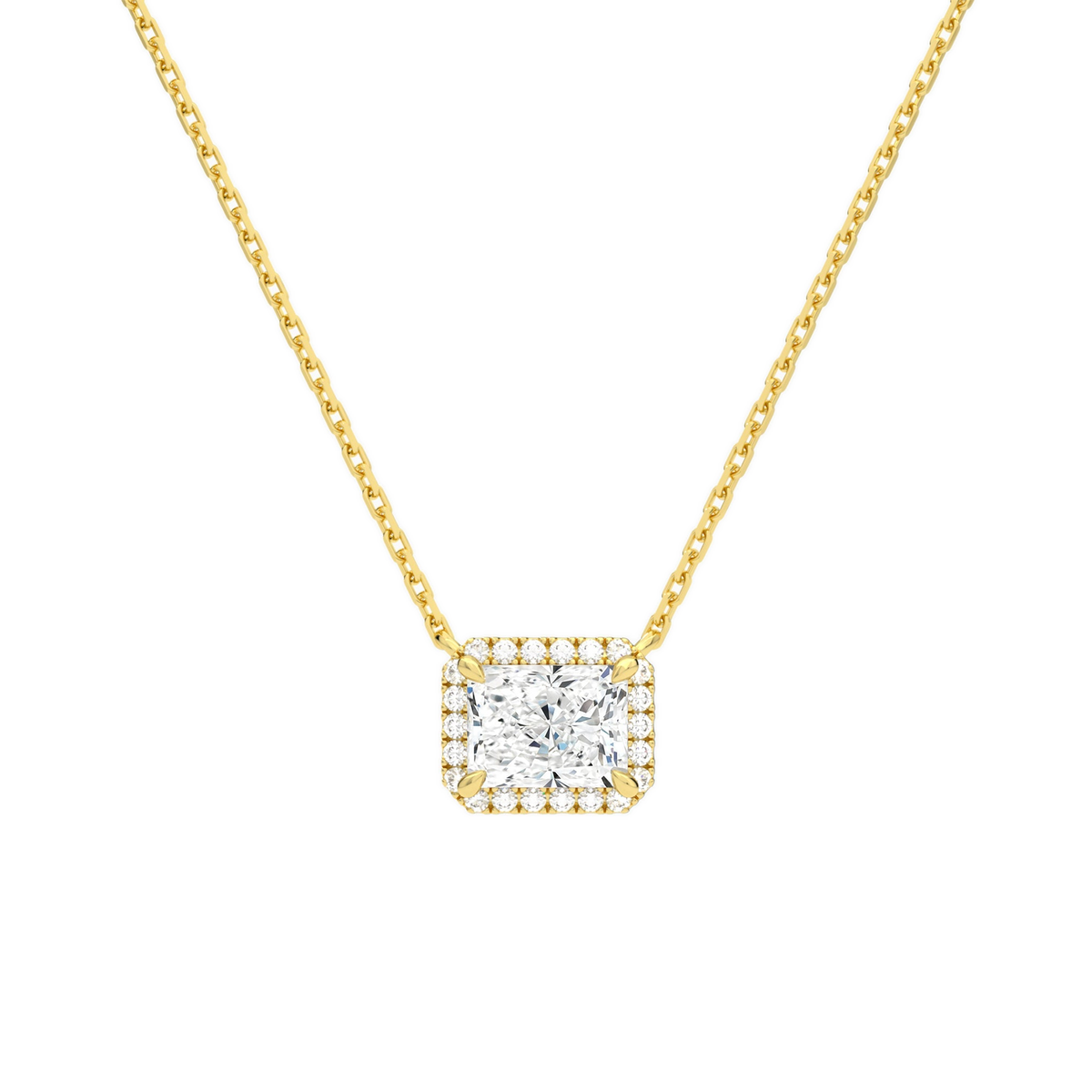
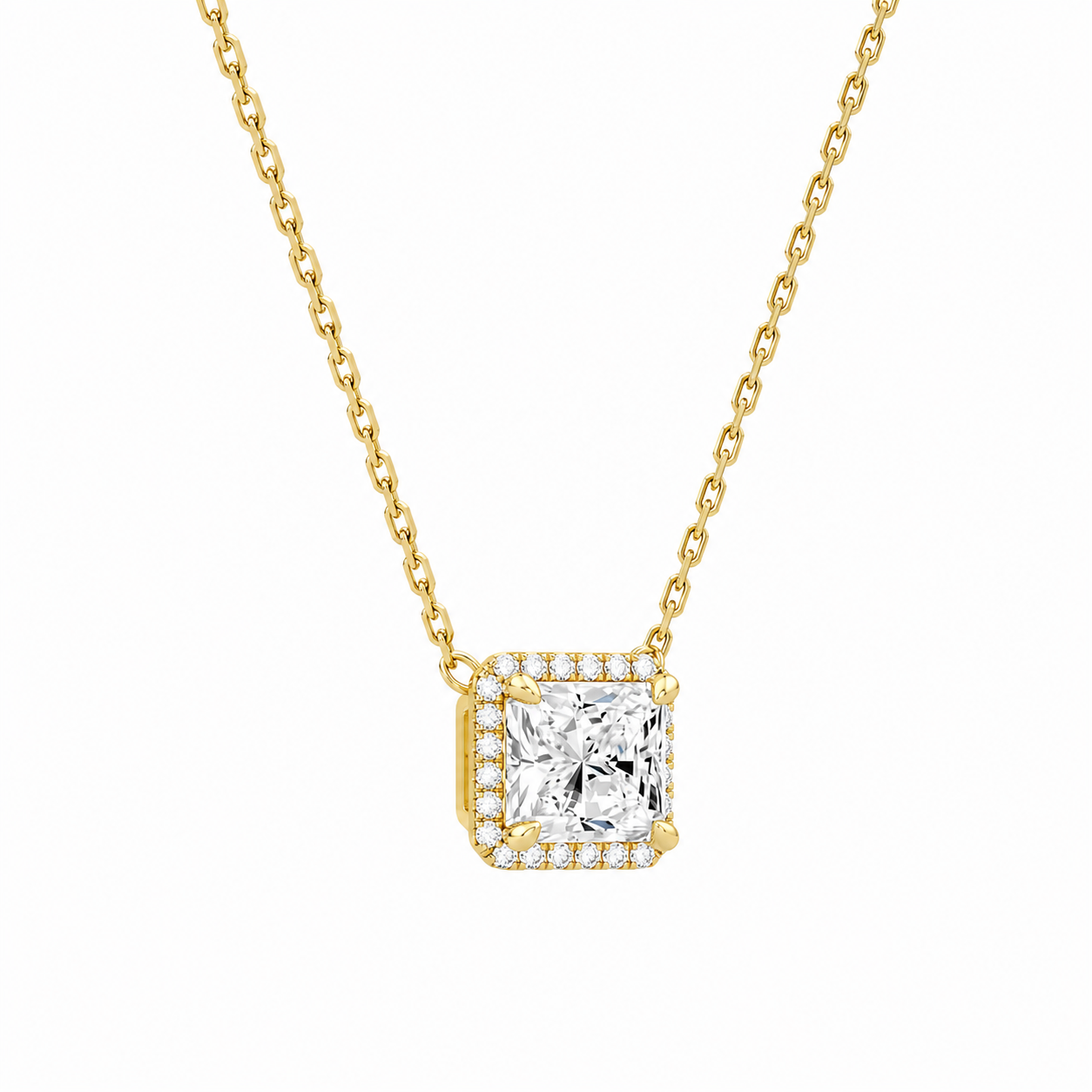

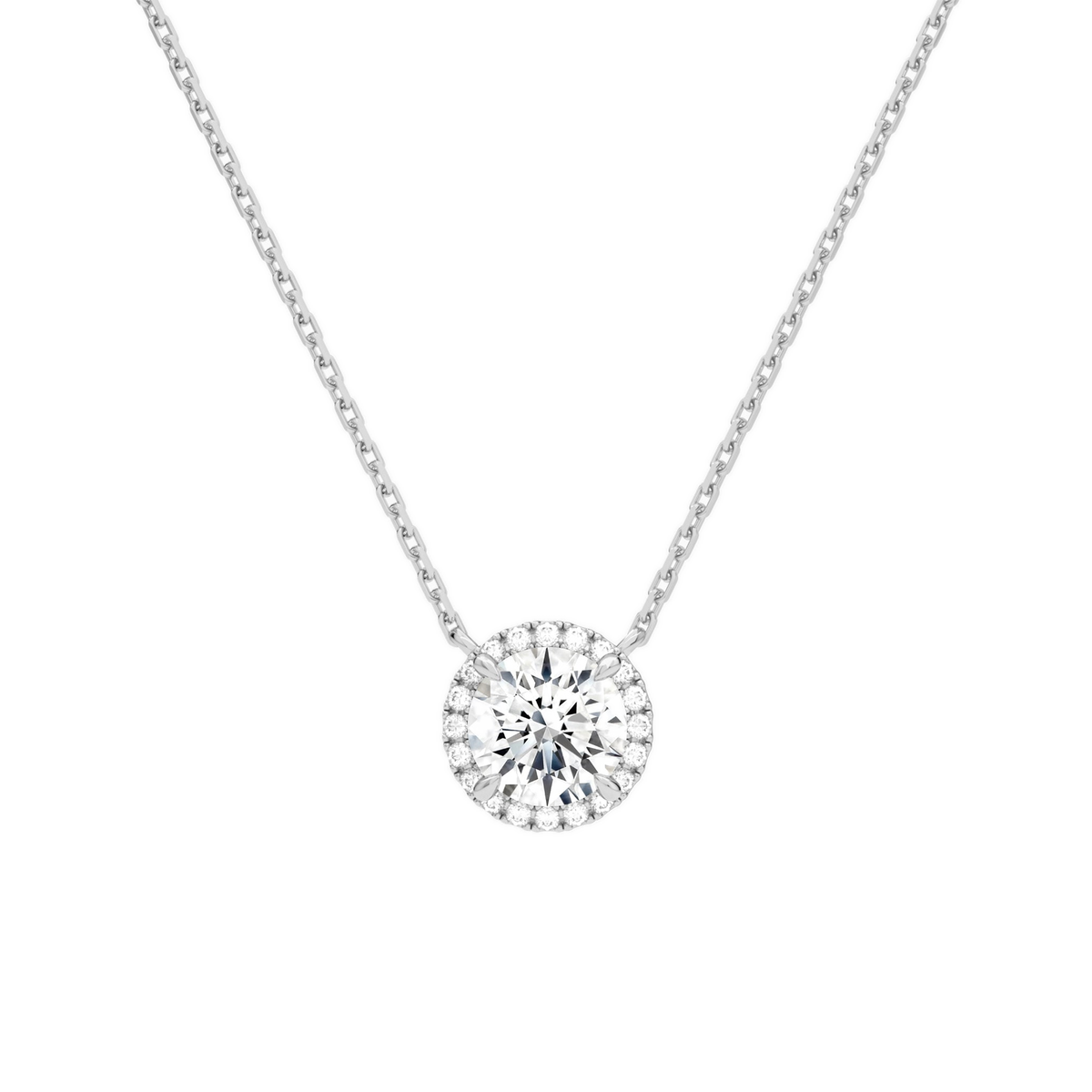
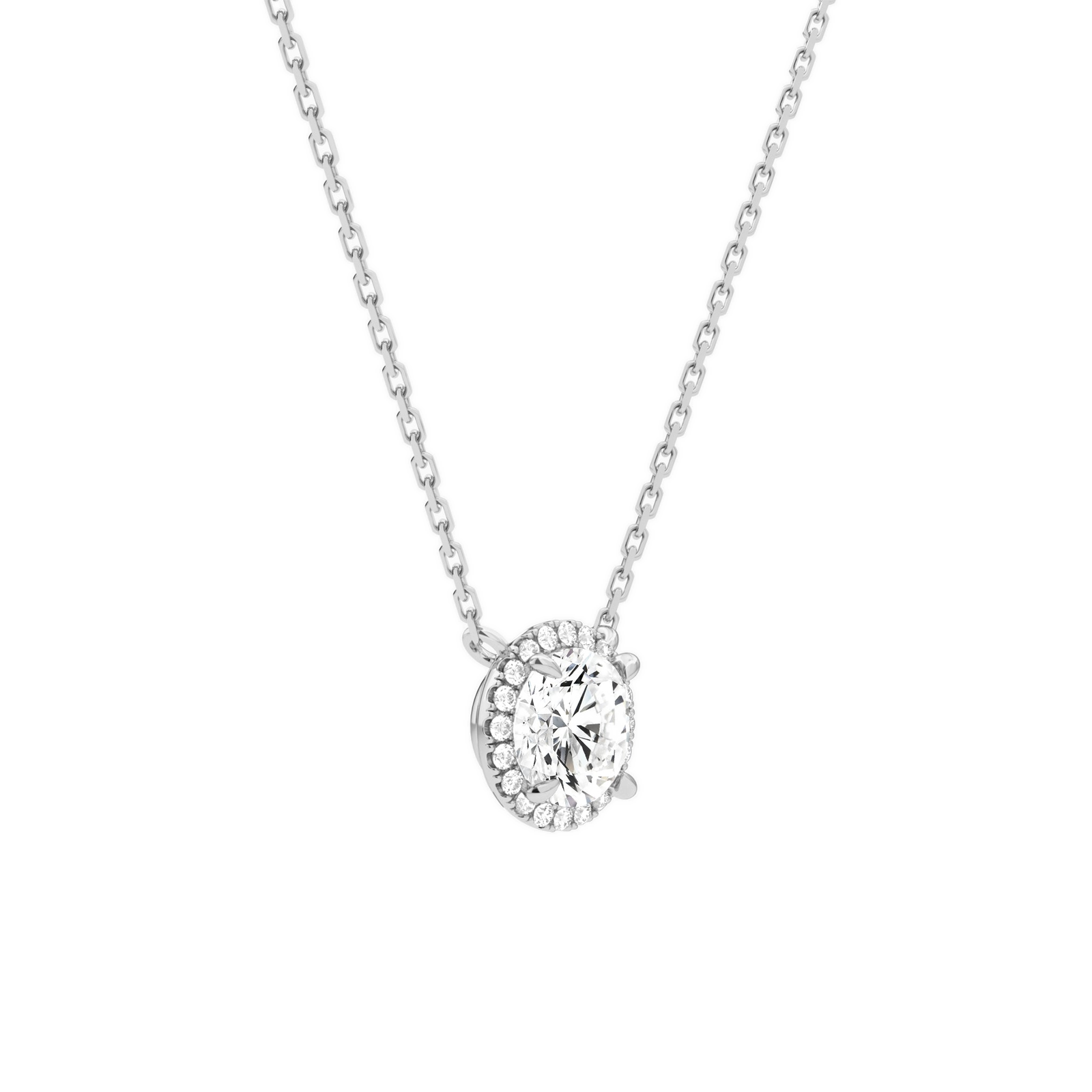
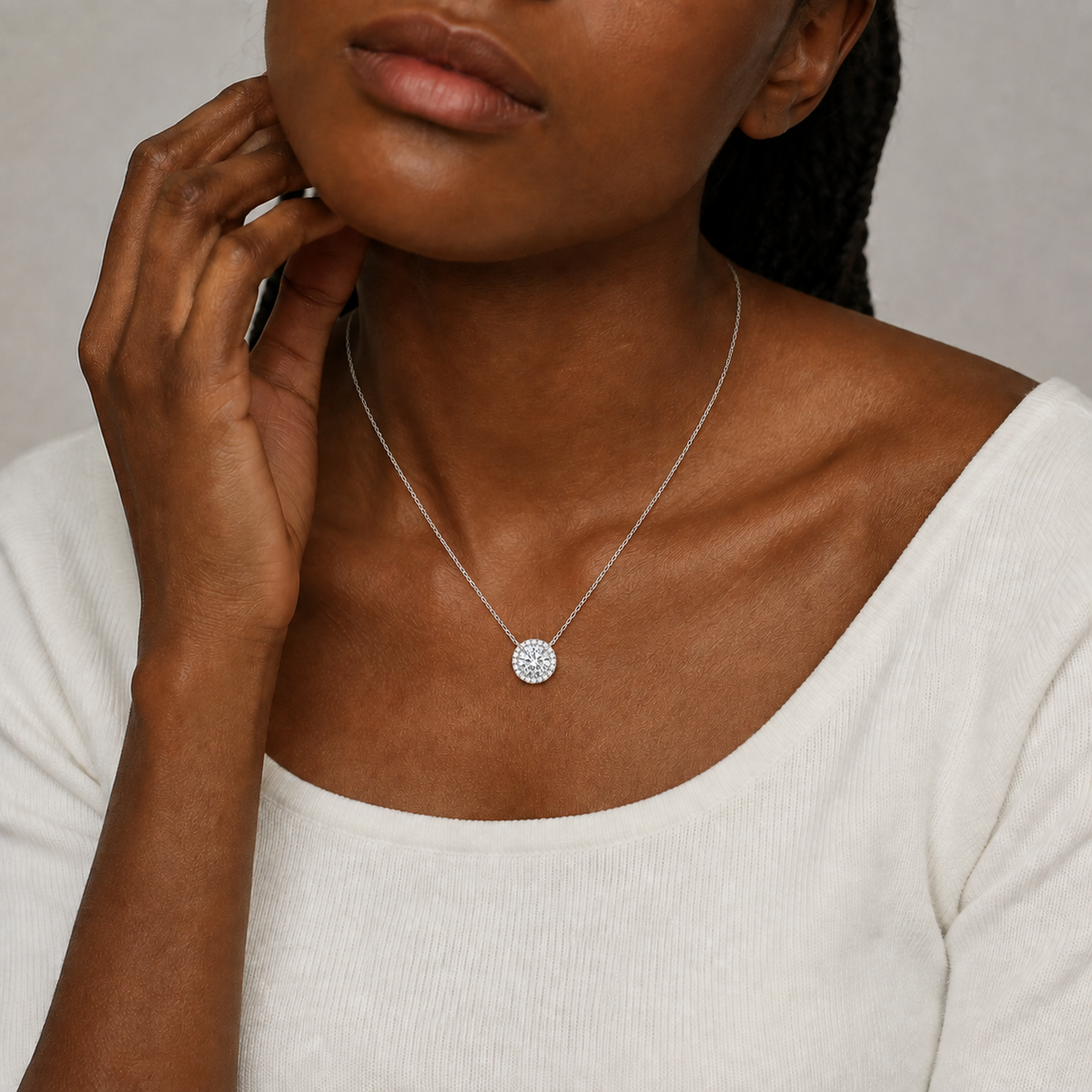

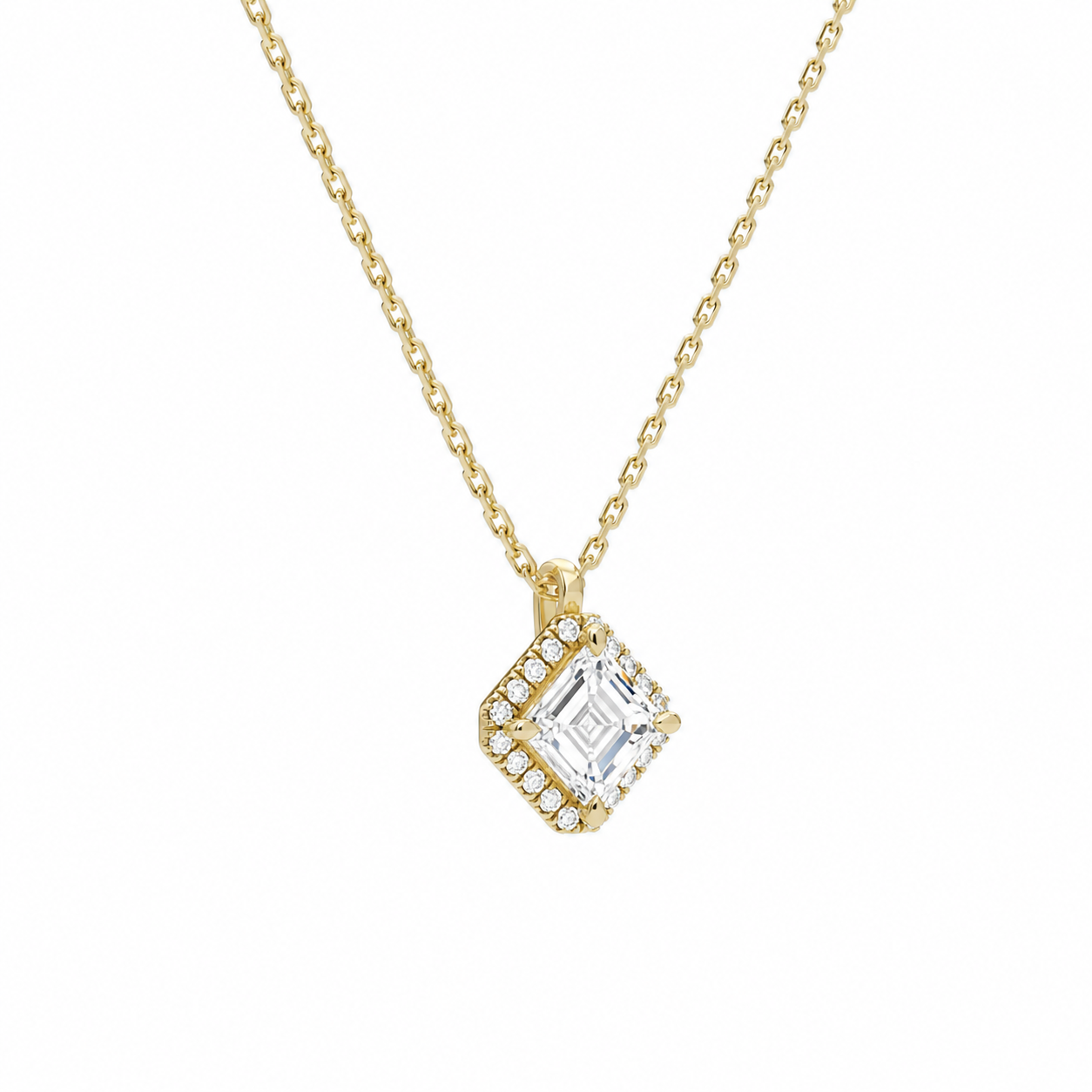

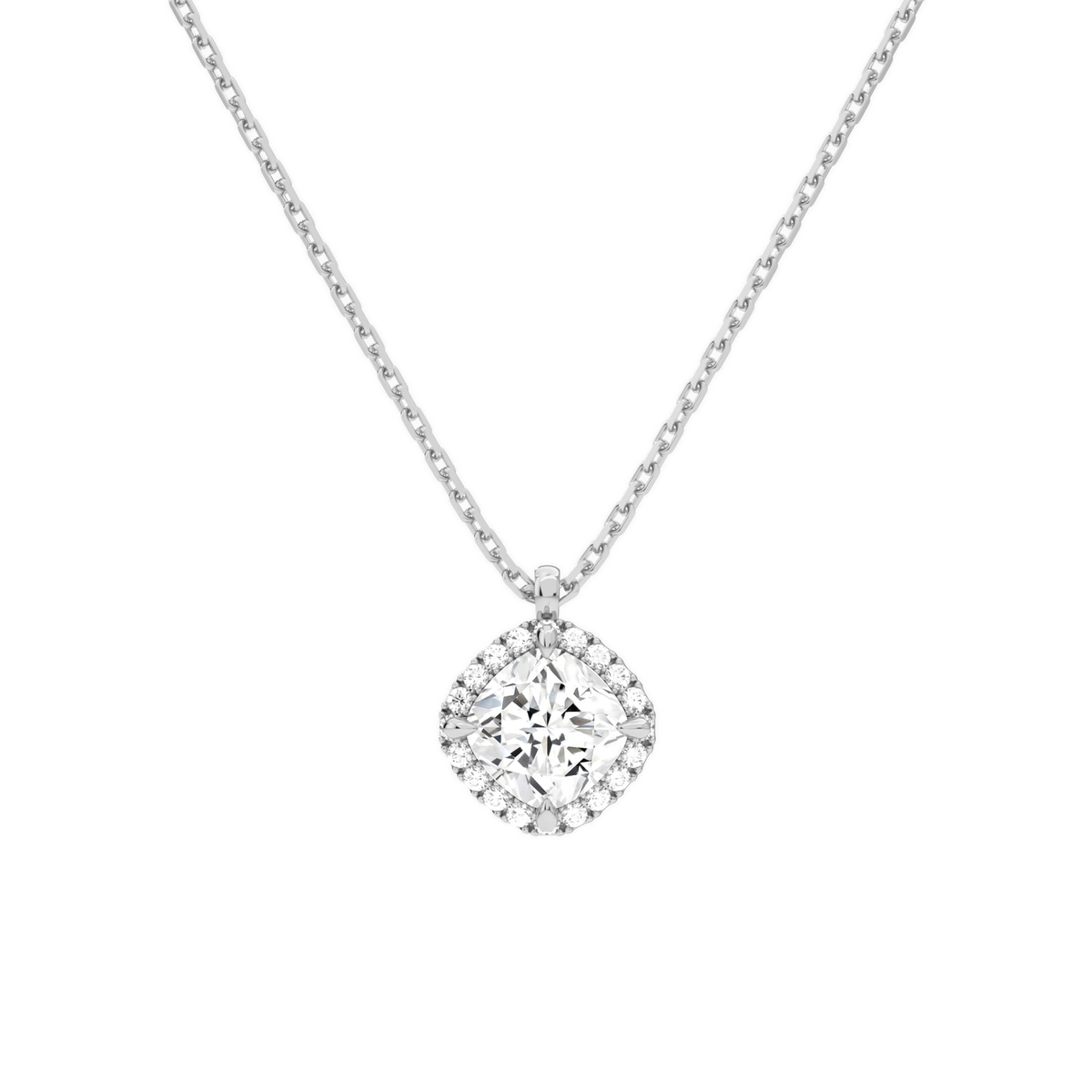
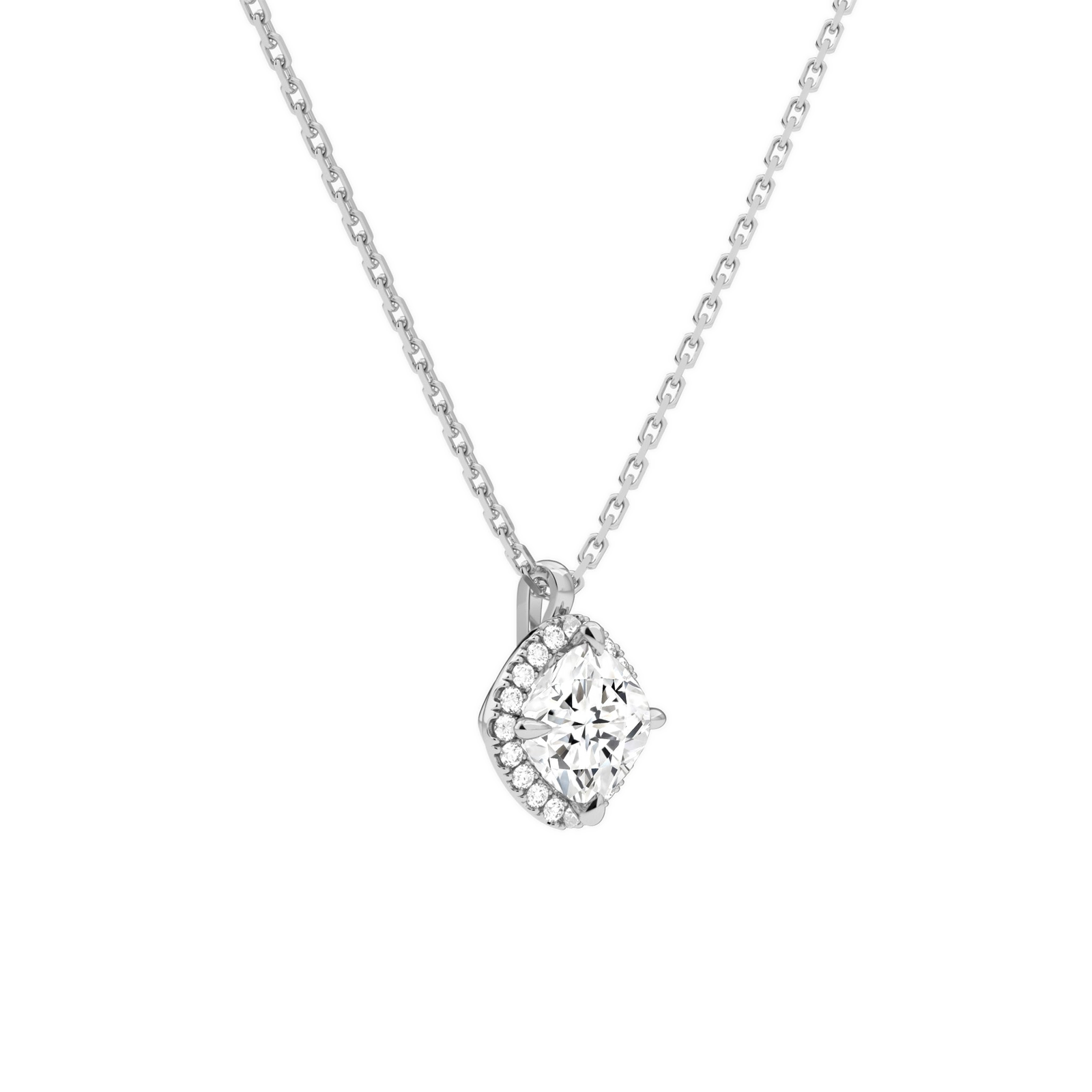
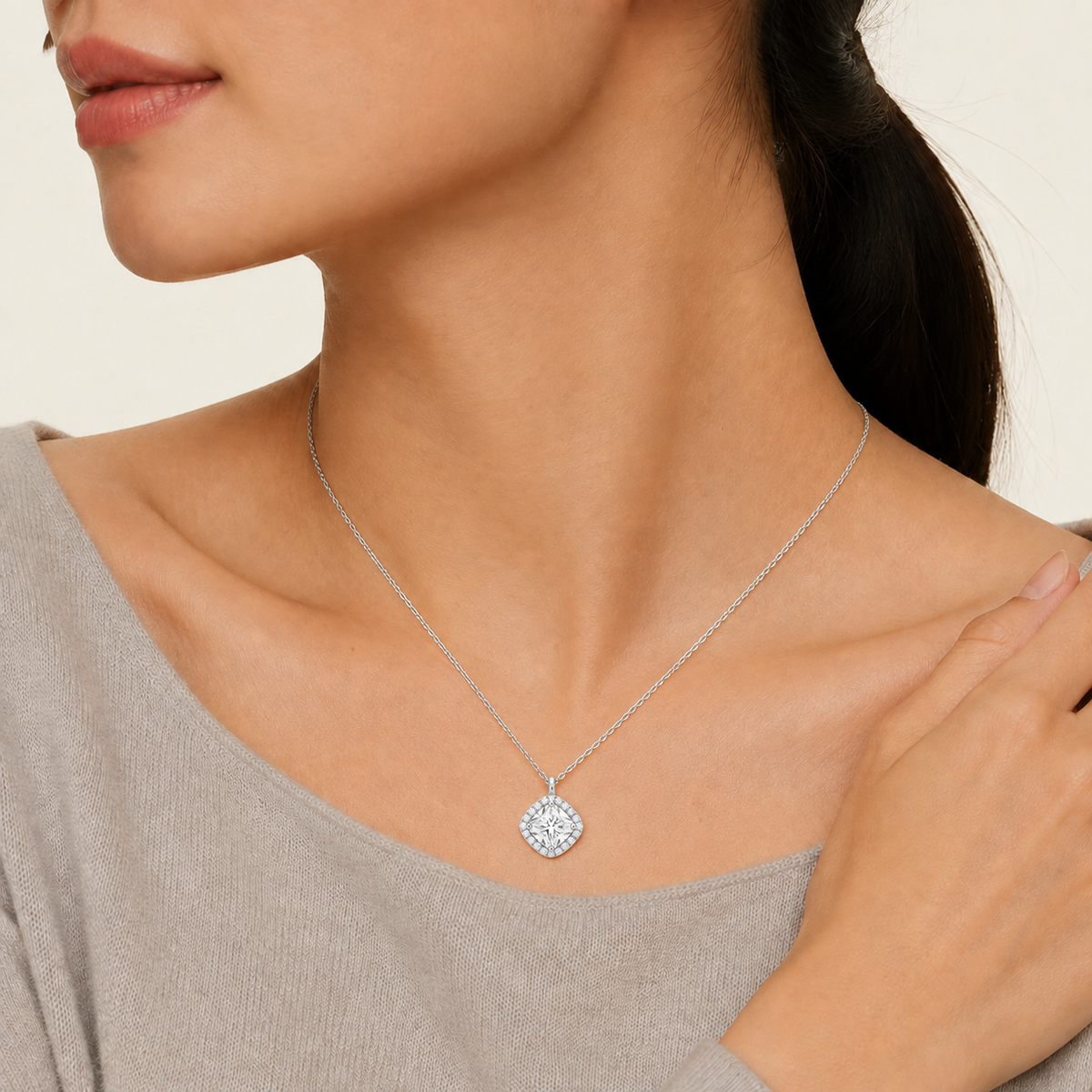
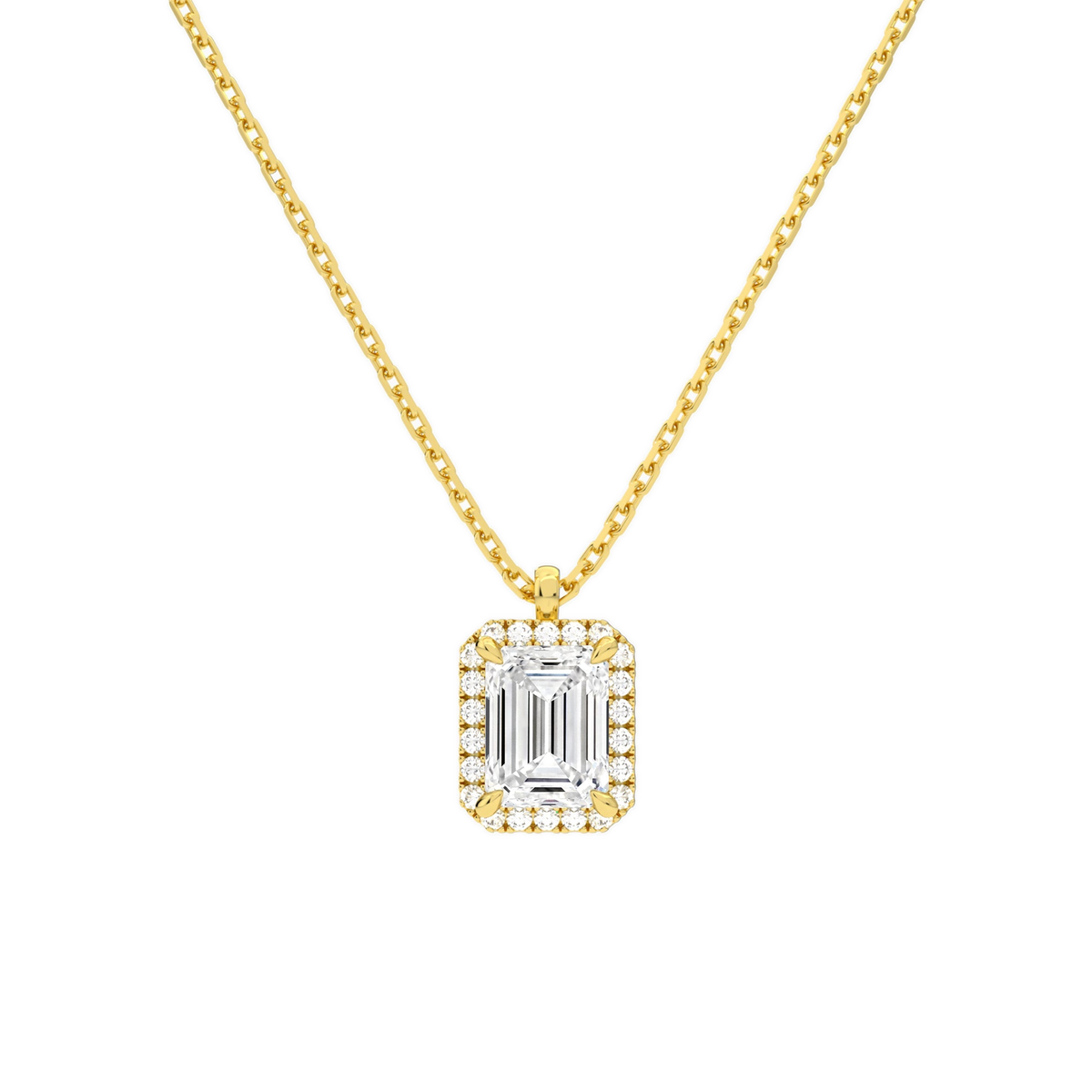
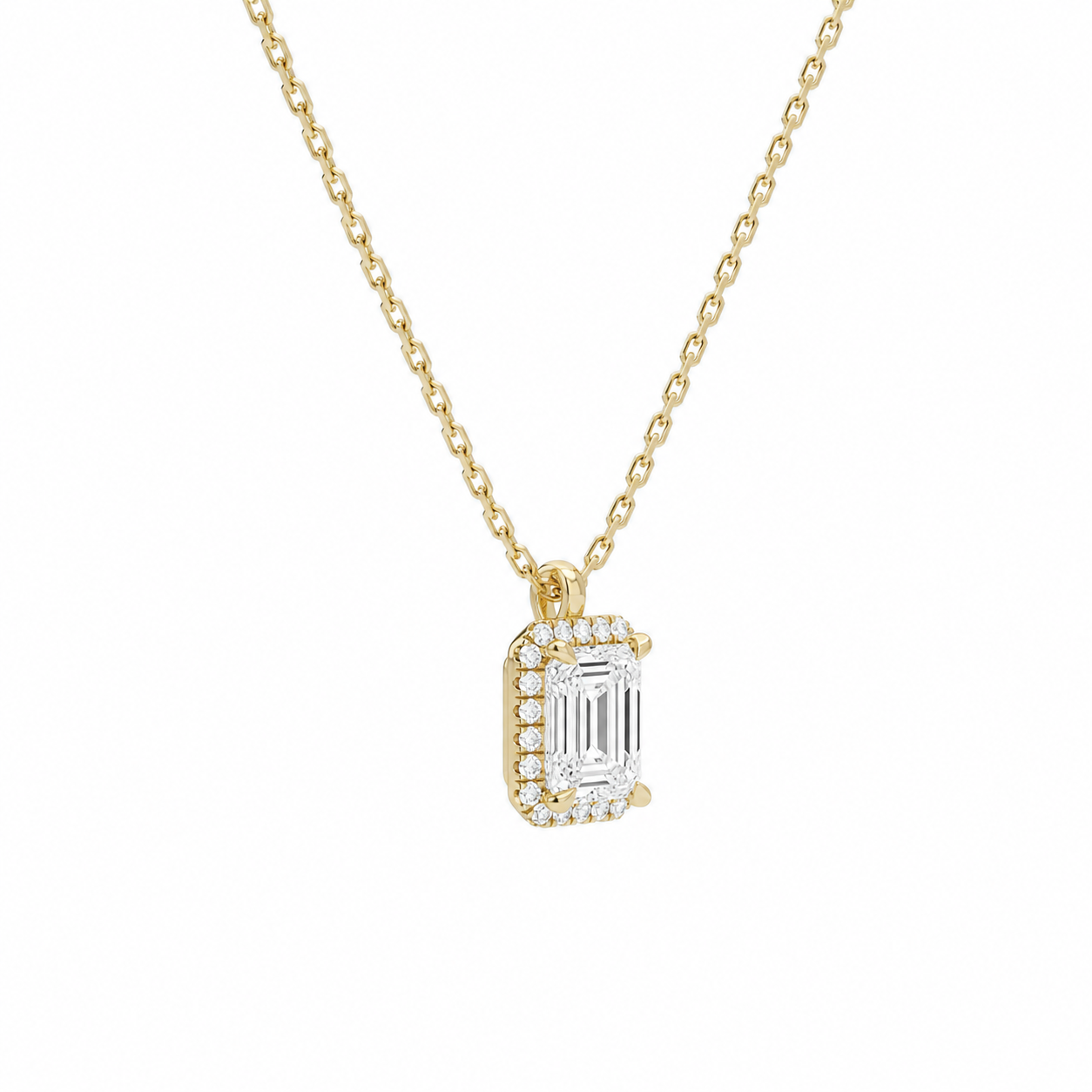
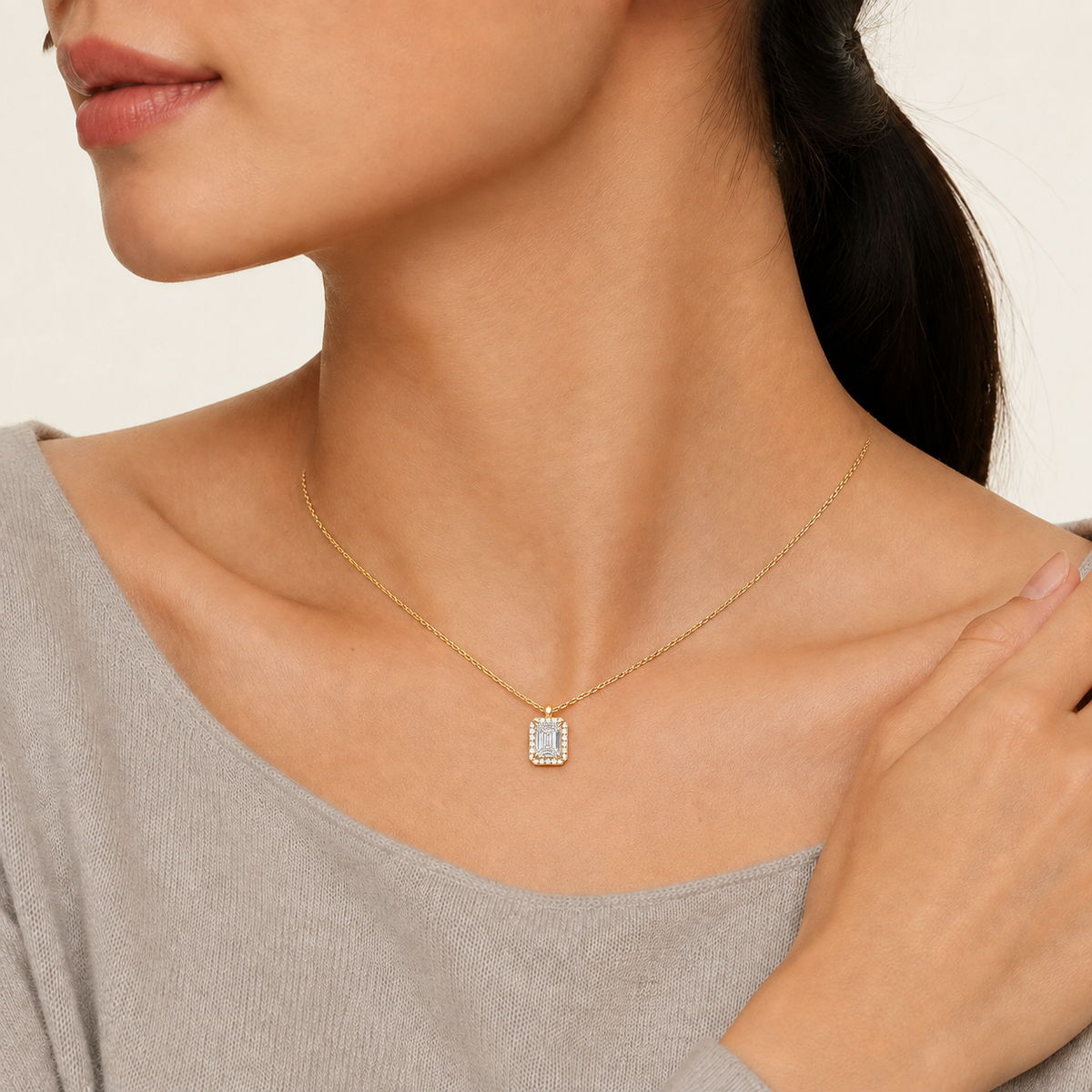
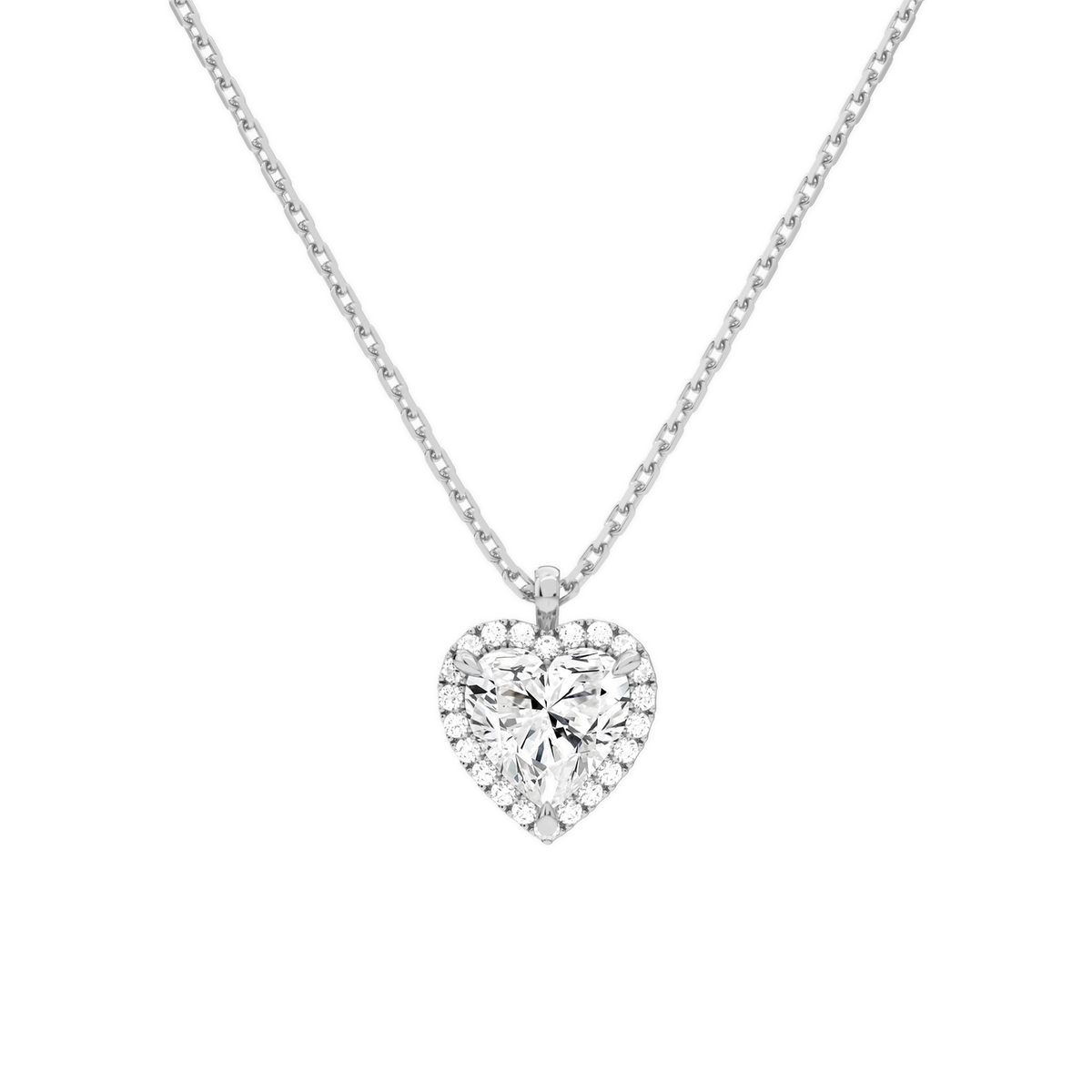
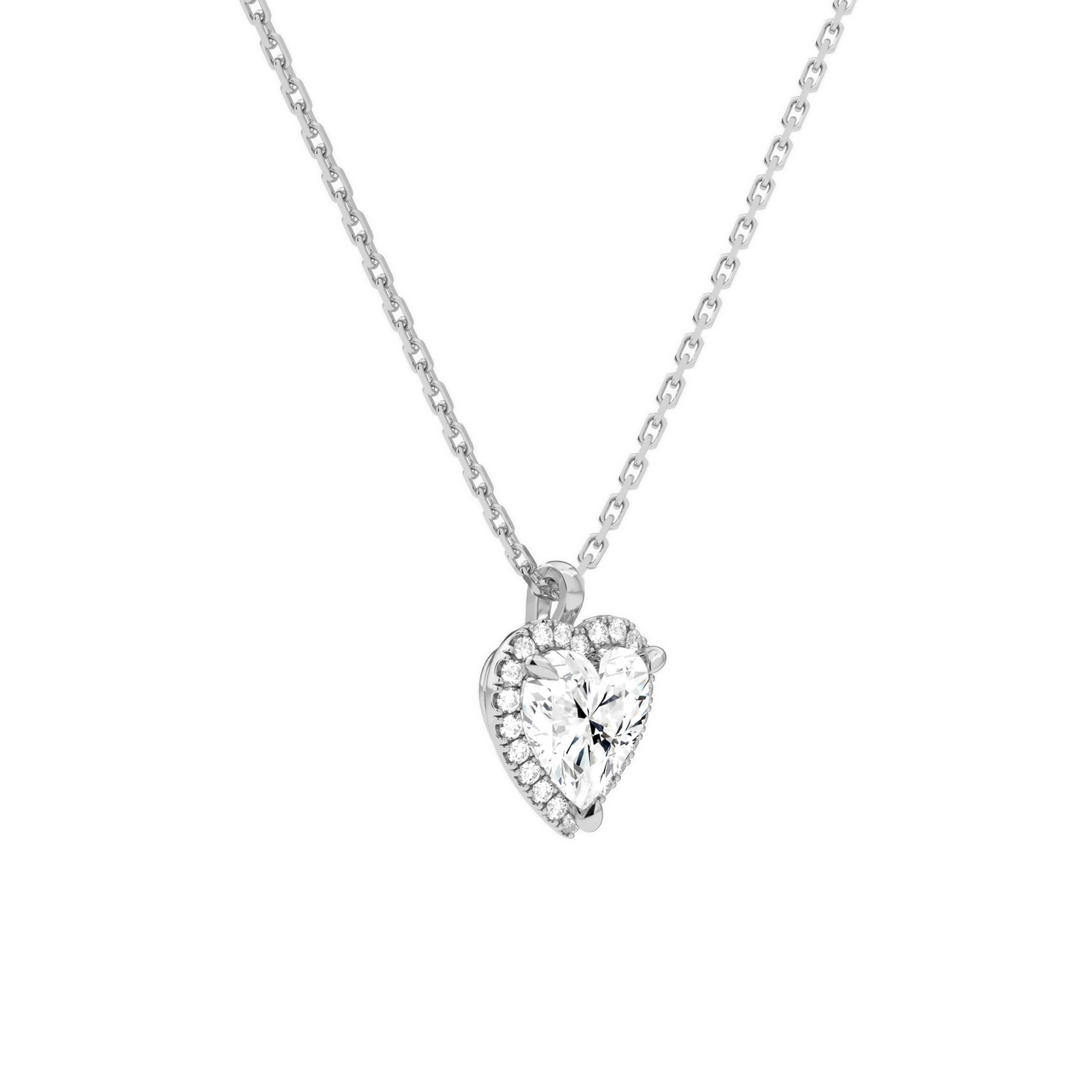

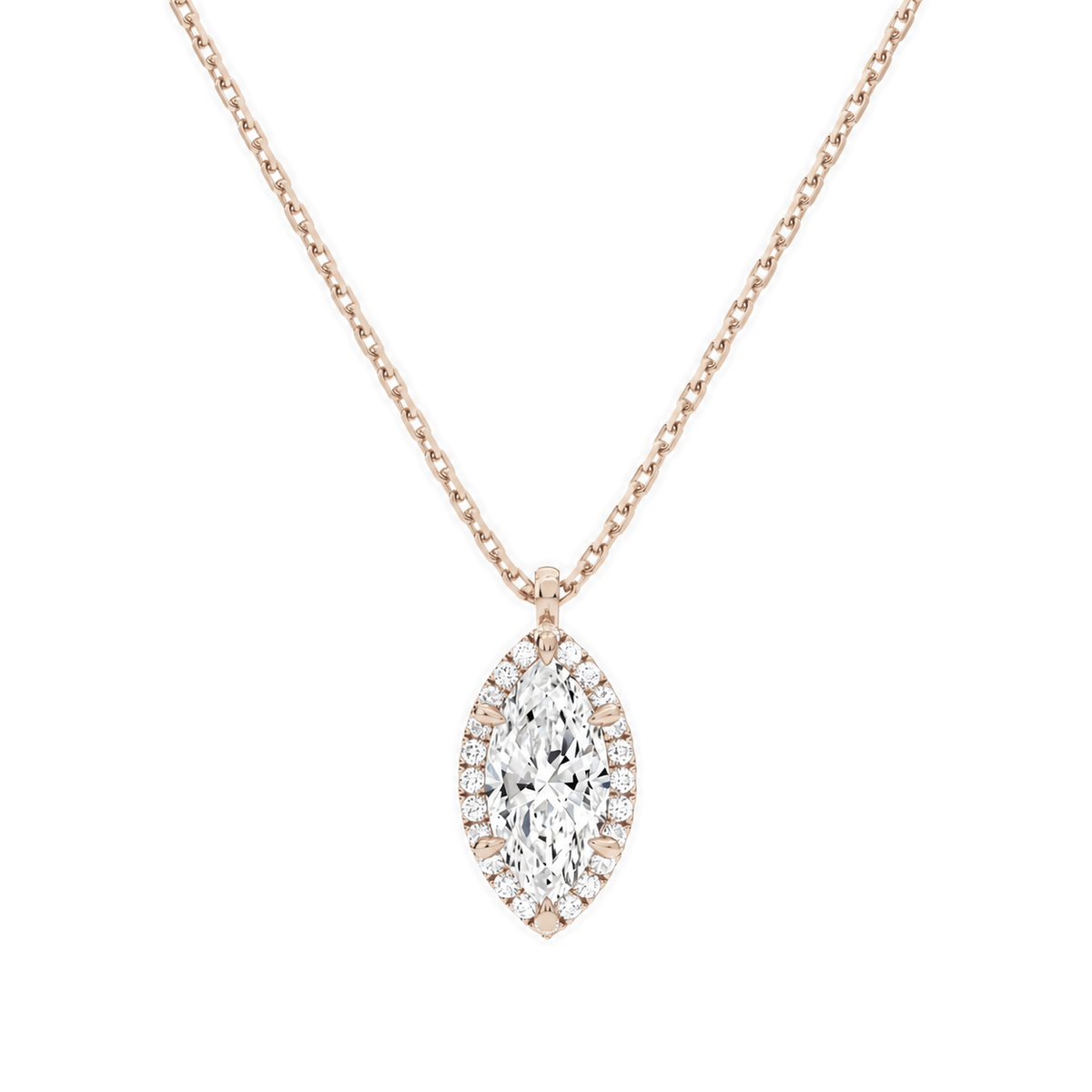
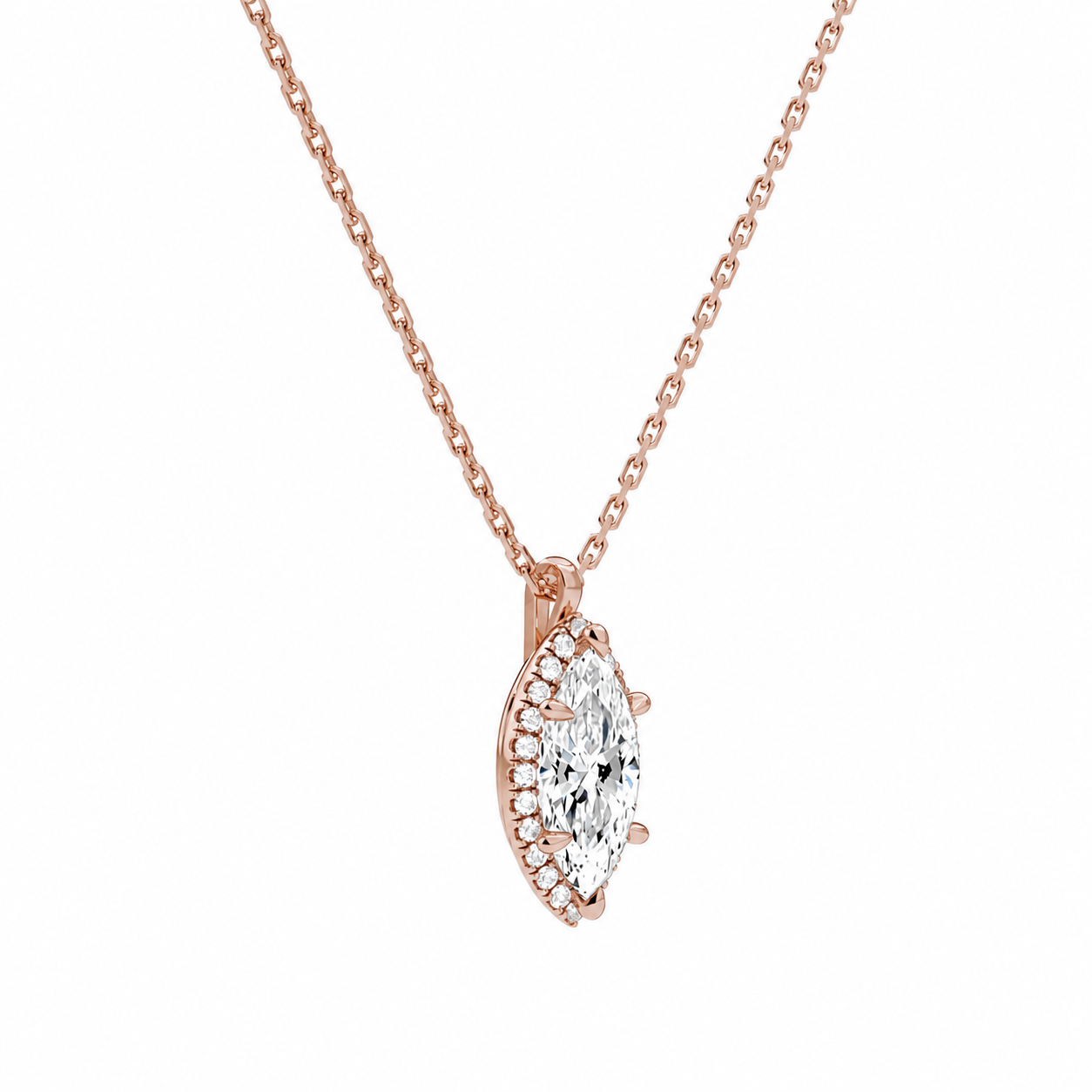
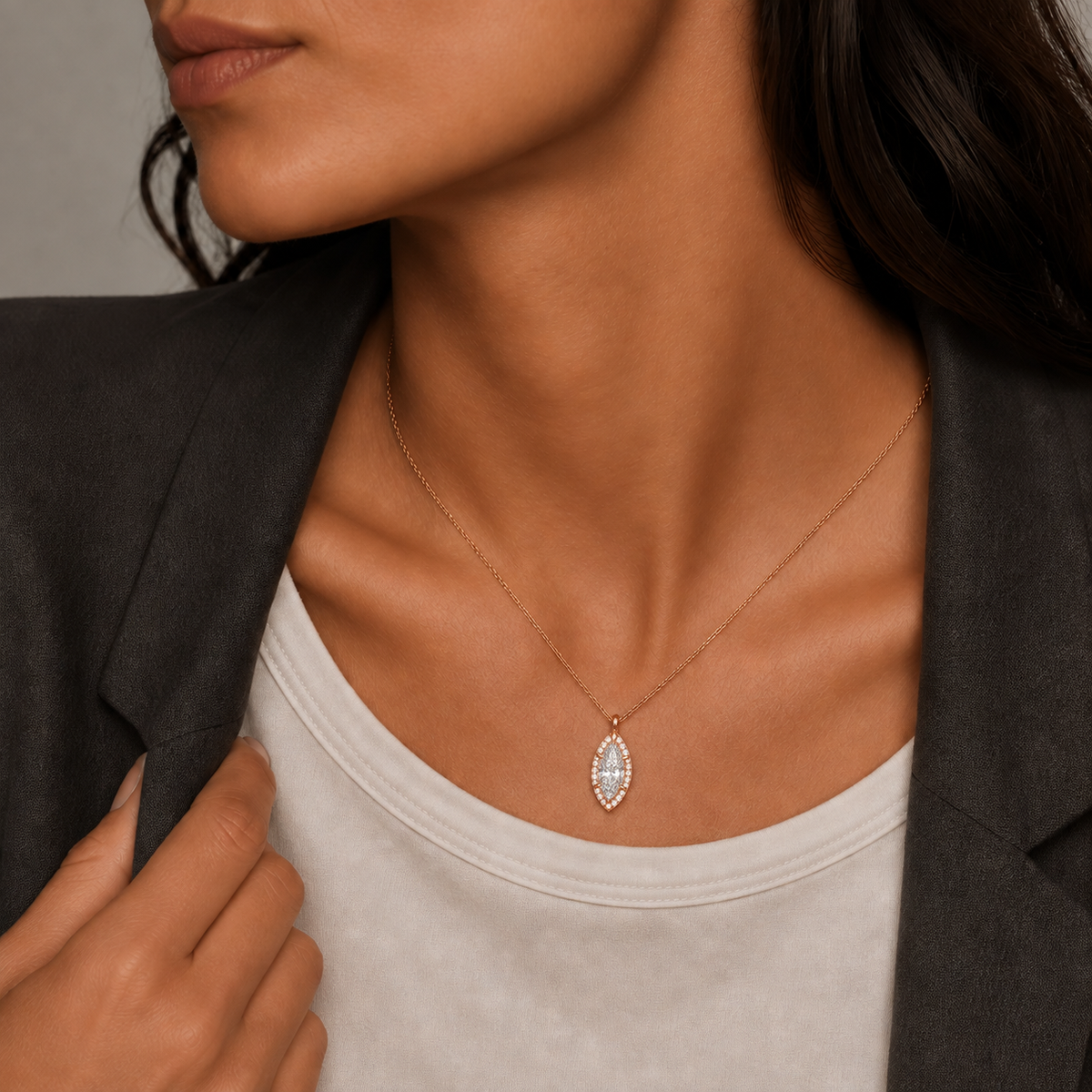

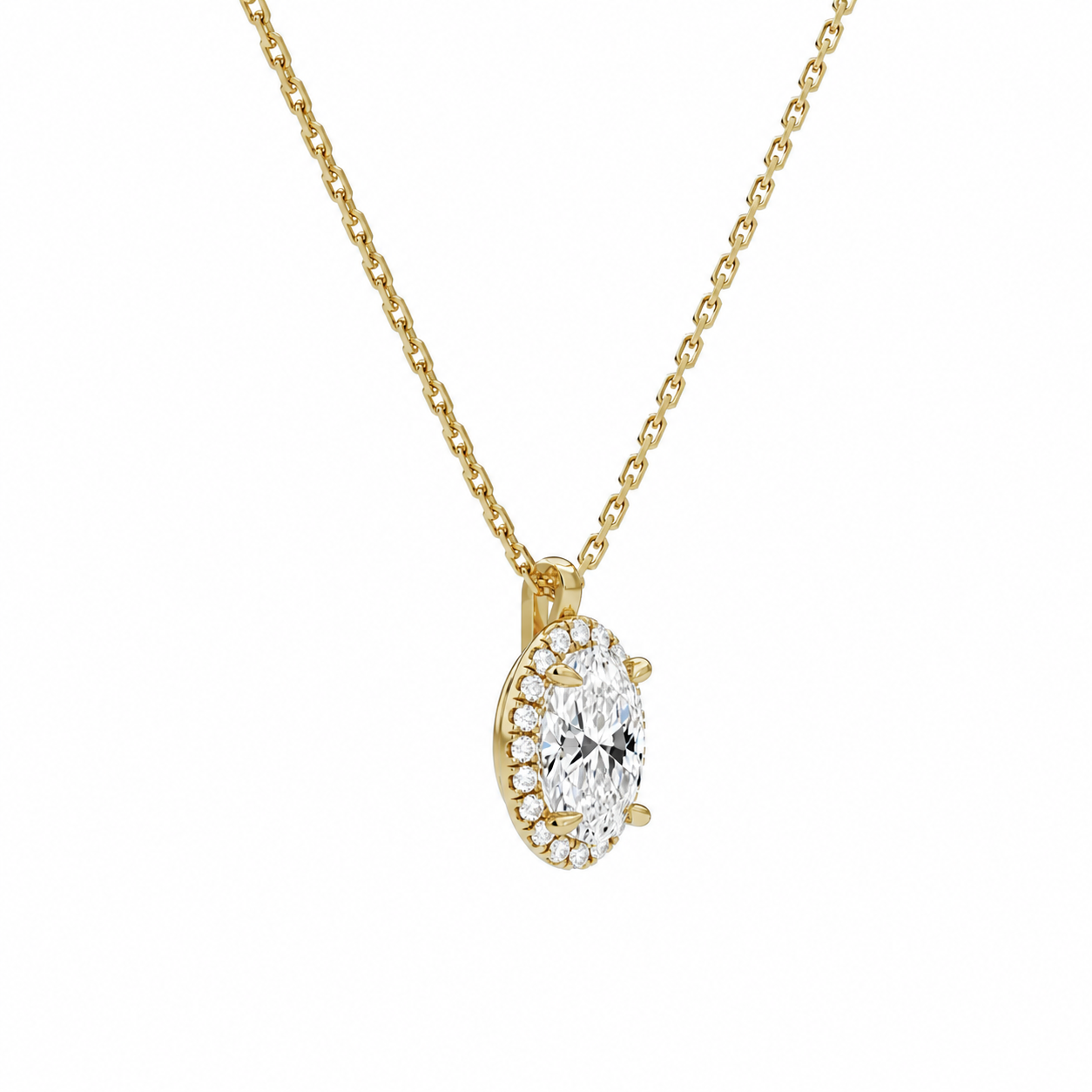
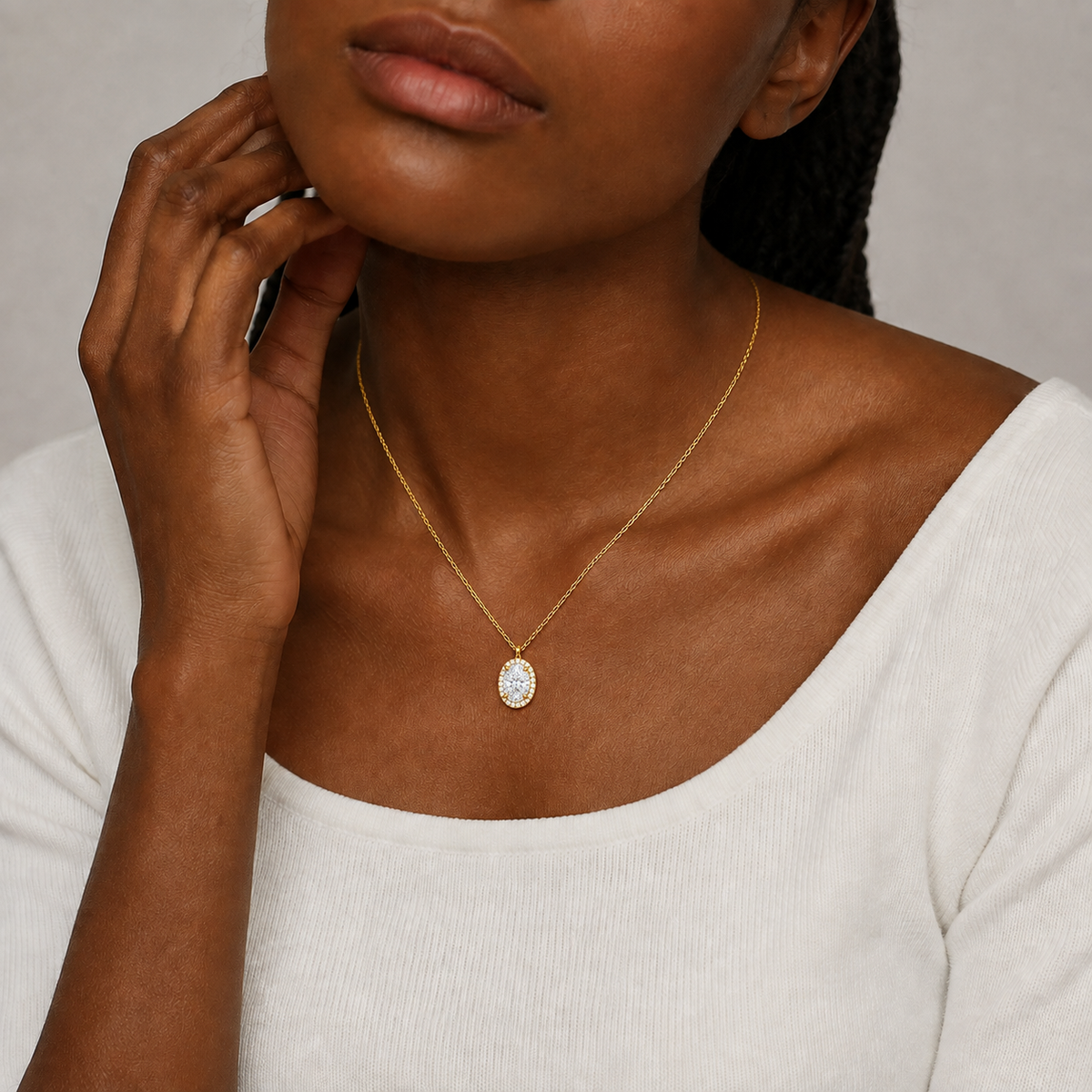
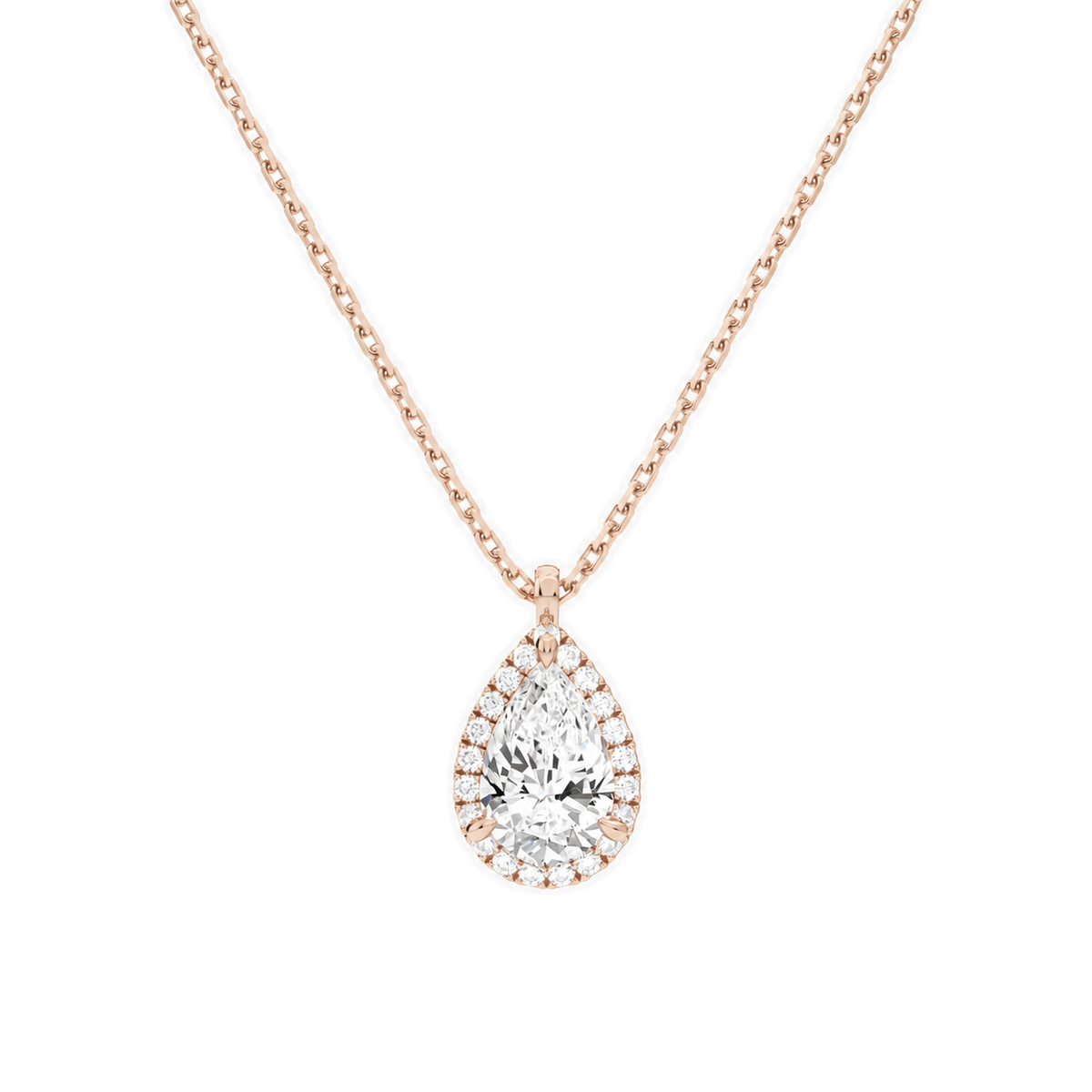
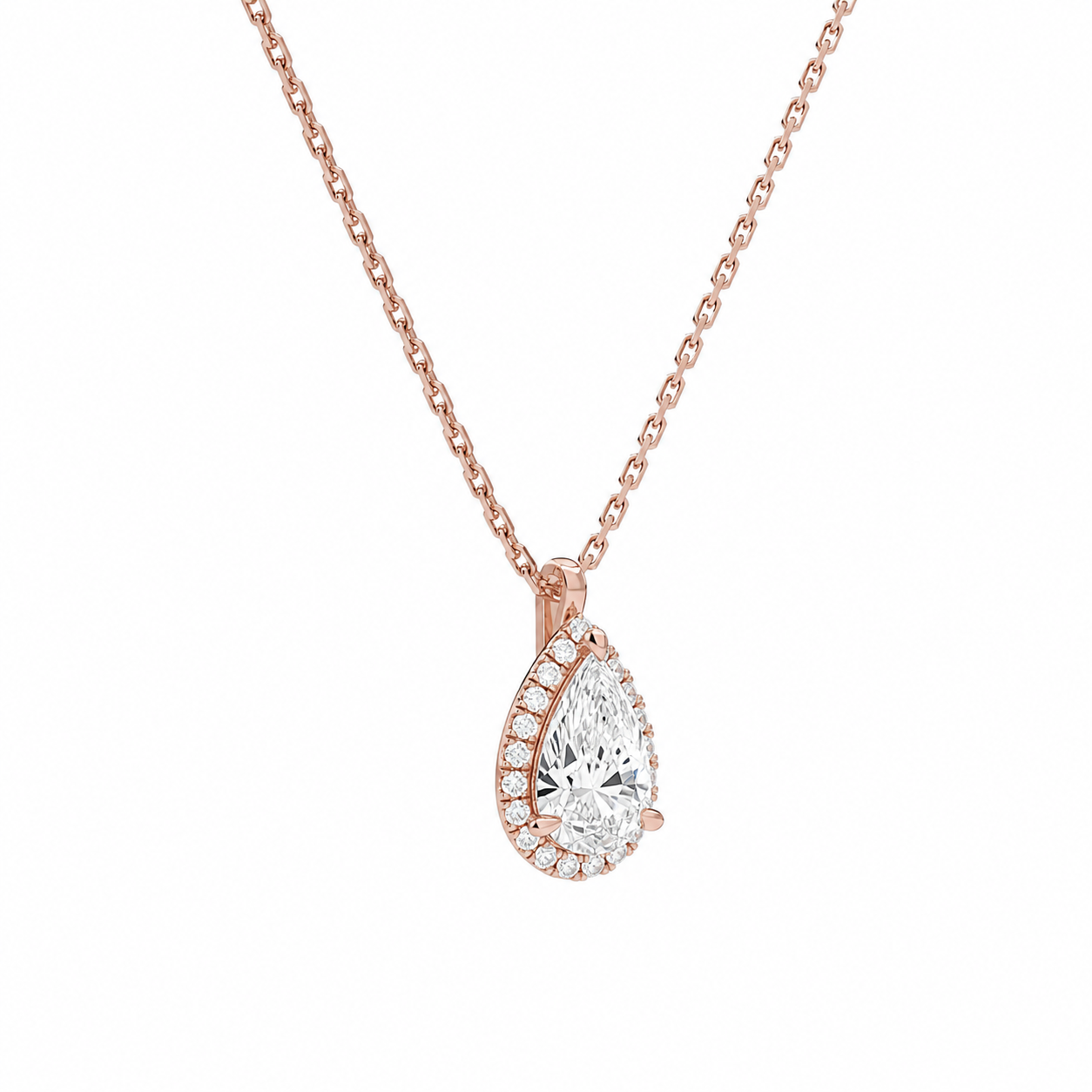
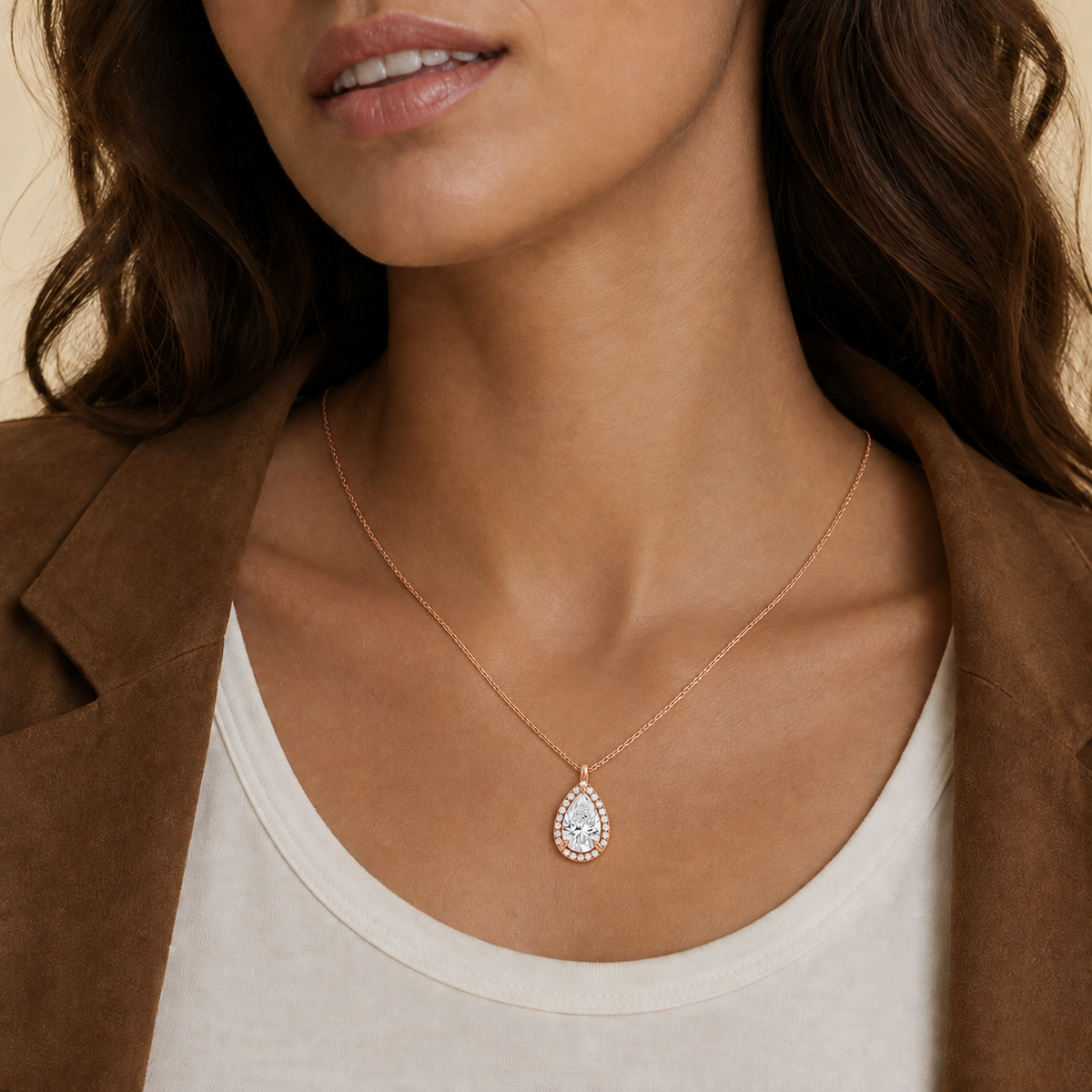
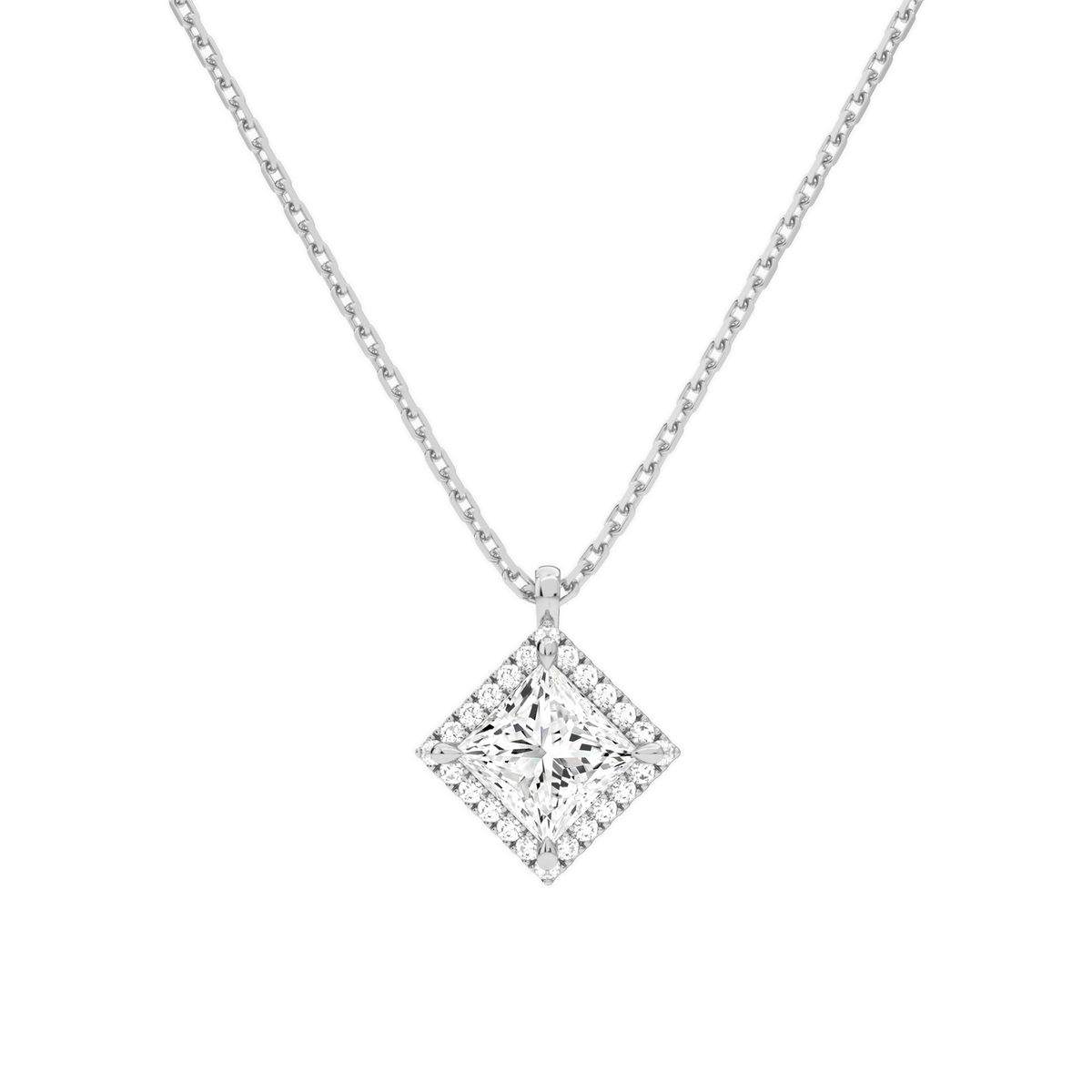
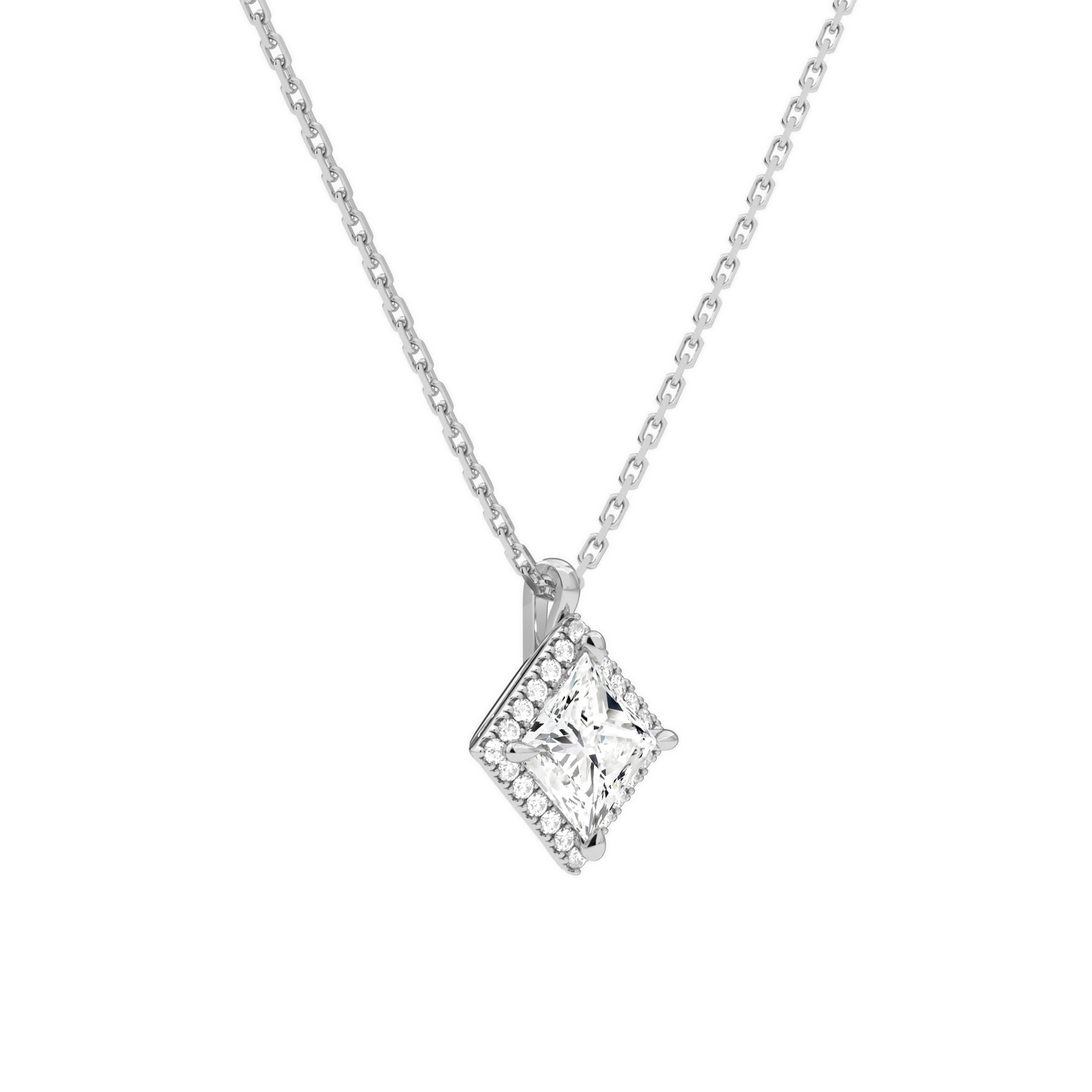

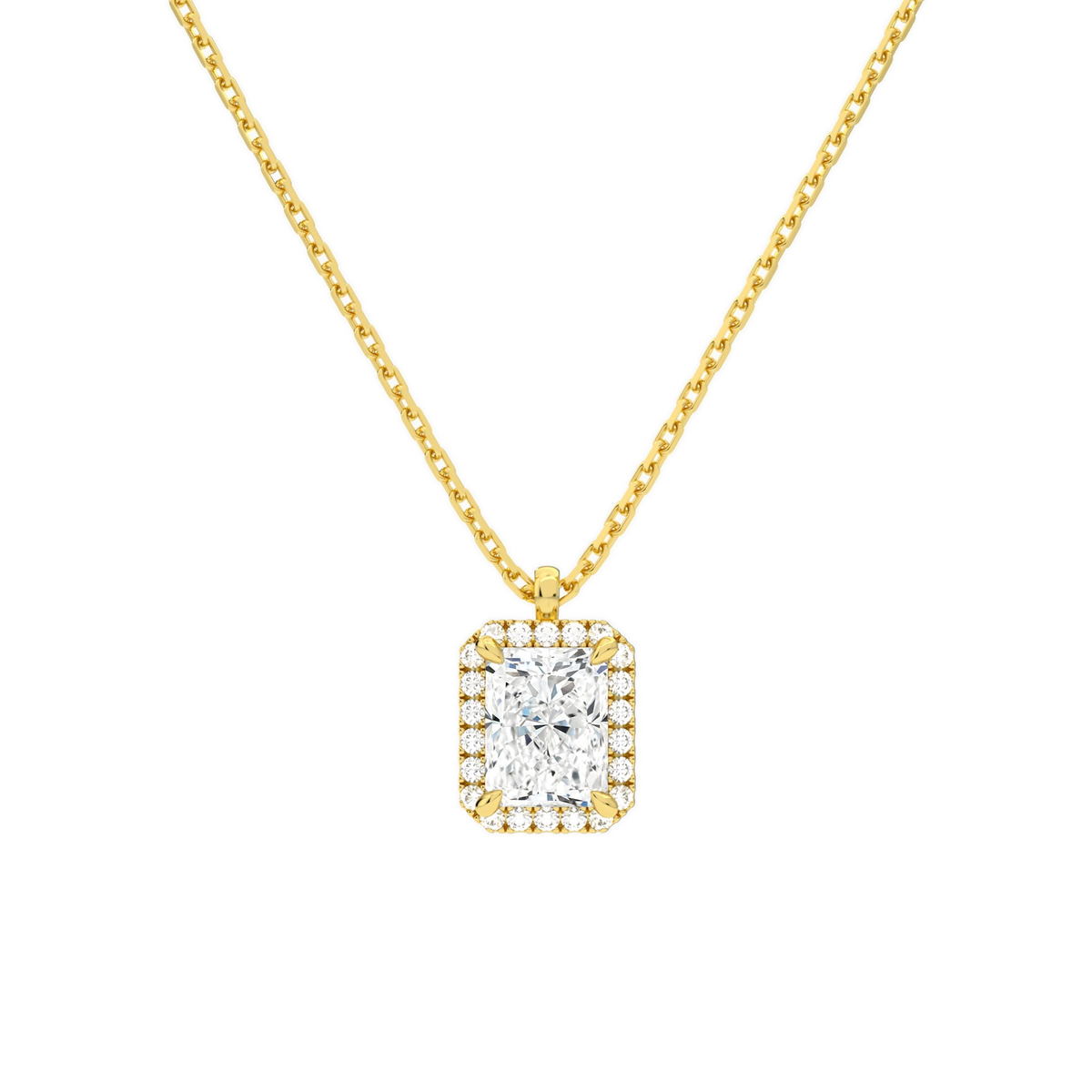
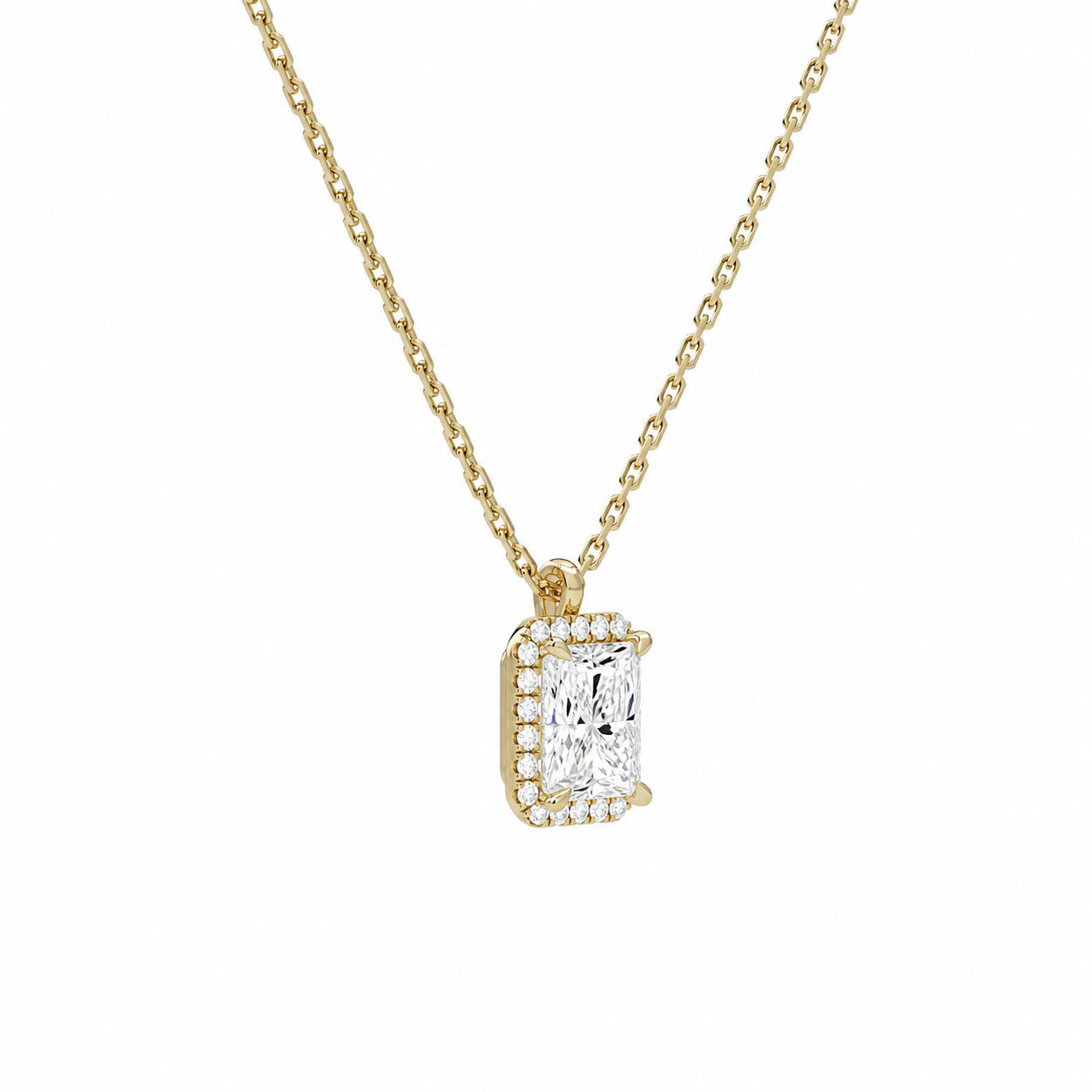

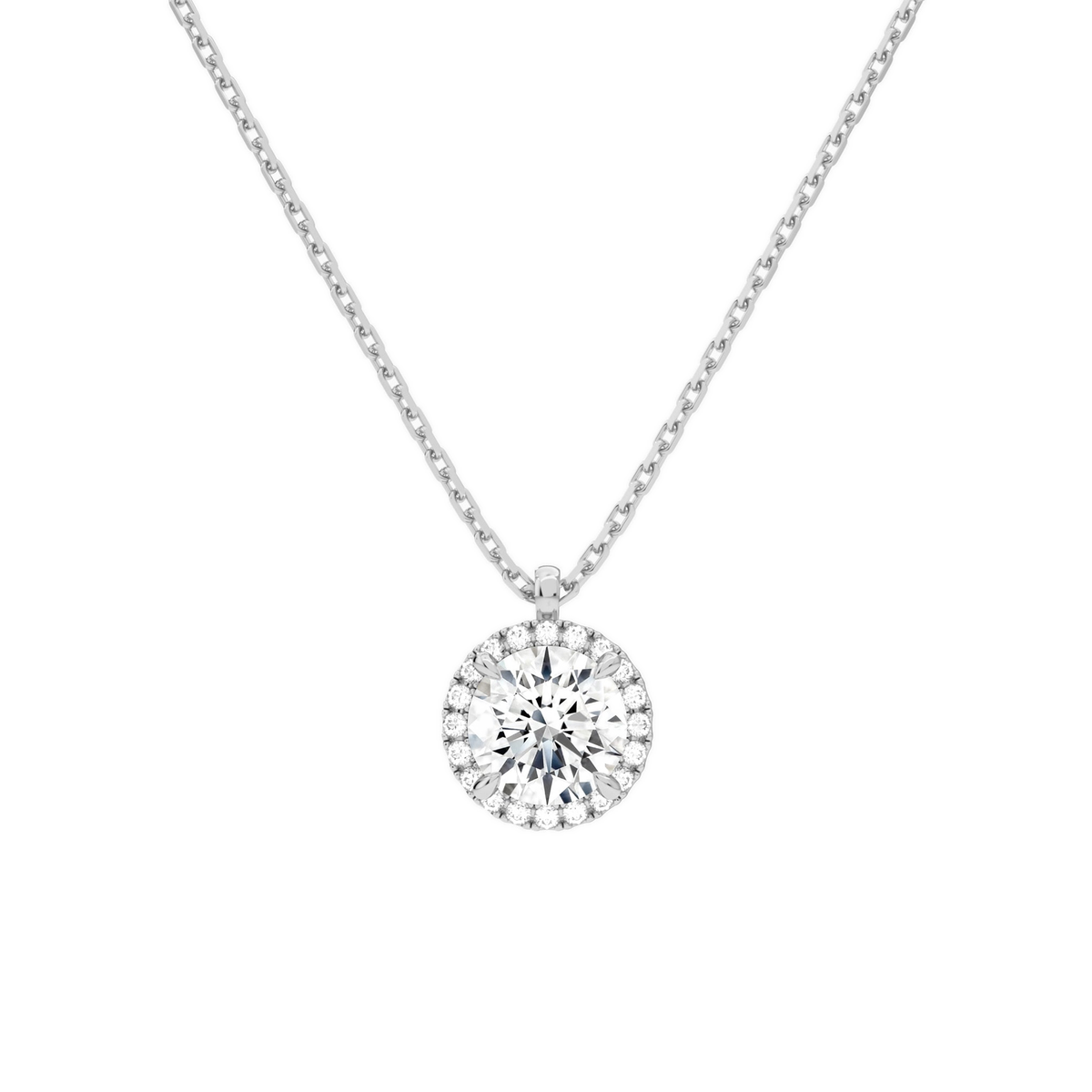
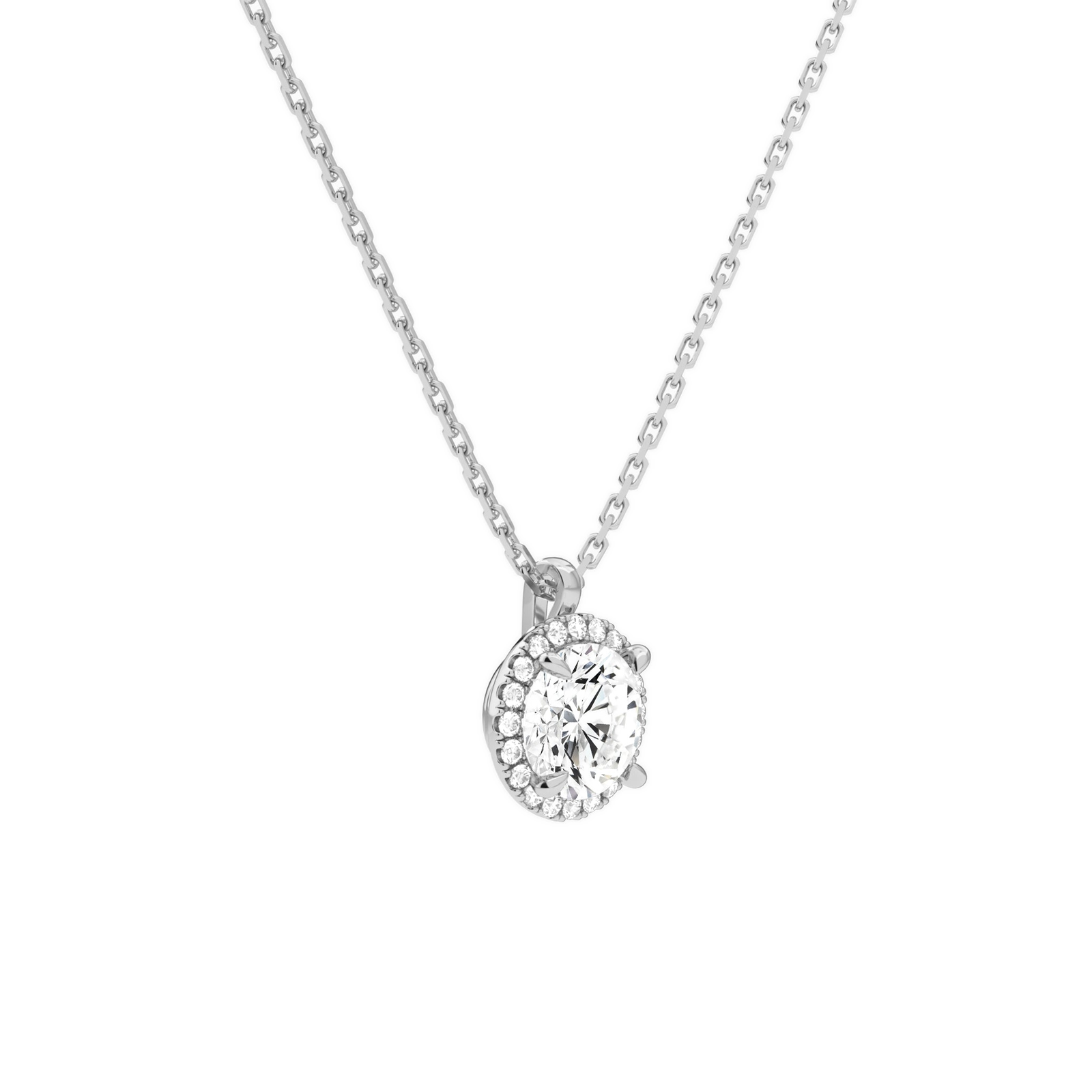
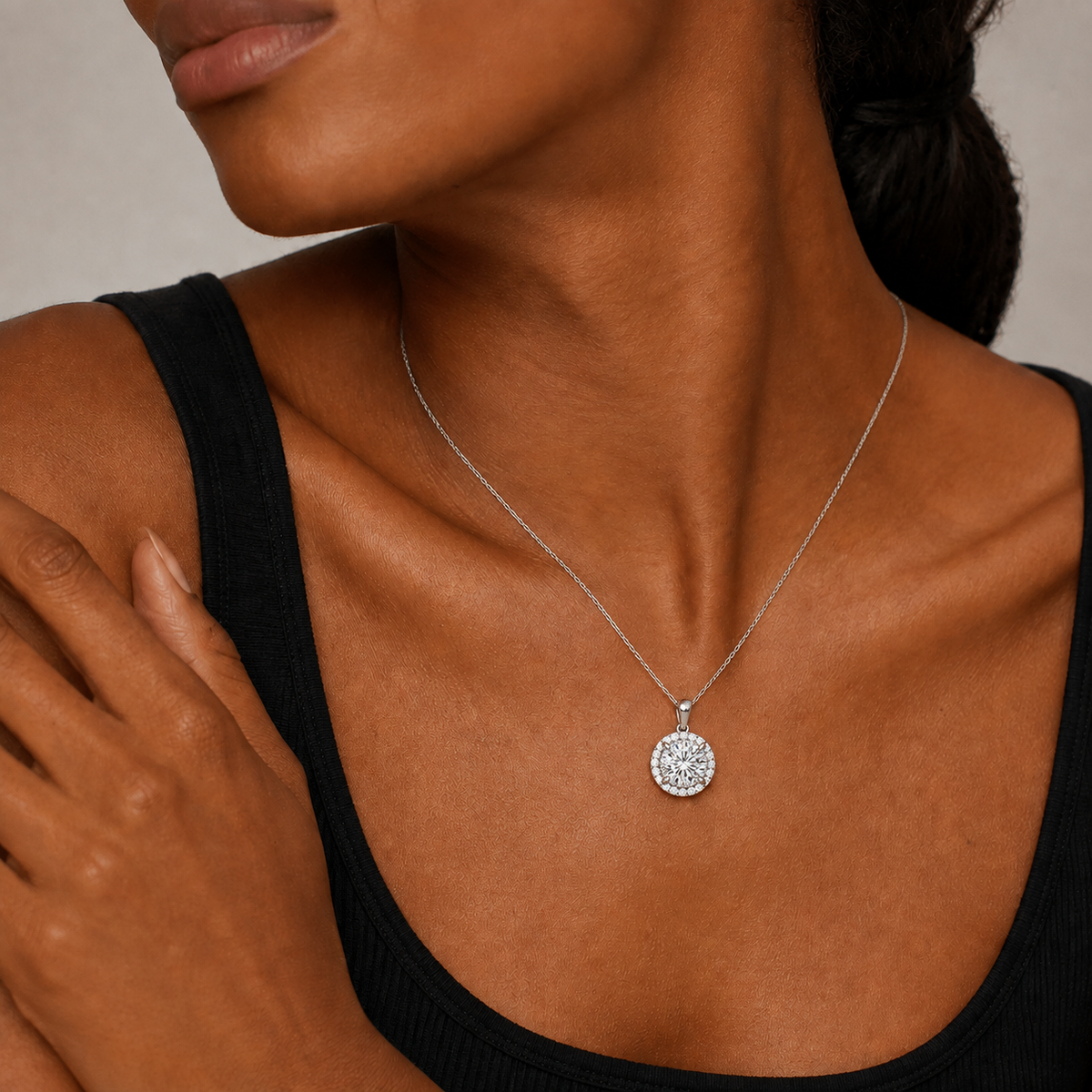
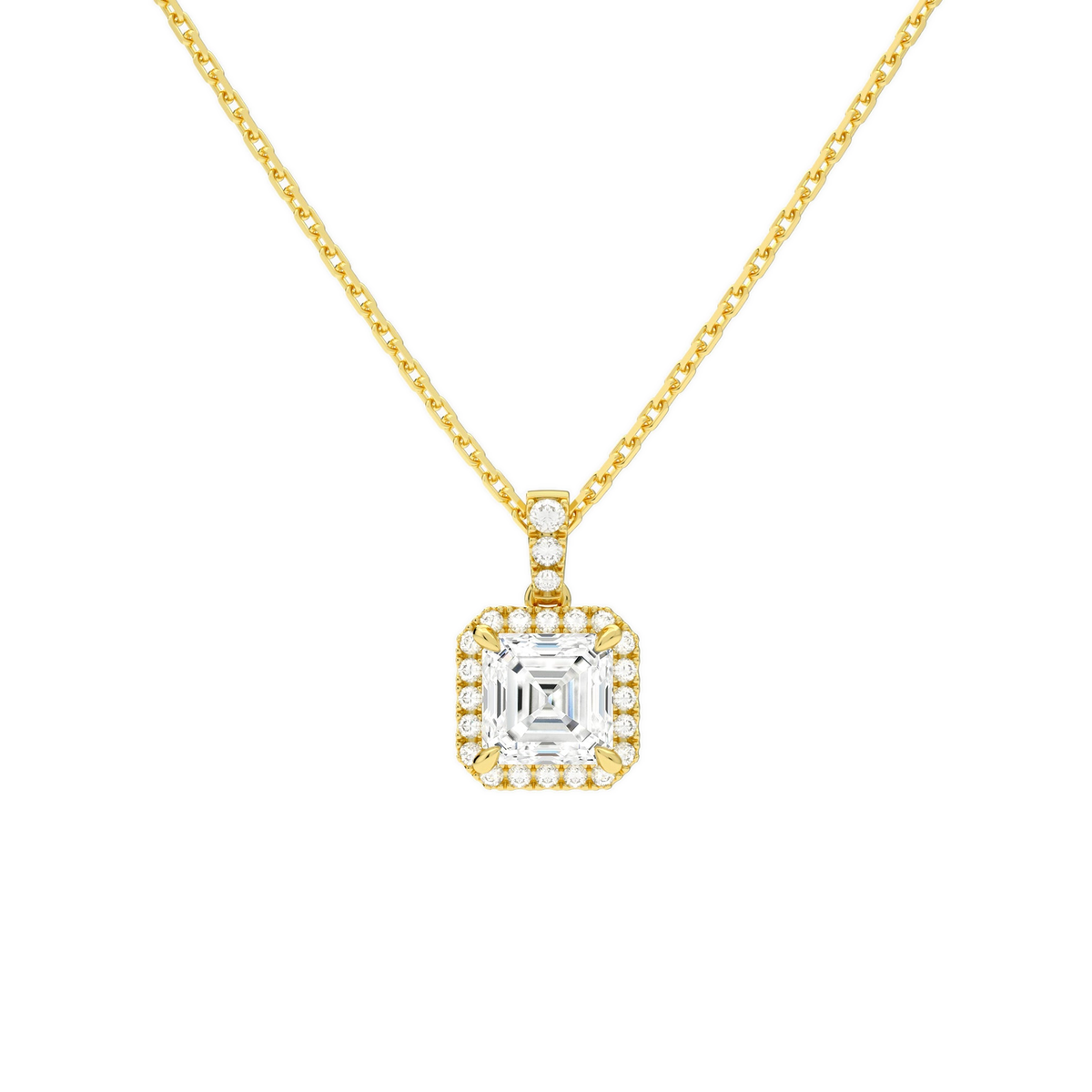
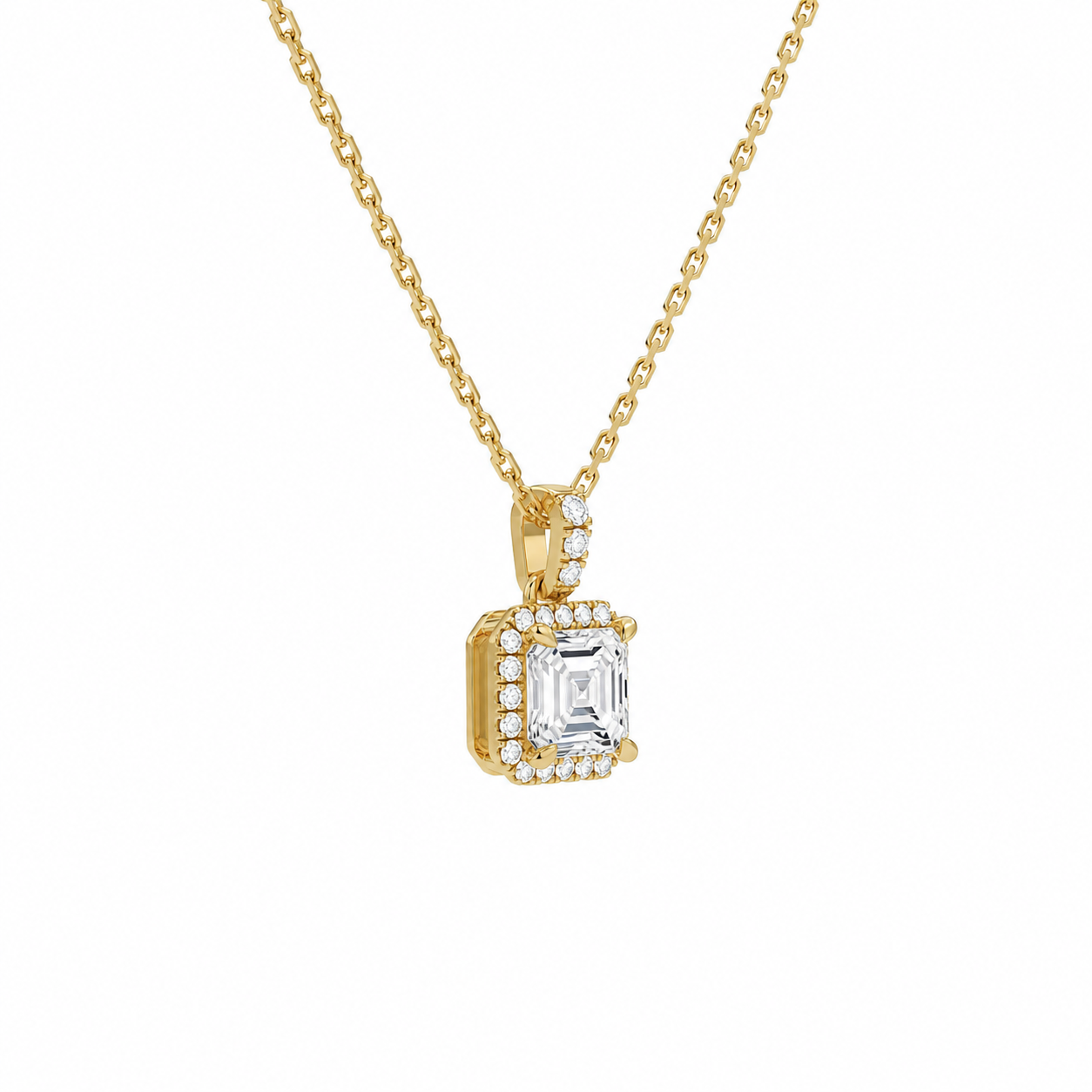

Lab-Grown Diamond Halos: A Center Framed in Light
A halo creates a relationship between a principal center and the light surrounding it. The center still carries shape and direction, but the accent field changes its total width, rhythm, and presence. In some designs that field remains concentrated around the diamond; in others it continues into an accented bail or twist. The useful decision is not simply more sparkle. It is where the light begins, how far it extends, and whether the complete composition remains clear at the scale of the wearer.
Burvonti’s current public Halo Necklace Collection contains 37 products. Jessa, Malia, and Leona each represent ten center shapes. Nelle adds three accented-twist designs; Lucina adds three halo pavé-twist designs; Soraya is a Round-and-Pear halo duo drop shared with the Toi et Moi Collection. Because these families do not all use one identical architecture, this guide distinguishes center halo, accented transition, twist, and paired-diamond drop rather than calling every accent arrangement micro-pavé.
Read the Center and Surround as Two Scales
A halo must be read twice: first as the principal diamond, then as the complete center-and-surround field. Jessa and Malia place round accents around centers from Asscher to Heart. Leona continues the accent language into the bail. Lucina adds a pavé twist, while Nelle’s accented twist is included by current taxonomy even though its title does not use Halo. Soraya combines two principal shapes with halo detail in a vertical drop.
This means center carat alone cannot describe face-up presence. Compare center dimensions, accent count and weight where listed, complete setting width and height, bail or twist length, profile, and attachment. A surrounding field may broaden the composition, but no fixed multiplier or promise that a center appears twice as large applies across shapes, families, or viewing conditions.
Shape Still Directs the Composition
Ten center-shape categories are represented across the three full families: Asscher, Cushion, Emerald, Heart, Marquise, Oval, Pear, Princess, Radiant, and Round. Curves, corners, cropped corners, and points determine how the accent field follows the center. An elongated shape gives the halo a stronger vertical direction; a square or cropped-corner shape asks the surround to resolve a more architectural outline.
The halo should support rather than erase the center’s identity. Compare the spacing and contour around the selected diamond, not only the shape label. Prong position, center proportions, accent size, metal visibility, and setting execution affect how distinctly the center remains legible. No shape guarantees maximum brilliance, a larger appearance, or one prescribed occasion.
Family Architecture Changes the Transition to the Chain
Jessa, Malia, and Leona use different Necklace, Pendant Necklace, and Accented Bail language. Nelle and Lucina make the transition itself directional through twist and accents. These names guide comparison but do not prove fixed, sliding, or flip-resistant behavior. Inspect front, side, and back views for attachment points, chain path, profile, and clearance.
A broader or more detailed focal field can change weight distribution and movement. Attachment, center scale, accents, clothing, anatomy, posture, and chain drape all influence whether a necklace rotates or remains centered. No Collection-wide promise of perfectly flat placement or elimination of flipping is supported.
Options Describe Different Parts of the Design
Thirty current products use Centerstone options from 1/2 through 2 carats plus Browse All Diamonds. Six twist designs use Centerstone and Quality options. Soraya uses Total Carat Weight and Quality because its composition includes more than one principal diamond. These labels are not interchangeable.
Centerstone describes a principal diamond selection; accent minimum total weight describes smaller surrounding diamonds; Total Carat Weight can combine multiple principals or accents. A grading report may identify one center without describing every accent. Read option label, product specification, and documentation together before comparing numbers between families.
Metal Changes the Boundary of the Light Field
The current cards represent 16 designs in 14K White Gold, 15 in 14K Yellow Gold, and six in 14K Rose Gold. White gold may visually recede among colorless-looking diamonds in some settings; yellow or rose gold can make the architecture between center and accents more explicit. Exact effect depends on proportions, prong visibility, finish, rhodium plating, skin context, and clothing.
Metal is part of center setting, accent structure, bail or twist, chain, and clasp. It does not guarantee a particular brightness, sensitivity outcome, or occasion. Exact alloy, finish, maintenance, and alternative-metal feasibility remain product-specific or subject to technical custom review.
Placement and Layering Need Space Around the Halo
All 37 current descriptions list an adjustable 16–18-inch length, a 0.95 mm chain, and a lobster clasp. Placement still varies with neck circumference, neckline, attachment, focal weight, and drape. The complete halo field—not only the center—should be assessed against the wearer.
When layering, leave enough vertical and lateral space for the center and surround to remain legible. A quieter chain or solitaire can provide contrast; repeating another framed form can create rhythm. Different lengths do not guarantee separation or prevent tangling, and a wider setting may interact with nearby chains or clothing.
More Diamonds Require More Precise Care
A halo introduces additional stones and setting points that should be cleaned and inspected as a system. Oils and residue can collect beneath the center and between accents. Use a gentle method suited to diamond, metal, setting, bail or twist, chain, and clasp; avoid sharp tools, forceful brushing, and unsupported ultrasonic assumptions.
Burvonti uses responsibly sourced lab-grown diamonds and supports independent grading and certification where applicable. Documentation applies to the stones identified, not automatically every accent or the complete necklace. Custom possibilities may refine center shape, scale, halo contour, accent transition, bail, twist, metal, chain, length, or clasp when technically feasible.
Frequently Asked Questions
What is a halo diamond necklace?
A halo necklace frames a principal center with an additional diamond field. Current Burvonti membership also includes accented-twist and one halo duo-drop treatment, so exact architecture varies.
How many Halo Necklaces are currently included?
The public Collection contains 37 products: ten Jessa, ten Malia, ten Leona, three Nelle, three Lucina, and one Soraya.
Do all 37 products use the same halo construction?
No. The page includes center halos, accented bails, accented twists, halo pavé twists, and a halo duo drop. Product details must define the selected structure.
Which center shapes are represented?
Asscher, Cushion, Emerald, Heart, Marquise, Oval, Pear, Princess, Radiant, and Round are represented across the three full ten-shape families.
Does a halo make the center look larger?
It broadens the complete visible field and may change perceived scale, but no fixed enlargement percentage or multiplier can be guaranteed.
Does a halo always mean micro-pavé?
No. Accent setting terminology and construction vary. Burvonti does not apply micro-pavé as a Collection-wide claim without product-level evidence.
What is the difference between Jessa, Malia, and Leona?
They are three current ten-shape halo families. Leona titles identify an accented bail; attachment, profile, and movement differences require selected-product views and details.
How are Nelle and Lucina different?
Nelle is titled Accented Twist and lists 11 round accents in sampled products. Lucina is titled Halo Pavé Twist and sampled products list 34 round accents. Exact shape-specific details require confirmation.
Why is Soraya in both Halo and Toi et Moi?
Soraya combines Round and Pear principal diamonds in a halo duo-drop composition, so it satisfies both current taxonomy lenses.
What does Centerstone mean on a halo necklace?
It identifies a principal diamond option. It does not automatically include the accent diamonds’ weight or describe the complete setting dimensions.
What does Total Carat Weight mean for Soraya?
It combines weight across its multi-diamond composition. It should not be read as the weight of either principal diamond individually.
Are all halo diamonds independently graded?
Do not assume one report covers every accent. Confirm which principal stone or stones the document identifies and how accent diamonds are represented.
Will a halo necklace lie flat and stay centered?
Not universally. Attachment, focal weight, chain drape, anatomy, clothing, movement, and condition influence placement, rotation, and flipping.
What length, chain, and clasp are currently listed?
All 37 current descriptions list adjustable 16–18 inches, a 0.95 mm chain, and a lobster clasp. Confirm the selected product.
Which metals are currently represented?
Current cards represent 14K White, Yellow, and Rose Gold. Exact alloy, finish, rhodium plating, sensitivity, and alternative-metal feasibility remain product-specific.
Can a halo necklace be layered?
Yes when length, complete focal width, movement, and chain drape preserve space around the halo. Different lengths do not guarantee no overlap or tangling.
Can I wear a halo necklace every day?
Frequent wear may suit a specific piece, but accents, setting, attachment, chain, clasp, activity, impact, care, and condition require evaluation. No universal guarantee applies.
Are halo accents included in the center diamond’s carat weight?
Not automatically. Centerstone, accent minimum total weight, and Total Carat Weight describe different scopes; read the selected product’s option labels and specifications together.
How should a halo necklace be cleaned and inspected?
Use gentle care for the entire construction, clean around center and accents without sharp tools, and inspect stones, setting points, attachment, chain, and clasp if anything changes.
Can a halo necklace be customized?
Custom center shape, scale, halo contour, accents, bail or twist, metal, chain, length, or clasp may be possible after technical review.