
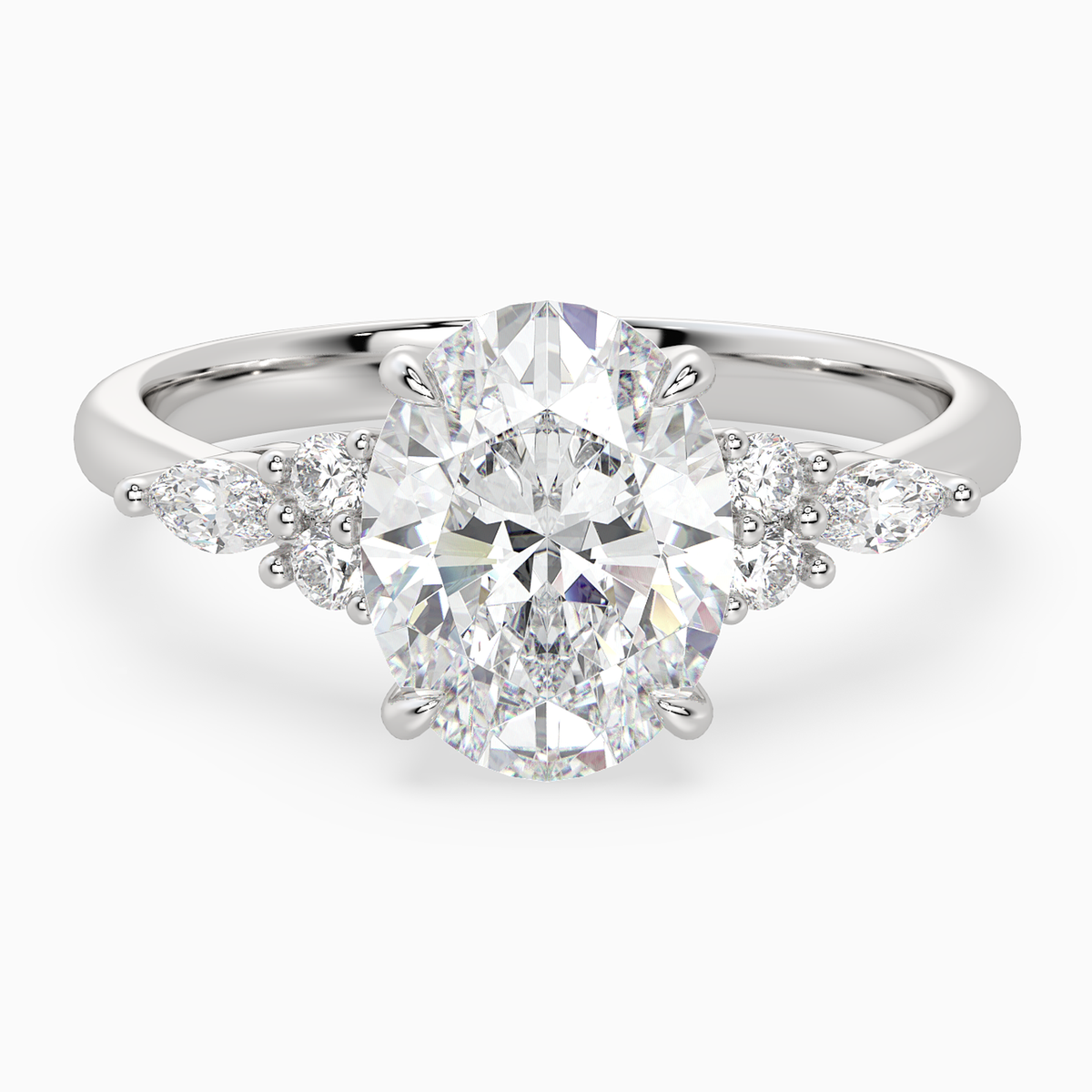


Lab Grown Diamond Stud Earrings
A pair resolved at close scale. Explore diamond studs through shape, setting edge, face-up balance and their precise relation to the ear.


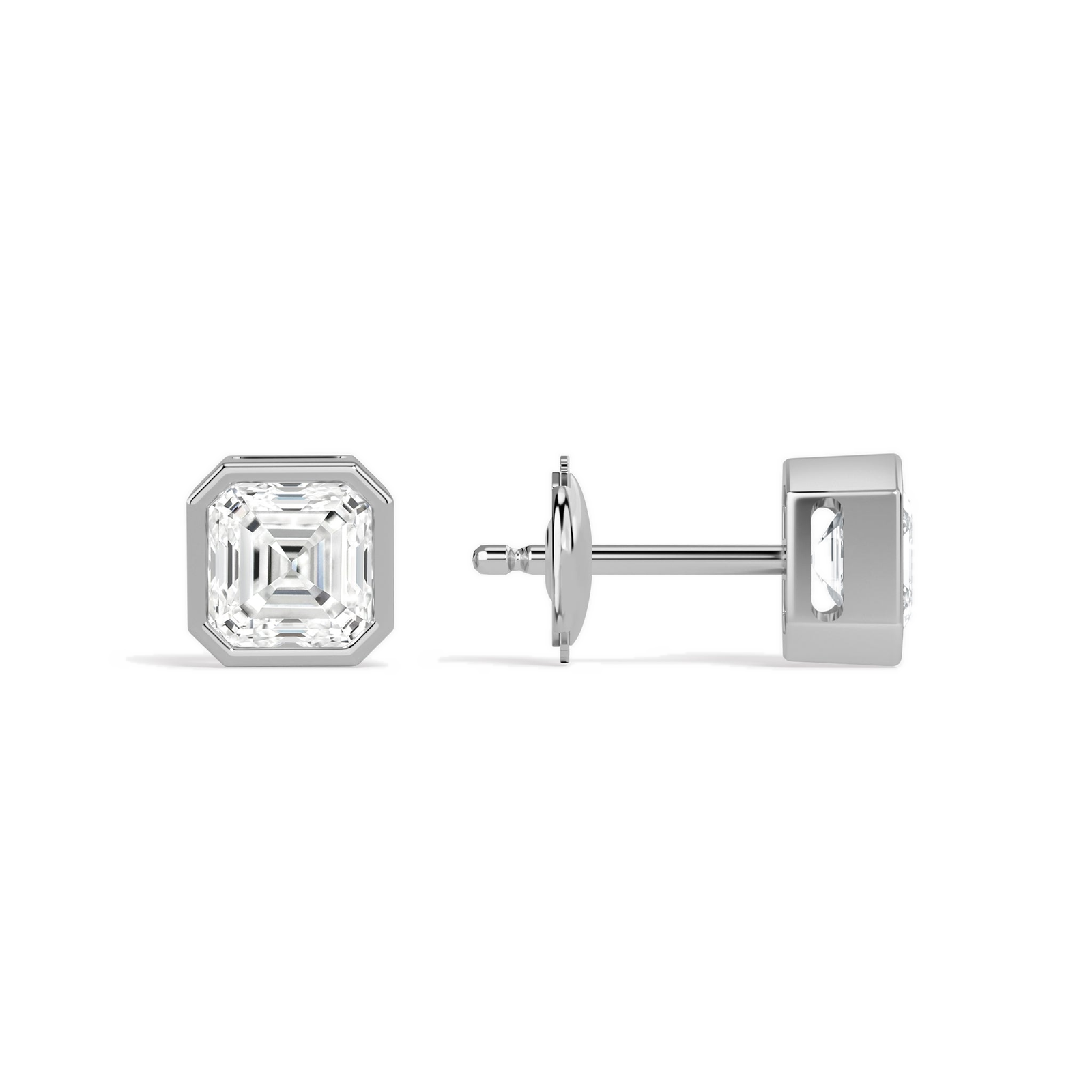


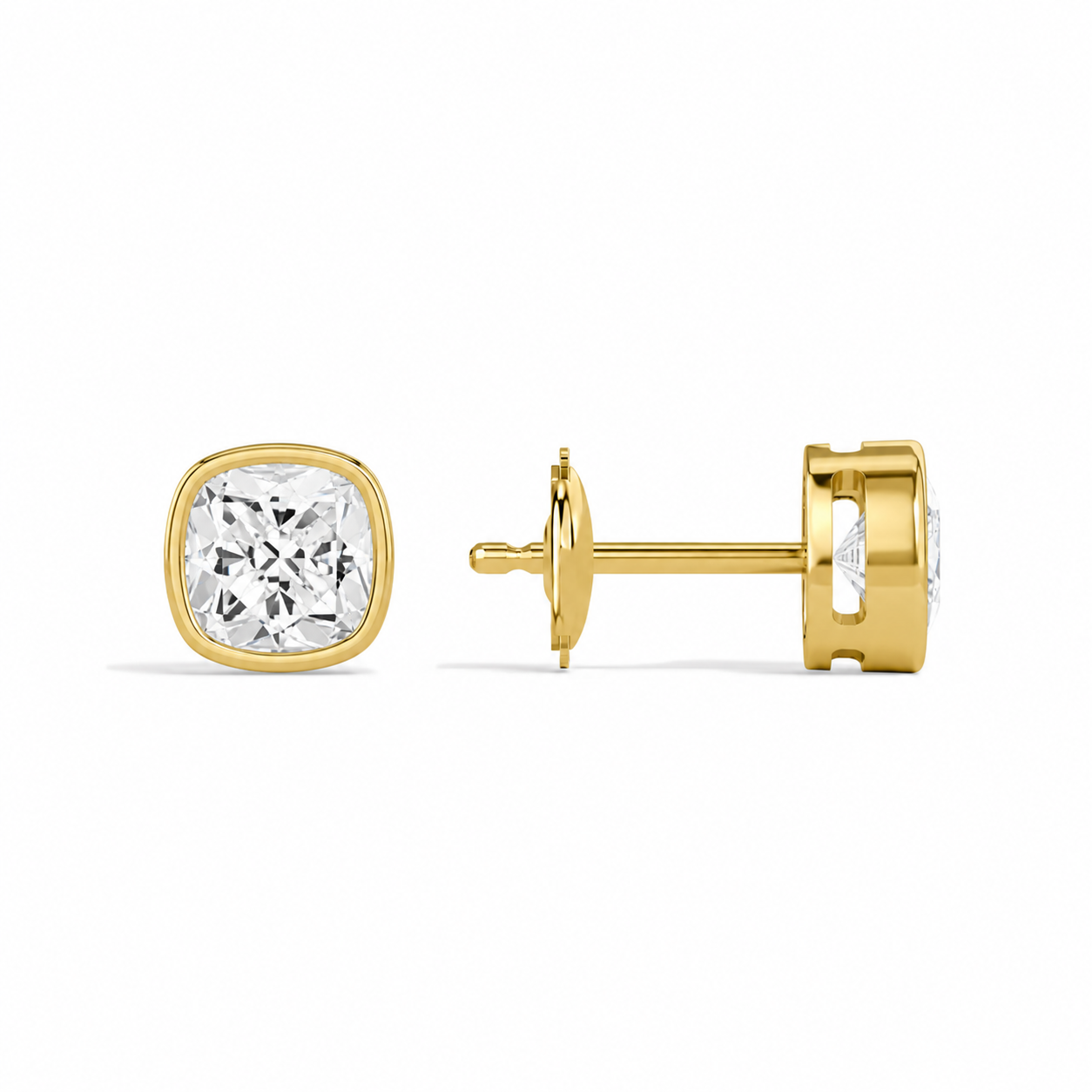


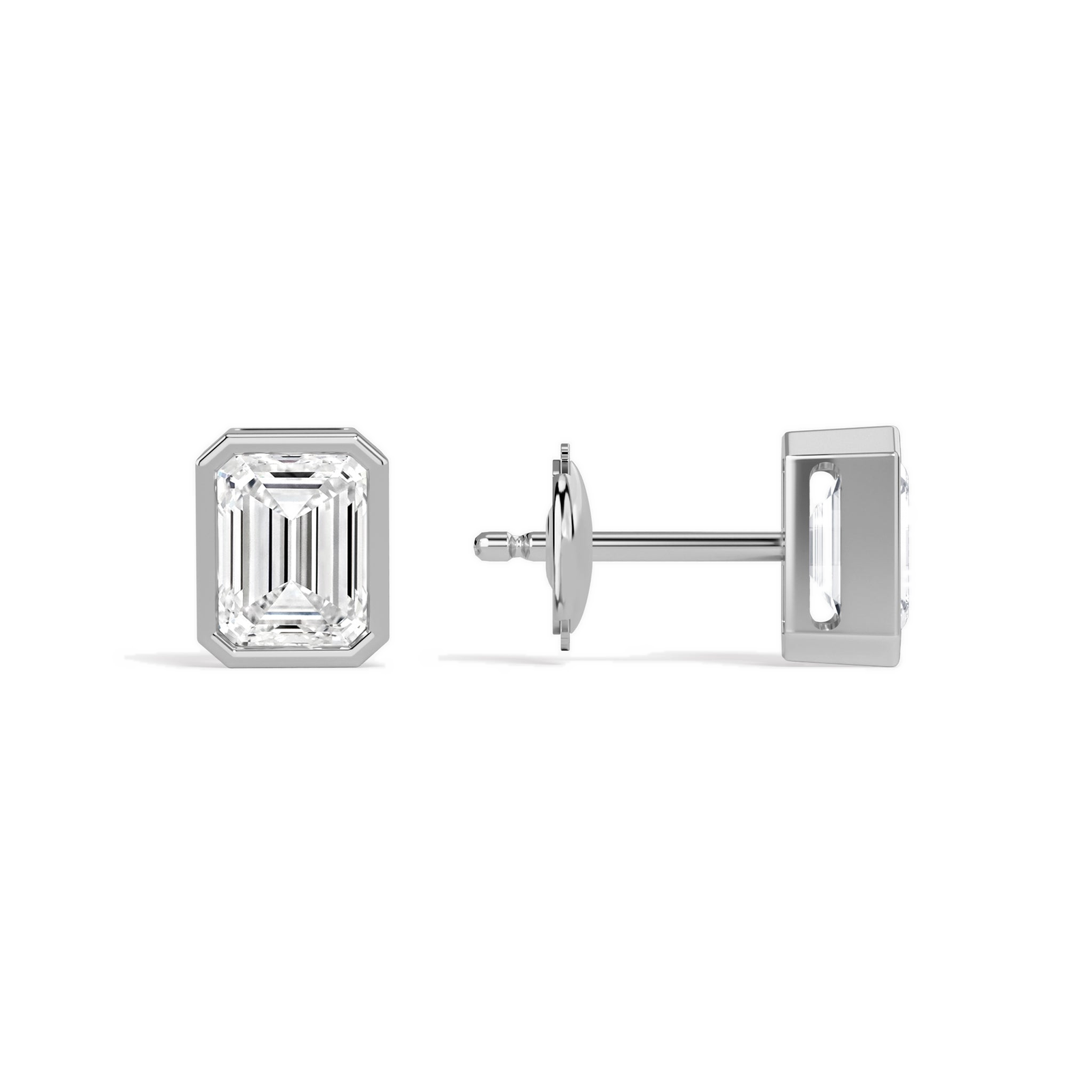


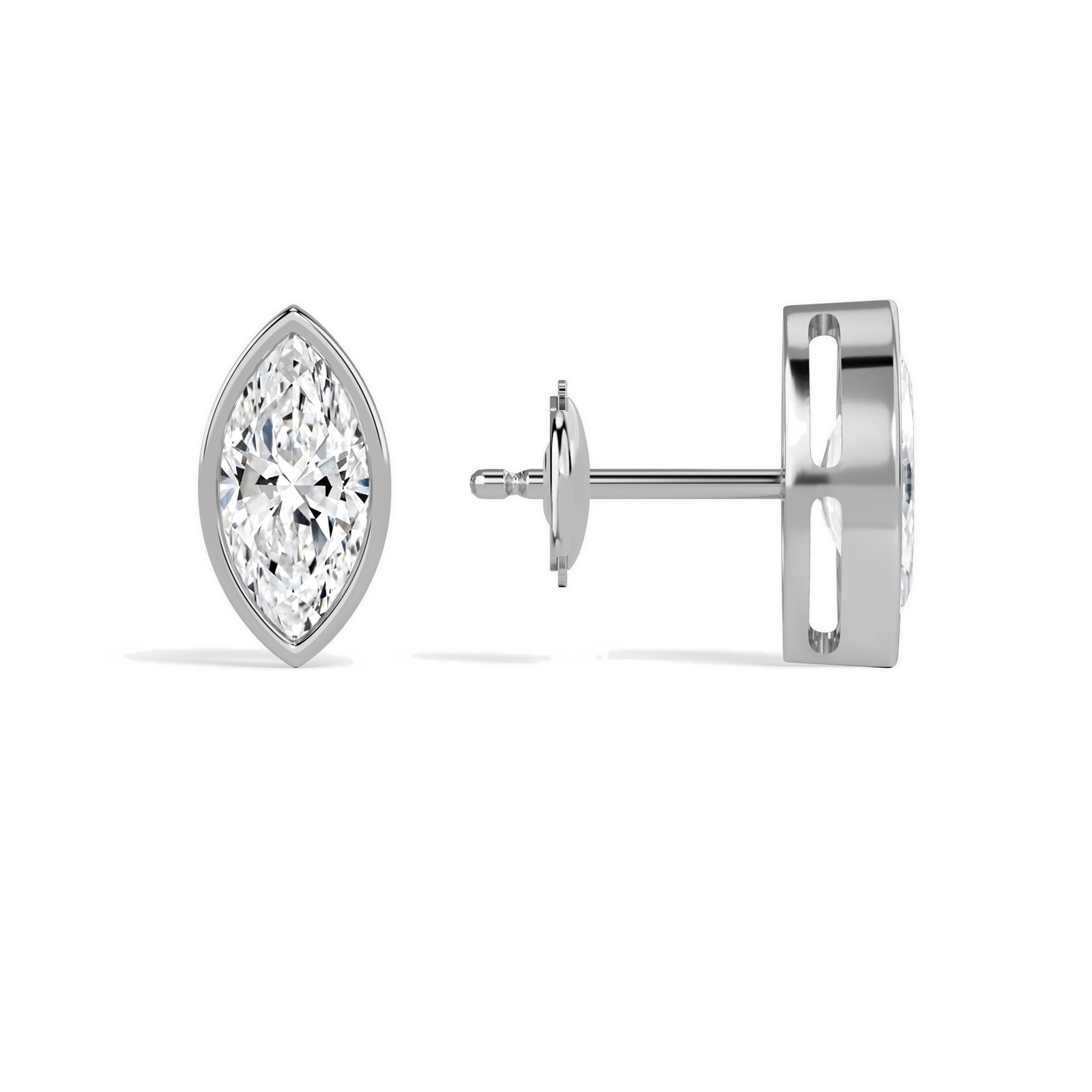


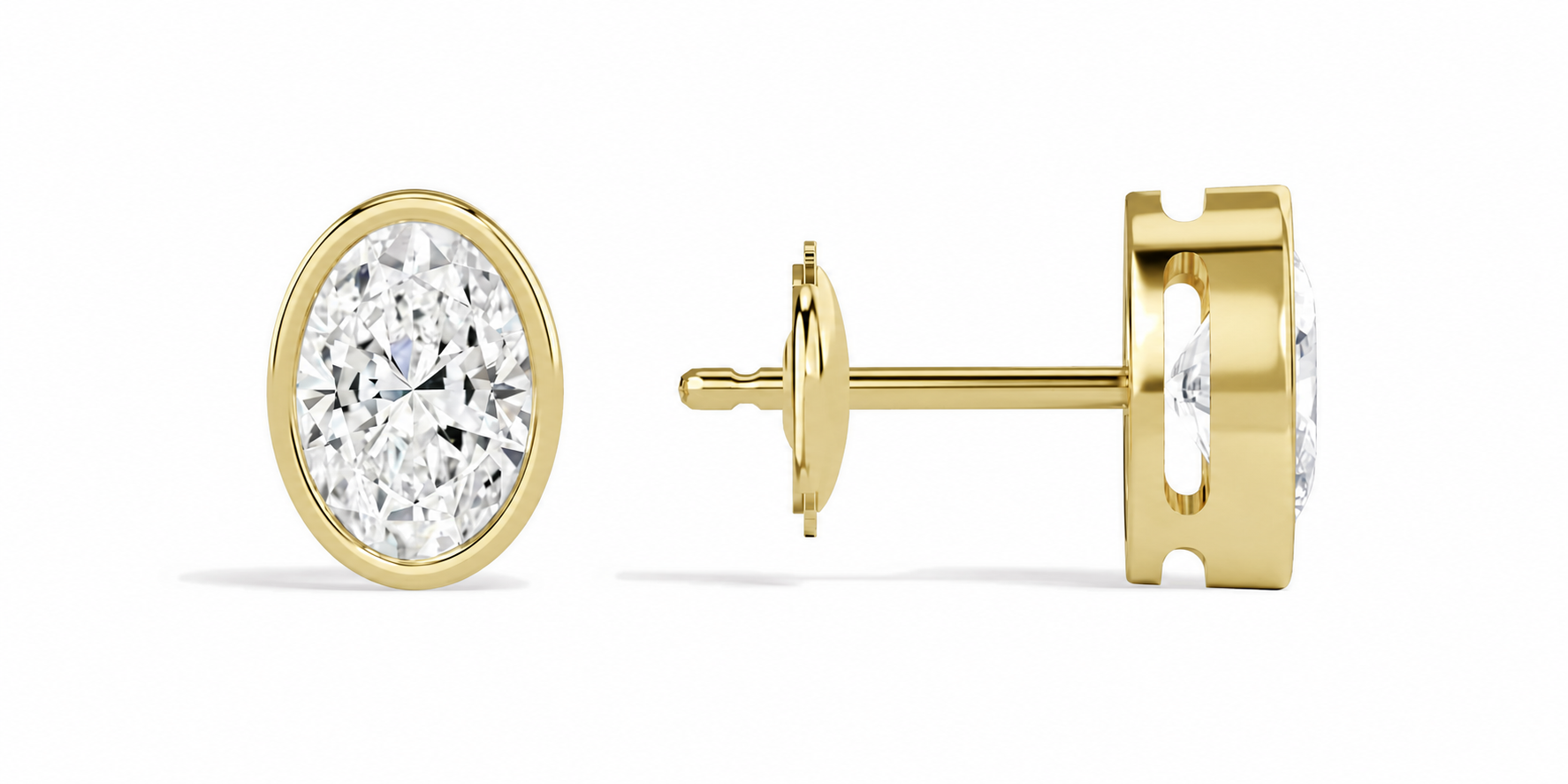


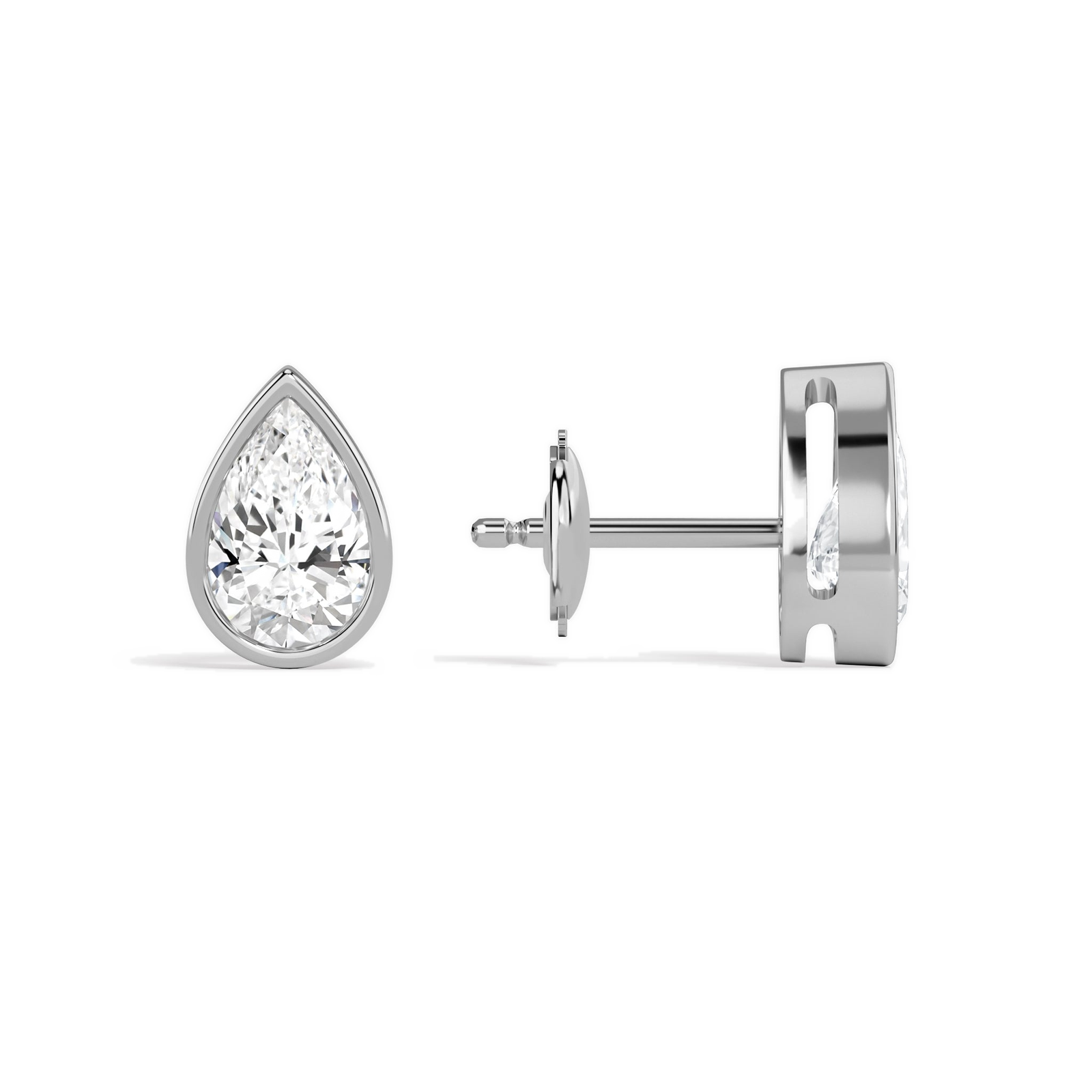


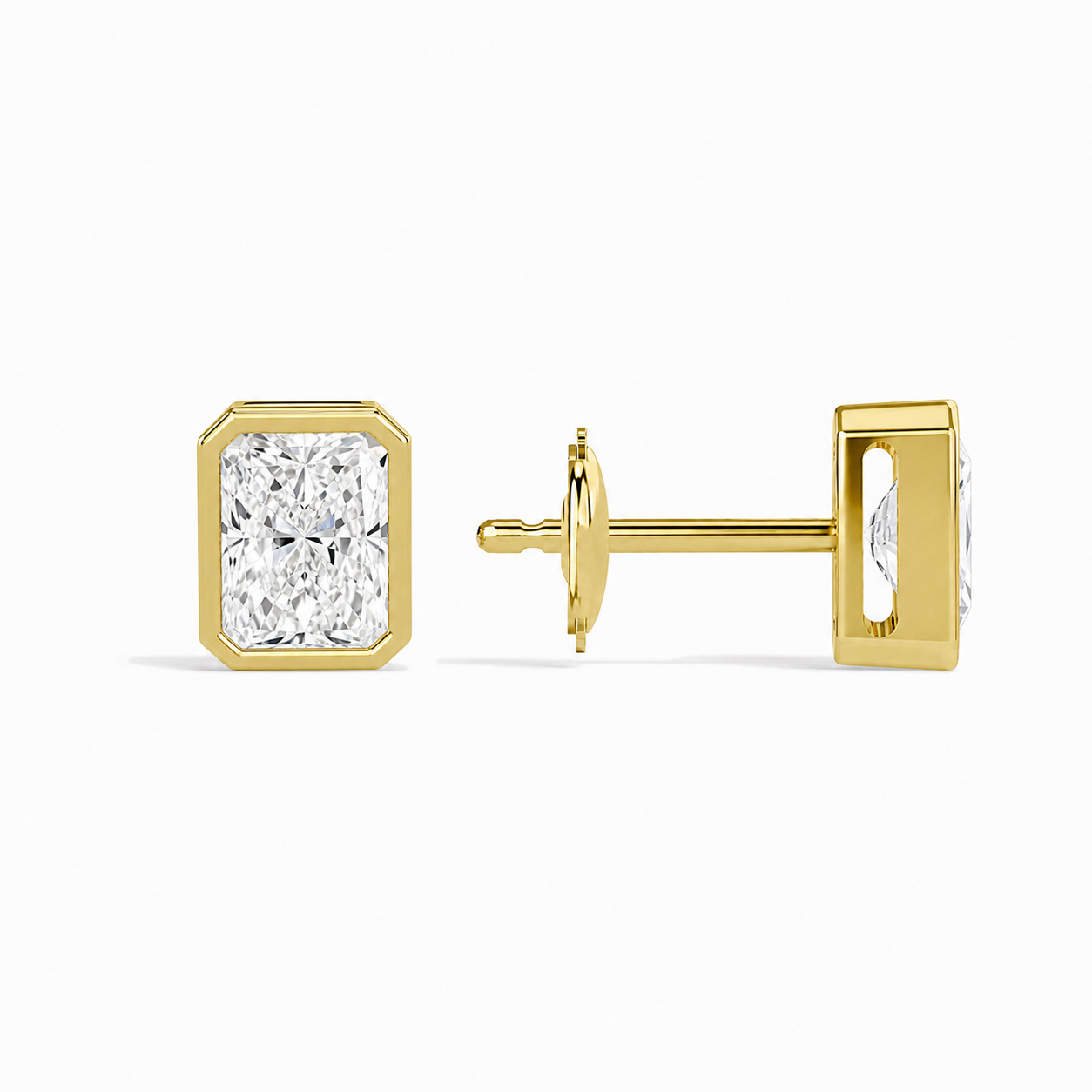










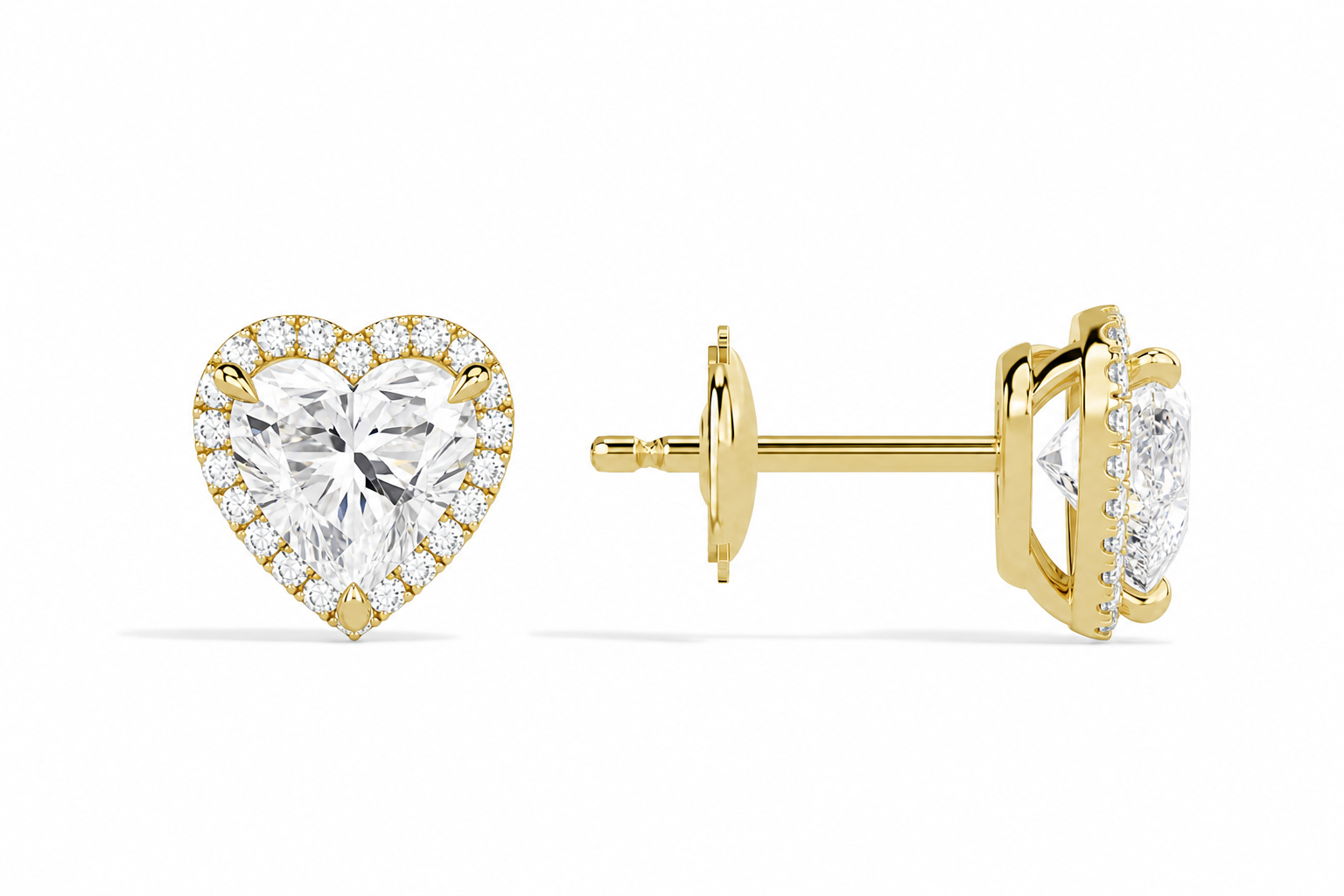


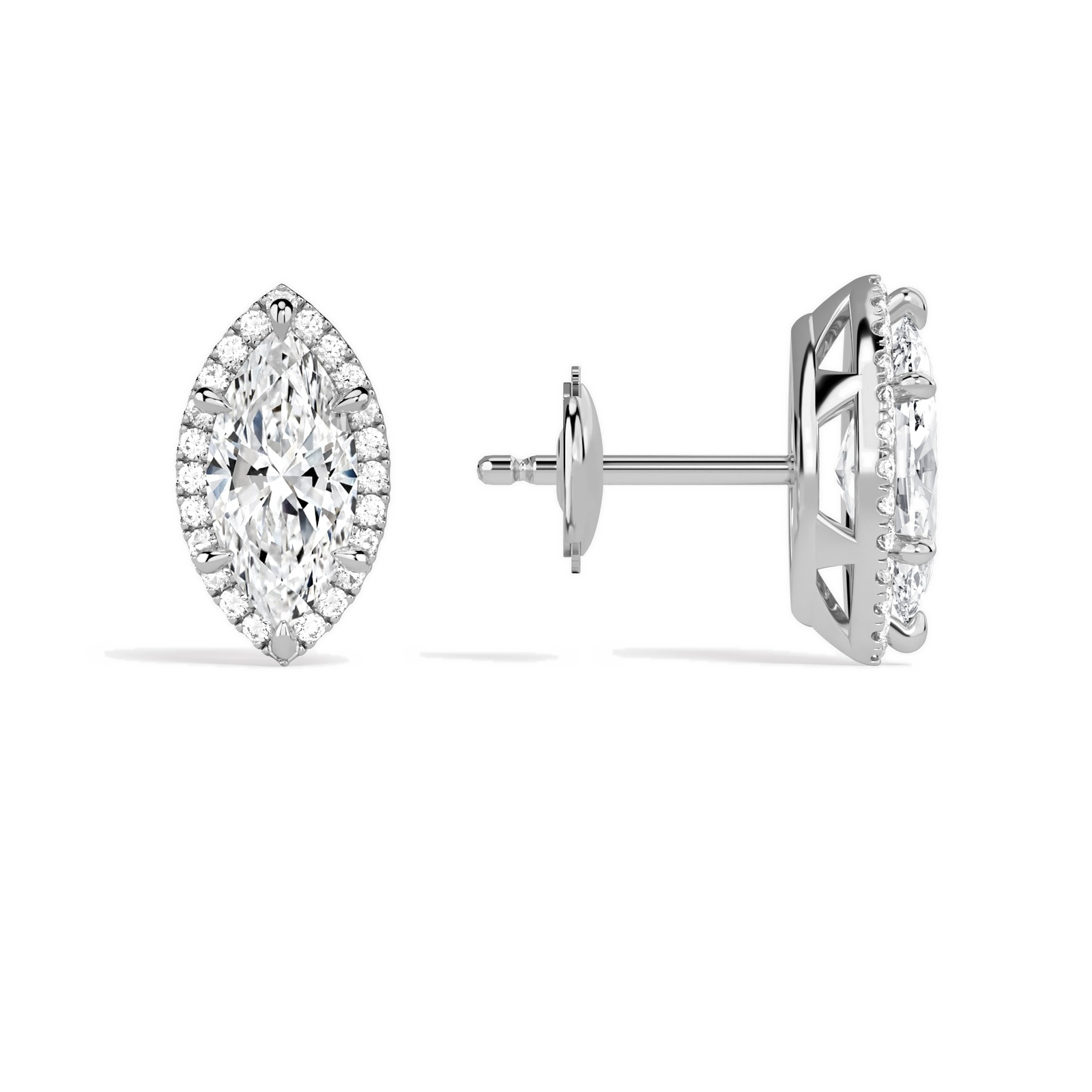


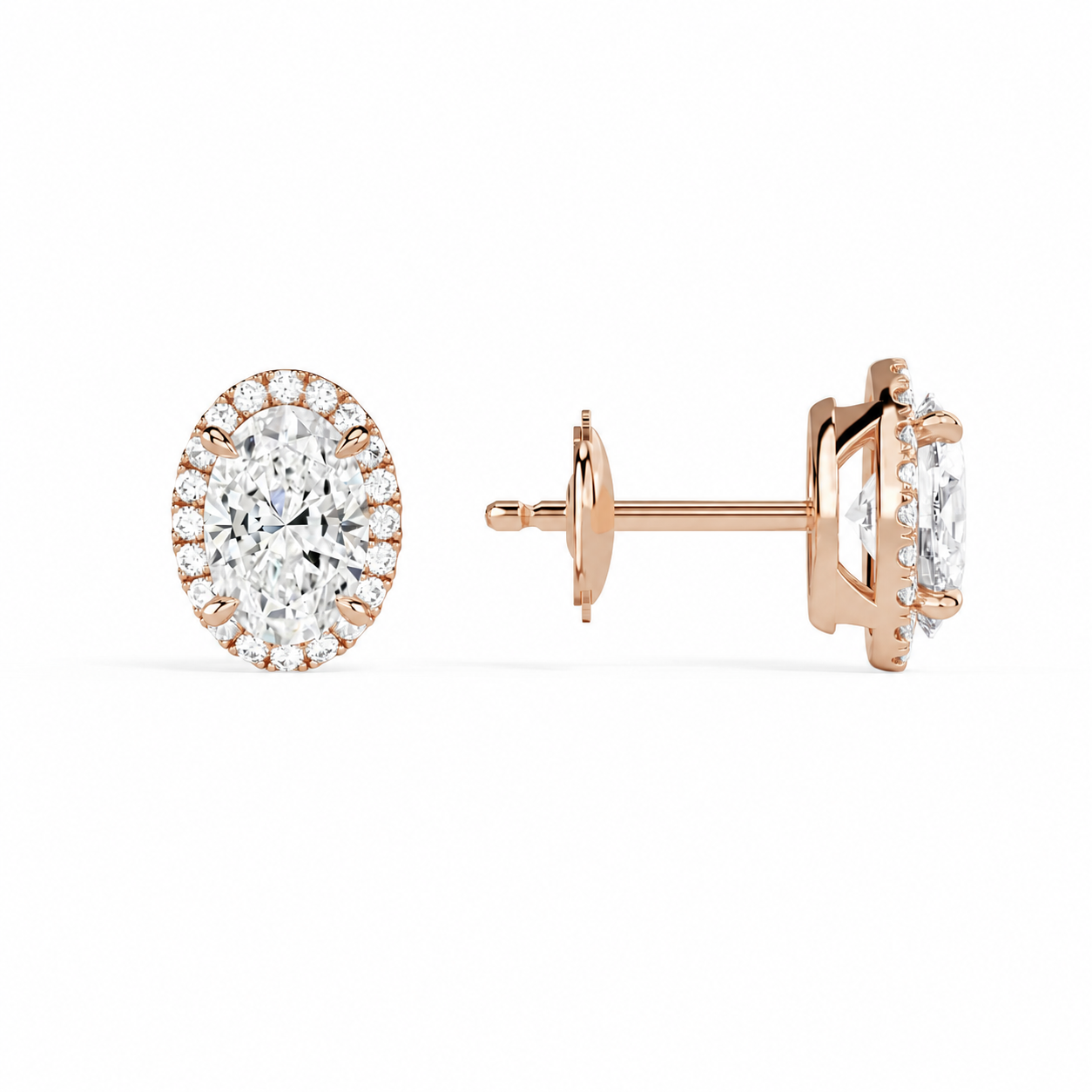


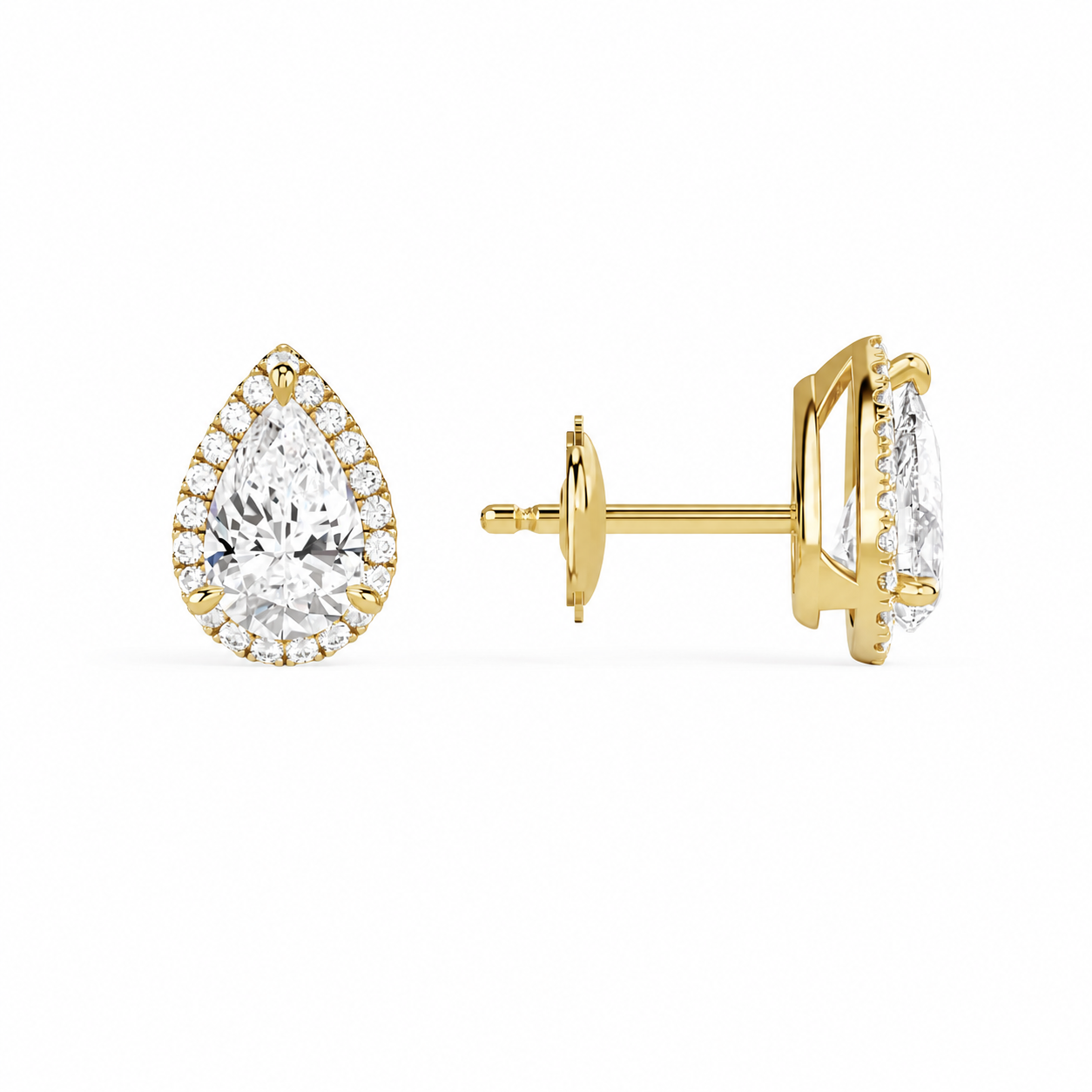


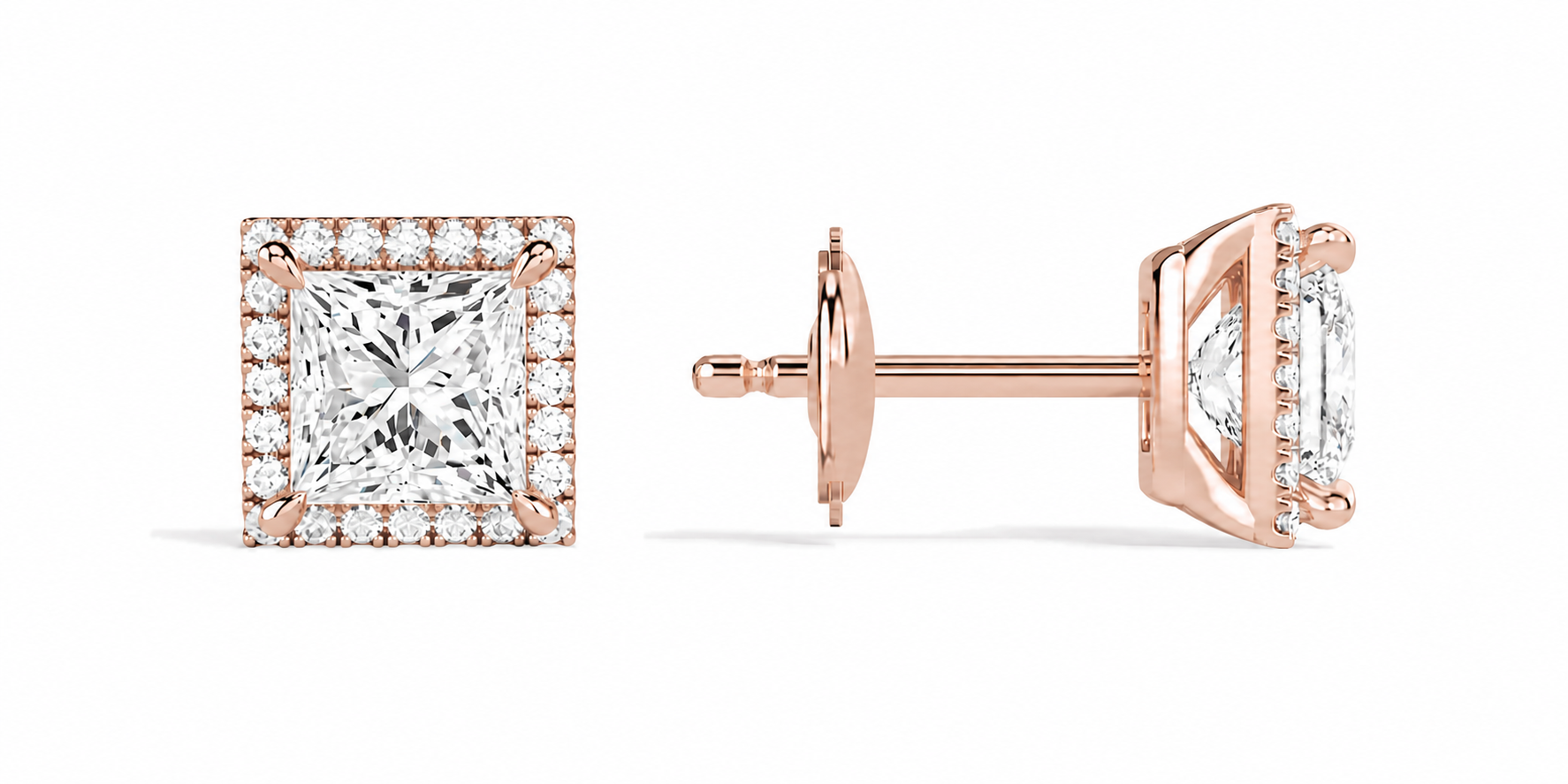


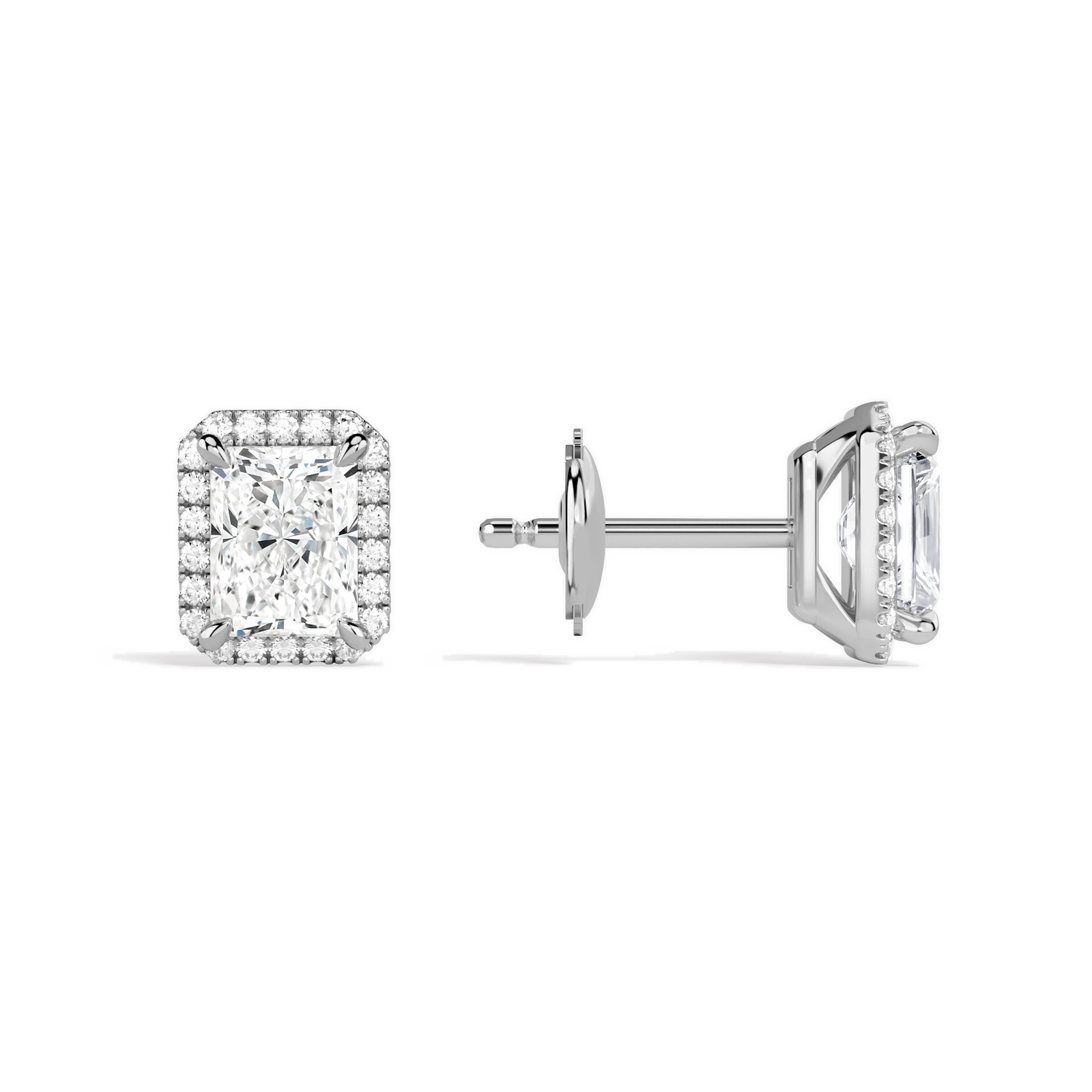


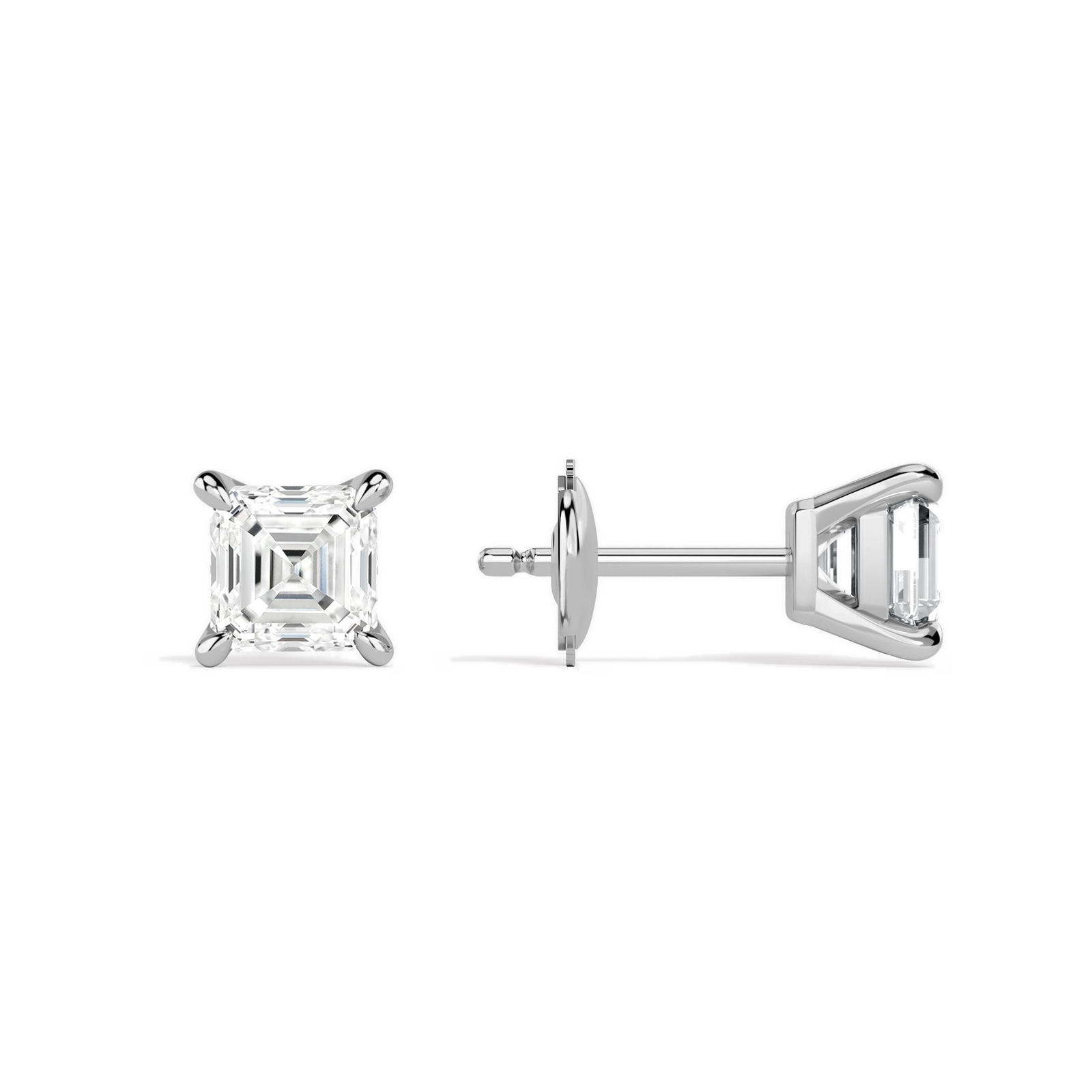


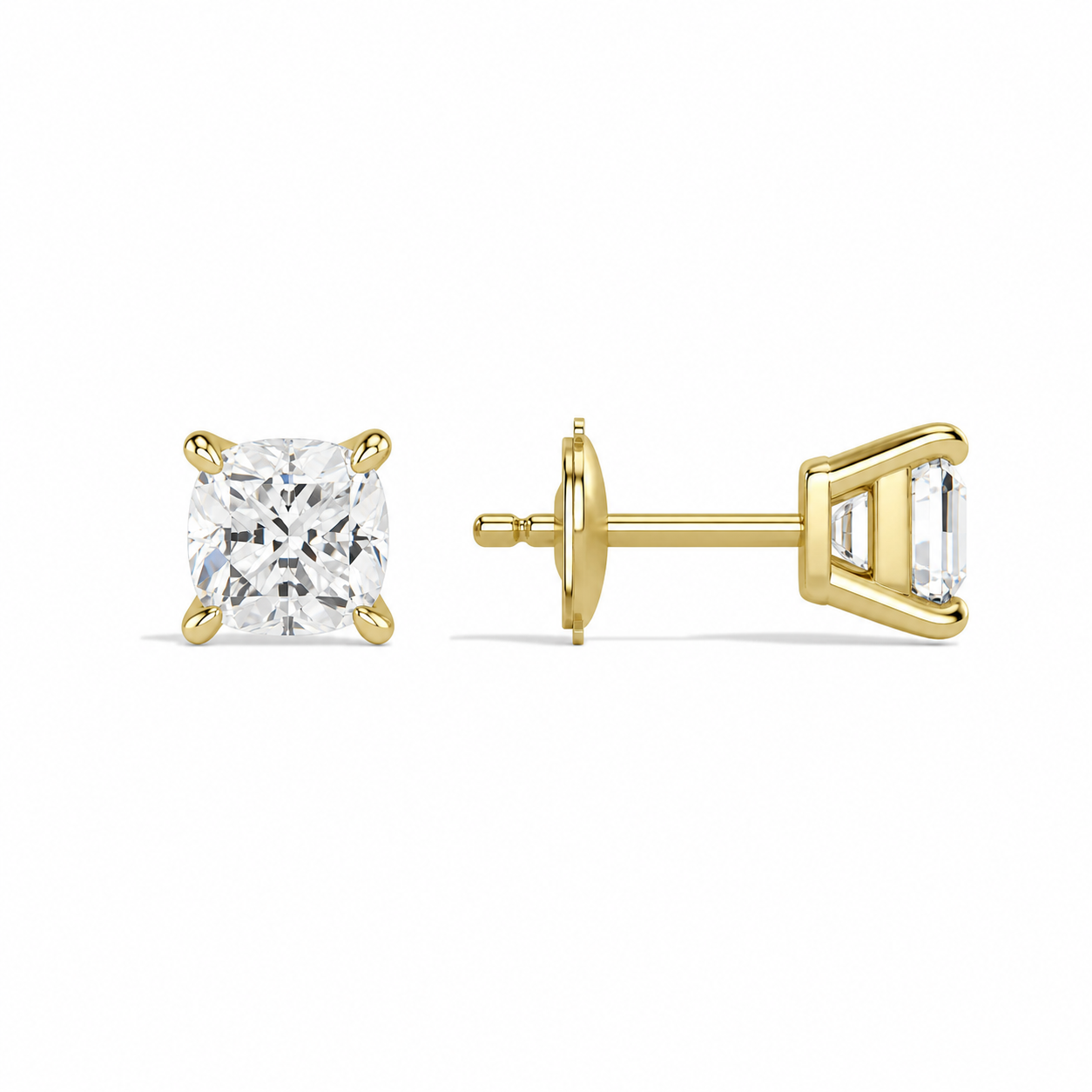

Lab-Grown Diamond Stud Earrings: Precision in a Pair
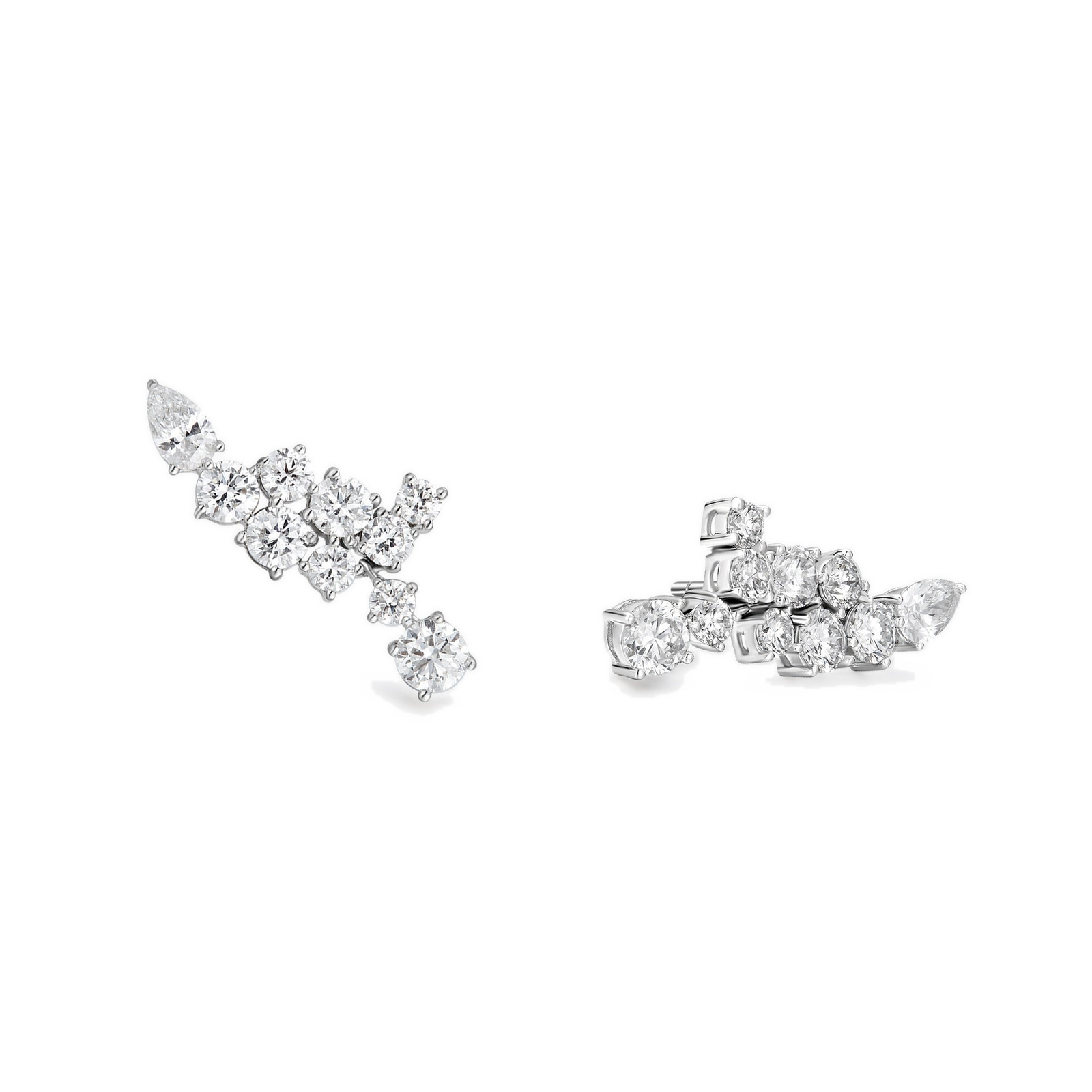
A diamond stud compresses the design into a close relationship among stone, setting, post, backing, and ear. With little distance to soften that structure, outline, metal edge, orientation, and projection become especially visible. Burvonti’s current Stud Collection brings that precision to ten diamond shapes through prong, bezel, halo, cluster, climber, and graduated arrangements.
Classic does not mean interchangeable. One center held by four prongs reads differently from the same shape inside a bezel or halo. A cluster extends the composition beyond one outline; a climber redirects it along the lobe; a graduated three-stone design introduces a short drop while remaining within the current Stud taxonomy. The useful question is how the complete pair occupies close scale.
Shape Is Seen Within a Small Frame
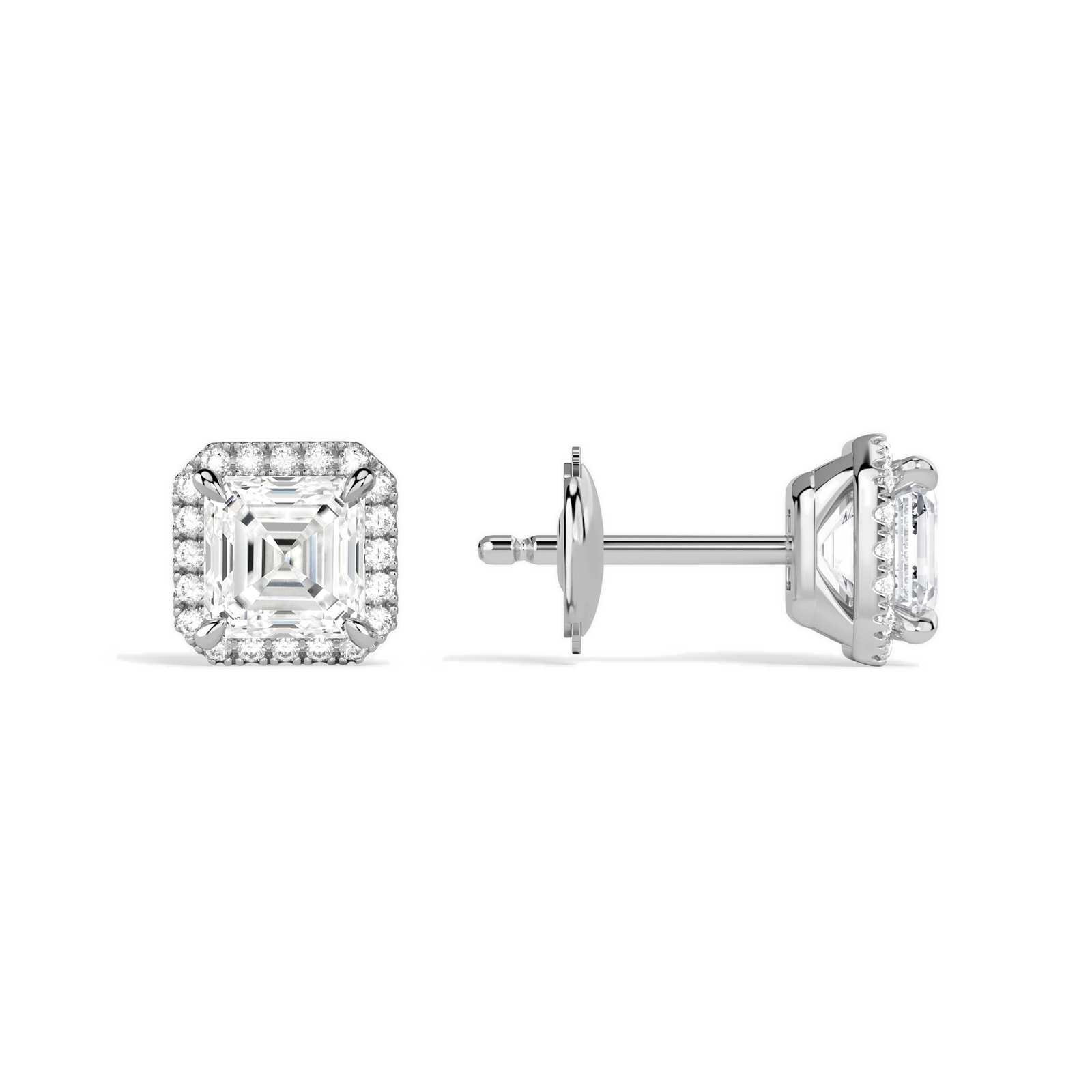
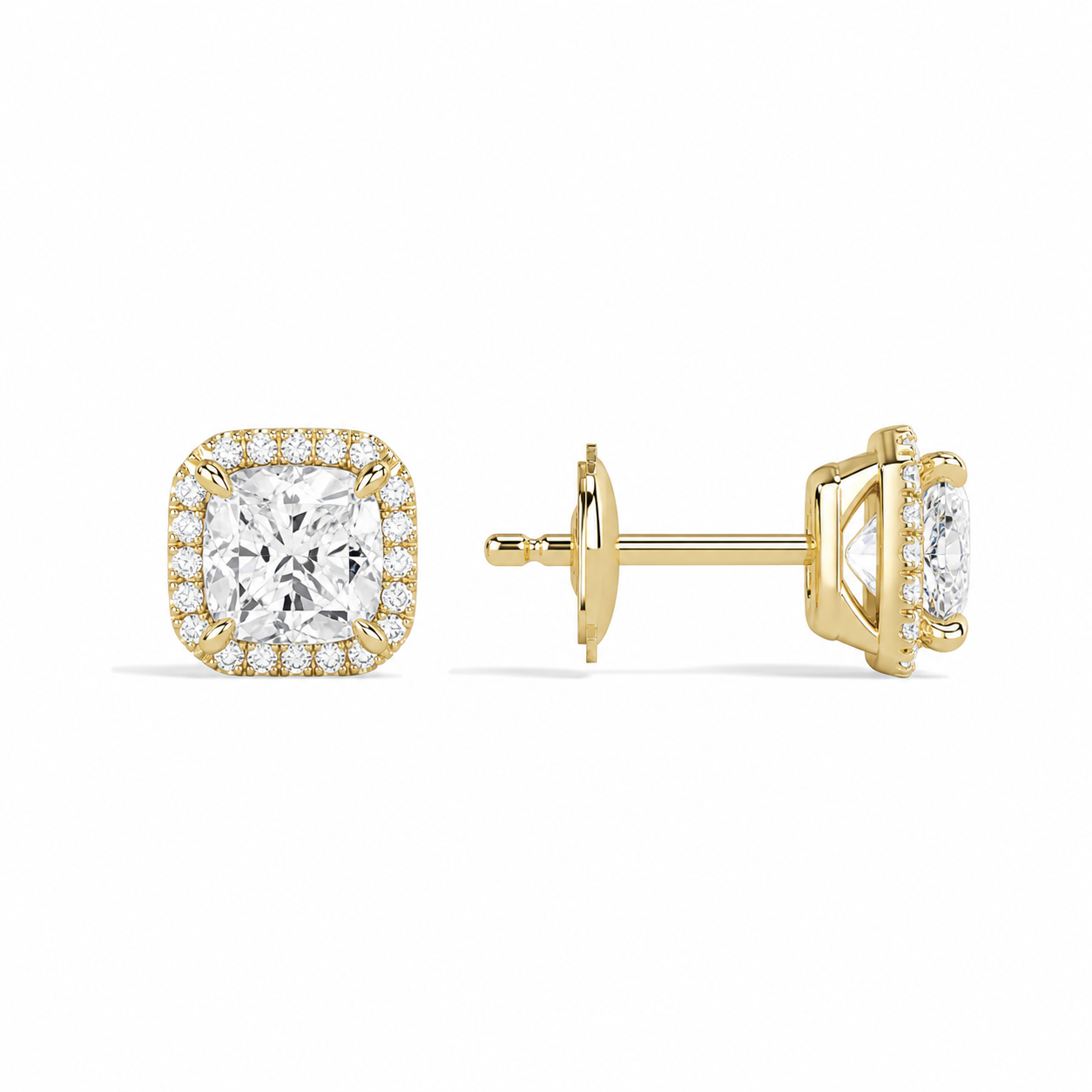
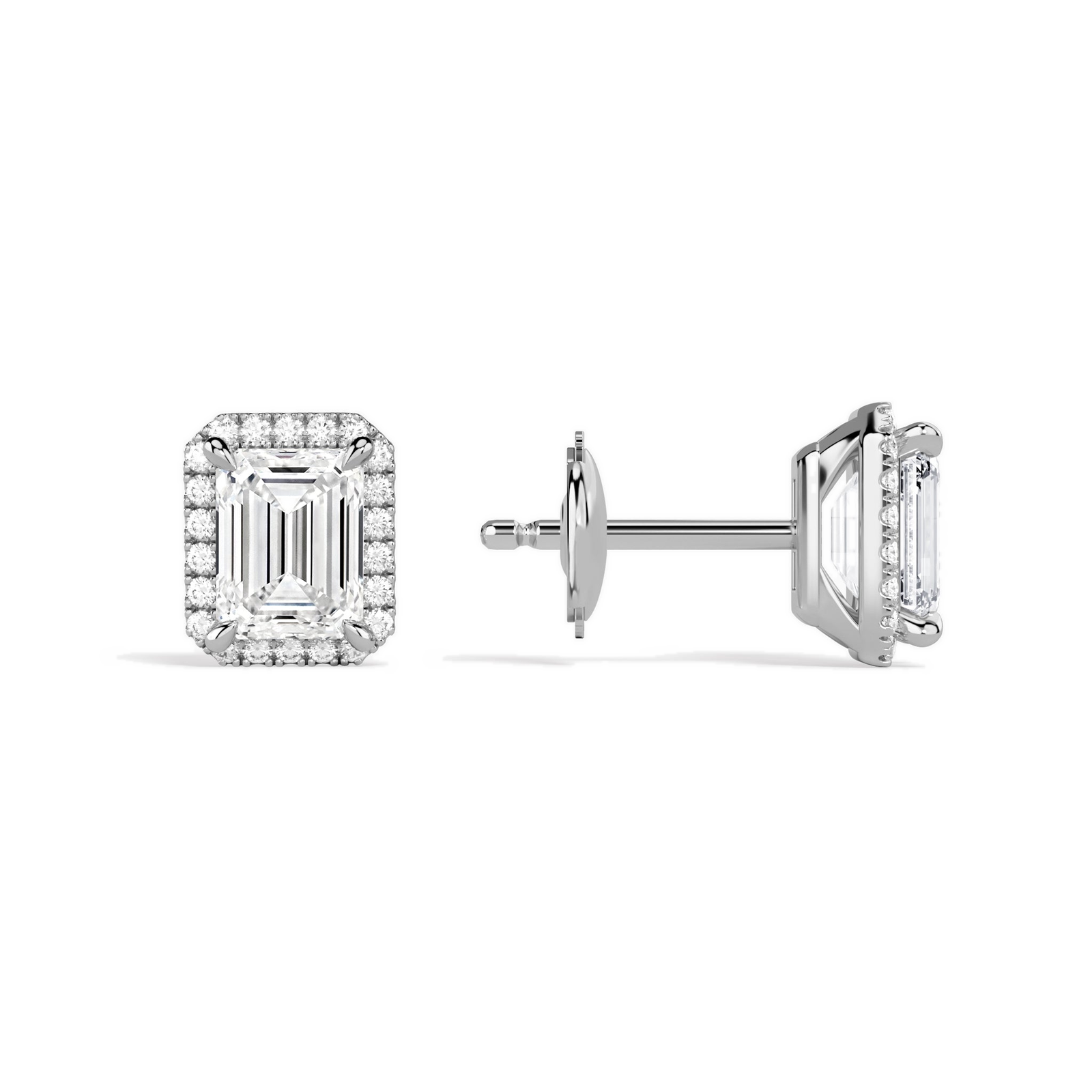
Round, Oval, Cushion, Pear, Princess, Emerald, Marquise, Asscher, Radiant, and Heart are all represented in the current public assortment. At stud scale, the setting can materially influence which parts of an outline remain legible. Prongs interrupt selected points; a bezel redraws the perimeter in metal; a halo creates a larger composite silhouette around the center.
Compare face-up length and width rather than relying on carat alone. Elongated shapes introduce orientation, while square, cropped-corner, rounded, and pointed outlines require different visual support. The right direction is not universal: a vertical orientation can extend the line of the ear, while another angle may better suit a specific design or piercing placement.
Prong, Bezel, and Halo Change the Boundary
The Eira family uses a prong-set Solitaire structure; Jolie creates a continuous bezel edge; Seren surrounds the center with a Halo. The three families provide a clear comparison because each is represented across all ten shapes. Prongs keep more of the outline open, a bezel makes metal part of the geometry, and a halo broadens the complete face-up field.
No setting category guarantees maximum brilliance, minimum snagging, or complete protection. Prong position, bezel coverage, halo spacing, profile, seat, workmanship, condition, and wearer context all matter. The product should be reviewed from front and side, with particular attention to pointed corners, cropped corners, and the visual space around distinctive outlines.
Total Carat Weight Is Not the Size of Each Stud
Burvonti’s product options use Center Stone Total Carat Weight for many Solitaire, Bezel, and Halo stud families, while some multi-stone forms use Total Carat Weight. In both cases, the label must be read as written for the complete pair and design. It should not be divided or reassigned without product-level confirmation.
The same combined weight can produce different face-up results across shapes and settings. Depth, dimensions, halo width, bezel edge, prong position, and accent distribution alter visible scale. When comparing options, pair the total weight with the dimensions of each center or complete stud, the number of diamonds, and the intended setting.
A Pair Is Calibrated Visually, Not Merely Duplicated
A considered pair should read coherently from side to side. Compare outline, dimensions, orientation, face-up color, contrast, and how each diamond responds within its setting. Independent grading may document individual principal stones where applicable, but one report should not be extended to both centers or every accent unless the product documentation explicitly does so.
Matching does not require the unsupported promise of identical inclusions, proportions, or light return. Human judgment at final scale asks whether the two earrings belong together when worn. For asymmetric anatomy or piercing placement, the perceived result may also depend on how the settings meet each ear rather than on the pair alone.
Profile, Post, and Back Complete the Architecture
The current public Stud products identify secure lock backs and double-notched posts. Those facts describe the present mechanism; they do not promise that every wearer will experience the same fit or that loss is impossible. Post length, setting depth, backing size, engagement, lobe thickness, piercing angle, and condition affect how the stud sits.
A larger face-up composition may need a different relationship between setting and backing than a smaller one, but Burvonti should not claim perfect upright alignment without product-level wear evidence. Inspect the back as carefully as the front, confirm that it engages as intended, and seek service if the post bends or the mechanism changes.
One Stud Pair or a Wider Ear Composition
Studs can stand alone or establish the anchor for multiple piercings. A Solitaire gives one shape visual priority. A bezel can connect with metal-led huggies. A halo creates a broader focal point that may need quieter neighbors. A climber extends along the lobe, so its orientation and clearance should be evaluated as part of the entire ear.
The current assortment is represented in 14K White, Yellow, and Rose Gold. Repeating metal produces continuity; changing it can establish hierarchy or contrast. Piercing distance, projection, backing clearance, and the scale of adjacent pieces determine whether the composition remains legible and comfortable for the individual wearer.
Close-Scale Clarity, Without Overstatement
Burvonti pairs responsibly sourced lab-grown diamonds with settings resolved through proportion and observation. The current product details reference Colorless D/E/F and VVS/VS fields, while customer options are labelled Good, Better, and Best. Those labels require product-level mapping; this Collection copy does not invent a universal grade for each tier or promise a visually flawless result.
Custom possibilities may refine shape, scale, metal, setting boundary, post, or backing when technically feasible. Use a gentle cleaning method suited to the complete pair, avoid abrasive products and harsh chemicals, store posts and backs without contact against diamonds, and arrange inspection if a stone moves or a closure no longer engages normally.
Frequently Asked Questions
What is a diamond stud earring?
It is an earring secured through the ear with the main composition held close to the lobe rather than suspended from a hoop or long drop. Burvonti’s current Stud taxonomy also includes a climber and a short graduated three-stone form.
Which diamond shapes are currently available in Burvonti Stud Earrings?
The public Collection represents Round, Oval, Cushion, Pear, Princess, Emerald, Marquise, Asscher, Radiant, and Heart across the main Solitaire, Bezel, and Halo families, subject to live product availability.
Should I choose prong, bezel, or halo diamond studs?
Choose by the boundary and scale you prefer. Prongs keep more perimeter open, a bezel adds a continuous metal outline, and a halo creates a broader composite face. Exact profile, coverage, and maintenance differ by design.
Does a bezel make a diamond stud impossible to damage or lose?
No. A bezel provides continuous perimeter coverage, but diamond characteristics, girdle, seat, metal, workmanship, wear, impact, and maintenance still matter. It is not a guarantee against damage or loss.
Do halo studs contain one diamond or several?
A halo design uses a principal center with smaller diamonds around it. Confirm how the product states center weight, accent weight, and total weight rather than assuming one displayed figure describes only the center.
What does Center Stone Total Carat Weight mean for a stud pair?
It is a product option label used by current Burvonti Stud families. It should be interpreted from the specific product documentation as a pair-level center-stone total, not automatically as the weight of each center.
What does Total Carat Weight mean for cluster or multi-stone studs?
It generally combines the diamonds covered by the stated product specification across the pair. Confirm the number of stones and whether accents are included before comparing it with a two-center Solitaire pair.
Does the same total carat weight look the same in every shape?
No. Carat measures weight. Shape, depth, face-up length and width, setting edge, halo, and accent distribution change visible scale, so compare dimensions and the complete composition.
How should two diamonds in a stud pair be matched?
Look for coherent outline, dimensions, orientation, face-up color, contrast, and overall visual response. Documentation supports the comparison where applicable, but matching does not require every microscopic characteristic to be identical.
Are both diamonds in a stud pair independently graded?
This cannot be assumed Collection-wide. Confirm whether one or both principal diamonds have individual reports and whether accent diamonds are covered only by product specifications.
What backing is used on current Burvonti Stud Earrings?
The current public Stud product details identify secure lock backs with double-notched posts. Confirm the exact item at purchase and do not extend this fact to future products without a new readback.
Does a secure lock back guarantee that the stud will not fall out?
No. Correct engagement, post and backing condition, fit, pulling, impact, and maintenance all affect retention. Check the mechanism before wear and arrange service if it changes.
Will Burvonti diamond studs sit perfectly upright on every ear?
No universal alignment can be promised. Setting depth, post length, backing, diamond scale, lobe anatomy, piercing angle, and condition influence the result on the individual wearer.
How do I choose a comfortable diamond stud size?
Review face-up dimensions, projection, documented weight, post and backing, piercing placement, lobe anatomy, and intended wear duration. There is no universal carat size that is comfortable for everyone.
Can I wear diamond studs every day?
Many people wear studs frequently, but suitability depends on the exact setting, projection, fit, activity, pulling risk, and care. Remove or protect them where impact, chemicals, or other conditions create avoidable risk.
Can diamond studs be worn in a second or third piercing?
Yes when spacing, projection, setting edge, post and backing clearance suit the wearer’s anatomy. Check contact with neighboring pieces rather than relying on style names alone.
Which metals are represented in the current Stud Collection?
The current public Collection contains representative products in 14K White, Yellow, and Rose Gold. Exact alloy, finish, sensitivity considerations, Platinum, 18K Gold, or alternative-metal feasibility require product-level confirmation.
What do Good, Better, and Best mean on Burvonti Stud options?
They are current customer-facing quality option labels, while public product details reference Colorless D/E/F and VVS/VS fields. The exact mapping should be confirmed at product level; this Collection copy does not invent a universal grade matrix.
How should I clean and store diamond studs?
Use a gentle method appropriate to the diamonds, alloy, setting, posts, and backs. Store each stud so its diamond and post do not scratch the other earring, and avoid abrasive products or harsh chemicals.
Can Burvonti diamond studs be customized?
Custom possibilities may include shape, scale, metal, setting boundary, post, or backing when structurally feasible. Pair matching, documentation, comfort, price, and timing require individual confirmation.