
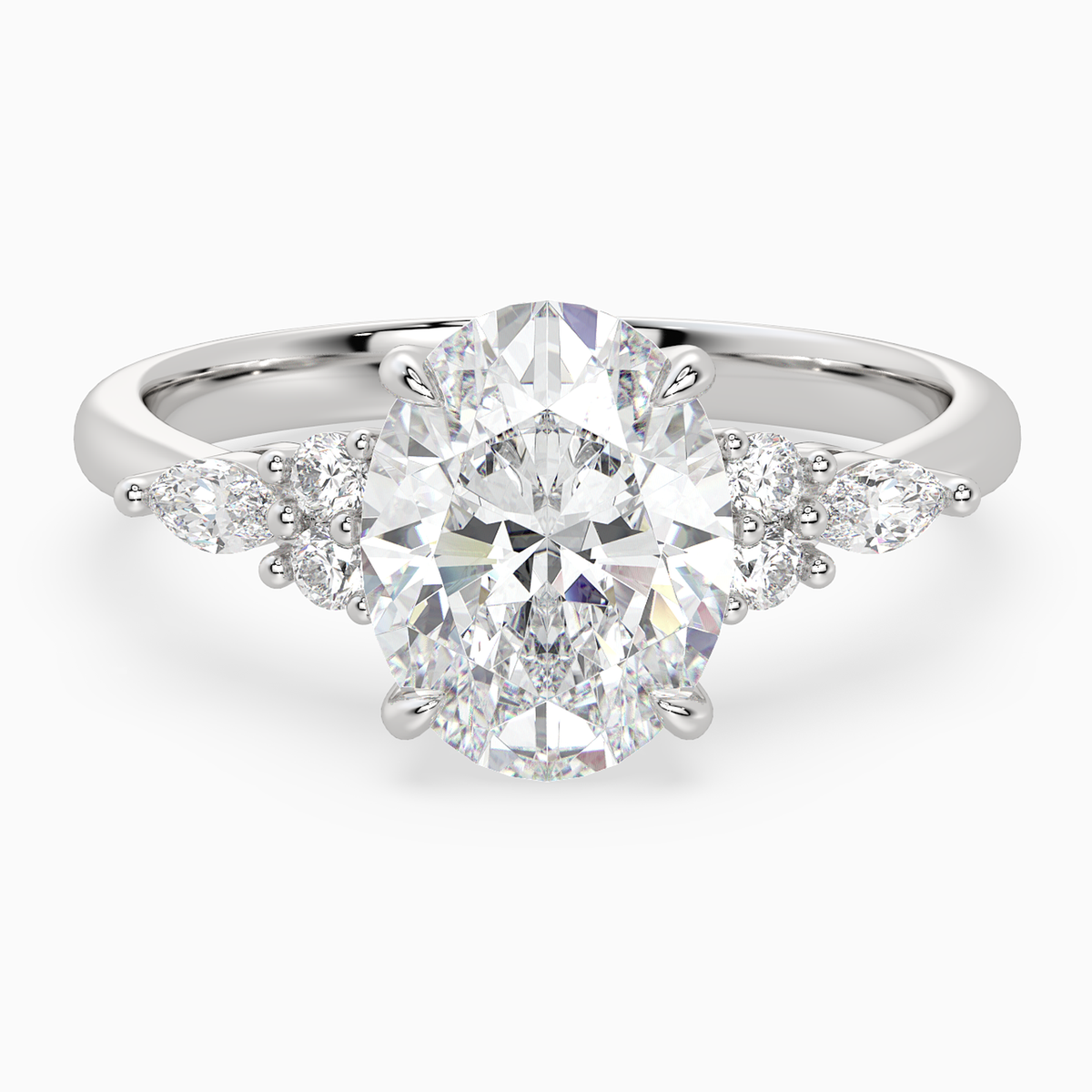


Halo Engagement Rings
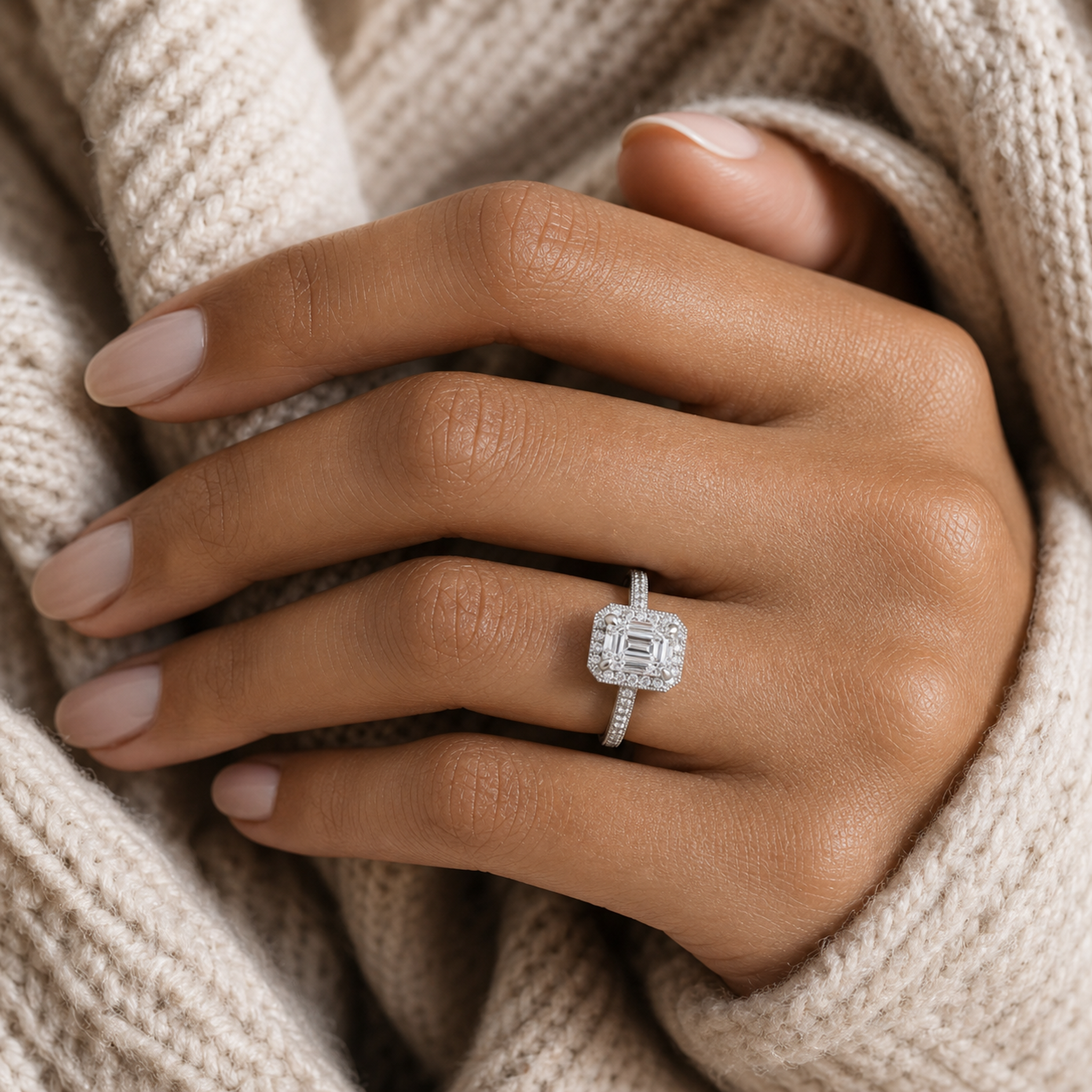
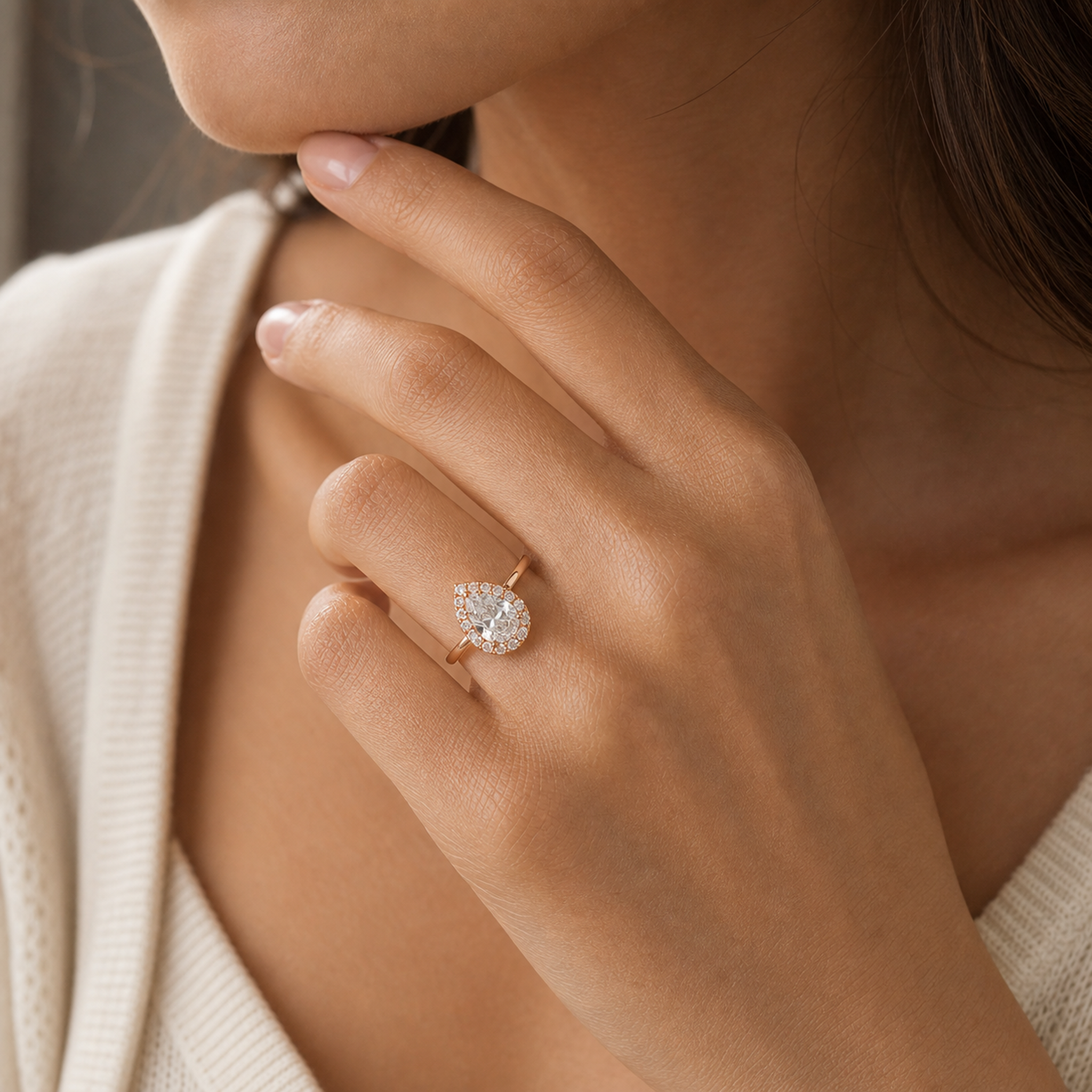
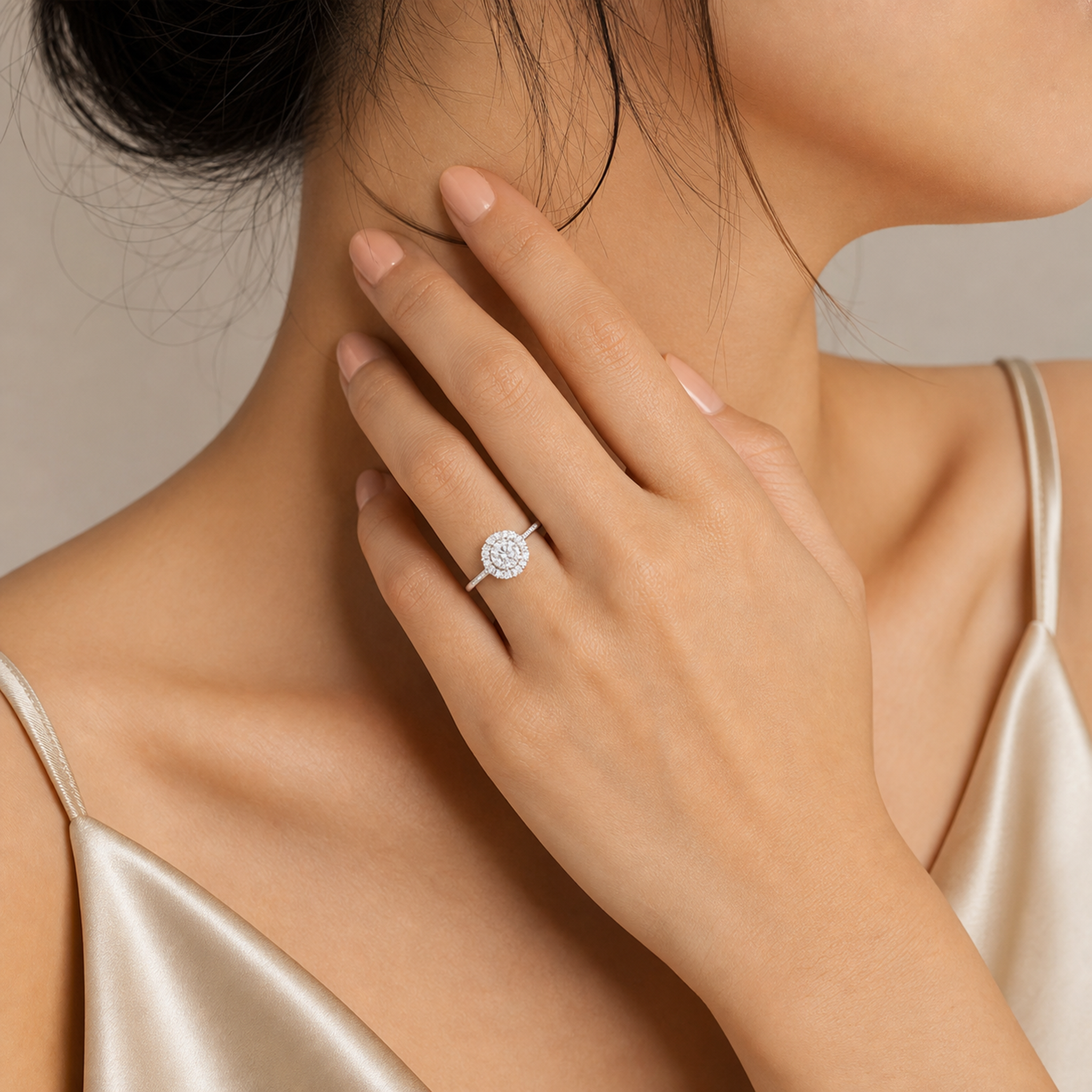
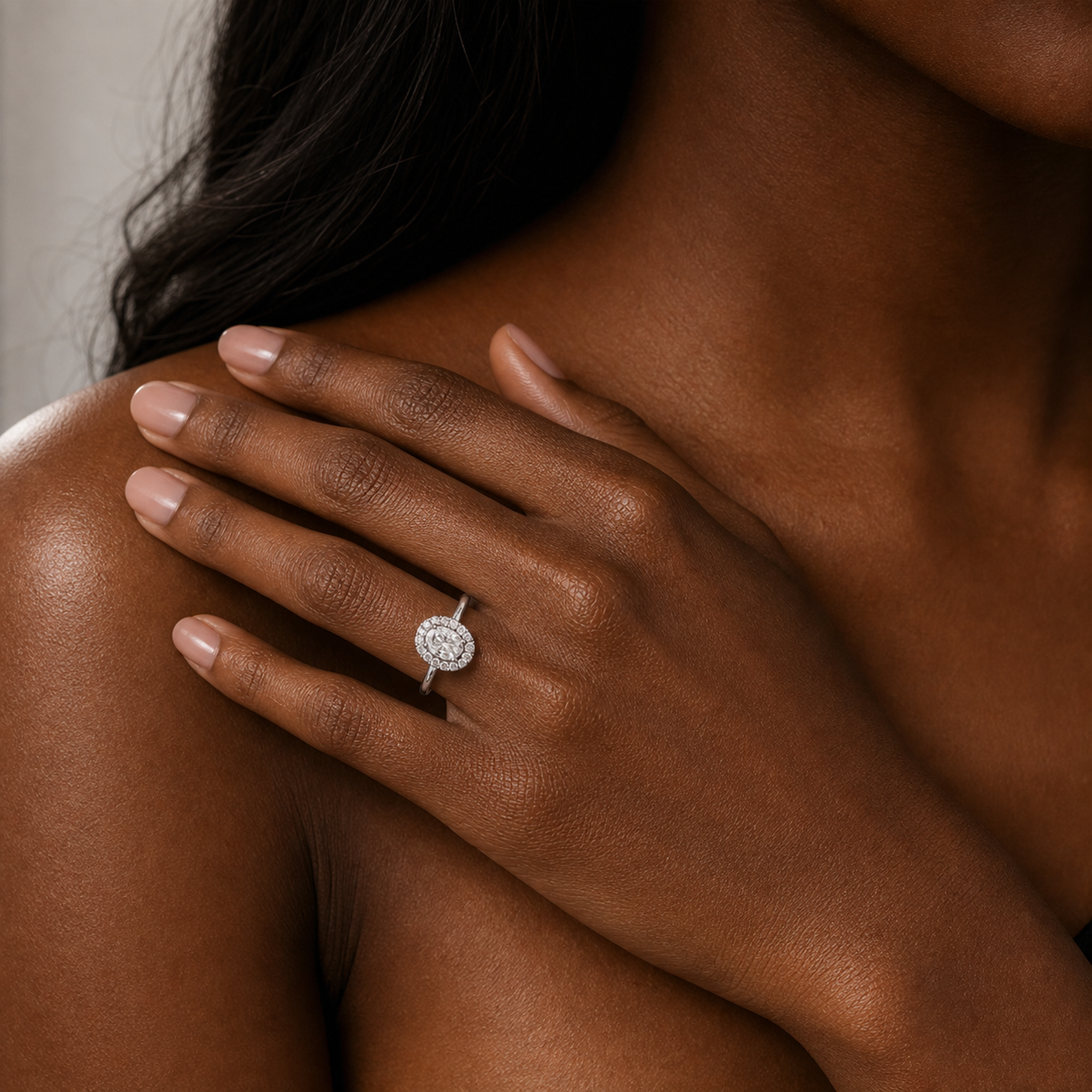
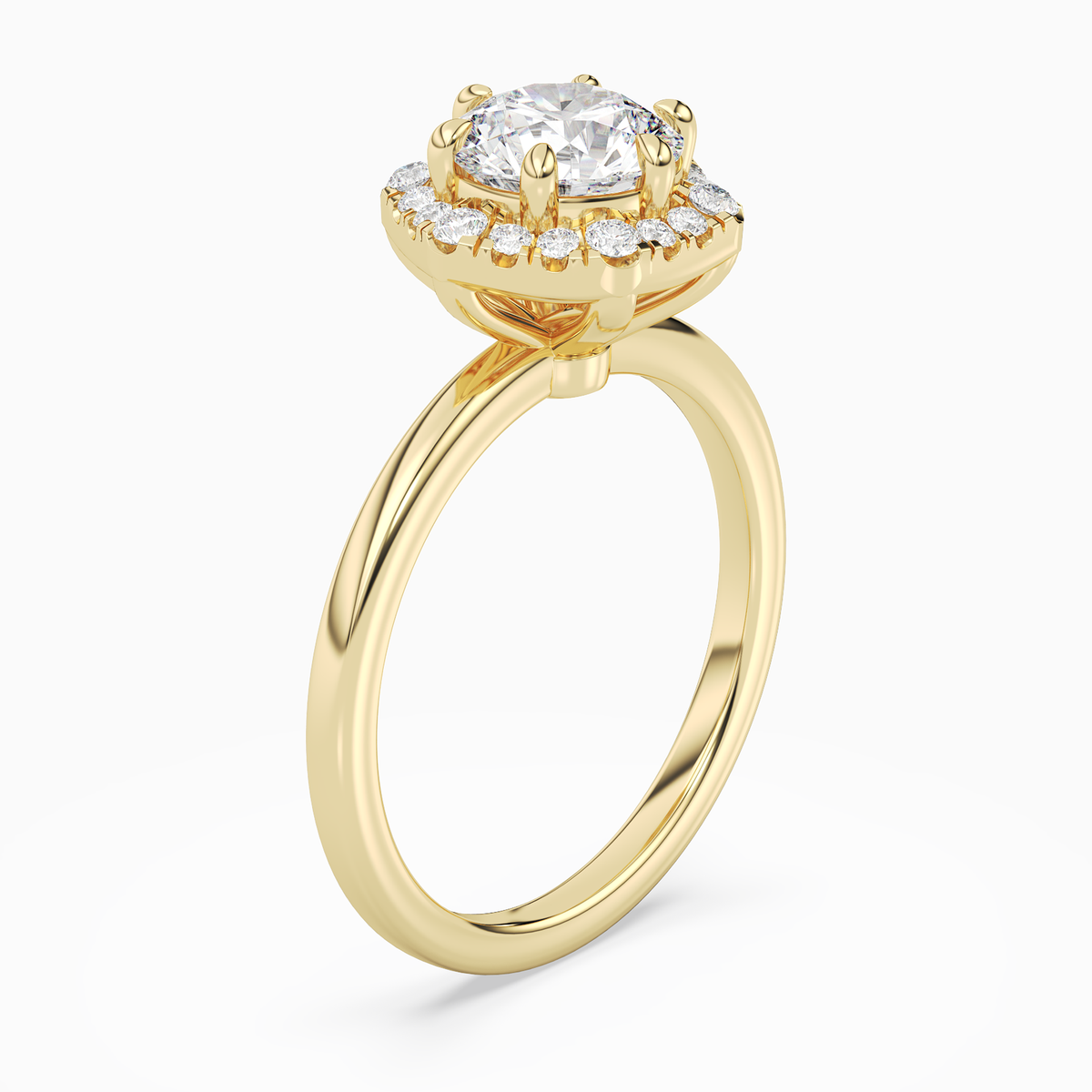
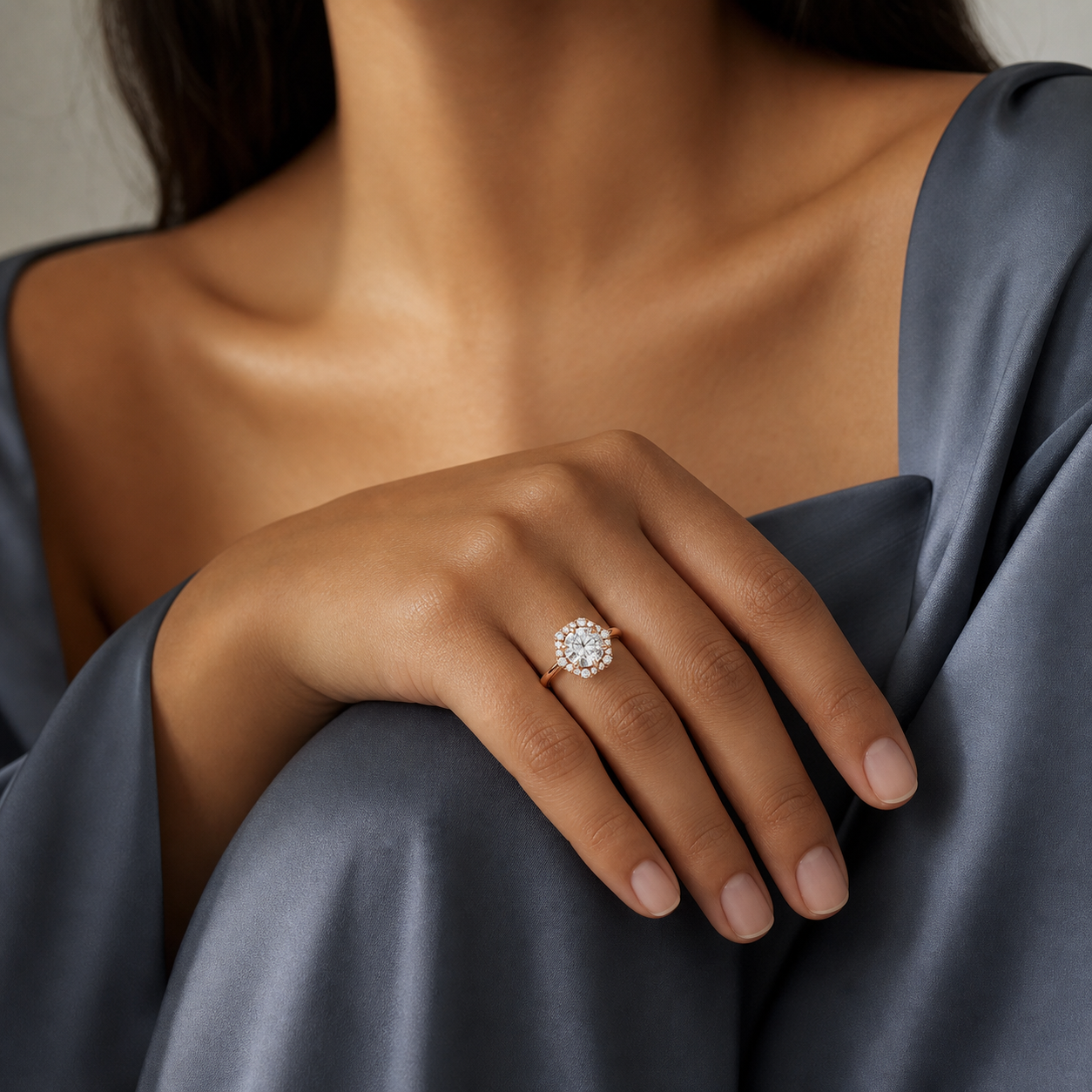
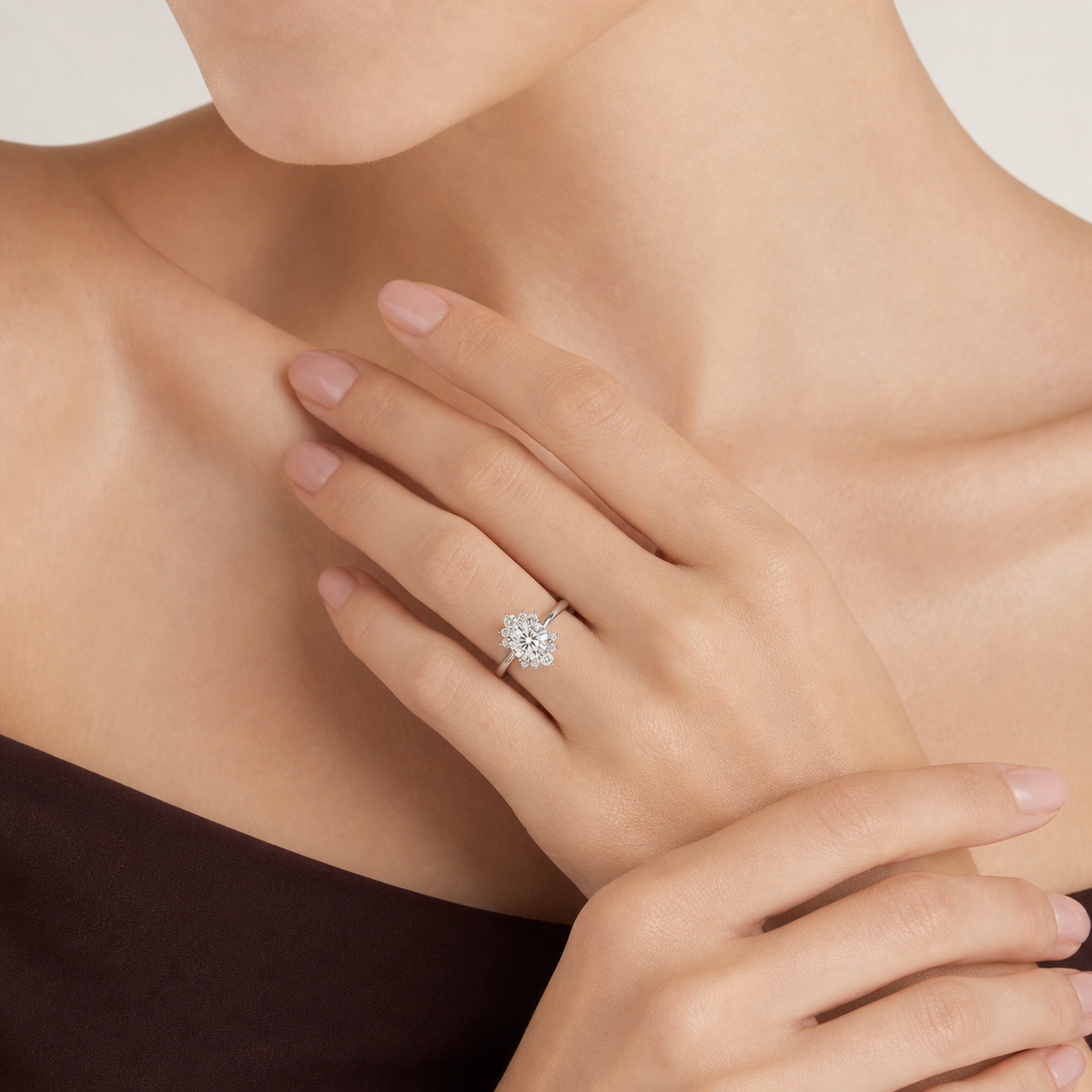
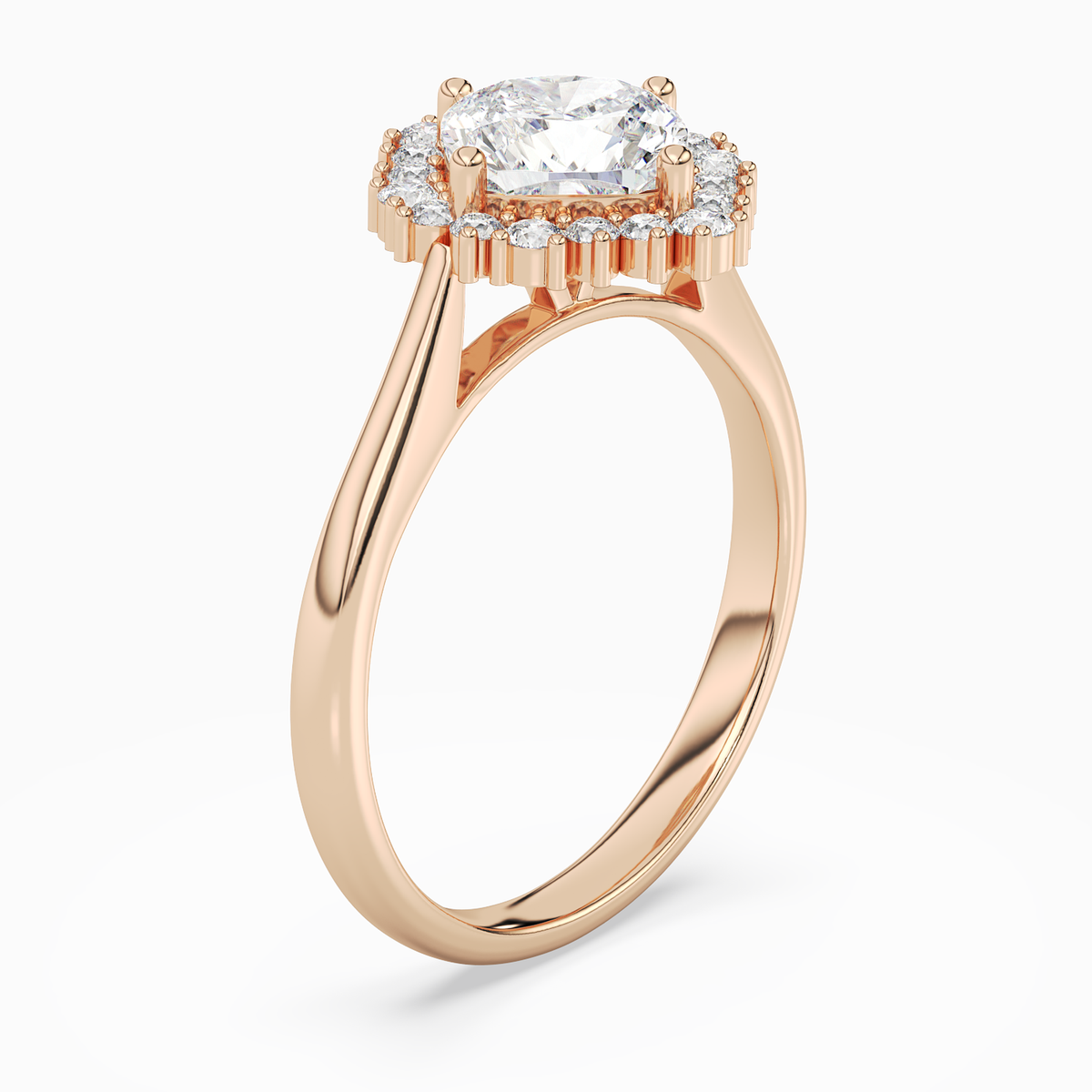
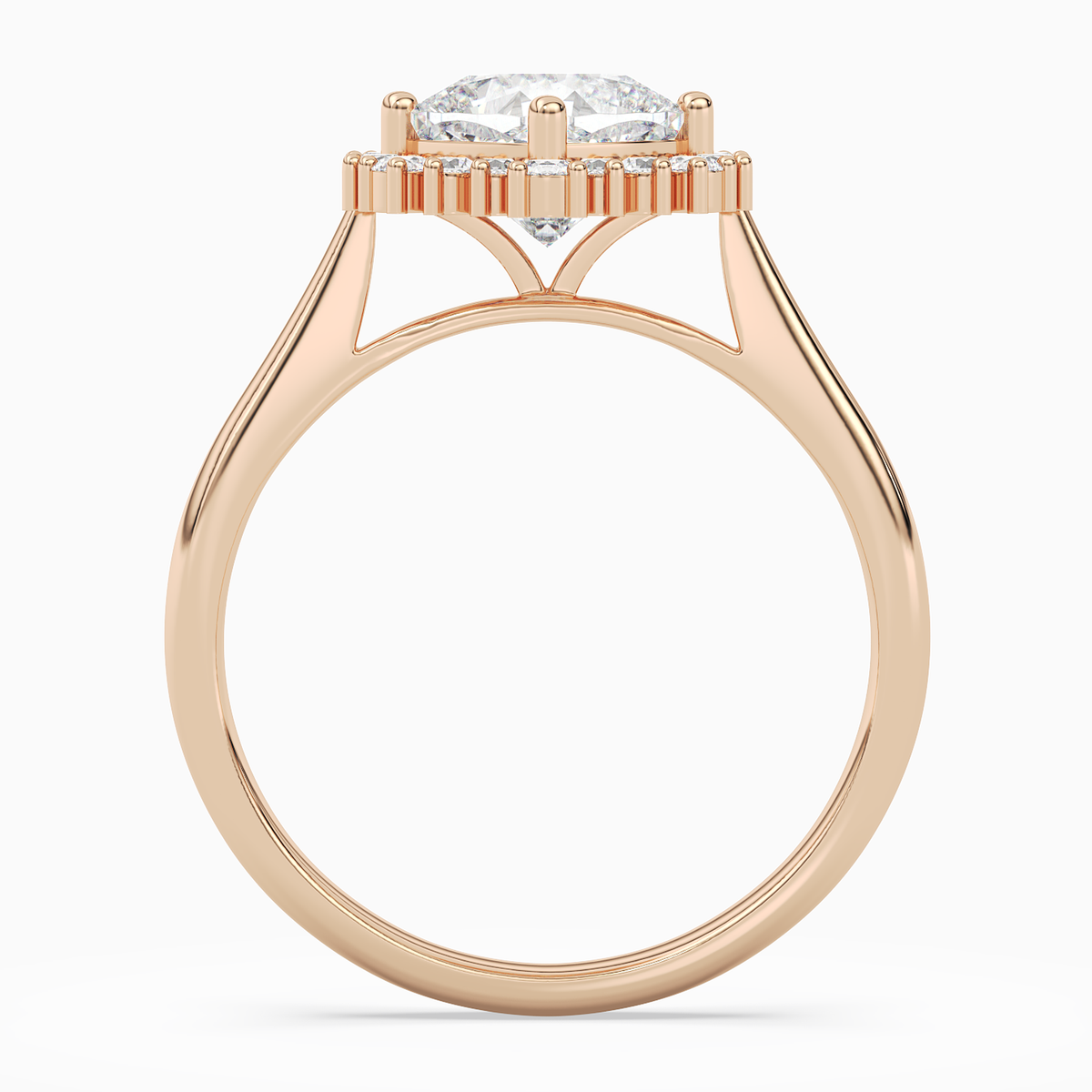
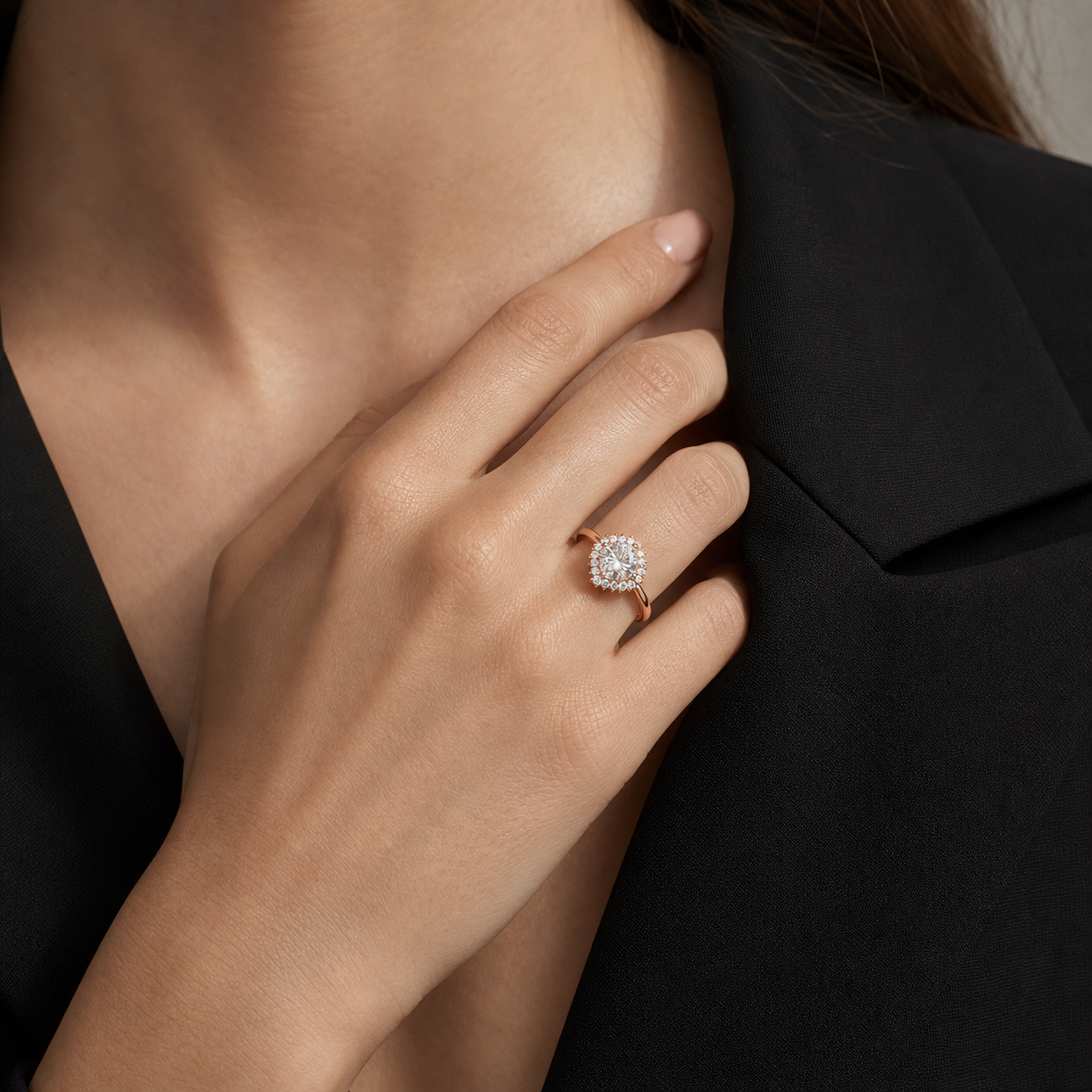
A luminous frame, resolved with restraint. Precisely scaled halos expand visual presence while preserving the center diamond’s outline.


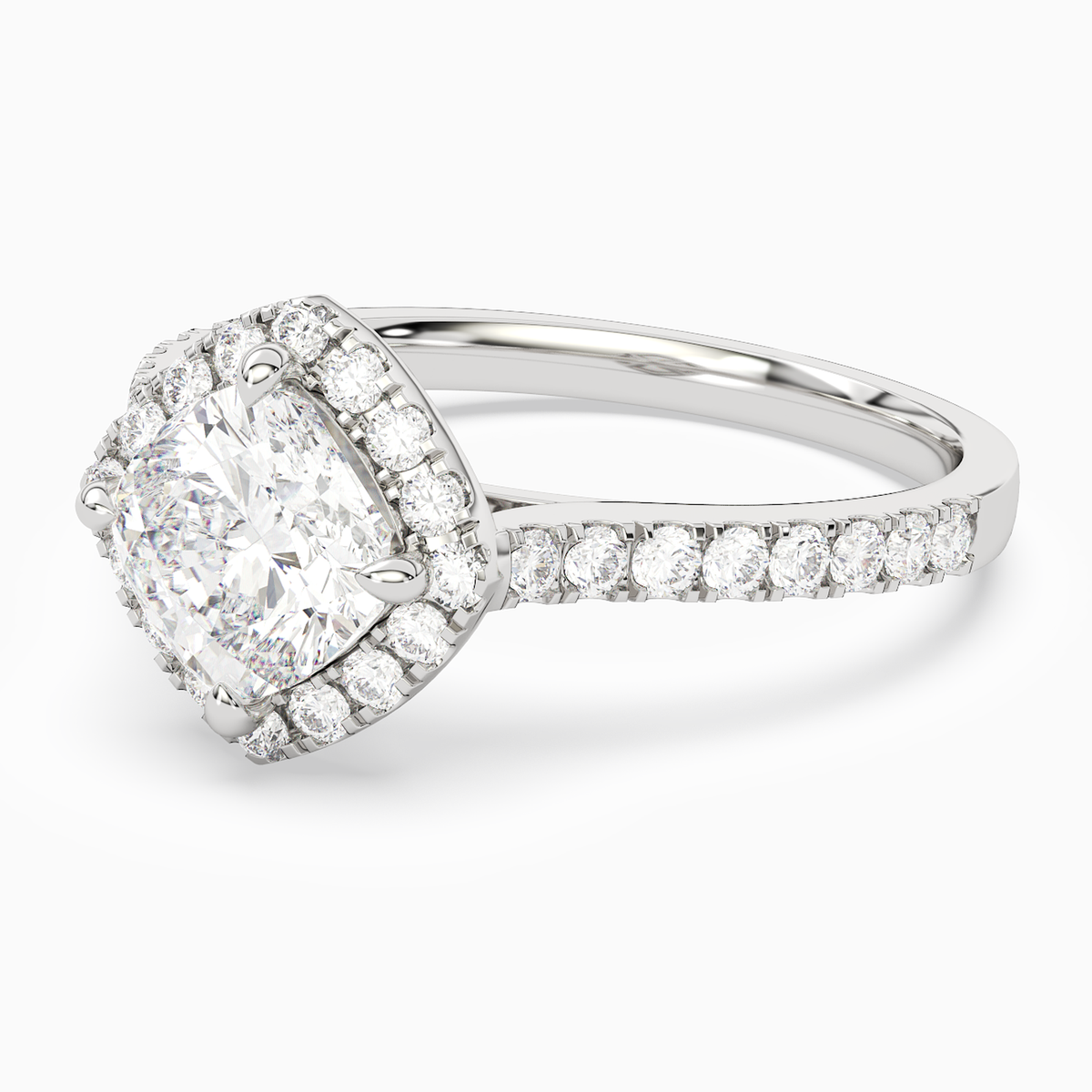
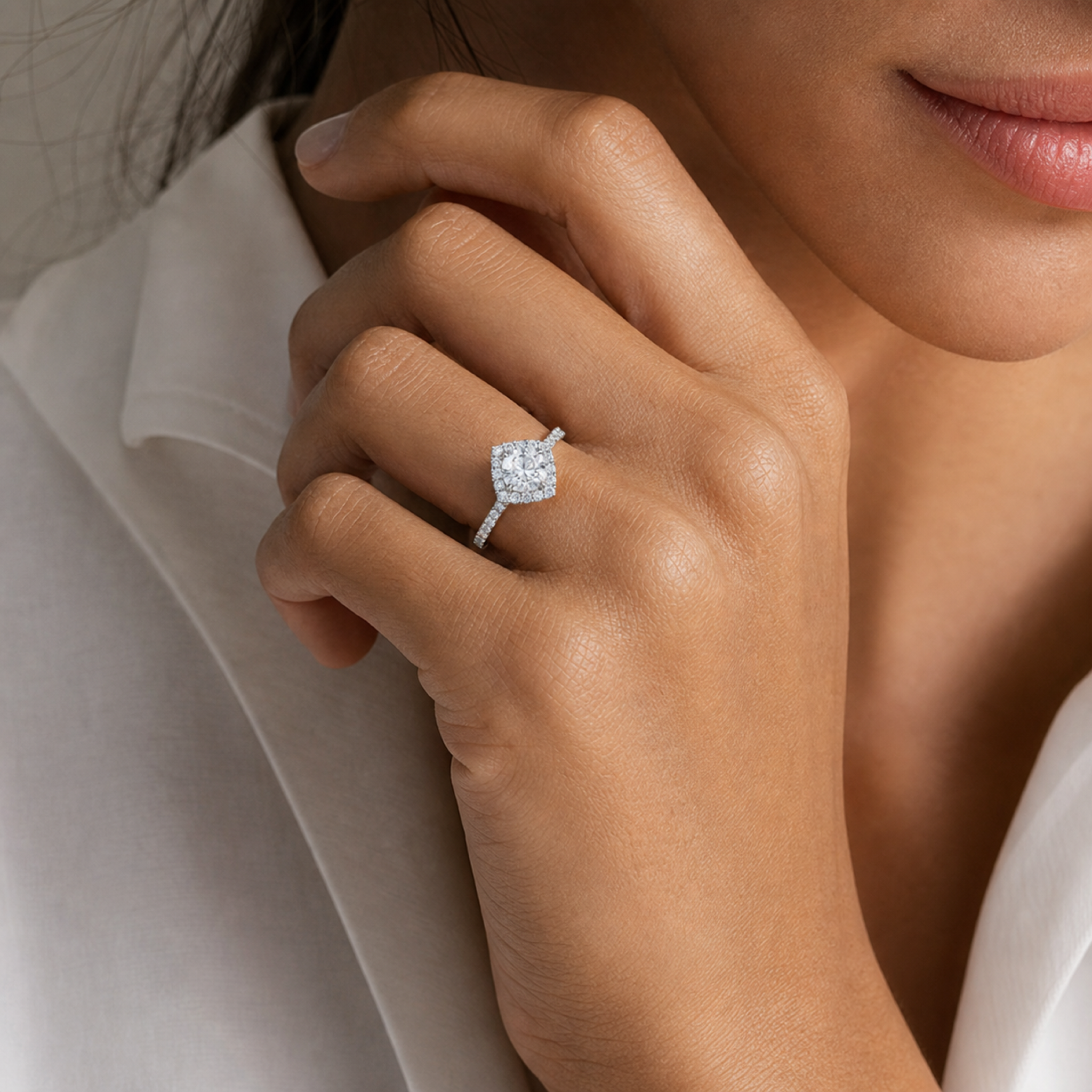


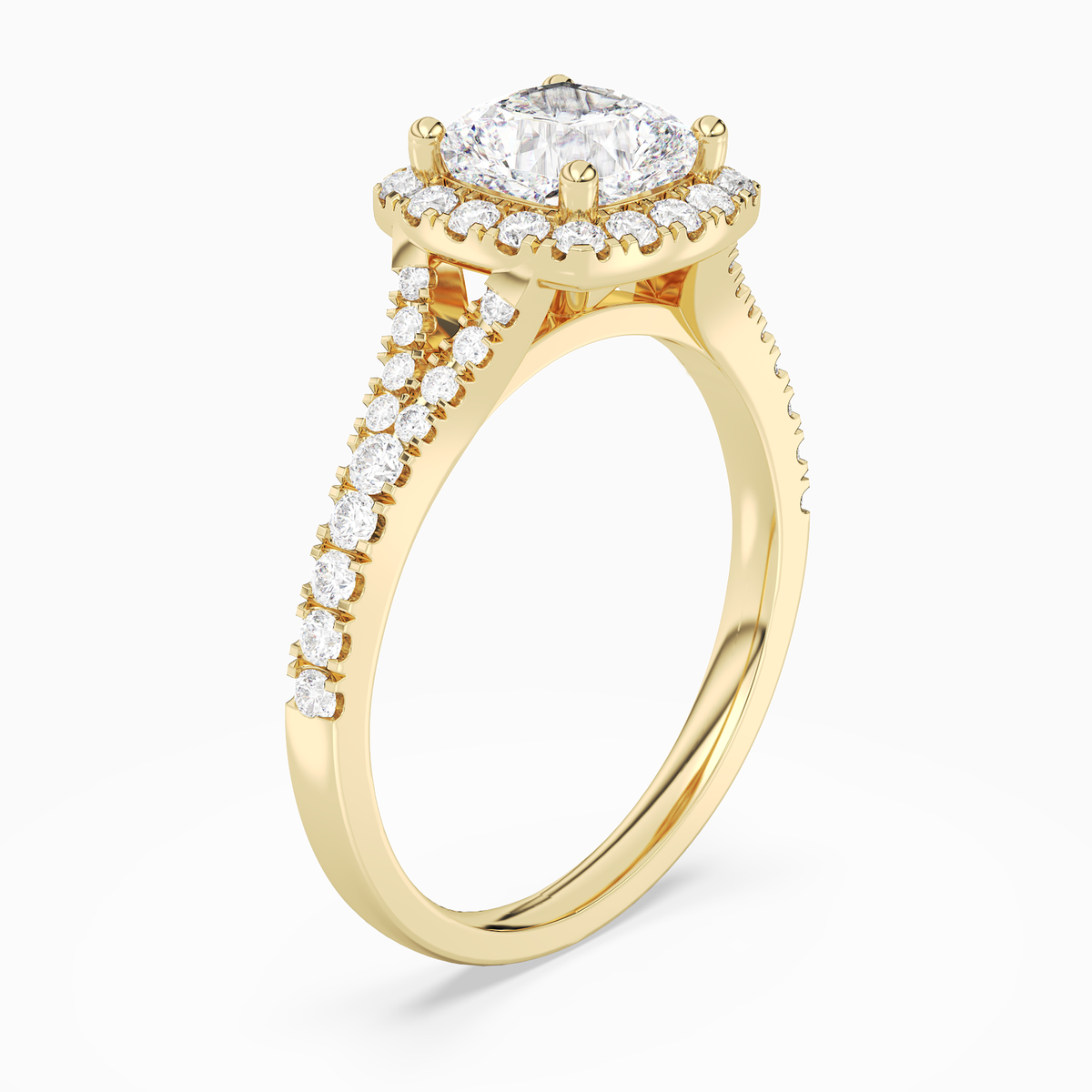


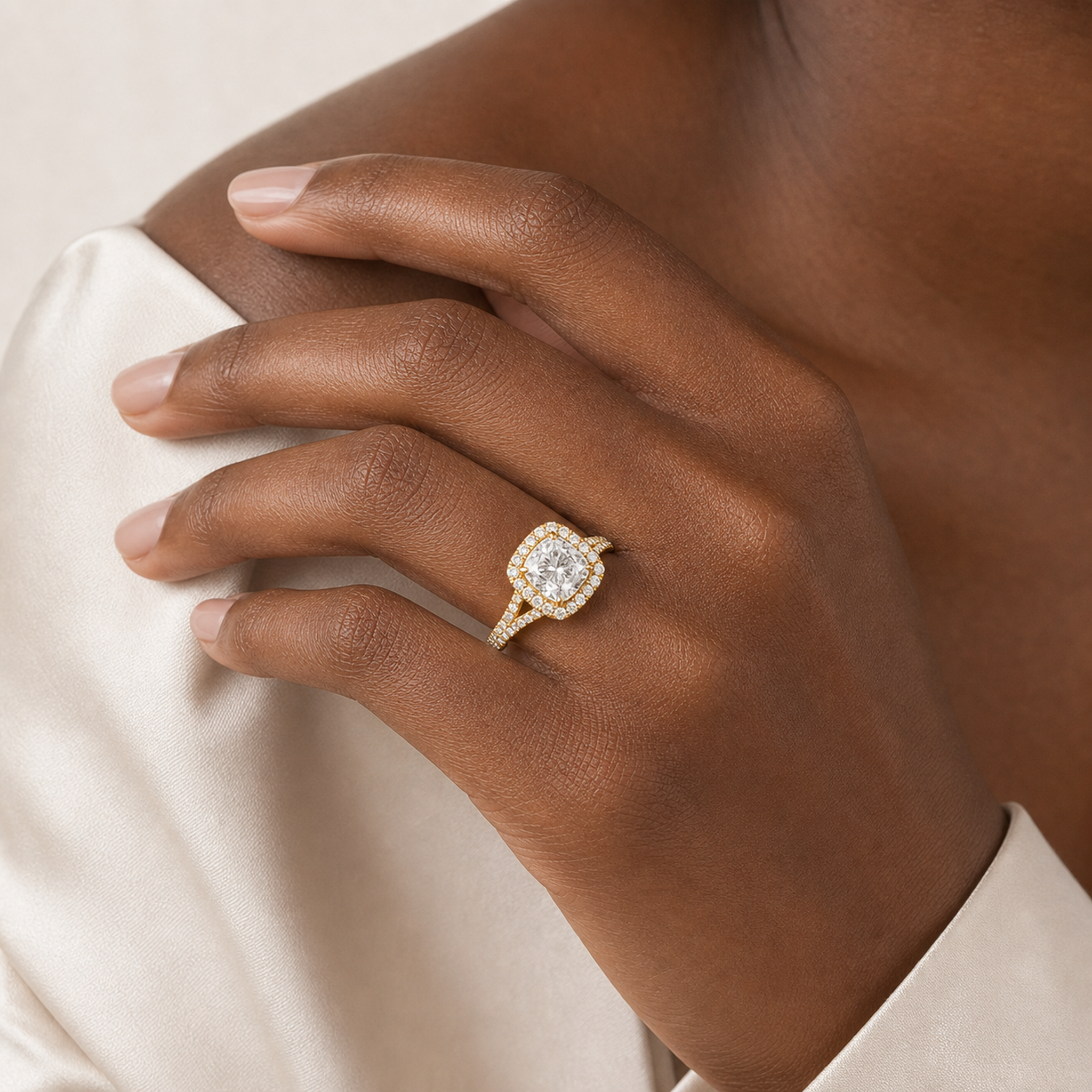


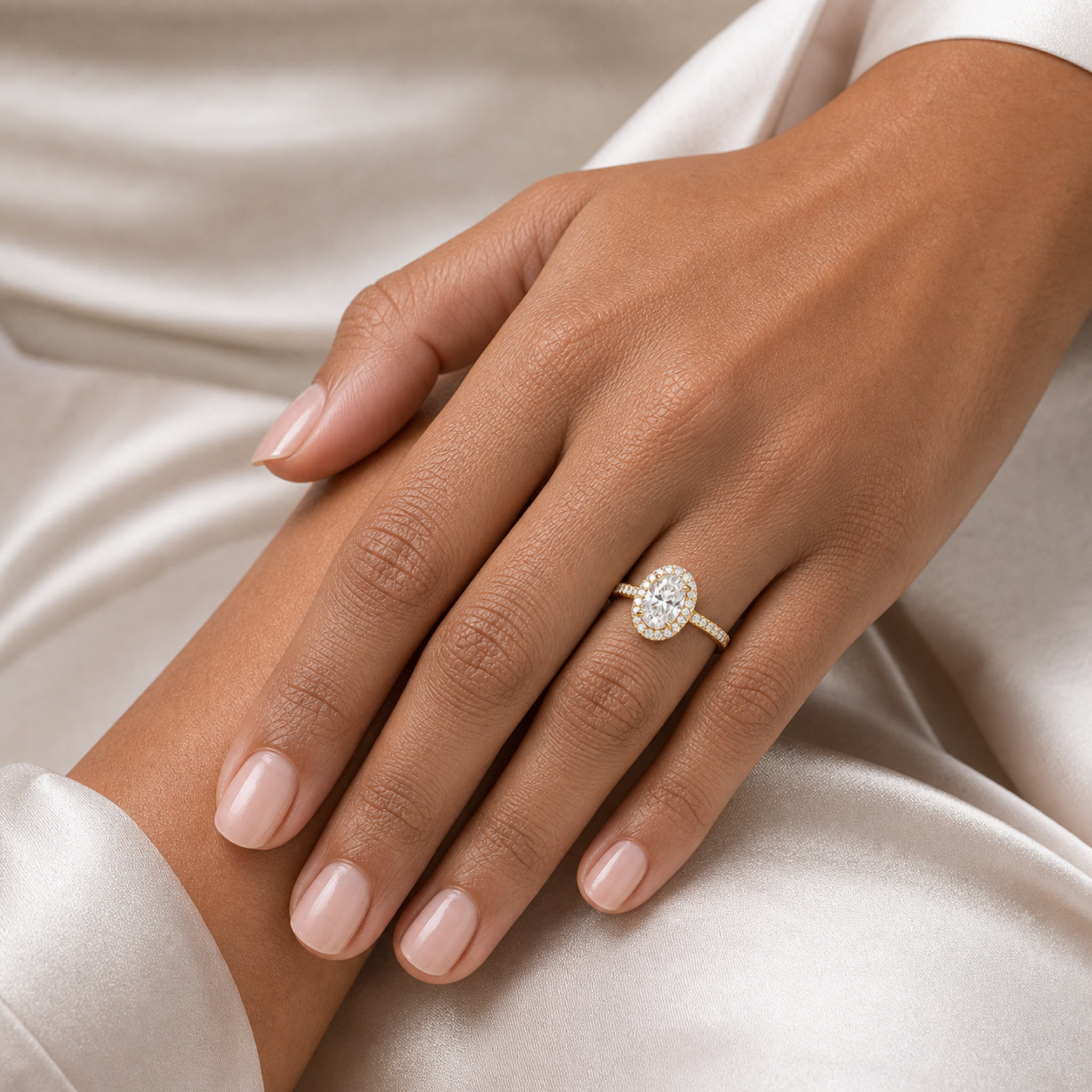


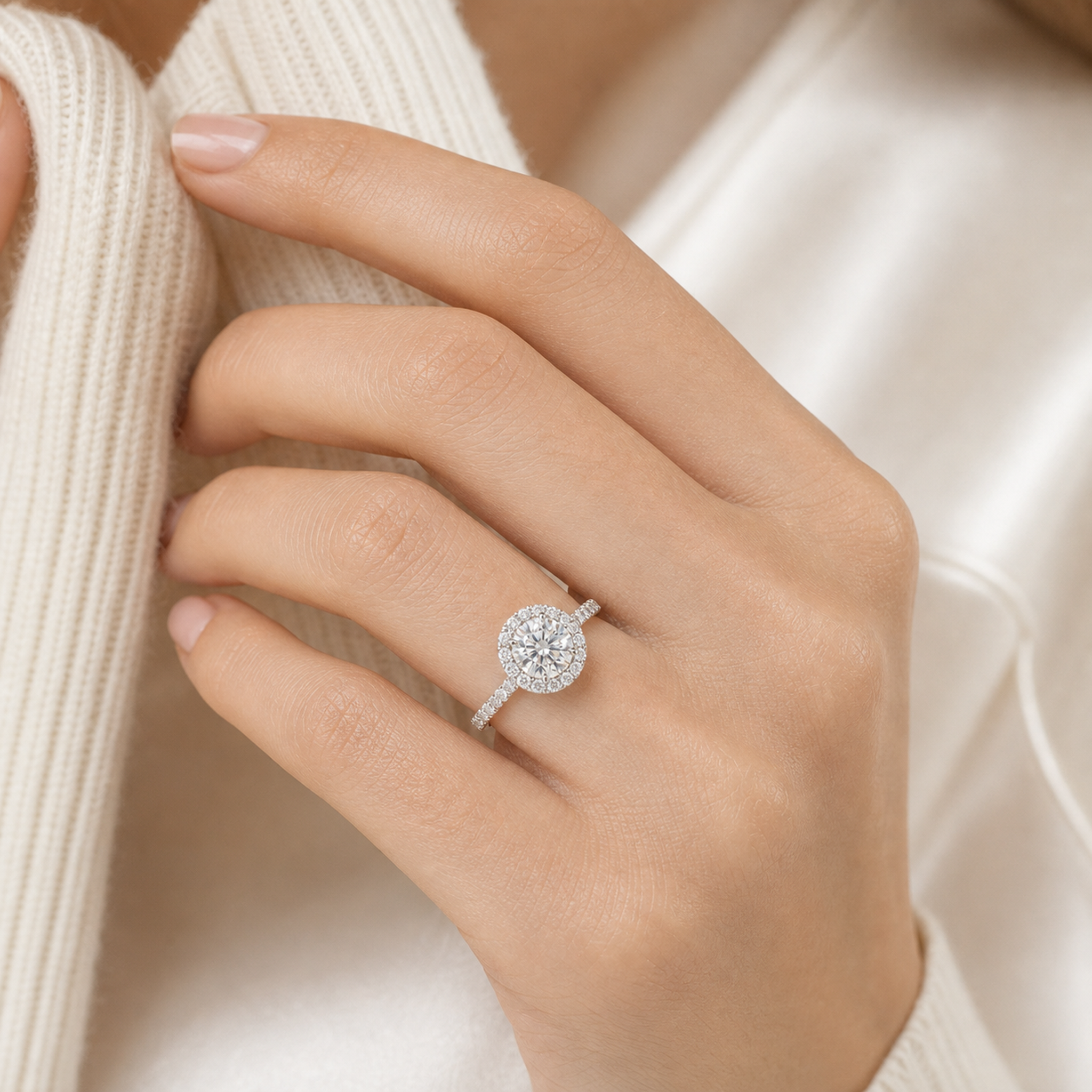


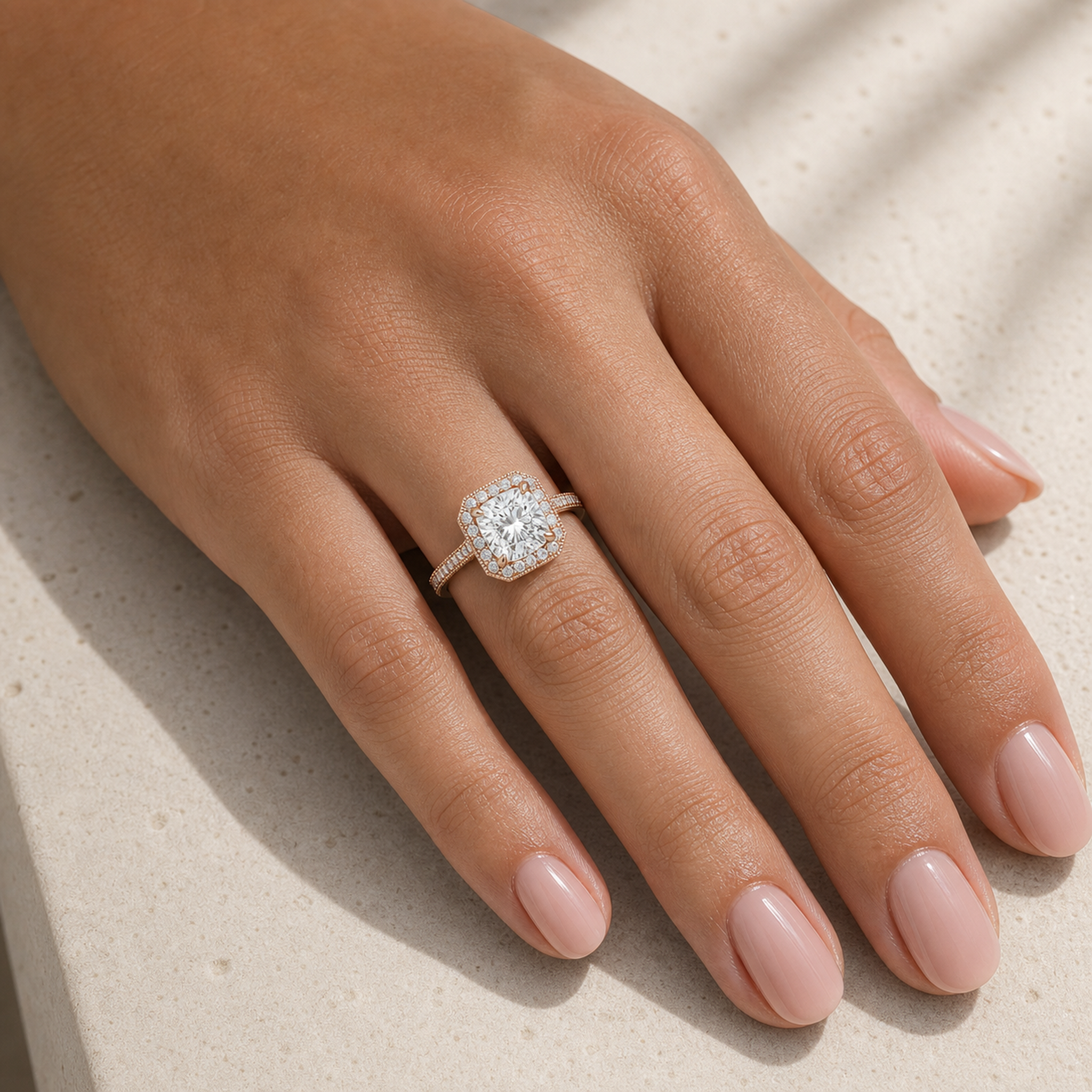










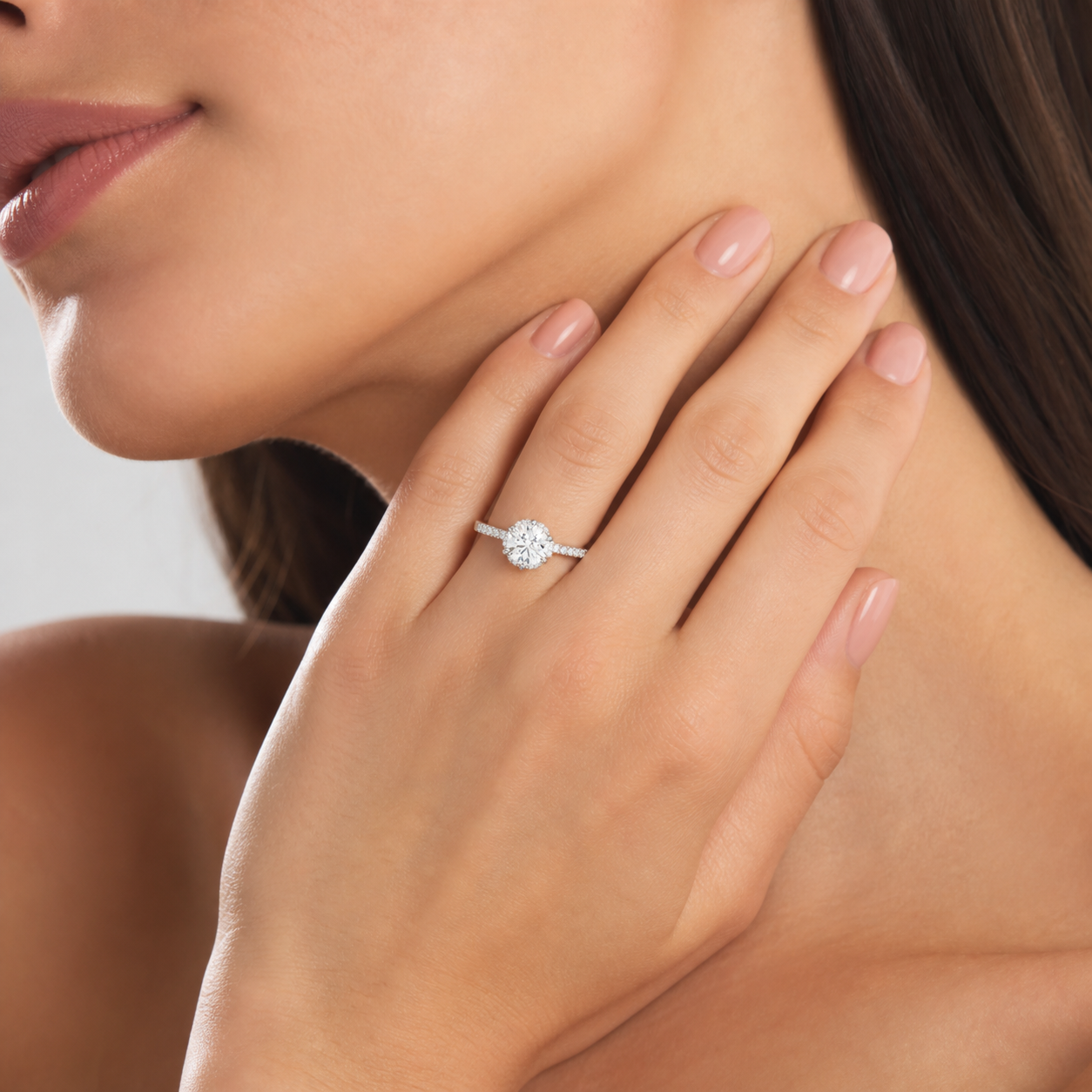


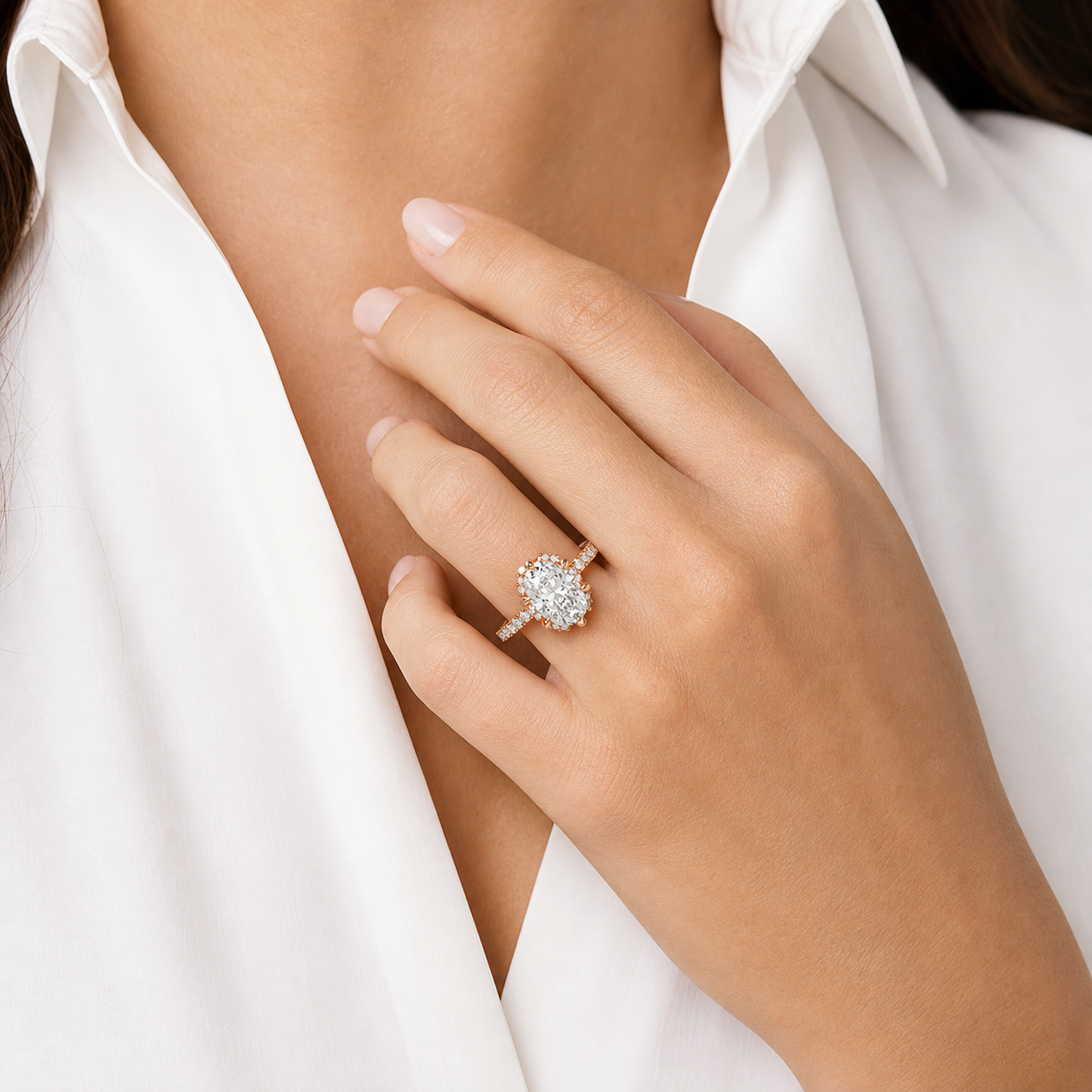


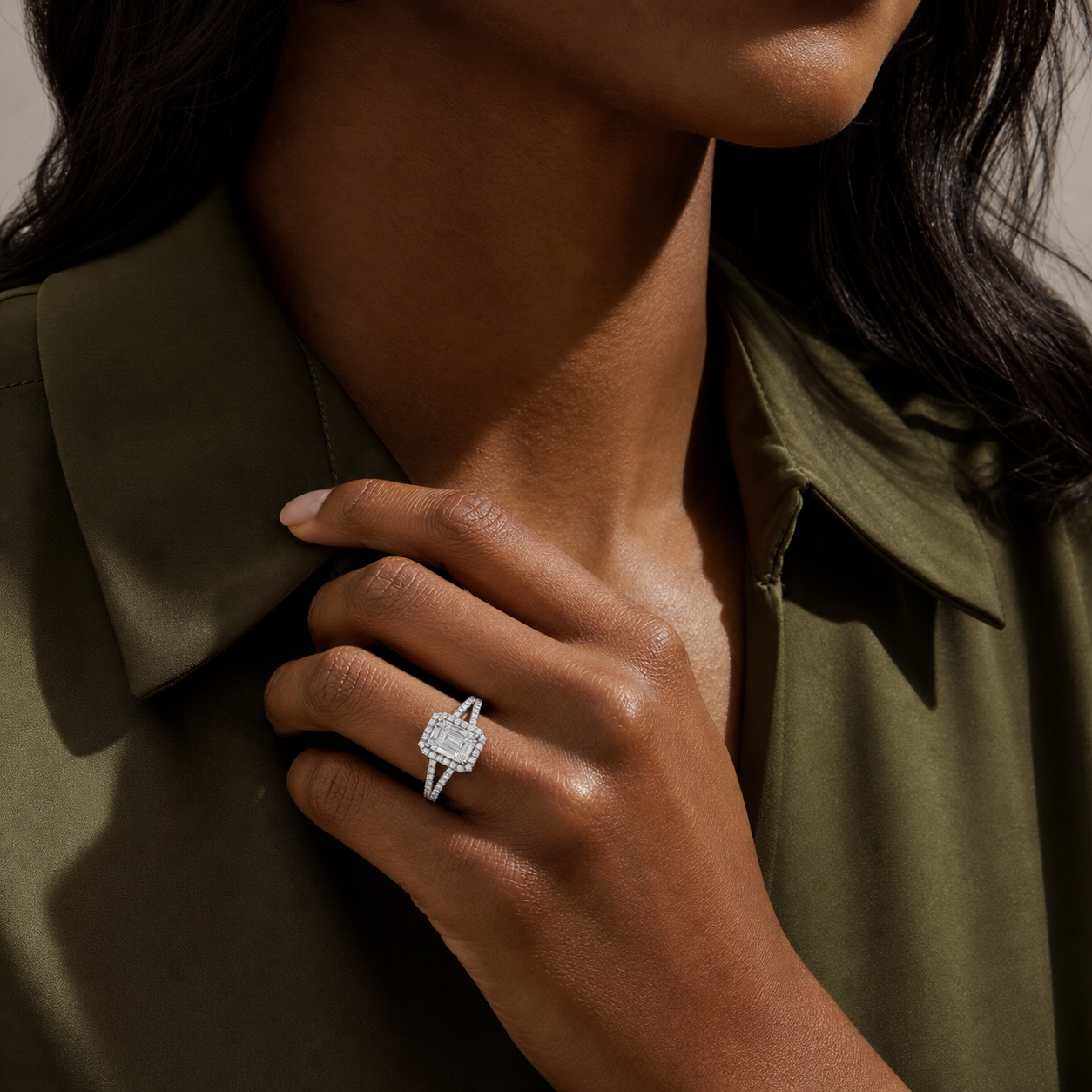


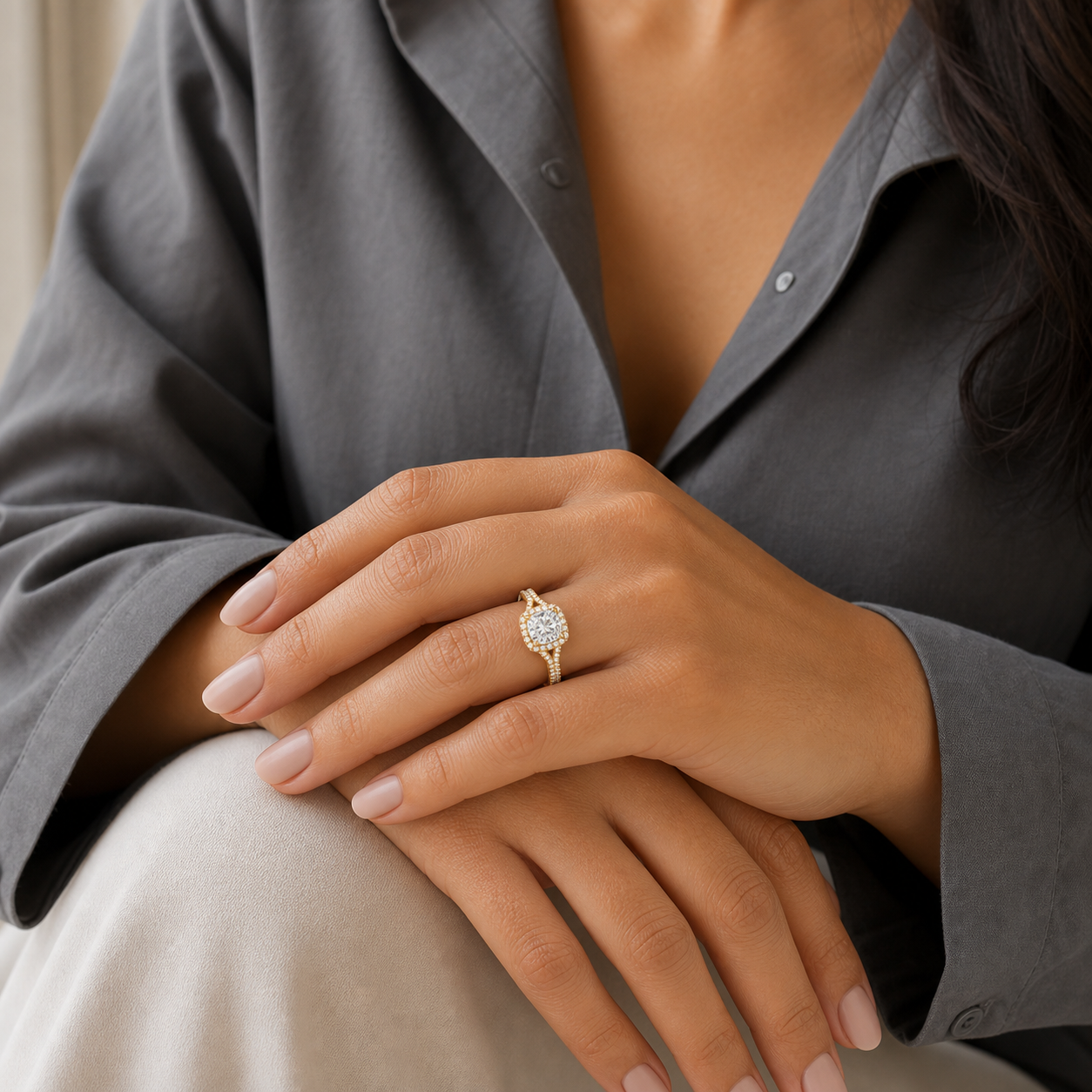


















Halo Engagement Rings: Light, Drawn to the Edge
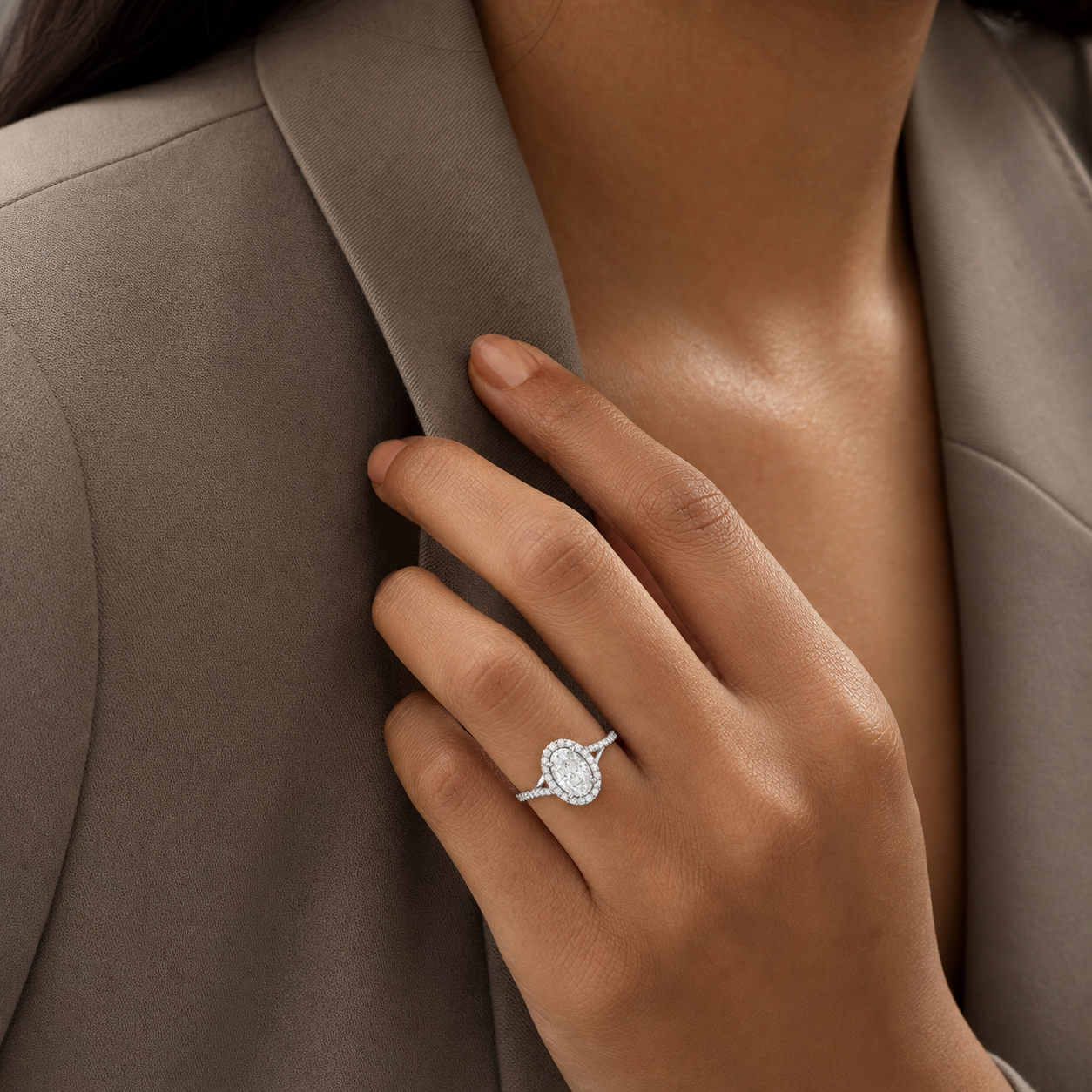
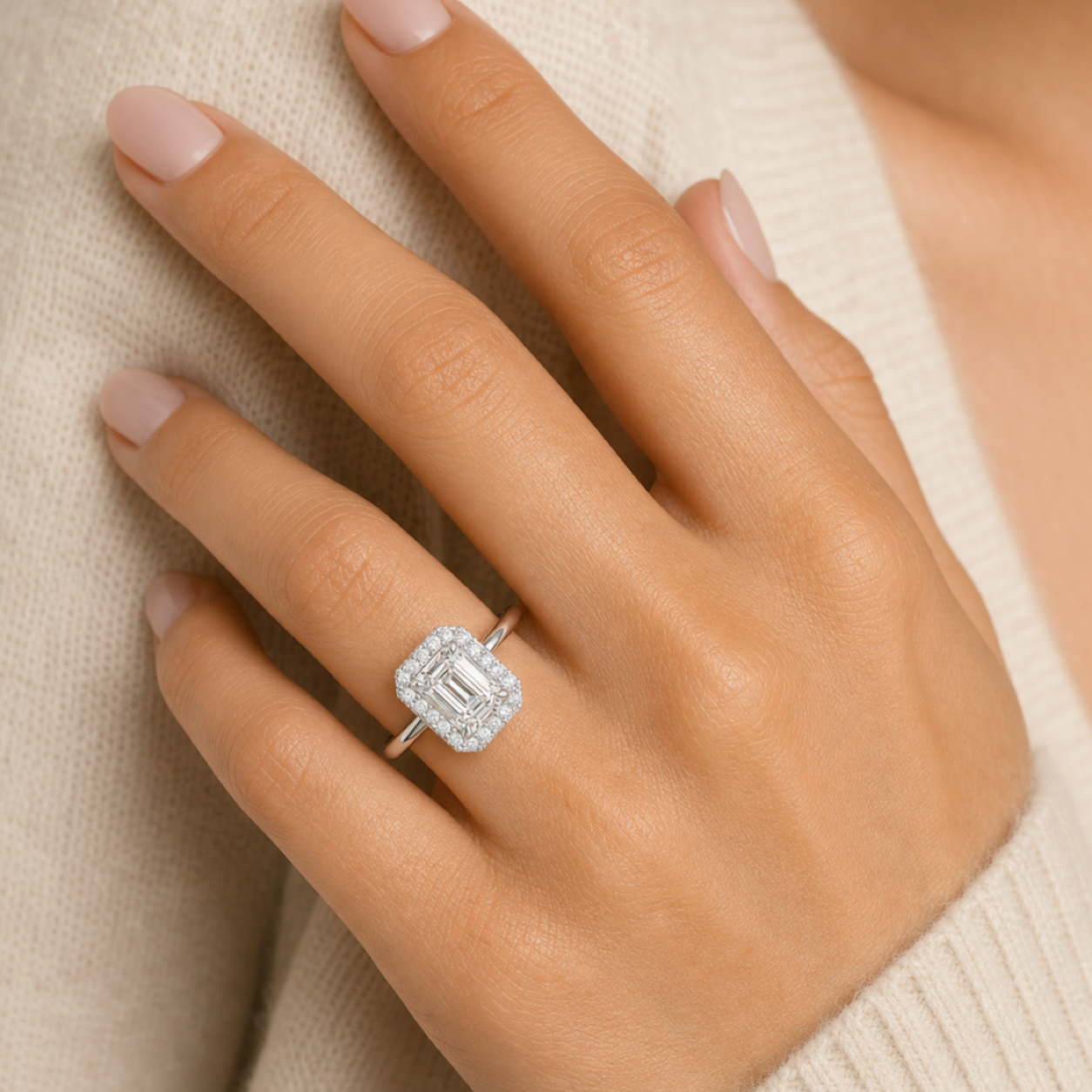
A halo changes where the center diamond appears to end. A visible border of smaller diamonds extends light to the perimeter, enlarging the face-up composition while giving the center a defined frame. Its quality lies less in the number of diamonds than in the calibration between them.
Burvonti’s Halo Engagement Rings collection includes round, kite, octagonal, double, pavé, floral, and split-shank structures, each solving the framing problem differently. This page is not simply a destination for more sparkle. It is a study in outline, spacing, scale, and the transition from center stone to surrounding light.
Visible Halo, Hidden Halo, and Pavé Are Different Decisions
A classic face-up halo surrounds the center stone where it can be seen from above. It expands the visible perimeter and becomes part of the primary silhouette. A hidden halo is positioned below the center and appears mainly from the side, leaving the top view cleaner. Burvonti maintains separate Halo and Hidden Halo collections because those structures answer different visual intentions; their current public product sets overlap only in a small minority of designs.
Pavé describes how small diamonds are set closely into a surface. It may appear on a band, within a halo, or in both places. A pavé band alone does not make a ring a halo. The defining question is location: does a visible frame of accent diamonds encircle the center stone and redraw its face-up boundary?
The Geometry of the Frame
An outline-following halo echoes the center diamond and preserves its identity: oval around oval, cushion around cushion, or angular around an emerald or princess shape. A contrasting halo can reinterpret it. A round frame may soften another outline; an octagonal frame can introduce clipped corners and architectural order; a kite-like or floral arrangement can turn the perimeter into a more expressive motif.
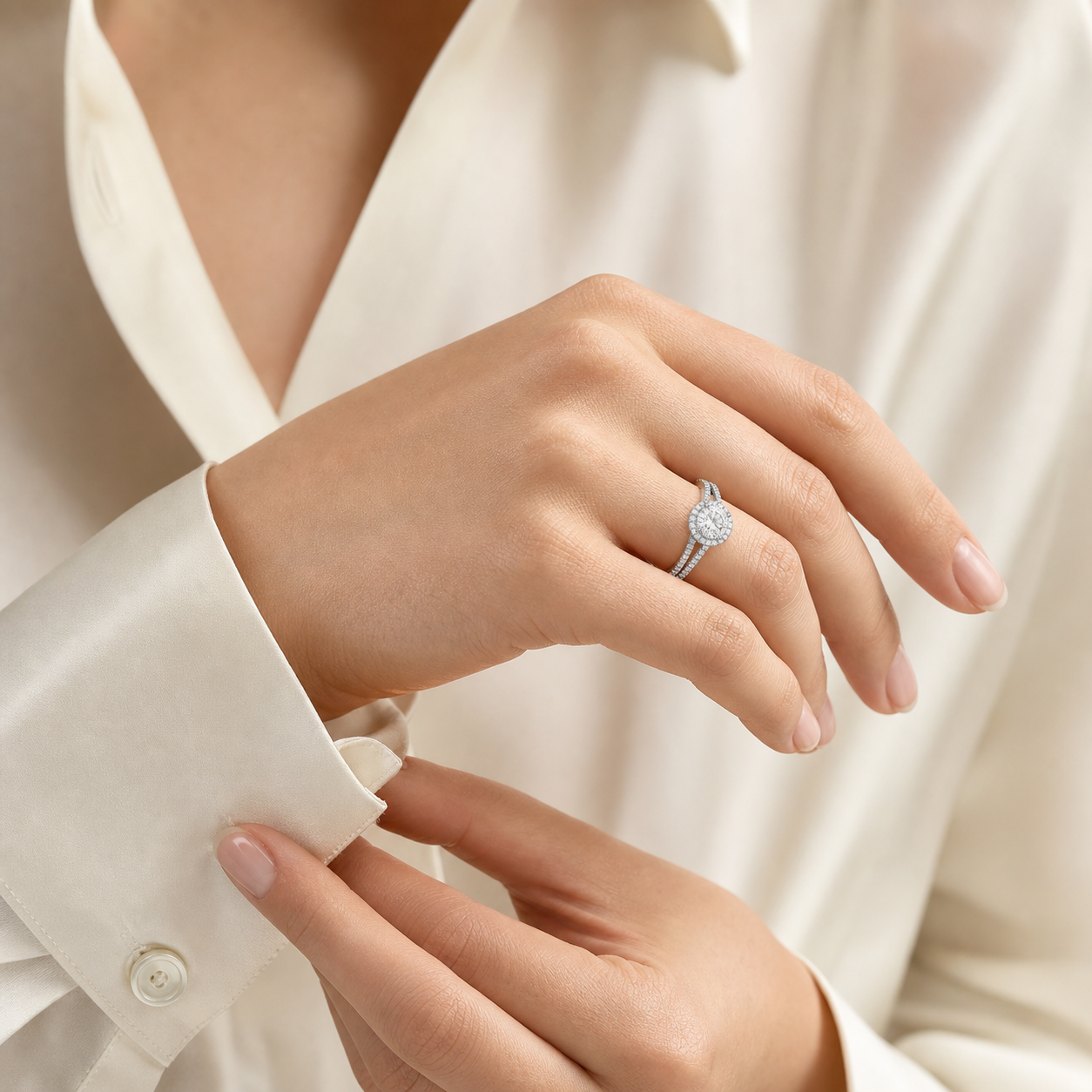
A double halo adds a second concentric field. Split shanks widen the approach to the center, while pavé shoulders carry light down the finger. These choices must remain proportionate. If the accents, gaps, or band become too dominant, the center may lose definition; when their scale is calibrated, the eye can read center, frame, and band in sequence.
Visual Presence Is Not the Same as Carat Weight
A halo can make the overall face-up composition appear larger because the accent diamonds extend beyond the center stone’s edge. That is a visual effect, not a change to the center diamond’s dimensions, carat weight, grading report, or cut quality. Total carat weight may include accent diamonds, so it should not be confused with the weight of the center alone.
The frame also adds its own scintillation. Small diamonds can create more points of moving light around the center, but they do not improve the center diamond’s intrinsic light performance. Evaluate the central stone on its documented qualities, then judge whether the halo’s spacing and scale create the kind of presence you want.
Choose the Relationship Between Shape and Halo
Many diamond shapes can be framed by halos when the setting is designed for their outlines. The relevant question is not which is universally best. It is whether the frame echoes, sharpens, or intentionally changes the center’s silhouette.
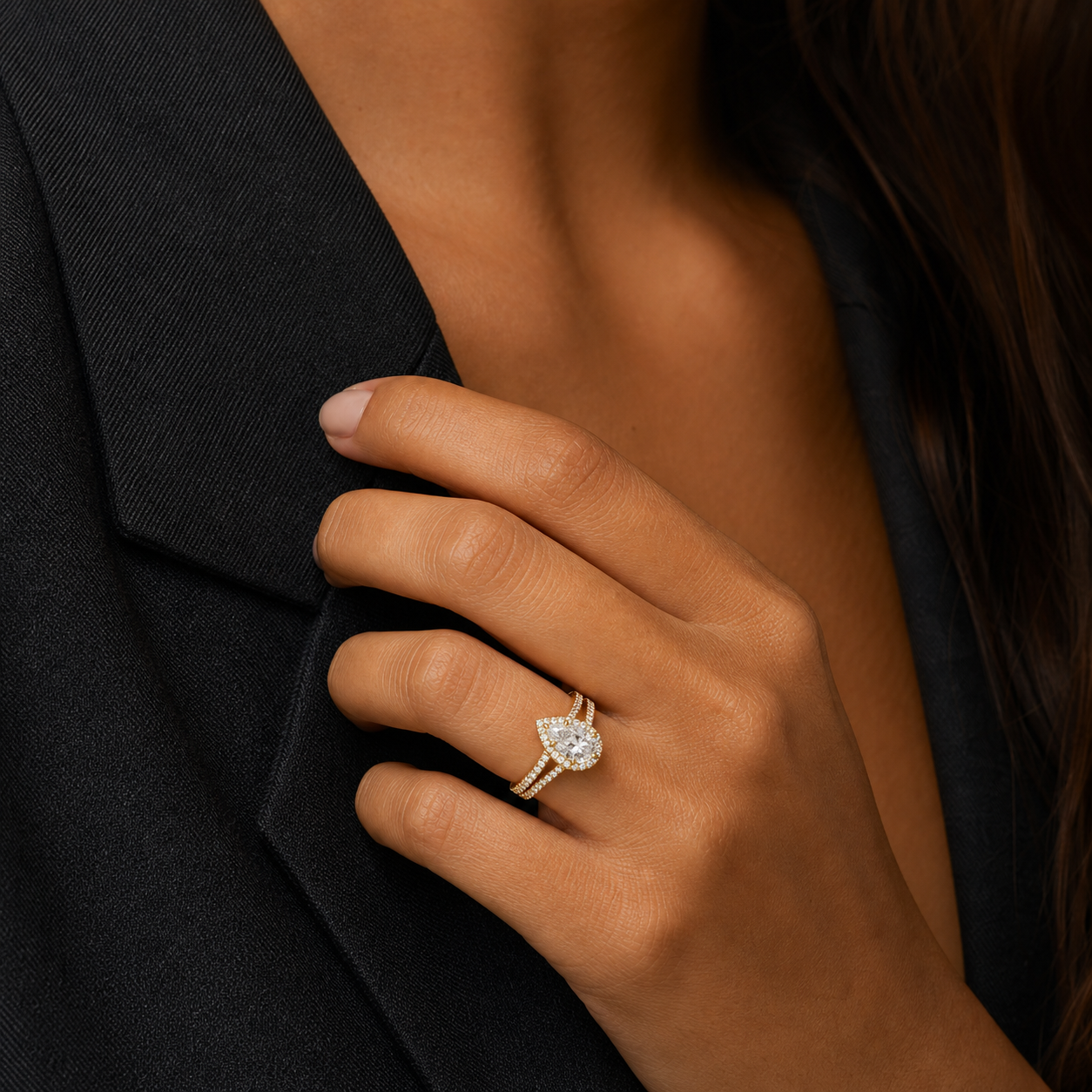
Elongated diamonds can become more expansive when the halo follows their length. Square and step-cut shapes can gain definition from angular or clipped-corner frames. Pear, marquise, princess, and heart shapes need careful treatment at points and clefts. Begin with the halo structures that appeal to you, then compare how available diamond shapes affect the proportion of center, border, and band.
Metal, Profile, and the Wedding Band
Metal color controls how distinct the small setting points appear. White Gold or Platinum can create continuity between bright accent diamonds and their shared frame. Yellow or Rose Gold introduces warmer intervals and may make the outline more visibly articulated. The effect changes perception, not the center diamond’s assigned color grade.
Halo heads often project beyond the band, so side profile matters when pairing a wedding ring. Some elevated galleries leave space for a straight band; lower or broader halos may require a contour, create a deliberate gap, or call for a band designed around the engagement ring. Examine height, under-gallery structure, exposed accent diamonds, and contact points before assuming a flush fit.
More Setting Points, More Reasons for Precision
A halo contains multiple small diamonds and the beads or prongs that secure them. Those fine elements should be kept clear of residue and checked when the ring has been struck, catches on fabric, or shows a missing or moving accent. Pavé and halo details can be appropriate for frequent wear, but no intricate setting is maintenance-free. Care should be matched to the actual metal, diamond arrangement, and construction.
Burvonti combines responsibly sourced, independently graded lab-grown center diamonds with design judgment at the scale of the finished ring. Custom possibilities can refine the relationship between center shape, halo outline, accent scale, band, metal, or engraving when an existing design is close to the intended result. Any change to the setting, size, or wedding-band relationship requires product-specific structural confirmation.
Frequently Asked Questions
What is a halo engagement ring?
A halo engagement ring places a visible face-up frame of smaller accent diamonds around the center stone. The frame extends the composition to a new perimeter and can echo or reinterpret the center diamond’s outline.
What is the difference between a halo and a hidden halo?
A halo is visible around the center stone from above and changes its face-up boundary. A hidden halo sits below the center and is mainly seen from the side, adding profile light while preserving a cleaner top view.
What is the difference between a halo and a pavé ring?
Halo describes the placement of accent diamonds around the center. Pavé describes a close-set technique that may appear on the halo, the band, or both. A pavé band without a face-up frame is not automatically a halo ring.
Does a halo make the center diamond look larger?
It can make the overall face-up composition appear larger because the accent diamonds extend the visible perimeter. It does not change the center diamond’s actual dimensions, carat weight, or grading report.
Does a halo make the center diamond sparkle more?
The accent diamonds add more points of scintillation around the center, increasing the ring’s total field of light. They do not alter the center diamond’s cut quality or intrinsic light performance.
What is the difference between a single halo and a double halo?
A single halo uses one visible border of accent diamonds. A double halo adds a second concentric border, increasing the face-up footprint and visual complexity. Accent scale and spacing must remain balanced so the center stays distinct.
Which diamond shapes work with halo engagement rings?
Halo settings can be designed for round, oval, cushion, pear, emerald, radiant, princess, Asscher, marquise, heart, and other shapes. The frame must account for the center’s proportions, corners, points, and setting structure.
Should the halo match the shape of the center diamond?
It can, but it does not have to. A matching halo preserves and expands the center outline; a contrasting round, octagonal, kite-like, or floral frame can reinterpret it. The right choice depends on the intended silhouette.
What should I consider when comparing halo proportions?
Compare the relative scale of center and accent diamonds, the spacing between them, the outer outline, band width, and how clearly the eye can still identify the center. Product images should be reviewed from both top and side views.
How does metal color affect a halo engagement ring?
White metals can make the shared setting points feel more continuous with the diamonds. Yellow or Rose Gold introduces warmer intervals and a more visible boundary. Metal color affects perception but does not change the center diamond’s assigned grade.
Will a wedding band sit flush with a halo engagement ring?
Not always. Halo width, gallery height, under-gallery structure, and projecting accent diamonds determine clearance. Some designs suit a straight band; others work better with a curved band or an intentional gap.
Are halo engagement rings suitable for everyday wear?
They can be, but their multiple accent stones and fine setting points require mindful care. Remove the ring for impact-prone work and chemical exposure, and arrange inspection if it has been struck, begins catching, or shows movement.
How do I clean a halo engagement ring?
Use a gentle method appropriate to its diamonds, metal, and setting, such as lukewarm water, mild soap, and a soft brush when suitable. Avoid harsh chemicals and abrasive tools, and make sure residue is cleared from beneath the halo and gallery.
Can a halo engagement ring be resized?
Some can, but the possible range depends on metal, band structure, pavé coverage, and the relationship between shank and halo head. Resizing should be assessed for the exact product rather than assumed from the style name.
Can a Burvonti halo engagement ring be customized?
Custom possibilities may refine center shape, halo outline, accent scale, band, metal, engraving, or another personal detail. Availability and structural feasibility depend on the selected design and require confirmation before production.