
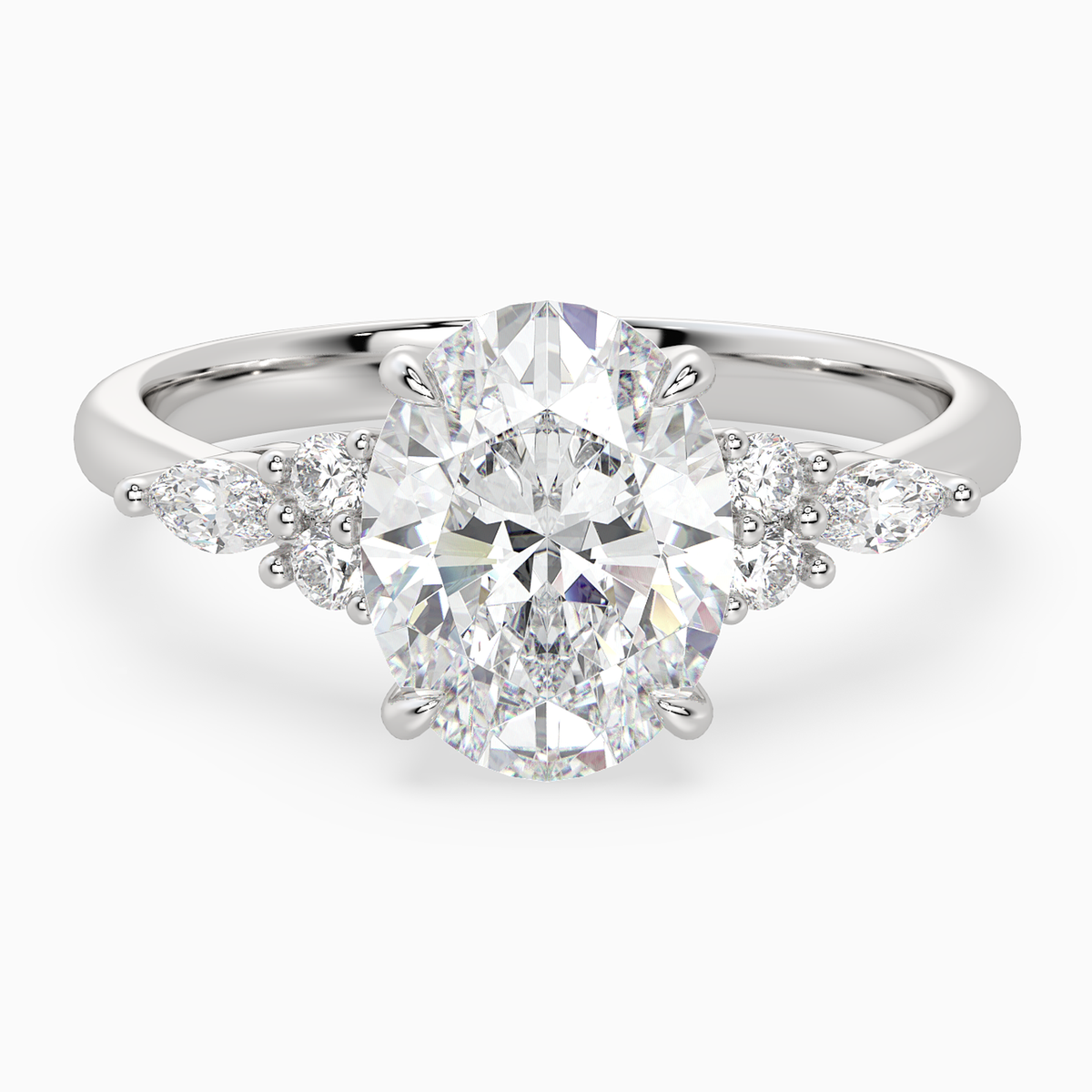


Oval Diamond Engagement Rings
An elongated silhouette in motion. Brilliant-cut light follows a continuous curve across settings calibrated to each oval center.


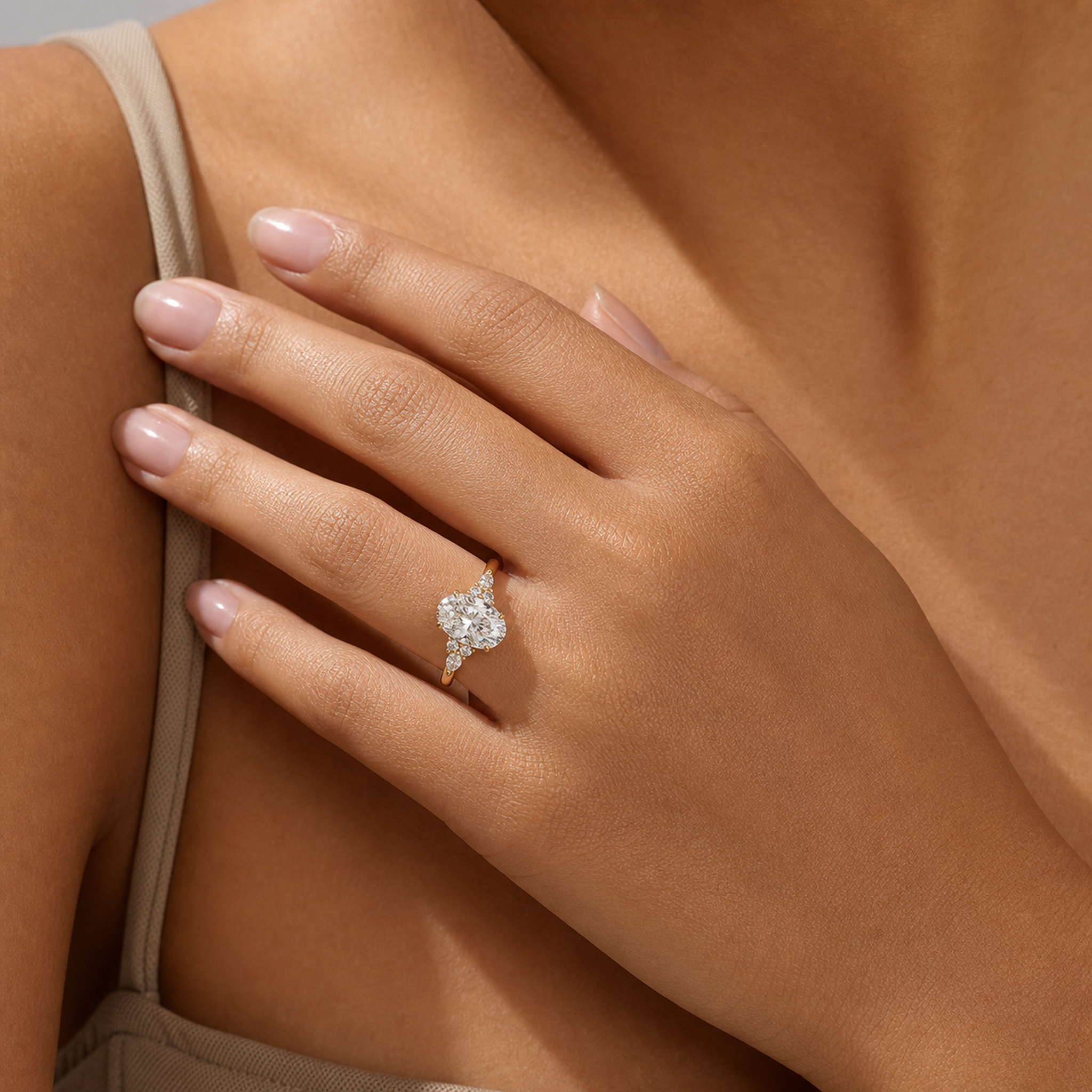


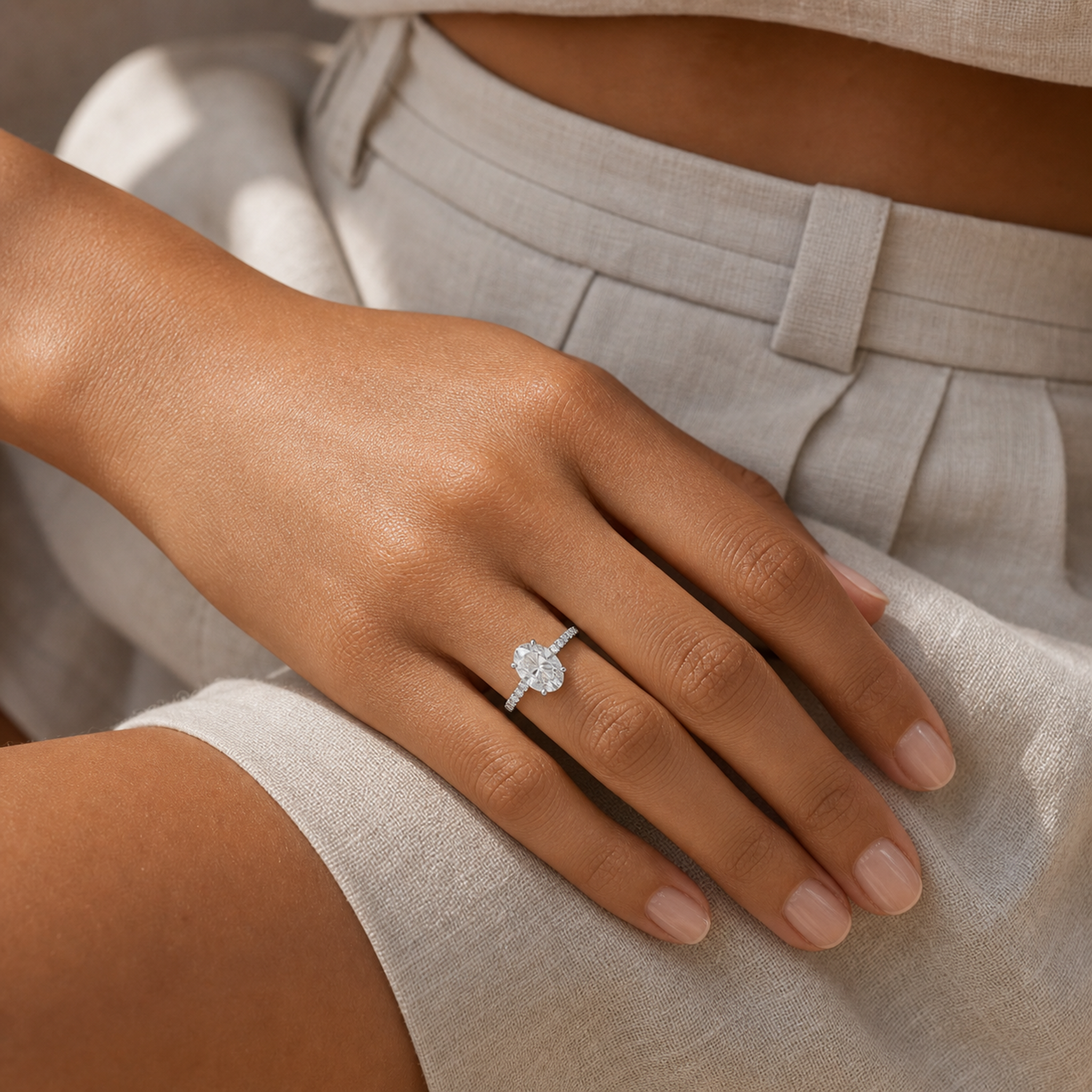


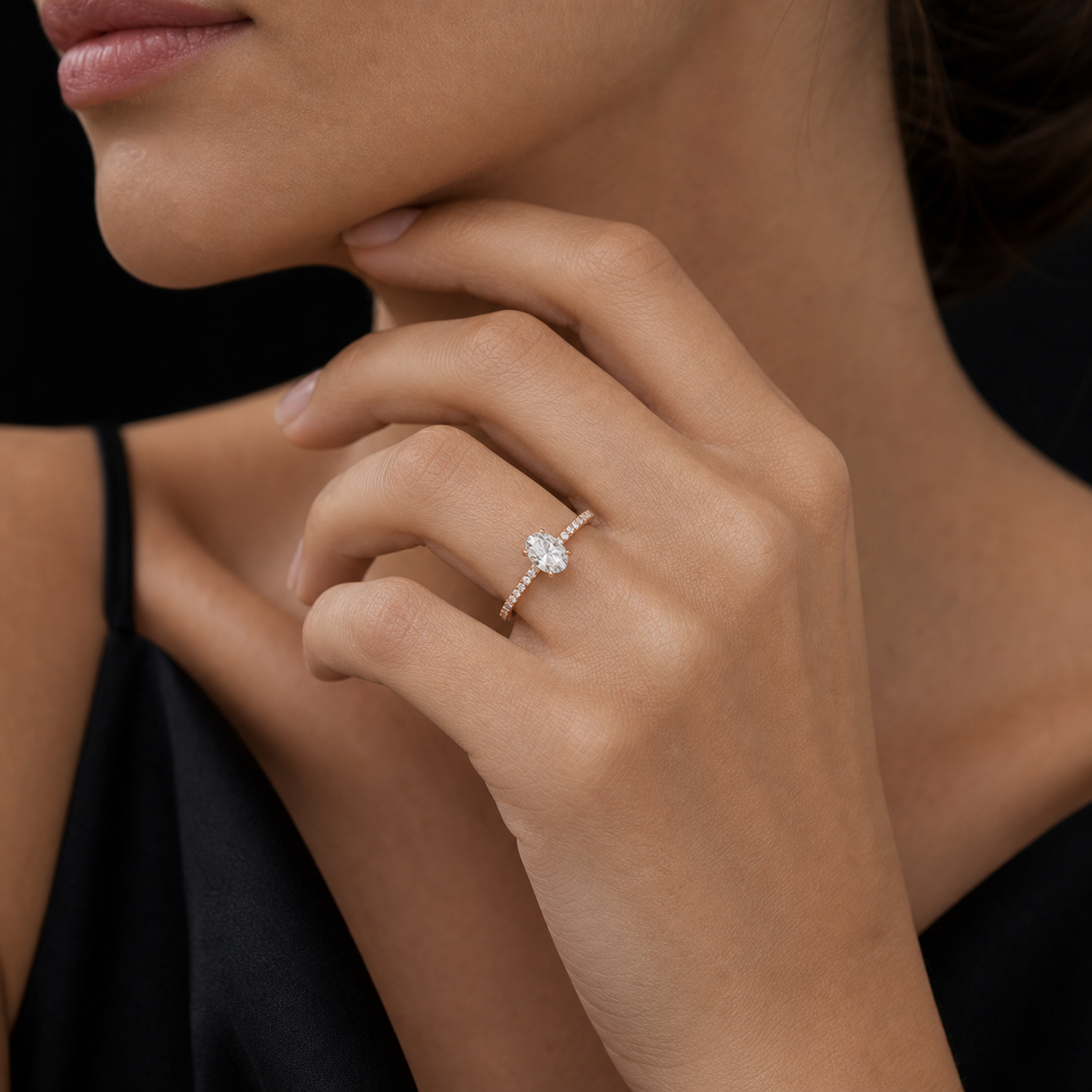


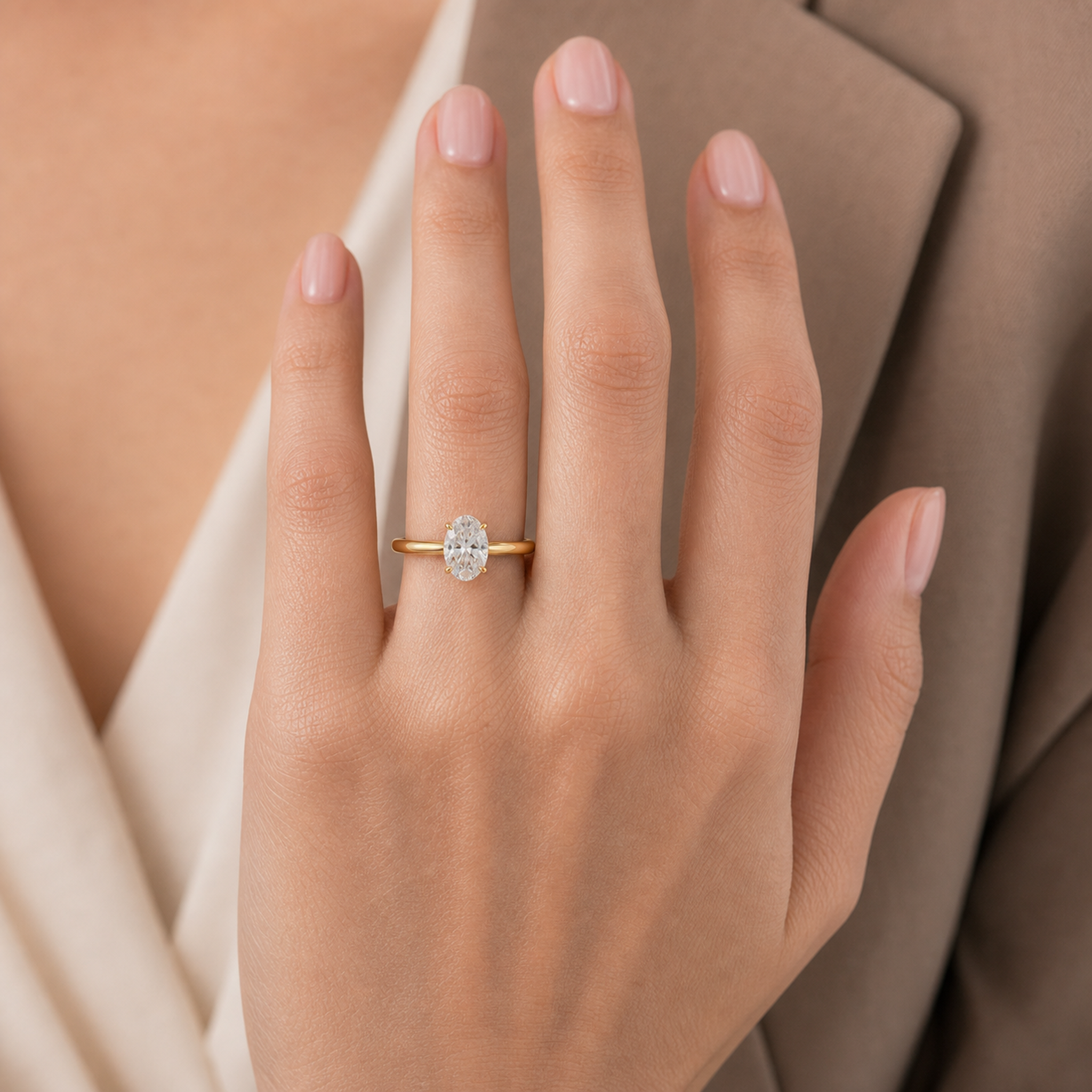


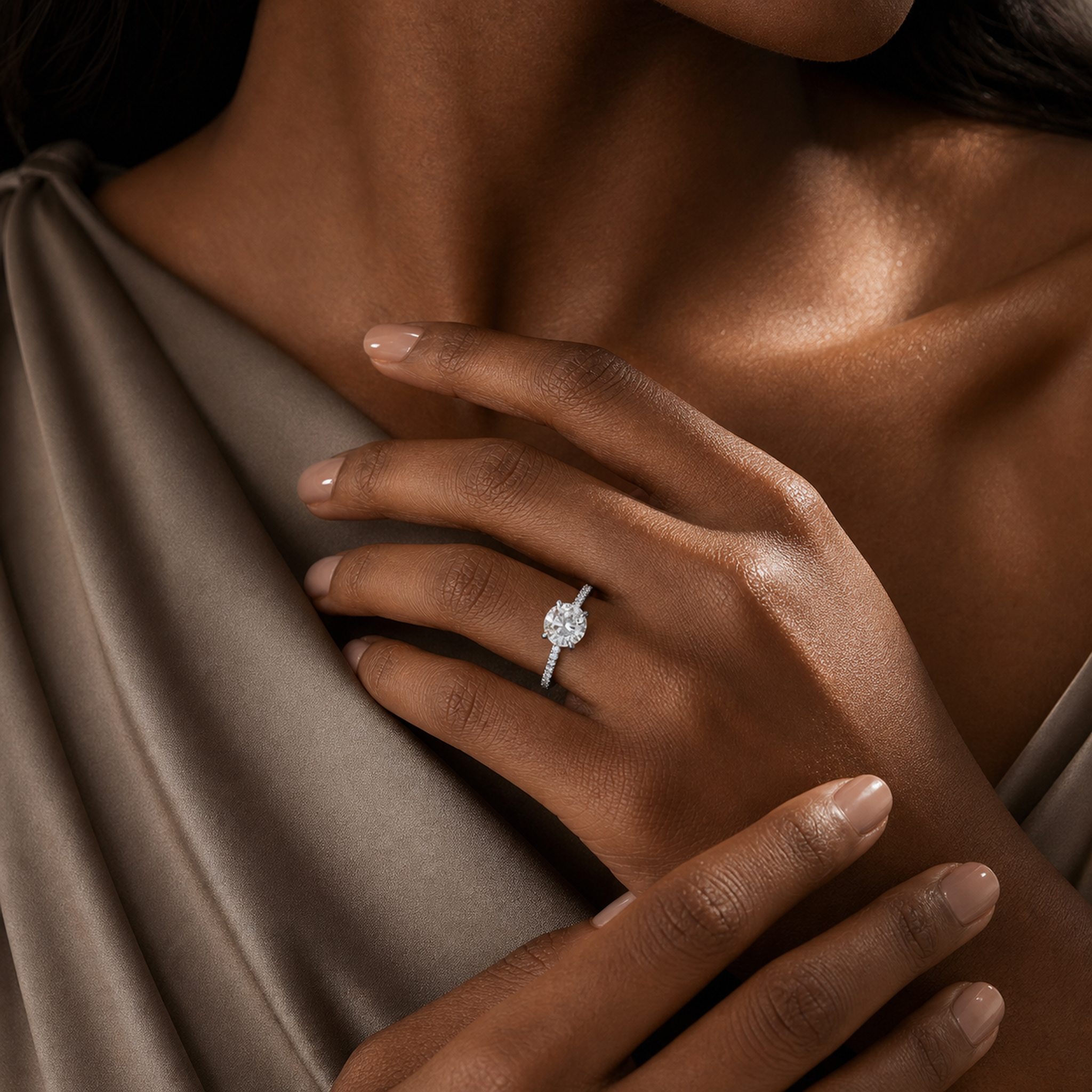


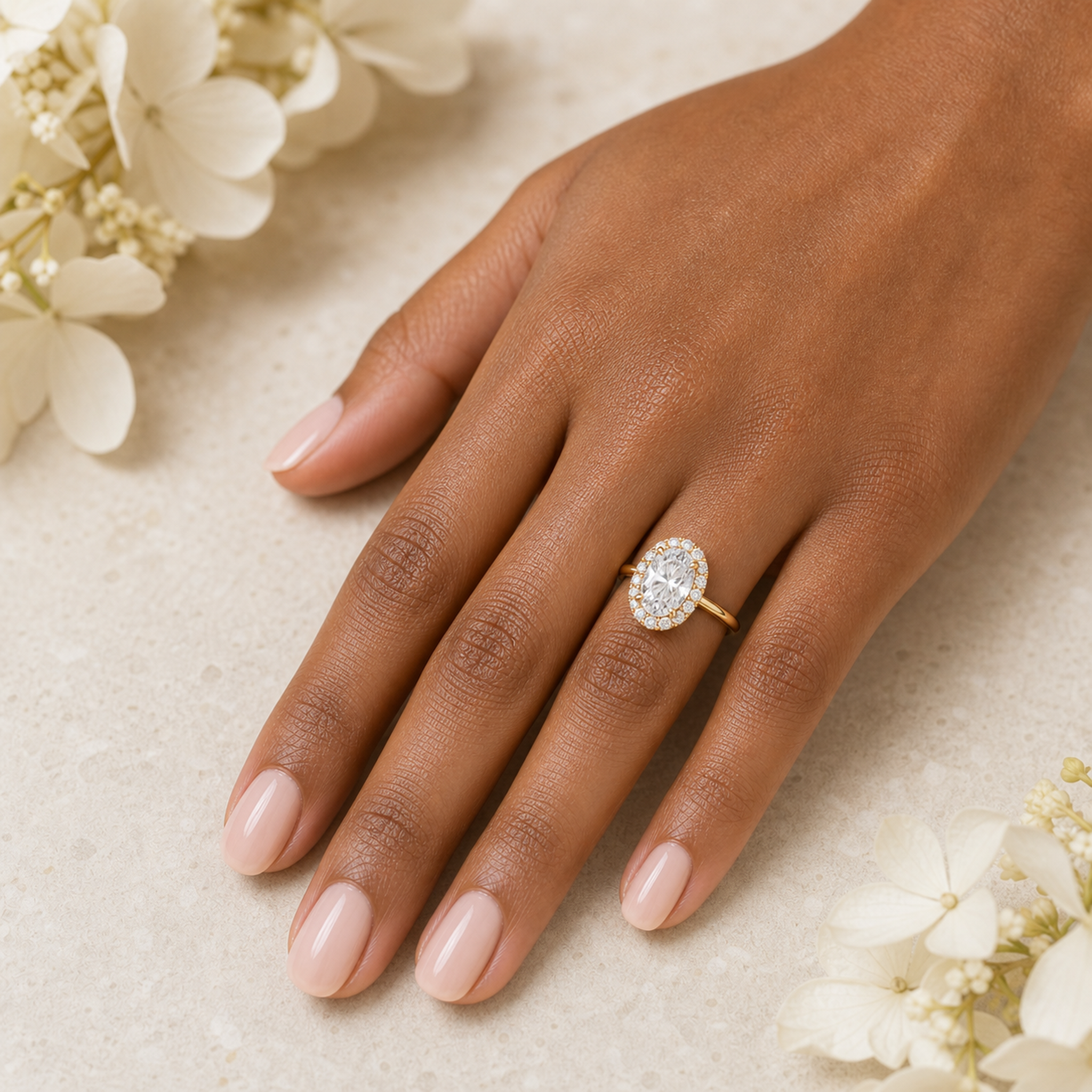


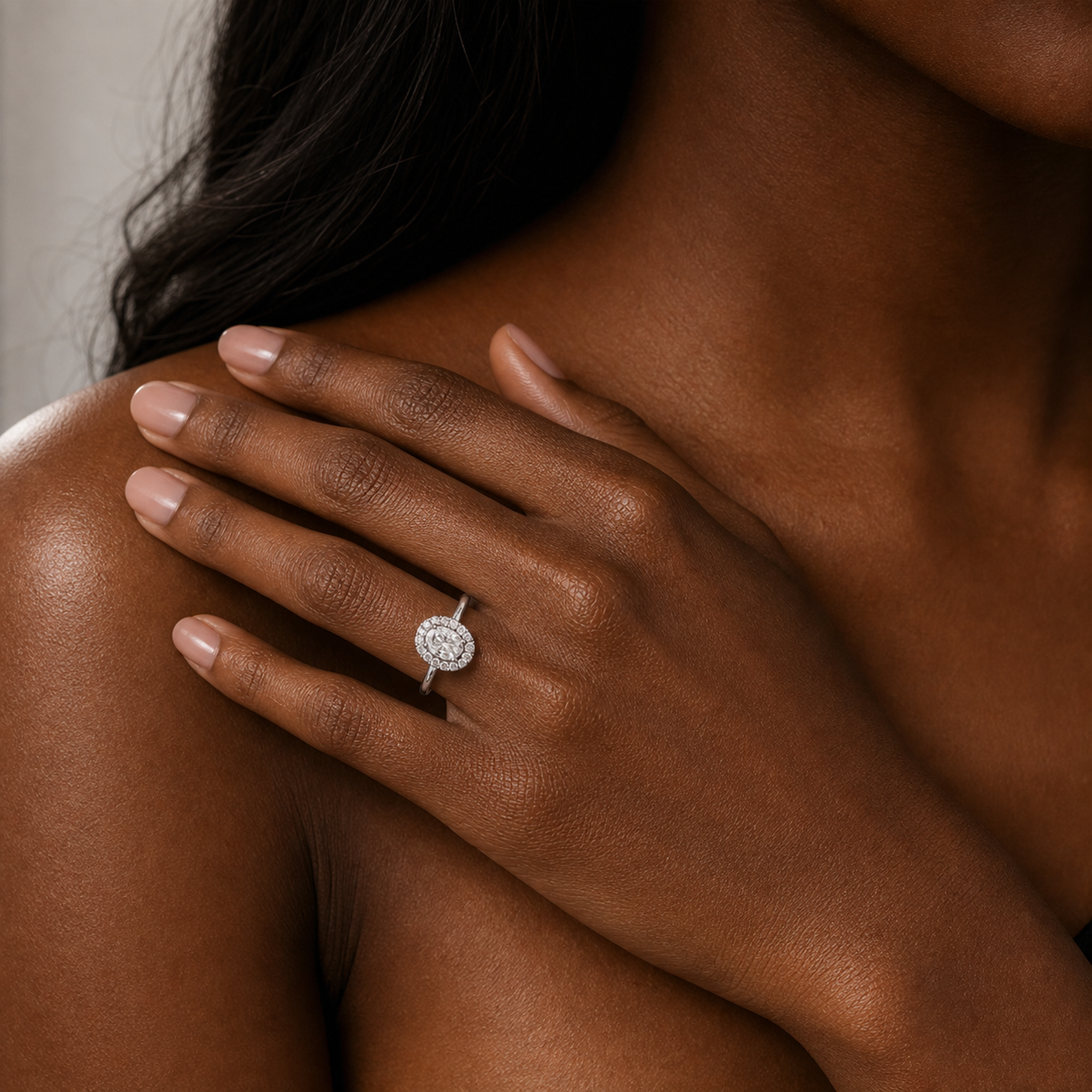










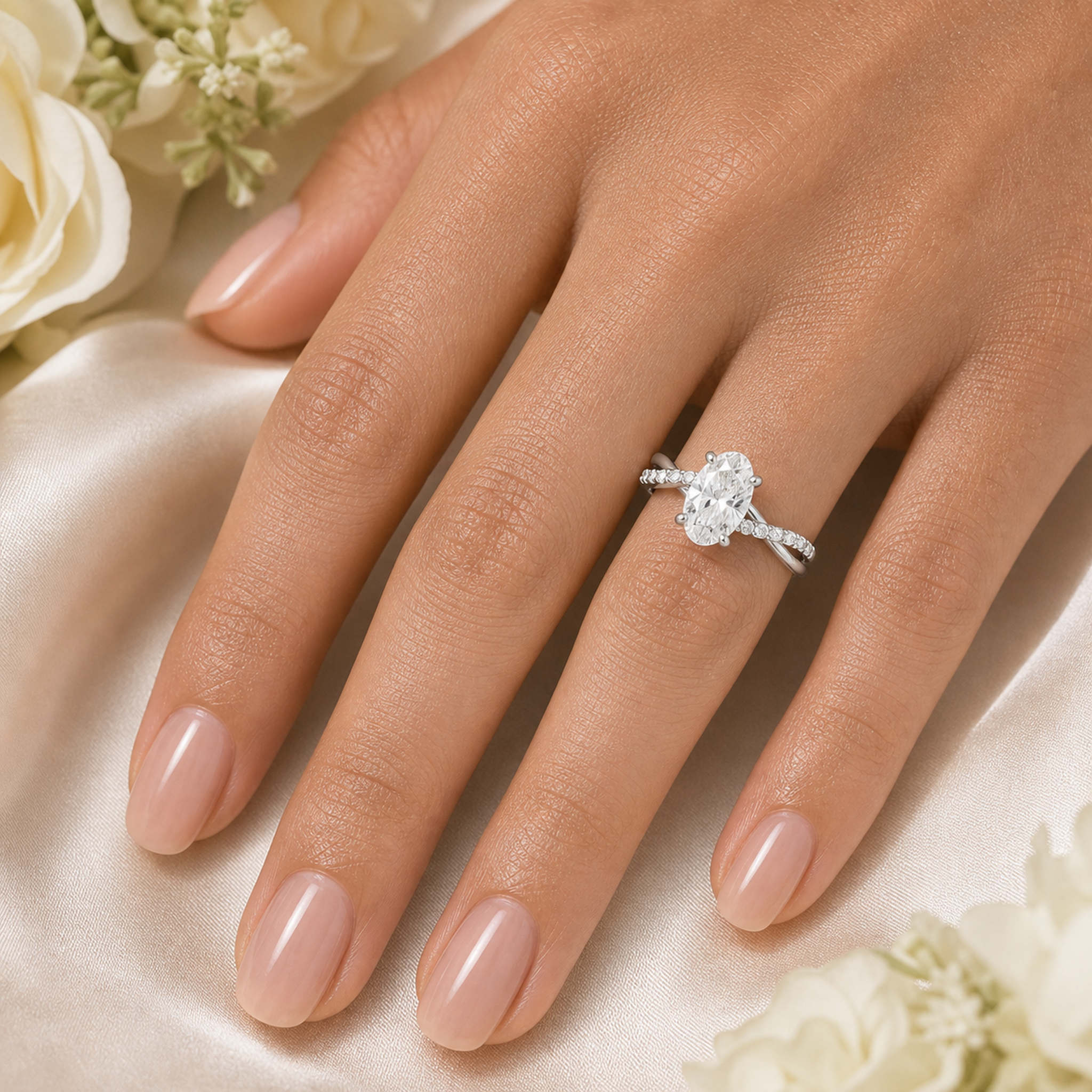


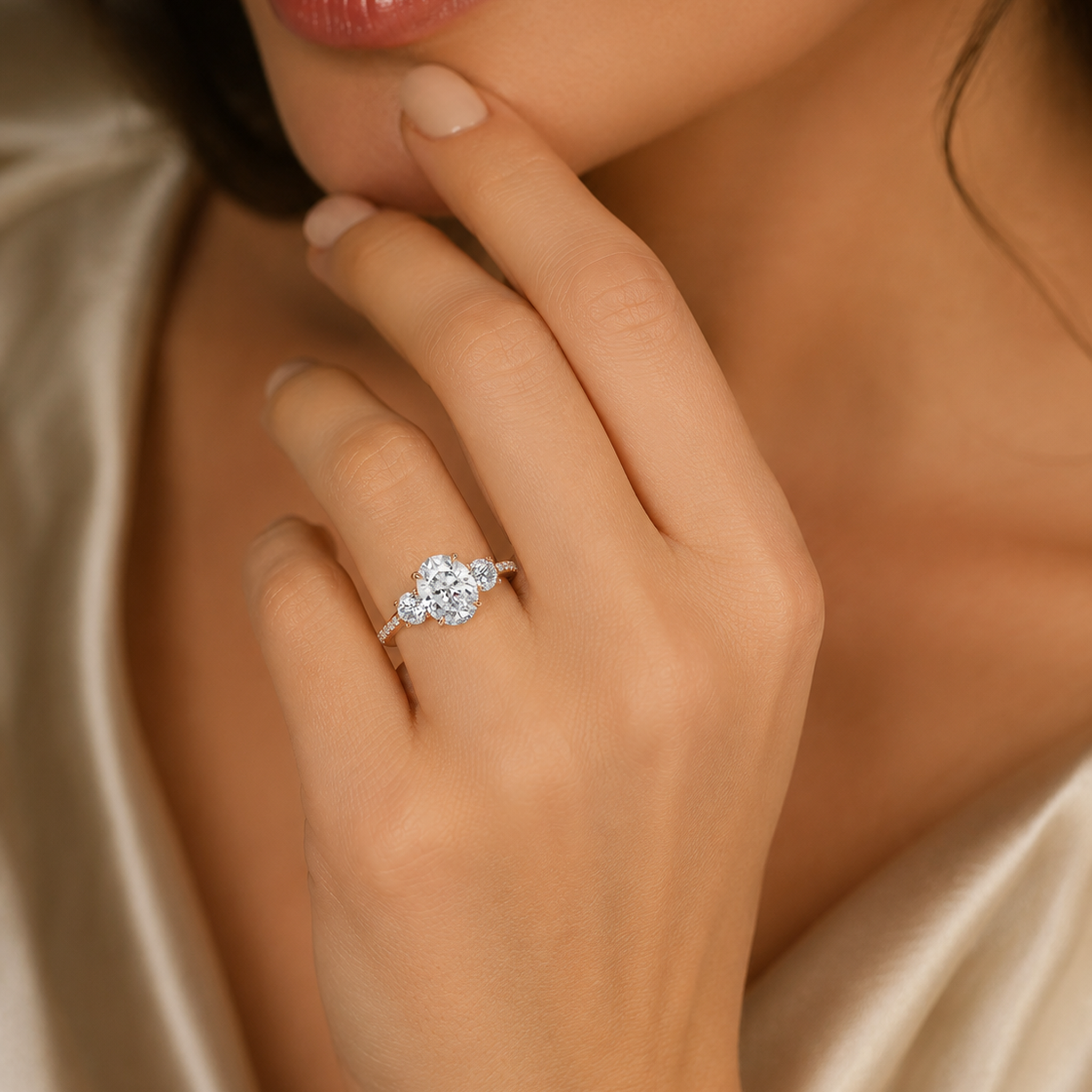


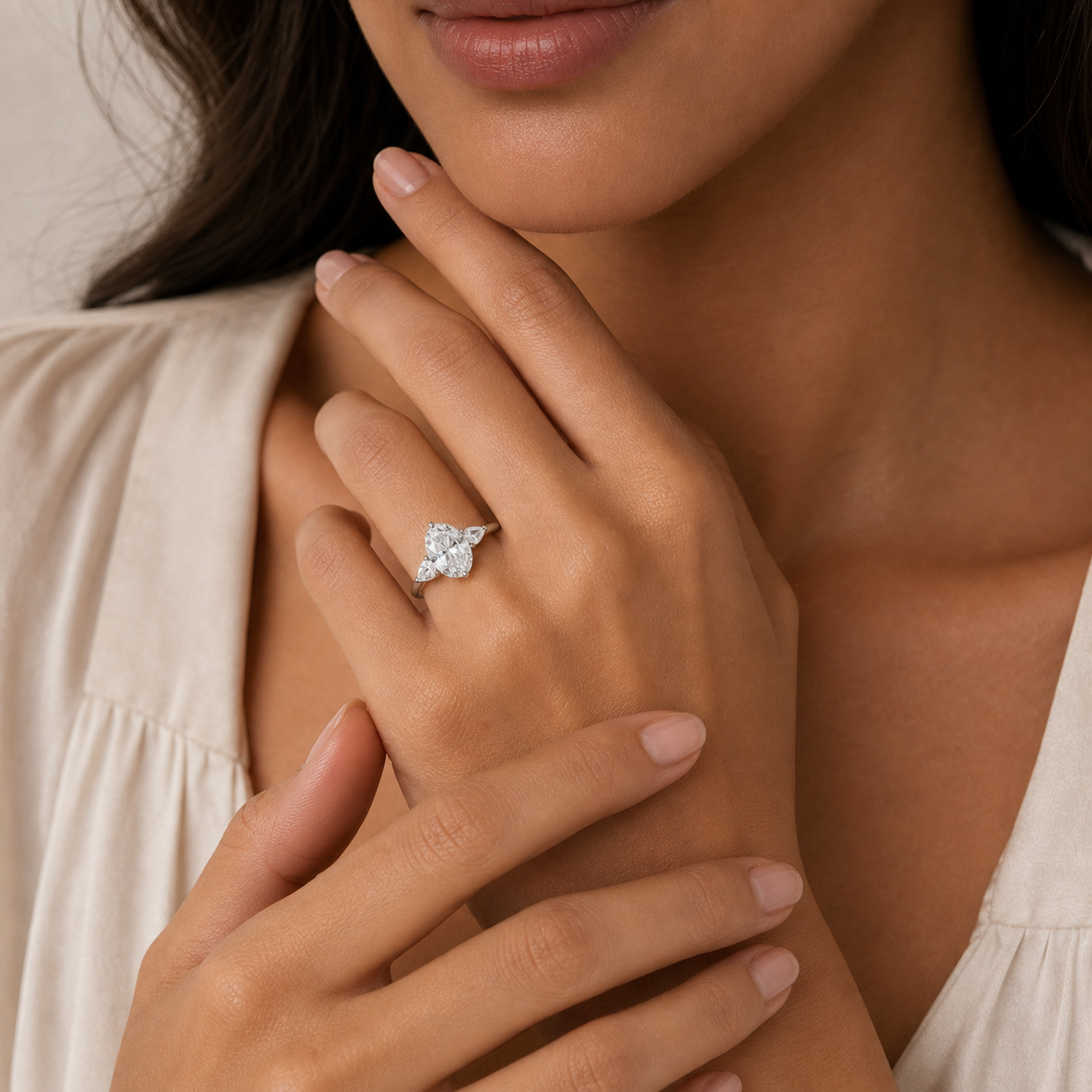


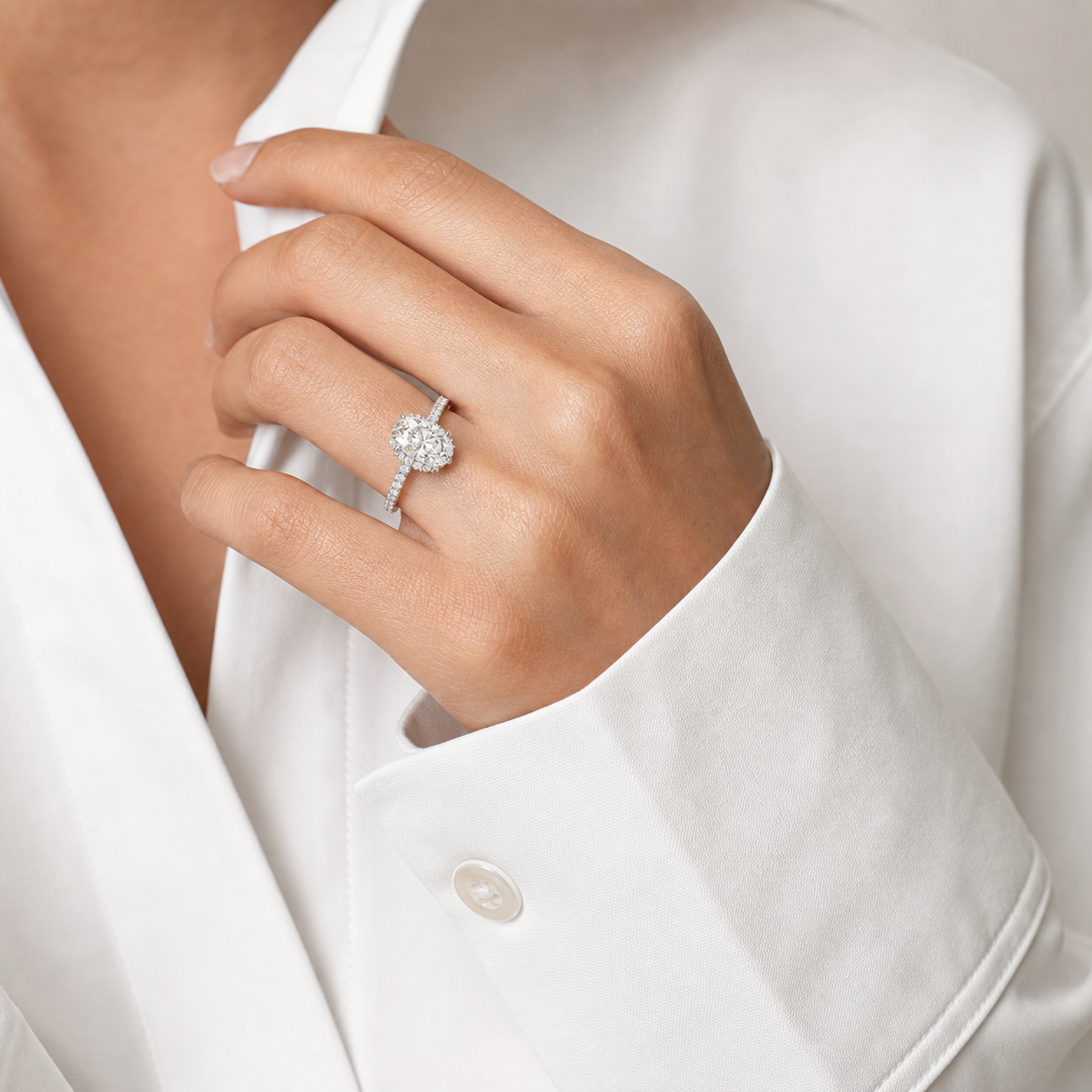


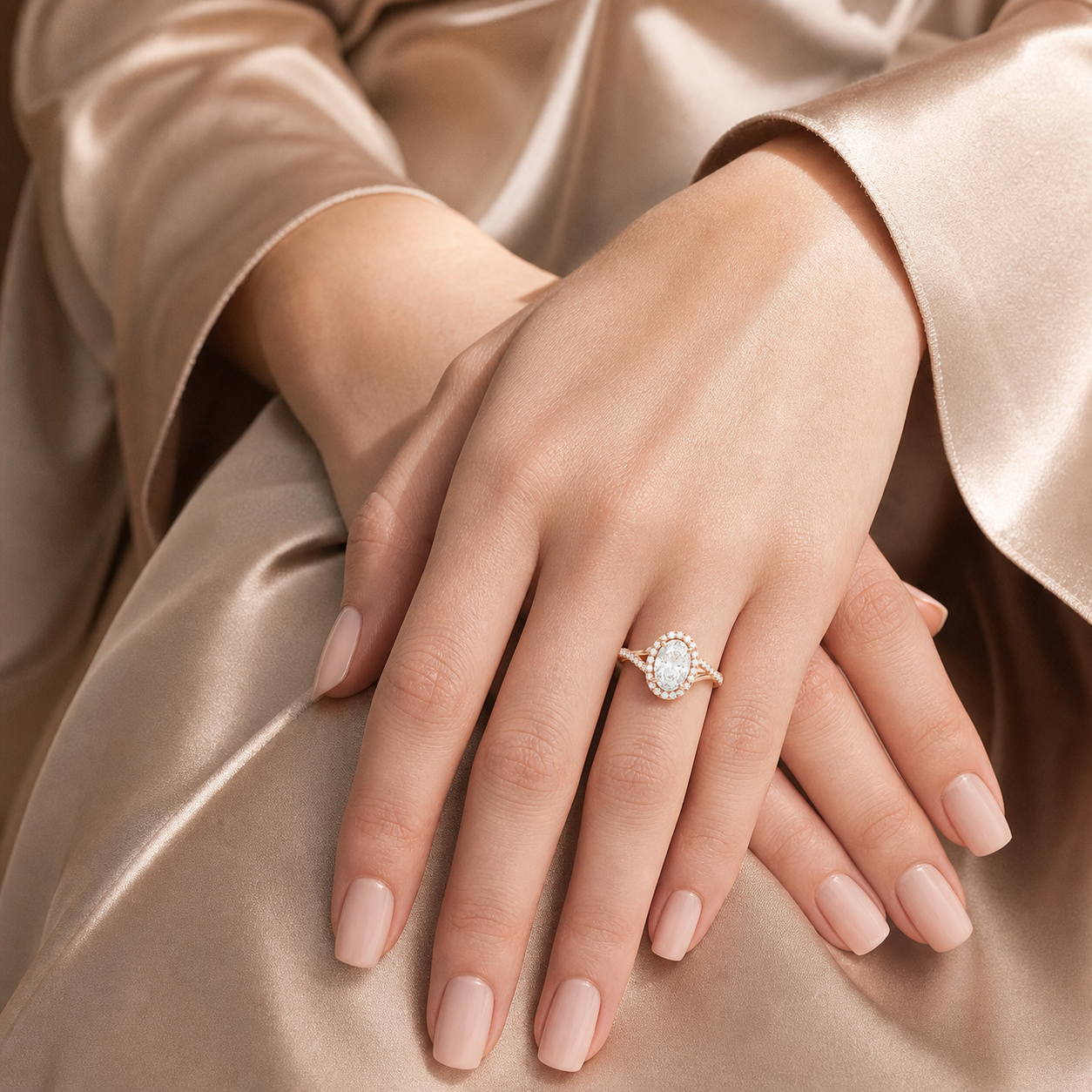





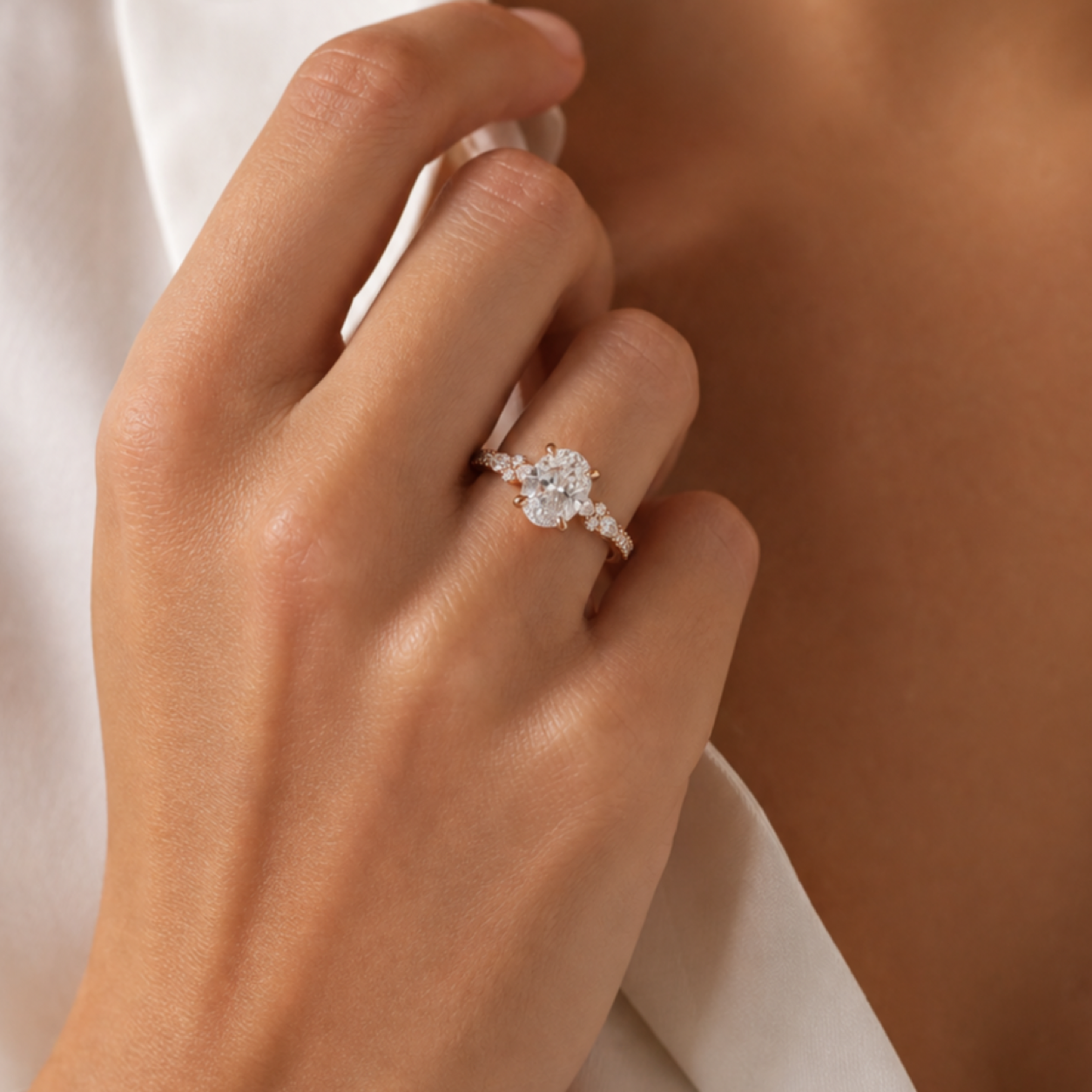


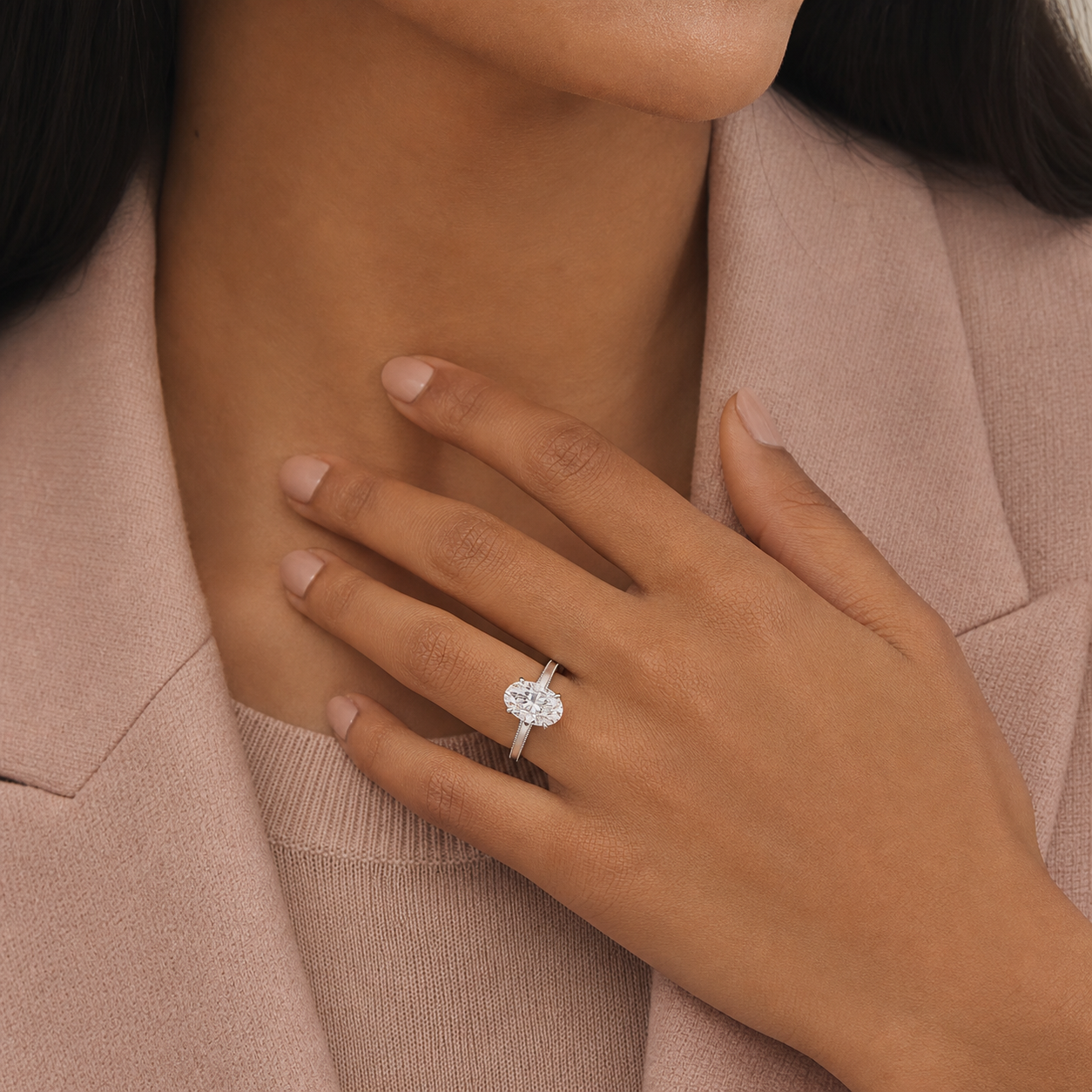


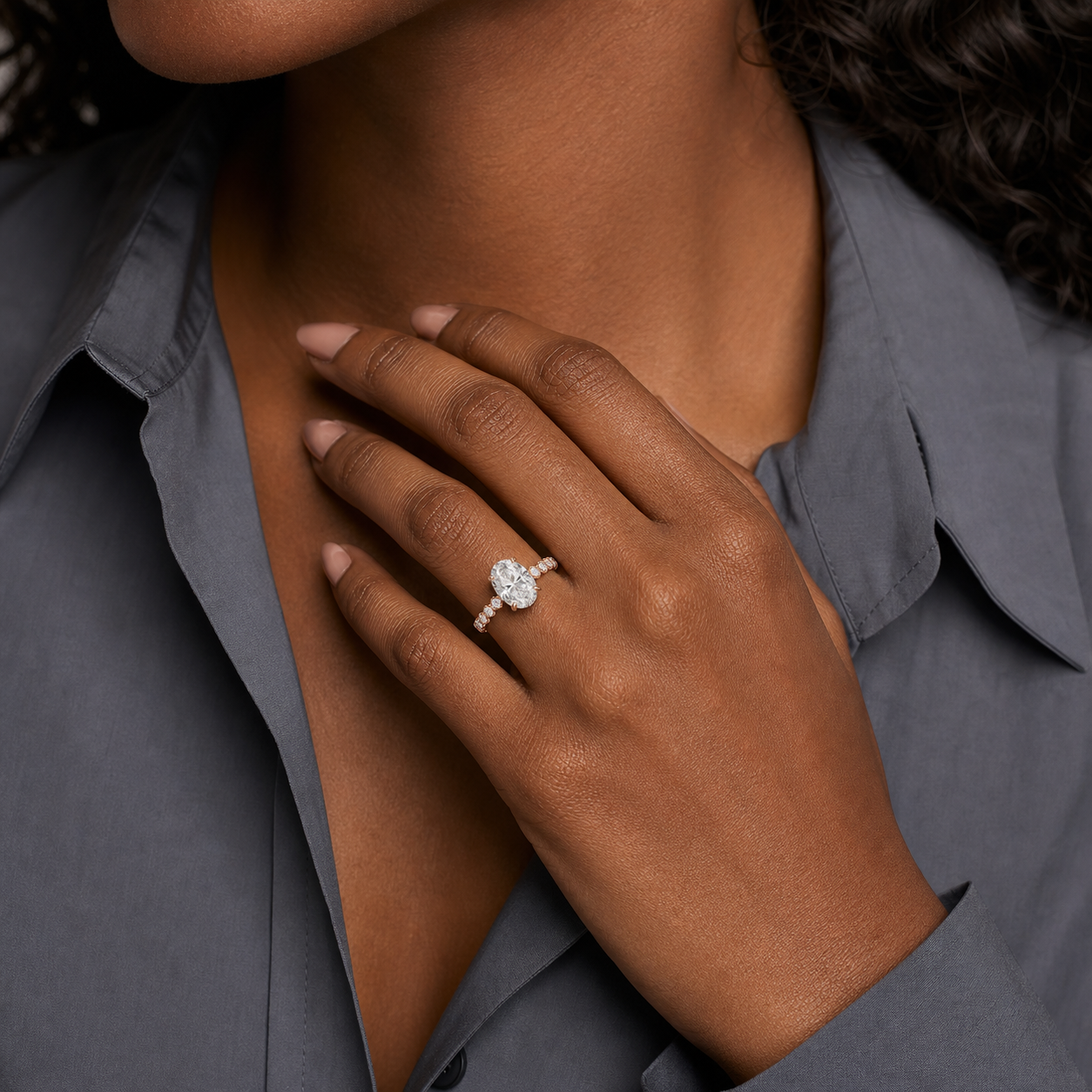


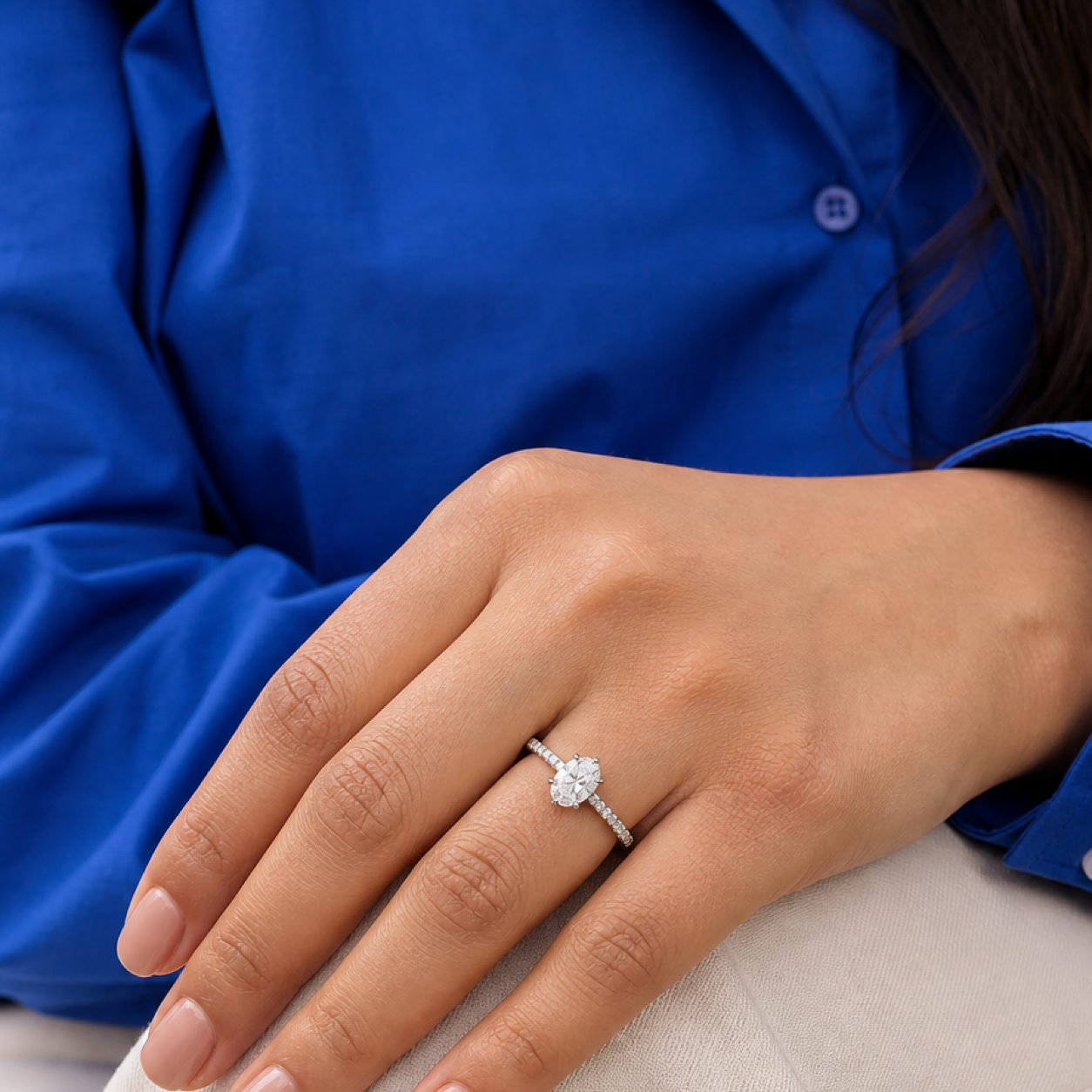


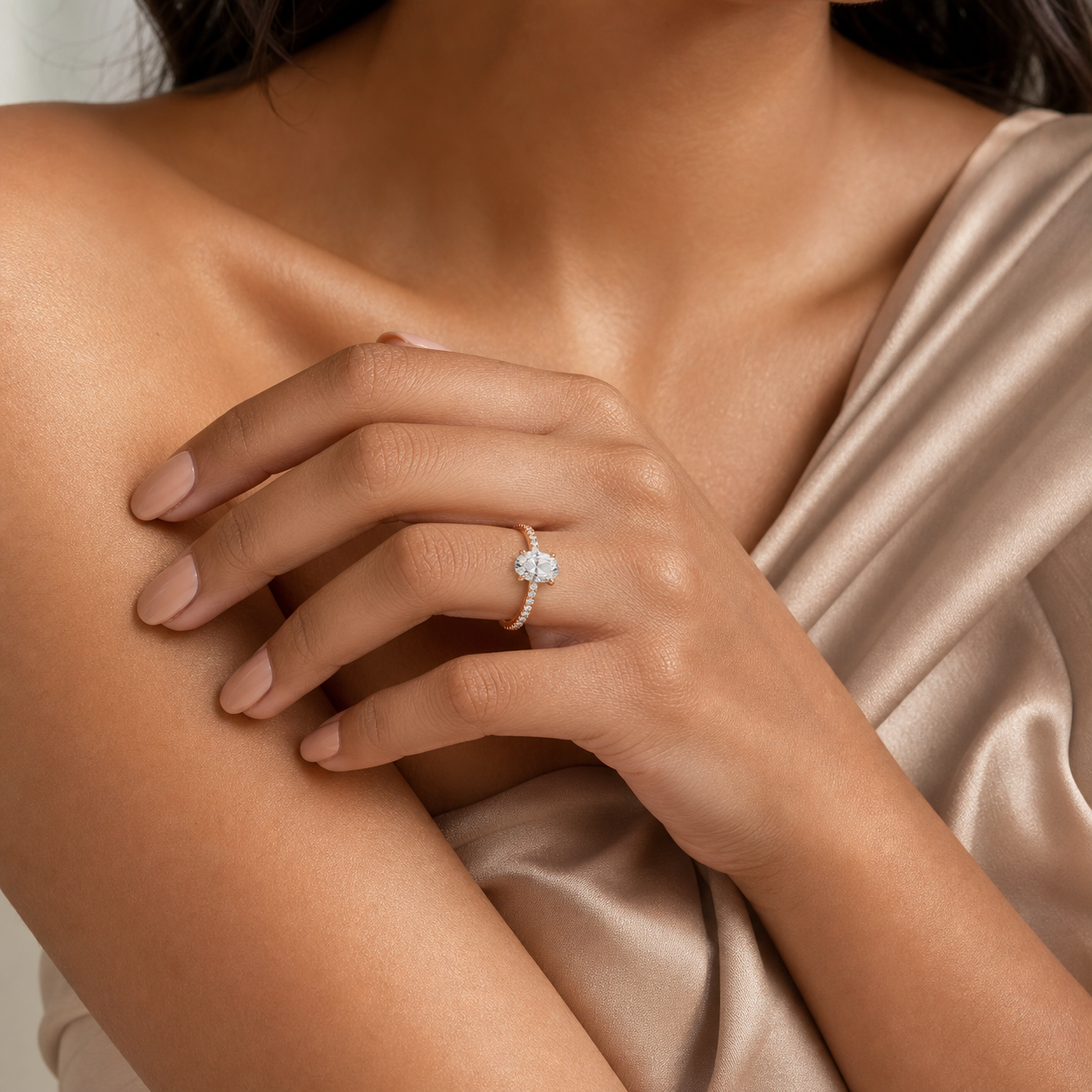


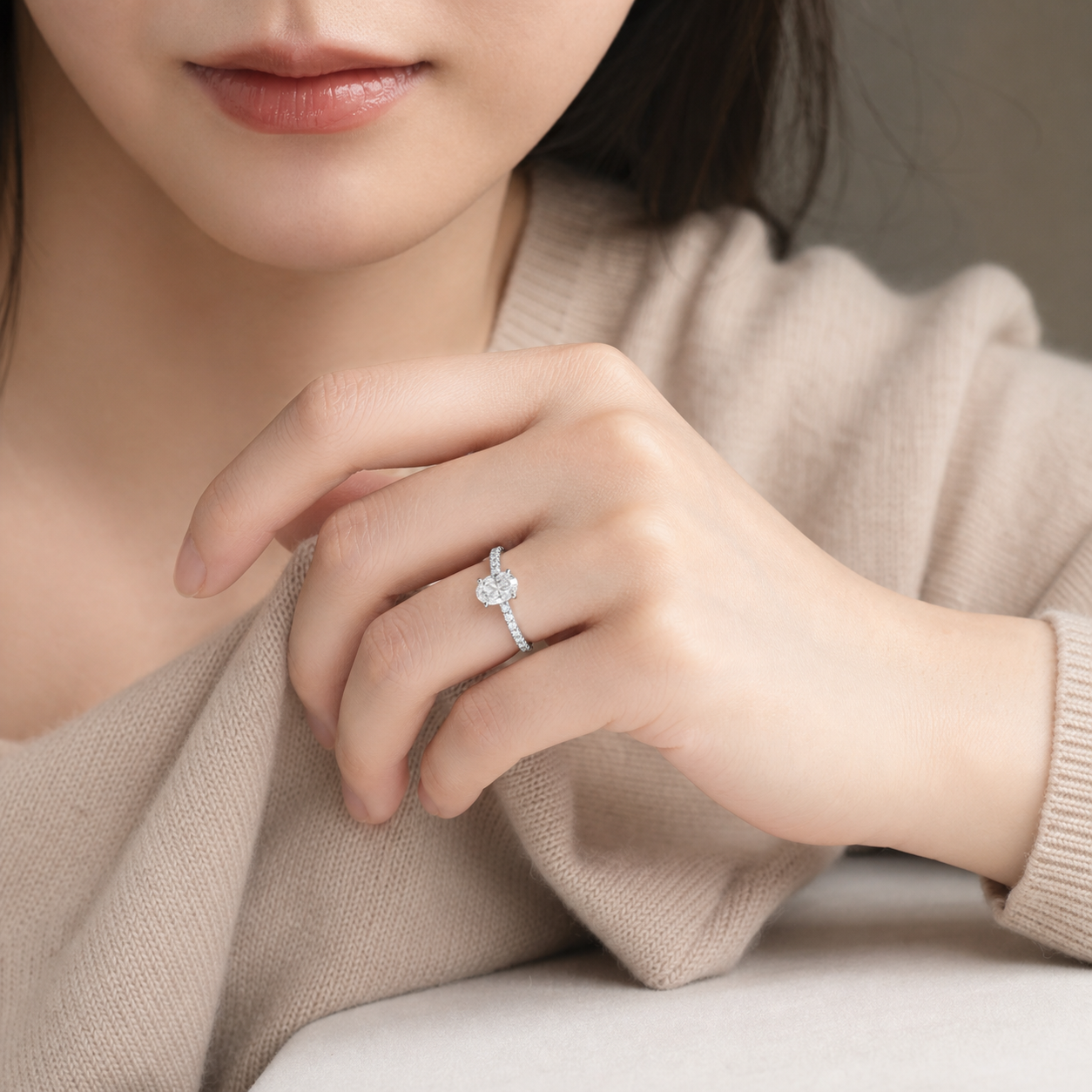
Oval Diamond Engagement Rings: Light Drawn Along a Curve
An oval diamond begins with a continuous curve, then directs the eye along a clear vertical axis. Its brilliant-style faceting produces a lively field of light, while the elongated outline gives the center a distinct sense of movement. The result is neither a stretched Round nor a softer Marquise. It is a shape with its own rhythm, proportion, and pattern of contrast.
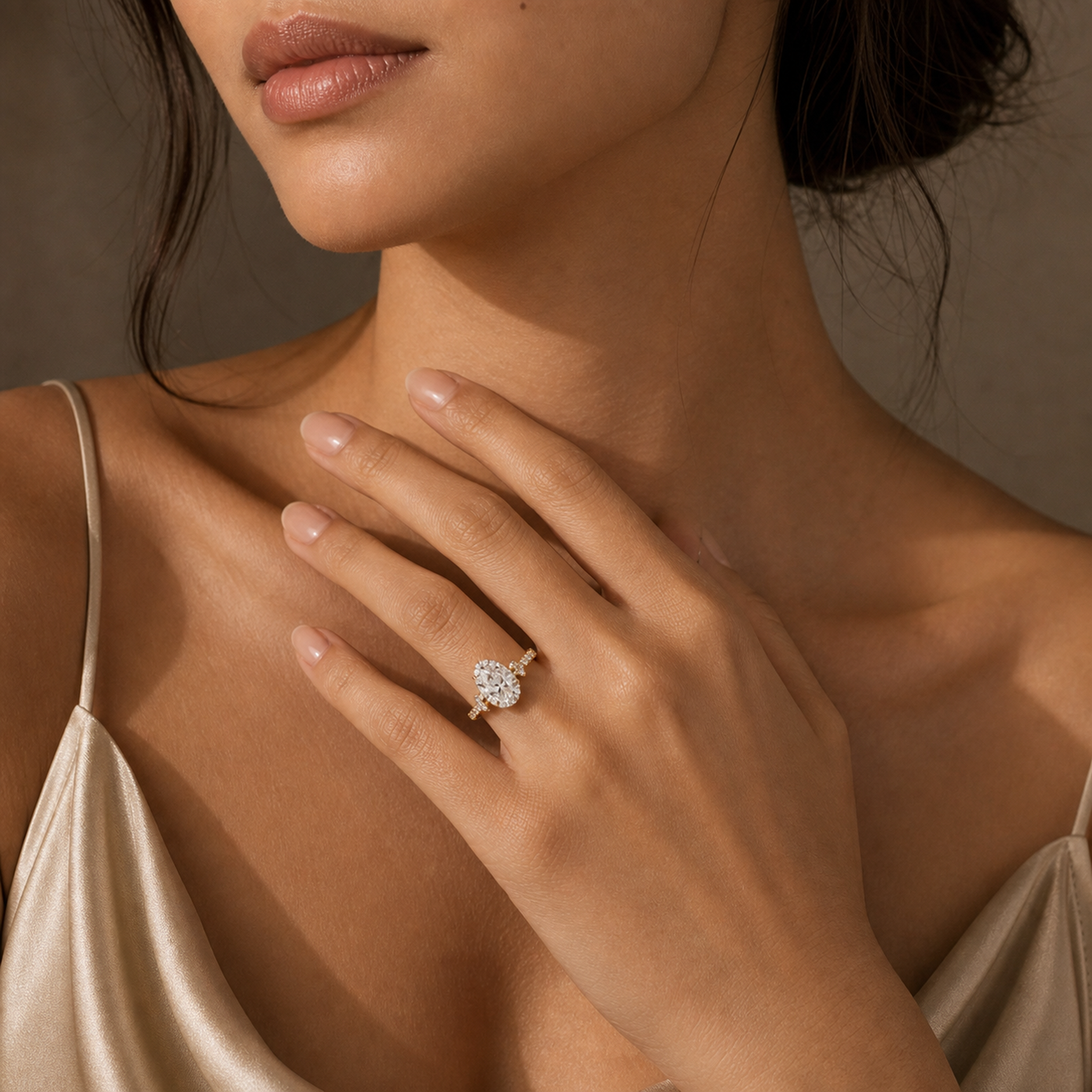
Burvonti’s oval engagement rings place that curve within Solitaire, Bezel, Halo, Hidden Halo, Side Stone, Three Stone, and more sculptural settings. The shape may remain quiet against a polished band or enter a wider composition of accents and open space. The best comparison begins with the complete ring and the individual center, not a promise that every oval will look or perform alike.
Proportion Begins with the Outline, Not a Single Number
Length-to-width ratio describes how elongated or rounded an oval appears. A lower ratio generally creates a broader outline; a higher ratio creates a narrower, more directional one. It is useful shorthand, but it cannot describe the whole silhouette. Shoulder fullness, end shape, curve continuity, and bilateral symmetry can make two diamonds with similar ratios look notably different.
Look at the outline before treating a preferred ratio as a rule. The curve should feel intentional from end to end, without distracting flat areas or an uneven transition through the shoulders. Then view the stone in the intended setting. Prongs, a bezel, a halo, or side stones can visually widen, lengthen, or interrupt the same center in different ways.
Read the Bow Tie as Part of the Light Pattern
Many elongated brilliant shapes show a darker band through the center commonly called a bow tie. It forms through the relationship among faceting, light, viewing position, and the observer. Some contrast gives a diamond dimension; a broad, dark, persistent band can divide the stone and suppress the sense of light across its center.
A laboratory report does not replace visual assessment of this pattern. Compare the oval face-up and in motion, using more than one lighting condition when possible. Ask whether the central contrast blends into the surrounding facets, whether brightness returns as the stone moves, and whether the pattern remains balanced from side to side. The goal is not a mechanically uniform surface, but a coherent one.
Carat Weight and Face-Up Presence Measure Different Things
Carat is weight, not a fixed visual size. Two oval diamonds of equal carat weight can have different length, width, depth, outline, and face-up presence. A more spread-out diamond may show greater surface dimensions, while another may carry more of its weight in depth. Neither measurement alone establishes a better center.
Compare millimeter dimensions together with carat weight, proportion, light pattern, and the scale of the setting. A narrow band can make an oval feel more prominent; a halo or substantial bezel changes its perimeter; side stones extend the composition across the finger. Burvonti calibrates these relationships as a ring, so the center should be judged within the architecture that will hold it.
Let the Setting Respond to the Curve
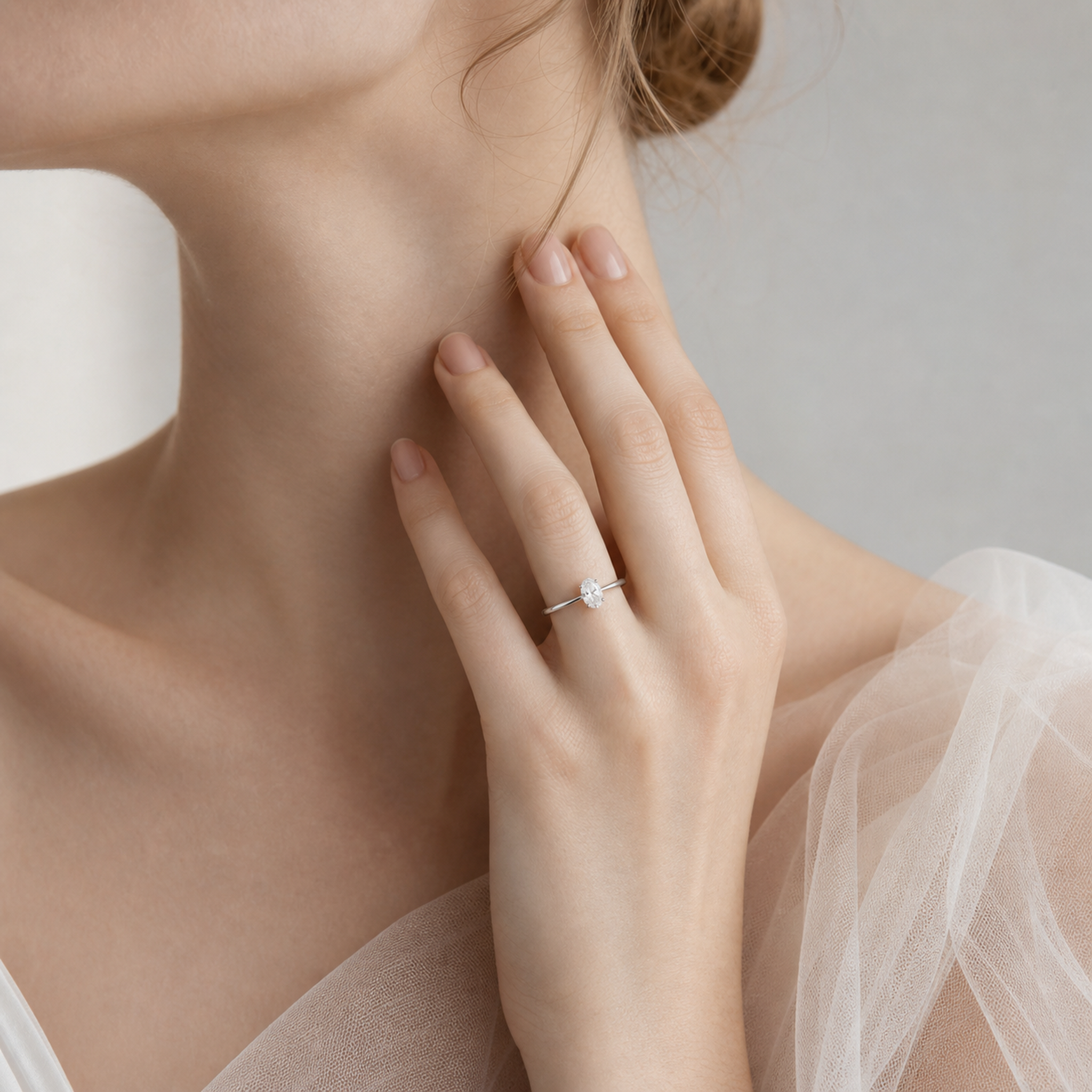
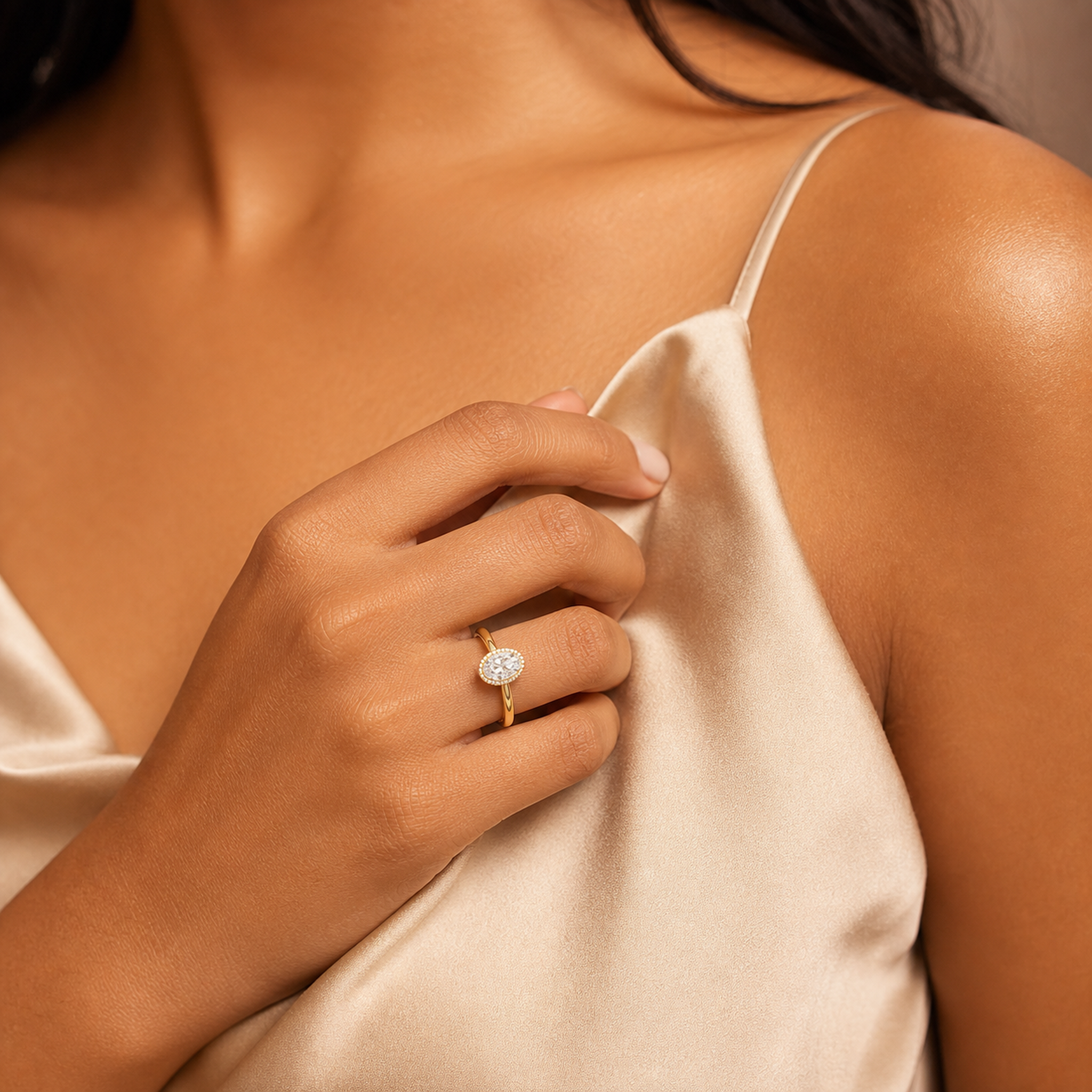
A Solitaire leaves the oval’s outline and contrast pattern most exposed. A bezel traces the perimeter in metal, giving the curve a more graphic edge and changing how much of the girdle remains visible. A Halo builds another boundary around the center, while a Hidden Halo adds light in profile without redrawing the face-up outline in the same way.
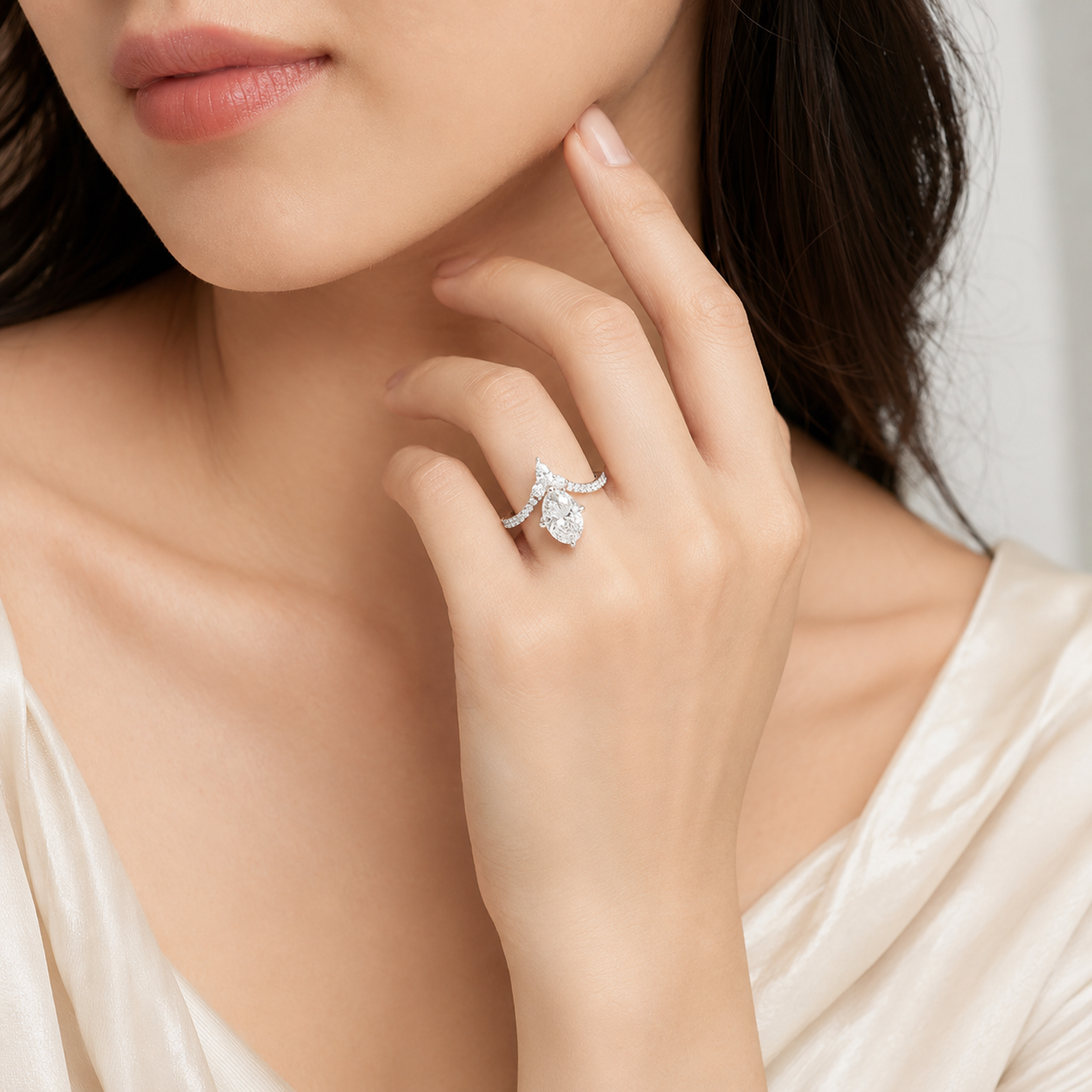
Side Stone and Three Stone settings create a more extended composition. Pear or Marquise accents can continue the oval’s directional movement; other Ovals can repeat its rhythm; a Kite or more angular side detail can introduce deliberate tension. Security depends on the exact prong or bezel geometry, center dimensions, setting condition, and how the ring will be worn—not on the style name alone.
Orientation, Metal, and Band Line Change the Reading
Most oval centers run north–south, emphasizing their long axis. An East–West orientation turns the same geometry across the finger and makes width, bezel line, and band integration more prominent. It is not simply a trend treatment; it changes the balance of the entire ring and should be evaluated against the center’s exact dimensions.
White Gold can create a cooler visual continuity around diamond and prong, while Yellow or Rose Gold establishes warmer contrast around the center. Band width, taper, pavé, split shoulders, bypass movement, and open space further control how strongly the oval reads. These are design relationships rather than universal prescriptions for a particular hand, metal, or style.
Consider the Profile and the Wedding Band Together
The face-up view establishes the oval; the profile reveals how high it sits, how the basket is supported, and where a neighboring band may meet the setting. A cathedral shoulder, low bezel, hidden halo, open basket, or projecting side stone can each create a different contact line. Height alone does not guarantee or prevent a flush pairing.
Compare the engagement ring and wedding band as two built forms. A straight band may align cleanly, meet the basket, or leave a deliberate gap. A contour, chevron, open band, or coordinated profile may respond more closely when desired. The right solution depends on the specific ring and the visual spacing you want, not a fixed rule for oval centers.
Independently Graded, Individually Resolved
Oval diamonds are fancy shapes and do not receive an overall GIA cut grade; polish and symmetry remain important report information, while outline and light pattern require direct visual judgment. Burvonti pairs independently graded, responsibly sourced lab-grown diamonds with settings calibrated to the individual center, keeping documentation, dimensions, proportion, and appearance in the same conversation.
Custom possibilities may refine center proportion, orientation, setting, metal, band line, accent arrangement, or engraving when structurally feasible. For daily care, use gentle methods appropriate to the diamond, metal, and construction; avoid abrasive products and harsh chemicals, and arrange inspection if a prong catches, a stone moves, or the ring receives a significant impact. Availability, resize range, setting security, and band compatibility remain product-specific.
Frequently Asked Questions
What is an oval diamond engagement ring?
It is an engagement ring centered on a diamond with a symmetrical elongated curved outline, usually fashioned with brilliant-style faceting. Its appearance depends on the individual outline, facet pattern, contrast, dimensions, and the setting around it.
How is an oval diamond different from a Round diamond?
Both commonly use brilliant-style faceting, but an Oval has an elongated outline and a more varied face-up pattern. Round brilliants have standardized parameters for an overall GIA cut grade; Ovals are fancy shapes and require more individual visual assessment.
Do all oval diamonds have the same number or arrangement of facets?
No. Oval diamonds can use different brilliant-style facet arrangements, and those differences affect the size, distribution, and movement of bright and dark areas. Avoid treating one fixed facet count as a universal definition of the shape.
What does length-to-width ratio mean for an oval diamond?
It is the diamond’s length divided by its width. A lower ratio generally reads broader and rounder; a higher ratio reads narrower and more elongated. The ratio should be considered with shoulder shape, curve continuity, symmetry, and the intended setting.
Is there one ideal length-to-width ratio for an oval engagement ring?
No. Common preference ranges can be useful for comparison, but they are not universal beauty grades. Choose the outline that feels balanced to you, then assess its light pattern and how the setting changes its apparent proportion.
What is the bow-tie effect in an oval diamond?
It is a bow-shaped area of contrast that can appear across the center of an elongated brilliant diamond. Its strength changes with faceting, lighting, viewing position, and movement, so it is best assessed through clear images, video, or direct viewing.
Is any bow tie in an oval diamond a problem?
Not necessarily. Contrast helps create pattern and dimension. The concern is a broad, dark, persistent area that visually divides the center or remains distracting in motion. A subtle, balanced bow tie can be part of the stone’s character.
Does GIA give oval diamonds an overall cut grade?
No. GIA currently gives an overall cut grade only to standard Round Brilliant diamonds. An Oval report can still provide polish, symmetry, dimensions, color, clarity, carat weight, and other identifying information.
How should I assess oval cut quality without an overall cut grade?
Review the grading report, outline symmetry, smoothness of the curves, polish, face-up light and dark pattern, bow-tie visibility, millimeter dimensions, and video or direct observation in motion. No single ratio or table measurement replaces the complete view.
Does an oval diamond always look larger than a Round diamond of the same carat weight?
No universal comparison applies. Carat measures weight, while face-up presence depends on length, width, depth, outline, and setting. Compare actual millimeter dimensions and the complete ring rather than assuming a fixed visual-size advantage.
Which oval engagement ring styles are available at Burvonti?
The current public collection includes Solitaire, Bezel, Halo, Hidden Halo, Side Stone, Three Stone, cathedral, bypass, double-shank, and East–West designs in 14K White, Yellow, and Rose Gold. Exact availability and configuration should be confirmed on the selected product.
Should I choose a solitaire, halo, or three-stone oval ring?
A Solitaire exposes the center outline most clearly. A Halo adds a visible perimeter and more surrounding light; a Three Stone design extends the composition sideways. Compare the complete architecture, profile, maintenance points, and wedding-band relationship rather than style labels alone.
Is a bezel better than prongs for an oval diamond?
Neither is universally better. A bezel gives the perimeter a continuous metal frame; prongs leave more of the outline visible. Security depends on the exact design, dimensions, workmanship, condition, and wear, so confirm the selected setting rather than relying on category alone.
Can an oval diamond be set East–West?
Yes, when the selected design and dimensions allow it. Turning the long axis across the finger changes the ring’s width, balance, bezel or prong placement, and relationship to the band, so it should be resolved as a complete setting rather than treated as a simple rotation.
Which side stones work with an oval center?
Pear and Marquise accents can continue its directional line; smaller Ovals can repeat its curve; angular accents can create contrast. The best choice depends on scale, spacing, prong placement, height, and how clearly the center should remain dominant.
Which metal works best for an oval engagement ring?
There is no universal best metal. White Gold can create cooler continuity around the diamond; Yellow and Rose Gold create warmer contrast. Compare the visual effect with alloy, finish, care, sensitivity considerations, and the exact product specification.
Will an oval engagement ring sit flush with a wedding band?
Not always. Basket width, setting height, halo, bezel, side stones, and shoulder geometry determine the contact line. Some designs accept a straight band; others may suit a contour, chevron, open band, or an intentional gap.
Can a Burvonti oval engagement ring be resized or customized?
Resize and custom possibilities depend on the specific setting. Center proportion, orientation, metal, accent layout, band line, or engraving may be adjustable when structurally feasible, but sizing range, documentation, setting security, and wedding-band fit must be confirmed for the selected configuration.