
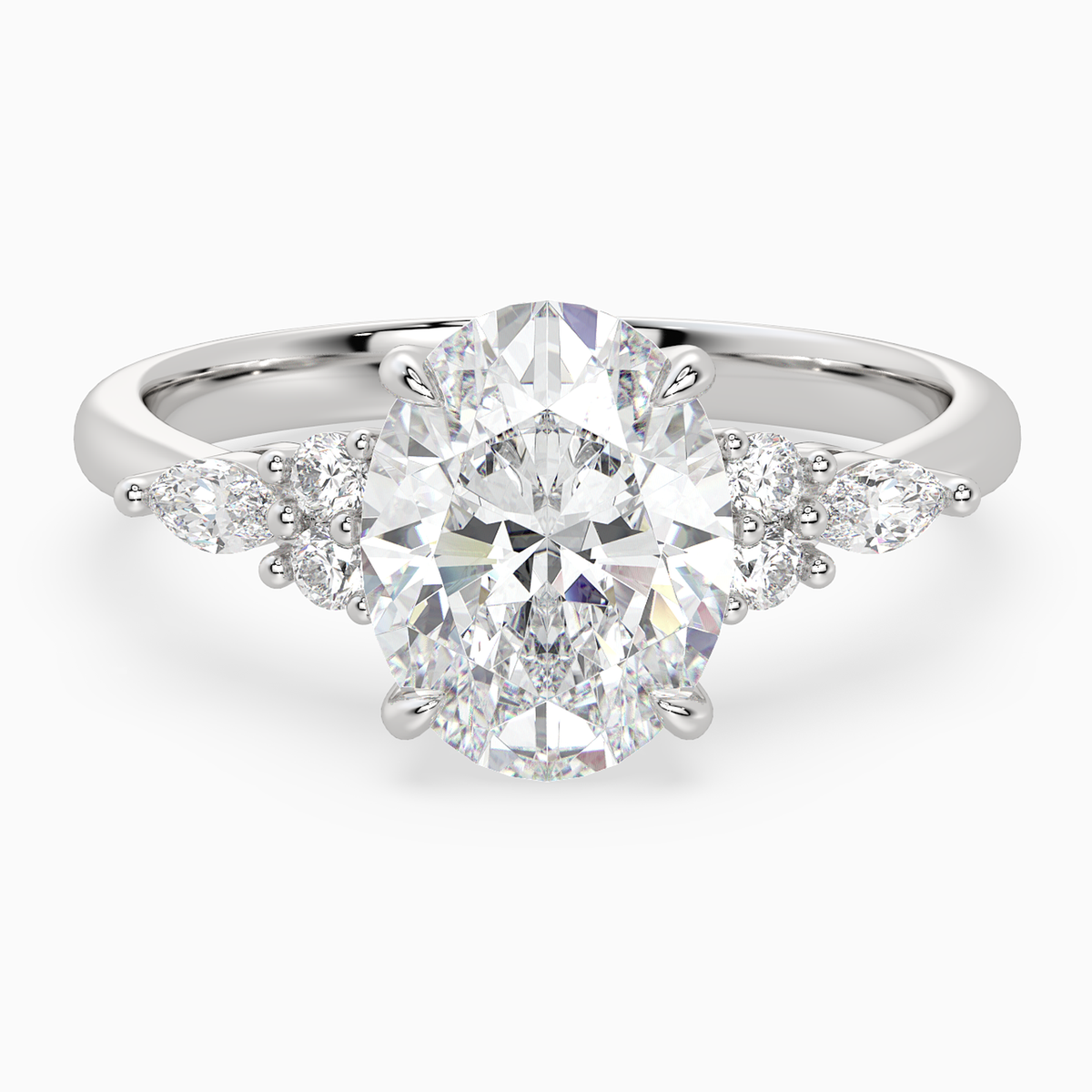


Pear Diamond Engagement Rings
One point, one continuous curve. Pear centers balance brilliant light and directional asymmetry in settings calibrated to each outline.


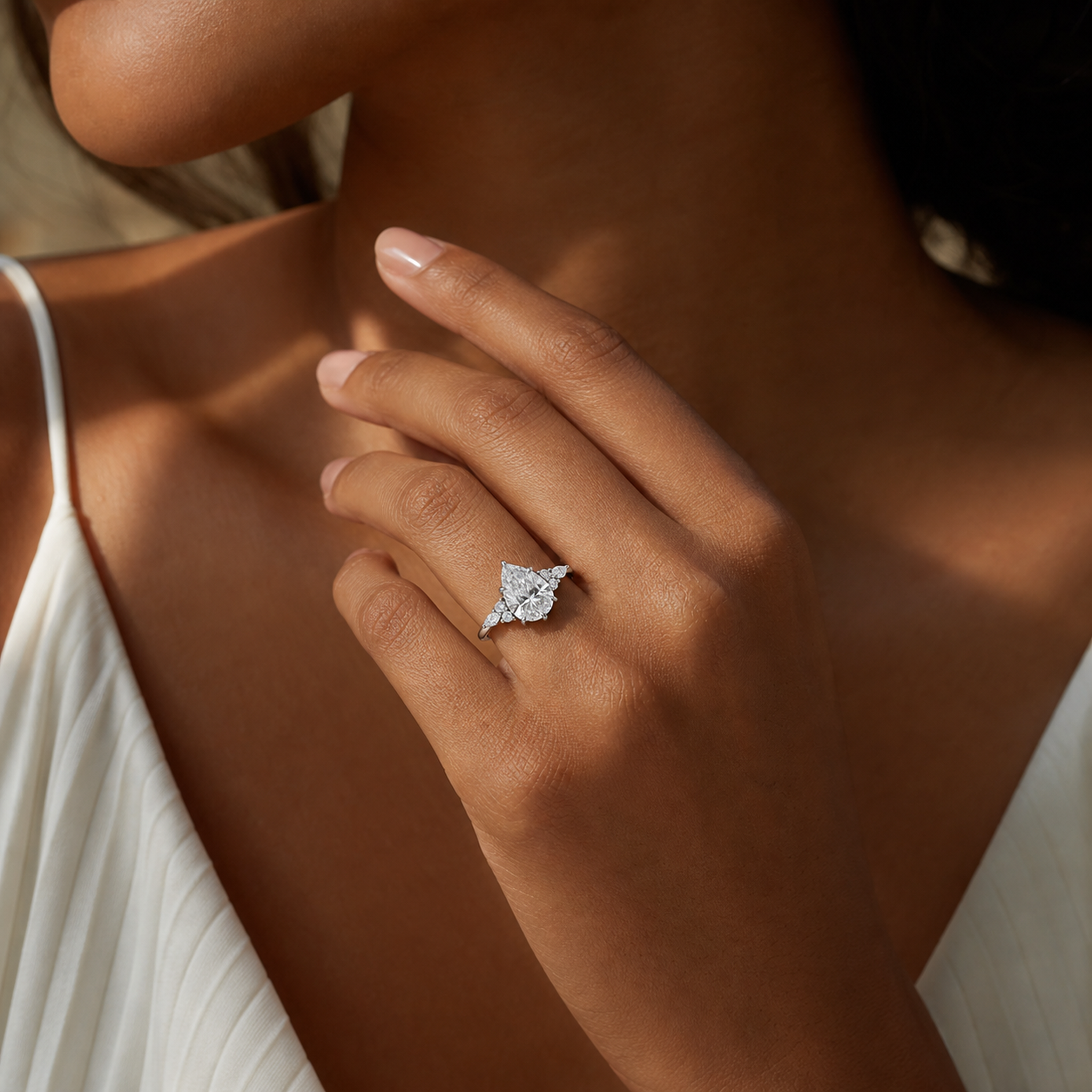


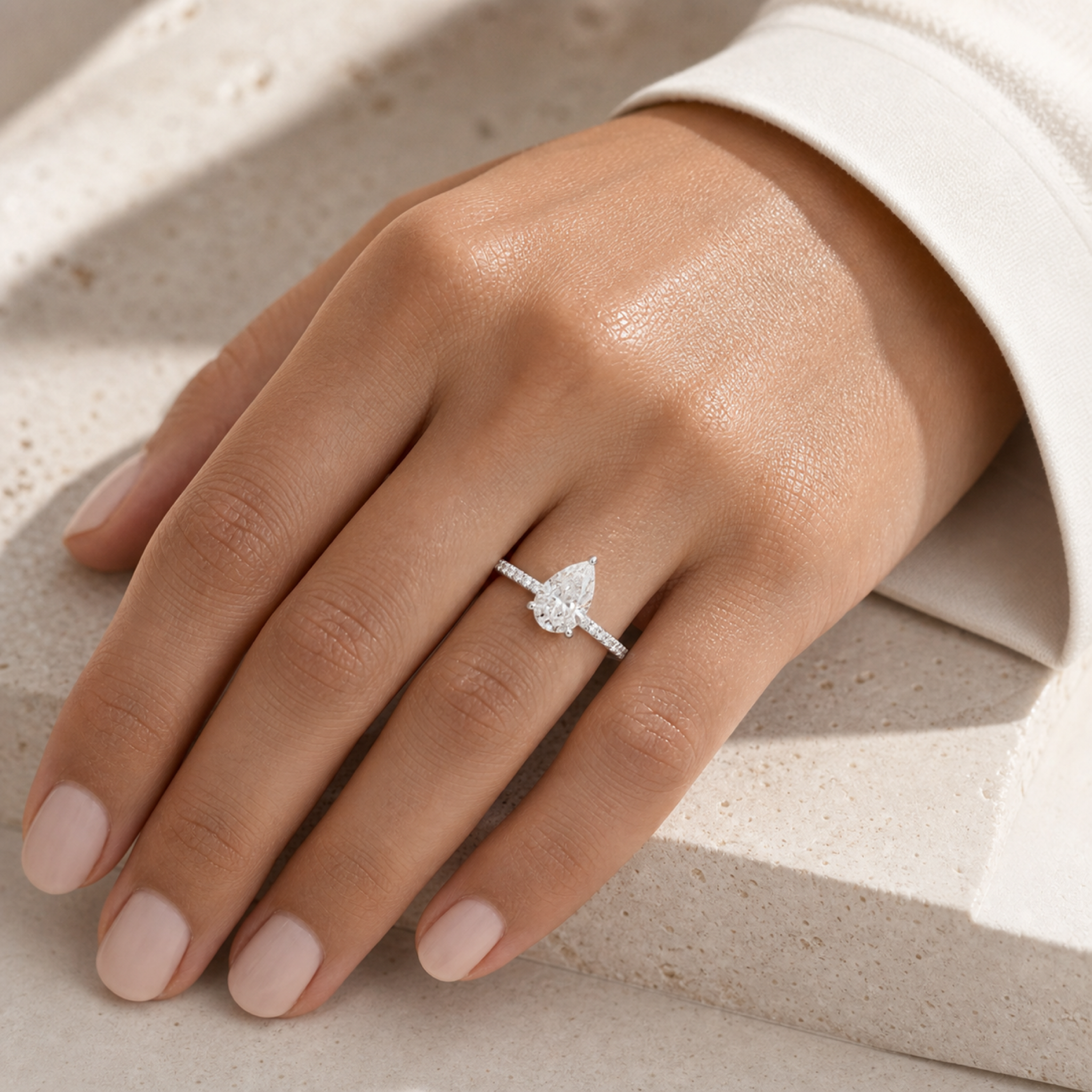


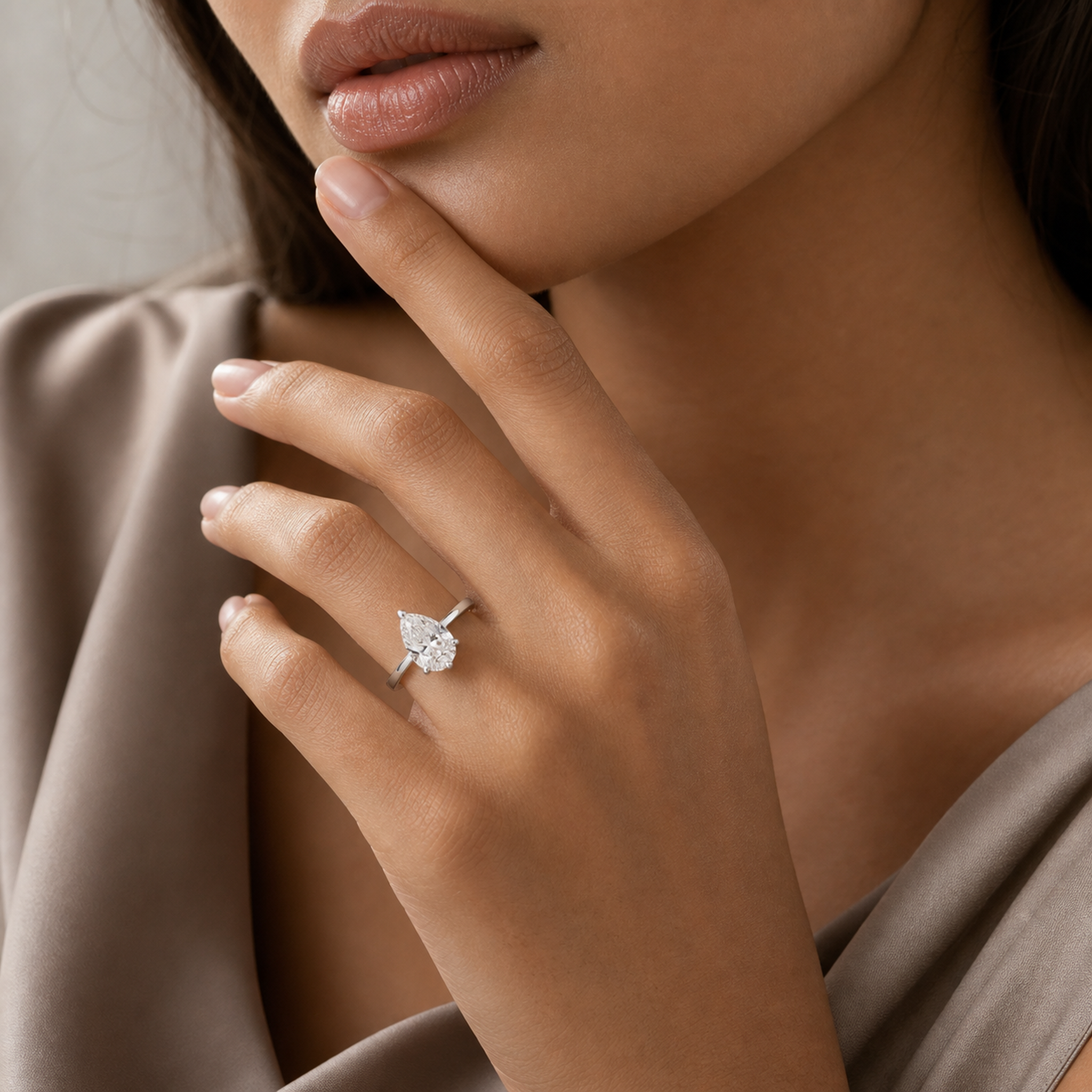






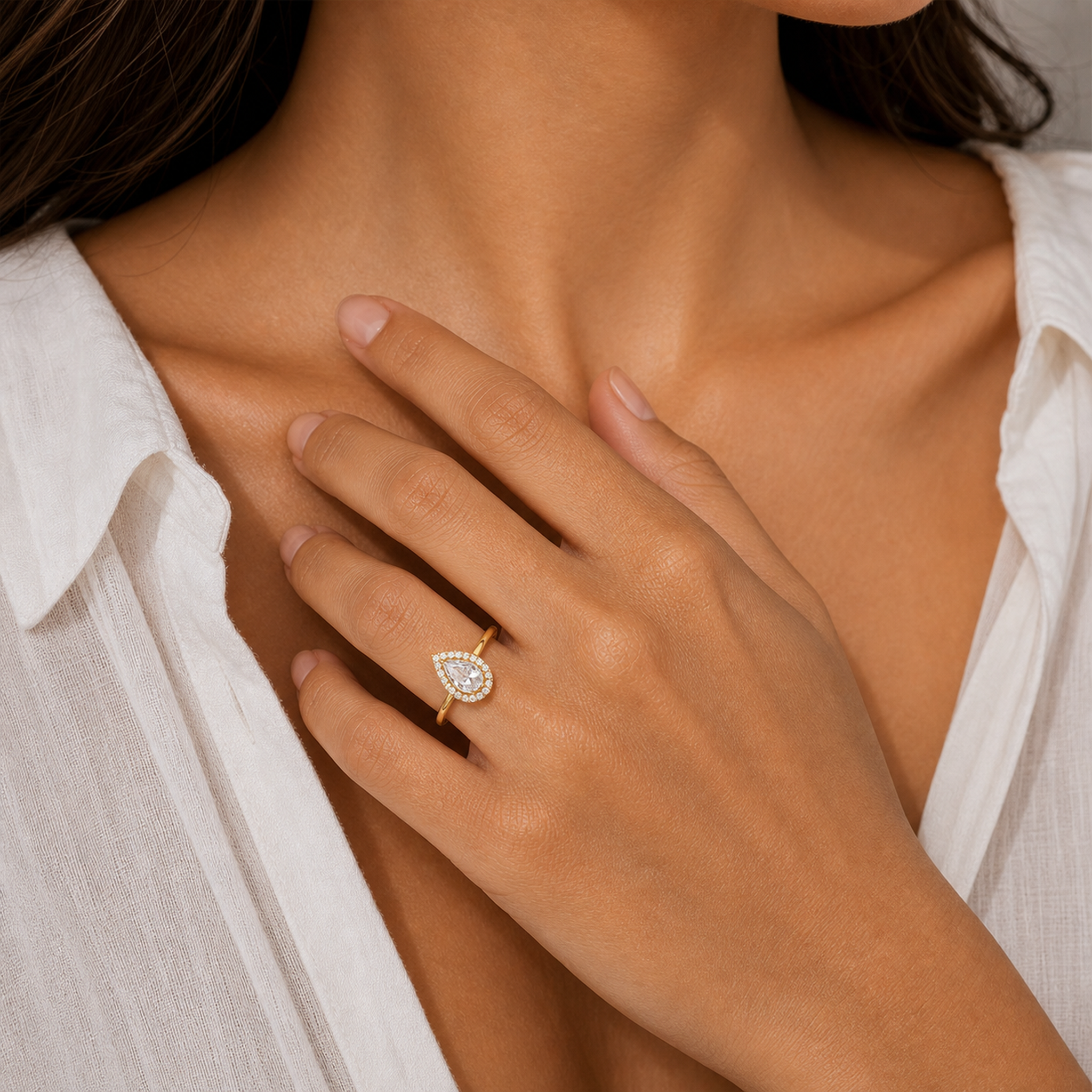


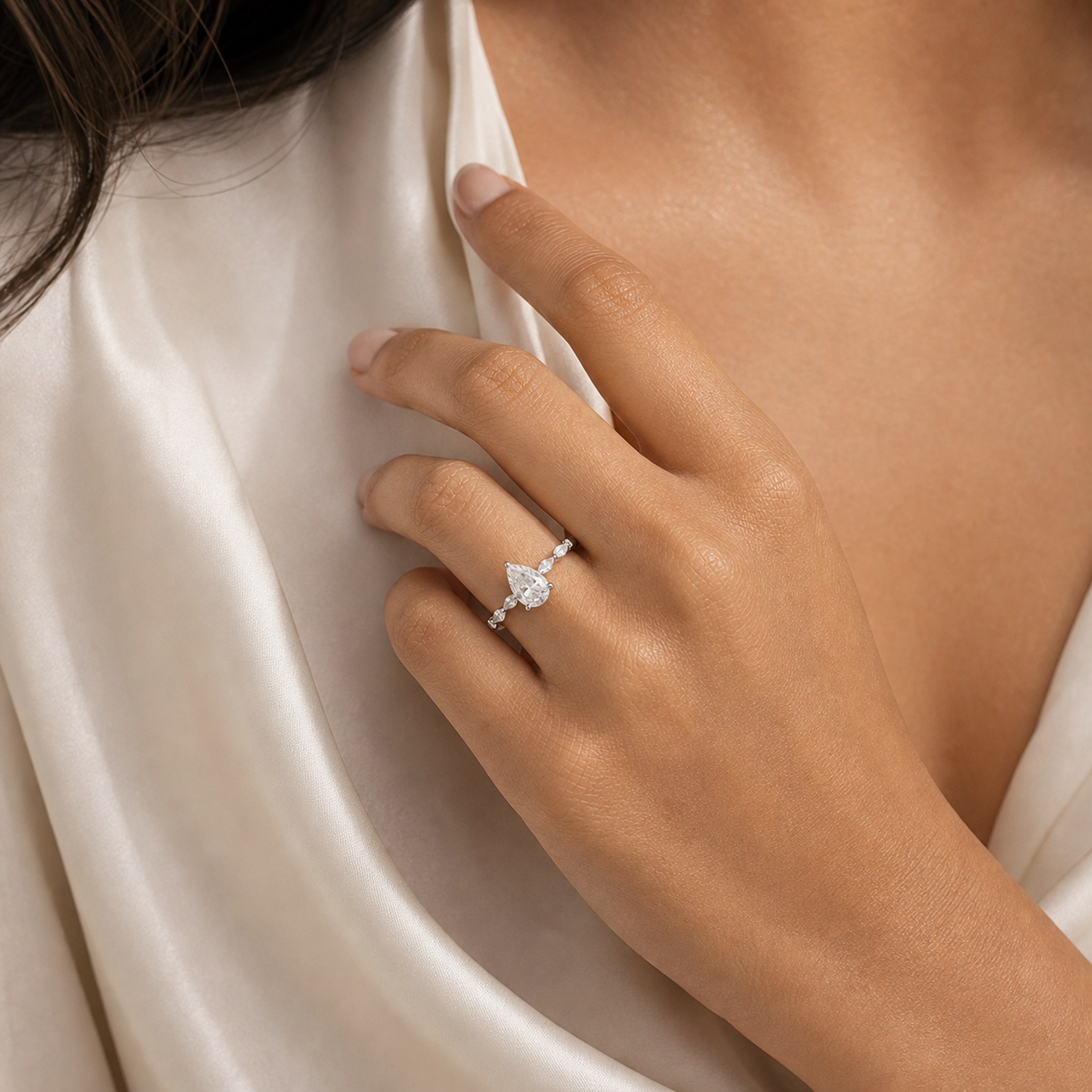


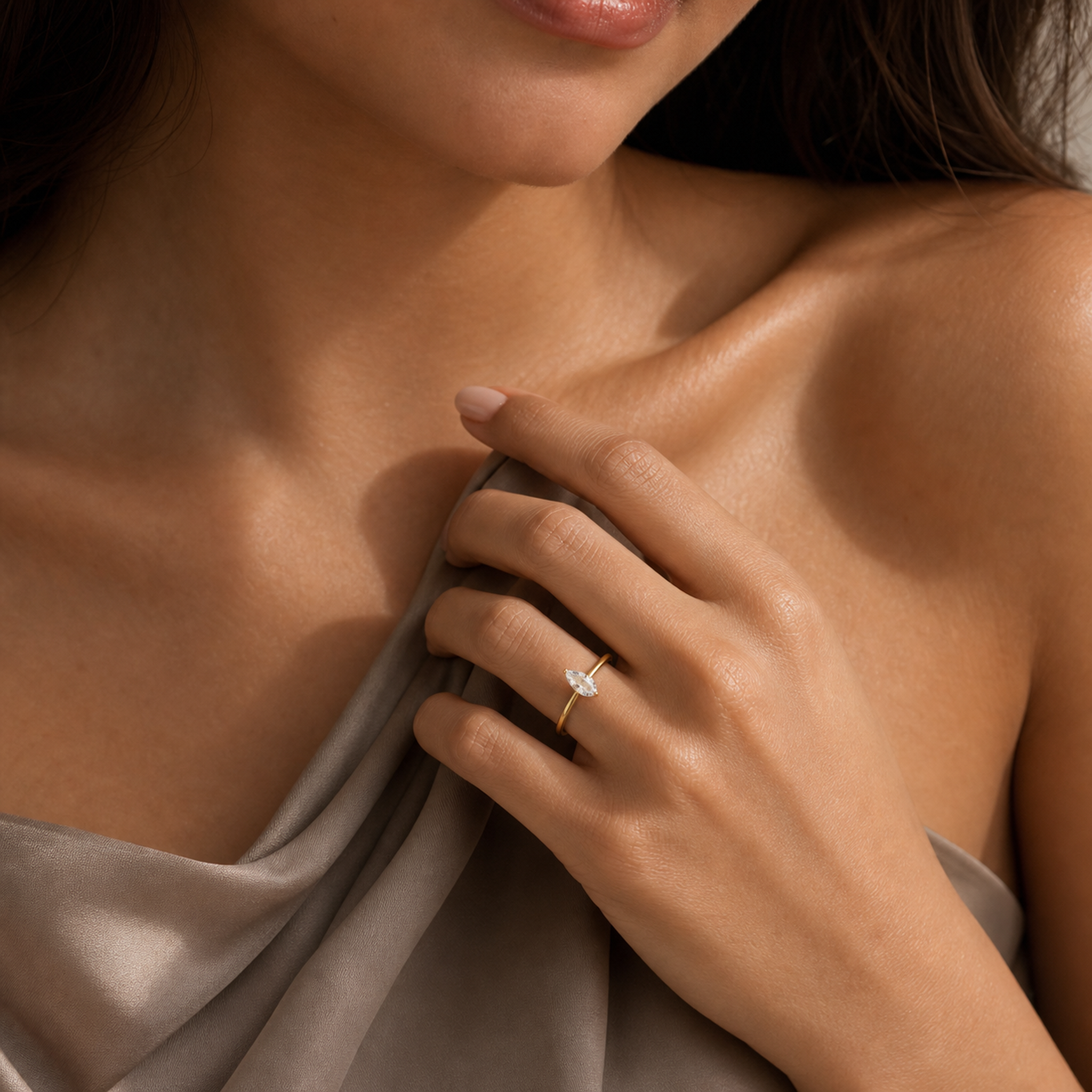


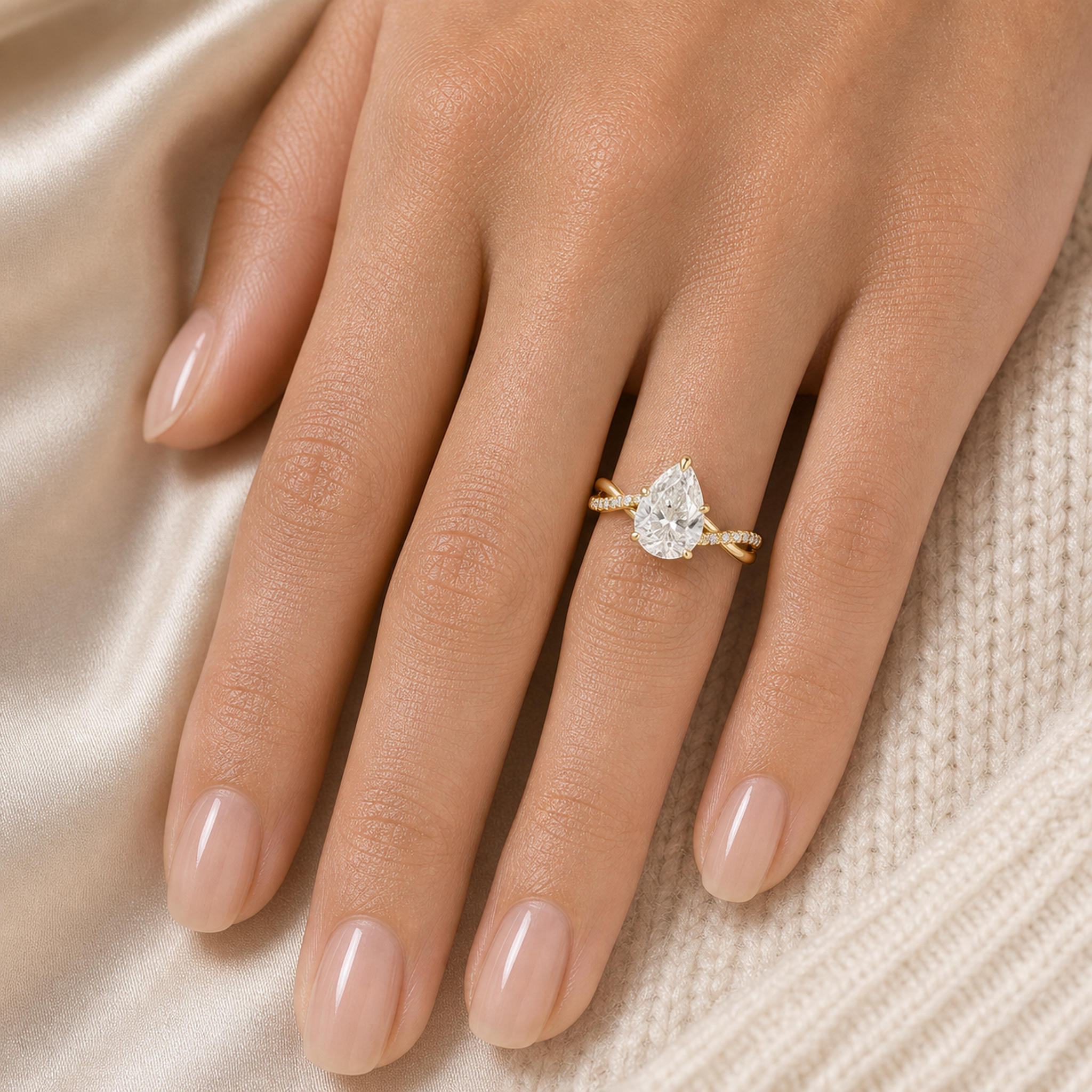


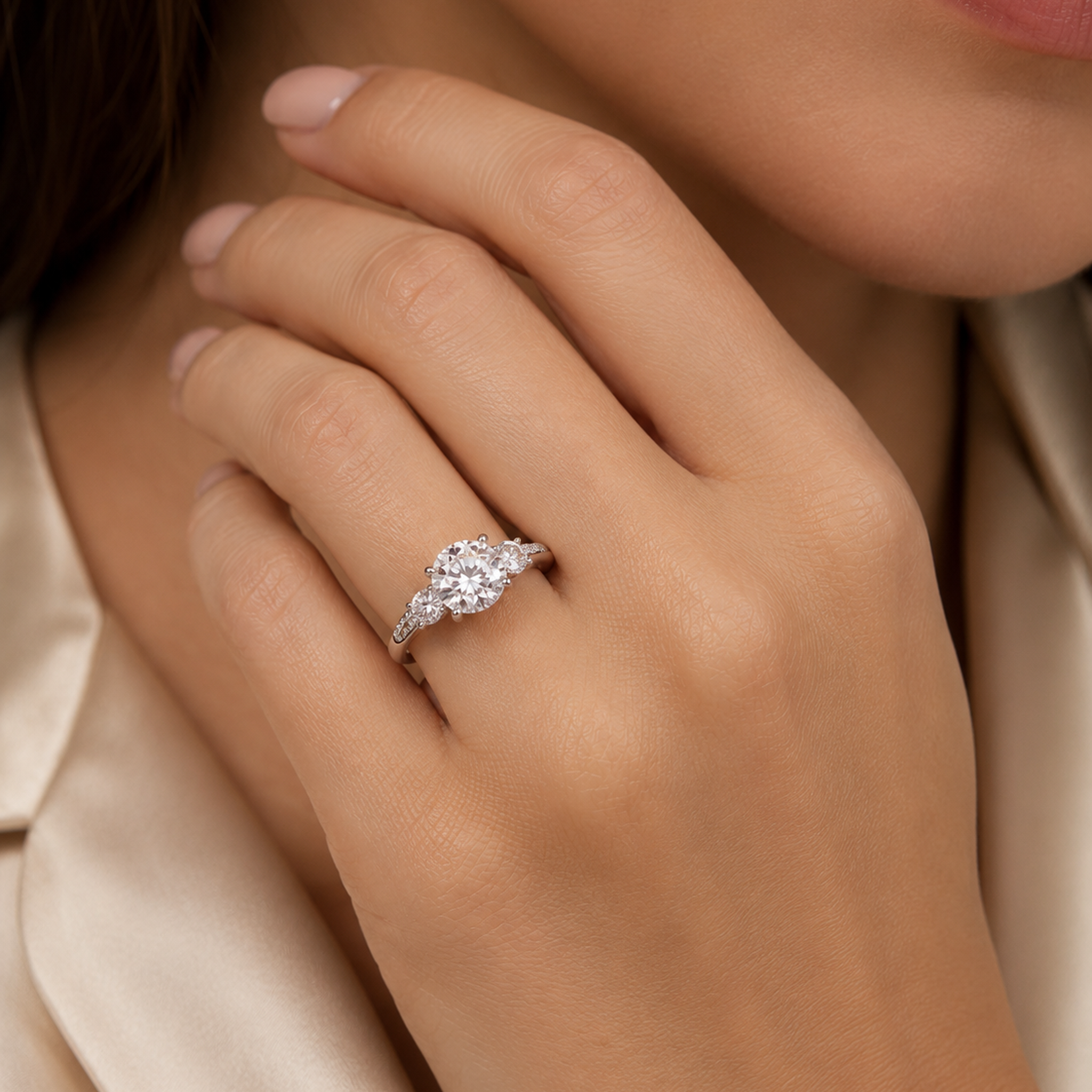


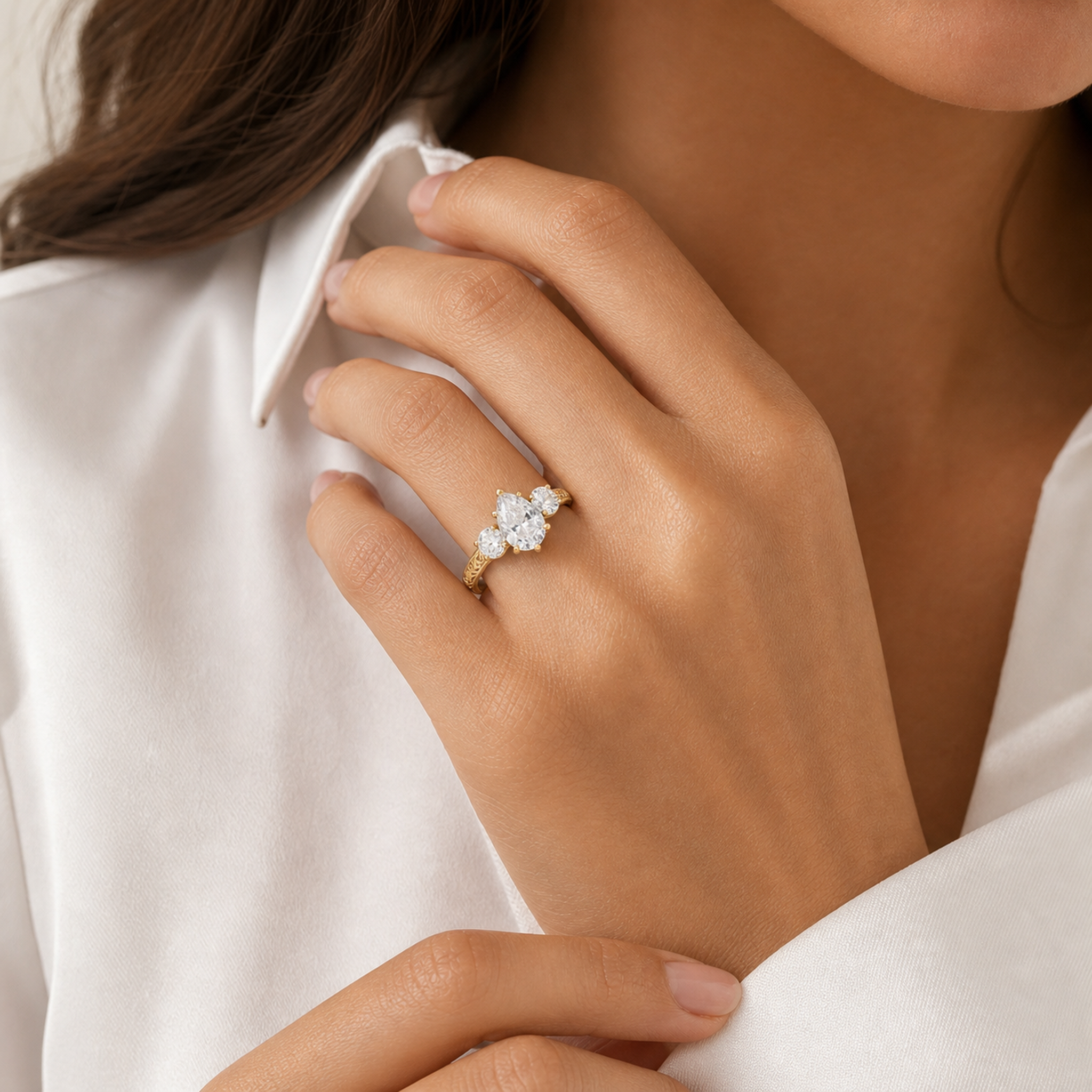


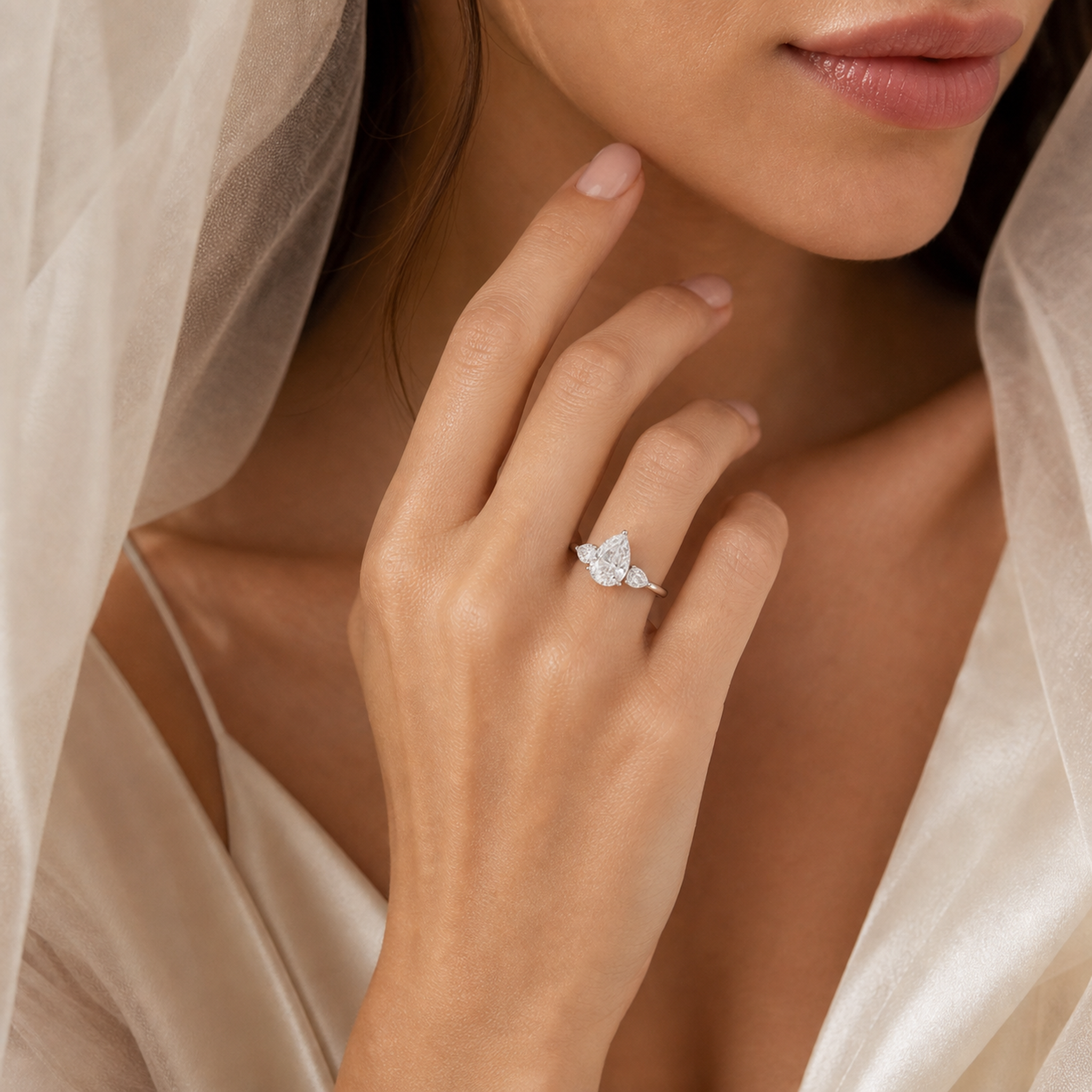


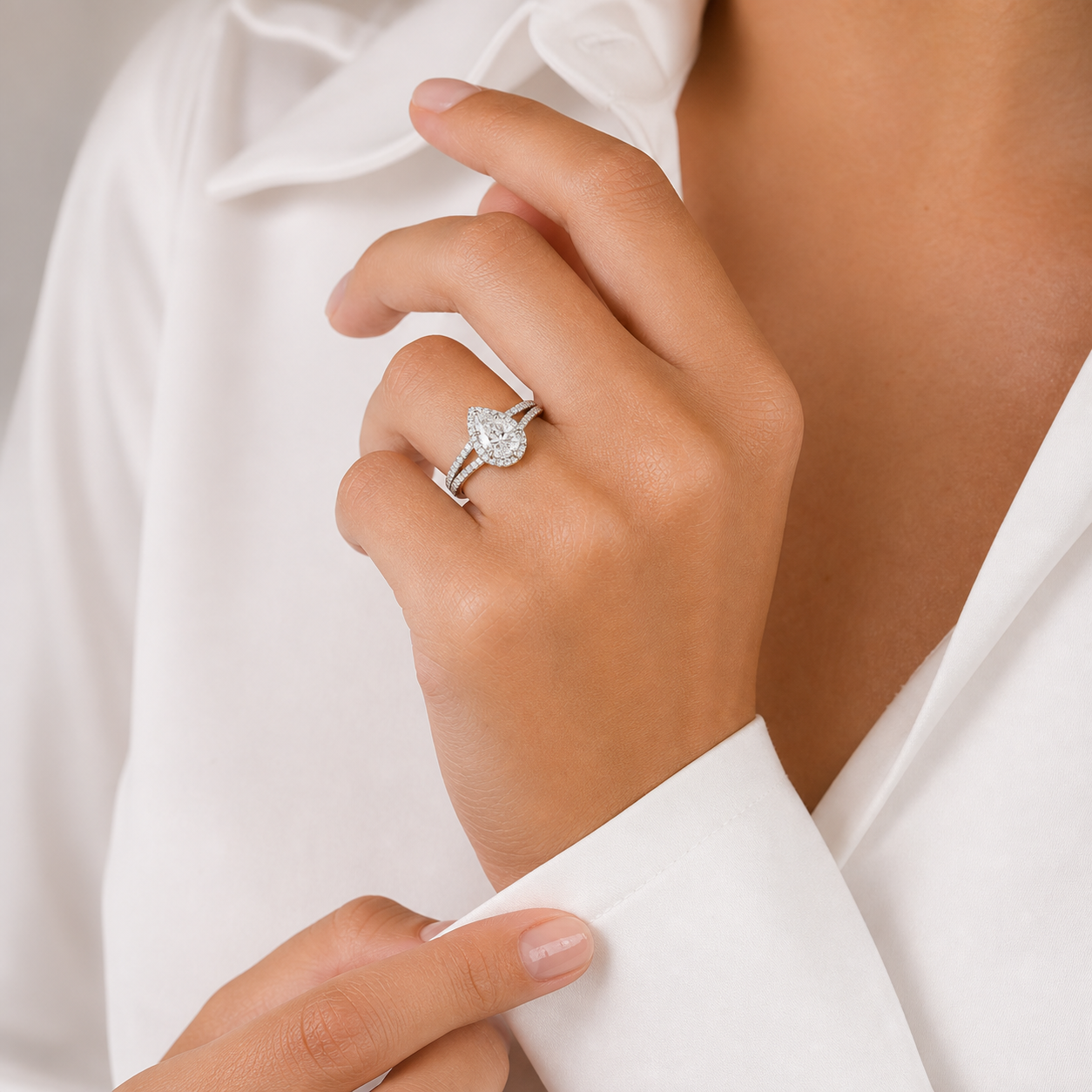









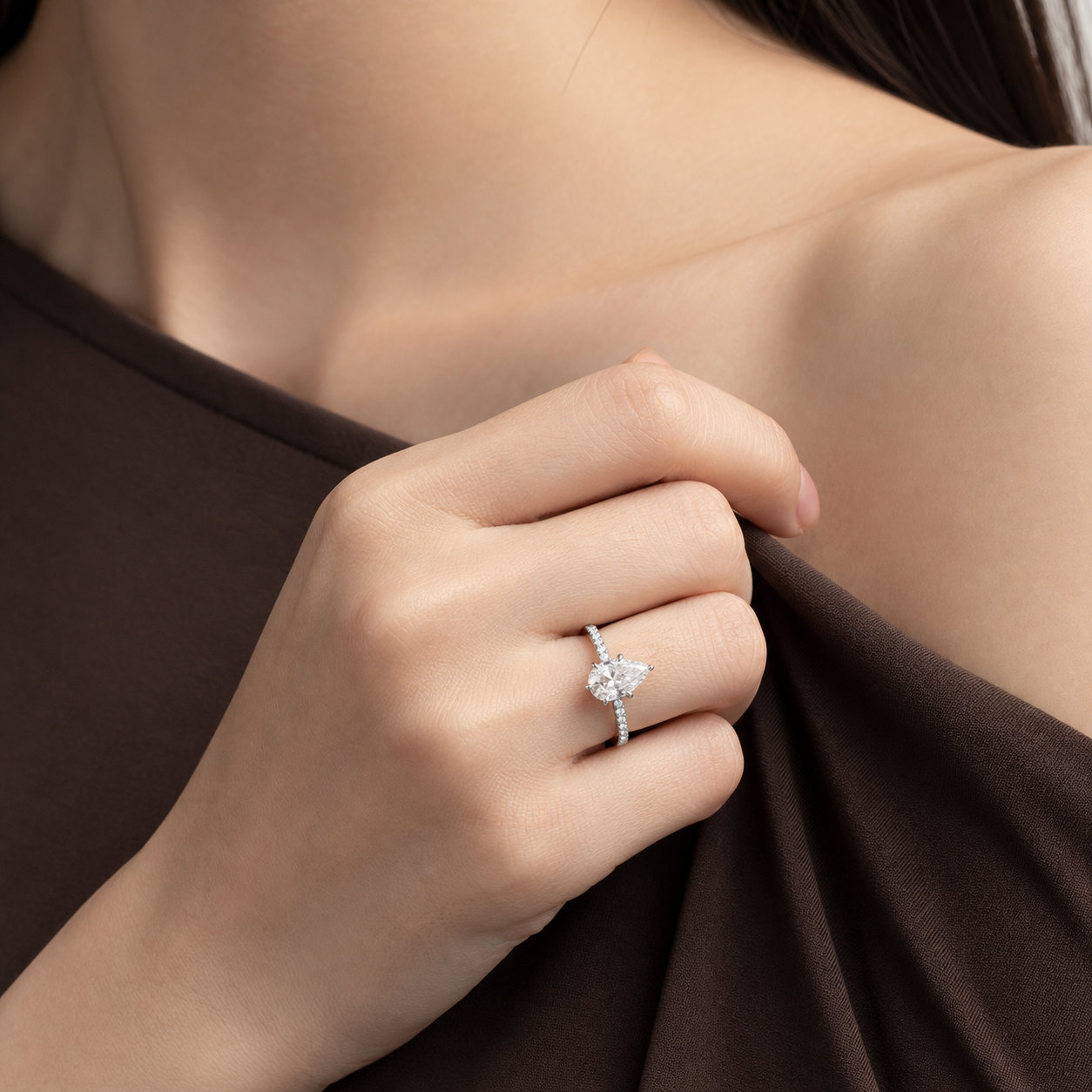





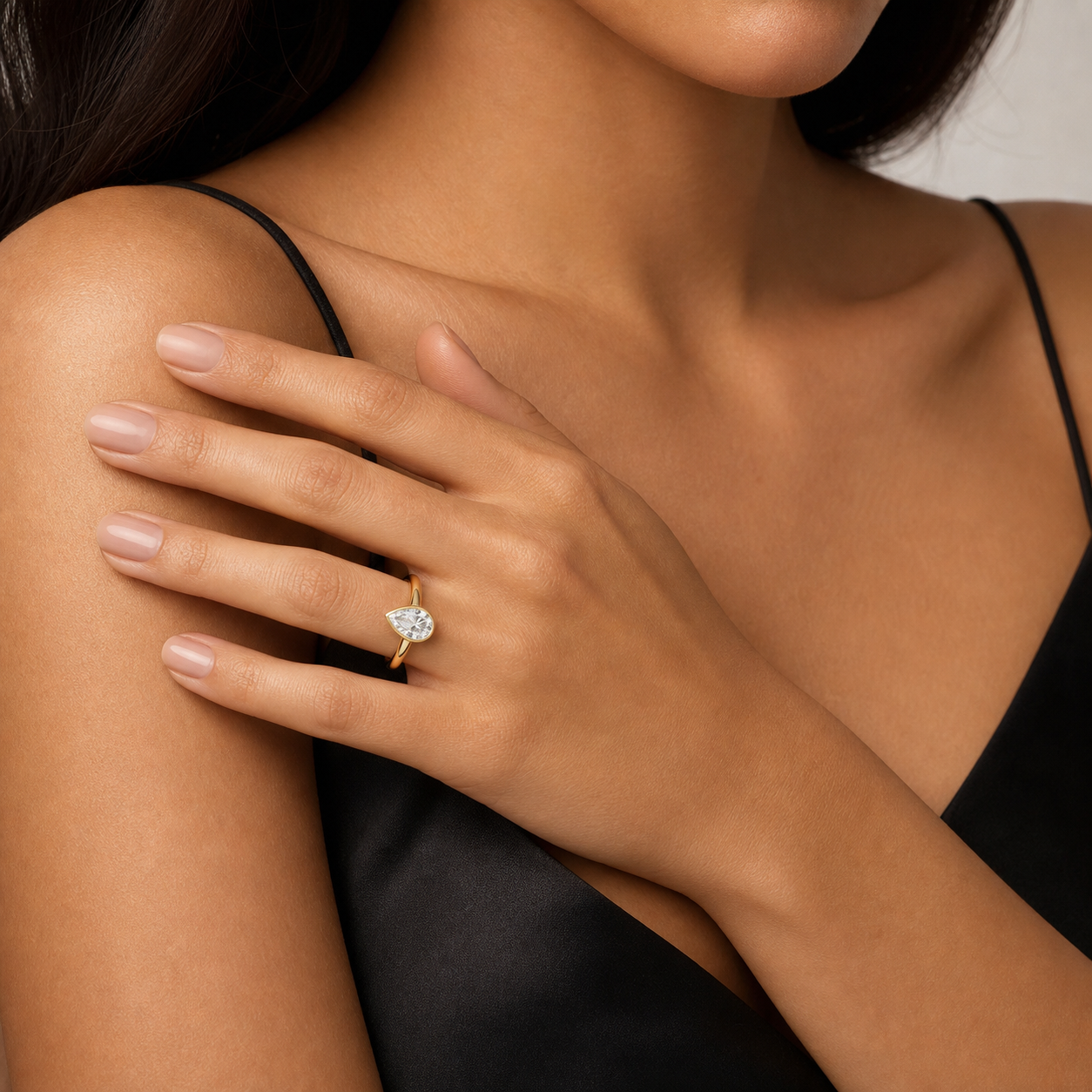


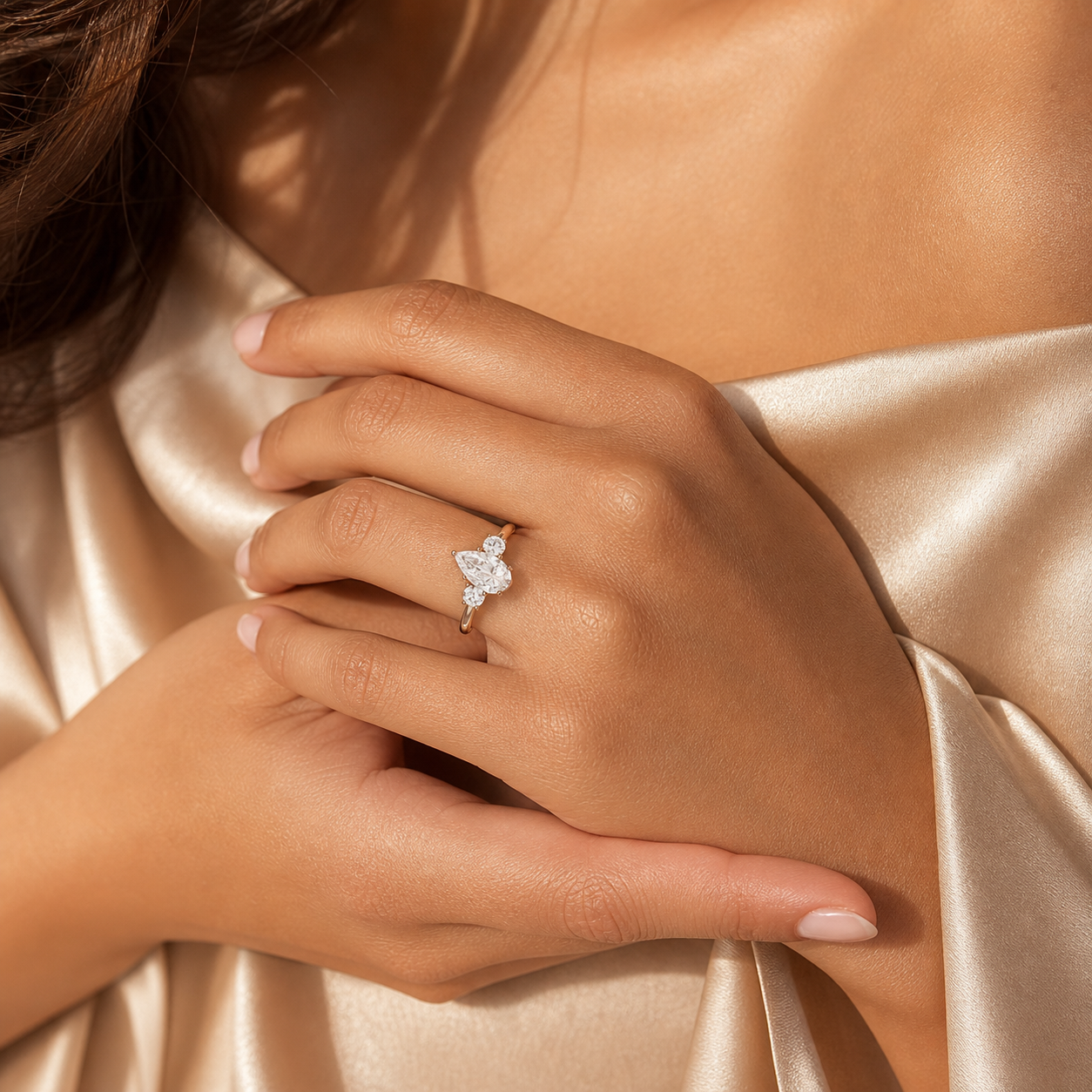


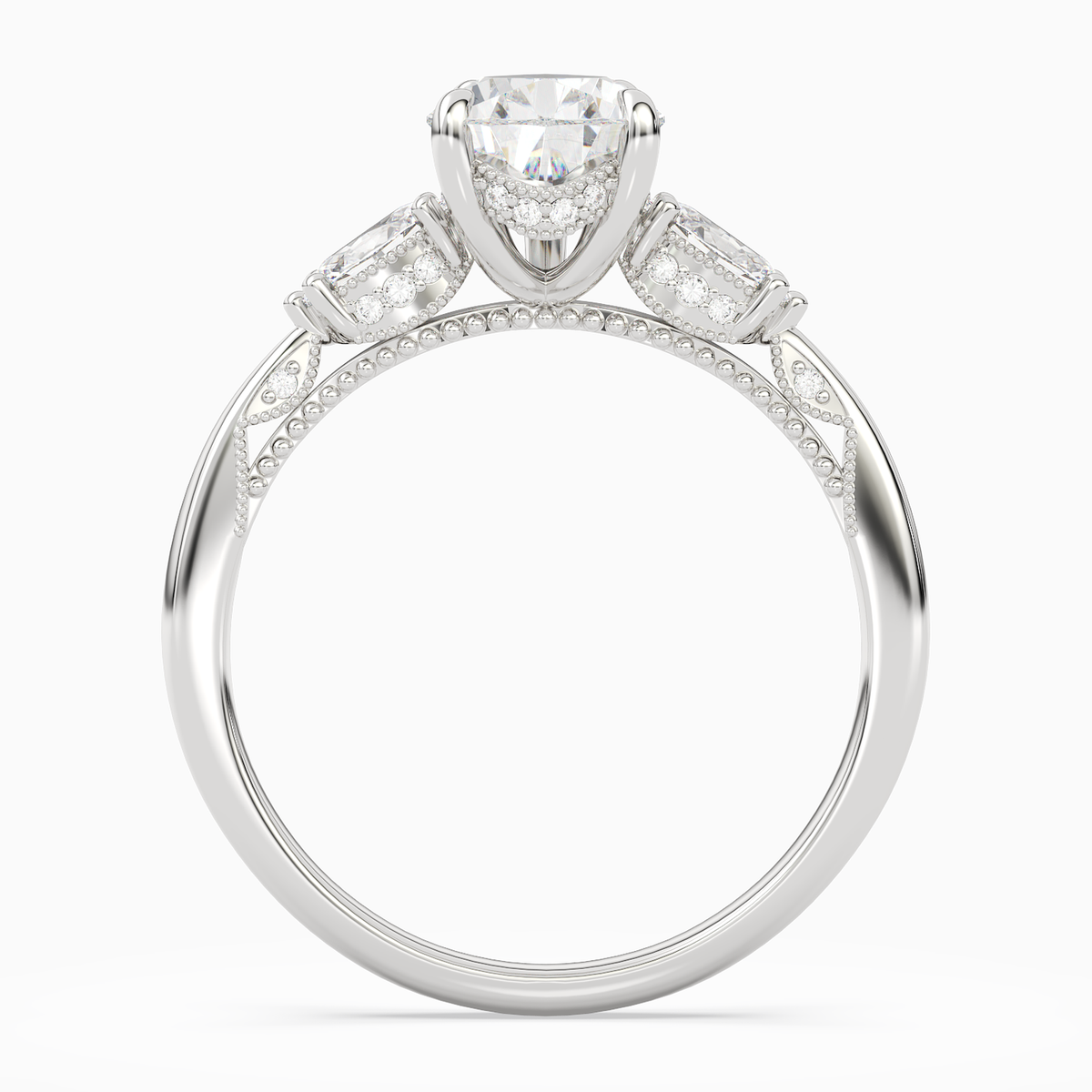

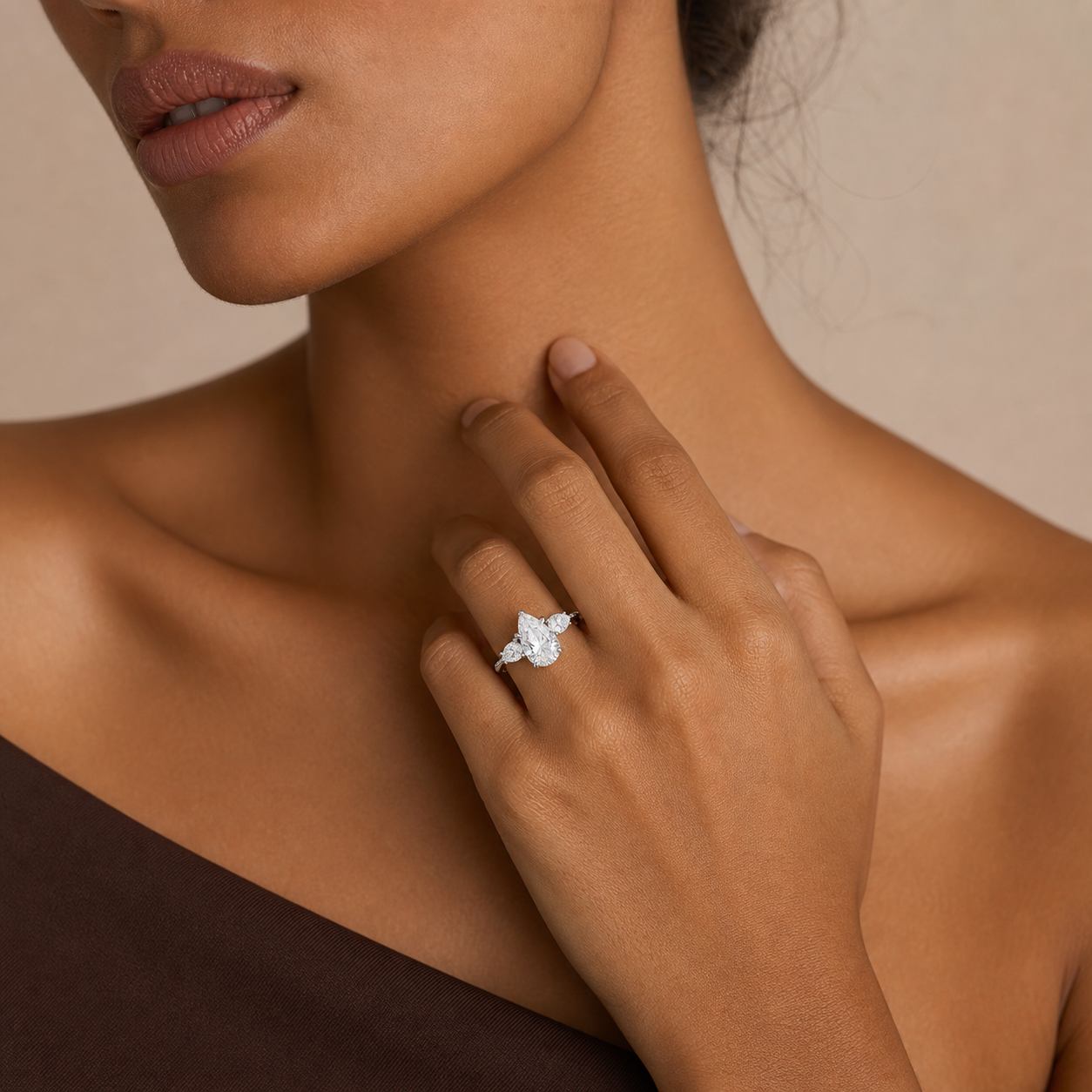
Pear Diamond Engagement Rings: A Curve Given Direction
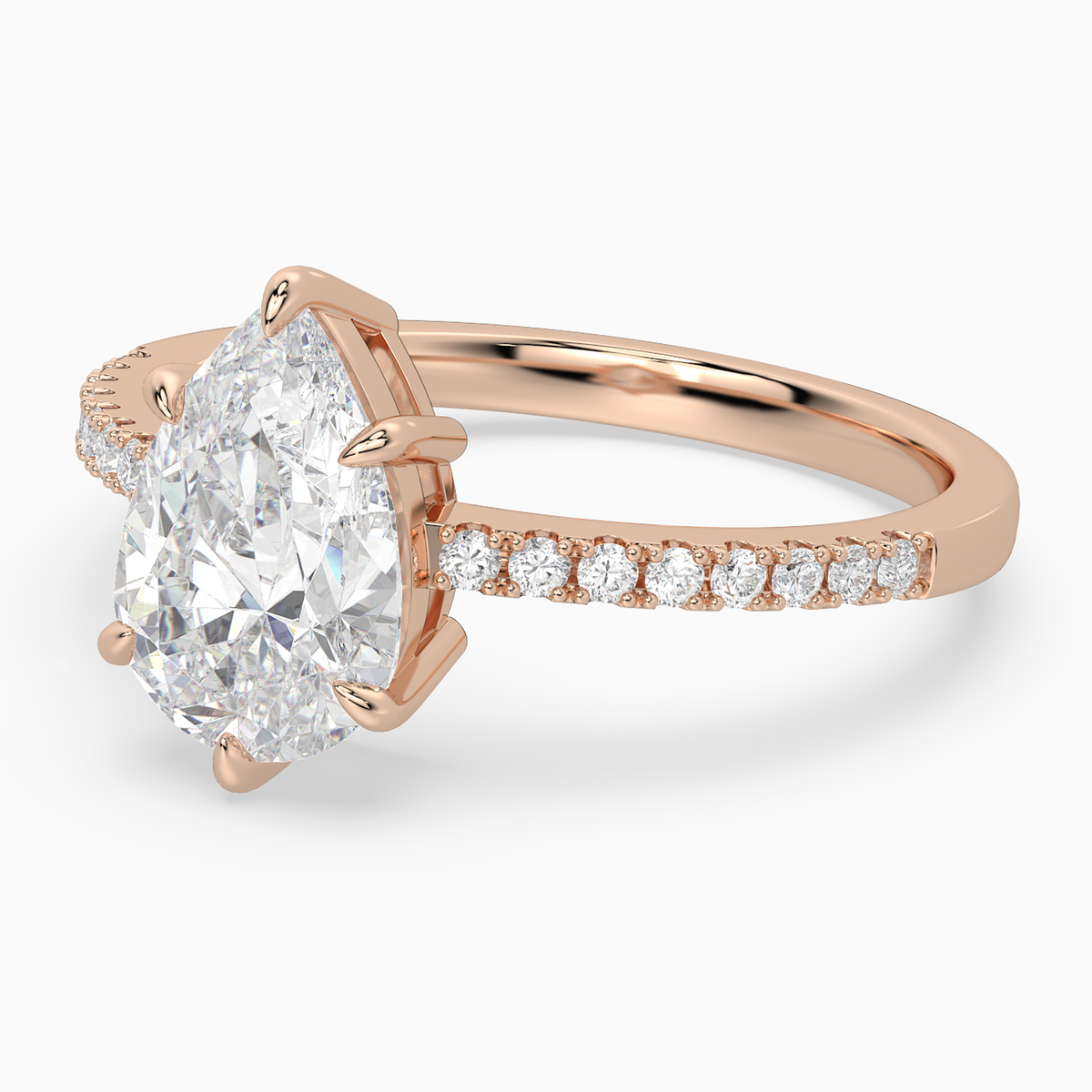
A pear diamond moves from a rounded head through two wings to a single point. That change of direction gives the outline its character: soft at one end, precise at the other, and deliberately asymmetrical along its length. The result is not simply a teardrop motif. It is a brilliant-style center whose curve, point, and internal pattern must read as one continuous composition.
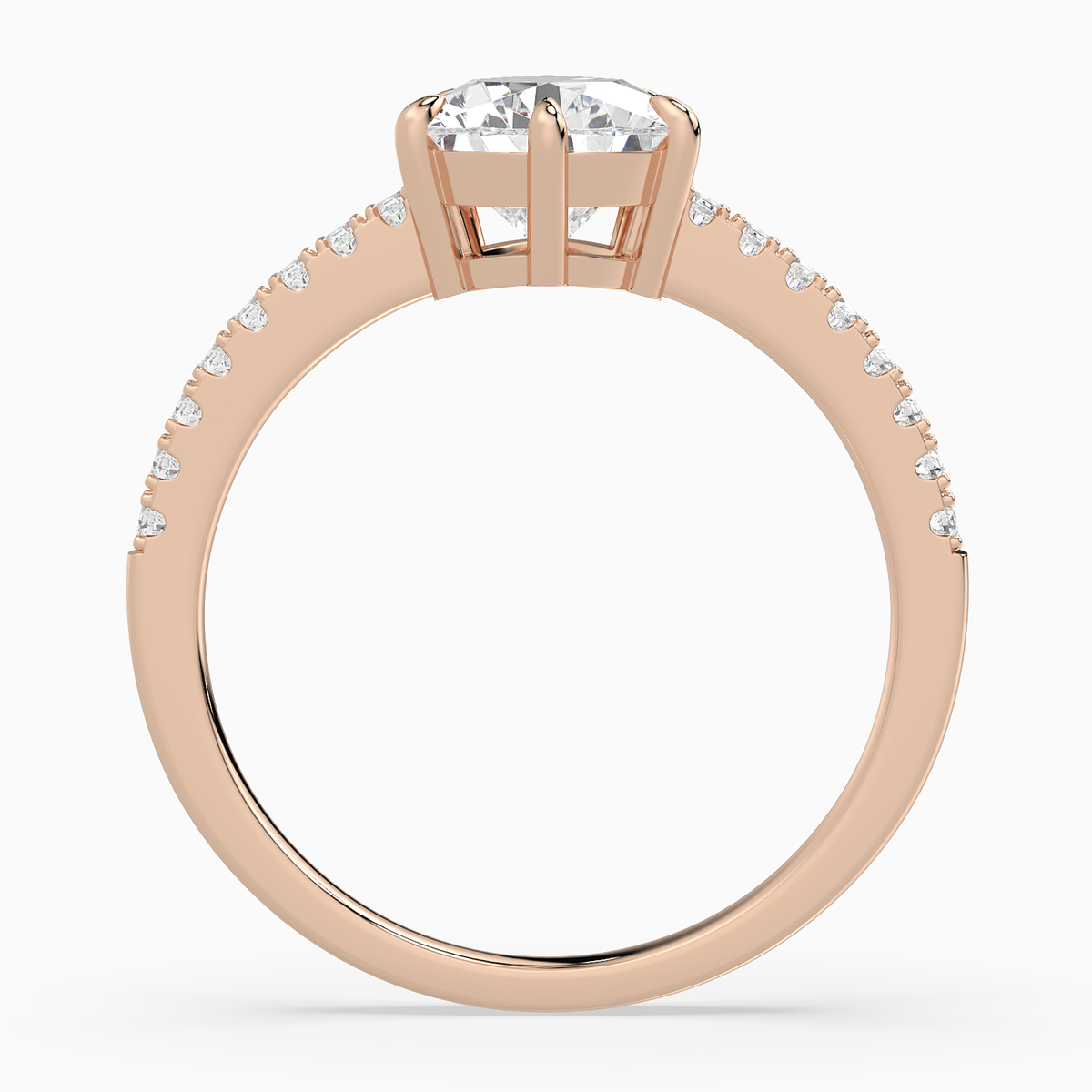
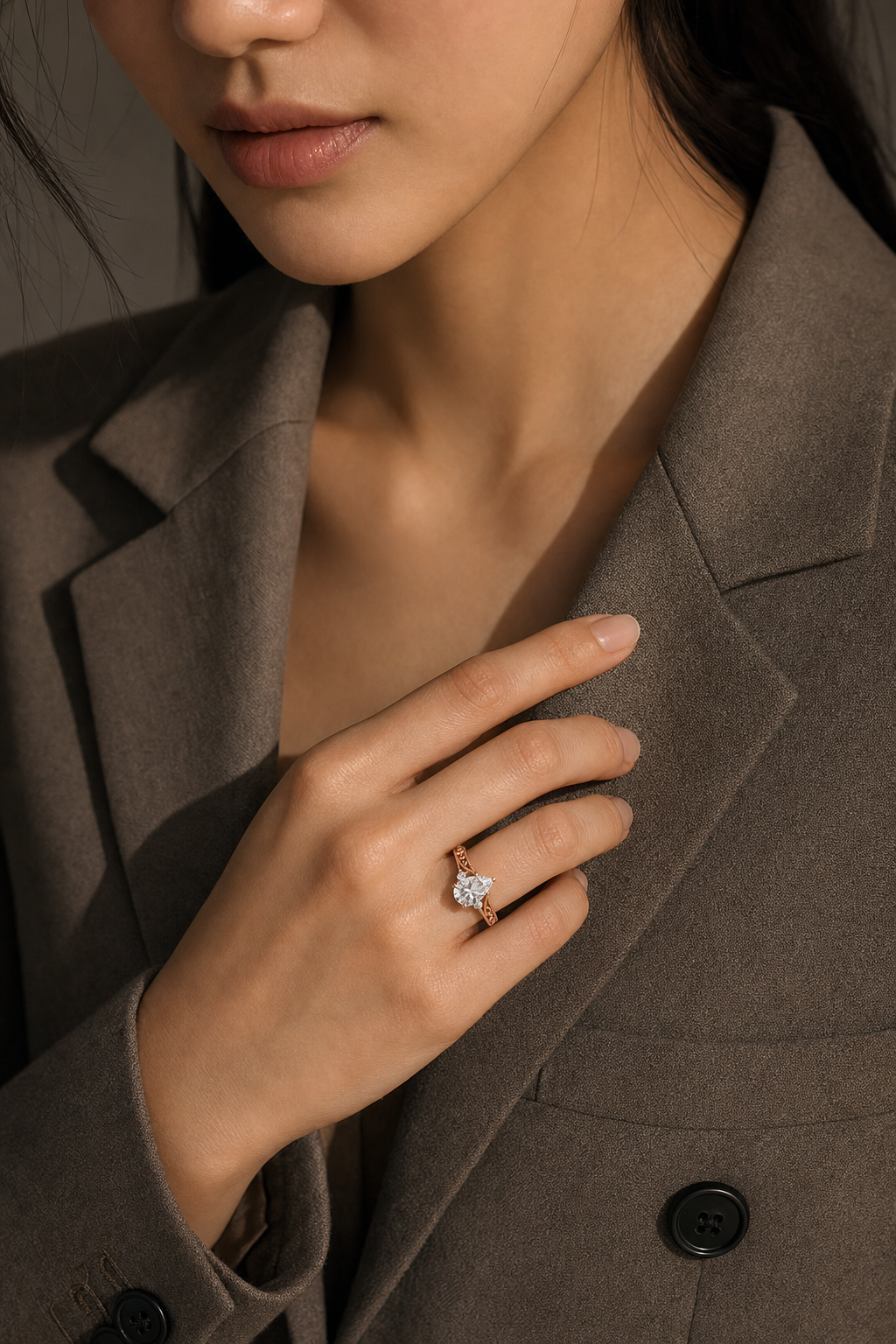
Burvonti’s pear engagement rings place that outline within Solitaire, Halo, Hidden Halo, Side Stone, Three Stone, bezel, cathedral, bypass, vine, floral, and more geometric settings. Some leave the perimeter visually open; some trace it in diamonds or metal; others use accents to extend its direction. The setting does not merely hold the pear—it decides how the pear enters the band.
Begin with the Outline, Not a Preferred Number
Length-to-width ratio describes how compact or slender a pear appears, but it does not define quality by itself. GIA research shows that pear outlines vary in head shape, shoulder fullness, wing curvature, and point angle independently of ratio. Two diamonds with similar measurements can therefore carry different visual weight and very different transitions from curve to point.
Read the outline along its single axis of symmetry. The point should feel aligned with the center of the rounded head; the two sides should answer each other without an unintended bulge, flat wing, or uneven shoulder. A fuller pear can feel grounded and generous, while a longer pear can feel more directional. The right balance is the one that remains coherent within the chosen scale and setting.
Light Should Move Through the Entire Form
Most pear diamonds use brilliant-style faceting, yet their face-up patterns are more complex than a standard Round Brilliant. Areas of broad reflection, finer virtual facets, brightness, contrast, fire, and scintillation may distribute differently through the head, belly, wings, and point. Pear-shaped diamonds do not currently receive an overall GIA cut grade, so a shape name or symmetry grade cannot summarize the complete visual result.
A bow-tie is a band of contrast that can appear across the center of an elongated diamond. Some contrast helps facets remain legible, and a subtle bow-tie may change or brighten as the stone moves. Give closer attention to a region that is wide, dark, distracting, or persistently dull in normal viewing. Compare the center face-up and in motion under more than one ordinary lighting condition when possible.
Carat Weight and Face-Up Presence Are Different Measures
Carat records weight. The visible presence of a pear also depends on length, width, depth, shoulder shape, point angle, and the distribution of mass below the girdle. It is therefore more precise to compare documented millimeter dimensions and actual outline than to claim that every pear looks larger than another shape at the same weight.
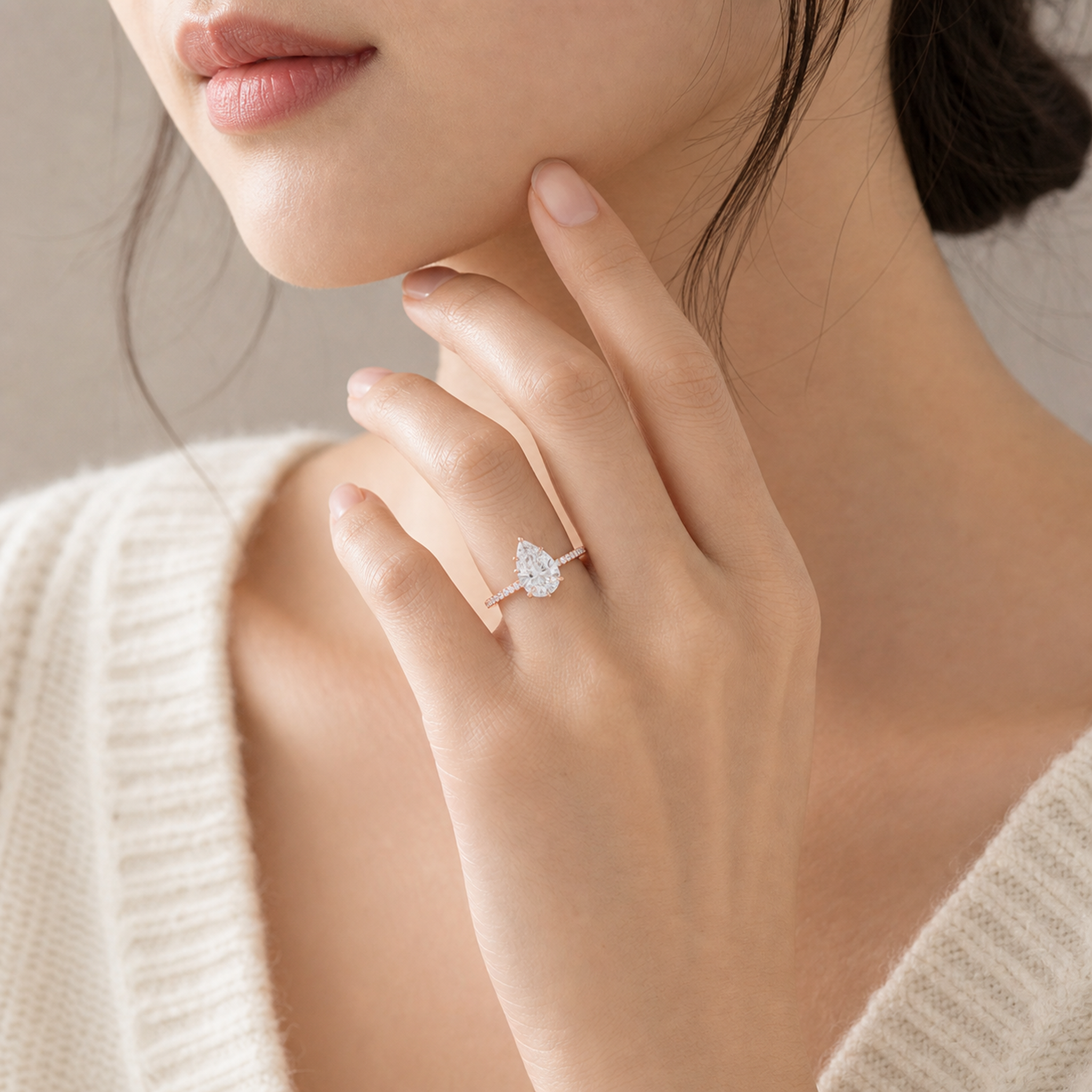
The complete ring changes that scale again. A fine Solitaire band can leave the center visually isolated; a Halo expands its outer field; side stones broaden the composition; a bezel adds a continuous boundary. Look at the center’s dimensions together with the band, accents, prongs, and profile so that presence is calibrated across the ring rather than attributed to carat alone.
The Point Requires Deliberate Support
The point is the pear’s most vulnerable area. In a prong setting, a V-shaped or chevron-style prong is often used to shield it; a bezel can protect the perimeter more continuously. Neither category creates an absolute guarantee. Point angle, girdle condition, inclusion position, prong dimensions, placement, workmanship, wear, and maintenance all contribute to the exact setting decision.
An independent grading report helps document clarity characteristics and symmetry, but placement matters as much as the summary grade. A feature located at or near a thin pointed area can have different durability implications from one elsewhere. Burvonti evaluates the selected center and setting together, preserving the line of the pear while resolving the support it needs.
Setting Architecture Can Follow or Counter the Direction
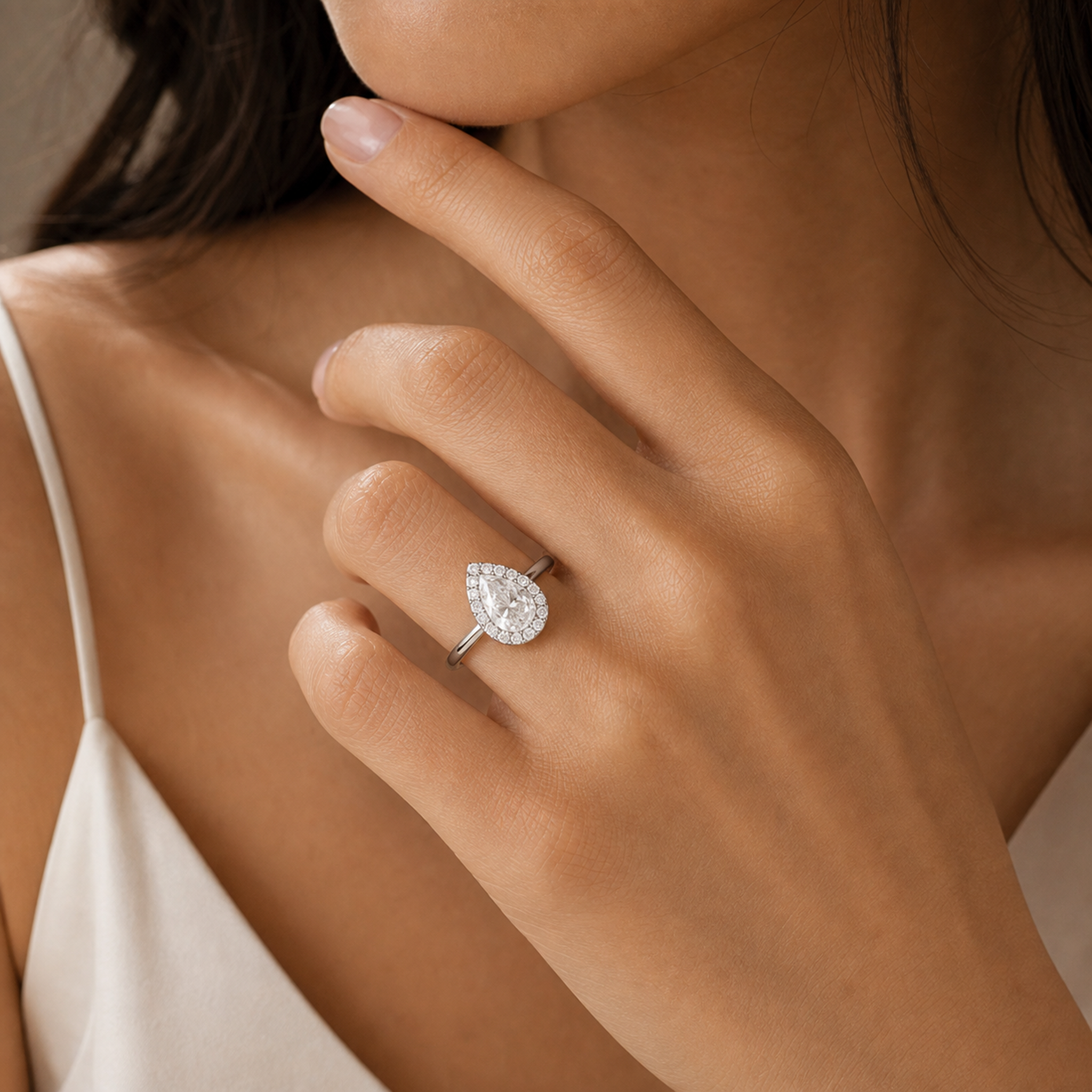
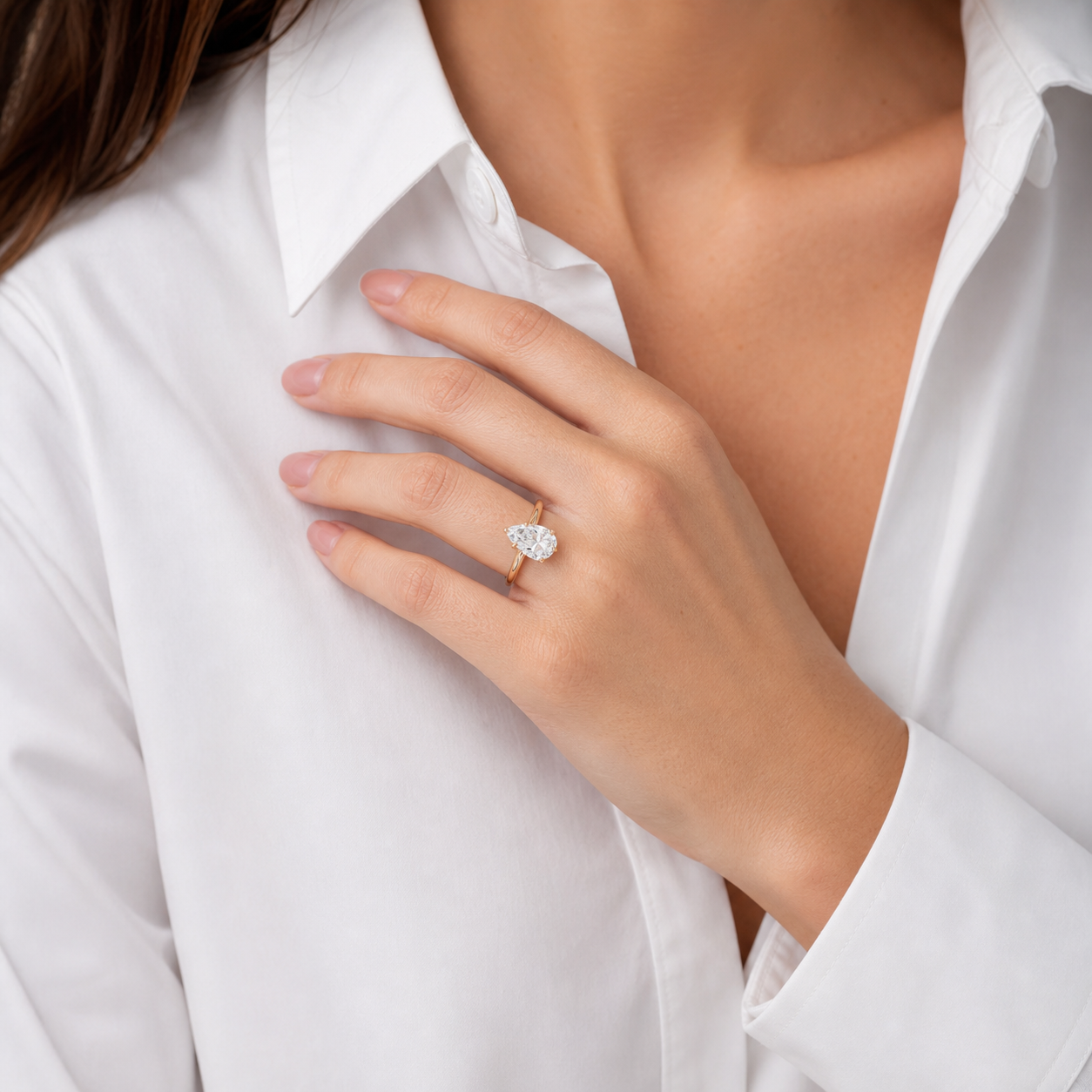
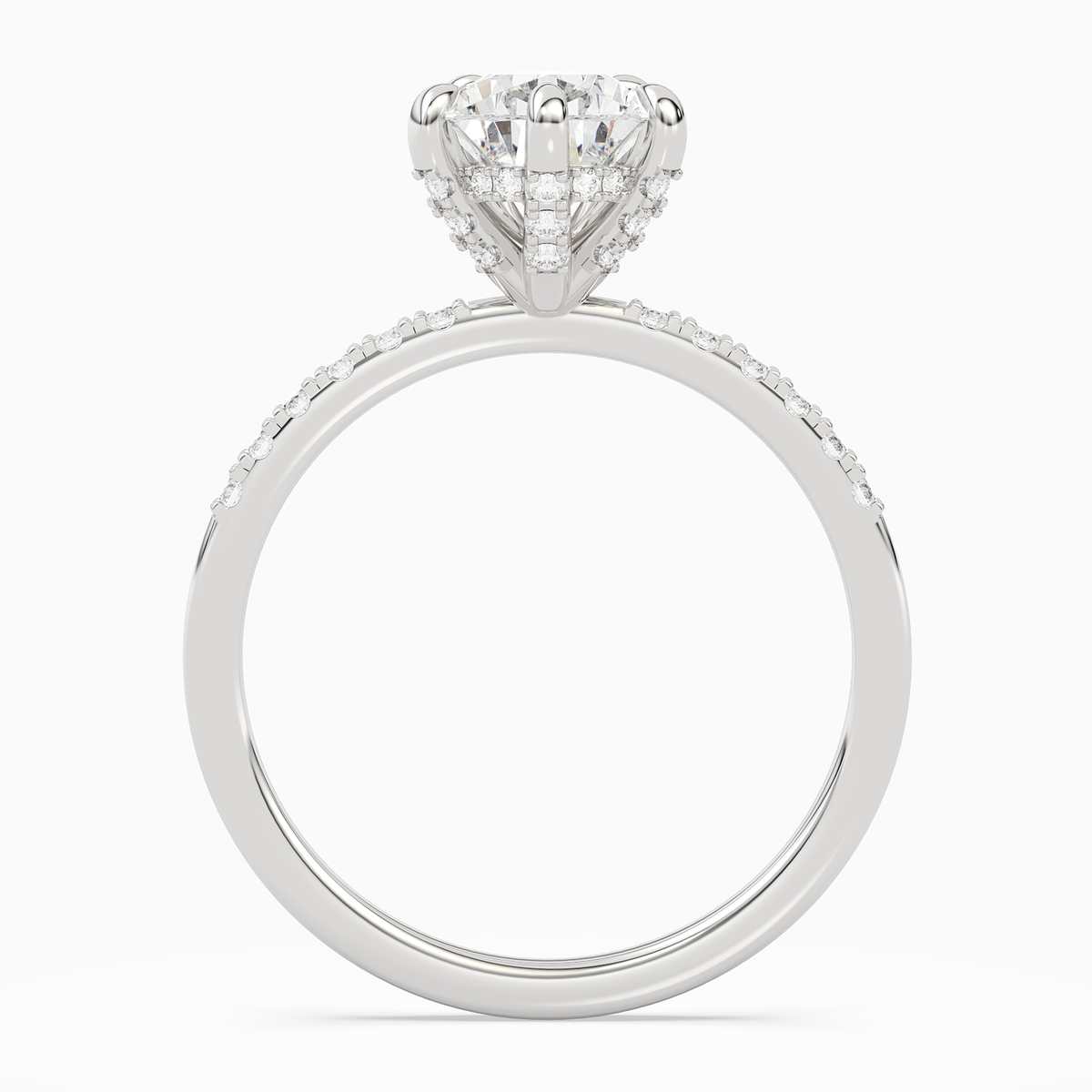
A Solitaire gives the rounded head, wings, and point the clearest space. Halo and Hidden Halo settings add light at different levels: one redraws the face-up perimeter, while the other is read more strongly in profile. A bezel can emphasize the continuous outline in metal. Cathedral shoulders or a bypass band can carry the pear’s movement into the shank.
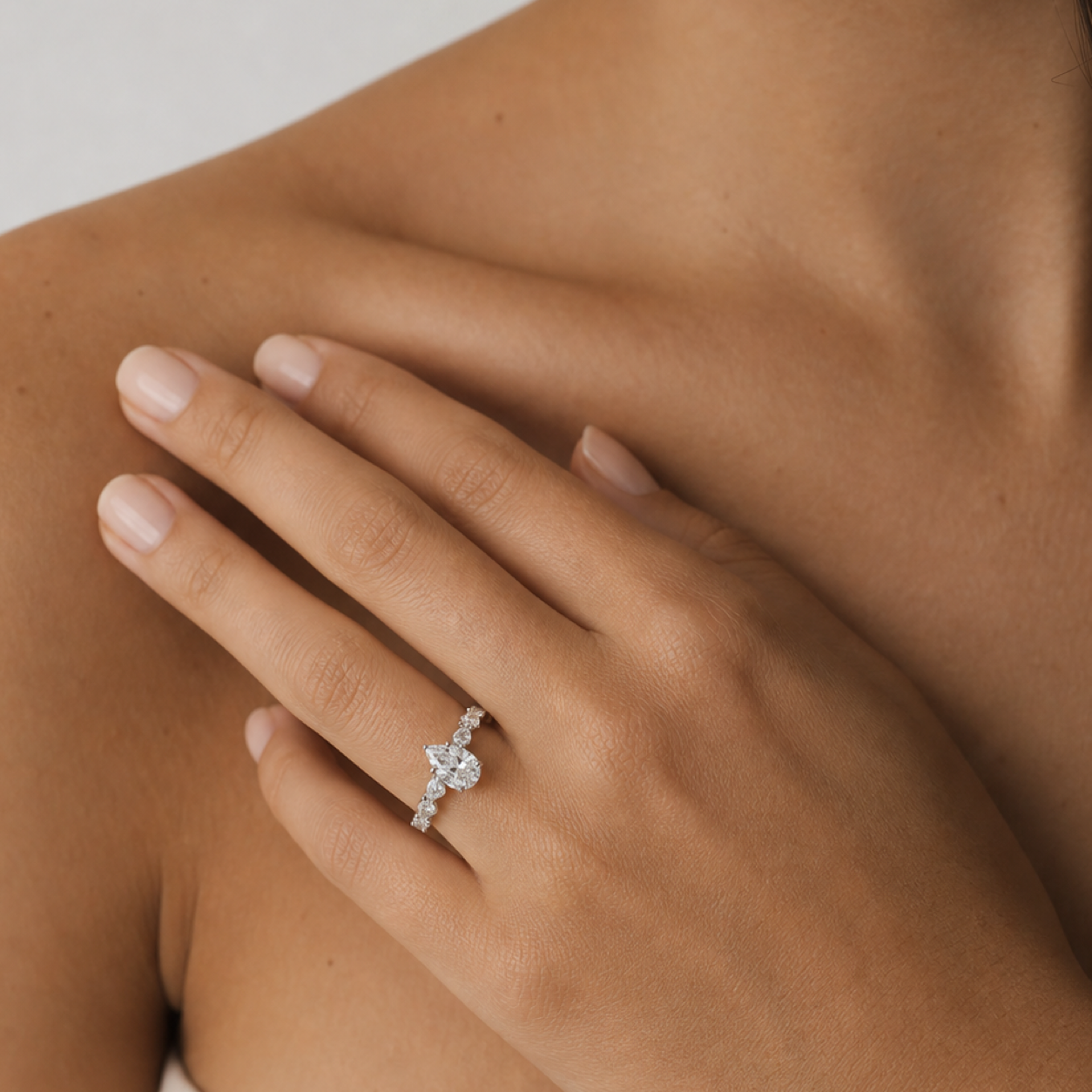
Side Stone and Three Stone arrangements introduce a second rhythm. Pear, Marquise, Round, or more angular accents may echo the center, create a transition, or sharpen the contrast. Floral and vine compositions can extend the curve without turning it into a literal symbol. The useful question is not which style is universally best, but whether each element supports the center’s direction without interrupting its balance.
Orientation, Metal, and Profile Change the Reading
Pear centers are often worn with the point directed away from the wearer, but the reverse or a more unusual orientation can be equally intentional when the setting supports it. Orientation changes the visual flow; it does not alter the diamond’s documented quality. Burvonti’s current collection is primarily built around the familiar north–south axis, with exact options confirmed by product.
White Gold can create cooler continuity among center, prongs, and accents. Yellow or Rose Gold can make the metal boundary and direction more visible. From the side, basket width, setting height, hidden details, and projecting accents determine how a wedding band approaches. A pear outline does not by itself guarantee a flush stack; straight, contour, chevron, open, or deliberately spaced pairings should be assessed against the exact profile.
A Distinct Outline, Calibrated One Center at a Time
Burvonti pairs responsibly sourced, independently graded lab-grown diamonds with settings considered through proportion and human judgment. For a Pear, that means tracing the continuity of the outline, reading light across unequal ends, and resolving the point without diminishing the shape’s clarity. Documentation establishes the facts; close observation gives those facts visual meaning.
Custom possibilities may refine center specifications, orientation, setting, point treatment, metal, accents, band line, or engraving when structurally feasible. Use gentle cleaning appropriate to the diamond, metal, and construction, avoid abrasive products and harsh chemical exposure, and arrange inspection if a prong catches, the center moves, or the ring receives a significant impact. Availability, resize range, security, documentation, and band fit remain product-specific.
Frequently Asked Questions
What is a pear-shaped diamond engagement ring?
It is an engagement ring centered on a diamond with one rounded head, curved wings, and one tapered point. Most pear diamonds use brilliant-style facets, but outline, proportion, and face-up light pattern vary from one center to another.
Is a pear diamond the same as a teardrop diamond?
Teardrop is a common visual nickname for the outline. Pear is the established shape term and is more useful for discussing its head, shoulders, wings, point, symmetry, dimensions, and facet arrangement without assigning a fixed symbolism.
What makes a pear diamond look well balanced?
Look for a point aligned with the center of the rounded head, two sides that answer each other, and a continuous transition through shoulders and wings. Ratio helps describe the outline, but it cannot reveal all of these relationships.
What is the best length-to-width ratio for a pear diamond?
There is no universal best. A lower ratio usually reads fuller; a higher ratio reads more slender. GIA research shows that head shape, wing curvature, and point angle can vary independently, so compare the complete outline rather than choosing by ratio alone.
What are the shoulders and wings of a pear diamond?
The shoulders are the curved transitions near the rounded head; the wings are the sides that narrow toward the point. Their fullness or flatness helps determine whether the pear feels softly rounded, straight-sided, broad, or sharply tapered.
Does GIA give pear diamonds an overall cut grade?
No. GIA currently provides an overall cut grade for eligible standard Round Brilliant diamonds, not pear-shaped fancy diamonds. A pear report still documents measurements, polish, symmetry, color, clarity, and identifying characteristics that support direct visual evaluation.
What is a bow-tie in a pear diamond?
It is a zone of contrast that can run across the center of an elongated brilliant-style diamond. It may be slight or prominent, segmented or continuous, and may change as the diamond, observer, or light moves.
Is any bow-tie effect in a pear diamond bad?
No. Contrast is part of a legible light pattern, and many pears show some bow-tie. A large, dark, or persistent region that distracts from the rest of the center is a stronger concern than a subtle pattern that brightens in motion.
How should I evaluate the light performance of a pear diamond?
View it face-up and in motion at a normal distance, preferably in more than one ordinary lighting condition. Look for brightness and contrast distributed through the head, belly, wings, and point without a fixed dark or dull region dominating.
Does carat weight tell me how large a pear diamond will look?
Not by itself. Carat measures weight. Length, width, depth, outline, point angle, and weight distribution help explain face-up scale, while the setting and band alter the center’s presence in the complete ring.
Are pear-shaped diamond points fragile?
The point is more vulnerable to impact than a rounded edge. Exact risk depends on point angle, girdle, inclusions near the point, setting support, workmanship, wear, and maintenance, so protection should be resolved for the individual center.
Does a pear diamond need a V-prong?
A V-shaped or chevron-style prong is commonly used to shield the point in a prong setting. A bezel may offer more continuous perimeter protection. The right treatment depends on the center, design, dimensions, and construction rather than one universal rule.
Should the point of a pear ring face up or down?
The familiar orientation places the point away from the wearer, but the reverse or another deliberate direction can also work when the setting is designed for it. Orientation is a compositional preference, not a quality grade.
Which pear engagement ring settings are available at Burvonti?
The current public collection includes Solitaire, Halo, Hidden Halo, Side Stone, Three Stone, bezel, cathedral, bypass, vine, floral, milgrain, and geometric designs in 14K White, Yellow, and Rose Gold. Confirm exact current availability.
Is a solitaire a good setting for a pear diamond?
A Solitaire leaves the pear’s perimeter and internal pattern clearly visible, making outline, prong placement, basket, band proportion, and point support especially important. Whether it is the preferred setting depends on the selected center and desired architecture.
How do halo and hidden-halo settings change a pear center?
A Halo adds a second face-up perimeter and expands the field of light. A Hidden Halo places more of its detail below the center, making profile and side view more important while leaving the pear’s face-up boundary relatively open.
Which side stones work with a pear center?
Pear, Marquise, Round, and more angular accents can each create a different transition toward the band. Shape alone is not enough; scale, orientation, height, spacing, color, and the way the accents meet the center determine the composition.
Which metal works best for a pear engagement ring?
There is no universal best. White Gold can create cooler continuity; Yellow or Rose Gold adds a warmer and more visible frame. Consider prong color, alloy, finish, care, sensitivity considerations, and the exact product specification.
Will a pear engagement ring sit flush with a wedding band?
Not necessarily. Basket width, point orientation, setting height, Halo, side stones, and shoulder geometry control the contact line. A straight, contour, chevron, open, or intentionally spaced band may suit different profiles.
How should I clean a pear diamond engagement ring?
Use gentle methods appropriate to its diamond, metal, and construction. Avoid abrasive cleaners and harsh chemicals, clean carefully around the point and underside, and arrange inspection if a prong catches or the center appears to move.
Can a Burvonti pear engagement ring be resized or customized?
Resize and custom possibilities depend on the design. Center specifications, orientation, metal, point treatment, accents, band line, or engraving may be adjustable when structurally feasible, but sizing range, security, documentation, and band fit must be confirmed for the selected configuration.