
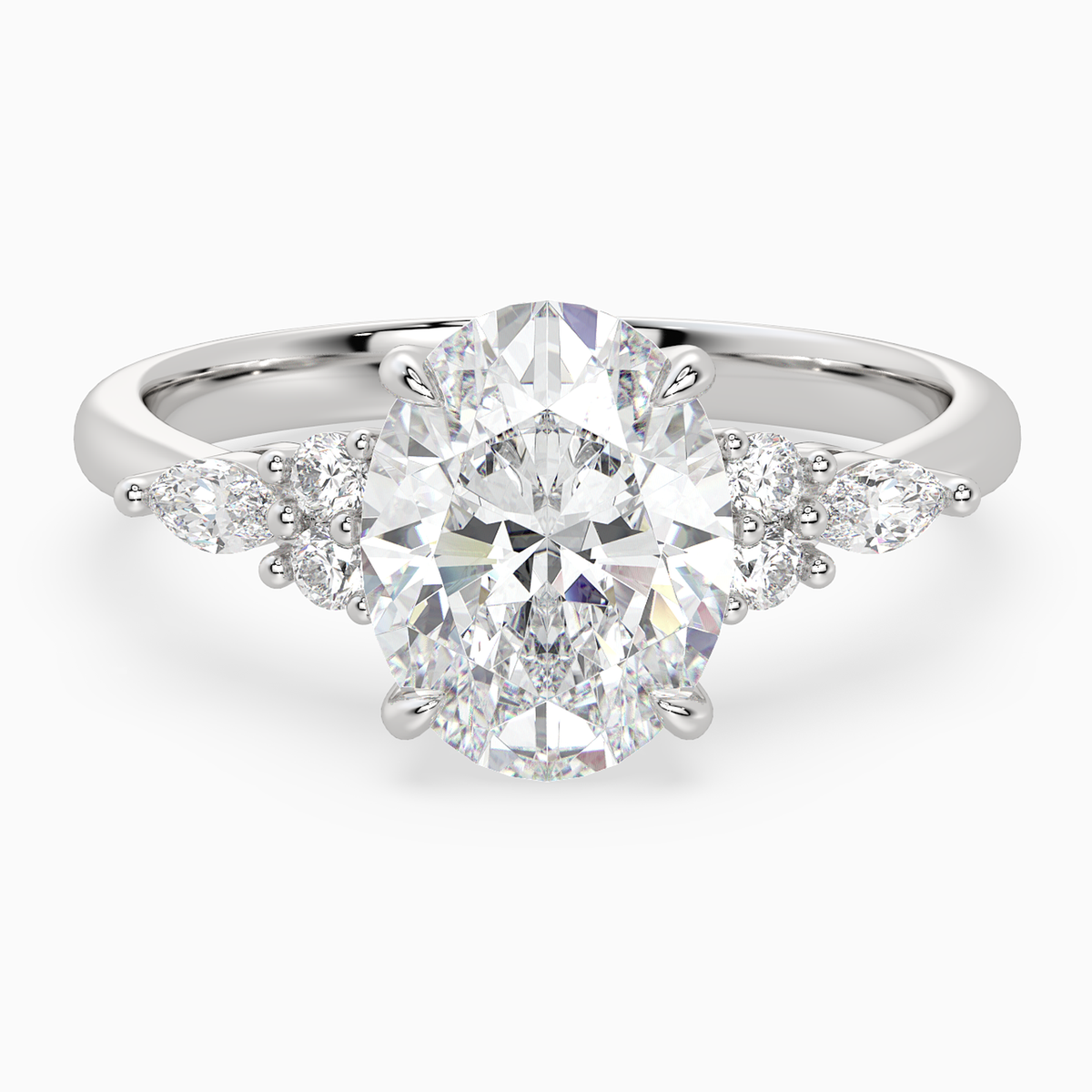


Vintage Engagement Rings
History, edited with precision. Milgrain, sculpted profiles and geometric or botanical details give familiar forms a more storied rhythm.


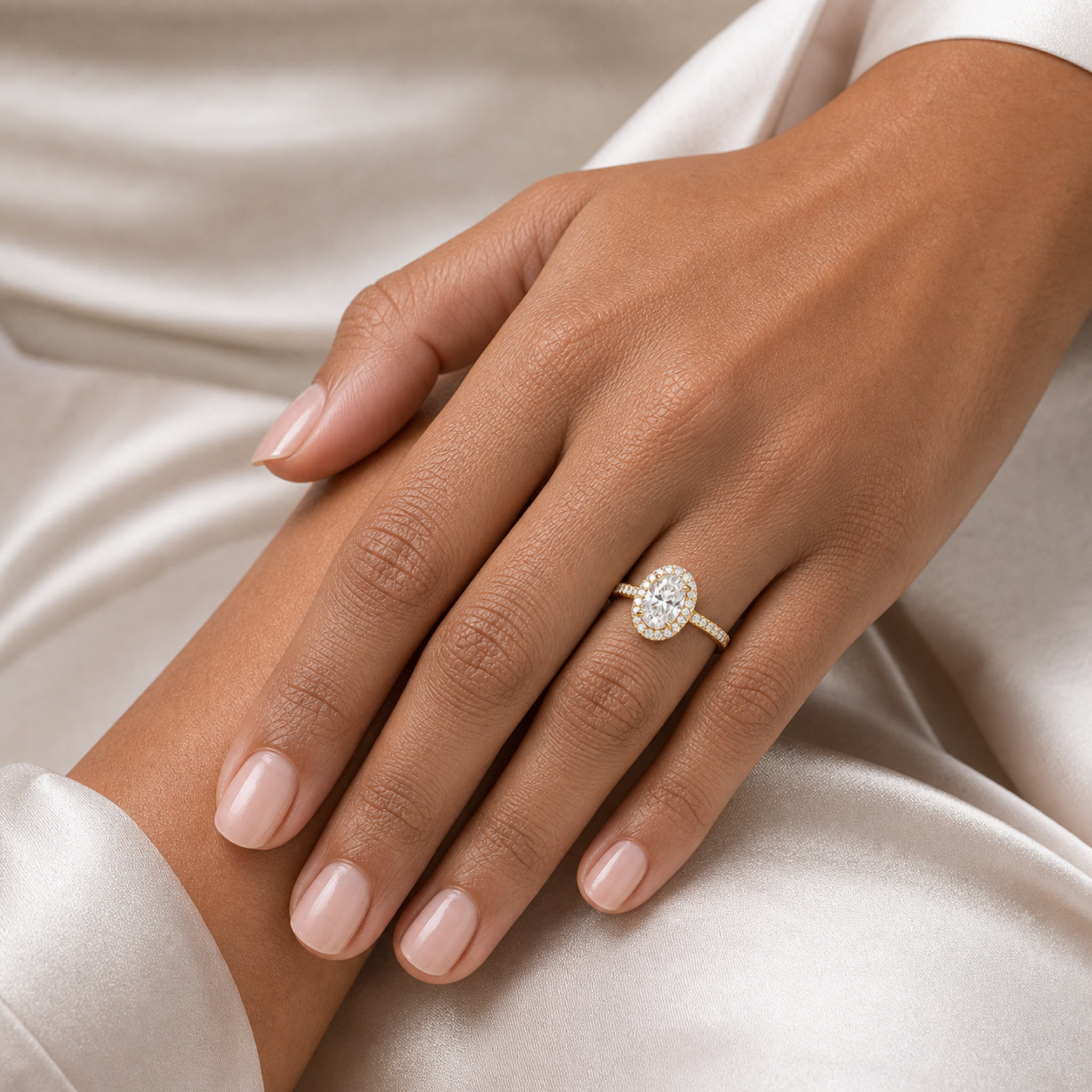


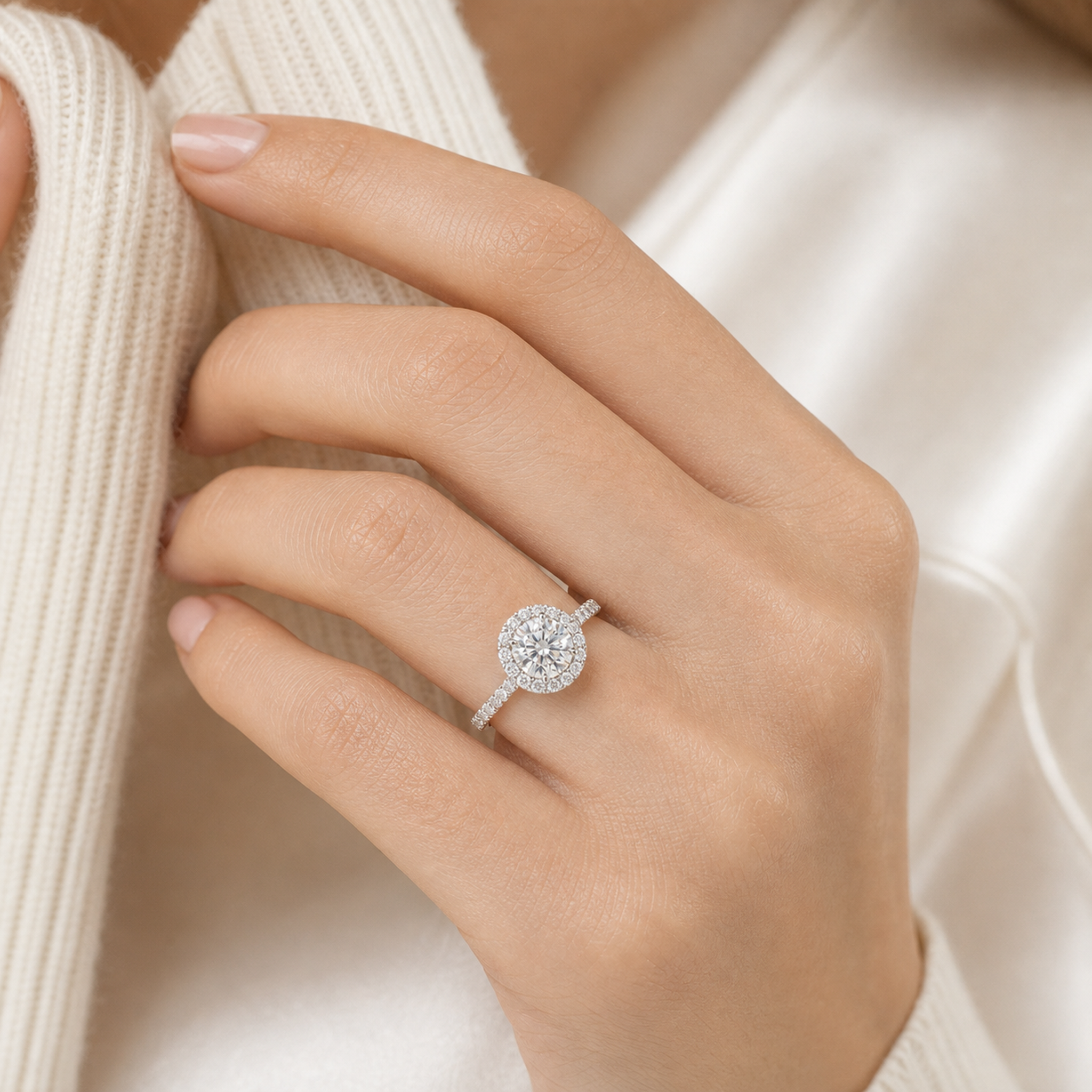


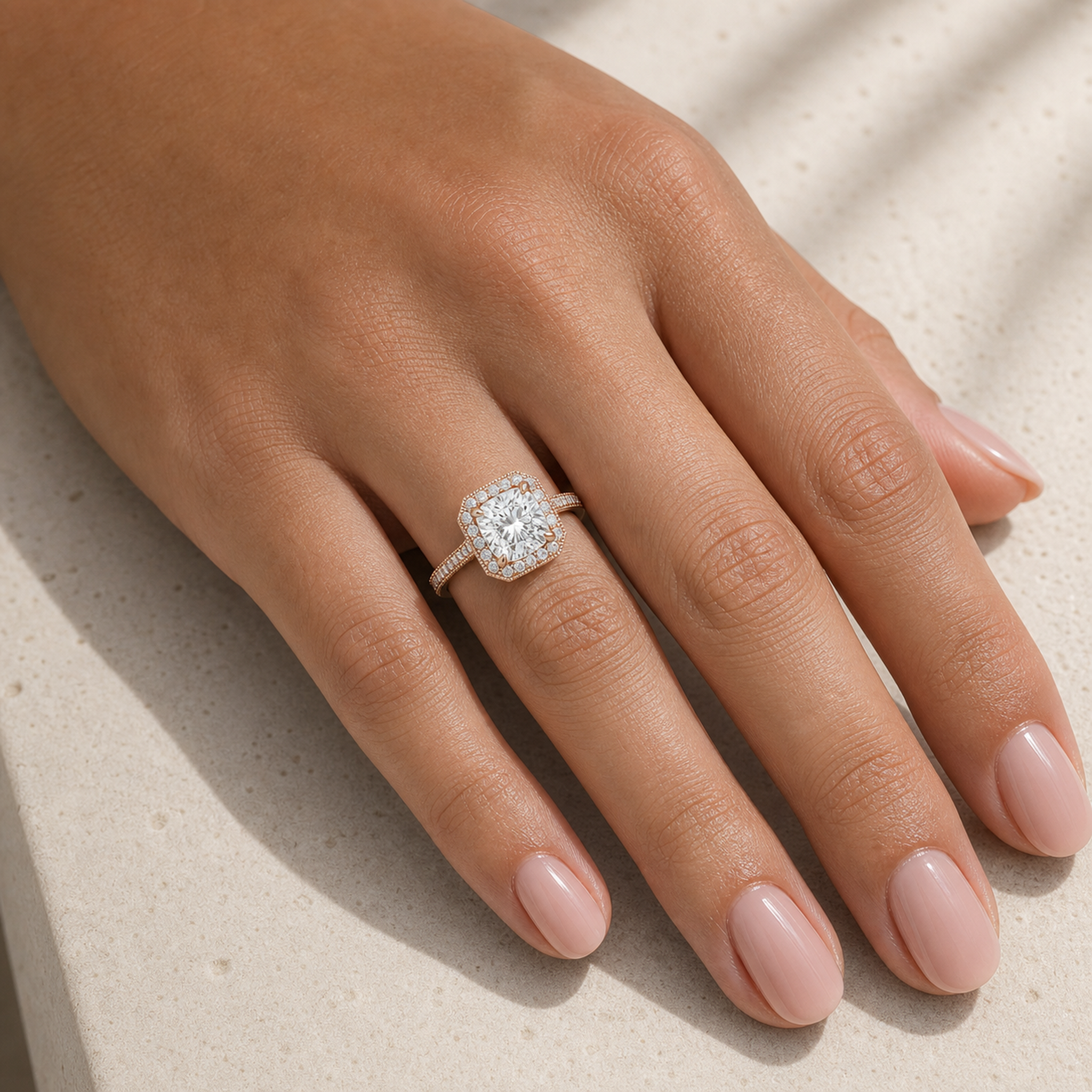










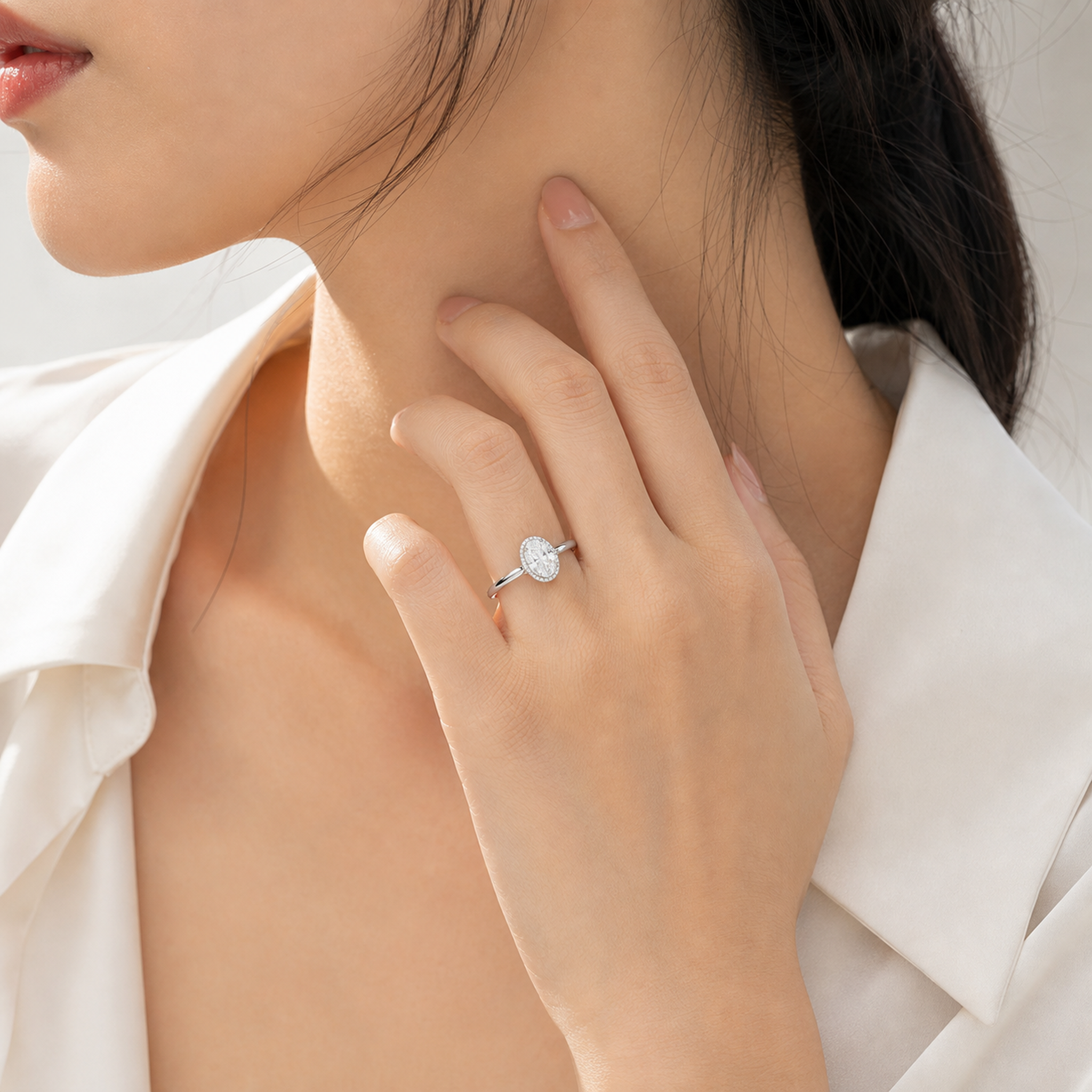


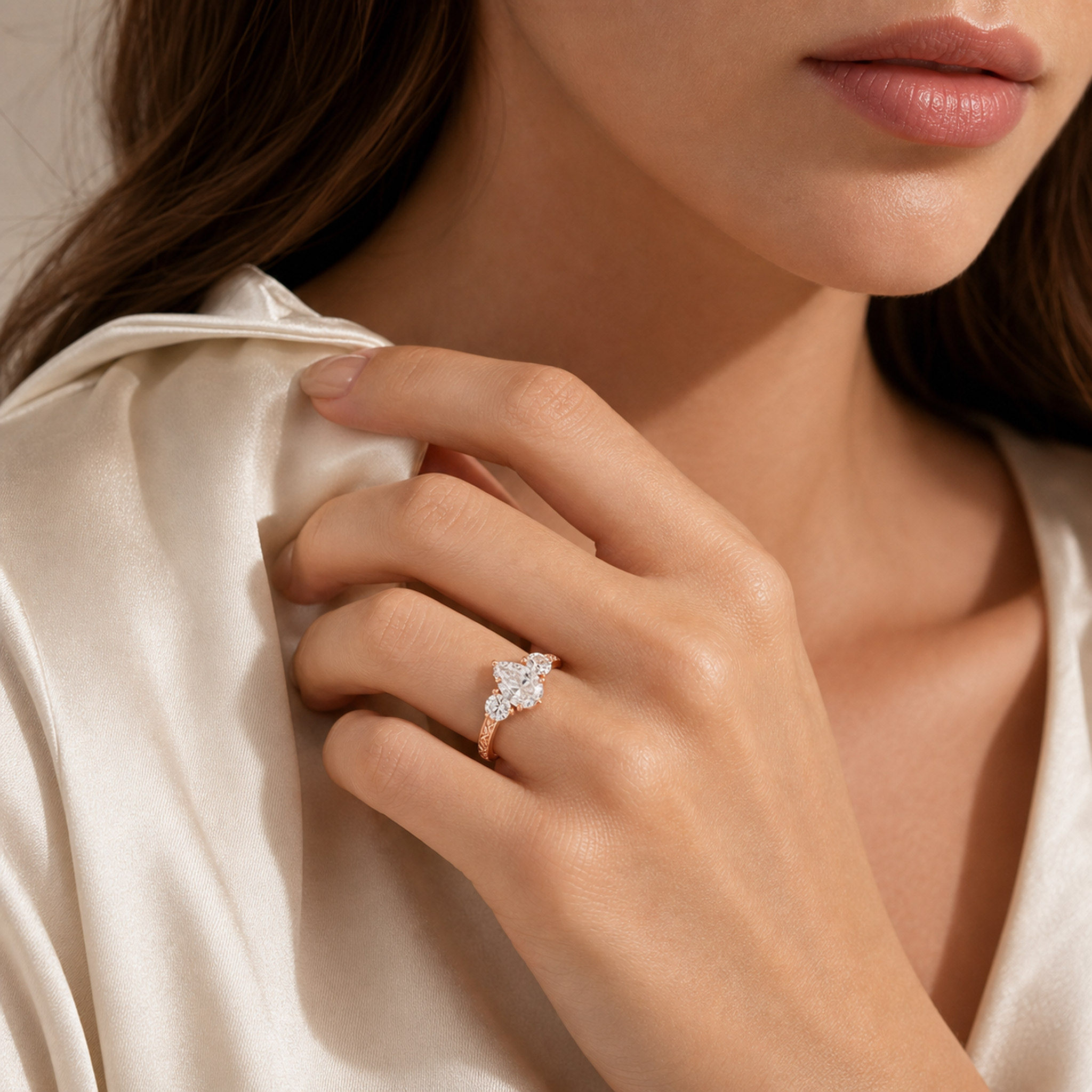


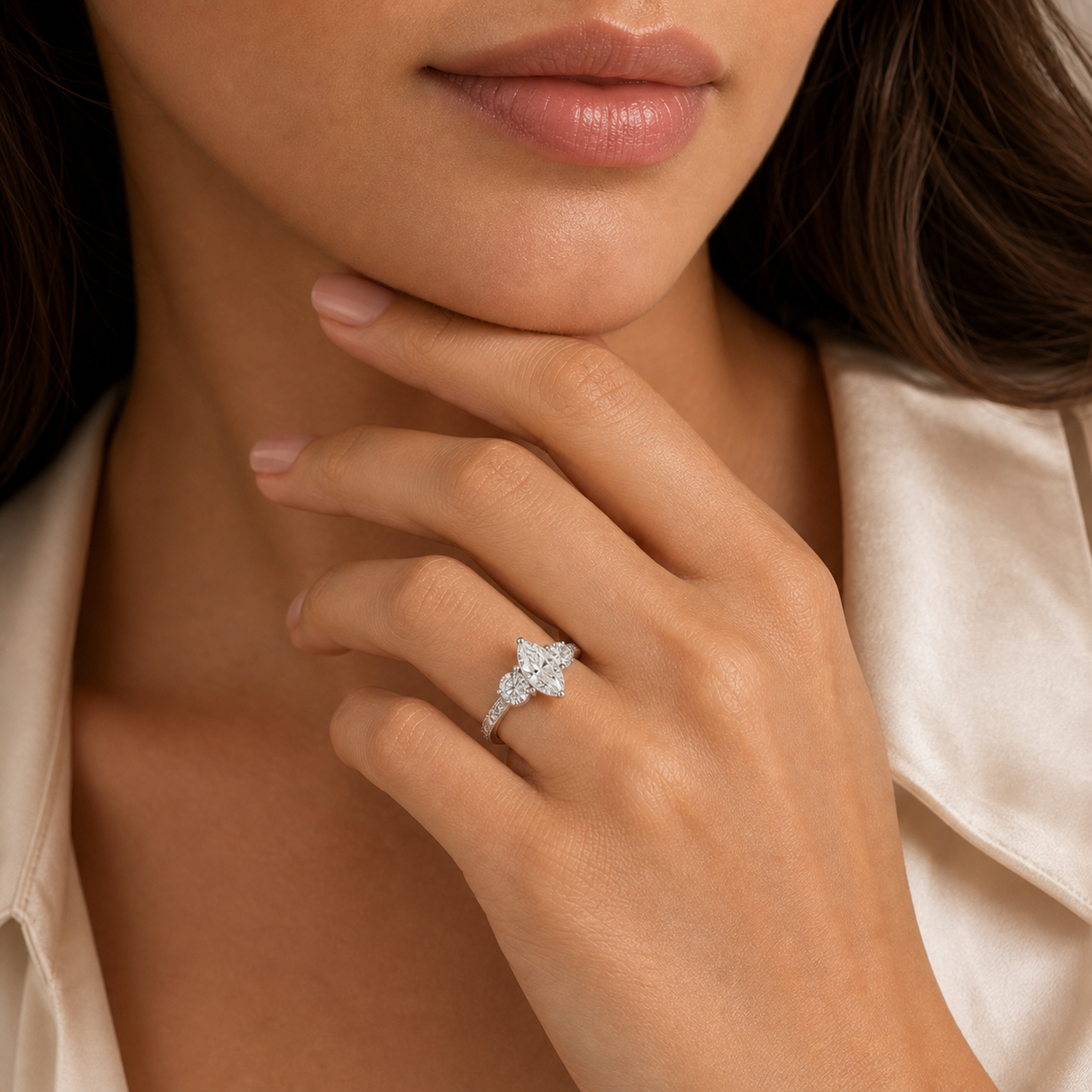


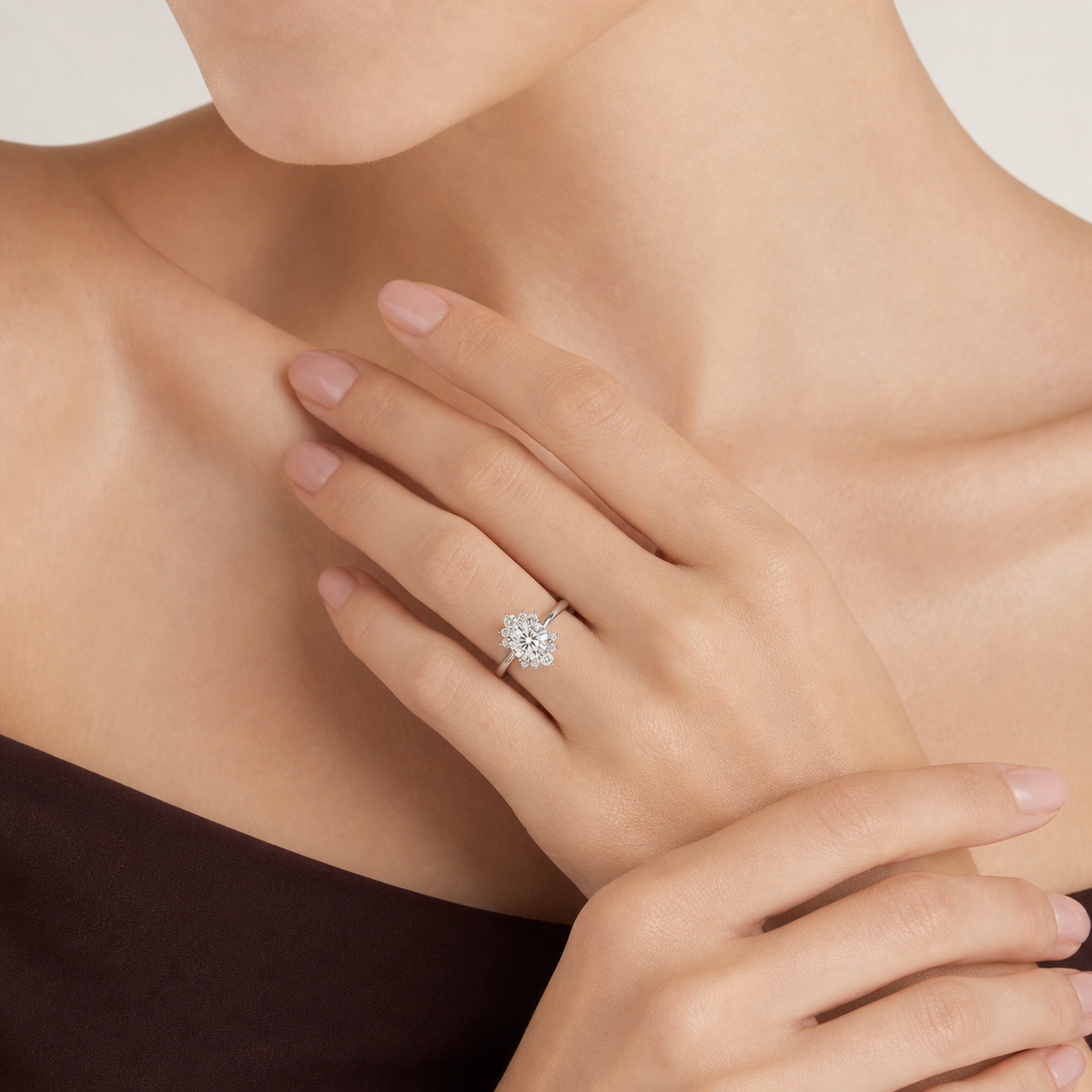


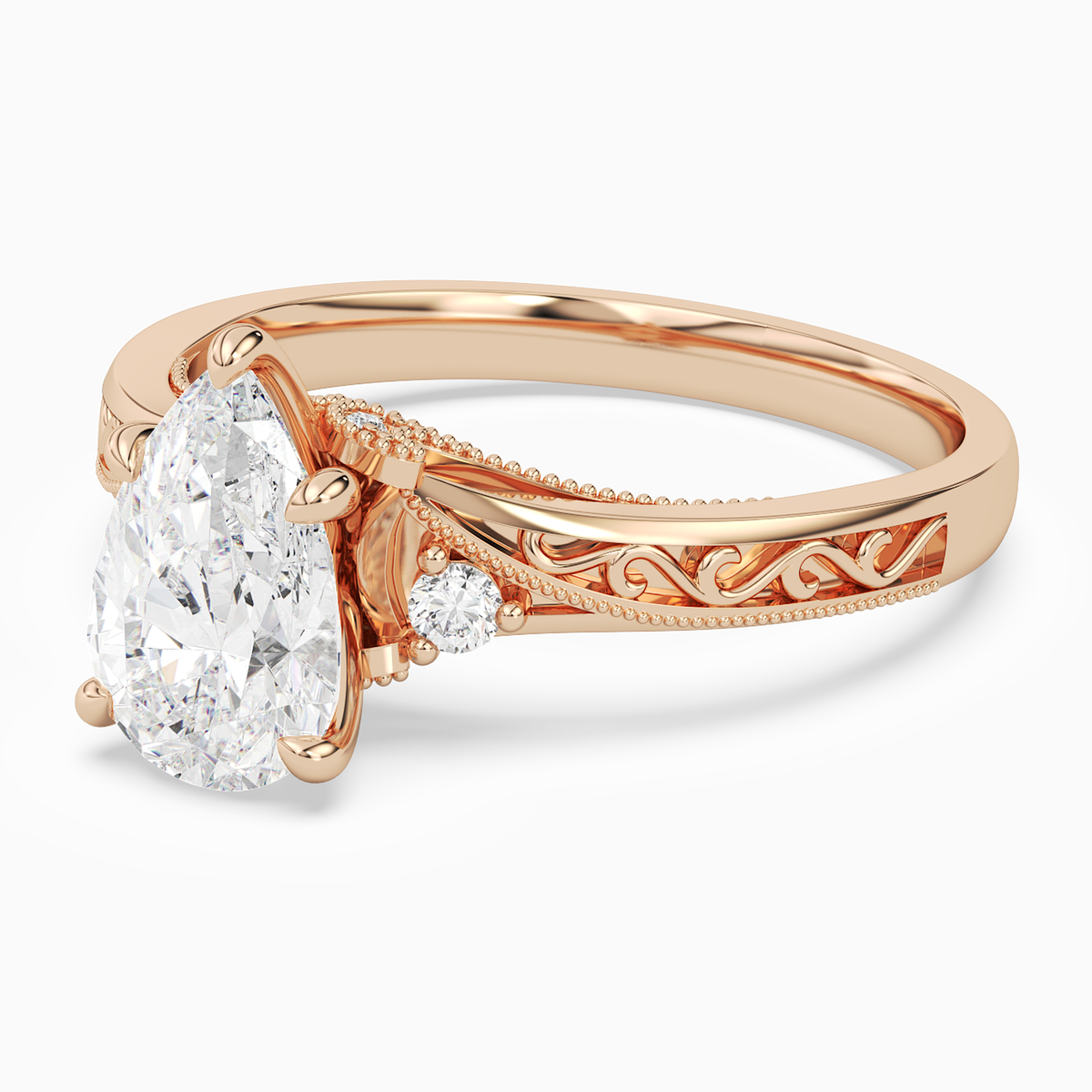
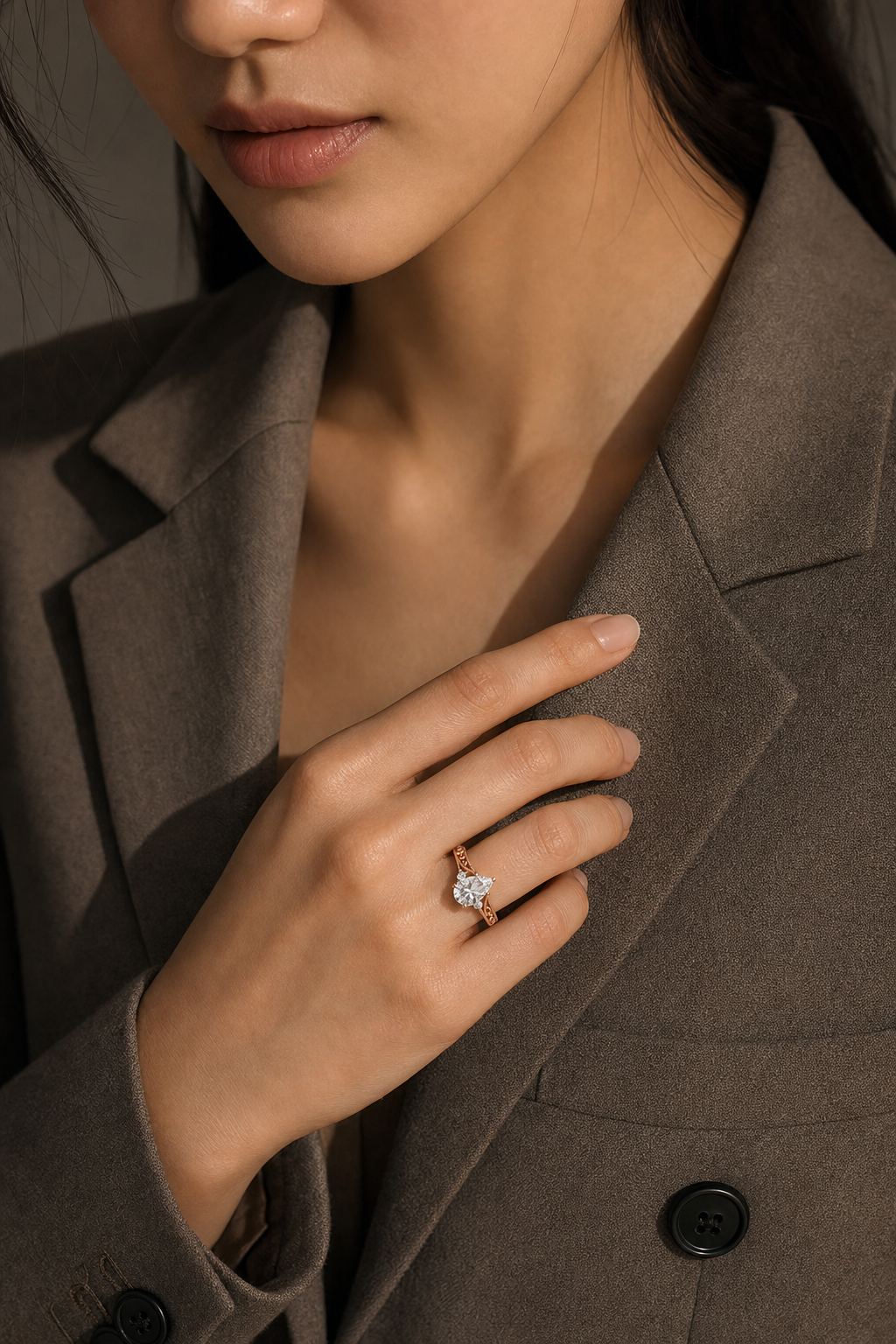


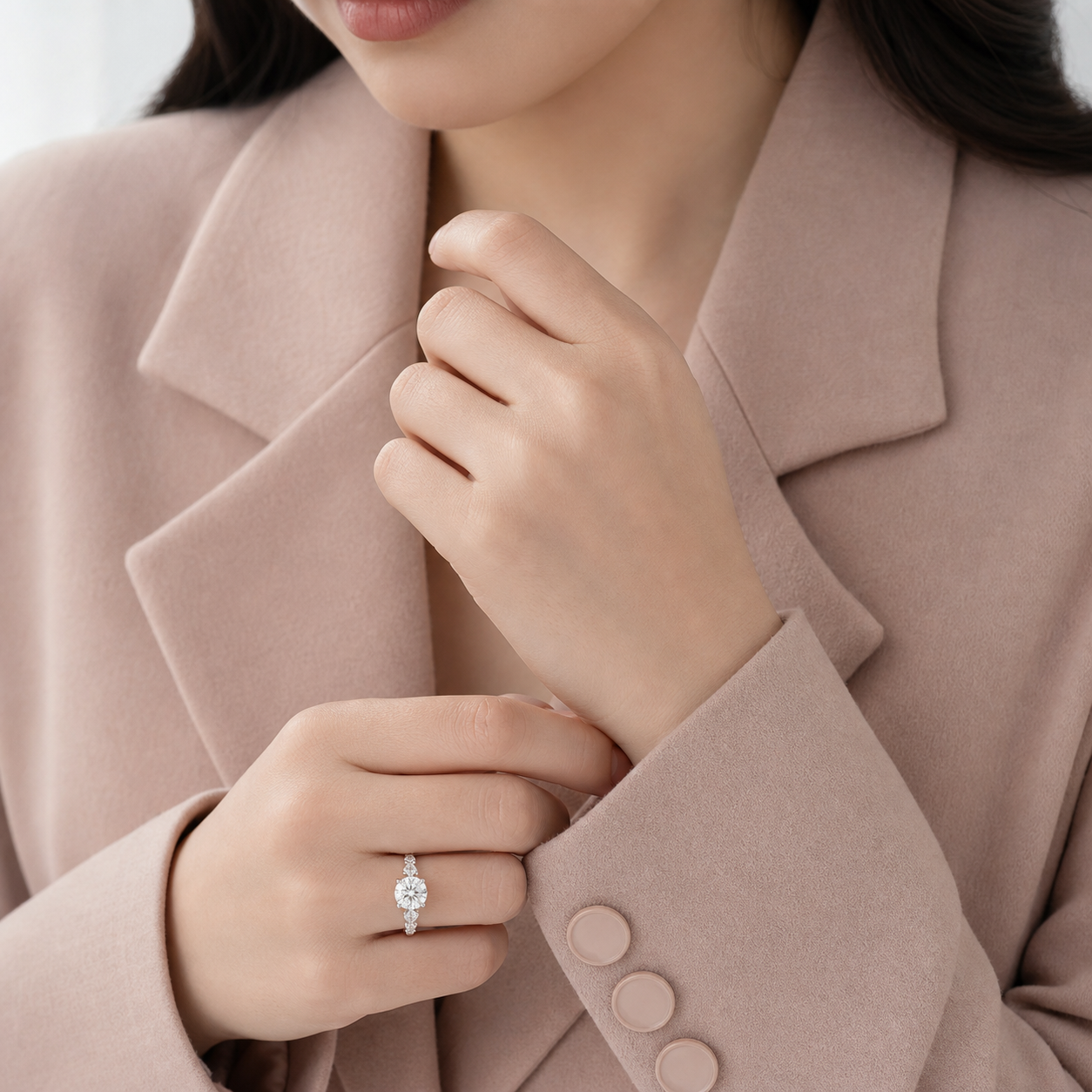


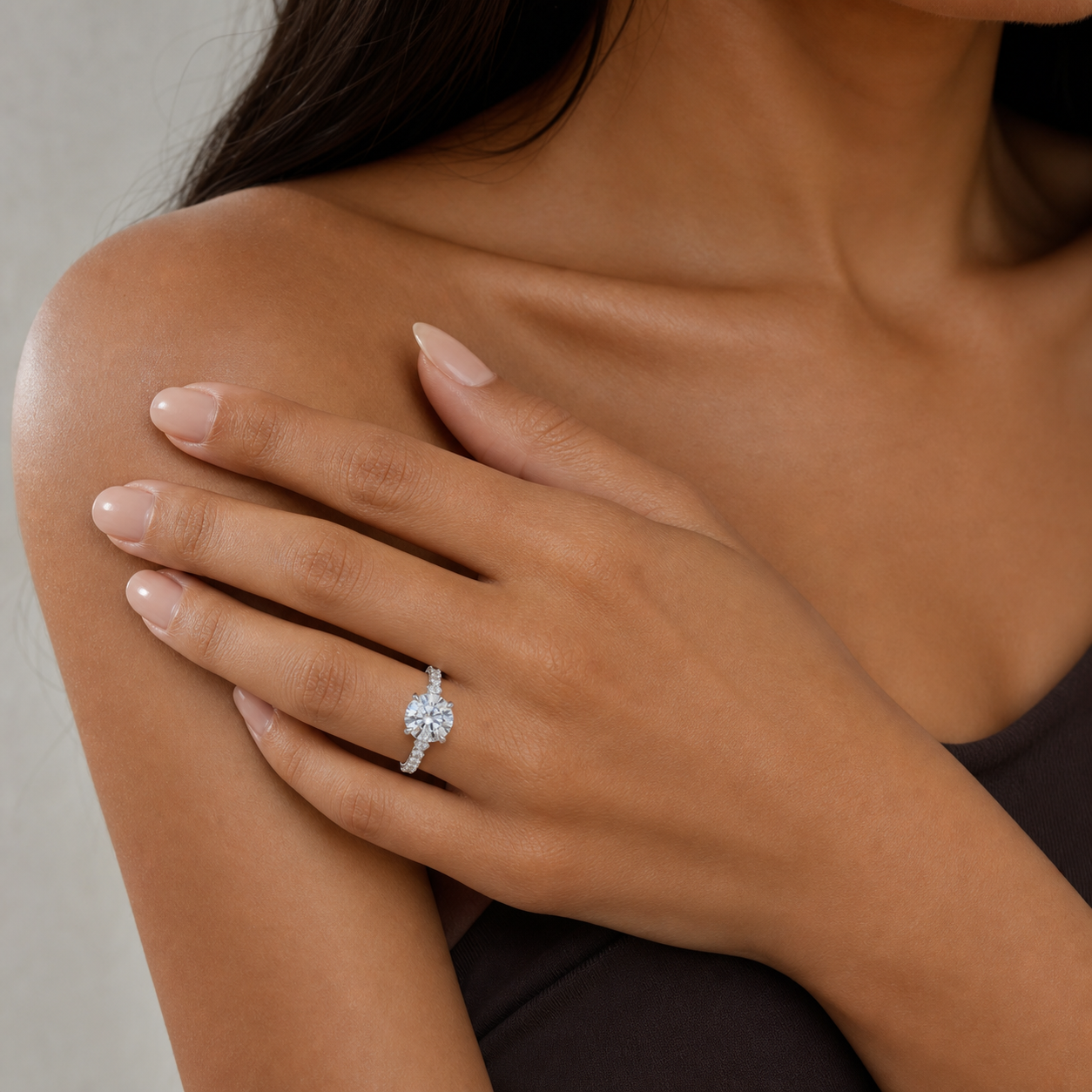


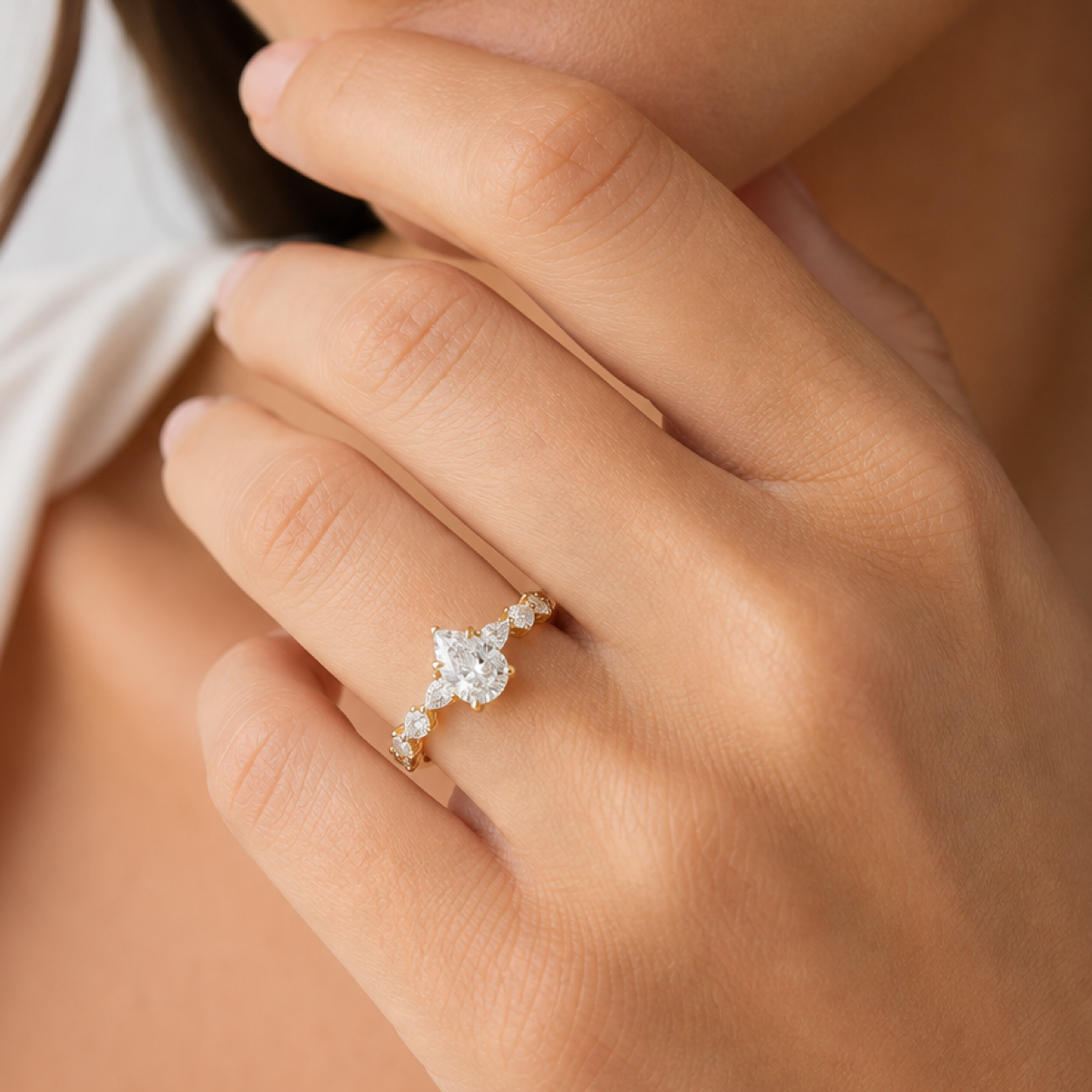


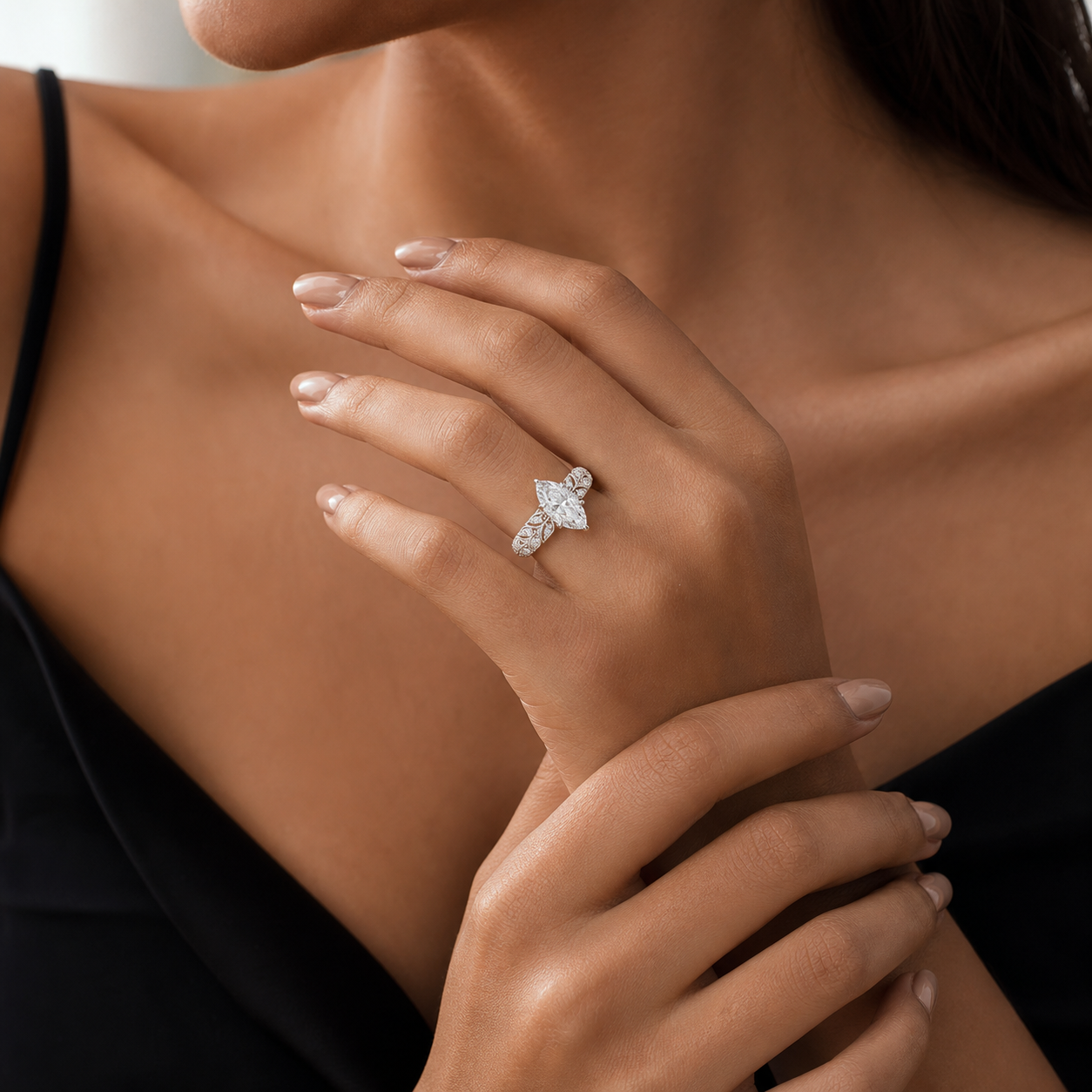


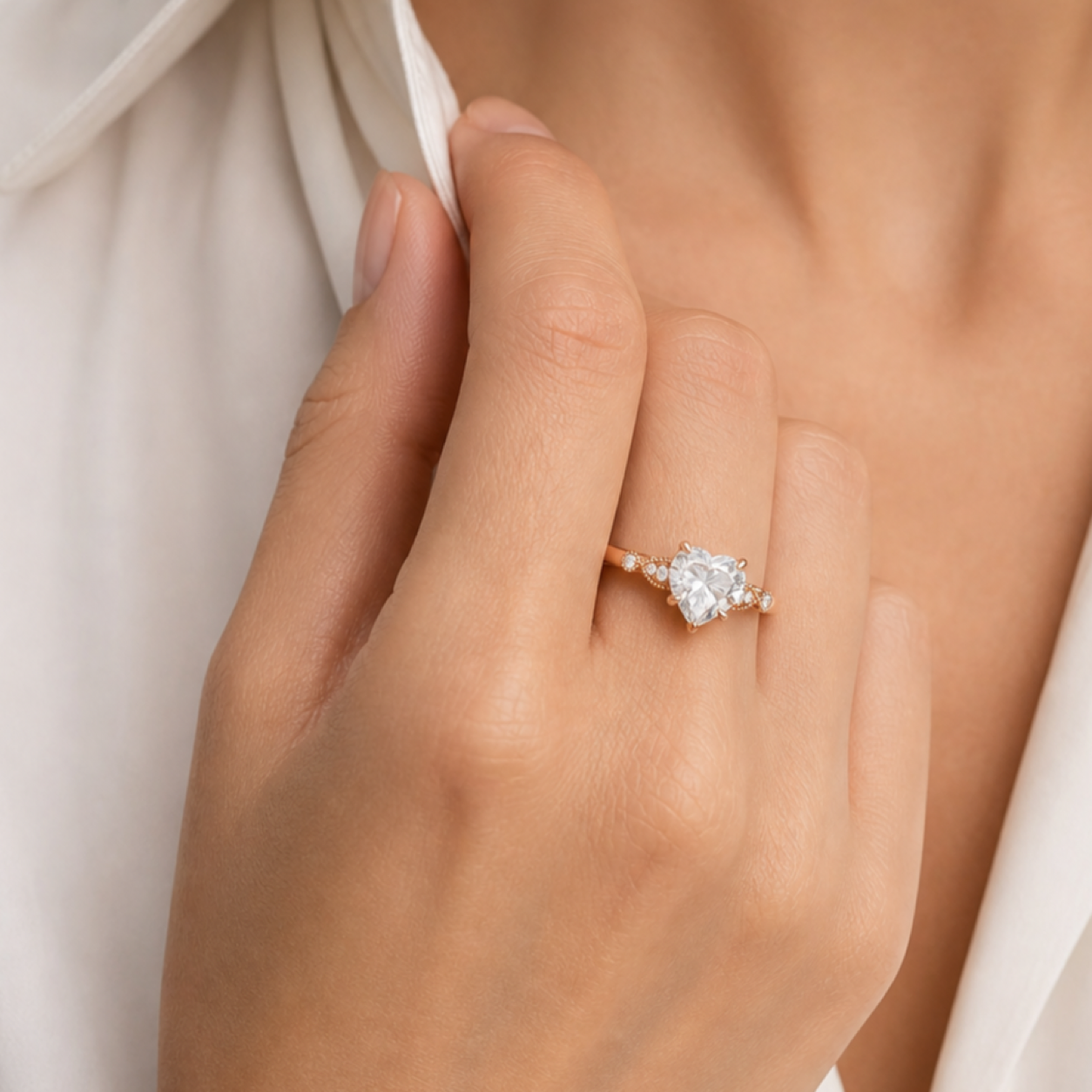


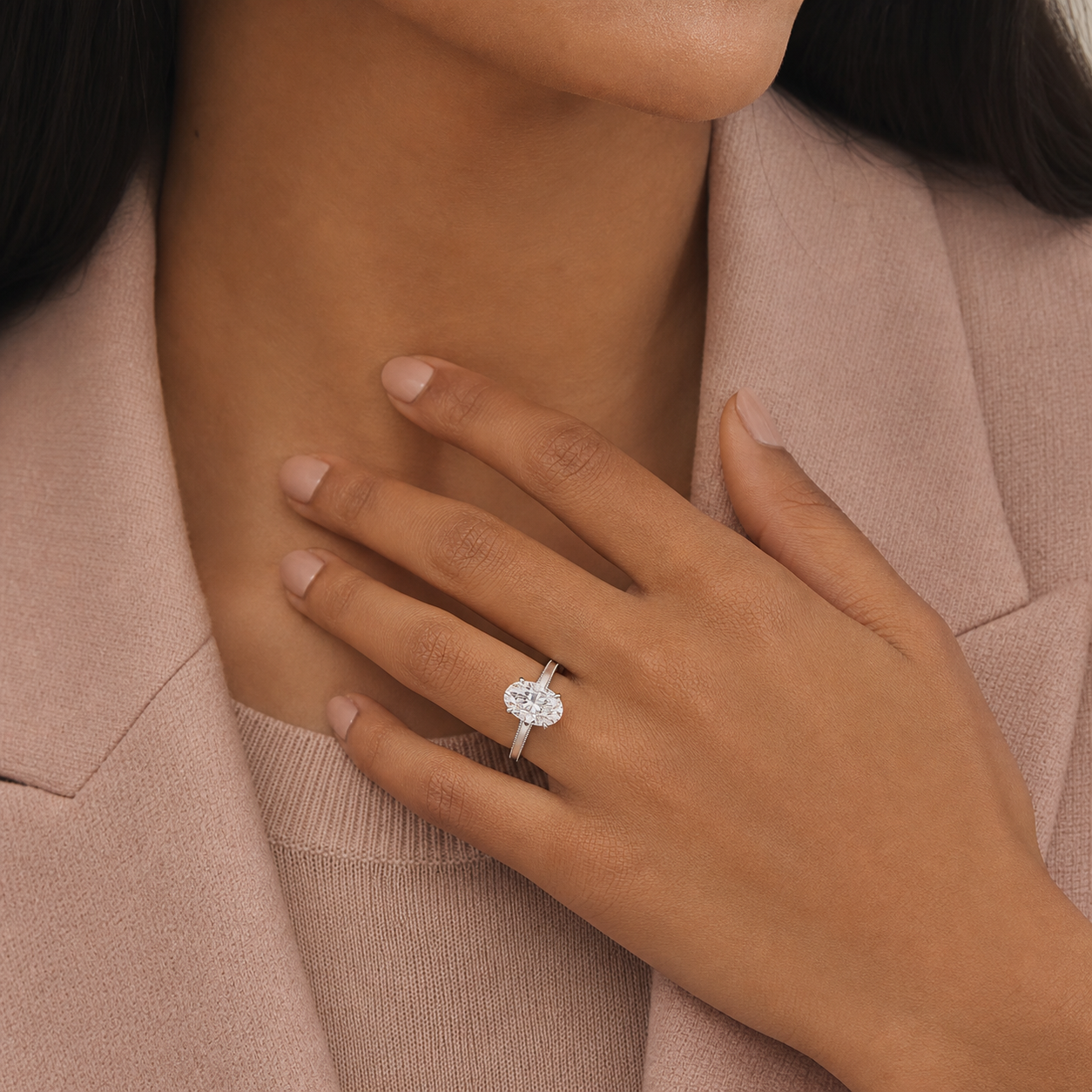


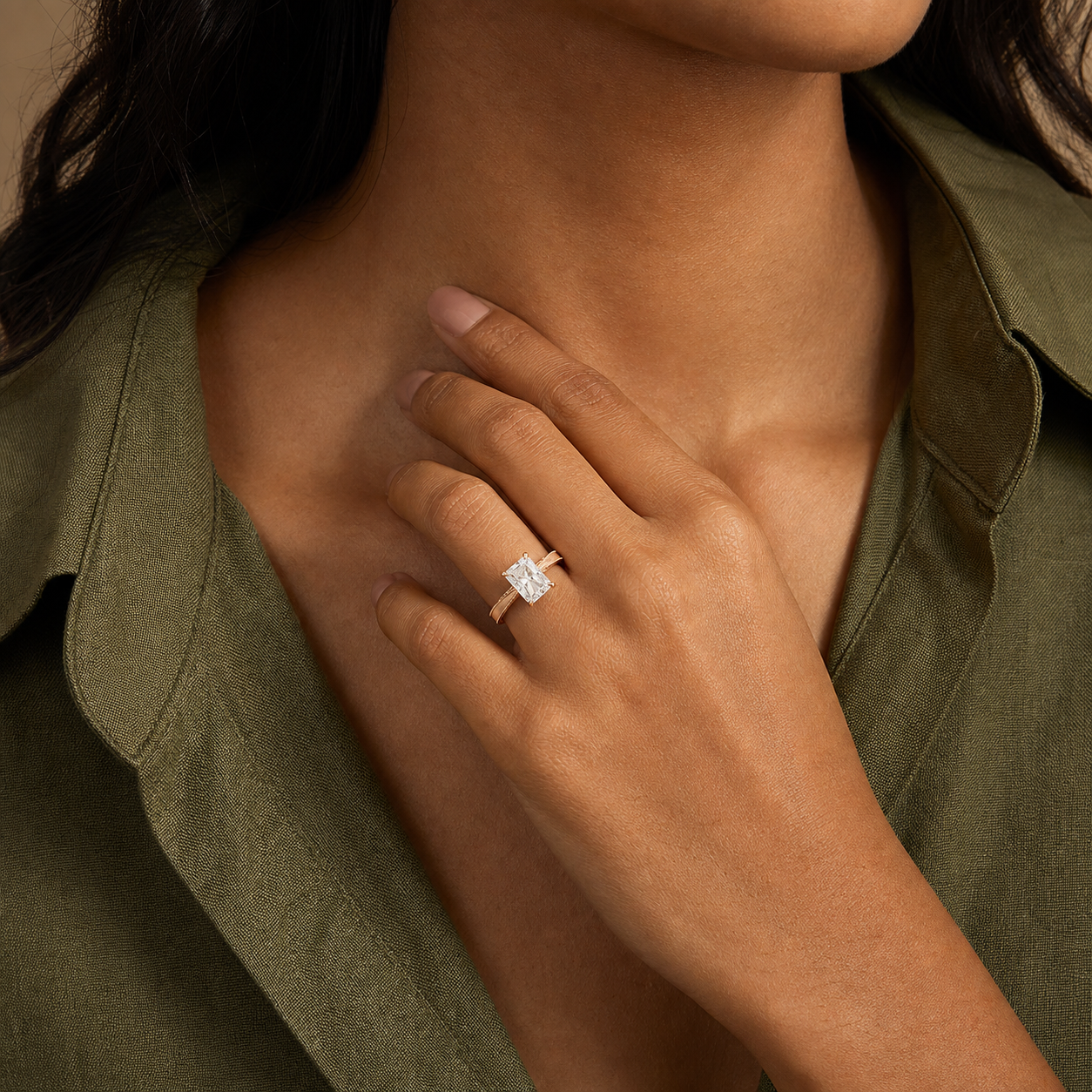


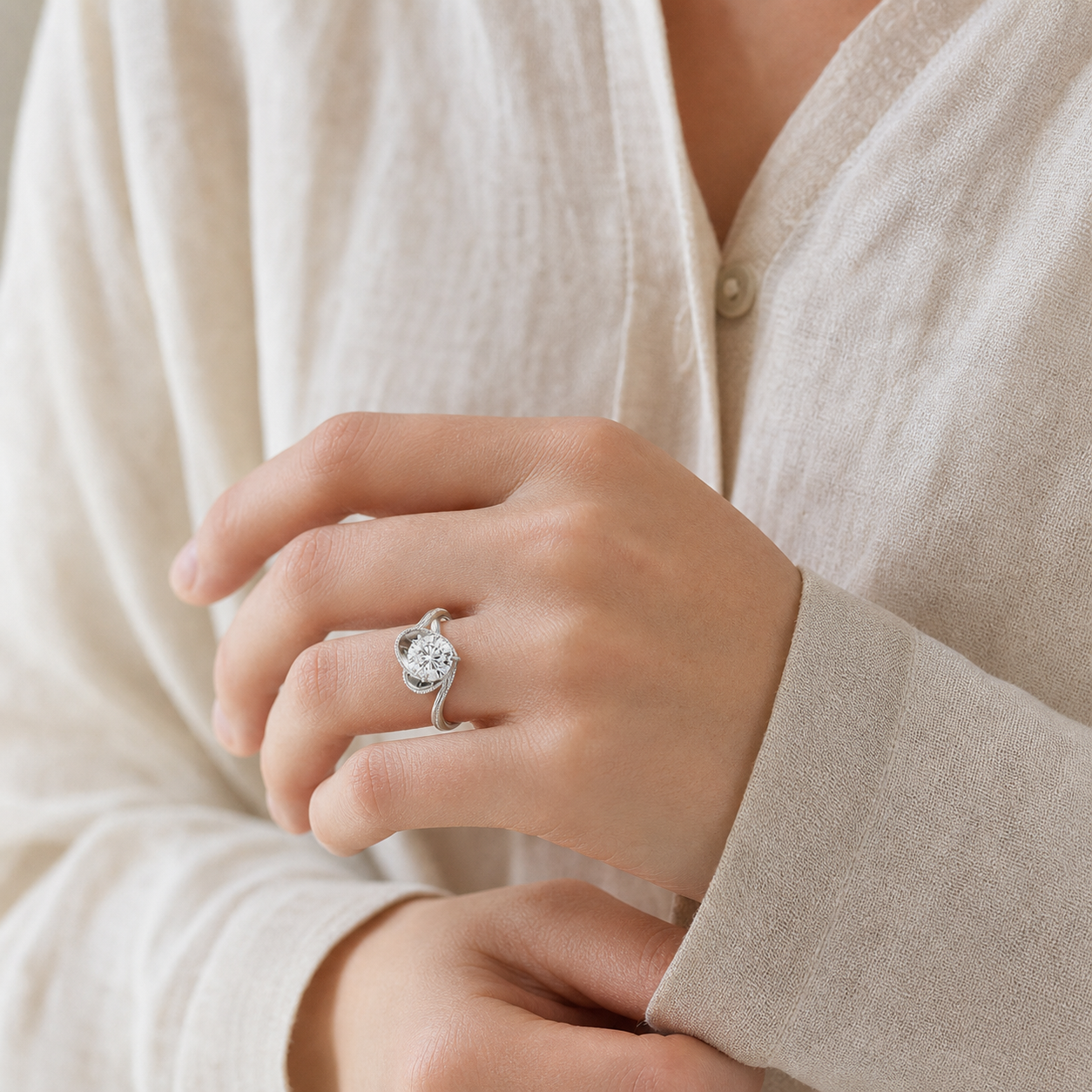


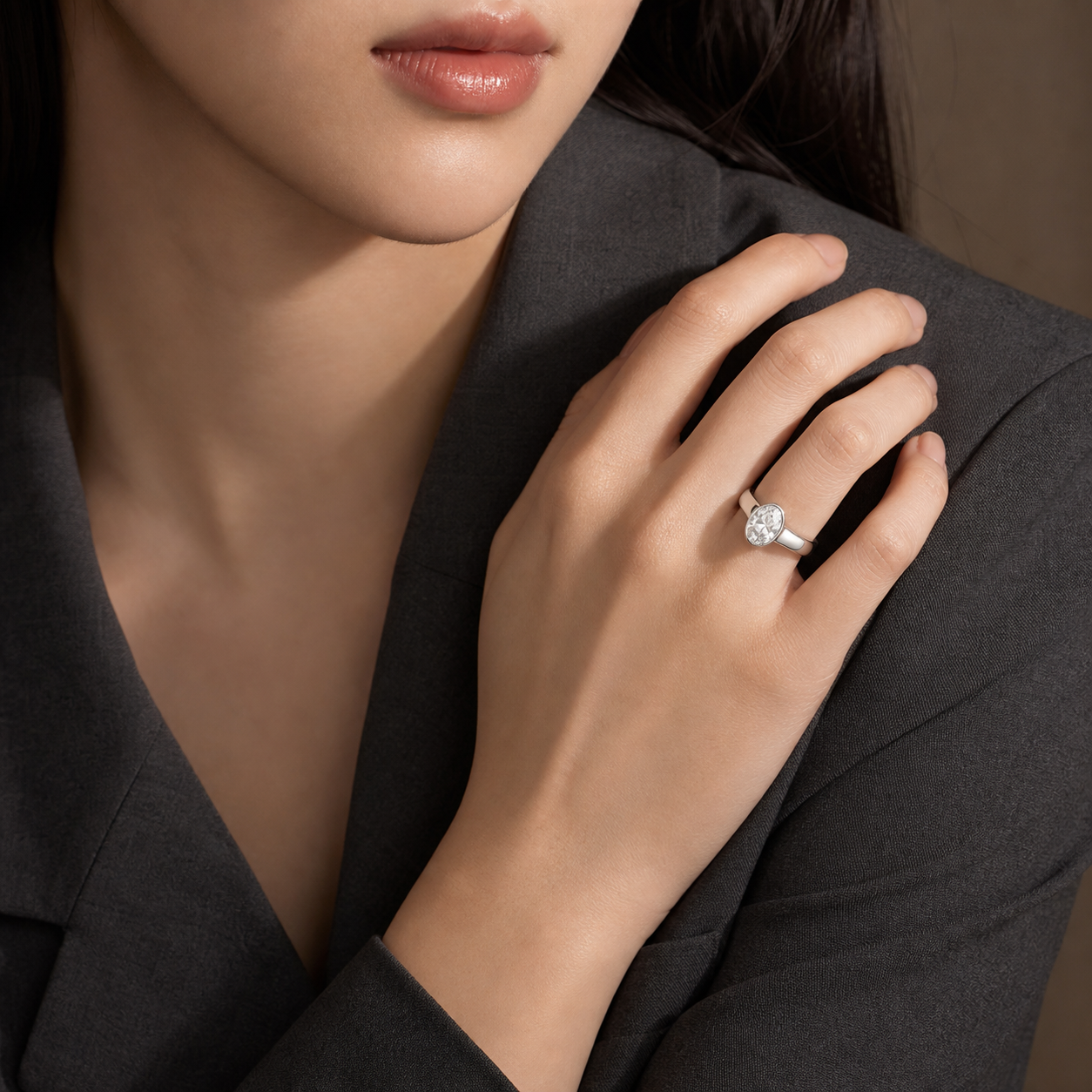


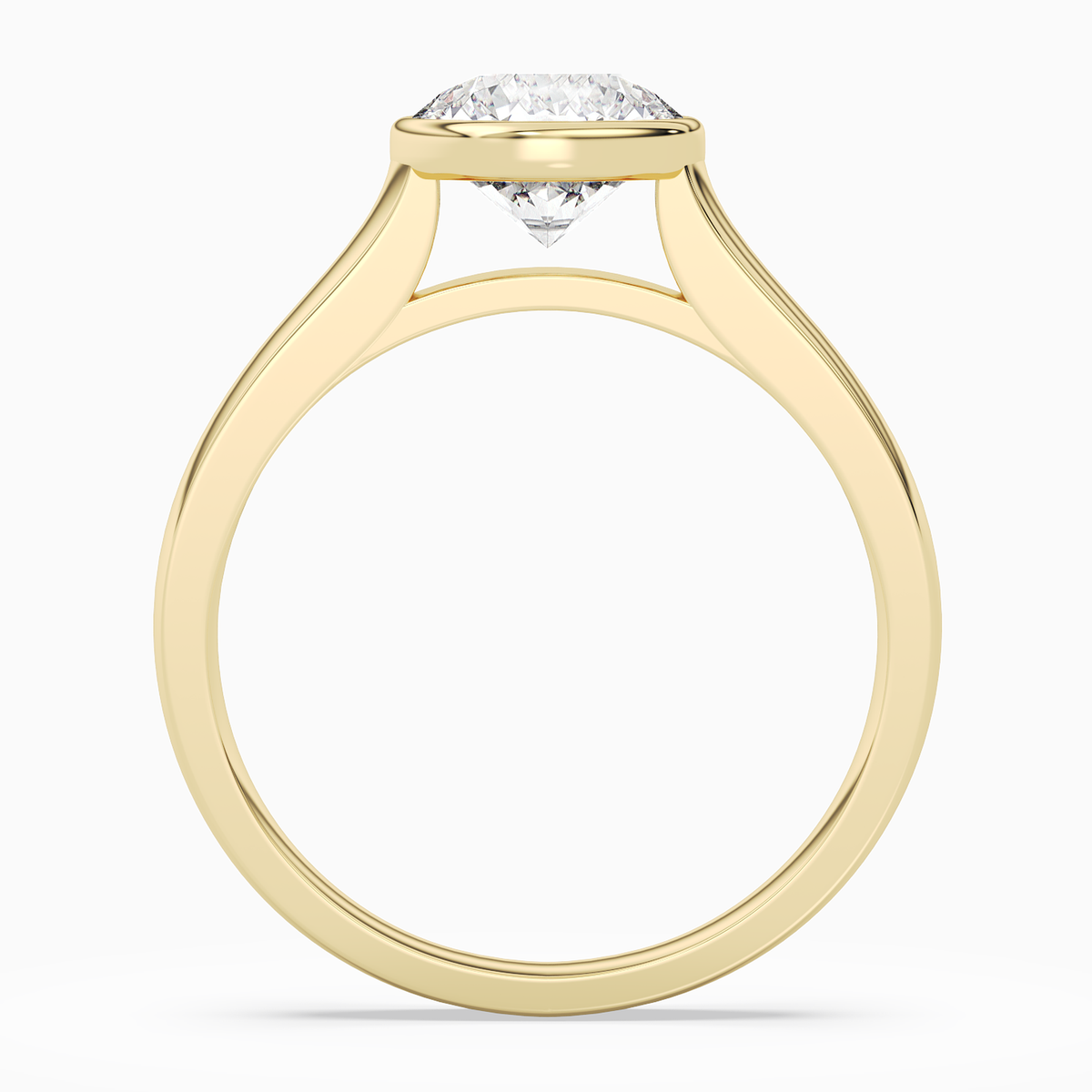

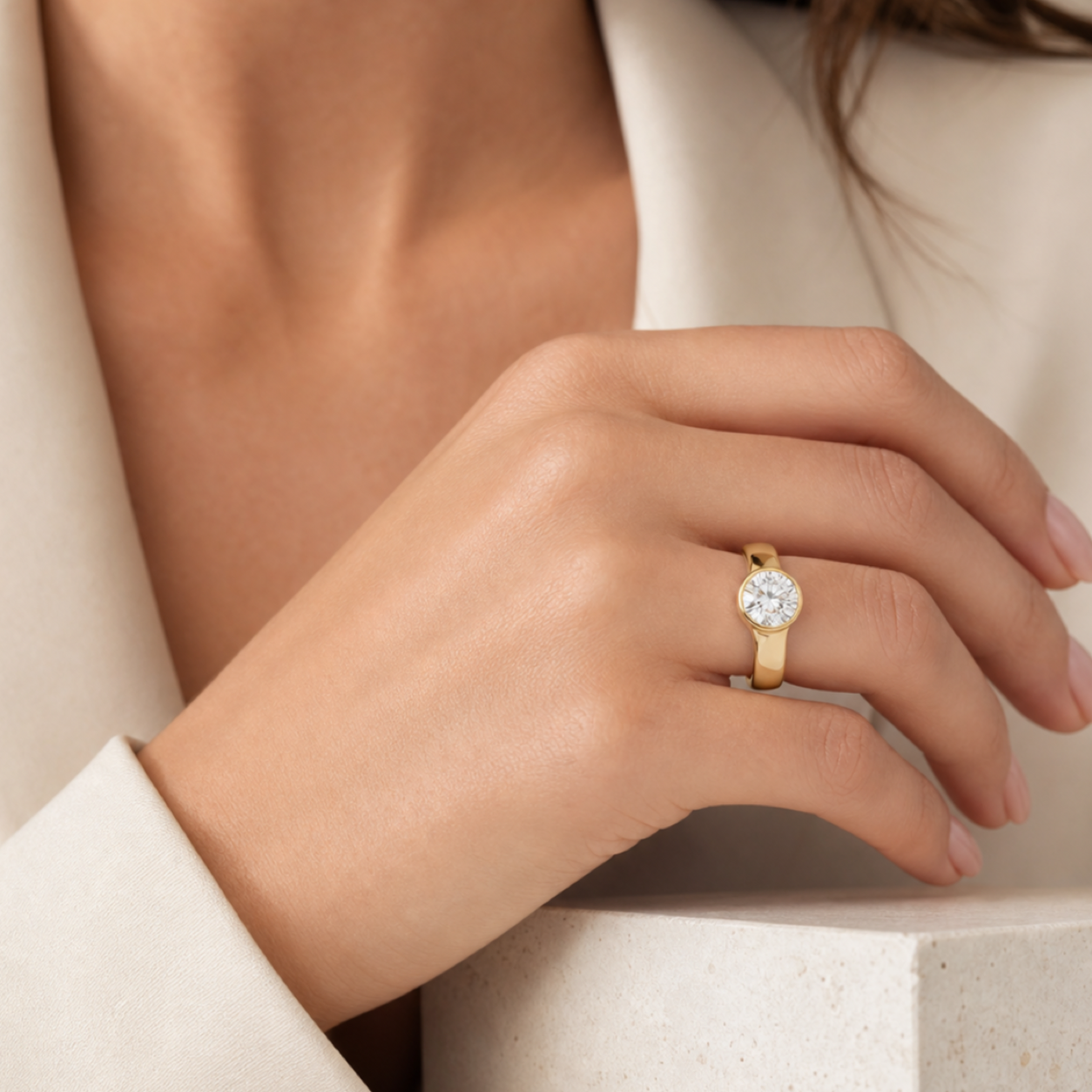
Vintage Engagement Rings: History, Reframed in Detail
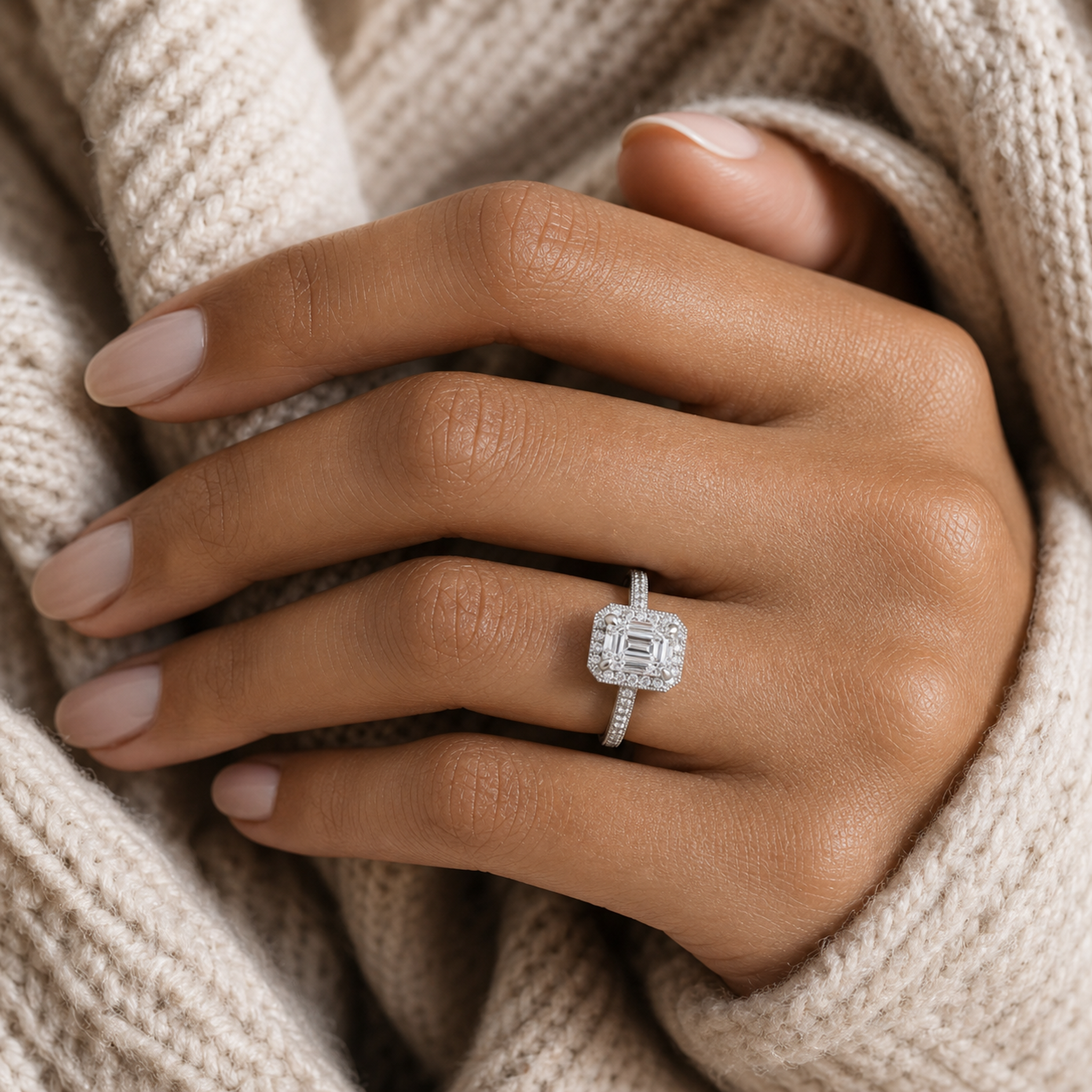
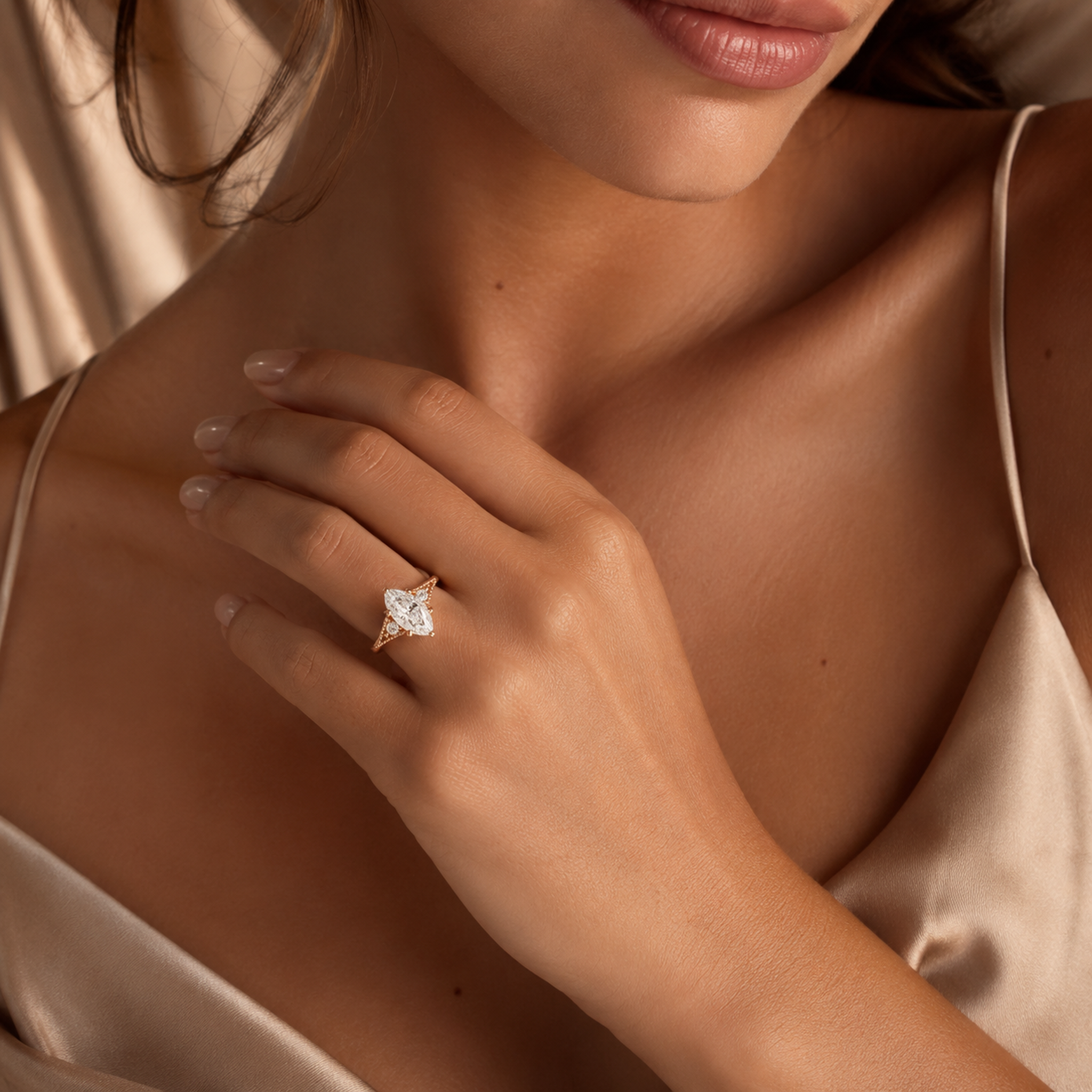
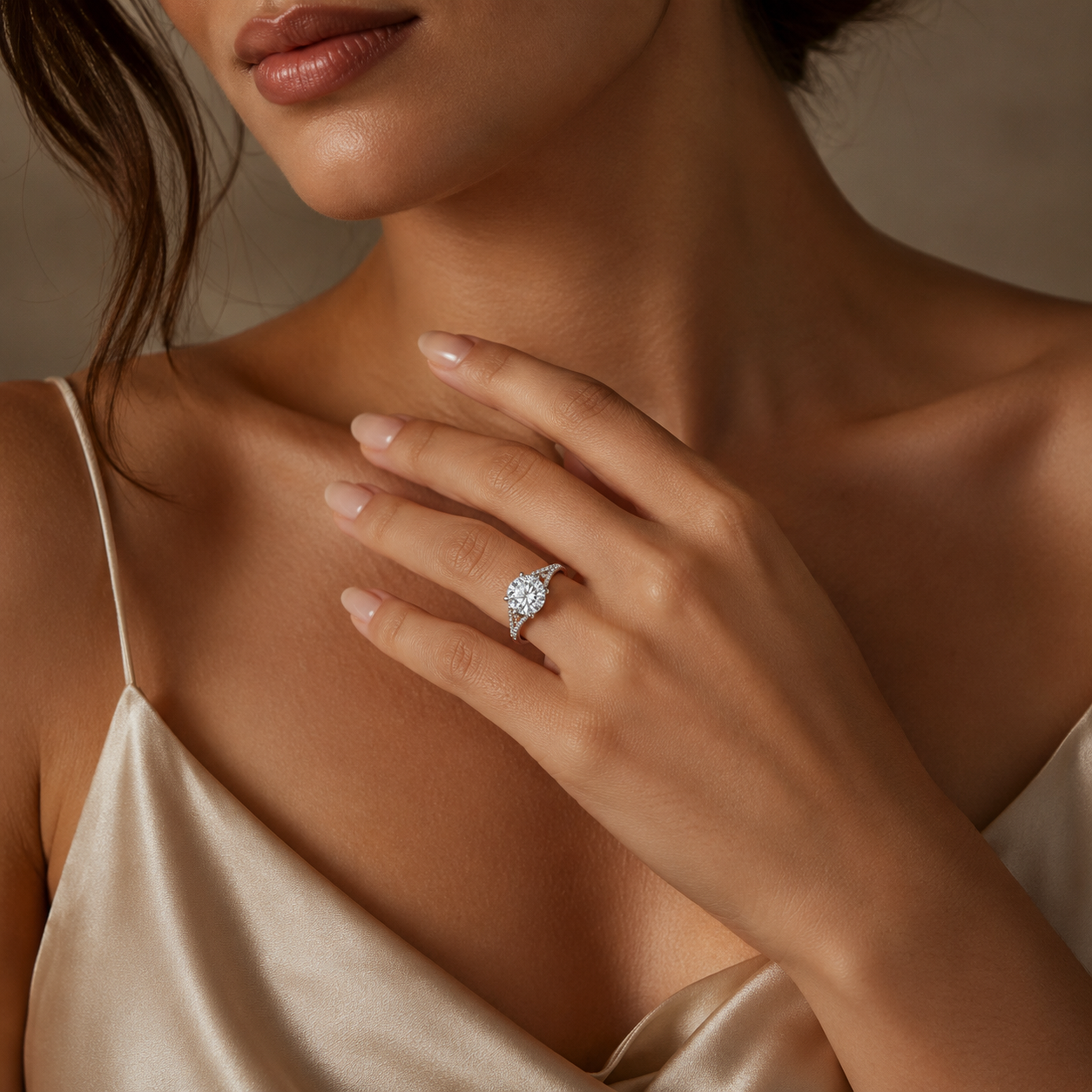
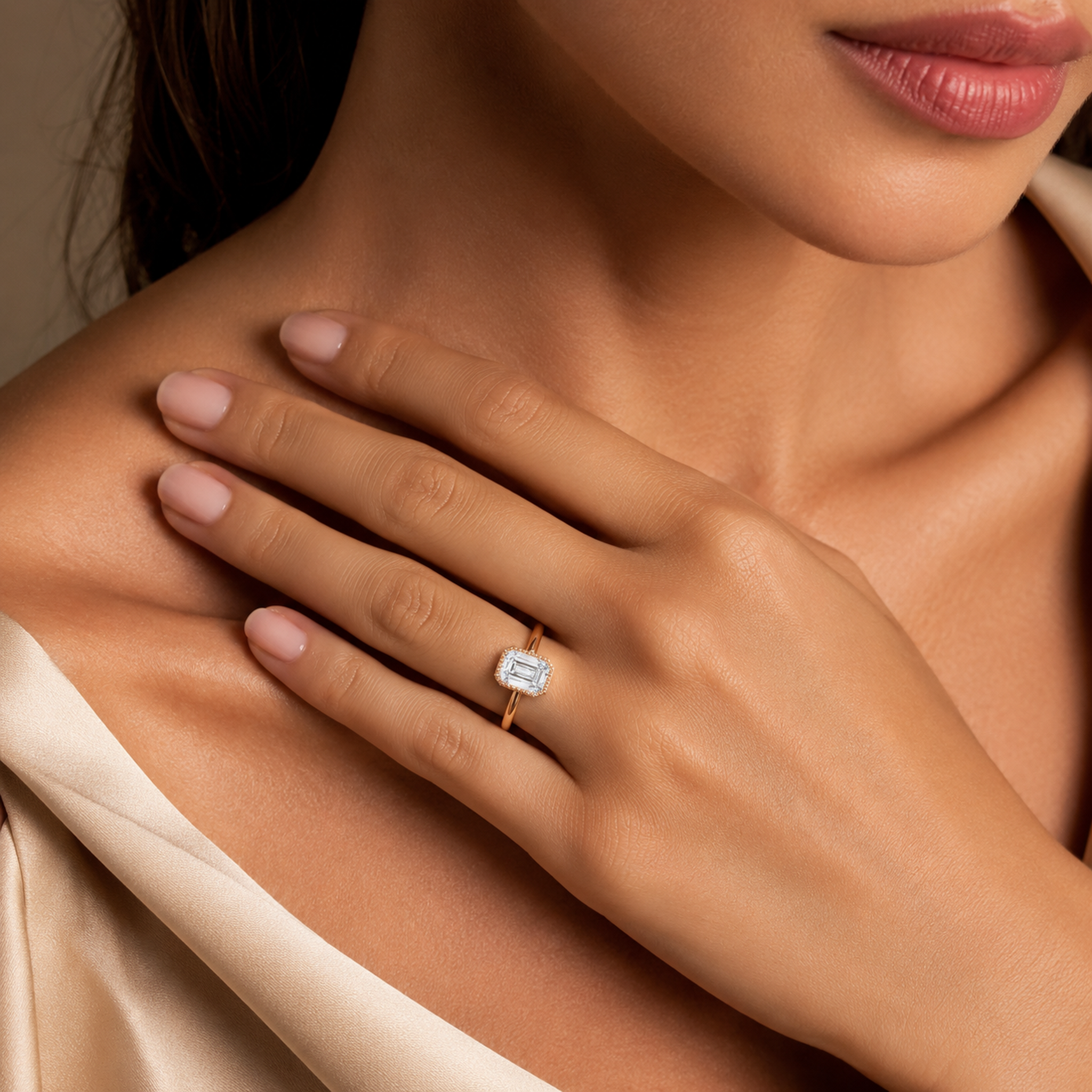
A vintage-inspired engagement ring carries history through detail, not age. Its character may be found in a milgrain edge, a crown-like gallery, an octagonal frame, a floral arrangement, or the sweep of a bypass band. These elements give the eye more to discover, often moving from the center stone to the shoulders and then into the profile.
Burvonti’s Vintage Engagement Rings are newly made rather than antique or previously owned. They draw selectively from earlier jewelry languages, then recalibrate those references around a lab-grown center diamond and present-day proportion. The goal is neither reproduction nor costume. It is continuity with a point of view.
Vintage-Inspired Is Different from Antique
Antique refers to an object’s age; in common jewelry usage, it generally describes a piece more than one hundred years old. Estate jewelry refers to a previously owned piece and does not by itself establish a particular age. Vintage-inspired describes a newly made ring whose forms or details recall an earlier period.
That distinction matters because appearance is not provenance. Milgrain does not make a new ring Edwardian, and geometric lines do not automatically make it an Art Deco artifact. Burvonti uses these terms as design references only when the evidence is clear. The collection name identifies a contemporary interpretation of historic vocabulary—not an undocumented date, maker, technique, or chain of ownership.
Read the Detail Before Naming the Era
Victorian jewelry ranged widely, but sentimental motifs, clusters, colored stones, and flowing forms appear throughout the period. Edwardian design is often associated with light-looking openwork, garlands, scrolls, fine borders, and diamond-rich compositions. Art Deco brought stronger symmetry, stepped geometry, clipped corners, and contrast. Retro design often enlarged the scale, softened geometry with curves, and made warmer gold more visually present.
A contemporary ring may combine these ideas. A milgrain bezel can meet a modern center shape; an octagonal halo can borrow geometric order without replicating a historical object; a vine or floral structure can use a cleaner profile. Rather than forcing every ring into a date range, read its specific vocabulary and how those elements are edited together.
Milgrain, Frame, Motif, and Profile
Milgrain is a row of fine metal beads used to articulate an edge. It can make a bezel, channel, or shoulder feel more finely drawn, especially when the border is visible against polished metal. Engraving cuts pattern into a surface, while openwork creates negative space within the structure. These techniques are distinct, even when they appear together in vintage-inspired design.
Frames create another register. Double or octagonal halos build concentric order. Crown-like settings add vertical identity. Floral and vine motifs introduce organic movement, while bypass and double-band structures change how the band meets the diamond. Burvonti’s collection spans these directions, so Vintage is not ornament applied to one standard solitaire.
Choose How Shape Participates in the Reference
Step-cut diamonds such as Emerald and Asscher shapes can reinforce geometric structure through broad, ordered facets. Round and cushion outlines can soften a detailed frame. Pear and marquise shapes introduce points and direction, while oval diamonds bring length without sharp corners. No shape belongs exclusively to a historic era, and a modern-cut lab-grown diamond can sit naturally within a vintage-inspired setting.
The setting must still answer the actual diamond. Prongs should respect corners, points, and the visible outline; halos and bezels should be scaled to the center; side stones should transition without obscuring it. Select the design vocabulary that feels meaningful, then compare which available shape lets the center and surrounding detail remain distinct rather than visually crowded.
Metal Changes the Temperature of the Reference
Yellow Gold can make the metalwork itself more explicit, adding warmth between diamonds and along engraved or beaded edges. Rose Gold creates a softer tonal shift that can emphasize curves and botanical detail. White Gold or Platinum can place greater visual emphasis on bright diamonds and crisp geometry. These are perceptual effects, not rules that assign a metal to one era.
Finish and upkeep matter when detail is fine. Polished fields, milgrain, pavé, and open areas collect wear differently. Alloy, plating, sensitivity, patina, and repair behavior vary by product. Choose the tone for the complete ring, then confirm the requirements of the specific setting.
More Detail Changes Pairing and Care
A decorated gallery, low halo, wide bezel, bypass shoulder, or side-stone span can affect how a wedding band approaches the engagement ring. A straight band may sit close to some profiles; others form a deliberate gap or call for a curved contour. Examine contact points in profile, especially where diamonds, milgrain, or raised edges could rub against the second ring.
Fine detail is not maintenance-free. Residue can soften the definition of milgrain and collect around small diamonds or open galleries. Clean gently with methods appropriate to the stones, metal, and setting; remove the ring for impact-prone work or harsh chemical exposure; and arrange inspection when a prong catches, a stone moves, or the ring has been struck. Resize and repair options depend on the band and placement of detail.
A Historical Vocabulary, Resolved at Present Scale
Burvonti pairs responsibly sourced, independently graded lab-grown center diamonds with setting architecture reviewed through proportion and human judgment. Vintage reference is treated as a vocabulary to be understood, not a shortcut to romance or a claim of antique provenance.
Custom possibilities may refine a motif, milgrain placement, engraving, center shape, metal, band proportion, or another personal detail when the selected structure allows. The strongest result preserves distinction: enough historical character to feel intentional, enough restraint to keep the center and hand present, and enough technical clarity to understand what the finished ring actually contains.
Frequently Asked Questions
What is a vintage-inspired engagement ring?
It is a newly made engagement ring that uses forms or details associated with earlier jewelry design, such as milgrain borders, openwork, engraving, geometric frames, botanical motifs, decorated halos, or sculpted profiles.
What is the difference between vintage, antique, and estate jewelry?
Antique describes age and generally means more than one hundred years old. Estate means previously owned, regardless of age. Vintage-inspired describes a new piece that interprets historical design language without claiming historical provenance.
Are Burvonti vintage engagement rings antique rings?
No. Burvonti’s Vintage Engagement Rings are newly made, vintage-inspired designs. Their historical character comes from design vocabulary, not age, previous ownership, or an antique maker attribution.
Which jewelry eras influence vintage-inspired engagement rings?
Common references include Victorian, Edwardian, Art Deco, and Retro design. A contemporary ring may combine ideas from more than one period, so an era label should not be assigned without clear design evidence.
What details make an engagement ring look vintage-inspired?
Milgrain, engraving, openwork, floral or vine motifs, geometric halos, crown-like galleries, side-stone arrangements, bypass bands, and articulated bezels can all contribute. No single detail defines every vintage-inspired ring.
What is milgrain on an engagement ring?
Milgrain is a line of fine metal beads used to articulate an edge. It may border a bezel, channel, band, or decorative panel, creating a finely drawn transition between polished metal and other details.
Is milgrain the same as engraving or filigree?
No. Milgrain creates a beaded metal edge; engraving cuts a pattern into a surface; filigree or openwork forms an airy structure with negative space. They can coexist, but they are different techniques and visual effects.
Does a vintage-inspired engagement ring have to be ornate?
No. A ring can suggest historical character through one controlled element, such as a milgrain bezel, an octagonal frame, or a sculpted profile. Vintage-inspired does not require every surface to be decorated.
Which diamond shapes suit vintage-inspired settings?
Round, oval, cushion, emerald, Asscher, pear, marquise, radiant, and other shapes can work. Step cuts reinforce geometry; softer outlines can balance intricate frames. The setting must be designed for the chosen diamond’s actual outline and dimensions.
Can a modern-cut lab-grown diamond work in a vintage-inspired ring?
Yes. Vintage-inspired describes the ring’s design language, not a requirement for an antique-cut or mined diamond. A modern lab-grown center can be paired with historic references when shape, setting, and proportion work together.
What metal works best for a vintage-inspired engagement ring?
There is no universal best metal. Yellow and Rose Gold make warm metalwork more visible; White Gold and Platinum can emphasize bright diamonds and crisp geometry. Alloy, finish, upkeep, sensitivity, and the specific design should guide the choice.
Are vintage-inspired engagement rings suitable for everyday wear?
They can be when the structure suits the wearer’s routine. Historical appearance is not a durability grade; consider setting height, fine borders, small diamonds, openwork, pointed stones, band dimensions, and required care.
How should I clean a vintage-inspired engagement ring?
Use a gentle method appropriate to the diamonds, metal, and setting. Pay attention to residue around milgrain, small diamonds, bezels, and galleries without forcing tools into fine areas; avoid abrasives and harsh chemicals.
Can a vintage-inspired engagement ring be resized?
Resize feasibility depends on the metal, band construction, engraving, milgrain, pavé coverage, side stones, and amount of change required. Confirm the allowable range for the exact ring before purchase or alteration.
Will a wedding band sit flush with a vintage-inspired engagement ring?
Not automatically. Halo width, basket height, side stones, bypass shoulders, wide bezels, and decorative edges can create contact or a gap. Compare the exact rings in profile to determine whether a straight or contoured band is appropriate.
Can a Burvonti vintage-inspired engagement ring be customized?
Custom possibilities may include motif, milgrain or engraving placement, center shape, metal, band proportion, or selected setting details. Availability and structural feasibility depend on the design and must be confirmed before final specification.