
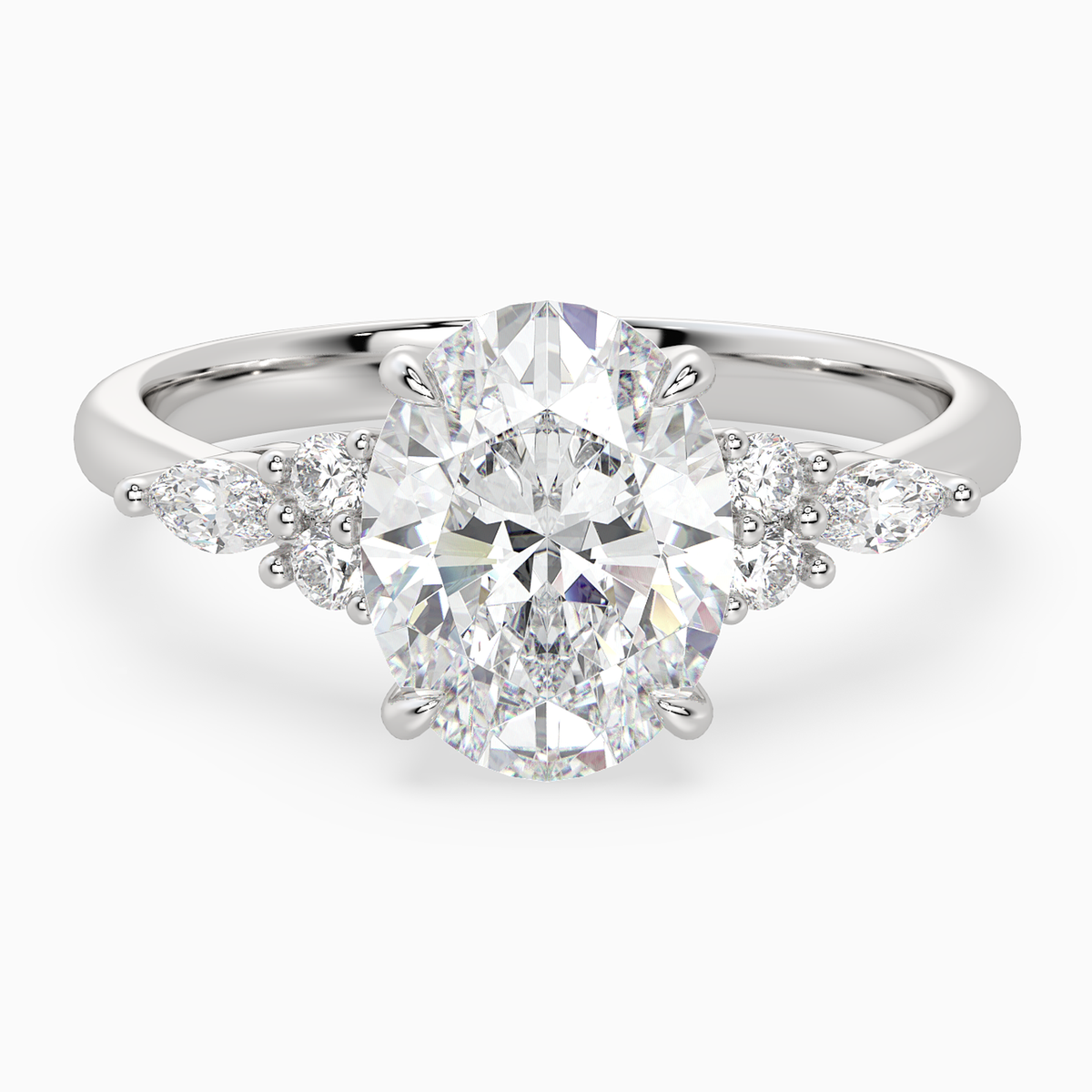


Lab Grown Diamond Bezel Necklaces
A continuous metal edge brings the diamond’s outline into focus. Explore bezel necklaces through shape, proportion, profile and placement.


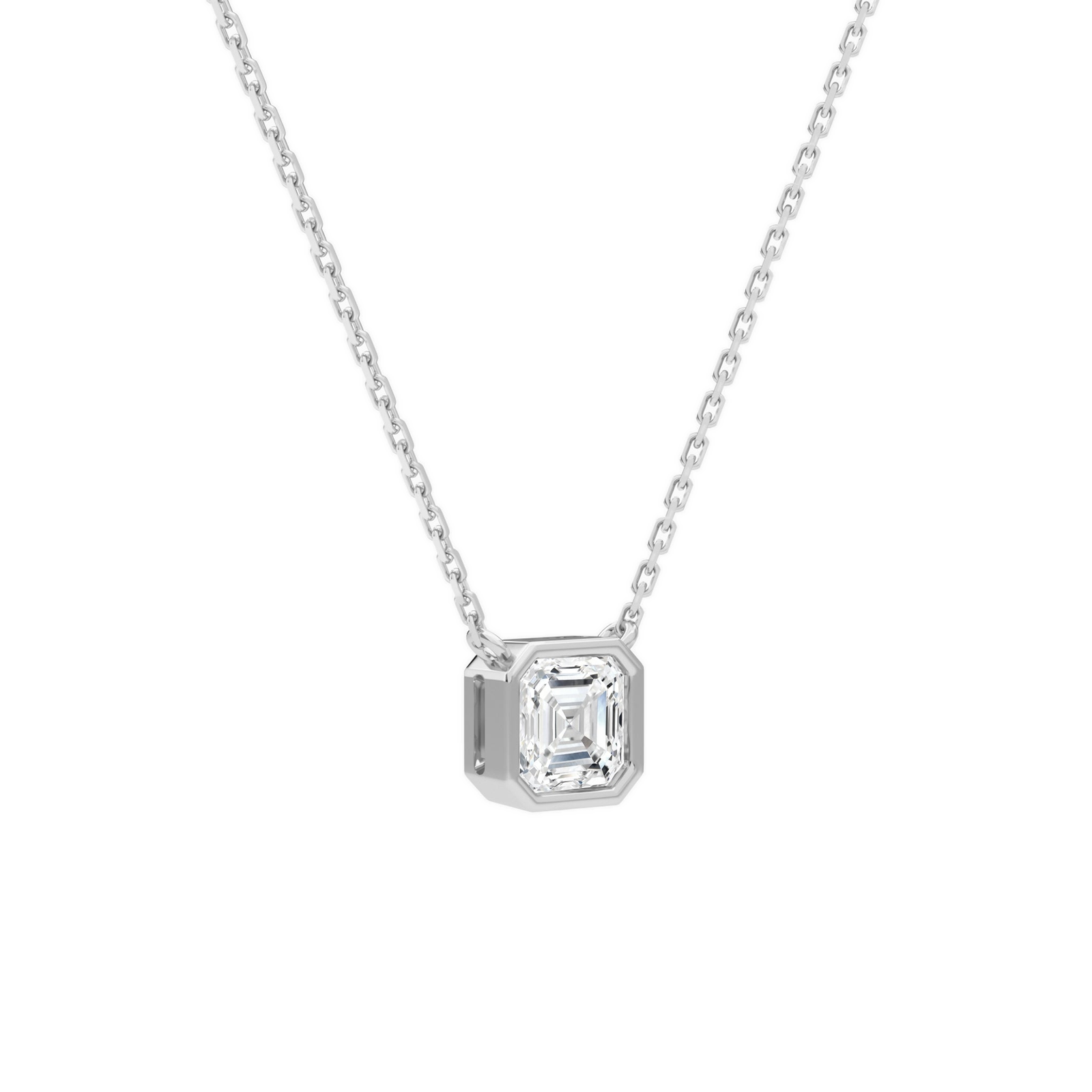


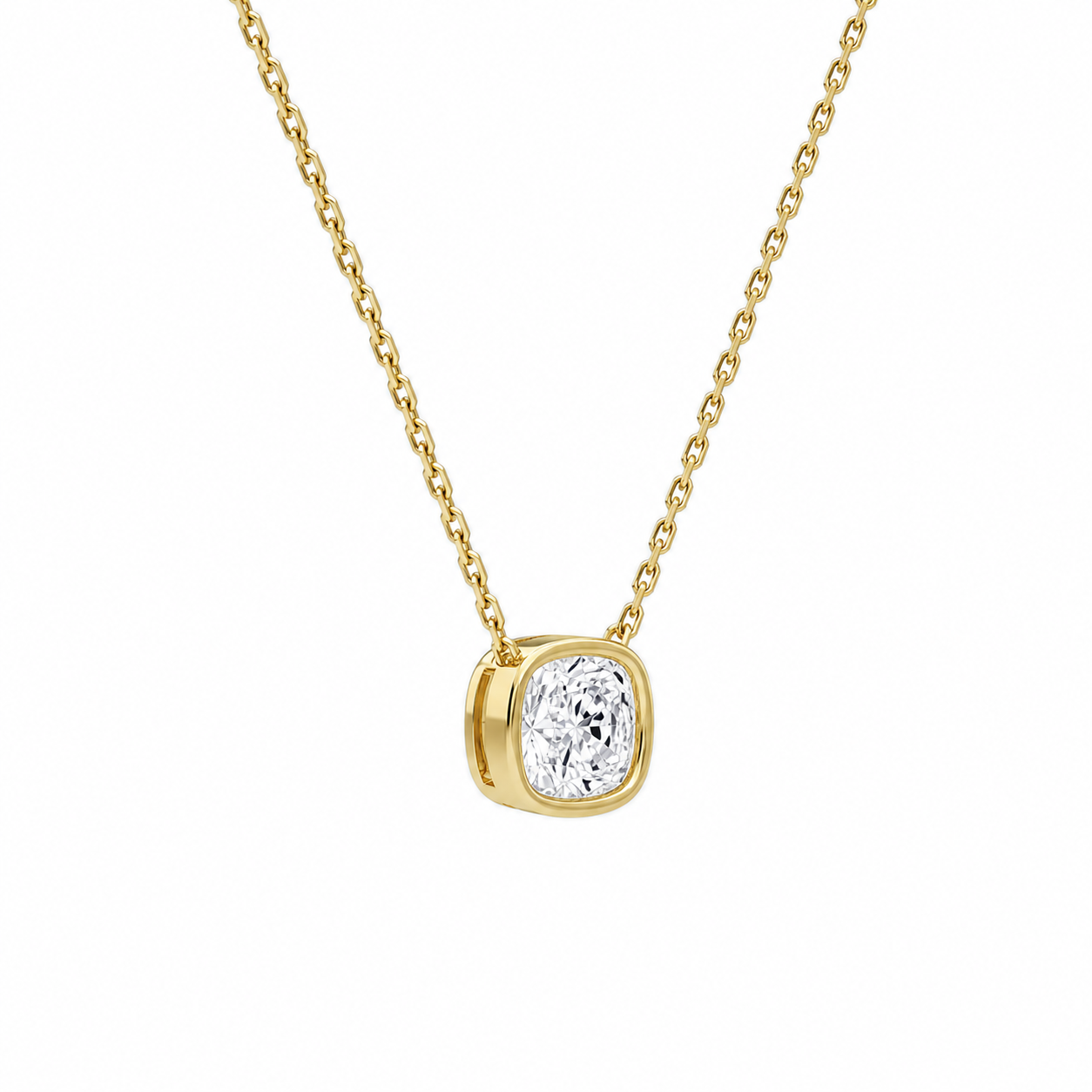


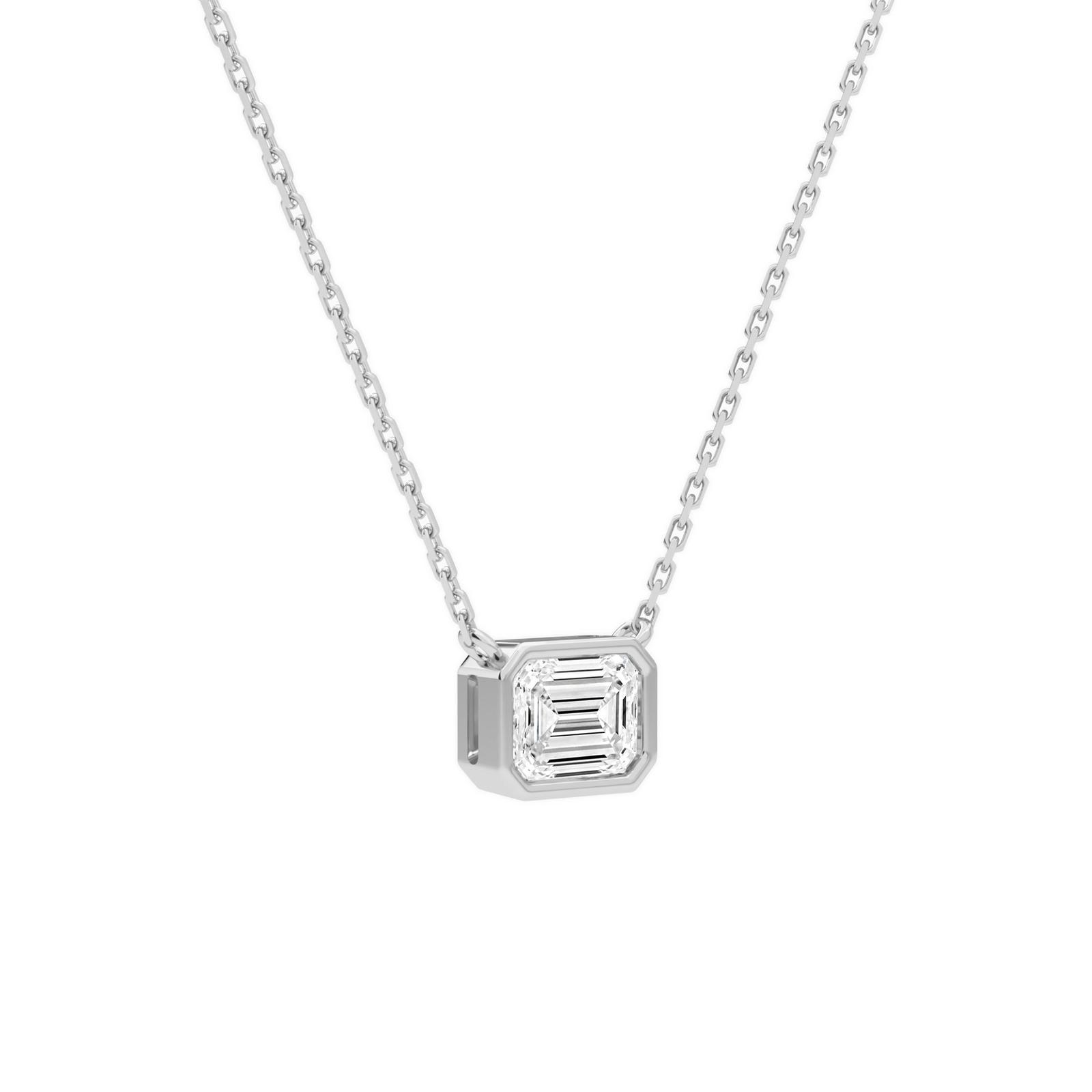


























Lab-Grown Diamond Bezels: The Precision of a Continuous Edge
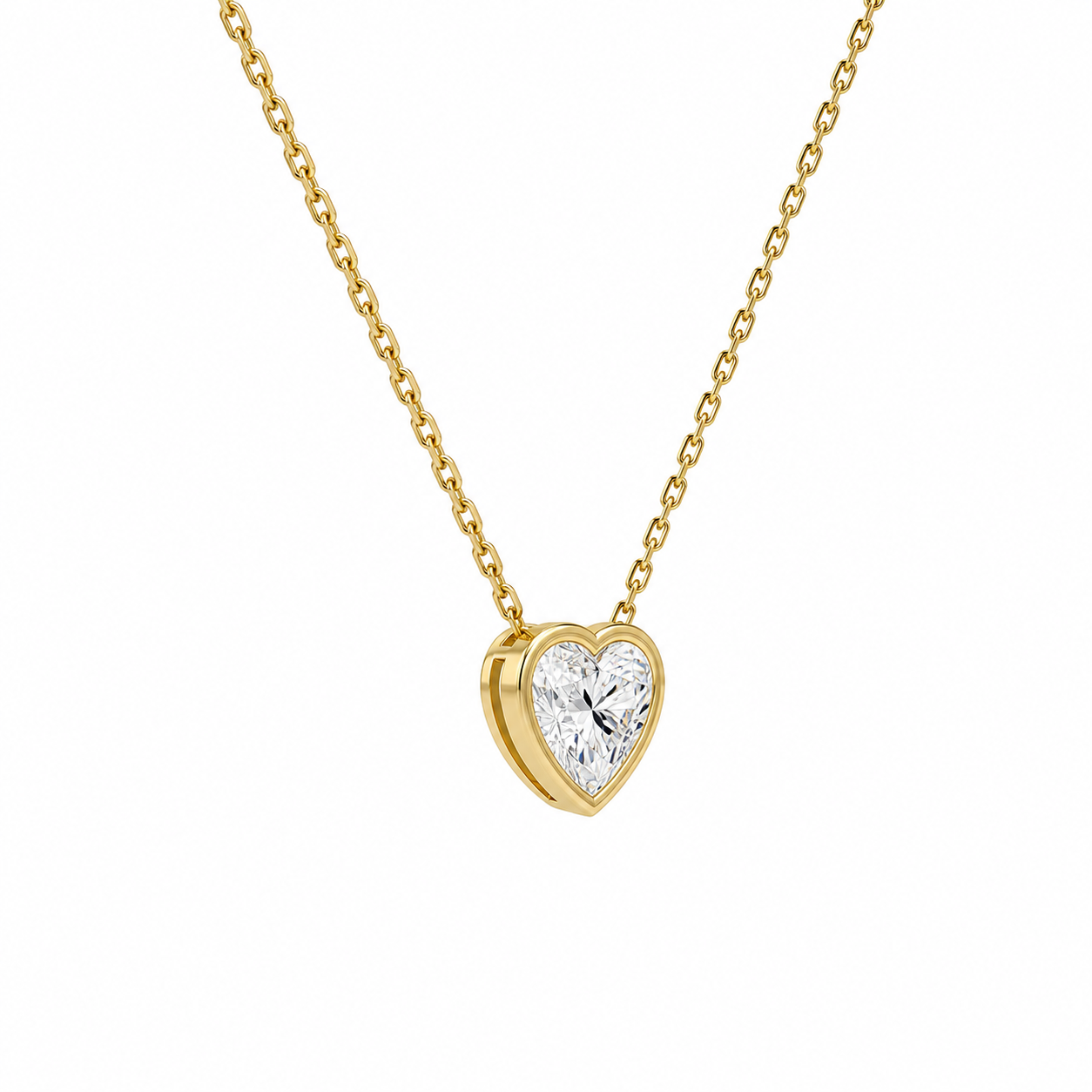
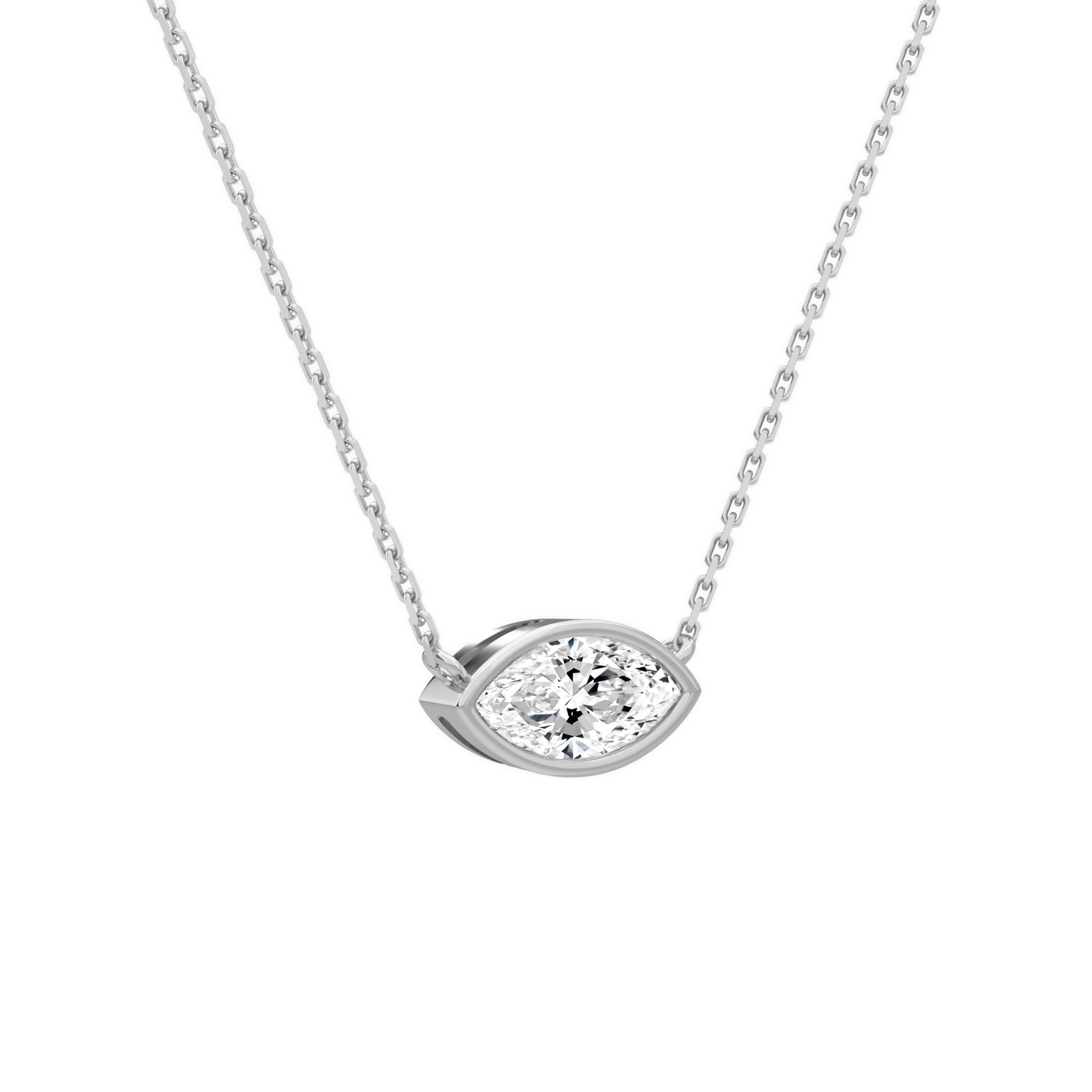
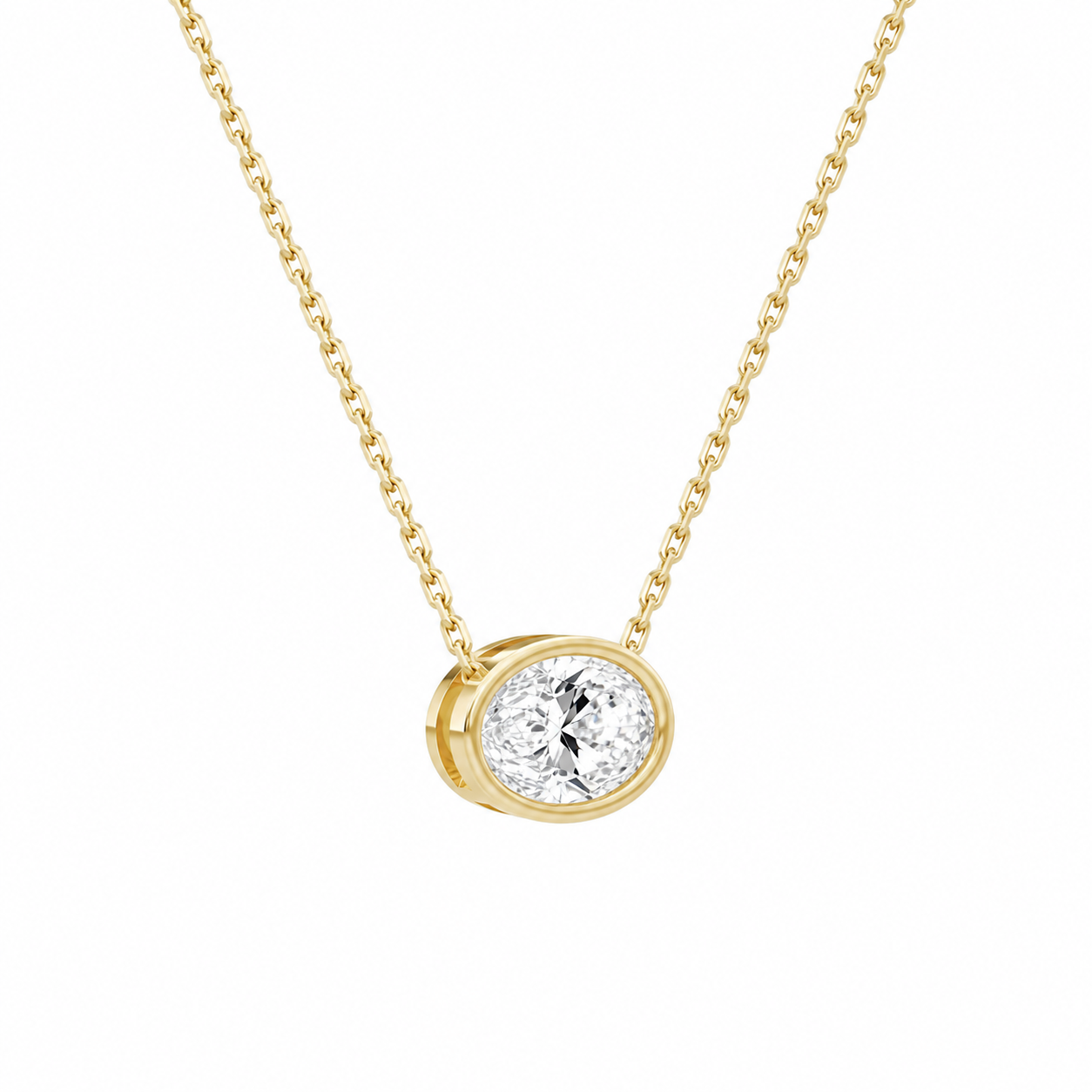
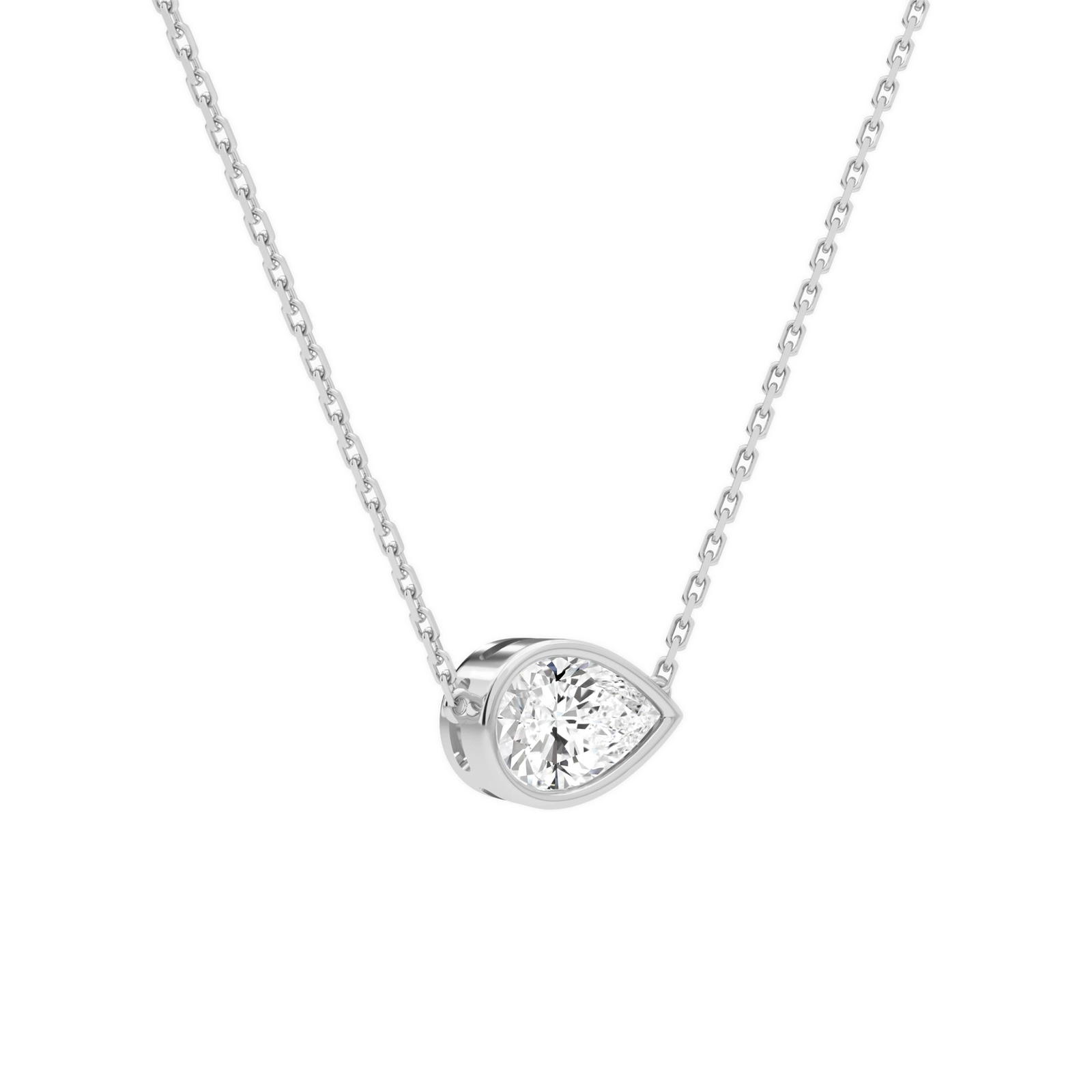
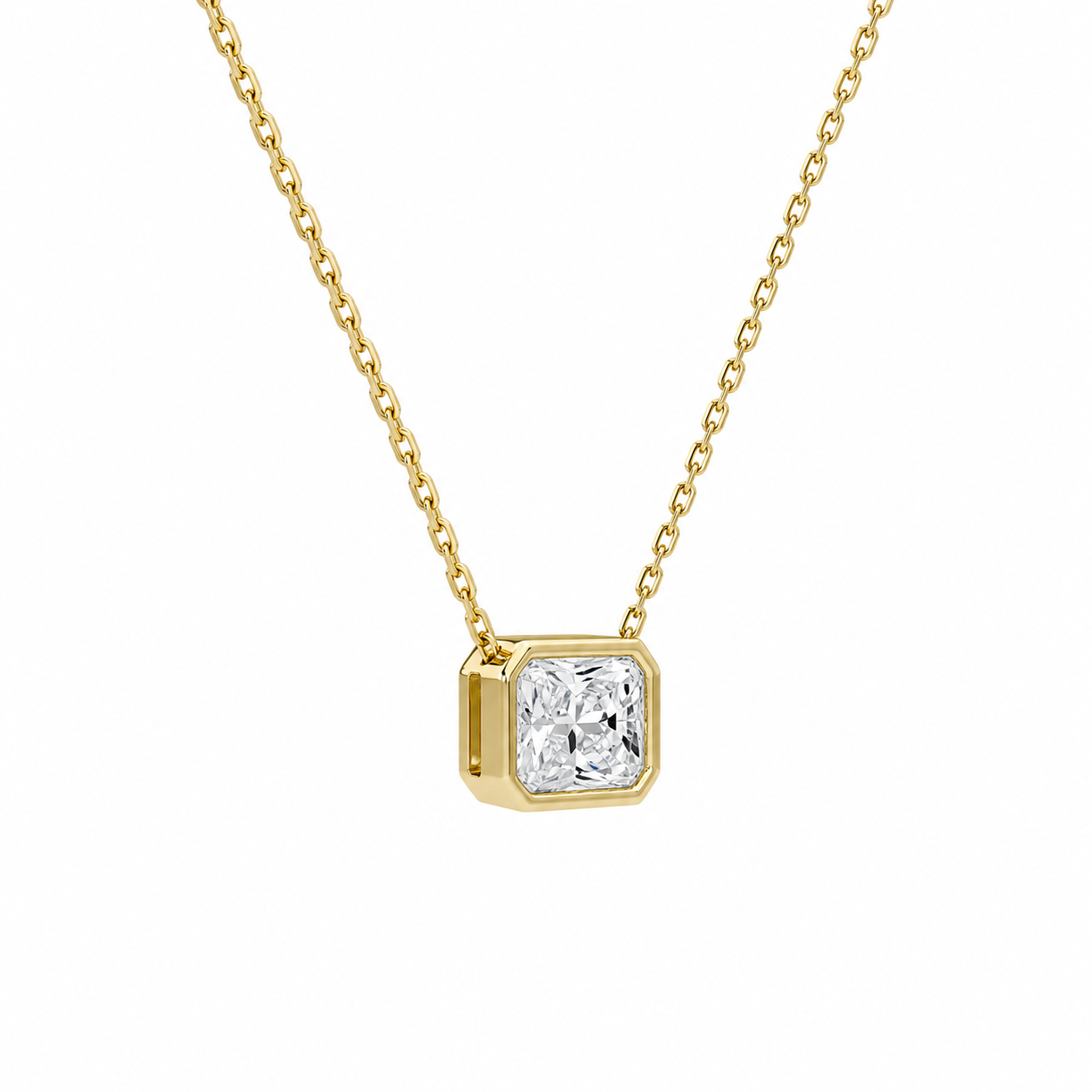
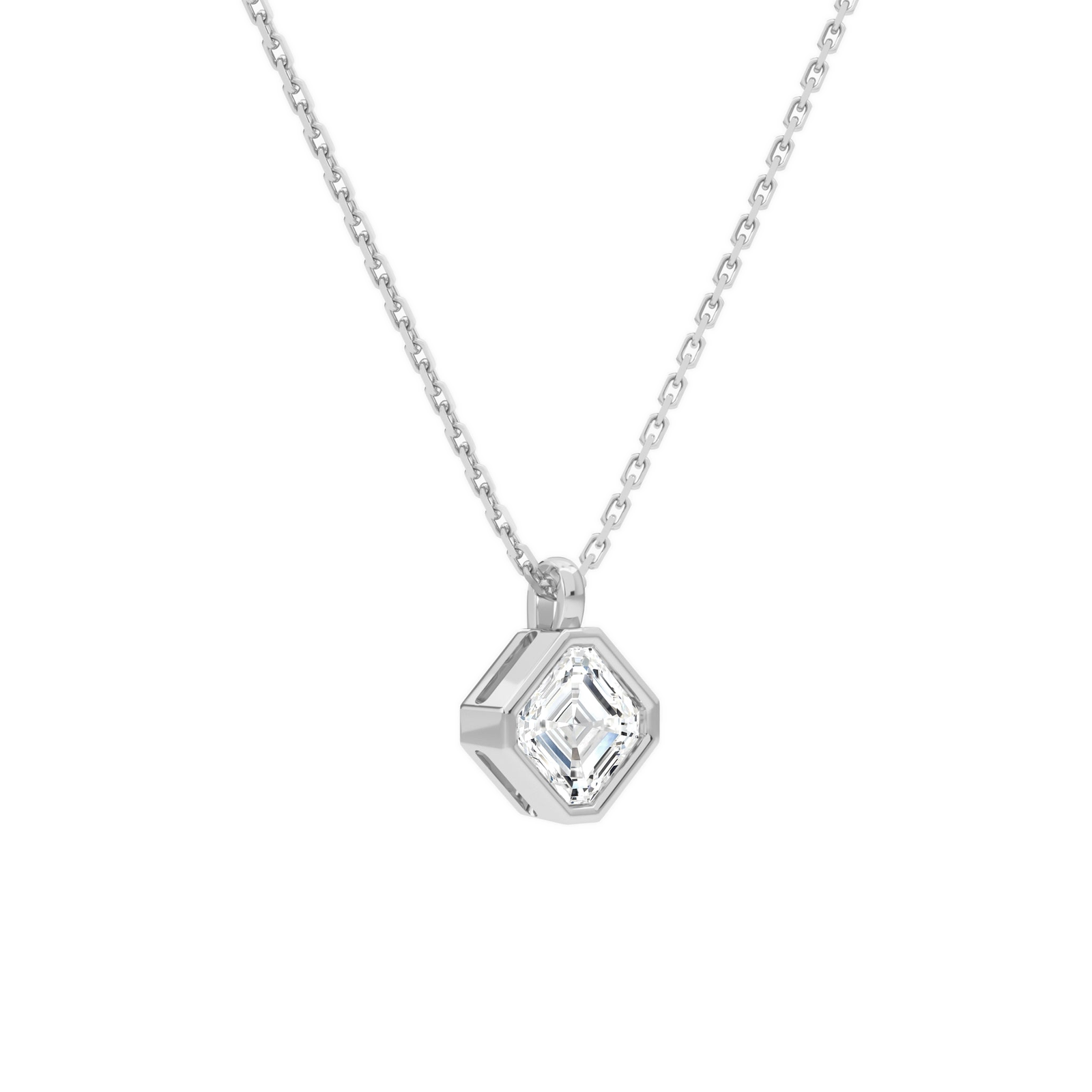
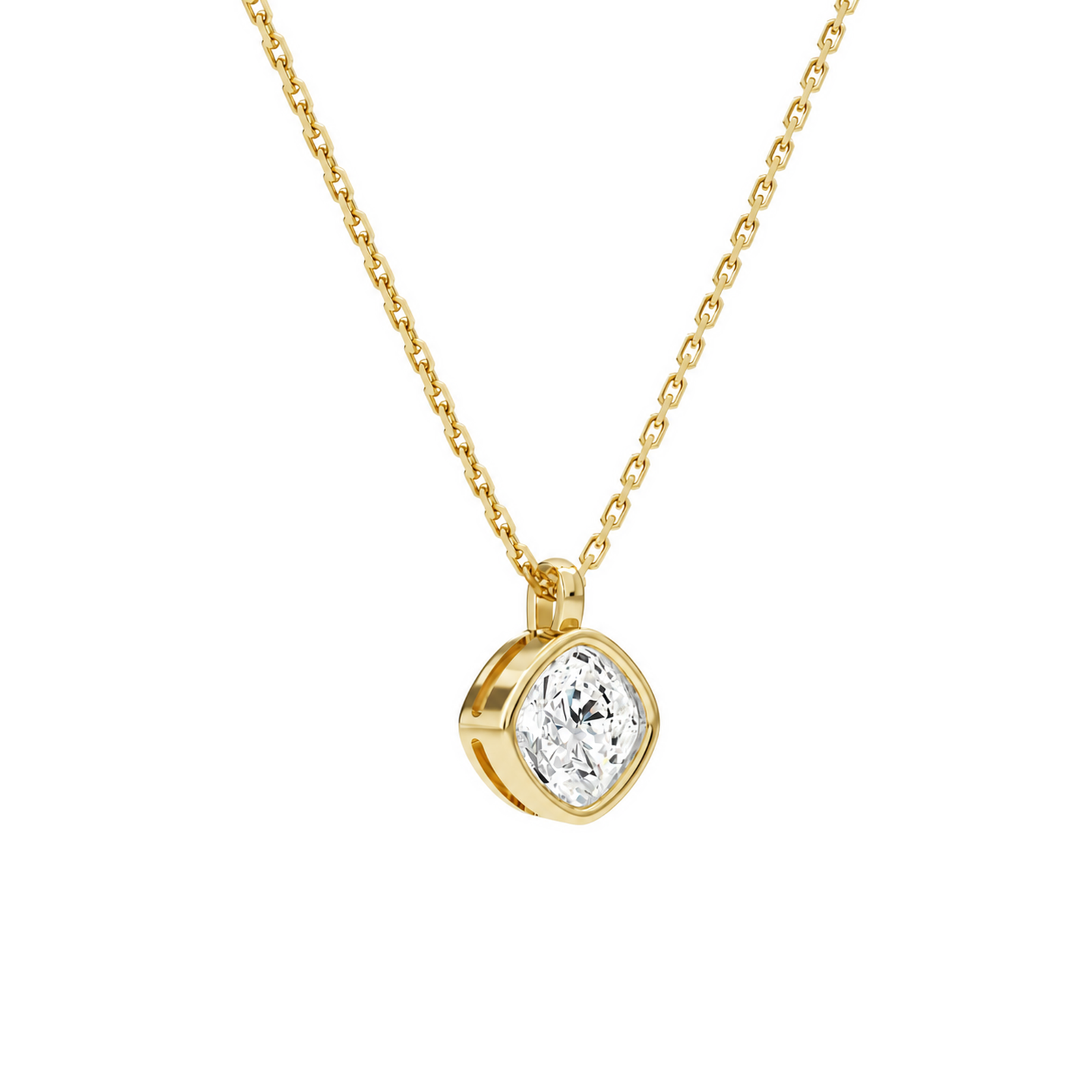
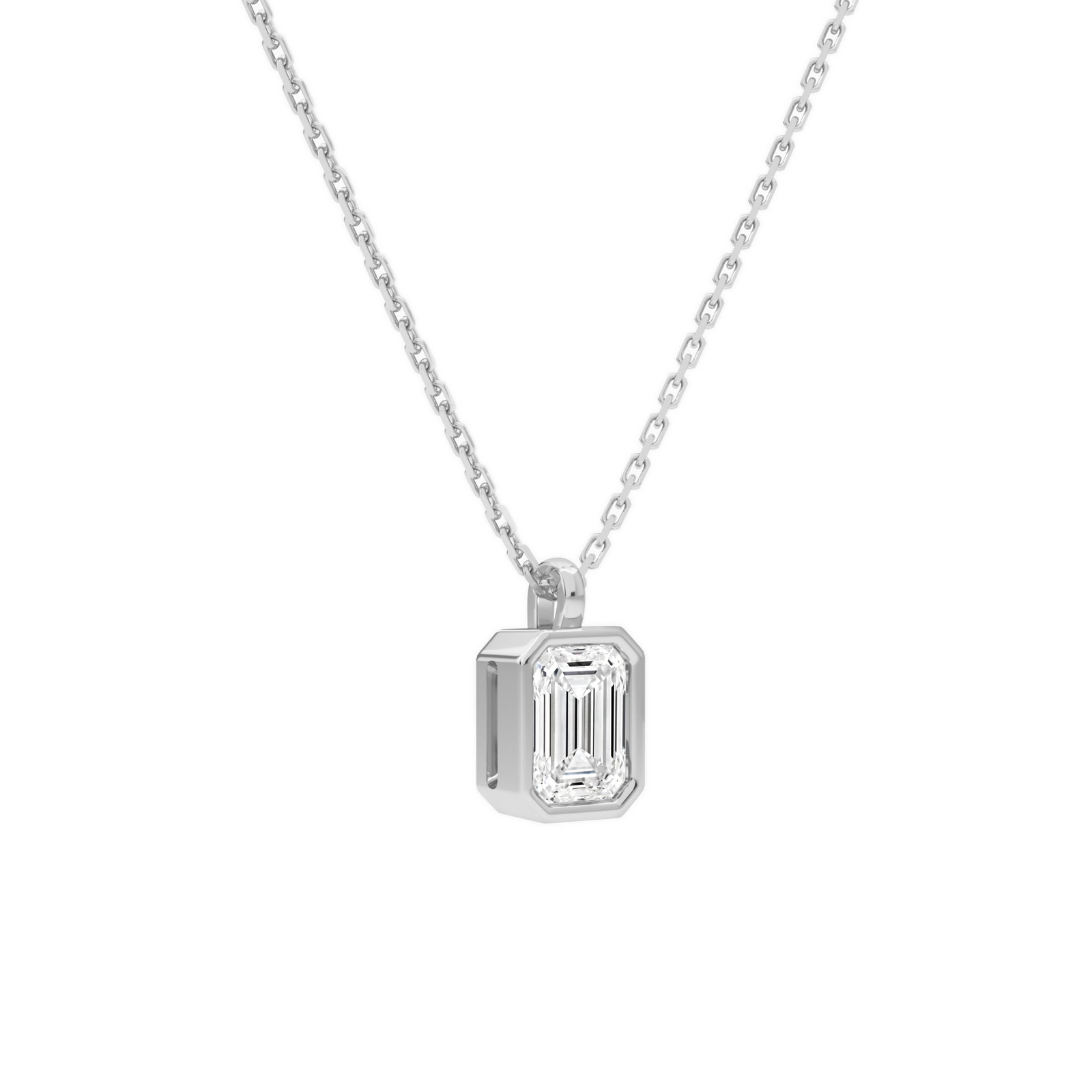
A bezel makes the boundary part of the design. Instead of discrete prong contacts, metal follows the diamond’s perimeter and gives its outline a continuous visual frame. That edge can feel quiet when metal contrast is low or distinctly graphic when color, width, and shape are more visible. The setting is not merely a practical label; it determines how diamond and metal are read together.
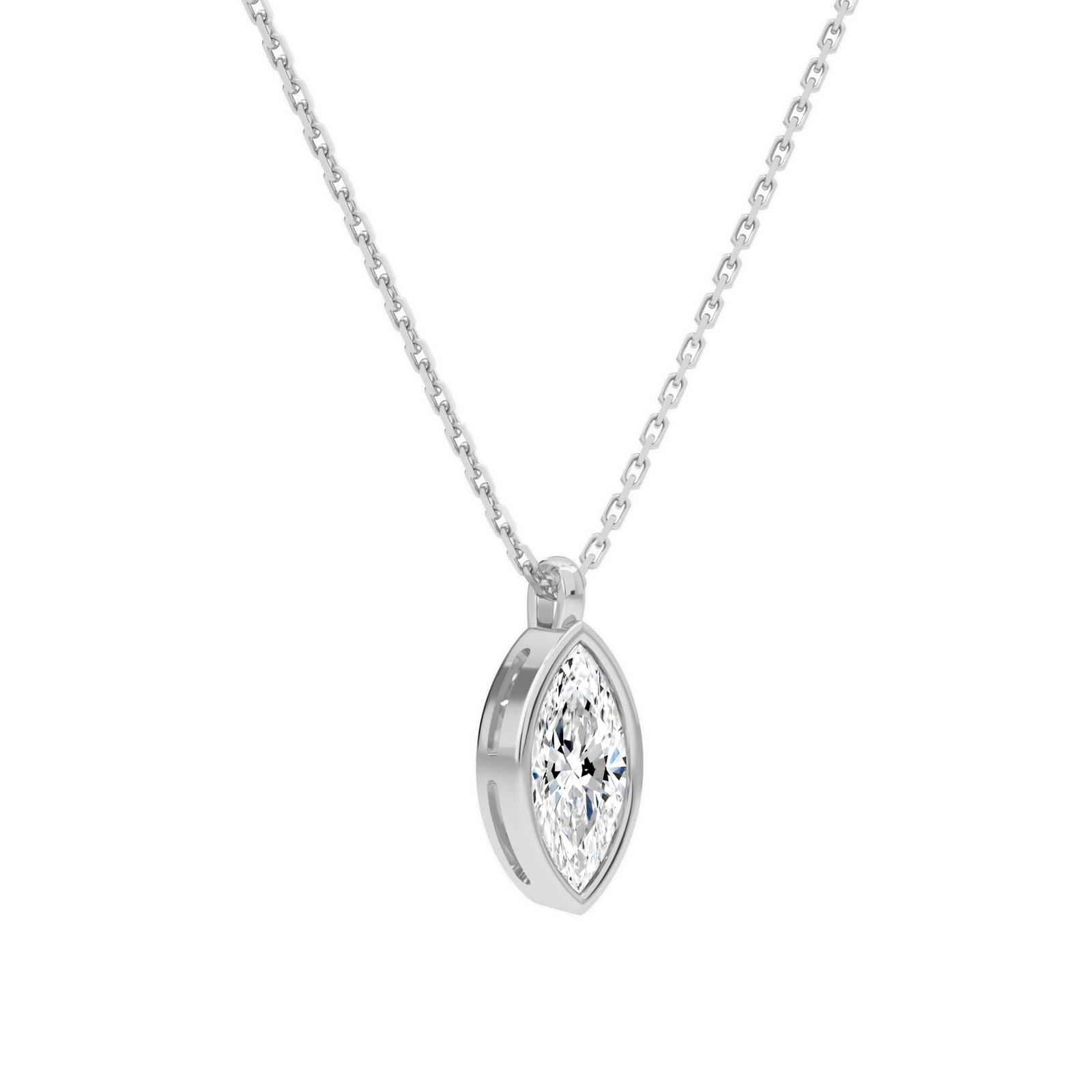
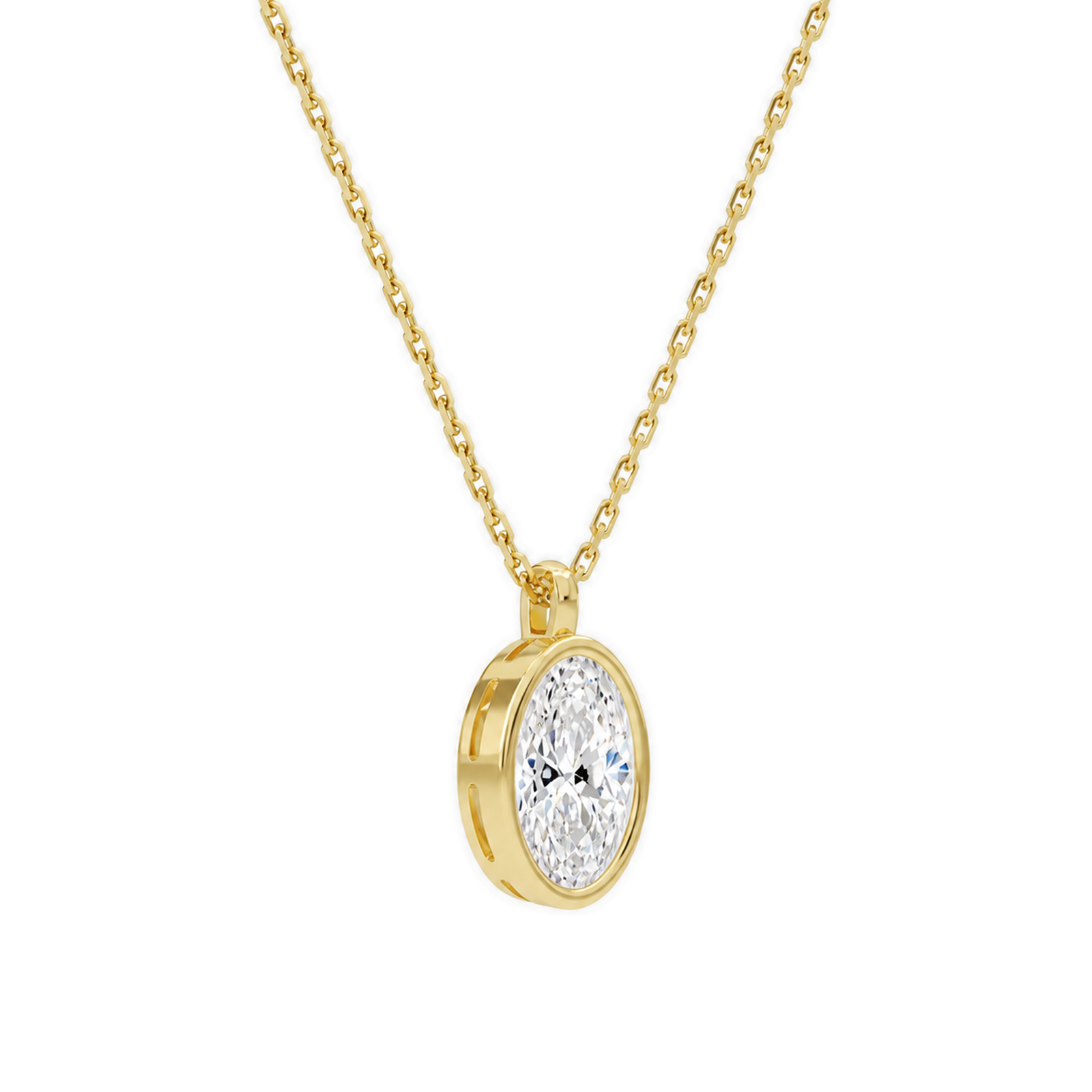
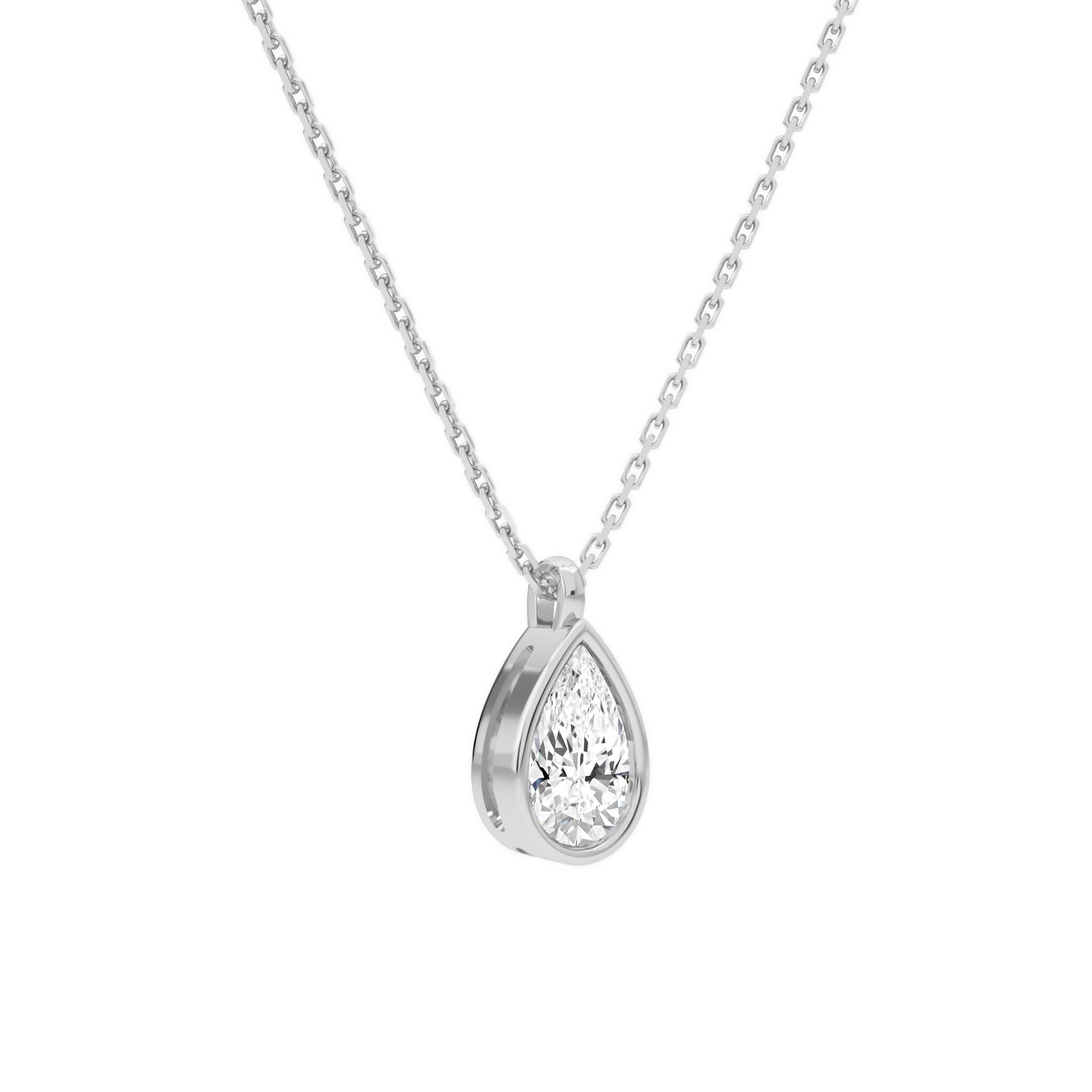
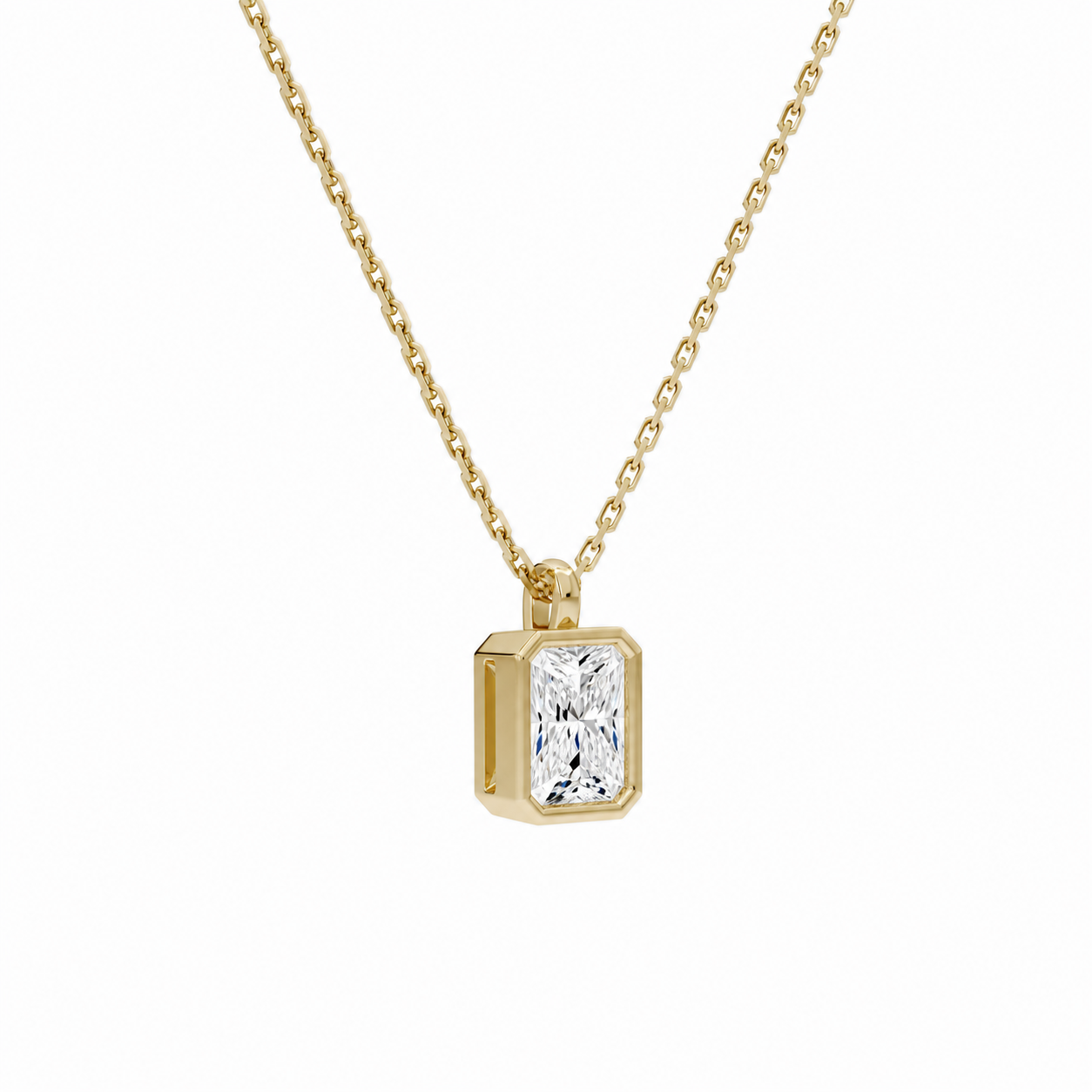
Burvonti’s current public Bezel Necklace Collection contains 20 products. Ten Sienna designs and ten Stellaire designs each represent Asscher, Cushion, Emerald, Heart, Marquise, Oval, Pear, Princess, Radiant, and Round centers. All 20 are also part of the Solitaire Collection. The Bezel page therefore goes deeper into edge, profile, and shape definition rather than repeating the broader idea of a single focal center.
The Edge Must Follow the Individual Shape
A successful bezel is not one generic circle of metal placed around every diamond. It must respond to curves, corners, cropped corners, points, and length-to-width proportion. Round and Oval require continuity along changing curvature. Princess, Asscher, Emerald, Cushion, and Radiant ask the edge to resolve different corner structures. Pear, Marquise, and Heart make point definition and orientation especially visible.
The metal boundary may sharpen the shape’s graphic identity, but it does not make all diamonds within a category look alike. Face-up dimensions, proportions, facet pattern, bezel width, and setting execution still matter. Compare product imagery and specifications for the selected center; do not assume perfect symmetry, a fixed enlargement effect, or identical edge width across ten shapes.
Coverage Is Not an Absolute Protection Claim
A bezel provides continuous perimeter coverage, which is structurally different from prongs. That fact does not make the necklace impact-proof, snag-proof, scratch-proof, or maintenance-free. The diamond, seat, metal edge, attachment, chain, clasp, wear pattern, and condition all contribute to real-world performance. Diamond hardness also does not protect the setting or chain from deformation, abrasion, or pulling.
Use coverage as one comparison point, not as a guarantee. Inspect the edge for changes, confirm that the center remains stable, and have the piece assessed after an impact or if movement appears. A smooth-looking outline may reduce some exposed contact points, but hair, fine chains, clothing, and neighboring jewelry can still interact with the complete construction.
Sienna and Stellaire Offer Two Family Readings
The current page contains two ten-shape families. Their titles distinguish Bezel Solitaire Diamond Necklace from Bezel Solitaire Diamond Pendant Necklace, but title language alone does not establish a fixed versus freely sliding center. The meaningful comparison lies in attachment points, chain path, side and back profile, and how the setting is expected to move against the body.
Review those details at the selected shape and scale. A center supported from different points may distribute weight or orient differently, while a bail or other transition can introduce more articulation. Neither family should be promised to lie perfectly flat, stay permanently centered, or resist flipping on every wearer. Anatomy, clothing, posture, movement, and condition remain part of the result.
Scale Includes Diamond and Metal Field
All 20 current products use Centerstone options from 1/2 through 2 carats plus Browse All Diamonds. Carat measures the diamond’s weight; it does not state face-up dimensions or the total visible field once the bezel is included. A continuous edge adds metal around the outline, so compare the complete setting width and height rather than center weight alone.
Perceived scale is shaped by diamond proportions, bezel width, metal color, profile, attachment, chain width, and viewing distance. A bezel may make the perimeter more legible, but it does not guarantee that a diamond appears a specific percentage larger. Choose the balance between center and frame at body scale, then verify the selected product’s measurements.
Metal Determines How Explicit the Frame Becomes
The current cards represent eight designs in 14K White Gold, eight in 14K Yellow Gold, and four in 14K Rose Gold. White gold can reduce visible color contrast between diamond and bezel in some combinations. Yellow or rose gold can make the continuous edge more explicit. The result also depends on center color, proportions, finish, rhodium plating, skin context, and surrounding clothing.
There is no universal rule that one metal maximizes brilliance or suits a particular wearer. Consider whether you want the edge to recede or participate visibly in the composition. Exact alloy, finish, sensitivity, maintenance, and availability in alternative metals remain product-specific or subject to custom feasibility.
Placement and Layering Should Preserve the Outline
All 20 current descriptions list an adjustable 16–18-inch length, a 0.95 mm chain, and a lobster clasp. On the body, attachment style, center weight, neck circumference, neckline, clothing, and chain drape influence where the bezel rests and how its outline is seen.
When layering, leave enough vertical space for the framed center to remain distinct. Repeating another bezel can create a measured rhythm; pairing it with a different chain texture can make the smooth edge more visible. Different lengths do not guarantee separation or eliminate tangling. Compare motion and physical clearance as carefully as the color or shape relationship.
Care Begins at the Boundary
Skin oils and product residue can collect around or beneath a setting and reduce visible light return without changing the diamond itself. Use a gentle cleaning method suited to diamond, metal, attachment, chain, and clasp. Avoid sharp tools at the bezel edge, forceful brushing, unsupported ultrasonic assumptions, and pulling a fine chain through a cloth.
Burvonti uses responsibly sourced lab-grown diamonds and supports independent grading and certification where applicable. A report identifies the diamond named in it; it does not certify the bezel, chain, clasp, or finished necklace as damage-proof. Custom possibilities may refine shape, proportions, scale, bezel expression, attachment, metal, chain, length, or clasp when technically feasible.
Frequently Asked Questions
What is a bezel-set diamond necklace?
A bezel-set necklace uses a continuous metal edge around the diamond’s perimeter rather than discrete prong contact points.
How many Bezel Necklaces are currently included?
The public Collection contains 20 products: ten Sienna and ten Stellaire designs, with both families representing the same ten center-shape categories.
Are all Bezel Necklaces also Solitaire Necklaces?
Yes. All 20 current Bezel designs are in the 44-product Solitaire Collection. Bezel is the narrower setting subset.
How is the Bezel page different from Solitaire Necklaces?
Solitaire explains one-center visual hierarchy across prong, bezel, and twist settings. Bezel focuses specifically on continuous edge, coverage, profile, shape definition, and metal contrast.
Which diamond shapes are currently represented?
Asscher, Cushion, Emerald, Heart, Marquise, Oval, Pear, Princess, Radiant, and Round are each represented twice, once in Sienna and once in Stellaire.
Does a bezel change the diamond’s shape?
It frames and can make the outline more explicit, but the result depends on the diamond’s proportions, bezel width, corner or point treatment, and setting execution.
Does a bezel make a diamond look larger?
The metal edge adds to the visible setting field and may make the outline more legible, but no fixed enlargement effect or percentage can be guaranteed.
Is a bezel safer than prongs?
A bezel provides continuous perimeter coverage, while prongs use discrete contact points. Overall security still depends on the stone, seat, metal, execution, attachment, wear, impacts, condition, and maintenance.
Is a bezel necklace snag-proof or impact-proof?
No. Continuous coverage does not make the complete necklace snag-proof, impact-proof, scratch-proof, or maintenance-free. Chain, attachment, setting, clothing, hair, and activity still matter.
What is the difference between Sienna and Stellaire?
They are two current ten-shape bezel families with different Necklace and Pendant Necklace title language. Confirm attachment, profile, movement, and back view on the selected product rather than inferring construction from the name.
Will a bezel necklace lie flat and remain centered?
Not universally. Attachment, center weight, chain drape, anatomy, clothing, movement, and condition influence position, rotation, and flipping.
What Centerstone options are currently shown?
All 20 current products show 1/2, 3/4, 1, 1 1/2, and 2 carats plus Browse All Diamonds. Confirm live options on the selected product.
What should I compare besides carat weight?
Compare center face-up dimensions, proportions, bezel width, total setting width and height, profile, attachment, chain width, and position on the wearer.
Which metals are currently represented?
The current page represents 14K White, Yellow, and Rose Gold. Exact alloy, finish, rhodium plating, sensitivity, and alternative-metal feasibility remain product-specific.
What length, chain width, and clasp are currently listed?
All 20 current descriptions list an adjustable 16–18-inch length, a 0.95 mm chain, and a lobster clasp. Confirm the exact selected item.
Can a bezel necklace be layered?
Yes when length, scale, movement, and chain drape leave the framed center visible. Different lengths cannot guarantee that necklaces will not overlap or tangle.
Can a bezel necklace be worn every day?
Frequent wear may suit a specific piece, but setting, attachment, chain, clasp, activity, pulling, impact, care, and condition require consideration. No universal guarantee applies.
Does every bezel center have an independent grading report?
Independent grading and certification may apply, but confirm which selected diamond the document identifies. It does not certify the bezel or finished necklace as damage-proof.
How should I clean and inspect a bezel necklace?
Use a gentle method for the full construction, avoid sharp tools at the edge, and inspect the bezel, attachment, chain, and clasp if the center or movement changes.
Can a Burvonti bezel necklace be customized?
Custom possibilities may include shape, proportions, scale, bezel expression, attachment, metal, chain, length, or clasp when technically feasible. Documentation, comfort, price, and timing require confirmation.