
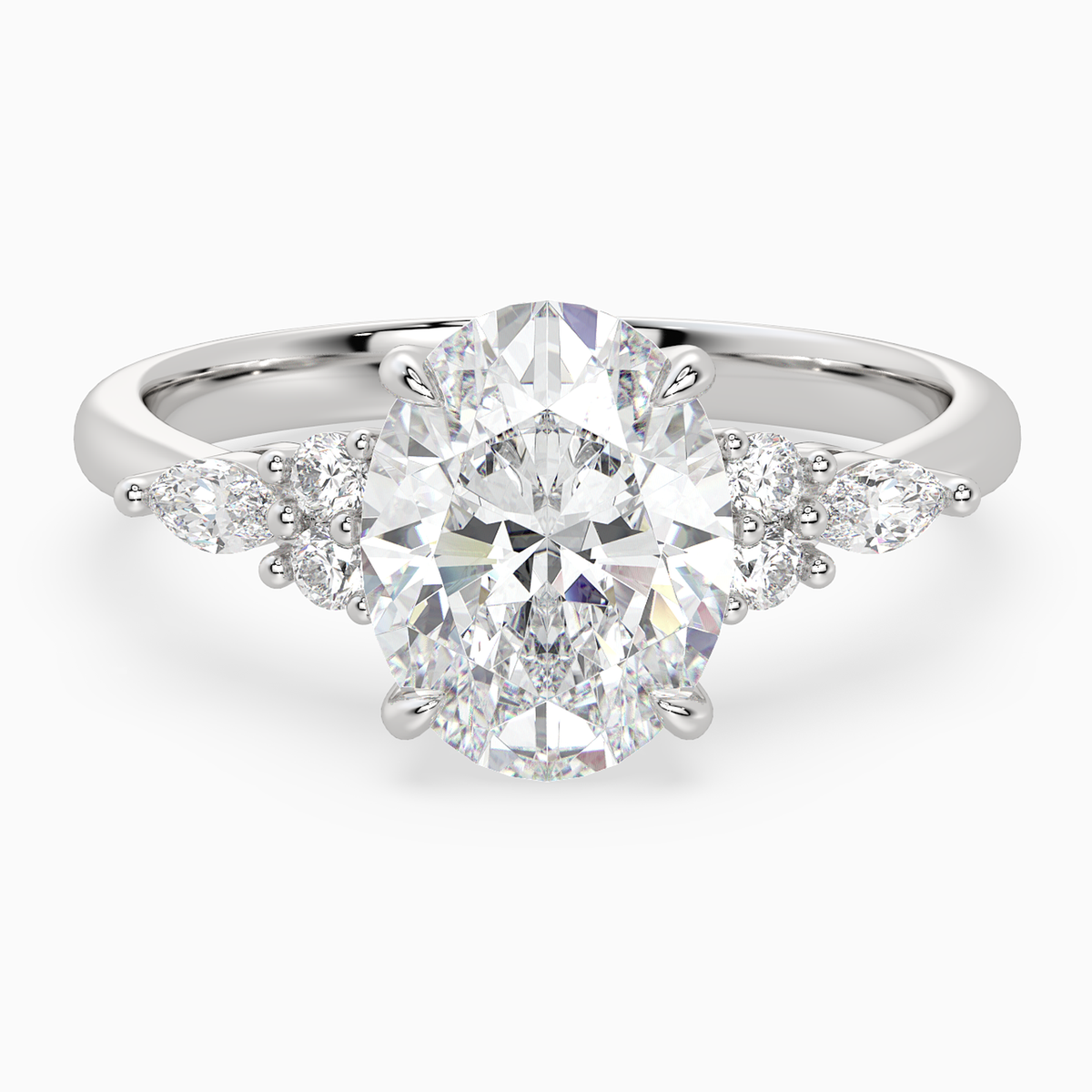


Define the visual goal.
Decide whether you want maximum sparkle, a larger-looking stone, a warmer romantic look, or a clean architectural shape.
Begin with a familiar route, explore a collection, or continue through a practical guide.

Diamond Education
Choosing a diamond should feel precise, not pressured. This guide helps you compare cut, color, clarity, carat, shape, certification, and setting style so you can choose a lab grown diamond with confidence.

Start Here
A lab grown diamond is a real diamond: carbon arranged in a crystal structure, cut and polished to interact with light. The difference is origin. Instead of forming underground over geological time, a lab grown diamond is created in a controlled environment and graded by the same core quality factors used for mined diamonds.
For buying purposes, the question is not whether the diamond is "real." It is whether the diamond is well cut, visibly beautiful, honestly graded, and right for the jewelry you want to wear.
Decision Framework
Decide whether you want maximum sparkle, a larger-looking stone, a warmer romantic look, or a clean architectural shape.
Cut and shape usually affect appearance before tiny grade differences do. Start with light performance and proportion.
Choose color and clarity ranges that look clean in the final setting instead of chasing the highest grade on paper.
The 4Cs
| Factor | What it controls | Burvonti buying note |
|---|---|---|
| Cut | Brightness, fire, scintillation, and how lively the diamond looks. | Prioritize cut first. A well-cut diamond can look more impressive than a larger stone with weaker light return. |
| Color | How colorless or warm the diamond appears, especially in larger stones and white metals. | Near-colorless grades can be a smart value range, especially when the setting metal supports the tone. |
| Clarity | Internal and surface characteristics, and whether they are visible without magnification. | Look for eye-clean beauty. Many buyers can invest less in clarity and more in cut, size, or setting design. |
| Carat | Weight, presence, and price jumps at popular milestone sizes. | Consider visual spread, not only weight. Oval, pear, marquise, and emerald shapes can carry size differently. |

Certification
A diamond certificate gives you a consistent way to compare stones. It records measurements, shape, carat weight, color, clarity, polish, symmetry, and other details that affect value and appearance.
Use the report to verify the basics, then return to the visual question: does this diamond have the presence, proportion, and character you want in the finished piece?
Shape
Shape changes the diamond's personality, finger coverage, and setting options. Links are placeholders for now and can be replaced with final Burvonti collection URLs.
Setting Style
The setting changes how the diamond sits, how much light reaches it, and how the ring feels in daily wear.
Browse By Category
Burvonti is designed for considered choices: a stone selected for its visual performance, a setting chosen for daily life, and a finished piece that feels intentional from the first sketch to the final polish.
Start With a ConsultationWhy Burvonti
Burvonti treats diamond buying as a design decision, not a race toward the highest number on a certificate. We help you understand the tradeoffs behind the stone, the setting, and the final piece so the choice feels deliberate and personal.
Our approach favors transparent selection, modern craftsmanship, and custom intent. The goal is not simply to buy a diamond. It is to create a piece with the right presence, proportion, and meaning.
FAQ
Yes. Lab grown diamonds have the same crystal structure and chemical composition as mined diamonds. They are graded by the same major quality factors: cut, color, clarity, and carat weight.
Cut should usually come first because it controls how the diamond handles light. After that, choose color and clarity ranges that look clean in the final setting, then balance carat weight with budget and visual spread.
The best clarity grade is often the one that appears eye-clean. Many buyers do not need flawless clarity to get a beautiful diamond, especially when viewing the finished ring without magnification.
They can. Oval, pear, marquise, emerald, and radiant shapes may show more length or finger coverage than a round diamond of the same carat weight.
Not automatically. A larger stone with weak cut or poor proportions may look less lively than a slightly smaller diamond with stronger light performance.
A grading report gives you an objective record of the diamond's measured qualities. It helps you compare stones and understand what you are paying for.
Yes. A custom path is useful when you want a specific proportion, setting architecture, stone pairing, or design detail that is not solved by a standard style.


