
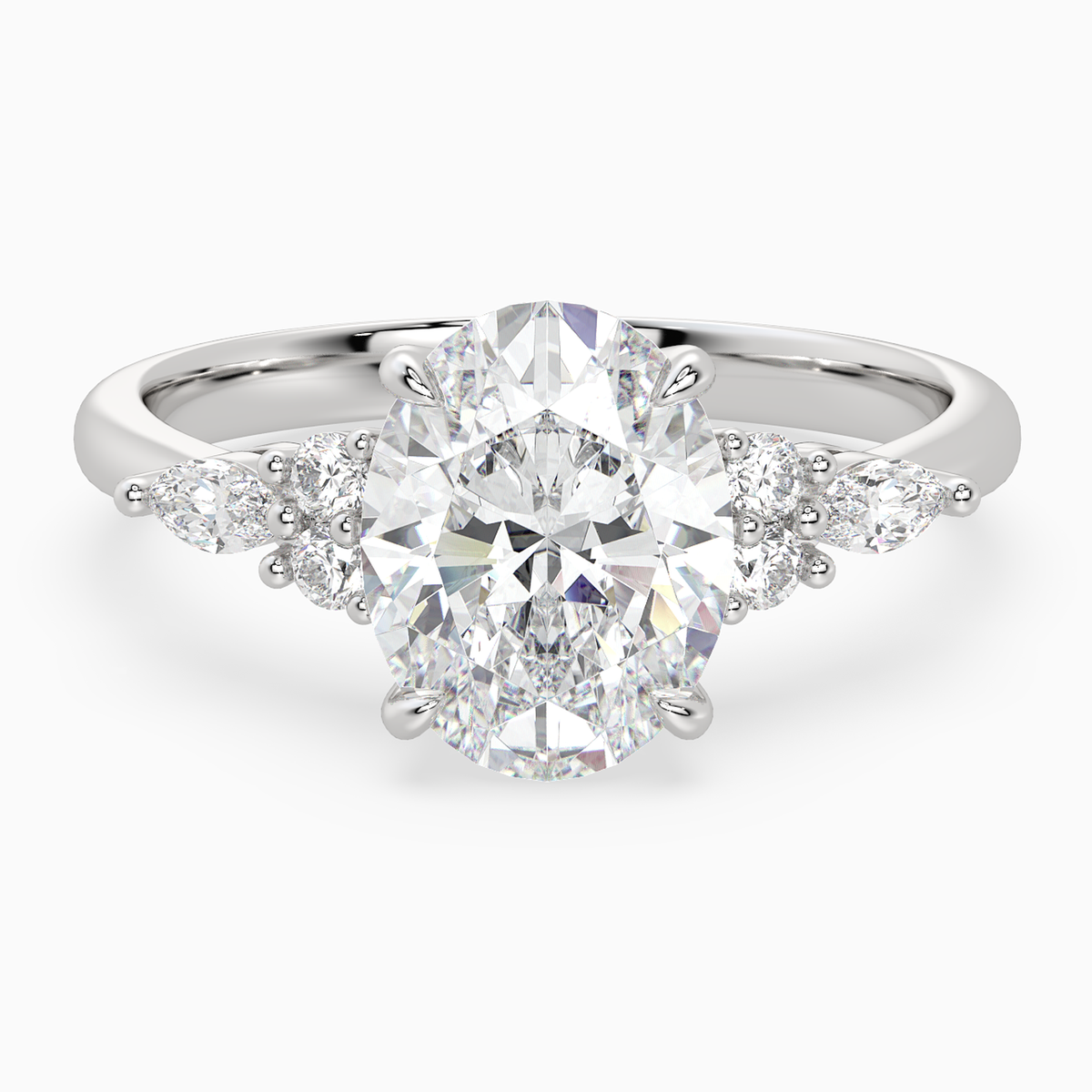


Lab-Grown Diamond Eternity Rings
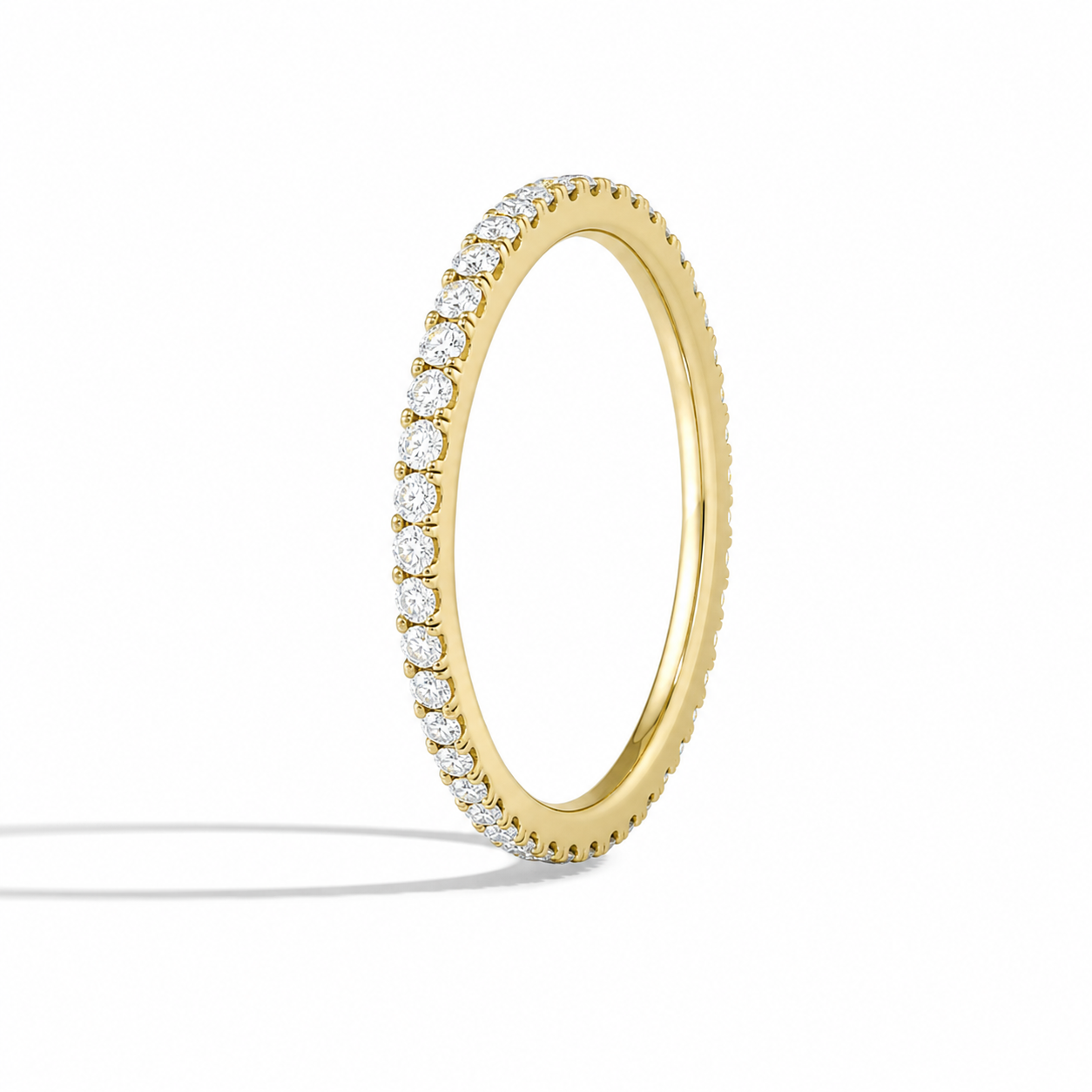
Diamonds follow the band in a measured rhythm. Explore eternity rings through coverage, setting, profile, proportion and sizing limits.


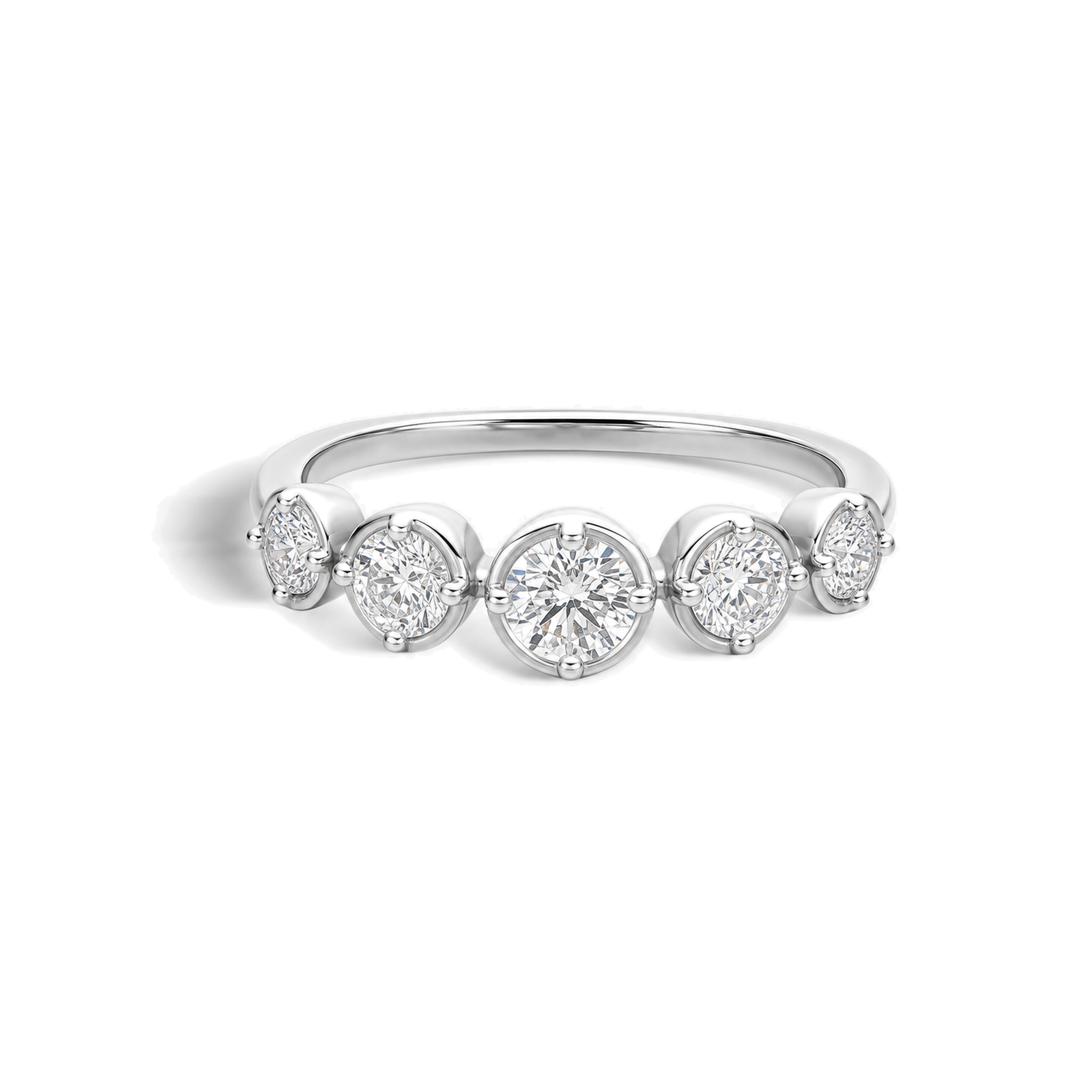
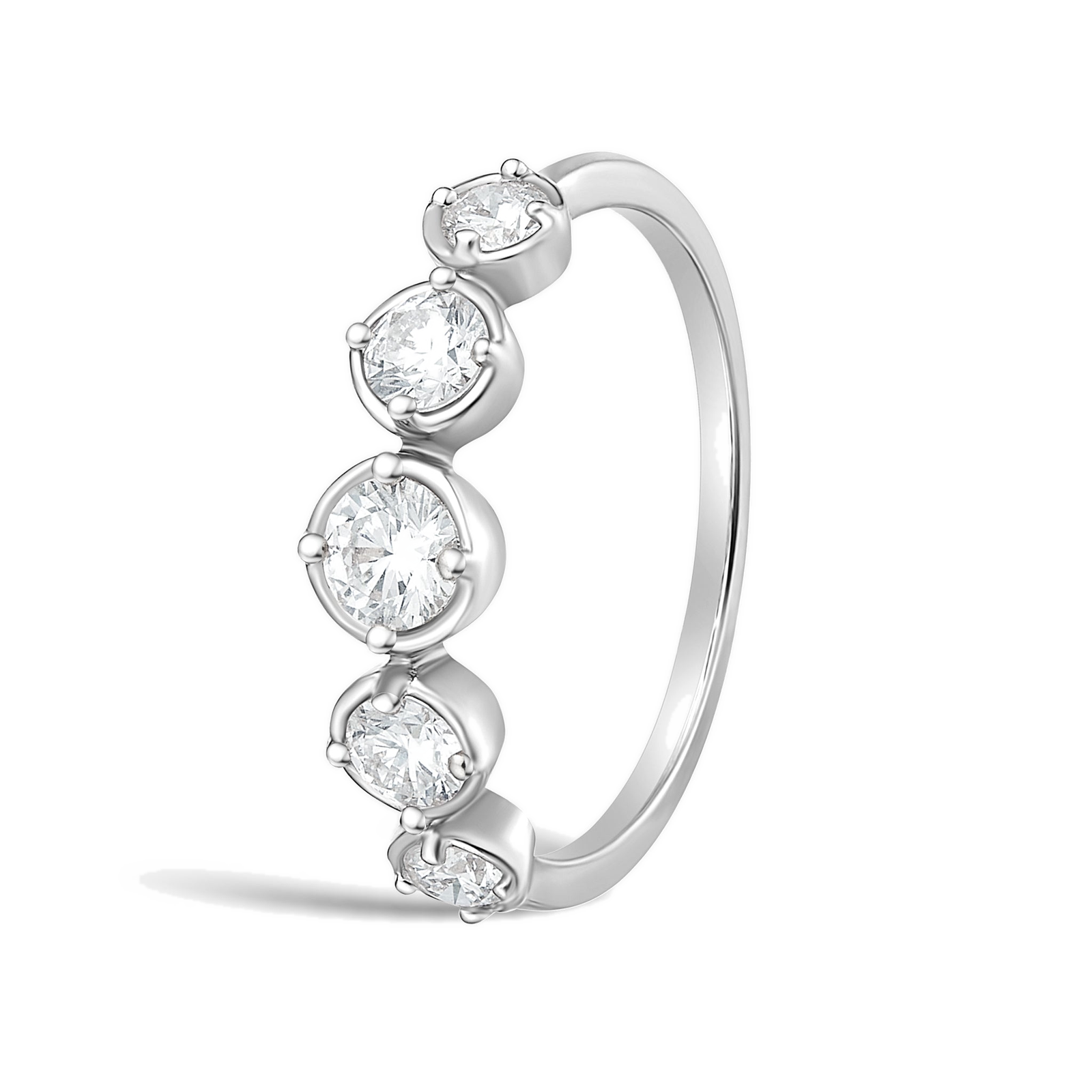

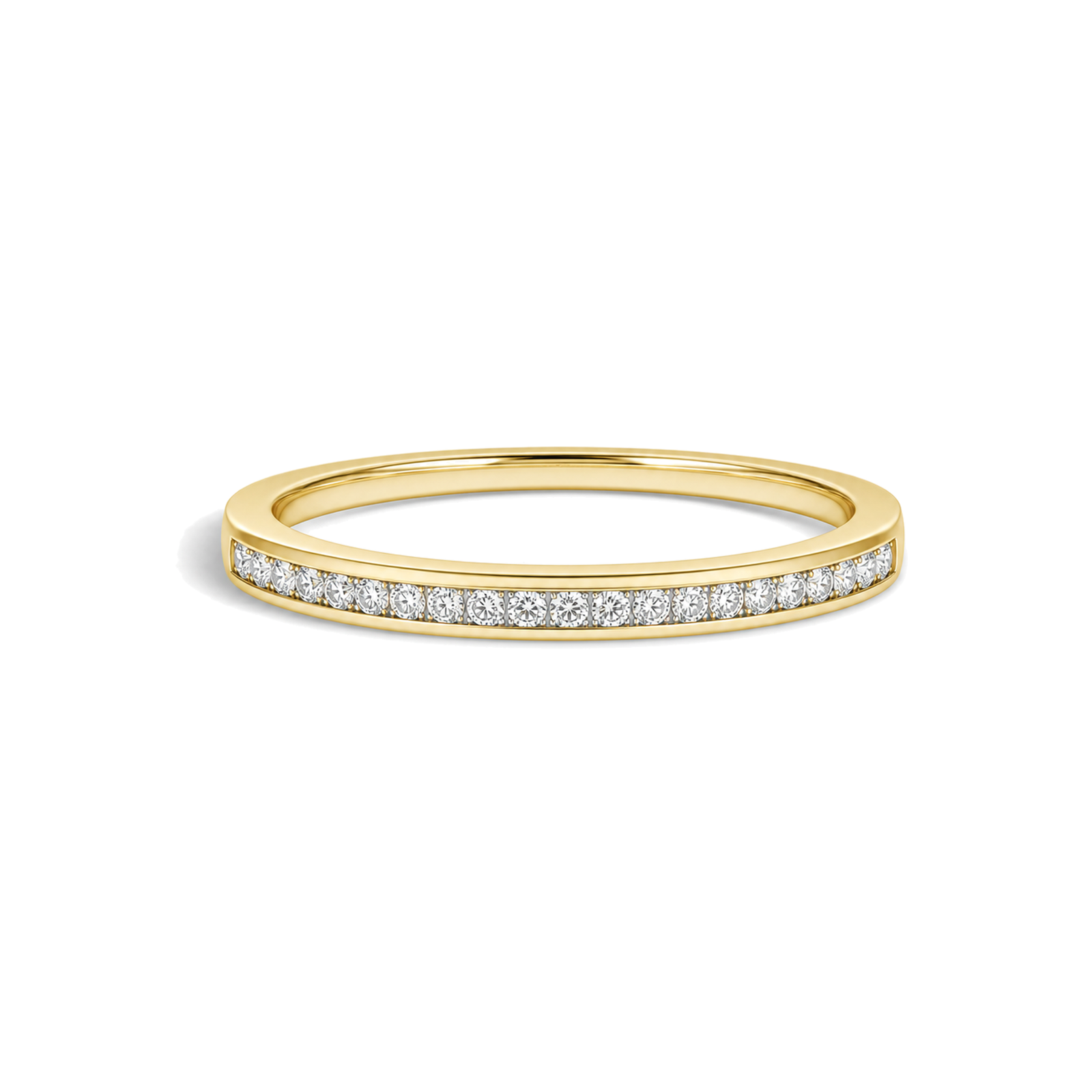
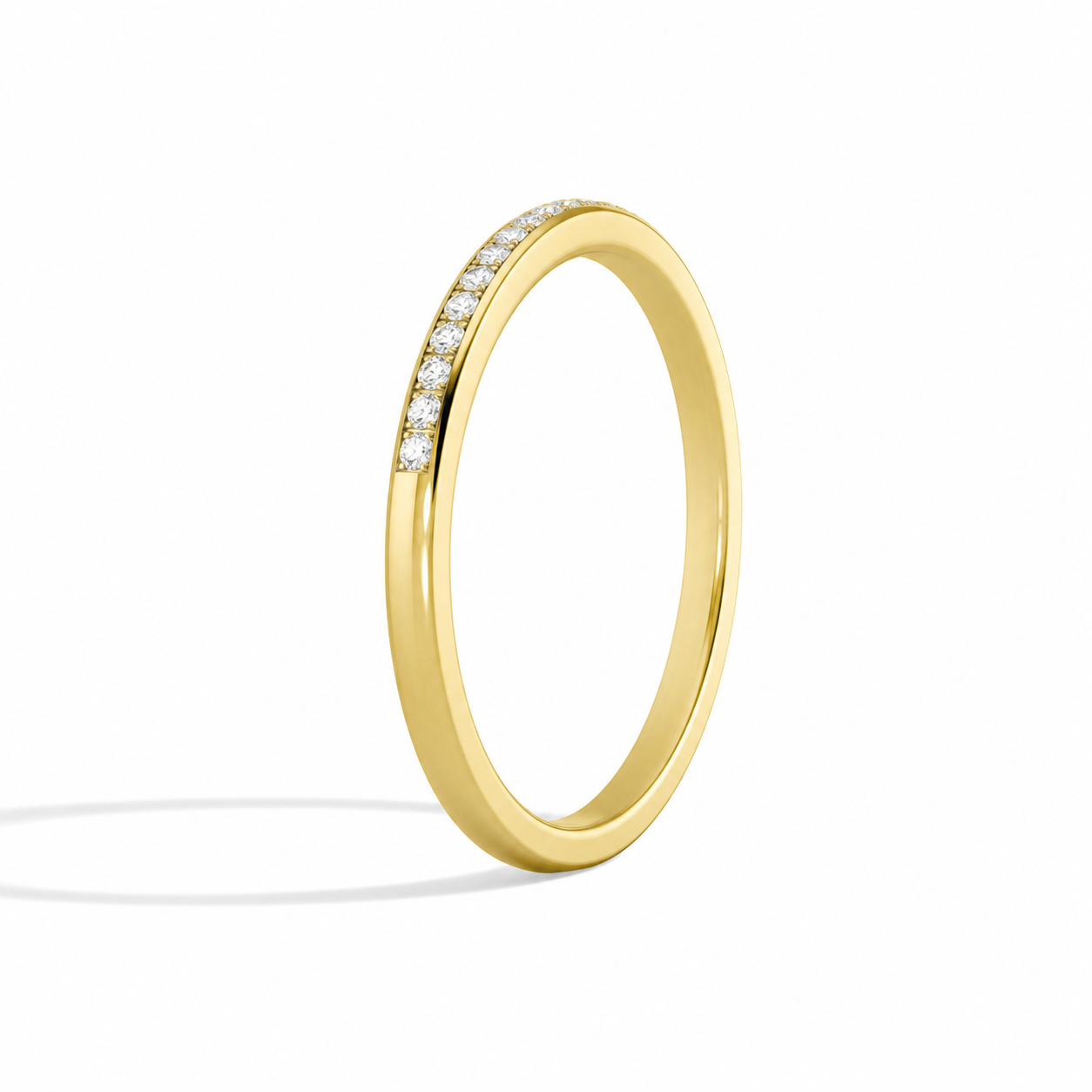
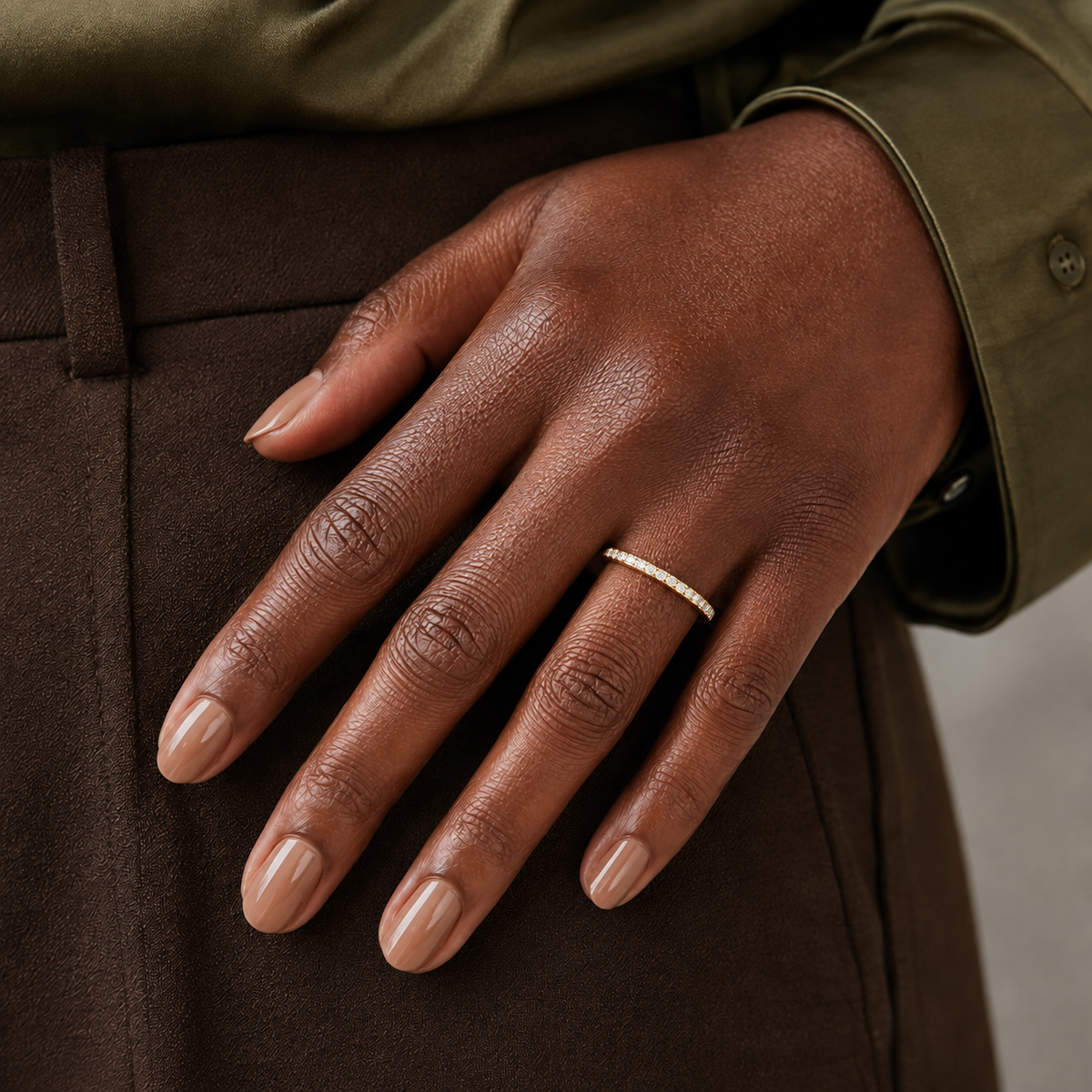
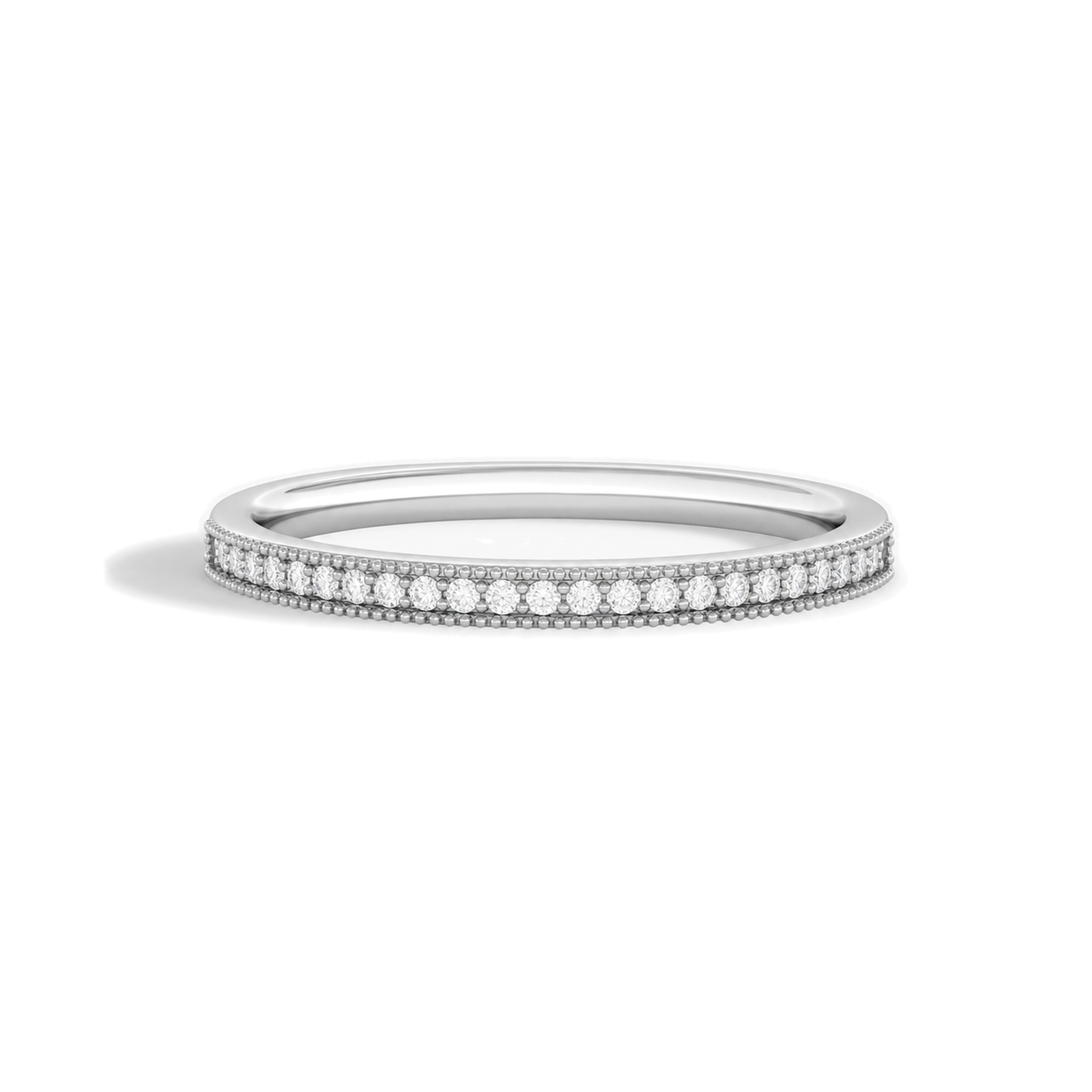
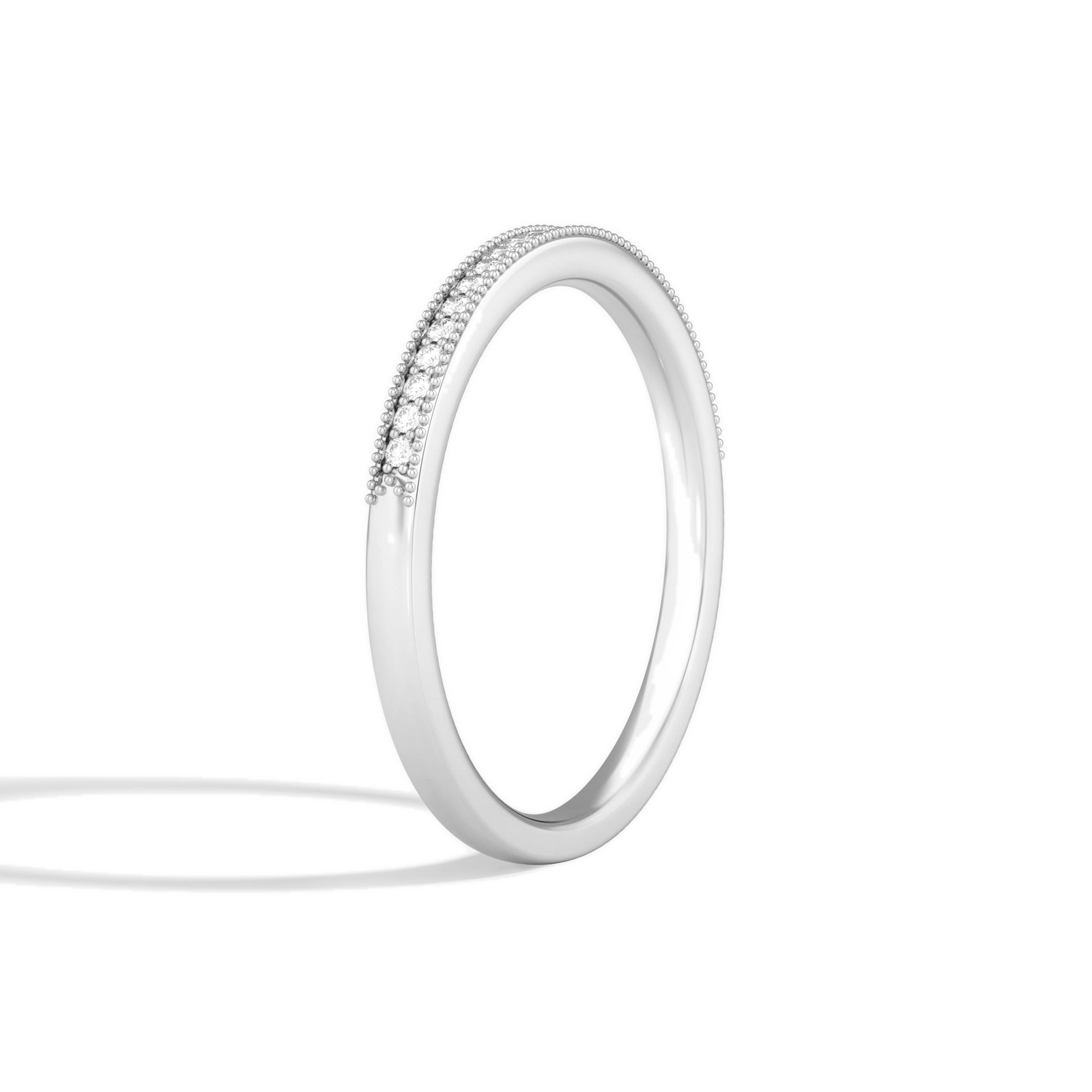

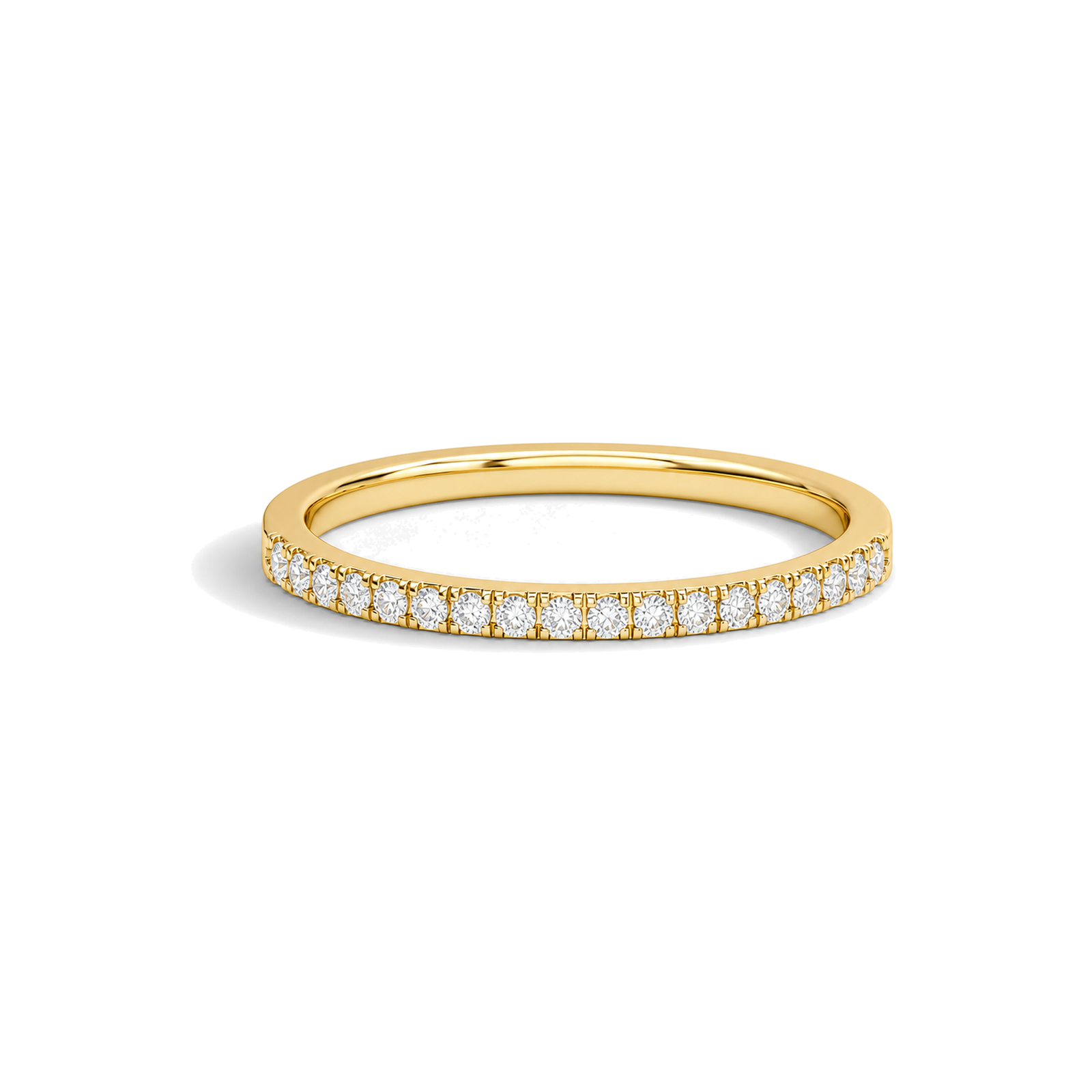


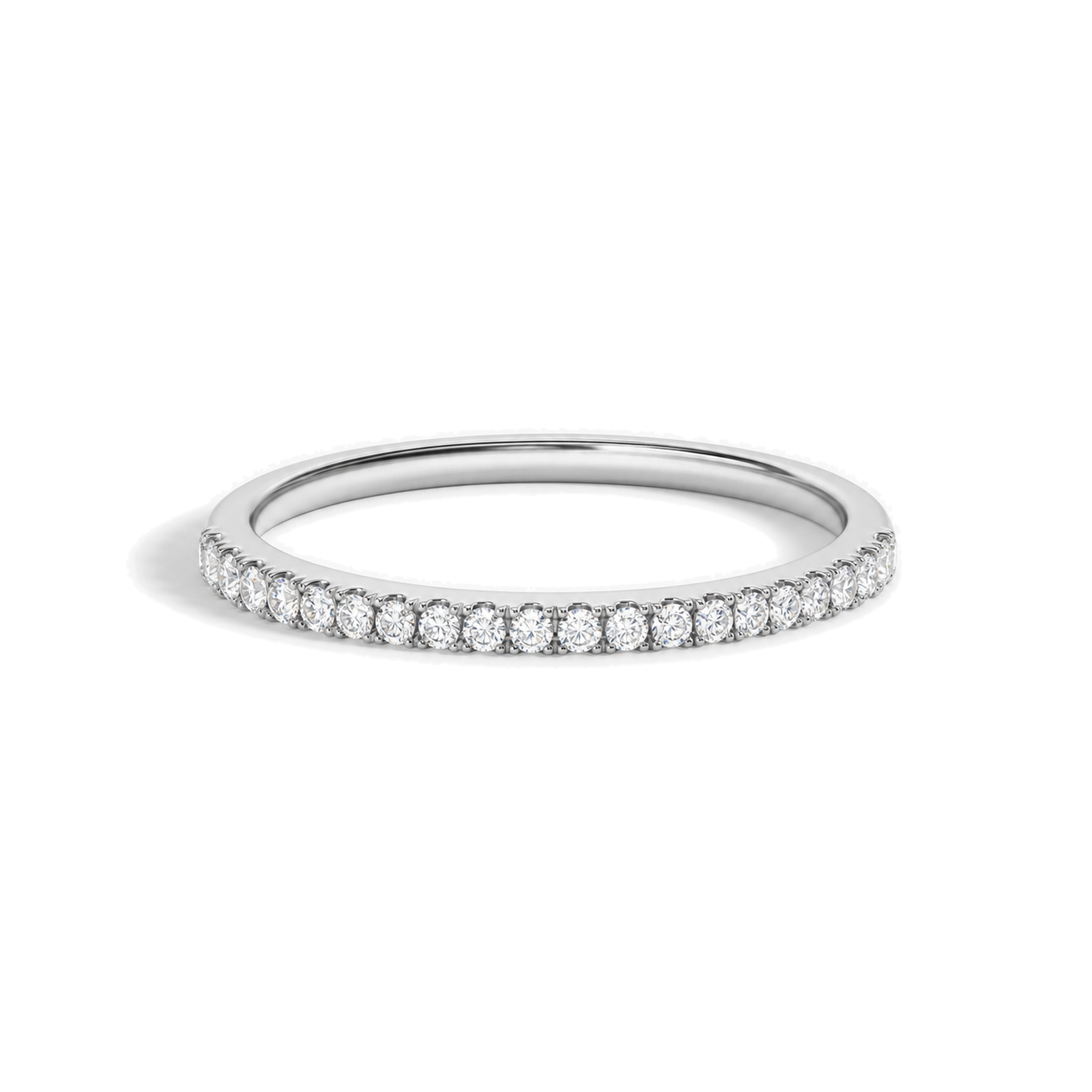
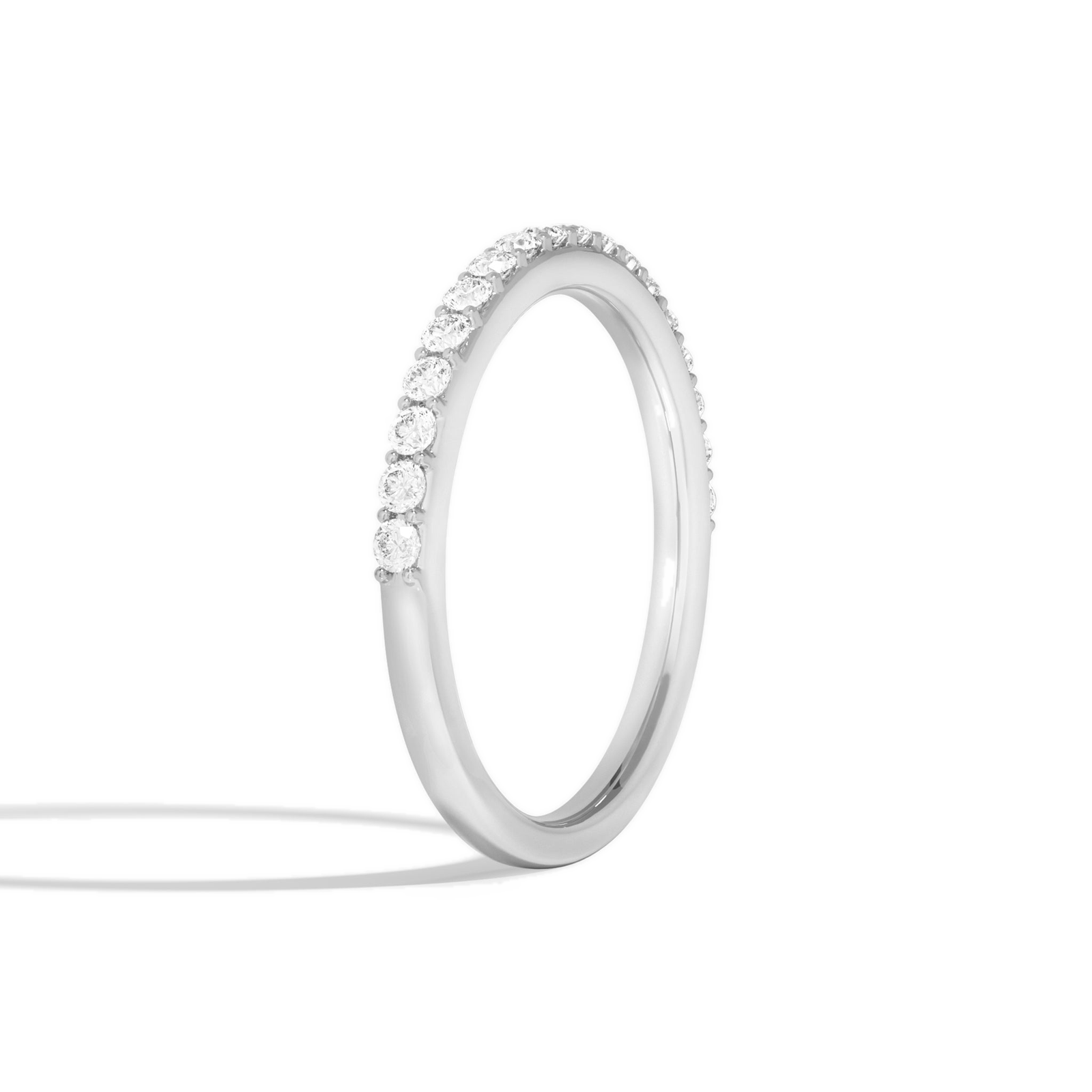

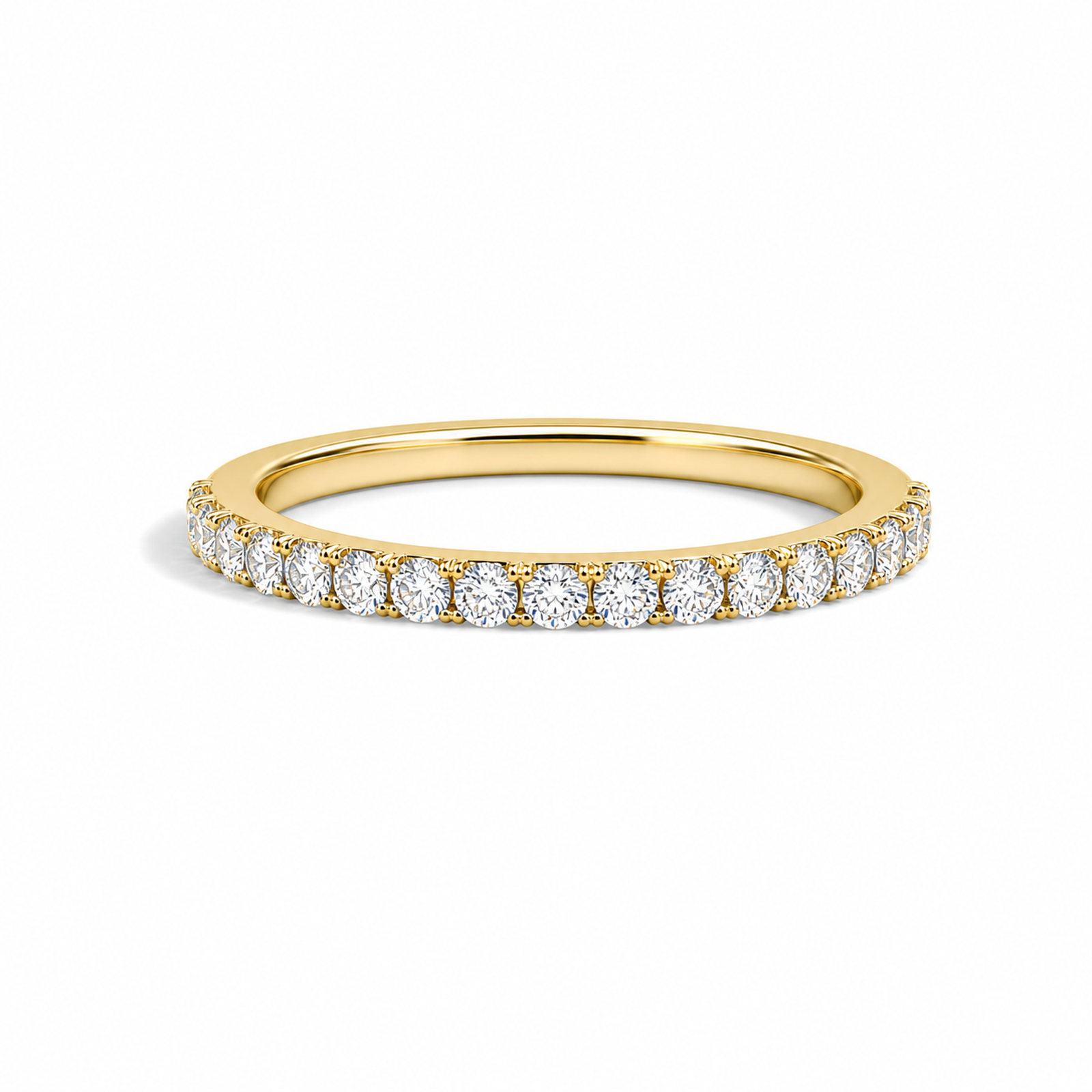






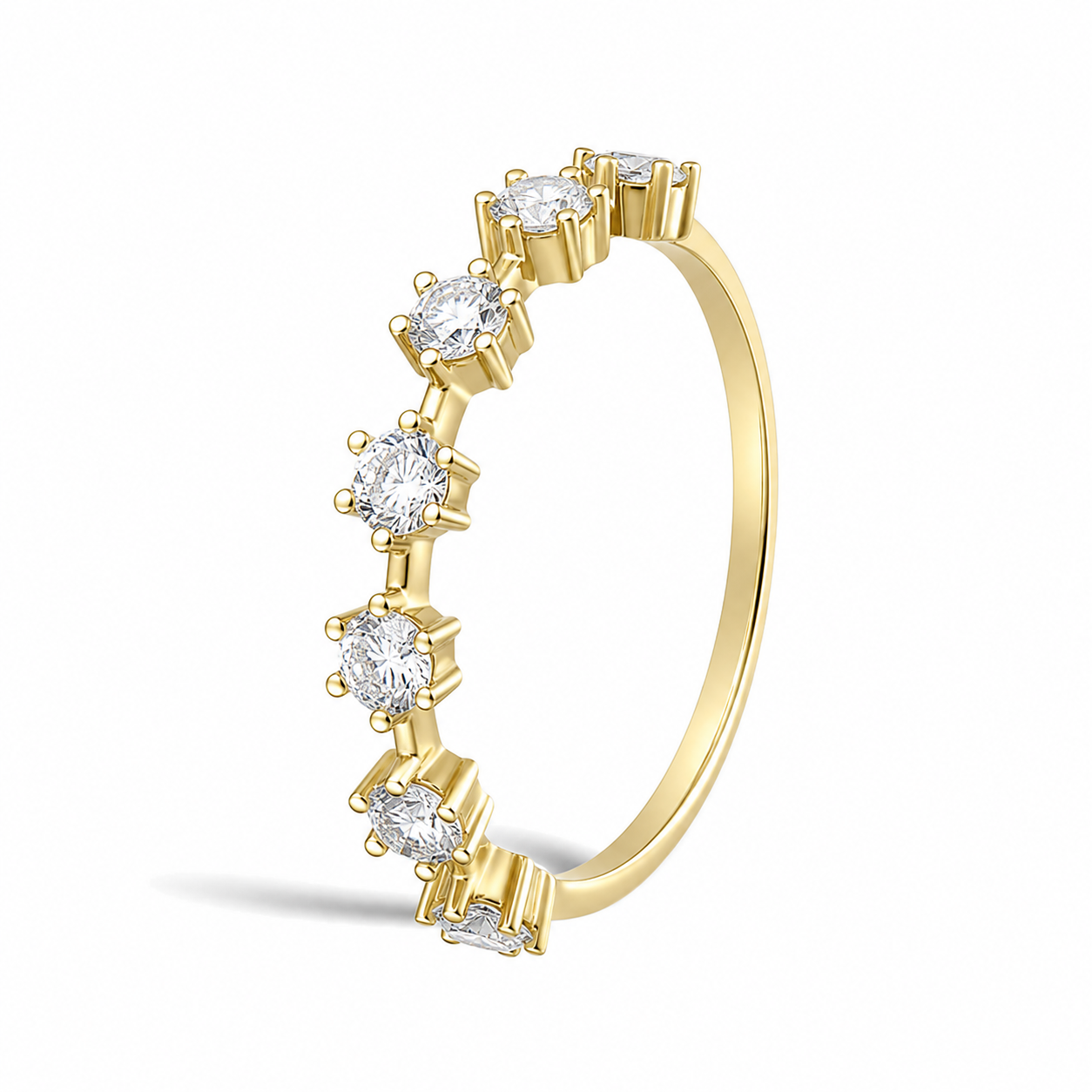

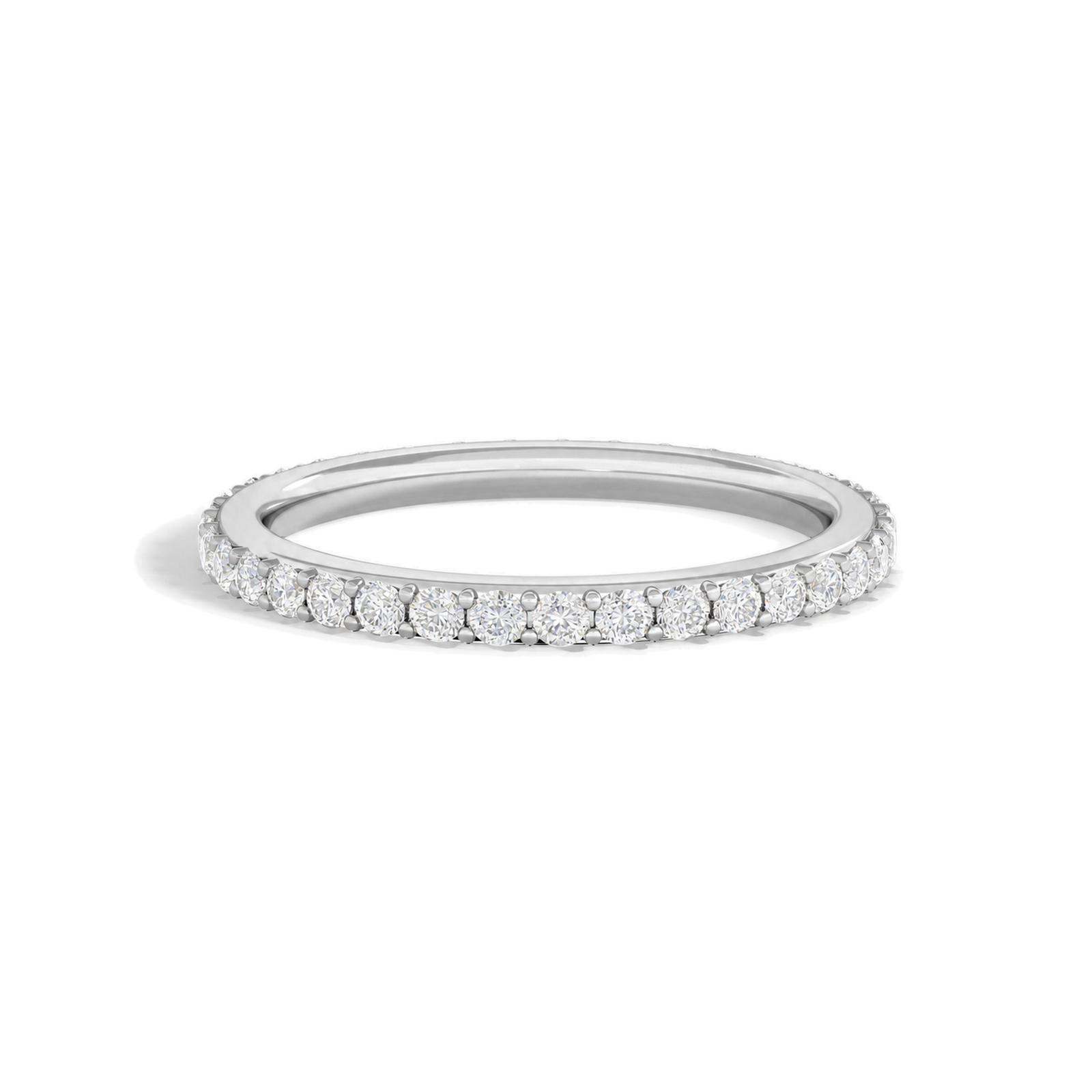
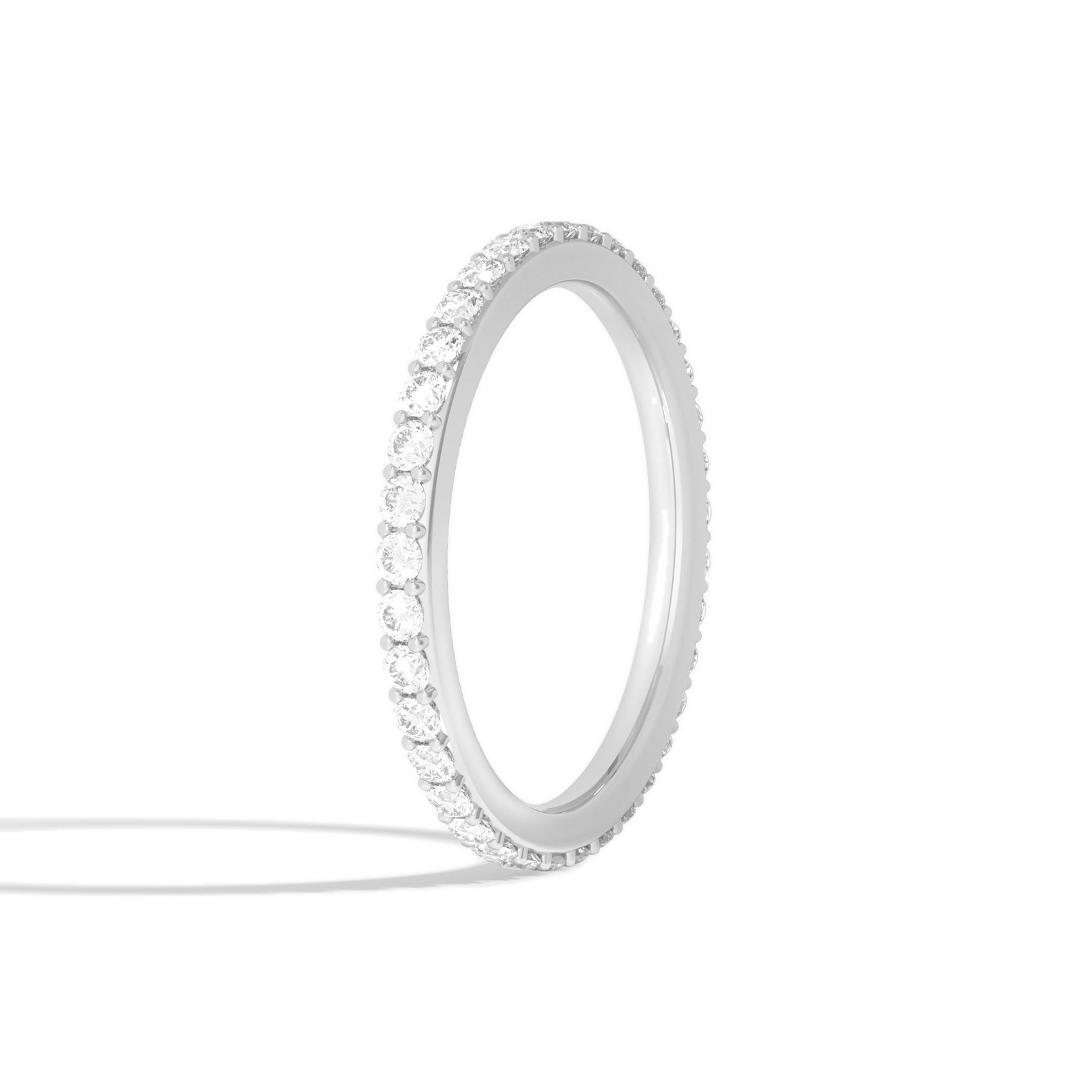

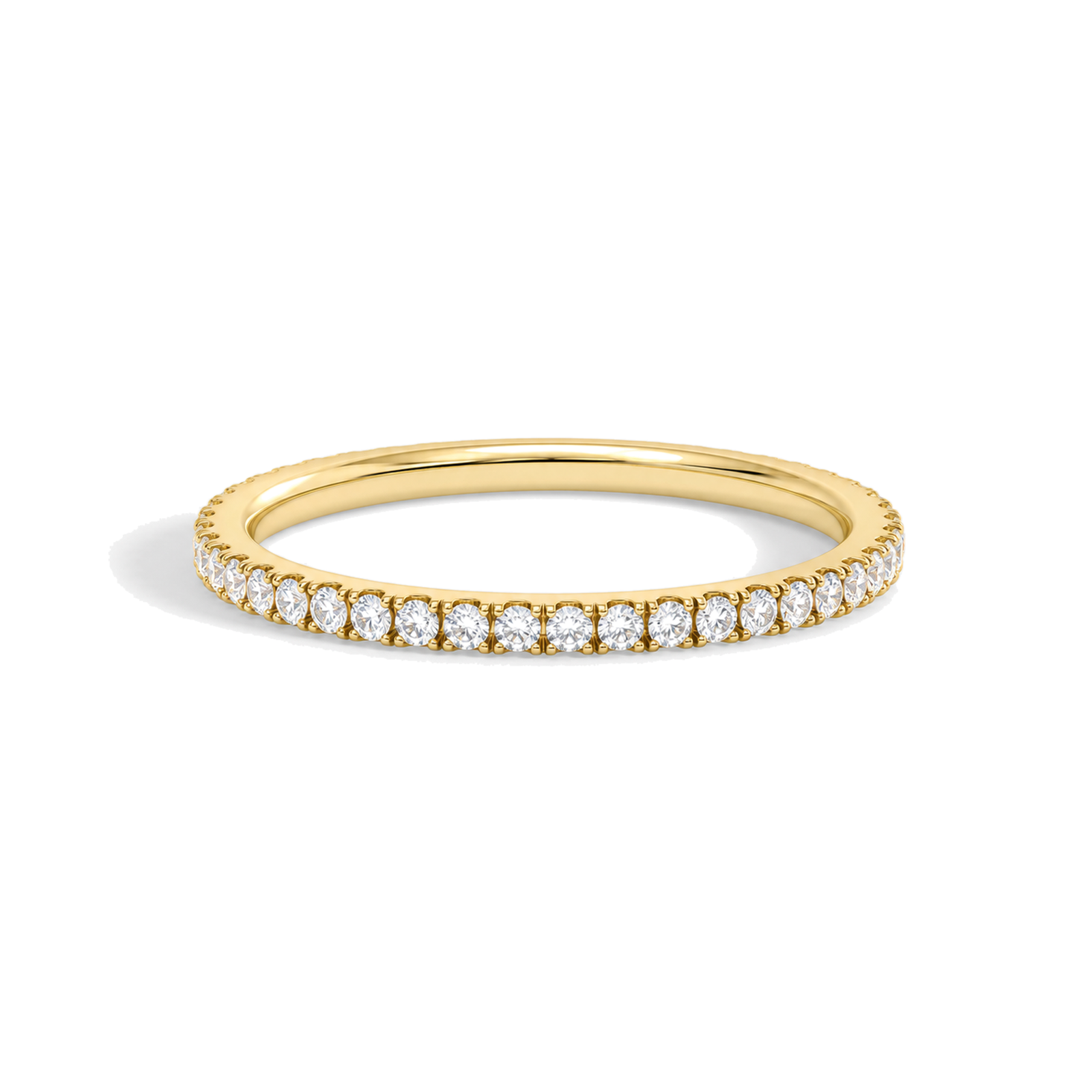


- Free Express Shipping
- Free Resizing
- 60-Day Free Returns
- Lifetime Warranty
Continuity, Calibrated Around the Hand
An eternity ring is often described through the idea of an unbroken circle. On the hand, that idea becomes more precise: how far the diamonds travel, how they meet the metal, whether the design has a defined front, and how the rhythm changes as the finger turns. Continuity may be literal, partial, or visually sustained from the face-up view; those are different structures and should not be collapsed into one promise.
Burvonti’s current public Eternity Ring Collection contains 15 designs. Three titles identify eternity bands, six identify half-eternity bands, three identify three-quarter coverage, and three channel or diamond-ring titles do not state coverage in the title. All 15 have normalized design counterparts in the parent Ring, Anniversary, and Wedding Band Collections, while representative metals make only some product cards exact matches.
Coverage Is the First Structural Decision
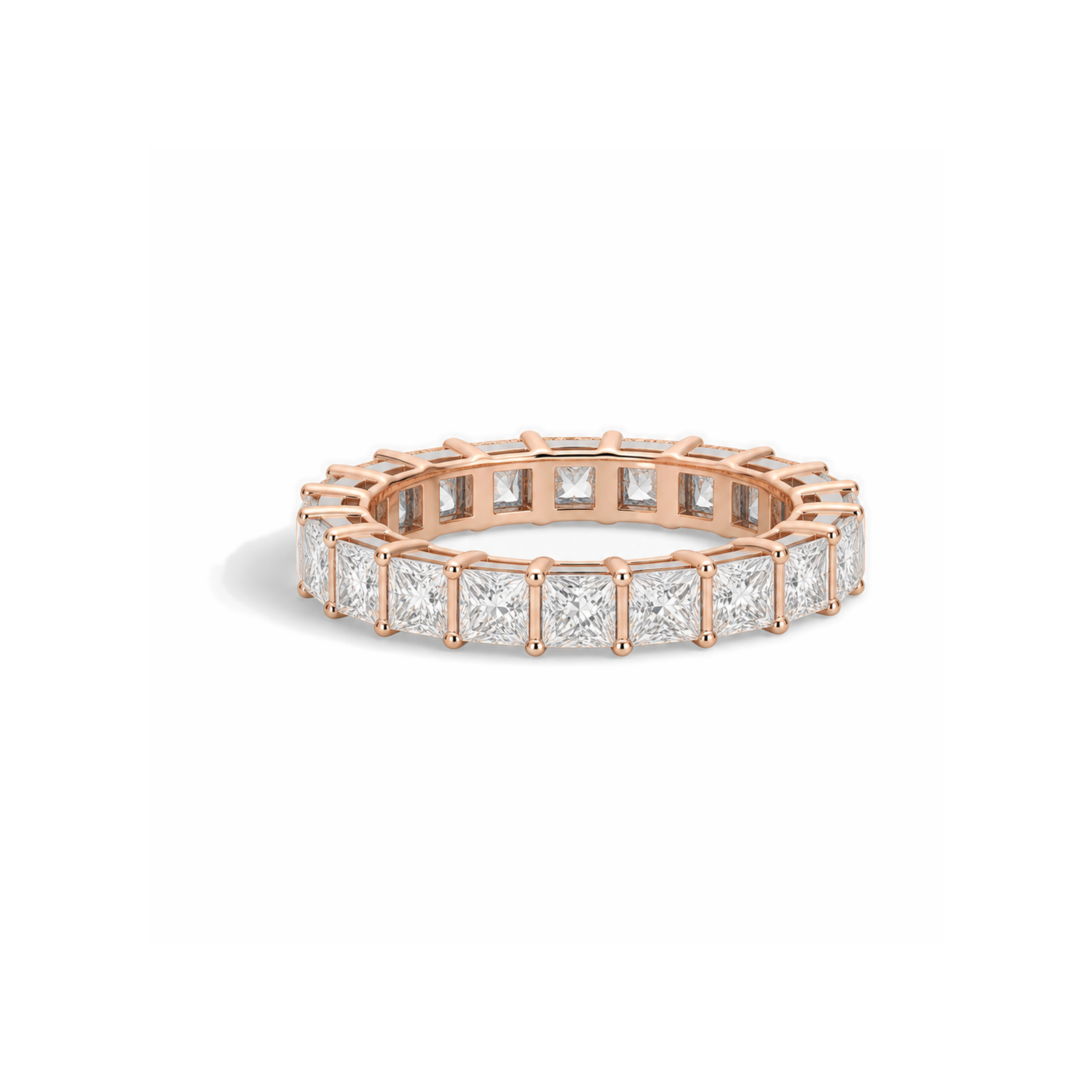
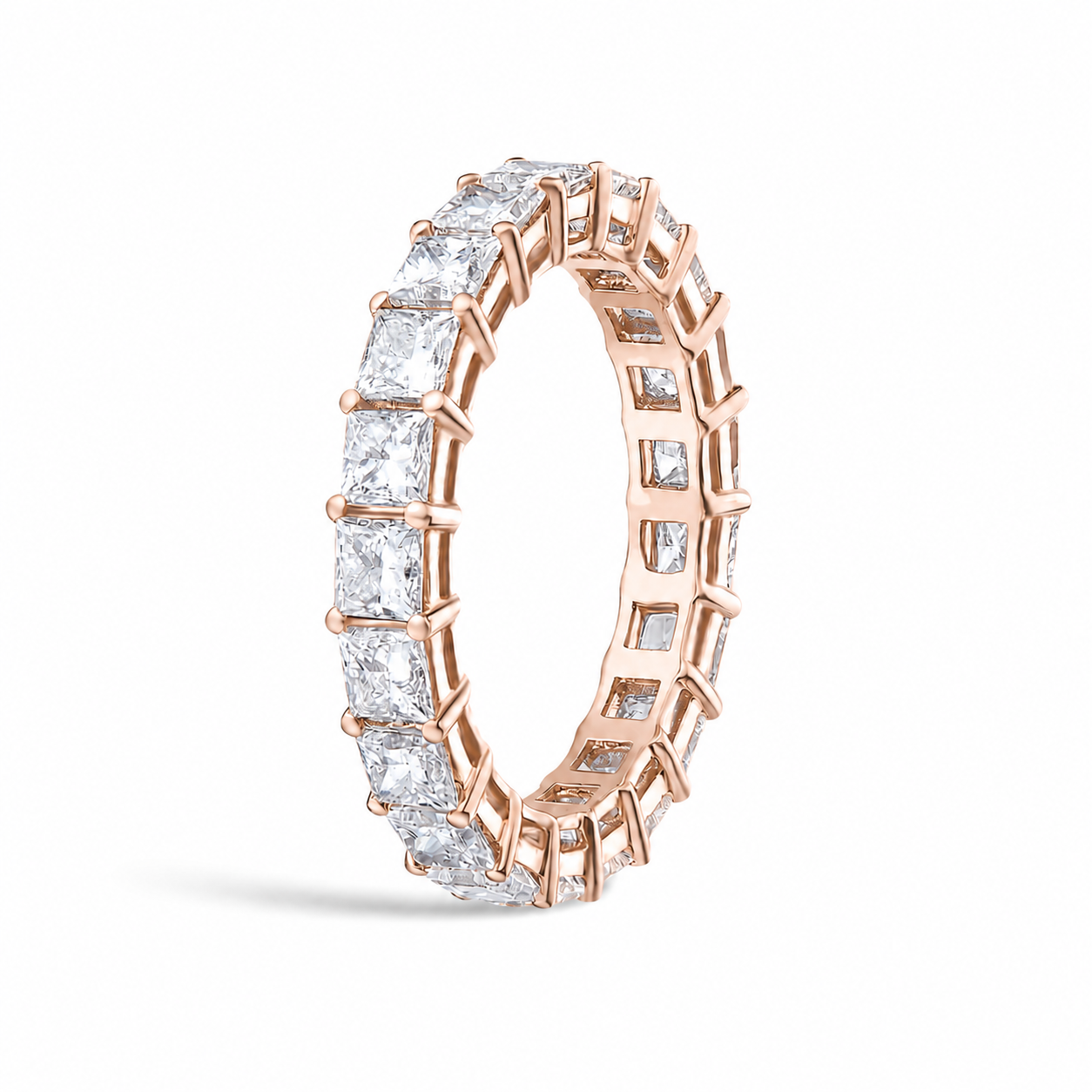
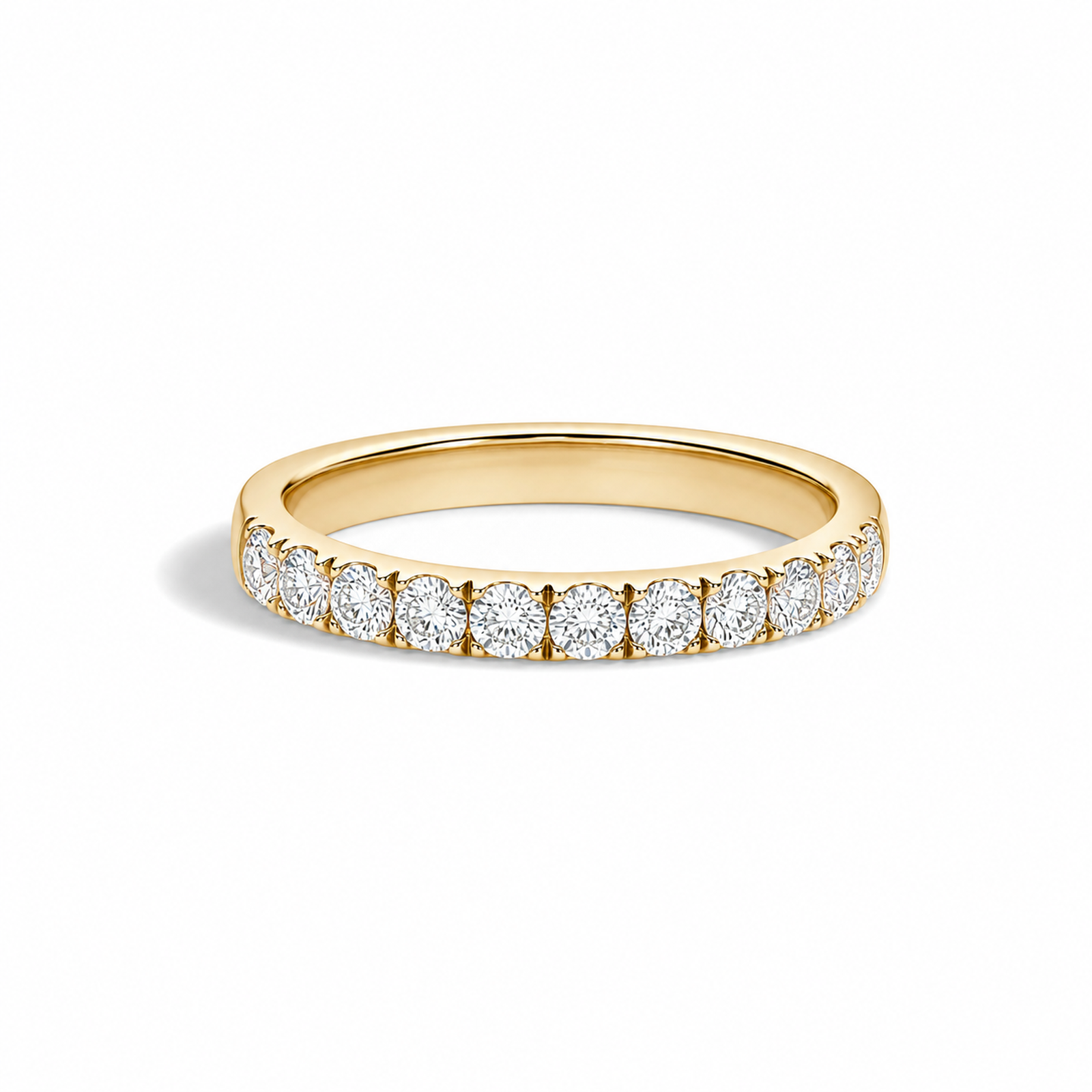
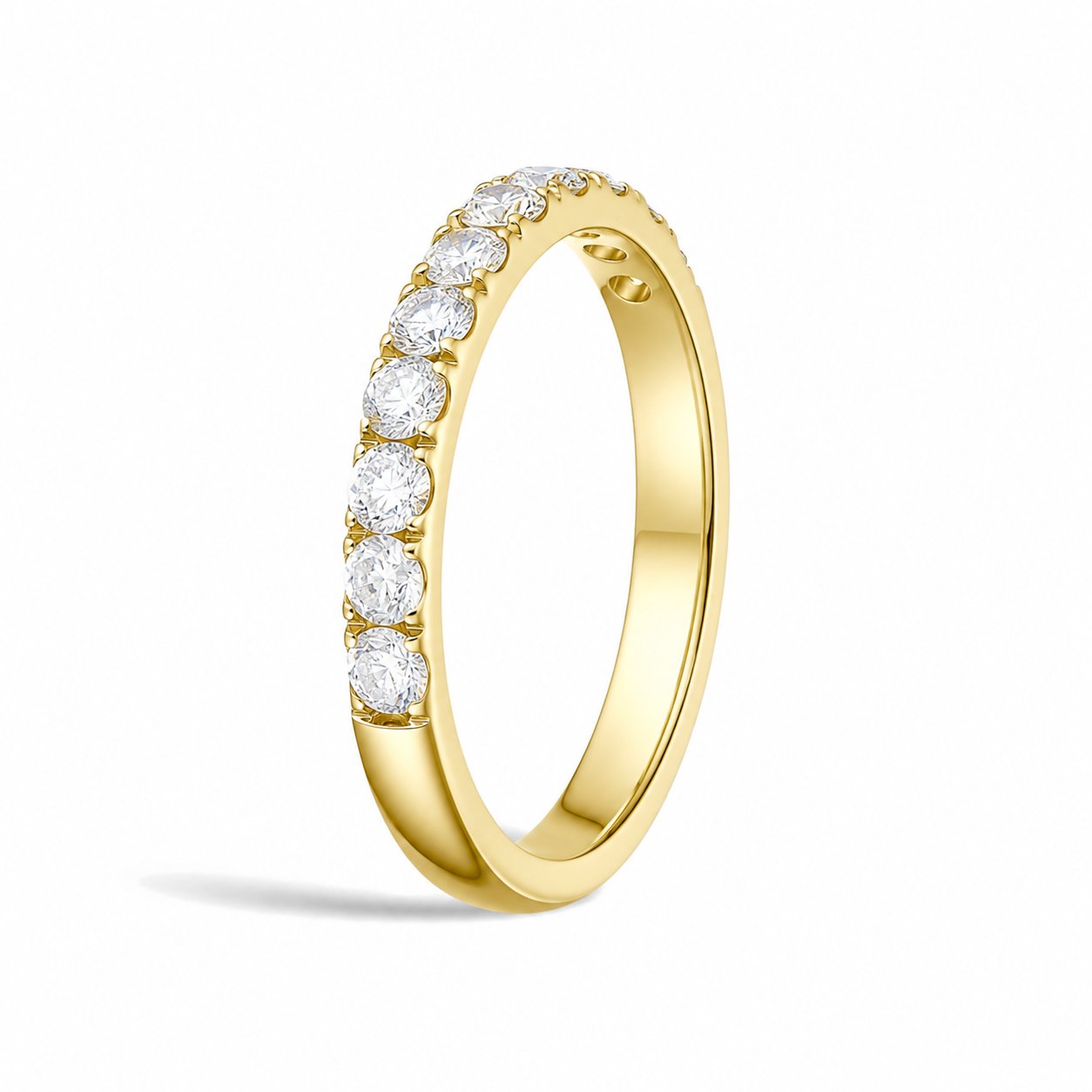
A full-eternity structure carries diamonds around the circumference and minimizes a plain-metal back. Half coverage concentrates the diamond field across the visible face while leaving more uninterrupted metal below. Three-quarter coverage extends the rhythm farther around the finger without necessarily completing it. Designs whose coverage is not named require product images and specifications rather than assumption.
No coverage level is inherently more meaningful, elegant, durable, comfortable, or valuable. Full coverage emphasizes continuity through rotation; partial coverage can create a clearer front and may leave more metal available for certain technical changes. Exact outcomes depend on the selected design, size, setting, diamond dimensions, and construction.
Setting Determines How the Rhythm Is Drawn
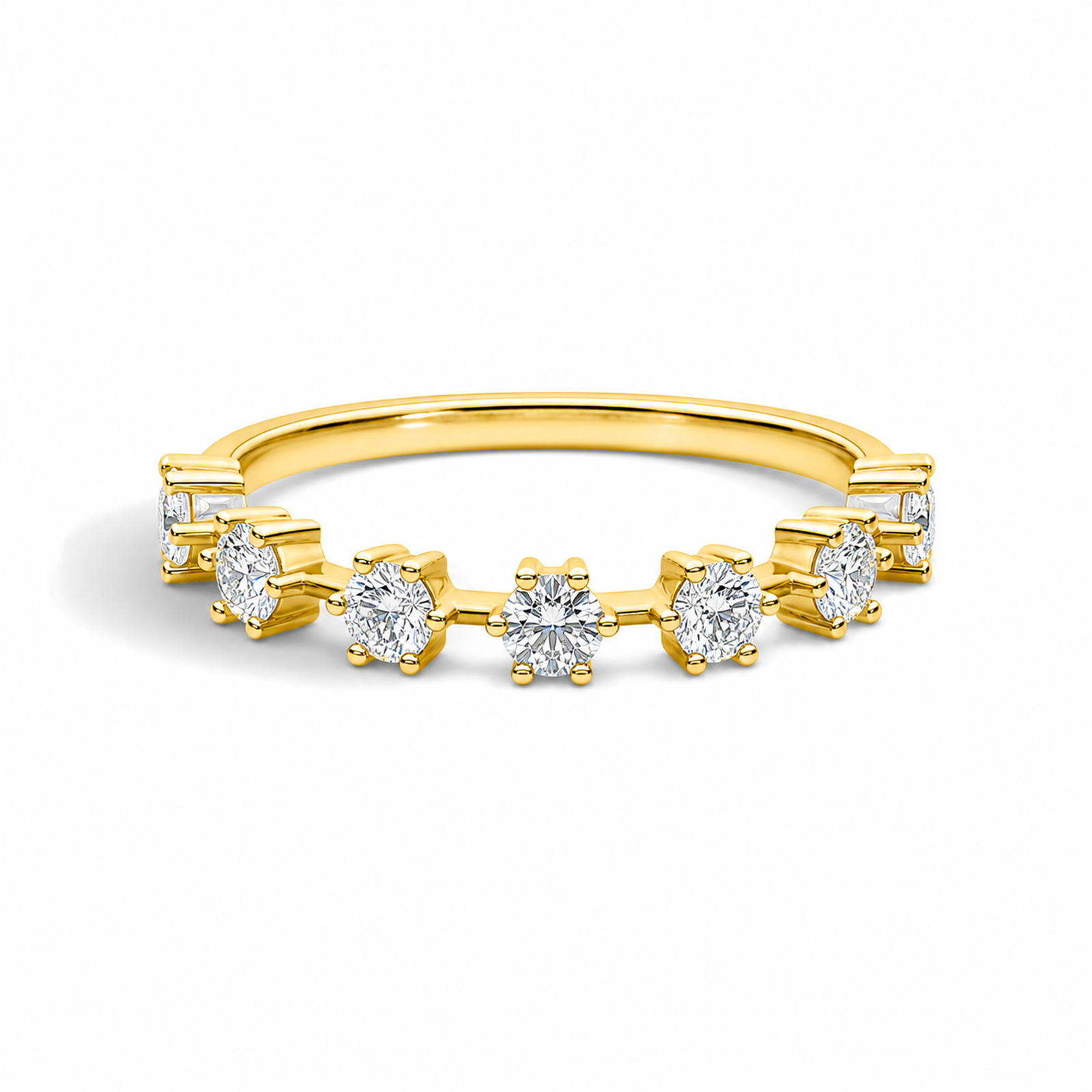
Shared and six-prong structures define diamonds through points of metal and open intervals. Channel designs hold a sequence between metal walls. Bezel-prong language combines a drawn edge with discrete contacts, while milgrain changes the texture of the boundary. These systems shape spacing, profile, light, maintenance access, and the way neighboring rings meet the band.
A setting name is not a universal protection or snag-resistance guarantee. Review front, side, and underside views; ask how each diamond is held and where the ring may contact adjacent settings. Technical security depends on the complete construction and its condition over time.
Diamond Shape Changes the Cadence
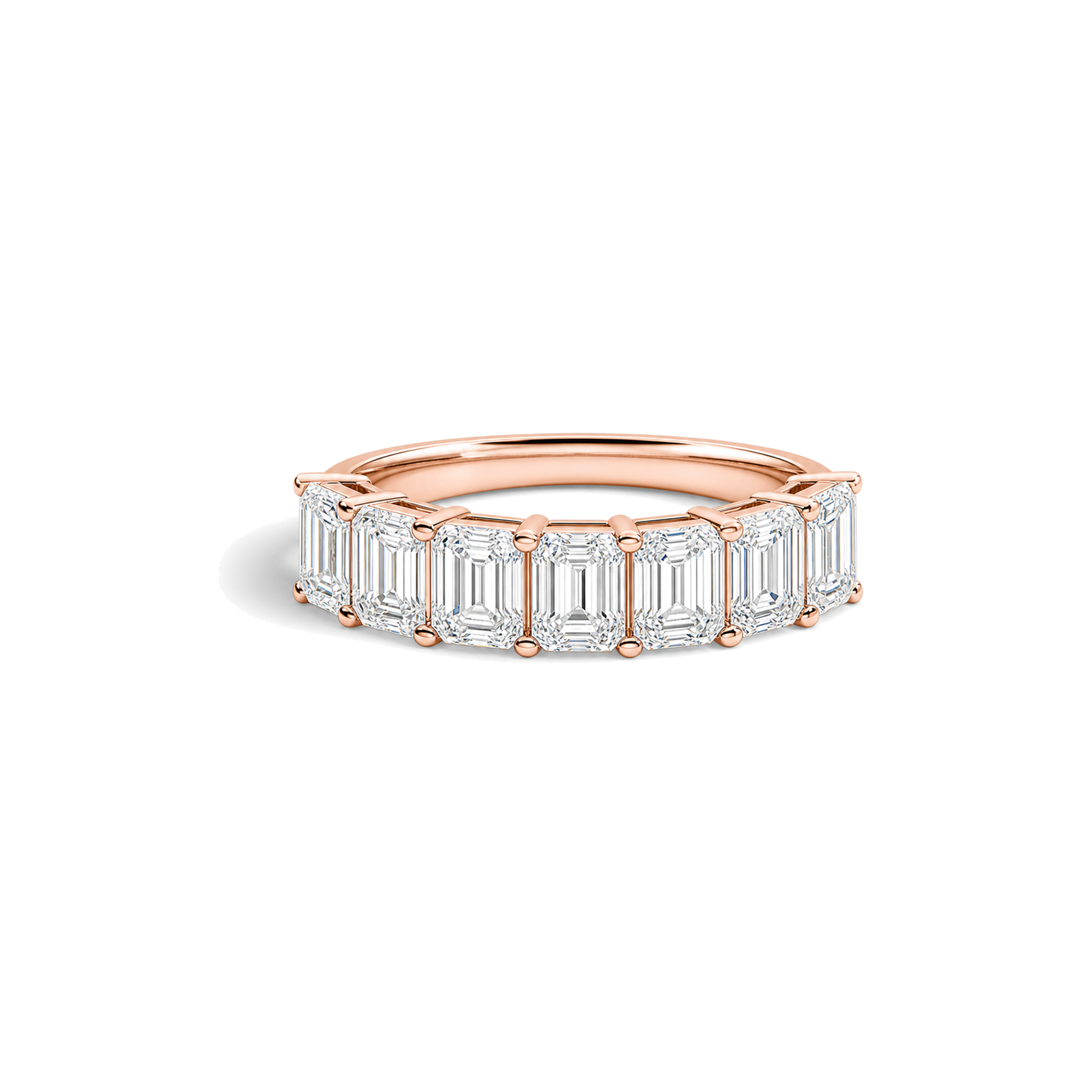
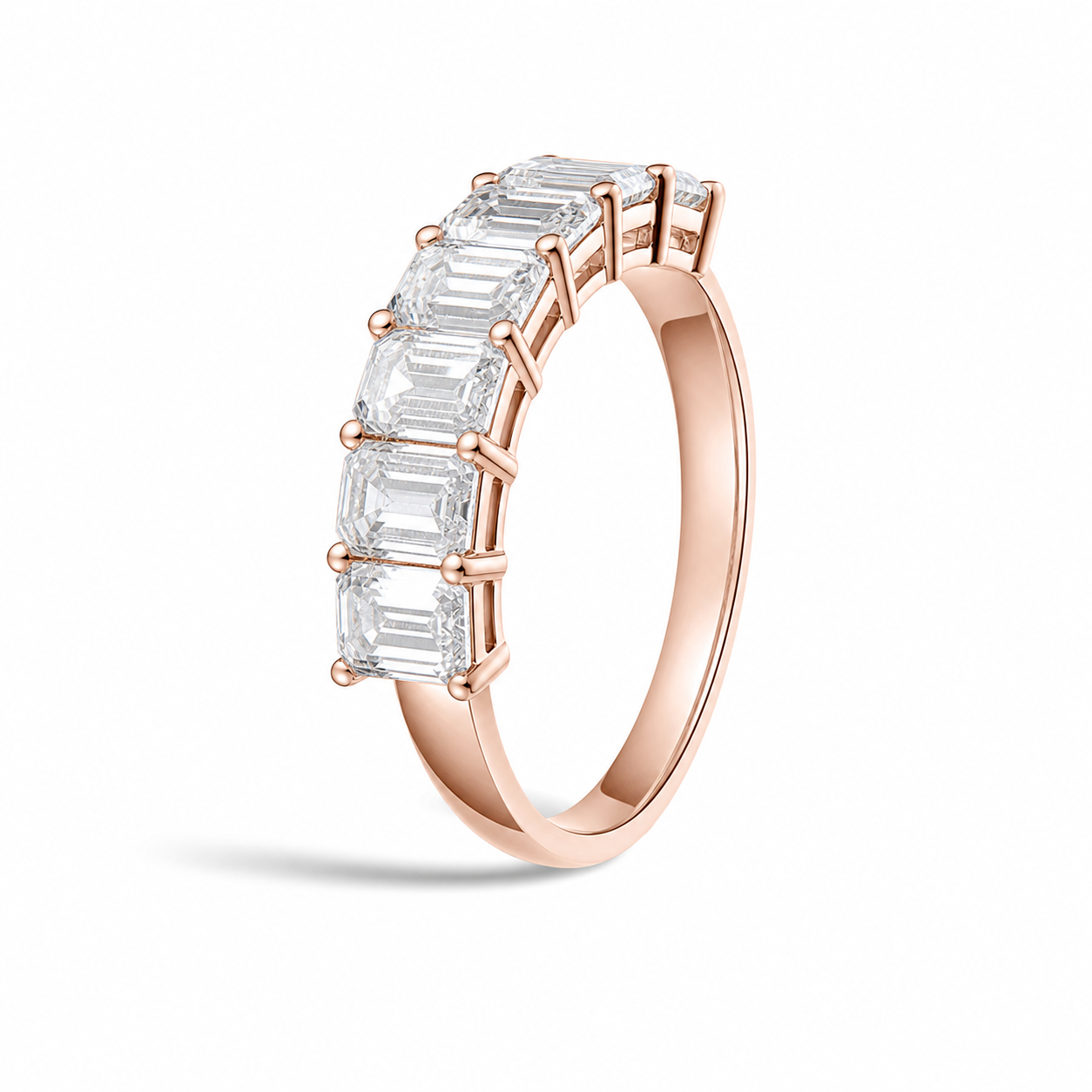
Twelve current designs use Round lab-grown diamonds. Princess, Emerald, and Heart shapes appear once each. Rounds can create a sequence of repeated points or arcs depending on setting; princess shapes can read as a more continuous geometric track; emerald and heart shapes make orientation and interval more visible. These are visual tendencies, not fixed effects.
Current Total Carat Weight options range from 1/8 to 3, and published average widths from 1.4 to 5.0 mm. Equal or nearby totals can produce different rhythms because count, individual dimensions, shape, coverage, spacing, and setting differ. Ring size may also change the number or distribution of diamonds in some constructions, so TCW should be confirmed for the selected size.
Profile Decides How the Band Meets Its Neighbors
An eternity ring may be worn alone, with a wedding band, beside an engagement ring, or within a changing stack. Compatibility depends on height, width, edge, gallery, prongs or channels, diamond projection, and the neighboring ring’s own profile. A straight band may sit flush with one setting and leave intentional space beside another.
Look at the combination from the side as well as face-up. Continuous contact can create abrasion or pressure even when the lines appear aligned. No shared metal color, matching setting name, spacer, or stacking order prevents all scratching, impact, or wear.
Fit and Sizing Deserve Earlier Attention
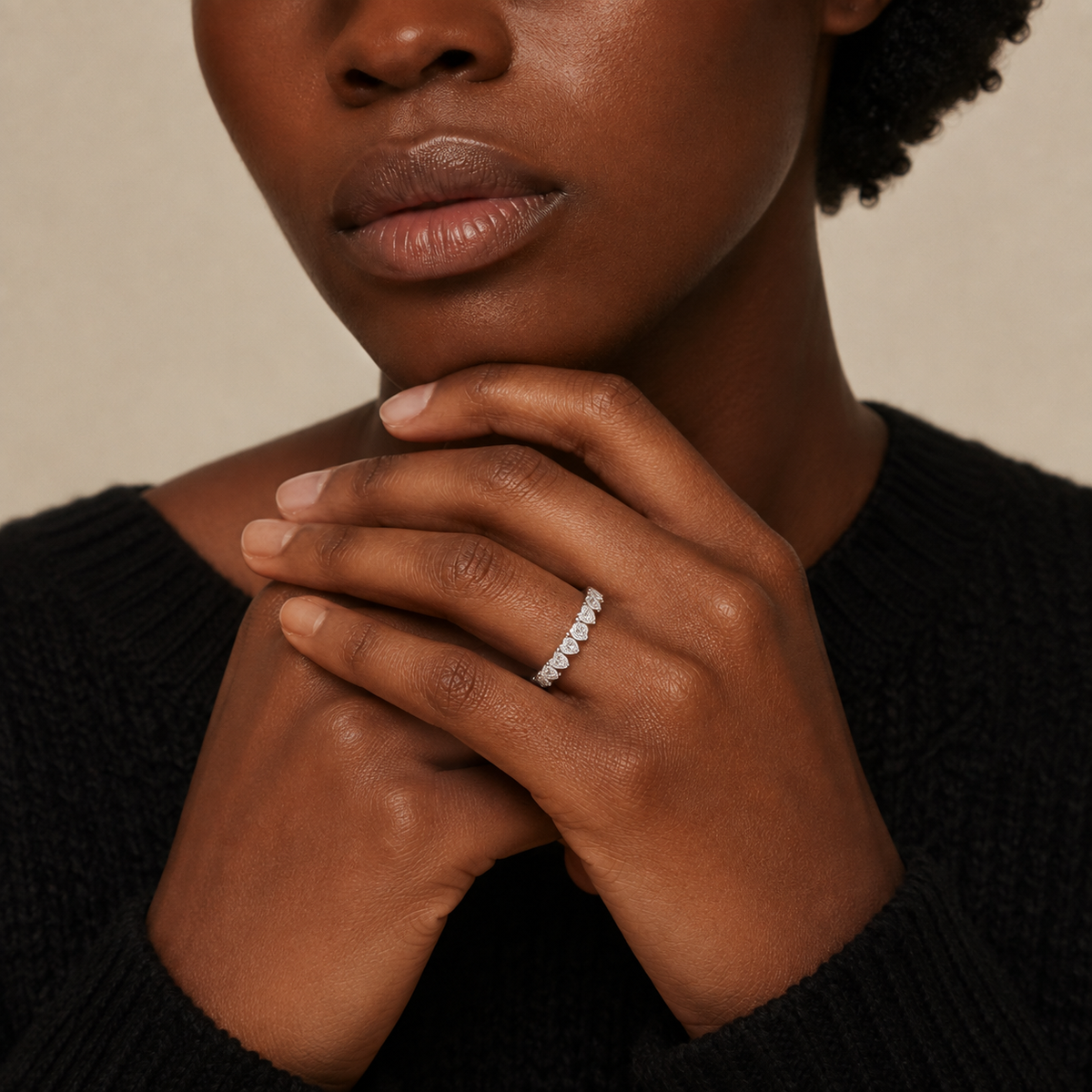
Because diamonds and settings may extend around much of the ring, correct initial sizing is especially important. Measure the intended finger and consider knuckle, finger base, temperature, swelling, band width, inner contour, and any rings worn beside it. A wider combined stack can fit differently from a single narrow band.
Do not assume every eternity ring is non-resizable, or that every partial-coverage ring is easily altered. Full coverage often leaves less uninterrupted metal for change, but feasibility depends on diamond sequence, channels, prongs, symmetry, engraving, size difference, and construction. Each selected ring requires technical review.
Metal Frames Both Diamond and Skin
Current cards represent seven 14K White Gold, six 14K Yellow Gold, and two 14K Rose Gold designs. White metal can make the boundary quieter around near-colorless-looking diamonds; yellow or rose metal can make the interval and edge more legible. Finish, rhodium treatment where applicable, lighting, skin context, and setting coverage all affect the result.
Coordinating metal with an existing ring can create continuity, while contrast can separate two bands visually. Identical color labels do not prove identical alloy, finish, maintenance, surface age, or physical interaction. Choose the complete composition, not the label in isolation.
Meaning Does Not Require a Single Occasion
An eternity ring may mark an anniversary, serve as a wedding band, enter a stack over time, or be chosen without a ceremonial occasion. Full, half, and three-quarter coverage do not carry fixed emotional hierarchies. The strongest symbolism is the one the wearer actually recognizes in the structure.
If the ring marks a milestone, consider how the diamond rhythm relates to what is already worn. If it is selected as a wedding band, compare it with the engagement ring’s profile before assuming a flush fit. If worn alone, assess the complete circumference and side view rather than only its pairing potential.
Documentation, Custom Possibilities, and Care
Burvonti uses responsibly sourced lab-grown diamonds and supports independent grading and certification where applicable. One report does not automatically identify every diamond or the finished ring. Confirm how shape, color, clarity, count, Total Carat Weight, and documentation correspond to the selected design and size.
Custom possibilities may refine size, coverage, sequence, shape, setting, profile, metal, or relationship to another ring when technically feasible. Clean gently around the full circumference, inspect every setting and transition, and store without abrasive contact. Remove the ring when activity or chemicals could place unnecessary stress on diamonds, metal, or neighboring jewelry.
Frequently Asked Questions
What is an eternity ring?
It is a diamond band organized around continuity. Exact coverage may be full, half, three-quarter, or otherwise product-specific rather than universally all the way around.
Do all eternity rings have diamonds around the full band?
No. This Collection currently includes full-eternity titles, half-eternity titles, three-quarter coverage, and three designs whose titles do not state coverage.
What is the difference between full and half eternity rings?
Full coverage carries diamonds around the circumference; half coverage concentrates them across part of the band and leaves more uninterrupted metal.
What is a three-quarter eternity ring?
Its named coverage extends farther around the finger than a half design without necessarily completing the entire circumference. Verify the selected product’s sequence.
How many Eternity Rings are currently included?
The public Collection contains 15 designs: three eternity titles, six half-eternity titles, three three-quarter coverage titles, and three without coverage in the title.
Are these products exclusive to the Eternity Collection?
No. All 15 have normalized design counterparts in the Ring, Anniversary, and Wedding Band Collections, sometimes represented in different metals.
Which diamond shapes are currently represented?
Current details identify twelve Round designs and one each in Princess, Emerald, and Heart.
Which settings are currently represented?
Titles include shared-prong, six-prong, channel, milgrain channel, and bezel-prong language. Exact setting and coverage must be confirmed per product.
What widths are currently represented?
Published average ring widths span 1.4 to 5.0 mm. Width should be read with profile, coverage, diamond dimensions, setting, and adjacent rings.
What Total Carat Weights are currently represented?
Current options span 1/8 to 3 TCW. Total alone does not disclose diamond count, individual size, coverage, setting, or selected-size variation.
Does ring size affect an eternity ring’s total carat weight?
It may in some constructions because circumference can affect diamond count or distribution. Confirm the exact selected-size specifications rather than assuming a fixed outcome.
Can an eternity ring be resized?
Possibly, but not universally. Coverage, sequence, channels, prongs, symmetry, engraving, construction, and requested change all affect feasibility.
Are half-eternity rings easier to resize?
They may leave more plain metal, but easy alteration is not guaranteed. Setting layout, symmetry, construction, engraving, and size change still require review.
How should an eternity ring fit?
It should suit the intended finger without pinching or passing too freely over the knuckle. Width, inner contour, swelling, and combined stack width matter.
Can an eternity ring be worn as a wedding band?
Yes if its symbolism, fit, profile, and relationship to an engagement ring suit the wearer. No one coverage or setting is required.
Can an eternity ring be an anniversary ring?
Yes. It may mark any chosen milestone, but no anniversary year or coverage level is prescribed.
Can an eternity ring sit flush with an engagement ring?
Sometimes. Flushness depends on both rings’ height, gallery, prongs, channels, edges, contour, and contact—not the eternity label alone.
Can eternity rings be stacked?
Yes after comparing width, profile, settings, edges, and movement. Stacking can still create abrasion, pressure, impact, or setting contact.
Can an eternity ring be customized?
Size, coverage, sequence, shape, setting, profile, or metal may be possible after technical review; availability is not Collection-wide.
How should an eternity ring be cared for?
Clean gently around the complete band, inspect each setting and transition, avoid harsh chemicals and unnecessary impact, and store without abrasive contact.