
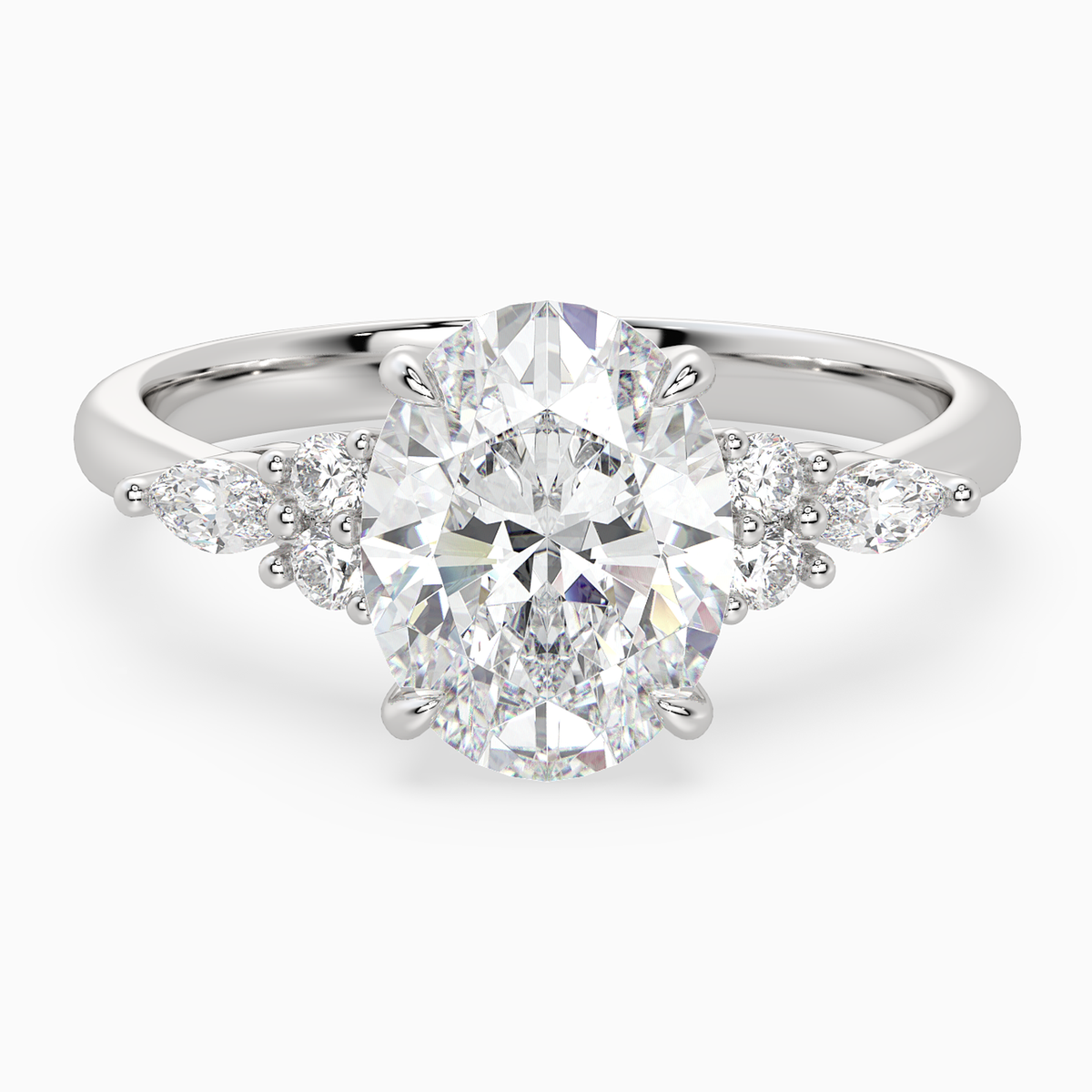


Oval Diamond Engagement Rings in 18K Yellow Gold
An elongated center within a fuller gold field. 18K yellow gold gives the oval curve warmth, direction, and measured material presence.


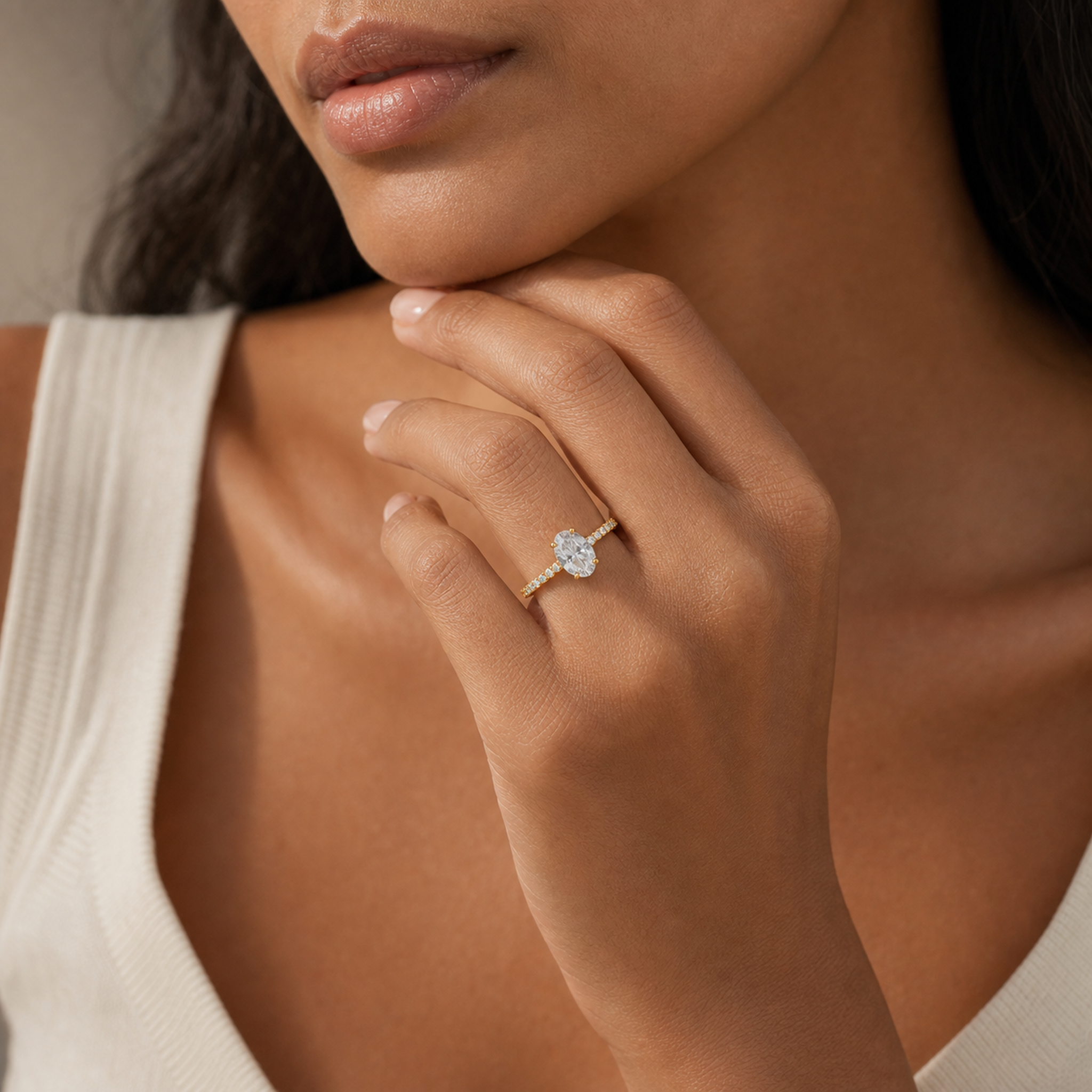


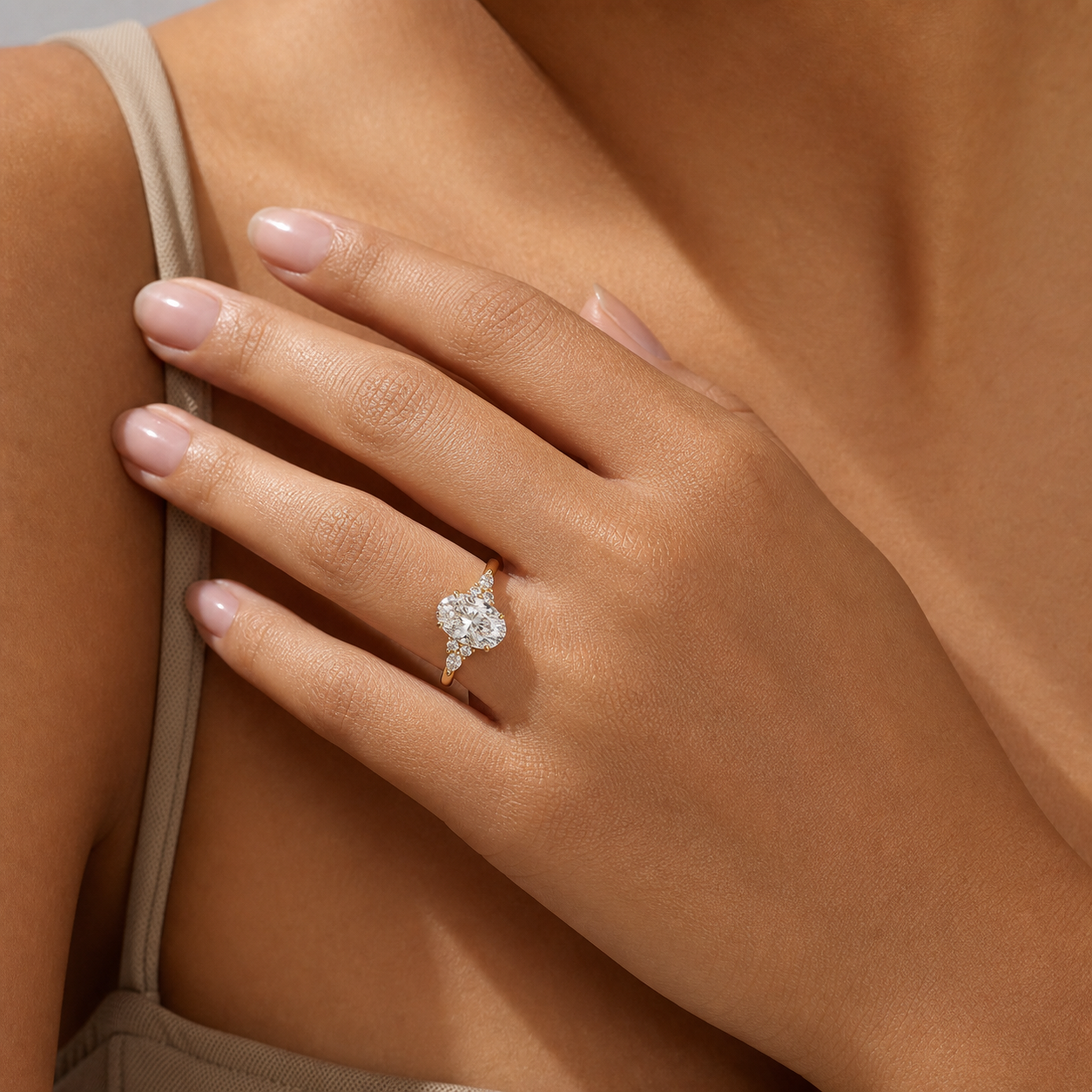


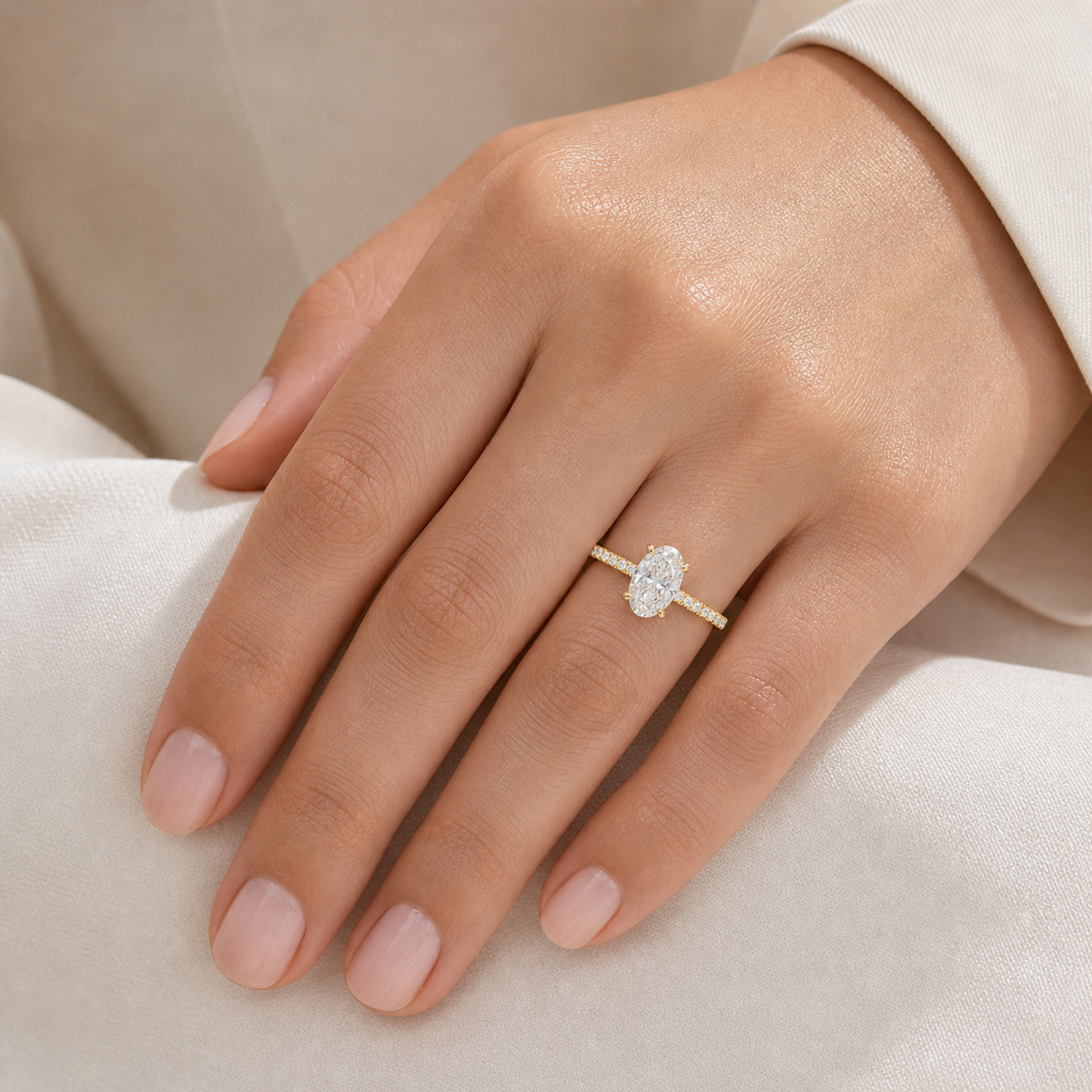


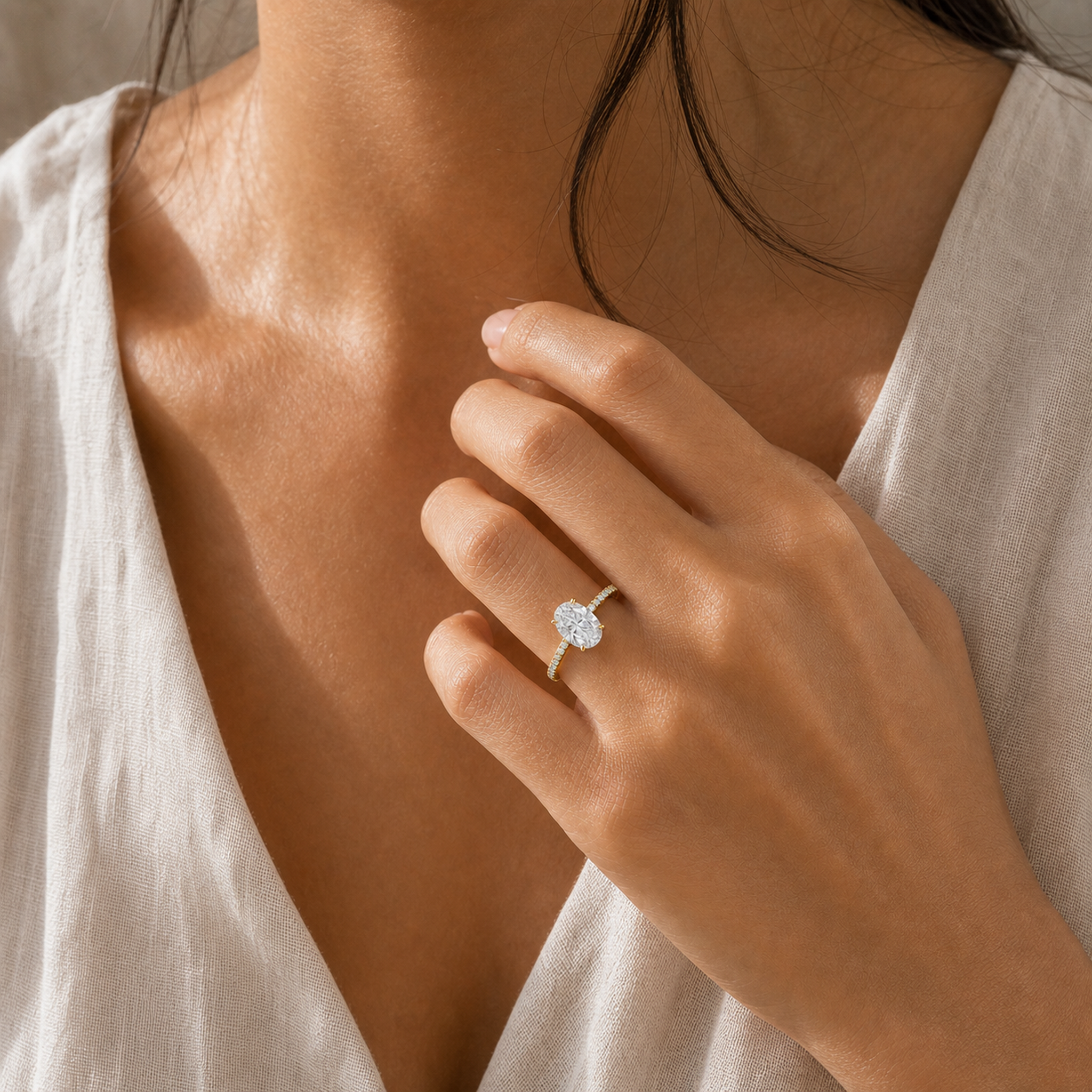


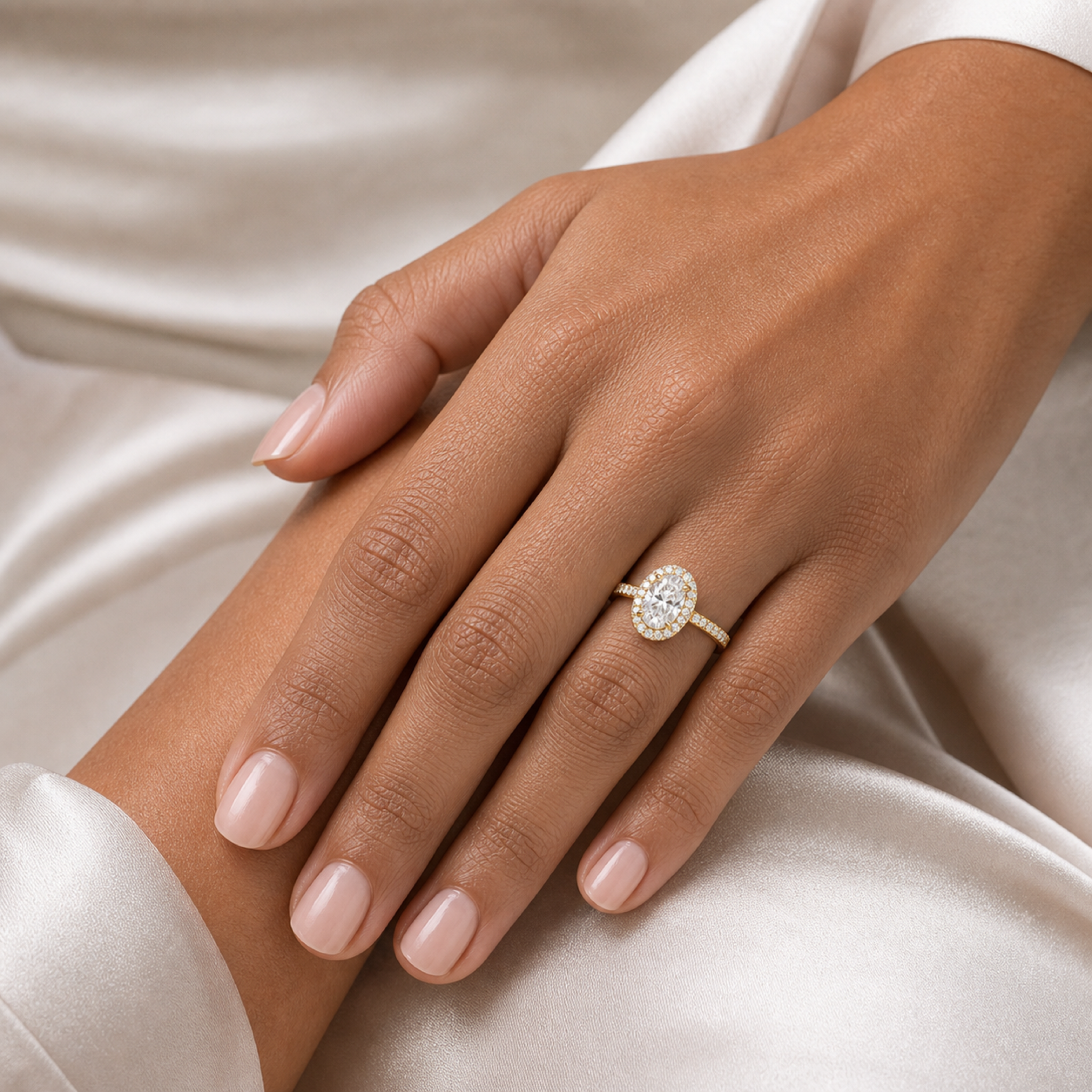

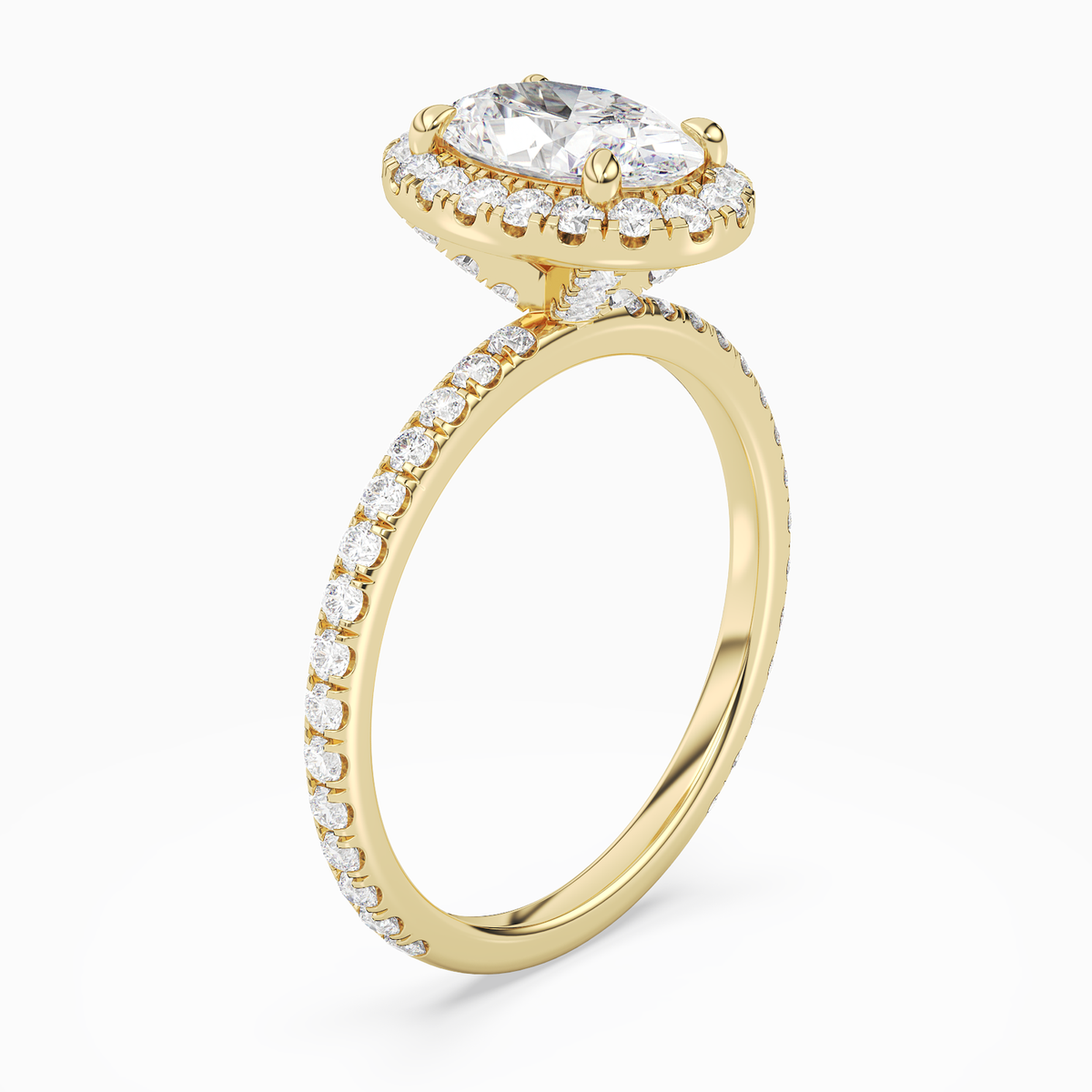


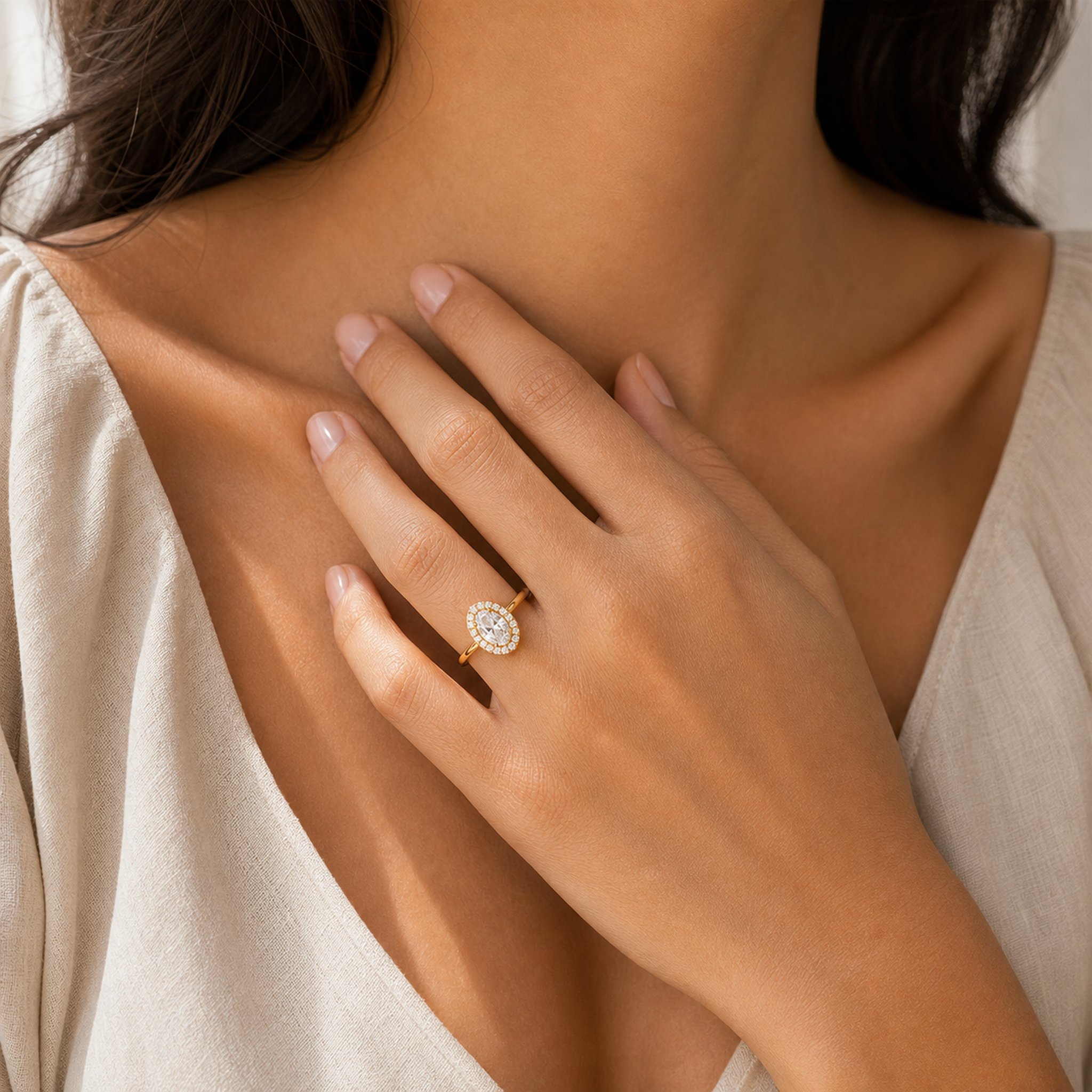


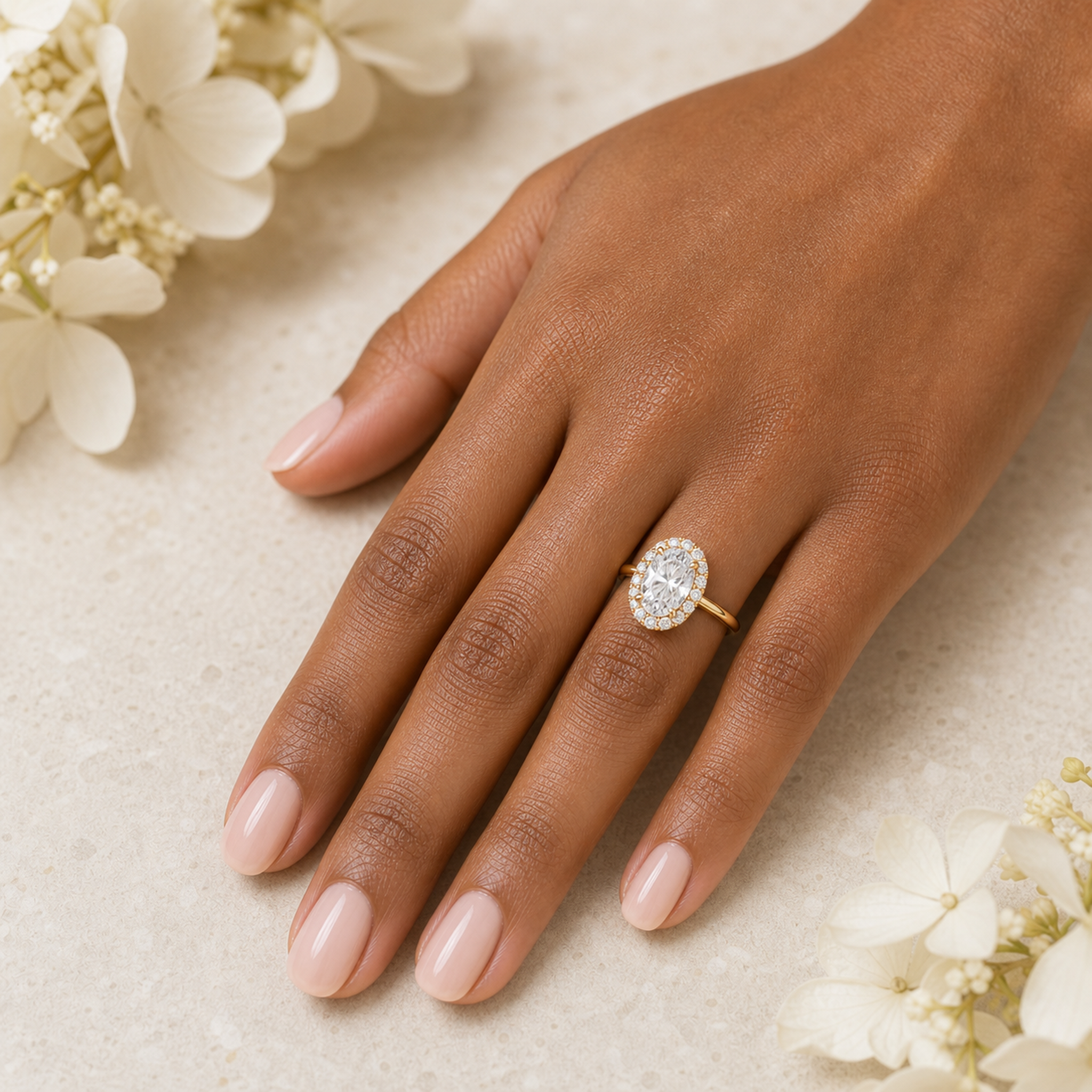


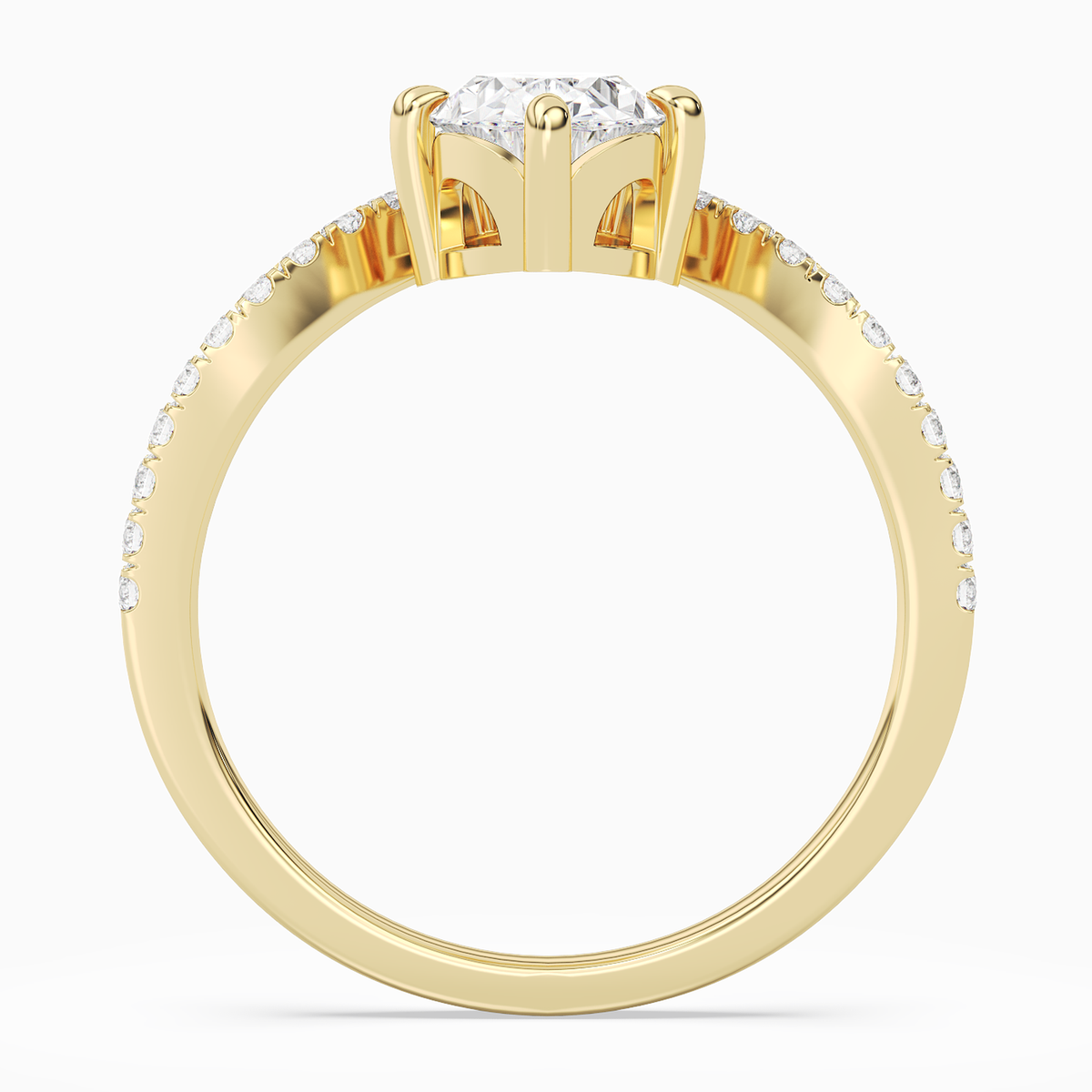


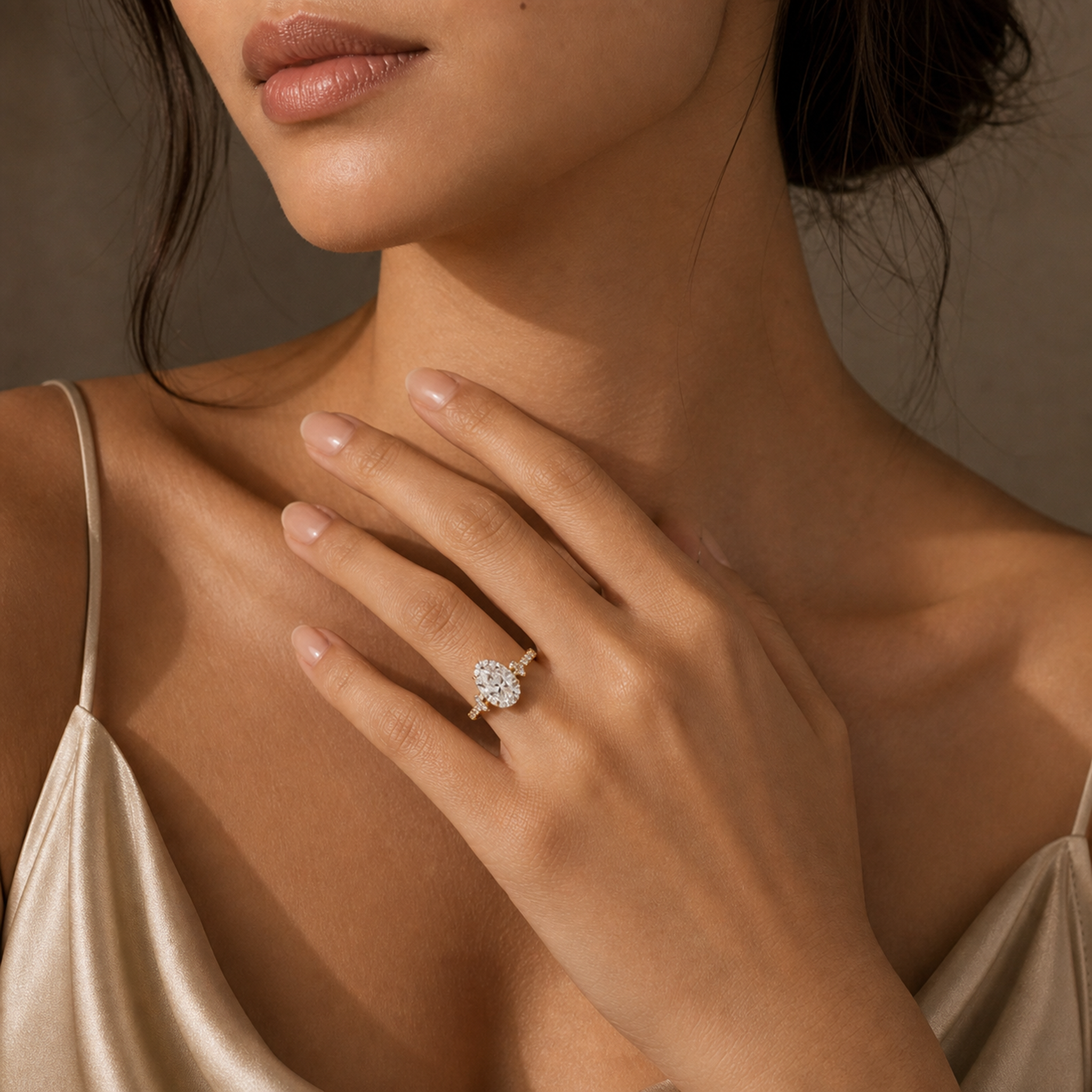


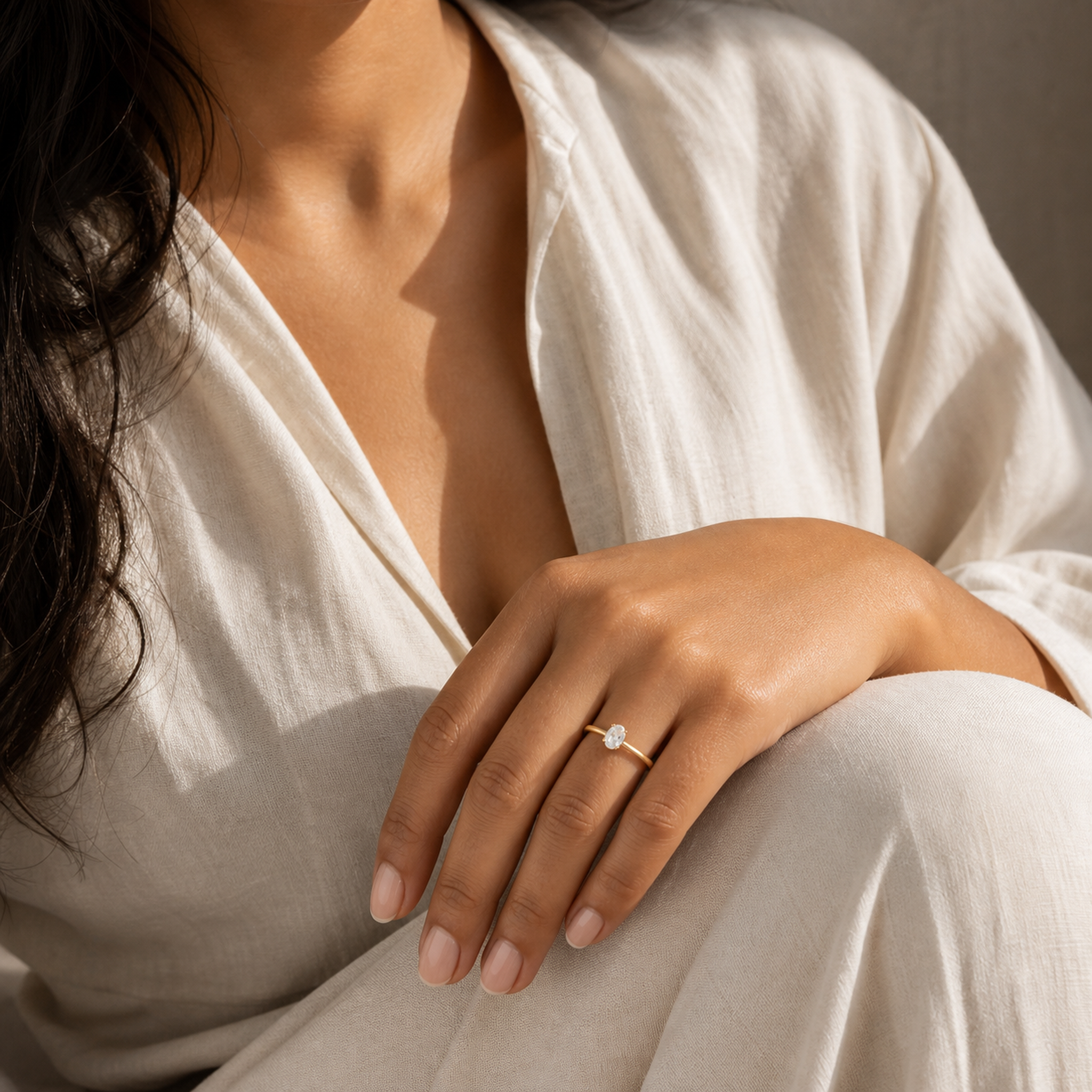


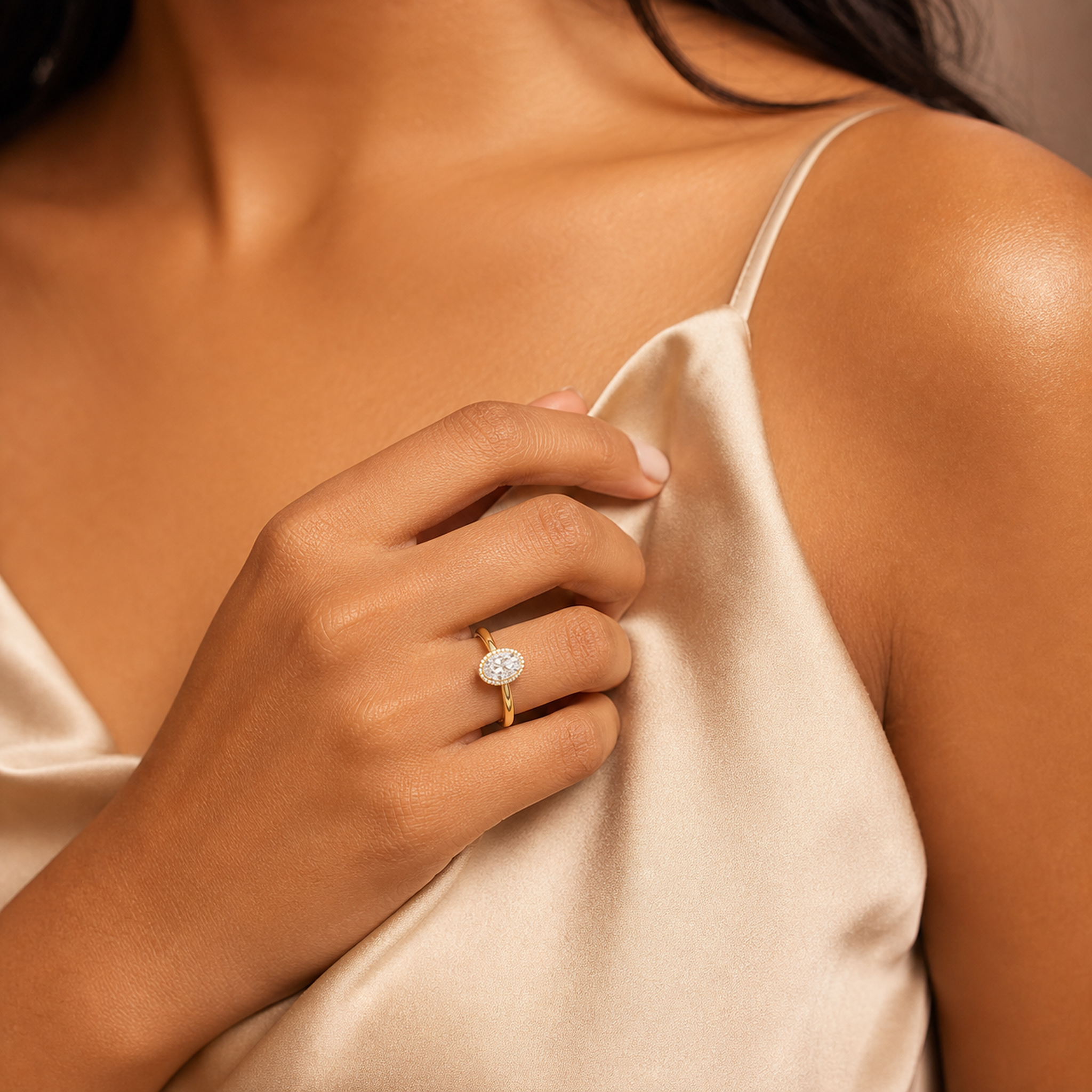


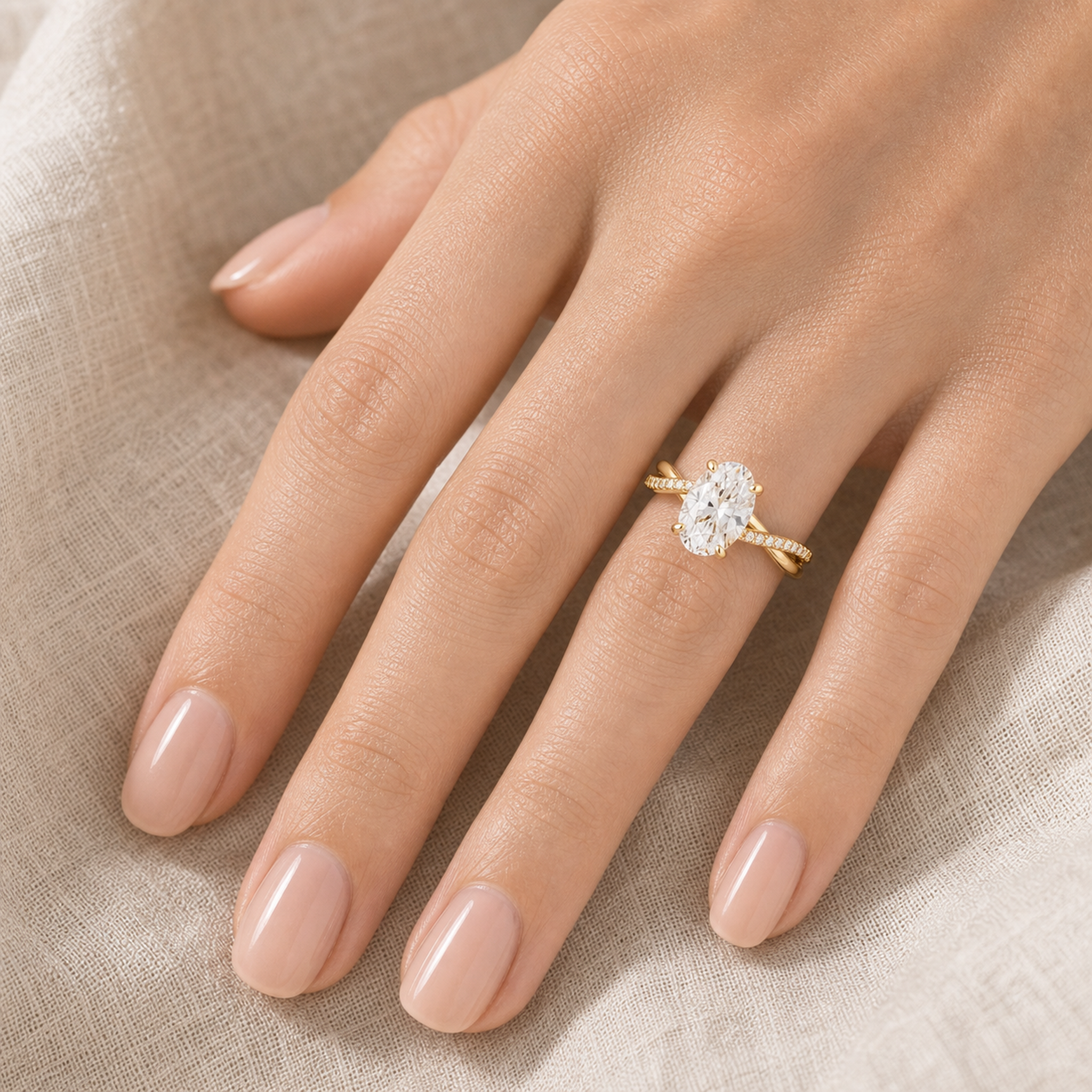


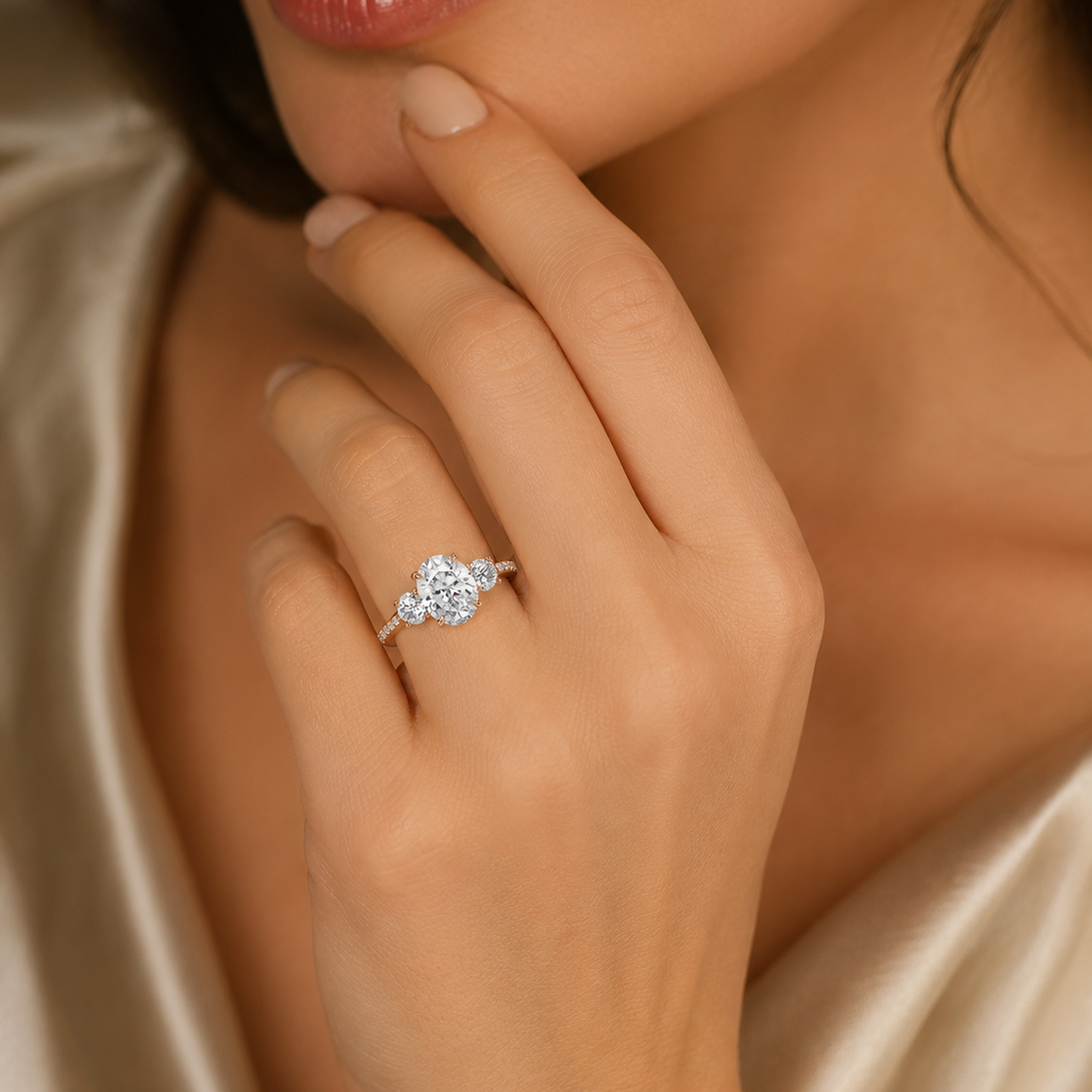


18K Yellow Gold Oval Diamond Engagement Rings: A Fuller Gold Field Around the Curve
An oval center has both continuity and direction: a curved perimeter that leads the eye along its length. 18K Yellow Gold places that geometry inside a material containing approximately 75% gold. Its visible field can run from fine prongs to a broader basket, shoulder, bezel, or multi-stone framework.
The current collection contains 15 designs: seven Solitaires, three Halos, three Side Stone rings, and two Three Stone compositions. Hidden and double halos, open and pavé baskets, cathedral lines, a milgrain bezel, vines, and shaped accents make the amount and placement of gold an active design decision.
Read Karat as Composition
18K gold contains approximately 75% gold. Alloying metals affect its exact shade and working behavior. The karat mark does not promise one color, hardness, wear outcome, sensitivity result, or care schedule, and it should not be used as a simple quality ranking over 14K.
When comparing the two karats, hold setting architecture as constant as possible. A wider band, larger basket, or continuous bezel can create more visible gold than a fine-prong design, regardless of composition. Judge the complete ring and its intended wear rather than selecting by percentage alone.
A Fuller Field Should Preserve the Oval
Yellow Gold establishes a clear boundary around the center. Along an oval, that border should let both sides and ends remain balanced while keeping the long axis readable. Prong position, bezel thickness, halo spacing, and the transition into the band determine whether the outline feels continuous.
The material does not improve the diamond's symmetry, polish, color grade, or light performance. Bow-tie visibility and facet contrast belong to the individual oval and viewing conditions. Review its report, dimensions, images, and motion rather than relying on a warm metal setting to predict optical results.
Gold Moves Through Four Setting Families
A Solitaire concentrates the comparison on the center, basket, and band. A Halo repeats the oval and may expose gold between two fields of light. Side Stone and Three Stone designs distribute material across several shapes, making spacing and hierarchy especially important.
Cathedral shoulders lift the gold toward the center; vines divide it into flowing paths; a bezel makes the perimeter continuous; a double halo creates multiple boundaries. These distinctions give the page an independent purpose beyond describing 18K Yellow Gold as rich, traditional, or luxurious.
Proportion Extends Beyond the Center
Length-to-width ratio describes the oval outline, not the scale of the complete ring. Compare actual length, width, depth, and carat with halo dimensions, side accents, shoulder width, and band line. Each alters how the composition occupies the hand.
The elongated head can also affect balance. Basket width, center height, band width, ring size, and fit influence movement. A wedding band may sit close or leave an interval depending on projecting structures and contact points; a matching gold color does not establish a flush result.
Material Presence With Restraint
Surface character evolves with wear, and maintenance depends on the specific alloy, finish, construction, and use. Confirm product details rather than assuming a universal polish, inspection, resizing, or service outcome for all 18K Yellow Gold rings.
Burvonti pairs responsibly sourced, independently graded lab-grown diamonds with settings calibrated through proportion and human judgment. Custom possibilities may refine center specifications, prongs, basket, band, accents, metal, or engraving where feasible. The fuller gold field should support the oval's direction with clarity and restraint.
Frequently Asked Questions
How is this page different from 14K Yellow Gold Oval rings?
It focuses on 18K's approximately 75% gold composition and how a fuller material field is distributed around the oval.
How much gold is in 18K Yellow Gold?
Approximately 75%. Other alloying metals influence shade and working behavior.
Is 18K Yellow Gold automatically better than 14K?
No. Karat is one composition fact; alloy, construction, finish, wear, care, and preference also matter.
Are all 18K yellow gold rings the same shade?
No. Alloy formula, finish, lighting, photography, and exposed metal area affect appearance.
Does 18K Yellow Gold enhance an oval's sparkle?
No. The metal changes the surrounding field, not the diamond's facet relationships.
Which setting structures are represented?
The collection contains seven Solitaire, three Halo, three Side Stone, and two Three Stone designs.
How does a bezel affect an oval?
It creates a continuous metal boundary that changes how the perimeter is read without altering diamond dimensions.
Does the metal change the bow-tie?
No. Bow-tie visibility depends on the individual diamond and viewing environment.
What should I compare between 14K and 18K Yellow Gold?
Compare composition, exact color, visible metal, construction, care, budget, and the complete ring.
Will a higher karat make the center look larger?
No. Face-up scale comes from dimensions, outline, and setting context.
Will the ring rotate?
Center scale, basket, band, ring size, fit, and the complete design influence rotation.
Can a matching band sit flush?
Only the profiles and contact points can establish that; matching metal is not enough.
Can Burvonti personalize an 18K Yellow Gold Oval ring?
Custom possibilities may include center, prongs, basket, accents, band line, metal, or engraving, subject to feasibility.