
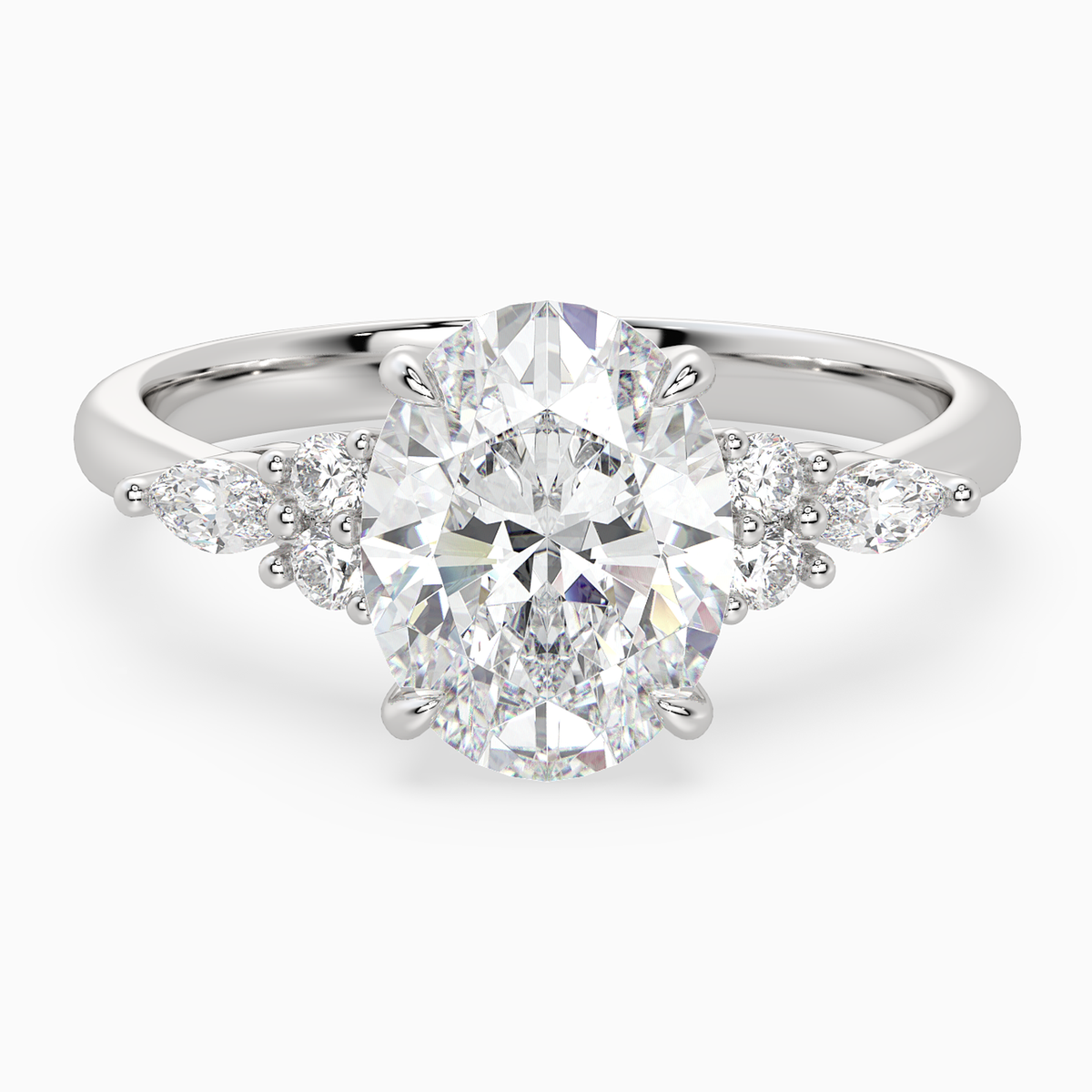


Oval Diamond Engagement Rings in 18K White Gold
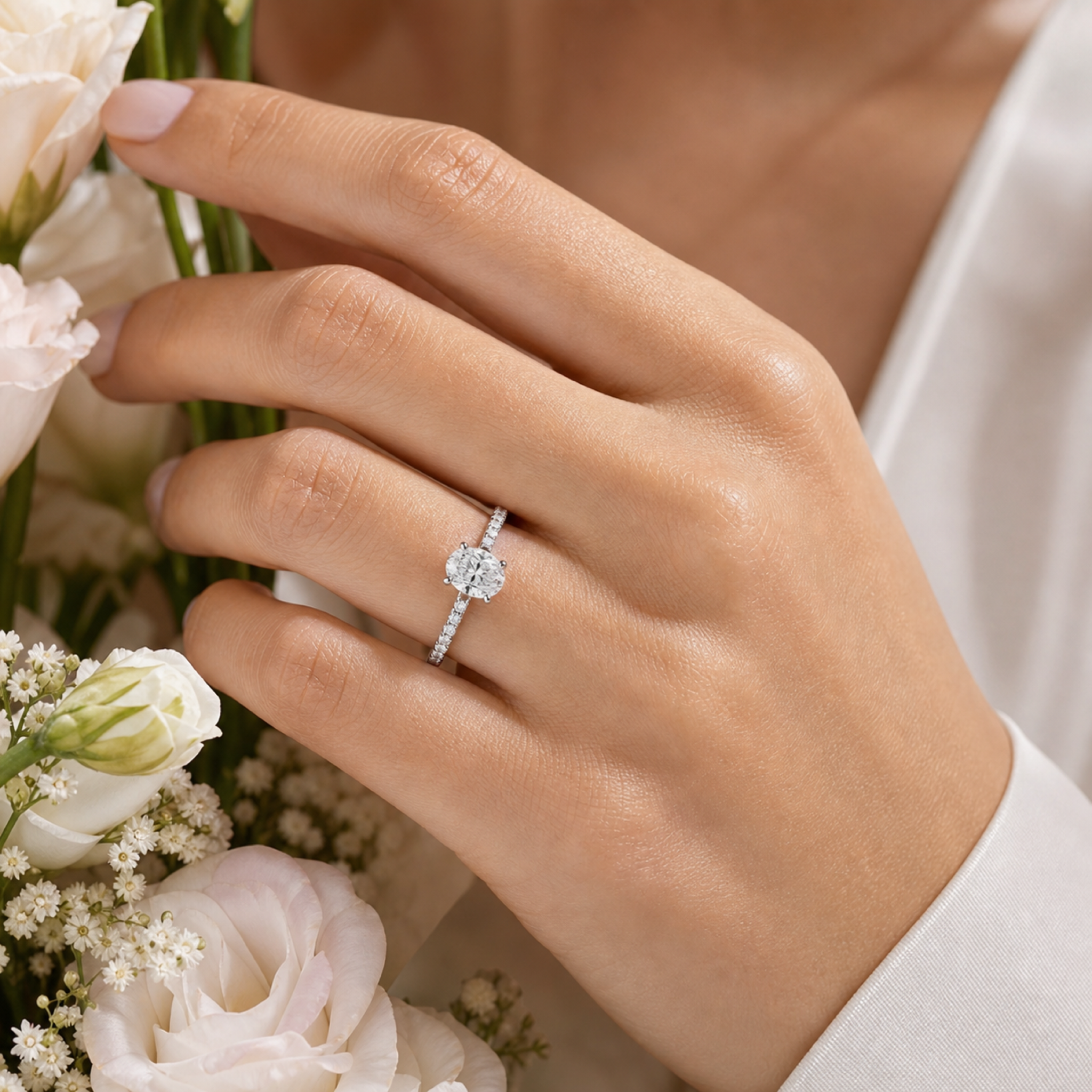
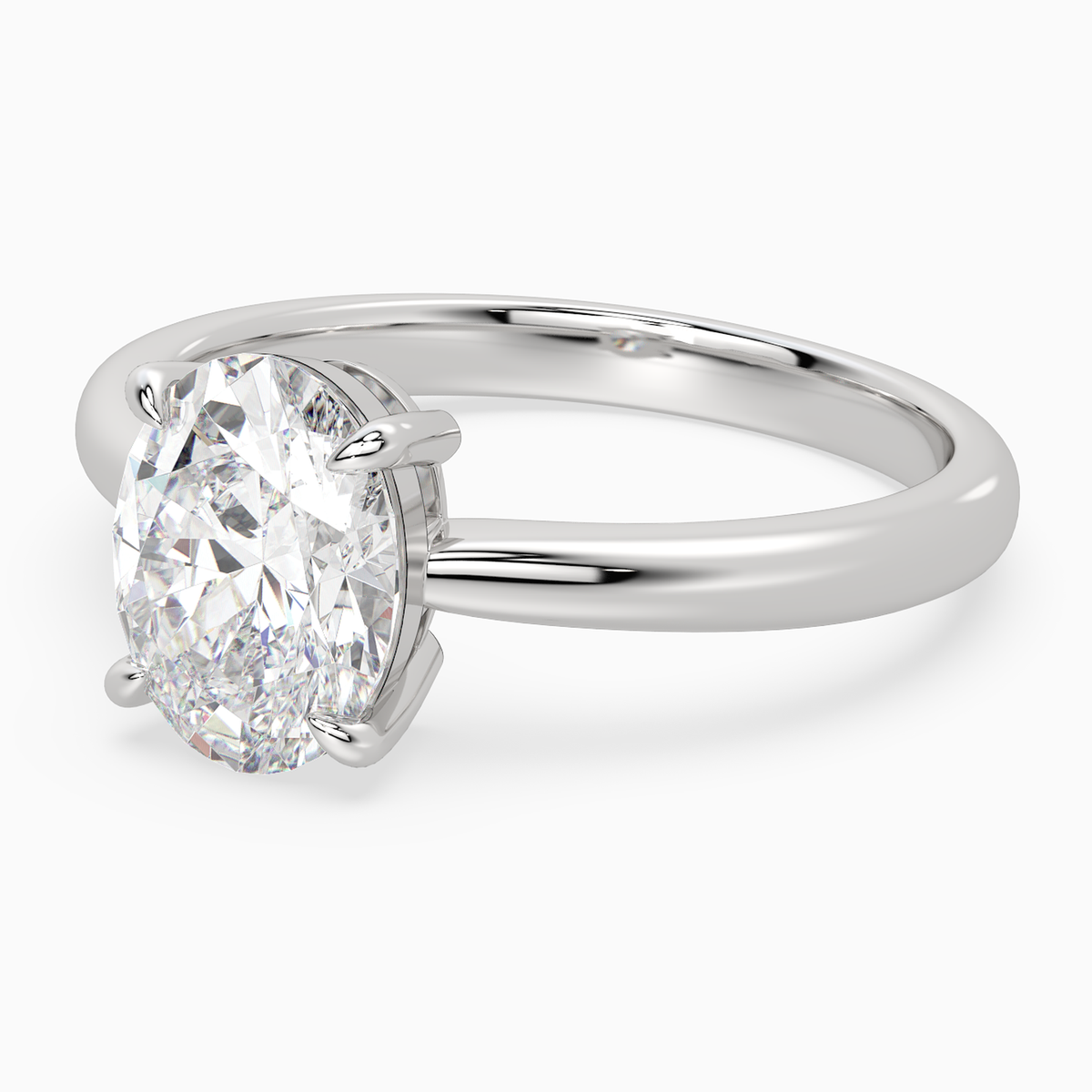
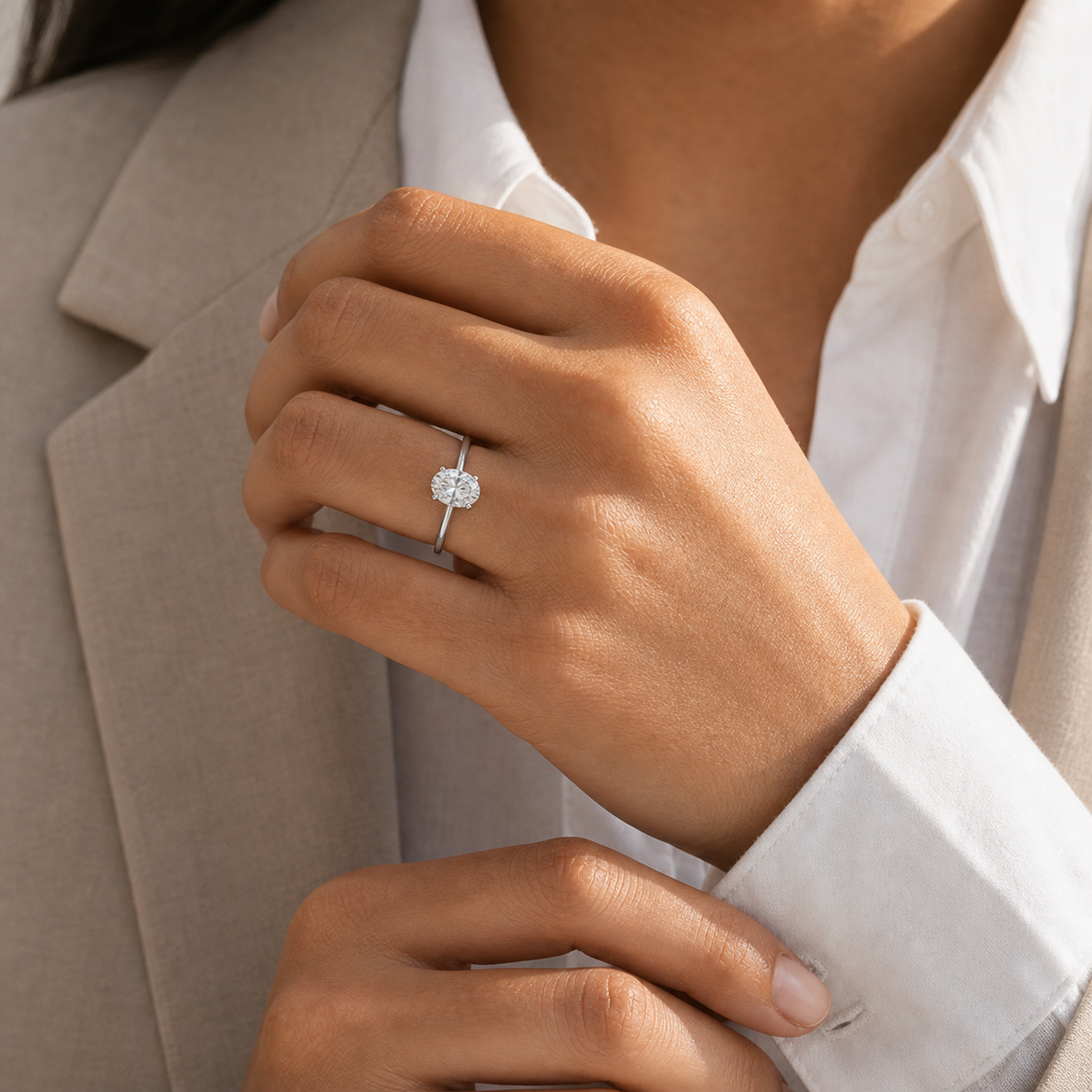
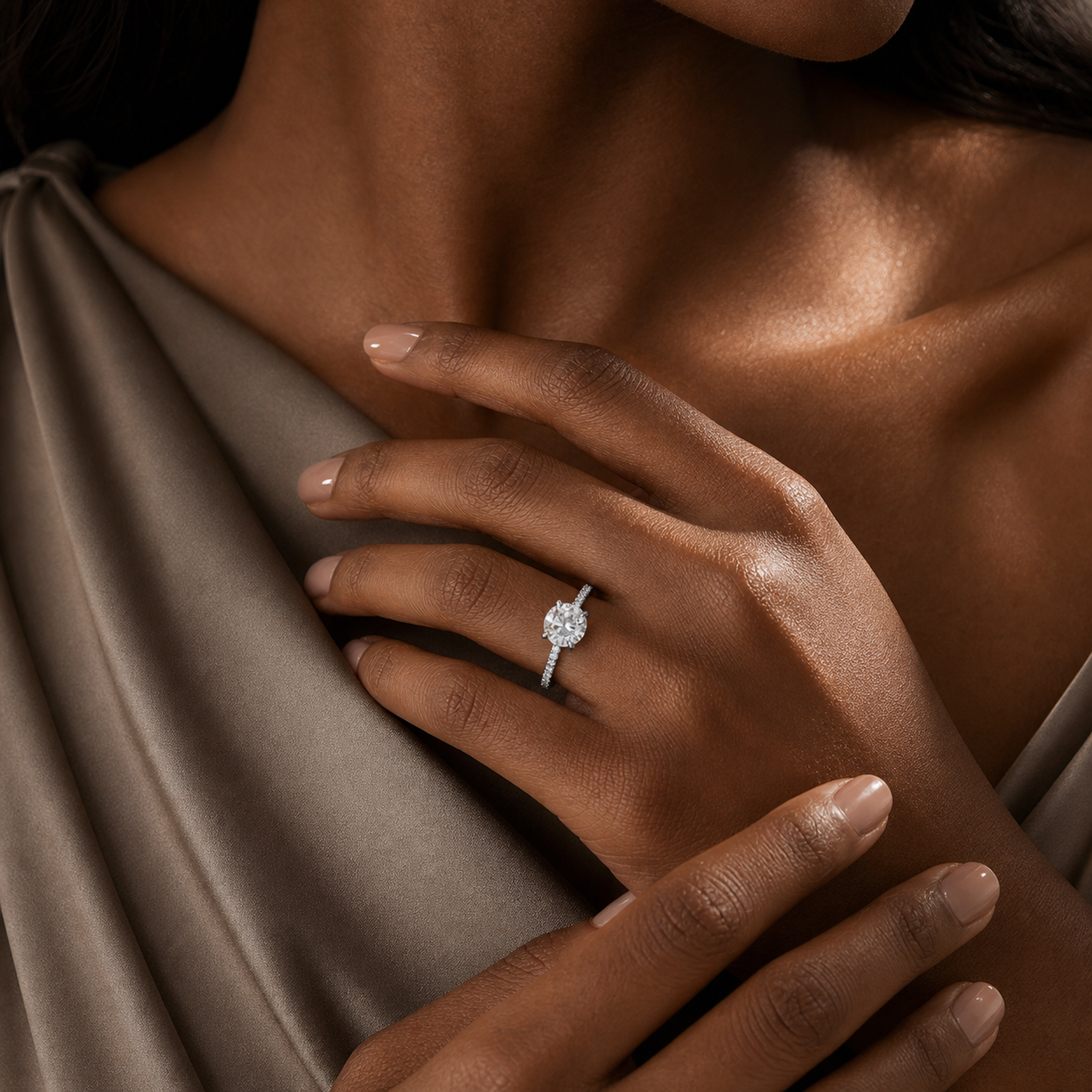
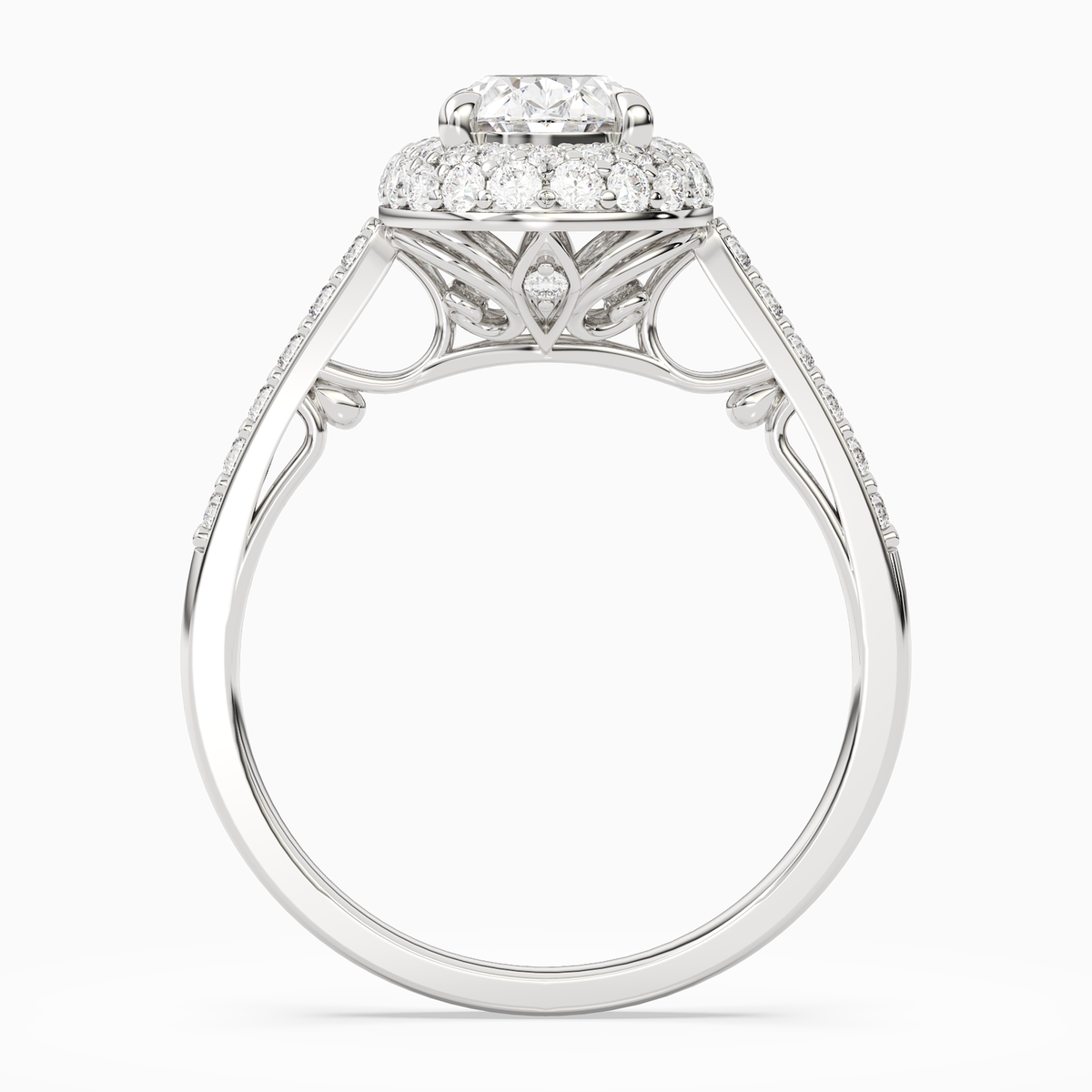
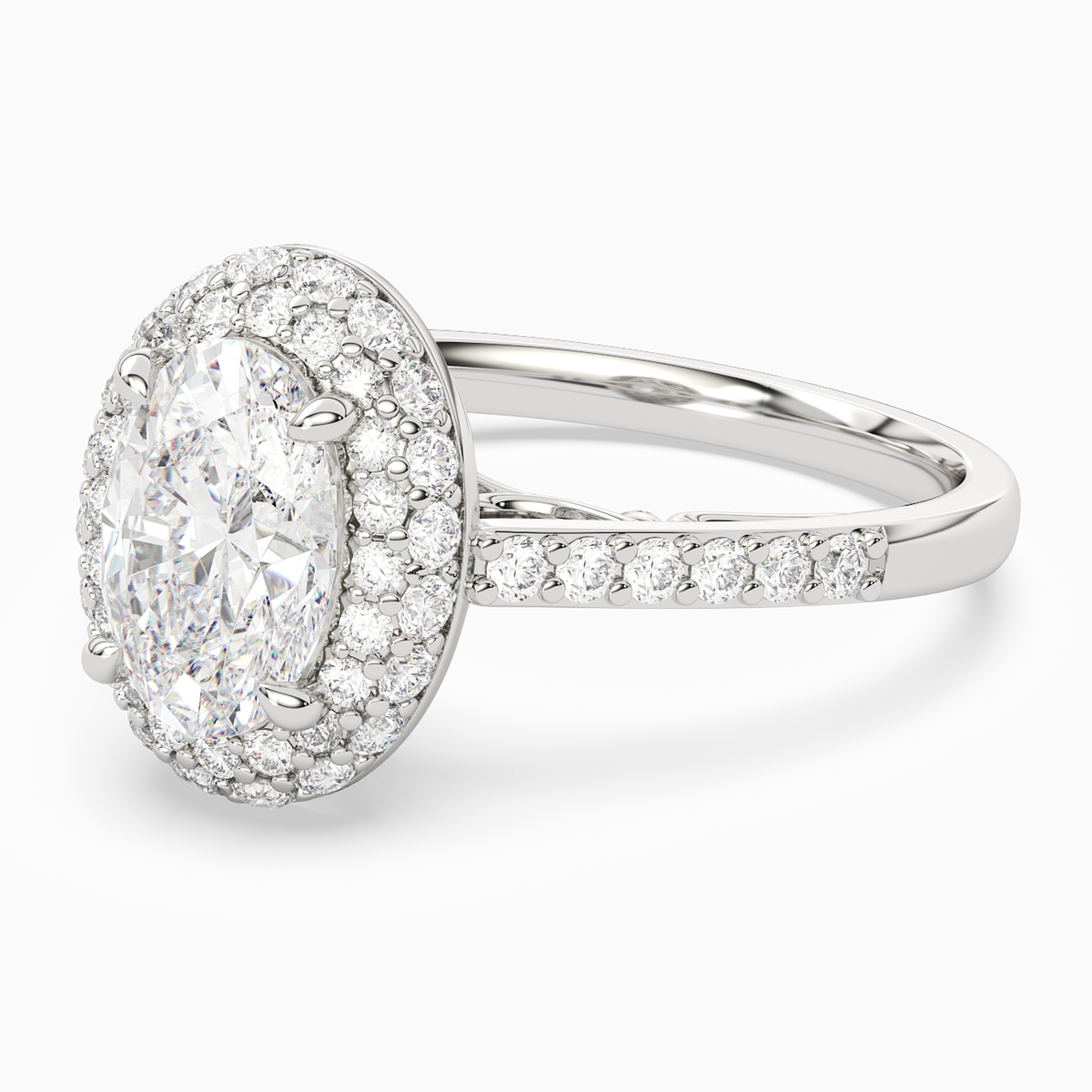
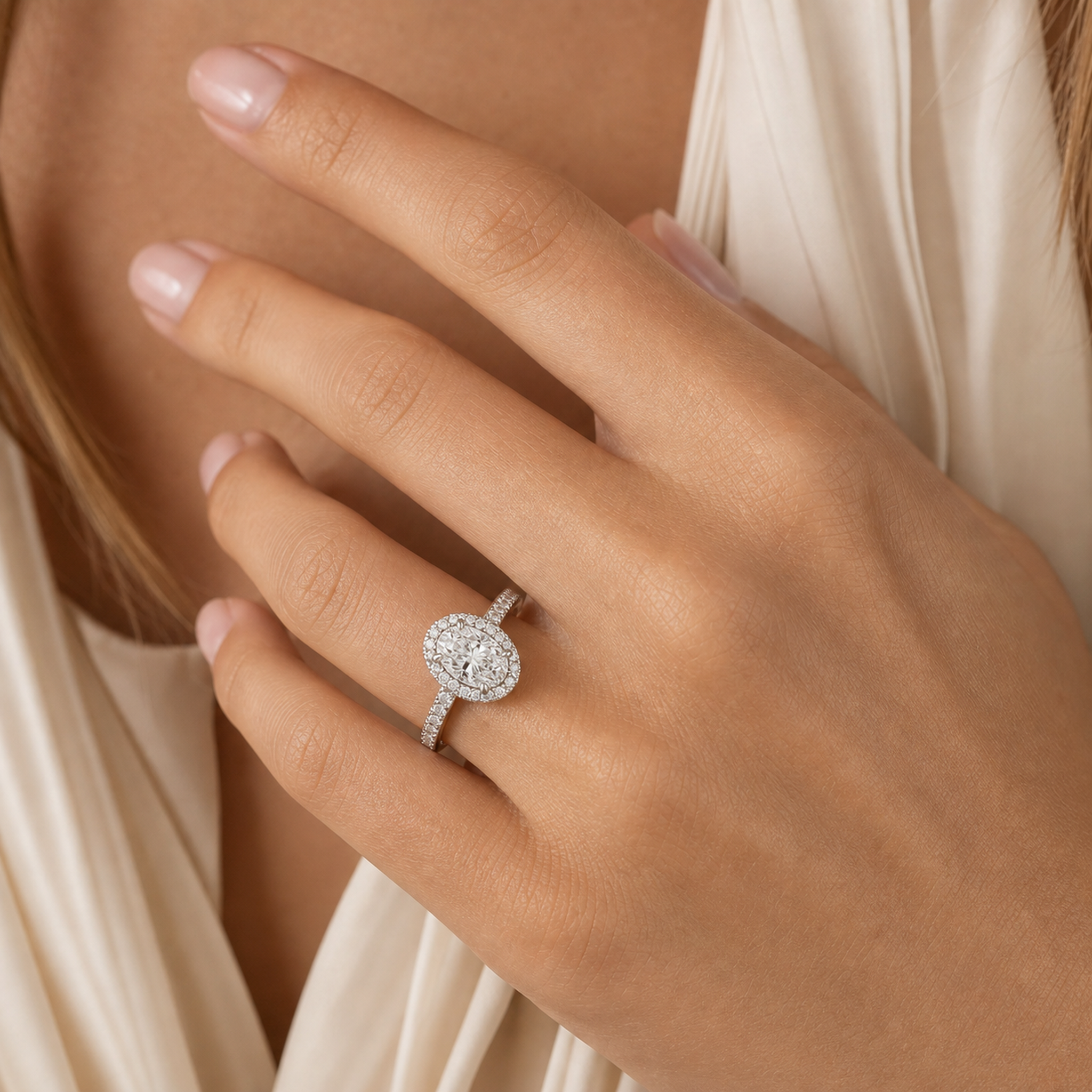
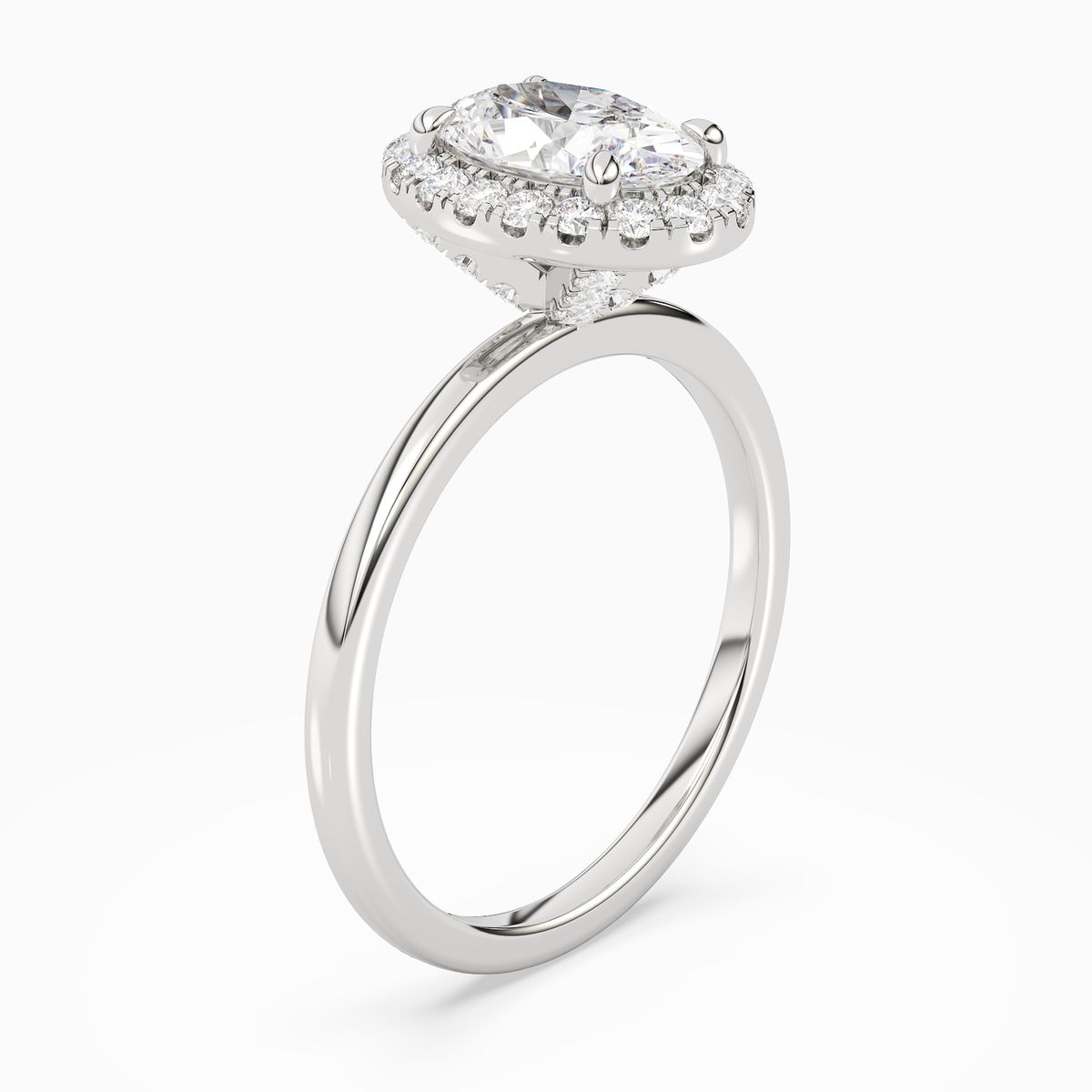
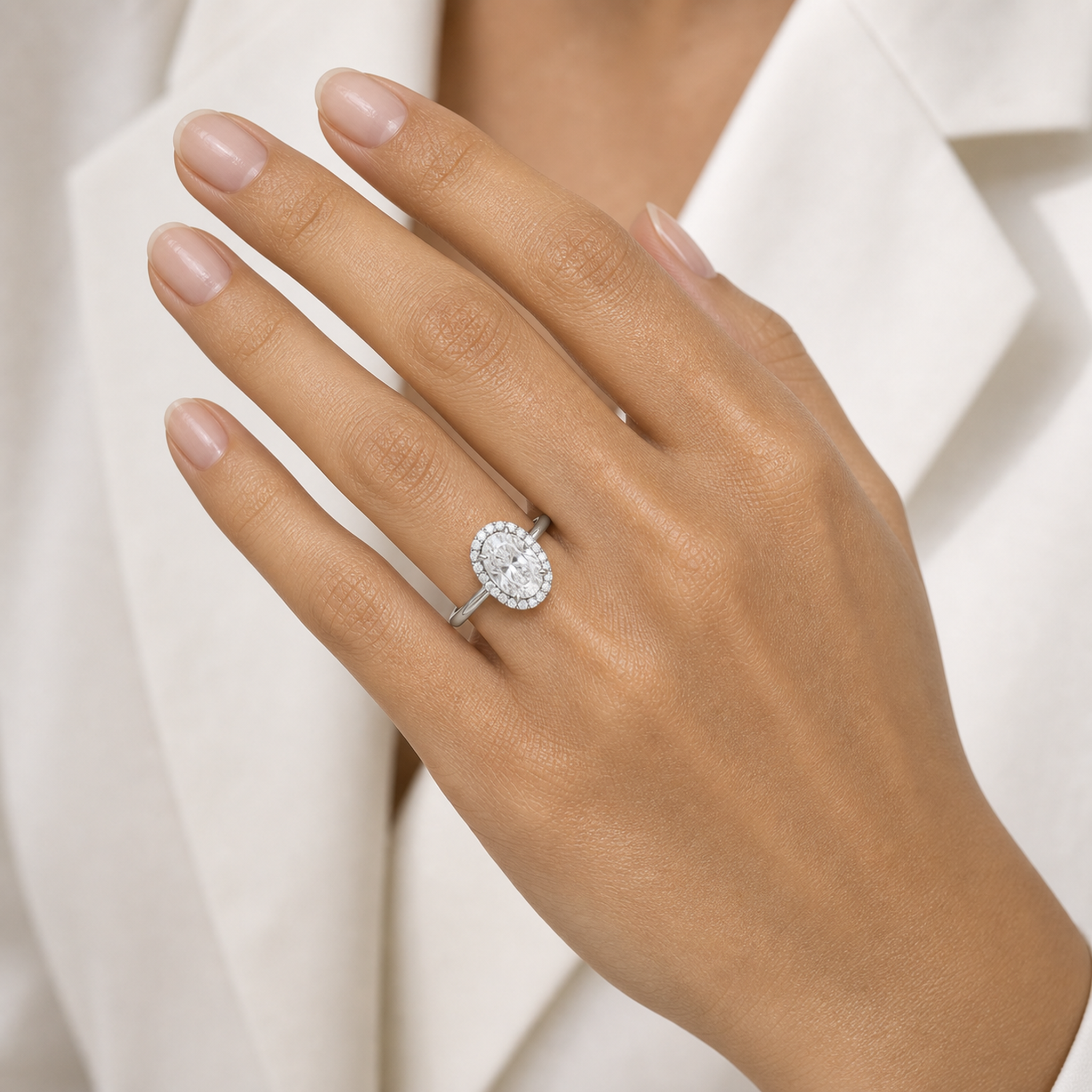
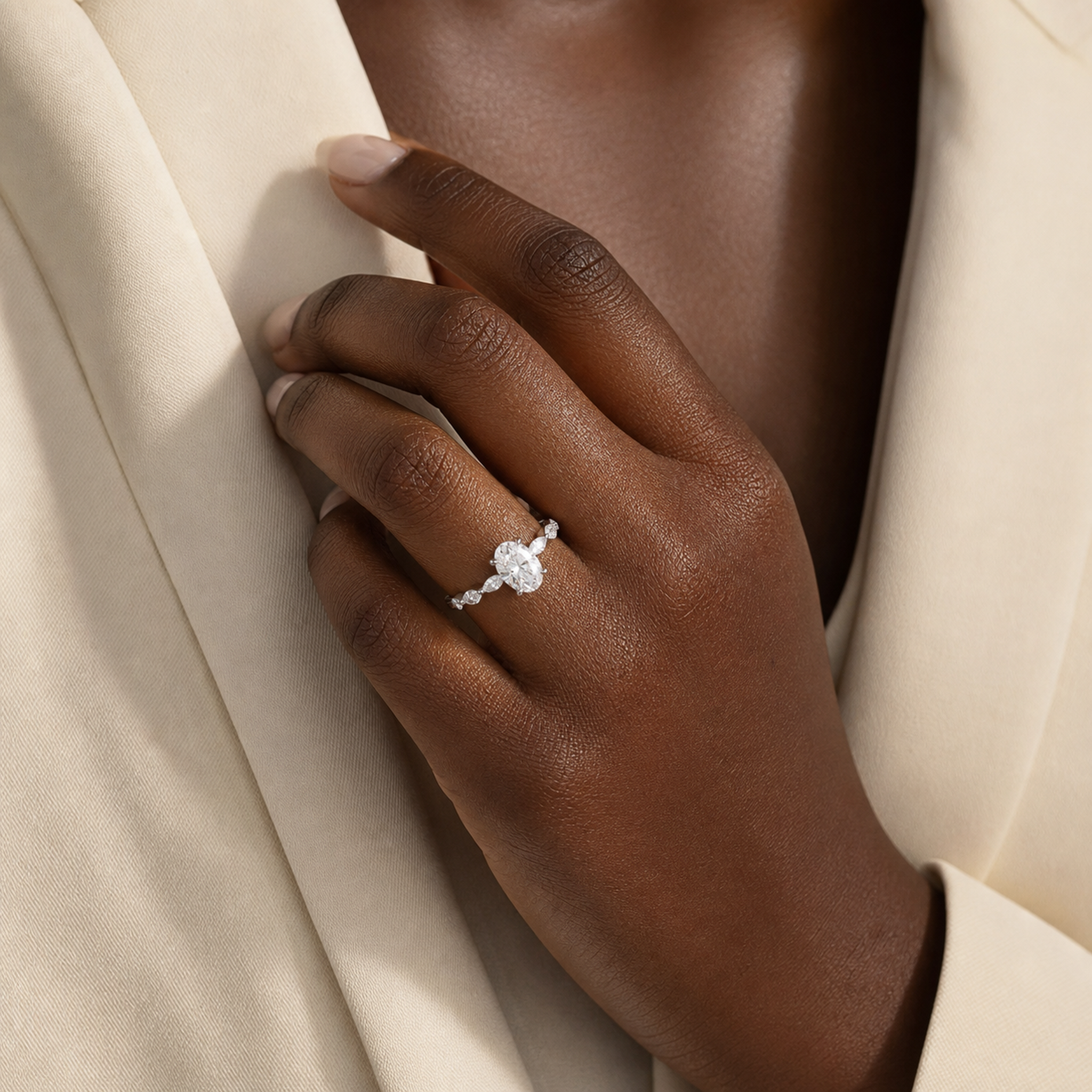
Quiet in color, considered in substance. 18K white gold carries the oval’s long axis through a continuous, materially present setting.


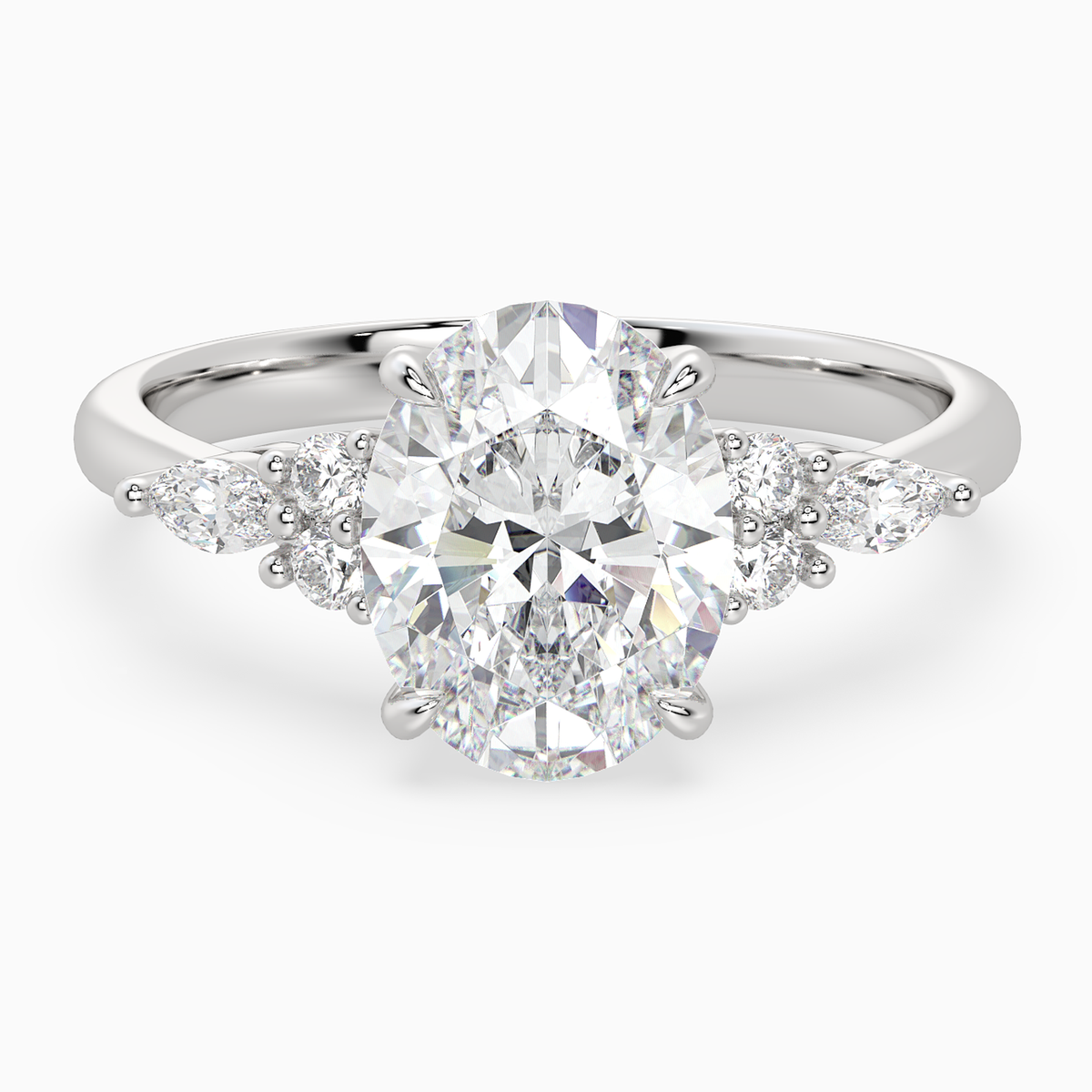


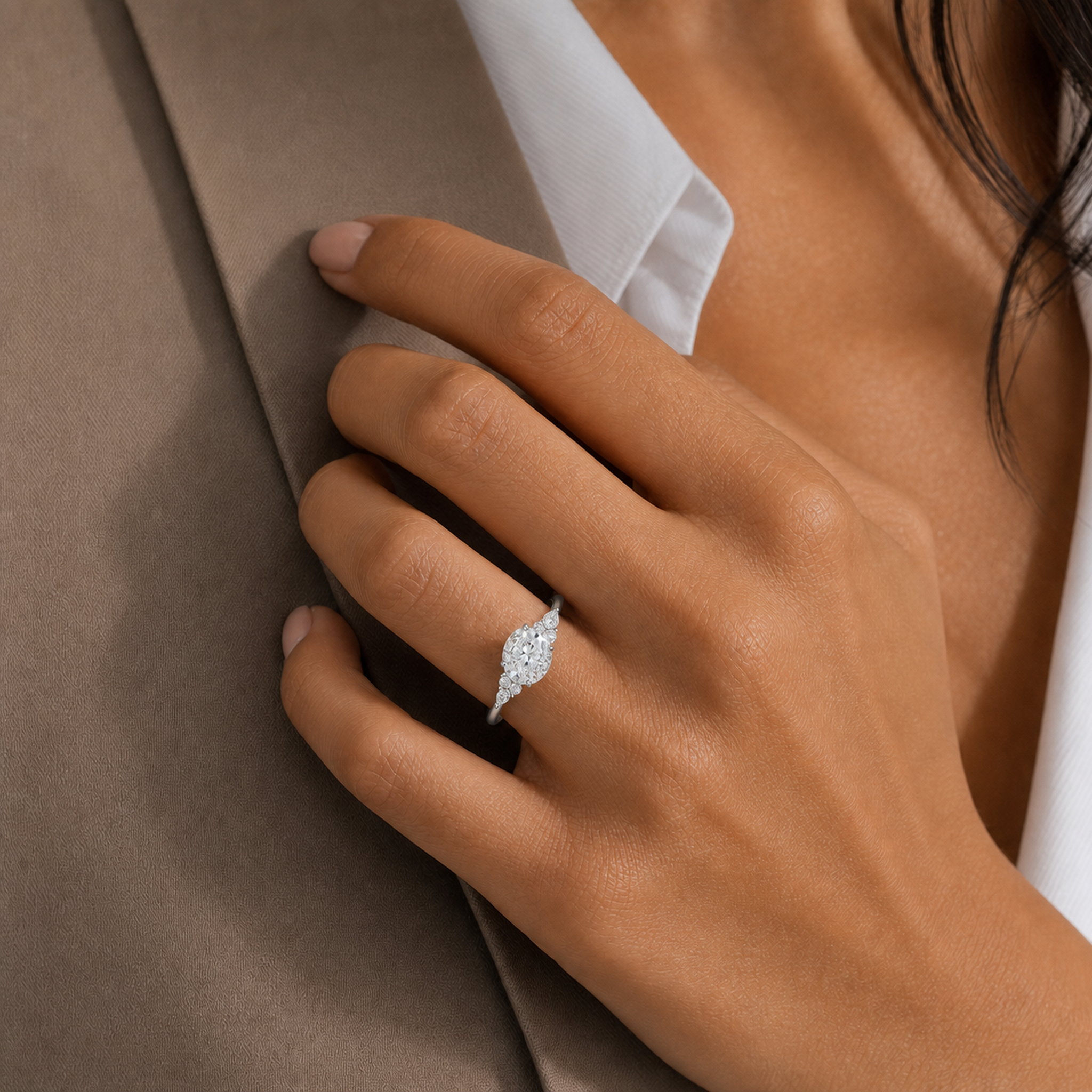


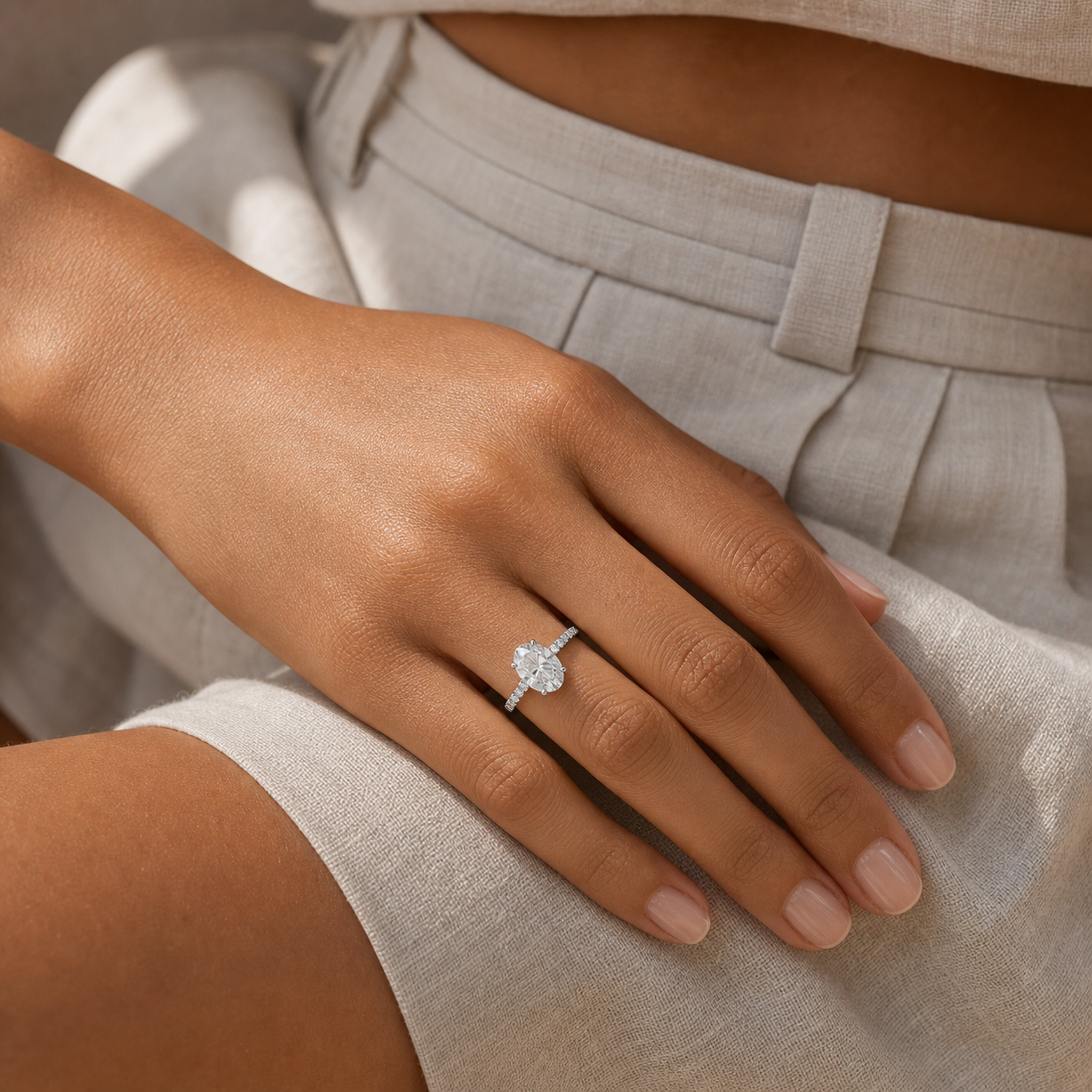





















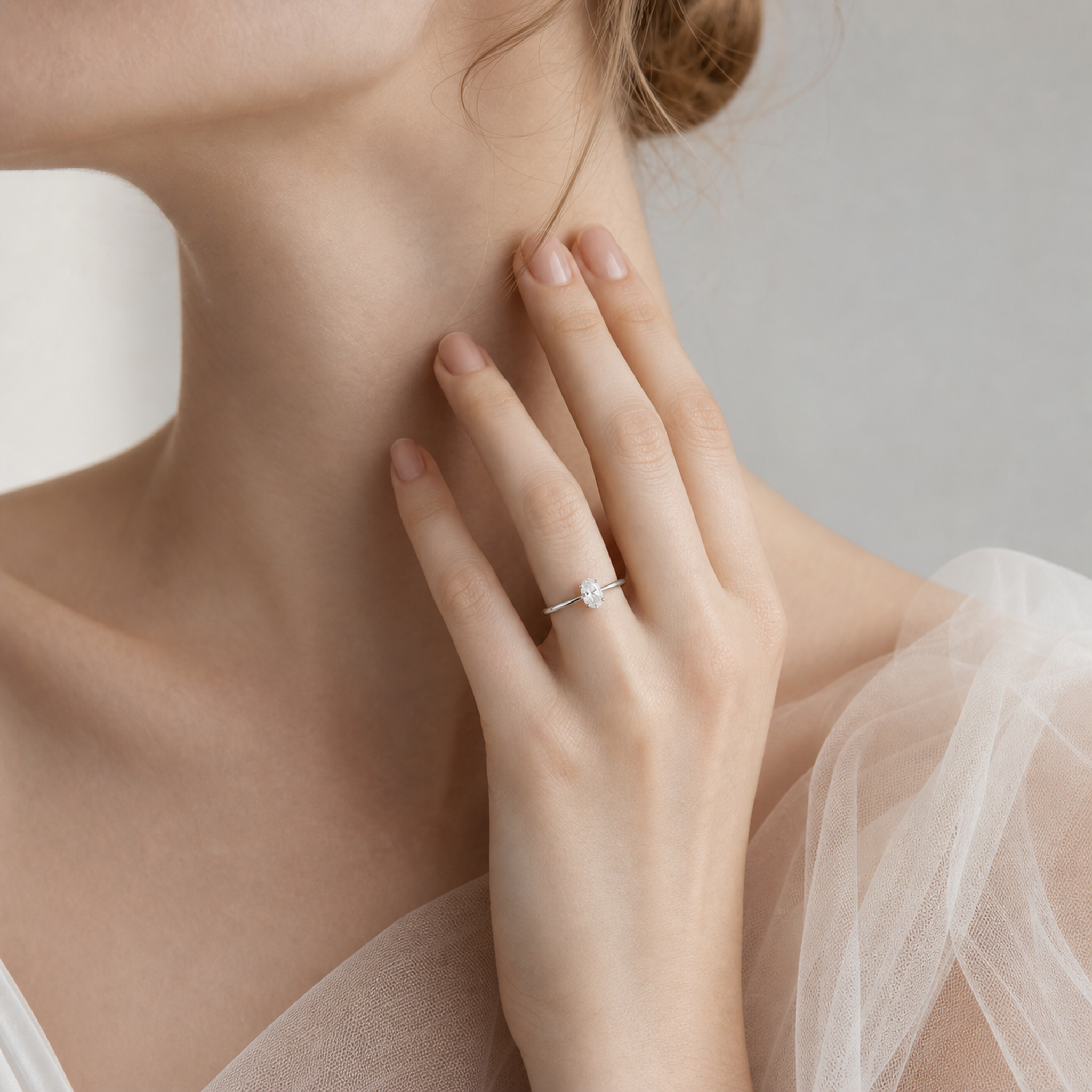


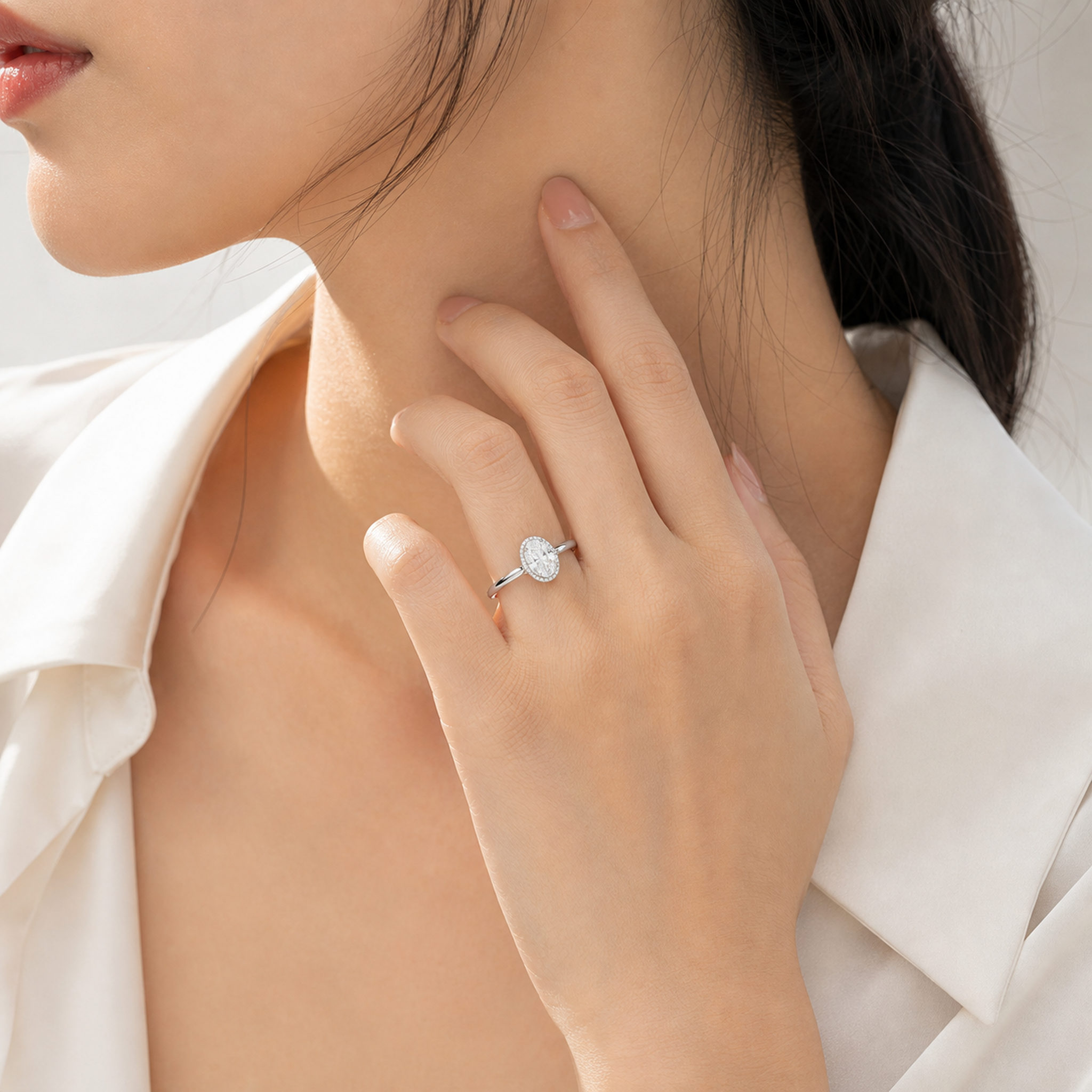

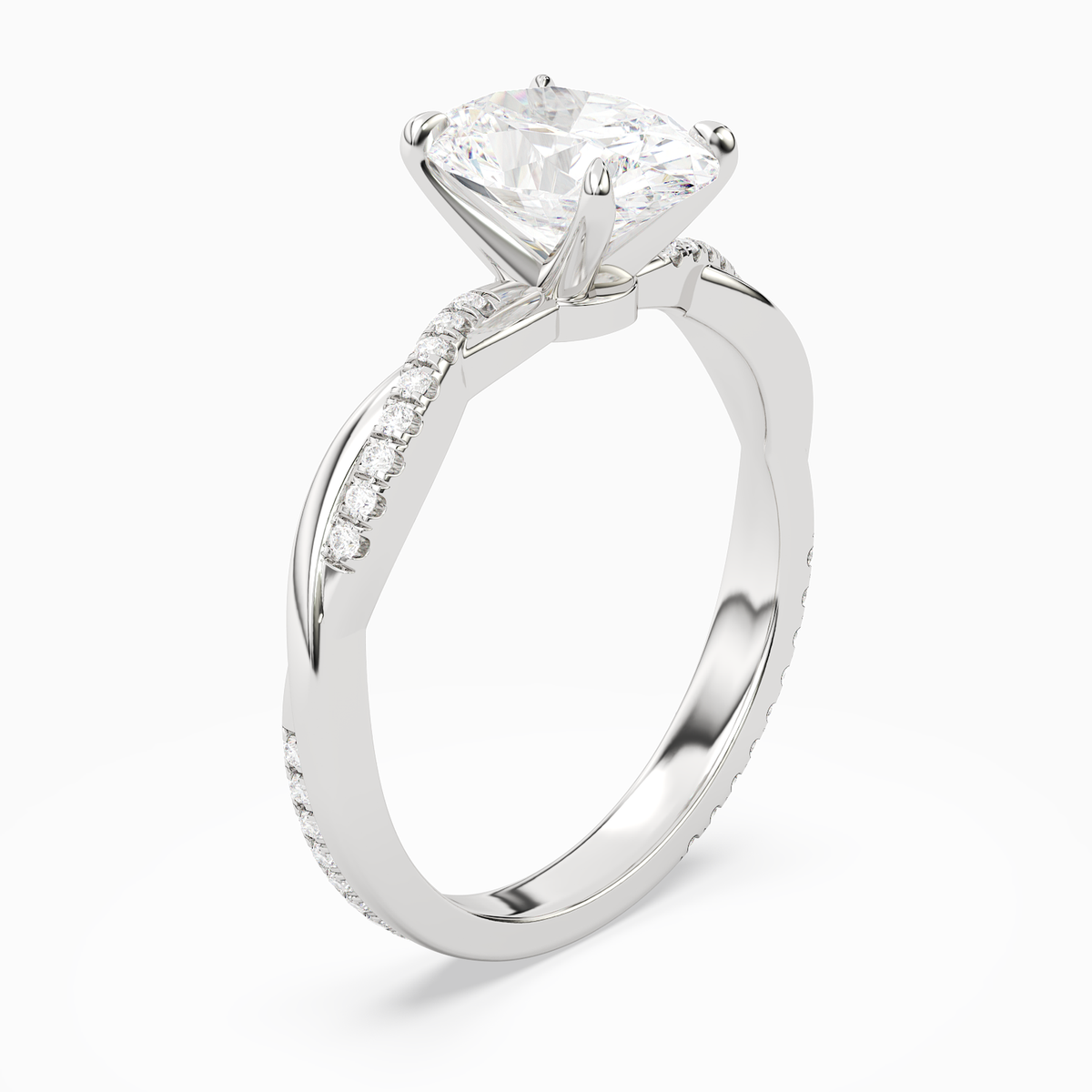


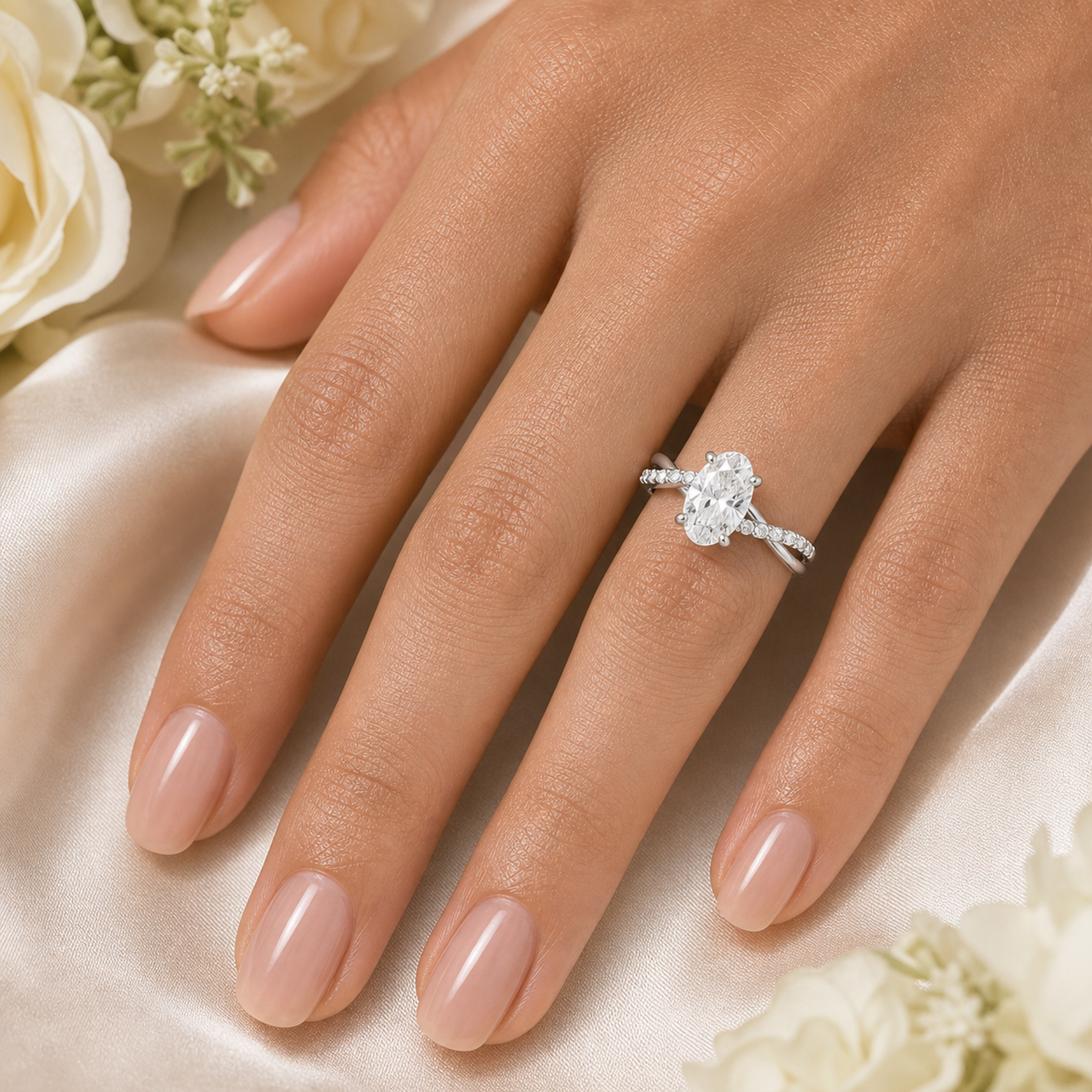


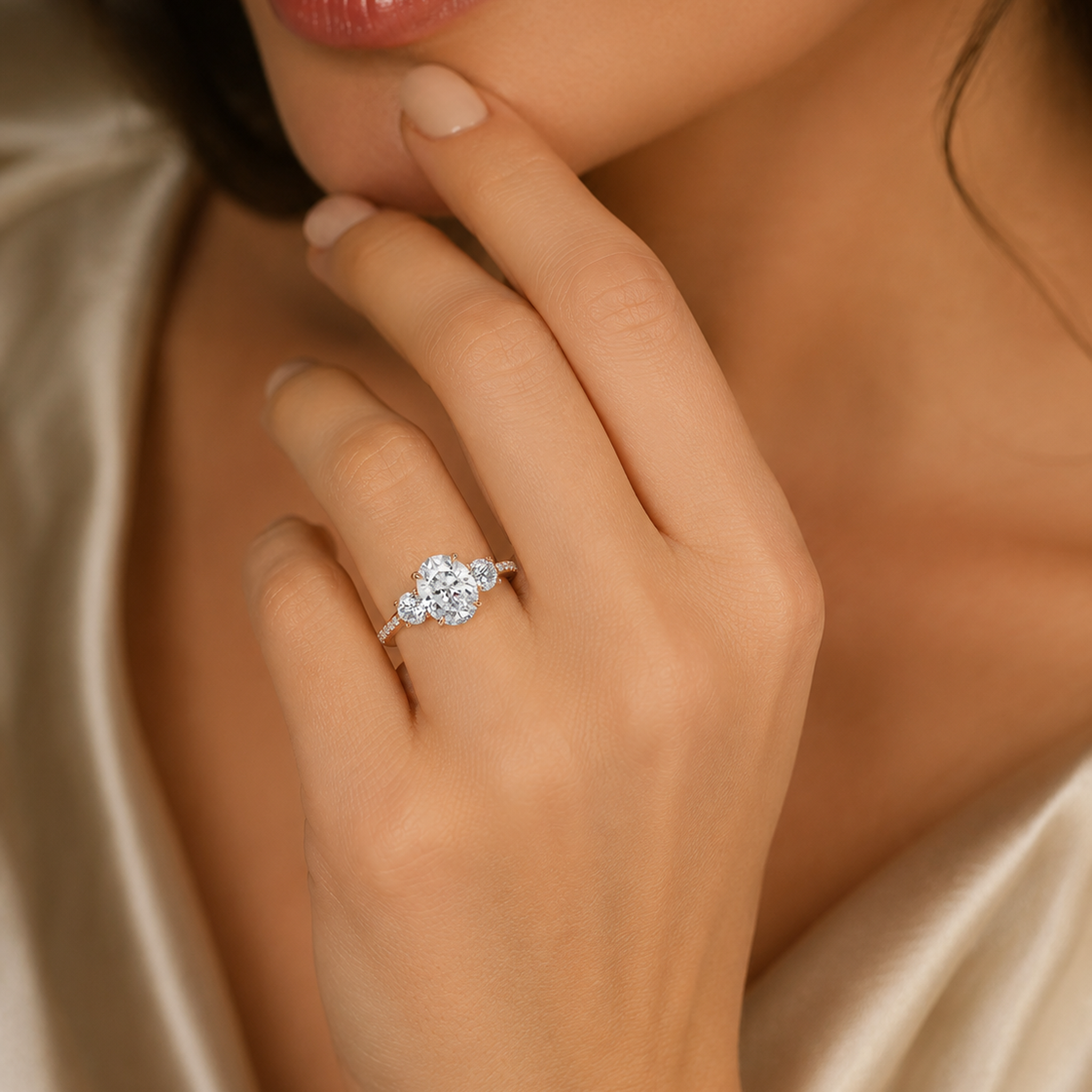
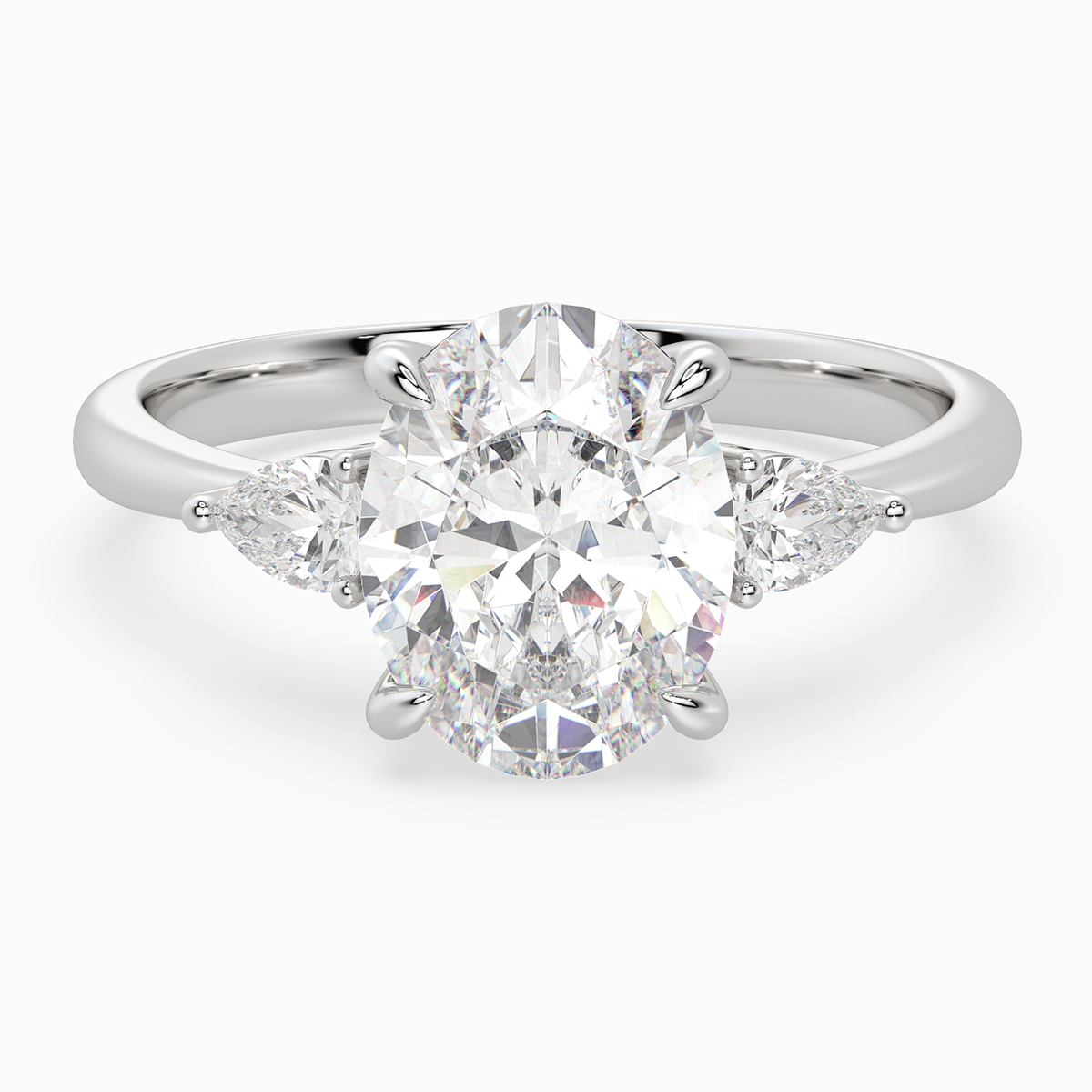


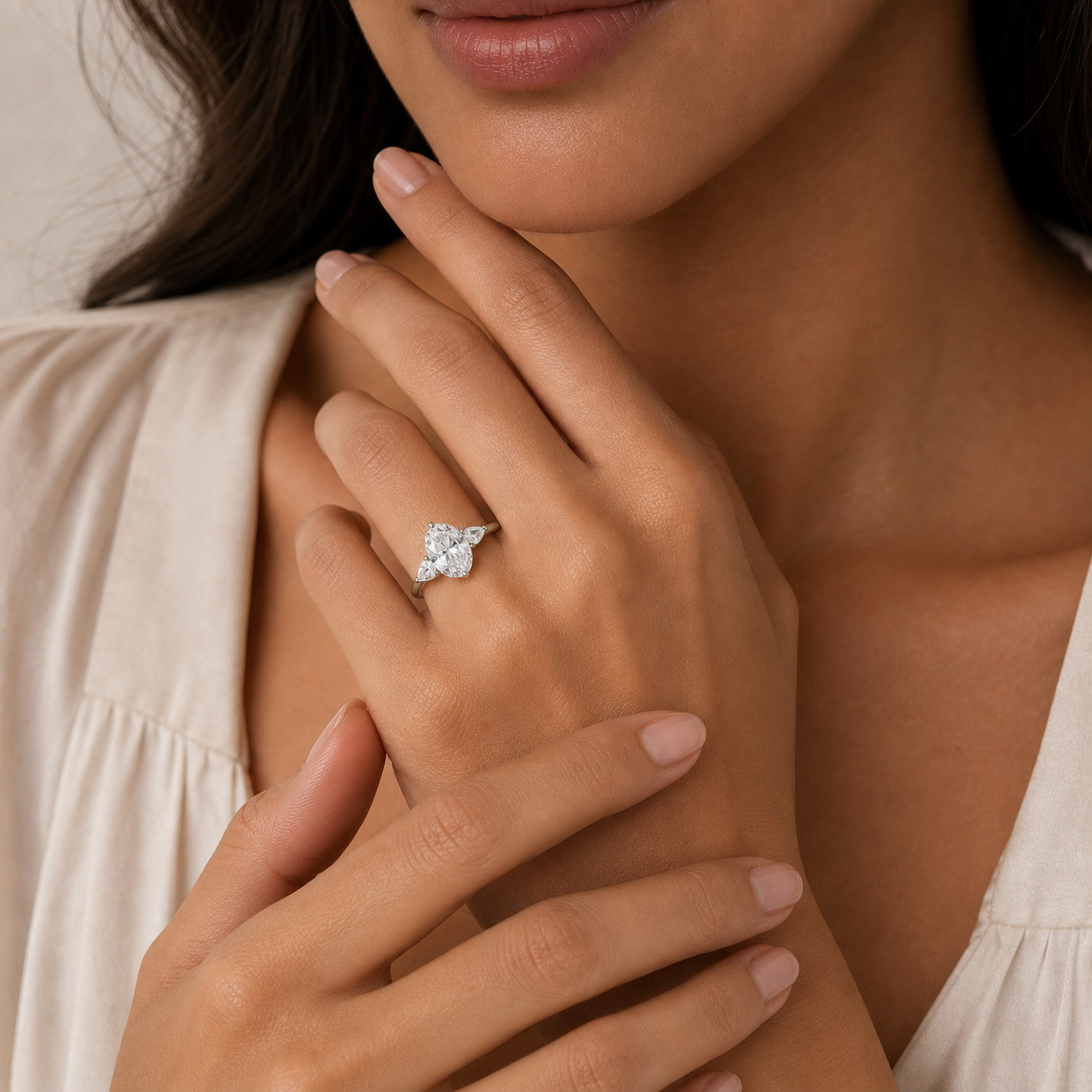
18K White Gold Oval Diamond Engagement Rings: Quiet Color, Considered Substance
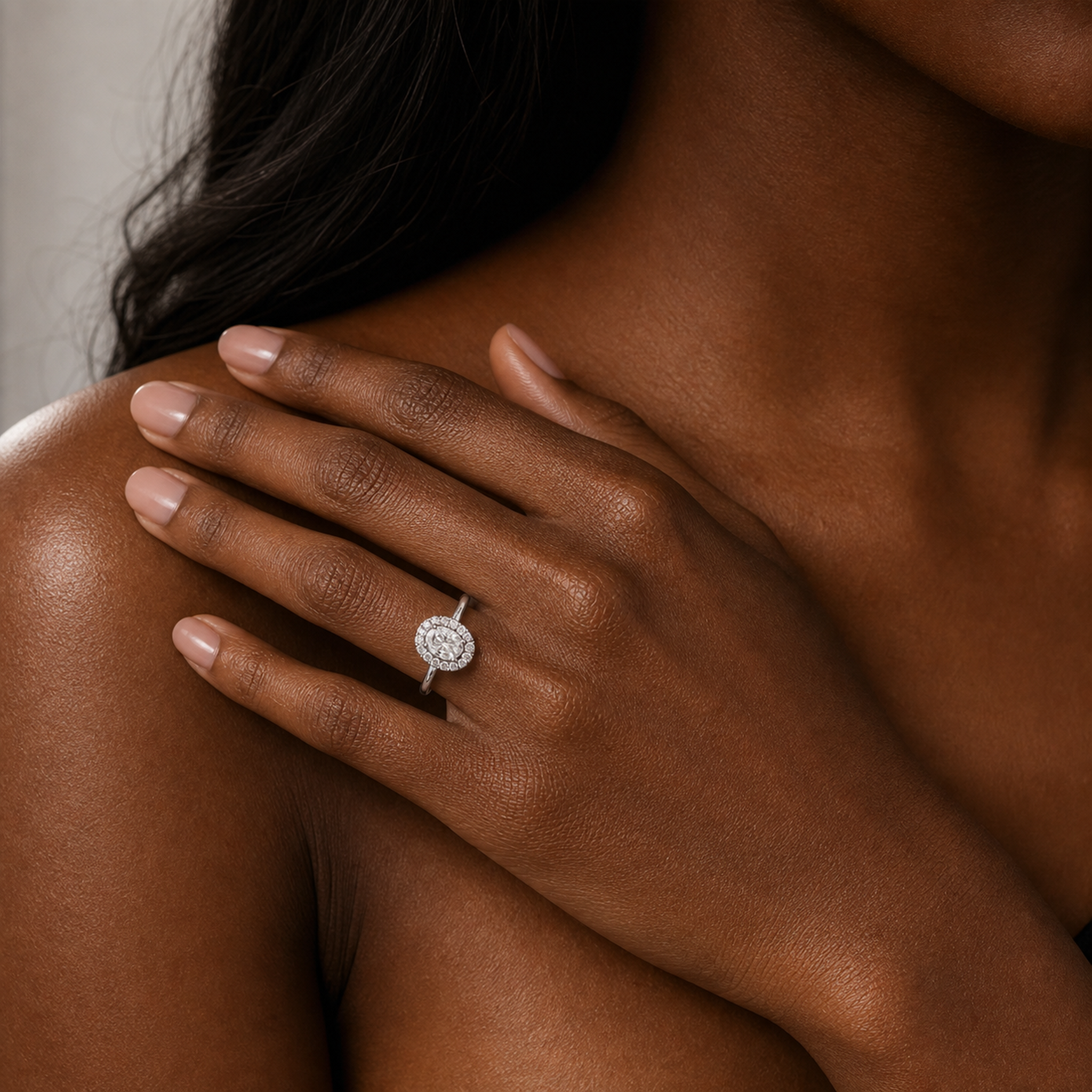
An oval center directs the eye along a long axis, while its unbroken curve keeps the outline fluid. In 18K White Gold, that geometry sits within a quiet-toned material containing approximately 75% gold. The setting can remain restrained in color while still registering through its prongs, basket, shoulders, and weight of line.
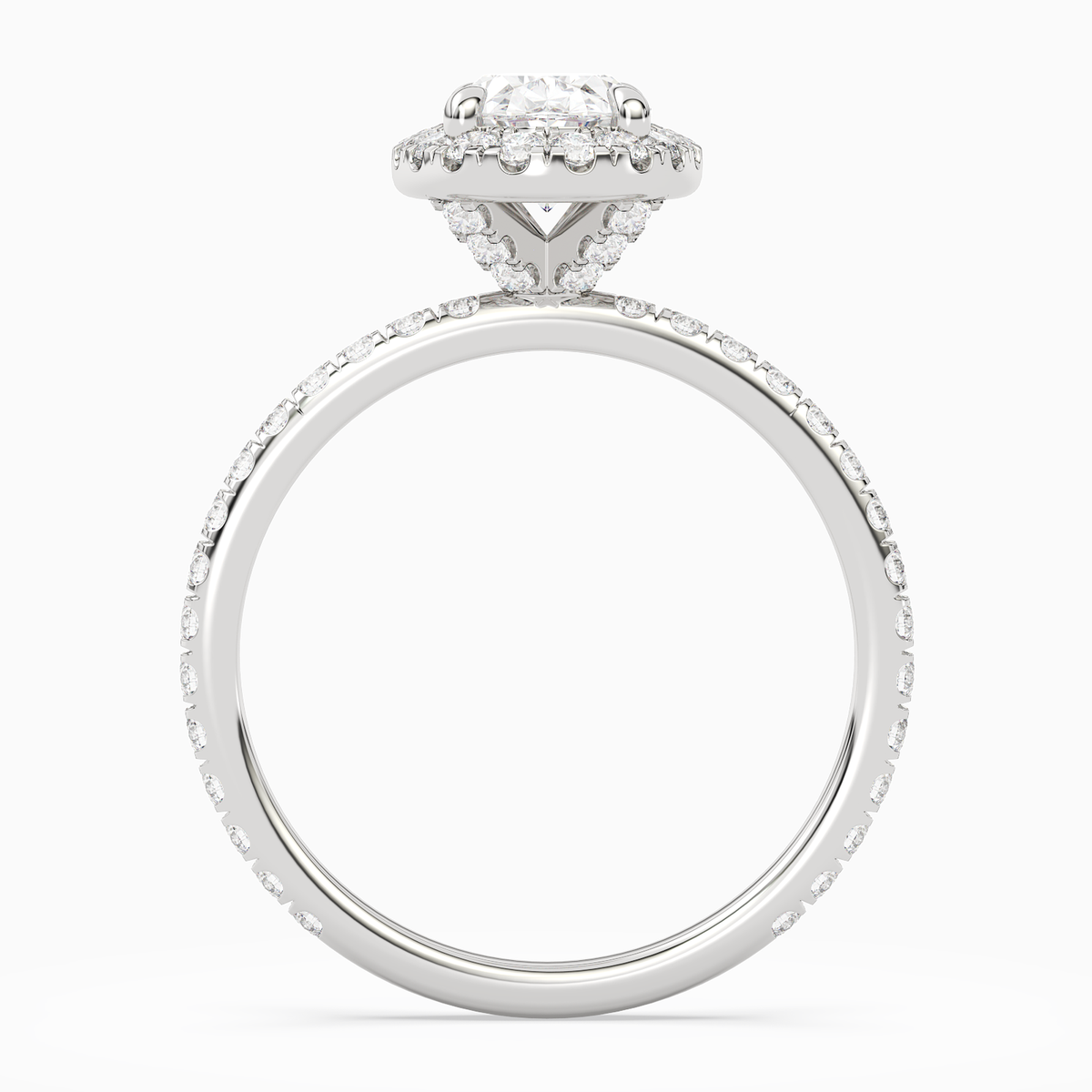
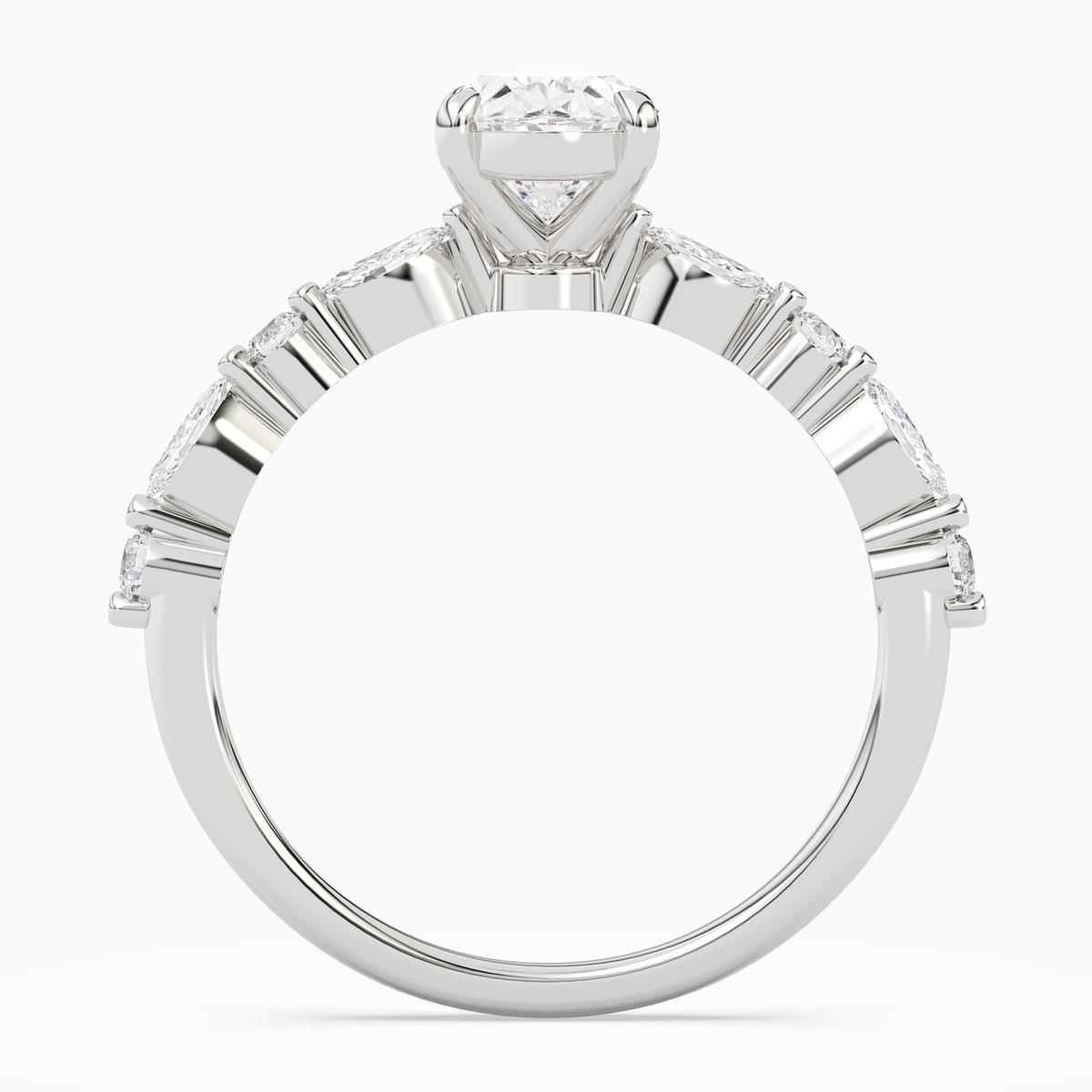
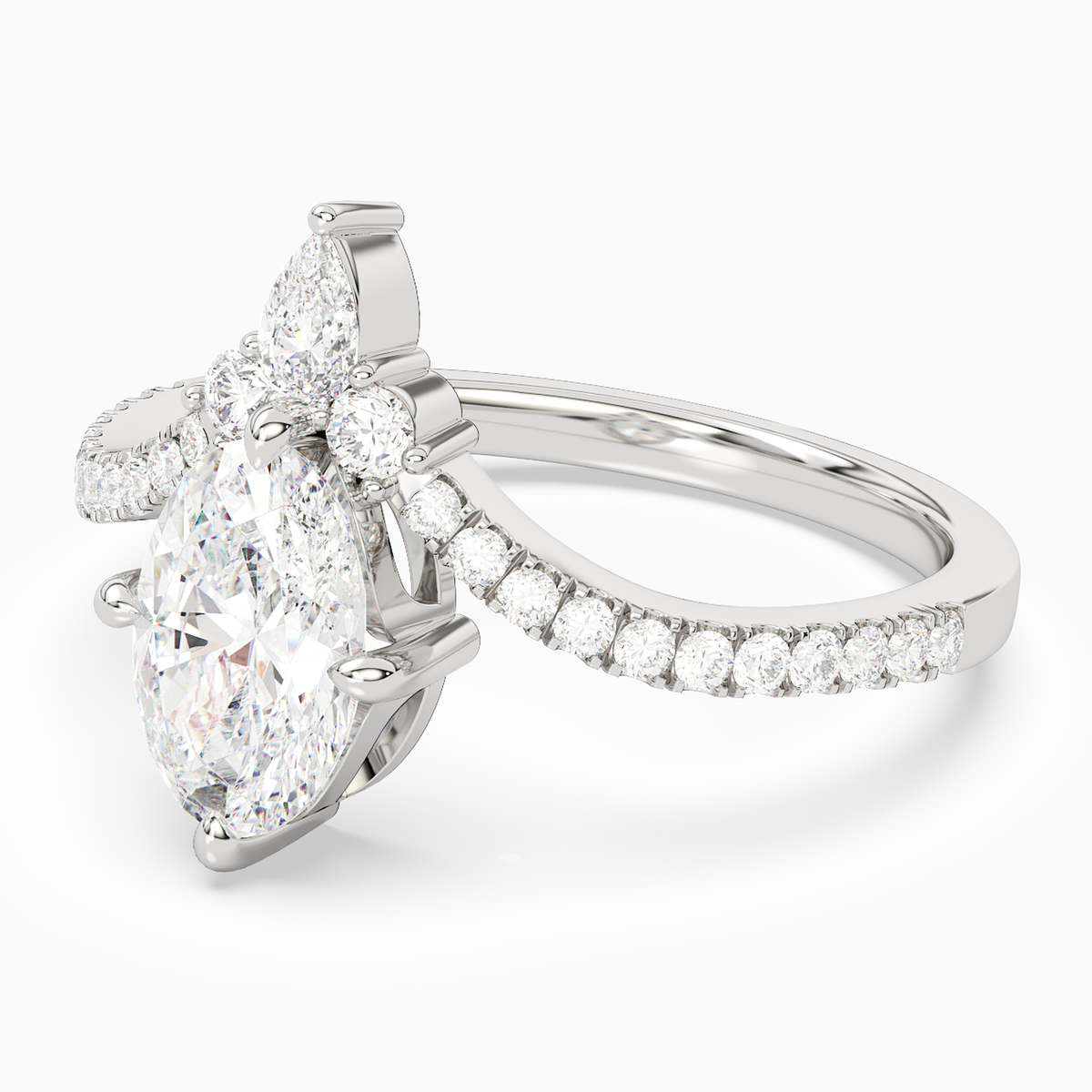
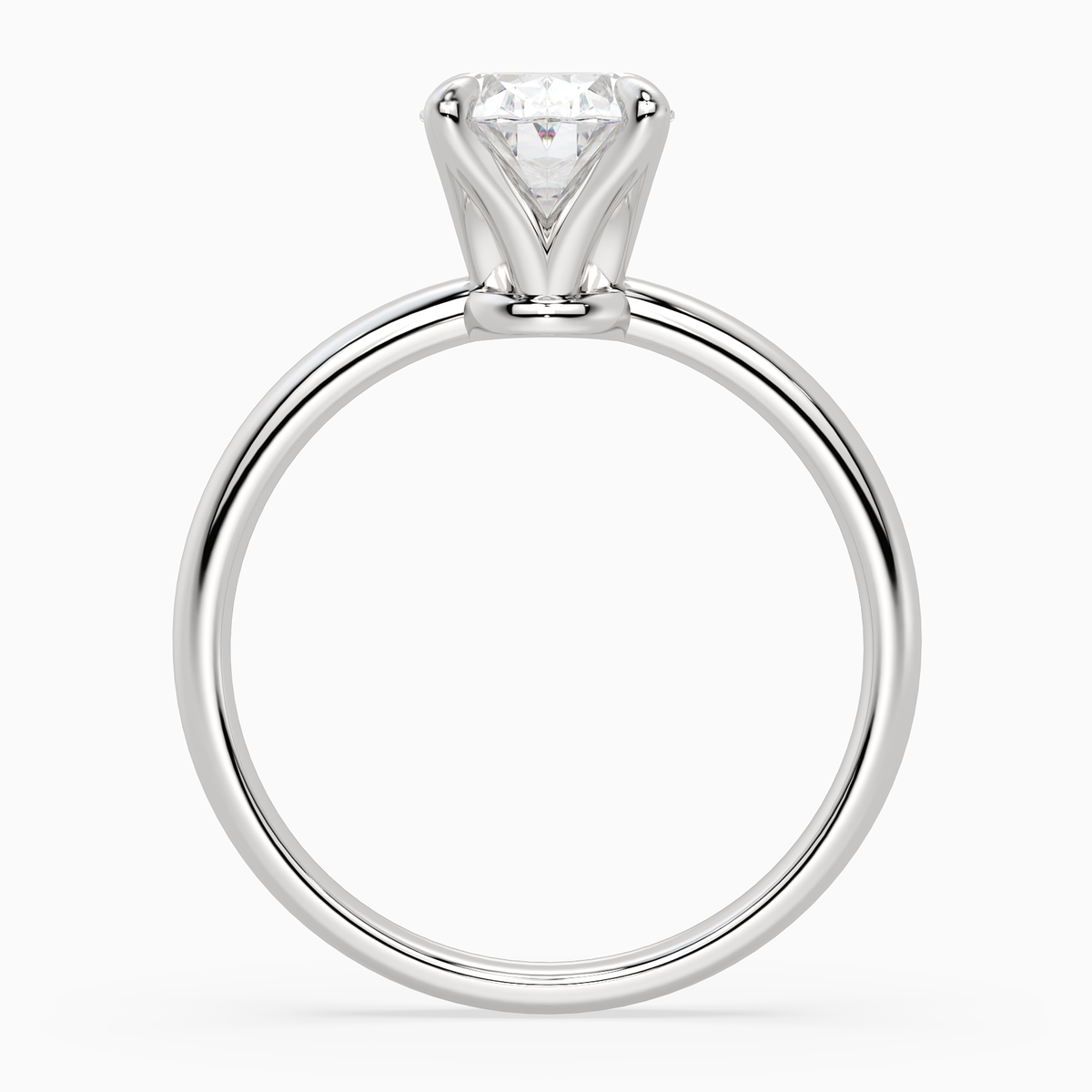
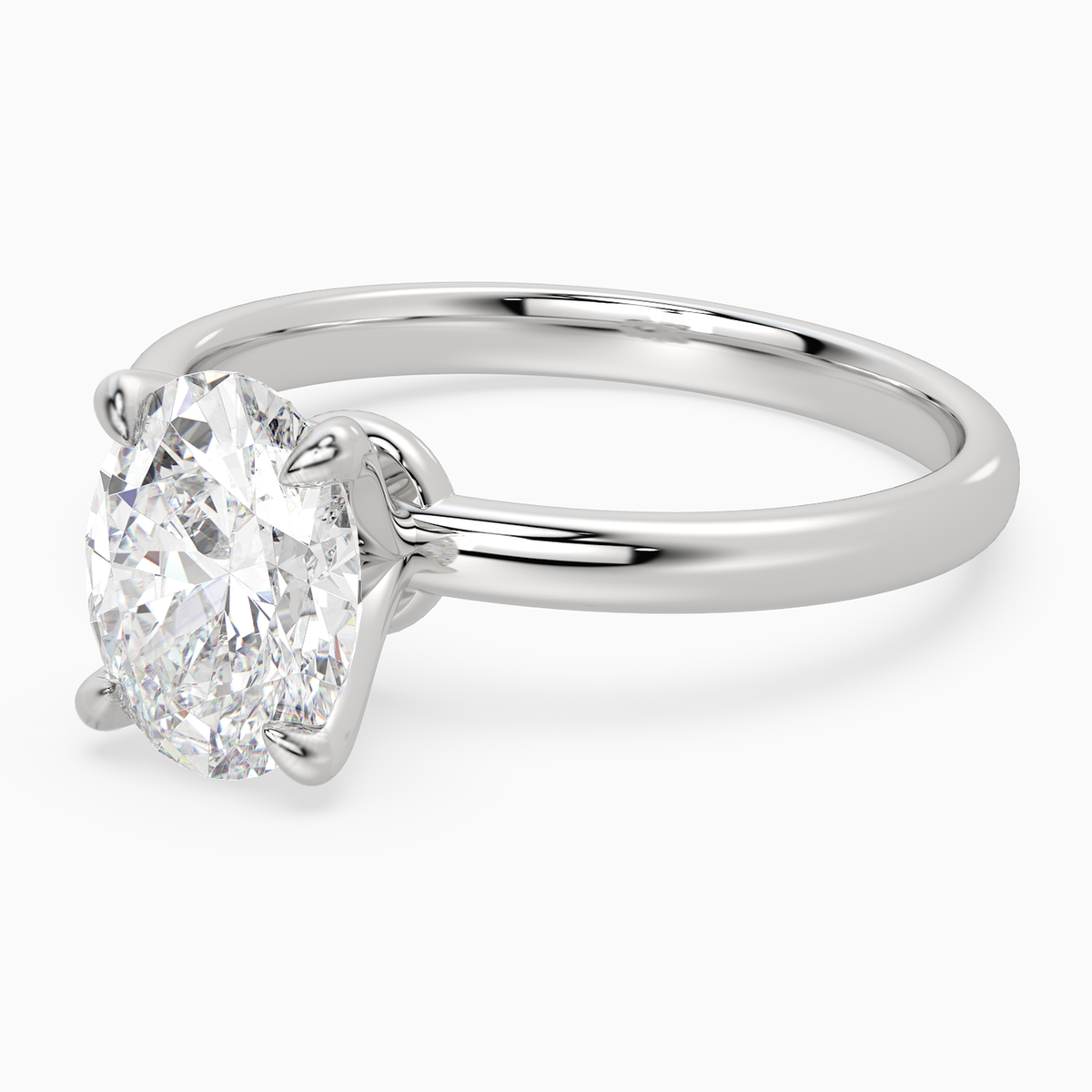
Fifteen current designs divide into seven Solitaires, three Halos, three Side Stone rings, and two Three Stone compositions. Fine baskets, hidden and double halos, cathedral shoulders, a milgrain bezel, vines, and shaped accents give this page enough structural range to compare substance rather than color alone.
Higher Gold Content Is a Material Fact, Not a Rank
18K gold contains approximately 75% gold. The remaining alloying metals influence color and working behavior. This composition fact does not by itself promise a specific hardness, longevity, shade, rhodium finish, sensitivity result, or maintenance interval.
Compared with a 14K sibling, the meaningful evaluation includes alloy, finish, design thickness, prong scale, and wear needs—not karat in isolation. A substantial shoulder in one design may be more visible than the compositional difference between two otherwise similar white-gold labels.
Let Tonal Continuity Reveal the Long Axis
White metal can reduce the color break between the center and its support. Along an oval, that continuity may make the eye follow the long curve through prongs and basket. It does not make the setting invisible, and it should not obscure how the ends, sides, and girdle are held.
The diamond's brightness, fire, scintillation, bow-tie, graded color, and dimensions remain its own. Fancy-shape reports provide polish, symmetry, measurements, and other facts, but not the overall cut grade used for eligible standard round brilliants. Direct viewing remains necessary.
Four Setting Families Use Substance Differently
A Solitaire concentrates material around one center and makes basket and band decisions prominent. A Halo repeats the perimeter. Side Stone and Three Stone structures distribute the setting across a wider field, where shoulder line and spacing must preserve an intelligible hierarchy.
A bezel creates a continuous rim; fine prongs produce discrete points; cathedral shoulders carry material upward; vines split it into organic paths. The correct question is not whether 18K looks more luxurious, but whether its visible amount and placement resolve the selected oval and setting together.
Assess Proportion in the Finished Configuration
Length-to-width ratio describes outline, while carat records weight. Actual length, width, depth, girdle, facet pattern, and symmetry explain more of the face-up result. Halo scale, band width, and side accents then change the complete ring's visual proportions.
An elongated head can place different demands on balance than a circular one. Center dimensions, basket, band width, fit, and shoulder structure influence rotation and comfort. Wedding-band spacing depends on profile and contact points rather than the shared label of 18K White Gold.
A Quiet Material Field With Accountable Detail
Surface appearance changes with wear, and care should follow the selected alloy, finish, diamond, and construction. Inspection is appropriate if a prong catches or a stone moves. No universal polishing, replating, or service schedule should be inferred from the karat label alone.
Burvonti pairs responsibly sourced, independently graded lab-grown diamonds with settings calibrated through proportion and human judgment. Custom possibilities may refine center specifications, prongs, basket, band, accents, metal, or engraving where feasible. Here, quiet color is paired with material decisions that remain visible and precise.
Frequently Asked Questions
How is this page different from 14K White Gold Oval rings?
It focuses on 18K's approximately 75% gold composition and how material presence is distributed through the same oval-centered design questions.
How much gold is in 18K White Gold?
Approximately 75%. Other alloying metals influence color and working behavior.
Is 18K White Gold always softer than 14K?
Do not infer a universal result from karat alone. Alloy formula, construction, dimensions, finish, and use all matter.
Is every 18K white gold ring rhodium plated?
That requires product-specific confirmation; the karat and color name do not establish the finish.
Does 18K White Gold increase oval brilliance?
No. The metal frames the diamond but does not change its faceting or light performance.
Which styles are represented?
There are seven Solitaire, three Halo, three Side Stone, and two Three Stone designs.
Does white metal remove the bow-tie?
No. Bow-tie visibility depends on the individual diamond and viewing conditions.
Does a higher karat make the oval look larger?
No. Face-up scale depends on the diamond's measurements, outline, and setting context.
What should I compare between 14K and 18K White Gold?
Compare composition, exact alloy and finish, visible metal, construction, care, budget, and the complete ring rather than karat alone.
Is 18K White Gold hypoallergenic?
No universal outcome can be promised. Confirm the selected alloy if sensitivity is a concern.
Will an elongated ring rotate?
Rotation depends on center scale, basket, band, fit, and the complete configuration, not just metal.
Will a wedding band sit flush?
Profile, basket, halo, side stones, shoulders, and contact points determine fit.
Can Burvonti customize an 18K White Gold Oval ring?
Custom possibilities may include center, prongs, basket, accents, band line, metal, or engraving, subject to availability and feasibility.