
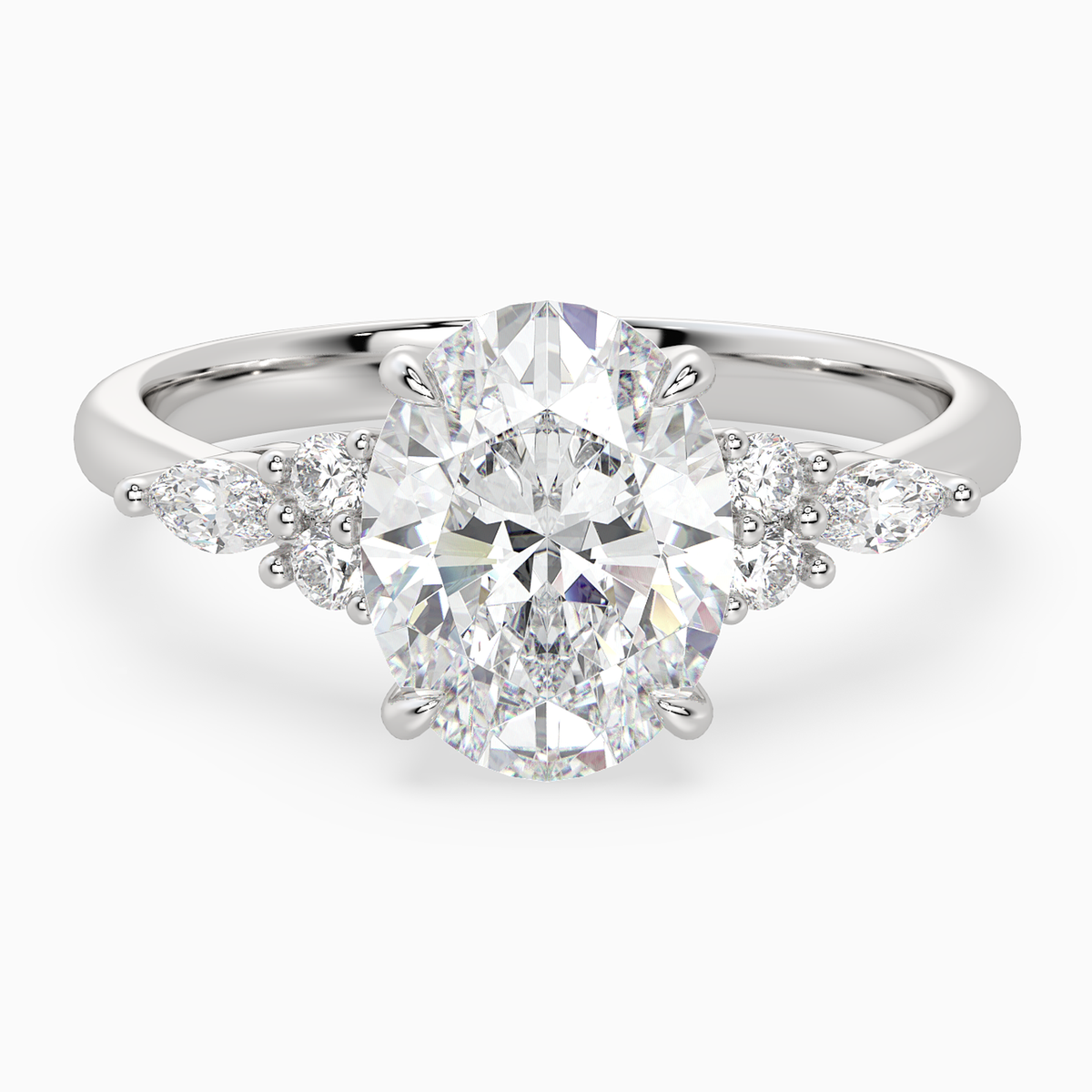


Oval Diamond Engagement Rings in 14K White Gold
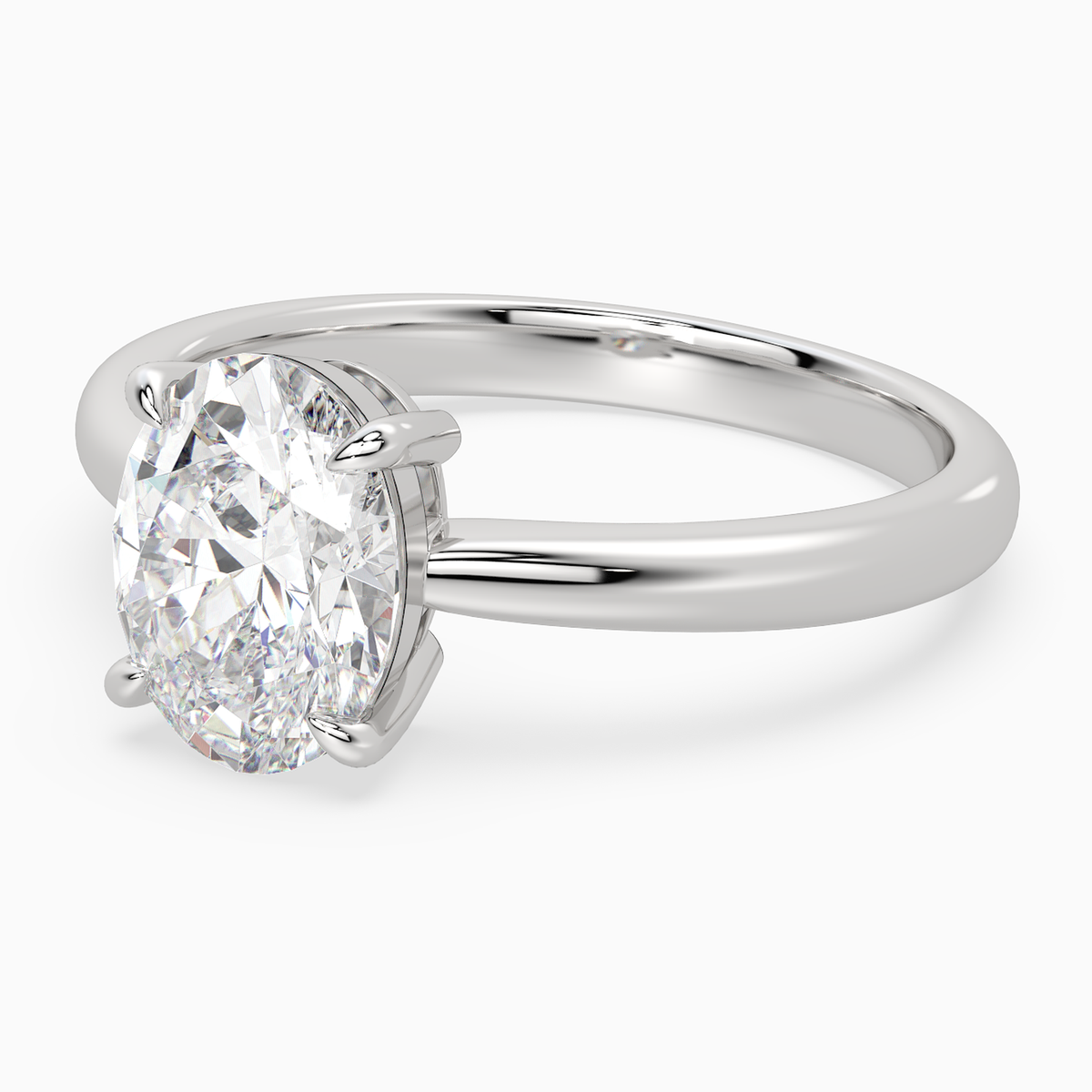
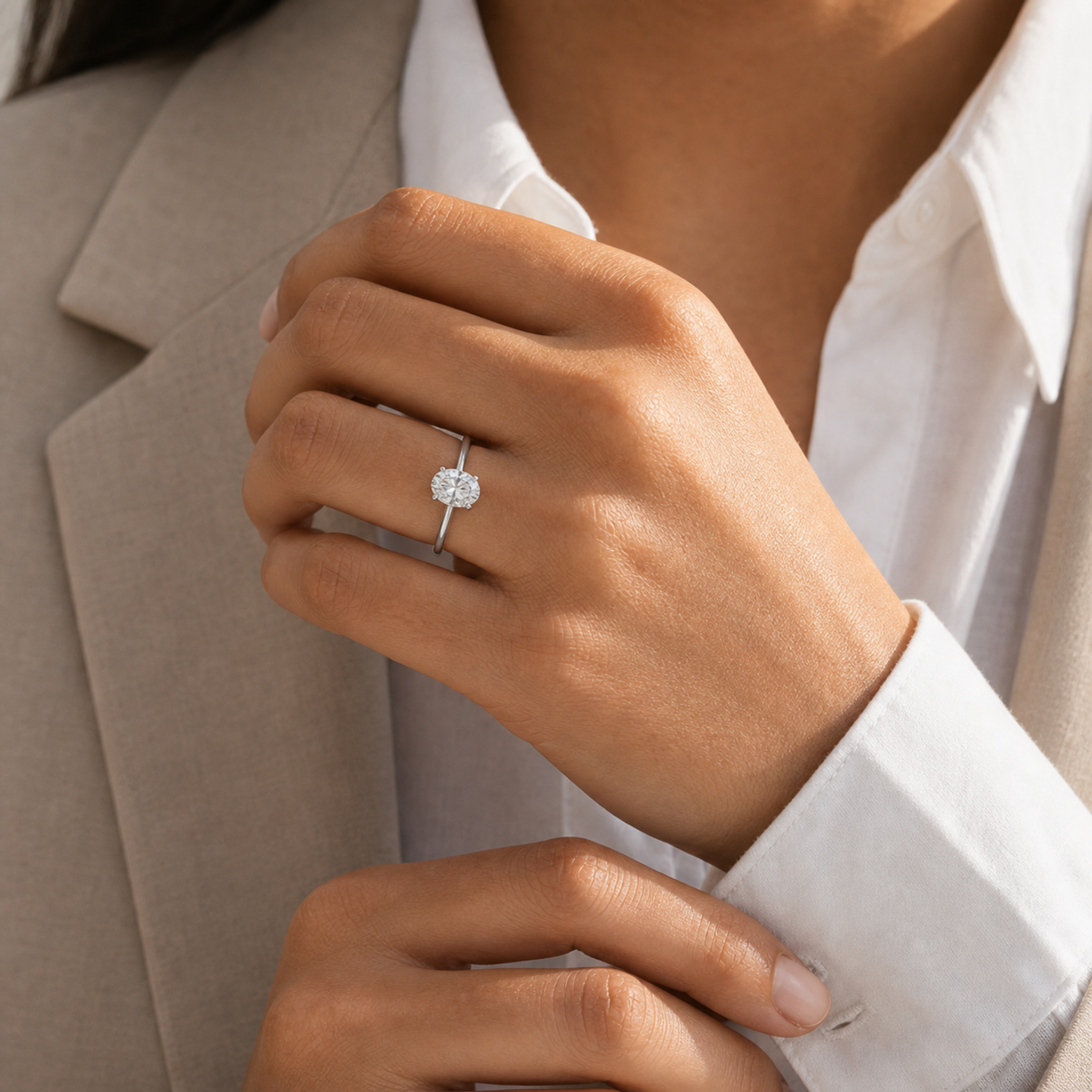
An elongated outline in a quiet frame. 14K white gold keeps the oval’s curve, central contrast, and setting transitions clearly legible.


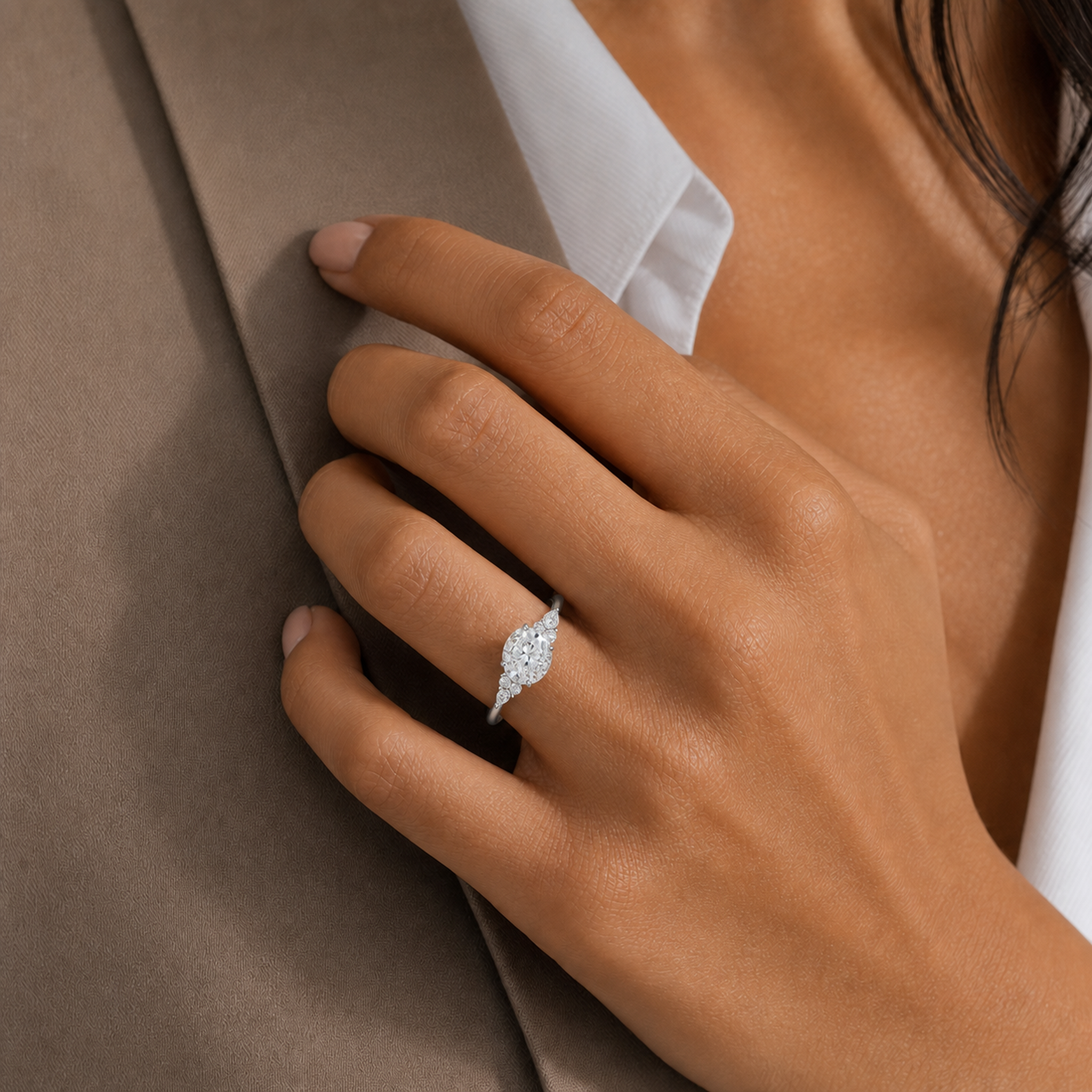


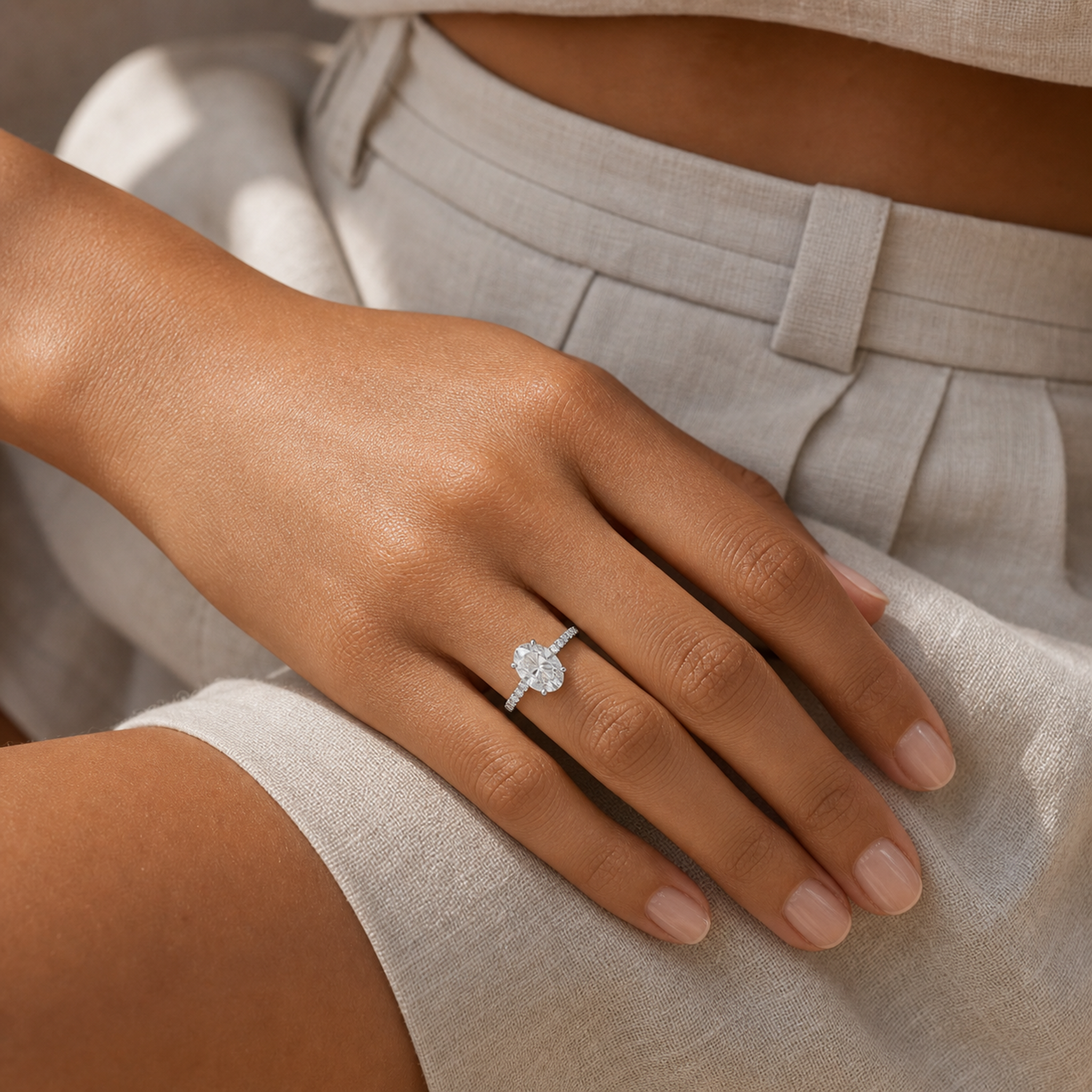


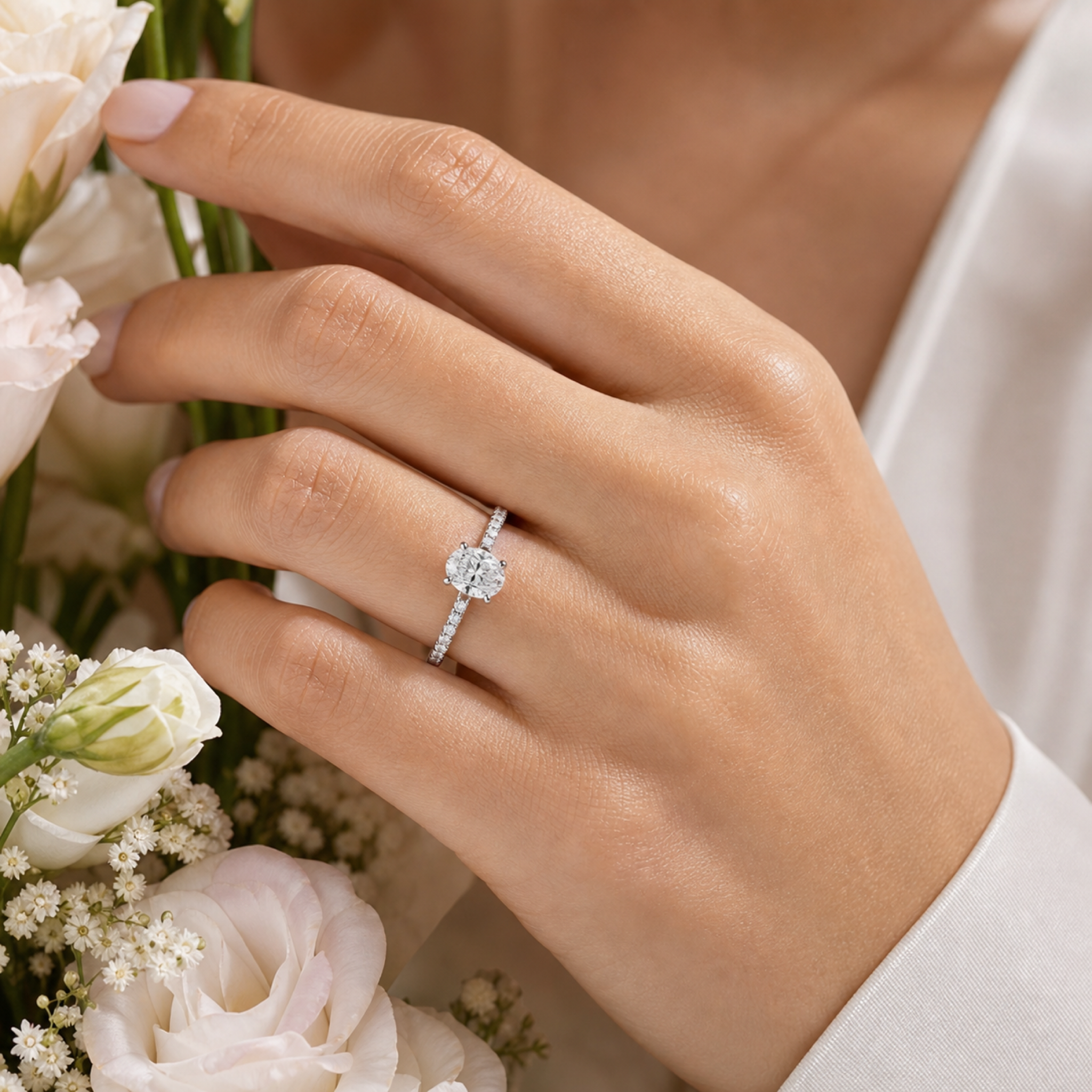


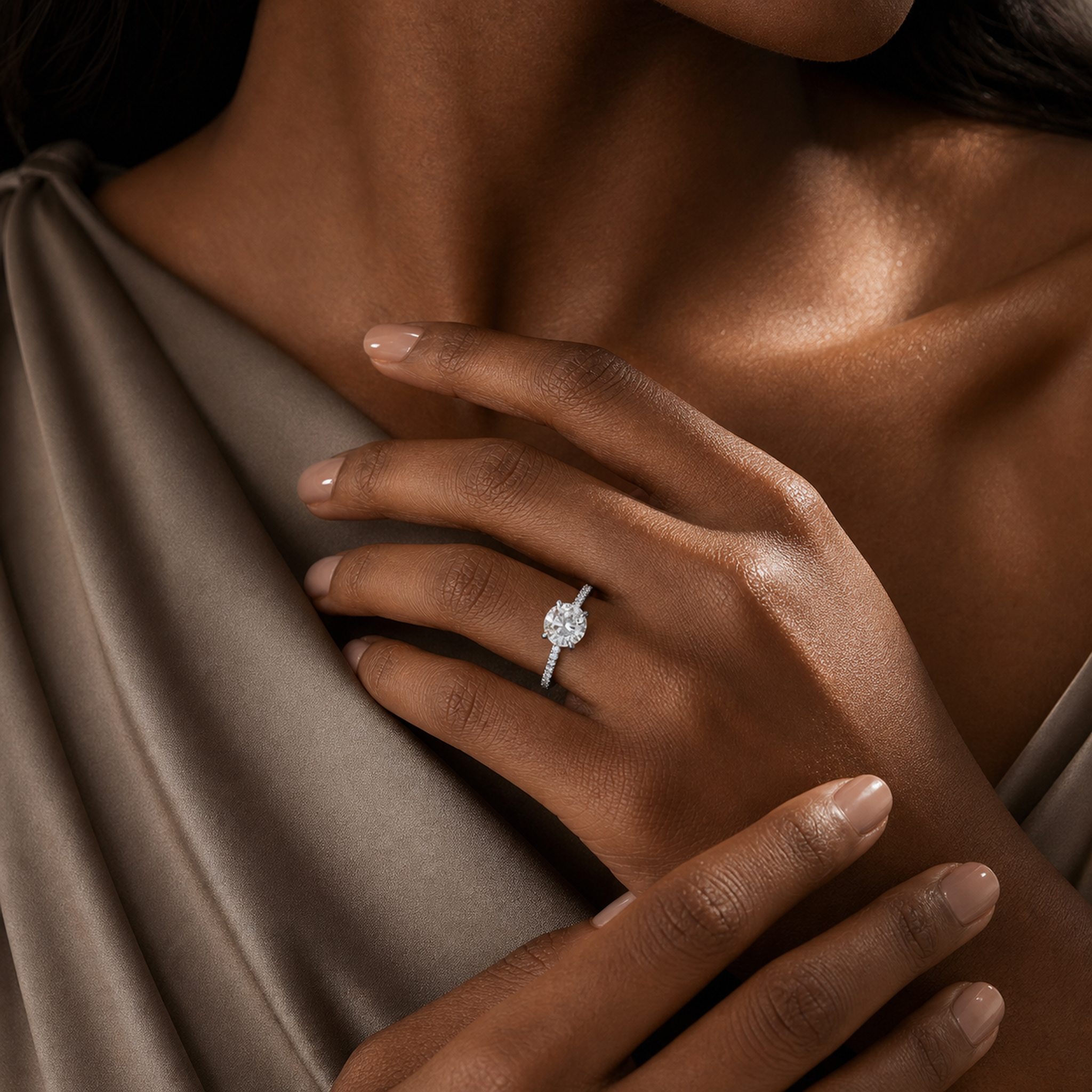
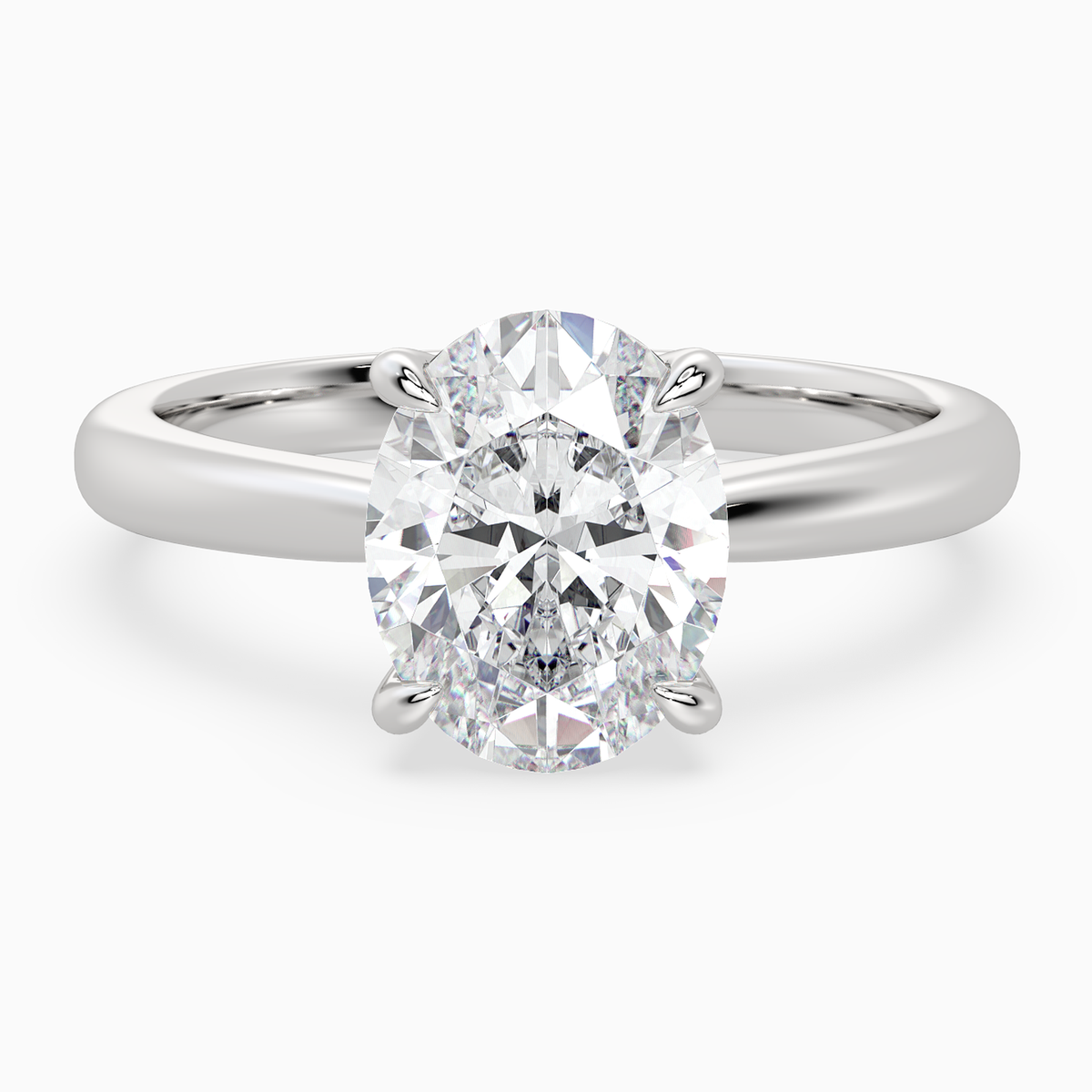
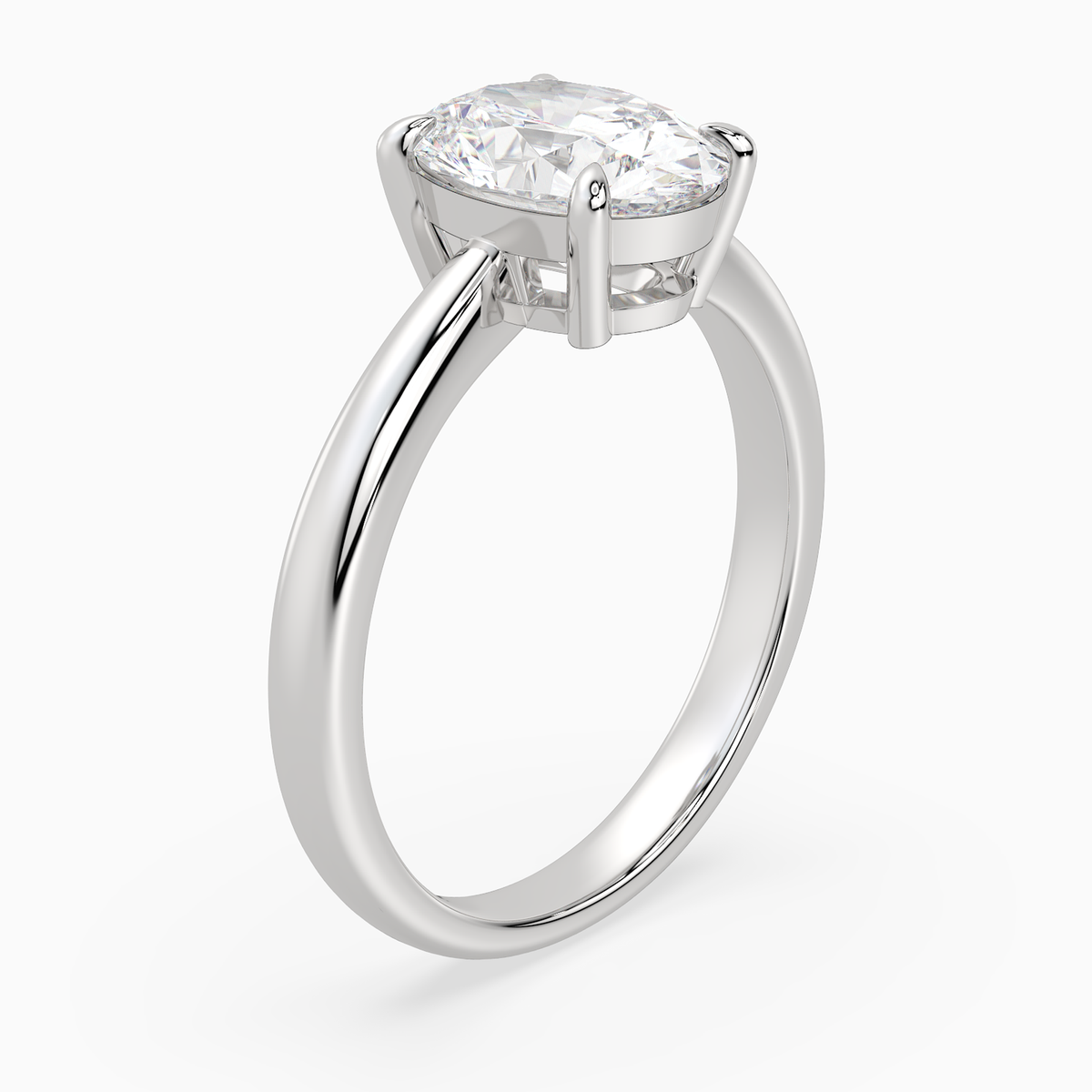
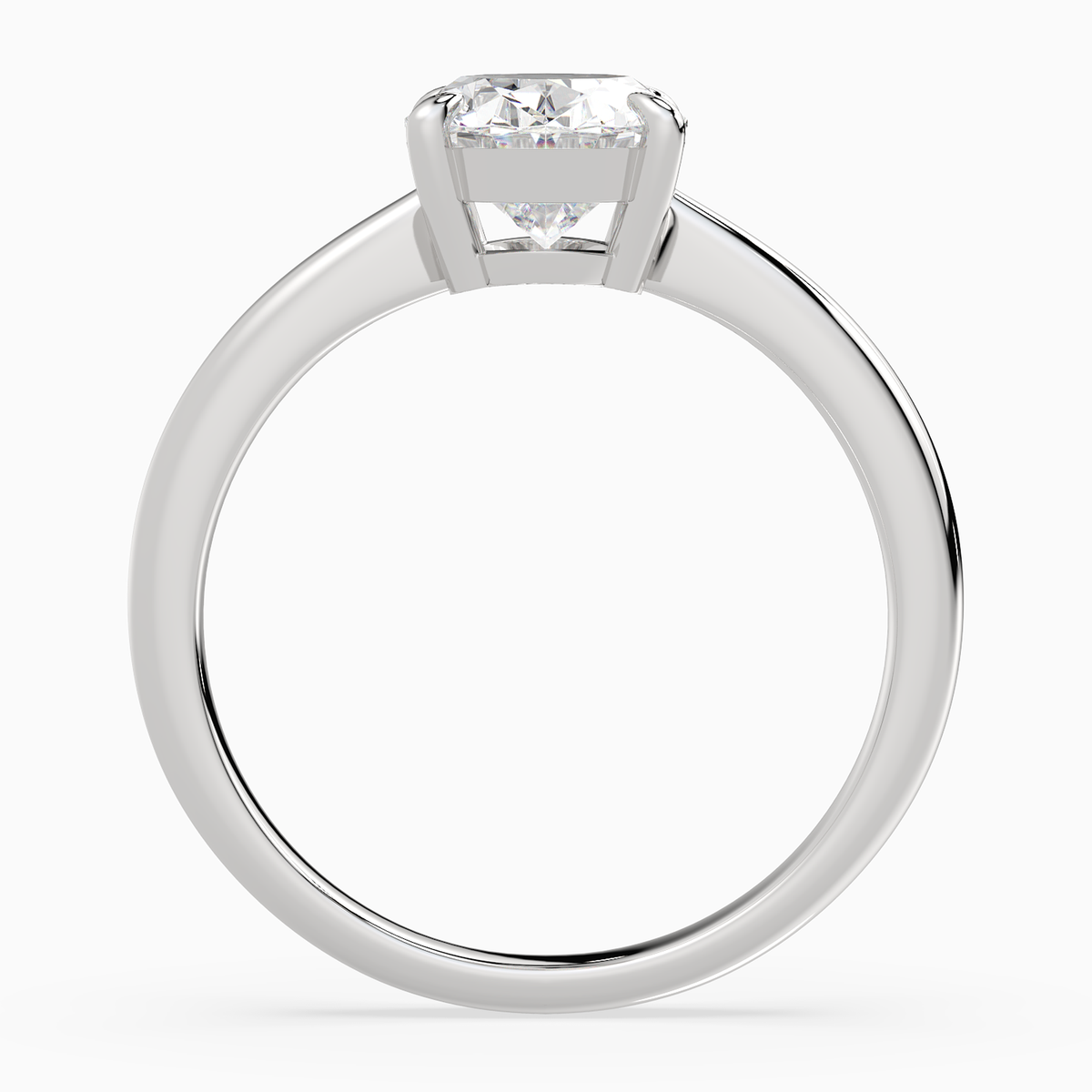


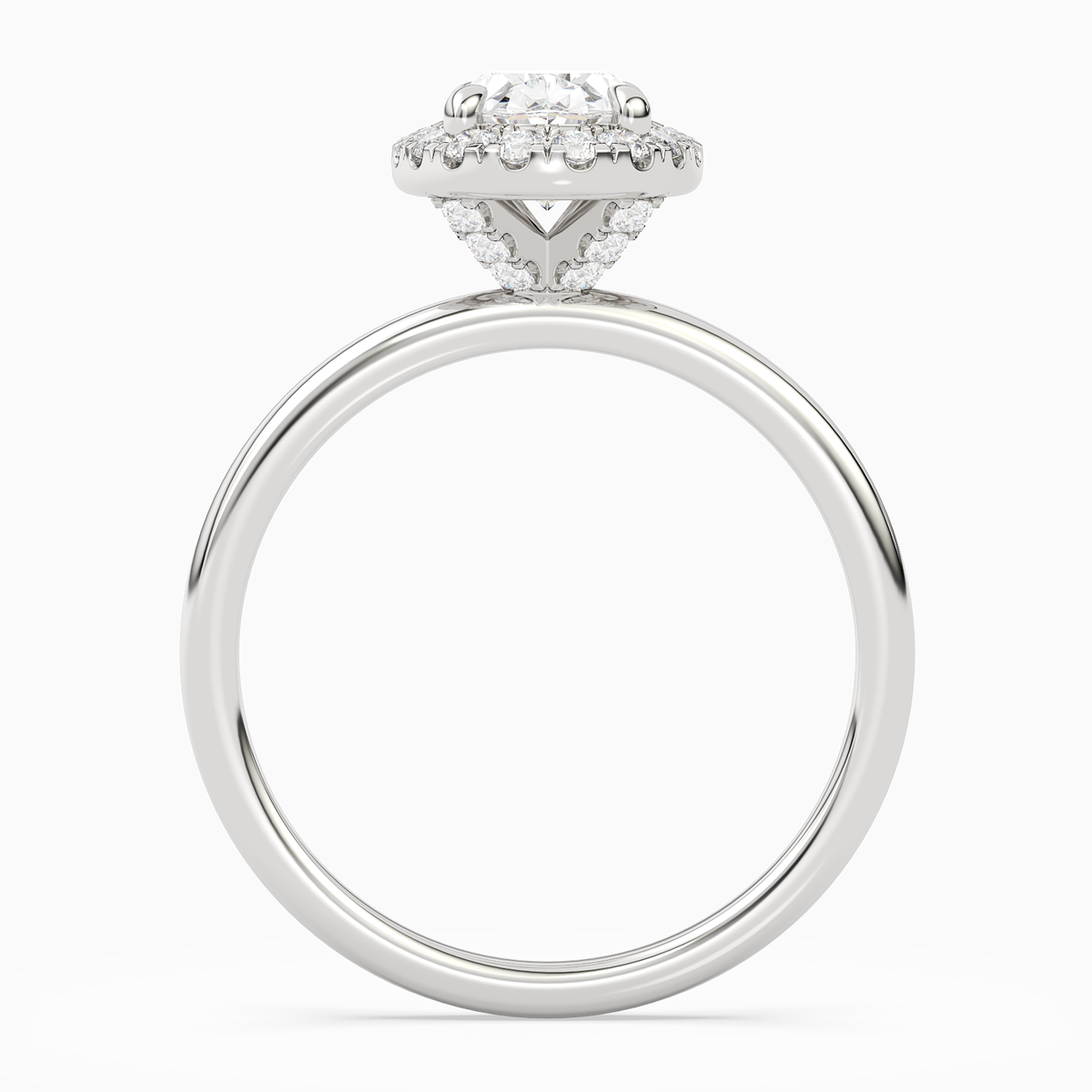
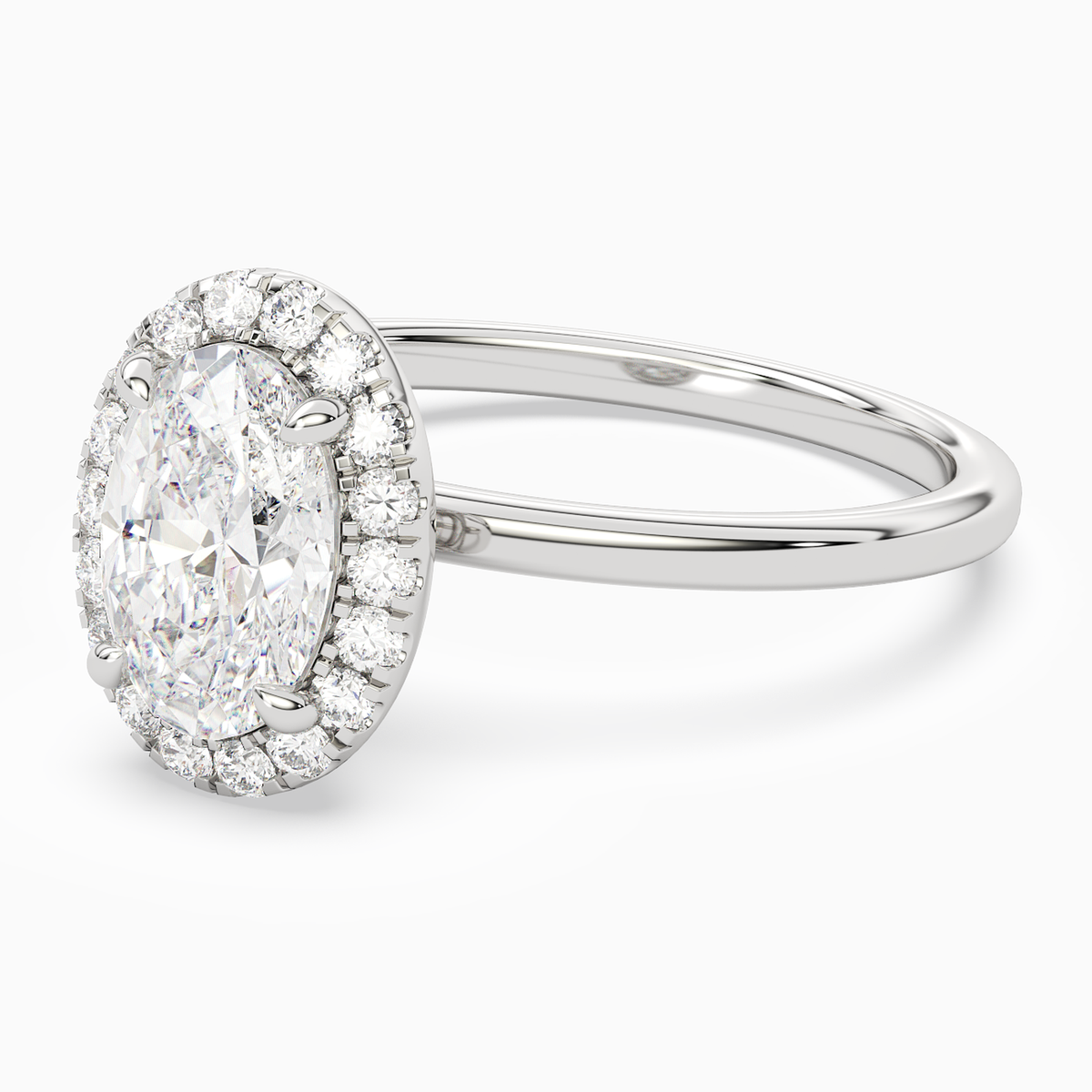
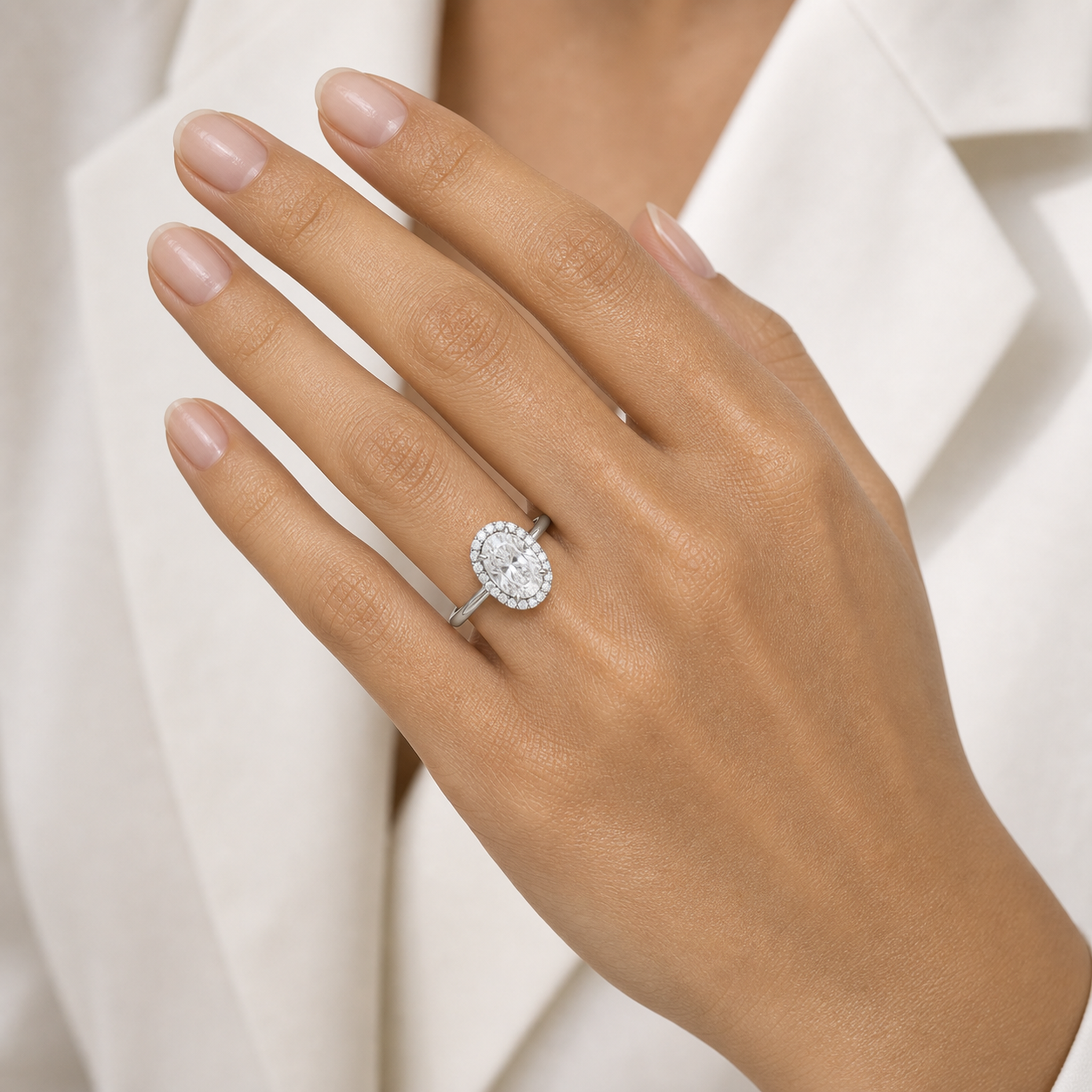


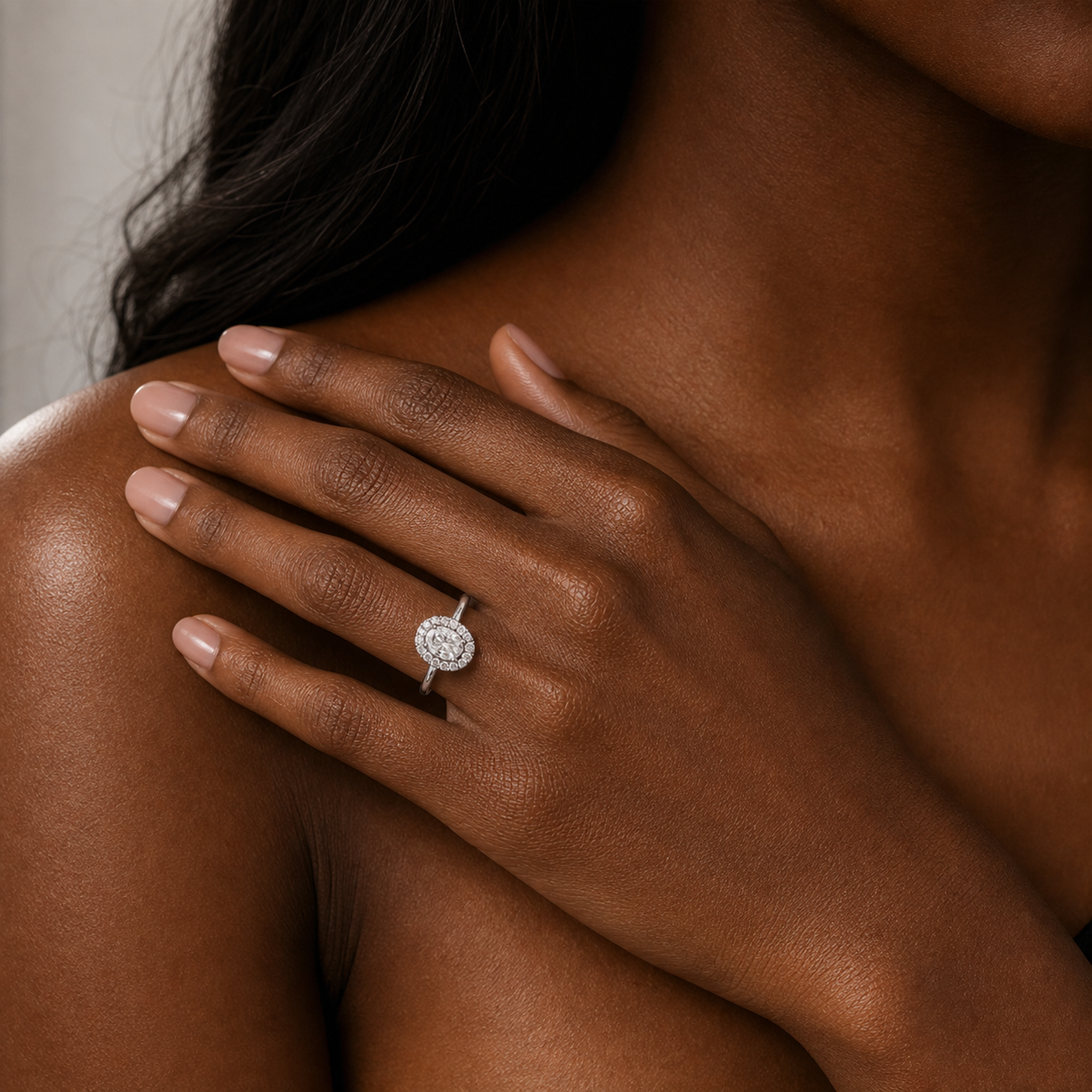


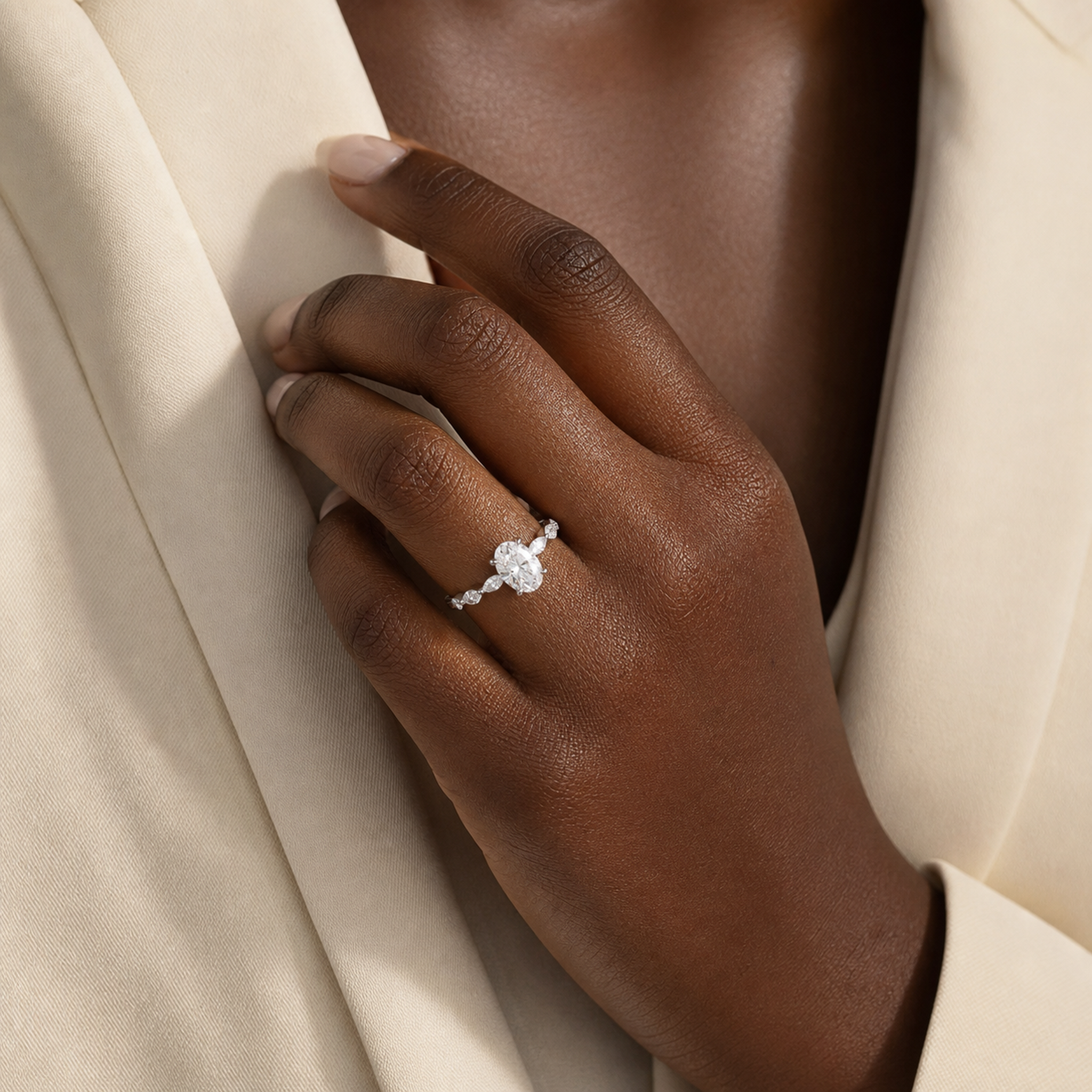


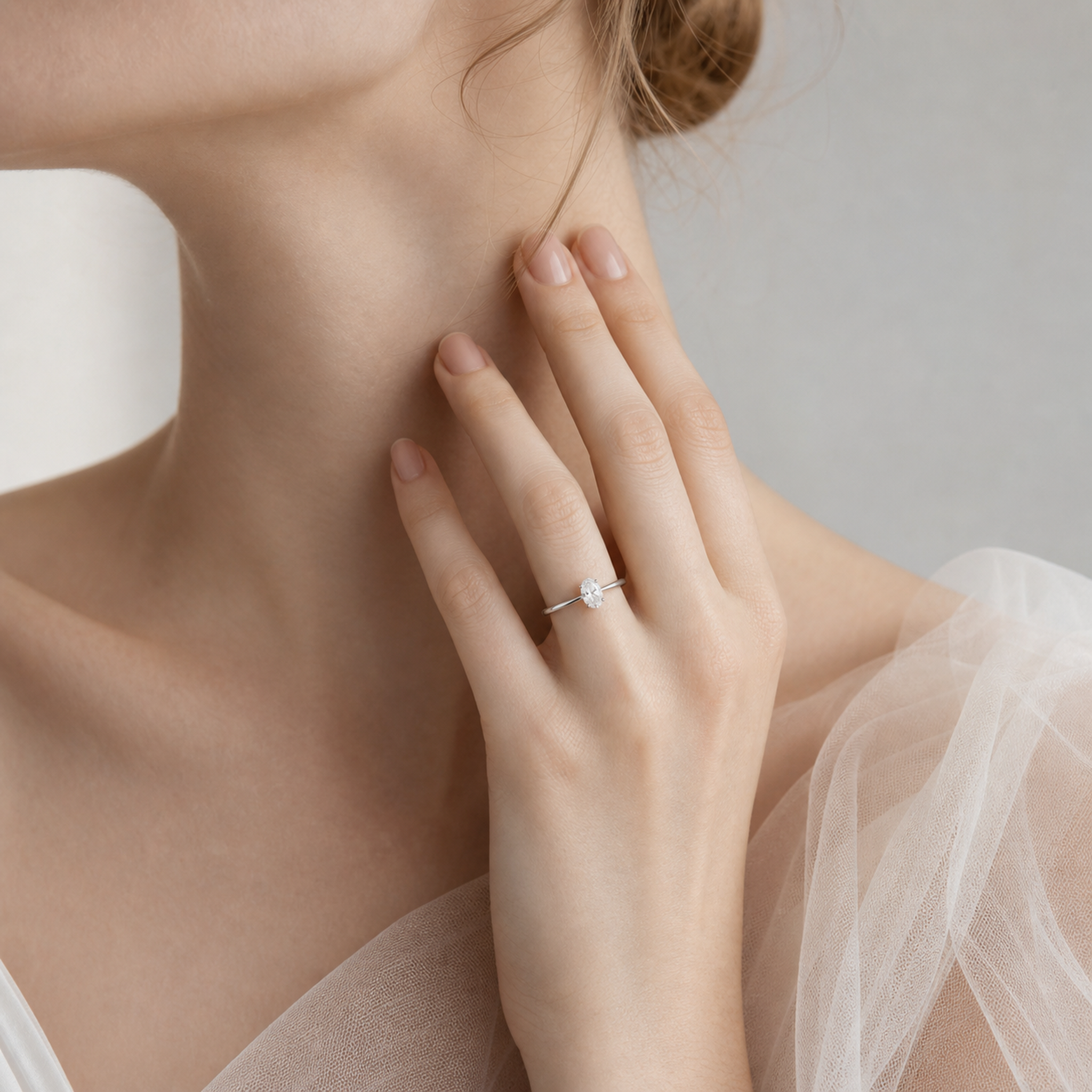


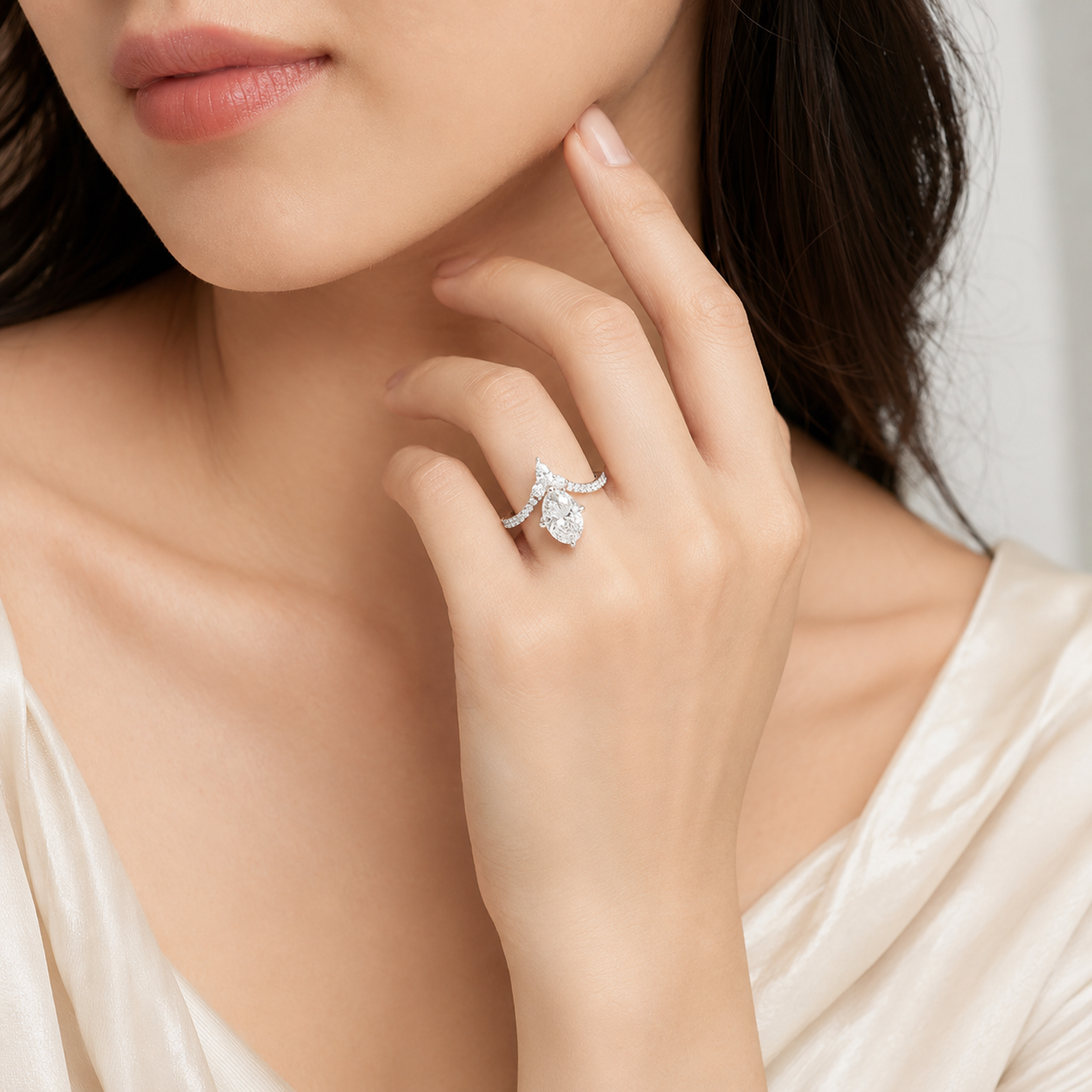


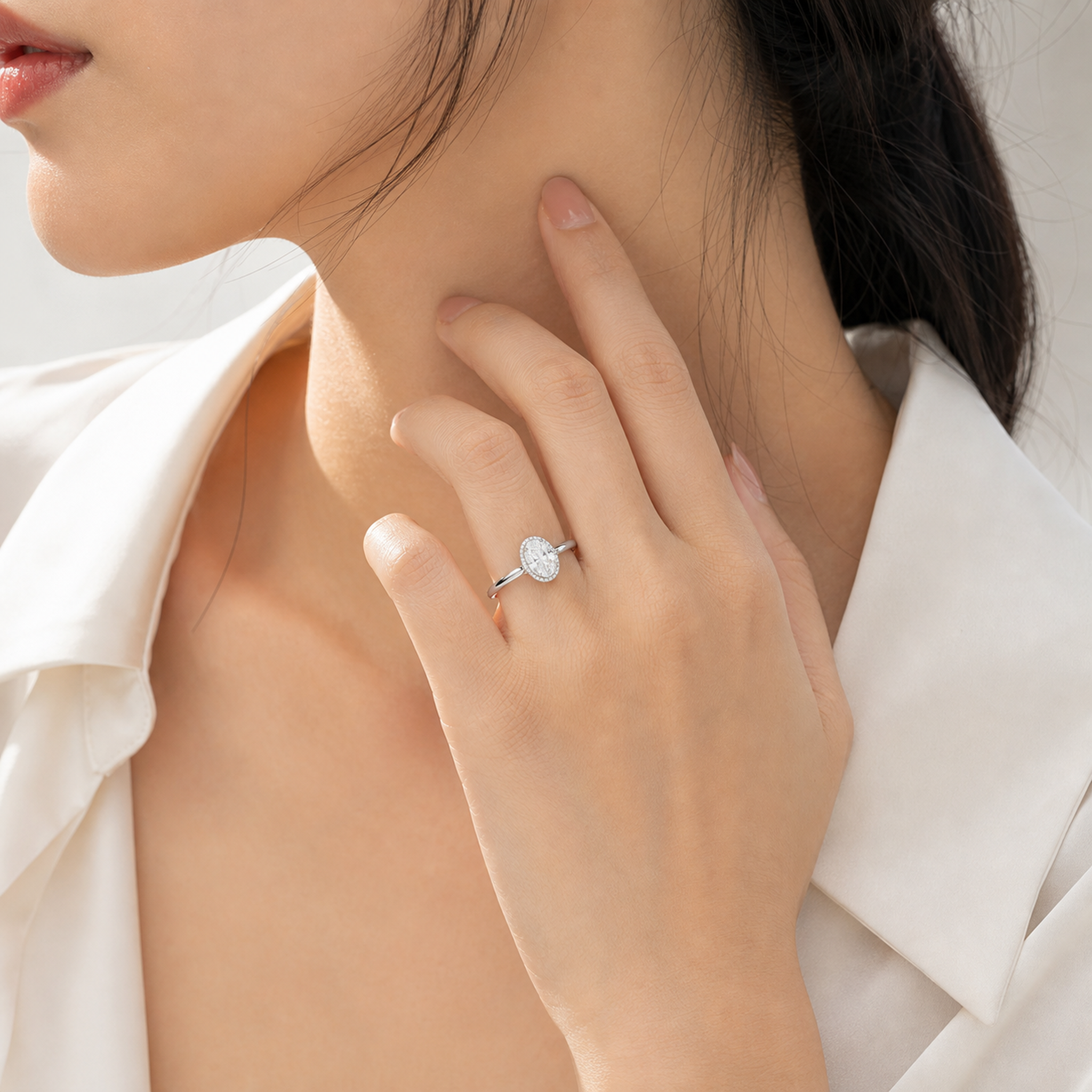


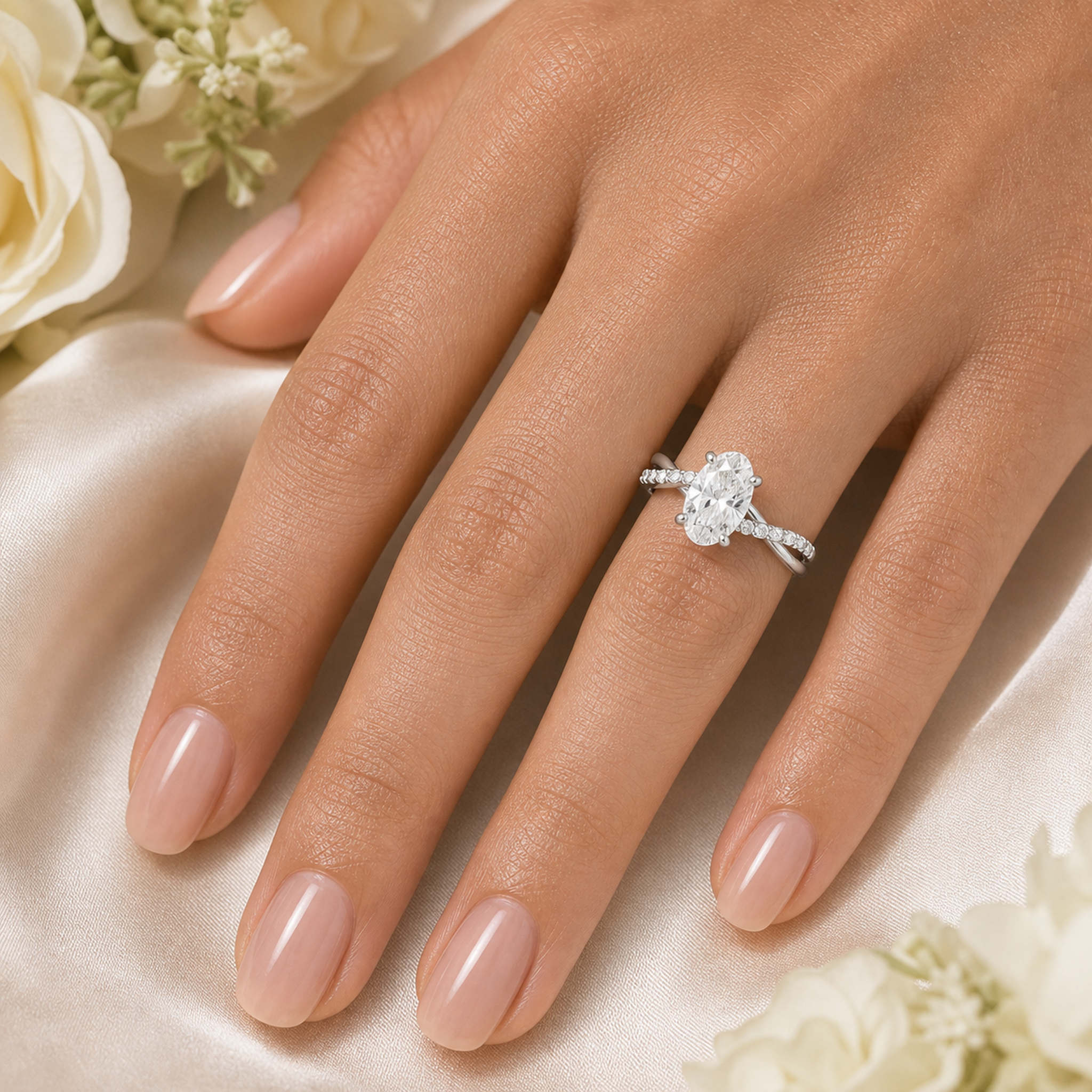


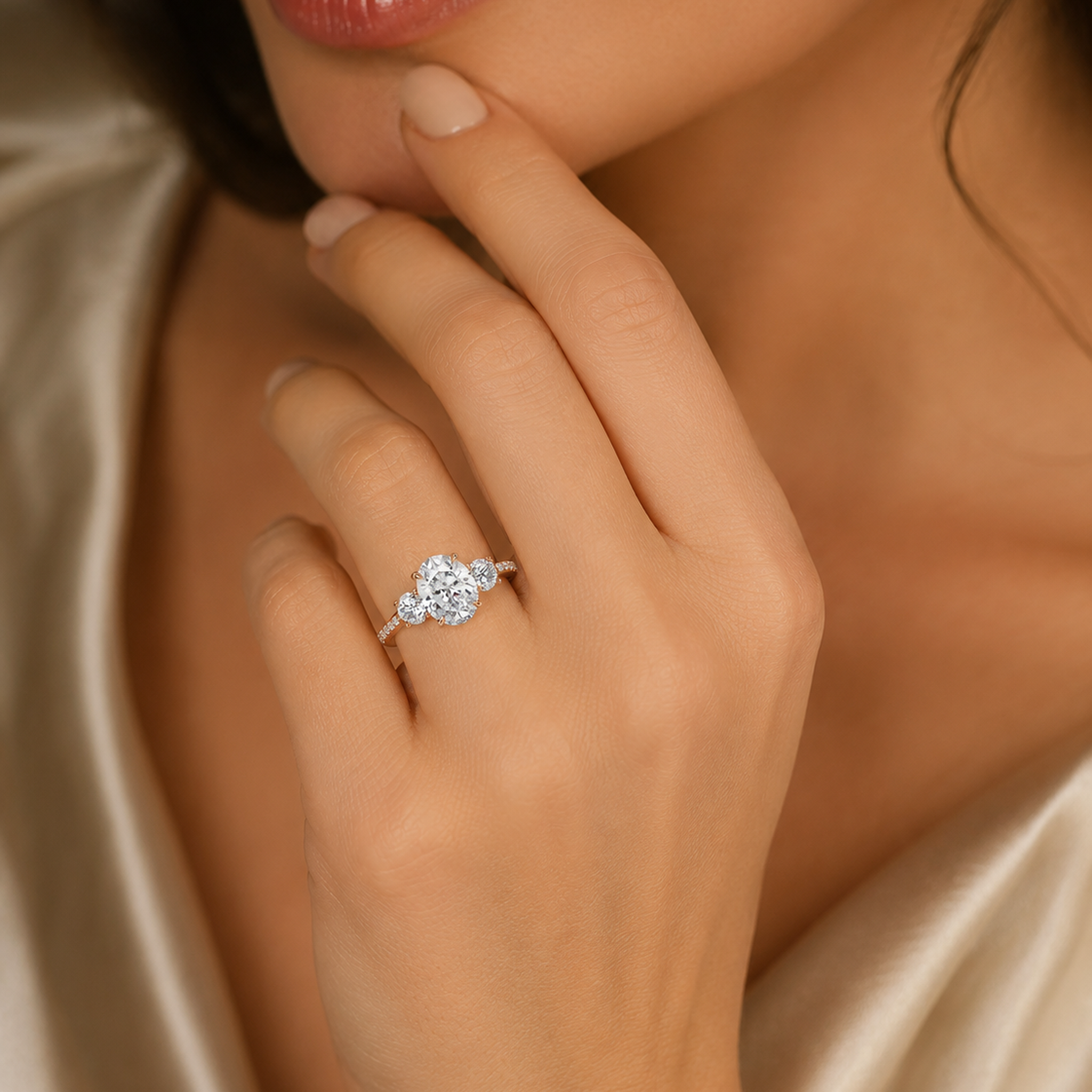


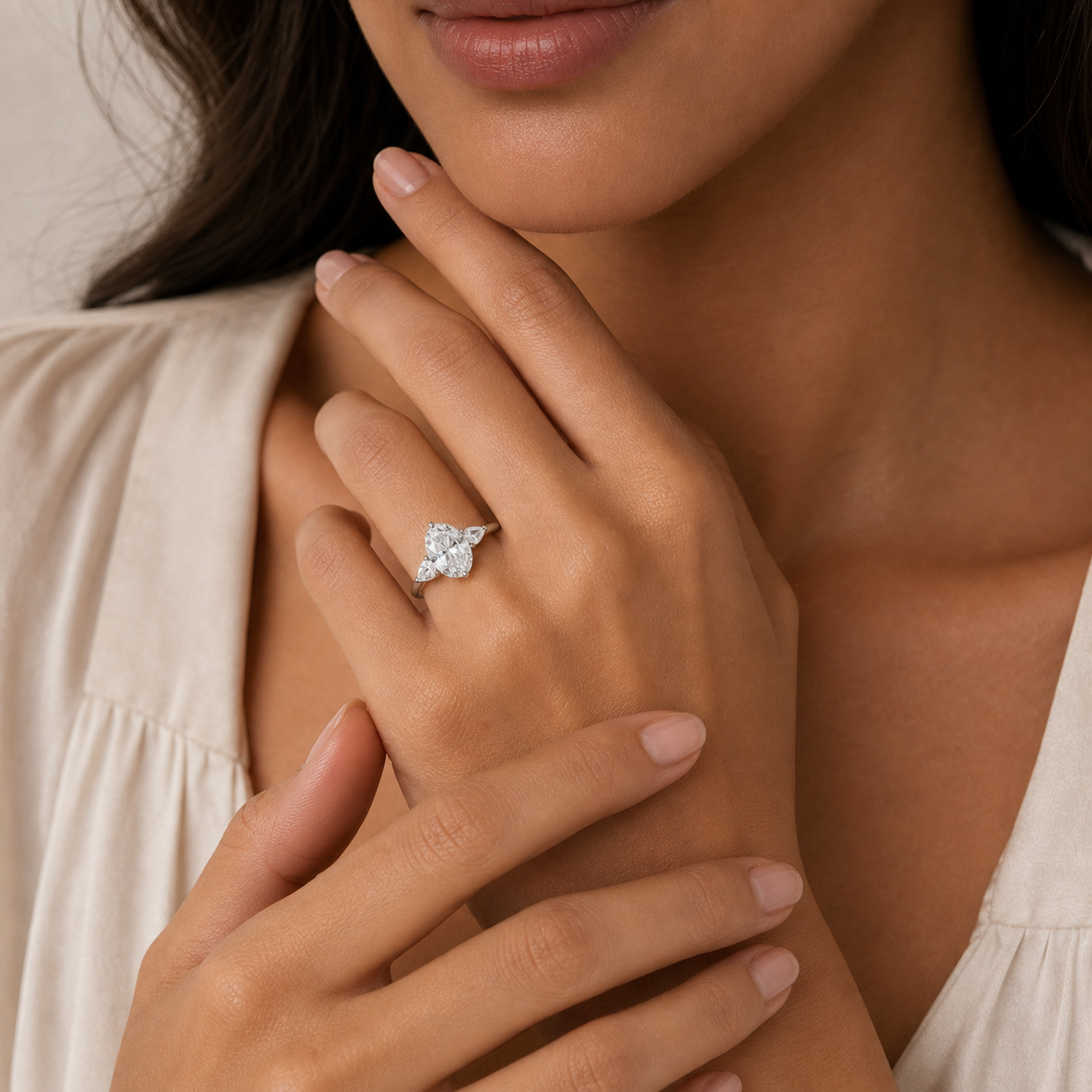
14K White Gold Oval Diamond Engagement Rings: A Quiet Frame for an Elongated Center
An oval center combines a continuous perimeter with a directional long axis. 14K White Gold can keep the color transition between diamond, prongs, and basket comparatively quiet, allowing the eye to read the outline and the construction without a strong warm border.
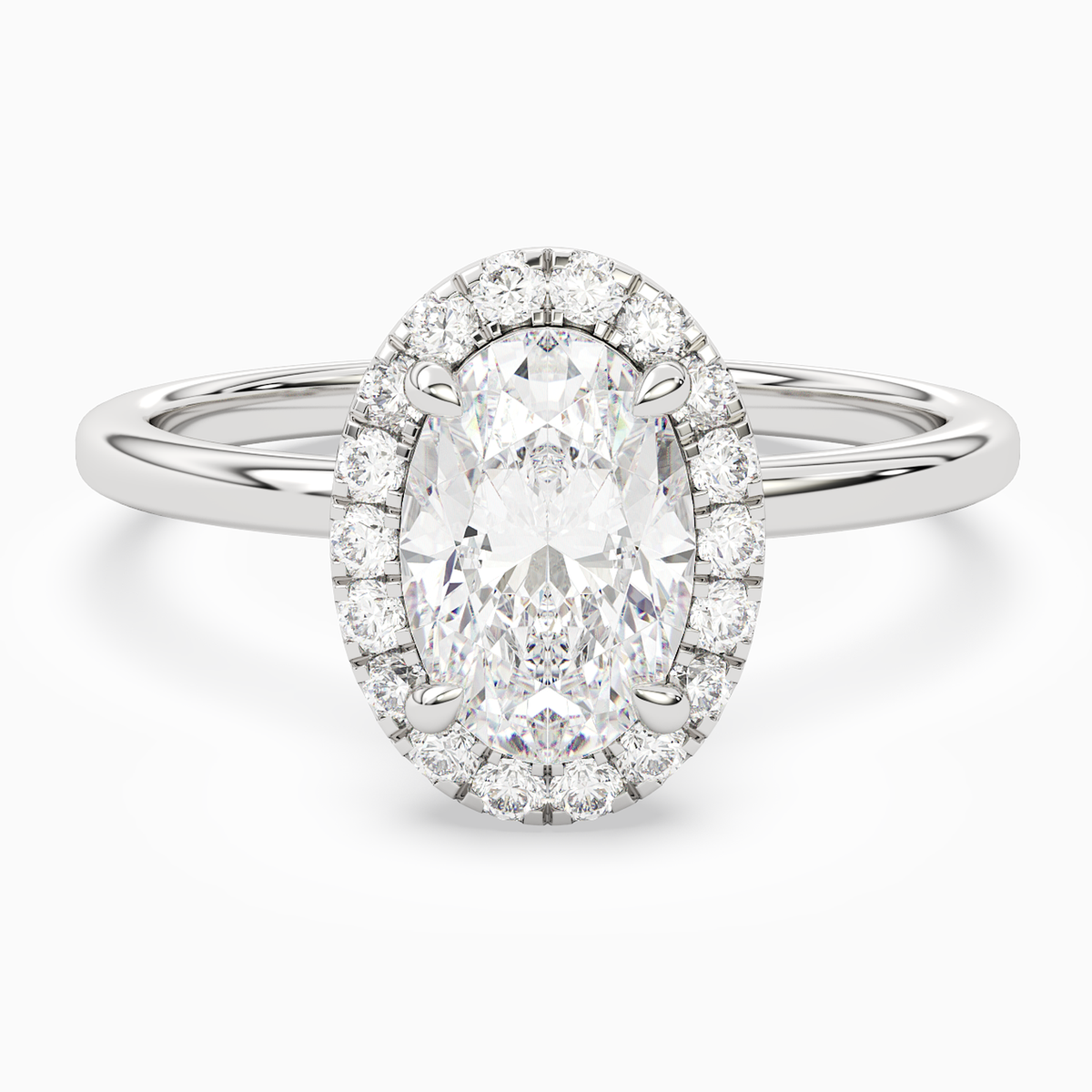
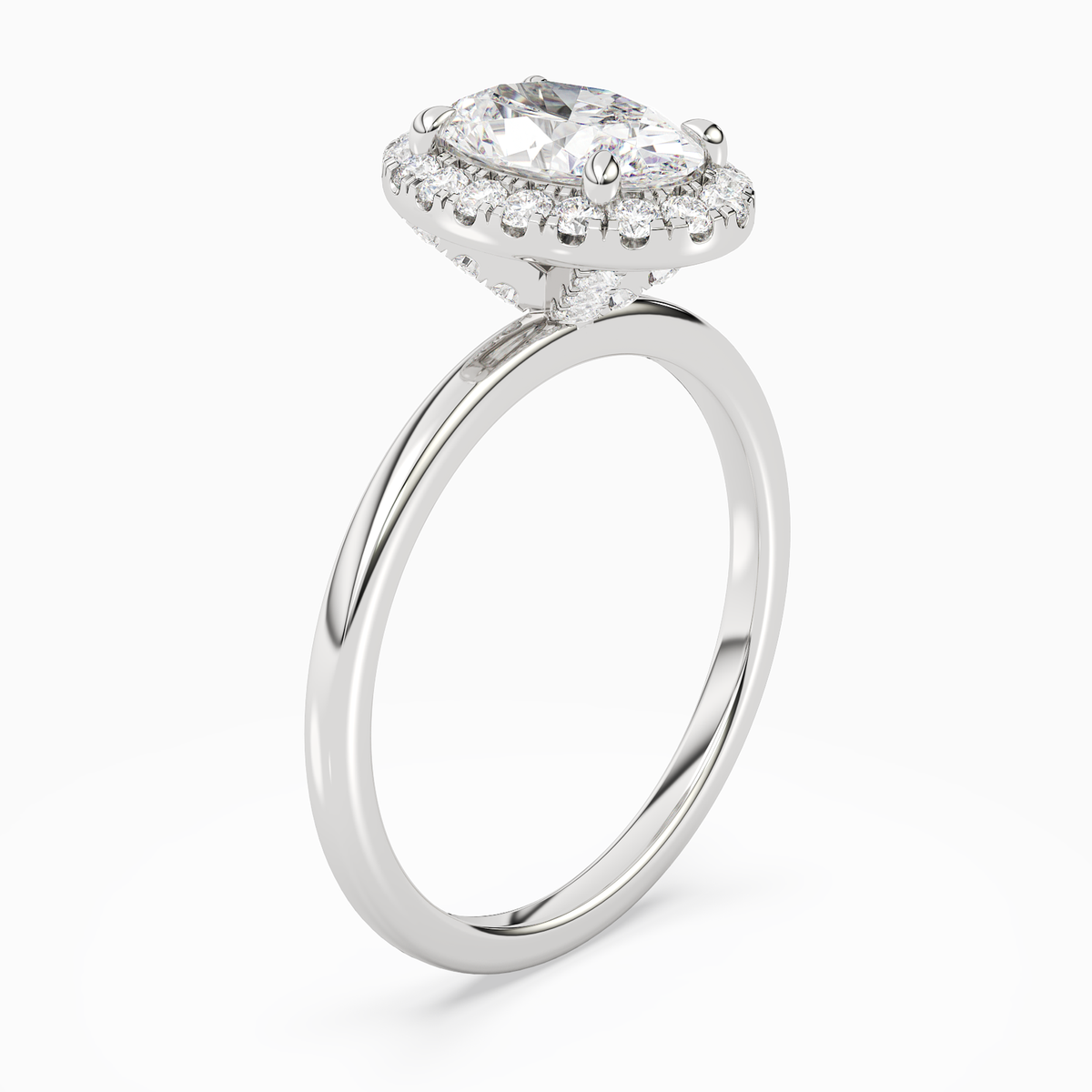
The current collection holds 15 designs: seven Solitaires, three Halos, three Side Stone rings, and two Three Stone compositions. Open baskets, hidden halos, pavé shoulders, a milgrain bezel, cathedral lines, and botanical side structures show how a shared color family can still produce materially different rings.
Quiet Color Does Not Mean Invisible Structure
A 14K gold alloy contains approximately 58.3% gold. Other metals influence color and working behavior. The karat mark alone does not confirm an exact formula, rhodium finish, hardness, sensitivity outcome, or care interval, so the selected product and finish require readback.
White prongs may recede tonally, but their size and placement still define the perimeter. From the side, basket depth, gallery detail, halo, and shoulders become more visible. A resolved design remains understandable from above, in profile, and in motion rather than relying on color continuity to hide its construction.
Keep Central Contrast Part of the Oval
A bow-tie is a contrast pattern that can appear across an oval's center. Some contrast contributes to the changing light-dark pattern seen as a diamond moves; a dominant dark band may be less desirable to a particular buyer. Its appearance depends on the individual diamond and viewing environment.
White Gold does not eliminate a bow-tie, raise a grade, or increase brilliance. Review the center itself in images or video, then judge how the quieter frame relates to that pattern. Fancy-shape polish, symmetry, dimensions, and the grading report add evidence, but they do not replace direct visual assessment.
Structure Determines the Edge
A Solitaire exposes more of the continuous curve and makes prong rhythm prominent. A Halo repeats the oval perimeter. Side Stone and Three Stone structures widen the composition, where scale and spacing must preserve hierarchy between the center and supporting shapes.
Within this assortment, a bezel creates the most continuous metal boundary, while open baskets and fine prongs leave more edge visible. Cathedral shoulders rise toward the center; vines and marquise or pear accents change the lateral movement. White Gold unifies tone, but geometry supplies the distinction.
Compare Measurements, Not Assumptions
Length-to-width ratio describes whether the outline is fuller or more elongated. It does not establish one ideal proportion or guarantee that the center faces up larger. Review length, width, depth, girdle, facet pattern, and overall outline together with carat weight.
Band width and center height affect how the ring balances on the finger. Halo, side stones, basket projection, and shoulders influence wedding-band contact. A shared white-metal color cannot guarantee a flush stack, universal comfort, low rotation, or one maintenance pattern.
Clarity in Color and Decision
The useful comparison is not whether White Gold is more modern or sophisticated. It is whether a quieter material field helps you see the oval's proportion, central contrast, prong rhythm, and transitions in the way you prefer across the complete ring.
Burvonti pairs responsibly sourced, independently graded lab-grown diamonds with settings calibrated through proportion and human judgment. Custom possibilities may refine the center, prongs, basket, band, accents, metal, or engraving where feasible, with the finished configuration treated as one accountable design.
Frequently Asked Questions
What does this child page add beyond the Oval parent?
It focuses on 14K White Gold's tonal continuity around the oval while the parent owns broad shape, ratio, and bow-tie education.
How much gold is in 14K White Gold?
Approximately 58.3%. Other alloying metals influence its color and working behavior.
Is every 14K white gold ring rhodium plated?
That should not be assumed. Confirm the finish for the selected Burvonti product.
Does White Gold make an oval diamond brighter?
No. It changes the surrounding color field, not the center's faceting or light performance.
Does White Gold hide an oval bow-tie?
No. Bow-tie visibility depends on the individual diamond, lighting, movement, and viewing position.
Which designs appear on this page?
The current 15-design assortment includes seven Solitaire, three Halo, three Side Stone, and two Three Stone structures.
Is there a best length-to-width ratio?
There is no universal best. Ratio describes outline and should be assessed with the actual diamond.
Do white prongs make the diamond look colorless?
They may reduce surrounding color contrast, but they do not change the independently graded color.
Does an oval face up larger than a round of equal carat?
Carat alone cannot establish that result. Compare actual length, width, depth, and outline.
Is White Gold hypoallergenic?
No universal outcome should be promised. Confirm the product-specific alloy if sensitivity is a concern.
Will the white finish remain unchanged?
Surface appearance evolves with wear. Alloy, finish, care, and use determine appropriate maintenance.
Will a straight wedding band sit flush?
It depends on the basket, halo, side stones, shoulders, height, and contact points.
Can Burvonti adjust the oval ring design?
Custom possibilities may include center specifications, prongs, basket, accents, band line, metal, or engraving, subject to feasibility.