
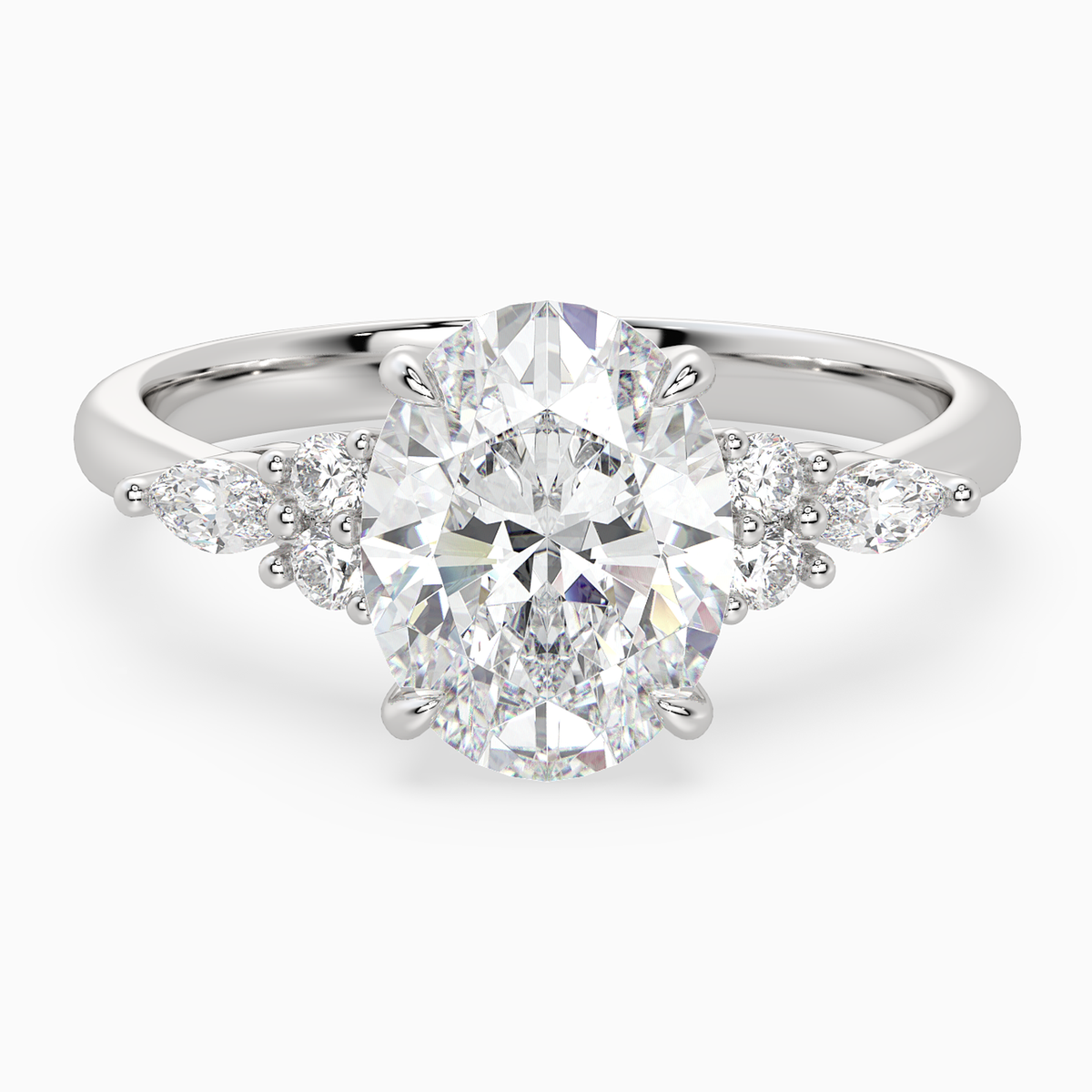


Oval Diamond Engagement Rings in 14K Rose Gold
A continuous curve, warmed along its length. 14K rose gold gives the oval center a blush boundary while preserving its direction and light.


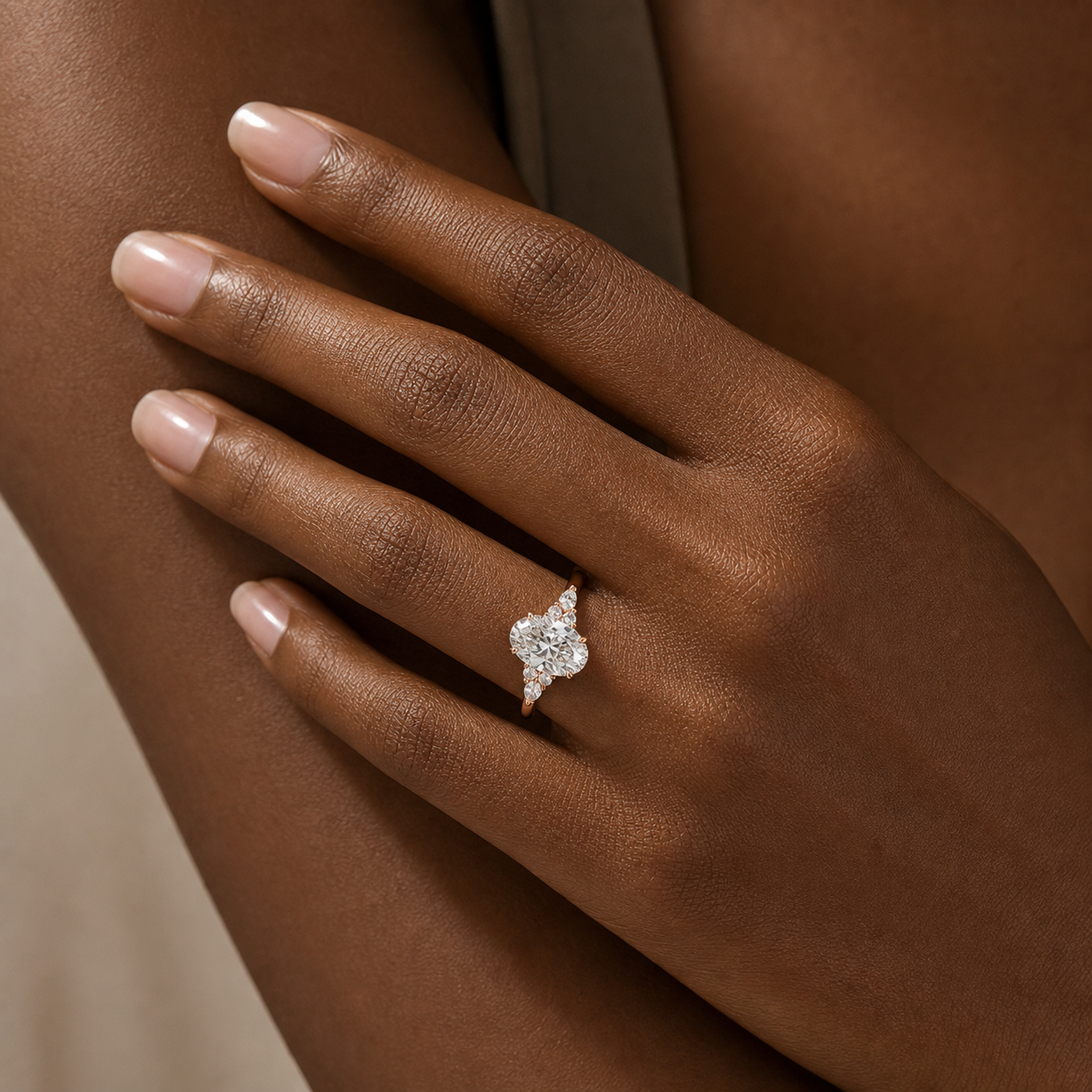


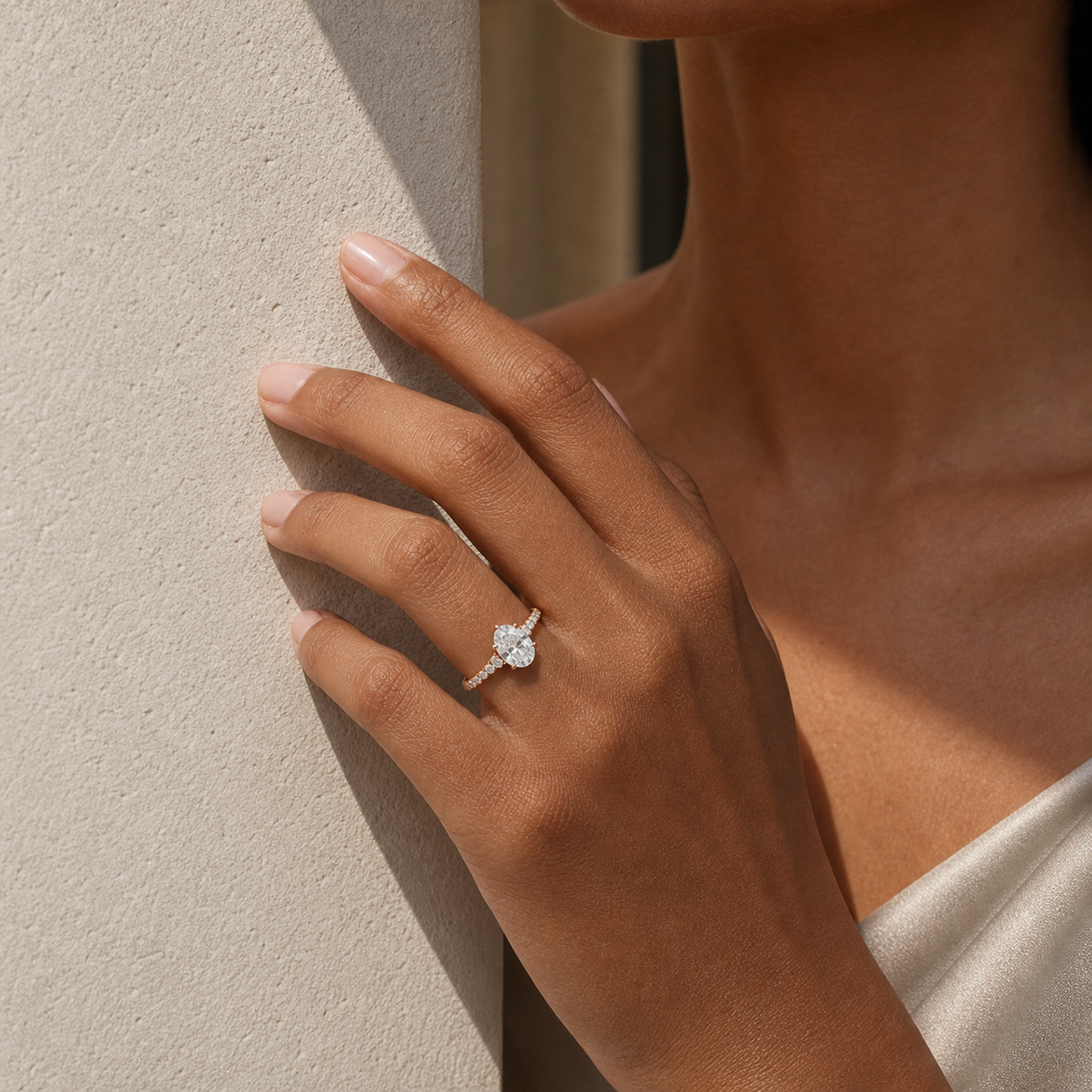


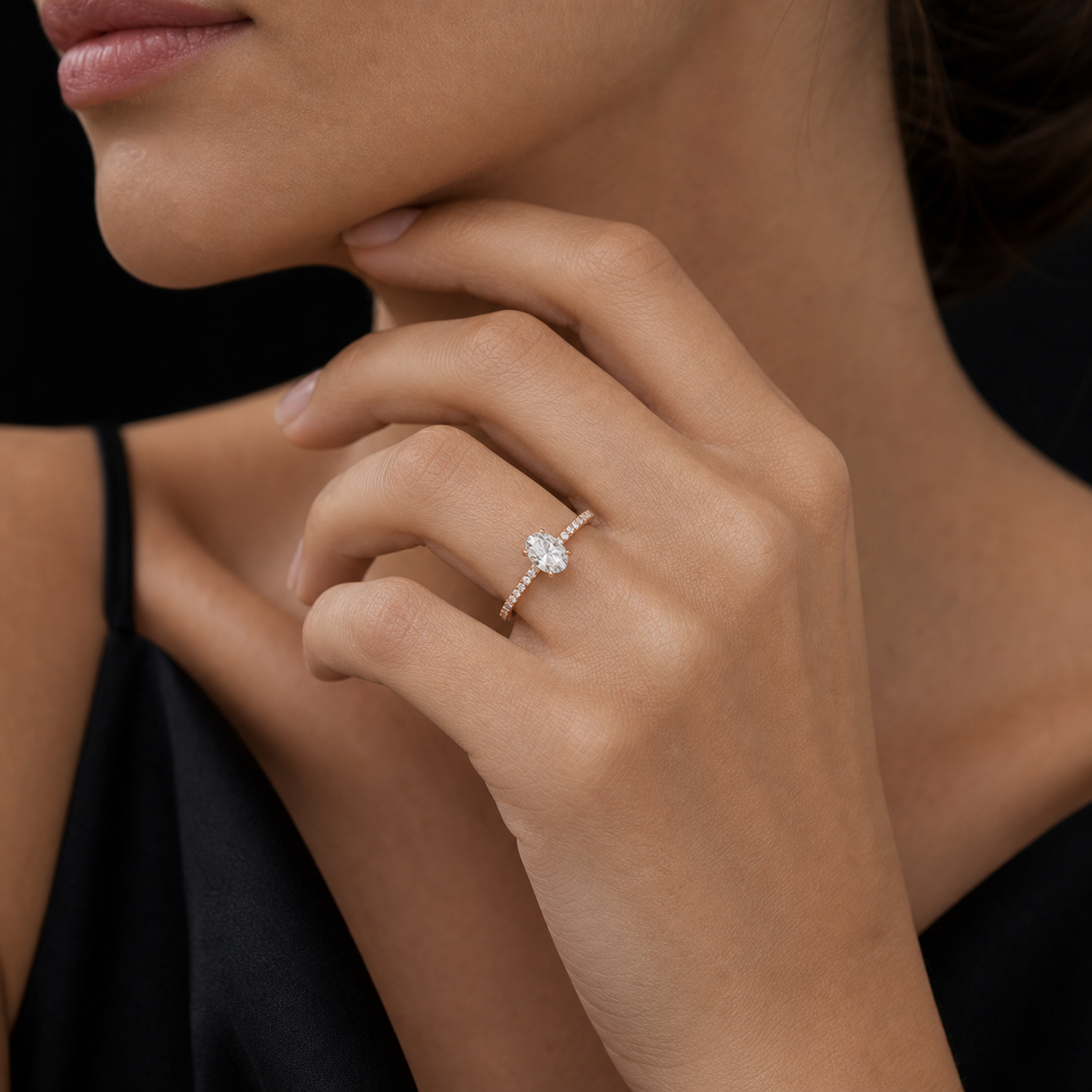


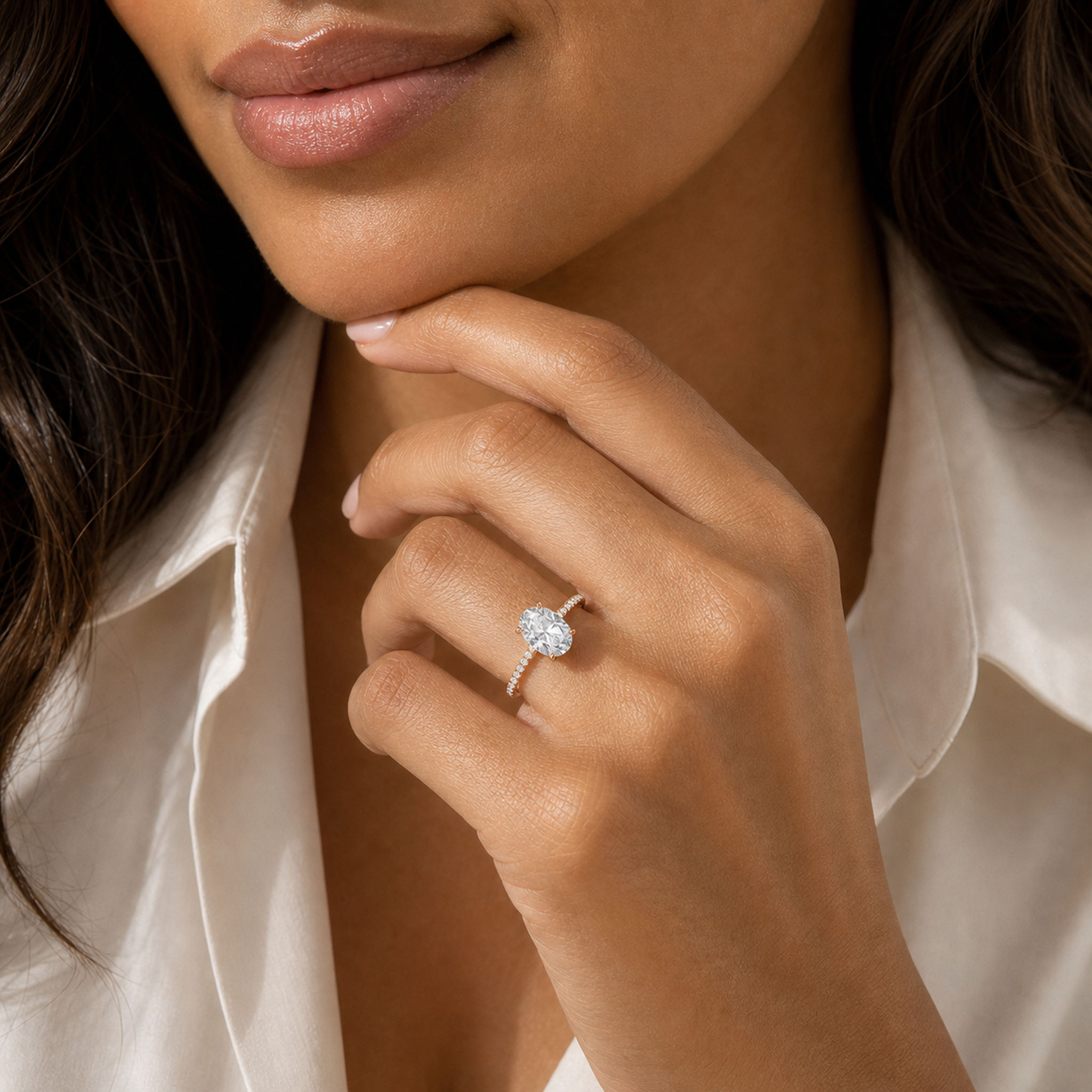
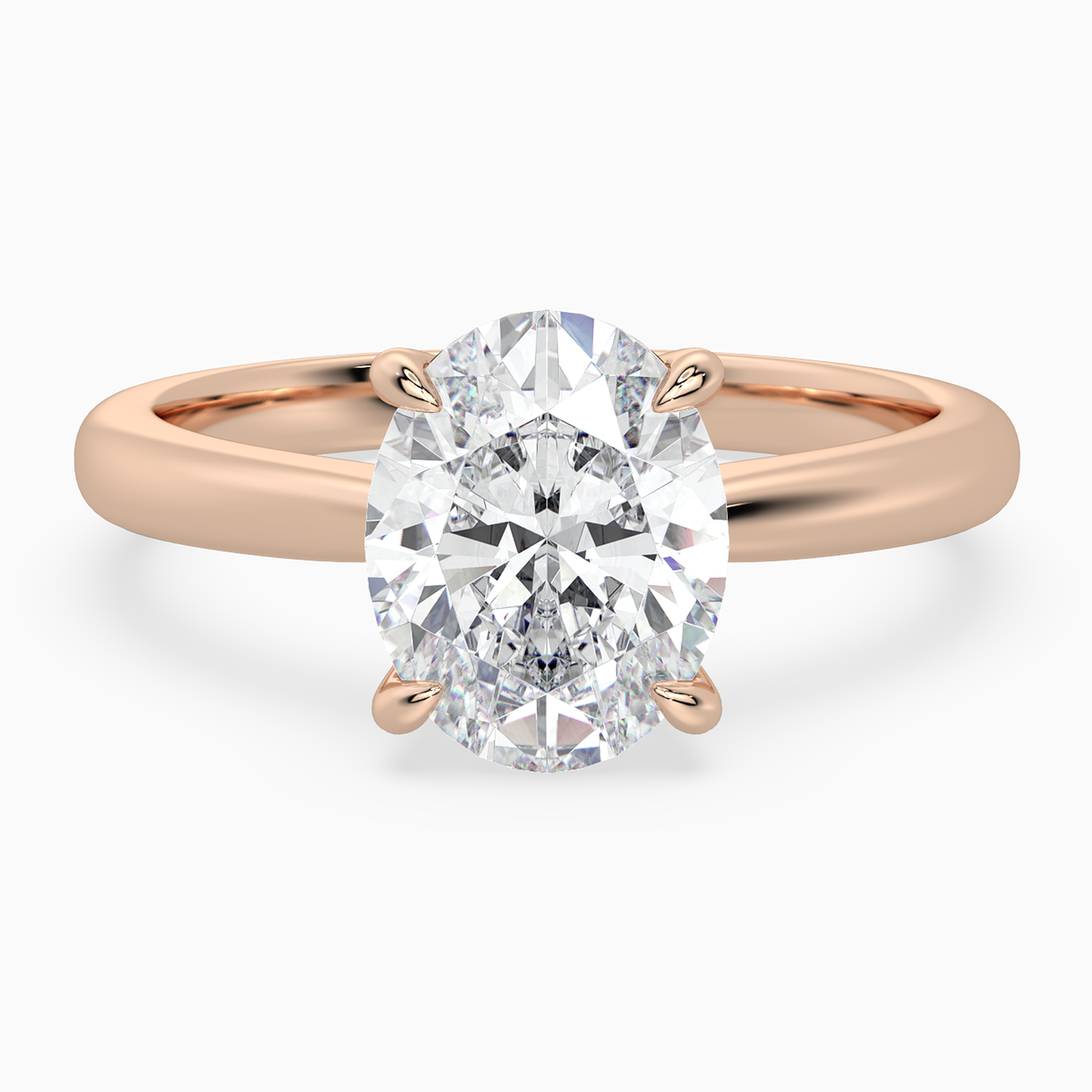

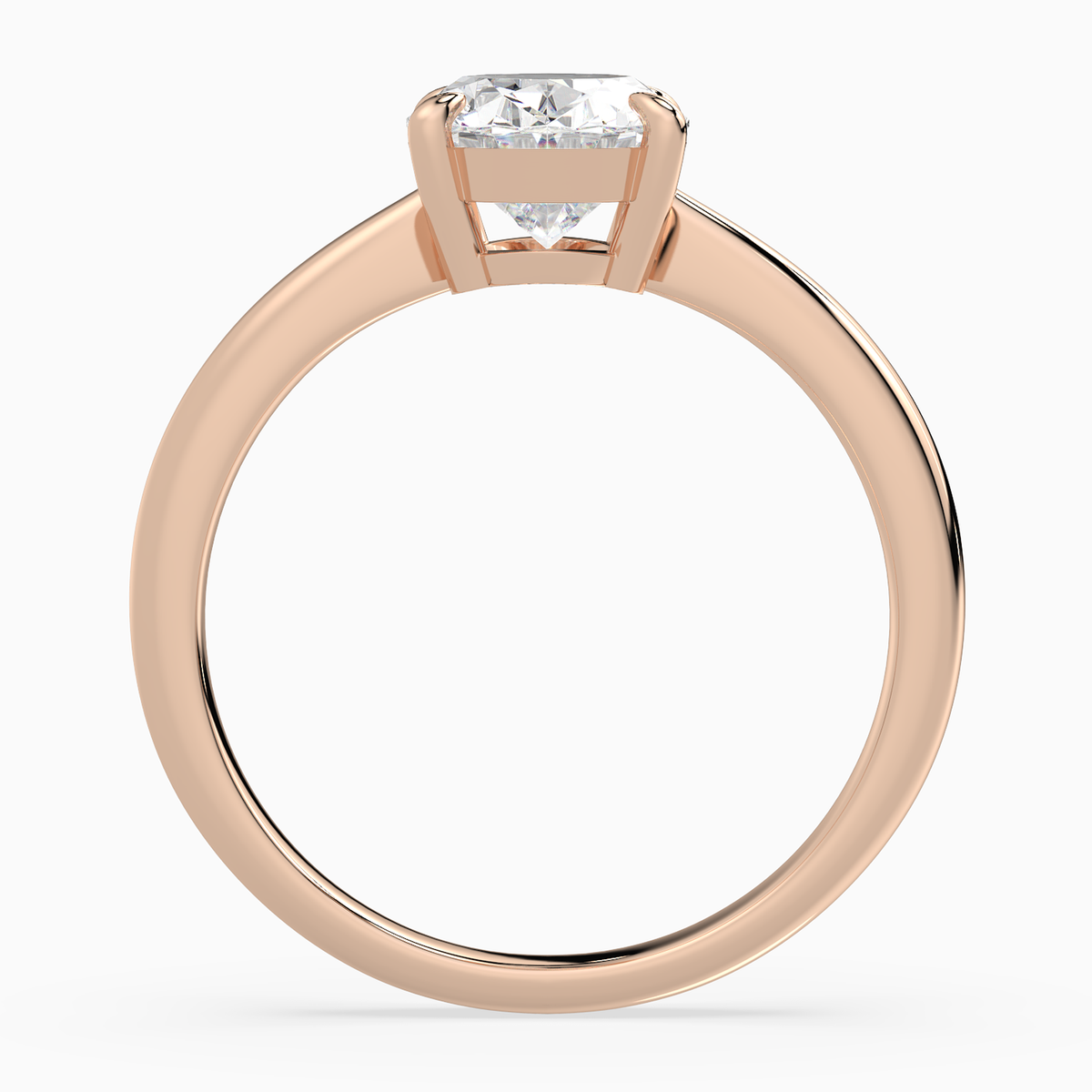

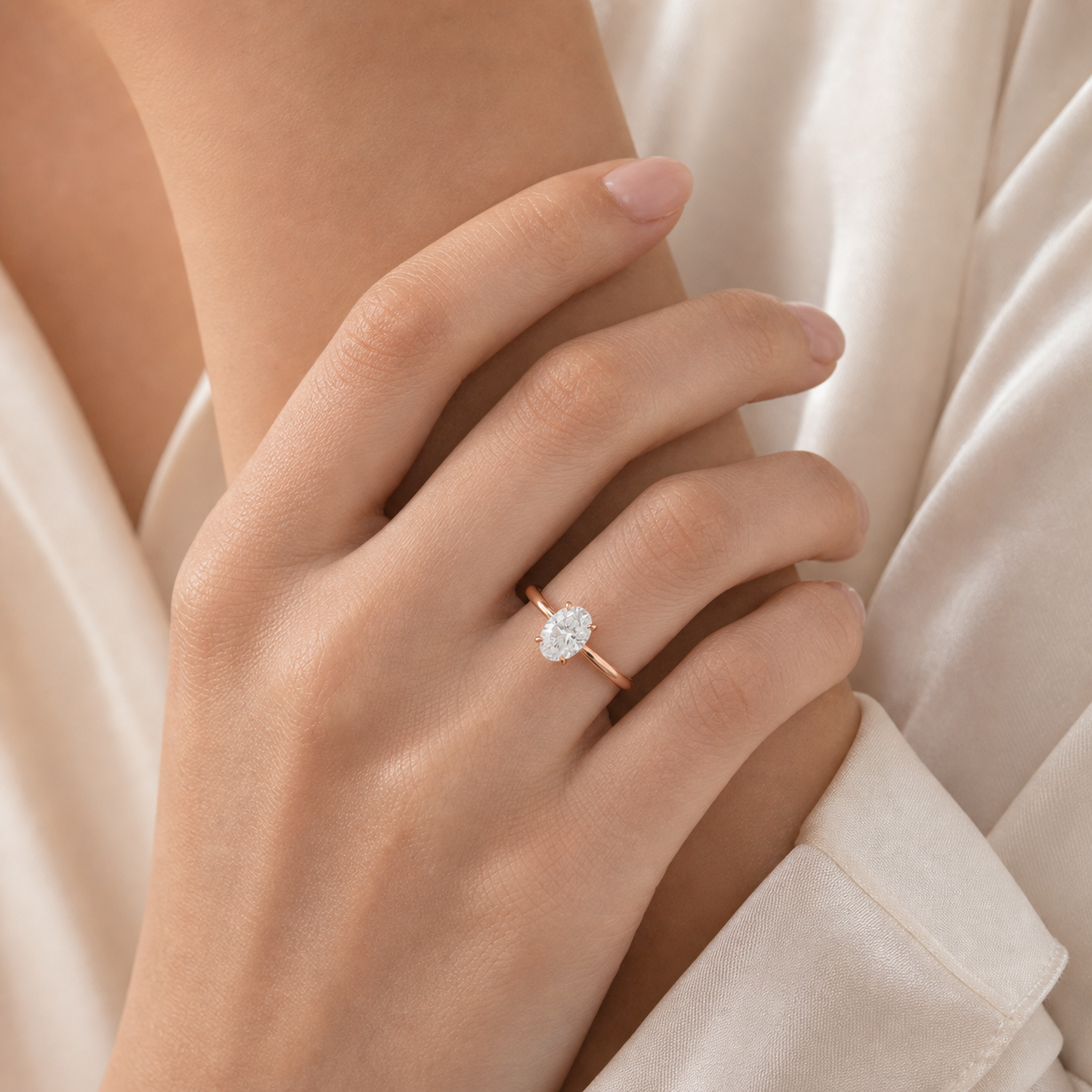


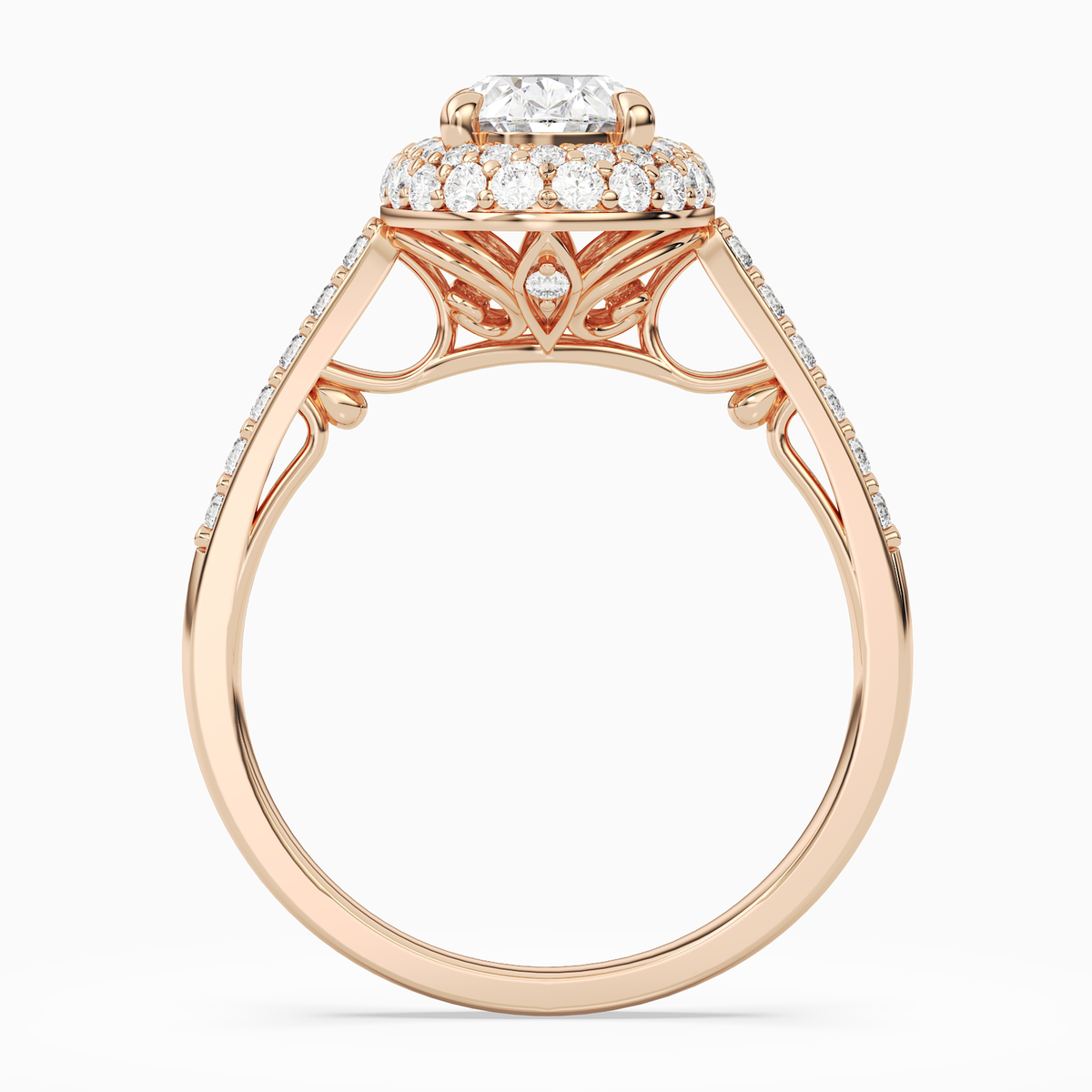

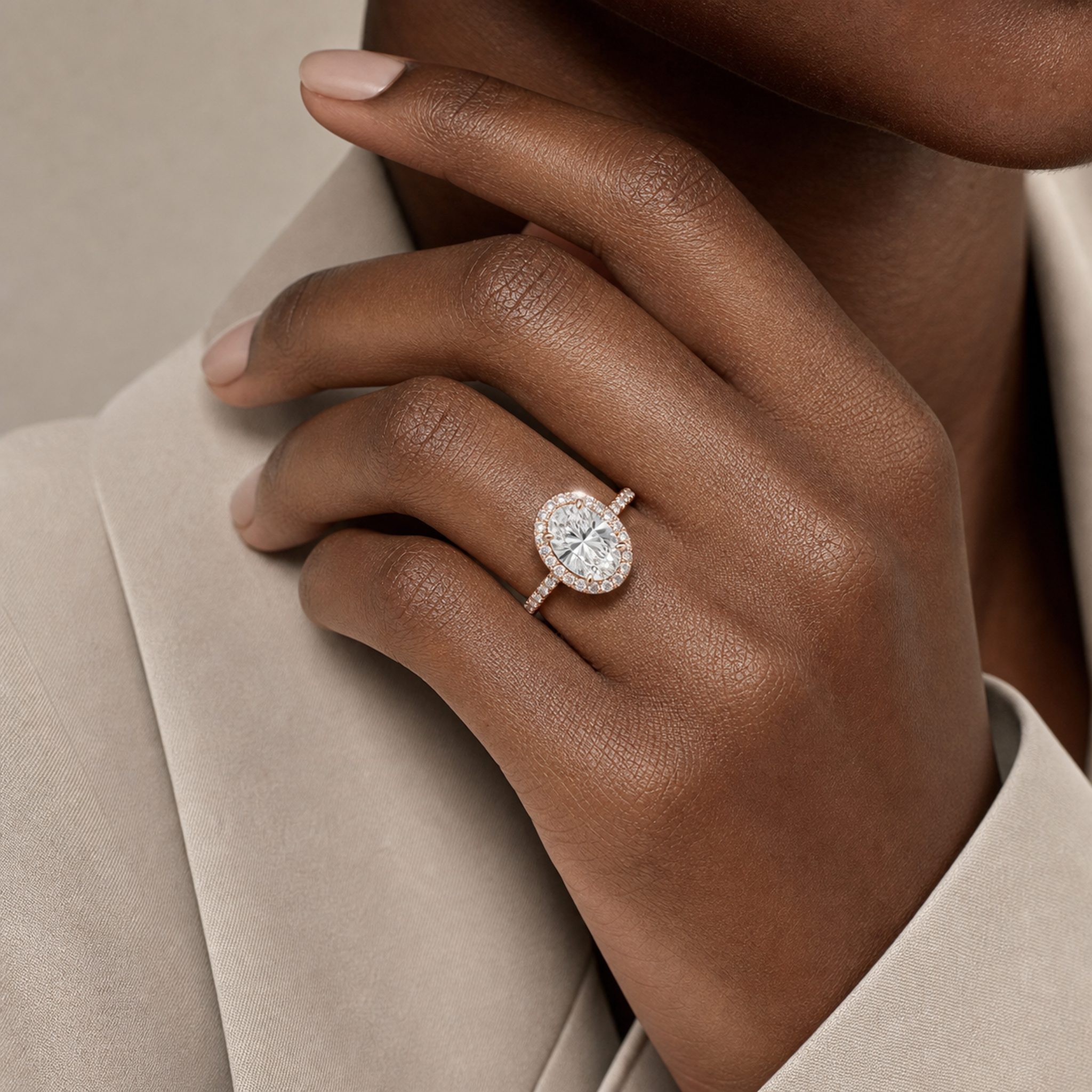


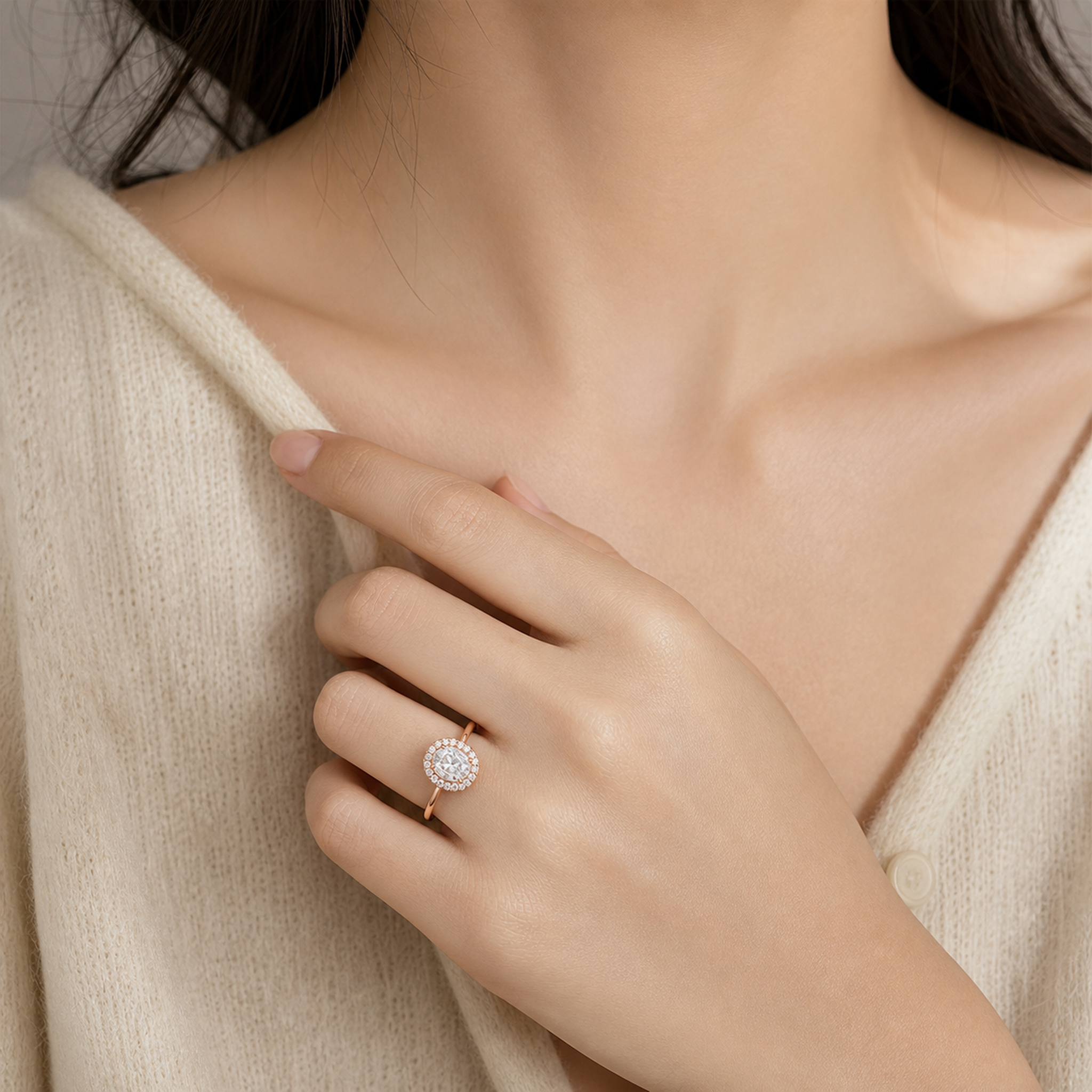


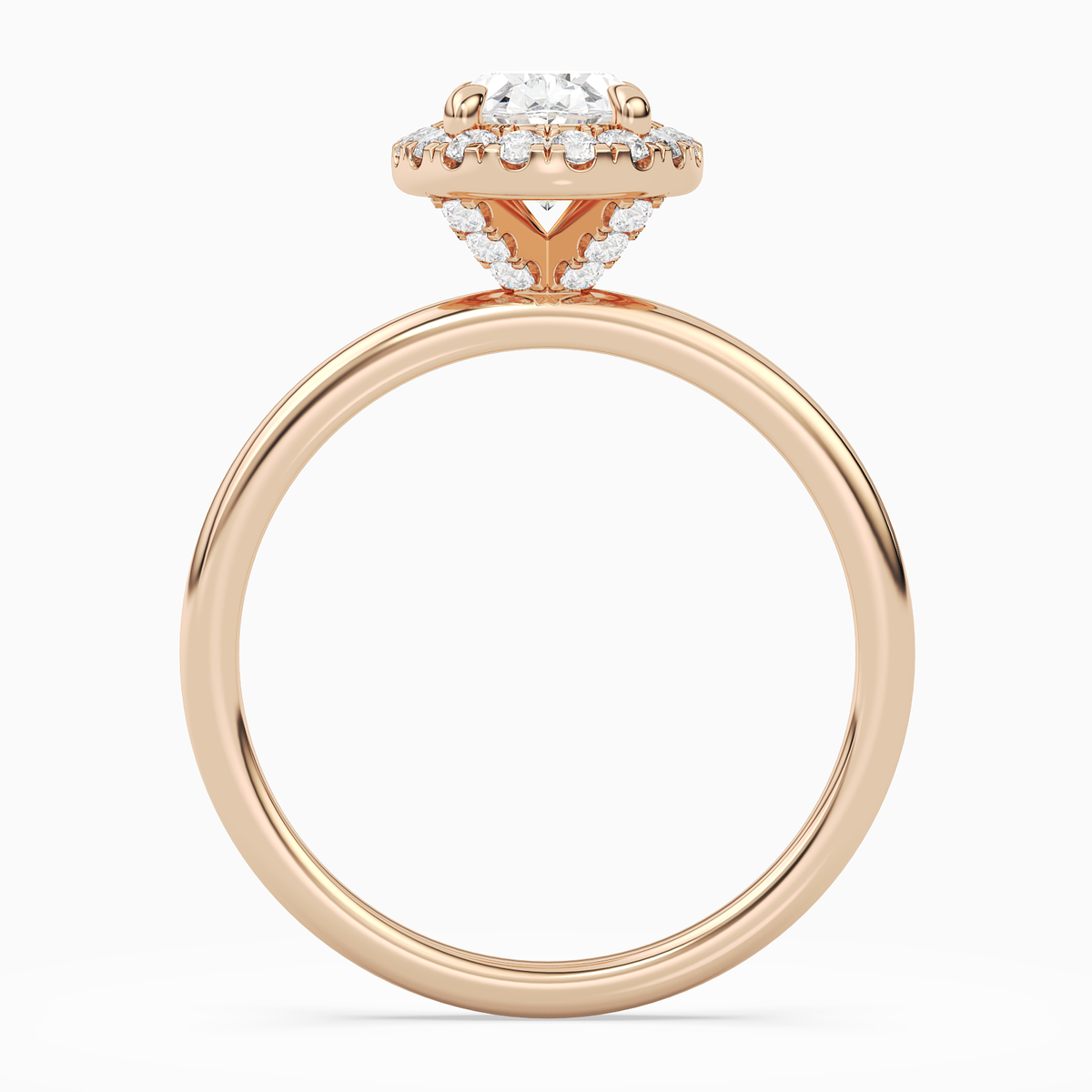

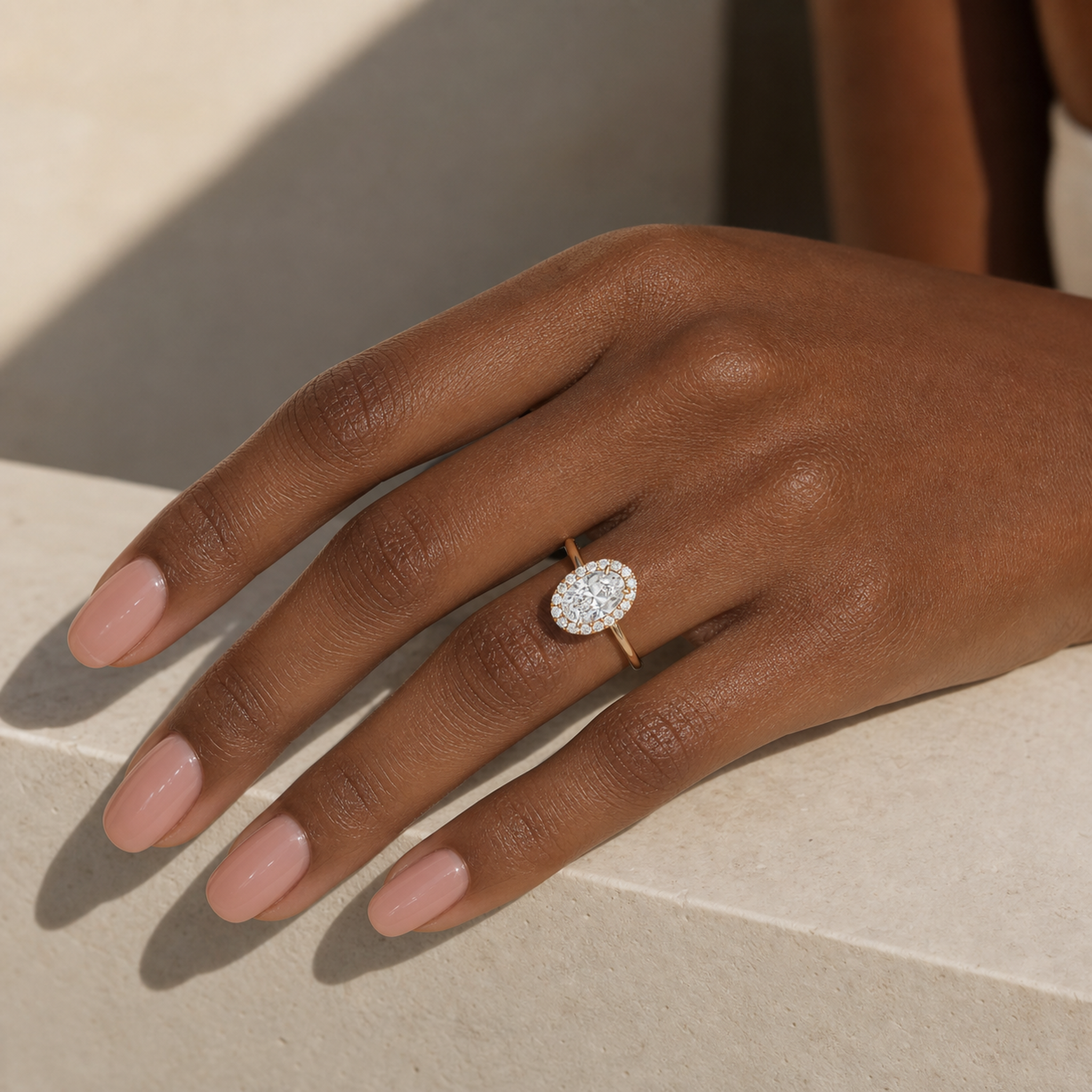


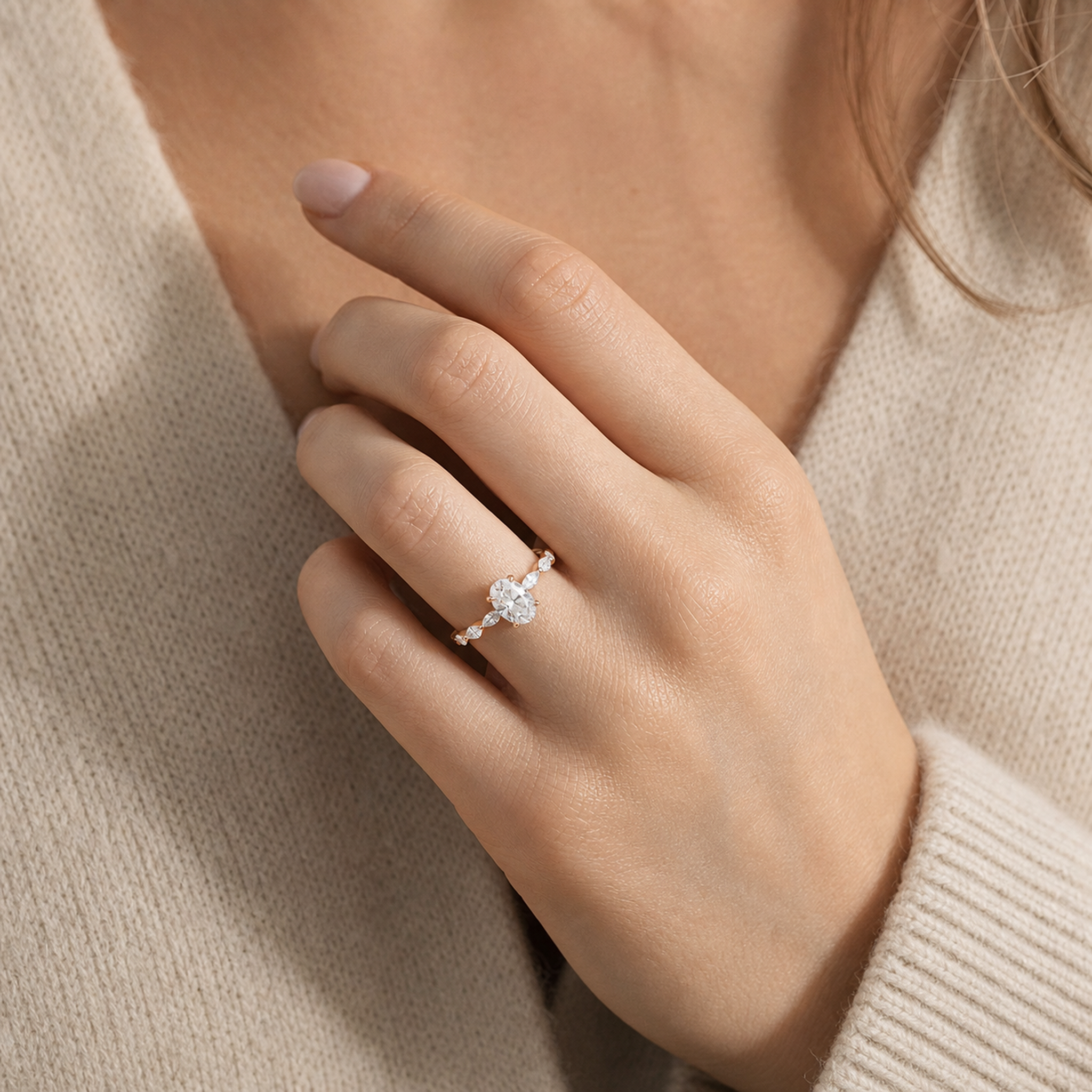


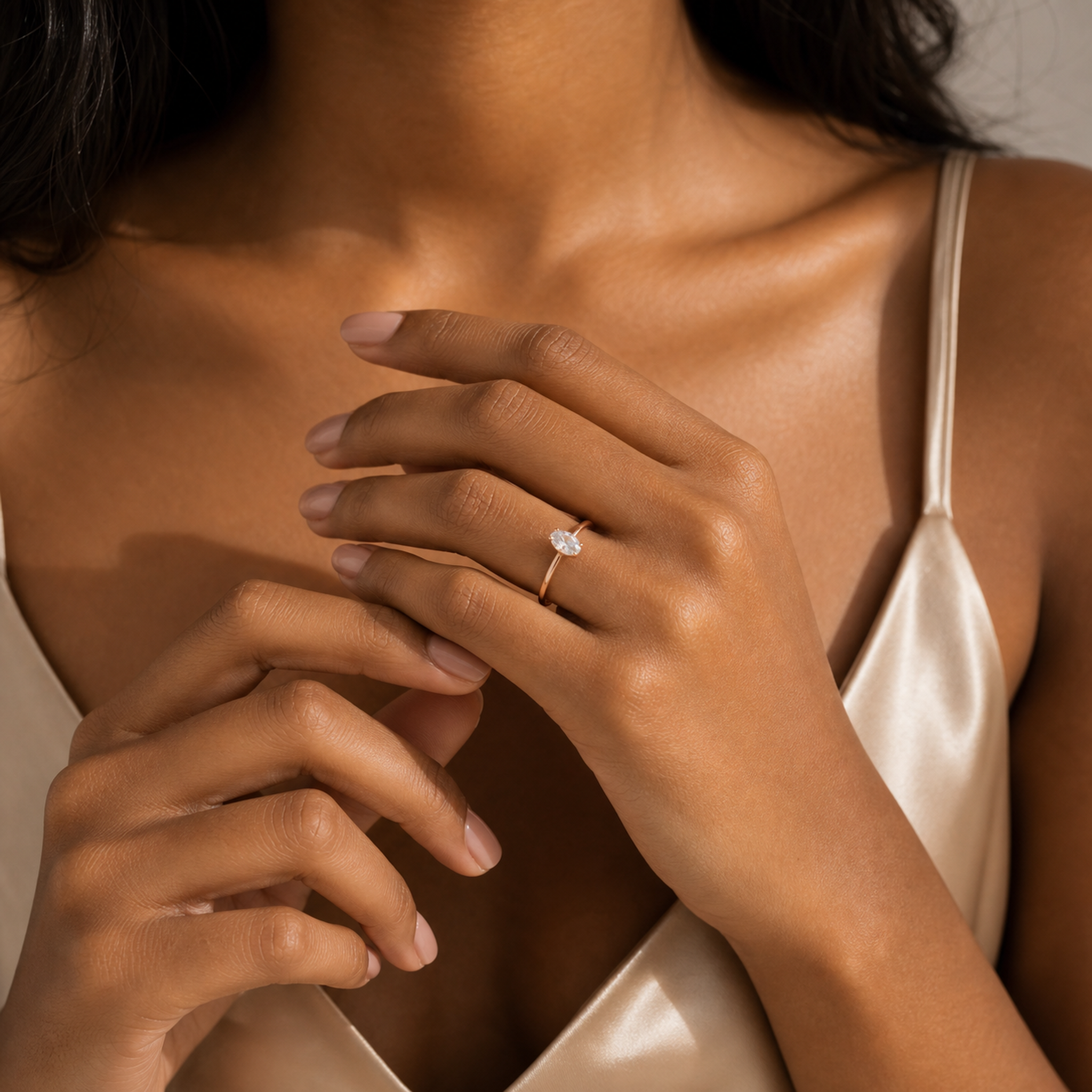


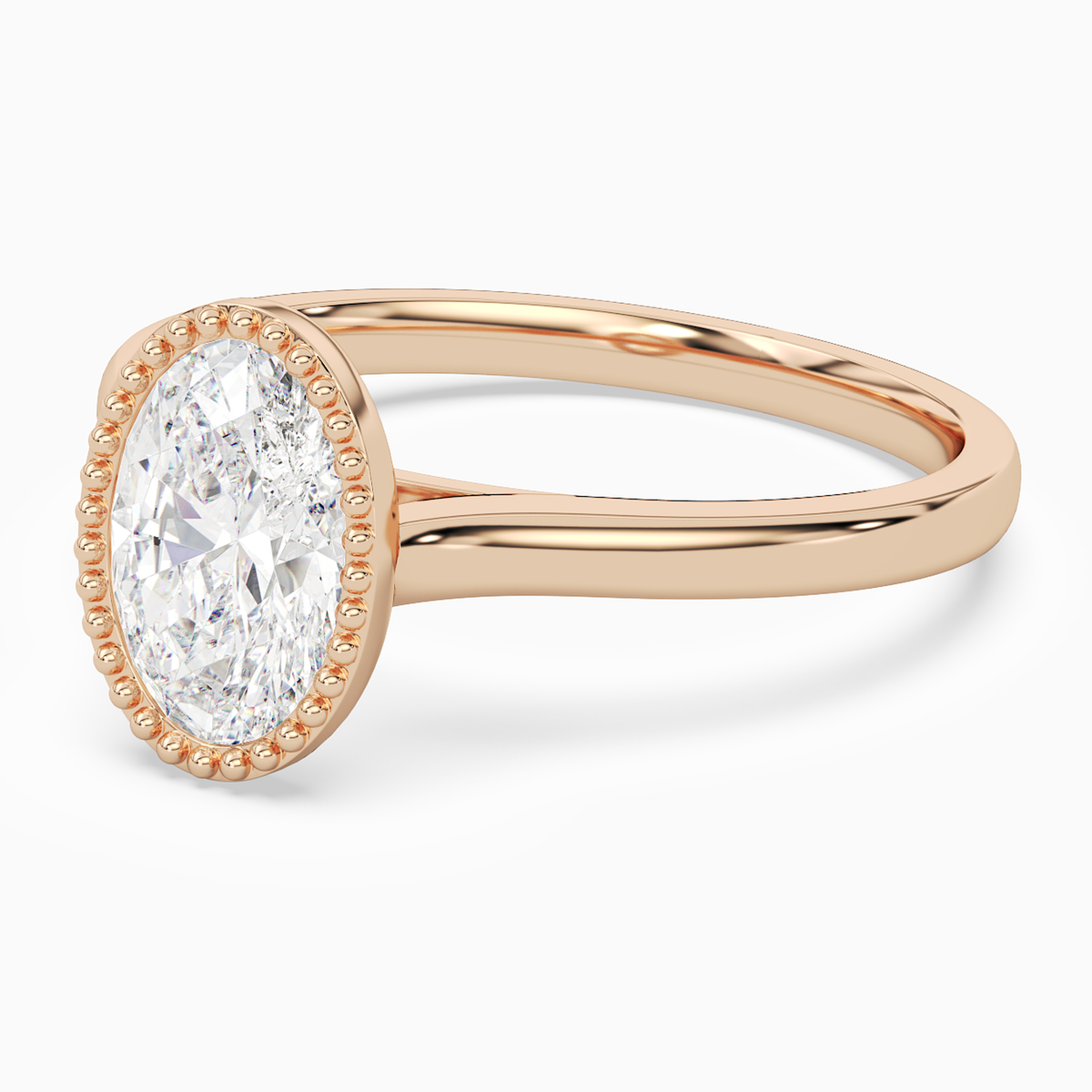
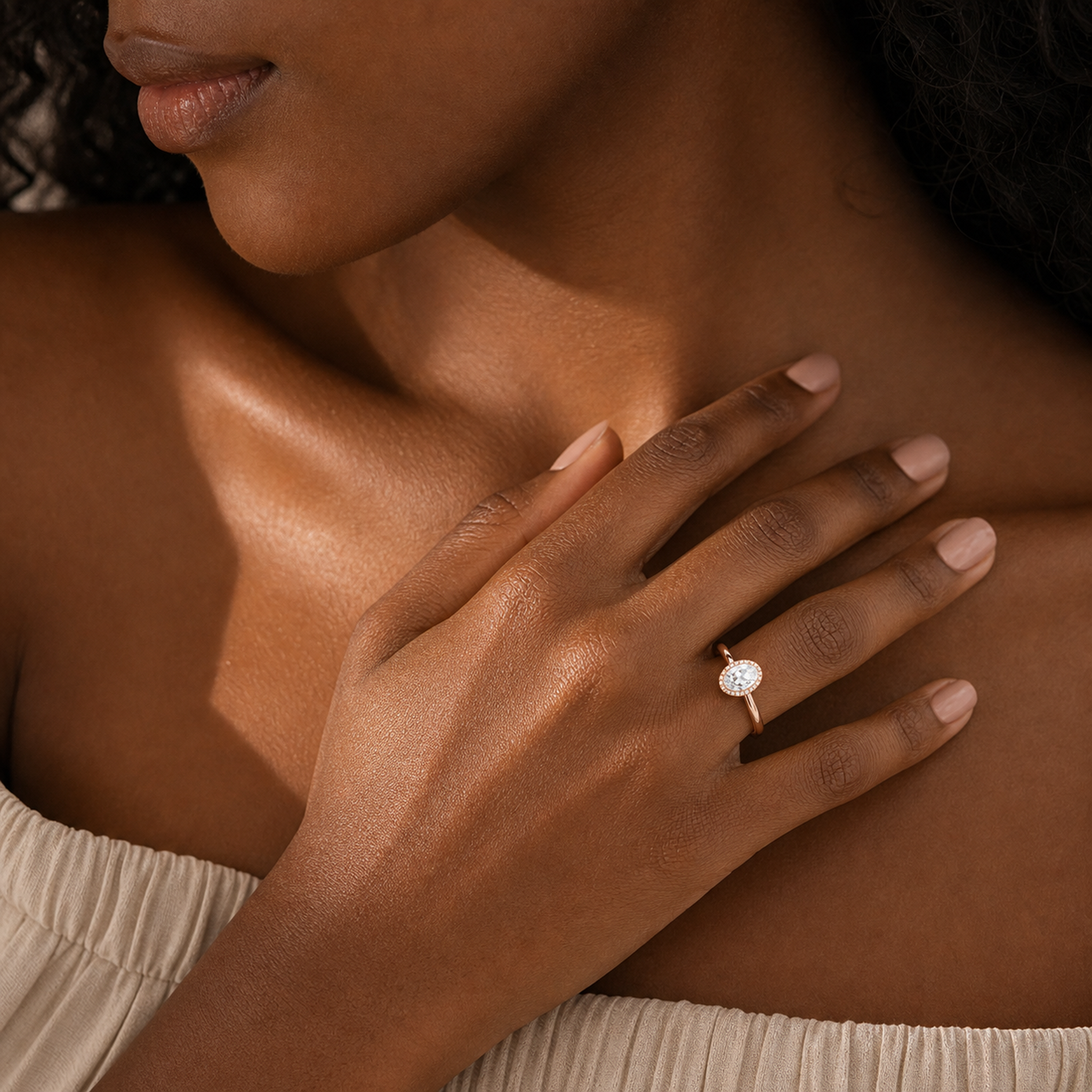


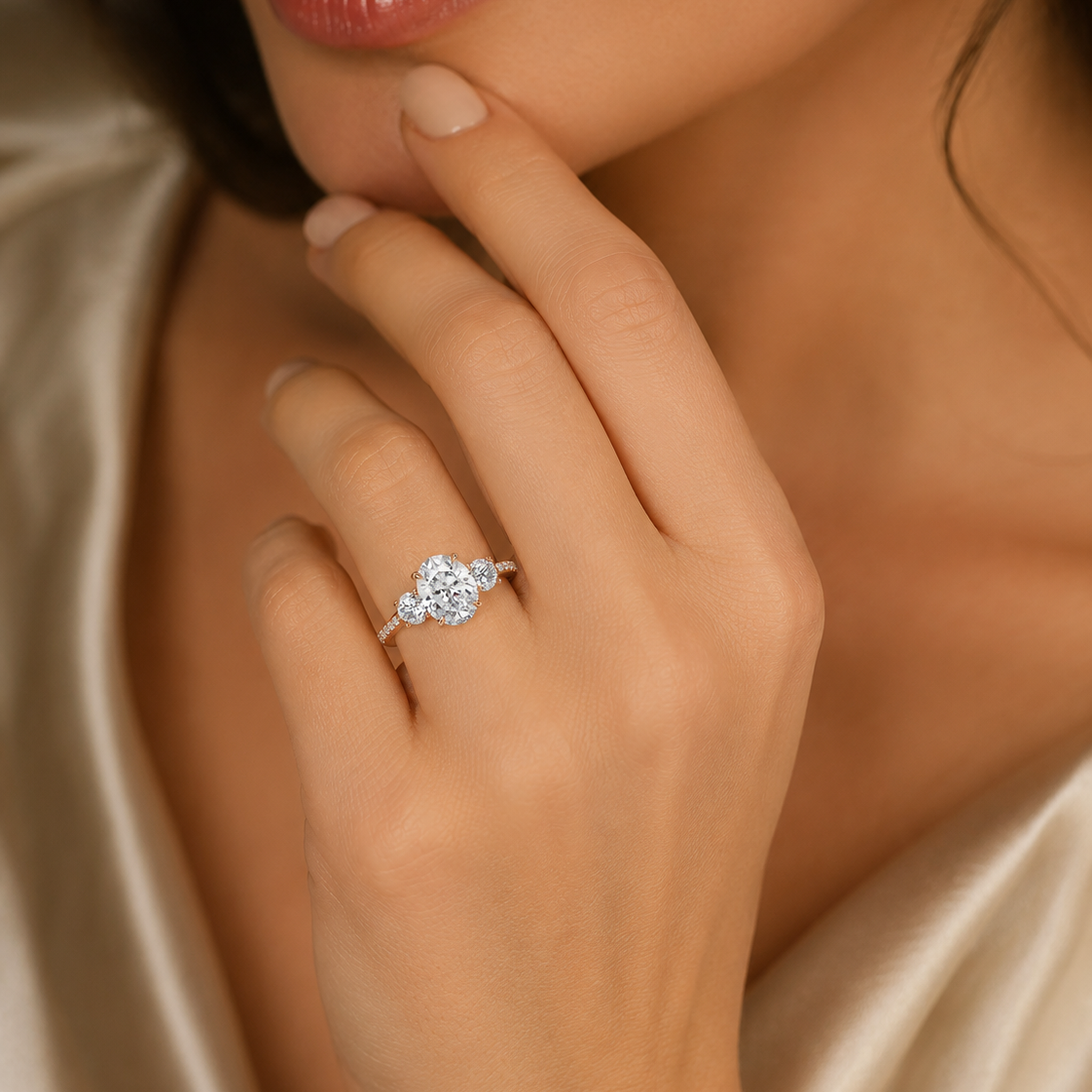


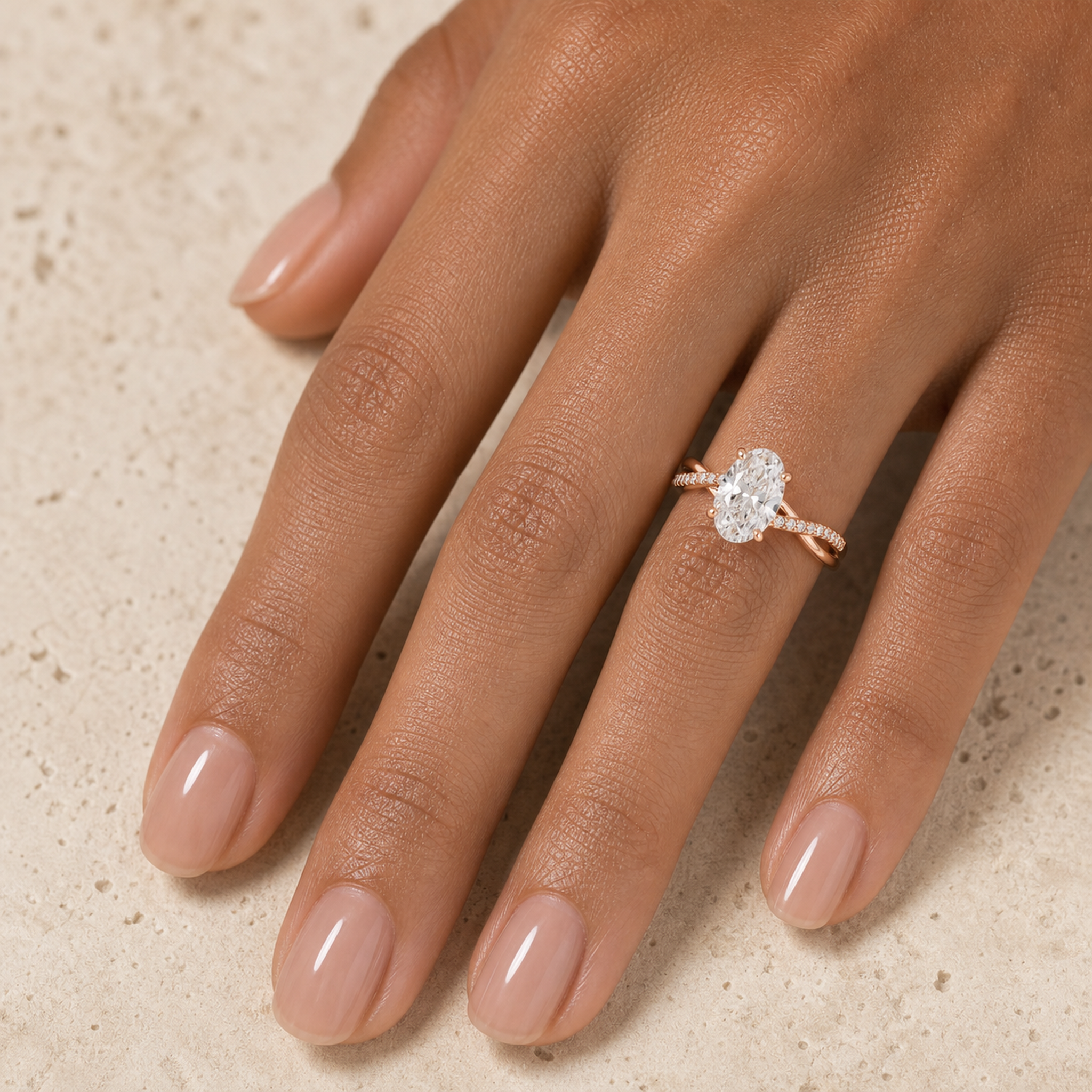


14K Rose Gold Oval Diamond Engagement Rings: Warmth Along a Continuous Curve
An oval center carries its direction through a continuous curve rather than a pointed end or straight edge. In 14K Rose Gold, that line meets a blush-toned frame. Prongs can place small warm accents around the girdle, while a basket, halo, or shoulder can extend the color farther along the ring.
Burvonti's current public collection contains 15 designs: seven Solitaires, three Halos, three Side Stone rings, and two Three Stone compositions. Open and pavé baskets, hidden and double halos, cathedral shoulders, a milgrain bezel, vine lines, and marquise or pear side accents give the metal distinct structural roles.
Let Warmth Follow the Oval, Not Define It
A 14K alloy contains approximately 58.3% gold. Its remaining alloying metals influence color and working behavior, but the karat mark does not disclose one exact copper percentage, blush shade, hardness, sensitivity result, or maintenance schedule. Finish, lighting, and exposed metal area also affect what the wearer sees.
On an elongated center, warm prongs can mark the ends and sides differently. A more visible basket or bezel makes the boundary stronger; fine prongs keep it quieter. Rose Gold changes the visual context around the oval, not its graded color, dimensions, or light performance.
Read Length, Width, and Central Contrast Together
Length-to-width ratio helps describe whether an oval appears fuller or more elongated, but it is not a universal beauty score. Face-up outline, symmetry, facet pattern, and central contrast still need direct review. Fancy-shape reports do not provide the same overall cut grade used for eligible standard round brilliants.
A bow-tie is a region of contrast that can appear across an oval's center. Its visibility varies with proportions, faceting, light, and viewing distance. The warm frame may make contrast feel different, but it cannot remove a bow-tie or guarantee more brilliance. Review images or video of the individual diamond in motion.
Fifteen Designs Change Where the Blush Appears
A Solitaire leaves the elongated perimeter relatively open, making prong rhythm, basket height, and band approach easy to compare. A Halo repeats the outline with another field of light. Side Stone and Three Stone designs extend the composition laterally, so metal spacing must organize several shapes without losing the oval center's direction.
The collection's cathedral, vine, bezel, hidden-halo, and double-halo constructions expose Rose Gold in different intervals. Compare the complete ring rather than choosing from metal color alone: the same alloy can read as a fine accent, a visible outline, or a broader architectural field.
Face-Up Scale Is More Than Carat
Carat measures weight. Length, width, depth, girdle, and the distribution of that weight help explain an oval's face-up presence. Two diamonds of equal carat can have different outlines and visible areas, while halos, side stones, and band width can change the scale of the complete composition again.
The setting also influences orientation and balance. Most designs present the oval north-south, while any alternate orientation should be confirmed from the selected product. Prong placement, basket width, center height, and shoulder geometry matter to security, movement, and wedding-band fit; no metal label resolves those questions by itself.
A Warm Boundary, Calibrated as One Ring
A straight wedding band may sit close, meet a projecting basket or side structure, or leave an intentional interval. Compare profiles and contact points rather than assuming a flush result. Care and inspection needs likewise depend on the full construction, wear, finish, and selected alloy.
Burvonti pairs responsibly sourced, independently graded lab-grown diamonds with settings resolved through proportion and human judgment. Custom possibilities may refine center specifications, prongs, basket, band line, accents, metal, or engraving where feasible. The aim is warmth with purpose: a blush boundary that follows the oval without overtaking it.
Frequently Asked Questions
How is this page different from the main Oval Diamond Engagement Rings Collection?
The parent explains oval outline, ratio, bow-tie, faceting, and setting response across metals. This child page focuses on how 14K Rose Gold frames that elongated structure.
How much gold is in 14K Rose Gold?
Approximately 58.3%. Other alloying metals influence color and working behavior, and exact recipes vary.
Are all 14K rose gold rings the same blush shade?
No. Alloy formula, finish, lighting, photography, and exposed metal area can change how the color appears.
Does Rose Gold change an oval diamond's color grade?
No. It changes the surrounding color context but not the diamond's independently graded color.
Does Rose Gold reduce the bow-tie effect?
No. Bow-tie visibility belongs to the individual diamond, its faceting, proportions, light, and viewing position.
Which setting structures are represented?
The current 15-design collection includes seven Solitaire, three Halo, three Side Stone, and two Three Stone structures.
Is there one ideal oval length-to-width ratio?
No. Ratio describes outline; preference and direct visual assessment should guide the choice.
Should I compare carat or face-up measurements?
Use both. Carat is weight, while length, width, depth, and setting context help explain visible scale.
Do warm prongs make the center look larger?
They may change edge contrast, but they do not alter the diamond's measurements or carat weight.
Can Rose Gold cause sensitivity?
Sensitivity depends on the complete alloy and wearer. Karat and color alone cannot establish a universal outcome.
Will an oval ring rotate on the finger?
Balance depends on center scale, basket, band width, fit, and the complete ring; metal choice alone cannot predict rotation.
Will a straight wedding band sit flush?
Not automatically. Basket, halo, side stones, shoulders, height, and contact points determine the relationship.
Can Burvonti personalize a Rose Gold Oval ring?
Custom possibilities may include center specifications, prongs, basket, band line, accents, metal, or engraving, subject to availability and structural feasibility.