
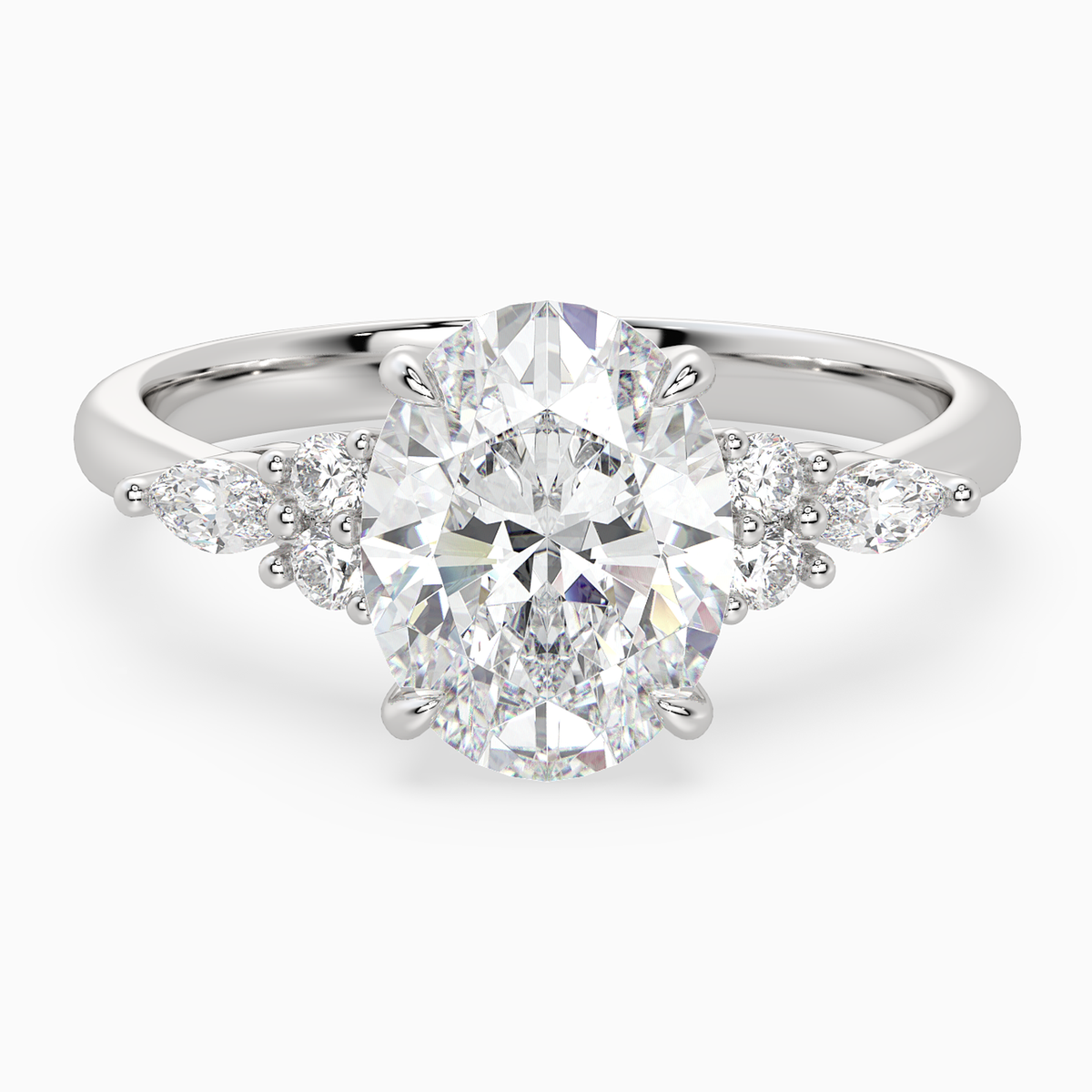


Oval Diamond Engagement Rings in 14K Yellow Gold
A long curve defined in gold. 14K yellow gold traces the oval’s perimeter while keeping its axis, proportion, and light distinct.


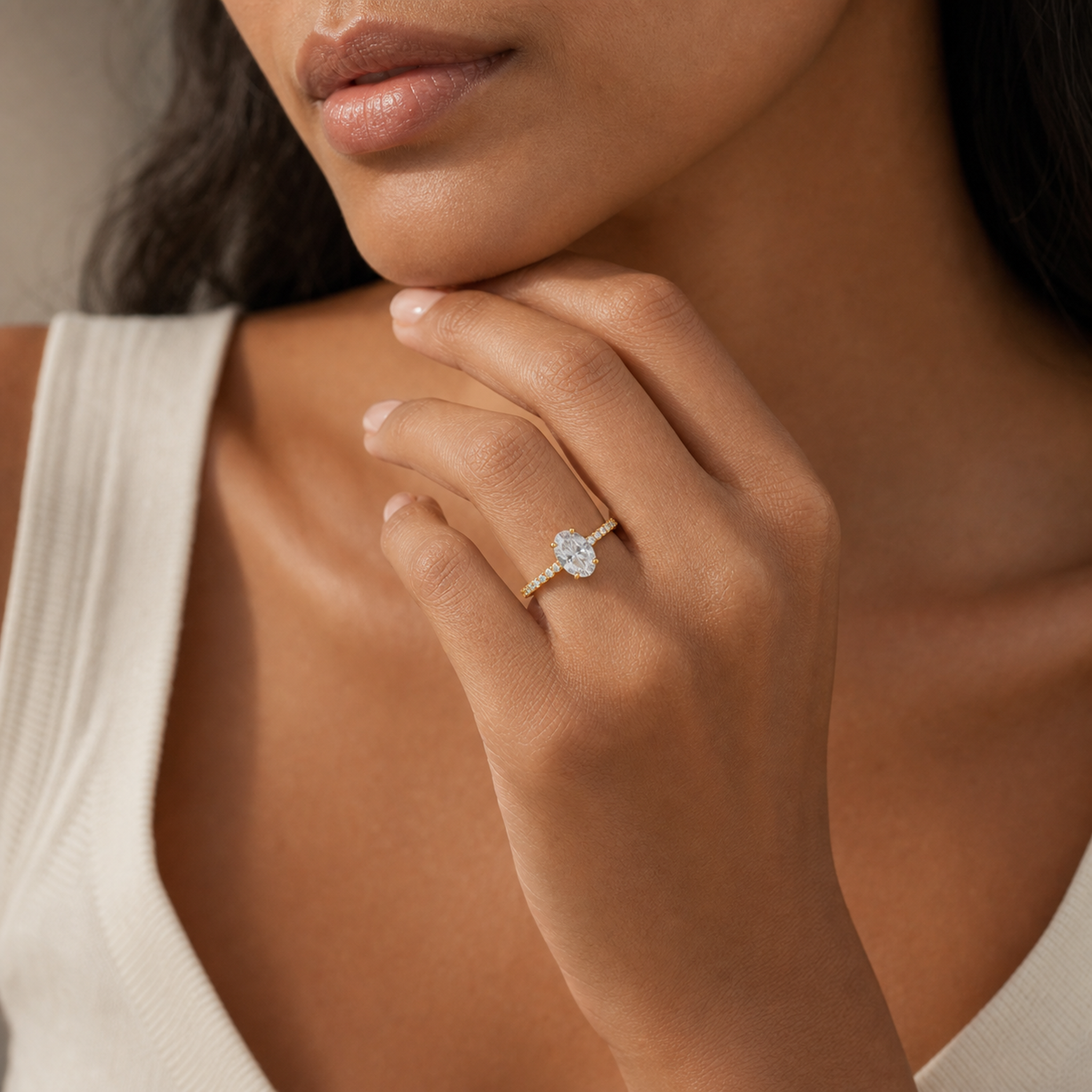


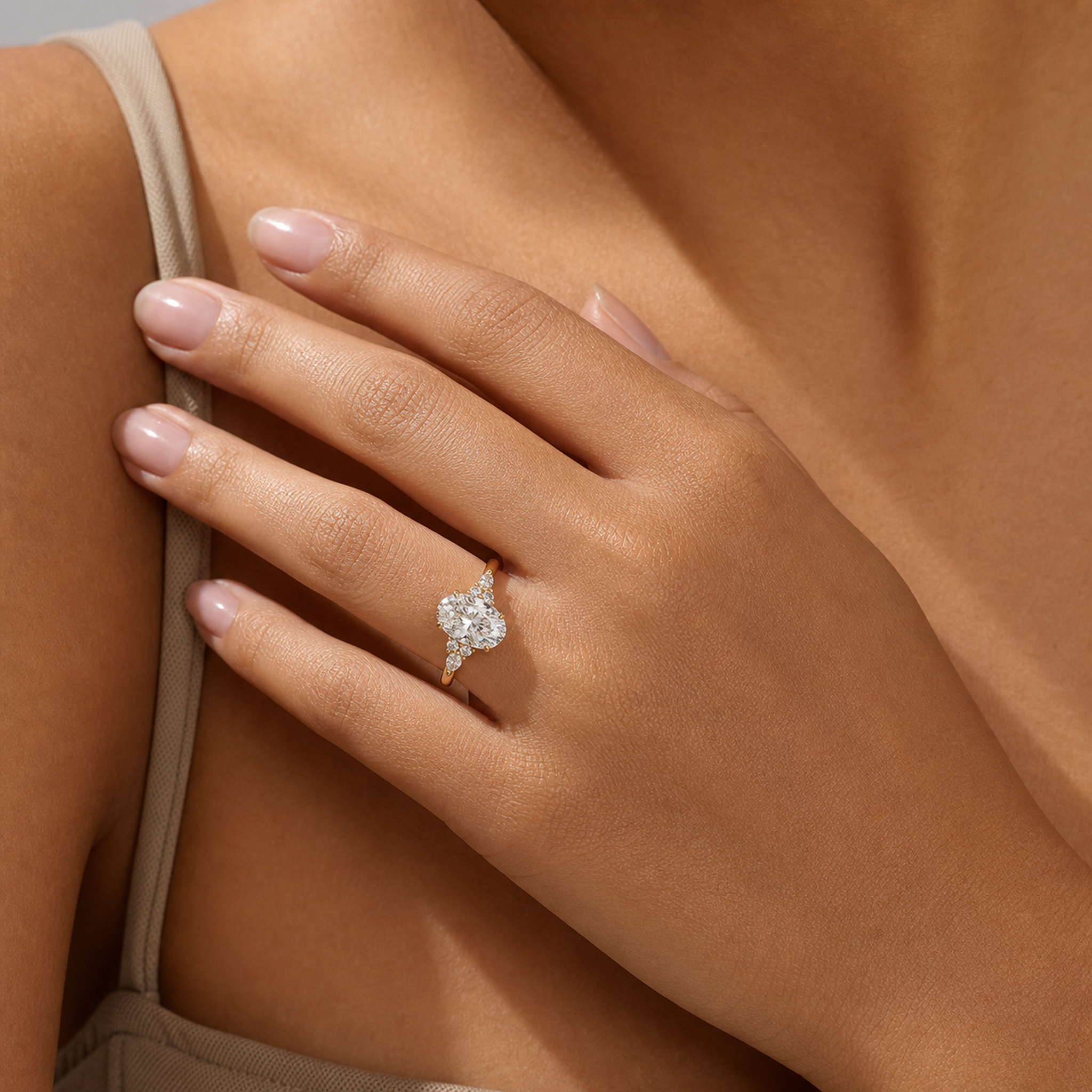


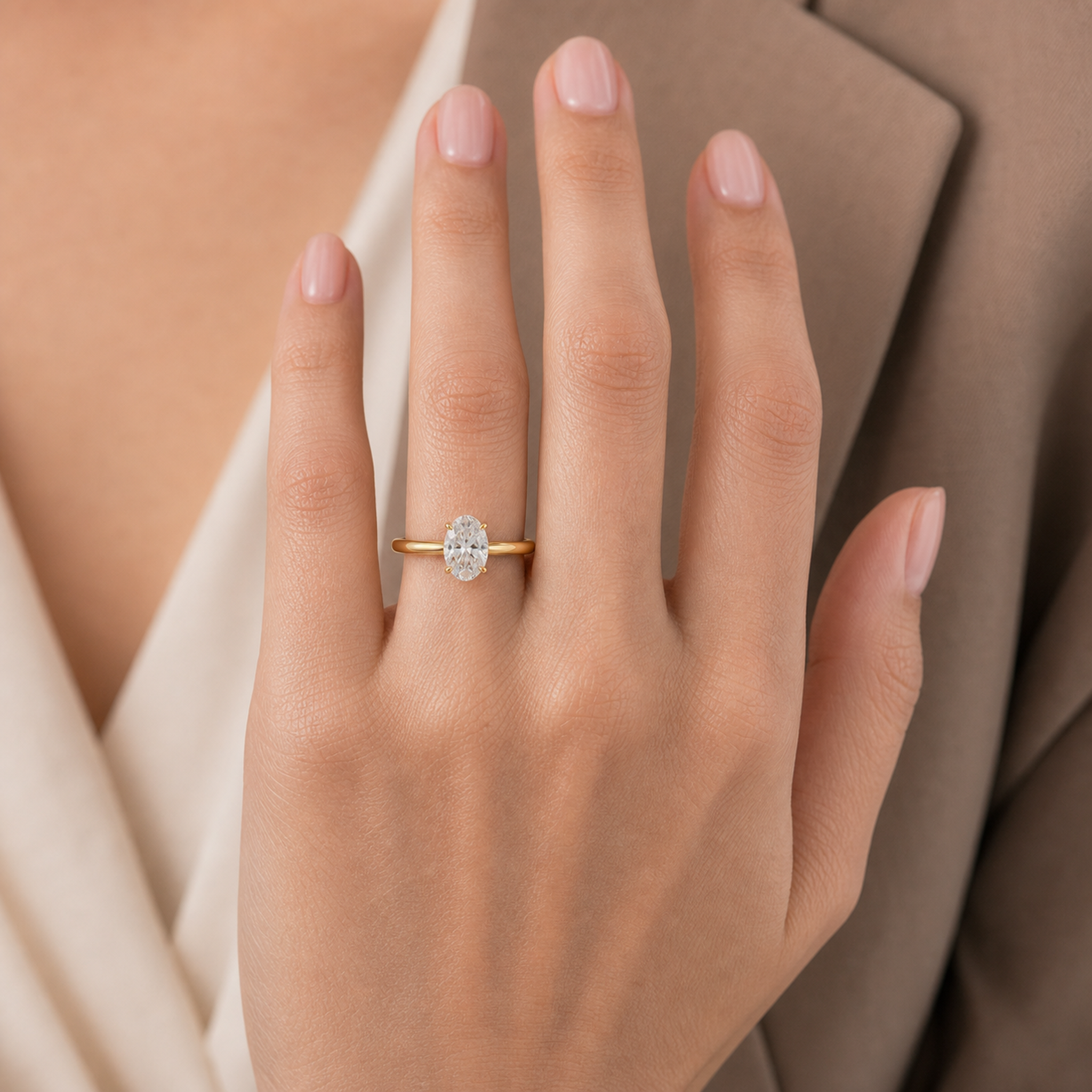


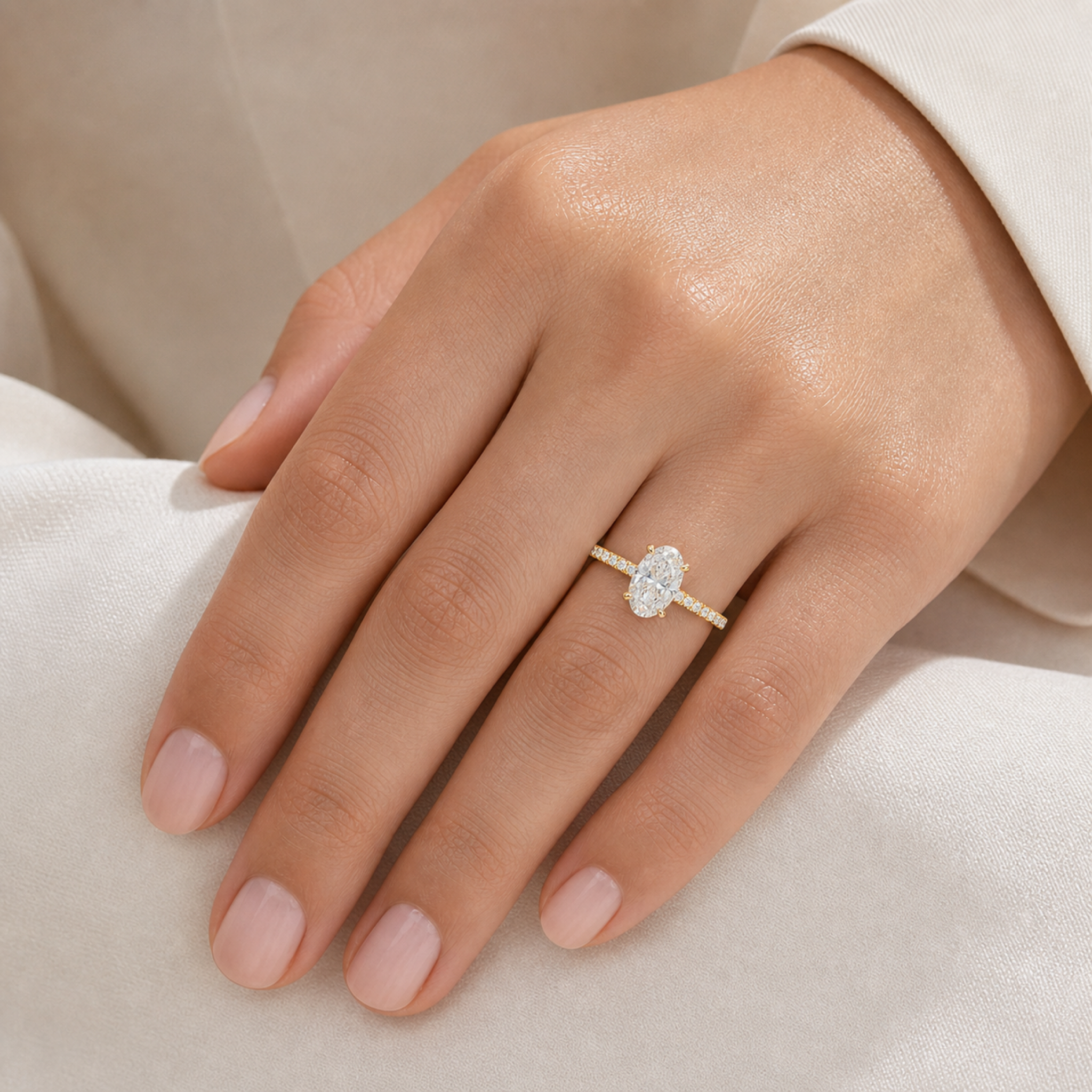
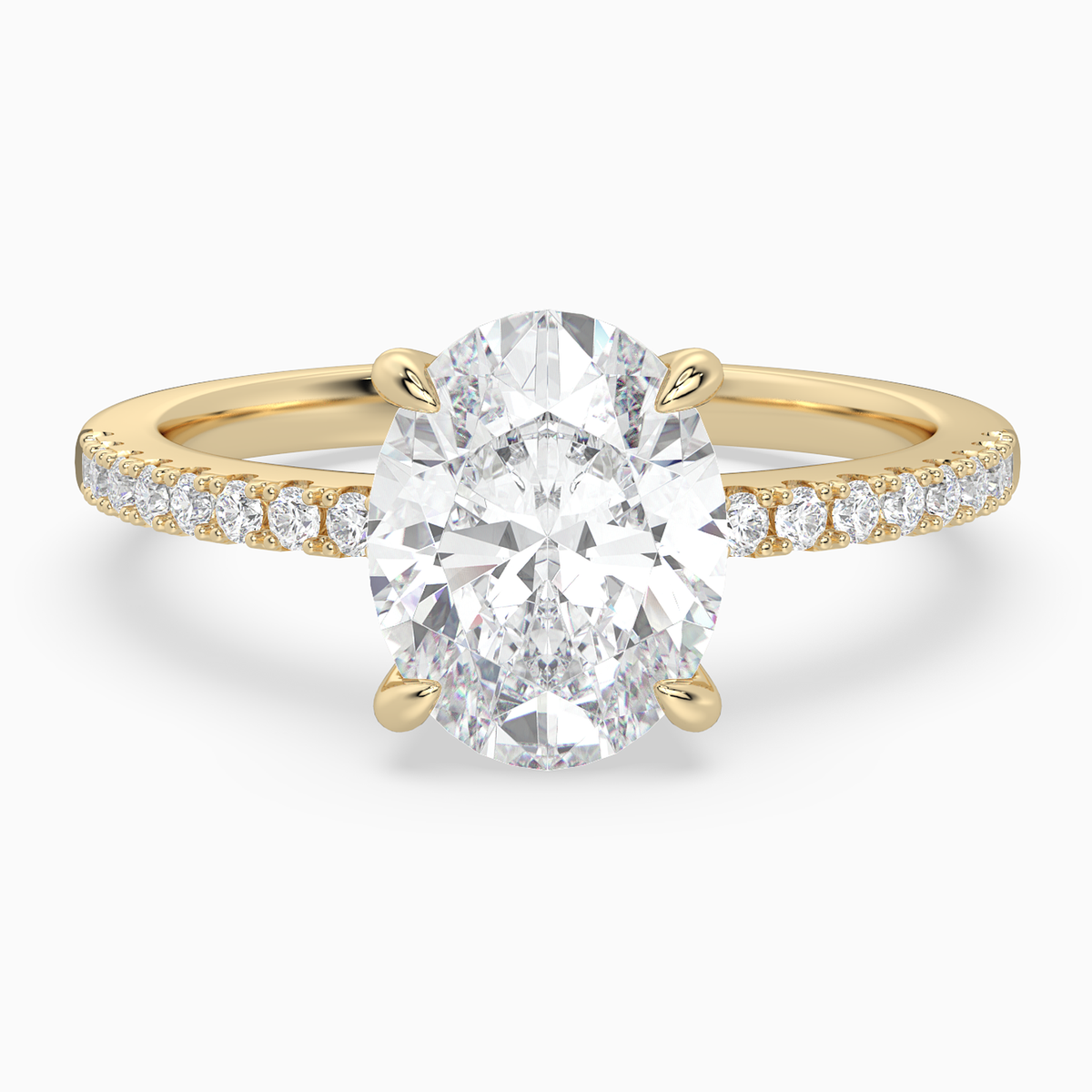
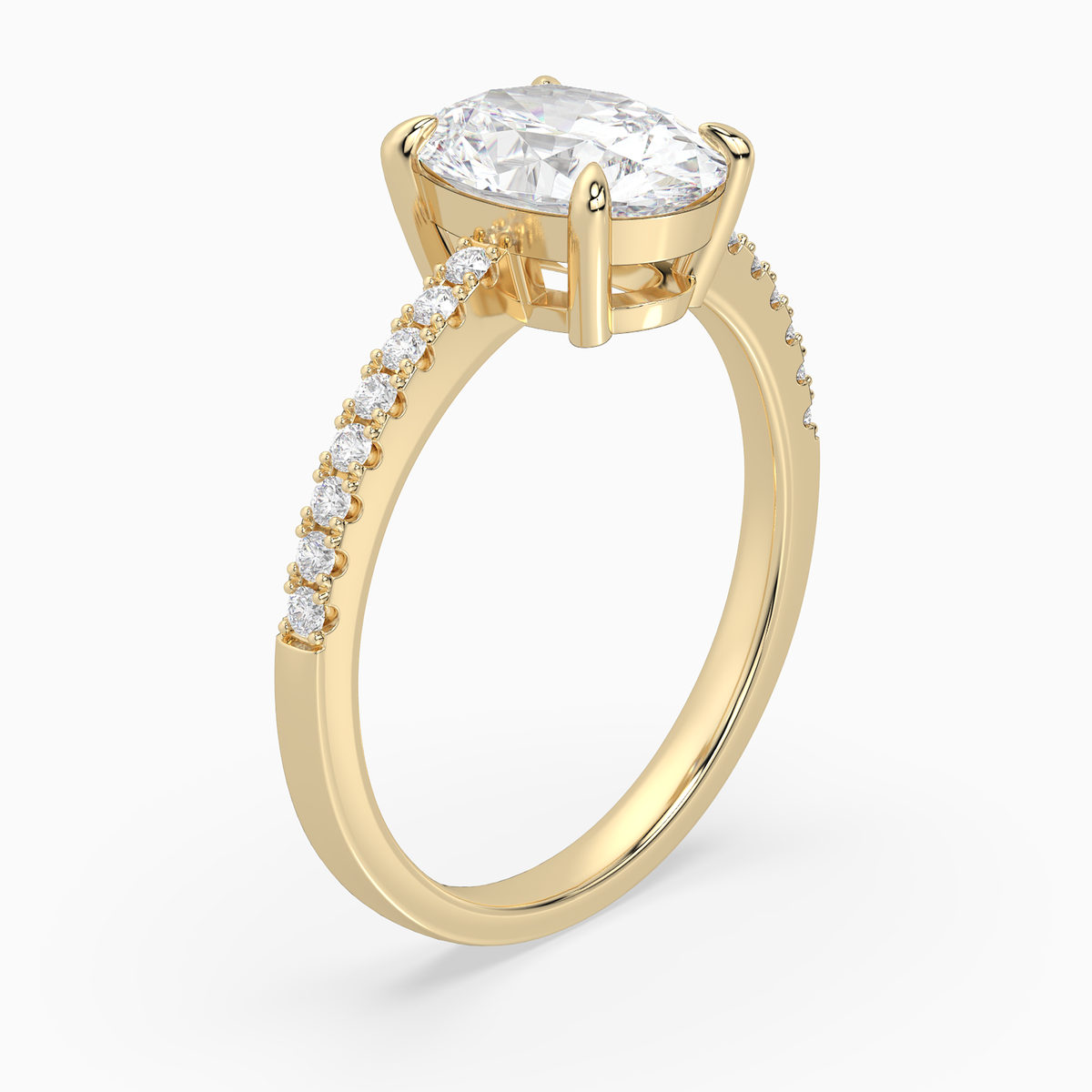
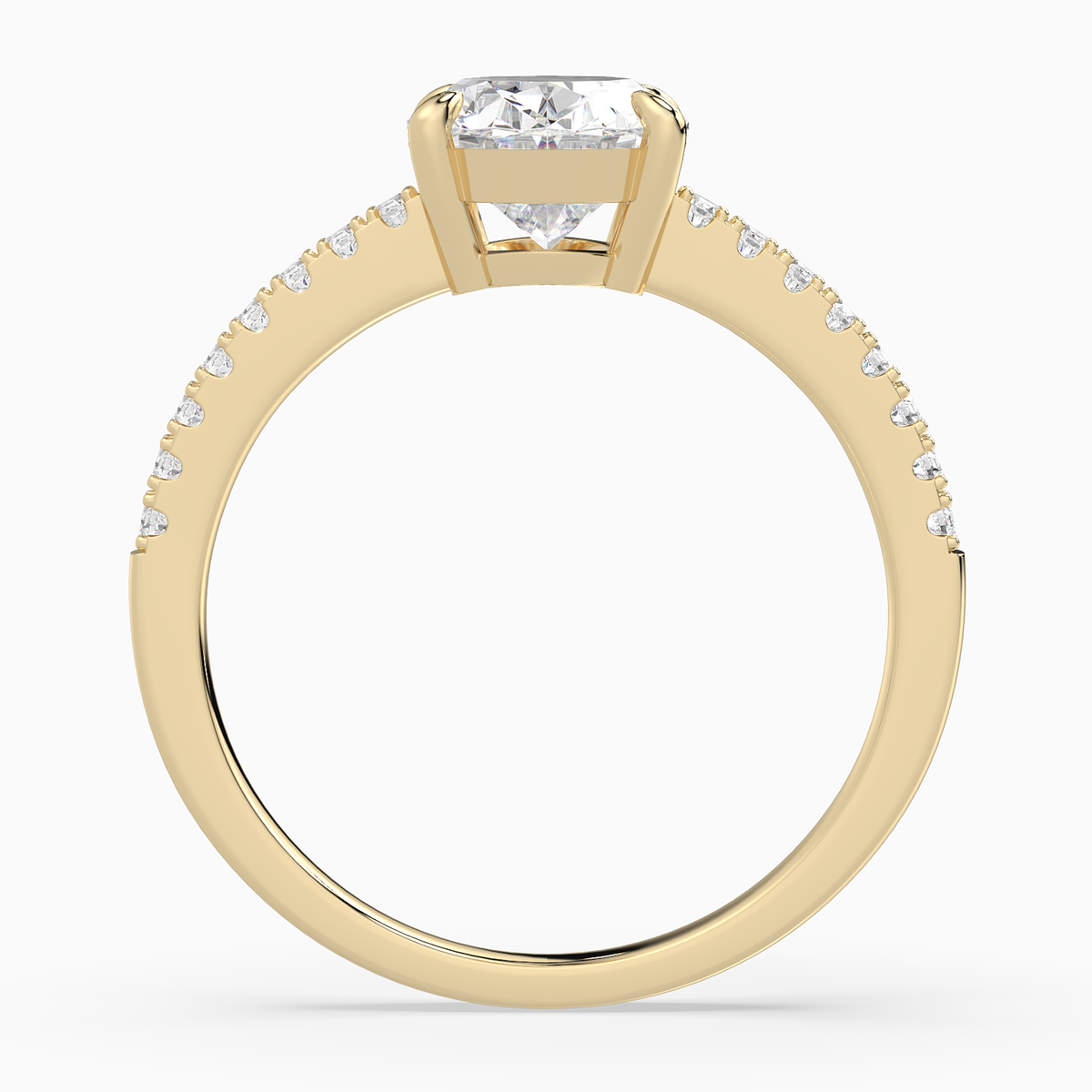
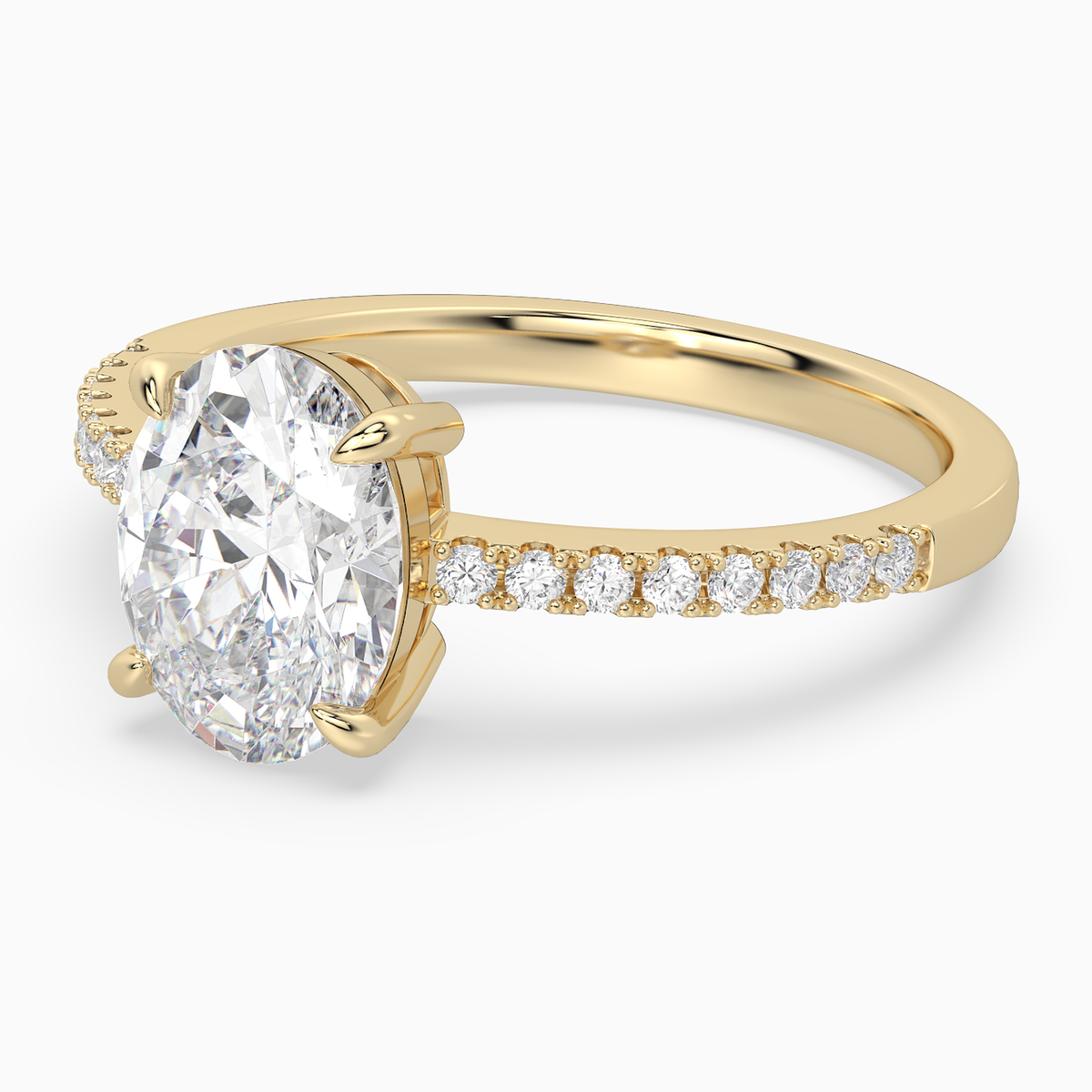
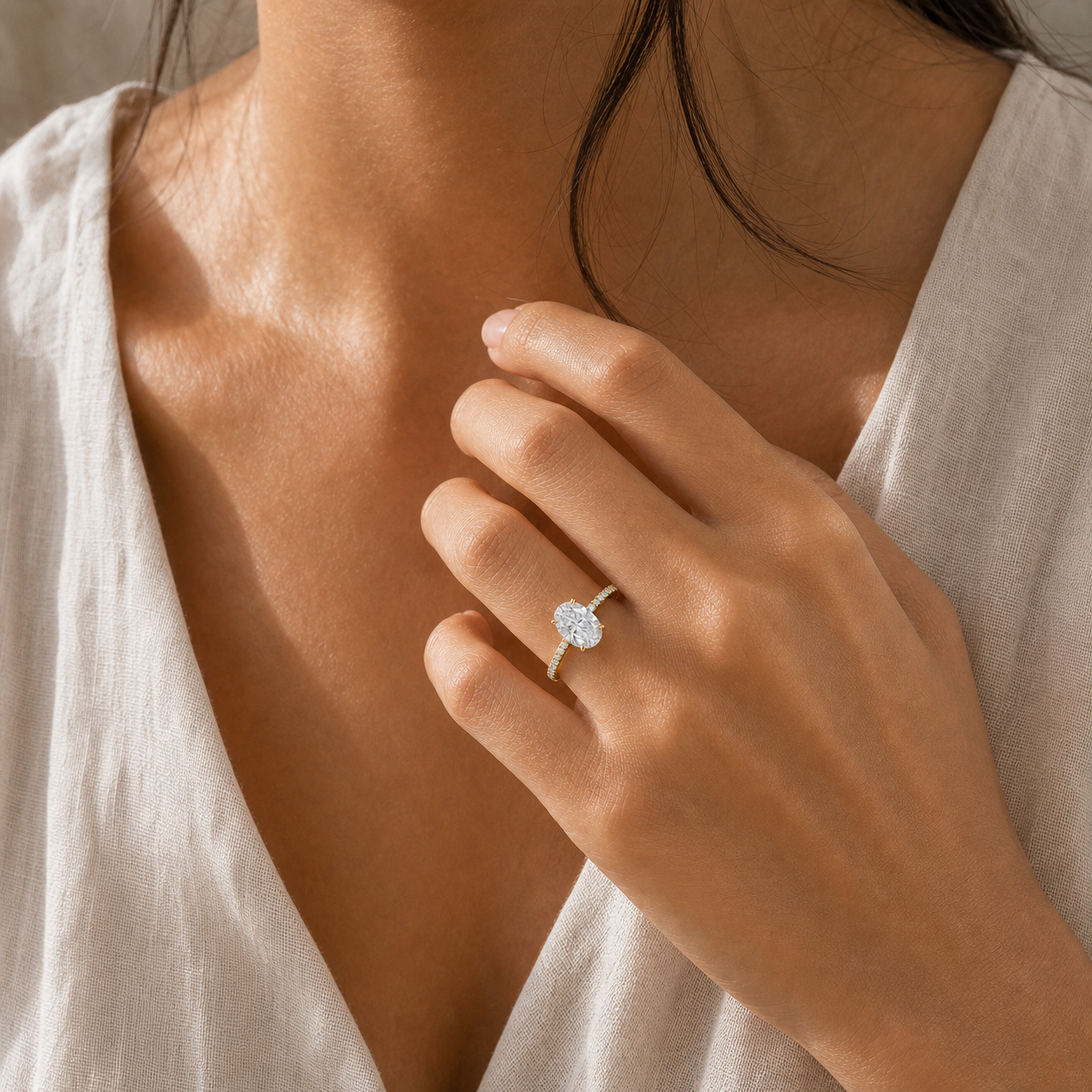


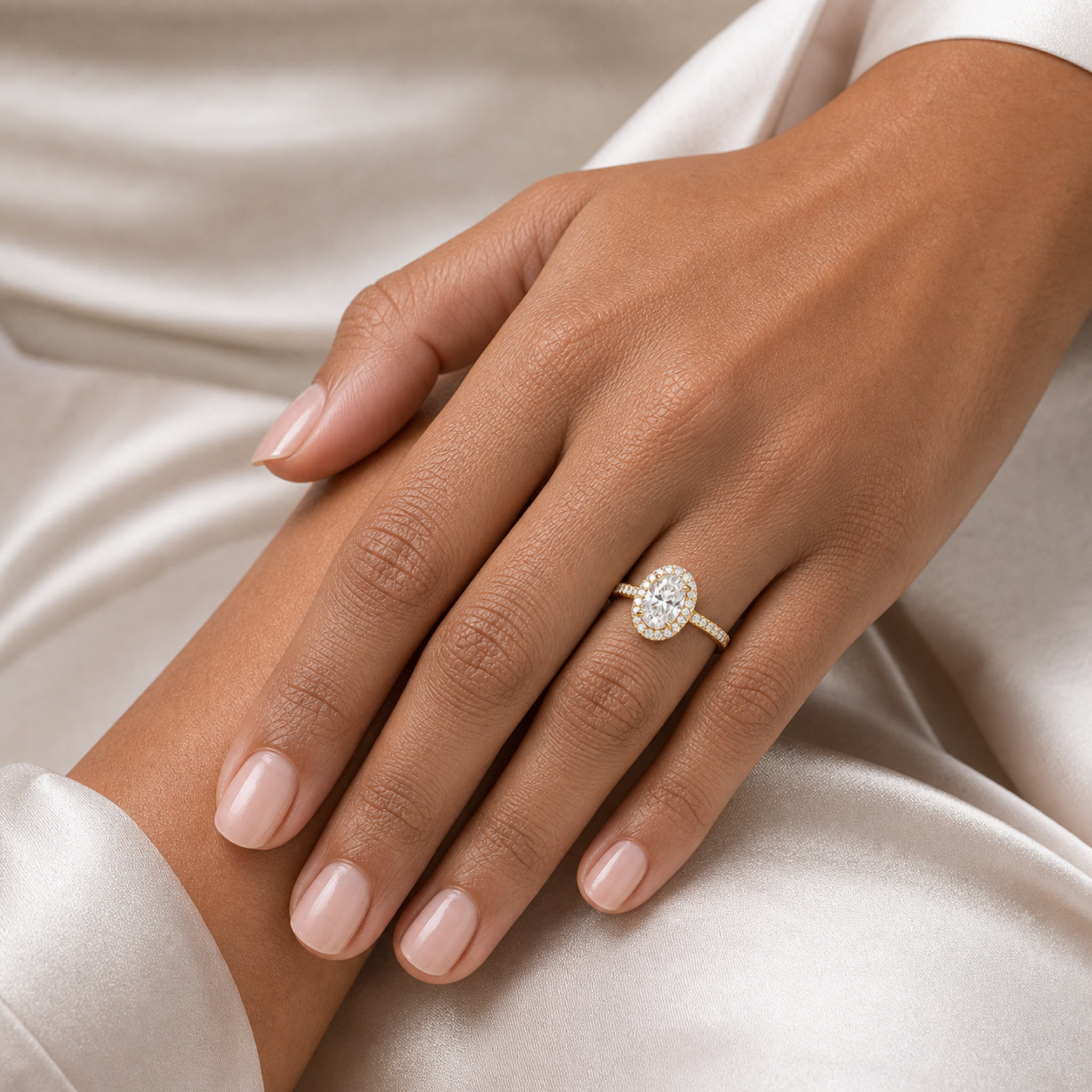


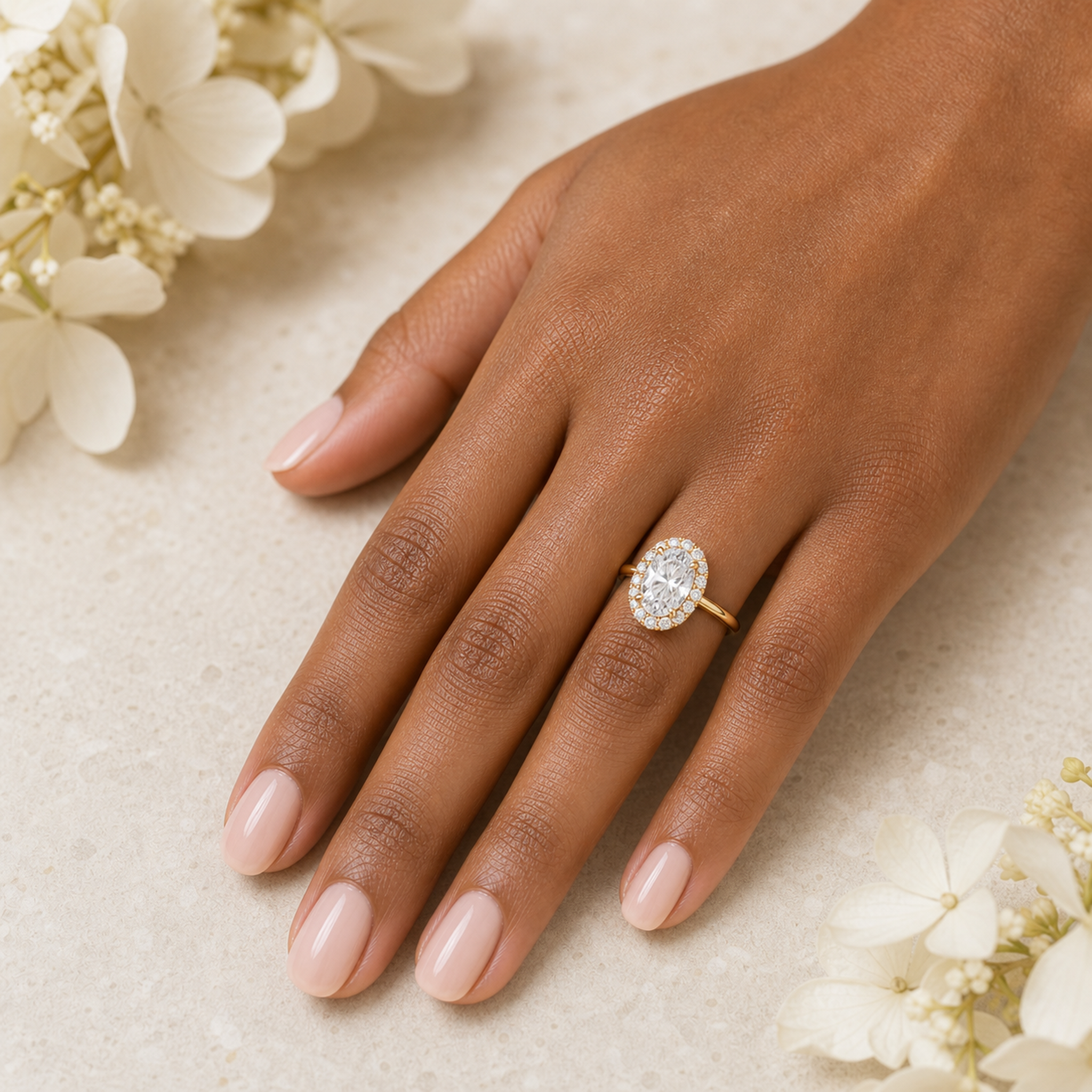


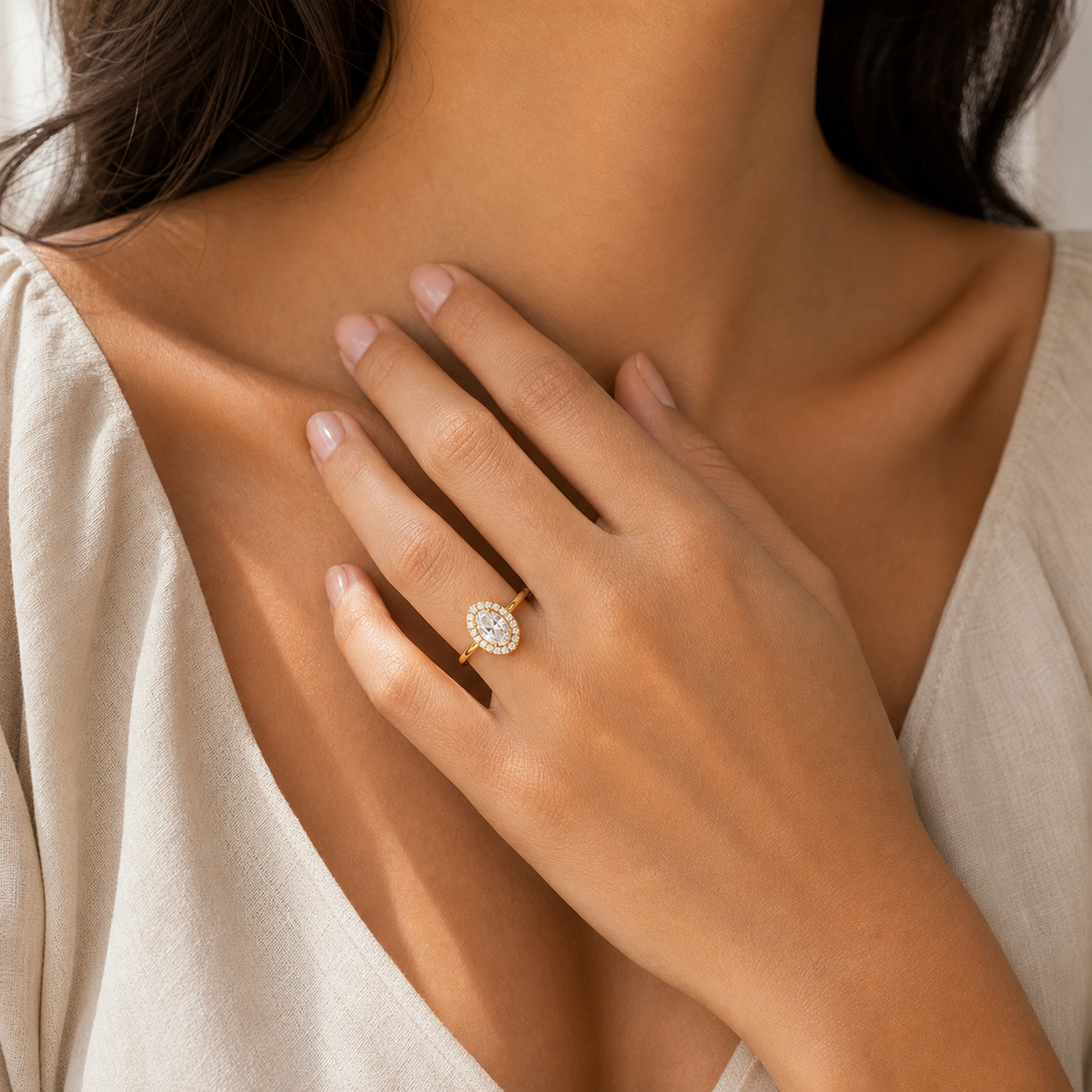


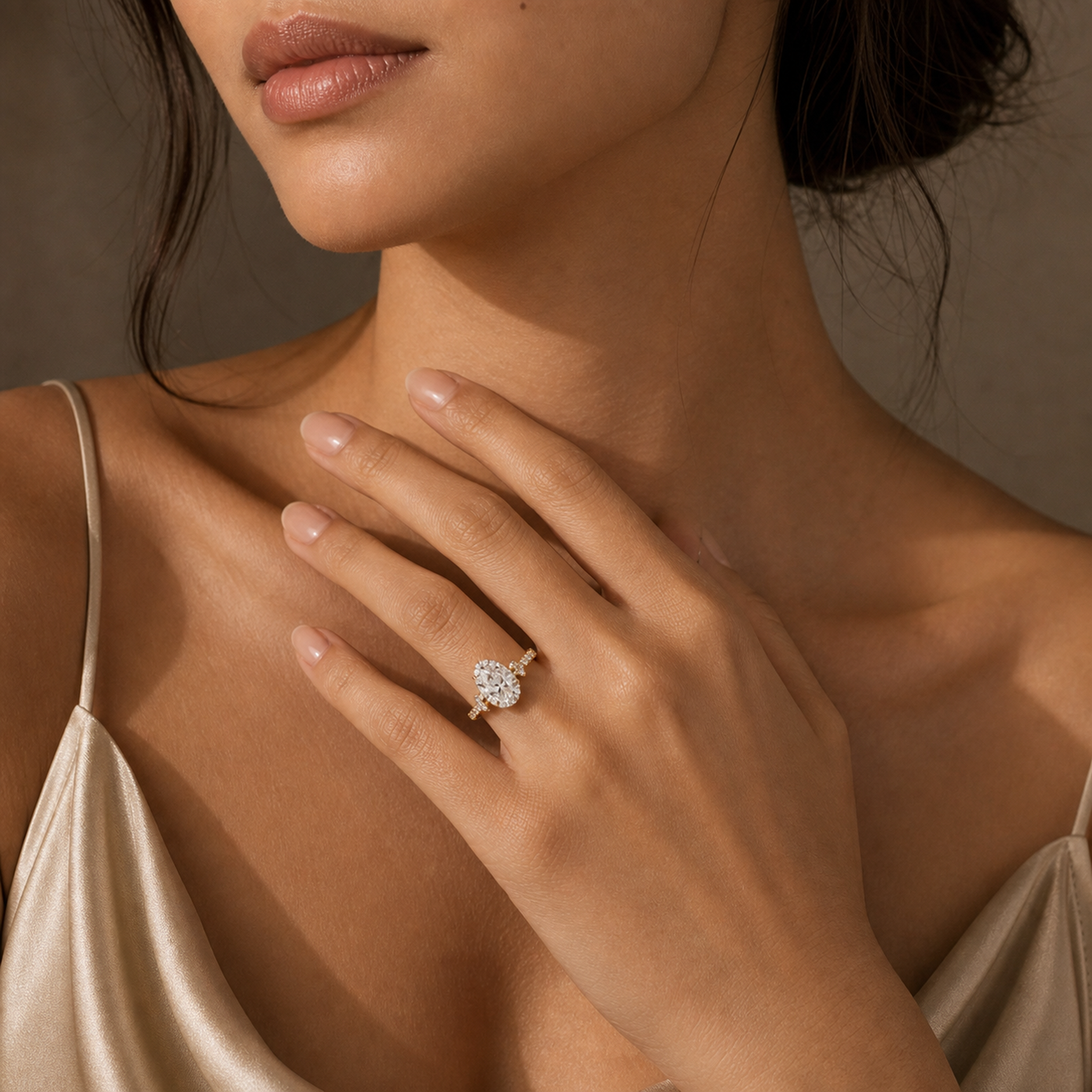
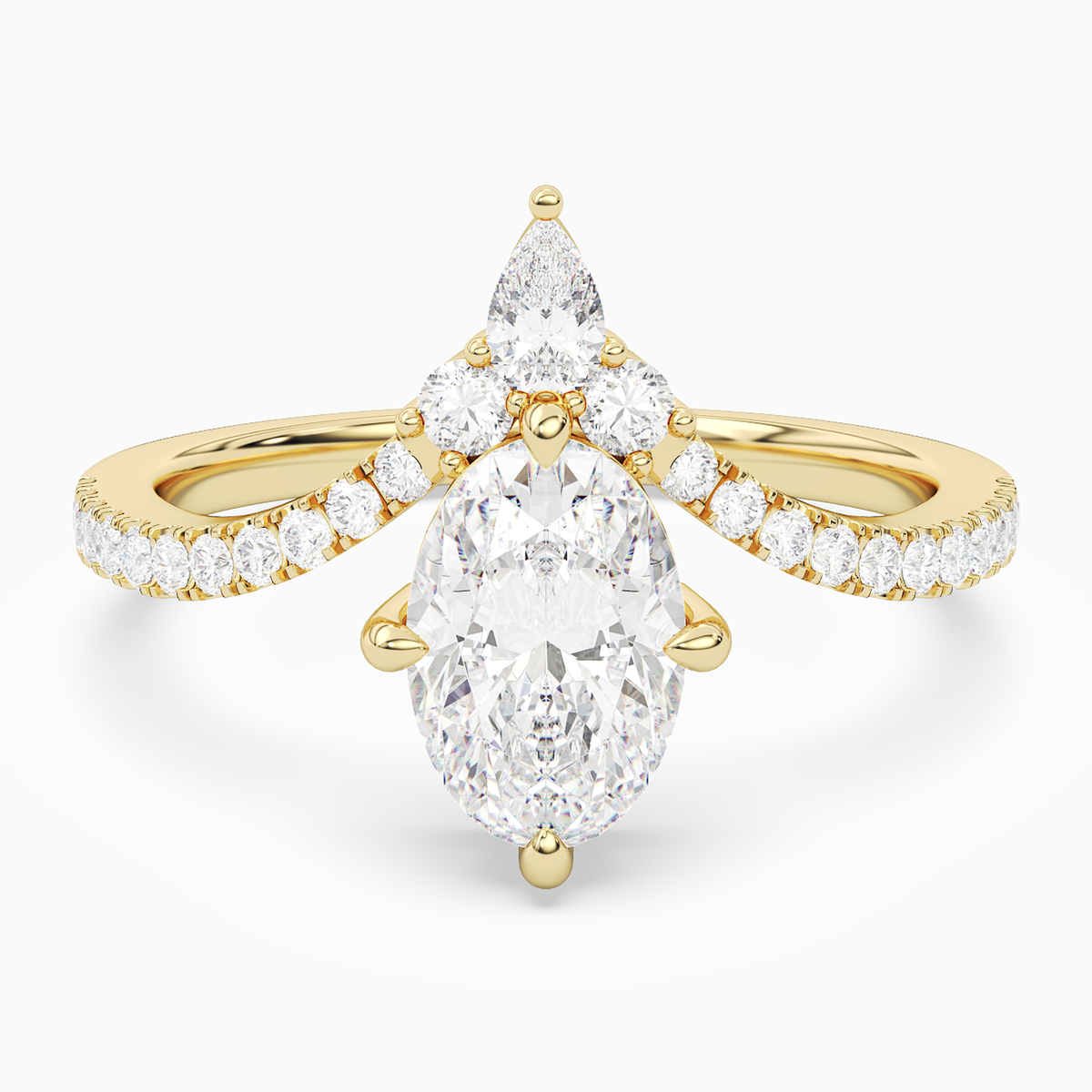
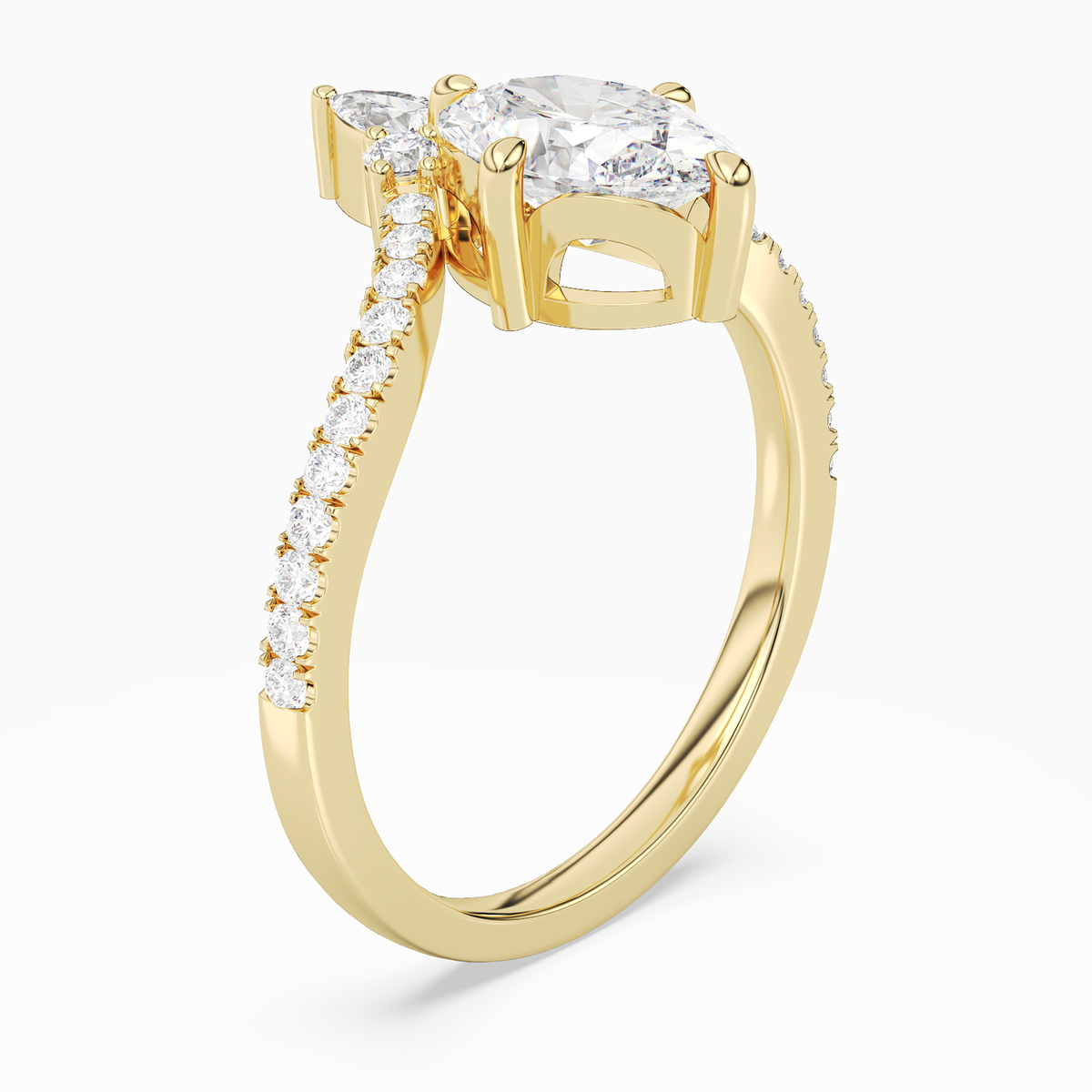
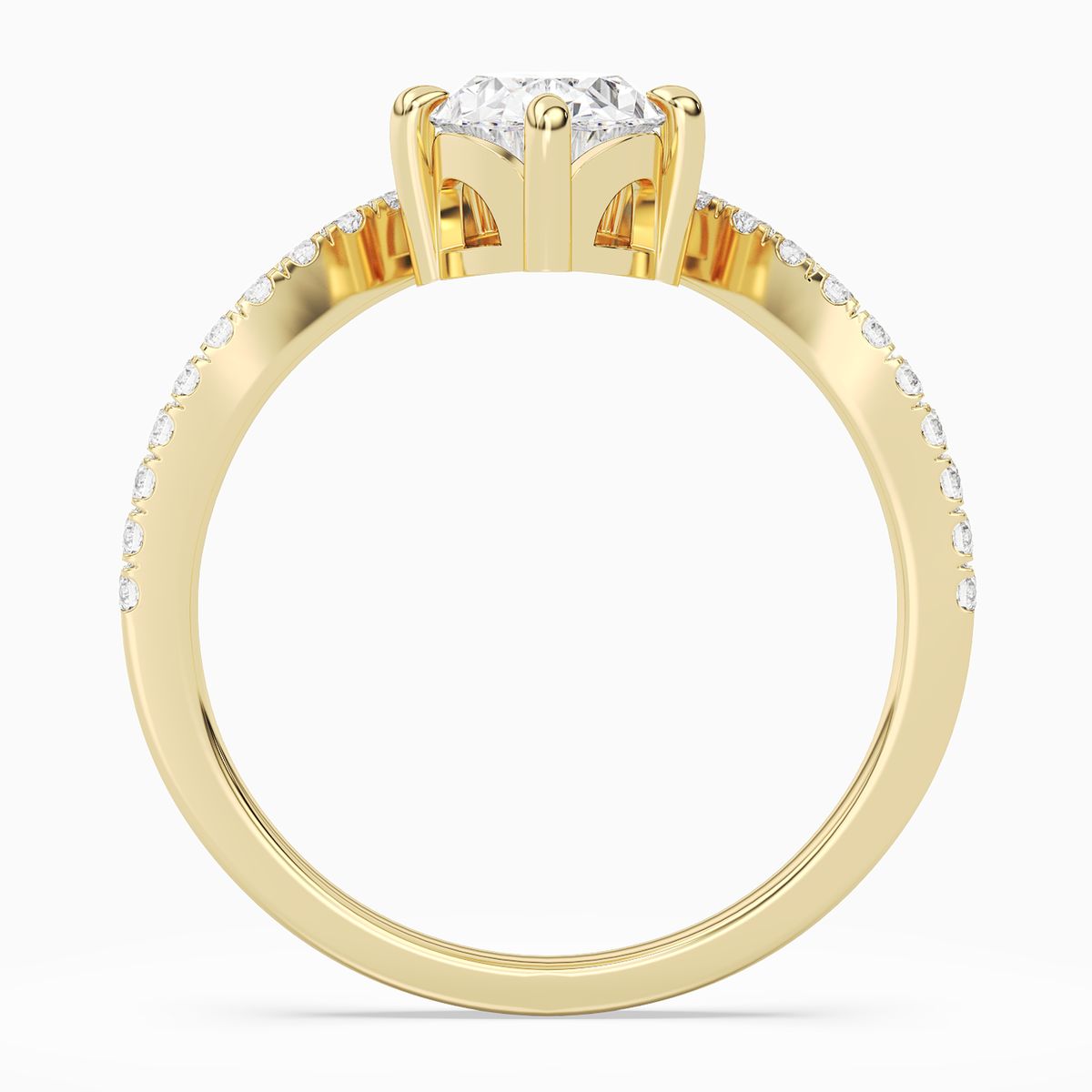
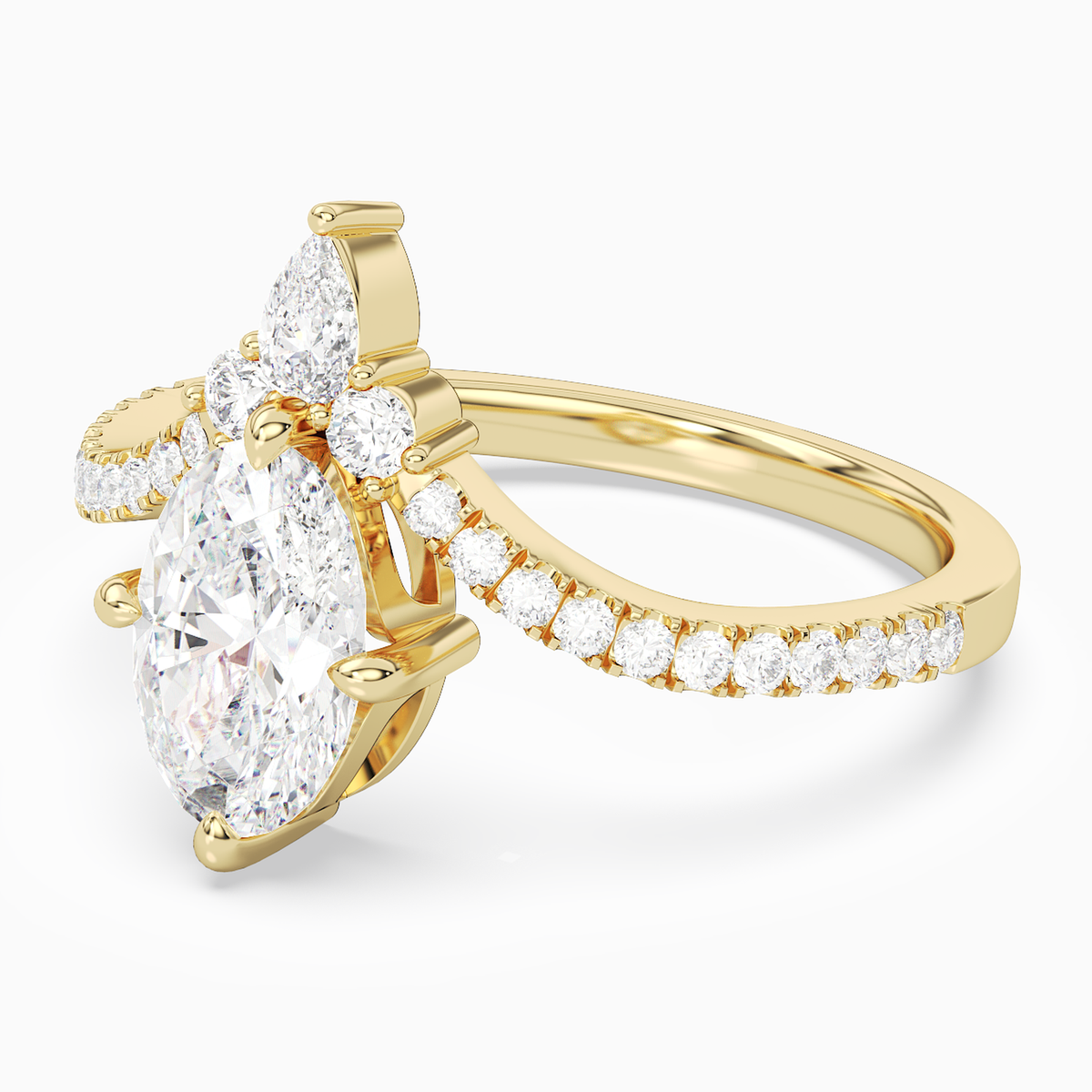
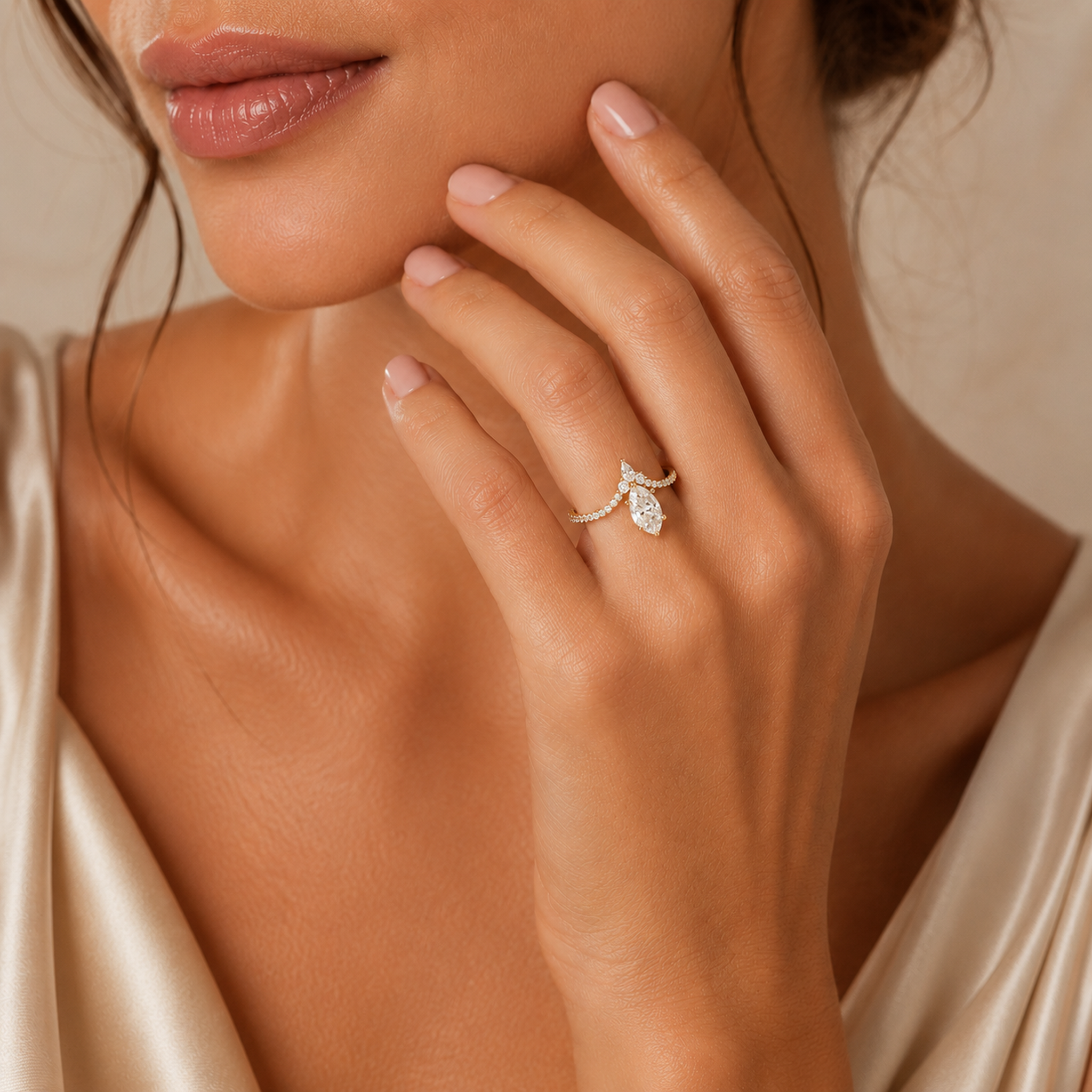


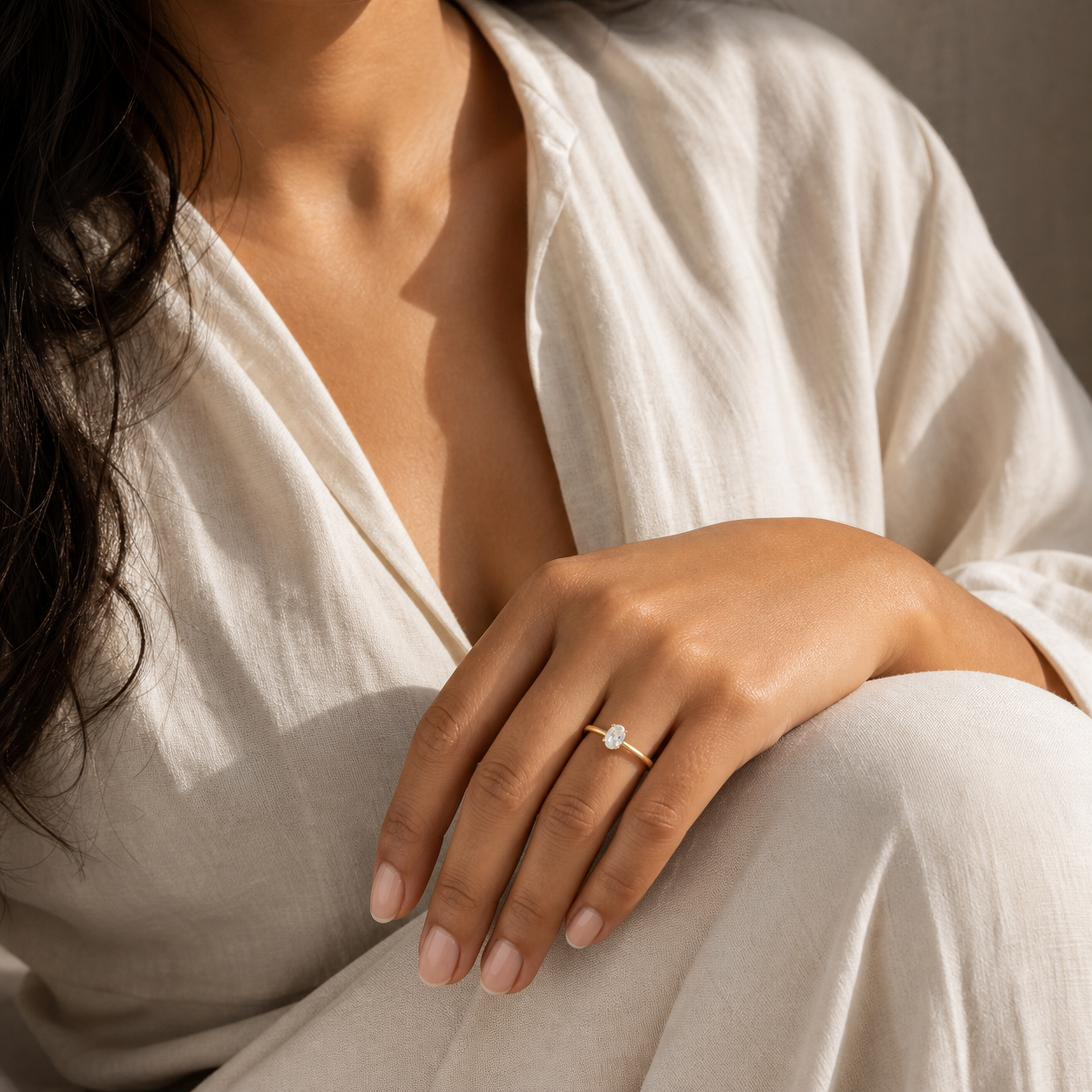


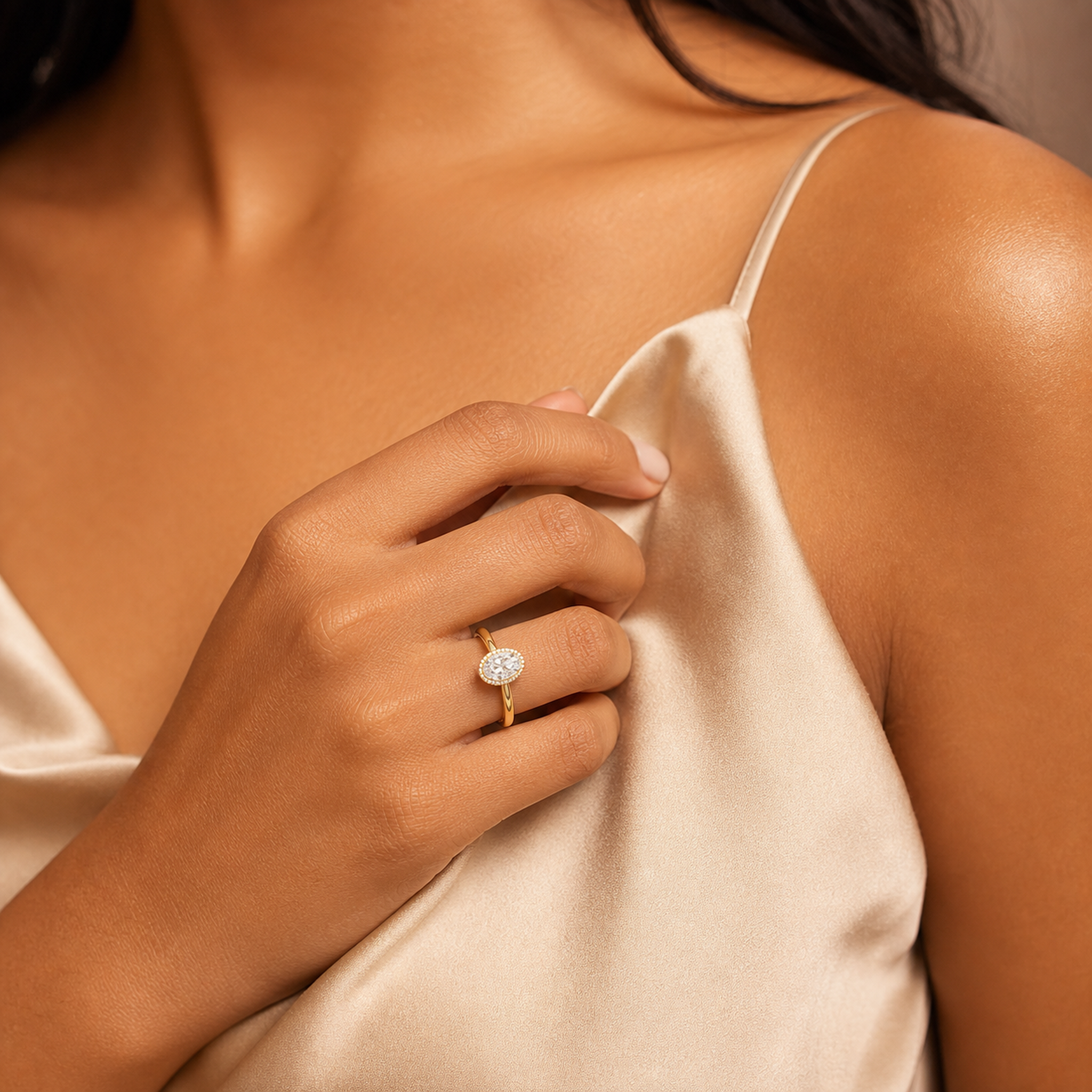


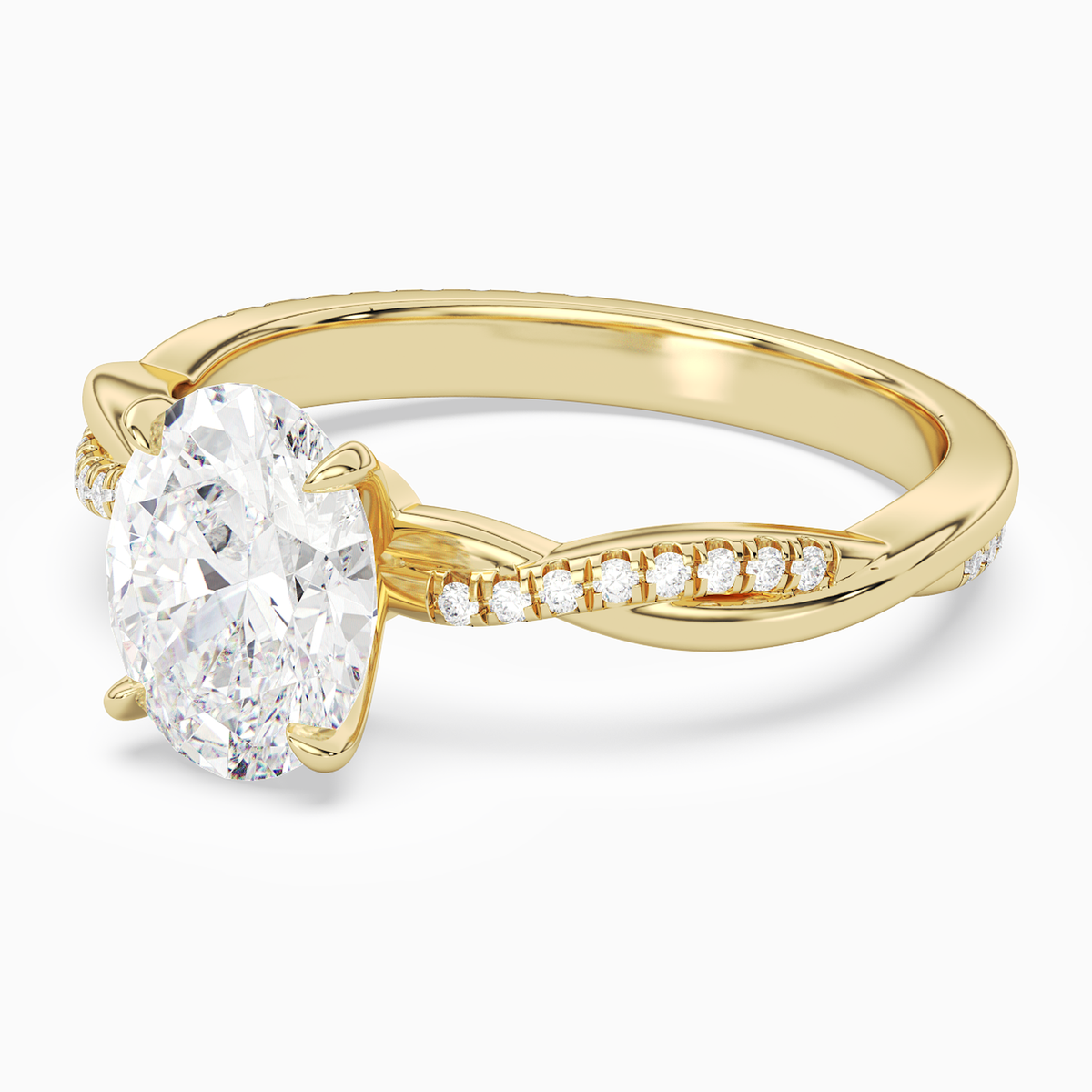
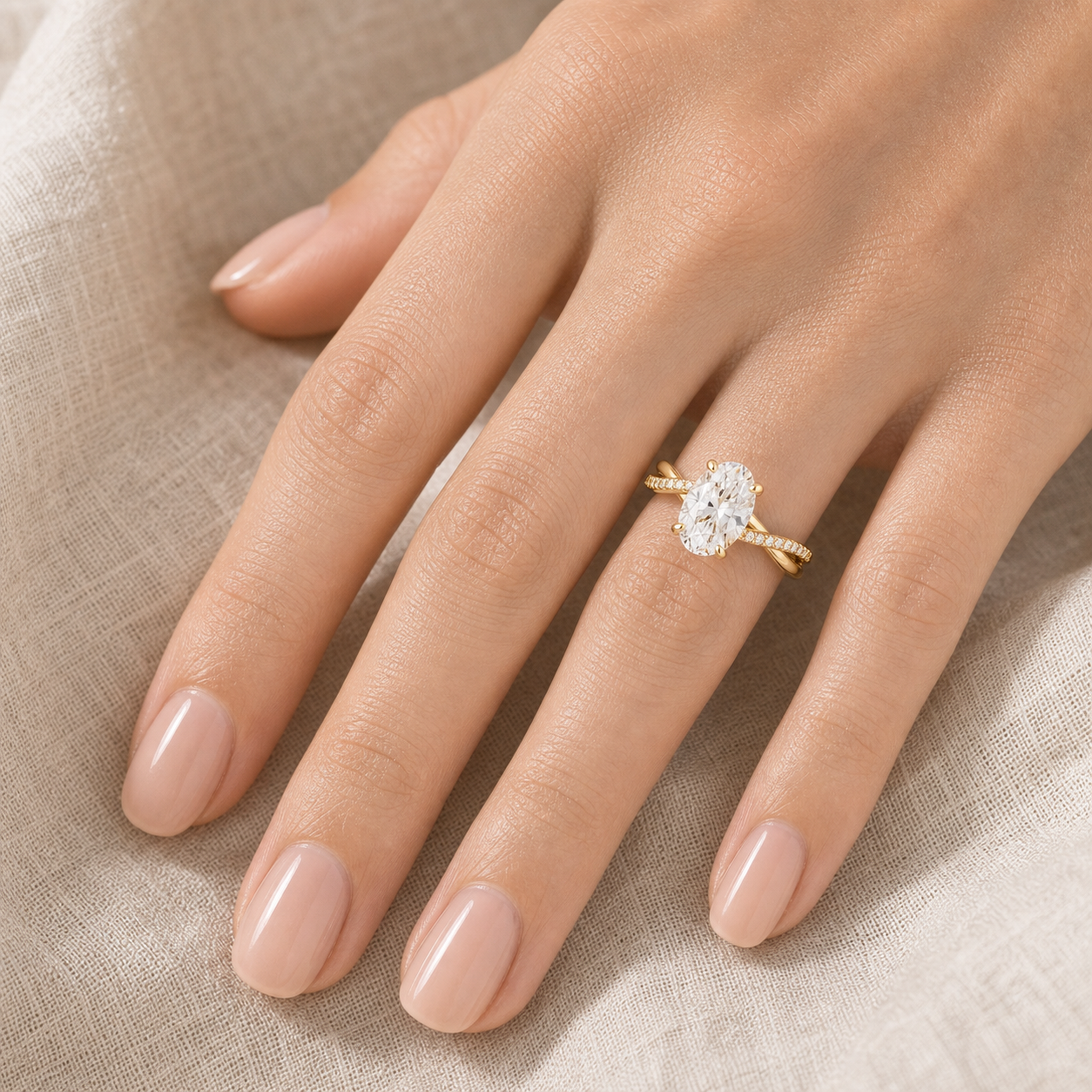


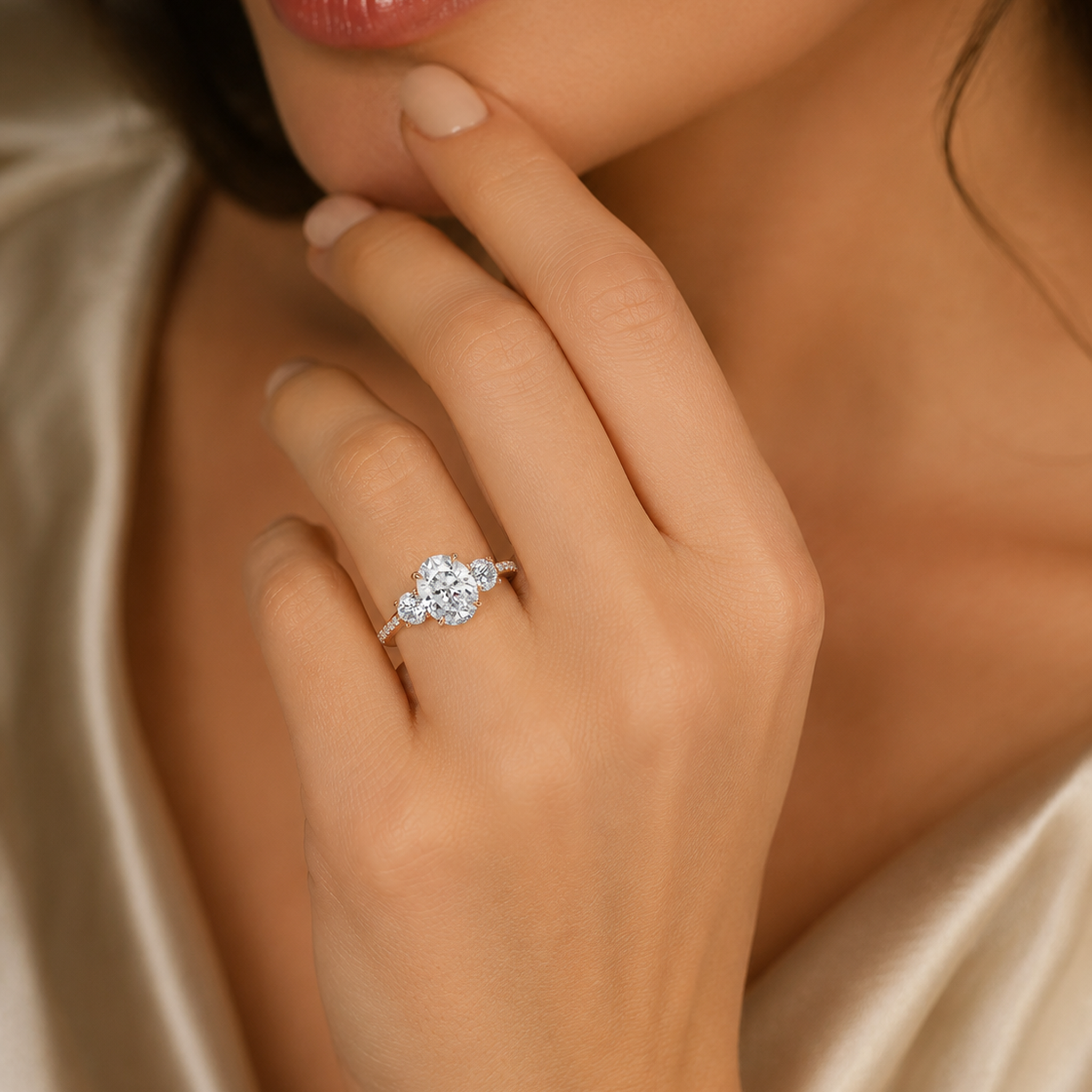


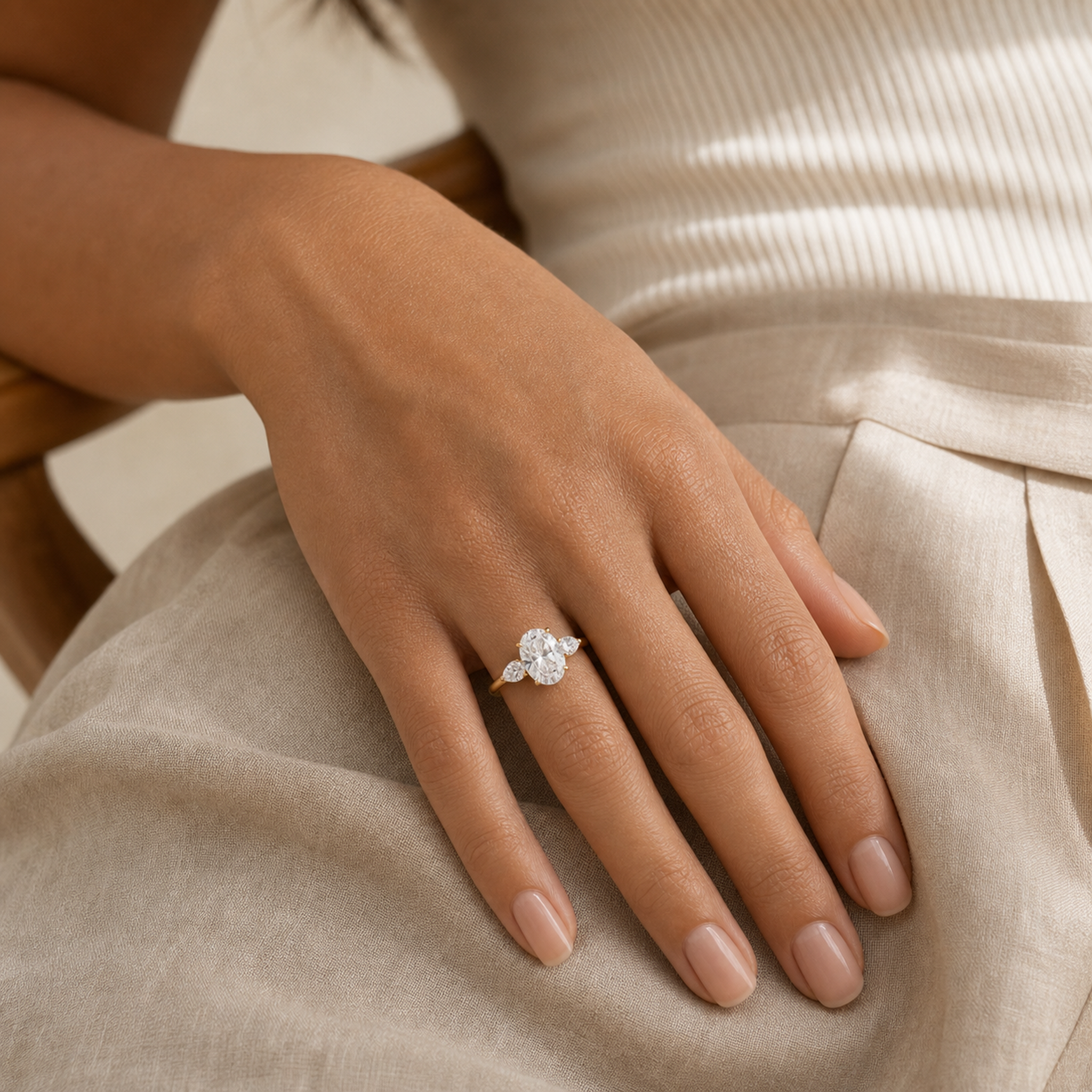
14K Yellow Gold Oval Diamond Engagement Rings: A Golden Line Around the Long Axis
Yellow Gold makes the meeting between an oval center and its setting visible. Its warm color can mark prongs at the ends and sides, carry through a basket, or draw the band toward the center along the long axis. The contrast gives the continuous curve a material edge without changing the diamond itself.
The current public collection contains 15 designs: seven Solitaires, three Halos, three Side Stone rings, and two Three Stone compositions. Open baskets, pavé and hidden halos, a milgrain bezel, cathedral shoulders, vines, and shaped side accents reveal gold in different amounts and positions.
Use Gold to Clarify the Perimeter
A 14K alloy contains approximately 58.3% gold. The exact shade, formula, finish, hardness, sensitivity profile, and care needs remain product-specific. Karat describes gold content; it does not establish a quality hierarchy, universal durability, or one fixed yellow tone.
Fine prongs create small golden punctuation around the oval. A bezel or more visible basket establishes a stronger outline, while shoulders and side structures can extend the color laterally. Compare designs with similar architecture when judging metal, because setting scale often changes what the eye notices first.
The Long Axis Organizes the Ring
An oval's length-to-width ratio describes the relationship between its dimensions. A fuller outline and a more elongated outline can both be well resolved; neither is automatically superior. Symmetry, evenness of curve, face-up dimensions, and central contrast need assessment on the individual diamond.
Yellow Gold can emphasize the boundary and direction, but it cannot improve symmetry, erase a bow-tie, or increase sparkle. A bow-tie is part of the light-dark pattern that may appear across the center. Review the selected diamond in varied light and motion rather than inferring performance from metal color.
Fifteen Designs Extend the Curve Differently
A Solitaire gives the oval the greatest visual independence. A Halo repeats its perimeter. Side Stone and Three Stone settings build a wider composition, and the gold intervals between shapes help establish whether the center remains dominant or participates in a more continuous line.
The assortment moves from open and pavé baskets to cathedral, vine, bezel, and double-halo structures. Marquise and pear accents introduce pointed supporting forms beside the oval's curve. Gold becomes most purposeful when those transitions are measured, not when warmth is treated as a generic style label.
Keep Scale and Color as Separate Facts
Carat measures weight, while length, width, depth, and outline help explain face-up presence. A halo expands the overall diamond field; a fine band leaves more negative space around the center. Neither changes the center's documented measurements.
Yellow Gold may create stronger visual contrast with some diamonds, but it does not alter their graded color. Prong color, accents, finish, lighting, and photography contribute to perception. Review the selected configuration rather than applying one universal color or clarity rule to every oval.
A Visible Material Decision
Wedding-band fit depends on basket width, center height, halo, side stones, shoulders, and contact points. A matching Yellow Gold band does not automatically sit flush or share an identical finish. Balance and rotation likewise depend on the complete ring and fit.
Burvonti pairs responsibly sourced, independently graded lab-grown diamonds with settings calibrated through proportion and human judgment. Custom possibilities may refine the center, prongs, basket, band line, accents, metal, or engraving where feasible. The result should use gold to articulate the oval, not merely decorate it.
Frequently Asked Questions
How is this page different from the Oval parent?
It focuses on the visible 14K Yellow Gold perimeter around an oval; the parent owns broader ratio, outline, bow-tie, and setting education.
How much gold is in 14K Yellow Gold?
Approximately 58.3%. Alloying metals influence the final color and working behavior.
Are all 14K yellow gold rings the same color?
No. Alloy formula, finish, lighting, photography, and exposed metal area affect appearance.
Does Yellow Gold make an oval look warmer?
It provides a warm surrounding field, but the result varies with the diamond, prongs, setting, and lighting.
Can Yellow Gold improve an oval diamond's brilliance?
No. It changes visual context, not the diamond's facet relationships or light performance.
Which setting structures are represented?
The current collection includes seven Solitaire, three Halo, three Side Stone, and two Three Stone designs.
What does length-to-width ratio tell me?
It describes how full or elongated the oval appears; it does not rank beauty or guarantee performance.
Does metal color change the bow-tie?
No. Bow-tie visibility belongs to the individual diamond and viewing conditions.
Will an oval look larger than its carat weight?
Carat alone cannot answer that. Compare actual length, width, depth, and setting context.
Does Yellow Gold tarnish?
Surface appearance and care depend on the complete alloy, finish, wear, and environment; confirm product-specific guidance.
Can a bezel change the oval outline?
It creates a continuous metal boundary that can make the perimeter read differently, without changing the diamond's measurements.
Will a wedding band sit flush?
Not necessarily. The complete profile and contact points determine spacing.
Can Burvonti personalize a Yellow Gold Oval ring?
Custom possibilities may include center specifications, prongs, basket, band line, accents, metal, or engraving, subject to feasibility.