
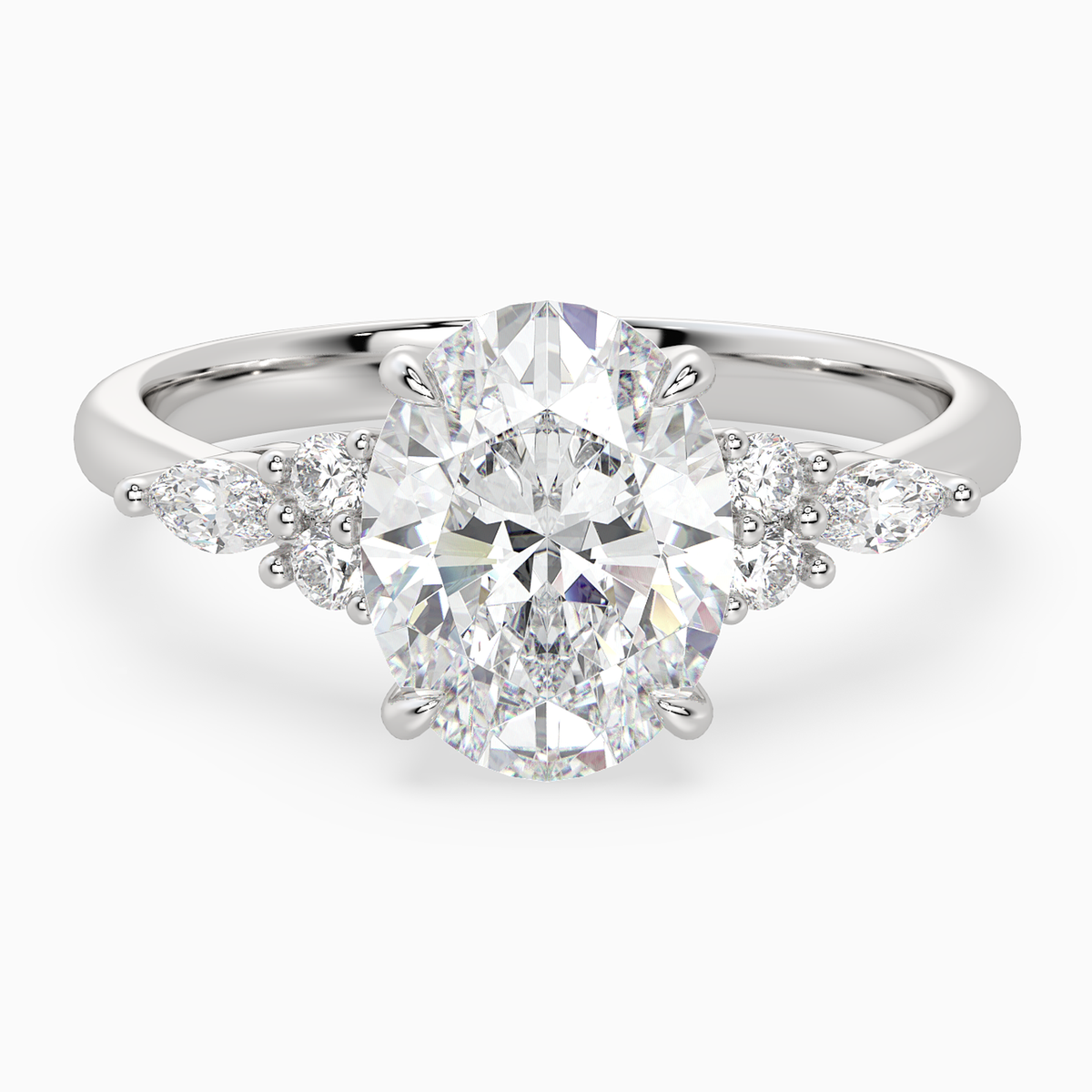


Oval Diamond Engagement Rings in Platinum
An elongated silhouette held in naturally white metal. Platinum brings tonal continuity, weight, and precise support along the oval’s axis.


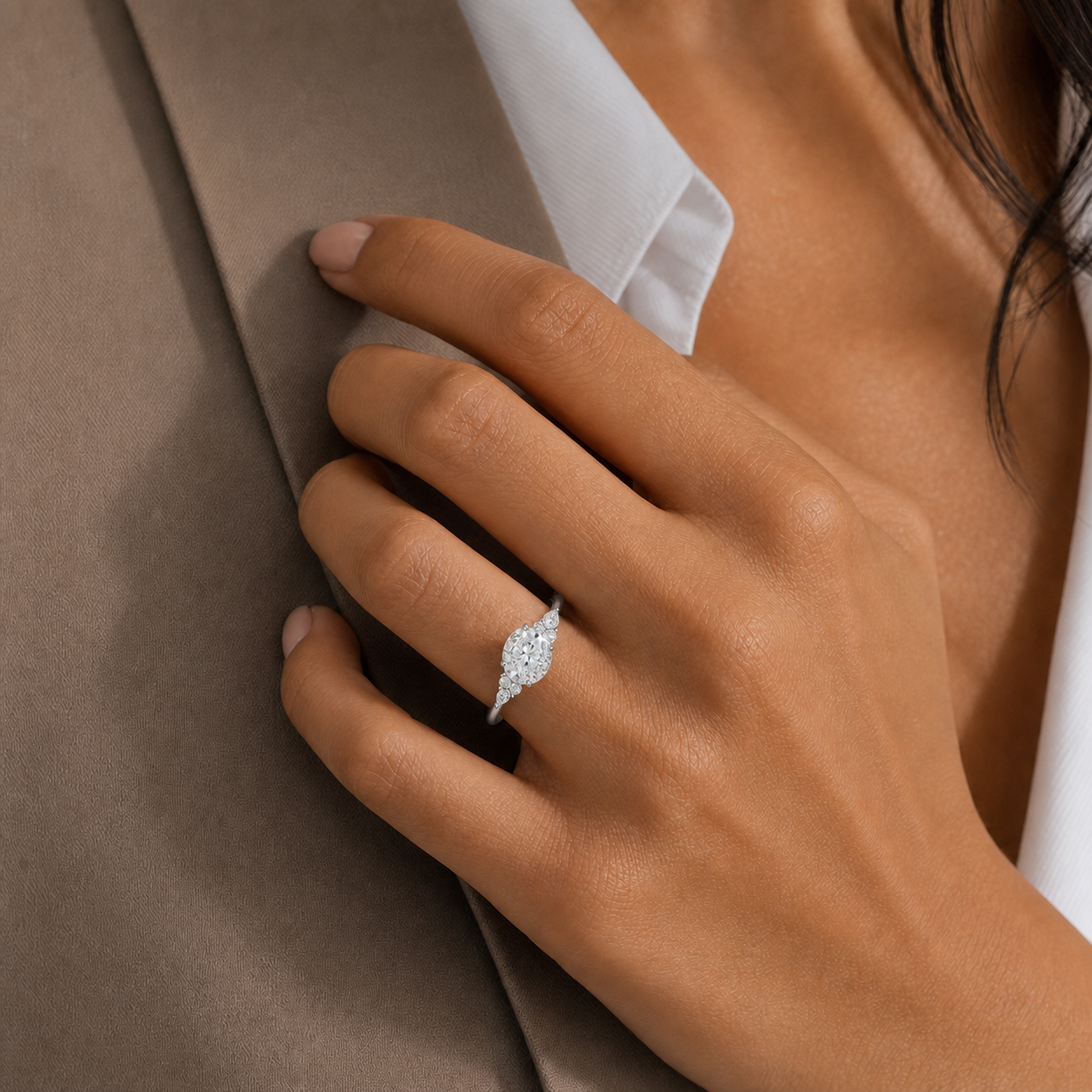


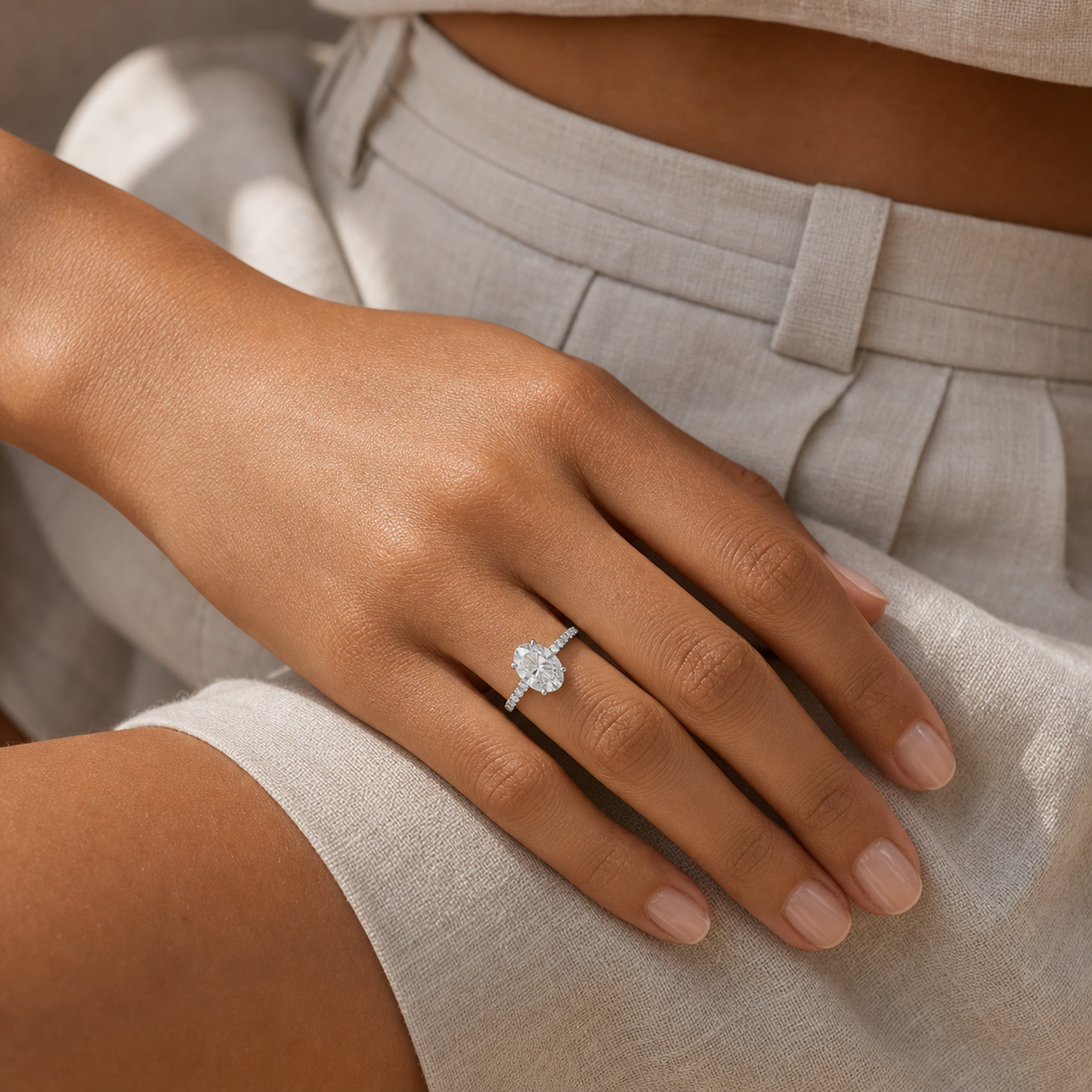


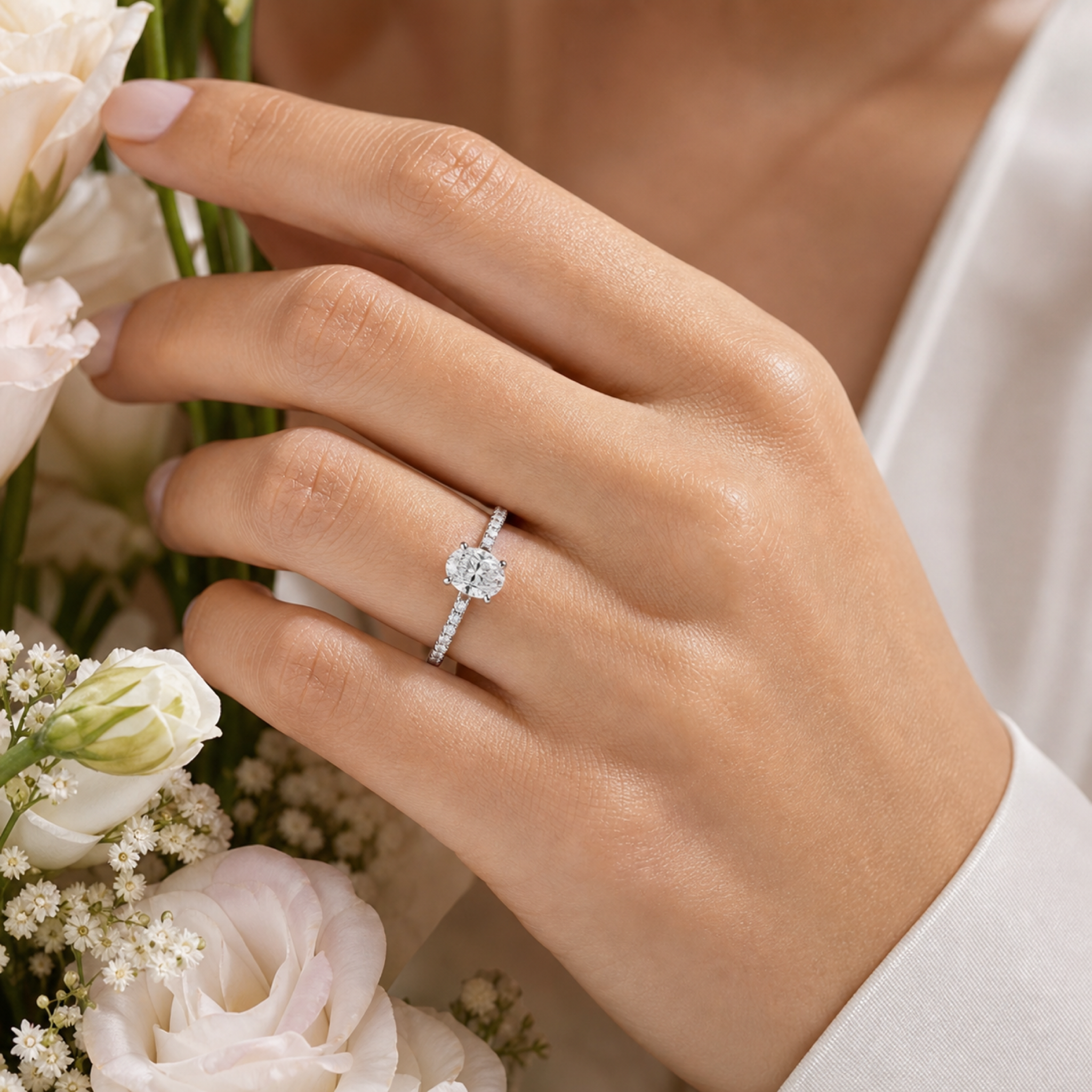


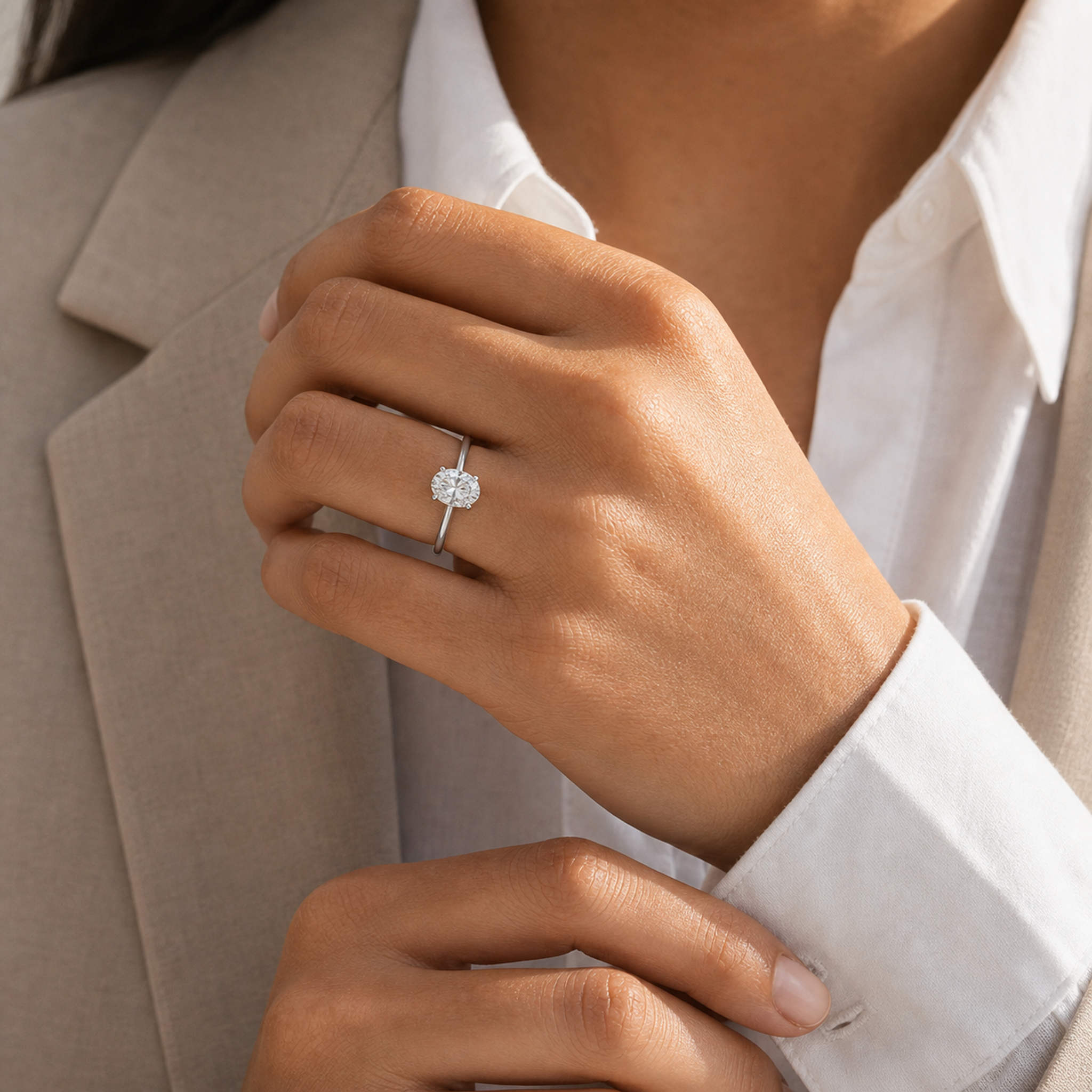


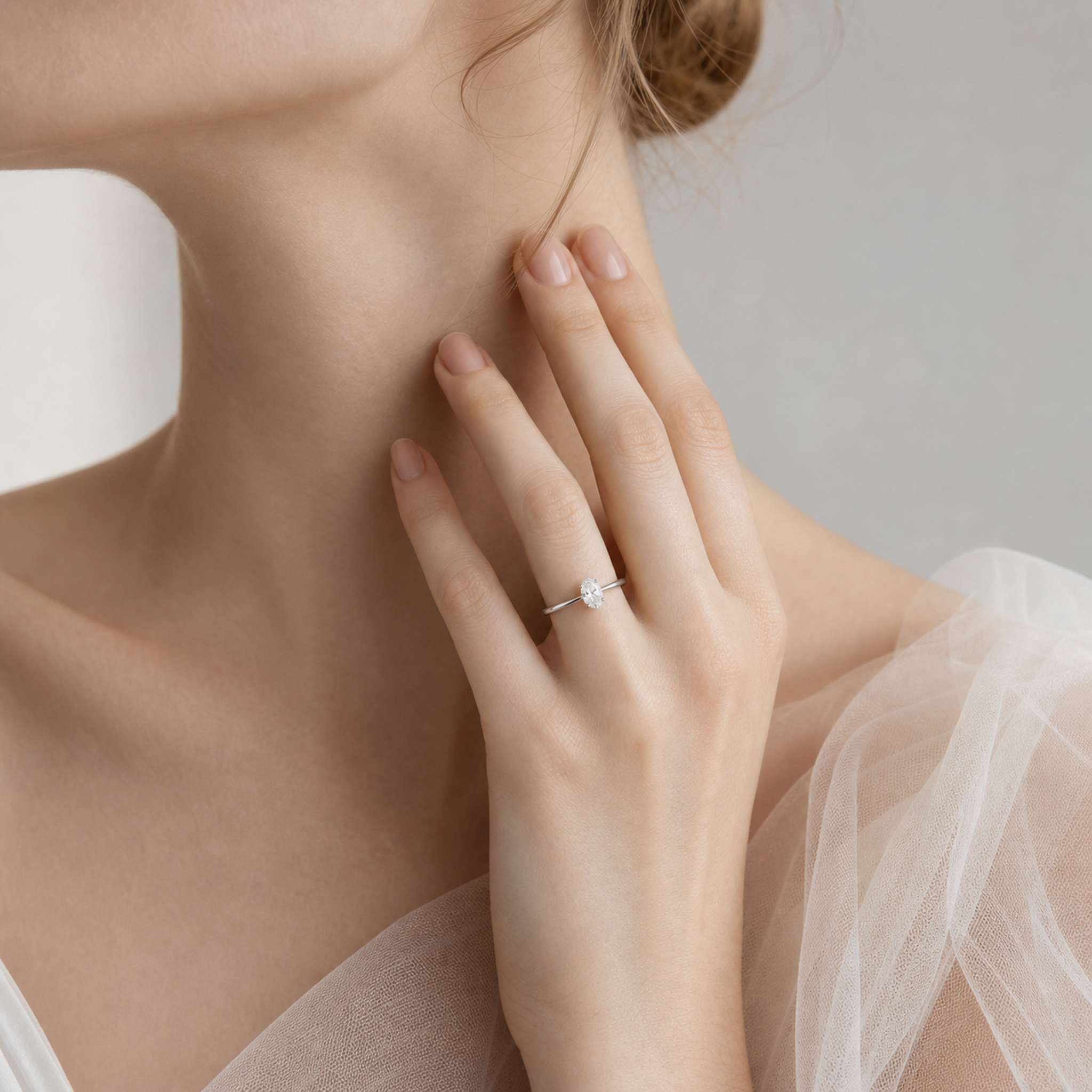


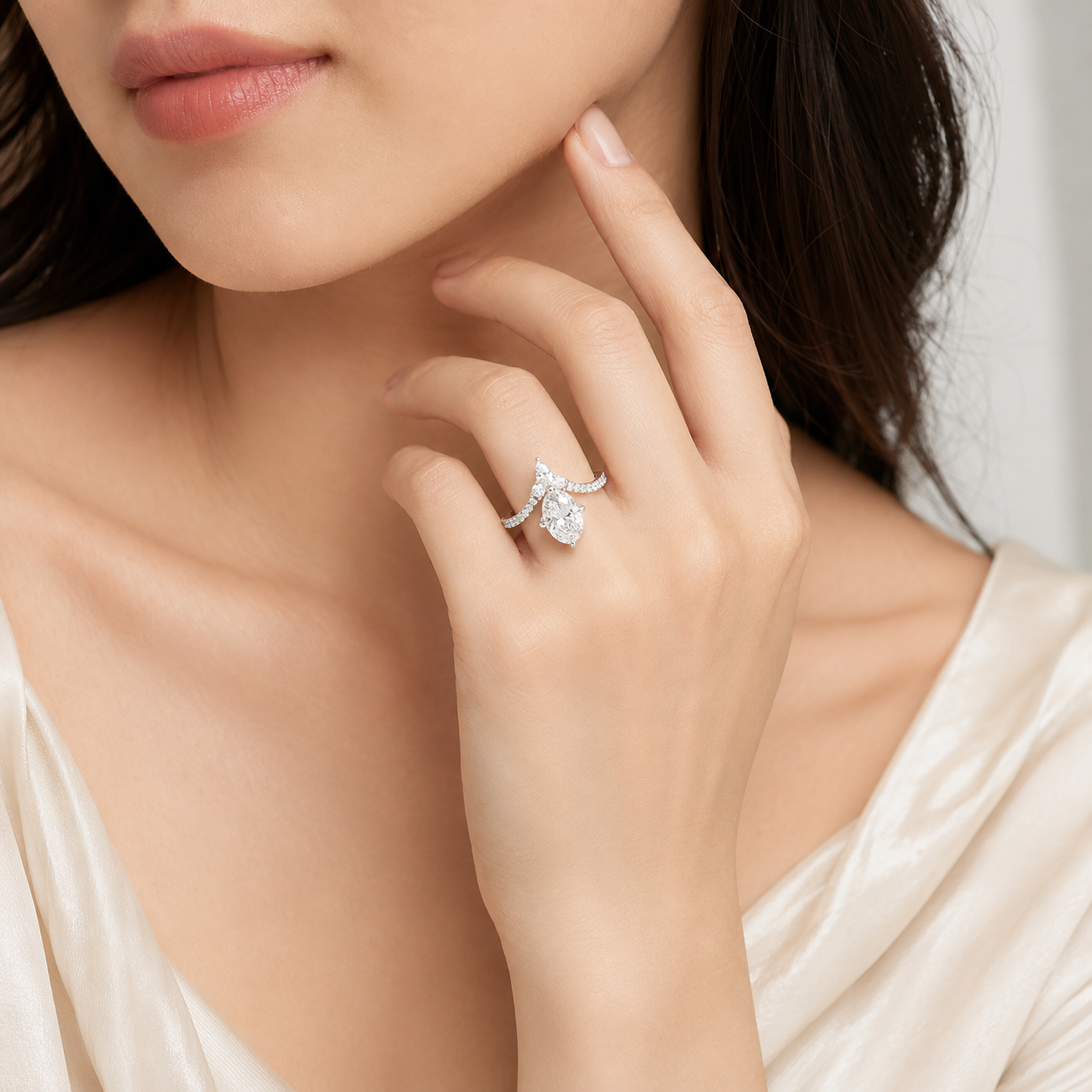


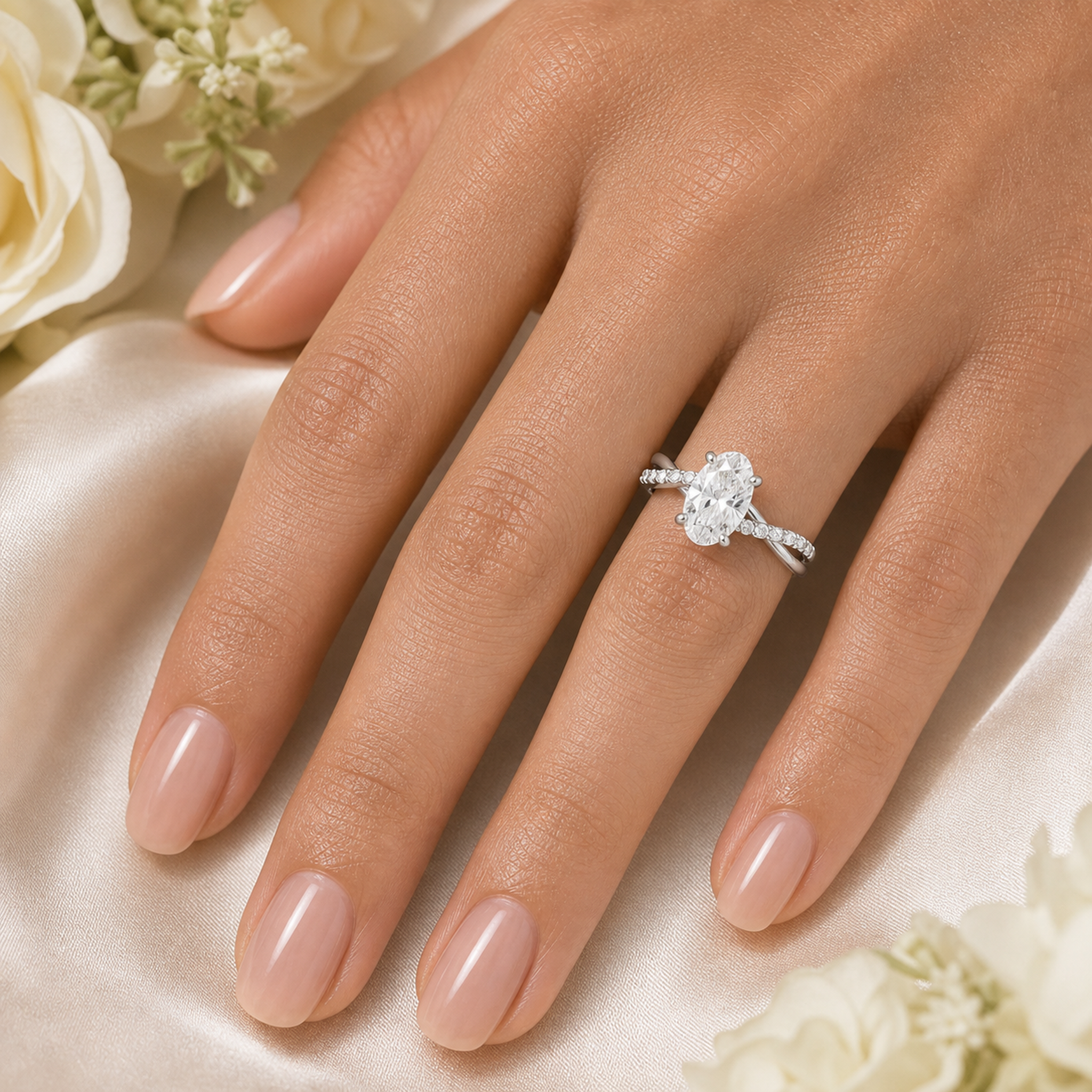


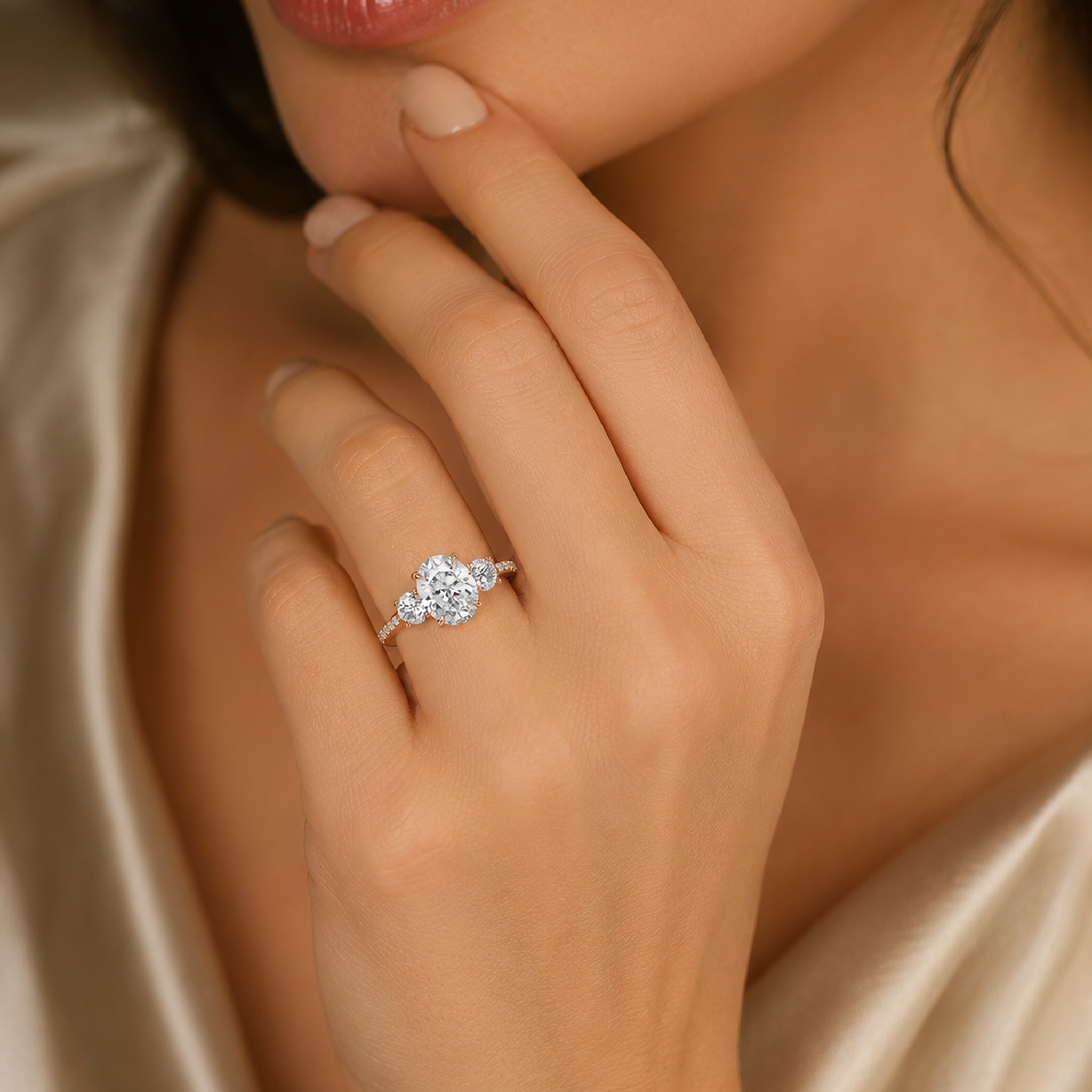


Platinum Oval Diamond Engagement Rings: Naturally White Structure Along the Long Axis
An oval center extends the ring's visual direction beyond a circle while retaining a continuous curve. Platinum provides a naturally white material context around that line. Its prongs, basket, shoulders, and band can connect tonally with the diamond while remaining legible as a distinct physical structure.
The current public page contains 15 designs: seven Solitaires, three Halos, three Side Stone rings, and two Three Stone compositions. Open and pavé baskets, hidden and double halos, cathedral shoulders, a milgrain bezel, vines, and shaped accents distribute Platinum differently along and across the oval's axis.
Density Changes the Complete Ring
Platinum is denser than gold, so equivalent volumes generally carry more mass. That fact does not mean every Platinum ring feels heavy or better: band dimensions, basket, halo, side stones, ring size, and the actual construction determine finished weight and balance.
An elongated center can make balance particularly noticeable. Compare center dimensions, setting height, band width, and how the head meets the shank. A thoughtfully distributed Platinum structure may feel composed, but no metal can guarantee universal comfort or prevent rotation for every hand.
Natural White Tone Frames, Not Improves, Light
Platinum's white tone does not rely on the same gold-alloy color description, but exact purity, finish, and composition still require product confirmation. Its color can create continuity at the oval's perimeter without changing the center's graded color, polish, symmetry, dimensions, or optical performance.
Bow-tie visibility belongs to the individual diamond and viewing conditions. Ratio describes outline, while faceting and contrast determine how light moves across it. Review the report and the actual center in motion; a white setting cannot eliminate contrast or guarantee maximum brilliance.
Support the Ends, Sides, and Perimeter
A Solitaire reveals prong placement and basket construction most directly. A Halo repeats the outline; Side Stone and Three Stone settings extend support laterally. A bezel establishes a continuous rim, while fine prongs create separate points around the girdle.
Security cannot be reduced to Platinum's reputation or one prong count. Stone dimensions, girdle condition, prong geometry, workmanship, impact, and wear all matter. The setting should be assessed as a complete configuration, with inspection if a prong catches or any stone moves.
Expect Surface Character to Evolve
Wear can create a patina on Platinum: a change in surface character rather than proof of damage or permanence. Some wearers appreciate it; others may prefer professional refinishing. The appropriate choice depends on the selected finish, construction, condition, and personal preference.
Wedding-band fit remains a geometric question. A straight band may sit near an open basket or encounter a halo, side structure, or projecting shoulder. Matching Platinum does not guarantee flush contact, identical finish, or one service schedule.
White Continuity, Measured in Three Dimensions
Carat weight alone does not describe an oval's face-up scale. Compare length, width, depth, outline, and setting dimensions. Then view the ring from above, from the side, and in motion to understand how material weight and visual direction work together.
Burvonti pairs responsibly sourced, independently graded lab-grown diamonds with settings calibrated through proportion and human judgment. Custom possibilities may refine center specifications, prongs, basket, band, accents, metal, or engraving where feasible. Platinum is treated here as structure and surface—not a shorthand for prestige or permanence.
Frequently Asked Questions
How is this page different from the main Oval Collection?
The parent owns broad oval proportion, bow-tie, and setting education. This page focuses on Platinum's naturally white tone, density, surface, and weight distribution.
Is Platinum naturally white?
Yes, although exact purity, composition, and finish should be confirmed for the selected product.
Is a Platinum oval ring always heavier?
Platinum is denser than gold, but finished weight depends on the complete design, dimensions, and ring size.
Does Platinum make an oval diamond brighter?
No. It changes the surrounding color context, not the diamond's faceting or light performance.
Does Platinum reduce the bow-tie effect?
No. Bow-tie visibility depends on the individual diamond, lighting, movement, and viewing position.
Which designs are represented?
The collection includes seven Solitaire, three Halo, three Side Stone, and two Three Stone designs.
Is Platinum indestructible or scratch-proof?
No. Its surface changes with wear, and the complete ring still requires appropriate care and inspection.
What is Platinum patina?
It is an evolved surface character from wear. Preference for retaining or refinishing it is individual.
Are Platinum prongs automatically more secure?
No universal guarantee applies. Geometry, workmanship, stone dimensions, condition, and wear all matter.
Will density prevent an oval ring from rotating?
No. Center scale, setting height, band width, ring size, fit, and weight distribution all contribute.
Does carat tell me the oval's visible size?
Not completely. Compare actual length, width, depth, outline, and setting context.
Will a Platinum wedding band sit flush?
Only the engagement ring and band profiles and contact points can establish that.
Can Burvonti personalize a Platinum Oval ring?
Custom possibilities may include center specifications, prongs, basket, band line, accents, metal, or engraving, subject to feasibility.