


Three Stone Engagement Rings in 18K Yellow Gold
Yellow metal gives the trio definition. Compare all 7 rings by side-stone scale, shape contrast, spacing, band taper and profile.







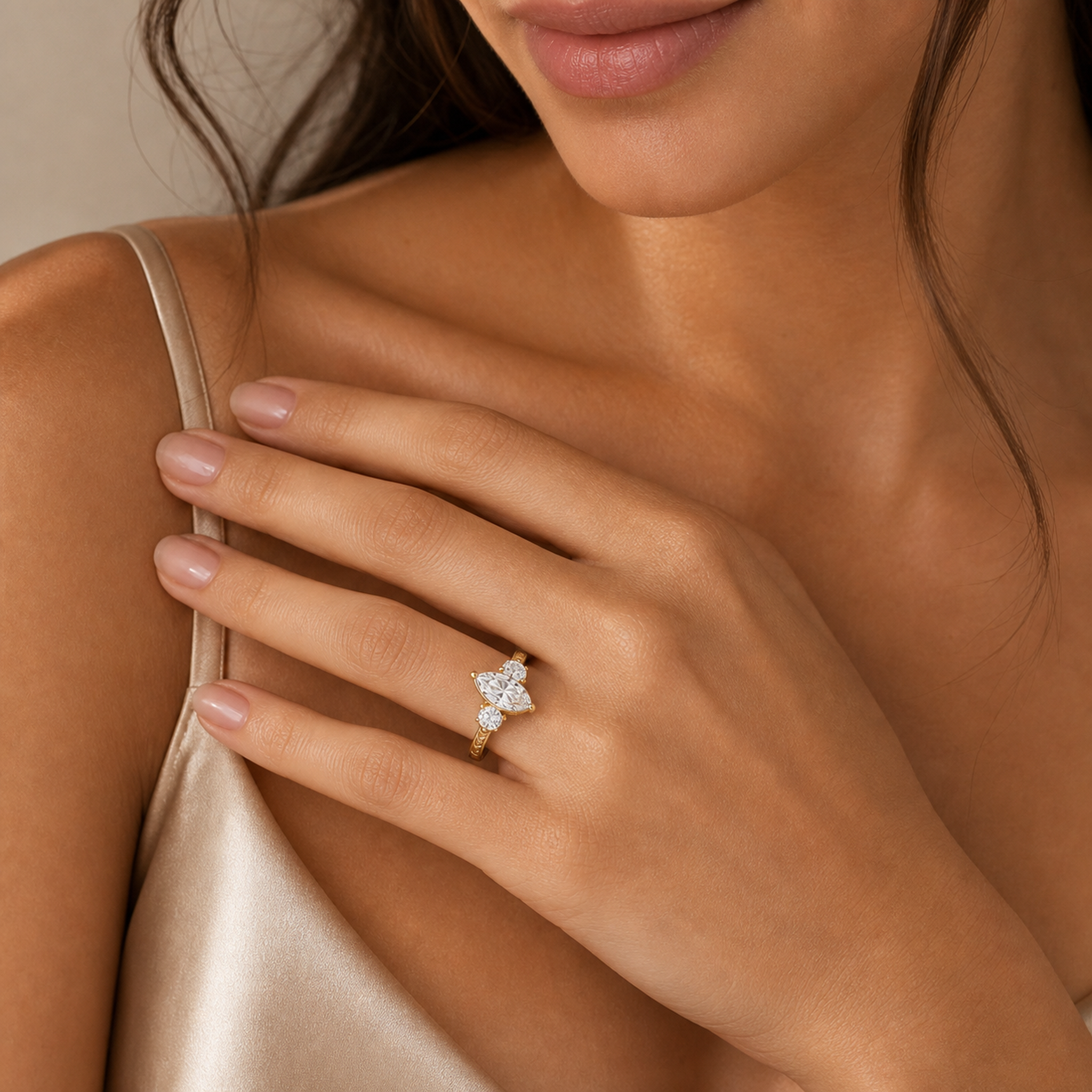


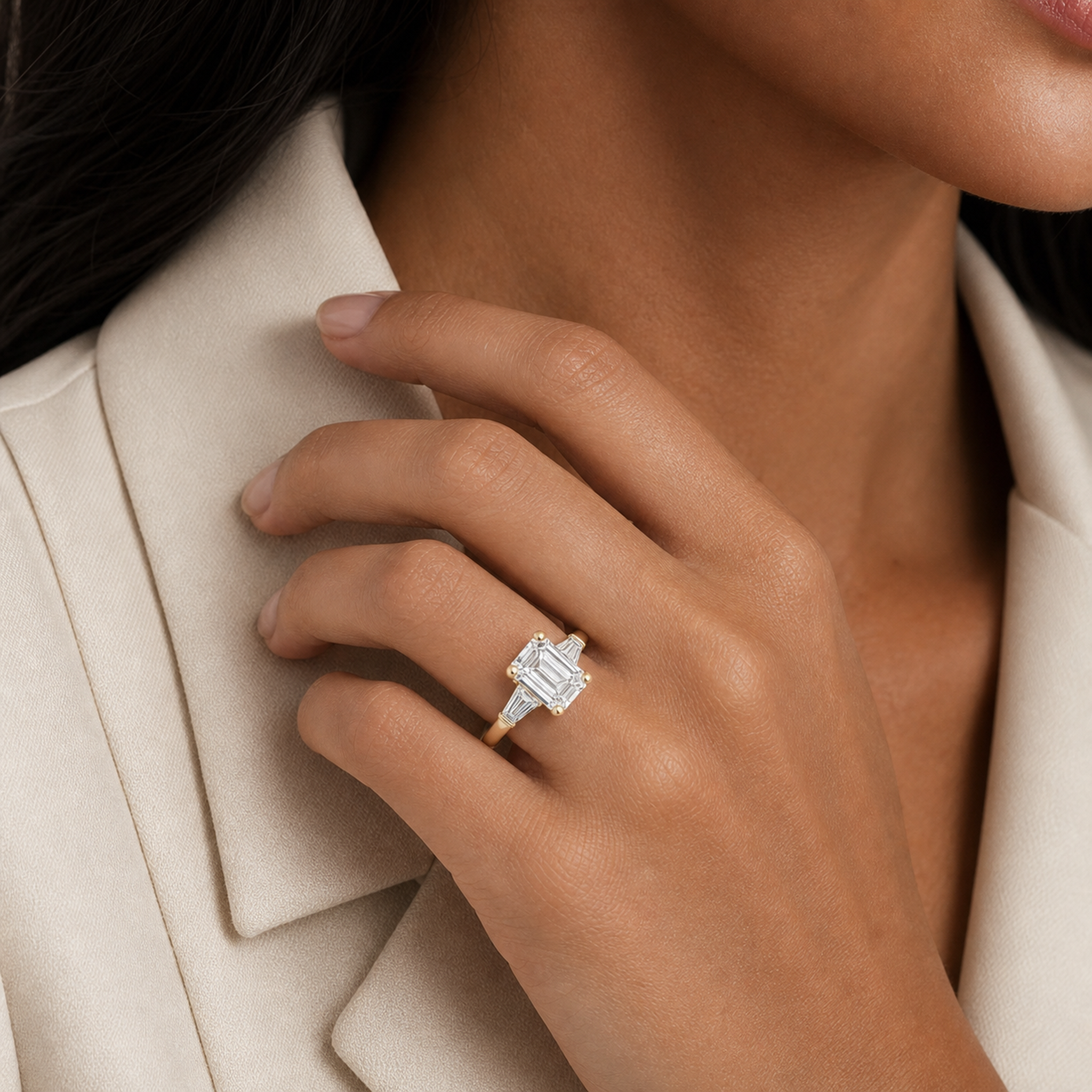


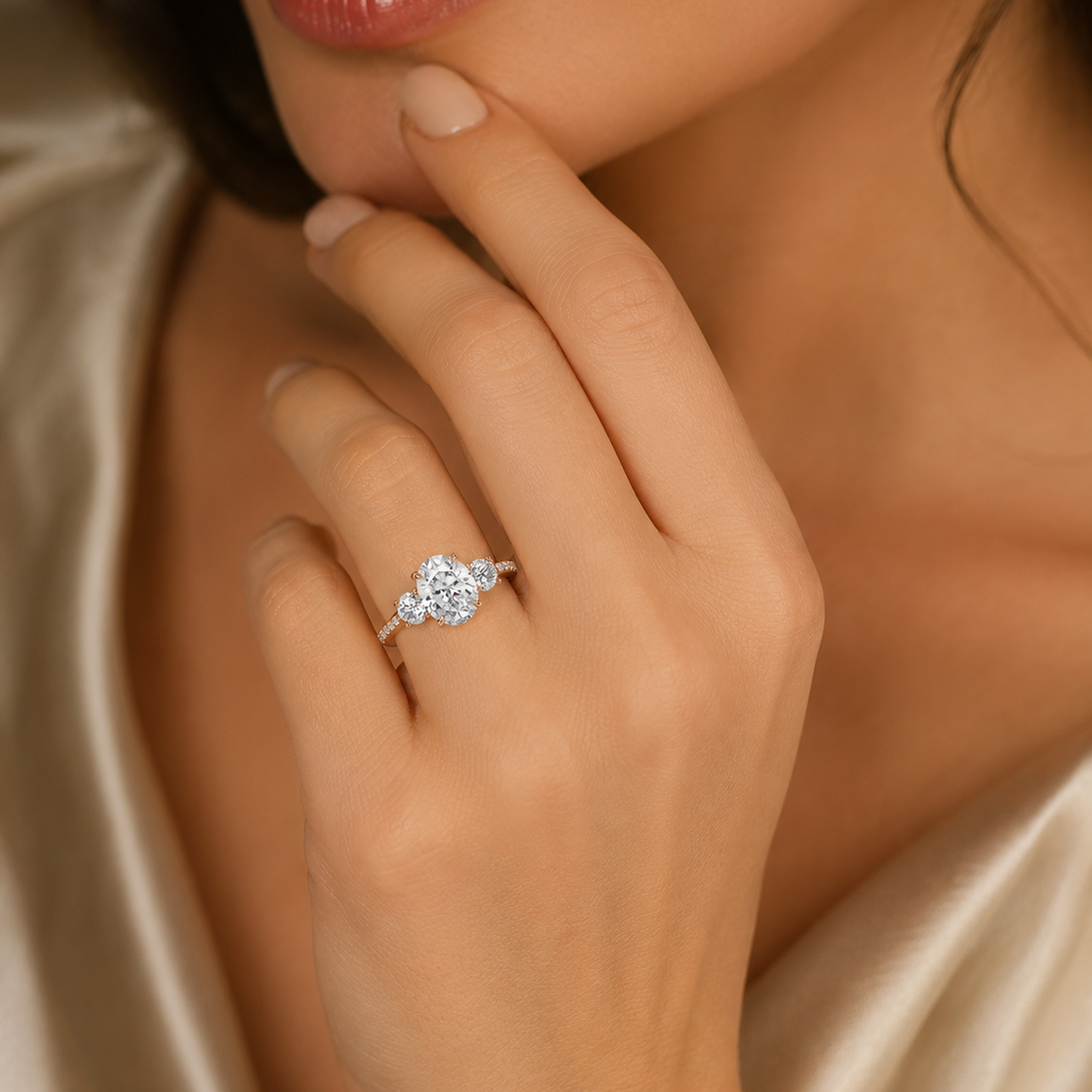


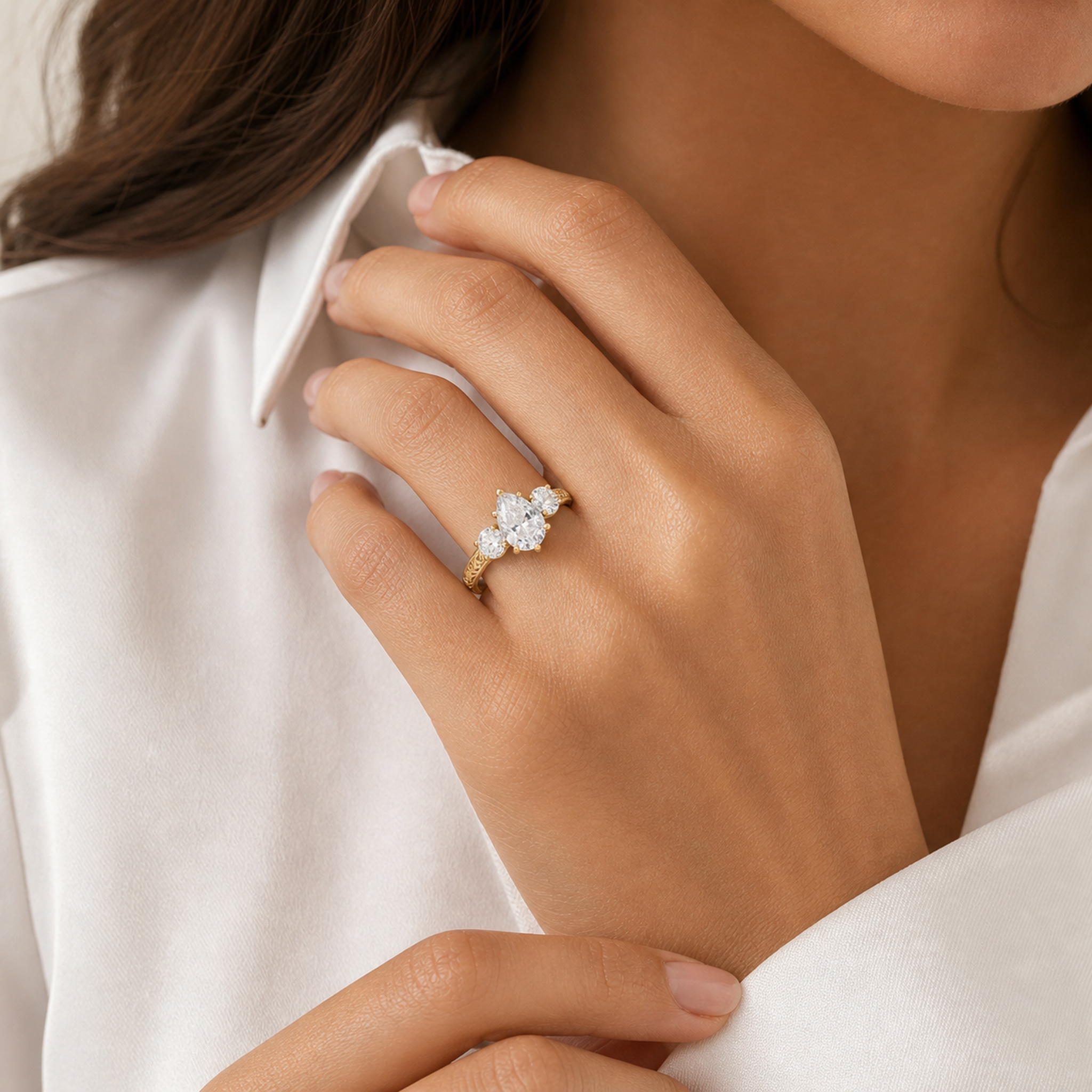


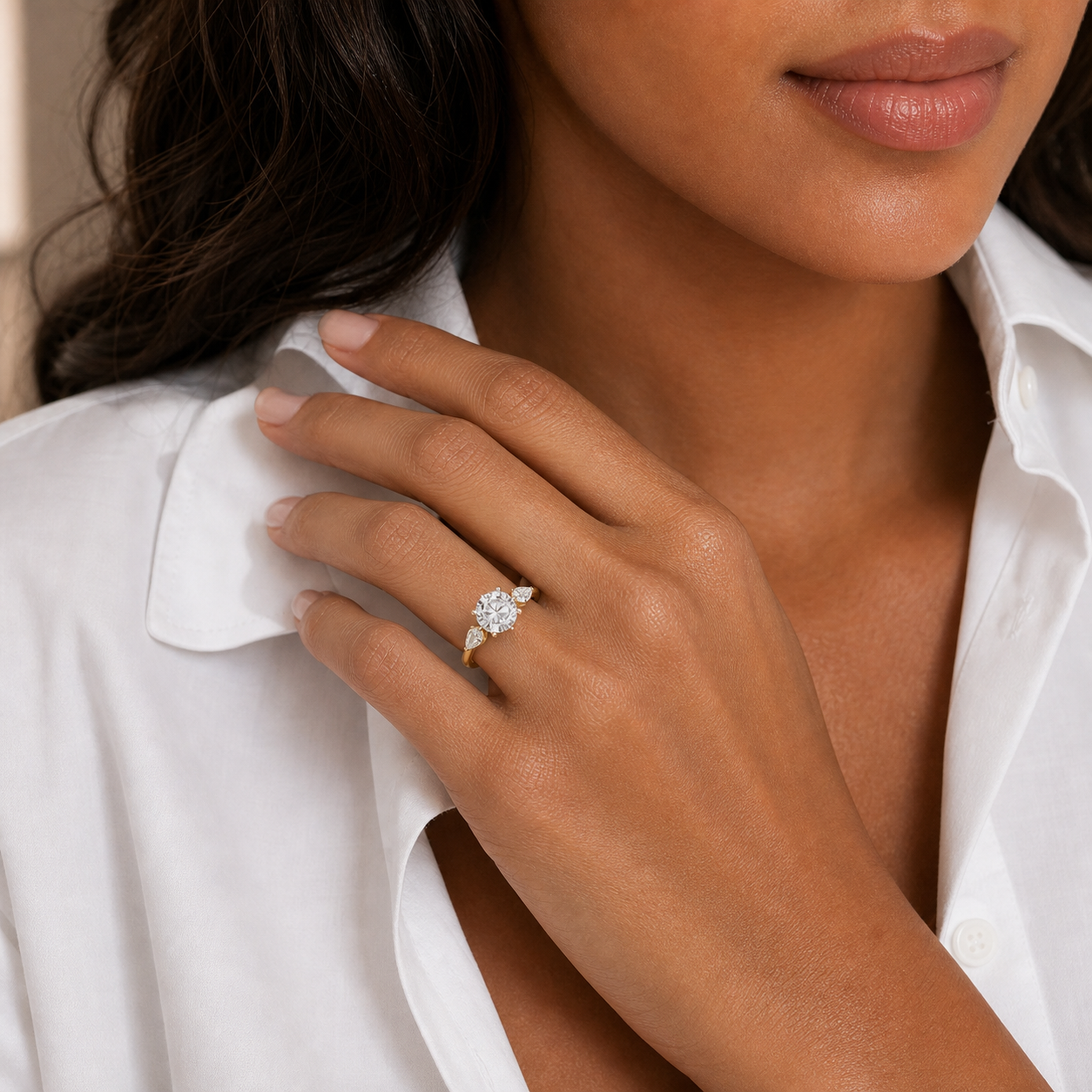
18K Yellow Gold: A Measured Three-Part Definition
The Trio Has an Inner and Outer Rhythm
First read the center against its paired side stones; then read the outside edges against the band. Those two rhythms determine whether a ring feels compact, extended, curved or architectural. Yellow metal gives the intervals definition, while each family controls the geometry.
Seven products supply four families and five center shapes. The same assortment also intersects other style pages, but those pages answer different questions about motif, historical detail or restraint.
Olive and Elise: Round Sides, Different Frames
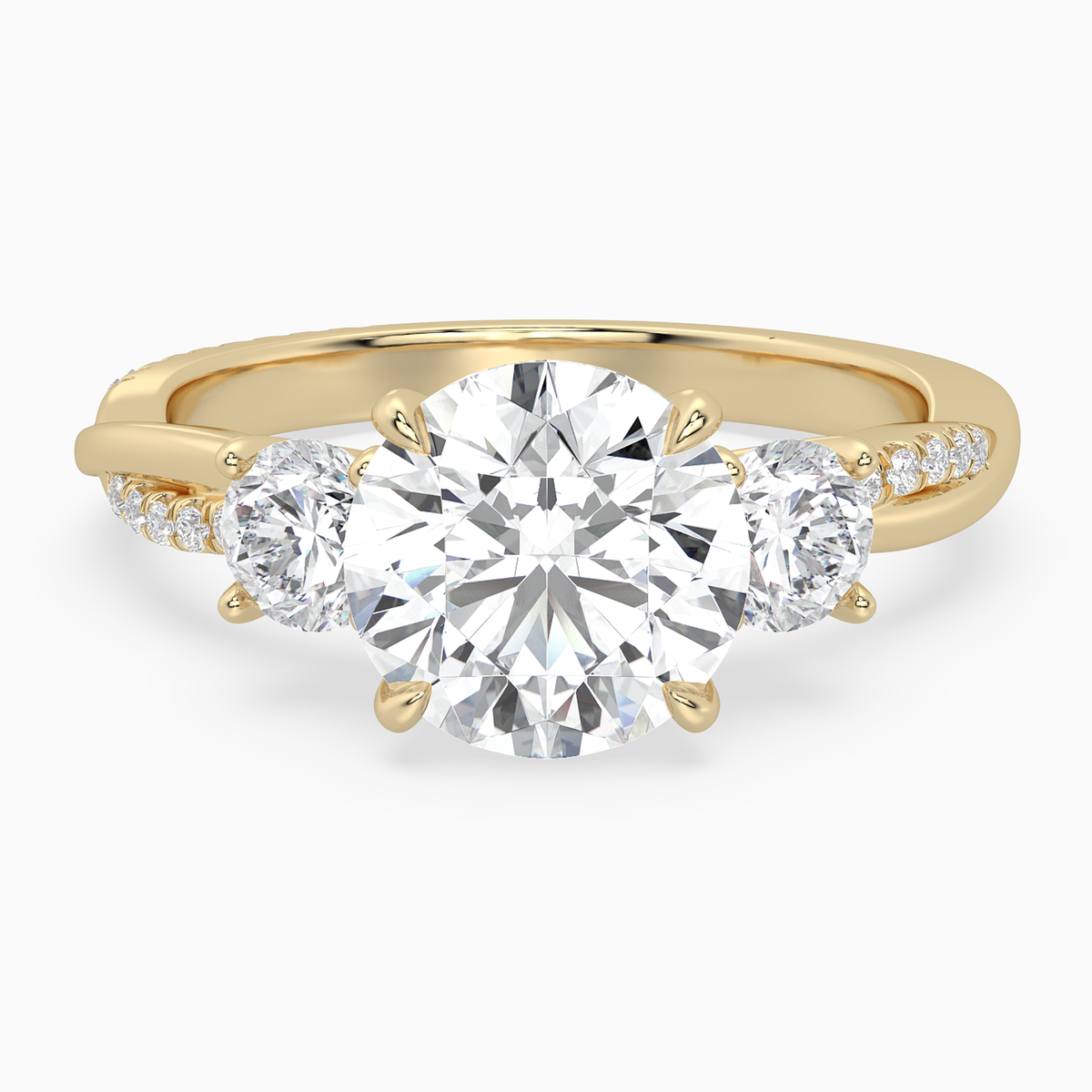
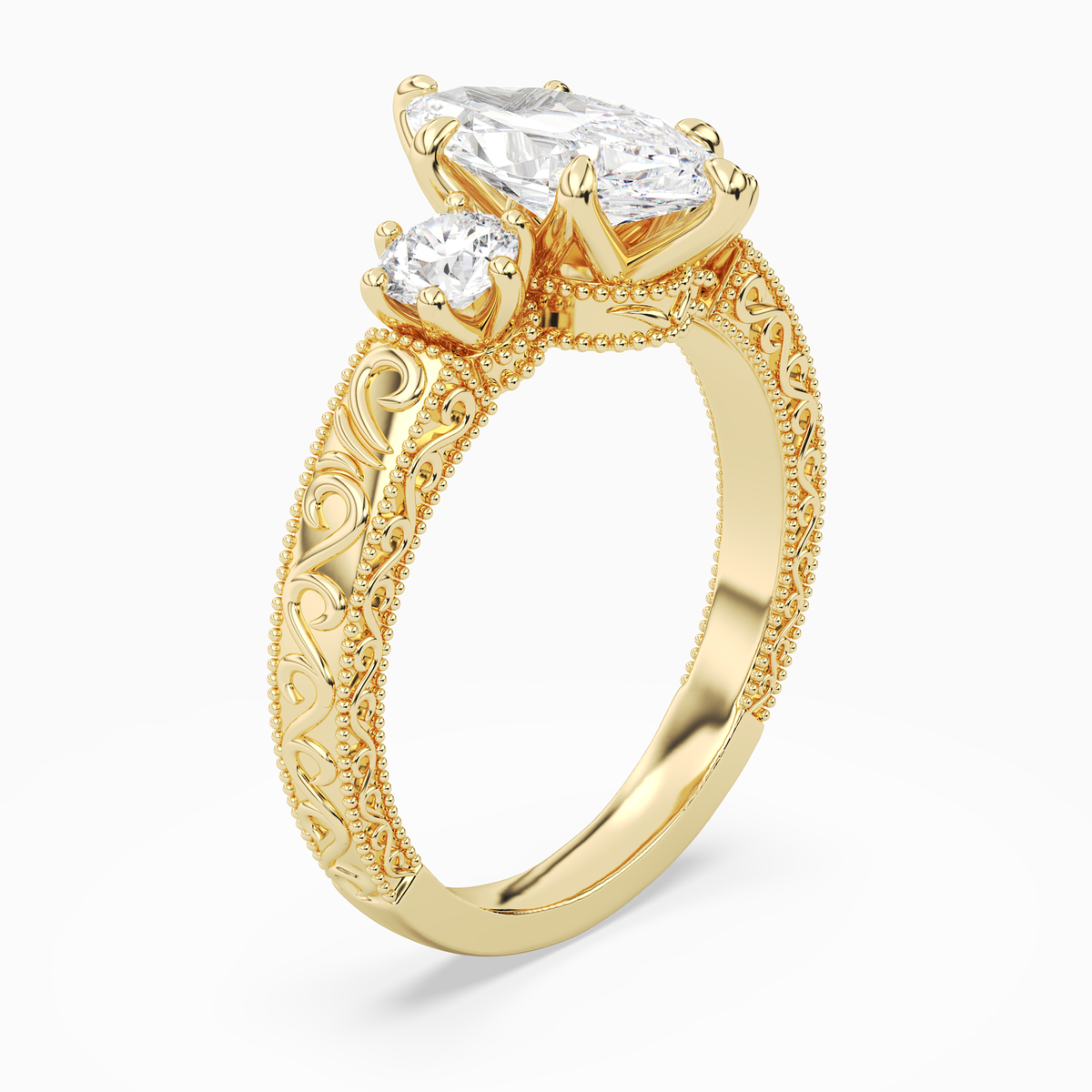
Olive graduates round side stones beside round or oval centers and continues into twisting pavé vines. Elise places round companions beside marquise or pear centers, with engraved shoulders and milgrain-style framing.
Freya and Tahlia: Two Outer Silhouettes
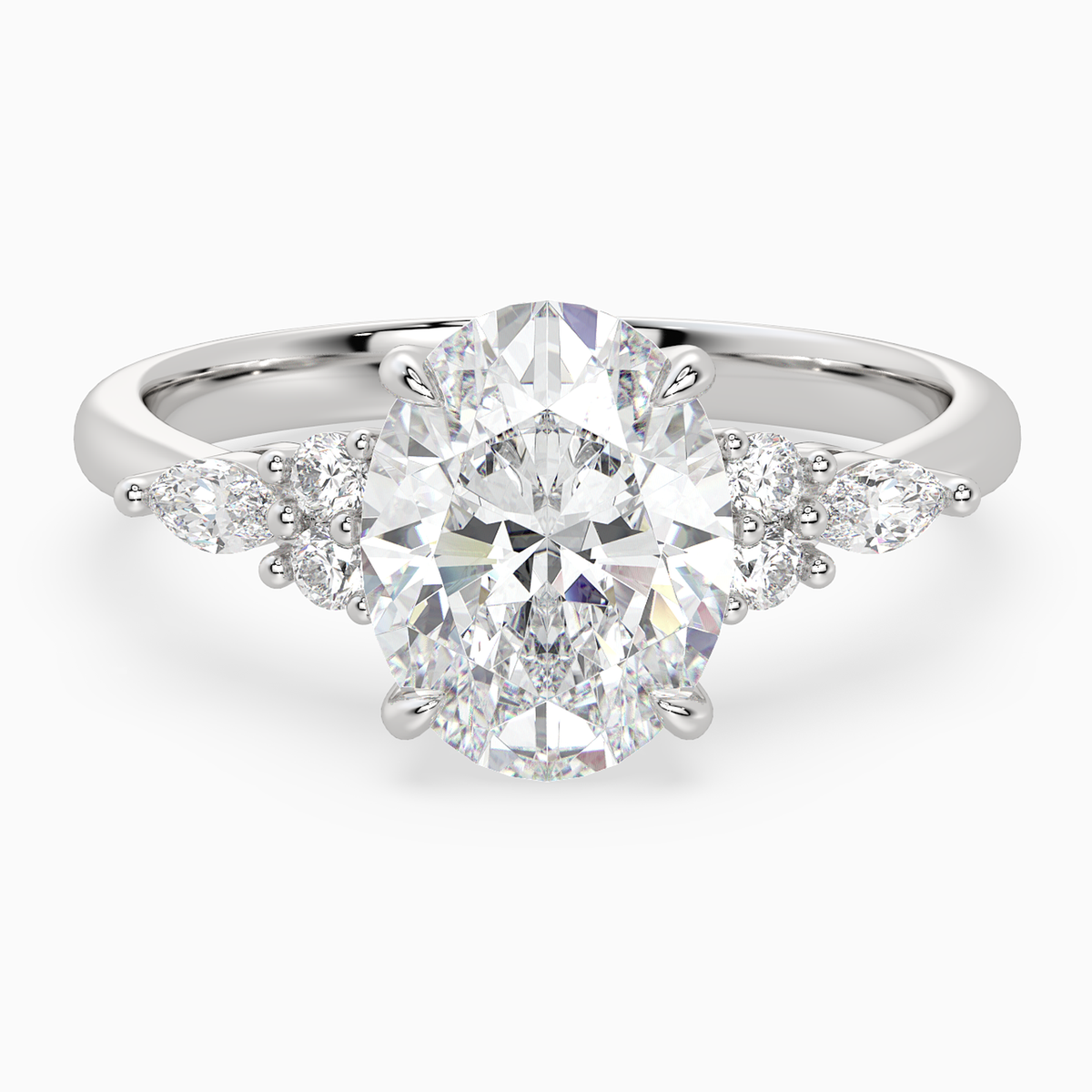
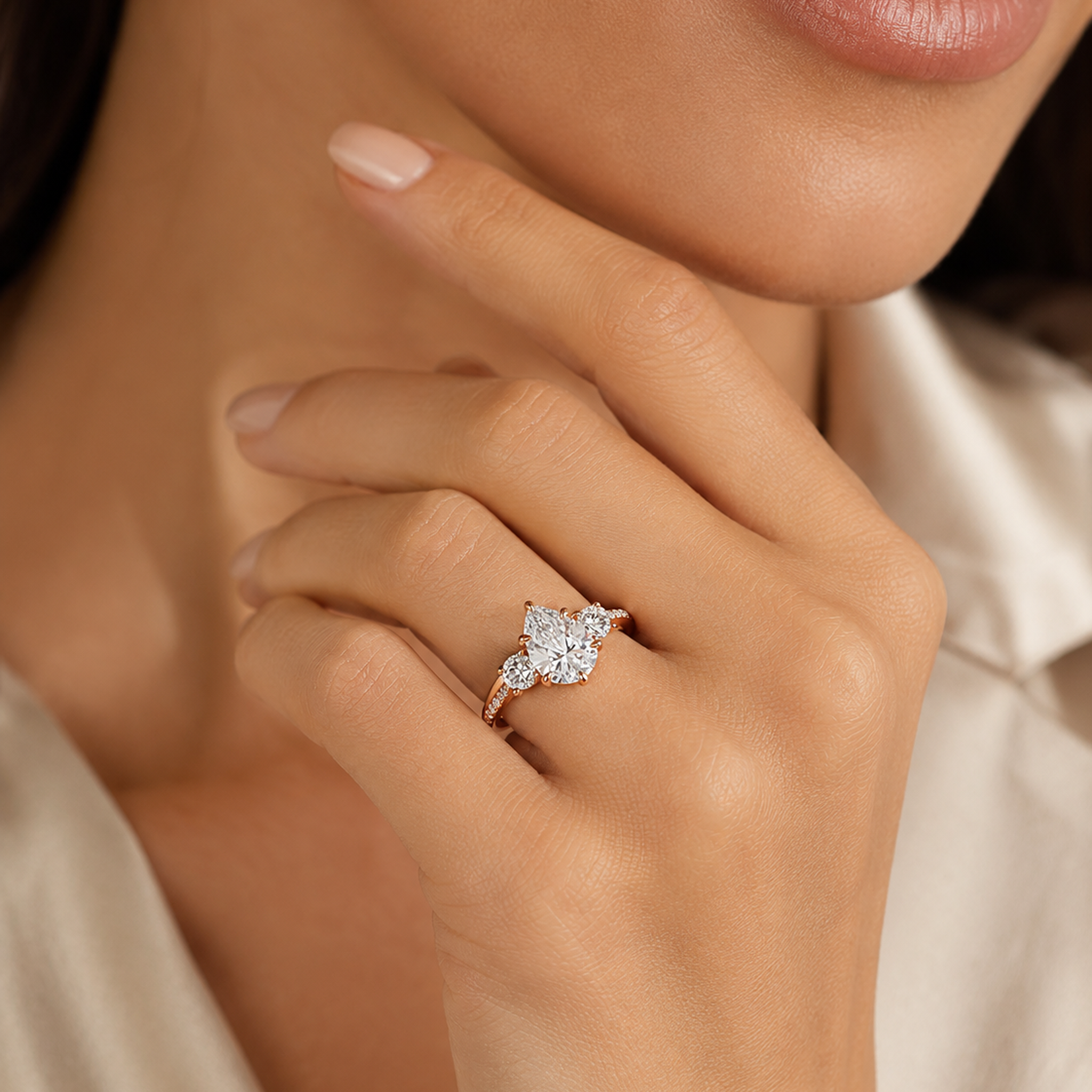
Freya uses tapered side stones to move from an emerald center to a plain shank. Tahlia’s pear-shaped companions add a fuller curved outline beside round or oval centers before meeting a tapered band.
Three Stone Owns the Principal Hierarchy
A title such as Tahlia Pear Side-Stone Three Stone does not move the design into the Side Stone page’s role. Its paired pear companions are principal elements of the trio; Side Stone remains responsible for subordinate accents.
Treat Exact Wear as a Product Question
Approximately 75% of 18K is gold. Alloy tone, stone dimensions, setting exposure, comfort, security, band contact, care and resize limits need exact-product confirmation rather than a collection-wide promise.
Frequently Asked Questions
What is the collection count?
7 rings.
How many design families appear?
Four.
What are the two comparison rhythms?
Center-to-side proportion and side-to-band transition.
Which two families use round side stones?
Olive and Elise.
What makes Olive nature-inspired?
Its twisting pavé vine shoulders.
What gives Elise a vintage reading?
Engraving and milgrain-style detail.
What is Freya’s center shape?
Emerald.
What are Tahlia’s companion shapes?
Pear-shaped.
Which centers pair with Tahlia?
Round and oval.
What five center shapes appear?
Round, oval, marquise, pear and emerald.
Does a product title containing side-stone change the taxonomy?
No; Tahlia still has three principal stones.
Does 18K guarantee one yellow tone?
No.
Does the trio always look larger?
No universal appearance claim is made.
Are companion stones perfectly matched?
No such guarantee is stated.
Is balance guaranteed?
No.
Can care be generalized?
No.
What remains unauthorized?
Publishing, indexing and all remote writes.