
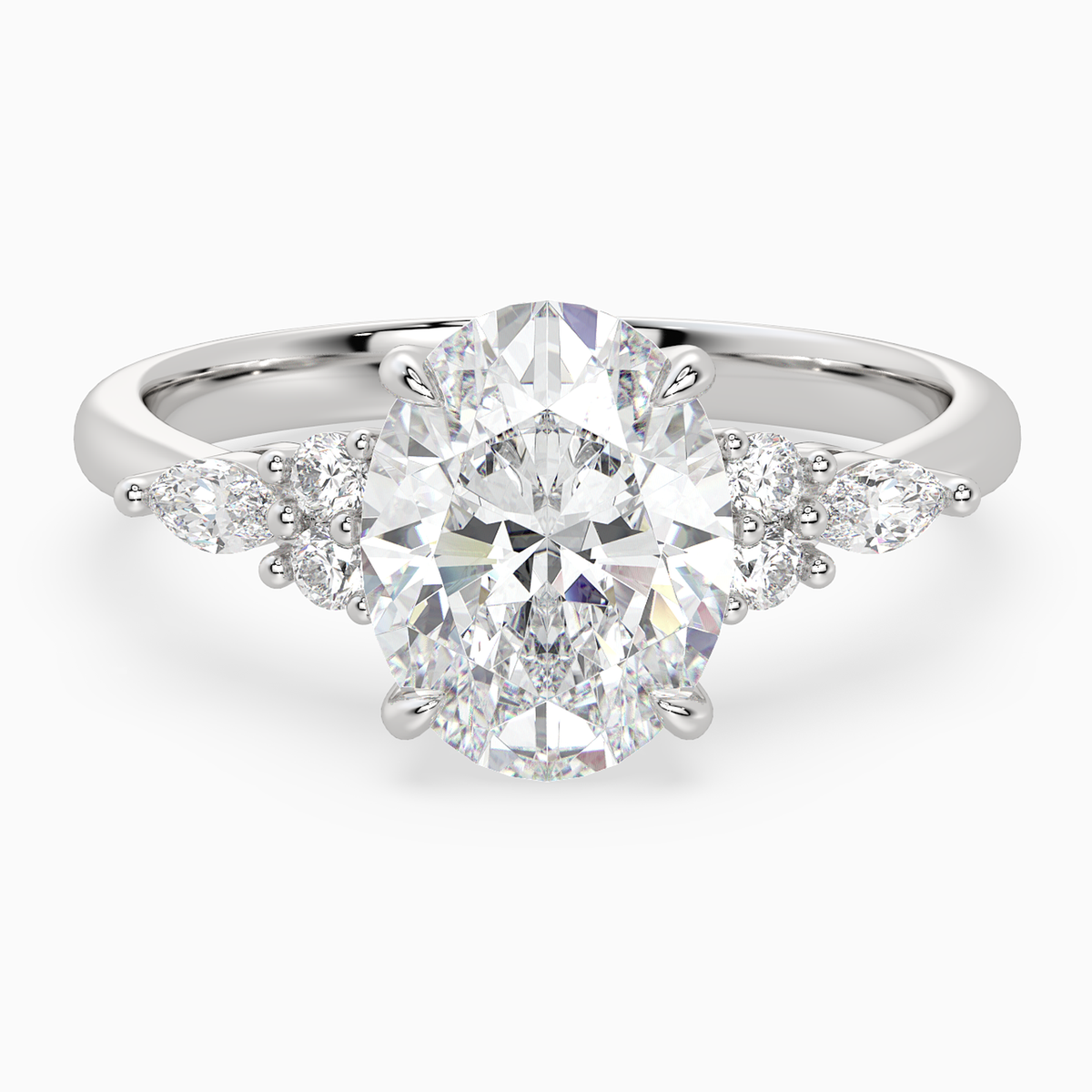


Three Stone Engagement Rings in 14K Rose Gold
Rose gold warms the three-part composition. Compare all 7 rings by center-to-side scale, paired shape, spacing, shoulder line and profile.


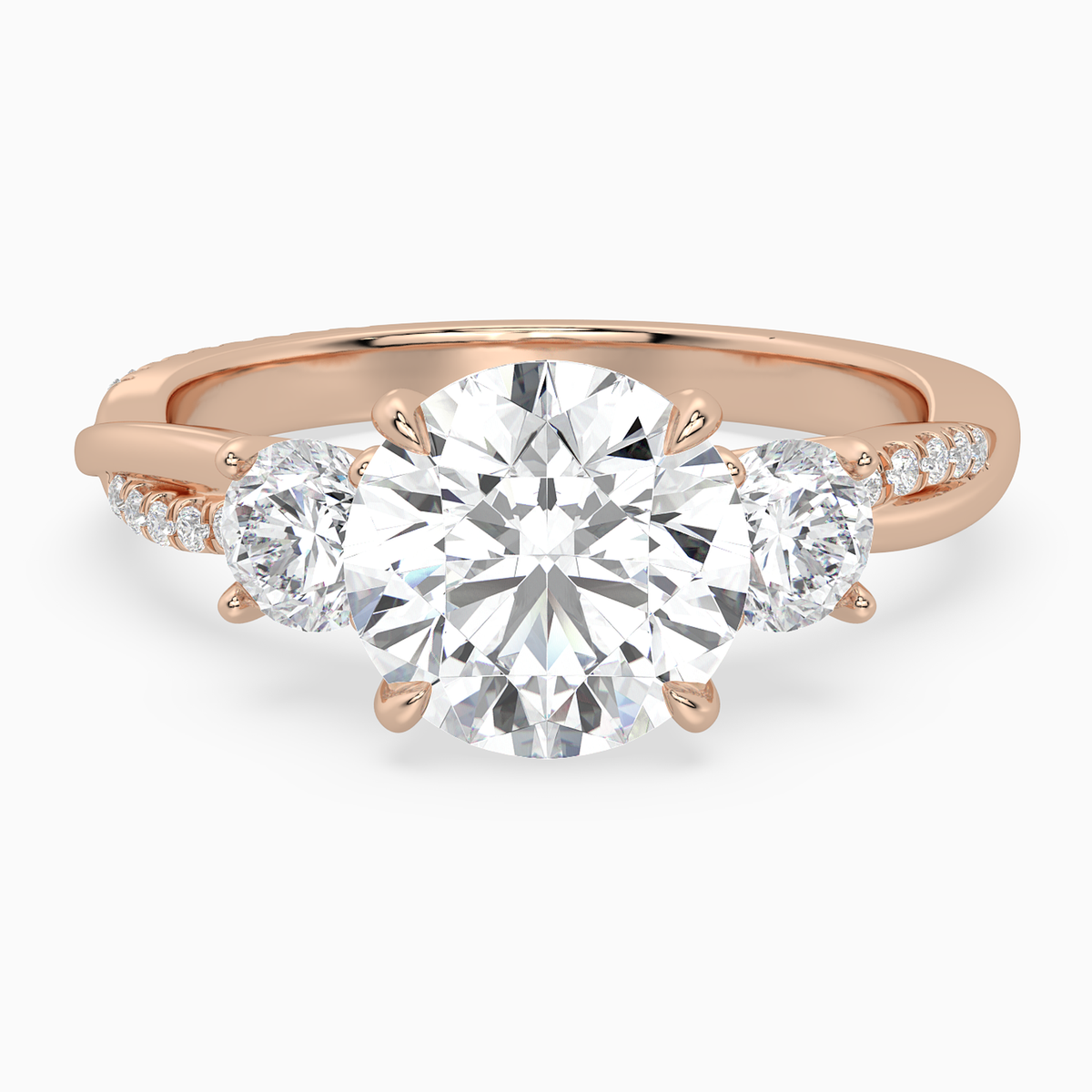


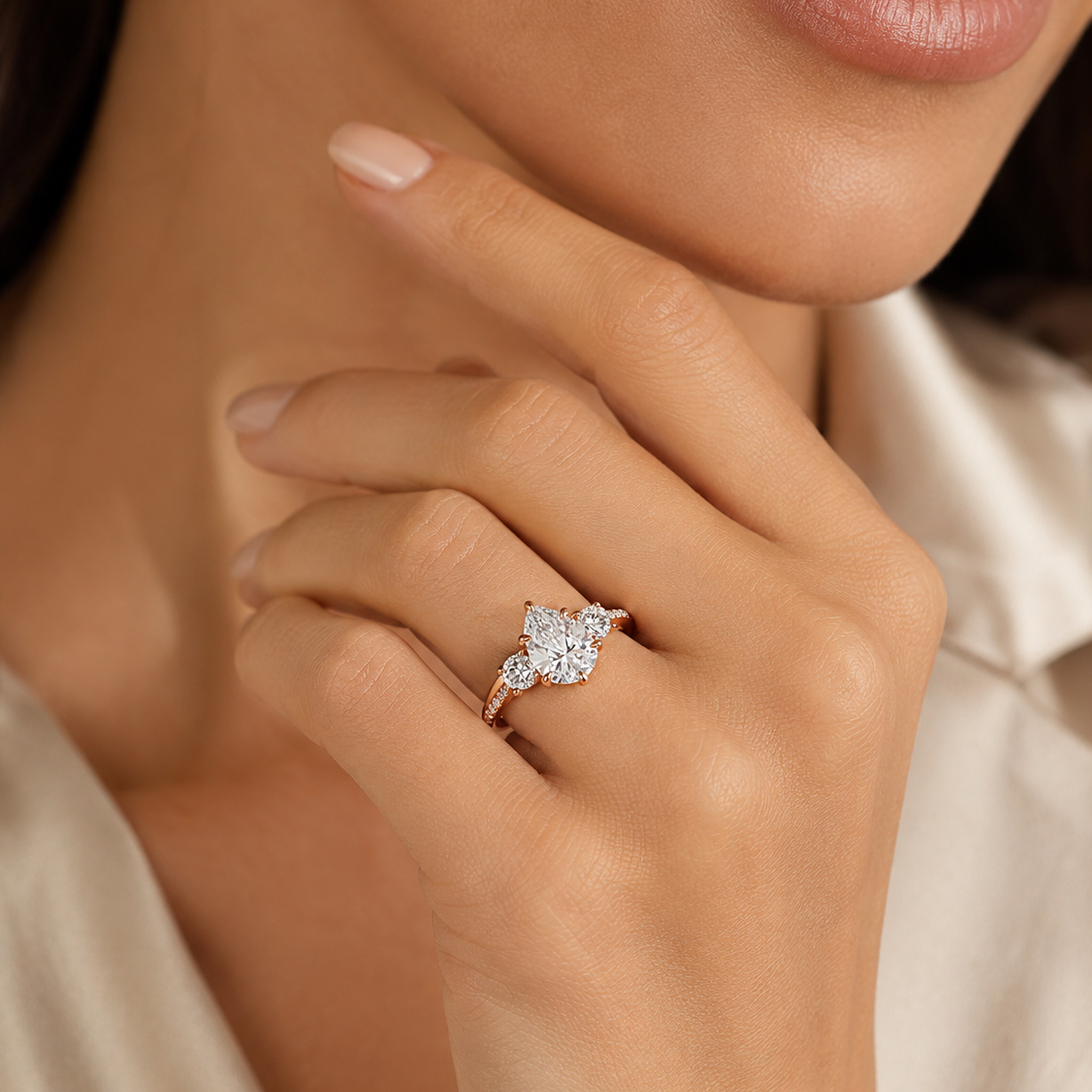


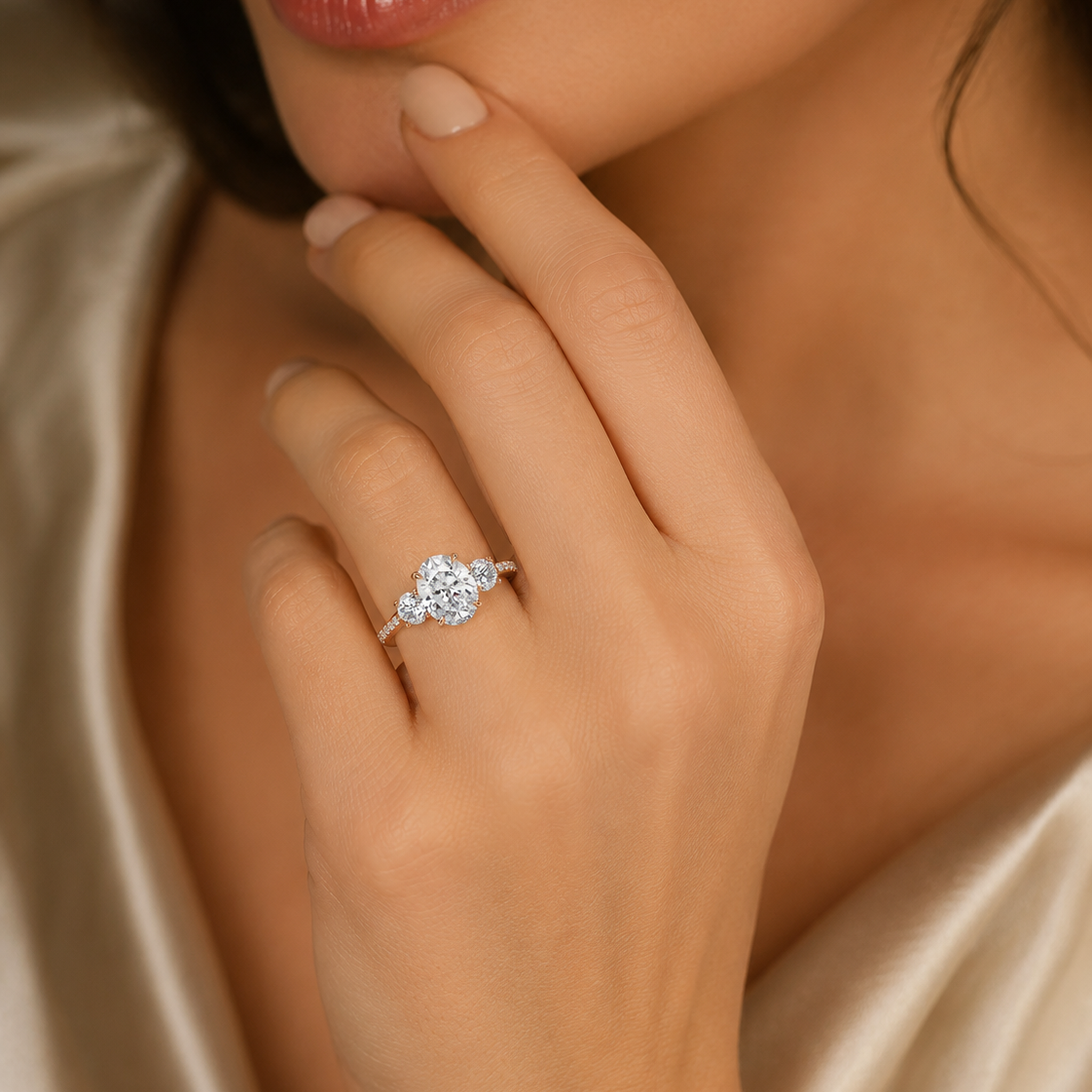










14K Rose Gold: Three Stones, One Measured Composition
Begin with Relative Scale
A three-stone ring asks the eye to read one center with two principal companions. Across these seven rings, the useful distinction is not symbolism but proportion: how far the side stones step down, how their outlines answer the center, and how the trio meets the shoulders. Rose gold gives that sequence a warm field without determining the result.
Olive, Elise, Freya and Tahlia form four verified families. Every product also belongs to the parent Three Stone collection, so this page is a metal-specific comparison rather than a separate assortment.
Round Companions, Two Different Languages
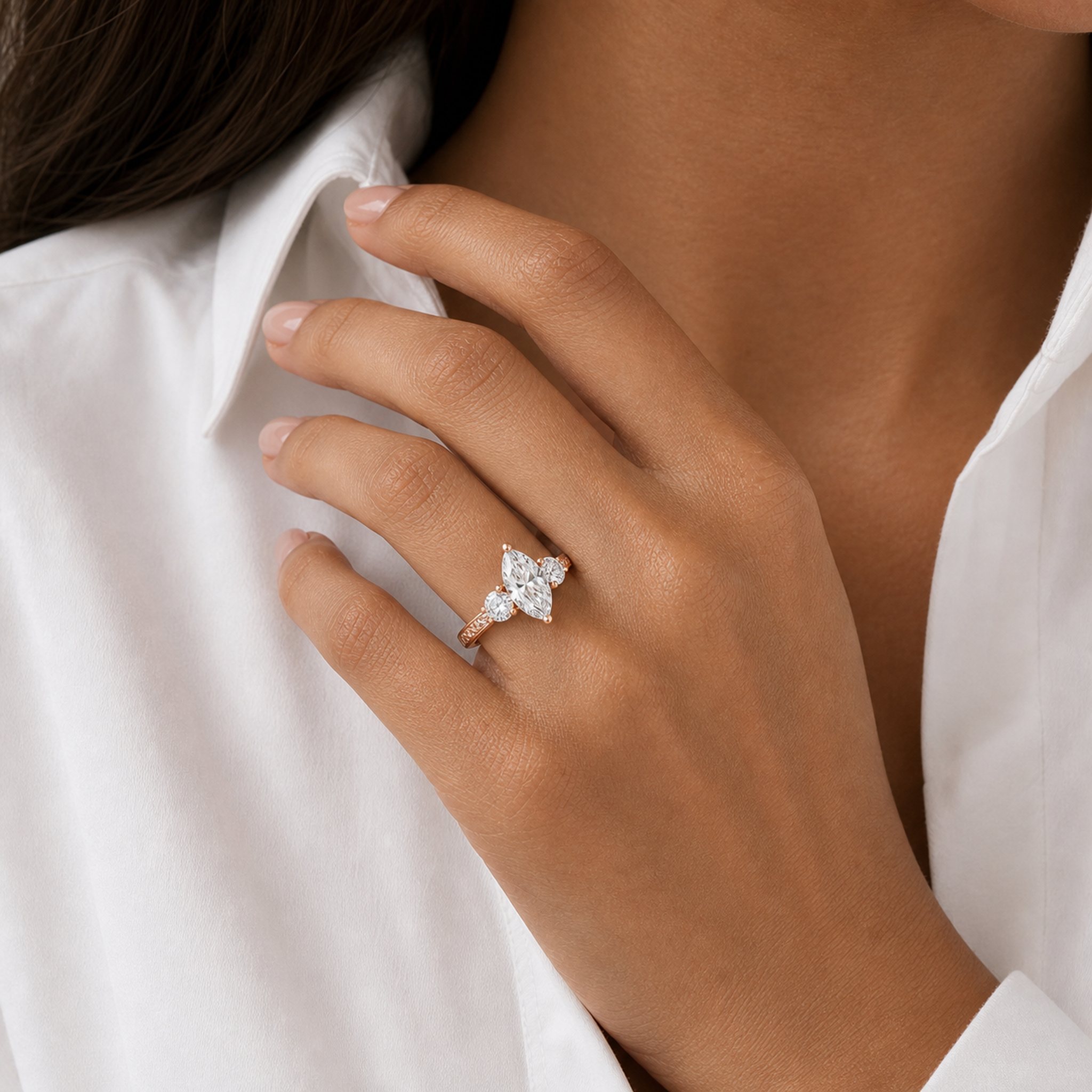
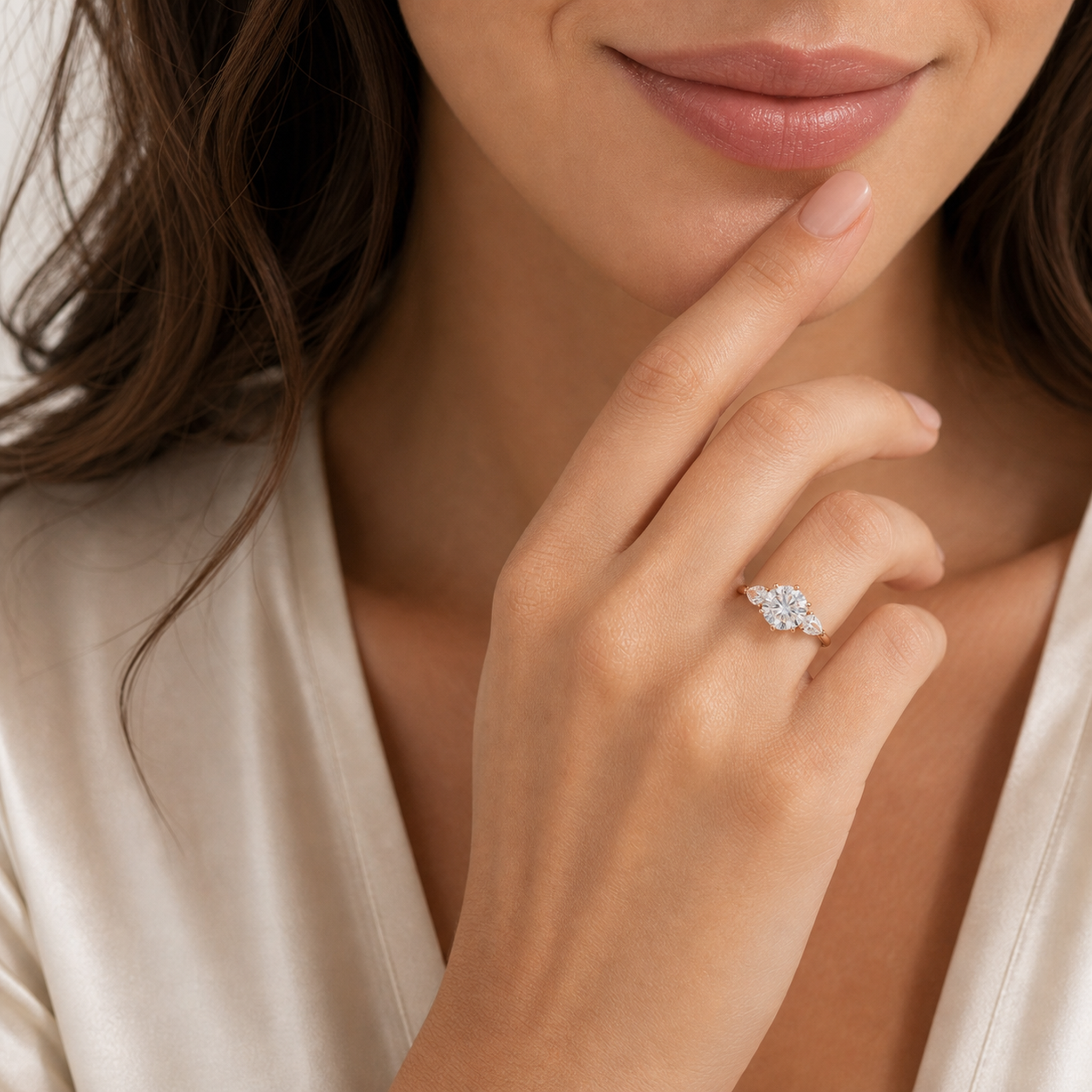
Olive places graduated round side stones beside round or oval centers, then continues through twisting pavé vine shoulders. Elise also uses round side stones, but engraved shoulders and milgrain-style detail create a more framed transition around marquise or pear centers.
Tapered and Pear-Shaped Alternatives
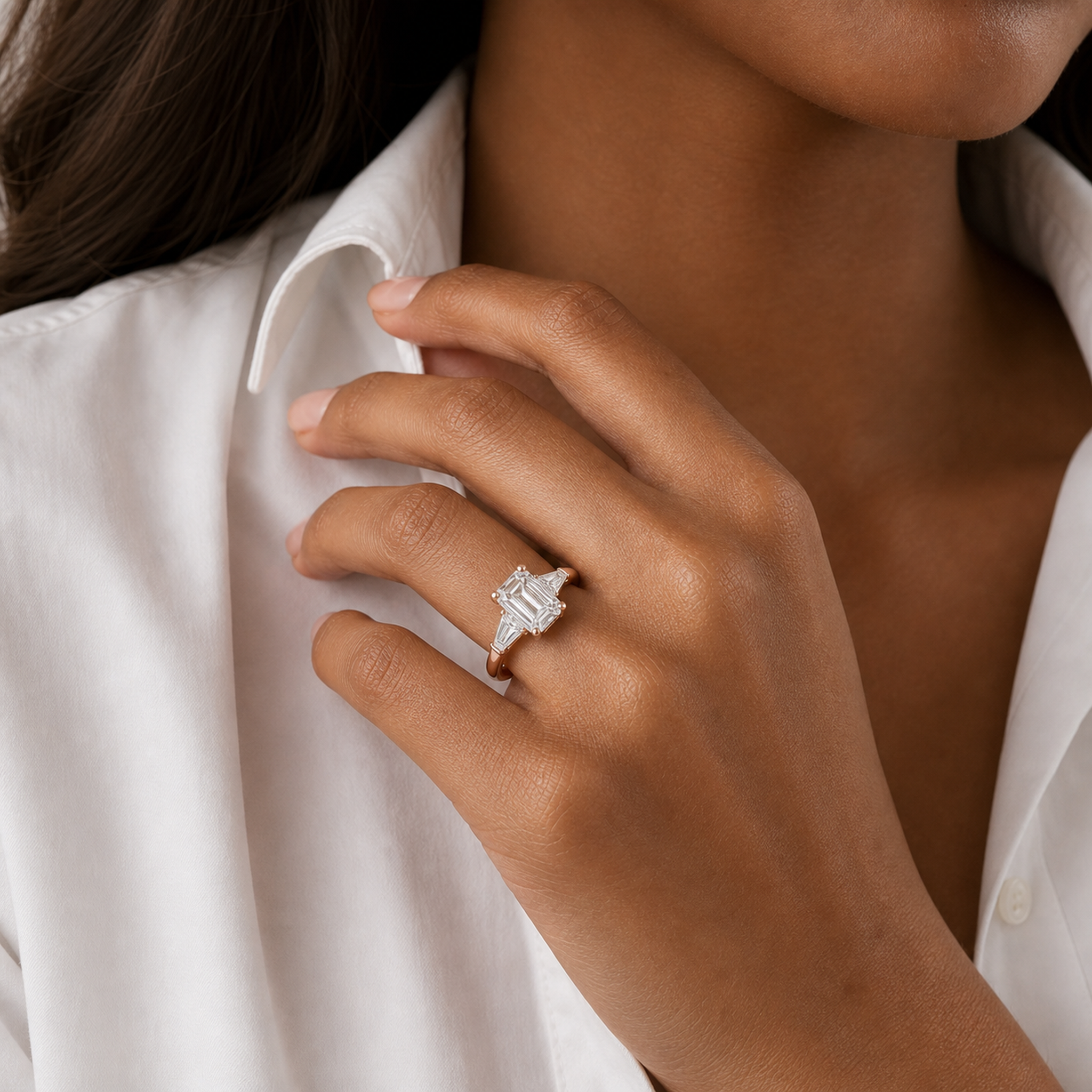
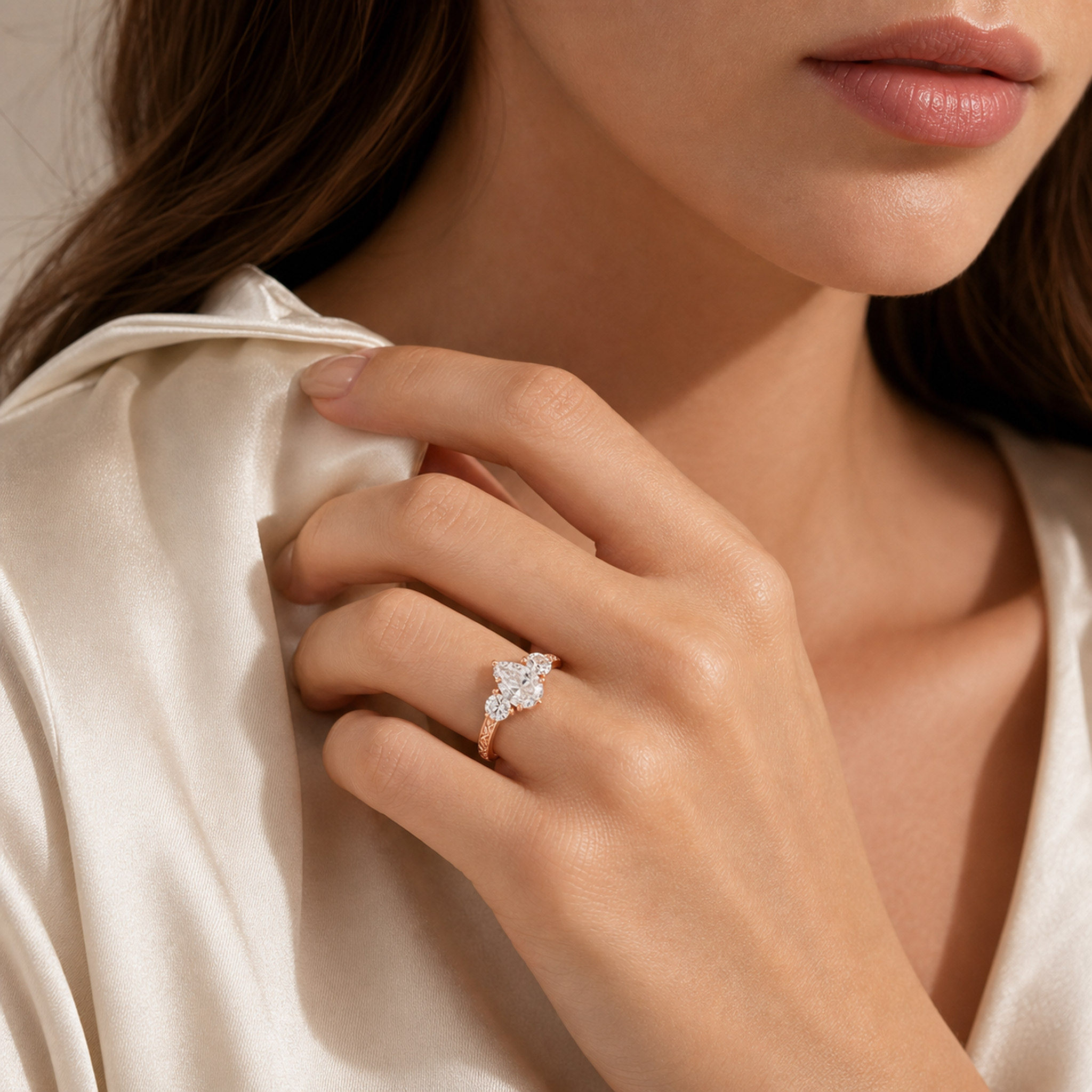
Freya pairs an emerald center with tapered side stones on a clean plain shank. The public description does not identify those companions as baguettes. Tahlia uses pear-shaped companions beside round or oval centers and moves into a clean tapered band.
Three Principal Stones, Not Shoulder Accents
Here, both flankers participate in the primary composition. Side Stone instead owns smaller subordinate accents beside the head or along the shoulders. Keeping that hierarchy explicit prevents the two collections from becoming near-duplicates.
Inspect the Whole Span
Compare the face-up spacing, center emphasis, combined width and side-to-shoulder transition, then inspect height from profile. Exact stone dimensions, grading, setting security, comfort, wedding-band clearance, care and resizing remain product-specific.
Frequently Asked Questions
How many rings appear on this page?
7.
Are all seven 14K rose gold?
Yes, in the current public collection data.
Which design families appear?
Olive, Elise, Freya and Tahlia.
What defines a three-stone composition here?
One center and two principal companion stones.
Which rings use round side stones?
Olive and Elise.
What distinguishes Olive?
Graduated round side stones and twisting pavé vine shoulders.
What distinguishes Elise?
Round side stones with engraved shoulders and milgrain-style detail.
What does Freya use?
Tapered side stones beside an emerald center.
Are Freya’s side stones confirmed baguettes?
No; the public description only says tapered side stones.
What does Tahlia use?
Pear-shaped companion stones and a clean tapered band.
Which center shapes appear?
Round, oval, marquise, pear and emerald.
How is this page different from Side Stone?
It compares three principal stones rather than subordinate shoulder accents.
Does rose gold guarantee stronger contrast?
No.
Are the side stones perfectly matched?
No such claim is made.
Is setting security identical?
No; inspect the exact ring.
Will every wedding band sit flush?
Not necessarily.