
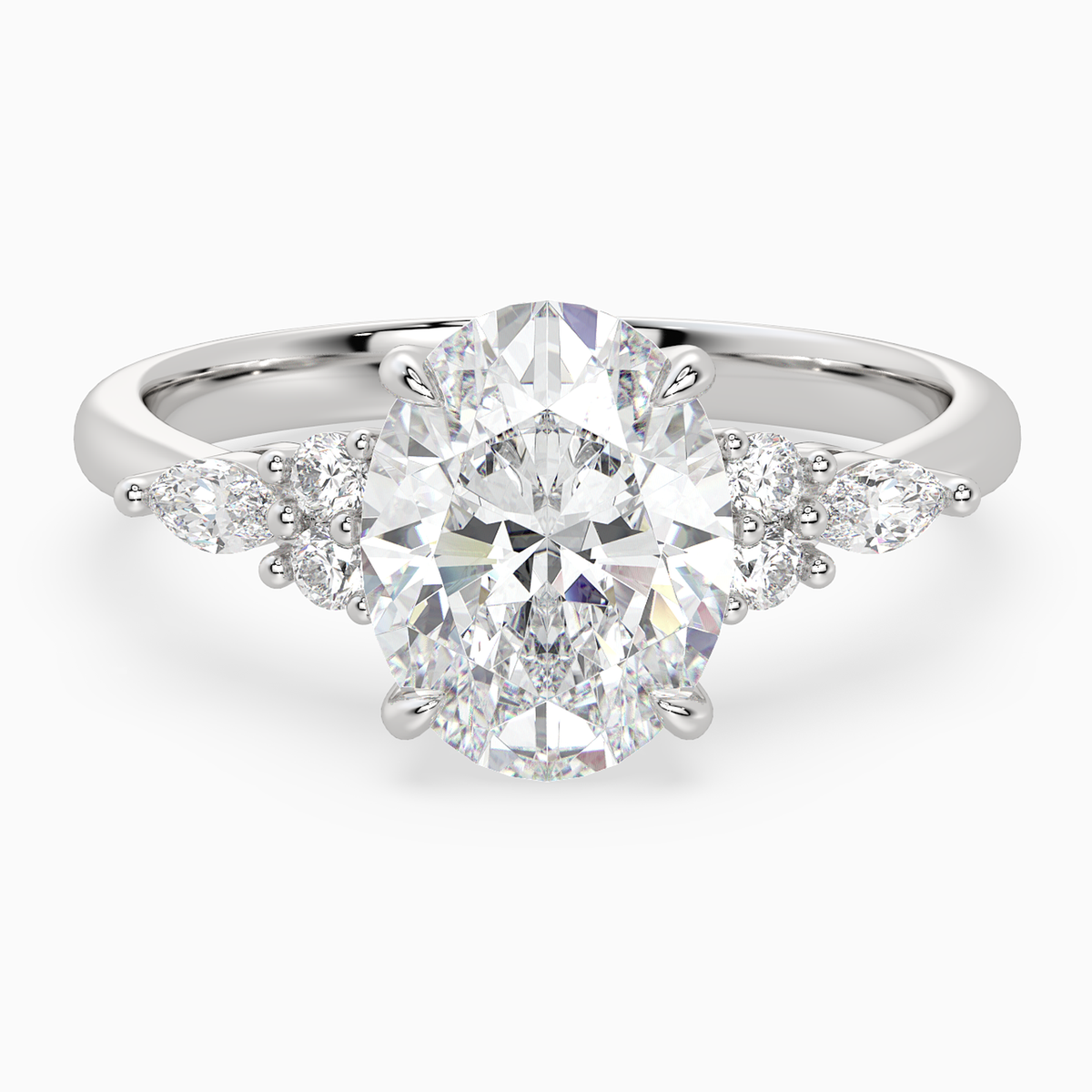


Three Stone Engagement Rings in 14K Yellow Gold
Yellow gold defines the three-stone sequence. Compare all 7 rings by flanker shape, size progression, spacing, band taper and total width.


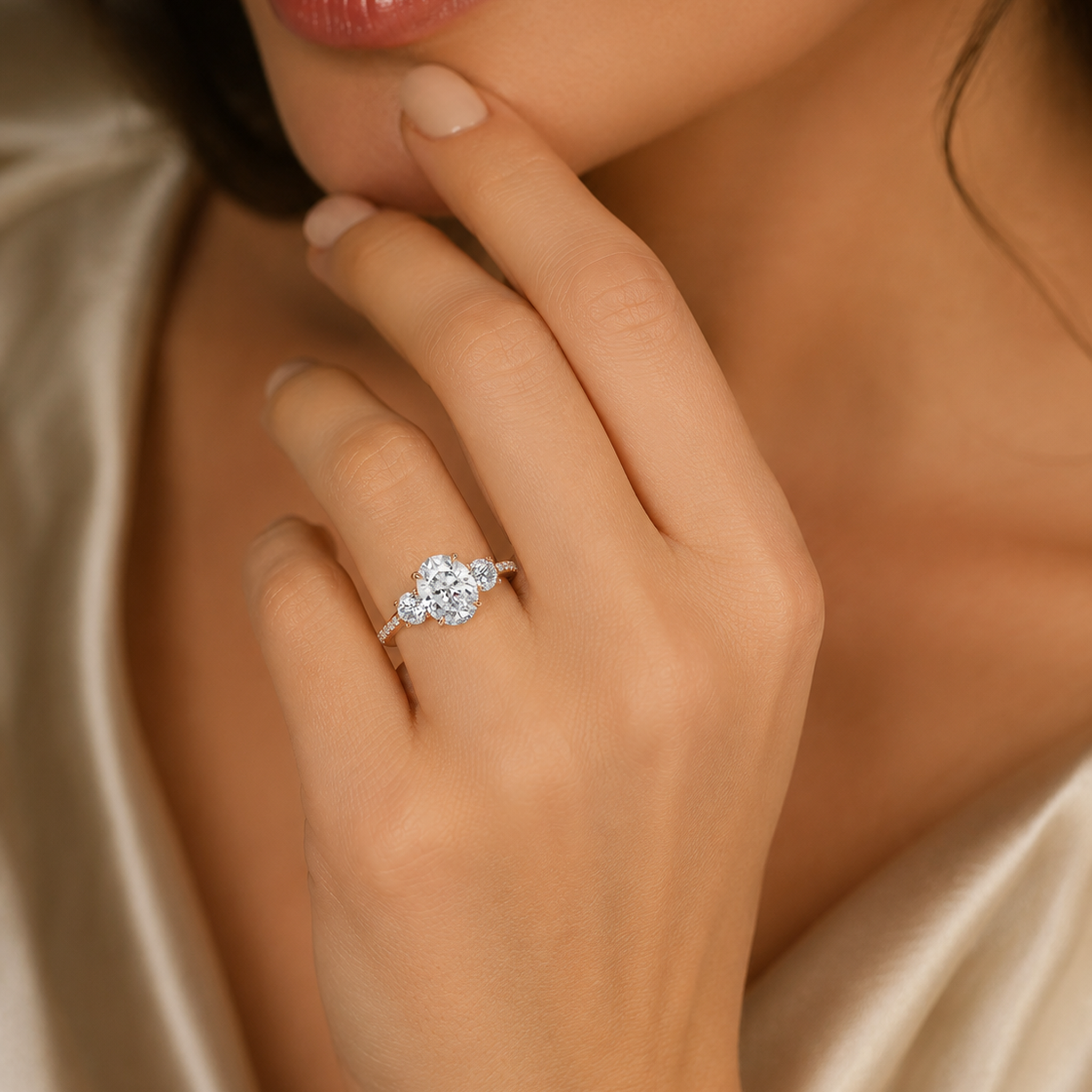


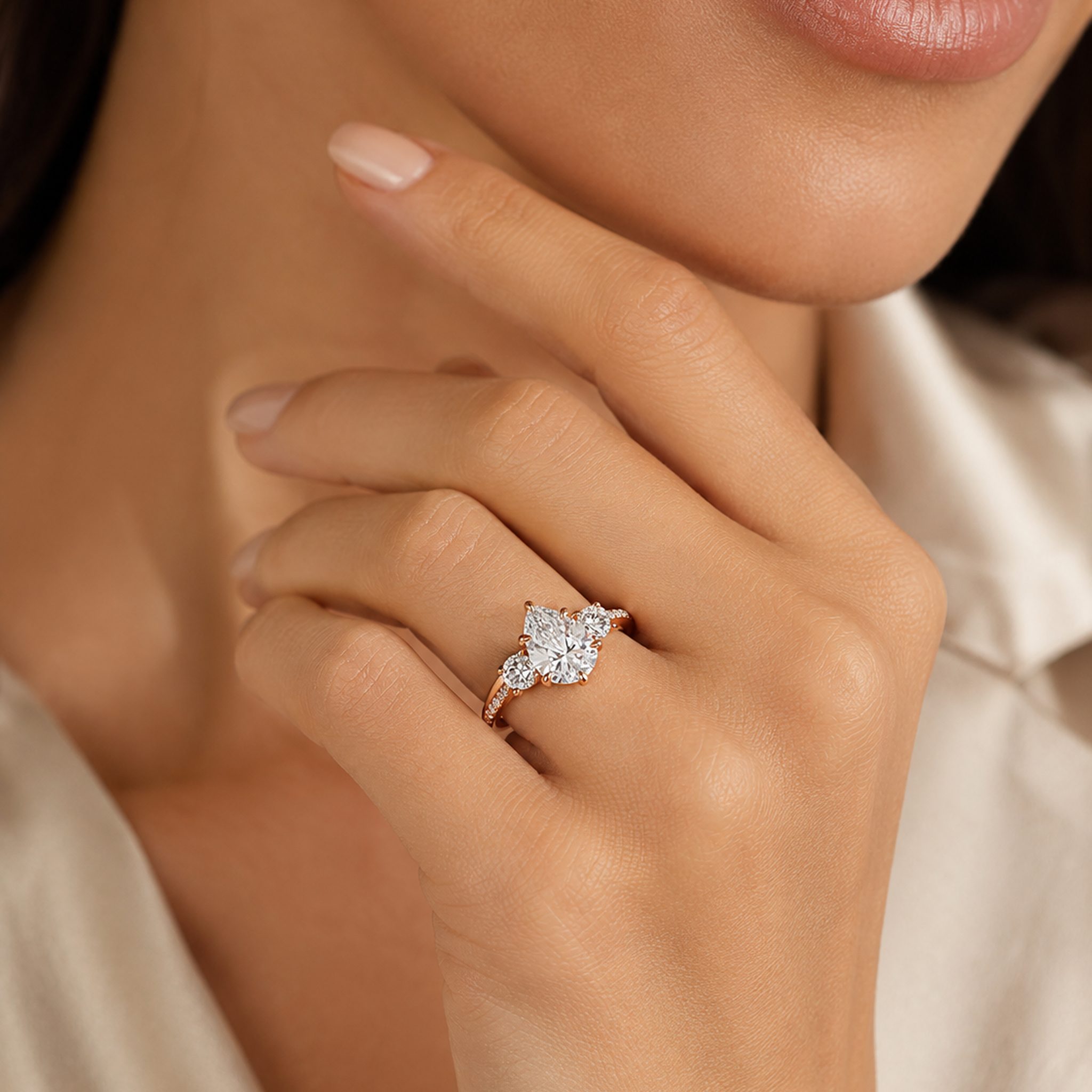


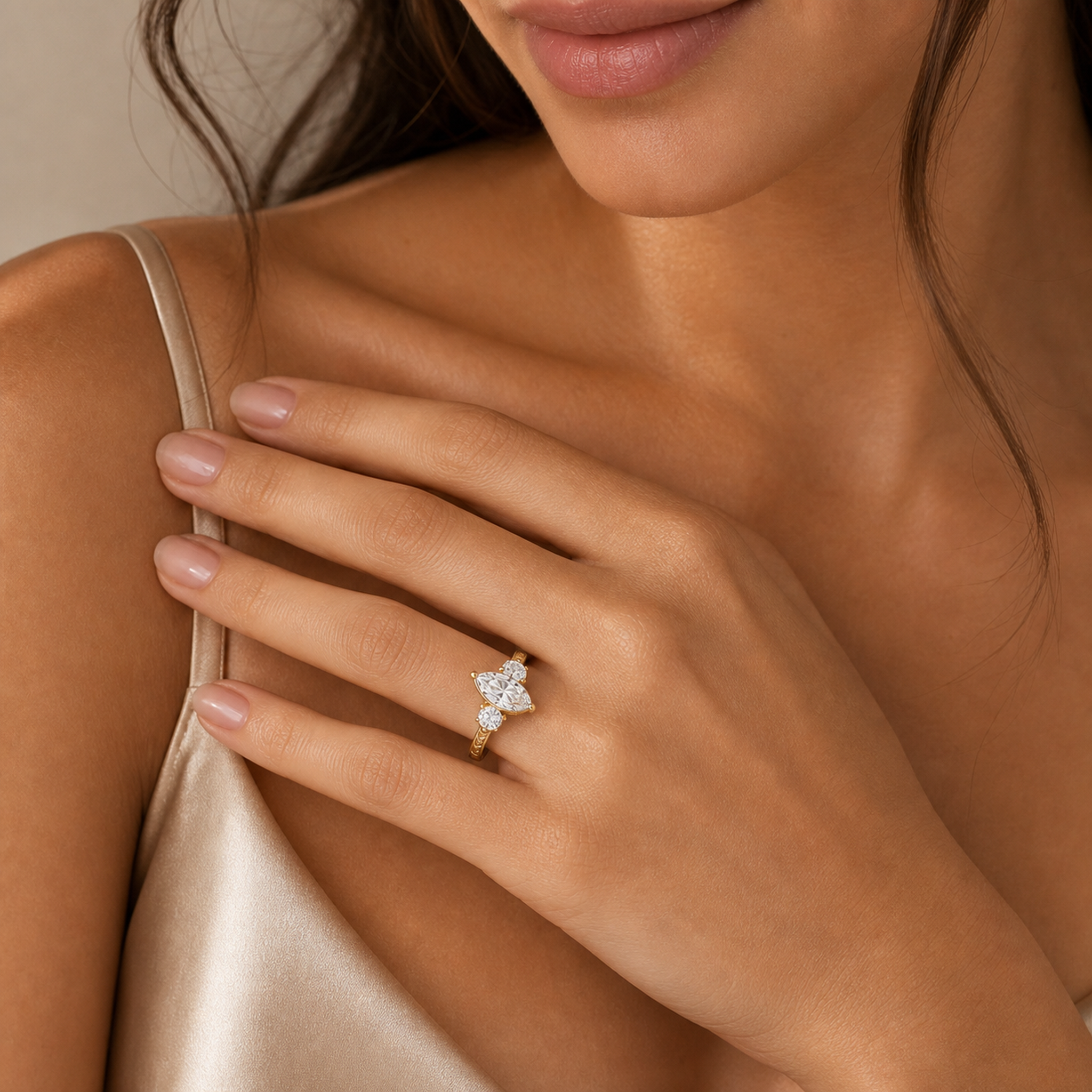


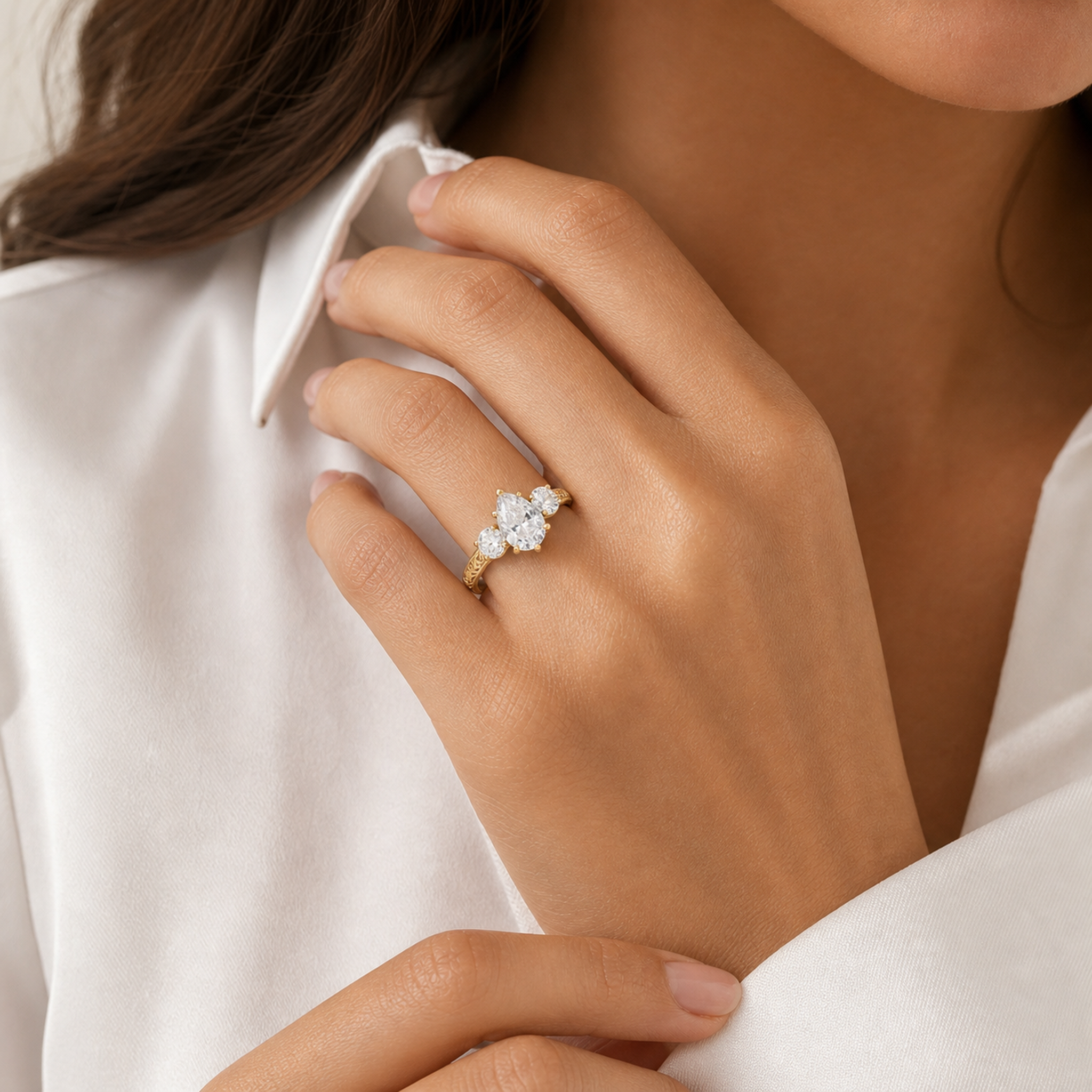


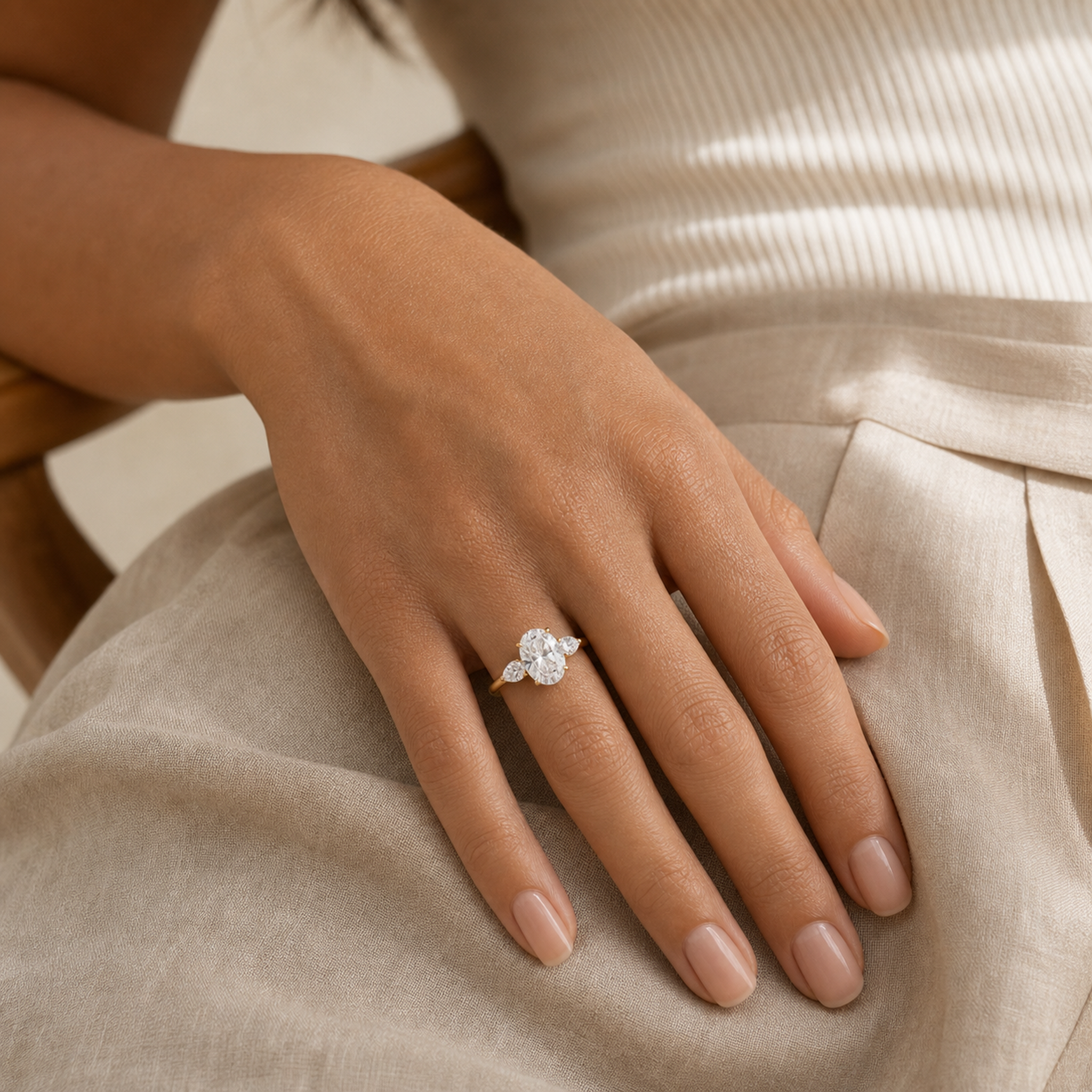


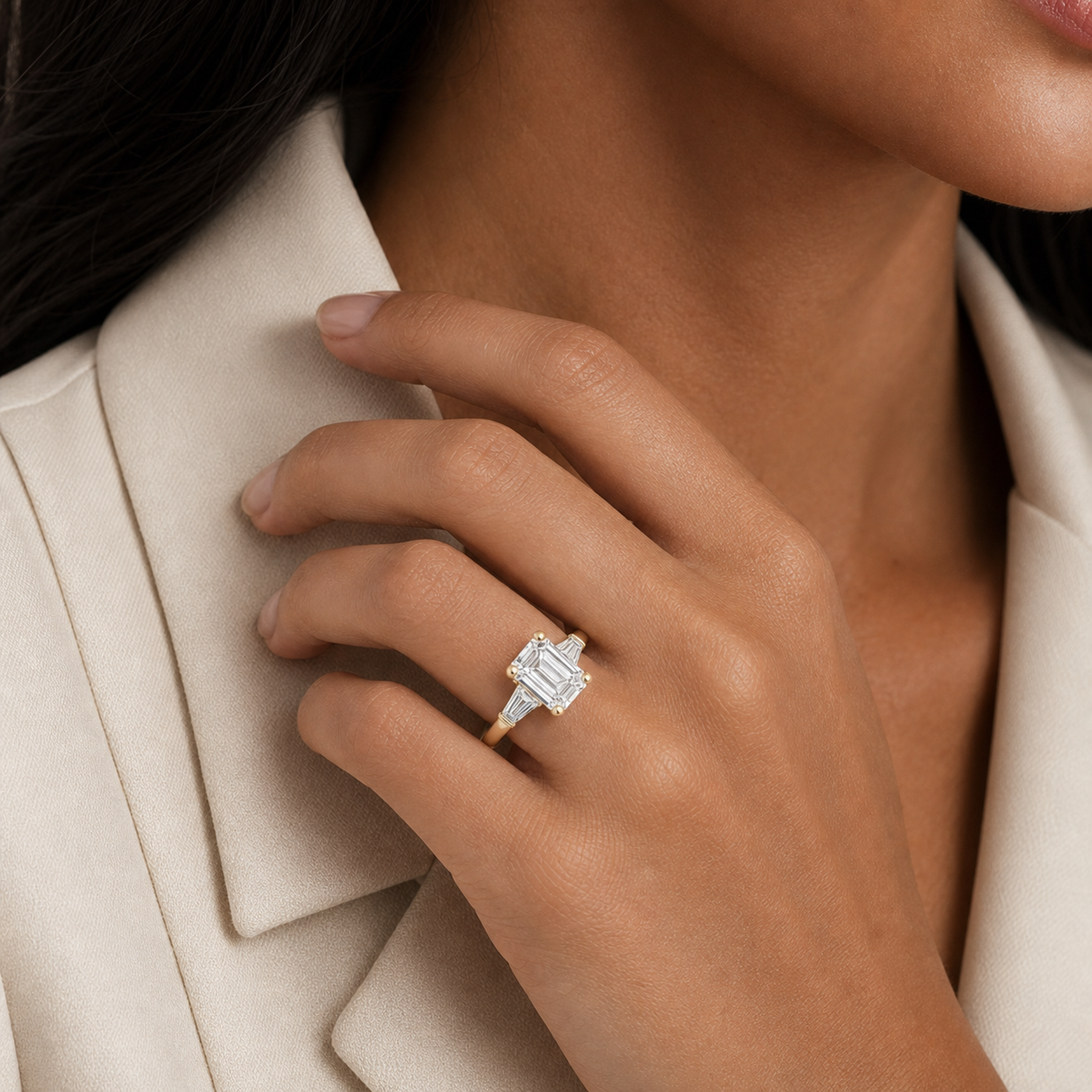


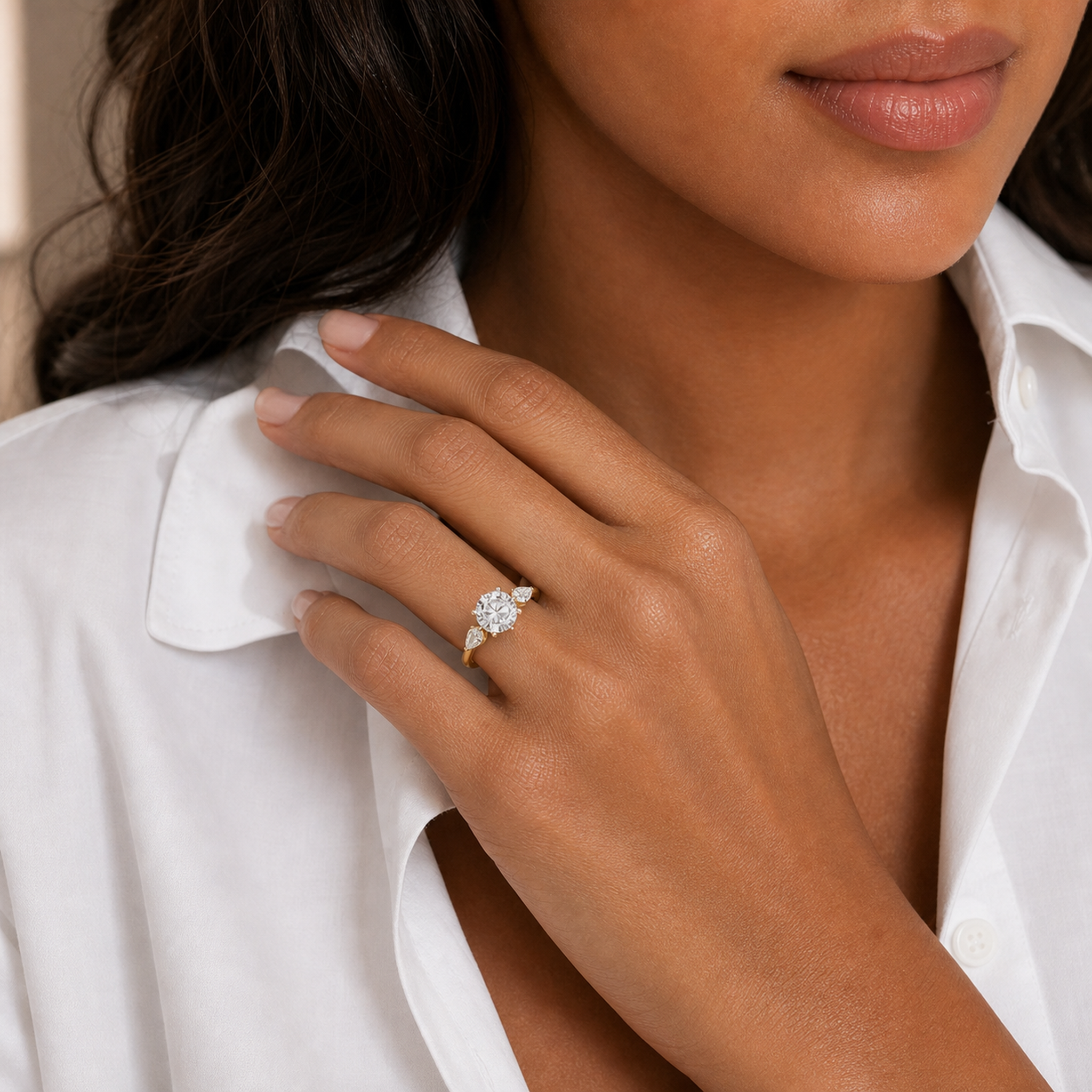
14K Yellow Gold: Definition from Center to Flankers
Let the Intervals Organize the Trio
Yellow gold creates a visible ground between the three principal stones. That makes the gaps, settings and transition into the shoulders part of the composition. Across seven rings, compare whether the side shapes echo the center, contrast with it, or create a deliberate step in outline.
Olive and Elise both employ round companions but lead into different shoulders. Freya and Tahlia introduce tapered and pear-shaped alternatives. The result is four distinct ways to control breadth and center emphasis.
Graduated versus Framed
Olive graduates round side stones beside round or oval centers, then extends through twisting pavé vine shoulders. Elise places round companions beside marquise or pear centers and uses engraving with milgrain-style detail to frame the trio.
Clean Geometry versus Curved Companions
Freya combines an emerald center, tapered side stones and a plain shank. Tahlia’s pear-shaped companions create curved outer points beside round or oval centers before the band narrows.
Style Overlap Does Not Change Page Ownership
Nature Inspired owns Olive’s vine motif; Vintage owns Elise’s historical detail; Classic owns the restraint of Freya and Tahlia. This page remains focused on three-principal-stone proportion, spacing and total span.
Metal Color Is Not a Performance Metric
Approximately 58.3% of a 14K alloy is gold. The page does not promise contrast, brightness, durability, security, comfort, flush pairing or alteration results. Confirm exact specifications for the selected ring.
Frequently Asked Questions
How many 14K yellow-gold rings appear?
7.
Do the same normalized designs recur across metals?
Yes, the same seven keys recur.
What does this page own?
The proportion and spacing among three principal stones.
Which families use round companions?
Olive and Elise.
How does Olive treat the side stones?
As graduated round stones leading into vine shoulders.
How does Elise frame the trio?
With engraved shoulders and milgrain-style detail.
What side-stone description is verified for Freya?
Tapered side stones.
Which family uses pear-shaped companions?
Tahlia.
What center shapes occur?
Round, oval, marquise, pear and emerald.
How many products overlap Nature Inspired?
Two Olive designs.
How many overlap Vintage?
Two Elise designs.
How many overlap Classic?
Three Freya and Tahlia designs.
Does yellow gold guarantee diamond contrast?
No.
Does Three Stone prescribe a symbolic meaning?
No; meaning remains personal.
Is one combined width guaranteed?
No.
Will every setting wear the same way?
No.