
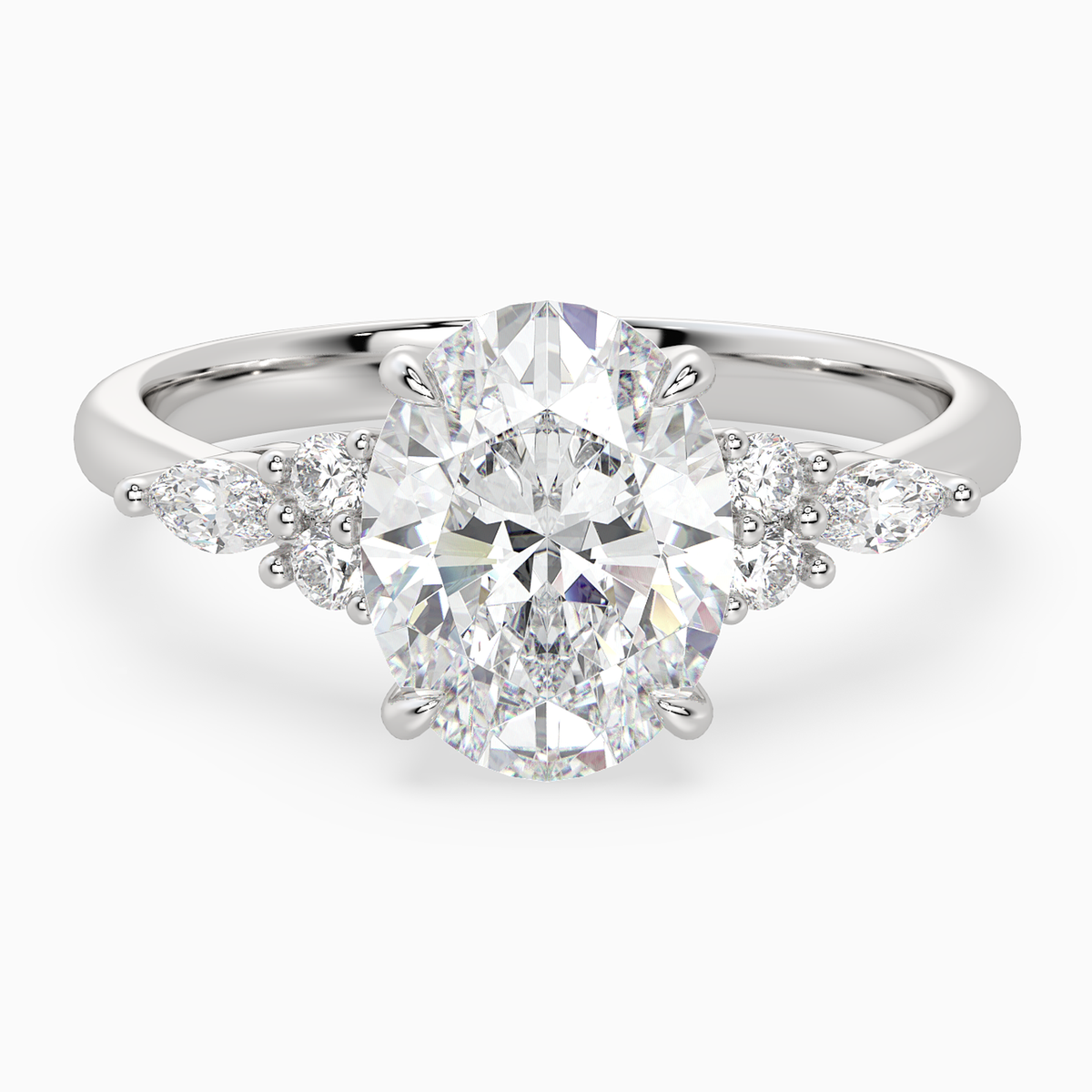


Round Diamond Engagement Rings in 18K Yellow Gold
A complete circle within a fuller gold field. 18K yellow gold gives the round brilliant warmth, definition, and measured material presence.


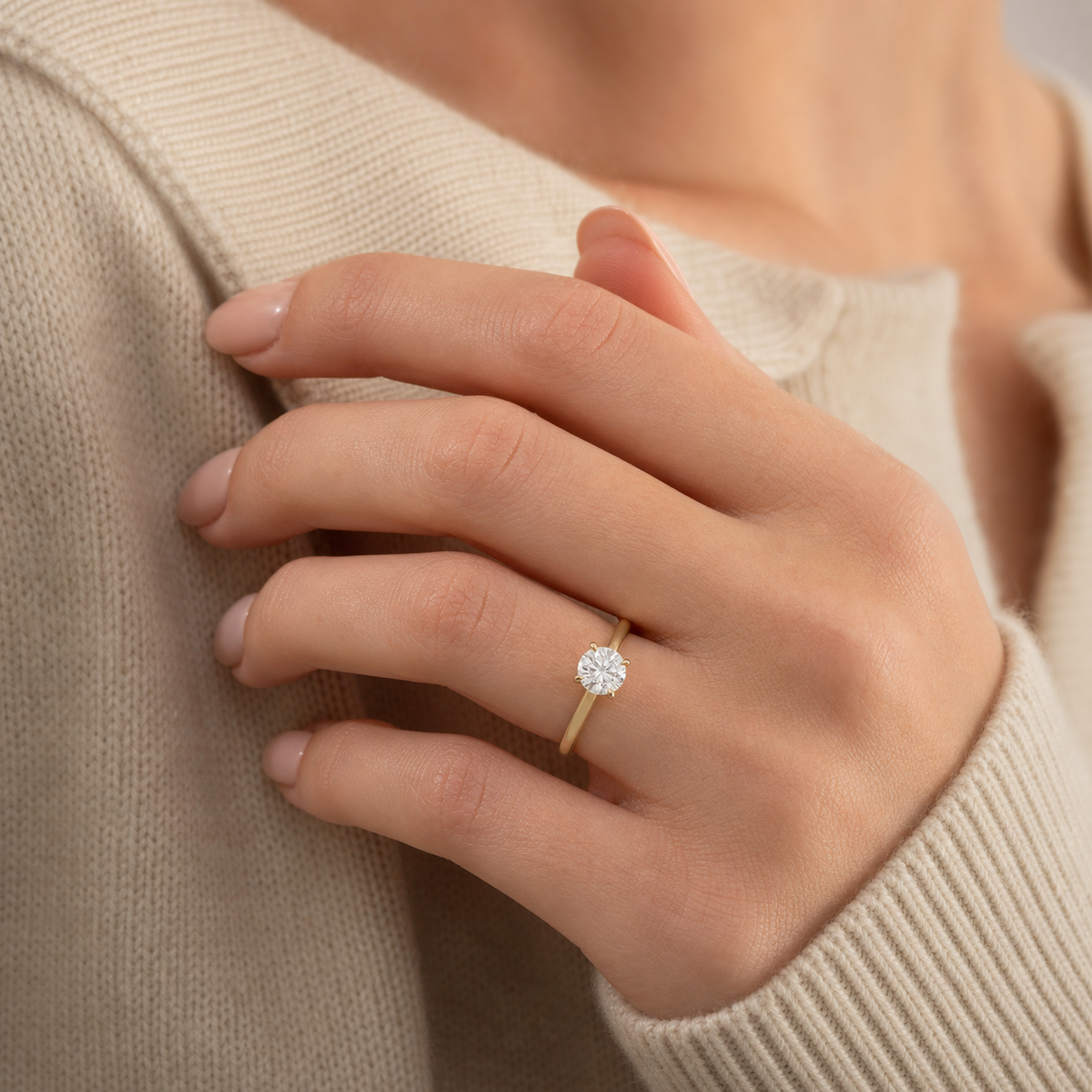


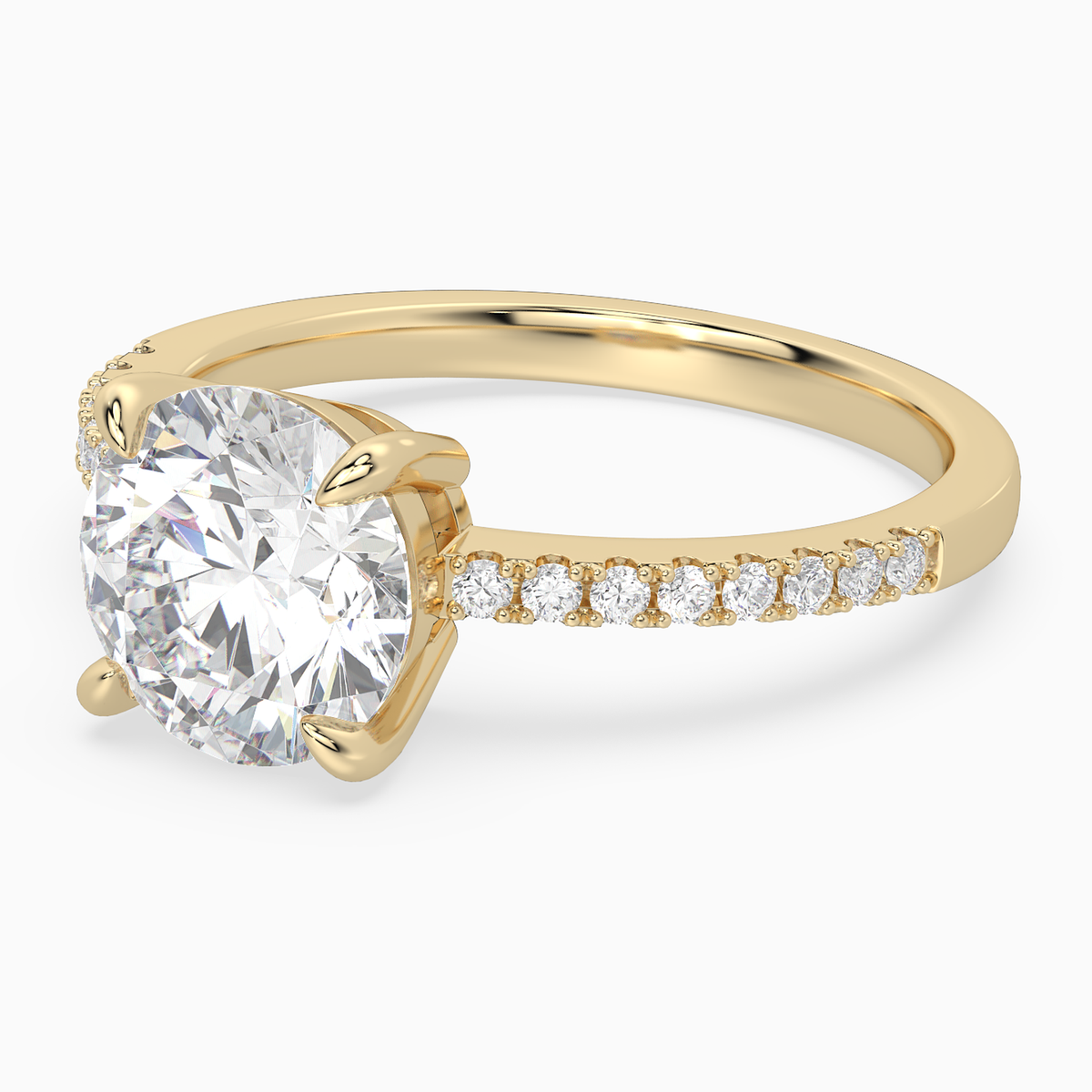
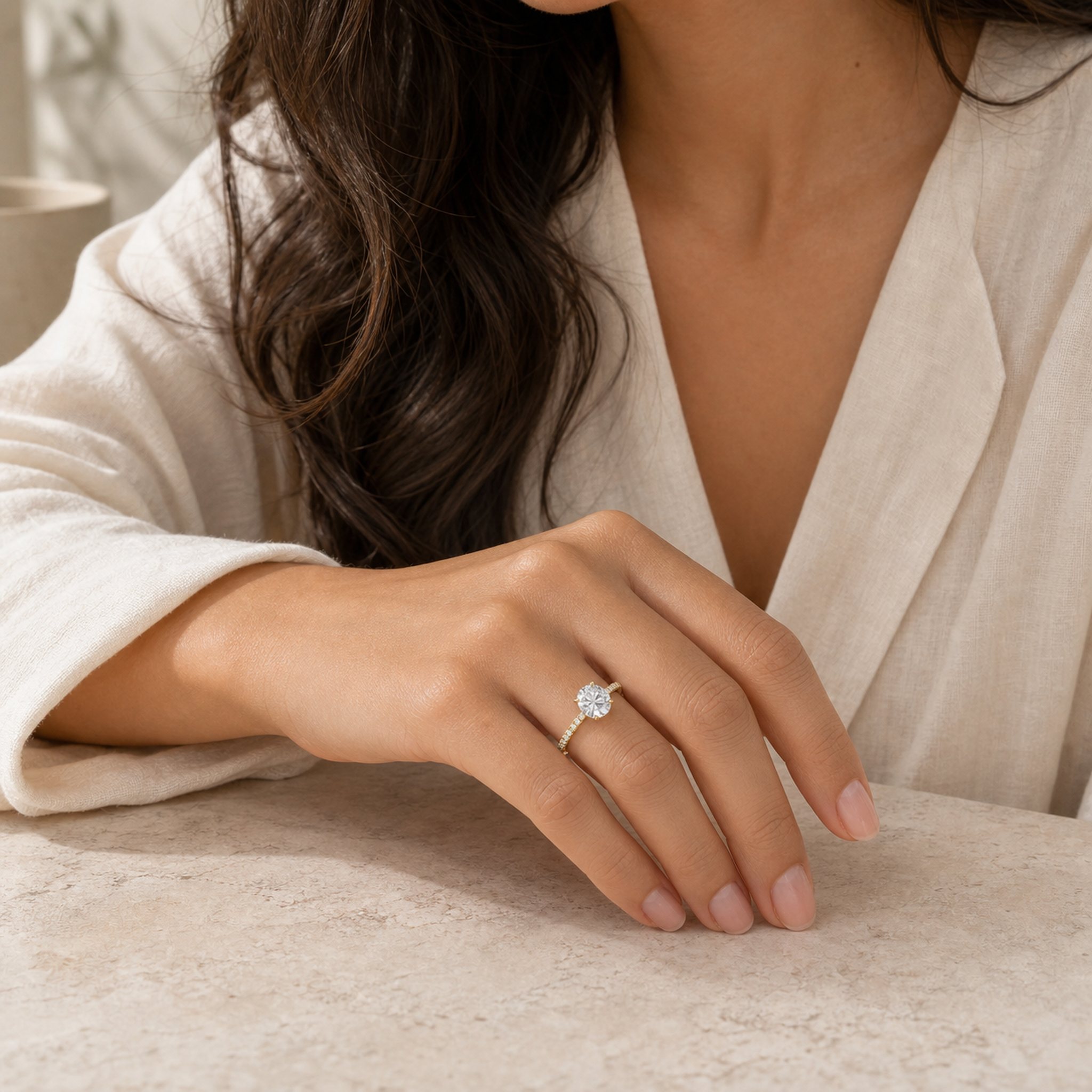
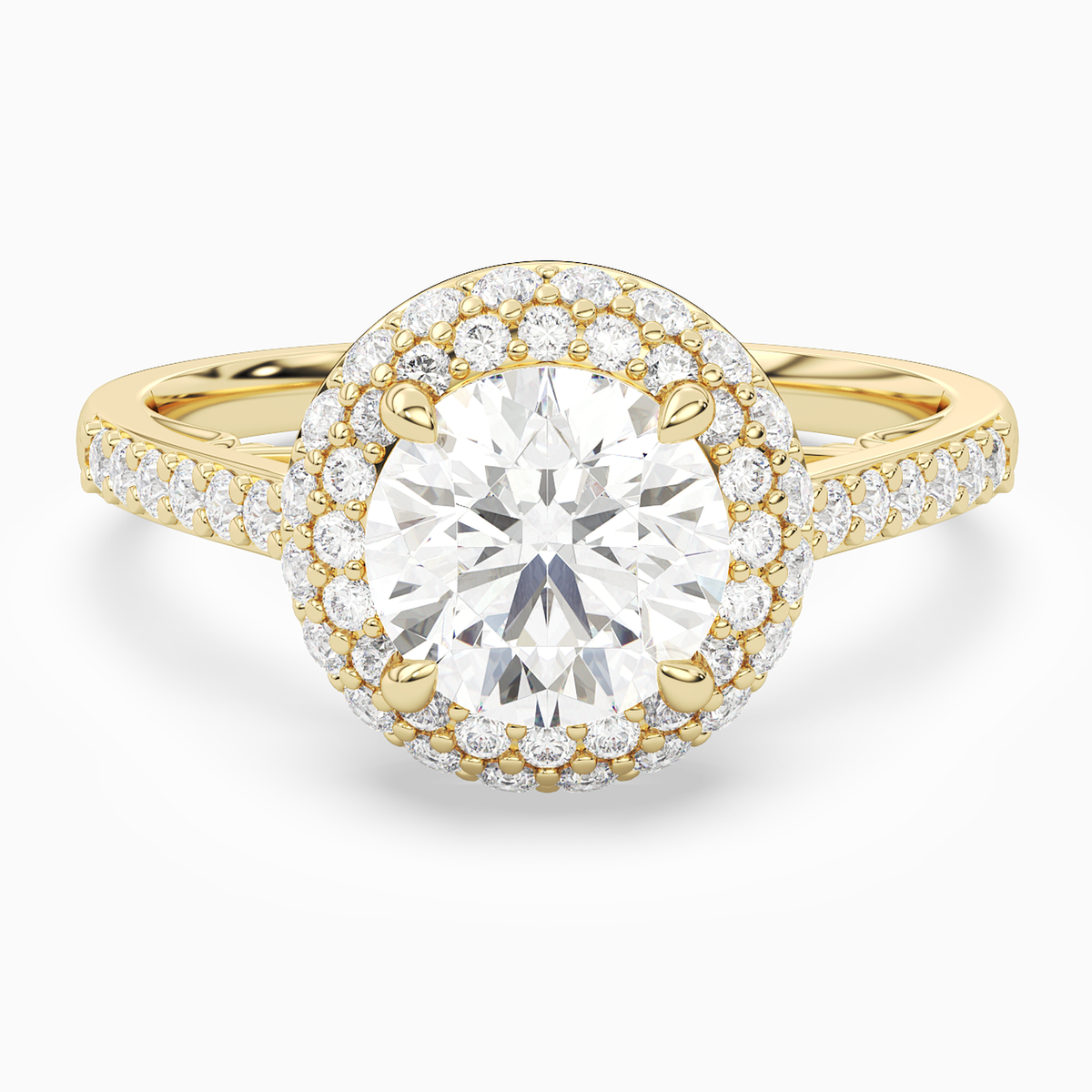


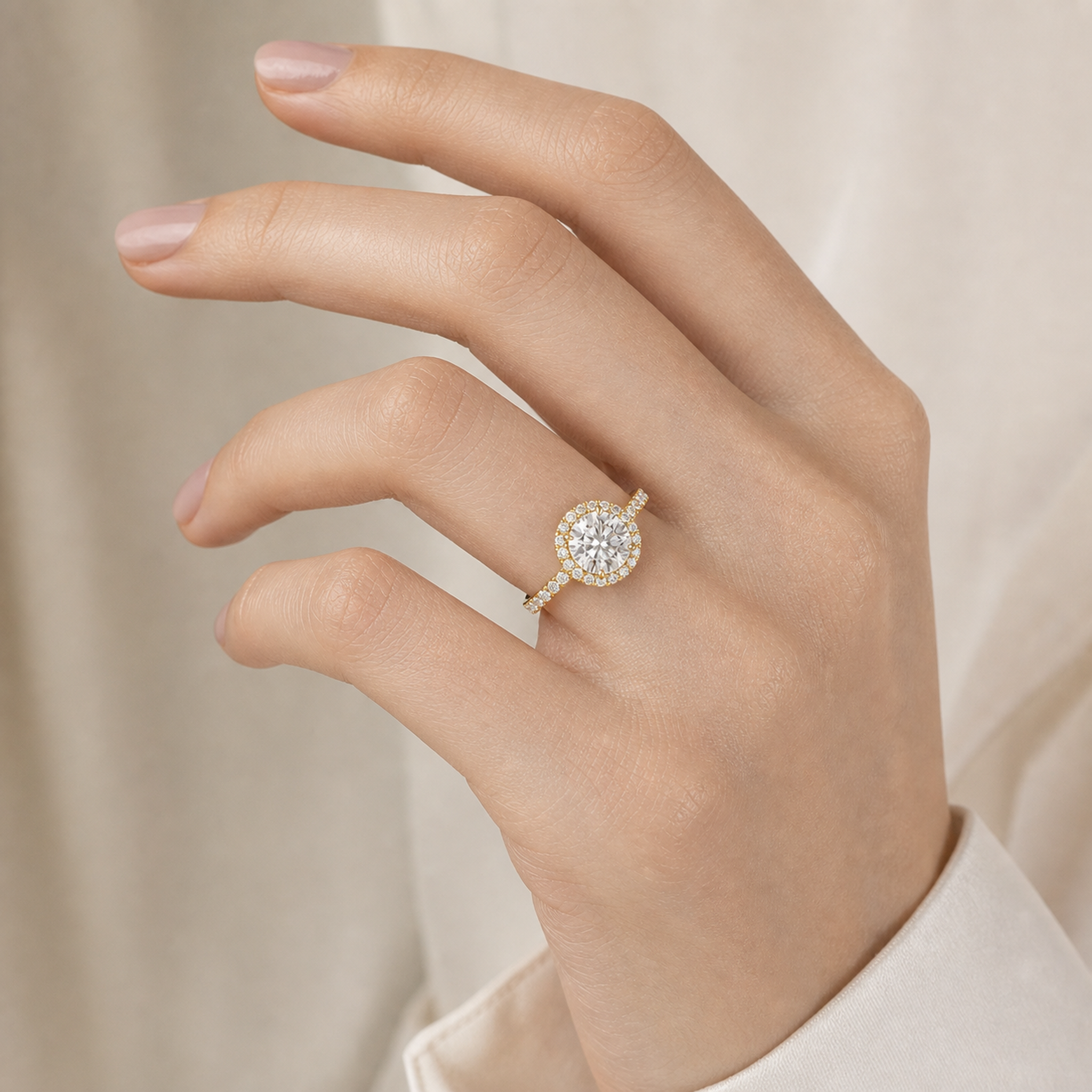
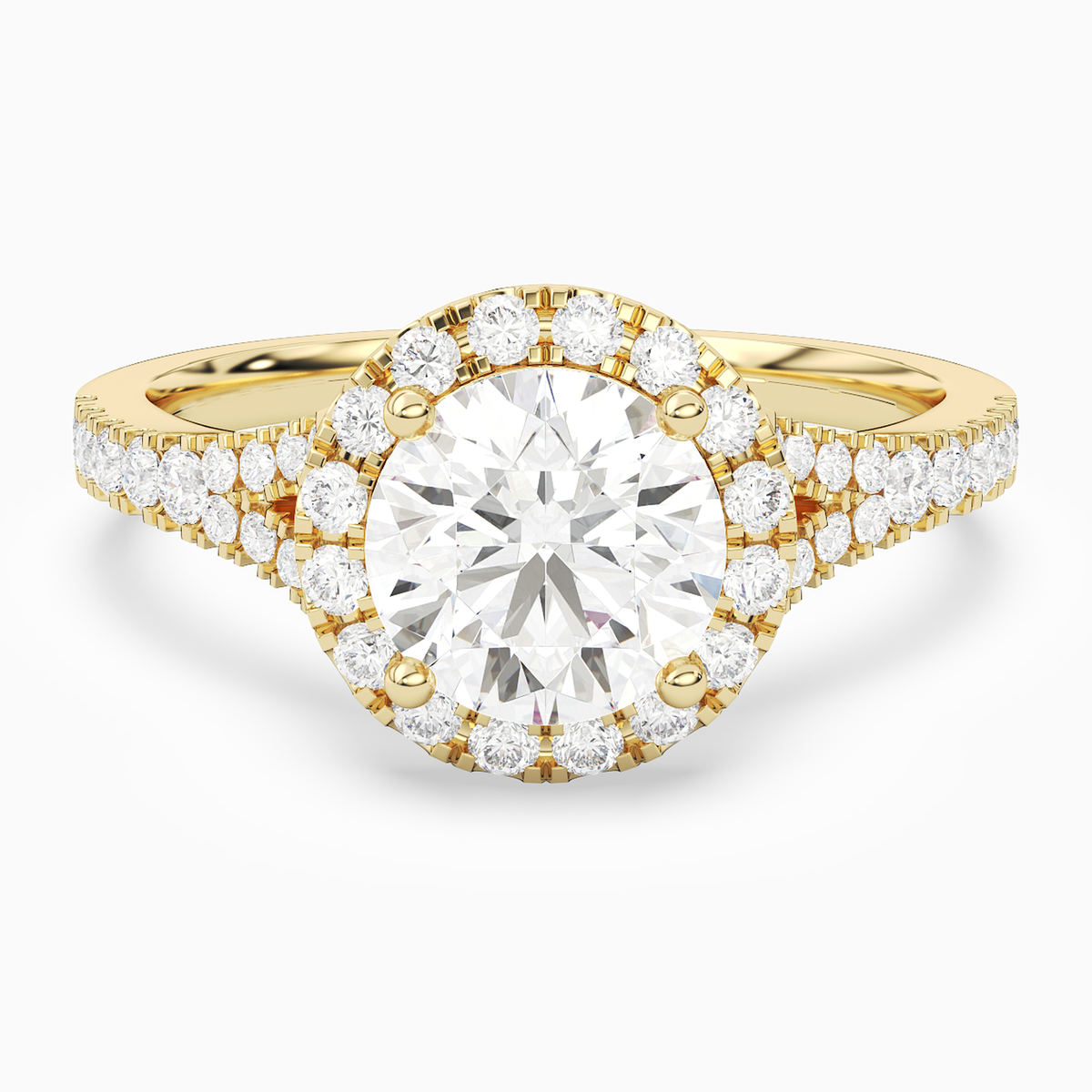


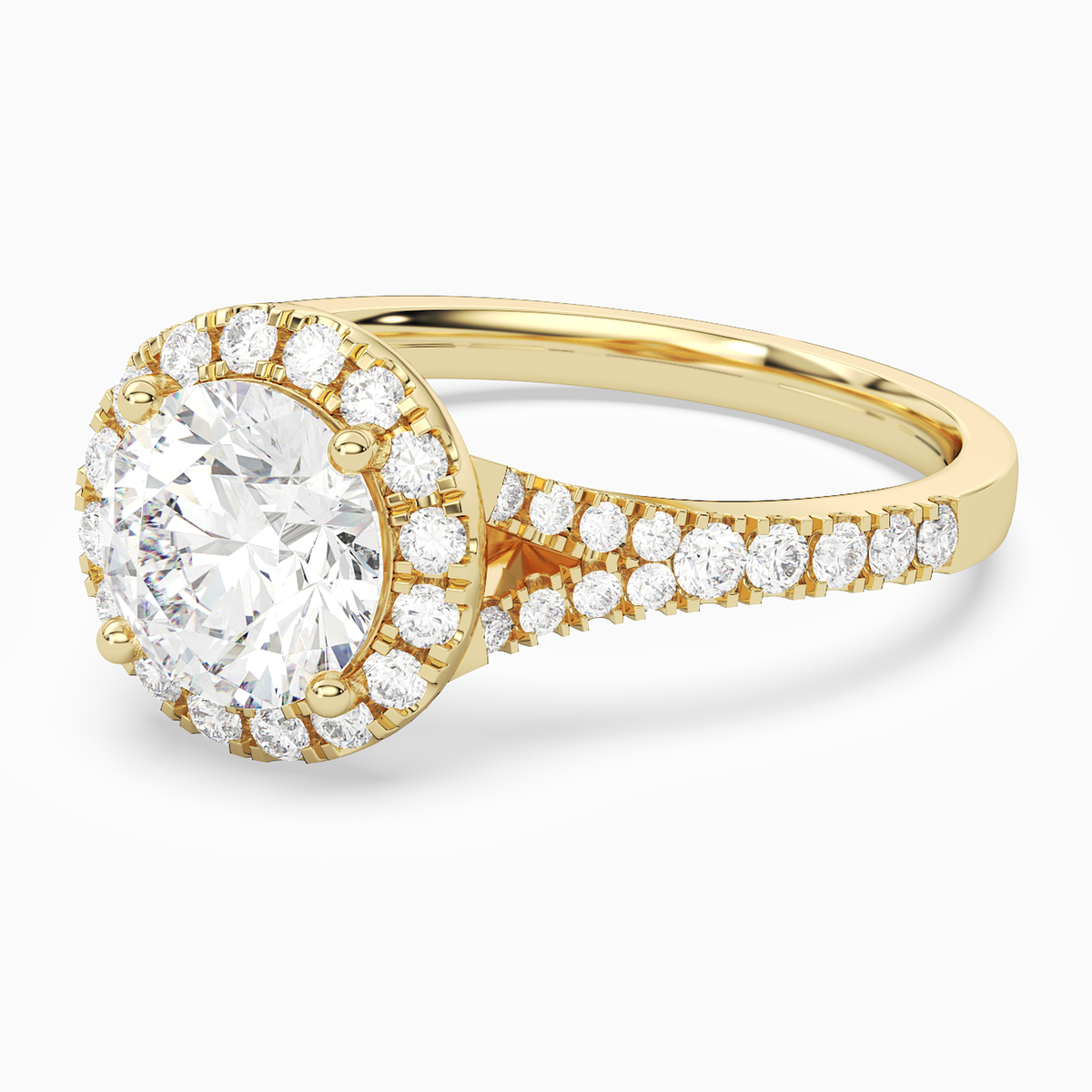
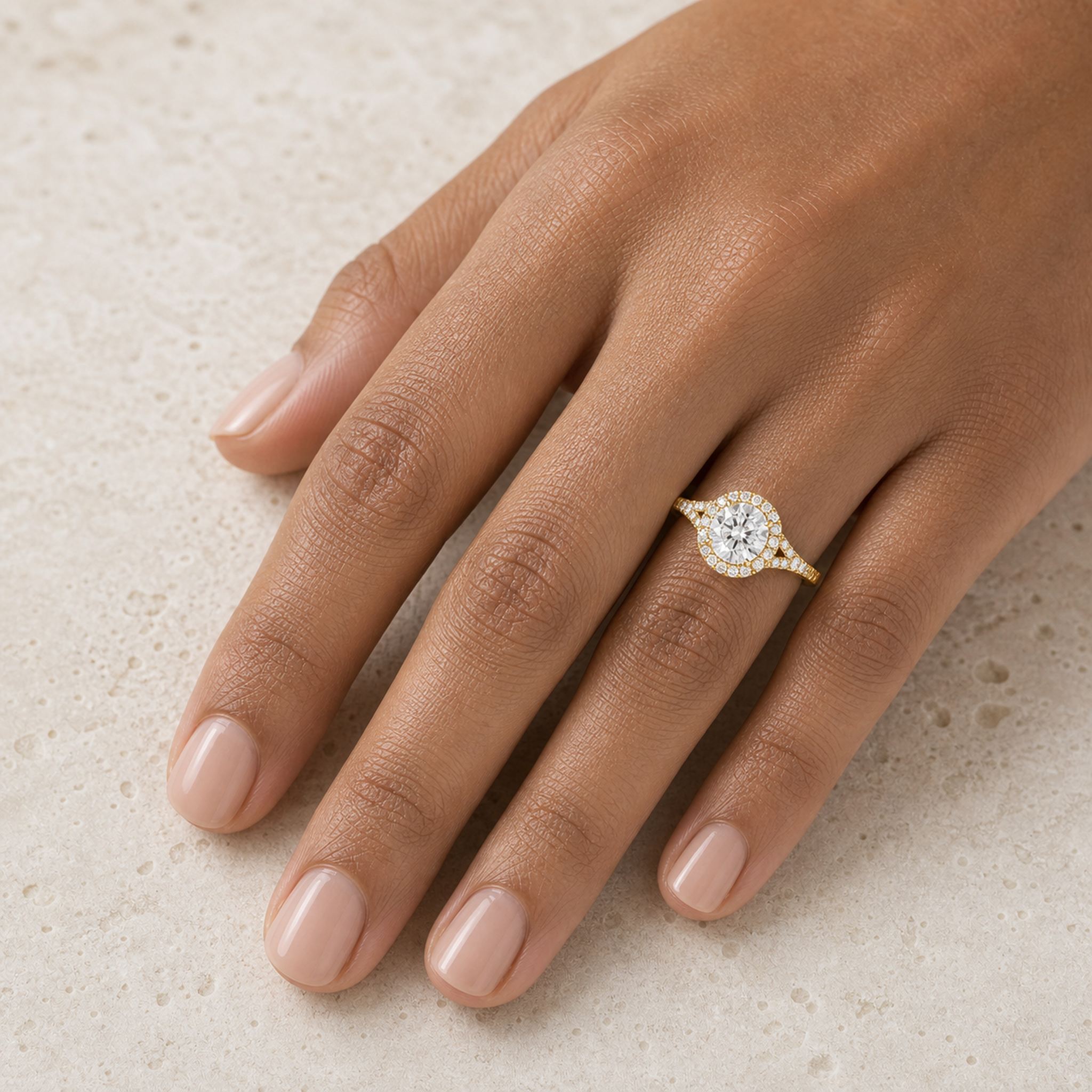


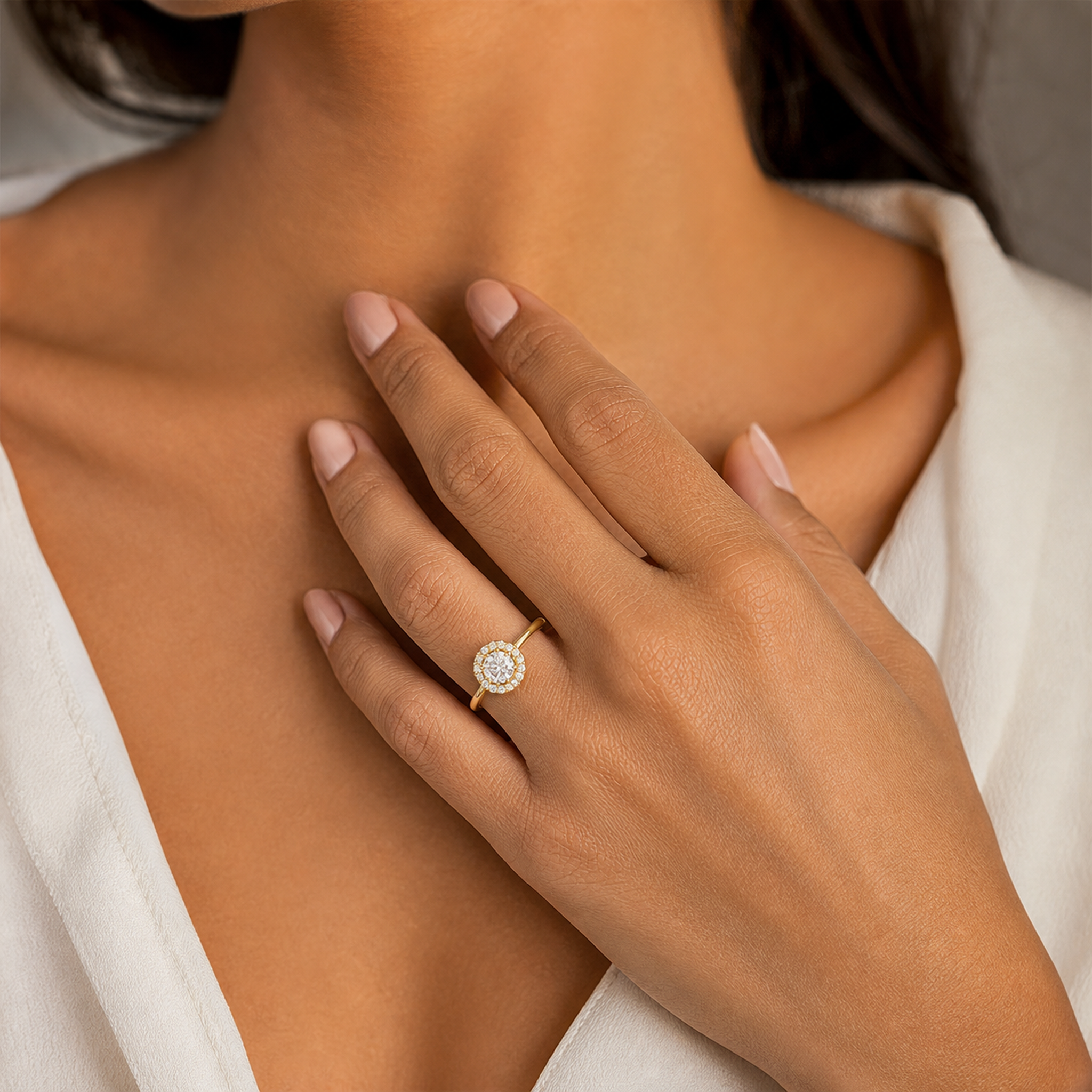


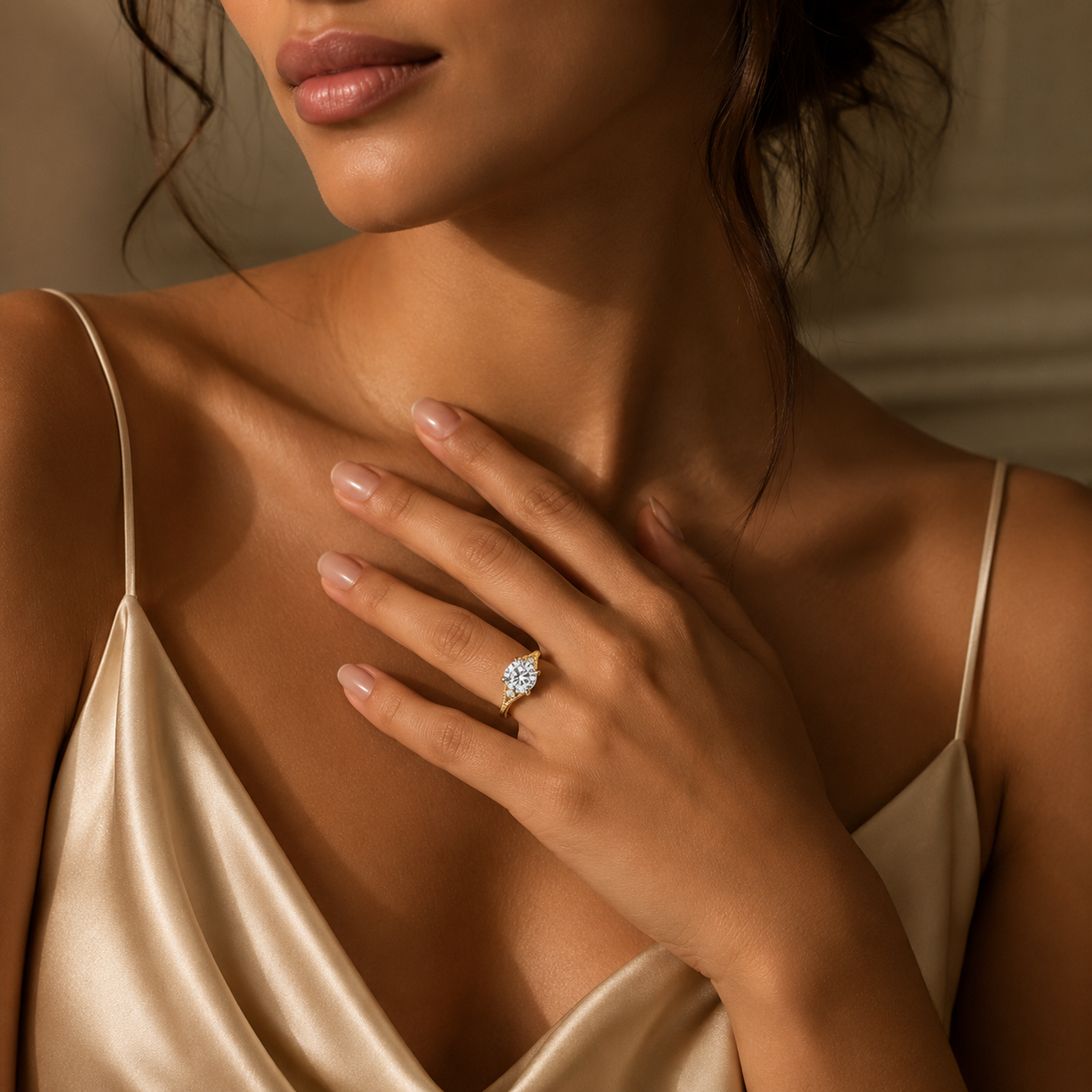


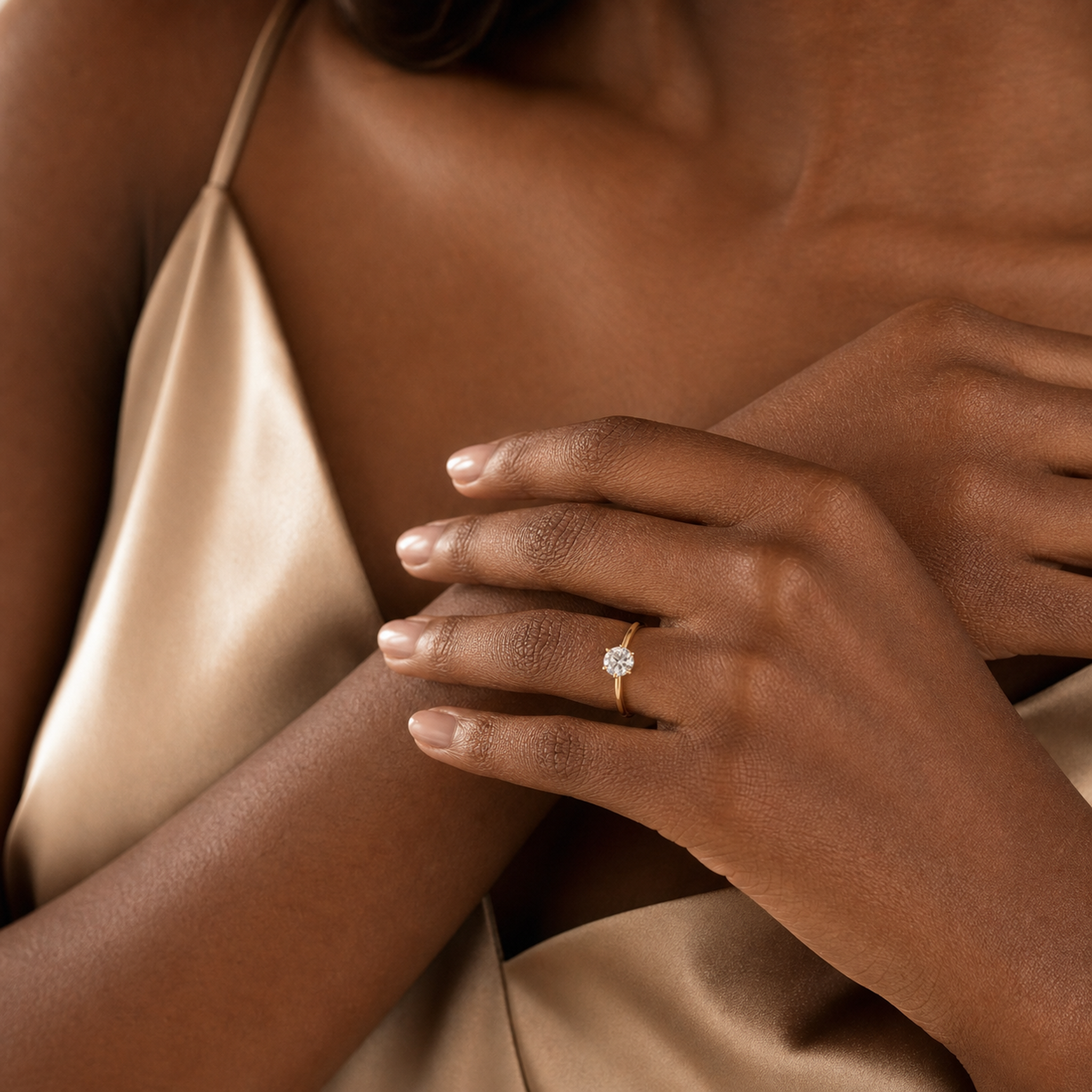


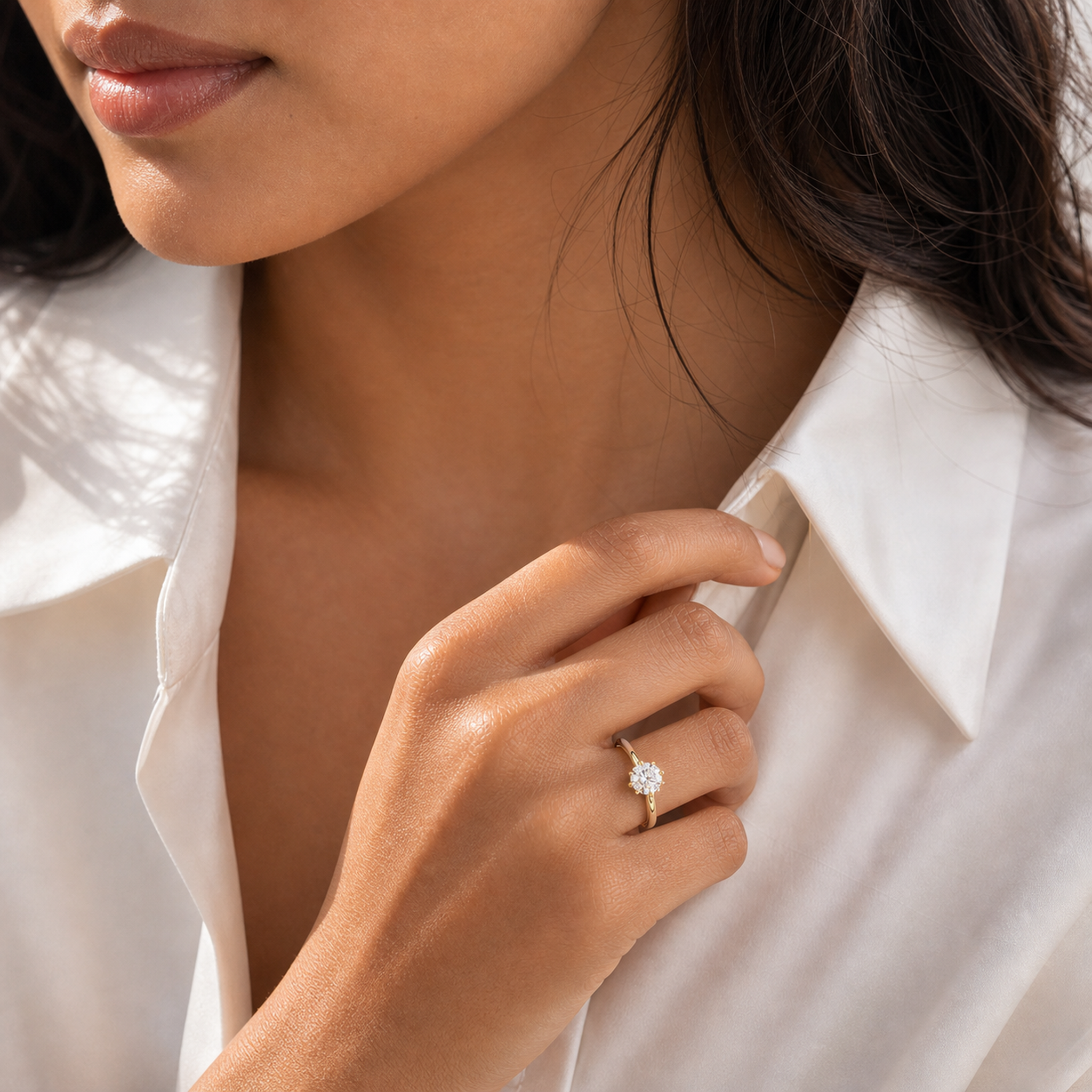


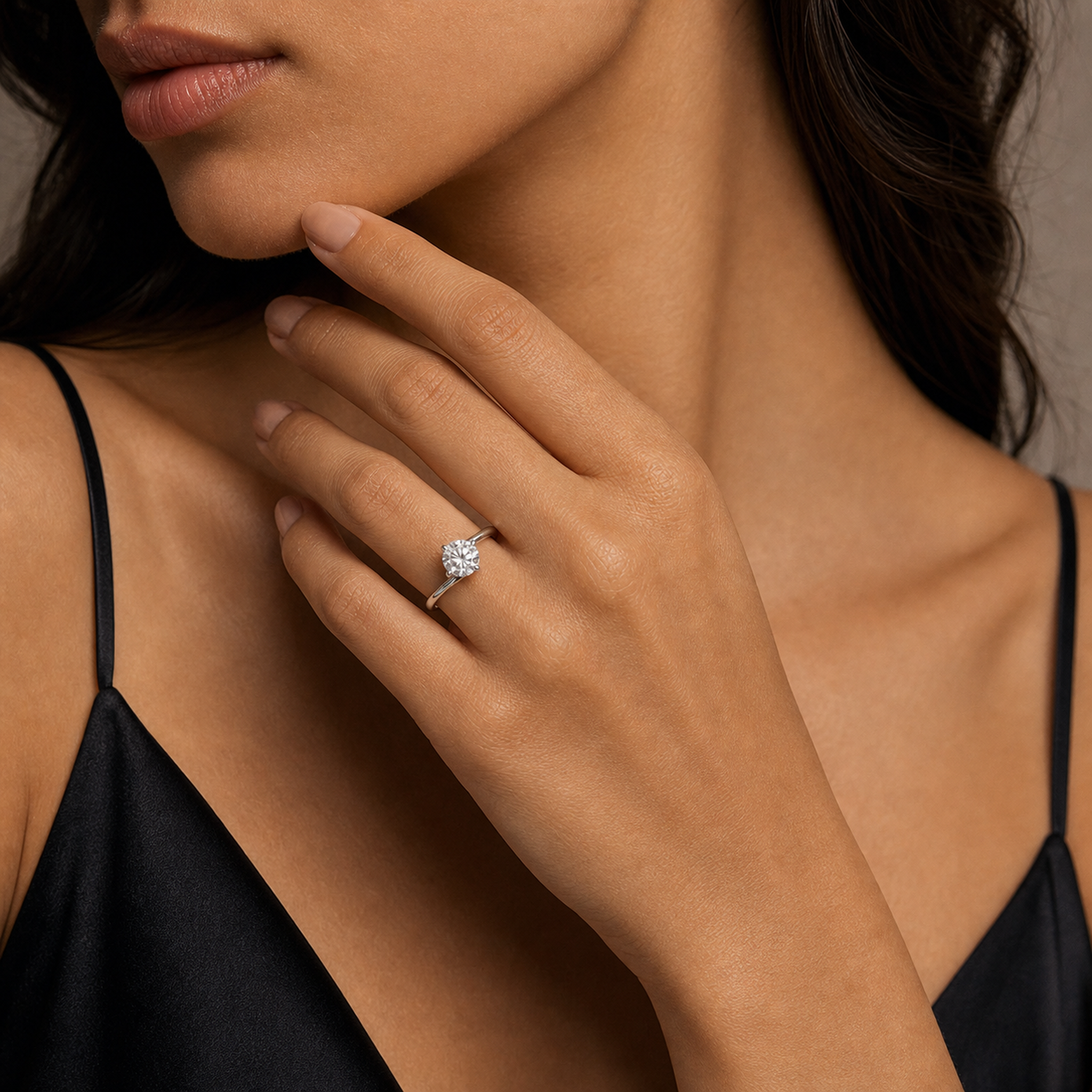


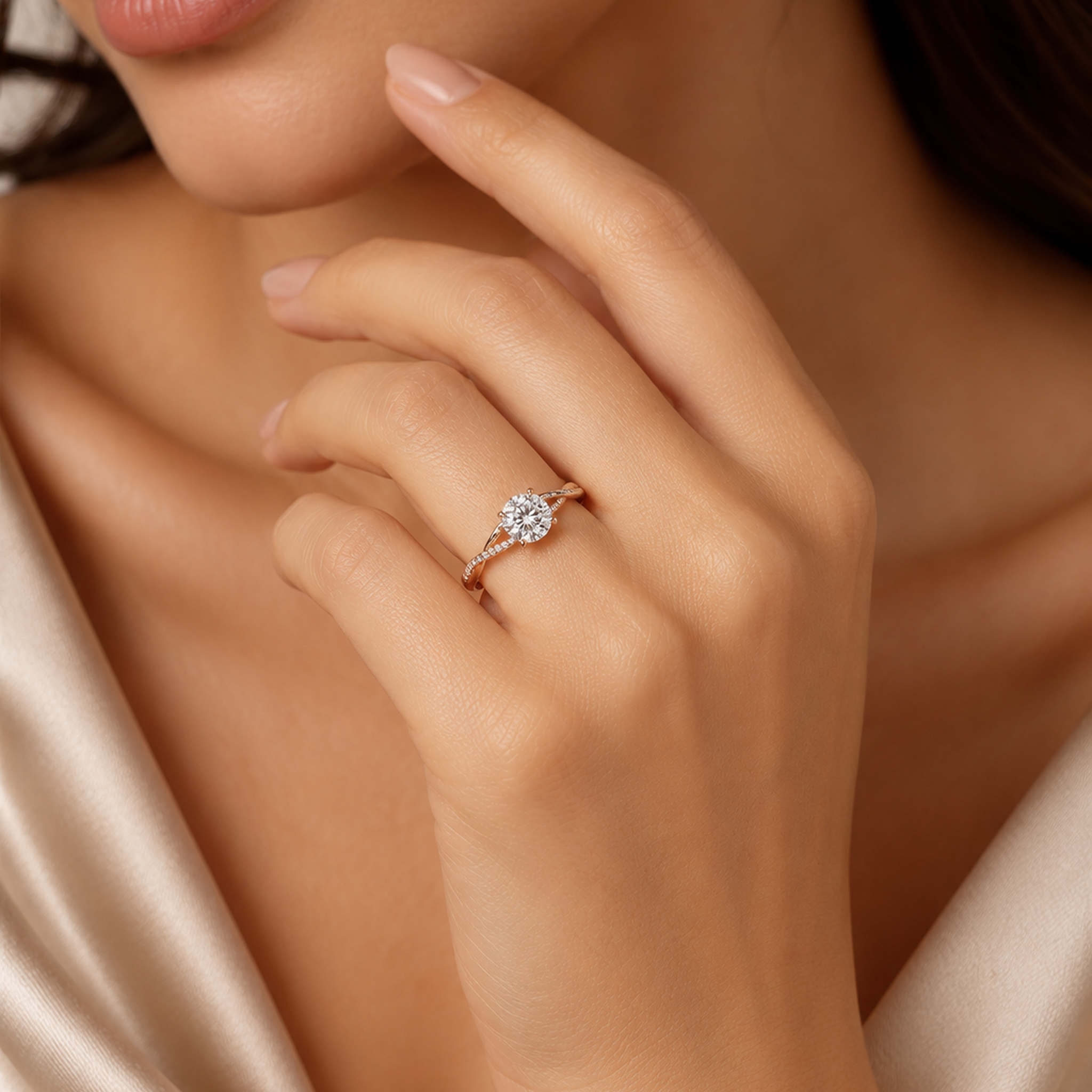
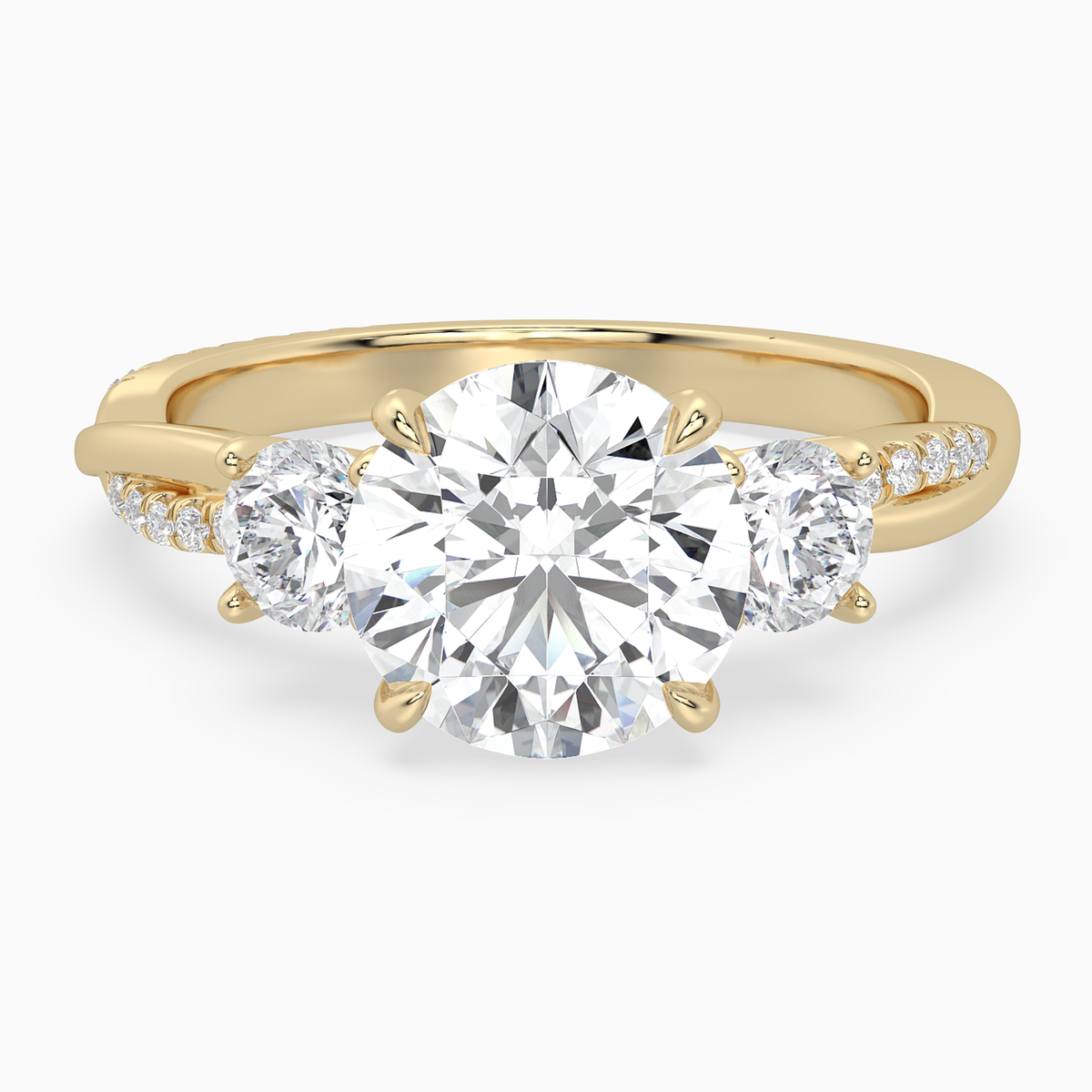


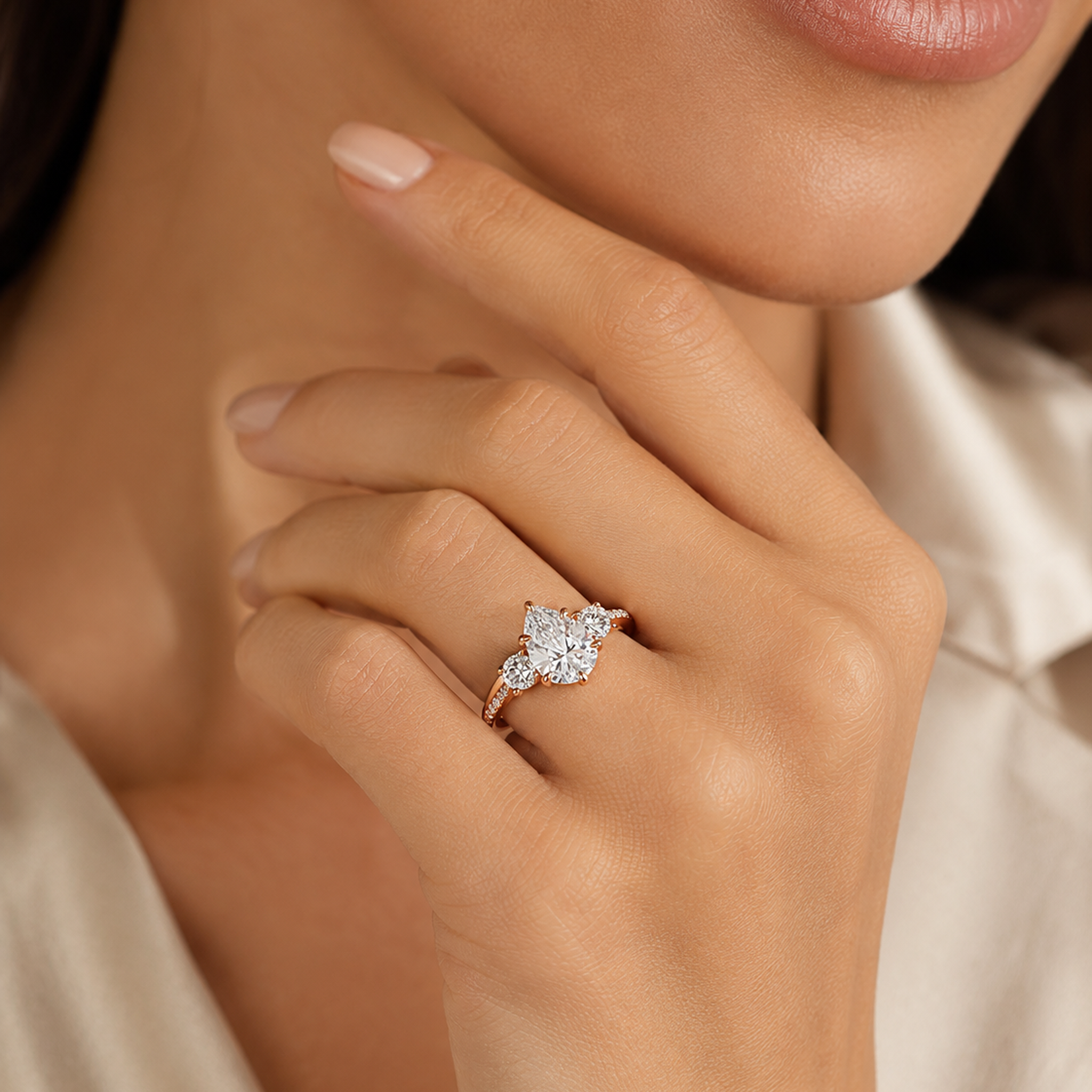


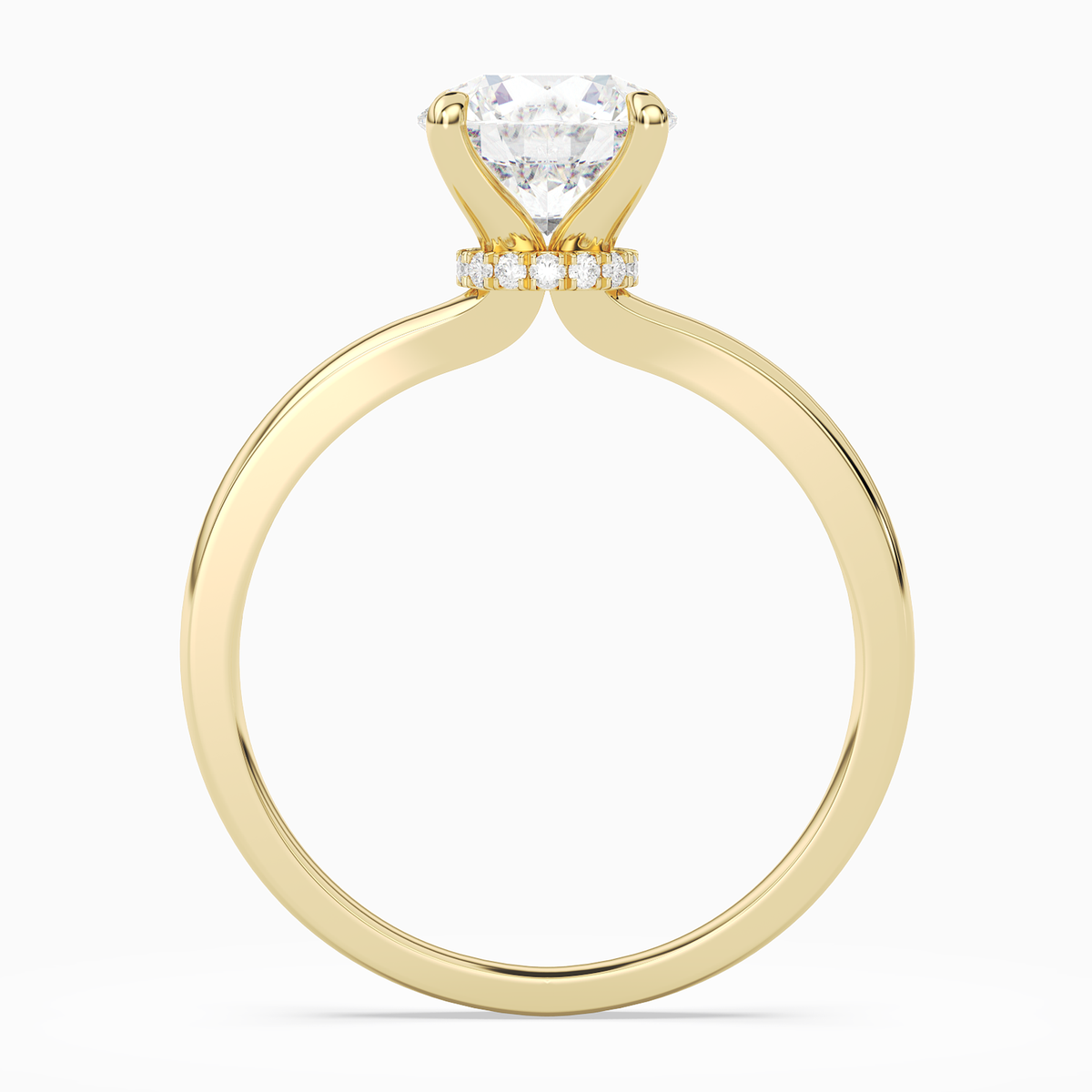

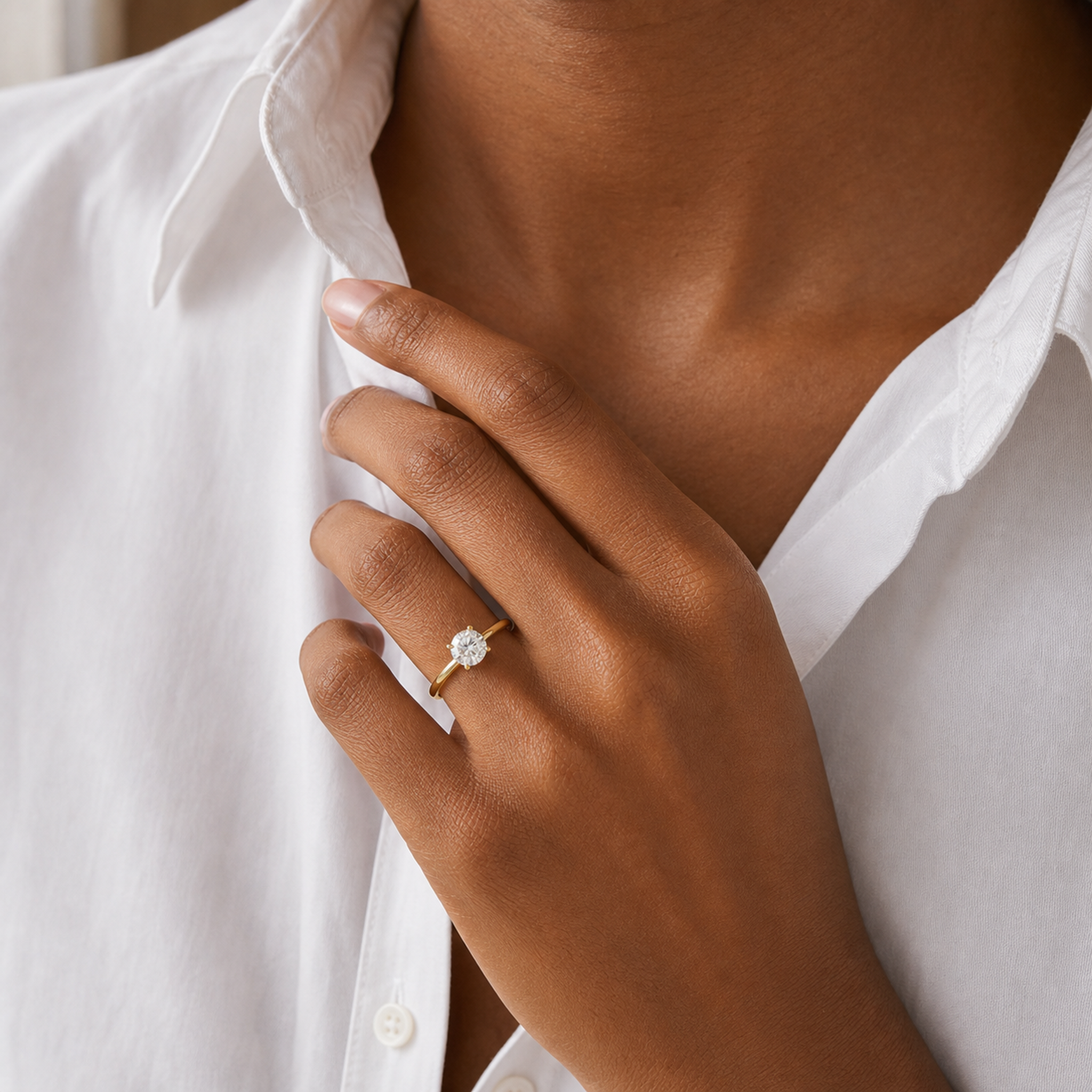


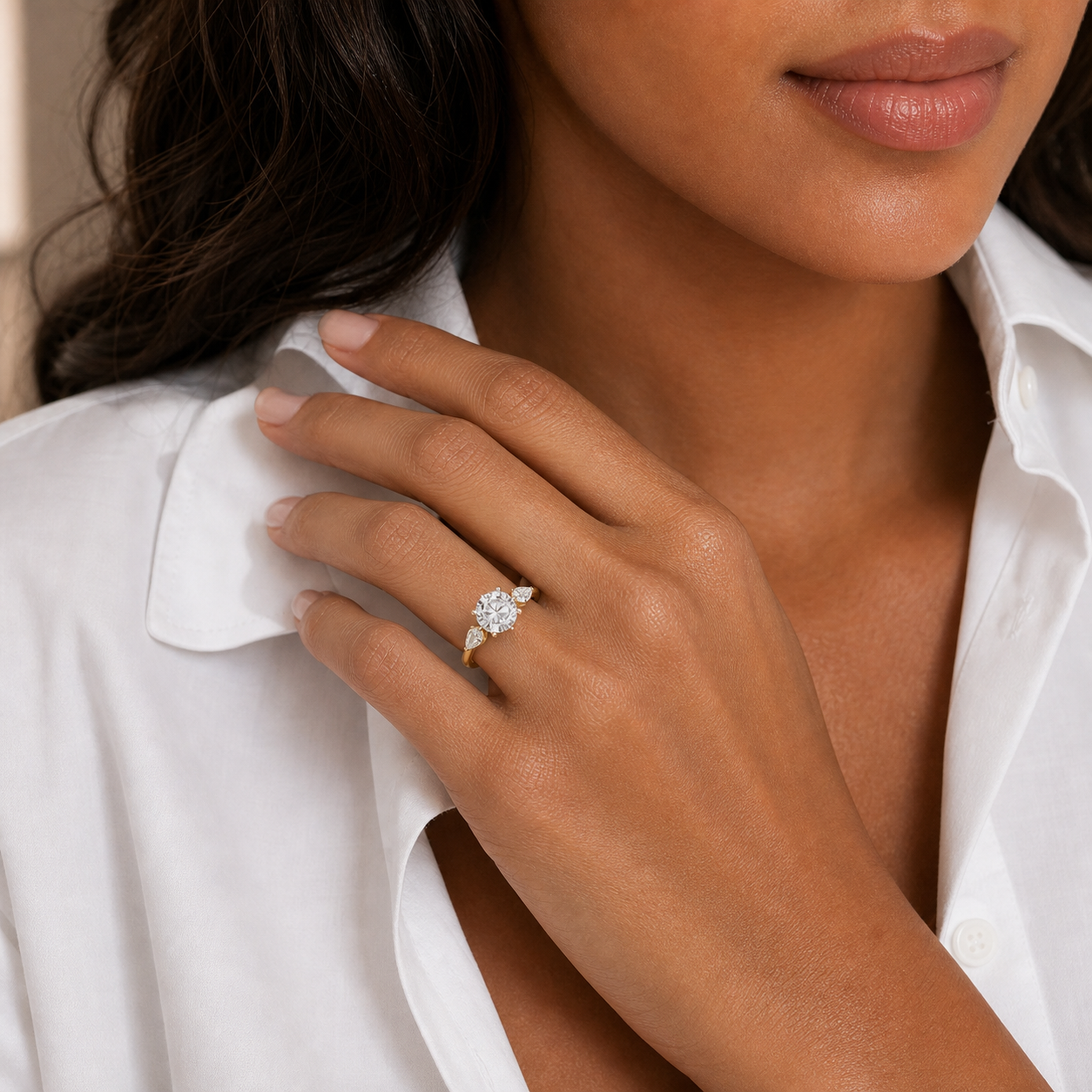
18K Yellow Gold Round Diamond Engagement Rings: A Fuller Gold Field, Precisely Held
An 18K Yellow Gold setting places a round brilliant inside a visibly material field. The circular center remains ordered and bright, while the band, prongs, and basket create a fuller warm boundary. The relationship is most compelling when gold defines the edge without overwhelming the light-dark pattern within it.
Fourteen current designs cover seven Solitaires, four Halos, one Side Stone ring, and two Three Stone compositions. Open baskets, hidden halos, cathedral shoulders, knife edges, bypass lines, vines, split shanks, and pear-shaped side stones distribute gold differently across the same normalized design family.
Seventy-Five Percent Gold Is a Material Fact
An 18K alloy contains 75% gold. Exact alloy, shade, hardness, sensitivity, finish, and maintenance remain product-specific. A higher gold percentage should not be translated into an automatic claim of greater quality, durability, security, or appropriateness.
Compared with 14K Yellow Gold, the fuller color context may be easier to see where the construction exposes more metal. A fine prong arrangement may show little difference, while cathedral shoulders, baskets, halo boundaries, or wider band elements can make the material distinction more legible.
Warmth Should Organize the Perimeter
The circle of a round center has no corners or terminal point, so the setting's interruptions become especially visible. Gold prongs divide the edge into a rhythm. A halo repeats the circle beyond it. A Side Stone or Three Stone structure extends the composition, asking the metal to distinguish the center from supporting forms.
In a Solitaire, negative space can keep the fuller gold field restrained. In a vine or bypass setting, the band introduces direction before meeting the circle. A split shank opens the approach. Material presence becomes useful when it explains these structural differences rather than merely signaling richness.
Light Performance Does Not Come From the Metal
Brightness, fire, and scintillation belong to the diamond's facet relationships and viewing conditions. Yellow Gold may produce stronger color contrast around the center, but it does not increase brilliance, improve cut grade, or change color and clarity grades.
For eligible standard round brilliants, the overall cut grade offers a disciplined starting point. Diameter, depth, girdle, polish, symmetry, and the observed pattern add detail. The final decision should connect those facts to the complete ring rather than use unmatched sparkle or timelessness as a substitute.
Scale Is Shared Between Diamond and Setting
Carat measures weight; diameter helps describe face-up size. A halo expands the total field, while a finer Solitaire setting leaves more open space around the center. Three Stone and Side Stone designs distribute visual weight laterally. Compare the independently graded center with the exact surrounding architecture.
The fuller gold field can also change how accents and prongs are perceived, but not their recorded specifications. Review color relationships in the chosen lighting and configuration. There is no single diamond color, band width, or setting style that is universally correct for 18K Yellow Gold.
Resolve Material Presence at Hand Scale
A wedding band's relationship depends on the basket, halo, side stones, shoulders, and lowest contact points. Continuing the 18K Yellow Gold color can create unity, while another material can create contrast; neither choice guarantees flush fit or identical wear behavior.
Burvonti pairs responsibly sourced, independently graded lab-grown diamonds with settings calibrated through proportion and human judgment. Custom possibilities may refine center specifications, prongs, basket, band, accents, metal, or engraving where feasible. The value of a fuller gold field is the clarity it gives the complete composition.
Frequently Asked Questions
What does the 18K Yellow Gold Round page own?
It focuses on a fuller 75% gold field around the round brilliant's complete circle across 14 verified setting designs.
How much gold is in 18K Yellow Gold?
It contains 75% gold.
Is it always more yellow than 14K?
Not necessarily. Alloy, finish, lighting, photography, and exposed metal area influence the result.
Is 18K Yellow Gold automatically better?
No. Gold content is one material distinction; structure, feel, care, finish, and personal judgment remain relevant.
Does Yellow Gold improve a round diamond's cut?
No. Cut and light performance belong to the diamond and are not changed by setting color.
What structures are represented?
The 14 products include seven Solitaire, four Halo, one Side Stone, and two Three Stone designs.
Why are prongs especially visible on a round center?
The continuous outline makes each interruption part of the perimeter's rhythm, so prong placement and scale matter.
Does a halo increase the center carat?
No. It widens the surrounding diamond field while center weight and diameter stay unchanged.
How should face-up size be compared?
Use diameter, depth, girdle, carat, and cut information together, then assess the setting's scale.
Does the metal change diamond color?
It changes visual context, not the independently graded color.
Will 18K Yellow Gold scratch?
Its surface can collect fine marks. No gold finish is scratch-proof.
Can a wedding band sit close?
Possibly, but basket, halo, side structures, shoulders, and height must be evaluated for the exact pair.
Can Burvonti personalize this ring?
Custom possibilities may include center specifications, prongs, basket, accents, band, metal, or engraving, subject to feasibility.