
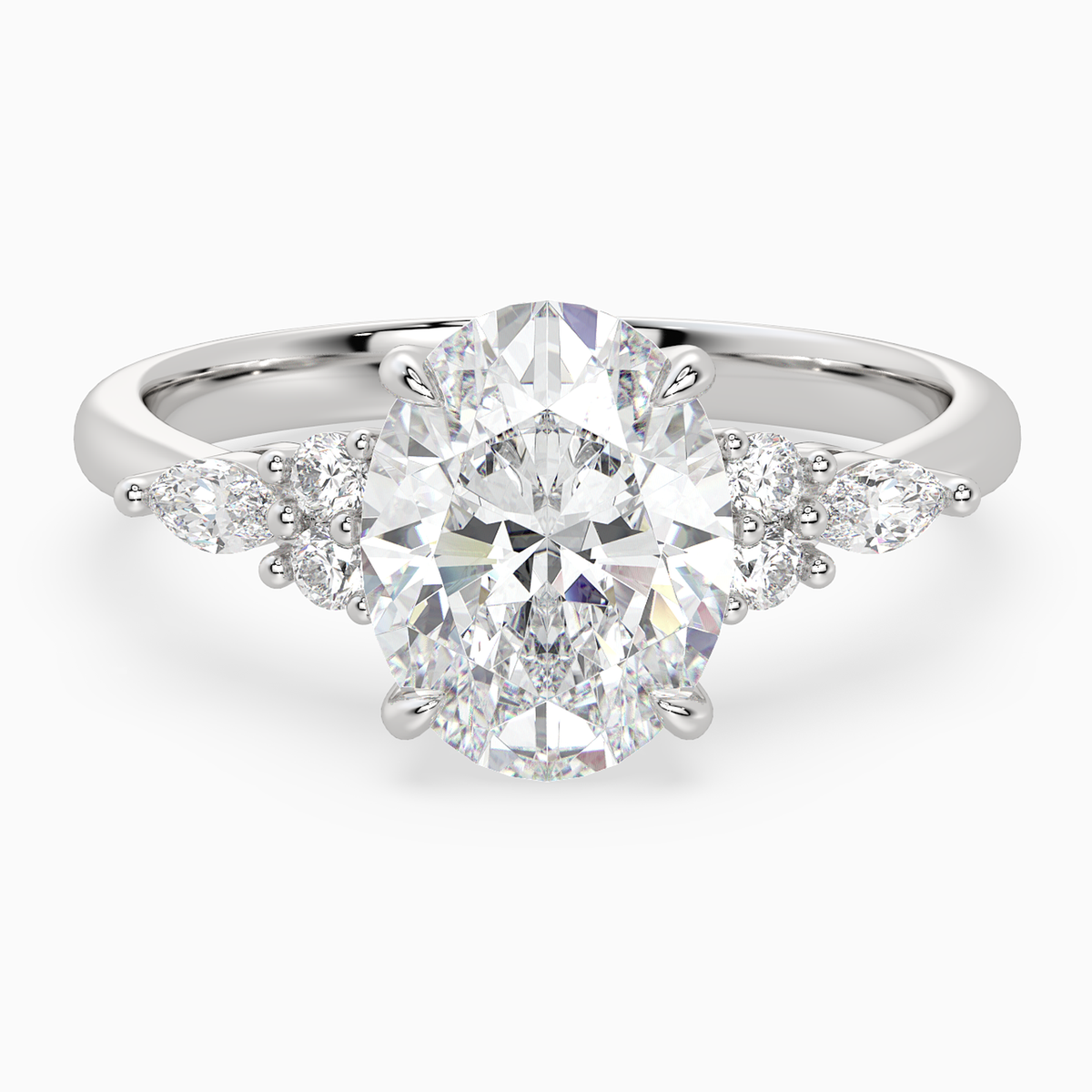


Three Stone Engagement Rings in 14K White Gold
White gold keeps the trio continuous. Compare all 7 rings by side-stone step-down, symmetry, spacing, band transition and center shape.


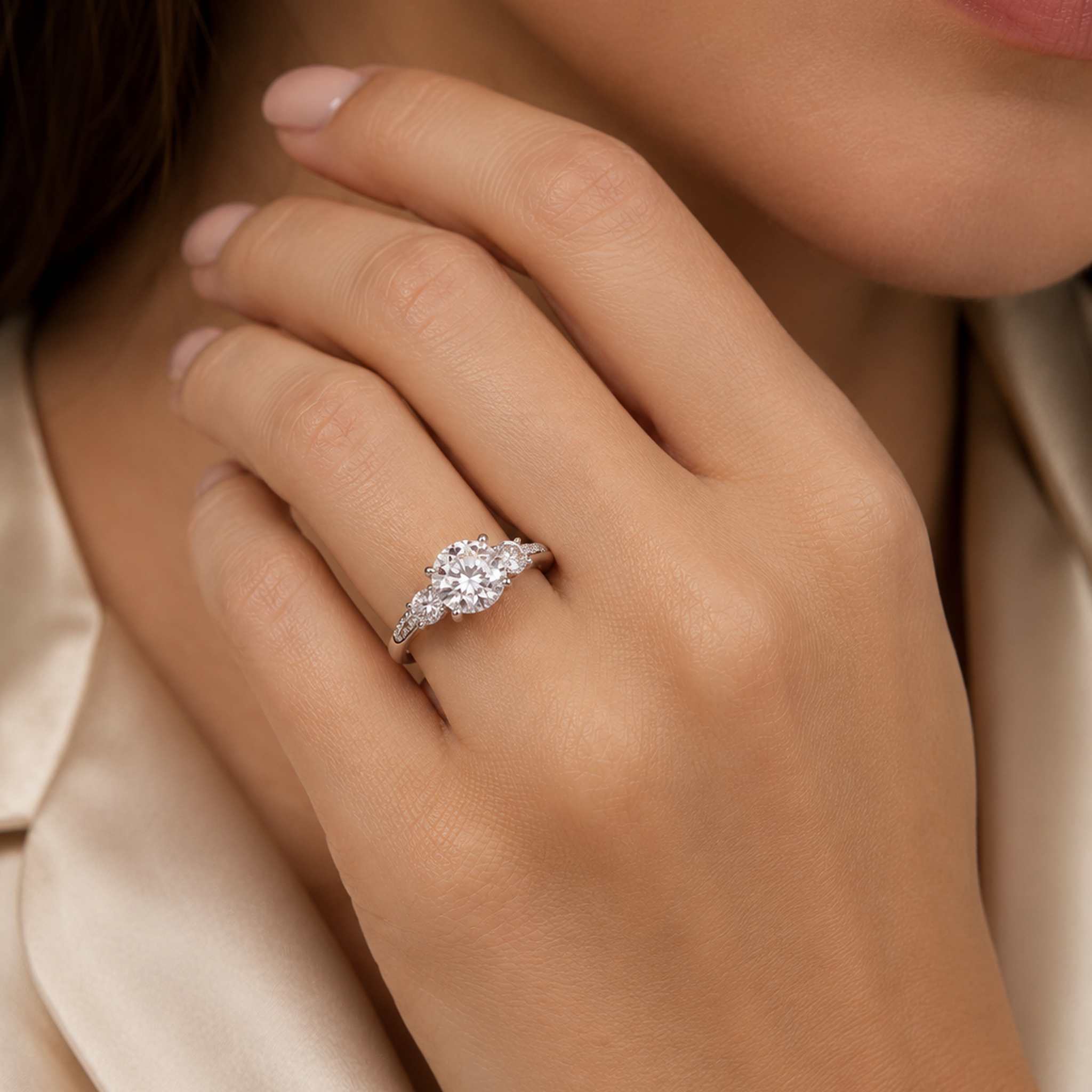


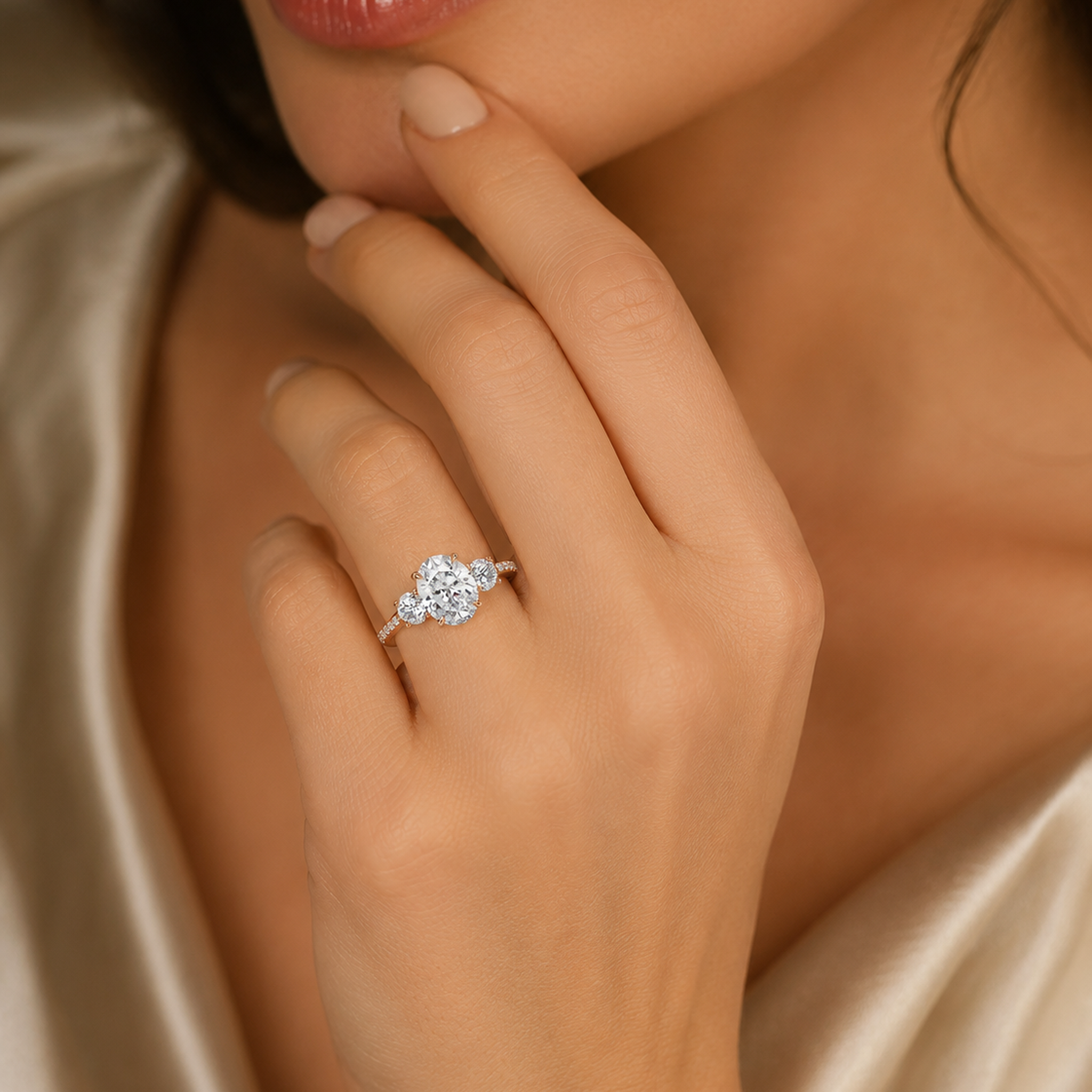


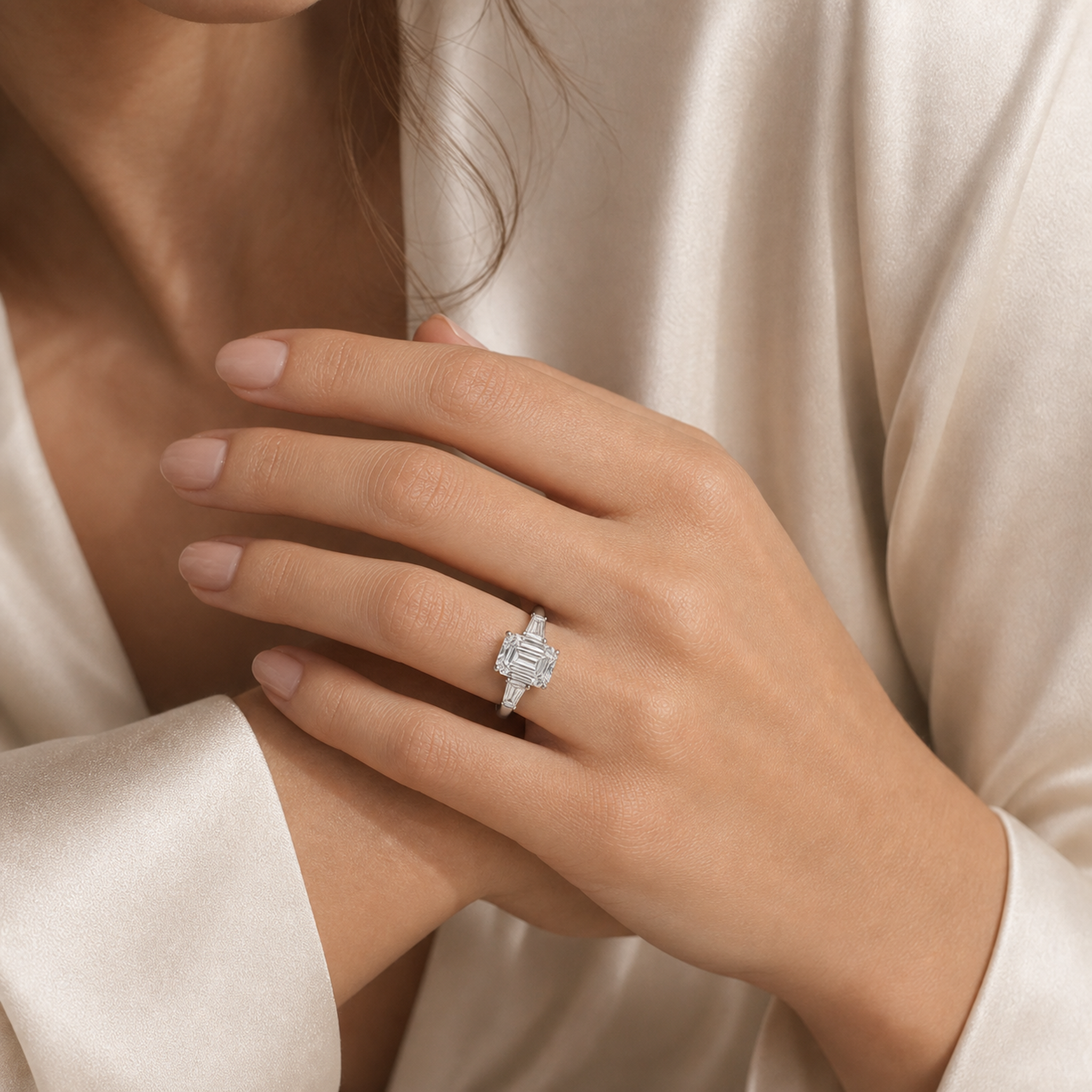


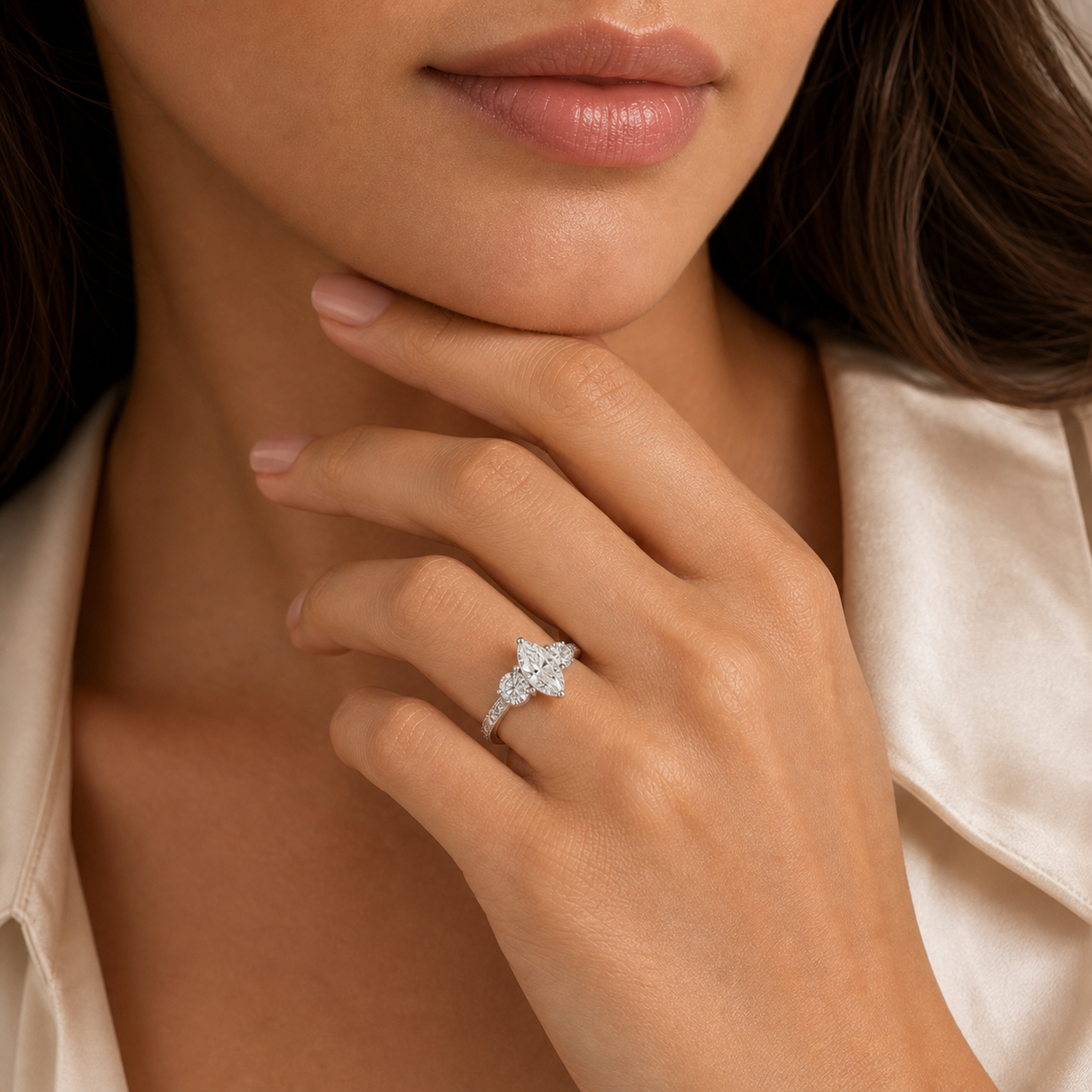


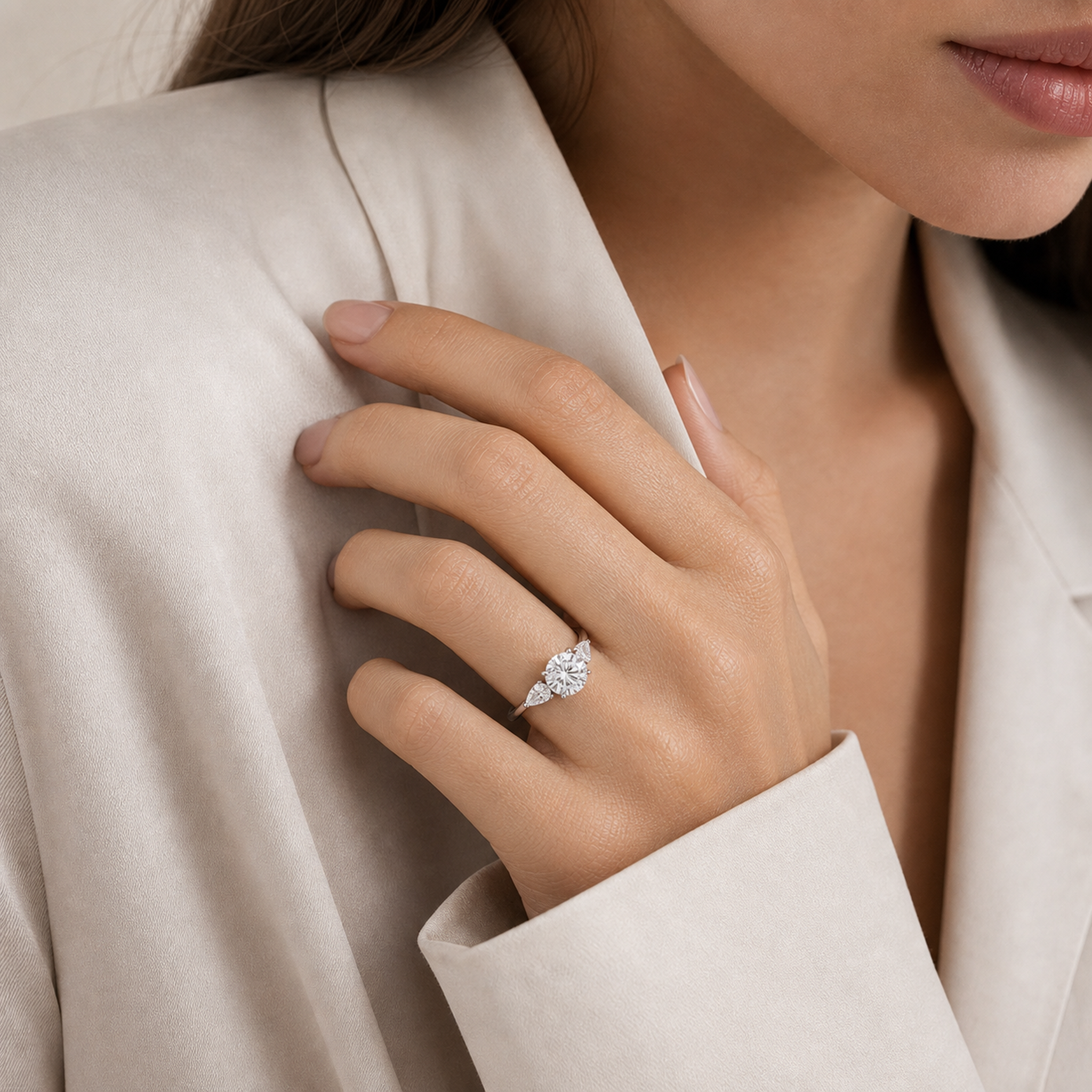


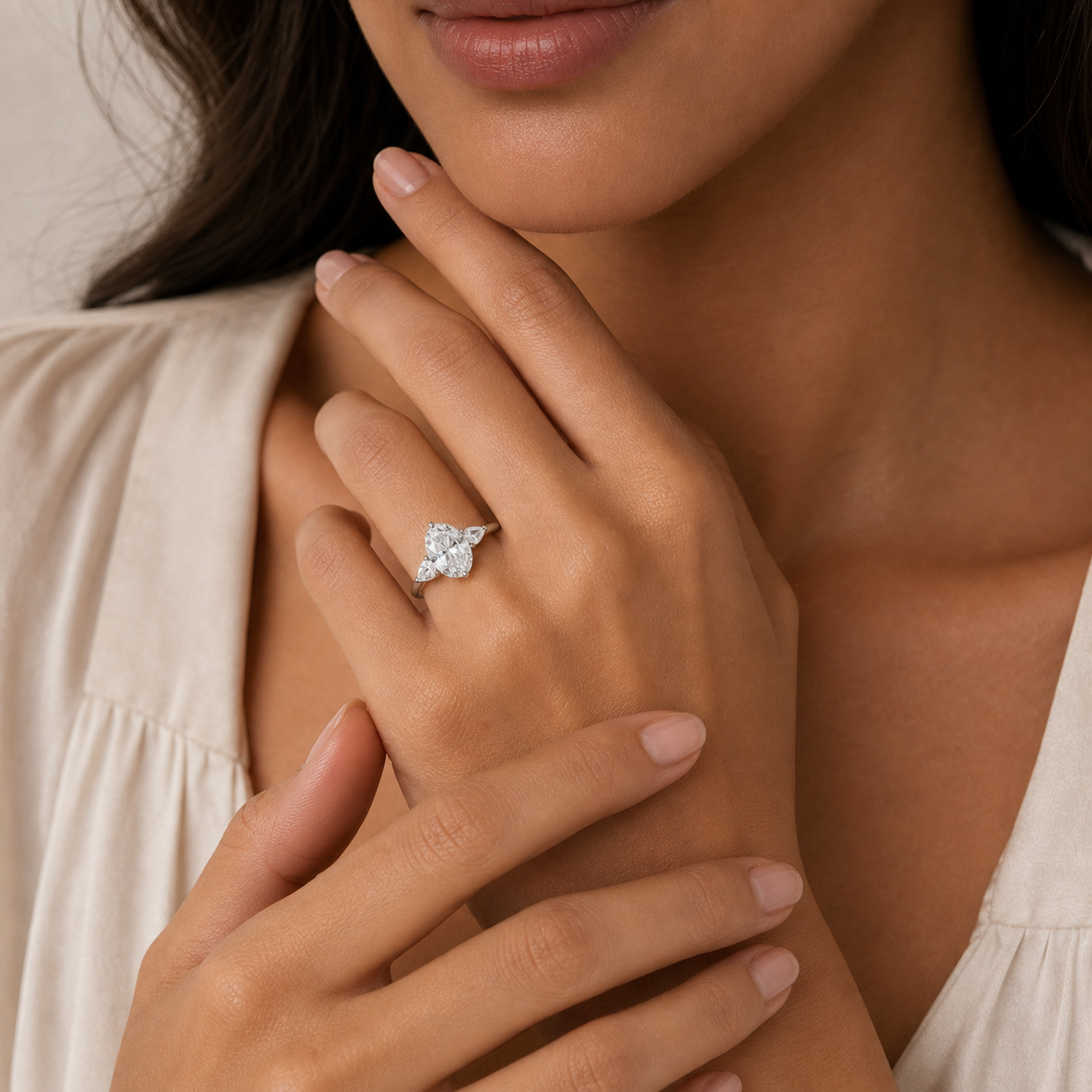
14K White Gold: Continuity across Three Principal Stones
Continuity Is Built through Proportion
White gold can hold stones and supporting metal in a related visual field, making small changes in scale and spacing more apparent. Compare how firmly the center leads, how evenly the paired side stones step down, and whether the trio transitions directly or gradually into the band.
The seven-ring assortment resolves into Olive, Elise, Freya and Tahlia. Their Nature Inspired, Vintage and Classic overlaps describe motif or restraint; Three Stone describes the shared center-and-flanker architecture.
Two Uses of Round Side Stones
Olive uses graduated round companions beside round or oval centers, with twisting pavé vine shoulders adding movement beyond the trio. Elise places round side stones around marquise or pear centers and frames them with engraved, milgrain-style shoulders.
Shape Contrast Changes the Sequence
Freya sets an emerald center between tapered side stones on a plain shank. Tahlia pairs round or oval centers with pear-shaped companions before narrowing into a tapered band. Each produces a different center-to-side outline.
Symmetry without a Perfect-Match Promise
A paired arrangement invites comparison of position and relative scale, but the collection does not establish exact dimensions, color, clarity or grading parity. “Perfectly matched” is therefore not used as a page-level claim.
Read Face-Up and Profile Views
Face-up views reveal interval and combined breadth; side views reveal height and shoulder transition. Finish, prong exposure, comfort, security, band pairing, cleaning access and resize feasibility require exact-product confirmation.
Frequently Asked Questions
What is the current product count?
7 rings.
Do all seven match 14K white gold?
Yes.
How many families are represented?
Four.
What should be compared first?
The center-to-side scale relationship.
Which family uses a vine shoulder?
Olive.
Which family uses engraved milgrain-style shoulders?
Elise.
Which family has a plain shank?
Freya.
Which family has pear-shaped companions?
Tahlia.
What center accompanies Freya?
An emerald center.
Which center shapes are available?
Round, oval, marquise, pear and emerald.
Does symmetry prove exact matching?
No.
Does white gold guarantee one finish?
No.
Is a Three Stone ring the same as a Side Stone ring?
No; this page requires three principal stones.
Does the trio guarantee a wider appearance?
No universal visual result is claimed.
Are side-stone grades disclosed page-wide?
No.
Can resizing be generalized?
No.
Does local approval authorize publishing?
No.